Article

Study on Permeability Stability of Sand-Based Microporous Ceramic Filter Membrane


1
Key Laboratory of Agricultural Soil and Water Engineering in Arid and Semiarid Areas, Ministry of Education, Northwest A&F University, Xianyang 712100, China
2
Institute of Soil and Water Conservation, Northwest A&F University, Xianyang 712100, China
3
Institute of Water Saving Agriculture in Arid Areas of China, Northwest A&F University, Xianyang 712100, China
*
Author to whom correspondence should be addressed.
These authors contributed equally to this work.
Materials 2019, 12(13), 2161; https://doi.org/10.3390/ma12132161
Submission received: 11 June 2019 / Revised: 2 July 2019 / Accepted: 3 July 2019 / Published: 5 July 2019

Abstract

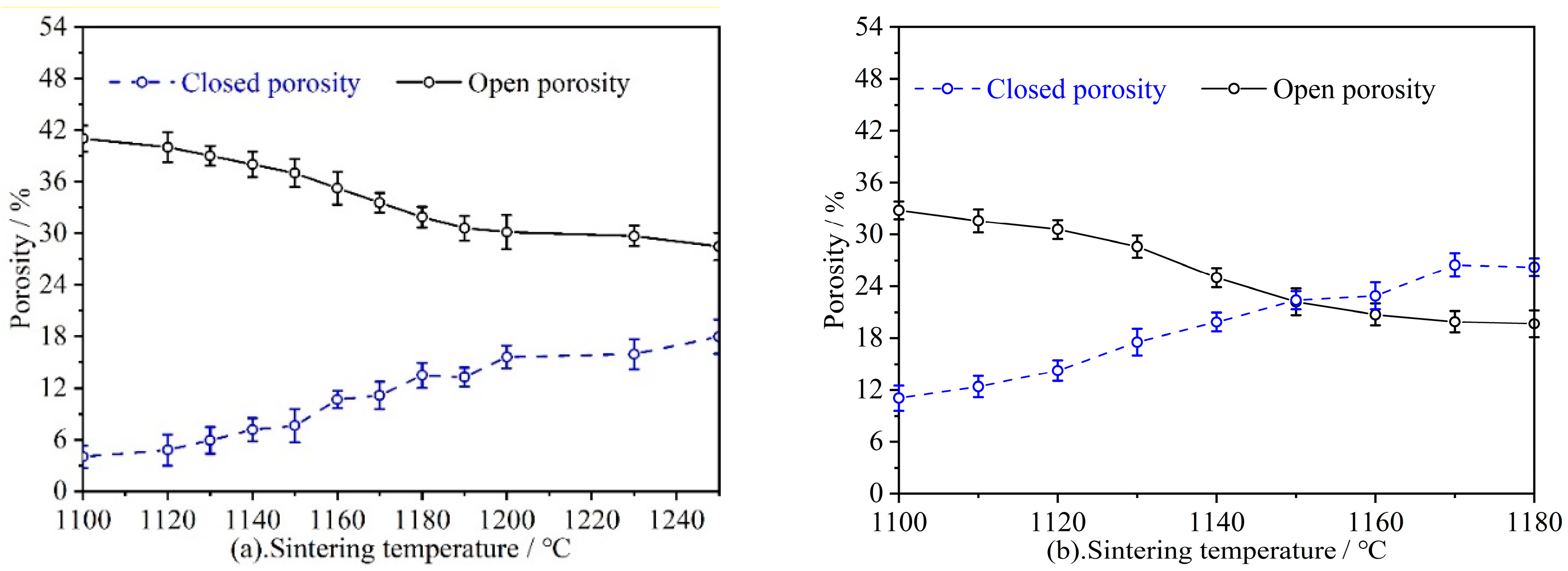
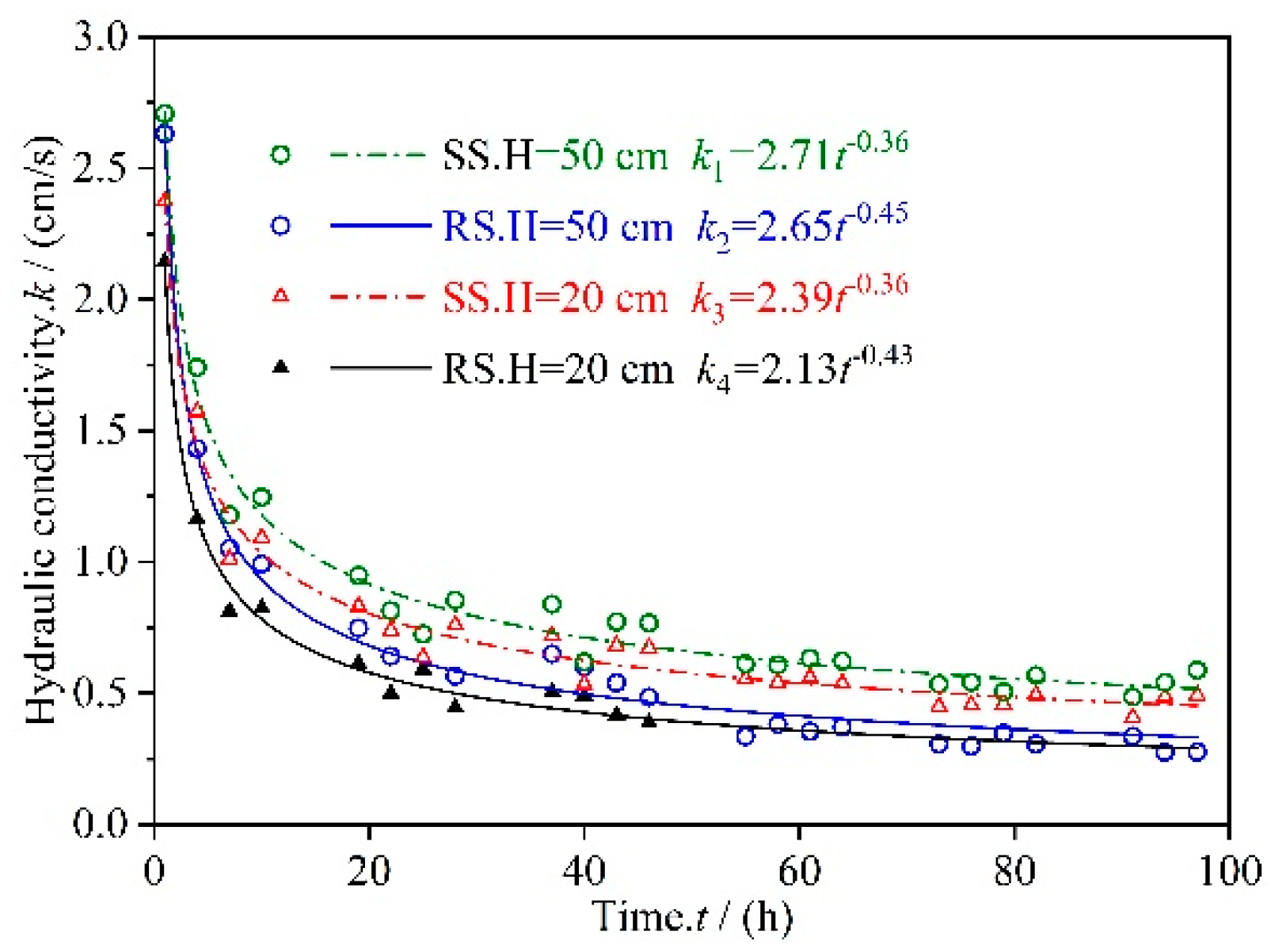
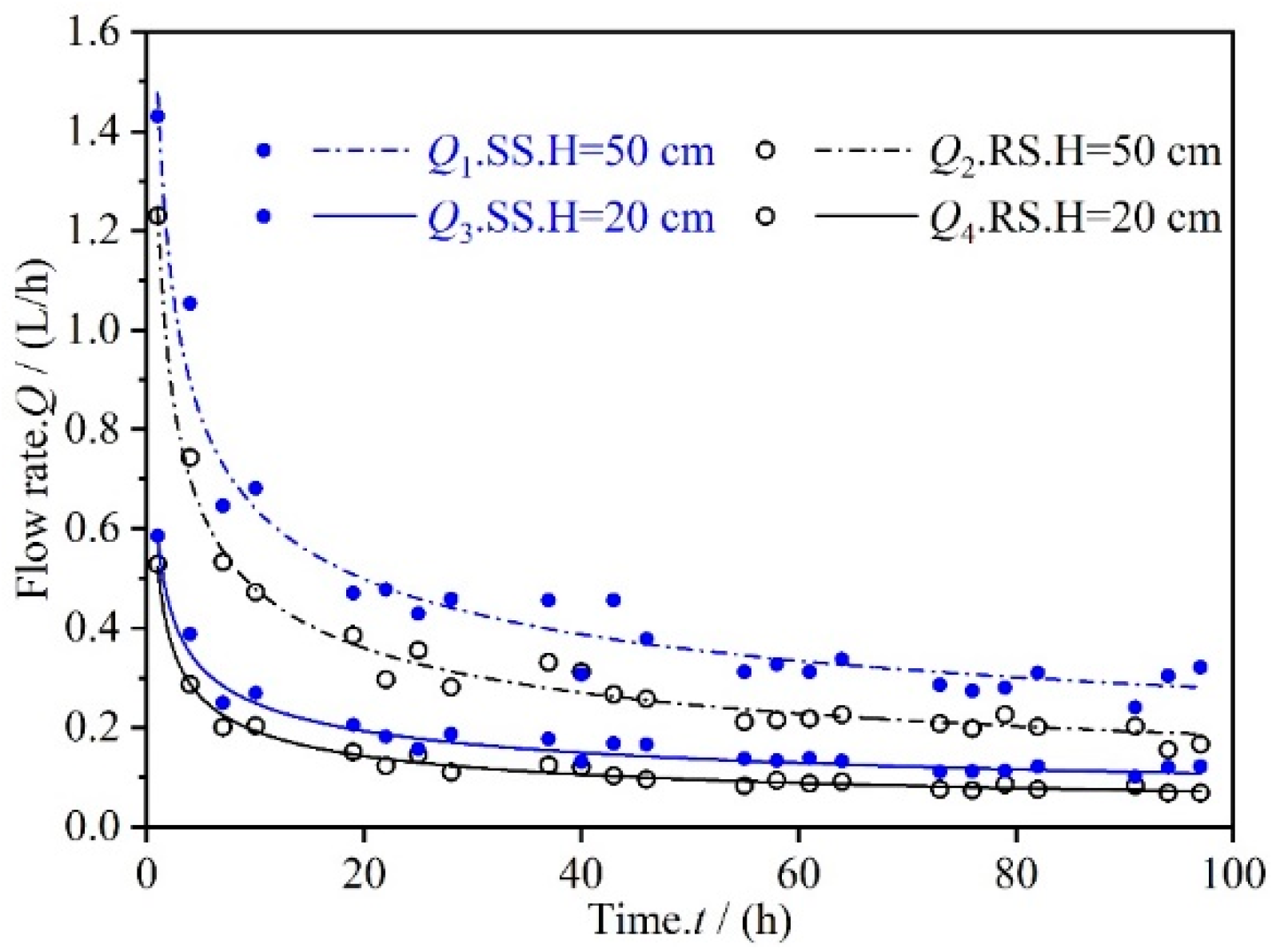
The instability of diafiltration is a widespread problem in the practical application of microporous ceramic filtration membranes. In this paper, a series of microporous ceramic filter membranes were prepared using inexpensive standard sand and river sand as matrix materials. Semi-empirical formula for the effective permeability radius of ceramic membranes with respect to time was established from analysis of the response mechanism between water flow and material properties. Finally, on the basis of theoretical analysis, some measures were proposed to improve permeate flux. The experimental results showed that during the initial stage of filtration, the microporous ceramic filter membrane had a large change in permeate flux, and during the late stage of filtration, permeate flux tended to be stable. Over time, open porosity and closed porosity changed the actual seepage area of the ceramic membrane, and this affected the stability of permeate flux and final stable permeate flux. The roughness of the inner wall of microporous ceramic pores affected the hydraulic loss coefficient, and this controlled the outflow process. Trace elements that were rich in sand produced a large amount of glass phase after sintering. The glass phase was rich in polar groups and formed a temporary hydrogen bond with the small flow of water molecules. It led to an increase in viscous resistance effect of the side wall along the water flow and the extent of the permeate flux of the ceramic membrane changed with time.
Keywords: microporous ceramic; flow rate; filter; membrane; permeability stability microporous ceramic; flow rate; filter; membrane; permeability stability