Experimental and Numerical Investigations of Thin-Walled Stringer-Stiffened Panels Welded with RFSSW Technology under Uniaxial Compression




Abstract
1. Introduction
2. Materials and Methods
2.1. Material
2.2. Fabrication of Stringer-Stiffened Panels
2.3. Compression Test
2.4. Digital Image Correlation System
2.5. Numerical Modeling
3. Results and Discussion
4. Conclusions
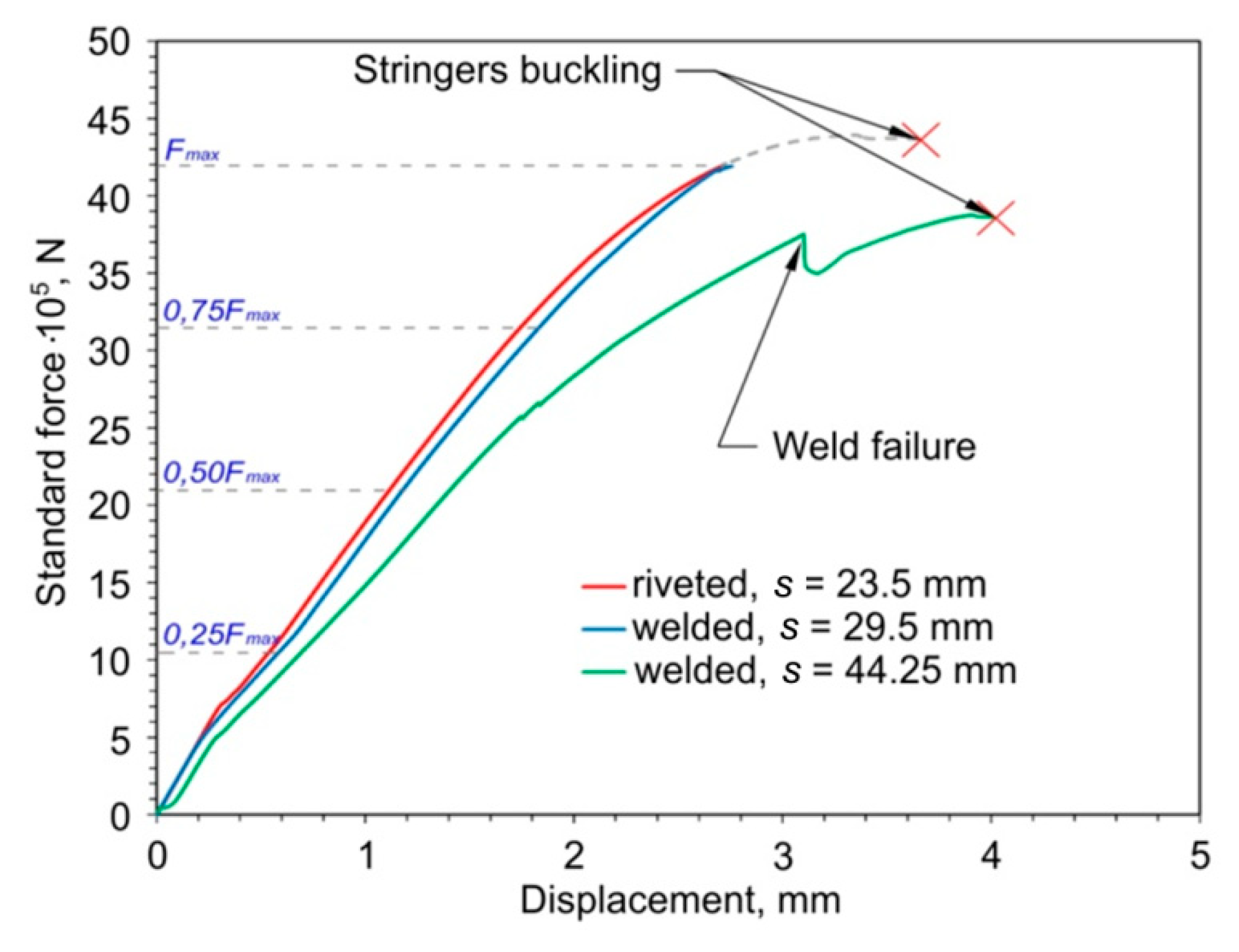
- The stiffened panel with welded stringers with a spacing of s = 29.5 mm exhibited an ultimate load similar to the variant with a riveted panel.
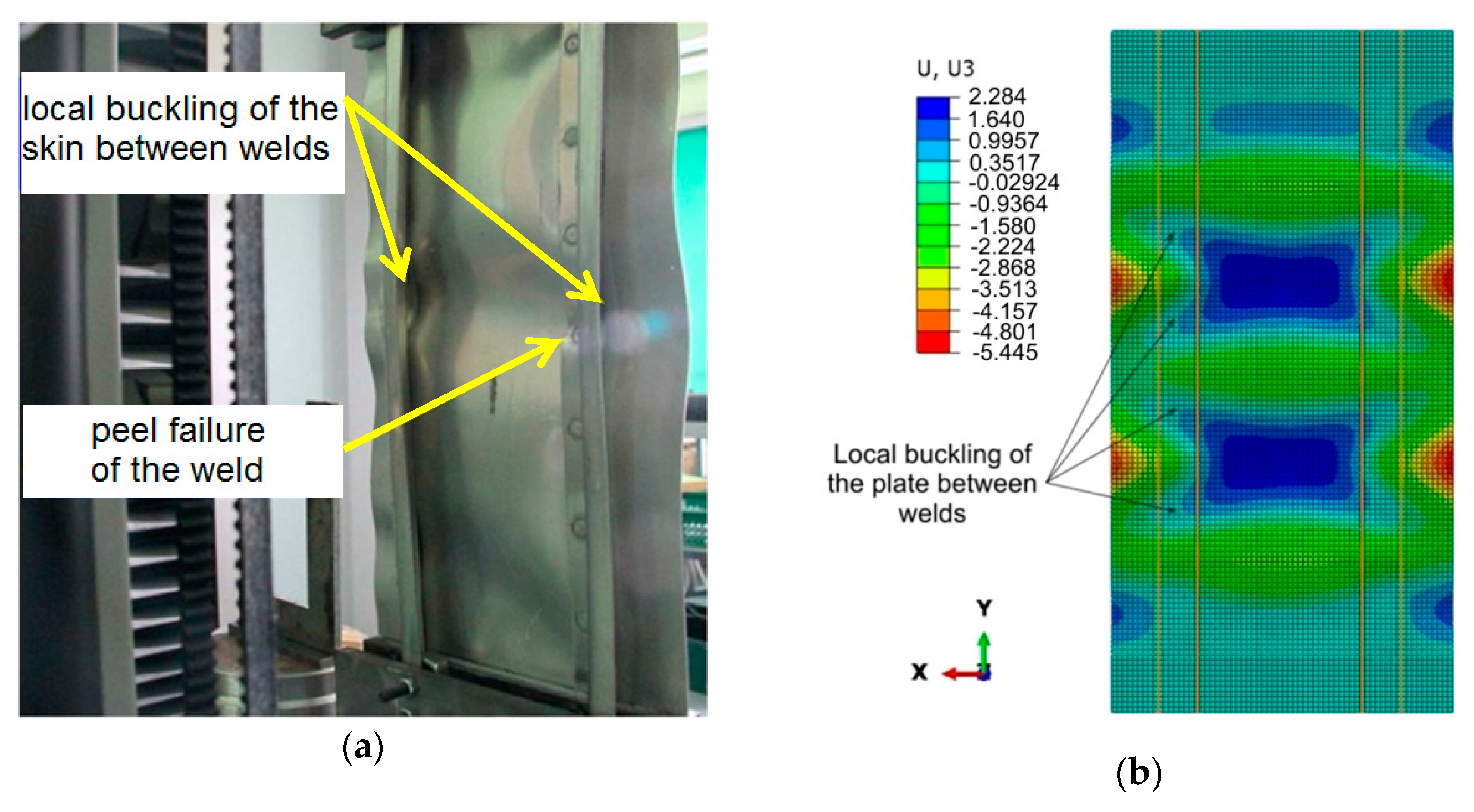
- The increase of weld spacing by 50% was the cause of local buckling of the plate between welds. So, the welds were more exposed to peel stress, which leads to weld failure before the compression force achieved maximum value.
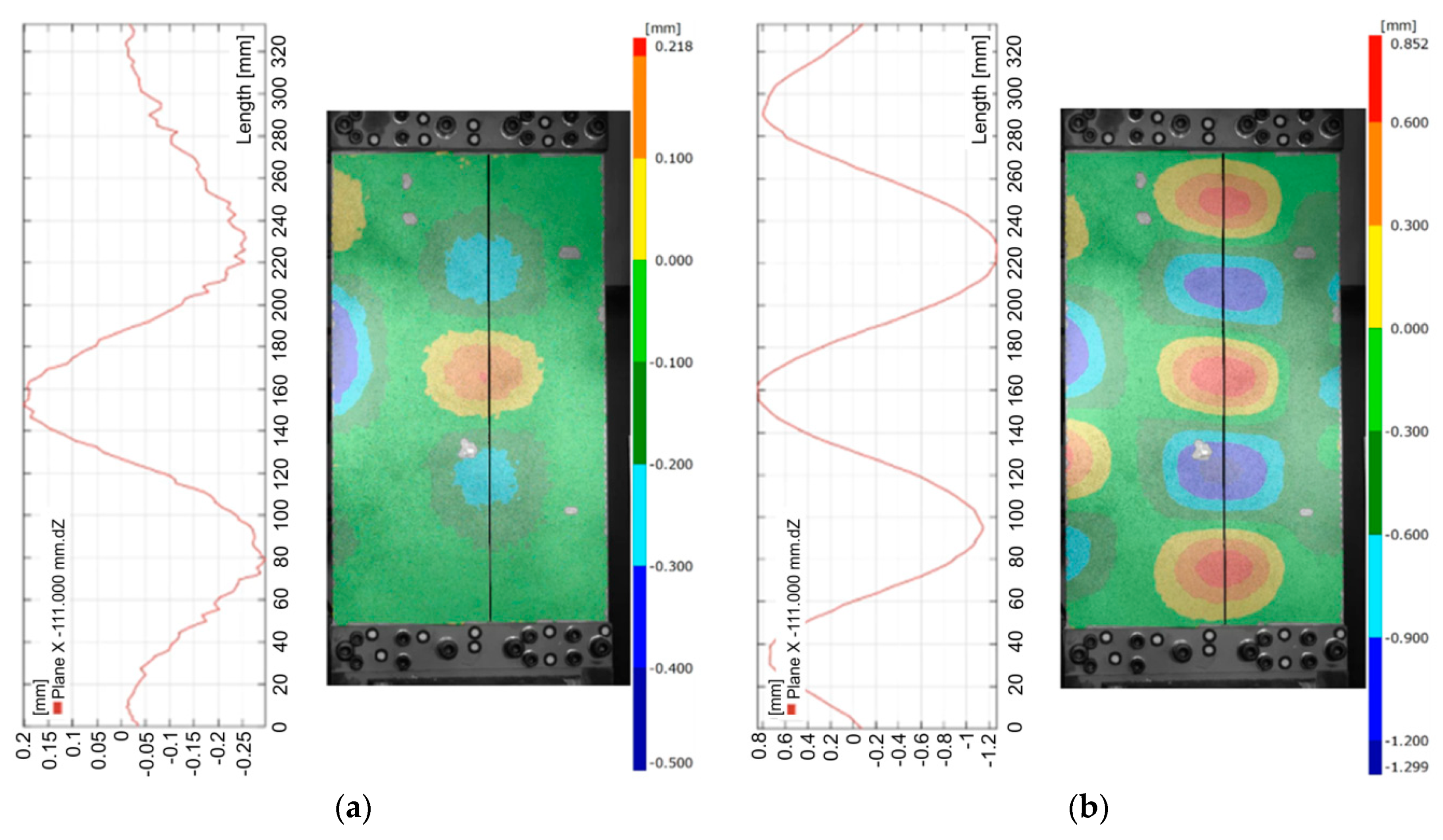
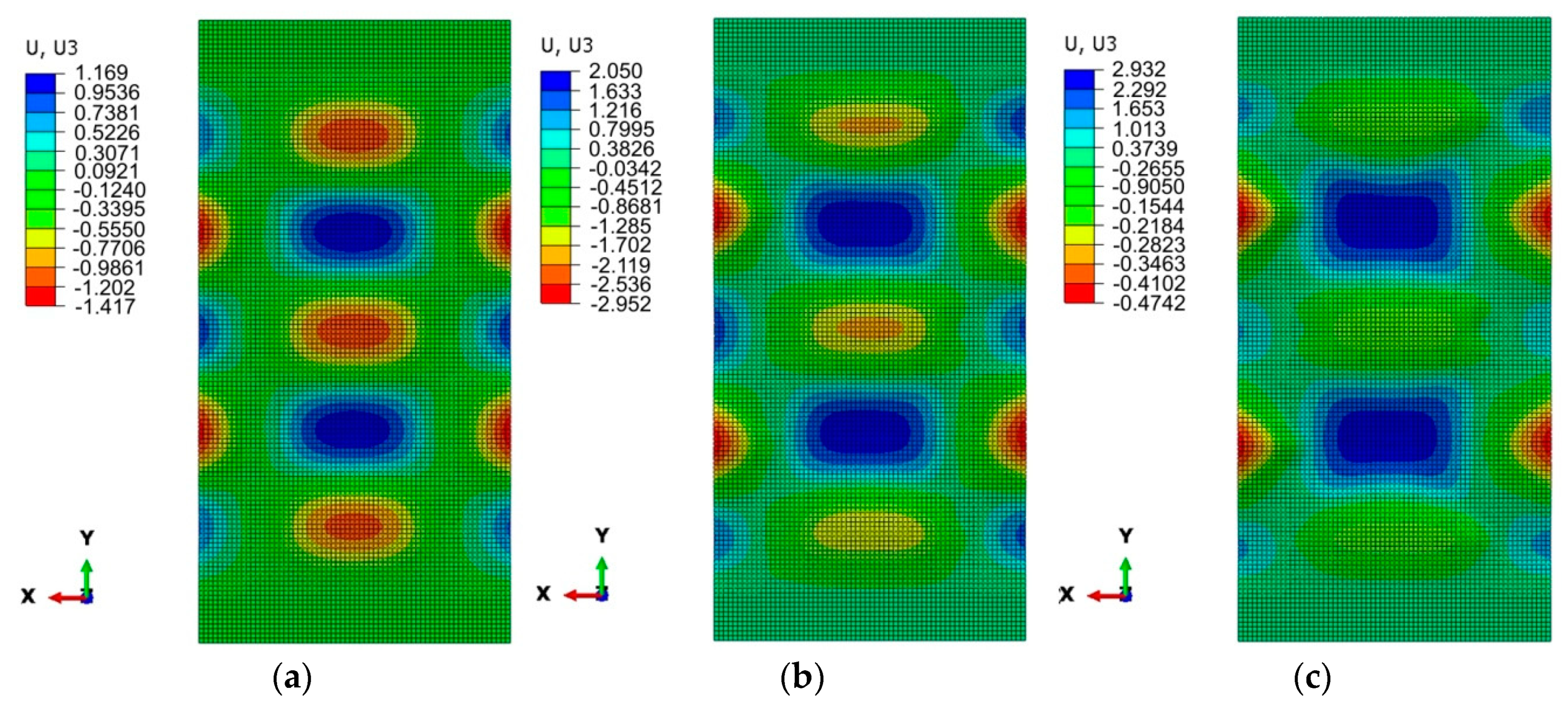
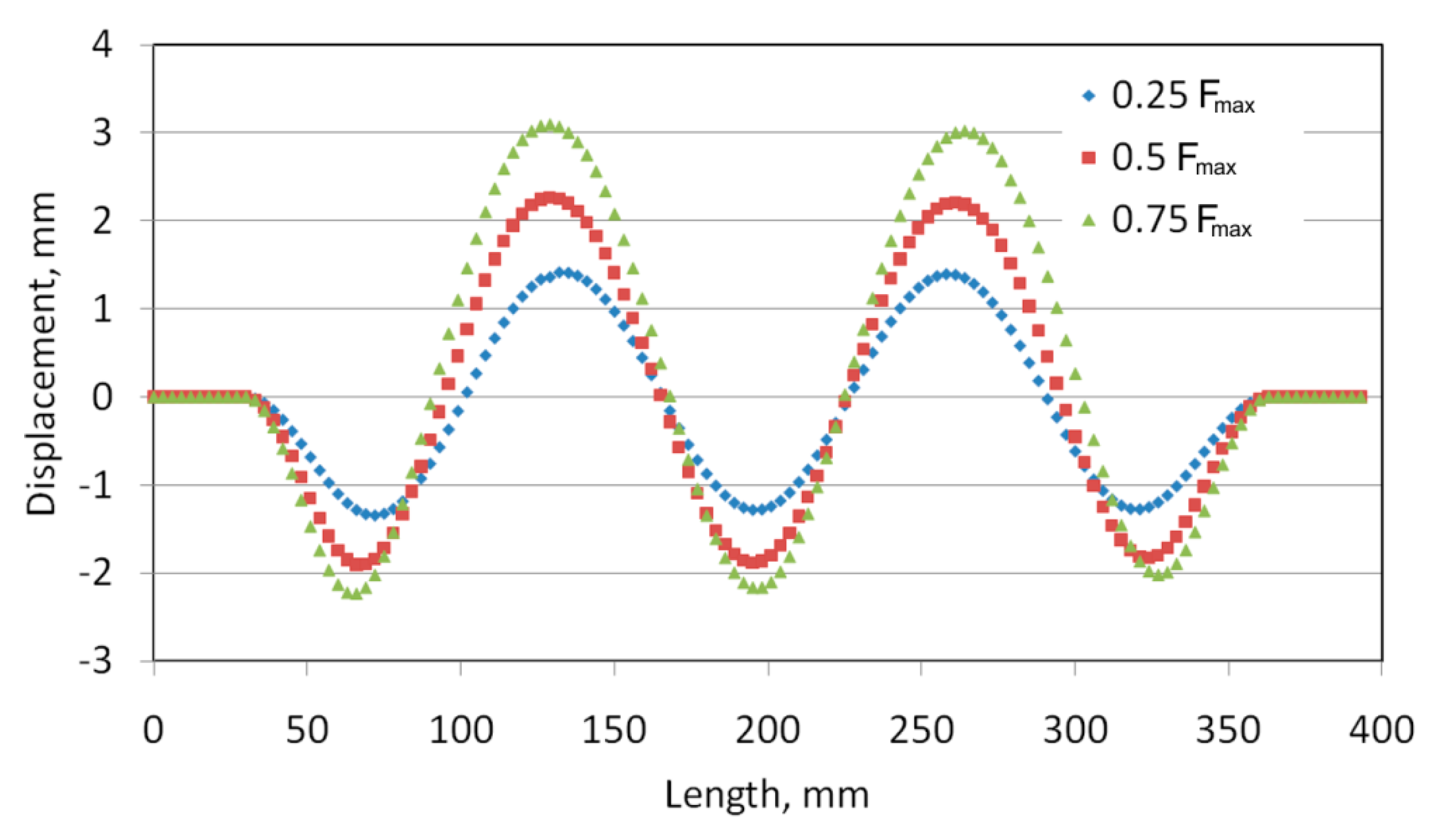
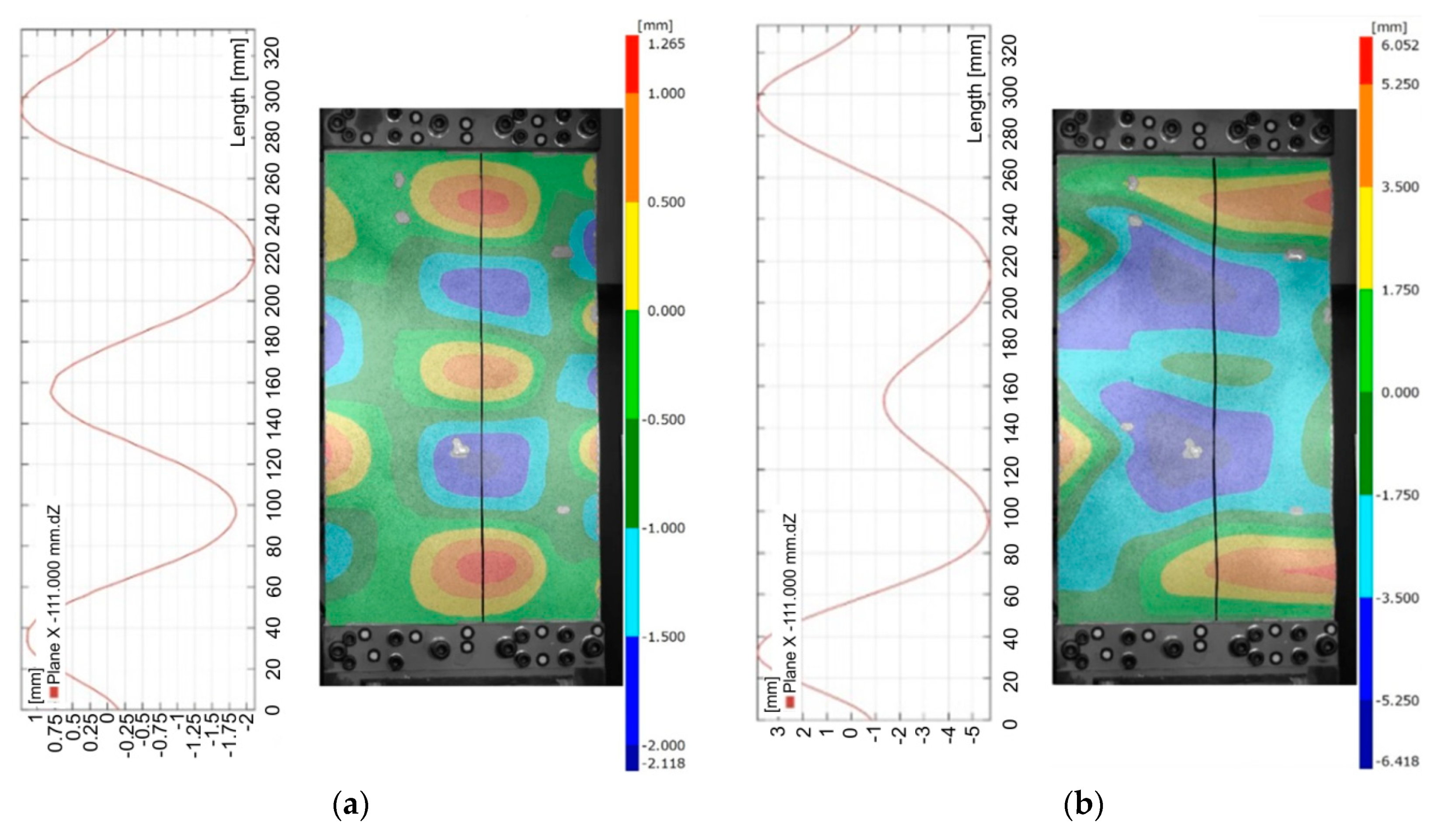
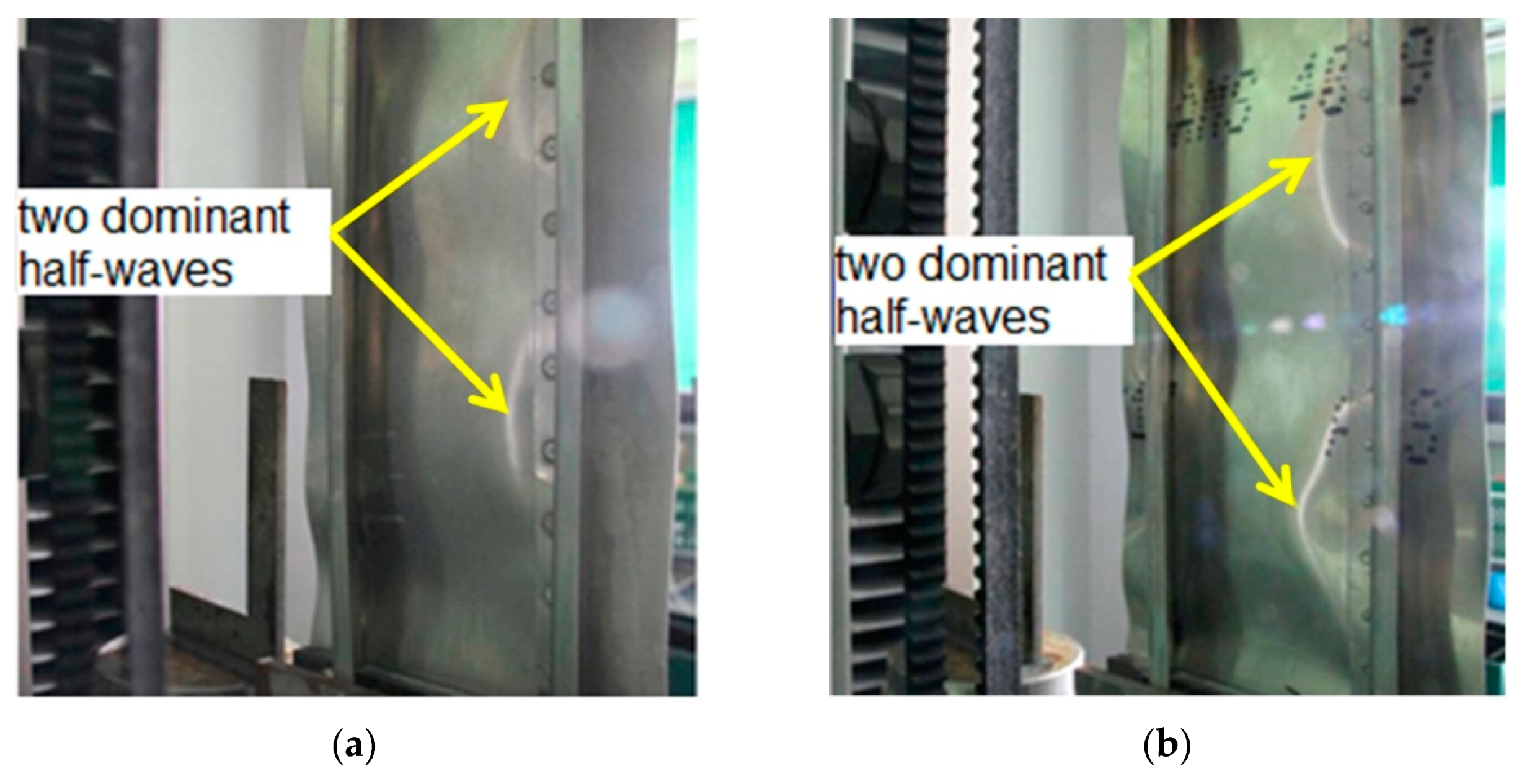
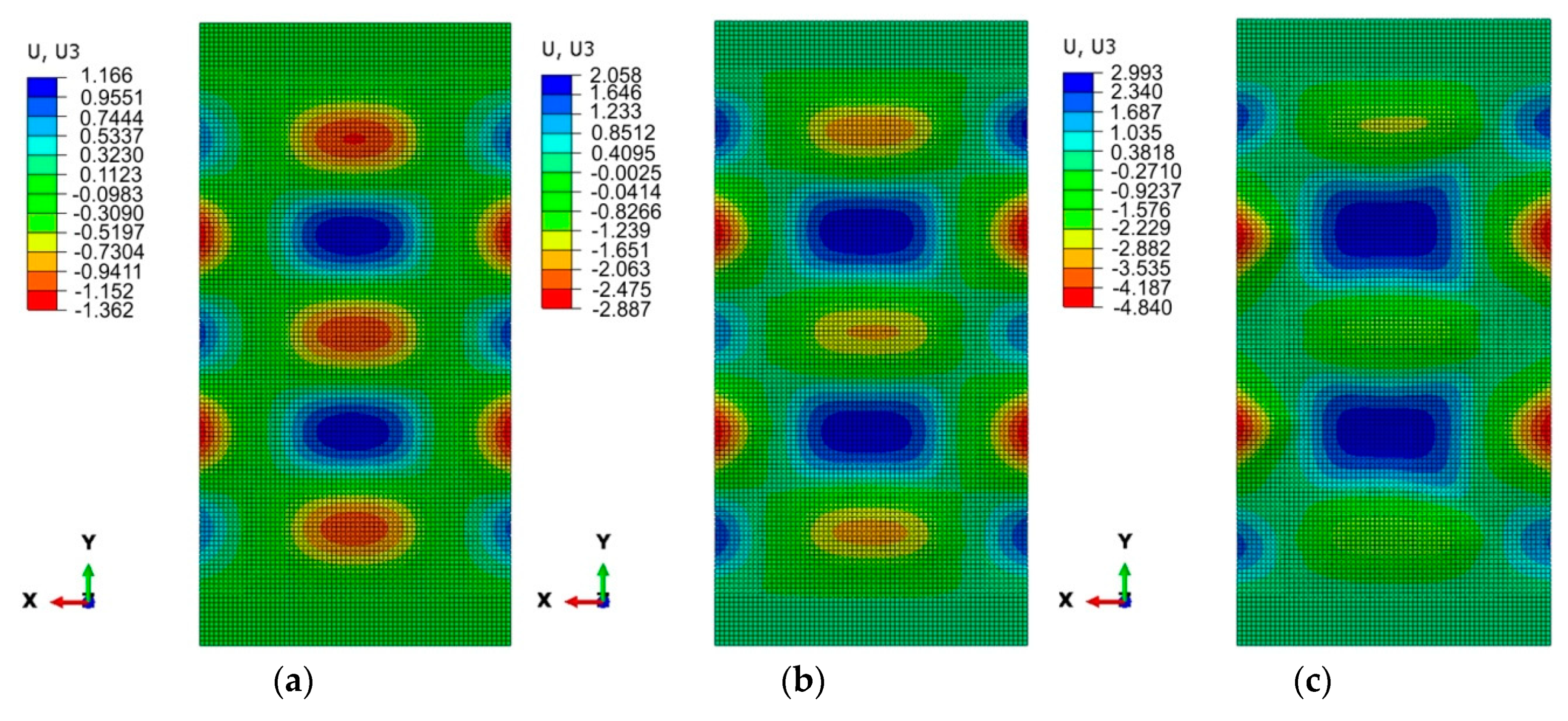
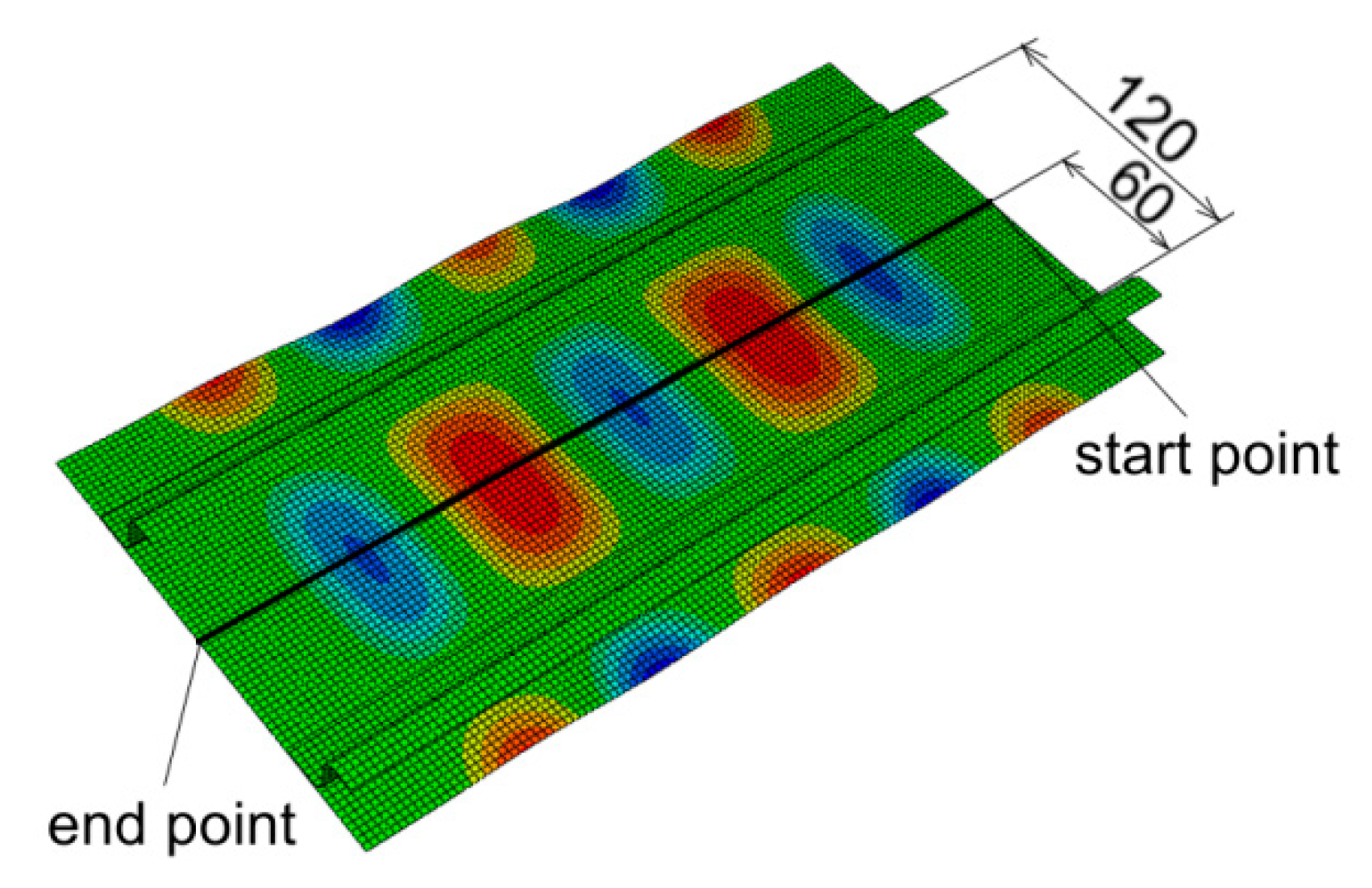
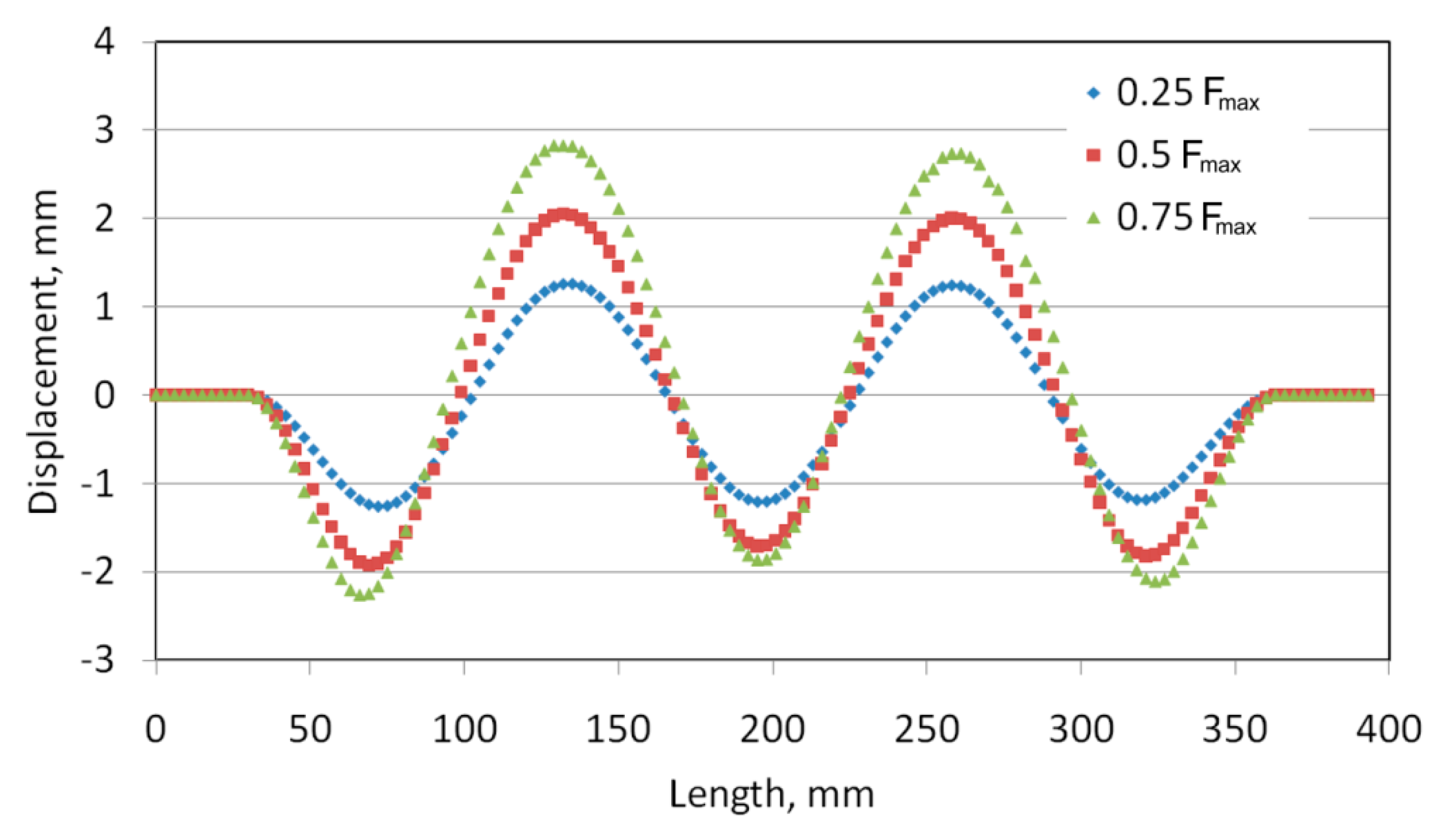
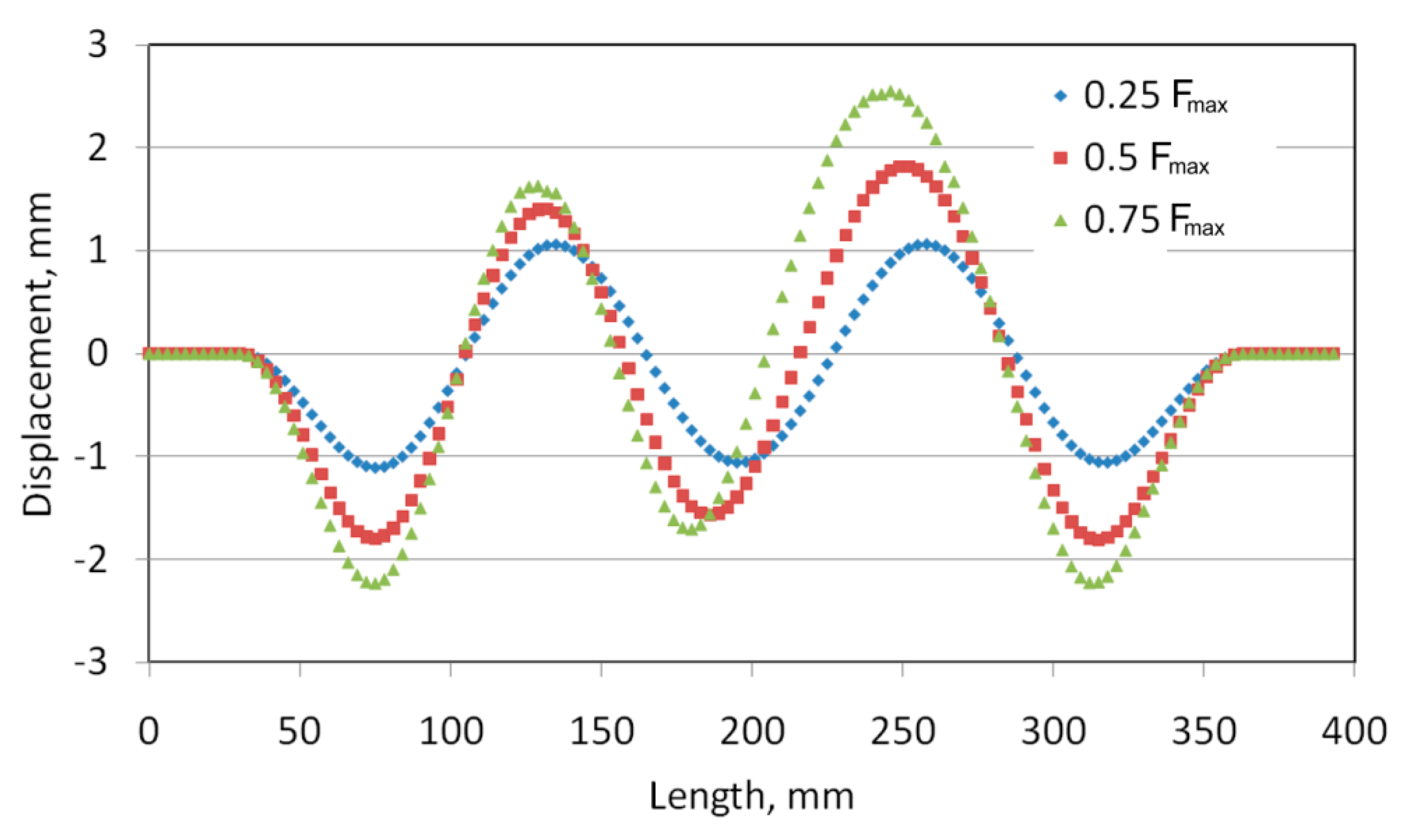
- The number of half-waves and the amount of plate deflection depends on the load capacity and method of joining of the skin-stringer interface in the stiffened panels.
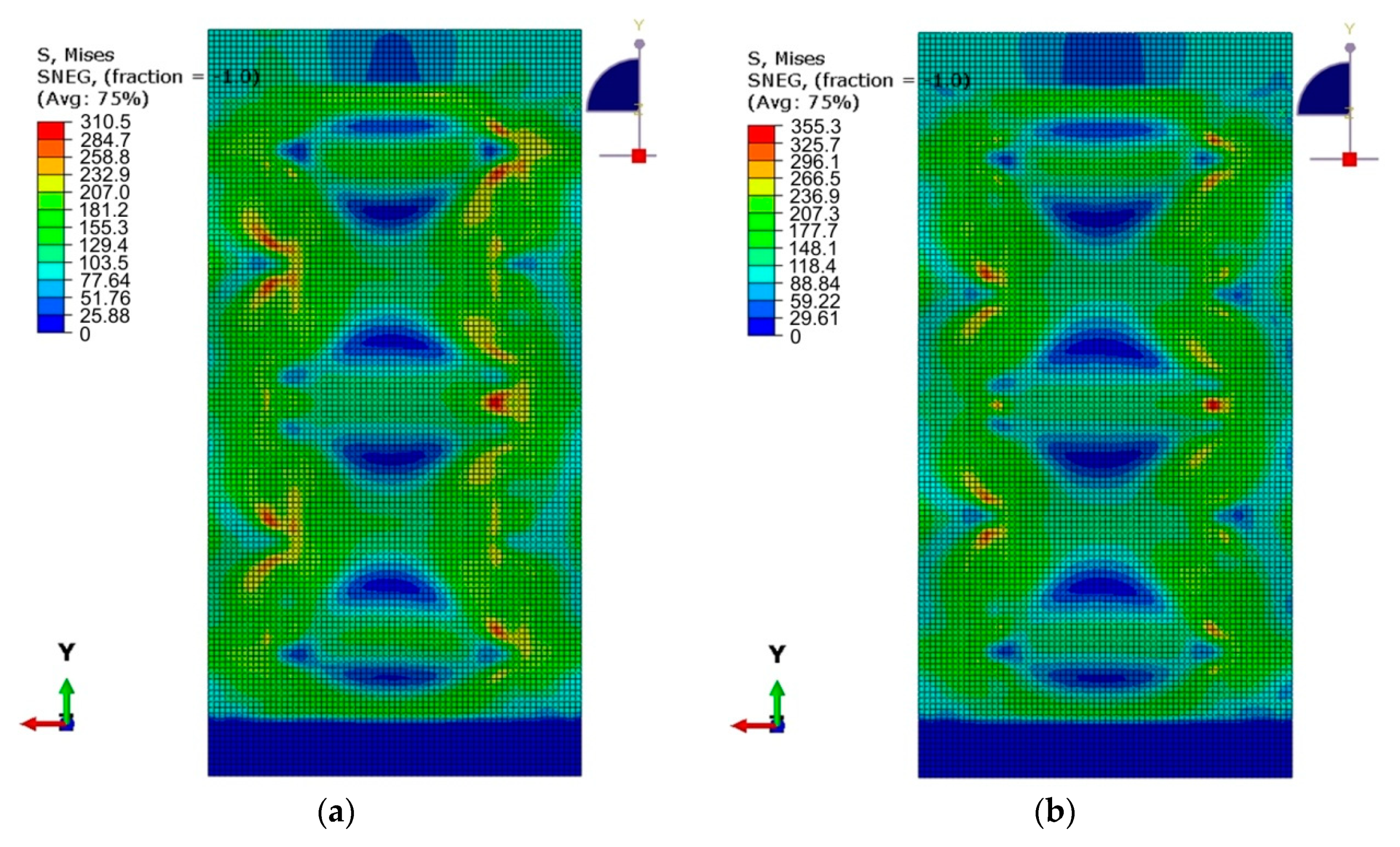
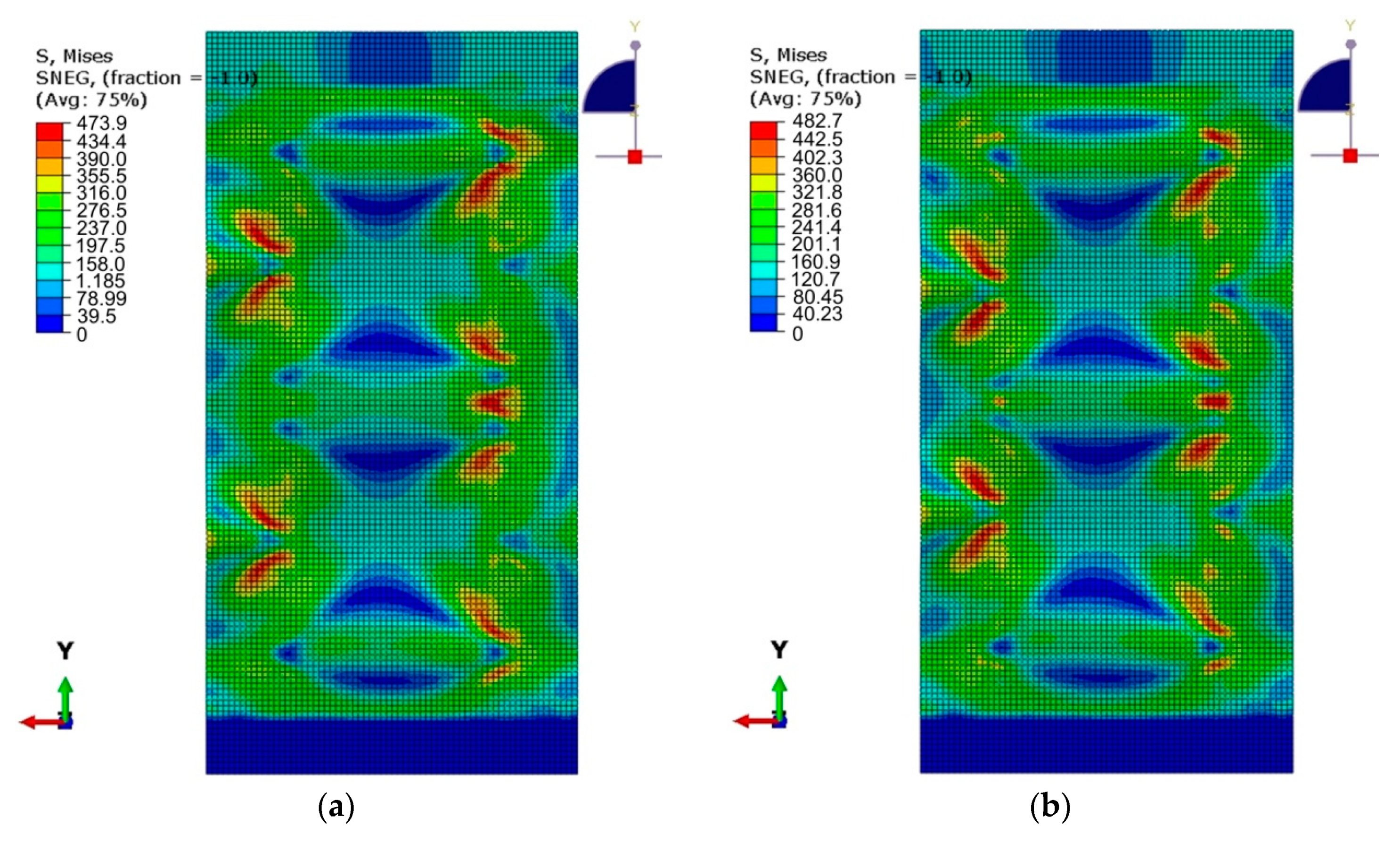
- Until the load level was below 0.75 Fmax, the numerically predicted maximum values of equivalent plastic stress were similar to the ultimate tensile stress of the panel material, and are equal to 473 MPa for the welded variant, and 483 MPa for the riveted variant of the stiffened panel.
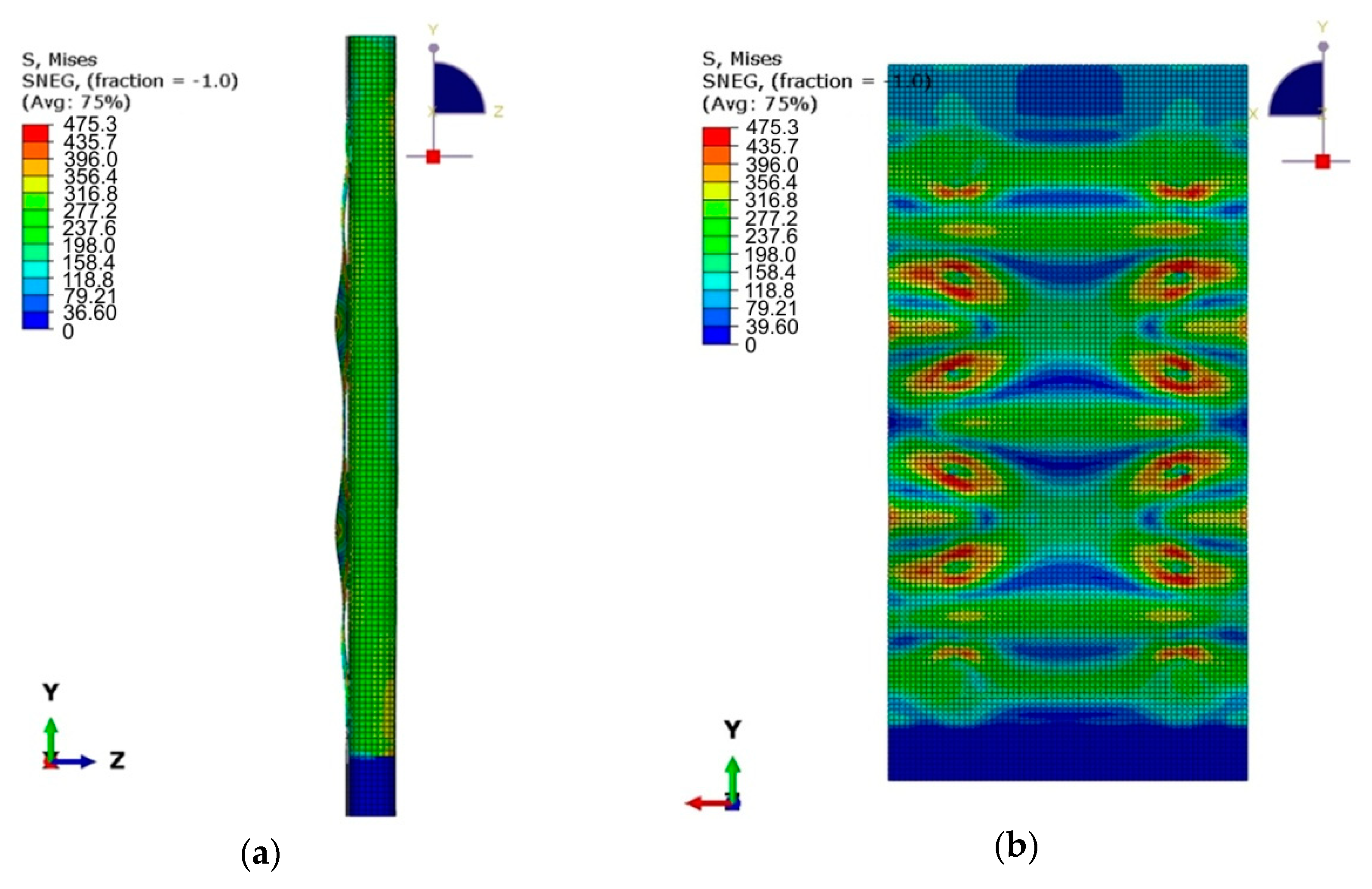
- Too large a spacing between welds causes a local reduction in panel stiffness. Due to a local buckling of a panel, the normal stresses dominate, and lead to peeling of the panel components.
Author Contributions
Funding
Acknowledgments
Conflicts of Interest
References
- Nesterenko, G.I. Comparison of Damage Tolerance of Integrally Stiffened and Riveted Structures. In Proceedings of the 22nd International Council of the Aeronautical Sciences. Comparison of Damage Tolerance of Integrally Stiffened and Riveted Structures, Harrogate, UK, 27 August–1 September 2000. [Google Scholar]
- Schilling, C.; dos Santos, J. Verfahren und Vorrichtung Zumverbinden von Wenigstens Zwei Aneinanderliegenden Werkstücken Nach der Methode des Reibrührschweißens. Germany Patent DE 19955737B4, 10 November 2005. [Google Scholar]
- Prakash, R.U.; Kumar, G.R.; Vijayanandh, R.; Kumar, M.S.; Ramganesh, T. Structural Analysis of Aircraft Fuselage Splice Joint. In IOP Conference Series: Materials Science and Engineering; IOP Publishing Ltd.: Bristol, UK, 2016; Volume 149, ID 012127. [Google Scholar]
- Neto, E.L.; Monteiro, F.A.C.; Ruela, H.H. A Comparison of Buckling Performance of Rivet and Friction Stir Welding Stiffened Panels. In Proceedings of the XXXI Iberian Latin-American Congress on Computational Methods in Engineering, Buenos Aires, Argentina, 15–18 November 2010; pp. 1–9. [Google Scholar]
- Yilmaz, M.; Çöl, M.; Acet, M. Interfaces properties of aluminum/steel friction-welded components. Mater. Charact. 2002, 49, 421–429. [Google Scholar] [CrossRef] [Scilit]
- Sepe, R.; Armentani, E.; di Lascio, P.; Citarella, R. Crack growth behavior of welded stiffened panel. Procedia Eng. 2015, 109, 473–483. [Google Scholar] [CrossRef] [Scilit]
- Citarella, R.; Carlone, P.; Sepe, R.; Lepore, M. DBEM crack propagation in friction stir welded aluminum joints. Adv. Eng. Softw. 2016, 101, 50–59. [Google Scholar] [CrossRef] [Scilit]
- Sekhar, S.R.; Chittaranjandas, V.; Govardhan, D.; Karthikeyan, R. Effect of tool rotational speed on friction stir spot welded AA5052-H38 aluminum alloy. Mater. Today Proc. 2018, 5, 5536–5543. [Google Scholar] [CrossRef] [Scilit]
- Subhashini, P.V.S.; Manas, Y.N.C. Analysis and optimization of parameters for friction stir welding. Mater. Today Proc. 2018, 5, 12376–12383. [Google Scholar] [CrossRef] [Scilit]
- Friction Stir Welding of Airframe Structures. Available online: https://www.twi-global.com (accessed on 14 March 2019).
- Shen, Z.; Yang, X.; Zhang, Z.; Cui, L.; Li, T. Microstructure and failure mechanisms of refill friction stir spot welded 7075-T6 aluminum alloy joints. Mater. Des. 2013, 44, 476–486. [Google Scholar] [CrossRef] [Scilit]
- Kopecki, H.; Święch, Ł. Post-buckling state of rectangular plate stiffened by densely arranged ribs. Numerical and Experimental Investigation. Mech. Mech. Eng. 2013, 17, 71–87. [Google Scholar]
- Kubit, A.; Trzepiecinski, T.; Faes, K.; Drabczyk, M.; Bochnowski, W.; Korzeniowski, M. Analysis of the effect of structural defects on the fatigue strength of RFSSW joints using C-scan scanning acoustic microscopy and SEM. Fatigue Fract. Eng. Mater. Struct. 2019, 42, 1308–1321. [Google Scholar] [CrossRef] [Scilit]
- Reimann, M.; Goebel, J.; dos Santos, J.F. Microstructure and mechanical properties of keyhole repair welds in AA 7075-T651 using refill friction stir spot welding. Mater. Des. 2017, 132, 283–294. [Google Scholar] [CrossRef] [Scilit]
- Bloom, F.; Coffin, D. Handbook of Thin Plate Buckling and Postbuckling, 1st ed.; Chapman and Hall/CRC: Raton, NM, USA, 2000. [Google Scholar]
- Niu, M.C. Airframe Structural Design, 2nd ed.; Conmilit Press Ltd.: Granada Hills, CA, USA, 2011. [Google Scholar]
- Szilard, R. Theories and Applications of Plate Analysis: Classical, Numerical and Engineering Methods, 1st ed.; John Wiley & Sons Inc.: Hoboken, NJ, USA, 2004. [Google Scholar]
- Timoshenko, S.P.; Gere, J.M. Theory of Elastic Stability, 2nd ed.; McGraw-Hill Book Company Inc.: New York, NY, USA, 1961. [Google Scholar]
- Szafran, J.; Juszczyk, K.; Kamiński, M. Experiment-based reliability analysis of structural joints in a steel lattice tower. J. Constr. Steel Res. 2019, 154, 278–292. [Google Scholar] [CrossRef] [Scilit]
- Quinn, D.; Murphy, A.; Glazebrook, C. Aerospace stiffened panel initial sizing with novel skin sub-stiffening features. Int. J. Struct. Stab. Dyn. 2012, 12, 1250060. [Google Scholar] [CrossRef] [Scilit]
- Khedmati, M.R.; Zareei, M.R.; Rigo, P. Empirical formulations for estimation of ultimate strength of continuous stiffened aluminum plates under combined in-plane compression and lateral pressure. Thin-Walled Struct. 2010, 48, 274–289. [Google Scholar] [CrossRef] [Scilit]
- Wadee, M.A.; Farsi, M. Cellular buckling in stiffened plates. Proc. R. Soc. A 2014, 470, 20140094. [Google Scholar] [CrossRef] [Scilit]
- Rans, C.; Straznicky, P.V.; Alderliesten, R. Riveting Process Induced Residual Stresses Around Solid Rivets in Mechanical Joints. Available online: http://calvinrans.com/wp-content/uploads/2013/10/Rans2007-J-Aircraft.pdf (accessed on 19 May 2019).
- Givi, M.K.B.; Asadi, P. Advances in Friction Stir Welding and Processing, 1st ed.; Woodhead Publishing: Cambridge, UK, 2014. [Google Scholar]
- Anastassiou, M.; Babbit, M.; Lebrun, J. Residual stresses and microstructure distribution in spot-welded steel sheets: Relation with fatigue behavior. Mater. Sci. Eng. A 1991, 125, 141–156. [Google Scholar] [CrossRef] [Scilit]
- Lim, Y.S.; Kim, S.H.; Lee, K.J. Effect of residual stress on the mechanical properties of FSW joints with SUS409L. Adv. Mater. Sci. Eng. 2018, 2018, 9890234. [Google Scholar] [CrossRef] [Scilit]
- Ghazijahani, T.G.; Jiao, H.; Holloway, D. An experimental study on externally pressurized stiffened and thickened cylindrical shells. Thin-Walled Struct. 2014, 85, 359–366. [Google Scholar] [CrossRef] [Scilit]
- Barkey, M.; Turgeon, M.; Nare, T.V. Buckling of stiffened thin-walled truncated cones subjected to external pressure. Exp. Mech. 2008, 48, 281–291. [Google Scholar] [CrossRef] [Scilit]
- Humfeld, G.R., Jr.; Dillard, D.A. Residual stress development in adhesive joints subjected to thermal cycling. J. Adhes. 1988, 65, 277–306. [Google Scholar] [CrossRef] [Scilit]
- ISO 6892-1—Metallic Materials—Tensile Testing—Part 1: Method of Test at Room Temperature; International Organization for Standardization: Geneva, Switzerland, 2016.
- Hibbit Karlsson & Sorensen Inc. ABAQUS Theory and User’s Manuals; v. 2016.HF2; HKS Inc.: Dallas, TX, USA; Dassault Systemes: Richmont, VA, USA, 2007. [Google Scholar]
- Theofilos-Ioannis, M. Elastoplastic Constitutive Models in Finite Element Analysis; National Technical University Athens: Athens, Greece, 2012. [Google Scholar]
- Wang, H.L. Evaluation of Multiple Site Damage in Lap Joint Specimens. Ph.D. Dissertation, Purdue University, Lafayette, IN, USA, 1998. [Google Scholar]
- Silva, L.F.M.; Gonçalves, J.P.M.; Oliveira, F.M.F.; de Castro, P.M.S.T. Multiple-site damage in riveted lap-joints: Experimental simulation and finite element prediction. Int. J. Fatigue 2000, 22, 319–338. [Google Scholar] [CrossRef] [Scilit]





| Parameter | Ultimate Tensile Stress Rm, MPa | Yield Stress Rp0.2, MPa | Elongation A, % |
|---|---|---|---|
| Value | 482.6 | 413.7 | 7 |
| Variant of Panel | Ultimate Capacity of Panel | Difference, % | |
|---|---|---|---|
| Experiment | Numerical Modeling | ||
| riveted, s = 23.5 | 43 × 103 | 48 × 103 | 11.62 |
| welded, s = 29.5 | 43 × 103 | 49 × 103 | 13.95 |
| welded, s = 44.25 | 37 × 103 | 42 × 103 | 13.51 |
© 2019 by the authors. Licensee MDPI, Basel, Switzerland. This article is an open access article distributed under the terms and conditions of the Creative Commons Attribution (CC BY) license (http://creativecommons.org/licenses/by/4.0/).
Share and Cite
Kubit, A.; Trzepiecinski, T.; Święch, Ł.; Faes, K.; Slota, J. Experimental and Numerical Investigations of Thin-Walled Stringer-Stiffened Panels Welded with RFSSW Technology under Uniaxial Compression. Materials 2019, 12, 1785. https://doi.org/10.3390/ma12111785
Kubit A, Trzepiecinski T, Święch Ł, Faes K, Slota J. Experimental and Numerical Investigations of Thin-Walled Stringer-Stiffened Panels Welded with RFSSW Technology under Uniaxial Compression. Materials. 2019; 12(11):1785. https://doi.org/10.3390/ma12111785
Chicago/Turabian StyleKubit, Andrzej, Tomasz Trzepiecinski, Łukasz Święch, Koen Faes, and Jan Slota. 2019. "Experimental and Numerical Investigations of Thin-Walled Stringer-Stiffened Panels Welded with RFSSW Technology under Uniaxial Compression" Materials 12, no. 11: 1785. https://doi.org/10.3390/ma12111785
APA StyleKubit, A., Trzepiecinski, T., Święch, Ł., Faes, K., & Slota, J. (2019). Experimental and Numerical Investigations of Thin-Walled Stringer-Stiffened Panels Welded with RFSSW Technology under Uniaxial Compression. Materials, 12(11), 1785. https://doi.org/10.3390/ma12111785