Article

Effect of Long-Time Annealing at 1000 °C on Phase Constituent and Microhardness of the 20Co-Cr-Fe-Ni Alloys


1
Jiangsu Key Laboratory of Materials Surface Science and Technology, Changzhou University, Jiangsu 213164, China
2
National Experimental Teaching Demonstration Center of Materials Science and Engineering, School of Materials Science and Engineering, Changzhou University, Jiangsu 213164, China
3
Jiangsu Collaborative Innovation Center of Photovoltaic Science and Engineering, Changzhou University, Jiangsu 213164, China
*
Author to whom correspondence should be addressed.
Materials 2019, 12(10), 1700; https://doi.org/10.3390/ma12101700
Submission received: 3 May 2019 / Revised: 19 May 2019 / Accepted: 23 May 2019 / Published: 25 May 2019

Abstract

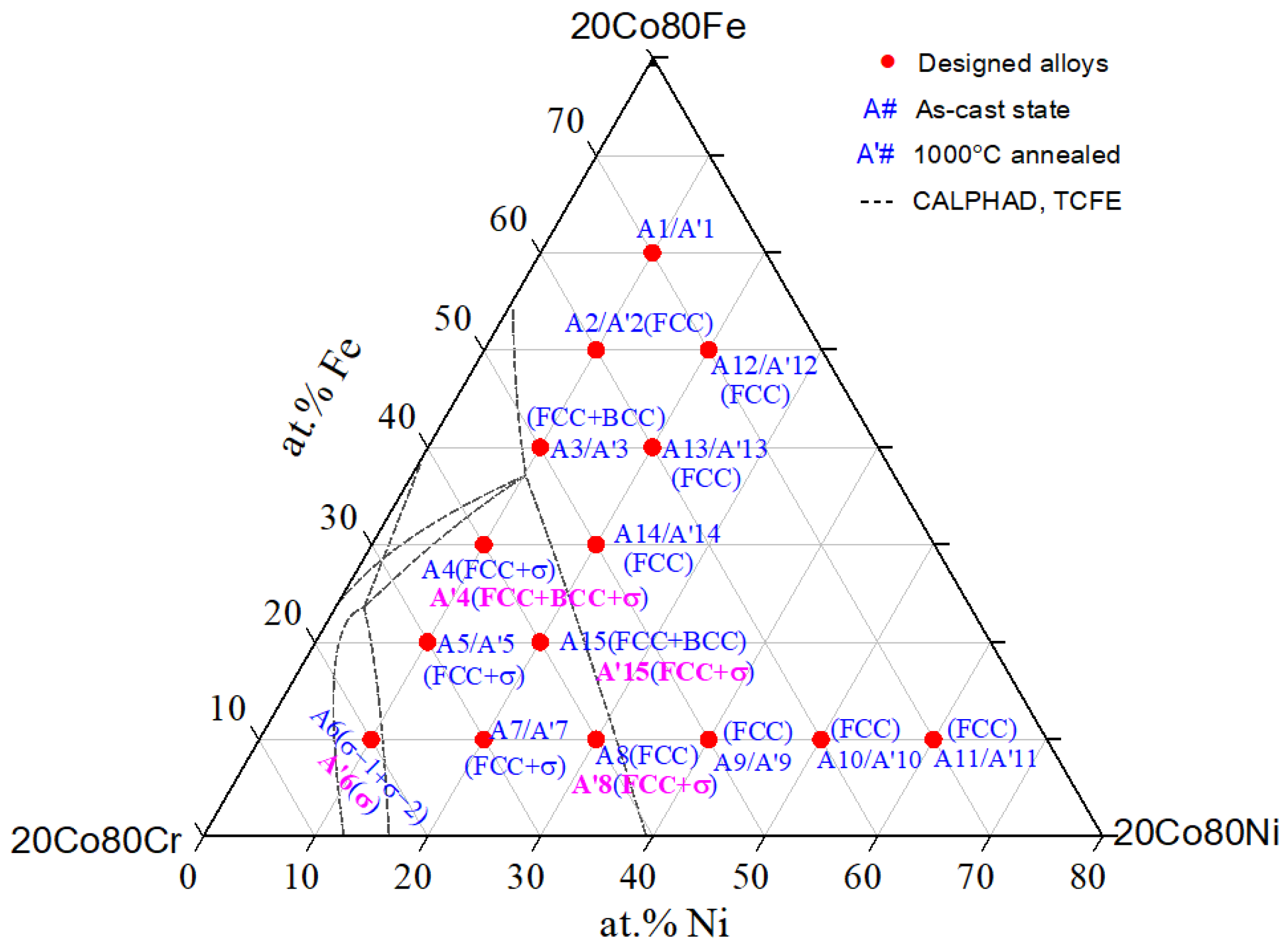
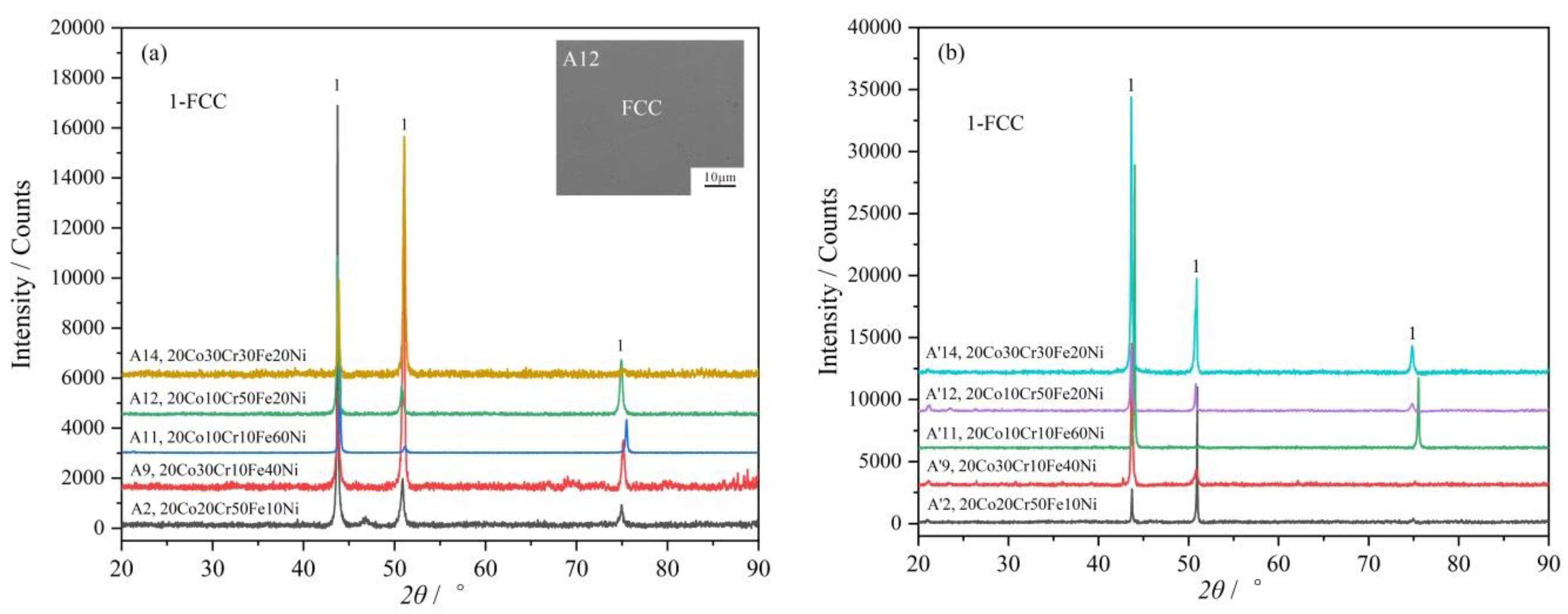
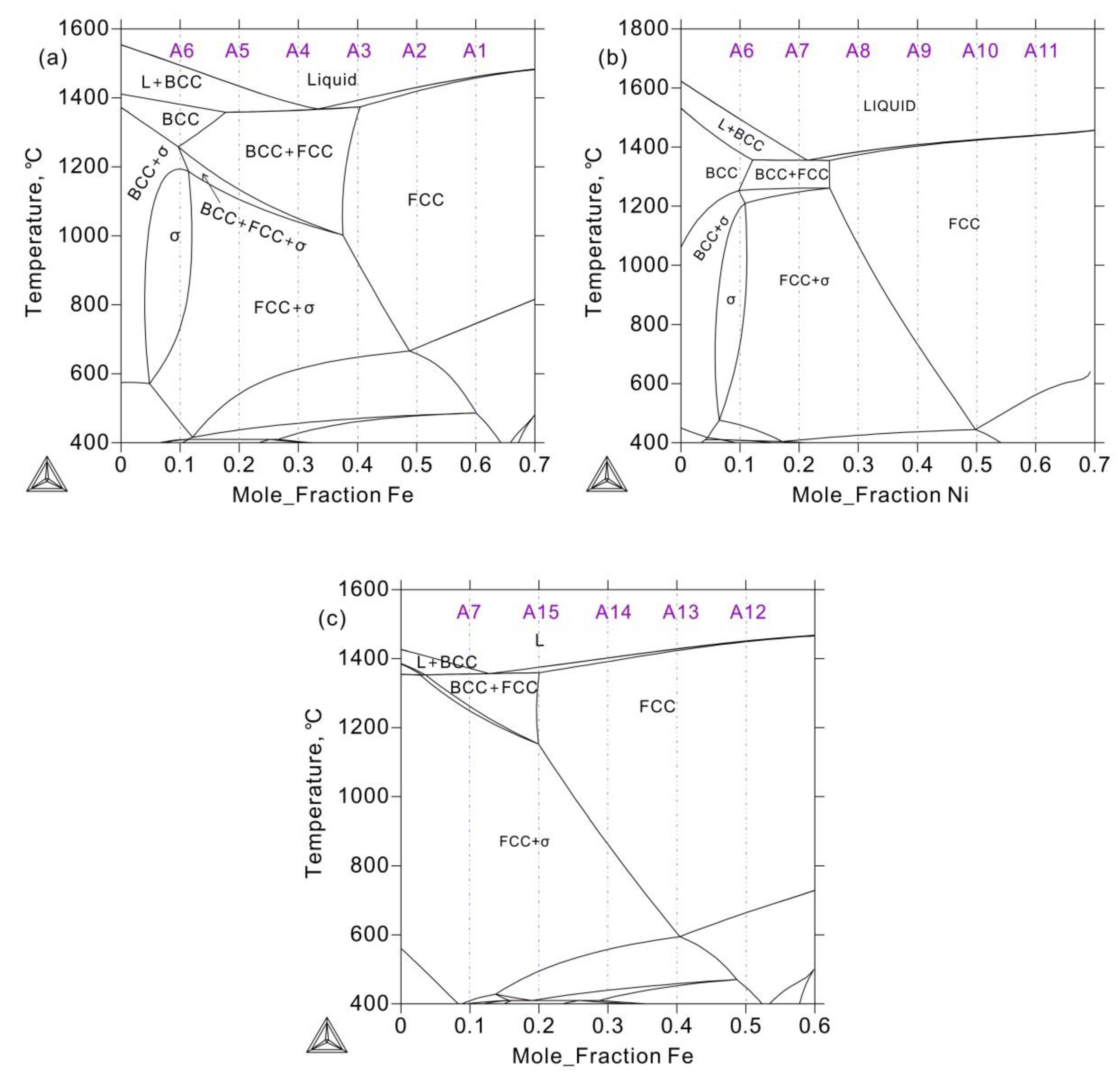
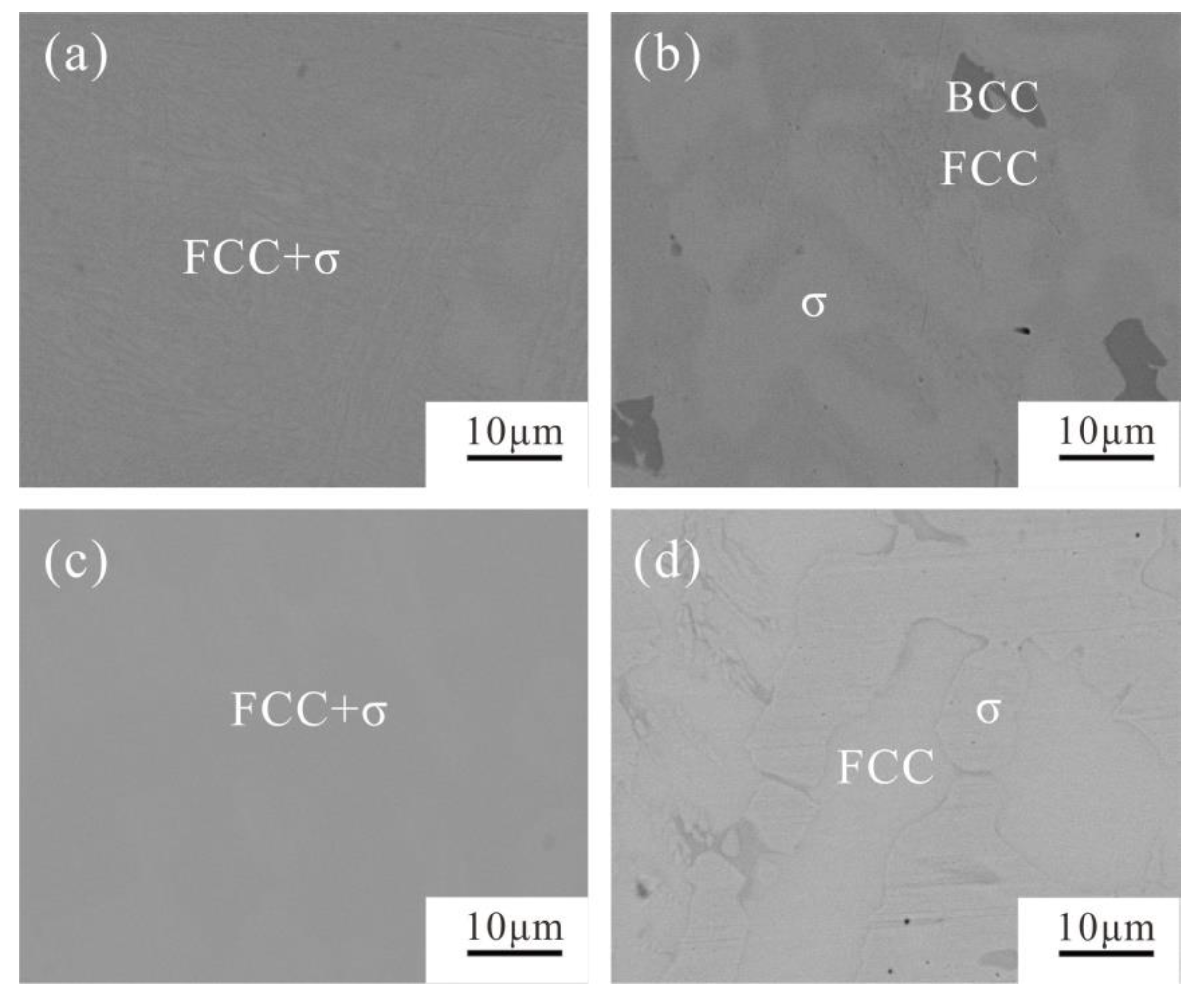
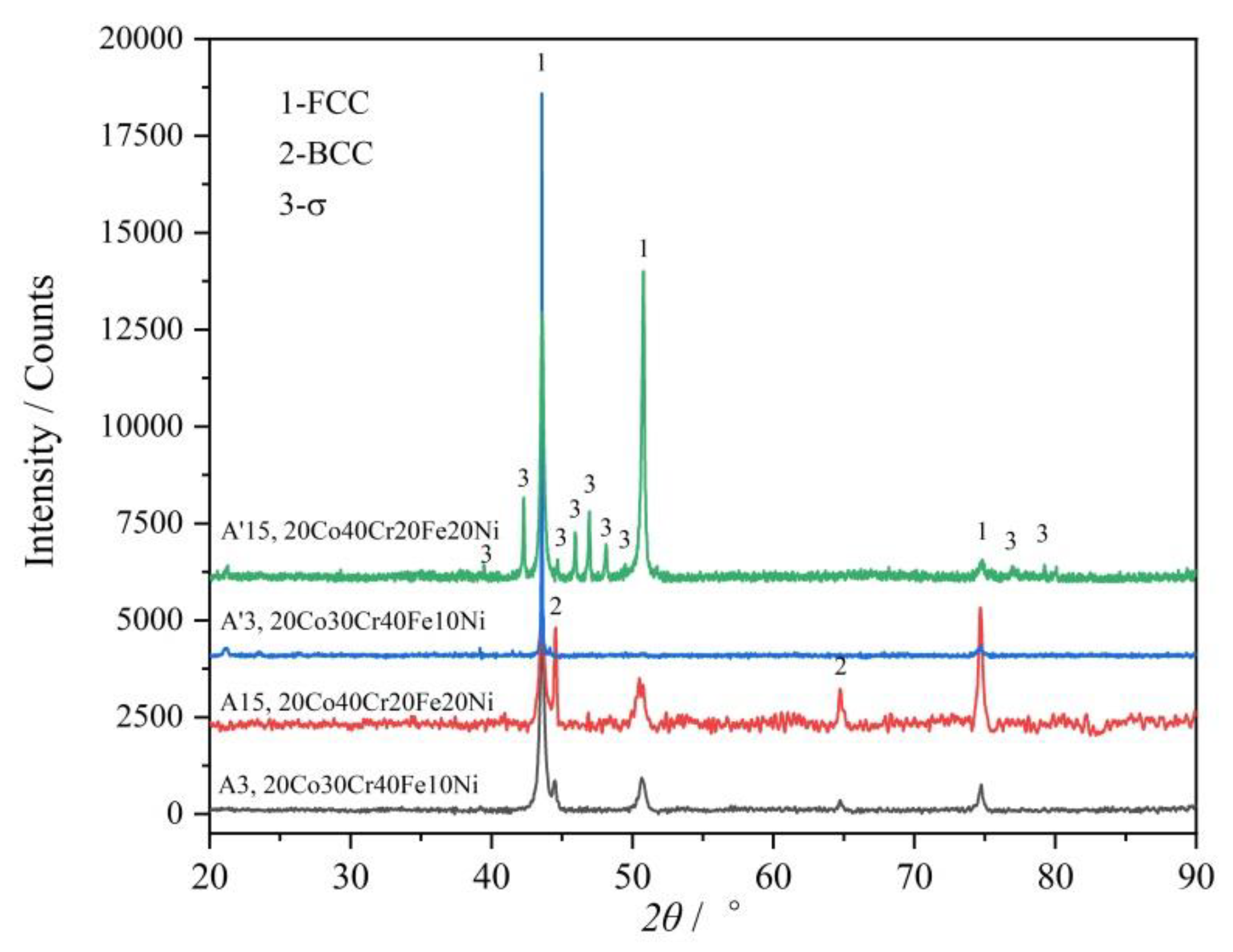
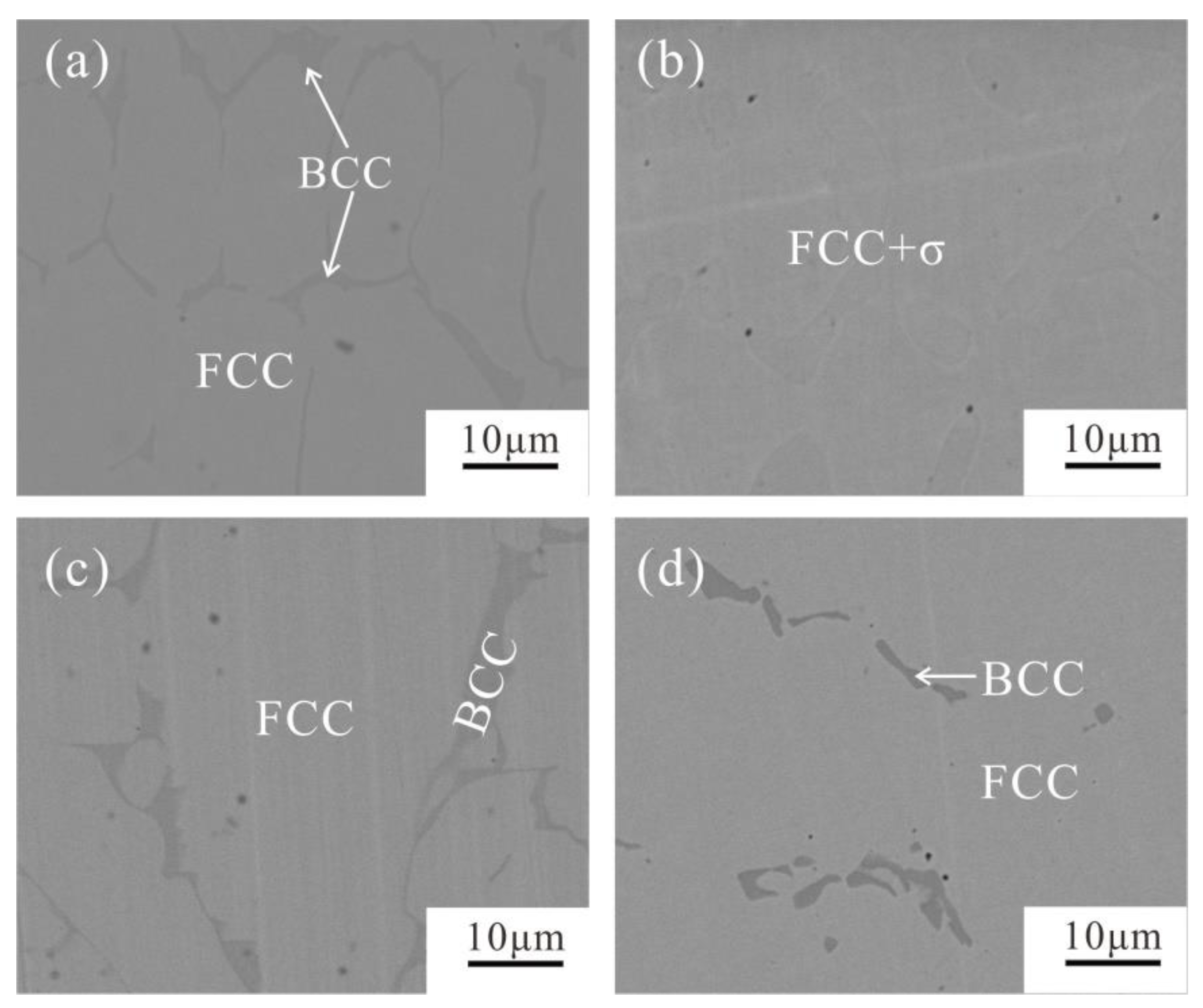
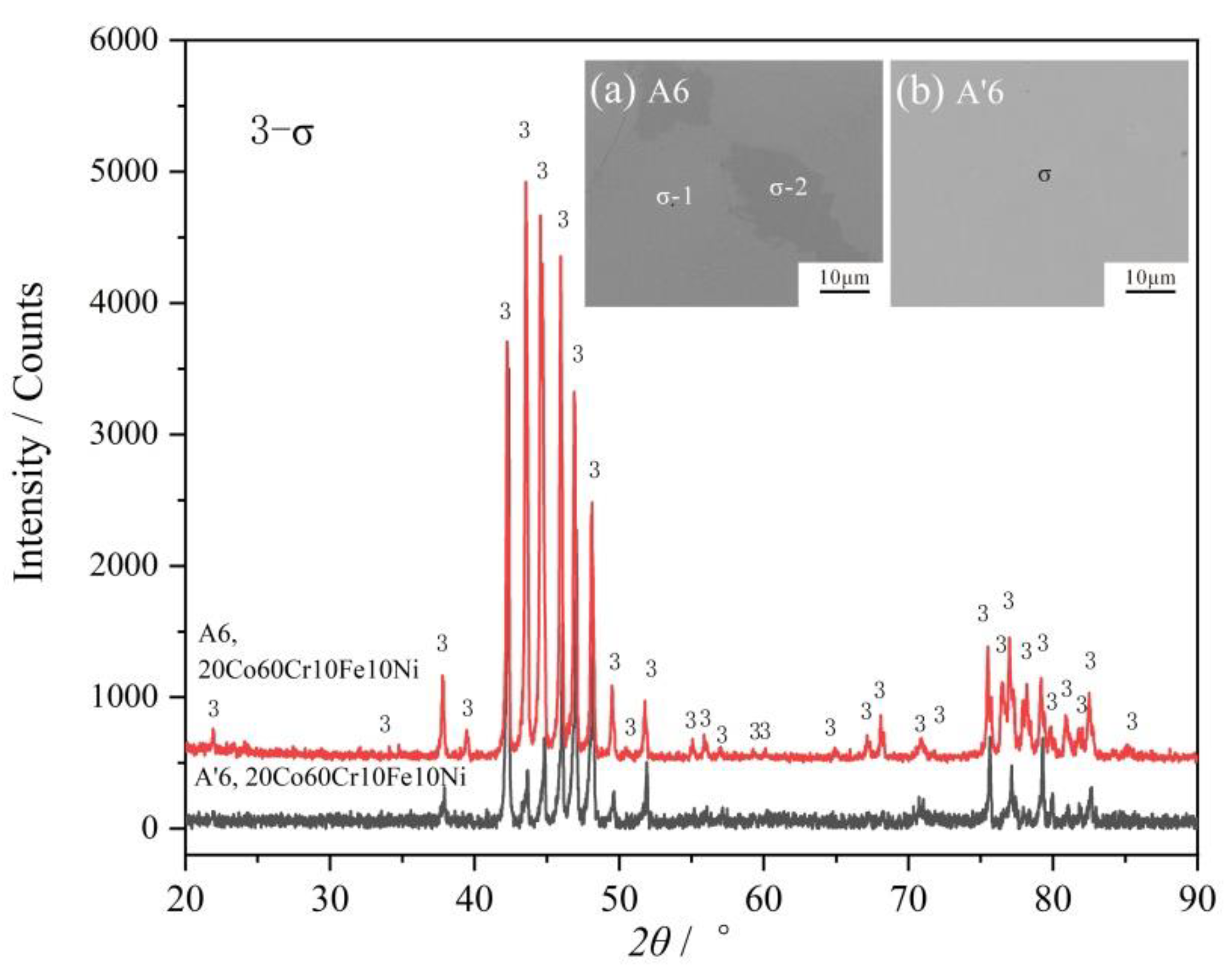
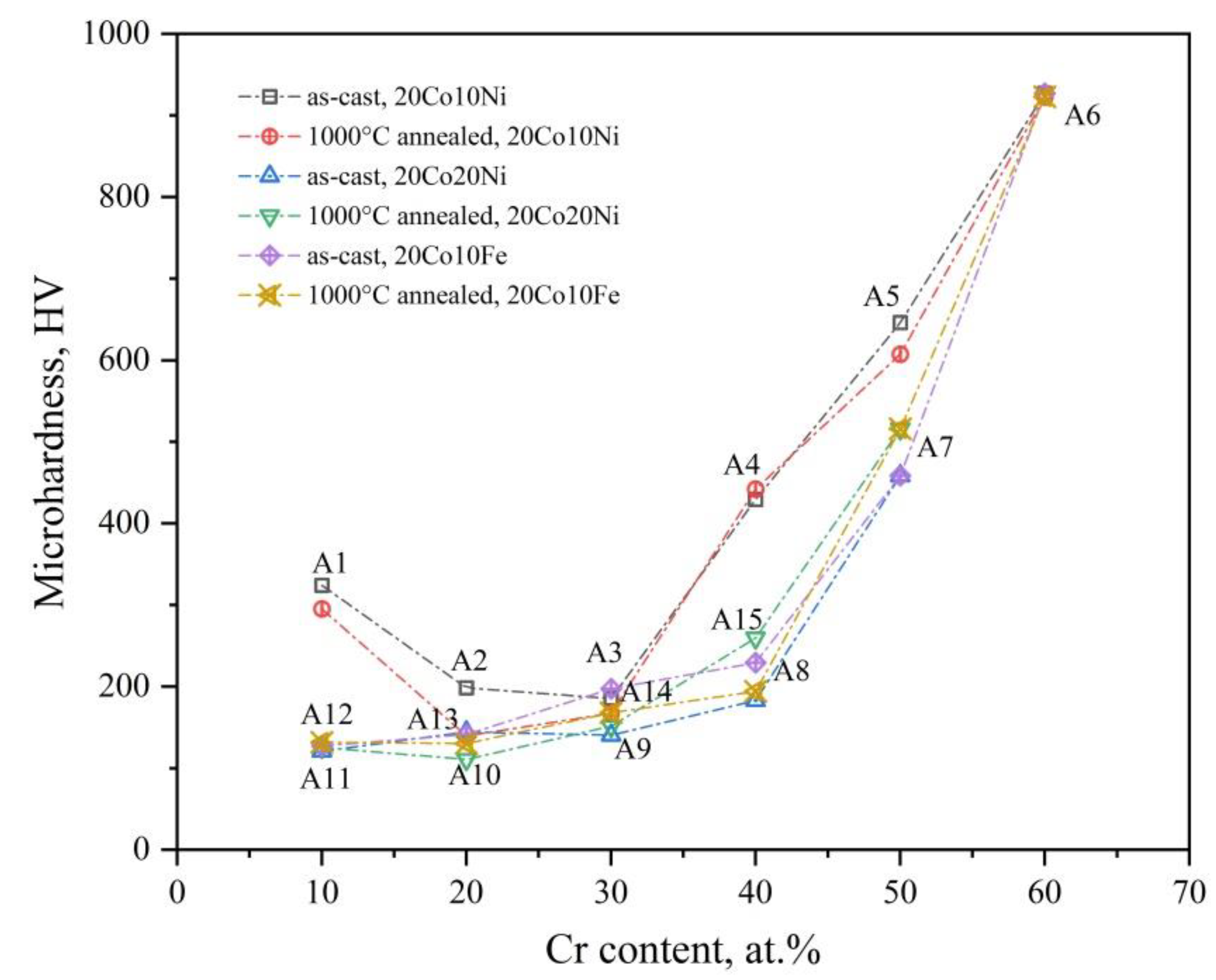
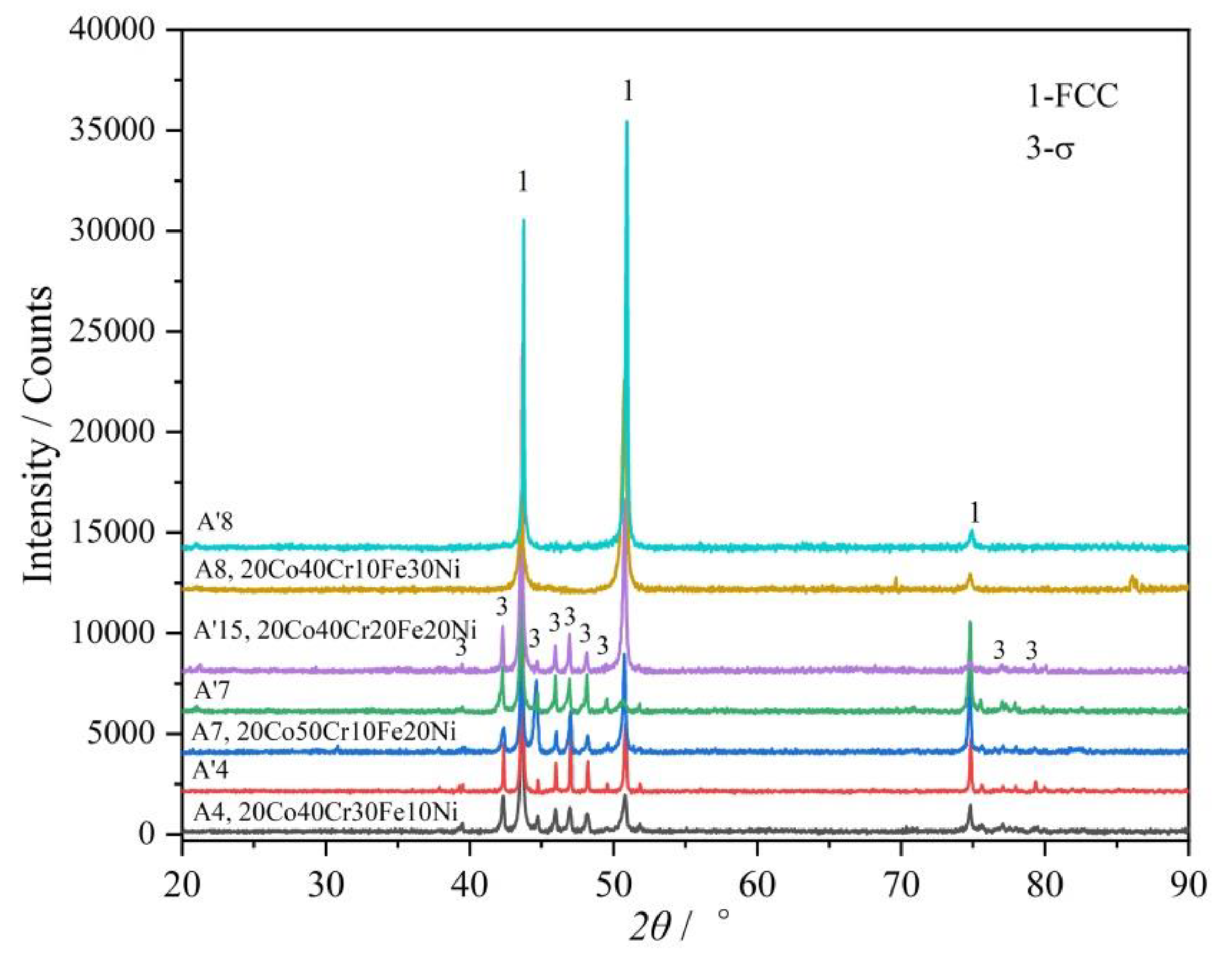
The phase constituent and microhardness of the arc-melted 20Co-Cr-Fe-Ni alloys, in both as-cast state and after annealing at 1000 °C for 30 days, were experimentally investigated by scanning electron microscopy (SEM) and X-ray diffraction (XRD). Experiment results indicated that a uniform, stable, single Face-Center Cubic (FCC) phase can be obtained in as-cast 20 Co-Cr-Fe-Ni alloys with less than 30 at.% Cr. Annealing at 1000 °C has no effect on their phase composition and microhardness. When the Cr content is above 40 at.%, the σ phase forms and its volume fraction increases with the Cr content, which leads to an increase in microhardness. Annealing at 1000 °C for 30 days can slightly decrease the volume fraction of the σ phase and slightly decrease the alloy microhardness. Except for the Fe-rich alloys, the alloy microhardness increases with the Cr content when the Co and Ni or the Co and Fe contents were fixed. Moreover, comparing with the thermodynamically calculated phase diagram based on the TCFE database, it has been proved that the calculation can predict the phase stability of the FCC phase and the 1000 °C isothermal section. However, it fails to predict the stability of the σ phase near the liquidus. The present results will help to design and process treatment of the Co-Cr-Fe-Ni based high entropy alloys.
Keywords: Co-Cr-Fe-Ni; high entropy alloys; annealing; phase constituent; microhardness Co-Cr-Fe-Ni; high entropy alloys; annealing; phase constituent; microhardness