Discrete Fracture Modeling of 3D Heterogeneous Enhanced Coalbed Methane Recovery with Prismatic Meshing
Abstract
1. Introduction
2. Methodology
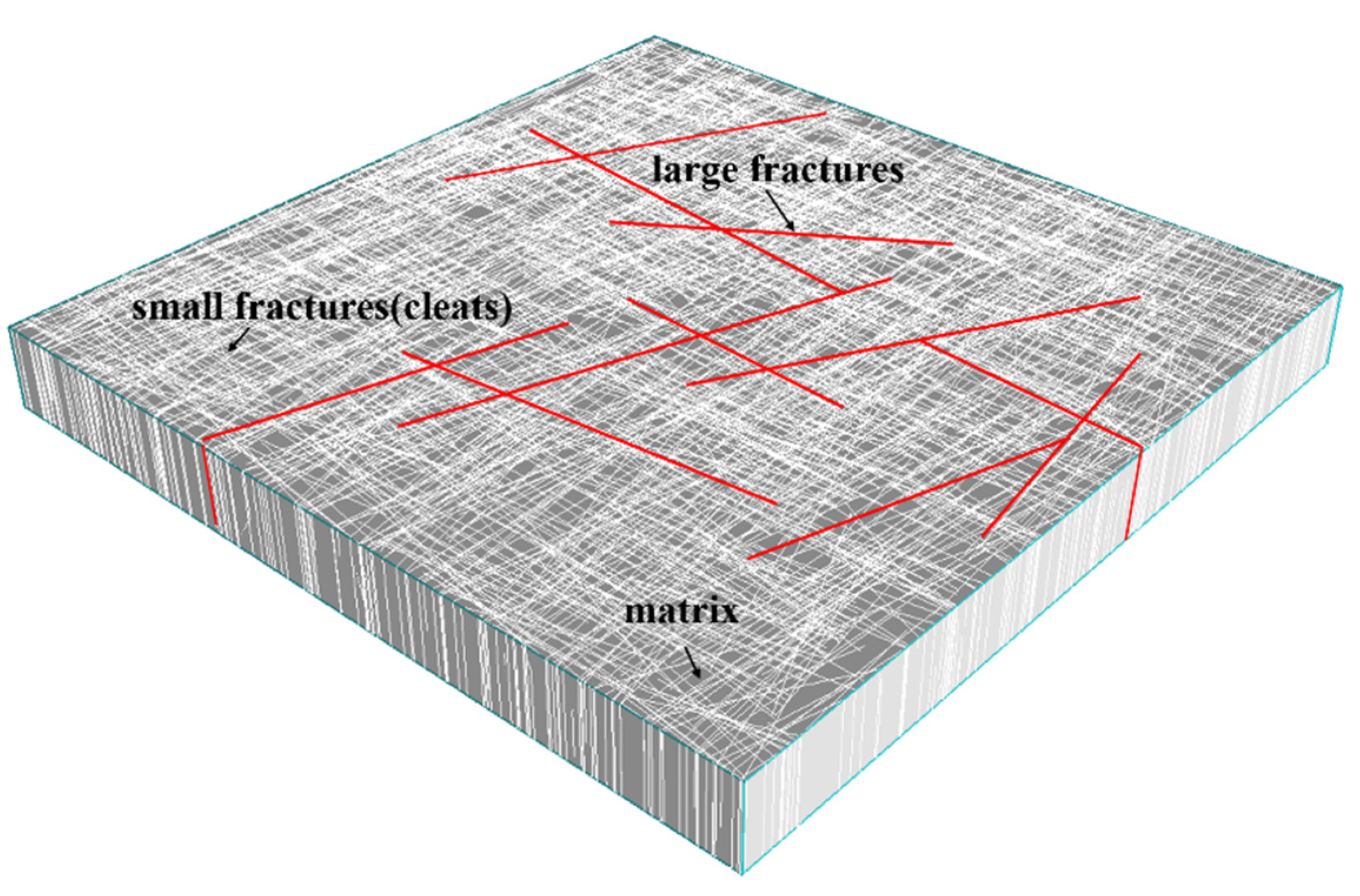
2.1. Reservoir Characterization
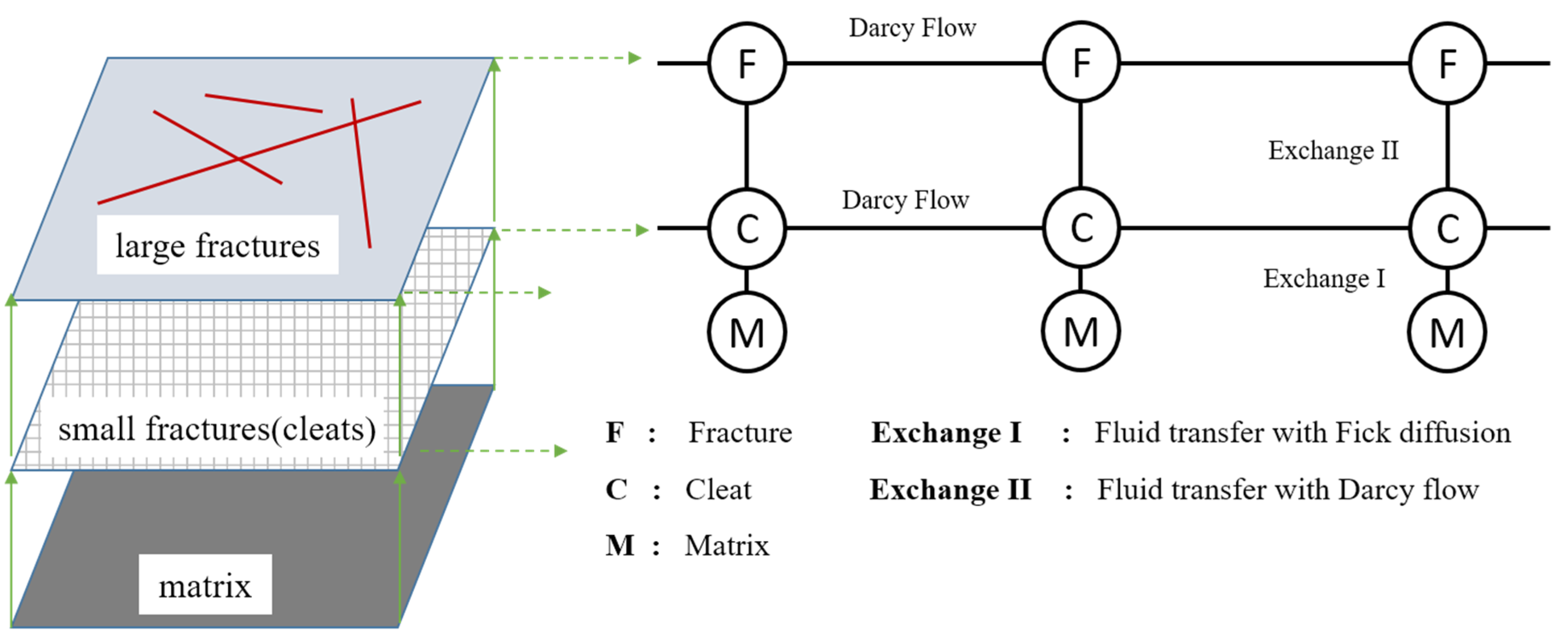
2.2. Model Formulation
2.3. Numerical Discretization and Prismatic Meshing Strategies
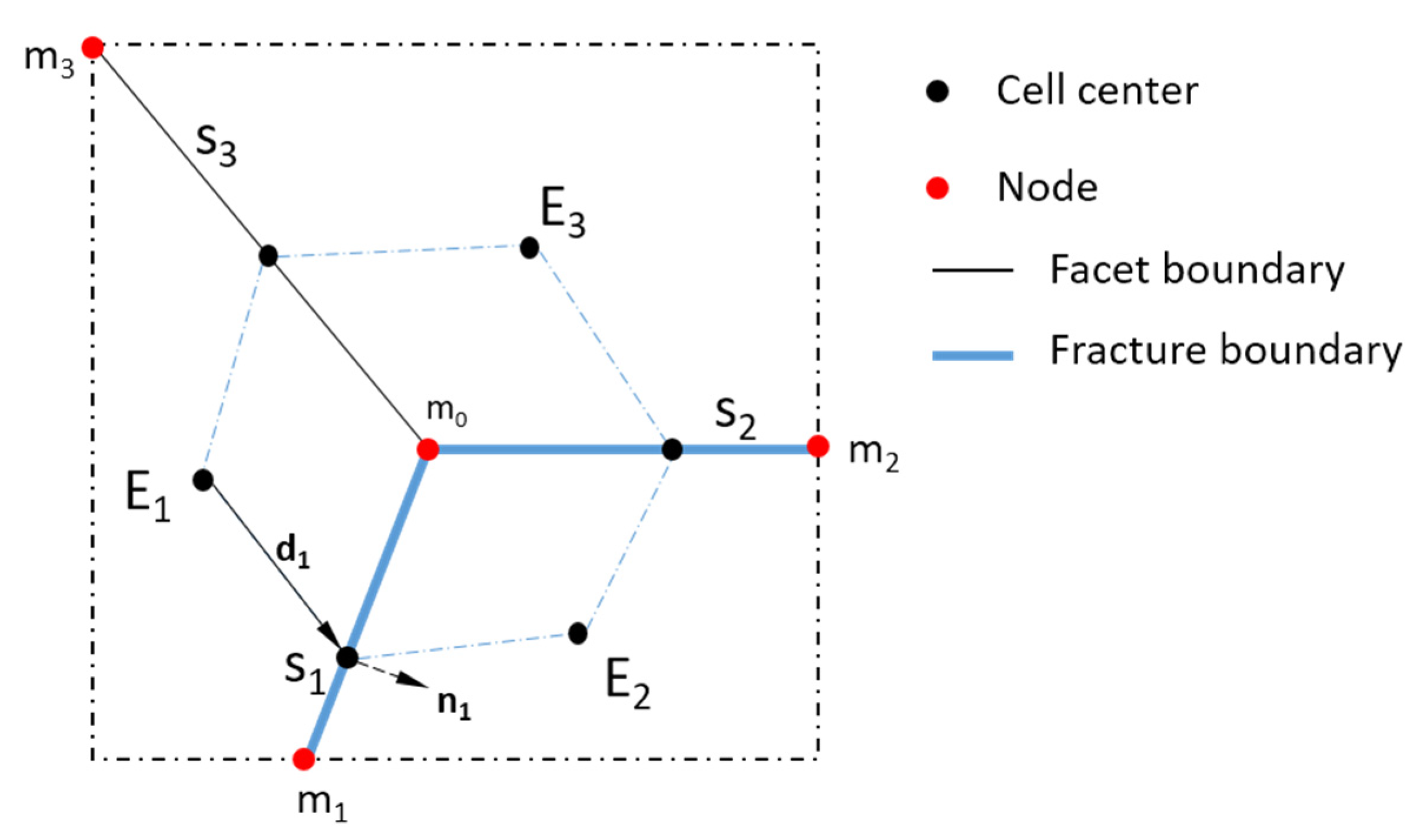
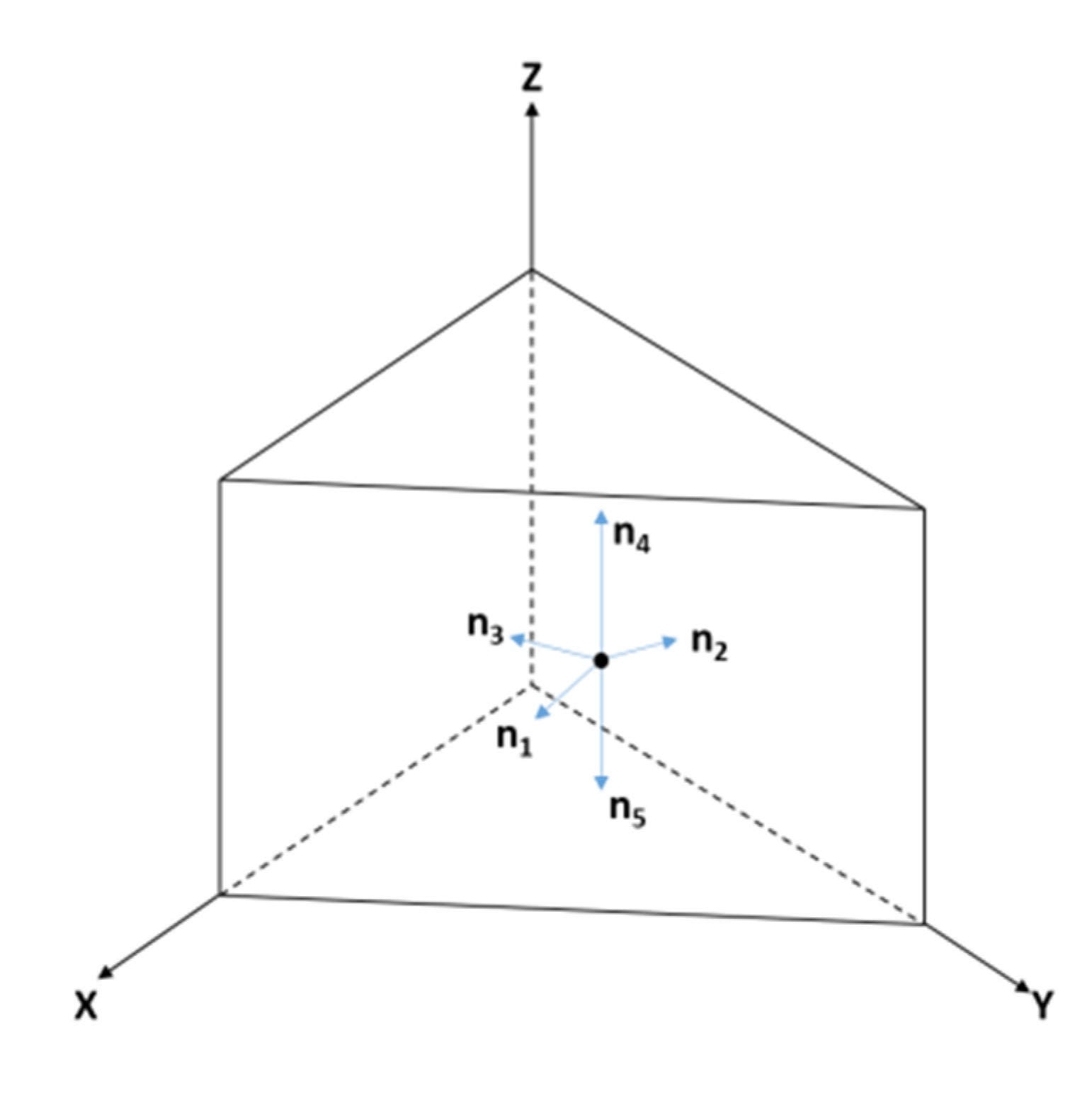
2.4. Coupling of Coal Shrinkage and Swelling
3. Verification and Model Applications
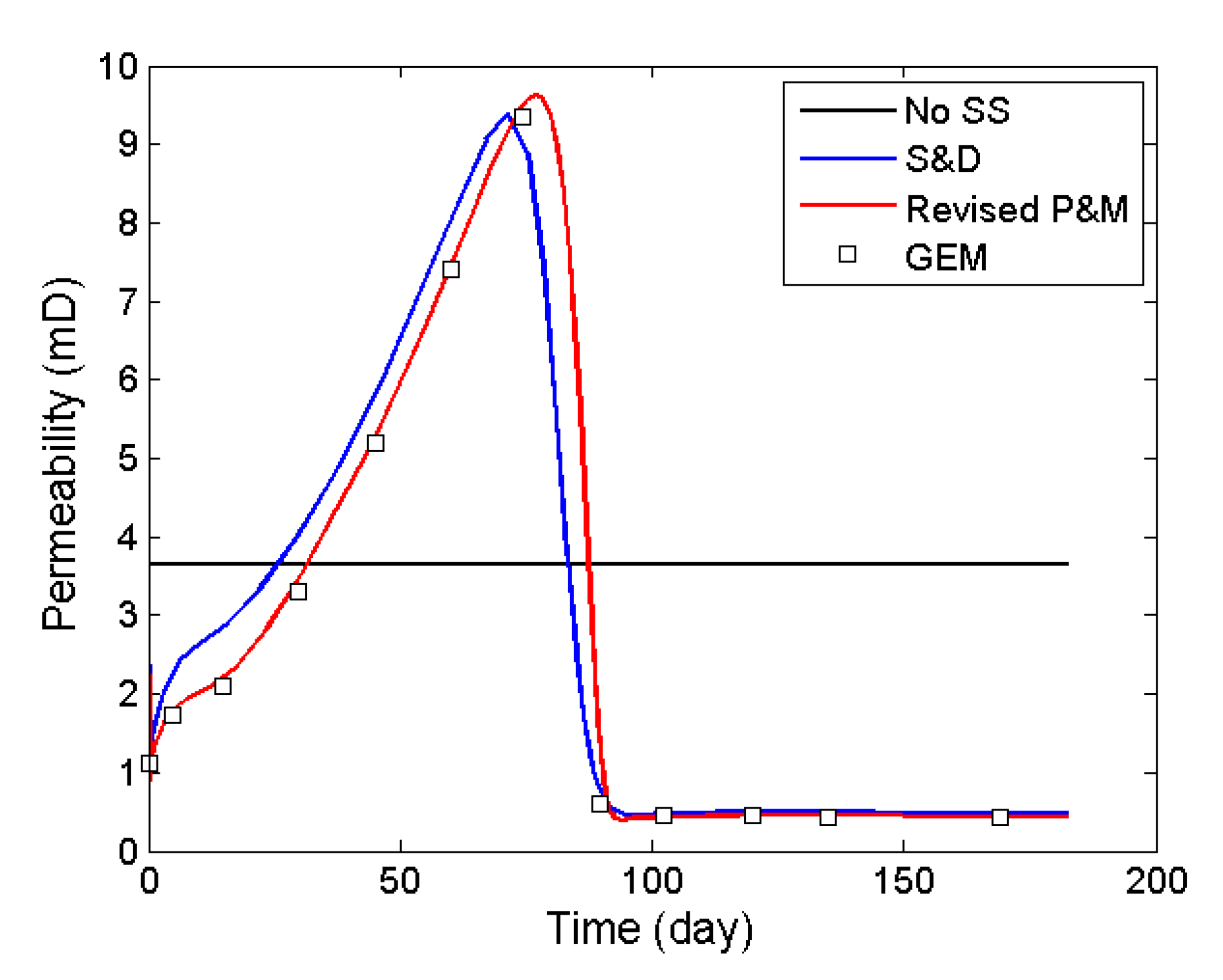
3.1. Case 1: Model Verification
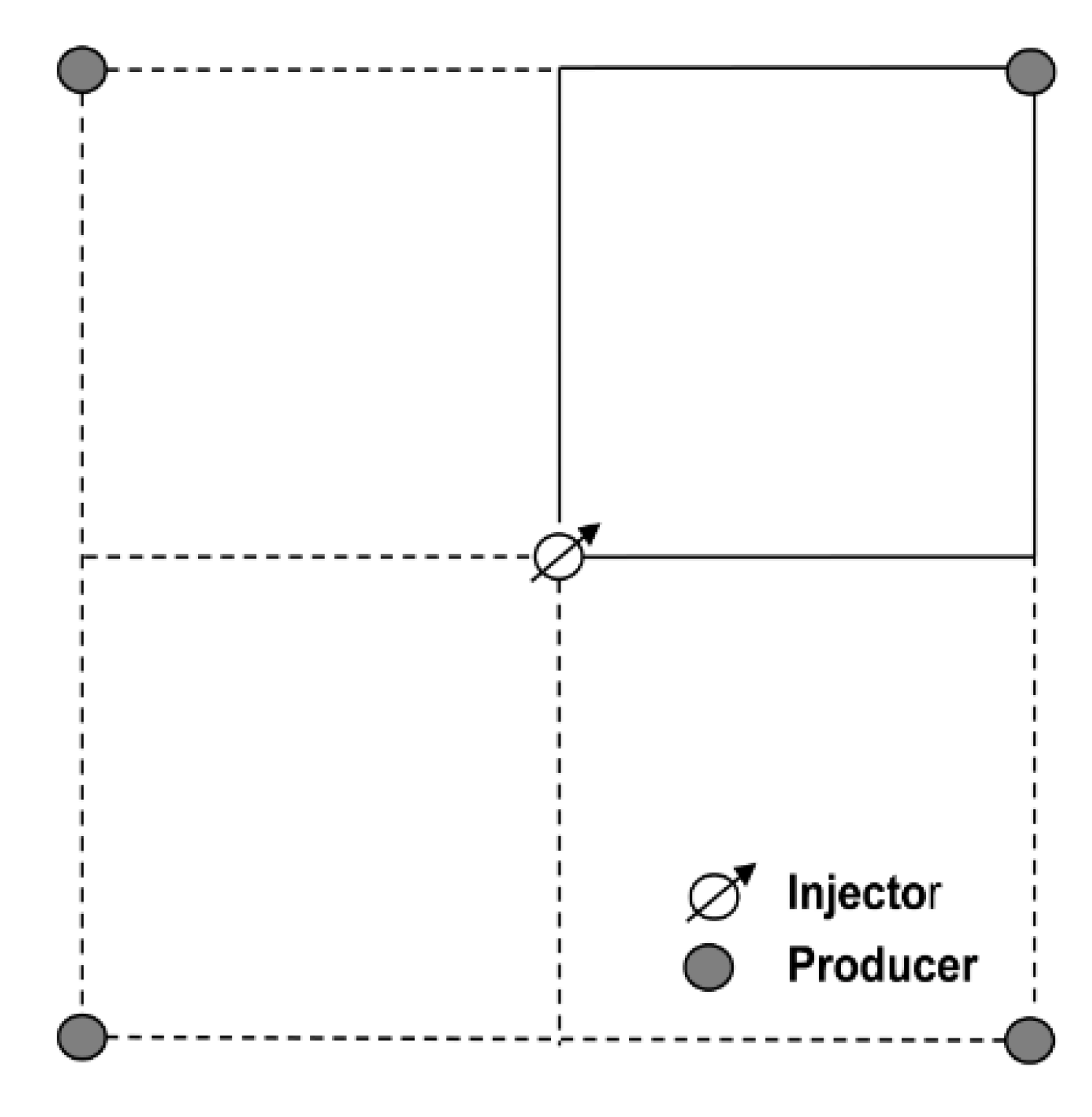
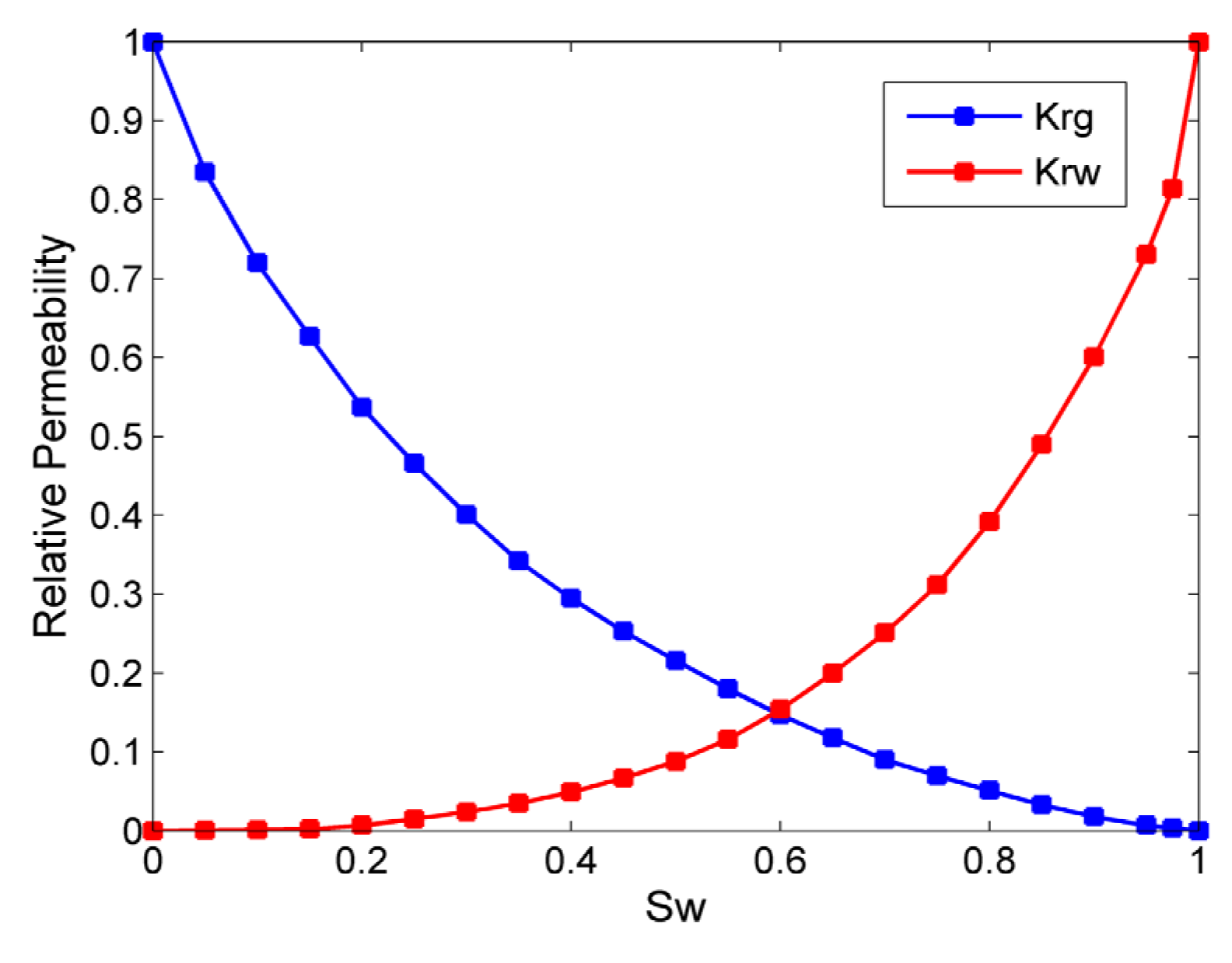

| Coal Reservoir Properties | |
| Region of interest | 1/4 of rectangular area with length 100.586 m |
| Grid system | Cartesian 11 × 11 × 1 |
| Thickness, m | 9 |
| Coal density, kg/m3 | 1434 |
| Temperature, °C | 45 |
| Initial porosity | 0.001 |
| Initial permeability (mD) | 3.4 |
| Initial water saturation | 0.592 |
| Diffusion coefficient, m2·s−1 | 7.88 × 10⁻¹¹ |
| Shape factor, m−2 | 1.05 × 10⁵ |
| Aqueous Properties | |
| Aqueous density, kg/m3 | 990 |
| Aqueous viscosity, cp | 0.607 |
| Aqueous compressibility, kPa−1 | 5.8 × 10⁻⁷ |
| Component | Sorption Constant b (kPa−1) | Langmuir Volume VL (m3/(kg Coal)) | Sorption Strain Factor εL (-) |
|---|---|---|---|
| CH4 | 2.133 × 10⁻⁴ | 0.0152 | 0.1176 |
| CO2 | 5.255 × 10⁻⁴ | 0.0310 | 0.1176 |
| N2 * | 3.671 × 10⁻⁵ | 0.0150 | 0.1176 |

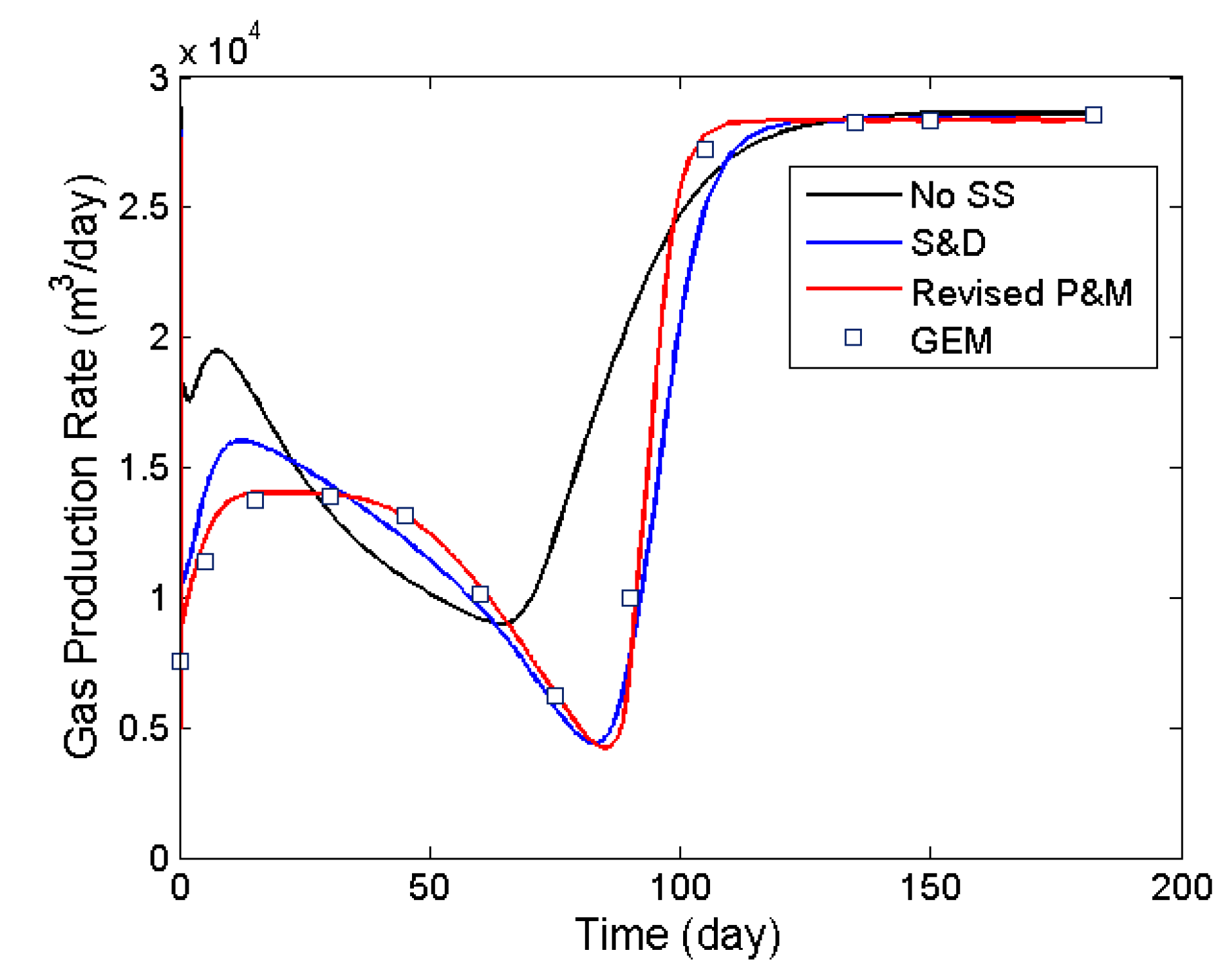
3.2. Case 2: 3D Heterogeneous ECBM Simulation with Prismatic Meshing
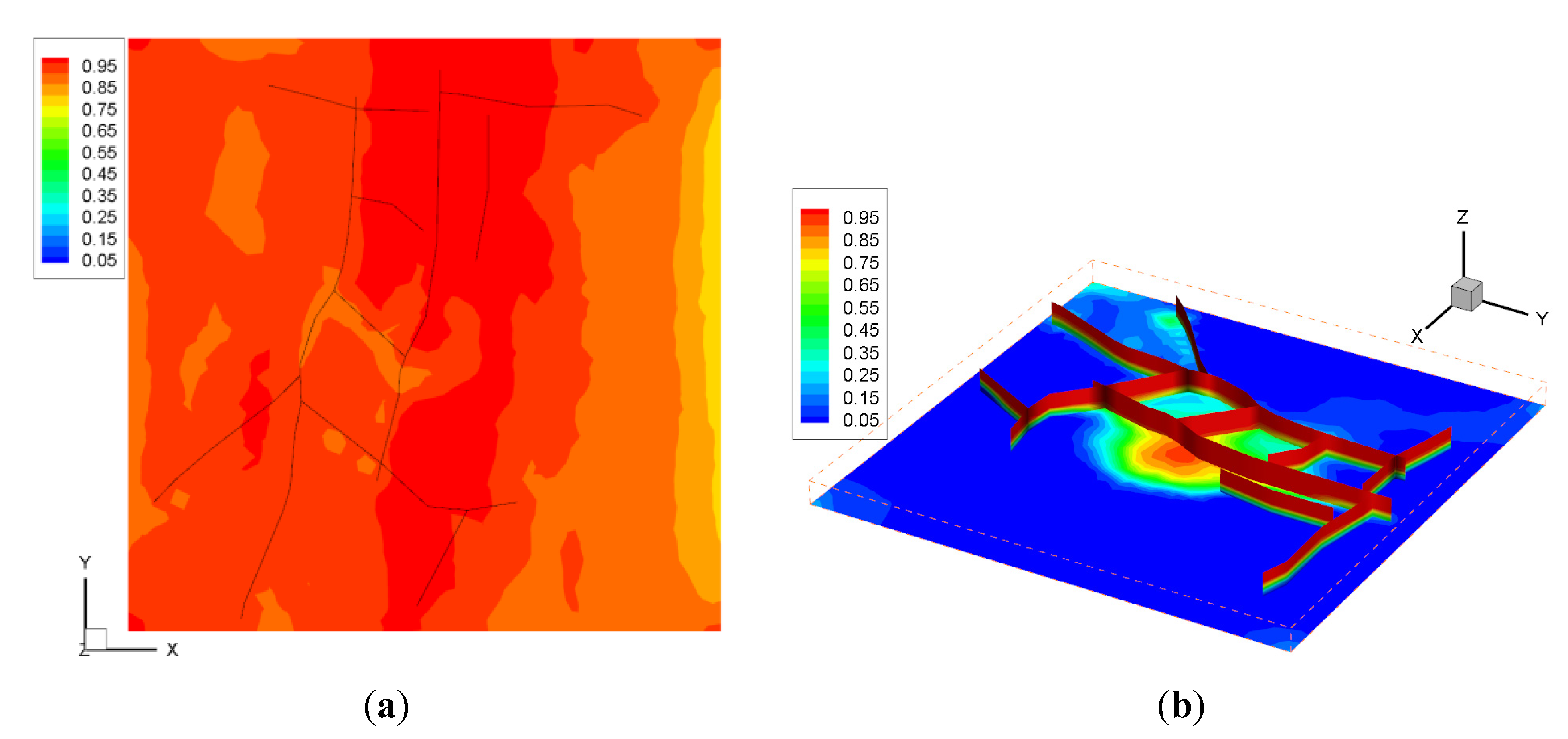
3.2.1. Base Case
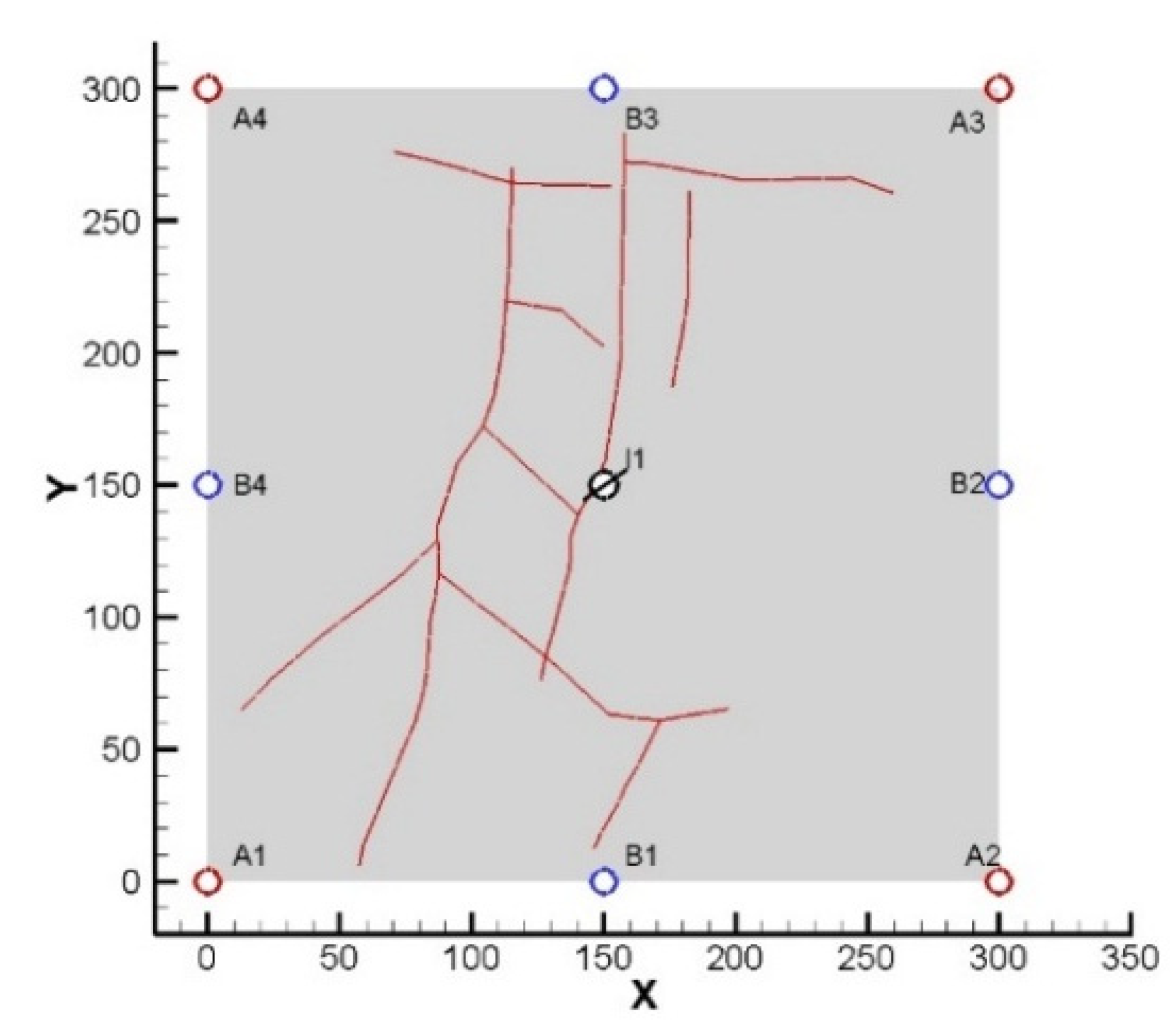
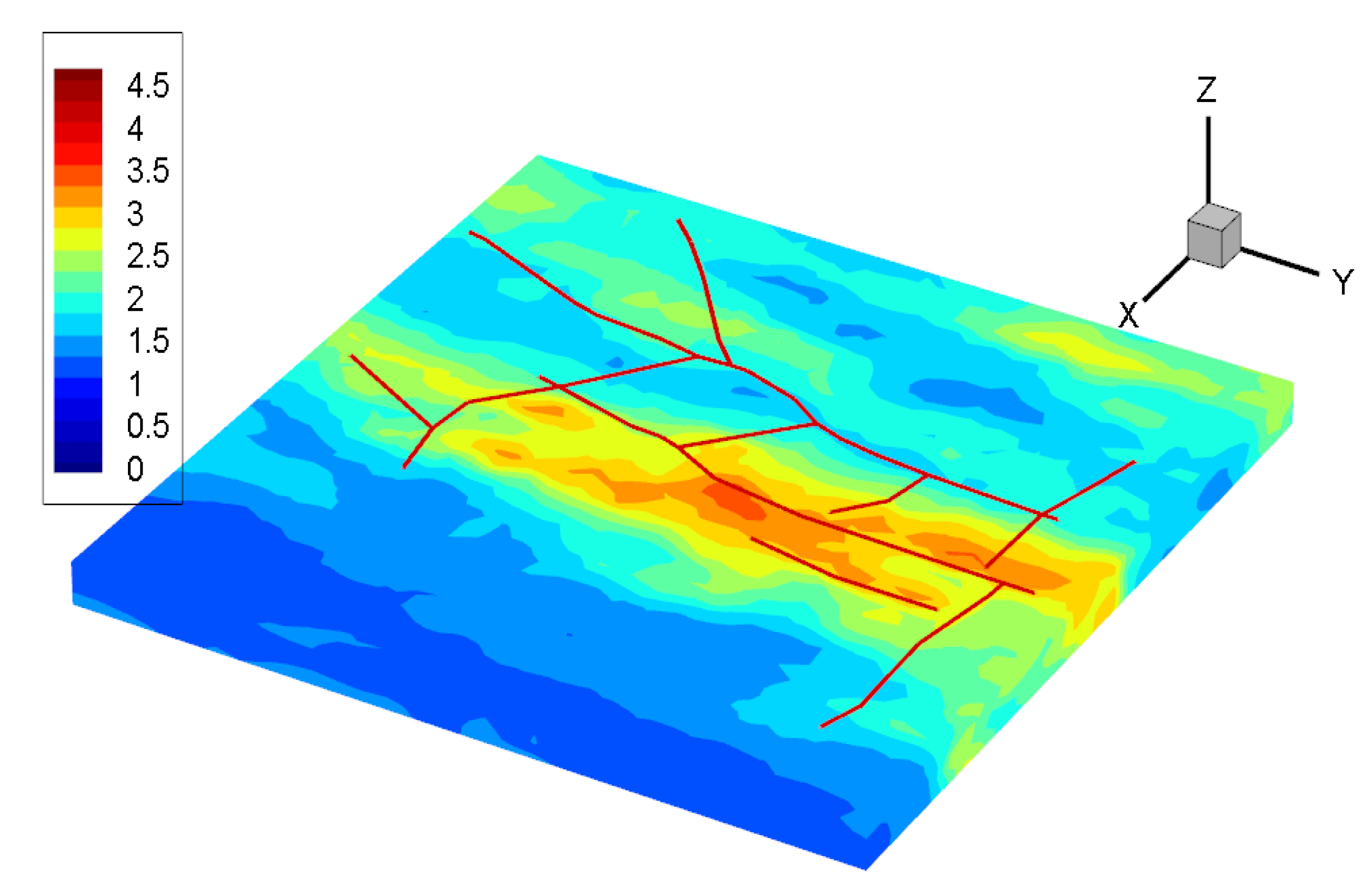
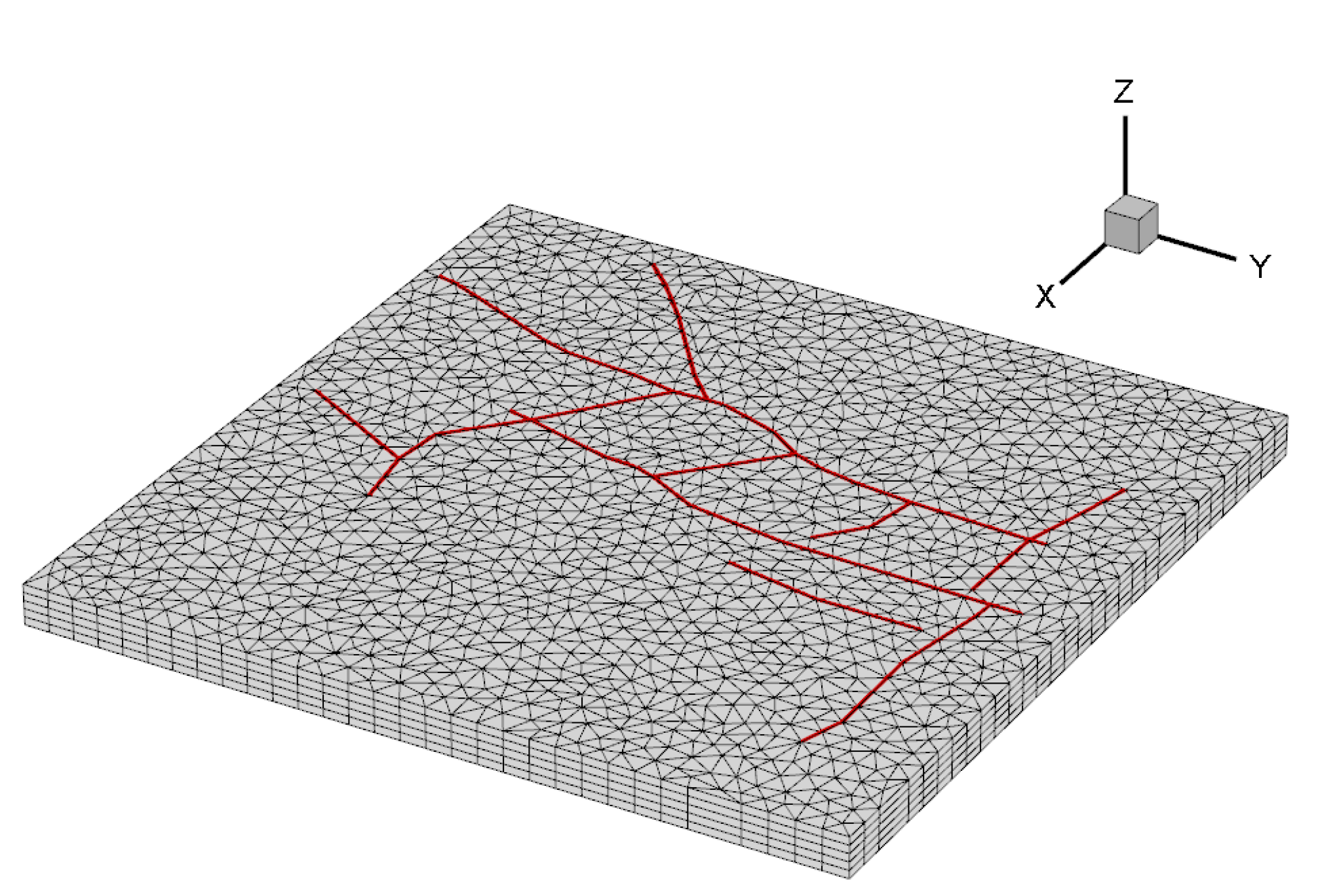
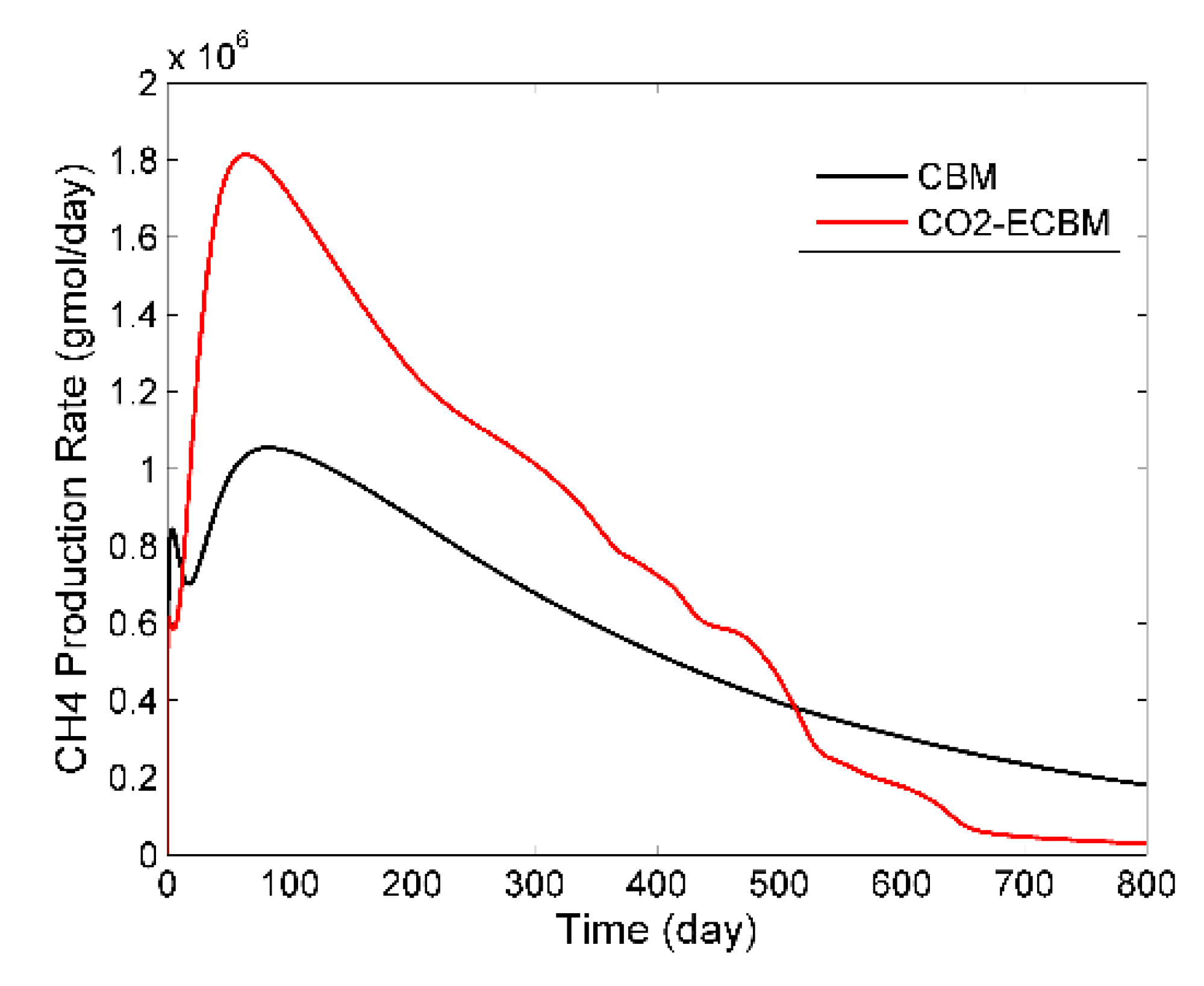
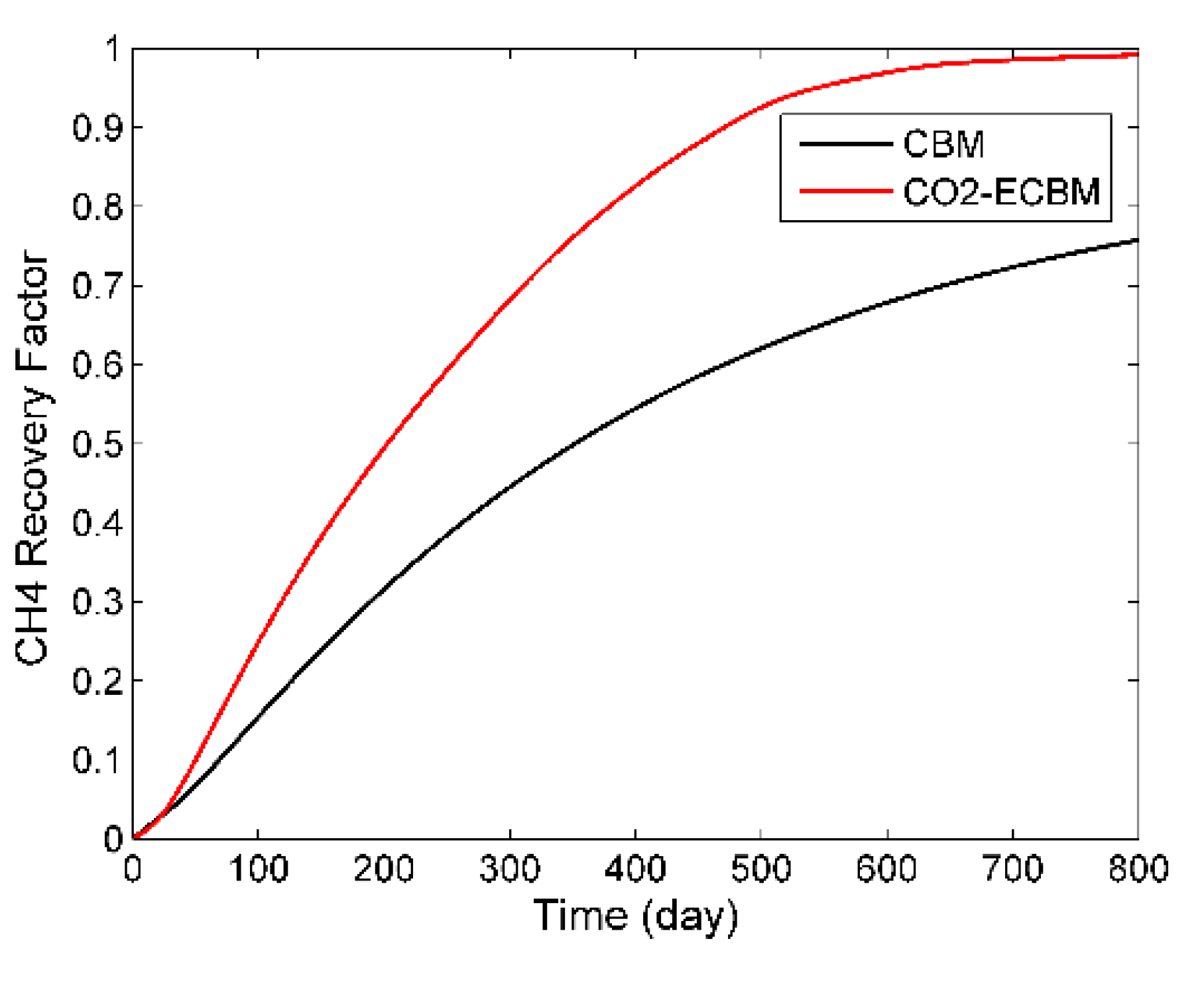
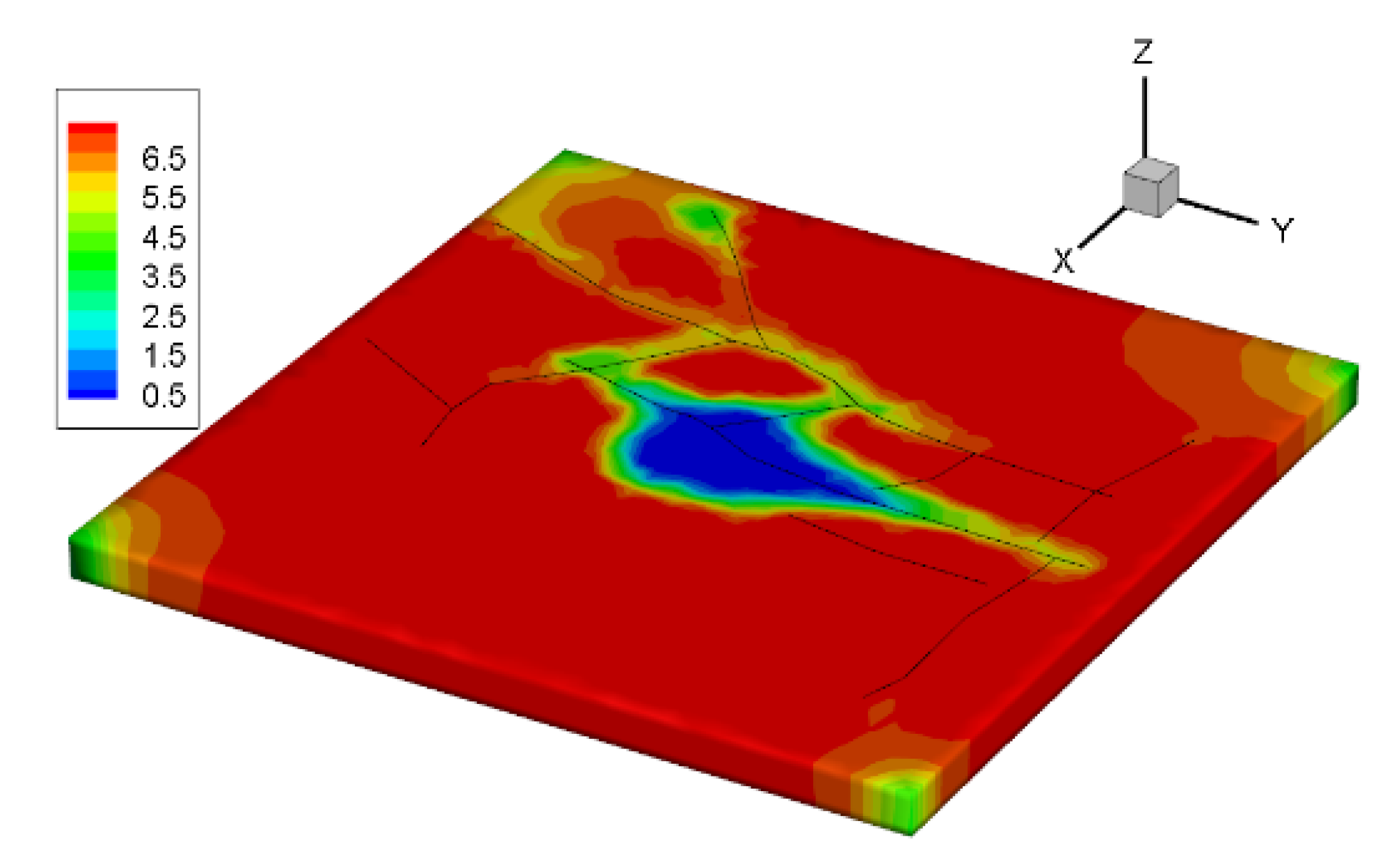
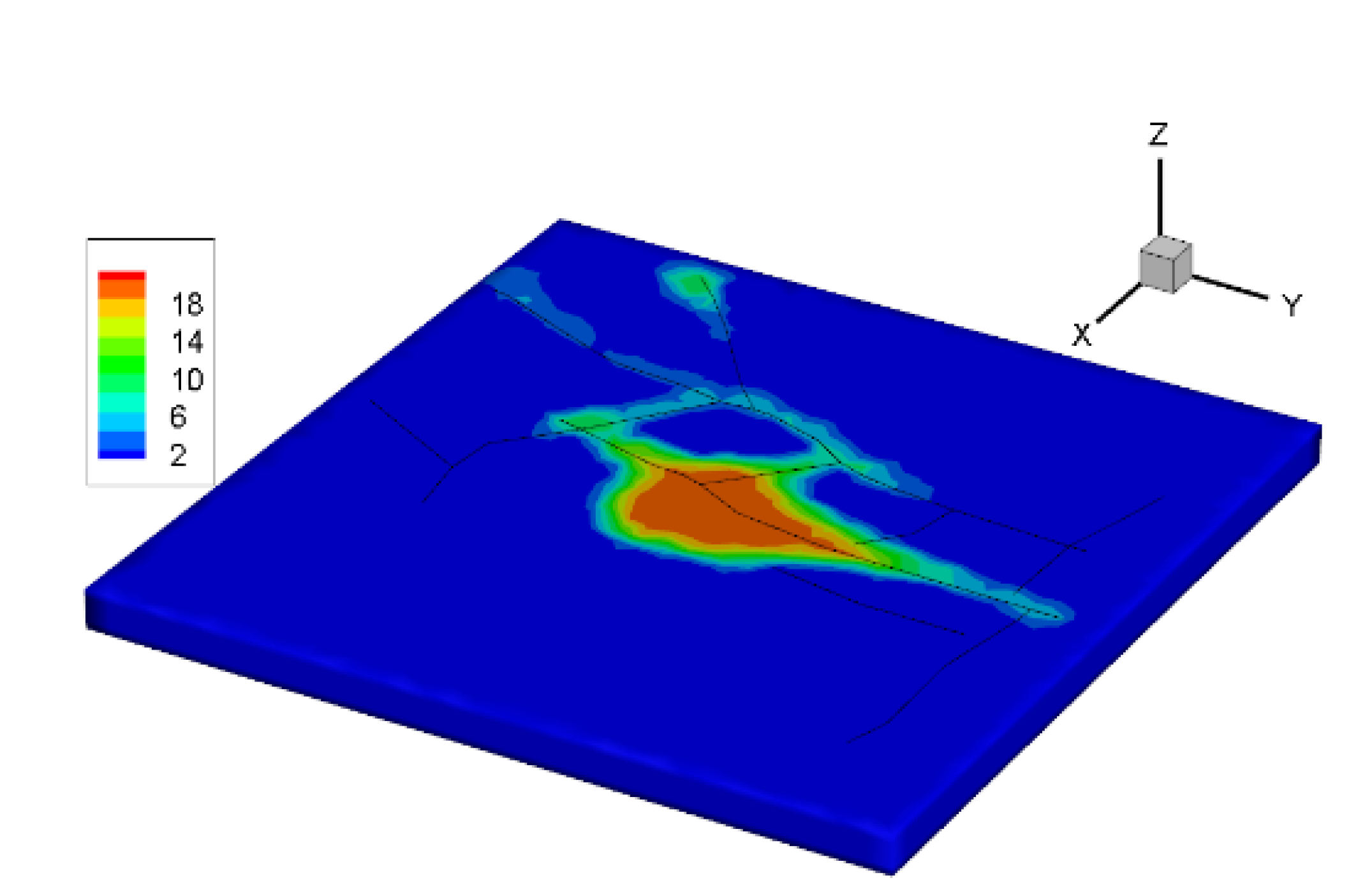
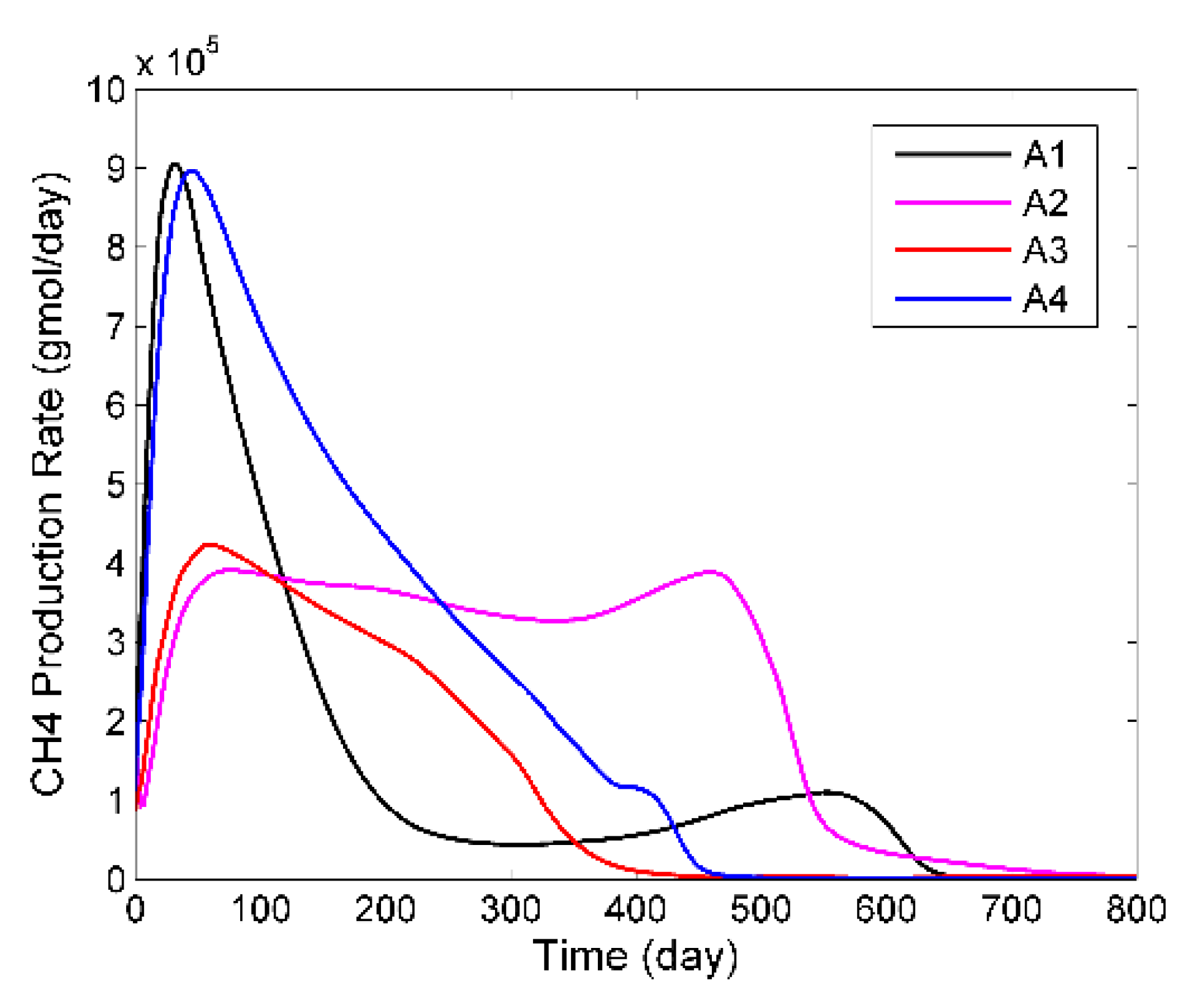
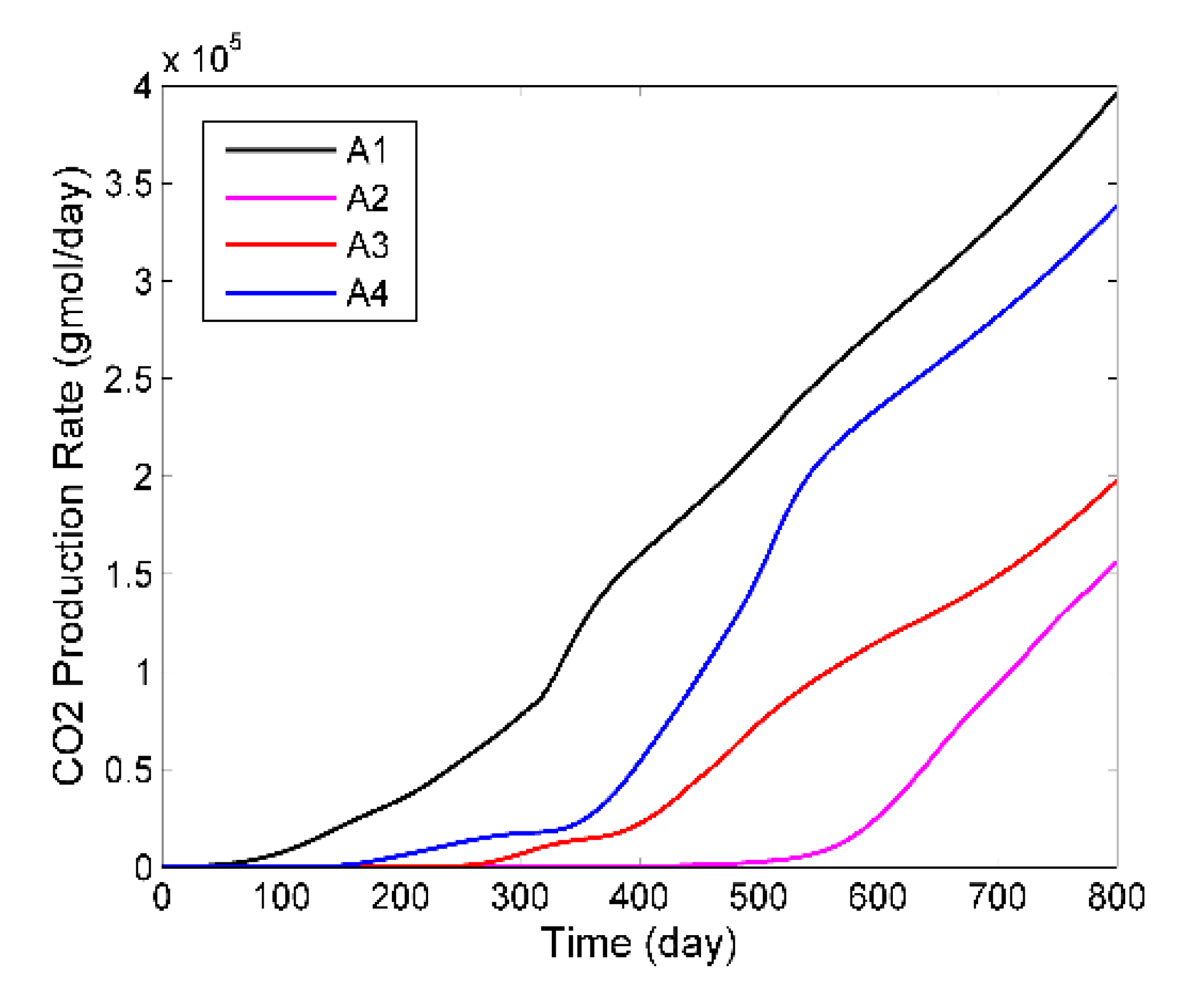
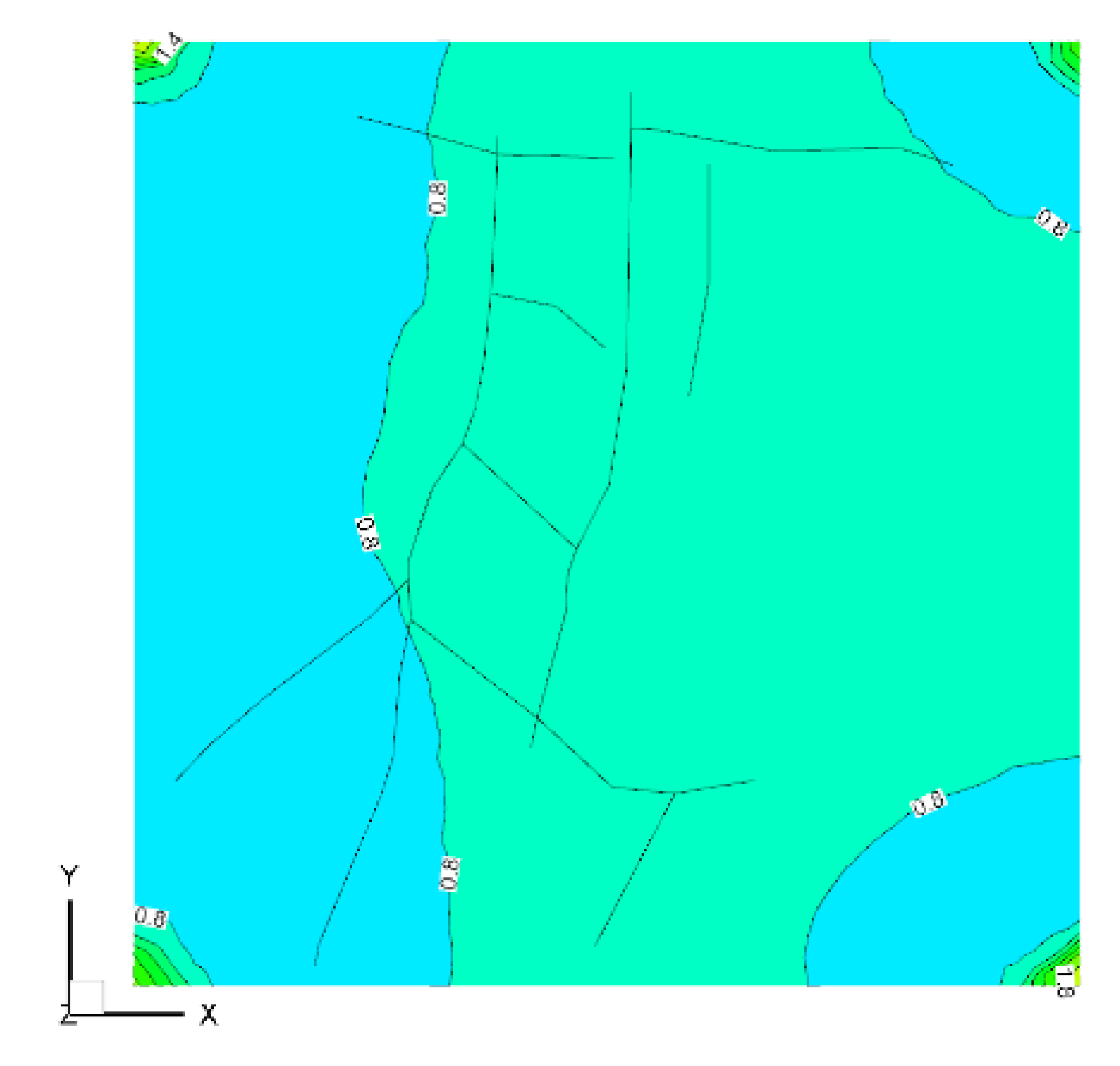
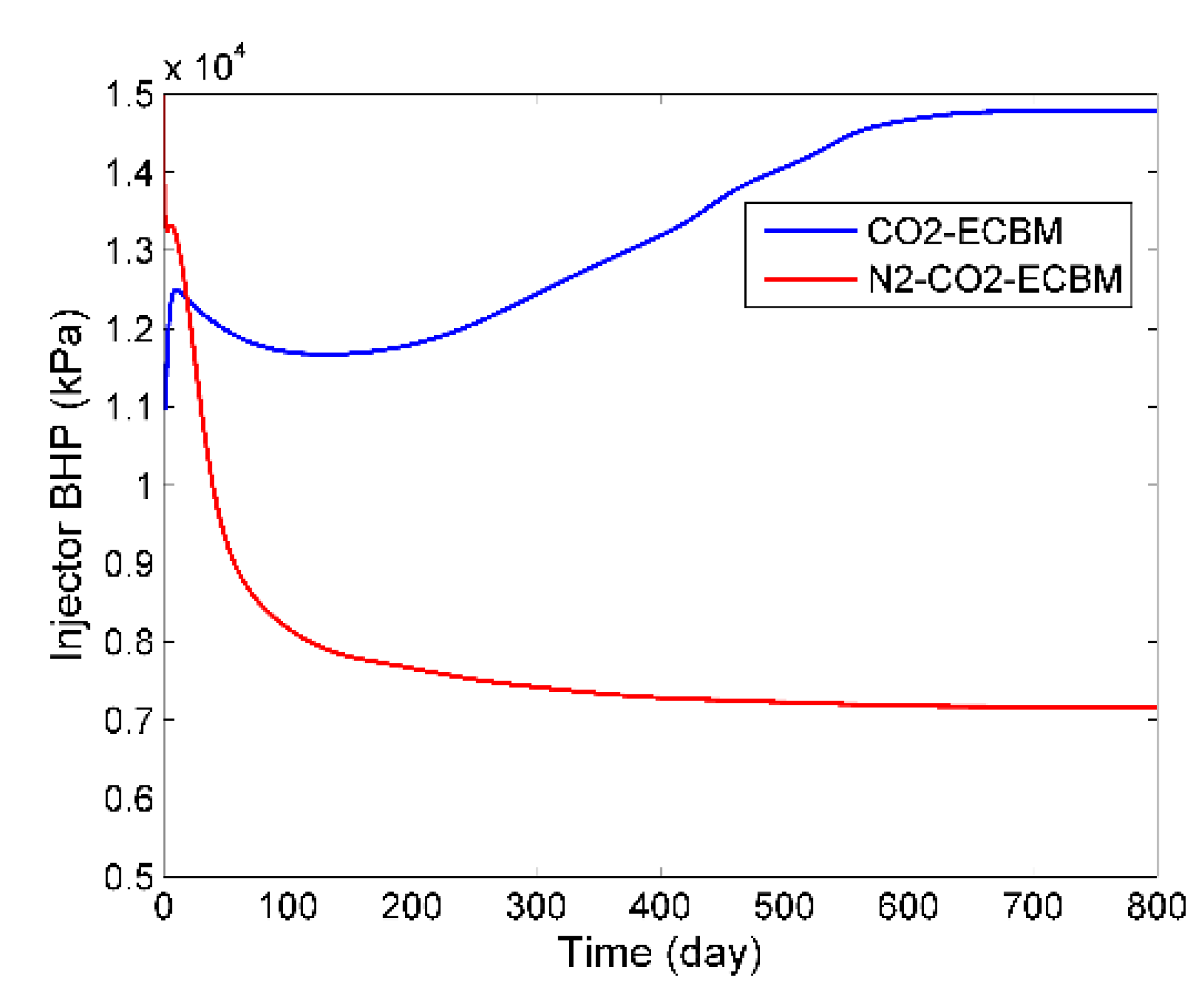
3.2.2. Ternary flooding of N2-CO2-ECBM

3.2.3. Effect of Well Patterns
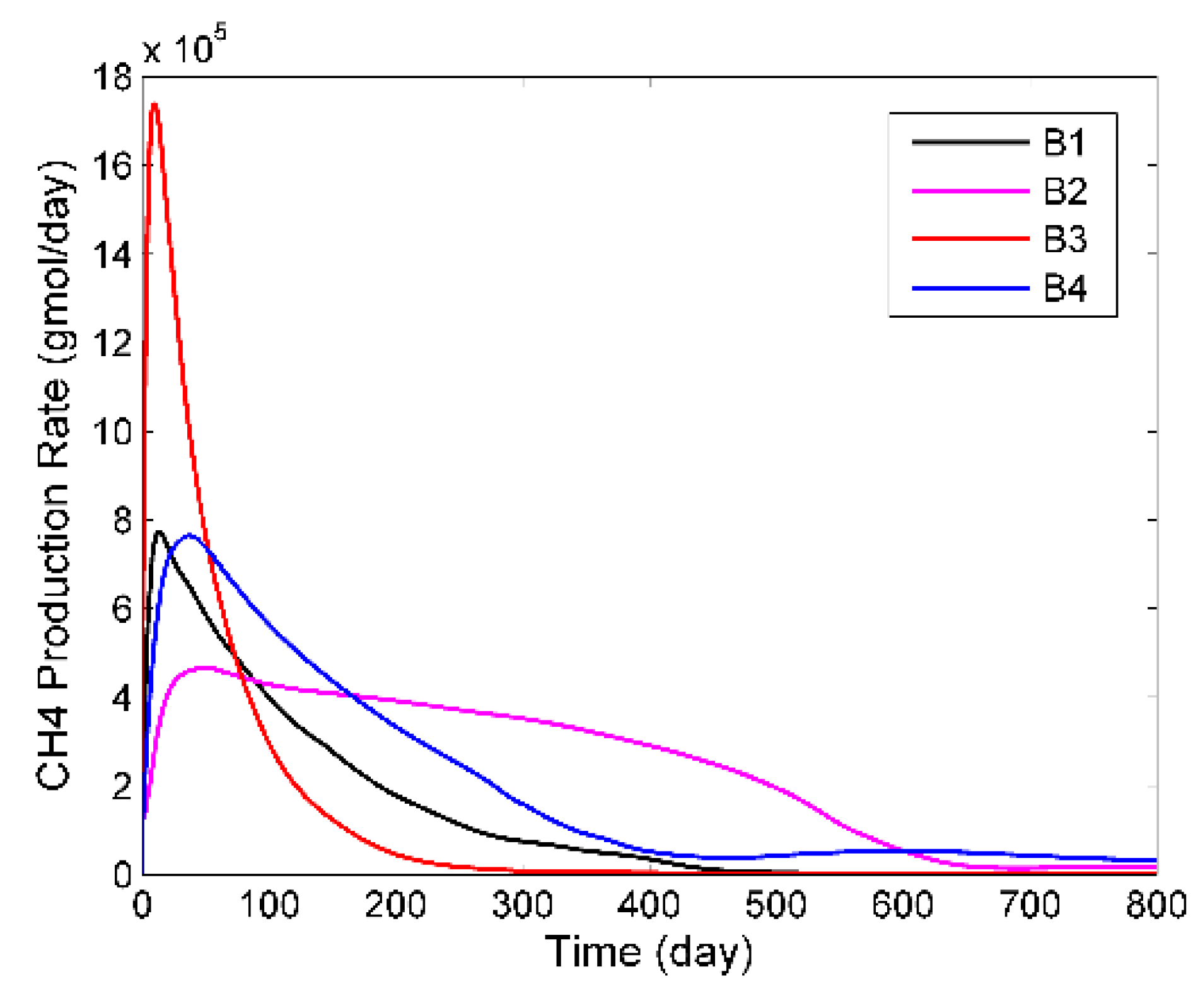
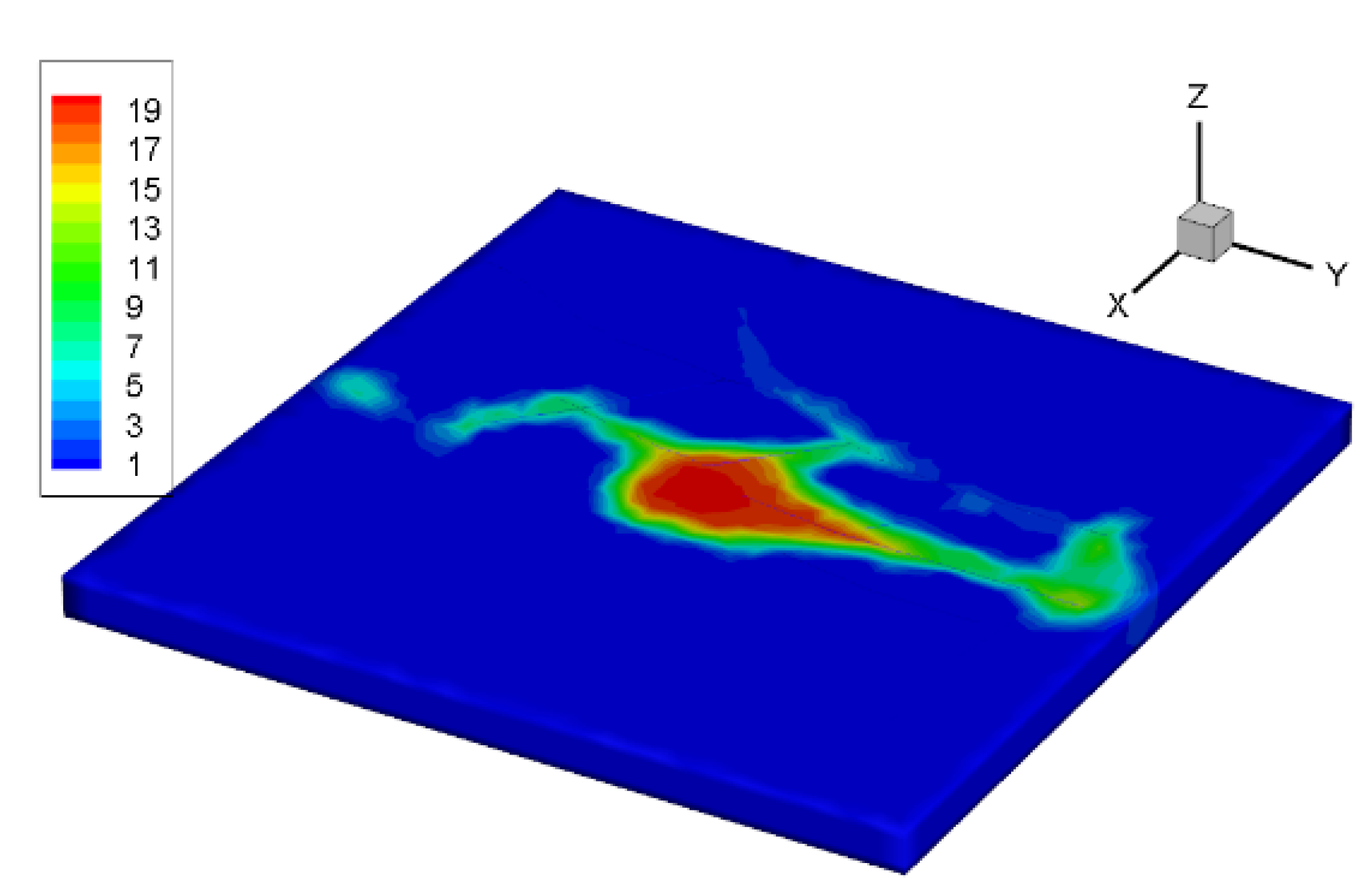
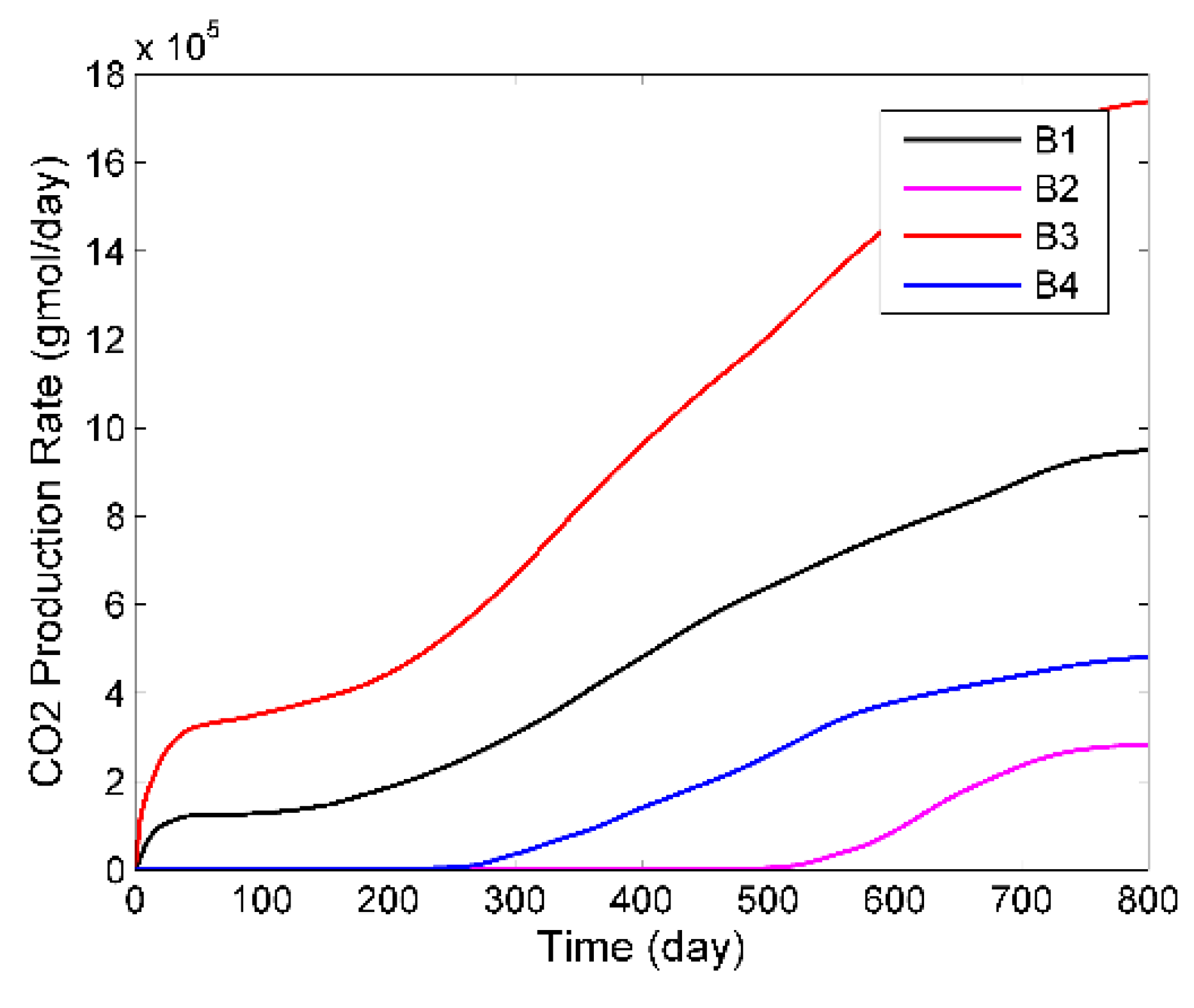
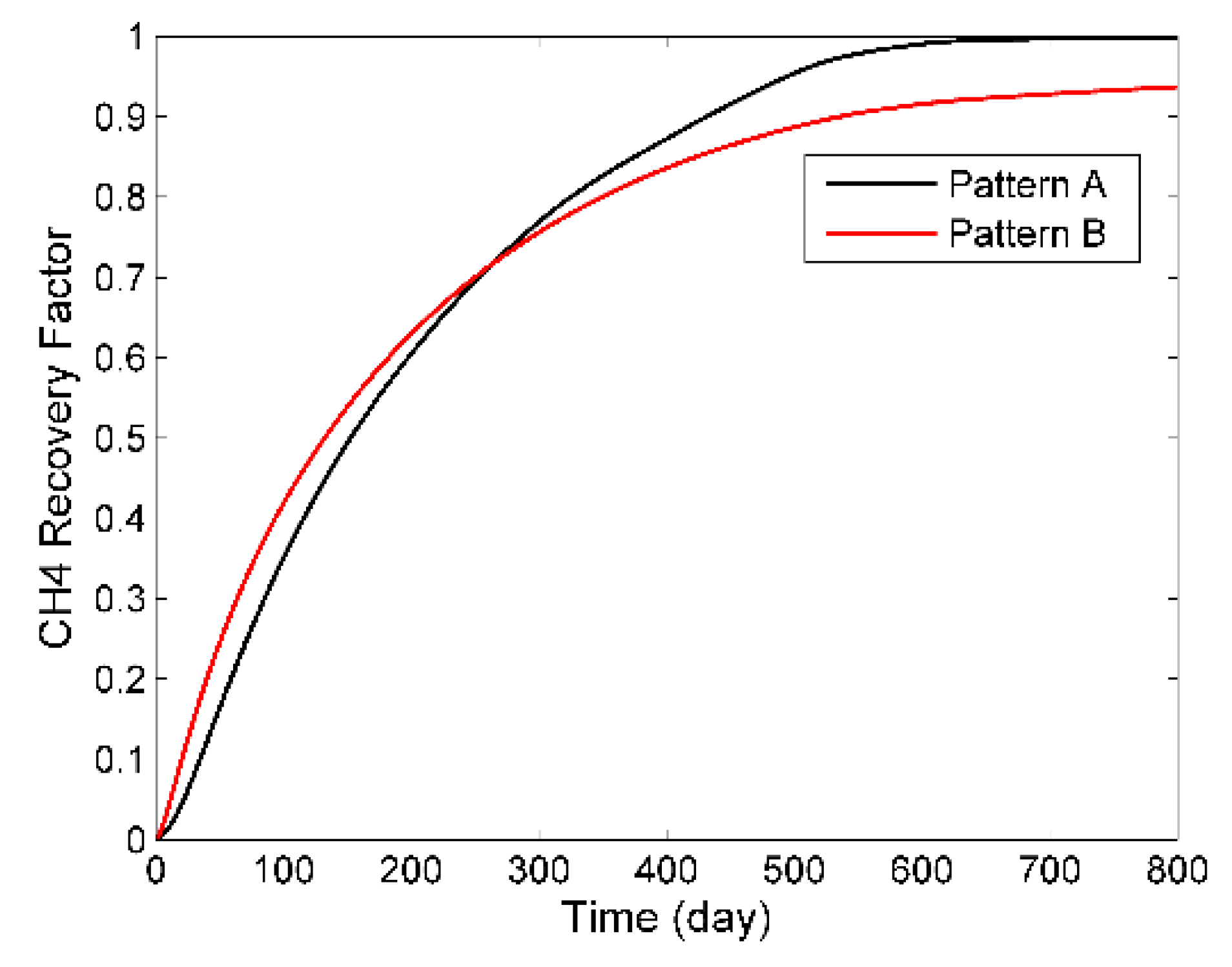
3.2.4. Effect of Buoyancy

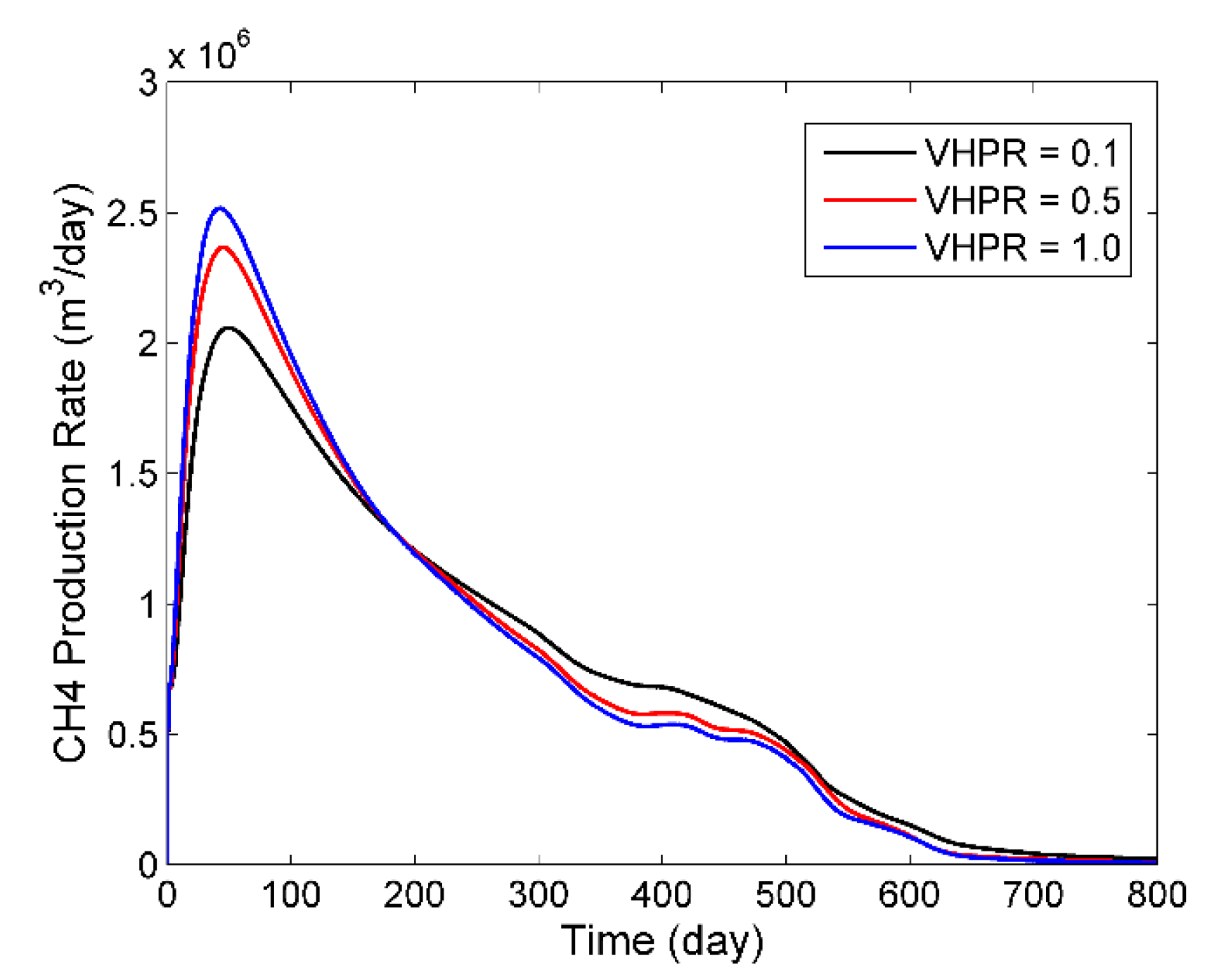
4. Conclusions and Future Work
Acknowledgments
Author Contributions
Conflicts of Interest
References
- Gentzis, T. Subsurface sequestration of carbon dioxide—An overview from an Alberta (Canada) perspective. Int. J. Coal Geol. 2000, 43, 287–305. [Google Scholar] [CrossRef]
- Stevens, S.H.; Spector, D.; Riemer, P. Enhanced Coalbed Methane Recovery Using CO2 Injection: Worldwide Resource and CO2 Sequestration Potential. In International Oil & Gas Conference and Exhibition in China (IOGCEC); Society of Petroleum Engineers: Richardson, TX, USA, 1998. [Google Scholar]
- Gale, J.; Freund, P. Coal Bed Methane Enhancement with CO2 Sequestration Worldwide Potential. Environ. Geosci. 2001, 8, 210–217. [Google Scholar] [CrossRef]
- Puri, R.; Yee, D. Enhanced Coalbed Methane Recovery. In Proceedings of the SPE Annual Technical Conference and Exhibition, New Orleans, LA, USA, 23–26 September 1990; SPE-20732-MS. pp. 254–368.
- Puri, R. A micro-pilot approach to coalbed methane reservoir assessment. In Fuel and Energy Abstracts; Elsevier: Amsterdam, The Netherland, 1996; p. 419. [Google Scholar]
- Pan, Z.; Connell, L.D.; Camilleri, M.; Connelly, L. Effects of matrix moisture on gas diffusion and flow in coal. Fuel 2010, 89, 3207–3217. [Google Scholar] [CrossRef]
- Arri, L.; Yee, D.; Morgan, W.; Jeansonne, M. Modeling Coalbed Methane Production with Binary Gas Sorption. In Proceedings of the SPE Rocky Mountain Regional Meeting, Casper, WY, USA, 18–21 May 1992; SPE-24363-MS. pp. 18–21.
- Ruthven, D.M. Principles of Adsorption and Adsorption Processes; John Wiley & Sons: Hoboken, NJ, USA, 1984. [Google Scholar]
- Yang, R. Gas Separation by Adsorption Processes; Pergamon: Bergama, Turkey, 1988. [Google Scholar]
- Pan, Z.; Connell, L.D. Comparison of adsorption models in reservoir simulation of enhanced coalbed methane recovery and CO2 sequestration in coal. Int. J. Greenh. Gas Control 2009, 3, 77–89. [Google Scholar] [CrossRef]
- King, G.; Ertekin, T. A survey of mathematical models related to methane production from coal seams, Part I–Empirical and equilibrium sorption models. In International Coalbed Methane Symp; University of Alabama: Tuscaloosa, AL, USA, 1989; pp. 125–138. [Google Scholar]
- Shi, J.; Durucan, S. A bidisperse pore diffusion model for methane displacement desorption in coal by CO2 injection. Fuel 2003, 82, 1219–1229. [Google Scholar] [CrossRef]
- Karimi-Fard, M.; Durlofsky, L.; Aziz, K. An efficient discrete-fracture model applicable for general-purpose reservoir simulators. SPE J. 2004, 9, 227–236. [Google Scholar] [CrossRef]
- Noorishad, J.; Mehran, M. An upstream finite element method for solution of transient transport equation in fractured porous media. Water Resour. Res. 1982, 18, 588–596. [Google Scholar] [CrossRef]
- Baca, R.; Arnett, R.; Langford, D. Modelling fluid flow in fractured-porous rock masses by finite-element techniques. Int. J. Numer. Methods Fluids 1984, 4, 337–348. [Google Scholar] [CrossRef]
- Kim, J.G.; Deo, M.D. Finite element, discrete-fracture model for multiphase flow in porous media. AIChE J. 2000, 46, 1120–1130. [Google Scholar] [CrossRef]
- Karimi-Fard, M.; Firoozabadi, A. Numerical simulation of water injection in fractured media using the discrete-fracture model and the Galerkin method. SPE Reserv. Eval. Eng. 2003, 6, 117–126. [Google Scholar] [CrossRef]
- Monteagudo, J.; Firoozabadi, A. Control-volume method for numerical simulation of two-phase immiscible flow in two-and three-dimensional discrete-fractured media. Water Resour. Res. 2004, 40. [Google Scholar] [CrossRef]
- Matthäi, S.; Mezentsev, A.; Belayneh, M. Control-Volume Finite-Element Two-Phase Flow Experiments with Fractured Rock Represented by Unstructured 3D Hybrid Meshes. In Proceedings of the SPE Reservoir Simulation Symposium, The Woodlands, TX, USA, 31 January–2 February 2005.
- Fu, Y.; Yang, Y.; Deo, M. Three-Dimensional, Three-Phase Discrete-Fracture Reservoir Simulator Based on Control Volume Finite Element (CVFE) Formulation. In Proceedings of the SPE Reservoir Simulation Symposium, The Woodlands, TX, USA, 31 January–2 February 2005.
- Durucan, S.; Edwards, J. The effects of stress and fracturing on permeability of coal. Min. Sci. Technol. 1986, 3, 205–216. [Google Scholar] [CrossRef]
- Seidle, J.; Jeansonne, M.; Erickson, D. Application of matchstick geometry to stress dependent permeability in coals. In Proceedings of the SPE Rocky Mountain Regional Meeting, Casper, WY, USA, 18–21 May 1992; SPE-24361-MS. pp. 18–21.
- Palmer, I.; Mansoori, J. How permeability depends on stress and pore pressure in coalbeds: A new model. In Proceedings of the SPE Annual Technical Conference and Exhibition, Denver, CO, USA, 6–9 October 1996.
- Shi, J.; Durucan, S. Changes in permeability of coalbeds during primary recovery—Part 1: Model formulation and analysis. In Proceedings of the 2003 International Coalbed Methane Symposium, University of Alabama, Tuscaloosa, AL, USA, 7–8 May 2003.
- Shi, J.-Q.; Durucan, S. A model for changes in coalbed permeability during primary and enhanced methane recovery. SPE Reserv. Eval. Eng. 2005, 8, 291–299. [Google Scholar] [CrossRef]
- Robertson, E.P.; Christiansen, R.L. Modeling permeability in coal using sorption-induced strain data. In Proceedings of the SPE Annual Technical Conference and Exhibition, Dallas, TX, USA, 9–12 October 2005.
- Connell, L.; Detournay, C. Coupled flow and geomechanical processes during enhanced coal seam methane recovery through CO2 sequestration. Int. J. Coal Geol. 2009, 77, 222–233. [Google Scholar] [CrossRef]
- Chen, Z.; Pan, Z.; Liu, J.; Connell, L.D.; Elsworth, D. Effect of the effective stress coefficient and sorption-induced strain on the evolution of coal permeability: Experimental observations. Int. J. Greenh. Gas Control 2011, 5, 1284–1293. [Google Scholar] [CrossRef]
- Pan, Z.; Connell, L.D. Modelling permeability for coal reservoirs: A review of analytical models and testing data. Int. J. Coal Geol. 2012, 92, 1–44. [Google Scholar] [CrossRef]
- Manik, J. Compositional Modeling of Enhanced Coalbed Methane Recovery; The Pennsylvania State University: University Park, PA, USA, 1999. [Google Scholar]
- Mazumder, S.; Karnik, A.A.; Wolf, K.-H. Swelling of coal in response to CO2 sequestration for ECBM and its effect on fracture permeability. SPE J. 2006, 11, 390–398. [Google Scholar] [CrossRef]
- Warren, J.; Root, P.J. The behavior of naturally fractured reservoirs. SPE J. 1963, 3, 245–255. [Google Scholar] [CrossRef]
- Pattison, C.; Fielding, C.; McWatters, R.; Hamilton, L. Nature and origin of fractures in Permian coals from the Bowen Basin, Queensland, Australia. Geol. Soc. Lond. Spec. Publ. 1996, 109, 133–150. [Google Scholar] [CrossRef]
- Nelson, C.R. Effects of geologic variables on cleat porosity trends in coalbed gas reservoirs. In Proceedings of the SPE/CERI Gas Technology Symposium, Calgary, AL, Canada, 3–5 April 2000.
- Odling, N.; Gillespie, P.; Bourgine, B.; Castaing, C.; Chiles, J.; Christensen, N.; Fillion, E.; Genter, A.; Olsen, C.; Thrane, L. Variations in fracture system geometry and their implications for fluid flow in fractured hydrocarbon reservoirs. Pet. Geosci. 1999, 5, 373–384. [Google Scholar] [CrossRef]
- Lohrenz, J.; Bray, B.G.; Clark, C.R. Calculating viscosities of reservoir fluids from their compositions. J. Pet. Technol. 1964, 16, 1171–1176. [Google Scholar] [CrossRef]
- Cao, H. Development of Techniques for General Purpose Simulators. Ph.D. Thesis, Stanford University, Stanford, CA, USA, 2002. [Google Scholar]
- Jiang, Y. Techniques for Modeling Complex Reservoirs and Advanced Wells. Ph.D. Thesis, Stanford University, Stanford, CA, USA, 2007. [Google Scholar]
- Fan, Y. Chemical Reaction Modeling in a Subsurface Flow Simulator with Application to in situ Upgrading and CO2 Mineralization. Ph.D. Thesis, Stanford University, Stanford, CA, USA, 2010. [Google Scholar]
- Karimi-Fard, M.; Gong, B.; Durlofsky, L. Generation of coarse-scale continuum flow models from detailed fracture characterizations. Water Resour. Res. 2006, 42. [Google Scholar] [CrossRef]
- Shewchuk, J.R. Delaunay refinement algorithms for triangular mesh generation. Comput. Geom. 2002, 22, 21–74. [Google Scholar] [CrossRef]
- Belayneh, M.; Geiger, S.; Matthi, S.K. Numerical simulation of water injection into layered fractured carbonate reservoir analogs. AAPG Bull. 2006, 90, 1473–1493. [Google Scholar] [CrossRef]
- Pan, Z.; Connell, L.D.; Camilleri, M. Laboratory characterization of coal reservoir permeability for primary and enhanced coalbed methane recovery. Int. J. Coal Geol. 2010, 82, 252–261. [Google Scholar] [CrossRef]
- GEM Version 2012 User’s Guide; Computer Modeling Group Ltd.: Calgary, AL, USA, 2009.
- Law, D.H.-S.; van der Meer, L.; Gunter, W. Numerical Simulator Comparison Study for Enhanced Coalbed Methane Recovery Processes Part I: Pure Carbon Dioxide Injection. In Proceedings of the SPE Gas Technology Symposium, Calgary, AL, Canada, 30 April–2 May 2002.
- Shuck, E.L.; Davis, T.L.; Benson, R.D. Multicomponent 3-D characterization of a coalbed methane reservoir. Geophysics 1996, 61, 315–330. [Google Scholar] [CrossRef]
© 2015 by the authors; licensee MDPI, Basel, Switzerland. This article is an open access article distributed under the terms and conditions of the Creative Commons Attribution license (http://creativecommons.org/licenses/by/4.0/).
Share and Cite
Zhang, Y.; Gong, B.; Li, J.; Li, H. Discrete Fracture Modeling of 3D Heterogeneous Enhanced Coalbed Methane Recovery with Prismatic Meshing. Energies 2015, 8, 6153-6176. https://doi.org/10.3390/en8066153
Zhang Y, Gong B, Li J, Li H. Discrete Fracture Modeling of 3D Heterogeneous Enhanced Coalbed Methane Recovery with Prismatic Meshing. Energies. 2015; 8(6):6153-6176. https://doi.org/10.3390/en8066153
Chicago/Turabian StyleZhang, Yongbin, Bin Gong, Junchao Li, and Hangyu Li. 2015. "Discrete Fracture Modeling of 3D Heterogeneous Enhanced Coalbed Methane Recovery with Prismatic Meshing" Energies 8, no. 6: 6153-6176. https://doi.org/10.3390/en8066153
APA StyleZhang, Y., Gong, B., Li, J., & Li, H. (2015). Discrete Fracture Modeling of 3D Heterogeneous Enhanced Coalbed Methane Recovery with Prismatic Meshing. Energies, 8(6), 6153-6176. https://doi.org/10.3390/en8066153