1. Introduction
The rapid advancement of emerging information technologies, including cloud computing and artificial intelligence, has driven a continuous increase in data center energy consumption. Under increasingly stringent national energy efficiency standards, the green transformation of data centers has become imperative. Cooling systems typically account for over 40% of total energy consumption [
1], making their optimization a critical breakthrough for meeting Power Usage Effectiveness (PUE) targets. Given the significant advantages of liquid cooling technology in reducing cooling energy consumption [
2], further integrating it with “peak-shaving and valley-filling” cold storage systems [
3] offers a highly promising pathway for a green economic transition by exploiting time-of-use electricity price differentials and utilizing natural cooling sources.
However, water—the most widely utilized medium in current cold thermal energy storage technologies for building HVAC systems [
4] and electronic cooling [
5]—exhibits low energy storage density and limited heat transfer performance, making it inadequate to meet the intensive cooling demands of modern data centers. Micro-encapsulated phase change material suspensions (MPCMS), characterized by high latent heat, superior energy storage density, and stable phase-change temperatures [
6], have emerged as a highly promising cooling medium, offering a viable alternative to conventional chilled water solutions. Furthermore, in previous studies, MPCMS has predominantly been employed as an indirect storage medium within coil-based systems [
7]. However, the additional thermal resistance introduced by this configuration hinders the full utilization of its high energy storage density advantage. To overcome the performance limitations of such indirect systems, recent research has pivoted toward the direct integration of MPCMS-based cold storage with liquid cooling loops. Within direct thermal storage technologies, storage tanks generally adopt one of four core structural configurations: naturally stratified, multi-compartment, labyrinth, or membrane-separated designs [
8]. Among these, the naturally stratified approach is the most extensively adopted owing to its structural simplicity and high operational efficiency. This technique utilizes thermal buoyancy—driven by density differentials between cold and warm fluids—to spontaneously establish thermal stratification. Consequently, a stable thermocline is formed and sustained within the tank, which effectively mitigates thermal mixing and ensures the highly efficient storage and retrieval of thermal energy.
Therefore, this study proposes the direct application of MPCMS in a naturally stratified thermal energy storage system, directly coupled to a data center liquid cooling circuit. This integrated architecture offers several compelling advantages: (1) direct cooling delivery during peak electricity demand periods facilitates effective load shifting (peak shaving/valley filling) and enhances economic viability; (2) provision of highly reliable emergency cooling ensures uninterrupted thermal management; and critically, (3) elimination of secondary heat exchange stages fully leverages MPCMS’s high energy storage density and superior heat transfer characteristics. This integration substantially elevates the energy efficiency of hybrid liquid cooling-cold storage systems, presenting a robust solution for thermal management challenges in next-generation high-heat-flux data centers.
To further optimize thermal stratification and minimize thermodynamic irreversibility, extensive research has been conducted on the local flow-guiding structures and macroscopic geometric configurations of cold storage tanks. Regarding local flow control, diffusers serve as the primary defense against thermal mixing, governing the incipient formation of the thermocline. The underlying physical mechanism lies in converting the kinetic energy of the incoming fluid into horizontal radial spreading, thereby preventing the high-velocity inlet jet from disrupting the established density gradient. To this end, researchers have proposed various optimized geometric configurations, such as octagonal, radial, and dual-parallel disk designs [
9,
10], aiming to ensure stable horizontal injection even under variable flow rate conditions. The non-uniform diameter radial diffuser proposed by Deng et al. [
11] achieved excellent stratification performance while maintaining manufacturing economy. By comparing different inlet methodologies, Fang et al. [
12] revealed that annular diffusers possess a superior capability to maintain the thermocline under high flow velocity conditions. Huang et al. [
13] established a quantitative evaluation system integrating the Richardson number and Mixing number, systematically elucidating the nonlinear relationship between flow rate variations and stratification performance. These studies confirm that the structural design of the diffuser is a critical factor determining the initial stratification quality.
In terms of macroscopic geometric configurations, the overall tank shape and the height-to-diameter (
H/
D) ratio dictate the internal velocity field distribution, the evolutionary path of the thermocline, and the long-term stability of the system. Fahad and Brian [
14] found that the thermocline volume expands with increasing flow velocity, thereby recommending the restriction of inlet velocity to suppress mixing. Abdelhak et al. [
15] compared vertical and horizontal tank configurations, and the results indicated that vertical tanks exhibit higher Richardson numbers and stratification efficiencies, making them more compatible with naturally stratified cold storage systems. By influencing the internal velocity field and heat transfer boundary conditions, the geometric structure of the tank establishes the foundation for thermal stratification at the system level, making it a core factor that must be considered in structural optimization design. Regarding the synergistic effects between the aspect ratio and internal components, the
H/
D ratio directly affects the vertical development of the fluid and the formation of laminar flow. Moderately increasing the aspect ratio provides sufficient vertical space for laminar flow development, which facilitates the formation of a stable and thin thermocline [
16,
17]; generally, an
H/
D ratio between 2 and 5 is considered an ideal design range. Subsequent research has further focused on the optimized arrangement of internal obstacles. For example, Altuntop et al. [
18] confirmed that centrally gapped baffles outperform wall-mounted configurations, while Erdemir and Altuntop [
19] systematically analyzed the regulatory effect of baffle parameters on stratification stability. Tang et al. [
20] integrated a uniform flow orifice plate with an octagonal diffuser, experimentally demonstrating that this combination significantly enhances stratification stability under high-load conditions. In summary, the coordinated design of the
H/
D ratio and internal flow distribution devices determines the mechanisms of laminar flow formation and the capacity for disturbance suppression, representing the key coupled parameters for improving the cold storage efficiency of MPCMS.
Despite these advancements, the direct application of microencapsulated phase change material suspensions (MPCMS) as a cold storage medium in naturally stratified systems still faces significant challenges. The core issue lies in the limited applicability of existing structural designs. As demonstrated, due to the complex rheological properties of MPCMS, conventional design guidelines for diffusers and orifice plates—which were originally developed based on Newtonian fluids such as water—are no longer applicable. First, the influence of the tank’s aspect ratio on the stability of the internal flow field and thermocline dynamics within MPCMS systems remains unclear. Second, there is a lack of systematic research regarding how uniform-flow devices (specifically key parameters such as porosity, pore size distribution, and installation height) regulate the heat release behavior of MPCMS, mitigate flow field disturbances, and maintain thermocline stability. To systematically elucidate the limitations of existing studies and underscore the necessity of the current work,
Table 1 summarizes the key parameters, working fluids, and outcomes of previous relevant research.
To bridge these research gaps and overcome current applicability limitations, this study focuses on a naturally stratified MPCMS cold storage system, aiming to reveal how the structural parameters of the storage tank dictate its heat discharge characteristics. A three-dimensional unsteady numerical model is developed to systematically investigate how the tank’s aspect ratio and the structure of the uniform-flow orifice plate affect thermocline formation, stratification stability, and the overall stratification efficiency of the system. Furthermore, by optimizing the structural parameters of the uniform-flow plate, this study seeks to determine the optimal flow distribution strategies suitable for various MPCMS mass fractions. These findings provide critical, quantitative design parameters for MPCMS-based storage tanks, thereby facilitating their practical implementation in engineering scenarios such as high-performance data center cooling.
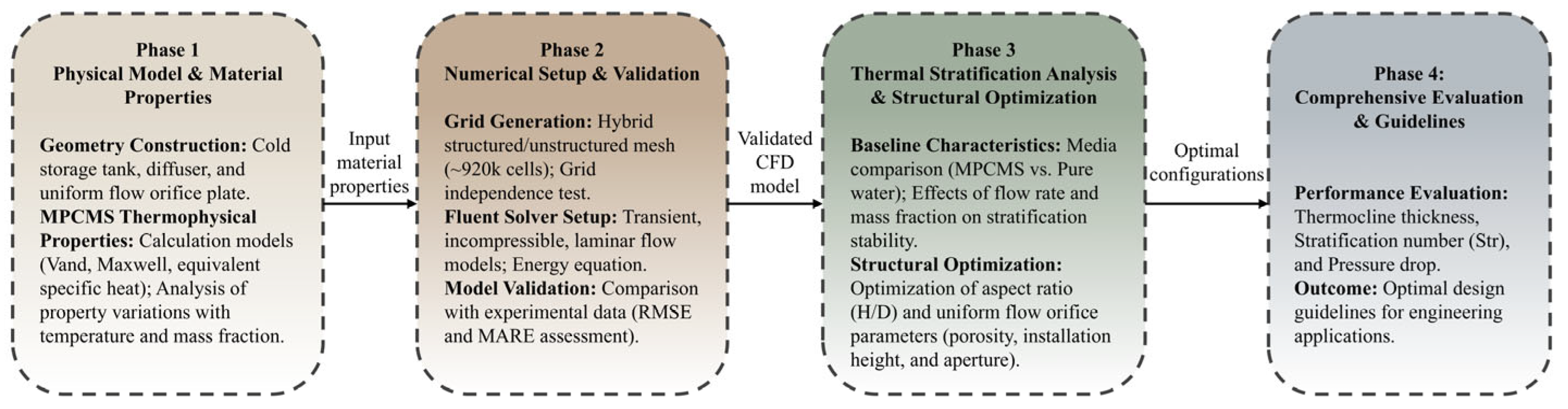
To provide a clear and systematic overview of the research methodology, the overall workflow of this study is illustrated in
Figure 1. The framework is systematically divided into four interconnected phases that closely align with the structure of this paper. Phase 1 and Phase 2 (detailed in
Section 2) focus on the physical geometry construction, the evaluation of the complex MPCMS thermophysical properties, the transient numerical setup, and rigorous model validation. Building upon this validated CFD model, Phase 3 conducts a comprehensive thermal stratification analysis; specifically,
Section 3 evaluates the stratification characteristics under varying flow rates and mass fractions, while
Section 4 investigates the structural optimization of the tank’s aspect ratio and uniform-flow orifice plate parameters. Finally, Phase 4 (summarized in
Section 5) synthesizes these findings through a comprehensive performance evaluation. Ultimately, this structured approach aims to yield optimized, quantitative design guidelines, providing robust theoretical support for the engineering application of MPCMS in naturally stratified cold storage systems.
2. Construction of the MPCMS Natural Stratified Cold Storage Device Model
In this section, we will provide a detailed description of a three-dimensional transient numerical model used to study the thermal stratification behavior of MPCMS in naturally stratified cold storage systems. The model accounts for several key factors, including flow rate, MPCMS mass fraction, and the geometric configuration of the cold storage tank. By analyzing the performance of MPCMS under various operating conditions, we will thoroughly explore its potential applications in liquid-cooled systems, particularly its advantages in enhancing thermal stratification efficiency and optimizing cooling systems.
2.1. Numerical Model
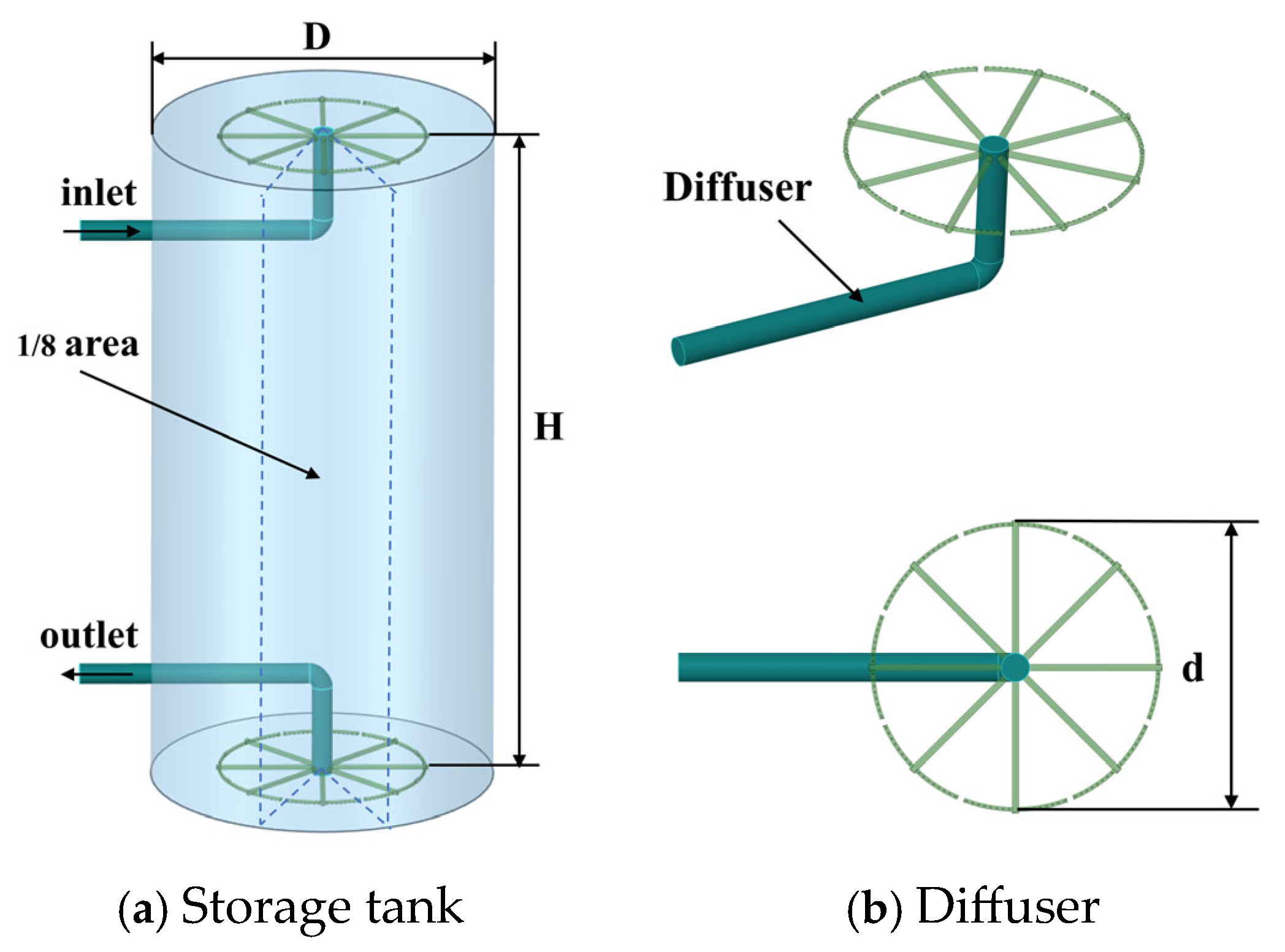
To investigate the flow and heat transfer characteristics of MPCMS in a naturally stratified cold storage system, a three-dimensional unsteady numerical model was developed, as shown in
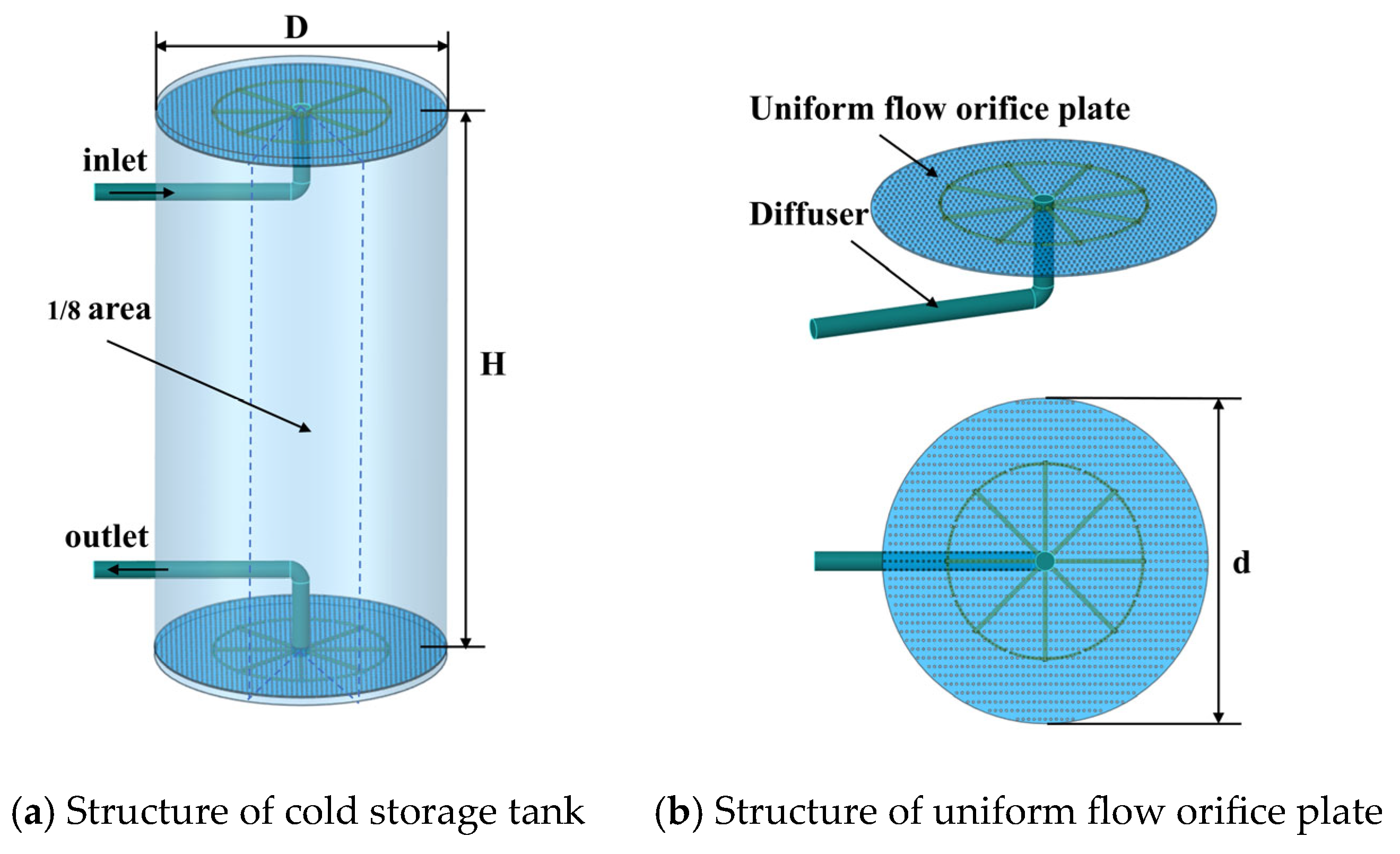
Figure 2. The model includes a vertical cylindrical cold storage tank, upper and lower diffuser structures, and inlet/outlet fluid pipelines. The tank has a diameter of
D = 2 m and a height of
H = 4 m. To optimize fluid distribution and suppress mixing disturbances, octagonal-mimicking diffusers (with a diameter of
d = 1.2 m) were installed at both the top and bottom of the tank. Each diffuser consists of eight evenly spaced curved pipe segments, with multiple small holes on their surfaces to enable multi-point outflow and enhance the stability of thermal stratification. The upper diffuser is oriented upward and the lower diffuser downward, both positioned at a distance of
h = 24 mm from the tank top and bottom, respectively, to maintain symmetry in the flow field. The diameters of the main and branch pipes are
d1 = 30 mm and
d2 = 20 mm, respectively. The inlet flow velocity is kept below 0.3 m/s to reduce the Reynolds number and minimize the disturbance of the inlet jet on the thermocline layer.
2.2. Thermophysical Properties Analysis of MPCMS
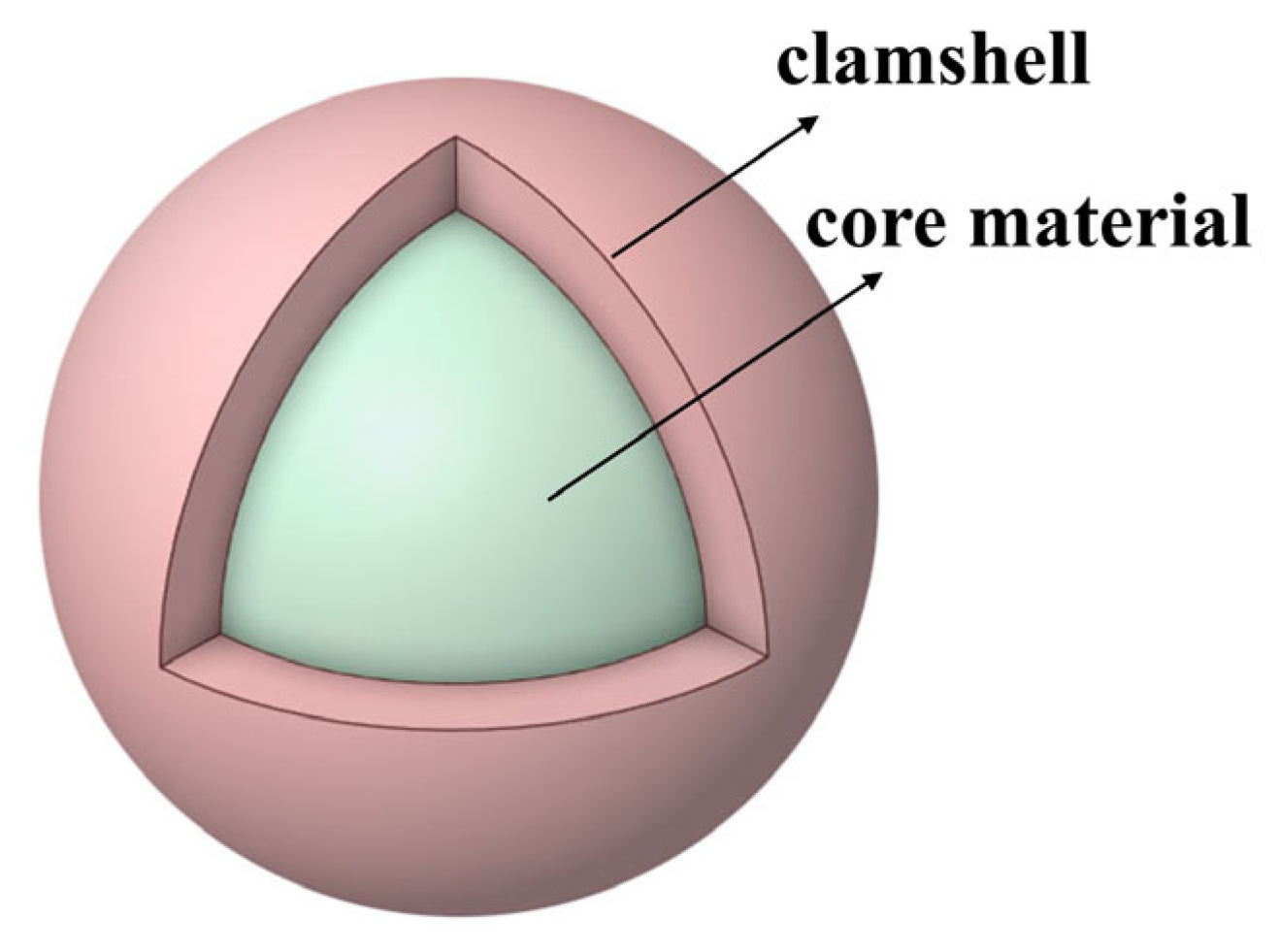
The thermal properties of MPCMS are critical to its heat transfer and flow behavior. Unlike simple fluids, MPCMS is a phase-change working fluid that combines high specific heat, latent heat storage capacity, and good flowability. Its thermal properties are influenced by the combined effects of various factors, including key parameters such as the mass fraction of microcapsules, particle size distribution, type of carrier fluid, and system operating temperature. As shown in
Figure 3, the core component of MPCMS is the phase-change microcapsule (MPCM). This microstructure typically consists of a phase-change material as the core and a polymer coating, forming a typical core–shell structure that exhibits good thermal stability, physical dispersibility, and coating integrity. Compared to traditional single-phase cooling media, such as water or salt solutions, MPCMS can achieve significant latent heat absorption and release under near-constant temperature conditions within the phase-change temperature range, thereby significantly improving the thermal responsiveness and energy efficiency of the cooling system. The physical properties of MPCMS have a significant impact on the flow and heat transfer behavior within the tank. Performing physical property calculations and analyses on MPCMS lays a solid foundation for subsequent investigations into the effects of operating and structural parameters on stratification.
(1) Density
The density of MPCM is related to the densities of its core and shell materials. The density of a single microcapsule is calculated as follows:
where
is the density of the microencapsulated phase change material;
is the density of the core (phase change) material;
is the density of the shell material, and
is the mass fraction of the core material in the microcapsule.
The density of MPCMS is related to the density of the base fluid, the density of the MPCM, and the volume concentration of the microcapsules in the base fluid. The calculation is as follows:
where
is the density of the MPCMS,
is the density of the base fluid, and
is the volume concentration of the microcapsules in the MPCMS.
(2) Viscosity
The viscosity of MPCMS, when used as a cold storage medium, significantly affects the fluid flow and heat transfer behavior inside the cold storage system. Therefore, calculating the viscosity is essential. The viscosity of MPCMS depends on the viscosity of the base fluid, temperature, and the volume concentration of the microencapsulated phase change material. It is generally calculated using the following Vand viscosity relation [
22]:
where
is the viscosity of MPCMS,
is the viscosity of the base fluid, and
is the volume concentration of the microencapsulated phase change material.
(3) Thermal Conductivity
The thermal conductivity of MPCMS depends on the thermal conductivity of the microencapsulated phase change material, the thermal conductivity of the base fluid, and the volume concentration of the microcapsules. The thermal conductivity of a single microcapsule can be calculated using the composite sphere heat transfer model [
23], as follows:
where
is the thermal conductivity of the microencapsulated phase change material,
is the diameter of the microencapsulated phase change particles,
is the thermal conductivity of the core material, and
is the diameter of the core material. The thermal conductivity of MPCMS can be calculated using the Maxwell relation [
24]:
where
is the thermal conductivity of MPCMS,
is the volume concentration of the microencapsulated phase change material in MPCMS, and
is the thermal conductivity of the base fluid.
Although the theoretical prediction models for the density, viscosity, and thermal conductivity of MPCMS discussed above offer some guidance in preliminary engineering design, they still fail to fully and accurately reflect the complex thermophysical behavior under actual operating conditions. This is primarily due to the nonlinear thermal response characteristics exhibited by MPCM during phase change, as well as the changes in thermal-flow properties caused by the interaction of multiple factors, such as the mass fraction, particle size distribution, encapsulation structure, base fluid type, and dispersion stability. For example, as the mass fraction increases, the viscosity of MPCMS grows nonlinearly, and the latent heat release during the phase change interval also causes significant coupling shifts in thermal conductivity and rheological behavior.
Given the stringent thermal safety constraints on the supply temperature in data center liquid cooling systems, the cooling liquid temperature is typically controlled within a range not exceeding 45 °C to maintain a sufficient thermal margin between the server chips and the cooling fluid [
25]. Therefore, selecting an MPCMS with an appropriate phase change temperature range is crucial for the thermal stability of the system. This study uses the MPCMS formulated by Xia [
26] as the research subject. Phase change microcapsules are prepared via in situ polymerization, utilizing n-octadecane as the core material and melamine–formaldehyde resin as the shell material to form a stable core–shell structure. These microcapsules are then dispersed in a propanol/water mixture to prepare the required MPCMS. Experimental measurements show that this MPCMS exhibits a distinct heat absorption peak between 24.56 °C and 30.72 °C, with stable melting and a rapid thermal response, making its thermophysical properties highly compatible with the heat dissipation requirements of servers.
Beyond thermal performance, the chemical safety and structural integrity of the materials are equally critical for practical applications. The core material (n-octadecane) is non-toxic and chemically stable. Furthermore, the highly cross-linked melamine–formaldehyde shell provides excellent chemical inertness and corrosion resistance, effectively preventing internal leakage and reactions with conventional tank materials. While the suspension exhibits favorable operational stability, the potential long-term degradation of the resin shell and the compatibility of the propanol-based fluid with specific non-metallic sealing materials require careful engineering consideration. In practical deployments, utilizing stainless-steel components and adding appropriate corrosion inhibitors is recommended to mitigate potential oxidation and ensure system longevity. Overall, combining its exceptional thermal buffering capabilities with manageable material safety, this MPCMS demonstrates excellent engineering adaptability and promising application prospects.
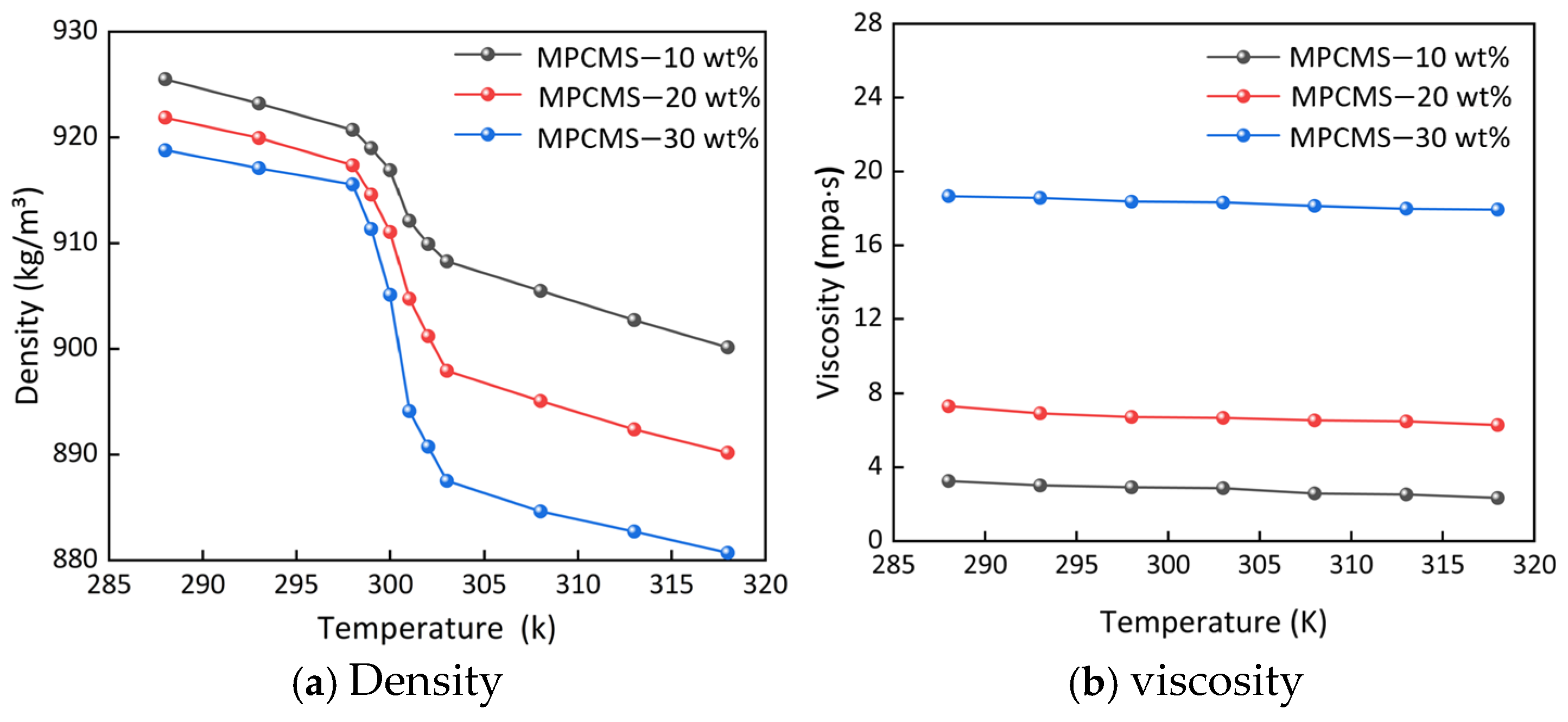
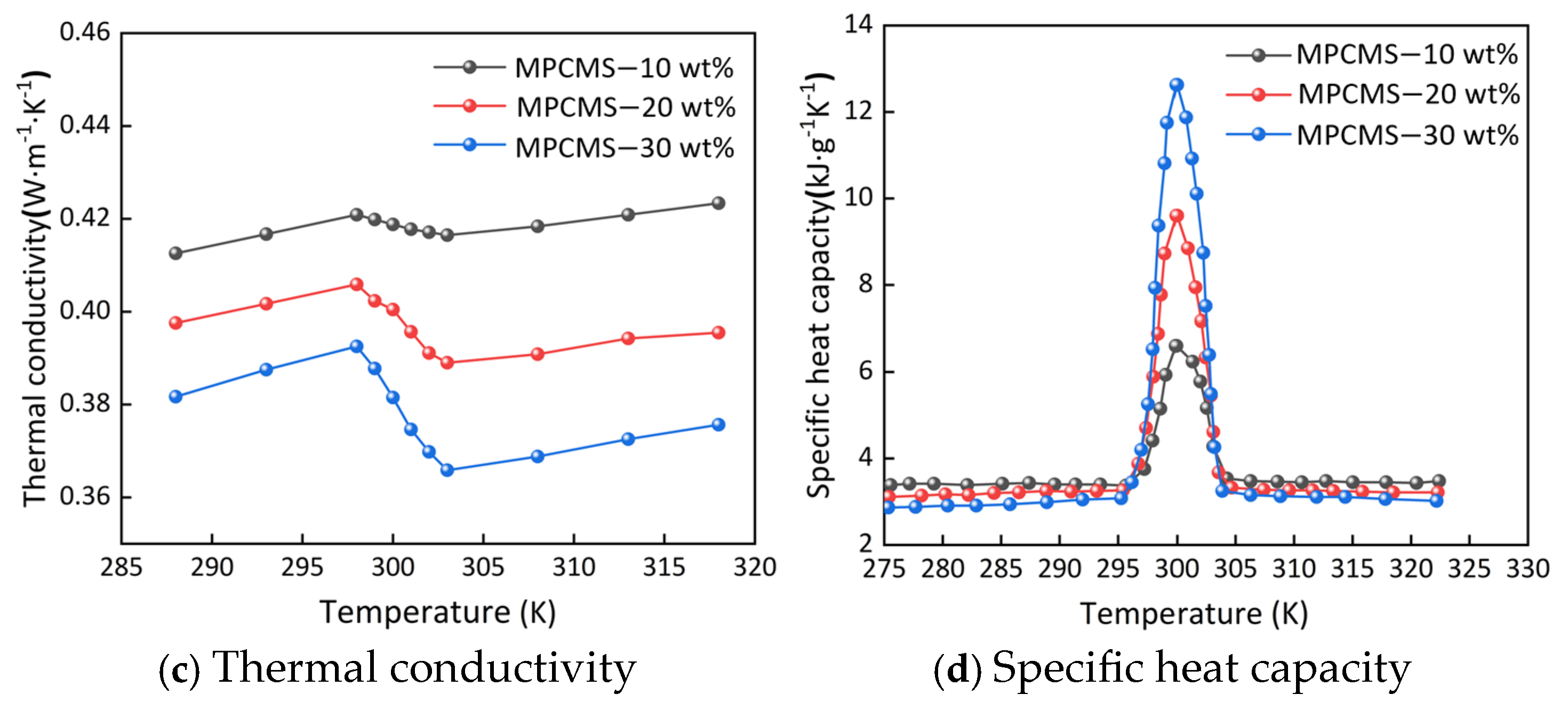
Figure 4 illustrates the coupled variations in the density, viscosity, thermal conductivity, and specific heat capacity of MPCMS with respect to temperature and mass fraction. Overall,
Figure 4a: The density decreases as both temperature and mass fraction increase. Notably, the rate of this decrease accelerates significantly within the phase-change region (24~31 °C) due to the volumetric expansion of the core material during melting.
Figure 4b: The viscosity drops rapidly with increasing temperature but rises sharply as the microcapsule mass fraction increases. The increased flow resistance at high concentrations must be carefully considered in the system’s pumping design.
Figure 4c: The thermal conductivity exhibits a slight decrease during the heating process and with increasing mass fraction, primarily due to the reduced thermal conductivity of the liquid-state core material and the increased interfacial thermal resistance among the particles.
Figure 4d: The specific heat capacity decreases slightly with increasing mass fraction in the non-phase-change region; however, it exhibits a highly pronounced peak within the phase-change region (24.56~30.72 °C). This peak directly reflects the latent heat absorption characteristics of the MPCMS during the melting of the core material, demonstrating its exceptional cold storage capacity and thermal buffering stability within this temperature zone. Crucially, this forms the fundamental physical basis for its application in the cooling of high-heat-flux data centers.
The thermal properties of phase-change microcapsules at a temperature of 300 K are shown in
Table 2.
In summary, the thermophysical properties of MPCMS exhibit distinct nonlinear evolution characteristics and a dual coupling effect of concentration and temperature. Increasing temperature triggers phase change behavior, altering the particle heat capacity structure and heat transfer mechanism; concentration changes regulate the microscopic interactions between particles and macroscopic rheological properties. This coupled dynamic behavior not only directly affects the thermal stratification stability and cooling efficiency of the system, but also imposes higher demands on the structural design and operational control strategies of the cooling system. The results provide theoretical support and parameter references for the practical deployment of MPCMS in data center liquid cooling systems.
2.3. Parameter Settings
To further investigate the cooling behavior of MPCMS in a naturally stratified cold storage system, this study selects one-eighth of the symmetric region of the cold storage tank structure as the computational domain, based on the system’s geometric structure and physical boundary condition symmetry. This significantly reduces the computational resources and costs while maintaining accuracy.
The mesh generation is performed using ICEM CFD software, with differentiated processing strategies applied according to the geometric complexity of different regions. In the structurally complex upper and lower diffuser regions, unstructured tetrahedral meshes are used to accommodate the irregular curved pipes and multiple outflow hole configurations. Local mesh refinement is applied around the diffuser holes and their surrounding areas to enhance the resolution and accuracy of the flow field and heat transfer simulation in critical regions. For the main region of the cold storage tank, an O-type structured grid topology is applied, offering good orthogonality and element quality, which helps improve overall numerical stability and convergence efficiency.
To ensure the continuous transfer of flow field information between the structured and unstructured grid regions, especially at the diffuser–tank connection, a node transition matching method is used to achieve smooth coupling between different mesh types. This avoids numerical error propagation and energy conservation issues caused by boundary discontinuities, thereby constructing a unified and coherent computational domain. For numerical solution, this study uses the ANSYS 2024R2 FLUENT platform to establish a three-dimensional, unsteady, incompressible fluid model, simulating the transient flow behavior and sensible-latent heat coupling heat transfer mechanism of MPCMS under the dominant effect of gravity during the cold storage process. The simulation uses a finite volume method-based solution framework, solving the momentum equation, energy equation, and phase change terms simultaneously, which demonstrates strong engineering applicability. All boundary conditions are provided in
Table 3.
To simplify the modeling and computation of the three-dimensional unsteady cooling process studied in this paper, the following assumptions are made:
(1) The inlet and outlet pipelines are ignored, and only the internal flow field of the cold storage tank is modeled.
(2) The outer wall of the cold storage tank is assumed to be adiabatic, with no consideration of convective and radiative heat transfer with the external environment.
(3) Viscous dissipation within the fluid is neglected.
(4) Latent heat absorption and release during the phase change process are modeled using a single-fluid rectangular equivalent specific heat model, where it is converted into a change in the specific heat capacity of MPCMS [
26].
Due to the strictly controlled low inlet flow velocity (0.3 m/s) and the high viscosity of the MPCMS, calculations show that the main Reynolds number within the cold storage tank remains strictly within the laminar flow range (Re < 700). Therefore, turbulence wall treatment parameters such as y+ are not applicable here, and the reliability of capturing near-wall gradients is ensured through mesh independence verification. Consequently, the laminar flow and heat transfer modules in FLUENT are employed to describe the transient fluid dynamics and heat transfer behavior of MPCMS, satisfying the following conservation equations:
Mass Conservation Equation:
Momentum Conservation Equation:
Energy Conservation Equation:
where density
, viscosity
, thermal conductivity
, and equivalent specific heat capacity
are all fitted using experimentally measured thermophysical parameters.
is the velocity vector;
is time in seconds;
is temperature;
is the source term.
The function relationships fitted for the variation in density, viscosity, thermal conductivity, and specific heat capacity with mass fraction and temperature are used to write a User Defined Function (UDF) program. This program is imported into FLUENT for compilation and calculation. The solver automatically calls the corresponding local thermophysical properties at each time step and grid node (e.g., temperature, concentration) to achieve a high-fidelity simulation of the multivariable coupled heat transfer and flow behavior.
2.4. Evaluation Index
2.4.1. Design Guidelines
(1) Reynolds number
The Reynolds number is a key dimensionless parameter that influences the effectiveness of MPCMS stratification. It represents the ratio of inertial forces to viscous forces, and is calculated as follows:
where
represents the volumetric flow rate per unit length of the diffuser, m
3/s;
represents the kinematic viscosity of the fluid, m
2/s; Q represents the maximum flow rate passing through the diffuser during the cooling or heating process, m
3/s;
represents the effective length of the diffuser, m. If the flow rate per unit length of the diffuser is too high, it will disrupt the temperature gradient, causing mixing of the hot and cold fluids.
(2) The Froude number
The
number is an important dimensionless parameter used to design the inlet height of a diffuser. The
number represents the ratio of inertial forces to buoyancy forces, and its formula is as follows:
where
is the acceleration due to gravity, 9.81 m/s
2;
is the density of the fluid at the inlet, kg/m
3;
is the density of the surrounding fluid inside the cold storage tank, kg/m
3;
is the minimum inlet height of the diffuser, m. When
≤ 1, the inlet buoyancy exceeds the inertial force, allowing for a well-established gravity flow. When
< 1, gravity flow may still occur but is unstable and may even cause significant mixing, disrupting the fluid stratification. When
≥ 1, the inertial flow exceeds the inlet buoyancy, enhancing the mixing effect; therefore, an appropriate
value must be selected.
2.4.2. System Performance Metrics
(1) Thermocline Thickness
Thermocline thickness is a key index for evaluating the cooling performance of naturally stratified cold storage devices, primarily measured using the dimensionless temperature
:
where
is the temperature at a point in the thermocline region;
is the average temperature at the inlet;
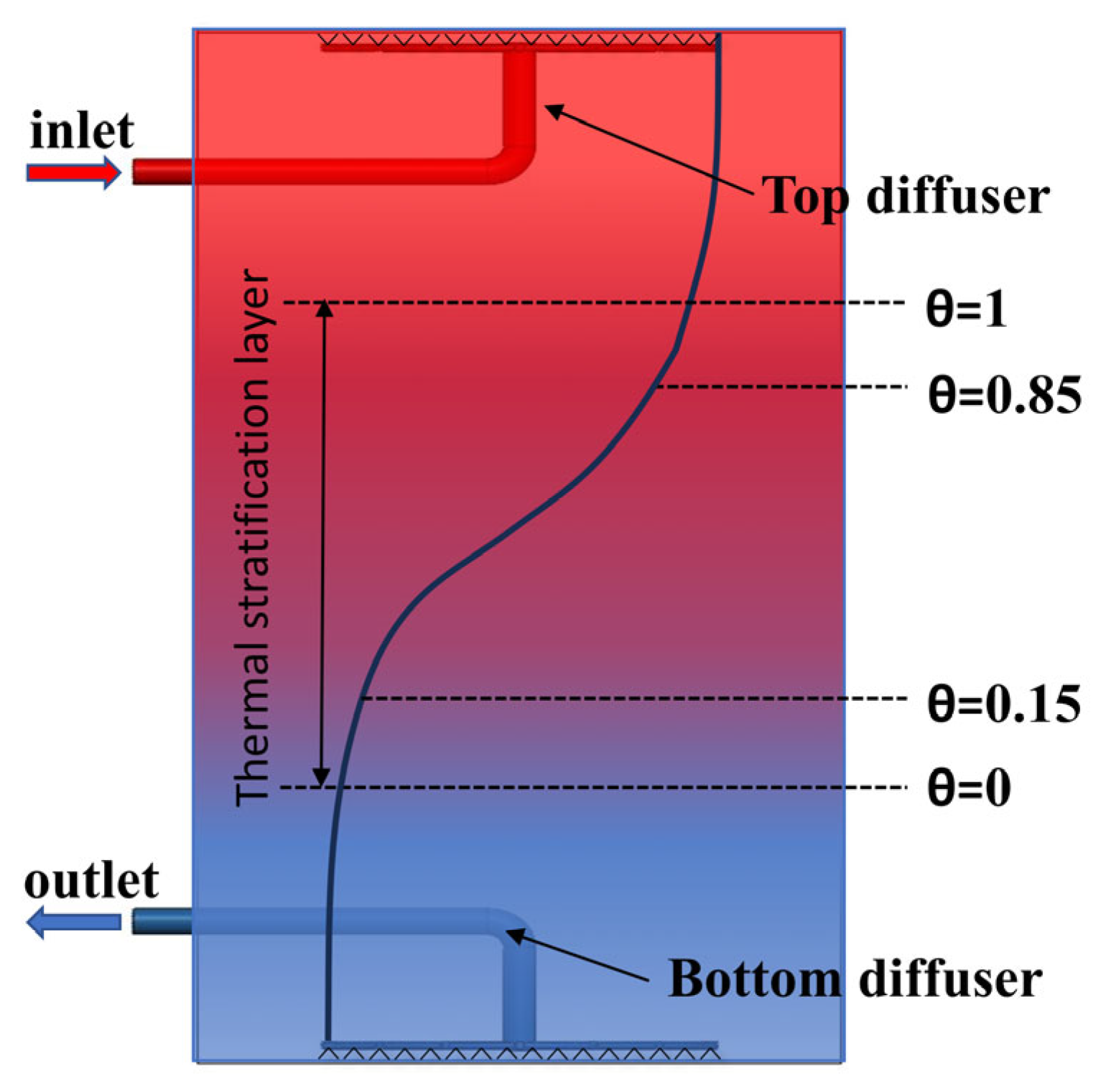
is the initial overall average temperature of the cold storage tank. The dimensionless temperature is 0 on the cold fluid side and 1 on the hot fluid side. In the small regions at the top and bottom of the thermocline, the temperature gradient changes very little and is typically neglected. As shown in
Figure 5, the dimensionless temperature
in the thermocline region typically ranges from 0.15 to 0.85.
(2) Stratification Number
The stratification number represents the ratio of the average temperature gradient at any given time to the average of the maximum temperature gradients throughout the process. The closer the stratification number is to 1, the better the stratification effect. The expression is as follows [
27].
where
is the number of subdivisions in the cold storage tank;
is the distance between each subdivision;
is the inlet temperature of the fluid;
is the initial temperature of the cold storage tank.
(3) Dimensionless Time and Dimensionless Height
The use of dimensionless treatment simplifies the analysis, making the calculation results more universal and comparable. The dimensionless time is defined as follows
, where
represents the cooling time during the cooling process, and
represents the time when the cold fluid is completely replaced by the hot fluid in an ideal scenario. The expression is as follows:
where
is the total volume of the cold storage tank;
is the inlet fluid velocity of the diffuser;
is the equivalent inlet radius of the diffuser.
The dimensionless height is defined as follows
, where
is the height of a point in the cold storage tank and
is the height of the cold storage tank.
2.5. Model Validation
To ensure the accuracy and computational stability of the numerical simulation results, this study uses a typical cooling moment
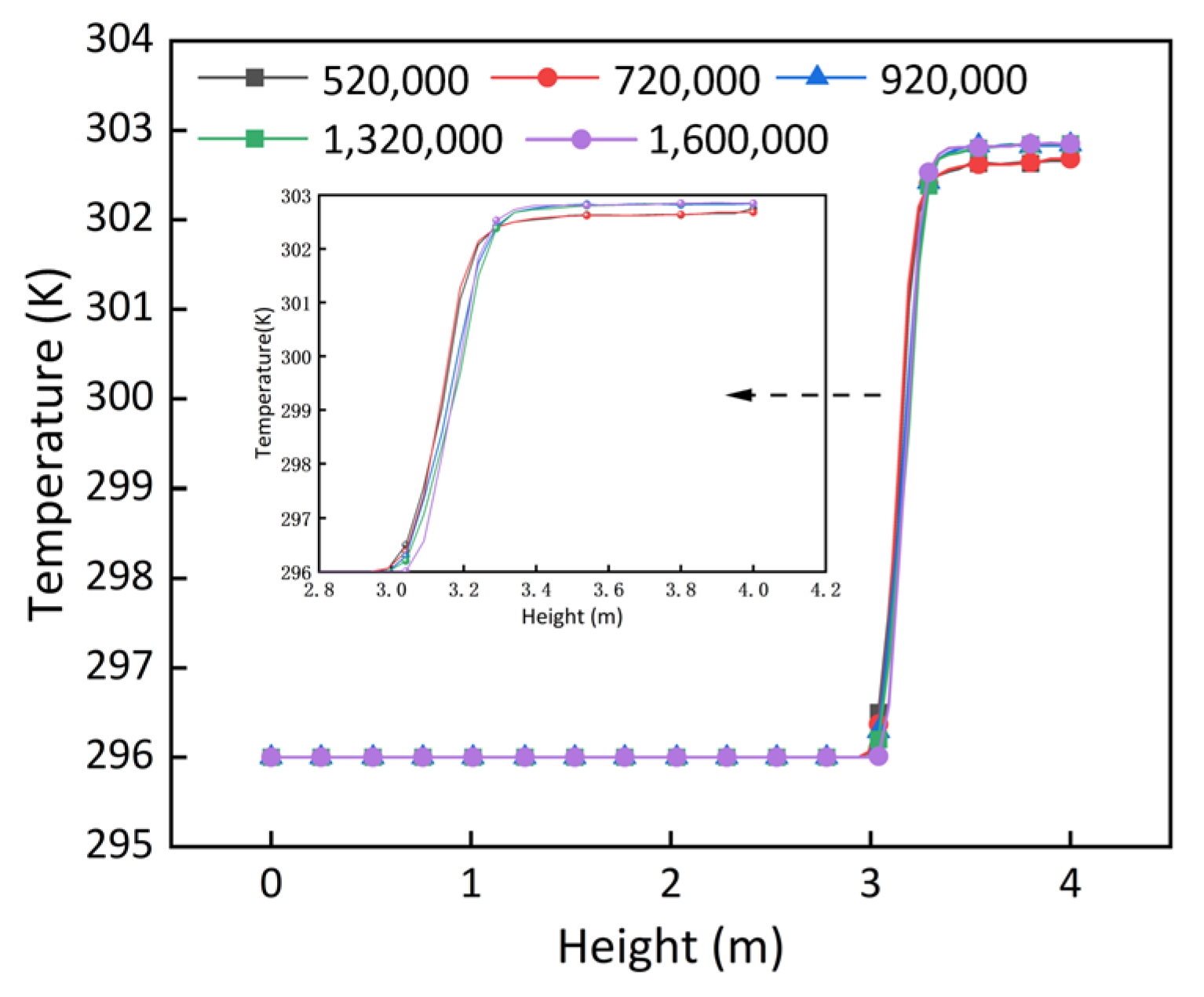
as the reference benchmark, extracting the temperature distribution curve along the axial direction of the cold storage tank to systematically evaluate the impact of different mesh numbers on the simulation accuracy. The validation results are shown in
Figure 6, where the temperature distribution in the simulation gradually stabilizes as the mesh is refined from a coarse grid to approximately 920,000 cells, with the curve’s variation significantly converging. Further refinement beyond this selected grid has little impact on the simulation results. Quantitatively, the maximum relative temperature deviation between the selected grid (920,000 cells) and the finer grid (1,320,000 cells) is evaluated to be strictly less than 0.2%. This confirms that the spatial discretization uncertainty is negligible and the mesh is sufficiently fine to capture near-wall gradients without relying on turbulent wall functions. Therefore, considering the balance between computational accuracy, numerical convergence, and memory and computational resource requirements, this study ultimately selects a mesh division scheme of approximately 920,000 cells for the subsequent transient flow-thermal coupling simulations. This scheme ensures simulation reliability while effectively controlling computational costs, meeting the accuracy requirements for both engineering applications and research analysis.
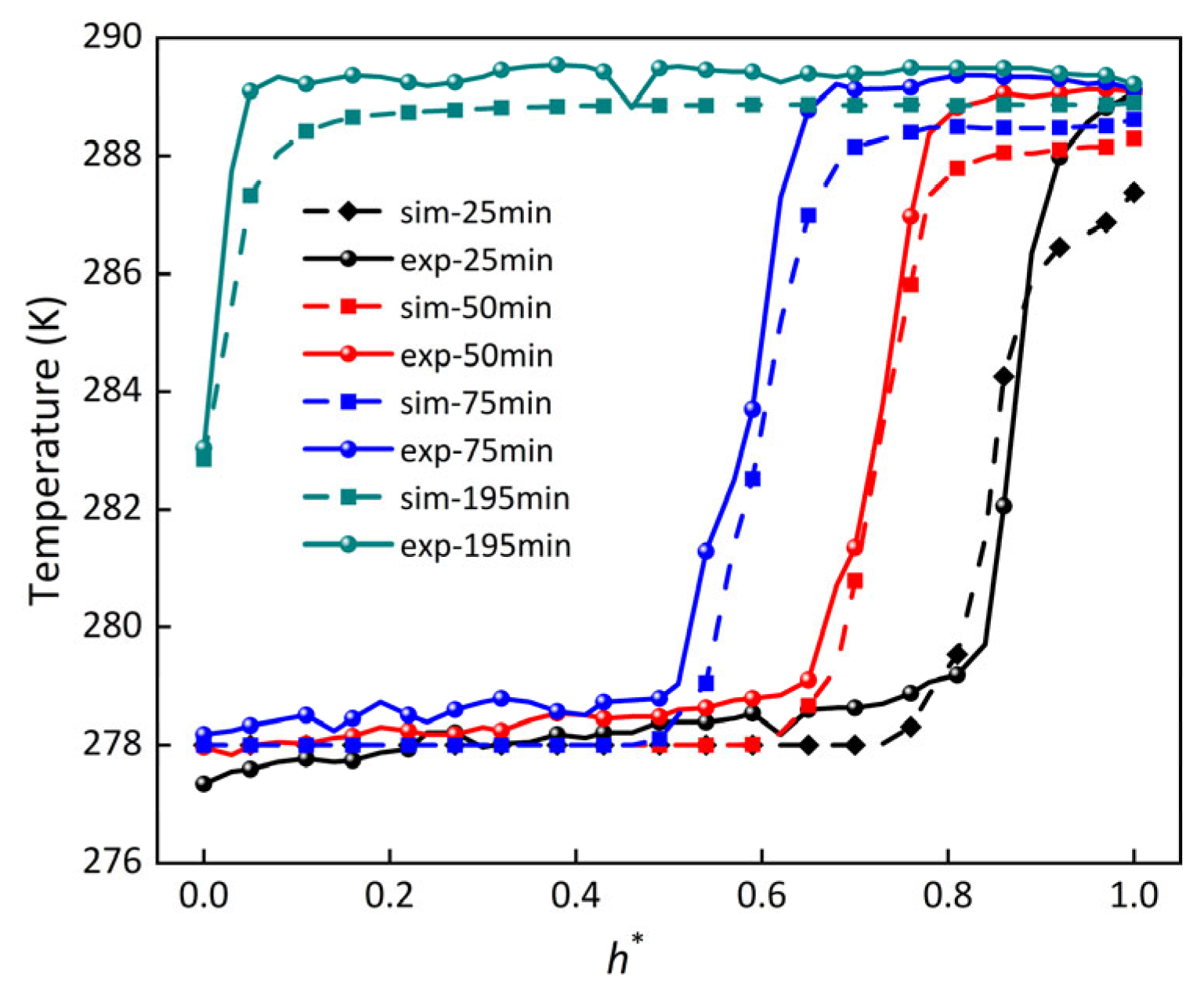
To ensure the accuracy of the parameters and model used in the calculation, numerical simulations are compared with experimental results [
9]. The Root Mean Square Error (RMSE) and Mean Absolute Relative Error (MARE) are used to calculate and evaluate the deviation between the simulation results and the experimental results. The formulas for RMSE and MARE are as follows:
where
represents the numerical simulation results and the experimentally measured temperatures at different cooling times;
is the number of measurement points.
Figure 7 compares the experimental data and numerical simulation results across 38 temperature measurement points inside the cold storage tank. Overall, the simulated temperature trends align closely with the experimental data, demonstrating that the numerical model effectively captures the dynamic evolution of thermal stratification during the cold storage process. Quantitative evaluations reveal that the Root Mean Square Error (RMSE) for the 38 measurement points ranges from 0.67 to 1.47 K, while the Mean Absolute Relative Error (MARE) remains exceptionally low, ranging from 0.20% to 0.36%. In CFD simulations of thermal energy storage systems, an RMSE below 2.0 K and a relative error under 5% are widely established as acceptable engineering thresholds. Since our model’s deviations fall well within this highly rigorous range, the results firmly validate the model’s high fidelity, physical stability, and excellent accuracy in describing the temperature field distribution.
Nevertheless, it is essential to acknowledge the inherent uncertainties and limitations of the current validation methodology. The minor discrepancies between the simulated and experimental data primarily stem from idealized boundary assumptions and measurement constraints. The numerical model assumes adiabatic tank walls and perfectly constant inlet/outlet flow conditions, thereby neglecting minor environmental heat leaks and inevitable operational fluctuations from real pump systems. However, considering the relatively short discharge duration (1–2 h) and the heavy insulation typical of such tanks, these idealized boundaries are highly justified. Furthermore, relying on a finite number of discrete thermocouple probes—which possess inherent precision limits and thermal inertia—may introduce slight hysteresis effects and cannot fully capture complex, three-dimensional transient flow details like localized vortices. Therefore, future research should consider employing non-intrusive optical measurement techniques, such as Particle Image Velocimetry (PIV), to enable direct visualization and structural validation of the actual flow field within these complex phase-change suspensions.
4. Study on the Impact of Cold Storage Tank Structure on MPCMS Cooling Characteristics
As the core component of the cold storage system, the geometric configuration of the storage tank profoundly dictates the cooling efficiency and overall thermodynamic performance. This section focuses on studying the impact of the tank’s height-to-diameter ratio and distribution plate structure parameters on the temperature stratification characteristics and cooling performance of MPCMS. Through numerical simulations, the cooling process of cylindrical cold storage tanks under seven different height-to-diameter ratio conditions is analyzed. Additionally, flow distribution plates are installed within the cold storage tank to further explore the optimal configuration of the distribution plates in natural stratification cold storage devices with different mass fraction MPCMS working fluids.
4.1. Impact of Height-to-Diameter Ratio on MPCMS Cooling Performance
The height-to-diameter ratio (H/D) of the cold storage tank is a key structural parameter affecting energy utilization efficiency and thermal stratification stability during the cooling process. As the H/D ratio increases, the tank’s geometric shape gradually evolves from a “short and fat” form to a “tall and thin” shape. This deformation significantly affects the contact interface area between hot and cold fluids inside the tank, the cross-sectional velocity distribution, and the heat exchange path with the environment, resulting in complex effects on the formation and maintenance of the thermocline. Proper adjustment of the H/D ratio can optimize the temperature gradient structure while improving the thermal buffering performance and system efficiency of the cold storage device.
To systematically investigate the mechanism by which the
H/
D ratio affects MPCMS stratification performance, this study selects MPCMS-10 wt% as the storage medium under operating condition 2 (8.37 m
3/h) and performs numerical simulations for seven typical structures with
H/
D ratios of 0.5, 1, 1.5, 2, 4, 8, and 16 (
Table 5). To highlight the impact of changes in the
H/
D ratio on the evolution of the flow and temperature fields, and eliminate the interference from variations in the distributor structure with
H/
D, the inlet and outlet boundary conditions are appropriately simplified in this study: the top of the cold storage tank is set as the inlet, and the bottom is set as the outlet, thus avoiding the influence of flow disturbance differences on the structural parameter comparison.
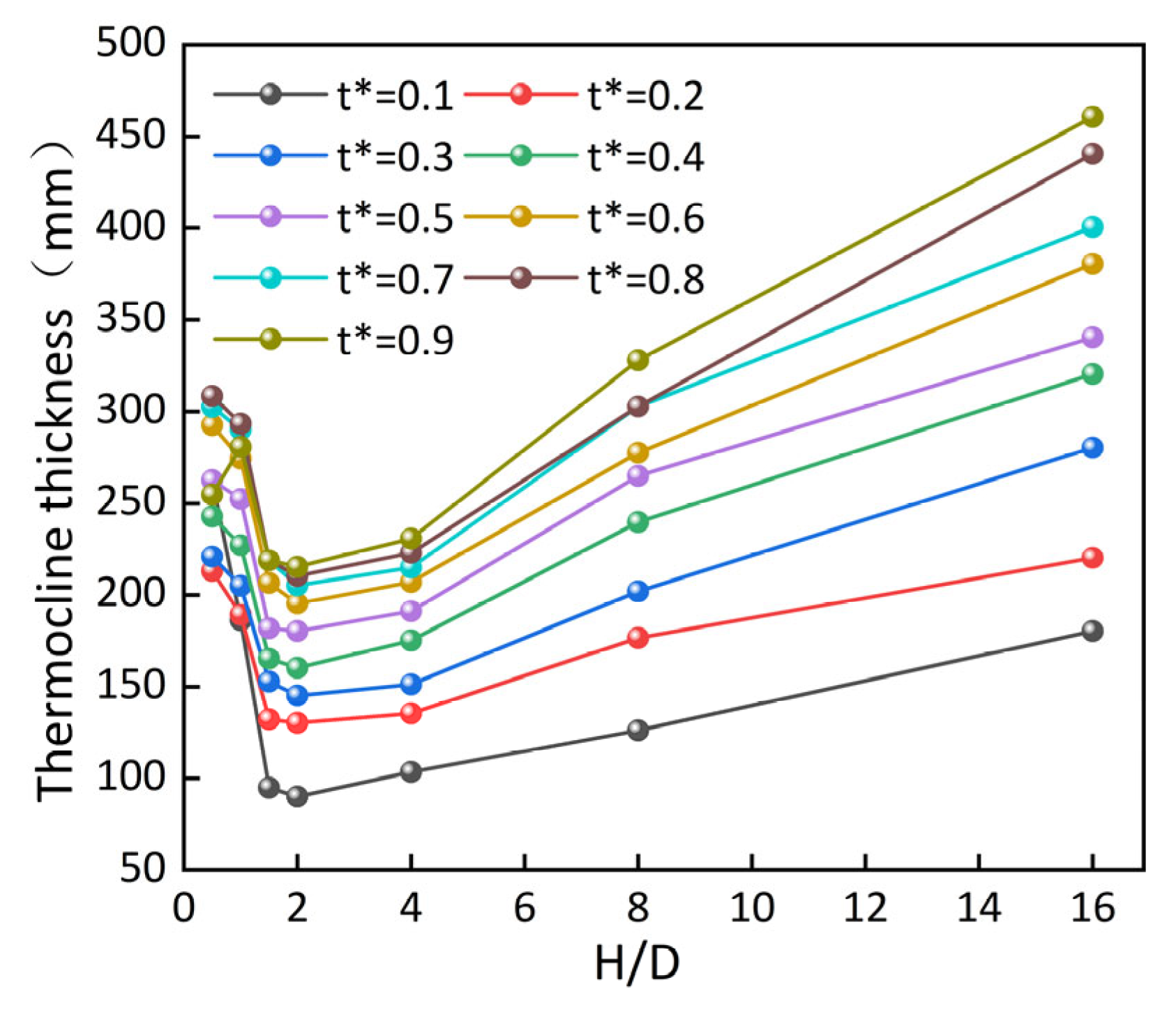
Figure 12 shows the trend of thermocline thickness variation with the height-to-diameter ratio (
H/
D) of the cold storage tank. The research results show that in the low
H/
D range, thermocline thickness significantly decreases with the increase in
H/
D, indicating that moderately increasing the tank height helps compress the stratification transition zone and strengthen the thermal stratification boundary. However, as the
H/
D ratio further increases, the thickness variation becomes smoother, and a rebound trend is observed under high
H/
D (>8) conditions, indicating that excessive elongation of the tank’s longitudinal dimension may induce uneven internal flow and temperature interface diffusion, weakening the stratification effect.
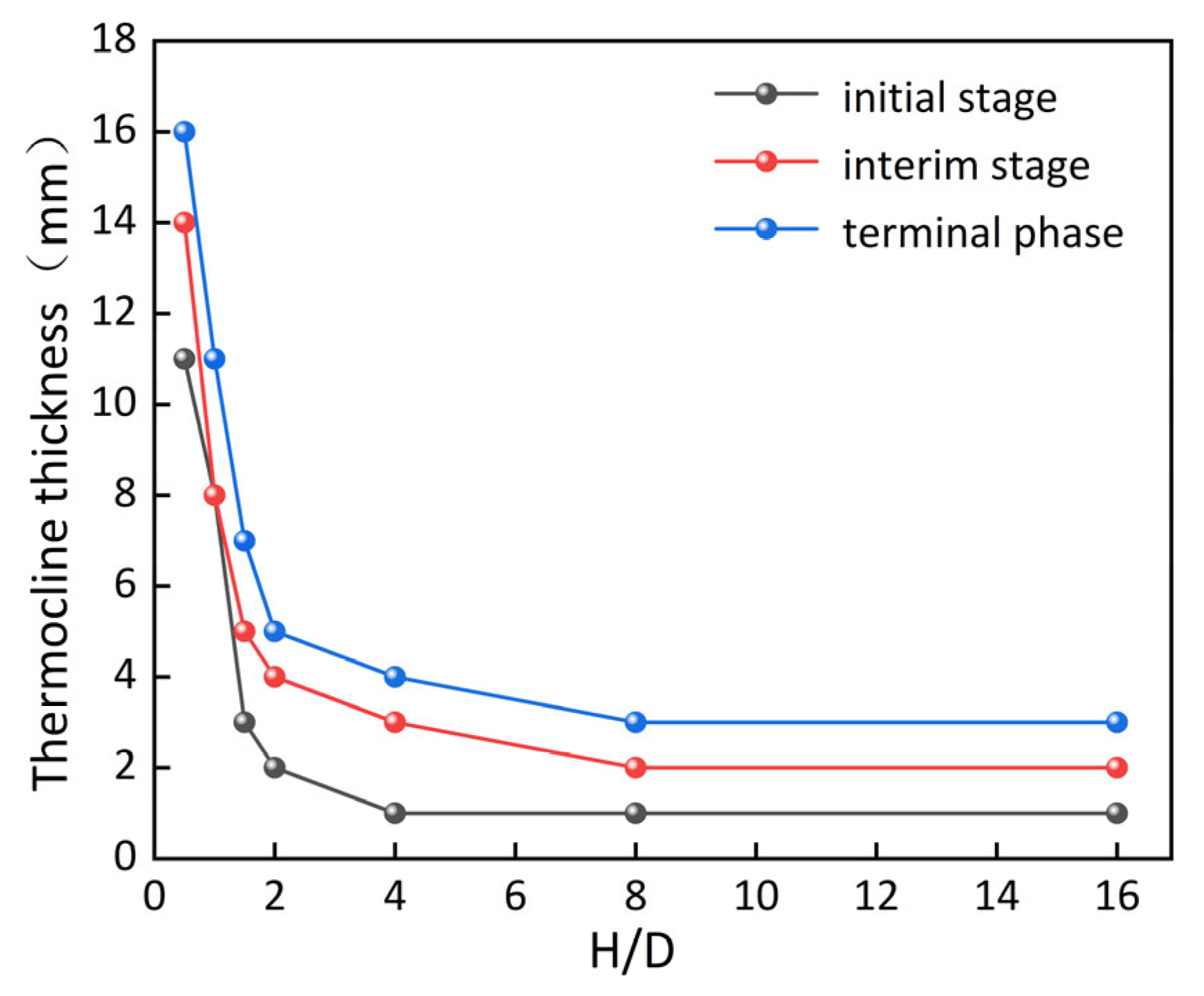
Figure 13 further shows the evolution of thermocline volume ratio variation with the
H/
D ratio at different cooling stages (initial, mid, and final). The overall trend shows that the thermocline volume distribution exhibits a three-stage characteristic: “rapid decrease, slow decay, and near stabilization.” In the low
H/
D range, the thermocline volume ratio decreases rapidly as
H/
D increases; in the medium
H/
D range (2–4), the rate of decrease significantly slows down; after
H/
D exceeds a certain critical value (>4), the volume ratio stabilizes and the variation becomes insignificant.
In the low H/D range, the tank’s cross-sectional area is larger, and the inlet disturbance affects a wider area; as H/D increases, the cross-sectional area decreases, and with the tank volume constant, the contact area between hot and cold fluids reduces, leading to a simultaneous decrease in thermocline thickness, which results in a rapid decrease in the volume ratio. However, in the medium H/D range, although the cross-sectional area continues to shrink, the local velocity increase and disturbance enhancement caused by the area reduction result in a slight rebound in thermocline thickness; at this point, the growth in thickness and the reduction in area offset each other, causing the thermocline volume ratio to decrease and slow down. After further increasing H/D, the system enters a quasi-stable stratification state under stronger limiting conditions, and the stratification structure is dominated by disturbances rather than geometry, with the volume ratio change tending to saturate. The synergistic analysis of thermocline thickness and volume ratio shows that within the H/D range of 2–4, the system can achieve both high stratification stability and reasonable thermal energy utilization efficiency, making it the optimal geometric design range for natural stratification cold storage tanks using MPCMS working fluid. Within this range, the stratification structure exhibits strong disturbance resistance, and the system’s cooling capacity remains at a high level.
4.2. Impact of Uniform Flow Orifice Plate on Thermocline Thickness
In natural stratification cold storage systems, adding barrier structures within the cold storage tank can effectively enhance stratification, promoting uniform fluid distribution across the cross-section and avoiding localized strong jet disturbances, thereby forming clearer and more stable temperature stratification interfaces. To achieve a thinner and higher-quality thermocline structure, this study proposes further adding a uniform flow orifice plate structure on top of the upper and lower distributors, creating a coupled flow diversion scheme of “distributor + uniform flow orifice plate.” Structural optimization research is conducted under operating condition 1 and MPCMS-10 wt%, focusing on the effects of parameters such as hole ratio, arrangement, and hole diameter of the uniform flow orifice plate on the system’s stratification performance.
Figure 14 shows the structural layout of the cold storage device with a uniform flow orifice plate: the upper uniform flow orifice plate is installed below the upper distributor, and the lower uniform flow orifice plate is placed above the lower distributor. This structural design induces horizontal diffusion and redistribution of the inlet and outlet fluids along the uniform flow orifice plate direction, forming a stable flow field structure similar to gravity-driven flow, significantly weakening the shear mixing effect between hot and cold fluids in the direct vertical intersection area.
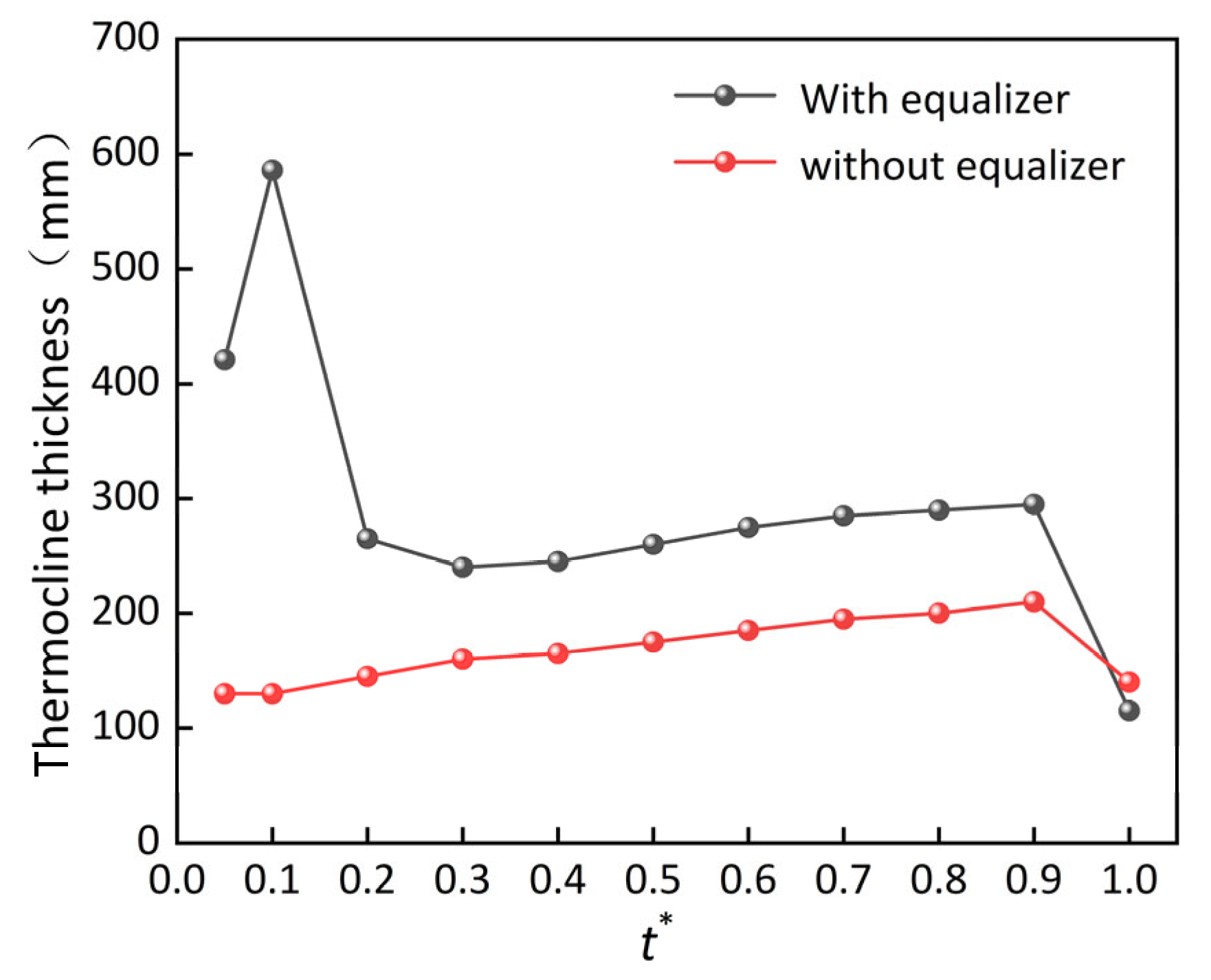
As shown in
Figure 15, at the initial stage of cooling (
), without the uniform flow orifice plates, the thermocline thickness is 421 mm; after introducing the uniform flow orifice plate structure with a 10% hole ratio, the thickness decreases significantly to 130 mm, with a difference of 291 mm, equivalent to about 7.3% of the total height of the cold storage tank. As the cooling process progresses, this advantage is sustained, and throughout the process, the condition with uniform flow orifice plates maintains a smaller thermocline thickness. This indicates that the effective suppression of thermal mixing significantly enhances the system’s stratification stability and cooling efficiency.
In conclusion, the introduction of the uniform flow orifice plate structure significantly enhances the thermal stratification capability of the MPCMS cold storage system. Proper control of the hole ratio and arrangement not only helps reduce the inlet shear effect but also leverages the physical properties of MPCMS to establish a multi-layer structure that buffers thermal disturbances and enhances cooling, providing an effective reference for the structural design and stratification control strategy of natural stratification cold storage systems.
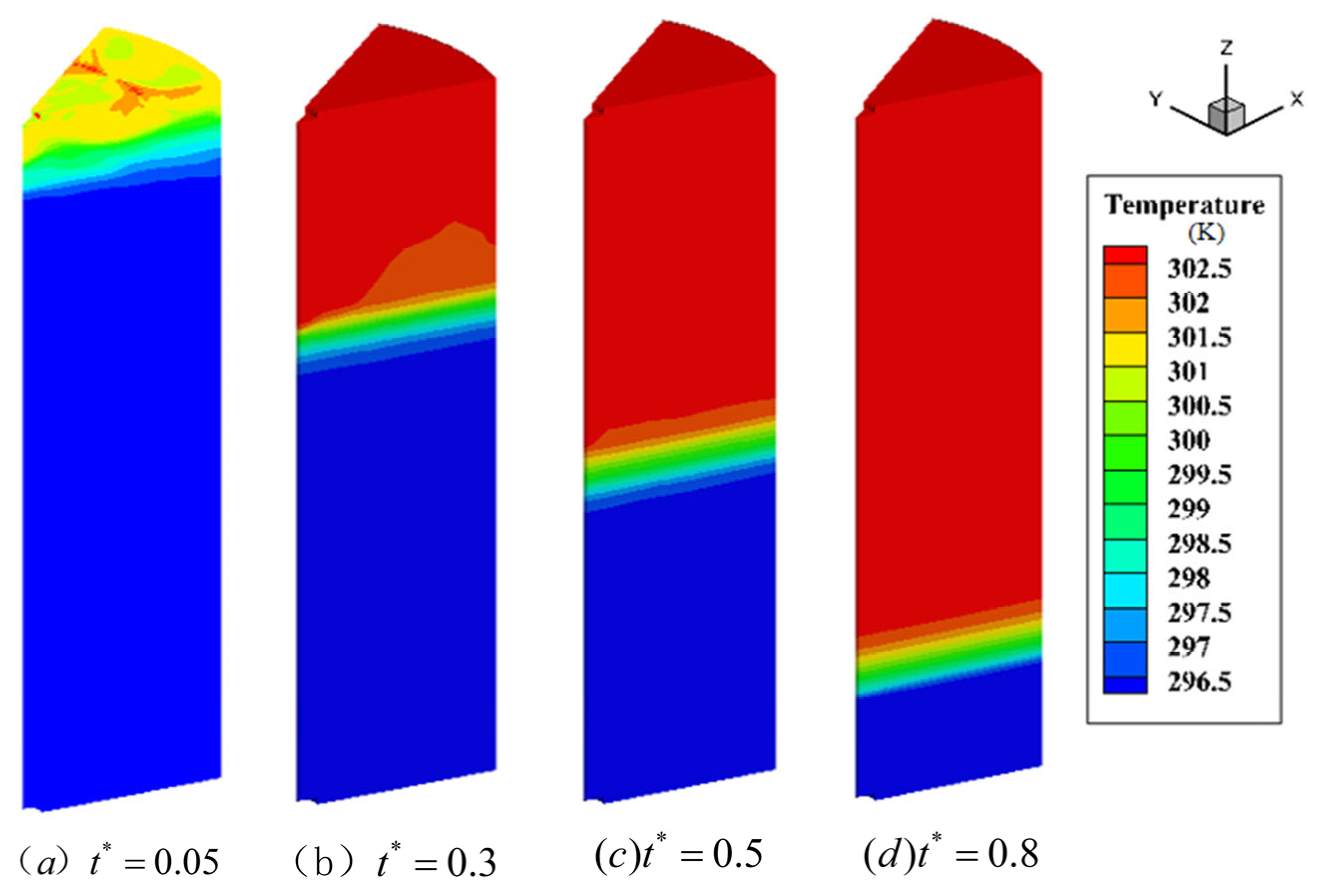
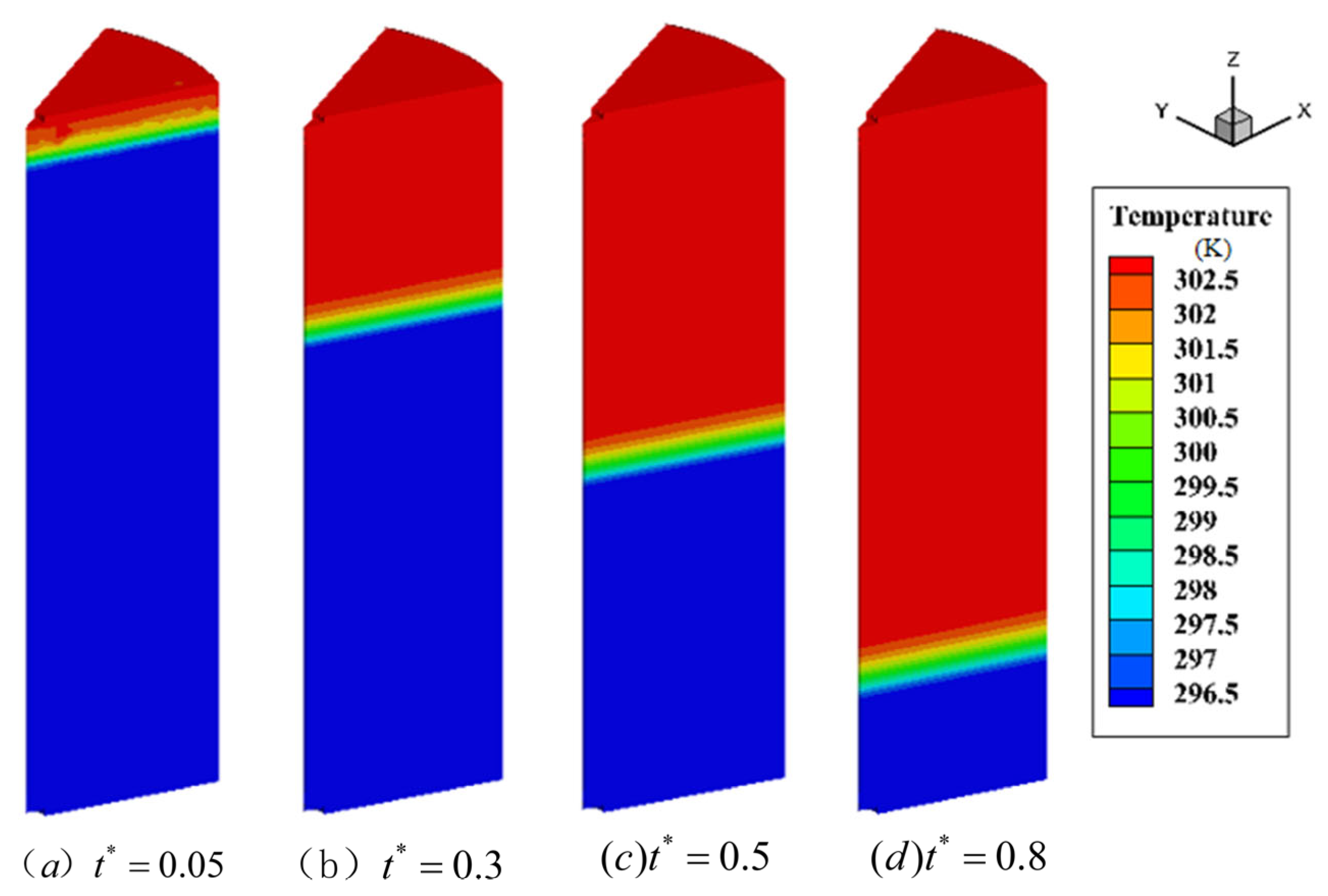
Figure 16 and
Figure 17 compare the distribution of isothermal surfaces in the temperature field within the cold storage tank, under conditions with and without the uniform flow orifice plates. The results show that at the initial stage of cooling (
), under the condition without uniform flow orifice plates, the temperature distribution in the upper part of the cold storage tank exhibits significant fluctuations, with local temperatures much lower than the set inlet temperature. There is intense mixing between hot and cold fluids, and the thermocline interface is blurry, even making it difficult to form a stable structure. This phenomenon indicates that under the dominant inlet disturbances at high Reynolds numbers, fluid jets directly impact the lower thermal regions, weakening the conditions for natural thermal stratification to develop.
Conversely, under the configuration equipped with both upper and lower uniform-flow orifice plates, the internal isotherms exhibit a dense, horizontally uniform distribution throughout the cooling process. The thermocline boundaries are sharply defined and distinctly discernible, indicating a highly stable, one-dimensional stratified structure. Fluid-dynamically, the uniform-flow plates function as an effective mechanical barrier that disrupts the direct impingement path between the incoming cold jet and the resident hot fluid. The region immediately downstream of the plates establishes a “guidance, diffusion, and buffering” zone, where the macroscopic momentum of the inlet jet is radially diffused and severely attenuated, thereby preventing high-velocity intrusion into the deeper thermal strata.
Throughout the entire discharge cycle, the thermocline thickness in the plate-equipped tank remains significantly compressed compared to the unmitigated structure, yielding superior stratification stability and highly controlled, monotonic thermal energy extraction. This profound enhancement in stratification efficacy is governed by two coupled mechanisms. First, the uniform-flow plates act as a physical shear-isolation barrier; they effectively decouple the highly turbulent inlet zone from the quiescent storage volume, precipitously reducing vertical mixing intensity and shear-induced entrainment. Second, the restricted volume immediately upstream of the upper orifice plate acts as a localized thermal pre-conditioning region. It allows the incoming fluid to rapidly thermally equilibrate toward the target inlet temperature before percolating into the main storage volume. Consequently, the fluid ultimately entering the thermocline zone possesses a minimized temperature differential and negligible kinetic energy, flawlessly preserving the stability of the density gradient.
4.3. The Impact of Uniform Flow Orifice Plate Structure on MPCMS Cooling Performance
Through the above comparison of thermocline thickness and the visualization of temperature contour plots, it can be observed that the uniform flow orifice plates play a key role in reducing the thermocline thickness of MPCMS and enhancing stratification stability. On one hand, as a physical isolation structure, the uniform flow orifice plates effectively block the direct convection path between the hot and cold fluids, thereby significantly weakening the mixing disturbance caused by jet impacts. On the other hand, the uniform flow orifice plates induce lateral diffusion and buffering heat exchange before the fluid enters the cold storage space, helping to improve the uniformity of temperature and velocity distribution and strengthening the stability of the thermal stratification interface.
Building on this, this section will further explore the impact of uniform flow orifice plate structural parameters on MPCMS cooling performance, including factors such as porosity, hole diameter, and installation position, to optimize the uniform flow orifice plate design and enhance the overall thermal performance of the cold storage system.
4.3.1. Uniform Flow Orifice Plate Porosity
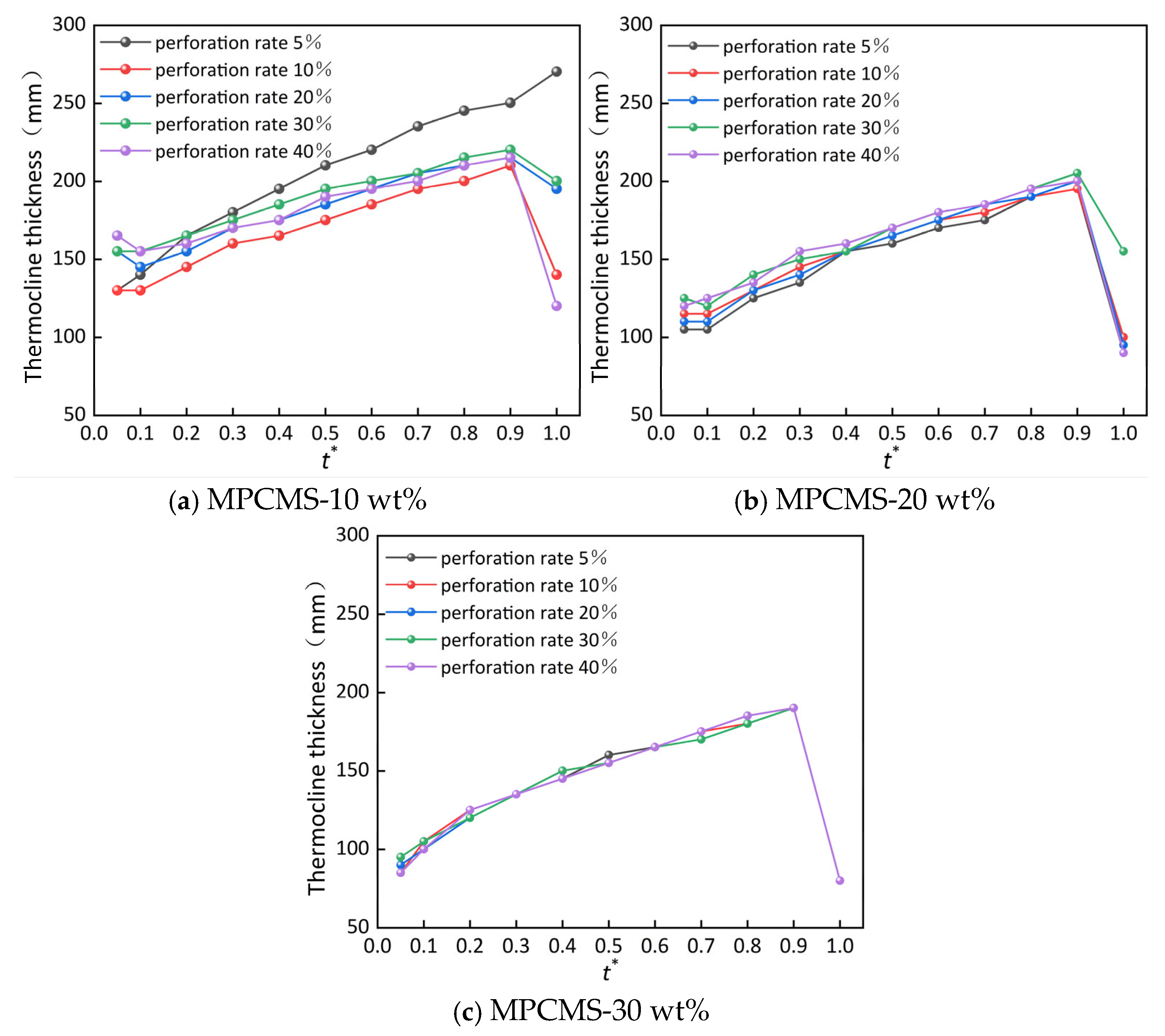
The porosity of the uniform flow orifice plate is a key structural parameter that determines its flow guiding performance and stratification enhancement effect. It significantly influences the fluid redistribution capability, flow pressure drop, and thermal mixing control behavior within the cold storage system. To determine the optimal porosity setting under different MPCMS mass fraction conditions, five uniform flow orifice plate structures with porosities of 5%, 10%, 20%, 30%, and 40% were designed. Numerical simulations were conducted under MPCMS-10 wt%, 20 wt%, and 30 wt% conditions to systematically analyze their effects on thermocline structure regulation.
As shown in
Figure 18a, under the MPCMS-10 wt% condition, porosity exhibits a high sensitivity to thermocline thickness. The simulation results show that the thermocline thickness is smallest (140 mm) at a porosity of 10%, while at a porosity of 5%, it reaches 270 mm, a difference of 130 mm, approximately 3.25% of the effective height of the cold storage tank. This difference indicates that excessively small porosity significantly suppresses the fluid penetration ability, causing cold fluid to accumulate above the uniform flow orifice plate, reducing the effective utilization of the lower heat exchange region, forming a “cold energy retention” phenomenon, and subsequently affecting the overall cooling efficiency of the system.
Under the MPCMS-20 wt% condition, although a porosity of 10% still shows superior thermocline control performance, the difference in thickness between the various porosities has significantly narrowed. Further, under the MPCMS-30 wt% condition, the impact of porosity on the thermocline becomes less sensitive, with almost no significant differences observed in the simulation. This is because high mass fraction MPCMS has a higher viscosity, and the Reynolds number during its outflow decreases significantly, weakening the penetration ability of the jet, thereby reducing the flow control capacity of the uniform flow orifice plate.
From a structural and functional synergy perspective, an excessively small porosity (such as 5%) may have the potential to enhance stratification, but it causes a larger flow pressure drop, affecting system flow stability and energy consumption. In contrast, within the porosity range of 10% to 40%, the thermocline thickness gradually increases with higher porosity, showing a typical “saturation” response. When the porosity exceeds 30%, the thermocline thickness variation becomes stable, indicating that the structural control limit has been reached. Further increases in porosity are unlikely to provide additional performance improvements and may even enhance the penetration ability of the hot fluid, weakening the stratified structure and affecting the mechanical strength of the uniform flow orifice plate.
In summary, under the MPCMS mass fractions of 10% and 20%, the uniform flow orifice plate structure with a 10% porosity best balances stratification stability and flow controllability. However, under high concentration conditions (30%), the marginal effect of the uniform flow orifice plate design on stratification control significantly decreases.
4.3.2. Uniform Flow Orifice Plate Installation Position
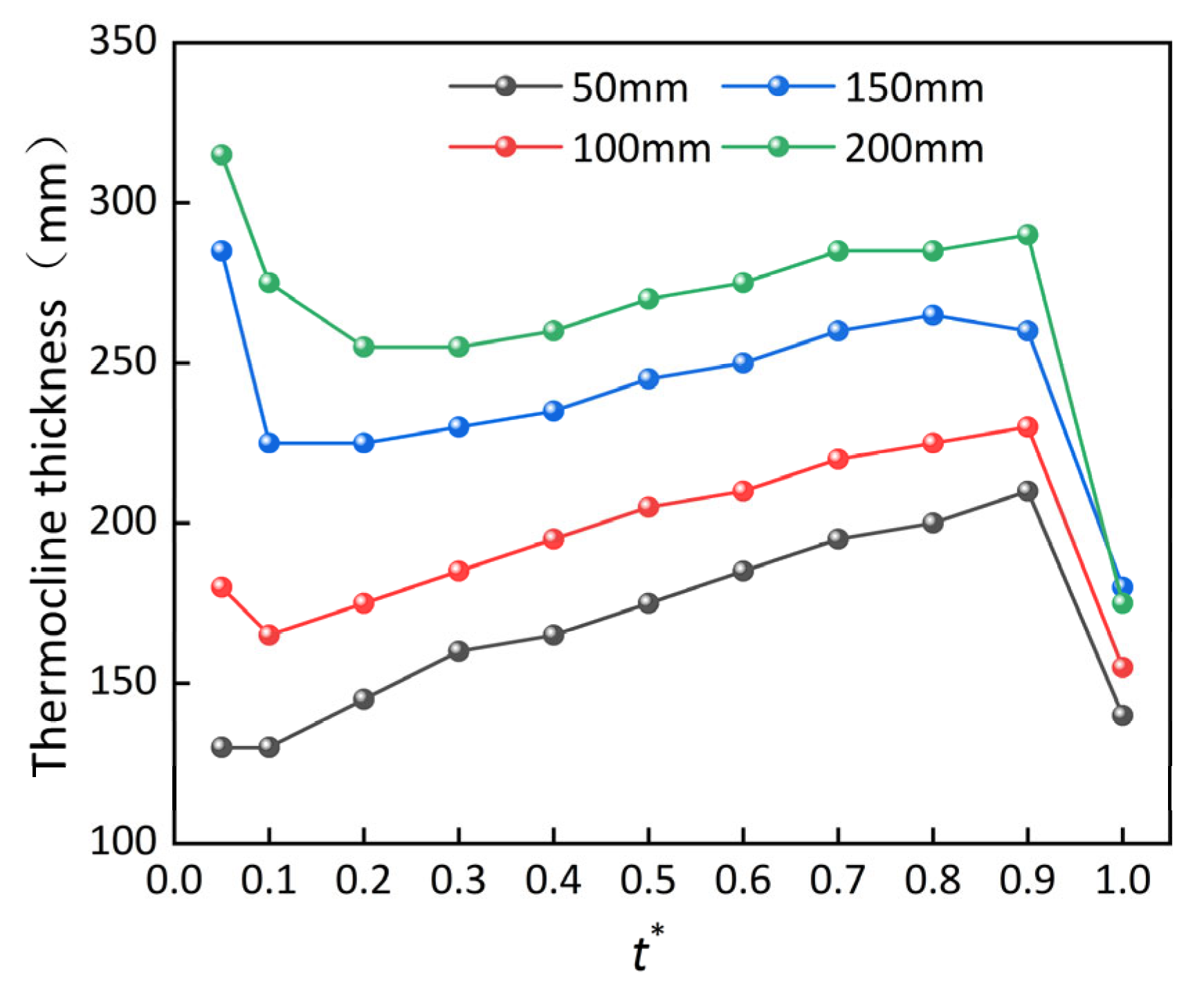
The preceding analysis of orifice plate porosity reveals a critical rheological dependency: as the MPCMS mass fraction increases, the apparent viscosity of the system rises significantly, leading to a proportional reduction in the inlet Reynolds number. Fluid-dynamically, this shift means that viscous damping begins to dominate over flow inertia. This attenuation of inertial forces naturally diminishes the macroscopic impact of the orifice plate’s structural parameters on high-concentration suspensions. Given that the stratification enhancement trends for MPCMS-10 wt% and 20 wt% exhibit fundamentally similar phenomenological patterns, this section strategically isolates MPCMS-10 wt% as the baseline working fluid. The objective is to further elucidate the underlying physical mechanisms governing how the vertical installation position of the uniform-flow plate dictates thermocline formation and sustained stability. To conduct a rigorous structural sensitivity analysis, the porosity of the uniform-flow orifice plate is held constant at the optimized value of 10%. The vertical standoff distance between the primary diffuser and the orifice plate is systematically varied across four configurations: 50 mm, 100 mm, 150 mm, and 200 mm. These distances correspond to 1.25%, 2.5%, 3.75%, and 5.0% of the total tank height, respectively, allowing for a comprehensive evaluation of spatial flow evolution within the upper distribution zone.
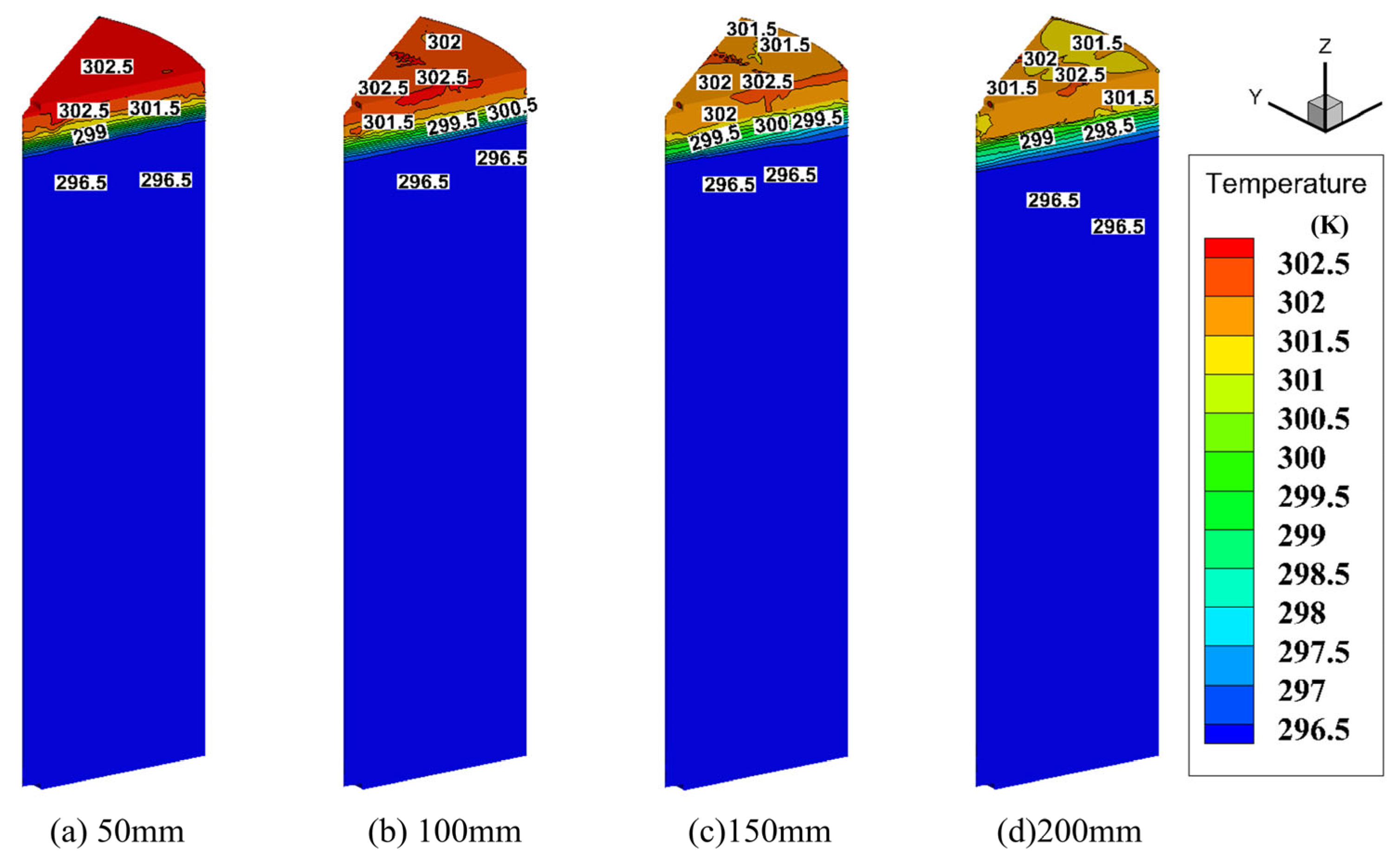
The relative distance between the uniform flow orifice plate and the diffuser is considered a crucial design factor for regulating jet inertia dissipation and buffering interface disturbances. A reasonable spacing arrangement not only helps induce lateral fluid diffusion but also suppresses the direct impact of the inlet hot fluid on the lower cold fluid, thereby improving the thermocline formation rate and boundary stability. As shown in
Figure 19, at the initial stage of cooling (
), when the distance between the uniform flow orifice plate and the diffuser is 50 mm, the hot fluid is evenly distributed in the upper region, momentum dissipation is evident, the isotherms are smooth, and the thermocline structure is clearly established, with a distinct hot–cold interface.
When the distance increases to 100 mm, the lateral diffusion of the hot fluid weakens, local temperature gradient variation increases, and some degree of longitudinal mixing between hot and cold fluids occurs. However, the system can still maintain a basic stratified structure. When the distance increases further, the distribution of hot fluid becomes uneven, and the mixing between hot and cold fluids intensifies. The system can still maintain a basic stratified structure, but as the distance continues to increase, the mixing degree significantly increases, the thermocline volume ratio rises markedly, and the stratification effect gradually weakens.
Figure 20 illustrates the variation in thermocline thickness over the discharging time under different installation positions of the uniform flow orifice plate, defined by the distance between the plate and the diffuser. The results show that when the distance between the uniform flow orifice plate and the diffuser is 50 mm, the thermocline thickness exhibits a “first increases, then decreases” trend. In contrast, under the 100 mm, 150 mm, and 200 mm spacing conditions, the thermocline thickness shows a “first decreases, then increases, and finally decreases again” oscillatory evolution pattern, indicating that changes in the structural distance play an important regulatory role in the evolution path of the thermocline.
Overall, as the distance between the uniform flow orifice plate and the diffuser increases, the thermocline thickness formed by the MPCMS system shows a gradual increase, particularly during the initial stage of cooling (), where this effect is most significant. The simulation results show that the maximum thermocline thickness difference between different installation positions can reach 185 mm, equivalent to approximately 5% of the effective height of the cold storage tank structures, indicating that distance variation has a significant impact on stratification quality and interface stability. The reason for this is that when the uniform flow orifice plate is installed too far apart, its horizontal dispersion effect lags, and the inertia of the hot fluid is not sufficiently weakened, leading to the formation of strong vertical jets that directly disturb the lower cold region fluid.
Furthermore, a larger distance increases the volume of the “buffer layer” above the uniform flow orifice plate, where the fluid has not fully mixed and diffused before entering the main storage area. This enhances interface shear and thermal diffusion, resulting in an increased thermocline thickness and blurred temperature gradients. In contrast, at smaller distances (such as 50 mm, 1.25% of tank height), the hot fluid first forms a low-momentum, stable expansion flow field below the uniform flow orifice plate and is redistributed into the storage area via the diffuser. This forms a typical “layered gravity flow” feature, enhancing the clarity and stability of the cold/hot fluid stratification interface.
In conclusion, to ensure that the uniform flow structure performs its maximum effect in controlling inlet disturbances and stabilizing the stratification boundary, it is recommended that the installation distance between the uniform flow orifice plate and the diffuser be controlled to approximately 1.25% of the tank height. This will allow for precise control of the mixing behavior within the MPCMS system, significantly improving the operational efficiency and thermal management capability of the natural stratification cold storage system.
4.3.3. Uniform Flow Orifice Plate Hole Diameter
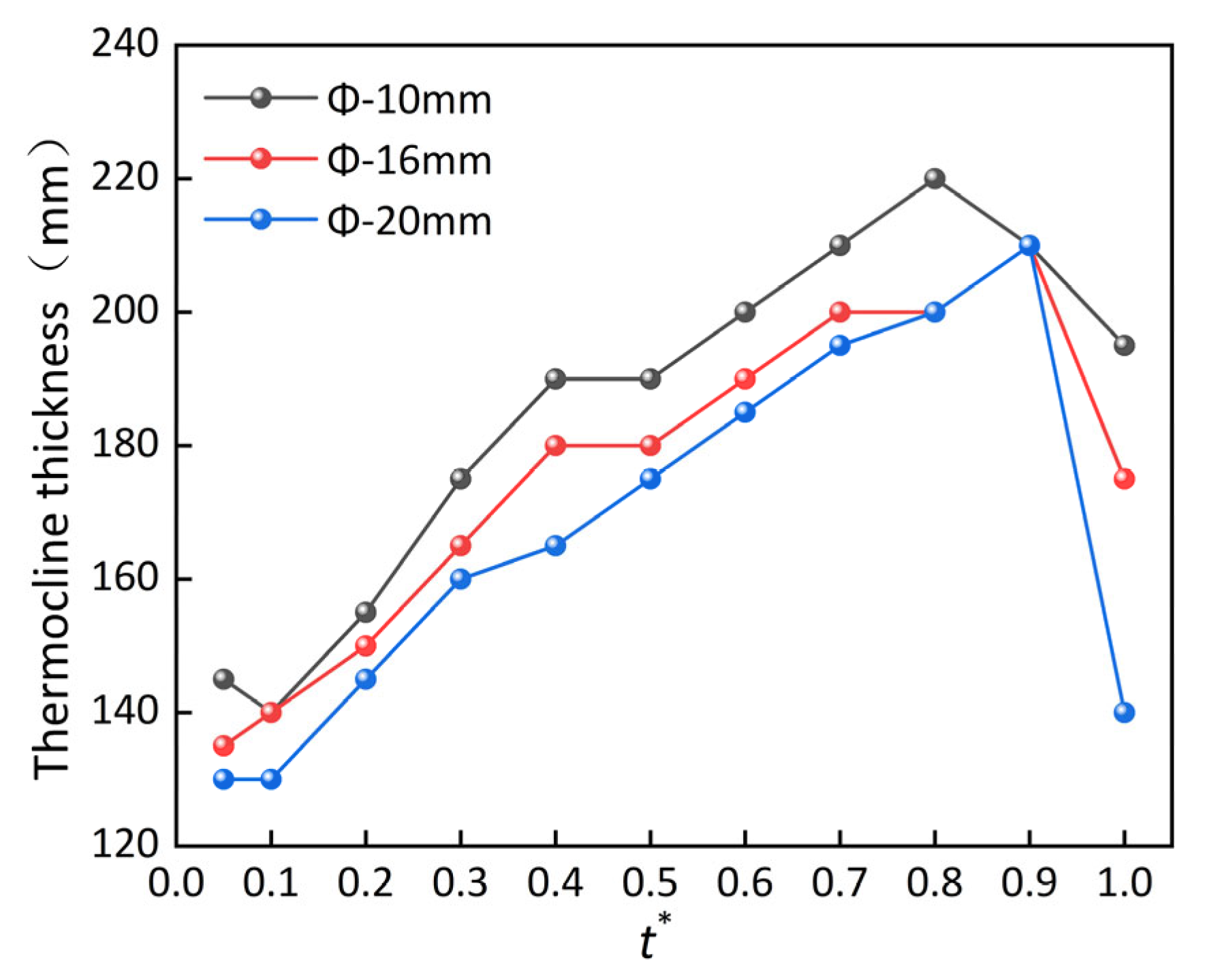
In uniform flow structure design, the hole diameter is a key parameter for regulating the local penetration velocity and jet diffusion characteristics of the fluid, which significantly impacts the formation and stability of the thermocline. In this study, to quantitatively evaluate the effect mechanism of the uniform flow orifice plate hole diameter on thermal stratification performance, an MPCMS mass fraction of 10% is selected, the porosity is fixed at 10%, and the distance between the uniform flow orifice plate and the diffuser is set to 1.25% of the total height of the cold storage tank structures. A comparative experimental scheme under controlled variable conditions is constructed. Taking a hole diameter of 20 mm as a baseline, the diameter is adjusted down to 16 mm and 10 mm to compare the thermocline thickness variation during the cooling process under the three different hole diameters.
As shown in
Figure 21, under the condition of a constant porosity of 10%, as the uniform flow orifice plate hole diameter decreases, the thermocline thickness formed within the system shows a gradual increase. Specifically, when the hole diameter is 10 mm, the thermocline thickness reaches the maximum value; the 16 mm hole diameter forms a thermocline thickness in between; while the 20 mm hole diameter results in the smallest thermocline thickness, exhibiting the best stratification performance.
In particular, at the initial stage of cooling (), under the 10 mm hole diameter condition, the thermocline thickness is 145 mm, while under the 20 mm hole diameter condition, it is only 130 mm, with a difference of 15 mm. On one hand, reducing the hole diameter under the same porosity conditions significantly increases the velocity gradient at the hole and the shear intensity of the jet, making it easier for the cold and hot fluids to form localized high-momentum disturbance zones after passing through the uniform flow orifice plate. On the other hand, smaller holes induce more significant near-field mixing and enhanced turbulence, particularly in the higher viscosity MPCMS working fluid, exacerbating the instability of the thermocline boundary and increasing the thermocline thickness. Therefore, under the condition of maintaining a 10% porosity, the use of the original 20 mm hole diameter results in the most ideal stratification effect for the MPCMS system.
5. Conclusions and Outlook
5.1. Conclusions
To address the critical thermal management challenges in high-density data centers, this study integrates latent-heat functional fluids (MPCMS) with highly economical, naturally stratified cold storage technology. By developing a comprehensive transient numerical model, this research elucidates the underlying fluid-dynamic mechanisms governing thermocline evolution. The study systematically optimizes key macroscopic and localized structural parameters—specifically the tank aspect ratio (H/D), uniform-flow orifice plate porosity, pore diameter, and installation standoff distance—to maximize the stratification efficiency. The principal quantitative conclusions are summarized as follows:
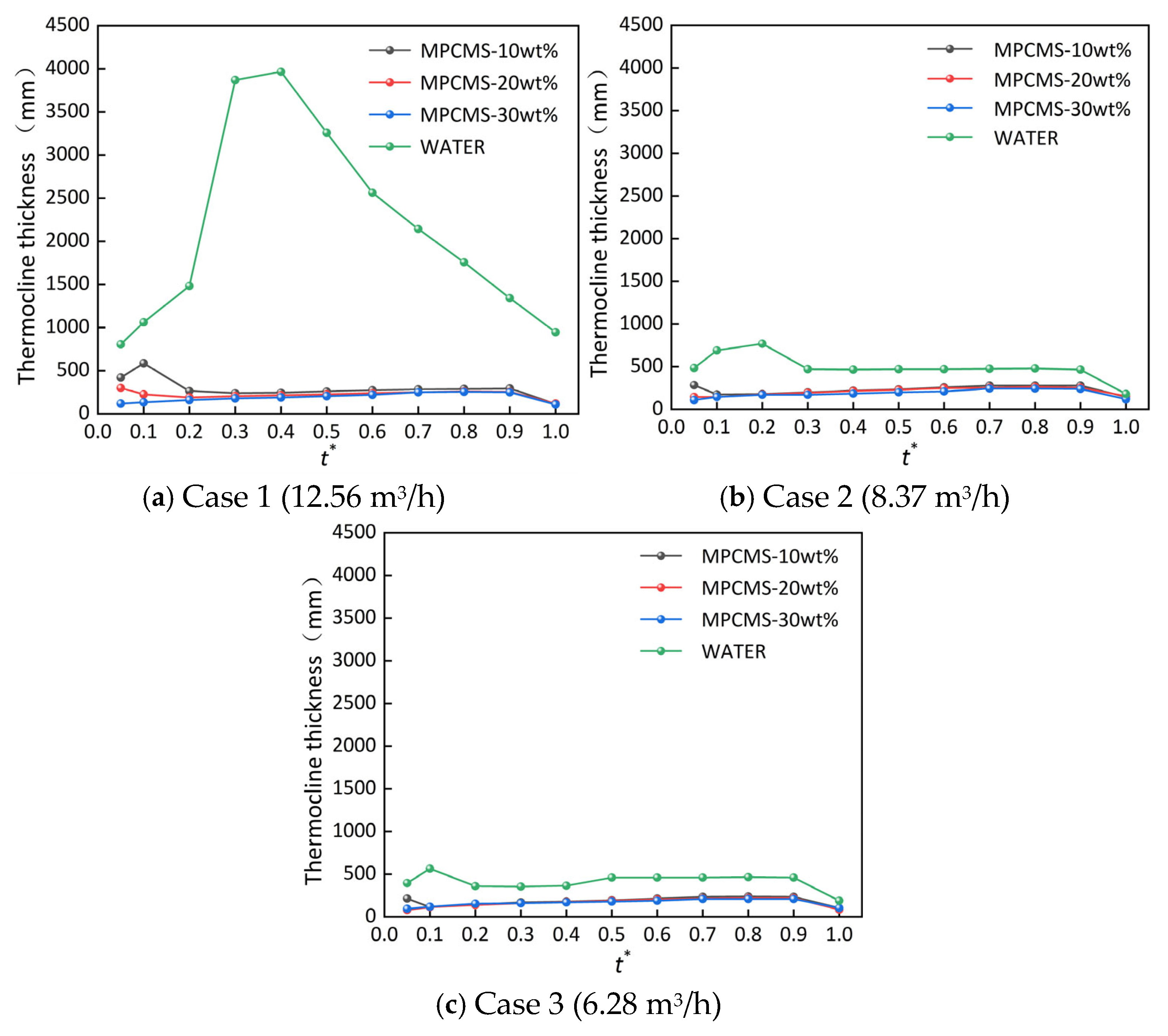
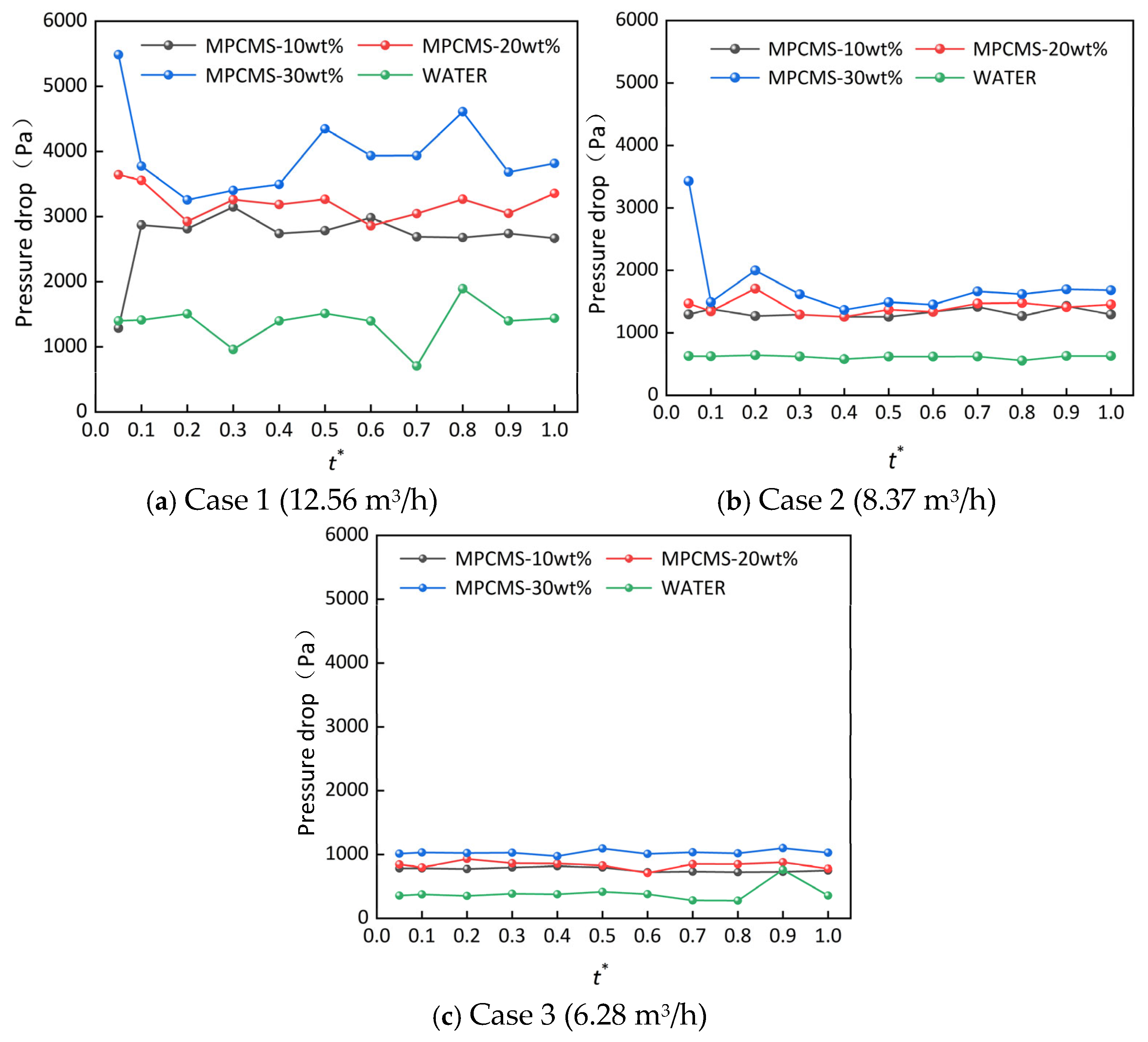
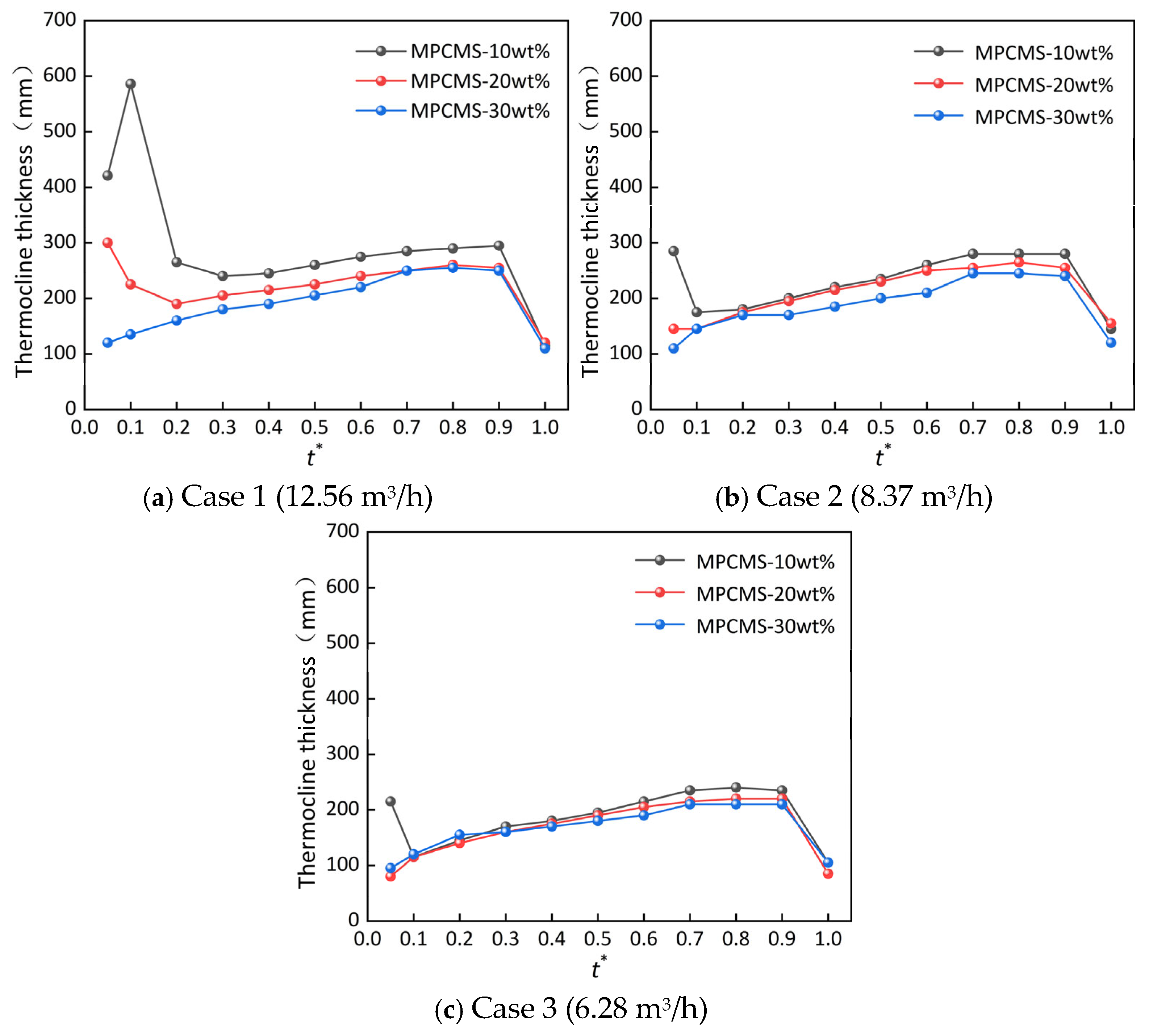
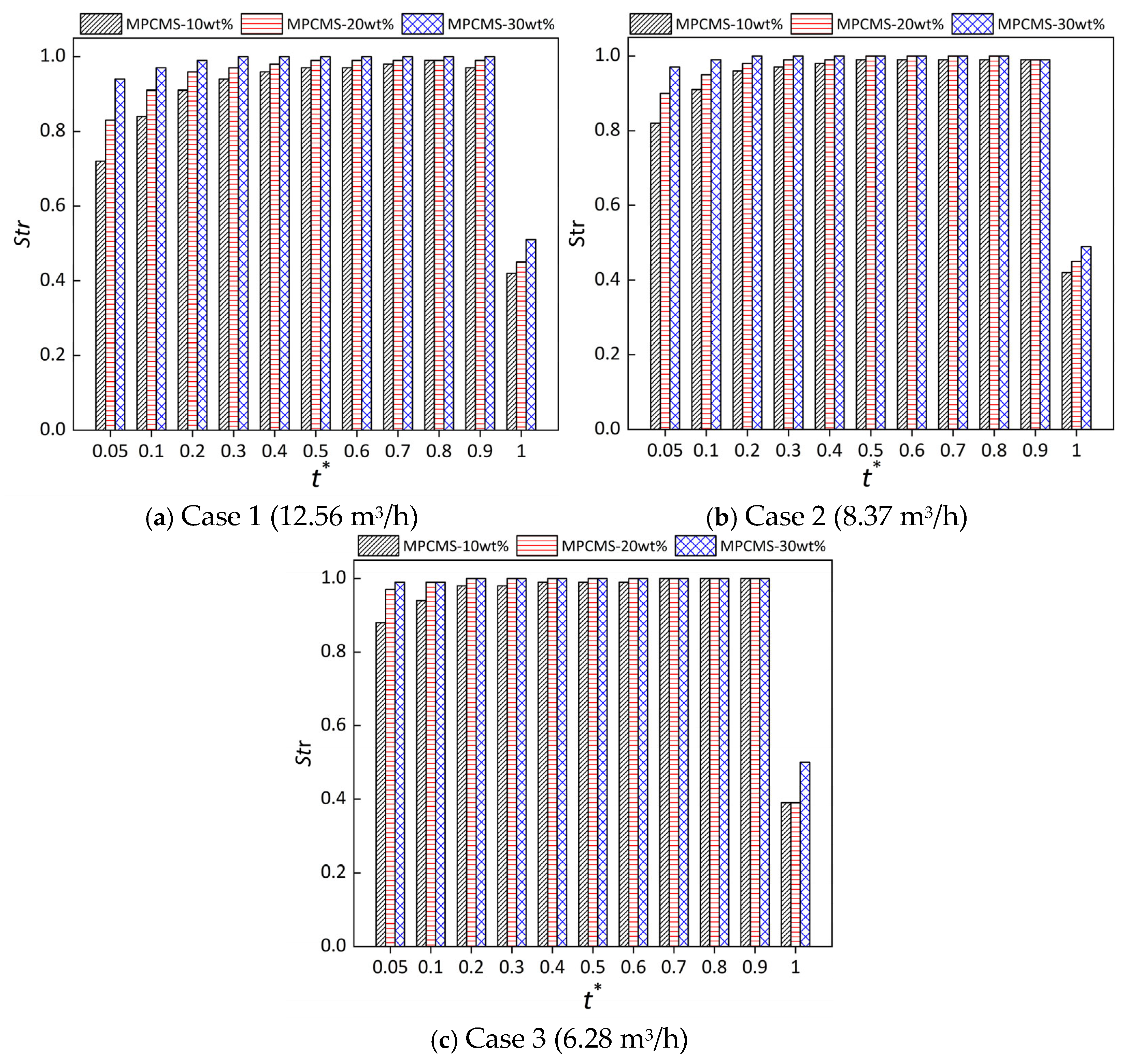
(1) Coupled Influence of Momentum and Rheology: Inlet flow velocity and particle mass fraction fundamentally dictate the stratification efficacy of the system. Lower flow rates and higher mass fractions synergistically suppress shear-induced mixing. Quantitatively, during the middle discharge stage () at a high flow rate of 12.56 m3/h, MPCMS-10 wt% effectively confines the thermocline thickness to merely 245 mm, achieving a remarkable 93.82% reduction compared to sensible-heat-based water (3964 mm). Furthermore, at the initial discharge stage (), increasing the MPCMS mass fraction from 10 wt% to 30 wt% sharply compresses the thermocline thickness from 421 mm down to 120 mm (a 71.4% reduction) and elevates the stratification number (Str) to an optimal 1.00. Crucially, while high-concentration MPCMS incurs a larger absolute pressure drop, its substantial latent heat capacity requires a drastically reduced mass flow rate for equivalent thermal loads, thereby minimizing the specific pumping power and yielding a superior energy efficiency advantage.
(2) Geometric Optimization of Aspect Ratio (H/D): For a constant storage volume, the macroscopic tank geometry profoundly dictates the internal cross-sectional velocity profile and thermal boundary interactions. The optimal H/D ratio for MPCMS cold storage systems strictly lies within the intermediate range of 2.0 to 4.0. This geometric window perfectly balances the suppression of macroscopic inlet jet penetration (prevalent in squat tanks) against the degradation caused by transverse thermal diffusion and wall boundary-layer drag (exacerbated in overly slender tanks). Operating outside this optimal regime physically compromises thermocline confinement and volumetric cooling efficiency.
(3) Momentum Dissipation via Uniform-Flow Plates: Integrating a uniform-flow orifice plate acts as a highly effective momentum sink, mechanically isolating the shear interface and precipitating a sharp thermocline. The introduction of the plate dramatically reduces the initial thermocline thickness from 421 mm to 130 mm, representing a substantial 69.12% reduction compared to the unmitigated tank. For baseline conditions (MPCMS-10 wt% and 20 wt%), the most optimal structural configuration comprises a 10% porosity, a 20 mm pore diameter, and a vertical installation standoff distance equivalent to 1.25% of the total tank height. However, as the mass fraction increases to 30 wt%, the geometric sensitivity of the orifice plate diminishes. Fluid-dynamically, the significantly elevated viscosity of the 30 wt% suspension drastically reduces the inlet Reynolds number, shifting the system into a regime where inherent viscous damping dominates over flow inertia and structural flow redistribution.
5.2. Outlook
While this study systematically reveals the thermal stratification characteristics of MPCMS and provides optimized structural guidelines, several limitations present valuable opportunities for future research. First, regarding operational strategies, the current analysis focuses on constant inlet flow conditions. Future research will introduce dynamic variable flow conditions to explore transient control strategies—such as employing a lower initial flow rate to rapidly establish the thermocline, followed by a gradual increase to enhance overall heat exchange efficiency. Second, concerning model realism, the outer wall of the cold storage tank is currently set as an adiabatic boundary. While this idealized treatment effectively isolates internal fluid dynamics, future studies must incorporate external heat loss factors to more comprehensively assess system performance under real-world operating conditions. Finally, although the application of MPCMS offers significant macro-level environmental benefits by reducing the carbon footprint of data center cooling systems, the direct ecological impact of the materials warrants thorough evaluation. Future research should include a comprehensive Life Cycle Assessment (LCA) of the MPCMS constituents (i.e., the melamine–formaldehyde shell, n-octadecane core, and propanol/water base fluid), specifically addressing synthesis processes, potential leakage risks, biodegradability, and end-of-life recycling. Addressing these multi-dimensional aspects will ultimately facilitate the sustainable, cost-effective, and large-scale engineering application of direct-coupled MPCMS cold storage technology.