Comparison of Analytical and Numerical Methods for Predicting the Shell-Side Heat Transfer Coefficient in Heat Exchanger with Segmental Baffles

Abstract
1. Introduction
1.1. Analytical Approaches
1.2. Numerical Approaches
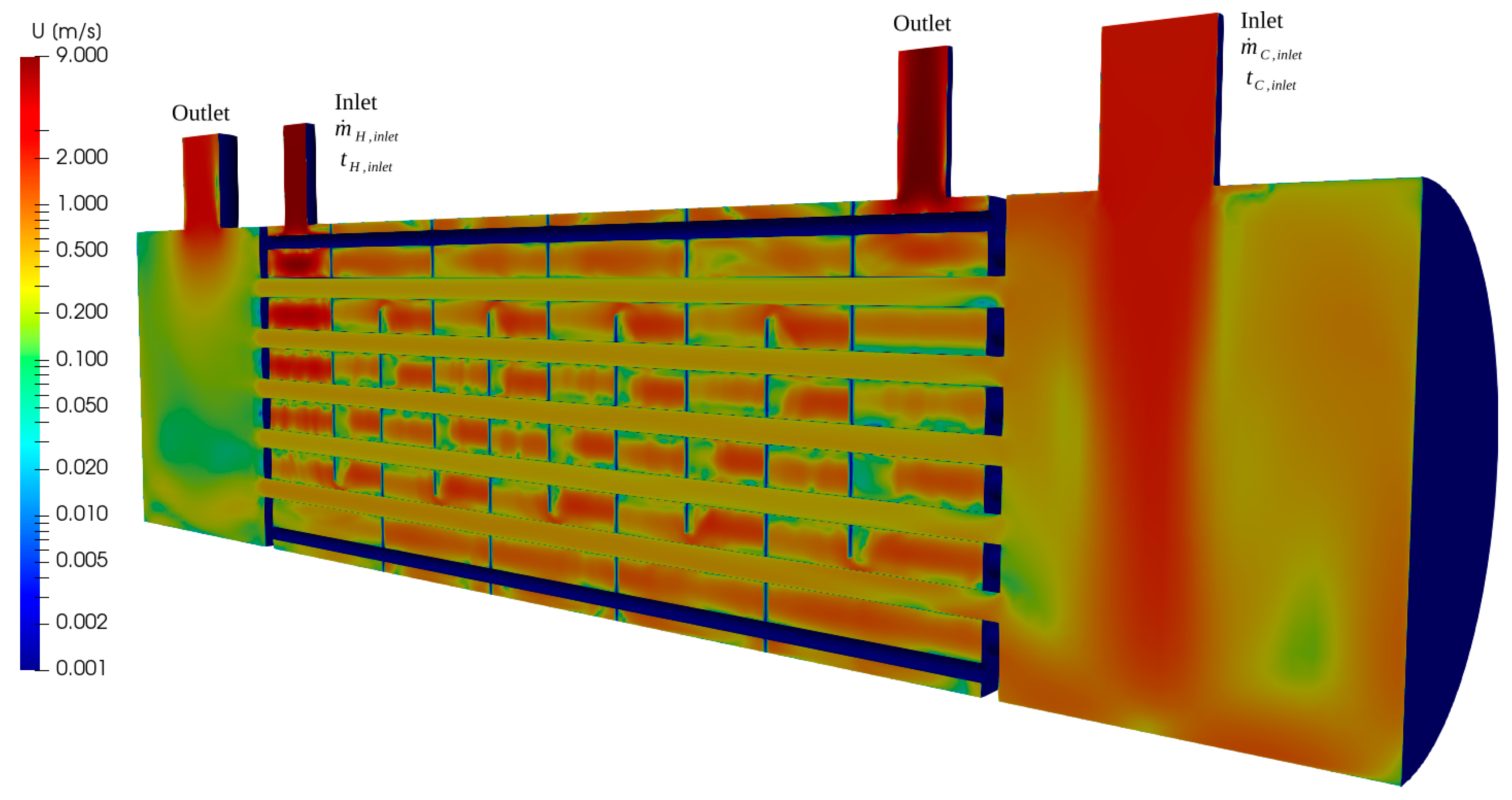
2. Model Heat Exchanger
3. Materials and Methods
3.1. Hand Calculation Methods
3.1.1. The Bell-Delaware Method
3.1.2. The VDI Method
3.2. Numerical Methods
3.2.1. OpenFOAM Approach
3.2.2. Ansys Fluent Approach
3.3. Industrial Software
3.4. Water Properties
- -
- Dynamic viscosity.
- -
- Thermal conductivity.
- -
- Density.
- -
- Specific heat.
- -
- Prandtl number.
4. Results
4.1. An Idealized Heat Exchanger
4.2. Heat Exchanger with Leakage
5. Conclusions
- Two analytical approaches, namely the VDI method and the extended Bell-D method, two software tools, namely OpenFOAM and Ansys Fluent, as well as Aspen EDR were applied to estimate the shell-side HTC in the STHEx with segmental baffles, considering a wide range of gaps between the baffle and the shell and between the baffle and the tubes as well as varying fluid mass flow rates. This comparative analysis, using analytical methods as the reference benchmark, represents a preliminary stage of a comprehensive study that includes an extensive experimental component for validation.
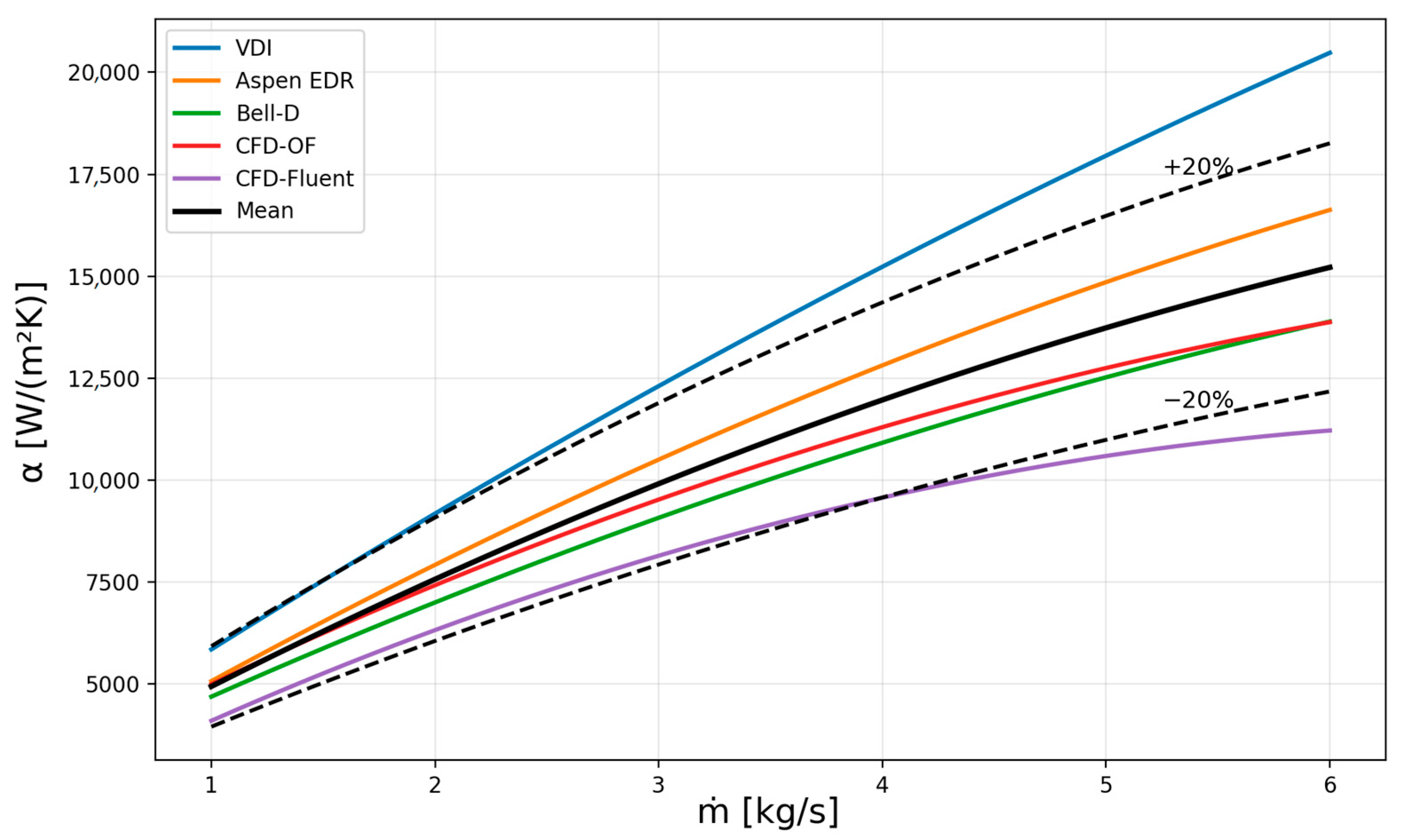
- For the idealized STHEx, with the exception of the VDI method, the remaining four methods predict the HTC within ±20% of the mean, defined as the arithmetic average of the results obtained using the five methods considered. The VDI approach overestimates the HTC by approximately 34%.
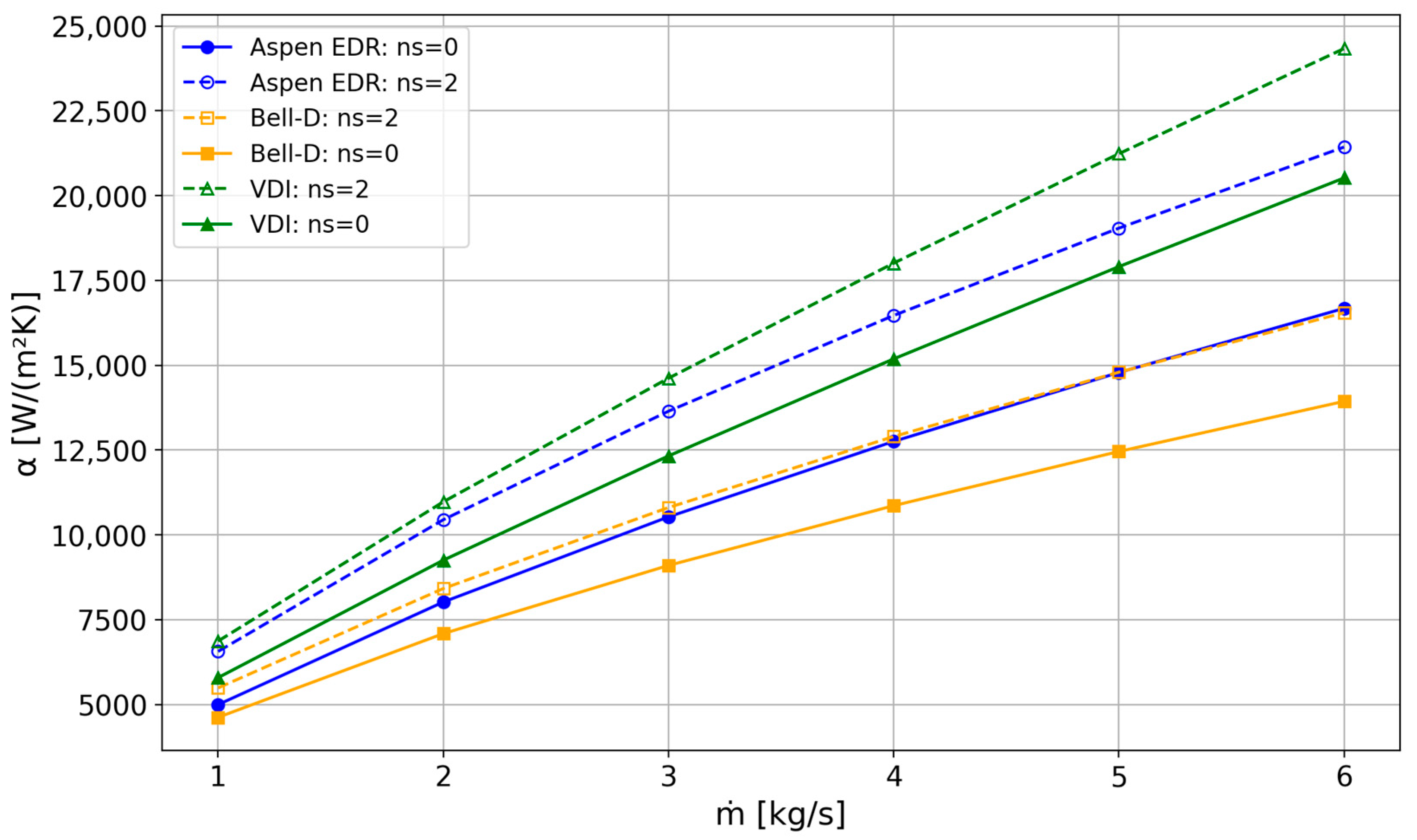
- The predictions showed that using two pairs of sealing strips in the idealized STHEx increased the HTC by more than 18% in the VDI and Bell-D approaches, and approximately 30% in Aspen EDR.
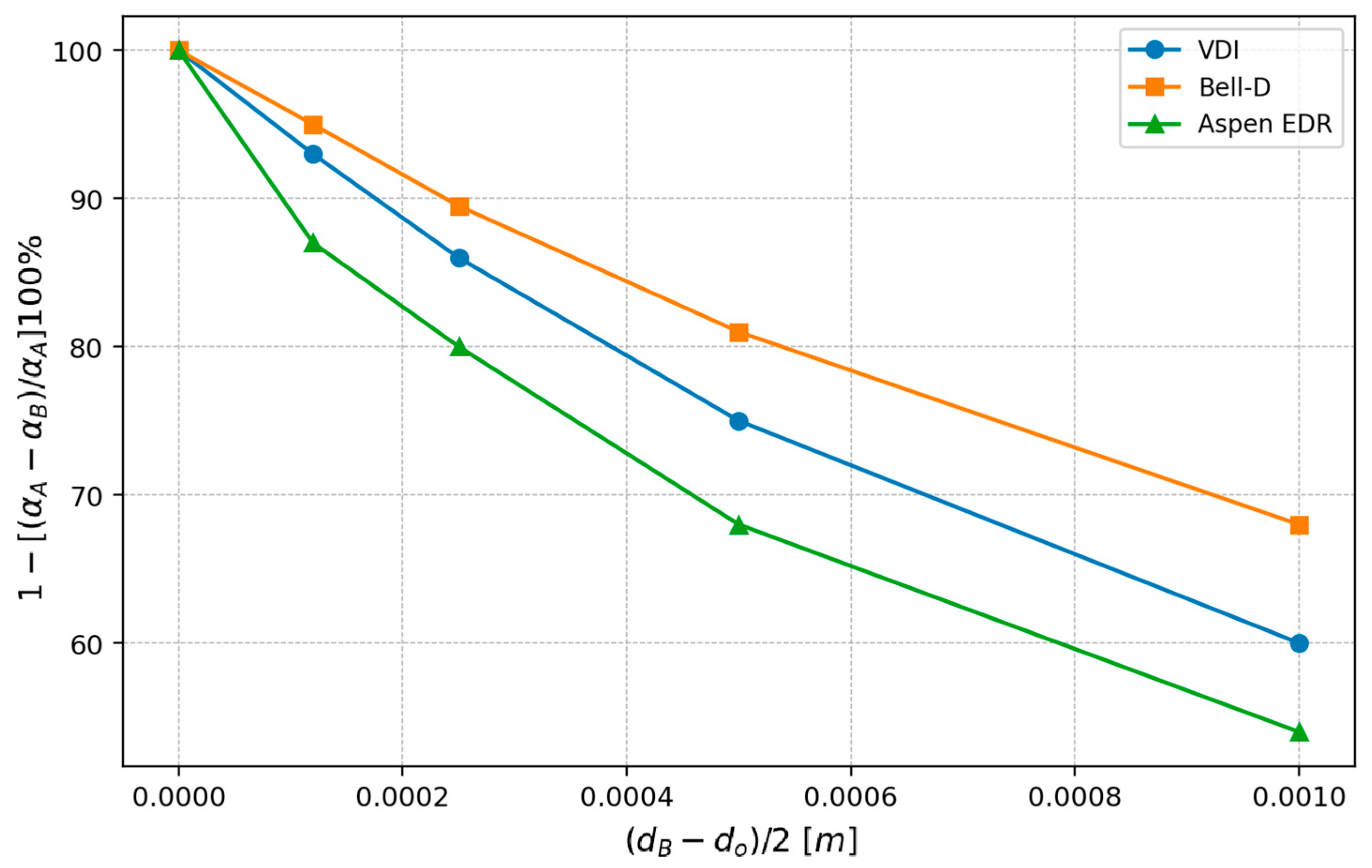
- The calculations showed a strong negative effect of leakage between the baffle and the tubes on the HTC. Specifically, when no shell-to-baffle gap occurs, Aspen EDR predicts a 46% reduction in HTC relative to the idealized STHEx.
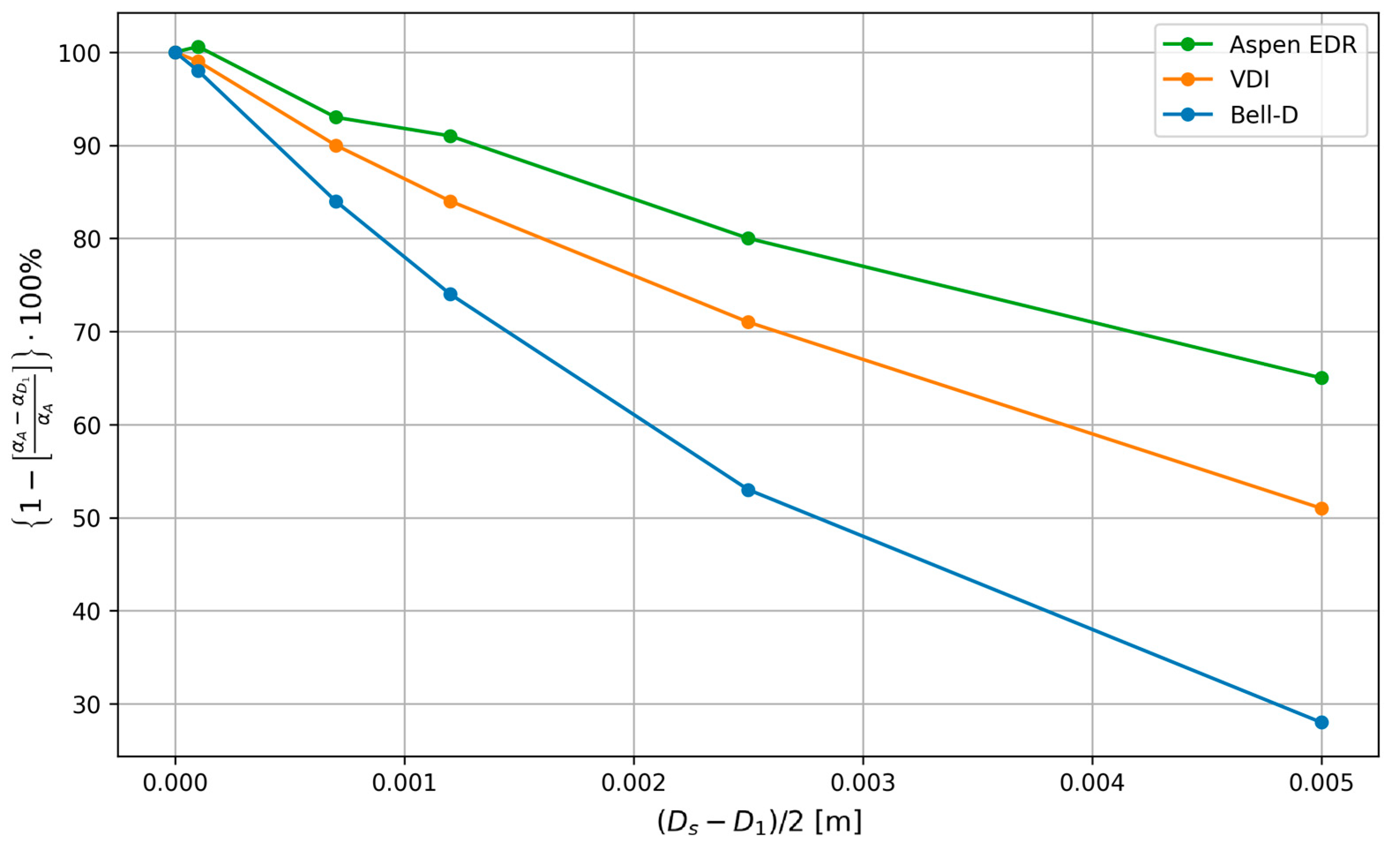
- Shell-to-baffle clearances have a similarly negative impact on the HTC. For the largest clearance-to-shell radius ratio of 5%, and with no leakage between the baffle and the tubes, the Bell-D method predicts an HTC reduction of up to 72% relative to the idealized STHEx.
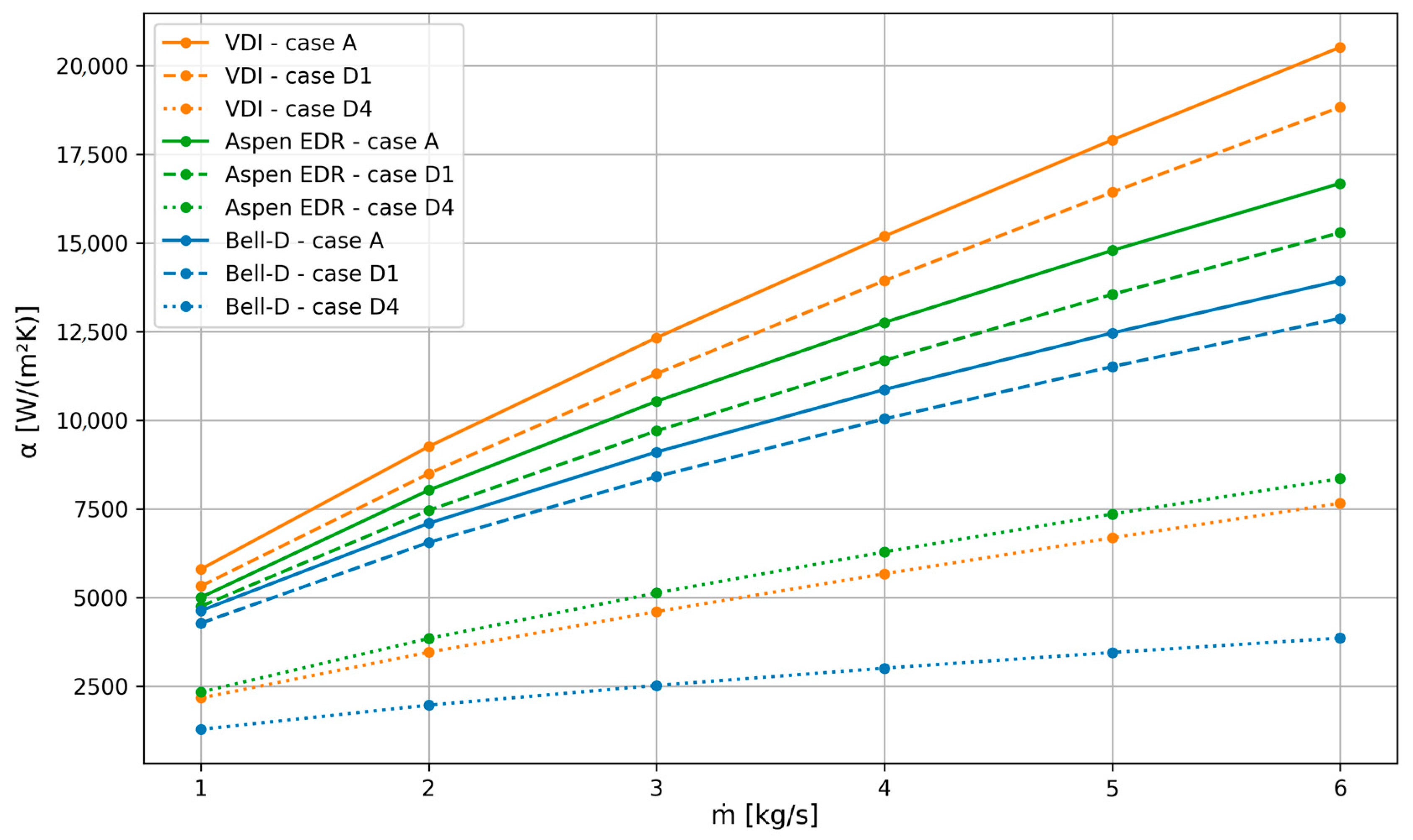
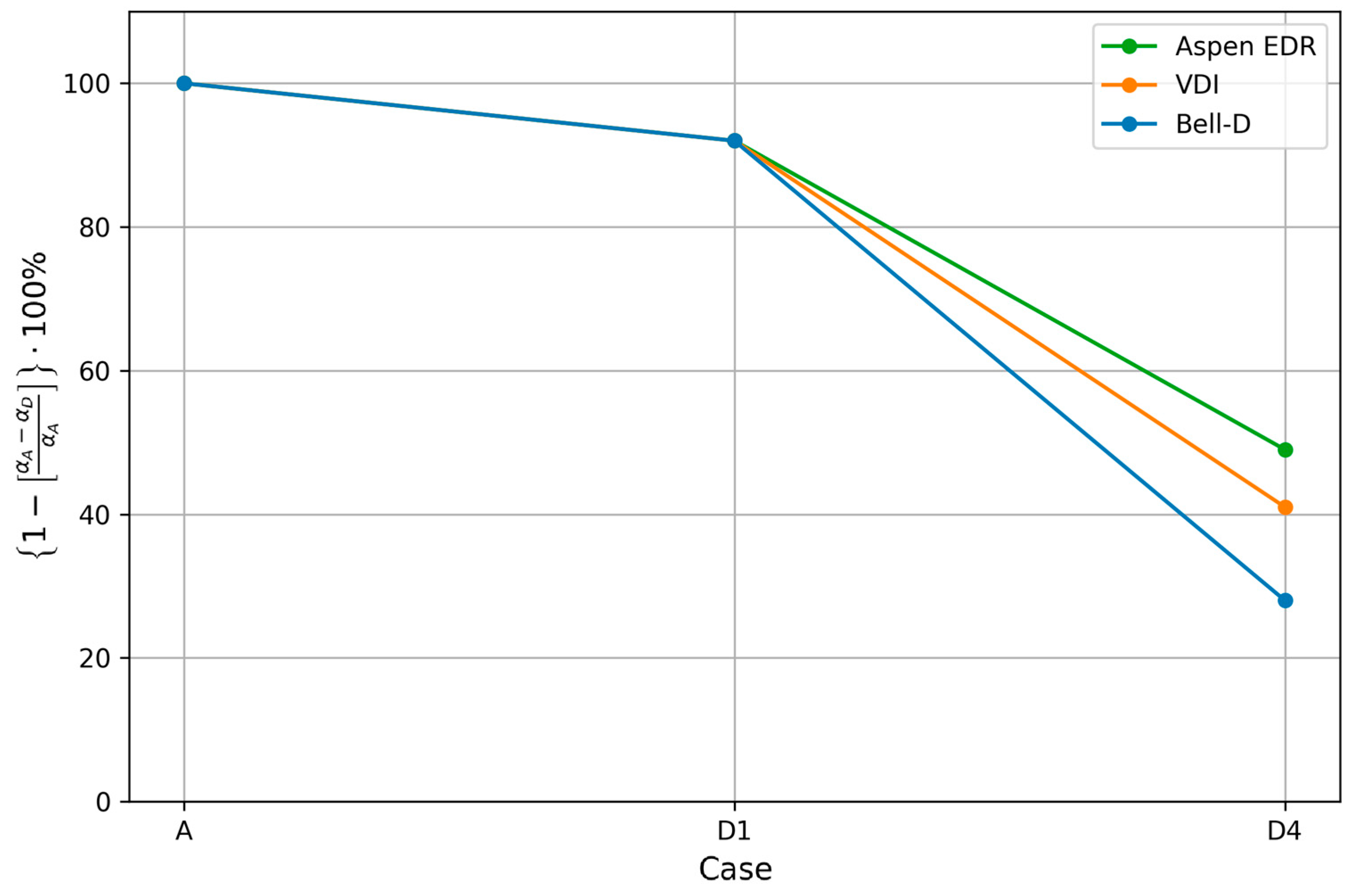
- In real STHEx units, both types of leakage occur due to assembly reasons. For the configuration of maximum clearances considered in the calculations, the HTC decreased by at least 50%. The most conservative prediction was obtained with the Bell-Delaware method, which indicated an HTC reduction of about 65% compared with the quasi-ideal STHEx.
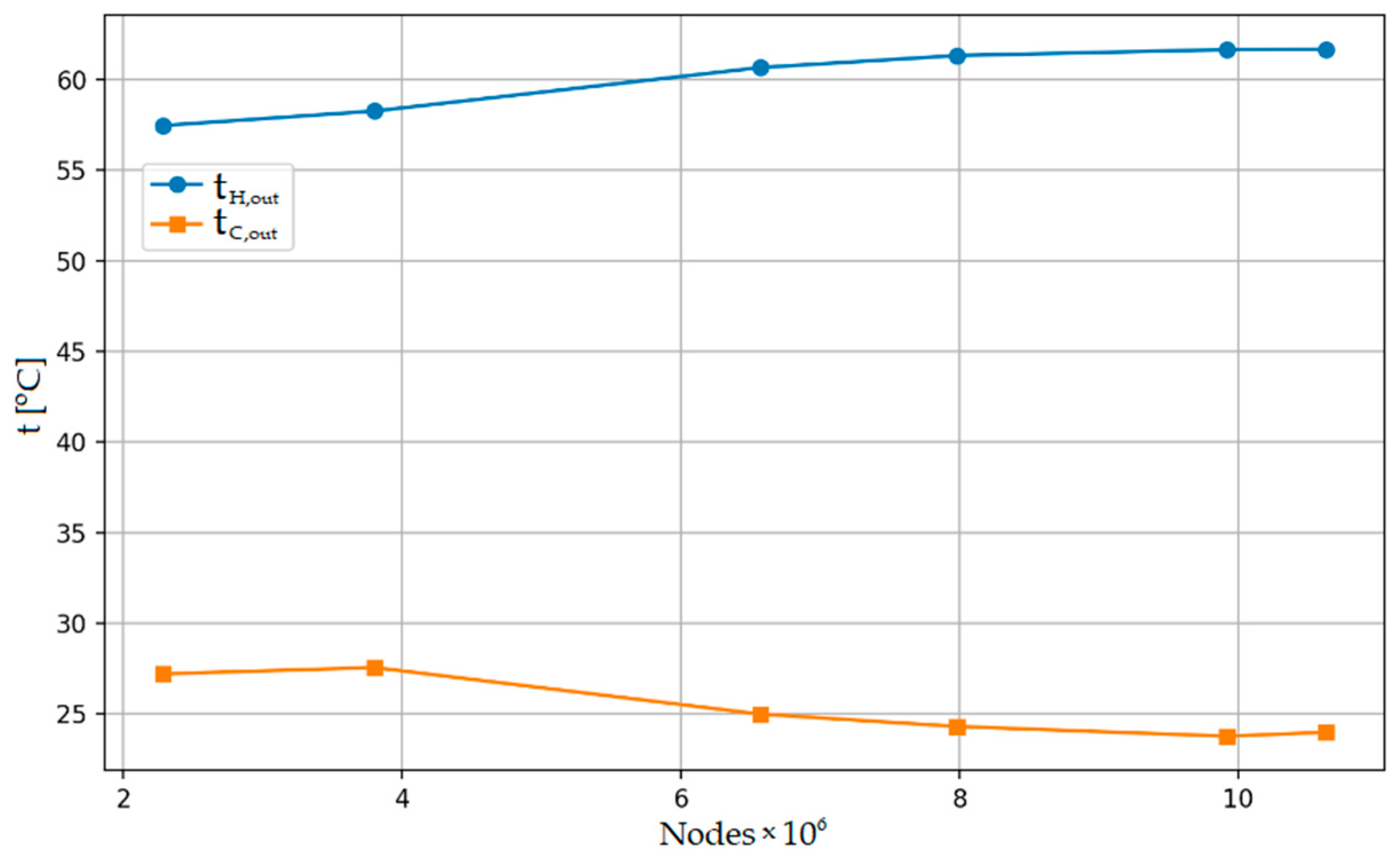
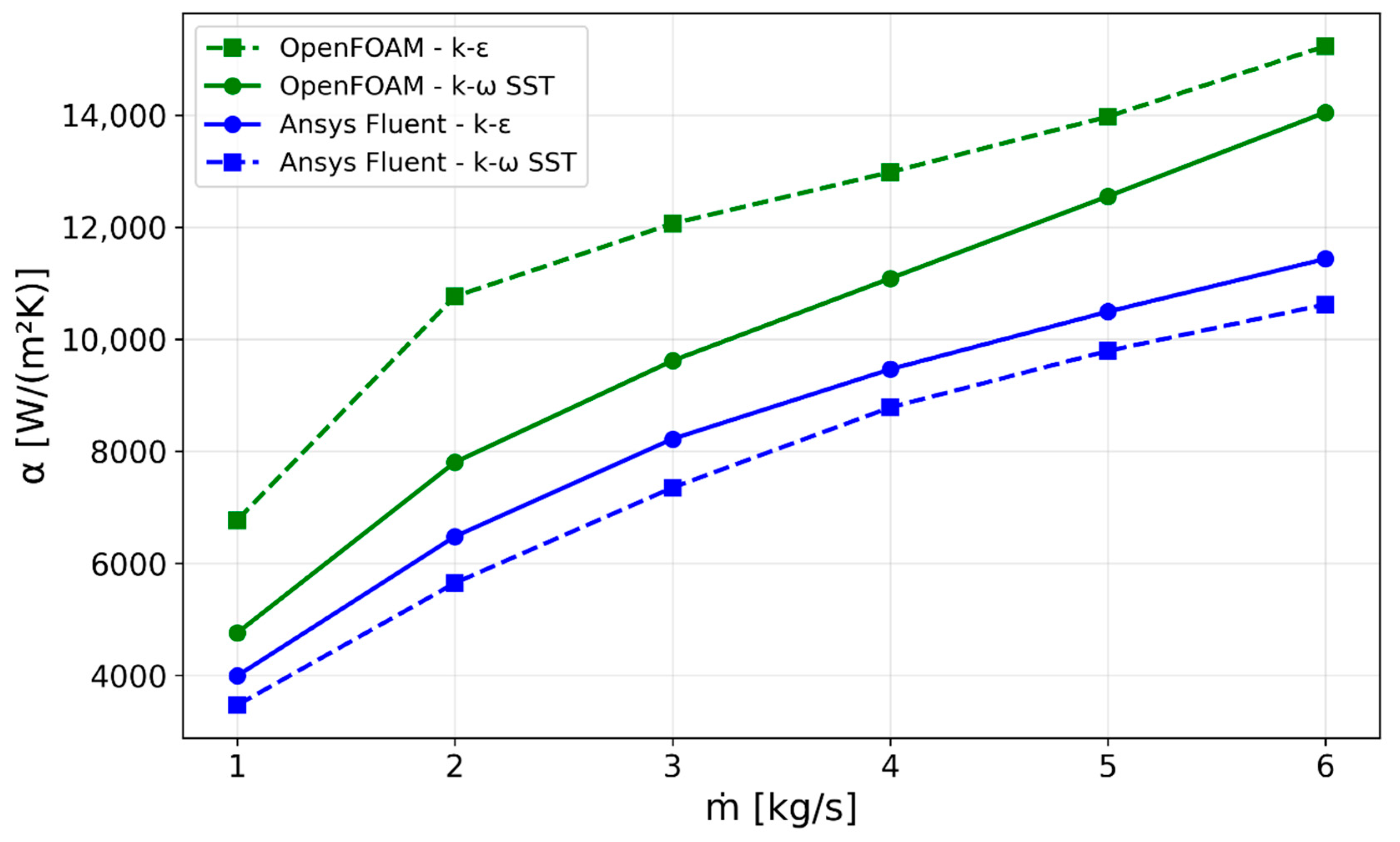
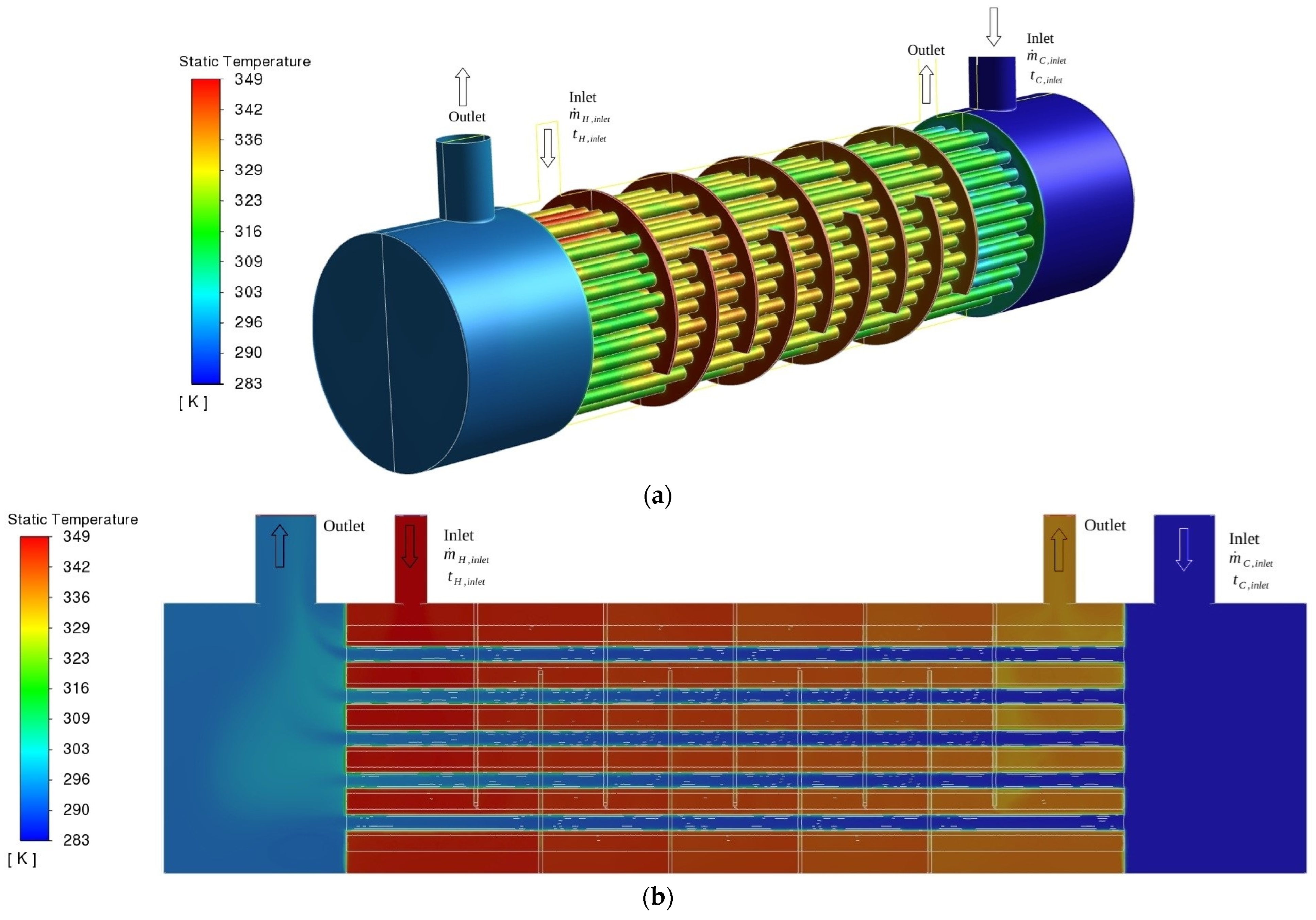
- Both CFD approaches used—OpenFOAM and Ansys Fluent—were found to be highly sensitive to the method used to average the fluid temperature from the computed temperature field (Figure 11), which is a necessary step in determining the HTC.
Author Contributions
Funding
Data Availability Statement
Conflicts of Interest
Nomenclature
| do | Tube diameter | [m] |
| dB | Baffle tube hole diameter | [m] |
| D1 | Baffle diameter | [m] |
| DBu | Tube bundle diameter | [m] |
| Ds | Shell diameter | [m] |
| g | Acceleration due to gravity | [m/s2] |
| h | Specific enthalpy | [J/kg] |
| Mass flow rate | [kg/s] | |
| P | Pressure | [Pa] |
| T | Temperature | [K] |
| u | Velocity | [m/s] |
| Greek letters | ||
| α | Heat transfer coefficient | [W/(m2K)] |
| δ | Clearance | [m] |
| λ | Thermal conductivity | [W/(mK)] |
| ρ | Density | [kg/m3] |
| μ | Dynamic viscosity | [Pas] |
| Subscripts | ||
| A | Case A | |
| C | Cold | |
| eff | Effective | |
| H | Hot | |
| in | Inlet | |
| out | Outlet | |
| s | Shell | |
Abbreviations
| Bell-D | Bell-Delaware |
| CFD | Computational Fluid Dynamics |
| FVM | Finite Volume Method |
| HTC | Heat Transfer Coefficient |
| ID | Inside Diameter |
| OD | Outside Diameter |
| OF | OpenFOAM |
| STHEx | Shell-and-Tube Heat Exchanger |
| VDI | Verein Deutscher Ingenieure |
References
- Gupta, J.P. Heat Exchanger and Pressure Vessel Technology; Hemisphere Publishing Corporation: Washington, DC, USA, 1986. [Google Scholar]
- Shah, R.K.; Sekulić, D.P. Fundamentals of Heat Exchanger Design; Wiley & Sons, Inc.: Hoboken, NJ, USA, 2003. [Google Scholar]
- Thulukkanam, K. Heat Exchanger Design Handbook, 2nd ed.; CRC Press: Boca Raton, FL, USA, 2013. [Google Scholar]
- Kakaç, S.; Liu, H.; Pramuanjaroenkij, A. Heat Exchangers: Selection, Rating, and Thermal Design, 4th ed.; CRC Press: Boca Raton, FL, USA; London, UK; New York, NY, USA, 2020. [Google Scholar]
- Taborek, J. Survey of Shell-Side Flow Correlations. In Heat Exchanger Design Handbook; Begell House, Inc.: Danbury, CT, USA, 2025. [Google Scholar]
- Tinker, T. Shell Side Characteristics of Shell and Tube Heat Exchanger, Parts I–III, General Discussion of Heat Transfer; Institution of Mechanical Engineers: London, UK; ASME: New York, NY, USA, 1951; pp. 84–110. [Google Scholar]
- Tinker, T. Shell-Side Characteristics of Shell and Tube Heat Exchanger. J. Heat Transf. 1958, 80, 36–52. [Google Scholar]
- Mukherjee, R. Effectively design shell-and-tube heat exchangers. Chem. Eng. Prog. 1998, 94, 21–37. [Google Scholar]
- Marzouk, S.A.; Abou Al-Sood, M.M.; El-Said, E.M.S.; Younes, M.M.; El-Fakharany, M.K. A comprehensive review of methods of heat transfer enhancement in shell and tube heat exchangers. J. Therm. Anal. Calorim. 2023, 148, 7539–7578. [Google Scholar] [CrossRef]
- Kern, D.Q. Kern’s Process Heat Transfer, 2nd ed.; Wiley & Sons, Inc.: Hoboken, NJ, USA, 2019. [Google Scholar]
- Donohue, D.A. Heat Transfer and Pressure Drop in Heat Exchangers. Ind. Eng. Chem. 1949, 41, 2499–2511. [Google Scholar] [CrossRef]
- Žukauskas, A. Heat transfer from tubes in crossflow. Adv. Heat Transf. 1972, 8, 93–160. [Google Scholar]
- Serth, R.W.; Lestina, T.G. Process Heat Transfer; Elsevier: Amsterdam, The Netherlands, 2014. [Google Scholar]
- Gaddis, E.S.; Gnielinski, V. G8 Shell-Side Heat Transfer in Baffled Shell-and-Tube Heat Exchangers. In VDI Heat Atlas; Springer: Berlin/Heidelberg, Germany, 2010; pp. 731–741. [Google Scholar]
- Roetzel, W.; Lee, D. Experimental investigation of leakage in shell-and-tube heat exchangers with segmental baffles. Int. J. Heat Mass Transf. 1993, 36, 3765–3771. [Google Scholar]
- Kücük, H.; Ünverdi, M.; Yılmaz, M.S. Experimental investigation of shell side heat transfer and pressure drop in a mini-channel shell and tube heat exchanger. Int. J. Heat Mass Transf. 2019, 143, 118493. [Google Scholar] [CrossRef]
- Abdelkader, B.A.; Zubair, S.M. The Effect of a Number of Baffles on the Performance of Shell-and-Tube Heat Exchangers. Heat Transf. Eng. 2019, 40, 39–52. [Google Scholar] [CrossRef]
- Wills, M.J.N.; Johnston, D.; Harwell, A.E.R.E. A new and accurate hand calculation method for shell-side pressure drop and flow distribution. In Proceedings of the 22nd National Heat Transfer Conference, HTD; ASME: New York, NY, USA, 1984; Volume 36. [Google Scholar]
- Abbas, A.; Ismail, T.; Ayub, Z.; Ayub, A.; Cheema, T.A.; Li, W.; Ye, J. Shell Side Single-Phase Experimental Heat Transfer Analysis of a Vertically Oriented Single Segmental Baffle Bundle with Dimpled Tubes. J. Therm. Sci. Eng. Appl. 2020, 12, 011017. [Google Scholar] [CrossRef]
- Di Bono, G.; Corcione, M.; Quintino, A. Systematic comparative analysis of Kern and Bell-Delaware methods for the design of shell-and-tube heat exchangers. Appl. Therm. Eng. 2025, 278, 127327. [Google Scholar] [CrossRef]
- Zhang, J.F.; Li, B.; Huang, W.J.; Lei, Y.G.; He, Y.L.; Tao, W.Q. Experimental performance comparison of shell-side heat transfer for shell-and-tube heat exchangers with middle-overlapped helical baffles and segmental baffles. Chem. Eng. Sci. 2009, 64, 1643–1653. [Google Scholar] [CrossRef]
- Alperen, M.A.; Kayabaşi, E.; Hüseyin Kurt, H. Detailed comparison of the methods used in the heat transfer coefficient and pressure loss calculation of shell side of shell and tube heat exchangers with the experimental results. Energy Sources Part A Recovery Util. Environ. Eff. 2023, 45, 5661–5680. [Google Scholar] [CrossRef]
- Mohammadi, K.; Heidemann, W.; Müller-Steinhagen, H. Numerical Investigation of the Effect of Baffle Orientation on Heat Transfer and Pressure Drop in a Shell and Tube Heat Exchanger with Leakage Flows. Heat Transf. Eng. 2009, 30, 1123–1135. [Google Scholar] [CrossRef]
- Ozden, E.; Tari, I. Shell side CFD analysis of a small shell-and-tube heat exchanger. Energy Convers. Manag. 2010, 51, 1004–1014. [Google Scholar] [CrossRef]
- Mellal, M.; Benzeguir, R.; Sahel, D.; Ameur, H. Hydro-thermal shell-side performance evaluation of a shell and tube heat exchanger under different baffle arrangement and orientation. Int. J. Therm. Sci. 2017, 121, 138–149. [Google Scholar] [CrossRef]
- Gómez, A.; Montañés, C.; Cámara, M.; Cubero, A.; Fueyo, N.; Muñoz, J.M. An OpenFOAM-based model for heat-exchanger design in the Cloud. Appl. Therm. Eng. 2018, 139, 239–255. [Google Scholar] [CrossRef]
- He, S.; Wang, M.; Tian, W.; Qiu, S.; Su, S.G. Development of an OpenFOAM solver for numerical simulations of shell-and-tube heat exchangers based on porous media model. Appl. Therm. Eng. 2022, 210, 118389. [Google Scholar] [CrossRef]
- Arumsari, A.G.; Ginting, P.J. Analysis of Heat Transfer Coefficient of Shell and Tube on Heat Exchanger Using Heat Transfer Research Inch (HTRI) Software. Formosa J. Sustain. Res. 2023, 2, 1175–1184. [Google Scholar] [CrossRef]
- Gnielinski, V. New Equations for Heat and Mass Transfer in Turbulent Pipe and Channel Flow. Int. Chem. Eng. 1976, 16, 359–368. [Google Scholar]
- Wang, Y.; Liu, K.; Chen, W.; Chen, J.; Wang, K.; Zhou, G. Analysis of stream flow and its impact on thermal performance in shell-side of heat exchangers based on flow dead zone. Appl. Therm. Eng. 2024, 249, 123414. [Google Scholar] [CrossRef]
- Adebayo, J.K.; Dare, A.A.; Petinrin, M.O. Performance characteristics of shell and tube heat exchanger using sectoral baffle. J. Eng. Appl. Sci. 2025, 72, 13. [Google Scholar] [CrossRef]
- Prithiviraj, M.; Andrews, M.J. Comparison of a Three-Dimensional Numerical Model with Existing Methods for Prediction of Flow in Shell-and-Tube Heat Exchangers. Heat Transf. Eng. 1999, 20, 15–19. [Google Scholar]
- Hoang, H.M.K.; Cao, H.-L.; Pham, P.M.Q.; Hajjar, A.; Nguyen, V.L. A novel shell-and-tube heat exchanger design with alternative inclined baffles. Case Stud. Therm. Eng. 2025, 65, 105542. [Google Scholar] [CrossRef]
- Ullah, Z.; Ahmad, I.; Samad, A.; Saghir, H.; Ahmad, F.; Kano, M.; Caliskan, H.; Caliskan, N.; Hong, H. Artificial intelligence assisted prediction of optimum operating conditions of shell and tube heat exchangers: A grey-box approach. CAAI Trans. Intell. Technol. 2025, 10, 349–358. [Google Scholar] [CrossRef]
- Cieśliński, J.T.; Stasiak, K.; Tesch, K.; Barański, J.; Dąbrowski, P. A Comparative Analysis of Calculation Methods for Flow Resistance in Shell-and-Tube Heat Exchanger with Segmental Baffles. Energies 2026, 19, 1852. [Google Scholar] [CrossRef]
- Cieśliński, J.T.; Barański, J.; Dąbrowski, P.; Fabrykiewicz, M.; Stasiak, K.; Tesch, K. Heat Transfer and Pressure Drop in a Shell-and-Tube Heat Exchanger with Segmental Baffles. Energies 2026, 19, 1760. [Google Scholar] [CrossRef]
- Thome, J. Wolverine Heat Transfer Engineering Data Book III; Wolverine Tube, Inc.: Shawnee, OK, USA, 2010. [Google Scholar]
- Gnielinski, V.; Gaddis, E.S. Berechnung des mittleren Wärmeübergangskoeffizienten im Aussenraum von Rohrbündelwärmeaustauschern mit Segment-Umlenkblechen. Verfahr.-Tech. 1978, 12, 211–217. [Google Scholar]
- Menter, F. Two-equations eddy-viscosity turbulence models for engineering applications. AIAA-J. 1994, 32, 1598–1605. [Google Scholar] [CrossRef] [PubMed]
- OpenFOAM. Available online: https://www.openfoam.com (accessed on 11 June 2024).
- ANSYS Fluent, version 21.1. Fluent 21.1 user’s guide. ANSYS Inc.: Canonsburg, PA, USA, 2018.
- AspenTech. Aspen Exchanger Design and Rating, V15.0; AspenTech Inc.: Bedford, MA, USA, 2023. [Google Scholar]
- Palen, J.W.; Taborek, J. Solution of Shellside Flow Pressure Drop and Heat Transfer by Stream Analysis Method. Chem. Eng. Prog. Symp. Ser. 1969, 65, 53–63. [Google Scholar]
- Lemmon, E.W.; Huber, M.L.; McLinden, M.O. NIST Standard Reference Database 23, Reference Fluid Thermodynamic and Transport Properties (REFPROP), Version 9.0; National Institute of Standards and Technology: Gaithersburg, MD, USA, 2010.



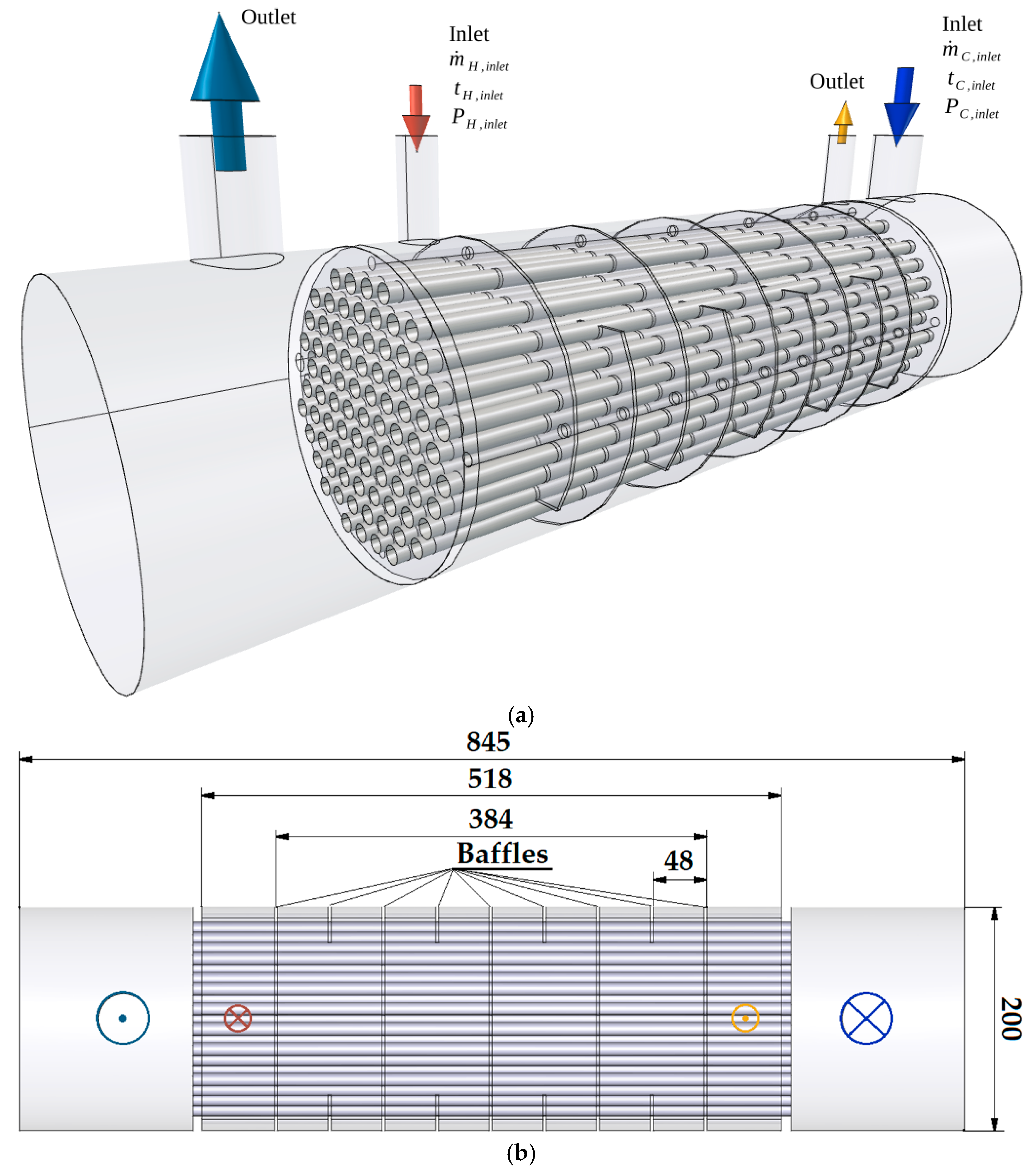
| Item | Value/Type |
|---|---|
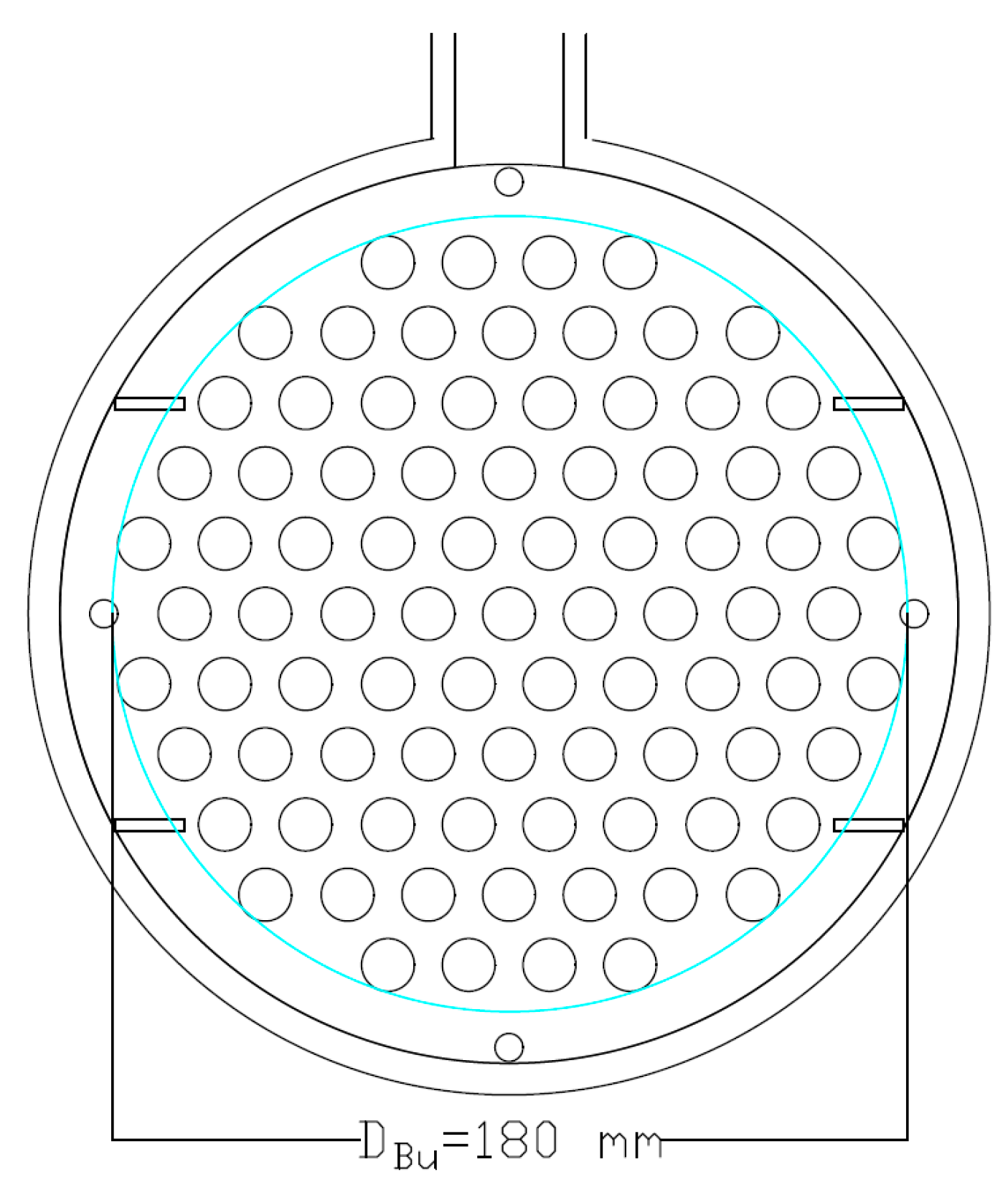
| Shell inner diameter | 200 mm |
| Length of shell | 518 mm |
| Total tube number | 85 |
| OD/ID tube diameter | 12/10 mm |
| Tube layout | Triangular (30°) |
| Tube pitch | 1.5 |
| Total number of baffles | 9 |
| Baffle cut | 25% |
| Central baffle spacing | 48 mm |
| Inlet and outlet sections | 67 mm |
| Hot water mass flow rate | 1–6 kg/s |
| Cold water mass flow rate | 3 kg/s |
| Mean hot water temperature | 69 °C |
| Case | ||||
|---|---|---|---|---|
| A | 0.0 | 0.01200 | 0.0 | 0.2000 |
| B1 | 0.00012 | 0.01224 | 0.0 | 0.2000 |
| B2 | 0.00025 | 0.01250 | 0.0 | 0.2000 |
| B3 | 0.00050 | 0.01300 | 0.0 | 0.2000 |
| B4 | 0.00100 | 0.01400 | 0.0 | 0.2000 |
| C1 | 0.0 | 0.00012 | 0.0001 | 0.1998 |
| C2 | 0.0 | 0.00012 | 0.0007 | 0.1986 |
| C3 | 0.0 | 0.00012 | 0.0012 | 0.1976 |
| C4 | 0.0 | 0.00012 | 0.0025 | 0.1950 |
| C5 | 0.0 | 0.00012 | 0.0050 | 0.1900 |
| D1 | 0.00012 | 0.01224 | 0.0001 | 0.1998 |
| D2 | 0.00025 | 0.01250 | 0.0007 | 0.1986 |
| D3 | 0.00050 | 0.0130 | 0.0012 | 0.1976 |
| D4 | 0.00100 | 0.014 | 0.0025 | 0.1950 |
Disclaimer/Publisher’s Note: The statements, opinions and data contained in all publications are solely those of the individual author(s) and contributor(s) and not of MDPI and/or the editor(s). MDPI and/or the editor(s) disclaim responsibility for any injury to people or property resulting from any ideas, methods, instructions or products referred to in the content. |
© 2026 by the authors. Licensee MDPI, Basel, Switzerland. This article is an open access article distributed under the terms and conditions of the Creative Commons Attribution (CC BY) license.
Share and Cite
Cieśliński, J.T.; Barański, J.; Stasiak, K.; Tesch, K.; Dąbrowski, P. Comparison of Analytical and Numerical Methods for Predicting the Shell-Side Heat Transfer Coefficient in Heat Exchanger with Segmental Baffles. Energies 2026, 19, 2114. https://doi.org/10.3390/en19092114
Cieśliński JT, Barański J, Stasiak K, Tesch K, Dąbrowski P. Comparison of Analytical and Numerical Methods for Predicting the Shell-Side Heat Transfer Coefficient in Heat Exchanger with Segmental Baffles. Energies. 2026; 19(9):2114. https://doi.org/10.3390/en19092114
Chicago/Turabian StyleCieśliński, Janusz T., Jacek Barański, Kamil Stasiak, Krzysztof Tesch, and Paweł Dąbrowski. 2026. "Comparison of Analytical and Numerical Methods for Predicting the Shell-Side Heat Transfer Coefficient in Heat Exchanger with Segmental Baffles" Energies 19, no. 9: 2114. https://doi.org/10.3390/en19092114
APA StyleCieśliński, J. T., Barański, J., Stasiak, K., Tesch, K., & Dąbrowski, P. (2026). Comparison of Analytical and Numerical Methods for Predicting the Shell-Side Heat Transfer Coefficient in Heat Exchanger with Segmental Baffles. Energies, 19(9), 2114. https://doi.org/10.3390/en19092114