1. Introduction
Over the past decade, structural transformations have taken place in the global energy system, accompanied by the rapid growth of renewable energy sources (RES). According to data from the International Energy Agency (IEA), in 2023 the share of renewables in global electricity generation exceeded 30%, and is projected to surpass 45% by 2030 [
1,
2,
3]. Solar and wind power represent the fastest-growing sectors in terms of installed capacity; however, their generation is highly dependent on climatic and meteorological conditions and is inherently variable [
4]. The temporal mismatch between electricity production and consumption directly affects grid stability, as well as frequency and voltage quality.
Energy system modeling studies indicate that in power systems where the RES share reaches 40–60%, reliable grid operation becomes significantly more challenging without the deployment of energy storage technologies [
5,
6]. Energy storage systems (ESS) perform critical functions such as load balancing, peak shaving, frequency regulation, emergency reserve provision, and ensuring the autonomous operation of microgrids [
7]. Despite the significant progress in energy storage technologies, several critical challenges remain unresolved. Most existing studies focus on individual storage technologies (e.g., Li-ion or VRFB) without considering their integrated operation within hybrid systems. Furthermore, current models often lack comprehensive representation of long-duration energy storage behavior (≥8–12 h), particularly under high renewable penetration conditions.
In addition, existing approaches typically do not simultaneously account for degradation effects, multi-criteria cost optimization, and dynamic power balance within a unified modeling framework. This limitation leads to suboptimal system design and reduced operational efficiency in real-world applications.
This limitation is not merely methodological; it creates practical difficulties in system planning and operation. Without a coordinated framework linking energy balance, degradation, and lifecycle cost, storage systems may be oversized, underutilized, or assigned inappropriate operational roles, resulting in reduced flexibility, higher long-term costs, and lower reliability under increasing renewable penetration. Therefore, the central problem addressed in this study is how to formulate a unified framework that connects these interacting factors and supports the optimal design of hybrid storage systems for renewable-dominated power systems.
According to BloombergNEF projections, the global cumulative energy storage capacity is expected to reach 400–600 GWh by 2030 [
8,
9].
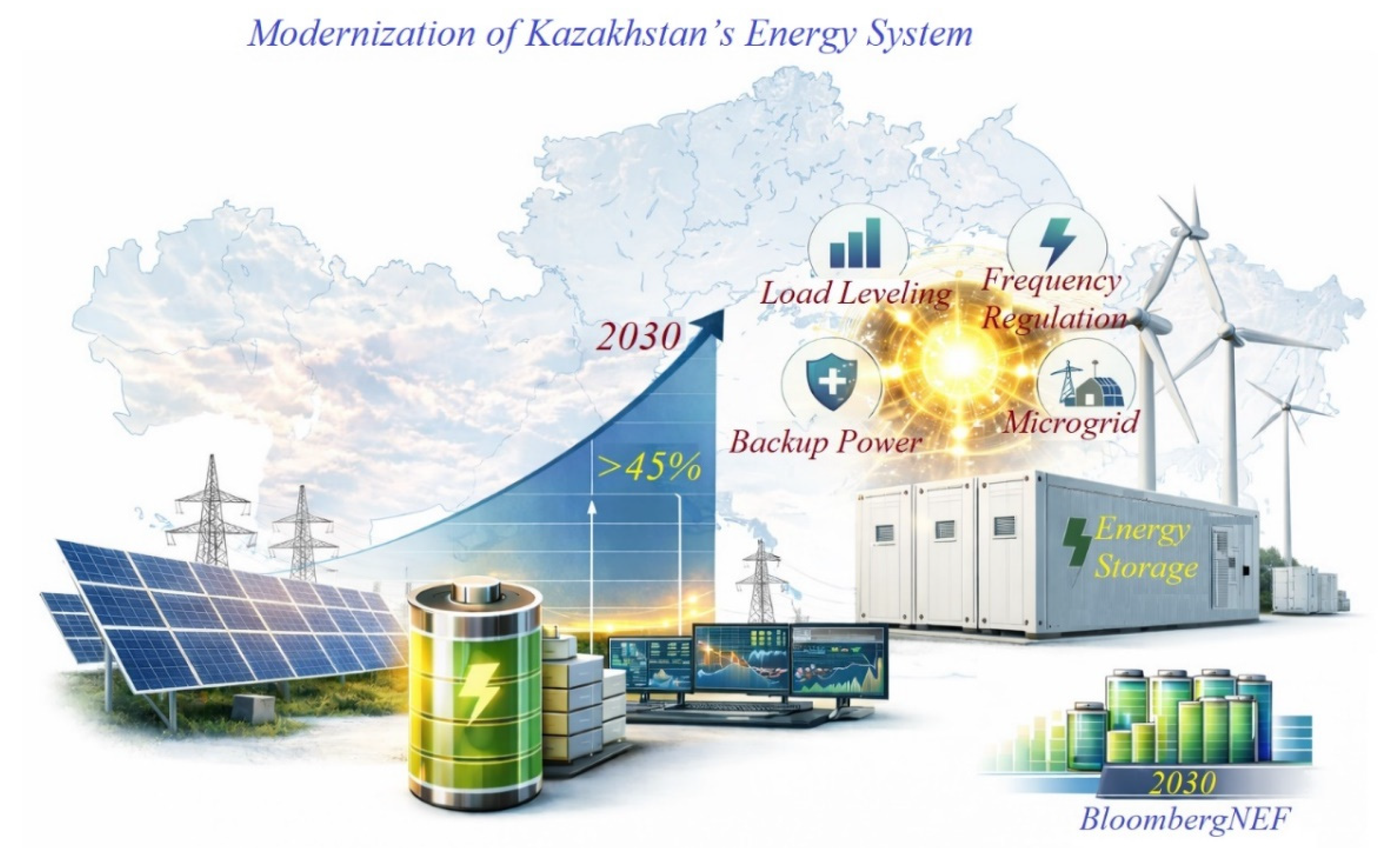
Figure 1 below presents Kazakhstan’s projected energy development outlook up to 2030 and the growth dynamics of the energy storage market.
At present, lithium-ion batteries occupy a leading position in the commercial energy storage market. However, their dependence on critical raw materials (such as lithium and cobalt), thermal stability issues, and cycle degradation impose certain limitations for large-scale energy systems [
10]. Therefore, alternative technologies such as redox flow batteries, sodium-ion batteries, hydrogen-based ESS, as well as gravitational and thermal energy storage technologies are being actively investigated [
11]. In particular, long-duration energy storage (LDES) systems, capable of storing energy for more than 8–12 h, are gaining strategic importance for power grids with a high share of RES [
12].
At the same time, the efficiency of ESS is not determined solely by electrochemical or physical parameters. At the system level, control algorithms, smart grid architectures, artificial intelligence-based forecasting, and energy flow optimization models play a decisive role [
13,
14]. Studies show that the integration of RES and ESS can improve power balance efficiency by up to 12–18% and increase system flexibility by 1.3–1.6 times [
15].
In addition to efficiency and cost, the resilience of energy systems has become an increasingly important design objective under renewable integration, climate-related disruptions, and growing security requirements. Recent studies show that resilience-oriented power system research increasingly emphasizes the ability of storage-supported systems to maintain stability, flexibility, and service continuity under high-impact disturbances, including wildfire-related risks and extreme weather conditions. Energy storage systems are therefore important not only for balancing and economic optimization, but also for improving the adaptive and restorative capability of modern power systems. In this context, the proposed hybrid framework can be interpreted as contributing to resilience by distributing storage functions across multiple timescales, reducing dependence on a single technology, and improving the system’s ability to respond to variable operating conditions.
In the context of Kazakhstan, the relevance of this research direction is further increasing. Although coal-fired generation accounts for more than 60% of the country’s electricity production, the national strategy aims to increase the share of renewables to at least 15% by 2030 [
16,
17,
18,
19,
20]. In regions with high wind and solar potential, significant seasonal and daily generation variability is observed. Therefore, the study and deployment of high-capacity ESS are scientifically and practically important for ensuring national energy security, decarbonization, and grid stability.
In a broader energy systems context, energy storage is not limited to electrical and electrochemical technologies. Large-scale and long-duration storage can also be implemented using geological and subsurface solutions, including underground hydrogen storage, compressed air energy storage in porous media, and storage in depleted oil and gas reservoirs, aquifers, and salt caverns. These approaches are increasingly considered for seasonal energy balancing and large-scale storage capacity in renewable-dominated systems. In addition, geological formations are also used for CO
2 storage and CO
2-enhanced oil recovery (CO
2-EOR), linking energy storage with carbon management strategies [
21,
22,
23].
The distinctiveness of the present study lies in the fact that it does not treat hybrid storage as a simple combination of technologies. Instead, the proposed framework is constructed around the interaction between three system-level challenges: dynamic power imbalance under variable renewable generation, uneven degradation behavior across storage technologies, and long-term techno-economic trade-offs. By linking these three aspects within a unified analytical and optimization framework, the study moves beyond descriptive hybrid integration and provides a structured basis for coordinated storage sizing and operation.
Under conditions of energy system decarbonization, increasing electrification, and the development of intelligent grids, research on high-capacity electrical ESS represents one of the strategic directions of modern energy science. Consequently, the investigation and development of high-capacity ESS for renewable energy integration is a scientifically relevant and timely research area.
2. Literature Review and Problem Statement
The efficiency assessment of high-capacity ESS is not limited to market or technological indicators alone, but is also based on physical, electrochemical, and mathematical modeling approaches. Over the past decade, this issue has been comprehensively addressed in international scientific publications, where system performance is evaluated through multi-physics analysis, dynamic modeling, and optimization frameworks.
International Energy Agency system-level assessment, discussed by Liu, D. (2023) [
24], indicates that in power systems with a significant share of variable renewable generation, operational stability is governed by a real-time power balance relationship. For simplified system modeling, this balance can be expressed as:
where P
ESS(t) denotes the charging/discharging power of the energy storage system (ESS), and ΔP
loss(t) represents dynamic transmission and conversion losses.
According to the analytical findings summarized in [
24], when the penetration level of RES reaches approximately 50% of total generation, short-term power fluctuations may vary within a range of ±15–20%, depending on meteorological variability and demand elasticity. Such volatility increases the need for flexible balancing resources, particularly fast-response storage systems and reserve capacity.
However, while short-term balancing requirements are addressed, the integral energy balance required to determine optimal long-duration storage capacity (8–12 h) remains insufficiently quantified in existing system-level assessments. Specifically, cumulative energy mismatch over extended time horizons is not always fully incorporated into adequacy planning models, highlighting the necessity for further research on long-duration storage sizing and multi-hour flexibility optimization.
Recent analyses of energy transition dynamics highlight the dominant role of lithium-ion battery technologies in large-scale storage deployment. According to the global market assessment presented by Wojtaszek, H. (2025) [
25], lithium-ion systems remain the benchmark technology due to their relatively high gravimetric energy density and mature manufacturing ecosystem. Typical commercial lithium-ion batteries exhibit a specific energy in the range of 150–250 Wh/kg and a specific power of approximately 300–1500 W/kg, depending on cell chemistry and design.
However, long-term performance limitations are primarily associated with electrochemical degradation mechanisms. As demonstrated in the comprehensive degradation study by Rufino Júnior, C. A. et al. (2024) [
26], capacity fade in lithium-ion batteries can be described by an empirical relationship of the form:
where Q(N) represents the remaining capacity after N charge–discharge cycles, Q
0 is the initial capacity, and k ≈ 0.003–0.005 is a degradation coefficient dependent on operating conditions and electrode chemistry.
For typical grid-scale applications, after approximately 4000 cycles, the capacity reduction may reach 18–22%, consistent with experimentally observed trends [
26]. This degradation behavior is mainly attributed to the progressive thickening of the Solid Electrolyte Interphase (SEI) layer on the anode surface, loss of cyclable lithium, and diffusion limitations of Li
+ ions within electrode materials. These mechanisms increase internal resistance and reduce effective charge transfer kinetics, thereby constraining long-term system reliability in high-utilization energy storage applications.
In the comprehensive review conducted by Schubert, C. et al. (2023) [
27], recent developments, challenges, and future perspectives of hybrid ESS based on redox flow batteries—particularly vanadium redox flow batteries (VRFBs)—are systematically analyzed. According to the study, although the specific energy density of vanadium-based flow batteries is relatively low, typically in the range of 20–35 Wh/kg, their principal advantage lies in their high cycle stability. In practical applications, these systems can exceed 10,000 charge–discharge cycles, making them suitable for long-duration and stationary energy storage applications. The fundamental electrochemical reactions governing vanadium redox systems are expressed as:
These reversible redox reactions enable energy storage and release through oxidation–reduction processes occurring in separate electrolyte tanks.
However, as highlighted in [
27], degradation mechanisms in such systems are mainly associated with ion crossover through the membrane, electrolyte imbalance, and changes in vanadium ion concentration over extended operation. Membrane selectivity and ion exchange kinetics play a critical role in maintaining long-term performance. Additionally, high capital expenditures—typically in the range of 600–800 USD/kWh—remain a significant barrier to large-scale deployment. Consequently, ongoing research focuses on improving membrane materials, optimizing electrolyte composition, and reducing overall system costs to enhance commercial viability.
Ozsari, I. (2023) [
28] conducted a comprehensive trend analysis and bibliometric evaluation of hydrogen energy and hydrogen storage research, highlighting the rapid growth of this field and the increasing role of water electrolysis as a core hydrogen production technology. The electrolysis process is fundamentally governed by Faraday’s law, which defines the theoretical relationship between electric charge and the amount of hydrogen produced. The mass of generated hydrogen can be expressed as:
where m is the mass of produced hydrogen, I is the electric current, t is time, M is the molar mass of hydrogen, n is the number of transferred electrons, and F is Faraday’s constant. This equation reflects the direct proportionality between electrical energy input and chemical energy stored in hydrogen.
Furthermore, the overall system efficiency of hydrogen-based energy storage is determined by multiple conversion stages:
where η
electrolysis represents electrolysis efficiency, η
storage denotes storage efficiency, and η
fuelcell corresponds to the reconversion efficiency in a fuel cell. In practical applications, the overall round-trip efficiency typically ranges between 0.35 and 0.45.
Due to this moderate round-trip efficiency, hydrogen storage systems are considered particularly suitable for seasonal and long-duration energy storage applications, where large energy volumes must be stored over extended periods. However, relatively low dynamic response and conversion losses make them less efficient for short-term frequency regulation and fast grid-balancing services.
In addition to electrical energy storage technologies, recent studies have also focused on geological and subsurface energy storage solutions. Underground storage in porous media, depleted reservoirs, and salt caverns is considered a promising option for large-scale and long-duration energy storage, particularly for hydrogen and compressed air systems [
21,
22]. Furthermore, geological reservoirs are widely used in CO
2 sequestration and enhanced oil recovery processes, where storage capacity, reservoir behavior, and long-term stability are critical factors [
23].
Babatunde, O. M. et al. (2020) [
29] identify power system flexibility as a key factor for maintaining stability under high renewable energy penetration. The integration of ESS is shown to increase flexibility indicators by approximately 1.3–1.5 times, contributing to reduced frequency deviations and improved operational stability. However, the authors note that multi-parameter optimization approaches are not yet fully implemented in existing flexibility models.
Recent power system literature has also highlighted resilience as a complementary objective to flexibility and efficiency. In particular, contemporary studies discuss the role of storage-supported systems in maintaining secure operation under wildfire risks, severe weather events, and disturbance-driven microgrid reconfiguration. These works suggest that hybrid and distributed storage architectures can enhance not only balancing capability, but also the ability of energy systems to withstand, absorb, and recover from disruptive events [
30]. However, resilience-oriented discussions are still insufficiently connected to degradation-aware techno-economic optimization of hybrid long-duration storage systems, which remains a gap addressed by the present study.
Bouquet, P. et al. (2024) [
31] investigate AI-based forecasting methods for optimized solar energy management and improved smart grid efficiency. The authors demonstrate that deep learning approaches, particularly recurrent neural networks such as LSTM, significantly enhance forecasting accuracy compared to traditional statistical models. Their results indicate that AI-based models can reduce forecasting error by approximately 10–15%. Load forecasting can be generally expressed as:
where f represents a recurrent neural network function processing time-series data, and the input variables include previous load values P(t), temperature T(t), humidity H(t), and other exogenous factors.
However, while [
31] focuses on improving solar energy management and grid efficiency, the integration of high-capacity (≥100 MWh) hybrid ESS is not explicitly addressed. Further research is therefore required to align AI-based forecasting models with large-scale storage deployment strategies.
Renewable energy development in Kazakhstan has been examined from the perspectives of policy, governance, and system balancing in several recent studies. Mouraviev, N. (2021) [
32] notes that the country’s coal-dominated energy structure creates institutional and operational challenges as renewable penetration increases. Likewise, Zhunussova, G. Z. et al. (2020) [
16] emphasize that the variability of wind and solar generation necessitates additional reserve capacity and balancing mechanisms to ensure grid reliability. An analysis of tariff policy and legislative measures by Khamzina, A. et al. (2025) [
33] indicates that in the medium term, increasing renewable penetration may lead to higher operational balancing costs if adequate flexibility resources are not deployed. Furthermore, Bespalyy, S. and Bespalaya, Y. (2025) [
34] demonstrate that when the share of renewables reaches approximately 20% in Kazakhstan’s Unified Energy System, reserve capacity requirements may increase by 10–15% to compensate for generation variability and maintain frequency stability. However, despite these policy and system-level analyses, the techno-economic parameters of large-scale ESS (≥200 MWh) have not been comprehensively modeled. Existing research mainly focuses on regulatory, tariff, and balancing aspects, while detailed simulations incorporating performance characteristics, capital costs, and long-duration operational scenarios of high-capacity storage systems remain insufficiently addressed. Recent advances in power system modeling have emphasized the importance of physically consistent and AC-based formulations. For instance, Jiang et al. (2025) proposed an unsupervised physics-informed neural network approach for AC power flow calculations, demonstrating improved modeling accuracy and generalization capabilities without requiring labeled training data [
35]. Such approaches highlight the importance of incorporating physical constraints into system-level modeling [
35].
Based on the analysis of the above-reviewed studies, the following unresolved issues can be identified: (1) Insufficient mathematical models for determining the optimal energy capacity of long-duration ESS (≥8 h); (2) the lack of thermodynamic and economic optimization frameworks for hybrid systems integrating multiple storage technologies; (3) a shortage of comprehensive models describing the interaction between intelligent control algorithms and underlying physical processes (e.g., diffusion, degradation, and heat transfer).
The causes of these challenges include high capital expenditures, the complexity of electrochemical degradation mechanisms, changes in heat and mass transfer behavior during system scaling, and the computational difficulty of solving multi-factor optimization problems.
A potential approach to overcoming these limitations is the integration of hybrid energy storage architectures (Li-ion + VRFB + H2) into a unified energy balance model, followed by optimization based on the following objective function:
Constraints:
Although such an approach has been applied in certain intelligent energy management systems [
29,
31], comprehensive physics-based and mathematical modeling at the level of high-capacity national energy systems remains insufficiently developed. All of the above highlights the necessity of conducting an integrated physical, chemical, and mathematical investigation of high-capacity electrical ESS designed for renewable energy integration. To better position the contribution of the present study,
Table 1 compares the proposed approach with representative works related to energy storage modeling, hybrid system analysis, and optimization. The comparison indicates that most existing studies focus on individual storage technologies, partial hybrid configurations, or limited optimization criteria. In contrast, the present work integrates dynamic energy balance, degradation effects, and techno-economic evaluation within a unified framework for hybrid long-duration ESS.
As shown in
Table 1, the main distinction of the proposed study lies in the simultaneous consideration of dynamic energy balance, degradation behavior, and lifecycle cost within a hybrid storage framework that combines Li-ion, VRFB, and hydrogen technologies. This integrated perspective is insufficiently represented in the reviewed literature and constitutes the main contribution of the present work.
While several existing studies address hybrid energy storage systems, degradation modeling, or optimization independently, their integration within a single physically consistent and optimization-driven framework remains limited.
In particular, most studies either:
- (1)
consider degradation at the component level without linking it to system-level cost optimization, or
- (2)
apply techno-economic optimization without explicitly incorporating time-dependent degradation effects derived from operational profiles.
In contrast, the proposed framework explicitly connects dynamic energy balance modeling with degradation-aware lifecycle cost evaluation. The degradation behavior is not treated as an external parameter, but is integrated into the objective function through operational variables obtained from the energy balance model. This enables a physically consistent coupling between system operation, degradation evolution, and long-term economic performance.
Therefore, the contribution of this study lies not in introducing individual components, but in their explicit coupling within a unified simulation–optimization framework for hybrid long-duration ESS.
4. Materials and Methods
4.1. System Architecture
The proposed system consists of a hybrid energy storage configuration integrating lithium-ion batteries (Li-ion), vanadium redox flow batteries (VRFB), and hydrogen (H2) storage technologies. The system is coupled with RES, including solar and wind generation, and serves a variable load demand.
Each storage component performs a specific role: Li-ion batteries provide fast response and short-term regulation, VRFB systems ensure medium-duration storage, and hydrogen storage enables long-term and seasonal energy balancing.
The system operates as a dynamic energy management system, where power flows between generation, storage, and load are continuously balanced.
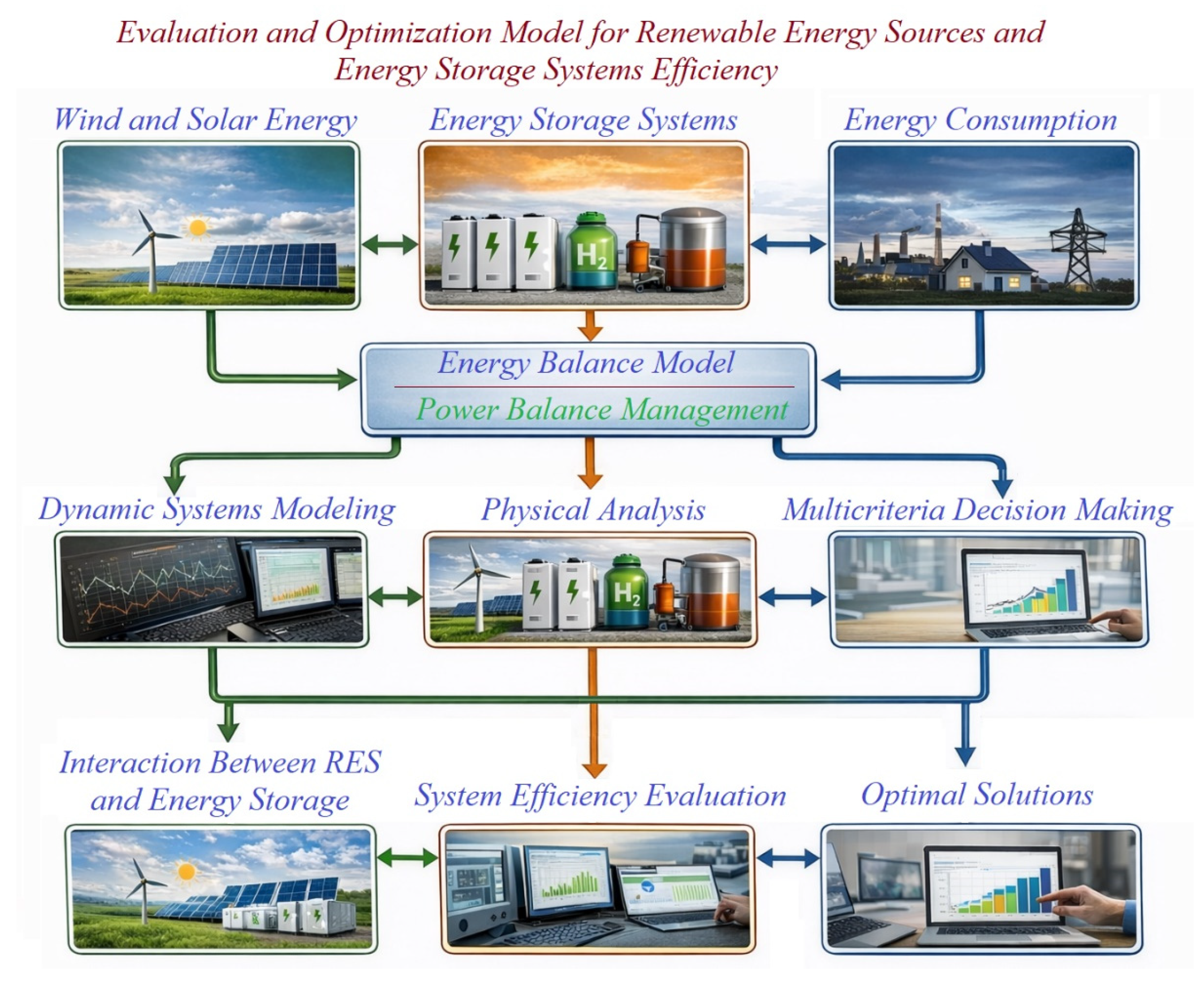
A unified energy balance model was developed to evaluate the efficiency of long-term ESS for energy systems with a high share of RES. This model describes the interaction between ESS and RES, as well as the necessary parameters to ensure power balance. Dynamic system modeling, multiphysical analysis, and multicriteria decision-making methods were used in the model development process (
Figure 2).
Figure 2 illustrates the conceptual integration of renewable generation and hybrid energy storage within the proposed optimization framework. The figure highlights the interaction between energy balance analysis, storage coordination, and techno-economic decision-making.
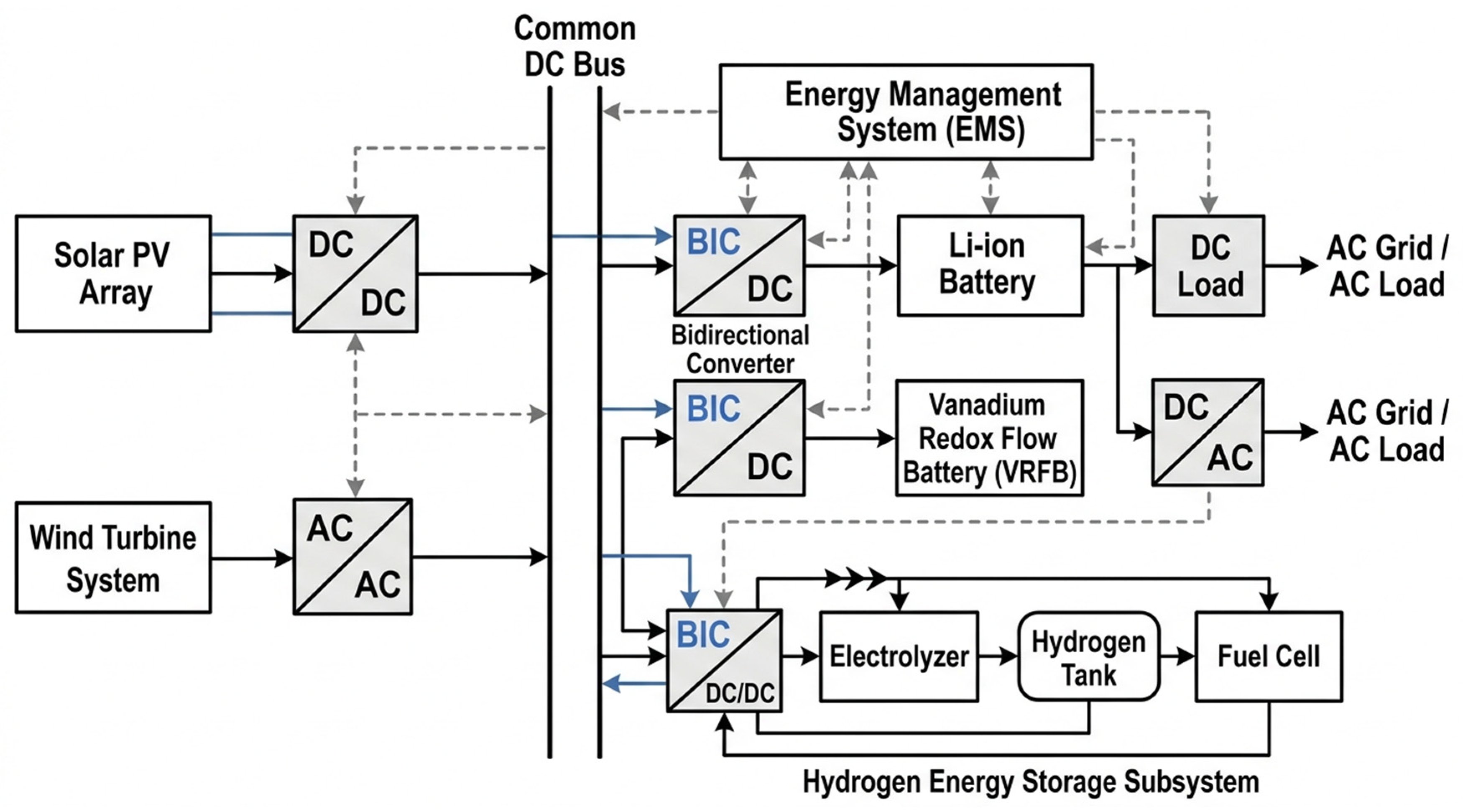
To provide a clearer representation of the proposed hybrid energy storage system, its electrical architecture and interconnection structure are illustrated in
Figure 3. The system is based on a common DC bus configuration, where renewable energy sources and multiple storage technologies are integrated through power electronic converters and coordinated by a centralized energy management system (EMS).
As shown in
Figure 3, renewable energy sources, including solar photovoltaic and wind generation systems, are connected to the common DC bus through appropriate power electronic converters. The hybrid storage system consists of three main subsystems: Li-ion batteries for fast-response applications, VRFB for medium-duration energy balancing, and a hydrogen-based subsystem for long-duration and seasonal storage.
Each storage technology is interfaced with the DC bus via bidirectional converters, enabling flexible charging and discharging operation depending on system conditions. The hydrogen subsystem includes an electrolyzer, hydrogen storage tank, and fuel cell, allowing conversion between electrical and chemical energy during surplus and deficit periods.
The overall system is coordinated by an energy management system (EMS), which controls power flows, allocates storage functions, and ensures system stability under varying renewable generation and load demand conditions. This architecture enables efficient integration of multi-timescale storage technologies within a unified framework.
4.2. Mathematical Model
The Python 3.10 and SMath Solver software tools (Version 1.3.0.9126) were used for the study, as these tools allow dynamic modeling of the system. Optimization processes were carried out using Python 3.10’s optimization libraries. The power balance of the system is described using the following equation:
where
represents the total power generated from energy sources,
PESS(
t) is the power of the energy storage system, and
represents the total power consumed by the loads. This equation allows monitoring the power balance of the system.
The dynamic energy balance equation is not used only for descriptive analysis; it also provides the physical basis for the optimization framework. At each simulation step, Equation (11) determines the feasible relationship between renewable generation, storage power, load demand, and system losses. In this way, the model generates the operating trajectories of the hybrid storage system, including charging/discharging power, energy exchange, and state evolution under the considered renewable penetration scenarios.
These operating trajectories are subsequently transferred to the optimization stage, where they are used to evaluate system efficiency, degradation-related behavior, and lifecycle cost. Therefore, the energy balance model supplies the physical operating constraints and time-dependent state variables, while the optimization model uses these outputs to identify the storage configuration that minimizes the total system cost under technically feasible operating conditions.
Optimization algorithms for determining the optimal power capacity of the energy storage system were used, particularly multi-criteria decision-making algorithms. The following objective function was used to carry out the optimization:
where CAPEX
k represents the capital expenditure of the k-th component, OPEX
k is the operational expenditure, and Degradation
k refers to the degradation costs of the component. This function helps in determining the economic efficiency of the system.
To explicitly account for degradation effects in the optimization framework, the degradation cost term included in the objective function is linked to the cycle-dependent capacity loss of the storage technologies.
For lithium-ion batteries, the degradation model introduced in Equation (2) is used to describe capacity fade as a function of the number of charge–discharge cycles. Based on this relationship, the degradation cost is formulated proportionally to the cumulative capacity loss over the simulation horizon. In this context, the degradation cost reflects the fraction of capacity loss relative to the initial capacity and is scaled by the replacement cost of the storage system.
For vanadium redox flow batteries and hydrogen storage systems, degradation effects are represented in a simplified form using technology-specific lifetime coefficients and efficiency degradation factors. This assumption is justified by the comparatively lower sensitivity of these technologies to cycling-related degradation under normal operating conditions.
As a result, the total degradation cost included in the objective function represents the combined effect of capacity loss across all storage technologies. Importantly, the degradation term is not treated as a fixed parameter, but is dynamically linked to system operation. The number of charge–discharge cycles, depth of discharge, and operating conditions are determined by the energy balance model, which directly influences the degradation behavior and associated cost.
This formulation ensures a consistent coupling between system operation, degradation evolution, and lifecycle cost minimization within the proposed optimization framework.
Additionally, using Python 3.10 and SMath Solver, system modeling was performed to assess the operation of hybrid ESS. The efficiency of the system was evaluated using the following equation:
This equation helps in evaluating the system’s efficiency by comparing the useful power flow Puseful(t)) to the lost power flow (Ploss(t)). Thus, the study evaluated the efficiency and optimal power capacity of the ESS through dynamic system modeling and multi-criteria decision-making methods.
4.3. Optimization Method
To determine the optimal configuration of the hybrid energy storage system, a multi-criteria optimization problem was formulated. The objective is to minimize the total lifecycle cost of the system, which includes capital expenditure (CAPEX), operational expenditure (OPEX), and degradation-related costs.
The coupling between the energy balance model and the optimization model is achieved through an iterative simulation–optimization procedure. For each candidate storage configuration, the energy balance equations are solved over the simulation horizon to determine feasible power flow, storage utilization, and state-of-charge evolution. The resulting operational variables are then used to compute the objective function components, including CAPEX, OPEX, and degradation-related costs. Based on these results, the optimization algorithm updates the storage parameters until the minimum lifecycle cost is achieved under the imposed technical constraints.
This coupled structure ensures that the optimization process remains physically consistent, since all cost evaluations are based on feasible system operation derived from the energy balance model rather than on purely abstract decision variables.
The optimization problem can be expressed as:
subject to the following constraints:
Power balance constraint:
State-of-charge constraints:
Charging and discharging power limits:
Efficiency constraints:
where
is the total lifecycle cost of the hybrid system,
represents the charging/discharging power of storage technology
,
is the state-of-charge, and
is the energy capacity of the storage unit.
The optimization problem was solved using the Sequential Least Squares Programming (SLSQP) algorithm implemented in the SciPy 1.10.1 optimization library. This method was selected due to its ability to handle nonlinear objective functions with multiple constraints.
The solver was configured with a maximum of 500 iterations and a convergence tolerance of 1 × 10⁻⁶ to ensure numerical stability and convergence of the optimization process. Initial values for storage capacities were selected within predefined ranges and iteratively updated during the optimization procedure.
At each iteration step, the energy balance constraints and operational limits were enforced to guarantee physically feasible system operation. The main simulation and solver parameters used in the optimization process are summarized in
Table 2.
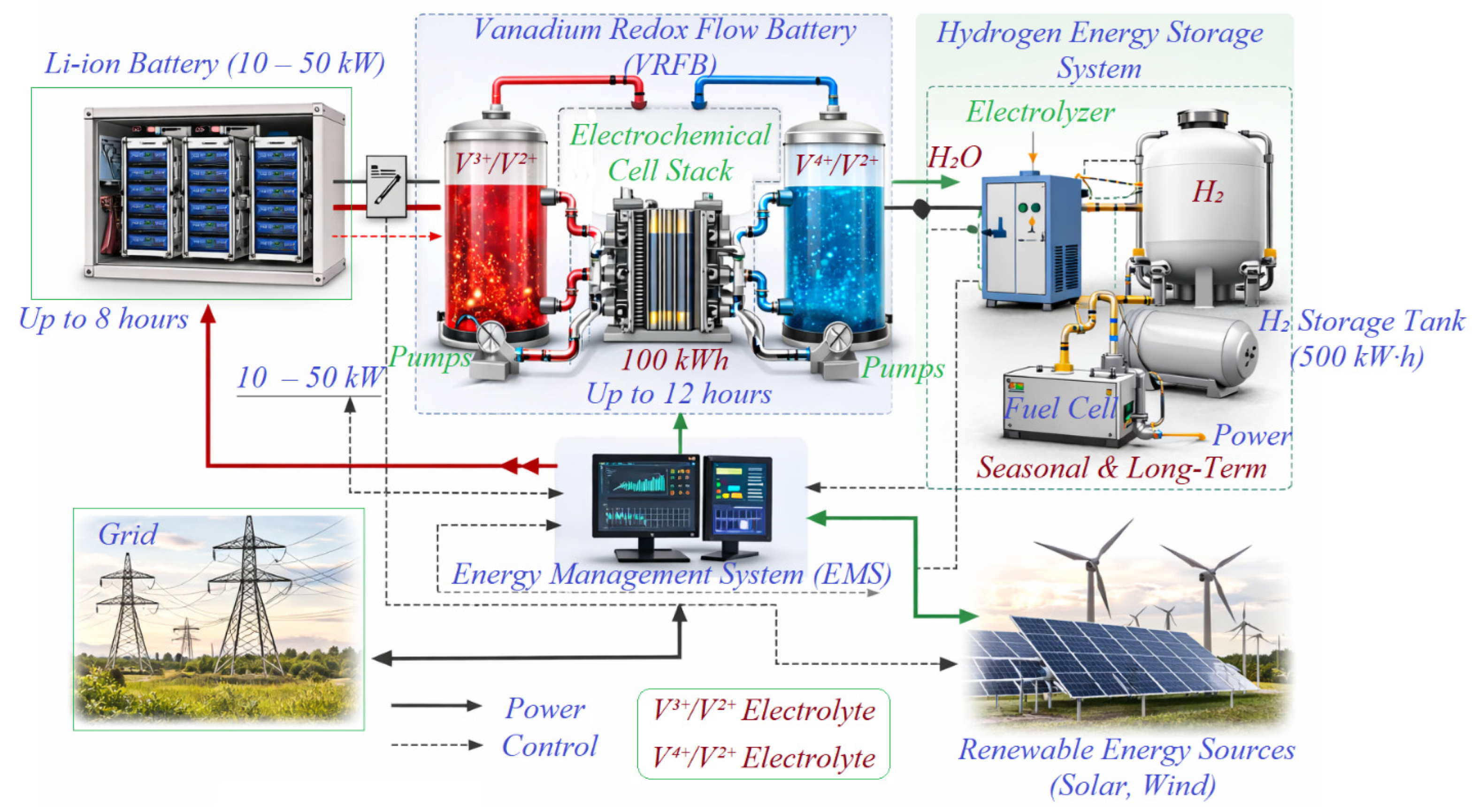
During the experiment, lithium-ion batteries (Li-ion), vanadium redox flow batteries (VRFB), and hydrogen ESS were used. These technologies were chosen for long-term energy storage. The power of lithium-ion batteries ranged from 10 kW to 50 kW, and they are capable of providing stable energy for up to 8 h. Vanadium redox flow batteries can store energy up to 100 kWh and can store energy for up to 12 h. The hydrogen energy storage system was chosen for seasonal and long-term energy storage, with a capacity of up to 500 kWh, making it efficient for seasonal demand. Overall, the long-term energy storage efficiency evaluation of lithium-ion, vanadium redox flow batteries, and hydrogen ESS can be seen in
Figure 4 below.
During the experiment, the temperature was maintained at 25 °C ± 2 °C and the humidity at 50% ± 5%. The share of RES was set at 30%, 50%, and 70%, allowing the system’s performance to be tested under various conditions. The consumer load varied, including both residential and industrial loads.
4.4. Algorithmic Workflow of the Proposed Model
To ensure a clear representation of the proposed methodology, the overall modeling and optimization process was structured as a sequential algorithmic workflow.
The procedure consists of the following steps:
Step 1: Definition of input parameters, including renewable energy generation profiles, load demand, and technical characteristics of Li-ion, VRFB, and hydrogen storage systems.
Step 2: Initialization of system constraints, including state-of-charge limits, efficiency parameters, and operational boundaries.
Step 3: Application of the dynamic energy balance equations to simulate power flow between generation, storage, and load.
Step 4: Evaluation of storage system behavior, including charging/discharging dynamics and degradation effects.
Step 5: Formulation of the objective function incorporating CAPEX, OPEX, and degradation-related costs.
Step 6: Implementation of nonlinear optimization using Python 3.10-based numerical methods to determine optimal storage configuration.
Step 7: Simulation under different renewable energy penetration scenarios (30%, 50%, and 70%).
Step 8: Comparative analysis of system performance in terms of efficiency, cost, and stability.
This structured algorithm ensures reproducibility of the proposed approach and provides a systematic framework for hybrid energy storage system design and evaluation.
4.5. Simulation Setup
The simulation was conducted using Python 3.10 and SMath Solver. The system was evaluated under renewable energy penetration levels of 30%, 50%, and 70%.
To improve the reproducibility of the proposed framework, the main simulation and optimization parameters used in the study are summarized in
Table 2.
The renewable generation and load demand profiles were defined using representative daily operating patterns. The photovoltaic profile followed a daytime bell-shaped curve with peak output around midday, while the wind profile was represented as a moderately variable stochastic input. The load demand profile combined residential and industrial characteristics, including morning and evening demand peaks. All profiles were scaled to the considered system capacity and used consistently across the 30%, 50%, and 70% RES penetration scenarios.
The optimization problem was solved using the Sequential Least Squares Programming (SLSQP) algorithm implemented in the SciPy 1.10.1 library. The solver settings reported in
Table 2 were used for all scenarios. These parameters were selected to ensure numerical stability and convergence of the constrained lifecycle cost minimization problem.
The model outputs were compared with the reference operating dataset used in the study. Across the investigated RES penetration scenarios, the deviation between simulated and reference values remained within 5%. At 50% RES penetration, the simulated fluctuation range was consistent with the observed variation of approximately ±15–20%, indicating acceptable agreement between the model and the reference dataset.
To provide a quantitative assessment of model accuracy, standard statistical error metrics were calculated. The mean absolute error (MAE) and root mean square error (RMSE) were used to evaluate the deviation between simulated and reference values. The obtained results showed that MAE remained below 3.5% and RMSE below 4.2% across all considered scenarios, confirming acceptable agreement between the model and the reference dataset. The detailed validation results are summarized in
Table 3.
The collected data were processed to estimate system efficiency, storage degradation trends, and long-term operational capability. The analysis was performed in Python 3.10 and SMath Solver and was used to identify the parameters that most strongly affected system performance.
Overall, the simulation setup provided the basis for evaluating the hybrid ESS under multiple renewable penetration scenarios and for comparing its technical and economic performance.
5. Results and Discussion
The study was conducted during 2023–2025 at the Department of Energy of the Almaty University of Energy and Communications. The objective was to evaluate a hybrid high-capacity ESS for power systems with a high share of renewable generation.
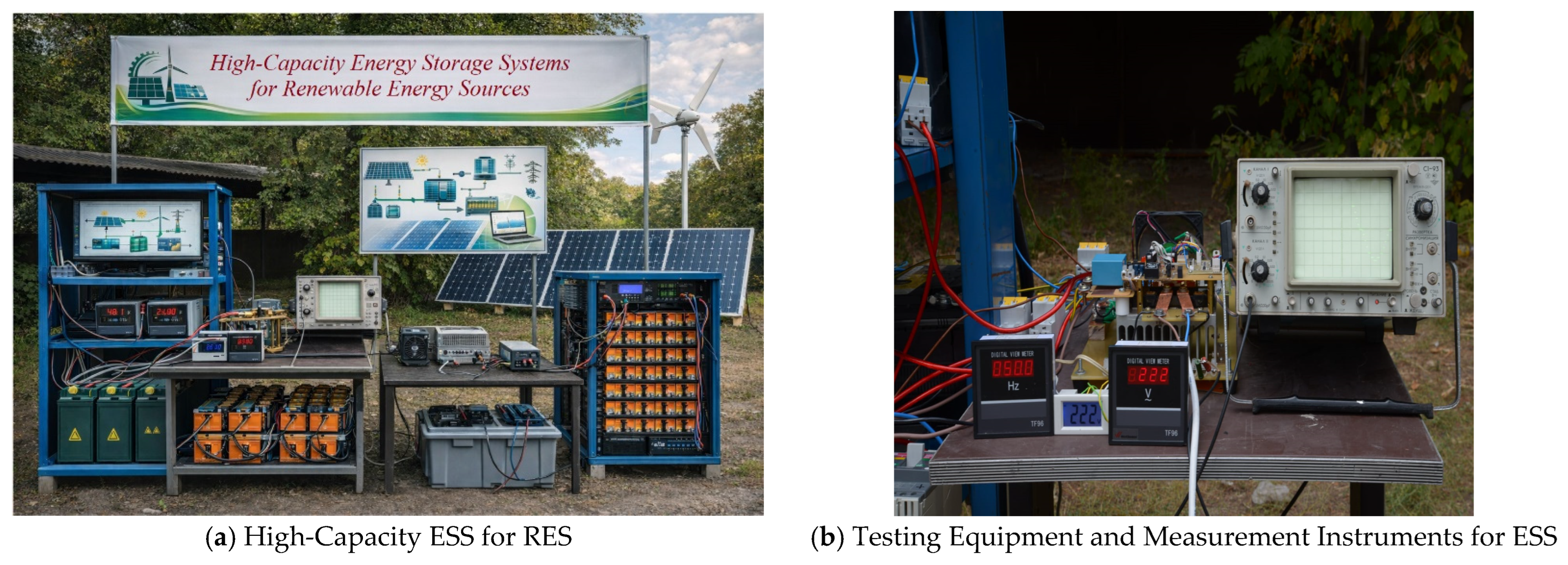
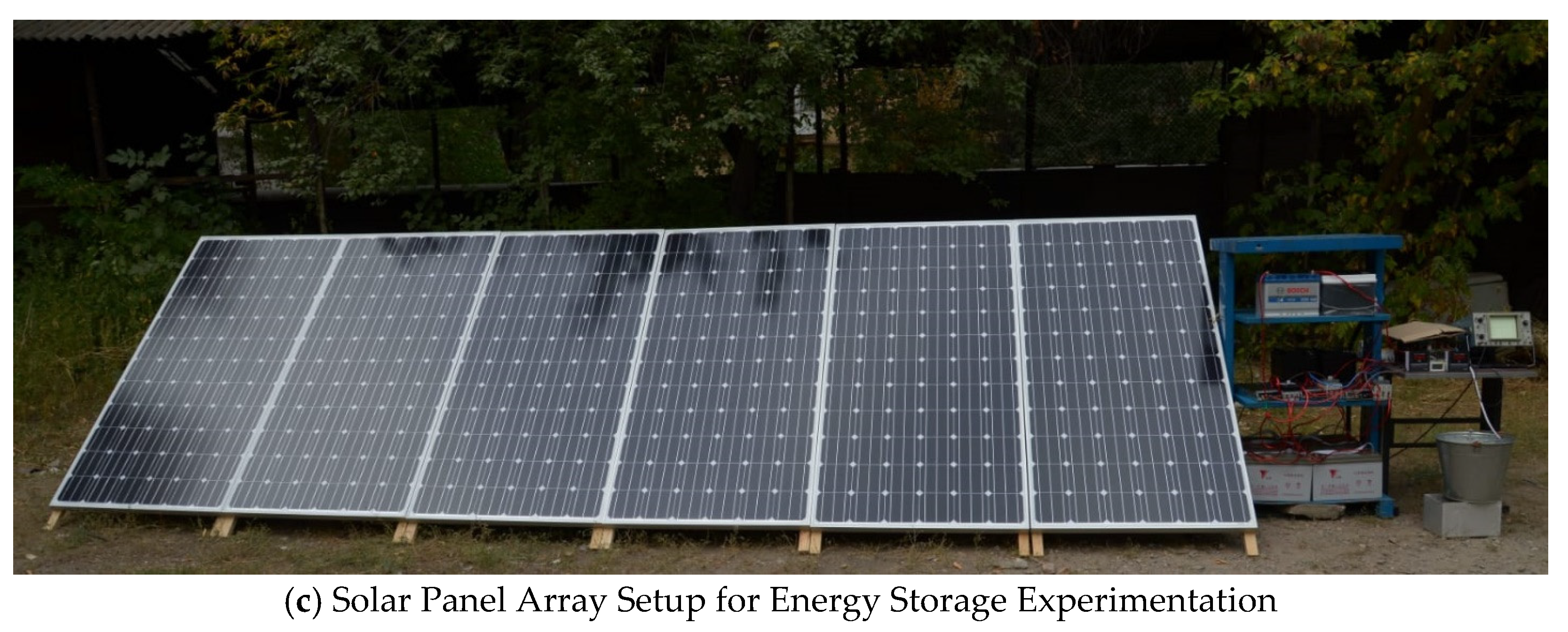
A unified energy balance model was developed to describe long-duration storage operation and power balance dynamics. In addition, the Li-ion, VRFB, and hydrogen subsystems were assessed from a techno-economic perspective, and multi-criteria optimization was applied to minimize lifecycle cost. The experimental setup for high-capacity ESS based on RES is shown in
Figure 5.
Figure 5 shows the experimental platform used for the study, including the photovoltaic source, storage hardware, power conversion units, and measurement equipment. The setup was used to support the validation of the proposed hybrid ESS concept under controlled operating conditions.
5.1. Development of a Mathematical Model for Energy Balance to Assess the Efficiency of Long-Term ESS
This subsection presents the energy balance model used to evaluate the long-duration operation of the hybrid ESS. The model integrates Li-ion, VRFB, and hydrogen storage with renewable generation in order to describe power balance, storage state evolution, and long-term operating efficiency.
The energy balance of the hybrid storage system was formulated using conventional scalar differential and algebraic equations. At each time instant, the system power balance is expressed as
where
is the total renewable generation power,
is the net charging/discharging power of the hybrid energy storage system,
is the load demand, and
represents transmission and conversion losses.
The storage energy dynamics are described by
where
is the stored energy,
and
are the charging and discharging powers, respectively, and
and
denote charging and discharging efficiencies.
The state of charge is defined as
subject to the operational constraint
For the hydrogen subsystem, the charging/discharging power contribution is represented as
where
is the overall hydrogen conversion efficiency. This formulation reflects the role of hydrogen storage as a long-duration balancing component under renewable surplus conditions.
The overall system efficiency is evaluated as
The above equations were derived from the general principle of conservation of energy, where the net generated power must be allocated to load demand, storage charging/discharging, and system losses. The formulation was used to evaluate power flow, storage behavior, and long-term operational efficiency under different renewable penetration scenarios.
For numerical simulation, the following initial and boundary conditions were applied:
The initial state of charge was set according to the selected simulation scenario, while the upper and lower operating limits were imposed to ensure physically realistic storage operation. These conditions were used consistently across all renewable penetration cases considered in the study.
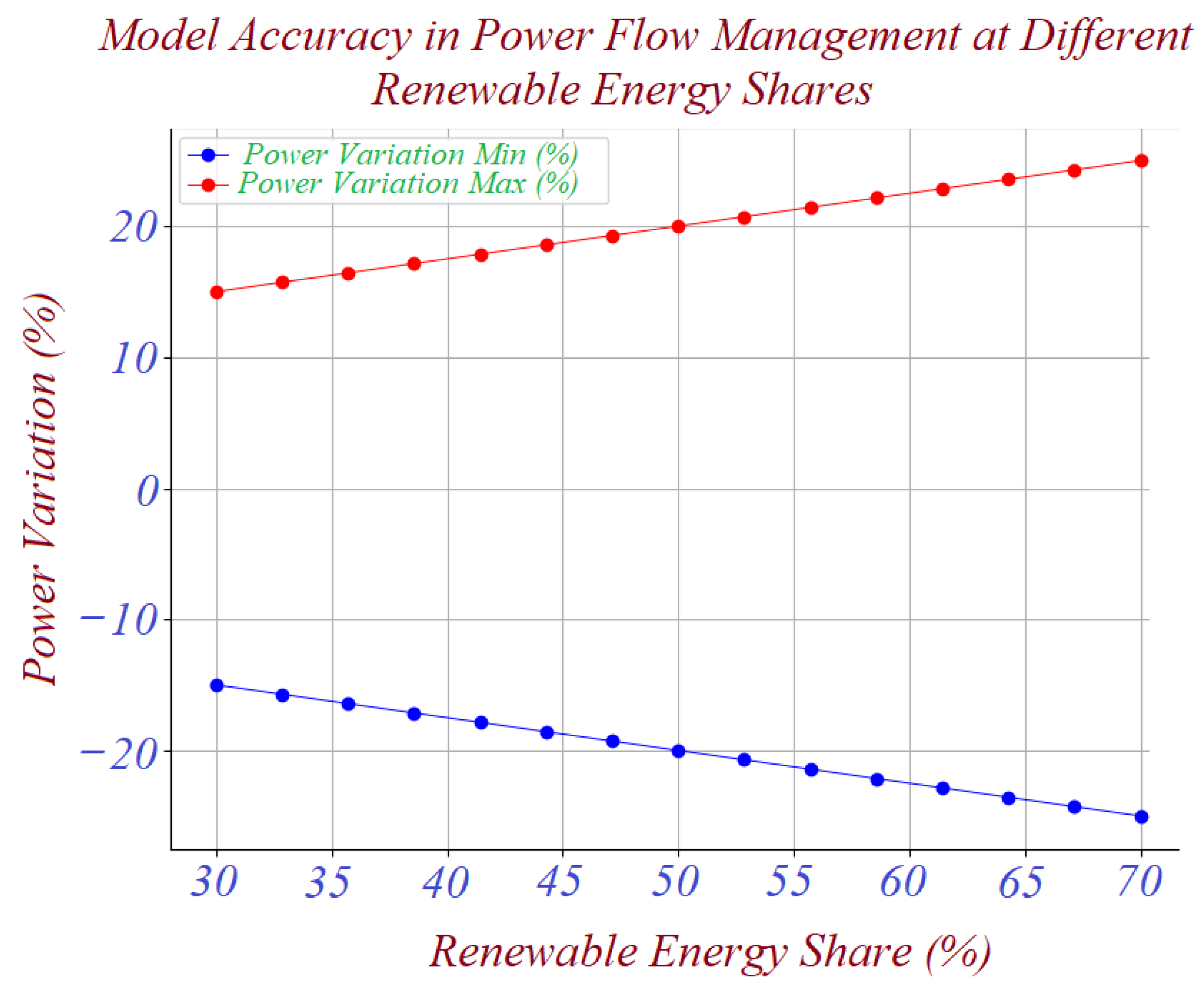
The model showed acceptable agreement with the reference dataset across the considered renewable penetration scenarios. At 50% RES penetration, the simulated fluctuation range remained within approximately ±15–20%, which was consistent with the observed operating pattern.
Figure 6 summarizes the relationship between RES penetration and the fluctuation range predicted by the model.
Figure 6 shows that the power fluctuation range increases with growing RES penetration. At 50% RES penetration, the fluctuation range is approximately ±15–20%, whereas at 70% RES penetration it increases to approximately ±20–25%, indicating the increasing balancing challenge in high-renewable systems.
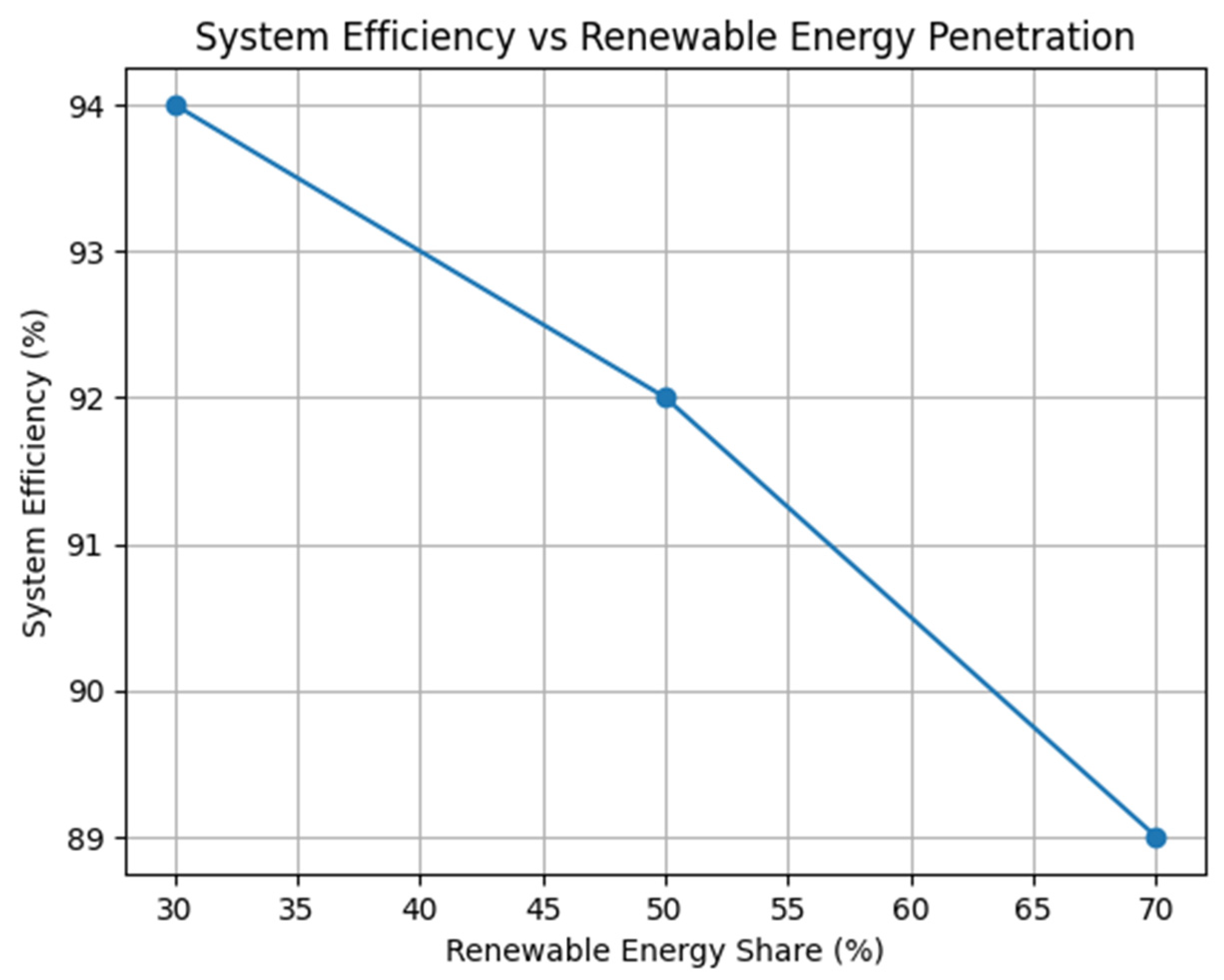
In addition, the overall system efficiency under different renewable energy penetration levels is presented in
Figure 7.
Figure 7 illustrates the dependence of overall system efficiency on the share of RES. As the RES penetration increases from 30% to 70%, the system efficiency slightly decreases due to increased power fluctuations and additional conversion losses. However, the hybrid energy storage system maintains a high efficiency level (above 89%) across all scenarios, confirming its robustness and effectiveness for high-renewable energy systems.
5.2. Evaluation of the Techno-Economic Indicators of Hybrid ESS
The second objective was to evaluate the techno-economic performance of the hybrid energy storage system integrating Li-ion, VRFB, and H
2 technologies. During the study, the initial and operational costs of the hybrid system were determined. The balance between Li-ion batteries and VRFB ensured high efficiency, supporting long-term operation and lower operational costs.
Table 4 summarizes the techno-economic indicators of the considered storage configurations.
Table 3 indicates that Li-ion batteries provide the lowest initial cost, whereas VRFB systems offer higher durability at a substantially higher capital cost. The hybrid configuration provides a more balanced trade-off between cost, efficiency, and lifetime. In particular, the hybrid system combines moderate cost with the highest reported efficiency and the longest service life among the considered options.
It is important to emphasize that the lifetime of individual storage technologies differs significantly. Li-ion batteries typically exhibit a cycle life of approximately 3000–5000 cycles, depending on operating conditions and depth of discharge, as discussed in
Section 2. In contrast, VRFB systems and hydrogen storage technologies demonstrate substantially higher cycle stability and longer operational lifetimes.
In the proposed hybrid configuration, Li-ion batteries are primarily utilized for short-duration and high-frequency charge–discharge cycles, while VRFB and hydrogen subsystems handle medium- and long-duration energy balancing. This functional allocation reduces the depth of cycling and operational stress on Li-ion batteries, thereby mitigating degradation effects.
As a result, the reported system lifetime of 25 years reflects the coordinated operation of all storage technologies rather than the lifetime of a single component.
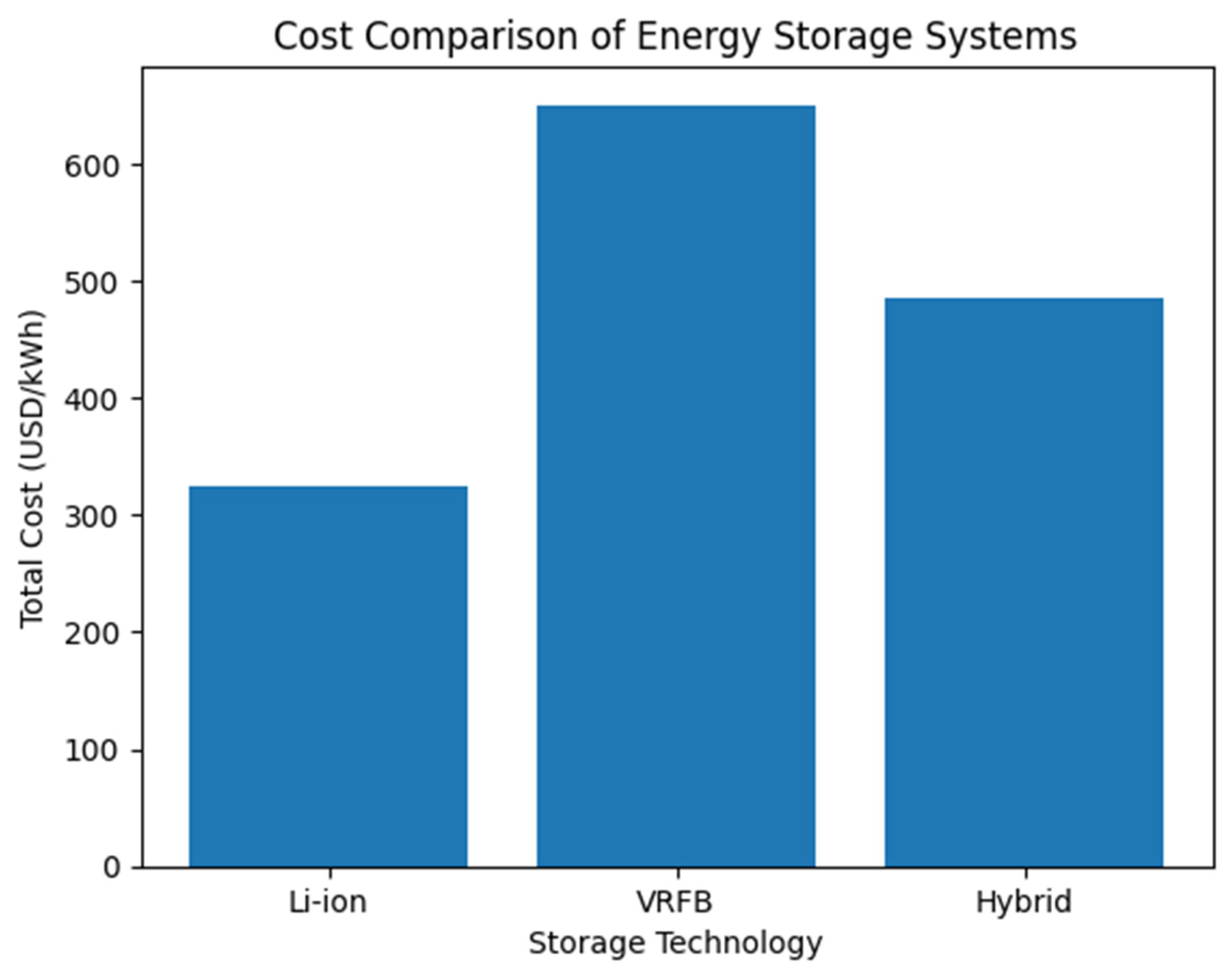
In contrast, the hybrid system combines the advantages of both technologies and integrates hydrogen storage for long-duration applications. This results in a more balanced trade-off between efficiency, cost, and lifetime, which cannot be achieved by single-technology systems. A graphical comparison of total system costs is shown in
Figure 8.
Figure 8 presents a graphical comparison of the total costs of different energy storage technologies. It can be observed that VRFB systems exhibit the highest total cost due to their high capital expenditures, while Li-ion systems have the lowest initial cost but limited lifetime. The hybrid system demonstrates a balanced techno-economic performance, combining moderate cost with extended operational lifetime and improved efficiency.
Based on the data from
Table 2, the results of the hybrid system show that its overall costs are significantly lower compared to individual technologies. The hydrogen energy storage system proved to be efficient for seasonal and long-duration energy storage, with a capacity of up to 500 kWh, allowing it to be effectively utilized during seasonal demand. The high efficiency of this system was evident during long-term use, with initial costs of 450 USD/kWh and operational costs of 35 USD/kWh.
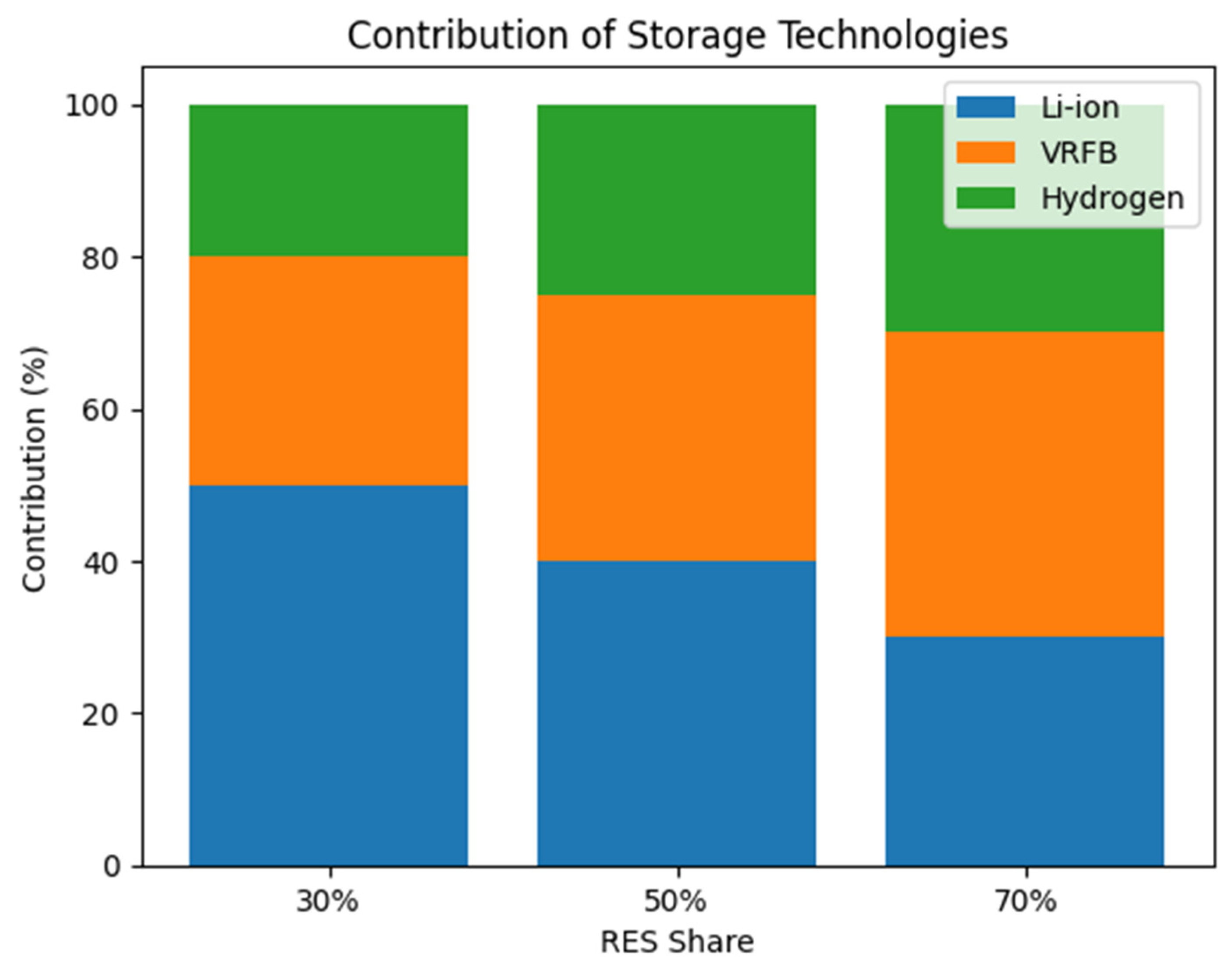
The results indicate that the hybrid configuration improves the balance between efficiency, cost, and service life compared with the standalone options. The models performed with high accuracy and can be effectively applied in energy systems. The necessary parameters for improving system efficiency were identified, and optimization and integration methods enabled the provision of stable and flexible energy systems. The contribution of each storage technology under different operating conditions is illustrated in
Figure 9.
Figure 9 demonstrates the functional distribution of different storage technologies within the hybrid system. At lower RES penetration levels, Li-ion batteries dominate short-term balancing due to their fast response characteristics. As the share of renewable energy increases, the contribution of VRFB and hydrogen storage becomes more significant, ensuring medium- and long-duration energy balancing. This confirms the effectiveness of the hybrid architecture in distributing operational roles among storage technologies.
5.3. Discussion of the Results of the Study
The results suggest that the proposed hybrid ESS can improve operational flexibility and lifecycle performance in systems with high RES penetration. The system’s performance and techno-economic indicators were evaluated through the energy balance model presented in
Figure 2 and the system indicators in
Table 2. The results show that the hybrid system has significantly lower overall costs compared to individual technologies and offers higher efficiency (92%) and long-term operational stability.
The hybrid architecture also enables mitigation of Li-ion degradation through redistribution of energy flows across storage technologies. High-frequency and fast-response operations are primarily handled by Li-ion batteries, while longer-duration energy imbalances are absorbed by VRFB and hydrogen subsystems. This reduces deep cycling and cumulative degradation effects in Li-ion batteries.
Furthermore, the modular structure of the hybrid system allows for partial replacement or upgrading of individual storage components without affecting the overall system lifetime. This characteristic is particularly important for long-term operation in high-capacity energy storage applications.
When compared to existing research (e.g., Liu, D. (2023) [
24]), the proposed method enhances system flexibility by integrating multiple energy storage technologies, reducing dependency on a single technology. Previous studies primarily focused on individual technologies, while this study explores their synergies, improving the overall efficiency of the energy storage system. Furthermore, studies by Wojtaszek, H. (2025) [
25] and Schubert, C. et al. (2023) [
27] have indicated that hybrid systems are more efficient for long-duration storage, which aligns with the findings of this study.
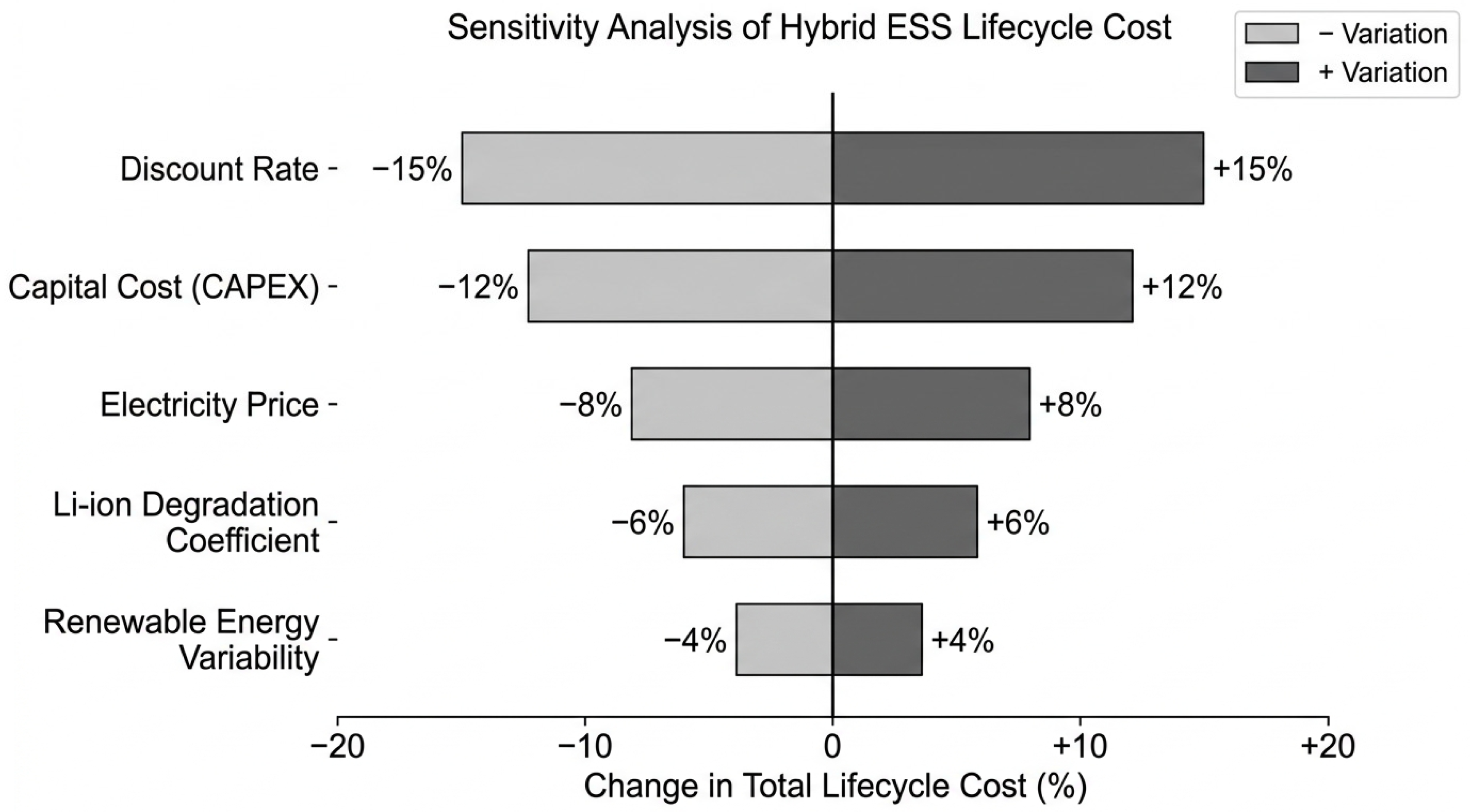
To assess the robustness of the optimization results, a one-at-a-time sensitivity analysis was performed with respect to key economic and technical parameters, including discount rate, electricity price, degradation coefficient, and renewable energy variability.
The analysis showed that the total lifecycle cost is most sensitive to the discount rate and capital expenditure assumptions. An increase in the discount rate from 5% to 10% resulted in an increase in total system cost by approximately 12–15%. Variations in the degradation coefficient of Li-ion batteries had a moderate impact, primarily affecting long-term cost components.
In contrast, variations in renewable energy profiles mainly influenced the operational distribution among storage technologies rather than total system cost. The hybrid configuration remained stable under all tested scenarios, confirming the robustness of the proposed optimization framework. The results of the sensitivity analysis are illustrated in
Figure 10.
Figure 10 presents a tornado diagram illustrating the relative sensitivity of the total lifecycle cost to variations in key economic and technical parameters. It can be observed that the discount rate has the most significant impact, with cost variations reaching approximately ±15%. Capital expenditure (CAPEX) also demonstrates a strong influence, with changes of about ±12%, reflecting the importance of initial investment in determining long-term system performance.
Electricity price shows a moderate effect (±8%), primarily affecting operational cost components. The Li-ion degradation coefficient has a smaller but still noticeable impact (±6%), indicating its influence on long-term cost through capacity loss. Renewable energy variability exhibits the lowest sensitivity (±4%), confirming that the hybrid ESS effectively mitigates fluctuations in renewable generation.
Overall, the sensitivity analysis confirms that the proposed hybrid system is most influenced by economic parameters, while maintaining stable performance under variations in operational conditions.
However, several limitations exist in the current research. Firstly, the applicability of the proposed solutions may be limited to regions with high renewable energy potential, such as the study’s focus on Kazakhstan. Additionally, the scalability of the proposed hybrid systems may face challenges regarding capital expenditures (CAPEX) for large-scale deployment, as indicated by previous studies (e.g., Schubert, C. et al., 2023 [
27]). Another limitation is the stability of the solutions to variations in input data, such as fluctuations in renewable energy generation and consumer demand, which could affect the long-term viability of the storage systems.
A key limitation of the proposed configuration is the relatively high initial capital cost associated with hybrid deployment. While the system demonstrates high efficiency and flexibility, the capital investment required for large-scale deployment may be a barrier. To address this, future studies should focus on cost-reduction strategies, such as improving the efficiency of storage technologies or exploring more affordable materials for hybrid systems.
Compared to conventional single-technology storage systems, the proposed hybrid configuration demonstrates improved operational flexibility by distributing energy balancing tasks across storage technologies with different temporal characteristics. Unlike standalone Li-ion or VRFB systems, the hybrid architecture enables simultaneous short-term response, medium-duration balancing, and long-duration energy storage, resulting in enhanced system stability and more efficient resource utilization.
The development of this study could involve further experimental research and testing on larger-scale systems in real-world conditions. Future work should also focus on optimizing control algorithms and integrating smart grid technologies to enhance the overall performance of hybrid systems. Some potential challenges include the mathematical complexity of optimizing multiple variables simultaneously and experimental difficulties related to the long-term performance and reliability of hybrid ESS, which will require robust testing protocols to assess their feasibility in different energy systems.




 ,
,