Article

Imbalance-Aware Spatiotemporal Load Forecasting via Cluster-Weighted State Space Modeling

1
Department of Electrical Engineering, University of Tennessee at Chattanooga, Chattanooga, TN 37403, USA
2
Electrical and Computer Engineering Department, University of Alabama, Tuscaloosa, AL 35487, USA
3
Department of Mechanical and Aerospace Engineering, University of California San Diego, La Jolla, CA 92093, USA
*
Author to whom correspondence should be addressed.
Energies 2026, 19(8), 1995; https://doi.org/10.3390/en19081995
Submission received: 2 March 2026 / Revised: 8 April 2026 / Accepted: 10 April 2026 / Published: 21 April 2026

Abstract

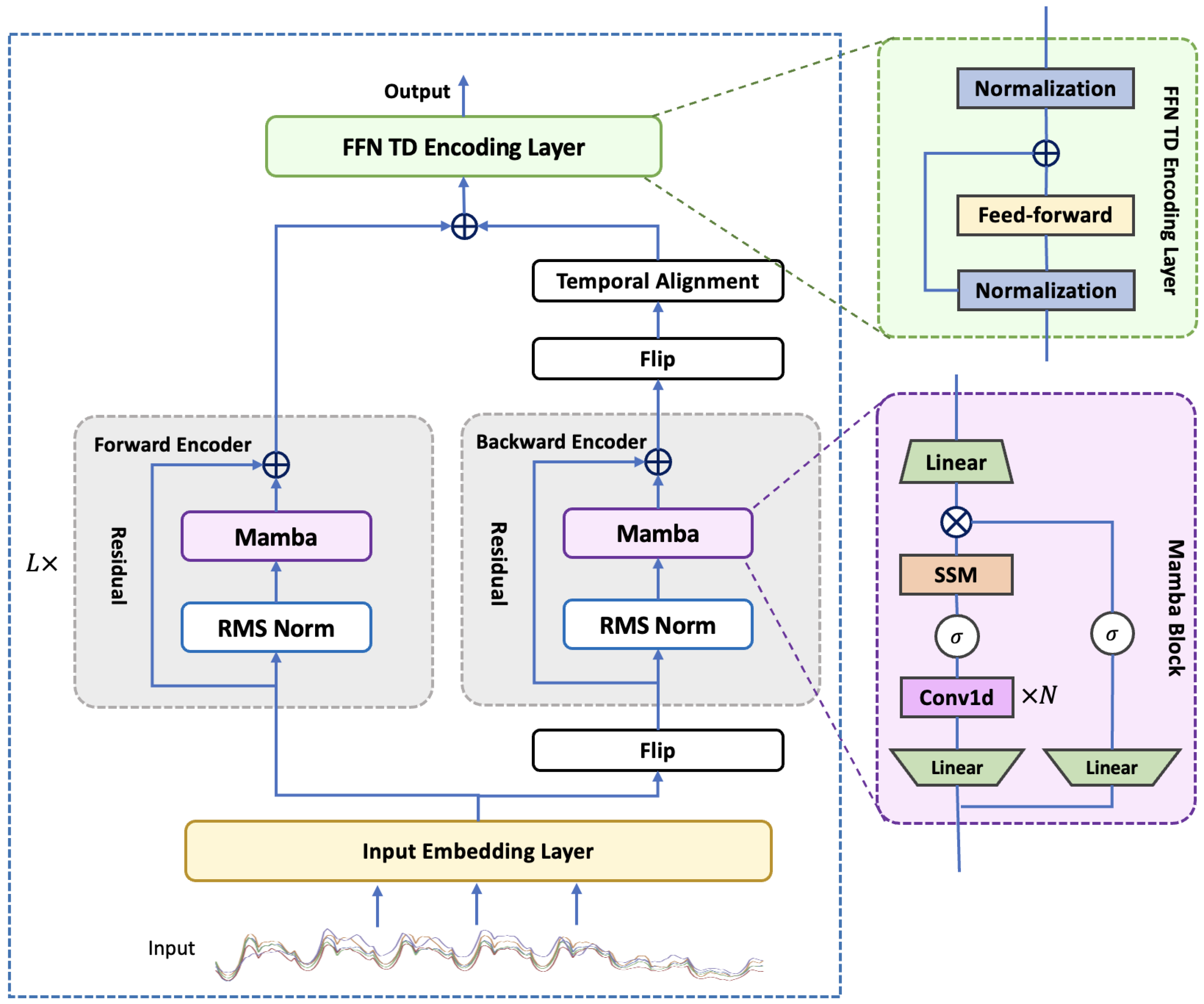
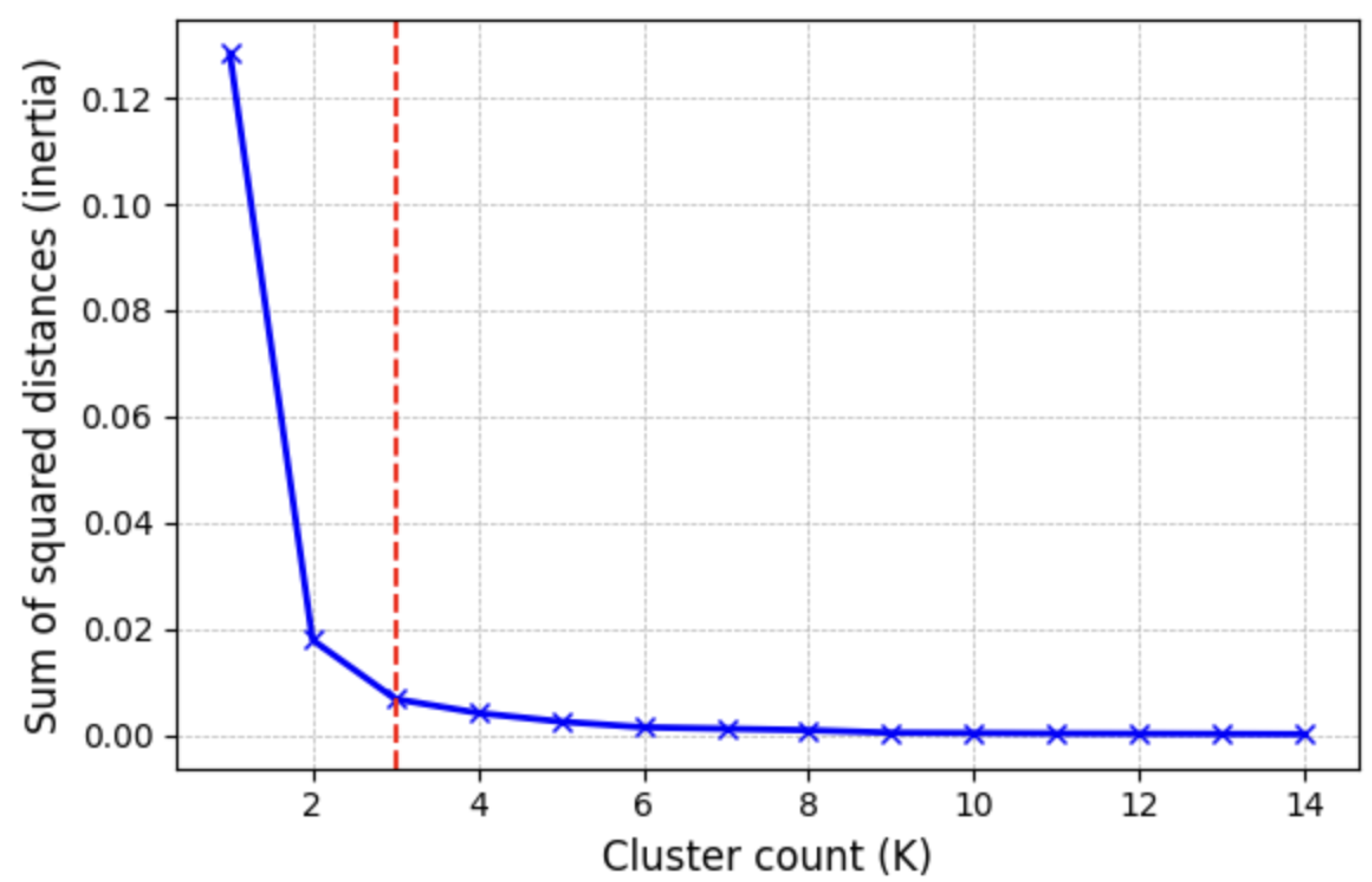
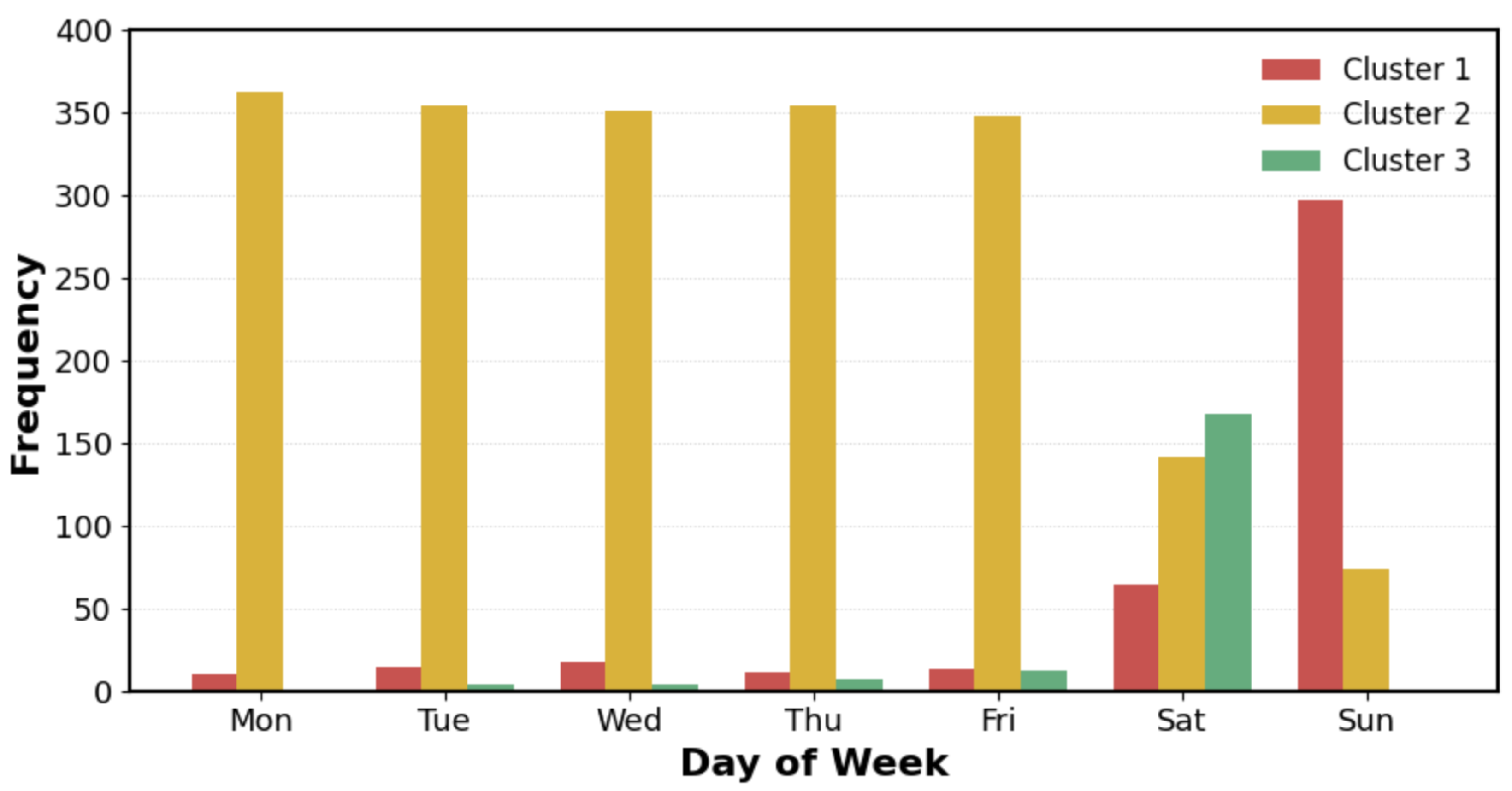
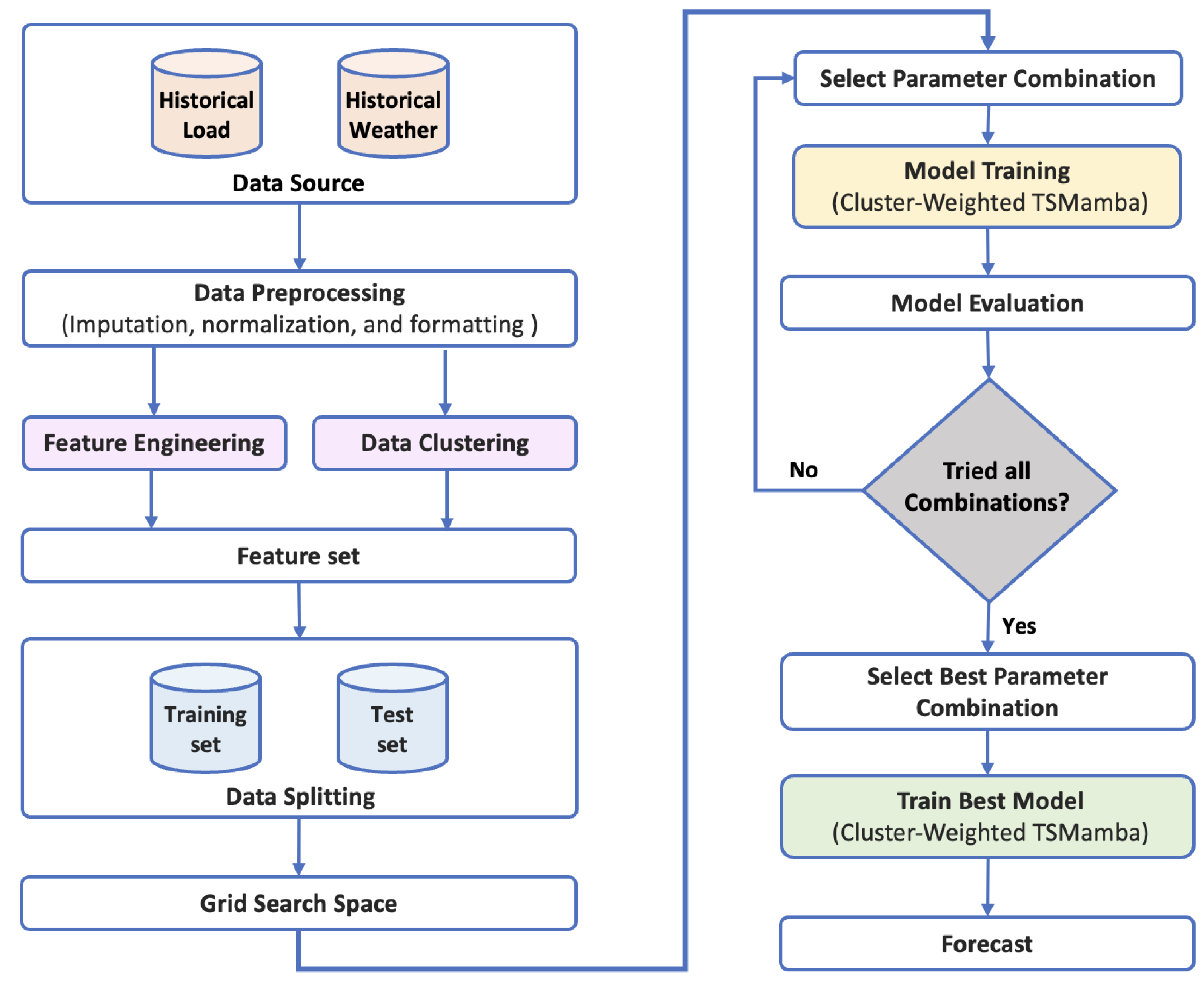
Electrical load time series exhibit strong heterogeneity across daily patterns driven by calendar effects and behavioral variability, leading many forecasting models to favor dominant weekday profiles while degrading on weekends, holidays, and transition days. This paper proposes an imbalance-aware spatiotemporal forecasting framework via a cluster-conditioned state space model. Daily load patterns are identified via time-series clustering and incorporated as conditioning covariates within a sequence-continuous selective state space models (Mamba), preserving temporal coherence without explicit sequence partitioning. A cluster-weighted training objective further mitigates pattern imbalance while avoiding future-information leakage. The resulting cluster-conditioned Time Series Mamba (TSMamba) consistently improves forecasting robustness across both frequent and infrequent profiles, achieving weighted absolute percentage error (WAPE) reductions of approximately 15% on weekdays, 42% on weekends, and 39% on holidays relative to the vanilla TSMamba, with similar gains in mean absolute error (MAE) and coefficient of variation of the root mean square error (CVRMSE). These results demonstrate that conditioning state dynamics on latent load patterns yields stable and computationally efficient short-term load forecasts under profile transitions.
Keywords: short-term load forecasting; load pattern clustering; k-means clustering; state space models; spatiotemporal learning; data imbalance; calendar effects short-term load forecasting; load pattern clustering; k-means clustering; state space models; spatiotemporal learning; data imbalance; calendar effects