1. Introduction
The global wind energy sector has experienced a remarkable surge in recent years, driven by the increasing demand for renewable energy sources [
1,
2,
3,
4,
5]. The energy demand and environmental concerns have driven rapid growth in the wind energy sector, with installed capacity tripling from 2014 to 2023 to surpass 1 terawatt (TW) [
6,
7,
8]. However, conventional horizontal-axis turbines often face limitations in urban settings due to noise, safety, and space constraints. These challenges have sparked interest in bladeless and motionless wind harvesters, which promise quieter and more compact alternatives suitable for building integration [
9,
10,
11,
12,
13,
14].
Among small urban harvesters, several non-rotating and bladeless concepts have emerged. The power from urban wind can be extracted by bladeless wind turbines, i.e., motionless opposing pair of airfoils, vortex bladeless wind turbine (VBWT), and other nontraditional wind energy systems. These systems are scalable and can be used domestically and commercially on rooftop of buildings. S. Budea [
15] assessed the performance of wind turbines installed on building rooftops, emphasizing the influence of structural design, turbulence intensity, and urban aerodynamics on energy yield. The study highlighted key challenges associated with rooftop installations, including fluctuating wind patterns and vibration concerns, while also identifying design strategies to improve operational stability and efficiency in built environments. In a comprehensive review, S. Liu et al. [
16] explored recent advances in urban wind resource assessment and energy harvesting technologies. The study underlined the growing potential of small-scale urban wind energy systems as complementary solutions to centralized renewable energy infrastructures. By utilizing the two-way fluid structure interaction (FSI) simulations for numerical investigation, combined with the experimental setup to investigate the VBWT, Hamdan et al. [
17] discovered optimal vibration frequencies and amplitudes that significantly improve the energy harvesting abilities of the VBWT.
The idea of using motionless opposing airfoils creates a venturi effect, where the airflow is accelerated through a narrowed passage, causing a low-pressure region between the airfoils. Here, the angle of attack controls how rapidly the airflow accelerates over the cambered surfaces modulating pressure gradients while the inter-foil spacing governs the confinement and venturi-induced suction strength in the plenum region. Although the narrowing between the paired airfoils forms a converging passage reminiscent of a Venturi duct, the amplified suction observed in this configuration arises primarily from mutual circulation coupling between the two opposing lifting surfaces. This circulation-induced gap suction differs from classical Venturi action, which depends solely on geometric area contraction. Varying the spacing and incidence between the stationary airfoils modulates both the magnitude and stability of the circulation coupling, allowing systematic assessment of its contribution to suction and COP enhancement.
In recent years, a number of novel designs have been explored using high-fidelity CFD modeling and experiments. Houchens et al. [
18] utilized this concept and developed a wind energy system based on a motionless pair of opposing airfoils. By using CFD and wind tunnel testing for performance optimization, they evaluated the potential of such airfoil-based designs for both wind and hydrokinetic energy applications. This type of distributed energy system fills a gap in the existing energy market by offering a small, safe, and efficient alternative to traditional wind turbines. The same concept is exemplified by the AeroMINE system [
19]. Wind tunnel tests on a single pair of such mirrored foils achieved aerodynamic efficiencies around 18–27%. While this is slightly lower than conventional rotors, the bladeless setup offers distinct advantages: no exposed moving parts means minimal noise and improved safety for dense environments. Field trials further indicate that they tolerate turbulent, misaligned winds (up to ±30° off-axis) with only modest performance losses. The pressure difference produced due to venturi effect can be used not only to produce energy but also to increase the ventilation system of the building [
20]. Ye at el. [
21] proposed the optimized venturi shaped rooftop structures by using CFD. It is shown that they can considerably increase the wind speed. This development promotes the adoption of small-scale wind turbines in buildings and aligns with the rising focus on wind energy solutions into urban areas.
E. H. Krath et al. [
22] conducted a multivariate design and optimization study of the AeroMINE internal turbine blade, focusing on enhancing aerodynamic efficiency and maximizing power output through computational simulations and design refinement strategies. Their work introduced a design framework that integrated fluid-structure interactions and performance trade-offs. In a subsequent study, Houchens et al. [
23] investigated the operational capabilities and efficiency of a motionless wind energy system when subjected to higher-than-average wind speeds, a common scenario in many potential deployment areas. During field tests at high wind speeds, results showed a maximum COP of 0.25 is achieved.
At the same time, ongoing studies are revealing the critical aerodynamics and open questions underlying these nontraditional systems. For instance, increasing the foil angle of attack augments suction and energy extraction up to a point, but beyond a certain threshold, this benefit vanishes as the wake transitions from symmetric flow to an off-center, asymmetric pattern [
24]. This symmetry-breaking instability was likewise observed in AeroMINE experiments, reported that at moderate attack angles (~10°), the device operated stably at ~18% efficiency, whereas at higher angles (≥15°), it could briefly reach ~27% efficiency before unstable flow regimes forced a performance drop [
19]. Foil spacing and angle-of-attack together determine the pressure distribution between foils and the tendency for vortex shedding instabilities. However, such motionless airfoiled based wind systems currently exhibit a significantly lower COP than conventional turbines. In particular, no prior study has definitively quantified how inter-foil gap and air incident angle must be jointly tuned to maximize efficiency without inducing detrimental flow instabilities. Addressing this gap is essential for guiding the design of mirrored airfoil wind systems that achieve higher aerodynamic performance while maintaining stable, symmetric flow. A dual-parameter optimization of angle of attack and inter-foil spacing in a mirrored airfoil pair, validated through both detailed two-dimensional (2D) CFD simulations and small-scale experiments. The complete workflow and key findings are shown in
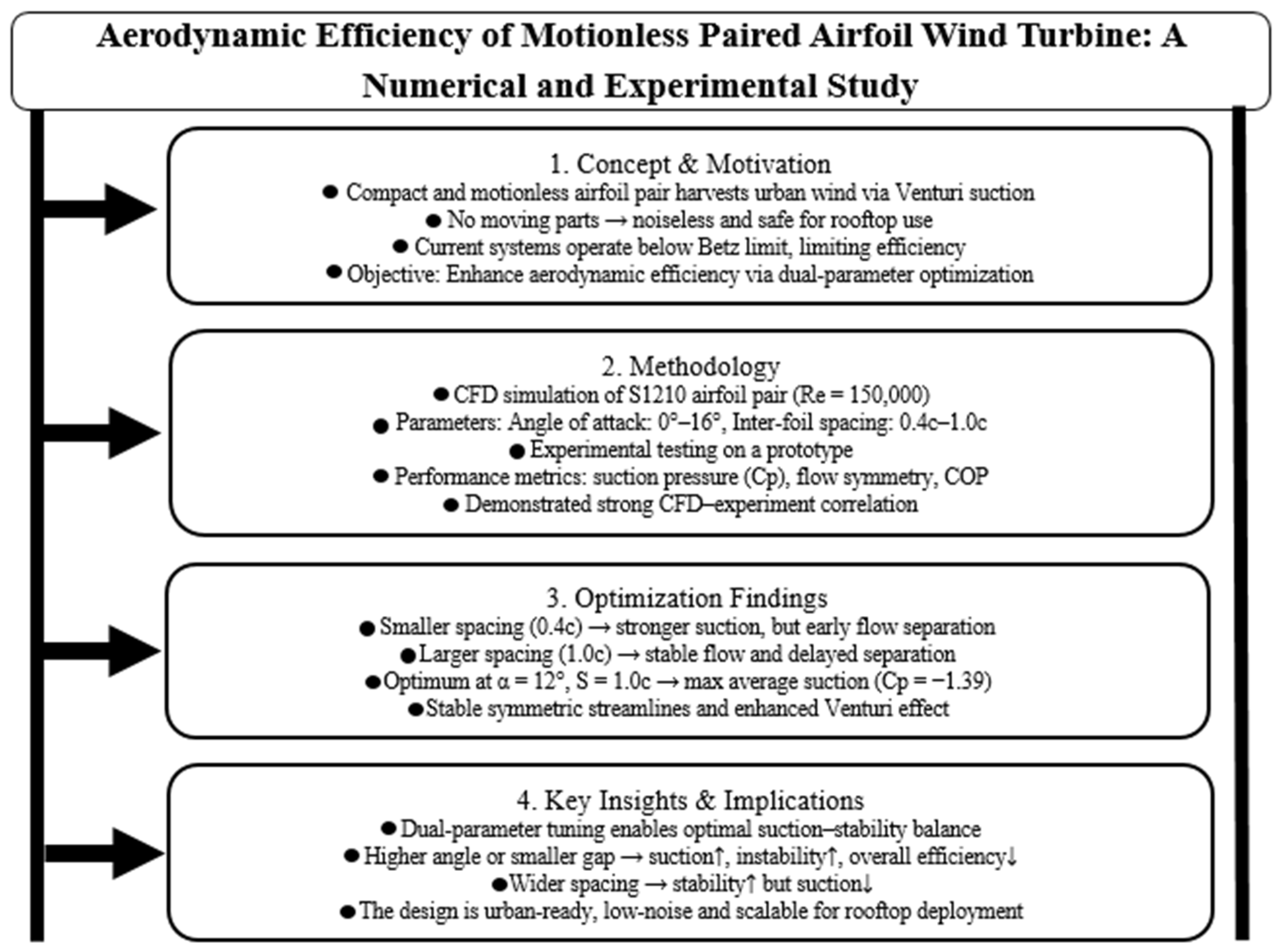
Figure 1. By systematically analyzing the interplay between suction intensity, flow separation, and stability, this study establishes design guidelines that can be extended to three-dimensional prototypes and diverse operational conditions. The objective of this study is to quantify the suction amplification generated by paired stationary airfoils via mutual circulation, and to characterize how spacing and incidence influence the resulting power augmentation and COP. The work focuses on aerodynamic mechanism elucidation rather than full device commercialization.
Unlike Venturi-based systems, where suction arises primarily from convergent duct pressure drop, the airfoiled design utilizes mutual circulation induction between opposing airfoils. Compared with mirrored-airfoil configurations in the literature, the key novelty lies in (1) the passive coupling of lift fields to intensify gap suction and (2) the use of geometric pitch control to modulate the suction peak. This mechanism differs fundamentally from Venturi-only acceleration and has not been previously quantified in a parametrically controlled study.
2. Methodology
2.1. CFD Model Development
2D computational domain was constructed around a single S1210 airfoil profile, chosen for its low-drag, high-lift characteristics at low Reynolds numbers, and prevalent use in vertical-axis and hydrokinetic applications [
25,
26,
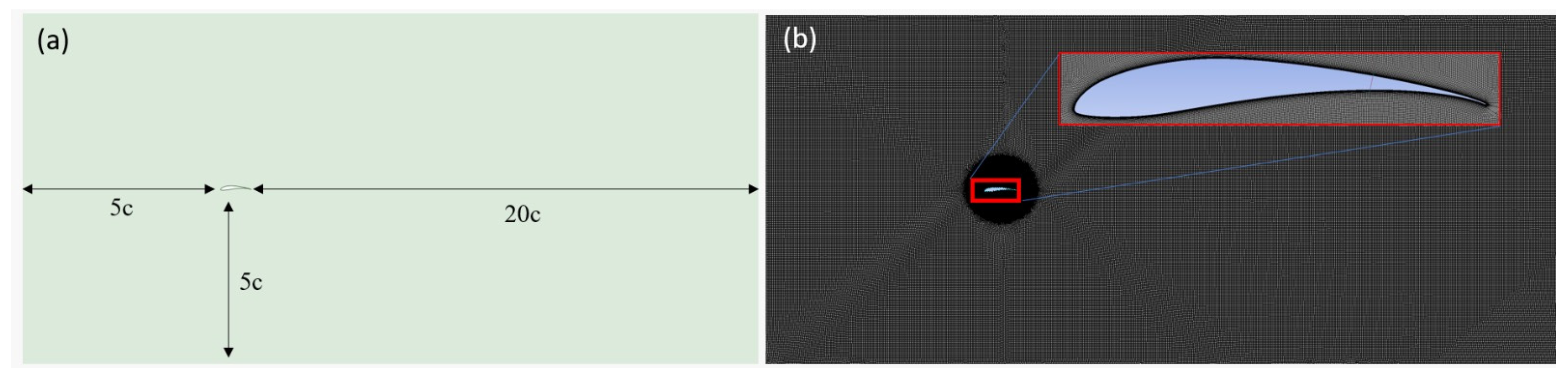
27]. The domain extended 5c upstream and 20c downstream (where c = 0.5 m is the chord length), with lateral boundaries set 5c apart. Structured quadrilateral elements were used, with inflation layers near the airfoil to maintain y
+ < 5 and a local refinement zone around the foil, resulting in a medium mesh of approximately 110,000 elements.
The model treats air as incompressible at low Mach numbers, with the Spalart–Allmaras model capturing transition and turbulence. Steady 2-D RANS simulations were used to enable a broad parametric sweep of pair spacings and angles within realistic computational resources. For low-to-moderate Reynolds number external aerodynamic flows, Spalart–Allmaras remains widely employed due to its favorable trade-off between computational cost and predictive quality in attached and mildly separated boundary layers. Furthermore, Spalart–Allmaras provided the best match with the available single-airfoil validation data, outperforming k–ε and k–ω variants tested in preliminary runs. The steady 2-D RANS does not capture spanwise instabilities, large-scale vortex shedding, symmetry breaking, or transient re-attachment phenomena, which may arise in the suction gap at higher incidence or lower spacing ratios. The airfoils are considered rigid, with no fluid–structure interaction effects or structural deformations.
Velocity inlet was specified at the upstream boundary for Re = 150,000 to represent undisturbed free-stream flow approaching the airfoil. The outlet was specified as a pressure outlet at downstream that allows fluid to exit freely while avoiding reverse-flow instabilities, mirroring open-atmosphere conditions. The walls of airfoils were treated as no-slip boundaries that enforces viscous flow behavior and boundary layer development over rigid airfoils. Top and bottom domain boundaries are modeled as symmetry planes to emulate an infinite span without wall interference. Simulations solved the steady, incompressible Navier–Stokes equations using the pressure-based coupled solver in ANSYS 2022R1 Fluent. The following mass and momentum equations are solved numerically.
The y-momentum equation
where
u is the velocity component in the x-direction,
v is the velocity component in the y-direction,
p is pressure,
ρ is density (constant), and
ν is kinematic viscosity.
Figure 2a shows the 2D computational domain containing one s1210 airfoil with upstream and downstream distances of 5c and 20c respectively, where c = 0.5 m is the chord length.
Figure 2b shows the mesh strategy that is applied to airfoil and the computational domain.
Steady state solution is obtained by using pressure-based solver. Coupled algorithm is used for pressure velocity coupling. The inlet velocity is obtained from Equation (4) at Reynolds number (Re = 150,000) Selig et al. [
28].
where
Ub is free stream velocity,
ρ is density, and
is the dynamic viscosity.
2.2. Mesh Sensitivity and Model Validation
To ensure the reliability of our CFD simulations, a rigorous mesh sensitivity study and model validation were conducted. Three different meshes are generated for single airfoil having 36,764, 110,695, and 122,810 elements, respectively. The inflation layers are added by using the first layer thickness method to ensure Y+ values are kept below 5. Finer mesh was employed in the region around airfoil by using sphere of influence option and less dense mesh is used far away from the airfoil. Symmetry boundary condition is applied at the top and bottom wall of the computational domain. Inlet is defined as velocity inlet and outlet is defined as pressure outlet.
The lift coefficient evaluated according to Equation (5) Selig et al. [
28].
where
FL is the lift force, and
S is planform area of airfoil.
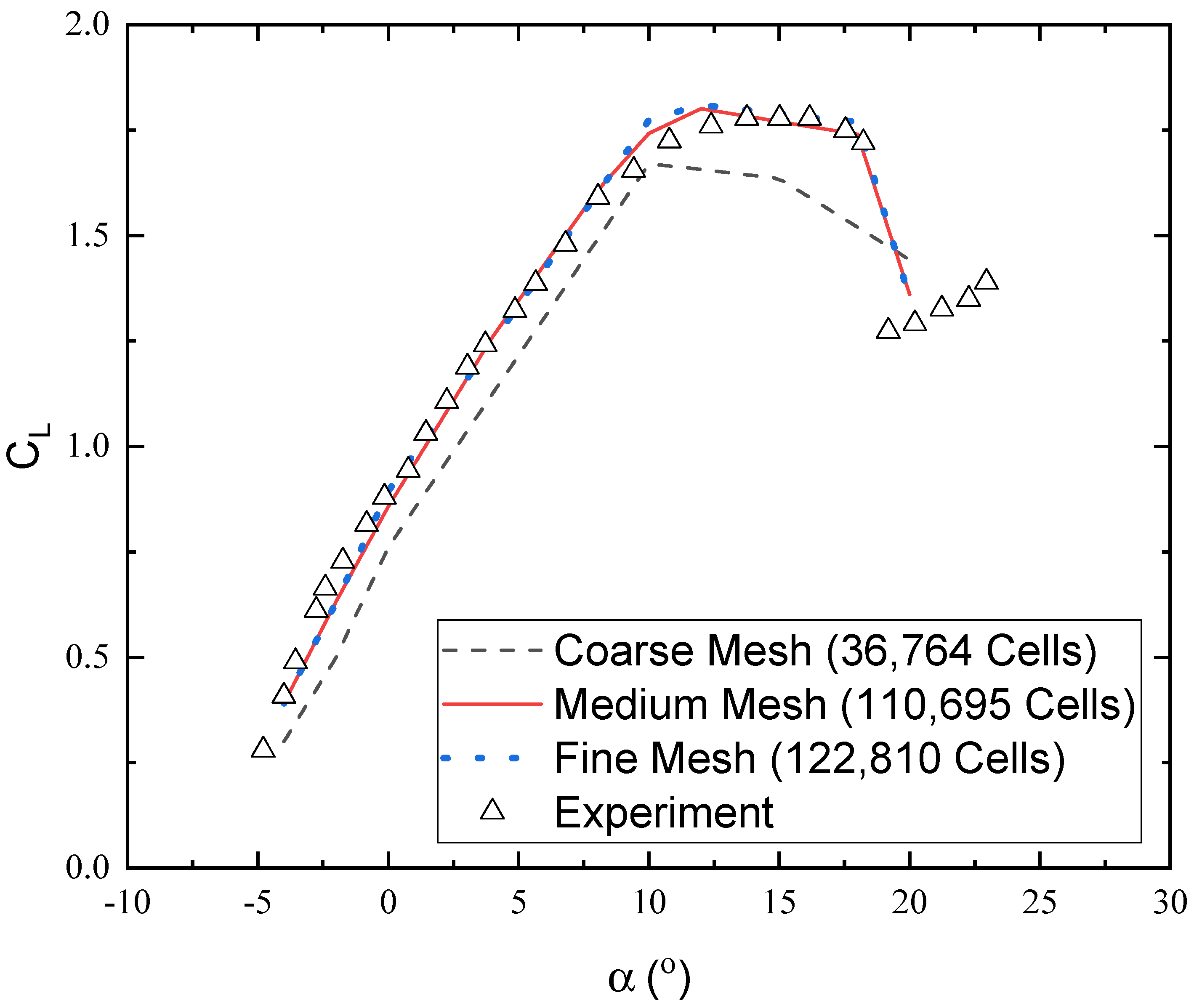
The medium and fine meshes exhibit negligible differences in CL values (e.g., ΔCL < 0.02 at α = 10°), confirming grid independence. The coarse mesh deviates significantly at higher α (e.g., +8% error at α = 16°), indicating insufficient resolution.
Figure 3 compares
CL values from simulations (across all three meshes) against experimental data from Selig et al. [
28] over an angle of attack (α) range of 5–18°. The developed 2D model has produced highly accurate results for angle of attack. The medium and fine meshes exhibit negligible differences in
CL values (e.g., Δ
CL < 0.02 at α = 10°), confirming grid independence. The coarse mesh deviates significantly at higher α (e.g., +8% error at α = 16°), indicating insufficient resolution.
The medium mesh shows excellent agreement with experimental data across the validated range. Maximum deviation is 4.5% at α = 14°, within acceptable limits for engineering simulations. The convergence of medium/fine meshes confirms adequate resolution of flow separation and pressure gradients critical to lift prediction. This analysis validates the selected medium mesh (110,695 elements) for subsequent simulations, balancing accuracy and computational efficiency. The fidelity of the CFD model in replicating experimental CL trends establishes confidence in its application to paired-airfoil configurations.
2.3. Experimental Setup
A small-scale prototype of the motionless paired airfoil turbine was fabricated in Faisalabad, Punjab, Pakistan, with a chord length of 0.5 m and a span of 1 m. Each S1210 airfoil was produced via Fused Deposition Modeling (FDM) 3D printing (polylactic acid), then mounted between two rigid steel plates. The suction duct in circular shape was cut on the lower plate whose center coincide with the leading edge of the airfoil pair. The angle of attack was varied by rotating the foil mounts in predefined increments (4°, 8°, 12° and 16°) using a built-in protractor scale on the support frame and locking set screws to secure each position. A variable speed axial fan provided the free stream flow, while a hot wire anemometer was used to record both the inlet velocity and the induced duct velocity at the suction duct. All velocity measurements were averaged over ten seconds at each operating point to ensure repeatability.
3. Results and Discussion
In this section, aerodynamic flow around opposing airfoil pair is discussed in detail.
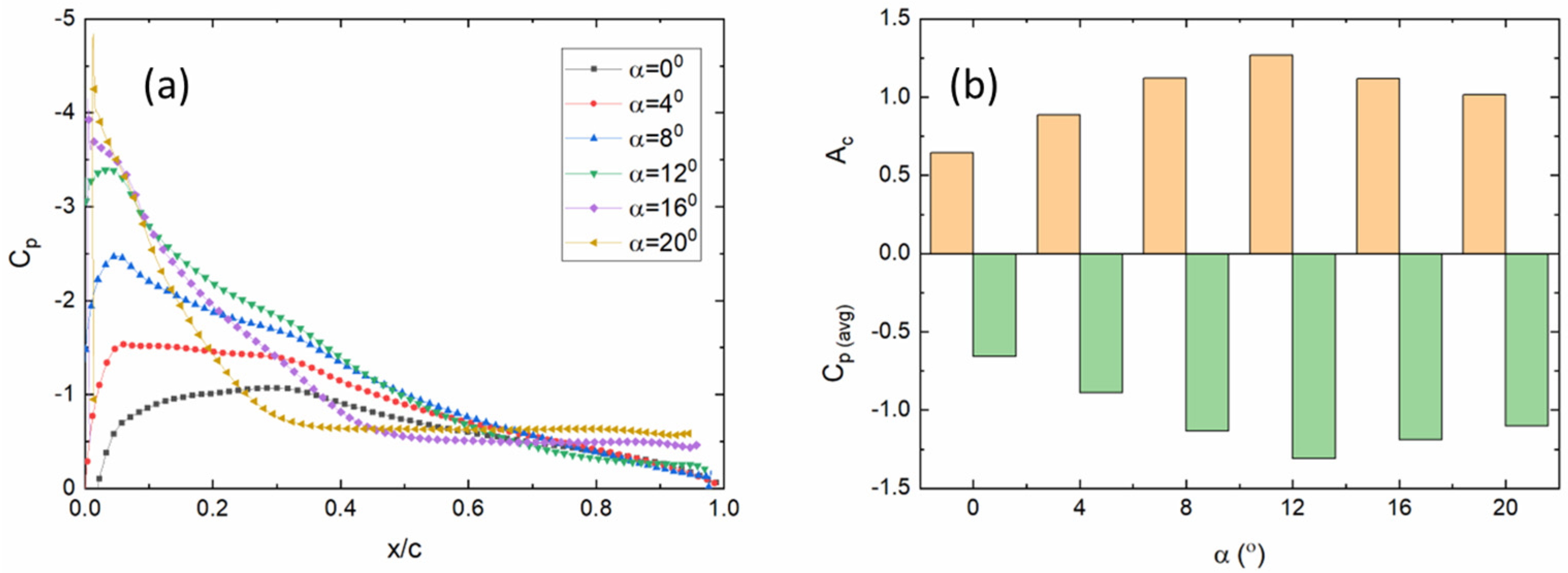
Figure 4a shows the negative pressure coefficient (
Cp) curves for a single airfoil. These curves represent the distribution of negative pressure coefficients along the surface of the airfoil. The distinct curves for different angles of attack (α = 0° to 12°) shows progressive increase in suction peak near leading edge (x/c ≈ 0.1–0.3) and 12° achieves maximum suction intensity.
Figure 4b illustrates the area under the curves and the averaged negative pressure coefficient. The area under the curve is indicative of the overall lift produced by the airfoil, while the averaged negative pressure coefficient provides a mean value that can be used to compare different airfoil configurations. This comparison helps in understanding the effectiveness of the airfoil design in generating lift and can be used to optimize the airfoil’s performance. The maximum averaged vacuum pressure is obtained at α = 12°.
The combined effect of opposing pair of airfoils on the formation of low-pressure region is discussed in further analysis.
3.1. Flow Characteristics of Mirrored Opposing Airfoil Pair
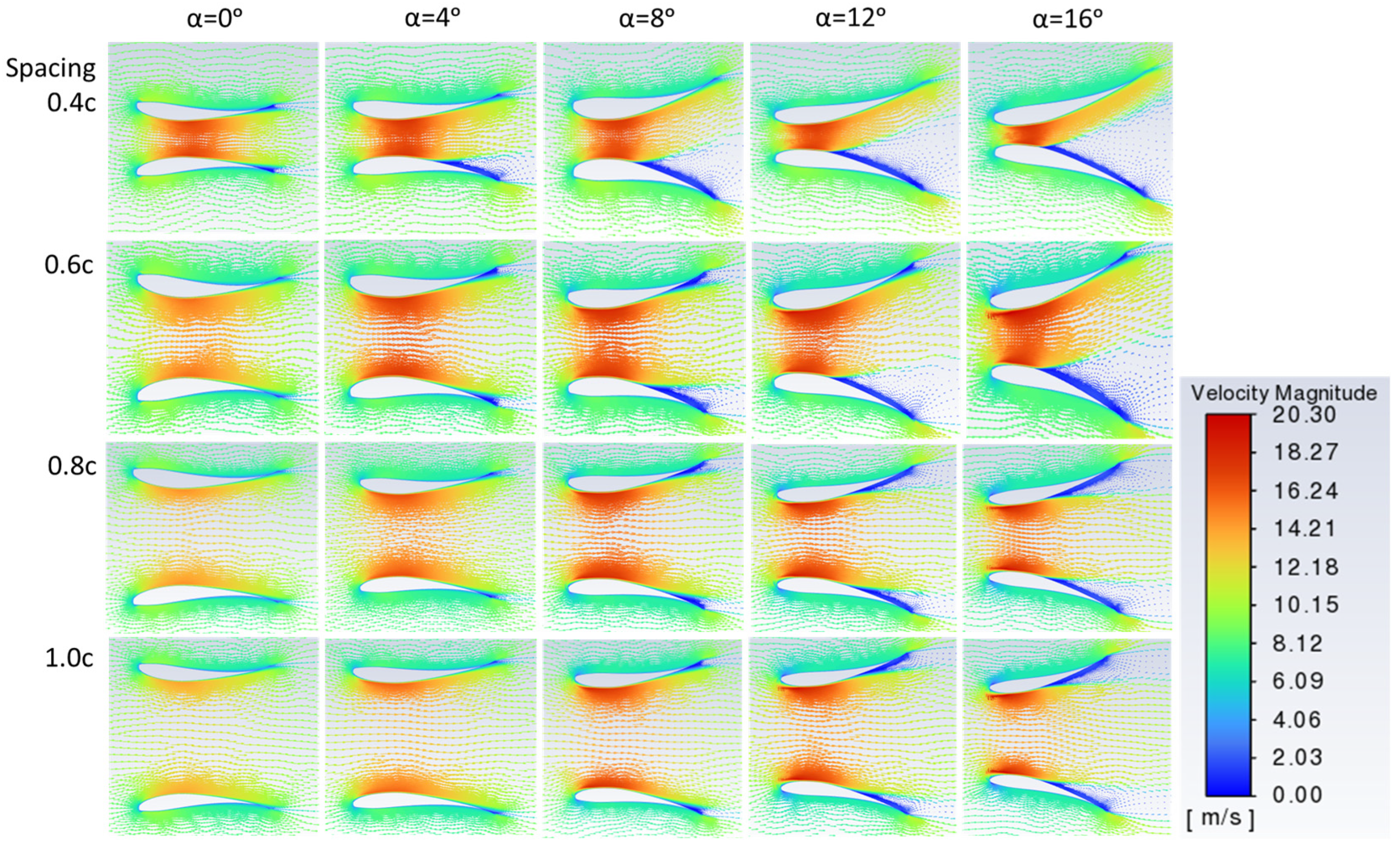
Velocity vectors around opposing pair of airfoils at different angle of attack (0–16°) and pair spacing (0.4–1.0c) are presented in
Figure 5. Lower pair spacings and higher angles of attack increase the likelihood of flow separation and asymmetry, which can reduce aerodynamic efficiency. It is evident that the flow is accelerated in the middle region of airfoil pair due to the cambered shape of airfoils and their opposing arrangement. The flow separation phenomenon is enhanced as the pair spacing is decreased from 1.0c to 0.4c. The angle of attack is the other factor that causes flow separation when it is increased from 0–16°. That flow separation starts early at low pair spacings even at 0° for 0.4c spacing. But for 1.0c spacing, the flow separation is delayed and it starts at α = 4°.
Another aspect that is considerable from
Figure 5 is flow asymmetry. This asymmetric flow causes flow instability, and its effect is pronounced when pair spacing is reduced. It is started at α = 4° for 0.4c pair spacing and but it was a little delayed for 0.6c pair spacing at α = 8°. In order to reduce the phenomenon of flow separation and flow asymmetry, it is desirable to have larger pair spacing and lower angle of attack.
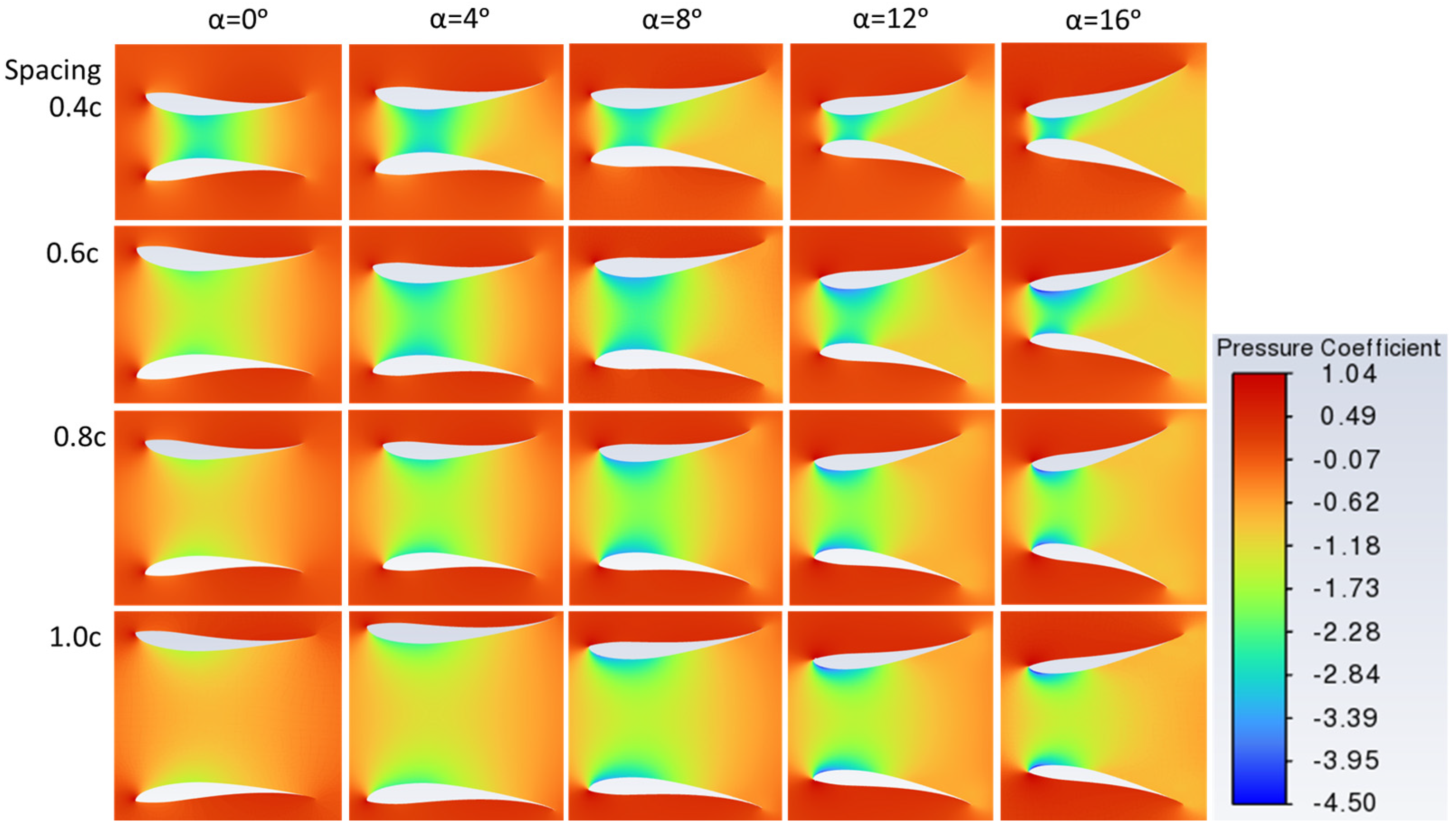
The contours for pressure coefficient are shown in
Figure 6 at different pair configurations of spacing and angle of attack. The figure helps in visualizing the regions of high and low pressure around the airfoil pairs, providing insight into the flow characteristics and the potential for energy extraction. It is observed from
Figure 6 that C
p is increased with angle of attack, but negative
Cp area is reduced. The largest area of negative pressure between airfoils is found for 1.0c pair at 0°. The weighted area average of pressure is used to compare the different airfoil pair configuration at different axial positions along the chord length. Four different airfoil pair configurations are picked for further analysis from results of
Figure 5 and
Figure 6. The selection is made on the basis of minimum flow asymmetry and flow separation with maximum area between airfoil pair and vacuum pressure. The averaged
Cp value is found maximum at 12° followed by 8° angle of attack as shown in
Figure 4. Minimum flow asymmetry and flow separation is observed for 1.0c pair spacing followed by 0.8c. Therefore, the selected four pair configuration for further analysis have pair spacing of 1.0c and 0.8c with 12° and 8° angle of attack.
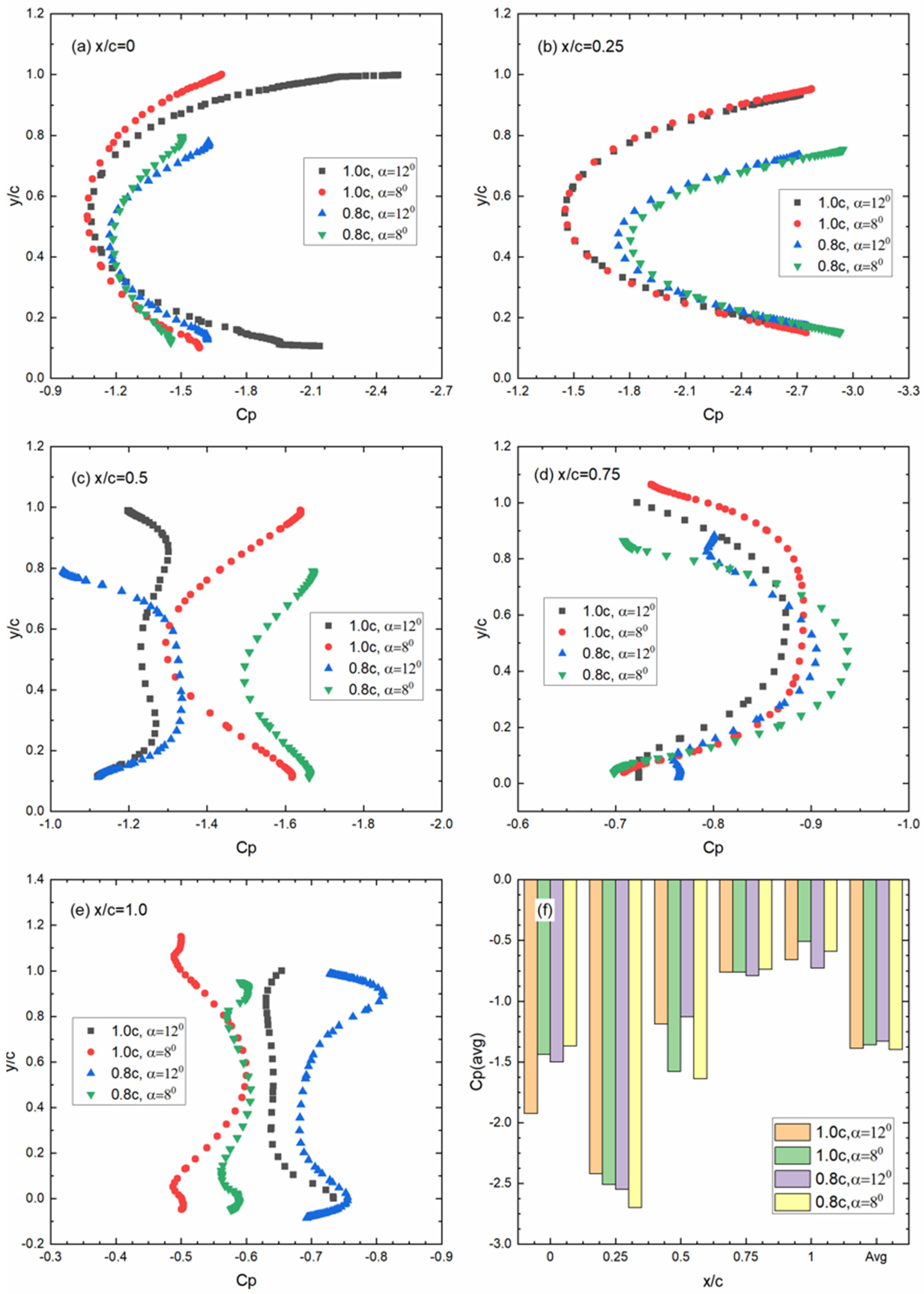
Figure 7 presents the axial evolution of the pressure coefficient (
Cp) between the opposing airfoils for four optimized configurations, illustrating the coupled influence of airfoil spacing and angle of attack on suction generation and persistence. The
Cp distributions are evaluated at five characteristic axial locations along the chordwise direction, capturing flow entry, peak acceleration, suction decay, and pressure recovery.
At the inlet region (
Figure 7a), suction is primarily governed by the local angle of attack. The 1.0c–12° configuration exhibits the strongest initial pressure drop (
Cp ≈ −2.6), indicating enhanced flow acceleration over the cambered surfaces. Reducing the spacing to 0.8c weakens the initial suction due to increased confinement effects, while the 8° configurations produce comparatively lower suction as a result of reduced flow turning.
At x/c ≈ 0.25 (
Figure 7b), corresponding to the peak Venturi acceleration zone, all configurations reach their maximum suction levels. Among them, the 0.8c–8° case achieves the deepest pressure minimum (
Cp ≈ −2.8).
Further downstream at mid-chord (x/c ≈ 0.5,
Figure 7c), differences between configurations become more pronounced. Wider spacing (1.0c) preserves 60–70% of the peak suction, whereas narrower spacing (0.8c) retains only 50–55%, indicating earlier suction decay due to adverse pressure gradients and incipient separation. Notably, at this location, the 8° cases maintain higher
Cp magnitude than the 12° cases, reflecting improved flow stability and delayed separation at lower angles of attack.
In the pressure recovery region (x/c ≈ 0.75,
Figure 7d),
Cp values converge for all configurations (Δ
Cp < 5%), suggesting that downstream losses dominate and spacing-induced differences diminish. At the exit plane (
Figure 7e), near-complete pressure recovery is observed across all cases, confirming that performance differences arise primarily from suction persistence within the inter-foil passage rather than exit effects.
The axially averaged pressure coefficient (
Figure 7f) quantitatively summarizes the cumulative suction performance. The 1.0c–12° configuration yields the lowest average
Cp (
Cp,avg = −1.39), outperforming the 0.8c–12° and 1.0c–8° cases by 4.5% and 2.5%, respectively. These results demonstrate that wider spacing enables sustained low-pressure regions beyond the initial acceleration zone, while excessive confinement leads to rapid suction degradation. Overall,
Figure 7 establishes that optimal aerodynamic performance is governed not by peak suction alone, but by the ability to maintain a stable and extended low-pressure region along the chordwise direction.
Flow visualizations indicate that the intensified suction peak arises from accelerated gap flow driven by coupled bound circulation, with local velocities significantly exceeding inlet velocities. At small spacings, the pressure dip steepens and yields higher COP but narrows the stable operating envelope. From a design standpoint, this suggests that optimal spacing selection must balance efficiency against sensitivity to off-design incidence, which is relevant for yaw misalignment in practical installations.
3.2. Experimental Results
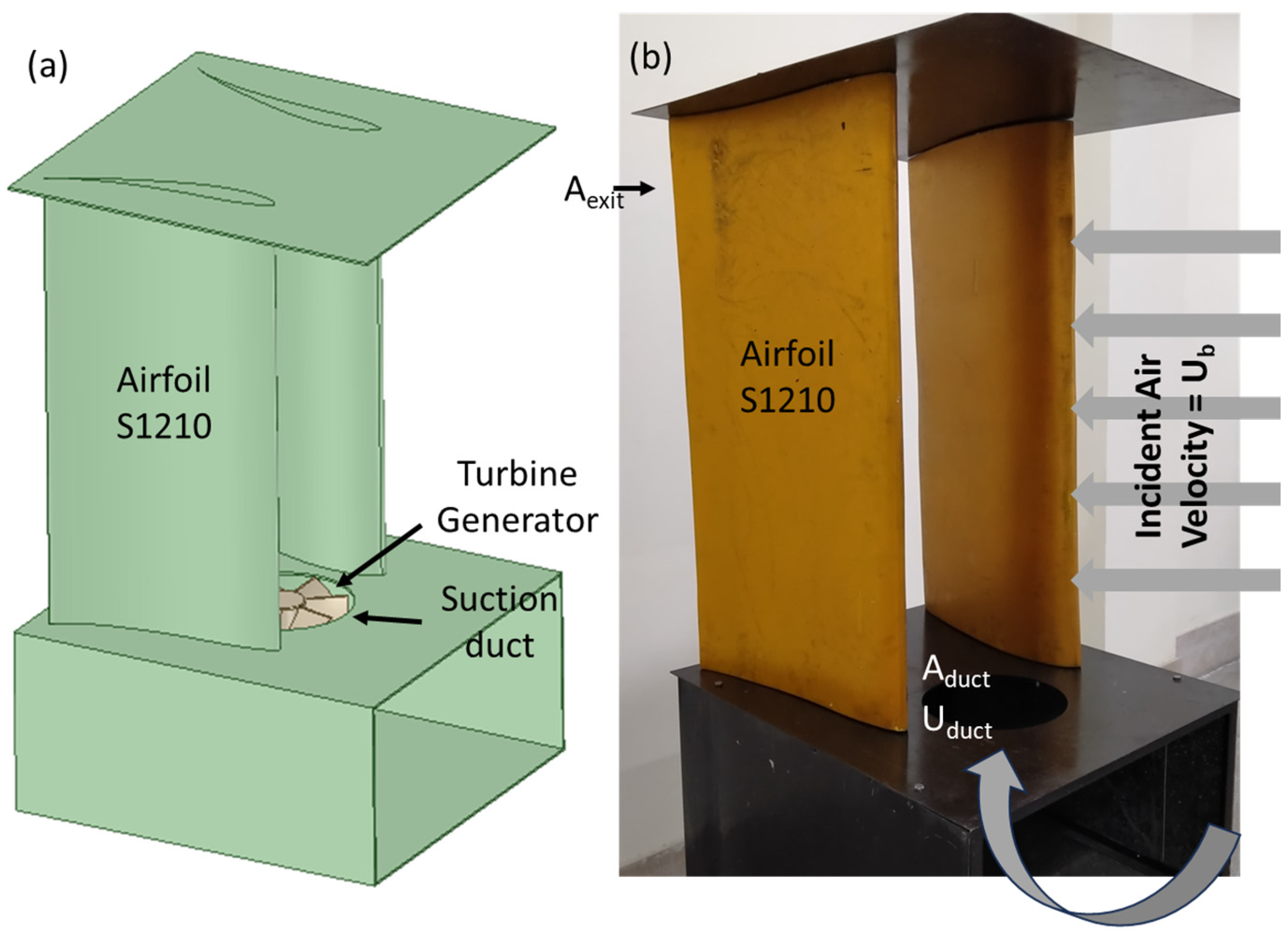
To validate the numerical findings, a small-scale prototype of the motionless paired airfoil wind energy system was fabricated. The airfoils, based on the S1210 profile, were configured in three different angles of attack: 4°, 8°, 12°, and 16°. Each airfoil pair was mounted between a top and bottom plate to form a ducted structure, as shown in
Figure 8. The conceptual schematic illustrates how the circulation-induced suction generated by the paired stationary airfoils can be routed through a duct and converted to shaft power via a small turbine or fan-generator module. The present study quantifies the suction and
COP characteristics; mechanical energy extraction is not implemented here. The
COP metric reported in this study quantifies the relative increase in available suction power generated by the paired configuration. This represents the aerodynamic portion of the total energy conversion chain prior to mechanical or electrical conversion losses.
The geometric details of the experimental setup are given in
Table 1. To simulate wind conditions, a fan blower was employed to provide the incident free-stream velocity. Air velocities at both the turbine inlet and at the duct were measured using an anemometer. The primary objective of the experiment was to measure the induced duct velocity and evaluate the energy extraction performance for the different angle configurations.
The maximum power potential of the wind turbine or free stream power is calculated by using Equation (6). Where
Aexit is the maximum swept area of the turbine at trailing side of airfoils pair (Houchens et al.) [
21].
The output power or the power contained in the fluid passing through the duct is calculated by using Equation (7) Houchens et al. [
21], where
Aduct is the area of duct that is sucking air from surrounding.
The duct velocity
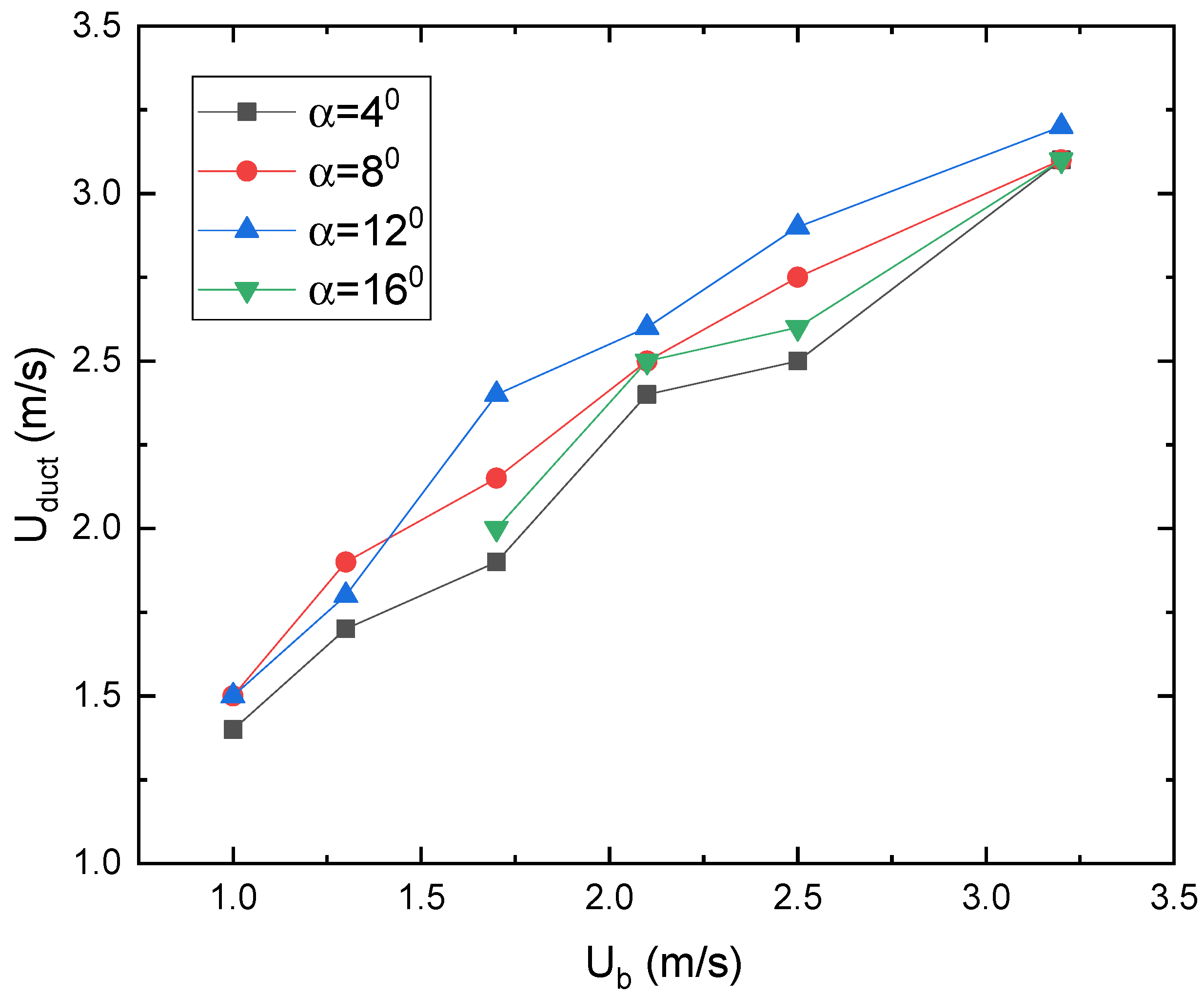
Uduct variation due to incident air and angle of attack is shown in
Figure 9. The duct velocity has been quantified as a function of incident free-stream velocity for angles of attack of 4°, 8°, 12°, and 16°. The 12° configuration consistently achieves the highest duct velocities across all tested wind speeds, demonstrating a 15–25% enhancement over other angles. These measurements confirm that α = 12° optimally leverages venturi-induced suction while mitigating flow separation.
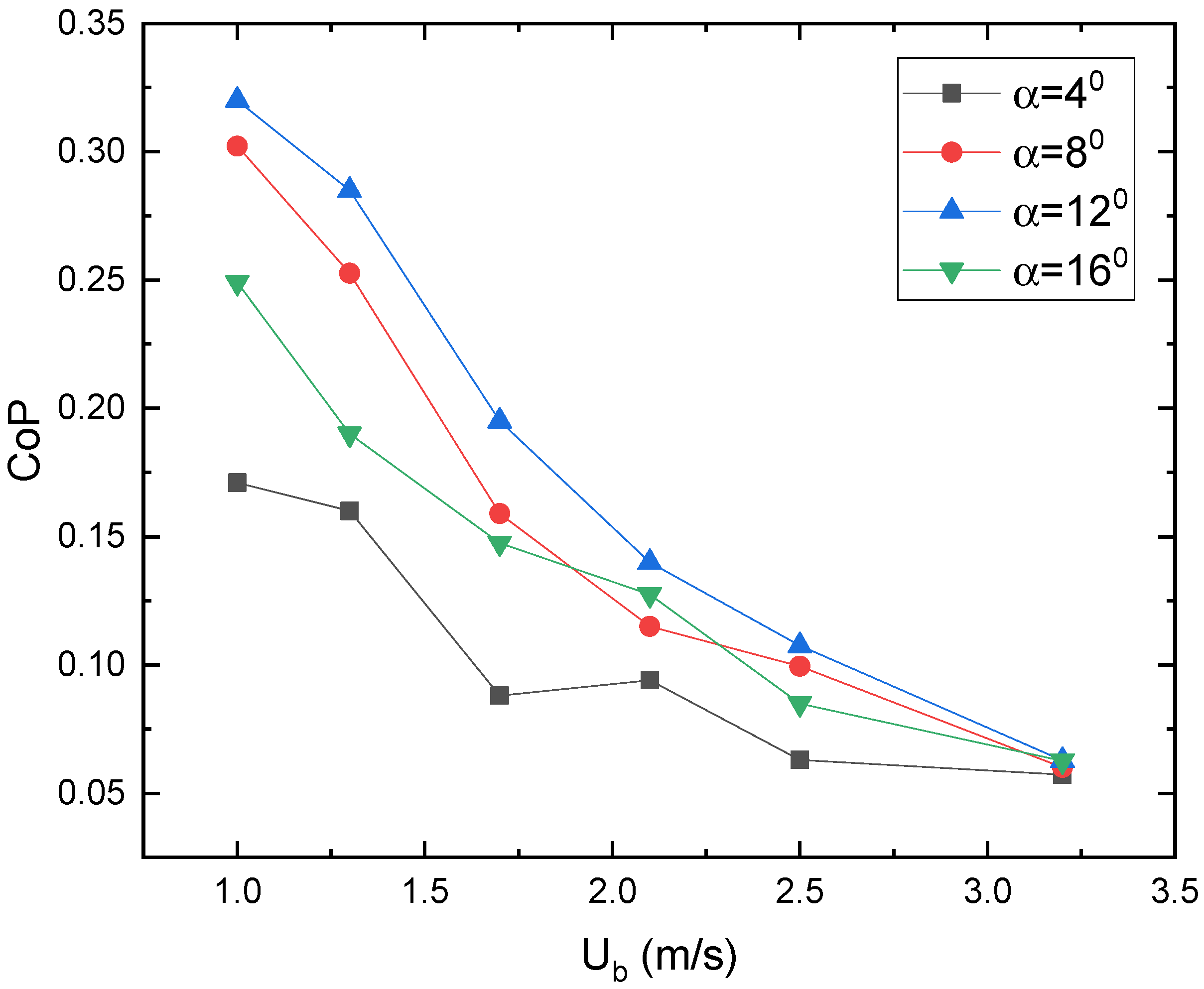
Figure 10 plots the
COP against incident free-stream velocity for α = 4°, 8°, 12°, and 16°. The
COP is a dimensionless parameter that represents the ratio of useful power extracted by the airfoil system (duct power) to the total available wind power in the stream, as defined by Equation (8) (Houchens et al.) [
21]. The α = 12° configuration achieves a peak
COP of 0.31 representing a 24% improvement over prior field tests (
COP = 0.25) [
21]. A 19% increase over α = 8° (
COP = 0.26) and 41% gain over α = 16° (
COP = 0.22) at the same wind speed.
COP stability varies significantly, α = 12° maintains >90% of peak
COP (
COP range: 0.28–0.31), while α = 16° exhibits a 28% decline (
COP = 0.22 to 0.16) as wind speed increases. At lower speeds, α = 16° outperforms α = 4° by 15% (
COP = 0.18 vs. 0.15), but this advantage reverses at higher speeds. This confirms α = 12° as the optimal angle for balancing suction intensity and flow stability, enabling reliable energy extraction in urban wind regimes. This aligns well with the CFD predictions that suggested optimal suction and minimal flow separation in the 8–12° range. The results presented in
Figure 10 also highlight the critical role of angle of attack in optimizing the energy extraction performance of the motionless airfoil pair. Furthermore, the experimental peak
COP value of approximately 0.31, while lower than the Betz limit, is quite promising for a motionless, compact, and rooftop compatible wind energy system.
Across the tested spacings, the gap suction and resulting COP increased monotonically with decreasing spacing. Peak COP occurred near α ≈ 12° and S/C ≈ 1.0. From a design standpoint, the paired configuration demonstrates that maximum power augmentation requires close spacing; however, moderate spacing offers improved tolerance to yaw-misalignment and incidence variation.




 ,
,