Coordinated Emergency Operation Strategy for Distribution Networks and Photovoltaic-Storage-Charging Integrated Station Based on Master–Slave Game



Abstract
1. Introduction
2. Coordinated Emergency Operation Framework for Distribution Network–PSCIS and V2G Response Mechanism
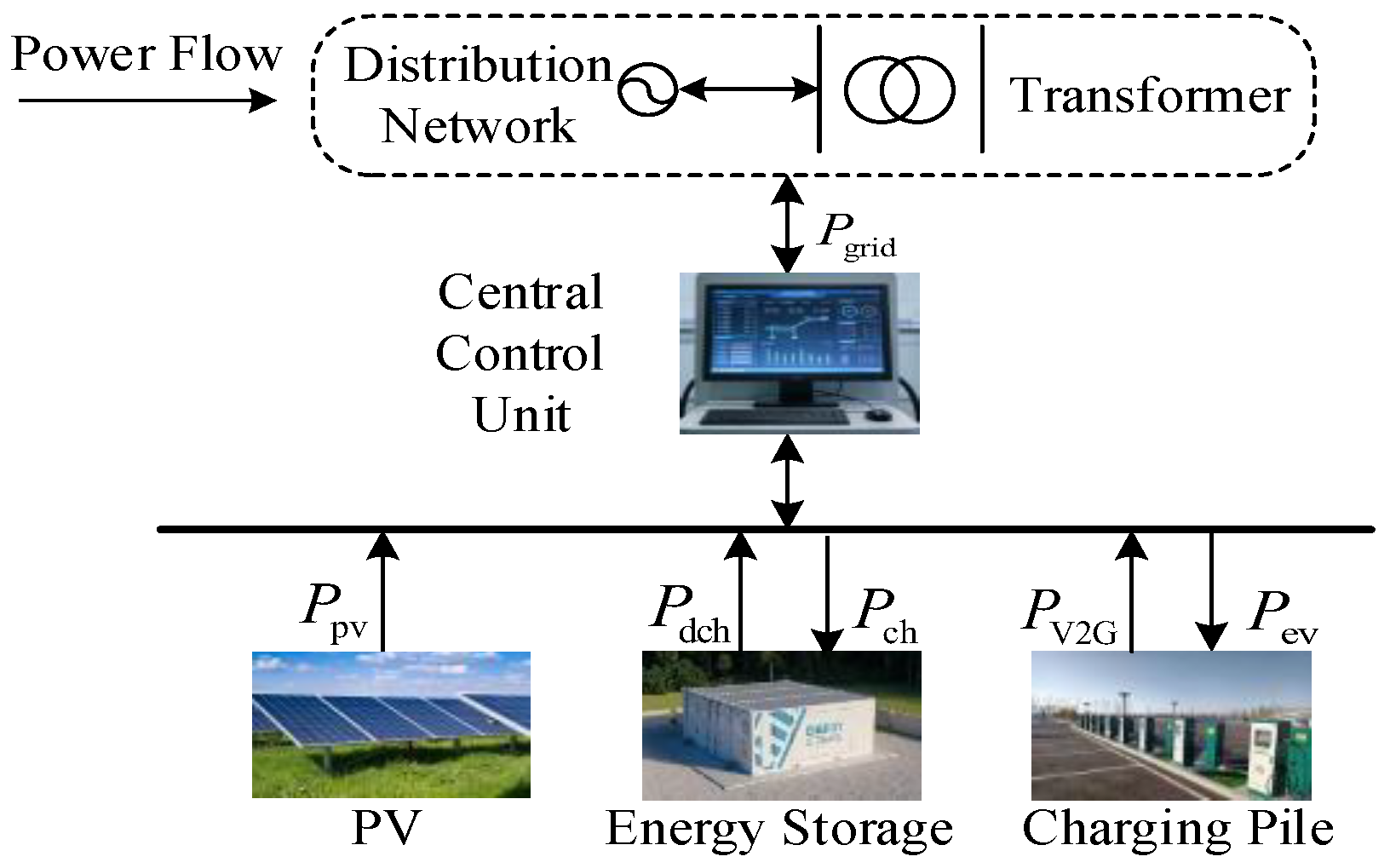
2.1. Structure and Operation Mechanism of PSCIS
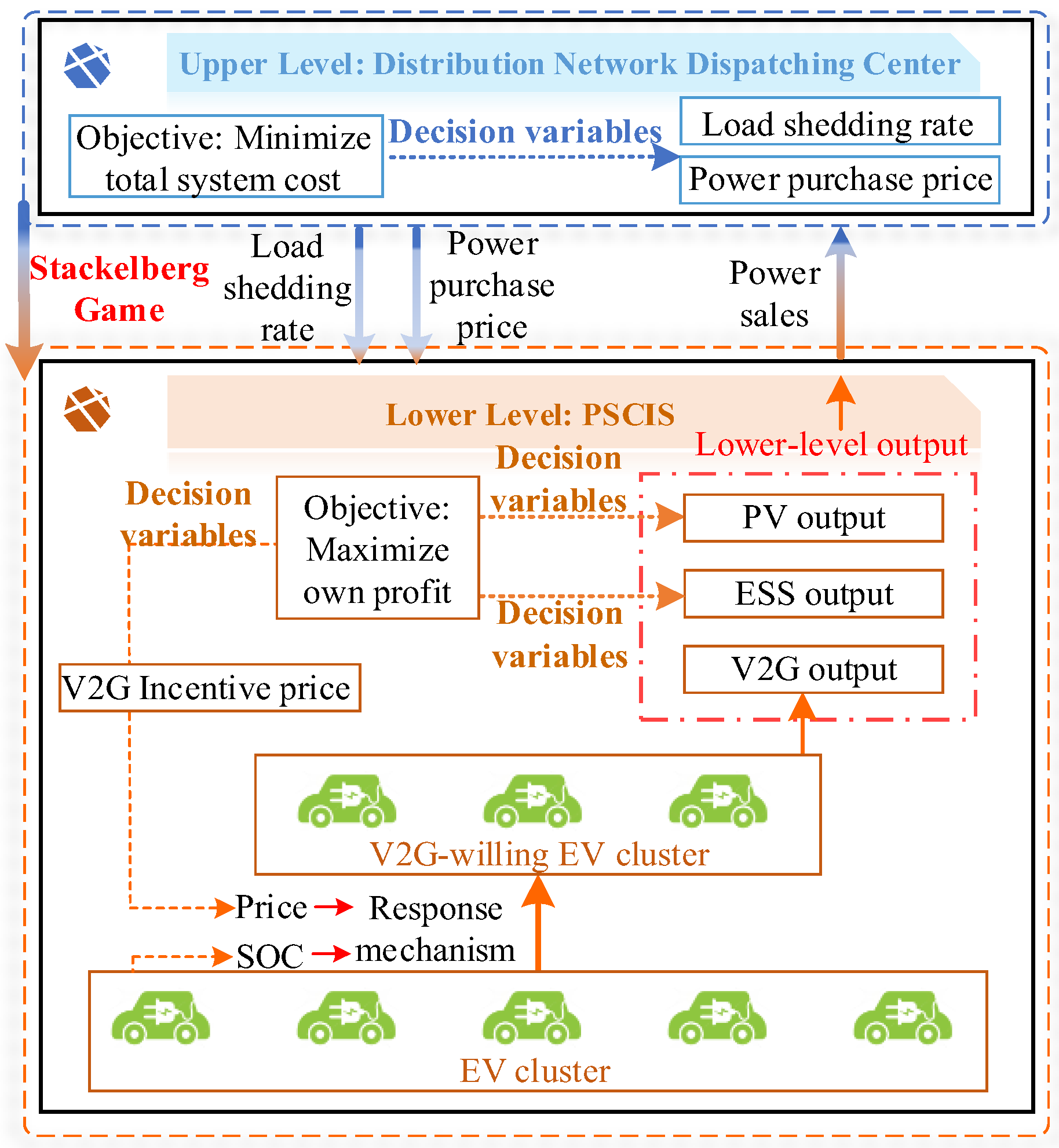
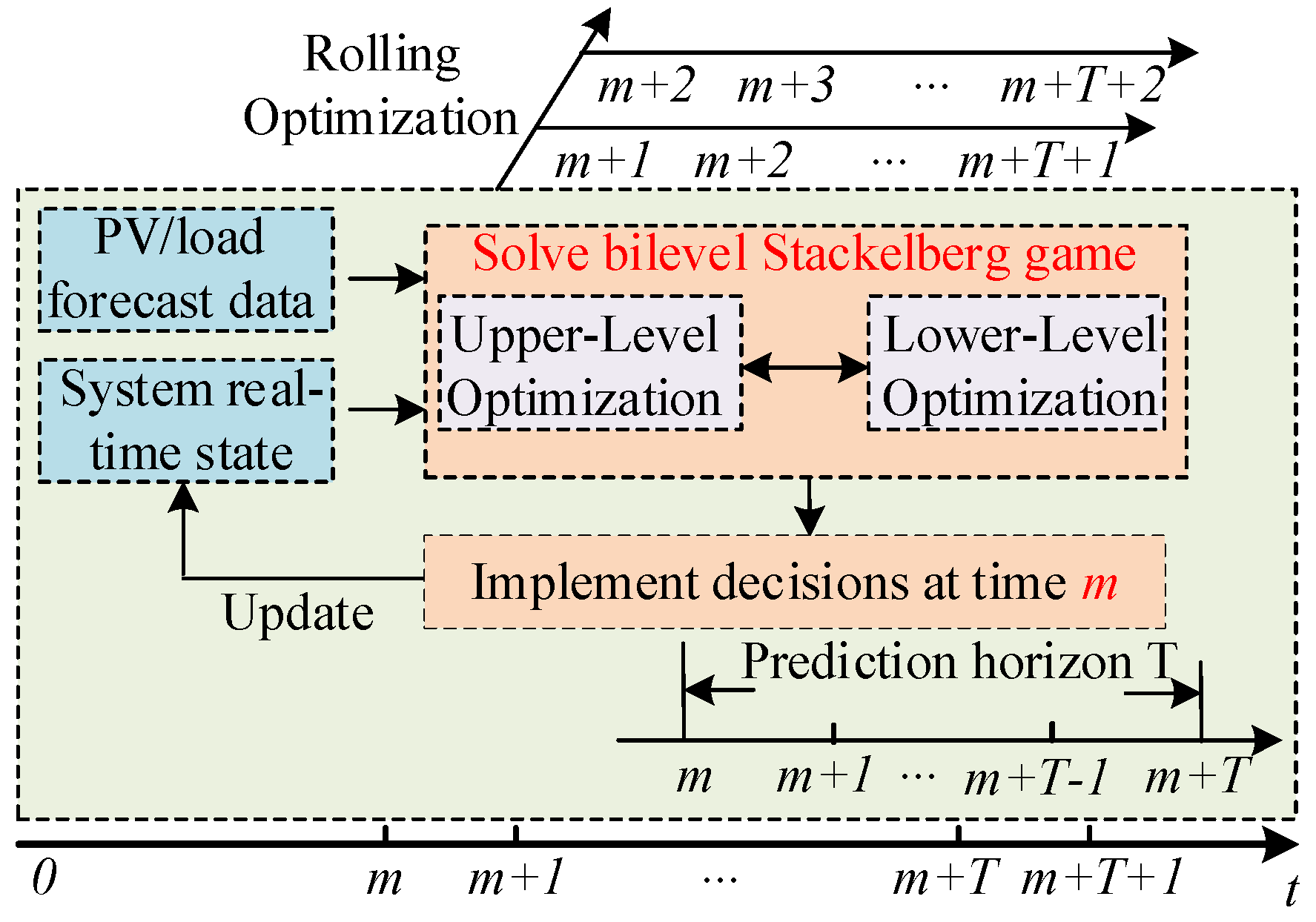
2.2. Distribution Network–PSCIS Coordinated Operation Mechanism Based on Master–Slave Game and Model Predictive Control
2.3. V2G Response Mechanism Based on Price Incentives and SOC Constraints
3. Bilevel Optimization Model for Distribution Network–PSCIS Based on Master–Slave Game Under Fault Conditions
3.1. Upper-Level Model: Distribution Network Dispatching Center Optimization
3.1.1. Objective Function
- Total Power Purchase Cost:
- 2.
- Load Shedding Penalty Cost
3.1.2. Constraints
- Electricity supply price constraints
- 2.
- Node Loss of Load Rate Constraint
3.2. Lower-Level Model: PSCIS Optimization
3.2.1. Objective Function
3.2.2. Constraints
- PV Operation Constraint
- 2.
- Energy Storage Operation Constraints
- 3.
- V2G Incentive Price Constraint
- 4.
- Non-negativity Constraint for Power Sales
- 5.
- Node Power Balance Constraint
- 6.
- Power Flow Constraints
- 7.
- Safe Operation Constraints:
4. Case Study Analysis
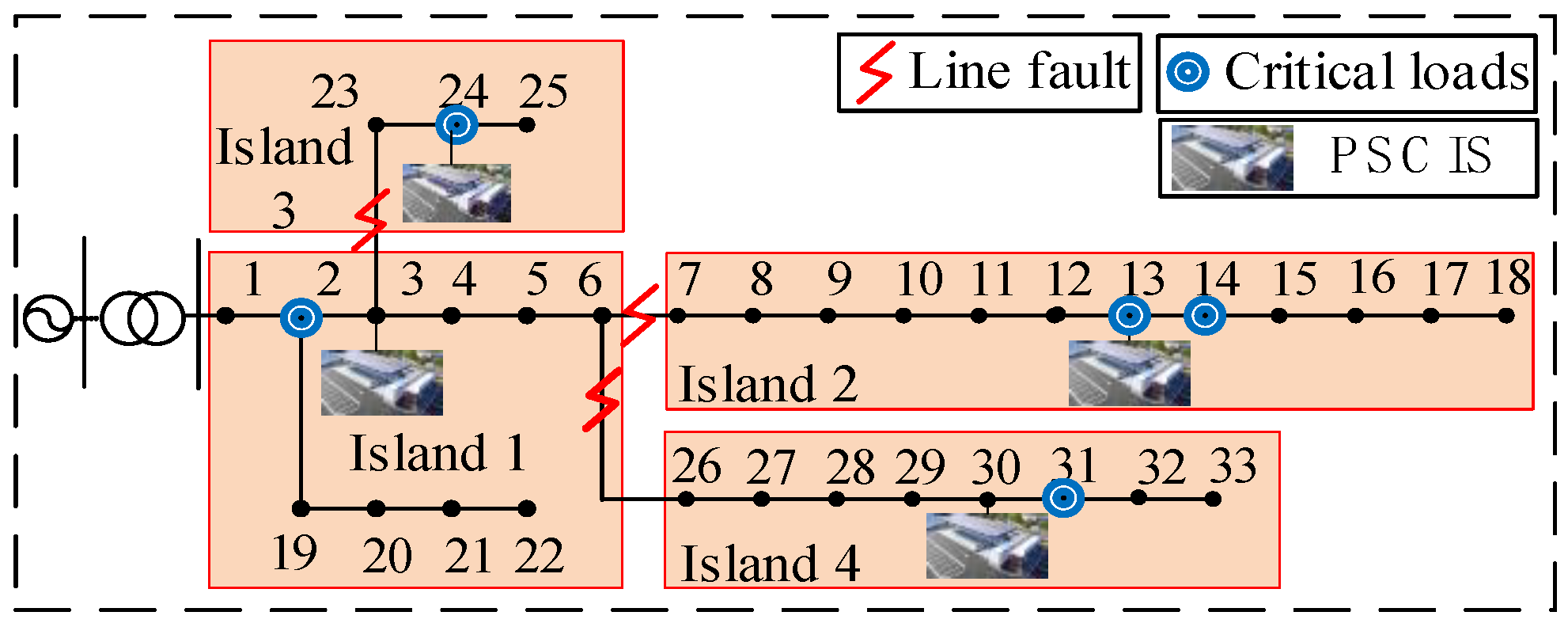
4.1. Parameter Settings
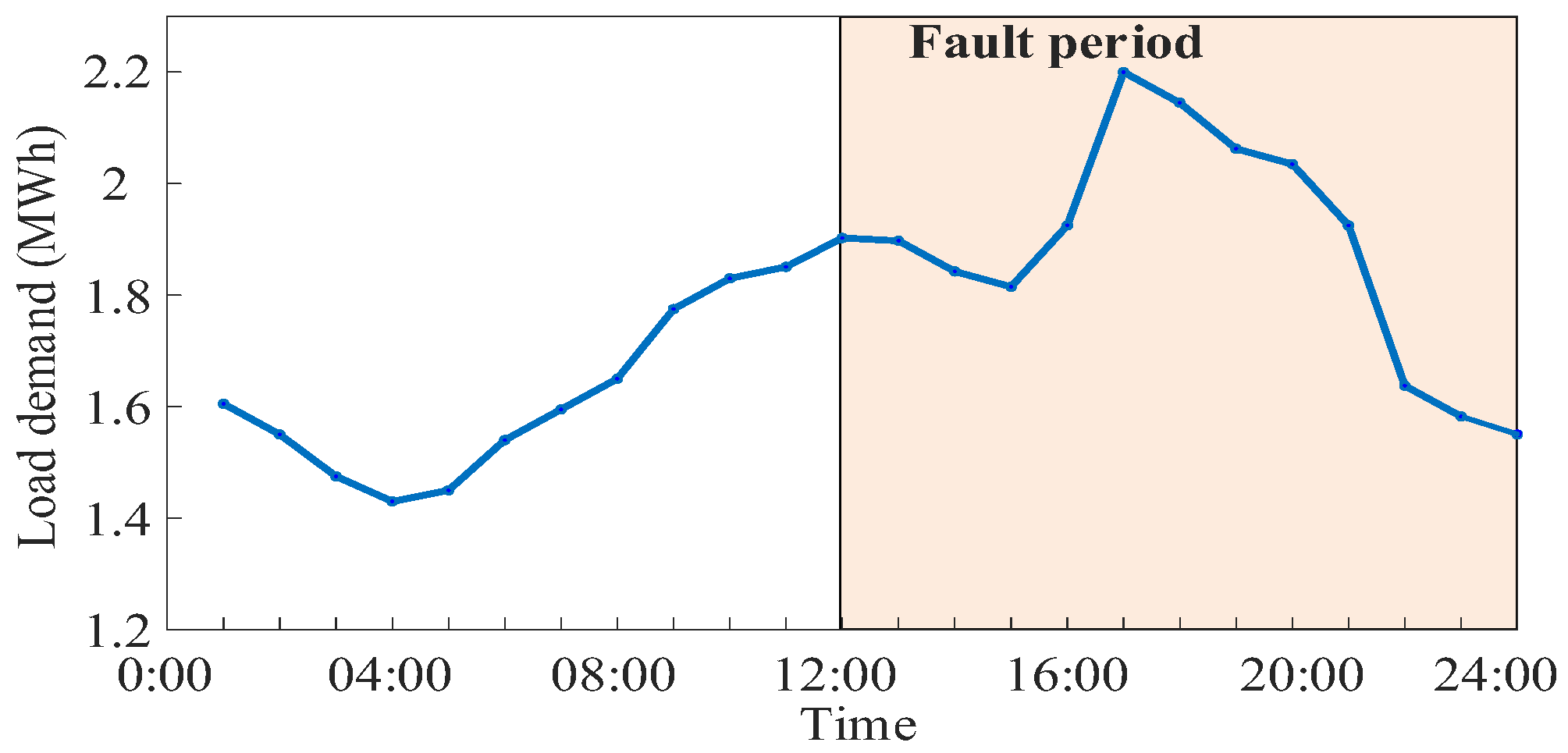
4.2. Analysis of Results
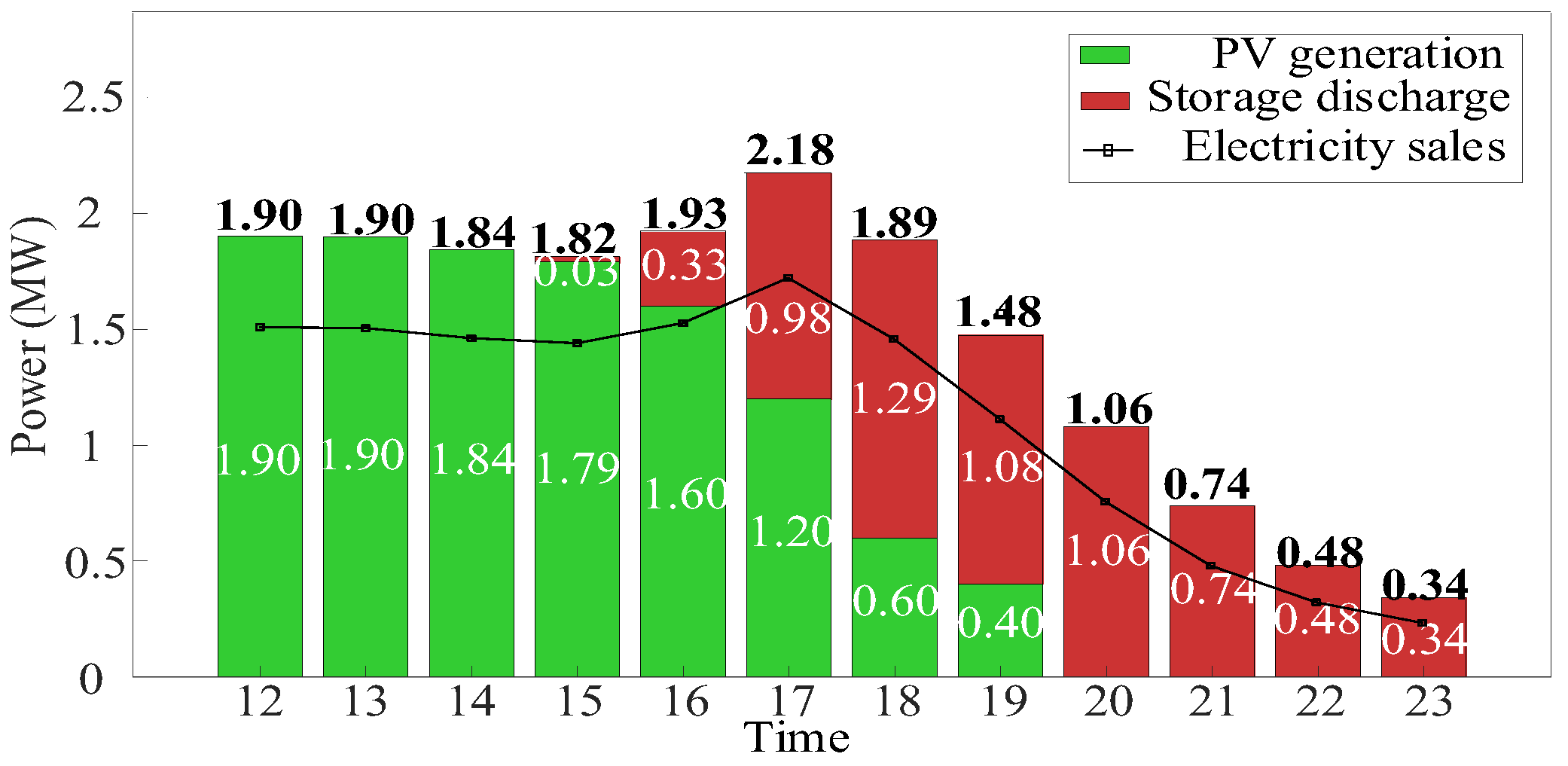
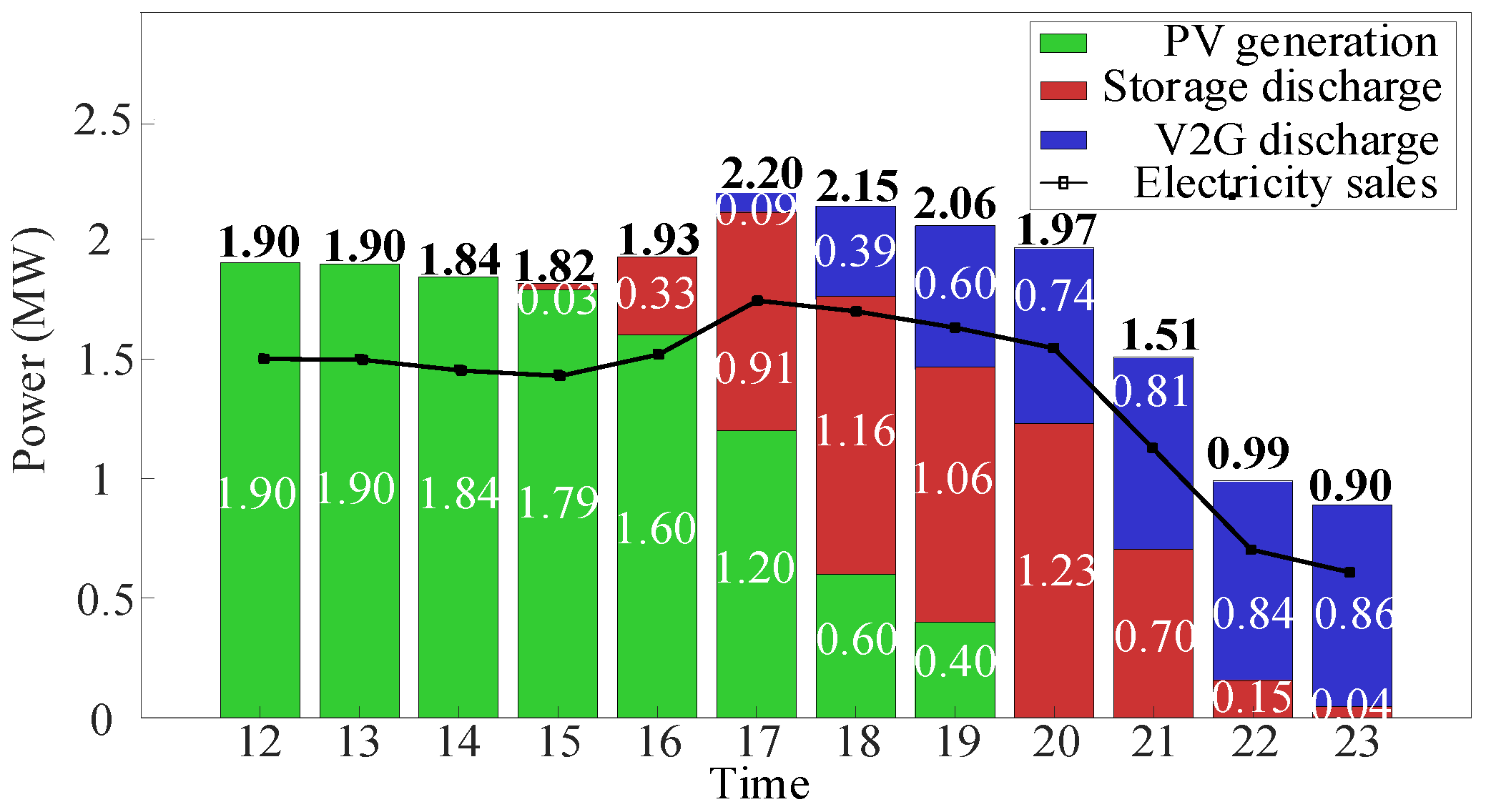
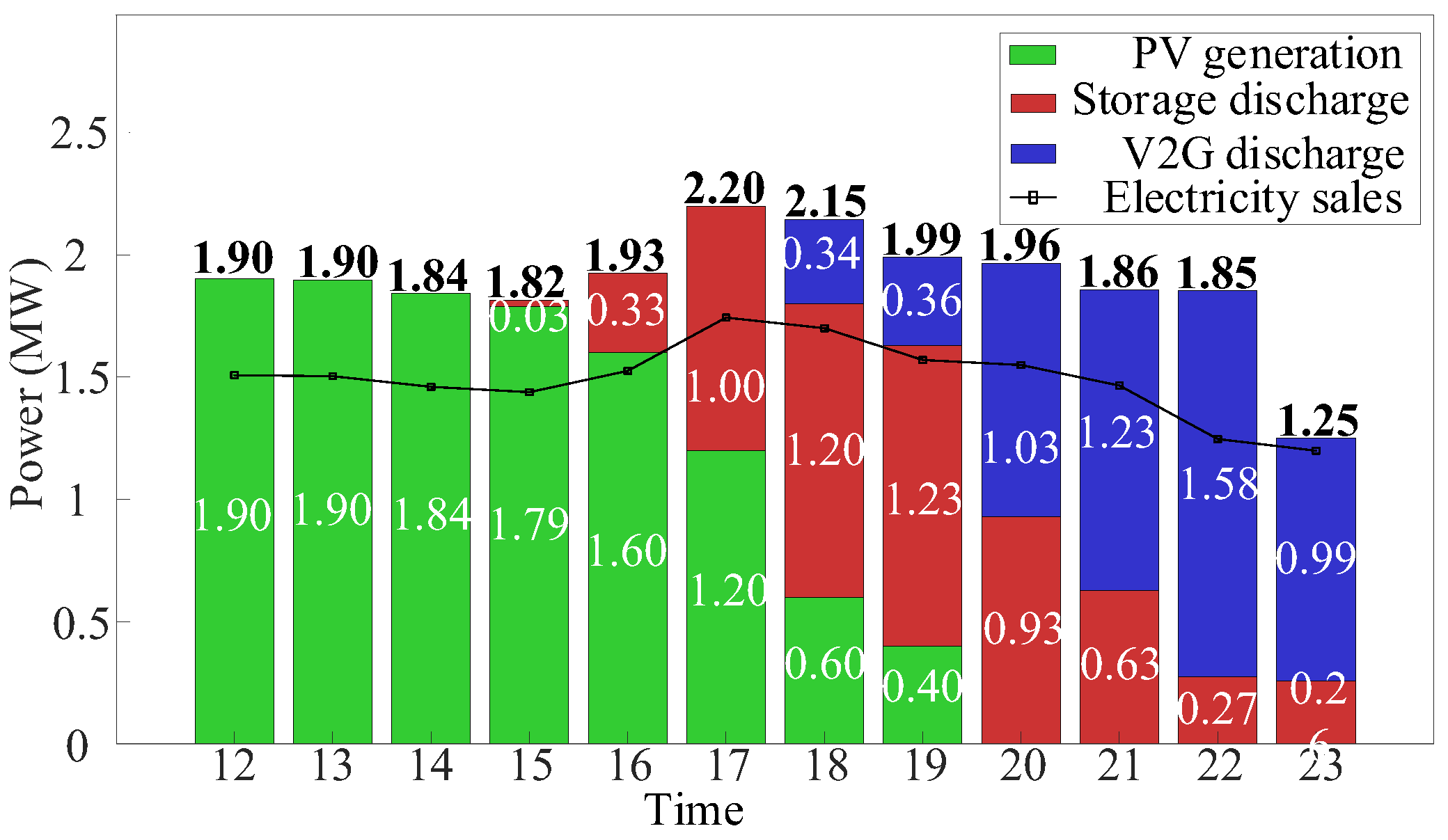
4.2.1. Comparative Analysis of Resource Mobilization and System Economics
4.2.2. Comparative Analysis of System Reliability
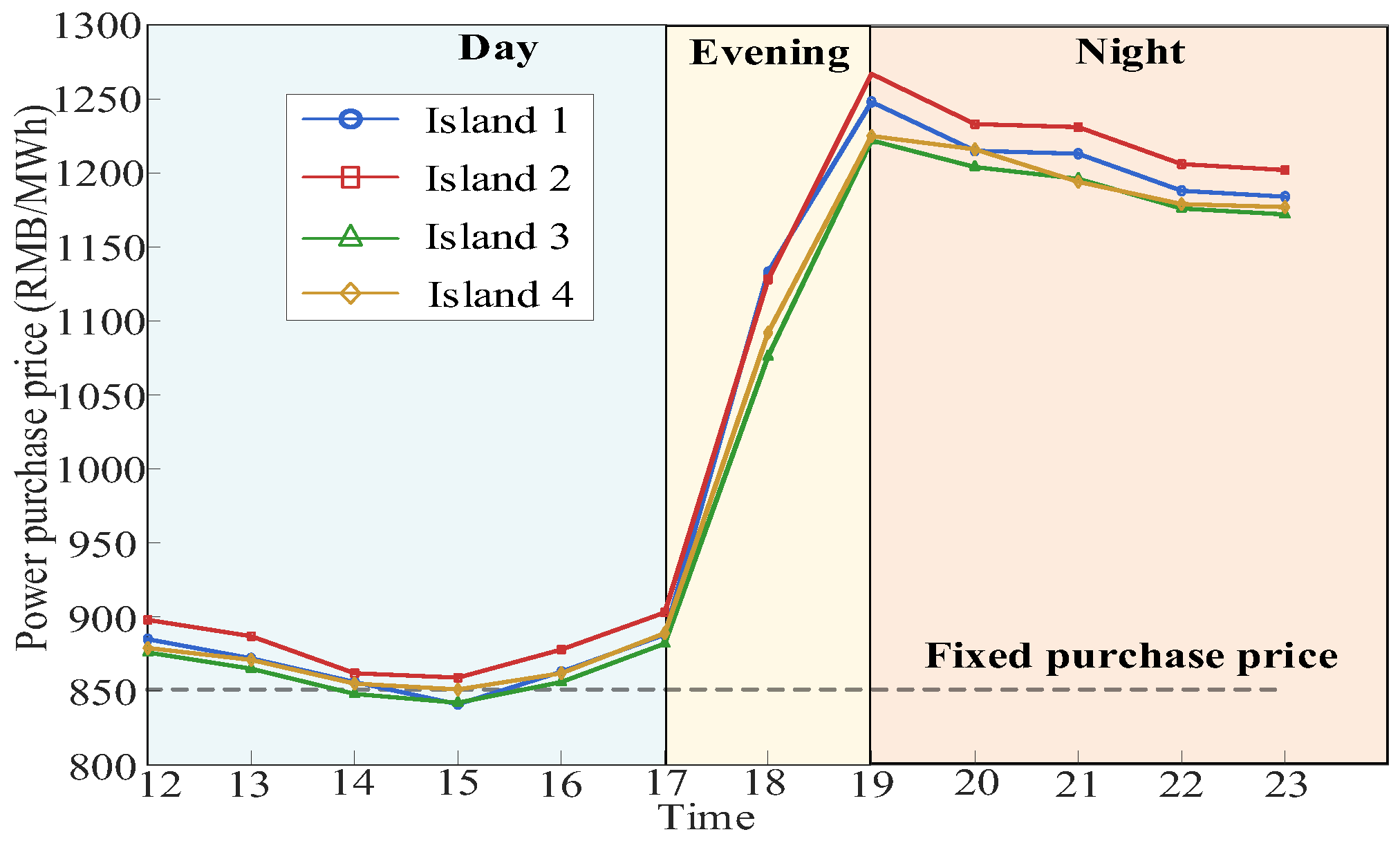
4.2.3. Price Curve and Revenue Analysis of PSCIS
4.2.4. Comparative Analysis of the Effectiveness of V2G Resource Calls
5. Conclusions
- The bilevel game mechanism significantly improves system economy. The proposed scheme guides resource output through dynamic pricing by the distribution network and releases the potential of lower-level resources through risk stratification, increasing total electricity sales to 17.92 MWh. Resource optimization reduces the total system cost by 91.8% compared to the scheme without V2G and by 65.0% compared to the traditional centralized optimization scheme, significantly enhancing system economy.
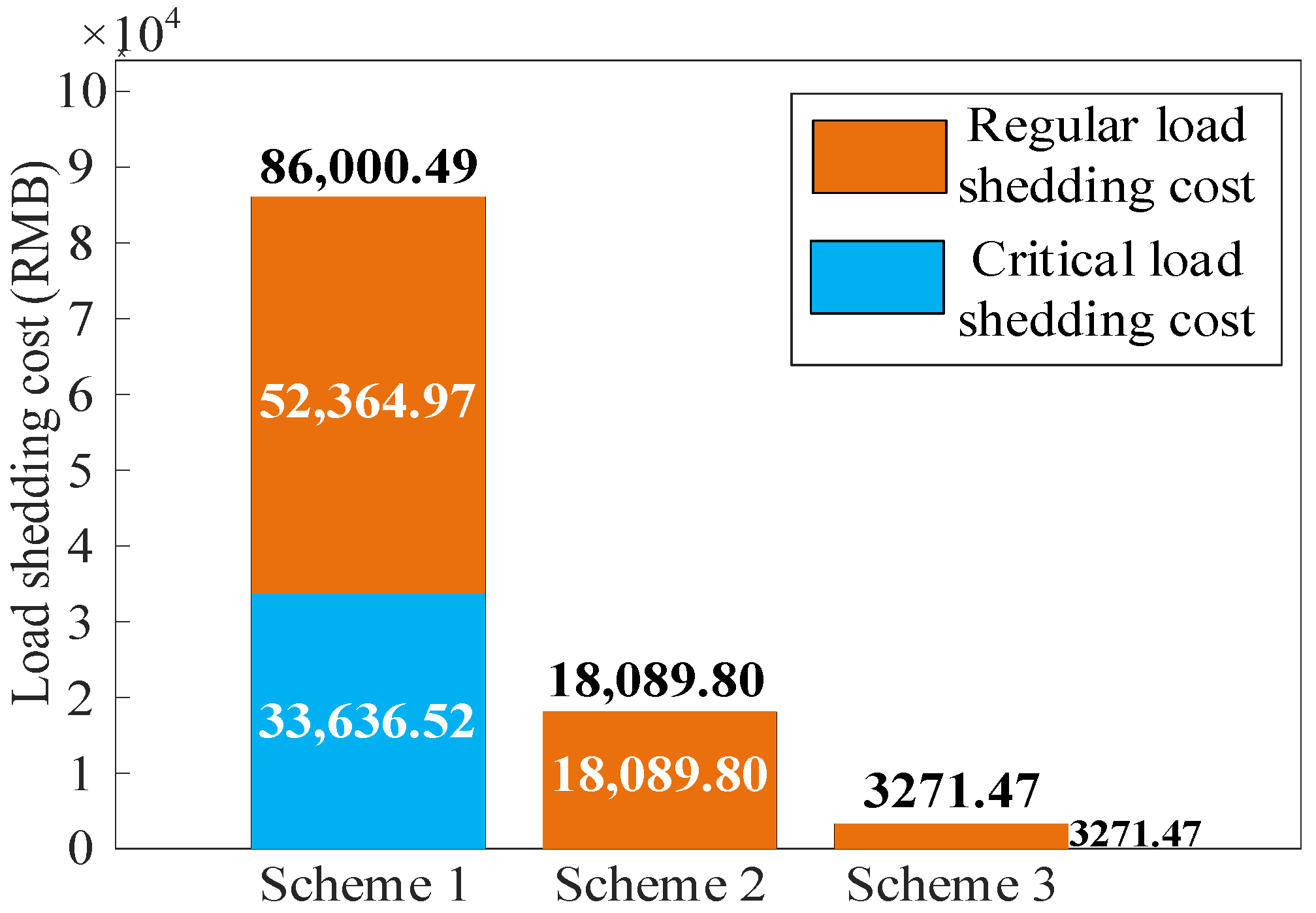
- Dynamic pricing, considering actual EV response, mitigates the reliability risks of traditional optimization. Traditional centralized optimization, which ignores EV user response, overestimates V2G dispatchable capacity by up to 8.02 MWh, leading to overly optimistic estimates of supply capability and potentially causing load shedding. The proposed scheme, adopting a dual-factor S-shaped response model, achieves a V2G discharge of 5.55 MWh under realistic response constraints. While achieving zero load shedding for critical loads, it reduces the cost of load shedding by 81.9% compared to the traditional centralized optimization scheme, significantly improving power supply reliability under fault conditions.
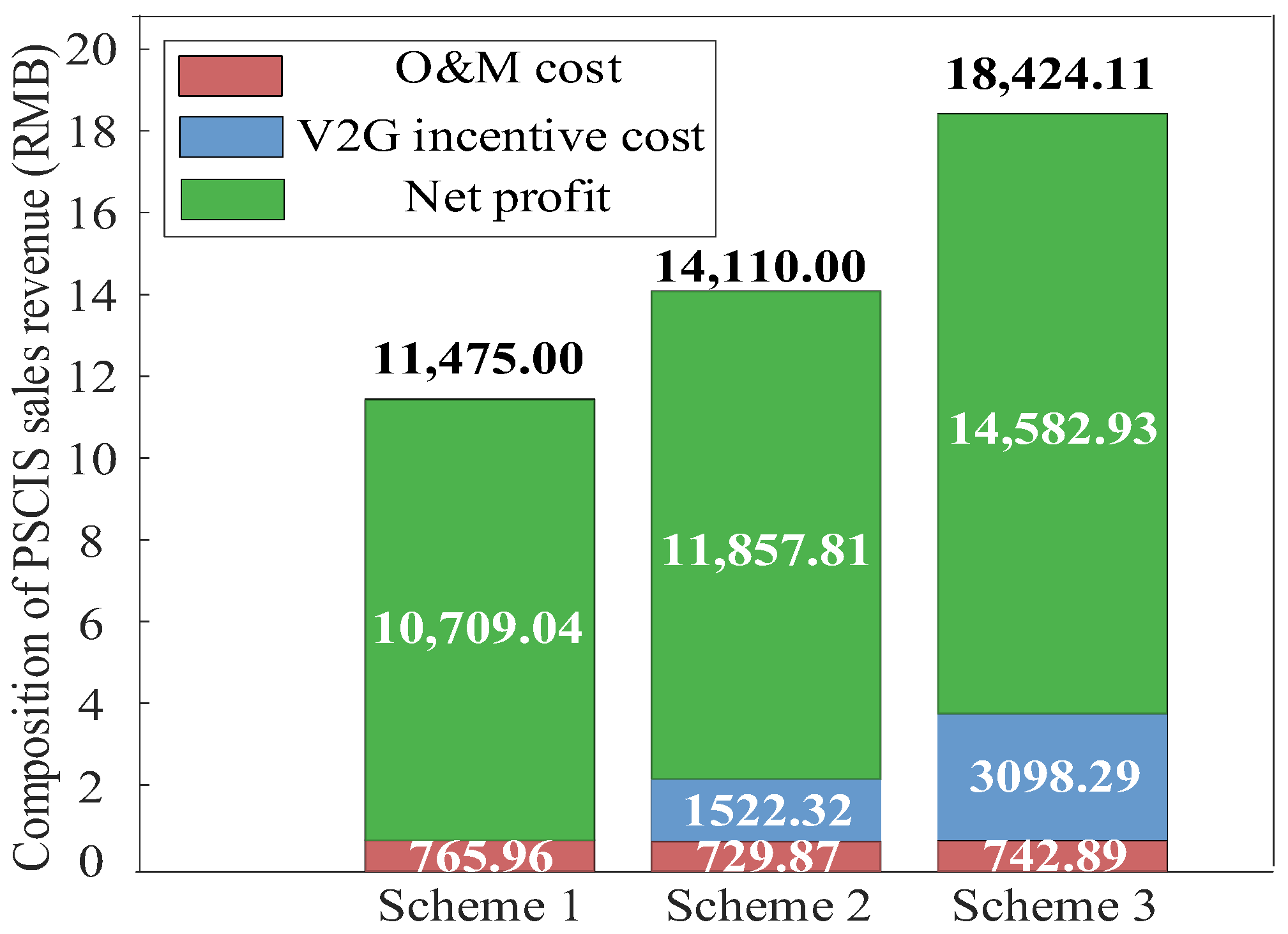
- Price signals effectively incentivize active participation from PSCISs, achieving a win-win situation for multiple parties. The proposed scheme yields a net profit of RMB 14,582.93 for the PSCIS, which is 1.36 times that of the scheme without V2G and 1.23 times that of the traditional centralized optimization scheme, effectively stimulating the market entities’ initiative to participate in grid interaction.
- Communication resilience: Investigate local autonomous decision mechanisms for PSCISs to operate when communication fails.
- User behavior uncertainty: Introduce stochastic or robust modeling of EV user behavior under extreme irrational responses.
- Multi-follower game: Extend the lower-level model to a multi-follower game for islands with multiple competing PSCISs.
- Battery degradation: Incorporate detailed degradation cost modeling for V2G to refine profit calculations.
Author Contributions
Funding
Data Availability Statement
Acknowledgments
Conflicts of Interest
Abbreviations
| PSCIS | Photovoltaic-Storage-Charging Integrated Station |
| EV | Electric vehicle |
| V2G | Vehicle-to-Grid |
| MPC | Model Predictive Control |
References
- Gielen, D.; Boshell, F.; Saygin, D.; Bazilian, M.D.; Wagner, N.; Gorini, R. The role of renewable energy in the global energy transformation. Energy Strategy Rev. 2019, 24, 38–50. [Google Scholar] [CrossRef]
- Mahla, R.; Garg, M.M. Introduction to high renewable energy penetration in utility grid. In Renewable Energy Integration in Utility Grids; Elsevier: Amsterdam, The Netherlands, 2025; pp. 3–16. [Google Scholar]
- Almazroui, A.; Mohagheghi, S. Probabilistic analysis of power system performance under high PV and EV penetration. In Proceedings of the 2025 IEEE Green Technologies Conference (GreenTech), Wichita, KS, USA, 30 April 2025; pp. 1–5. [Google Scholar]
- Li, J.; Guo, Q.; Wang, X.; Tu, C.; Xiao, F.; Hou, Y.; Shen, X. Parallel-execute-based real-time energy management strategy for FTPSS integrated PV and ESS. Appl. Energy 2025, 385, 125538. [Google Scholar] [CrossRef]
- Yoon, M.; Zhang, X.; Choi, S. Strategic intentional islanding method considering temporary overvoltage in disaster situations. Int. J. Electr. Power Energy Syst. 2025, 165, 110488. [Google Scholar] [CrossRef]
- Hull, C.; Wust, J.; Booysen, M.J.; McCulloch, M.D. Techno-economic optimization and assessment of solar-battery charging station under grid constraints with varying levels of fleet EV penetration. Appl. Energy 2024, 374, 123990. [Google Scholar] [CrossRef]
- Sun, W.; Wang, Y.; Hao, Y.; Alharthi, Y.Z.; Wang, Y. A resilience-oriented optimization framework for smart grid operation and recovery before, during, and after natural disasters. Appl. Energy 2025, 398, 126414. [Google Scholar] [CrossRef]
- Chen, Z.; Wang, X.; Guo, Q.; Tu, C.; Xiao, F.; Li, J. Flexible reconfiguration strategy for novel advanced traction power supply equipment under fault conditions. IEEE Trans. Transp. Electrif. 2026. early access. [Google Scholar] [CrossRef]
- Seif, A.; Radmanesh, H. Flexible improvement in distribution network under intelligent automation system. In Proceedings of the 2025 Fifth National and the First International Conference on Applied Research in Electrical Engineering (AREE), Ahvaz, Iran, 4–5 February 2025; pp. 1–6. [Google Scholar]
- Wang, J.; Li, M.; Yin, D.; Ouyang, J. Fault recovery strategy of distribution network considering active participation of photovoltaic-storage-charging integrated station under extreme weather disasters. Sustain. Energy Grids Netw. 2024, 40, 101586. [Google Scholar] [CrossRef]
- Ma, Z.; Zhang, L.; Cai, Y.; Tang, W.; Long, C. Allocation method of coupled PV-energy storage-charging station in hybrid AC/DC distribution networks balanced with economics and resilience. IET Renew. Power Gener. 2024, 18, 1060–1071. [Google Scholar] [CrossRef]
- Yang, M.; Shen, C.; Zhang, Y. Load restoration of distribution network with solar-storage-charging stations integration. In Proceedings of the 2024 IEEE 8th Conference on Energy Internet and Energy System Integration (EI2), Shenyang, China, 29 November 2024–2 December 2024; pp. 4218–4222. [Google Scholar]
- Liang, Z.F.; Qi, F.R.; Wang, D.Y.; Wang, X.W. Configuration of optical storage & charging and discharging power station considering emergency power function. Power Syst. Technol. 2023, 47, 3376–3384. [Google Scholar]
- Wang, X.; Chen, X.F.; Ding, L.; Tse, C.K.; Hui, S.Y.R. Constant output voltage three-phase capacitive-power-transfer converters with phase expansion and design methods. IEEE Trans. Power Electron. 2026. early access. [Google Scholar] [CrossRef]
- Du, Y.; Zhang, J.; Chen, Y.; Liu, Z.; Zhang, H.; Ji, H.; Wang, C.; Yan, J. Impact of electric vehicles on post-disaster power supply restoration of urban distribution systems. Appl. Energy 2025, 383, 125302. [Google Scholar] [CrossRef]
- Kong, L.; Zhang, H.; Xie, D.; Dai, N. Leveraging electric vehicles to enhance resilience of interconnected power-transportation system under natural hazards. IEEE Trans. Transp. Electrif. 2025, 11, 1126–1140. [Google Scholar] [CrossRef]
- Yun, S.; Woo, J.R.; Kwak, K. Unlocking peak shaving: How EV driver heterogeneity shapes V2G potential. Energy 2025, 329, 136773. [Google Scholar] [CrossRef]
- Liu, Z.; Wu, J.; Zhu, R.; Kong, D.; Guo, H. Double layers optimal scheduling of distribution networks and photovoltaic charging and storage station cluster based on leader follower game theory. Sci. Rep. 2025, 15, 612. [Google Scholar] [CrossRef] [PubMed]
- Wang, Y.; Wang, X.; Ma, L.; Luo, H.; Yuan, B.; Qin, Q.; Yang, C.; Zhou, Y.; Xu, Y. Aggregator-electric vehicle day-ahead trading mechanism and scheduling strategy based on master-slave game. In Proceedings of the2025 8th Asia Conference on Energy and Electrical Engineering (ACEEE), Qingdao, China, 25–27 July 2025; pp. 293–298. [Google Scholar]
- Wu, D.; Zhong, D.; Li, L. Coordination mechanism between electric vehicles and air conditioning loads based on price guidance. Energies 2025, 18, 5984. [Google Scholar] [CrossRef]
- Zhang, Y.; Zhou, D.; Lin, B. Paving the way for sustainable energy solutions: A real-time pricing mechanism in integrated energy systems with electric vehicles. Renew. Energy 2026, 256, 124656. [Google Scholar] [CrossRef]
- Sun, Y.; Wang, W.; Bao, L.; Pei, Z.; Liu, C.; Zhao, Z.; Wang, J. Real-time control based on power hierarchy for photovoltaic-storage-charging distribution substation. J. Electr. Eng. 2025, 20, 250–258. [Google Scholar]
- Chen, Q.; Wang, W.Q.; Wang, H.Y.; Dong, Y.C.; He, S. Information gap-based coordination scheme for active distribution network considering charging/discharging optimization for electric vehicles and demand response. Int. J. Electr. Power Energy Syst. 2023, 145, 108652. [Google Scholar] [CrossRef]



| Category | Parameter | Value |
|---|---|---|
| Energy Storage | Storage capacity (kWh) | 2500 |
| Storage charging/discharging efficiency | 0.95 | |
| Storage rated power (kW) | 500 | |
| Storage unit O&M cost (RMB/kWh) | 0.05 | |
| Initial state of charge for fault operation | 0.9 | |
| Storage state of charge limits | [0.1, 0.9] | |
| Electric Vehicle Cluster | Number of EVs per island | 200 |
| Single EV battery capacity (kWh) | 60 | |
| Single EV V2G Power (kW) | 7 | |
| V2G charging/discharging efficiency | 0.95 | |
| EV SOC limits | [0.1, 0.9] | |
| Incentive price inflection point (c0) | 500 | |
| Price sensitivity (α) | 0.005 | |
| SOC discharge inflection point (SOC0) | 0.5 | |
| SOC curve steepness coefficient (β) | 15 | |
| PV | PV installed capacity (kW) | 2500 |
| PV unit O&M cost (RMB/kW) | 0.04 | |
| Rolling Optimization | Prediction horizon length (h) | 4 |
| Schemes | 1 | 2 | 3 |
|---|---|---|---|
| PV Generation | 11.23 | 11.23 | 11.23 |
| Storage Discharge | 6.33 | 5.61 | 5.87 |
| V2G Discharge | - | 4.33 | 5.55 |
| PSCIS Node Own Load 1 | 4.06 | 4.56 | 4.73 |
| Electricity Sales | 13.50 | 16.60 | 17.92 |
| Schemes | Load Shedding Cost | O&M Cost | V2G Incentive Cost | Total Cost |
|---|---|---|---|---|
| 1 | 86,000.49 | 765.96 | - | 86,766.46 |
| 2 | 18,089.80 | 729.87 | 1522.32 | 20,341.99 |
| 3 | 3271.47 | 742.89 | 3098.29 | 7112.65 |
| Schemes | Average Incentive Price (RMB/MWh) | V2G Discharge (MWh) | Load Shedding Cost (RMB) |
|---|---|---|---|
| 2 (Ideal) | 320 | 9.02 | 0 |
| 2 (Actual) | 320 | 4.32 | 18,089.80 |
| 3 | 558 | 5.55 | 3271.47 |
Disclaimer/Publisher’s Note: The statements, opinions and data contained in all publications are solely those of the individual author(s) and contributor(s) and not of MDPI and/or the editor(s). MDPI and/or the editor(s) disclaim responsibility for any injury to people or property resulting from any ideas, methods, instructions or products referred to in the content. |
© 2026 by the authors. Licensee MDPI, Basel, Switzerland. This article is an open access article distributed under the terms and conditions of the Creative Commons Attribution (CC BY) license.
Share and Cite
Lan, Z.; Zhou, J.; Wang, X. Coordinated Emergency Operation Strategy for Distribution Networks and Photovoltaic-Storage-Charging Integrated Station Based on Master–Slave Game. Energies 2026, 19, 1922. https://doi.org/10.3390/en19081922
Lan Z, Zhou J, Wang X. Coordinated Emergency Operation Strategy for Distribution Networks and Photovoltaic-Storage-Charging Integrated Station Based on Master–Slave Game. Energies. 2026; 19(8):1922. https://doi.org/10.3390/en19081922
Chicago/Turabian StyleLan, Zheng, Jiawen Zhou, and Xin Wang. 2026. "Coordinated Emergency Operation Strategy for Distribution Networks and Photovoltaic-Storage-Charging Integrated Station Based on Master–Slave Game" Energies 19, no. 8: 1922. https://doi.org/10.3390/en19081922
APA StyleLan, Z., Zhou, J., & Wang, X. (2026). Coordinated Emergency Operation Strategy for Distribution Networks and Photovoltaic-Storage-Charging Integrated Station Based on Master–Slave Game. Energies, 19(8), 1922. https://doi.org/10.3390/en19081922