Article

Is Super-Duplex Stainless Steel Suitable as Metal Support for Solid Oxide Cells?

1
Renewable Energy Technologies Group, Engineering Materials Science, Faculty of Engineering and Natural Sciences, Tampere University, 33720 Tampere, Finland
2
Department of Materials Science and Engineering, Gebze Technical University, 41400 Kocaeli, Turkey
3
Department of Materials Science and Technology, Turkish German University, 34820 Istanbul, Turkey
4
Department of Physics, Gebze Technical University, 41400 Kocaeli, Turkey
*
Author to whom correspondence should be addressed.
Energies 2026, 19(8), 1856; https://doi.org/10.3390/en19081856
Submission received: 10 March 2026 / Revised: 4 April 2026 / Accepted: 6 April 2026 / Published: 9 April 2026

Abstract

In this study, commercial Ospray-2507 super-duplex stainless steel powder was investigated for the first time as a potential metal support material for solid oxide cells. Initially, metal supports were fabricated and processed in air using various sintering profiles, followed by comprehensive mechanical, structural and electrochemical characterization. The optimal sintering condition was identified as 900 °C for 5 h. Subsequently, sintering under a H2 atmosphere was explored, and its effects on the microstructural and functional properties of the metal supports were systematically to assessed to evaluate the influence of the sintering atmosphere on material performance. Although X-ray diffraction patterns showed no phase changes between the two sintering atmospheres, notable improvements were observed in mechanical, electrochemical, and microstructural properties under H2 sintering. XPS spectra reveal that both air- and hydrogen-treated surfaces remain rich in chromium (Cr) and Manganese (Mn), which together dominate the surface and consequently attenuate the signal from the underlying iron. The thickness of the Cr- and Mn-based oxide layer decreases when sintering MS in H2 atmosphere. Specifically, mechanical strength, as measured by three-point bending tests, increased by a factor of 12.5, and hardness rose from 500.3 to 523.5 HV. Furthermore, electrical conductivity also improved significantly, exhibiting an approximately 2.3–2.4 fold increase under H2-sintered conditions.

1. Introduction

Solid oxide cells (SOCs) are emerging as key technologies in shaping the future of the energy and hydrogen economy, with distinct applications in fuel cells and electrolysis. SOCs are commonly composed of three essential functional layers: the fuel electrode, the electrolyte, and the air electrode [1,2]. Each layer performs a distinct electrochemical function and is critical to the overall performance and durability of the cell. To ensure the mechanical stability of the cell, one of the cell layers must possess increased thickness relative to the others, thereby serving as the structural support for the entire cell. Employing a thick electrolyte layer may result in elevated ohmic losses and increased resistance, owing to the extended ionic conduction pathway [3,4,5]. Alternatively, the fuel electrode can function as the main structural support layer, fabricated from both functional and precious electrode materials. A comparative study of Ni-YSZ/YSZ/Pt configurations in anode-supported and electrolyte-supported designs revealed that the anode-supported cells achieved significantly higher power density, with values reaching approximately 320 mW/cm2, compared to 140 mW/cm2 for the electrolyte-supported [6]. Buccheri et al. also reported that anode-supported cells suffered from stability issues and significant structural degradation resulting from carbon deposition during a 24 h galvanostatic operation [6]. In addition, the primary challenge confronting SOCs is the elevated cost of materials, as the high price of functional components significantly increases the overall cell manufacturing expenses. While the cost of the typical anode material, Ni-YSZ, varies between $43.00–106.00/kg according to stack volume, the cost of 316 L steel is $6.69/kg [7].
Metal-supported solid oxide cells (MS-SOCs) represent a newer approach aimed at reducing material costs within a system, while simultaneously offering improved mechanical robustness, withstanding rapid temperature changes [8]. However, the fabrication of MS-SOCs is hindered by significant challenges, most notably the difficulty of attaining adequate densification of the electrolyte layer. Conventional fabrication methods necessitate electrolyte sintering at temperatures exceeding 1200 °C, which leads to significant oxidation of the stainless steel (STS) support and consequently degrades its mechanical stability. To mitigate this issue, electrolyte sintering can be conducted in a reducing atmosphere, such as hydrogen (H2), to minimize the oxidation of the metal support [9]. Additionally, alternative deposition techniques such as spray pyrolysis (SP), plasma laser, and suspension plasma spray (SPS) have been explored as promising approaches to fabricate dense and thin electrolyte layers, eliminating the need for high-temperature sintering [8,10]. Another significant challenge is the presence of chromium in the MS. Although chromium is essential for providing oxidation resistance in stainless steel, it tends to migrate toward the electrode interfaces during high-temperature operation. This chromium migration leads to electrode poisoning, which diminishes catalytic activity and, in turn, reduces overall fuel cell performance [11].
The selection of an MS is primarily governed by two key properties, in addition to the goal of reducing overall cost. The first is the requirement for sufficient oxidation resistance at high temperatures, as corrosion within the metal support can induce crack formation and delamination of adjacent layers, ultimately leading to cell degradation [12]. Second, the coefficient of thermal expansion (CTE) must be compatible with adjacent materials to minimize thermal mismatch stresses at the interfaces. A mismatch in CTE can generate thermal stresses within the layered structure during heating cycles, which may ultimately result in mechanical failure or delamination. A mismatch in CTE can generate thermal stresses within the layered structure during heating, which may ultimately result in failure or delamination. STS generally exhibits a CTE in the range of 10–20 ppm·K−1, whereas certain SOC materials typically fall within a narrower range of 10–12 ppm·K−1 [8].
STS is commonly categorized into two classes: ferritic and austenitic. Ferritic STS, which consists predominantly of iron supplemented with corrosion-resistant additives, represents a cost-effective choice for MS applications due to its abundant iron content. Chromium and molybdenum are among the most frequently used alloying elements. In ferritic STS, oxidation resistance is achieved through the formation of a Cr2O3 oxide layer on the surface that acts as a protective barrier, preventing further oxidation of the material. To promote the formation of the protective oxide layer, STS must contain an adequate concentration of chromium in its composition. STS variants such as 434, 430, and Cr26-Fe, which are alloys that are functional at intermediate temperatures, have been successfully employed in MS applications [13].
Austenitic STS, with nickel content exceeding 10 wt%, demonstrates enhanced acid resistance and tensile strength relative to ferritic STS. Similarly to ferritic STS, the oxidation resistance of austenitic STS is attributed to the formation of a chromium-rich oxide layer. However, the increased nickel content in austenitic STS alloys substantially raises their cost compared to ferritic variants. Consequently, austenitic STS is employed in specialized applications that require distinct metal properties. The most common variant, type 304 STS, typically exhibits an approximate weight ratio of iron, chromium, and nickel of 7:2:1. Other commonly used types are 302, 316, and 321 [14].
STSs exhibiting a combination of ferritic and austenitic phase characteristics, known as super-duplex STSs, consist of nearly equal proportions of ferritic and austenitic phases. This combination has not been previously investigated as a metal support material. However, characterization results indicate that super-duplex STSs demonstrate superior mechanical strength and enhanced corrosion resistance, attributed to the nature of their dual-phase microstructure [15]. Due to their primarily iron-based composition, coupled with a moderately higher nickel content than ferritic STSs, super-duplex stainless steels are promising candidates for MS-SOCs applications.
In the literature, Nickel–Iron (NiFe) has been reported as an MS for solid oxide fuel cells (SOFCs) and is fabricated via tape casting [16]. The primary powder mixture, consisting of nickel oxide (NiO) and iron oxide (Fe2O3) in a 1:1 weight ratio, incorporated 10 wt.% starch as a pore-forming agent [16]. The powders were combined with toluene, ethanol, polyvinyl butyral (PVB), and dioctyl phthalate to prepare a slurry appropriate for tape casting. Similar procedures were utilized in the fabrication of the fuel electrode material, nickel oxide–yttria-stabilized zirconia (NiO-YSZ), as well as the electrolyte material, yttria-stabilized zirconia (YSZ) [16]. A cathode made from Lanthanum Strontium Cobalt Ferrite (LSCF) was applied through screen printing. The cell exhibited commendable mechanical stability and reached a peak power density of 430 mW/cm2 at 800 °C [16]. Hui et al. fabricated an MS-SOFC using a commercially available porous metallic substrate made of SS430 STS [9]. The fuel electrode, composed of nickel oxide–samarium-doped ceria (NiO-SDC), was deposited by spin coating and then sintered onto the substrate [9]. The electrolyte, made of Scandia-Stabilized Zirconia (ScSZ), was deposited by Pulsed Laser Deposition (PLD) and sintered at 850 °C [9]. A composite cathode made from samarium strontium cobaltite (Sm0.5Sr0.5CoO3δ) mixed with samarium-doped ceria (SDC) in a 75:25 ratio was applied via screen printing onto the half-cell, achieving a peak power density of 161 mW/cm2 at 600 °C [9]. Venkatachalam et al. investigated the fabrication of various porous STS substrates for proton-conducting fuel cell applications that were distinguished by their differing chromium and manganese contents [17]. The oxidation resistance of these substrates was assessed both in the as-received condition and following yttrium and chromium content exceeding 20% is imperative, and the in-corporation of manganese further improves oxidation resistance, and the surface treatment significantly enhances oxidation resistance [17]. An MS-SOFC was fabricated via tape-casting a thin layer of ScSZ electrolyte onto STS backbones made from P434L alloy, which simultaneously served as electrodes and mechanical supports [18]. The anode, consisting of Ni-SDC in a 40:60 volume ratio, and the cathode, consisting of Praseodymium Oxide (Pr6O11), were infiltrated into the STS backbone through heat treatment, and 1.56, 2.0 and 2.85 W/cm2 peak power densities were measured at 700, 750 and 800 °C [18]. Subsequently, the same cell was successfully upscaled to a 50 cm2 active area [19].
In this study, super-duplex (austenitic–ferritic) stainless steel was investigated for the first time in the literature as a potential metal support material for solid oxide cells. Initially, the metal support was fabricated and sintered under both air and hydrogen atmospheres, followed by structural and electrochemical characterization. Sintering in a reducing atmosphere offers key advantages: the prevention of metal oxidation and the minimization of thermal degradation during high-temperature processing. Additionally, any metal oxides present in the structure can be reduced during sintering, which helps to develop the desired porous microstructure, which is critical for gas diffusion and mechanical performance. After initial evaluation under air, sintering under a hydrogen atmosphere was pursued based on its benefits. The microstructural and functional properties of the STS supports under both conditions were systematically compared to assess the influence of sintering atmosphere on their suitability as metal supports.

2. Materials and Methods

2.1. Fabrication of Metal Support

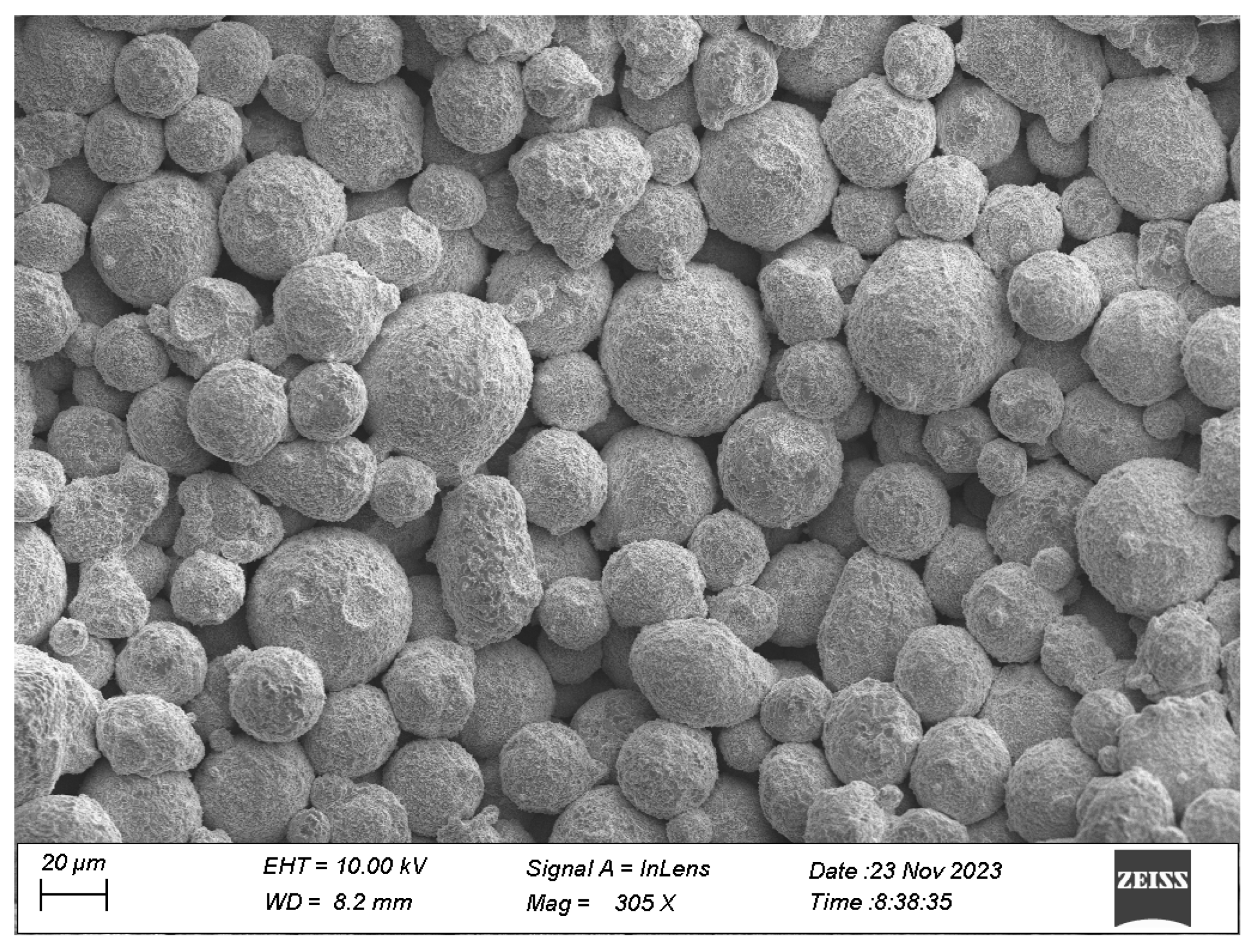
The focus of this work was to study Osprey 2507 super-duplex stainless steel (15–54 µm, Sandvik AB, Neath, UK) as a possible solid oxide cell support. The composition of the metal is given in Table 1, which is provided by the supplier.
MS pellets were produced using uniaxial pressing under 250 MPa for 2 min. A blend consisting of 90 wt% metal powder and 10 wt% polyvinyl butyral (PVB) binder (Sigma-Aldrich, St. Louis, MO, USA) was manually mixed in a mortar for approximately 10 min prior to pressing. To assess the feasibility of fabricating MS pellets under oxidizing conditions, green pellets were sintered under an ambient air atmosphere. The thermal profile included an initial binder burnout stage, during which the temperature was increased to 400 °C and maintained at 400 °C for 5 h to facilitate the efficient removal of the organic binder. This was followed by sintering at temperatures of 800, 900, and 1000 °C with dwell times of 1, 2, and 5 h. This systematic variation in sintering conditions enabled assessment of the microstructural and mechanical evolution of the metal supports and determination of the optimal air-based sintering profile for MS fabrication. After identifying the optimal sintering conditions, the same conditions were applied in a 10% H2–90% Ar atmosphere; these conditions were sintering at 900 °C for 5 h.
The reference anode support was fabricated with a composition of 42.5 wt% NiO (Sigma-Aldrich, St. Louis, MO, USA), 42.5 wt% GDC (SOFCMAN Energy Technology, Ningbo, China, 20:80 wt% ratio Gd:Ce), and 15 wt% ethyl cellulose (Sigma Aldrich, St. Louis, MO, USA) as a pore former and named NiO-GDC-EC.

2.2. Characterization

To investigate their crystal structures, potential phase transformations and chemical reactions at sintering temperatures, HT-XRD analysis was performed on the MS powders from room temperature (RT) to 1000 °C at a heating rate of 6 °C/min. The analyses were carried out using PANalytical X’Pert PRO MPD (PANalytical, Almere, The Netherlands) and Rigaku SmartLab (Rigaku Corporation, Tokyo, Japan) using Cu Kα radiation sources. XRD measurements of the sintered pellets were subsequently performed at RT after sintering, using a scan rate of 1°/min. Microstructural characterization of the MS pellets was performed using scanning electron microscopy (SEM) by Zeiss Sigma VP (Carl Zeiss AG, Oberkochen, Germany), operated at an accelerating voltage of 10 kV. The microstructural analysis of the samples after sintering at the determined best sintering profile in air and H2 atmospheres was performed using SEM (Philips XL 30 SFEG, Philips, Eindhoven, The Netherlands).
The porosity of the MS and NiO-GDC-EC samples was evaluated using Archimedes’ method. However, the porosity of samples sintered at 1000 °C was excluded from this analysis due to insufficient mechanical integrity of the pellets. Mechanical testing of the MS was conducted using the 3-point bending test (Instron 5967, Instron, Norwood, MA, USA). The span length was set to 8.8 mm, and the measurement was conducted with a strain rate of 1 mm/min. Similarly, the support sintered at 1000 °C was not characterized, as it was not mechanically stable. A three-point bending test on the samples sintered under hydrogen was conducted using an INSTRON 5569 Series Mechanical Tester (Instron, Norwood, MA, USA) with the samples each pressed in a mould with dimensions of 6.4 mm × 6.8 mm × 73.4 mm and subsequently sintered in a hydrogen atmosphere. Hardness measurements were performed on samples sintered in both air and hydrogen atmospheres using an INSTRON Wolpert TESTOR 2100 Micro-Hardness Tester (Instron/Wolpert, Norwood, MA, USA) under a load of 0.05 kg.
X-ray Photoelectron Spectroscopy (XPS) measurements were performed using a SPECS PHOIBOS 150 hemispherical energy analyzer (Specs GmbH, Berlin, Germany) equipped with a monochromatic Al Kα X-ray source. To compensate for surface charging effects, all binding energies were calibrated by referencing the adventitious carbon C 1s peak at 284.8 eV [20]. High-resolution spectra were collected for the Fe 2p, Mn 2p, Cr 2p, O 1s, and C 1s core levels, together with a wide survey spectrum. The spectra were processed using Shirley background subtraction, followed by peak fitting with mixed Gaussian–Lorentzian line shapes. Elemental atomic concentrations were determined from the integrated peak areas corrected by their respective relative sensitivity factors.
Electrical conductivity measurements were performed using the four-probe technique with electrochemical impedance spectroscopy (EIS) (Reference 3000, Gamry Instruments, Warminster, PA, USA). Two nickel wires (0.25 mm diameter, 99.98%, Alpha-Aesar, Haverhill, MA, USA) were fixed to the edge of the sample and another two to the centre using a ceramic adhesive (Aremco 552, Aremco Products Inc., New York, NY, USA). A NiO paste was used as the current collector for the cell. The NiO paste was prepared by mixing commercial NiO powder (99%, Alpha-Aesar, Haverhill, MA, USA) with α-terpineol (>96%, Alpha-Aesar, St. Louis, MO, USA) and 2-butoxyethanol (Sigma-Aldrich, St. Louis, MO, USA). Nickel wires were also used to connect the sample to the instrument cables. Electrical conductivity tests were carried out in a humidified 10% H2—90% Ar gas atmosphere at temperatures ranging from 400 to 700 °C. A constant voltage of 0.01 V was applied to the sample, and the resulting current was measured. The total conductivity of the sample was calculated using its dimensions, the applied voltage, and the measured current values.

3. Results and Discussion

3.1. Phase Analysis

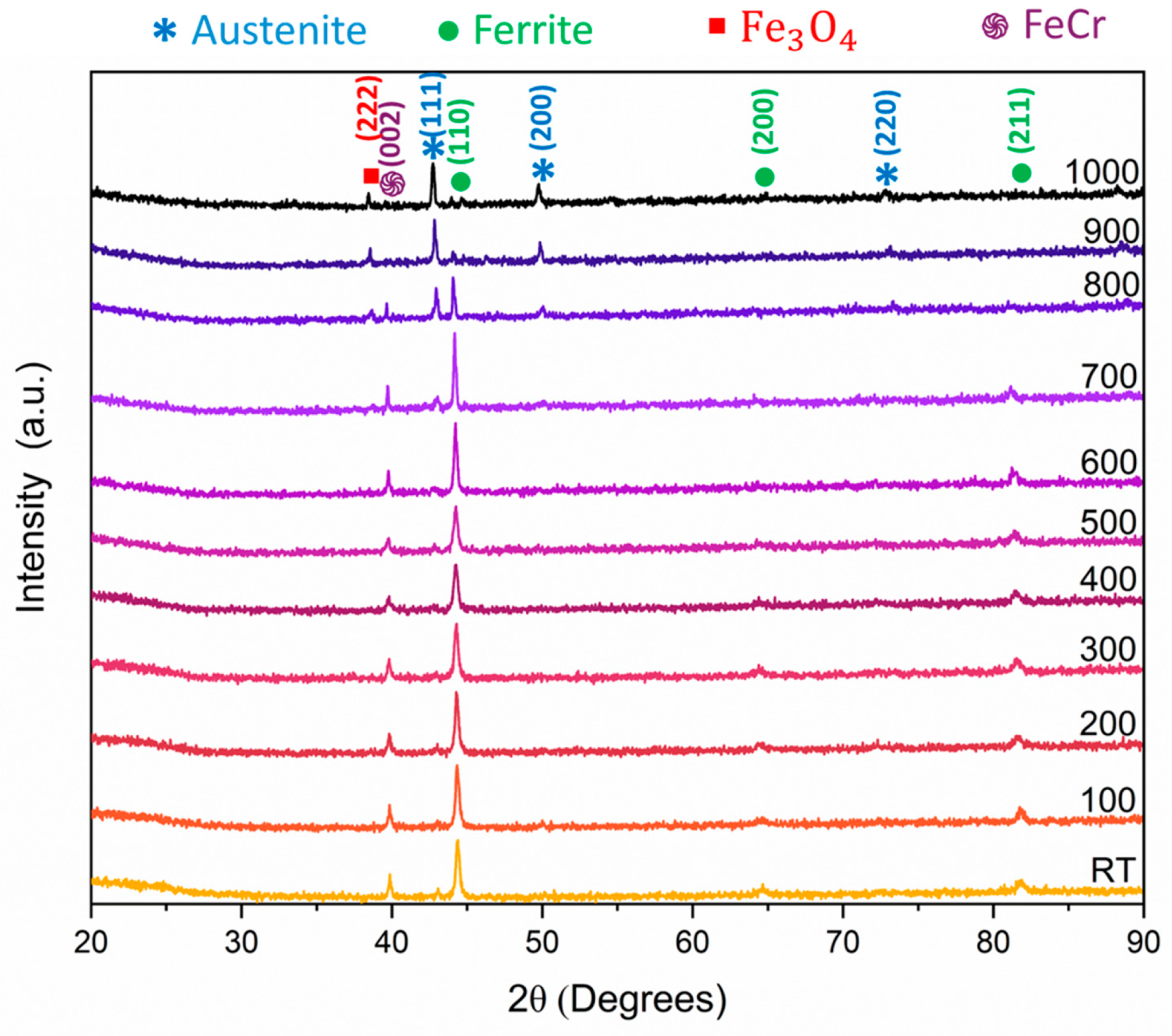
High temperature X-ray diffraction (HT-XRD) was conducted to investigate the thermal stability and phase evolution of the metal support. The HT-XRD patterns shown in Figure 1 illustrate the phase evolution of Osprey 2507 duplex stainless steel under air from room temperature (RT) to 1000 °C. Based on the expected dual-phase microstructure of ferrite (α-Fe) and austenite (γ-Fe), the XRD pattern should exhibit the austenitic phase (γ-Fe, PDF: 00-031-0619), around 43.5° (111), 50.7° (200), and 74.5° (220). For the ferritic phase (α-Fe, PDF: 01-087-0721), peaks are anticipated at approximately 44.7° (110), 65.0° (200), and 82.3° (211).
Regarding the α-Fe phase, the characteristic reflection at 2θ ≈ 44.36° was present from RT up to 800 °C, showing a gradual shift towards lower angles with increasing temperature, before disappearing at 900 °C. Furthermore, a peak at 2θ ≈ 64.6° corresponding to α-Fe was observed from RT to 500 °C. The reflection initially detected at 2θ ≈ 81.8° was observed up to 800 °C and shifted slightly to approximately 81.11° as the temperature increased. A shift towards lower angles typically originates from an increase in the lattice spacing (d-spacing) of the crystal structure. An increase in the average kinetic energy of atoms moves them apart slightly, resulting in an increase in lattice spacing.
For the γ-Fe phase, a peak at 2θ ≈ 42.95° was present in trace amounts initially, but became more pronounced at 800 °C, indicating the formation of austenite, and exhibited a slight shift toward lower angles as the temperature increased. Additional γ-Fe reflections were detected at 2θ ≈ 50.01°, 49.88°, and 49.76° over the temperature range from 800 °C to 1000 °C. Furthermore, a peak at 2θ ≈ 73.4° appeared after 800 °C and shifted slightly to 73.75° at 1000 °C.
Additionally, at room temperature (RT), a diffraction peak was observed at 2θ ≈ 39.8°, which gradually shifted toward lower angles up to 800 °C, indicating lattice expansion due to thermal effects. This peak disappeared at 900 °C. Concurrently, a new phase emerged at 2θ ≈ 38.5° at 800 °C and further shifted to 38.4° at 1000 °C. The disappearance of the initial phase above 800 °C coincides with the emergence of iron oxide reflections. The peak observed up to 700 °C can be attributed to a metastable Fe–Cr intermetallic phase (PDF: 00-005-0708), which becomes unstable at elevated temperatures and undergoes oxidation, leading to the formation of iron oxide (PDF: 00-026-1136). Phase analysis revealed the presence of ferritic, austenitic, and intermetallic phases, with no evidence of any undesired phases, and the γ-Fe phase was observed at 700 °C and above as expected. XRD measurements were repeated to examine the MS pellets after exposure to the previously determined sintering conditions.

3.2. Porosity

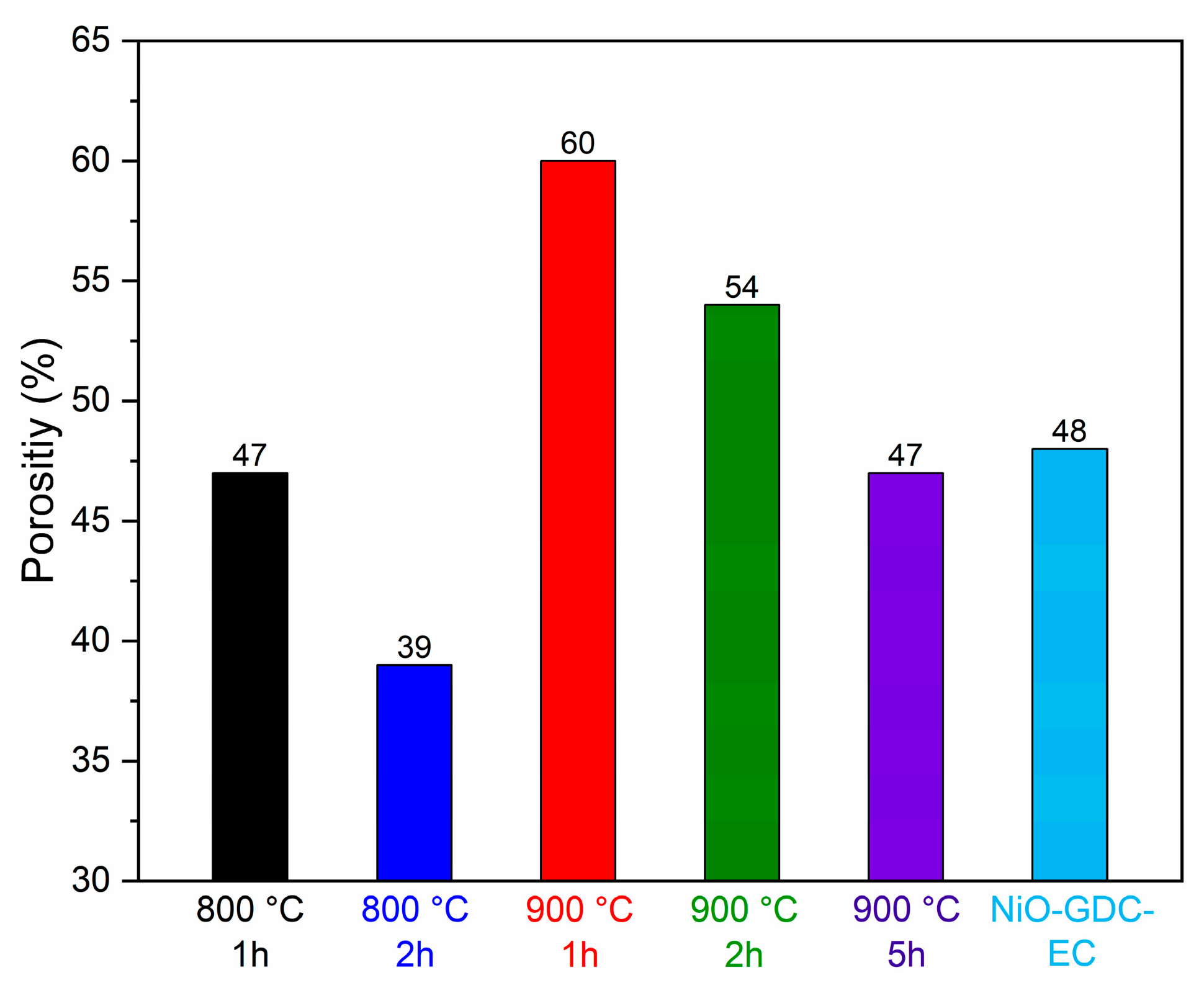
To determine the optimal sintering profile, the MS samples were first sintered in an oxidizing atmosphere. Six different sintering profiles were investigated: 800, 900, and 1000 °C for 1 h; 800 and 900 °C for 2 h; and 900 °C for 5 h, all in air. The porosity of the samples was evaluated using Archimedes’ principle, and the results are presented in Figure 2. The measured porosity values are as follows: MS-800 °C-1 h: 47.4%, MS-800 °C-2 h: 38.9%, MS-900 °C-1 h: 60.5%, MS-900 °C-2 h: 54.5%, MS-900 °C-5 h: 47.1%, and the reference sample, NiO-GDC-EC, exhibited a porosity of 48.2%. The observed increase in porosity from 47.41% at 800 °C to 60.54% at 900 °C after 1 h of sintering is counterintuitive, as higher temperatures typically promote densification. This anomaly can be attributed to phase transformation-induced volume expansion. High temperature X-ray diffraction analysis indicates the formation of austenitic phases above 700 °C, corresponding to the transformation from ferritic (BCC) to austenitic (FCC) structures. This transformation involves a volumetric expansion due to the lower density of the austenitic phase, leading to internal stresses that can disrupt particle bonding and increase porosity if the sintering time is insufficient for complete densification [21]. Similar phenomena have been reported in duplex stainless steels, where phase transformations during thermal treatments cause expansion-induced pore formation or reopening of closed pores [22]. Extended sintering durations, such as 5 h at 900 °C, allow for diffusion-driven densification that compensates for the earlier expansion effects, resulting in reduced porosity.
The MSs sintered at 1000 °C fall apart even after only 1 h (Figure S1). This indicates that an MS should not be sintered in an oxidizing atmosphere exceeding 1000 °C. Furthermore, it was observed that the surfaces of the MSs sintered in air were full of small pits or holes. This can be attributed to two possible factors: either a cluster of binder material melted away during sintering, leaving behind surface holes, or pit corrosion occurred on the metal surface. The holes are not necessarily detrimental, and they could positively contribute by enhancing mass flow into the catalytic layers of a fuel cell, potentially improving its performance.

3.3. Mechanical Properties

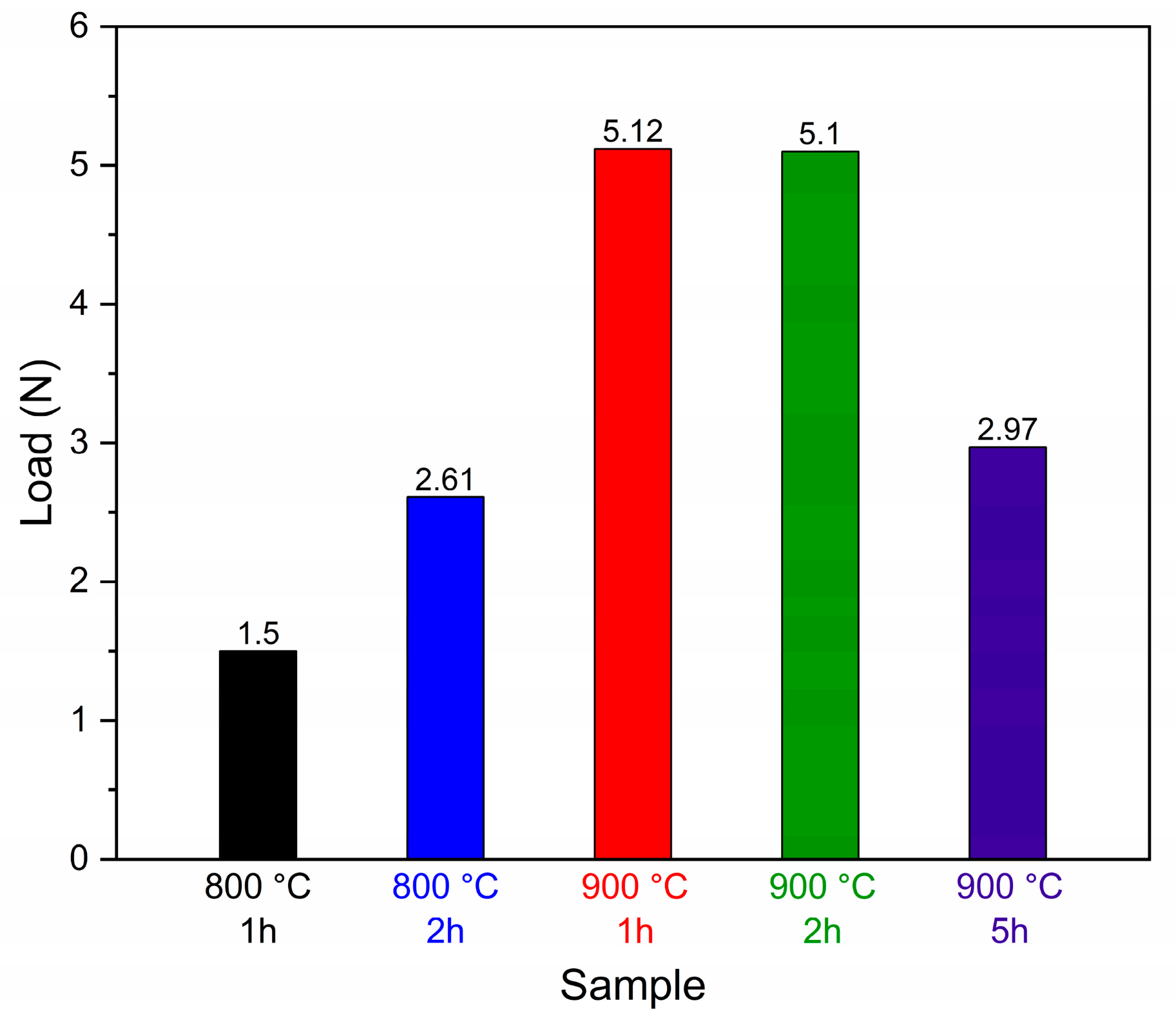
The mechanical strength of the sintered MSs was evaluated as shown in Figure 3. The sample sintered at 900 °C for 1 h (MS-900 °C—1 h) exhibited the highest mechanical strength, with a maximum load of approximately 5.12 N. The conventional anode substrate for SOFCs has a reported flexural strength of 34.3 MPa and elastic modulus of 5.01 GPa [23]. To estimate the flexural strength of the best-performing sample, the following formula was used: σ f = 3 F L 2 b d 2   . F is the maximum load, L is the length of the sample, b is the width, and d is the thickness. Using this formula, the calculated flexural strength of the sample sintered at 900 °C for 1 h was determined to be approximately 0.6 MPa. While this value is lower than the typical values reported for conventional anode materials, it highlights the mechanical strength of the metal substrates. Although the best mechanical strength in the MS was achieved with a 1 h to 2 h sintering duration at 900 °C, further prolonging the sintering process adversely affects the mechanical strength of the MSs. Interestingly, despite having lower mechanical strength, the electrical conductivity of the 5 h-sintered MS was the highest among all the samples.
The result for the MS sintered at 900 °C suggests that extended sintering times may lead to a reduction in mechanical strength, likely due to increased oxidation of the metal support, as shown in Figure 3. This observation contrasts with the typical assumption that sintering for longer times generally leads to increased strength through enhanced densification and reduced porosity. The MS sintered at 800 °C shows the typical behaviour of mechanical strength improving with increasing sintering duration. The oxidation of metal supports negatively affects their mechanical properties due to the formation of oxides on their surface. The decrease in maximum load with longer sintering durations at 900 °C is thus attributed to the cumulative effect of oxidation, which can reduce the overall mechanical integrity of the material. In this study, although initially the trend shows an increase in the mechanical stability of MSs with increasing sintering temperature and duration, after a certain temperature (900 °C, as shown in Figure 3), further increasing the sintering duration results in reduced mechanical stability.
In the mechanical strength tests, an initial increase in strength is observed with increasing temperature. However, at the same temperature (900 °C), a decrease in strength occurs as the dwell time is prolonged. This behaviour may be attributed to the onset of phase formation at 900 °C and the subsequent development of an oxide phase, which leads to a reduction in mechanical strength once it becomes fully established. The XRD analysis performed after sintering at 900 °C for 5 h is presented in Figure 6. As can be seen, the comparison of Figure 1 and Figure 6 shows that a Cr2O3 phase was formed.

3.4. Microstructural Analysis

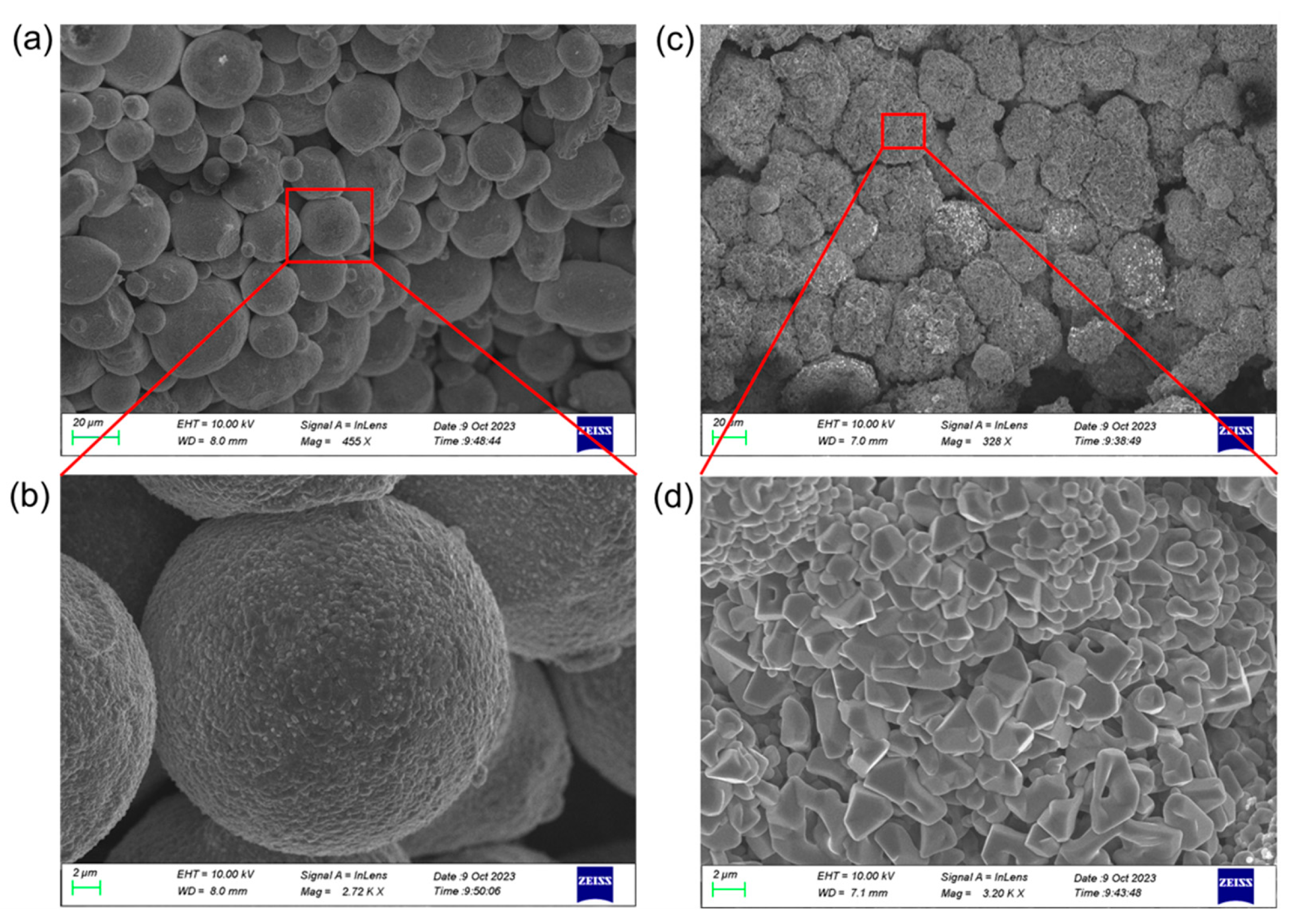
The surface microstructure of the MS sintered at 800 °C for 1 h is shown in Figure 4a. The lack of particle integration suggests that grain formation did not occur. It is important to note that grain formation is an essential factor for enhancing both electrical conductivity and mechanical strength. This absence of grains aligns with the earlier observations regarding the poor performance of this sample in terms of electrical and mechanical properties. In contrast, Figure 4c shows the surface of the metal support sintered at 1000 °C for 1 h. At this elevated temperature, extensive particle fusion is observed. However, the formation of a thin oxide layer on the surface under these sintering conditions might also occur, which likely accounts for the previously discussed drop in mechanical strength. A direct comparison between Figure 4b,d, representing lower and higher sintering temperatures, respectively, offers further insight. Figure 4d reveals the presence of large, oxidized features or chunks, approximately ten times larger than those observed in Figure 4b, suggesting that oxidation at higher temperatures is responsible for this increase in feature size. These oxidized chunks form additional interfaces, which can substantially increase the contact resistance within the support. As these are likely thin oxide layers formed on the surface, their low thickness may hinder reliable detection by XRD. Moreover, the formation of such features may also compromise the mechanical integrity of the structure.
Figure 5 shows the surface microstructure of the MS sintered at 900 °C for 5 h. The microstructural image reveals enhanced particle fusion, as indicated by the flattened interfaces between adjacent particles. This reduction in inter-particle gaps is likely responsible for the lower contact resistance, which in turn contributes to the decreased overall area-specific resistance (ASR) of the MS. Although the mechanical strength of this sample was not the highest among the sintered supports, it was notably better than that of the sample sintered at 800 °C for 1 h, highlighting the benefits of extended sintering at moderately high temperatures.

3.5. Sample Sintered in Hydrogen Atmosphere

The optimal sintering profile was initially determined under air sintering conditions. In this section, after fabrication, the MS underwent sintering under a hydrogen atmosphere. The hydrogen environment was specifically chosen to simulate the reducing conditions typically encountered during operation in SOFCs. By characterizing the samples under these conditions, we aimed to better understand their structural integrity and electrochemical performance.

3.5.1. Phase Analysis

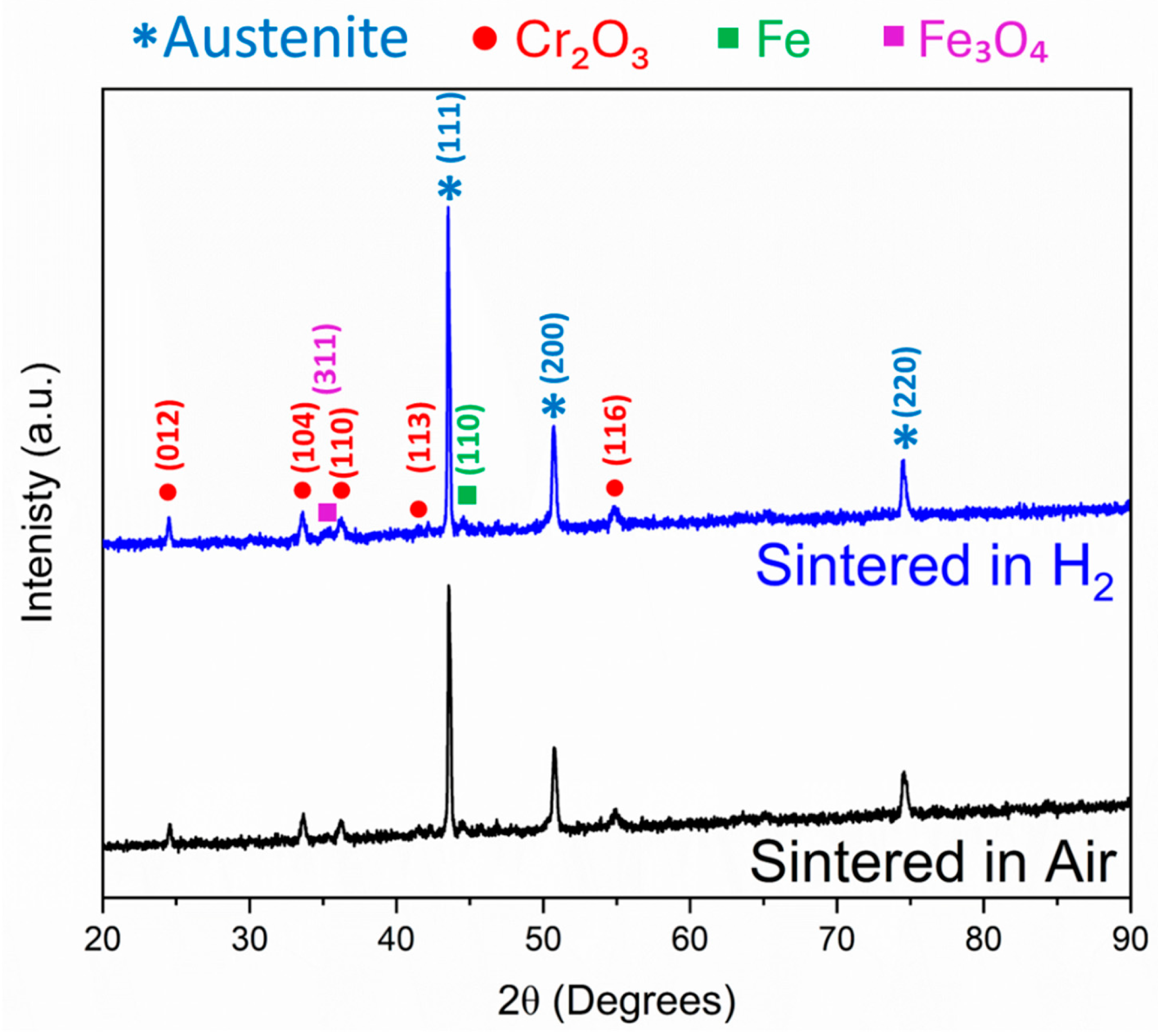
MS samples were fabricated by die pressing under 250 MPa and sintered in air and hydrogen atmospheres for 5 h. The XRD patterns indicate that, in addition to the austenitic phase, Cr2O3 (01-082-1484) and Fe (01-089-7194) phases were present in both samples. Moreover, iron oxide (magnetite) (00-002-1035) was detected under hydrogen conditions. The determined iron oxide phase differed from HT-XRD. Both phases are cubic, and the difference is their lattice parameters, which increased from 8.0903 Å to 8.41 Å. This difference indicates that extended high-temperature exposure under reducing conditions leads to lattice expansion, likely due to thermal effects combined with hydrogen-induced structural changes, such as oxygen vacancy formation or a slight reduction in Fe3O4.
In the HT-XRD measurements, short dwell times on the order of minutes were applied. In contrast, the diffraction patterns shown in Figure 6 were collected after samples were sintered at 900 °C for 5 h. The additional phases observed after prolonged heat treatment are therefore attributed to oxidation processes occurring during extended thermal exposure, with longer dwelling times promoting the formation of Cr2O3.
Upon exposure to hydrogen, an intensity change was observed, as seen in Figure 6. The most significant change in the intensity was the observation of a peak at 43.5° and the crystallite size of the samples, which was calculated using the Scherrer equation to be 34 and 37 nm for MS—900 °C—5 h—air and MS—900 °C—5 h—H2, respectively. The sharpening and intensification of certain peaks under hydrogen indicate improved crystallinity or stress relaxation within specific phases.
Figure 6. XRD of MS sintered at 900 °C for 5 h in air and H2.
Energies 19 01856 g006

3.5.2. Surface Chemistry

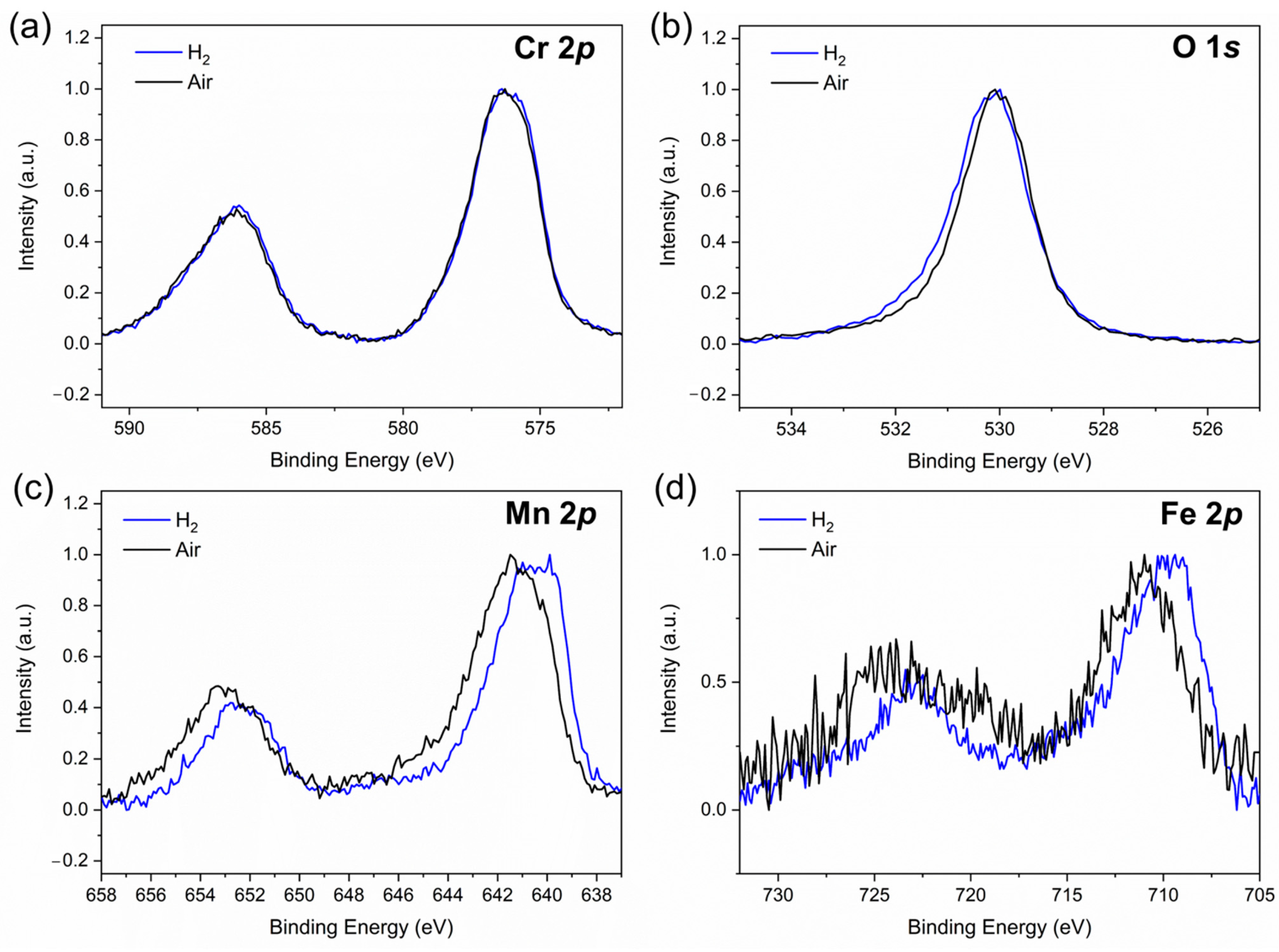
To investigate the surface chemistry of air- and hydrogen-passivated stainless steel, detailed XPS analyses were conducted. XPS survey spectra are shown in Figure S2. High-resolution spectra were obtained for the Fe 2p, Mn 2p, Cr 2p, O 1s, and C 1s regions. The atomic concentrations of the detected elements were calculated after fitting each spectral region. As summarized in Supplementary Table S1, the overall elemental compositions of the two samples are comparable. Both surfaces exhibit a high oxygen concentration, indicating the presence of a thick oxide layer dominating the outermost surface. Because XPS probes only the top few nanometers, the formation of this oxide layer results in a strongly attenuated Fe signal. The very low Fe concentration observed for both samples is attributed to the development of a Cr- and Mn-rich surface oxide layer, which masks the Fe signal due to preferential oxidation and surface segregation of chromium and manganese [24]. This behaviour is consistent with previous studies reporting that Cr2O3 is thermodynamically more stable than iron oxides, leading to Fe enrichment beneath the oxide layer after passivation [25].
Figure 7a shows the Cr 2p spectra for air- and H2-passivated stainless steel. The spectra are nearly identical for both treatments, indicating that the chemical environment of chromium remains unchanged regardless of the passivation atmosphere. The Cr 2p3/2 peak is located at approximately 576.1 eV, with a spin–orbit splitting of about 9.7 eV, which is characteristic of Cr2O3 near the surface [26,27].
Similarly, the O 1s spectra (Figure 7b) exhibit comparable overall shapes for both samples, with only subtle differences in the relative intensity of the oxygen components. In contrast, the Mn 2p and Fe 2p spectra (Figure 7c and Figure 7d, respectively) display a binding energy shift of approximately 0.5 eV between air- and hydrogen-passivated samples [26,27]. Since no corresponding shifts are observed in the Cr 2p or O 1s spectra, these changes are attributed to modifications in the local chemical environments of Mn and Fe. In addition, a slight increase in the atomic concentrations of Mn and Fe is observed following H2 passivation compared to air passivation. This suggests a partial reduction in the surface oxide layer under hydrogen treatment, resulting in enhanced exposure of subsurface metallic species. While Cr2O3 is highly stable and not readily reduced under typical hydrogen passivation conditions, Mn and Fe oxides are more susceptible to reduction, leading to observable changes in their oxidation states.
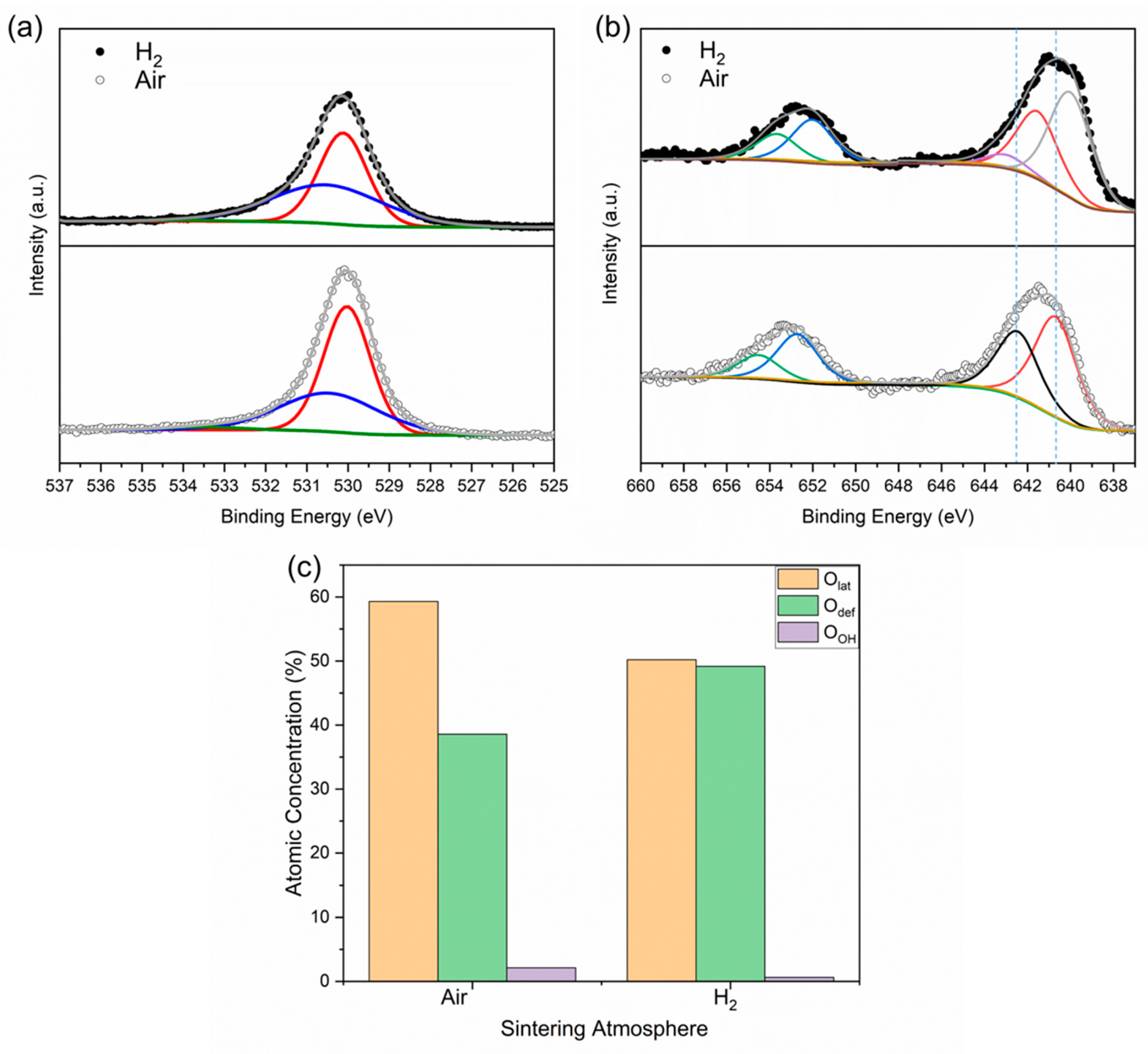
To gain further insight into these effects, the O 1s and Mn 2p regions were analyzed in detail through component fitting, as shown in Figure 8. The O 1s spectra were deconvoluted into three components: lattice oxygen at approximately 530.0 eV [28,29], oxygen associated with defects at intermediate binding energies, and hydroxyl species at higher binding energies. The relative atomic concentrations of these oxygen species are presented in Figure 8c. Compared to air passivation, hydrogen passivation results in a reduced lattice oxygen contribution and an increased defect-related oxygen concentration, consistent with the reductive effects of hydrogen treatment. Such changes in oxygen speciation are well-established signatures of hydrogen-induced surface reduction in stainless steels [30].
A similar trend is observed in the Mn 2p spectra. The observed shift toward lower binding energies following hydrogen passivation indicates a reduction in the Mn oxidation state. This suggests reconstruction of the surface oxide layer, accompanied by partial reductions of Mn (and Fe) species. Exposure to air promotes the formation of higher-valency oxides and hydroxides, whereas hydrogen acts as a reducing agent. Under H2 treatment, Mn3+ species are partially reduced to lower-valency states, most likely Mn2+. The increased electron shielding associated with these lower oxidation states leads to the observed decrease in binding energy.

3.5.3. Conductivity

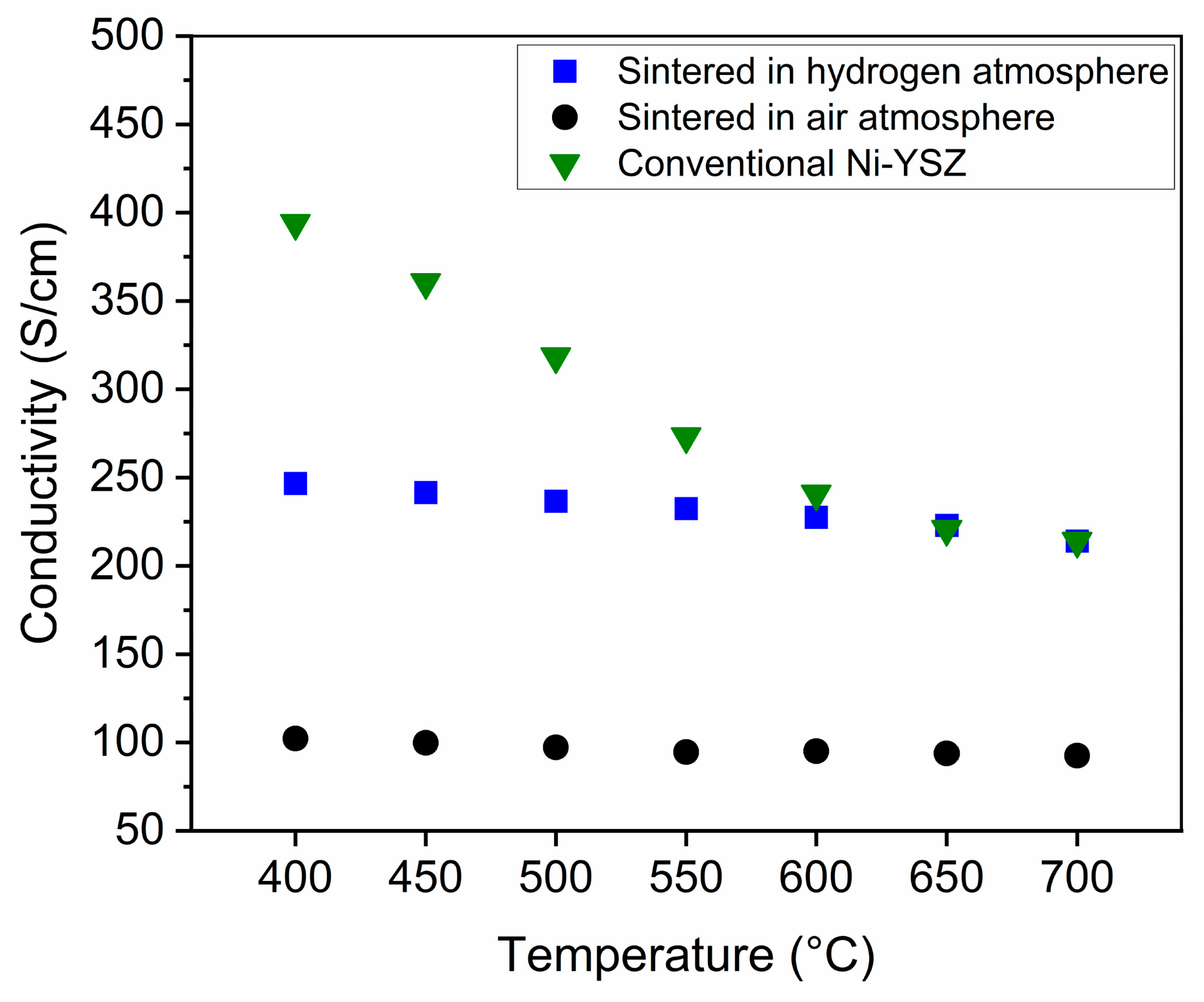
The conductivities of the MS-900C-5 h samples sintered in air and in H2 were measured as a function of temperature under a H2 atmosphere to evaluate the effect of sintering conditions on electrochemical performance under operating conditions, as shown in Figure 9. To compare a conventional anode prepared by the same method with the MSs, a mixture of commercial NiO powder (99%Alfa-Aesar, Germany/UK/USA) and YSZ (TOSOH TZ-8Y, Tosoh Corporation, Tokyo, Japan) with a volume ratio of 60:40 NiO:YSZ was pressed. The MS sintered in air exhibited a conductivity of 102.24 S/cm at 400 °C, which slightly decreased with increasing measurement temperature. The MS sintered in H2 showed a similar trend, with a higher conductivity of 246.66 S/cm at 400 °C, but a more significant drop in conductivity as the temperature increased. The Ni-YSZ’s conductivity was measured at 394.00 S/cm at 400 °C and decreased with increasing temperature to 214.09 S/cm at 700 °C, demonstrating typical behaviour, similar to that of MS sintered in a H2 atmosphere, which was 214.06 S/cm at 700 °C. Compatible conductivity results with the Ni:YSZ anodes indicate that an MS material sintered in a H2 atmosphere is applicable for the commonly used fuel cells. As demonstrated, conducting the sintering process in a hydrogen atmosphere results in more than a twofold increase in conductivity when compared to samples sintered in air.

3.5.4. Mechanical Stability

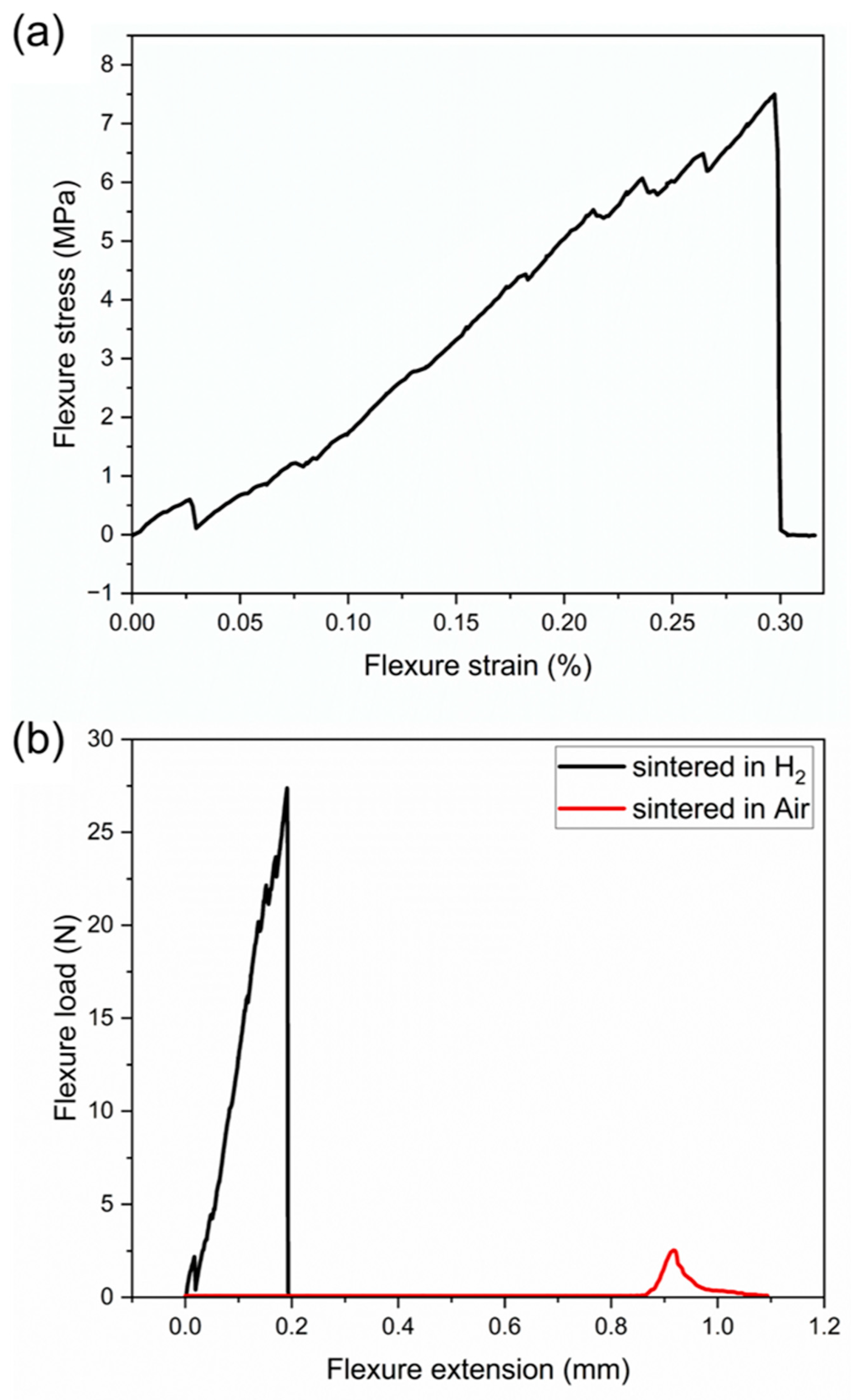
The mechanical stability of the MS sample sintered under a hydrogen atmosphere was measured, and its stress–strain graph is shown in Figure 10. The MS sample sintered at 900 °C for 5 h under a H2 atmosphere withstood a maximum load of 27.38 N, displaying a flexure strength of 7.5 MPa, a flexure extension of 0.19 mm, and an elastic modulus of 3.25 GPa. Stress–strain curves of the MS samples sintered at 900 °C for 5 h under air and H2 are compared in Figure 10b. The MS sample sintered under H2 withstood 12.5 times more load compared to the sample sintered under air. Figure 10b shows that the sample sintered in air exhibited a ductile fracture, whereas the sample sintered in H2 exhibited a more brittle fracture.

3.5.5. Hardness

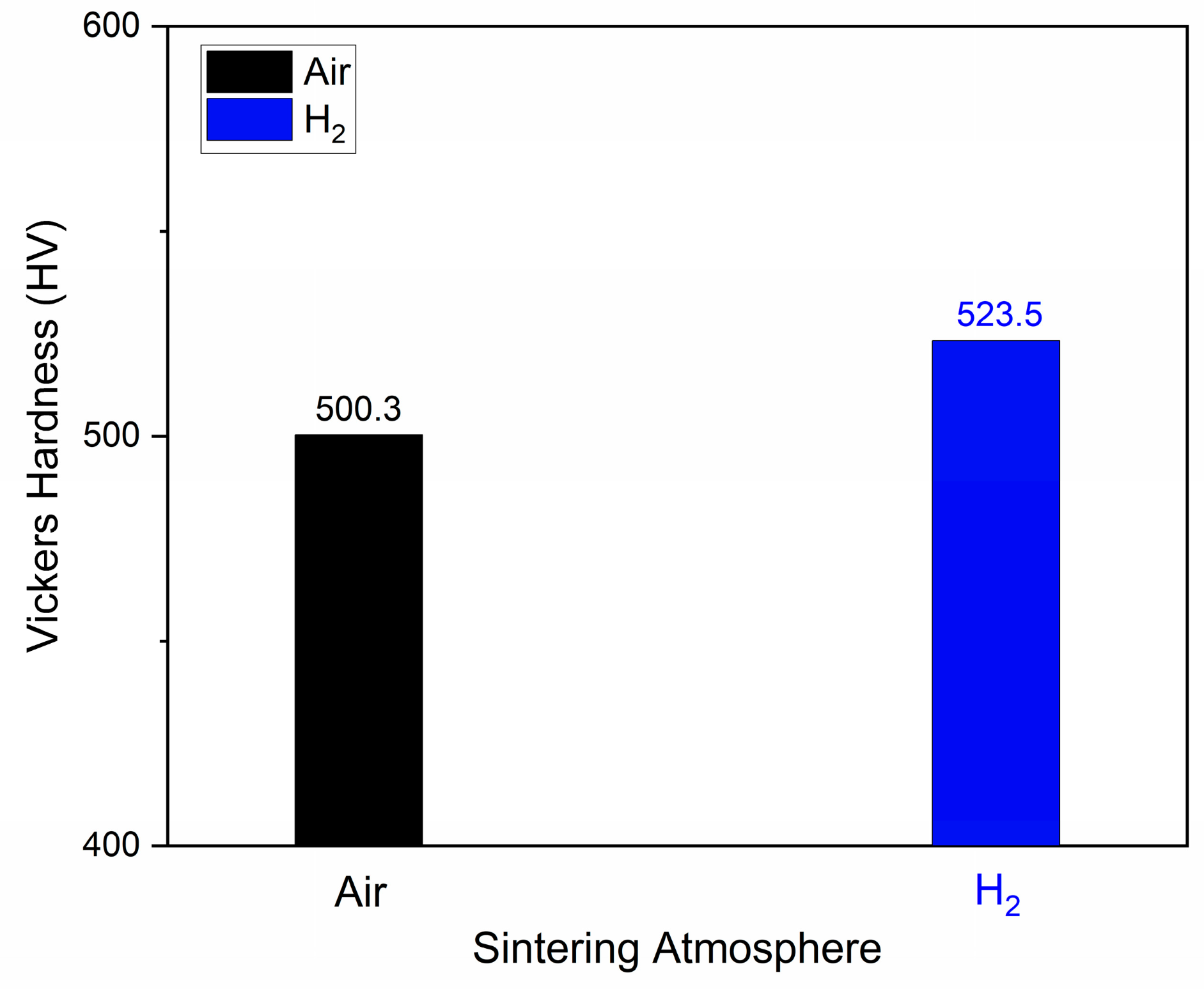
An indentation test was conducted to compare the Vickers hardness of MS samples sintered in air and under hydrogen. The sample sintered in air exhibited a Vickers hardness of 500.3 HV, while the sample sintered in hydrogen showed a slightly higher value of 523.5 HV, as shown in Figure 11.
H V 1.8544 F d 2
                                      H V = V i c k e r s   H a r d n e s s ( k g f m m 2 )
  F = l o a d ( k g f )
d = i n d e n t a t i o n   d i a m e t e r ( m m )
t = d 2 2 t a n ( 136 ° 2 ) d 7.0006
t = i n d e n t a t i o n   d e p t h   ( m m )
The indentation diameter (d) was calculated using Equation (1), and the indentation depth (t) was determined from Equation (2). The indentation depths were calculated as 1.94 µm and 1.90 µm for the air- and hydrogen-sintered MS, respectively. This increase in hardness correlates with a slight reduction in indentation depth. These results indicate that, while both samples demonstrate similar hardness values, sintering under a reducing atmosphere slightly improves the material’s resistance to deformation.
The slightly higher hardness observed in hydrogen-sintered MS samples compared to air-sintered samples can be correlated with the XPS results. Hydrogen passivation leads to partial reduction in Mn and Fe oxides, thinning the surface oxide layer and increasing the exposure of subsurface metallic species, while Cr2O3 remains largely unchanged. This reduction likely promotes a more compact and metal-rich surface structure, which may contribute to the observed increase in hardness. In contrast, air passivation favours the formation of higher-valency oxides and a thicker, more heterogeneous surface layer. The slightly higher hardness under H2 conditions may therefore be attributed to surface reconstruction and modified oxide chemistry. However, the relatively small difference (~5%) suggests that the bulk microstructure remains the dominant factor governing the overall hardness.

3.5.6. Microstructure

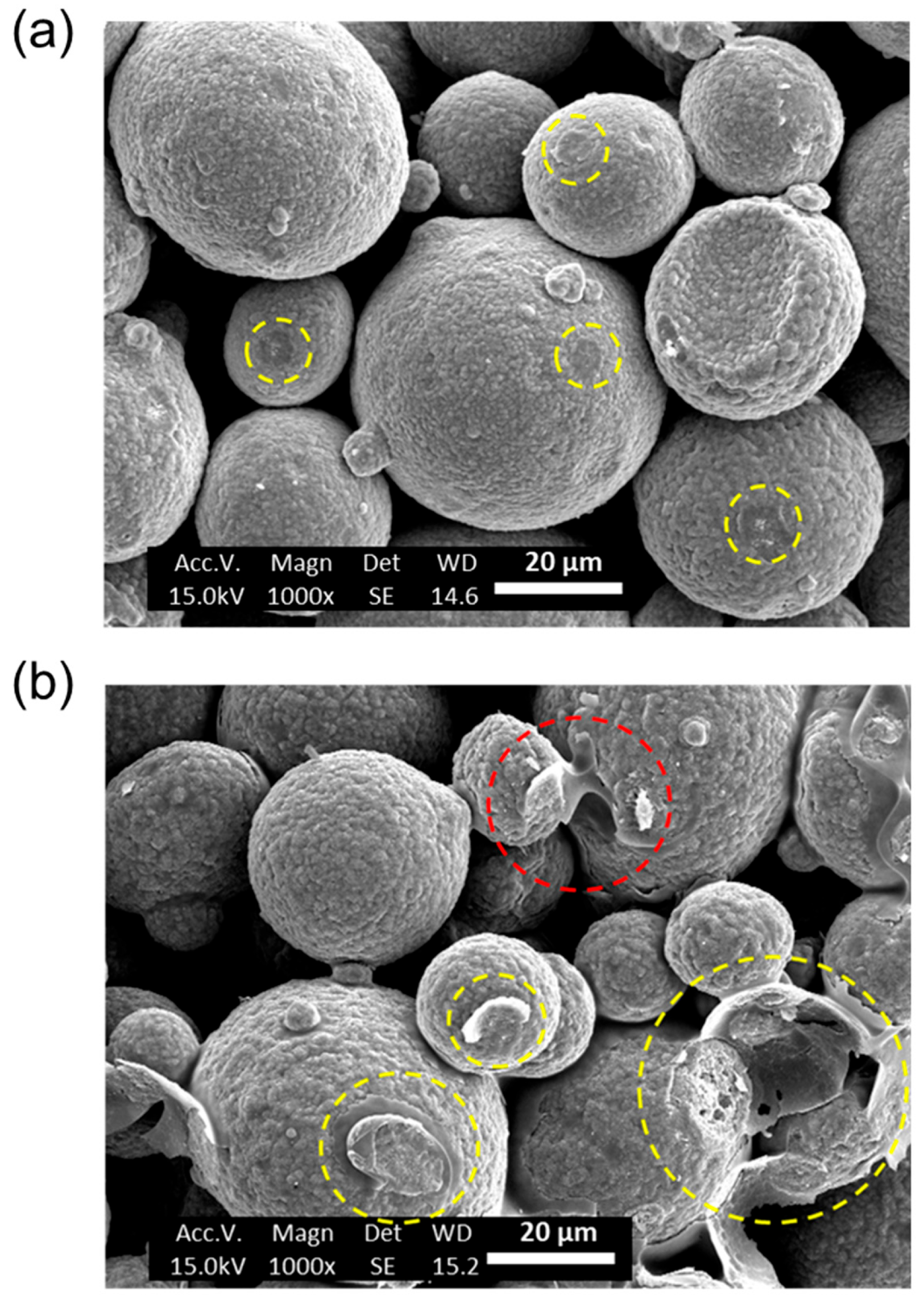
The structural differences underlying the analyzed properties are compared by examining the cross-sectional microstructures of the samples sintered at 900 °C for 5 h in air and hydrogen, as shown in Figure 12. Contact points between particles are highlighted with yellow circles. In the sample sintered in air (Figure 12a), particles at these contact points appear weakly bound, and neck formations are not complete. In contrast, the sample sintered in H2 (Figure 12b) exhibits noticeably stronger and more cohesive contacts. Furthermore, the area indicated by the red circle in Figure 12b reveals clear neck formation in the sample sintered under hydrogen. The microstructural analysis reveals that sintering in H2 atmosphere enhances mass transport, resulting in improved neck formation between particles. In contrast, the poor interparticle bonding observed in samples sintered in air may be attributed to the presence of a thicker surface oxide layer. Such surface oxides may act as diffusion barriers, hindering atomic mobility at the particle interfaces and consequently limiting neck formation. The enhanced neck formation between particles in samples sintered under a H2 atmosphere also accounts for the improved flexural strength and hardness (given Figure 10 and Figure 11), as the enhanced interparticle bonding promotes more effective stress distribution and overall mechanical stability.

4. Conclusions

This study demonstrates that the sintering atmosphere plays a critical role in tailoring the functional properties of super-duplex (austenitic–ferritic) stainless steel for application as a metal support in solid oxide cells. While XRD analysis revealed no detectable changes in phases between samples sintered in air and hydrogen, enhancements were observed in mechanical and electrochemical performance after H2 sintering. Specifically, flexural strength increased from 0.6 MPa to 7.5 MPa, Vickers hardness improved from 500.3 to 523.5 HV, and electrical conductivity was enhanced from 95.12 to 227.6 S/cm at 600 °C. These results highlight the efficacy of hydrogen sintering in improving the structural integrity and electrochemical performance of metallic supports, thereby advancing their viability for high-performance solid oxide cell systems. Overall, the results indicate that Ospray-2507 super-duplex stainless steel is a potential material for metal supports for Solid Oxide Cells.

Supplementary Materials

The following supporting information can be downloaded at: https://www.mdpi.com/article/10.3390/en19081856/s1, Figure S1: Metal support sintered in air at (a) 900 °C 5 h and (b) 1000 °C, for 1 h; Figure S2: XPS survey spectra of air- and H2-passivated stainless steel surfaces; Table S1: Atomic concentrations (at.%) of surface elements determined from high-resolution XPS spectra for air- and H2-passivated stainless steel.

Author Contributions

Conceptualization, B.B. and M.I.A.; methodology, B.B., M.I.A., A.B. (supporting), H.Y. (supporting) and L.C.A. (supporting); formal analysis, B.B., M.I.A. (supporting), A.S. (supporting), M.U.U. (supporting), M.M. (supporting), A.B. (supporting), H.Y. (supporting) and L.C.A. (supporting); investigation, B.B., A.S. and M.U.U. (supporting), M.M. (supporting), L.C.A. and M.I.A.; resources, A.B., L.C.A. and M.I.A.; data curation, B.B. and A.S. (supporting); writing—original draft preparation, B.B.; writing—review and editing, B.B., M.M., A.B., H.Y., L.C.A. and M.I.A.; visualization, B.B., M.U.U. and L.C.A.; supervision, M.I.A.; project administration, M.I.A.; funding acquisition, M.I.A. All authors have read and agreed to the published version of the manuscript.

Funding

This research was funded by the Research Council of Finland, grant number 13322738, 31213593551, and Business Finland, grant number 1846/31/2023.

Data Availability Statement

The original contributions presented in this study are included in the article/Supplementary Material. Further inquiries can be directed to the corresponding author.

Acknowledgments

Maryam Mousavi for the HT-XRD measurement.

Conflicts of Interest

The authors declare no conflicts of interest.

References

  1. Ivers-Tiffée, E.; Weber, A.; Herbstritt, D. Materials and Technologies for SOFC-Components. J. Eur. Ceram. Soc. 2001, 21, 1805–1811. [Google Scholar] [CrossRef]
  2. Yokokawa, H.; Sakai, N.; Horita, T.; Yamaji, K. Recent Developments in Solid Oxide Fuel Cell Materials. Fuel Cells 2001, 1, 117–131. [Google Scholar] [CrossRef]
  3. Mogensen, M.; Skaarup, S. Kinetic and Geometric Aspects of Solid Oxide Fuel Cell Electrodes. Solid State Ion. 1996, 86–88, 1151–1160. [Google Scholar] [CrossRef]
  4. Duncan, K.L.; Lee, K.-T.; Wachsman, E.D. Dependence of Open-Circuit Potential and Power Density on Electrolyte Thickness in Solid Oxide Fuel Cells with Mixed Conducting Electrolytes. J. Power Sources 2011, 196, 2445–2451. [Google Scholar] [CrossRef]
  5. Park, J.M.; Kim, D.Y.; Baek, J.D.; Yoon, Y.-J.; Su, P.-C.; Lee, S.H. Effect of Electrolyte Thickness on Electrochemical Reactions and Thermo-Fluidic Characteristics inside a SOFC Unit Cell. Energies 2018, 11, 473. [Google Scholar] [CrossRef]
  6. Buccheri, M.A.; Singh, A.; Hill, J.M. Anode- versus Electrolyte-Supported Ni-YSZ/YSZ/Pt SOFCs: Effect of Cell Design on OCV, Performance and Carbon Formation for the Direct Utilization of Dry Methane. J. Power Sources 2011, 196, 968–976. [Google Scholar] [CrossRef]
  7. Battelle Manufacturing Cost Analysis of 1kW and 5 kW Solid Oxide Fuel Cell (SOFC) for Auxilliary Power Applications. Available online: https://www.energy.gov/sites/prod/files/2014/06/f16/fcto_battelle_cost_analysis_apu_feb2014.pdf (accessed on 29 June 2025).
  8. Tucker, M.C. Progress in Metal-Supported Solid Oxide Fuel Cells: A Review. J. Power Sources 2010, 195, 4570–4582. [Google Scholar] [CrossRef]
  9. Hui, S.R.; Yang, D.; Wang, Z.; Yick, S.; Decès-Petit, C.; Qu, W.; Tuck, A.; Maric, R.; Ghosh, D. Metal-Supported Solid Oxide Fuel Cell Operated at 400–600 °C. J. Power Sources 2007, 167, 336–339. [Google Scholar] [CrossRef]
  10. Huang, Q.-A.; Oberste-Berghaus, J.; Yang, D.; Yick, S.; Wang, Z.; Wang, B.; Hui, R. Polarization Analysis for Metal-Supported SOFCs from Different Fabrication Processes. J. Power Sources 2008, 177, 339–347. [Google Scholar] [CrossRef]
  11. Opakhai, S.; Kuterbekov, K. Metal-Supported Solid Oxide Fuel Cells: A Review of Recent Developments and Problems. Energies 2023, 16, 4700. [Google Scholar] [CrossRef]
  12. Gannon, P.; Amendola, R. High-Temperature, Dual-Atmosphere Corrosion of Solid-Oxide Fuel Cell Interconnects. JOM 2012, 64, 1470–1476. [Google Scholar] [CrossRef]
  13. Reisert, M.; Berova, V.; Aphale, A.; Singh, P.; Tucker, M.C. Oxidation of Porous Stainless Steel Supports for Metal-Supported Solid Oxide Fuel Cells. Int. J. Hydrogen Energy 2020, 45, 30882–30897. [Google Scholar] [CrossRef]
  14. Kim, M.; Ha, J.; Kim, Y.-T.; Choi, J. Stainless Steel: A High Potential Material for Green Electrochemical Energy Storage and Conversion. Chem. Eng. J. 2022, 440, 135459. [Google Scholar] [CrossRef]
  15. Xu, X.; Wessman, S.; Odqvist, J.; King, S.M.; Hedström, P. Nanostructure, Microstructure and Mechanical Properties of Duplex Stainless Steels 25Cr-7 Ni and 22Cr-5Ni (Wt.%) Aged at 325 °C. Mater. Sci. Eng. A 2019, 754, 512–520. [Google Scholar] [CrossRef]
  16. Cho, H.J.; Kim, K.J.; Park, Y.M.; Choi, G.M. Flexible Solid Oxide Fuel Cells Supported on Thin and Porous Metal. Int. J. Hydrogen Energy 2016, 41, 9577–9584. [Google Scholar] [CrossRef]
  17. Venkatachalam, V.; Molin, S.; Chen, M.; Smirnov, I. Optimization of Ferritic Steel Porous Supports for Protonic Fuel Cells Working at 600 °C. In Proceedings of the Materials Science and Technology 2014 Conference; ASM International: Pittsburgh, PA, USA, 2014; pp. 1231–1239. [Google Scholar]
  18. Dogdibegovic, E.; Wang, R.; Lau, G.Y.; Tucker, M.C. High Performance Metal-Supported Solid Oxide Fuel Cells with Infiltrated Electrodes. J. Power Sources 2019, 410–411, 91–98. [Google Scholar] [CrossRef]
  19. Dogdibegovic, E.; Cheng, Y.; Shen, F.; Wang, R.; Hu, B.; Tucker, M.C. Scaleup and Manufacturability of Symmetric-Structured Metal-Supported Solid Oxide Fuel Cells. J. Power Sources 2021, 489, 229439. [Google Scholar] [CrossRef]
  20. Greczynski, G.; Hultman, L. X-Ray Photoelectron Spectroscopy: Towards Reliable Binding Energy Referencing. Prog. Mater. Sci. 2020, 107, 100591. [Google Scholar] [CrossRef]
  21. Haghdadi, N.; Cizek, P.; Hodgson, P.D.; Tari, V.; Rohrer, G.S.; Beladi, H. Effect of Ferrite-to-Austenite Phase Transformation Path on the Interface Crystallographic Character Distributions in a Duplex Stainless Steel. Acta Mater. 2018, 145, 196–209. [Google Scholar] [CrossRef]
  22. Bott, A.; De Souza, L.; Luengas, L.; Morales, E. Austenite Transformation in Duplex Stainless Steels under Fast Cooling Rates. In Proceedings of the Contributed Papers from Materials Science and Technology 2019 (MS&T19), Portland, OR, USA, 29 September–3 October 2019; Oregon Convention Center: Portland, OR, USA, 2019; pp. 1010–1017. [Google Scholar]
  23. Stanley, P.; Hussain, M.; Hays, T.; Robinson, A.; Wachsman, E. Flexural Strength and Flaw Distributions of SrFe0.2Co0.4Mo0.4O3−δ Ceramic-supports for SOFCs at Operating Conditions. J. Am. Ceram. Soc. 2019, 102, 7606–7616. [Google Scholar] [CrossRef]
  24. Strohmeier, B.R. An ESCA Method for Determining the Oxide Thickness on Aluminum Alloys. Surf. Interface Anal. 1990, 15, 51–56. [Google Scholar] [CrossRef]
  25. Schiffman, B.; Polak, M. Surface Segregation in Fe-18Cr-3Mo Single Crystal. Surf. Interface Anal. 1986, 9, 151–155. [Google Scholar] [CrossRef]
  26. Biesinger, M.C.; Payne, B.P.; Grosvenor, A.P.; Lau, L.W.M.; Gerson, A.R.; Smart, R.S.C. Resolving Surface Chemical States in XPS Analysis of First Row Transition Metals, Oxides and Hydroxides: Cr, Mn, Fe, Co and Ni. Appl. Surf. Sci. 2011, 257, 2717–2730. [Google Scholar] [CrossRef]
  27. Asami, K.; Hashimoto, K. The X-Ray Photo-Electron Spectra Ofseveral Oxides of Iron and Chromium. Corros. Sci. 1977, 17, 559–570. [Google Scholar] [CrossRef]
  28. Frankcombe, T.J.; Liu, Y. Interpretation of Oxygen 1s X-Ray Photoelectron Spectroscopy of ZnO. Chem. Mater. 2023, 35, 5468–5474. [Google Scholar] [CrossRef]
  29. Kloprogge, J.T. X-Ray Photoelectron Spectroscopy (XPS) Study of Layered Double Hydroxides with Different Exchangeable Anions. Appl. Sci. 2025, 15, 1318. [Google Scholar] [CrossRef]
  30. Guo, L.Q.; Qin, S.X.; Yang, B.J.; Liang, D.; Qiao, L.J. Effect of Hydrogen on Semiconductive Properties of Passive Film on Ferrite and Austenite Phases in a Duplex Stainless Steel. Sci. Rep. 2017, 7, 3317. [Google Scholar] [CrossRef]
Figure 1. High Temperature-X-ray Diffraction curves of metal support powder from RT to 1000 °C.
Energies 19 01856 g001
Figure 2. Porosity of metal substrates and reference (NiO-GDC-EC) cells sintered at various conditions in air.
Energies 19 01856 g002
Figure 3. The maximum load for MSs sintered at different temperatures and durations.
Energies 19 01856 g003
Figure 4. The surface microstructure of (a) metal support sintered for 1 h at 800 °C, (b) close-up of a single particle, (c) metal support sintered for 1 h at 1000 °C, (d) close-up of a single particle.
Energies 19 01856 g004
Figure 5. The surface microstructure of a metal support sintered for 5 h at 900 °C.
Energies 19 01856 g005
Figure 7. High-resolution XPS spectra of air- and H2-passivated stainless steel MS surfaces: (a) Cr 2p, (b) O 1s, (c) Mn 2p, and (d) Fe 2p regions.
Energies 19 01856 g007
Figure 8. High-resolution XPS analysis of selected core levels for air- and H2-passivated stainless steel: (a) O 1s spectra, (b) Mn 2p spectra, and (c) relative atomic concentrations of fitted oxygen components near the surface.
Energies 19 01856 g008
Figure 9. Conductivities of the MS-900C-5 h sintered in air and H2 and the conventional anode NiO-YSZ measured under a H2 atmosphere.
Energies 19 01856 g009
Figure 10. (a) Maximum load and flexure. (b) Stress–strain curve.
Energies 19 01856 g010
Figure 11. Vickers hardness test of samples sintered in air and H2 atmosphere.
Energies 19 01856 g011
Figure 12. Microstructures of samples sintered at 900 °C for 5 h in (a) air, (b) H2.
Energies 19 01856 g012
Table 1. Composition of Osprey 2507 metal powder.
FeCrNiMoCSiMnPSNCu
Bal.2574 0.030 0.8 1.2 0.025 0.0150.30.5
Disclaimer/Publisher’s Note: The statements, opinions and data contained in all publications are solely those of the individual author(s) and contributor(s) and not of MDPI and/or the editor(s). MDPI and/or the editor(s) disclaim responsibility for any injury to people or property resulting from any ideas, methods, instructions or products referred to in the content.