Research on Large-Scale Experiments and Optimal Production Allocation in Carbonate Edge–Bottom Water Gas Reservoirs
Abstract
1. Introduction
2. Large-Scale Physical Simulation of Carbonate Gas Reservoirs with Edge–Bottom Water
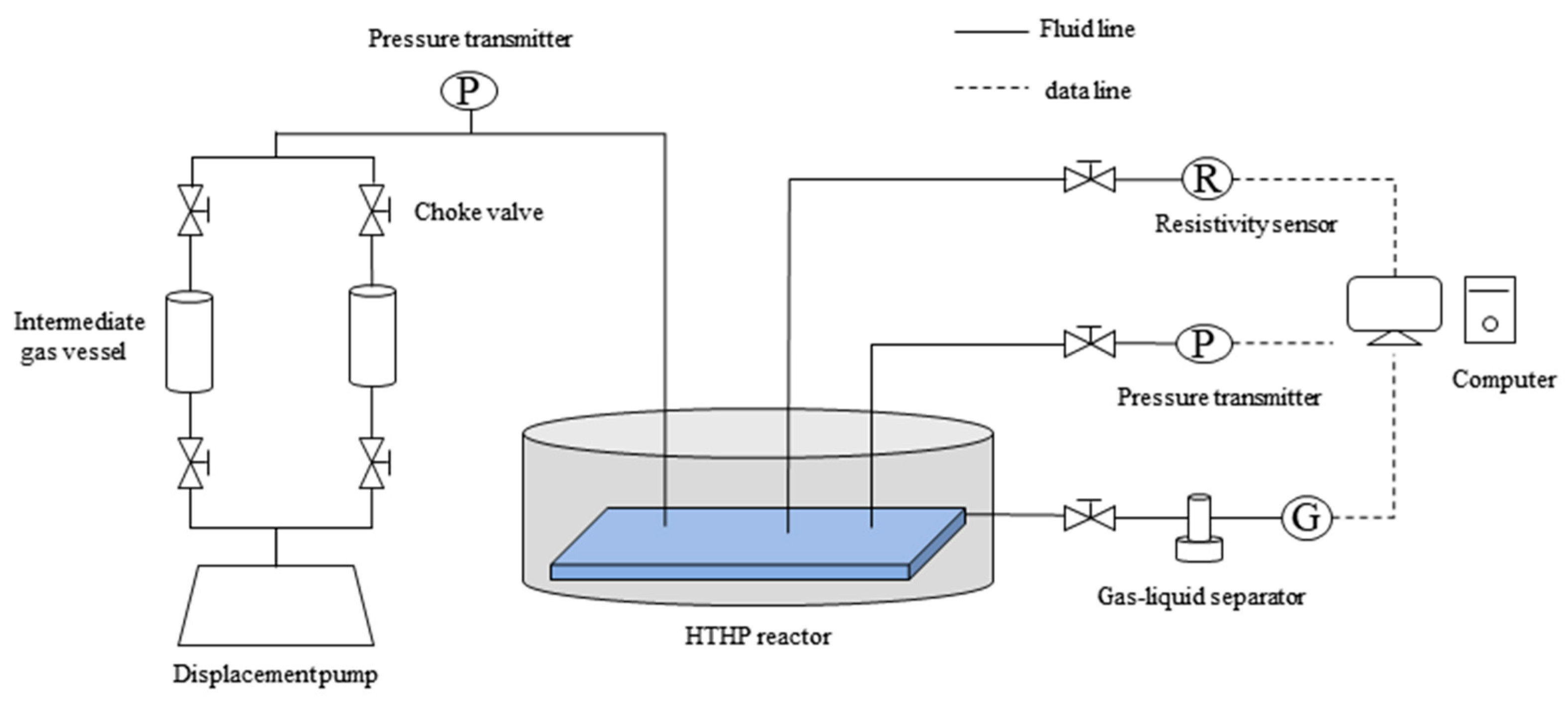
2.1. Experimental Design
2.2. Experimental Method and Procedure
2.3. Analysis of Experimental Results
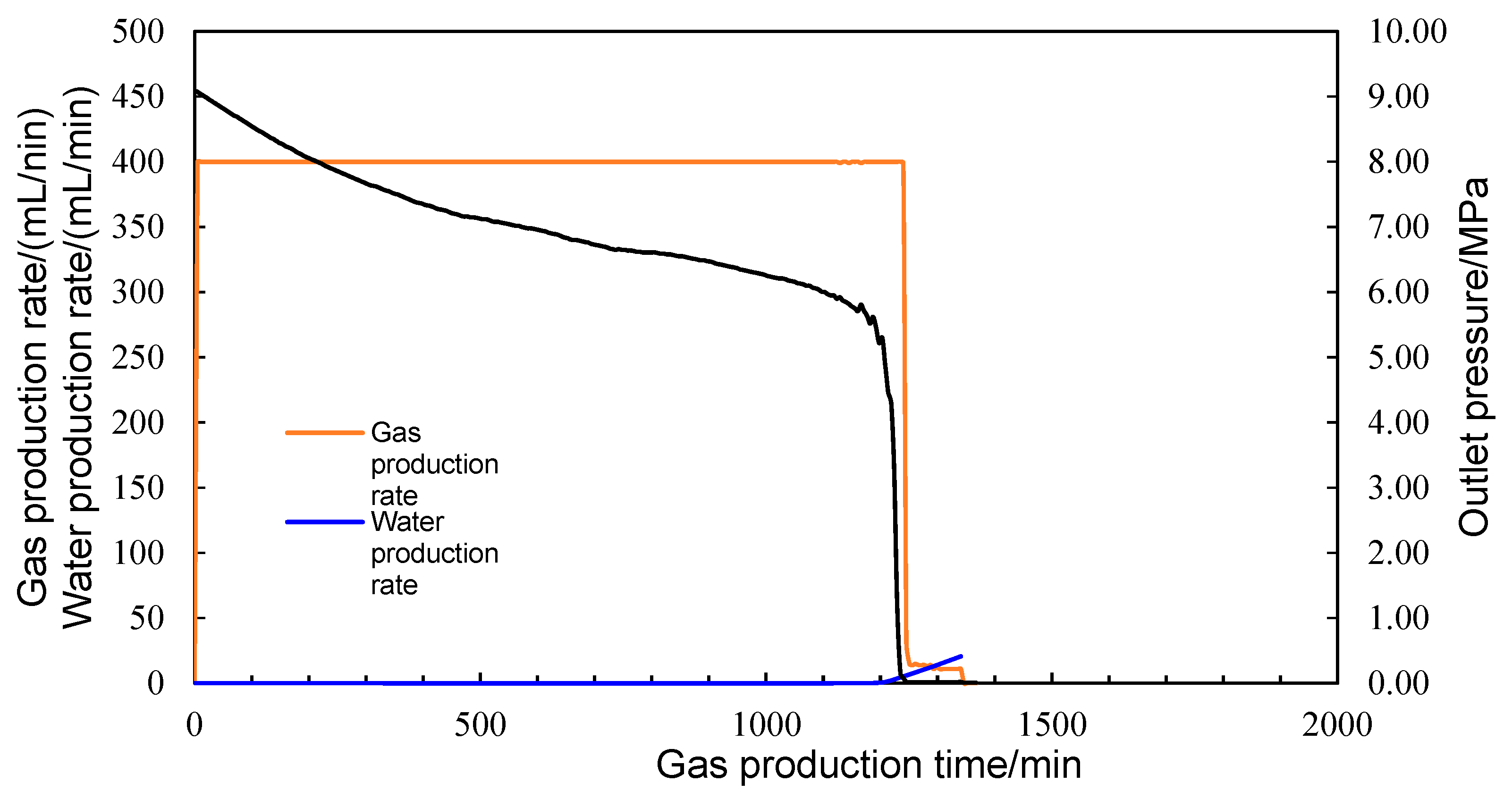
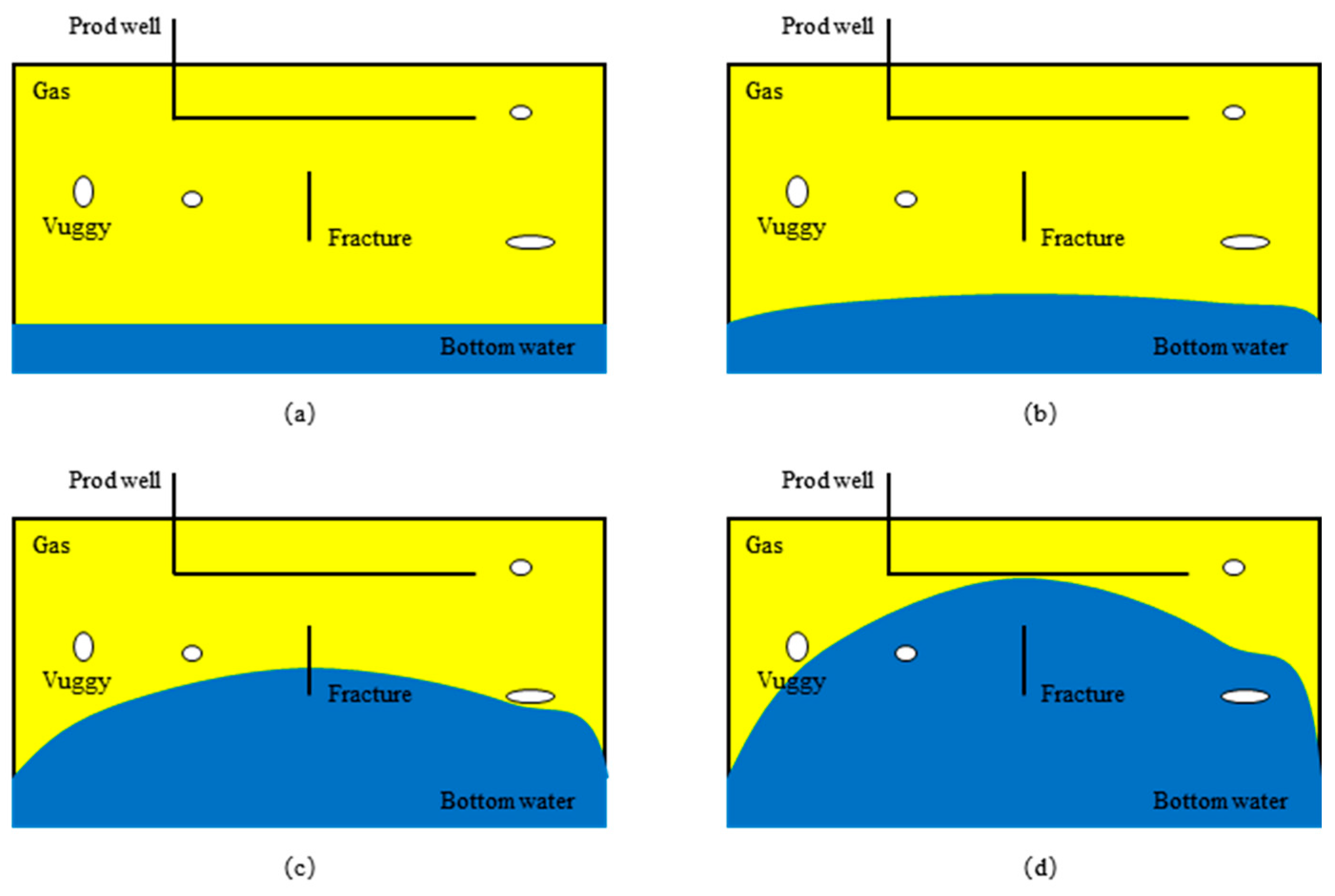
2.3.1. Constant-Rate Production
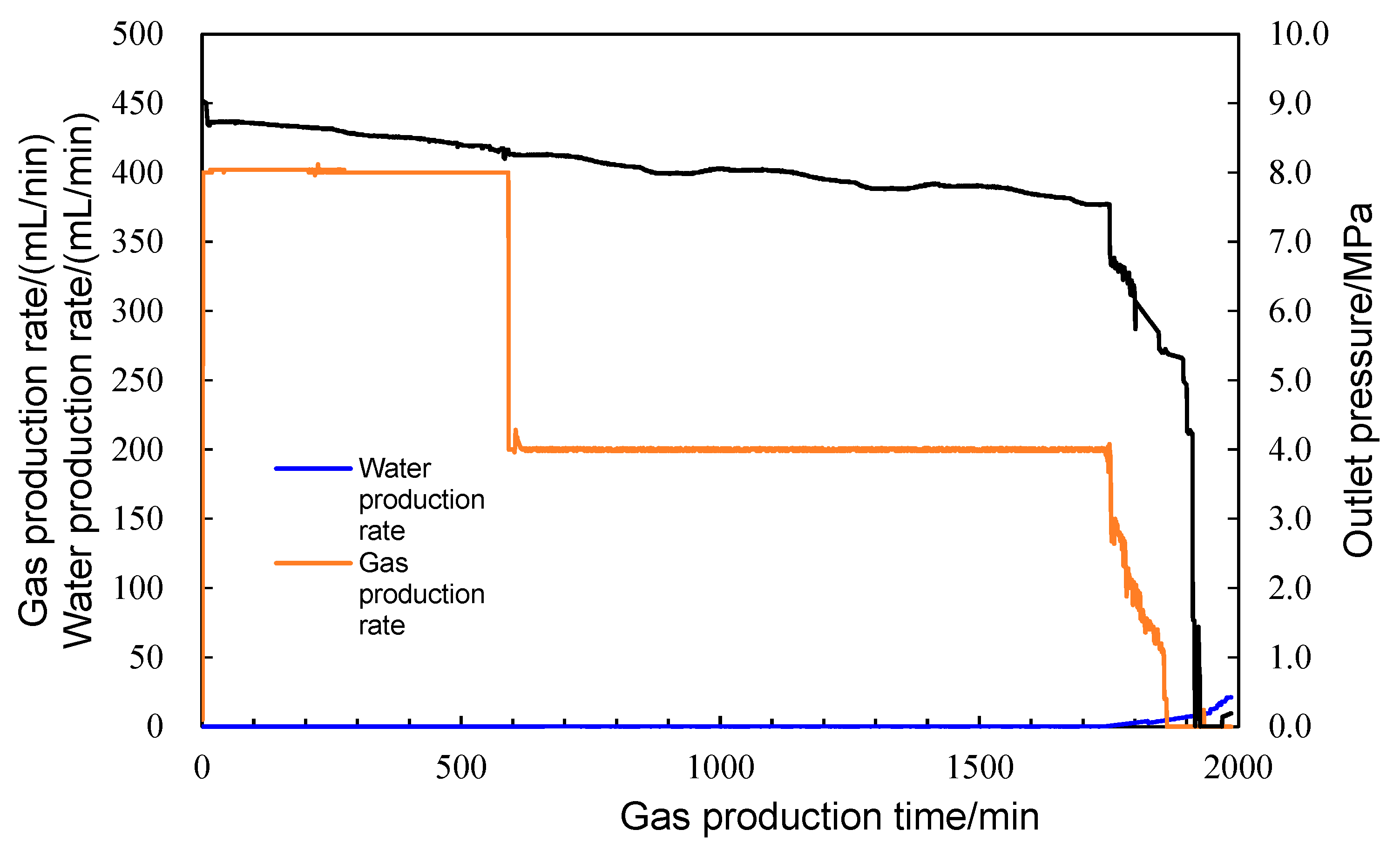
2.3.2. Gas Production at Reduced Rates After Water Breakthrough in Gas Wells
3. Multi-Scale Gas Reservoir Numerical Simulation Model
3.1. Basis of Similarity Theory
3.2. Determination of Similarity Criteria
4. Rational Production Allocation for Gas Reservoirs with Edge–Bottom Water
4.1. Design of the Model for Rational Production Allocation of Gas Wells
4.2. Rational Production Allocation
5. Conclusions
- (1)
- Based on experimental results from the 32 × 32 × 15 cm large-scale physical model and considering the similarity criteria for microscopic and macroscopic gas–water flow behaviors, the patterns of water invasion in various types of gas reservoirs with bottom water (heterogeneous porous, vuggy, and fractured-porous/vuggy reservoirs) were studied through numerical simulation at multiple scales, and reasonable single-well production allocation schemes and water invasion patterns for fractured-vuggy reservoirs were analyzed, thereby providing the basis for water control in gas reservoirs with bottom water.
- (2)
- Based on similarity theory, a multiscale analysis method spanning from large-scale physical simulation of gas reservoirs involving water invasion to single-well (small-scale) numerical simulation was established. The physical experimental parameters and numerical model parameters were calculated based on the principles of similarity criteria matching. The key numerical model parameters were corrected using large-scale physical simulation data, significantly improving the reliability of numerical models in describing water sealing mechanisms and water invasion dynamics.
- (3)
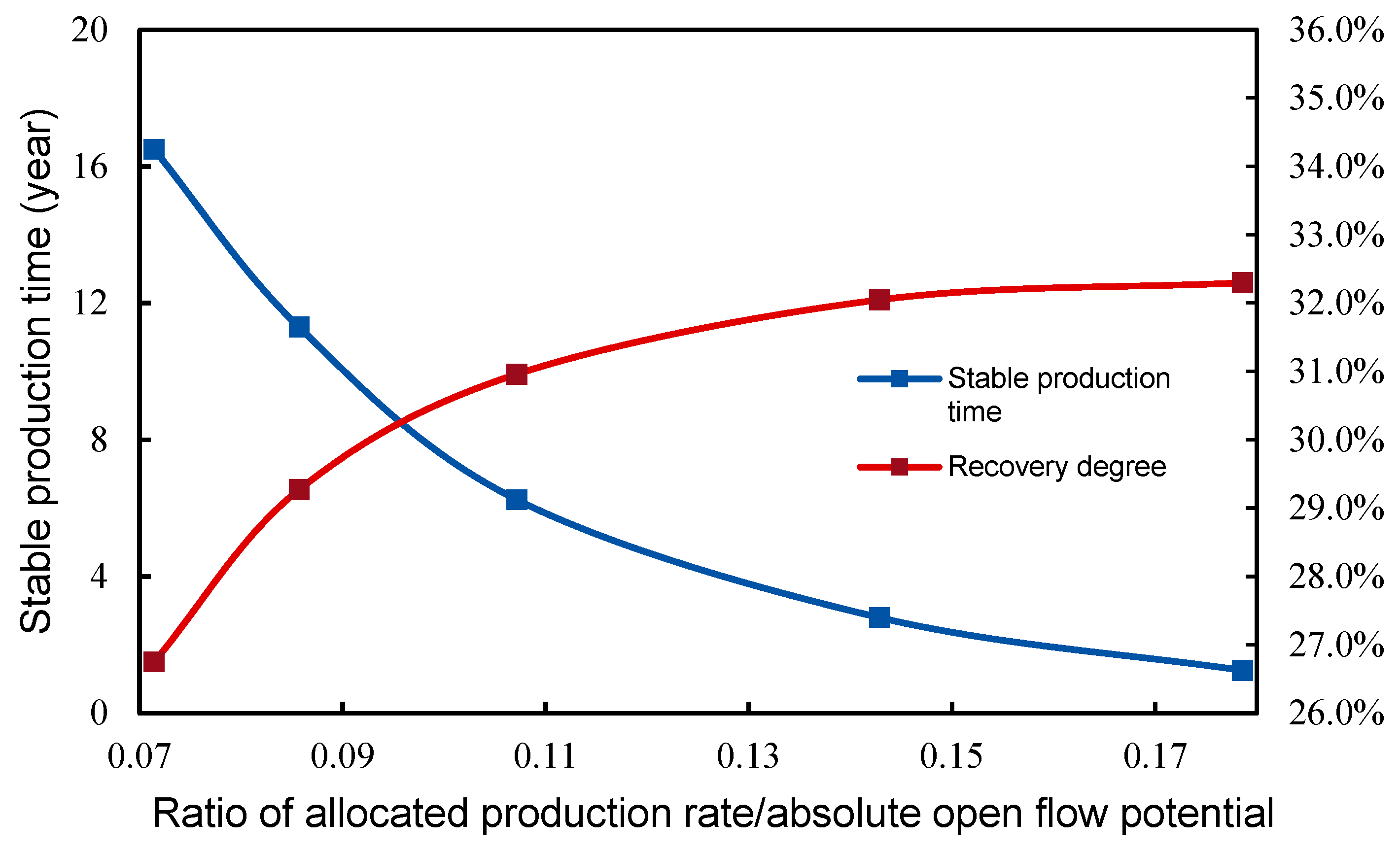
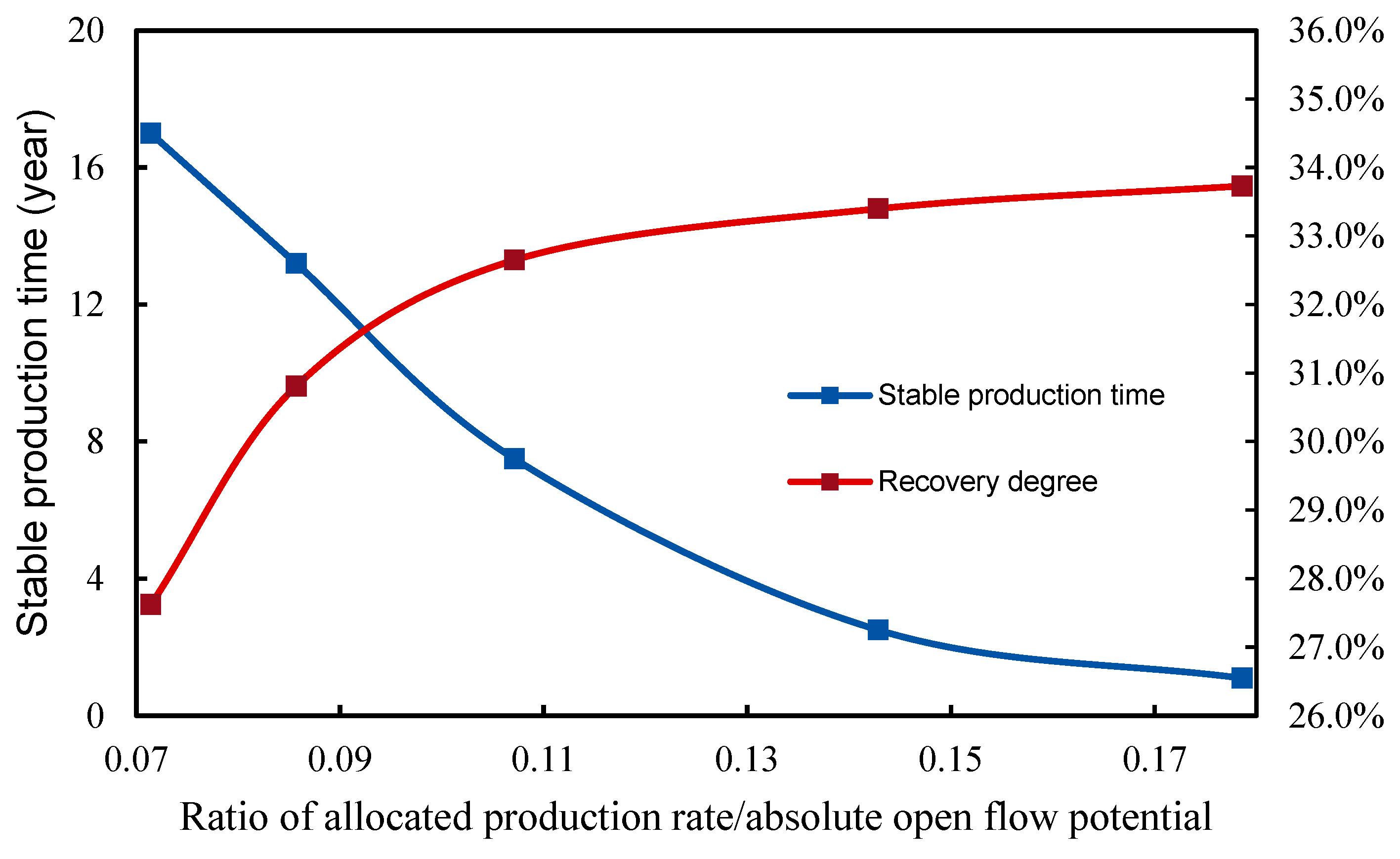
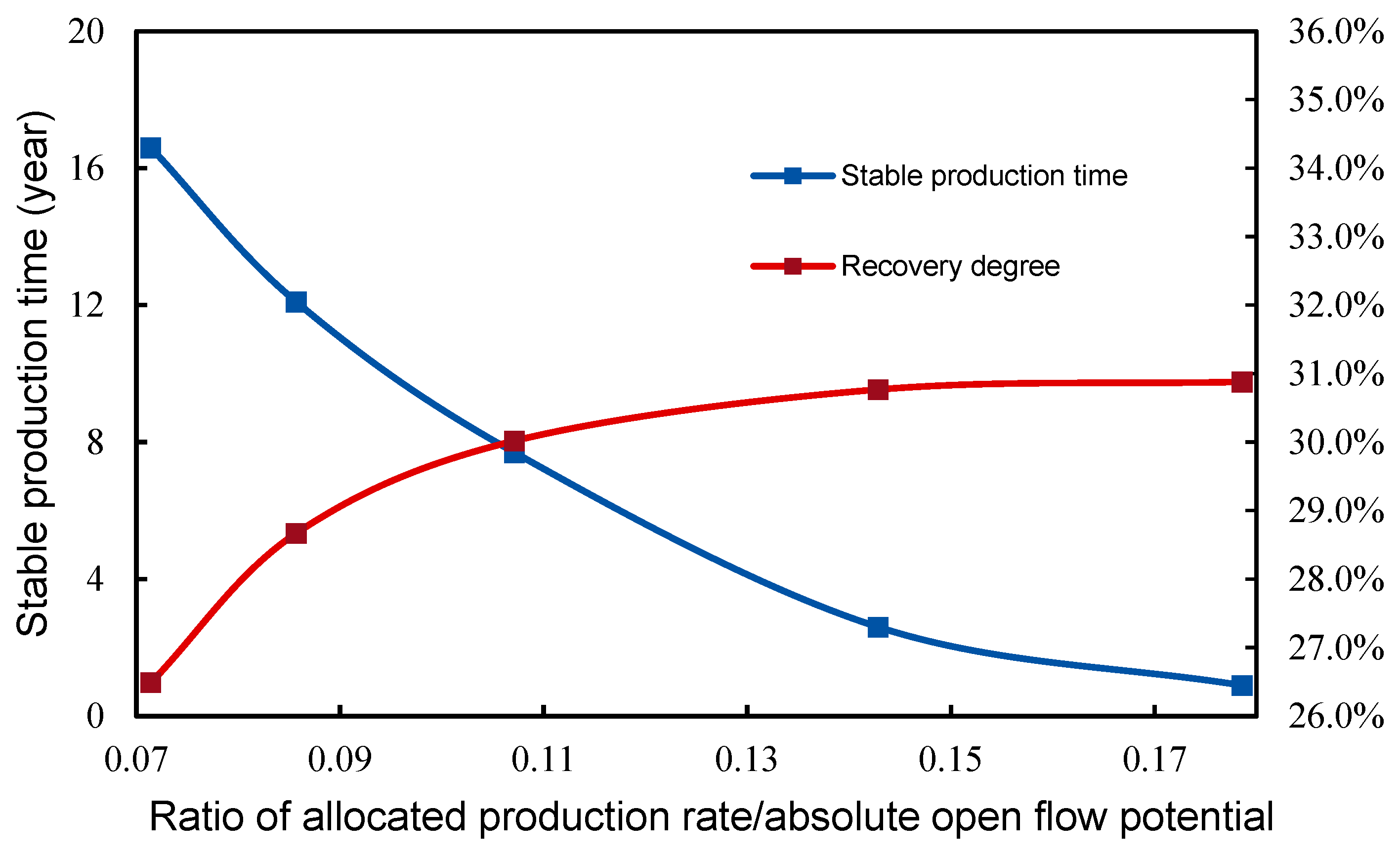
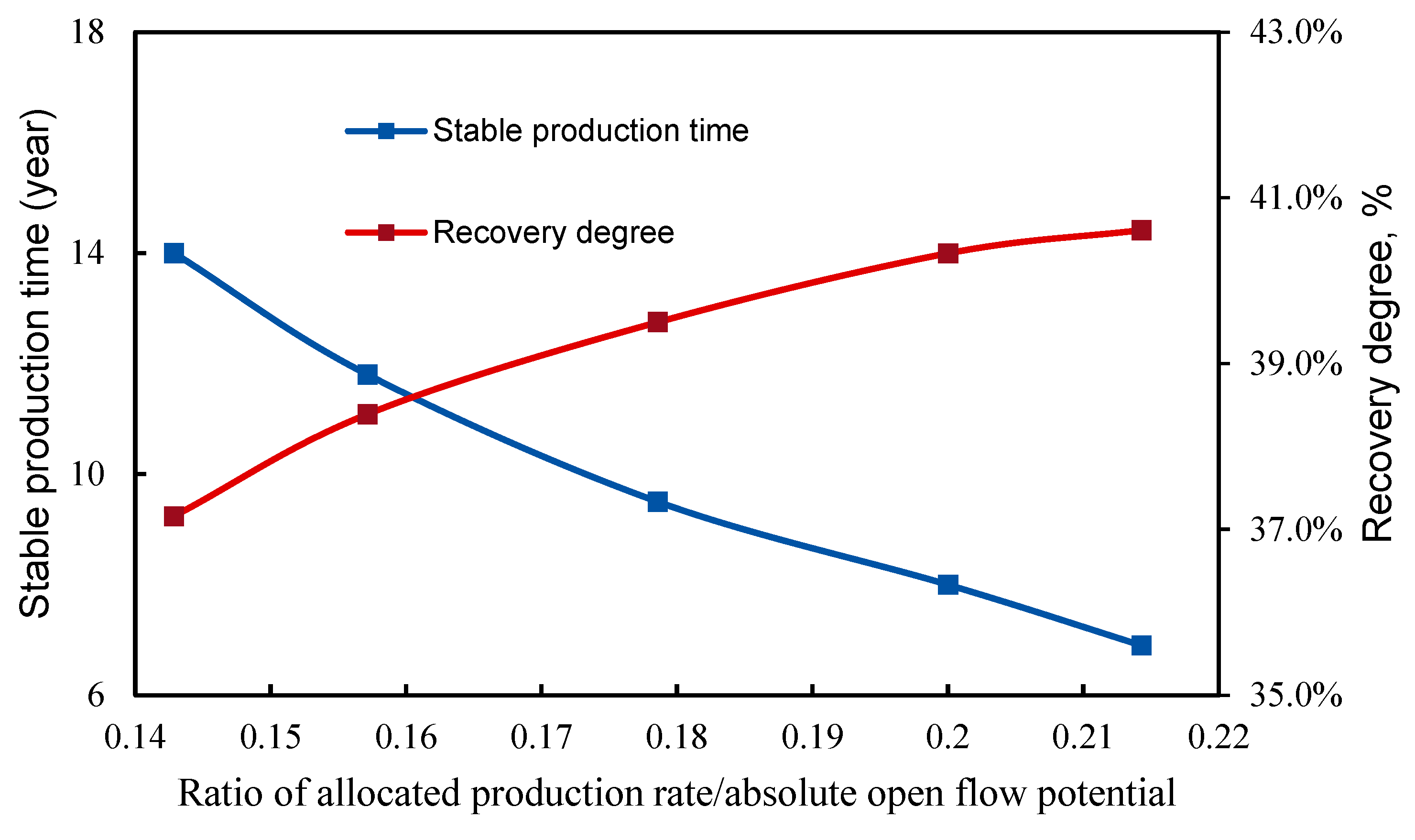
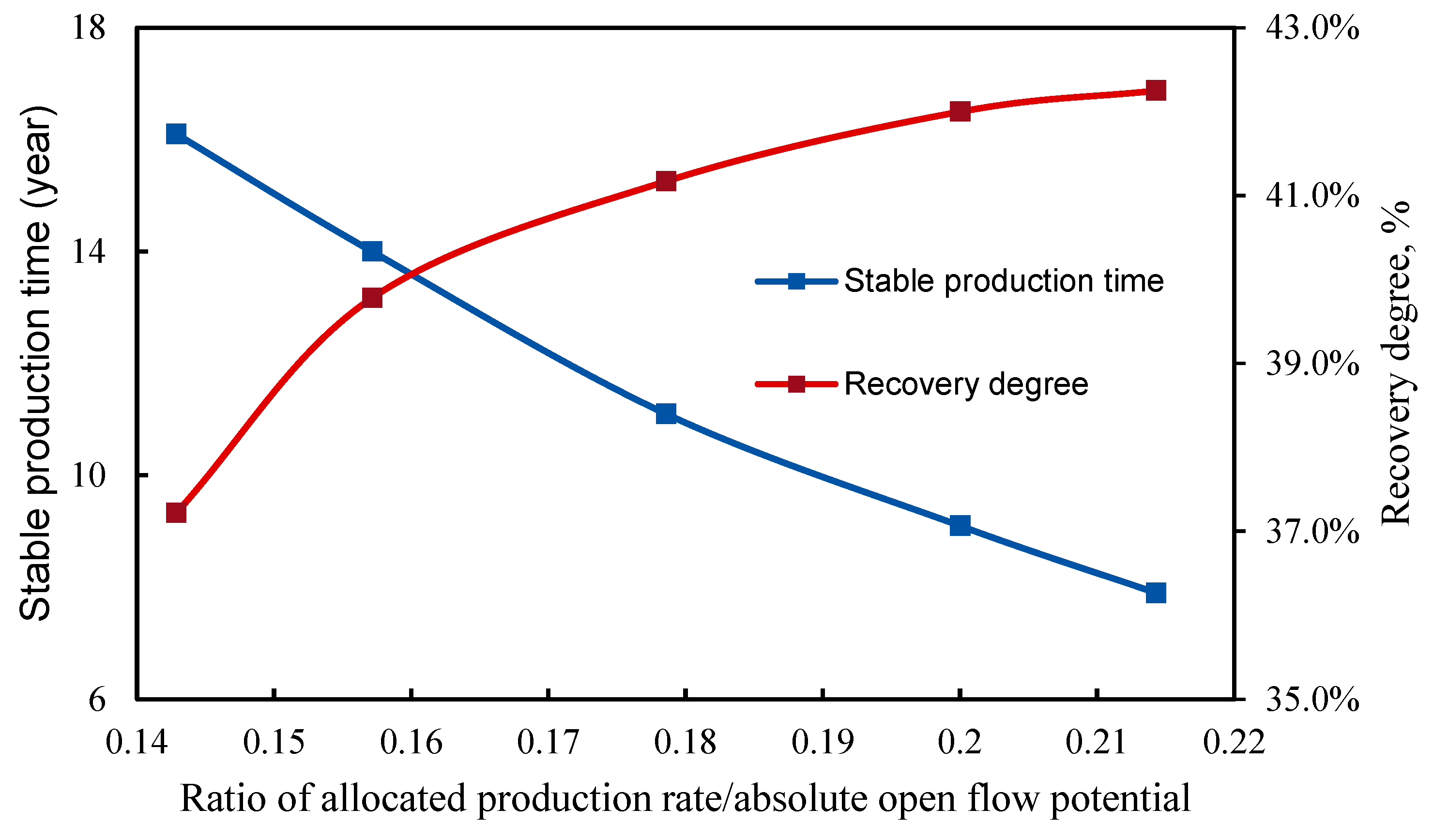
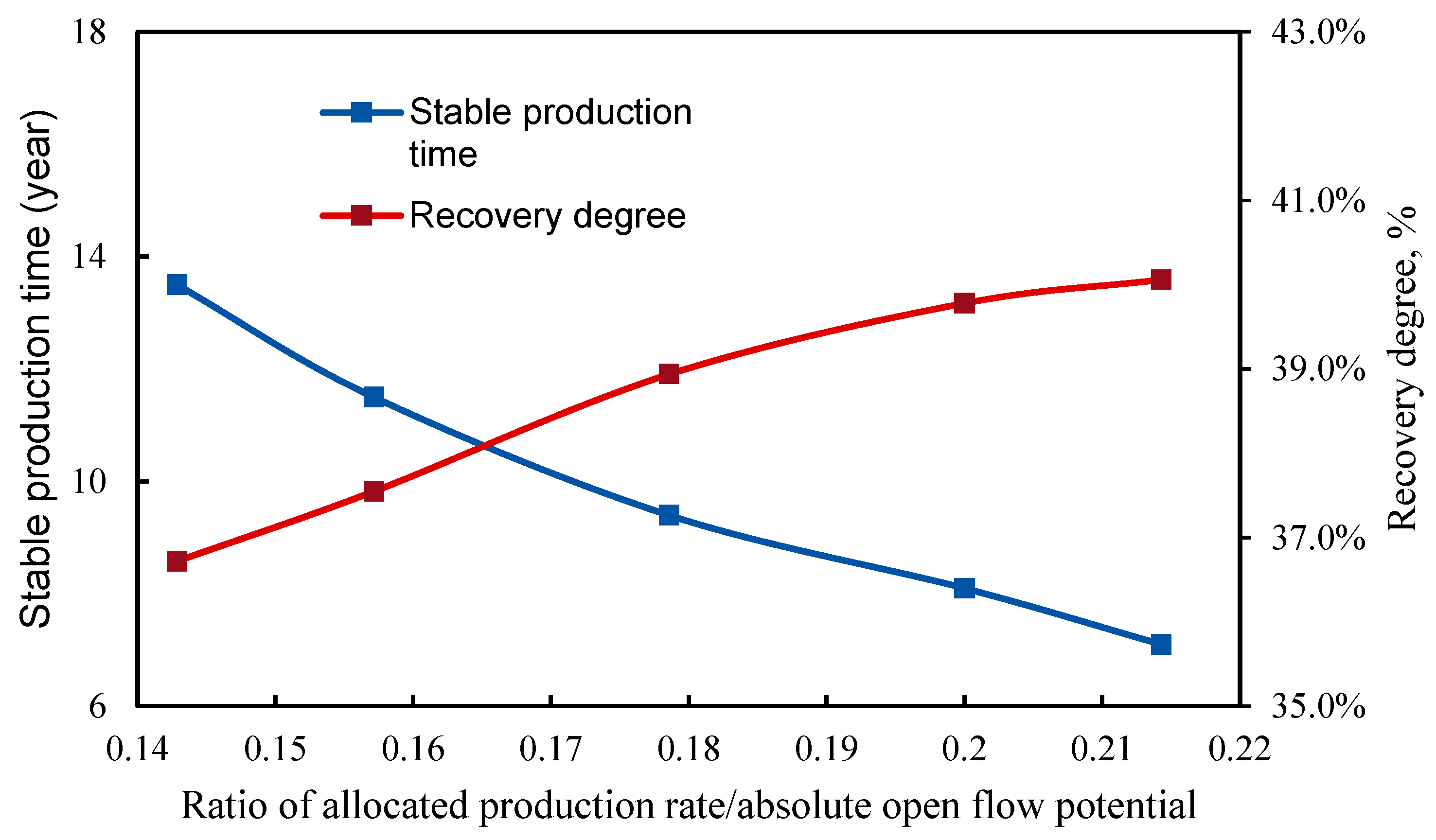
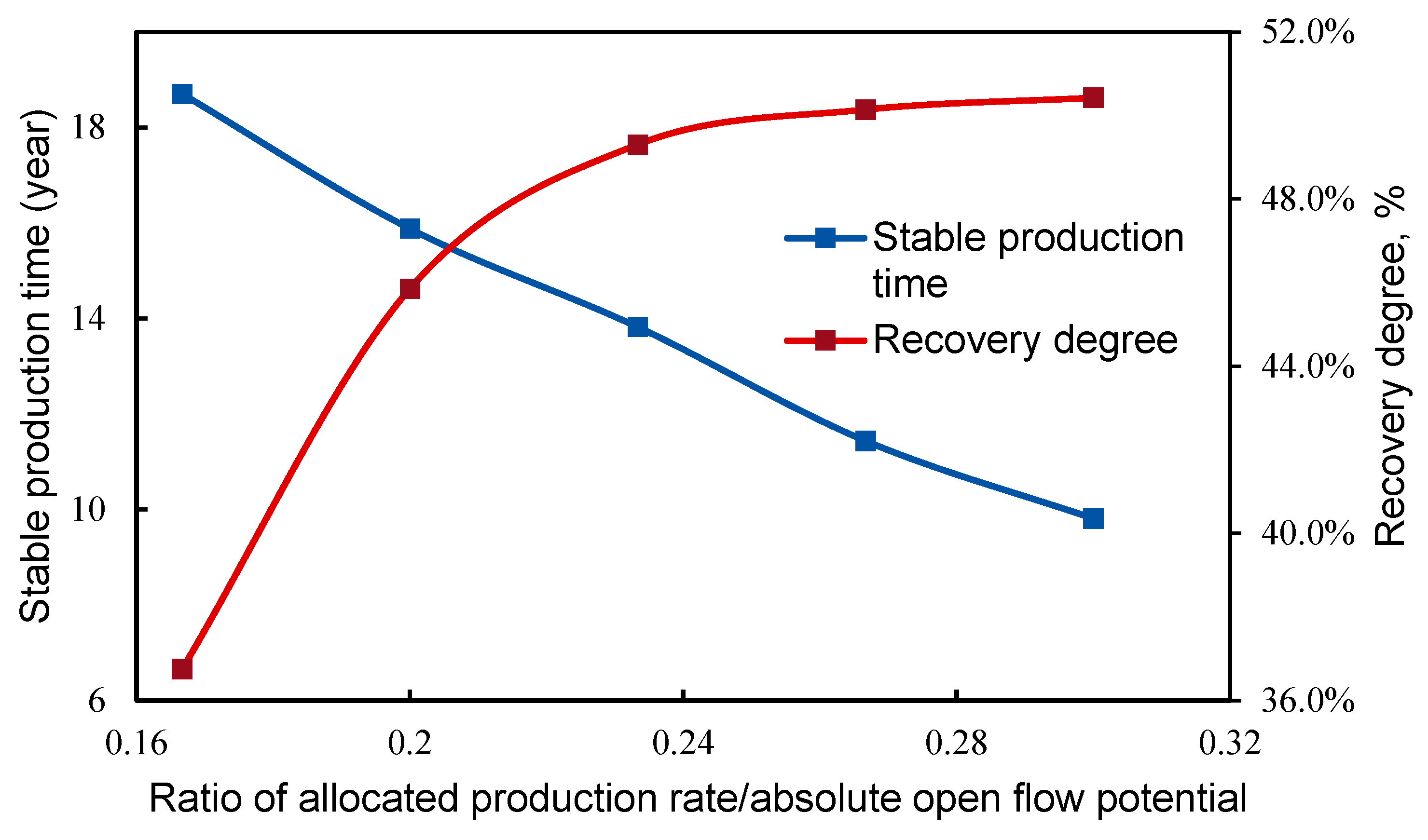
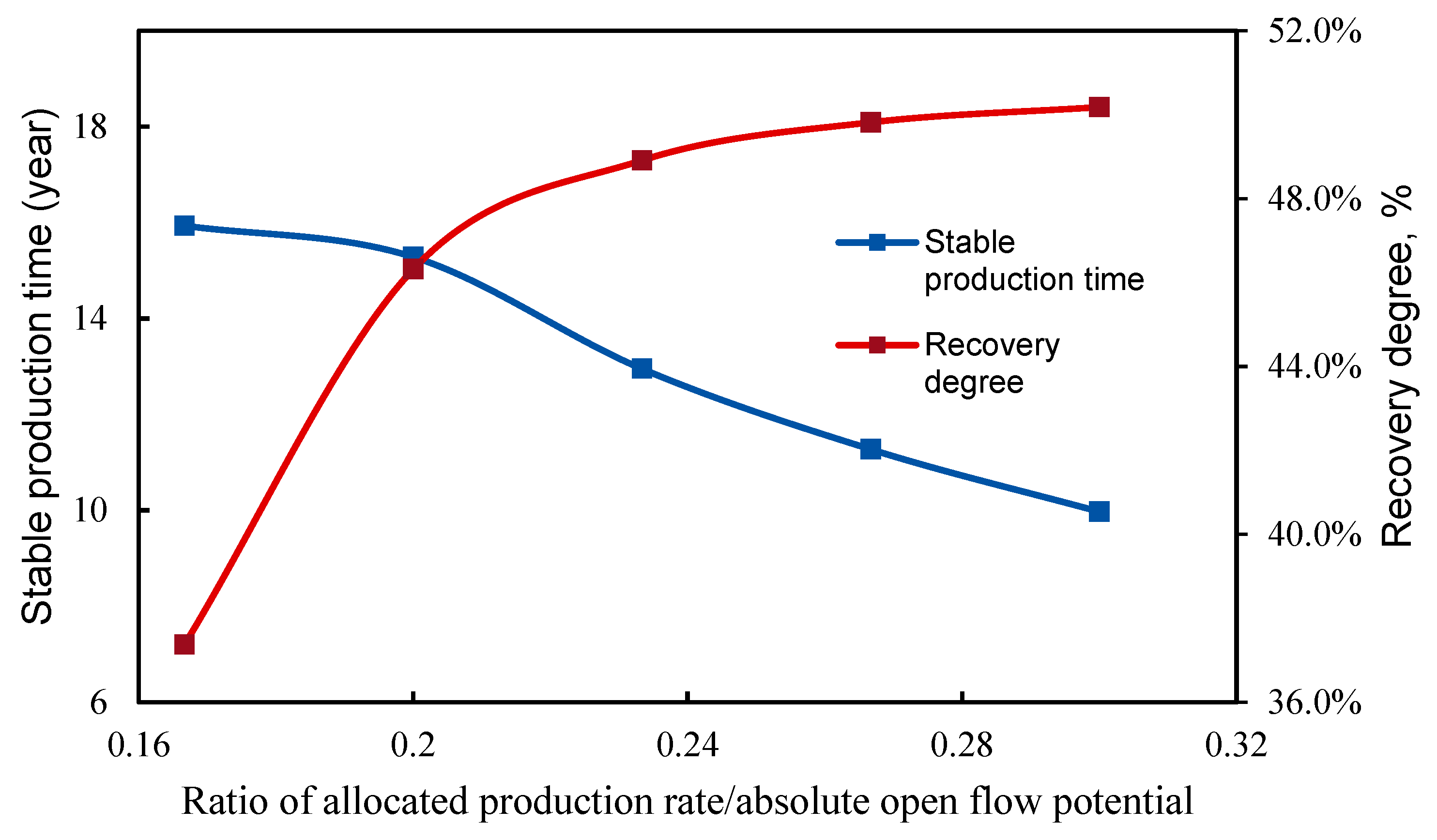
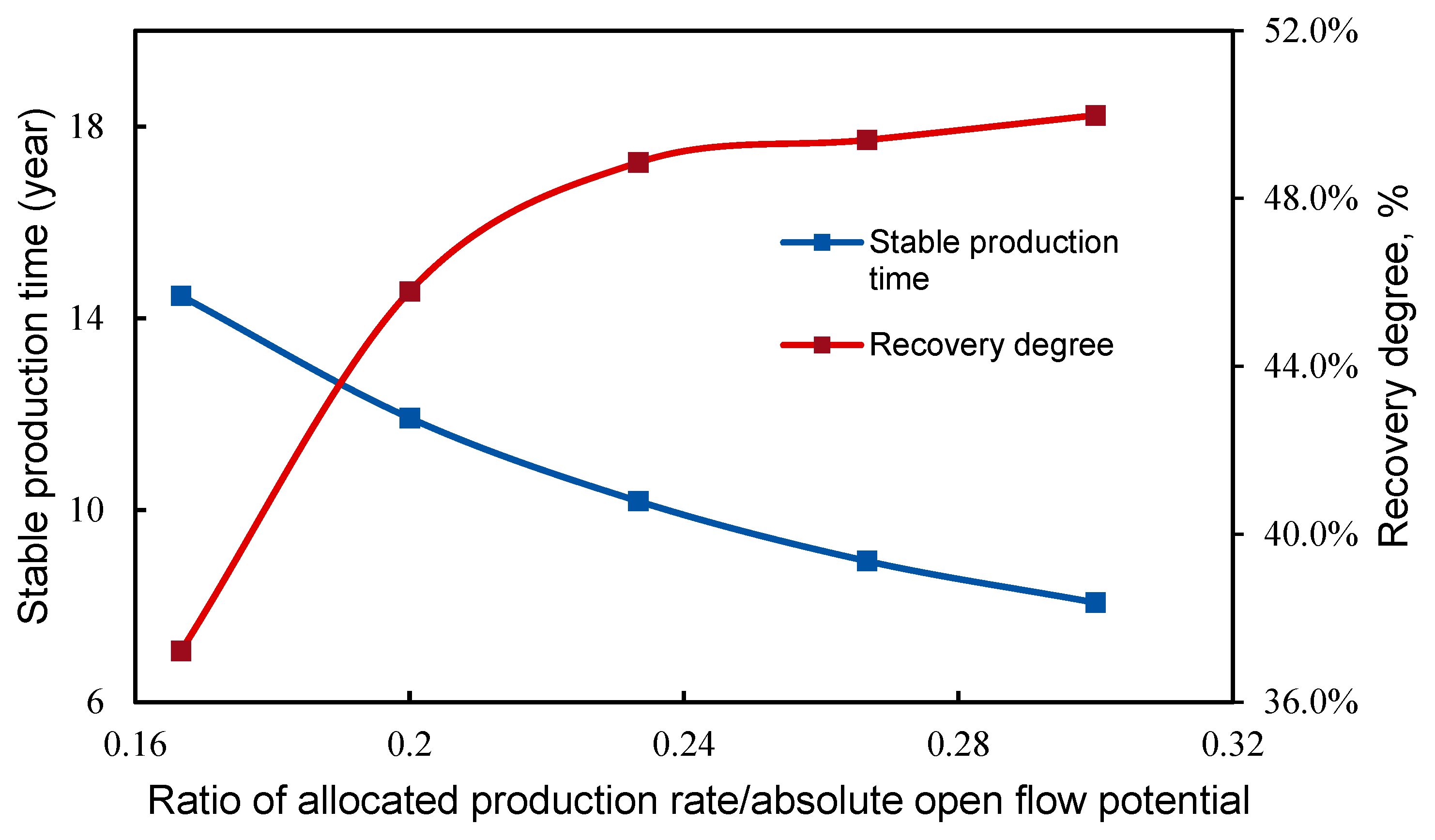
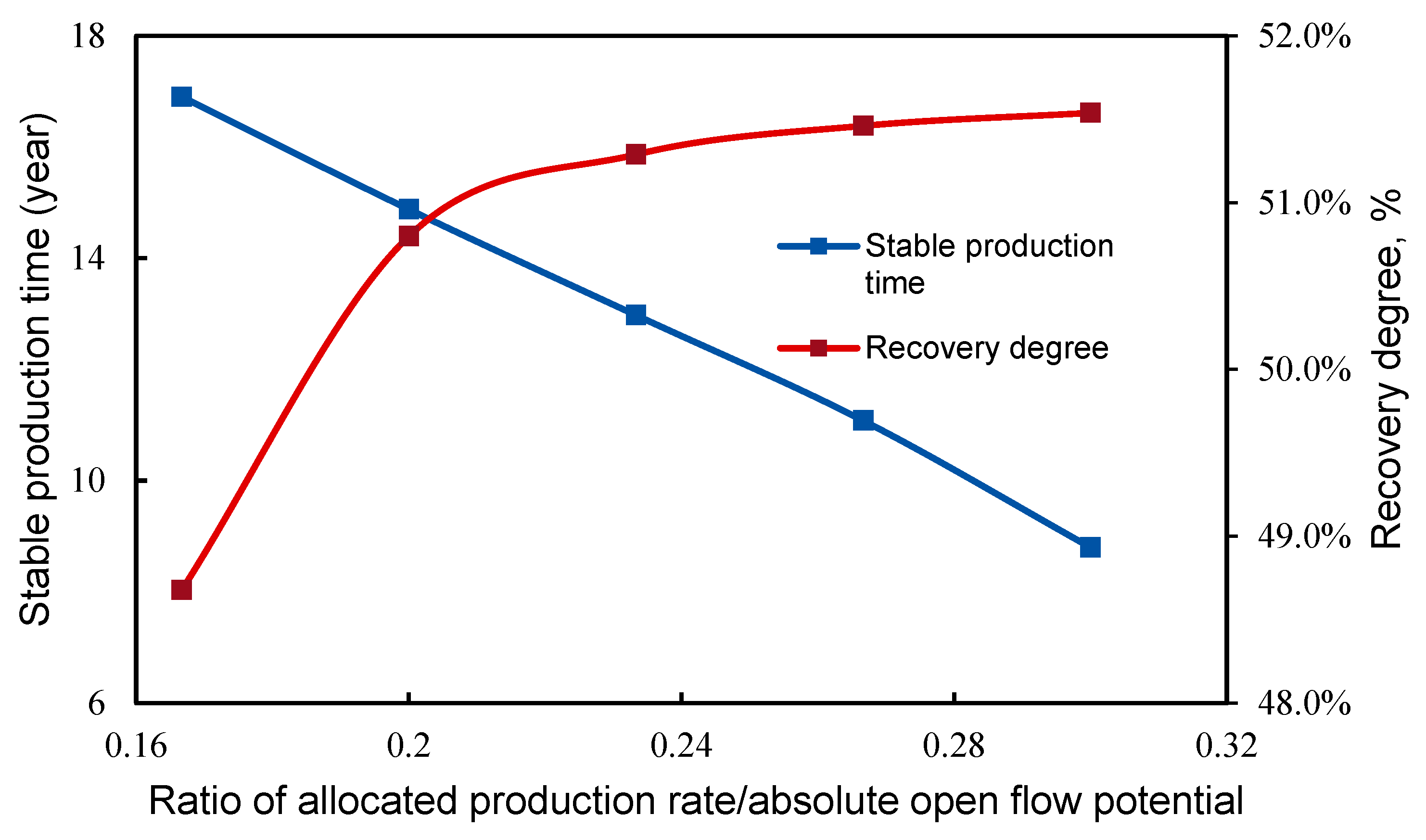
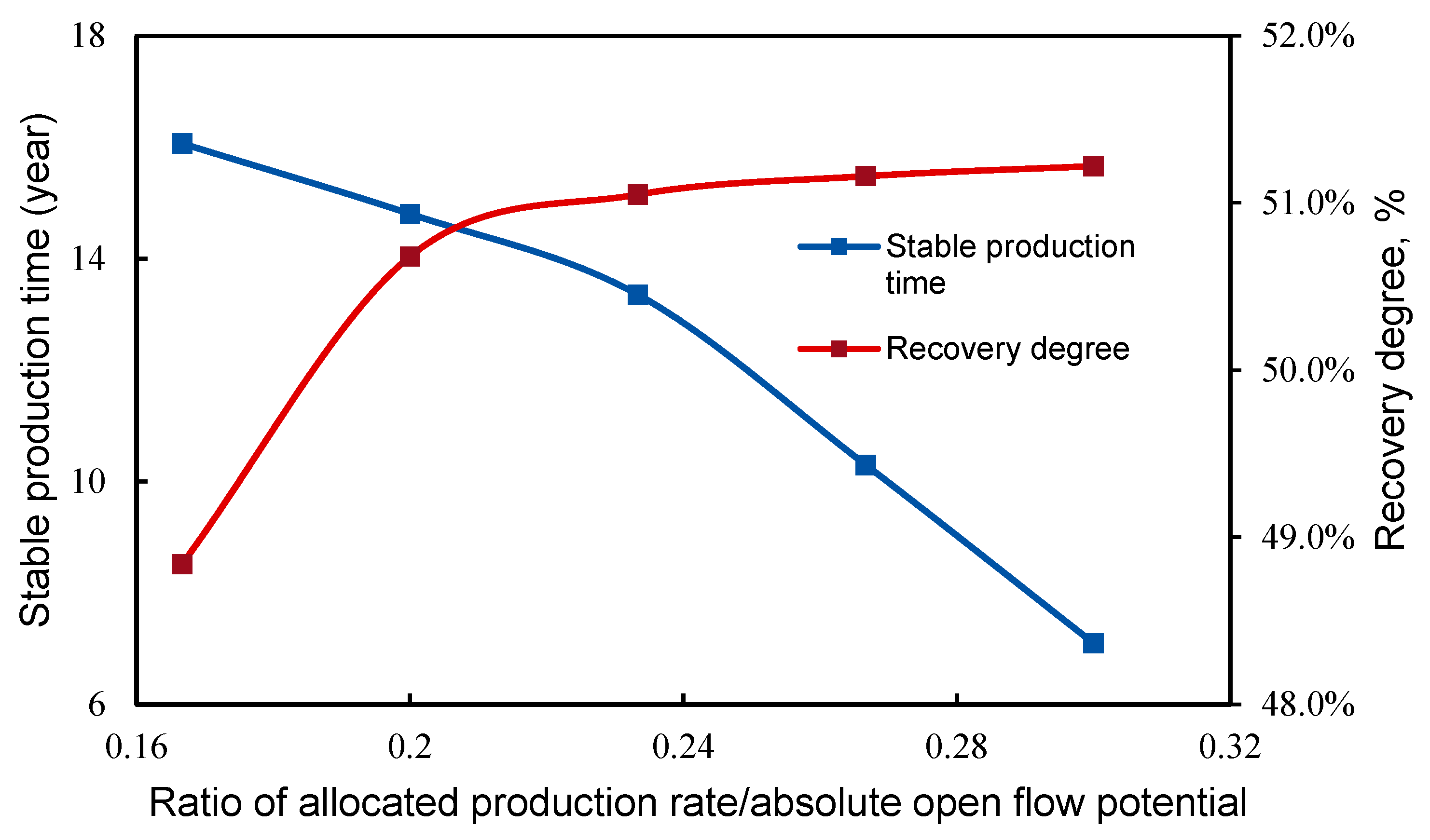
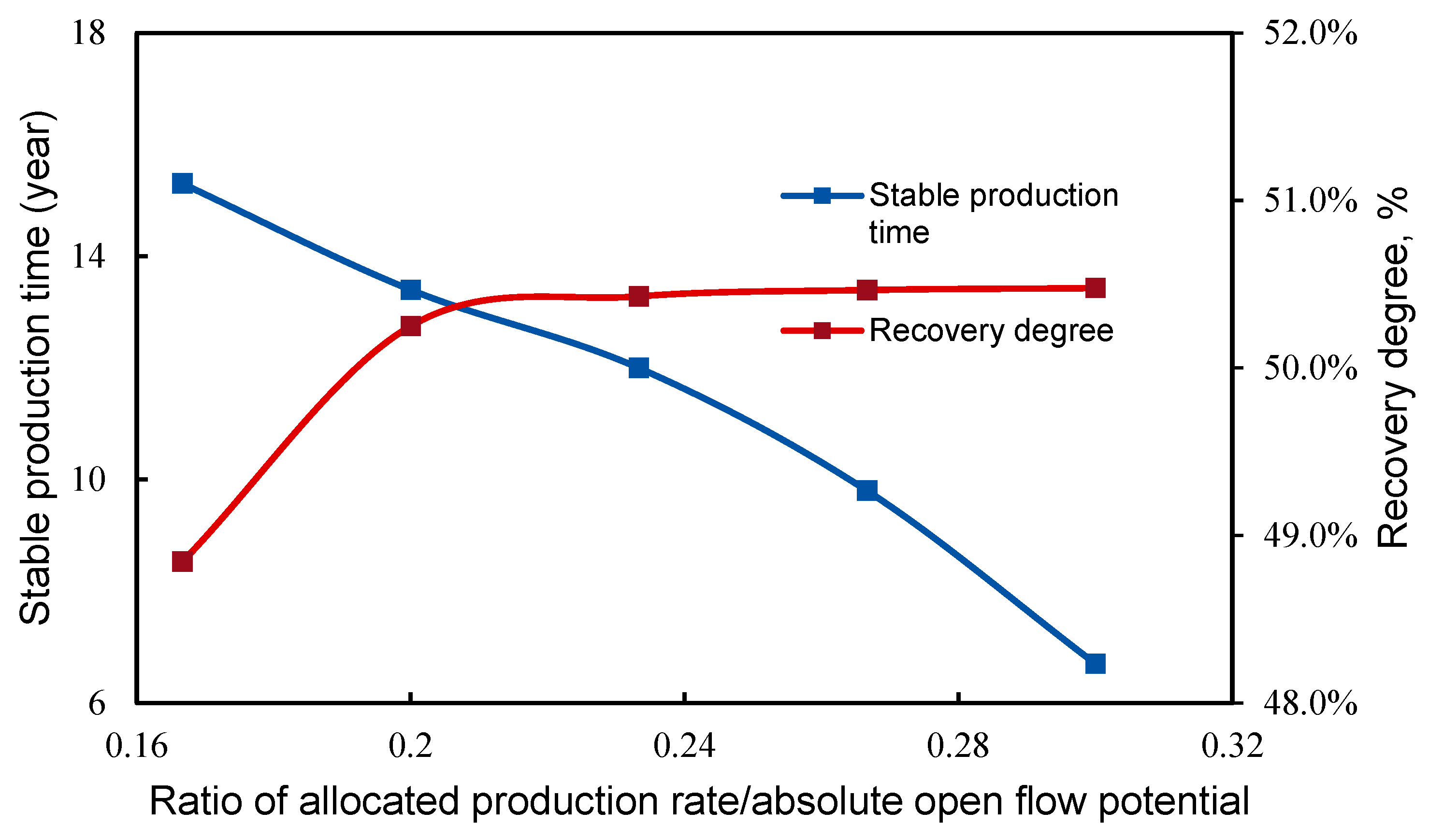
- Results from the simulation study of carbonate gas reservoirs with edge–bottom water show that the response of water energy to the allocated production rate varies significantly in different types of gas reservoirs. Porous reservoirs have poor petrophysical properties, and their recovery degree (≤34%) and stable production time are highly sensitive to the aquifer volume and production rate. Production allocation is the key factor controlling the stable production time. There is an optimal aquifer volume for porous reservoirs. Appropriate volumes of water are conducive to improving the recovery degree (up to 42%) and extending the stable production time, but excessive volumes of water can cause water channeling, resulting in poor production performance. The production indices of fractured-porous reservoirs are least affected by aquifer volume and production rate, and their stable production time and recovery degree are relatively stable. Among the various types of gas reservoirs studied in this paper, fractured-vuggy reservoirs have the best petrophysical properties and the highest recovery degree (51%), but they are most sensitive to water invasion. For such reservoirs, as the aquifer volume increases, the stable production time shortens significantly from 10–17 years to 7–15 years, and the recovery degree also declines. Therefore, the production allocation strategy must be tailored to the specific type of reservoir considered. For porous reservoirs, low production rates should be implemented to ensure stable production. For vuggy reservoirs, the production rate needs to be finely controlled, and water control measures should be optimized to properly utilize water energy while suppressing water channeling. For fractured-porous reservoirs, the production allocation scheme can be more flexible. For high-yield fractured-vuggy reservoirs, a rigid water control scheme must be developed and implemented, and the production rate must be carefully optimized to suppress water invasion.
Author Contributions
Funding
Data Availability Statement
Conflicts of Interest
References
- Ma, X. Natural gas and energy revolution: A case study of Sichuan-Chongqing gas province. Nat. Gas Ind. 2017, 37, 91–99. [Google Scholar] [CrossRef] [Scilit]
- Hu, Y.; Peng, X.; Li, Q.; Li, L.; Hu, D. Progress and development direction of technologies for deep marine carbonate gas reservoirs in the Sichuan Basin. Nat. Gas Ind. 2019, 39, 48–57. [Google Scholar] [CrossRef] [Scilit]
- Ma, Y.; Cai, X.; Li, M.; Li, H.; Zhu, D.; Qiu, N.; Pang, X.; Zeng, D.; Kang, Z.; Ma, A.; et al. Research advances on the mechanisms of reservoir formation and hydrocarbon accumulation and the oil and gas development methods of deep and ultra-deep marine carbonates. Pet. Explor. Dev. 2024, 51, 692–707. [Google Scholar] [CrossRef] [Scilit]
- Ma, X.; Yang, Y.; Wen, L.; Luo, B. Distribution and exploration direction of medium- and large-sized marine carbonate gas fields in Sichuan Basin, SW China. Pet. Explor. Dev. 2019, 46, 1–15. [Google Scholar] [CrossRef] [Scilit]
- Sun, Z. Production characteristics and the optimization of development schemes of fractured gas reservoir with edge or bottom water. Pet. Explor. Dev. 2002, 29, 69–71. [Google Scholar]
- Yony, R.; Zhang, L.; Li, T.; Peng, X.; Zhang, C.; Yang, Y. Key technologies for efficient water management in the middle and late development stages of the Cambrian Longwangmiao Formation gas reservoir in the Anyue Gas Field of the Sichuan Basin. Nat. Gas Ind. 2025, 45, 1–11. [Google Scholar]
- Dranchuk, P.; Purvis, R.; Robinson, D. Computer calculation of natural gas compressibility factors using the Standing and Katz correlation. In Proceedings of the Annual Technical Meeting, Edmonton, AB, Canada, 7–11 May 1973. [Google Scholar]
- Li, X.; Guo, Z.; Wan, Y.; Liu, X.; Zhang, M.; Xie, W.; Su, Y.; Hu, Y.; Feng, J.; Yang, B.; et al. Geological characteristics and development strategies for Cambrian Longwangmiao Formation gas reservoir in Anyue gas field, Sichuan Basin, SW China. Pet. Explor. Dev. 2017, 44, 398–406. [Google Scholar] [CrossRef] [Scilit]
- Yang, Y.B.; Xiao, W.L.; Zheng, L.L.; Lei, Q.H.; Qin, C.Z.; He, Y.A.; Liu, S.S.; Li, M.; Li, Y.M.; Zhao, J.Z.; et al. Pore throat structure heterogeneity and its effect on gas-phase seepage capacity in tight sandstone reservoirs: A case study from the Triassic Yanchang Formation, Ordos Basin. Pet. Sci. 2023, 20, 2892–2907. [Google Scholar] [CrossRef] [Scilit]
- Cheng, J.; Zhang, S.; Wang, L.; Chen, G. Numerical Simulation of Gas Production and Geomechanical Response of Heterogeneous Gas Hydrate Reservoirs. Nat. Resour. Res. 2026, 35, 459–476. [Google Scholar] [CrossRef] [Scilit]
- Wang, W.; Li, Y.; Chen, Z. Post-fracturing numerical simulation of shale gas reservoir based on complex flow mechanisms. Reserv. Eval. Dev. 2020, 10, 22–29. [Google Scholar]
- Winders, T.M.; Neville, B.W.; Swanson, K.C. Effects of hempseed cake on ruminal fermentation parameters, nutrient digestibility, nutrient flow, and nitrogen balance in finishing steers. J. Anim. Sci. 2023, 101, skac291. [Google Scholar] [CrossRef] [Scilit]
- Wang, N.; Liu, Y.; Cha, L.; Balhoff, M.T.; Prodanovic, M. Experimental investigation of trapped oil mobilization with ferrofluid. SPE J. 2022, 27, 753–770. [Google Scholar] [CrossRef] [Scilit]
- Liu, Z.; Song, X.; Fu, X.; Luo, X.; Wang, H. Energy Production Potential of Ultra-Deep Reservoirs in Keshen Gas Field, Tarim Basin: From the Perspective of Prediction of Effective Reservoir Rocks. Energies 2025, 18, 2913. [Google Scholar] [CrossRef] [Scilit]
- Perepelkin, A.; Sharifov, A.; Titov, D.; Shandrygolov, Z.; Derkach, D.; Islamov, S. Approaches to Proxy Modeling of Gas Reservoirs. Energies 2025, 18, 3881. [Google Scholar] [CrossRef] [Scilit]
- Xin, C.; Zhou, W.; Du, Y.; Zhang, L.; Wang, K.; Bai, H.; Huang, X. Physical simulation on multi-layer commingled production in Yan’an Gas Field, Ordos Basin. Sci. Technol. Eng. 2026, 26, 2370–2377. [Google Scholar]
- Ding, Z.; Jiao, S.; Li, N.; Zhang, X.; Wang, L. Study on similarity theory of developing fractured heavy oil reservoirs in buried hill by injecting hot water. Spec. Oil Gas Reserv. 2017, 24, 140–144. [Google Scholar]
- Cha, L.; Xie, C.; Feng, Q.; Balhoff, M. Geometric criteria for the snap-off of a non-wetting droplet in pore-throat channels with rectangular cross-sections. Water Resour. Res. 2021, 57, e2020WR029476. [Google Scholar] [CrossRef] [Scilit]
- Cha, L.; Feng, Q.; Wang, S.; Xu, S.; Liu, G.; Huang, W. Numerical Simulation of Fracture-flooding with Virtual Element Method in a Continuous Damage Model. Chin. J. Comput. Phys. 2023, 40, 81–90. [Google Scholar]
- Zhao, Z.; Zhou, Y.; Ma, X. Study on the similarity of the non-tectonic cracks in mud-shale to underwater shrinkage cracks in present muddy sediments. J. Xian Shiyou Univ. 2008, 23, 6–11. [Google Scholar]
- Mi, G.; Li, P.; He, L. Structure and property of metal melt I:The number of residual bonds after solid-liquid phase changes. Sci. China 2010, 53, 1571–1577. [Google Scholar]
- Wang, H.; Zhao, W.; Xia, X.; He, W.; Pang, A. Lattice Boltzmann study on oil-water flow in shale heterogeneous porous media. Pet. Sci. Bull. 2025, 10, 736–746. [Google Scholar]
- Zhan, S.; Su, Y.; Jin, Z.; Zhang, M.; Wang, W.; Hao, Y.; Li, L. Study of liquid–liquid two-phase flow in hydrophilic nanochannels by molecular simulations and theoretical modeling. Chem. Eng. J. 2020, 395, 125053. [Google Scholar] [CrossRef] [Scilit]
- Yuan, L.; Zhang, T.; Lv, X.; Zhang, C.; Wang, Y.; Wang, X.; Huang, X.; Wang, Y. Establishment and analysis of thermo-hydro-mechanical coupling similarity criteria for compressed air energy storage process in abandoned coal mines. J. China Univ. Min. Technol. 2025, 54, 743–753. [Google Scholar]
- Hu, Y.; Zhao, Y.; Yang, D. Simulation theory & method of 3D solid-liquid coupling. J. Liaoning Tech. Univ. 2007, 26, 204–206. [Google Scholar]
- Geertsma, J.; Core, G.A.; Schwarz, N. Theory of dimensionally scaled model of petroleum reservoir. Trans. AIME 1956, 207, 118–127. [Google Scholar] [CrossRef] [Scilit]
- Ge, F.; Zhang, B.; Sang, Y.; Xiao, Y.; Li, M.; Cao, T.; Fang, H.; Tang, S.; Zhu, D.; Su, Q. Key exploration technologies and efficient practice for continental tight channel sandstone gas reservoirs in the Sichuan Basin. Nat. Gas Ind. 2025, 45, 139–149. [Google Scholar]
- Yang, H.; Zhang, L.; Liu, X.; Liu, Y.; Wu, J.; Yang, J.; Wen, M.; Dai, Z.; Li, F.; Yang, S.; et al. New development model and key technological innovation for large-scale and cost-effective development of natural gas in the Sichuan Basin. Nat. Gas Ind. 2025, 45, 150–166. [Google Scholar]
- Tan, X.; Han, X.; Ren, L. A new numerical simulation model of water invasion unit in complex gas reservoirs based on intelligent optimization algorithm. Nat. Gas Ind. 2023, 43, 127–136. [Google Scholar]
- Xia, Y.; Deng, Y.; Wei, S.; Jin, Y. Numerical simulation of multi-scale coupled flow in after-fracturing shale gas reservoirs. Chin. J. Theor. Appl. Mech. 2023, 55, 616–629. [Google Scholar]



| Type | Structural Diagram | Technical Parameters |
|---|---|---|
| Fracture-pore type |  | Gas-bearing layer thickness: 13 cm; horizontal well length: 11 cm; water avoidance height: 6 cm, 4 cm; gas-bearing layer permeability: 0.1 mD; pore size: 2–5 mm; plane porosity: 5%; fracture size: 7 cm × 3 cm × 0.1 cm; number of fractures: 3 × 3; bottom water layer thickness: 2 cm; permeability: 1000 mD. |
| Parameter | Value | Unit |
|---|---|---|
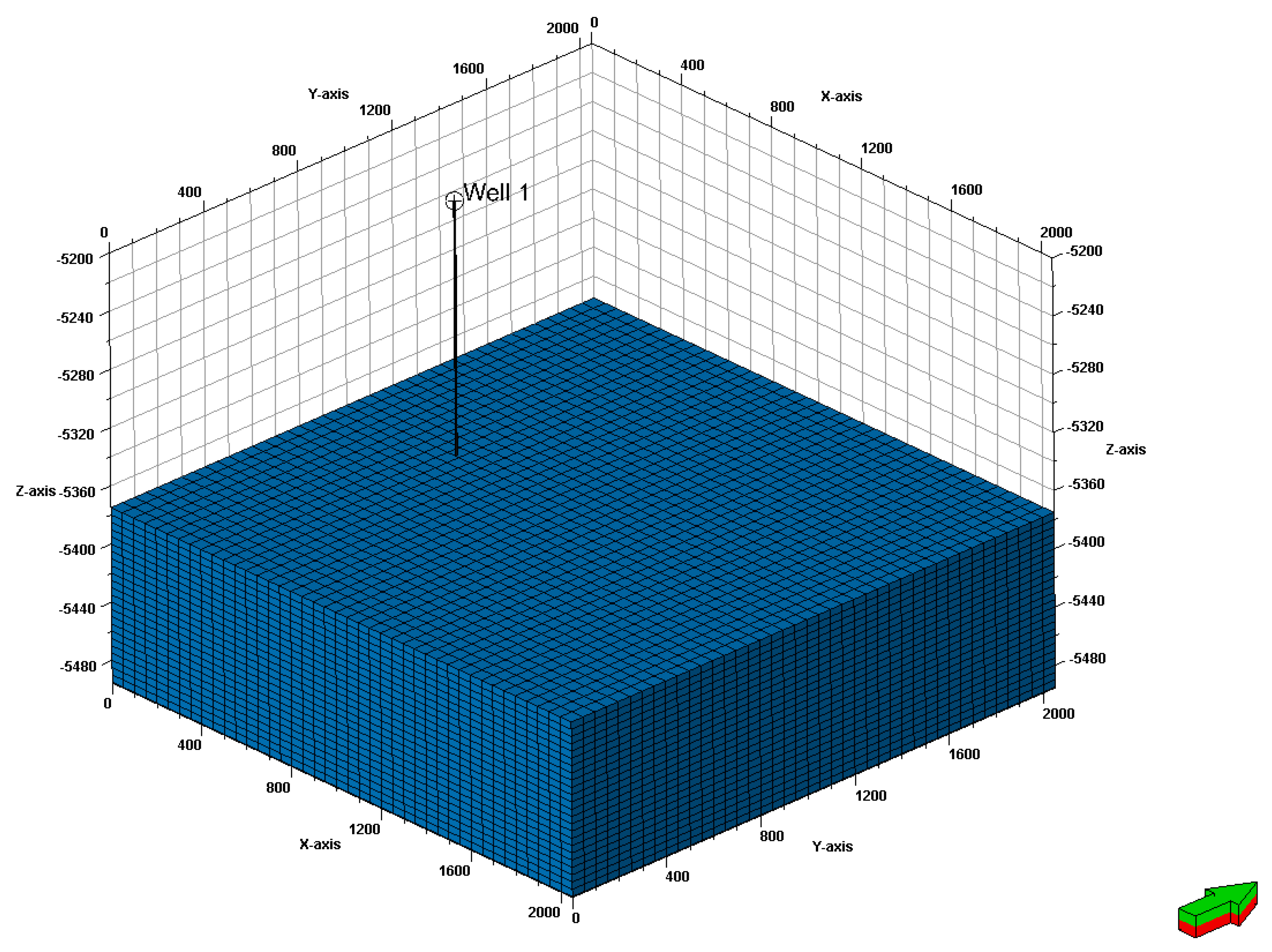
| Grid number | 42 × 42 × 5 | / |
| Grid size | 50 × 50 × 4 | m |
| Top depth | 5400 | m |
| Porosity | 2.5–3.5 | % |
| Permeability | 0.02–0.1 | mD |
| Pressure (MPa) | Volume Coefficient | Viscosity (cp) |
|---|---|---|
| 22.3 | 0.0091 | 0.0181 |
| 27.4 | 0.0074 | 0.0198 |
| 32.5 | 0.0063 | 0.0218 |
| 37.6 | 0.0054 | 0.0238 |
| 41.6 | 0.0049 | 0.0256 |
| 49.8 | 0.0041 | 0.0295 |
| 54.8 | 0.0037 | 0.0321 |
| 58.9 | 0.0035 | 0.0343 |
| 62.9 | 0.0032 | 0.0366 |
| 67 | 0.003 | 0.039 |
| 68 | 0.003 | 0.0396 |
| 71.1 | 0.0029 | 0.0415 |
| 74.1 | 0.0028 | 0.0434 |
| 78.1 | 0.0027 | 0.0441 |
| Water Saturation Sw | Gas Relative Permeability krg | Water Relative Permeability krw | Capillary Pressure Pc |
|---|---|---|---|
| 0.2 | 0.8 | 0 | 5 |
| 0.25 | 0.7 | 0.01 | 3.2 |
| 0.3 | 0.6 | 0.02 | 2 |
| 0.35 | 0.5 | 0.03 | 1.2 |
| 0.4 | 0.41 | 0.05 | 0.7 |
| 0.45 | 0.32 | 0.08 | 0.4 |
| 0.5 | 0.24 | 0.12 | 0.2 |
| 0.55 | 0.17 | 0.18 | 0.1 |
| 0.6 | 0.11 | 0.26 | 0.05 |
| 0.65 | 0.06 | 0.36 | 0.02 |
| 0.7 | 0.03 | 0.48 | 0.01 |
| 0.75 | 0 | 0.62 | 0 |
Disclaimer/Publisher’s Note: The statements, opinions and data contained in all publications are solely those of the individual author(s) and contributor(s) and not of MDPI and/or the editor(s). MDPI and/or the editor(s) disclaim responsibility for any injury to people or property resulting from any ideas, methods, instructions or products referred to in the content. |
© 2026 by the authors. Licensee MDPI, Basel, Switzerland. This article is an open access article distributed under the terms and conditions of the Creative Commons Attribution (CC BY) license.
Share and Cite
Cha, L.; Zhang, L.; Chen, P.; Shi, H.; Wang, S.; Luo, Y.; Xing, Y.; Wang, Z.; Guo, Q. Research on Large-Scale Experiments and Optimal Production Allocation in Carbonate Edge–Bottom Water Gas Reservoirs. Energies 2026, 19, 1841. https://doi.org/10.3390/en19081841
Cha L, Zhang L, Chen P, Shi H, Wang S, Luo Y, Xing Y, Wang Z, Guo Q. Research on Large-Scale Experiments and Optimal Production Allocation in Carbonate Edge–Bottom Water Gas Reservoirs. Energies. 2026; 19(8):1841. https://doi.org/10.3390/en19081841
Chicago/Turabian StyleCha, Luming, Lin Zhang, Pengyu Chen, Haidong Shi, Siqi Wang, Yi Luo, Yuzhong Xing, Zijie Wang, and Qimin Guo. 2026. "Research on Large-Scale Experiments and Optimal Production Allocation in Carbonate Edge–Bottom Water Gas Reservoirs" Energies 19, no. 8: 1841. https://doi.org/10.3390/en19081841
APA StyleCha, L., Zhang, L., Chen, P., Shi, H., Wang, S., Luo, Y., Xing, Y., Wang, Z., & Guo, Q. (2026). Research on Large-Scale Experiments and Optimal Production Allocation in Carbonate Edge–Bottom Water Gas Reservoirs. Energies, 19(8), 1841. https://doi.org/10.3390/en19081841