Transient Analysis Framework for Heat Pipe Reactors Based on the MOOSE and Its Validation with the KRUSTY Reactor

 , and
, and
Abstract
1. Introduction
2. Theoretical Models and Framework
2.1. Core Heat Transfer Module
2.2. Point Kinetics Module
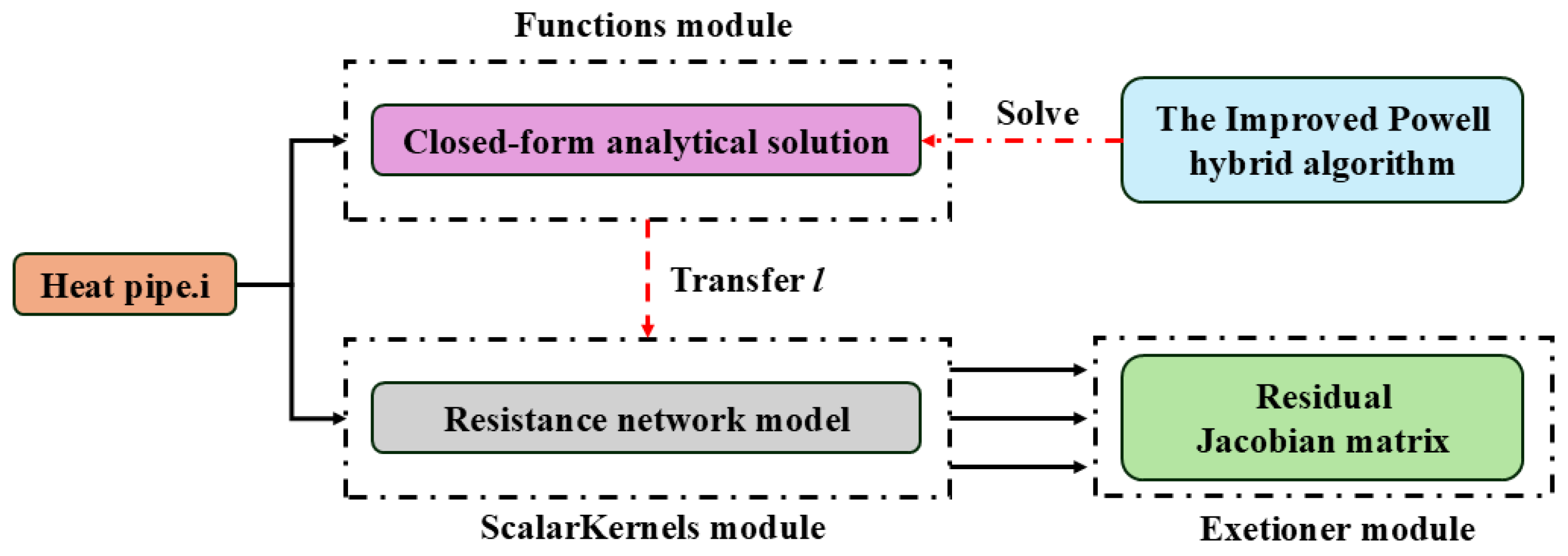
2.3. Heat Pipe Model
2.3.1. Thermal Resistance Network
2.3.2. Frozen Startup
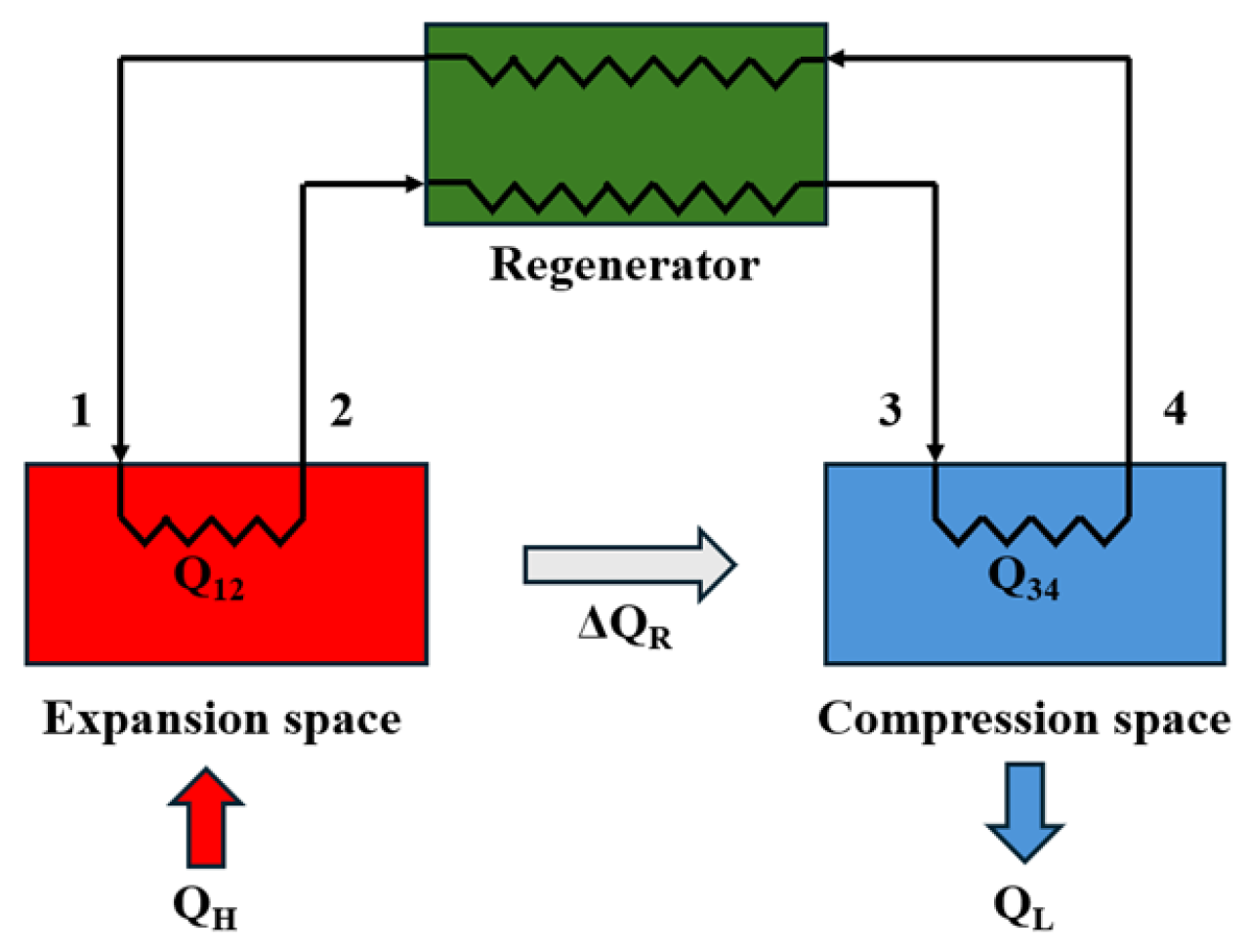
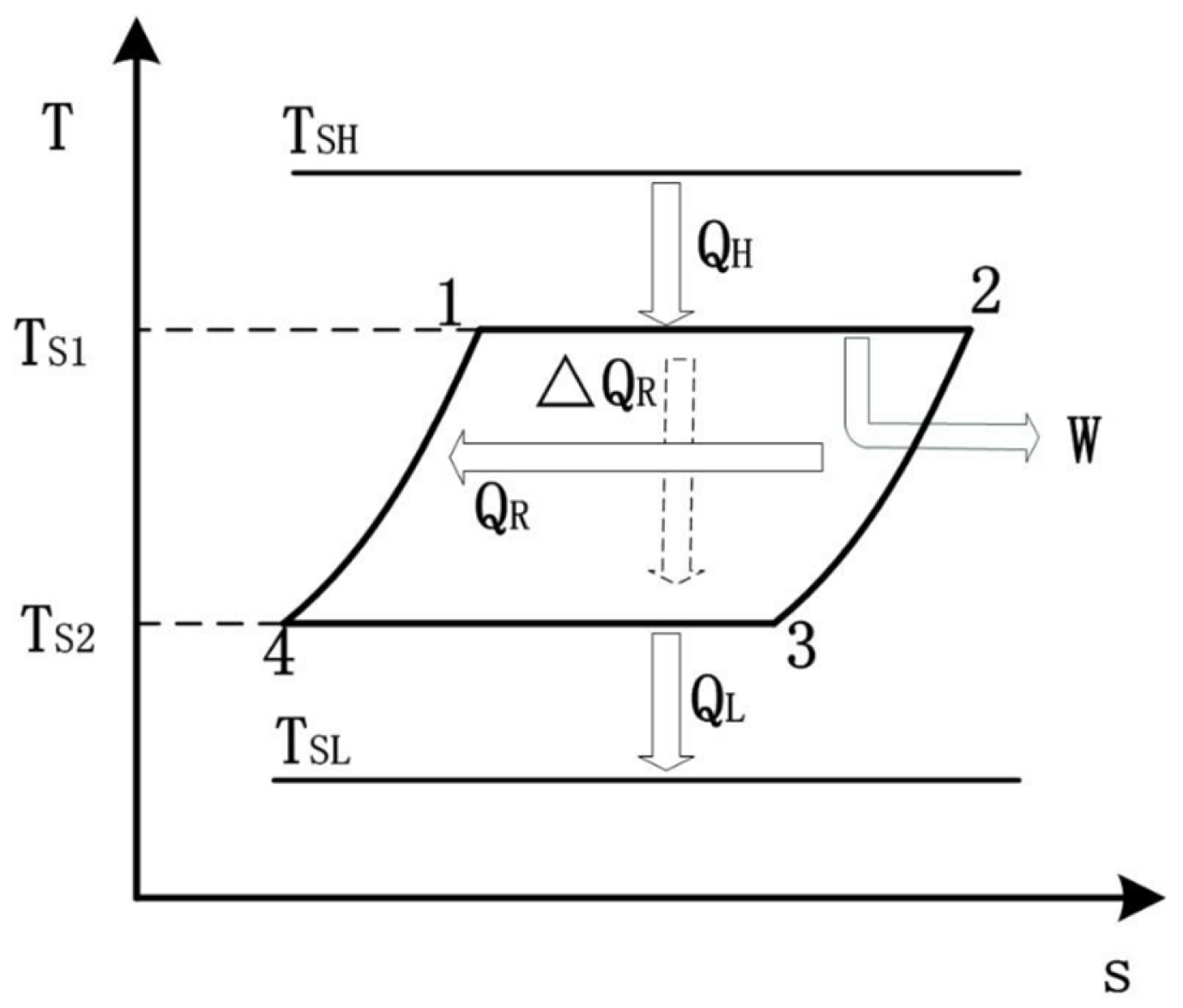
2.4. Stirling Model
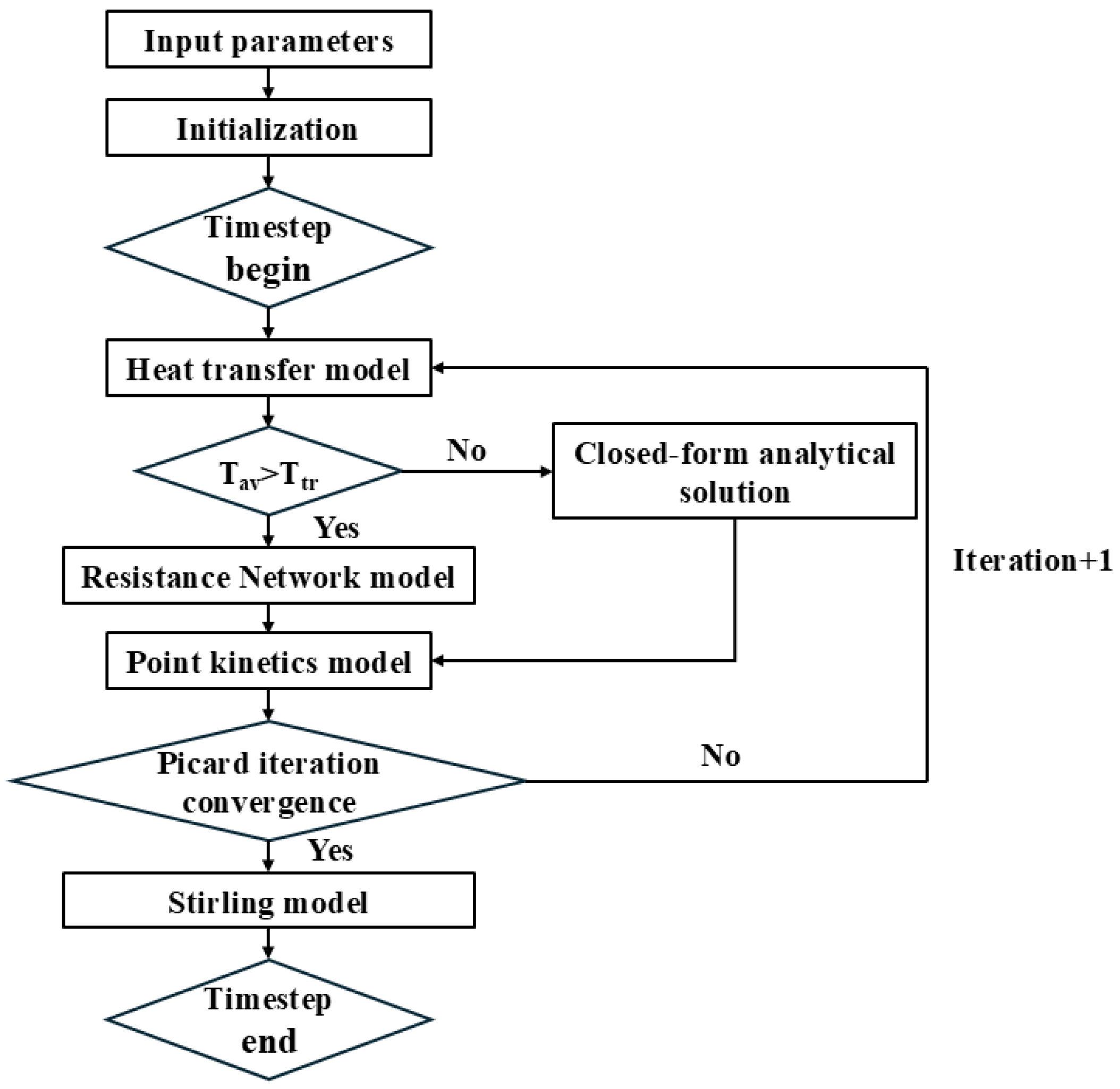
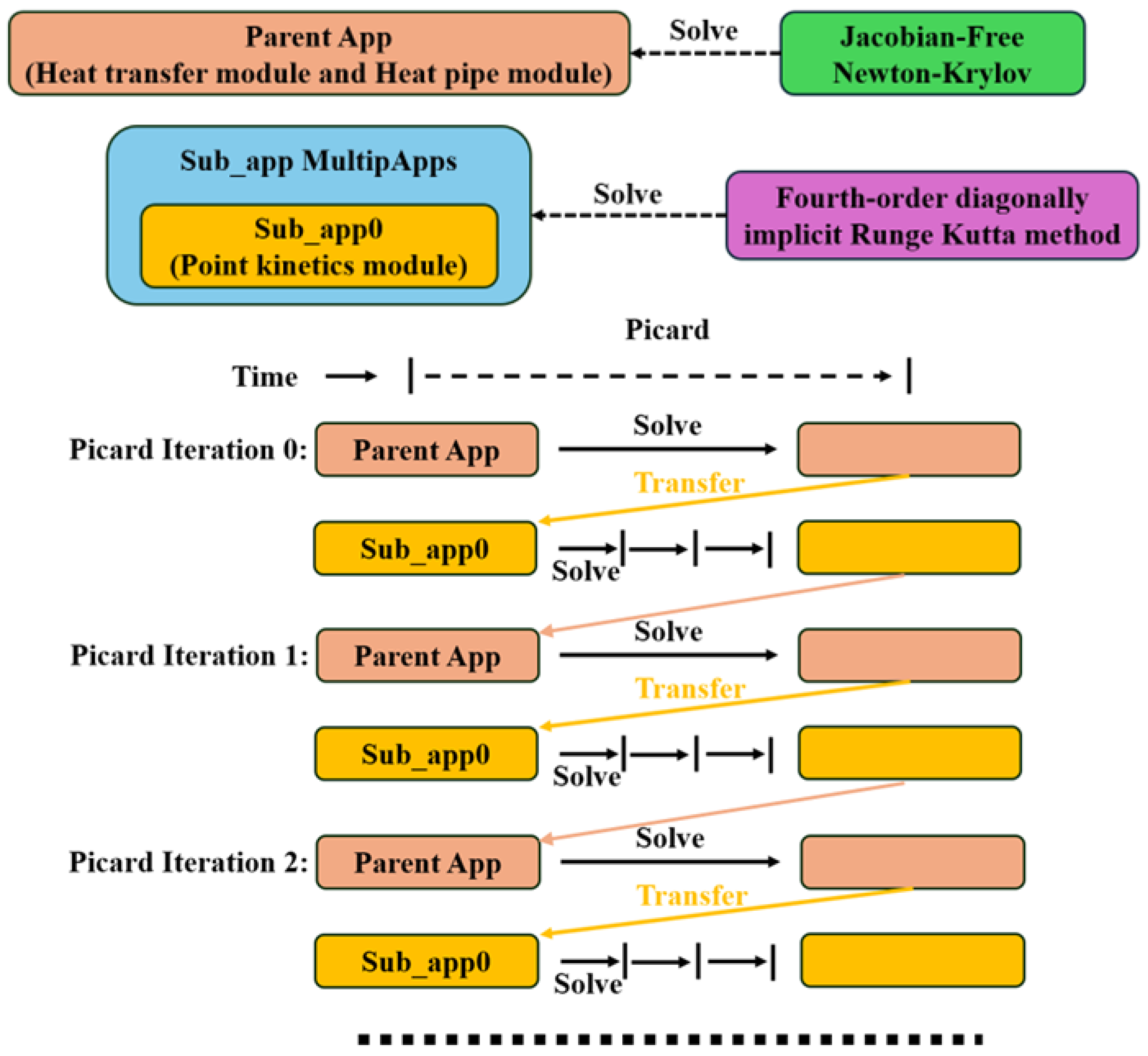
2.5. Calculation Procedure and Coupling Method
3. Results and Discussion
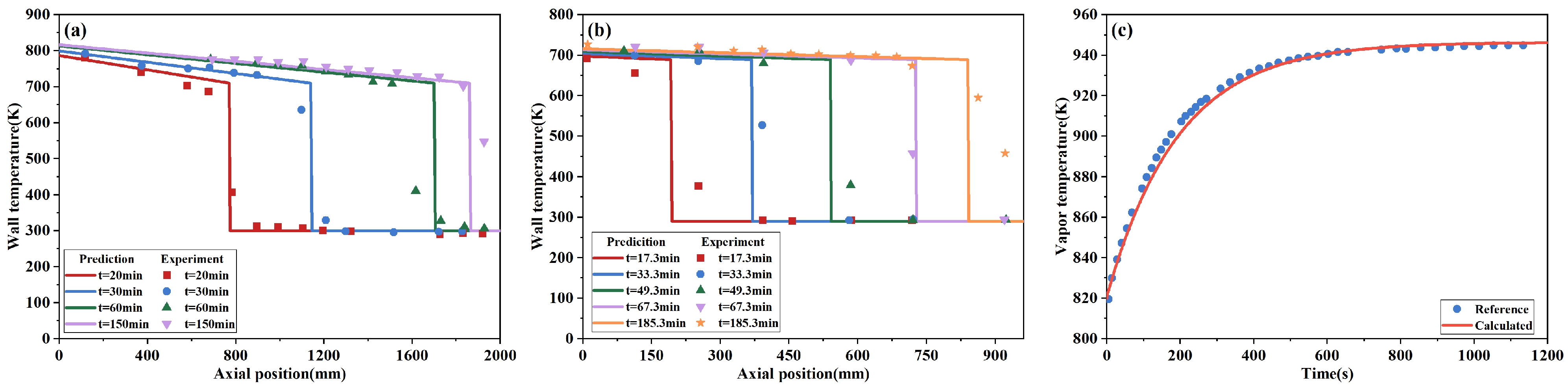
3.1. Heat Pipe Model Validation
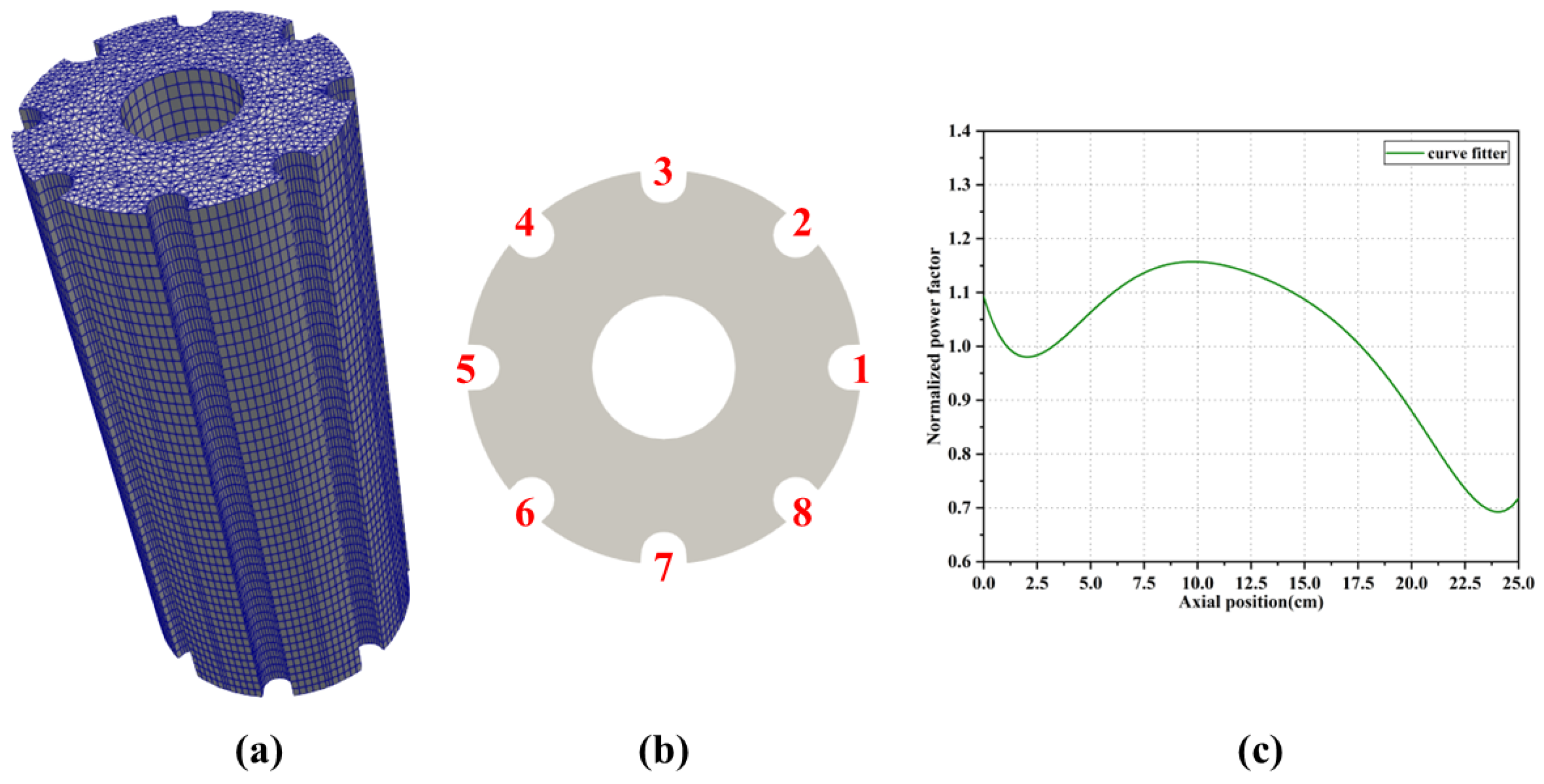
3.2. Validation with the KRUSTY Experiment
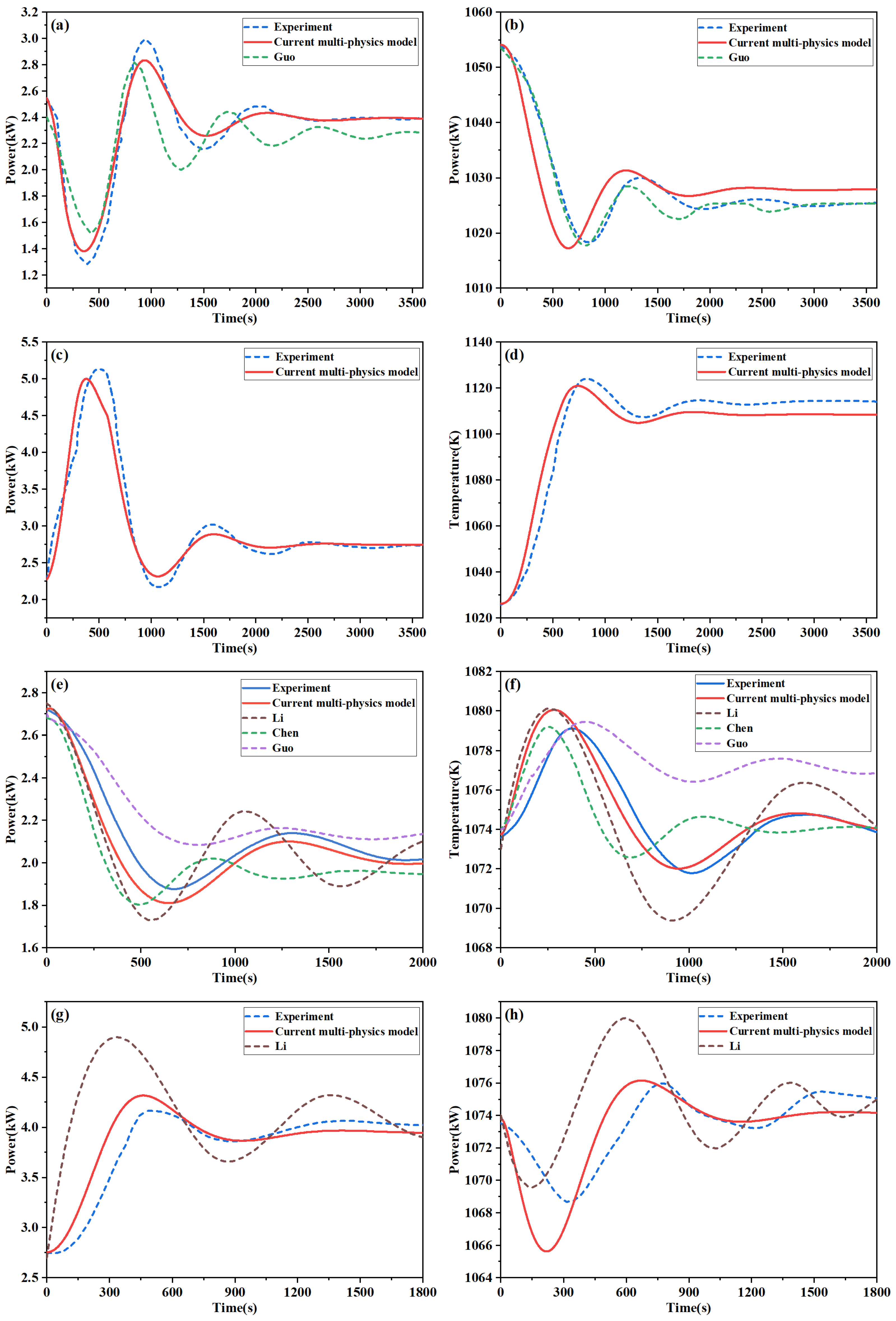
3.2.1. Reactivity Insertion Transient Conditions
3.2.2. Load Following Transient Conditions
3.3. The Safety Analysis of KRUSTY
3.3.1. Reactivity Insertion Accident
3.3.2. Heat Pipe Failure
4. Conclusions
- (1)
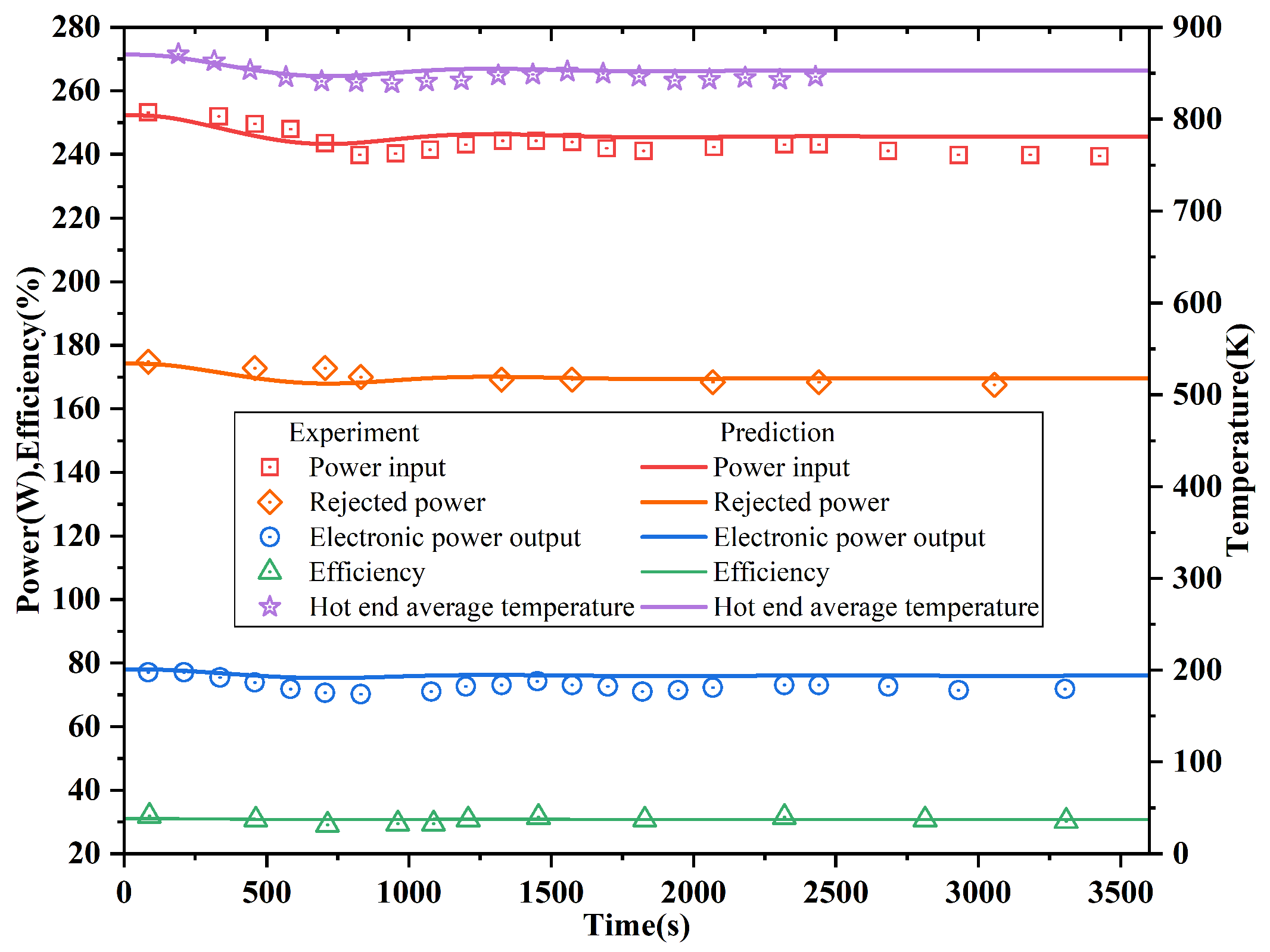
- The developed framework is used to simulate the transient operating conditions of the KRUSTY reactor system and is compared with other multi-physics models. In contrast, the current multi-physics model demonstrates higher numerical accuracy. Under reactivity insertion conditions, the maximum relative error of the simulations is only 8.3%, whereas a maximum relative error of only 13.7% is observed under core load variation conditions. These are much lower than the maximum relative error of other multi-physics coupling models under the same conditions.
- (2)
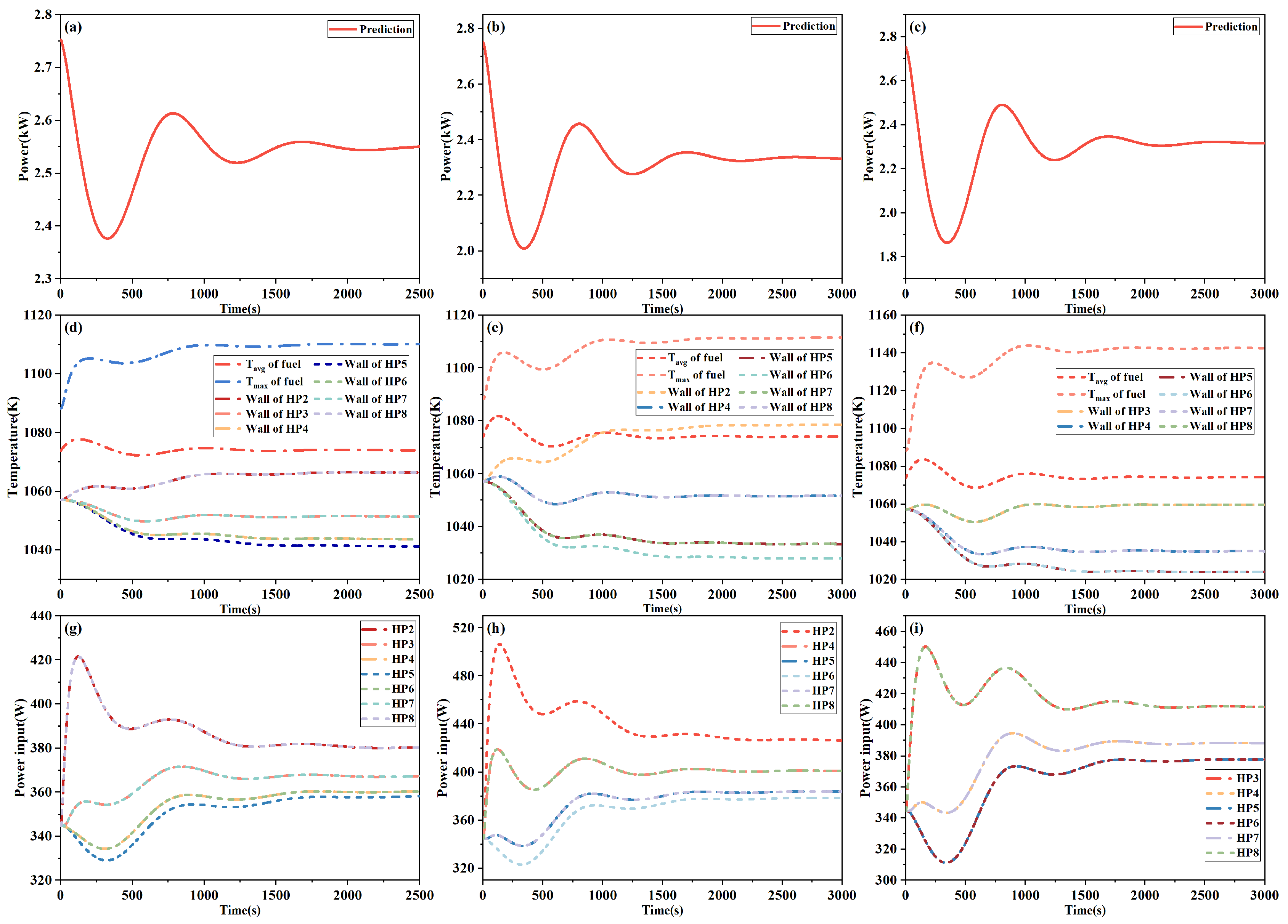
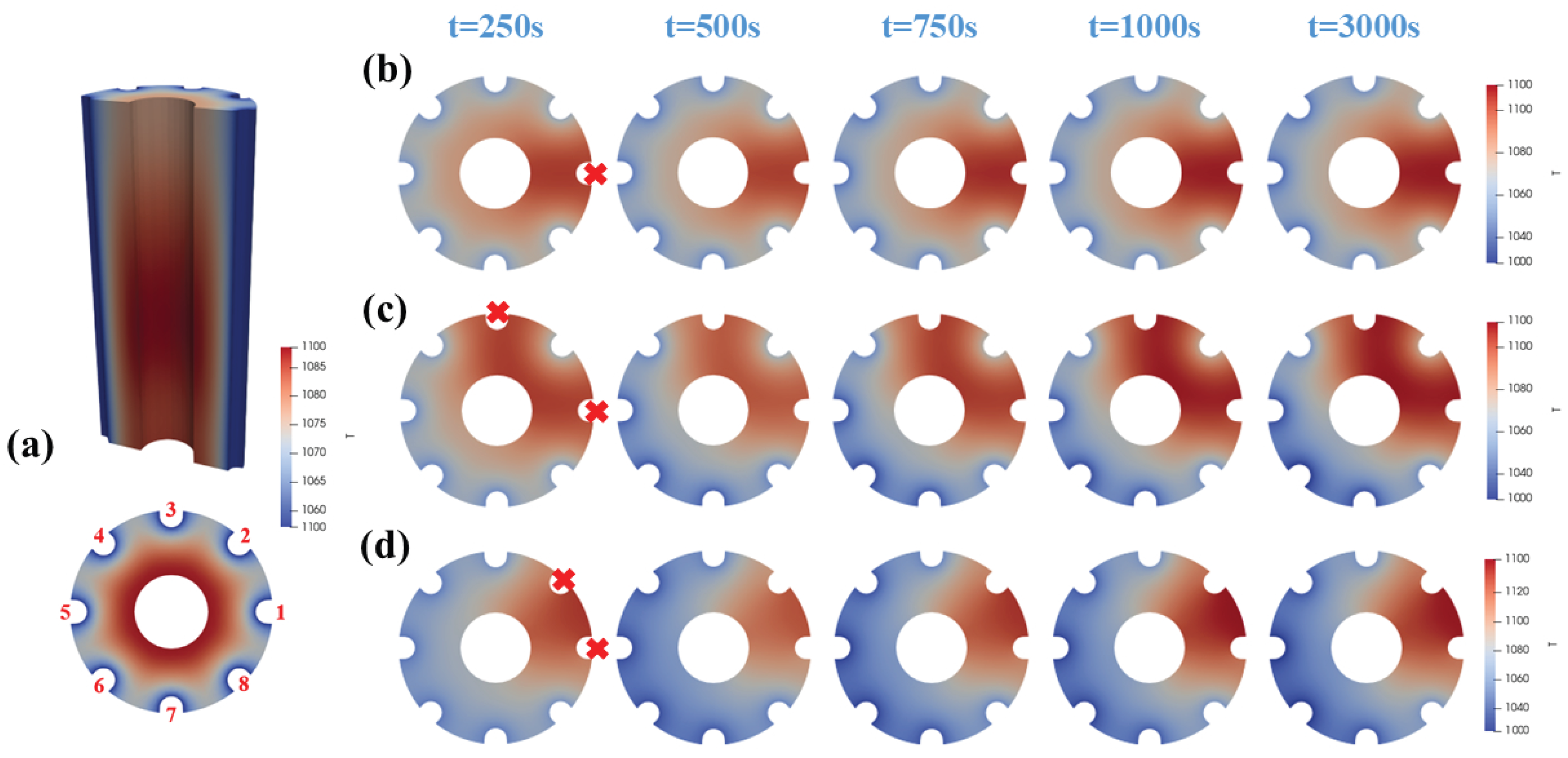
- In the hypothetical most severe heat pipe failure accident, the predicted maximum temperature of the KRUSTY core is only 1144 K. This demonstrates that the inherent negative temperature reactivity coefficient of the core, together with the redistribution of power to the remaining operational heat pipes, can effectively mitigate heat pipe failure accidents. In contrast, other studies often evaluate heat pipe failure accidents using simplified steady-state calculations in which the negative temperature feedback of the core is neglected, leading to a significant overestimation of accident severity.
- (3)
- In heat pipe failure accidents, core power does not merely accumulate locally but is dynamically redistributed. Although short-term heat accumulation may occur in the vicinity of the failed heat pipe, the power is subsequently redistributed to the remaining operational heat pipes, thereby establishing a new thermal equilibrium state. During the initial period following the failure, the three relatively distant heat pipes do not assume any additional power load, indicating that further optimization of the heat pipe arrangement in KRUSTY is still possible.
Author Contributions
Funding
Data Availability Statement
Conflicts of Interest
References
- Guo, Y.-C.; Su, Z.-L.; Li, Z.-G.; Wang, K. Numerical investigation on the startup performance of high-temperature heat pipes for heat pipe cooled reactor application. Nucl. Sci. Tech. 2021, 32, 104. [Google Scholar] [CrossRef] [Scilit]
- Fan, Y.; Yan, R.; Zhu, G.; Chen, L.; Zhang, N.; Zou, Y. Design of a prismatic CERMET megawatt gas-cooled reactor(PC-MGCR) for deep space exploration. Ann. Nucl. Energy 2025, 211, 110946. [Google Scholar] [CrossRef] [Scilit]
- Cheng, H.; Cheng, S.; Chen, S. Sodium fast reactors. In Nuclear Power Reactor Designs; Elsevier: Amsterdam, The Netherlands, 2024; pp. 185–208. [Google Scholar] [CrossRef] [Scilit]
- Ashraf, O.; Rykhlevskii, A.; Tikhomirov, G.V.; Huff, K.D. Preliminary design of control rods in the single-fluid double-zone thorium molten salt reactor (SD-TMSR). Ann. Nucl. Energy 2021, 152, 108035. [Google Scholar] [CrossRef] [Scilit]
- Cui, D.Y. Preconceptual nuclear design of a 50 kWth heat pipe cooled micro molten salt reactor (micro-MSR). Prog. Nucl. Energy 2021, 134, 103670. [Google Scholar] [CrossRef] [Scilit]
- Poston, D.I.; Kapernick, R.J.; Guffee, R.M. Design and analysis of the SAFE-400 space fission reactor. AIP Conf. Proc. 2002, 608, 578–588. [Google Scholar] [CrossRef] [Scilit]
- Gibson, M.A.; Oleson, S.R.; Poston, D.I.; McClure, P. NASA’s Kilopower reactor development and the path to higher power missions. In Proceedings of the 2017 IEEE Aerospace Conference, Big Sky, MT, USA, 4–11 March 2017; pp. 1–14. [Google Scholar] [CrossRef] [Scilit]
- Poston, D.I. The Heat Pipe-Operated Mars Exploration Reactor (HOMER). AIP Conf. Proc. 2001, 552, 797–804. [Google Scholar] [CrossRef] [Scilit]
- El-Genk, M.S. Conceptual Design of HP-STMCs Space Reactor Power System for 110 kWe. AIP Conf. Proc. 2004, 699, 658–672. [Google Scholar] [CrossRef] [Scilit]
- El-Genk, M.S.; Tournier, J.-M.P. “SAIRS”—Scalable Amtec Integrated Reactor Space Power System. Prog. Nucl. Energy 2004, 45, 25–69. [Google Scholar] [CrossRef] [Scilit]
- McClure, P.R.; Poston, D.I.; Gibson, M.A.; Mason, L.S.; Robinson, R.C. Kilopower Project: The KRUSTY Fission Power Experiment and Potential Missions. Nucl. Technol. 2020, 206, 2. [Google Scholar] [CrossRef] [Scilit]
- Wu, A.; Wang, W.; Zhang, K.; Shen, S.; Duan, W.; Pan, R.; Luo, X.; Chen, H. Multiphysics Coupling Analysis of Heat Pipe Reactor Based on OpenMC and COMSOL Multiphysics. Ann. Nucl. Energy 2023, 194, 110115. [Google Scholar] [CrossRef] [Scilit]
- Wang, W.; Zhang, K.; Dong, S.; Wang, S.; Chen, H. Analysis of heat pipe cooled reactor startup characteristics by multi-physics coupling simulation based on MOOSE framework. Nucl. Eng. Des. 2025, 441, 114164. [Google Scholar] [CrossRef] [Scilit]
- Guo, Y.; Li, Z.; Wang, K.; Su, Z. A transient multiphysics coupling method based on OpenFOAM for heat pipe cooled reactors. Sci. China Technol. Sci. 2022, 65, 102–114. [Google Scholar] [CrossRef] [Scilit]
- Zhang, D.; Zhang, N.; Li, Z.; Ren, Y.; Su, Z.; Yu, G.; Zhong, G.; Ding, H. Multiphysics Coupling Analysis of Heat Pipe Reactor Considering Irradiation Effects Based on RMC and FEniCSx. Nucl. Eng. Des. 2025, 444, 114414. [Google Scholar] [CrossRef] [Scilit]
- Jeong, M.J.; Im, J.; Lee, S.; Cho, H.K. Multiphysics Analysis of Heat Pipe Cooled Microreactor Core with Adjusted Heat Sink Temperature for Thermal Stress Reduction Using OpenFOAM Coupled with Neutronics and Heat Pipe Code. Front. Energy Res. 2023, 11, 1213000. [Google Scholar] [CrossRef] [Scilit]
- Chen, J.; Zhao, R.; Lv, Z.; Xie, J.; Ni, W. Multi-Physics Coupling Computational Analysis of a Heat-Pipe-Cooled Space Molten Salt Reactor. Ann. Nucl. Energy 2026, 227, 111994. [Google Scholar] [CrossRef] [Scilit]
- Li, G.; Li, H.; Tian, X.; Ouyang, Z.; Kang, X.; Li, D.; Shan, J.; Jiang, X. Improvement and Validation of the System Analysis Model and Code for Heat-Pipe-Cooled Microreactor. Energies 2022, 15, 2586. [Google Scholar] [CrossRef] [Scilit]
- Feng, M.; Ouyang, Z.; Wu, P.; Shan, J. Development and Validation of Transient Analysis Code for Heat Pipe Reactor System. Ann. Nucl. Energy 2026, 226, 111817. [Google Scholar] [CrossRef] [Scilit]
- Chen, H.; Wang, W.; Wu, A.; Zhang, K.; Pan, R.; Duan, W.; Yang, G.; Qin, C.; Luo, X. Multi-physics coupling analysis of test heat pipe reactor KRUSTY based on MOOSE framework. Nucl. Eng. Des. 2023, 414, 112597. [Google Scholar] [CrossRef] [Scilit]
- Permann, C.J.; Gaston, D.R.; Andrš, D.; Carlsen, R.W.; Kong, F.; Lindsay, A.D.; Miller, J.M.; Peterson, J.W.; Slaughter, A.E.; Stogner, R.H.; et al. MOOSE: Enabling massively parallel multiphysics simulation. SoftwareX 2020, 11, 100430. [Google Scholar] [CrossRef] [Scilit]
- Li, H.; Tian, X.; Ge, L.; Kang, X.; Zhu, L.; Chen, S.; Chen, L.; Jiang, X.; Shan, J. Development of a Performance Analysis Model for Free-Piston Stirling Power Convertor in Space Nuclear Reactor Power Systems. Energies 2022, 15, 915. [Google Scholar] [CrossRef] [Scilit]
- McClure, P.R.; Poston, D.I.; Clement, S.D.; Restrepo, L.; Miller, R.; Negrete, M. KRUSTY Experiment: Reactivity Insertion Accident Analysis. Nucl. Technol. 2020, 206, 5. [Google Scholar] [CrossRef] [Scilit]
- Guo, Y.; Su, Z.; Li, Z.; Wang, K.; Liu, X. An Improved Model of the Heat Pipe Based on the Network Method Applied on a Heat Pipe Cooled Reactor. Front. Energy Res. 2022, 10, 848799. [Google Scholar] [CrossRef] [Scilit]
- Guo, Z.; Liu, L.; Liu, Z.; Gu, H. Development and application of a transient analysis code for heat pipe cooled reactor systems. Nucl. Eng. Des. 2024, 419, 112979. [Google Scholar] [CrossRef] [Scilit]
- Cao, Y.; Faghri, A. Closed-Form Analytical Solutions of High-Temperature Heat Pipe Startup and Frozen Startup Limitation. J. Heat Transf. 1992, 114, 1028–1035. [Google Scholar] [CrossRef] [Scilit]
- Li, Y.; He, Y.; Wang, W. Optimization of Solar-Powered Stirling Heat Engine with Finite-Time Thermodynamics. Renew. Energy 2011, 36, 421–427. [Google Scholar] [CrossRef] [Scilit]
- Cherezov, A.; Park, J.; Kim, H.; Choe, J.; Lee, D. A Multi-Physics Adaptive Time Step Coupling Algorithm for Light-Water Reactor Core Transient and Accident Simulation. Energies 2020, 13, 6374. [Google Scholar] [CrossRef] [Scilit]
- Faghri, A.; Buchko, M.; Cao, Y. A Study of High-Temperature Heat Pipes With Multiple Heat Sources and Sinks: Part I—Experimental Methodology and Frozen Startup Profiles. J. Heat Transf. 1991, 113, 1003–1009. [Google Scholar] [CrossRef] [Scilit]
- Ponnappan, R. Studies on the Startup Transients and Performance of a Gas Loaded Sodium Heat Pipe. Ph.D. Thesis, Dayton University, Dayton, OH, USA, 1988. [Google Scholar]
- Cao, Y.; Faghri, A. Transient Two-Dimensional Compressible Analysis for High-Temperature Heat Pipes with Pulsed Heat Input. Numer. Heat Transf. Part A Appl. 1991, 18, 483–502. [Google Scholar] [CrossRef] [Scilit]
- Poston, D.I.; Gibson, M.A.; Sanchez, R.G.; McClure, P.R. Results of the KRUSTY Nuclear System Test. Nucl. Technol. 2020, 206, 9. [Google Scholar] [CrossRef] [Scilit]



| Parameter | Fagrhi | Ponnappan | Cao |
|---|---|---|---|
| Evaporator section length/mm | 53 | 375 | 105 |
| Adiabatic section length/mm | 617 | 745 | 52.5 |
| Condenser section length/mm | 292 | 910 | 542.5 |
| Heat pipe outer diameter/mm | 26.7 | 22.2 | 16 |
| Heat pipe wall thickness/mm | 2.15 | 1.65 | 1 |
| Vapor core radius/mm | 21.5 | 12.7 | 14 |
| Ambient temperature/K | 290 | 298 | 300 |
| Qin/W | 119 | 289.6 | 623→770 |
| Parameter | Value |
|---|---|
| Reactor outer diameter/m | 0.11 |
| Reactor height/m | 0.25 |
| Working fluid of heat pipe | Na |
| Length of evaporator section/m | 0.25 |
| Length of evaporator section/m | 0.35 |
| Length of evaporator section/m | 0.4 |
| Heat pipe outer diameter/m | 0.0254 |
| Heat pipe wall thickness/m | 0.00178 |
| Vapor core radius/m | 0.01 |
| Container material | Haynes-230 |
| Wick material | Ni |
| Regenerator efficiency | 0.8 |
| Compression ratio | 1.22 |
| Time constant of the regenerator | 80,000 |
| Specific heat | 12.5 |
| Material | Value |
|---|---|
| U8Mo fuel (Idaho National Laboratory, Idaho Falls, ID, USA) | 1400 K |
| Haynes-230 (Haynes International, Kokomo, IN, USA) | 1574 K |
| Ni in heat pipe wick (Los Alamos National Laboratory, Los Alamos, NM, USA) | 1728 K |
| Case | Positive Reactivity Insertion | of Core, kW | of Core, W | of Core, K | of HP, K |
|---|---|---|---|---|---|
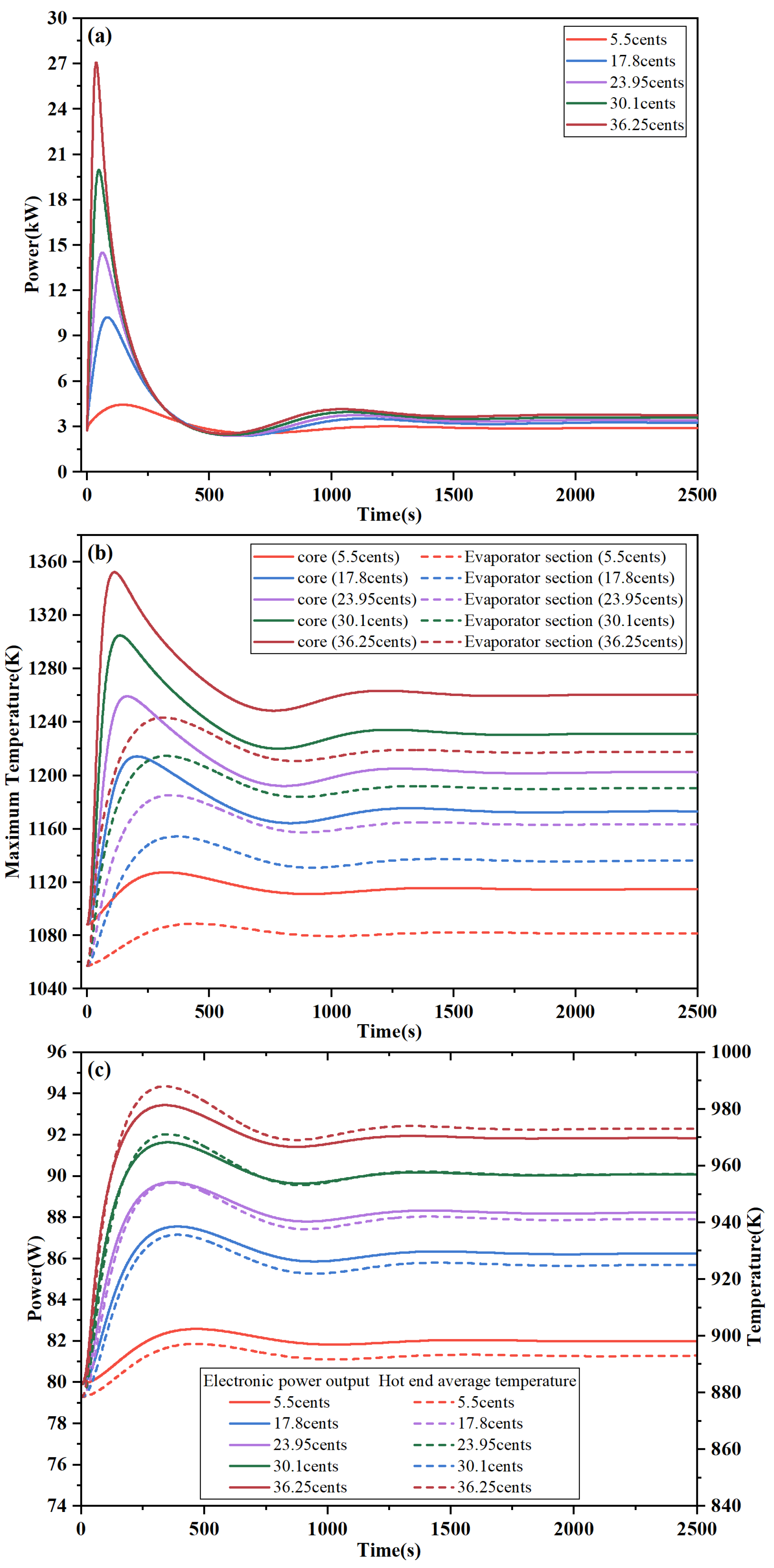
| PRI1 | 5.5 | 2.91 | 4.46 | 1127.42 | 1088.91 |
| PRI2 | 17.8 | 3.25 | 10.23 | 1214.29 | 1154.34 |
| PRI3 | 23.95 | 3.42 | 14.51 | 1259.35 | 1185.23 |
| PRI4 | 30.1 | 3.59 | 19.96 | 1304.96 | 1214.57 |
| PRI5 | 36.25 | 3.76 | 27.07 | 1352.29 | 1243.33 |
| Case | Heat Pipe Failure | of Core, kW | of HP, W | of Core, K | of HP, K |
|---|---|---|---|---|---|
| HPF1 | #1 | 2.55 | 421.23 | 1105.32 | 1066.52 |
| HPF2 | #1#3 | 2.33 | 506.50 | 1105.93 | 1076.67 |
| HPF3 | #1#2 | 2.32 | 436.67 | 1143.97 | 1059.70 |
Disclaimer/Publisher’s Note: The statements, opinions and data contained in all publications are solely those of the individual author(s) and contributor(s) and not of MDPI and/or the editor(s). MDPI and/or the editor(s) disclaim responsibility for any injury to people or property resulting from any ideas, methods, instructions or products referred to in the content. |
© 2026 by the authors. Licensee MDPI, Basel, Switzerland. This article is an open access article distributed under the terms and conditions of the Creative Commons Attribution (CC BY) license.
Share and Cite
Xu, H.; Zhang, N.; Fan, Y.; Ma, X.; Zeng, M.; Yan, R.; Liu, Y. Transient Analysis Framework for Heat Pipe Reactors Based on the MOOSE and Its Validation with the KRUSTY Reactor. Energies 2026, 19, 1815. https://doi.org/10.3390/en19081815
Xu H, Zhang N, Fan Y, Ma X, Zeng M, Yan R, Liu Y. Transient Analysis Framework for Heat Pipe Reactors Based on the MOOSE and Its Validation with the KRUSTY Reactor. Energies. 2026; 19(8):1815. https://doi.org/10.3390/en19081815
Chicago/Turabian StyleXu, Honghui, Naiwen Zhang, Yuhan Fan, Xinran Ma, Minghui Zeng, Rui Yan, and Yafen Liu. 2026. "Transient Analysis Framework for Heat Pipe Reactors Based on the MOOSE and Its Validation with the KRUSTY Reactor" Energies 19, no. 8: 1815. https://doi.org/10.3390/en19081815
APA StyleXu, H., Zhang, N., Fan, Y., Ma, X., Zeng, M., Yan, R., & Liu, Y. (2026). Transient Analysis Framework for Heat Pipe Reactors Based on the MOOSE and Its Validation with the KRUSTY Reactor. Energies, 19(8), 1815. https://doi.org/10.3390/en19081815