Article

Numerical Investigation of Heat Transfer and Flow Resistance of Fluoride Salt on Shell Side of Helically Coiled Heat Exchangers

1
Shanghai Institute of Applied Physics, Chinese Academy of Sciences, Shanghai 201800, China
2
National Key Laboratory of Thorium Energy, Shanghai Institute of Applied Physics, Chinese Academy of Sciences, Shanghai 201800, China
3
University of Chinese Academy of Sciences, Beijing 100049, China
*
Authors to whom correspondence should be addressed.
Energies 2026, 19(1), 90; https://doi.org/10.3390/en19010090 (registering DOI)
Submission received: 2 December 2025 / Revised: 21 December 2025 / Accepted: 22 December 2025 / Published: 24 December 2025
(This article belongs to the Special Issue Advanced Reactor Designs for Sustainable Nuclear Energy)

Abstract

The Helically Coiled Heat Exchanger (HCHX) is a promising candidate for modular Molten Salt Reactors (MSRs), valued for its high heat transfer efficiency, structural compactness, reduced fouling tendency, and excellent thermal compensation capabilities. The thermal–hydraulic performance of the shell side, crucial for reactor efficiency and safety, requires accurate prediction. This is challenged by the scarcity of reliable correlations for high-Prandtl number fluoride salts under low-Reynolds number conditions. To address this gap, this study explores the heat transfer and flow resistance of FNaBe salt flow in an HCHX using Computational Fluid Dynamics (CFD). The validated CFD model examines the effects of structural parameters (number of layers, tube pitch, and helix angle) and inlet conditions (temperatures and velocities). It is found that the Nusselt number and friction factor increase with more layers but decrease with a higher tube pitch and helix angle. Subsequently, new empirical correlations integrating these geometric parameters are proposed, demonstrating excellent agreement with simulation results (deviations within the range of −10–5% for Nu and −5–10% for f). This study offers vital theoretical support for optimizing compact HCHX designs in MSRs.

1. Introduction

Molten Salt Reactors (MSRs), distinguished as the sole liquid-fueled reactors among Generation IV nuclear energy systems, present significant advantages, including excellent inherent safety, high thermal efficiency, and low-pressure operation in the primary loop [1]. As a key component of MSRs, the molten salt heat exchanger is responsible for critical functions such as heat transport and isolation of radioactive materials, which are essential for stable system operation [2]. Currently, conventional straight-tube and U-tube Shell and Tube Heat Exchangers (STHXs), though widely used in reactors [3,4,5,6,7], suffer from their low heat transfer efficiency and large size, limiting their suitability for compact modular MSRs. To improve the economic viability of MSRs, there is an urgent necessity to develop highly efficient and compact heat exchangers. Among various types, the Helically Coiled Heat Exchanger (HCHX) is particularly suitable for MSR applications due to its superior heat transfer efficiency, high-pressure resistance, and reduced fouling tendency [8]. In an HCHX, the helical tube bundle transfers heat from the primary loop to the secondary loop, with molten salt flowing transversely across the helical tube bundle on the shell side. The arrangement and structural parameters of the tube bundle significantly influence the thermal–hydraulic behavior of the molten salts. Therefore, in-depth investigation of molten salt heat transfer and flow resistance characteristics on the shell side of HCHXs is essential for their optimal design.
The heat transfer and flow resistance performance on the shell side of an HCHX are governed by both its structural parameters and the thermophysical properties of the working fluid. In recent years, extensive experimental and numerical studies have been conducted to understand the shell-side thermal–hydraulic behavior of HCHXs using various working fluids. For instance, Neeraas et al. [9,10] constructed an experimental setup to measure local heat transfer coefficients and pressure drops on the shell side of a Liquefied Natural Gas (LNG) HCHX. This apparatus was capable of handling single-phase vapor flows with Reynolds number (Re) values in the range of 5000 < Re < 170,000, liquid film flows (500 < Re < 8000), and two-phase shear flows, using hydrocarbons (methane and ethane) as the flow media. The existing correlations showed satisfactory agreement with the experimental measurements. Tang et al. [11] experimentally investigated the shell-side pressure drop of air in an HCHX and reported a mean absolute deviation of 12.82% when comparing their results with the correlation proposed by Messa et al. [12].
The helical tube bundle involves several structural parameters, including helix angle, tube pitch, tube outer diameter, and number of layers, all of which exert a substantial influence on the flow and heat transfer performance. Messa et al. [12] examined the effects of the helix angle and tube pitch, subsequently developing empirical correlations for the Nusselt number (Nu) with varying geometries. Ghorbani et al. [13] observed that the shell-side heat transfer coefficient decreases with increasing coil area, while the tube outer diameter exerts a negligible influence. In the domains of fluid mechanics and heat transfer, the hydraulic diameter is commonly utilized as the characteristic length for formulating new correlations. Genic et al. [14] developed a novel empirical correlation using the hydraulic diameter as the characteristic length, which yielded predictions within a 15% deviation from experimental data. The influence of various boundary conditions on heat transfer is substantial, yet simplifying these conditions can reduce research costs. To evaluate the differences among them, Lu et al. [15] conducted both experimental and simulation studies on the shell-side heat transfer performance. The results indicated that, compared to water-to-water conjugate heat transfer scenarios, the maximum relative deviations for the constant heat flux and constant temperature boundary conditions were 11.4% and 3.5%, respectively. In floating Liquefied Natural Gas systems, the HCHX is affected by sea conditions, resulting in a more complex flow process. Experimental and simulation studies on the heat transfer and pressure-drop performance of an HCHX under various sloshing conditions have been conducted by Li et al. [16,17]. Their results showed that heaving and swaying motions can induce pressure fluctuations, with more pronounced effects observed at the top of HCHXs.
The preceding discussion indicates that most experimental studies on the shell side of an HCHX have primarily focused on developing flow and heat transfer models. However, less research has been carried out on the effects of structural parameters, which require further investigation. Computational Fluid Dynamics (CFD) provides a cost-effective research approach for heat exchanger analysis and has become increasingly prevalent in this field. Researchers such as Zeng et al. [18,19], Wang et al. [20], Hessam et al. [21], Sami et al. [22], Wen et al. [23], Abolmaali et al. [24], Lei et al. [25], Wu et al. [26], and Shen et al. [27,28] have studied the effects of structural parameters on the heat transfer and pressure-drop characteristics of the shell side in HCHXs. Their results indicated that heat transfer and pressure drop generally decrease with increasing tube pitch but increase with larger tube diameters and number of layers. To further quantify the influence of structural parameters, the Taguchi method has been used by Zeng and Lu et al. [18]. Ultimately, correlations for the Nu and friction factor (f) were derived based on the simulation results. The complex flow passages on the shell side result in the generation of numerous mesh cells during simulations, which demands considerable computational resources. To mitigate this issue, some researchers have proposed simplified models. Jia et al. [29] established a helical tube bundle within a 60° sector to examine the influence of tube outer diameter and helix angle on heat transfer. However, assuming adiabatic walls for the sector profile may not represent realistic conditions. Tang et al. [30] simulated the micro-structure of the shell-side fluid at the intersections of adjacent tube bundles, using periodic boundary conditions. The deviation between the simulated and experimental results was 16.81%. The influence of clearances at the inner and outer radial boundaries on the gas flow distribution and thermal mixing on the shell side of an HCHX has been studied [31]. The results indicated that the radial gaps have a substantial influence on the airflow distribution. Duan et al. [32] numerically investigated the thermal performance of high-viscosity fluids in an HCHX using heat transfer oil. Their study demonstrated that incorporating cylindrical vortex generators in the shell side enhanced the overall thermal–hydraulic performance by 4.6% to 5.2% compared to conventional configurations.
In summary, the flow structure on the shell side of an HCHX is complex, and its thermal–hydraulic performance is significantly influenced by structural parameters. Table 1 presents a comprehensive summary of the existing empirical correlations for Nu and f. Although the effects of structural parameters on the heat transfer and flow resistance performance have been extensively investigated, two key issues remain: (1) Most existing empirical correlations are derived from low-Prandtl number (Pr) fluids such as water, air, and hydrocarbons, resulting in a scarcity of reliable models for high-Pr molten salts. Compared to traditional fluids, molten salt exhibits a higher Pr (8 < Pr < 80), indicating its stronger momentum diffusion capability. During the flow and heat transfer process of molten salt, the thermal boundary layer is thinner than the velocity boundary layer, resulting in a steep temperature gradient near the wall. Moreover, existing research has confirmed that the thermal–hydraulic performance of molten salt differs significantly from that of conventional fluids [33,34]. (2) Current low-Re number correlations are primarily based on specific geometrical configurations, lacking general correlations with broader applicability. Under the normal operating conditions of MSRs, molten salt exhibits high viscosity and low flow velocity, resulting in a low Re on the shell side. Existing correlations can exhibit deviations exceeding 20% when predicting the performance of high-Pr molten salts under these conditions, directly affecting the thermal efficiency of the reactor and the load on loop equipment (such as molten salt pumps) [35]. Therefore, to enhance the overall performance of HCHXs and achieve efficient heat transport in MSRs, the development of new empirical correlations for molten salt on the shell side of HCHXs is critically needed.
MSRs utilize fluoride salts, which are toxic, as the primary coolant, the operating temperature exceeding 973.15 K, posing significant challenges for experimental investigations. Consequently, this study employs numerical simulation to examine the heat transfer and flow resistance characteristics of fluoride salt on the shell side of HCHXs, with the Re below 11,000. The primary objectives are as follows: (1) to establish and validate a robust CFD methodology for high-Pr fluid flow in complex geometries; (2) to quantitatively analyze the individual and combined effects of key structural parameters and inlet conditions on Nu and f; and (3) to develop and validate new, widely applicable empirical correlations for Nu and f that explicitly account for geometric influences.

2. Numerical Methods

2.1. Physical Model

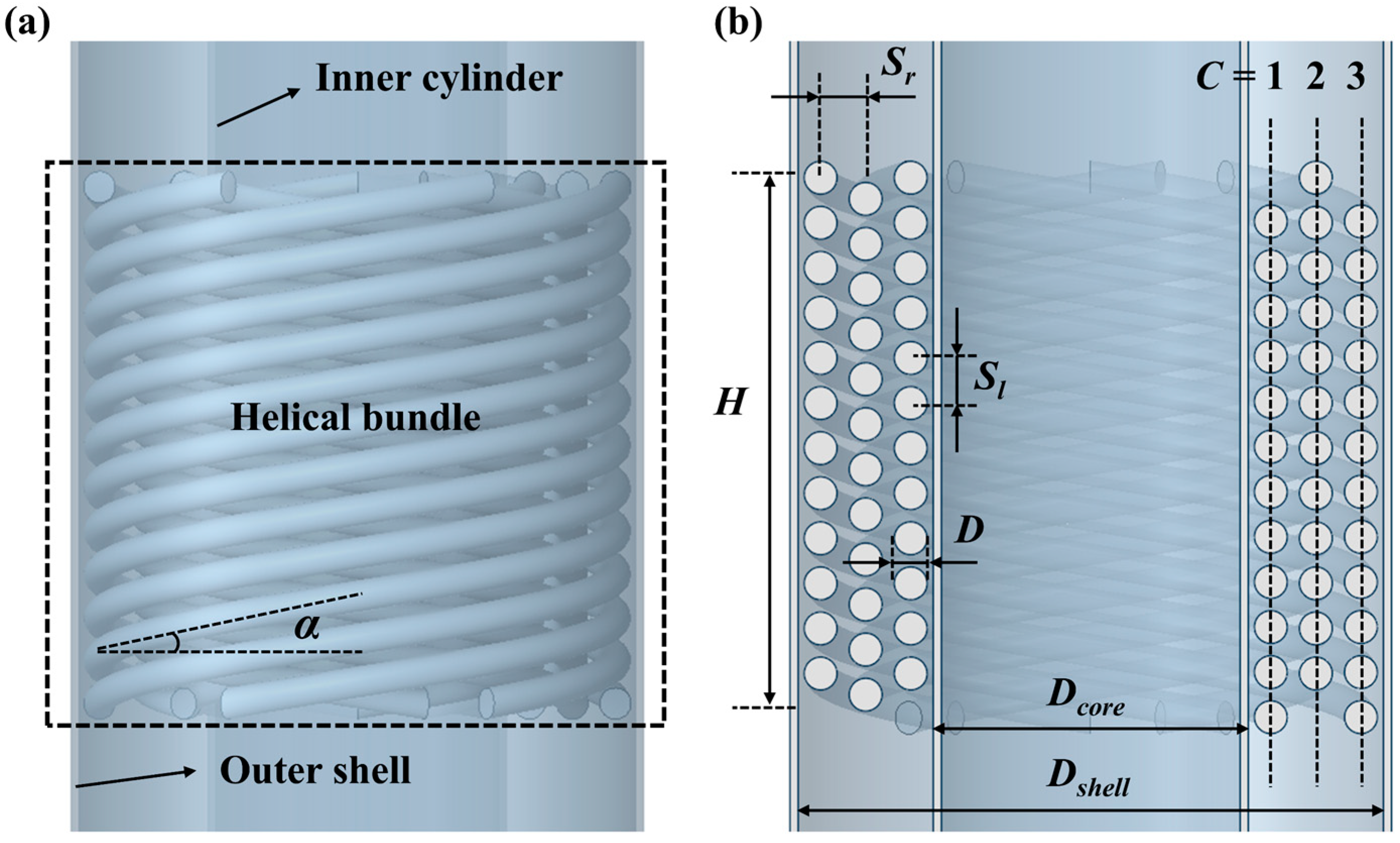
Figure 1 illustrates the internal structure of the HCHX (C varies from 2 to 5 in the study), which consists of an inner cylinder, an outer shell, and a helical tube bundle. The helical tube bundle is wound around the inner cylinder in alternating, opposing directions [40]. Key structural parameters include the tube outer diameter (D), the outer diameter of the inner cylinder (Dcore), the inner diameter of the outer shell (Dshell), the longitudinal tube pitch (Sl), the radial tube pitch (Sr), the number of layers (C), the helix angle (α), and the effective heat transfer length (H). To achieve uniform heating, all helical tubes are designed with the same helix angles, longitudinal and radial pitches, and lengths. The geometric relationships among these parameters are given by Equations (1)–(7) [41]:
n = N r
D i = 2 i S r
t a n   ( α ) = r S l 2 π S r
M i = N + ( i n ) r
m = n + ( C 1 )
D c o r e = ( 2 n 1 ) S r
D s h e l l = ( 2 m + 1 ) S r
where r and N represent the start factor and the number of tubes in the innermost layer; Mi and Di represent the number of tubes and the helical diameter of the i-th layer, respectively; and the indices n and m correspond to the innermost and outermost layers of the helical tube bundle, respectively.
Compared to flow in straight-tube bundles, fluid flow through helical tube bundles is affected by the helix angle and tube curvature, leading to more complex three-dimensional effects [27]. Consequently, this study investigates the effects of the number of layers (C), tube pitch (S, where S = Sr = Sl), and helix angle (α) on the heat transfer and flow resistance characteristics of fluoride salt on the shell side. According to Equation (3), under the condition of equal radial and longitudinal pitches, the helix angle and the tube pitch are independent variables with no coupling between them. Table 2 presents the specific ranges of structural parameters. Additionally, to ensure fully developed flow within the helical tube bundle, the number of tube rows along the flow direction is maintained at 12, based on the analysis of grid independence and flow development length in Section 3.2.

2.2. Governing Equations and Boundary Conditions

The governing equations are solved using ANSYS Fluent 16.1. To simplify the flow model, the following reasonable assumptions are adopted: (1) The flow is steady-state and incompressible. (2) The gravity effect is negligible. (3) The heat loss between the shell-side fluid and the ambient environment is not considered. (4) The fluoride salt is single-phase flow without phase change. Based on these assumptions, the governing equations are presented as follows [42]:
Continuity equation:
x i ρ u i = 0
Momentum equation:
x i ρ u i u j = p x j + x i [ ( μ + μ t ) u i x j + u j x i ]
Energy equation:
x i ρ u i T = x i ( μ P r + μ t P r t ) T x i
where ui and uj represent the velocity components in the i and j directions, and p, ρ, T, cp, and μ represent the pressure, the fluid density, the temperature, the specific heat capacity at constant pressure, and the dynamic viscosity, respectively.
The RNG k-ε turbulence model, derived using renormalization group theory, is employed in this study. This model was selected over the Standard k-ε, Realizable k-ε, and SST k-ω models because it incorporates the effect of mean strain rate on turbulent dissipation, enabling more accurate simulations of the complex flows involving rotation and high strain rates prevalent in helical geometries. Validation of this model is detailed in Section 2.5. The transport equations for the turbulent kinetic energy (k) and turbulent dissipation rate (ε) are as follows [43]:
t ρ k + x i ρ k u i = x j ( α k μ e f f k x j ) + G k ρ ε
t ρ ε + x i ρ ε u i = x j ( α ε μ e f f ϵ x j ) + C 1 ε ε G k k C 2 ε ρ ε 2 1 k R ε
R ε = C μ ρ η 3 ( 1 η / η 0 ) 1 + β η 3 ε 2 k
where Gk and μeff represent the turbulent kinetic energy generated by the mean velocity gradient and the effective viscosity, respectively; αk and αε represent the inverse effective Pr for k and ε, respectively; Rε represents the influence of the strain rate on the dissipation rate to improve predictions for rapid strain and swirling flows; and C1ε, C2ε, Cμ, η0, and β are constants, with C1ε = 1.42, C2ε = 1.68, Cμ = 0.0845, η0 = 4.38, and β = 0.012.
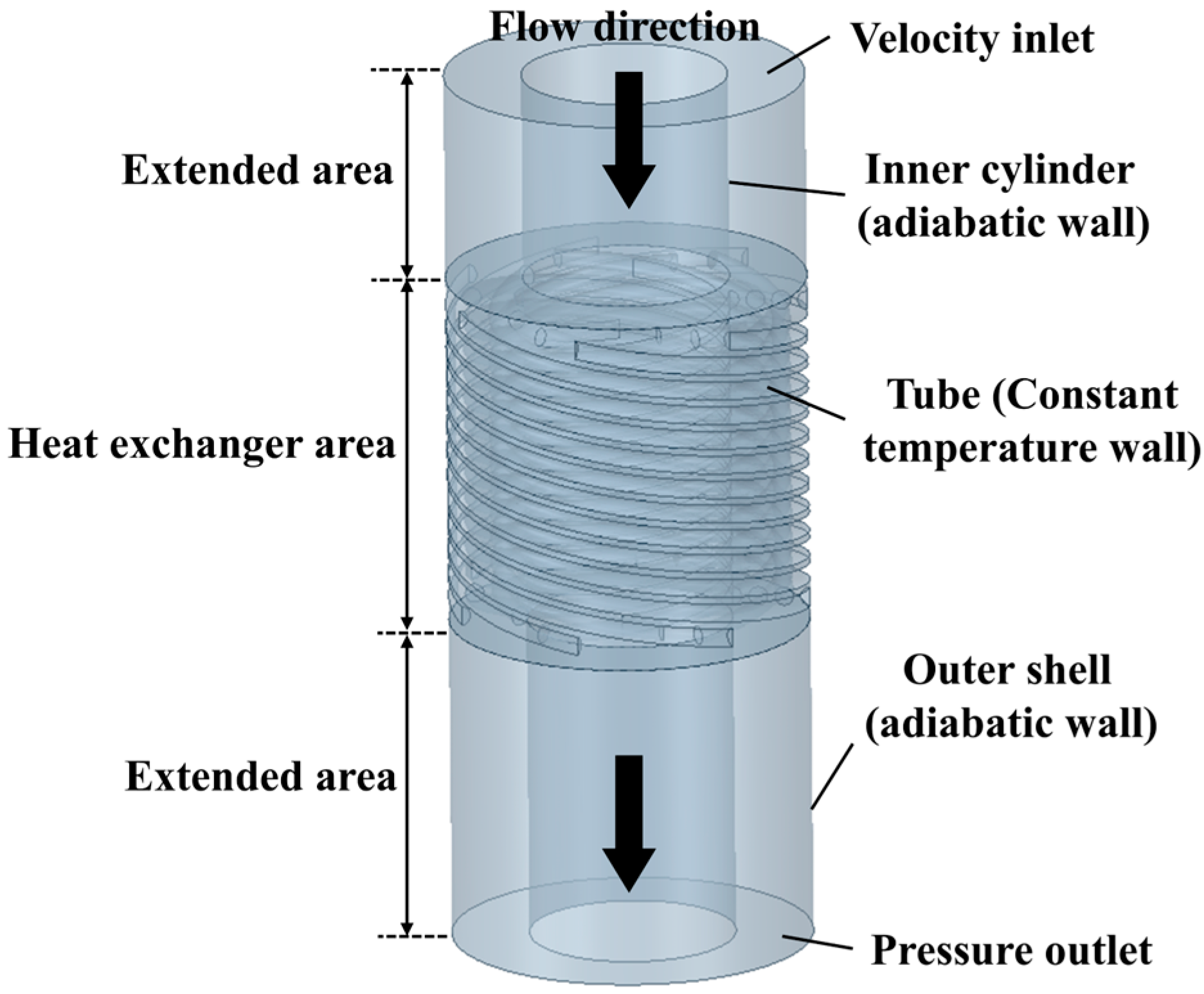
The boundary conditions for the numerical simulation are illustrated in Figure 2. The inlet and outlet of the heat transfer zone are extended to prevent inlet effects and outlet backflow. A uniform-velocity inlet boundary condition is applied on the shell side, with the velocity ranging from 0.07 m/s to 0.5 m/s, corresponding to an Re of 1644 to 10,387, which represents the overall parameter range covered in this study. The inlet temperature varies from 923.15 K to 1003.15 K. A pressure outlet boundary condition is imposed at the shell-side outlet. The tube-wall surface temperature is maintained at 913.15 K, while all other surfaces are treated as adiabatic walls. The fluid medium is FNaBe salt, with its thermal properties detailed in Table 3 [44]. The enhanced wall treatment is employed for the near-wall region, which is suitable for resolving the thin thermal boundary layers characteristic of high-Pr fluids. A pressure-based implicit double-precision solver is employed with the SIMPLEC algorithm to compute the velocity and pressure coupling. The calculation is deemed to have converged when the residuals of the governing equations fall below 10−6 and the monitored inlet pressure and outlet temperature stabilize.

2.3. Parameter Definition

The tube bundle arrangement on the shell side of the HCHX varies continuously between in-line and staggered configurations. The maximum velocity can be determined using Equation (14):
u m a x = u i n r e f f
where uin represents the inlet velocity and reff represents the ratio of the minimum free-flow area to the cross-sectional area of the tube bundle [39].
r e f f = a b [ I n b + 2 P 2 a 2 s I n b + 2 P 2 ( b + Q ) ] + 1 a [ P ( 1 2 s ) + 2 s Q + 4 s 3 b 2 ( a 3 Q 3 ) 1 ]
where P = a 2 + b 2 / 4 , Q = a 2 + b 2 , a = S r / D , b = S l c o s   ( α ) / D , and s = 0.3.
The Reynolds number is defined as follows:
R e m a x = ρ u m a x D μ
The Prandtl number is defined as follows:
P r = c p μ λ
where λ represents the thermal conductivity.
The average heat transfer coefficient is calculated by:
h = q ( T w a l l T f l u i d )
where q, Twall, and Tfluid represent the average heat flux on the outer surface of the helical tube, the tube-wall temperature, and the mean temperature of the shell-side fluid between the inlet and the outlet, respectively.
The average Nusselt number is defined as follows:
N u = h D λ
The pressure drop between the inlet and outlet can be calculated by means the following equation:
Δ p = p i n p o u t
where pin and pout represent the pressures at the inlet and outlet, respectively.
The friction factor in the tube bundle is defined as follows [45]:
f = 2 Δ p ρ u m a x 2 z
where z represents the number of tube rows in the flow direction.

2.4. Grid Generation and Independence Validation

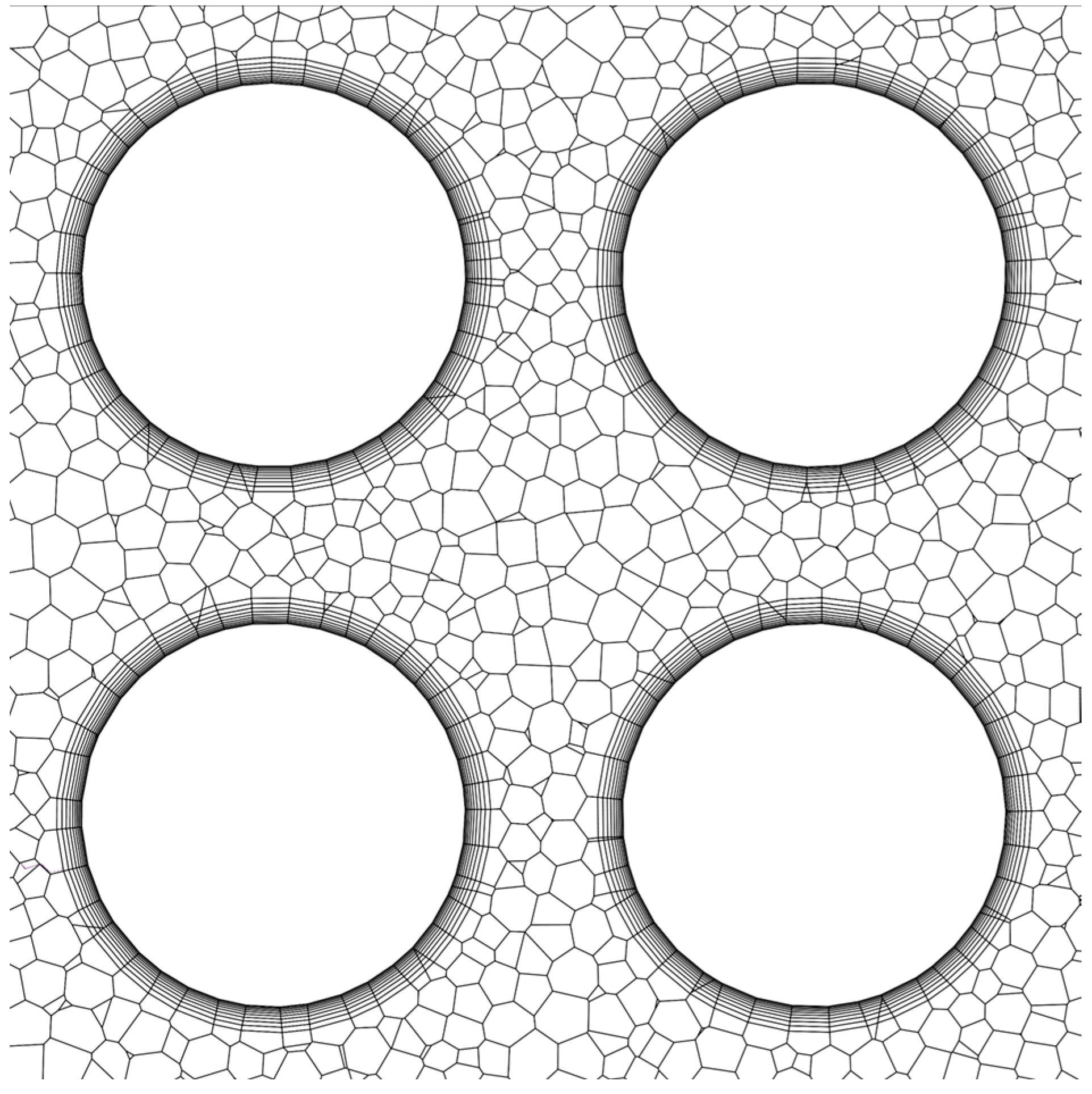
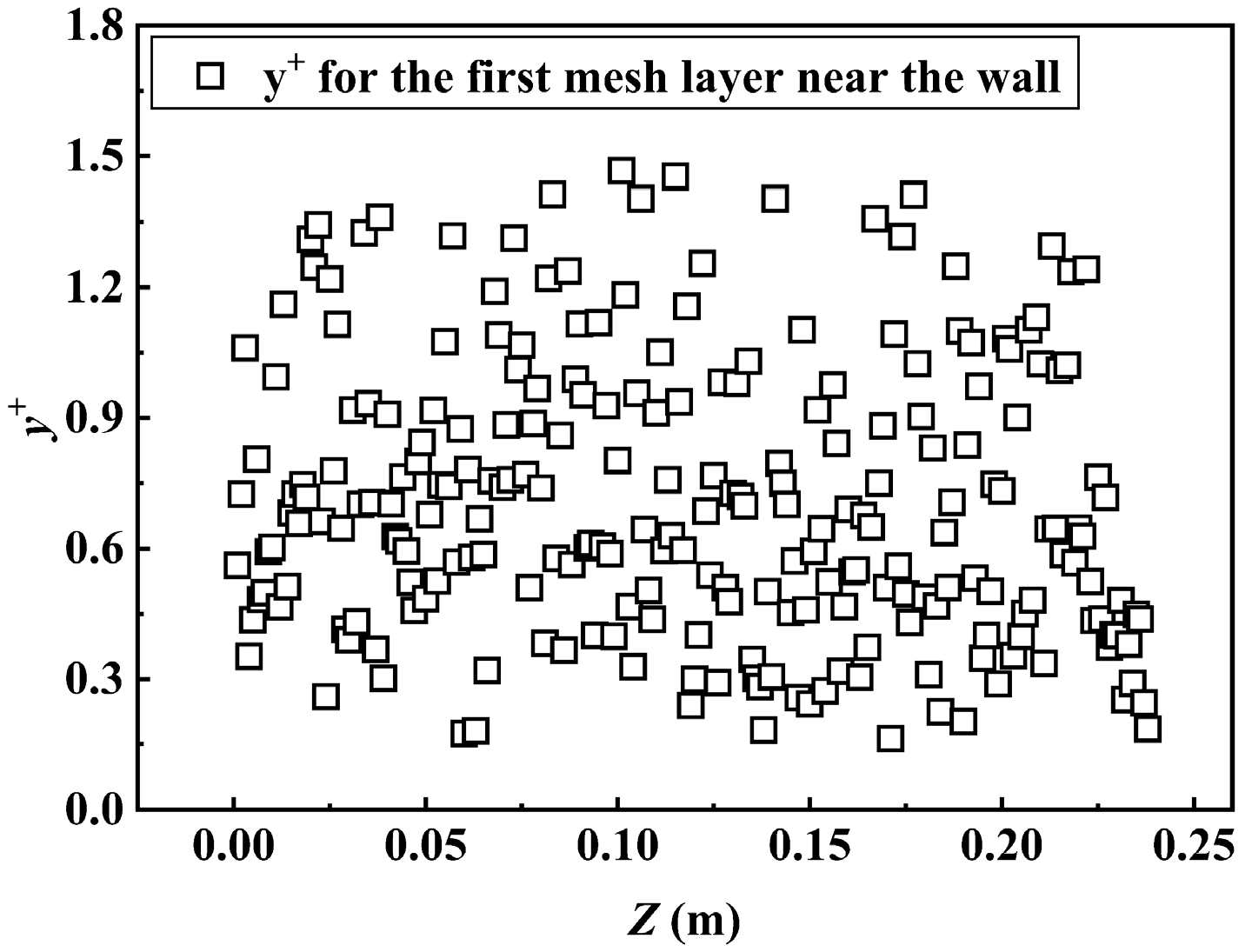
A grid independence verification analysis is conducted for the HCHX with C = 2, S = 22 mm, and α = 9.04°. Figure 3 shows a part of the grid around the tube bundle. Fluent meshing is employed to generate a polyhedral mesh for the model, with minimum and maximum face mesh sizes set at 0.7 mm and 3 mm, respectively. Mesh refinement is applied to the fluid regions adjacent to the walls to achieve a y+ value of approximately 1 for the first mesh layer. Figure 4 presents the distribution of the y+ value for the first mesh layer on the helical tube bundle surface. Four meshing methods are employed, yielding mesh counts of 2.68, 5.33, 8.02, and 9.90 million. The resulting mesh exhibited a maximum face skewness of 0.55 and a minimum orthogonal quality of 0.2. As shown in Table 4, the errors in Nu and f remain within 1% once the mesh count exceeds 8.02 million, which demonstrates that further mesh refinement has a negligible effect on the computational results. Consequently, the mesh scheme with approximately 8.02 million cells is selected for all subsequent analyses to ensure accuracy while conserving computational resources.

2.5. Turbulence Model Validation

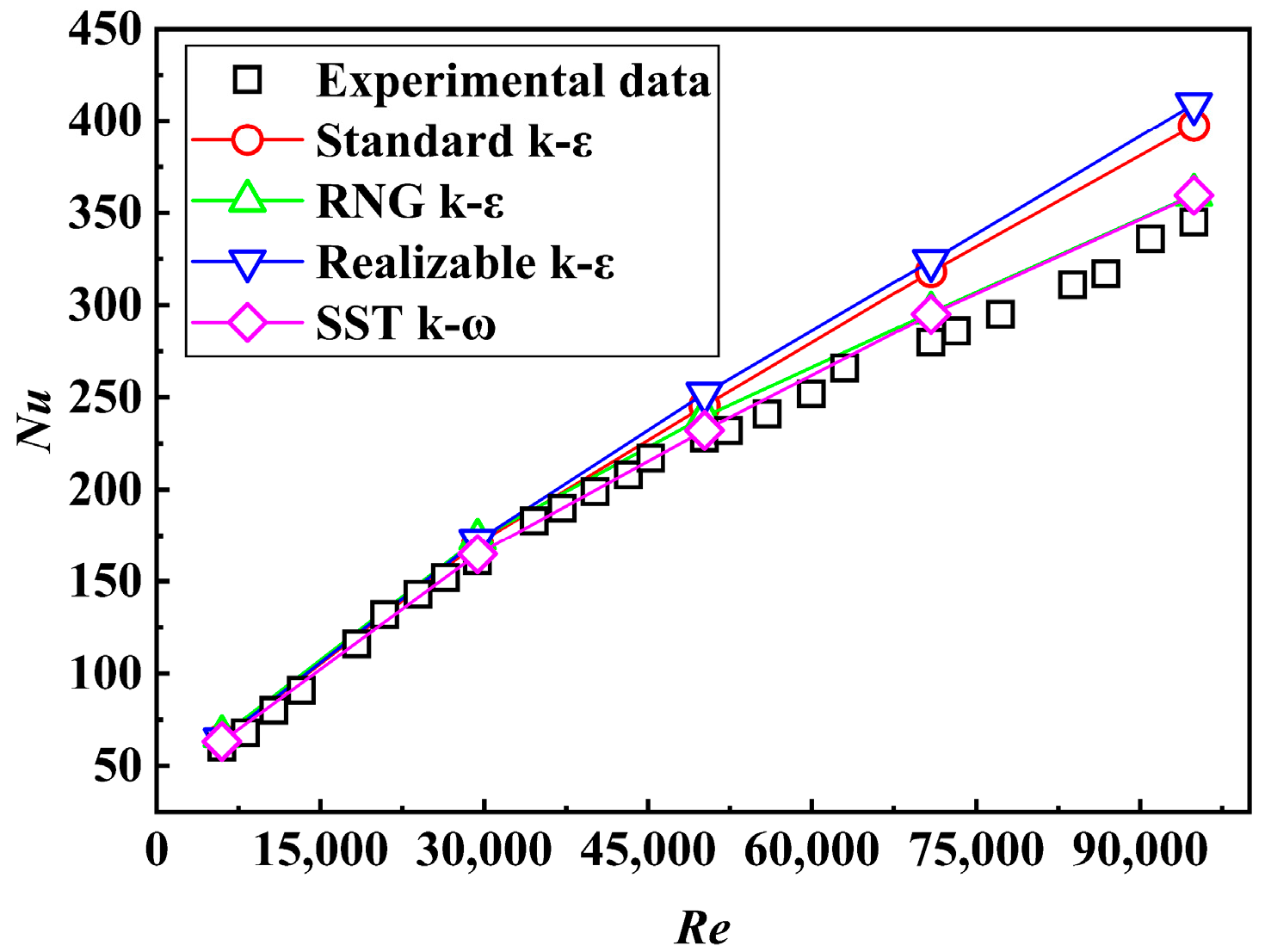
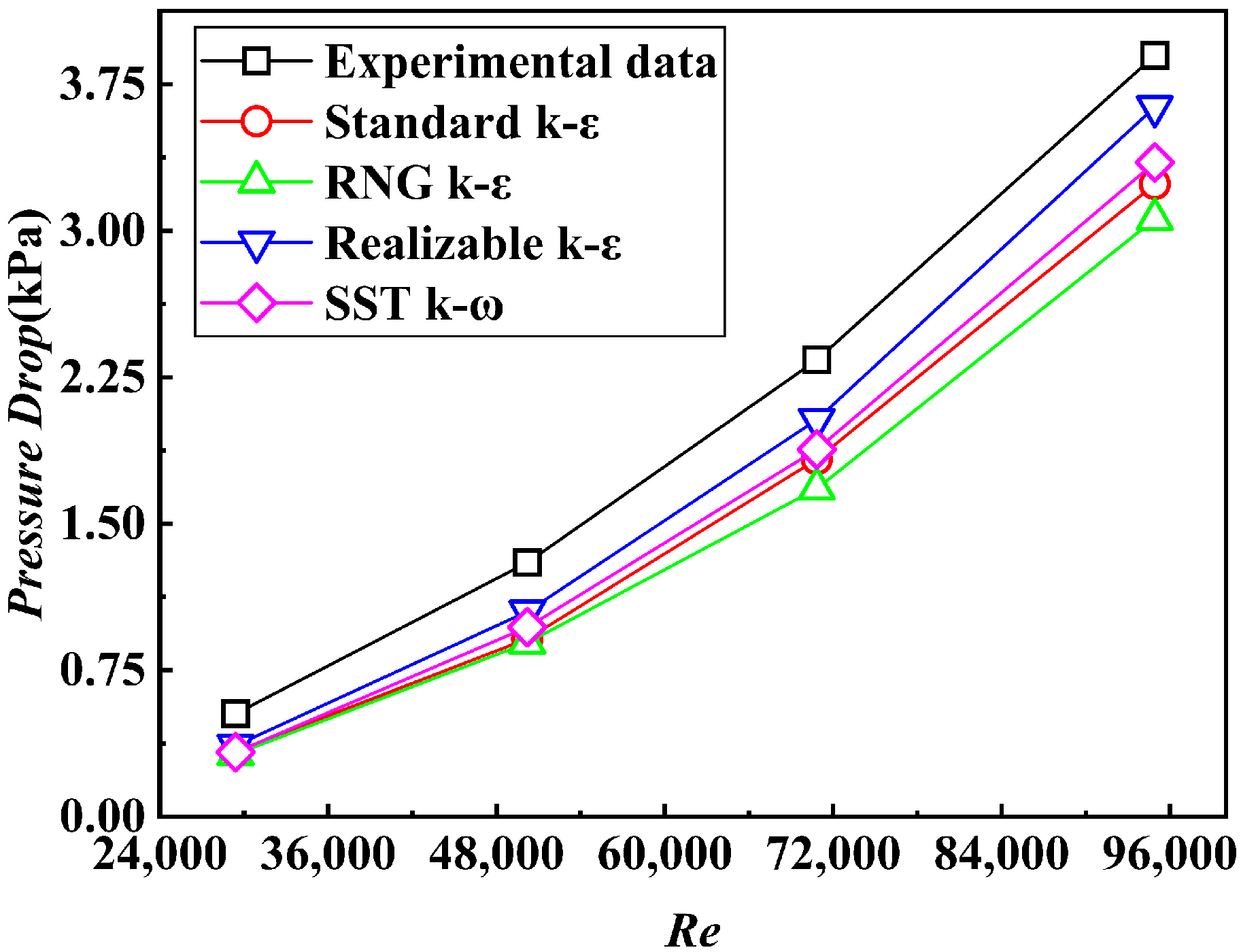
The structure of the HCHX is complex, characterized by significant variations in flow channel curvature, which may lead to differences in computational results from various turbulence models. Consequently, a two-step approach is implemented to select the most appropriate turbulence model. Initially, the Standard k-ε, RNG k-ε, Realizable k-ε, and SST k-ω turbulence models are employed to conduct numerical simulations of Neeraas’s experimental geometry, as shown in Table 5 [10]. Figure 5 and Figure 6 present a comparison of numerical simulation results with experimental data. The findings indicate that all four turbulence models underestimate the shell-side pressure drop, which can be attributed to the neglected space bars between tube bundles in the computational model. Over a broader range of Re values, the RNG k-ε and SST k-ω turbulence exhibits better agreement with experimental results for shell-side Nu predictions compared to the Standard k-ε and Realizable k-ε models. Therefore, the RNG k-ε and SST k-ω models are selected for further verification calculations.
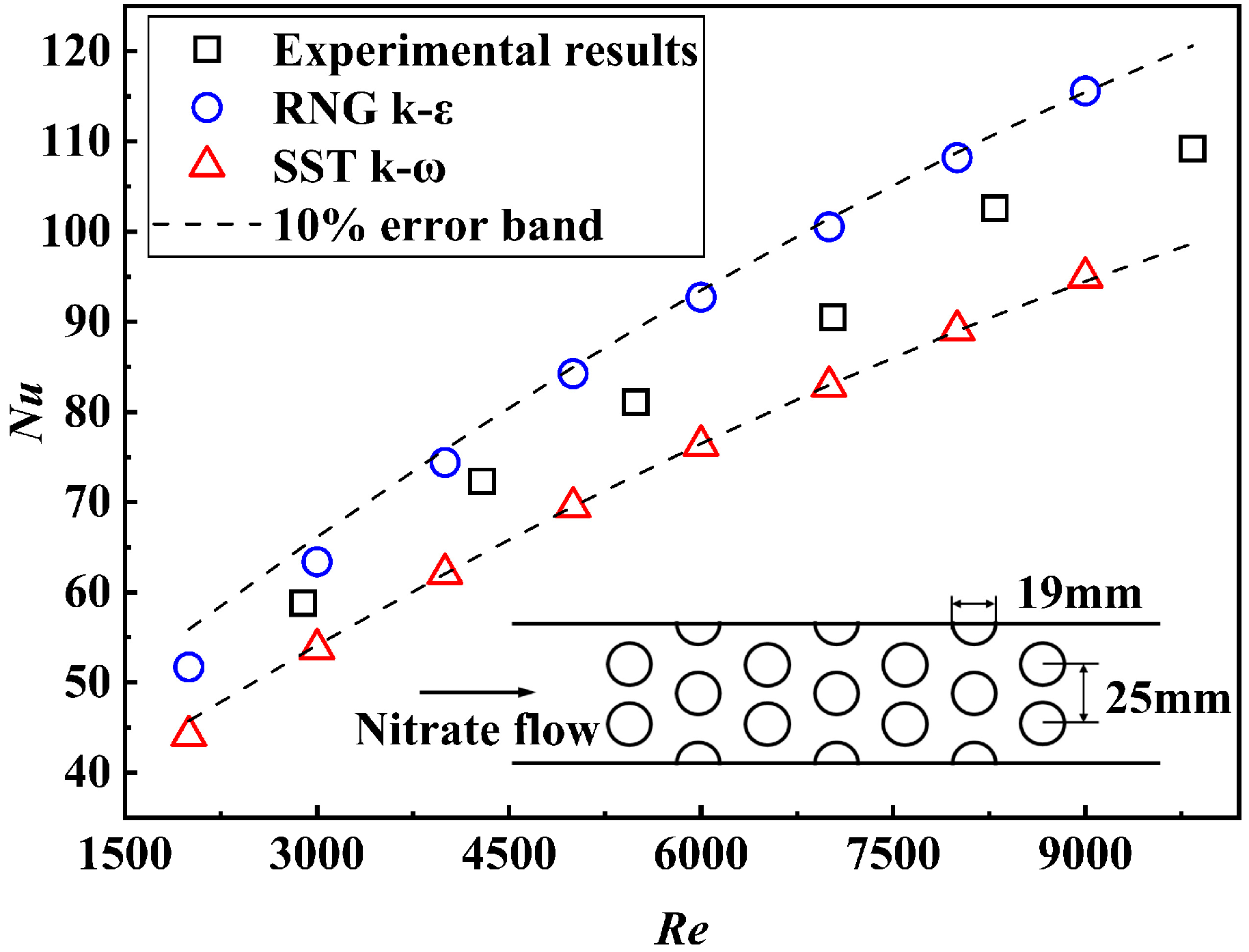
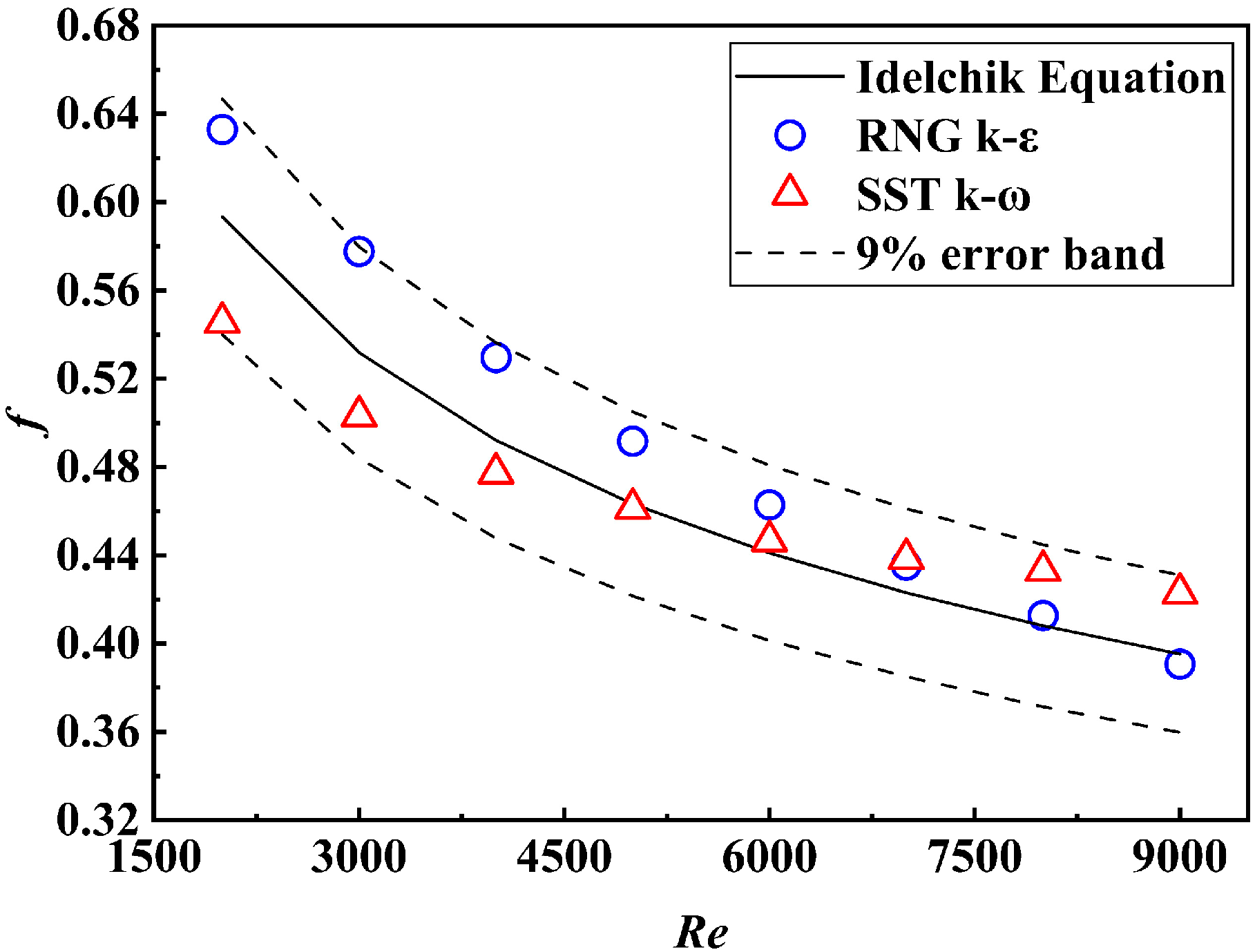
Fluoride salt exhibits a high Pr and viscosity, which distinguish its heat transfer characteristics from those of traditional fluids like water and air. Further validation is required specifically for its thermal–hydraulic performance within helical tube bundles. Due to the limited experimental data on fluoride salt in the HCHX shell side, the numerical approach is validated using the experimental data from Dong et al. [46] for a nitrate salt mixture in straight-tube bundles. The experimental geometry features a flow passage geometry similar to that of the HCHX shell side, with both configurations characterized by cross-flow through tube bundles. Furthermore, the Pr of the nitrate salt mixture closely matches that of fluoride salt, ranging from 3 to 12. The numerical predictions for Nu and f are compared with experimental data [46] and correlation results [45] in Figure 7 and Figure 8, respectively. The results indicate that both the SST k-ω and RNG k-ε models show good agreement with experimental data, with maximum deviations for Nu and f within 10%. For the SST k-ω model, the absolute mean deviations are 10.46% for Nu and 4.36% for f. The corresponding deviations for the RNG k-ε model are 7.73% and 4.91%, respectively. This deviation may be attributed to the assumption of temperature-invariant fluid properties in the simulation, which contrasts with the experimental scenario. Furthermore, the simplification of boundary conditions and discretization errors in the numerical solution are significant sources of error. Therefore, based on a comprehensive evaluation of computational convergence and accuracy, the RNG k-ε model is selected for subsequent simulations due to its superior overall performance.

3. Results and Discussion

3.1. Effect of Inlet Conditions

Variations in fluoride salt temperature significantly affect its thermophysical properties, including density, specific heat, and dynamic viscosity, which in turn influence the flow regime and heat transfer characteristics in the helical tube bundle.
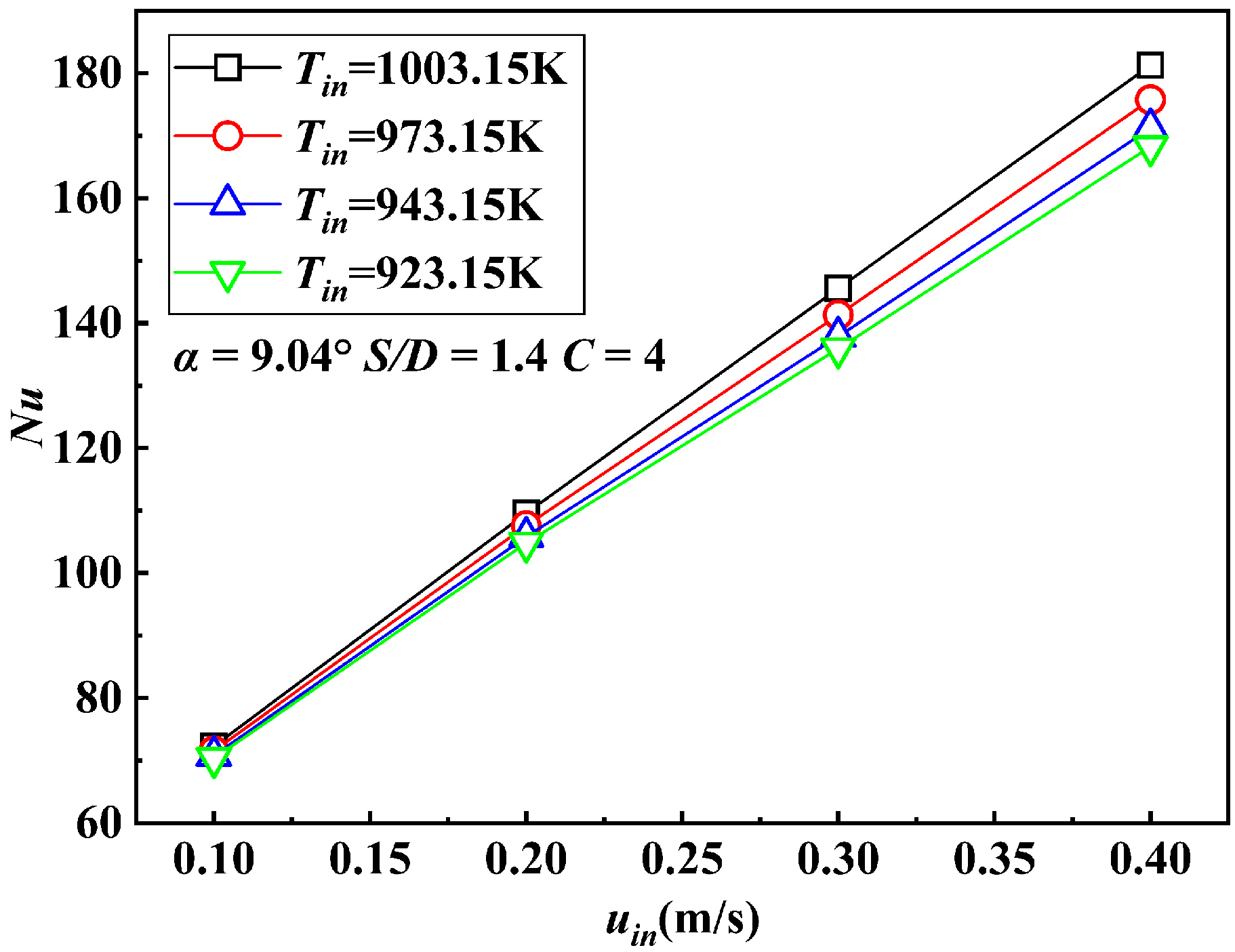
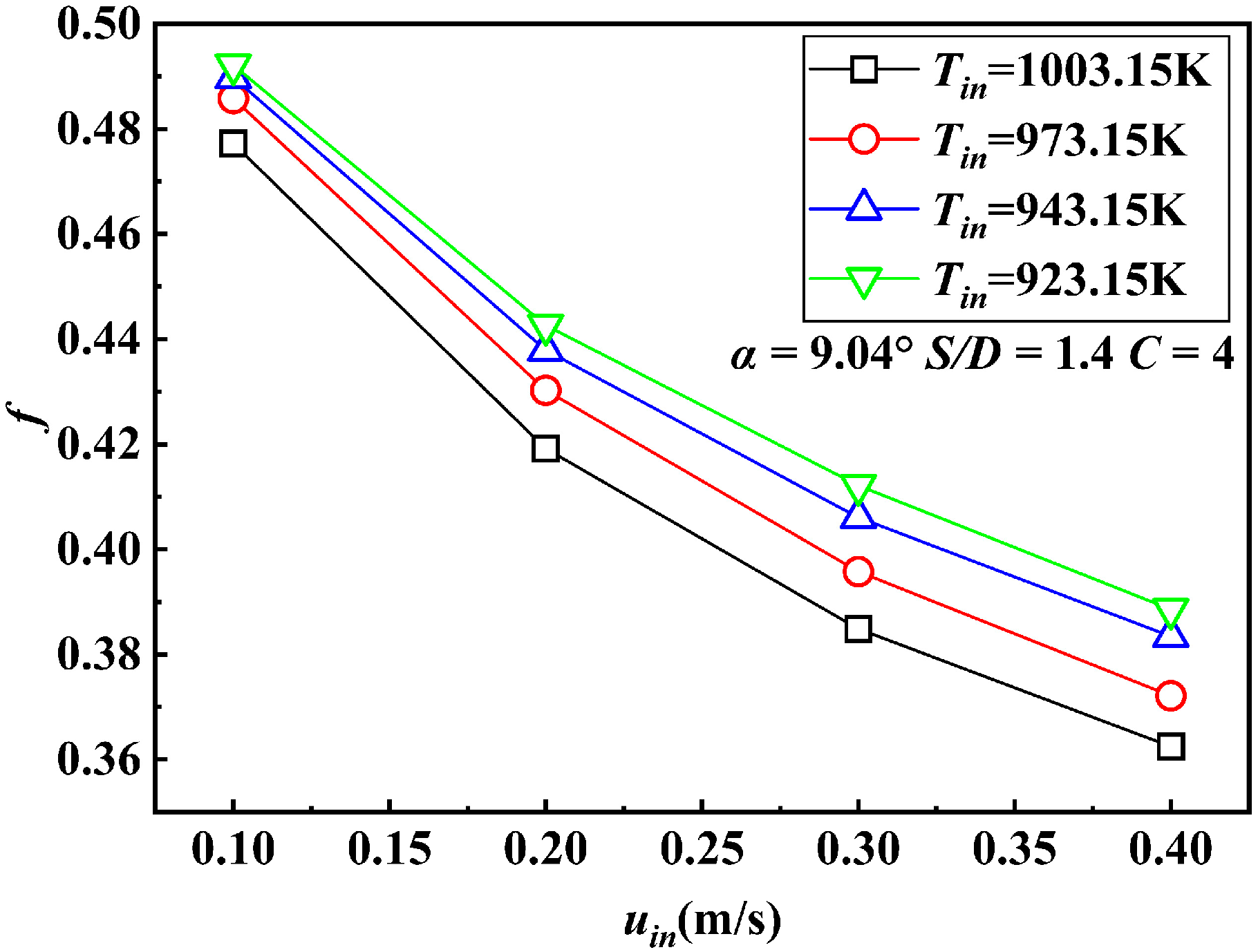
Figure 9 and Figure 10 show the variations in Nu and f with inlet temperature and velocity. At a constant inlet temperature, Nu increases with increasing flow velocity, whereas f decreases with increasing flow velocity. This phenomenon occurs because higher flow velocities enhance turbulent intensity in the fluoride salt, which strengthens fluid disturbance within the boundary layer. Consequently, the thermal resistance at the wall is reduced, thereby improving heat transfer performance within the helical tube bundle. However, it also increases the pressure loss. At a constant flow velocity, with increasing inlet temperature, Nu increases while f decreases. Temperature variations in the fluoride salt significantly alter its dynamic viscosity and density. As the temperature rises from 923.15 K to 1003.15 K, the density and dynamic viscosity of fluoride salt decrease by 1.9% and 33.6%, respectively, with dynamic viscosity exhibiting greater temperature dependence. Temperature rise reduces viscosity more than density, leading to an increase in Re at constant flow rate, thereby enhancing heat transfer capability. Additionally, the reduction in viscosity decreases internal friction within the fluid, resulting in a decrease in f.

3.2. Effects of Key Structural Parameters

3.2.1. Effect of Layer Count

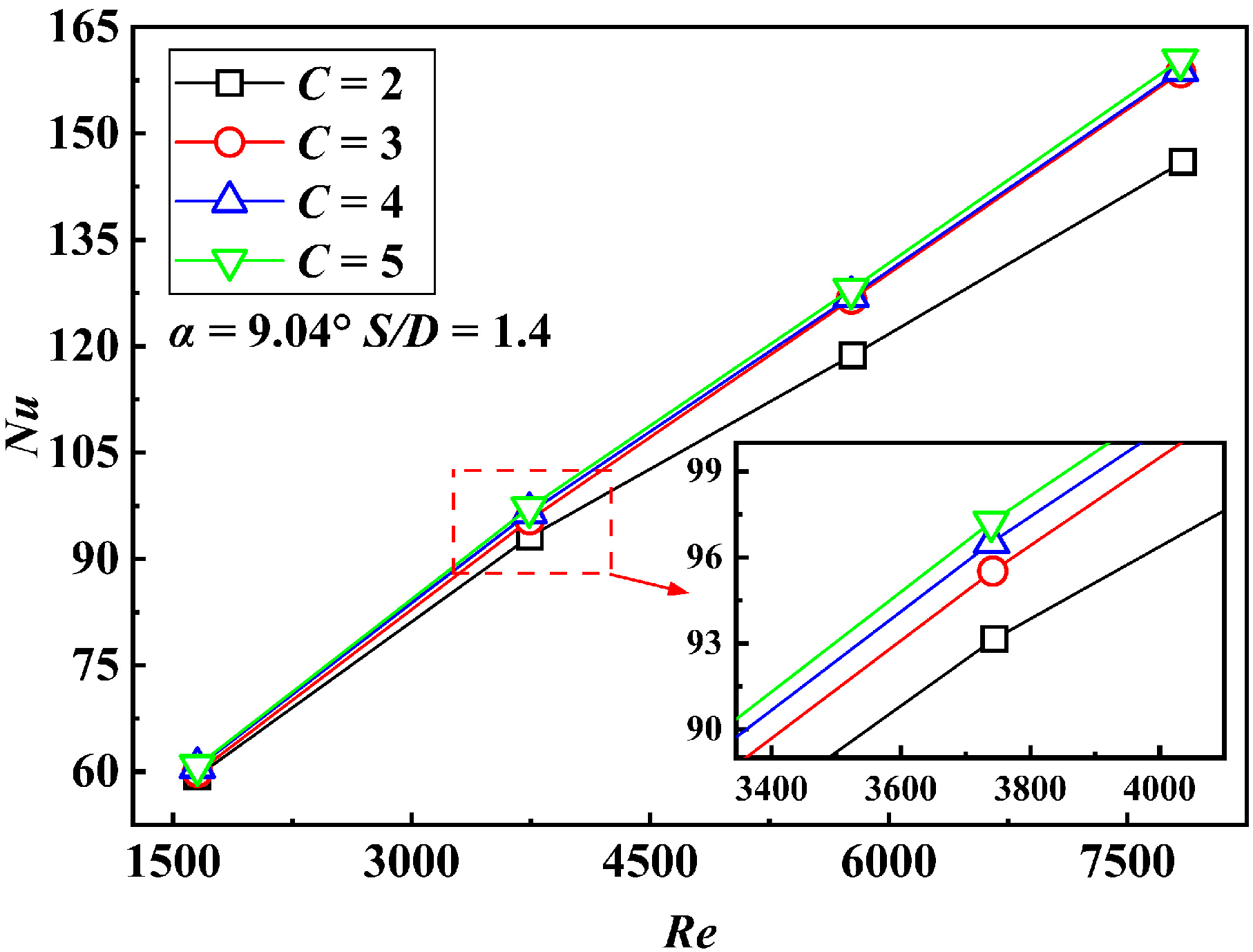
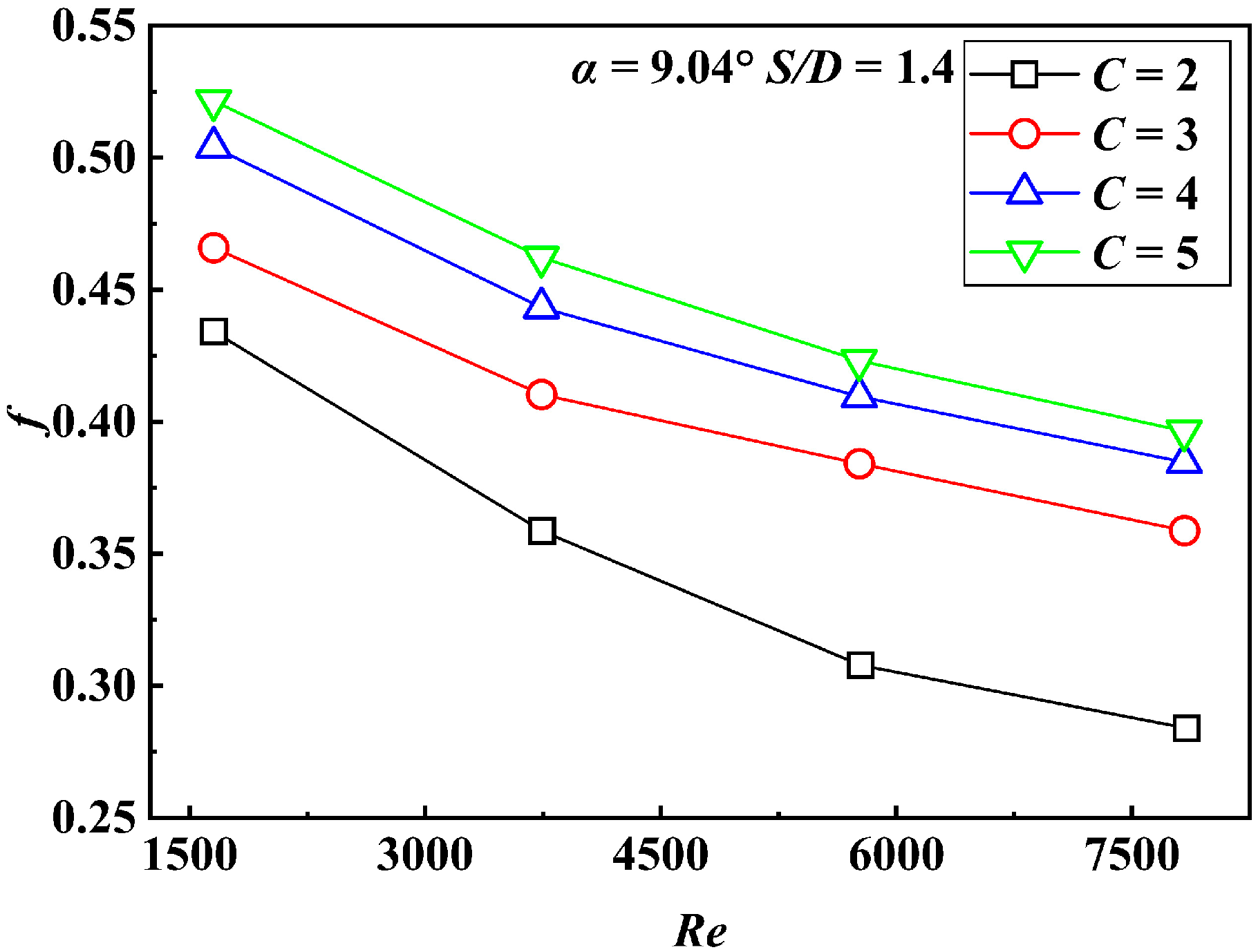
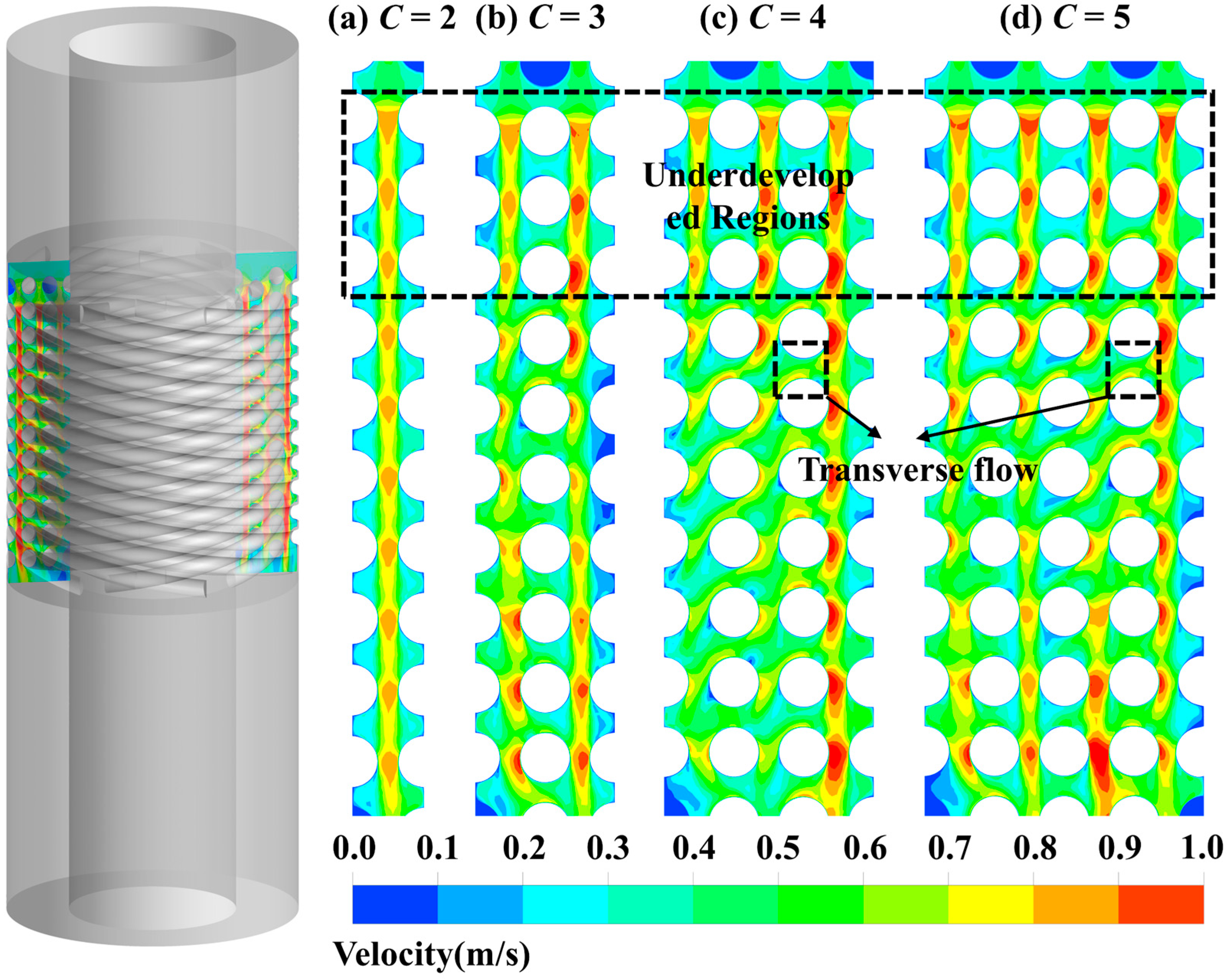
A key feature of the HCHX is its multi-layered tube bundle configuration. Although increasing the number of layers augments the heat transfer area and improves structural compactness, it also creates more tortuous and complex flow paths. Figure 11 and Figure 12 show the effects of the number of layers on Nu and f, respectively. The results indicate that, at the same Re, both Nu and f increase with the number of layers, and the rate of increase gradually diminishes. As the number of layers increases from two to four, the Nu and f rise by 4–9% and 16–35%, respectively. However, further increasing the number of layers to five, Nu basically remains unchanged, while f increases by 3%. To explain the underlying mechanism, Figure 13 compares the velocity contours on a longitudinal cross section for different numbers of layers. In a two-layer tube bundle configuration, the velocity distribution is non-uniform but symmetric, with most of the fluoride salt flowing directly through the central passage between the layers. As the number of layers increases, the flow distribution becomes progressively more uniform yet asymmetric. At the tube bundle inlet, the velocity distribution exhibits symmetry, indicating an undeveloped flow. Progressing downstream, the combined influence of the helix angle and tube curvature induces transverse flow between the layers, thereby disrupting the flow symmetry. This phenomenon enhances perturbation of the boundary layer on the downstream side of the helical tubes, which reduces wall thermal resistance, subsequently improving heat transfer performance and increasing pressure loss.
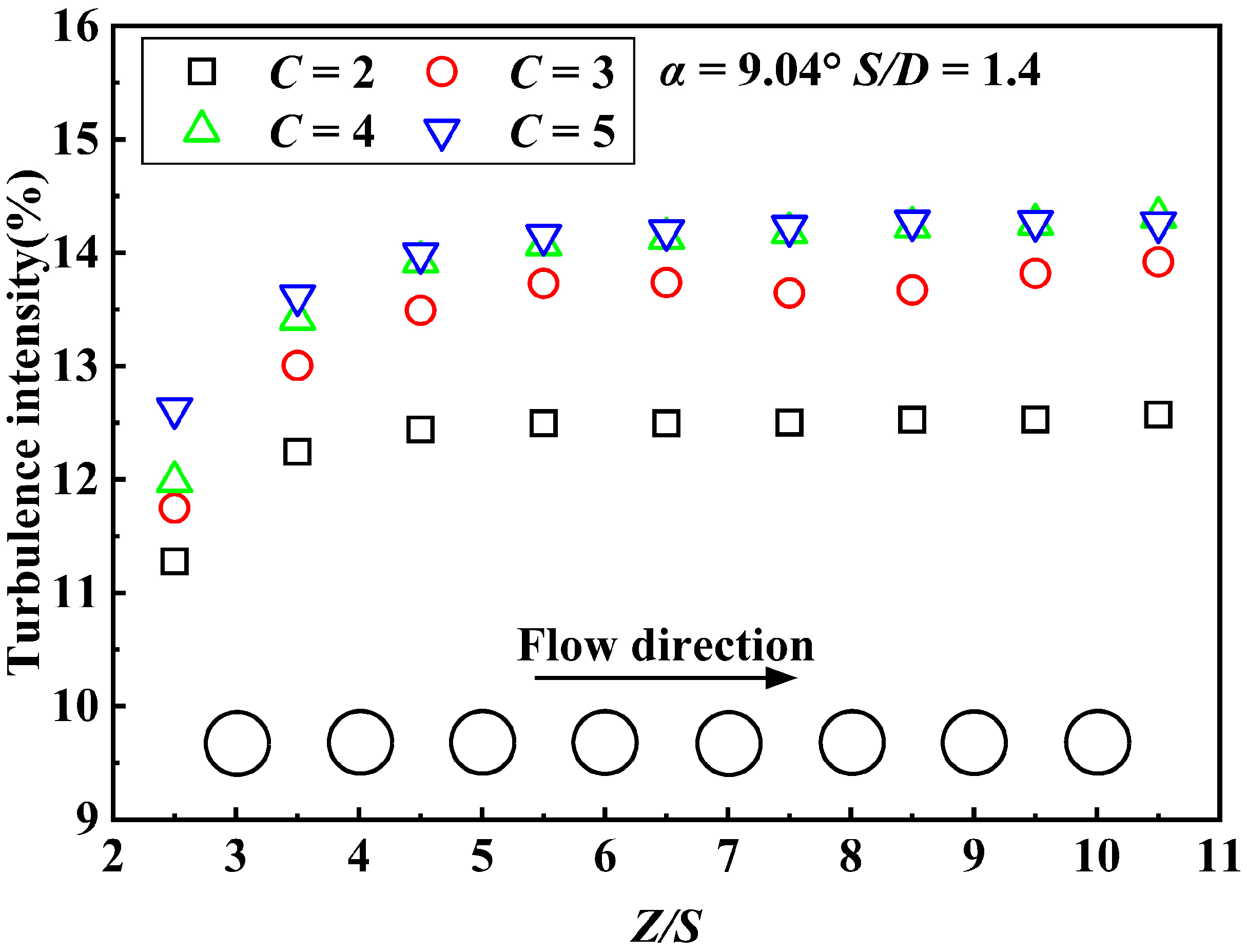
The flow field structure serves primarily for qualitative analysis. Figure 14 presents a comparison of area-averaged turbulence intensity across different height planes along the flow direction for varying numbers of layers. Higher turbulence intensity generally indicates superior heat transfer performance [47]. For all investigated configurations, the area-averaged turbulence intensity increases with the number of tube rows along the flow direction, stabilizing once the number of tube rows exceeds six. This stabilization indicates that the flow has achieved a fully developed state within the helical tube bundle. The variation in area-averaged turbulence intensity with the number of layers is consistent with the trends observed for both the Nu and f. Specifically, increasing the number of layers from two to four results in an approximately 13% increase in area-averaged turbulence intensity, while a further increase to five layers yields no significant change. This phenomenon occurs because an increase in the number of layers results in the flow being dominated by the tube bundle arrangement rather than by wall effects. For fewer layers (C = 2), the fluoride salt flow is constrained by the inner and outer cylindrical walls, leading to a pronounced wall effect on the flow field structure. However, an increase in the number of layers (C = 3, 4), weakens the squeezing and shearing effects from walls. Consequently, the fluid becomes more fully developed between the tube bundles, leading to enhanced transverse flow and a continuous increase in both Nu and f. When the number of tube layers exceeds four, the core region of the flow passage is fully developed and becomes essentially independent of the number of layers. As a result, both Nu and f remain essentially constant.

3.2.2. Effect of Tube Pitch

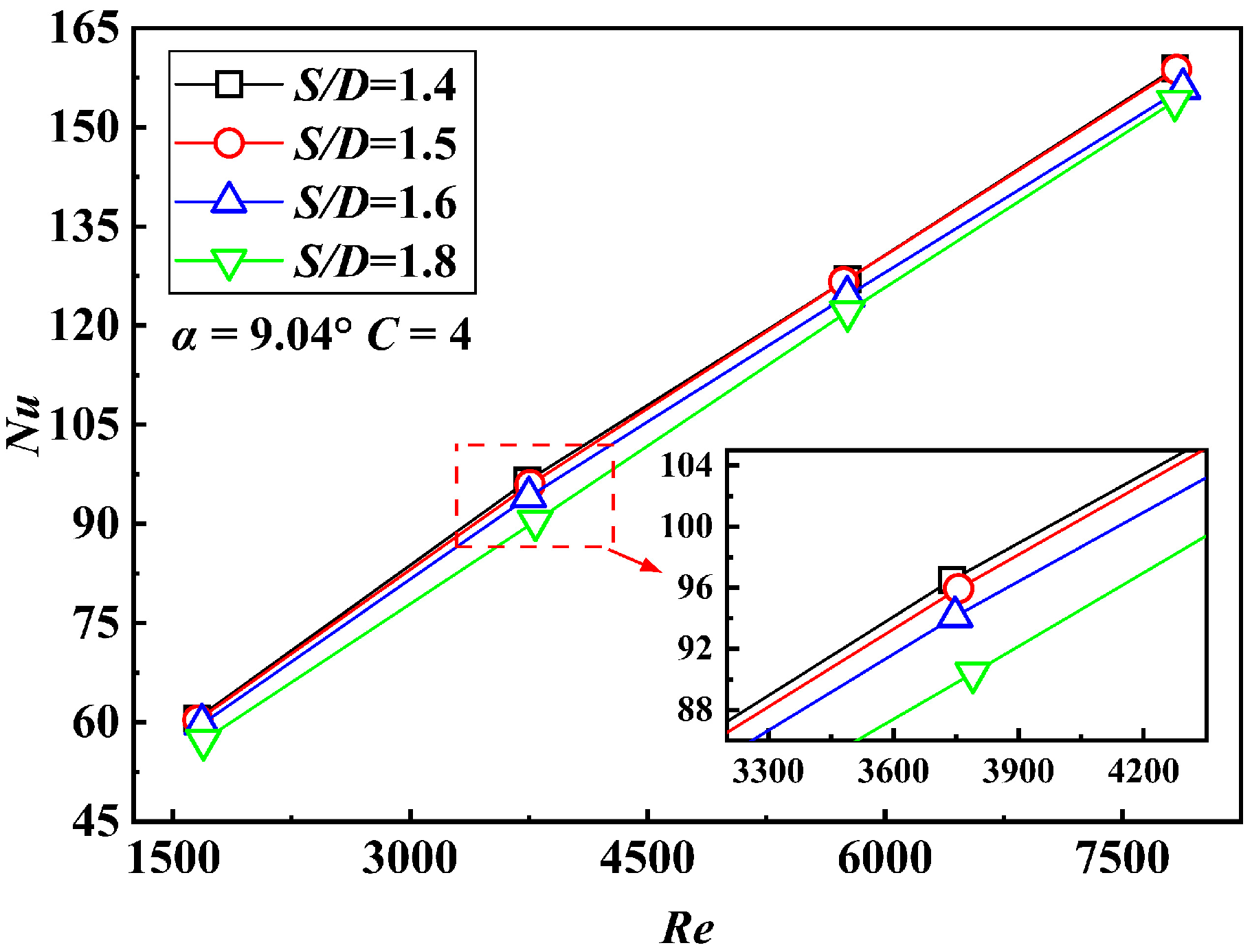
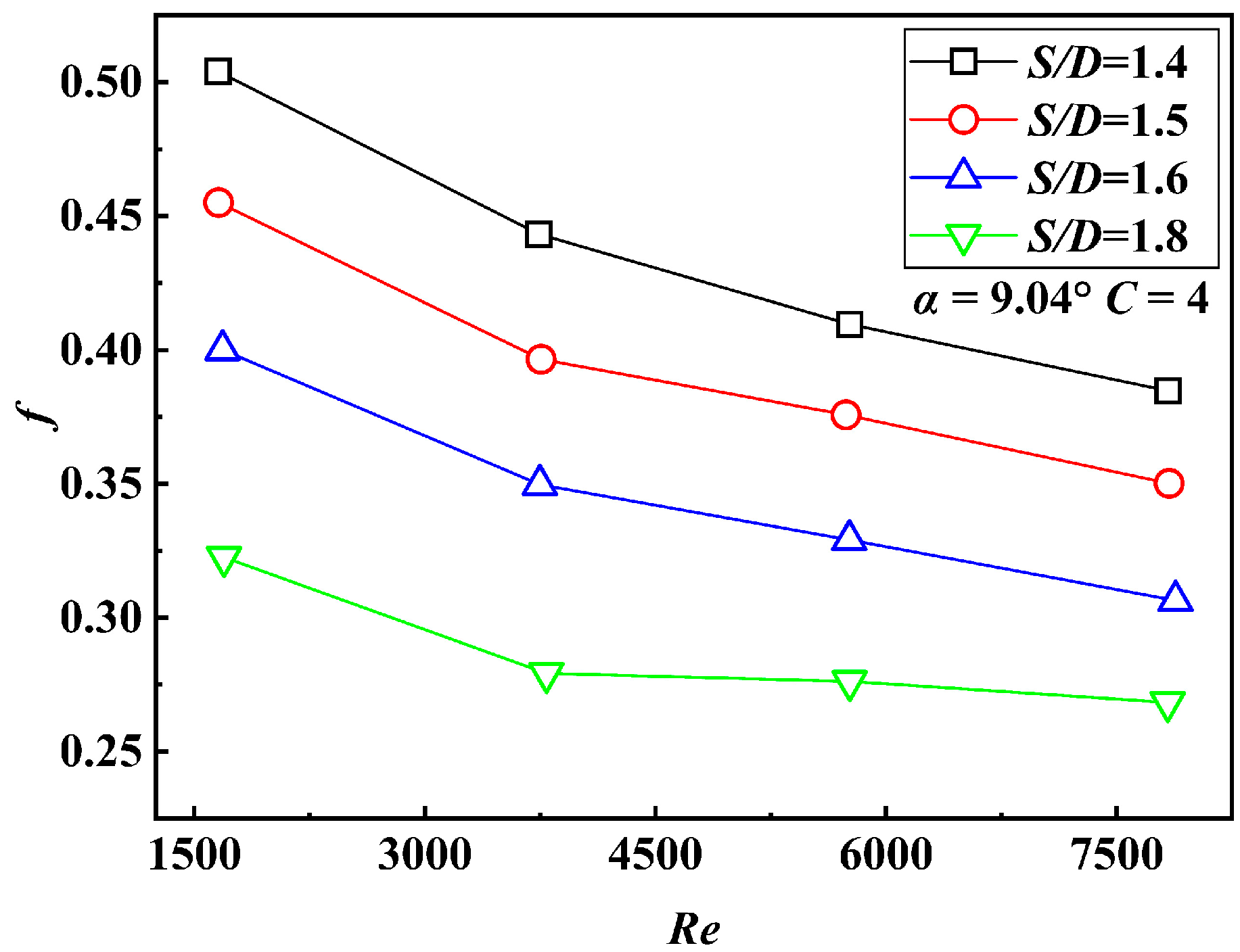
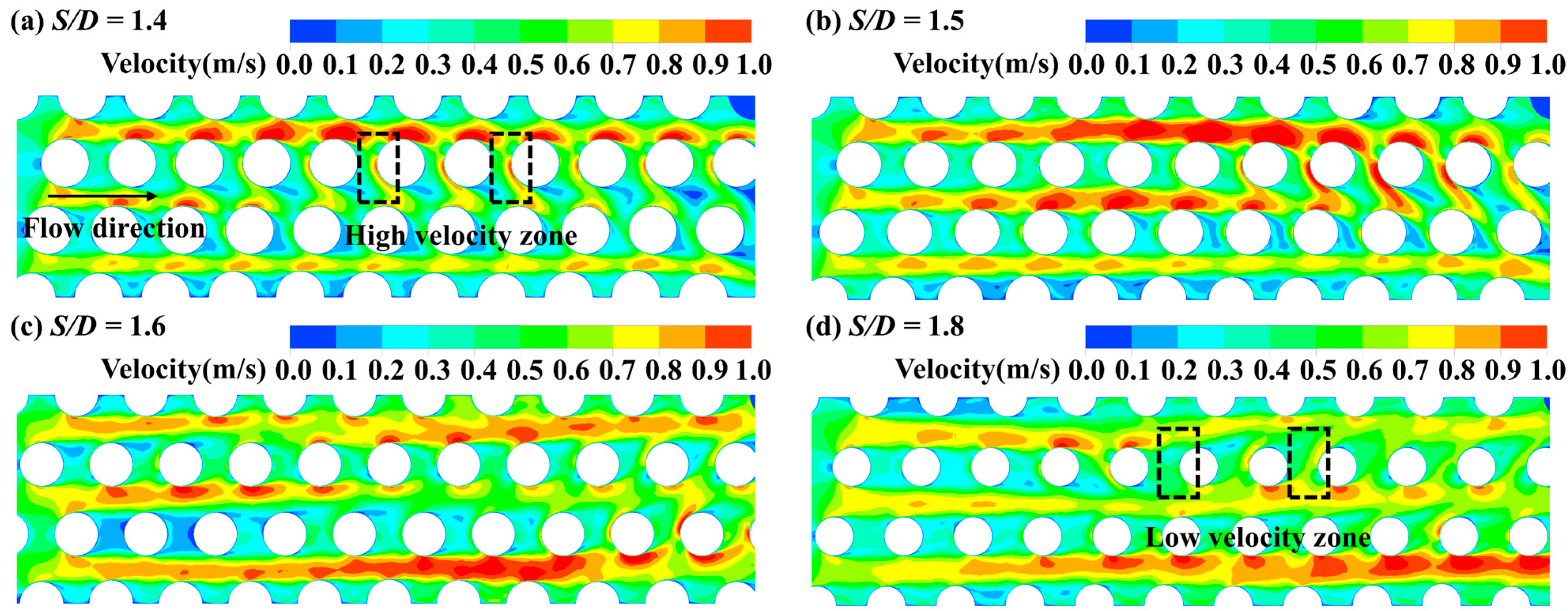
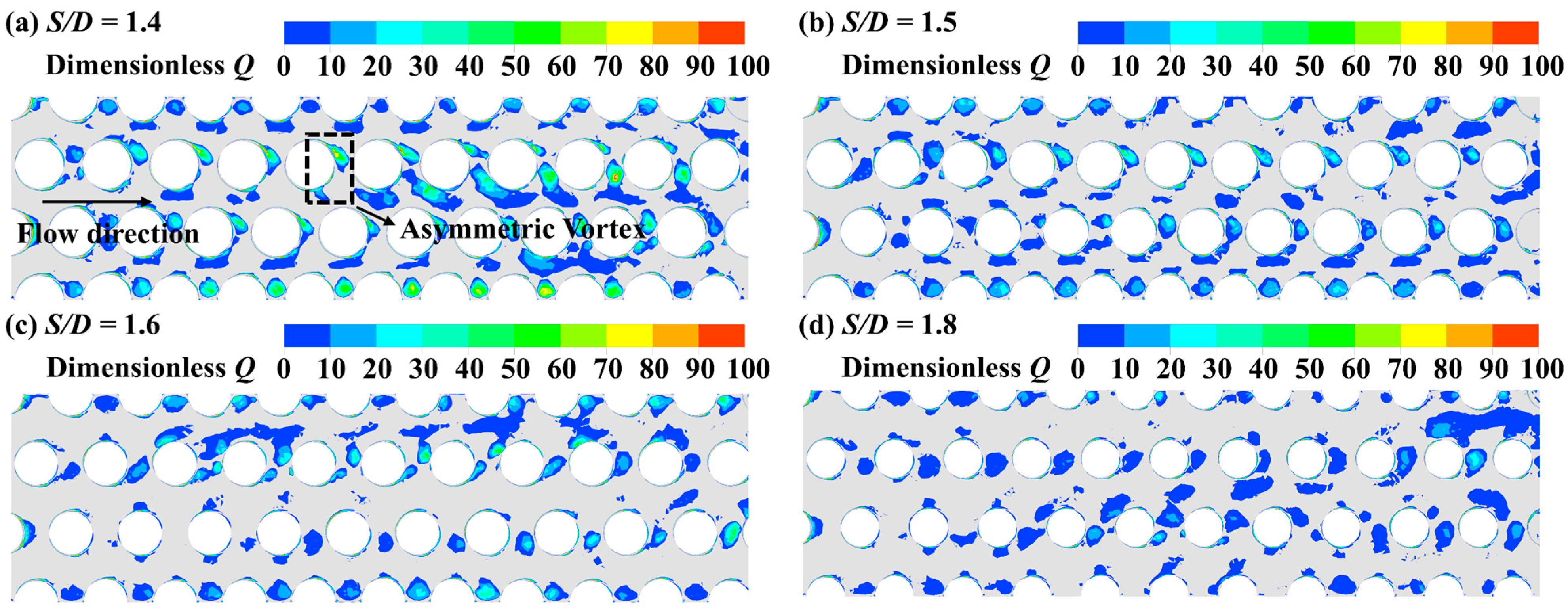
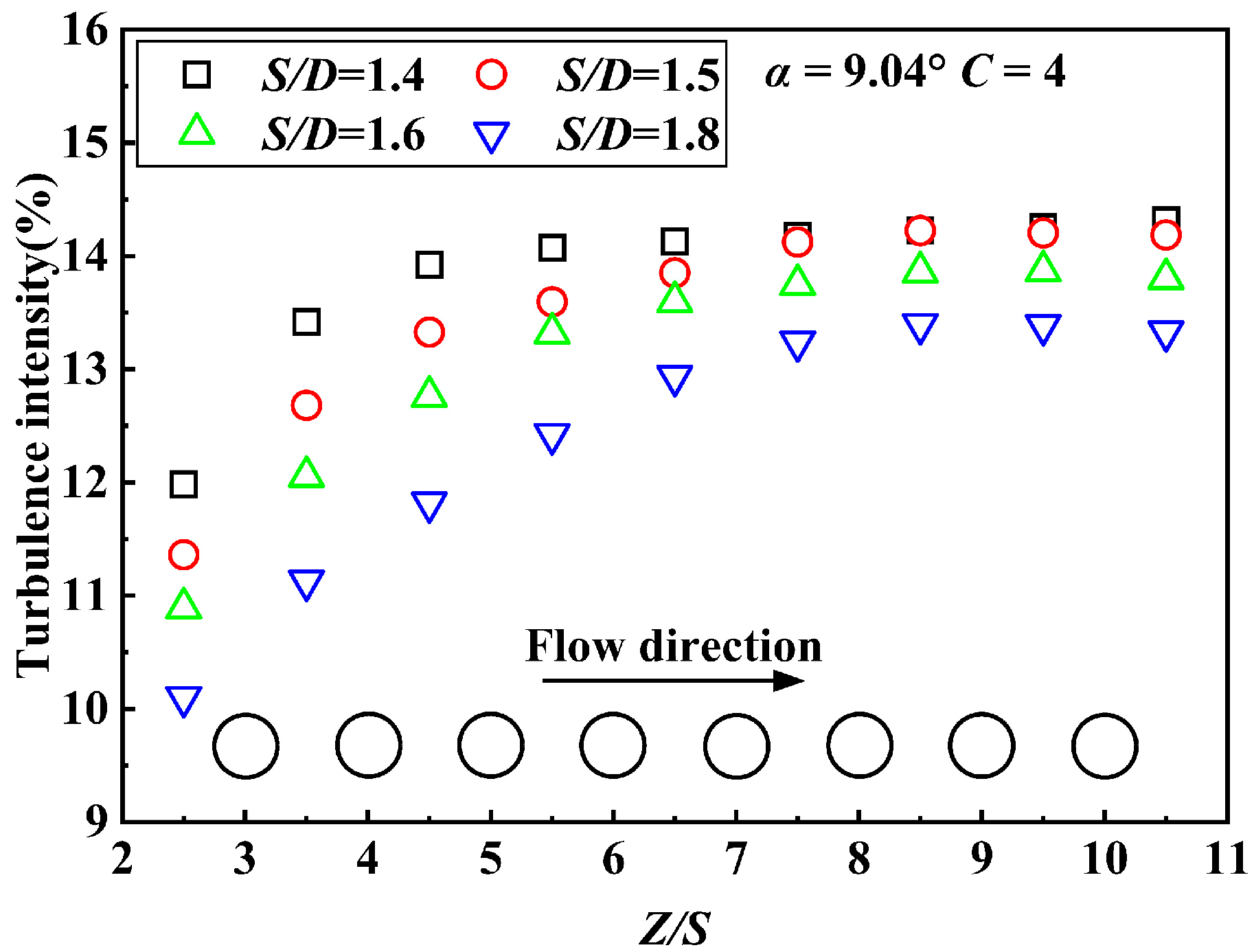
Figure 15 and Figure 16 present the effects of tube pitches on the heat transfer and flow resistance characteristics, with relative tube pitches (S/D) of 1.4, 1.5, 1.6, and 1.8. The results demonstrate that both the Nu and f increase with decreasing tube pitch at a constant Re. Specifically, reducing the relative tube pitch from 1.8 to 1.4 enhances Nu by 3–7% and f by 43–60%. Figure 17 presents a comparison of velocity contours for different relative tube pitches. A reduction in tube pitch intensifies the flow squeezing effect imposed by the tube walls, which leads to increased flow velocity and significantly diminished flow stagnation zones within the bundle. Furthermore, the narrower flow passage promotes continuous fluid impingement on the walls and frequent changes in flow direction, which disrupt the thermal boundary layer, thereby enhancing the flow and heat transfer performance. To further reveal the influence mechanism of the tube pitch, the vortex structures within the helical tube bundle are analyzed using the Q-criterion [48], which is defined as follows:
Q = 1 2 ( Ω 2 + ϕ 2 )
where Ω and ϕ represent the vorticity tensor and strain rate tensor, respectively, and Q > 0 indicates that the vorticity magnitude exceeds the strain rate magnitude in the flow field, denoting the presence of a vortex.
Q can be further nondimensionalized as follows:
Q ¯ = Q D 2 u i n 2
Figure 18 presents a comparison of vortex structures for different tube pitches. The findings demonstrate the following: (1) Vortex structures are primarily located in the wake region of the helical tubes. (2) In contrast to the flow in a straight-tube bundle, the guidance effect of the helix angle causes asymmetrical vortex structures in the wake region, with some vortices extending into the channels between layers, thereby enhancing flow disturbance and improving the heat transfer performance. (3) A decrease in tube pitch significantly enhances the vortex intensity within the helical tube bundle. Additionally, Figure 19 also indicates that reducing the relative tube spacing from 1.8 to 1.4 leads to an approximate 7% increase in the areal-averaged turbulent intensity. This enhancement intensifies the turbulent mixing, which ultimately improves the heat transfer performance while increasing pressure loss.

3.2.3. Effect of Helix Angle

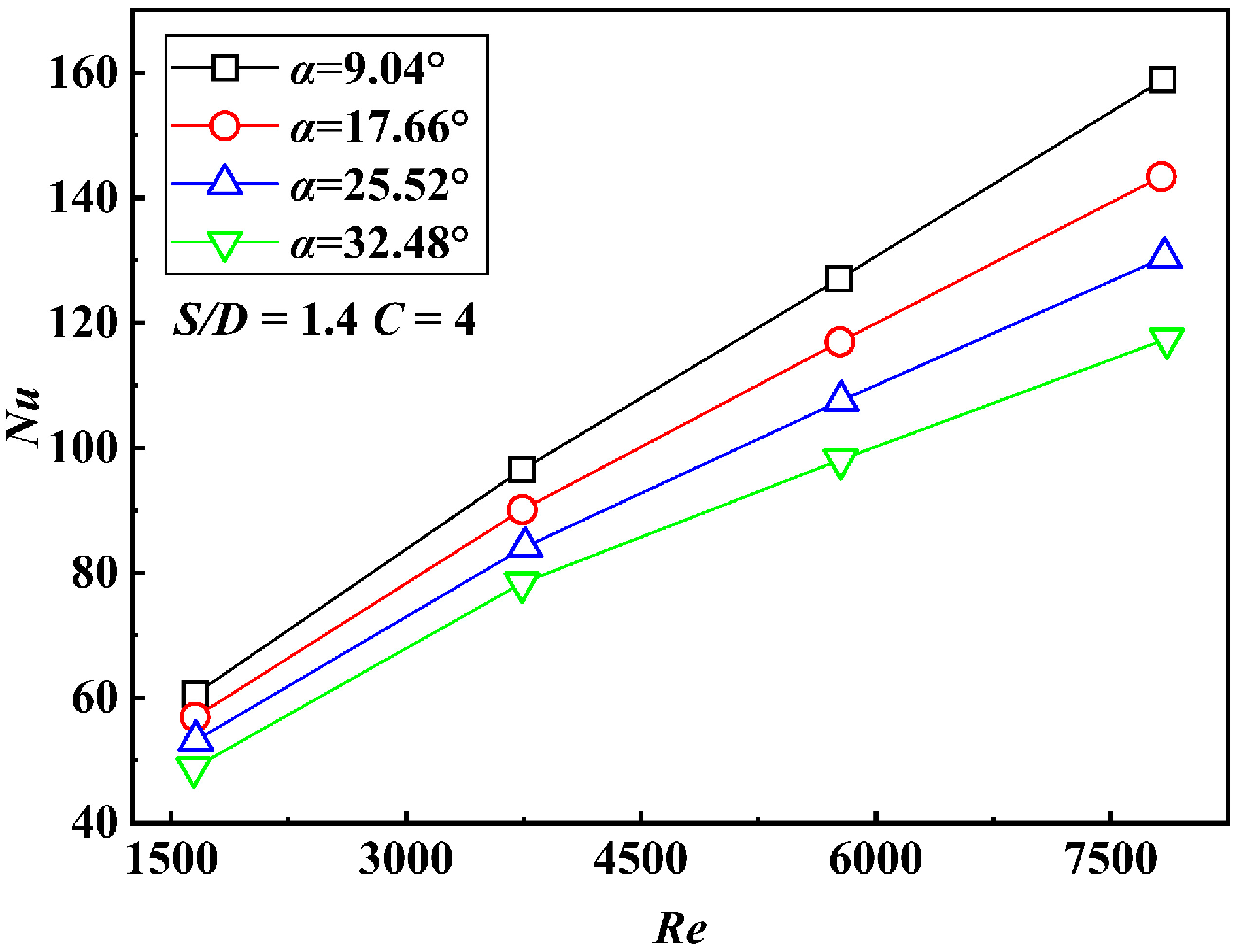
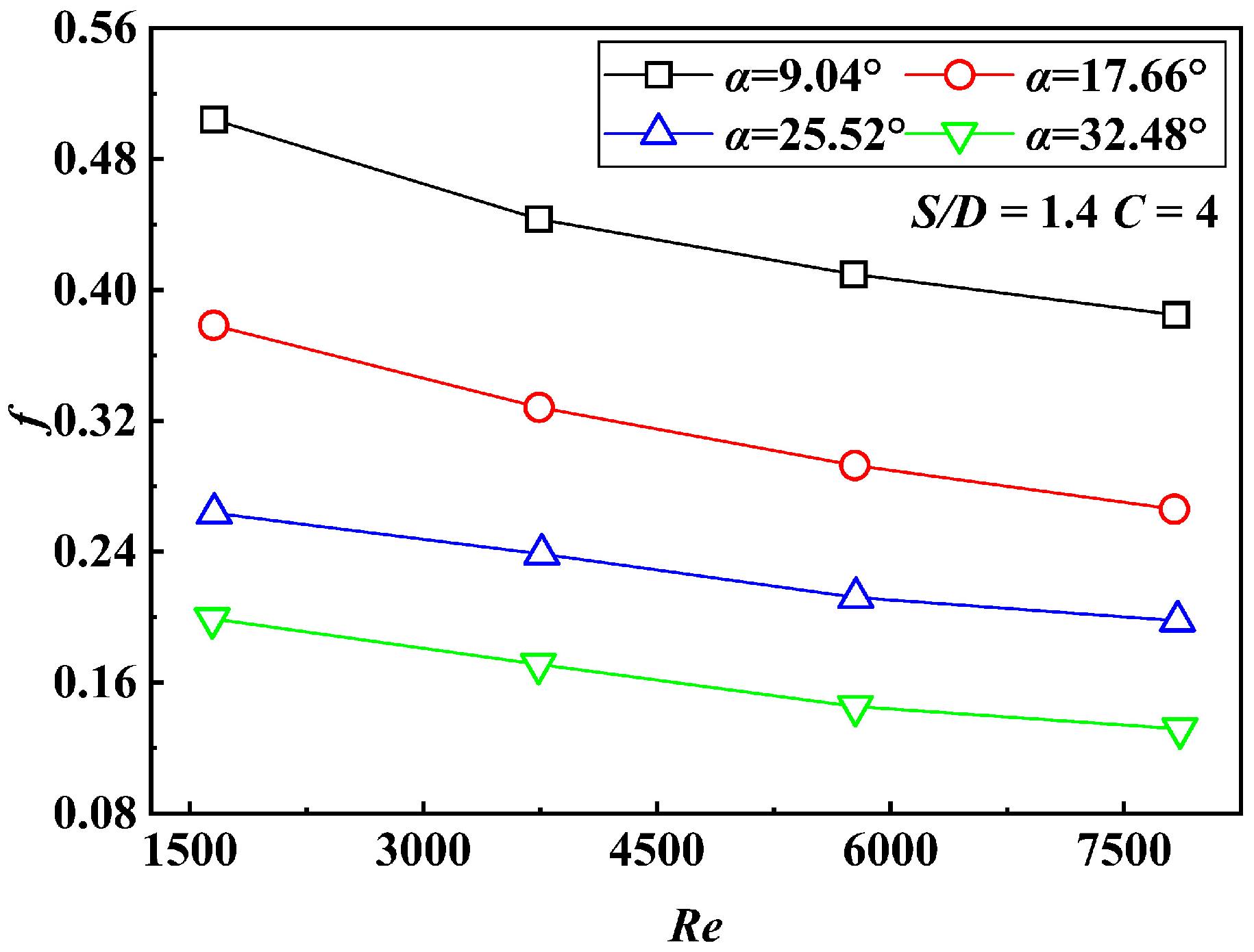
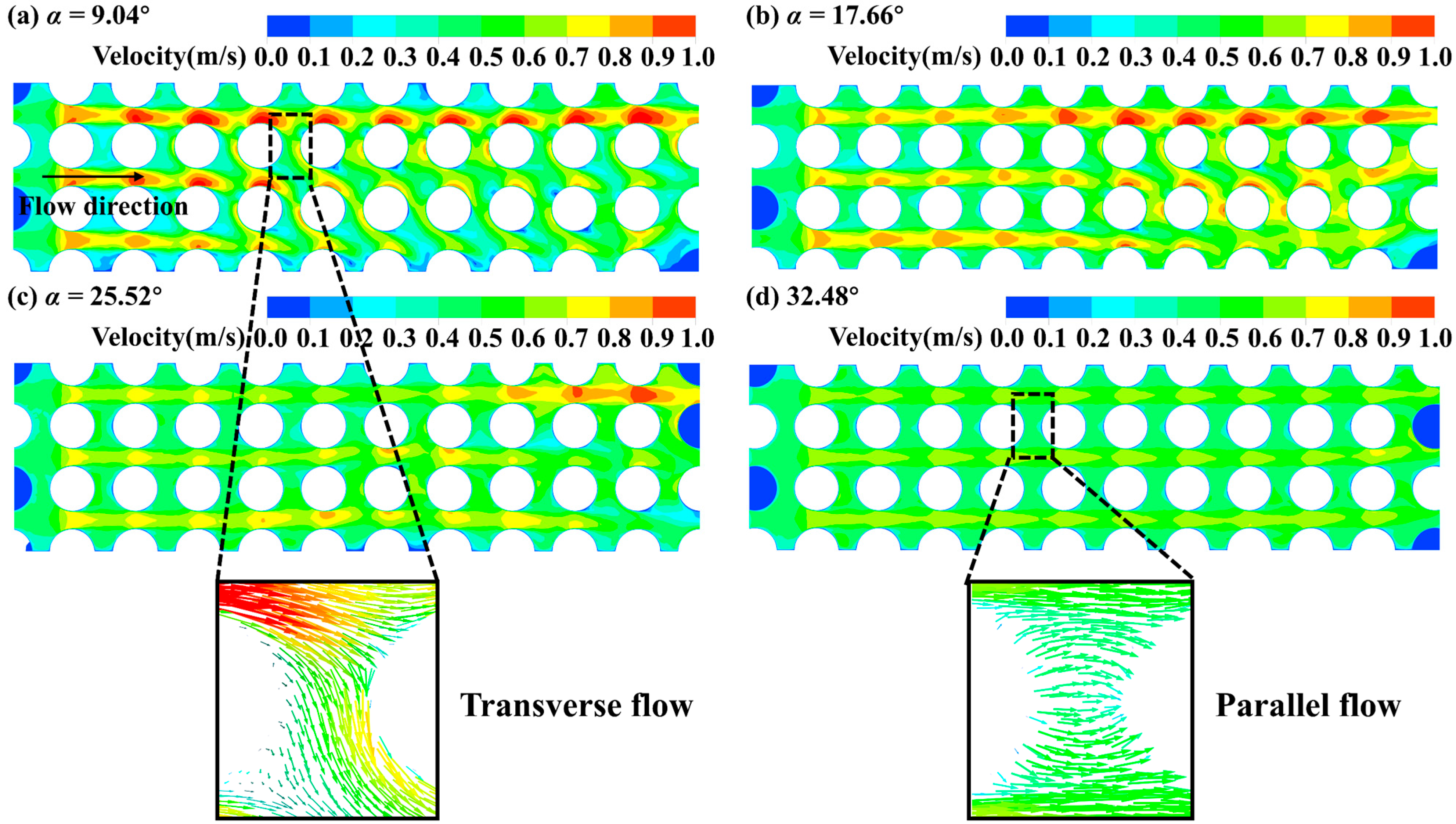
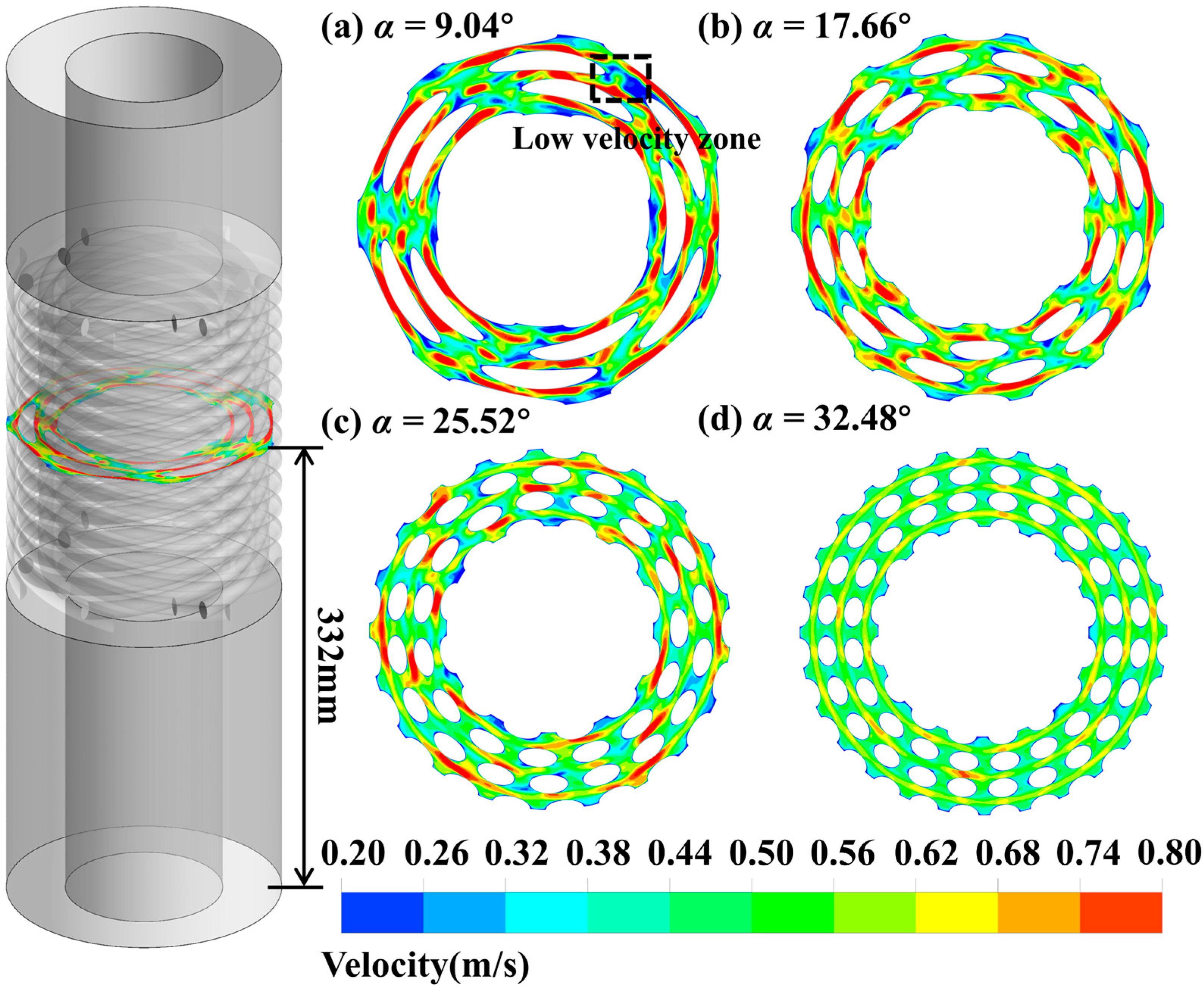
The helix angle is a defining geometric feature of HCHXs. This section explores its role in transitioning the flow pattern and altering the thermal–hydraulic performance. Numerical simulations were conducted on the HCHX with helix angles of 9.04°, 17.66°, 25.52°, and 32.48°. The results are presented in Figure 20 and Figure 21. Both Nu and f decrease as the helix angle increases. When the helix angle increases from 9.04° to 32.48°, Nu and f decrease by 19–26% and 60–65%, respectively.
Figure 22 and Figure 23 present the velocity contours of longitudinal and radial cross sections for different helix angles, respectively. The results indicate that an increase in the helix angle reduces the flow velocity of fluoride salt while yielding a more uniform and symmetric velocity distribution. At a helix angle of 9.04°, the fluoride salt flow through the HCHX shell side is predominantly perpendicular to the helical tube bundle, with high-velocity regions primarily concentrated in the channels between layers, whereas the flow velocity between tubes within the same layer is comparatively low. Additionally, the effect of the helix angle induces transverse flows in the tube wake regions. With an increase in the helix angle, the flow pattern of fluoride salt within the helical tube bundle transitions from cross-flow to parallel flow. This phenomenon increases the effective flow area of the radial cross section, thereby reducing the flow velocity. Furthermore, it also leads to a significant reduction in transverse flows, ultimately deteriorating the flow and heat transfer characteristics of fluoride salt.
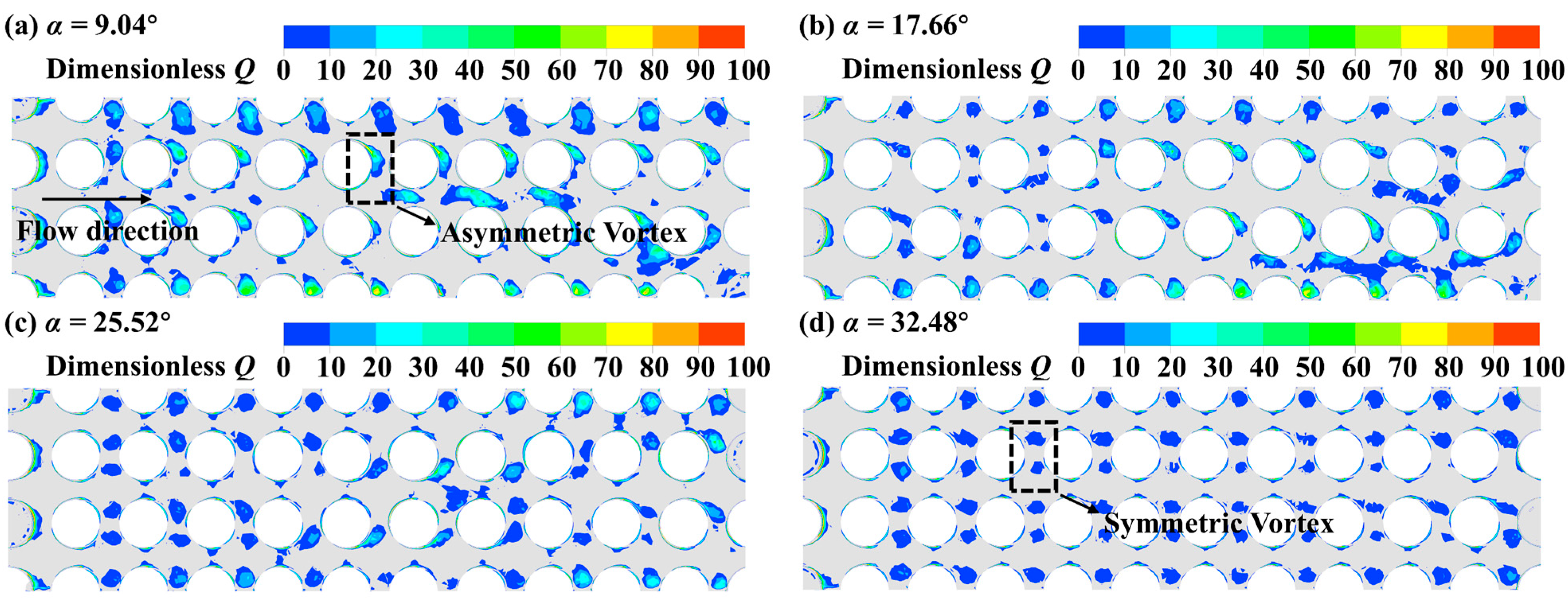
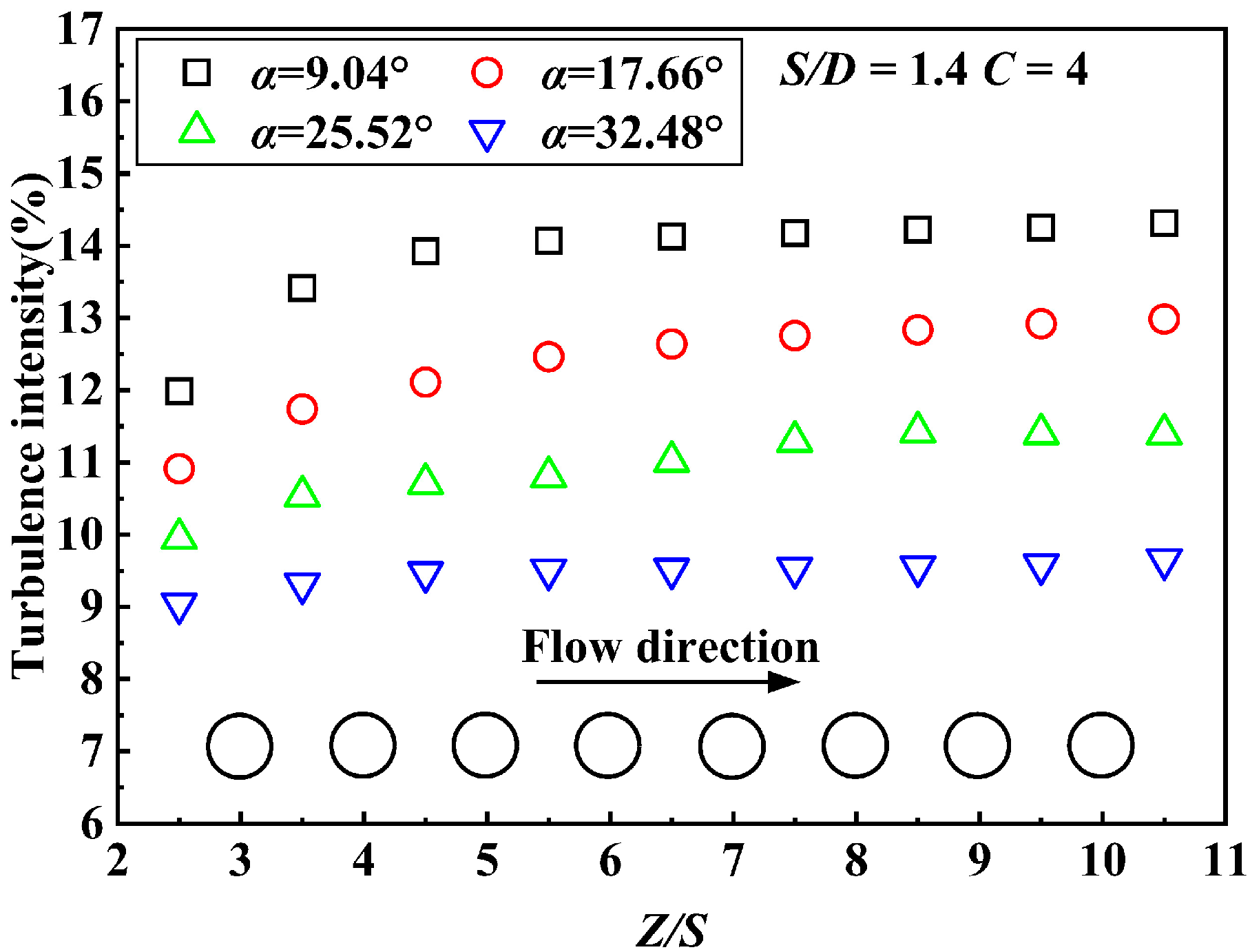
Figure 24 shows a comparison of vortex structures for different helix angles. The results demonstrate that, at a helix angle of 32.48°, a pronounced wake effect forms downstream of the helical tubes, characterized by symmetric vortex structures. As the helix angle decreases to 9.04°, the vortex structures in the wake region progressively become asymmetric, indicating a flow-pattern transition from parallel flow to cross-flow within the tube bundle. The displacement of vortex structures intensifies the disturbance within the low-velocity wake region and the channels between layers. Figure 25 compares the area-averaged turbulence intensity across different height planes along the flow direction for varying helix angles. The results indicate that the flow-pattern transition intensifies turbulent mixing within the tube bundle. Reducing the helix angle from 32.48° to 9.04° increases the area-averaged turbulence intensity by approximately 48%, which signifies enhanced mixing of the molten salt in the helical tube wake regions and consequently leads to improved heat transfer performance.
Furthermore, the above analysis reveals a clear qualitative trend: within the studied parameter ranges, variations in the structural parameters—layer count (C), relative tube pitch (S/D), and helix angle (α)—exert a more pronounced influence on the friction factor (f, representing flow resistance) than on the Nusselt number (Nu, representing heat transfer). This observation highlights the inherent trade-off between heat transfer enhancement and increased flow resistance associated with these geometric modifications. Consequently, the increased flow resistance accompanying improved heat transfer must be carefully weighed in practical design and optimization.

4. Correlation Development for Nusselt Number and Friction Factor

Existing HCHX shell-side Nu and f correlations, primarily developed for traditional low-Pr fluids with larger Re values, are not suitable for fluoride salt heat transfer and flow resistance characteristics. Thus, establishing new empirical correlations for fluoride salt on the HCHX shell side is essential for designing compact and highly efficient molten salt HCHXs. Unlike flow in straight-tube bundles, fluoride salt flow in the HCHX shell side is significantly influenced by the helix angle, whose guiding effect transforms the flow field structure, thereby influencing the thermal–hydraulic performance. Furthermore, the numerical results presented in Section 3 demonstrate that the inlet temperature, inlet velocity, number of layers, and tube pitch also considerably affect the heat transfer and flow resistance characteristics. Therefore, the multivariable relationships for Nu and f can be expressed by Equations (24) and (25).
N u = f ( R e ,   P r , C ,   S / D , α )
f = f ( R e , C ,   S / D , α )
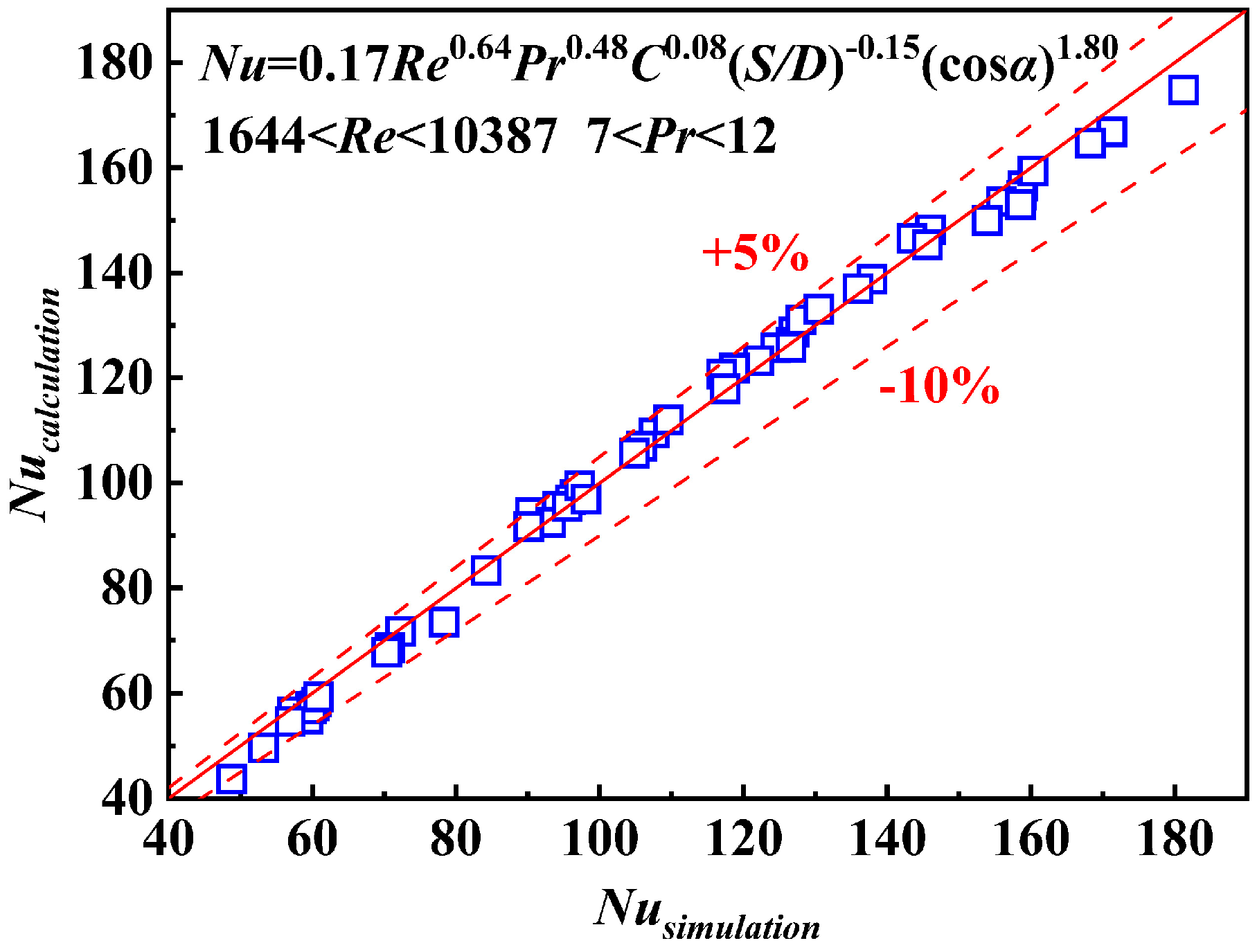
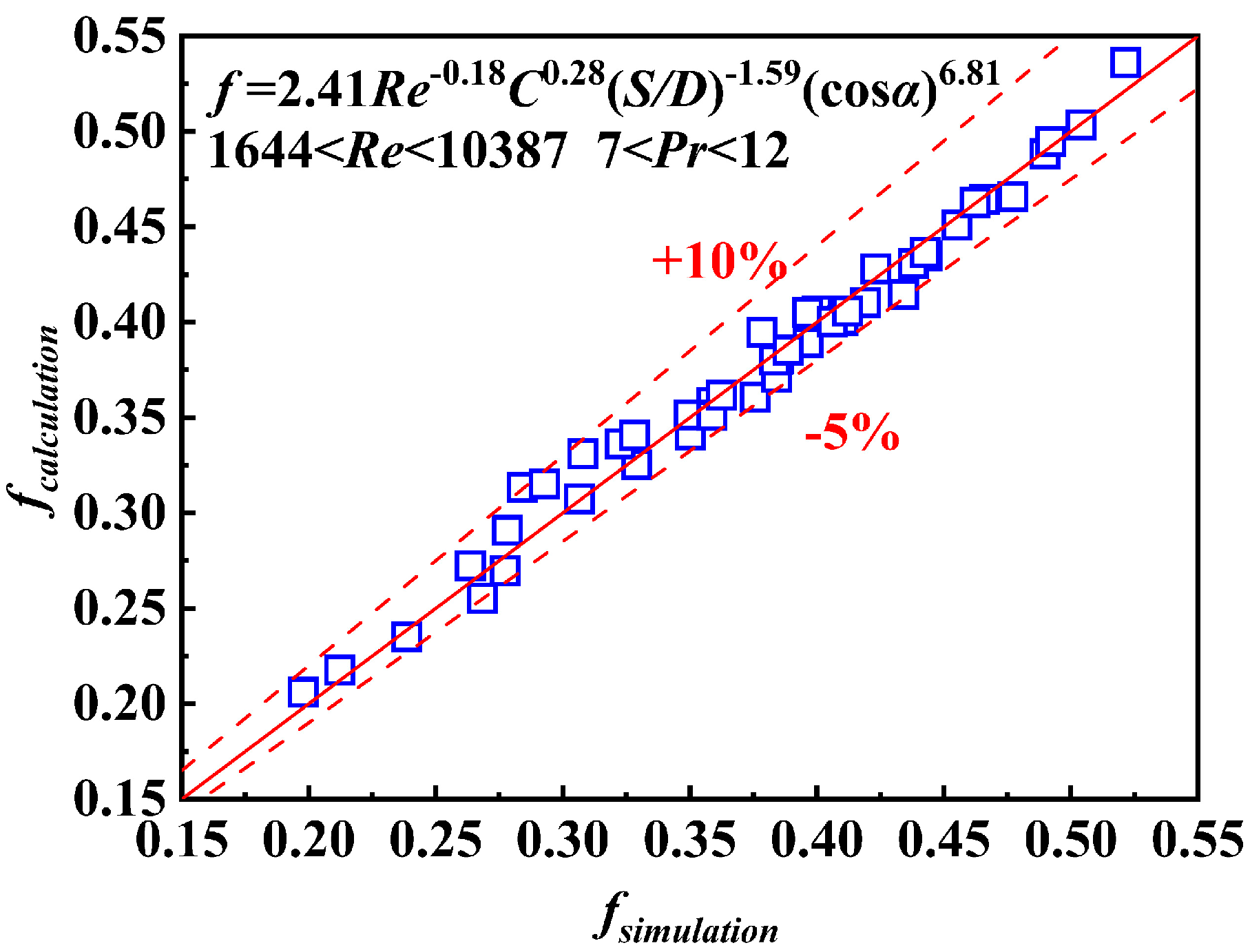
Based on the numerical simulation results, empirical correlations for the Nu and f of fluoride salt on the shell side of the HCHX are developed using multiple nonlinear regression, as given in Equations (26) and (27). The exponent on the cos α term is notably large, particularly for the friction factor, highlighting the profound influence of the flow direction change induced by the helix angle on the flow structure and pressure loss.
N u = 0.17 R e 0.64 P r 0.48 C 0.08 ( S D ) 0.15 ( c o s   α ) 1.80
f = 2.41 R e 0.18 C 0.28 ( S D ) 1.59 ( c o s   α ) 6.81
Comparisons between the correlation predictions and the simulation results are presented in Figure 26 and Figure 27 for Nu and f, respectively. The results demonstrate good agreement between the correlation predictions and simulation data, with maximum deviations of −10–5% for Nu and −5–10% for f. The proposed correlations are applicable under the condition of a constant wall temperature for the helical tube within the following parameter ranges: 1644 < Re < 10,387, 7 < Pr < 12, 1.4 < S/D < 1.8, 2 < C < 5, and 9.04° < α < 32.48°. Consequently, these empirical correlations are deemed satisfactory and can serve as a theoretical basis for designing molten salt HCHXs.

5. Conclusions

This study conducted a systematic numerical investigation into the shell-side heat transfer and flow resistance characteristics of fluoride salt in an HCHX. The key findings are summarized as follows:
(1)
A robust numerical framework was validated, demonstrating its capability to predict the heat transfer and flow resistance performance of high-Pr fluoride salt within helical tube bundles, with maximum deviations of 10% for Nu and 9% for f compared to available experimental data.
(2)
The influence of temperature is primarily mediated through its strong effect on viscosity. An increase in temperature significantly reduces viscosity, leading to a higher Re at a given velocity. This enhances convective heat transfer (increased Nu) while reducing fluid friction (decreased f).
(3)
The geometric parameters of the HCHX profoundly affect its performance: Both the Nu and f increase with the number of tube layers up to four, beyond which the effect saturates. A decrease in either the tube pitch or the helix angle enhances fluid mixing and heat transfer but incurs a substantially greater penalty in pressure drop. Notably, variations in these structural parameters have a more pronounced impact on the friction factor than on the Nusselt number, underscoring a critical trade-off in design.
(4)
The flow within the helical tube bundle fully developed after six tube rows in the flow direction.
(5)
New empirical correlations for the shell-side Nu and f are developed for fluoride salt flow in HCHXs. The correlations incorporate the Reynolds number (Re), Prandtl number (Pr), layer count (C), relative tube pitch (S/D), and helix angle (α), demonstrating excellent agreement with simulation data. Deviations range from −10% to 5% for Nu and −5% to 10% for f within the studied parameter space: 1644 < Re < 10,387, 7 < Pr < 12, 1.4 < S/D < 1.8, 9.04° < α < 32.48°, and 2 < C < 5.
These results provide essential theoretical support and practical correlations for the design and optimization of molten salt HCHXs in MSRs. This work has certain limitations, including the assumption of a constant wall temperature and the neglect of mechanical supports, as well as validation based on analogous fluids rather than fluoride salt in helical bundles. Furthermore, while the inherent trade-off between heat transfer and pressure drop is highlighted, a unified performance evaluation criterion was not applied. Future work should focus on experimental validation with fluoride salts, the incorporation of mechanical features, and multi-objective optimization using comprehensive metrics such as the Performance Evaluation Criterion (PEC) to guide optimal design.

Author Contributions

Conceptualization, Y.W. and Q.-M.L.; methodology, Y.W. and Q.-M.L.; software, Y.W.; validation, Q.-M.L. and Y.Z.; formal analysis, Q.-M.L.; investigation, Y.W.; resources, Y.Z.; data curation, Y.W.; writing—original draft preparation, Y.W.; writing—review and editing, Q.-M.L.; visualization, Q.-M.L.; supervision, Y.Z.; project administration, Y.Z.; funding acquisition, Y.Z. All authors have read and agreed to the published version of the manuscript.

Funding

This research was funded by the Thorium-based Molten Salt Reactor Nuclear Energy System Industry Fund Project (Basic Research Project), grant number SINAP-CYJJ-202401.

Data Availability Statement

The original contributions presented in this study are included in the article. Further inquiries can be directed to the corresponding authors.

Conflicts of Interest

The authors declare no conflicts of interest.

Nomenclature

The following symbols and abbreviations are used in this manuscript:
Abbreviations
CFDComputational Fluid Dynamics
HCHXHelically Coiled Heat Exchanger
LNGLiquefied Natural Gas
MSRMolten Salt Reactor
STHXShell and Tube Heat Exchanger
Symbols
aRadial pitch-to-diameter ratio
bLongitudinal pitch-to-diameter ratio
CNumber of layers
cpSpecific heat at constant pressure, J·kg−1·K−1
DTube diameter, mm
DiHelical diameter of the i-th layer, mm
DshellInner diameter of the outer shell, mm
DcoreOuter diameter of the inner cylinder, mm
fFriction factor
HEffective heat transfer length, m
hConvective heat transfer coefficient, W·m−1·K−1
kTurbulent kinetic energy
MiNumber of tubes in the i-th layer
NNumber of tubes in the innermost layer
NuNusselt number
pPressure, Pa
PrPrandtl number
qHeat flux, W·m−2
reffFree-flow area coefficient
ReReynolds number
STube pitch, mm
TTemperature, K
uVelocity, m·s−1
zNumber of tube rows
Greek symbols
αHelix angle, °
ρDensity, kg·m−3
μDynamic viscosity, Pa·s
λThermal conductivity, W·m−1·K−1
εTurbulent dissipation rate
ΩVorticity tensor
ΦStrain rate tensor
Subscripts
inInlet
outOutlet
maxMaximum
wallTube wall
fluidFluid in helical tube bundle
lLongitudinal
rRadial

References

  1. Cai, X.; Dai, Z.; Xu, H. Thorium molten salt reactor nuclear energy system. Physics 2016, 45, 578–590. [Google Scholar] [CrossRef]
  2. Miao, H. Numerical Simulation of Molten Salt-Molten Salt Plate Heatexchanger and Plate Fin Heat Exchanger. Master’s Thesis, Shanghai Institute of Applied Physics, Chinese Academy of Sciences, Shanghai, China, 2018. [Google Scholar]
  3. Wang, Z.; Fu, Y.; Zou, Y.; Dai, Y.; Yu, X. Numerical Analysis of Baffle Opening on Shell and Tube Molten Salt Heat Exchanger. J. Eng. Thermophys. 2022, 43, 2790–2797. [Google Scholar]
  4. Chen, Y.; Tian, J.; Fu, Y.; Tang, Z.; Zhu, H.; Wang, N. Experimental study of heat transfer enhancement for molten salt with transversely grooved tube heat exchanger in laminar-transition-turbulent regimes. Appl. Therm. Eng. 2018, 132, 95–101. [Google Scholar] [CrossRef]
  5. Chen, Y.; Tian, J.; Zhu, H.; Xue, J.; Tang, Z.; Fu, Y.; Wang, N. Thermal sizing design and experimental evaluation of molten salt-to-air heat exchanger. Ann. Nucl. Energy 2019, 132, 504–511. [Google Scholar] [CrossRef]
  6. Li, Q.; Fu, Y.; Tian, J.; Zhou, C.; Zou, Y.; Fu, Y.; Hou, J.; Yu, X.H.; Xu, H.J. Experimental heat transfer performance of a drainage-integrated fluoride salt-to-salt heat exchanger. Results Eng. 2025, 28, 107206. [Google Scholar] [CrossRef]
  7. Li, Q.; Tian, J.; Fu, Y.; Zhou, C.; Zou, Y.; Fu, Y.; Hou, J.; Yu, X. Experimental study on heat transfer and flow resistance performance of an air-cooled fluoride salt heat exchanger. Appl. Therm. Eng. 2025, 269, 126124. [Google Scholar] [CrossRef]
  8. Khairulmaini, M.; Michael, Z.; Hamid, M.F.A.; Abidin, N.A.Z.; Roslan, A. Analyzing The Influence of Diameter and Winding on Heat Transfer Efficiency in Spiral Tube Heat Exchangers. J. Phys. Conf. Ser. 2024, 2688, 012002. [Google Scholar] [CrossRef]
  9. Neeraas, B.O.; Fredheim, A.O.; Aunan, B. Experimental data and model for heat transfer, in liquid falling film flow on shell-side, for spiral-wound LNG heat exchanger. Int. J. Heat Mass Transfer 2004, 47, 3565–3572. [Google Scholar] [CrossRef]
  10. Neeraas, B.O.; Fredheim, A.O.; Aunan, B. Experimental shell-side heat transfer and pressure drop in gas flow for spiral-wound LNG heat exchanger. Int. J. Heat Mass Transfer 2004, 47, 353–361. [Google Scholar] [CrossRef]
  11. Tang, Q.; Chen, G.; Guo, H.; Shen, J.; Dong, X.; Gong, M. Experimental and numerical investigation on gas flow in shell side of spiral-wound heat exchangers. Cryogenics 2017, 5, 1–5+11. [Google Scholar] [CrossRef]
  12. Messa, C.J.; Foust, A.S.; Poehlein, G.W. Shell-Side Heat Transfer Coefficients in Helical Coil Heat Exchangers. Ind. Eng. Chem. Process Des. Dev. 1969, 8, 343–347. [Google Scholar] [CrossRef]
  13. Ghorbani, N.; Taherian, H.; Gorji, M.; Mirgolbabaei, H. Experimental study of mixed convection heat transfer in vertical helically coiled tube heat exchangers. Exp. Therm. Fluid Sci. 2010, 34, 900–905. [Google Scholar] [CrossRef]
  14. Genić, S.B.; Jaćimović, B.M.; Jarić, M.S.; Budimir, N.J.; Dobrnjac, M.M. Research on the shell-side thermal performances of heat exchangers with helical tube coils. Int. J. Heat Mass Transfer 2012, 55, 4295–4300. [Google Scholar] [CrossRef]
  15. Lu, X.; Du, X.; Zeng, M.; Zhang, S.; Wang, Q. Shell-side thermal-hydraulic performances of multilayer spiral-wound heat exchangers under different wall thermal boundary conditions. Appl. Therm. Eng. 2014, 70, 1216–1227. [Google Scholar] [CrossRef]
  16. Sun, C.; Li, Y.; Han, H.; Zhu, J.; Wang, S. Effect of compound sloshing conditions on pressure drop and heat transfer characteristics for FLNG spiral wound heat exchanger. Appl. Therm. Eng. 2019, 159, 113791. [Google Scholar] [CrossRef]
  17. Yan, Y.; Sun, C.; Han, H.; Li, Y. Experimental Study on Thermal Performance of FLNG Spiral Wound Heat Exchanger under Sloshing Conditions. J. Therm. Sci. 2019, 28, 1042–1053. [Google Scholar] [CrossRef]
  18. Lu, X.; Zhang, G.; Chen, Y.; Wang, Q.; Zeng, M. Effect of geometrical parameters on flow and heat transfer performances in multi-stream spiral-wound heat exchangers. Appl. Therm. Eng. 2015, 89, 1104–1116. [Google Scholar] [CrossRef]
  19. Zeng, M.; Zhang, G.; Li, Y.; Niu, Y.; Ma, Y.; Wang, Q. Geometrical Parametric Analysis of Flow and Heat Transfer in the Shell Side of a Spiral-Wound Heat Exchanger. Heat Transfer Eng. 2014, 36, 790–805. [Google Scholar] [CrossRef]
  20. Wang, S.; Jian, G.; Xiao, J.; Wen, J.; Zhang, Z. Optimization investigation on configuration parameters of spiral-wound heat exchanger using Genetic Aggregation response surface and Multi-Objective Genetic Algorithm. Appl. Therm. Eng. 2017, 119, 603–609. [Google Scholar] [CrossRef]
  21. Hessam, M. Numerical investigation of vertical helically coiled tube heat exchangers thermal performance. Appl. Therm. Eng. 2018, 136, 252–259. [Google Scholar] [CrossRef]
  22. Sami, M. Optimized shape design and thermal characteristics investigation of helically coiled tube type heat exchanger. Chem. Eng. Res. Des. 2024, 201, 96–107. [Google Scholar] [CrossRef]
  23. Wen, J.; Tong, X.; Yuan, H.; Wang, S.; Li, Y. Effects of Space Bars on the Shell-Side Performance of Spiral-Wound Heat Exchanger. J. Xi’an Jiaotong Univ. 2016, 50, 14–20. [Google Scholar] [CrossRef]
  24. Abolmaali, A.M.; Afshin, H. Development of Nusselt number and friction factor correlations for the shell side of spiral-wound heat exchangers. Int. J. Therm. Sci. 2019, 139, 105–117. [Google Scholar] [CrossRef]
  25. Lei, Z.; Li, L.; Zhao, H.; Shi, S.; Xiang, Z.; Xu, X. Study on coupled heat transfer characteristics and performance optimization for a helical coil heat exchanger in the lead-cooled fast reactor. Prog. Nucl. Energy 2025, 180, 105583. [Google Scholar] [CrossRef]
  26. Wu, J.; Tian, Q.; Sun, X.; Zhao, J.; Wang, L.; Peng, X.; Liao, X. Numerical simulation and experimental research on the comprehensive performance of the shell side of the spiral wound heat exchanger. Appl. Therm. Eng. 2019, 163, 114381. [Google Scholar] [CrossRef]
  27. Shen, C.; Liu, L.; Xu, Z.; Gu, H.; Liu, M. Influence of helix angle on flow and heat transfer characteristics of lead-bismuth flow in helical-coiled tube bundles. Ann. Nucl. Energy 2023, 180, 109483. [Google Scholar] [CrossRef]
  28. Shen, C.; Liu, M.; Liu, L.; Xu, Z.; Zeng, C.; Liu, L.; Gu, H. Development of friction factor and heat transfer correlation of liquid metal flow in helical tube bundles. Ann. Nucl. Energy 2024, 201, 110442. [Google Scholar] [CrossRef]
  29. Jia, J. Numerical Analysis Geometry Parameters on Heat Transfer for Spiral-wound Heat Exchanger. Fluid Mach. 2011, 39, 33–37+13. [Google Scholar] [CrossRef]
  30. Tang, Q.; Chen, G.; Yang, Z.; Shen, J.; Gong, M. Numerical investigation on gas flow heat transfer and pressure drop in the shell side of spiral-wound heat exchangers. Sci. China Technol. Sci. 2017, 61, 506–515. [Google Scholar] [CrossRef]
  31. Duan, R.; Jiang, S. Numerical Investigation of Gas Flow Distribution and Thermal Mixing in Helically Coiled Tube Bundle. J. Nucl. Sci. Technol. 2012, 45, 704–711. [Google Scholar] [CrossRef]
  32. Duan, X.; Wen, J.; Wang, S. Enhanced flow and heat transfer performance of high viscosity fluid in shell side of spiral-winding tube heat exchangers. J. Chem. Eng. Chin. Univ. 2022, 36, 639–646. [Google Scholar]
  33. Liu, Y.; Kong, Q.; Huang, W.; Li, W. Experimental study for a spiral tube molten salt to helium gas heat exchanger. Acta Energ. Sol. Sin. 2019, 40, 2266–2271. [Google Scholar]
  34. Qian, J.; Kong, Q.-L.; Zhang, H.-W.; Zhu, Z.-H.; Huang, W.G.; Li, W.H. Experimental study for shell-and-tube molten salt heat exchangers. Appl. Therm. Eng. 2017, 124, 616–623. [Google Scholar] [CrossRef]
  35. Xue, S.; Zhou, C.; Zou, Y.; Xu, H. Natural circulation characteristics of main loop after shutdown of liquid-fuel molten salt reactor. Nucl. Tech. 2024, 47, 127–136. [Google Scholar] [CrossRef]
  36. Yang, Z.; Zhao, Z.; Liu, Y.; Chang, Y.; Cao, Z. Convective heat transfer characteristics of high-pressure gas in heat exchanger with membrane helical coils and membrane serpentine tubes. Exp. Therm. Fluid Sci. 2011, 35, 1427–1434. [Google Scholar] [CrossRef]
  37. Lu, X.; Du, X.; Zhang, S.; Zeng, M.; Wang, Q. Experimental and Numerical Investigation on Shell-side Performance of Multilayer Spiral-Wound Heat Exchangers. In Proceedings of the 16th International Conference on Process Integration, Modelling and Optimisation for Energy Saving and Pollution Reduction (PRES), Rhodes, Greece, 29 September–2 October 2013. [Google Scholar]
  38. Fan, H.; Li, X.; Wu, X.; Sun, L. Thermal-hydraulic Code Development and Analysis of HTGR Helical Tube Supercritical Steam Generator. At. Energy Sci. Technol. 2022, 56, 2343–2353. [Google Scholar] [CrossRef]
  39. Gilli, P.V. Heat Transfer and Pressure Drop for Cross Flow Through Banks of Multistart Helical Tubes with Uniform Inclinations and Uniform Longitudinal Pitches. Nucl. Sci. Eng. 1965, 22, 298–314. [Google Scholar] [CrossRef]
  40. Zhang, X.; Chen, Y.; Wang, J. Engineering application of wrap-round tubular heat exchanger. Large Scale Nitrogenous Fertil. Ind. 2004, 27, 9–11. [Google Scholar] [CrossRef]
  41. Smith, E.E.M. Advances in Thermal Design of Heat Exchangers; Wiley: Hoboken, NJ, USA, 2005. [Google Scholar]
  42. Tao, W. Numerical Heat Transfer, 2nd ed.; Xi’an Jiaotong University Press: Xi’an, China, 2001. [Google Scholar]
  43. Yakhot, V.; Orszag, S.A. Renormalization-Group Analysis of Turbulence. Phys. Rev. Lett. 1986, 57, 1722–1724. [Google Scholar] [CrossRef]
  44. Department, M.S.C. (Shanghai Institute of Applied Physics, Chinese Academy of Sciences, Shanghai, China). Thermal-Physical Properties of FNaBe Salt. 2025; (Unpublished work). [Google Scholar]
  45. Idelchik, I.E. Handbook of Hydraulic Resistance, 4th ed.; Revised and Augmented; Begell House: Danbury, CT, USA, 2007. [Google Scholar]
  46. Yao, F.; Bi, Q.; Dong, X. Convective heat transfer of high temperature molten salt flowing across tube bundles of steam generator in a solar thermal plant. Appl. Therm. Eng. 2018, 141, 858–865. [Google Scholar] [CrossRef]
  47. Ahn, J.; Sparrow, E.M.; Gorman, J.M. Turbulence intensity effects on heat transfer and fluid-flow for a circular cylinder in crossflow. Int. J. Heat Mass Transfer 2017, 113, 613–621. [Google Scholar] [CrossRef]
  48. Hunt, J.C.R.; Wray, A.A.; Moin, P. Eddies, stream, and convergence zones in turbulent flows. In Studying Turbulence Using Numerical Simulation Databases; NASA: San Francisco, CA, USA, 1988. [Google Scholar]
Figure 1. Schematics of the HCHX: (a) 3D schematic and (b) cross section (example for C = 3).
Energies 19 00090 g001
Figure 2. Boundary conditions.
Energies 19 00090 g002
Figure 3. Grid distribution.
Energies 19 00090 g003
Figure 4. y+ value for the first mesh layer near the wall.
Energies 19 00090 g004
Figure 5. Comparison of Nu results from various turbulence models against experimental data.
Energies 19 00090 g005
Figure 6. Comparison of pressure-drop results from various turbulence models against experimental data.
Energies 19 00090 g006
Figure 7. Comparison of Nu simulation results and experimental results.
Energies 19 00090 g007
Figure 8. Comparison of f simulation results and empirical correlation.
Energies 19 00090 g008
Figure 9. Effect of inlet temperature on Nu.
Energies 19 00090 g009
Figure 10. Effect of inlet temperature on f.
Energies 19 00090 g010
Figure 11. Effect of number of layers on Nu.
Energies 19 00090 g011
Figure 12. Effect of number of layers on f.
Energies 19 00090 g012
Figure 13. Velocity contours of longitudinal sections for different numbers of layers.
Energies 19 00090 g013
Figure 14. Area-averaged turbulence intensity across various height planes for different numbers of layers.
Energies 19 00090 g014
Figure 15. Effect of tube pitch on Nu.
Energies 19 00090 g015
Figure 16. Effect of tube pitch on f.
Energies 19 00090 g016
Figure 17. Velocity contours of longitudinal sections for different tube pitches.
Energies 19 00090 g017
Figure 18. Vortex structures of longitudinal sections for different tube pitches.
Energies 19 00090 g018
Figure 19. Area-averaged turbulence intensity across various height planes for different tube pitches.
Energies 19 00090 g019
Figure 20. Effect of helix angle on Nu.
Energies 19 00090 g020
Figure 21. Effect of helix angle on f.
Energies 19 00090 g021
Figure 22. Velocity contours of longitudinal sections for different helix angles.
Energies 19 00090 g022
Figure 23. Velocity contours of radial sections for different helix angles.
Energies 19 00090 g023
Figure 24. Vortex structures of longitudinal sections for different helix angles.
Energies 19 00090 g024
Figure 25. Area-averaged turbulence intensity across various height planes for different helix angles.
Energies 19 00090 g025
Figure 26. Comparison of Nu simulation results and new correlation.
Energies 19 00090 g026
Figure 27. Comparison of f simulation results and new correlation.
Energies 19 00090 g027
Table 1. Empirical correlations for Nu and f on the shell side of HCHXs.
AuthorMediumCorrelationsApplicabilityStructure
Yang et al. [36]Helium, nitrogenNu = 0.2861 Re0.7217Pr0.853900 < Re < 3,000,000C = 3, Sl/D = 2,
Sr/D = 1.6
Messa et al. [12]Air, waterNu = cReaPrb, f1400 < Re < 10,000
0.7 < Pr < 7.8
C = 3
Genic et al. [14]WaterNu = 0.5 Re0.55Pr1/3(μ/μw)0.141000 < Re < 9000
2.6 < Pr < 6.0
C = 2, 4
Lu et al. [37]AirNu = 0.0193 Re0.816
f = 0.401 Re−0.197
1500 < Re < 5500C = 3, 1.8 < Sl/D < 2,
Sr/D = 2.6
Ghorbani et al. [13]WaterNu = 0.0041 Ra0.4533Re0.2Pr0.3120 < Re < 1200C = 1, 1.74 < Sl/D < 1.87
Tang et al. [30]HydrocarbonsNu = 0.308 Re0.64Pr0.36(1 + sin α)−1.38
f = 0.435 Re−0.133(sin α)−0.36
10,000 < Re < 100,000C = 4, Sl/D = 1.66,
Sr/D = 1.33
Zeng et al. [18]MethanolNu = 0.1038 Re0.8902C0.2851(Sl/D)−0.5898(1 + B/D)−1.8017(Dshell/Dcore)−0.4501
f = 17.187 Re0.0703C0.1649(Sl/D)−2.5593(1 + B/D)−11.1536(Dshell/Dcore)1638
10,000 < Re < 120,000
Pr = 6.88
1 < C < 5,
1.8 < Sl/D < 2.9,
1.2 < Sr/D < 1.4
Fan et al. [38]HeliumNu = 0.167 Re0.65Pr0.33
f = 0.4 Re−0.06
7500 < Re < 46,000
Abolmaali et al. [24]HeliumNu = 0.0417 Re0.869C0.157(Sl/D)−0.149(Sr/D)−1.558
f = 2.2248 Re0.024C0.174(Sl/D)−0.593(Sr/D)−5.914
20,000 < Re < 350,0001 < C < 7,
1.2 < Sl/D < 1.8,
1.25 < Sr/D < 1.5
Shen et al. [27,28]Liquid metalNu = 0.31(ϕ1/d)0.5Pe0.57(cos ε)−(2.5 +1.7)
f = (209.8/Re + 0.598/Re0.037)(SrSl/D2)0.69(cos ε)−(4.2K+3)
2500 < Re < 120,000
60 < Pe < 3500
C = 6, 1.4 < Sl/D < 1.6,
1.4 < Sr/D < 1.6,
2° < α < 15°
Gilli et al. [39] Nu = 0.388 FaeffFiFnRe0.61Pr0.33
f = CiCnfeff
2000 < Re < 40,000
0.1 < Pr < 10
Table 2. Structural parameter ranges of helical tube bundles.
Structural ParameterVariation Range
Number of layers (C)2, 3, 4, 5
Tube pitch (S, mm)21.0, 22.5, 24.0, 27.0
Helix angle (α, °)9.04, 17.66, 25.52, 32.48
Table 3. Thermal properties of FNaBe salt.
Thermal PropertyFNaBeUncertainty
Density/kg·m−32609 − 0.54 (T − 273.15)±3%
Specific heat at constant pressure/J·(kg·K)−11202 + 0.52 (T − 273.15)±15%
Viscosity/Pa·s0.0199 − 2.24 (T − 273.15)/100,000±25%
Thermal conductivity/W·(m·K)−10.76 1±25%
1 The thermal conductivity, which varies by merely 2% within the temperature range under study (as per property report [44]), is regarded as constant. The uncertainty propagated from this assumption to both the Pr and Nu is estimated to be below 2%.
Table 4. Grid independent analysis.
Mesh Number (104)
268533802990
Nu75.9276.6677.2977.48
f0.47370.48450.48610.4869
Table 5. Structural parameters of Neeraas’s experimental model.
D (mm)CSl (mm)Sr (mm)α (°)
12313.9415.917.94
Disclaimer/Publisher’s Note: The statements, opinions and data contained in all publications are solely those of the individual author(s) and contributor(s) and not of MDPI and/or the editor(s). MDPI and/or the editor(s) disclaim responsibility for any injury to people or property resulting from any ideas, methods, instructions or products referred to in the content.