3.1. Fuel Element Design
Fuel element is one of the fundamental components of LSSNR and affects the neutronics characteristics of reactor core. In LSSNR, high operating temperature and molten salt corrosion require fuel, cladding and other materials with high-temperature resistance, corrosion resistance, good heat transfer performance, and stable physical properties.
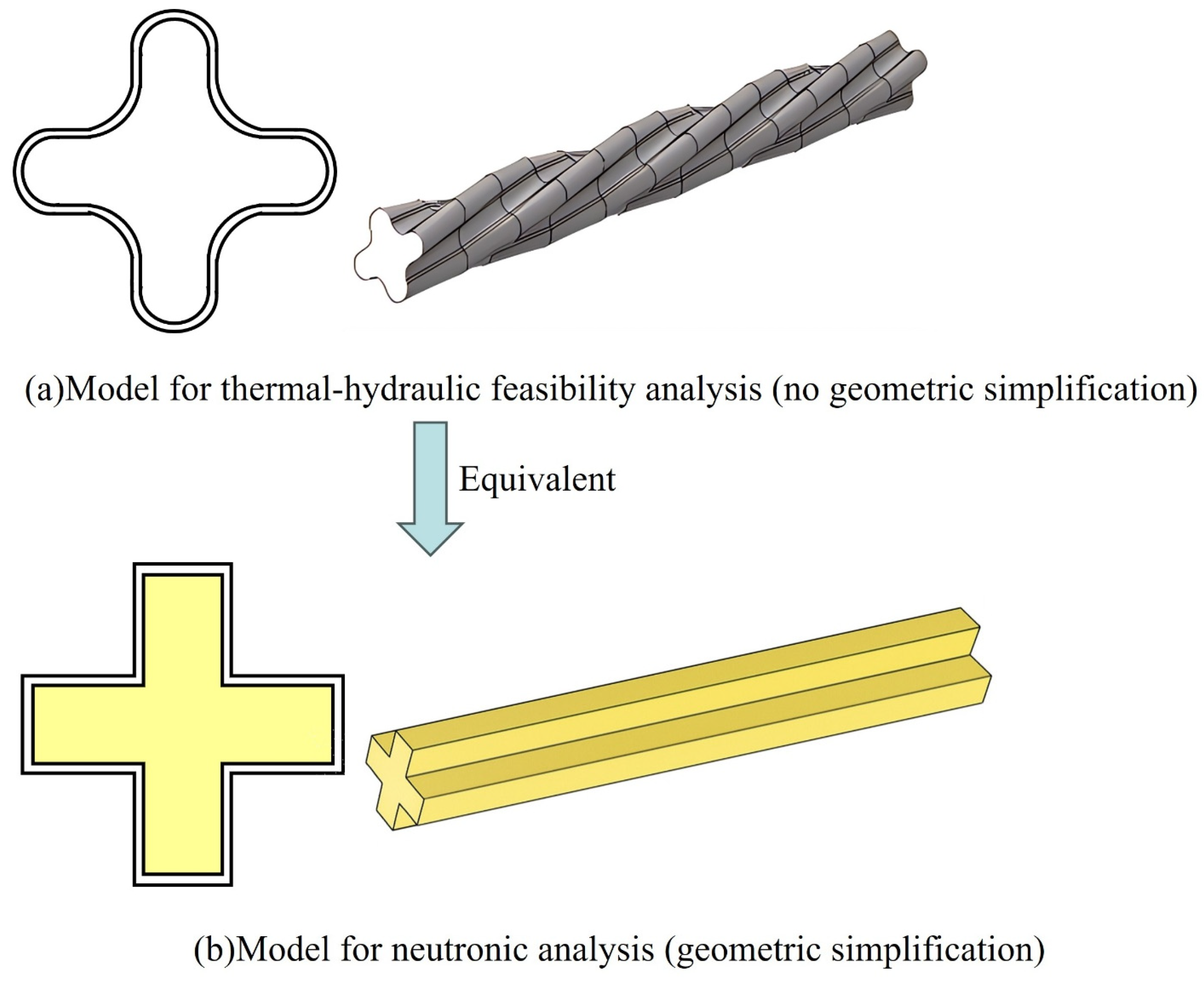
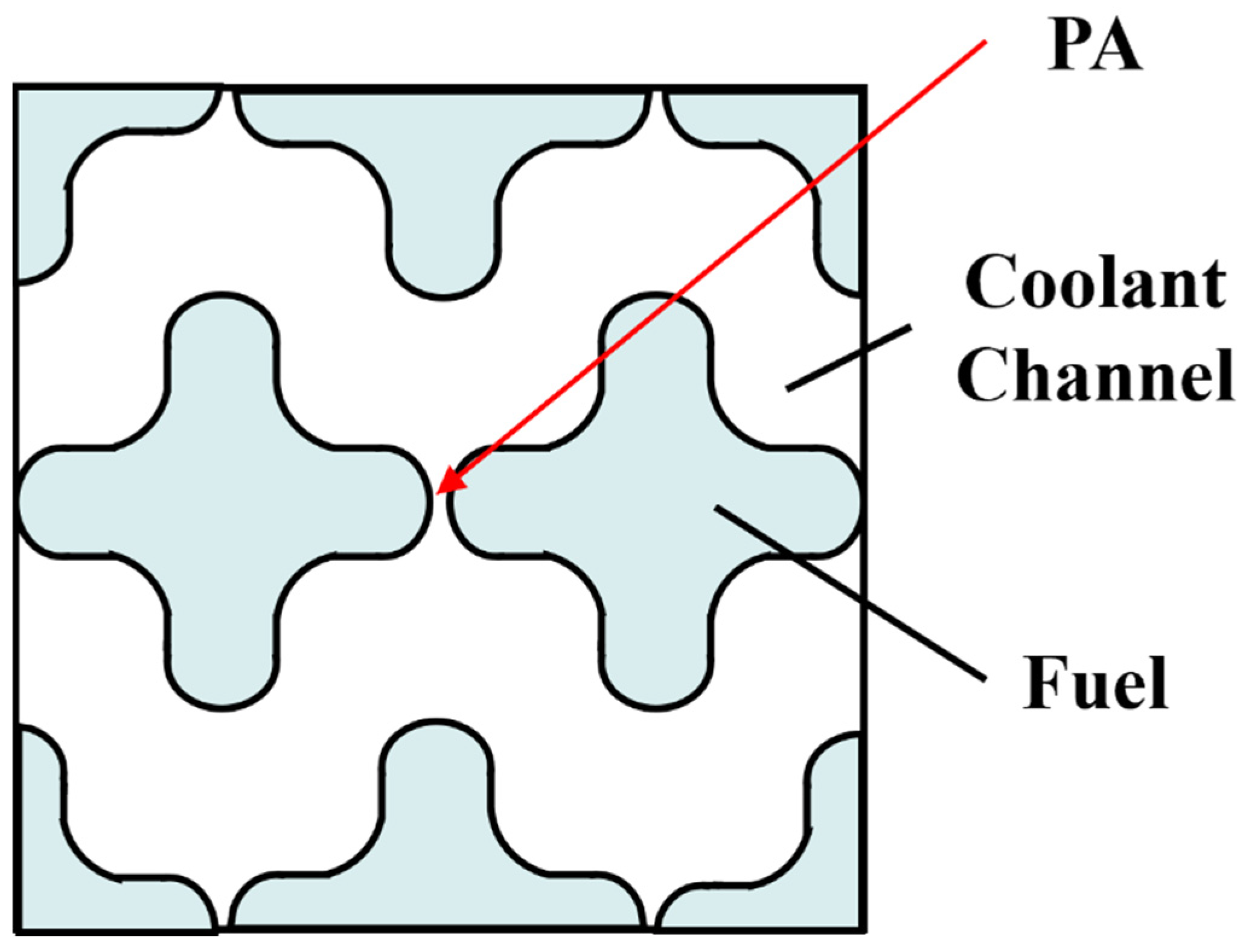
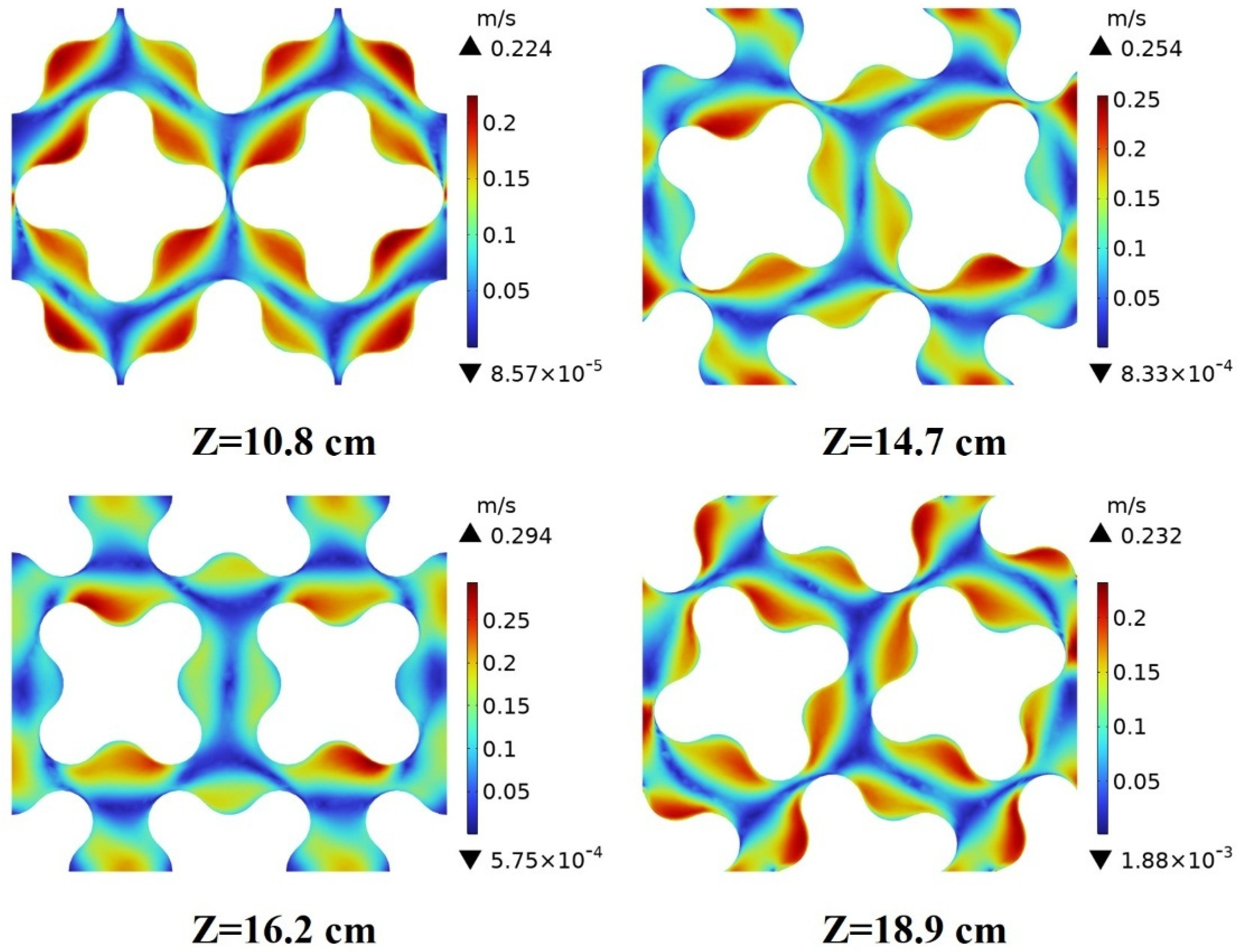
A cross-shaped spiral fuel element was employed in LSSNR, as shown in
Figure 1a, and is used in the thermal-hydraulic feasibility analysis presented in
Section 4. However, a torsion less cross-shaped spiral fuel element was employed, as shown in
Figure 1b. This simplification is introduced because accurate modeling of the fully twisted geometry in OpenMC presents significant computational challenges. The previous neutronic studies on cross-shaped spiral fuel rods have demonstrated that the impact of torsion less cross-shaped spiral fuel rods on neutronic characteristics is negligible [
34]. Therefore, this simplification is considered reasonable for neutronic analysis. Additionally, the curved surfaces of the cross-shaped spiral fuel are approximated by right-angled surfaces.
To achieve a compact configuration, the LSSNR core adopts a hexagonal arrangement.
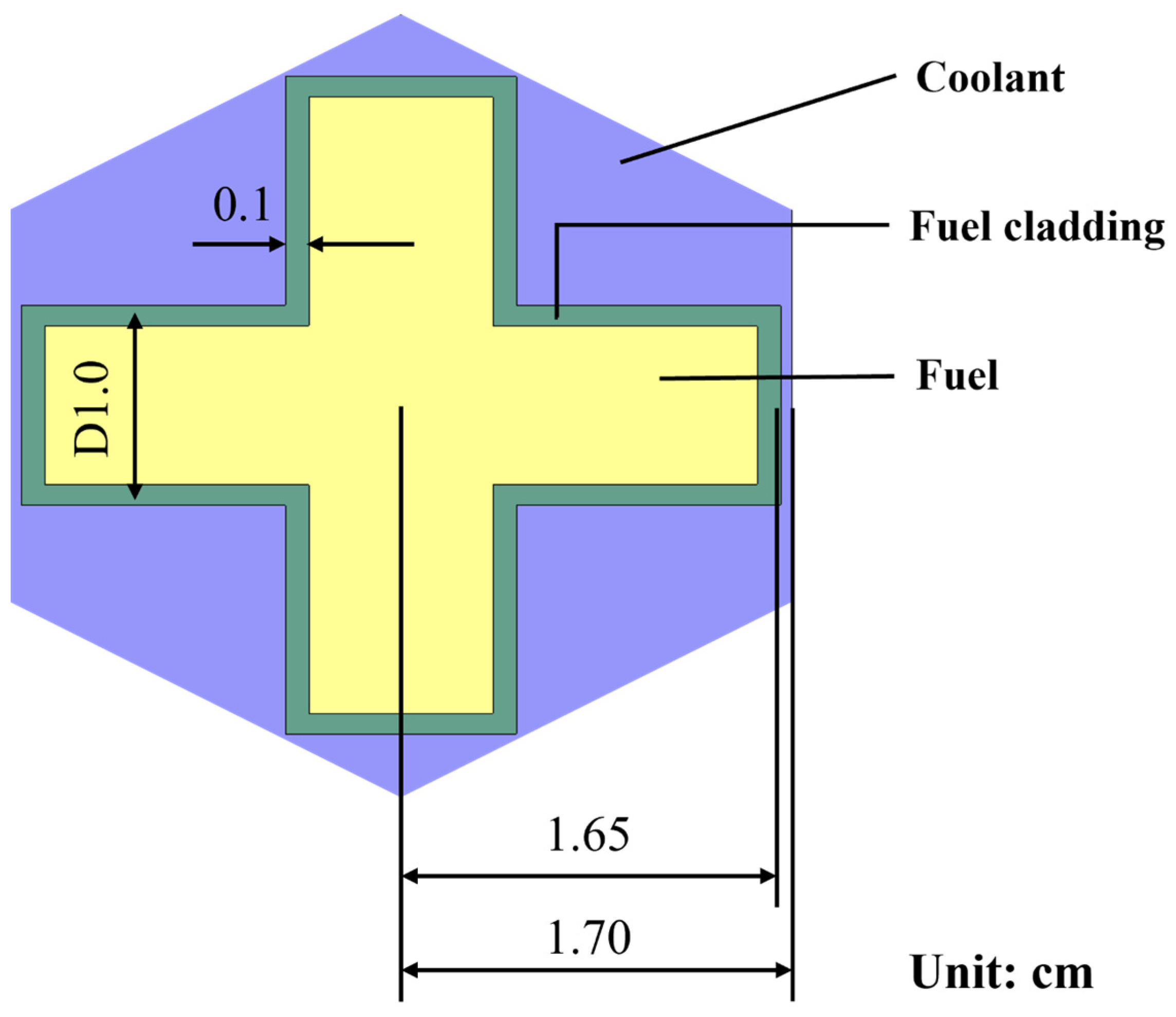
Figure 2 shows the design of the hexagonal fuel lattice cell, which consists of the fuel, cladding, and coolant. In the preliminary design, according to the design parameters of traditional space reactors [
9,
13,
14,
35], the pitch of the hexagonal fuel elements was selected as 1.7 cm, the maximum radial distance from the center of the cross-shaped spiral fuel is 1.65 cm, the blade thickness of the cross-shaped spiral fuel is 1 cm and the thickness of the fuel cladding is 0.1 cm. A layer of He gap stays between the fuel and the cladding for the thermal expansion. The material volume expansion coefficient
and the linear expansion coefficient
have the following approximate relationship
, and
is defined as Equation (1) [
12]. Where
is the temperature in
,
is the material volume in
,
indicates the radius,
means the temperature change, and
is the axial height. In this study, based on the thermal-hydraulic results of the LSSNR, the maximum temperature variation from cold condition to hot condition in the reactor core was determined to be approximately 800 K, which was used to define the size of the He gap. The linear expansion coefficients of materials commonly used in space nuclear reactors, such as UN, UO2 and UC, are 9.9 × 10
−6 (290 K–1870 K), 12.83 × 10
−6 (298 K–2273 K), and 12.8 × 10
−6 (298 K–2000 K), respectively, and the corresponding radius changes are 0.00652 cm, 0.00845 cm, 0.00843 cm, respectively. Thus, the inner and outer He gap of 0.005 cm can meet the design requirements.
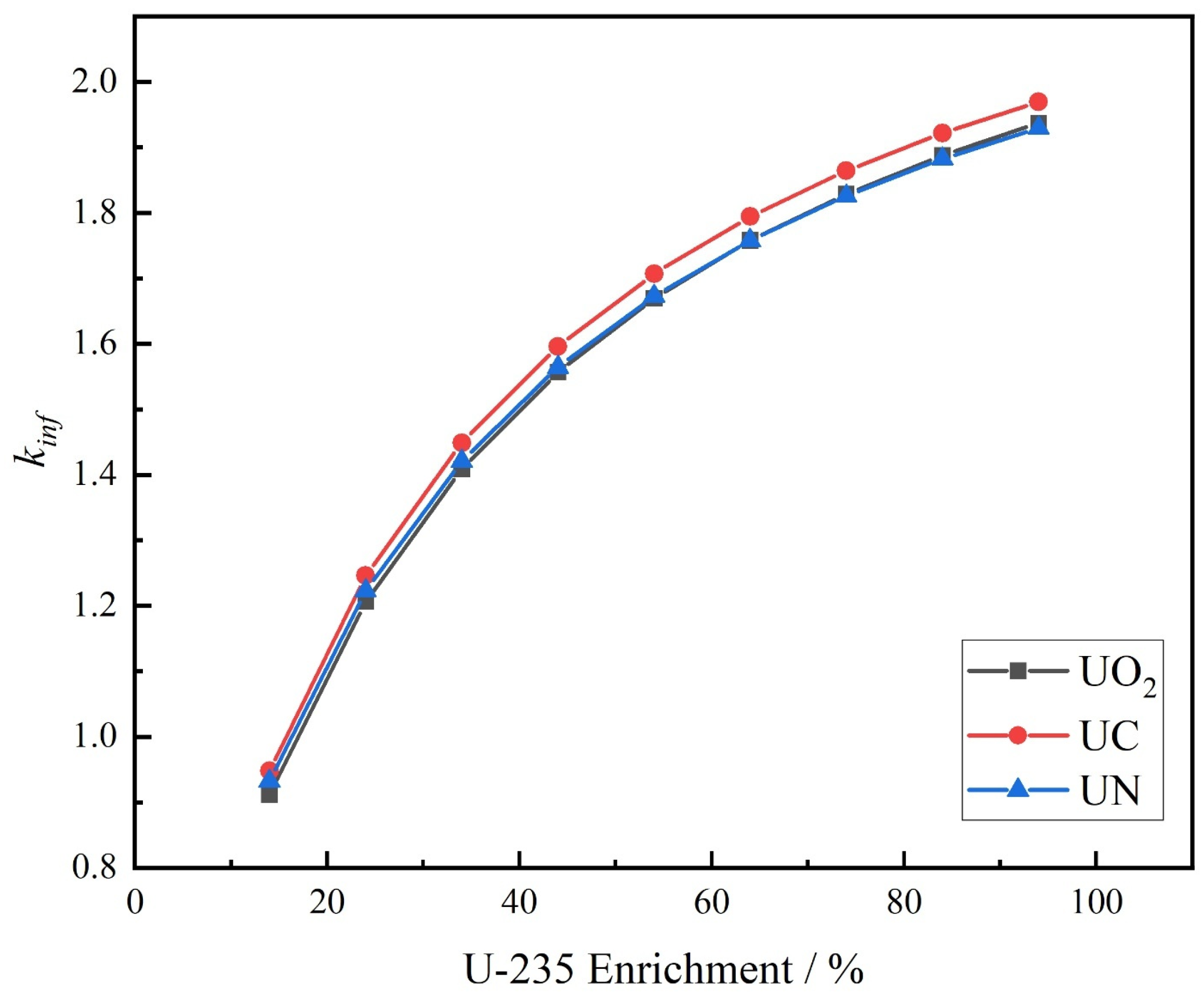
The LSSNR adopts a liquid-solid dual-fuel configuration, in which the solid fuel plays a dominant role in determining the neutronic characteristics. The effect of different solid fuel types and U-235 enrichments on
kinf of the fuel element was evaluated using the OpenMC code, as shown in
Figure 3. Three fuel materials commonly used in space reactors, namely UN, UO
2, and UC [
36,
37], were considered. The cladding material and molten salt are temporarily chosen as Mo-30Re and
7LiF-BeF
2-UF
4 (49.55–49.55–0.9 mol%) with 30% U-235 enrichment as liquid fuel, respectively. In OpenMC calculation, 300 cycles with 500,000 neutron particles in each cycle were adopted and the first 100 cycles were ignored in result tally, and the boundary condition is reflective.
The results indicate that kinf increases monotonically with U-235 enrichment for all fuel types. For the same enrichment, UC exhibits a slightly higher kinf than UN and UO2, with an increase of approximately 2%, mainly due to the weak moderation effect of carbon. From an engineering perspective, carbide fuels offer significant advantages over oxide fuels due to their higher thermal conductivity. The thermal conductivity of UC (18.8 W·m−1·K−1) is significantly higher than that of UO2 (2.1 W·m−1·K−1) and slightly higher than that of UN (15.8 W·m−1·K−1), which helps reduce the peak fuel centerline temperature and enables higher linear power density and larger fuel dimensions. Although the density of UC (13.6 g/cm3) is slightly lower than that of UN (14.31 g/cm3), its overall thermal performance remains advantageous.
Despite its relatively higher swelling and fission gas release, UC is still considered a promising candidate fuel for space reactors [
38]. These issues will be further discussed in
Section 5.
Based on the above neutronic and thermal considerations, UC with 44% U-235 enrichment is preliminarily selected as the solid fuel for subsequent assembly-level parametric analysis. The enrichment level will be further optimized in future studies to meet the overall design requirements.
The selection of fuel cladding is another critical aspect of the LSSNR design. From the perspective of neutron economy, the cladding material should have low density and a low neutron absorption cross section. From the perspective of safety and thermal performance, it should exhibit good compatibility with molten salt, a high melting point, and high thermal conductivity.
To evaluate the impact of cladding materials on neutronic performance, several candidate materials commonly used in space reactors were analyzed, as summarized in
Table 2 [
39]. In OpenMC calculation, the two-dimensional fuel element model with reflective boundary condition and the UC solid fuel with 44% U-235 enrichment were employed.
The results indicate that tantalum (Ta) alloys possess a high melting point, which is advantageous for high-temperature operation; however, their relatively high density and neutron absorption cross section make them less favorable in terms of neutron economy. Titanium (Ti) alloys exhibit low density and good neutronic performance, but their thermal conductivity is lower than that of zirconium (Zr) and nickel (Ni) alloys.
Overall, the selection of cladding material requires a trade-off between neutronic performance and thermal–mechanical properties.
Since molten salt flows through the fuel channels, cladding compatibility with fuel salt must be considered. Studies have shown that increasing Mo content in Ni-based alloys can improve their resistance to molten salt corrosion [
40], and such alloys are commonly used in molten salt reactors. Therefore, Ni-based alloy is adopted as cladding materials of the fuel element, respectively.
Three categories of fuel salt are generally used: (a) alkali-fluorides (e.g.,
7LiF-KF,
7LiF-NaK-KF), (b) fluorides salt containing ZrF
4 (e.g.,
7LiF-ZrF
4, NaF-ZrF
4), and (c) fluorides salts containing BeF
2 (e.g.,
7LiF-BeF
2, NaF-BeF
2). According to the previous studies [
41], the viscosity of alkali-fluorides is less than that of molten salt containing ZrF
4 and BeF
2, and the viscosity increases with the increase in the molar ratio of BeF
2 to ZrF
4. LSSNR chooses
7LiF-KF-UF
4 (49.55–49.55–0.9 mol%) with 30% U-235 enrichment as liquid fuel.
3.2. LSSNR Core Preliminary Design
The height to diameter (H/D) ratio of reactor active core is usually greater than 1, which can increase the reactivity worth of the control drum, shorten the heat transfer path, and increase the heat transfer area [
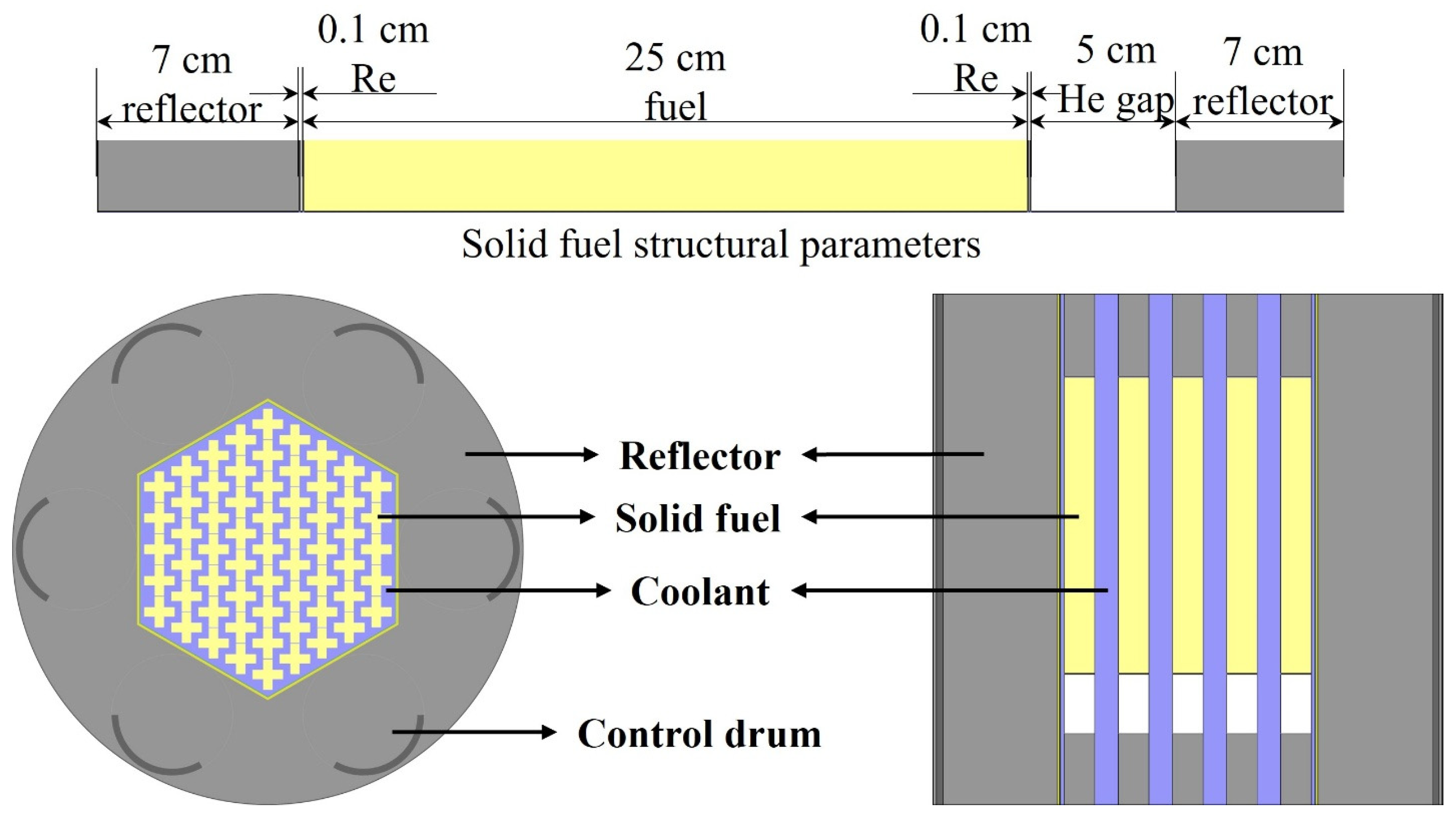
42]. In order to achieve the design goal of compactness and core mass of less than 200 kg, LSSNR adopts a hexagonal layout with an active core pitch of 27.5 cm. The reactor core contains 61 fuel elements, and a 5 cm-high helium gap is arranged at the bottom of fuel element to collect the fission gas released during operation, the helium gap of the fuel rod is initially filled with helium at a pressure of 0.1 MPa under room temperature conditions. At both ends of the solid fuel, there are two 0.1 cm thick Re layers, which serve as a spectrally absorbing material. Reflectors with a height of 6 cm and 7 cm are respectively set in the bottom and top of active core, as shown in
Figure 4.
To avoid the issue of robustness reduction caused by complex mechanical structure, control drums were used to control the core reactivity, maintain a subcritical state before entering orbit, and shut down the reactor after the mission is completed. As shown in
Figure 4, LSSNR was configured by six control drums, and each has B
4C (B-10, 78.439 wt.%) coating with an opening angle of 120 degrees. Thus, the core reactivity can be adjusted by rotating the control drum and changing the B
4C position. The reflector can effectively reduce neutron leakage and improve neutron utilization. Space reactors typically operate at high temperatures, requiring reflector materials with both high scattering cross sections and excellent thermal resistance. Commonly used materials include BeO, Be, and Zr
3Si
2. Additionally, U-235 enrichment of 80.283 wt.% was adopted to meet the 30 EFPY design target by OpenMC calculation. In this study, the reactor core
keff (s) with different reflector was calculated based on the core model shown in
Figure 4. Calculations with 300 cycles, 100 skipped cycles, and 1,000,000 neutron particles in each cycle were performed in OpenMC, and the boundary condition is vacuum. The physical parameters of reflector materials and reactor core
keff are listed in
Table 3. By comparison, core with BeO reflector shows a better
keff and it has a higher melting point, while Zr
3Si
2 has a higher density and poorer neutron economy. Additionally, although Be has poor oxidation resistance at high temperatures, BeO overcomes this limitation and offers good thermal conductivity along with a low thermal expansion coefficient. Therefore, BeO was adopted as reflector and matrix material of control drum.
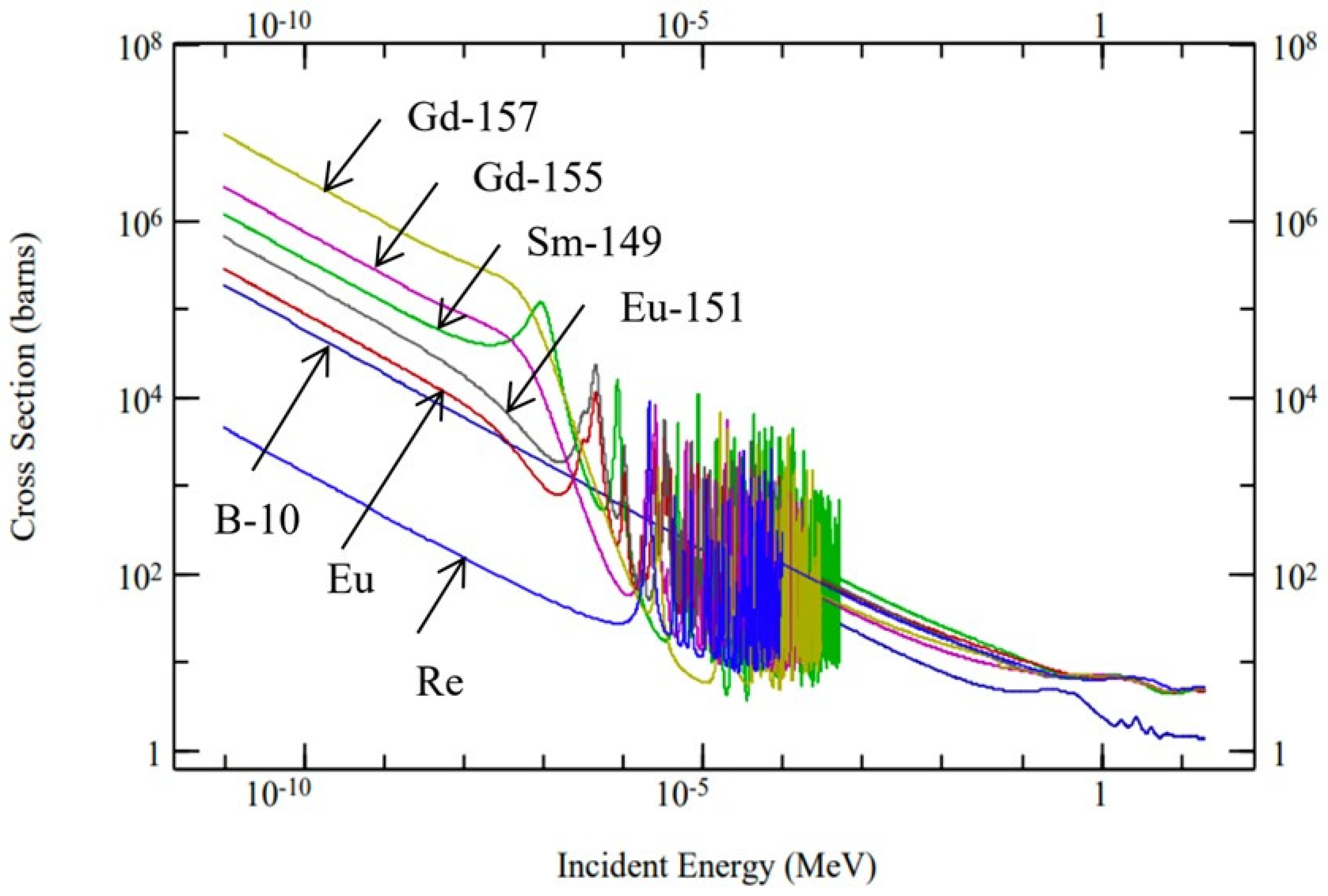
LSSNR may re-enter the atmosphere and fall back to Earth in a launch accident. Subcritical LSSNR surrounded by sea water or wet sand has a possibility of returning to criticality since the isotope of H in water or Si in sand will soften the neutron spectrum. To avoid this, a spectral shift absorber (SSA) was adopted in LSSNR, which has a smaller absorption cross section for fast neutrons and is the opposite for thermal neutrons, as shown in
Figure 5. In LSSNR, a layer of SSA with 0.02 cm thickness was added to the outer of cladding. SSAs including B
4C,
149Sm
2O
3, Eu
2O
3, Gd
2O
3 and Rhenium are usually employed in space reactors, and the physical parameters are listed in
Table 4, where B
4C, Eu
2O
3, and Gd
2O
3 are enriched with natural elements. In this study, the reactivity penalties caused by different SSA materials were studied for three cases based on the preliminary LSSNR design: (1) initial core configuration (
Figure 4), (2) bare reactor core (no outer reflector) with vacuum boundary condition, and (3) bare reactor core surrounded by wet sand. The wet sand of density 2.16 g/cm
3 consists of 85.8 wt.% SiO
2 and 14.2 wt.% sea water, and sea water consists of 96.9 wt.% H
2O and 3.1 wt.% NaCl.
The results are summarized in
Table 5. It can be seen that Gd
2O
3 SSA causes the least reactivity penalty for case 1. For reactor core surrounded by wet sand (case 3), the original LSSNR core without any SSAs still remains supercritical. Thus, adopting SSA material in LSSNR is necessary. However, Rhenium has the weakest spectral shift absorption ability, and
10B
4C caused the greatest reactivity penalty. B
4C, commonly used as a control material in PWR, has a relatively large absorption cross-section, especially for thermal neutrons, but it was not directly used as fuel cladding in space nuclear reactors. Compared with Sm-149, Gd provides better neutron economy and a significantly smaller reactivity penalty, which is beneficial for achieving the long lifetime design objective. Overall, Gd
2O
3 was adopted in LSSNR.
3.3. Control Drum Absorber Thicknesses Design
To satisfy the design requirement of a 30 EFPY lifetime while maintaining a sufficient shutdown margin—defined as the reactivity difference between the fully subcritical and critical states under the most unfavorable conditions—the thickness of the B4C coating in the control drums was optimized. The variations in keff for absorber thickness ranging from 0.75 cm to 2.0 cm were calculated. Calculations with 300 cycles, 100 skipped cycles, and 1,000,000 neutron particles in each cycle were performed in OpenMC, and the boundary condition was set to vacuum.
To meet 30 EFPY operation, the U-235 enrichment was adjusted simultaneously, and the results are listed in
Table 6. It shows that as B
4C coating thickness increases, the required U-235 enrichment increases, and the worth of the control drum also increases. Overall, solid fuel U-235 enrichment of 80.98 wt.% and B
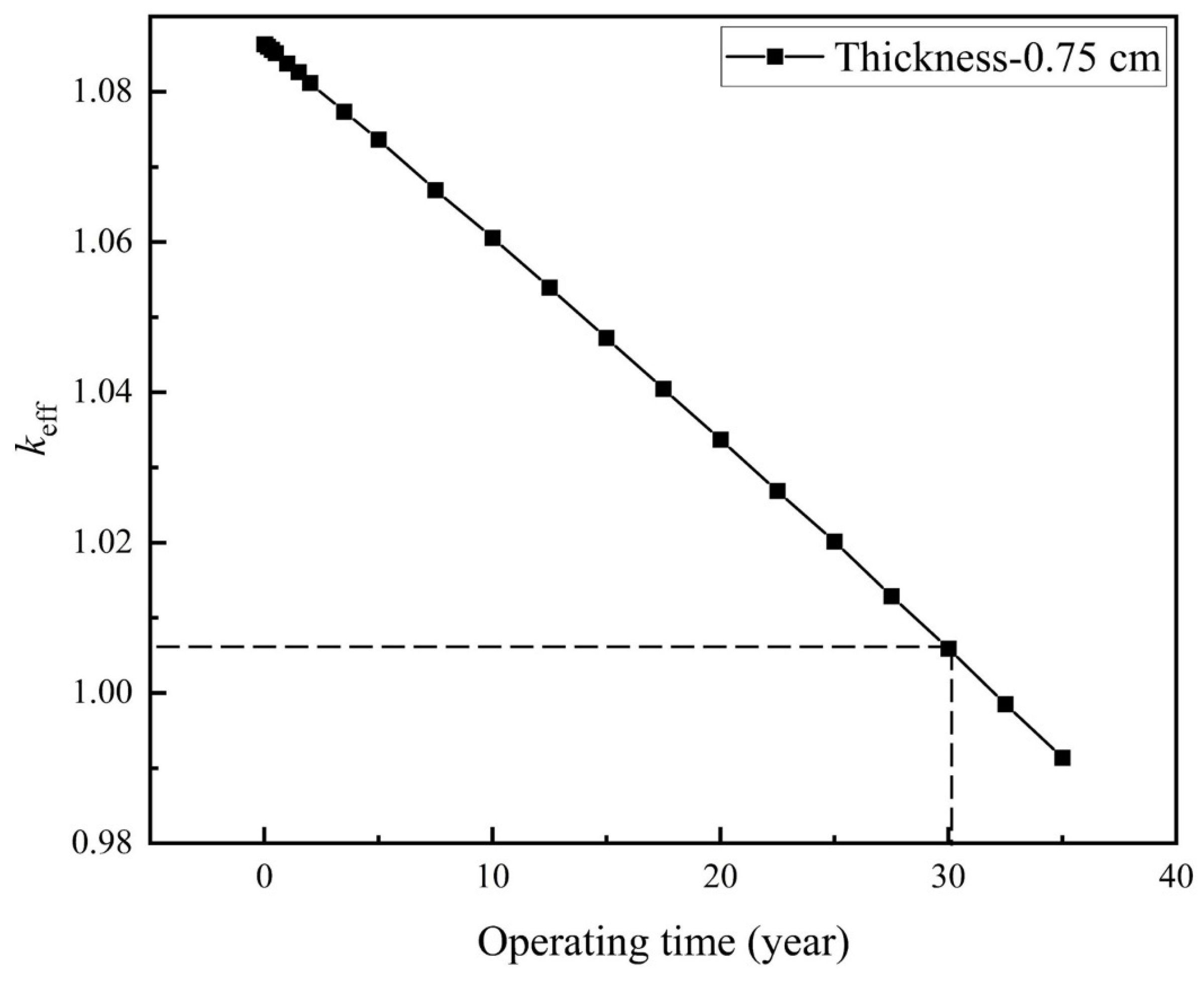
4C thickness of 0.75 cm were adopted in LSSNR, and the variation in
keff with operation time is drawn in
Figure 6. In this configuration,
keff of the LSSNR with the control drums in the fully inserted position is 0.954949, ensuring sufficient subcriticality. After 30 EFPY operation, the
keff reaches 1.00592, which meets the requirement of operation life.
After launch, with all the control drum absorbers positioned closest to the active core, the control drums will be adjusted to make the reactor core critical. However, in some cases, the reactor core needs to be shut down by adjusting the absorber location. Reactivity margin in cases when one or more control drums are stuck needs to be analyzed. For control drum with 0.75 cm B4C thickness, each control drum reactivity worth is 2192 pcm. During startup from subcriticality, the reactor core cannot reach criticality if five or more control drums are stuck. Conversely, the reactor core cannot shut down if three or more control drums are stuck (keff changes from 1.08644 to 1.02068 for 3 stuck control drums working).
The physical and design parameters of optimized LSSNR are listed in
Table 7 and
Table 8. The total mass of the active core is almost the same as the initial design scheme.



 ,
,