Article

Impact of Construction Deviations on Energy Performance Certification: A Case Study of a Residential Building in Slovakia


Department of Building Technology, Faculty of Civil Engineering, Slovak University of Technology in Bratislava, 810 05 Bratislava, Slovakia
*
Author to whom correspondence should be addressed.
Energies 2026, 19(7), 1704; https://doi.org/10.3390/en19071704
Submission received: 4 February 2026 / Revised: 12 March 2026 / Accepted: 27 March 2026 / Published: 31 March 2026

Abstract

Energy performance certification of buildings is a key instrument for assessing energy efficiency within the framework of the Energy Performance of Buildings Directive (EPBD). In practice, significant discrepancies are often observed between the predicted and actual energy performance of buildings. One of the main causes of this discrepancy is non-compliance with technological procedures during construction. This paper analyses the energy and economic consequences of such deviations through a case study of a newly constructed residential building in northern Slovakia that was originally certified in the A0 energy class. The research methodology included in situ inspection of the building, thermographic measurements, destructive probes of the building envelope, analysis of project documentation, and recalculation of energy performance using measured building parameters. The results revealed significant deficiencies in the thermal insulation of the building envelope, roof construction, and window airtightness. After recalculation based on measured parameters, the building’s energy classification deteriorated from A0 to B. The total energy demand increased by 46%, while primary energy demand increased by 141%. The results demonstrate that construction deviations can significantly affect the reliability of energy performance certification. The study highlights the importance of verifying the actual condition of buildings during construction to ensure the reliability of EPC assessments.

1. Introduction

The energy efficiency of buildings is one of the key priorities of EU energy policy within the European Green Deal and the objective of achieving climate neutrality by 2050. For example, Sweden’s national target for energy efficiency in construction is to reduce energy consumption by 50% by 2050 compared to 1995 levels [1].
The assessment of the energy performance of buildings in the European Union is regulated by the Energy Performance of Buildings Directive (EPBD), originally adopted as Directive 2010/31/EU and subsequently amended by Directive 2018/844 and recast in 2024. The directive emphasises transparency and comparability of energy indicators. Energy performance certification of buildings represents a key tool for achieving these objectives [2,3,4].
Current expert discussions frequently emphasise that energy performance certificates (EPCs) play an important role in achieving energy and climate targets, as they enable a standardised and comparable assessment of the energy performance and support the implementation of energy-saving measures [5]. In practice, significant differences are frequently observed between the predicted and the actual energy performance of buildings. This phenomenon, commonly referred to as the energy performance gap, has been widely discussed in the scientific literature.

1.1. Energy Performance Certification and the Energy Performance Gap

Energy certificates in European countries show widespread errors and problems with regulatory compliance. Several studies have documented error rates of up to 78% of certificates and differences of approximately 20–40% in calculated energy consumption and emissions [6,7,8,9]. The main causes of these shortcomings include limitations of calculation software, insufficient training of assessors responsible for preparing certificates, and inaccuracies in input data used in energy performance calculations.
Empirical studies conducted in several European countries confirm significant inconsistencies in energy performance certificates. For example, research conducted in the Basque Country identified discrepancies in 78.1% of certificates, with the mean square relative errors of 20.3% for energy consumption and 22.0% for CO2 emissions. The study identified technical discrepancies, calculation errors, software inconsistencies, and data entry errors as the most common sources of inaccuracy and recommended combining automated checks with in situ inspections to improve the reliability of EPC assessments [10]. Several studies have also highlighted the influence of national methodologies, building design, and regulatory frameworks on the final energy classification of buildings. For example, research conducted in Turkey analysed the energy performance of residential buildings in the city of Izmir and demonstrated that building configuration and architectural design significantly influence the resulting energy class [11]. Comparative analyses of residential buildings in Greece and Turkey further showed substantial differences in heating energy consumption despite similar climatic conditions, indicating that national regulations, thermal standards, and construction quality play an important role in determining the final energy performance of buildings [12]. In addition, analyses of the Turkish energy certification system identified methodological limitations and insufficient adaptation to regional conditions, which may reduce the reliability of certification results [8].
Uncertainties in energy certification methodologies have also been documented in other European countries. Studies conducted in the UK have shown that different calculation tools and methodological assumptions may lead to significant differences in energy classification for the same building [13]. Similarly, analyses of the UK EPC database estimated that between 36 and 62% of certificates may contain incorrect attributes or data inconsistencies [14]. Research focusing on the impact of EPCs on property markets in Sweden has also highlighted the importance of improving the reliability and consistency of certification processes [15]. In addition, methodological changes in the Swedish certification system have required the development of new procedures to ensure comparability between certificates issued at different times [9]. Large-scale empirical analyses have also revealed discrepancies between theoretical energy performance values and actual energy consumption. A study conducted on approximately 200,000 residential buildings in the Netherlands demonstrated that buildings with low energy performance ratings often consume less energy than predicted, whereas buildings classified as energy efficient tend to consume more energy than expected [16]. These findings suggest that calculated EPC values do not always accurately reflect the real operational performance of buildings. Several studies have therefore proposed improvements to certification methodologies and verification procedures. Research conducted in Norway recommended the integration of simplified measurements, laser scanning, smart metering devices and building information modelling to improve the reliability of EPC assessments [17]. Similar concerns have been identified in Scandinavian countries, where insufficient quality control of certification processes may reduce public confidence in EPC systems. Experiences from Portugal have also shown that methodological changes over time may significantly affect EPC results and reduce the comparability [18]. Ireland has addressed some of these challenges by introducing a multi-level certification system and stronger accountability mechanisms, which have contributed to improved compliance with building regulations [7].
In addition to methodological issues, several studies highlight the importance of data quality and inspection procedures in energy certifications. For example, research conducted in France showed that a significant number of certificates were issued without on-site inspections, which led to incorrect energy classifications and reduced the credibility of the certification system. As a result, mandatory building inspections were introduced in France in 2021 to improve the reliability of EPC assessments [19].
The informative value of an energy certificate depends on the consistency between the design and the actual condition of the building. In practice, however, this assumption is often not fulfilled, mainly due to non-compliance with technological procedures during construction and insufficient control during implementation [20,21].
Several studies have also identified behavioural and operational factors that may influence the difference between predicted and actual energy consumption. Research on the rebound effect suggests that improved energy efficiency may sometimes lead to increased energy use due to changes in occupant behaviour. Empirical studies conducted in Austria, Switzerland, and France have reported rebound effects in the range of approximately 20–30% [22,23,24,25].
While numerous studies have analysed inaccuracies in energy performance certificates and discrepancies between predicted and actual energy performance, less attention has been devoted to the role of the construction quality and implementation deviations.

1.2. Construction Deviations and Their Impact on Energy Performance

Several studies have analysed the difference between predicted and actual energy performance of buildings, commonly referred to as the energy performance gap. De Wilde identifies the main causes of the discrepancy in the areas of building design, implementation and operation of buildings. He points out that energy certification and computational assessments often reflect the effects of implementation errors, operating conditions and end-user behaviour [21]. Similarly, Williamson points out that the analytical and computational approaches used to assess building energy performance often require simplifications that do not fully represent real operating conditions, which may lead to differences between the designed and actual energy performance [26].
In addition to methodological limitations, several authors highlight the importance of construction quality and implementation accuracy. Poor workmanship and insufficiently specified details may lead to the formation of thermal bridges and other construction defects, which significantly contribute to the differences between the designed and actual energy performance of buildings [20,27,28].
Research by Menezes et al. [20] showed that energy performance calculations based on standardised input parameters may distort estimates of actual energy consumption. A significant improvement in the agreement between the calculation and actual consumption can only be achieved after replacing standard input parameters with real operating data, thereby accounting for the actual conditions of building construction and use.
Empirical studies have also demonstrated that deviations between design assumptions and actual construction significantly affect the energy performance of buildings. Newsham et al. analysed the energy consumption of 100 LEED-certified buildings and found that projected performance parameters are often not achieved in practice due to differences between the design assumptions and the actual implementation of building systems [27]. Similarly, Thompson et al. confirm that the difference between projected and actual energy consumption is not the result of a single factor, but arises from the interaction of design assumptions, deviations during implementation and the manner of operation of technical equipment in buildings. The authors point out the importance of defining responsibilities in the construction process and the need for systematic verification of the functionality of technical equipment and its regulation after completion of construction [28].
Construction defects associated with incorrect installation of building components may also significantly reduce the thermal efficiency of building envelopes. Vlček et al. demonstrate that improper installation of external thermal insulation composite systems (ETICS), particularly incorrect bonding of insulation boards and insufficient anchoring, leads to the formation of thermal bridges and reduces insulation performance, ultimately distorting the results of building energy performance assessments [29].
The recast of the Energy Performance of Buildings Directive adopted in 2024 places increased emphasis on improving the reliability and informative value of energy performance certificates. However, current practice in Slovakia and several other EU countries still reveals shortcomings in the areas of construction quality control, verification of the actual building condition, and the integration of real building parameters into certification calculations. EU Member States are required to implement the requirements of the revised directive by 26 May 2026, which highlights the need to address these persistent shortcomings in national certification systems.
In the Slovak Republic, inaccuracies in energy performance certification are not only related to methodological issues but also to construction practices. Available data indicate that at least 15% of certified buildings may be incorrectly classified due to poor construction quality and deviations from technological procedures [30]. In the domestic construction environment, cost-reduction strategies during construction are relatively common, particularly in single-family housing, which may result in the use of inappropriate materials or incorrect construction procedures and lead to significant deviations from the designed energy performance.
Recent analyses of energy certification data in Slovakia indicate that a considerable number of buildings may be incorrectly classified in energy performance certificates due to insufficient construction quality and incorrect implementation of technological procedures. These observations are consistent with broader findings highlighting the challenges associated with the implementation of energy efficiency policies and the availability of reliable building performance data at the national level [31]. Comparisons between certified values and results obtained from thermographic measurements and expert assessments of building structures suggest that deviations between calculated and actual energy performance may occur in practice. These findings highlight the need for further research focusing on the relationship between construction quality and the reliability of energy performance certification results.
The aim of this study is to analyse the impact of specific implementation and technological deviations during construction on the results of energy performance certification using a case study of a residential building in northern Slovakia and to discuss the energy and economic consequences of these deviations in the context of the EPBD. The novelty of this research lies in the combined analysis of construction defects, recalculated energy performance and the economic costs required to remediate the identified deficiencies.

2. Methodology

2.1. Research Design

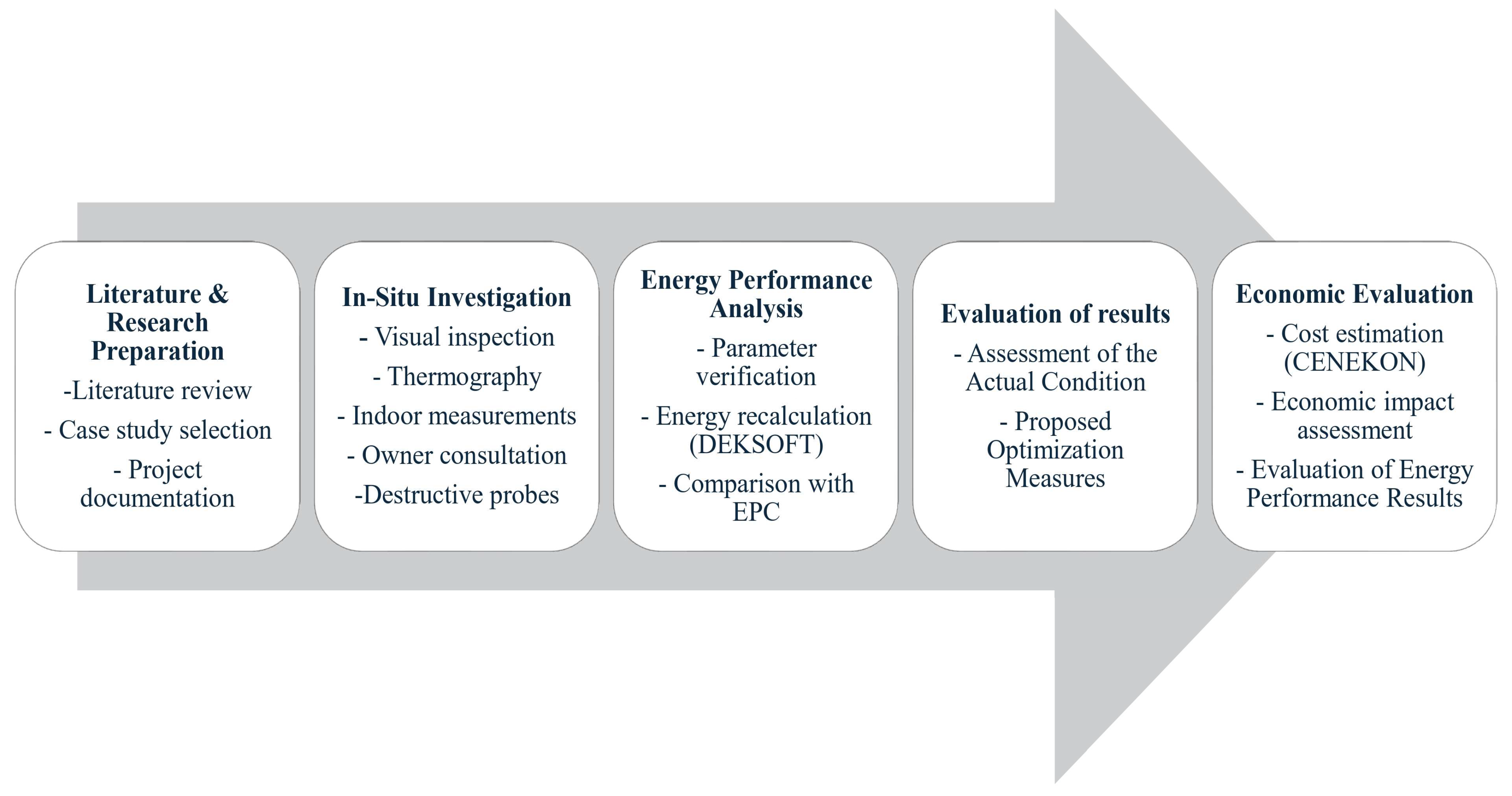
The research was designed as a case study focusing on the analysis of the impact of construction deviations on the energy performance certification of buildings. The methodology consisted of several consecutive steps combining literature analysis, in situ investigation, and recalculation of the building’s energy performance based on measured parameters. First, a review of the scientific literature related to energy performance certification and the energy performance gap was conducted, with particular emphasis on the influence of construction quality and implementation deviations on the actual energy performance of buildings. A detailed investigation of the selected building was then conducted to identify deviations between the project documentation and the actual implementation of the building structures. The analysis focuses on recalculated energy performance based on verified construction parameters; therefore, the results are independent of occupant behaviour or operational energy consumption patterns.

2.2. In Situ Investigation of the Building

The in situ investigation included a detailed inspection of building structures aimed at identifying possible construction deficiencies and deviations between the project documentation and the actual implementation of the building. The investigation began with a visual inspection of the building envelope and structural elements to identify visible defects, irregularities in construction details, and areas potentially indicating increased heat losses. Thermographic measurements were subsequently carried out to detect thermal bridges and areas with increased heat losses within the building envelope. The measurements were performed using a FLIR B250 thermal imaging camera (Teledyne Flir, Wilsonville, OR, USA), which enables the identification of temperature anomalies on interior surfaces of building structures. Thermographic measurements were conducted under conditions ensuring a sufficient temperature difference between the interior and exterior environment, which is necessary for reliable identification on thermal bridges and heat loss areas.
In addition to thermographic analysis, measurements of indoor environmental parameters were performed, specifically indoor air temperature and relative humidity. These measurements were carried out using a non-contact hygrometer with a MeterLink MO297 infrared thermometer (Extech Instruments, Nashua, NH, USA) equipped with Bluetooth communication support. The measurements were performed under standard winter conditions to ensure sufficient temperature differences for thermographic analysis.
During the inspection process, communication with the building owner also provided additional information about the building operation and potential problems observed during the initial period of use. The owner reported several anomalies that appeared during the first heating season and described modifications that had been made to the original design documentation during the construction phase. Complete project documentation of the building was obtained and analysed as the basis for comparison with the actual construction. The thermographic records were subsequently analysed in detail and evaluated together with the project documentation and the information regarding design changes. This analysis enabled the formulation of hypotheses regarding possible construction and implementation deficiencies affecting the energy performance of building.
The following phase of the investigation focused on verifying these assumptions through destructive probes performed directly in selected building structures. The probes were carried out using HILTI (Schaan, Liechtenstein) cordless tools and allowed verification of the actual composition of structural layers. The selection of probe locations was based on the results of thermographic measurements and visual inspection of the building. The locations of destructive probes were selected based on the results of thermographic measurements and visual inspection in order to target areas with the highest probability of construction defects and increased heat losses. The locations of destructive probes were selected based on the results of thermographic measurements and visual inspection, focusing on areas where significant temperature anomalies indicated potential construction defects. The results of these probes provided verifiable data regarding the thickness of individual layers, the properties of installed materials, and the configuration of building systems located in concealed structures, including roof assemblies and underfloor heating systems.

2.3. Energy Performance Recalculation and Economic Assessment of Construction Deficiencies

Based on the data obtained during the in situ investigation and the analysis of project documentation, the energy performance of the building was recalculated using the DEKSOFT Energetika software (version 8.0.5). The recalculation incorporated the measured parameters of building structures and compared them with the values used in the original energy performance certificate. The analysis focused primarily on the comparison of the total energy demand and primary energy demand between the original certification and the recalculated values reflecting the actual condition of the building. The recalculation was based on measured building parameters and did not include temporary additional heating used by occupants. The recalculation of energy performance was performed using the DEKSOFT Energetika software, which implements standardised calculation procedures based on the European framework for energy performance certification of buildings under the EPBD. The software applies predefined calculation algorithms and standardised boundary conditions (e.g., indoor temperature and ventilation rates). In this study, the verified parameters of the building structures obtained during the in situ investigation were used as input values in order to evaluate the impact of construction deviations on the calculated energy performance.
The final phase of the research involved evaluating the economic consequences of the identified construction deficiencies. A cost estimation of the required remediation measures was prepared using the CENEKON price database, which is widely used in Slovakia for construction cost estimation and budgeting in professional practice. The database contains regularly updated unit prices of construction works and materials based on market data from contractors and suppliers. Although the resulting costs represent approximate values that may vary depending on specific market conditions and project circumstances, the database provides a standardised and widely accepted basis for comparative cost analysis in construction research. The purpose of the cost estimation was not to determine exact market prices but to estimate the relative economic impact of correcting the identified construction defects.
The sequence of the individual steps mentioned above is shown schematically in Figure 1 in the form of a simplified flowchart.

3. Case Study

The following section presents the application of the research methodology described in Section 2 to the investigated building. The case study focuses on a newly constructed single-family house located in northern Slovakia. The building was designed as a brick single-storey structure with a residential attic. The perimeter walls were designed using 300 mm thick Porotherm Profi masonry supplemented with 200 mm thick mineral wool thermal insulation. In the section with wooden façade cladding, a thermal insulation layer with a thickness of 120 mm was specified. The roof covering was designed using ceramic interlocking tiles with a diffusion membrane. Thermal insulation of the roof structure was designed using mineral wool with a total thickness of 450 mm combined with a vapour barrier and plasterboard ceiling. Thermal insulation with a thickness of 160 mm made of floor polystyrene was designed for the floor structure and the ceiling above the exterior. Windows and external doors were designed as plastic frames with insulating triple glazing.
Space heating and domestic hot water preparation were provided by an air-to-water heat pump, Daikin Altherma, with a nominal capacity of 7.5 kW. During the first heating season, it was observed that the installed heat pump with a nominal capacity of 7.5 kW was unable to maintain the required indoor temperature under real operating conditions.
According to the original energy performance certificate issued in 2023, the building was classified in the required A0 energy class without the need for additional corrective measures. During the certification process, the building owner reported several modifications that had been implemented during construction compared to the original design documentation. The facade insulation thickness was reduced to 180 mm using expanded polystyrene, sprayed foam insulation with a thickness of approximately 450 mm was applied in the roof structure, and the originally designed plastic windows were replaced with wooden windows with insulating triple glazing.
Despite these changes, the building was still classified in the A0 energy class according to the declared parameters of the installed materials and systems.

3.1. Requirements for a Single-Family House in the Context of Building Design

During the preparation and design phase of residential buildings, it is necessary to comply with several technical and regulatory requirements in order to achieve the required energy performance level. These requirements must be reflected not only in the design documentation but also during the implementation phase of construction. Deviations from the proposed design or non-compliance with technological procedures may significantly influence the final energy performance of the building.
Since 1 January 2021, all newly constructed single-family houses in Slovakia are required to meet the energy performance standard corresponding to class A0. This requirement implies that the building must achieve very low primary energy demand (≤54 kWh/m2.a) while ensuring a significant share of energy supplied from renewable energy sources.
Achieving this energy performance level requires careful consideration of several key design parameters, including the thermal quality of the building envelope, the geometric characteristics of the building, and the efficiency of installed technical systems. In particular, the following aspects are essential:
  • High-quality building envelope: Effective thermal protection of the building is essential. The use of modern masonry materials with excellent thermal insulation properties is necessary in the design.
  • Optimised shape and orientation of the house: A compact building shape with a favourable shape factor minimises heat loss. Correct orientation to the cardinal points allows for the effective use of solar gains.
  • Use of renewable energy sources (RES): The integration of technologies such as heat pumps, photovoltaic panels and solar collectors is essential. These systems ensure the supply of energy from renewable sources, which is key to achieving class A0.
  • Effective ventilation with heat recovery: The installation of heat recovery units ensures air exchange without significant heat loss, contributing to the energy efficiency of the house.
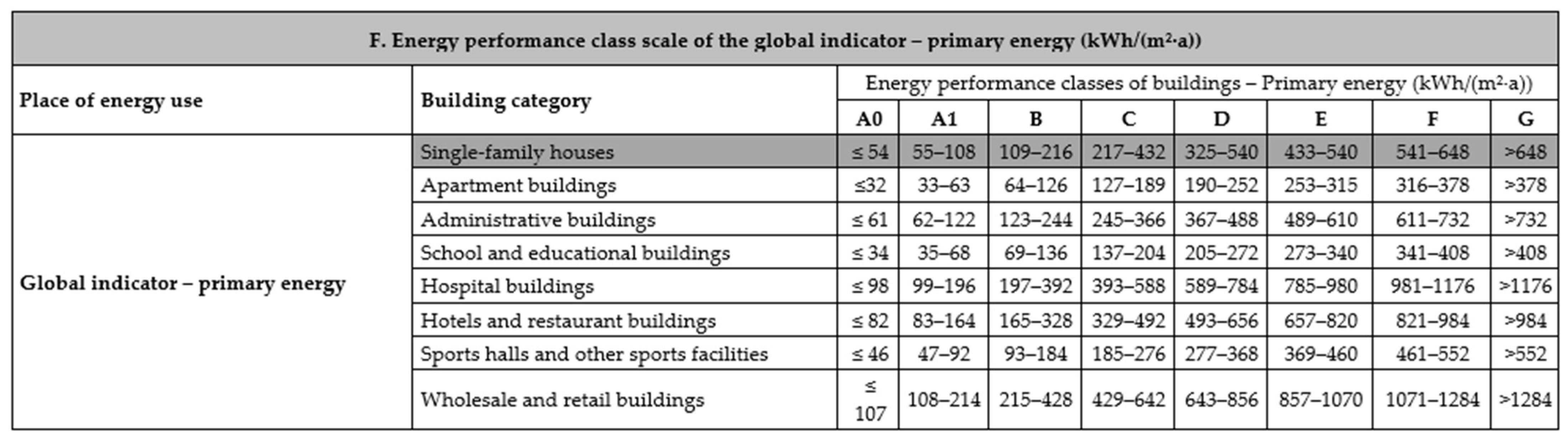
These attributes significantly influence the resulting primary energy demand and therefore determine the final energy classification of the building (Figure 2).
The classification of buildings into energy performance classes in Slovakia is based on the global indicator of primary energy demand. The threshold values for individual building categories are shown in Figure 2. However, deviations from these design assumptions may occur during construction, which may significantly affect the actual energy performance of buildings. The following section therefore analyses the real parameters and structural characteristics of the examined building.

3.2. Actual Parameters of the Investigated Building

This subchapter presents the main parameters and structural characteristics of the investigated residential building based on the analysis of the project documentation and data obtained during in situ investigation. The building is a single-family house completed on 2023 and located in northern Slovakia. The analysed building is classified as a residential building (single-family house) according to the national methodology for energy performance certification. This building type corresponds to category 1 in the Slovak energy certification system and is subject to the primary energy thresholds defined for residential buildings. The following parameters describe the basis geometry and energy characteristics of the building used for the evaluation of its energy performance.
Basic building parameters (correspond to the values reported in the original energy performance certificate issued for the building):
  • Year of approval: 2023
  • Total floor area: 288.24 m2
  • Enclosed volume: 896.60 m3
  • Shape factor: 0.65 m−1
  • Structural floor height: 3.30 m
  • Number of heating degree days: 3422 K.day
  • Primary energy demand: 46 kWh/(m2.a)
  • Share of energy from renewable sources: 65.50%
  • Renewable source for heating and hot water: Heat pump
  • CO2 emissions: 3.51 kg/(m2.a)
Perimeter walls:
  • Wall type 1: Plaster; Wienerberger Porotherm Profi masonry, thickness 300 mm; EPS insulation—thickness 180 mm.
  • Wall type 2: Plaster; Wienerberger Porotherm Profi masonry, thickness 300 mm; EPS insulation—thickness 120 mm.
Roof structure:
  • Sloping roof: Gypsum board soffit; vapour barrier; sprayed insulation with a total thickness of 450 mm.
  • Flat roof: Gypsum board soffit; vapour barrier; sprayed insulation with a total thickness of 450 mm.
Opening structures:
  • Wooden doors with insulated triple glazing without shading devices.
  • Wooden doors without glazing, without shading devices.
  • Wooden windows with insulating triple glazing without shading devices.
  • Plastic roof windows with insulating triple glazing.
Floor on the ground:
  • Wear layer; Anhydrite screed—thickness 60 mm; Styrodur insulation—thickness 160 mm; Waterproofing layer; Concrete base, thickness 150 mm.
Ceiling above the exterior:
  • Wear layer; Anhydrite screed 60 mm thick; Styrodur insulation—thickness 80 mm; Reinforced concrete ceiling slab 200 mm; Austrotherm Styrodur insulation, thickness 160 mm.
Heating:
  • Source: Daikin Altherma 7.5 kW air-to-water heat pump with a nominal capacity of 7.5 kW.
  • Heating system type: Underfloor heating throughout the building.
  • Distribution: Insulated.
Domestic hot water preparation:
  • Source: Daikin Altherma air-to-water heat pump.
  • System type: Continuous.
  • Hot water distribution: Insulated.
Cooling, mechanical ventilation and lighting were not evaluated in the energy performance certificate.
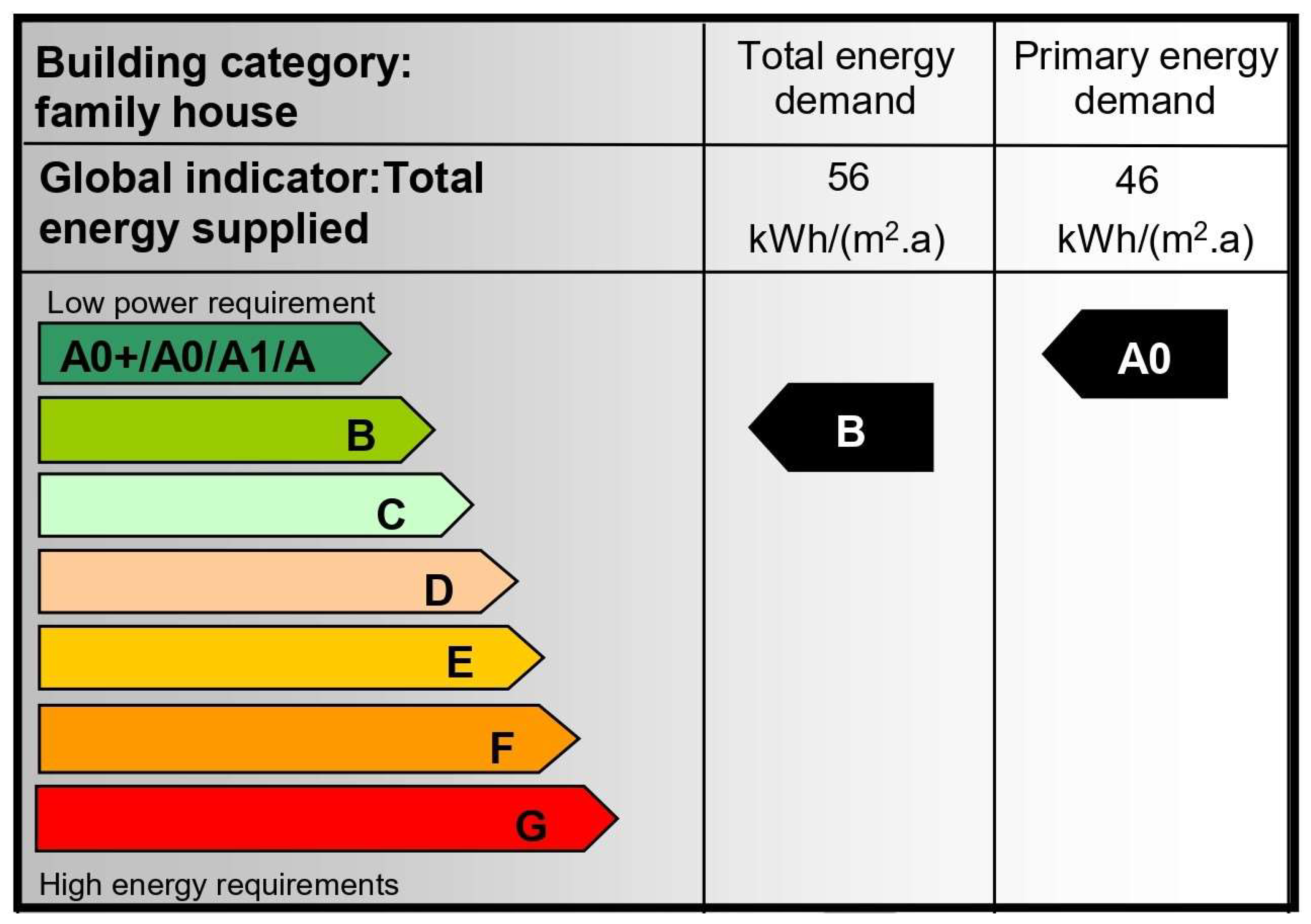
These parameters were used in the original energy performance certificate of the building, the results of which are shown in Figure 3. The certificate indicates that the building was classified in the A0 energy class based on the calculated primary energy demand and other energy performance indicators. The building is located in northern Slovakia, which is characterised by approximately 3422 heating degree days, representing typical climatic conditions for this region and significantly influencing the heating energy demand of residential buildings.

3.3. Determination of the Actual Condition

The inspection of the building and communication with the owner revealed that several anomalies had already appeared during the first heating season. These anomalies were primarily observed on interior surfaces of external walls, particularly in corners and edge zones where water vapour condensation occurred. Such manifestations indicated locally reduced surface temperatures and suggested deficiencies in the thermal performance of the building envelope.
At the same time, it was identified that the installed air-to-water heat pump with a nominal capacity of 7.5 kW was not able to maintain the required indoor thermal comfort during colder periods. As a result, the occupants reported the use of additional electric heaters. However, these temporary heating sources were not considered in the subsequent energy performance recalculation, which was based solely on the verified thermal parameters of the building structures.
Further investigation of the building envelope revealed significant deficiencies in the external thermal insulation composite system (ETICS). The inspection and subsequent laboratory testing confirmed that non-certified insulation materials had been used during construction. The measured density of the insulation was lower than 10.0 kg/m3, which is significantly below the commonly required density range for EPS insulation used in ETICS. At the same time, it was found that this insulation was only applied and glued locally and that the required number of anchors per 1 m2 was not observed. This design could lead to chemical incompatibility between the individual layers, which reduces the energy efficiency of the insulation and can cause premature failure of the system. The use of insulation with insufficient density and improper installation therefore represents a significant risk not only for the energy efficiency of the building but also for the long-term durability of the structure and the safety of occupants.
In standard ETICSs, EPS insulation typically has a density of approximately 15 kg/m3 and should not fall below 12 kg/m3. Manufacturers usually specify the thermal conductivity coefficient of EPS insulation at λ = 0.037 W/(m.K) at a reference temperature of around 10 °C. The analysed insulation used in the investigated building showed a density lower than 10 kg/m3, which is below the required density range for EPS insulation used in ETICSs. Such a reduction in density leads to a deterioration of thermal insulation properties and may increase the thermal conductivity to λ = 0.047 W/(m.K), which represents a reduction in thermal performance exceeding 25%.
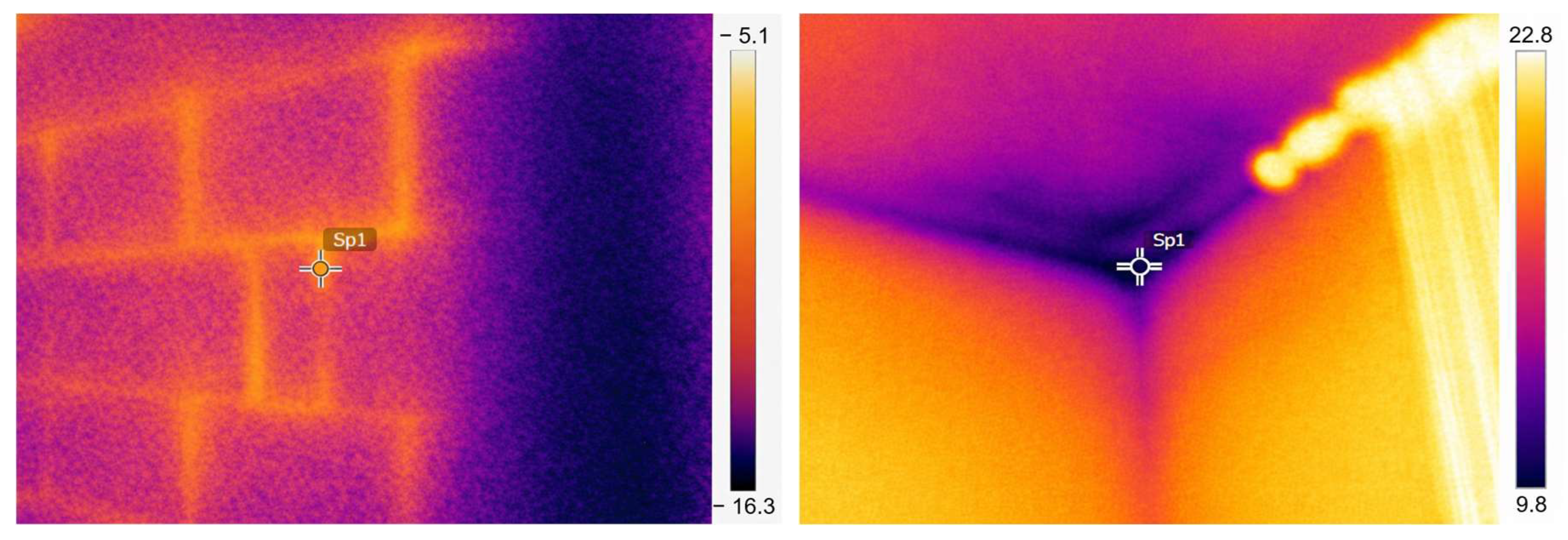
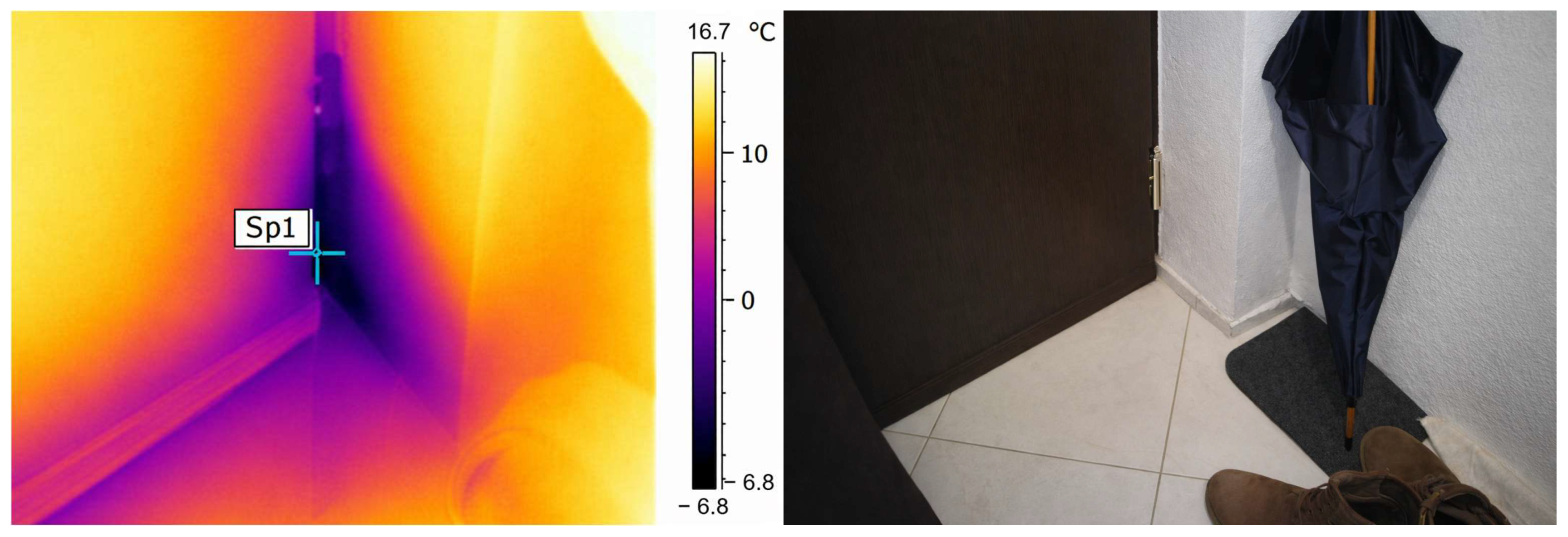
Thermographic measurements of the interior surface of the facade (Figure 4), combined with destructive probes carried out from the exterior side of the building envelope, confirmed the insufficient density of the installed insulation. In addition, dimensional instability of the insulation boards was observed.
The thermograpic images presented in Figure 4 show temperature anomalies both on the exterior surface of the wall and in the interior corners of the external wall. The reduced surface temperatures observed in these areas indicate increased heat losses caused by insufficient insulation density and defects in the installation of the ETICS system. These findings were subsequently confirmed by destructive probes carried out from the exterior side of the building envelope.
Together with the incorrect technological procedure used during the installation of the ETICS system, specifically the absence of continuous adhesive application along the perimeter of the insulation boards and the reduction in the insulation thickness by approximately 20 mm, these deficiencies significantly reduce the effectiveness of the thermal insulation system. Based on the evaluation of the detected defects, the performance of the facade insulation system was estimated to reach only approximately 50% of the required design properties.
In addition to failing to meet the intended energy performance requirements, these deficiencies also create hygienic risks associated with mould formation due to reduced interior surface temperatures, as well as potential safety risks related to the long-term stability of the insulation system.
Further structural deficiencies were also identified during the in situ investigation. The analysis revealed incorrect installation of the roof insulation system. The roof structure was insulated using sprayed PUR foam. However, this technology requires strict control of application conditions such as surface temperature, ambient temperature, and air humidity in order to achieve the designed thermal insulation properties. In practice, these conditions are often difficult to maintain during on-site construction, which may affect the performance of the insulation layer.
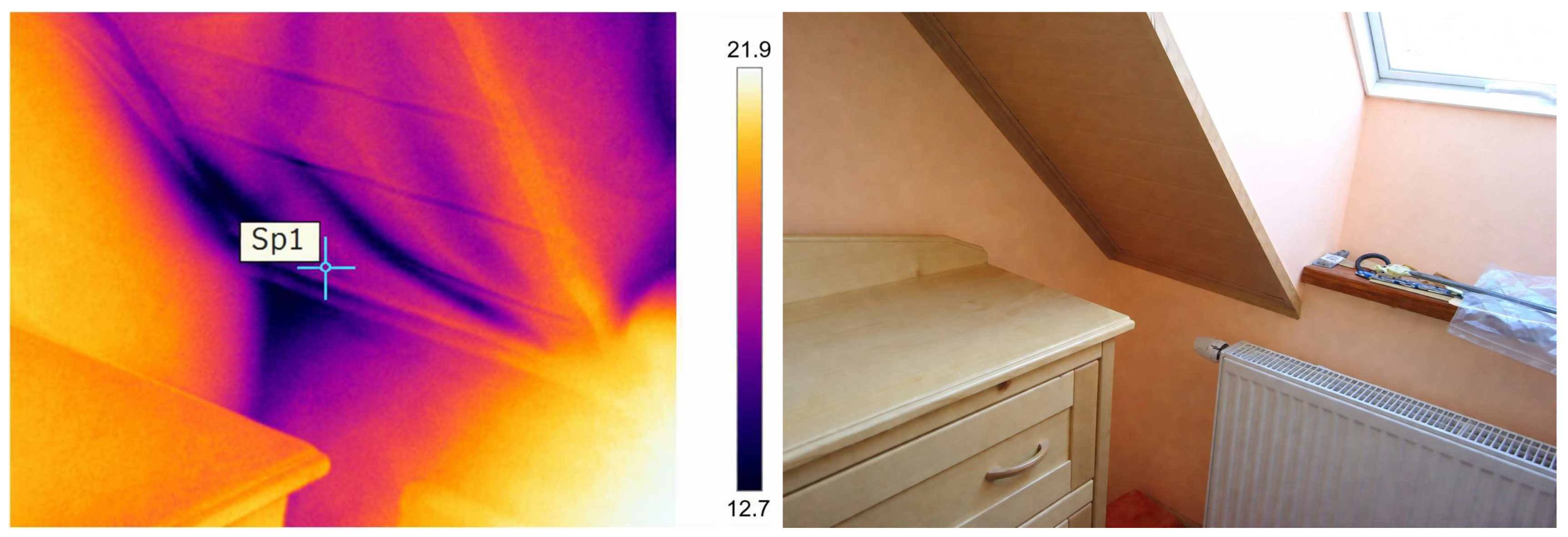
Thermographic measurements of the roof structure from the interior side (Figure 5) revealed thermal bridges, moisture accumulation and biological degradation of wooden elements, which were subsequently verified by destructive probes in the roof assembly. In addition, the building owner did not receive a technical report confirming the parameters of the installed sprayed PUR foam in accordance with the recommendations of the harmonised European standard STN EN 14315-2 (Annex E.7) [33].
Based on the thermographic analysis and verification probes, the thermal insulation performance of the roof structure was estimated to be reduced by at least 50% compared with the design assumptions. The thermographic image in Figure 5 shows lower surface temperatures in the roof area, indicating significant thermal bridges caused by improper installation of the sprayed PUR insulation.
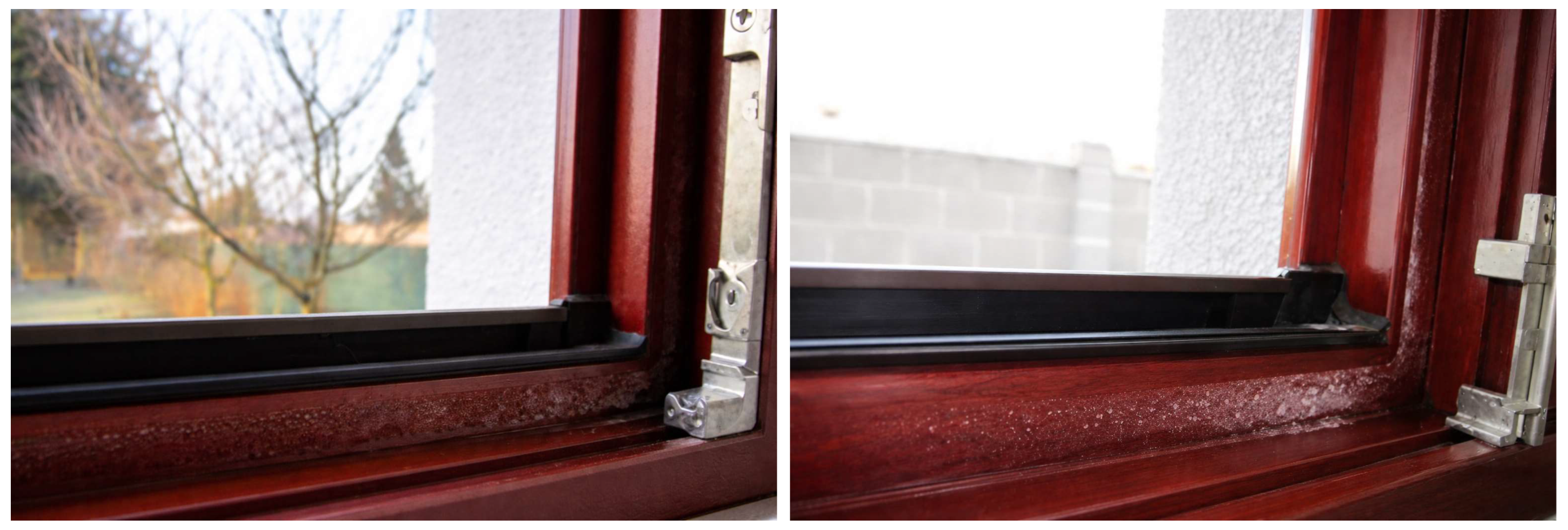
At the same time, the research also revealed a problem with the opening elements, i.e., windows and doors. During the implementation, the originally designed windows were replaced with wooden windows supplied by a regional manufacturer. During the on-site inspection, an obvious problem with the air permeability of this structure was observed. This property is a key factor influencing the energy efficiency of a building. Windows should achieve Class 4 according to the STN EN 12207 standard [34], which is the highest air permeability class. This class ensures minimal leakage between the frame and the window sash, thereby reducing unwanted heat loss. Based on the measurement results, windows are classified into the appropriate air permeability class 1 to 4, with the tightest windows falling into class 4 and the least tight windows falling into Class 1. The windows in the investigated building exhibited several deficiencies. The inspection revealed that the windows do not meet requirements for Classes 2–4 due to the presence of various defects. Based on the analysis of the actual condition presented in Figure 6 and Figure 7, the analysed opening elements were therefore classified as Class 1. This classification is illustrated in the figures, where traces of moisture are visible in Figure 6, while thermal bridges (indicated by darker areas) can be observed in Figure 7.
These aspects formed the basis for assessing the actual condition of the building and for its classification into a realistic energy class based on the verified properties of the structure. The DEKSOFT Energetika programme was used for the calculation, which used real data obtained during in situ research and from the analysed samples. These data were input into the calculation system DEKSOFT, from which the actual parameters of the structure were subsequently derived.
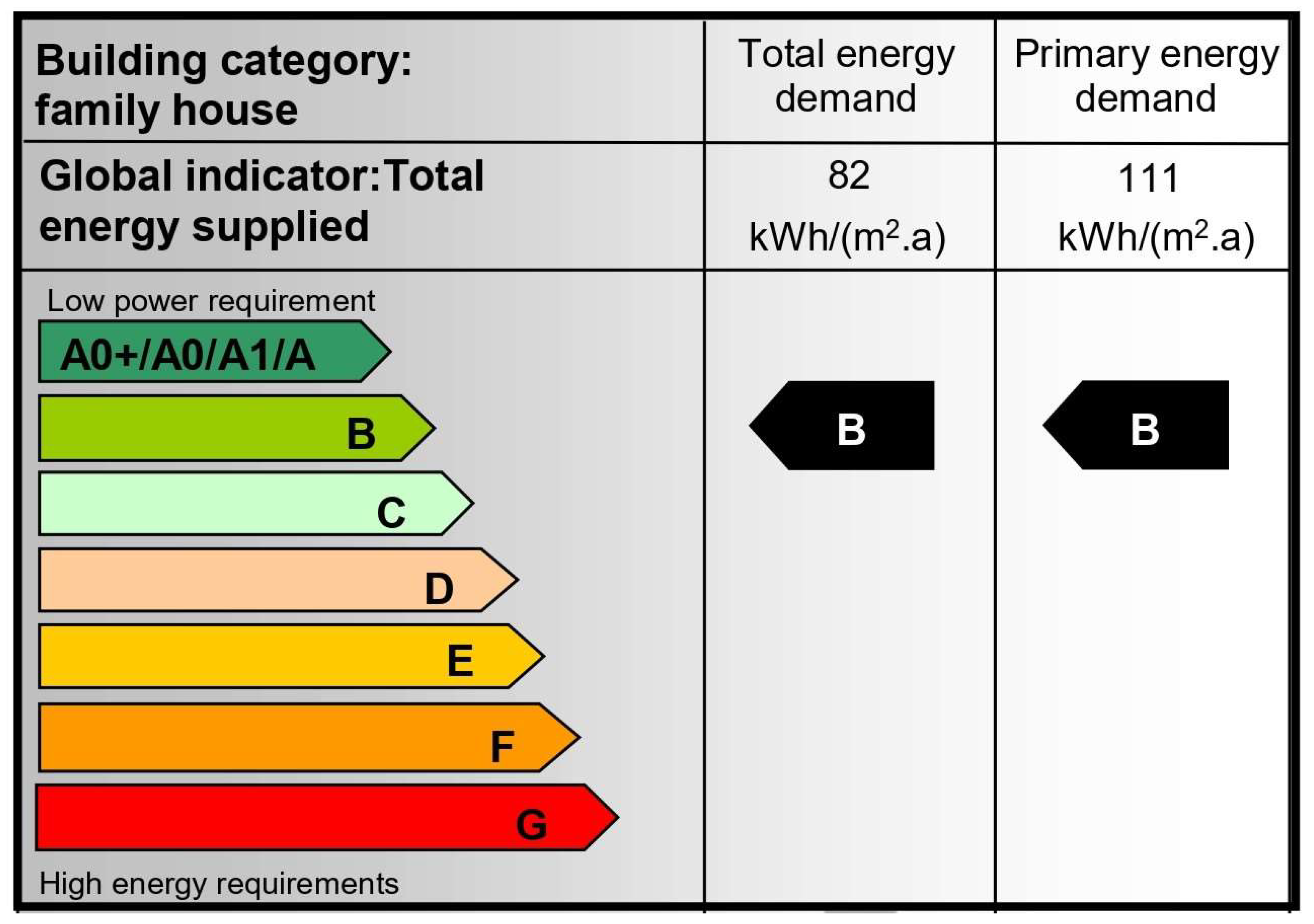
The calculations showed a significant difference in the classification of the building according to its energy performance. For comparison, see Table 1. The recalculated energy performance values presented in Table 1 represent theoretical energy demand based on verified construction parameters and do not include additional temporary heating sources used by occupants. Therefore, the recalculated energy demand reflects only the influence of construction deviations and material properties on the energy performance of the building.
These values, transferred to the new certification, classify the building from the original A0 to energy class B, as can be seen in Figure 8.
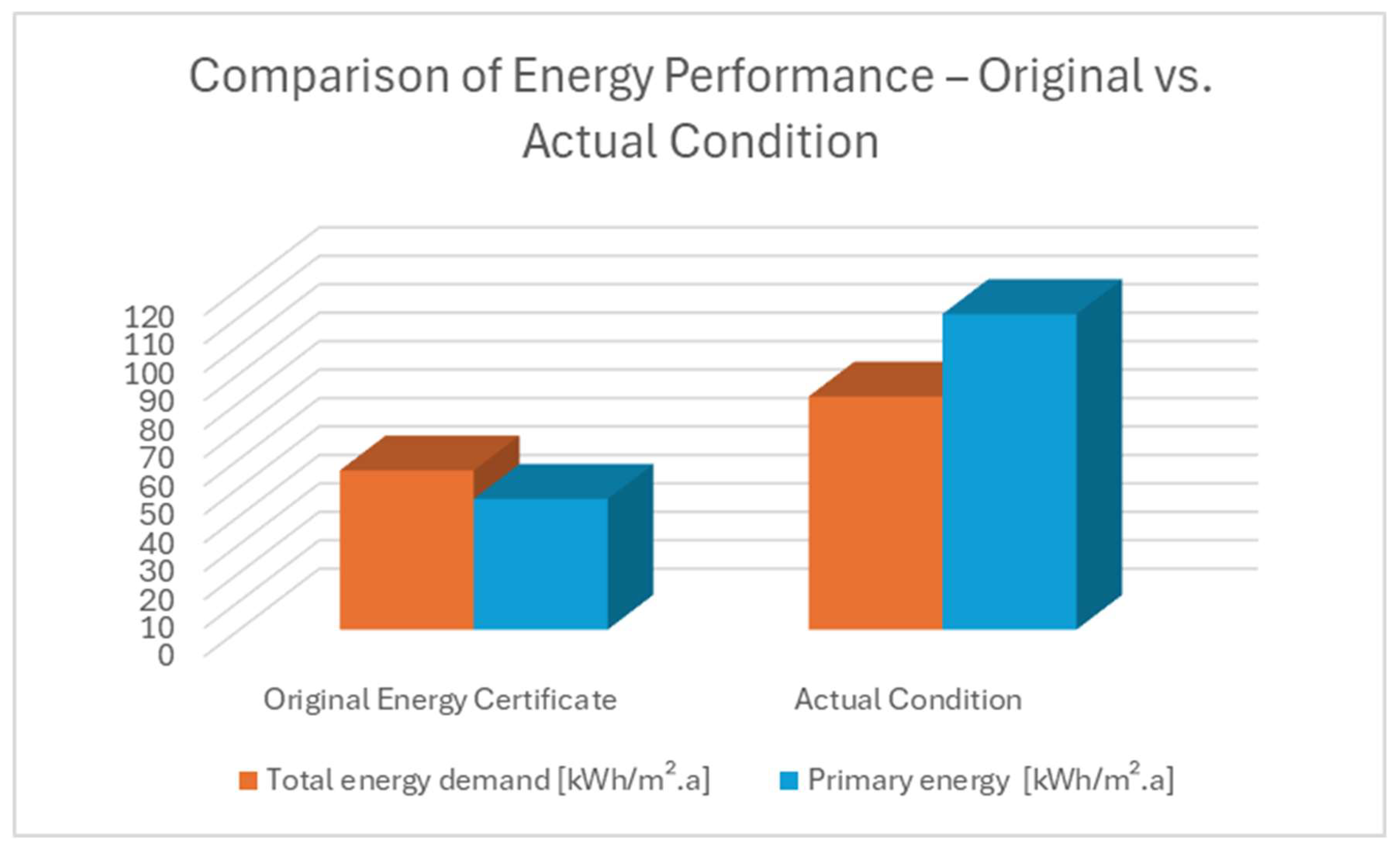
For better clarity, a comparison of the original and recalculated values is presented in Scheme 1.
In the building under investigation, a significant increase in total energy demand of 46% and primary energy demand of 141% can be observed. These values were mainly caused by non-compliance with technological procedures and the use of non-certified materials.
The results indicate that the analysed building procedures produced 1430.55 kg of CO2 more per year than originally estimated in the project documentation. This amount can be compared to the production of a passenger car with an annual mileage of 15,000 km.

3.4. Determination of Repair Costs

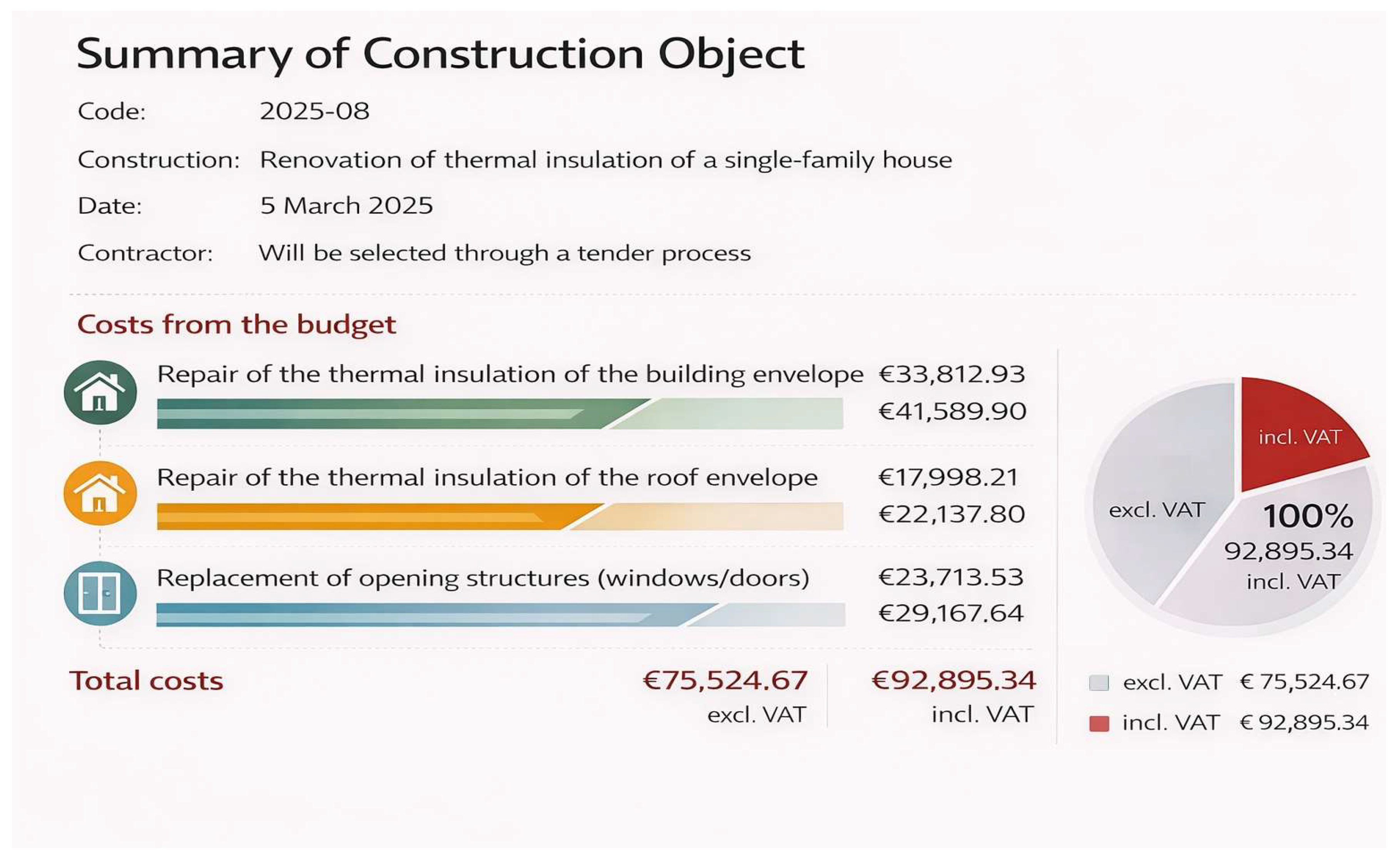
The final step of the research focused on estimating the costs required to remediate the identified construction deficiencies and restore the building envelope to the parameters necessary to achieve the intended energy performance. The cost estimation was based on the corrective measures required to eliminate the detected defects in the building structures. Implementing these corrective construction measures using appropriate materials and technological procedures would improve the energy performance of the investigated building.
The calculation of remediation costs was performed using the CENKROS 4 programme, which is widely used in Slovakia for construction cost estimation and budgeting. This database provides standardised unit prices for construction works, materials and labour, ensuring the comparability and transparency of cost calculations. The use of a standardised national price database ensures the comparability of cost estimates and eliminates potential distortions caused by individual contractor pricing strategies. An itemised cost estimate was prepared based on the identified defects, including the required materials, labour and construction work. Within this budget, the work was divided into three main groups according to the detected defects:
  • Repair of the thermal insulation of the building envelope;
  • Repair of the roof insulation;
  • Replacement of window and door structures.
The estimated total costs of the proposed remediation measures are presented in Figure 9.
The estimated remediation costs represent a substantial financial burden for the building owner and demonstrate the economic consequences of construction deviations during the implementation phase. These findings confirm that deviations from technological procedures during construction may lead not only to increased energy demand but also to significant additional costs associated with the remediation of construction defects. These results demonstrate that construction deviations may significantly increase not only the energy demand of buildings but also the financial costs associated with the remediation of construction defects, as demonstrated in the analysed case study.

4. Discussion

The results of the presented case study reveal substantial differences between the projected energy performance of the building and the values recalculated based on the verified conditions of the building envelope. The identified implementation deficiencies, particularly in thermal insulation of the building envelope, roof construction and airtightness of windows and doors, had a cumulative effect on increasing both the total energy demand and primary energy demand of the building. Although some of these may appear minor when considered individually, their combination resulted a significant deterioration in the energy class of the building from the originally declared class A0 to class B.
These findings are consistent with several studies addressing the so-called energy performance gap, which highlight the limited ability of calculation-based assessment to capture implementation-related errors [20,21,22,23,24,25]. Similar conclusions were reported by De Wilde, Menezes et al. and Vlček et al., who showed that calculated energy performance may differ significantly from the actual performance of buildings after construction. While many studies attribute these discrepancies mainly to operational factors such as occupant behaviour or building operation, the results of the present research indicate that construction quality and implementation deviations can also represent a major source of error in energy performance certification.
The magnitude of the deviation observed in this study is considerably higher than the differences typically reported in the literature, where discrepancies between predicted and actual energy performance usually range between 20 and 40%. In the analysed building, the recalculation revealed an increase in primary energy demand of 141%. This unusually high value can be explained by the cumulative effect of several severe construction defects identified during the in situ investigation. These included insufficient density of thermal insulation material, incorrect installation of the ETICS system, deficiencies in the roof insulation layer and poor airtightness of window structures. Together, these defects significantly reduced the thermal performance of the building envelope.
The occurrence of these deficiencies may also be linked to broader structural characteristics of the residential construction sector. In many residential projects, cost-reduction strategies during construction lead to the use of cheaper materials or simplified technological procedures. In addition, quality control during the construction phase may be limited, particularly in smaller residential projects where independent supervision is not always strictly enforced. As a result, deviations from the design documentation may remain undetected during construction and become apparent only after the building is occupied. These systematic factors may partly explain why the investigated building exhibited such significant discrepancies between the designed and actual energy performance.
From the perspective of the energy certification system and the implementation of the EPBD, these findings highlight an important limitation of current certification procedures. Energy performance certificates implicitly assume consistency between the designed and implemented state of a building. However, if construction quality is not adequately verified, the calculated energy performance may not reflect the real condition of the building. Strengthening the link between certification calculations and verification of the actual construction quality could therefore improve the reliability and informative value of energy performance certificates.
Climatic conditions may also contribute to discrepancies between predicted and actual building energy performance, as variations in outdoor temperature, solar radiation, or wind conditions may influence building energy demand. However, in the present study, the recalculation of energy performance was carried out using standardised climatic data applied in energy performance certification procedures. Therefore, short-term climatic variability did not significantly influence the results, and the observed discrepancies can primarily be attributed to the construction deviations identified during in situ investigation.
Finally, the analysis of remediation costs demonstrated that short-term financial savings achieved during construction lead to disproportionately high costs associated with the subsequent correction of construction defects. These findings highlight that construction quality has not only technical and energy implications but also economic consequences for building owners.
Although this study is based on a single case study and therefore cannot be directly generalised to the entire construction sector, future research should focus on analysinganalyzing a larger sample of buildings in order to quantify the frequency and impact of similar construction deviations.

5. Conclusions

This study analysed the impact of construction deviations on the reliability of energy performance certification using a case study of a residential building in northern Slovakia. The investigation combined thermographic measurements, destructive probes, analysis of project documentation and recalculation of the building’s energy performance.
The results demonstrated that deviations from technological procedures during construction can significantly distort the results of energy certification. When the energy performance of the analysed building was recalculated based on the verified construction parameters, the energy class deteriorated from the originally declared A0 class to class B, accompanied by a substantial increase in both total and primary energy demand.
The case study also revealed that short-term financial savings achieved during construction can lead to significantly higher costs associated with the remediation of construction defects. This highlights the importance of construction quality not only from an energy performance perspective but also from an economic standpoint.
Although this research is based on a single case study and therefore cannot be directly generalised to the entire construction sector, the applied diagnostic approach combinig thermographic inspection, destructive testing and energy performance recalculation provides a useful framework for evaluating the reliability of energy performance certification in practice. Future research should focus on analysing a larger sample of buildings in order to quantify the frequency and impact of similar construction deviations.
The findings of this study emphasise the need for stronger verification of the actual construction quality during the building process and for closer integration between energy certification procedures and on-site inspections in order to ensure reliable assessment of building energy performance.

Author Contributions

Conceptualization, J.H., P.M., P.Š. and L.P.; methodology, J.H., P.M., P.Š. and L.P.; software, J.H. and P.Š.; validation, J.H., P.M., P.Š. and L.P.; formal analysis, J.H., P.M., P.Š. and L.P.; investigation, J.H., P.M., P.Š. and L.P.; resources, J.H., P.M., P.Š. and L.P.; data curation, J.H., P.M., P.Š. and L.P.; writing—original draft preparation, J.H., P.M., P.Š. and L.P.; writing—review and editing, J.H., P.M., P.Š. and L.P.; visualisation, J.H. and P.Š.; supervision, J.H. and P.M.; project administration, P.Š.; funding acquisition, J.H., P.M., P.Š. and L.P. All authors have read and agreed to the published version of the manuscript.

Funding

This research received no external funding.

Data Availability Statement

The original contributions presented in the study are included in the article, further inquiries can be directed to the corresponding author.

Conflicts of Interest

The authors declare no conflicts of interest.

References

  1. Johansson, T.; Vesterlund, M.; Olofsson, T.; Dahl, J. Energy performance certificates and 3-dimensional city models as a means to reach national targets—A case study of the city of Kiruna. Energy Convers. Manag. 2016, 116, 42–57. [Google Scholar] [CrossRef]
  2. European Parliament, Council of the European Union. Directive 2010/31/EU of the European Parliament and of the Council of 19 May 2010 on the Energy Performance of Buildings. May 2010. Available online: https://eur-lex.europa.eu/eli/dir/2010/31/oj (accessed on 4 February 2026).
  3. European Parliament, Council of the European Union. Directive (EU) 2018/844 of the European Parliament and of the Council of 30 May 2018. May 2018. Available online: https://eur-lex.europa.eu/eli/dir/2018/844/oj (accessed on 4 February 2026).
  4. European Parliament, Council of the European Union. Directive (EU) 2024/1275 of the European Parliament and of the Council of 24 April 2024 on the Energy Performance of Buildings (Recast) (Text with EEA relevance). 2024. Available online: http://data.europa.eu/eli/dir/2024/1275/oj (accessed on 4 February 2026).
  5. BUILD UP. Unlocking the Potential of Energy Performance Certificates: A Key to Greener Buildings. Available online: https://build-up.ec.europa.eu/en/resources-and-tools/articles/potential-energy-performance-certificates-greener-buildings (accessed on 4 February 2026).
  6. Newton, D.; James, R.; Bartholomew, D. Building energy simulation—A user’s perspective. Energy Build. 1988, 10, 241–247. [Google Scholar] [CrossRef]
  7. Ahern, E.; Jimenez-Bescos, C.; Desai, A. Evaluating How Ireland Has Improved Building Regulations Compliance and Energy Efficiency. Anglia Ruskin Research Online (ARRO). 2023. Available online: https://aru.figshare.com/articles/conference_contribution/Evaluating_how_Ireland_has_improved_Building_Regulations_Compliance_and_Energy_Efficiency/23777493/1 (accessed on 4 February 2026).
  8. Yilmaz, D.G.; Cesur, F. A Study for the Improvement of the Energy Performance Certificate (EPC) System in Turkey. Sustainability 2023, 15, 14074. [Google Scholar] [CrossRef]
  9. von Platten, J.; Holmberg, C.; Mangold, M.; Johansson, T.; Mjörnell, K. The renewing of Energy Performance Certificates—Reaching comparability between decade-apart energy records. Appl. Energy 2019, 255, 113902. [Google Scholar] [CrossRef]
  10. Iribar, E.; Sellens, I.; Angulo, L.; Hidalgo, J.M.; Sala, J.M. Nonconformities, deviation and improvements in the quality control of Energy Performance Certificates in the Basque Country. Sustain. Cities Soc. 2021, 75, 103286. [Google Scholar] [CrossRef]
  11. Kazanasmaz, T.; Uygun, İ.E.; Akkurt, G.G.; Turhan, C.; Ekmen, K.E. On the relation between architectural considerations and heating energy performance of Turkish residential buildings in Izmir. Energy Build. 2014, 72, 38–50. [Google Scholar] [CrossRef]
  12. Theodoridou, I.; Papadopoulos, A.M.; Hegger, M. A typological classification of the Greek residential building stock. Energy Build. 2011, 43, 2779–2787. [Google Scholar] [CrossRef]
  13. Amirkhani, S.; Bahadori-Jahromi, A.; Mylona, A.; Godfrey, P.; Cook, D.; Tahayori, H.; Zhang, H. Uncertainties in Non-Domestic Energy Performance Certificate Generating in the UK. Sustainability 2021, 13, 7607. [Google Scholar] [CrossRef]
  14. Hardy, A.; Glew, D. An analysis of errors in the Energy Performance certificate database. Energy Policy 2019, 129, 1168–1178. [Google Scholar] [CrossRef]
  15. Hårsman, B.; Daghbashyan, Z.; Chaudhary, P. On the quality and impact of residential energy performance certificates. Energy Build. 2016, 133, 711–723. [Google Scholar] [CrossRef]
  16. Majcen, D.; Itard, L.C.M.; Visscher, H. Theoretical vs. actual energy consumption of labelled dwellings in the Netherlands: Discrepancies and policy implications. Energy Policy 2013, 54, 125–136. [Google Scholar] [CrossRef]
  17. Gonzalez-Caceres, A.; Karlshøj, J.; Vik, T.A.; Hempel, E.; Nielsen, T.R. Evaluation of cost-effective measures for the renovation of existing dwellings in the framework of the energy certification system: A case study in Norway. Energy Build. 2022, 264, 112071. [Google Scholar] [CrossRef]
  18. Vaquero, P. Buildings Energy Certification System in Portugal: Ten years later. Energy Rep. 2020, 6, 541–547. [Google Scholar] [CrossRef]
  19. Ministères Aménagement du Territoire Transition Écologique. Diagnostic de Performance Énergétique—DPE. Available online: https://www.ecologie.gouv.fr/politiques-publiques/diagnostic-performance-energetique-dpe (accessed on 4 February 2026).
  20. Menezes, A.C.; Cripps, A.; Bouchlaghem, D.; Buswell, R. Predicted vs. actual energy performance of non-domestic buildings: Using post-occupancy evaluation data to reduce the performance gap. Appl. Energy 2012, 97, 355–364. [Google Scholar] [CrossRef]
  21. de Wilde, P. The gap between predicted and measured energy performance of buildings: A framework for investigation. Autom. Constr. 2014, 41, 40–49. [Google Scholar] [CrossRef]
  22. Berkhout, P.H.G.; Muskens, J.C.; Velthuijsen, J.W. Defining the rebound effect. Energy Policy 2000, 28, 425–432. [Google Scholar] [CrossRef]
  23. Haas, R.; Biermayr, P. The rebound effect for space heating: Empirical evidence from Austria. Energy Policy 2000, 28, 403–410. [Google Scholar] [CrossRef]
  24. Branco, G.; Lachal, B.; Gallinelli, P.; Weber, W. Predicted versus observed heat consumption of a low energy multifamily complex in Switzerland based on long-term experimental data. Energy Build. 2004, 36, 543–555. [Google Scholar] [CrossRef]
  25. Marchio, D.; Rabl, A. Energy-efficient gas-heated housing in France: Predicted and observed performance. Energy Build. 1991, 17, 131–139. [Google Scholar] [CrossRef]
  26. Williamson, T.J. Predicting building performance: The ethics of computer simulation. Build. Res. Inf. 2010, 38, 401–410. [Google Scholar] [CrossRef]
  27. Newsham, G.R.; Mancini, S.; Birt, B.J. Do LEED-certified buildings save energy? Yes, but…. Energy Build. 2009, 41, 897–905. [Google Scholar] [CrossRef]
  28. Thompson, D.; Burman, E.; Mumovic, D.; Davies, M. Managing the risk of the energy performance gap in non-domestic buildings. Build. Serv. Eng. Res. Technol. 2022, 43, 57–88. [Google Scholar] [CrossRef]
  29. Vlček, P.; Kubečka, K.; Kubečková, D.; Vaculíková, H. Defects of insulation systems and their negative effect on the accumulation and energy saving. Adv. Mater. Res. 2013, 649, 143–146. [Google Scholar] [CrossRef]
  30. Inforeg. Available online: https://www.inforeg.sk/ec/ (accessed on 4 February 2026).
  31. Barwińska Małajowicz, A.; Knapková, M.; Szczotka, K.; Martinkovičová, M.; Pyrek, R. Energy Efficiency Policies in Poland and Slovakia in the Context of Individual Well-Being. Energies 2023, 16, 116. [Google Scholar] [CrossRef]
  32. Vyhláška 364/2012 Z.z. Ministerstva Dopravy, Výstavby a Regionálneho Rozvoja Slovenskej Republiky. Available online: https://www.slov-lex.sk/ezbierky/pravne-predpisy/SK/ZZ/2012/364/#prilohy.priloha-priloha_c_1_k_vyhlaske_c_364_2012_z_z.oznacenie (accessed on 4 February 2026).
  33. EN 14315-2:2013; Thermal Insulating PUR PIR Foam Products Specification. Available online: https://standards.iteh.ai/catalog/standards/cen/bc1b2468-4861-4cbb-8343-19b06ddd3b96/en-14315-2-2013 (accessed on 4 February 2026).
  34. STN EN 12207; Okná a Dvere. Prievzdušnosť. Klasifikácia (Windows and Doors—Air Permeability—Classification). Available online: https://normy.normoff.gov.sk/norma/124601/ (accessed on 4 February 2026).
Figure 1. Workflow of the research methodology used to analyse the impact of construction deviations on the energy performance of a building [authors].
Energies 19 01704 g001
Figure 2. Energy performance classification of buildings based on primary energy demand according to national energy performance regulations [32].
Energies 19 01704 g002
Figure 3. Original energy performance certificate results for the investigated building [authors].
Energies 19 01704 g003
Figure 4. Thermographic images showing temperature anomalies on the exterior wall surface (left) and in the interior corner of the external wall (right), indicating defects in the ETICS of the investigated building [authors].
Energies 19 01704 g004
Figure 5. Thermographic image showing thermal bridges in the roof insulation layer (left) and the interior view of the measured roof area (right) in the investigated building [authors].
Energies 19 01704 g005
Figure 6. Detail of window structures showing moisture traces caused by air leakage in the examined building [authors].
Energies 19 01704 g006
Figure 7. Thermographic image showing deficiencies in the building envelope. Cold areas are represented by darker colours, indicating the presence of thermal bridges [authors].
Energies 19 01704 g007
Figure 8. Updated energy performance certificate of the investigated building based on recalculated values, indicating a change from the original class A0 to class B [authors].
Energies 19 01704 g008
Scheme 1. Comparison of the building energy performance based on the original energy performance certificate and the actual condition determined by recalculation [authors].
Energies 19 01704 sch001
Figure 9. Estimated costs of remediation measures required to eliminate construction defects identified during the in situ investigation [authors].
Energies 19 01704 g009
Table 1. The difference between the total energy demand according to the energy performance certificate and the values after inspection and calculation of the actual values for investigated building [authors].
Floor area in m2288.24
Year of final approval2023
Building category1
Total energy demand according to the original energy performance certificate [kWh/(m2.a)]56
Total energy demand after recalculation [kWh/(m2.a)]82
Primary energy demand according to the original energy performance certificate [kWh/(m2.a)]46
Primary energy demand after recalculation [kWh/(m2.a)]111
Disclaimer/Publisher’s Note: The statements, opinions and data contained in all publications are solely those of the individual author(s) and contributor(s) and not of MDPI and/or the editor(s). MDPI and/or the editor(s) disclaim responsibility for any injury to people or property resulting from any ideas, methods, instructions or products referred to in the content.