1. Introduction
Growing global awareness of the environmental and economic risks associated with heavy dependence on conventional energy sources has accelerated the transition toward sustainable energy systems. Sustainable development, as defined in the 1987 Brundtland Report, emphasizes meeting present energy needs without compromising the ability of future generations to meet their own. Energy access is deeply intertwined with social well-being, influencing access to clean water, reliable heating and cooling, effective lighting, and overall public health. Despite progress, the disparity in energy availability remains a major global equity issue, with many communities either lacking adequate access or relying on unsustainable energy practices [
1]. As more people become aware of the risks associated with relying too heavily on conventional energy sources, the world is moving toward sustainable energy to ensure that it meets the needs of the present without compromising the ability of future generations to meet their own needs [
2,
3]. The 1987 World Commission on Environment and Development report, also called the Brundtland Report, helped establish the basis for the widely recognized definition of sustainability and popularized this concept. Furthermore, the connections between energy and social issues—such as access to clean water, lighting, heating and cooling, and healthy living—are the foundation of the relationship between energy and sustainability [
3].
The recognition and strength of these links are in large part related to the level of development. On a global scale, energy access is currently a clear dividing line in terms of social equity since the current rates of energy generation and consumption are unsustainable for some groups of people worldwide. For others, their energy needs have not yet been satisfied [
4]. Renewable energy sources, however, have been in use for many years. Throughout history, people have used the sun, wind, and water to generate energy. For ages, people have utilized water in particular as a source of energy, first as mechanical energy and then as electrical energy [
5]. Hydropower, or the use of electricity from water, has been the dominant renewable energy source over time. In the early 20th century, hydropower technology used only a third of the world’s hydro potential but provided around 20% of electrical energy [
6].
The majority of the electricity produced in Canada is generated by renewable sources. However, in remote towns that are cut off from the main grid, practically all microgrids rely on fossil fuels to generate electricity. As we transition to more sustainable energy frameworks, severe concerns are raised by the growing reliance of isolated populations on traditional energy sources, especially fossil fuels. The same situation also happened in Makkovik, an Inuit community in Canada, isolated from the mainland. Makkovik is a small Inuit village home to about 360 people [
7]. At coordinates of 55°07′ N and 59°03′ W, the Inuit Community of Makkovik is located approximately 210 km northeast of Happy Valley-Goose Bay, Labrador. Makkovik is situated at Cape Makkovik in the inland [
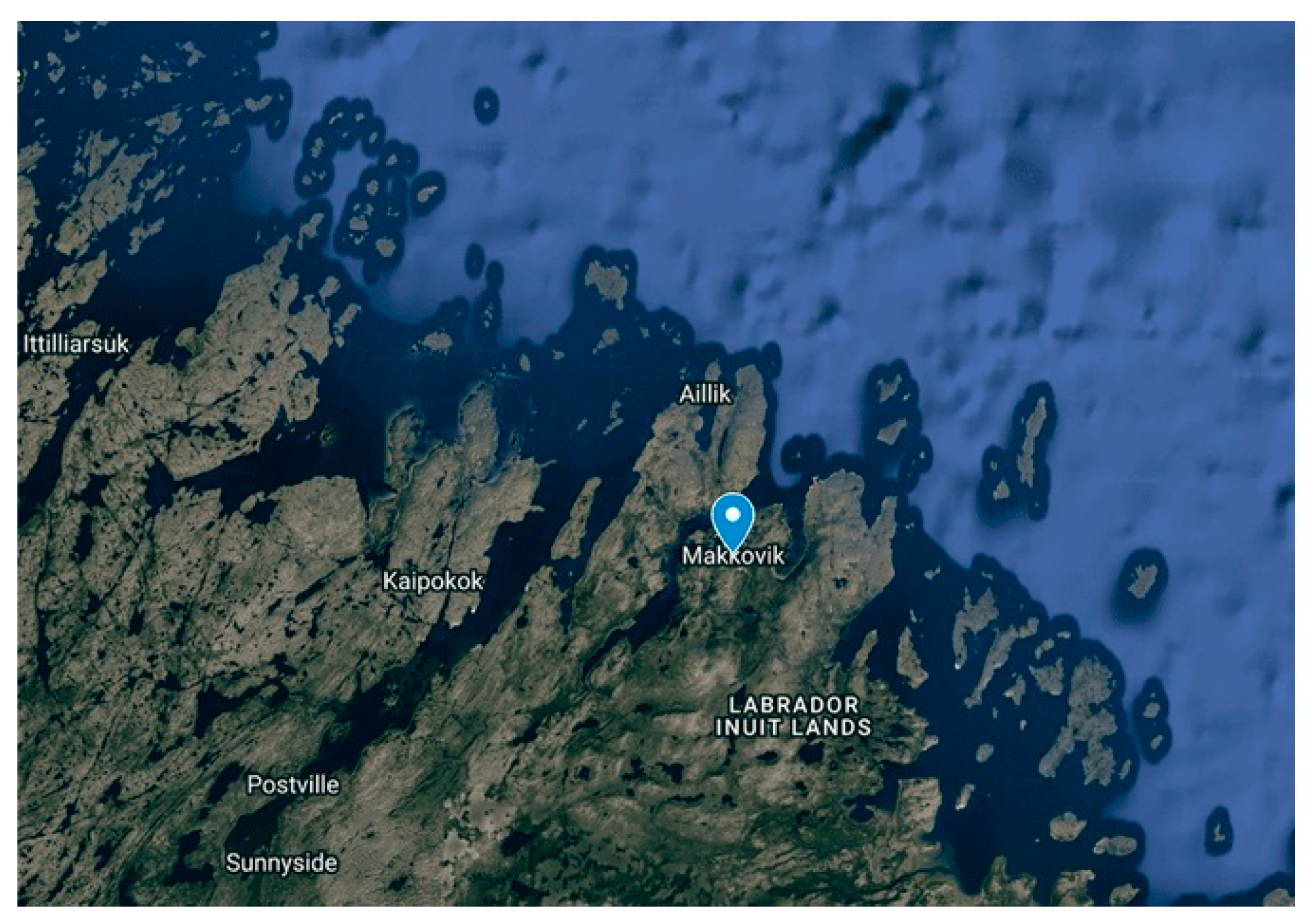
8]. It heavily relies on diesel power generation, and NL Hydro has already built a facility here, the Makkovik diesel generating station (2 MW). Electricity in Makkovik is currently supplied entirely by diesel generators operated by Newfoundland and Labrador Hydro. According to the Newfoundland and Labrador Isolated Electricity Systems dataset, the community has an installed diesel generation capacity of approximately 2075 kW with three generators in operation. Electricity sales in the community are approximately 3893 MWh per year. To meet this demand, the diesel generating station consumes approximately 1,125,403 L of diesel fuel annually, which must be transported to the community by ship. This heavy reliance on diesel generation results in high electricity production costs and significant greenhouse gas emissions, highlighting the need for sustainable and reliable hybrid renewable energy solutions for remote communities such as Makkovik. This is a less practical and sustainable option for the environment, because of their unique geographical location, the demand for energy solutions is pressing. As seen in
Figure 1, isolated communities like Makkovik, which are geographically remote and lack access to centralized grid infrastructure, struggle to acquire reliable and reasonably priced electricity. Traditional fossil fuel-based generators lead to high energy costs, undermine energy security, and worsen environmental degradation. In response to these challenges, hybrid energy systems that provide resilient and sustainable energy solutions for remote populations are growing in popularity by fusing renewable energy sources with traditional production and energy storage technology.
Recent empirical research shows that investments in renewable energy infrastructure can contribute to local employment and economic benefits. In a study of Spanish municipalities, it was found that renewable energy projects, especially solar investments, are associated with increases in local jobs during the construction phase and can boost public spending and per capita income, indicating broader economic advantages for host communities beyond energy access and environmental gains [
9]. Furthermore, real energy independence is achieved by switching to a locally managed renewable energy system. The community can better control its energy supply and reduce the risks of supply chain disruptions and fluctuating fuel prices if it relies less on imported diesel fuel. This self-sufficiency in energy production empowers the community and ensures a consistent and reliable power supply to support future growth and development [
10]. Since less diesel is used, there will be a direct decrease in greenhouse gas emissions, which could lead to a notable improvement in air quality. The public’s health also improves as a result of the decline in respiratory and cardiovascular conditions associated with air pollution.
Recent research highlights the potential of hybrid renewable energy systems in special regions. For instance, the feasibility of integrating multiple renewable sources into small island communities has been demonstrated through optimization studies, showing that hybrid systems combining solar, wind, diesel, and storage can reliably meet energy demand while reducing costs and emissions [
11]. It emphasizes how crucial energy storage devices are to ensure a consistent supply of electricity. By highlighting the effectiveness of combining photovoltaic systems with diesel generators and the crucial role that batteries play in stabilizing the energy supply, this study makes a compelling case for the deployment of hybrid systems to achieve sustainable electrification. In order to electrify a rural cluster in western Saudi Arabia, Seed Ahmed et al. [
12] investigated the combination of wind energy, diesel generators, fuel cells, and batteries in a hybrid energy system. Techno-economic analysis is comprehensive. This study uses HOMER Pro software to assess the economic and environmental viability of two hybrid configurations as well as a diesel-only design. When compared to traditional diesel systems, the results demonstrate that the optimal combination of wind, diesel, fuel cell, and battery is the most economical and environmentally friendly choice, with a significant reduction in net present cost (NPC) and CO
2 emissions. Kotian and Ghahremanlou [
13] provided a comprehensive case study on applying HOMER Pro software to the development of a hybrid power system for Nain, Newfoundland, and Labrador. It highlights the importance of renewable energy sources in improving the sustainability and dependability of power infrastructure in remote places by illustrating how diesel, wind, and solar energy may be combined.
Although several studies have investigated hybrid renewable energy systems for remote communities, important differences exist between those studies and the present work. Kotian and H. Ghahremanlou [
14] mainly focused on a hybrid configuration combining wind, solar, and storage technologies for the same community. In addition, Stiel, A.; Skyllas-Kazacos [
15] examined the role of energy storage in wind–diesel systems, primarily focusing on storage feasibility and system operation. Furthermore, Thirunavukkarasu, M. Sawle [
16] concentrated on comparative sizing and management strategies for multi-source hybrid systems.
In contrast, the present study focuses on the design and techno-economic evaluation of a wind-dominant hybrid renewable energy system tailored to the specific resource conditions of Makkovik. The study integrates site-specific wind resource assessment, community load estimation, and hybrid system optimization using HOMER Pro, while also incorporating uncertainty analysis through Monte Carlo simulation to evaluate variations in system cost, fuel consumption, and renewable energy contribution. This approach provides a more comprehensive assessment of economic feasibility, environmental benefits, and operational reliability of hybrid renewable energy systems for remote diesel-dependent communities.
2. Literature Review
Several Canadian and international studies provide useful references for the Makkovik project. For instance, work conducted in St. Brendan’s, Newfoundland and Labrador [
17] demonstrated that combining wind turbines and solar panels with HOMER Pro-optimized diesel generation can effectively reduce fuel use and emissions.
Recent advancements in wind turbine diagnostics have demonstrated the role of intelligent monitoring systems in improving turbine performance. Rizvi et al. [
18] introduced an enhanced defect detection approach for wind turbine blades using binary segmentation masks combined with the YOLO deep-learning framework. Their method significantly improved the accuracy and speed of blade fault identification, reducing downtime and enabling proactive maintenance. Such innovations directly support the long-term reliability of wind-based hybrid systems, reinforcing the importance of integrating modern inspection technologies into the broader strategy of sustainable energy development.
Rezkallah and Chandra [
19] present a wind–diesel–battery hybrid system designed for remote communities, focusing on improving power quality and stabilizing voltage and frequency. The system uses a control strategy with bidirectional converters and inverters to optimize battery usage and reduce diesel consumption, enhancing efficiency and reliability in isolated networks.
McKinley et al. [
20] analyze Arctic microgrids and demonstrate that integrating renewable energy sources with hydrogen and battery storage can enhance system resiliency, reduce diesel dependency, and improve cost-effectiveness in remote communities. Their study highlights the feasibility of expanding hybrid renewable systems in cold-climate regions while maintaining a reliable power supply. The project highlights how hybrid solutions can perform reliably in extreme Arctic environments. Similarly, De Witt et al. [
21] evaluated the availability and feasibility of renewable energy resources in Arctic communities, including Longyearbyen, Maniitsoq, and Kotzebue. Their study demonstrates that wind, solar, and hydropower can be effectively integrated into local energy systems, supporting hybrid configurations that reduce diesel consumption and improve energy reliability in remote, cold-climate regions.
Dosa [
22] in the recent literature highlights the extensive use of optimization methods for hybrid renewable microgrid design, particularly for systems integrating multiple distributed energy resources and storage. Reviews demonstrate that these optimization techniques improve technical feasibility, cost-effectiveness, and renewable integration in remote and isolated regions, making hybrid microgrids viable solutions for reducing diesel dependence in challenging climates.
Other researchers have focused on predictive modeling and techno-economic optimization. Ameur et al. [
23] showed that dynamic forecasting for PV/GES systems can significantly enhance energy management and reduce costs. Studies from regions such as Malaysia [
24] have confirmed the financial and operational benefits of multi-source hybrid systems in remote locations. Collectively, this research shows that combining renewable sources with modern control and storage strategies leads to a more reliable and cleaner energy supply.
Cruz-Soto [
25] demonstrated how integrating hydrogen-based power-to-gas-to-power systems can enhance microgrid sustainability and reduce CO
2 emissions. Ghadirinejad et al. [
26] used particle swarm optimization (PSO) with HOMER Pro to achieve 99.9% renewable energy penetration, proving the feasibility of high reliability in off-grid systems.
Other recent studies, such as Beyene et al. [
27] and Katsivelakis et al. [
28], explored hybrid energy systems for remote or island communities, consistently demonstrating how combinations of PV, wind, diesel, and storage can minimize costs and emissions. Ahmadi et al. [
29] emphasized the role of sustainable system design in achieving both energy independence and environmental goals. Kotian and Ghahremanlou [
13] conducted a detailed case study for Nain, NL, integrating diesel, wind, and solar resources, demonstrating the applicability of hybrid systems in Labrador’s isolated regions. Similarly, the study by Pinard et al. [
30] on wind potential in Nunavut provided critical insights into assessing renewable feasibility in northern climates using HOMER Pro and RETScreen tools. Mansur [
31] designed a hybrid system for Salemo Island using HOMER Pro, showing how optimized solar and battery additions can improve both reliability and economic performance. In a broader context, Farahmand et al. [
32] and Costa and Villalva [
33] explored renewable integration in small island grids, emphasizing the importance of storage in maintaining stability, highlighting the province’s strategic advantage in clean energy development.
Li et al.’s [
34] study evaluated a standalone wind–diesel–battery hybrid system in a cold region of China, comparing different battery technologies (Zinc–Bromine, Lithium-ion, and Lead–Acid types). Results show that the diesel configuration offers the lowest NPC and LCOE, while diesel/Lithium-ion is the most environmentally friendly, highlighting the importance of battery selection for economic and technical optimization in hybrid systems. Khalid et al. [
35] conducted a detailed dynamic simulation and optimization study of off-grid hybrid power systems aimed at improving sustainable rural electrification. Their work used a combination of renewable sources and advanced control strategies to model system performance over varying load and resource conditions. By integrating optimization techniques with time-series simulations, the study demonstrated that hybrid configurations can significantly reduce fuel consumption. In particular, those combining solar, wind, and battery storage can improve system stability and lower lifecycle costs in remote regions. The findings provide strong support for the use of optimized hybrid systems in isolated communities and align closely with the objectives of the present study, which similarly seeks to enhance energy reliability and reduce diesel dependency through hybrid renewable system design.
Emerging research continues to highlight the importance of dynamic control and optimization in improving hybrid system reliability. Nagaraju et al. [
36] examined HOMER’s capability to evaluate grid stability and dynamic power management in microgrids while exporting. Wang [
37] optimized wind turbine heights to enhance hydrogen production efficiency, and Kamal et al. [
38] developed a fuzzy logic framework for pre-installation assessments that enhances cost-effectiveness and sustainability. Rehman and Al-Hadhrami [
39] analyzed the performance of a wind–diesel hybrid power system designed for a remote location and demonstrated the advantages of integrating renewable energy with conventional diesel generation. Their study showed that incorporating wind energy significantly reduces fuel consumption, operational costs, and emissions while improving system reliability. The authors also highlighted the importance of optimal sizing and control strategies to manage variability in wind resources. Their findings support the effectiveness of wind–diesel configurations in isolated regions, offering valuable insights for hybrid system design in remote communities like Makkovik.
Offshore wind turbines achieve higher capacity factors by over 50% and larger outputs due to stronger and more consistent wind speeds, but have higher costs (80
$/MWh). Onshore turbines, while more economical, face land-use and biodiversity challenges. This study emphasizes site-specific planning and technological innovations, such as floating foundations and modular designs, to balance efficiency, sustainability, and cost-effectiveness in wind energy development [
40].
Abou Obaida et al. [
41] presented an advanced energy management and control strategy for DC microgrids incorporating hybrid energy storage systems. Their study focused on optimizing power sharing between battery units and supercapacitors to enhance system stability, dynamic response, and overall efficiency. Using detailed simulation modeling, the authors demonstrated that coordinated control of hybrid storage significantly reduces voltage fluctuations, improves transient performance, and supports reliable operation under varying load and renewable generation conditions.
Al Hammadi et al. [
42] conducted a detailed techno-economic assessment of hybrid renewable energy systems designed to support electric vehicle charging in the United Arab Emirates. Their study evaluated multiple combinations of solar PV, wind, battery storage, and backup generators, demonstrating that optimized hybrid systems can significantly reduce both energy costs and carbon emissions compared to conventional charging infrastructure. The results highlight the importance of integrating renewable resources with storage to meet variable demand profiles efficiently. Although the context differs from remote communities, the study’s optimization approach and findings are directly relevant to hybrid system design, showing how renewable-diesel-storage configurations can improve economic performance and sustainability.
Manas et al. [
43] provided a comprehensive critical review of techno-economic analyses for hybrid renewable energy-based microgrids. Their work examined a wide range of hybrid configurations and modeling techniques used globally, identifying key factors such as load characteristics, renewable resource variability, storage economics, and system optimization methods. The review emphasizes that techno-economic evaluation is essential for determining the feasibility and long-term viability of hybrid microgrids, particularly for remote and off-grid regions. The authors conclude that integrating diverse renewable resources with appropriately sized storage and backup systems leads to improved reliability and reduced lifecycle cost—insights that strongly align with hybrid system planning for communities such as Makkovik.
Agajie et al. [
44] presented an extensive review on the techno-economic evaluation and optimal sizing of hybrid renewable energy systems incorporating energy storage technologies. The study analyzed various sizing methodologies, including simulation-based optimization, mathematical modeling, and heuristic approaches. It highlighted that the accurate sizing of renewable and storage components is critical for minimizing costs, maximizing system reliability, and ensuring stable operation under fluctuating energy demand and resource availability. Their findings reinforce the role of hybrid systems—particularly PV, wind, battery storage, and diesel—in providing cost-effective and sustainable power solutions for isolated and rural communities. Ibrahim et al. [
45] evaluated a hybrid renewable energy system for residential loads in Stephenville, NL. Their study combined HOMER Pro optimization with computational fluid dynamics (CFD) analysis of wind turbines, demonstrating that hybrid configurations can significantly reduce CO
2 emissions while remaining economically feasible. The results highlight the importance of system-level modeling and local wind resource assessment in designing cost-effective and environmentally sustainable energy solutions for remote communities.
Although previous research has evaluated hybrid renewable energy systems for Makkovik using combinations of wind, solar, diesel, and battery storage, further investigation is required to explore alternative system configurations and assess uncertainty in system performance and economic outcomes. Addressing this gap, the current study proposes a tailored hybrid energy design that integrates solar and wind generation with battery storage, analyzed using HOMER Pro to deliver a reliable, cost-efficient, and sustainable power solution for this remote community. As communities across the globe strive for energy independence and aim to mitigate the impacts of climate change, the transition to renewable energy has become essential. Similar to many isolated settlements worldwide, Makkovik faces unique energy challenges that emphasize the urgent need for innovative and sustainable power solutions. This study explores how hybrid renewable energy systems (HRESs) can reshape energy access for remote communities like Makkovik by providing reliable, clean, and cost-effective electricity. This literature review examines prior studies on hybrid renewable energy systems, particularly those combining solar, wind, and battery technologies. Research has consistently shown that HRES configurations can significantly reduce fossil fuel dependence and carbon emissions while maintaining a stable power supply in off-grid regions. Many scholars have explored various system designs using tools such as HOMER Pro and other modeling platforms to assess economic feasibility, technical performance, and environmental outcomes. This study proposes an HRES for Makkovik, combining wind turbines, batteries, and existing diesel generators. HOMER Pro is used for techno-economic modeling and optimization, while Monte Carlo simulation evaluates uncertainties in cost, fuel consumption, and renewable fraction, providing a probabilistic understanding of system performance under variable conditions. The novelty of this study lies in its combination of location-specific hybrid system design and Monte Carlo uncertainty analysis, which together provide robust insights into environmental and economic outcomes while supporting climate-resilient energy planning for remote northern communities.
Table 1 summarizes the main themes and research findings from the reviewed literature, highlighting key technologies, methodologies, and outcomes related to hybrid renewable energy systems for remote communities.
3. Site Selection and Methodology
Makkovik is a remote Inuit community located on the northern coast of Labrador, Newfoundland and Labrador, Canada, at approximately 55°07′ N latitude and 59°03′ W longitude. The community has a population of about 360 residents and is geographically isolated, with no road access to the mainland. Transportation to and from Makkovik is limited to air travel and seasonal marine routes, which makes the delivery of fuel and essential supplies costly and vulnerable to weather conditions. The nearest major regional center is Happy Valley-Goose Bay, located approximately 210 km southwest, which serves as the primary hub for transportation, healthcare, and services.
Figure 1 illustrates the geographical location of the main community of Makkovik in Newfoundland and Labrador, Canada.
Electricity in Makkovik is currently generated entirely by diesel-powered generators operated by Newfoundland and Labrador Hydro, with an installed capacity of approximately 2 MW at the Makkovik diesel generating station. This heavy reliance on diesel results in high electricity costs, increased greenhouse gas emissions, and exposure to fuel supply disruptions, particularly during extreme weather events. The community’s geographic location and climatic conditions also contribute to rising energy demands and operational challenges. Makkovik was selected as the study site because it represents a typical remote northern Canadian community with limited infrastructure, high diesel dependence, and strong potential for renewable energy development, particularly wind energy. The site offers an opportunity to evaluate how hybrid renewable energy systems can reduce emissions, improve energy reliability, and enhance long-term sustainability. Additionally, transitioning to locally managed renewable energy systems can support job creation, strengthen energy independence, and improve public health by reducing air pollution, making Makkovik a suitable and meaningful case study for this research.
This research followed a systematic and structured approach, beginning with an extensive review of the relevant literature to establish a theoretical foundation. Afterward, comprehensive data collection was carried out to support detailed simulations and analyses. The hybrid system was modeled and optimized using HOMER Pro, a specialized software widely recognized for its ability to simulate and optimize renewable energy systems. A combination of engineering tools was employed to model and design the proposed hybrid renewable energy system. Based on data from the Government of Newfoundland and Labrador and geographical information obtained from Google Maps version 26.12.2, it was determined that the most feasible renewable energy sources for Makkovik are solar and wind power. HOMER Pro was selected as the primary modeling platform due to its robust capability for hybrid system optimization and resource analysis.
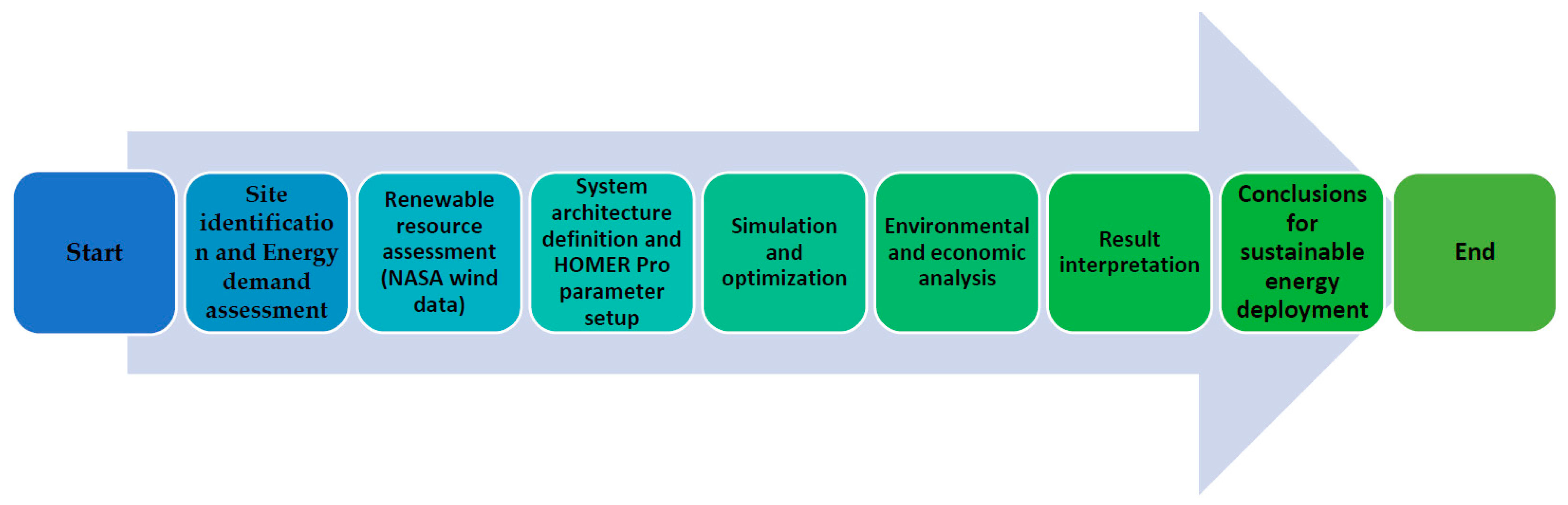
The first step involved defining Makkovik’s geographical location, energy consumption profile, and climatic characteristics to closely represent real-world conditions. Next, the available renewable resources were assessed by integrating wind speed data from NASA’s databases into the simulation model to estimate potential energy generation accurately. System components—including wind turbines, battery storage, and a backup diesel generator—were selected based on performance, cost, and environmental considerations. The system configurations were then simulated in HOMER Pro to identify the most reliable, sustainable, and economically efficient design. Finally, the optimization process evaluated multiple system setups based on key performance indicators such as NPC, LCOE, and the percentage of renewable energy contribution. This comprehensive methodology shown in
Figure 2 ensured that the proposed hybrid energy system design was both technically feasible and environmentally beneficial for Makkovik’s remote conditions.
4. Data Collection on Energy Demand Patterns and Local Resources Available
This section presents the technical characterization of Makkovik’s electrical load and available renewable resources used as inputs for system modeling. Makkovik is an off-grid community with a population of approximately 230 residents, supplied exclusively by a diesel-based power plant consisting of three generator sets with a total installed capacity of 2075 kW. The generators operate in parallel and are dispatched to follow the community load, with redundancy provided to ensure reliability during peak demand and maintenance periods. Annual fuel consumption is approximately 1,125,403 L of diesel, indicating a high specific fuel usage typical of remote northern systems with low load factors and seasonal demand fluctuations.
The electrical load profile is characterized by hourly, daily, and seasonal variability, with peak demand occurring during winter months due to increased space heating, lighting, and auxiliary loads, while minimum demand is observed in summer. The load data were processed to generate an hourly demand profile suitable for HOMER Pro simulation. Wind resource assessment was conducted using long-term average wind speed data representative of the site, accounting for hub height adjustments and air density effects typical of cold coastal climates. The strong and persistent wind regime in Makkovik indicates its high-capacity factor potential for wind turbines. These demand and resource datasets provide the technical foundation for hybrid system sizing, dispatch strategy evaluation, and techno-economic optimization within the HOMER Pro environment.
4.1. Electricity Demand in Makkovik
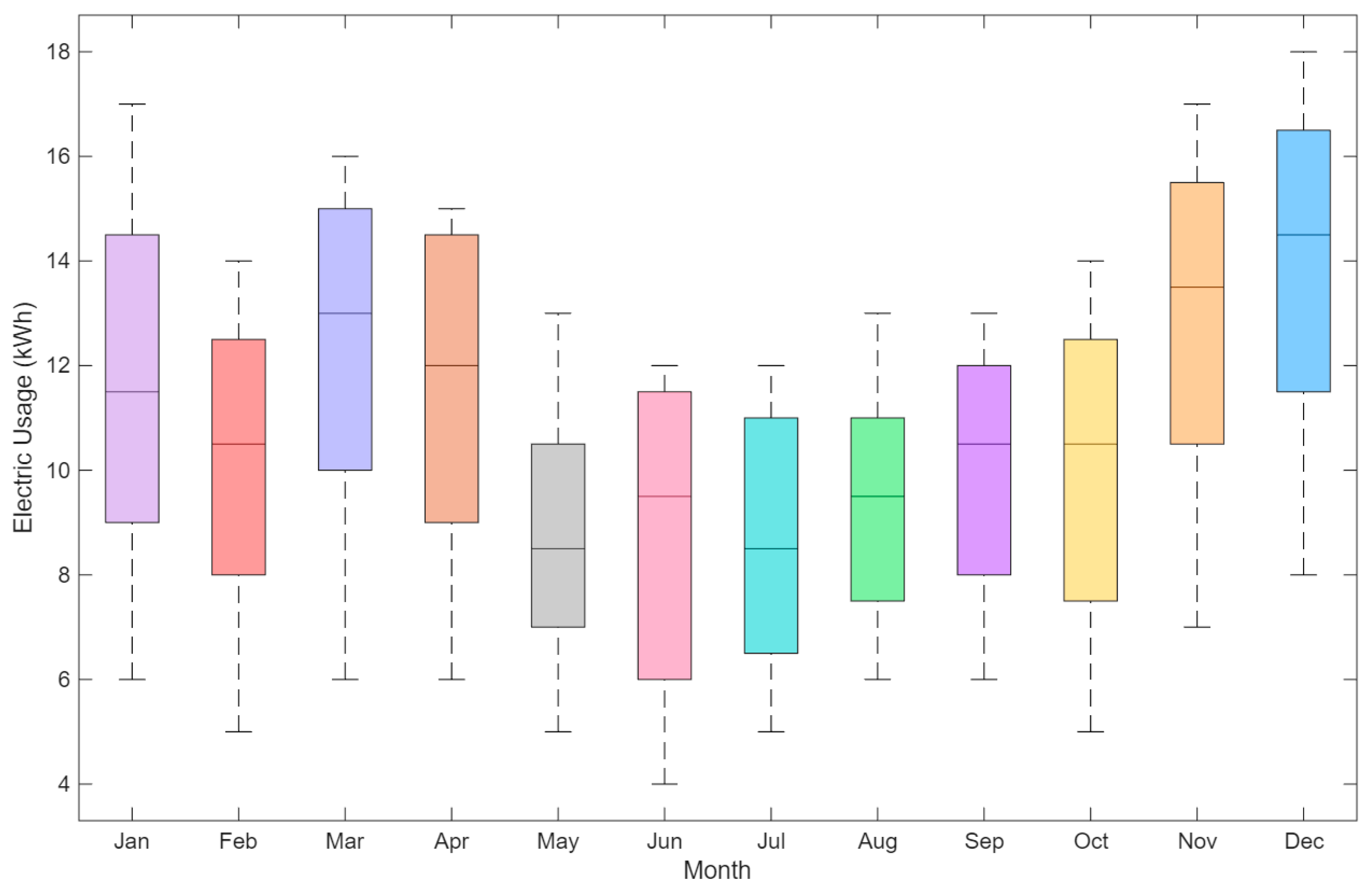
Modeling the load profile is essential for determining the optimal sizing and selection of renewable energy sources. Since public data on Makkovik’s power usage was unavailable, a load profile was created by adjusting the data from a similar community, considering the number of homes in each area. The analysis incorporated all relevant system components’ characteristics and the Makkovik installation’s specific location. As a result, the electricity usage profile shown in
Figure 3 provides a reasonable estimate. The average daily energy consumption is approximately 10,655 kWh, with a peak demand of 1548.97 kW.
4.2. Wind Energy Potential of Makkovik
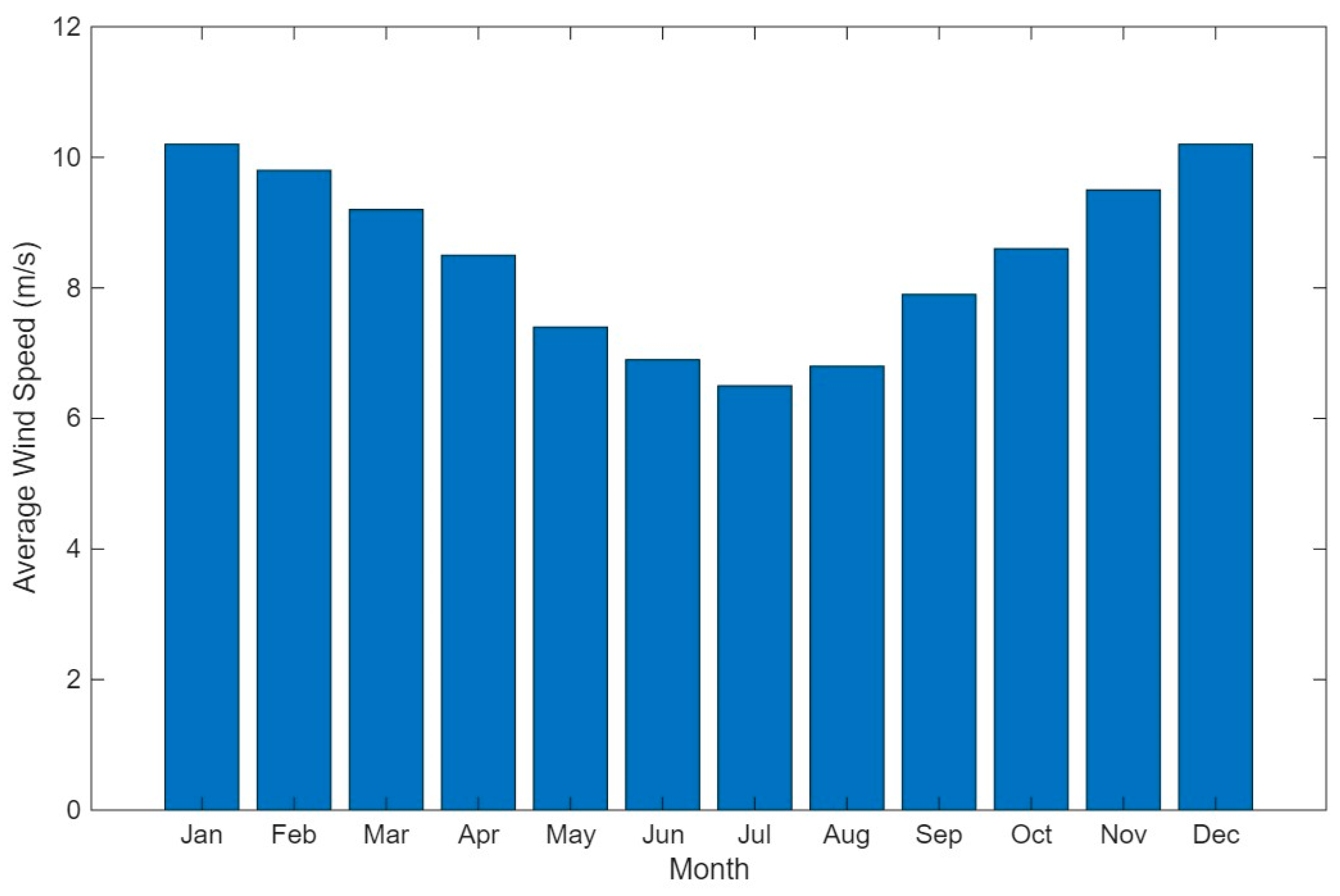
The average monthly wind speed profile for Makkovik is presented in
Figure 4 based on data obtained from NASA Surface Meteorology and Solar Energy (SSE) datasets. The results indicate a clear seasonal variation in wind resources, with higher wind speeds observed during late fall, winter, and early spring, and comparatively lower wind speeds during the summer months. Peak average wind speeds occur between November and February, exceeding 9–10 m/s, which aligns with stronger synoptic weather systems typical of coastal northern regions. In contrast, the lowest wind speeds are recorded from June to August, with values dropping to approximately 6.5–7 m/s, reflecting calmer atmospheric conditions during summer.
The annual mean wind speed is calculated as 8.53 m/s at a hub height of 50 m, which indicates excellent wind energy potential according to international wind resource classification standards. Such wind speeds are well above the typical threshold required for efficient operation of medium-scale wind turbines and suggest high expected capacity factors. The seasonal complementarity between wind availability and electrical demand—particularly higher wind speeds during winter peak load periods—enhances the technical suitability of wind energy for integration into Makkovik’s hybrid energy system. These wind characteristics were used as key inputs in HOMER Pro to accurately model wind turbine performance, annual energy production, and system reliability.
4.3. Sizing System, Modeling, and Analysis
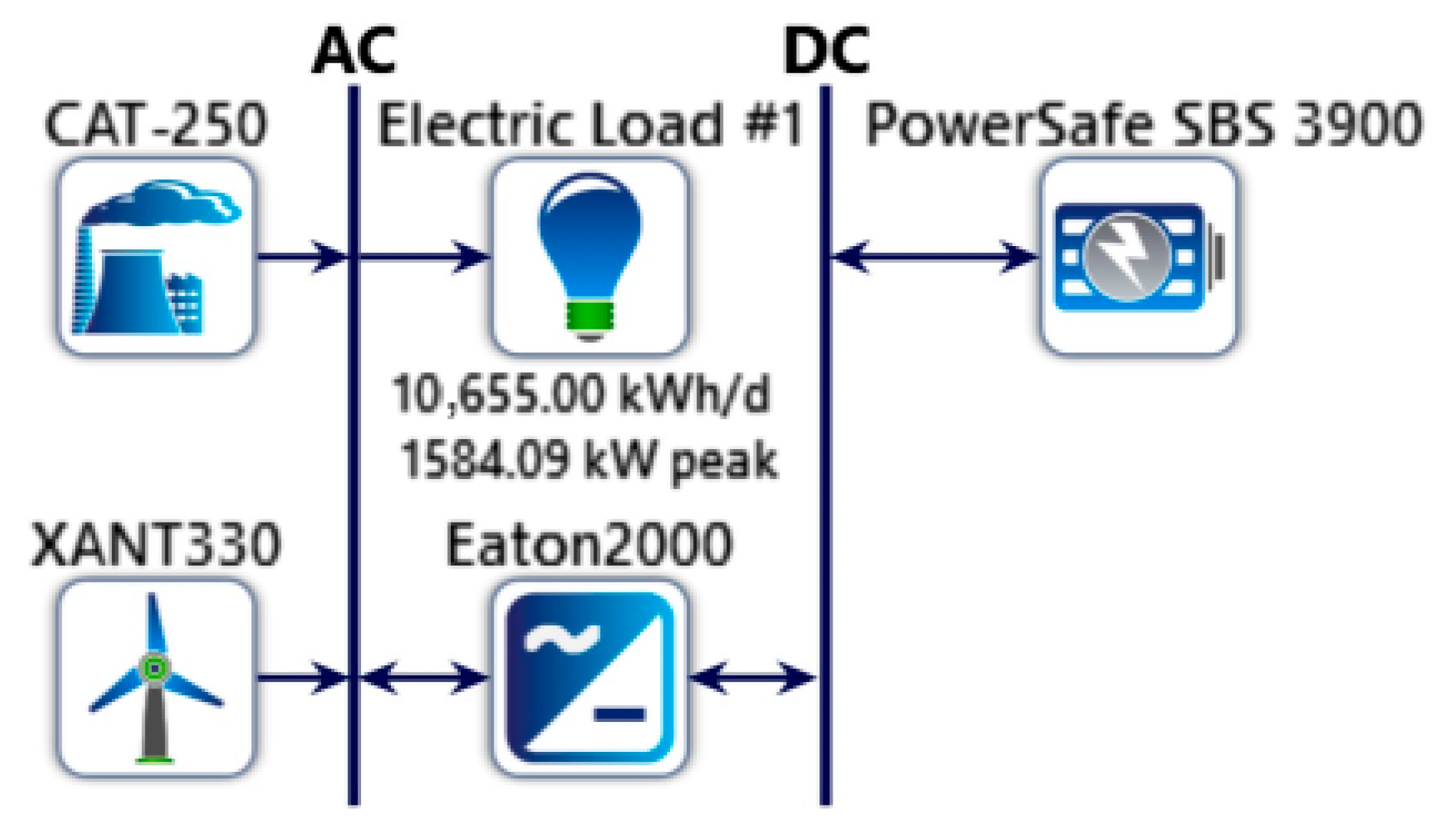
This section outlines the schematic design of the hybrid energy system, detailing each selected component. HOMER Pro, a widely recognized tool for designing and analyzing hybrid energy systems, plays a crucial role in sizing the system accurately. Its extensive database of wind turbines and power converters simplifies the selection process. Additionally, HOMER Pro provides a visual representation of how the system’s components interact, as illustrated in
Figure 5. The hybrid power system integrates wind turbines and diesel generators through a common AC busbar, ensuring stable and reliable power distribution. Power converters efficiently transform DC power from the wind turbines and storage units into AC for the bus, enabling seamless integration of renewable and conventional sources. Component selection is based on Makkovik’s specific climate and energy requirements, including converter ratings, wind turbine characteristics, diesel generator parameters, energy storage capacities, and the community’s load profile, which together form the basis for system design and optimization. To enhance the resilience of Makkovik’s HRES against extreme weather events, several safeguards and backup measures are incorporated. First, durable wind turbines designed to withstand high winds and heavy snowfall ensure reliable operation even in harsh conditions. Additionally, an advanced battery management system optimizes charging and discharging cycles, extending battery lifespan and improving system performance during low wind availability periods.
To further enhance reliability, redundancy is built into the system. A backup diesel generator and additional battery storage provide a safety net, ensuring a continuous power supply in case of component failure. Real-time monitoring and predictive maintenance technologies also play a vital role by detecting potential issues early, allowing for proactive interventions. Together, these strategies reinforce the system’s reliability, securing a stable and sustainable energy supply for the Makkovik community, even in unpredictable weather conditions. Based on the above-mentioned energy demand statistics and the corresponding renewable energy potential for Makkovik, a hybrid power system that includes wind turbines and traditional diesel generators has been designed. A set of batteries and an AC-DC converter are also required to achieve energy production, distribution, and utilization.
4.3.1. Wind Turbine
The XANT L-33 wind turbine (330 kW) (XANT Renewables BV/XANT, Brussels, Belgium) has been chosen, as presented in
Table 2. The initial capital cost of the turbine is
$550,000, and the annual maintenance cost is
$40,000. It was chosen because it has higher power and can better adapt to the local variable wind speeds and significant energy demand. Wind turbines are highly complex mechanical and electrical equipment consisting of blades, gearboxes, generators, control systems, and other precision components. These components require regular maintenance and inspection to ensure their normal operation. Harsh environments can accelerate the wear and corrosion of the equipment, increase the failure rate, and necessitate more frequent repairs and replacements of parts. In addition, maintaining and replacing these precision devices requires specialized technicians and tools, so maintenance costs are extremely high.
4.3.2. Diesel Generator
The CAT-250 kW-60 Hz-PP is selected as the diesel generator to supply continuous power in harsh environments or when wind energy generation is limited, as detailed in
Table 3. To consider economic feasibility, the fuel price was set at
$1.7/L, the initial cost was 30,000, and the replacement cost was
$30. Considering that diesel generators require regular oil changes, oil filters, fuel filters, air filter replacements, and periodic cooling system maintenance, the O&M cost was set at
$20/h. A 250 kW CAT diesel generator served as a crucial backup power source, chosen for its fuel efficiency, reliability, and ease of maintenance. This generator strengthens the system’s resilience by ensuring a stable electricity supply during times of low wind energy production.
4.3.3. Battery
Batteries (energy storage systems) play a crucial role in hybrid power systems. It optimizes the system’s operation by storing and releasing electrical energy, improving energy utilization efficiency, and ensuring the stability and reliability of the system. In this system, the EnerSys PowerSafe SBS 3900 batteries (EnerSys, Reading, PA, USA) are selected with specifications provided in
Table 4, and their string size is 148, so the voltage will be 1776 V. In addition, the battery is considered easy to replace, so the O&M will be only
$50/year, and the initial cost for each battery is
$2000. When the power generation from wind energy exceeds the demand of the load, the excess electricity can be stored in batteries to avoid waste. When renewable energy generation is insufficient, the battery can release stored electrical energy to meet load demands, reducing reliance on diesel generators. Meanwhile, when renewable energy generation is interrupted (such as at night or during calm periods) or when the diesel generator fails, the battery can serve as a backup power source, ensuring a continuous power supply to critical loads. On the other hand, batteries can reduce the operating time of diesel generators, and they also help diesel generators operate within the efficient load range, avoiding inefficient operation, thereby further reducing fuel consumption and carbon emissions.
4.3.4. Converter
The Eaton Power Xpert 2000 kW solar inverter (Eaton Corporation plc, Dublin, Ireland) is chosen as the converter for this hybrid power system.
It has the characteristics of high reliability, high efficiency, and strong compatibility. Its lifetime is 15 years, and the initial and replacement costs are
$6000 and
$4500, respectively, as detailed in
Table 5.
5. Results and Discussion
This section presents the results of the HOMER Pro simulation for the proposed hybrid system, as shown in
Table 6. Using HOMER Pro, a comprehensive range of hybrid system designs was generated, analyzing various components and key performance metrics such as operational costs, NPC, LCOE, and initial investment.
Table 6 presents the optimal system configuration, selected based on the platform’s evaluation of different setups and their impacts.
5.1. Electrical Summary
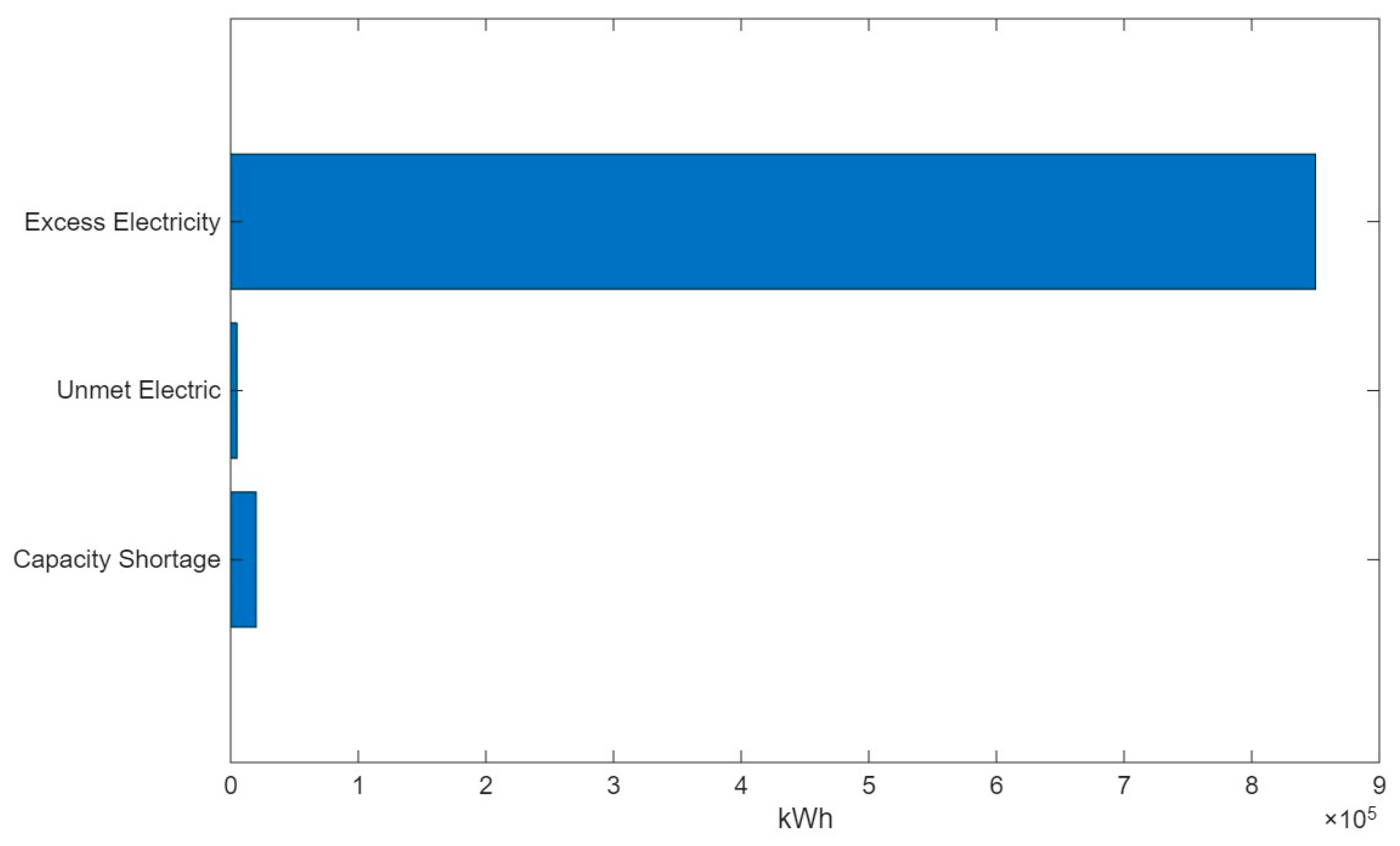
The hybrid system generates 852,102 kWh of excess energy, including 7.6% of annual demand, demonstrating its capacity to meet the community’s needs while providing surplus energy. The unmet load is minimal at 1143 kWh, 0.01% of annual demand, indicating very high reliability. The capacity shortage is 3560 kWh, 0.03%, which shows that only a tiny fraction of the annual load is at risk due to temporary limitations in generation or storage. Overall, the results indicate that the hybrid system is well-sized, with excess energy significantly higher than unmet demand and capacity shortages, ensuring a robust and reliable electricity supply for Makkovik.
Figure 6 shows the excess electricity, unmet electric load, and capacity storage of the system.
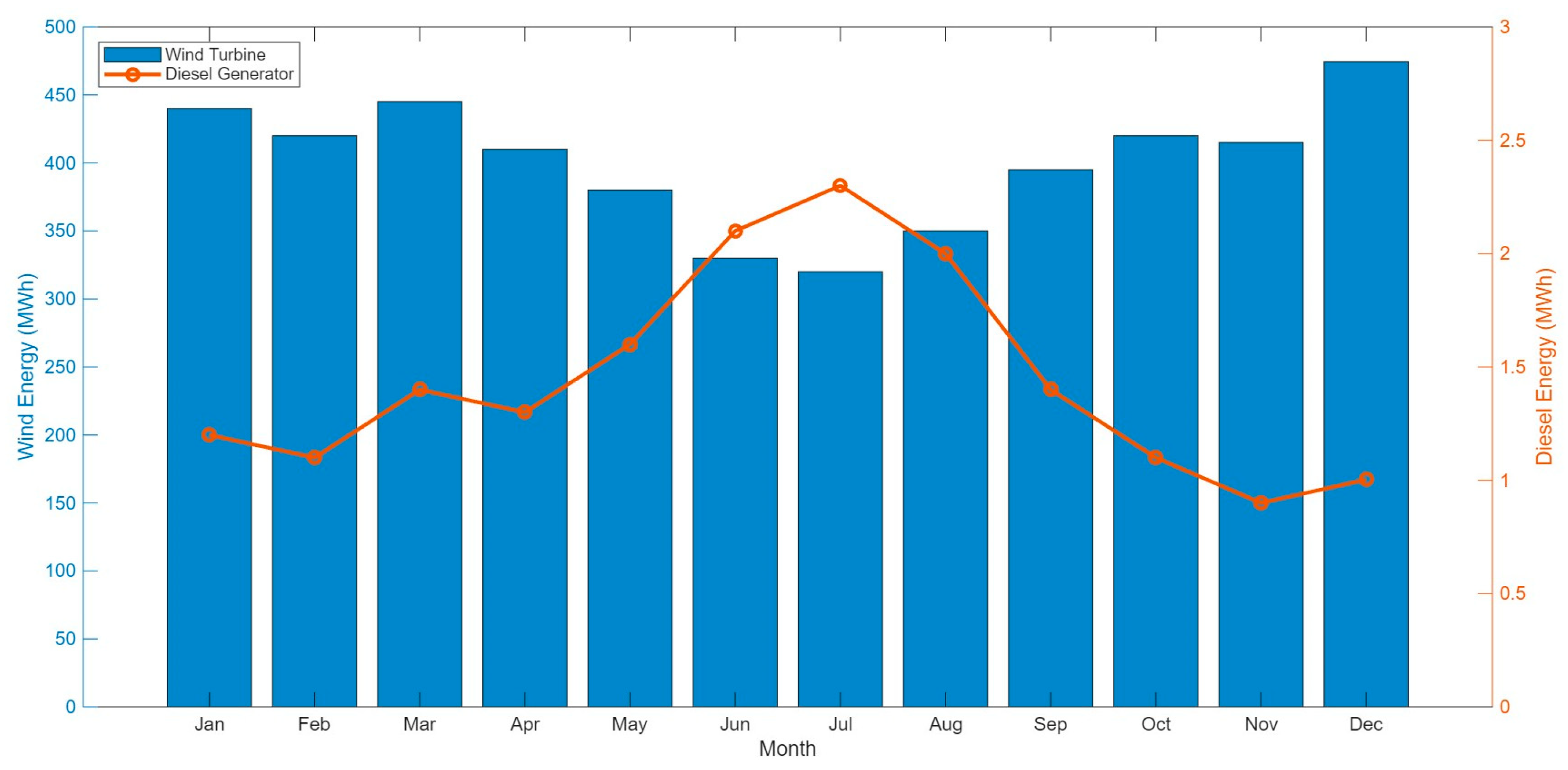
Figure 7 presents the annual energy output of each system component. Wind turbines contributed the largest share, generating approximately 99.6% of the total power, while the diesel generator supplied 17,403 kWh annually. In total, the hybrid system generated 4,716,732 kWh per year.
Although wind energy represents the dominant share of electricity generation in the proposed system, the reliability of the power supply is maintained through the integration of diesel generation and battery storage. In HOMER Pro, system reliability is evaluated using indicators such as unmet load and capacity shortage. The simulation results show that the unmet load is only 1143 kWh per year (0.01% of the annual demand), while the capacity shortage is 3560 kWh (0.03%), indicating a very high level of reliability supply. These results demonstrate that the hybrid configuration can maintain a stable electricity supply even during periods of low wind availability. The diesel generator and battery storage system act as backup components to ensure continuous power delivery to consumers.
5.2. Fuel Summary
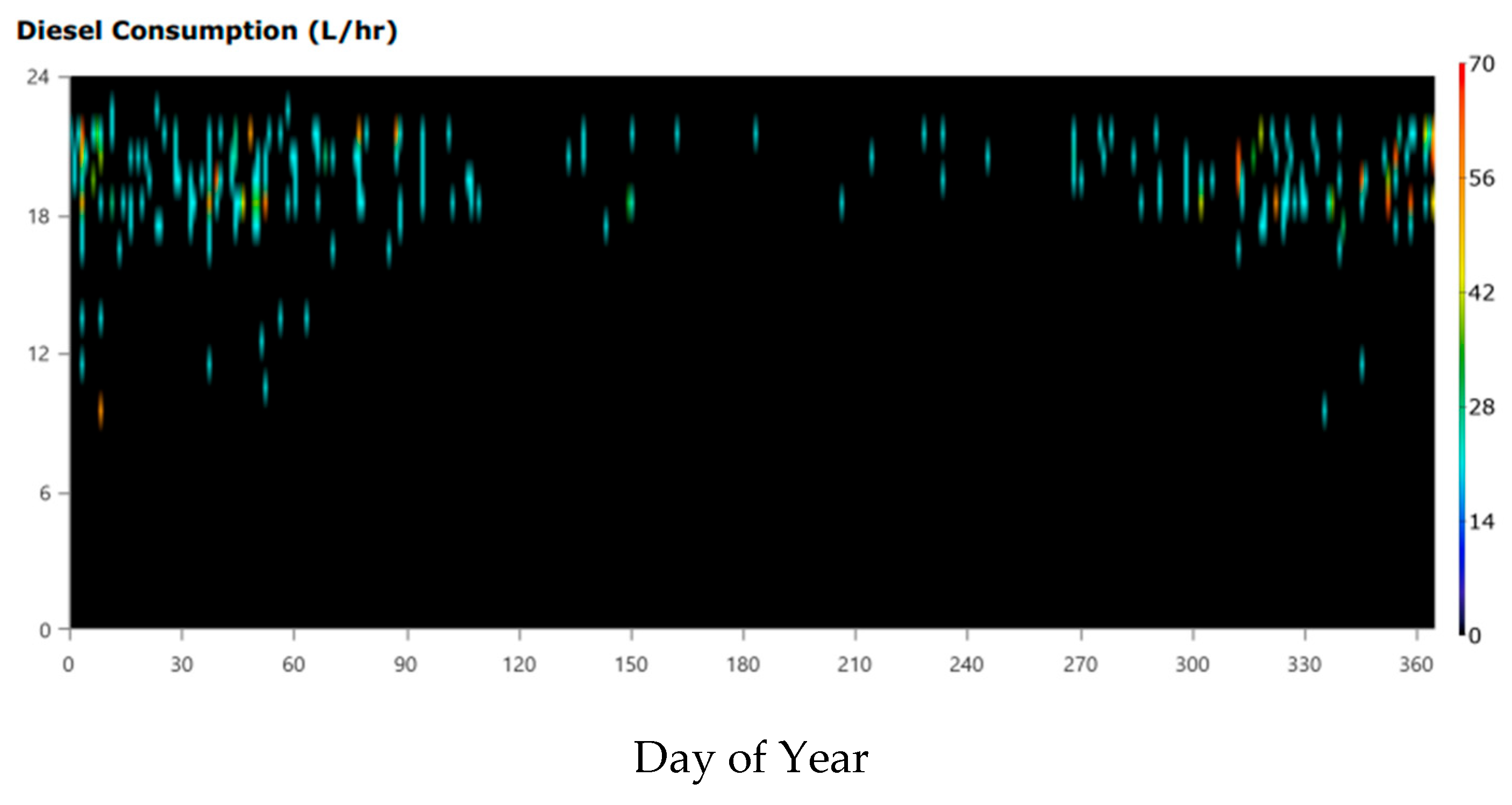
Table 7 presents key quantitative data on fuel consumption over the study period. The total diesel usage amounted to 1.7 tons, with an average daily consumption of 15.83 L, equivalent to approximately 0.6 L/h. These figures provide valuable insight into the fuel consumption patterns, which are crucial for research, planning, and operational decision-making in sectors relating to diesel-powered equipment and transportation.
Figure 8 illustrates the graphical representation of fuel consumption.
5.3. Cost Summary
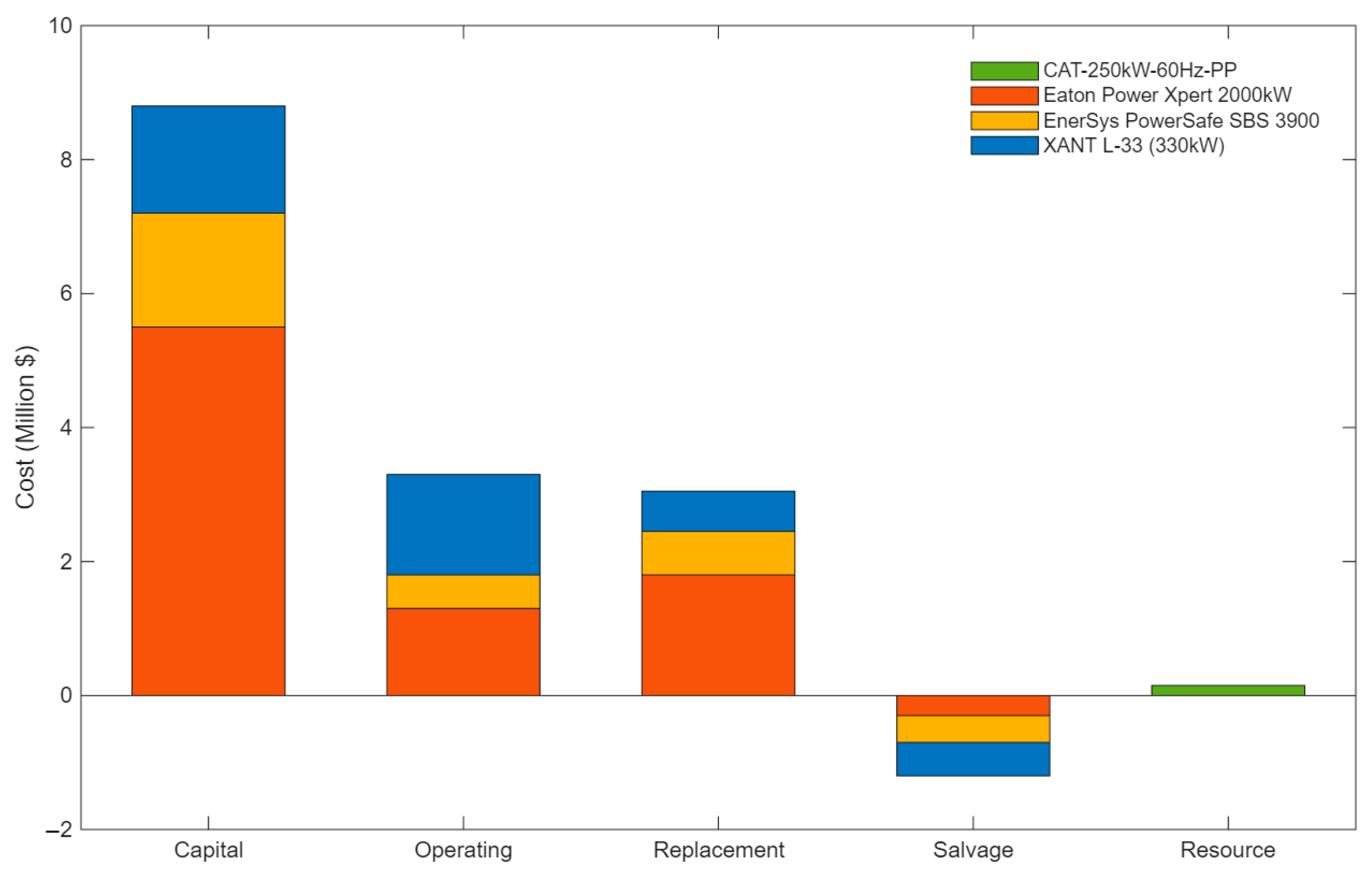
Table 8 and
Figure 9 present a detailed financial analysis showing the NPC for capital, operational, replacement, and salvage expenses of each system component. The Eaton Power Xpert 2000 kW inverter accounted for the largest portion of the system’s cost, with an NPC of
$8.10 million. The XANT L-33 (330 kW) wind turbine followed with an NPC of
$3.43 million, while the EnerSys Power Safe SBS 3900 battery storage system (Eaton Corporation plc, Dublin, Ireland) had a total NPC of
$2.77 million. The CAT-250 kW-60 Hz-PP diesel generator contributed
$204,179 to the overall cost. The total NPC for the complete HRES was estimated at
$14.5 million, with the majority of costs arising from capital investment and ongoing operational expenditures, which are essential for evaluating long-term economic sustainability.
A comparative analysis between the base system and the proposed hybrid system is summarized in
Table 9. The proposed systems have an NPC of
$14.5 million, while the base system has an NPC of
$11.8 million with a CAPEX of
$7.6 million for the base system and
$8.8 million for the proposed system. OPEX for the hybrid system is slightly lower at
$409,916 compared to
$438,858 for the base system. The LCOE is nearly identical for both configurations, at
$0.256/kWh for the hybrid system and
$0.257/kWh for the base system. The hybrid system achieved significant environmental advantages—reducing annual fuel consumption from 72,500 kg/year to 15,190 kg/year. The LCOE for the diesel-only system was found to be
$0.257/kWh, while the hybrid system recorded
$0.256/kWh.
This difference is primarily due to the higher upfront costs of renewable technologies, such as wind turbines, as well as the recurring costs of battery replacements and maintenance over time. Although the hybrid system’s LCOE is greater, its substantial environmental benefits, particularly the reduction in fuel dependency and emissions, make it a compelling option for sustainable development. The economic assessment was conducted over a 20–25-year operational lifespan, corresponding to the average life expectancy of major components like wind turbines. The total costs were divided into four key categories: CAPEX, O&M, replacement costs, and salvage values. Over this period, it was expected that market dynamics and technological advancements would influence the financial viability of renewable systems.
Historical trends indicate that continued innovations in materials science, manufacturing, and economies of scale have steadily reduced the costs of renewable energy components, particularly wind turbines. Projections suggest a 20–30% decrease in the cost of wind technologies within the next decade, which would greatly enhance the financial sustainability of such projects. Furthermore, advancements in battery storage technology are anticipated to deliver more cost-effective and efficient energy storage solutions, addressing the intermittent challenges of renewable generation [
41]. By incorporating these anticipated technological improvements into the NPC and LCOE calculations, this study presents a realistic and forward-looking financial evaluation of the proposed HRES in Makkovik, demonstrating its potential to become both economically and environmentally viable over its projected lifespan.
The results clearly demonstrate the advantages of integrating renewable energy into the diesel-based electricity system. In the optimized configuration, wind energy supplies approximately 99.6% of the total annual electricity generation, resulting in a very high renewable fraction. The system optimization in HOMER Pro was performed using net present cost (NPC) minimization and levelized cost of electricity (LCOE) as the main objective functions while maintaining system reliability. Compared with the base diesel-only system, the proposed hybrid configuration significantly reduces annual diesel fuel consumption from 29,970 L/year to 5854 L/year and CO2 emissions from 72,500 kg/year to 15,190 kg/year. In addition, the hybrid system maintains a comparable LCOE of 0.256 $/kWh, demonstrating that high renewable penetration can be achieved without significantly increasing electricity generation costs. These results confirm the economic and environmental benefits of integrating renewable energy sources into diesel-based power systems for remote communities such as Makkovik.
5.4. Emissions Summary
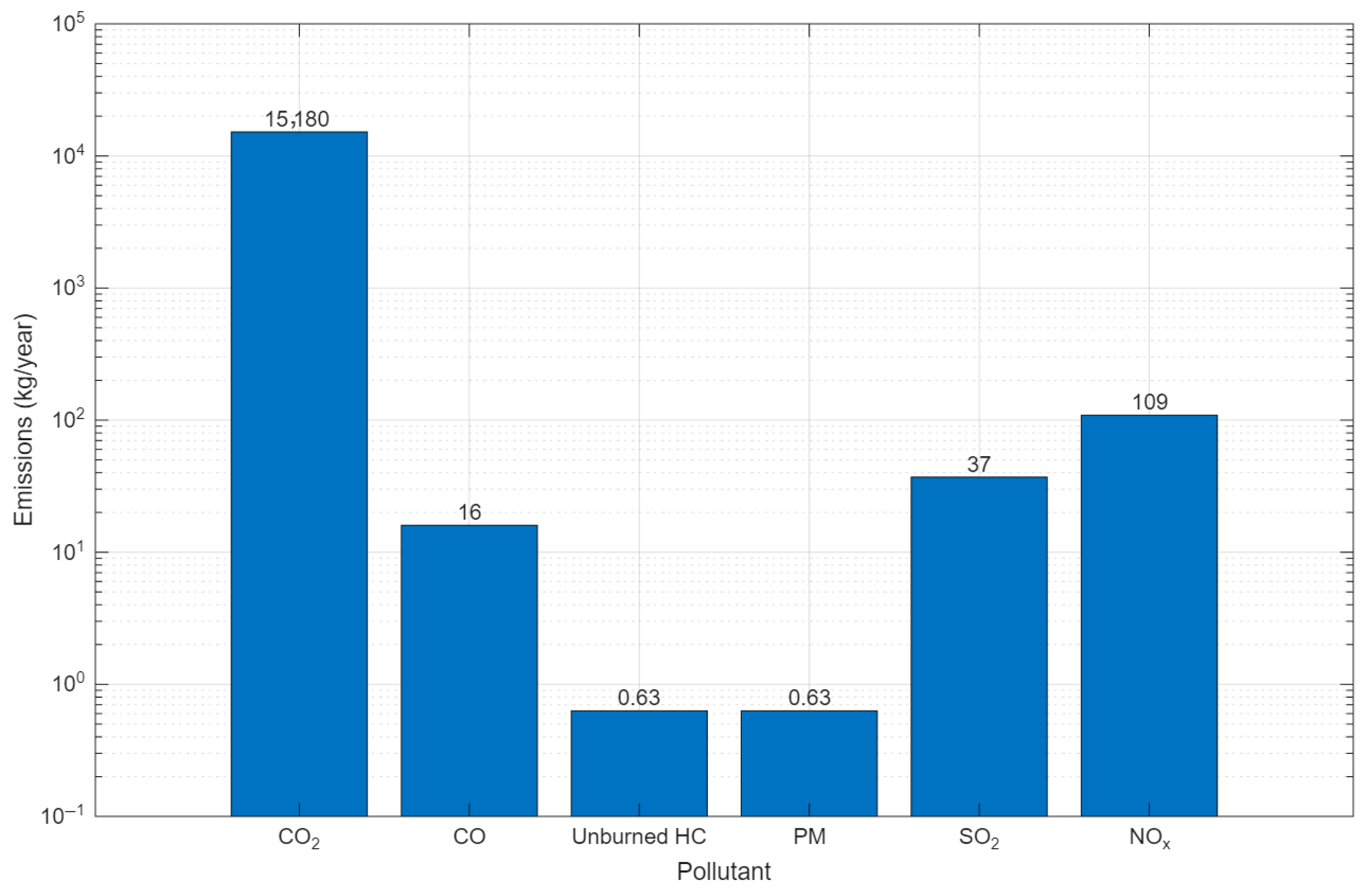
The proposed hybrid system in
Figure 10, which integrates diesel generation with wind energy, demonstrates a significant reduction in emissions compared to conventional energy systems. Annual emissions for the hybrid configuration are as follows: 85,072 kg of CO
2, 91.5 kg of CO, 1.05 kg of unburned hydrocarbons, 3.54 kg of particulate matter, 3.53 kg of SO
2, and 612 kg of NOx. While diesel remains part of the energy mix, the incorporation of renewable energy sources reduces overall pollutant output, enhancing both operational efficiency and environmental sustainability. These results underscore the environmental advantages of hybrid systems for isolated communities like Makkovik.
5.5. Sensitivity Analysis
A sensitivity analysis was conducted to evaluate the impact of variations in key parameters on the performance of the proposed hybrid renewable energy system. The results of this analysis are summarized in
Table 10. As shown in
Table 10, variations in diesel fuel price and wind resource availability influence the system’s economic indicators, including NPC and LCOE, as well as the renewable energy fraction and fuel consumption. Higher diesel fuel prices improve the competitiveness of renewable energy, while lower wind resource availability increases diesel usage and slightly raises the cost of electricity. Nevertheless, the proposed hybrid system maintains a high renewable fraction and remains economically feasible under all tested scenarios.
5.6. Project Feasibility
A Monte Carlo analysis was conducted to account for the uncertainties involved in predicting the economic feasibility of the HRES.
Table 11 presents the results of the Monte Carlo analysis for this project. This statistical approach demonstrates how variability in key input parameters influences the project’s financial outcomes. A total of 500 simulation iterations were performed, representing a wide range of possible scenarios affected by uncertainties in component costs as well as fluctuations in solar and wind energy resources.
NPC shows a wide range of values, indicating strong sensitivity to uncertainties in system costs and renewable resource availability. The mean NPC is $22.25 million, while the median NPC is lower at $17.5 million, suggesting a right-skewed distribution caused by a limited number of high-cost scenarios. The minimum NPC of $14.5 million represents highly favorable conditions with lower component costs and strong renewable generation. In contrast, the maximum NPC reaches $64 million, reflecting worst-case scenarios such as high capital costs or reduced renewable output. The standard deviation (10.82 million) confirms significant variability, emphasizing the importance of uncertainty analysis when evaluating long-term economic feasibility.
LCOE follows a similar trend to NPC. The mean LCOE is 0.443 $/kWh, while the median is lower at 0.349 $/kWh, again indicating a skewed distribution influenced by extreme scenarios. The minimum LCOE of 0.289 $/kWh reflects highly efficient system operation with high renewable penetration. However, the maximum value of 1.27 $/kWh shows that under unfavorable conditions, energy costs can rise significantly. The standard deviation of 0.215 $/kWh highlights moderate variability but still acceptable stability for a renewable-dominant HRES.
Fuel consumption exhibits very high uncertainty, which is expected in a hybrid renewable energy system. The mean fuel use is 7131 units, while the median is significantly lower at 4418, indicating that many scenarios rely minimally on fuel. The minimum fuel consumption of zero demonstrates that in several simulations, the system operates entirely on renewable energy. The maximum value of 32,436 corresponds to scenarios with reduced renewable availability or increased load demand. The high standard deviation (9469) confirms that fuel use is highly dependent on renewable resource variability.
RF remains consistently high across all simulations, indicating strong system reliability from renewable sources. The mean RF is 99.37%, and the median RF is 99.65%, showing that most scenarios achieve near-complete renewable supply. Even in the worst case, the RF remains above 97%, while the maximum RF of 100% indicates fully renewable operation in several scenarios. The low standard deviation of 0.87% confirms excellent robustness of the system against resource and cost uncertainties. The Monte Carlo analysis confirms that while economic indicators (NPC and LCOE) show sensitivity to uncertainties, the technical performance of the system remains highly stable, with consistently high renewable penetration and low fuel dependency. These results demonstrate that the proposed HRES is economically viable under most scenarios and technically resilient, making it a strong candidate for long-term deployment despite inherent uncertainties.
The feasibility and attractiveness of renewable energy projects in Newfoundland and Labrador are greatly enhanced by a range of policies, incentives, and funding programs that support sustainable energy development. Programs like the Net Metering Program allow residents and businesses to generate electricity from renewable sources—such as wind—use it to meet their own demand and feed any surplus back into the grid for credits. For remote communities like Makkovik, this makes renewable energy adoption more economically viable while supporting the growth of clean energy technologies. The Green Fund, financed through carbon pricing, demonstrates the province’s commitment to climate action and sustainable energy. It provides funding for projects aimed at reducing greenhouse gas emissions and promoting environmentally responsible growth. For initiatives that enhance energy efficiency and sustainability—such as the proposed hybrid renewable energy system in Makkovik—this fund is a valuable source of financial support.
Additionally, provincial grants and incentives help offset the upfront costs of installing renewable energy systems. These programs assist with purchasing energy-saving equipment or implementing small-scale renewable projects, which are particularly important in rural and isolated communities. Federal investment tax credits further reduce the capital costs of clean energy installations, making projects like the Makkovik HRES financially more feasible.
The province also encourages research, development, and innovation in renewable energy, offering funding to support the deployment of advanced technologies. Special programs targeting indigenous-led initiatives highlight the importance of culturally sensitive, collaborative, and sustainable approaches to energy development. This framework ensures that projects like the Makkovik hybrid system are both socially inclusive and technically viable.
While HOMER Pro provides a robust platform for modeling hybrid energy systems, it has certain limitations, particularly in simulating dynamic weather conditions and the gradual degradation of system components over time. Due to these constraints, careful assumptions regarding system performance are necessary, and actual field data is essential to validate and fine-tune the model’s predictions for Makkovik’s energy system.
5.7. Limitations and Future Work
This study has several limitations that should be acknowledged. The electrical load profile for Makkovik was estimated using data from a similar community due to limited publicly available load data. In addition, the renewable resource assessment relied on wind data obtained from NASA datasets, which may not fully represent local on-site conditions. The techno-economic analysis was performed using HOMER Pro, which focuses on system optimization but does not fully capture detailed operational dynamics or real-time control strategies.
Future work may include the use of actual measured load data and on-site renewable resource measurements to improve model accuracy. Further research could also investigate the integration of additional renewable energy sources, advanced energy management strategies, and real-world pilot implementations to validate the performance of hybrid renewable energy systems in remote communities.
6. Conclusions
This study presented a comprehensive HRES tailored to the unique energy requirements of Makkovik, Newfoundland and Labrador, integrating wind turbines, battery storage, and conventional diesel generators. By leveraging cutting-edge storage and power conversion technologies alongside renewable generation, the proposed system significantly reduces the community’s historical reliance on diesel. It offers a cleaner, more sustainable energy solution.
Simulations conducted using HOMER Pro indicate substantial reductions in diesel fuel consumption, with annual CO2 emissions dropping from 92,500 kg to 92,192 kg, demonstrating a meaningful contribution to mitigating climate change. The system achieves an LCOE of $0.256 per kWh, reflecting both its economic and environmental efficiencies over its operational lifetime. These results confirm the technical, economic, and environmental feasibility of deploying hybrid renewable energy systems in remote, diesel-dependent communities like Makkovik. They enhance local energy security and autonomy while aligning with broader sustainability objectives.
The proposed HRES for Makkovik is more than a theoretical model; it represents a tangible pathway for isolated communities to transition away from diesel dependency. By combining community-focused planning with renewable technology, Makkovik can become a model for sustainable development in similar northern and remote regions. The study emphasizes that sustainable energy solutions can simultaneously promote environmental stewardship and socioeconomic growth. It illustrates how locally adapted renewable energy systems can contribute meaningfully to global sustainability goals.
The proposed transformation of Makkovik’s energy system demonstrates how remote communities can achieve resilient, self-sufficient, and environmentally responsible energy infrastructures. It serves as an example for similar settlements worldwide.