Next Article in Journal
Optimal Sizing of Local Photovoltaic Systems in Cement Plants Under Multi-Timescale Demand Response
Previous Article in Journal
Nexus Between Energy, Economic Growth and Emissions in an Oil-Producing Country and the Potential of Energy Decoupling: Insights from Azerbaijan
Previous Article in Special Issue
Laminar Flame Speed Measurement and Combustion Kinetic Mechanism Optimization of NH3/H2/Air Mixtures
 
 
Due to scheduled maintenance work on our servers, there may be short service disruptions on this website between 11:00 and 12:00 CEST on March 28th.
Article

Effect of Pressure on the Selectivity of Supercritical CO2 Extraction During the Fractionation of a Fatty Acid Ethyl Ester Mixture: Numerical Simulation and Experiment


by
Sergey V. Mazanov
,
Almaz U. Aetov
* and
Alexander S. Zakharov
Institute of Chemical and Petroleum Engineering, Kazan National Research Technological University, Kazan 420015, Russia
*
Author to whom correspondence should be addressed.
Energies 2026, 19(7), 1634; https://doi.org/10.3390/en19071634
Submission received: 27 February 2026 / Revised: 20 March 2026 / Accepted: 24 March 2026 / Published: 26 March 2026

Abstract

The high viscosity of biodiesel fuel, caused by the presence of saturated fatty acid esters, limits its application, particularly at low temperatures. Supercritical fluid extraction (SFE) using carbon dioxide represents a promising method for selective fractionation, enabling the removal of high-viscosity saturated components and the enrichment of the fuel with less viscous unsaturated esters. However, the rational design of such processes requires a deep understanding of the interrelationship between flow hydrodynamics, thermodynamic conditions, and mass transfer in a supercritical medium. In this work, a comprehensive computational fluid dynamics (CFD) modeling study of the fractionation process was performed for a model ethyl oleate/ethyl palmitate mixture (25.28:74.72 wt.%) in supercritical CO2 at pressures of 11 and 14 MPa and a temperature of 40 °C. A three-dimensional model of a laboratory-scale extractor was developed using the Ansys Fluent software version 2020 R1 environment. Since the target esters are absent from the standard material database, a custom property library and compiled User-Defined Function (UDF) routines were developed. These describe the temperature dependence of density, viscosity, heat capacity, and thermal conductivity for both the individual components and their mixture using established mixing rules. The calculations employed an Eulerian multiphase model, the realizable k–ε turbulence model, and species transport equations. The modeling revealed pronounced selectivity: under the chosen thermodynamic conditions, ethyl palmitate is extracted preferentially over ethyl oleate, with this difference becoming more pronounced as pressure increases. The developed and verified CFD model deepens the fundamental understanding of hydrodynamics and mass transfer during supercritical fractionation and serves as a basis for optimizing process parameters to produce biodiesel with reduced viscosity. The regime at P = 14 MPa and t = 40 °C provides the most favorable thermodynamic and hydrodynamic conditions for the selective removal of saturated esters.

1. Introduction

One of the main sources of atmospheric pollution in large cities is motor transport running on fossil fuels. The exhaust gases from such engines contain components hazardous to human health: carbon monoxide (CO), which disrupts tissue respiration; nitrogen oxides (NOx) and sulfur oxides (SOx), causing respiratory diseases; as well as carcinogenic compounds such as polycyclic aromatic hydrocarbons (e.g., benzo(a)pyrene) and soot [1,2,3,4,5]. In light of increasingly stringent environmental regulations and global climate goals, the transition to alternative, cleaner fuels has become highly relevant.
Biodiesel fuel—a mixture primarily composed of methyl or fatty acid ethyl esters (FAEE), obtained mainly through the transesterification of vegetable oils (rapeseed, soybean, palm) or animal fats with lower alcohols (methanol, ethanol)—represents a key renewable energy source [6,7,8,9,10]. Unlike petroleum-based diesel, biodiesel offers several significant environmental advantages: its combustion leads to a substantial reduction in CO emissions, unburnt hydrocarbons, soot, and almost completely eliminates SOx emissions [11,12,13]. Furthermore, biodiesel exhibits excellent lubricating properties, is non-toxic, and biodegradable, which reduces risks to soil and groundwater in the event of potential spills. The growing demand for environmentally friendly fuel is confirmed by market dynamics: according to a report by the International Energy Agency, published on 29 January 2026, at the India Energy Week exhibition, biofuel production could reach 500–700 million liters per year by 2030 under the main and accelerated scenarios, respectively [14]. Despite these environmental benefits, the widespread commercial adoption of biodiesel is hindered by two groups of problems: technological (high production costs, complexity of removing catalysts and glycerol) and qualitative (instability of properties depending on the feedstock). The latter includes the issue of a high content of high-viscosity saturated fatty acid esters, such as palmitate and stearate, which is characteristic, for example, of biodiesel derived from shea butter or palm oil [1,6,15]. These saturated esters possess a high cloud point and pour point, as well as increased viscosity, unlike esters of unsaturated fatty acids (ethyl oleate, etc.). This directly deteriorates the low-temperature properties of the fuel (cold flow properties), promotes deposit formation in the fuel system, and can lead to non-compliance with stringent quality standards such as EN 14214 [16] (ν = 3.5–5.0 mm2/s) or ASTM D6751 [17] (ν = 1.9–6.0 mm2/s).
The ever-increasing demand for biodiesel necessitates the improvement of technologies to reduce its cost and enhance its quality. The economic benefits of using low-viscosity biodiesel manifest at all stages—from production to end-use. The reduction in viscosity allows for a decrease or complete elimination of the energy costs associated with heating the fuel in the fuel system. Improved atomization and combustion of low-viscosity fuel directly translate into an increase in effective thermal power by 2–4% [18], meaning that the fuel’s energy is used more productively. All of this extends the service life of expensive fuel equipment and the engine itself. For biodiesel to be competitive with petroleum diesel, a promising direction is the intensification of the transesterification reaction itself, including the use of supercritical fluid media (e.g., supercritical ethanol), which simplifies the process, minimizes catalyst usage, and improves kinetics [19,20,21,22,23]. However, an equally important stage is the subsequent purification and fractionation of the resulting ester mixture to isolate the target high-quality fraction. In this context, supercritical fluid extraction (SFE) based on carbon dioxide (scCO2) stands out as an environmentally friendly, energy-efficient, and highly selective purification technology that does not require organic solvents [24,25,26,27]. The process relies on the unique properties of scCO2, which in its supercritical state (Tc = 31.1 °C, Pc = 7.38 MPa) combines liquid-like high density with low viscosity and gas-like high diffusivity [28,29,30]. These properties can be tuned by varying pressure and temperature, making scCO2 an ideal agent for the selective separation of multicomponent mixtures, such as biodiesel, for the purpose of removing high-viscosity saturated fractions [31,32,33,34,35,36].
Despite its obvious advantages, the design and optimization of industrial SFE plants for biodiesel fractionation remains a challenging task. This is related to a fundamental problem at the intersection of fluid physics and heat and mass transfer: an insufficient understanding of the interrelationship between the hydrodynamics of the supercritical flow, heat transfer, and the kinetics of selective mass transfer within an extraction column.
As noted in studies devoted to SFE for extracting biologically active compounds, local flow parameters, such as turbulence intensity (TI), have a decisive influence on the wall temperature distribution, density stratification, and, consequently, the efficiency of mass transfer [37,38,39]. In the context of biodiesel fractionation, this means that flow hydrodynamics (flow structure, mixing) directly determines the separation selectivity of saturated and unsaturated fatty acid esters and, ultimately, the viscosity and low-temperature properties of the final product. In the modern literature, considerable attention is paid to the modeling of SFE processes; however, the emphasis is shifted either towards purely hydrodynamic analysis of apparatus (separators, heat exchangers) [40,41] or the study of processes involving a solid phase (extraction from solid raw materials, aerogel drying) [42,43,44,45]. Studies specifically addressing liquid–liquid extraction or fractionation of ester mixtures in scCO2 are often limited to phenomenological models or a simplified approach that does not account for the three-dimensional flow structure and its impact on local selectivity [46,47,48]. The selection of an adequate multicomponent and multiphase model in computational fluid dynamics (CFD) is particularly relevant. As shown in comparative studies, approaches such as the Eulerian Multifluid VOF (EMVOF) model can correctly describe complex phase interactions [49,50,51,52,53,54,55,56,57,58,59,60]. In this context, the work of Davila et al. [60] is highly pertinent, as it demonstrates a comprehensive thermodynamic modeling approach for high-pressure CO2-based binary mixtures using the Peng-Robinson equation of state, successfully analyzing phase behavior and system performance under varying thermodynamic conditions. Such studies provide a valuable precedent for the application of equations of state and phase equilibrium analysis in complex CO2 mixtures, which is directly relevant to the CFD modeling framework used in this work. However, their validation and application specifically to the task of selective biodiesel fractionation in scCO2 with product quality prediction remain practically unexplored in the literature.
Consequently, there exists a scientific and technical gap in the field of fundamental CFD modeling that quantitatively links the hydrodynamics of supercritical scCO2 flow with the kinetics of selective mass transfer and the final physicochemical properties of the fractionated fatty acid ester mixture.
The aim of the present work is the development and experimental validation of a comprehensive CFD model for the fractionation process of a mixture of the most common fatty acid esters (FAEE) found in biodiesel, namely ethyl oleate and ethyl palmitate, in supercritical carbon dioxide. The model is aimed at reducing product viscosity through the selective removal of high-viscosity saturated esters. The investigation seeks to deepen the fundamental understanding of the “hydrodynamics-mass transfer-product properties” relationship in supercritical systems and will provide an impetus for the design of energy-efficient and selective purification technologies for renewable fuel.

2. Materials and Methods

For the experimental implementation of the fractionation of an ethyl oleate and ethyl palmitate mixture using the scCO2 extraction process, the following reagents were used:
-
Carbon dioxide with a purity of not less than 99.0%, LLC “Snabtekhmet” (Kazan, Russia);
-
Ethyl oleate, pure, Sisco Research Laboratories Pvt. Ltd. (Mumbai, Maharashtra, India) ( n D 20 = 1.450, ρ20 = 870 kg/m3);
-
Ethyl palmitate with a main substance content of not less than 97.0%, LLC TD “KHIMMED” (Moscow, Russia).
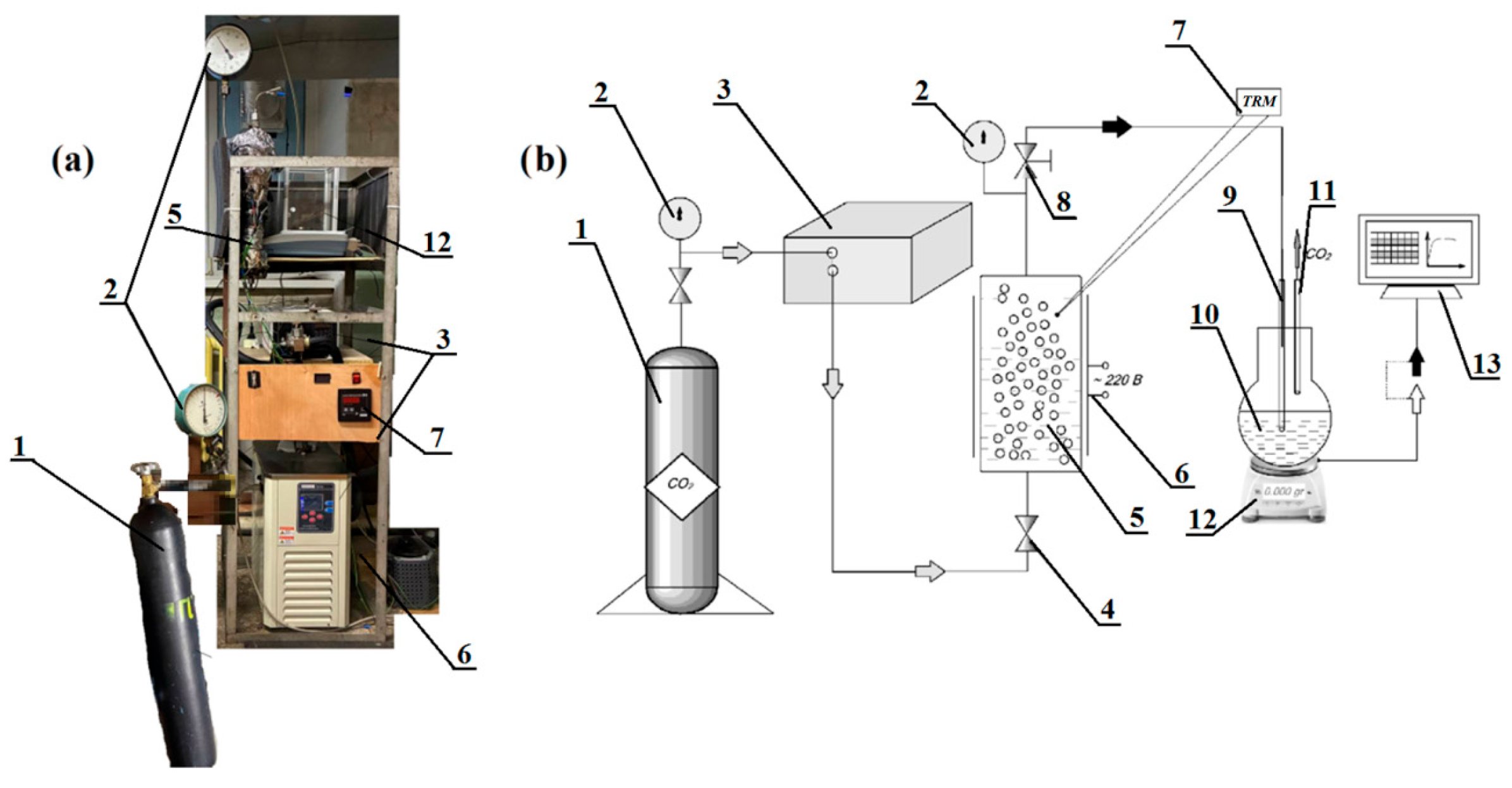
The SFE process was implemented on an experimental setup, the schematic diagram and visual appearance of which are presented in Figure 1. The experimental setup allows for the extraction of substances in supercritical fluid media at temperatures up to 100 °C and pressures up to 25 MPa. The setup includes a pressure generation and maintenance system, a temperature control and maintenance system, a measuring cell, and a system for measuring and recording the extract mass. The pressure generation system consists of a CO2 cylinder (1) with a volume of 10,000 mL and a high-pressure pump (3) model “Supercritical 24” (Teledyne SSI, New York City, NY, USA), which provides a liquid CO2 flow rate in the range of 0.01–24 mL/min (uncertainty up to ±2%) and in the pressure range of 0–69 MPa (uncertainty up to ±0.5%). The temperature control and maintenance system consists of an electric heater (6), a thermocouple, and a meter-controller (7) (accuracy class 0.25). The system for measuring and recording the extract mass includes an electronic laboratory balance with automatic recording, model LLC OKB “Vesta” (Saint-Petersburg, Russia) (measurement accuracy 0.001 g), and a personal computer (13). The internal volume of the extractor is 92 mL. At the bottom of the extractor, there are glass balls with a diameter of 3.0 mm, designed to ensure uniform treatment of the liquid-phase charge by the gas-phase extractant across the extractor cross-section and to increase the phase contact area, thereby improving mass transfer.
Experimental Procedure. The pre-washed extractor cell (5) is “dried” using a vacuum pump to remove solvent vapors and atmospheric air. A pre-calculated volume of the test liquid is filled into the measuring cell through the outlet control valve (8) using a dispenser, with valve (4) closed. The amount of the liquid-phase component in the cell is determined by the gravimetric method. The solvent, carbon dioxide, from the cylinder (1) enters the high-pressure pump (3), where it is pre-liquefied, and is then supplied in the SCF state to the solubility cell at a flow rate of 0.8–1.0 mL/min under a pressure below the experimental pressure. Next, the temperature control system, including the sensor, temperature controller (7), and electric heater (6), is activated. Consequently, the cell is heated to the set temperature.
To minimize heat loss, the outer surface of the cell is thermally insulated. After reaching the set temperature regime, the supercritical fluid solvent is pumped up to the pressure planned for the experiment. Gas supply is accompanied by intensive mixing of the cell contents by rotating the cell itself at ±45° around its axis. After reaching the state of saturation and the set pressure, the system is held for 30 min. The fact of reaching an equilibrium state in the thermodynamic system is established by the absence of pressure change in the cell, after which sample mixing is stopped. Then, after opening valve (4) and the outlet control valve (8), the SCF solution enters the separator (10), where the gas and liquid phases are separated. Separator (10) is located on the platform of the electronic laboratory balance with automatic recording of readings (12) to a personal computer (13). Based on the information on the kinetics of mass change, the parameters of the time period during which the equilibrium dissolution regime is maintained are established.
Analysis of the obtained extract samples for the FAEE mixtures was performed using a “Chromatek-Crystal 5000” gas chromatograph (CJSC SKB “Khromatek”, Yoshkar-Ola, Russia). Samples were preliminarily dissolved in isopropanol at a 1:1 mass ratio. Heating was carried out from 40 to 210 °C, increasing the temperature at a rate of 10 °C/min. The injected sample volume was 0.5 µL.
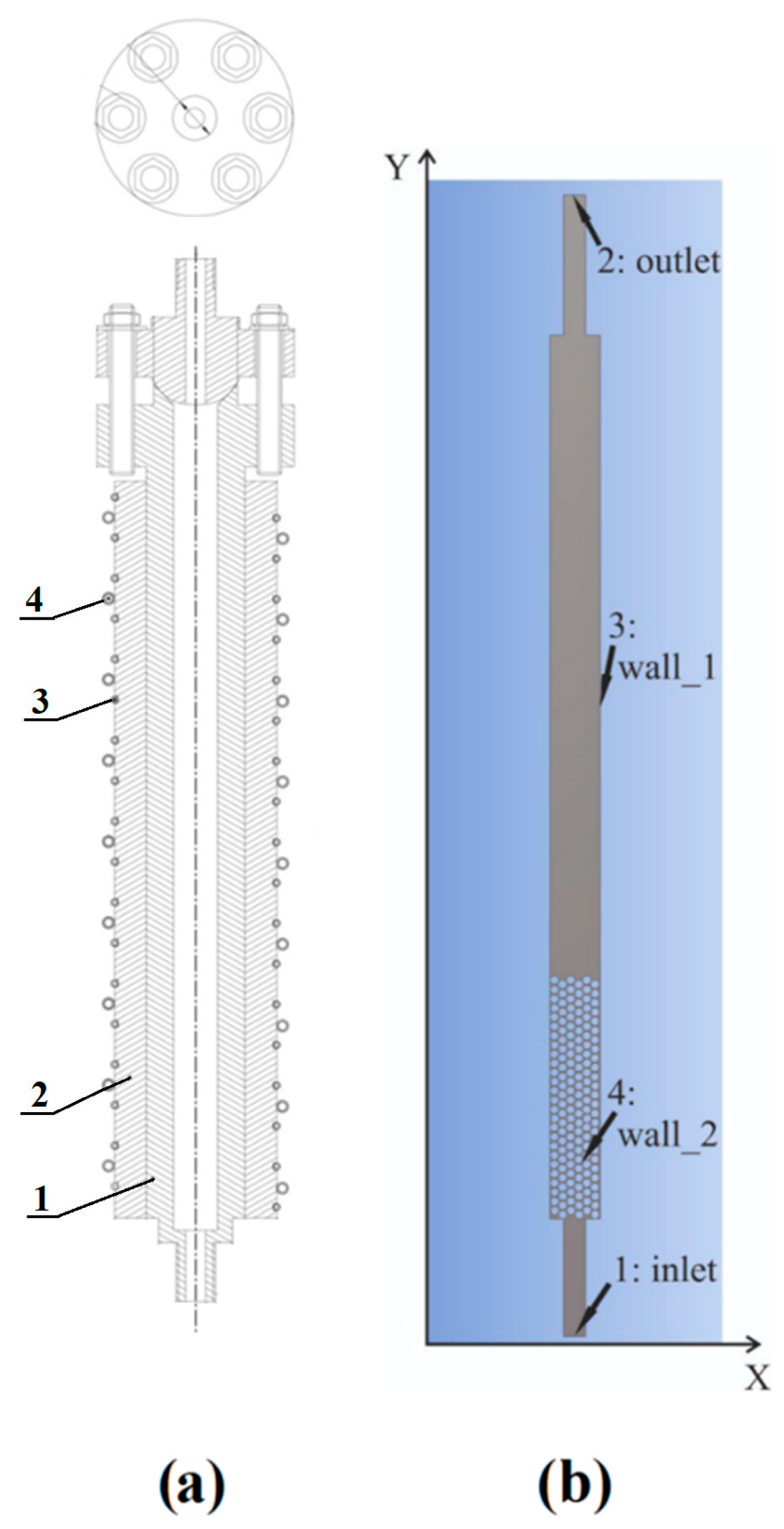
When conducting CFD modeling in Ansys Fluent version 2020 R1, the object of the study was the laboratory SFE setup. Figure 2 shows the extractor drawing (a), based on which the geometry was constructed with the indication of the experimental boundary conditions (b).
The computational mesh for the extractor model was developed considering the geometric features of the extractor and the requirements for modeling multiphase flows under supercritical conditions, based on the conducted literature review [40,41,42,43,44,45,49,50,51,52,53,54,55,56,57,58,59,60]. It consists of 418,639 nodes and 135,929 cells. The input and dimensional data, as well as the boundary conditions and assumptions, are provided in Table 1. In the present work, the process was modeled using an isothermal approximation at a fixed temperature of 40 °C, corresponding to the experimental conditions. This assumption is consistent with the laboratory setup scheme, which includes thermal insulation, a heater, and preheating of the scCO2 supply, and was adopted to focus the analysis on the influence of pressure on hydrodynamics, interphase mass transfer, and separation selectivity. Possible local thermal effects associated with the heat of dissolution of the components, as well as CO2 compression/expansion and the Joule–Thomson effect, were not analyzed separately and were not the subject of an independent study. Therefore, these effects are considered within the limitations of the model in the present work.
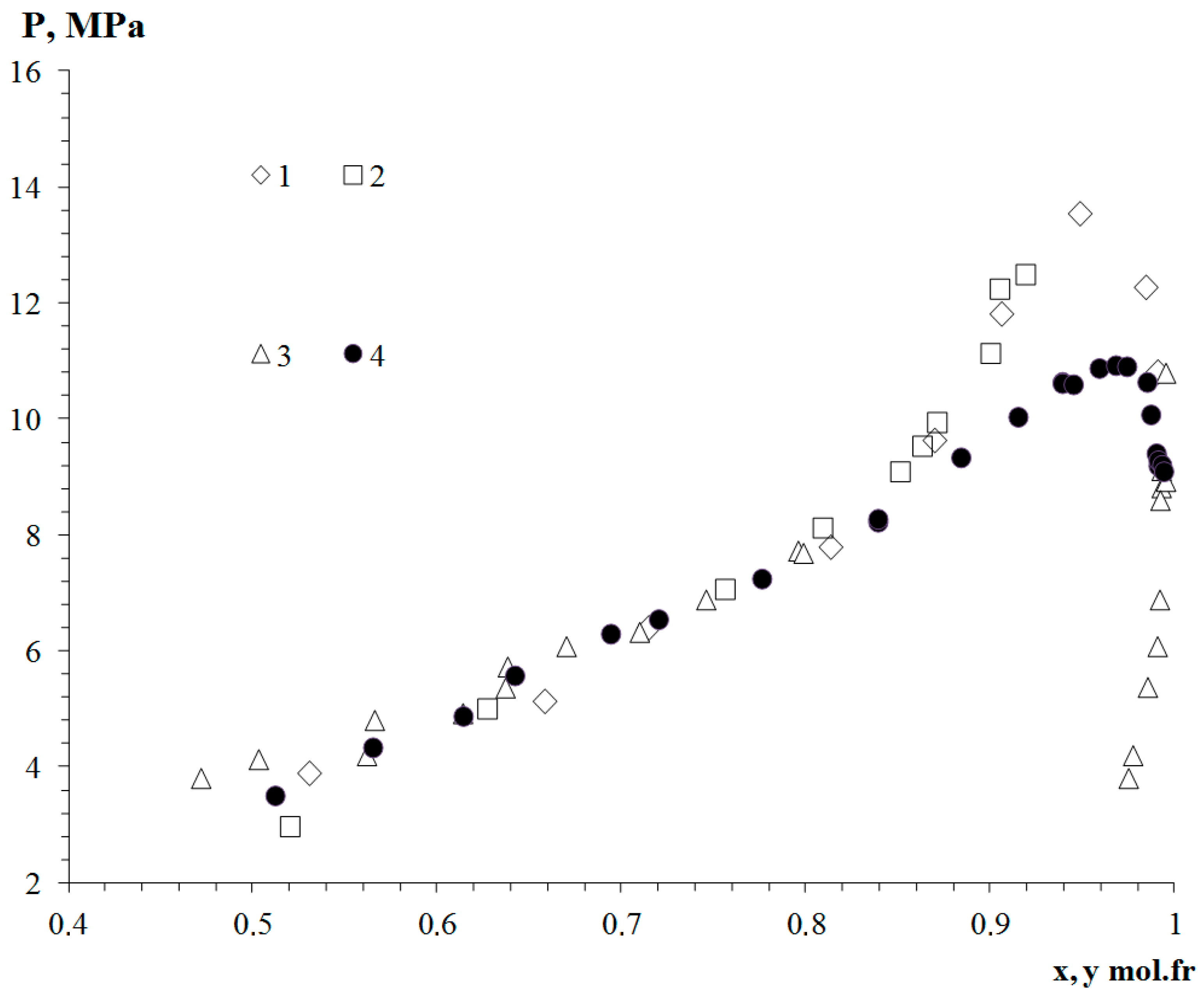
AISI 321 stainless steel was specified as the extractor material, and borosilicate glass was specified as the material for the packing. The scCO2 supply flow rate was 2 mL/min. The mixture of ethyl oleate and ethyl palmitate (25.28/74.72 wt.%) was used as the target component. The choice of a 2 mL/min flow rate and this volume ratio was based on previous experimental extraction studies. The selection of pressures of 11 and 14 MPa is based on the phase diagrams of the binary mixtures CO2-ethyl palmitate and CO2-ethyl oleate (Figure 3), where at these pressures, type I-II phase behavior according to the Williams classification [61] is formed, with unbroken critical curves and the presence of critical points at these pressures and t = 40 °C.
The following main equations and models were used in the CFD modeling:
-
Continuity equation (mass balance) for each phase:
S i   = ( α i   ρ i ) t + · ( α i   ρ i u i )
where αi—volume fraction of phase, ρi—density of phase; ui—velocity of phase; Si—mass transfer source term.
-
Navier–Stokes equation (momentum balance) for the multiphase system.
( α i   ρ i u i ) t + · ( α i   ρ i u i ) = α i   P + τ i   + α i   ρ i g + F d r a g  
where P—pressure; τi—viscous stress tensor; Fdrag—interphase drag force;
-
Species transport equation (concentration of the FAEE mixture in scCO2).
( α c o 2   ρ c o 2 Y F A E E ) t + · ( α c o 2   ρ c o 2 u c o 2 Y F A E E ) = · ( D E f f . Y F A E E ) + R E x t .
where YFAEE—mass fraction of the FAEE mixture, DEff—effective diffusion coefficient, RExt—extraction rate.
Furthermore, interphase interaction models were considered, such as the drag force between scCO2 and the FAEE mixture:
-
Schiller-Naumann model:
F = 3 4 C D α c o 2   α F A E E ρ c o 2   d p · | u c o 2   u F A E E | · ( u c o 2   u F A E E )
where СD—drag coefficient, dependent on the Reynolds number.
-
Mass transfer model—LDF (Linear Driving Force):
R E x t . = k m ( Y F A E E , e q Y F A E E )
where YFAEE,eq—equilibrium concentration of the FAEE mixture in scCO2; k m —volumetric mass transfer coefficient in the LDF model.
In the present work, the parameter km was considered in the range of 4·10−3–7·10−2 s−1 as a physically constrained parameter of interfacial mass transfer. The lower boundary of the range is justified by an order-of-magnitude estimate using a dimensionless correlation, based on literature data [65,66,67,68] for external mass transfer in a packed bed under the process conditions (P = 14 MPa, t = 40 °C): at Re ≈ 4.57 and Sh ≈ 5.02, a value of km ≈ 4.02·10−3 s−1 was obtained. For a pressure of 11 MPa, the deviation from the obtained km value is ~0.5%, considering changes in Re and Sh within 0.5–1% (accounting for mixture properties and packing geometry). The upper boundary of the interval was considered as an upper estimate for locally intensified mass transfer in the constrictions of the pore space of the packed bed, where interfacial transfer can be significantly higher than under the averaged surface flow regime.
To describe the properties of scCO2 and the FAEE mixture, the Peng-Robinson equation of state was used:
P = R T V m b a ( T ) V m 2 + 2 b V m b 2
where a, b—parameters depending on the critical properties of the components, V—molar volume.
Subsequently, the solution methods in Ansys Fluent version 2020 R1 were selected. The choice of solvers was the Pressure-Based Solver (preferred for incompressible/weakly compressible flows) and Phase Coupled SIMPLE (for multiphase problems). Discretization schemes: spatial (second-order upwind for momentum; QUICK for the species transport equation) and temporal (First Order Implicit for stability with larger time steps).
For the conditions considered in the present work, the estimated Reynolds number in the packed bed, as mentioned above, is on the order of Re ≈ 4.57, which corresponds to a laminar flow regime. Therefore, from a physical point of view, the flow under investigation is not considered to be fully turbulent. The use of the “k–ε Realizable” model with “Scalable Wall Functions” in this setup is primarily related to the necessity of numerical stabilization for the multiphase calculation involving interphase mass transfer and the complex structure of the packed bed. In this sense, it was used as a means of numerical regularization and to account for local sub-grid mixing, rather than as an assertion of developed turbulence throughout the entire apparatus volume. This setup pertains specifically to the laboratory scale. When transitioning to industrial-scale apparatus, the hydrodynamic flow structure and the role of turbulent effects may change substantially; therefore, the direct transfer of the chosen closure to industrial-scale problems requires separate justification.
Within the framework of numerical modeling in Ansys Fluent version 2020 R1, it was necessary to replace the standard library material, used by default to represent the organic phase (diesel vapor), with user-defined materials corresponding to the actual composition of the extracted mixture—ethyl oleate and ethyl palmitate. These compounds are absent from the standard Fluent database, so a user-defined material library and a set of UDFs were implemented to ensure reproducible property definition without manual data entry in the interface and without being tied to a specific project.
For integration into the calculation environment, a user-defined material database file in the Scheme language (faee_materials.scm) was created, including definitions for the individual components—ethyl oleate and ethyl palmitate—as well as a separate mixture material faee_25_75, corresponding to the mass ratio of 25.28/74.72 wt.%. This approach allows loading the created materials using Fluent’s standard tools and using them in the calculation setup on par with standard materials. During the import stage, reference property values at a fixed temperature are set in the library, ensuring correct initialization of the calculation and ease of unit control.
To account for the temperature dependence of properties in the operating temperature range of –20–100 °C, a compiled UDF module in C was developed. This module is connected to Fluent as a compiled UDF and assigned to the relevant materials via the Materials menu for the following quantities: density, viscosity, heat capacity, and thermal conductivity. The UDF uses analytical approximations based on tabulated data of temperature property profiles, ensuring stable calculation of properties in each computational cell during the iterative solution of the momentum and energy equations. Additionally, a temperature range limit was introduced in the code to prevent incorrect extrapolation beyond the specified interval.
The properties of the faee_25_75 mixture are formed directly in the UDF based on the properties of the individual components using the following mixing rules: heat capacity and thermal conductivity were calculated as mass-weighted averages; density was calculated via specific volume; viscosity was determined using the logarithmic mixing rule.
This approach allows modeling the mixture as a single working fluid without including multicomponent transport, simplifying the problem setup and reducing computational costs while maintaining correct temperature-dependent properties.
After importing the created materials into the calculation project, ethyl oleate and ethyl palmitate (and their mixture faee_25_75) were used as components of the organic phase instead of the surrogate component “diesel vapor”. This allowed the calculation to be linked to the actual composition of the extracted product and eliminated the uncertainty associated with the conditional properties of a generalized material. To describe the extraction process, the model included interfacial mass transfer between CO2 and the organic phase (CO2 dissolution/absorption), with the composition of the organic phase specified via the created mixture. Thanks to the implemented approach, the calculation setup ensures the correct participation of ethyl oleate and ethyl palmitate (and their binary mixture) in the mass and energy transfer processes during supercritical CO2 extraction.
It should be noted that the developed CFD model in the present work was applied for a fixed isothermal regime of 40 °C and pressures of 11–14 MPa, i.e., for the parameter region in which the organic phase was considered as a stable liquid mixture of ethyl oleate and ethyl palmitate. At reduced temperatures, for systems containing saturated fatty acid esters, the appearance of a solid phase due to crystallization is possible, which can significantly alter flow hydrodynamics, interphase contact, and the intensity of mass transfer. Therefore, the proposed setup is applicable only within the region of a stable liquid phase, whereas for describing regimes with possible solidification, a separate consideration of the liquid-solid phase transition using the Solidification & Melting model in Ansys Fluent version 2020 R1 is required.
The solution was initialized from the inlet, and a fixed number of iterations (1500) was set to guarantee full convergence. Convergence was monitored by the scaled residuals for the continuity, x-, y-, z-velocity, energy, k, and ε equations. Analysis of the convergence history showed that a stable (steady-state) solution was achieved at the 723rd iteration. By this point, the residuals of all equations had fallen below the specified criteria. Simultaneously, the integral parameters (mass flow rate and average temperature) reached a plateau, and their relative change over the subsequent 50 iterations did not exceed 0.1%, indicating complete stabilization of the solution. Further iterations, up to the 1500th, did not lead to any significant changes, confirming the achievement of a convergent solution.
The study was conducted using the equipment of the Shared Facilities Center “Nanomaterials and Nanotechnologies” at Kazan National Research Technological University.

3. Results and Discussion

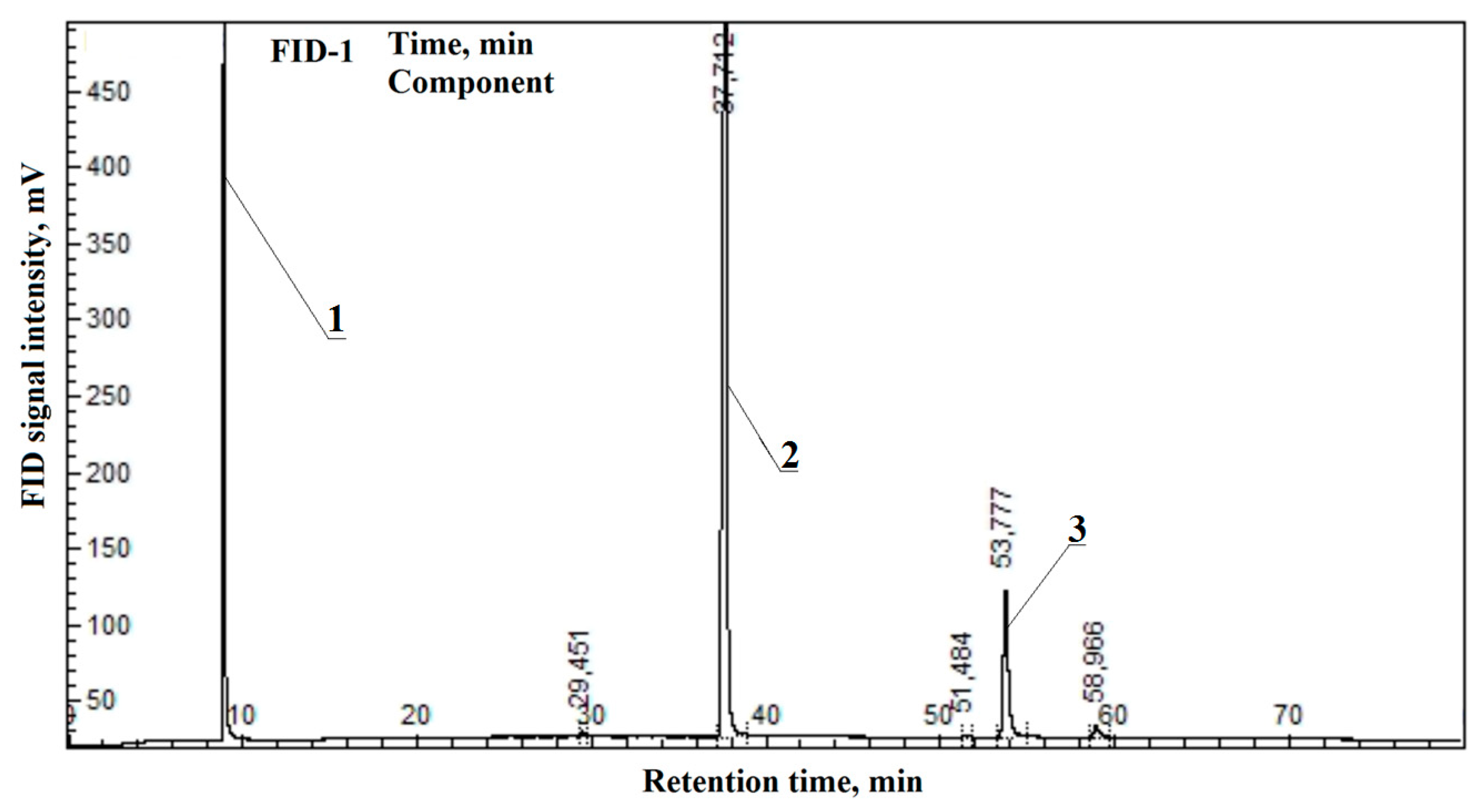
The conditions and results of the experimental scCO2 extraction separation of the binary mixture composed of ethyl oleate and ethyl palmitate are presented in Figure 4 and Table 2 as averaged values after triplicate experiments. The uncertainty of the experimental measurements of the extraction yield does not exceed ±5.6%.
The authors established that the selectivity of the extraction separation of the ethyl oleate/ethyl palmitate mixture in supercritical CO2 can be effectively regulated by varying the pressure and process time. The results presented in Table 2 show that increasing the pressure and the duration of the process leads to an increase in the content of ethyl palmitate in the extract relative to ethyl oleate. This is explained by the fact that, according to the phase diagrams (Figure 3), moving away from the critical point increases the density of the CO2-ethyl palmitate binary mixture, which is directly related to the increased solubility of this component and, consequently, its yield. Thus, the obtained data have practical significance for the development of technologies aimed at reducing the viscosity of biodiesel fuel.
Statistical processing of the results presented in Table 2 was performed using Student’s t-test. The significance of differences between the concentration values of ethyl oleate and ethyl palmitate under different extraction conditions was assessed at a significance level of p < 0.05. It was found that increasing the pressure from 11 to 14 MPa at a fixed process time leads to a statistically significant increase in the content of ethyl palmitate in the extract. This confirms the reproducibility of the experiment and the reliability of the identified patterns.
Based on the conducted experiments, the results of numerical modeling of hydrodynamics and heat transfer in the SFE extractor were analyzed for two operating pressures: 11 and 14 MPa, and t = 40 °C. The analysis focused on the fields of key parameters determining the fractionation process of the FAEE mixture: pressure, scCO2 flow velocity, temperature, and the distribution of species mass fractions.
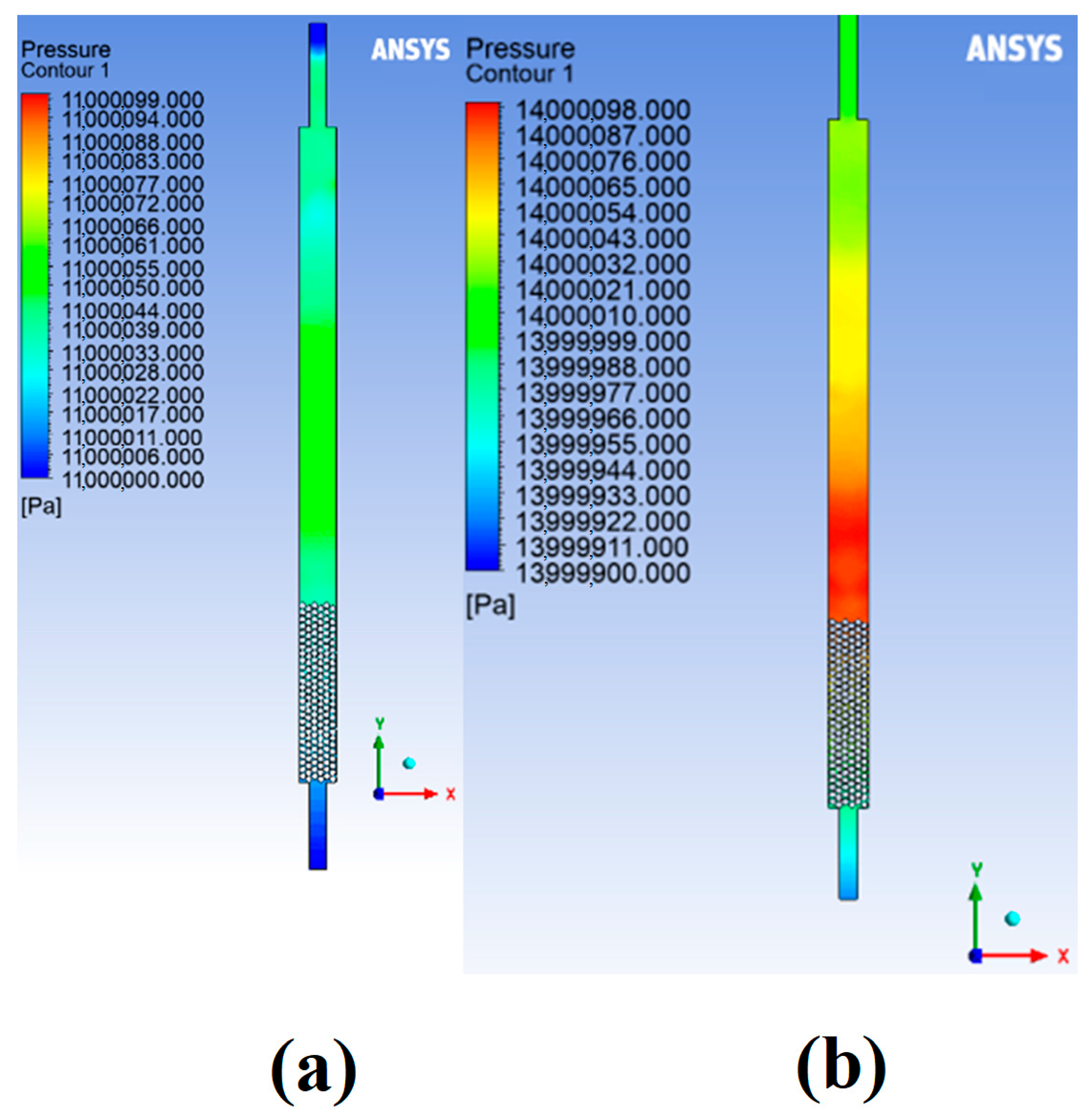
The distribution of static pressure in the apparatus is a key factor determining the density and, consequently, the solvent power of scCO2. Figure 5 shows the pressure fields for the two operating modes.
The main pressure drop (hydraulic resistance) occurs in the packing zone, where the flow interacts with the surface of the spheres (Figure 5). At an inlet pressure of 14 MPa, the absolute pressure values throughout the volume are naturally higher than at 11 MPa. However, more importantly, the pressure gradient in the packing zone at 14 MPa is 15–20% higher. This indicates a change in the flow regime and a more uniform penetration of scCO2 through the packing layer at higher pressure, which is favorable for phase contact.
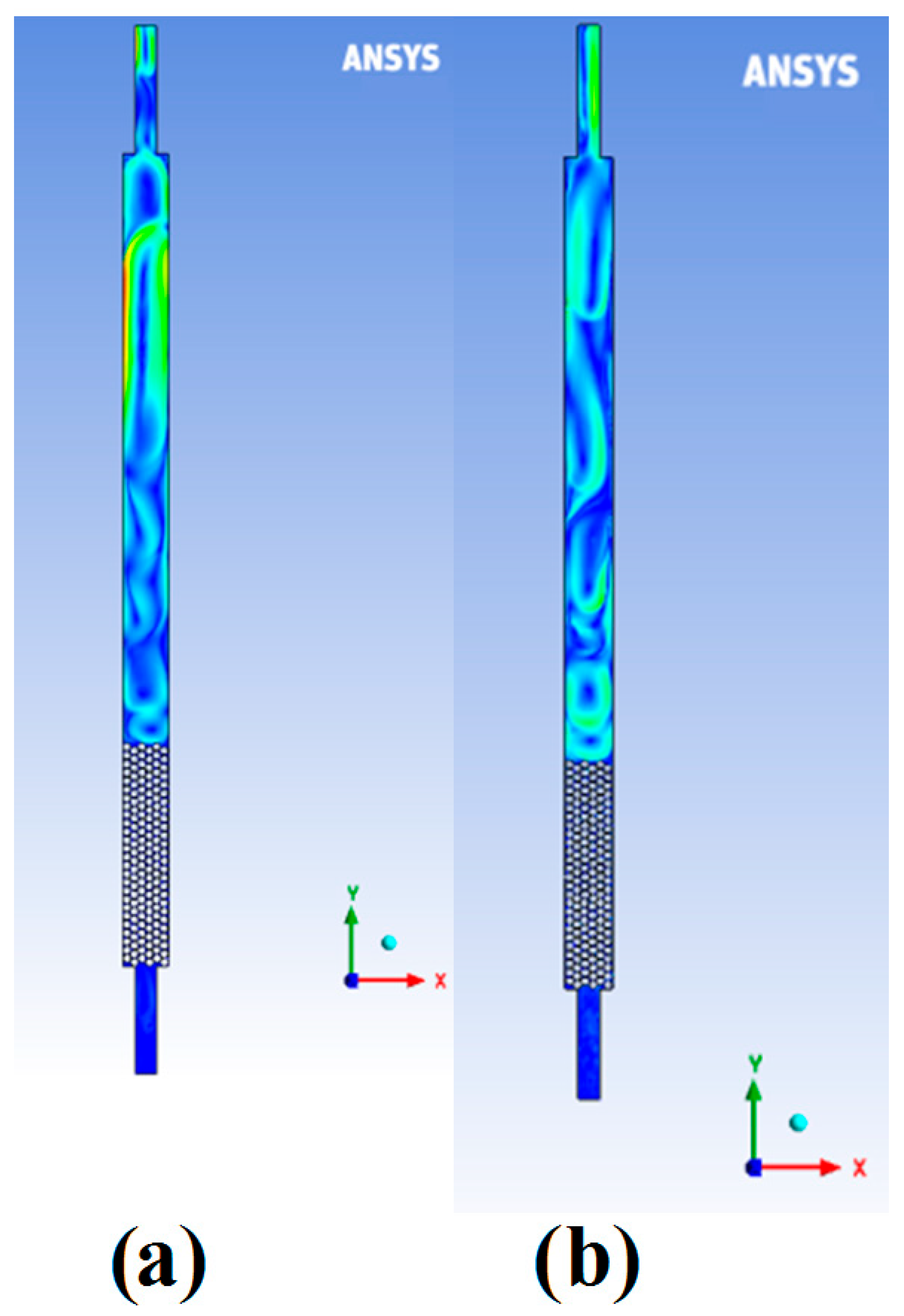
The flow structure directly influences the contact time and the efficiency of mass transfer between scCO2 and the liquid FAEE mixture. Figure 6 presents the scCO2 flow velocity fields.
Analysis of the velocity fields reveals a significant influence of pressure on hydrodynamics. At 11 MPa, the formation of a pronounced high-velocity channel is observed in the upper-central part of the apparatus, accompanied by the emergence of extensive zones with low velocities near the walls and in the inter-sphere space of the packing. This pattern indicates non-uniform flow distribution and the risk of stagnant zones where mass transfer would be limited.
When the pressure is increased to 14 MPa, the velocity profile becomes significantly more uniform. The average velocity in the inter-sphere channels increases, and the scatter of values across the apparatus cross-section decreases. This is associated with the increase in scCO2 density and, consequently, a decrease in its kinematic viscosity, which promotes more efficient flow distribution. For the fractionation process, a uniform velocity field is critically important as it ensures homogeneous contact of the solvent with the entire mass of the fractionated liquid, prevents premature “breakthrough” of unreacted zones, and facilitates achieving uniform distribution.
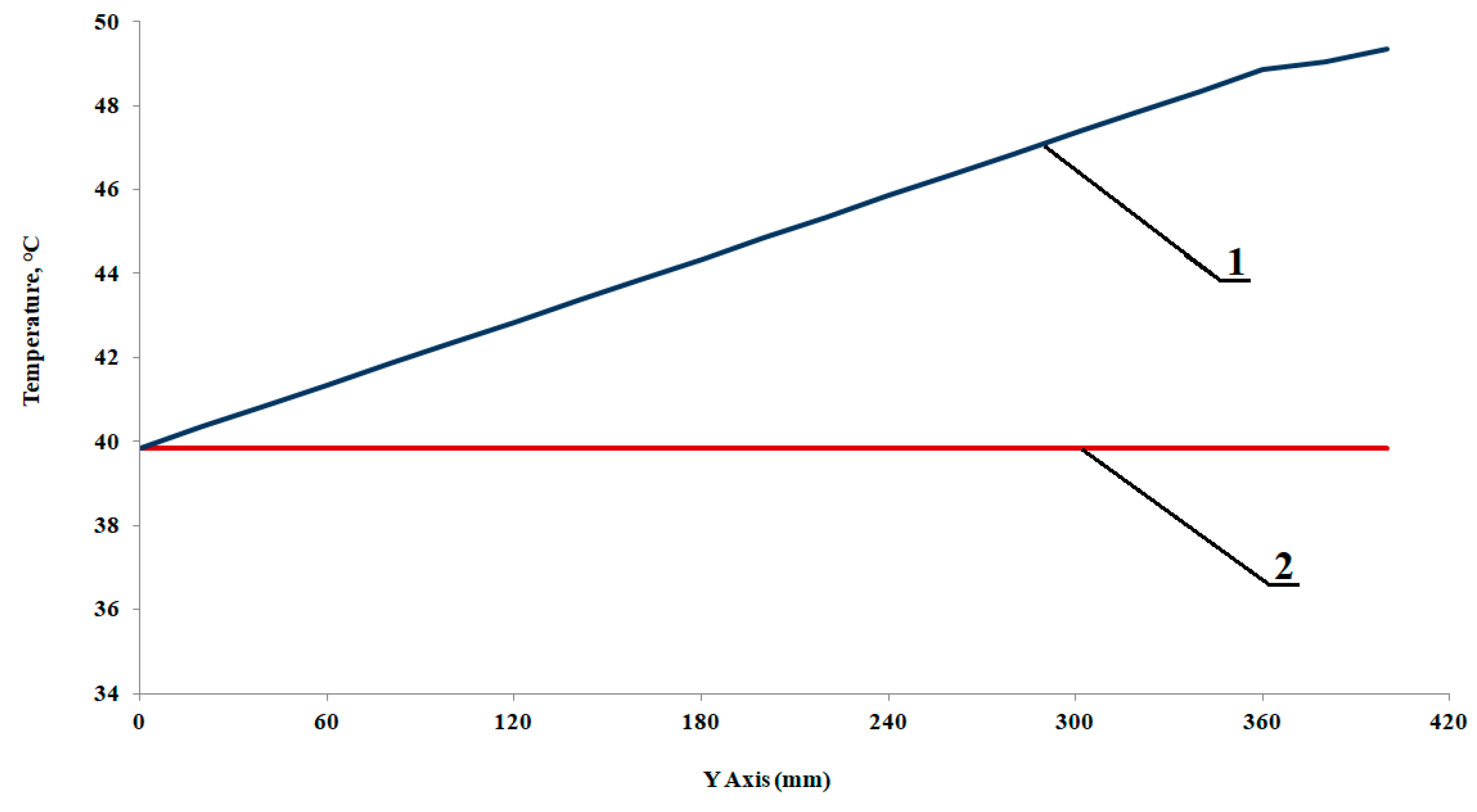
To verify the assumption of isothermality of the process and assess the influence of operating parameters on the temperature field inside the extractor, temperature profiles along the apparatus height were analyzed. Figure 7 shows the temperature distributions along the central axis and near the extractor walls for the two investigated pressures—11 and 14 MPa. Since the modeling results for pressures of 11 and 14 MPa showed coinciding temperature profiles, Figure 7 presents generalized dependencies for both pressures. Line 1 corresponds to the temperature on the central axis, line 2—near the inner surfaces of the extractor walls.
As can be seen from the graph, the temperature at the wall remains practically constant along the entire height and equals the set value, which fully corresponds to the thermostatic boundary condition. Temperature deviations on the central axis may arise due to the compressibility of the working fluid or due to internal (viscous) friction, but with thermostated walls, they are quickly suppressed by heat exchange with the wall. The temperature profiles obtained for pressures of 11 and 14 MPa coincide—the differences between them do not exceed 0.1 °C, which is within the error of the numerical solution. This indicates that, within the framework of the adopted model, the temperature field is determined solely by the boundary conditions and does not depend on the operating pressure in the investigated range. The absence of significant temperature gradients confirms the correctness of the isothermal process assumption and allows, in the further analysis of hydrodynamics and mass transfer, to consider pressure changes as the main factor influencing density, viscosity, and, consequently, the efficiency of fractionation.
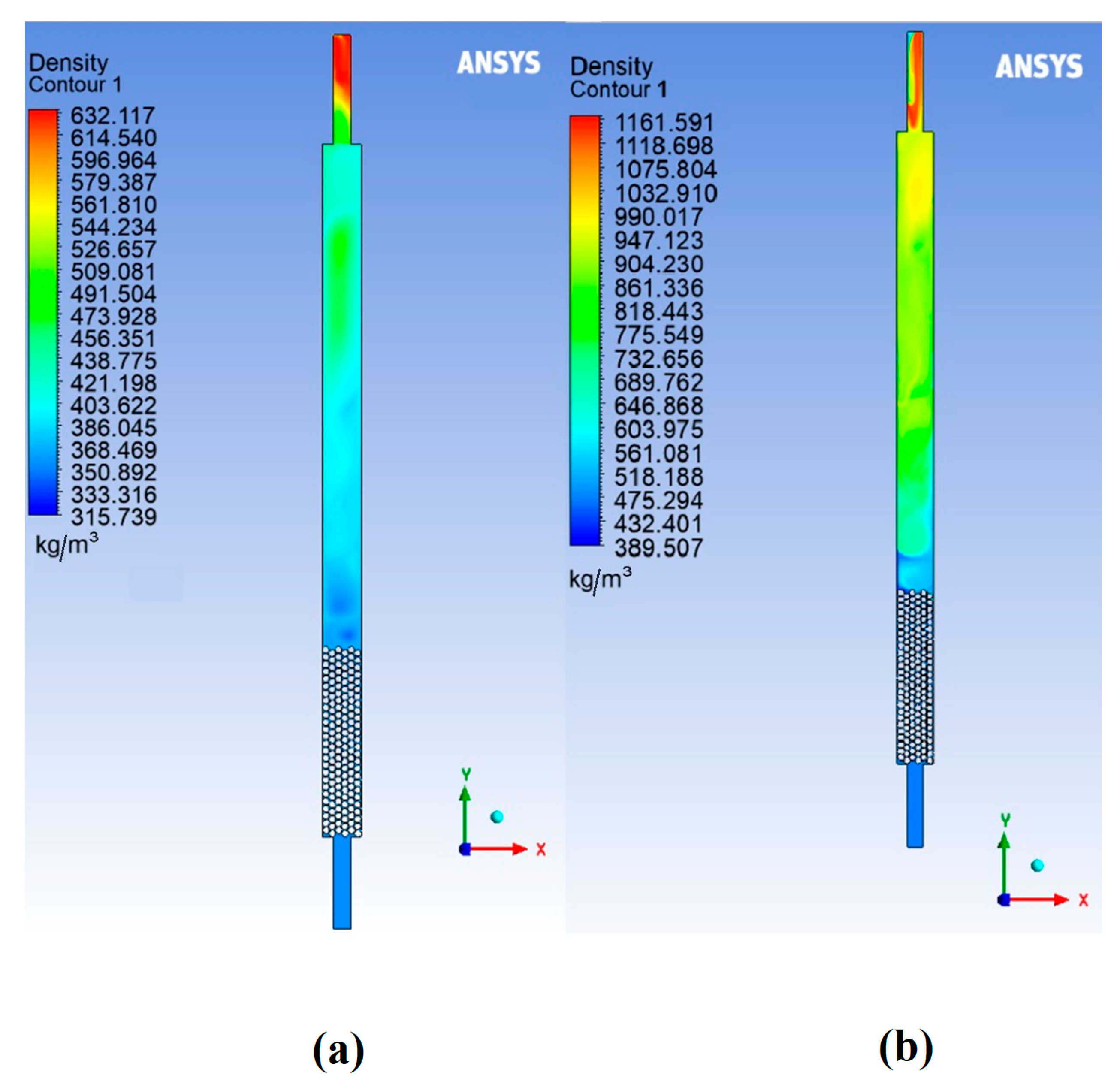
The analysis of temperature fields confirmed that the process proceeds under isothermal conditions, and the influence of temperature gradients on the properties of the supercritical fluid is negligible. This allows proceeding to consider the factor directly determining the extraction efficiency—density. It is density, dependent on pressure, that directly affects the solvent power of the fluid and the selectivity of extracting mixture components. Figure 8 shows the density distribution fields in the extractor for the 11 and 14 MPa modes, allowing a visual assessment of the thermodynamic conditions at each point of the apparatus.
Analysis of the density fields allows the following key observations. Throughout the working volume, the density at 14 MPa systematically exceeds the values at 11 MPa, which fully corresponds to thermodynamic expectations. Along the flow direction (from bottom to top), a smooth increase in density is observed, caused by the gradual saturation of CO2 with esters and the minor influence of hydraulic resistance. The density gradient is more pronounced at 14 MPa, which is associated with the greater compressibility of the medium in this parameter range. In the near-wall zones, the density is somewhat lower than on the central axis, which is explained by the lower intensity of mass transfer near the walls. The difference between the density values at the center and the wall does not exceed 15–20 kg/m3 for both pressures, indicating a relatively uniform density field across the apparatus cross-section and being a favorable factor for the uniform course of the extraction process. The obtained density fields unequivocally show that increasing the operating pressure from 11 to 14 MPa leads to a significant increase in density at all points of the apparatus. Since the solvent power of scCO2 with respect to lipophilic compounds, such as FAEE, has a direct correlation with density, it can be stated that the 14 MPa mode provides a higher extraction potential. This conclusion, based on the visualization of density fields, creates a solid thermodynamic basis for interpreting the possible increase in yield and selectivity in this mode.
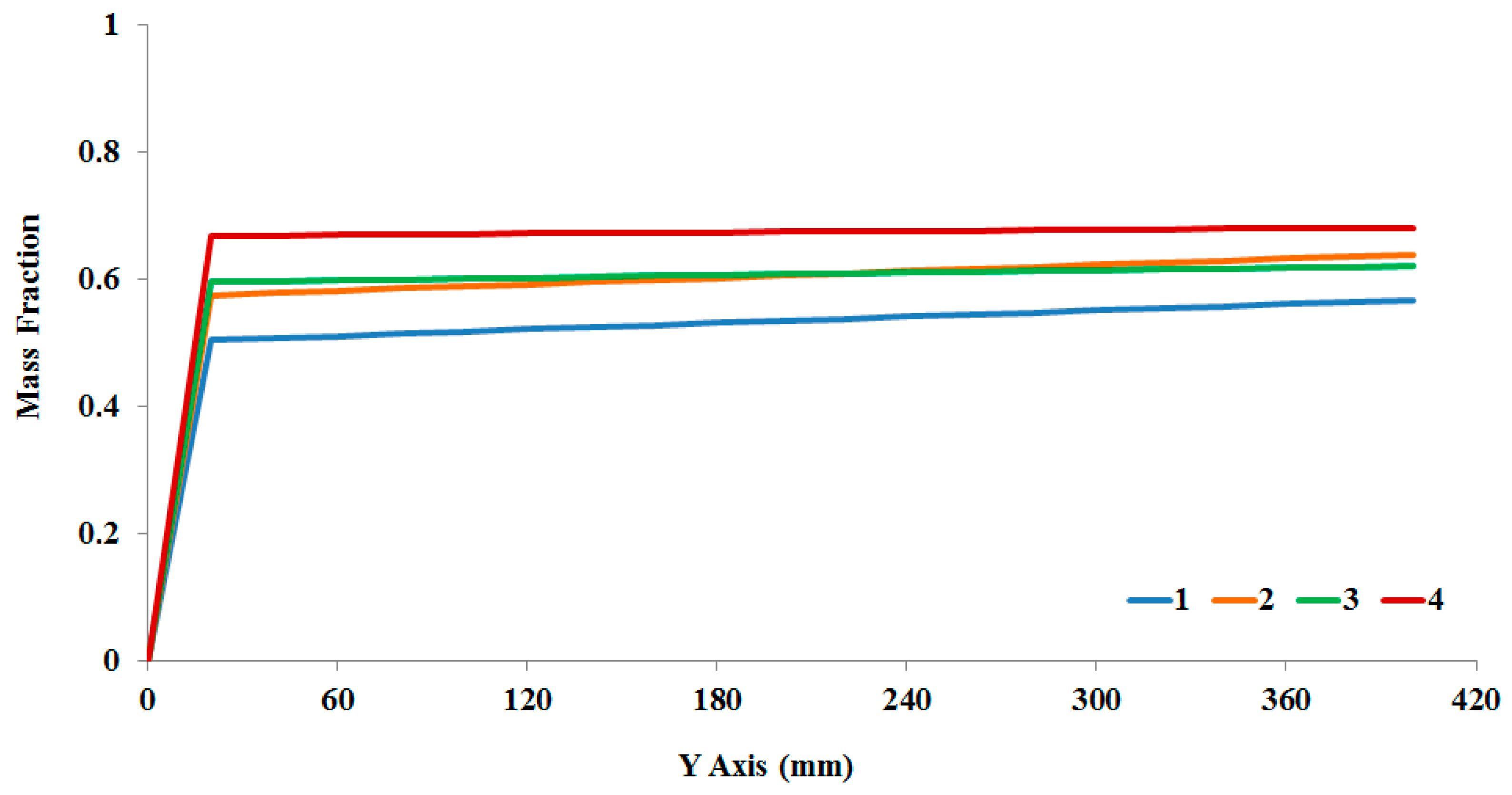
After establishing the patterns of distribution of parameters determining the thermodynamic state of the system, the next stage was the analysis of mass transfer—the process responsible for the selective extraction of target components. For this purpose, separate CFD calculations of the transport of ethyl oleate and ethyl palmitate in supercritical CO2 at pressures of 11 and 14 MPa were performed. Figure 9 shows the obtained profiles of the mass fraction distribution of ethyl oleate and ethyl palmitate along the extractor height. For each pressure, dependencies are presented reflecting the change in concentration of these components along the central axis and averaged values for the near-wall region (left and right walls). Since the mass fraction of carbon dioxide at each point is determined as the complement to unity, it is not shown in the figure. The presented dependencies provide a quantitative representation of the process selectivity and allow linking the observed changes in composition with the hydrodynamic and thermodynamic conditions discussed earlier. Averaging the values for both walls allows assessing the transverse non-uniformity of component distribution across the apparatus cross-section. The mass fraction values in Figure 9 are given relative to the zero level at the extractor inlet, which allows a clear visualization of the accumulation dynamics of each component along the apparatus height.
Analysis of the component mass fraction distribution profiles (Figure 9) allows drawing the following conclusions: at a pressure of 11 MPa, the mass fraction of ethyl palmitate at the extractor outlet (Y = 380–400 mm) reaches 0.69, while the fraction of ethyl oleate is 0.51. This indicates the preferential extraction of the saturated ester—ethyl palmitate—under these conditions. Increasing the pressure to 14 MPa leads to an even more pronounced increase in palmitate concentration: its mass fraction rises to 0.76, whereas the fraction of oleate increases only to 0.58. Thus, throughout the entire apparatus height, the content of ethyl palmitate in the extract consistently exceeds that of ethyl oleate, and this difference amplifies with increasing pressure.
The identified pattern is explained by the difference in the solubility of the components in supercritical CO2. According to the phase diagrams (Figure 3), ethyl palmitate exhibits higher solubility in the investigated parameter range, which determines its preferential extraction. Increasing the pressure further increases the density of CO2 and, consequently, its solvent power, which particularly affects the more soluble component—ethyl palmitate. Thus, both the calculated and experimental data confirm that the scCO2 extraction process allows for the efficient separation of the binary ester mixture, enriching the extract with the high-viscosity saturated component—ethyl palmitate—and the raffinate with the fraction enriched in unsaturated ethyl oleate having reduced viscosity. This directly corresponds to the aim of the work—reducing the viscosity of biodiesel fuel.
From the perspective of industrial applicability, the obtained results indicate a compromise between separation selectivity and the energy costs of the process. It was experimentally established that increasing the pressure from 11 to 14 MPa at 40 °C leads to an increase in the ethyl palmitate content in the extract (Table 2), indicating more efficient fractionation of the mixture. However, an increase in pressure in supercritical CO2 processes is inevitably associated with higher energy consumption for compression and maintaining the operating regime. Therefore, from a practical standpoint, a pressure of 14 MPa can be considered more effective in terms of separation selectivity, but its ultimate industrial feasibility must be determined based on a separate techno-economic analysis considering energy consumption, plant capacity, and the CO2 recycling scheme. Consequently, the proposed model was built and verified for a laboratory extractor with fixed geometry and operating parameters (Figure 2, Table 1). Therefore, it should primarily be considered as a tool for the physical interpretation and analysis of the interrelationship between hydrodynamics, mass transfer, and selectivity under laboratory conditions. The direct transfer of the obtained quantitative results to larger industrial apparatus requires separate consideration of scale effects, possible changes in the flow structure, phase redistribution across the apparatus cross-section, and repeated experimental validation for new geometric and operating conditions. In this sense, the present model serves as a methodological foundation for the subsequent transition to industrial systems.

4. Conclusions

This study addressed the pressing issue of improving biodiesel quality by reducing its viscosity through the selective removal of high-viscosity saturated fatty acid esters from a mixture with unsaturated esters. Fractionation using supercritical carbon dioxide was proposed as a promising method, the efficiency of which directly depends on the hydrodynamic and thermodynamic conditions within the extractor. A three-dimensional CFD model of the supercritical extraction process was developed and experimentally verified for a laboratory-scale extractor with a volume of 0.092 L using the Ansys Fluent software version 2020 R1 environment. Since the target components—ethyl oleate and ethyl palmitate—are absent from the standard material database, a custom property library and compiled User-Defined Function (UDF) routines were implemented for the first time. These enable the reproducible specification of temperature-dependent density, viscosity, heat capacity, and thermal conductivity for both the individual substances and their binary mixture using mixing rules, ensuring a physically correct description of the working fluid’s properties.
A comparative CFD modeling study was conducted for two operating pressures—11 and 14 MPa—at a constant temperature of 40 °C. Analysis of the pressure, velocity, temperature, and density fields, as well as the distributions of component mass fractions, revealed a comprehensive positive effect of increasing pressure on the process. Increasing the pressure to 14 MPa led to a 15–20% increase in density throughout the extractor volume. Considering the direct correlation between density and solvent power, this creates a fundamentally higher extraction potential. Concurrently, a homogenization of the flow velocity field was observed, along with a reduction in hydraulic resistance within the packing layer and a decrease in the extent of stagnant zones. These changes promote more uniform and intensive contact between phases, which is critically important for efficient mass transfer.
Both the calculated and experimental data confirm that ethyl palmitate is extracted preferentially over ethyl oleate, and this selectivity intensifies with increasing pressure. The mass fraction of ethyl palmitate at the extractor outlet increases from 0.69 at 11 MPa to 0.76 at 14 MPa, while the fraction of ethyl oleate only rises from 0.51 to 0.58. Experimental concentrations at 14 MPa and an extraction time of 30 min reach 94.3 wt.% for ethyl palmitate and 5.7 wt.% for ethyl oleate, showing good agreement with the calculated profiles. The mass fraction of the target ester mixture in the extract increases by 9.5 wt.% upon raising the pressure, providing quantitative confirmation of process intensification.

Author Contributions

Conceptualization, S.V.M. and A.U.A.; methodology, S.V.M. and A.S.Z.; software, A.S.Z.; validation, S.V.M., A.U.A. and A.S.Z.; formal analysis, A.U.A.; investigation, S.V.M. and A.S.Z.; resources, S.V.M.; data curation, A.S.Z.; writing—original draft preparation, S.V.M. and A.S.Z.; writing—review and editing, A.U.A.; visualization, A.S.Z.; supervision, S.V.M.; project administration, A.U.A.; funding acquisition, S.V.M. All authors have read and agreed to the published version of the manuscript.

Funding

This research was funded by Russian Science Foundation grant number 23-79-10304.

Institutional Review Board Statement

Not applicable.

Informed Consent Statement

Not applicable.

Data Availability Statement

The original contributions presented in this study are included in the article. Further inquiries can be directed to the corresponding author.

Acknowledgments

The work was carried out with financial support from the Russian Science Foundation (project No. 23-79-10304, Available online: https://rscf.ru/project/23-79-10304/), URL (accessed on 1 February 2026).

Conflicts of Interest

The authors declare no conflicts of interest.

References

  1. Shapovalov, Y.A.; Mazanov, S.V.; Aetov, A.U.; Kamysbaev, D.H.; Tokpayev, R.R.; Gumerov, F.M. Separation of Rapeseed Oil Transesterification Reaction Product Obtained Under Supercritical Fluid Conditions Using Heterogeneous Catalysts. Energies 2025, 18, 1669. [Google Scholar] [CrossRef]
  2. Mazanov, S.V.; Kouagou, Z.-M.; Hounkpatin, D.D.; Fonkou, M.J.; Usmanov, R.A.; Zaripov, Z.I.; Gumerov, F.M.; Shapovalov, Y.A. Transesterification of Shea (Karite) and Palm Oils in Supercritical Ethanol. Russ. J. Phys. Chem. B 2022, 16, 1347–1353. [Google Scholar] [CrossRef]
  3. Usmanov, R.A.; Mazanov, S.V.; Gabitova, A.R.; Miftakhova, L.K.; Gumerov, F.M.; Musin, R.Z.; Abdulagatov, I.M. The effect of fatty acid ethyl esters concentration on the kinematic viscosity of biodiesel fuel. J. Chem. Eng. Data 2015, 60, 3404–3413. [Google Scholar] [CrossRef]
  4. Gabitova, A.R.; Mazanov, S.V.; Usmanov, R.A.; Zaripov, Z.I.; Gumerov, F.M.; Abdulagatov, I.M. Viscometry as a method for determining concentration of fatty acid ethyl esters in biodiesel fuel. Chem. Technol. Fuels Oils 2017, 53, 77–86. [Google Scholar] [CrossRef]
  5. Mazanov, S.V.; Gabitova, A.R.; Miftahova, L.K.; Usmanov, R.A.; Gumerov, F.M.; Zaripov, Z.I.; Vasil’ev, V.A.; Karalyn, E.A. Preparing biodiesel fuel in supercritical fluid conditions with heterogeneous catalysts. Russ. J. Phys. Chem. B 2016, 10, 1099–1107. [Google Scholar] [CrossRef]
  6. Mazanov, S.V.; Usmanov, R.A.; Kuagu, J.M.; Unkpaten, D.D.; Fonkou, M.D.; Gumerov, F.M.; Zaripov, Z.I.; Shapovalov, Y.A.; Nauryzbayev, M.K. Experimental study of non-catalytic and catalytic reaction of transesterification of rapeseed oil under supercritical fluid conditions in a flow-type installation. Ind. Kazakhstan 2019, 1, 90–92. [Google Scholar]
  7. Rozina; Emmanuel, О.; Ul Abidin, S.Z.; Nawaz, S.; Zarwa, W. Biodiesel. In Hydrogen and Low-Carbon Fuels in Circular Bio-Economy: Assessment Methodologies, Production Technologies and Sector-Specific Applications; Springer: Cham, Switzerland, 2025; pp. 209–229. [Google Scholar]
  8. Pedraza-Casanova, L.; Romero-Ramirez, P.; Carrillo, H.; Cifuentes, B.; Guerrero, J.L.; García-Núñez, J.A. An in Silico Environmental Risk Assessment of Palm Oil Transesterification in Supercritical Ethanol as a Tool to Enhance Sustainable Biofuel Production. J. Supercrit. Fluids 2025, 226, 106724. [Google Scholar] [CrossRef]
  9. Kamjam, M.; Wongsawaeng, D.; Sawangkeaw, R.; Supang, W.; Hosemann, P.; Sola, P.; Ngamprasertsith, S. Valorization of Rambutan Seed Waste into Biodiesel via Non-Catalytic Supercritical Ethanol and Ethyl Acetate. Energies 2025, 18, 6004. [Google Scholar] [CrossRef]
  10. Perumal, G.; Munusamy, R.; Rajasingh, E.C.; Mahendiradas, D.K. A systematic review on the production of biodiesel using various feedstocks and effective catalysts. Pet. Sci. Technol. 2025, 43, 1910–1926. [Google Scholar] [CrossRef]
  11. Guduru, V.R.R.; Suraparaju, S.K.; Natarajan, S.K.; Gadepalli, R.K.S.; Raju, V.R. A comprehensive review on biodiesel performance: Advantages, challenges, policies and prospects. Int. J. Oil Gas Coal Technol. 2025, 38, 240–282. [Google Scholar] [CrossRef]
  12. Onwusa, S.C.; Ikikiru, D.F.; Okoye, P.I.; Ekwemuka, J.U.; Uyeri, O.C. Performance and Emission Analysis of Biodiesel Blends in Diesel Engines: Comprehensive Review. Unizik J. Technol. Prod. Mech. Syst. 2025, 7, 355–371. [Google Scholar]
  13. Pandey, R.K.; Sharma, Y.C.; Baredar, P.; Varshney, R.; Sahu, M.M.; Dubey, N.; Patil, R.G. Decarbonizing Transportation: Navigating the Nexus of Greenhouse Gas Emissions, Advanced Mixed Biofuels, and Mixed CNG–Hydrogen Gas. In Green Hydrogen Production; CRC Press: Boca Raton, FL, USA, 2025; pp. 326–344. [Google Scholar]
  14. OilWorld.ru. Biofuel Production Could Reach 500–700 Million Liters per Year by 2030. Available online: https://www.oilworld.ru/analytics/forecast/365813 (accessed on 29 January 2026).
  15. Usmanov, R.A.; Mazanov, S.V.; Aetov, A.U.; Gabitova, A.R.; Monakhov, I.I.; Gumerov, F.M. Transesterification of oils with high contents of saturated and unsaturated fatty acids in supercritical fluid conditions. Braz. J. Chem. Eng. 2025, 42, 1437–1448. [Google Scholar] [CrossRef]
  16. EN 14214:2013 V2+A2:2019; Liquid Petroleum Products—Fatty Acid Methyl Esters (FAME) for Use in Diesel Engines and Heating Applications—Requirements and Test Methods. European Committee for Standardization: Brussels, Belgium, 2019.
  17. ASTM D6751-23a; Standard Specification for Biodiesel Fuel Blendstock (B100) for Middle Distillate Fuels. ASTM International: West Conshohocken, PA, USA, 2023.
  18. Ramalingam, K.; Vellaiyan, S.; Venkatesan, E.P.; Khan, S.A.; Mahmoud, Z.; Saleel, C.A. Challenges and Opportunities of Low Viscous Biofuel—A Prospective Review. ACS Omega 2023, 8, 16545–16560. [Google Scholar] [CrossRef] [PubMed]
  19. Farouk, S.M.; Tayeb, A.M.; Abdel-Hamid, S.M.S.; Osman, R.M. Recent advances in transesterification for sustainable biodiesel production, challenges, and prospects: A comprehensive review. Environ. Sci. Pollut. Res. 2024, 31, 12722–12747. [Google Scholar] [CrossRef] [PubMed]
  20. Taher, H.; Al-Zuhair, S.; Al-Marzouqi, A.H.; Haik, Y.; Farid, M.M. A Review of Enzymatic Transesterification of Microalgal Oil-Based Biodiesel Using Supercritical Technology. Enzym. Res. 2011, 2011, 468292. [Google Scholar] [CrossRef] [PubMed]
  21. Badday, A.S.; Abdullah, A.Z.; Lee, K.T.; Khayoon, M.S. Intensification of biodiesel production via ultrasonic-assisted process: A critical review on fundamentals and recent development. Renew. Sustain. Energy Rev. 2012, 16, 4574–4587. [Google Scholar] [CrossRef]
  22. Subramaniam, B. Enhancing the stability of porous catalysts with supercritical reaction media. Appl. Catal. A Gen. 2001, 212, 199–213. [Google Scholar] [CrossRef]
  23. Hoff, K.L.; Eisenacher, M. Process intensification strategies for esterification: Kinetic modeling, reactor design, and sustainable applications. Int. J. Mol. Sci. 2025, 26, 7214. [Google Scholar] [CrossRef]
  24. Zaripov, Z.I.; Mazanov, S.V.; Nakipov, R.R.; Solovyova, A.O.; Aetov, A.U.; Monakhov, I.I. Investigation of Phase Equilibria of Binary Systems Target Component (Ethyl Acetate, Ethyl Oleate, Ethyl Palmitate)—Extractant (Carbon Dioxide, Ethane, Refrigerant R404A). Inzhenernaya Fiz. 2025, 10, 17–26. [Google Scholar] [CrossRef]
  25. Zaripov, Z.I.; Nakipov, R.R.; Usmanov, R.A.; Aetov, A.U.; Gumerov, F.M. Phase Behavior of the Binary System Refrigerant R404A-Acetone and SFE Extraction of Acetone from Aqueous Solution with Refrigerant R404A. Supercrit. Fluids Theory Pract. 2025, 20, 22–33. [Google Scholar] [CrossRef]
  26. Ramsey, E.; Sun, Q.; Zhang, Z.; Zhang, C.; Gou, W. Mini-Review: Green sustainable processes using supercritical fluid carbon dioxide. J. Environ. Sci. 2009, 21, 720–726. [Google Scholar] [CrossRef] [PubMed]
  27. Liu, H.; Chen, B.Q.; Pan, Y.J.; Fu, C.P.; Kankala, R.K.; Wang, S.B.; Chen, A.Z. Role of supercritical carbon dioxide (scCO2) in fabrication of inorganic-based materials: A green and unique route. Sci. Technol. Adv. Mater. 2021, 22, 695–717. [Google Scholar] [CrossRef]
  28. Uchida, H.; Izaki, K.; Shiokawa, M. Chemical deposition of silica-based thin films under supercritical carbon dioxide atmosphere using tetraethylorthosilicate precursor with oxidizing agents. J. Ceram. Soc. Jpn. 2016, 124, 18–22. [Google Scholar] [CrossRef]
  29. Liu, R.; Zhang, P.; Zhang, S.; Yan, T.; Xin, J.; Zhang, X. Ionic liquids and supercritical carbon dioxide: Green and alternative reaction media for chemical processes. Rev. Chem. Eng. 2016, 32, 587–609. [Google Scholar] [CrossRef]
  30. Medina-Gonzalez, Y.; Camy, S.; Condoret, J.S. Cellulosic materials as biopolymers and supercritical CO2 as a green process: Chemistry and applications. Int. J. Sustain. Eng. 2012, 5, 47–65. [Google Scholar] [CrossRef]
  31. Knez, Ž.; Markočič, E.; Leitgeb, M.; Primožič, M.; Knez Hrnčič, M.; Škerget, M. Industrial applications of supercritical fluids: A review. Energy 2014, 77, 235–243. [Google Scholar] [CrossRef]
  32. Hajareh Haghighi, F.; Binaymotlagh, R.; Palocci, C.; Chonopoulou, L. Magnetic iron oxide nanomaterials for lipase immobilization: Promising industrial catalysts for biodiesel production. Catalysts 2024, 14, 336. [Google Scholar] [CrossRef]
  33. Htun, S.L.; Adair, J.; Goldfarb, J.L. Chemical and biological solutions to the thermodynamic challenges posed by hydrothermal liquefaction process water. Prog. Energy 2025, 7, 032003. [Google Scholar] [CrossRef]
  34. Saini, R.; Kumar, S.; Sharma, A.; Kumar, V.; Sharma, R.; Janghu, S.; Suthar, P. Deep eutectic solvents: The new generation sustainable and safe extraction systems for bioactive compounds in agri food sector: An update. J. Food Process. Preserv. 2022, 46, e16250. [Google Scholar] [CrossRef]
  35. Neto, B.A.D.; Lapis, A.A.M.; Souza, R.Y. Task-specific ionic liquids: Design, properties, and applications. In Encyclopedia of Ionic Liquids; Springer: Singapore, 2023; pp. 1273–1283. [Google Scholar] [CrossRef]
  36. Bermudez, G.; Terenzi, C.; Medri, F.; Andrisano, V.; Montanari, S. Extraction and analytical methods for the characterization of polyphenols in marine microalgae: A review. Mar. Drugs 2024, 22, 538. [Google Scholar] [CrossRef] [PubMed]
  37. Uwineza, P.A.; Waśkiewicz, A. Recent Advances in Supercritical Fluid Extraction of Natural Bioactive Compounds from Natural Plant Materials. Molecules 2020, 25, 3847. [Google Scholar] [CrossRef]
  38. Bhadange, Y.A.; Carpenter, J.; Saharan, V.K. A comprehensive review on advanced extraction techniques for retrieving bioactive components from natural sources. ACS Omega 2024, 9, 31274–31297. [Google Scholar] [CrossRef]
  39. Vafaei, N.; Rempel, C.B.; Scanlon, M.G.; Jones, P.J.H.; Eskin, M.N.A. Application of supercritical fluid extraction (SFE) of tocopherols and carotenoids (hydrophobic antioxidants) compared to non-SFE methods. AppliedChem 2022, 2, 68–92. [Google Scholar] [CrossRef]
  40. Alcântara, S.C.S.; da Costa, J.Â.P.; Ochoa, A.A.V.; Leite, G.d.N.P.; Lima, Á.A.S.; Silva, H.C.N.; Michima, P.S.A.; da Silveira, I.C.; Caldas, A.M.d.A.; Altamirano, A. Critical Review of Advances and Numerical Modeling in Absorbers and Desorbers of Absorption Chillers: CFD Applications, Constraints, and Future Prospects. Energies 2025, 18, 314. [Google Scholar] [CrossRef]
  41. Spitas, C.; Amani, A.; Spitas, V. A review of emerging computational models for the design of smart structures and powertrains. J. Coupled Syst. Multiscale Dyn. 2015, 3, 279–332. [Google Scholar] [CrossRef]
  42. García-González, C.A.; Blanco-Vales, M.; Barros, J.; Boccia, A.C.; Budtova, T.; Durães, L.; Erkey, C.; Gallo, M.; Herman, P.; Kalmár, J.; et al. Review and perspectives on the sustainability of organic aerogels. ACS Sustain. Chem. Eng. 2025, 13, 6469–6492. [Google Scholar] [CrossRef] [PubMed]
  43. Smirnova, I.; Gurikov, P. Aerogel production: Current status, research directions, and future opportunities. J. Supercrit. Fluids 2018, 134, 228–233. [Google Scholar] [CrossRef]
  44. Kara, I.T.; Kiyak, B.; Gunes, N.C.; Yucel, S. Life cycle assessment of aerogels: A critical review. J. Sol-Gel Sci. Technol. 2024, 111, 618–649. [Google Scholar] [CrossRef]
  45. Spietelun, A.; Kloskowski, A.; Chrzanowski, W.; Namieśnik, J. Understanding solid-phase microextraction: Key factors influencing the extraction process and trends in improving the technique. Chem. Rev. 2013, 113, 1667–1685. [Google Scholar] [CrossRef]
  46. Shen, J.; Zhu, H.; Zhu, Y.; Zhang, W.; Wang, J.; Gosslau, A. Advancements in the singlemer separation of polymethoxyflavones in citrus peels. J. Food Bioact. 2025, 29, 13–19. [Google Scholar] [CrossRef]
  47. Boh, B. Ganoderma lucidum: A potential for biotechnological production of anti-cancer and immunomodulatory drugs. In Topics in Anti-Cancer Research; Bentham Science: Sharjah, United Arab Emirates, 2014; Volume 3, pp. 202–271. [Google Scholar] [CrossRef]
  48. Rahman, M.A.; Nahin, M.N.I.; Mostafa, M.G.; Pownceby, M.I.; Hayatullah; Hossen, M.N.; Hossain, M.M.; Alam, M.S.; Rana, M.S.; Fakir, A.K.; et al. Extraction of Rare Earth Elements from Monazite: A Review of Current Practices and Emerging Opportunities for Bangladesh. Miner. Process. Extr. Metall. Rev. 2025, 1–17. [Google Scholar] [CrossRef]
  49. Wang, F.Z.; Animasaun, I.L.; Muhammad, T.; Okoya, S.S. Recent advancements in fluid dynamics: Drag reduction, lift generation, computational fluid dynamics, turbulence modelling, and multiphase flow. Arab. J. Sci. Eng. 2024, 49, 10237–10249. [Google Scholar] [CrossRef]
  50. Soodmand, A.M.; Azimi, B.; Nejatbakhsh, S.; Pourpasha, H.; Farshchi, M.E.; Aghdasinia, H.; Mohammadpourfard, M.; Heris, S.Z. A comprehensive review of computational fluid dynamics simulation studies in phase change materials: Applications, materials, and geometries. J. Therm. Anal. Calorim. 2023, 148, 10595–10644. [Google Scholar] [CrossRef]
  51. Santra, S.; Mandal, S.; Chakraborty, S. Phase-field modeling of multicomponent and multiphase flows in microfluidic systems: A review. Int. J. Numer. Methods Heat Fluid Flow 2021, 31, 3089–3131. [Google Scholar] [CrossRef]
  52. Lam, W.Y.; Liang, Y.Y.; Ng, K.C.; Li, M.; Ahmad, A.L.; Fimbres Weihs, G.A. Reviewing two-phase flow modeling in membrane processes through computational fluid dynamics. Chem. Eng. Res. Des. 2025, 214, 28–38. [Google Scholar] [CrossRef]
  53. Nadamani, M.N.; Shadloo, M.S.; Dbouk, T. A Review on Theoretical and Computational Fluid Dynamics Modeling of Coupled Heat and Mass Transfer in Fixed Beds of Adsorbing Porous Media. Energies 2025, 18, 6418. [Google Scholar] [CrossRef]
  54. Farid, M.U.; Olbert, I.A.; Bück, A.; Ghafoor, A.; Wu, G. CFD modelling and simulation of anaerobic digestion reactors for energy generation from organic wastes: A comprehensive review. Heliyon 2025, 11, e41911. [Google Scholar] [CrossRef] [PubMed]
  55. Stan, C.; Năstase, I.; Bode, F.; Calotă, R. Smoke and Hot Gas Removal in Underground Parking Through Computational Fluid Dynamics: A State of the Art and Future Challenges. Fire 2024, 7, 375. [Google Scholar] [CrossRef]
  56. Banerjee, S.; Agarwal, R.K. Review of recent advances in process modeling and computational fluid dynamics simulation of chemical-looping combustion. Int. J. Energy Clean Environ. 2017, 18, 1–37. [Google Scholar] [CrossRef]
  57. Pandey, P.; Krishna, P.K.; Mohanan, S.; Surenjan, A. Photocatalytic reactor modelling incorporating computational fluid dynamics (CFD) for water and air purification: A concise review. Process Integr. Optim. Sustain. 2025, 9, 471–485. [Google Scholar] [CrossRef]
  58. Jeong, S.J. CFD simulation of pre-chamber spark-ignition engines—A perspective review. Energies 2024, 17, 4696. [Google Scholar] [CrossRef]
  59. Schmidt, F.R. Optimization and scale up of industrial fermentation processes. Appl. Microbiol. Biotechnol. 2005, 68, 425–435. [Google Scholar] [CrossRef] [PubMed]
  60. Dávila, P.; Bourouis, M.; Nicolalde, J.F.; Martínez-Gómez, J. Modelling and analysis of a compression/resorption heat pump system with a zeotropic mixture of acetone/CO2. Appl. Therm. Eng. 2023, 227, 120388. [Google Scholar] [CrossRef]
  61. Williams, D.F. Extraction with supercritical gases. Chem. Eng. Sci. 1981, 36, 1769–1788. [Google Scholar] [CrossRef]
  62. Brandalize, M.V.; Gaschi, P.S.; Mafra, M.R.; Ramos, L.P.; Corazza, M.L. High-pressure phase equilibrium measurements and thermodynamic modeling for the systems involving CO2, ethyl esters (oleate, stearate, palmitate) and acetone. Chem. Eng. Res. Des. 2014, 92, 2814–2825. [Google Scholar] [CrossRef]
  63. Jeong, W.J.; Cho, H.-K.; Lim, J.S. Vapor-liquid equilibria for binary mixtures of carbon dioxide and fatty acid ethyl esters. Fluid Phase Equilib. 1989, 50, 315–327. [Google Scholar] [CrossRef]
  64. Gaschi, P.S.; Mafra, M.R.; Ndiaye, P.M.; Corazza, M.L. Phase equilibrium measurements and thermodynamic modeling for the system (CO2+ethyl palmitate+ethanol) at high pressures. J. Chem. Thermodyn. 2013, 57, 14–21. [Google Scholar] [CrossRef]
  65. López-Padilla, A.; Ruiz-Rodriguez, A.; Reglero, G.; Fornari, T. Study of the diffusion coefficient of solute-type extracts in supercritical carbon dioxide: Volatile oils, fatty acids and fixed oils. J. Supercrit. Fluids 2016, 109, 148–156. [Google Scholar] [CrossRef]
  66. Funazukuri, T.; Kong, C.Y.; Kagei, S. Effects of molecular weight and degree of unsaturation on binary diffusion coefficients for lipids in supercritical carbon dioxide. Fluid Phase Equilib. 2004, 219, 67–73. [Google Scholar] [CrossRef]
  67. Liong, K.K.; Wells, P.A.; Foster, N.R. Diffusion coefficients of long-chain esters in supercritical carbon dioxide. Ind. Eng. Chem. Res. 1991, 30, 1329–1335. [Google Scholar] [CrossRef]
  68. Versteeg, F.A.; Picchioni, F.; Versteeg, G.F. On the mass transfer of supercritical fluids, specifically supercritical CO2: An overview. Chem. Eng. J. 2024, 493, 152521. [Google Scholar] [CrossRef]
Figure 1. Laboratory-scale supercritical fluid extraction setup designed for the fractionation of fatty acid ethyl esters: (a) external view; (b) experimental schematic: 1—gas cylinder; 2—pressure gauge; 3—high-pressure pump; 4—extractor inlet valve; 5—extractor; 6—heater; 7—temperature sensor (thermocouple); 8—extractor outlet regulating valve; 9—delivery tube to glass flask; 10—separator; 11—gas outlet tube; 12—electronic laboratory balance with automatic recording; 13—personal computer.
Energies 19 01634 g001
Figure 2. Schematic diagram of the supercritical CO2 extractor (a): 1—extractor wall; 2—insulation; 3—heater; 4—CO2 supply preheating coil; and the extractor geometry (b) indicating the boundary conditions, where 1: inlet—scCO2 supply; 2: outlet—extract outlet; 3: wall_1—reactor wall made of AISI 321 steel; 4: wall_2—packing made of borosilicate glass.
Energies 19 01634 g002
Figure 3. Phase equilibrium diagrams (t = 40 °C) for binary systems: “CO2-ethyl oleate”: 1—[62], 2—[63], 3—[63]; “CO2-ethyl palmitate”: 4—[64].
Energies 19 01634 g003
Figure 4. Chromatogram of sample No. 1 (Table 2): 1—peak corresponding to isopropanol (solvent); 2—peak corresponding to ethyl palmitate; 3—peak corresponding to ethyl oleate.
Energies 19 01634 g004
Figure 5. Static pressure distribution (Pa) in the extractor at pressures: (a) 11 MPa; (b) 14 MPa.
Energies 19 01634 g005
Figure 6. scCO2 flow velocity field in the extractor cross-section at pressures: (a) 11 MPa; (b) 14 MPa.
Energies 19 01634 g006
Figure 7. Temperature profiles along the extractor height: 1—on the central axis (at pressures of 11 and 14 MPa); 2—near the inner wall surfaces (at pressures of 11 and 14 MPa).
Energies 19 01634 g007
Figure 8. scCO2 density distribution fields in the extractor at pressures of 11 MPa (a) and 14 MPa (b).
Energies 19 01634 g008
Figure 9. Profiles of component mass fraction distribution along the extractor height at pressures of 11 and 14 MPa: 1—ethyl oleate (11 MPa); 2—ethyl palmitate (11 MPa); 3—ethyl oleate (14 MPa); 4—ethyl palmitate (14 MPa).
Energies 19 01634 g009
Table 1. Input data and assumptions.
Extractor Dimensions (Figure 2a)CFD Modeling Boundary Conditions (Figure 2b)
ParameterValueBoundaryCondition TypeParameters
Length, mm4081: inletMass flow Inlet2 mL/min
Internal diameter, mm162: outletPressure Outlet11 and 14 MPa
Total internal volume, mL923: wall_1No-Slip wallAdiabatic
4: wall_2No-Slip wallAdiabatic
SystemAssumptionsIsothermal process (temperature constant throughout the volume)
ExtractantscCО2
Target componentMixture of ethyl oleate and ethyl palmitate (25/75 vol.%, 25.28/74.72 wt.%)
Thermodynamic parametersViscosity of scCO2 depends on T and P
Critical point of CO2tc = 31.1 °C, Pc = 7.38 MPa
Operating rangeAbsence of chemical reactions (purely physical extraction)
Temperature, °C40
Pressure, МПа11 and 14
Table 2. Conditions and results of scCO2 extraction separation of the binary mixture composed of ethyl oleate and ethyl palmitate.
Nt,
°C
Р,
MPa
Mixture Composition (EO/EP), wt.%VСО2 *,
mL/min
τ,
min
СEP *,
wt.%
СEO *,
wt.%
1401125.28:74.7221585.5114.49
23088.2811.72
3141589.6610.34
43094.345.66
* VCO2—extractant flow rate; CEP, CEO—concentrations of ethyl palmitate and ethyl oleate in the extract, respectively.
Disclaimer/Publisher’s Note: The statements, opinions and data contained in all publications are solely those of the individual author(s) and contributor(s) and not of MDPI and/or the editor(s). MDPI and/or the editor(s) disclaim responsibility for any injury to people or property resulting from any ideas, methods, instructions or products referred to in the content.