Next Article in Journal
A Deeper Insight into Dynamic Stall of Vertical Axis Wind Turbines: Parametric Study of Symmetric Airfoils
Previous Article in Journal
Thermal Protection Modular Design for High-Speed Aircraft Engines and Optimization Based on Design of Experiments
Previous Article in Special Issue
Simultaneous Reductions in NOx Emissions, Combustion Instability, and Efficiency Loss in a Lean-Burn CHP Engine via Hydrogen-Enriched Natural Gas
 
 
Due to scheduled maintenance work on our servers, there may be short service disruptions on this website between 11:00 and 12:00 CEST on March 28th.
Article

Strain-Based Hydrogen Quantification in a Metal Hydride Vessel

1
Hydrogen Research Department, Korea Institute of Energy Research (KIER), Daejeon 34129, Republic of Korea
2
Department of Chemical and Biological Engineering, Korea University, Seoul 02841, Republic of Korea
*
Authors to whom correspondence should be addressed.
These authors contributed equally to this work.
Energies 2026, 19(7), 1617; https://doi.org/10.3390/en19071617 (registering DOI)
Submission received: 10 February 2026 / Revised: 18 March 2026 / Accepted: 20 March 2026 / Published: 25 March 2026
(This article belongs to the Special Issue Advances in Hydrogen Energy and Fuel Cell Technologies)

Abstract

Metal hydrides store hydrogen in the solid state with high density and inherent safety, and their thermodynamic characteristics are typically described by the pressure–composition–isotherm (PCI) curve. In the plateau pressure region of the PCI curve, the equilibrium pressure remains nearly constant over a wide hydrogen concentration range, making conventional pressure-based methods unsuitable for quantifying the hydrogen amount in metal hydride vessels. This study proposes a strain-based method to quantify the hydrogen amount in a metal hydride vessel by measuring the strain induced on the metal hydride vessel surface due to the volumetric change of the metal hydride during hydrogen adsorption and desorption. The installation of strain gauges on the metal hydride vessel was verified using argon pressurization tests. The metal hydride was activated prior to controlled hydrogen desorption experiments aimed at quantifying the amount of hydrogen remaining in the vessel. A correlation between strain and hydrogen amount was obtained from experiments conducted at discrete measurement points. The hydrogen amount estimated using the strain-based method was further evaluated through continuous time-series desorption tests and showed good agreement with the results obtained from the mass flow controller (MFC)-based method, with a maximum difference of 4.5%. These results demonstrate that the proposed method provides a simple and reliable approach for quantifying the hydrogen amount in metal hydride vessels.

1. Introduction

Renewable energy, such as wind and solar power, is widely recognized as alternatives to fossil fuels. However, the intermittent nature of renewable energy can affect energy supply stability. To address this issue, energy storage technologies capable of storing renewable energy are required. One promising approach is the production of green hydrogen through water electrolysis using renewable electricity [1,2].
Hydrogen is widely recognized as a key energy carrier for achieving carbon neutrality owing to its high gravimetric energy density, zero carbon emissions at the point of use, and suitability for integration with renewable energy systems [3,4]. When hydrogen is utilized in fuel cells, water is the only byproduct, which makes it an attractive alternative to fossil fuels for a wide range of applications, from stationary power systems to transportation. Despite these advantages, the development of safe and efficient hydrogen storage technologies remains a critical challenge for the widespread adoption of hydrogen as an energy carrier [5,6].
To address this challenge, various hydrogen storage methods, including high-pressure gaseous storage, cryogenic liquid storage, and solid-state storage, have been developed. In particular, solid-state hydrogen storage using metal hydrides has attracted considerable attention due to its inherent safety, high volumetric hydrogen storage density, and ability to operate under moderate pressure and temperature conditions [7,8]. Hydrogen absorption and desorption in metal hydrides involve significant exothermic and endothermic reactions, which generate or require a considerable amount of heat. Therefore, thermal management is essential for maintaining stable reaction kinetics [9,10,11].
In metal hydrides, hydrogen is reversibly stored through metal–hydrogen reactions, during which hydrogen atoms occupy interstitial sites in the metal lattice. This storage mechanism significantly reduces the amount of free gaseous hydrogen in the system, thereby mitigating the risks associated with hydrogen leakage and explosion. Consequently, metal hydride-based hydrogen storage systems are considered promising candidates for applications requiring high safety and compact system designs [12,13,14].
For the practical utilization of metal hydride-based hydrogen storage systems in various applications, accurate determination of the remaining hydrogen amount in the metal hydride vessel is essential. Real-time information on the remaining hydrogen amount is particularly critical for operation control, safety management, and user information. In high-pressure gaseous hydrogen storage vessels, the stored hydrogen amount can be directly estimated from pressure and temperature using the real-gas equations of state. In contrast, metal hydrides show a plateau pressure during hydrogen absorption and desorption, where a substantial amount of hydrogen is stored or released while the pressure remains nearly constant. Therefore, conventional pressure-based methods are difficult to apply to metal hydride storage systems due to the plateau behavior [15].
To determine the hydrogen amount in metal hydride vessels, several approaches have been investigated [16,17,18,19]. One commonly used method is the integration of hydrogen flow rate measured using a mass flow controller (MFC) during hydrogen absorption and desorption processes. However, this approach increases system complexity and cost. Calorimetric methods have also been proposed to estimate the hydrogen amount by measuring the heat generated during the metal–hydrogen reaction. Nevertheless, their practical application is limited because accurate estimation requires precise measurement of heat transfer and thermal losses in the metal hydride vessel. Accordingly, a simple and reliable method for estimating the hydrogen amount in metal hydride vessels is required.
During hydrogen absorption and desorption, metal hydrides undergo intrinsic lattice expansion and contraction as hydrogen atoms enter and leave the metal lattice. This volumetric change is an inherent characteristic of the metal–hydrogen reaction and occurs regardless of the presence of a plateau pressure. When the metal hydride is contained within a metal hydride vessel, this volumetric change is transmitted to the metal hydride vessel wall as mechanical stress, which appears as strain on the metal hydride vessel surface. In previous studies, such stress and strain have mainly been investigated from the viewpoints of structural integrity and safety of metal hydride vessels [20,21].
This study proposes a strain-based method for measuring the hydrogen amount in a metal hydride vessel. The strain-based method estimates the hydrogen amount by monitoring the strain generated on the outer surface of the metal hydride vessel, which reflects the volumetric change of the metal hydride during hydrogen adsorption and desorption. Since fuel cells operate by continuously consuming the stored hydrogen, accurate determination of the remaining hydrogen amount in the vessel during operation is essential. Therefore, in this study, the experiments were focused on the hydrogen desorption process. The installation of strain gauges on the metal hydride vessel was verified through argon pressurization tests, after which the correlation between the strain and the hydrogen amount in the metal hydride vessel was obtained during hydrogen desorption. Based on this correlation, the hydrogen amount estimated from the strain is compared with that measured by an MFC-based method to evaluate the accuracy and reliability of the strain-based method.

2. Experimental Setup and Methods

2.1. Experimental Setup

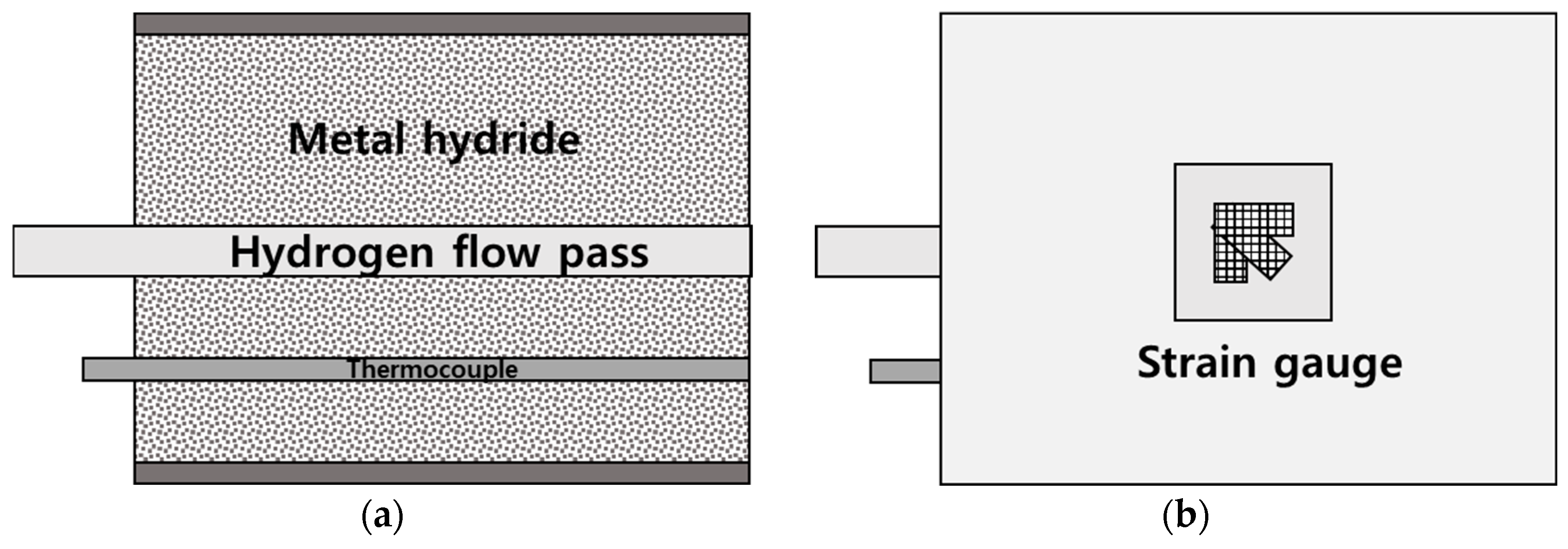
Figure 1 shows a schematic diagram of the metal hydride vessel designed to quantify the stored hydrogen using the strain-based method, including its internal and external configurations. An AB5-type metal hydride, La0.9Ce0.1Ni5 (Whole Win, Zhu Hai, China), was used as the hydrogen storage material. Expanded natural graphite (Yanxin, Jiangyin, China) was employed together with the metal hydride to improve heat transfer characteristics inside the metal hydride vessel [22]. Powdered La0.9Ce0.1Ni5 and expanded natural graphite were mixed at a weight ratio of 95:5 and subsequently compacted under a pressure of 13 MPa to prepare a metal hydride composite. All preparation processes were carried out under an inert atmosphere to prevent oxidation of the metal hydride.
The metal hydride vessel was fabricated using a stainless-steel pipe with an outer diameter of 60.5 mm, a wall thickness of 2.8 mm, and a length of 100 mm. A central gas channel with a diameter of 6.4 mm was incorporated along the axial direction. The prepared metal hydride composite was directly loaded into the metal hydride vessel without any additional pretreatment, and the total mass of the loaded metal hydride composite was 821 g. Thermocouples were installed to measure the temperature inside the metal hydride vessel and on its outer surface. To measure strain of the metal hydride vessel, a three-axis strain gauge (Tokyo Measuring Instruments Laboratory, Shinagawa, Japan) was employed. Prior to gauge installation, the metal hydride vessel surface was polished and degreased to ensure reliable strain measurement. The strain gauge was attached at the central region on the outer surface of the metal hydride vessel and arranged at orientations of 0° (axial direction), 45°, and 90° (hoop direction) to enable real-time measurement of multi-axial strain.
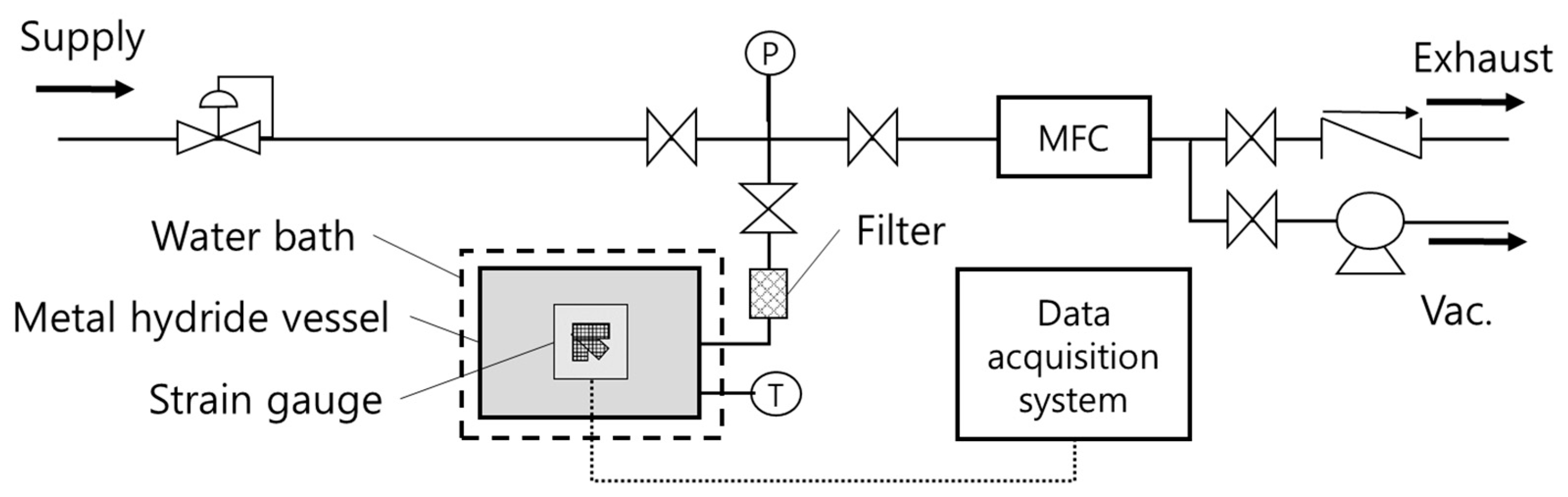
Figure 2 presents a schematic diagram of the test rig used to measure the strain and the hydrogen amount of the metal hydride vessel. The test rig consists of a gas supply and discharge system and a data acquisition system. The gas supply and discharge system includes high-purity hydrogen (99.999%) and high-purity argon (99.999%), a pressure regulator, a MFC, an exhaust line, and a vacuum line for controlling the gas pressure and flow rate. The data acquisition system comprises strain gauges, temperature and pressure sensors, and an interface for data logging and visualization.

2.2. Experimental Method

The temperature of the metal hydride vessel was controlled using a constant-temperature water bath. All experimental data, including temperature, pressure, gas flow rate, and strain, were measured in real time.
The installation of strain gauges on the metal hydride vessel was verified using argon pressurization tests by comparing the experimentally measured hoop strain with the theoretically calculated hoop strain for a thin-walled cylindrical pressure vessel under elastic deformation conditions.
The hoop strain induced by internal pressure was calculated using the thin-walled cylindrical pressure vessel model as follows:
ε θ = P · r t · E 1 ν 2
where ε θ is the hoop strain, P is the internal pressure, r is the inner radius of the vessel, t is the wall thickness, ν is the Poisson’s ratio and E is Young’s modulus of the vessel material.
In addition, the principal strain angle ( θ ) and the stress ratio were obtained from the experimentally measured strain data as follows:
θ = 1 2 tan 1 2 ε 3 ε 1 + ε 2 ε 1 ε 2
σ m a x = E 2 ε 1 + ε 2 1 ν + 1 1 + ν 2 ε 1 ε 3 2 + ε 2 ε 3 2
σ m i n = E 2 ε 1 + ε 2 1 ν 1 1 + ν 2 ε 1 ε 3 2 + ε 2 ε 3 2
S t r e s s   r a t i o = σ m a x / σ m i n
where θ is the principal strain angle measured from the axial direction, ε 1 , ε 2 and ε 3 are the strains measured at orientations of 0° (axial direction), 90° (hoop direction), and 45°, respectively, and the stress ratio is defined as the ratio of the maximum principal stress ( σ m a x ) to the minimum principal stress ( σ m i n ).
During the initial activation process, performed through repeated hydrogen absorption–desorption cycles, hydrogen was supplied to the metal hydride vessel at a controlled pressure of 2 MPa, while temperature, pressure, hydrogen storage amount, and strain of metal hydride vessel were measured.
After activation, hydrogen desorption experiments were conducted at discrete measurement points to obtain the relationship between the measured strain and the remaining hydrogen amount in the metal hydride vessel. To investigate the effect of hydrogen during hydrogen desorption, the strain of the metal hydride vessel was measured. In addition, the principal strain angle and the stress ratio were calculated from the measured strain data to characterize the mechanical behavior of the metal hydride vessel. All data were measured after reaching equilibrium at each measurement point.
The continuous time-series hydrogen desorption tests were carried out to evaluate the hydrogen amount estimated using the strain-based method, and the results were compared with those obtained using the MFC-based method.

3. Results and Discussion

3.1. Characteristics of La0.9Ce0.1Ni5

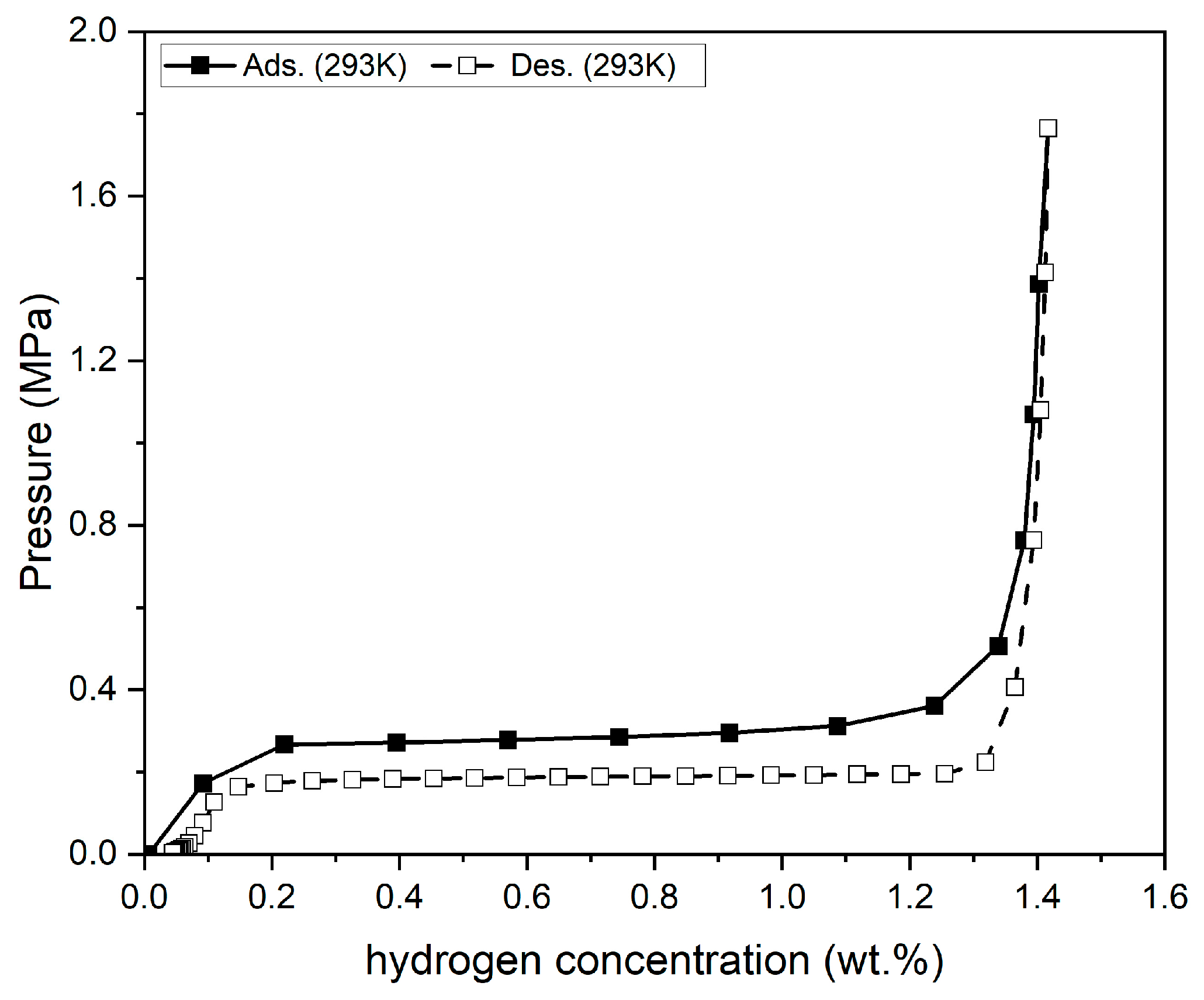
Figure 3 shows the pressure–composition–isotherm (PCI) curve of La0.9Ce0.1Ni5, depicting the thermodynamic equilibrium relationship between hydrogen concentration and pressure at a 293 K. La0.9Ce0.1Ni5 shows an absorption plateau pressure of approximately 0.3 MPa and a desorption plateau pressure of about 0.2 MPa. The maximum hydrogen concentration is approximately 1.4 wt%. The plateau pressure observed in the PCI curve, which is a representative characteristic of metal hydrides, remains nearly constant over a wide range of hydrogen concentration. Therefore, conventional pressure-based methods commonly applied to high-pressure gas vessels have inherent limitations in quantitatively evaluating the remaining hydrogen in metal hydride vessels. To evaluate the remaining hydrogen amount in the plateau pressure region of metal hydride vessels, a new measurement method that is directly correlated with changes in the hydrogen storage amount is required.

3.2. Functional Test of Strain Gauges Installed on the Metal Hydride Vessel

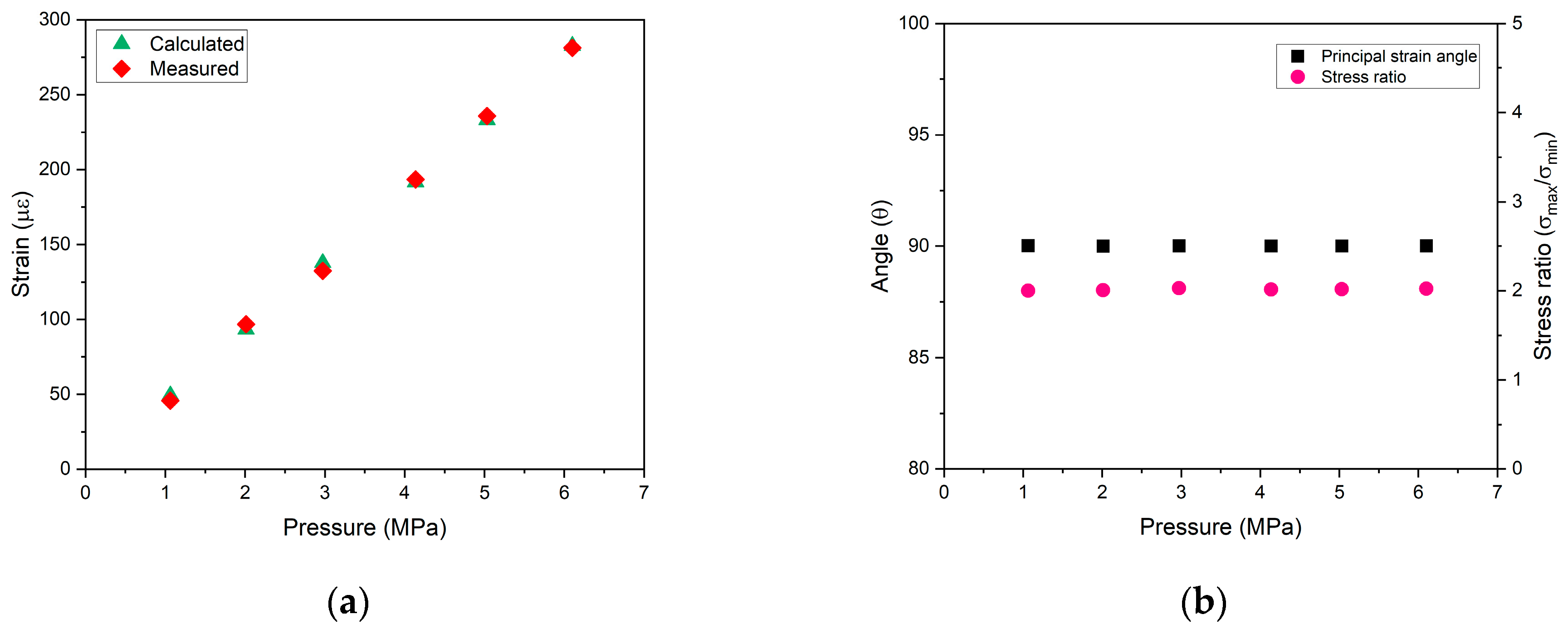
Figure 4 shows the results of the functional test of strain gauges installed on the metal hydride vessel. The test was conducted using argon, an inert gas that does not react with La0.9Ce0.1Ni5, at 293 K over a pressure range of 0–6 MPa.
Figure 4a shows the comparison between the theoretically calculated strain obtained using the pressure–strain relationship for a thin-walled cylindrical pressure vessel (Equation (1)) and the experimentally measured strain obtained using strain gauges attached to the surface of the metal hydride vessel. The experimentally measured strain, which was calibrated, closely matches the theoretically calculated strain over the entire pressure range. A linear relationship between internal pressure and strain is observed, indicating that the mechanical behavior of the fabricated metal hydride vessel follows the elastic behavior assumed in the thin-walled cylindrical pressure vessel model. The difference between the calculated and measured results confirms the accuracy of the strain measurement, with average measurement error of 2.91%.
Figure 4b shows the variation in the principal strain angle and the stress ratio. The principal strain angle θ, referenced to the axial direction, remained at approximately 90° over the entire pressure range, indicating that the hoop direction is the dominant principal strain direction. In addition, the ratio of the maximum to minimum stress (σmaxmin) agrees well with the theoretical value of 2 for a cylindrical pressure vessel under uniform stress distribution. These results confirm the proper installation and operation of the strain gauges on the metal hydride vessel, indicating that strain can be measured reliably.

3.3. Initial Activation of Metal Hydride Vessel

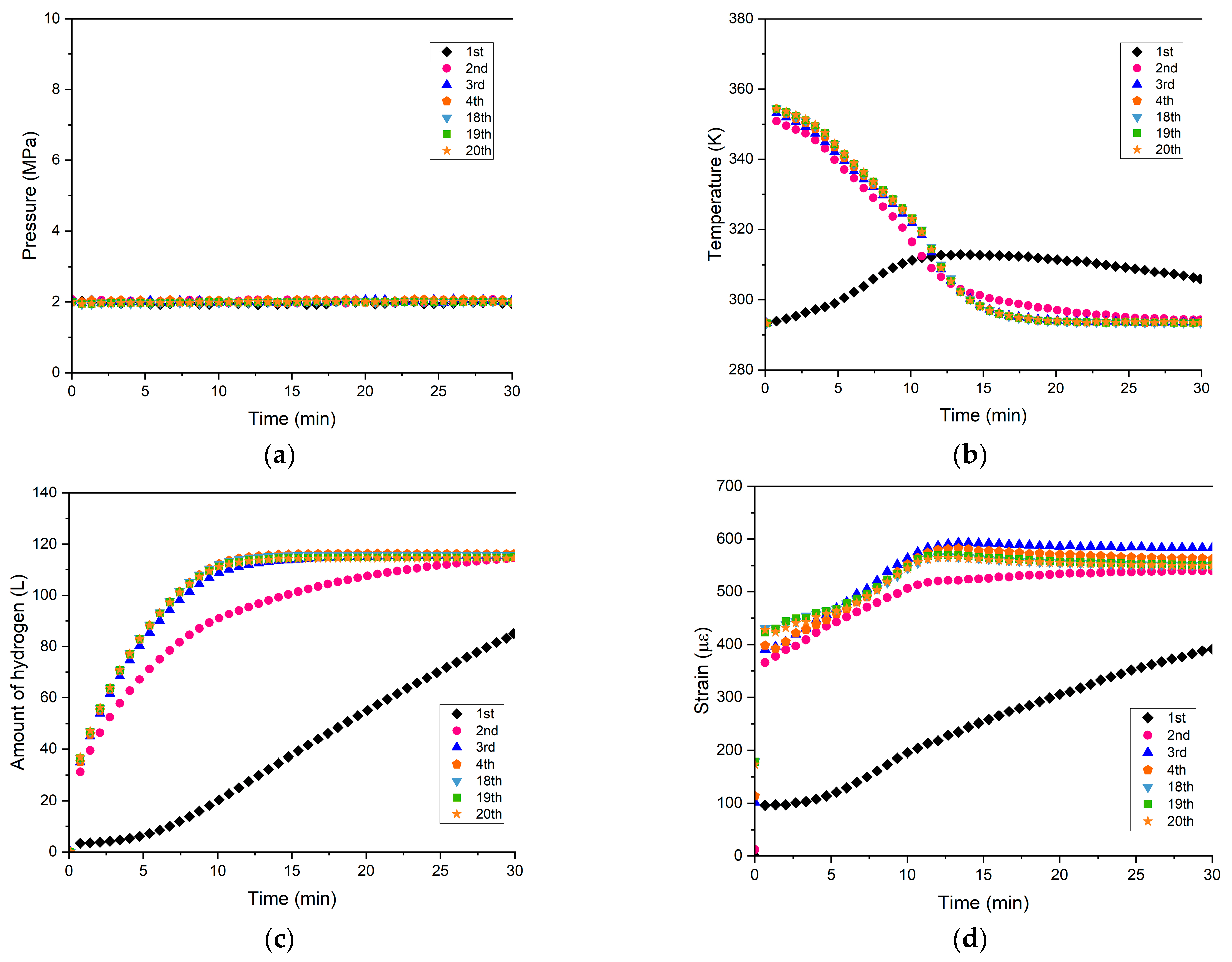
Figure 5 shows the variations in temperature, pressure, amount of hydrogen, and strain during the initial activation of the metal hydride vessel. The initial activation was carried out by repeating hydrogen adsorption at 293 K and 2 MPa for 30 min, followed by hydrogen release under vacuum conditions.
Throughout the initial activation cycles, the pressure during hydrogen adsorption was stably maintained at 2 MPa. At the beginning of the first activation cycle, the metal hydride did not react immediately with hydrogen. Consequently, mainly due to the pressure increase, the hydrogen storage amount and strain initially increased to approximately 3.4 L and 90 με, respectively. Although the temperature, hydrogen storage amount, and strain of metal hydride vessel gradually increased as the reaction progressed, activation was not achieved within the first activation cycle. During the second activation cycle, the reaction between the metal hydride and hydrogen progressed more rapidly than in the first cycle, but activation was still not achieved within 30 min. During the third activation cycle, the internal temperature of the metal hydride vessel increased rapidly, reaching a maximum of approximately 353 K, and then gradually decreased, stabilizing at 293 K within about 20 min. The metal hydride vessel stored approximately 115 L of hydrogen within about 15 min, and the strain increased to 550 με. From the fourth activation cycle onward, the temperature and hydrogen storage amount of metal hydride vessel showed similar trends across cycles, whereas the strain gradually decreased as the number of cycles increased. This behavior can be attributed to the progressive fragmentation of the metal hydride into finer particles and the associated particle rearrangement during repeated hydrogen absorption–desorption cycles and consequently leads to a gradual decrease in the maximum strain with increasing cycle number [23,24]. After 18 activation cycles, the temperature, hydrogen storage amount and strain of metal hydride vessel showed similar trends in each cycle. Therefore, all experiments were conducted after 20 activation cycles, at which point the metal hydride was fully activated.

3.4. Mechanical Behavior of the Metal Hydride Vessel Under Hydrogen Desorption

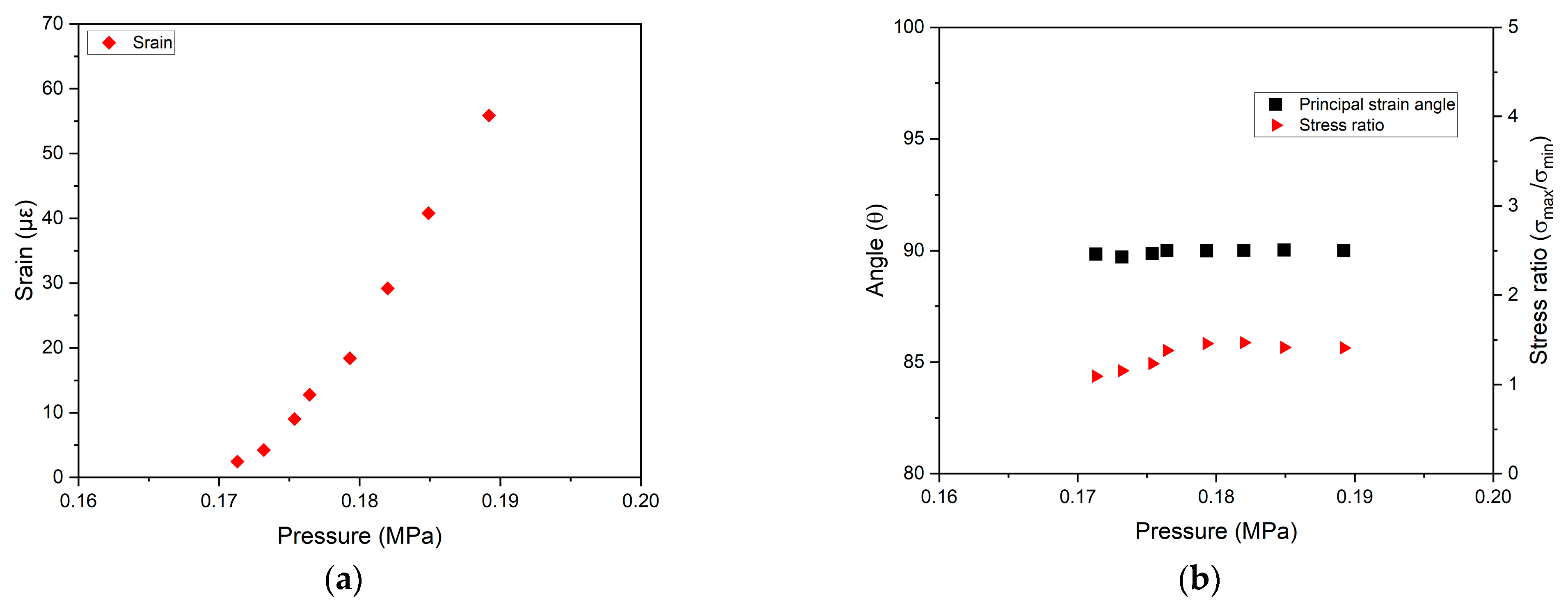
Figure 6 shows the effect of hydrogen on the metal hydride vessel designed to quantify the hydrogen amount under hydrogen desorption conditions. The hydrogen desorption experiments were conducted at 293 K within the pressure range of approximately 0.17–0.19 MPa, corresponding to the desorption plateau pressure region of the PCI curve of La0.9Ce0.1Ni5, and all measurements were performed under equilibrium conditions.
As shown in Figure 6, in the desorption plateau region, the pressure changed only slightly from 0.19 MPa to 0.17 MPa, whereas the strain measured on the outer surface of the vessel showed a significant change from 55.9 με to 2.5 με. The principal strain angle θ, referenced to the axial direction, remained at approximately 90° over the entire plateau pressure region. In contrast, the ratio of the maximum to minimum stress (σmaxmin) remained between 1.1 and 1.4 in the plateau pressure region, which is lower than the theoretical value (≈2) obtained in the argon pressurization tests. This behavior is attributed to the repeated expansion and contraction of the metal hydride during the activation process, which makes the internal stress distribution in the metal hydride vessel more uniform. These results indicate that the strain is not merely a function of gas pressure but is directly correlated with the volumetric change of the metal hydride during hydrogen desorption. In particular, this suggests that strain can serve as an effective indicator for evaluating the amount of hydrogen even under conditions where pressure-based methods are difficult to apply, such as in the plateau pressure region.

3.5. Relationship Between Strain and Hydrogen Amount

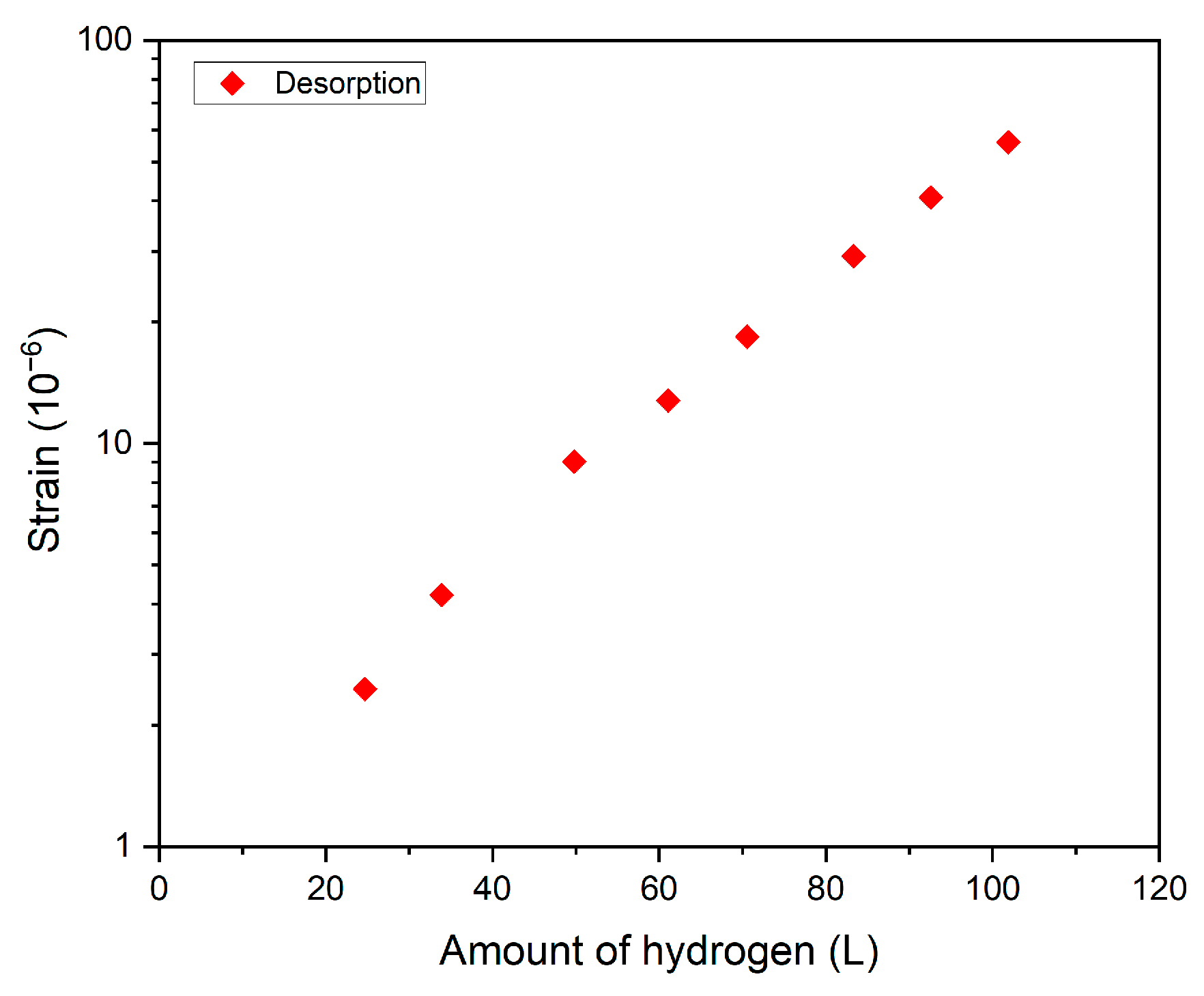
Figure 7 shows the relationship between the strain and the hydrogen amount in the metal hydride vessel during hydrogen desorption. To obtain the correlation between the strain and the hydrogen amount, hydrogen desorption was carried out stepwise at 293 K, with data collected after reaching equilibrium at each step. The strain was measured using strain gauges attached to the outer surface of the metal hydride vessel, and the amount of hydrogen was measured using a MFC.
As the strain decreased from about 55.9 με to 2.5 με, the hydrogen amount decreased from approximately 116 L to 25 L. When these two quantities were plotted on a logarithmic scale, a linear relationship was obtained. This linear behavior indicates a clear relationship between the strain and the hydrogen amount, demonstrating that the volumetric contraction of the metal hydride during hydrogen release is consistently reflected in the vessel strain.

3.6. Hydrogen Desorption Test Using Strain-Based Method

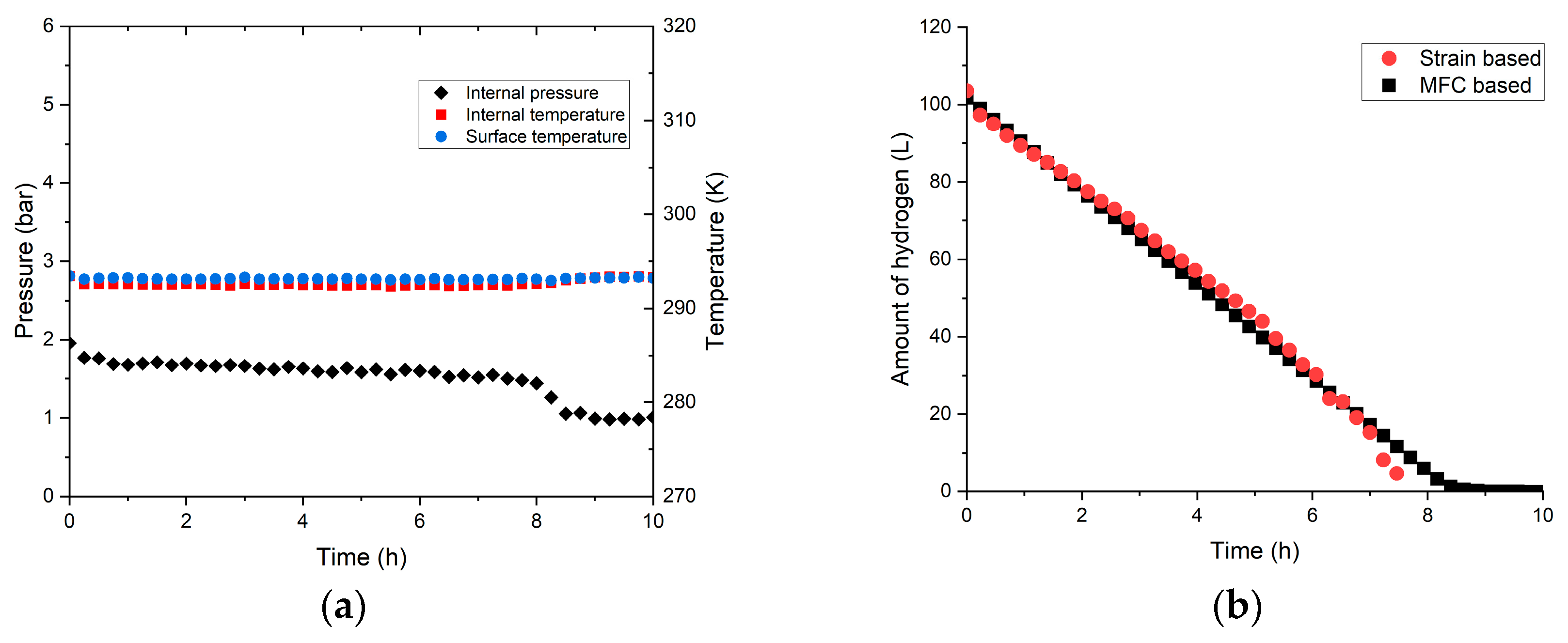
Figure 8 shows the time-series results of pressure, temperature, and the hydrogen amount of the metal hydride vessel during continuous hydrogen desorption tests. To evaluate the hydrogen amount in the metal hydride vessel in the desorption plateau pressure region, a hydrogen desorption test was initiated from a state in which hydrogen was stored at approximately 0.2 MPa. Assuming a 5 kW-class fuel cell-based mobility system equipped with a metal hydride vessel designed to store 2.5 kg of hydrogen, the hydrogen flow rate was limited to 0.2 L/min, corresponding to approximately 1/300 of the actual system, while the vessel diameter was kept identical to that of the target system and the flow rate was scaled solely according to the amount of metal hydride, thereby preserving the same desorption mechanism, and the test was conducted at 293 K. The period during which the pressure remained above the required fuel cell pressure of 0.15 MPa was defined as the operating time [25].
During the experiments, the surface temperature of the metal hydride vessel was maintained at 293 K, and the internal temperature of the metal hydride vessel also remained at approximately 292 K throughout the hydrogen desorption test. The hydrogen pressure started at about 0.19 MPa and gradually decreased, and the operating time during which the pressure remained above 0.15 MPa was approximately 7 h. The cumulative amount of hydrogen in metal hydride vessel, measured using the MFC-based method, was about 85 L over the operating time. The hydrogen amount estimated using the strain-based method also showed good agreement with the MFC-based methods over the operating time, with a maximum difference of 4.5%.

4. Conclusions

A strain-based method for quantifying the hydrogen amount was proposed as an alternative to overcome the fundamental limitations of pressure-based methods in metal hydride vessels.
The installation of strain gauges on the metal hydride vessel was verified, as the measured strain showed good agreement with the theoretically calculated strain based on the thin-walled cylindrical pressure vessel model, with an average measurement error of 2.91%.
The metal hydride was activated after 18 cycles. The temperature and hydrogen amount of the metal hydride vessel stabilized after 3 cycles, whereas the strain stabilized after 18 cycles. This delayed stabilization of the strain is attributed to the progressive fragmentation and rearrangement of the metal hydride during repeated absorption–desorption cycles, which indicates that the strain of the metal hydride vessel may respond more sensitively to these changes than the temperature or hydrogen amount of the metal hydride vessel.
A correlation between strain and hydrogen amount was obtained from hydrogen desorption experiments conducted at discrete measurement points in the desorption plateau region, where most hydrogen is stored in the metal hydride and the pressure changes only slightly, indicating that the strain directly reflects the amount of hydrogen remaining in the metal hydride vessel and can serve as an effective indicator for quantifying the hydrogen amount. This correlation originates from the volumetric expansion and contraction of the metal hydride during hydrogen absorption and desorption, which induces measurable strain on the vessel wall.
Continuous time-series desorption tests were conducted under scaled-down flow conditions (0.2 L/min), corresponding to approximately 1/300 of a 5 kW-class fuel cell-based mobility system requiring a hydrogen pressure above 1.5 bar. Because the vessel diameter was identical to that of the target system, the flow rate was scaled solely according to the amount of metal hydride, while preserving the same desorption mechanism. Based on the correlation, the hydrogen amount estimated using the strain-based method showed good agreement with the MFC-based results over an operating time of approximately 7 h, with a maximum difference of 4.5%, demonstrating that the strain-based method enables reliable quantification of the hydrogen amount in metal hydride vessels.

Author Contributions

Conceptualization, P.L. and K.J.; methodology, C.P.; validation, K.J., K.K. and S.J.; formal analysis, P.L.; investigation, K.B.L., K.K. and S.J.; resources, C.P. and K.B.L.; data curation, P.L.; writing—original draft preparation, P.L.; writing—review and editing, K.J., C.P. and K.B.L.; visualization, P.L.; supervision, K.J., C.P. and K.B.L.; project administration, K.J. and C.P.; funding acquisition, C.P. All authors have read and agreed to the published version of the manuscript.

Funding

This work was supported by the Korea Institute of Energy Technology Evaluation and Planning (KETEP) and the Ministry of Climate, Energy & Environment (MCEE) of the Republic of Korea (No.RS-2024-00459712).

Data Availability Statement

The data supporting the reported results can be obtained by contacting the first author via email.

Acknowledgments

This work was supported by the Korea Institute of Energy Technology Evaluation and Planning (KETEP) and the Ministry of Climate, Energy & Environment (MCEE) of the Republic of Korea (No.RS-2024-00459712).

Conflicts of Interest

The authors declare no conflict of interest.

Abbreviations

The following abbreviations are used in this manuscript:
PCIPressure–Composition–Isotherm
MFCMass Flow Controller

References

  1. Li, X.; Ye, T.; Meng, X.; He, D.; Li, L.; Song, K.; Jiang, J.; Sun, C. Advances in the Application of Sulfonated Poly(Ether Ether Ketone) (SPEEK) and Its Organic Composite Membranes for Proton Exchange Membrane Fuel Cells (PEMFCs). Polymers 2024, 16, 2840. [Google Scholar] [CrossRef] [PubMed]
  2. Traisak, O.; Kumar, P.; Das, R.K.; Vahaji, S.; Zhang, Y.; Velankar, V.; Date, A. Integrated Thermoelectric Power Generation and Membrane-Based Water Desalination Using Low-Grade Thermal Energy. Energies 2026, 19, 1054. [Google Scholar] [CrossRef]
  3. Mazloomi, K.; Gomes, C. Hydrogen as an energy carrier: Prospects and challenges. Renew. Sustain. Energy Rev. 2012, 16, 3024–3033. [Google Scholar] [CrossRef]
  4. Kumer, P.; Singh, O. Fuel Cell and Hydrogen Based Hybrid Energy Conversion Technologies. In Prospects of Hydrogen Fueled Power Generation; River Publishers: New York, NY, USA, 2024; Volume 9, pp. 207–221. [Google Scholar]
  5. Anekwe, I.M.S.; Mustapha, S.I.; Akpasi, S.O.; Tetteh, E.K.; Joel, A.S.; Isa, Y.M. The hydrogen challenge: Addressing storage, safety, and environmental concerns in the hydrogen economy. Int. J. Hydrogen Energy 2025, 167, 150952. [Google Scholar] [CrossRef]
  6. Gray, E.M.; Webb, C.J.; Andrews, J.; Shabani, B.; Tsai, P.J.; Chan, S.L.I. Hydrogen Storage for Off-Grid Power Supply. Int. J. Hydrogen Energy 2011, 36, 654–663. [Google Scholar] [CrossRef]
  7. Lototskyy, M.V.; Tolj, I.; Davids, M.W.; Klochko, Y.V.; Parsons, A.; Swanepoel, D.; Ehlers, R.; Louw, G.; Westhuizen, B.; Smith, F.; et al. Metal Hydride Hydrogen Storage and Supply Systems for Electric forklift with low-temperature proton exchange membrane fuel cell power module. Int. J. Hydrogen Energy 2016, 41, 13831–13842. [Google Scholar] [CrossRef]
  8. Kukkapalli, V.K.; Kim, S.; Thomas, S.A. Thermal management techniques in metal hydrides for hydrogen storage applications: A review. Energies 2023, 16, 3444. [Google Scholar] [CrossRef]
  9. Li, J.; Fan, F.; Li, H.; Fei, T.; Sun, C.; Jiang, J.; Yang, W.; Song, K. Performance Analysis of Hydrogen Storage Insulation System in Lunar Base. In Proceedings of the 2024 International Conference of Electrical, Electronic and Networked Energy Systems (EENES 2024); Springer: Singapore, 2024; pp. 504–511. [Google Scholar]
  10. Li, J.; Fan, F.; Xu, J.; Li, H.; Mei, J.; Fei, T.; Sun, C.; Jiang, J.; Xue, R.; Yang, W.; et al. Advances in Thermal Management for Liquid Hydrogen Storage: The Lunar Perspective. Energies 2025, 18, 2220. [Google Scholar] [CrossRef]
  11. Nguyen, H.Q.; Shabani, B. Review of metal hydride hydrogen storage thermal management for use in fuel cell systems. Int. J. Hydrogen Energy 2021, 46, 31699–31726. [Google Scholar] [CrossRef]
  12. Modi, P.; Aguey-Zinsou, K.F. Room temperature metal hydrides for stationery and heat storage applications. Front. Energy Res. 2021, 9, 616115. [Google Scholar] [CrossRef]
  13. Klopčič, N.; Grimmer, I.; Winkler, F.; Sartory, M.; Trattner, A. A review on metal hydride materials for hydrogen storage. J. Energy Storage 2023, 72, 108456. [Google Scholar] [CrossRef]
  14. Scarpati, G.; Frasci, E.; Di Ilio, G.; Jannelli, E. A comprehensive review on metal hydride-based hydrogen storage systems for mobile applications. J. Energy Storage 2024, 102, 113934. [Google Scholar] [CrossRef]
  15. Tarasov, B.P.; Fursikov, P.V.; Volodin, A.A.; Bocharnikov, M.S.; Shimkus, Y.Y.; Kashin, A.M.; Yartys, V.A.; Chidziva, S.; Pasupathi, S.; Lototskyy, M.V. Metal hydride hydrogen storage and compression systems for energy storage technologies. Int. J. Hydrogen Energy 2021, 46, 13647–13657. [Google Scholar] [CrossRef]
  16. Paul, B.; Kumar, S.; Majumdar, S. Preparation, characterization and modification of magnesium hydride for enhanced solid-state hydrogen storage properties. Int. J. Hydrogen Energy 2024, 96, 494–501. [Google Scholar] [CrossRef]
  17. Zhu, D.; Ait-Amirat, Y.; N’Diaye, A.; Djerdir, A. On-Line State-of-Charge Estimation of Embedded Metal Hydride Hydrogen Storage Tank Based on State Classification. J. Energy Storage 2021, 42, 102950. [Google Scholar] [CrossRef]
  18. Robinson, D.B.; Luo, W.; Cai, T.Y.; Stewart, K.D. Metal hydride differential scanning calorimetry as an approach to compositional determination of mixtures of hydrogen isotopologues and helium. Int. J. Hydrogen Energy 2015, 40, 14257–14270. [Google Scholar] [CrossRef]
  19. Franke, F.; Kazula, S.; Enghardt, L. Review and evaluation of metal-hydride-based hydrogen sensors as safety devices for future sustainable aviation. J. Phys. Conf. Ser. 2023, 2454, 012001. [Google Scholar] [CrossRef]
  20. Koochacsaraiy, R.K.; Goudarzi, A.M.; Morshedsolouk, F. Mechanical behavior of metal hydrides and hydrogen storage containers: A review. Hydrog. Fuel Cell Energy Storage 2023, 10, 257–278. [Google Scholar]
  21. Okumura, M.; Terui, K.; Ikado, A.; Saito, Y.; Shoji, M.; Matsushita, Y.; Aoki, H.; Miura, T.; Kawakami, Y. Investigation of wall stress development and packing ratio distribution in the metal hydride reactor. Int. J. Hydrogen Energy 2012, 37, 6686–6693. [Google Scholar] [CrossRef]
  22. Kudiiarov, V.; Elman, M.; Pushilina, N.; Tarasov, B.; Kurdyumov, N. State of the Art in Development of Heat Exchanger Geometry Optimization and Different Storage Bed Designs of a Metal Hydride Reactor. Materials 2023, 16, 4891. [Google Scholar] [CrossRef]
  23. Zohra, F.T.; Webb, C.J.; Lamb, K.E.; Gray, E.M. Degradation of Metal Hydrides in Hydrogen-Based Thermodynamic Machines: A Review. Int. J. Hydrogen Energy 2024, 64, 417–438. [Google Scholar] [CrossRef]
  24. Lee, P.; Jung, K.; Kang, K.; Jeong, S.; Lee, K.B.; Park, C. Effective thermal conductivity of La0.9Ce0.1Ni5 metal hydride: Effect of hydrogenation cycles, particle size and hydrogen concentration. Int. J. Nanotechnol. 2026, 22, 2–16. [Google Scholar] [CrossRef]
  25. U.S. Department of Energy Office of Energy Efficiency and Renewable Energy (EERE). DOE Technical Targets for Fuel Cell Systems and Stacks for Transportation Applications. Available online: https://www.energy.gov/eere/fuelcells/doe-technical-targets-fuel-cell-systems-and-stacks-transportation-applications (accessed on 5 February 2026).
Figure 1. Schematic diagram of metal hydride vessel and strain gauge: (a) internal configuration; (b) external configuration.
Energies 19 01617 g001
Figure 2. Schematic diagram of metal hydride vessel test rig.
Energies 19 01617 g002
Figure 3. Pressure–Composition–Isotherm Curve of La0.9Ce0.1Ni5.
Energies 19 01617 g003
Figure 4. Functional test of strain gauges installed on the metal hydride vessel using argon pressurization: (a) strain; (b) principal strain angle and stress ratio.
Energies 19 01617 g004
Figure 5. Initial activation by repeated hydrogen adsorption process: (a) pressure; (b) temperature; (c) amount of hydrogen; (d) strain.
Energies 19 01617 g005
Figure 6. Effect of hydrogen on the metal hydride vessel under hydrogen desorption; (a) strain; (b) principal strain angle and stress ratio.
Energies 19 01617 g006
Figure 7. Relationship between strain and hydrogen amount of the metal hydride vessel during hydrogen desorption.
Energies 19 01617 g007
Figure 8. Time-series results of hydrogen desorption tests of the metal hydride vessel; (a) pressure and temperature; (b) amount of hydrogen measured by the strain-based method and the MFC-based method.
Energies 19 01617 g008
Disclaimer/Publisher’s Note: The statements, opinions and data contained in all publications are solely those of the individual author(s) and contributor(s) and not of MDPI and/or the editor(s). MDPI and/or the editor(s) disclaim responsibility for any injury to people or property resulting from any ideas, methods, instructions or products referred to in the content.