


Abstract
Driven by the global energy transition, the proportion of new and renewable sources of energy (NRSE) such as wind and solar power in the electricity systems of many countries continues to rise. However, this also exacerbates frequency fluctuations in the power system, giving rise to new issues such as curtailment of wind and solar power generation and a continuous decline in inertia levels. The hybrid energy storage system composed of a flywheel and a battery can fully utilize the advantages of their power and energy characteristics, respectively, becoming an effective solution to this problem. Firstly, the characteristics of NRSE and various energy storage technologies were introduced in the paper. Then, the frequency regulation requirements and process of NRSE were discussed, as well as the common architecture and control methods of flywheel–battery hybrid energy storage systems, and the application research and current development status of the flywheel–battery hybrid energy storage system on the power supply side and grid side of the power system were elaborated, including the control strategies for participating in NRSE and methods to reduce costs and increase profits. Finally, the future research directions of flywheel–battery hybrid energy storage systems were discussed and anticipated.
1. Introduction
In recent years, the proportion of NRSE, such as solar and wind power, in the power grid supply has been continuously increasing. Their highly volatile, distributed, and low-inertia characteristics pose serious challenges to the power system. Frequency stability has become a core issue for current grid security and the efficient integration of NRSE. For example, in 2015, the Jinping-Sunan and Yibin-Jinhua HVDC lines in my country experienced outages, causing an instantaneous loss of millions of megawatts of active power, resulting in grid frequency drops to 49.69 Hz and 49.77 Hz, respectively; in 2016, a major blackout occurred in South Australia, where new energy generation accounted for 8.36% of the total, causing the power system frequency to drop from 49.5 Hz to 47 Hz at a rate of 6.25 Hz/s; in 2019, a major blackout occurred in the UK, where wind power accounted for over 30% of the generation, causing the frequency to drop to 49.1 Hz; and in 2021, a snowstorm in Texas, USA, triggered a power supply–demand imbalance, leading to a severe frequency drop and a major blackout [1,2,3].
To cope with the fluctuations caused by the integration of NRSE and to improve the power system’s disturbance resistance and fast frequency response capabilities, installing additional energy storage systems is an effective method. Among existing energy storage technologies, pumped hydro and battery energy storage technologies are relatively mature [4], but pumped hydro storage has specific geographical requirements; superconducting, supercapacitor [5], and flywheel energy storage have the advantages of fast response speed and high power density, but superconducting energy storage has extremely high requirements for materials and environment; supercapacitors, due to their dielectric properties, generally have limited energy storage capacity [6]. The main characteristics of typical energy storage technologies are shown in Table 1 [7,8,9,10].
Table 1.
Comparison of energy storage technology characteristics.
In the application of NRSE system regulation, energy storage devices are required to have characteristics such as large capacity, high power, long lifespan, high efficiency, and low cost. Currently, no single energy storage technology can simultaneously meet all these conditions. Therefore, a combination of power-type and energy-type energy storage technologies can be used, rationally utilizing two or more energy storage devices to improve the stability of the power system. In recent years, significant progress has been made in the research of hybrid energy storage systems composed of flywheels and batteries, and they have been applied in demonstration power plants [11]. As shown in Table 2, for global flywheel-battery hybrid energy storage engineering applications
Table 2.
Global demonstration projects of flywheel–battery hybrid energy storage systems [12,13,14,15,16,17,18].
2. Methodology of the Systematic Review
Recent studies indicate that increasing attention has been devoted to the development of efficient and reliable Flywheel–Battery Hybrid Energy Storage Systems (FB-HESS, New York, NY, USA), with a significant growth trend in related research outputs. To systematically review the development trajectory and research progress in this field, a systematic review on FB-HESS was published in March 2026. The review aims to provide a comprehensive and in-depth academic analysis from multiple perspectives, including theoretical foundations, key technologies, control strategies, and engineering applications. This work fills the long-standing gap resulting from the lack of systematic reviews in the field of flywheel–battery hybrid energy storage. Furthermore, through in-depth analysis of application scenarios and systematic consideration of economic performance, the research scope is expanded from a purely technical perspective to a comprehensive framework encompassing “application scenarios–economics–market mechanisms”. This framework provides a more comprehensive and practically relevant reference for future research. The differences between this review and previous ones are shown in Table 3.
Table 3.
Differences between this review and previous reviews.
To ensure the scientific rigor and reproducibility of the research process, the literature retrieval stage adopted standardized Boolean logic search strings adapted to the characteristics of different databases. Based on the research topic and technical scope, key terms were systematically selected and combined to construct structured search expressions. This approach ensured both the comprehensiveness of the search results and the accuracy and consistency of the literature screening process.
The keywords used in the search queries include: “Hybrid Energy Storage”, “Flywheel Energy Storage” or “FESS”, “Battery Energy Storage” or “BESS”, “Control Strategy”, “Economics” or “Policy” or “Environment”. Main databases: IEEE Xplore, ScienceDirect, Google Scholar, CNKI, and MDPI.
The search results for each database are shown in Table 4:
Table 4.
Statistics of retrieved publications (2015–2026).
To ensure comprehensive coverage of relevant research outcomes, this study extensively searched and included multiple types of sources from the literature, including peer-reviewed journal articles, non-peer-reviewed journal papers, academic books, and international conference papers. In addition, to further broaden the scope of information sources, master’s and doctoral theses as well as technical reports published by authoritative academic organizations in this field were also included in the search scope. All retrieved documents were incorporated into the first round of screening to ensure a systematic and comprehensive collection of the literature, thereby establishing a sufficient and reliable foundation for subsequent analysis.
Exclusion Criteria. Studies were excluded if they primarily focused on application scenarios unrelated to hybrid energy storage systems, or if the methods involved had no direct relevance to the operation, control, configuration, optimization, or economic analysis of Flywheel Energy Storage Systems (FESS) or Battery Energy Storage Systems (BESS). Studies that did not involve a hybrid configuration combining flywheel and battery technologies were also excluded. In addition, studies focusing solely on electric vehicle battery systems, without clear relevance to grid-scale energy storage applications, were not included in this review. Furthermore, publications for which the full text could not be obtained for complete review were removed during the final analysis stage.
Inclusion Criteria. During the eligibility assessment stage, all full-text documents were systematically evaluated according to predefined inclusion criteria. Eligible studies were required to be peer-reviewed journal articles or review papers, and the research subject had to clearly involve Hybrid Energy Storage Systems (HESS). In addition, the included studies needed to address at least one or more of the following research topics: “Flywheel energy storage or battery energy storage”, “technologies”, “Economic analysis”, “Environmental impact assessment” and policy or regulatory issues related to energy storage participation in grid frequency regulation.
Subsequently, all full-text articles were further examined according to the above inclusion and exclusion criteria, and studies that did not meet the requirements were removed to ensure that the final set of the included literature maintained a high level of consistency with the research objectives and methodological rigor.
3. Frequency Regulation of NRSE
The integration of a high proportion of NRSE into the power grid will have significant impacts. The frequency regulation process is shown in Figure 1 and can be divided into steady-state time, transient time, and quasi-steady-state time. During the steady-state time, the main function of the power system is to maintain the stability of the rated frequency, which is 50 Hz in my country’s power grid. During the transient time, the system is in a state of inertial response and primary frequency regulation. During the quasi-steady-state time, the system performs secondary frequency regulation based on the stable primary frequency regulation, eventually stabilizing at the rated frequency.
Figure 1.
FM process for grid integration of a high proportion of NRSE [11].
The main indicators for power system frequency regulation include the rate of change in frequency (RoCoF), the lowest transient frequency (LFoT), and the quasi-steady-state frequency deviation (FDoQS). Ye Lin et al. [10] pointed out that RoCoF is inversely proportional to the system inertial response constant. As the system inertial constant gradually decreases, RoCoF gradually increases, while the inertial response constant decreases with the increase in the proportion of NRSE connected to the grid. LFoT also increases with the decrease in the system inertia level; therefore, the system’s ability to withstand frequency disturbance impacts gradually decreases, and the active power required to return to the rated frequency stable state also increases. Liu Xiangyu et al. [11] supplemented FDoQS through the reserve power of traditional generating units.
In NRSE without energy storage devices, the only ways to mitigate source-load fluctuations and frequency safety risks are through curtailing wind and solar power, load shedding, and power reserves. This increases costs and also represents a waste of wind and solar resources.
4. Flywheel–Battery Hybrid Energy Storage System
Flywheels and batteries are power-type and energy-type energy storage devices, respectively. The former can be a single large-capacity flywheel or a flywheel array composed of multiple small-capacity flywheels, while the latter is often a battery pack composed of multiple independently operating batteries. A hybrid energy storage system combining flywheels and batteries can leverage the power and energy advantages of each, making it suitable for addressing the volatility issues associated with renewable energy integration.
The control of a flywheel–battery hybrid energy storage system can be divided into two connection structures: common AC and common DC. Figure 2a shows the common AC connection [19], where the flywheel is directly connected to the power grid through a back-to-back converter, boost circuit, and filter circuit, and the battery is connected to the power grid through a DC/AC converter, boost circuit, and filter circuit. This connection prevents individual energy storage unit failures from affecting other units, ensuring the short-term operation of the energy storage system, and allows for flexible energy storage capacity configuration; however, when a short circuit occurs on the grid side, the battery lacks DC-side control, which can cause surge currents on the DC side. Figure 2b shows the common DC connection [20], where the flywheel and battery are each connected to a DC bus through rectifiers and inverters, and then connected to the power grid through a DC/AC converter. The machine-side converter can suppress fluctuations in the DC bus voltage and improve power transmission safety; however, it places high demands on the grid-connected inverter, and the entire energy storage system will fail to operate in the event of a fault, increasing the complexity of the grid-connected inverter control.
Figure 2.
Hybrid energy storage topology Diagram: (a) Common AC side connect; (b) Common DC side connect.
5. Application of Flywheel–Battery Hybrid Energy Storage Systems in NRSE
Energy storage devices are applied to NRSE in two main ways: Combining energy storage with the power source side makes the power injected into the grid smoother, reduces grid frequency fluctuations, and stores excess energy to improve energy utilization efficiency. Combining energy storage with the grid side primarily serves to increase system inertia and assist in primary and secondary frequency regulation [21].
5.1. Flywheel–Battery Hybrid Energy Storage Is Applied on the Power Generation Side
Flywheel–battery hybrid energy storage is applied to the power generation side. Based on the output of wind and solar power, a corresponding reference power for smoothing is determined. When the output of the NRSE exceeds the reference power, the excess power is stored in the energy storage system; when the output is lower than the reference power, the energy storage system supplements the deficit power, thereby achieving the effect of smoothing wind and solar power output. The control block diagram is shown in the Figure 3 below.
Figure 3.
Research framework diagram of hybrid energy storage for smoothing wind and solar power.
To leverage the advantages of different energy storage technologies, the input signals of NRSE (wind and solar signals) are generally decomposed into high-frequency and low-frequency signals. The high-frequency signals are allocated to power-type energy storage devices, and the low-frequency signals are allocated to energy-type energy storage devices. Then, the charging and discharging of flywheels and batteries are controlled according to a specific strategy to achieve power smoothing. For example, Teng Wei et al. [22] used a wavelet packet decomposition power smoothing algorithm based on a flywheel–battery hybrid energy storage system to smooth the active power fluctuations of a wind farm. Considering the number of battery replacements over its entire lifespan, compared with a single battery energy storage system, this method reduced the number of battery replacements by 6 while ensuring the effectiveness of power smoothing. Wang Jinjun et al. [23] also used a flywheel–battery hybrid energy storage system to smooth wind power fluctuations. They used empirical mode decomposition (EMD) to obtain the smoothing signal, introduced baseline variables and fluctuation penalty coefficients for correction, and constructed a hybrid energy storage capacity configuration model for smoothing wind power fluctuations. This resulted in a 49.99% reduction in system investment costs. Hao Xiaowei et al. [24] built a simulation model of a dual-loop charging and discharging control strategy for lithium iron phosphate batteries and flywheel energy storage in MATLAB/Simulink 2022b for simulating and studying wind power output smoothing. Pachaiyappan, R [25] proposed a fuzzy structure based on an improved gorilla-inspired optimizer for frequency control and security in a smart grid system, targeting a smart grid comprising a diesel engine generator, wind turbine, solar photovoltaic system, as well as a flywheel energy storage system and a battery energy storage system. Wang Shun [26] processed the output power of a photovoltaic power plant using three methods: ensemble EMD, wavelet packet decomposition, and improved wavelet packet decomposition. He established an economic model of a photovoltaic power plant-hybrid energy storage system and compared the smoothing effect and economic benefits of different decomposition methods using historical output data from a typical day of the photovoltaic power plant. The smoothing effects of the three methods did not differ significantly, but the improved wavelet packet decomposition method yielded annual revenue 1.46 times that of the wavelet packet decomposition method and 2.46 times that of the ensemble EMD method.
Jiang Chengtao [27] determined the overall smoothing target for multi-type energy storage systems based on the fluctuation rate of wind power grid connection. Through ensemble EMD and Hilbert transform, he obtained the instantaneous frequency-time curve. Based on the principle of minimizing energy aliasing, he divided the energy storage smoothing targets into energy-type and power-type. He further allocated the internal power of the power-type energy storage based on the average ramp rate, proposing a multi-type energy storage dual-layer fuzzy coordinated control strategy for “peak shaving and valley filling + power smoothing” scenarios. He constructed a multi-type energy storage coordinated control architecture for dual scenarios, resulting in a reduction in peak-to-valley difference rate that was 1.5 times and 1.08 times that of the constant power strategy and power difference strategy, respectively, and the operating revenue of the energy storage was 1.04 times and 1.26 times higher. Li Yuxin [28] et al. addressed the problems of unstable DC bus voltage, slow energy storage response, and unreasonable power allocation caused by wind and solar fluctuations and load changes in wind-solar microgrids. They proposed a method combining upper-layer fuzzy control-based adaptive power allocation and lower-layer three-step model predictive control (Ts-MPC), which on average accelerated the system response speed by 46.8% and reduced voltage overshoot by 68.1%, significantly improving the voltage stability and disturbance rejection capability of the islanded microgrid. Zhou Dengtao et al. [29] proposed a capacity optimization configuration strategy for a flywheel-lithium battery hybrid energy storage system based on the EMD-VMD hybrid decomposition method, used to smooth wind power grid connection fluctuations. Compared with the traditional EMD method, this strategy reduced the rated power configuration of lithium batteries and flywheels by 14.4% and 13.7%, respectively, and the total cost decreased by 27.1%; at the same time, the hybrid energy storage scheme significantly improved economic efficiency while ensuring smoothing effectiveness compared to a single energy storage system.
In summary, current flywheel–battery hybrid energy storage systems are mainly used on the new energy power generation side to smooth wind and solar fluctuations. The hybrid energy storage system achieves effective smoothing of fluctuating power by decomposing the wind and photovoltaic output signals into high-frequency and low-frequency components and allocating them to flywheel (power-type) and battery (energy-type) energy storage units, respectively [30,31,32]. Studies consistently show that compared to single-battery energy storage, hybrid energy storage significantly improves the overall economic efficiency and equipment durability of the system while ensuring effective power smoothing. This is evidenced by reduced battery replacement frequency, lower total system investment and operating costs, and improved dynamic response speed. Scholars have continuously optimized power allocation logic and system capacity configuration by introducing various signal processing methods, such as wavelet packet decomposition, empirical mode decomposition, and their improved algorithms, combined with coordination strategies such as fuzzy control and model predictive control. This has led to a better balance between power smoothing effectiveness and economic benefits, demonstrating that flywheel–battery hybrid energy storage provides an efficient and reliable technical solution for improving the quality and economic efficiency of renewable energy grid integration.
5.2. Flywheel–Battery Hybrid Energy Storage Is Applied to the Grid Side
Flywheel–battery hybrid energy storage is applied to the grid side, primarily to control grid frequency fluctuations. In the primary frequency regulation stage, it quickly provides active power to the system, increasing the system frequency; in the secondary frequency regulation stage, it continuously and stably provides power, enabling the system to reach a stable state at the rated frequency [33,34,35,36,37,38,39,40,41].
Primary frequency regulation relies on the inherent regulating capability of generator units and features an extremely fast response speed. When a frequency deviation occurs, the governor of a generator automatically adjusts the steam or water intake according to the frequency deviation, thereby changing the power output of the unit. This process is typically completed within 0.5–2 s, enabling the system to suppress frequency drops or rises immediately after a disturbance occurs. However, the regulation capacity of primary frequency control is limited (typically no more than 5–10% of the rated capacity of the unit), and its duration is relatively short (approximately 10–30 s), meaning that it can only address short-term disturbances. Traditional thermal power units exhibit mechanical delays in primary frequency response, while renewable energy units, due to the lack of inherent inertia, possess almost no primary frequency regulation capability. When sudden disturbances occur in the system (such as a rapid increase in load), the system frequency may drop instantaneously. If the drop is excessive, it may trigger protective devices, resulting in generator tripping [42].
Energy storage systems can achieve millisecond-level response, allowing them to release energy immediately after a disturbance occurs and quickly compensate for power deficits, thereby suppressing the instantaneous drop in frequency. Conversely, if the frequency rises due to excess power, the energy storage system can rapidly absorb energy to limit the frequency increase. This “zero-delay” characteristic significantly enhances the disturbance suppression capability of primary frequency regulation, reduces the peak value of frequency deviation, and provides valuable time for the subsequent regulation of conventional generating units.
Secondary frequency regulation is coordinated by the Automatic Generation Control (AGC) system, and its response speed is relatively slower. The AGC system first collects system-wide frequency and power deviation data through monitoring devices, then calculates and issues regulation commands to designated generating units. After receiving the command, the units adjust their output power accordingly. The entire process typically requires 10–60 s. However, secondary frequency regulation has a larger regulation range (capable of adjusting 10–30% of the rated output of generating units) and can sustain its action until the system frequency is restored to its nominal value. Traditional thermal power units exhibit dead zones and nonlinear characteristics in their regulation processes, resulting in insufficient secondary frequency regulation accuracy. Moreover, frequent regulation increases mechanical wear of the units and raises maintenance costs [43].
Energy storage systems can accurately track AGC commands and provide seamless responses. Since their charging and discharging processes involve no mechanical wear, they can withstand high-frequency regulation, making them particularly suitable for performing the fast-tracking tasks in secondary frequency regulation. By coordinating energy storage systems with conventional generating units, energy storage can handle high-frequency, small-amplitude regulation, while conventional units address low-frequency, large-amplitude regulation, forming a “fast–slow complementary” regulation mode. This approach not only improves the accuracy of secondary frequency regulation but also reduces the regulation burden and operational costs of conventional generating units.
The main control methods include droop control, virtual synchronous generator (VSG) control, and a combination of the two. The principle of droop control is to achieve voltage and frequency control through active power-frequency control/reactive power-voltage control; VSG control virtually endows the energy storage system with synchronous machine characteristics, generating primary frequency regulation commands based on frequency deviation and frequency change rate. Figure 4 shows the schematic diagram of the energy storage VSG [44].
Figure 4.
Schematic diagram of VSG [28].
In frequency regulation applications, Virtual Synchronous Generator (VSG) control can be classified into positive virtual inertia control and negative virtual inertia control according to the principles of frequency decline and frequency recovery. Positive virtual inertia control simulates the inertial response process of synchronous generators. During the frequency deterioration stage, it rapidly absorbs or releases kinetic energy to effectively reduce the Rate of Change of Frequency (RoCoF) and suppress the frequency nadir, thereby mitigating the severity of frequency degradation. In contrast, negative virtual inertia control operates during the frequency recovery stage. By applying reverse regulation, it accelerates the return of the system frequency to its nominal value and shortens the recovery time [45]. The specific characteristics are shown in Table 5, formula parts 1 and 2.
Table 5.
Principles and characteristics of different control strategies for energy storage participating in frequency regulation.
Currently, energy storage power stations mostly employ VSG-controlled power electronic converters, simulating the inertia and damping of synchronous generators to endow the energy storage power station with inertia, thereby enhancing its inertial response and frequency regulation capabilities in the power system. Yang Li et al. [46] evaluated the virtual inertia of energy storage, verifying that the virtual inertia of energy storage is related to the energy storage capacity and SOC, and defined the energy storage inertia support capability based on the virtual inertia of energy storage. Zuo Xinglong et al. [47] modeled flywheel energy storage using VSG, analyzing its dynamic response characteristics under different damping states. Compared with the case without energy storage, the system response time was advanced by 1.04 s and 0.1 s, the steady-state frequency increased by 0.08 Hz and 0.03 Hz, and the lowest frequency point increased by 0.2 Hz and 0.058 Hz, verifying the inertia and fast response advantages of flywheel energy storage VSG. Liu Chuang et al. [48] proposed an active support control strategy based on a third-order synchronous machine model, equivalent to approximating the energy storage converter as a synchronous machine, adding inertia and damping characteristics to the system, and improving the transient voltage regulation process and voltage stability of the energy storage converter. Ma Wenzhong et al. [49] combined virtual inertia and droop control, proposing virtual inertia adaptive droop control. As the virtual inertia coefficient increases, the inertial response capability of the DC bus voltage to power fluctuations improves, and the voltage becomes more stable. Li Xiaofeng [50] proposed a primary frequency regulation energy storage system composed of lithium titanate batteries, flywheel energy storage, and supercapacitors. The three energy storage devices follow the active power command, ensuring that the system frequency remains between 49.9 Hz and 50.1 Hz, verifying the application value of this energy storage system in actual new energy power plant primary frequency regulation projects.
Zou Jie [51] conducted primary and secondary frequency regulation using a flywheel–battery hybrid energy storage system and thermal power units, and performed revenue calculation and techno-economic analysis, verifying the feasibility and economic viability of the multi-source hybrid energy storage system technology solution. Xu Fan [52] used a hybrid energy storage system composed of a flywheel and lithium batteries, combined with traditional frequency regulation thermal power units, to establish a model of a thermal power unit-hybrid energy storage system participating in grid secondary frequency regulation. He proposed a coordinated control strategy for the thermal power unit-hybrid energy storage system based on real-time compensation and SOC (State of Charge), reducing the lifespan loss of the steam turbine caused by responding to AGC (Automatic Generation Control) commands. Chen Chongde [53] also used a flywheel-lithium battery hybrid energy storage system to participate in primary frequency regulation of a photovoltaic power plant, proposing frequency allocation and adaptive collaborative control, and establishing a primary frequency regulation model of the photovoltaic power plant with a frequency response layer. Guo Qiang [54] studied the overcharging and over-discharging of energy storage caused by fixed droop coefficients and proposed an adaptive variable-coefficient droop control for energy storage; and combined it with a photovoltaic power plant to compensate for the power reserve capacity of the photovoltaic power plant and the battery energy storage capacity. Xue Yi [55] used VSG (Virtual Synchronous Generator) technology for frequency regulation of battery energy storage, and the flywheel for voltage regulation. Yang Pu [56] proposed a control strategy for a hybrid energy storage system of flywheel energy storage and flow batteries assisting thermal power units to participate in grid ACE (Area Control Error) secondary frequency regulation. Using a differential allocation method, it achieved collaborative frequency regulation without changing the original operating mode of the thermal power unit, and used low-power self-recovery charging and discharging when the SOC approached the boundary, significantly improving the tracking accuracy and response speed of the system to ACE commands, effectively suppressing the anti-regulation phenomenon of the thermal power unit, and extending the cycle life of the flow battery by reducing the number of its operations. Wang Junyue et al. [57] proposed a primary frequency regulation control strategy for a battery–flywheel hybrid energy storage system based on adaptive SOC. By dynamically adjusting the virtual droop coefficient in real time, the charging and discharging power of the energy storage system can be optimized, thereby preventing overcharging and over-discharging. The authors also investigated the influence of the capacity allocation ratio between flywheel and battery on frequency regulation performance, demonstrating that a higher proportion of flywheel energy storage leads to better frequency regulation performance. However, no economic analysis was conducted. Although this method combines droop control with virtual inertia control, thereby further improving the frequency regulation performance of the energy storage system, the switching between the two control modes is implemented using a simple logistic curve. This may cause a temporary excessive droop output during the transition process, leading to abrupt power fluctuations in the energy storage system, which may negatively affect the lifetime of the energy storage system and system stability. To address these issues, Wen et al. [42] proposed an improved method based on adaptive fuzzy control combined with an SOC self-recovery strategy. This approach effectively mitigates the problems of power output mutation and SOC limit violations when a flywheel–battery hybrid energy storage system participates in primary frequency regulation of renewable energy power stations.
Huang et al. [58] proposed a capacity optimization configuration method for a flywheel-lithium battery hybrid energy storage system participating in grid secondary frequency regulation, based on IHHO-VMD (Improved Harris Hawk Optimization-Variational Mode Decomposition). Compared with the traditional VMD method, the proposed method increased the annual revenue by 18.99%. Chen et al. [59] proposed a capacity optimization configuration method for a flywheel-lithium battery hybrid energy storage system based on continuous variational mode decomposition (SVMD), used to suppress frequency regulation power deviations caused by wind power fluctuations. A capacity optimization model was established with the objective of maximizing frequency regulation economic benefits. Simulation studies were conducted under step and continuous disturbances, resulting in a system net profit of 814,300 RMB. However, a unified standard for performance evaluation methods is still lacking across different studies. The existing literature typically adopts various types of evaluation indicators, such as Frequency Deviation, Rate of Change of Frequency (RoCoF), state-of-charge (SOC) fluctuation of energy storage, and system operating cost, which makes it difficult to directly compare the performance of different control strategies. In current engineering practice, the performance of primary frequency regulation is generally evaluated based on whether the system frequency deviation is maintained within ±0.02 p.u. However, this indicator reflects only a portion of the frequency stability characteristics and is insufficient to comprehensively assess the overall performance of hybrid energy storage systems in terms of dynamic response capability and economic efficiency.
To sum up, existing research has conducted extensive and in-depth explorations into the participation of energy storage power plants in primary and secondary frequency regulation of the power grid. The relevant findings, from virtual inertia modeling and damping characteristic design to adaptive droop control and SOC constraints, systematically reveal the intrinsic relationship between energy storage virtual inertia and capacity, SOC, and control parameters, and verify the significant advantages of flywheel energy storage in rapid inertia support and dynamic response. Meanwhile, through diversified hybrid energy storage forms such as flywheel–battery systems, and their coordinated participation in frequency regulation with thermal power units and NRSE, significant achievements have been made in effectively improving system frequency stability and regulation accuracy, as well as in suppressing overcharging and over-discharging of energy storage devices, extending equipment lifespan, and improving technical and economic efficiency [60,61,62]. In recent years, research on capacity configuration and control strategies combining adaptive control, fuzzy control, and advanced optimization algorithms has further promoted the application of hybrid energy storage in frequency regulation engineering. However, existing research still needs further development in the smoothness of switching between different control modes, the coordinated weight distribution of various energy storage outputs, and unified optimization under complex operating conditions, providing important directions for subsequent research on more efficient and reliable hybrid energy storage frequency regulation control and capacity configuration.
5.3. Section Summary
This chapter systematically reviews the control strategies of flywheel–battery hybrid energy storage systems (FB-HESS) in both power-source-side and grid-side applications.
On the power-source side, aimed at smoothing wind and photovoltaic power fluctuations, the main strategies include fuzzy control, model predictive control (MPC), and modal decomposition–reconstruction algorithms. Fuzzy control offers strong robustness but depends on expert experience; MPC provides high accuracy but involves higher computational complexity; modal decomposition methods can effectively separate power signals and allocate power between the flywheel and battery, though their performance depends on algorithm effectiveness. System performance is typically evaluated using 1 min and 10 min fluctuation rates, while economic performance is influenced by energy storage configuration costs and policy subsidies.
On the grid side, where the system participates in frequency regulation, the main strategies include droop control, virtual synchronous generator (VSG) control, and hybrid coordinated control. Droop control features fast response and simple implementation but limited accuracy; VSG control enhances system inertia support but requires higher power capacity; hybrid coordinated control provides superior overall performance but increases system complexity. Grid-side performance is usually evaluated by whether the frequency deviation after regulation remains within a specified range (e.g., ±0.02 p.u.), while economic performance is affected by SOC management strategies and ancillary service market incentives. Table 6 shows the control strategy methods for different scenarios of flywheel-battery hybrid energy storage.
Table 6.
Comparison of control strategies for FB-HESS under different application scenarios.
6. Energy Storage Costs and Frequency Regulation Benefits
Most current studies on energy storage economics focus on establishing an economic model and, in combination with the specific application scenario, determining the optimal economic performance. An energy storage economic model typically consists of a cost model and a revenue model. The cost model includes installation costs, operation and maintenance costs, decommissioning costs, and replacement costs, while the revenue model varies depending on the application scenario and may include frequency regulation revenue, wind/PV fluctuation mitigation revenue, and carbon emission reduction benefits. For flywheel–battery hybrid energy storage systems, the long service life of flywheels means that researchers generally consider only their replacement costs. In contrast, batteries experience degradation over time, so their replacement costs are typically calculated based on the full lifecycle of the battery. Existing studies often employ the rain flow counting method to determine the battery’s equivalent charge–discharge cycles, which are then used to estimate the battery’s service life and the number of replacements required.
6.1. Energy Storage Costs
To fully utilize the rapid adjustment capabilities of hybrid energy storage systems, it is crucial to address the issues of coordinated control and configuration costs in their combined applications. Regarding energy storage capacity, flywheels are more expensive than batteries; therefore, to meet power smoothing and frequency regulation requirements, it is desirable to configure as much battery capacity as possible while minimizing flywheel capacity.
The optimal configuration of hybrid energy storage capacity requires considering multi-variable (such as power, capacity, and unit cost) and multi-constraint (such as DOD, SOC, and maximum charge/discharge power) problems. Therefore, swarm intelligence algorithms are widely used, such as genetic algorithms, whale optimization algorithms, multi-tracker optimization algorithms, grasshopper optimization algorithms, antlion optimization algorithms, and particle swarm optimization algorithms.
Li Cong et al. [63] used an improved particle swarm optimization algorithm with reverse search for initial optimization and mutation-crossover strategies for later optimization to optimize the hybrid energy storage capacity design under the condition of satisfying ACE instructions. The battery power obtained using complete ensemble empirical mode decomposition and adaptive noise technology was smoother, reducing the number of battery charge and discharge cycles. Teng Wei [22] constructed a full life-cycle economic model and used a multi-tracker optimization algorithm combined with actual wind farm power data to obtain the optimal hybrid energy storage capacity configuration. Wang Jinjun [16] introduced a penalty coefficient and an optimal baseline to explore energy storage capacity configuration under different scenarios. Wang Yizhen [64] used SOC adaptive adjustment as a constraint condition to smooth new energy output and significantly reduce energy storage configuration costs. Hong Feng [65] established a multi-level optimization configuration model, considering costs and benefits at the power smoothing level and primary frequency regulation at the frequency regulation level, conducting multi-level coupling analysis for energy storage optimization configuration. Wu Xin [66] proposed a flywheel-lithium battery hybrid energy storage capacity configuration method, analyzing the probability distribution characteristics of charge and discharge instructions, using a probability distribution function for fitting, and introducing a measurement factor for correction. Compared with the existing wavelet packet decomposition method, the required hybrid energy storage system capacity was reduced by 22.03%, the number of charge and discharge switching times of the battery energy storage array was reduced by 7.52%, and the capacity configuration cost was reduced by 59.75% compared to before the introduction of the correction factor. Li Junhui [67] combined thermal power units with frequency regulation, establishing a two-layer configuration model and employing a multi-objective particle swarm optimization algorithm based on the Technique for Order Preference by Similarity to Ideal Solution (TOPSIS) method. This effectively reduced the frequency regulation losses of the units, improved frequency regulation performance, and reduced the total life-cycle cost of energy storage. Xie Deqing [68] applied hybrid energy storage to assist in the secondary frequency regulation process of thermal power plants, using a particle swarm optimization algorithm to solve for the optimal configuration. He Jinhua et al. [69] proposed an energy storage optimization configuration method aimed at minimizing the total cost for shared energy storage investors, establishing a mixed-integer linear programming model. After solving and analyzing the model, the curtailment rate of wind and solar power after energy storage configuration was basically 0, and the cost of shared battery energy storage decreased by 13.63%. Due to the higher cost of flywheels, the cost of shared flywheel energy storage only decreased by 0.3%. Yang Wenqiang et al. [70] used multi-time scale wavelet analysis, an iterative optimization algorithm for energy storage capacity, rain flow counting battery life prediction and other numerical analysis theories to propose a hybrid energy storage system configuration method. This method incorporated the actual battery life into the model calculation, and under the premise that the minimum working life of the energy storage power station is 10 years, the internal rate of return of the energy storage power station was increased by 3.53%. Dario Pelosi et al. [71] used a flywheel–hydrogen fuel cell energy storage system, considering the levelized cost of electricity, and, combined with actual photovoltaic power generation data, conducted a technical and economic evaluation and comparison. Ye Xueyong et al. [36,37] used a hybrid energy storage system composed of flywheels and batteries to assist thermal power plants in participating in grid secondary frequency regulation, constructing a capacity configuration model aimed at maximizing the net benefit over the entire life cycle. They considered the impact of modal aliasing and lithium battery life degradation on economic efficiency and performed optimal net benefit configuration for energy storage. Wen et al. [72] used the same hybrid energy storage system to smooth wind and solar power fluctuations, considering the impact of low-pass filtering on the economic efficiency of energy storage configuration, and performed optimal cost configuration for flywheels and batteries.
In summary, regarding the capacity optimization configuration problem of hybrid energy storage systems in frequency regulation and power smoothing, domestic and foreign scholars have conducted systematic research from multiple aspects, including control requirements, economic constraints, and equipment life. Related work generally focuses on satisfying frequency regulation commands and operational constraints. By introducing multi-objective, multi-constraint modeling methods, and comprehensively considering power and capacity configuration, SOC/DOD limitations, charging and discharging characteristics, and full life-cycle costs, the configuration principles of “fast-slow complementarity and cost balance” between flywheels and batteries in hybrid energy storage systems have been revealed. With the introduction of swarm intelligence optimization algorithms and signal decomposition methods, significant progress has been made in hybrid energy storage capacity configuration in terms of reducing energy storage configuration costs, decreasing battery charging and discharging cycles, extending equipment lifespan, and improving overall system benefits.
6.2. Frequency Regulation Benefits
Different market mechanisms significantly impact the operating characteristics and profitability of energy storage systems. Therefore, coupled research on energy storage auxiliary frequency regulation market mechanisms, capacity, revenue, and control strategies is crucial. Currently, the domestic frequency regulation market mainly uses a bidding and clearing mechanism based on frequency regulation unit bids and quantities, with clearing based on a comprehensive ranking of factors such as frequency regulation capacity price, mileage price, and frequency regulation performance [73].
Wang Ao’er [74] proposed a joint market-clearing model considering the participation of wind, solar, and independent energy storage devices in frequency regulation and electricity energy markets, verifying the rationality of energy storage participation in the frequency regulation market. Yu Haibin [75] established a peak shaving bidding model for virtual power plants aggregating multiple distributed energy resources and a peak shaving bidding strategy that maximizes overall benefits. By introducing an efficiency factor, the joint clearing model of the electricity energy and frequency regulation markets was optimized, resulting in energy storage accounting for 36.7% of the revenue and reducing the frequency regulation cost of the units by approximately 16.15%. Chen Zeyu [76] explored the operating strategies of energy storage participating in the power market, particularly guiding energy storage to actively participate in electricity energy trading to effectively alleviate the contradiction between power balance and frequency regulation demands in the new power system. Xiao Yunpeng [77] discussed the coordinated clearing mechanism of the spot electricity energy and frequency regulation auxiliary service markets, including independent energy storage. Li Junhui [78] proposed an optimized scheduling strategy for frequency regulation and peak shaving auxiliary markets, improving economic efficiency and the utilization rate of energy storage power stations. Yu Yingqian [79] considered energy storage frequency regulation and lifespan loss, proposing a multi-package shared energy storage distribution robust pricing method based on a master-slave game, verifying that a reasonable pricing mechanism and suitable energy storage service packages help wind farms reduce curtailment, track planned output, and cope with the uncertainty of wind power output, achieving mutual benefit and win-win results for both parties in the game. Lu Qiuyu [80] designed a frequency regulation auxiliary market operation mechanism adapted to energy storage participation, introducing time relaxation and spatial relaxation factors. Under this market mechanism, an optimized scheduling strategy for frequency regulation resources considering frequency regulation costs and energy storage state of charge recovery was proposed, reasonably increasing the maximum price difference to 28.7 yuan/MW, increasing energy storage revenue by approximately 26,000 yuan, and reducing system frequency regulation costs by approximately 53,000 yuan. Liu Daobing [81] incorporated carbon trading into the revenue model of NRSE, adding a carbon benefit calculation model to the traditional configuration model to optimize the energy storage configuration of NRSE. Meng Xuyao et al. [82,83,84] participated in the ancillary service market with an integrated source–grid–load–storage project, introducing a performance indicator Kp (comprehensively considering delay, accuracy, etc.) to weight the revenue, reflecting “higher quality, higher price”, and establishing an internal cost–benefit sharing mechanism to achieve sustainable operation. The above literature approaches the problem from the perspective of market mechanisms, combining the inherent characteristics of energy storage systems to improve the economic efficiency of the power grid.
6.3. Comparative Analysis of International Frequency Regulation Market Mechanisms
With the rapid development of energy storage technologies, several countries and regions have established relatively mature ancillary service markets. Significant differences exist in the regulatory mechanisms and compensation schemes across these markets, which directly affect the economic returns of energy storage systems participating in frequency regulation (FR) services.
- Frequency Regulation Ancillary Service Market in China;
Currently, frequency regulation in China is primarily compensated through the ancillary service market, which remains in a gradual development phase. Some regions have established regional FR ancillary service markets, such as the Southern Region Frequency Regulation Market. In these markets, FR services are procured from generators and energy storage resources in a market-based manner. The system operator issues regulation instructions based on system load and frequency fluctuations, and participants compete through bidding to obtain FR tasks. Compensation is provided according to the actual FR mileage achieved. In recent years, independent energy storage plants and storage paired with renewable energy have gradually been allowed to participate in ancillary service markets; however, the pricing and capacity compensation mechanisms are still under improvement [85].
- 2.
- Frequency Regulation Markets in the United States;
The U.S. was among the earliest countries to promote energy storage participation in FR markets, represented by regional electricity markets such as PJM, CAISO, and MISO. In 2011, the Federal Energy Regulatory Commission (FERC) issued Order 755, introducing a Pay-for-Performance mechanism. Under this rule, FR resource revenue consists of capacity payments and performance payments. Compensation is based on a resource’s response speed, accuracy, and regulation capability, allowing fast-response storage systems (e.g., batteries and flywheels) to achieve higher returns. This market mechanism significantly enhances the economic competitiveness of energy storage in FR services and has facilitated the deployment of large-scale storage projects [86].
- 3.
- Frequency Regulation Markets in Europe.
European power systems adopt a multi-level frequency control structure, including Frequency Containment Reserve (FCR), automatic Frequency Restoration Reserve (aFRR), and manual Frequency Restoration Reserve (mFRR). With the increasing share of renewable energy, European countries have gradually opened FR markets to energy storage participation. For instance, in Germany, the UK, and Nordic power markets, battery storage systems participate in FCR and aFRR markets through competitive bidding, earning revenue based on both capacity and actual regulation performance. European markets generally combine capacity bidding with real-time dispatch, providing a stable revenue source for fast-response resources
- 4.
- Impact of Different Market Mechanisms on HESS Revenue
Market mechanisms have a significant influence on the economic performance and configuration of hybrid energy storage systems (HESS). In China, storage participation in FR is still largely policy-driven, and revenue levels are limited by the compensation mechanisms. In contrast, in the mature U.S. and European markets, storage systems can earn higher revenue through performance-based compensation, particularly for fast-response flywheel–battery hybrid storage systems, which have clear advantages in high-frequency regulation tasks. Therefore, in future power systems with high renewable penetration, establishing more comprehensive market-based FR mechanisms will help improve the economic viability and practical value of hybrid energy storage systems.
7. Conclusions
In the context of transformation to NRSE, energy storage technology has become a crucial means to promote the integration of renewable energy and ensure the stable and reliable operation of the power system. Flywheel–battery hybrid energy storage technology is gradually attracting widespread attention due to its high power density, fast response capability, and its ability to compensate for the shortcomings of single energy storage methods. At the application level, hybrid energy storage systems, with their long lifespan and high-frequency rapid charging and discharging characteristics, are suitable for addressing frequency regulation and energy fluctuation issues in new power systems.
On the power generation side, flywheel–battery hybrid energy storage systems may collaborate with multi-source new power plants in the future to fully leverage the advantages of energy storage and improve power quality [87,88]. On the grid side, energy storage assists traditional power plants such as thermal and hydropower plants in frequency regulation, and more advanced control technologies (such as fuzzy control, neural network control, and model predictive control [89,90,91,92]) will greatly benefit power frequency regulation. Furthermore, with the emergence of the shared energy storage concept [93], the scope of energy storage applications is further expanded, allowing it to serve both the power generation and grid sides simultaneously. From the perspective of the flywheel–battery hybrid energy storage system itself, combining it with other energy storage technologies to form multi-energy storage systems, such as “flywheel + battery + compressed air hybrid energy storage” and “flywheel + battery + supercapacitor hybrid energy storage [94,95]”, will be a future research hotspot.
Based on priority and technical depth, future research on flywheel–battery hybrid energy storage systems (FB-HESS) can be further advanced in the following directions:
(1) Research on Multi-Time-Scale Coordinated Control Strategies
Flywheel energy storage offers high power density and fast response, while battery energy storage provides high energy density and sustained output capability. Future work could develop a hierarchical control architecture based on multiple time scales, employing power decomposition algorithms, wavelet decomposition, or Empirical Mode Decomposition (EMD) to separate power signals. By integrating advanced control methods such as Model Predictive Control (MPC), fuzzy control, and adaptive control, dynamic power allocation and coordinated operation between flywheel and battery units can be realized, enhancing the frequency regulation performance and system stability.
(2) Development of Energy Storage Materials and Key Equipment Technologies
For flywheel systems, future improvements could leverage carbon-fiber composite rotors, high-speed magnetic suspension bearings, and high-efficiency power electronic converters to increase rotational speed limits and overall system efficiency. For battery systems, advancements in novel battery chemistries (e.g., high-safety lithium iron phosphate batteries, solid-state batteries) as well as coordinated management of battery state-of-health (SOH) and state-of-charge (SOC) will help enhance the reliability and lifespan of hybrid energy storage systems.
(3) Capacity Allocation and Economic Optimization Across Multi-Scenario Applications under International Market Mechanisms
In power systems with high renewable penetration, integrated source–grid–load–storage systems, microgrids, and multi-energy systems, energy sources are increasingly diverse, including wind, photovoltaic, electric vehicles, and demand response resources. Future research should comprehensively consider investment costs, operational efficiency, and full lifecycle economic performance of storage systems, along with revenue mechanisms in international markets. Using multi-objective optimization methods, it will be possible to achieve coordinated optimization of energy storage capacity allocation and operational strategies, ensuring both technical performance and economic efficiency.
Author Contributions
Conceptualization, S.W. and Y.G.; methodology, S.W. and Y.G.; software, Y.G. and X.M.; formal analysis, Y.G. and S.Z.; investigation, Y.G. and X.Z.; writing—original draft preparation, Y.G. and S.W.; writing—review and editing, S.W., X.Z. and X.M.; project administration, S.W.; funding acquisition, S.W. All authors have read and agreed to the published version of the manuscript.
Funding
This research was funded by the Jiangsu Collaborative Innovation Center for Smart Distribution Network project (XTCX202412), the Jiangsu Provincial Key Laboratory of Multi-energy Integration and Flexible Power Generation Technology project (MEIP202506), and the Jiangsu Major Science and Technology project (BG2024011).
Institutional Review Board Statement
Not applicable.
Informed Consent Statement
Not applicable.
Data Availability Statement
The original contributions presented in this study are included in the article. Further inquiries can be directed to the corresponding author.
Conflicts of Interest
The authors declare no conflicts of interest.
References
- Li, Z.W.; Wu, X.L.; Zhuang, K.Q.; Wang, L.; Miao, Y.C.; Li, B.J. “9.19” Jinsu DC bipolar blocking accident in east China power grid frequency characteristics analysis and thinking. Autom. Electr. Power Syst. 2017, 41, 149–155. Available online: https://kns.cnki.net/kcms2/article/abstract?v=mDcNmAOuO1N9sUziJrvc8ErUMZu9YdY6LRfzD-BZMl1qDGhFEnAyTDQ0Y3Wd0E91CbVZ8xwaetjcq7oEvQSiamLNdght2sI3Z3bAbWZSPoVGd_qiw8h9Js20JyjnqfvrNjxGvceeT4axGsSiB6ti4tR_ht6b3P-Tb51I5dnTCRo=&uniplatform=NZKPT&language=CHS (accessed on 12 March 2026).
- Australian Energy Market Operator. Black System South Australia 28 September 2016—Final Report; Australian Energy Market Operator Limited: Melbourne, Australia, 2016. [Google Scholar]
- National Grid ESO. Technical Report on the Events of 9 August 2019; National Grid ESO: Warwick, UK, 2019. [Google Scholar]
- Chen, W.; Xu, J. Power Oscillation Emergency Support Strategy for Wind Power Clusters Based on Doubly Fed Variable-Speed Pumped Storage Power Support. Symmetry 2025, 17, 964. [Google Scholar] [CrossRef] [Scilit]
- He, Y.; Zuo, Z.; Shen, K.; Gao, J.; Chen, Q.; Liu, J.; Liu, H. Sim-Geometry Modal Decomposition (SGMD)-Based Optimization Strategy for Hybrid Battery and Supercapacitor Energy Storage Frequency Regulation. Symmetry 2025, 17, 1356. [Google Scholar] [CrossRef] [Scilit]
- Xie, X.R.; Ma, N.J.; Liu, W.; Zhao, W.; Xu, P.; Li, H.Z. Functions of energy storage in renewable energy dominated power systems: Review and prospect. Proc. CSEE 2023, 43, 158–169. (In Chinese) [Google Scholar]
- Calero, F.; Cañizares, C.A.; Bhattacharya, K.; Anierobi, C.; Calero, I.; de Souza, M.F.Z.; Farrokhabadi, M.; Guzman, N.S.; Mendieta, W.; Peralta, D.; et al. A review of modeling and applications of energy storage systems in power grids. Proc. IEEE 2023, 111, 806–831. [Google Scholar] [CrossRef] [Scilit]
- Khodadoost Arani, A.A.B.; Gharehpetian, G.; Abedi, M. Review on energy storage systems control methods in microgrids. Int. J. Electr. Power Energy Syst. 2019, 107, 745–757. [Google Scholar] [CrossRef] [Scilit]
- Li, J.Y.; Wei, L.; Fang, F.; Liu, J.Z. Flywheel energy storage control technology and its application in new power systems. Sci. Sin. Technol. 2024, 54, 1003–1020. [Google Scholar]
- Ye, L.; Wang, K.F.; Lai, Y.N.; Chen, H.; Zhao, Y.N.; Xu, X.; Lu, P.; Jin, Y.F. Analysis of power system frequency characteristics under low inertia and review of battery storage frequency control strategies. Power Syst. Technol. 2023, 47, 446–464. [Google Scholar] [CrossRef]
- Liu, X.Y.; Zhang, L.H.; Gu, X.P.; Li, H.B.; Zhong, W.Z.; Li, Z.H. Day-ahead scheduling model for low-inertia grids taking into account the FM security constraints. Proc. CSEE 2025, 45, 8390–8403. [Google Scholar] [CrossRef]
- Honghui Energy’s MW-Level Flywheel Energy Storage Array Successfully Connected to Wind Farm|Honghui Energy Technology Co., Ltd. Available online: https://www.honghuienergy.com/blog/honghui-energys-mw-level-flywheel-energy-storage-array-successfully-connected-to-wind-farm (accessed on 12 March 2026).
- Homepage. Available online: https://www.s4-energy.com/ (accessed on 12 March 2026).
- Dambone Sessa, S.; Tortella, A.; Andriollo, M.; Benato, R. Li-Ion Battery-Flywheel Hybrid Storage System: Countering Battery Aging During a Grid Frequency Regulation Service. Appl. Sci. 2018, 8, 2330. [Google Scholar] [CrossRef] [Scilit]
- Beaudin, M.; Zareipour, H.; Schellenberglabe, A.; Rosehart, W. Energy Storage for Mitigating the Variability of Renewable Electricity Sources: An Updated Review. Energy Sustain. Dev. 2010, 14, 302–314. [Google Scholar] [CrossRef] [Scilit]
- Zakeri, B.; Syri, S. Electrical Energy Storage Systems: A Comparative Life Cycle Cost Analysis. Renew. Sustain. Energy Rev. 2015, 42, 569–596. [Google Scholar] [CrossRef] [Scilit]
- Liaoyuan City Ecology and Environment Bureau. Available online: http://sthjj.liaoyuan.gov.cn/xxgk/xzsp/202509/t20250916_720536.html (accessed on 12 March 2026).
- The Country’s First 100 MW Level! The 100MW Independent Hybrid Energy Storage Project of Guoyun Micro-Control in Yongji City, Undertaken by CSCEC Zhonghuan, Was Successfully Connected to the Grid—Carbon Index Energy Storage Network. Available online: https://cn.solarbe.com/news/20241021/90792.html (accessed on 12 March 2026).
- Fu, W.H.; Zhang, J.H.; Xie, B.; Yu, H.Y. Research on frequency control strategy of hybrid energy storage participating in wind farm. Electr. Eng. 2023, 22, 82–86+96. [Google Scholar] [CrossRef]
- Yu, C.L. Research on Frequency Regulation Characteristics of Flywheel–Battery Hybrid Energy Storage Systems. Master’s Thesis, North China Electric Power University, Beijing, China, 2021. [Google Scholar]
- Gao, B.T.; Hu, Z.Y.; Wang, W.S.; Zhu, L.Z.; Wang, M.L.; Quan, X.J.; Li, S.L. A review of fast active control and frequency support technologies for new energy field stations. Proc. CSEE 2024, 44, 4335–4353. [Google Scholar] [CrossRef]
- Teng, W.; Xu, Q.X.; Wang, Y.J.; Qin, R.; Wu, X.; Liu, Y.B. Economic configuration of flywheel cooperative battery hybrid energy storage system for smoothing wind power fluctuation. J. Chin. Soc. Power Eng. 2024, 44, 1101–1108. [Google Scholar]
- Wang, J.J.; Gou, K.J.; Chen, H.; Chen, H.G.; Xu, G.; Zhang, G.Q. Optimal allocation of flywheel-electrochemical hybrid energy storage capacity for smoothing wind power fluctuation. J. Chin. Soc. Power Eng. 2024, 44, 439–446. [Google Scholar] [CrossRef]
- Hao, X.W. Application Study of Hybrid Energy Storage for Smoothing Wind Power Output Fluctuations. Master’s Thesis, North China Electric Power University, Beijing, China, 2023. [Google Scholar]
- Pachaiyappan, R.; Arasan, E.; Chandrasekaran, K. Improved Gorilla Troops Optimizer-Based Fuzzy PD-(1+PI) Controller for Frequency Regulation of Smart Grid under Symmetry and Cyber Attacks. Symmetry 2023, 15, 2013. [Google Scholar] [CrossRef] [Scilit]
- Wang, S. Research on Hybrid Energy Storage Capacity Allocation Methods for Photovoltaic Power Levelling. Master’s Thesis, North China Electric Power University, Beijing, China, 2023. [Google Scholar]
- Jiang, C.T. Research on Coordinated Control Strategies of Multi-Type Energy Storage Systems for Wind Farms. Master’s Thesis, Nanjing University of Science and Technology, Nanjing, China, 2023. [Google Scholar]
- Li, Y.X.; He, Z.Q.; Fan, Q.; Ye, H.Y.; Wen, X.K. Power allocation and predictive control improvement strategy of hybrid energy storage system in wind-solar microgrid. South. Power Syst. Technol. 2025, 1–13. Available online: https://link.cnki.net/urlid/44.1643.TK.20250828.0848.002 (accessed on 12 March 2026).
- Zhou, D.T.; Jin, F.B.; Ma, S.G.; Qi, Y.M.; Zhang, Q.; Zhao, R.T.; Li, R.B. Capacity optimization configuration of hybrid energy storage system based on EMD-VMD. Sci. Technol. Eng. 2025, 25, 8090–8098. [Google Scholar]
- Yang, H.Y.; Liu, G.C.; Chen, Y.; Ma, D.; Tian, G.Z.; Wang, S.L. Hybrid energy storage control strategy based on adaptive parameter-varying Kalman filtering algorithm. Acta Energiae Solaris Sin. 2025, 46, 32–40. [Google Scholar]
- Li, J.; Liao, D.P. Analysis of wind power smoothing strategy based on flywheel–lithium battery hybrid energy storage. China Equip. Eng. 2024, 21, 94–96. Available online: https://kns.cnki.net/kcms2/article/abstract?v=mDcNmAOuO1Og5eeW2TJCinJulNf5jCZxngu4h6lppEKPYbaiMA6uwagmi6QTNVfPNh3dUHu9L1NTRYghPSw_iLaMtxB5yweXbAS1QCGwAxsngVlMtyBeDs-3mrpZ-tOzHO2s7po7bh8xJeDO-uSz3ctQ_8pyLbffwCWr64CImrDdTj9l2ZG5Ew==&uniplatform=NZKPT&language=CHS (accessed on 12 March 2026).
- Tian, C.; Zhang, Q.; Mei, D.; Zhang, X.; Li, Z.; Chen, E. Hybrid energy storage capacity optimization for power fluctuation mitigation in offshore wind–photovoltaic hybrid plants using TVF-EMD. Processes 2025, 13, 3282. [Google Scholar] [CrossRef] [Scilit]
- Wu, Q.H. Research on Capacity Optimization Configuration and Real-Time Power Allocation of Hybrid Energy Storage Systems for Secondary Frequency Regulation. Ph.D. Thesis, Zhejiang University, Hangzhou, China, 2024. [Google Scholar]
- Tome-Amador, D.; Varela-Aguilera, C.; Rivera-López, D.A.; Muñoz-Tabora, J. Application of battery and flywheel energy storage systems for frequency regulation in the Honduran power grid. Energies 2025, 18, 6287. [Google Scholar] [CrossRef] [Scilit]
- Zhang, R. Research on Coordinated Control Strategies of Hybrid Energy Storage Systems for Assisted Wind Farm Frequency Regulation. Master’s Thesis, North China Electric Power University, Beijing, China, 2024. [Google Scholar]
- Ye, X.Y.; Hu, Z.X.; Chen, Z.T.; Luo, X.K.; Gong, X.; Li, T.F. Capacity configuration strategy for secondary frequency regulation of hybrid energy storage assisted thermal power units based on CEEMDAN. Sichuan Electr. Power Technol. 2025, 48, 30–38. [Google Scholar]
- Ye, X.Y.; Hu, Z.X.; Luo, X.K.; Gong, X. Optimal configuration of combined frequency regulation capacity of fire-hybrid storage based on CEEMDAN and energy storage life degradation model. Autom. Instrum. 2025, 40, 19–24+38. [Google Scholar]
- Yan, G.G.; Li, Y.Y.; Sha, Q.L.; Song, D.B.; Qiao, X.; Fan, Y.X.; Shi, M.S.; Zhang, H.C. Co-Control Strategy for Hybrid Storage-Assisted Thermal Power Unit Frequency Regulation Based on ICEEMDAN Decomposition. Power Syst. Technol. 2025; in press.
- Li, Z.; Gao, P.; Xu, N.; Lu, J.; Miao, D.; Ma, Q.; Zhang, T.; Zhang, H. A fuzzy division control strategy for flywheel energy storage to assist primary frequency regulation of hydropower units. Energies 2025, 18, 6032. [Google Scholar] [CrossRef] [Scilit]
- Lu, M.; Yu, M. Prescribed performance load frequency control for regional interconnected power system under energy storage system output constraints. Energies 2025, 18, 3551. [Google Scholar] [CrossRef] [Scilit]
- Han, X.; He, P. Research on the configuration and operation of peak and frequency regulation of hybrid energy storage system assisting a coal-fired power plant. J. Energy Storage 2025, 127, 117134. [Google Scholar] [CrossRef] [Scilit]
- Wen, S.; Gong, Y.; Mu, X. Zhao, Z.; Zhao, S. Power grid primary frequency control strategy based on fuzzy adaptive and state-of-charge self-recovery of flywheel–battery hybrid energy storage system. Energies 2025, 18, 1536. [Google Scholar] [CrossRef] [Scilit]
- Tian, Y.; Zhao, K.; Liu, W.; Sun, X.; Wei, W.; Mei, S. Coordinated fuzzy control of hybrid energy storage systems for enhanced secondary frequency regulation in power grids. J. Energy Storage 2026, 141, 119270. [Google Scholar] [CrossRef] [Scilit]
- Wu, Z.; Zou, X.S.; Yuan, X.F.; Xin, X.Y.; Liu, Y.J.; Zhao, Z.; Xiong, Y. Adaptive control of VSG inertia damping taking into account energy storage dynamics. Power Syst. Clean Energy 2020, 36, 83–91. Available online: https://kns.cnki.net/kcms2/article/abstract?v=mDcNmAOuO1OMI_oSD0xM-gKXKVUsVL9vdyd4sbw-2GXKUMQG3jHxT51lcLxhPMrCi4-hMMHBWJ12jz0jlp0YUBdngK8XTAXPyKOUwpGm9Usa8jnzoBkFBt-0_-e3Q4lmxbjv1fad3q8ErsytKxzJ14XMW_OQxwnmDaUBUI7D1C0=&uniplatform=NZKPT&language=CHS (accessed on 12 March 2026).
- Xu, X.; Fan, Z.; Tao, L.; Zhou, X.; Wen, H.; Yang, F.; Zhao, J. Secondary frequency modulation strategy based on grid-forming virtual synchronous generator using interference compensation LADRC in microgrid. Electr. Power Syst. Res. 2025, 247, 111859. [Google Scholar] [CrossRef] [Scilit]
- Yang, L.; Lan, Y.X.; Lin, L.; Chen, Q.Y.; Wang, P.; Shao, Z.J. Evaluation of virtual inertia and frequency support technology of energy storage in wind storage system. Zhejiang Electr. Power 2024, 43, 52–60. [Google Scholar] [CrossRef]
- Zuo, X.L.; Liu, Y.B.; Qin, R.; Qu, W.H.; Teng, W. Analysis of dynamic characteristics of flywheel energy storage virtual synchronous machine and improvement of power system frequency. Energy Storage Sci. Technol. 2023, 12, 1920–1927. [Google Scholar]
- Liu, G.; Sun, T.; Cai, G.W.; Ge, W.C.; Ge, Y.F.; Yan, Y.H.; Liu, Y.T. Active support control of battery energy storage plant based on the third-order model of synchronous machine and analysis of its primary FM contribution. Proc. CSEE 2020, 40, 4854–4866. [Google Scholar] [CrossRef]
- Ma, W.Z.; Wang, L.B.; Wang, Y.S.; Wan, R.R.; Wang, X.R.; Wang, J.X. Hybrid energy storage power allocation with adaptive virtual inertia control considering SOC. Power Syst. Prot. Control. 2024, 52, 83–93. [Google Scholar] [CrossRef]
- Li, X.F.; Tu, W.C.; Ma, L.; Jiang, M.K.; Ji, S.F. Study on the role and application of power-based energy storage technology in primary frequency regulation of new energy field stations. Sol. Energy 2024, 76–85. [Google Scholar] [CrossRef]
- Zou, J.; Zhou, Z.P.; Shao, G.D. Application and economic analysis of multivariate hybrid energy storage system for combined fire storage and frequency regulation. Shandong Electr. Power 2024, 51, 20–26. [Google Scholar] [CrossRef]
- Xu, F. Research on Coordinated Control Strategies of Thermal Power–Hybrid Energy Storage Systems for Secondary Frequency Regulation. Master’s Thesis, North China Electric Power University, Beijing, China, 2023. [Google Scholar]
- Chen, C.D. Hybrid Energy Storage Participation in Primary Frequency Regulation of Photovoltaic Power Plants. Master’s Thesis, North China Electric Power University, Beijing, China, 2023. [Google Scholar]
- Guo, Q.; Chen, C.D.; Hu, Y.; Liu, J.Z.; Liang, L. Primary frequency control of combined flywheel and lithium battery storage photovoltaic power generation. Proc. CSU-EPSA 2023, 35, 1–9. [Google Scholar] [CrossRef]
- Xue, Y.; Li, T.Y.; Wu, L.H.; Long, T.F. VSG control strategy for hybrid energy storage system of flywheel lithium battery. J. Heilongjiang Univ. Sci. Technol. 2024, 34, 132–137. Available online: https://kns.cnki.net/kcms2/article/abstract?v=mDcNmAOuO1PxnICAPzm94FtmSkvqKDwY5Ynsiig623xl8jFKcGlUbHalZIE-wns8BF7m-HzQ5f2NA_lNyJiSl0IvxqJYU6R3tfu3gwDqdxOuuD-WGvPuUgiIu_PiNUg6REndmaL2Ziec1nsqsqWCM46j_Dw_1AY9vBhmnlLWdfs=&uniplatform=NZKPT&language=CHS (accessed on 12 March 2026).
- Yang, P. Research on the ACE frequency control strategy of thermal power units participating in power grid with hybrid energy storage of flywheel and flow battery. Electr. Eng. Technol. 2025, 20, 13–15. [Google Scholar] [CrossRef]
- Wang, J.Y.; Yang, K.; Song, Z.X.; Wu, C.Y.; Bai, Y.L. Primary frequency regulation strategy for battery-flywheel hybrid energy storage based on adaptive state of charge. Electr. Power Eng. Technol. 2024, 43, 122–130. [Google Scholar]
- Huang, W.; Xiang, K.; Fan, L.P.; Wang, C.; Xi, L.; Ma, H. Study on optimal configuration of secondary FM capacity for hybrid energy storage participation based on IHHO-VMD. Electron. Des. Eng. 2025, 33, 1–7. [Google Scholar]
- Chen, C.Q.; Tang, W.; Xia, Y.; Chen, C. Hybrid-energy storage optimization based on successive variational mode decomposition and wind power frequency modulation power fluctuation. Energies 2024, 17, 4391. [Google Scholar] [CrossRef] [Scilit]
- Mollayousefi Zadeh, M.; Toulabi, M.; Amraee, T.; Bathaee, S.M.T. Enhancing frequency control in island microgrids with low inertia using variable inertia flywheels and battery energy storage systems. Electr. Power Syst. Res. 2026, 253, 112519. [Google Scholar] [CrossRef] [Scilit]
- Wang, J.Y.; Lyu, C.H.; Bai, Y.L.; Yang, K.; Song, Z.X.; Meng, J.H. Optimal scheduling strategy for hybrid energy storage systems of battery and flywheel combined multi-stress battery degradation model. J. Energy Storage 2024, 99, 113208. [Google Scholar] [CrossRef] [Scilit]
- Hong, F.; Du, H.; Liang, L.; Zhang, Y.; Fang, F.; Liu, J.Z. Flywheel/lithium hybrid energy storage assisted thermal power AGC control strategy and application based on mode matching. Proc. CSEE 2025, 47, 1–12. [Google Scholar] [CrossRef]
- Li, C.; Qin, L.J. Capacity optimisation of hybrid energy storage with independent frequency regulation based on improved particle swarm algorithm. Acta Energiae Solaris Sin. 2023, 44, 426–434. [Google Scholar] [CrossRef]
- Wang, Y.Z.; Li, J.T.; Lei, M.; Pei, A.F.; Wang, Z.Q.; Zong, J.X. An optimal allocation method of hybrid energy storage for independent power grid with SOC adaptive regulation. Proc. CSU-EPSA 2024, 1–8. [Google Scholar]
- Hong, F.; Jia, X.Y.; Liang, L.; Hao, J.H.; Fang, F.; Liu, J.Z. Hierarchical capacity optimisation of hybrid energy storage for wind farm frequency support. Proc. CSEE 2024, 44, 5596–5607. [Google Scholar] [CrossRef]
- Wu, X.; Li, Y.T.; Ma, Z.Y.; Teng, W.; Zhang, S.; Luo, H.R. Capacity allocation method for hybrid energy storage system based on improved wavelet packet decomposition. Acta Energiae Solaris Sin. 2023, 44, 23–29. [Google Scholar]
- Li, J.H.; Jia, C.Q.; Zhu, X.X.; Yan, G.G.; Jia, C.; Li, Y. A two-layer model for optimal capacity allocation of hybrid energy storage systems to reduce thermal power frequency regulation losses. High Volt. Eng. 2023, 49, 3965–3980. [Google Scholar] [CrossRef]
- Xie, D.Q.; Xu, Y.H.; Li, H.Q.; Jia, X.Y.; Liang, L.; Hong, F. Optimisation of hybrid energy storage capacity allocation for assisting AGC frequency regulation of thermal power units. Electr. Eng. 2023, 15–18. [Google Scholar] [CrossRef]
- He, J.H.; Wu, B.; Cao, M.J.; Hu, Z.C. Optimal allocation of shared energy storage capacity in new energy field stations for ancillary services. Electr. Power Eng. Technol. 2022, 41, 50–57. Available online: https://kns.cnki.net/kcms2/article/abstract?v=mDcNmAOuO1Ouzsa3kdQSVB6O4pqsnyu03SMWjGivo002LJ1cptMprkWewgwHQXV1jFYrSq_pg-AvqysBH86SyGDacr-x99DOoFb7q48twd6SgI377e51-BDxCb89o3cxwMiczfLJL6r3S23hIbLPTQ_5WwZ0-TNxKTJFVhXAp9Q=&uniplatform=NZKPT&language=CHS (accessed on 12 March 2026).
- Yang, W.Q.; Chang, B. Capacity allocation method and tool for generation-side hybrid energy storage system taking into account multiple influencing factors. Energy Storage Sci. Technol. 2022, 11, 3246–3256. [Google Scholar] [CrossRef]
- Dario, P.; Arianna, B.; Giovanni, C.; Dana-Alexandra, C.; Andrea, O.; Francesca, S.; Federico, C.; Linda, B. Battery-hydrogen vs. flywheel-battery hybrid storage systems for renewable energy integration in mini-grid, A techno-economic comparison. IEEE 2023, 63, 106968. [Google Scholar]
- Wen, S.; Gong, Y.; Mu, X.; Zhao, S.; Wang, C. Optimal configuration of flywheel–battery hybrid energy storage system for smoothing wind–solar power generating fluctuation. Energies 2025, 18, 2055. [Google Scholar] [CrossRef] [Scilit]
- Sun, D.Y.; Shi, X.H.; Feng, S.H.; Xu, L.Z.; Yang, Z.L.; Yang, C.X. Design of power auxiliary service market system under the environment of national unified power market. Autom. Electr. Power Syst. 2024, 48, 13–24. Available online: https://link.cnki.net/urlid/32.1180.TP.20231107.1115.007 (accessed on 12 March 2026).
- Wang, A.E.; Zhao, S.Q.; Song, J.L.; Li, Z.W. A joint market clearing model considering the participation of new energy and energy storage in frequency regulation. Acta Energiae Solaris Sin. 2024, 45, 367–376. [Google Scholar] [CrossRef]
- Yu, H.B.; Dong, S.; Lu, Z.J.; Zhou, Y.; Wen, G.L.; Zhang, Y.; Gao, Y.L.; Li, X.Y. Bidding strategy for energy storage participation in the auxiliary market of power FM under new power system. Electr. Power 2023, 56, 48–60. Available online: https://kns.cnki.net/kcms2/article/abstract?v=mDcNmAOuO1Nyovv2DOthiEFPtbDB8kWqByWqmBDaRAv1sG60kg9jl9yZupIKvDmQiAnq8_3cx47gaGp185IBD5M-TzHZQvu1R0C2-dr0iH5Iwb90_q-Lqn-JDxPu4oBROKMUA8wm3AMOE5Lq5Ca9A3o58fRxWm6Ipuuwis18JIs=&uniplatform=NZKPT&language=CHS (accessed on 12 March 2026).
- Chen, Z.Y.; Chen, Y.B. Self-dispatch strategy for energy storage taking into account cycle life and energy-frequency regulation market clearing. Autom. Electr. Power Syst. 2024, 48, 28–41. Available online: https://link.cnki.net/urlid/32.1180.TP.20240411.0845.002 (accessed on 12 March 2026).
- Xiao, Y.P.; Zhang, L.; Zhang, X.; Liu, Q.X. Coordination mechanism for market clearing of spot electric energy and FM auxiliary services including independent energy storage. Proc. CSEE 2020, 40, 167–180. [Google Scholar] [CrossRef]
- Li, J.H.; Zhang, J.X.; Mu, G.; Li, C.P.; An, C.Y.; Yan, G.G.; Zhu, X.X.; Jia, C. Cooperative optimal dispatch of independent energy storage for peak and frequency regulation under auxiliary service market. Proc. CSEE 2025, 45, 650–664. [Google Scholar]
- Yu, Y.Q.; He, C.; Liu, T.Q.; Zhang, Y.Q.; Zhang, M.; Wang, T.X. Study on robust pricing method of multi-package shared energy storage master-slave game distribution taking into account energy storage frequency regulation and lifetime loss. Proc. CSEE 2025, 45, 1450–1464. [Google Scholar]
- Lu, Q.Y.; Yang, Y.G.; Xie, P.G.; Chen, Y.; Wu, J.K.; Lei, Z. Design of market mechanism and scheduling strategy for FM auxiliary service with energy storage participation. Power Syst. Technol. 2023, 47, 4971–4989. [Google Scholar] [CrossRef]
- Liu, D.B.; Li, J.C.; Qi, Y.; Guo, Y.Y.; Bao, M.S. Optimal allocation of energy storage in wind farms considering carbon benefits and operation strategies. Acta Energiae Solaris Sin. 2025, 46, 664–675. [Google Scholar] [CrossRef]
- Meng, X.Y.; Wen, F.S.; Liu, J.J.; Lai, X.Y.; Yang, Y.; Hu, Z.K.; Ding, K.; Fu, B.B.; Yang, C.H.; Sun, Y.L. Simulation Method for Source–Network–Load–Storage Integration Projects Participating in Electricity Market Trading. CN Patent 202311217439, 20 September 2023. [Google Scholar]
- Meng, X.Y.; Wen, F.S.; Lai, X.Y.; Yang, J.J.; Fu, L.J. Method and System for Evaluating Power Supply Capability Within Source–Network–Load–Storage Integrated Systems. CN Patent 202410018121, 5 January 2024. [Google Scholar]
- Meng, X.Y.; Liu, J.J.; Wen, F.S.; Liu, F.Y.; Ying, Q. Development status and challenges of source-network-load-storage integration project. Autom. Electr. Power Syst. 2025, 1–19. Available online: https://link.cnki.net/urlid/32.1180.tp.20250709.1659.013 (accessed on 12 March 2026).
- Admin, C. China’s First Regional Frequency Regulation Auxiliary Service Market Operates. Available online: http://en.cnesa.org/latest-news/2021/9/5/china-s-first-regional-frequency-regulation-auxiliary-service-market-operates (accessed on 5 March 2026).
- FERC Issues Final Rule on Frequency Regulation Compensation|King & Spalding—JDSupra. Available online: https://www.jdsupra.com/legalnews/ferc-issues-final-rule-on-frequency-regu-53019/ (accessed on 13 March 2026).
- Liu, W.; Zhang, Y.; Tian, Y.; LI, D.; Gendeel, M. A coordinative optimization for hybrid energy storage system based on scenario and allocation of wind power generation. J. Energy Storage 2026, 141, 119162. [Google Scholar] [CrossRef] [Scilit]
- Chen, F.; Zhang, T.; Wang, M.; Zhuang, Z.; Zhang, Q.; Ma, Z. A bi-level capacity configuration model for hybrid energy storage considering SOC self-recovery. Energy Eng. 2025, 122, 4099. [Google Scholar] [CrossRef] [Scilit]
- Ghanaatian, M.; Lotfifard, S. Control of flywheel energy storage systems in the presence of uncertainties. IEEE Trans. Sustain. Energy 2018, 10, 36–45. [Google Scholar] [CrossRef] [Scilit]
- Chen, Y.L.; Yang, J.Q.; Zhang, X. A discharge strategy for flywheel energy storage systems based on feedforward compensation of observed total dissipative power and rotational speed. Proc. CSEE 2020, 40, 2358–2368. [Google Scholar]
- Zhang, J.W.; Wang, Y.H.; Liu, G.C.; Tian, G.Z. A review of control strategies for flywheel energy storage system and a case study with matrix converter. J. Energy Rep. 2022, 8, 3948–3963. [Google Scholar] [CrossRef] [Scilit]
- Xiang, B.; Wang, X.; Wong, W.O. Process control of charging and discharging of magnetically suspended flywheel energy storage system. Energy Storage 2022, 47, 103629. [Google Scholar] [CrossRef] [Scilit]
- Zhou, Z.; Cai, D.S.; Bamisile, O.; Qi, H. Optimization strategy for braking energy recovery of electric vehicles based on flywheel/battery hybrid energy storage system. J. Energy Storage 2024, 103, 114447. [Google Scholar] [CrossRef] [Scilit]
- Bhowmik, P.; Chandak, S.; Rout, P.K. State of charge and state of power management among the energy storage systems by the fuzzy tuned dynamic exponent and the dynamic PI controller. J. Energy Storage 2018, 19, 348–363. [Google Scholar] [CrossRef] [Scilit]
- Zhao, P.; Wang, M.; Wang, J.; Dai, Y. A preliminary dynamic behaviors analysis of a hybrid energy storage system based on adiabatic compressed air energy storage and flywheel energy storage system for wind power application. Energy 2015, 84, 825–839. [Google Scholar] [CrossRef] [Scilit]
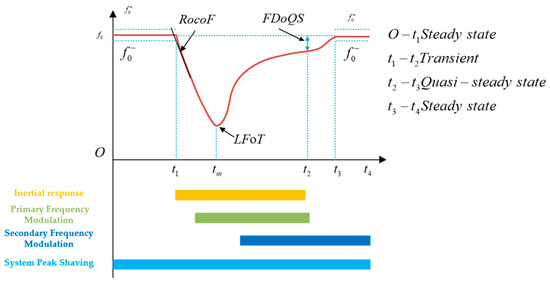
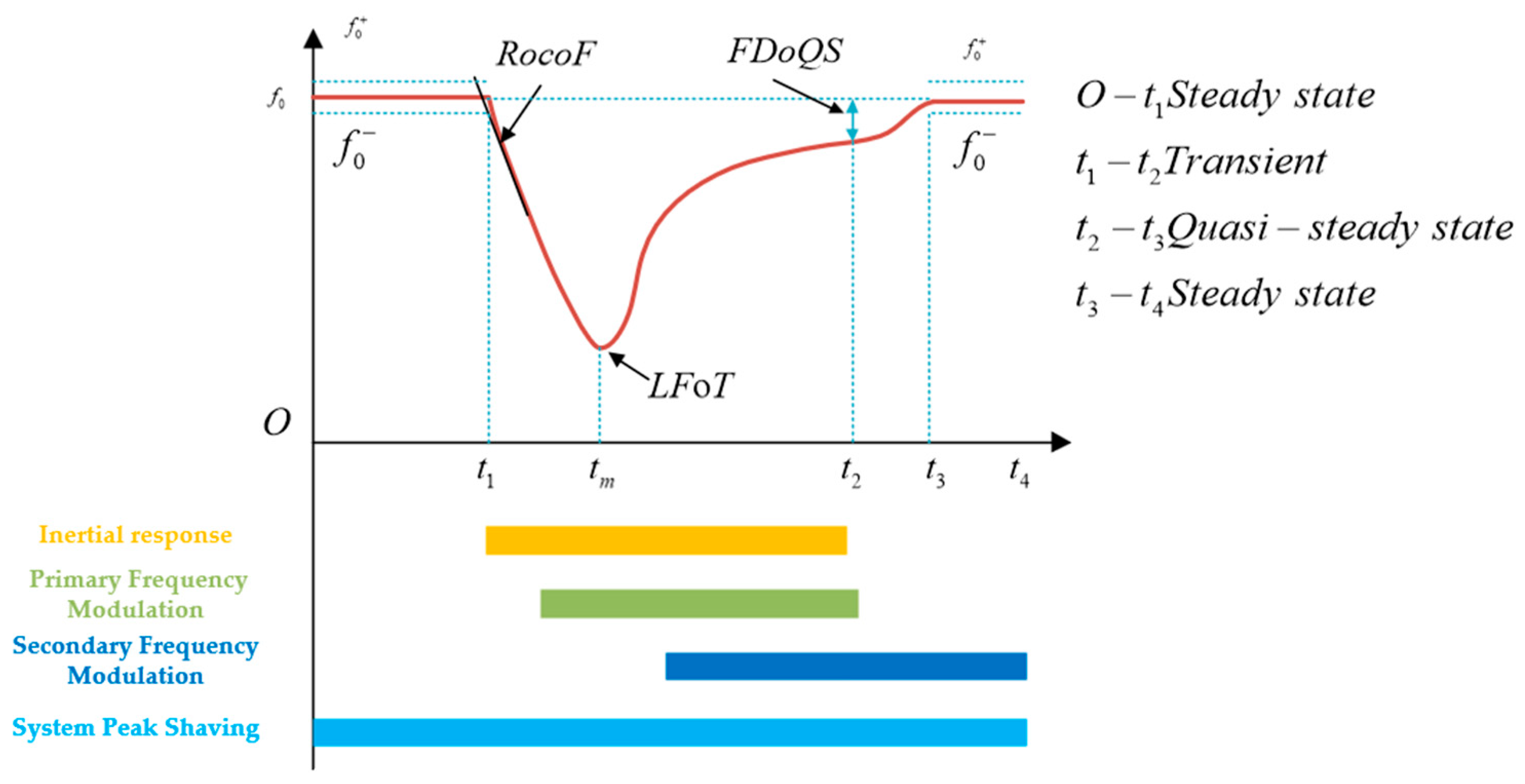
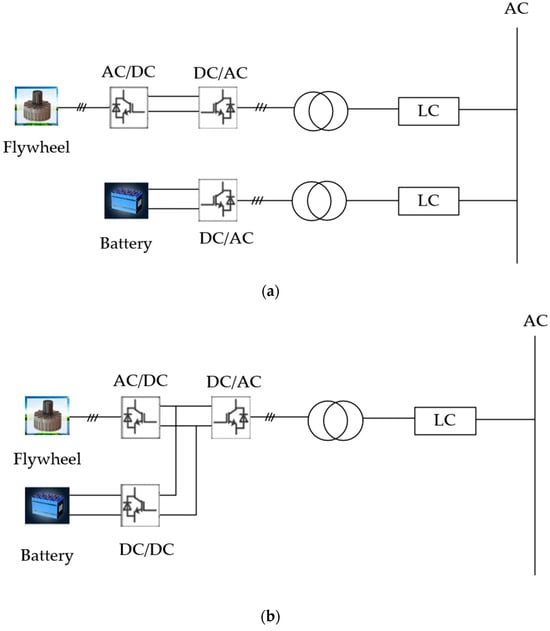
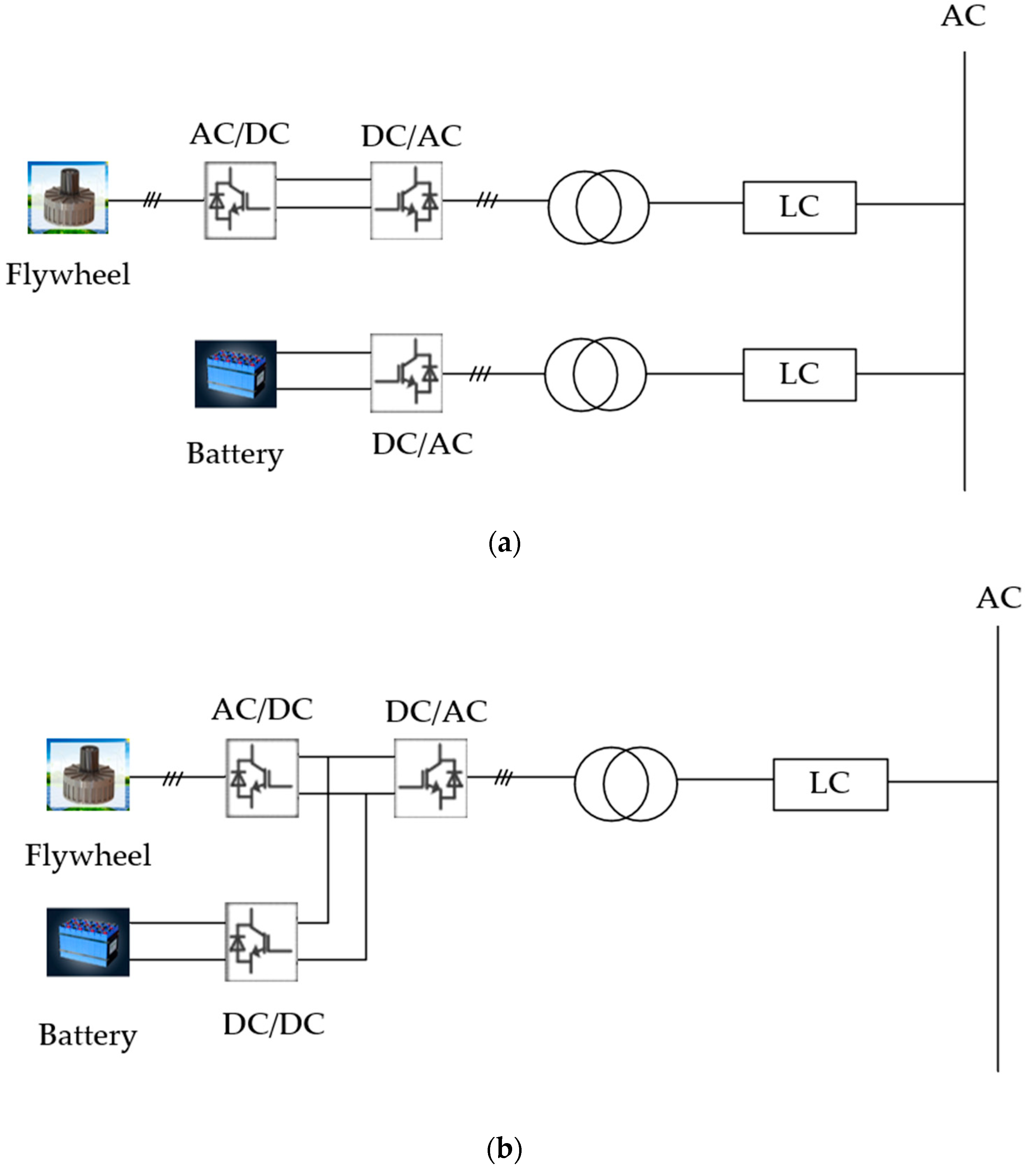
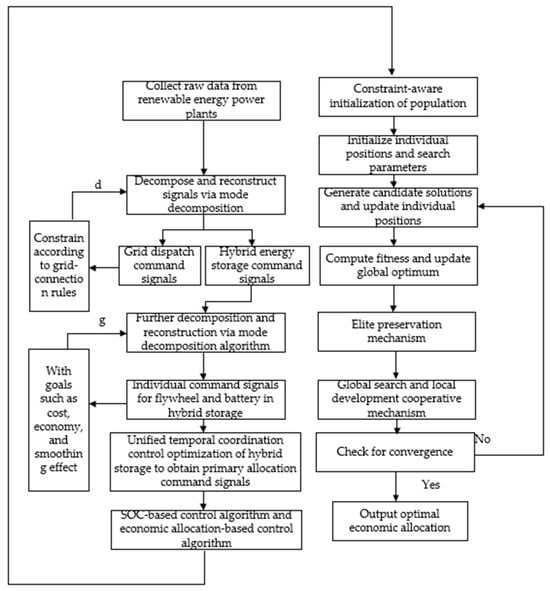
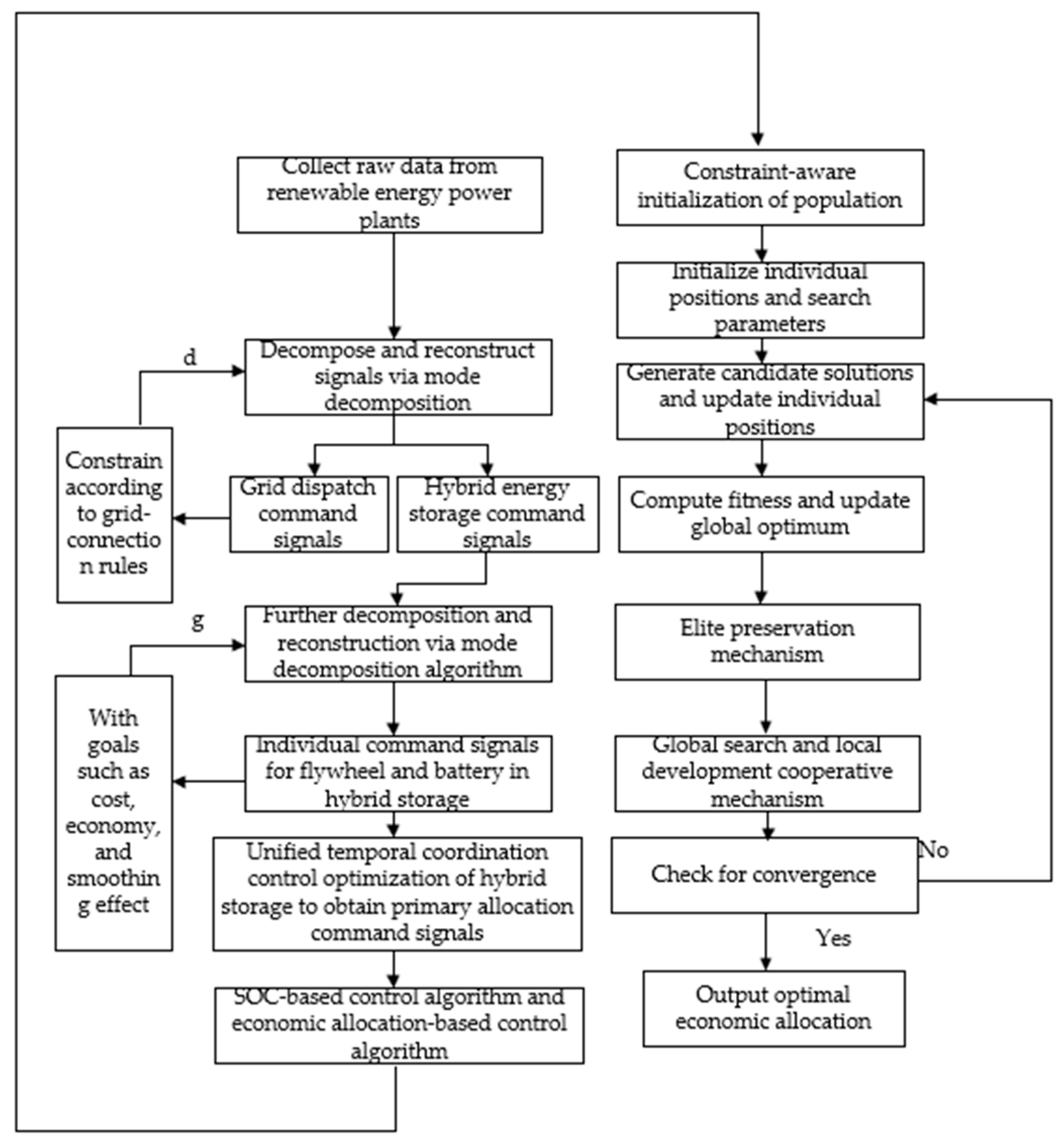
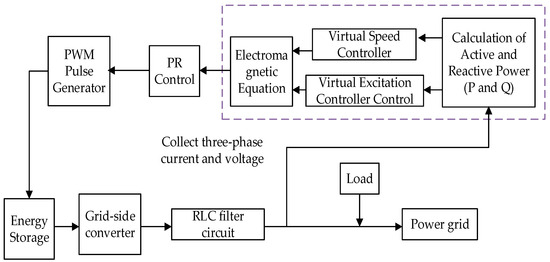
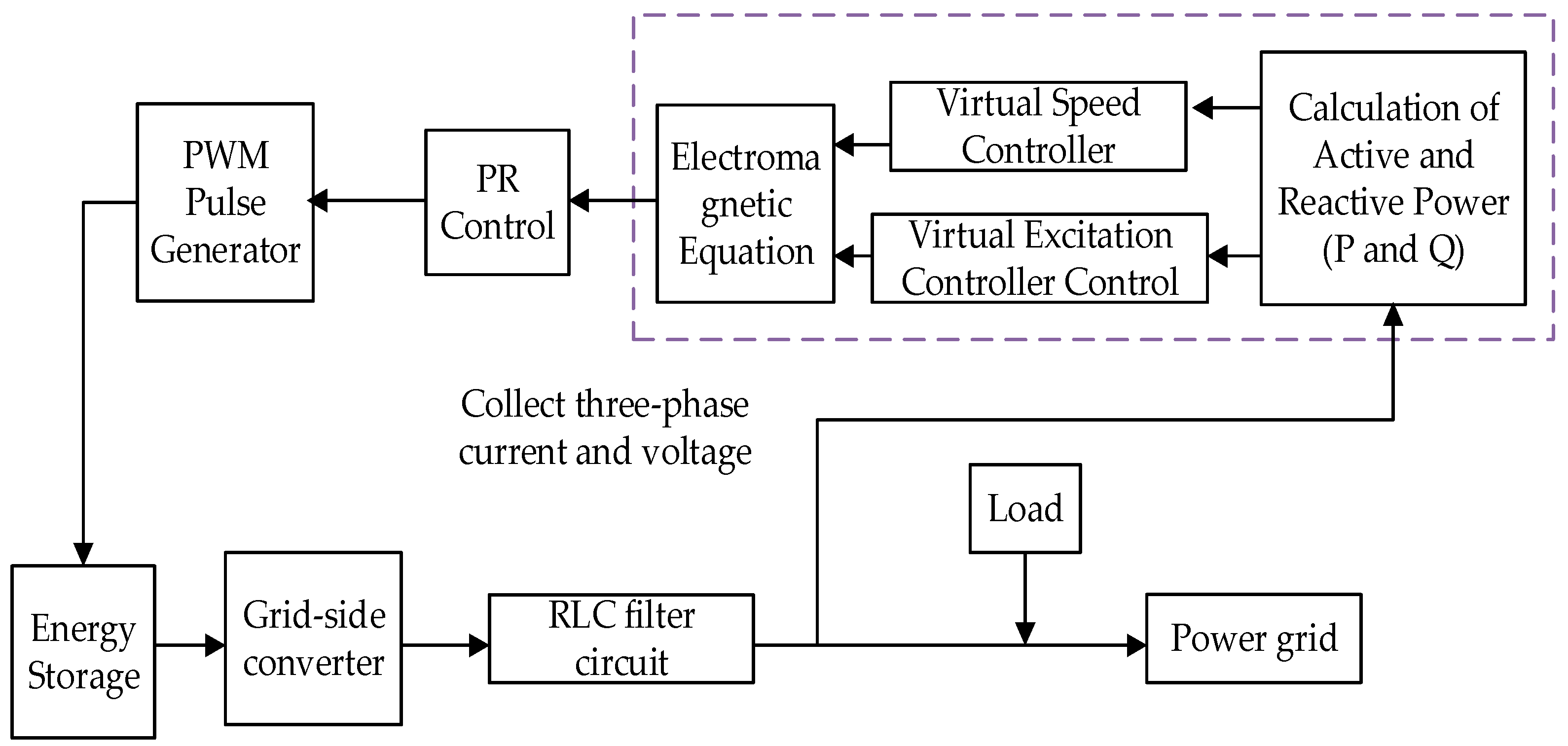

Disclaimer/Publisher’s Note: The statements, opinions and data contained in all publications are solely those of the individual author(s) and contributor(s) and not of MDPI and/or the editor(s). MDPI and/or the editor(s) disclaim responsibility for any injury to people or property resulting from any ideas, methods, instructions or products referred to in the content. |
© 2026 by the authors. Licensee MDPI, Basel, Switzerland. This article is an open access article distributed under the terms and conditions of the Creative Commons Attribution (CC BY) license.