Article

Methodology for Developing a Maintenance Action Program for Power Units of Captive Power Plants Based on an Integrated Priority Indicator

1
Department of Electric Power Engineering and Electromechanics, Saint Petersburg Mining University, 199106 St. Petersburg, Russia
2
Department of Heat, Hydraulics and Environmental Engineering, “Angel Kanchev” University of Ruse, 7017 Ruse, Bulgaria
3
Department of Agriculture Machinery, “Angel Kanchev” University of Ruse, 7017 Ruse, Bulgaria
4
Department of Power Supply and Electrical Engineering, Irkutsk National Research Technical University, 664074 Irkutsk, Russia
5
Department of Hydropower and Renewable Energy, National Research University “Moscow Power Engineering Institute”, 111250 Moscow, Russia
6
Department of Power Plants, Networks and Systems, Irkutsk National Research Technical University, 664074 Irkutsk, Russia
7
Department of Transport, “Angel Kanchev” University of Ruse, 7017 Ruse, Bulgaria
*
Authors to whom correspondence should be addressed.
Energies 2026, 19(6), 1584; https://doi.org/10.3390/en19061584
Submission received: 2 March 2026 / Revised: 15 March 2026 / Accepted: 17 March 2026 / Published: 23 March 2026

Abstract

The study develops and implements a methodology for prioritizing power units (PUs) of captive power plants (CPPs) to support the development of maintenance and repair (M&R) programs considering their actual technical condition (TC) and reliability indicators. The proposed approach is based on the joint assessment of the technical condition index (TCI), the consumed technical resource (CTR), and the risk level (RL) of the PUs. To describe the statistical patterns of failures, a two-parameter Weibull distribution is applied, while the temporal change in the TCI is approximated by a linear relationship that accounts for differences between actual and nominal operating conditions. The CTR is defined as an integral characteristic reflecting the deviation between the actual and nominal TCI degradation functions. The RL is evaluated as a function of the probability of failure and the consequences of PU failure. Based on these individual indicators, an integrated priority index is formed to provide an unambiguous ranking of PUs. The methodology was implemented using actual operational data from a fleet of PUs of an energy company. The results demonstrate that using the TCI alone does not fully reflect the actual TC of the PUs, whereas the combined consideration of TC, CTR, and RL enables a more justified formation of M&R programs. The practical significance of the study lies in the possibility of applying the developed methodology for reliability management of PUs at CPPs under resource constraints.

1. Introduction

Power units (PUs) of captive power plants (CPPs) are a key element in ensuring the reliable operation of industrial enterprises. Their failure can lead to disruptions in industrial processes, reduced production efficiency, and significant economic losses. Under increasingly complex operating modes, growing dynamic loads, and rising requirements for power supply reliability, the management of the technical condition (TC) of PUs is becoming a strategic task. In practice, maintenance and repair (M&R) programs for PUs are typically established within a preventive maintenance framework, based on fixed intervals of technical interventions. However, this approach does not account for the unit-specific degradation dynamics, differences in operating conditions, or the heterogeneity of wear rates among functional components. As a result, maintenance resources may be allocated inefficiently, while the prioritization of technical interventions is determined mainly by the designed service life or individual diagnostic parameters [1].
Modern reliability management approaches utilize the technical condition index (TCI), probabilistic failure models, and risk-oriented decision criteria. Nevertheless, these tools are typically applied separately. The TCI reflects the current degree of equipment degradation but does not consider the consumed technical resource (CTR) or the potential failure consequences (FCs). Probabilistic models allow estimation of failure intensity but are rarely integrated with diagnostic parameters of PUs. Risk-oriented approaches account for economic consequences but require a formalized relationship with the TC and the degree of degradation. Thus, current practice lacks a unified framework that integrates the current assessment of TC, the degree of technical resource (TR) consumption, and the failure risk level (RL) into an integrated priority indicator (IPI) capable of supporting justified maintenance planning under resource constraints. To address this gap, the present study develops and implements a methodology for prioritizing PUs of CPPs based on an IPI integrating TCI, CTR, and RL. The reliability of PUs at CPPs is therefore a critical factor determining the stability of industrial electrotechnical complexes, where backup diesel generators supply up to 85% of facilities with stringent power-supply reliability requirements [2]. Nevertheless, empirical evidence reveals a pronounced gap between their design availability and their actual operational reliability. In particular, the probability of successful autonomous operation over a two-week period often does not exceed 80% [3]. For mineral resource enterprises operating gas-engine units rated at approximately 1.5 MW, this challenge is tightly coupled with life cycle economics [1]. It has been shown that total maintenance expenditures for gas-turbine units over 40 years can exceed the initial capital cost by 17.8 times, shifting reliability improvement into the realm of strategic asset management [4].
Efforts to mitigate operational risk by refining local control systems face fundamental limitations driven by the inherently nonlinear dynamics of such units [5]. While structural models can formalize subsystem contributions, their validity depends on the completeness and fidelity of the modeled interconnections [6]. Intelligent algorithms significantly improve dynamic performance, reducing control errors by up to 60% and limiting overshoot to 5–10% [7]. Nevertheless, improved transient performance alone does not guarantee longer service life under prolonged operation. Accordingly, research attention has increasingly shifted toward Prognostics and Health Management (PHM) architectures that integrate diagnostics with forecasting [8].
Within PHM, both physics-based and data-driven degradation models are employed. Physics-based models are highly interpretable, yet their accuracy is strongly contingent on real operating conditions. For example, at 100% contamination of the low-pressure compressor, the flow capacity decreases by 7.5% and the isentropic efficiency by 2.5%, accompanied by an approximately 3.7% increase in turbine inlet temperature and a ~3% rise in specific fuel consumption [9]. Likewise, a turbine inlet temperature increase of just 105 K leads to a 3.29% increase in fuel consumption and an 88% reduction in residual life [10]. The limited generalizability of purely physics-based models has accelerated the adoption of data-driven methods. Adaptive Neuro-Fuzzy Inference Systems (ANFISs) and Long Short-Term Memory (LSTM) networks achieve prediction accuracy of 92.54% [11], whereas hybrid CNN–LSTM architectures further improve failure prediction and remaining useful life estimation [12]. High classification performance has been reported for XGBoost (97.2%) [13] and Support Vector Machines (99.5%) [14]. Random Forest also demonstrates robust performance, correctly classifying 185 of 200 observations [15]. Despite this, purely data-driven models remain vulnerable to shifts in statistical properties of the data when applied to retrospective datasets obtained under varying field conditions.
To enhance robustness, recent work increasingly emphasizes hybrid approaches. Rule-based models with neural initialization can reduce mean squared error to 0.0122 [16]. Sequential task decomposition can reduce the computation time to 0.07 s [17], while combining classical and neural approaches yields an accuracy of 0.89 with a 30% reduction in computational cost [18]. The benefits of hybrid structures are further supported by CNN–LSTM models that reduce the mean absolute error to 3.04 [19]. Integrating Failure Modes and Effects Analysis (FMEA) with Markov models increases the probability of detecting major failures to 88.7% while reducing average power to 35.1% [20]. In addition, wave-based diagnostic techniques expand monitoring capabilities for both PU TC and process media [21]. Infrared and ultrasonic methods improve the informativeness of measurement systems [22], whereas accurate parametric identification increases the robustness of diagnostic models [23]. Collectively, these diagnostic outputs provide the information base for probabilistic degradation modeling and failure forecasting. Integrated TCIs are widely used to aggregate diagnostic information [24] and support the assessment of the technical condition of electrical equipment [25], enabling data-driven monitoring and predictive maintenance strategies in modern power infrastructure [26]. They support degradation modeling, including the use of the Gompertz–Makeham law to approximate failure probability curves [27]. Under real operating conditions, the TCI can be up to 38% lower than under standard operating conditions [28], and agreement across alternative TCI calculation methods may be as low as 13% [29]. Rebalancing parameter weights can improve condition assessment accuracy from 81.25% to 98.96% [30]. Separating the TCI into theoretical and test components with weights of 0.4 and 0.6 enables joint consideration of aging mechanisms and diagnostic test outcomes [31]. Moreover, reducing the parameter set from 106 to 40 preserves regression model quality (R2 = 0.805) [32]. Process parameter optimization can substantially improve PU performance [33], while correlation-based feature selection combined with machine learning increases fault identification accuracy to 90% [34]. Overall, integrated TCIs provide a practical foundation for transitioning toward risk-oriented asset management.
Moving from diagnostics to reliability forecasting requires probabilistic failure models. Probabilistic models are widely used to analyze degradation and failure dynamics of industrial energy equipment [35], while techno-economic studies evaluate the influence of reliability parameters on power system operation [36], and advanced monitoring and control architectures improve the operational reliability of industrial energy systems [37]. In this context, recent studies increasingly explore adaptive and event-triggered control frameworks aimed at improving monitoring efficiency and system stability in complex energy systems. For example, secure adaptive event-triggered control strategies have been proposed for cyber–physical power systems under denial-of-service attacks, enabling improved communication efficiency and stability under cyber threats [38]. Adaptive event-triggered control mechanisms have also been developed for multi-area power systems operating under combined cyber-attacks, ensuring exponential stability of the closed-loop system [39]. In addition, dynamic event-triggered adaptive control approaches have been proposed to reduce communication load while maintaining stable operation of PUs in networked energy systems [40]. Similar event-triggered control strategies have been investigated for enhancing the resilience and stability of PUs under adverse operating conditions and communication disturbances [41]. These approaches mainly address dynamic control and real-time regulation problems, whereas the present study focuses on maintenance prioritization and reliability-oriented asset management of PU(s).
In reliability analysis, Monte Carlo methods capture uncertainty in input variables [42], and statistical analysis of operational data reveals the effects of operating regimes [43]. Long-term observations report availability ranging from 65% to 94% and times to failure from 800 to 3067 h [44]. The Weibull distribution is commonly used to identify wear-out behavior when β > 1 [45], with parameters estimated via maximum likelihood and mean squared error as low as 6.4 × 10⁻⁶ [46]. Accounting for the hidden defect development phase is critical, reducing mean time to failure prediction error from 44.7% to 3.5% [47]. Model sensitivity is evidenced by confidence intervals for the shape parameter spanning 0.6–13.2 [48]. Multiplicative criteria can capture post-maintenance restoration of TC [49], and maintenance strategies incorporating TCIs can extend service life by 17.5% beyond the design lifetime [50].
The final stage of asset management is risk-oriented analysis. Risk-oriented management integrates reliability indicators with economic decision-making in modern power systems [51], while system-level optimization models are applied to distributed energy infrastructures [52], and game-theoretic approaches are used for coordinated operation of interconnected microgrids [53]. Risk-based asset management can substantially reduce investment costs compared with planned replacement strategies [54]. Joint modeling of failure probability and FCs enables identification of the most vulnerable functional units [55]. Statistical risk models remain robust even with a high share of censored observations, reaching 77% [56]. Risk-oriented maintenance can reduce the overall RL by 4.65% [57] and supports prioritization and resource reallocation under budget constraints [58]. Additional savings are achievable through maintenance strategy optimization: dynamic threshold optimization can reduce costs by ~8% [59], inventory optimization can reduce costs by 66.8% [60], and Markov decision models can deliver a further ~20% cost reduction [61].
External drivers also significantly affect PU reliability. The reliability of electromechanical systems is influenced by hybrid intelligent control strategies that improve dynamic performance [62], while coordination of industrial loads and energy storage increases energy system efficiency [63], and mitigation of harmonic distortion enhances power system stability [64]. Thermal and vibrational loads increase failure intensity by 3.2 times [65]. Harmonic distortion [66] and power quality indicators [67] are also influential. Reducing switching losses [68] and using frictional heat to mitigate low-temperature conditions [69] can reduce thermal stress on critical components. Remote monitoring systems can reduce downtime by 38% [70], while digital twins support effective life cycle management [71]. Higher automation levels enable continuous, real-time condition monitoring [72], and Structural Health Monitoring (SHM) systems can more than double the mean time to failure [73]. Integrating monitoring data into unified platforms yields a synergistic effect [74]. Web-based access and analytical redundancy improve measurement credibility [75] and enable sensor fault detection using residual-signal analysis [76]. Effective management of complex energy systems requires system-level analysis of interdependent factors and the integration of heterogeneous monitoring methods [77]. Multi-level observation frameworks can optimize monitoring resources and reduce monitoring costs by 2–4 times [78]. Similar algorithmic approaches are used to select parameters of technical complexes via regression models that account for operating conditions and system performance [79]. Decomposition of electrical load profiles [80] and data clustering [81] refine degradation patterns. Machine learning methods for technical condition prediction achieve classification accuracy up to 91% [82]. Reducing feature dimensionality from 18 to 5 key points decreases computation time by 45% while lowering accuracy by only 1.4% [83]. Nevertheless, the credibility of risk assessment ultimately depends on the quality and accuracy of the underlying measurement data [84].
Key conclusions from the literature are as follows:
PU reliability is a critical determinant of industrial energy-system stability and is governed by both design features and operating conditions (availability 65–94%).
Intelligent diagnostic and prognostic methods achieve high fault-detection accuracy (up to 99.5%) but require adaptation to non-stationary field data and changing operating regimes.
Probabilistic degradation models based on retrospective operational data are essential for estimating residual TR and can reduce the mean time to failure prediction error to 3.5%.
Integrated TCIs enable aggregation of diagnostic parameters and improve the credibility of technical condition assessment (accuracy up to 98.96%).
Risk-oriented asset management approaches support justified prioritization of maintenance actions and can reduce both investment and operational expenditures.
For comparison, Table 1 summarizes representative studies according to five analytical dimensions: diagnostic indicators, degradation modeling, failure probability analysis, risk-based decision-making, and integrated prioritization. The check mark (✓) in Table 1 indicates that the corresponding publication considers the specified aspect in the analysis of equipment condition or reliability.
Despite substantial progress in diagnostics, prognostics, and risk-based asset management, the literature still reveals a gap between high-accuracy technical condition diagnostics, stochastic degradation modeling, and the economic justification of M&R decisions. As summarized in Table 1, existing studies typically address these aspects separately and rarely integrate them within a unified framework for maintenance prioritization. This gap motivates the development of the integrated approach proposed in this study, which combines diagnostic indicators, probabilistic reliability models, and economic criteria within a unified architecture for managing the operational reliability of PUs.

2. Methodology

The research methodology is based on the development and implementation of a prioritization approach for PUs to support the formation of M&R programs using the following indicators:
Individual indicators, including TCI, CTR, probability of failure (PoF), and FC;
Integrated indicators, including RL and IPI.
In this study, each PU is considered a technical system whose TC evolves over time under the influence of operating conditions, environmental factors, and load regimes. These factors lead to degradation of functional components, a decrease in the TCI, consumption of the TR, and an increase in the PoF [17].
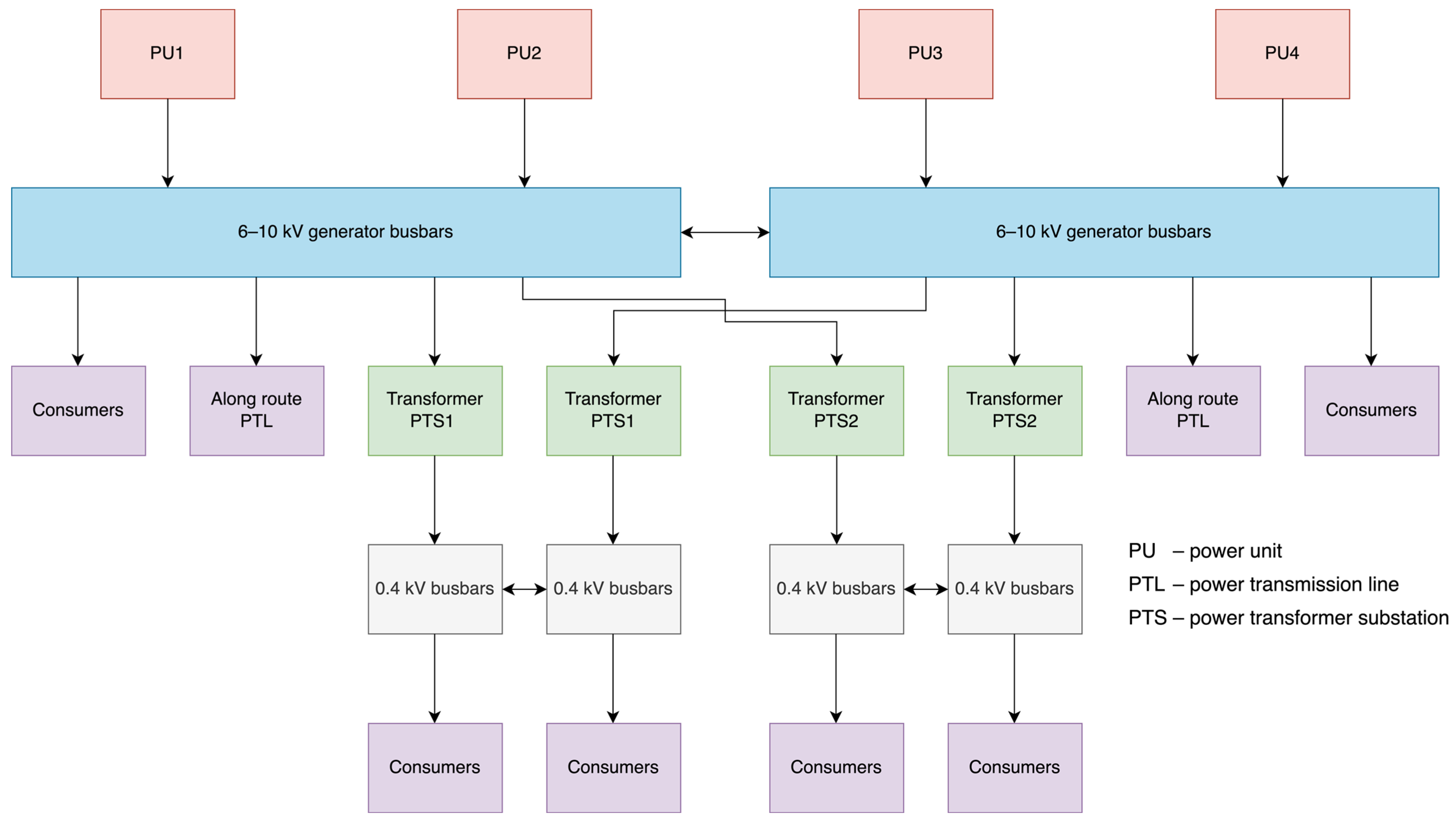
A typical single-line diagram of the autonomous CPP on which the considered fleet of PUs operates [85] is presented in Figure 1.
The diagram illustrates the structure of the power supply system and the operating environment of the PUs. Within the framework of this work, the FC indicator is evaluated at the level of an individual PU and is assumed to be identical for all units of the considered CPP. Consequently, FCs are not associated with the specific position of the unit within the single-line diagram but are determined based on the adopted operational and economic assumptions. Under this assumption, differences in RL between PUs are determined by variations in PoF.

2.1. Probability of Failure

In Ref. [86], it is shown that the mean time to failure of PUs in CPPs follows a two-parameter Weibull distribution. In the present study, this distribution is adopted as the base model for describing the statistical behavior of PU failures. The probability density function of time to failure is expressed as
f t = β t β 1 η β exp t η β ,
where t —operating time of the PU, [ t ] = h ; β —shape parameter; η —scale parameter, [ η ] = h .
Accordingly, the reliability function (probability of failure-free operation) is defined as
P t = e x p t β η β ,
while the PoF is calculated as
Q t = 1 P t = 1 e x p t β η β .
In the present study, the parameters of the two-parameter Weibull distribution were assumed constant for the considered population of PUs operating at CPPs. This assumption is justified by the relatively homogeneous structure of the investigated PU fleet, as all units correspond to the same model and operate under similar design and operational conditions. Based on the statistical analysis of retrospective operational data reported in Ref. [86], the adopted Weibull parameters are β = 1.65 and η = 12,262 h. The value β > 1 indicates the wear-out stage of the equipment life cycle. These parameters were used to calculate the PoF for all PUs considered in the study.

2.2. Technical Condition Index

In this study, the TCI is considered an integrated diagnostic indicator determined in accordance with the condition assessment methodology applied at the studied energy facility. The calculation of TCI values for individual functional components and diagnostic parameters is not performed within this study because the TCI values are used as input data.
To estimate the CTR, a simplified model describing the temporal evolution of the TCI is adopted, allowing comparison between the actual and nominal degradation trajectories.
The TC of a PU is represented by the TCI, whose time evolution is approximated by a linear relationship:
s ( t ) = k t + s 0 ,
where k —coefficient representing the rate of TCI change, [ k ] = 1 / h ; s 0 —initial value of the TCI at t = 0 .
Constructing a statistically justified model of TCI evolution requires a representative set of operational data [30], as noted in studies on condition assessment of power equipment based on TCIs [50] and diagnostic results [31]. However, the currently available operational data for PUs are insufficient to support more complex degradation models. Statistical information on failures of individual PU components and time-series diagnostic data describing the evolution of the TCI for functional components are not available. Such information would allow the degradation of individual components and the resulting change in the overall TCI of the PU to be modeled. In view of these limitations, the TCI evolution in this study is assumed to follow a linear law.

2.3. Consumed Technical Resource

In Ref. [85], coefficients describing the rate of TCI degradation under actual and nominal operating conditions were obtained for PUs of CPPs. These coefficients are used in the present study to account for the influence of operating conditions when forming the TCI degradation functions
k a c t = 1 T a c t ,
k n o m = 1 T n o m ,
where T a c t and T n o m denote the actual and nominal service life of the PU, respectively.
Accordingly, the TCI evolution functions take the form
s a c t ( t ) = k a c t t + s 0 ,
s n o m ( t ) = k n o m t + s 0 .
The CTR of a PU is defined as an integral characteristic reflecting the difference between actual and nominal TCI degradation functions. In general form, the CTR over the operating interval [ 0 ;   t ] is expressed as [85]
C T R ( t ) = 0 t 1 s a c t ( t ) 1 s n o m ( t ) d t .
Given the linear nature of the functions s a c t ( t ) and s n o m ( t ) , Equation (9) can be analytically evaluated, ensuring the reproducibility and unambiguous interpretation of the CTR.

2.4. Risk Level

The RL of a PU is defined as the product of the PoF and the FC indicator [54]:
R ( t ) = Q ( t ) C ,
where C is the indicator representing the FCs, which accounts for technological, economic, and operational factors; C = conventional units.

2.5. Integrated Priority Indicator

To rank PUs and form the M&R program, an IPI is introduced:
N i = N T C I , i N C T R , i N R , i ,
where N i —IPI of the i -th PU; N T C I , i , N C T R , i , and N R , i —priority rankings based on TCI, CTR, and RL, respectively.
In this study, all considered indicators (TCI, CTR, and RL) are assumed to have equal significance. No additional weighting coefficients are introduced when forming the IPI. This assumption is motivated by the fact that each indicator reflects a different aspect of the PU condition: the TCI characterizes the current TC of the equipment, the CTR reflects the degree of consumption of the TR during operation, and the RL accounts for the probability and consequences of failure. In the absence of a justified basis for assigning higher importance to any individual indicator, equal weighting is adopted in order to avoid introducing additional subjective parameters into the prioritization procedure. Priority numbers for each individual indicator are assigned according to the descending order of the corresponding parameter values. For the IPI, the following condition must be satisfied:
N 1 N i N n ,
where n is the total number of PUs at the considered facility, ensuring unique ranking and preventing duplication of priorities.

2.6. Prioritization Procedure

The prioritization methodology for PUs of CPPs is implemented according to the following procedure:
  • Determine the operating time of each PU since commissioning.
  • Calculate the PoF for each PU.
  • Determine the TCI evolution functions under actual and nominal operating conditions.
  • Calculate the CTR of each PU.
  • Evaluate the RL for all PUs.
  • Rank the PUs according to each individual indicator.
  • Calculate the IPI.
  • Form the M&R program for the PUs.
The proposed prioritization methodology can be applied to PUs of CPPs when information on operating time since commissioning, nominal service life, and FCS is available. Within the framework of this study, the linear nature of TCI degradation and the invariance of Weibull distribution parameters for the considered PU population are assumed. These assumptions ensure the reproducibility of results and the practical applicability of the proposed methodology.

3. Results

The developed prioritization methodology for PUs of CPPs was implemented using actual operational data on the accumulated operating time of PUs since commissioning. The study considered 46 PUs operating at various industrial facilities of an energy company as part of autonomous CPPs.
All investigated PUs correspond to the gas piston model Zvezda-GP-1500VK-02M3 with a rated electrical power of 1.5 MW. Therefore, the considered PU fleet represents a relatively homogeneous population of units with similar design and operational characteristics. The basic characteristics of the investigated PU fleet are summarized in Table 2.
At the time of the study, M&R activities for the PUs were performed according to a preventive maintenance system [86].
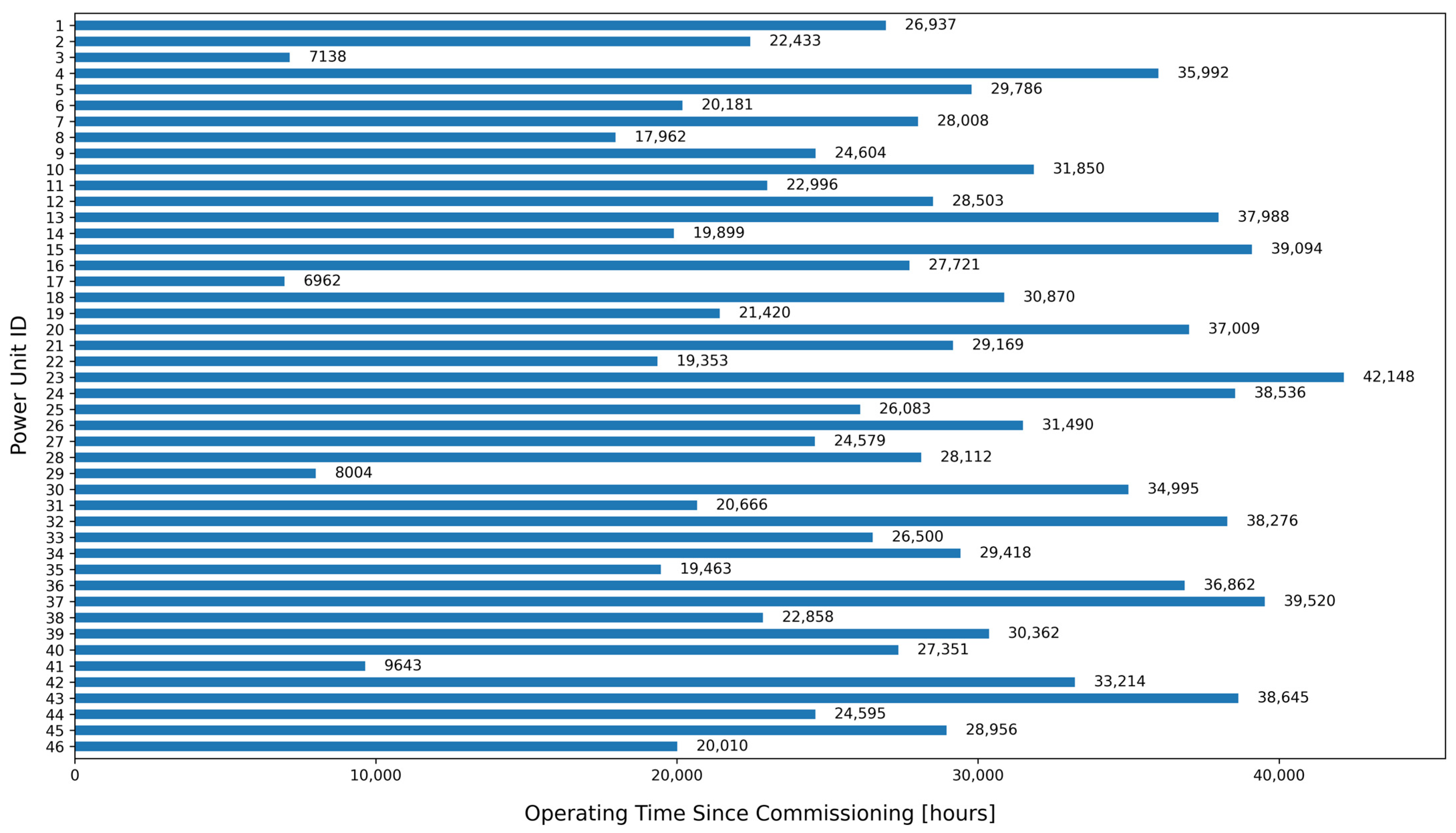
The input data [86] used to calculate the TCI, the CTR, and the RL of the PUs are presented in Figure 2. The figure contains the operating time of the PUs since commissioning, obtained through analysis of retrospective operational data.
These data serve as the initial input for implementing the prioritization algorithm described in Section 2 and are used to calculate all individual and composite indicators characterizing the TC and reliability of the PUs.
Within the framework of the CTR calculation methodology, coefficients representing the rate of change of the TCI were adopted based on previously obtained results for this class of PUs. According to the results presented in Ref. [85], the coefficients describing the rate of TCI degradation under actual and nominal operating conditions for the considered PU fleet are
k a c t = 23.26 · 10 4   1 / h ,
k n o m = 4.57 · 10 4   1 / h .
For these coefficient values, the ratio of the TCI degradation functions under actual and nominal operating conditions remains constant. This allows the CTR calculation to be simplified and expressed as a linear function of operating time since commissioning:
C T R i = 5.09 · t i ,
where t i is the operating time of the i -th PU since commissioning, [ t i ] = h ; T n o m is the standard TR of the PU, and Tnom = 219,000 h [85].
Classification of PUs according to their actual TC was carried out in accordance with the requirements of the relevant regulatory document [87]. The ranges of TCI values and the corresponding TC categories are presented in Figure 3.
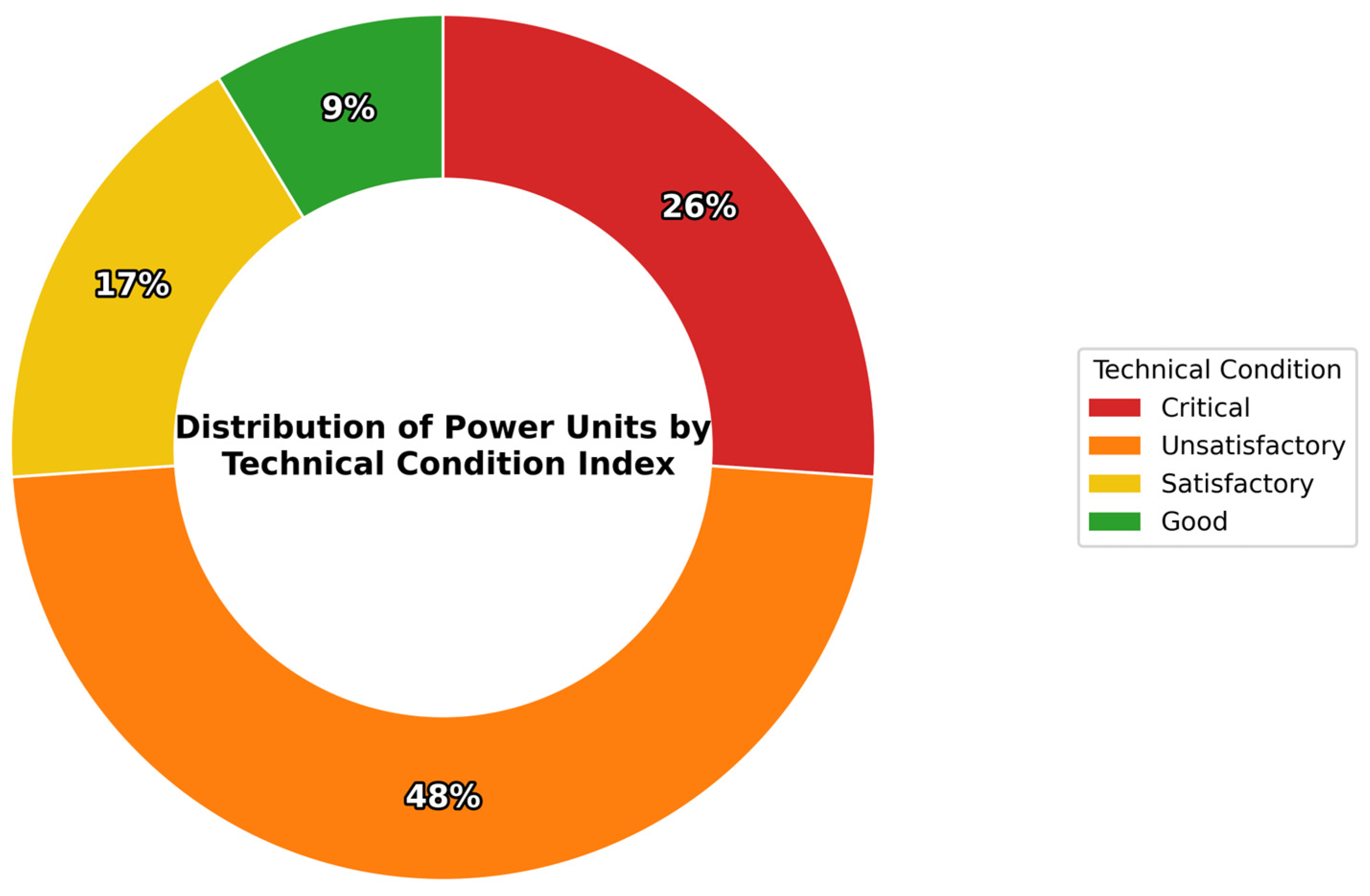
To provide a visual assessment of the overall condition of the PU fleet, the distribution of PUs across TC categories was calculated in percentage terms. The results are shown in Figure 4 as a pie chart.
The analysis indicates that 74% of the PUs are in critical or unsatisfactory TC, which reflects a high degree of equipment degradation and highlights the need for prioritized maintenance planning. Only 9% of the PUs are in good condition, which further confirms the relevance of forming an optimized M&R program.
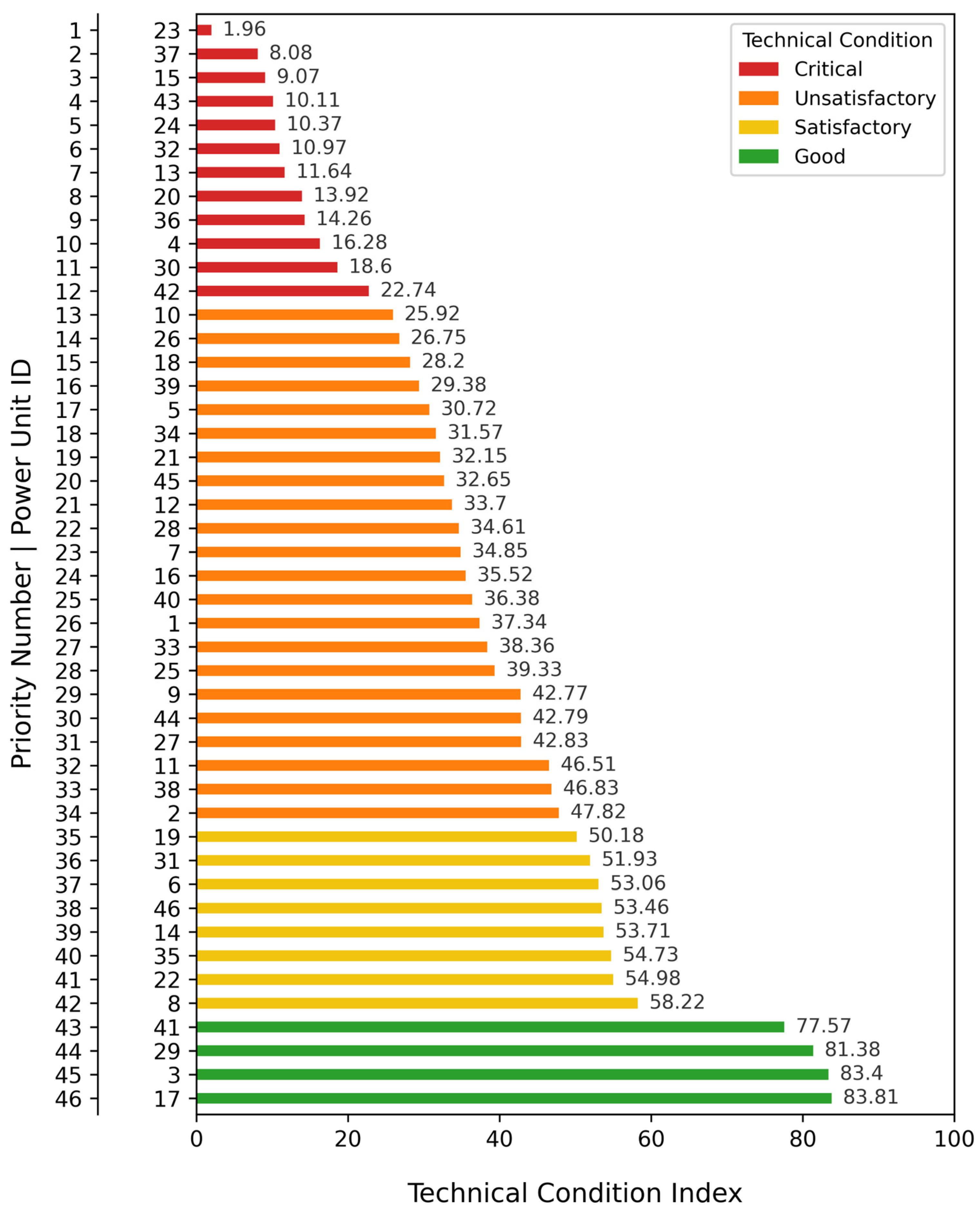
The prioritized list of PUs for inclusion in the M&R program based on the TCI is presented in Figure 5. The figure shows that PUs with the greatest accumulated operating time occupy the highest positions in the list and therefore require priority maintenance actions.
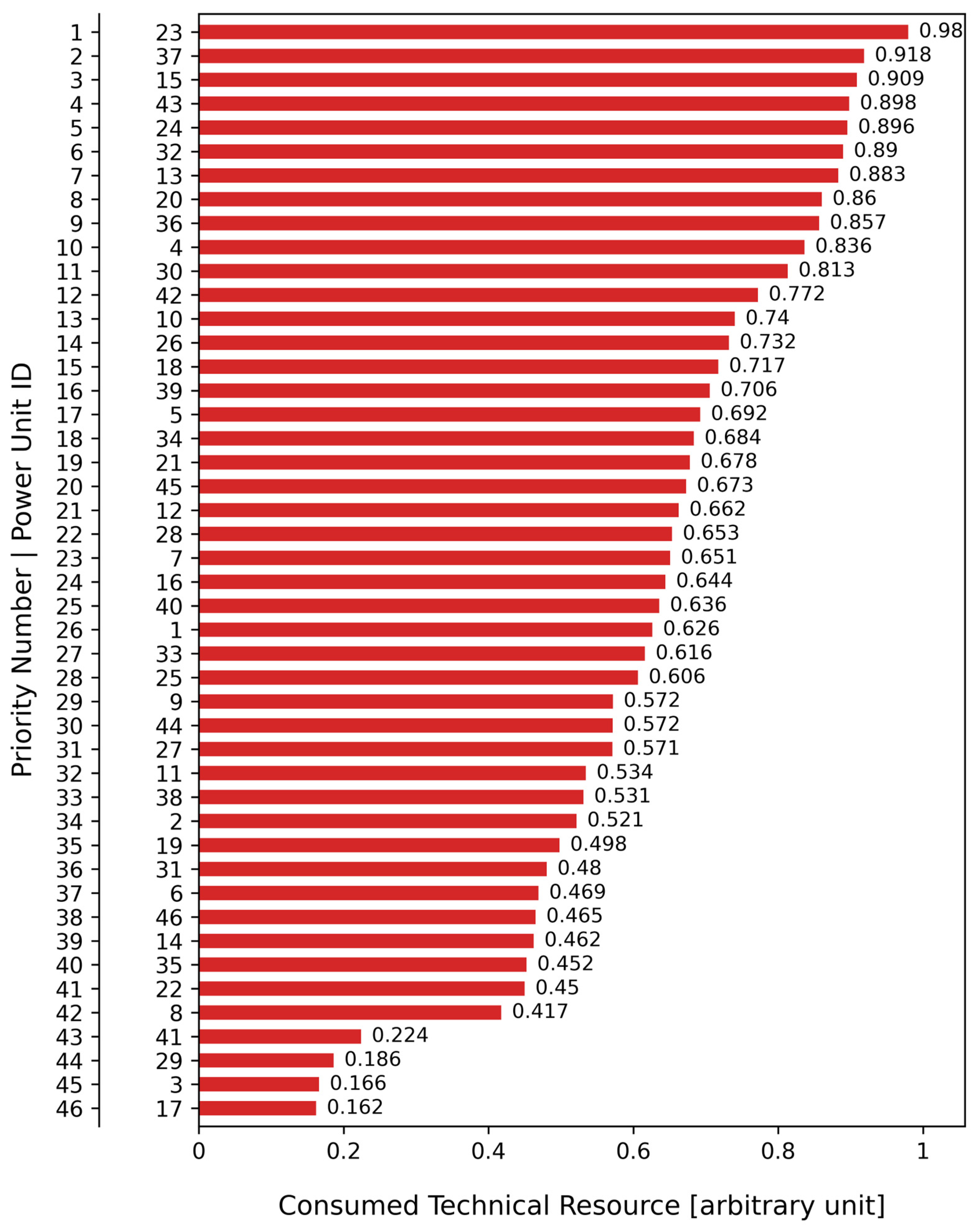
At the next stage, PUs were prioritized based on the CTR, calculated while accounting for differences between actual and nominal operating conditions. The resulting prioritized list for inclusion in the M&R program according to this indicator is shown in Figure 6.
Analysis of the results shows that several PUs with similar TCI values exhibit different levels of CTR, which is explained by differences in operating conditions and degradation rates.
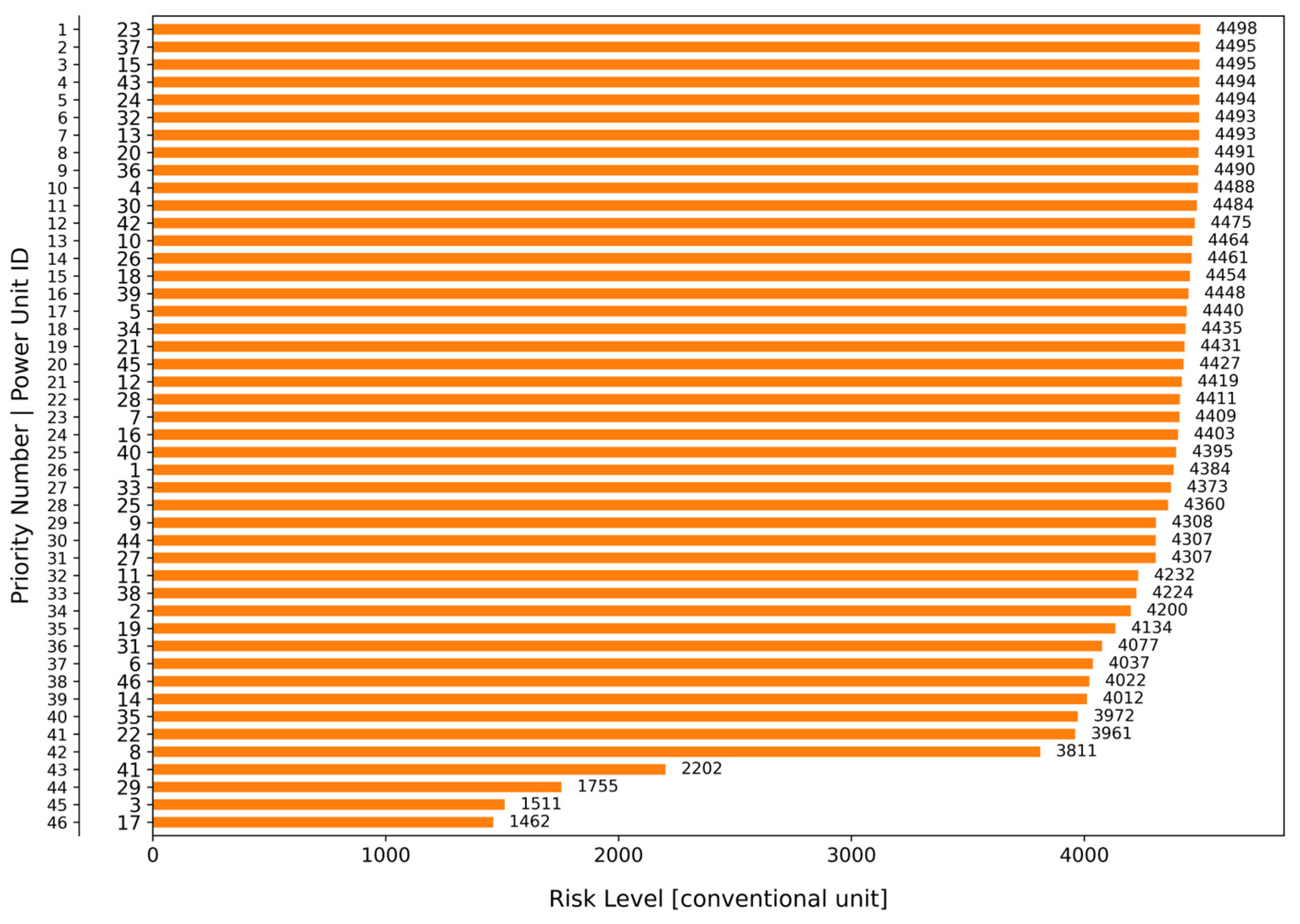
To evaluate the RL, both the PoF and the consequences of failure were taken into account. The rated capacity of the PUs is 1.5 MW [1]. For further calculations, the duration of PU downtime in the event of a failure was assumed to be 3 h, corresponding to the typical restoration time after failures reported in Ref. [3]. The specific economic damage associated with 1 kWh of undelivered electricity was assumed to be 1 conventional unit. In this study, the FC indicator is introduced as a normalized economic measure used for comparative risk assessment of PUs within the considered CPP. The use of conventional units allows the prioritization results to remain independent of specific electricity tariffs, production losses, or contractual penalties, which may differ significantly between industrial facilities. Under these assumptions, the FC indicator equals 4500 conventional units.
The prioritized list of PUs for inclusion in the M&R program based on the RL is presented in Figure 7.
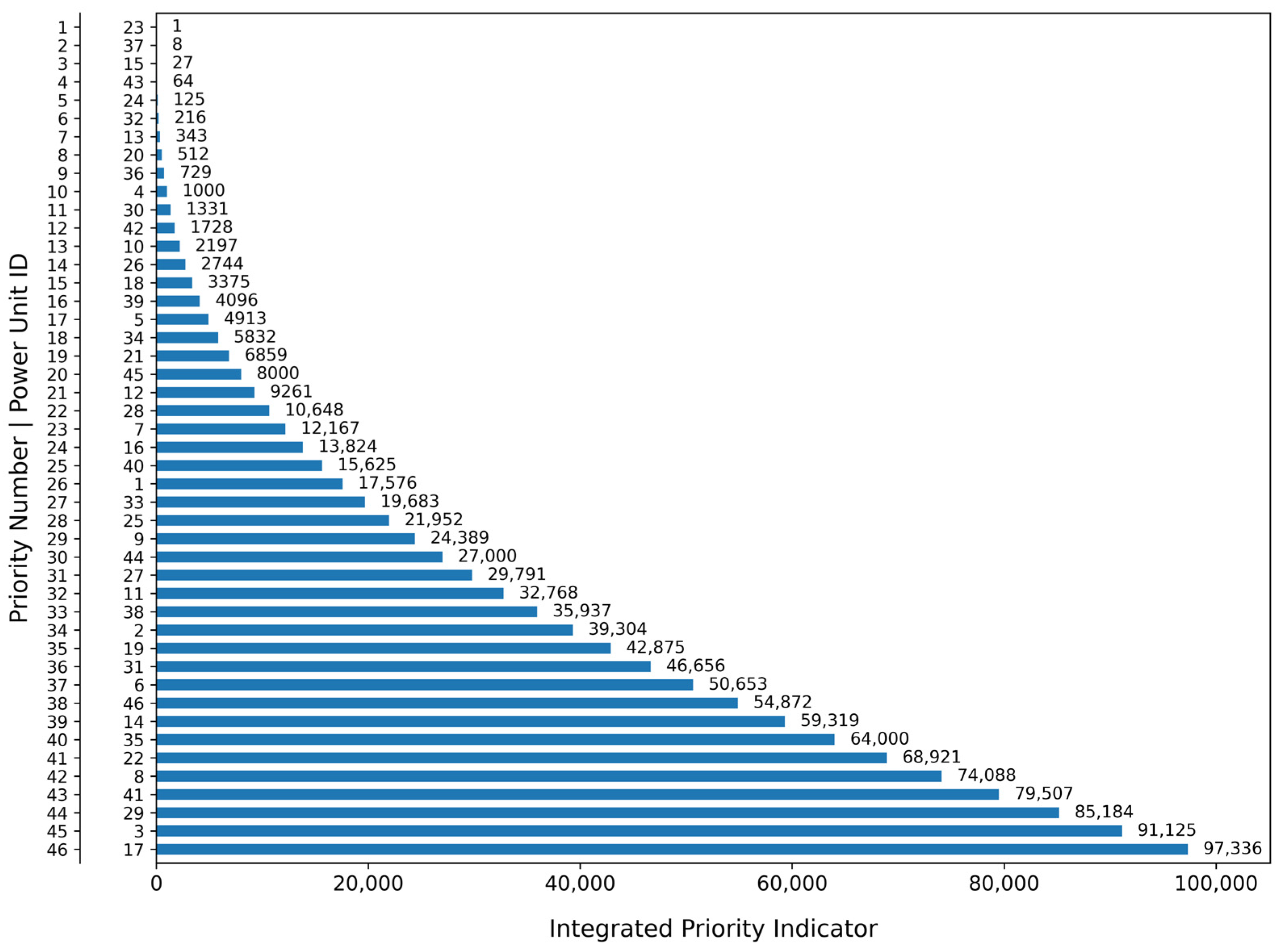
To form the final M&R program for the PU fleet, an integrated prioritization was performed based on the value of the IPI. The resulting prioritized list is shown in Figure 8.
Based on the IPI, an M&R program for the PU fleet of the energy company was developed, as presented in Table 3.
The PUs were conditionally divided into seven priority ranges, enabling phased implementation of maintenance actions while accounting for limitations in material, labor, and time resources.
Analysis of Table 3 shows that PU23 and PU24 have the highest priority, as they combine high operating time, a large CTR, and an elevated RL. Units assigned to the lowest priority ranges may be included in the M&R program at later stages.

4. Discussion

The obtained results confirm that the use of a single indicator, particularly the TCI, does not fully reflect the actual TC of PUs and therefore cannot ensure a reliable prioritization of maintenance actions. Although the TCI is an informative integrated indicator, it mainly reflects the current condition of the unit and does not account for the degree of consumption of the TR or the potential consequences of failure.
The distribution of PUs across TC categories shows that a significant portion of the fleet is in critical or unsatisfactory condition. This indicates a high level of equipment degradation and confirms the need to move from a preventive maintenance strategy toward a condition-based maintenance approach. At the same time, the presence of PUs in satisfactory and good condition within the same fleet indicates heterogeneity of operating conditions and differences in degradation rates of functional components.
A comparison of prioritization results based on the TCI and the CTR demonstrates that although the ranking order of PUs remains generally consistent, the indicator values differ. Units with similar TCI values may exhibit significantly different levels of CTR due to variations in operating conditions and the degree of utilization of the design service life. Consequently, incorporating the CTR into the analysis enables the identification of PUs with latent degradation, which may not be detected when only the current TCI value is considered.
Including the RL in the analysis allows the assessment to shift from evaluating only the TC of PUs to evaluating the consequences of potential failures. Considering FCs does not significantly change the prioritization order compared with ranking based on TC and CTR. However, it provides additional justification for the selected priorities by incorporating economic factors. This aspect is particularly important for PUs of CPPs, whose failure may result in significant economic losses and disruption of the power supply for industrial processes in the mineral resource and fuel–energy sectors.
The integrated prioritization of PUs based on the IPI makes it possible to combine information on TC, TR consumption, and RL within a single indicator. The results demonstrate that this approach enables the formation of an ordered list of PUs for inclusion in the M&R program, taking into account actual operating conditions and resource constraints of the energy company. Unlike traditional approaches based on operating time or design service life, the proposed methodology enables maintenance actions to be directed toward PUs associated with the highest expected FCs.
In comparison with traditional preventive maintenance strategies based solely on operating time or scheduled service intervals, the proposed approach provides a more flexible prioritization mechanism that reflects the actual degradation state of equipment. Unlike condition-based maintenance approaches relying only on TCI, the developed methodology additionally considers the degree of CTR and the economic consequences of potential failures. Compared with purely risk-based maintenance models, which typically focus on failure probability and consequences, the proposed framework explicitly incorporates diagnostic information through the TCI. As a result, the IPI enables a more balanced maintenance prioritization that simultaneously accounts for technical degradation, resource consumption, and operational risk.
It should be noted that the similarity in the ranking orders obtained based on the TCI, CTR, and RL in the present study results from the assumption that all considered PUs follow the same law of TCI degradation over time. In general, when operating conditions and degradation laws differ between units, these ranking orders may diverge. This highlights the need for further research and the accumulation of a representative dataset covering the entire PU fleet of CPPs.
The results presented in this study are based on the analysis of a fleet of 46 PUs and demonstrate the practical applicability of the proposed prioritization methodology. At the same time, additional validation of the robustness of the IPI may be achieved through sensitivity analysis of the individual indicators included in the IPI formulation. In particular, further research will investigate the influence of variations in TCI degradation parameters, Weibull distribution parameters, and FC assumptions on the resulting prioritization of PUs.

5. Conclusions

This study developed and implemented a methodology for prioritizing PUs of CPPs based on a comprehensive assessment of their TC, the CTR, and the RL. The proposed approach enables a transition from the traditional preventive maintenance strategy toward condition-based operation management, taking into account the potential consequences of failures.
The methodology was validated using actual operational data from a fleet of PUs operated by an energy company. The results demonstrate that relying solely on the TCI does not provide sufficient information to establish well-founded priorities for maintenance actions. In contrast, incorporating the CTR and RL allows a more accurate quantitative assessment of the priority for including PUs in the M&R program.
The proposed methodology provides a practical tool for forming M&R programs for PUs of CPPs and can be applied by energy companies operating CPPs to prioritize maintenance actions under limited maintenance resources. The use of the IPI allows maintenance planning to consider not only the current TC of equipment but also the CTR and the RL associated with possible failures. Its implementation improves the justification of decision-making, enables more efficient allocation of available resources, and reduces the RL associated with critically important PUs. The results of this study can also be used in the development and implementation of digital monitoring systems for TC assessment and decision-support systems in energy companies.
The practical application of the proposed methodology is demonstrated using a fleet of 46 PUs operating at CPPs. The analysis showed that 74% of the PUs are in critical or unsatisfactory TC, confirming the necessity of prioritized maintenance planning. The use of the IPI enabled the formation of an ordered list of PUs for inclusion in the M&R program and the division of the fleet into seven priority ranges, allowing phased implementation of maintenance actions under resource constraints.
At the same time, several methodological limitations of the proposed approach should be noted. In this study, the evolution of the TCI was approximated using a simplified linear degradation model, and the parameters of the Weibull distribution were assumed constant for the considered PU population. These assumptions were adopted due to the limited availability of detailed operational and diagnostic data. Future research will focus on expanding the operational dataset, incorporating statistical information on failures of individual PU components, and extending the methodology toward data-driven and adaptive maintenance decision frameworks through the integration of time-series monitoring data and machine-learning-based degradation models.

Author Contributions

Conceptualization, A.N., K.S. and D.M.; methodology, A.N., I.I. and D.M.; validation, I.B., H.B. and D.M.; formal analysis, A.N., I.B., K.S. and D.M.; investigation, A.N., H.B., I.B., K.S. and D.M.; resources, H.B., I.B. and D.M.; data curation, A.N., K.S., I.I. and D.M.; writing—original draft preparation, A.N., K.S., I.I., H.B., I.B. and D.M.; writing—review and editing, A.N., K.S., I.I., H.B., I.B. and D.M.; visualization, D.M.; supervision, A.N. and K.S.; project administration, K.S.; funding acquisition, I.I. All authors have read and agreed to the published version of the manuscript.

Funding

This research was funded by the European Union—NextGenerationEU—through the National Recovery and Resilience Plan of the Republic of Bulgaria, project № BG-RRP-2.013-0001-C01.

Data Availability Statement

The data presented in this study are available on request from the corresponding authors.

Conflicts of Interest

The funders had no role in the design of the study; in the collection, analyses, or interpretation of data; in the writing of the manuscript; or in the decision to publish the results.

Abbreviations

The following abbreviations are used in this manuscript:
CPP(s) Captive Power Plant(s)
CTR Consumed Technical Resource
FC(s) Failure Consequence(s)
IPI Integrated Priority Indicator
M&R Maintenance and Repair
PoF Probability of Failure
PU(s) Power Unit(s)
RL Risk Level
TC Technical Condition
TCI Technical Condition Index
TR Technical Resource

Nomenclature

The symbols used in the mathematical model, including functions, indicators, parameters, and variables, are summarized in the following table:
Symbols Description Unit
Functions
f t Probability density function of time to failure
P t Reliability function
Q t Probability of failure
s ( t ) Technical condition index evolution function
s a c t ( t ) Technical condition index evolution function under actual operating conditions
s n o m ( t ) Technical condition index evolution function under nominal operating conditions
C T R ( t ) Consumed technical resource function hours
R ( t ) Risk level conventional units
Indicators
C Failure consequence indicator conventional units
N i Integrated priority indicator of the i-th power unit
N T C I , i Priority rank based on technical condition index of the i-th power unit
N C T R , i Priority rank based on consumed technical resource of the i-th power unit
N R , i Priority rank based on risk level of the i-th power unit
Parameters
β Weibull shape parameter
η Weibull scale parameter hours
k Degradation rate coefficient of the technical condition index 1/h
k a c t Degradation rate coefficient under actual operating conditions 1/h
k n o m Degradation rate coefficient under nominal operating conditions 1/h
s 0 Initial value of the technical condition index
Variables
t Operating time of the power unit hours
T a c t Actual service life of the power unit hours
T n o m Nominal service life of the power unit hours

References

  1. Tokarev, I.S. Development of parameters for an industry-specific methodology for calculating the electric energy storage system for gas industry facilities. J. Min. Inst. 2025, 272, 171–180. [Google Scholar]
  2. Marqusee, J.; Ericson, S.; Jenket, D. Impact of emergency diesel generator reliability on microgrids and building-tied systems. Appl. Energy 2021, 285, 116437. [Google Scholar] [CrossRef]
  3. Marqusee, J.; Jenket, D. Reliability of emergency and standby diesel generators: Impact on energy resiliency solutions. Appl. Energy 2020, 268, 114918. [Google Scholar] [CrossRef]
  4. Wan, A.; Gu, F.; Chen, J.; Zheng, L.; Hall, P.; Ji, Y.; Gu, X. Prognostics of gas turbine: A condition-based maintenance approach based on multi-environmental time similarity. Mech. Syst. Signal Process. 2018, 109, 150–165. [Google Scholar] [CrossRef]
  5. Riedler, T.; Franz, B.; Kozek, M.; Huber, J.; Bachler, S.; Jakubek, S. Isolated microgrid frequency stabilization through nonlinear model predictive control of a gas engine generator set. Int. J. Engine Res. 2025, 26, 874–884. [Google Scholar] [CrossRef]
  6. Dev, N.; Kumar, R.; Saha, R.K.; Babbar, A.; Simic, V.; Kumar, R.; Bacanin, N. Performance evaluation methodology for gas turbine power plants using graph theory and combinatorics. Int. J. Hydrogen Energy 2024, 57, 1286–1301. [Google Scholar] [CrossRef]
  7. Martirosyan, A.V.; Romashin, D.V. Investigation of the Control Strategies for Enhancing the Efficiency of Natural Gas Separation and Purification Processes. Processes 2026, 14, 700. [Google Scholar] [CrossRef]
  8. Liu, Z.; Zhang, C.; Dong, E.; Wang, R.; Li, S.; Han, Y. Research Progress and Development Trend of Prognostics and Health Management Key Technologies for Equipment Diesel Engine. Processes 2023, 11, 1972. [Google Scholar] [CrossRef]
  9. Salilew, W.M.; Abdul Karim, Z.A.; Lemma, T.A.; Fentaye, A.D.; Kyprianidis, K.G. Predicting the Performance Deterioration of a Three-Shaft Industrial Gas Turbine. Entropy 2022, 24, 1052. [Google Scholar] [CrossRef]
  10. Kiaee, M.; Tousi, A.M. Vector-based deterioration index for gas turbine gas-path prognostics modeling framework. Energy 2021, 216, 119198. [Google Scholar] [CrossRef]
  11. Brahimi, L.; Hadroug, N.; Iratni, A.; Hafaifa, A.; Colak, I. Advancing predictive maintenance for gas turbines: An intelligent monitoring approach with ANFIS, LSTM, and reliability analysis. Comput. Ind. Eng. 2024, 191, 110094. [Google Scholar] [CrossRef]
  12. Fu, H.; Liu, Y. A deep learning-based approach for electrical equipment remaining useful life prediction. Auton. Intell. Syst. 2022, 2, 16. [Google Scholar] [CrossRef]
  13. Bunyan, S.T.; Khan, Z.H.; Al-Haddad, L.A.; Dhahad, H.A.; Al-Karkhi, M.I.; Ogaili, A.A.F.; Al-Sharify, Z.T. Intelligent Thermal Condition Monitoring for Predictive Maintenance of Gas Turbines Using Machine Learning. Machines 2025, 13, 401. [Google Scholar] [CrossRef]
  14. Aciu, A.-M.; Nițu, M.-C.; Nicola, C.-I.; Nicola, M. Determining the Remaining Functional Life of Power Transformers Using Multiple Methods of Diagnosing the Operating Condition Based on SVM Classification Algorithms. Machines 2024, 12, 37. [Google Scholar] [CrossRef]
  15. Nezami, M.M.; Ahmad, S.; Salamat, A.; Ansari, M.F.; Alsubait, T.; Taha, I.B.M.; Ghatasheh, M.; Mohamed Abdelwahab, S.A.; Flah, A. An intelligent life prediction approach employing machine learning models for the power transformers. Sci. Rep. 2026, 16, 4016. [Google Scholar] [CrossRef]
  16. Guan, H.; Hu, G.; Du, H.; Yin, Y.; He, W. A Reliability Fault Diagnosis Method for Diesel Engines Based on the Belief Rule Base with Data-Driven Initialization. Sensors 2025, 25, 5091. [Google Scholar] [CrossRef] [PubMed]
  17. Chen, Y.-Z.; Zhao, X.-D.; Xiang, H.-C.; Tsoutsanis, E. A sequential model-based approach for gas turbine performance diagnostics. Energy 2021, 220, 119657. [Google Scholar] [CrossRef]
  18. Tulyakov, T.F.; Afanaseva, O.V. Comparative Analysis of Image Segmentation Methods in Power Line Monitoring Systems. Int. J. Eng. 2026, 39, 1–11. [Google Scholar] [CrossRef]
  19. Shcherbakov, M.; Sai, C. A Hybrid Deep Learning Framework for Intelligent Predictive Maintenance of Cyber-physical Systems. ACM Trans. Cyber-Phys. Syst. 2022, 6, 1–22. [Google Scholar] [CrossRef]
  20. Le-ol, A.K.; Adumene, S.; Aziaka, D.S.; Yazdi, M.; Mohammadpour, J. Integrated Stochastic Approach for Instantaneous Energy Performance Analysis of Thermal Energy Systems. Energies 2025, 18, 160. [Google Scholar] [CrossRef]
  21. Filatov, V.M.; Rastvorova, I.I.; Zhurba, E.D. Review of radio-electronic wave techniques and devices for oil diagnostics and monitoring. Bull. Tomsk. Polytech. Univ. Geo Assets Eng. 2025, 336, 164–181. [Google Scholar] [CrossRef]
  22. Rastvorova, I.I.; Filatov, V.M.; Vilkov, S.A. Reduction of Optical Density in Highly Viscous Oils through Ultrasonic Treatment within The Infrared Wavelength Range. Int. J. Eng. 2026, 39, 1865–1877. [Google Scholar] [CrossRef]
  23. Ma, H.; Qian, G.; Zhang, J.; Chen, J.; Zhou, F.; Qiu, P.; Zhang, A.; Wang, T.; Yao, X.; Liu, Z. Fatigue Life Estimation of Critical Components in a Motor-Energized Spring Operating Mechanism Based on Theory of Reliability. Energies 2024, 17, 1623. [Google Scholar] [CrossRef]
  24. Afanaseva, O.V.; Tulyakov, T.F.; Shaimardanov, A.A. Deep Learning-Based Visual Analytics for Efficiency and Safety Optimization in Power Infrastructure. Eng 2026, 7, 135. [Google Scholar] [CrossRef]
  25. Nazarychev, A.; Iliev, I.; Manukian, D.; Beloev, H.; Suslov, K.; Beloev, I. Review of Operating Conditions, Diagnostic Methods, and Technical Condition Assessment to Improve Reliability and Develop a Maintenance Strategy for Electrical Equipment. Energies 2025, 18, 5832. [Google Scholar] [CrossRef]
  26. Ilyushin, Y.V.; Boronko, E.A. Analysis of Energy Sustainability and Problems of Technological Process of Primary Aluminum Production. Energies 2025, 18, 2194. [Google Scholar] [CrossRef]
  27. Suwanasri, C.; Yongyee, I.; Suwanasri, T. Age Estimation of Transmission Line Using Statistical Health Index and Failure Probability Curve-Fitting Method. Energies 2024, 17, 637. [Google Scholar] [CrossRef]
  28. Panmala, N.; Suwanasri, T.; Suwanasri, C. Condition Assessment of Gas Insulated Switchgear Using Health Index and Conditional Factor Method. Energies 2022, 15, 9393. [Google Scholar] [CrossRef]
  29. Zaldivar, D.A.; Romero, A.A. Health Index for Power Transformer Condition Assessment: A Comparison of Three Different Techniques. J. Appl. Res. Technol. 2022, 20, 536–545. [Google Scholar] [CrossRef]
  30. Bohatyrewicz, P.; Płowucha, J.; Subocz, J. Condition Assessment of Power Transformers Based on Health Index Value. Appl. Sci. 2019, 9, 4877. [Google Scholar] [CrossRef]
  31. Guo, H.; Guo, L. Health index for power transformer condition assessment based on operation history and test data. Energy Rep. 2022, 8, 9038–9045. [Google Scholar] [CrossRef]
  32. Ilyushin, Y.V.; Boronko, E.A. Development of a Mathematical Model of the Electromagnetic Field Formation Process Based on System Analysis Methods. Mathematics 2026, 14, 399. [Google Scholar] [CrossRef]
  33. Maksarov, V.V.; Sinyukov, M.S. Methods of Ensuring the Quality of Assembly of Non-removable Joints from Dissimilar Materials. Int. J. Eng. 2026, 39, 1191–1199. [Google Scholar] [CrossRef]
  34. Afanaseva, O.V.; Tulyakov, T.F. A methodology to develop an information and control system to monitor the technical state of power transmission lines. Elektrotehniški Vestn. 2025, 92, 221–228. [Google Scholar]
  35. Safiullin, R.N.; Simonova, L.A.; Lavrenko, S.A.; Pepler, A.E.; Bogdanov, M.V. Methodology for predicting the failure rate of mining machines with account of their multimode operation. Min. Ind. J. 2026, 164. [Google Scholar] [CrossRef]
  36. Abdolahi, A.; Gazijahani, F.S.; Kalantari, N.T.; Salehi, J. Techno-Economic Framework for Congestion Management of Renewable Integrated Distribution Networks Through Energy Storage and Incentive-Based Demand Response Program. In Demand Response Application in Smart Grids; Nojavan, S., Zare, K., Eds.; Springer International Publishing: Cham, Switzerland, 2020; pp. 241–264. ISBN 978-3-030-32103-1. [Google Scholar]
  37. Kozhubaev, Y.; Novak, D.; Karpukhin, V.; Ershov, R.; Cheng, H. Research on Monitoring and Control Systems for Belt Conveyor Electric Drives. Automation 2025, 6, 34. [Google Scholar] [CrossRef]
  38. Wang, A.; Fei, M.; Song, Y.; Peng, C.; Du, D.; Sun, Q. Secure Adaptive Event-Triggered Control for Cyber–Physical Power Systems Under Denial-of-Service Attacks. IEEE Trans. Cybern. 2024, 54, 1722–1733. [Google Scholar] [CrossRef]
  39. Liu, Y.; Yuan, Z.; Xu, D.; Xie, X.; Park, J.H. Adaptive Event-Triggered Load Frequency Control for Multi-Area Power Systems Against Mixed Cyber-Attacks. IEEE Trans. Smart Grid 2025, 16, 1732–1743. [Google Scholar] [CrossRef]
  40. Chen, J.; Meng, W.; Gong, Y.; Yang, Q. Dynamic Event-Triggered Networked Adaptive Tracking Control of Wind Turbine Systems. IEEE Trans. Autom. Sci. Eng. 2025, 22, 14371–14382. [Google Scholar] [CrossRef]
  41. Hong, G.B.; Kim, S.H. Resilient Adaptive Event-Triggered Control of Nonlinear DC-Microgrids Under DoS Attacks: Local Stabilization Approach. IEEE Trans. Autom. Sci. Eng. 2025, 22, 11356–11368. [Google Scholar] [CrossRef]
  42. Belskiy, A.A.; Emelyanov, E.A. Evaluation of indicators of autonomous electrical system with diesel and wind power plants. Gorn. Zhurnal 2025, 37–44. [Google Scholar] [CrossRef]
  43. Belsky, A.A.; Ngyen, V.T.; Sheikhi, M.H.; Starshaia, V.V. Analysis of specifications of bifacial photovoltaic panels. Renew. Sustain. Energy Rev. 2025, 224, 116092. [Google Scholar] [CrossRef]
  44. Okirie, A.J.; Saturday, E.G.; Gift, M.I.; Ewe, D. Operational data analytics for failure prediction and availability improvement in gas turbine power plants. J. Eng. Appl. Sci. 2025, 72, 135. [Google Scholar] [CrossRef]
  45. Ozonuwe, S.N.; Onyekachi, D.; Oside, C.U. Application of the Two-parameter Weibull Distribution Method to Assess the Reliability of Gas Turbine Compressors. J. Eng. Res. Rep. 2020, 18, 12–20. [Google Scholar] [CrossRef]
  46. Ahmed Zohair, D.; Hafaifa, A.; Abdelhamid, I.; Abdellah, K. Gas turbine reliability estimation to reduce the risk of failure occurrence with a comparative study between the two-parameter Weibull distribution and a new modified Weibull distribution. Diagnostyka 2022, 23, 2022107. [Google Scholar] [CrossRef]
  47. Yang, W.; Wang, Y.; Liang, K.; Zhang, Y.; Lin, S.; Zhao, H. Method for Evaluating the Reliability and Competitive Failure of Wind Turbine Gearbox Bearings Considering the Fault Incubation Point. Energies 2023, 16, 5261. [Google Scholar] [CrossRef]
  48. Attanayake, A.M.S.R.H.; Ratnayake, R.M.C. Digitalization of Distribution Transformer Failure Probability Using Weibull Approach towards Digital Transformation of Power Distribution Systems. Future Internet 2023, 15, 45. [Google Scholar] [CrossRef]
  49. Ribič, J.; Štumberger, G.; Vodenik, M.; Kerin, U.; Bečan, M.; Šketa, A.; Kitak, P.; Bokal, D. Multiplicative Method for Assessing the Technical Condition of Switching Bay Devices in a Substation Using Maintenance Priorities. Appl. Sci. 2025, 15, 6992. [Google Scholar] [CrossRef]
  50. Bohatyrewicz, P.; Mrozik, A. The Analysis of Power Transformer Population Working in Different Operating Conditions with the Use of Health Index. Energies 2021, 14, 5213. [Google Scholar] [CrossRef]
  51. Zhukovskiy, Y.; Suslikov, P.; Rasputin, D. NILM-Based Feedback for Demand Response: A Reproducible Binary State-Detection Algorithm Using Active Power. Electricity 2026, 7, 23. [Google Scholar] [CrossRef]
  52. Kukharova, T.; Maltsev, P.; Novozhilov, I. Development of a Control System for Pressure Distribution During Gas Production in a Structurally Complex Field. Appl. Sci. Innov. 2025, 8, 51. [Google Scholar] [CrossRef]
  53. Abdollahi, A.; Amato, G.; Savastio, L.P.; De Tuglie, E.E. A Game-Theoretic Optimization Framework for Secure and Cost-Efficient Dynamic Reconfiguration of Multi-microgrids. Lect. Notes Netw. Syst. 2026, 1815, 21–35. [Google Scholar]
  54. Manninen, H.; Kilter, J.; Landsberg, M. A holistic risk-based maintenance methodology for transmission overhead lines using tower specific health indices and value of loss load. Int. J. Electr. Power Energy Syst. 2022, 137, 107767. [Google Scholar] [CrossRef]
  55. Guimarães, J.M.C.; Pereira, L.C.; Faria Neto, A.; Cassula, A.M.; Cristino, T.M. Multicriteria Framework for Risk Assessment of Power Transformers. Energies 2025, 18, 4049. [Google Scholar] [CrossRef]
  56. Zadkov, D.A.; Martyushev, N.V.; Malozyomov, B.V.; Demin, A.Y.; Pogrebnoy, A.V.; Kuleshova, E.E.; Valuev, D.V. Mathematical Modeling of Operational Reliability of Mine Lifting Equipment Based on Censored Data. Mathematics 2026, 14, 716. [Google Scholar] [CrossRef]
  57. Elwerfalli, A.; Alsadaie, S.; Mujtaba, I.M. Development of Maintenance Plan for Power-Generating Unit at Gas Plant of Sirte Oil Company Using Risk-Based Maintenance (RBM) Approach. Processes 2025, 13, 2533. [Google Scholar] [CrossRef]
  58. Kovalenko, A.I.; Voloshin, A.A.; Kolobrodov, E.N.; Nikolaev, A.S. Algorithm for Planning Maintenance and Repair of Electrical Equipment Using a Risk-Based Approach. Power Technol. Eng. 2025, 58, 841–846. [Google Scholar] [CrossRef]
  59. Zhang, C.; Fang, Z.; Dong, W. Preventive maintenance strategy for multi-component systems in dynamic risk assessment. Reliab. Eng. Syst. Saf. 2025, 254, 110611. [Google Scholar] [CrossRef]
  60. Sun, T.; Zhang, Q.; Ye, J.; Guo, R.; Chen, R.; Chen, J.; Xiong, R.; Zhu, J.; Cao, Y. Storage Optimization (r, Q) Strategy under Condition-Based Maintenance of Key Equipment of Coal-Fired Power Units in Carbon Neutrality Era. Energies 2023, 16, 5485. [Google Scholar] [CrossRef]
  61. Kim, H.; Kim, D.-N.; Lee, D. Maintenance decision-making model for gas turbine engine component considering the inspection threshold and partial repair. Eng. Appl. Artif. Intell. 2025, 156, 111269. [Google Scholar] [CrossRef]
  62. Muratbakeev, E.; Kozhubaev, Y.; Novak, D.; Kuzmenko, E.; Yao, Y. Research of Control Systems and Predictive Diagnostics of Electric Motors. Symmetry 2025, 17, 751. [Google Scholar] [CrossRef]
  63. Wang, Y.; Zhu, L.; Fang, Y.; Zhou, J.; Liu, C. Power System Day-Ahead and Intra-Day Optimal Scheduling Considering Flexible Coordination of Steel Production and Energy Storage. Energies 2026, 19, 1209. [Google Scholar] [CrossRef]
  64. Abramovich, B.N.; Sychev, Y.A.; Kuznetsov, P.A.; Yu Zimin, R. Efficiency Estimation of Hybrid Electrotechnical Complex for Non-Sinusoidal Signals Level Correction in Autonomous Power Supply Systems for Oil Fields. IOP Conf. Ser. Earth Environ. Sci. 2018, 194, 052001. [Google Scholar] [CrossRef]
  65. Pryalukhin, A.F.; Martyushev, N.V.; Malozyomov, B.V.; Demin, A.Y.; Pogrebnoy, A.V.; Kuleshova, E.E.; Valuev, D.V. Statistical Modeling and Forecasting of Operational Reliability of Induction Motors of Mining Dump Trucks. Mathematics 2026, 14, 706. [Google Scholar] [CrossRef]
  66. Babaei, Z.; Samet, H.; Serikov, V.A. New Power Balance Equations for Modelling Electric Arc Furnace. IET Gener. Trans. Distrib. 2025, 19, e70116. [Google Scholar] [CrossRef]
  67. Serikov, V.A.; Sychev, Y.A.; Kostin, V.N.; Samet, H. Influence of active inductor–capacitor filter on amplitude–frequency characteristic of resonant mode power supply in industry. Min. Informational Anal. Bull. 2025, 7, 170–183. [Google Scholar] [CrossRef]
  68. Vasilev, B.Y.; Hien, N.T. Stochastic Pulse-Width Modulation and Modification of Direct Torque Control Based on a Three-Level Neutral-Point Clamped Inverter. Energies 2024, 17, 6017. [Google Scholar] [CrossRef]
  69. Avksentiev, S.Y.; Belousov, V.I. Determination of rational parameters for non-stop operation of hydraulic transport systems in low temperature conditions. Min. Ind. J. 2025, 10, 1609–9192. [Google Scholar] [CrossRef]
  70. Botyan, E.Y.; Nikolaichuk, L.A.; Martemyanova, A.N.; Stepuk, E.I.; Pushkarev, A.E. Improving the approach to the organization of technical repairs of dump trucks using remote monitoring systems of their nodes. Min. Informational Anal. Bull. 2025, 12, 137–152. (In Russian) [Google Scholar]
  71. Dwight, R.; Li, W.; Van Rooij, F.; Scarf, P. Maintenance planning using a digital twin: Principles and case studies. Reliab. Eng. Syst. Saf. 2026, 265, 111496. [Google Scholar] [CrossRef]
  72. Safiullin, R.N.; Klebanov, A.F.; Prysiazhniuk, M.S.; Ivanov, B.S.; Efremova, V.A. Technocenological method for analytical assessment of the automation level of mining-and-transport machines. Min. Ind. J. 2025, 1S, 34–40. [Google Scholar] [CrossRef]
  73. Dudzik, S.; Gic-Grusza, G.; Pilc, D.; Szeląg, P. Smart Hybrid Maintenance as a Pathway to Energy-Efficient Manufacturing. Energies 2025, 19, 132. [Google Scholar] [CrossRef]
  74. Yujra Rivas, E.; Vyacheslavov, A.; Gogolinskiy, K.V.; Sapozhnikova, K.; Taymanov, R. Deformation Monitoring Systems for Hydroturbine Head-Cover Fastening Bolts in Hydroelectric Power Plants. Sensors 2025, 25, 2548. [Google Scholar] [CrossRef]
  75. Kopylova, N.S.; Grigorev, K.V.; Slobodkin, S.M.; Romanchikov, A.Y.; Pavlov, N.S. Working at the concept of an interactive atlas The history of the Engineering Geodesy Department development. Geod. Cartogr. 2023, 995, 9–17. [Google Scholar] [CrossRef]
  76. Yujra Rivas, E.; Vyacheslavov, A.; Gogolinskiy, K.; Sapozhnikova, K.; Taymanov, R. Fault Detection in Axial Deformation Sensors for Hydraulic Turbine Head-Cover Fastening Bolts Using Analytical Redundancy. Sensors 2026, 26, 801. [Google Scholar] [CrossRef] [PubMed]
  77. Kukharova, T.; Maltsev, P.; Abramkin, S.; Novozhilov, I. Analysis of Modern Challenges and Technological Solutions in Natural Gas Production at Fields with Complex Geological Structure: A Review. Resources 2026, 15, 32. [Google Scholar] [CrossRef]
  78. Mustafin, M.G.; Slobodkin, S.M. Methodology of Geodetic Observations for Forecasting of Potentially Hazardous Zones of Operating Main Pipelines. Int. J. Eng. 2026, 39, 1753–1761. [Google Scholar] [CrossRef]
  79. Botyan, E.; Pushkarev, A. Improving the methodology of choosing machinery models for the formation of an excavator and vehicle fleet during the modernization of a mining transport system, with account for the Arctic specifics. Transp. Res. Procedia 2021, 57, 106–112. [Google Scholar] [CrossRef]
  80. Zhukovskiy, Y.L.; Suslikov, P.K. Identification and classification of electrical loads in mining enterprises based on signal decomposition methods. J. Min. Inst. 2025, 275, 5–17. [Google Scholar]
  81. Vystrchil, M.G.; Mukminova, D.Z.; Baltyzhakova, T.I.; Paramonov, V.G.; Valkova, E.O. Analysis of deformation processes by survey data of laser scanning and photogrammetry. Min. Informational Anal. Bull. 2025, 2, 78–98. [Google Scholar] [CrossRef]
  82. Shabarov, A.N.; Kuzin, A.A.; Filippov, V.G. Surveying procedure for slope landslide using satellite-based measurements. Min. Informational Anal. Bull. 2025, 130–144. [Google Scholar] [CrossRef]
  83. Novak, D.; Kozhubaev, Y.; Kang, H.; Cheng, H.; Ershov, R. Intelligent System Study for Asymmetric Positioning of Personnel, Transport, and Equipment Monitoring in Coal Mines. Symmetry 2025, 17, 755. [Google Scholar] [CrossRef]
  84. Kuzin, A.; Filippov, V. Research of real-time kinematic satellite positioning technology (RTK) for monitoring landslide deformations. Symb. Digit. Modalities Test 2024, 16, 1594–1609. [Google Scholar] [CrossRef]
  85. Nazarychev, A.N.; Andreev, D.A.; Manykian, D.D.; Melnikova, O.S. Methodology for Assessing the Reliability of Power Units at Captive Power Plants Based on Diagnostic Results. Energetik 2025, 10, 20–25. (In Russian) [Google Scholar] [CrossRef]
  86. Nazarichev, A.N.; Melnikova, O.S.; Manukyan, D.D.; Safiullin, A.K. Reliability Assessment of Autonomous Power Plants in Electrical Complexes of the Gas Industry. Saf. Reliab. Power Ind. 2025, 18, 21–30. (In Russian) [Google Scholar] [CrossRef]
  87. Russian Federation, Ministry of Energy. Order No. 676 of 26 July 2017 “On Approval of the Methodology for Assessing the Technical Condition of Main Technological Equipment and Power Transmission Lines of Power Plants and Electric Networks” 2017. Available online: https://docs.cntd.ru/document/456088008 (accessed on 28 February 2026). (In Russian)
Figure 1. Single-line diagram of an autonomous captive power plant.
Energies 19 01584 g001
Figure 2. Statistical operational data for power units of captive power plants.
Energies 19 01584 g002
Figure 3. Ranges of the technical condition index for power units of captive power plants.
Energies 19 01584 g003
Figure 4. Distribution of power units by technical condition category.
Energies 19 01584 g004
Figure 5. Prioritization of power units for inclusion in the maintenance and repair program based on the technical condition index.
Energies 19 01584 g005
Figure 6. Prioritization of power units for inclusion in the maintenance and repair program based on the consumed technical resource.
Energies 19 01584 g006
Figure 7. Prioritized list of power units for inclusion in the maintenance and repair program based on the risk level.
Energies 19 01584 g007
Figure 8. Prioritized list of power units for inclusion in the maintenance and repair program based on the integrated priority indicator.
Energies 19 01584 g008
Table 1. Comparison of representative studies according to the approaches used for reliability assessment and maintenance prioritization of power units.
PublicationDiagnostic
Indicators
Degradation
Modeling
Failure
Probability Analysis
Risk-Based
Decision-Making
Integrated
Prioritization
Reference
123456
Brahimi L., 2024 [11]
Fu H., 2022 [12]
Nezami M., 2026 [15]
Yang W., 2023 [47]
Manninen H., 2022 [54]
Guimarães J., 2025 [55]
Elwerfalli A., 2025 [57]
Kovalenko A., 2025 [58]
Sun T., 2023 [60]
This study
Table 2. Basic characteristics of the investigated power unit fleet.
ParameterValue
Power unit model Zvezda-GP-1500VK-02M3
Type of power unit Gas piston power unit
Rated electrical power 1.5 MW
Available operational parameter Operating time since commissioning
Table 3. Maintenance and repair program for the fleet of power units of the energy company.
Priority Range1234567
1–7 PU23 PU24 PU37 PU4 PU43 PU15 PU32
8–14 PU10 PU5 PU36 PU13 PU30 PU20 PU12
15–21 PU28 PU18 PU39 PU1 PU42 PU26 PU9
22–28 PU21 PU38 PU7 PU34 PU40 PU6 PU45
29–35 PU25 PU35 PU44 PU16 PU2 PU33 PU19
36–42 PU46 PU27 PU11 PU8 PU29 PU31 PU14
43–46 PU41 PU22 PU3 PU17
Disclaimer/Publisher’s Note: The statements, opinions and data contained in all publications are solely those of the individual author(s) and contributor(s) and not of MDPI and/or the editor(s). MDPI and/or the editor(s) disclaim responsibility for any injury to people or property resulting from any ideas, methods, instructions or products referred to in the content.