Explainable Prediction of Power Generation for Cascaded Hydropower Systems Under Complex Spatiotemporal Dependencies

Abstract
1. Introduction
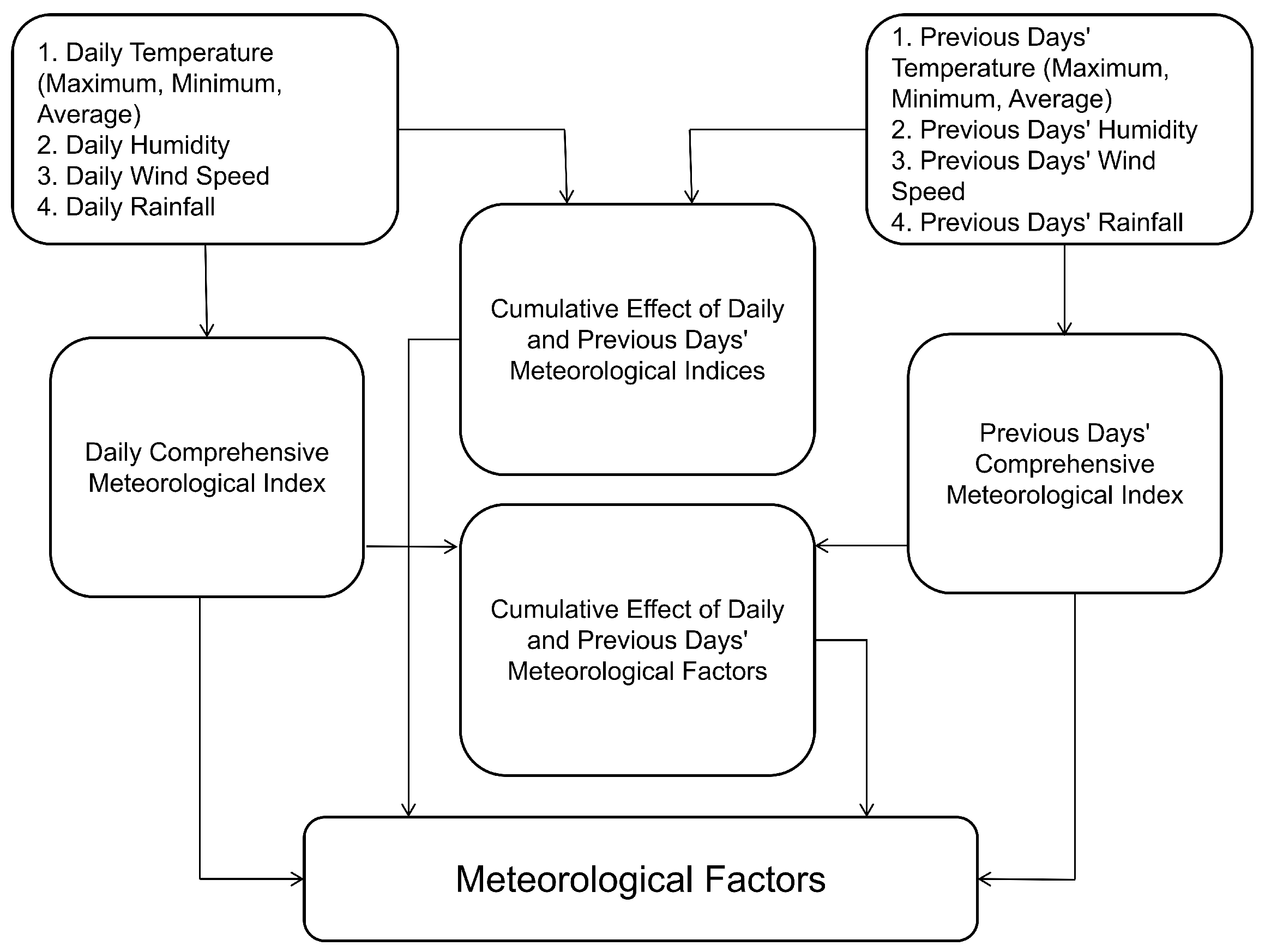
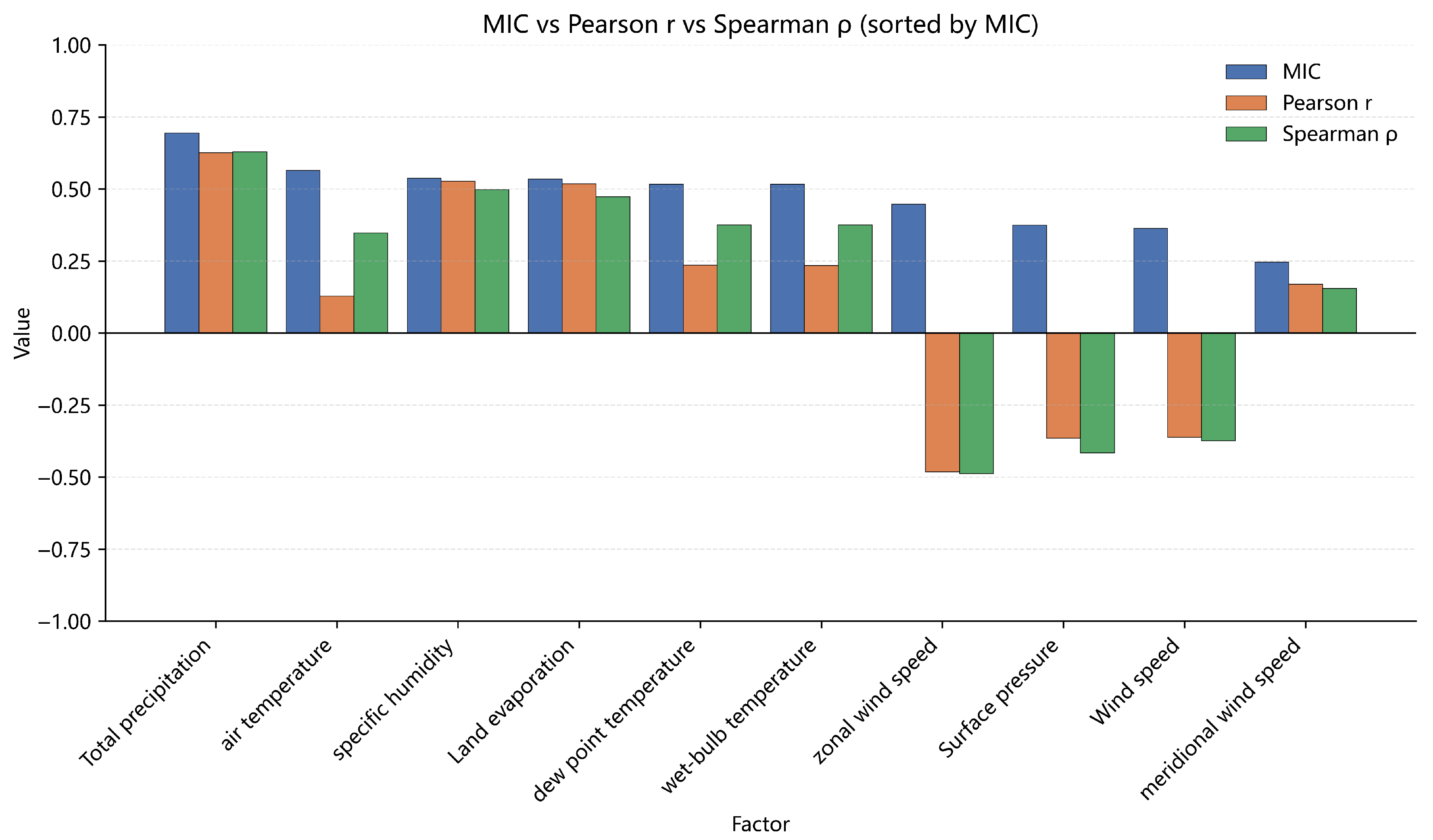
- Key input feature selection in high-dimensional nonlinear settings. Cascade hydropower systems are jointly influenced by a wide range of environmental drivers-precipitation, evaporation, soil moisture, upstream inflows, among others—so the resulting input space is markedly high-dimensional and characterized by tightly intertwined cross-dependencies. Because run-of-river cascades offer only limited regulation, total output responds sharply to environmental perturbations. In turn, most meteorological and hydrological variables relate to power output in strongly nonlinear and nonstationary ways, while the coupling intensity among variables shifts with hydrological seasons. Conventional linear association metrics, exemplified by the Pearson correlation coefficient, cannot reliably uncover these nonlinear dependencies; they may either inject redundant noise or miss crucial signals, thereby capping forecasting performance.
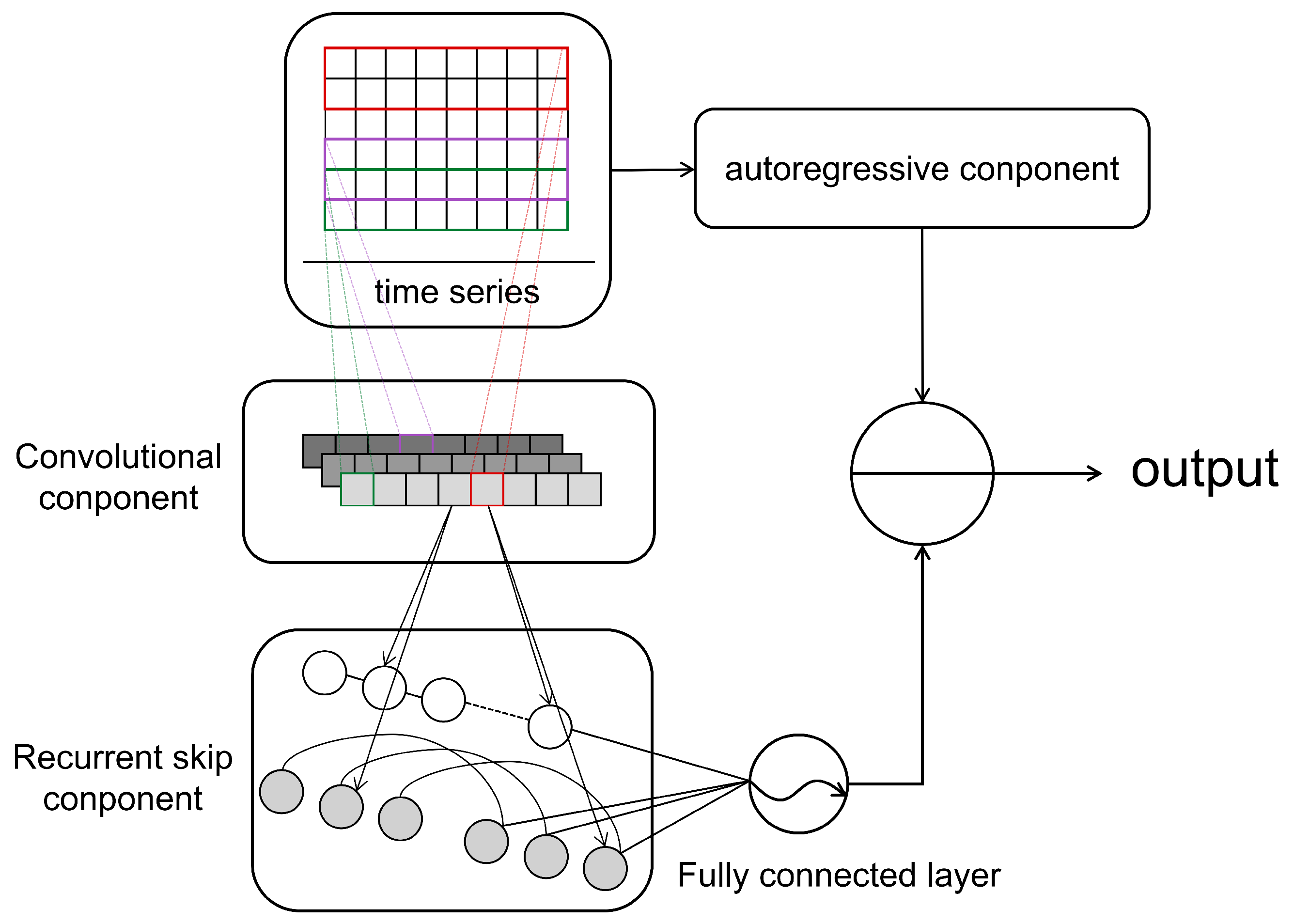
- The black-box characteristics of deep learning models may undermine the perceived credibility of their decision making. In practical hydropower dispatch, operators care about more than numerical accuracy; what matters as well is why a forecast is produced-whether a particular upstream station or an environmental driver is pushing downstream output, for instance [8,9]. Yet LSTNet, as a deep neural network, relies on highly intricate weight-update dynamics and feature-mapping transformations [10], making its decision pathway difficult to interpret in physically meaningful terms. Such limited transparency can, in many engineering applications, undermine both the acceptance of and confidence in deep-learning-based forecasting models [11].
- An MIC-guided nonlinear feature-selection strategy is developed to overcome the constraints of conventional linear correlation analysis, thereby constructing a high-quality input feature space for cascade hydropower forecasting.
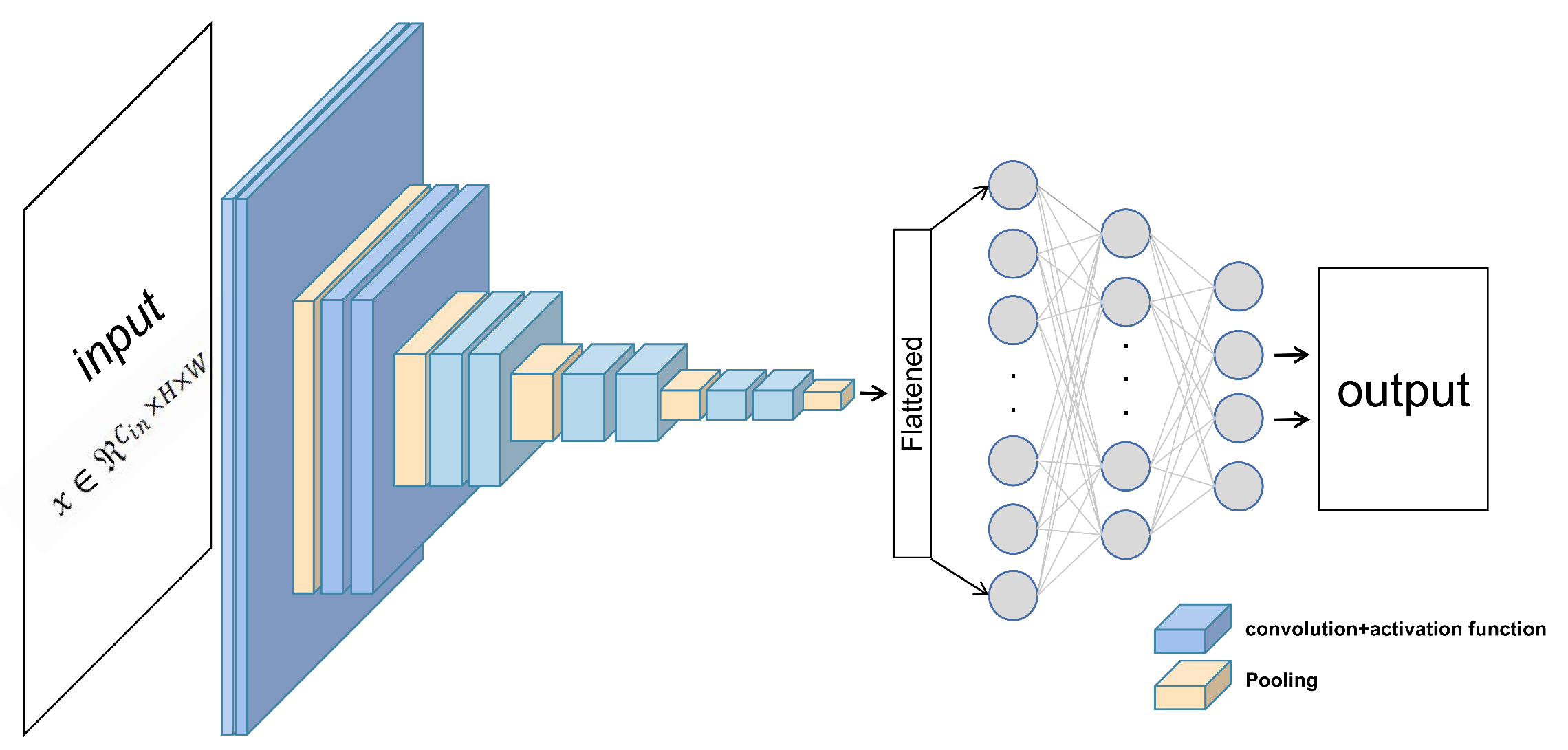
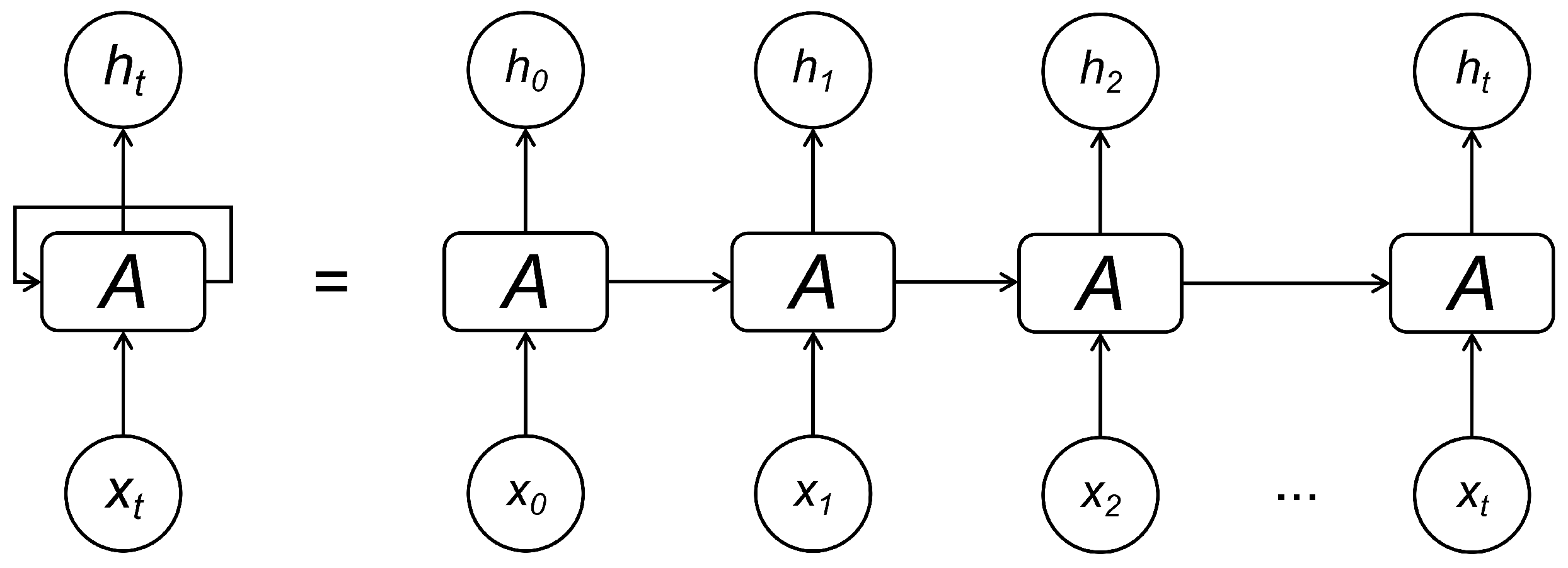
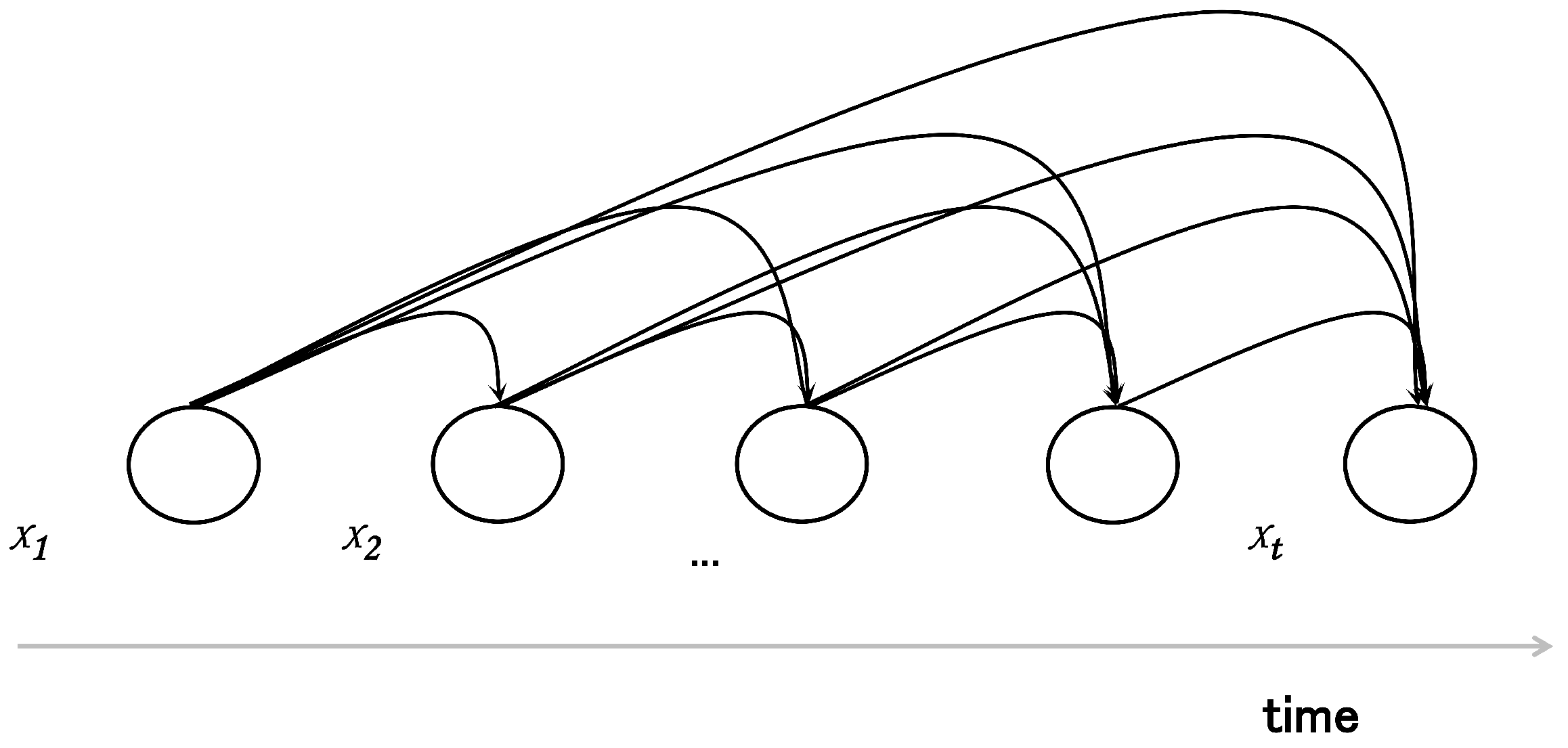
- A spatiotemporally coupled LSTNet-based forecasting model is constructed to capture nonlinear coupling relations and dynamic propagation delays among multiple stations in cascade hydropower systems.
- A global—local, two-level interpretability framework based on SHAP is established, significantly improving the reliability and interpretability of deep learning models for cascade hydropower engineering applications.
2. Materials and Methods
2.1. MIC-Based Input Feature Selection
2.2. An LSTNet-Based Cascade Hydropower Output Forecasting Model
2.2.1. CNN Front-End Component
2.2.2. RNN Recurrent and Skip Components
2.2.3. Autoregressive Component and Fully Connected Layer
2.2.4. Interpretability Method Based on SHAP
3. Results
3.1. Study Area and Cascade Configuration
3.1.1. Study Basin and Hydrographic Setting
3.1.2. Cascade Layout and Hydropower Stations
3.2. Data Sources and Experimental Setup
Evaluation Metrics
3.3. MIC-Based Feature Screening
3.4. Prediction Performance of LSTNet
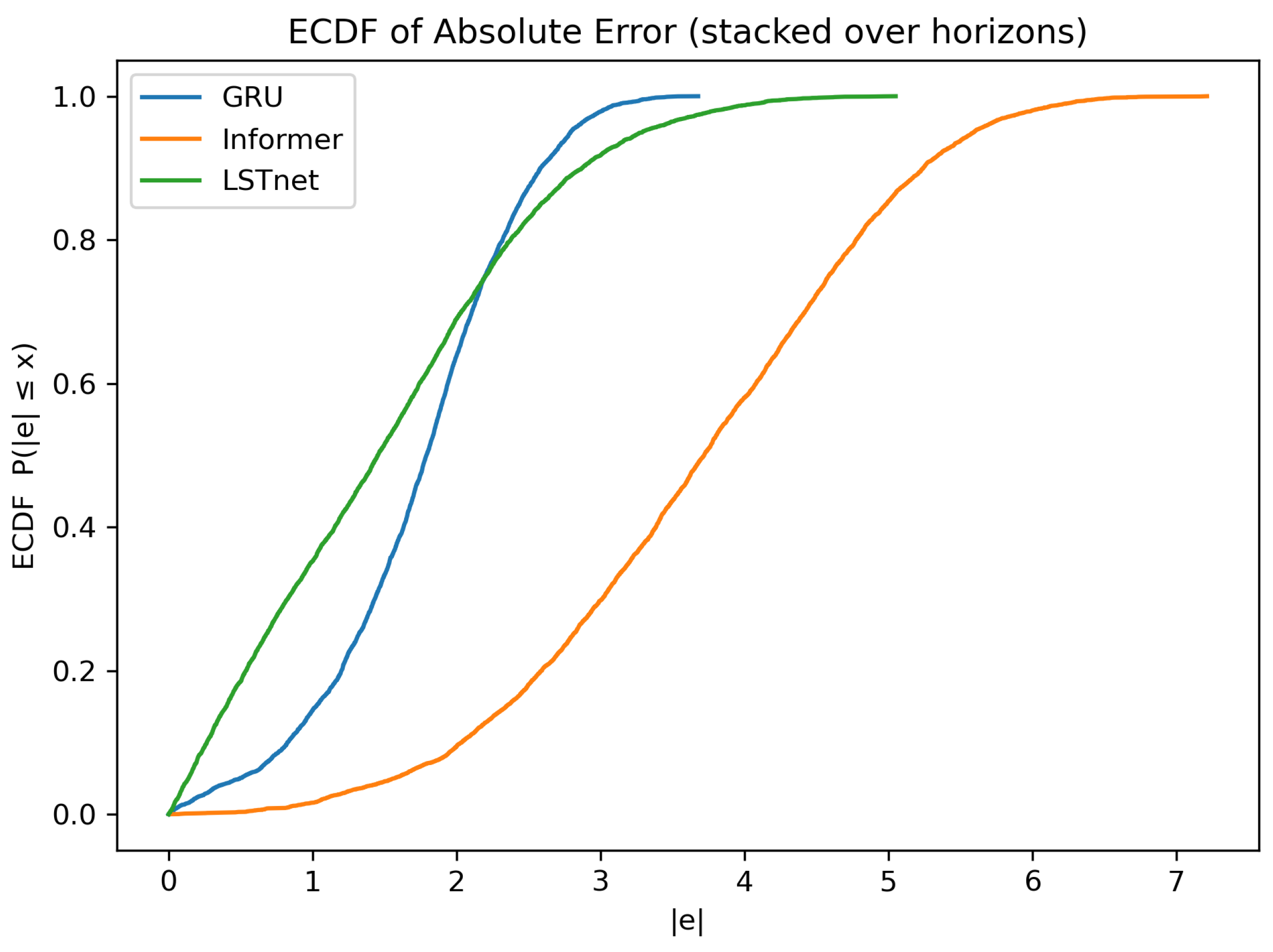
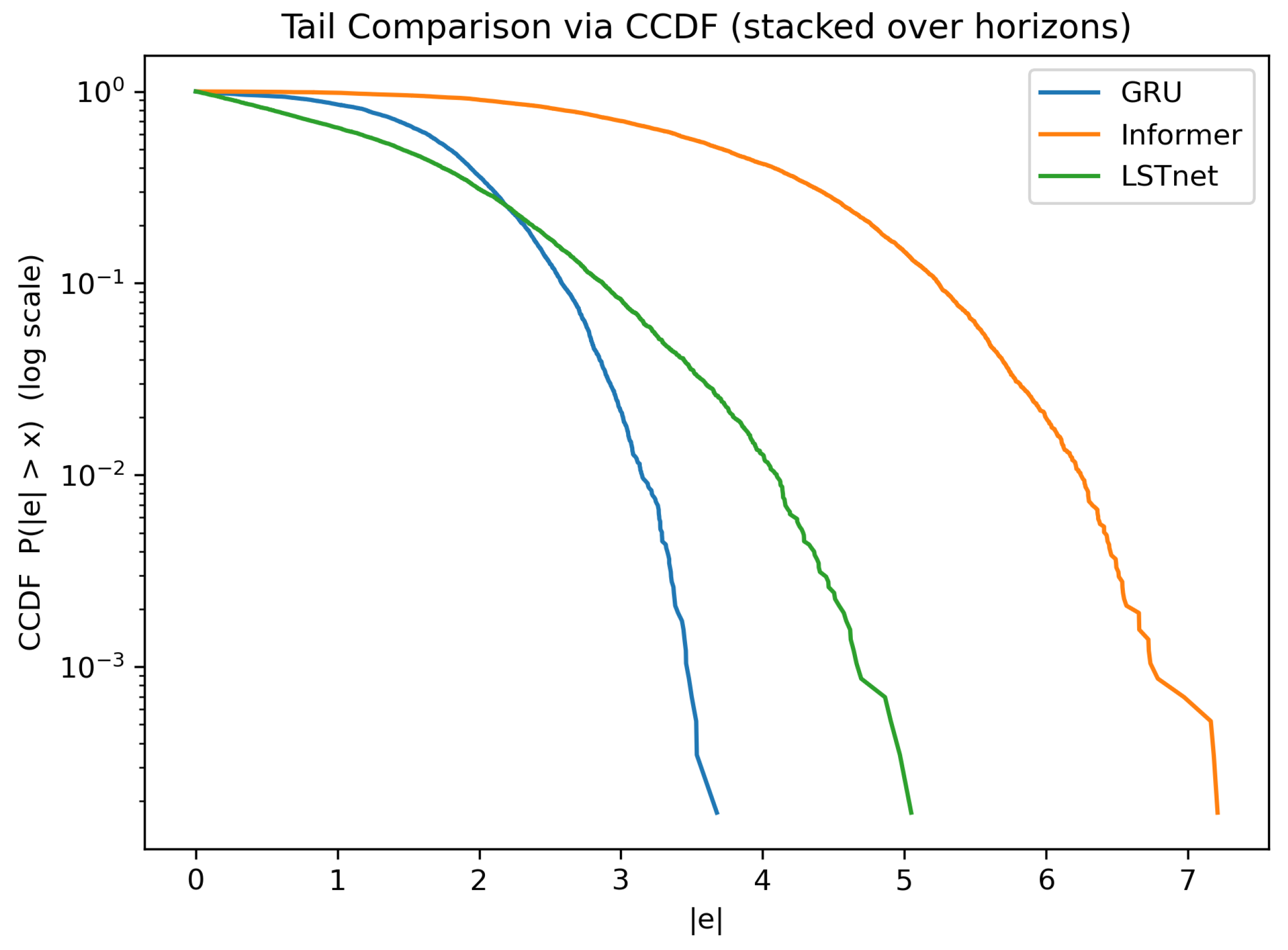
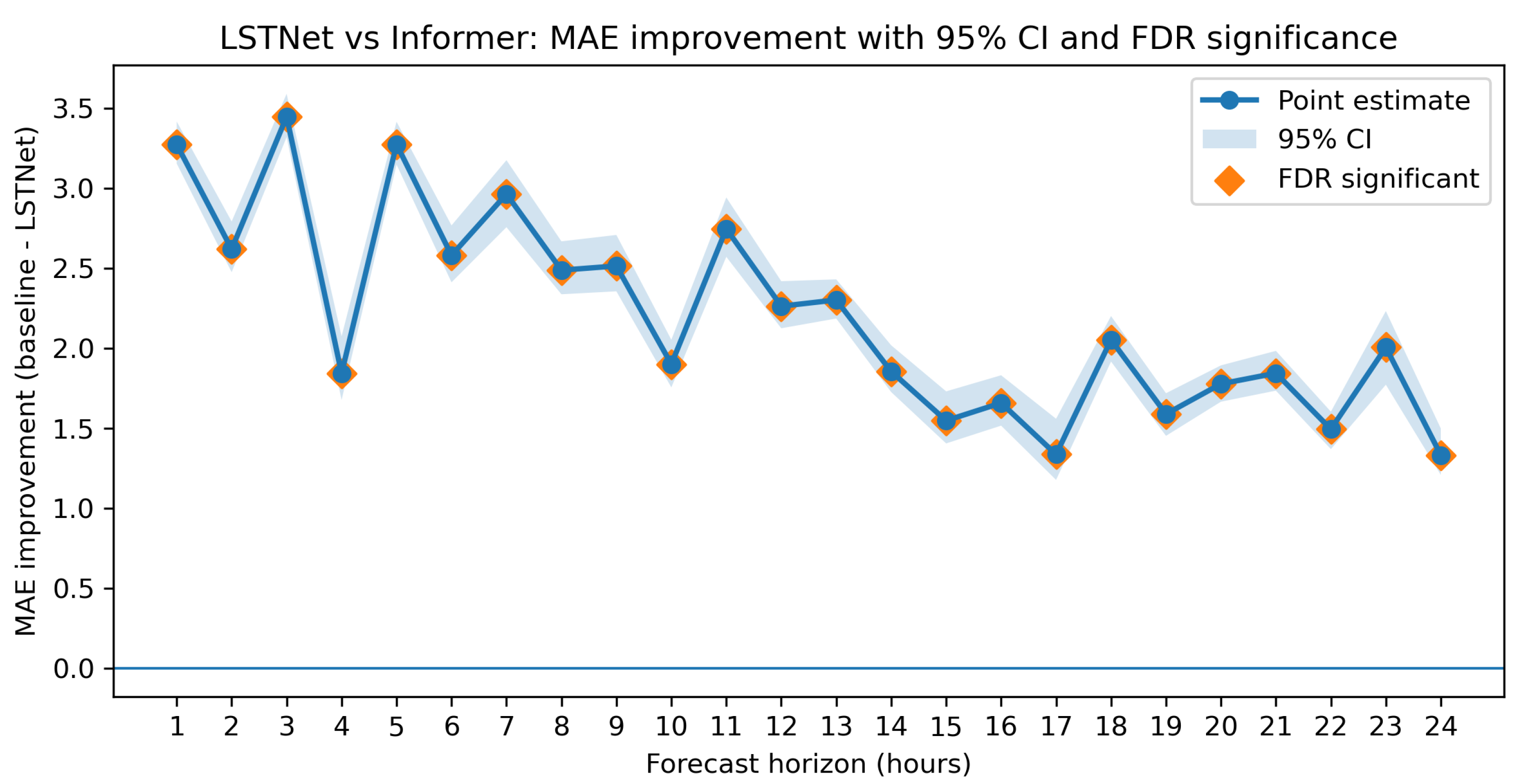
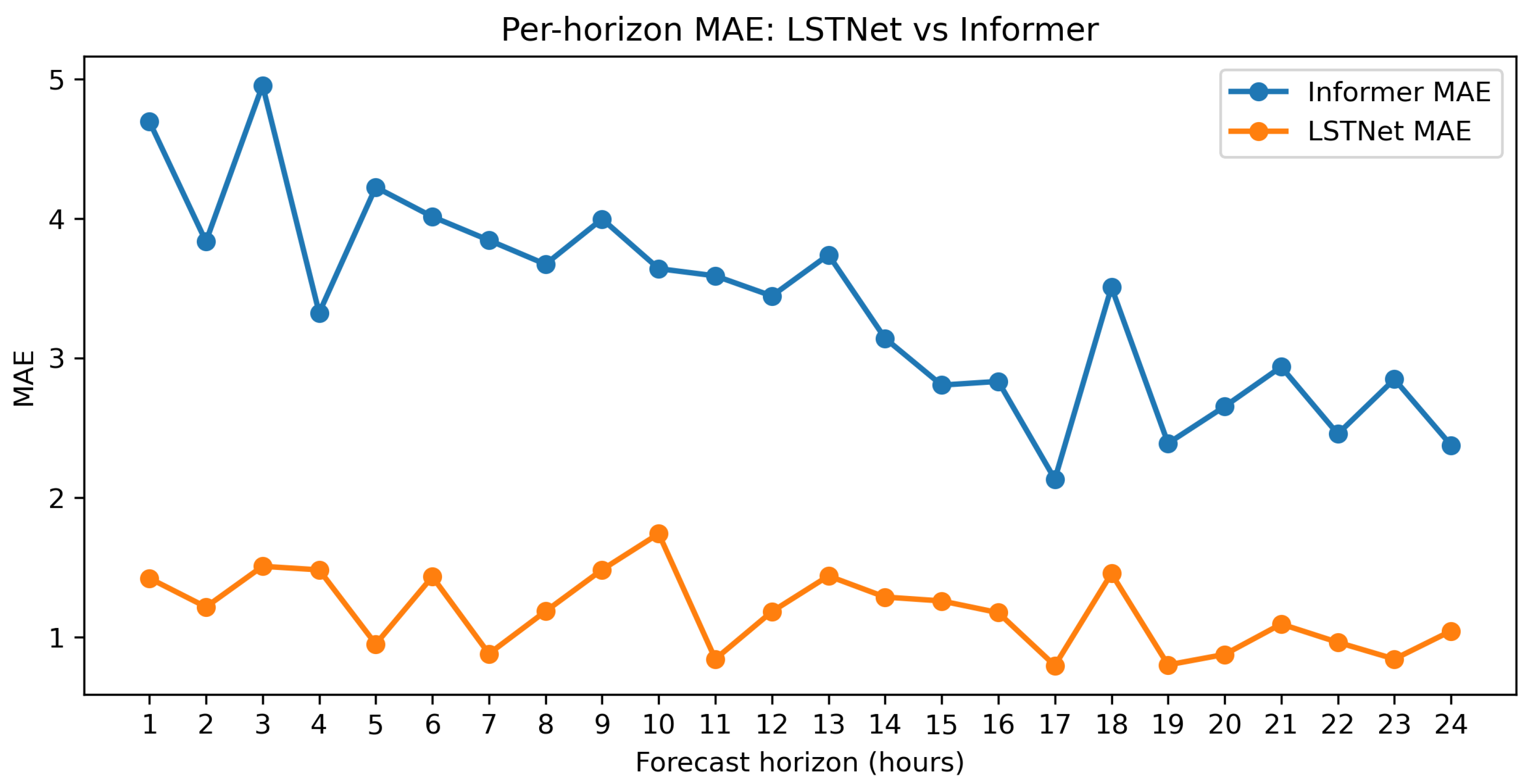
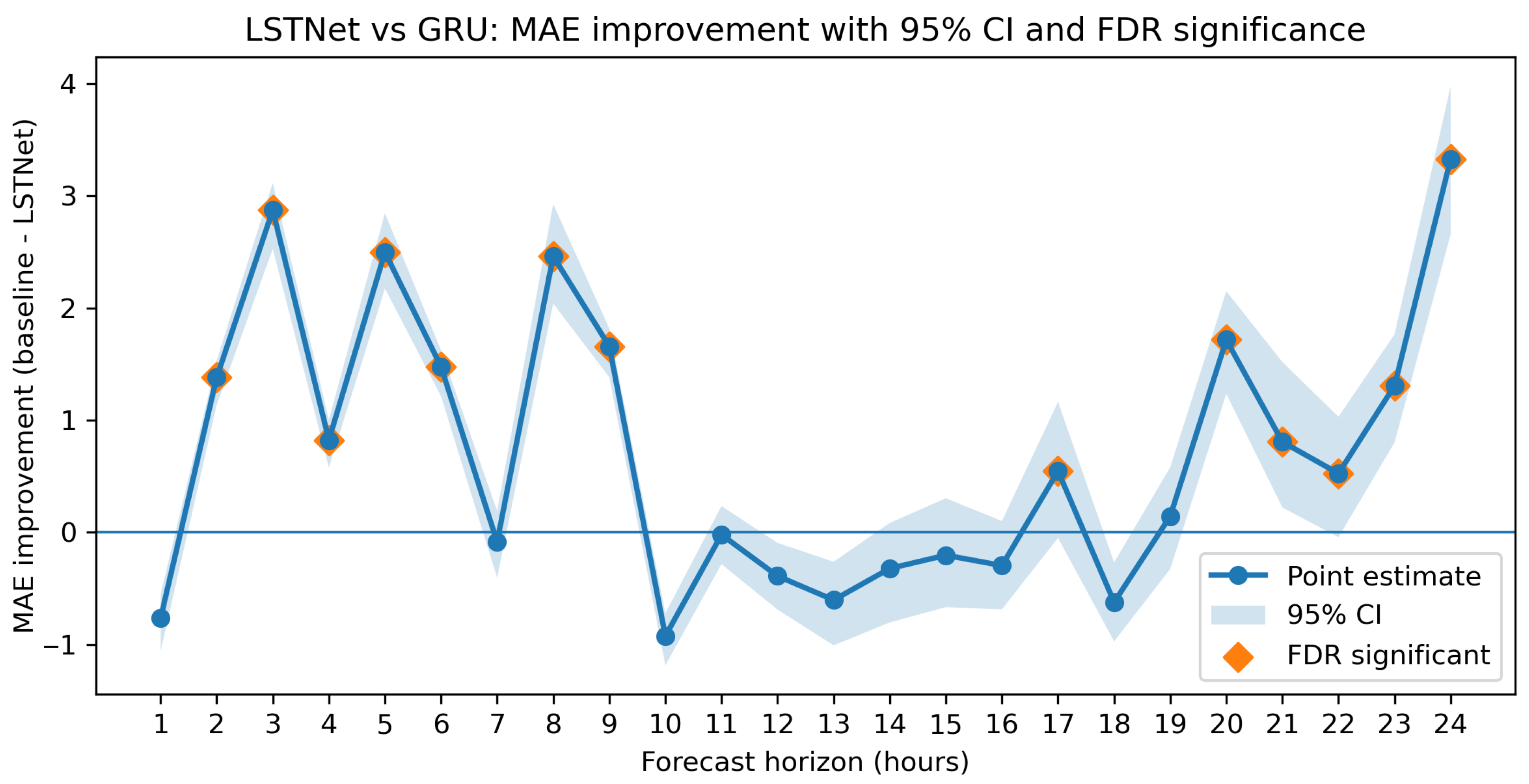
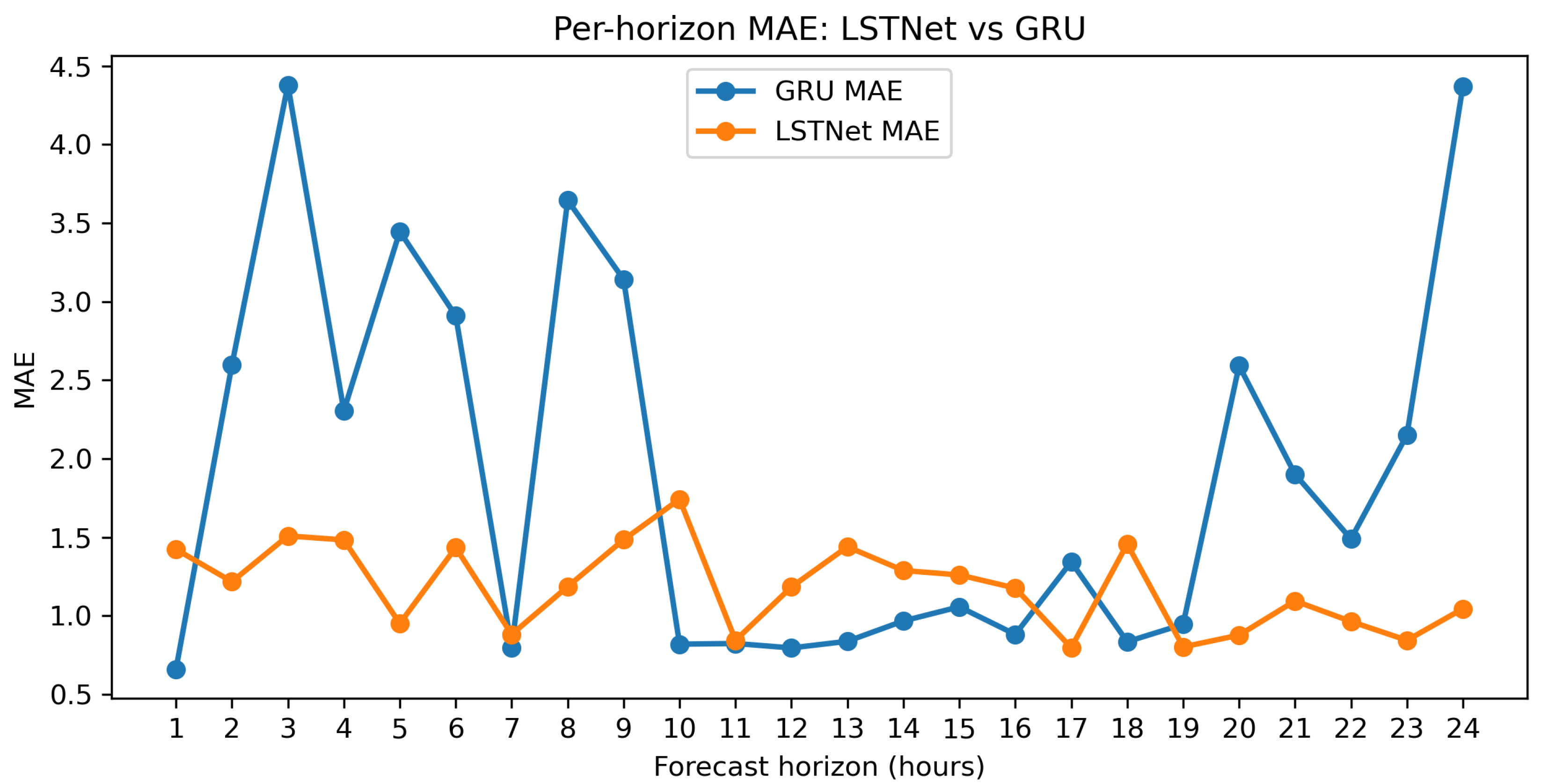
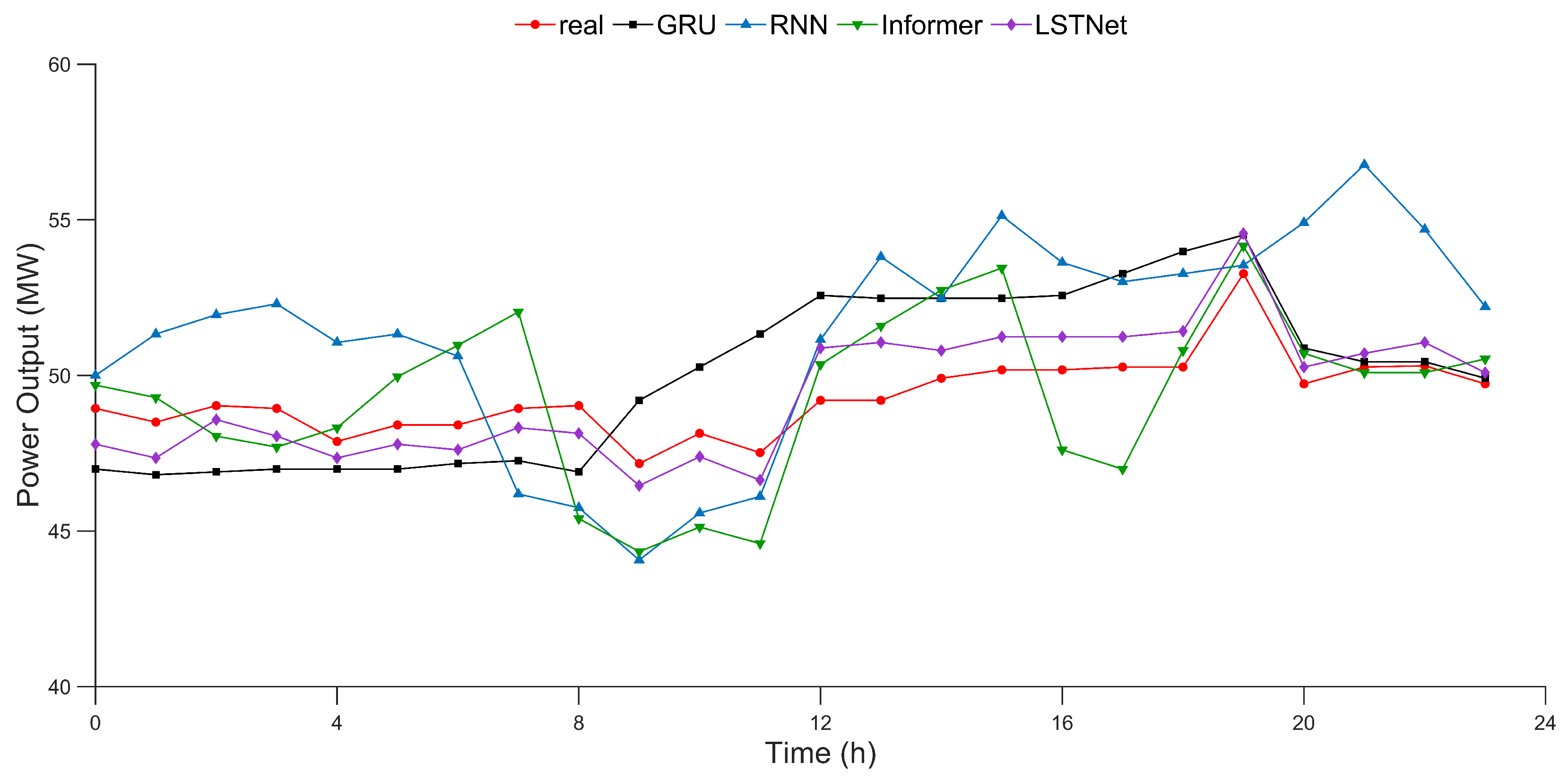
- LSTNet achieves the lowest errors among all approaches, with MAE = 1.0756 MW, RMSE = 1.1391 MW, and MAPE = 3.5559%. Compared with the RNN baseline, these metrics drop by 87.05%, 87.88%, and 73.94%, respectively. Relative to GRU, the reductions are 77.73%, 83.54%, and 57.41%; relative to Informer, the gains reach 79.42%, 85.34%, and 63.92%. In other words, it is LSTNet-not the recurrent baselines or Informer-that most effectively constrains both absolute and relative errors for the system-level target.
- Even at the station scale, LSTNet’s advantage remains apparent. At the upstream Station A, it reports MAE = 0.3431 MW, RMSE = 1.7919 MW, and MAPE = 13.8712%. At the midstream Station D, the corresponding values are MAE = 1.4671 MW, RMSE = 1.8704 MW, and MAPE = 11.1815%. Considered jointly, these results substantiate the robustness and transferability of LSTNet across spatially heterogeneous targets within the cascade system.
3.5. Correlation Analysis of Hydropower Station Outputs
3.6. Model Interpretability Results
3.6.1. Global Feature Importance Ranking Based on SHAP
3.6.2. SHAP Dependence Analysis
3.6.3. Local SHAP Explanation for a Single Sample
4. Discussion
4.1. Mechanistic Analysis of the Superiority of the LSTNet Model
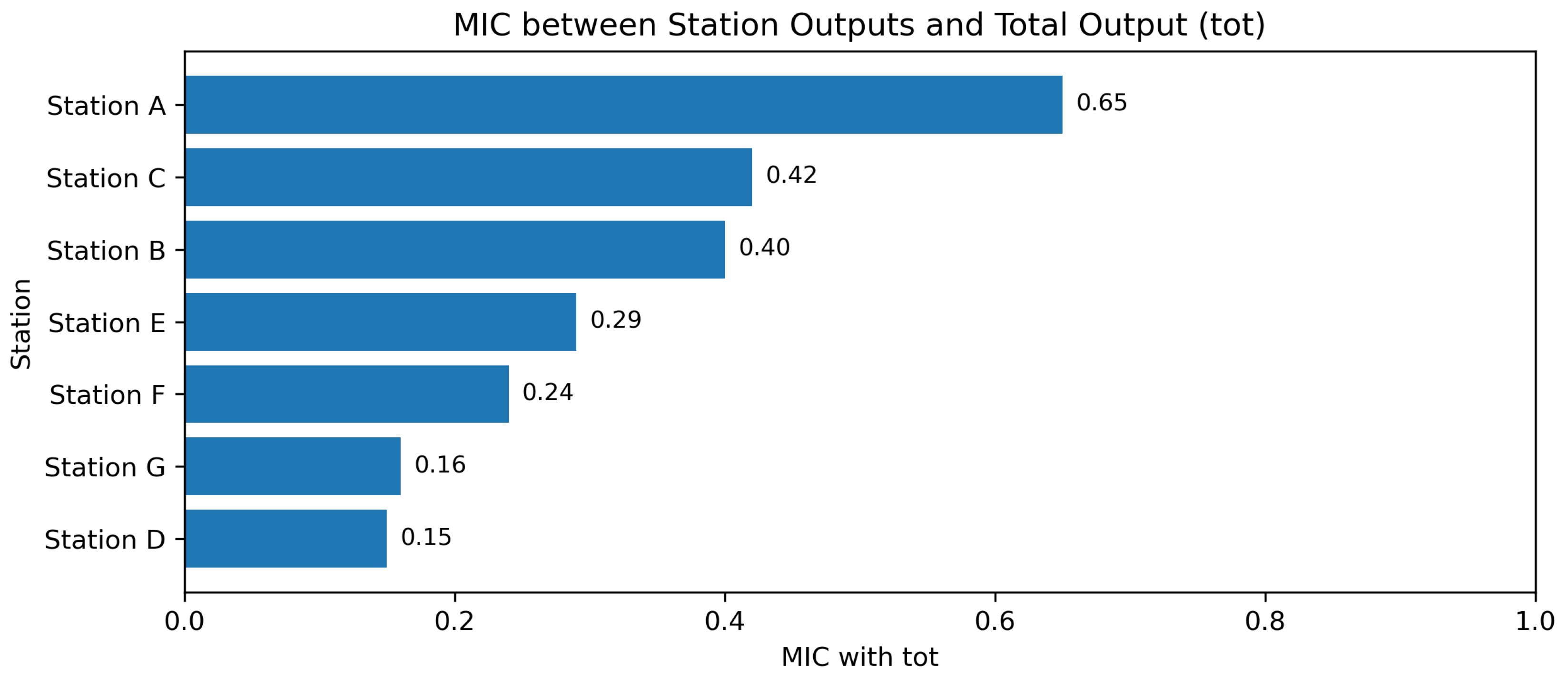
4.2. Analysis of the Low-Correlation–High-Importance Paradox
4.2.1. Theoretical Analysis
4.2.2. Physical Mechanism Verification Based on Nonlinear Analysis
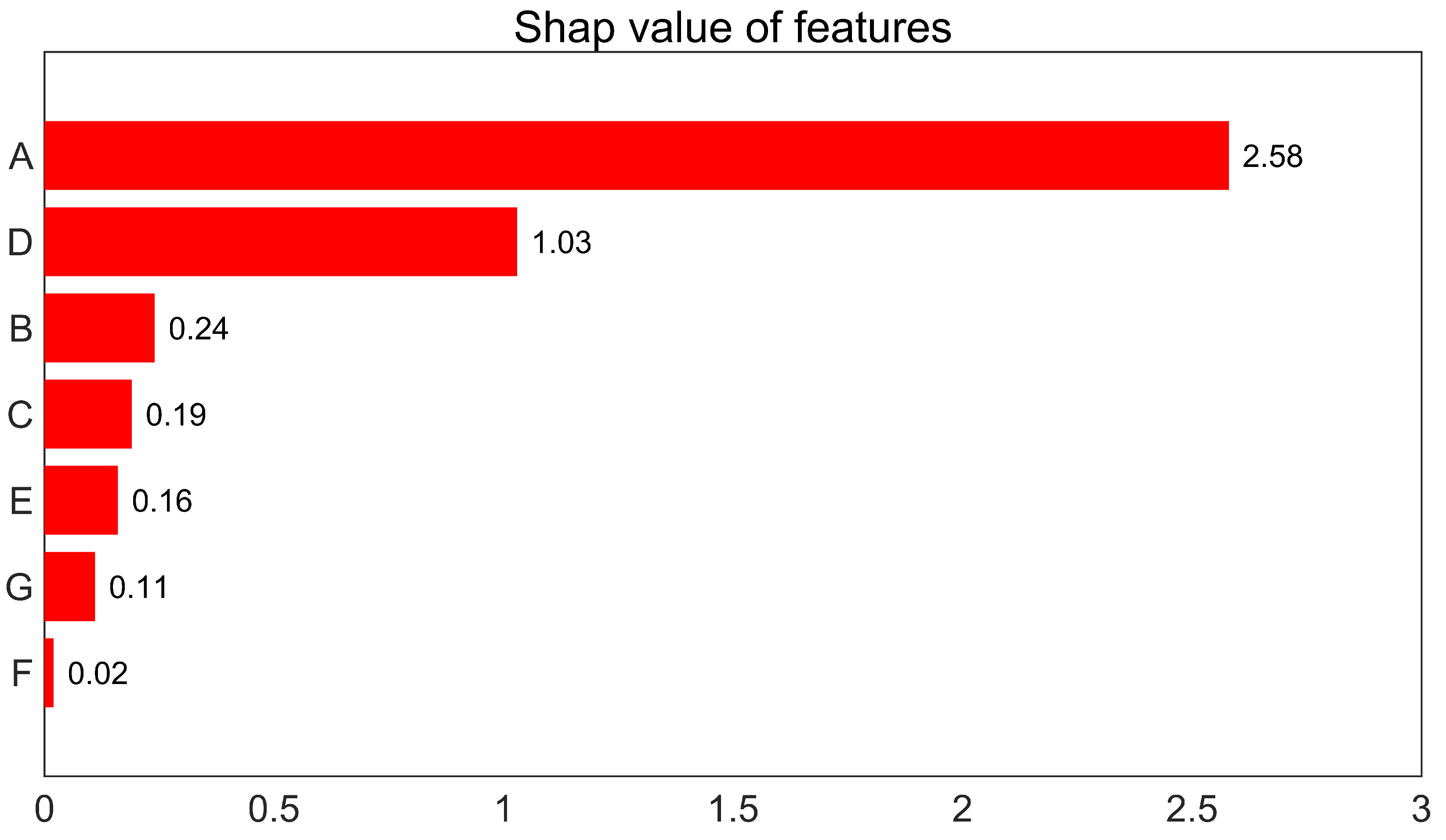
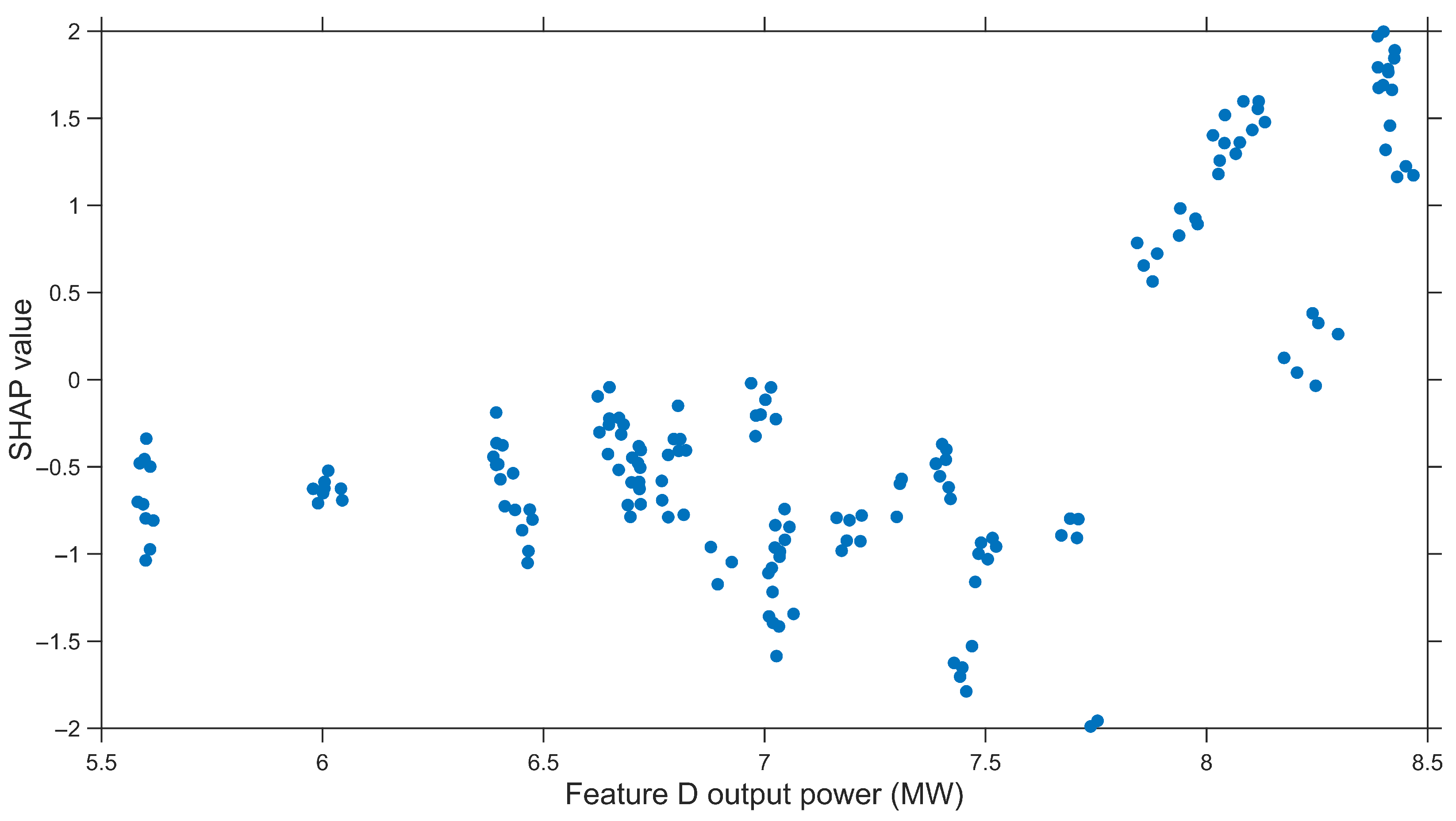
- Baseline confirmation during dry periods: When Station D’s output remains below the critical threshold of 7.8 MW, the corresponding SHAP values fall predominantly on the negative side (−2.0 to 0.0). From a physical standpoint, this pattern implies that during dry or near-normal flow conditions-when appreciable tributary inflows along the midstream reach are largely absent-Station D serves mainly as a stabilizing, bias-correcting signal. In this regime, it applies a sustained negative offset to the forecast, curbing any tendency to overpredict the cascade total and lowering the risk of generating unrealistically high-output estimates.
- Gain indication during wet periods: Once Station D’s output exceeds 7.8 MW, its marginal contribution (SHAP value) rises sharply and in a distinctly nonlinear manner, rapidly surpassing +1.0. What this reveals is a concealed hydraulic-coupling cue embedded in the cascade response. Under wet conditions, elevated generation at Station D is no longer merely a manifestation of plant-level operation; instead, it becomes a sensitive surrogate for strengthened midstream inflows induced by basin-scale precipitation or tributary recharge. Station D thus operates as an indicator of heightened water availability at the watershed scale.
4.3. Micro-Level Decision Mechanism Analysis Based on Local Explanations
5. Conclusions
- High-precision spatiotemporal coupled modeling: A hybrid prediction strategy is constructed by pairing MIC-driven feature screening with LSTNet-based spatiotemporal learning. MIC is first used to filter redundant, noise-dominated variables from high-dimensional micrometeorological inputs and to pinpoint the nonlinear drivers with the greatest explanatory power, thereby forming a more reliable and information-dense feature set. Building on this input space, LSTNet—through its convolutional-recurrent composite structure—captures short-horizon local coupling signatures while simultaneously representing the longer-term evolutionary behavior of the cascade system. Experiments indicate that the proposed approach achieves lower RMSE, MAE, and MAPE than typical baseline models (e.g., RNN and GRU), delivering the level of accuracy required for forecasting under complex hydraulic interactions.
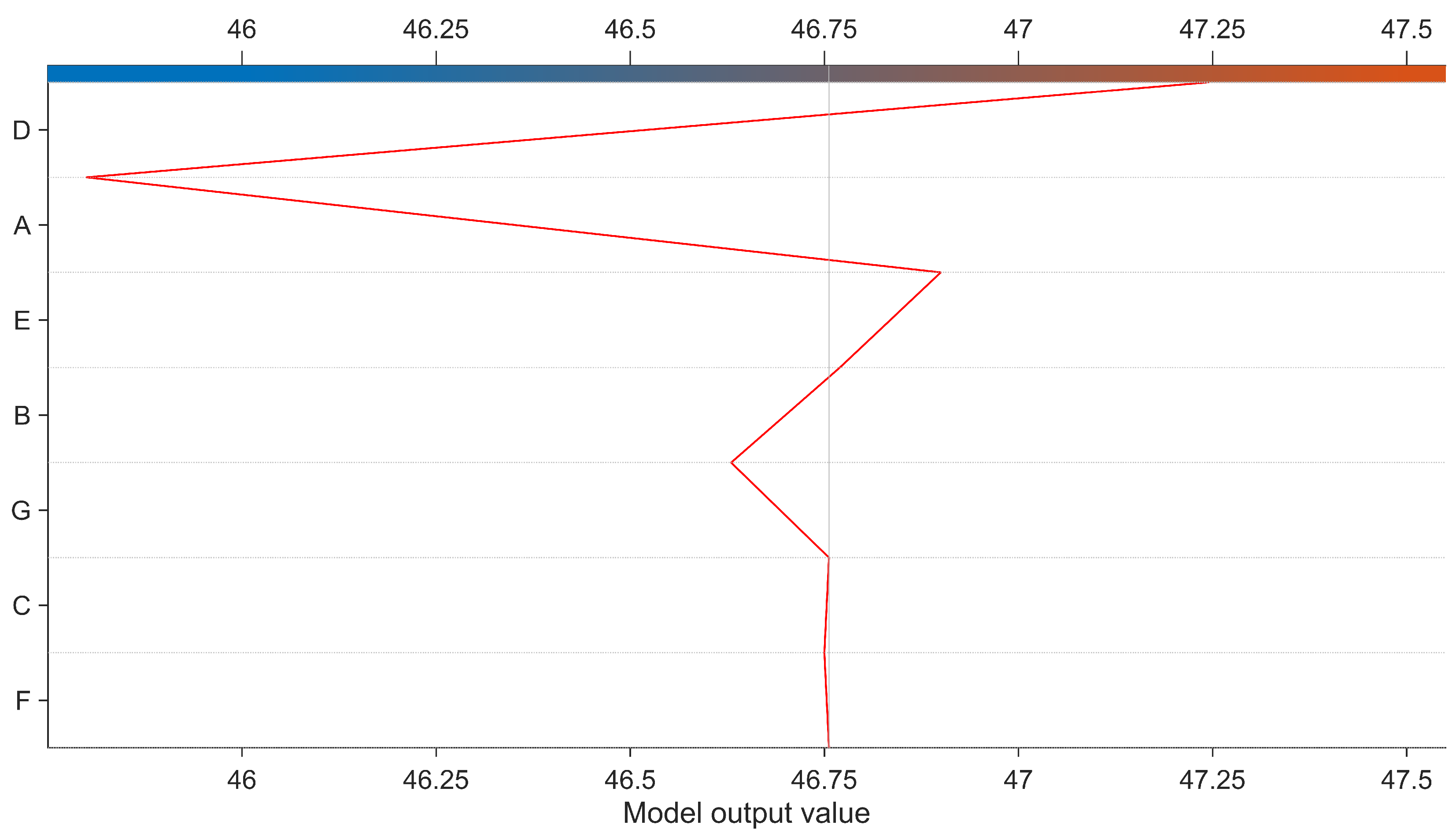
- An interpretable explanation architecture for model decisions: By incorporating SHAP explanations at both global and local levels, the proposed framework substantially enhances the physical intelligibility of the model’s decision-making process. At the global scale, SHAP reveals that LSTNet has internalized a form of hydrological complementarity: Station A delivers a basin-level baseline cue, while Station D provides focused midstream adjustments. Moreover, the 7.8 MW threshold behavior identified in the SHAP dependence analysis reinforces Station D’s function as a sensitive indicator of basin-scale hydrological variability, thereby elucidating the low-correlation–high-importance effect. At the local scale, single-sample attributions show that the model can accommodate upstream-downstream inconsistencies by dynamically reweighting features to establish a nonlinear balance, which directly reduces the information masking inherent in purely global summaries. In this manner, the network’s internal rationale is translated into interpretable hydrological mechanisms, strengthening the empirical foundation for engineering operation and dispatch decisions.
Author Contributions
Funding
Data Availability Statement
Conflicts of Interest
Abbreviations
| LSTNet | Long- and Short-term Time-series Network |
| MIC | Maximal Information Coefficient |
| SHAP | SHapley Additive exPlanations |
| CNN | Convolutional Neural Network |
| RNN | Recurrent Neural Network |
| ARIMA | Autoregression Moving Average Model |
| ARIMAX | Autoregressive Integrated Moving Average with Exogenous Inputs |
| GBDT | gradient-boosting decision trees |
| LightGBM | Light Gradient-Boosting Machine |
| LSTM | Long Short-Term Memory |
| GRU | Gated Recurrent Unit |
| PINNs | Physics-Informed Neural Networks |
| FC | Fully Connected Layer |
| AR | Autoregressive |
| LIME | Local Interpretable Model-Agnostic Explanations |
| Adam | Adaptive Moment Estimation |
| MAE | Mean Absolute Error |
| RMSE | Root Mean Square Error |
| MAPE | Mean Absolute Percentage Error |
References
- Wen, Y.; Yang, W.; Wang, R.; Xu, W.; Ye, X.; Li, T. Review and Prospects of Building a 100% Renewable Energy Power System. Proc. CSEE 2020, 40, 1843–1856. [Google Scholar] [CrossRef]
- Li, F.; Li, X.S.; Li, Z.X.; Zhang, B.Q. Short-Term Optimal Scheduling of Multi-Energy Complementary Power Generation System Based on Cascaded Hydropower Regulation. Power Syst. Prot. Control 2022, 50, 11–20. [Google Scholar] [CrossRef]
- Zou, C.; Zhao, Q.; Zhang, G.; Xiong, B. Energy revolution: From a fossil energy era to a new energy era. Nat. Gas Ind. B 2016, 3, 1–11. [Google Scholar] [CrossRef]
- Barzola-Monteses, J.; Mite-León, M.; Espinoza-Andaluz, M.; Gómez-Romero, J.; Fajardo, W. Time Series Analysis for Predicting Hydroelectric Power Production: The Ecuador Case. Sustainability 2019, 11, 6539. [Google Scholar] [CrossRef]
- Atalay, B.A.; Zor, K. An Innovative Approach for Forecasting Hydroelectricity Generation by Benchmarking Tree-Based Machine Learning Models. Appl. Sci. 2025, 15, 10514. [Google Scholar] [CrossRef]
- Tebong, N.K.; Simo, T.; Takougang, A.N. Two-level deep learning ensemble model for forecasting hydroelectricity production. Energy Rep. 2023, 10, 2793–2803. [Google Scholar] [CrossRef]
- Liu, J.; Yuan, X.; Zeng, J.; Jiao, Y.; Li, Y.; Zhong, L.; Yao, L. Ensemble streamflow forecasting over a cascade reservoir catchment with integrated hydrometeorological modeling and machine learning. Hydrol. Earth Syst. Sci. 2022, 26, 265–278. [Google Scholar] [CrossRef]
- Rudin, C. Stop explaining black box machine learning models for high stakes decisions and use interpretable models instead. Nat. Mach. Intell. 2019, 1, 206–215. [Google Scholar] [CrossRef]
- Guidotti, R.; Monreale, A.; Ruggieri, S.; Turini, F.; Giannotti, F.; Pedreschi, D. A Survey of Methods for Explaining Black Box Models. ACM Comput. Surv. 2018, 51, 1–42. [Google Scholar] [CrossRef]
- Lai, G.; Chang, W.; Yang, Y.; Liu, H. Modeling Long- and Short-Term Temporal Patterns with Deep Neural Networks. In SIGIR’18: The 41st International ACM SIGIR Conference on Research & Development in Information Retrieval; Association for Computing Machinery: New York, NY, USA, 2018; pp. 95–104. [Google Scholar] [CrossRef]
- Xu, B.; Yang, G. Interpretability research of deep learning: A literature survey. Inf. Fusion 2025, 115, 102721. [Google Scholar] [CrossRef]
- Schober, P.; Boer, C.; Schwarte, L.A. Correlation Coefficients: Appropriate Use and Interpretation. Anesth. Analg. 2018, 126, 1763–1768. [Google Scholar] [CrossRef]
- Taheri, N.; Tucci, M. Enhancing Regional Wind Power Forecasting through Advanced Machine-Learning and Feature-Selection Techniques. Energies 2024, 17, 5431. [Google Scholar] [CrossRef]
- Reshef, D.N.; Reshef, Y.A.; Finucane, H.K.; Grossman, S.R.; McVean, G.; Turnbaugh, P.J.; Lander, E.S.; Mitzenmacher, M.; Sabeti, P.C. Detecting Novel Associations in Large Data Sets. Science 2011, 334, 1518–1524. [Google Scholar] [CrossRef]
- Khan, A.; Sohail, A.; Zahoora, U.; Qureshi, A.S. A survey of the recent architectures of deep convolutional neural networks. Artif. Intell. Rev. 2020, 53, 5455–5516. [Google Scholar] [CrossRef]
- Lipton, Z.C. A Critical Review of Recurrent Neural Networks for Sequence Learning. arXiv 2015, arXiv:1506.00019. [Google Scholar] [CrossRef]
- Wang, H.; Fu, W.; Li, C.; Li, B.; Cheng, C.; Gong, Z.; Hu, Y. Short-Term Wind and Solar Power Prediction Based on Feature Selection and Improved Long- and Short-term Time-series Networks. Math. Probl. Eng. 2023, 2023, 7745650. [Google Scholar] [CrossRef]
- Brockwell, P.J.; Davis, R.A. Introduction to Time Series and Forecasting, 3rd ed.; Springer: Berlin/Heidelberg, Germany, 2016. [Google Scholar] [CrossRef]
- Slater, L.; Blougouras, G.; Deng, L.; Deng, Q.; Ford, E.; Hoek van Dijke, A.; Huang, F.; Jiang, S.; Liu, Y.; Moulds, S.; et al. Challenges and opportunities of ML and explainable AI in large-sample hydrology. Philos. Trans. R. Soc. A Math. Phys. Eng. Sci. 2025, 383, 20240287. [Google Scholar] [CrossRef]
- Papacharalampous, G.A.; Tyralis, H. A review of machine learning concepts and methods for addressing challenges in probabilistic hydrological post-processing and forecasting. Front. Water 2022, 4, 961954. [Google Scholar] [CrossRef]
- Rengasamy, D.; Mase, J.M.; Kumar, A.; Rothwell, B.; Torres Torres, M.; Alexander, M.R.; Winkler, D.A.; Figueredo, G.P. Feature importance in machine learning models: A fuzzy information fusion approach. Neurocomputing 2022, 511, 163–174. [Google Scholar] [CrossRef]
- Parsa, A.B.; Movahedi, A.; Taghipour, H.; Derrible, S.; Mohammadian, A.K. Toward safer highways, application of XGBoost and SHAP for real-time accident detection and feature analysis. Accid. Anal. Prev. 2020, 136, 105405. [Google Scholar] [CrossRef]
- Lundberg, S.M.; Erion, G.; Chen, H.; DeGrave, A.; Prutkin, J.M.; Nair, B.; Katz, R.; Himmelfarb, J.; Bansal, N.; Lee, S.I. From local explanations to global understanding with explainable AI for trees. Nat. Mach. Intell. 2020, 2, 56–67. [Google Scholar] [CrossRef] [PubMed]
- Salih, A.M.; Raisi-Estabragh, Z.; Galazzo, I.B.; Radeva, P.; Petersen, S.E.; Menegaz, G. A perspective on explainable artificial intelligence methods: SHAP and LIME. arXiv 2024, arXiv:2305.02012. [Google Scholar] [CrossRef]
- Shen, X.; Liu, H.; Qiu, G.; Liu, Y.; Liu, J.; Fan, S. Interpretable Interval Prediction-Based Outlier-Adaptive Day-Ahead Electricity Price Forecasting Involving Cross-Market Features. IEEE Trans. Ind. Inform. 2024, 20, 7124–7137. [Google Scholar] [CrossRef]
- Sun, L. Revisiting Human Activity Recognition with Explainable AI Approaches. Ph.D. Thesis, State University of New York, Buffalo, NY, USA, 2023. [Google Scholar]
- Lundberg, S.M.; Lee, S.I. A Unified Approach to Interpreting Model Predictions. In Advances in Neural Information Processing Systems; Curran Associates, Inc.: Red Hook, NY, USA, 2017; Volume 30, pp. 4765–4774. [Google Scholar] [CrossRef]
- Shapley, L.S. A Value for n-Person Games. In Contributions to the Theory of Games II; Annals of Mathematics Studies; Princeton University Press: Princeton, NJ, USA, 1953; pp. 307–317, Reprinted in Classics in Game Theory, Princeton University Press: Princeton, NJ, USA, 2020; pp. 69–79. [Google Scholar] [CrossRef]



| Item | Content |
|---|---|
| River basin hierarchy | Located within the Songhua River basin; the Mudan River basin is a sub-basin of the Songhua River system. |
| Study basin/reach | Located along the Mudan River main stem in the upper Dunhua reach (upstream of Jingbo Lake), with stations developed in a serial configuration along the main stem. |
| Mudan River basin area (total) | 39,090 km2. |
| Upper Dunhua reach catchment area (study reach) | 10,547 km2. |
| Upper Dunhua reach channel length | 233.60 km. |
| Climate type | Cold-temperate continental monsoon climate. |
| Mean annual precipitation | 633.2 mm. |
| Precipitation seasonality | June–September (about 73.6% of annual precipitation). |
| Mean annual evaporation | 699.9 mm (E601 pan). |
| Mean annual air temperature | Approximately 3.8 °C. |
| Flood seasonality | Floods are primarily triggered by heavy rainfall and occur mainly in July–August; events are generally more frequent and larger in August. |
| Flood process time scales (example at Dunhua gauging station) | Direct runoff duration: 6–9 d; rising limb to peak: 1–2 d (wet antecedent) or 3–4 d (dry antecedent); peak lag: 3–6 h; recession duration: 5–7 d. |
| Runoff response (qualitative) | Mountainous catchment with steep slopes and a dense river network; storm events tend to produce rapid runoff concentration and flashy hydrographs. |
| Network Element | Key Information |
|---|---|
| Main stem | Mudan River main stem (pilot cascade developed in series along the main stem). |
| Upstream network pattern | The upstream hydrographic network upstream of Jingbo Lake exhibits a fan-shaped pattern. |
| Major tributaries (examples) | Major tributaries in the upper reach include the Sha River and the Zhuerduo River, among others. |
| Hydrometric stations (above Jingbo Lake) | Main-stem gauges: Dunhua and Dashanjuzi; tributary gauges: Qiuligou, Dongchang, and Emu. |
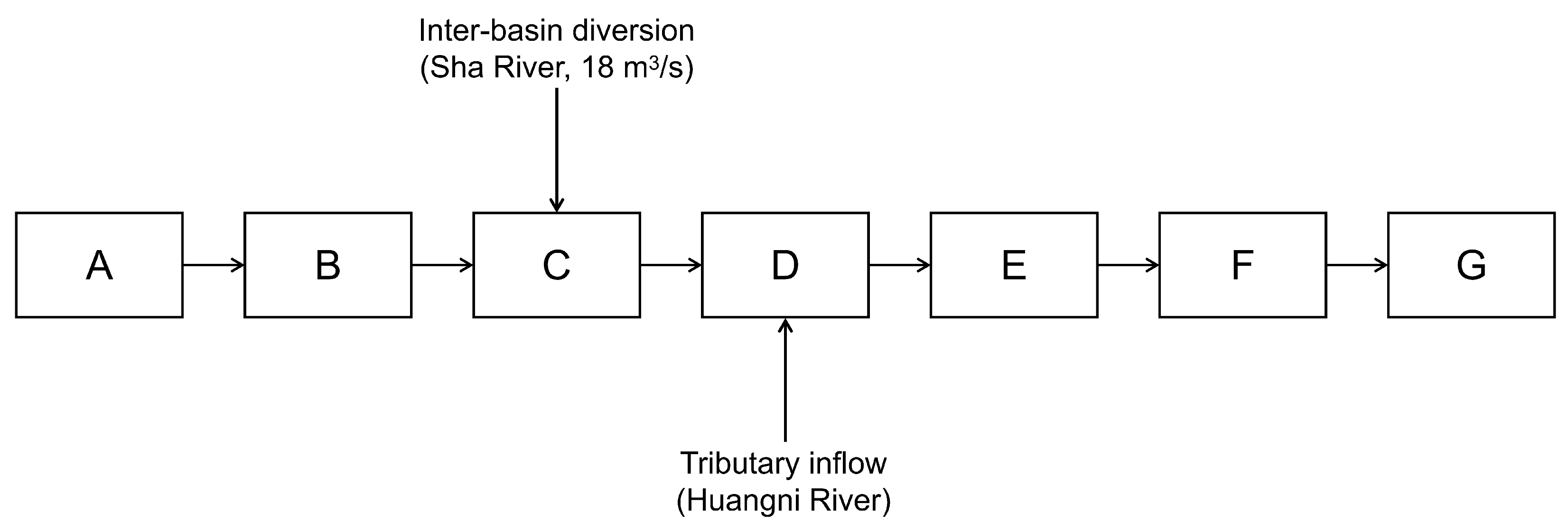
| Key reach-scale inflow/engineering pathway 1 | Inter-basin diversion into Shanggou (from the Sha River; ∼18 m3/s), increasing annual inflow to downstream cascade stations. |
| Key reach-scale inflow/engineering pathway 2 | Reach-scale inflow to Hongshi includes tributary contributions (e.g., the Huangni River). |
| Object/Station | Type | Catchment Area (km2) |
|---|---|---|
| Mudan River basin (total) | Study basin | 39,090 |
| Upper Dunhua reach (study reach) | Study reach | 10,547 |
| A | Plant control section | - |
| B | Plant control section | 2112 |
| C | Plant control section | 2813.15 |
| D | Plant control section | 2930 |
| E | Plant control section | 4835 |
| F | Plant control section | - |
| G | Plant control section | 4861 |
| Station | Installed Capacity (MW) | Catchment Area (km2) | Total Storage ( m3) | Regulation Type | Location (River/Reach) | Special Hydrology/ Engineering Notes |
|---|---|---|---|---|---|---|
| A | - | - | - | No regulation | Main stem of the Mudan River | |
| B | 15.8 | 2112 | 1539.9 | Low storage regulation | Main stem of the Mudan River | Inter-basin diversion from Sha River (∼18 m3/s) |
| C | 11 | 2813.15 | 2645.9 | Low storage regulation | Main stem of the Mudan River | Reach inflow includes Huangni River |
| D | 8.7 | 2930 | 5300 | Some regulation capability | Main stem of the Mudan River | |
| E | 8 | 4835 | 750 | Low storage regulation | Main stem of the Mudan River | |
| F | - | - | - | No regulation | Main stem of the Mudan River | |
| G | 1.99 | - | - | No regulation | Main stem of the Mudan River |
| Feature | MIC | Pearson r | Spearman |
|---|---|---|---|
| Total precipitation | 0.694 | 0.625 | 0.629 |
| Air temperature | 0.565 | 0.128 | 0.348 |
| Specific humidity | 0.538 | 0.527 | 0.498 |
| Land evaporation | 0.534 | 0.517 | 0.473 |
| Dew-point temperature | 0.517 | 0.236 | 0.375 |
| Wet-bulb temperature | 0.517 | 0.235 | 0.375 |
| Zonal wind speed | 0.447 | −0.481 | −0.488 |
| Surface pressure | 0.375 | −0.365 | −0.416 |
| Wind speed | 0.363 | −0.361 | −0.373 |
| Meridional wind speed | 0.247 | 0.169 | 0.155 |
| Target | Model | Metrics | ||
|---|---|---|---|---|
| MAE (MW) | RMSE (MW) | MAPE (%) | ||
| RNN | 8.3028 | 9.4011 | 13.6432 | |
| GRU | 4.8295 | 6.9225 | 8.3488 | |
| Informer | 5.2258 | 7.7698 | 9.8552 | |
| LSTNet | 1.0756 | 1.1391 | 3.5559 | |
| A | RNN | 1.5094 | 1.6048 | 50.7965 |
| GRU | 0.7334 | 0.8167 | 27.0509 | |
| Informer | 0.5568 | 1.0112 | 36.8222 | |
| LSTNet | 0.3431 | 1.7919 | 13.8712 | |
| D | RNN | 4.5386 | 5.1689 | 25.0625 |
| GRU | 2.2900 | 2.3617 | 20.0410 | |
| Informer | 2.3596 | 3.3444 | 16.9539 | |
| LSTNet | 1.4671 | 1.8704 | 11.1815 | |
Disclaimer/Publisher’s Note: The statements, opinions and data contained in all publications are solely those of the individual author(s) and contributor(s) and not of MDPI and/or the editor(s). MDPI and/or the editor(s) disclaim responsibility for any injury to people or property resulting from any ideas, methods, instructions or products referred to in the content. |
© 2026 by the authors. Licensee MDPI, Basel, Switzerland. This article is an open access article distributed under the terms and conditions of the Creative Commons Attribution (CC BY) license.
Share and Cite
Li, Z.; Shen, X.; Huang, Y.; Ren, Y. Explainable Prediction of Power Generation for Cascaded Hydropower Systems Under Complex Spatiotemporal Dependencies. Energies 2026, 19, 1540. https://doi.org/10.3390/en19061540
Li Z, Shen X, Huang Y, Ren Y. Explainable Prediction of Power Generation for Cascaded Hydropower Systems Under Complex Spatiotemporal Dependencies. Energies. 2026; 19(6):1540. https://doi.org/10.3390/en19061540
Chicago/Turabian StyleLi, Zexin, Xiaodong Shen, Yuhang Huang, and Yuchen Ren. 2026. "Explainable Prediction of Power Generation for Cascaded Hydropower Systems Under Complex Spatiotemporal Dependencies" Energies 19, no. 6: 1540. https://doi.org/10.3390/en19061540
APA StyleLi, Z., Shen, X., Huang, Y., & Ren, Y. (2026). Explainable Prediction of Power Generation for Cascaded Hydropower Systems Under Complex Spatiotemporal Dependencies. Energies, 19(6), 1540. https://doi.org/10.3390/en19061540