Article

Study on Combustion and Emission Characteristics of a Marine Diesel-Ignited Ammonia Engine Blended with Ammonia-Derived Hydrogen-Containing Fuel

1
School of Naval Architecture, Ocean and Energy Power Engineering, Wuhan University of Technology, Wuhan 430063, China
2
Guangxi Yuchai Marine and Genset Power Co., Ltd., Yulin 537005, China
3
School of Automotive and Transportation Engineering, Wuhan University of Science and Technology, Wuhan 430081, China
*
Author to whom correspondence should be addressed.
Energies 2026, 19(6), 1423; https://doi.org/10.3390/en19061423
Submission received: 16 February 2026 / Revised: 6 March 2026 / Accepted: 10 March 2026 / Published: 12 March 2026
(This article belongs to the Section I: Energy Fundamentals and Conversion)

Abstract

The application of ammonia decomposition technology for hydrogen production enables hydrogen-enriched combustion in marine diesel-ignited ammonia engines. This study presents experimental and simulation investigations of a diesel-ignited ammonia engine operating with hydrogen-containing fuels derived from ammonia decomposition at various blending ratios. The combustion and emission characteristics of the engine were systematically examined, and a comparative analysis was conducted on the combustion behavior of the engine between using ammonia decomposition-derived hydrogen-containing fuel and pure hydrogen. The result shows that under constant engine output power, at 1200 rpm and 75% load, increasing the hydrogen energy rate results in largely unchanged cylinder pressure and heat release rate. The diesel substitution rate exhibits an initial increase followed by a decrease, while the energy consumption rate demonstrates the opposite trend. At 1500 rpm and 75% load, an increase in hydrogen enrichment leads to an earlier rise in cylinder pressure and heat release rate, a continuous increase in diesel substitution rate, and a consistent decrease in energy consumption rate. The early stage of in-cylinder combustion is dominated by diesel combustion, followed predominantly by the combustion of ammonia and hydrogen. Regarding the difference between using decomposition-derived hydrogen-containing fuel and pure hydrogen, within the hydrogen enrichment range of 0–20%, the discrepancies in intake composition and equivalence ratio between the two hydrogen-addition modes gradually widen but remain within 1.3%. Taking a hydrogen energy rate of 10.56% as an example, the differences in in-cylinder pressure and heat release rate between the two hydrogen-addition modes are not significant, indicating that the N2 generated from ammonia decomposition has a relatively weak influence on the engine. With increasing hydrogen enrichment, NH3 emissions gradually decrease, while NO emissions increase. For N2O, hydrogen enrichment promotes its consumption, resulting in lower emissions. Under various hydrogen enrichment conditions, equivalent greenhouse gas emissions are mainly influenced by CO2 emissions.

1. Introduction

Mitigating global climate change has drawn widespread attention to controlling greenhouse gas emissions. The shipping industry is a significant contributor to global greenhouse gas emissions. In 2023, the International Maritime Organization (IMO) revised its strategy on the reduction in GHG emissions from ships [1], which sets the goal of achieving net-zero greenhouse gas emissions from international shipping by 2050, and mandates that zero- or near-zero greenhouse gas emission technologies and fuels account for at least 5%, striving for 10%, of the energy used by 2030. Ammonia, as a zero-carbon fuel, represents a crucial pathway for decarbonizing the maritime sector [2]. When applying ammonia to compression-ignition marine engines, given its low auto-ignition tendency, a practical method is to use diesel as a pilot fuel, igniting the ammonia mixture through diesel compression ignition. Depending on how ammonia is introduced into the cylinder, diesel-ignited ammonia engines can operate in different modes. Among these, the configuration with ammonia port injection and diesel direct in-cylinder injection has received considerable research attention.
For diesel-ignited ammonia engines with port-injected ammonia, some studies have been conducted on their combustion and emission characteristics [3,4,5,6,7]. For example, Yousefi et al. [3] investigated the effects of ammonia energy fraction and diesel injection timing on combustion and emissions in a diesel-ignited premixed ammonia engine. Their results indicated that ammonia addition lowers in-cylinder pressure, retards combustion, and leads to significant ammonia slip. In our previous study [4], conducted on a single-cylinder engine, the influence of the ammonia substitution ratio (measured by diesel substitution rate) was examined. The findings showed that indicated thermal efficiency generally decreased as the diesel substitution rate increased, while notable ammonia slip occurred (exceeding 10,000 ppm at peak). Moreover, the maximum achievable diesel substitution rate gradually declined with reduced engine speed and load. These studies confirm the feasibility of diesel-ignited premixed ammonia engines and provide insights into their combustion and emission behaviors under such configurations. However, a key challenge remains: when operating on ammonia with diesel pilot ignition, engines face high ammonia emissions, and the permissible ammonia substitution ratio is constrained and varies with operating conditions.
To effectively address these combustion and emission challenges in diesel-ignited premixed ammonia engines, one viable approach is to introduce hydrogen into the fuel blend. Hydrogen exhibits significantly higher reactivity than ammonia, and its addition can substantially improve the in-cylinder combustion process of ammonia-fueled engines [8,9,10,11,12]. For instance, Hu et al. [9] studied the effects of ignition timing and hydrogen blending ratio on the performance of a spark-ignited optical engine with port-injected ammonia and direct-injected hydrogen. Their results demonstrated that hydrogen addition enhanced combustion stability, improved initial flame kernel development, advanced the combustion phase, and reduced emissions of ammonia and N2O. For the more complex combustion environment in diesel-ignited ammonia engines, existing studies [13,14,15,16,17,18,19,20] also indicate that hydrogen enrichment can improve combustion and emission characteristics. Anderson et al. [15], for example, investigated the influence of ammonia and hydrogen flow rates on the performance of a diesel/ammonia/hydrogen engine with port-injected ammonia/hydrogen and direct-injected diesel in a single-cylinder four-stroke engine. Their findings showed that hydrogen addition increased in-cylinder combustion temperature and led to smoother combustion compared to diesel/ammonia operation. Through three-dimensional simulations, Zhang et al. [17] studied the impact of hydrogen energy share on the performance of a diesel/ammonia engine with premixed port-injected ammonia/hydrogen. They concluded that hydrogen enrichment advanced the combustion phase, shortened combustion duration, improved NH3 and CO2 emissions, and that a small hydrogen fraction could enhance thermal efficiency. Based on the studies mentioned, hydrogen enrichment positively contributes to the optimization of both performance and emissions in diesel-ignited ammonia engines. In these investigations, the hydrogen utilized is pure hydrogen.
To implement hydrogen-enriched combustion in marine diesel-ignited ammonia engines onboard ships, a practical source of hydrogen is required. One approach involves the direct on-board storage and use of hydrogen. However, due to hydrogen’s high propensity for leakage, low ignition energy, and the associated risk of explosion, this option entails significant cost and safety challenges. An alternative is the production of hydrogen through ammonia decomposition. In fact, a prospective large-scale pathway for ammonia production relies on renewable electricity to produce hydrogen through water electrolysis, followed by catalytic synthesis of hydrogen and nitrogen into ammonia [2]. In this context, ammonia serves as a hydrogen energy carrier. Using catalytic methods [21], ammonia can be decomposed to generate hydrogen for direct engine use. This approach mitigates the high costs and safety challenges associated with direct hydrogen storage on ships. To date, research on spark-ignited ammonia engines operating with hydrogen-containing gas derived from ammonia decomposition has been reported, including studies by Ryu et al. [22], Comotti et al. [23], Mercier et al. [24] and Yu et al. [25]. Their results indicate that using decomposition-derived hydrogen-containing gas improves ammonia combustion, reduces cyclic variations, and confirms the feasibility of onboard hydrogen production via ammonia decomposition for enabling hydrogen-enriched combustion. However, research on the performance and emissions of diesel-ignited ammonia engines operating with hydrogen-containing fuel from ammonia decomposition remains relatively limited, and deeper understanding is needed.
The products of catalytic ammonia decomposition consist primarily of hydrogen and nitrogen, following the overall reaction 2NH3 → N2 + 3H2. Applying this technology to diesel-ignited ammonia engines not only enables hydrogen-enriched combustion but also introduces nitrogen into the cylinder. Specifically, nitrogen present in the decomposition-derived fuel mixture exerts dilution and heat absorption effects, which influence the combustion process and emissions of the hydrogen-enriched diesel-ignited ammonia engine. Based on the research reviewed above, a deeper understanding is still required regarding the performance and emission characteristics of diesel-ignited ammonia engines operating with hydrogen-containing fuel derived from ammonia decomposition. Although hydrogen enrichment in such engines can be achieved either by introducing pure hydrogen or by utilizing the hydrogen-containing products of ammonia decomposition, the influence of N2 present in the decomposition products is not yet clear, and the potential performance differences between these two hydrogen-addition modes remain to be fully elucidated.
Therefore, this study employs an experimental setup integrating a marine diesel-ignited ammonia engine with a catalytic ammonia decomposition reactor. Experiments are conducted under various engine speeds, loads, and diesel substitution rates using hydrogen-containing fuel derived from ammonia decomposition. Supported by engine numerical simulations, this work systematically investigates the performance and emissions of a diesel-ignited ammonia engine operating with decomposition-derived hydrogen-containing fuel and compares the differences between using pure hydrogen and decomposition-derived hydrogen-containing fuel. The findings are expected to provide a scientific basis for optimizing performance and controlling emissions in diesel-ignited ammonia engines utilizing onboard hydrogen production via ammonia decomposition technology.

2. Research Methodology

2.1. Experimental Method

2.1.1. Experimental Setup and Procedures

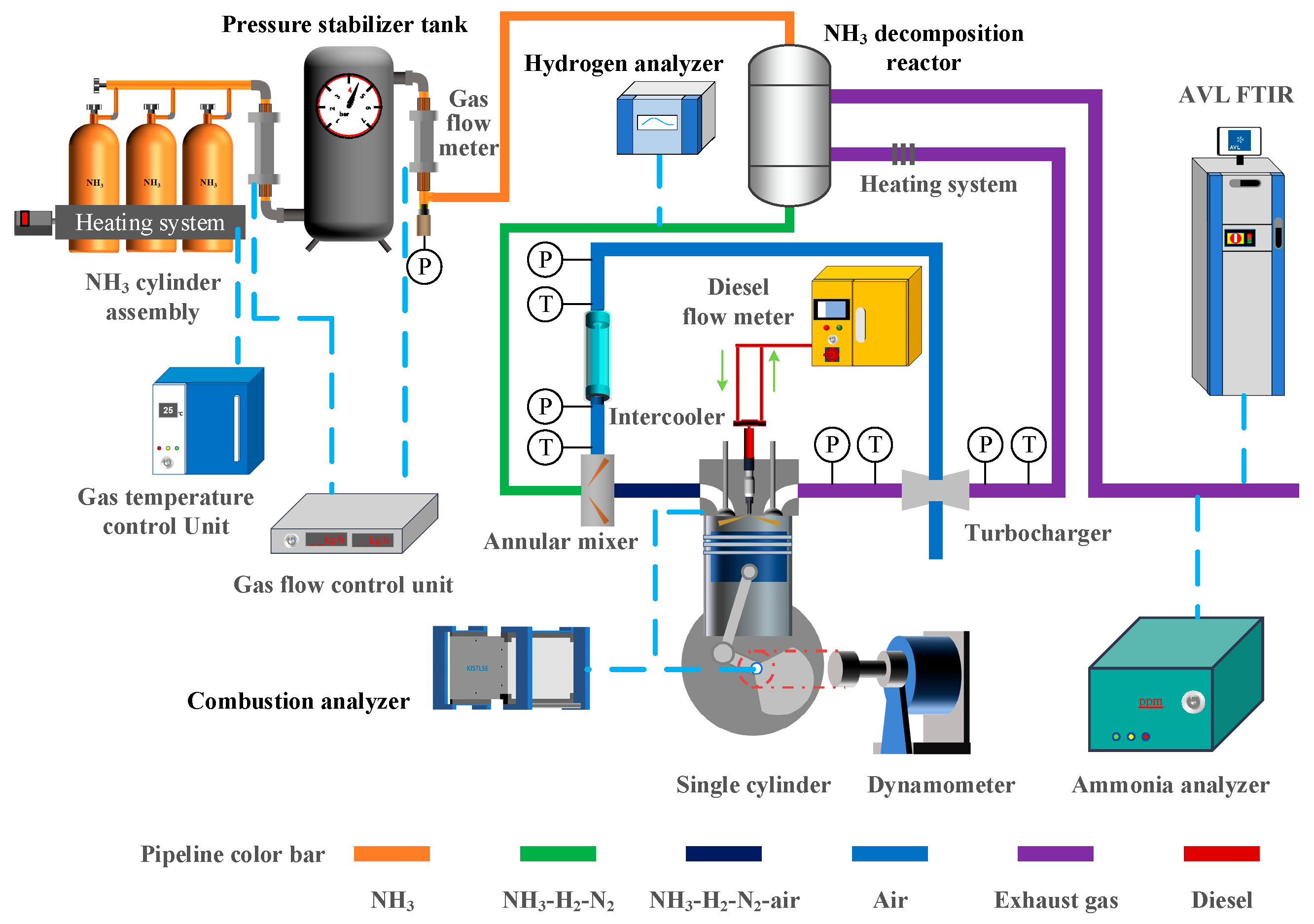
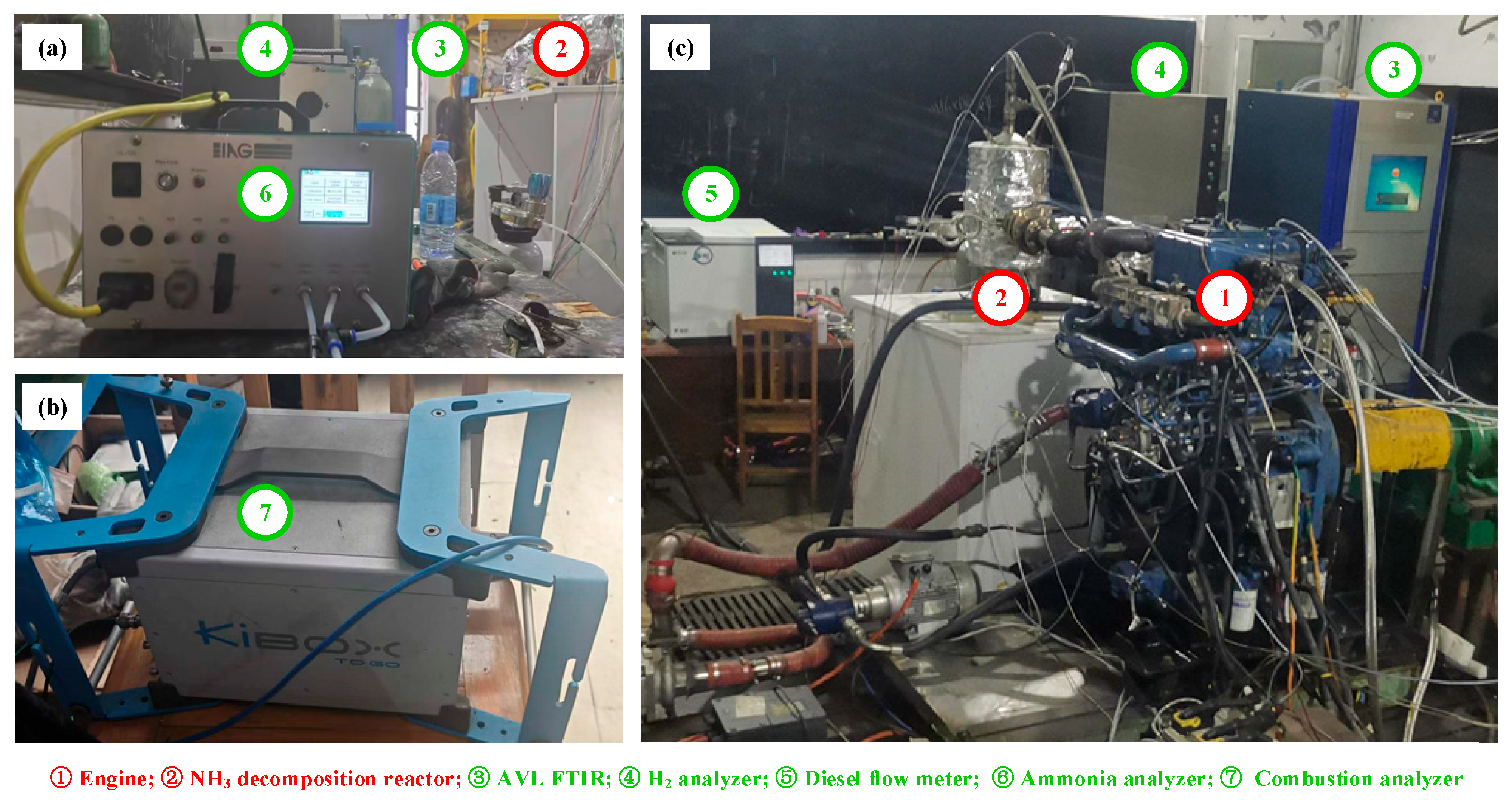
This study conducted experiments on a marine diesel-ignited premixed ammonia engine operating with hydrogen-containing fuel derived from ammonia decomposition. The experimental system is illustrated in Figure 1 and primarily consists of an engine, a fuel supply system, an ammonia catalytic decomposition reactor for hydrogen production, and a measurement system. The corresponding photograph of the test bench is shown in Figure 2. Detailed descriptions of the engine, fuel supply system, and measurement system can be found in references [4,26]. The engine used in the tests is a marine single-cylinder, four-stroke, turbocharged engine (Guangxi Yuchai Marine and Genset Power Co., Ltd., Yulin, China). Its specifications are provided in Table 1. The ammonia decomposition reactor (designed by our research group) comprises two main sections: a heat exchanger and a catalytic reaction zone. In the heat exchanger, engine exhaust gases are utilized to preheat the ammonia fuel. The preheated ammonia then flows into the catalytic reaction zone, where a portion of it decomposes to produce hydrogen and nitrogen. Consequently, the stream exiting the reactor contains ammonia along with its decomposition products—hydrogen and nitrogen. To promote ammonia decomposition under conditions of low exhaust gas temperature, a disc-shaped electric heater (designed by our research group) was installed in the exhaust passage to further heat the exhaust. This heated exhaust then transfers thermal energy to the ammonia in the heat exchanger, thereby increasing the hydrogen yield in the catalytic reaction zone. By regulating the electric heating power, different hydrogen production rates could be achieved, enabling the engine to operate at various hydrogen enrichment levels. The decomposition process employs a Ruthenium (Ru)-based catalyst. Specific information regarding the catalyst’s composition, preparation method, and hydrogen production performance is available in reference [27]. During the intake stroke, the fuel mixture from the ammonia decomposition reactor is injected into the intake port via the injector on the intake manifold and subsequently enters the cylinder mixed with air. Near the top dead center of the compression stroke, diesel fuel is directly injected into the cylinder. The diesel is compression-ignited first, which in turn ignites the premixed charge of ammonia, the hydrogen-containing decomposition products, and air.
The fuel supply system is responsible for delivering ammonia and diesel fuel. Details regarding its configuration and the properties of the fuels used are described in reference [4]. In this experiment, the ammonia supplied by the system is first directed into the ammonia decomposition reactor, where it is partially converted into a mixture of ammonia, hydrogen, and nitrogen. This mixture is then introduced into the engine cylinder via the intake port. Based on prior research, the injection of ammonia and the hydrogen-containing fuel mixture commences after the intake valve opens.
For the measurement system, the specifications and accuracies of the instruments employed can be found in reference [4], and only a brief description is provided here. The diesel fuel consumption meter (Toceil CMFD015, Shanghai Toceil Engine Test Equipment CO., Ltd., Shanghai, China) has a range of 0–150 kg/h and an accuracy of ±0.12% FS. In-cylinder pressure was recorded using a combustion analyzer (Kistler KiBox, Kistler Group, Winterthur, Switzerland), and the heat-release rate was subsequently derived. The in-cylinder pressure sensor (Kistler 6044A) has a range of 0–300 bar and an accuracy of ±1.0% FS. Ammonia concentration in the exhaust was measured with an ammonia analyzer (IAG nG NMS NH3 measuring system, accuracy ±2% FS, IAG Test Cell Technology, Weikersdorf, Austria). Concentrations of CO2, NO, and N2O in the exhaust were determined using a Fourier-transform infrared (FTIR) analyzer (AVL FTIR SESAM i60 FT SII, AVL List GmbH, Graz, Austria). In addition, to characterize the composition of the products from the ammonia catalytic decomposition reactor, a hydrogen analyzer (Fuli F60, error < 0.5%, Zhejiang Fuli Analytical Instrument Co., Ltd., Wenling, China) was installed at the reactor outlet to measure the volume percentage of hydrogen in the decomposition products. Based on the stoichiometry of the ammonia decomposition reaction, the concentrations of ammonia, hydrogen, and nitrogen at the reactor outlet were then determined.
During the experiment, the engine speed and load were maintained constant. Baseline data were first established by operating the engine in pure diesel mode to measure its combustion and emission characteristics as a reference case. Subsequently, experimental campaigns were conducted at various ammonia substitution ratios and hydrogen enrichment levels by controlling the ammonia flow rate and the electric heater power. Specifically, under a given engine speed and load condition, the ammonia flow rate was adjusted to a predetermined value. By regulating the electric heating power applied to the exhaust gas upstream of the decomposition reactor, the hydrogen concentration in the fuel mixture exiting the ammonia catalytic decomposition reactor could be varied. As this mixture entered the cylinder and participated in combustion, the throttle position governing diesel fuel delivery was automatically modulated to maintain constant engine output power. This procedure was repeated for different combinations of engine speed and load, thereby enabling a systematic investigation of how varying the ammonia substitution and hydrogen energy rates influences the engine’s combustion and emission characteristics across the operating envelope.

2.1.2. Experimental Conditions

In this study of hydrogen-enriched combustion for a diesel-ignited ammonia engine, the experimental parameters were varied not only in terms of engine speed but also in the ammonia substitution ratio and the hydrogen enrichment level. The ammonia substitution ratio is expressed by the diesel substitution rate (DSR), defined as the proportion of diesel fuel replaced under the diesel-ignited ammonia-hydrogen co-firing mode. It is calculated as follows:
DSR = m D m DA m D × 100 %
where m D represents the mass of diesel fuel consumed per cycle in pure diesel operation, and m DA denotes the mass of diesel fuel consumed per cycle under the diesel-ignited ammonia-hydrogen co-firing condition. The hydrogen enrichment level is quantified by the hydrogen energy rate (HER), defined as the energy fraction contributed by hydrogen within the ammonia-hydrogen mixture:
HER = E H 2 E H 2 + E NH 3
where E H 2 is the total energy supplied by hydrogen, and E NH 3 is the total energy supplied by ammonia.
Based on the stable operating range of the engine, the experimental conditions employed in this work are summarized in Table 2. The engine has a rated speed of 1500 rpm, and its minimum stable speed under pure diesel operation is 1200 rpm; accordingly, these two speeds were selected for testing. Considering typical operational profiles, medium- to high-load conditions were chosen for the experimental campaign. Regarding the diesel substitution rate, the baseline condition corresponds to zero electric heating power, representing the diesel replacement ratio without active hydrogen enrichment. As the electric heating power was adjusted, the hydrogen energy rate was varied, and under the requirement of maintaining constant engine output power, the corresponding diesel fraction also changed. A key focus of this study is the combustion and emission behavior of the engine when fueled with hydrogen-containing gas produced from ammonia decomposition. This introduces a coupled thermal interaction: the exhaust gas temperature is influenced by the introduction of the decomposition products, while the extent of catalytic ammonia decomposition itself depends on the heat transferred from the exhaust to the ammonia stream. As a result, achieving a precisely controlled diesel substitution rate at zero electric heating power proved challenging, leading to the baseline diesel substitution rates presented in Table 2.

2.1.3. Primary Combustion and Emission Performance Parameters

For the diesel-ignited ammonia engine operating with hydrogen-containing fuel derived from ammonia decomposition, the energy consumption rate (ECR) is defined to evaluate its combustion efficiency, as expressed in the following equation:
ECR = E NH 3 + E H 2 + E D P E
where E D denotes the total energy supplied by diesel fuel, and P E represents the effective power output of the engine.
In addition, based on the heat release rate curve obtained during the operation of the engine with the hydrogen-containing fuel from ammonia decomposition, key combustion characteristic parameters—CA10, CA50, and CA10-90—are calculated. These parameters respectively indicate the start of combustion, the center of combustion, and the combustion duration. Specifically, CA10, CA50, and CA90 correspond to the crank-angle positions at which 10%, 50%, and 90% of the total cumulative heat has been released.
To comprehensively assess the greenhouse effect of both CO2 and N2O in the engine exhaust, the equivalent greenhouse gas concentration, eGHG, is calculated using the following equation [4]:
eGHG % = CO 2 % + N 2 O % × 273

2.2. Simulation Method

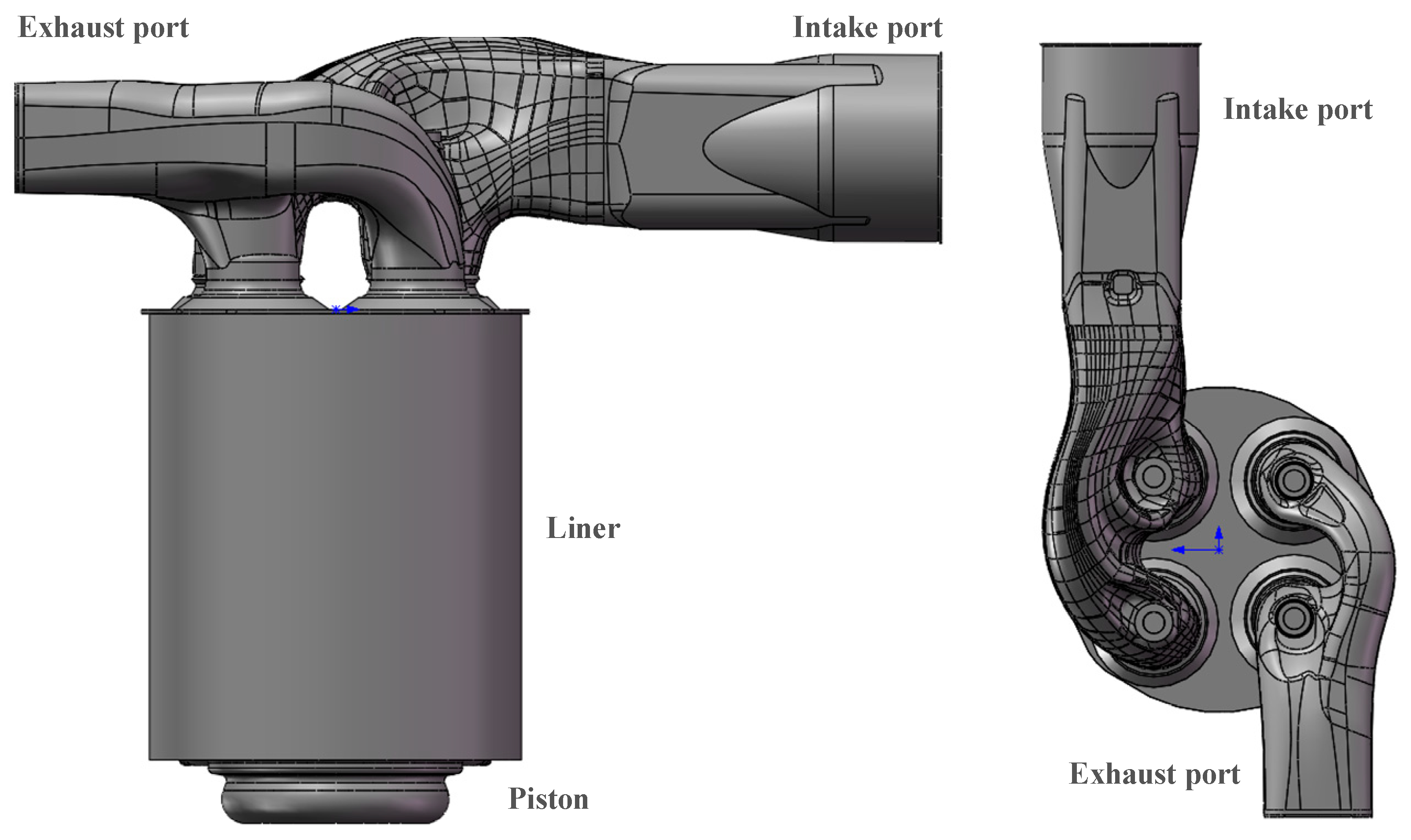
To gain a fundamental understanding of the in-cylinder processes, the three-dimensional computational fluid dynamics (CFD) software CONVERGE 2.3 was employed to simulate the combustion of a diesel-ignited ammonia engine operating with hydrogen-containing fuel derived from ammonia decomposition. The engine geometry used in the simulations corresponds to the experimental configuration, as illustrated in Figure 3. The simulation of the closed-cycle process begins at intake valve closure and ends at exhaust valve opening. During the simulation, building on the previous work [4], the in-cylinder mesh size was set to 0.5 mm from the start of injection (−13 deg CA) to 20 deg CA. For the diesel spray region, local embedding was applied to refine the mesh to 0.25 mm, and this refinement was maintained for 15 deg CA. Outside the range of −13 deg CA to 20 deg CA, the base in-cylinder mesh size was set to 1 mm; however, adaptive mesh refinement was employed, with refinement triggered by local velocity and temperature gradients, resulting in a cell size of 0.5 mm in critical regions. A variable time-step approach was used for the numerical solution, with minimum and maximum time steps of 1 × 10⁻⁸ s and 1 × 10⁻⁴ s, respectively. During the computation, the specific time step at each iteration was determined automatically by the CONVERGE solver.
The in-cylinder model integrates sub-models for turbulence, heat transfer, and chemical kinetics. The specific models selected for simulating turbulence, spray, heat transfer, and combustion are listed in Table 3. Following the approach established in earlier studies [4], the combustion chamber wall temperatures were prescribed as constant values [28]. Consistent with previous modeling practice, n-heptane was used as a surrogate for diesel fuel. The combustion of the diesel–ammonia–hydrogen mixture was described using the ammonia/n-heptane (NH3/nC7H16) reaction mechanism developed by Wang et al. [29].
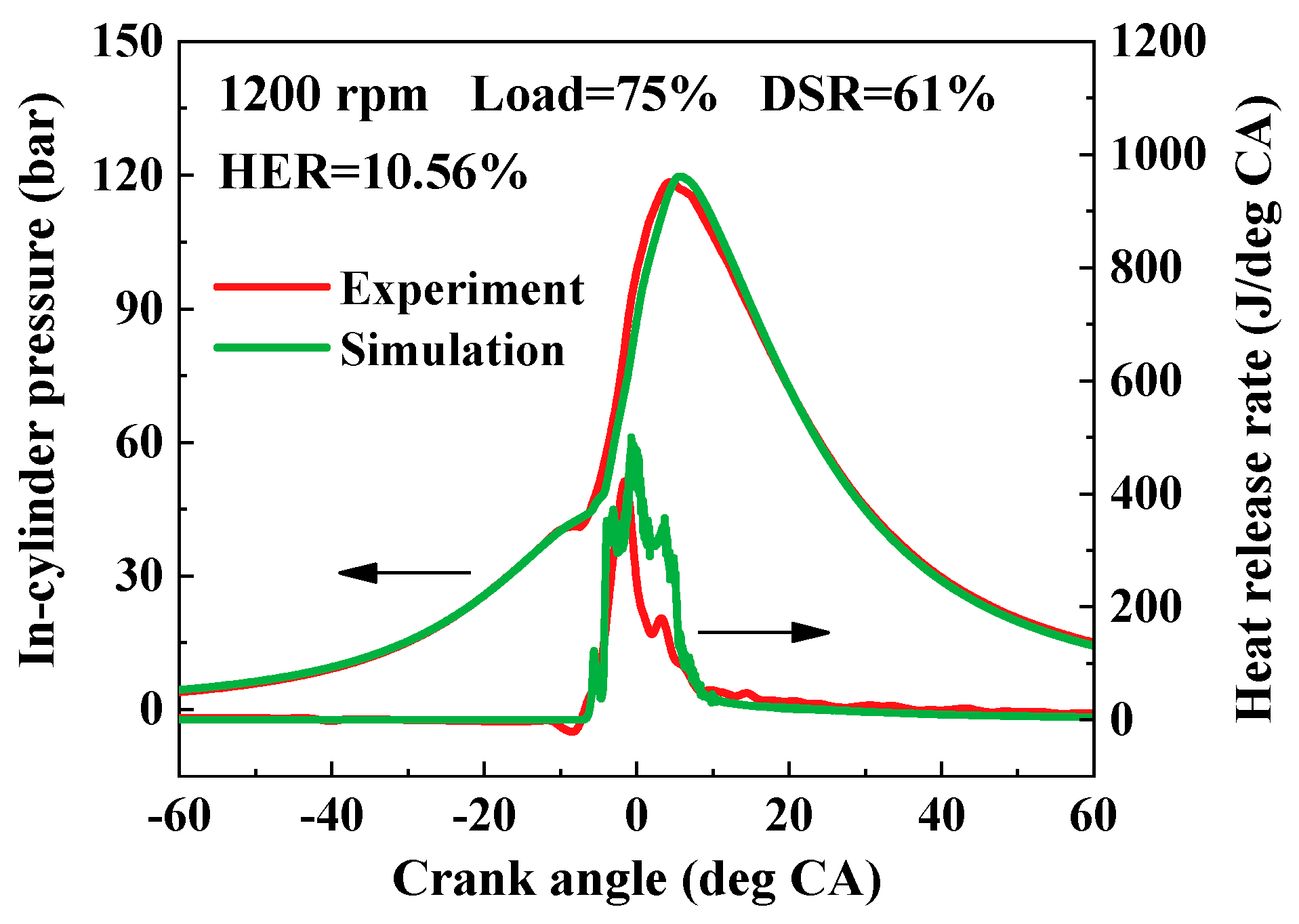
To validate the accuracy of the established in-cylinder simulation model, the in-cylinder process of a diesel-ignited ammonia engine operating with hydrogen-containing fuel under the condition of 1200 rpm, 75% load, 61% baseline diesel substitution rate, and zero electric heating power was simulated. The simulated in-cylinder pressure and heat release rate were compared with experimental measurements, as shown in Figure 4. As can be seen from the figure, the experimental and simulated in-cylinder pressure traces coincide during the compression phase. Near top-dead-center combustion, a slight discrepancy exists between the measured and simulated pressures, although the overall difference remains small. For the heat-release rate, the simulated peak value within approximately 10 deg CA after top dead center deviates somewhat from the experimental measurement, whereas at other crank-angle positions, the predicted heat-release rate agrees well with the experimental data. Taking the experimental results as a reference, the simulated peak pressure is only 1.04% higher, and the simulated peak heat-release rate is 18.29% higher. The observed discrepancy in the heat-release rate after top dead center can be attributed, in part, to the fact that the simulated heat-release rate corresponds to the fuel-combustion heat-release rate calculated from the chemical-kinetic mechanism of fuel combustion, which inherently includes engine heat losses. In contrast, the experimental heat-release rate is derived from the measured in-cylinder pressure by the combustion analyzer; the measured pressure already incorporates the effect of engine heat transfer, so the experimental heat-release rate represents an apparent heat-release rate that does not explicitly account for heat losses, thus leading to a deviation from the simulated value. Overall, the simulation model developed in this study is capable of predicting in-cylinder pressure with good accuracy. Moreover, the predicted combustion-onset timing, the rising edge of the heat-release curve, and the late-combustion phasing are all in reasonable agreement with the experimental data, thereby supporting the validity and accuracy of the engine model constructed in this work.
On the basis of the validated in-cylinder model, this study carried out simulation-based investigations to analyze the performance differences in the diesel-ignited ammonia engine under two hydrogen-addition modes: using hydrogen-containing fuel from ammonia decomposition and using pure hydrogen. The simulation approach was implemented as follows. First, the model was calibrated against experimental data from the engine test bench operating with decomposition-derived hydrogen-containing fuel. Subsequently, the intake mixture composition in the simulation was modified: the original mixture of ammonia, air, and the hydrogen–nitrogen products from ammonia decomposition was replaced by a mixture of ammonia, air, and pure hydrogen. In this modification, the masses of ammonia and hydrogen were kept identical, while the nitrogen originally introduced via the ammonia decomposition was replaced by an equivalent amount of air. All other parameters, including diesel injection quantity, injection profile, and intake/exhaust temperatures, remained unchanged. The comparative simulations were conducted primarily under the operating condition of 1200 rpm, 75% load, a baseline diesel substitution rate of 61%, and a hydrogen energy rate of 10.56%.

3. Results and Discussion

3.1. Analysis of In-Cylinder Pressure, Heat Release Rate, and Energy Consumption Rate Across Hydrogen Energy Rates

Based on the experimental setup described previously, a series of tests were performed on a diesel-ignited ammonia engine operating with hydrogen-containing fuel derived from ammonia decomposition. The influence of the hydrogen energy rate on combustion characteristics was evaluated through in-cylinder pressure, heat release rate, and energy consumption rate.
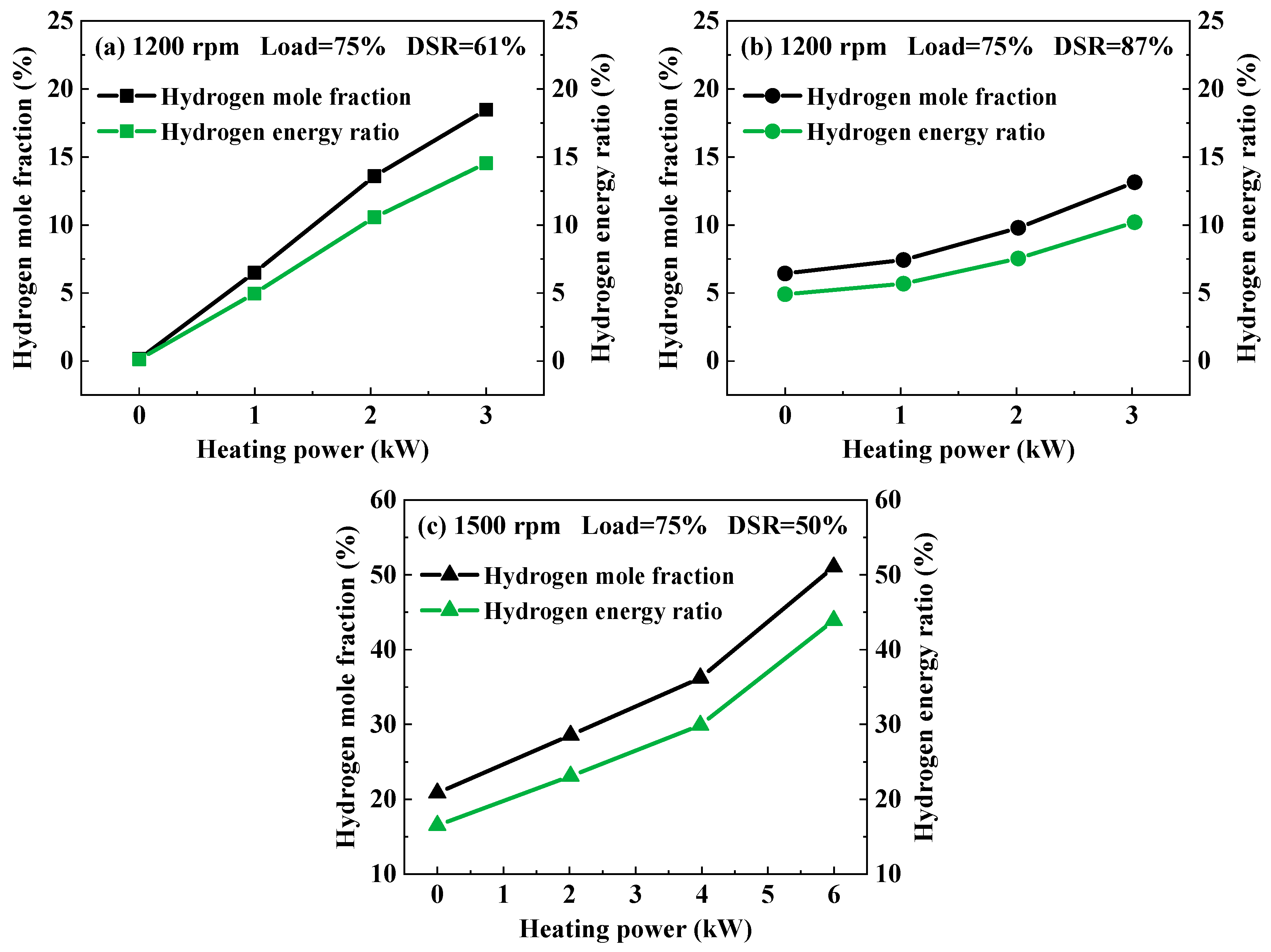
During testing, under fixed engine speed, load, and ammonia flow rate, the hydrogen yield of the ammonia catalytic decomposition reactor was varied by adjusting the electric heating power applied to the exhaust stream, thereby modifying the exhaust-gas temperature. This allowed the engine to operate at different hydrogen-enrichment levels. Figure 5 presents the hydrogen energy rates corresponding to various electric heater powers for each test condition. Here, the hydrogen mole fraction and hydrogen energy fraction refer to the content of hydrogen in the mixture consisting of ammonia and hydrogen. It can be observed that the hydrogen mole fraction is higher than its energy fraction, which is primarily due to the fact that the molar heating value of hydrogen is lower than that of ammonia.
As the primary objective of this work is to investigate combustion and emissions under varying hydrogen energy rates, and the ammonia decomposition reactor mainly serves as an on-board source of hydrogen-containing fuel, a detailed analysis of the reactor’s hydrogen-production performance is not provided here. Nevertheless, Figure 5 shows that the energy fraction of hydrogen in the reactor-outlet mixture increases monotonically with electric heating power. Additionally, at higher engine speeds, even without electric heating, the hydrogen content in the decomposition products is relatively high. Taking the operating condition of 1500 rpm, 75% load, and a baseline diesel substitution rate of 50% as an example, the energy proportion of hydrogen in the ammonia decomposition products reaches 16.51% when electric heating is not activated. In the engine bench tests reported here, all of the supplied ammonia is directed to the ammonia decomposition-to-hydrogen reactor; therefore, the hydrogen yield of the reactor cannot be modulated by adjusting the inlet ammonia flow rate. In practical applications, the ammonia flow rate entering the decomposition reactor can be controlled independently to regulate the hydrogen production.
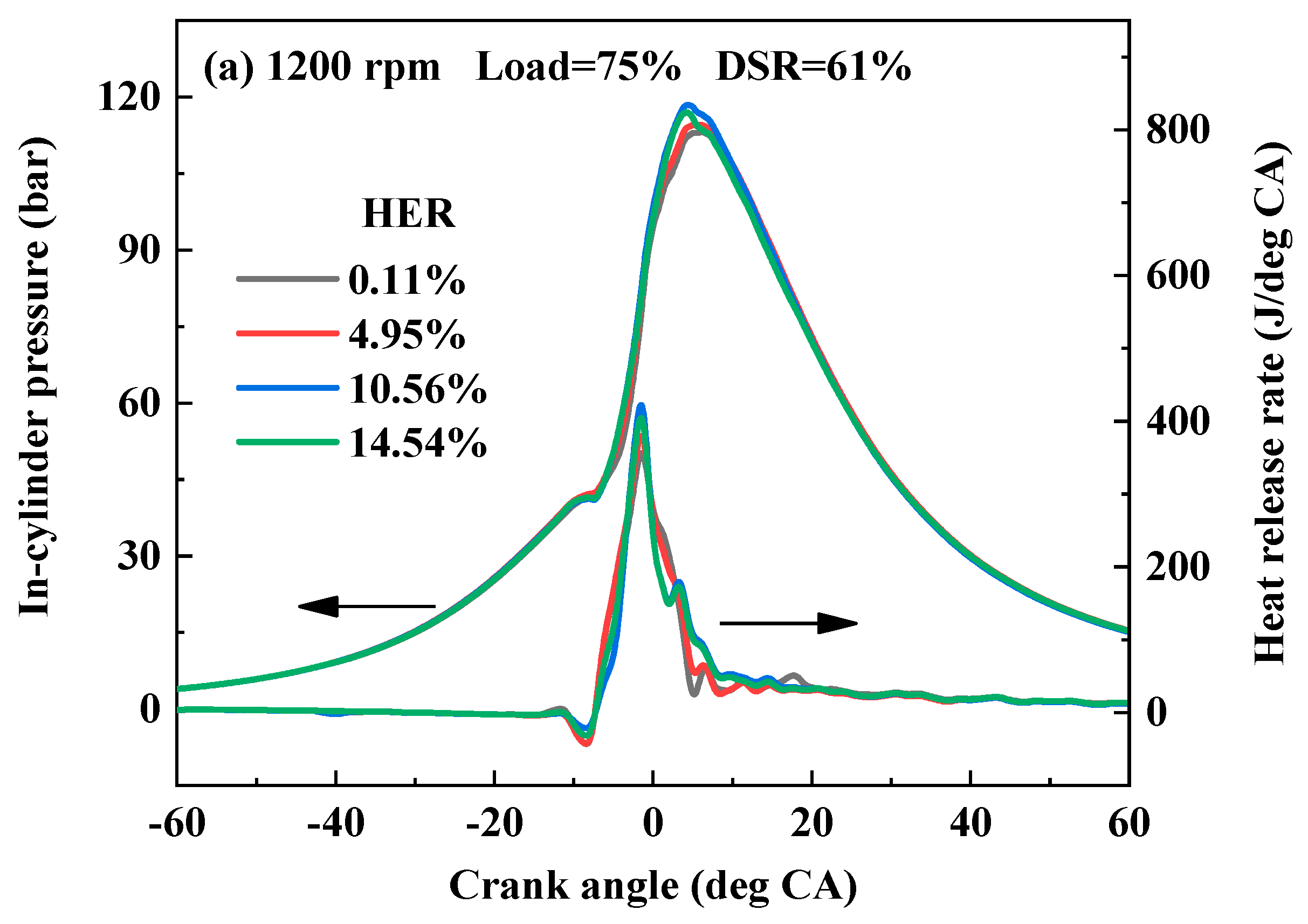
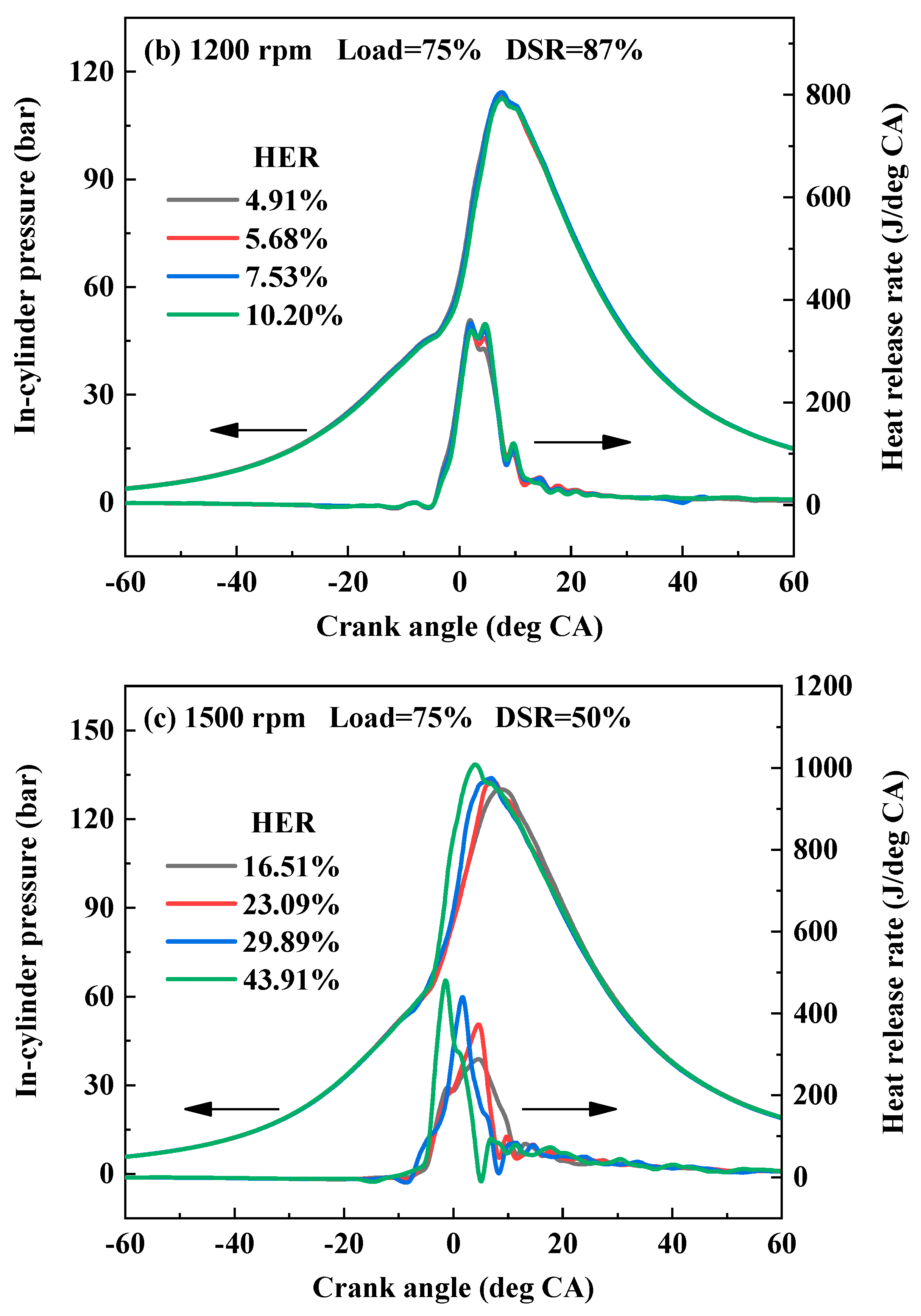
The hydrogen-containing fuel exiting the decomposition reactor was supplied to the engine. Figure 6 displays the crank-angle-resolved in-cylinder pressure and heat release rate for the tested conditions. As noted previously, the engine output power was maintained constant throughout the bench tests. Therefore, as shown in Figure 6, at 1200 rpm, 75% load, and baseline diesel substitution rates of 61% and 87%, variations in the hydrogen energy rate produce only small differences in the in-cylinder pressure and heat-release rate curves. Key features such as in-cylinder ignition timing, peak pressure, and peak heat-release rate do not change appreciably, and the heat-release rate consistently exhibits a single-peak shape. In contrast, at 1500 rpm, 75% load, and a baseline diesel substitution rate of 50%, increasing the hydrogen energy rate leads to more noticeable changes in in-cylinder pressure and heat-release rate. Specifically, the in-cylinder ignition timing remains essentially unchanged, but as the hydrogen energy rate rises, both pressure and heat-release rate begin to increase earlier, reach higher peak values, and the heat-release profile continues to display a single-peak characteristic. In general, at the lower speed (1200 rpm), where hydrogen energy rates are below 15%, changes in pressure and heat release are relatively modest. In contrast, at the higher speed (1500 rpm) and within the applied electric-heater power range, hydrogen energy rates span 16.51% to 43.91%, leading to more substantial alterations in both pressure and heat release.
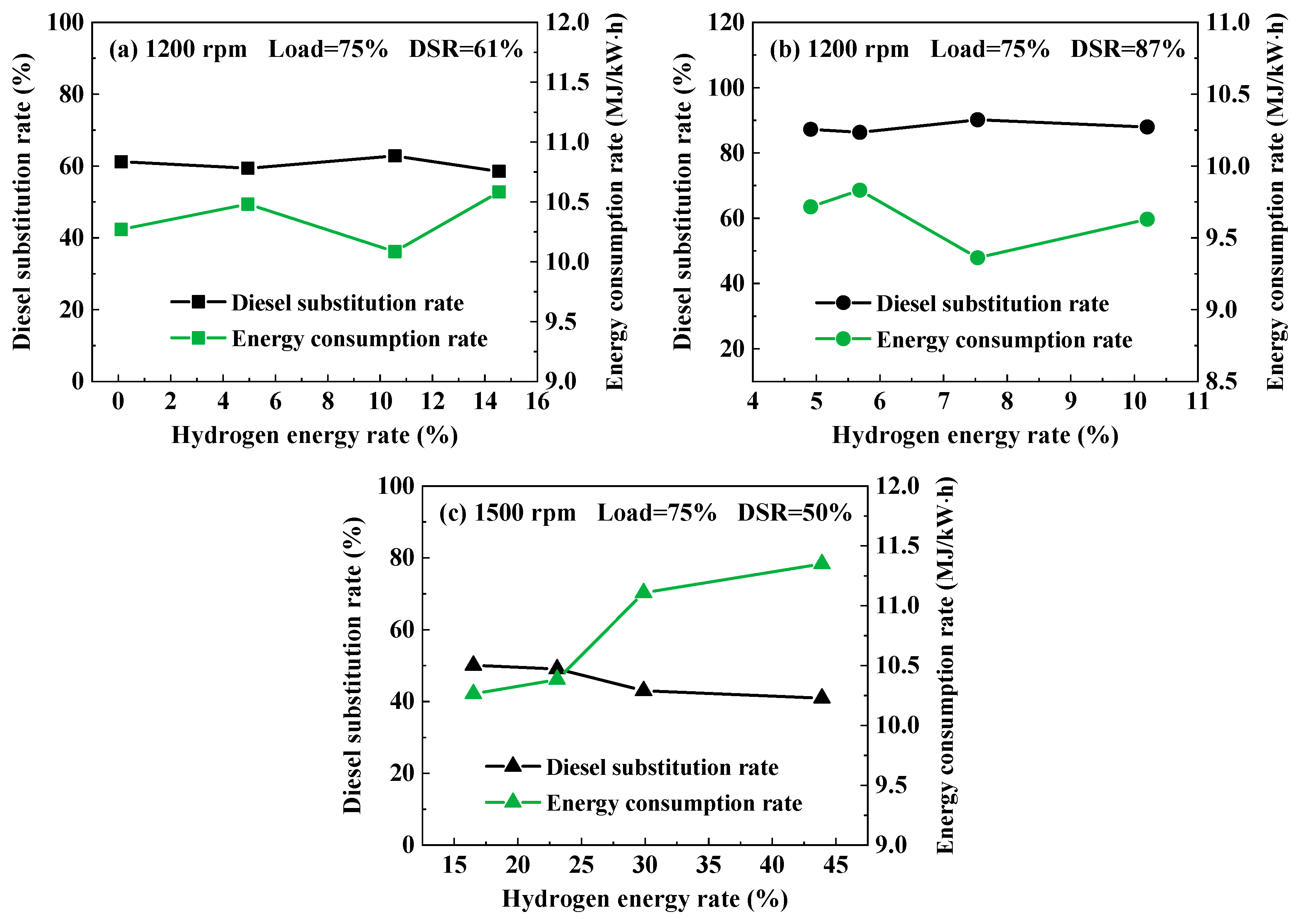
To assess the overall effect of hydrogen enrichment on combustion under the constraint of constant output power, the diesel substitution rate and energy consumption rate were calculated for each condition. Their variations with hydrogen energy rate are plotted in Figure 7. At 1200 rpm and 75% load, with a fixed ammonia flow rate, both the diesel substitution rate and energy consumption rate fluctuate within the hydrogen energy range of 0–15%. Overall, however, as the hydrogen energy rate increases, the diesel substitution rate first rises and then declines, while the energy consumption rate first decreases and then increases. From the perspective of optimizing diesel substitution and energy consumption, within the studied range, the optimal hydrogen energy rate is 10.56% for a baseline diesel substitution rate of 61%, and 7.53% for a baseline diesel substitution rate of 87%. At 1500 rpm and 75% load, where the hydrogen energy rate varies from 16.51% to 43.91%, the diesel substitution rate and energy consumption rate exhibit opposite trends: the diesel substitution rate gradually decreases, whereas the energy consumption rate steadily rises. Combined with the analysis in Section 3.2, this suggests that the hydrogen energy rates examined for this condition likely exceed the optimum. Based on the analysis of Figure 5, it can be inferred that, in this scenario, the ammonia flow rate entering the ammonia decomposition-to-hydrogen reactor could be independently regulated to reduce hydrogen production, thereby achieving the optimal hydrogen energy rate for this particular operating condition.

3.2. Comparative Analysis of Combustion Characteristics: Hydrogen-Containing Fuel from Ammonia Decomposition Versus Pure Hydrogen

As discussed in the Introduction, the products of ammonia decomposition contain a significant amount of nitrogen. The principal distinction between enriching with pure hydrogen and with decomposition-derived hydrogen-containing fuel therefore lies in the presence of nitrogen in the latter. While the results in Section 3.1 illustrate the influence of hydrogen energy rate on combustion when the engine is fueled with decomposition-derived hydrogen-containing fuel, it remains necessary to clarify whether the nitrogen in the decomposition products substantially alters the effect of hydrogen enrichment. To address this question, numerical simulations were conducted to compare the combustion characteristics of the diesel-ignited ammonia engine under the two hydrogen-addition modes.
Simulations were performed for the engine operating at 1200 rpm, 75% load, and a baseline diesel substitution rate of 61%. The intake compositions corresponding to the two hydrogen-addition modes—using decomposition-derived hydrogen-containing fuel and using pure hydrogen—are listed in Table 4 and Table 5, together with the differences between them. The relative deviation x rd of a parameter x between the two modes is defined as:
x rd = x PH x AH x AH
where x AH and x PH denote the values of parameter x under the decomposition-derived fuel mode and the pure-hydrogen mode, respectively.
In Table 4 and Table 5, the quantities of the components are reported as mass per cycle entering the cylinder. This representation facilitates a direct comparison of the variations in each component’s quantity between the two hydrogen-addition modes. It can be seen that the difference in intake composition between the pure-hydrogen and decomposition-derived hydrogen-containing fuel modes depends on the level of hydrogen enrichment. Switching from pure hydrogen to decomposition-derived fuel reduces the O2 concentration, increases the equivalence ratio, and raises the N2 concentration. Furthermore, as the hydrogen energy rate increases, the in-cylinder masses of NH3 and N2 gradually decrease, while those of H2 and O2 gradually increase. The higher the hydrogen energy rate, the greater the difference in intake composition and equivalence ratio between the two hydrogen-addition modes. Relatively speaking, O2 and the equivalence ratio are more strongly affected by the hydrogen-enrichment level. For example, at a 20% hydrogen energy rate, the differences in O2 and equivalence ratio between the two modes are 1.26% and −1.24%, respectively, whereas the difference in N2 is only −0.33%. However, as indicated in Table 5, when the hydrogen energy rate is relatively low (e.g., up to 20%), the differences in intake composition and equivalence ratio between the two modes remain small, with relative deviations within 1.3%.
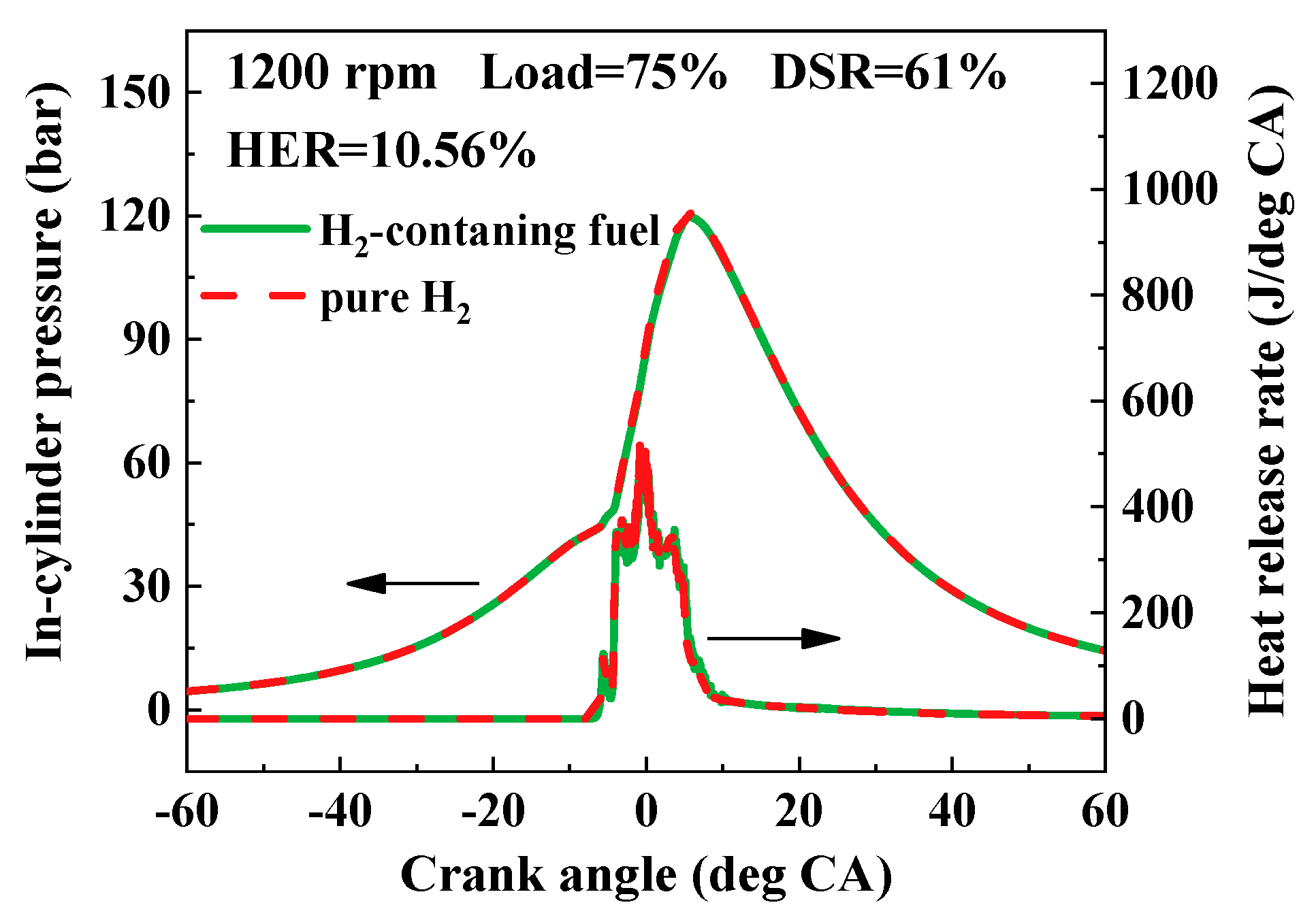
Building on the analysis of differences in intake composition and equivalence ratio, this section examines the combustion characteristics under the pure-hydrogen mode and the decomposition-derived hydrogen-containing fuel mode. Based on the simulation results, Figure 8 presents the in-cylinder pressure and heat release rate of the diesel-ignited ammonia engine for the two hydrogen-addition modes. As shown, at the studied hydrogen energy rate of 10.56%, the pressure trace for the pure-hydrogen mode closely matches that for the decomposition-derived hydrogen-containing fuel mode. Taking the decomposition-derived hydrogen-containing fuel case as the baseline, the relative difference in peak pressure between the two modes is only 0.78%, with an absolute difference of 0.93 bar. The heat-release profiles exhibit a similar trend.
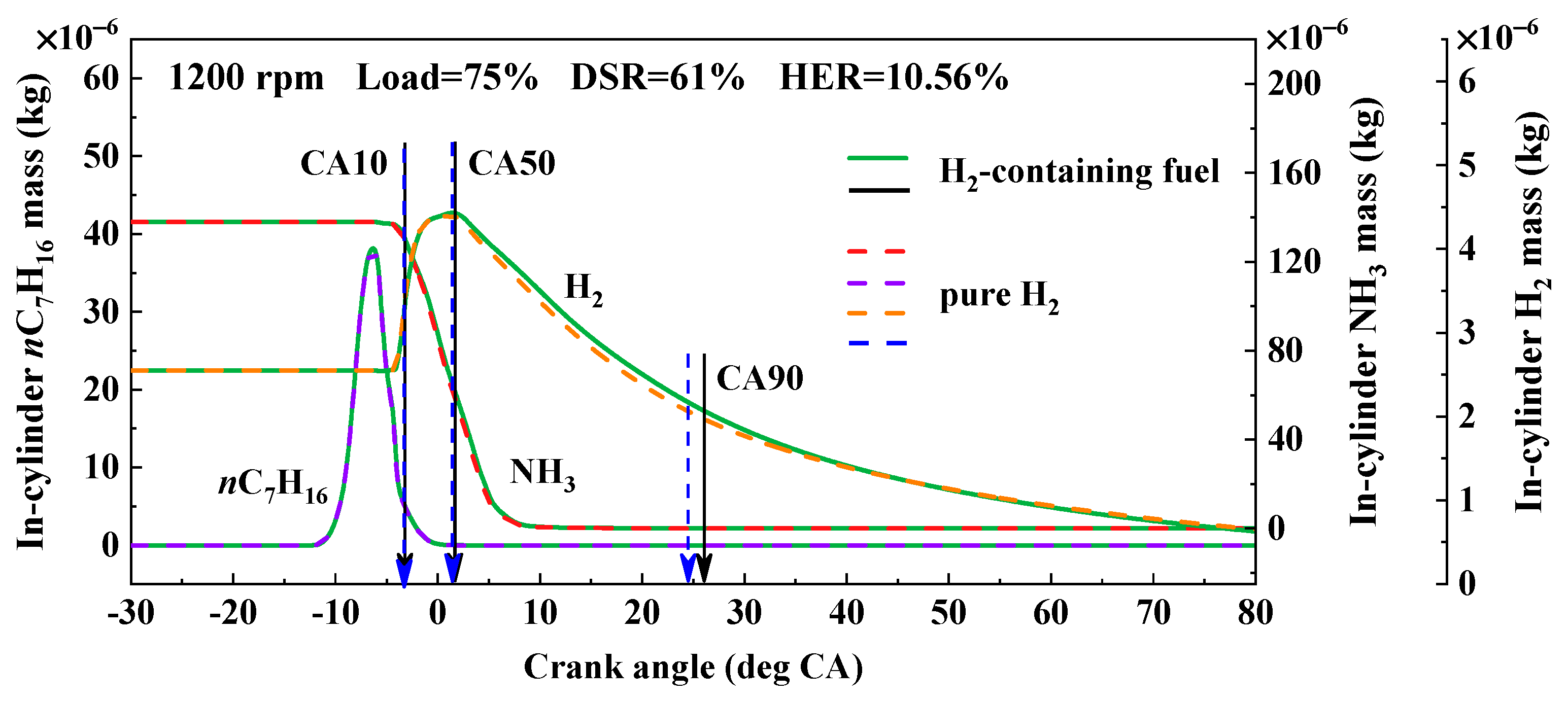
To further clarify the influence of nitrogen from the ammonia decomposition on in-cylinder combustion, the temporal evolution of fuel-component mass inside the cylinder was compared for the two hydrogen-addition modes, as shown in Figure 9. The figure also indicates the CA10, CA50, and CA90 positions determined from the simulation.
From Figure 9, it can be observed that the variations in ammonia, hydrogen, and n-heptane masses per cycle with crank angle are nearly identical between the decomposition-derived hydrogen-containing fuel and pure-hydrogen modes, with only minor discrepancies. Specifically, the curves for ammonia and n-heptane coincide between these two modes. For hydrogen, its mass decreases more rapidly during the later combustion phase in the pure-hydrogen mode. This suggests that when switching from pure hydrogen to decomposition-derived fuel, although the equivalence ratio increases toward the stoichiometric value (as shown in Table 4), the presence of nitrogen from the ammonia decomposition tends to slightly retard the in-cylinder combustion process. This effect is more noticeable in the characteristic parameters that reflect combustion phasing. As illustrated in Figure 9, CA10 and CA50 are very similar between the two modes, whereas CA90 for the decomposition-derived hydrogen-containing fuel case is slightly delayed compared with the pure-hydrogen case, although the difference remains small.
Taken together, Figure 8 and Figure 9 indicate that, at the studied hydrogen energy rate of 10.56%, the combustion processes of the diesel-ignited ammonia engine operating with hydrogen-containing fuel and with pure hydrogen exhibit only minor differences. Building on this finding and considering the data in Table 4 and Table 5, it can be inferred that as the hydrogen energy rate is further increased, the performance difference between the engine operating on decomposition-derived hydrogen-containing fuel and on pure hydrogen would likely become more pronounced; however, the overall difference is expected to remain relatively small. Therefore, it can be concluded that within a certain range of hydrogen energy rates (e.g., up to 20%), the difference between operating the engine on decomposition-derived hydrogen-containing fuel and on pure hydrogen is not substantial. Consequently, hydrogen enrichment in the engine can be effectively achieved by using hydrogen-containing fuel from ammonia decomposition, and the nitrogen (N2) generated during ammonia decomposition does not exert a significant influence on engine performance and emissions, yielding effects similar to those obtained with pure-hydrogen enrichment.
Furthermore, Figure 9 shows that from the start of combustion to CA10, diesel combustion dominates and is nearly complete. Between CA10 and CA50, ammonia becomes the primary heat-releasing fuel, accompanied by an increase in hydrogen mass inside the cylinder. In the later combustion stage, ammonia and hydrogen co-combust. Compared with our earlier study on the in-cylinder combustion process of a diesel-ignited ammonia engine [4], it can be concluded that hydrogen enrichment does not alter the initial combustion stage but accelerates the later ammonia combustion, thereby shortening the overall combustion duration.
Building on the above comparative analysis of the in-cylinder combustion processes under pure-hydrogen and decomposition-derived hydrogen-containing fuel modes, the mechanism underlying the effect of increasing the hydrogen energy rate on engine combustion can be elucidated. According to the study of Mørch et al. [30], for hydrogen-enriched ammonia combustion, raising the hydrogen fraction has two competing effects: on one hand, it accelerates the combustion process, leading to higher work output per unit energy input and thus lower total energy consumption; on the other hand, it increases engine heat losses, which raises energy consumption. Consequently, an optimal hydrogen energy rate exists. Below this optimum, increasing the hydrogen fraction reduces energy consumption, whereas above it, further increases raise energy consumption. Consistent with this understanding, the present study also identifies an optimal hydrogen energy rate for the diesel-ignited ammonia engine under a fixed ammonia flow rate, which maximizes the diesel substitution rate and minimizes the energy consumption rate, as illustrated in Figure 7.

3.3. Analysis of Emission Characteristics Under Different Hydrogen Energy Rates

Following the combustion analysis, the emission characteristics of the diesel-ignited ammonia engine operating with hydrogen-containing fuel derived from ammonia decomposition were examined under the studied conditions.
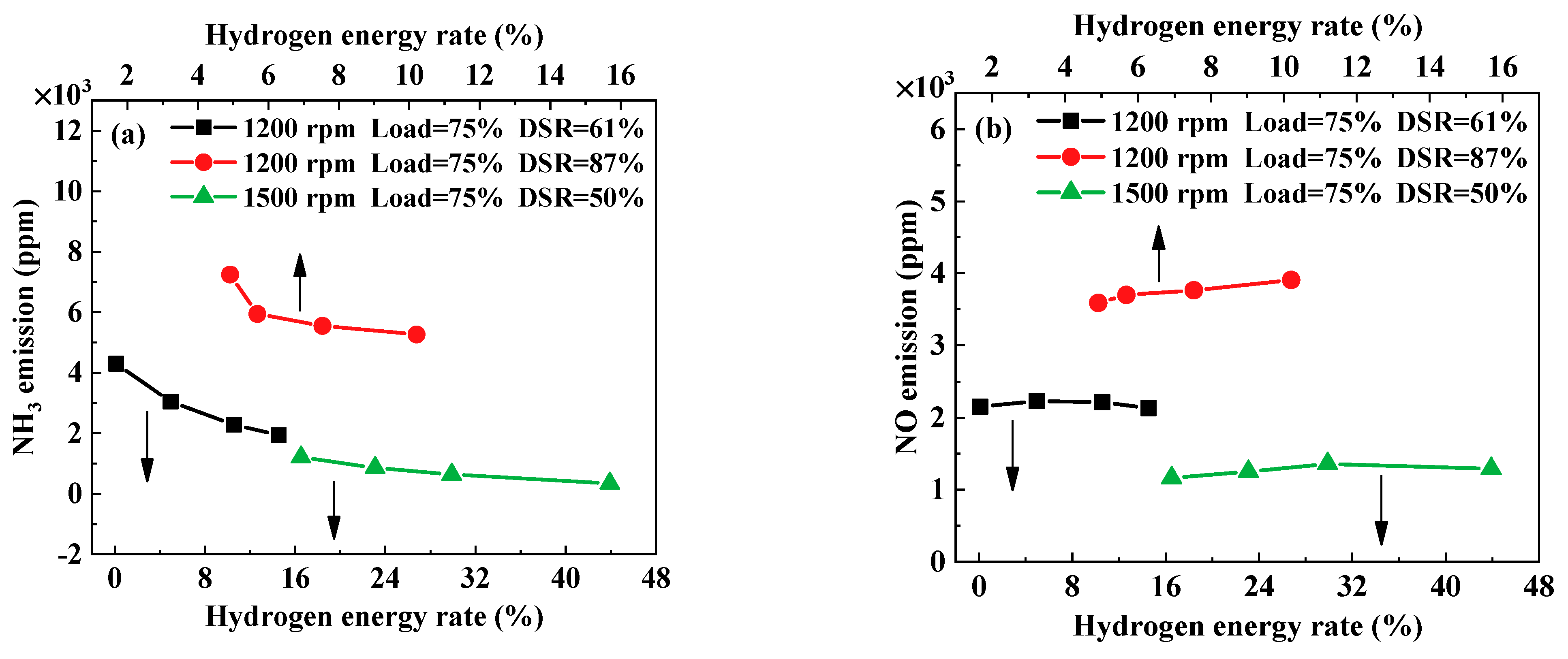
Figure 10a presents the NH3 emissions of the engine across the investigated operating points. Overall, at a given ammonia intake flow rate, increasing the hydrogen energy rate progressively reduces NH3 emissions. For example, at 1200 rpm, 75% load, and a baseline diesel substitution rate of 61%, raising the hydrogen energy rate from 0.1% to 14.5% results in a 54.9% reduction in NH3 emissions. At 1500 rpm, 75% load, and a baseline diesel substitution rate of 50%, increasing the hydrogen energy rate from 16.5% to 43.9% reduces NH3 emissions by 71.4%, with the final NH3 concentration also being relatively low. These trends confirm the effectiveness of hydrogen enrichment in lowering NH3 emissions. For an engine with port-injected ammonia, NH3 emissions originate mainly from two sources: NH3 slip during the valve-overlap period and unburned NH3 inside the cylinder. Given that hydrogen-enriched combustion significantly reduces NH3 emissions, as shown in Figure 10a, the primary source of NH3 in the present diesel-ignited ammonia engine is likely unburned ammonia in the cylinder. As noted in the Introduction, hydrogen exhibits much higher reactivity than ammonia, and its addition promotes ammonia combustion, particularly near the combustion-chamber walls. Consequently, as the hydrogen energy rate increases, the amount of unburned ammonia in the cylinder decreases.
The variation in NO emissions with hydrogen energy rate is shown in Figure 10b. It can be seen that NO emissions gradually increase with higher hydrogen enrichment. NO formation in this context is influenced by three main factors: thermal-NO, fuel-NO, and the nitridation reaction between NH3 and NO [4]. Based on the effect of hydrogen enrichment on in-cylinder combustion, increasing the hydrogen fraction raises the in-cylinder temperature, which tends to increase thermal-NO production. Simultaneously, as indicated by the reduced NH3 emissions in Figure 10a, the consumption of ammonia is enhanced, which likely increases fuel-NO formation. Furthermore, the decrease in NH3 concentration weakens the nitridation reaction between NH3 and already-formed NO. In summary, for the diesel-ignited ammonia engine, raising the hydrogen energy rate leads to a net increase in NO emissions.
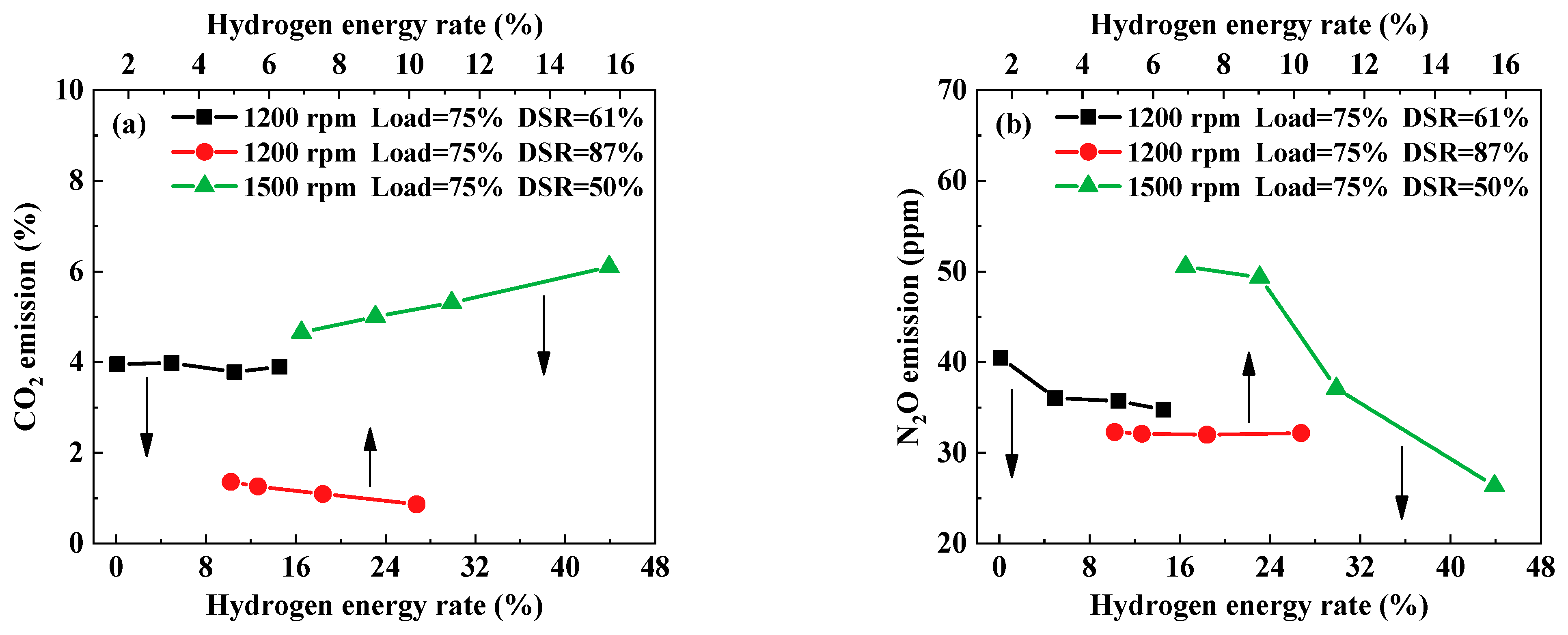
Regarding greenhouse gas emissions, the results are presented in Figure 11. For CO2 emissions, shown in Figure 11a, different trends are observed across operating conditions as the hydrogen energy rate increases. Consistent with prior work, CO2 emissions are much higher than CO emissions, thus CO2 levels are largely determined by diesel fuel consumption. In the present experiments, engine output power was held constant; hence, variations in diesel consumption with hydrogen enrichment should follow the same pattern as the diesel substitution rate. A comparison of Figure 11a and Figure 7 confirms that CO2 emissions and diesel substitution rate exhibit broadly similar trends, confirming that CO2 emissions are primarily governed by diesel fuel consumption.
According to Figure 11b, under the studied conditions, N2O emissions decrease gradually as the hydrogen energy rate increases. Based on the previous research [4], in ammonia-fueled engines, the formation and consumption of N2O are closely associated with the flame front: N2O is primarily generated in the low-temperature region ahead of the flame front and consumed in the high-temperature region behind it. The main formation pathways are the reactions NH2 + NO2 = N2O + H2O and NH + NO = N2O + H2O, whereas consumption occurs via N2O + H = N2 + OH and N2O + H2 = N2 + H2O. Considering the trends of NH3 and NO with hydrogen enrichment, increasing the hydrogen fraction can enhance N2O formation. However, N2O consumption is strongly linked to H and H2 radicals, and hydrogen enrichment also raises the in-cylinder temperature and enables the flame to propagate closer to the combustion-chamber walls. Therefore, hydrogen enrichment more significantly promotes N2O consumption, resulting in lower N2O emissions as the hydrogen energy rate rises.
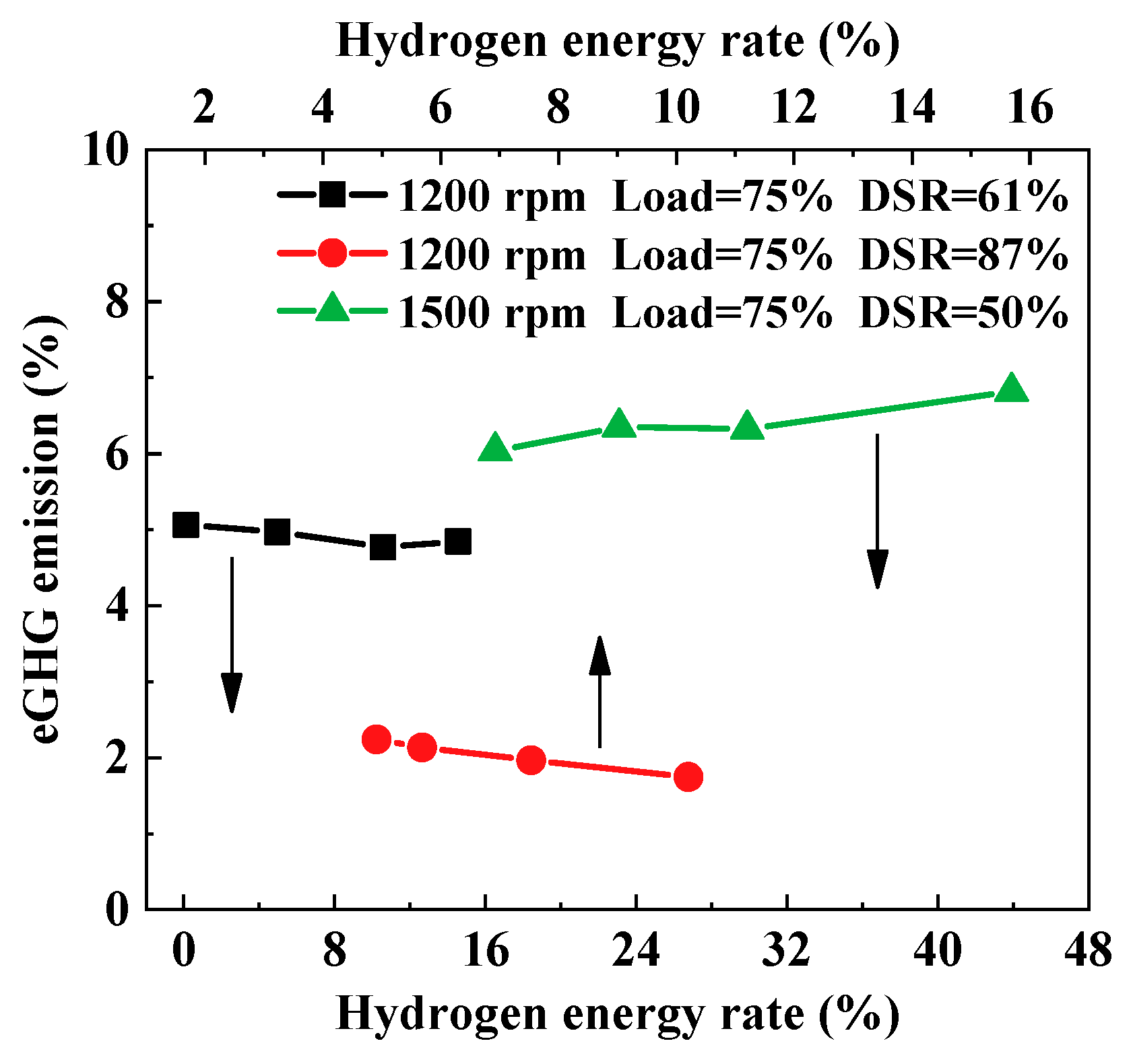
The equivalent greenhouse gas emissions calculated using Equation (4) are presented in Figure 12. As noted earlier, the global-warming potential of N2O is approximately 273 times that of CO2. However, under the investigated conditions, CO2 emissions are substantially higher than N2O emissions, and the change in CO2 emissions induced by hydrogen enrichment is larger than that of N2O. Consequently, the variation in equivalent greenhouse gas emissions with hydrogen energy rate is dominated by the change in CO2 emissions, although the variation in N2O emissions influences the local trends of equivalent greenhouse gas emissions.

4. Conclusions

This study conducted experimental investigations on a diesel-ignited ammonia engine operating with hydrogen-containing fuel derived from ammonia decomposition at 1200 and 1500 rpm under 75% load. The combustion and emission characteristics of the engine were examined, and three-dimensional numerical simulations were performed to compare the performance between the decomposition-derived hydrogen-containing fuel mode and the pure-hydrogen mode. The main conclusions are as follows:
(1) When engine output power is held constant, at 1200 rpm, 75% load, and baseline diesel substitution rates of 61% and 87%, increasing the proportion of hydrogen-containing fuel from ammonia decomposition leaves the in-cylinder pressure and heat release rate largely unchanged. The corresponding diesel substitution rate initially rises and then declines, while the energy consumption rate shows the opposite trend. However, at 1500 rpm, 75% load, and a baseline diesel substitution rate of 50%, raising the hydrogen energy rate causes in-cylinder pressure and heat release to begin rising earlier. The diesel substitution rate continuously increases, whereas the energy consumption rate steadily decreases.
(2) For the engine operating with decomposition-derived hydrogen-containing fuel versus pure hydrogen, under the condition of identical hydrogen energy input, the differences in intake composition and equivalence ratio between the two modes gradually widen as the hydrogen energy rate increases, but the discrepancy remains limited. At a 20% hydrogen energy rate, the differences in intake composition and equivalence ratio are within 1.3%. Regarding in-cylinder pressure and heat-release rate, the results obtained with decomposition-derived hydrogen-containing fuel and with pure hydrogen do not differ significantly over the investigated range of hydrogen energy rates. This indicates that the N2 produced during ammonia decomposition has a relatively weak effect on engine performance. Analysis of the in-cylinder combustion process reveals that the initial stage is dominated by diesel combustion, followed by combustion of ammonia and hydrogen.
(3) For emissions from the engine operating with decomposition-derived hydrogen-containing fuel, under the investigated conditions, increasing the hydrogen energy rate promotes ammonia combustion, leading to progressively lower NH3 emissions, while NO emissions increase. For N2O, hydrogen enrichment enhances its consumption behind the flame front, resulting in lower emissions. CO2 emissions are governed by diesel fuel consumption, and under different hydrogen energy rates, equivalent greenhouse gas emissions are also predominantly influenced by CO2 emissions.
Based on the above conclusions, it can reasonably be inferred that, for a diesel-ignited ammonia engine, hydrogen enrichment can be achieved, within an appropriate hydrogen-enrichment range, by using hydrogen-containing fuel derived from ammonia decomposition. This approach could mitigate the safety and other risks associated with on-board hydrogen storage that are required when using pure hydrogen. Furthermore, in practical applications of ammonia-decomposition-based hydrogen-production technology, the ammonia flow rate entering the decomposition reactor can be independently regulated, thereby enabling control of the reactor’s hydrogen output and allowing the engine to operate with an optimal hydrogen energy rate under different operating conditions.

Author Contributions

Conceptualization, L.L.; methodology, J.L.; Software, investigation, visualization, L.Y. and H.Y.; formal analysis, validation and data curation, J.L. and C.X.; writing—original draft preparation, L.Y. and H.Y.; writing—review and editing, J.L., C.X. and N.Z.; supervision, L.L.; project administration and funding acquisition, L.L. and N.Z. All authors have read and agreed to the published version of the manuscript.

Funding

This work was supported by National Natural Science Foundation of China (NO. 52301382).

Institutional Review Board Statement

Not applicable.

Data Availability Statement

The original contributions presented in this study are included in the article. Further inquiries can be directed to the corresponding author.

Conflicts of Interest

Author Chuang Xiang is employed by the Guangxi Yuchai Marine and Genset Power Co., Ltd. The remaining authors declare that the research was conducted in the absence of any commercial or financial relationships that could be construed as a potential conflict of interest.

References

  1. International Maritime Organization. 2023 IMO Strategy on Reduction of GHG Emissions from Ships; Resolution MEPC.377(80); International Maritime Organization: London, UK, 2023. [Google Scholar]
  2. Elishav, O.; Lis, B.M.; Miller, E.M.; Arent, D.J.; Valera-Medina, A.; Dana, A.G.; Shter, G.E.; Grader, G.S. Progress and Prospective of Nitrogen-based Alternative Fuels. Chem. Rev. 2020, 120, 5352–5436. [Google Scholar] [CrossRef]
  3. Yousefi, A.; Guo, H.; Dev, S.; Liko, B.; Lafrance, S. Effects of Ammonia Energy Fraction and Diesel Injection Timing on Combustion and Emissions of an Ammonia/diesel Dual-Fuel Engine. Fuel 2022, 314, 122723. [Google Scholar] [CrossRef]
  4. Huang, Y.; Lyu, L.; Liang, J.; Yang, H.; Zhu, N.; Sang, H.; Zhang, X. Performance and Emission Characteristics of Marine Ammonia/diesel Dual-fuel Engines at Different Diesel Substitution Rates. Fuel 2025, 379, 132967. [Google Scholar] [CrossRef]
  5. Park, C.; Jang, I.; Kim, M.; Jang, H.; Park, K.; Kim, K.; Park, C. Analysis and Visualization of Micro-pilot Diesel Injection Timing in a High-pressure Direct Injection Ammonia-Diesel Dual-fuel Marine Engine. Appl. Therm. Eng. 2026, 285, 129250. [Google Scholar] [CrossRef]
  6. Chu, X.; Liu, J.; Zou, P.; Guo, Z.; Duan, X. Effects of Injection Strategies on the Performance of Reactivity-controlled Compression Ignition Ammonia-diesel Dual-fuel Engine. Appl. Therm. Eng. 2026, 289, 129902. [Google Scholar] [CrossRef]
  7. Kishore, K.; Pradeep, P.; Mittal, M. Experimental and Numerical Optimization of Diesel Injection Timing for Performance Enhancement, Combustion Mode Control, and Noise Reduction in an Ammonia-diesel Dual-fuel engine. Int. J. Hydrogen Energy 2026, 204, 153234. [Google Scholar] [CrossRef]
  8. Park, C.; Jang, Y.; Kim, S.; Kim, Y.; Choi, Y. Influence of Hydrogen on the Performance and Emissions Characteristics of a Spark Ignition Ammonia Direct Injection Engine. Gases 2023, 3, 144–157. [Google Scholar] [CrossRef]
  9. Hu, X.; Li, J.; Pan, J.; Zhang, R.; Wei, H.; Shu, G. On Combustion and Emission Characteristics of Ammonia/hydrogen Engines: Emphasis on Energy Ratio and Equivalence Ratio. Fuel 2024, 365, 131183. [Google Scholar] [CrossRef]
  10. Yu, X.; Li, Y.; Zhang, J.; Guo, Z.; Du, Y.; Li, D.; Wang, T.; Shang, Z.; Zhao, Z.; Zhang, J. Effects of Hydrogen Blending Ratio on Combustion and Emission Characteristics of an Ammonia/hydrogen Compound Injection Engine under Different Excess Air Coefficients. Int. J. Hydrogen Energy 2024, 49, 1033–1047. [Google Scholar] [CrossRef]
  11. Huang, Z.M.; Zhu, T.Y.; Wang, L.M.; Wang, L.; Ali, A.S.; Nassef, M.G.A.; Wang, T.; Ahmed, R.H. Experimental Investigation of ammonia energy ratio and valve overlap angle effects on combustion performance and emissions in Dual-Fuel engines. Fuel 2026, 417, 138623. [Google Scholar] [CrossRef]
  12. Xiong, Q.; Han, K.; Shi, X.; Liang, D.; Li, J.; Hou, X. Combustion, Emission, and Knock Characteristics in a Hydrogen-Doped Premixed Ammonia Spark-Ignition Heavy-Duty Engine. Sustainability 2025, 18, 42. [Google Scholar] [CrossRef]
  13. Wang, B.; Yang, C.; Wang, H.; Hu, D.; Wang, Y. Effect of Diesel-ignited Ammonia/hydrogen Mixture Fuel Combustion on Engine Combustion and Emission Performance. Fuel 2023, 331, 125865. [Google Scholar] [CrossRef]
  14. Qian, Y.; Pei, X.; Zheng, L.; Mi, S.; Ju, D.; Zhou, D.; Huang, L.; Lu, X. Improving Thermal Efficiency of an Ammonia-diesel Dual-fuel Compression Ignition Engine with the Addition of Premixed Low-proportion Hydrogen. Int. J. Hydrogen Energy 2024, 58, 707–716. [Google Scholar] [CrossRef]
  15. Anderson, A.; Athimoolam, A.; Chinnathambi, A.; Gunasekar, P.; Ramesh, P.T. Comparative Analysis of Ammonia and Hydrogen Fuel Blends in Diesel Engines on Performance, Emission, Vibration, and Acoustic Profiles. Fuel 2024, 369, 131753. [Google Scholar] [CrossRef]
  16. Guo, H.; Liko, B.; Stevenson, D.; Austin, K. An Experimental Investigation on Combustion and Emissions of a Hydrogen Enriched Ammonia–Diesel Dual Fuel Engine at a Medium Load Condition. J. Eng. Gas Turbines Power-Trans. ASME 2025, 147, 091010. [Google Scholar] [CrossRef]
  17. Zhang, Z.; Hu, J.; Wang, Y.; Pan, M.; Lu, K.; Ye, Y.; Yin, Z. An Artificial Intelligence-based Strategy for Multi-objective Optimization of Diesel Engine Fueled with Ammonia-diesel-hydrogen Blended Fuel. Energy 2025, 318, 134701. [Google Scholar] [CrossRef]
  18. Bayer, M.U.; Yilmaz, I.T.; Vargün, M.; Kalender, V.; Çelik, V. Investigation of the Effects of Hydrogen and Ammonia Addition on a Marine Auxiliary Compression Ignition Engine. Int. J. Hydrogen Energy 2026, 216, 153770. [Google Scholar] [CrossRef]
  19. Tutak, W.; Jamrozik, A.; Grab-Rogalinski, K.; Pyrc, M.; Gruca, M. Effect of Ammonia-hydrogen Fuel Ratio on Combustion Stability, Performance and Emissions of an Industrial Diesel Engine. Int. J. Hydrogen Energy 2026, 205, 153373. [Google Scholar] [CrossRef]
  20. Khorand, H.; DeChamplain, A.; Lépine, J. Numerical Investigation on Energy Fraction Effect of Ammonia/hydrogen/diesel Mixture on Combustion Characteristics. Int. J. Hydrogen Energy 2026, 205, 153147. [Google Scholar] [CrossRef]
  21. Zhu, N.; Hong, Y.; Qian, F.; Liang, J. Research Progress on Plasma-catalytic Hydrogen Production from Ammonia: Influencing Factors and Reaction Mechanism. Int. J. Hydrogen Energy 2024, 59, 791–807. [Google Scholar] [CrossRef]
  22. Ryu, K.; Zacharakis-Jutz, G.E.; Kong, S.C. Performance Enhancement of Ammonia-fueled Engine by Using Dissociation Catalyst for Hydrogen Generation. Int. J. Hydrogen Energy 2014, 39, 2390–2398. [Google Scholar] [CrossRef]
  23. Comotti, M.; Frigo, S. Hydrogen Generation System for Ammonia–hydrogen Fuelled Internal Combustion Engines. Int. J. Hydrogen Energy 2015, 40, 10673–10686. [Google Scholar] [CrossRef]
  24. Mercier, A.; Mounaïm-Rousselle, C.; Brequigny, P.; Bouriot, J.; Dumand, C. Improvement of SI Engine Combustion with Ammonia as Fuel: Effect of Ammonia Dissociation Prior to Combustion. Fuel Commun. 2022, 11, 100058. [Google Scholar] [CrossRef]
  25. Yu, J.; Liu, Q.; Liao, S.; He, Y. Effects of Ammonia Supply Distribution Rate and Cracking Degree on Combustion-emission in Ammonia-hydrogen Combination Engine with IJI. Appl. Therm. Eng. 2025, 280, 128467. [Google Scholar] [CrossRef]
  26. Huang, Y.; Lyu, L.; Yang, H.; Liang, J.; Chen, Y.; Chen, Q.; Zhu, N. Effects of Diesel Injection Method and Timing on Combustion and Emission Characteristics of Marine Ammonia/diesel Dual-fuel Engine. Appl. Therm. Eng. 2025, 278, 127266. [Google Scholar] [CrossRef]
  27. Wu, J.; Yang, L.; Xiang, C.; Liang, J.; Yang, H.; Li, D.; Sun, Y.; Lv, L.; Zhu, N. Research on Catalysts for Online Ammonia Hydrogen Production in Marine Engines: Performance Evaluation and Reaction Kinetic Modeling. Catalysts 2025, 15, 488. [Google Scholar] [CrossRef]
  28. Andruskiewicz, P.; Najt, P.; Durrett, R.; Biesboer, S.; Schaedler, T.; Payri, R. Analysis of the Effects of Wall Temperature Swing on Reciprocating Internal Combustion Engine Processes. Int. J. Engine Res. 2018, 19, 461–473. [Google Scholar] [CrossRef]
  29. Wang, B.; Dong, S.; Jiang, Z.; Gao, W.; Wang, Z.; Li, J.; Yang, C.; Wang, Z.; Cheng, X. Development of a Reduced Chemical Mechanism for Ammonia/n-heptane Blends. Fuel 2023, 338, 127358. [Google Scholar] [CrossRef]
  30. Mørch, C.S.; Bjerre, A.; Gøttrup, M.P.; Sorenson, S.C.; Schramm, J. Ammonia/hydrogen Mixtures in an SI-engine: Engine Performance and Analysis of a Proposed Fuel System. Fuel 2011, 90, 854–864. [Google Scholar] [CrossRef]
Figure 1. Schematic diagram of the engine test bench.
Energies 19 01423 g001
Figure 2. Photograph of the engine test bench: (a) measurement instrument—ammonia analyzer; (b) measurement instrument—combustion analyzer; (c) single-cylinder engine, ammonia decomposition reactor and other measurement instruments.
Energies 19 01423 g002
Figure 3. Schematic diagram of the geometric model used for engine simulation (the blue arrows denote the spatial coordinate axes).
Energies 19 01423 g003
Figure 4. Comparison of experimental and simulated in-cylinder pressure and heat release rate for the engine operating at 1200 rpm, 75% load, 61% baseline diesel substitution rate, and a hydrogen energy rate of 10.56% (the black arrows indicate the correspondence between the curves and the coordinate axes).
Energies 19 01423 g004
Figure 5. Hydrogen mole fractions and energy fractions at the outlet of the ammonia decomposition reactor under different engine speeds, loads, baseline diesel substitution rates, and electric heater powers: (a) 1200 rpm, 75% load and 61% baseline DSR; (b) 1200 rpm, 75% load and 87% baseline DSR; (c) 1500 rpm, 75% load and 50% baseline DSR.
Energies 19 01423 g005
Figure 6. In-cylinder pressures and heat release rates of the diesel-ignited ammonia engine operating with hydrogen-containing fuel under different speeds, loads, baseline diesel substitution rates, and hydrogen energy rates: (a) 1200 rpm, 75% load and 61% baseline DSR; (b) 1200 rpm, 75% load and 87% baseline DSR; (c) 1500 rpm, 75% load and 50% baseline DSR (the black arrows indicate the correspondence between the curves and the coordinate axes).
Energies 19 01423 g006aEnergies 19 01423 g006b
Figure 7. Variations in diesel substitution rate and energy consumption rate with hydrogen energy rate for the diesel-ignited ammonia engine operating with hydrogen-containing fuel under different speeds, loads, and baseline diesel substitution rates: (a) 1200 rpm, 75% load and 61% baseline DSR; (b) 1200 rpm, 75% load and 87% baseline DSR; (c) 1500 rpm, 75% load and 50% baseline DSR.
Energies 19 01423 g007
Figure 8. Simulated in-cylinder pressure and heat release rate versus crank angle under the two hydrogen-addition modes (the black arrows indicate the correspondence between the curves and the coordinate axes).
Energies 19 01423 g008
Figure 9. Simulated mass of fuel components inside the cylinder versus crank angle under the two hydrogen-addition modes (the arrows indicate the crank-angle positions corresponding to CA10, CA50 and CA90, respectively).
Energies 19 01423 g009
Figure 10. NH3 and NO emissions of the diesel-ignited ammonia engine operating with hydrogen-containing fuel from ammonia decomposition as a function of hydrogen energy rate: (a) the NH3 emission; (b) the NO emission (the black arrows indicate the correspondence between the curves and the coordinate axes).
Energies 19 01423 g010
Figure 11. CO2 and N2O emissions of the diesel-ignited ammonia engine operating with hydrogen-containing fuel from ammonia decomposition as a function of hydrogen energy rate: (a) the CO2 emission; (b) the N2O emission (the black arrows indicate the correspondence between the curves and the coordinate axes).
Energies 19 01423 g011
Figure 12. Equivalent greenhouse gas emissions of the diesel-ignited ammonia engine operating with hydrogen-containing fuel from ammonia decomposition as a function of hydrogen energy rate (the black arrows indicate the correspondence between the curves and the coordinate axes).
Energies 19 01423 g012
Table 1. Engine parameter specifications.
ParameterValue
Bore × stroke (mm)129 × 155
Connecting rod length (mm)256
Displacement (L)2.05
Compression ratio17.5
Rated speed (rpm)1500
Rated power (kW)32.5
Intake valve closing timing (deg CA)−153
Exhaust valve opening timing (deg CA)117
Diesel fuel injectorNumber of nozzle holes8
Nozzle hole diameter (mm)0.21
Spray cone angle (°)149
Table 2. Experimental conditions for the diesel-ignited ammonia engine operating with hydrogen-containing fuel derived from ammonia decomposition.
Speed (rpm)LoadBaseline Diesel Substitution Rate (%)Electric Heating Power (kW)Hydrogen Energy Rate (%)
120075%610~30.11~14.54
870~34.91~10.20
150075%500~616.51~43.91
Table 3. Computational models selected for the three-dimensional engine simulation.
Physical-Chemical ModelModel Name
Turbulence modelRNG k-ε model
Spray modelingBreakup modelKH-RT
Collision modelNTC collision
Evaporation modelFrossling model
Drag modelDynamic drop drag
Wall heat transfer modelO’Rourke and Amsden
Combustion modelSAGE detailed chemistry solver
Table 4. Intake component masses and equivalence ratios for different hydrogen energy rates and hydrogen-addition modes.
Hydrogen Energy Rate (%)Hydrogen-Addition ModeIn-Cylinder Mass Per Cycle (×10−6 kg)Equivalence Ratio
NH3H2N2O2
5H2-containing fuel146.421.211441.60436.440.49576
Pure H21440.41437.800.49423
10H2-containing fuel138.722.411439.46434.080.49565
Pure H21437.09436.790.49258
10.56H2-containing fuel137.852.551439.22433.810.49563
Pure H21436.72436.670.49239
15H2-containing fuel131.013.621437.31431.720.49553
Pure H21433.76435.770.49092
20H2-containing fuel123.304.831435.17429.350.49542
Pure H21430.44434.760.48925
Table 5. Relative deviations in intake component mass and equivalence ratio between the two hydrogen-addition modes across hydrogen energy rates.
Hydrogen Energy Rate (%)Relative Deviation (%)
(H2-Containing Fuel Mode as Baseline)
N2O2Equivalence Ratio
5−0.080.31−0.31
10−0.160.62−0.62
10.56−0.170.66−0.65
15−0.250.94−0.93
20−0.331.26−1.24
Disclaimer/Publisher’s Note: The statements, opinions and data contained in all publications are solely those of the individual author(s) and contributor(s) and not of MDPI and/or the editor(s). MDPI and/or the editor(s) disclaim responsibility for any injury to people or property resulting from any ideas, methods, instructions or products referred to in the content.