Article

Design and Optimization of Wavy Plate-Fin Structures for Continuous Ortho–Para Hydrogen Conversion in Heat Exchangers


1
College of Mechanical and Electrical Engineering, Hainan University, Haikou 570228, China
2
Hainan International Commercial Aerospace Launch Co., Ltd., Wenchang 571300, China
3
Sichuan Air Separation Plant Group, Jianyang 641400, China
4
Institute of Environment and Plant Protection, Chinese Academy of Tropical Agriculture Sciences, Haikou 571101, China
*
Author to whom correspondence should be addressed.
These authors contributed equally to this work.
Energies 2026, 19(6), 1419; https://doi.org/10.3390/en19061419
Submission received: 15 January 2026 / Revised: 24 February 2026 / Accepted: 4 March 2026 / Published: 11 March 2026
(This article belongs to the Section J: Thermal Management)

Abstract

Efficient ortho–para hydrogen conversion is essential to suppress spontaneous heat release and boil-off losses during cryogenic liquid hydrogen storage and pre-liquefaction processes. In this study, a novel catalyst-filled wavy plate-fin heat exchanger (CFHE) is proposed to simultaneously enhance heat transfer and ortho–para hydrogen conversion under cryogenic conditions. Compared with conventional straight-fin configurations, the wavy-fin structure introduces controlled flow perturbations and increased specific surface area, thereby intensifying transport processes. Three-dimensional computational fluid dynamics (CFD) simulations, using the SST k–ω turbulence model, coupled with an ortho–para hydrogen conversion kinetic model were performed to quantitatively investigate the effects of key geometric parameters and catalyst loading on hydrogen conversion, heat transfer, and pressure drop within a Reynolds number range of 941–1577 and a temperature range of 35–20 K. Within the same CFHE configuration, the para-hydrogen fraction remains nearly unchanged without catalyst but increases significantly with catalyst loading. However, the catalyst reduces the global average Colburn j-factor by about 25%. Despite higher friction losses, the outlet–inlet temperature difference decreases to about 0.866 times that of the non-catalyst case, indicating improved temperature uniformity. A comprehensive performance index e, integrating heat transfer enhancement, flow resistance, and conversion efficiency, was introduced and optimized using a genetic algorithm. The optimized CFHE achieves an outlet para-hydrogen fraction exceeding 95% of the thermodynamic equilibrium value while maintaining hydrogen entirely in the gaseous phase to avoid catalyst deactivation. Overall, the catalyst-packed wavy channel configuration demonstrates superior conversion efficiency, enhanced thermal uniformity, and improved overall performance compared with straight-fin structures, providing quantitative design guidance for high-performance heat exchangers in cryogenic hydrogen liquefaction systems.

1. Introduction

Hydrogen, as a clean and efficient energy carrier [1,2,3,4], plays a crucial role in the global energy transition and sustainable development [5]. During cryogenic liquefaction and storage, the molecular structural transformation of hydrogen—namely, the ortho–para hydrogen conversion—constitutes a critical thermal effect that must be addressed. A hydrogen molecule consists of two hydrogen atoms, which can exist in either the ortho-H2 or para-H2 state depending on nuclear spin configurations. At ambient temperature, hydrogen exists predominantly in the ortho form with an approximate ratio of 3:1 [6]; however, near the liquid hydrogen temperature (~20 K), the thermodynamic equilibrium shifts toward nearly 100% para-H2 [7]. The ortho-to-para conversion is an exothermic reaction [8,9]. If this conversion is not sufficiently completed during liquefaction, it will continue to release heat during storage, leading to temperature rise, vaporization losses, and potential safety hazards. Therefore, the ortho–para conversion process holds critical engineering significance in hydrogen liquefaction systems [10,11,12].
To overcome the inherent limitations of straight-fin structures, a wide range of heat transfer enhancement techniques has been extensively investigated. Common approaches include serrated fins, which intensify fluid disturbance through staggered arrangements and are effective under high heat flux conditions, and perforated fins, which promote vortex generation but often lead to increased pressure drop [13]. Other innovative fin configurations—such as helical fins [14], composite structures, stamped fins, and wavy fins [15,16,17]—have been shown to significantly enhance boundary-layer disruption, effective heat transfer area, and secondary flow development, thereby improving overall thermal performance.
Among these designs, wavy-fin structures have attracted particular attention due to their favorable balance between heat transfer enhancement, pressure drop penalty, and manufacturability. By adjusting geometric parameters such as wave height, wave length, and arrangement, wavy fins can generate controlled flow perturbations and transverse mixing. Recent studies have progressed from macroscopic resistance-based evaluations to more detailed analyses of vortex structures and flow mechanisms. Utriainen et al. [18] reported that when the Reynolds number increases from 700 to 1400, the flow regime within fin channels transitions from laminar to turbulent, resulting in enhanced heat transfer. Li et al. [19] experimentally demonstrated that fin length plays a dominant role among geometric parameters in determining heat and mass transfer performance in plate-fin bundles. Wang et al. [20] applied field synergy theory to elucidate the heat transfer enhancement mechanism induced by cylindrical turbulence promoters. Furthermore, Sui et al. [21,22] showed through combined numerical and experimental studies that wavy microchannels generate secondary Dean vortices along the flow direction, significantly improving fluid mixing and heat transfer with only moderate increases in pressure drop. Similar conclusions were drawn by Baik et al. [23], who demonstrated that sinusoidal wavy channels under laminar conditions exhibit markedly higher heat transfer performance than straight channels, with wave height and wave length exerting strong influences on flow and thermal characteristics.
Recent comprehensive reviews further confirm the effectiveness of geometry-induced flow perturbation for heat transfer enhancement. Marzouk et al. [24] numerically investigated the coupled effects of heat transfer, friction factor, and exergy efficiency in plate heat exchangers, highlighting the importance of flow modification strategies. Alzaben and Marzouk [25] critically reviewed heat transfer enhancement techniques based on bubble injection, emphasizing the role of flow disturbance and energy efficiency trade-offs. In addition, Marzouk et al. [26] provided a comprehensive review of constructal theory-based enhancement strategies, demonstrating that optimized flow architecture plays a crucial role in improving heat exchanger performance across a wide range of applications.
Despite these advances, studies on ortho–para hydrogen conversion have predominantly focused on straight-fin channels. In such systems, catalysts are typically packed into straight channels or straight-fin plate-fin heat exchangers (PFHEs), benefiting from geometric simplicity and relatively well-defined flow–heat transfer characteristics that facilitate the development of kinetic models and pressure-drop correlations. Xu et al. [27] quantitatively evaluated the conversion performance of catalyst-filled PFHEs and analyzed the influence of structural parameters on the coupled behavior of flow, heat transfer, and hydrogen conversion. Donaubauer et al. [28] developed a one-dimensional counterflow reactor model incorporating heat, mass, and momentum transfer correlations as well as advanced equations of state. Wilhelmsen et al. [29] further established a coupled flow–heat transfer model with ortho–para hydrogen conversion, demonstrating that thermal gradients and incomplete conversion are primary contributors to PFHE performance degradation.
Nevertheless, straight-fin configurations face inherent limitations in simultaneously achieving high conversion efficiency, compactness, and low energy consumption under cryogenic conditions. Although wavy-fin channels have been widely demonstrated at ambient and moderate-to-high temperatures to enhance heat transfer through increased specific surface area and flow disturbance, their application to low-temperature ortho–para hydrogen conversion remains largely unexplored. In particular, the coupled effects of wavy-channel geometry on heat transfer performance, pressure drop, and hydrogen conversion efficiency have not been systematically investigated. Moreover, limited attention has been paid to the efficiency of reaction heat removal and the perturbation of catalytic conversion pathways induced by wavy-channel flow structures.
Motivated by these knowledge gaps, this study investigates a wavy-fin heat exchanger (CFHE) designed for continuous ortho–para hydrogen conversion under cryogenic hydrogen conditions. A three-dimensional CFD model incorporating an ortho–para hydrogen conversion model is developed to systematically examine the coupled heat transfer and conversion characteristics. In contrast to prior studies that separately examine smooth plate-fin heat exchangers or catalytic conversion without explicitly resolving channel geometry, this study systematically explores a catalyst-filled wavy plate-fin heat exchanger. Comparative simulations with and without catalyst loading are conducted to distinctly isolate the effects of wavy channel geometry and catalytic reaction. This approach enables the isolation of geometry-induced flow perturbation effects from catalytic conversion effects, thereby providing a clearer understanding of the role of wavy structures in enhancing heat transfer and ortho–para hydrogen conversion efficiency.

2. Simulation Model

2.1. Geometric Model and Meshing

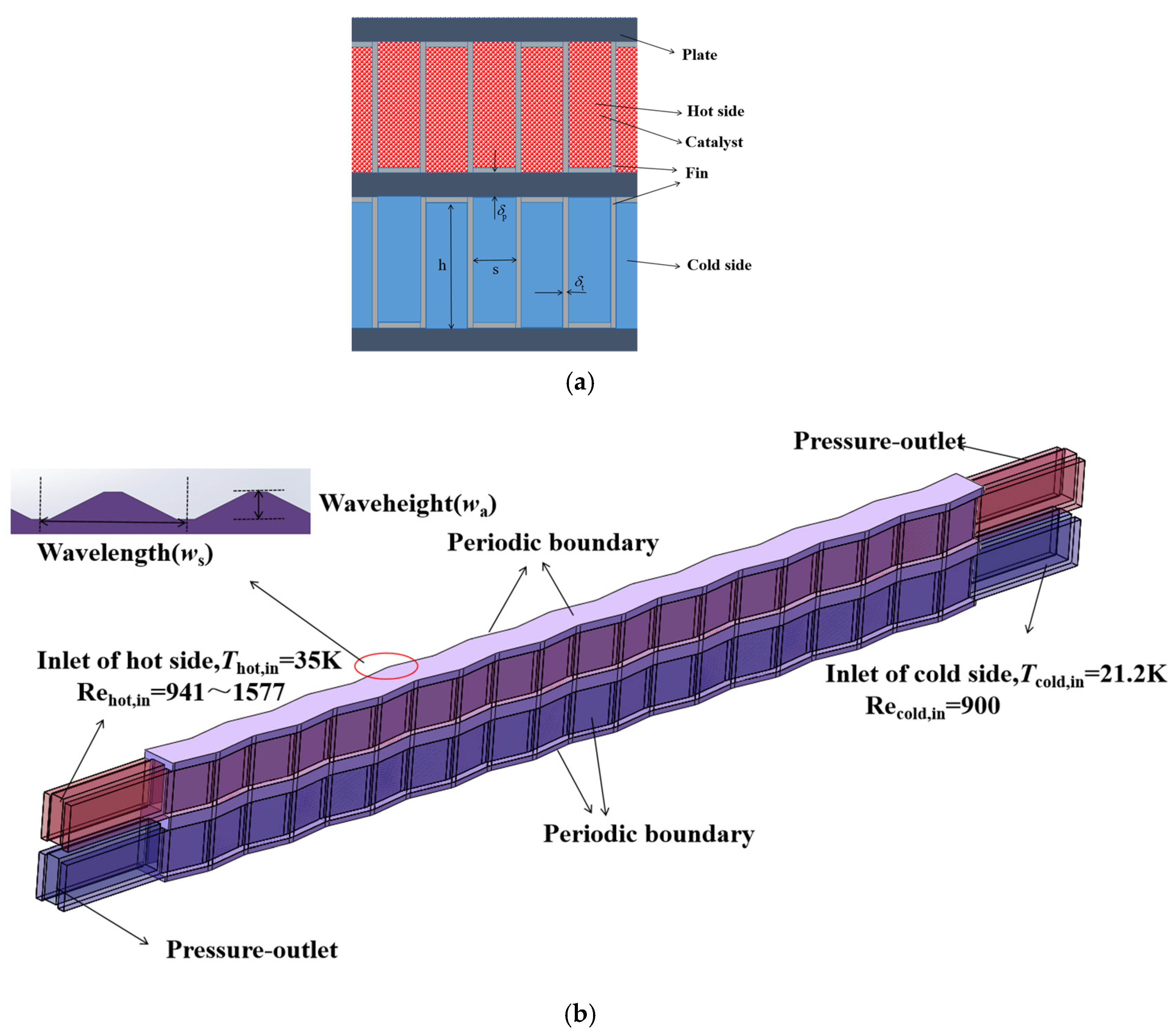
In this study, a two-stream CFHE capable of continuous ortho–para hydrogen conversion—an essential step in hydrogen liquefaction—was developed. On the cold side, liquid hydrogen undergoes only flow and heat transfer through the exchanger, while on the hot side, gaseous hydrogen passes through channels packed with 30–50 mesh iron oxide catalyst to facilitate ortho–para conversion. This particle size range has been widely adopted in both experimental studies and industrial-oriented designs for continuous ortho–para hydrogen conversion. The inlet temperatures for the cold and hot streams are 21.2 K and 35 K, respectively. Both outlets are configured as pressure outlets. The heat exchanger utilizes identical fin structures with a height (h) of 8.95 mm, spacing (s) of 3 mm, thickness (δt) of 0.55 mm, and a total length (L) of 0.2 m. The partition plate thickness δp is set to 2 mm. The hot-side hydrogen flows at 0.19 MPa with Reynolds numbers between 941 and 1577. The cold-side liquid hydrogen flows at 3.1 MPa, as shown in Table 1. All geometric dimensions and operating conditions are selected to fall within typical design ranges for cryogenic plate-fin heat exchangers. As its temperature remains below the saturation temperature, it is treated entirely as a single-phase liquid without phase change. The cross-sectional view is shown in Figure 1a, and Figure 1b is the three-dimensional (3D) overall structural model.
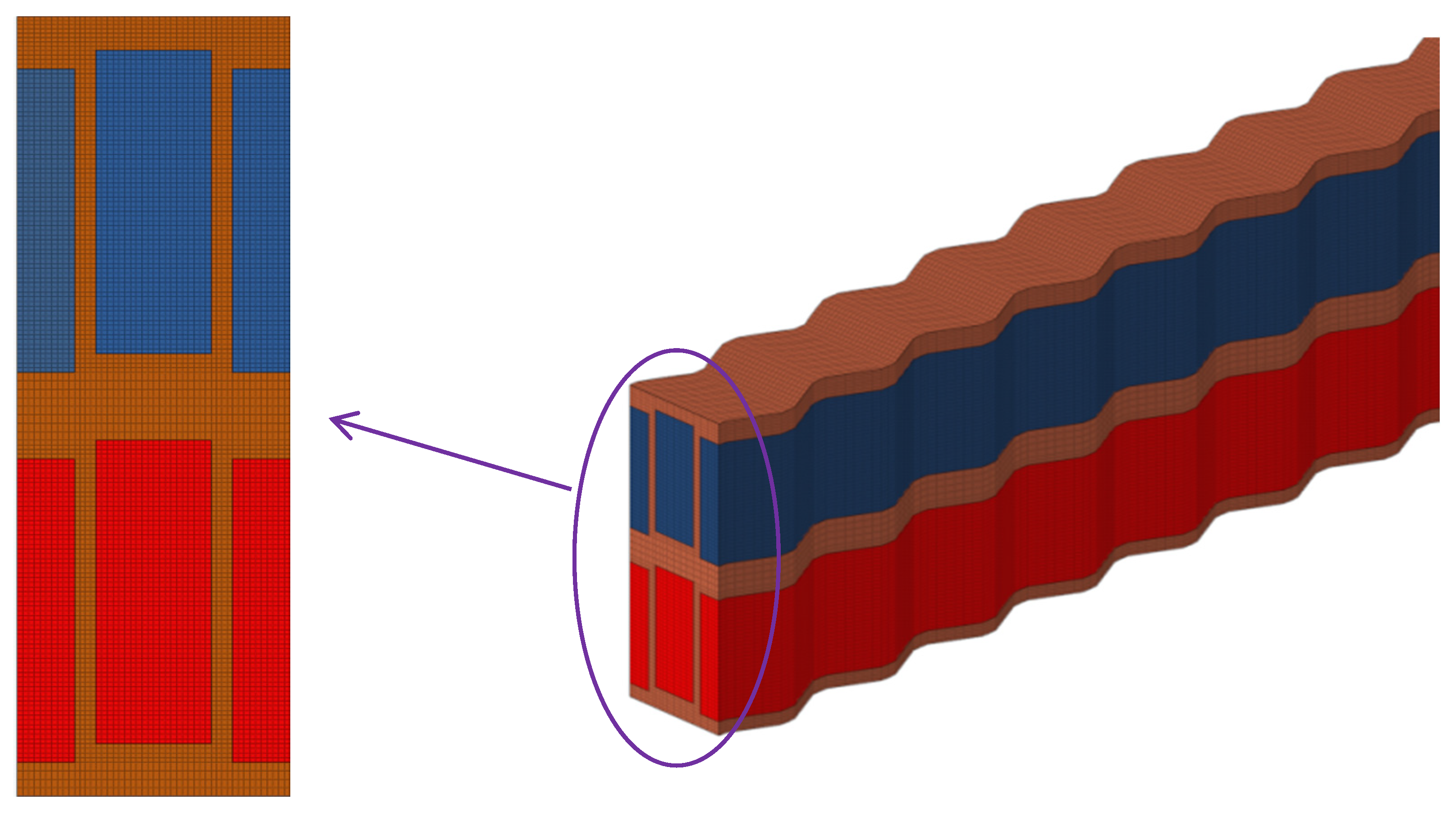
To accommodate the complex wavy geometry of the computational domain, the three-dimensional model was first constructed in SolidWorks and subsequently imported into HyperMesh for mesh generation. Considering the geometric complexity of the wavy channels and the requirement for numerical accuracy, a fully structured hexahedral mesh was employed throughout the computational domain to ensure high mesh quality, good numerical stability, and consistent topological connectivity.
During the meshing process, special attention was given to the near-wall regions, where steep velocity and temperature gradients are expected. Local mesh refinement was therefore applied along all fluid–solid interfaces to accurately resolve boundary-layer flow and heat transfer characteristics. A fully structured hexahedral mesh was generated using a sweep strategy, in which a high-quality two-dimensional cross-sectional mesh was first created and then extruded along the streamwise direction to form a well-aligned three-dimensional grid. This approach ensures smooth cell transition, strong topological consistency, and reduced numerical diffusion in the flow direction. The characteristic element size ranges from 0.06 mm to 0.31 mm, with finer cells concentrated near the wavy walls and interface regions to enhance gradient resolution while maintaining computational efficiency.
The mesh quality was systematically evaluated in ANSYS Fluent. The minimum orthogonal quality was found to be 0.824, while the maximum aspect ratio was limited to 2.95, both of which satisfy the recommended criteria for high-quality structured meshes [30]. These quality metrics indicate good geometric conformity and contribute to the robustness, convergence stability, and numerical accuracy of the simulations. The final mesh configuration is illustrated in Figure 2.

2.2. Physical Model

The numerical investigations were executed by employing the ANSYS® Fluent® engineering software as the primary computational solver. Adopting mathematical frameworks frequently utilized in prior research, the SST k–ω turbulence model was chosen for this study [31]. This model was further integrated with enhanced wall treatment techniques, which are essential to precisely resolve the flow behavior near solid surfaces. Regarding the numerical discretization, a second-order upwind scheme was implemented for every governing equation to maintain high solution accuracy. The iteration process was continued until the residuals for all equations declined below a strict convergence threshold of 1.0 × 10⁻⁶. To capture the variable thermophysical characteristics of hydrogen within a 20–40 K cryogenic environment, property data were retrieved from the NIST REFPROP database. These values were subsequently embedded into the Fluent environment through polynomial fitting methods, allowing for a robust and reliable representation of temperature-dependent physical behavior.
The physical model is developed to describe the key transport phenomena in the heat exchanger. To simplify the complex processes while retaining the essential physical characteristics, a set of reasonable assumptions is adopted as follows:
(1)
Initial volumetric fraction of para-H2 of the hot-side hydrogen stream is 25%, which changes continuously along the fin channels due to the catalytic effect of the packed catalyst.
(2)
A uniform distribution of catalyst particles is prescribed for the hot-side fin channels, characterized by homogeneous particle sizing and a stable porosity profile. The detailed structural and performance parameters of the catalyst layer are summarized in Table 2 [32].
(3)
The Ergun equation, within the framework of a porous media model, serves to simplify the complex flow and heat transport phenomena occurring on the hot side [33].
(4)
The flow and heat transfer of hydrogen in both the hot and cold fin channels are assumed to be steady-state. This assumption simplifies the model by focusing on key heat exchange factors, excluding transient effects and catalyst degradation, which are outside the scope of the steady-state analysis.
Under the above assumptions, the conservation equations of mass, momentum, and energy describe the hydrogen flow and heat transfer in both the hot and cold sides [34,35].
Mass conservation equation:
( ε ρ f Y i ) t + ( ε ρ f u Y i ) ( ε ρ f D m , i Y i ) = S m , i
S m , i = M i r i
( ε ρ f ) t + ( ε ρ f u ) = S m
S m = i = 1 n S m , i
Momentum conservation equation:
( ε ρ f ) t + ( ρ f u u ) = p + τ + ρ f g + S d
S d = ( μ u α + 1 2 C 1 ρ f u u )
α = d p 2 ε 3 150 ( 1 ε ) 2
C 1 = 3.5 ( 1 ε ) d p ε 3
Energy conservation equation:
t ε ρ f E f + ( 1 ε ) ρ s E s + u ( ε ρ f E f ) = ( λ e T ) + S e
S e = M r Δ H
Equations (9) and (10) are based on the Local Thermal Equilibrium (LTE) assumption, which is justified by the high specific surface area and efficient phase heat exchange in catalyst-filled fins. Under this framework, the heat of reaction is treated as a volumetric source term released into the unified fluid-solid medium, with effective thermal conductivity accounting for the combined heat transport.
The SST k–ω turbulence model was employed to capture the flow characteristics inside the CFHE. The SST k–ω model can accurately resolve boundary layer features in the near-wall region while maintaining good numerical stability in the free-stream region. Compared with other turbulence models, the SST k–ω model demonstrates superior performance in handling complex flows with strong streamline curvature, flow separation, and adverse pressure gradients—phenomena that are widely encountered in the wavy-fin channels of CFHE [31].
The transport equation for the turbulent kinetic energy k is given by:
( ρ ω ) t + ( ρ u k ) = [ ( μ + μ t σ k ) k ] + P k β ρ k ω
The transport equation for the turbulent frequency, ω, is given by:
( ρ ω ) t + ( ρ u ω ) = [ ( μ + μ t σ ω ) ω ] + G ω β ρ ω 2 + D ω
In the above equations, ρf is the gas density (kg/m3); ε is the porosity; Yi is the mass fraction of species i; t is time; Sm,i is the mass source term (kg/(m3·s)); Dm,i is the species diffusion coefficient (m2/s); Mi is the molar mass (kg/mol); p is pressure (Pa); Sm is the total mass source term (kg/(m3·s)); u is velocity (m/s); g is acceleration due to body forces (m/s2); Sd is the momentum source term (kg/(m2·s2)); μ is dynamic viscosity (Pa·s); α is the permeability (m2); C1 is the inertial resistance coefficient (1/m); dp is the catalyst particle diameter (m); Ef is the energy contained in the fluid (J/kg); ρs is the catalyst density (kg/m3); Es is the energy contained in the solid (J/kg); λe is the effective thermal conductivity of the bed (W/(m·K)); T is temperature (K); Se is the energy source term (W/m3); M is the molar mass, kg/mol; ΔH is the heat of reaction for the ortho–para conversion (J/kg); k is the turbulent kinetic energy (m2/s2); ω is the turbulent frequency (1/s); μt is the turbulent viscosity (Pa·s); Pk is the production of turbulent kinetic energy due to mean velocity gradients (W/m3); Gω is the source term of turbulent kinetic energy induced by buoyancy or vorticity effects (W/m3); σk and σω are empirical diffusion coefficients (dimensionless); Dω is the cross-diffusion term (1/s2); β and β* are turbulence model constants, β = 0.075, β* = 0.09; τ is the stress tensor (Pa).
The para-hydrogen volumetric fraction at equilibrium is a function of stream temperature and is expressed using the temperature-dependent correlation reported in [29,33].
y H 2 , p e q = 0.1 e x p 5.313 ( T / T c ) + 0.1 1 2.5 1 0 4 T T c 3 + 3 . 7 1 0 3 T T c 2 2 . 0 1 0 3 T T c 0 . 0027
r = K l n y H 2 , p y H 2 , p e q n 1 y H 2 , p e q 1 y H 2 , p
where r represents the ortho–para hydrogen conversion rate kmol/(m3·s); y H 2 , p denotes the para-hydrogen mole fraction on the hot side; K is the reaction rate constant derived from the Elovich kinetic model kmol (m3·s) [35]; y H 2 , p e q is the equilibrium mole fraction of para-hydrogen, and Tc is the critical temperature of hydrogen, taken as 32.937 K.

2.3. Performance Evaluation Parameters

For the wavy fin channel, the hydraulic diameter Dh is defined to account for the actual flow cross-sectional area and wetted perimeter of the wavy geometry, as commonly adopted in previous studies [36,37]. It is expressed as:
D h = 2 ( h δ t ) ( s δ t ) h + s 2 δ t
where h and s denote the channel height and width, respectively, and δt represents the corrugation fin thickness. This definition reflects the reduction in the effective flow area due to the presence of wavy fins and provides a more realistic characteristic length scale for evaluating Reynolds number, friction factor, and heat transfer performance in wavy fin channels.
The dimensionless criteria required for the result analysis include the Reynolds number (Re), the Nusselt number (Nu), and the Prandtl number (Pr), which are defined as follows:
Re = ρ f u D h μ
Nu = α h D h λ f
Pr = μ c p , f λ f
where αh is the convective heat transfer coefficient on the fluid side W/(m2·K); cp,f is the specific heat at constant pressure J/(kg·K); λf is the thermal conductivity W/(m·K).
For plate-fin heat exchangers, the coburn j-factor and the Fanning friction factor f are commonly employed to characterize the flow and heat transfer performance [34,35].
j = Nu RePr 1 / 3
f = ρ f D h Δ p 2 G A 2 l
where f is the Fanning friction factor, Δp is the pressure drop over the flow length L, Dh is the hydraulic diameter, ρf is the fluid density, and u is the average velocity based on the minimum flow area A. The mass flux GA represents the mass flow rate per unit flow area, with units of kg/(m2·s).
The heat transfer enhancement factor Φ comprehensively considers the relationship between the heat exchanger’s thermal efficiency and flow resistance and is usually adopted to evaluate the comprehensive performance of the heat exchanger. Considering the purpose of the ortho–para hydrogen conversion for the heat exchanger in this study. An integrated evaluation index, e, was defined to achieve efficient ortho–para hydrogen conversion while maintaining high heat transfer performance and low flow resistance.
Φ = j f 1 / 3
e = Φ y H 2 , p out
where y H 2 , p out represents the para-hydrogen concentration at the outlet.

2.4. Grid Independence Tests

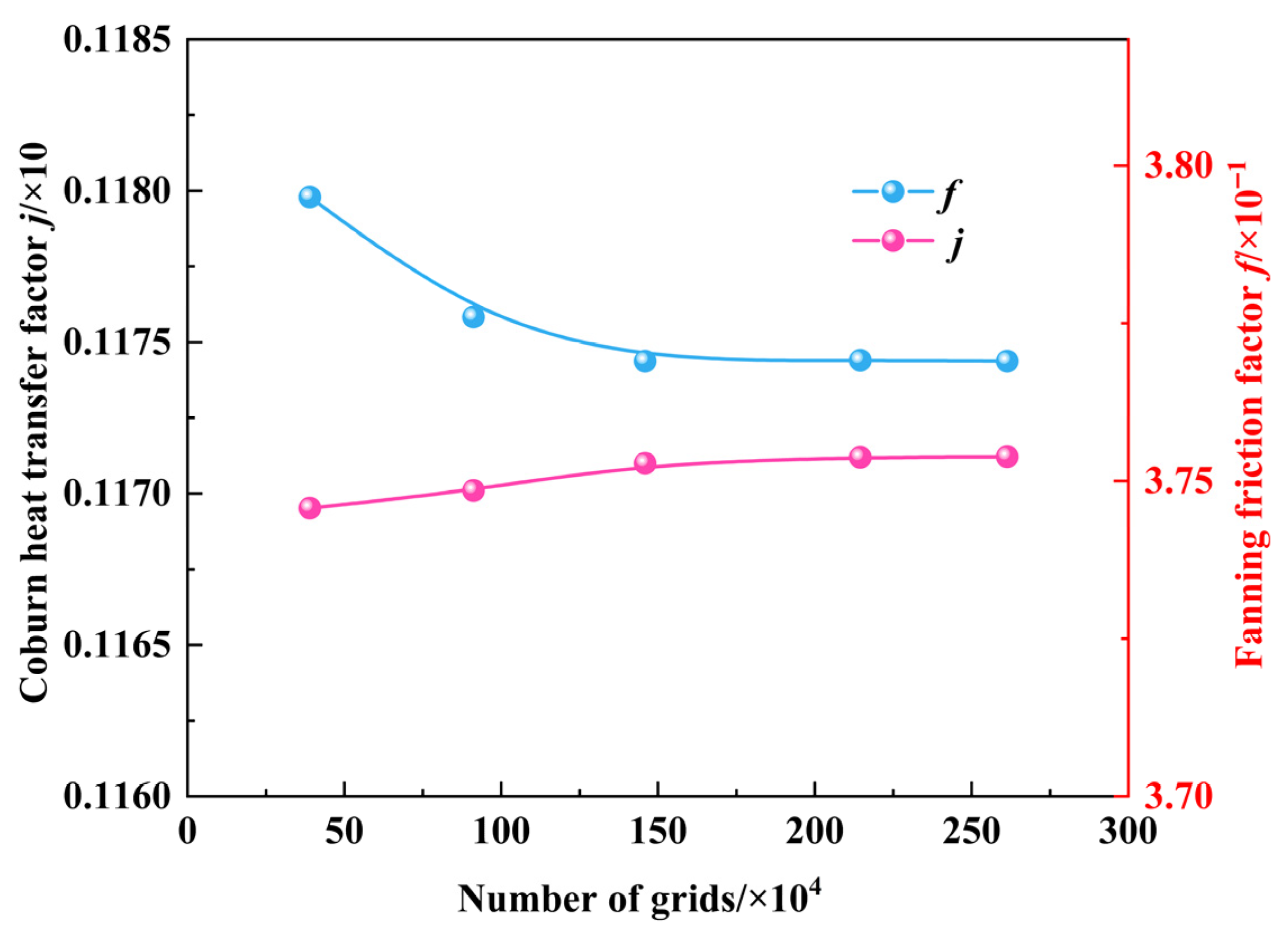
In this study, different grid sizes were compared for each geometrical model to perform grid independence tests. Taking the CFHE model with fin structure of wa = 1 mm, ws = 20 mm, and length L = 200 mm as an example, 5 grid sizes were compared in the grid independence analysis, as shown in Figure 3. When the Reynolds number on the hot side was Re = 941, the calculated j-factor and f-factor gradually stabilized with increasing grid number. When the total number of grid cells reached 1,459,200, the variations in both the j-factor and f-factor relative to finer grids were less than 0.5%, indicating that grid independence had essentially been achieved. The final CFD model of the CFHE consisted of 1,459,200 cells in total, with 960,000 cells in the fluid region and 499,200 cells in the solid region. This grid configuration not only captures the complex flow and heat transfer characteristics within the heat exchanger effectively, but also balances computational cost, ensuring a reasonable trade-off between accuracy and efficiency is adopted.

2.5. Model Validation

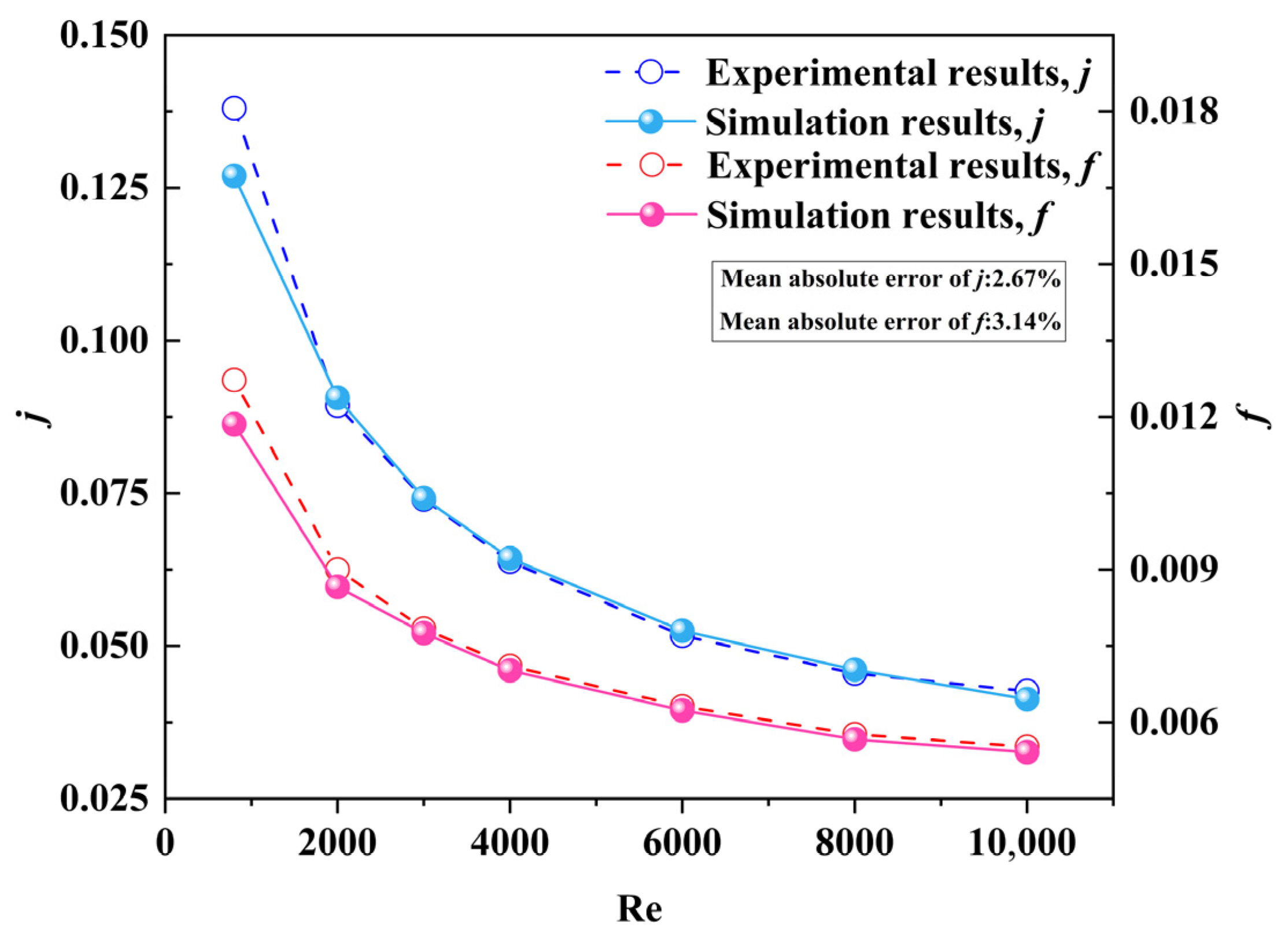
To ensure the validity of the numerical results, the predictions were compared with the experimental benchmarks of Kays and London [36,38], as shown in Figure 4. Upon considering the variable thermophysical properties, the calculated j- and f-factors show excellent agreement with the measurements. While the maximum absolute errors for these two parameters are restricted to 7.93% and 8.63%, the average discrepancies are even lower, at 2.79% and 3.47%. This consistency confirms that the present model accurately reflects the actual flow and thermal performance. The marginal differences observed are primarily linked to idealized modeling, which excludes the impact of fin surface roughness and assembly induced welding deviations.
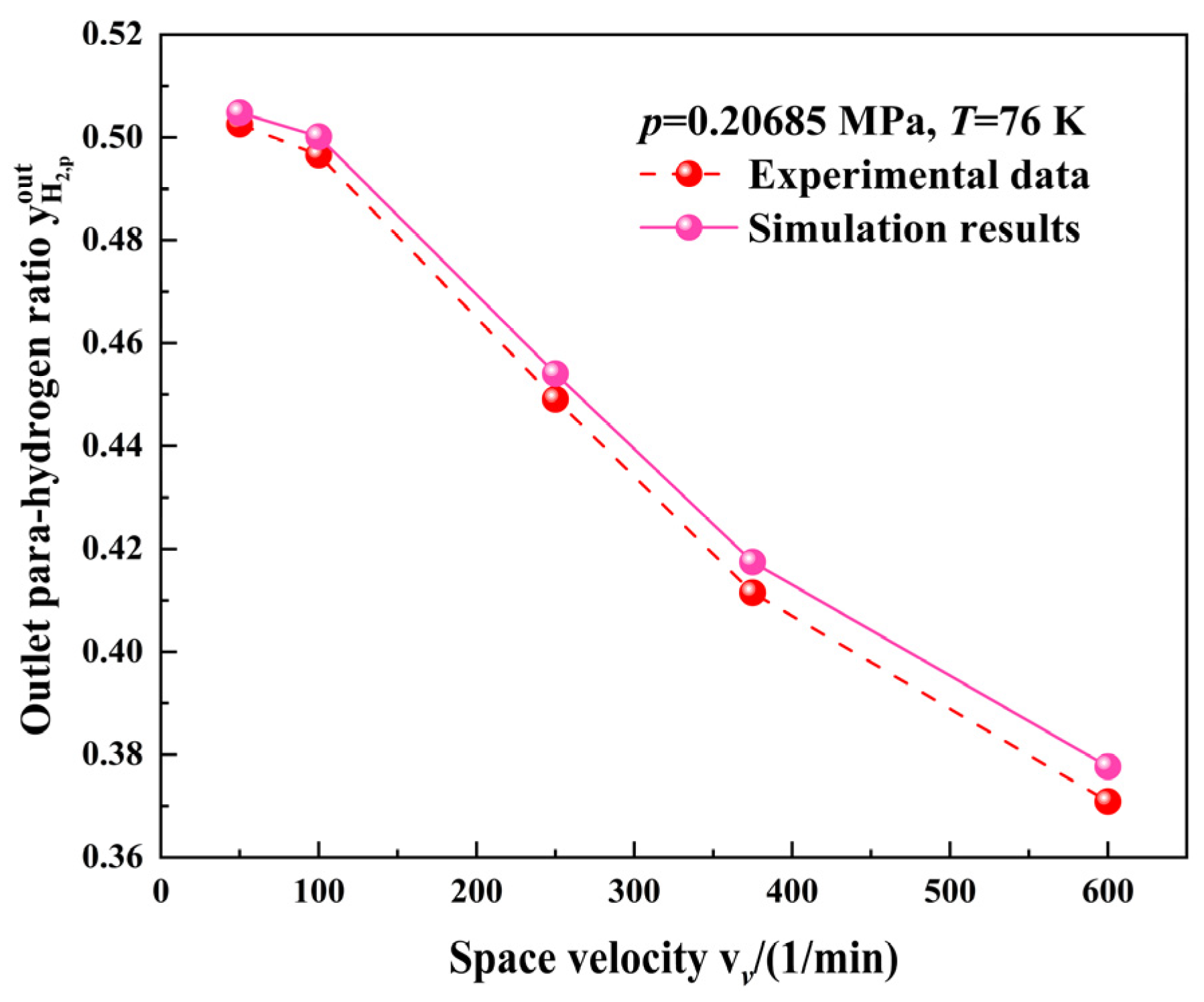
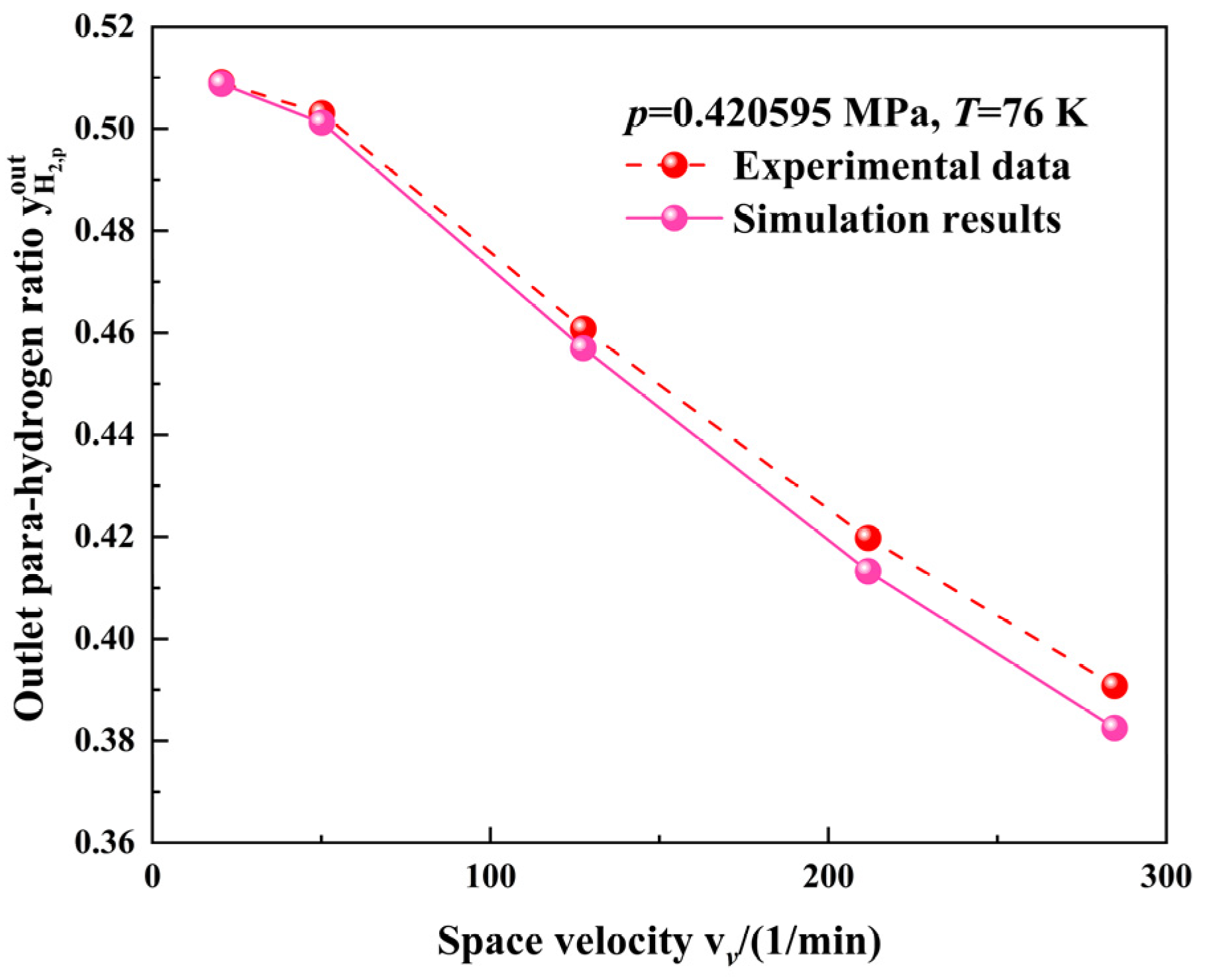
To evaluate the credibility of current kinetic frameworks for ortho–para hydrogen transformation, the Elovich model [33,39] was utilized in this research. Figure 5 and Figure 6 illustrate a comparative analysis between numerical results generated by the Elovich approach and the empirical data documented by Hutchinson et al. [40,41]. The test configuration involved a copper conduit with a length of 127 mm, a 6.35 mm external diameter, and a 3.175 mm internal diameter, containing 1.12 g of ferric oxide hydrate gel catalyst. This reactor was immersed in a liquid nitrogen bath to ensure a stable thermal environment of 76 K. At a pressure of 0.20685 MPa, the mean relative error was 4.14%, while at 0.420595 MPa, the observed deviation rose marginally to 4.71%. Collectively, the model demonstrates excellent predictive precision, with simulated outcomes showing high fidelity to experimental measurements. These results verify that the Elovich model effectively reflects the ortho–para hydrogen conversion kinetics, establishing a solid theoretical framework for designing and refining cryogenic hydrogen infrastructure.
The validation results indicate that the numerical model provides reliable predictions of the coupled heat transfer and ortho–para hydrogen conversion behavior. With this validated model, it becomes feasible to further explore the optimal design space. Therefore, the subsequent section presents the multi-objective optimization methodology employed to enhance the overall reactor performance.

3. Optimization Approach

In multi-objective optimization, genetic algorithms (GAs) typically combine multiple objective functions into a single objective function using methods such as weighted summation or normalization of evaluation functions, thereby converting the problem into a single-objective optimization task that can be solved using standard GAs. The first multi-objective genetic algorithm, called the Vector Evaluated Genetic Algorithm (VEGA), was proposed by Schaffer [42], and Srinivas and Deb [43] later introduced a non-dominated sorting-based approach known as the Non-dominated Sorting Genetic Algorithm.
GAs are global optimization methods based on natural selection and genetic mechanisms. They offer advantages such as a wide search range, strong resistance to local optima, and suitability for nonlinear and complex problems, making them particularly effective for problems with high-dimensional parameters, complex objective functions, or objectives that cannot be expressed explicitly. The structural parameters of CFHE significantly affect heat transfer performance and pressure drop, and their optimization typically involves multi-objective, nonlinear, and multi-peak characteristics, often relying on numerical simulations that are difficult to address using traditional optimization methods such as gradient-based or linear programming approaches. GAs do not depend on gradient information and can perform parallel searches over a broad parameter space. Through selection, crossover, and mutation operations, GAs efficiently explore the optimal solutions, identifying the most compact structural configuration while maintaining high heat transfer performance. Therefore, for this type of complex structural optimization problem, genetic algorithms are more suitable than other methods and represent a reasonable and efficient choice.

3.1. Design Variables

The corrugation parameters (including wave height wa and wave length ws), Reynolds number Re and heat exchanger length L have significant effects on the heat transfer performance and ortho–para hydrogen conversion efficiency of the exchanger. Therefore, in the optimization design of the CFHE, wa, ws, Re, and L are selected as the design variables, denoted as the design variable vector X:
X = w a , w s , L , R e

3.2. Constraints

To ensure system safety and effective reaction performance, the following constraints should be satisfied during the optimization process:
y H 2 , p w a , w s , L , R e 0.931 T out w a , w s , L , R e 23   K
This constraint ensures that the para-hydrogen content in the outlet hydrogen reaches 95% of its equilibrium value at the corresponding temperature (at 23 K, y H 2 , p e q ≈ 0.98), thereby approaching the thermodynamic limit of conversion. This maximizes reaction efficiency and minimizes the impact of unconverted ortho-hydrogen on subsequent system processes. The outlet temperature of the hot side Tout flow should be higher than 23 K. If the temperature falls below 23 K, hydrogen may be liquefied, and liquid hydrogen cannot effectively diffuse on the catalyst surface, resulting in reduced catalyst activity or even deactivation [44,45].

3.3. Objective Function

To enhance the overall performance of the heat exchanger structure, a multi-objective optimization problem is formulated with the design variables being the wave height wa, wave length ws, heat exchanger length L and Reynolds number Re. The objective function integrates thermal performance, flow resistance, ortho–para hydrogen conversion efficiency, and temperature drop, and is defined by Equation (25). The objective of this function is to maximize the comprehensive performance index e (wa, ws, L, Re) during the optimization of the heat exchanger structural parameters e.
max w a , w s , L e w a , w s , L , R e
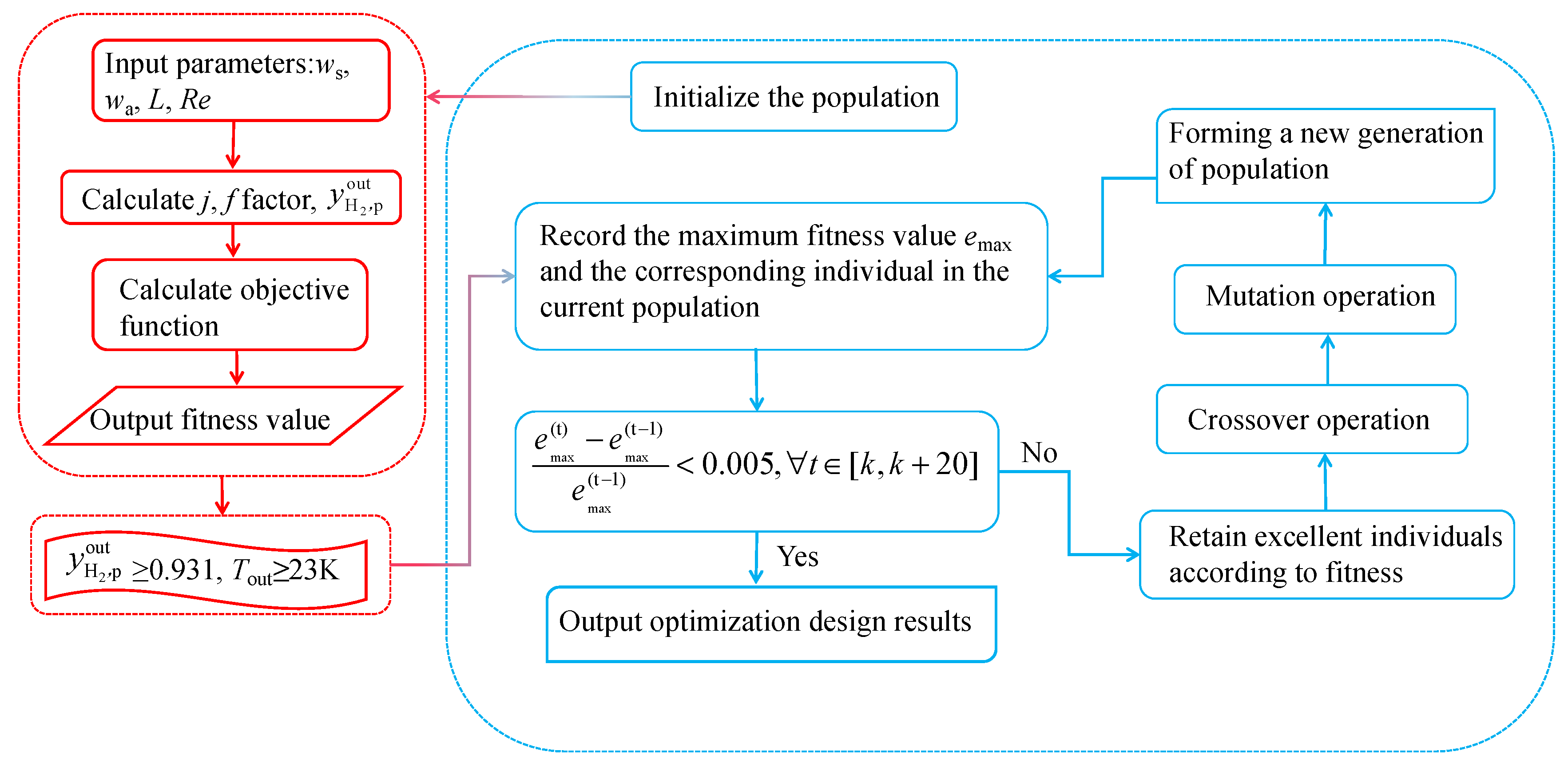
A hierarchical multi-objective optimization strategy based on the Genetic Algorithm (GA) was employed to systematically optimize the fin structure parameter of the heat exchanger, taking into account both performance and structural compactness. As illustrated in Figure 7, the optimization process begins by defining the design variable ranges for wave height wa, wave length ws, length L, and Re according to the design requirements, followed by initializing the population to cover the design space. The objective function e is then calculated for each individual in the population to serve as the fitness indicator for selection.
In this study, a genetic algorithm (GA) was employed to optimize the structural parameters of the CFHE, and the overall procedure is illustrated in Figure 7. First, the design parameters, including ws, wa, L, and Re, were defined. Based on these inputs, the heat transfer j-factor, f-factor, para-hydrogen mole fraction at the y H 2 , p out , and Tout were calculated. The objective function was then constructed, and the fitness value was evaluated under the constraints y H 2 , p out ≥ 0.931 and Tout ≥ 23 K, ensuring that the optimized results satisfied both thermodynamic performance and ortho–para hydrogen conversion requirements. Subsequently, the GA was initialized, and in each generation the maximum fitness value emax and the corresponding individual were recorded. If the relative change rate of the maximum fitness value remained greater than 0.005 for 20 consecutive generations, the algorithm was considered unconverged, and excellent individuals were retained before crossover and mutation operations were applied to form a new population. The new population was then re-evaluated, and the convergence condition was tested again. This iterative process continued until the relative change rate of the maximum fitness value was less than 0.005 for 20 consecutive generations, at which point the algorithm was regarded as converged and the optimal design results were obtained. Based on the repeated cycle of evaluation–judgment–selection–crossover-mutation–re-evaluation, a balance between global search and local convergence was ensured, leading to reliable and efficient optimization of the exchanger design parameters under the imposed constraints.

4. Results and Discussion

4.1. Parameter Effects

4.1.1. Effects of Wave Length ws

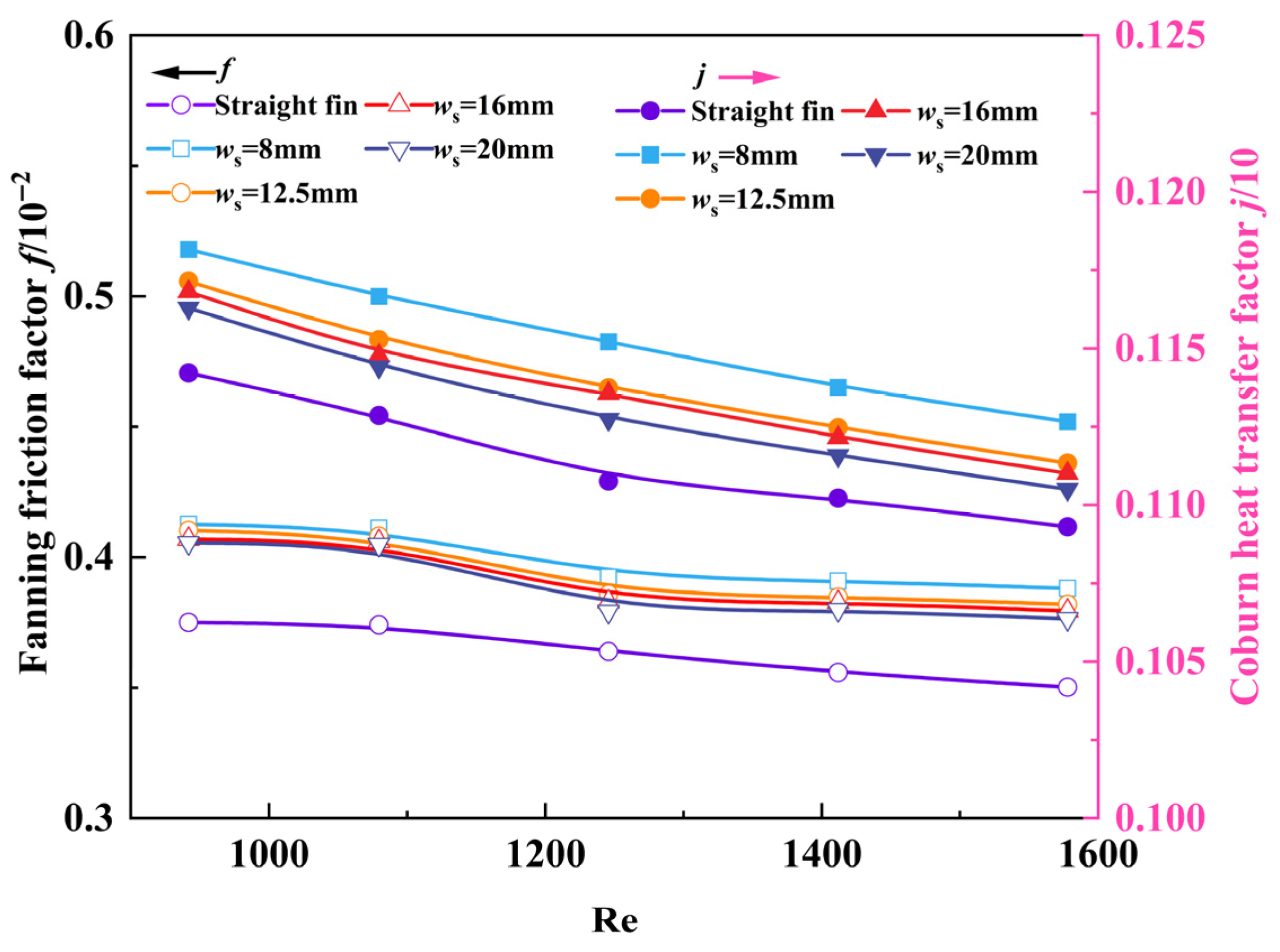
As shown in Figure 8, under constant operating conditions with a wave height of 1 mm, the effect of wave length (varying from 8 mm to 20 mm) on the heat transfer performance and ortho–para hydrogen catalytic conversion in the CFHE was investigated. The results indicate that wavy fins exhibit enhanced heat transfer and flow resistance performance compared to a straight-fin heat exchanger (SFHE). For a wave length of 8 mm, the j-factor of the wavy fin is approximately 4.01% higher than that of a straight fin. As the wave length increases, the j-factor gradually decreases, with an average reduction of 1.79% at Re = 1245 and an overall reduction of about 2.15%, indicating that longer wave lengths weaken the heat transfer enhancement effect. The f-factor is more sensitive to the change in the wave length. With the same Reynolds number, the f-factor gradually decreases with wave length, reflecting that longer waves reduce the number of disturbance structures within the same channel length, weaken boundary layer disruption, and lower the frequency of flow regeneration, thereby decreasing convective heat transfer capability.
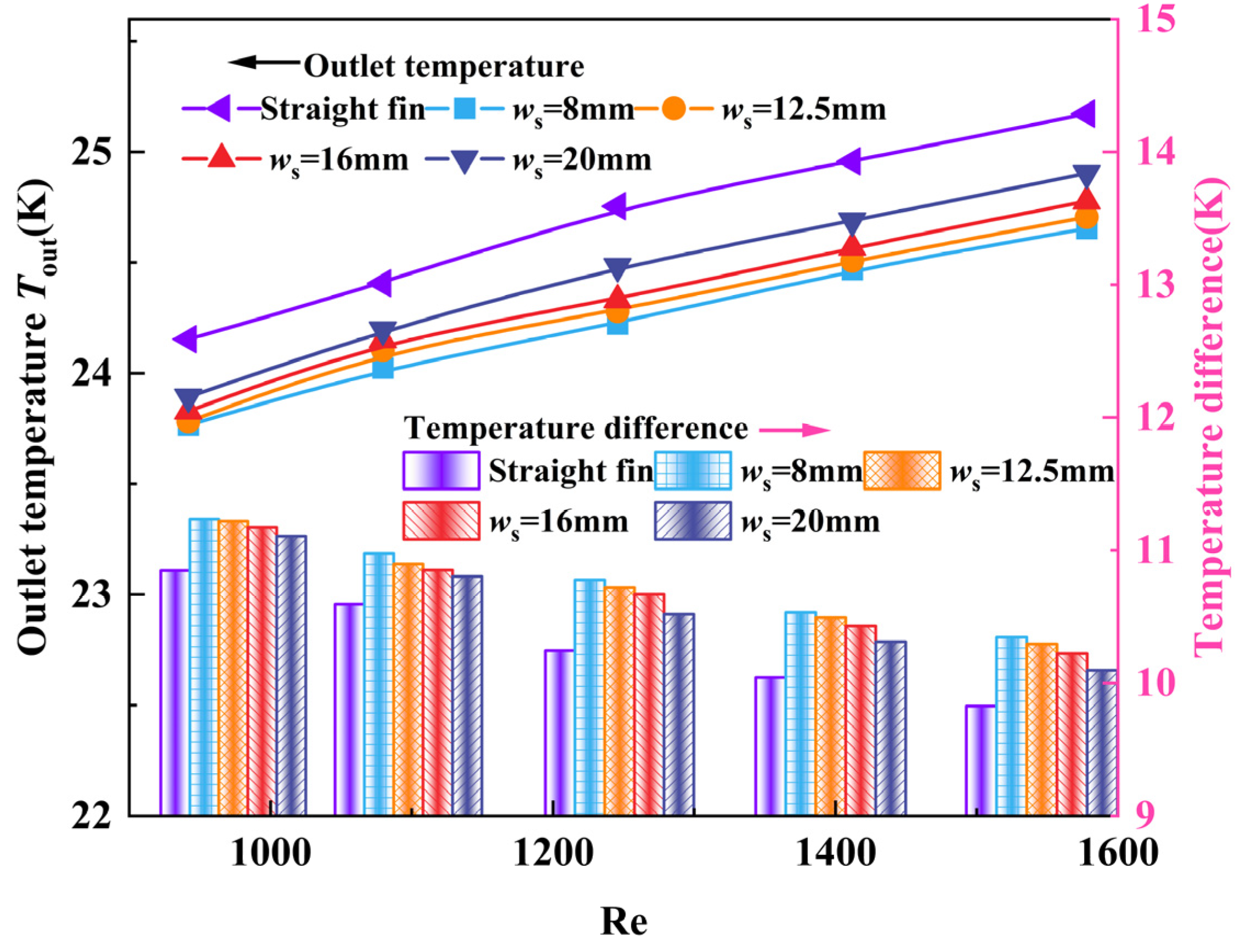
As shown in Figure 9, under the same Reynolds number, the outlet temperature of the CFHE is generally lower than that of the SFHE, indicating stronger cooling capacity and superior heat transfer performance. When the Reynolds number reaches 1577, the CFHE with a wavy fin structure (wa = 1 mm and ws = 8 mm) achieves a 2.1% reduction in outlet temperature compared with the SFHE. Regarding the fin geometry, the outlet temperature consistently increases with increasing wave length, with the maximum rise exceeding 1.00%, suggesting that an excessively long wave length restricts the cooling effect of the cold-side gas and reduces the overall heat transfer efficiency. At a Reynolds number of 941, shortening the wave length from 20 mm to 8 mm improves the temperature difference from approximately 2.4% to 3.6%. Although the overall enhancement remains limited, shorter wave lengths can still further strengthen the heat transfer performance.
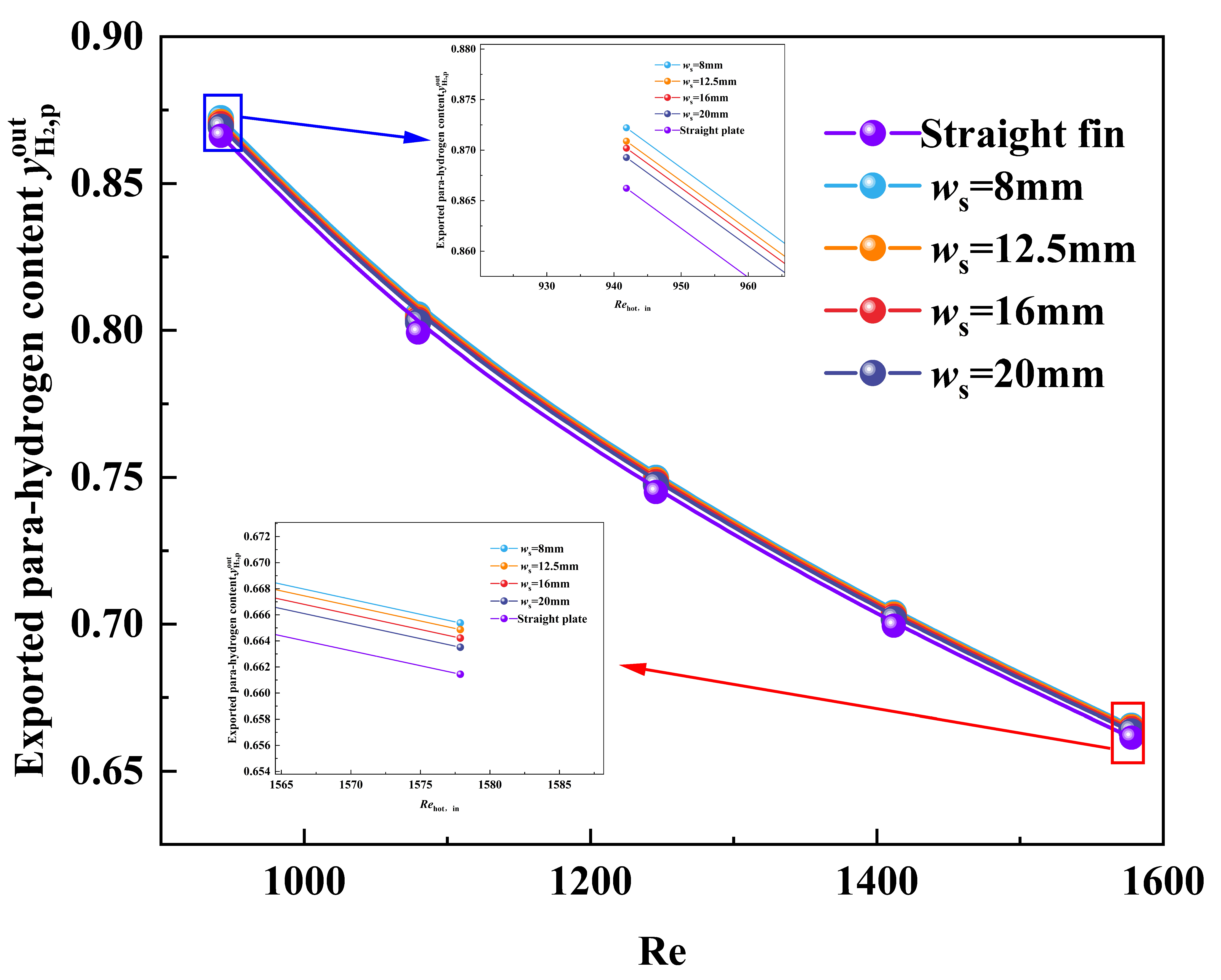
As shown in Figure 10, the variation in the outlet para-hydrogen mole fraction indicates that, under the same operating conditions, the CFHE outperforms the SFHE, demonstrating a higher thermodynamic promotion capability for ortho–para hydrogen conversion. At Re = 941, the outlet para-hydrogen concentration of the wavy fin with a wave length of 8 mm and a wave height of 1 mm increases by approximately 0.69% compared to the SFHE. Overall, the wavy structure exhibits superior para-hydrogen conversion, with enhancements typically in the range of 0.5–0.8%. For the wavy heat exchanger itself, increasing the wave length has a clear but minor effect on both heat transfer and conversion performance, with the para-hydrogen mole fraction remaining nearly constant (fluctuations below 0.2%).
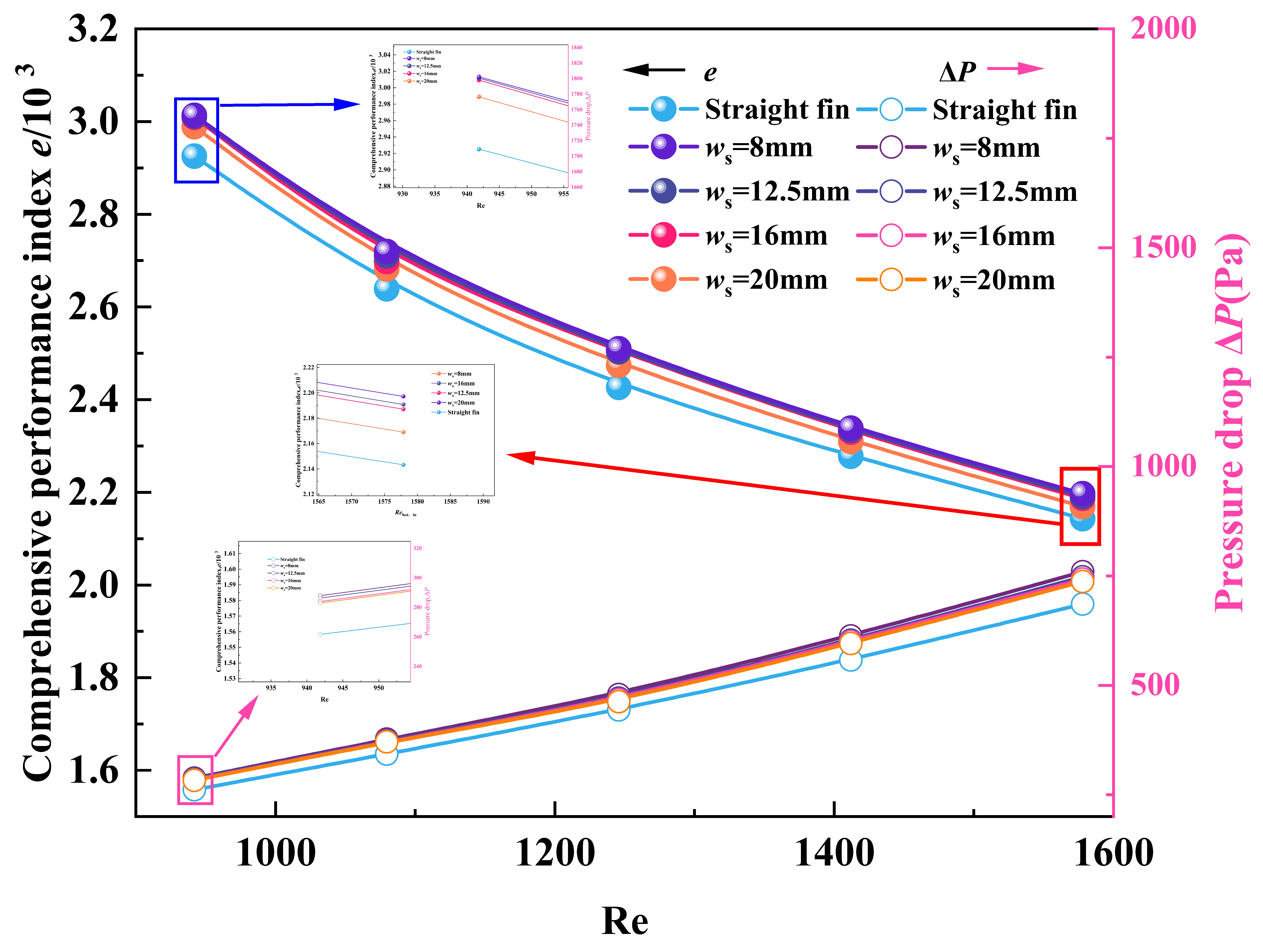
The CFHE exhibits a higher comprehensive performance index e than the SFHE across all Reynolds numbers, demonstrating superior coordination between heat transfer and flow resistance. The effect of varying wave lengths on performance was examined under a wave height of 1 mm and a fin length of 200 mm. As shown in Figure 11, decreasing the wave length leads to a maximum improvement of 1.2%, reflecting the boundary layer disruption and heat transfer enhancement caused by increased disturbance frequency. Shorter wave lengths enhance local heat transfer over a short distance and help increase the hydrogen concentration gradient at the catalyst surface, thereby promoting rapid ortho–para hydrogen conversion. Therefore, under a fixed wave height, adjusting the wave length provides some potential for optimizing the comprehensive performance, although the overall impact is relatively limited. At the same fin height, a comparison of the pressure drop between different fin wave lengths and the straight channel reveals that the pressure drop decreases with increasing wave length. At Re = 941, the pressure drop for a wave length of 8 mm is about 10% higher than that of the straight channel, whereas the increment reduces to less than 8% when the wave length increases to 20 mm. At a higher Reynolds number (e.g., Re = 1580), this trend becomes more pronounced: the pressure drop increment exceeds 10% for a wave length of 8 mm, while it decreases to approximately 7% for a wave length of 20 mm. These results indicate that, under a constant fin height, increasing the fin wave length can effectively mitigate the additional flow resistance induced by fin disturbance, thereby alleviating the pressure drop penalty to a certain extent.
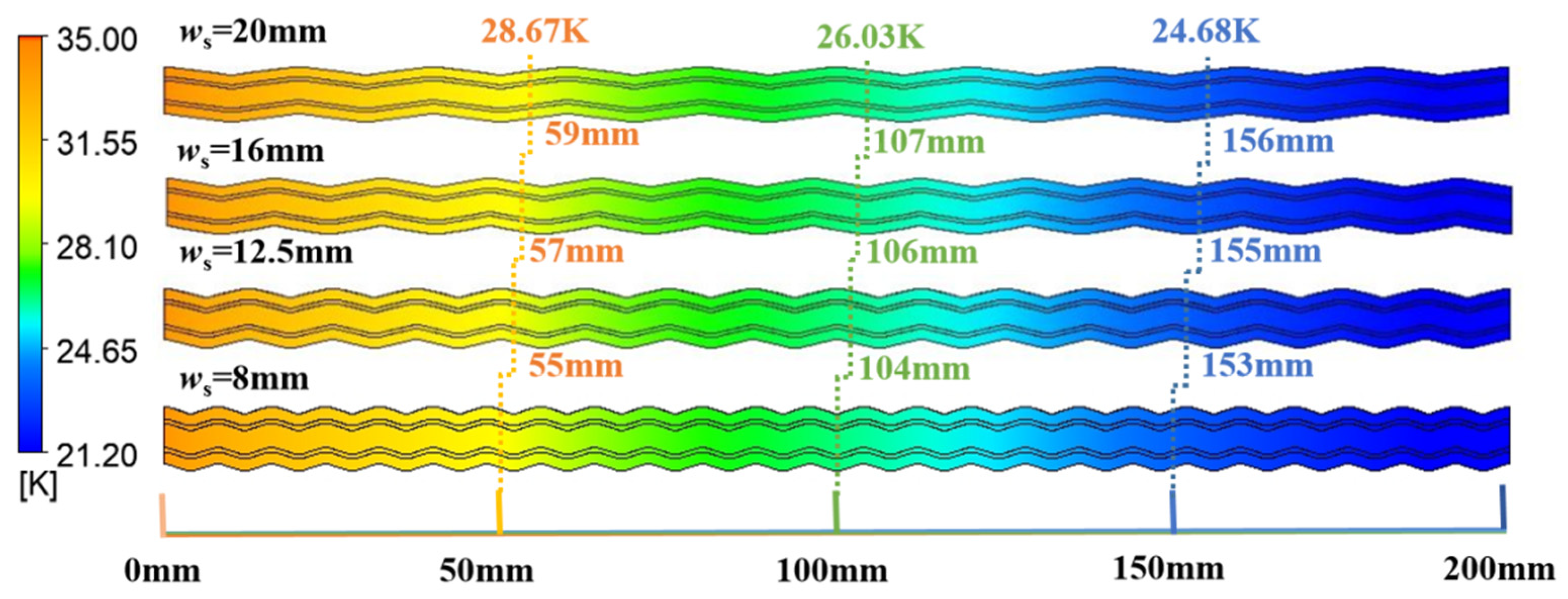
In terms of heat transfer performance, increasing the corrugation wave length slightly slows down the temperature decrease along the channel. This behavior can be attributed to the weakened flow disturbance and reduced secondary flow intensity induced by larger wave lengths, which lead to less frequent disruption of the thermal boundary layer. However, the overall impact on heat transfer effectiveness remains limited. As shown in Figure 12, the temperature field exhibits a stable distribution pattern, indicating that the dominant heat transfer mechanism is still governed by the overall convective process rather than by local geometric perturbations. Consequently, variations in corrugation wave length within the investigated range do not result in significant changes in the overall heat transfer performance.

4.1.2. Effects of Wave Height wa

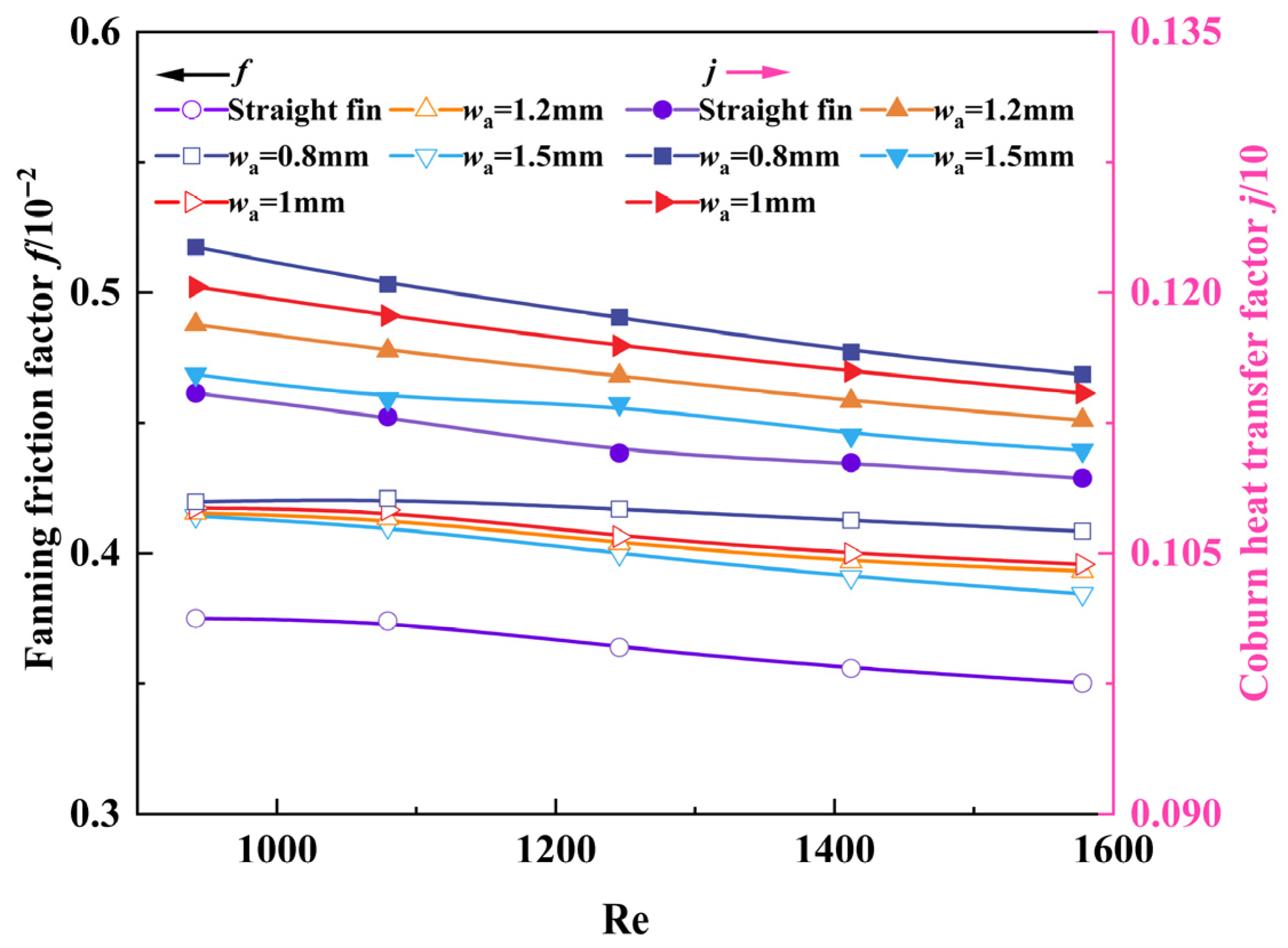
As shown in Figure 13, comparing the heat transfer and flow resistance performance between straight fins and wavy fins (wave length 8 mm, wave height varying from 0.8 mm to 1.5 mm), the results indicate that while wavy fins enhance heat transfer, they also lead to an increase in pressure drop. Regarding the friction f-factor, as the wave height increases from 0.8 mm to 1.5 mm, the f-factor shows an overall upward trend. Across all Reynolds numbers, the f-factor of the wavy fins is higher than that of straight fins, with an average increase of approximately 15–27%. This demonstrates that the flow disturbances induced by the wavy structure significantly increase frictional resistance. In terms of the j-factor, wavy fins also exhibit superior heat transfer capability. For example, at Re = 1245, the j-factor of the wavy fin with a wave height of 1.5 mm is increased by about 7.1% compared to the straight fin. Overall, as the wave height increases, the j-factor rises, with an average enhancement of approximately 5–10%, indicating that the wavy structure effectively disturbs the boundary layer and enhances convective heat transfer.
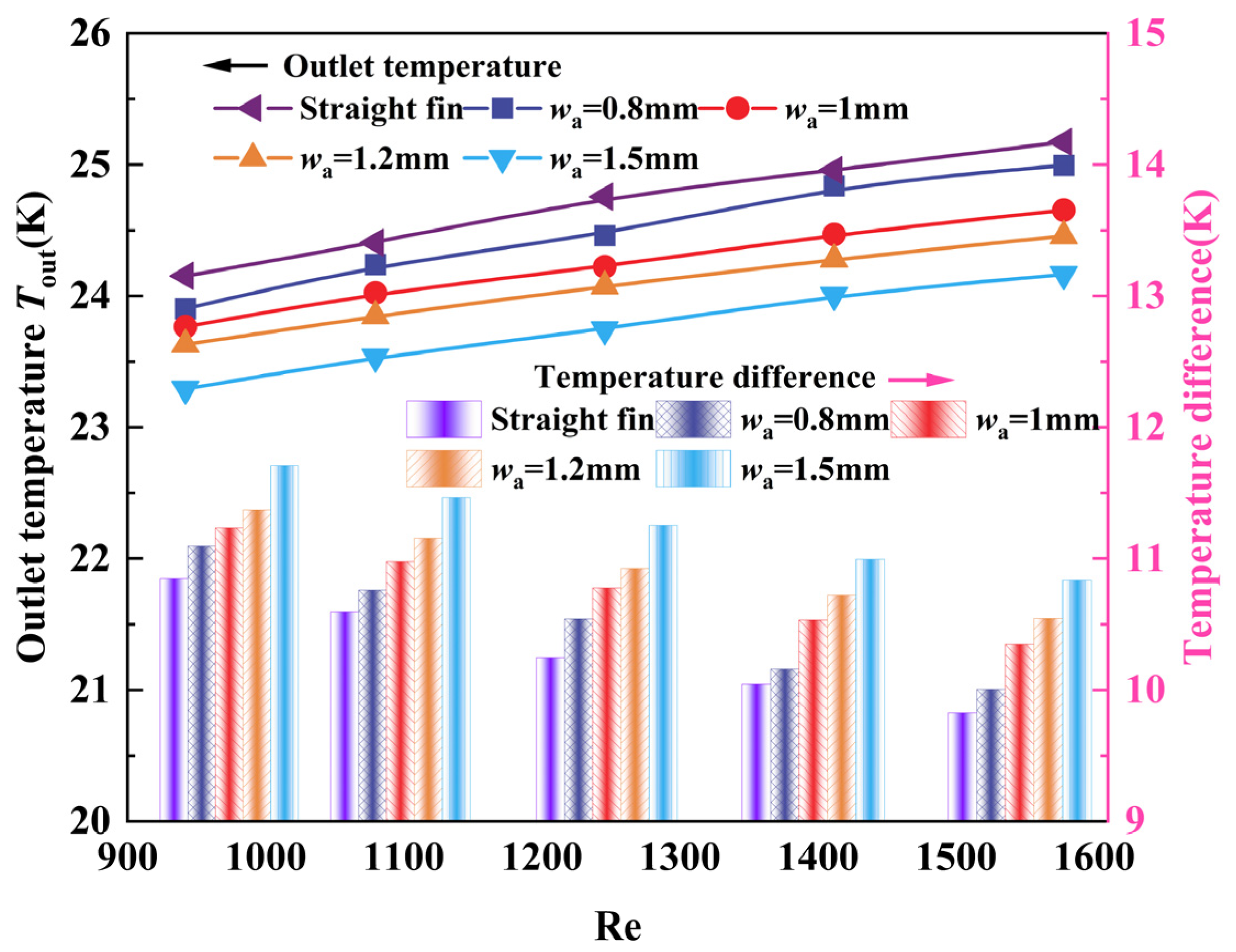
As shown in Figure 14, the CFHE consistently achieves lower outlet temperatures than the SFHE across all Reynolds numbers, demonstrating superior heat transfer performance. For example, at Re = 1245, the outlet temperature is reduced by up to 4.1% compared with the straight fin. The outlet temperature decreases further with increasing wave height, with the lowest value observed at 1.5 mm, corresponding to an overall reduction of about 2.91%. This indicates that taller corrugations at higher Reynolds numbers more effectively enhance heat dissipation, leading to lower exhaust temperatures and favorable conditions for ortho-to-para hydrogen conversion. Compared with straight channels, the wavy structure also increases the inlet–outlet temperature difference, with enhancements of approximately 7.9% and 10.3% at Re = 941 and 1577, respectively. However, the overall temperature difference decreases as Re increases, suggesting that insufficient residence time at high flow rates limits the enhancement effect. Thus, increasing wave height provides pronounced heat transfer benefits in the low-temperature region, whereas the improvement becomes relatively constrained under high Reynolds numbers.
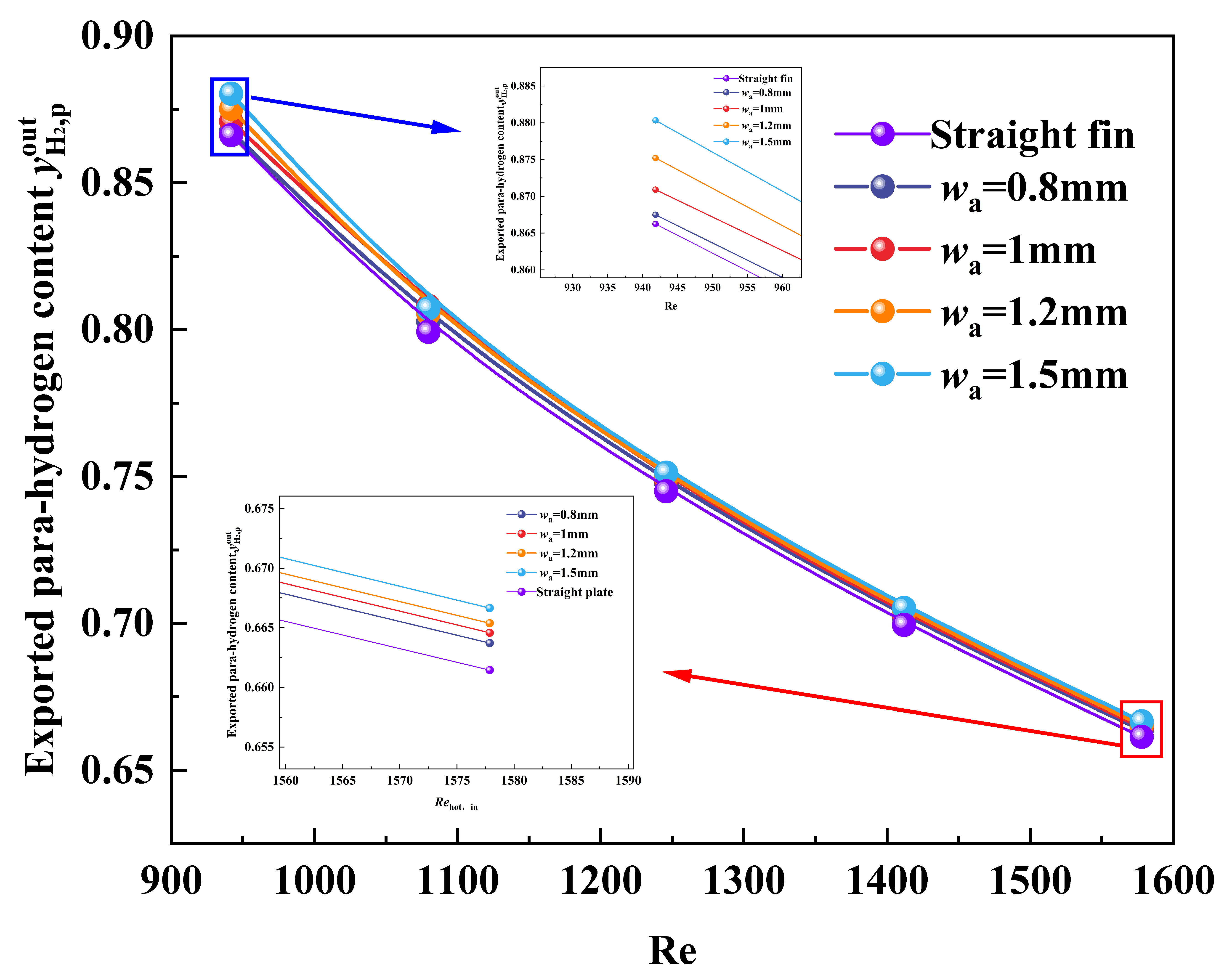
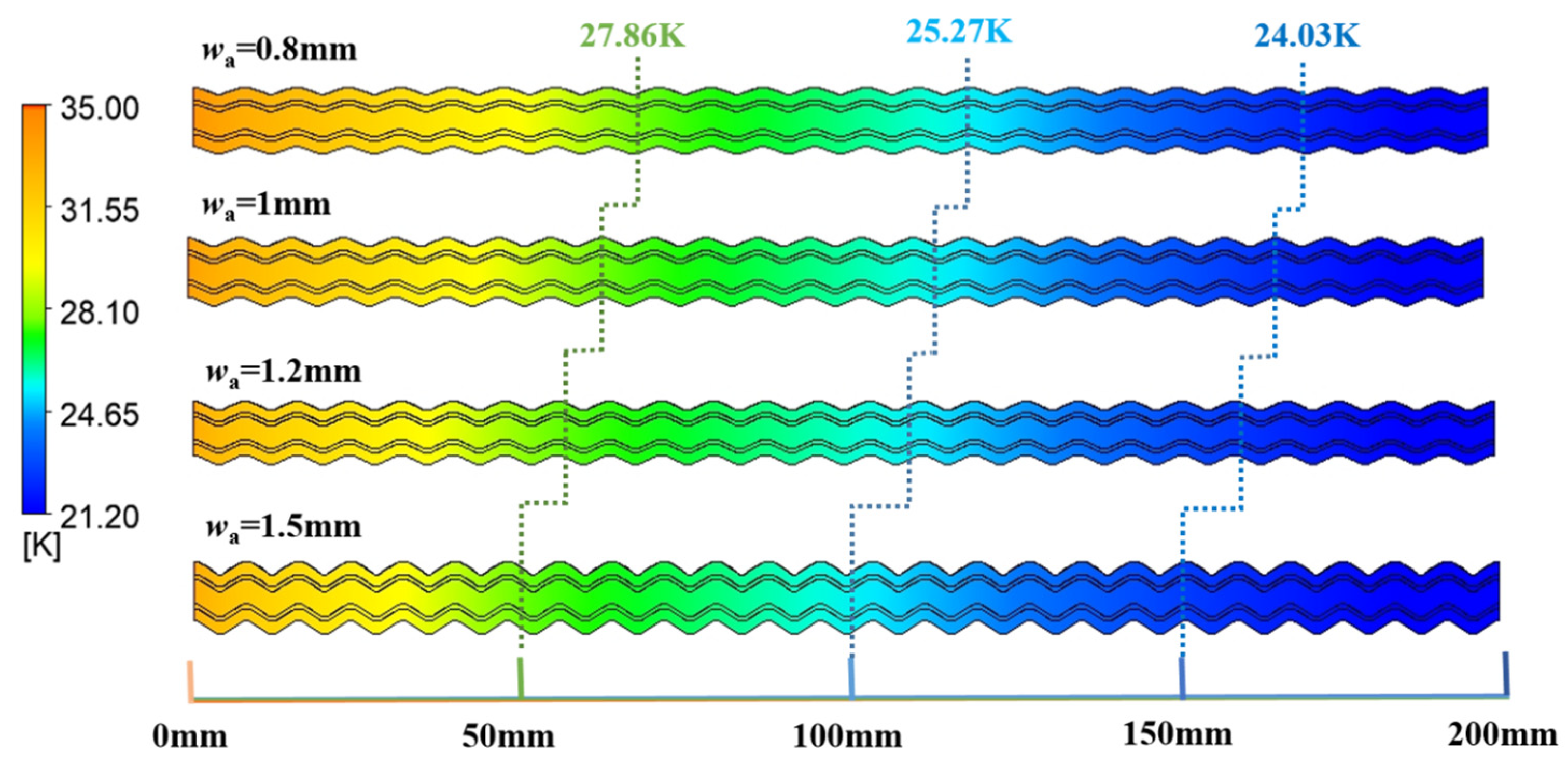
The CFHE demonstrates superior ortho-to-para hydrogen conversion performance compared to the SFHE across all Reynolds numbers. At Re = 941, the maximum increase in outlet para-hydrogen fraction for the wavy fin relative to the straight fin is 1.01%, and the outlet para-hydrogen content rises significantly with increasing wave height, reaching a maximum enhancement of approximately 1.95%. Under a fixed Reynolds number, the para-hydrogen mole fraction monotonically increases with wave height, and this increase exhibits a nonlinear acceleration trend as Re rises. From low to high Reynolds numbers, the para-hydrogen content increases by more than 2.62%, highlighting the significant reaction-promoting effect brought by enhanced heat transfer. This indicates that under conditions of greater flow disturbance and more effective heat transfer, the gas can achieve higher conversion rates within the same flow path, thereby improving the reaction utilization efficiency of the system, as shown in Figure 15.
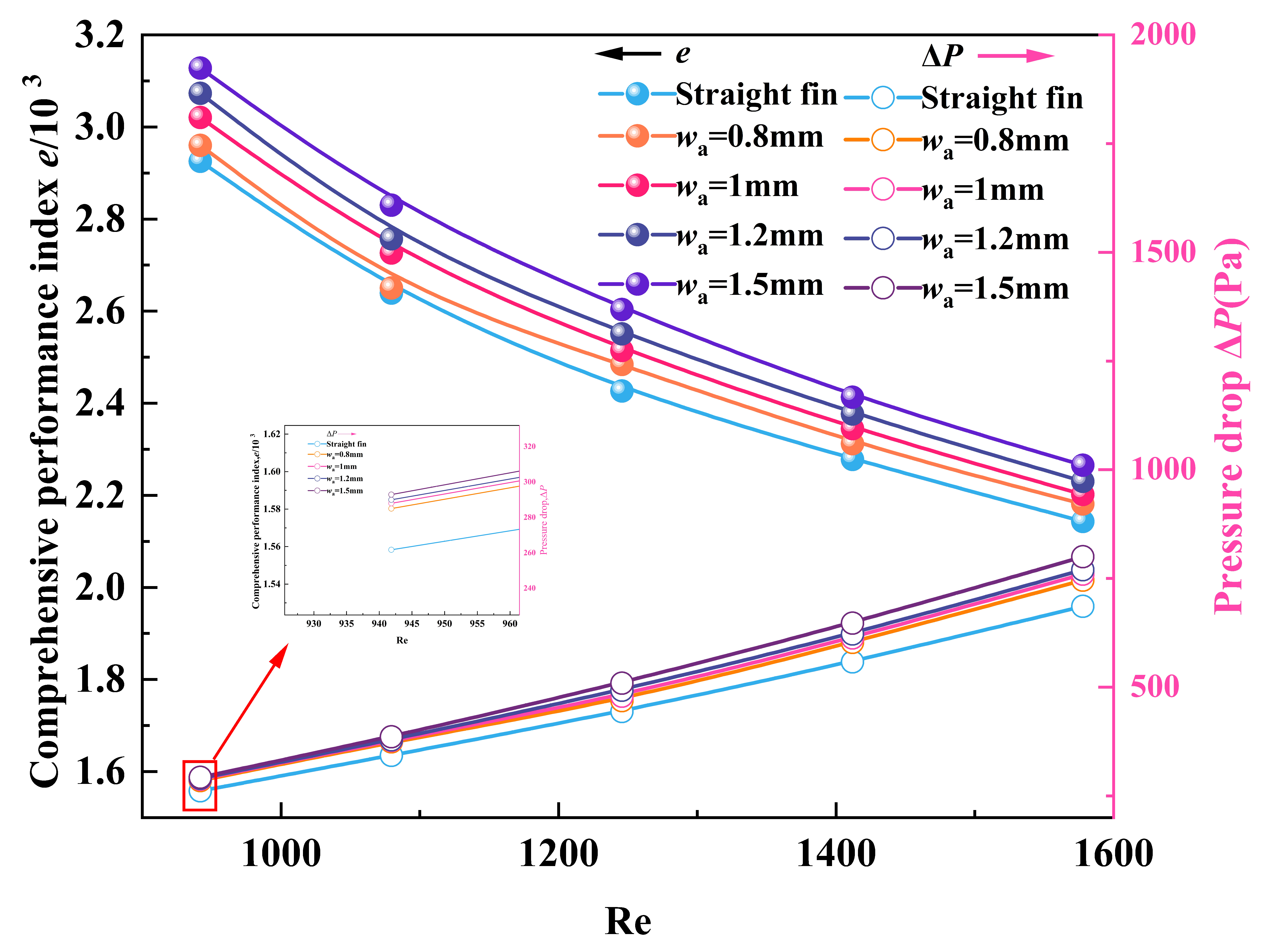
As shown in Figure 16, the CFHE exhibits overall performance superior to that of the SFHE under all operating conditions, and its performance further improves with increasing wave height. At Re = 941, the wavy fin with a wave height of 1.5 mm achieves a 6.9% enhancement in the evaluation index e compared with the straight fin, with the improvement in e ranging between 2.2% and 7%. This indicates that the wavy fin achieves a more favorable heat transfer–resistance balance, enhancing heat transfer capability at the cost of a moderate increase in flow resistance. When the wave height increases from 0.8 mm to 1.5 mm, the comprehensive performance is improved by 4.8%, which exceeds the influence of wave length variation. The increase in wave height not only enlarges the effective heat transfer area between fins but also significantly strengthens the flow disturbance, thereby promoting the synergistic enhancement of both heat transfer and catalytic conversion. A comparison of pressure drops between fins of different heights and the straight channel shows that the pressure drop increases monotonically with fin height. At Re = 940, the increment is relatively limited, at around 10%; however, at a higher Reynolds number (Re = 1580), the effect of fin height becomes more significant, with the pressure drop increase exceeding 15%. These results indicate that the influence of fin height on flow resistance becomes more pronounced as the Reynolds number rises, implying that the enhancement of heat transfer performance is inevitably accompanied by a higher pressure drop penalty.
In terms of heat transfer performance, as illustrated in Figure 17, increasing the wave height leads to stronger flow disturbance and enhanced transverse mixing within the wavy channel. The intensified secondary flow and repeated disruption of the thermal boundary layer significantly enhance convective heat transfer, resulting in a more pronounced axial temperature drop along the flow direction. Consequently, the overall heat transfer performance improves with increasing wave height, indicating that wave height plays a critical role in governing the thermal behavior of the wavy-fin channel.

4.1.3. Effects of Fin Length L

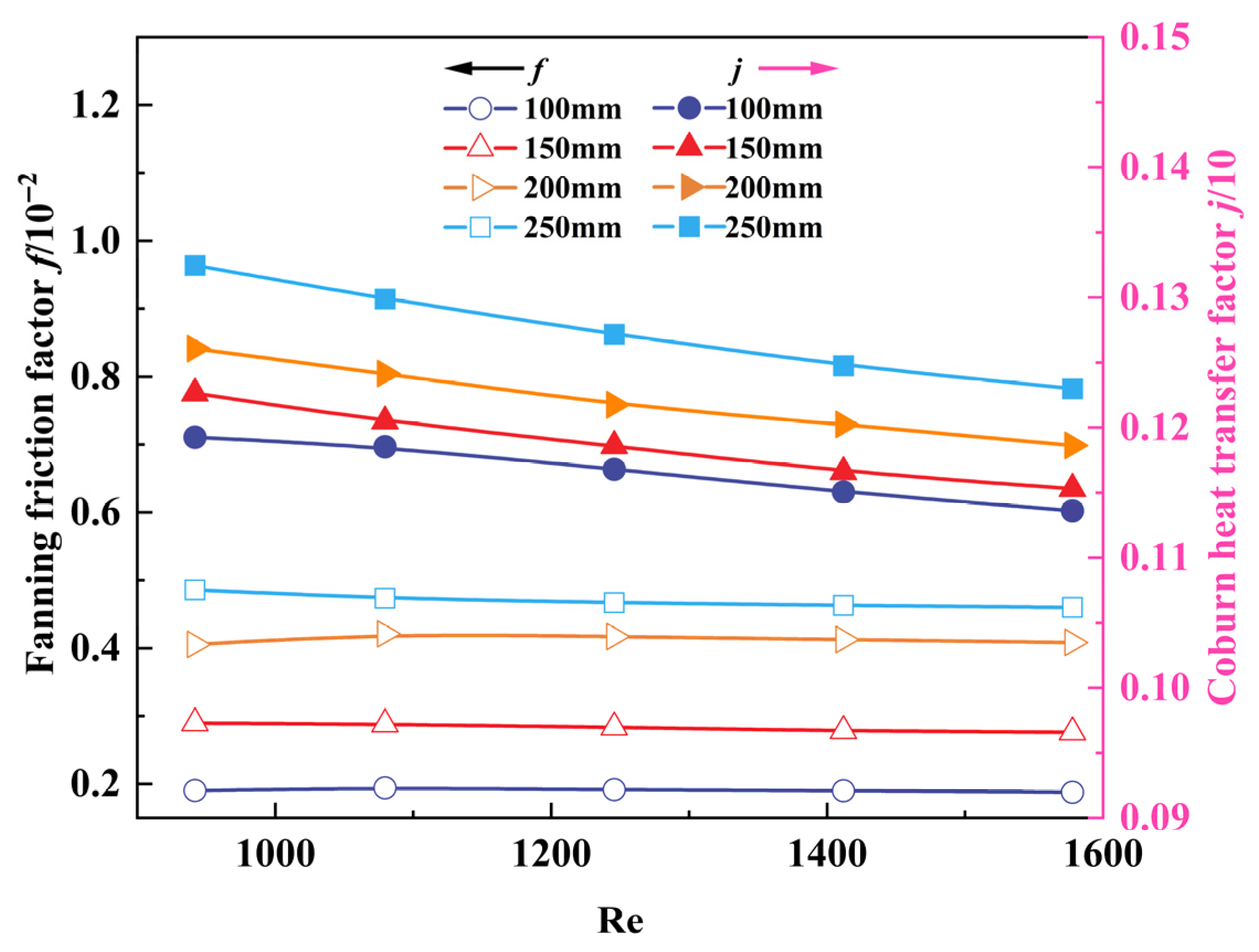
As shown in Figure 18, the effects of different total lengths (100 mm, 150 mm, 200 mm, and 250 mm) on the friction factor f and the heat transfer performance j-factor were systematically investigated under fixed ws = 8 mm and wa = 1.5 mm conditions. Analysis of the data across different Reynolds number ranges reveals that the f-factor increases continuously with exchanger length, indicating that frictional resistance is significantly enhanced in longer channels. This phenomenon is primarily attributed to the prolonged interaction between the fluid and the channel surface, which allows fuller boundary layer development and exacerbates pressure loss. In contrast, the j-factor exhibits a gradual decreasing trend, dropping from 0.01325 to 0.01193 at the same Re, corresponding to a reduction of approximately 9.96%. This suggests that although the overall heat transfer capacity improves with increasing length, the heat transfer efficiency per unit length progressively declines.
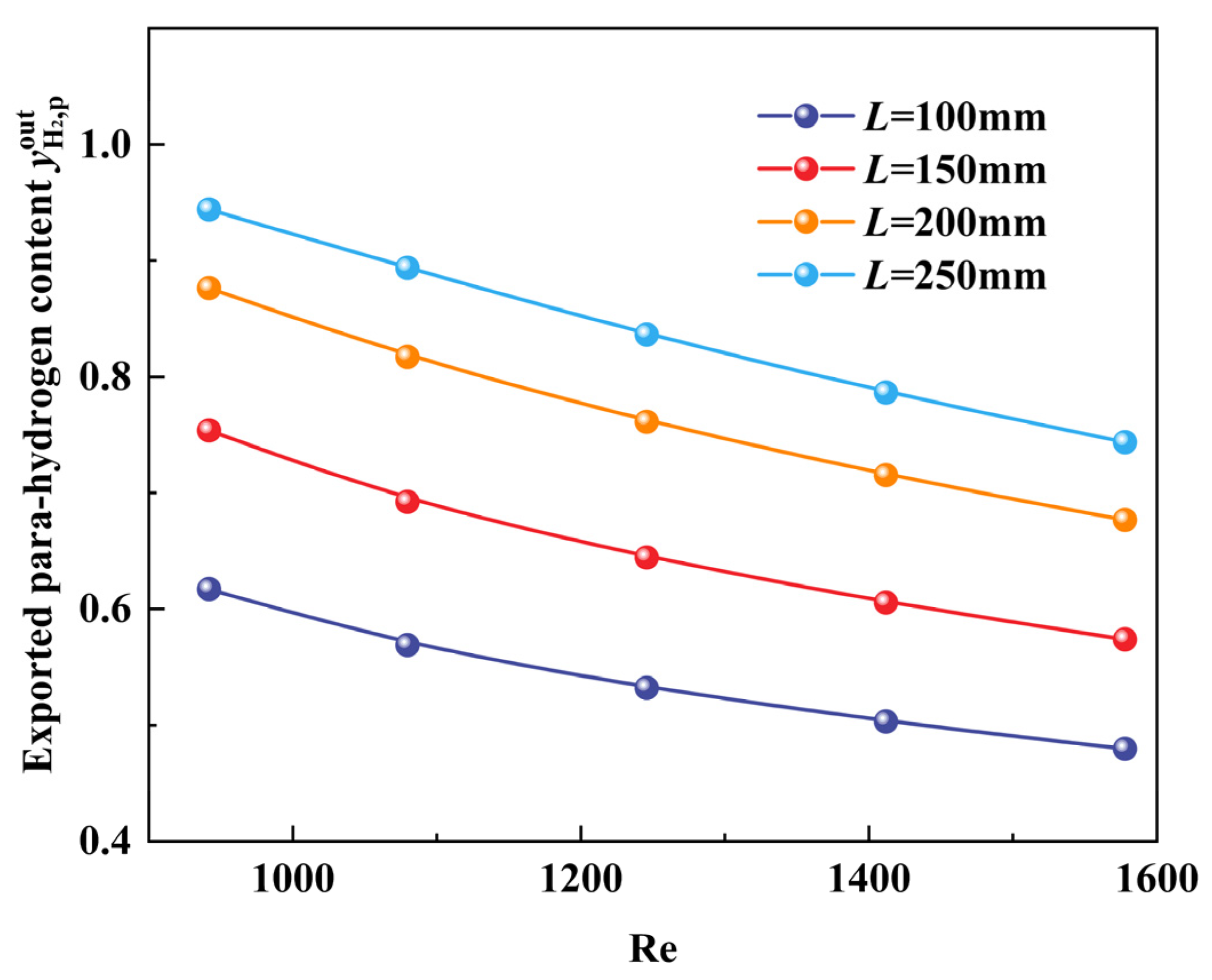
The outlet mole fraction of para-hydrogen, as a key indicator of reaction completeness, increases significantly with the heat exchanger length. At Re = 941, the outlet mole fraction rises from 0.617 for a 100 mm length to 0.944 for a 250 mm length, an increase of 52.9%, indicating that the geometric length of the heat exchanger plays a crucial role in enhancing the conversion of para-hydrogen to para-hydrogen. This trend demonstrates that extending the residence time of the fluid within the catalytic reaction zone effectively promotes the attainment of thermodynamic equilibrium conversion, which is particularly pronounced under low-temperature catalytic conditions. For a 250 mm length at low Reynolds numbers, the para-hydrogen conversion rate reaches 96.35%, exceeding 95%, as shown in Figure 19.
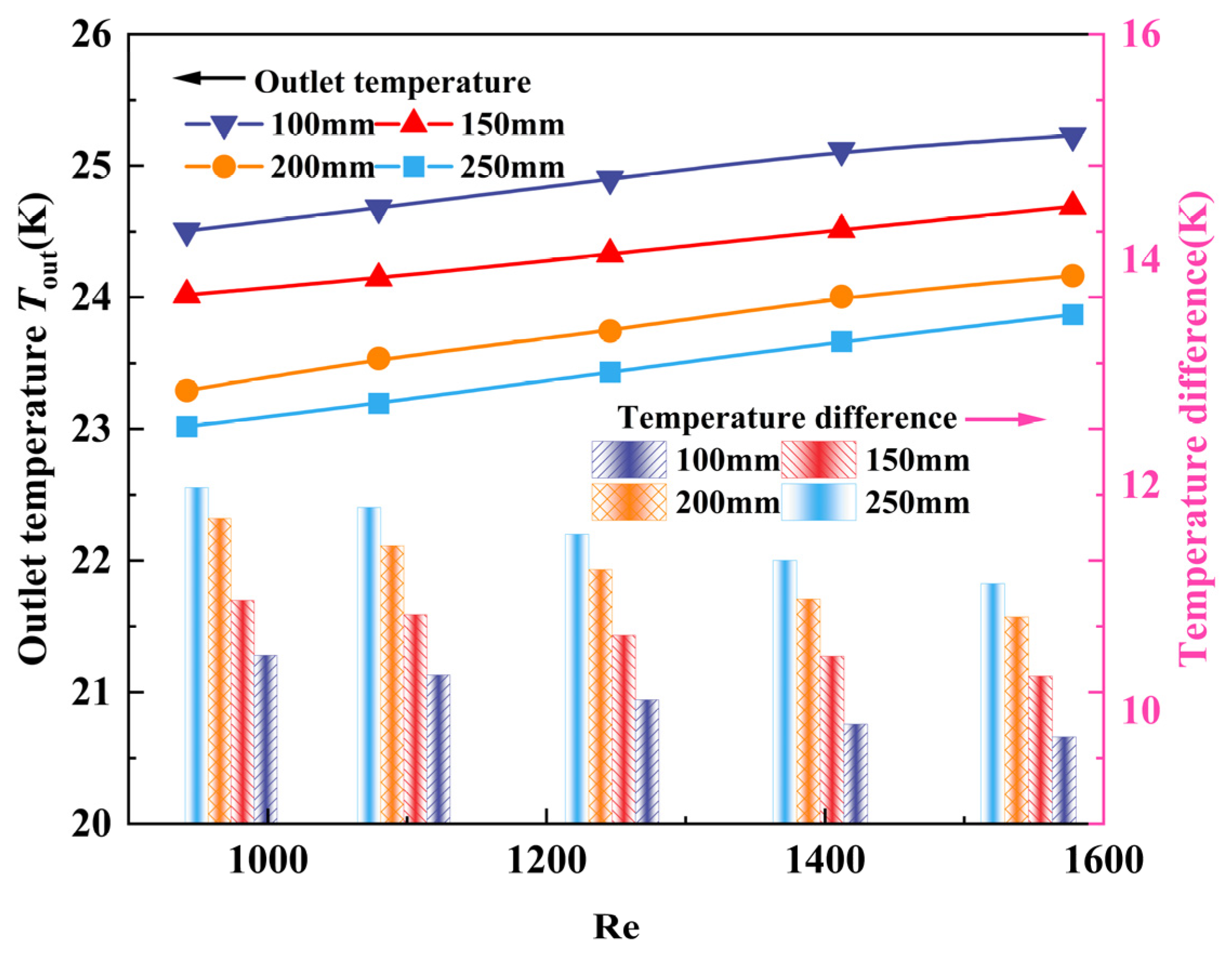
As shown in Figure 20, the heat exchanger length has a significant influence on hydrogen cooling. At the same Reynolds number, increasing the length from 100 mm to 250 mm reduces the outlet temperature by about 5–7%; for example, at Re = 1245, the outlet temperature decreases from approximately 24.9 K to 23.4 K (a reduction of ~6%). Meanwhile, the inlet–outlet temperature difference increases markedly with length, rising by 13–15% across all Reynolds numbers. At Re = 941, the 250 mm exchanger achieves a 14.2% increase in temperature difference compared with the 100 mm case, while at Re = 1577, the increase is about 13.9%. These results indicate that extending the heat exchanger length consistently enhances heat transfer performance.
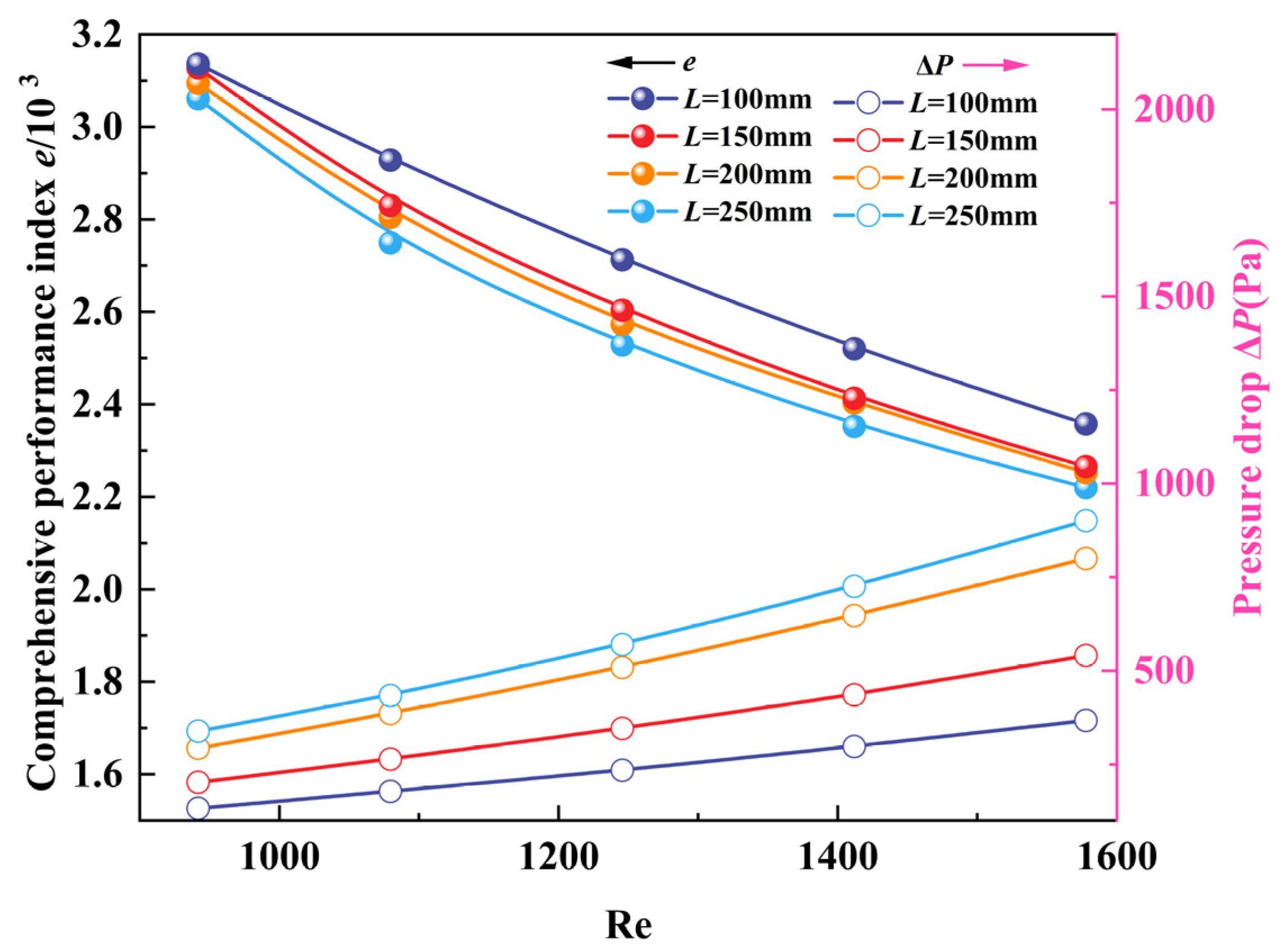
The comprehensive evaluation factor e exhibits a gradual decreasing trend with increasing Re. This indicates that under identical geometric configurations, flow intensification enhances heat transfer capacity, but the accompanying increase in flow resistance becomes more dominant, thereby reducing the overall performance. On the other hand, under the same Re conditions, the effect of heat exchanger length on improving e gradually emerges: when Re = 941, increasing the length from 100 mm to 250 mm leads to an improvement of approximately 2.5%, whereas at Re = 1577, the improvement reaches 6.2%. This suggests that extending the heat exchanger length can partially compensate for the performance degradation caused by higher Re, with a more pronounced effect observed in the high-Re range. Overall, while increasing Re tends to reduce the comprehensive performance, extending the heat exchanger length serves as an effective compensatory measure. Under the same fin height and wave length, the pressure drop increases significantly with the total length of the heat exchanger. At Re = 940, when the length increases from 100 mm to 250 mm, the pressure drop rises to approximately 2.5 times its initial value; at Re = 1580, the increase is close to 2.5 times as well. This indicates that extending the channel length markedly accumulates flow resistance, leading to an almost linear growth of pressure drop with length. While longer channels enhance heat transfer performance, they also incur a higher flow energy penalty, highlighting the necessity of balancing heat transfer efficiency against pressure drop losses in practical design, as shown in Figure 21.
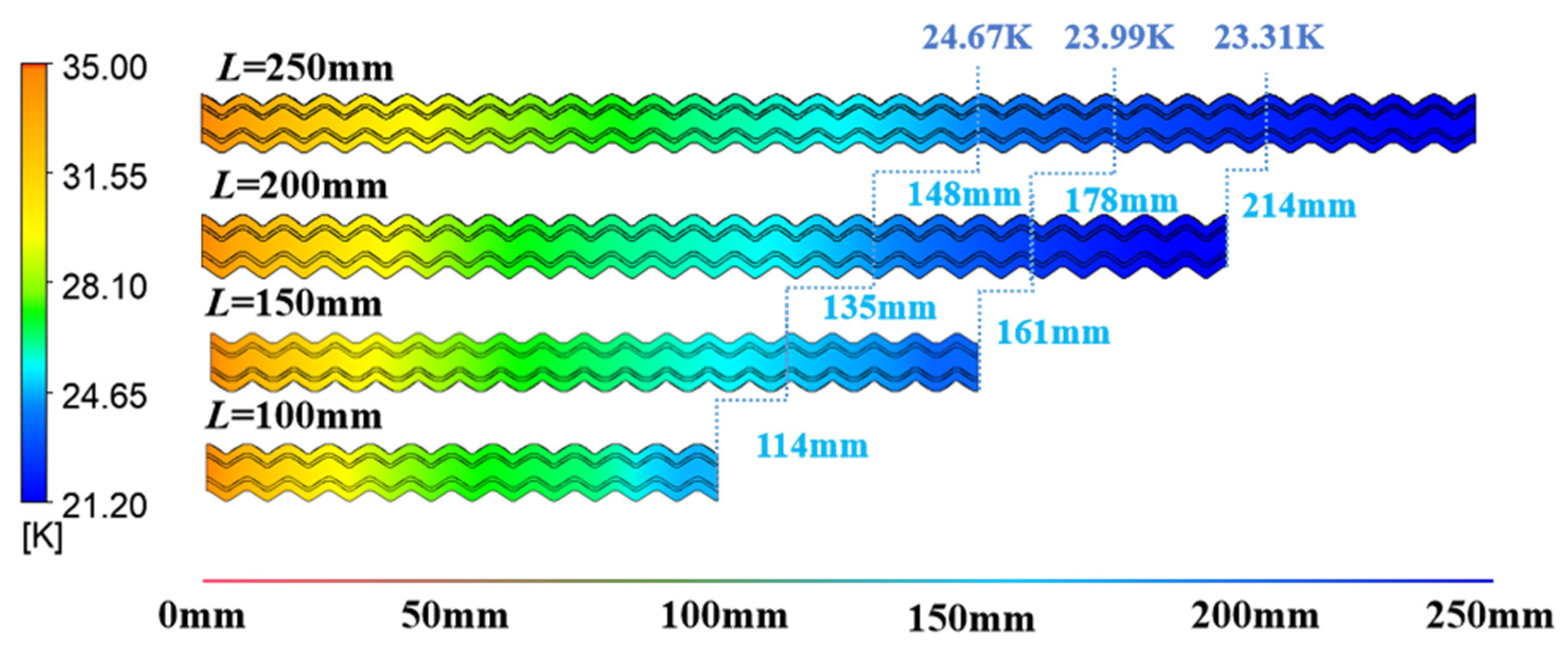
Under identical wavy fin structural parameters, the total length of the heat exchanger has a significant impact on the temperature distribution. As the length increases, the cooling rate of the cold fluid is relatively slower; however, due to the increased total heat transfer area, the hot-side fluid at the outlet can achieve more complete heat exchange, resulting in a lower final outlet temperature compared to shorter exchangers. This indicates that extending the heat exchanger length can enhance the temperature reduction at the hot end by increasing the total heat transfer area, as shown in Figure 22.
The sensitivity analysis indicates that j, e, and f are the dominant factors affecting y H 2 , p out . To provide a more quantitative tool for reactor design and to facilitate the subsequent optimization, Section 4.2 develops correlation equations based on these parametric results.
Building upon the comprehensive parametric analysis presented in Section 4.1, the intricate dependencies between reactor performance and the key design variables—namely the Reynolds number (Re) and geometric parameters (wa, ws, L)—have been thoroughly elucidated. To bridge the gap between numerical simulation and practical engineering implementation, Section 4.2 employs non-linear regression techniques to synthesize the discrete simulation data into a set of robust empirical correlations. These correlations serve as high-fidelity predictive tools, facilitating a quantitative assessment of the reactor’s thermo-hydraulic characteristics within the investigated design space.

4.2. Correlation Equations for y H 2 , p out , e, j, and f

To more accurately characterize the influence of corrugation structural parameters on the performance factors, this study employs Simulation data and performs multivariate nonlinear regression fitting in the form of a power function for the y H 2 , p out , j-factor, f-factor and e. The fitting expression is uniformly given as:
Y = a R e b w a c w s d L v
where a, b, c, d, and v are fitting parameters.
The fitting results are as follows:
y H 2 , p out = 2.0900 R e 0.5092 w a 0.0034 w s 0.0016 L 0.4922
j = 0.0421 R e 0.1039 w a 0.0796 w s 0.0205 L 0.0970
f = 0.9993 R e 0.1839 w a 0.0811 w s 0.0370 L 0.9537
e = 0.1407364 R e 0.6024 w a 0.1028 w s 0.0021 l 0.0520
The developed fitting models exhibit high accuracy within the considered parameter ranges.
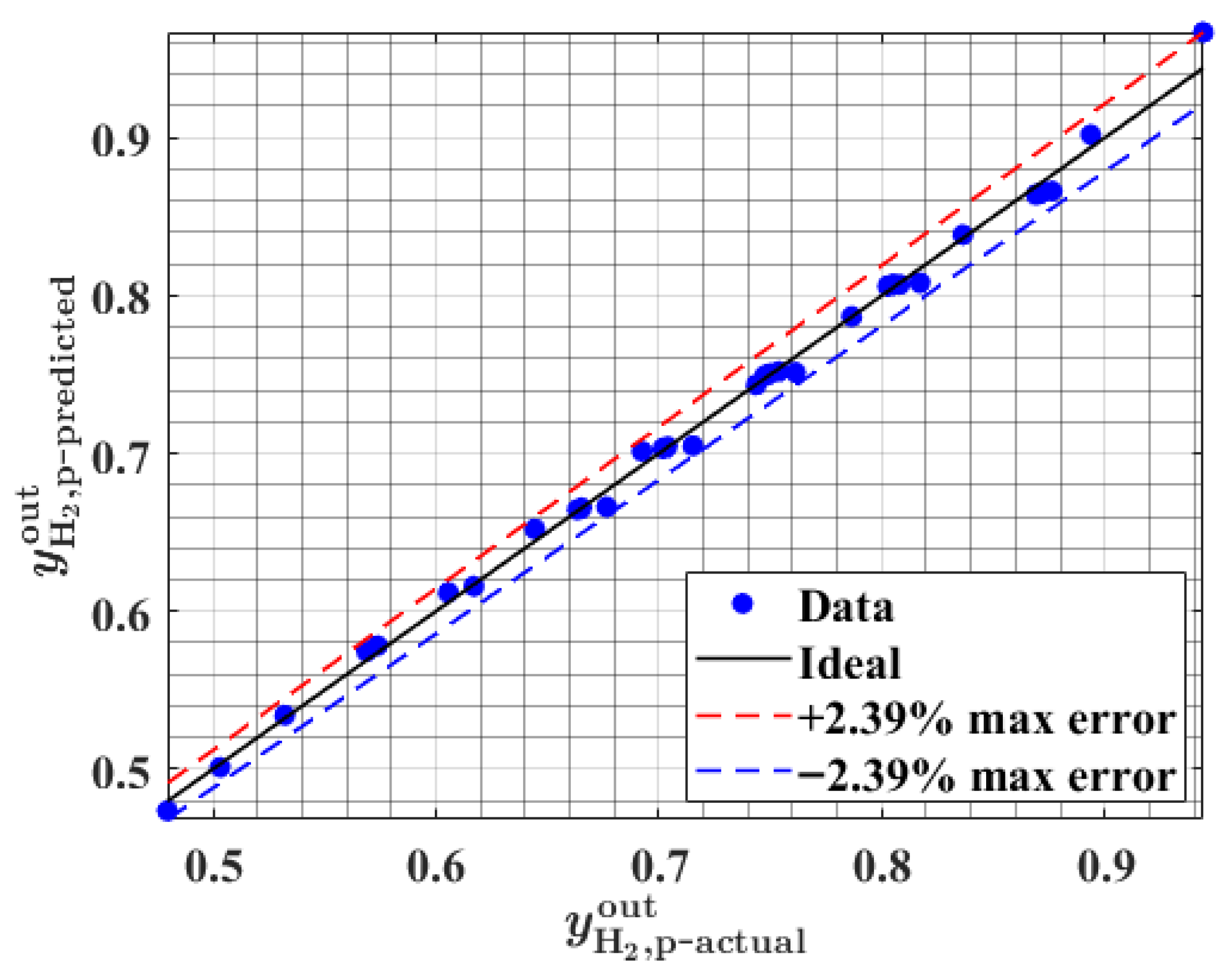
For parameter y H 2 , p out the model yields an average relative error of 0.521%, with all fitted points falling within a ±2.39% error band (Figure 23), corresponding to a high coefficient of determination (R2 = 0.9970), which indicates excellent agreement between the predicted and numerical results.
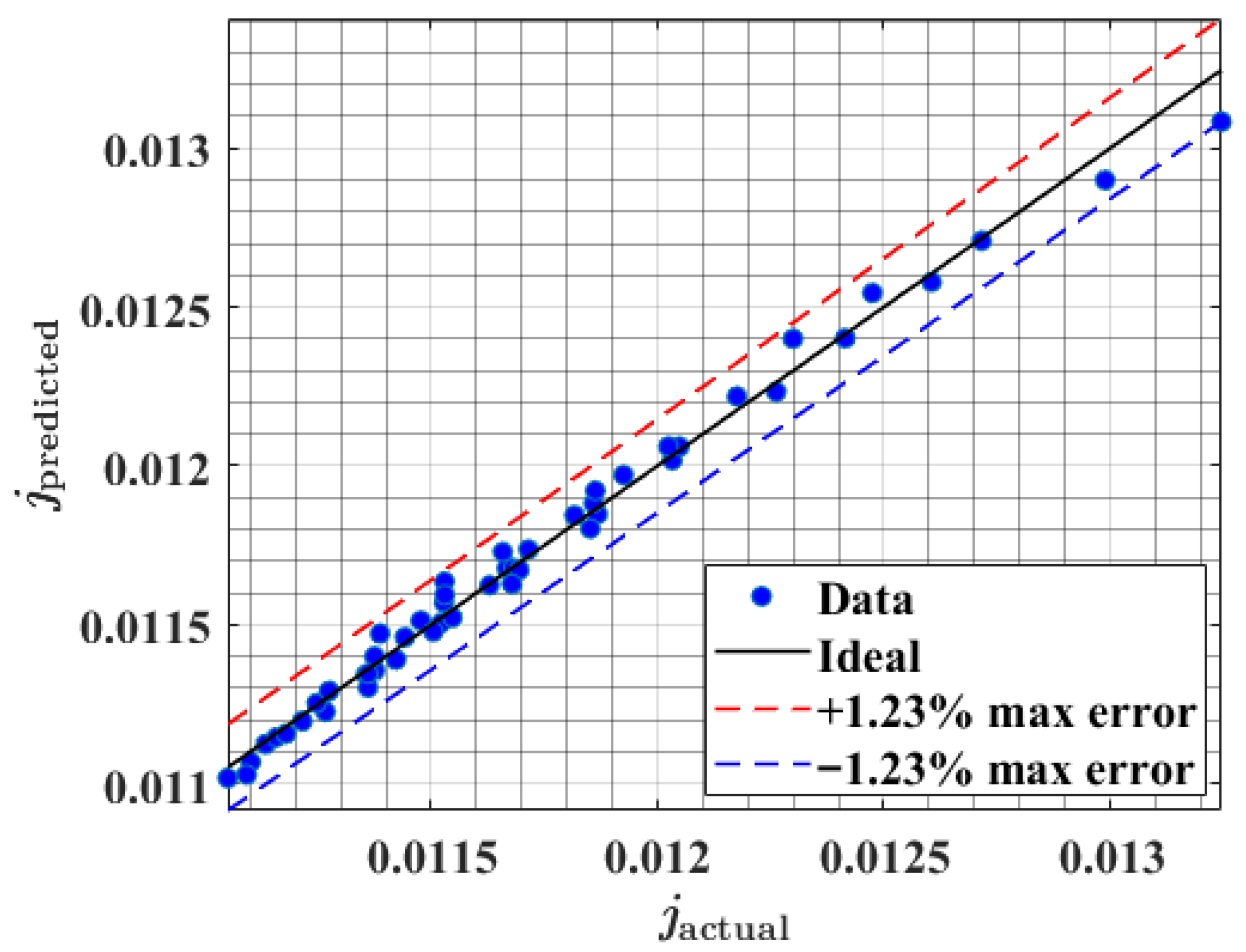
For the j-factor, the model achieves extremely high accuracy, with an average relative error of only 0.3143% and all data points within a ±1.23% error band (Figure 24), yielding a strong linear correlation (R2 = 0.9905).
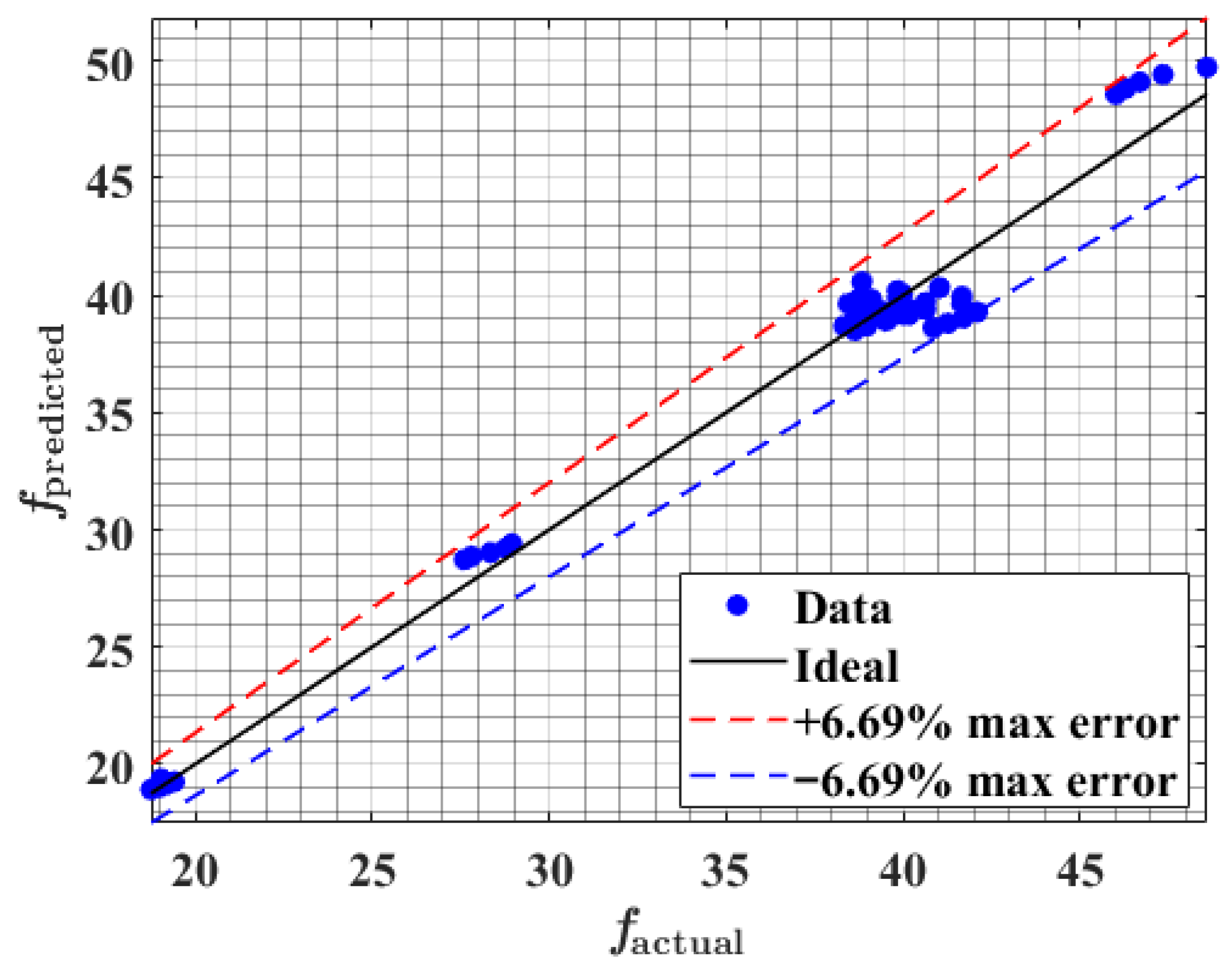
In comparison, the f-factor model attains an average relative error of 2.3545% and performs well within a ±6.69% error band (Figure 25), with a satisfactory goodness of fit (R2 = 0.9727), effectively capturing the variation trend with low systematic deviation.
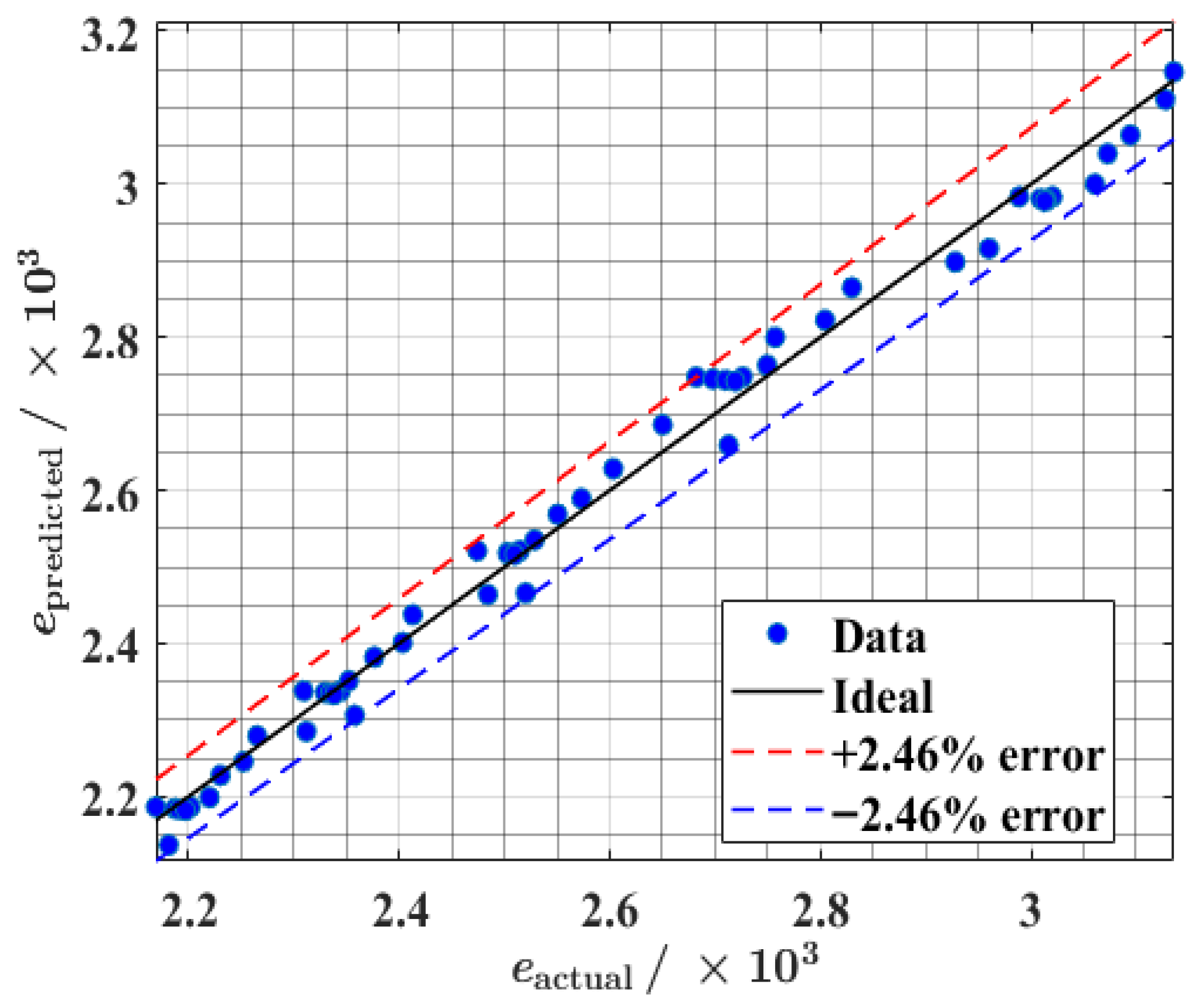
The fitting model for the comprehensive performance index e also demonstrates reliable predictive capability, as evidenced by all points falling within a ±2.46% error band (Figure 26) and a high coefficient of determination (R2 = 0.9910). The index shows strong sensitivity to the Reynolds number, emphasizing that flow conditions are the primary factor influencing the heat exchanger’s performance. Among the geometric parameters, wave height and total length have a moderate influence, while the wave length exhibits minimal impact. This suggests that the optimization results are relatively stable and less sensitive to variations in wave length within the studied range.

4.3. Optimization Results

To establish the objective functions for optimization, a comprehensive numerical dataset was first generated through parametric scans, covering wa up to 1.5 mm and L up to 250 mm. The correlations derived in Section 4.2 serve as a continuous response surface, enabling the Genetic Algorithm (GA) to explore the design space with high computational efficiency. Although the optimized configuration involves a degree of extrapolation, these predictions are considered physically reliable because the fitted models capture the underlying monotonic trends of the system. Consequently, the GA can reasonably project performance metrics slightly beyond the initial sampling range while maintaining physical consistency.
To ensure a balance between global search capability and computational efficiency, the Genetic Algorithm (GA) configurations were determined based on preliminary sensitivity tests. These tests indicated that a population size beyond 100 yielded diminishing returns in objective function improvement while significantly increasing computational overhead. Furthermore, a rigorous convergence criterion was implemented: the optimization process was terminated if the relative change in the average fitness value remained below 10−6 for 50 consecutive generations.
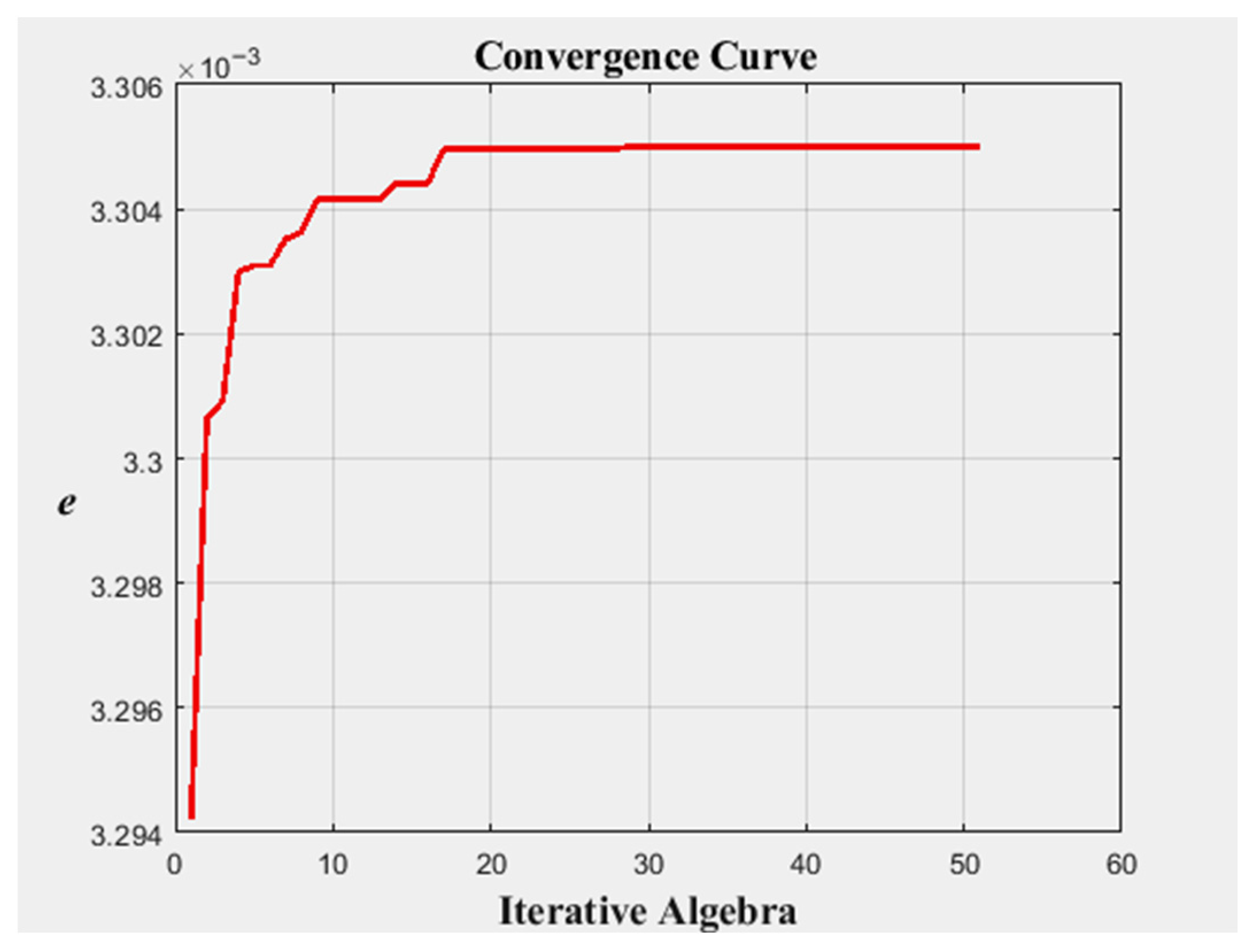
During the optimization, the population size was 100, and the maximum number of generations was 1000. Tournament selection preserved elite individuals, simulated binary crossover, maintained diversity and polynomial mutation, and enhanced global search. The algorithm converged rapidly, reaching near-optimal solutions by the 30th generation, as shown in Figure 27 for Re = 941.
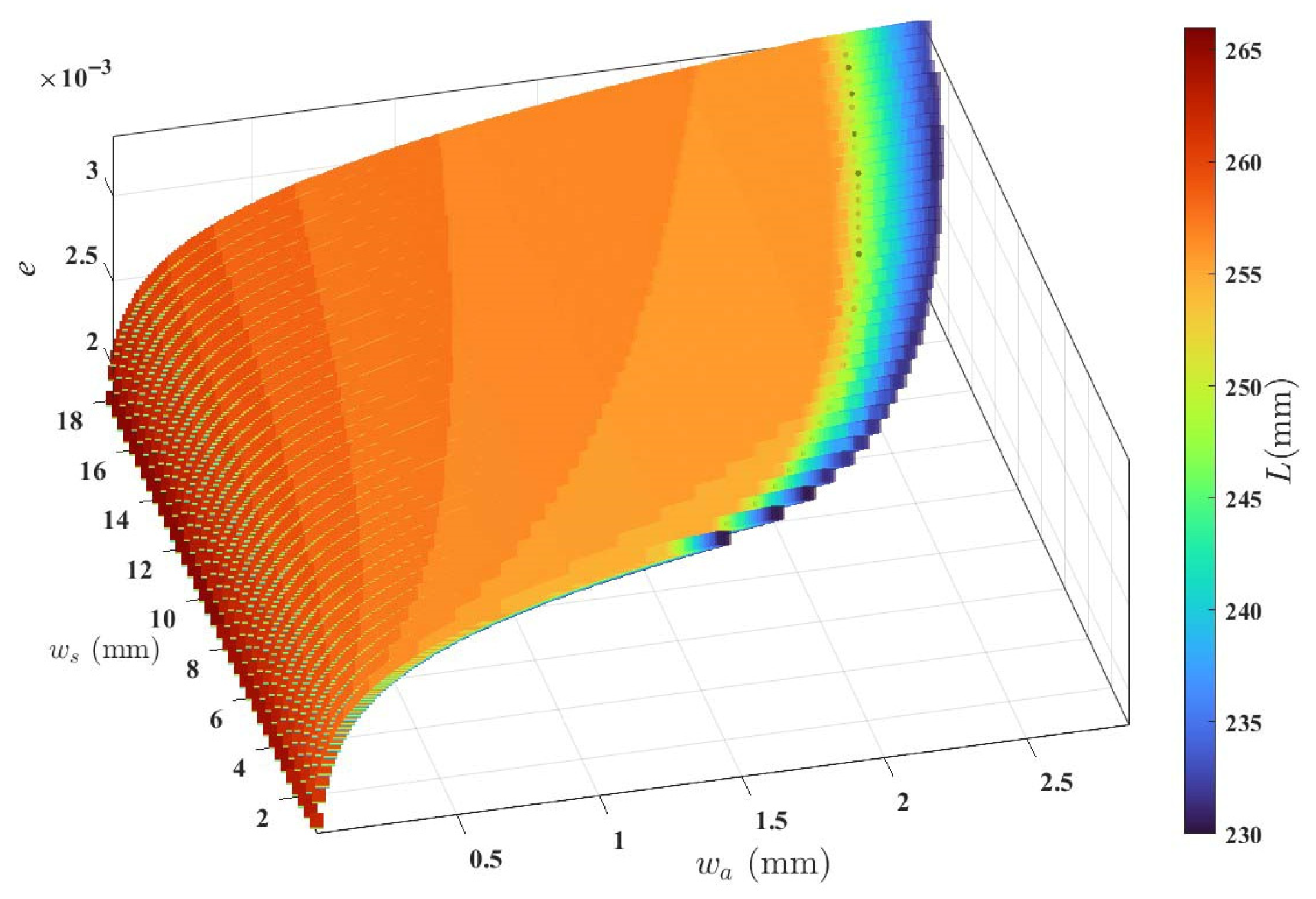
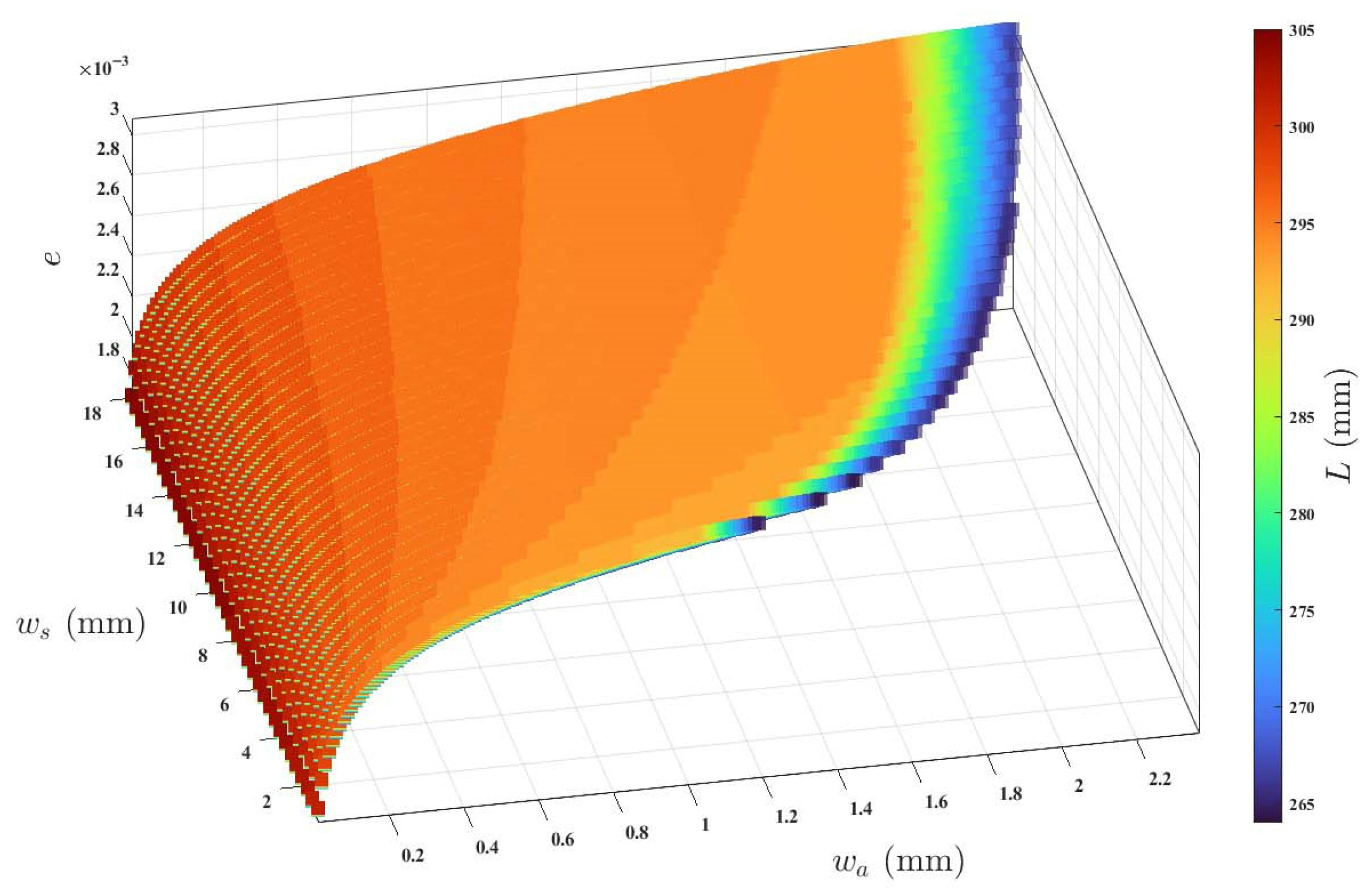
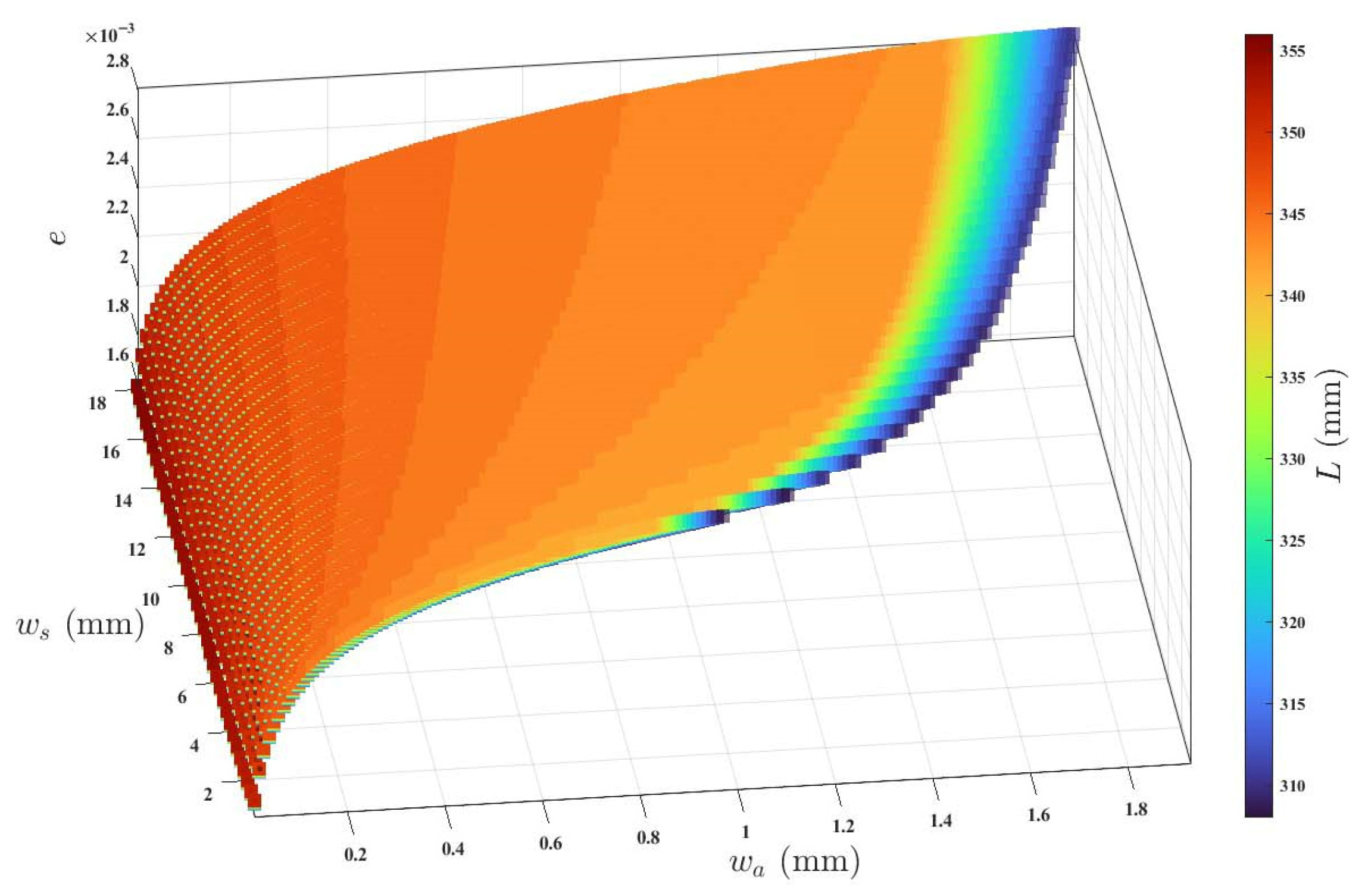
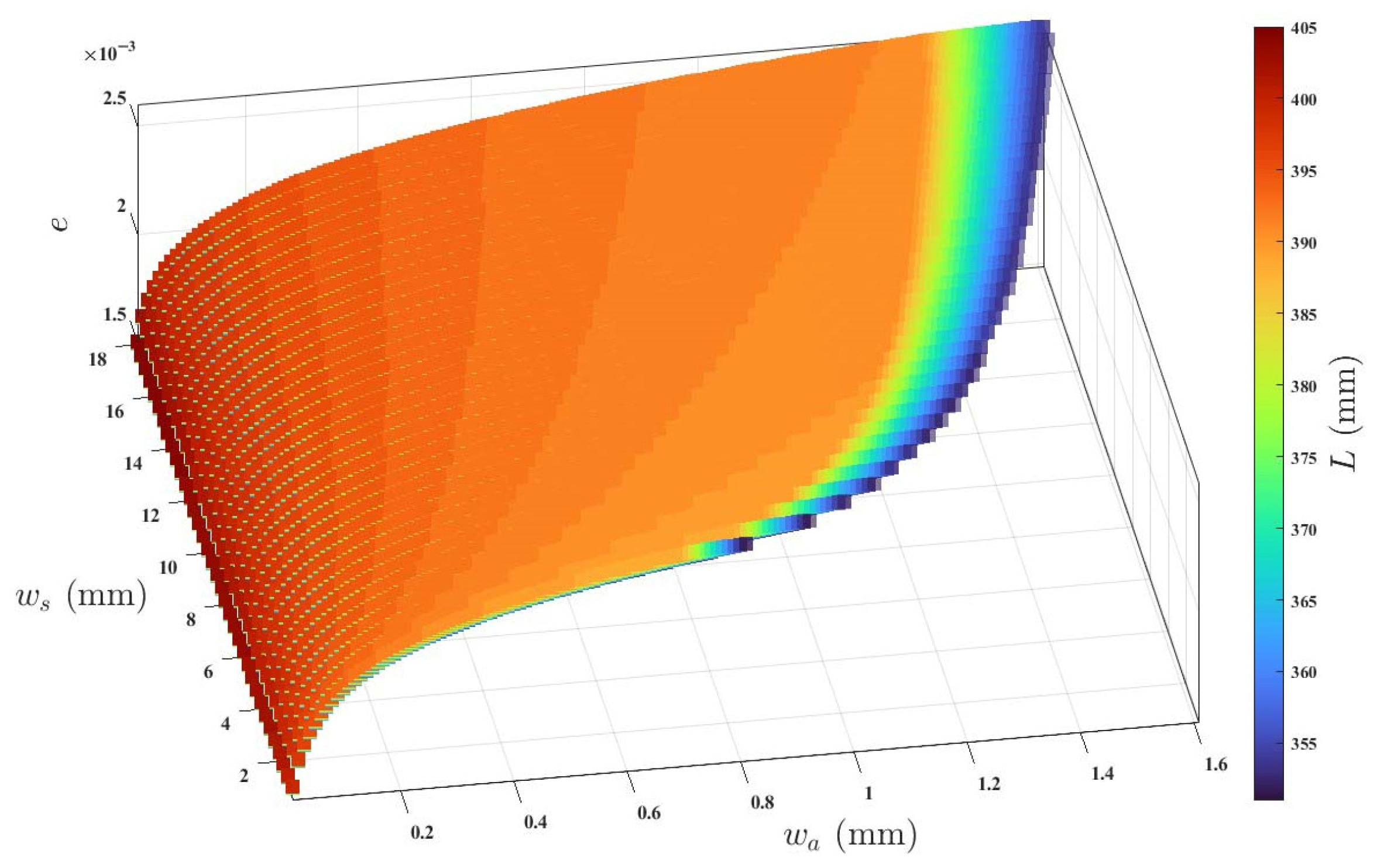
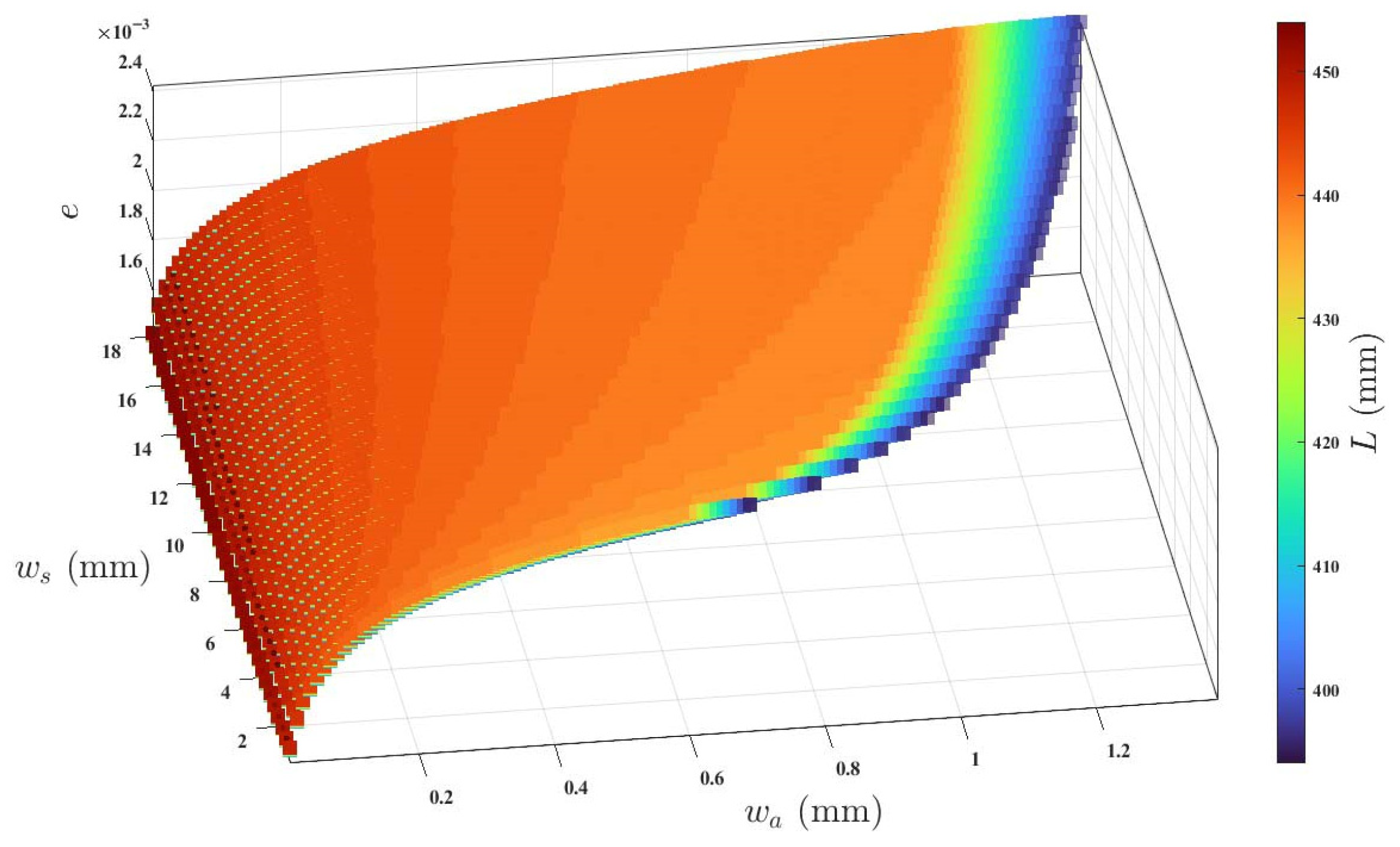
Figure 28, Figure 29, Figure 30, Figure 31 and Figure 32 present the three-dimensional coordinate system, which illustrates the effects of L, wa, and ws on the objective function e under the specified constraints. In the 3D coordinate system, the x-axis represents the corrugation height wa, the y-axis represents the wave length ws, and the z-axis indicates the fin length L satisfying the constraints. All data points are connected in a mesh to form a surface, with two planes highlighting the parameter ranges corresponding to the maximum and minimum L values. The color gradient on the surface represents the objective function e.
With increasing wave height and decreasing wave length, the objective function value shows an overall upward trend, indicating enhanced heat transfer and conversion capabilities. However, excessively strong heat transfer may cause the hydrogen temperature to fall below the liquefaction threshold. To prevent this, the design length L must be reduced to ensure that the outlet temperature remains above 23 K and the para-hydrogen mole fraction exceeds 0.931. Conversely, for longer finned heat exchangers, it is necessary to appropriately reduce the fin wave height and wave length to simultaneously satisfy both the conversion efficiency and the outlet temperature constraints at the hot end.
From the optimization results at different Reynolds numbers, it can be observed that the minimum fin length L required to satisfy the imposed constraints exhibits a clear increasing trend with increasing Re. As shown in Figure 27, when Re rises from 941 to 1577, the minimum feasible L increases from approximately 231 mm to about 394 mm. This indicates that at higher flow velocities, a larger heat transfer area—achieved by extending the fin length—is necessary to compensate for the reduced residence time in order to achieve the same degree of ortho–para hydrogen conversion and heat exchange.
Moreover, the increase in flow velocity corresponding to Re = 1577 may intensify the scouring effect of the fluid on the catalyst layer, which in some cases could weaken the surface activity of the catalyst or increase local mass transfer resistance, thereby further reducing reaction efficiency. To mitigate this efficiency loss, it becomes necessary to extend the reaction path length in order to enhance the overall conversion rate. However, this inevitably leads to a continuous increase in the fin length L, while the pressure drop grows much faster than at lower Re. Consequently, the feasible design space is further constrained, making it increasingly difficult to maintain low energy consumption while simultaneously satisfying the outlet temperature and concentration requirements.
Under the condition of Re = 941, the temperature and conversion constraints are more easily satisfied; therefore, the required fin length L is significantly shorter than that of the optimal structures at higher Reynolds numbers. This indicates that at lower flow velocities, the fluid has a longer residence time, which facilitates more complete ortho–para hydrogen conversion and heat transfer.
To ensure the safe operation of the system and to prevent hydrogen liquefaction in the low-temperature region while maintaining high efficiency in the ortho–para hydrogen conversion reaction, the recommended parameters of fin length L, wave height wa, and wave length ws, as derived from the genetic algorithm optimization results, are summarized in Table 3.

4.4. Reaction Heat Removal Efficiency and the Effect of Catalytic Pathway Disturbance

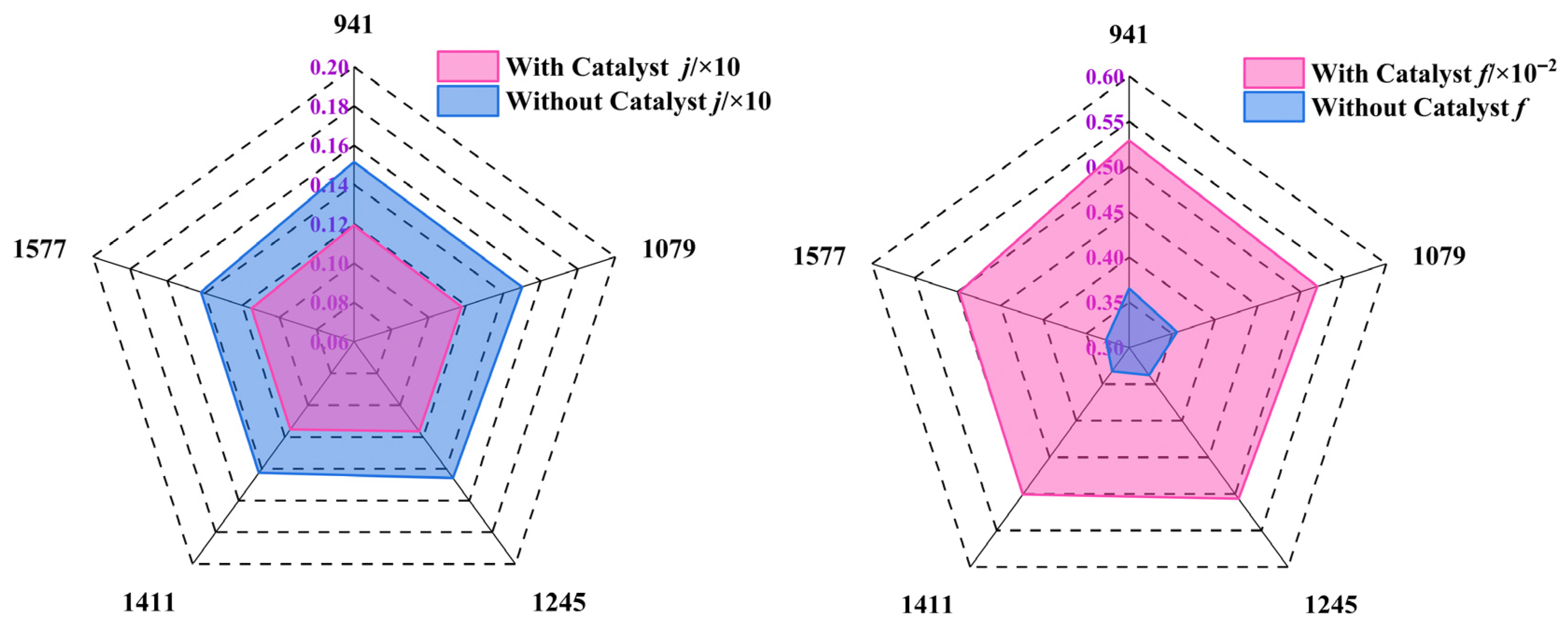
As shown in Figure 33, the introduction of the catalyst alters the internal structure of the heat transfer channels, resulting in a 20–30% decrease in the overall j-factor compared to the case without a catalyst. However, at higher Reynolds numbers, the flow disturbance and turbulence enhancement partially compensate for the loss in heat transfer performance. The presence of the catalyst significantly increases flow resistance, leading to a substantial rise in system energy consumption. Although the increased pressure drop somewhat intensifies flow disturbances and enhances wall heat transfer, the energy cost associated with the higher f-factor has a pronounced negative impact on the overall system efficiency.
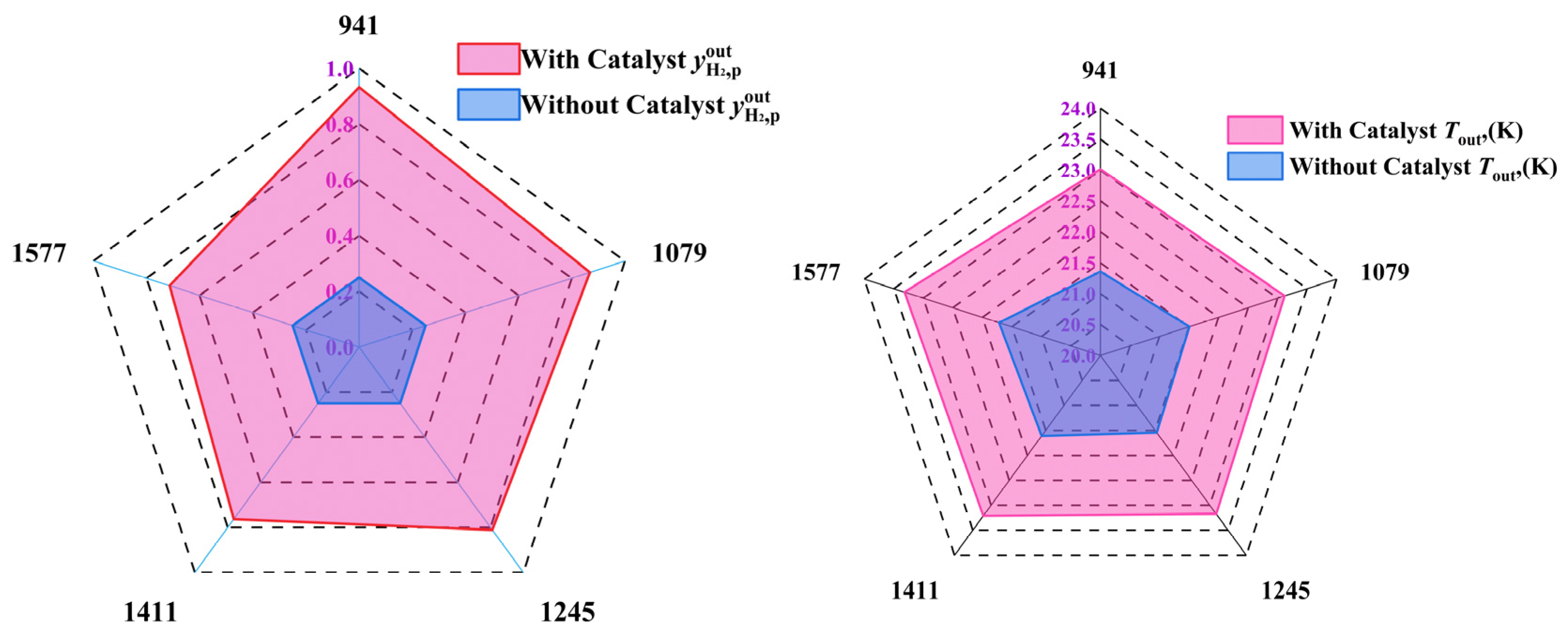
As shown in Figure 34, the presence of a catalyst in the wavy channel significantly affects both the para-hydrogen conversion and the thermal–flow behavior. With the catalyst, increasing Re from 941 to 1577 leads to a gradual decrease in the outlet para-hydrogen mole fraction, from 0.9329 to 0.7129, indicating reduced conversion efficiency due to shorter fluid residence time and weakened interaction with the catalyst surface. High flow rates enhance reaction heat removal, suppress local temperature rises, and limit the temperature-driven promotion of catalytic activity, further weakening the reaction intensity along the catalytic path. Consequently, the outlet temperature gradually rises, but the overall heat transfer efficiency decreases, reflecting a reduction in net heat removal. Compared to the catalyst-free case, where the para-hydrogen mole fraction remains nearly constant and the outlet temperature stays below 23 K due to efficient cooling, the catalytic case exhibits a higher outlet temperature (1.5–2 K increase) and altered internal temperature distribution. This demonstrates that the catalyst not only triggers substantial exothermic conversion but also modifies the thermal–flow coupling, ensuring the outlet gas remains above the liquefaction threshold and maintaining favorable conditions for ongoing reaction and flow.
As shown in Figure 35, in the absence of a catalyst, the spontaneous conversion rate between ortho-hydrogen and para-hydrogen is extremely slow due to the lack of catalytic promotion, resulting in nearly unchanged para-hydrogen content at the inlet and outlet, with almost no conversion occurring. In contrast, when the catalyst is introduced, the conversion from ortho-hydrogen to para-hydrogen is significantly accelerated, with the para-hydrogen content rapidly increasing from about 0.25 at the inlet to 0.932 at the outlet. This indicates that the catalyst plays a crucial role in promoting the spin isomer conversion of hydrogen molecules in the low-temperature region.
As shown in Figure 36, in the absence of a catalyst, the temperature along the CFHE decreases rapidly, and the outlet temperature drops below the liquefaction temperature of hydrogen. In contrast, when the catalyst is present, the exothermic ortho-to-para hydrogen conversion occurs, which slows down the temperature decrease and results in an outlet temperature higher than the liquefaction point.

5. Conclusions

Within the investigated geometric and operating parameter ranges (Re = 941–1577, temperature range of 35–20 K for pre-liquefaction gaseous hydrogen), CFHEs consistently outperform straight-fin heat exchangers (SFHEs) in both thermal performance and ortho–para hydrogen conversion efficiency. Wave height and channel dimensions are identified as the dominant geometric parameters governing Colburn j-factors, friction factors, and para-hydrogen fraction, whereas fin wave length shows a comparatively weaker influence.
(1)
CFHE outperforms SFHE in thermal performance and conversion efficiency. Compared with straight-fin heat exchangers, CFHEs exhibit superior heat absorption and release capabilities. Fin height and channel dimensions exert a dominant influence on Colburn j-factors, friction factors, and conversion efficiency, whereas fin wave length has a relatively minor effect. Proper optimization of wavy-fin parameters achieves a balance between heat transfer, conversion efficiency, and liquefaction risk, resulting in a more compact design and lower investment cost.
(2)
Genetic algorithm optimization provides an effective and compact configuration for high conversion efficiency. The optimized CFHE geometry ensures that hydrogen remains in the gaseous state at the outlet while achieving an ortho-hydrogen fraction exceeding 95% of equilibrium. Under stable catalyst conditions, the optimized design fully satisfies the specified objectives and performance requirements.
(3)
Catalyst loading is essential for improving ortho–para hydrogen conversion and temperature uniformity. Without a catalyst, the para-hydrogen fraction remains nearly constant despite rapid temperature reduction. With a catalyst, the para-hydrogen fraction increases significantly; however, the global average Colburn j-factor decreases by approximately 25% due to increased flow resistance. Although friction losses rise, the temperature drop is better regulated, and the outlet–inlet temperature difference decreases to about 0.866 times that of the non-catalyst case. These results confirm the catalyst’s critical role in enhancing conversion efficiency while improving thermal uniformity.
Overall, this work provides theoretical insights and quantitative design guidance for the optimized design and practical application of catalyst-filled wavy plate-fin heat exchangers (CFHEs) in cryogenic hydrogen pre-liquefaction systems. By integrating catalyst loading, wavy-fin geometry, and genetic algorithm optimization, the study achieves significant design improvements, including enhanced ortho–para hydrogen conversion efficiency, improved thermal uniformity, and a more compact configuration. These improvements indicate potential economic benefits through reduced equipment size, lower boil-off gas (BOG) losses, and enhanced energy utilization. From a manufacturing perspective, the optimized geometric parameters are selected to be compatible with current precision stamping and vacuum brazing standards. Furthermore, the modular nature of the plate-fin structure suggests strong scale-up potential for industrial-scale liquefaction plants. It should be noted that the conclusions are based on three-dimensional numerical simulations within the investigated parameter ranges. Future research should focus on experimental validation, addressing catalyst degradation and non-uniform distribution under long-term operation, as well as investigating transient effects and full liquefaction-cycle integration.

Author Contributions

Conceptualization, Q.M.; Methodology, J.L. and Z.W.; Software, J.Y. and H.L.; Validation, J.Y. and H.L.; Formal analysis, R.J. and Y.L.; Data curation, J.Y. and H.L.; Writing—original draft, J.Y. and H.L.; Writing—review and editing, Q.M. and Y.H.; Visualization, J.Y. and H.L.; Project administration, Q.M.; Funding acquisition, Y.H. All authors have read and agreed to the published version of the manuscript.

Funding

The financial support by the Hainan Province Science and Technology Special Fund, the aerospace special fund for Hainan Aerospace Technology Innovation Center (ATIC-202501001) and the National Natural Science Foundations of China (51769006) is gratefully acknowledged.

Data Availability Statement

The data presented in this study are available on request from the corresponding author. The data are not publicly available due to commercial confidentiality regarding the specific structural dimensions and optimization parameters.

Conflicts of Interest

Author Yan He was employed by the Hainan International Commercial Aerospace Launch Co., Ltd., Authors Rong Jiang and Yongjie Lai were employed by the Sichuan Air Separation Plant Group. The remaining authors declare that the research was conducted in the absence of any commercial or financial relationships that could be construed as a potential conflict of interest.

Abbreviations

Nomenclature
C1inertial resistance coefficient (1/m)
Cpspecific heat (J/(kg·K))
Dhhydraulic diameter (m)
Dmdiffusion coefficient (m2/s)
Dpcatalyst particle diameter (m)
Eenergy (J/kg)
fFanning friction factor
GAmass flow rate per unit flow area (kg/(m2·s))
ginertial force acceleration (m/s2)
ΔHheat of ortho–para hydrogen conversion (J/kg)
hfin height (mm)
jColburn heat transfer factor
Kreaction rate constant of the Elovich model (mol/(m3·s))
CFHEwavy-fin heat exchanger
Ttemperature (K)
sfin spacing (mm)
Seenergy source term (W/m3)
Ffirstreaction rate constant of the first-order model (1/s)
Lfin length (m)
Mmolar mass (kg/mol)
mmass flow (kg/s)
NuNusselt number
PrPrandtl number
ppressure (Pa)
Δppressure drop (Pa)
ReReynolds number
rreaction rate (mol/(m3·s)
Sdmomentum source term (kg/(m2·s2))
Smmass source term (kg/(m3·s))
wawave height (mm)
wswave length (mm)
Tccritical temperature (K)
xaxial location (m)
ΔTtemperature difference (K)
ttime (s)
uvelocity (m/s)
Vcatalyst volume (m3)
vmmass space velocity (kg/(m3·s))
Ymass fraction
yvolume ratio
Greek symbols
αpermeability (m2)
αhconvection heat transfer coefficient (W/(m2·K))
δpplate thickness (mm)
δfin thickness (mm)
εporosity
λthermal conductivity (W/(m·K))
μviscosity (Pa·s)
ρdensity (kg/m3)
τstress tensor (Pa)
Superscript
eqequilibrium
outoutlet
Subscript
hothot side
H2,ppara-hydrogen
coldcold side

References

  1. Akpasi, S.O.; Smarte Anekwe, I.M.; Tetteh, E.K.; Amune, U.O.; Mustapha, S.I.; Kiambi, S.L. Hydrogen as a clean energy carrier: Advancements, challenges, and its role in a sustainable energy future. Clean Energy 2025, 9, 52–88. [Google Scholar] [CrossRef]
  2. Singh, R.; Singh, M.; Gautam, S. Hydrogen economy, energy, and liquid organic carriers for its mobility. Mater. Today Proc. 2021, 46, 5420–5427. [Google Scholar] [CrossRef]
  3. Sharma, S.; Agarwal, S.; Jain, A. Significance of hydrogen as economic and environmentally friendly fuel. Energies 2021, 14, 7389. [Google Scholar] [CrossRef]
  4. Zainal, B.S.; Ker, P.J.; Mohamed, H.; Ong, H.C.; Fattah, I.; Rahman, S.A.; Nghiem, L.D.; Mahlia, T.M.I. Recent advancement and assessment of green hydrogen production technologies. Renew. Sustain. Energy Rev. 2024, 189, 113941. [Google Scholar] [CrossRef]
  5. Ishaq, H.; Dincer, I.; Crawford, C. A review on hydrogen production and utilization: Challenges and opportunities. Int. J. Hydrogen Energy 2022, 47, 26238–26264. [Google Scholar] [CrossRef]
  6. Ahmad, A.; Oko, E.; Ibhadon, A. Comparative energy and exergy analysis of ortho-para hydrogen and non-ortho-para hydrogen conversion in hydrogen liquefaction. Int. J. Hydrogen Energy 2024, 78, 991–1003. [Google Scholar] [CrossRef]
  7. Chapman, B.; Joalland, B.; Meersman, C.; Ettedgui, J.; Swenson, R.E.; Krishna, M.C.; Nikolaou, P.; Kovtunov, K.V.; Salnikov, O.G.; Koptyug, I.V.; et al. Low-cost high-pressure clinical-scale 50% parahydrogen generator using liquid nitrogen at 77 K. Anal. Chem. 2021, 93, 8476–8483. [Google Scholar] [CrossRef]
  8. Hu, Z.; Li, J.; He, K. Design and the flow characteristics analysis in an ortho-para hydrogen converter. Int. J. Hydrogen Energy 2024, 82, 1314–1323. [Google Scholar] [CrossRef]
  9. Riaz, A.; Qyyum, M.A.; Hussain, A.; Lee, M. Significance of ortho-para hydrogen conversion in the performance of hydrogen liquefaction process. Int. J. Hydrogen Energy 2023, 48, 26568–26582. [Google Scholar] [CrossRef]
  10. Xu, P.; Wen, J.; Li, K.; Wang, S.; Li, Y. Review of the continuous catalytic ortho-para hydrogen conversion technology for hydrogen liquefaction. Int. J. Hydrogen Energy 2024, 62, 473–487. [Google Scholar] [CrossRef]
  11. Xu, Y.; Bi, Y.; Ju, Y. The thermodynamic analysis on the catalytical ortho-para hydrogen conversion during the hydrogen liquefaction process. Int. J. Hydrogen Energy 2024, 54, 1329–1342. [Google Scholar] [CrossRef]
  12. Sun, H.; Geng, J.; Wang, C.; Rong, G.; Gao, X.; Xu, J.; Yang, D. Optimization of a hydrogen liquefaction process utilizing mixed refrigeration considering stages of ortho-para hydrogen conversion. Int. J. Hydrogen Energy 2022, 47, 17271–17284. [Google Scholar] [CrossRef]
  13. Zou, Z.; Zhu, Z.; Zhang, Q.; Yang, P. Numerical investigation on the performance of a new type of perforated-serrated fins for plate-fin heat exchangers in cryogenic helium systems. Cryogenics 2023, 136, 103761. [Google Scholar] [CrossRef]
  14. Pongsoi, P.; Pikulkajorn, S.; Wongwises, S. Effect of fin pitches on the optimum heat transfer performance of crimped spiral fin-and-tube heat exchangers. Int. J. Heat Mass Transf. 2012, 55, 6555–6566. [Google Scholar] [CrossRef]
  15. Rauber, W.K.; Silva, U.F.; Vaz, M., Jr.; Alves, M.; Zdanski, P. Investigation of the effects of fin perforations on the thermal-hydraulic performance of plate-finned heat exchangers. Int. J. Heat Mass Transf. 2022, 187, 122561. [Google Scholar] [CrossRef]
  16. Li, Y.W.; Wang, Y.C.; Wan, R.; Liu, Z.; Wu, H.-W.; Mei, X.-Q. Study on the air-side flow and heat transfer characteristics of corrugated fin under low-pressure environment. Exp. Heat Transf. 2022, 35, 62–78. [Google Scholar] [CrossRef]
  17. Tepe, A.Ü. Heat transfer enhancement of fin-tube heat exchangers using punched triangular ramp vortex generator on the fin surface. Int. J. Heat Mass Transf. 2021, 174, 121326. [Google Scholar] [CrossRef]
  18. Utriainen, E.; Sundén, B. A numerical investigation of primary surface rounded cross wavy ducts. Heat Mass Transf. 2002, 38, 537–542. [Google Scholar] [CrossRef]
  19. Li, Y.; Si, H.; Qiu, J.; Shen, Y.; Zhang, P.; Jia, H. CFD-based structure optimization of plate bundle in plate-fin heat exchanger considering flow and heat transfer performance. Int. J. Chem. React. Eng. 2021, 19, 499–513. [Google Scholar] [CrossRef]
  20. Wang, Z.; Wang, R.; Li, Z.; Wang, M.; Wan, L. Numerical investigation on the effect of cylindrical turbulator on performance of corrugated plate-fin heat exchanger. Appl. Therm. Eng. 2023, 230, 120726. [Google Scholar] [CrossRef]
  21. Sui, Y.; Teo, C.J.; Lee, P.S.; Chew, Y.; Shu, C. Fluid flow and heat transfer in wavy microchannels. Int. J. Heat Mass Transf. 2010, 53, 2760–2772. [Google Scholar] [CrossRef]
  22. Sui, Y.; Lee, P.S.; Teo, C.J. An experimental study of flow friction and heat transfer in wavy microchannels with rectangular cross section. Int. J. Therm. Sci. 2011, 50, 2473–2482. [Google Scholar] [CrossRef]
  23. Baik, Y.J.; Jeon, S.; Kim, B.; Jeon, D.; Byon, C. Heat transfer performance of wavy-channeled PCHEs and the effects of waviness factors. Int. J. Heat Mass Transf. 2017, 114, 809–815. [Google Scholar] [CrossRef]
  24. Marzouk, S.A.; Aljabr, A.; Almehmadi, F.A.; Alqaed, S.; Sharaf, M.A. Numerical study of heat transfer, exergy efficiency, and friction factor with nanofluids in a plate heat exchanger. J. Therm. Anal. Calorim. 2023, 148, 11269–11281. [Google Scholar] [CrossRef]
  25. Alzaben, H.; Marzouk, S.A. Critical review of heat transfer advancements using bubbles injection in heat exchangers. Renew. Sustain. Energy Rev. 2026, 226, 116395. [Google Scholar] [CrossRef]
  26. Marzouk, S.A.; Al-Sood, M.M.A.; El-Said, E.M.S.; Younes, M.M.; El-Fakharany, M.K. Comprehensive review of heat transfer enhancement through constructal theory. J. Therm. Anal. Calorim. 2025, 150, 18089–18127. [Google Scholar] [CrossRef]
  27. Xu, P.; Wen, J.; Huang, W.; Wang, S.; Chen, Q.; Li, Y. Performance study on plain fin filled with catalyst in a plate fin heat exchanger for hydrogen liquefaction. Int. J. Hydrogen Energy 2022, 47, 39146–39162. [Google Scholar] [CrossRef]
  28. Donaubauer, P.J.; Cardella, U.; Decker, L.; Klein, H. Kinetics and heat exchanger design for catalytic ortho-para hydrogen conversion during liquefaction. Chem. Eng. Technol. 2019, 42, 669–678. [Google Scholar] [CrossRef]
  29. Wilhelmsen, O.; Berstad, D.; Aasen, A.; Nekså, P.; Skaugen, G. Reducing the exergy destruction in the cryogenic heat exchangers of hydrogen liquefaction processes. Int. J. Hydrogen Energy 2018, 43, 5033–5047. [Google Scholar] [CrossRef]
  30. Ferziger, J.H.; Perić, M.; Street, R.L. Computational Methods for Fluid Dynamics; Springer: Berlin/Heidelberg, Germany, 2019. [Google Scholar]
  31. Menter, F.R.; Kuntz, M.; Langtry, R. Ten years of industrial experience with the SST turbulence model. In Turbulence, Heat and Mass Transfer 4: Proceedings of the Fourth International Symposium on Turbulence, Heat and Mass Transfer, Antalya, Turkey, 12–17 October, 2003; Begell House: Danbury, CT, USA, 2003; pp. 625–632. [Google Scholar]
  32. da Silva Falcão, B.; Jeong, K.; Al Ghafri, S.; Robinson, N.; Tang, L.; Kozielski, K.; Johns, M.L. Ortho-to para-hydrogen catalytic conversion kinetics. Int. J. Hydrogen Energy 2024, 62, 345–351. [Google Scholar] [CrossRef]
  33. Park, J.; Lim, H.; Rhee, G.H.; Karng, S.W. Catalyst filled heat exchanger for hydrogen liquefaction. Int. J. Heat Mass Transf. 2021, 170, 121007. [Google Scholar] [CrossRef]
  34. Pan, L.; Wang, S. Modeling of a compact plate-fin reformer for methanol steam reforming in fuel cell systems. Chem. Eng. J. 2005, 108, 51–58. [Google Scholar] [CrossRef]
  35. Hånde, R.; Wilhelmsen, Ø. Minimum entropy generation in a heat exchanger in the cryogenic part of the hydrogen liquefaction process: On the validity of equipartition and disappearance of the highway. Int. J. Hydrogen Energy 2019, 44, 15045–15055. [Google Scholar] [CrossRef]
  36. Zhang, Z.Y.; Shi, B.S. Theory and Device of Cryogenic Technology; Mechanical Engineering Press: Beijing, China, 1987; pp. 268–282. [Google Scholar]
  37. Kays, W.M. Compact Heat Exchangers; McGraw-Hill: New York, NY, USA, 1984. [Google Scholar]
  38. Kays, W.M.; London, A.L. Compact Heat Exchanger (Mechanics Engineering); McGraw-Hill: New York, NY, USA, 1964; pp. 142–181. [Google Scholar]
  39. Skaugen, G.; Berstad, D.; Wilhelmsen, Ø. Comparing exergy losses and evaluating the potential of catalyst-filled plate-fin and spiral-wound heat exchangers in a large-scale Claude hydrogen liquefaction process. Int. J. Hydrogen Energy 2020, 45, 6663–6679. [Google Scholar] [CrossRef]
  40. Hutchinson, H.L. Analysis of Catalytic Orthoparahydrogen Reaction Mechanisms. Master’s Thesis, University of Colorado Boulder, Boulder, CO, USA, 1967. [Google Scholar]
  41. Hutchinson, H.L.; Barrick, P.L.; Brown, L.F. Experimental study of reaction kinetics for para-orthohydrogen at 20 to 80 K. In Advances in Cryogenic Engineering: Proceedings of the 1964 Cryogenic Engineering Conference (Sections AL); Springer: Boston, MA, USA, 1965; pp. 190–196. [Google Scholar]
  42. Schaffer, J.D. Some Experiments in Machine Learning Using Vector Evaluated Genetic Algorithms. Ph.D. Thesis, Vanderbilt University, Nashville, TN, USA, 1985. [Google Scholar]
  43. Schaffer, J.D. Multiobjective optimization using nondominated sorting in genetic algorithms. In Proceedings of the First International Conference on Genetic Algorithms and Their Applications; Lawrence Erlbaum Associates: Mahwah, NJ, USA, 1985; pp. 160–168. [Google Scholar]
  44. Keeler, R.N.; Timmerhaus, K.D. Poisoning and reactivation of ortho-parahydrogen conversion catalyst. In Advances in Cryogenic Engineering: Proceedings of the 1958 Cryogenic Engineering Conference; Springer: Boston, MA, USA, 1960; pp. 296–306. [Google Scholar]
  45. Argyle, M.D.; Bartholomew, C.H. Heterogeneous catalyst deactivation and regeneration: A review. Catalysts 2015, 5, 145–269. [Google Scholar] [CrossRef]
Figure 1. Two-layer fin model of the plate-fin heat exchanger. (a) Cross sectional view of two-layer fin structure; (b) Simplified model of corrugated plate-fin heat exchanger.
Energies 19 01419 g001
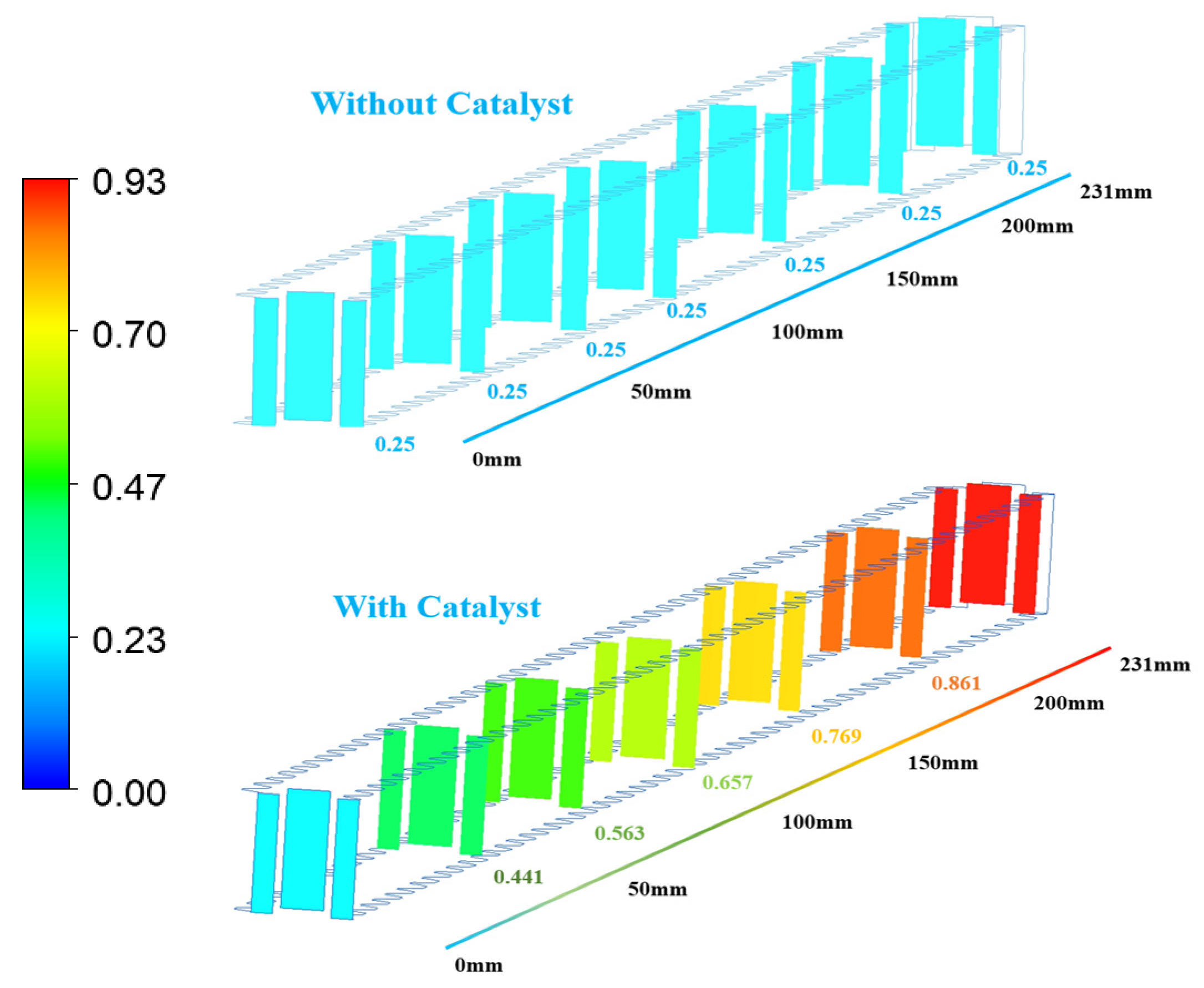
Figure 2. Structured hexahedral mesh with near-wall refinement.
Energies 19 01419 g002
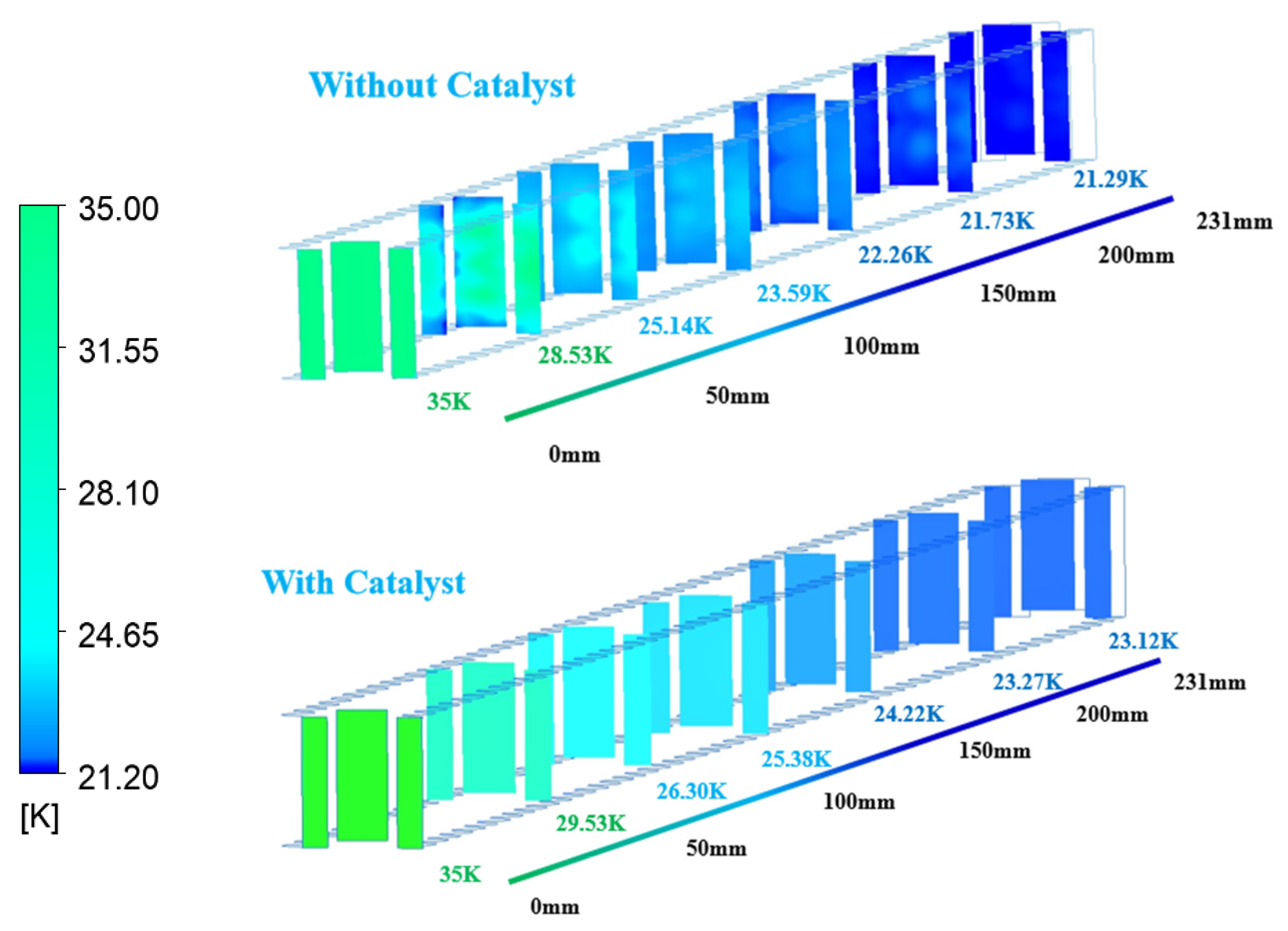
Figure 3. Grid independence test results as a function of the number of elements.
Energies 19 01419 g003
Figure 4. Comparison of coburn j-factor and Fanning friction factor f.
Energies 19 01419 g004
Figure 5. Comparisons of the numerical results with the experimental data at p = 0.20685 MPa.
Energies 19 01419 g005
Figure 6. Comparisons of the numerical results with the experimental data at p = 0.420895 MPa.
Energies 19 01419 g006
Figure 7. Flowchart of the genetic algorithm optimization design.
Energies 19 01419 g007
Figure 8. Effects of wave length on coburn j-factor and Fanning friction factor f (wa = 1 mm, L = 200 mm).
Energies 19 01419 g008
Figure 9. Effect of wave length on outlet temperature (wa = 1 mm, L = 200 mm).
Energies 19 01419 g009
Figure 10. Effect of wave length on exported para-hydrogen content (wa = 1 mm, L = 200 mm).
Energies 19 01419 g010
Figure 11. Effect of wave length on the comprehensive performance index and pressure drop (wa = 1 mm, L = 200 mm).
Energies 19 01419 g011
Figure 12. Effect of wave length on axial variation in temperature (wa = 1 mm, L = 200 mm).
Energies 19 01419 g012
Figure 13. Effects of wave height on coburn j-factor and Fanning friction factor f (ws = 8 mm, L = 200 mm).
Energies 19 01419 g013
Figure 14. Effect of wave height on outlet temperature (ws = 8 mm, L = 200 mm).
Energies 19 01419 g014
Figure 15. Effect of wave height on exported para-hydrogen content (ws = 8 mm, L = 200 mm).
Energies 19 01419 g015
Figure 16. Effect of wave height on the comprehensive performance index and pressure drop (ws = 8 mm, L = 200 mm).
Energies 19 01419 g016
Figure 17. Effect of wave height on axial variation in temperature (ws = 8 mm, L = 200 mm).
Energies 19 01419 g017
Figure 18. Influence of different lengths on the coburn j-factor and Fanning friction factor f (ws = 8 mm, wa = 1.5 mm).
Energies 19 01419 g018
Figure 19. Influence of different lengths on the exported para-hydrogen content (ws = 8 mm, wa = 1.5 mm).
Energies 19 01419 g019
Figure 20. Influence of different lengths on the outlet temperature (ws = 8 mm, wa = 1.5 mm).
Energies 19 01419 g020
Figure 21. Influence of different lengths on the comprehensive performance index and pressure drop (ws = 8 mm, wa = 1.5 mm).
Energies 19 01419 g021
Figure 22. Effect of different lengths on axial variation in temperature (ws = 8 mm, wa = 1.5 mm).
Energies 19 01419 g022
Figure 23. Fitting error of exported para-hydrogen content.
Energies 19 01419 g023
Figure 24. Fitting error of coburn j-factor.
Energies 19 01419 g024
Figure 25. Fitting error of Fanning friction factor f.
Energies 19 01419 g025
Figure 26. Fitting error of comprehensive performance index.
Energies 19 01419 g026
Figure 27. Convergence Curve.
Energies 19 01419 g027
Figure 28. Effect of length, wave height, and wave length on comprehensive performance index, Re = 941.
Energies 19 01419 g028
Figure 29. Effect of length, wave height, and wave length on comprehensive performance index, Re = 1074.
Energies 19 01419 g029
Figure 30. Effect of length, wave height, and wave length on comprehensive performance index, Re = 1245.
Energies 19 01419 g030
Figure 31. Effect of length, wave height, and wave length on comprehensive performance index, Re = 1411.
Energies 19 01419 g031
Figure 32. Effect of length, wave height, and wave length on comprehensive performance index, Re = 1577.
Energies 19 01419 g032
Figure 33. Effect of the presence of catalyst on the coburn j-factor and Fanning friction factor f.
Energies 19 01419 g033
Figure 34. Effect of the presence or absence of the catalyst on exported para-hydrogen content and outlet temperature.
Energies 19 01419 g034
Figure 35. Effect of the presence or absence of the catalyst on exported para-hydrogen content.
Energies 19 01419 g035
Figure 36. Effect of the presence or absence of the catalyst on temperature.
Energies 19 01419 g036
Table 1. Boundary Conditions for Numerical Simulation.
Boundary LocationBoundary TypeKey Parameters/Values
Hot Side InletMass-flow-inletThot,in = 35 K; Re = 941~1577;
para-H2 fraction = 0.25;
ortho-H2 fraction = 0.75
Cold Side InletMass-flow-inletTcold,in = 21.2 K; Re = 900
Top/Bottom/SidePeriodic boundaryApplied to specific surfaces
Hot Side OutletPressure-outlet
Cold Side OutletPressure-outlet
WallsNo-slip Wall
Table 2. Structure and performance parameters of the catalyst layer [32].
Catalyst TypesPorosity εParticle Diameter dp/μmDensity ρs/(kg·m−3)Thermal Conductivity λs/(W(m·k))Specific Heat cp/(J/(kg·K))
Fe2O30.559052400.58700
Table 3. Recommended values of wave length, wave height and length.
Rews (mm)wa (mm)L (mm)e
94111.82.642313.305 × 10−3
107411.42.152673.033 × 10−3
124511.41.763102.773 × 10−3
141111.31.483532.564 × 10−3
157711.21.263962.39 × 10−3
Disclaimer/Publisher’s Note: The statements, opinions and data contained in all publications are solely those of the individual author(s) and contributor(s) and not of MDPI and/or the editor(s). MDPI and/or the editor(s) disclaim responsibility for any injury to people or property resulting from any ideas, methods, instructions or products referred to in the content.