1. Introduction
The transition toward low-emission and climate-neutral energy systems represents one of the central challenges facing European Union Member States in the coming decades. In line with the European Green Deal and the “Fit for 55” package, national energy systems are required to undergo profound structural changes, involving the rapid expansion of renewable energy sources, deep decarbonization of industry, and increasing system flexibility. In this context, renewable hydrogen has gained significant attention as a potential energy carrier capable of supporting emission reductions in sectors where direct electrification is technically constrained or economically inefficient.
Hydrogen has long played an important role in industrial processes, particularly in refineries, ammonia and fertiliser production, and the chemical industry. Hydrogen is widely regarded as a key energy carrier enabling deep decarbonization across multiple sectors; however, its large-scale deployment remains constrained by technological, material, and system-level challenges [
1,
2]. However, conventional hydrogen production is predominantly based on fossil fuels and is associated with substantial greenhouse gas emissions. The growing interest in renewable hydrogen, produced via water electrolysis powered by renewable electricity, reflects the need to decarbonise existing hydrogen demand while enabling new applications consistent with long-term climate objectives. At the European level, hydrogen is increasingly framed as a strategic element of energy system integration, supporting sector coupling, renewable energy integration, and long-term energy storage. Recent studies emphasize that further advances in hydrogen technologies require coordinated progress in materials development, system integration, and process optimization [
3,
4,
5].
Poland occupies a distinctive position in the European hydrogen landscape. On the one hand, it is among the largest hydrogen producers in the European Union, with a well-developed industrial base and established hydrogen demand. On the other hand, Poland’s energy system remains highly carbon-intensive, with a significant dependence on fossil fuels and relatively limited availability of low-cost renewable electricity. These structural characteristics create both opportunities and challenges for the deployment of renewable hydrogen, making Poland a particularly relevant case for analysing the conditions under which hydrogen can contribute effectively to a low-emission energy transition.
Despite the growing body of policy documents and strategic roadmaps addressing hydrogen development, the role of renewable hydrogen in national energy systems remains subject to considerable uncertainty. Key challenges include high production costs, limited infrastructure, regulatory and institutional barriers, and competition with alternative decarbonization pathways, particularly direct electrification. Moreover, the environmental and economic benefits of renewable hydrogen are highly context-dependent and strongly influenced by system-level factors such as renewable electricity availability, grid integration, and market design.
Against this background, this article provides a comprehensive review of the role of renewable hydrogen in the development of low-emission energy systems in Poland. The analysis synthesises current knowledge on production pathways, regulatory and institutional frameworks, infrastructure requirements, environmental and economic impacts, and barriers to large-scale deployment. Particular attention is given to the system-level integration of renewable hydrogen and its interaction with other elements of the energy transition, including renewable electricity expansion and European market integration.
In recent years, several review studies have addressed hydrogen energy development in Poland, focusing on selected aspects such as production technologies, policy frameworks, or sectoral applications. However, many of these contributions were developed prior to the adoption of the RED III framework and the most recent EU delegated acts on renewable hydrogen, or they address hydrogen deployment without explicitly accounting for evolving regulatory constraints related to additionality, temporal correlation, and system integration. This article builds upon and extends the existing literature by incorporating the latest regulatory developments at the EU level, including RED III and delegated acts adopted in 2023–2024, as well as the most recent national policy dynamics and implementation challenges observed up to 2025. In addition, the review places stronger emphasis on the electricity–hydrogen–industry coupling from a system perspective, explicitly considering efficiency losses, infrastructure constraints, and system-level costs associated with hydrogen-based decarbonization pathways. By integrating regulatory updates, infrastructure analysis, and system integration considerations, this article offers an updated and more comprehensive assessment of the realistic role of renewable hydrogen in Poland’s low-emission energy transition.
The main objective of this review is to assess under what conditions renewable hydrogen can contribute meaningfully to Poland’s low-emission energy transition and to identify realistic development pathways consistent with both national circumstances and European climate policy objectives. By adopting a system-oriented perspective, the article aims to clarify the potential role of renewable hydrogen as a complementary element of the energy transition rather than a standalone solution, thereby contributing to the ongoing academic and policy debate on hydrogen deployment in Europe [
5,
6]. Unlike many existing reviews that focus on individual aspects of hydrogen development (technology, policy, or economics), this article adopts a system-oriented analytical perspective, integrating regulatory frameworks, infrastructure constraints, safety considerations, and renewable electricity availability to assess the realistic role of renewable hydrogen in Poland’s low-emission energy transition. The review is structured around a four-dimensional analytical framework, encompassing (i) regulatory and institutional conditions, (ii) technological pathways and infrastructure readiness, (iii) environmental and economic system impacts, and (iv) spatial and sectoral differentiation.
Accordingly, this review examines the role of renewable hydrogen in the development of low-emission energy systems in Poland through a structured and system-oriented approach. The article first outlines the regulatory and policy framework shaping hydrogen development at the European Union and national levels, followed by an assessment of the current state of renewable hydrogen production in Poland. It then reviews the environmental and economic impacts associated with renewable hydrogen deployment, as well as the infrastructure requirements necessary for the emergence of a hydrogen economy [
5,
6,
7,
8]. Subsequently, the key technological, economic, infrastructural, and regulatory barriers to large-scale deployment are analysed. Finally, the article discusses future perspectives and development scenarios for renewable hydrogen in Poland, leading to conclusions on the conditions under which hydrogen can contribute effectively as a complementary element of the country’s low-emission energy transition. Importantly, the feasibility and system role of renewable hydrogen in Poland are not uniform across the country but depend strongly on regional factors, including the availability of wind and solar resources, local electricity prices, existing industrial hydrogen demand, and the proximity of energy and gas infrastructure.
In terms of academic orientation, this article is not intended as a purely policy analysis, a detailed techno-economic assessment, or a system modeling study. Instead, it adopts a system-oriented review perspective, integrating policy and regulatory frameworks, technological pathways, infrastructure readiness, safety constraints, and renewable electricity availability into a coherent analytical narrative. The focus is placed on understanding how these dimensions interact at the national level and how they jointly determine the realistic role of renewable hydrogen in Poland’s low-emission energy transition. In contrast to many existing reviews that address hydrogen development from isolated technological, economic, or policy perspectives, this review explicitly emphasizes system integration and country-specific conditions, highlighting the interdependencies between regulation, infrastructure, energy system constraints, and sectoral demand. Rather than providing a quantitative optimization of hydrogen deployment, this review focuses on synthesizing system-level insights from policy analysis, infrastructure constraints, and existing model-based studies.
2. Hydrogen in the Context of Sustainable Energy Systems
Hydrogen is the lightest chemical element and the most common element of matter in the Universe, accounting for approximately 75% of its mass. Under normal conditions, it is a colourless, odorless, and tasteless diatomic gas. Key parameters determining hydrogen’s suitability as an energy carrier include its exceptionally high calorific value, approximately 120 MJ/kg, nearly three times higher than that of gasoline [
4]. This indicates that hydrogen can deliver significant amounts of energy with a low fuel mass, which is a significant advantage, especially in transportation applications. The unique properties of hydrogen require the application of specific safety principles when designing storage tanks and transfer systems. In accordance with the requirements of explosion-proof systems (ASE ATEX), it is necessary to consider, among other things, the following: The invisibility of the hydrogen flame in daylight, the absence of smoke during combustion, and the risk of misinterpreting water vapor as fire smoke [
5,
6,
7,
8]. Furthermore, the small size of hydrogen molecules increases the risk of penetration through threaded joints, flanges, valves, and seals. This process can lead to degradation of structural materials due to so-called hydrogen embrittlement, resulting in a reduction in their mechanical strength and a potential emergency hazard [
9,
10]. However, hydrogen is a highly reactive gas. Its wide flammability range—from approximately 4% to 75% by volume in a mixture with air—makes it a flammable medium. Furthermore, it is characterized by very high diffusivity, which means it tends to penetrate various materials while burning rapidly with an intense flame. Due to its physicochemical properties, hydrogen is widely used in numerous economic sectors. In the refining and petrochemical industries, it plays a key role in processes such as reforming, hydrocracking, hydrorefining, ammonia and methanol synthesis, hydrogenation of various chemical compounds, and aniline production [
11]. It also plays a significant role in the food sector, where it is used, among other things, in the production of margarine and sweeteners. In the energy and transport sectors, hydrogen is used as a fuel for fuel cell vehicles; in metallurgy, it is used as a reducing agent for iron ores; and in nuclear power—in the form of hydrogen present in H
2O or D
2O—it acts as a neutron moderator. In recent years, there has also been a growing interest in the use of hydrogen in the cosmetics industry, especially in the context of treatments known as “hydrogen purification” [
12,
13]. Combustion of hydrogen in the presence of oxygen leads to the formation of water, which allows hydrogen to be considered a zero-emission fuel in terms of CO
2 emissions [
14]. In electrochemical processes, such as reactions occurring in fuel cells, an additional effect of hydrogen oxidation is the generation of electrical energy, which significantly expands the range of potential applications of this element.
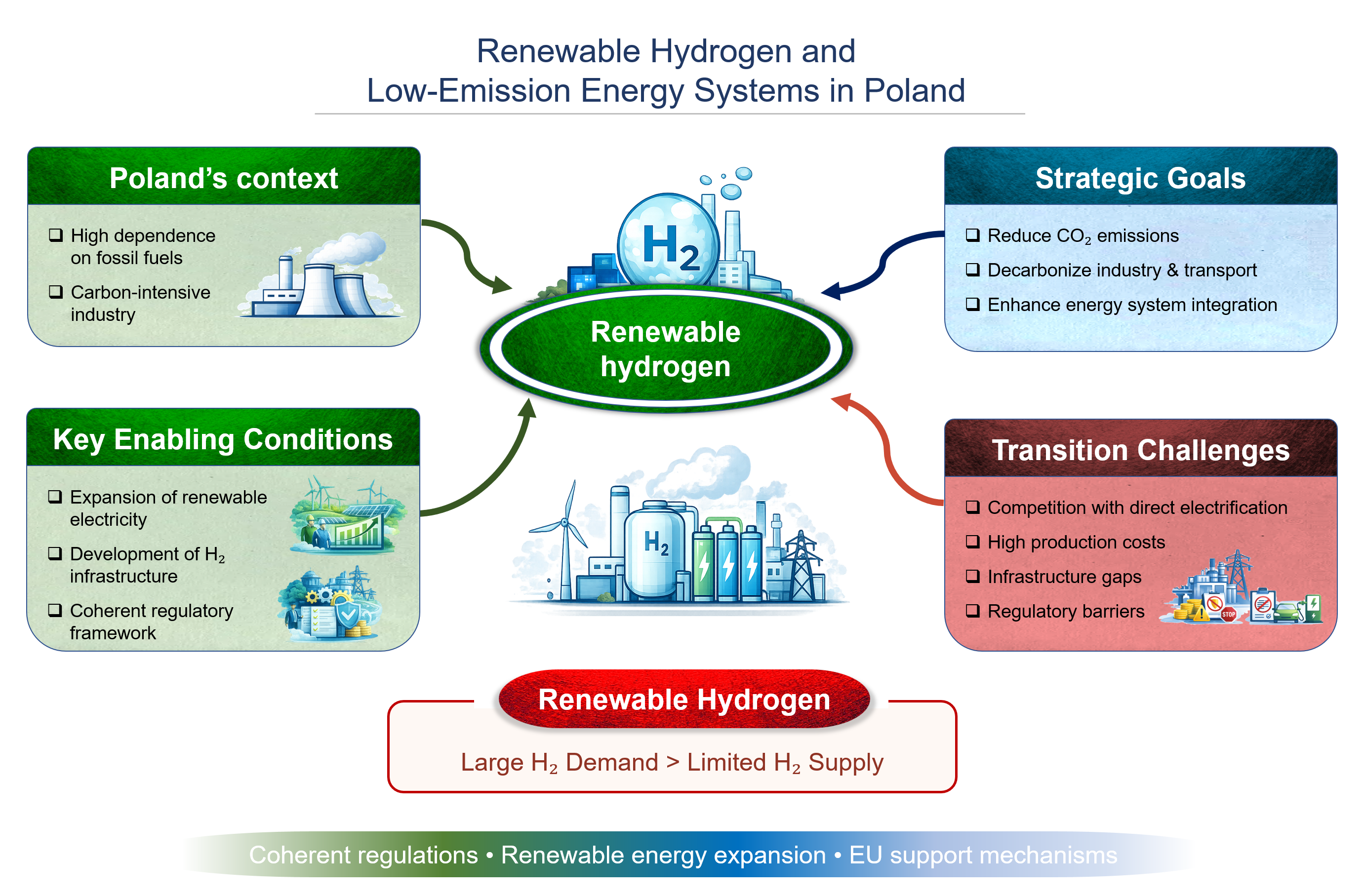
Currently, the dominant method of obtaining hydrogen remains technologies based on the processing of fossil fuels. However, the ongoing commercialization of electrolysers and fuel cells [
15,
16,
17] significantly increases the potential for implementing water electrolysis as a technology that supports emission reduction and sustainable energy transformation. A color-coded hydrogen classification system is used in the literature, reflecting the type of raw material used, the nature of the production process, and the associated environmental impact [
18,
19]. Hydrogen is classified according to the production technology and the energy source used in the production process. Green hydrogen is produced by electrolysis of water powered by renewable energy, while yellow and pink/purple hydrogen utilize energy from the national grid and nuclear power plants, respectively. In thermal processes, hydrogen is produced primarily from fossil fuels—methane or coal—leading to the formation of gray, blue (using CCS technology), black, and brown hydrogen [
20,
21,
22,
23]. A separate category is turquoise hydrogen, produced by methane pyrolysis, and white hydrogen, which occurs naturally in geological structures. Within this typology, the following can be distinguished (
Figure 1). Colors correspond to commonly used hydrogen classification terminology (e.g., green, blue, grey, black, brown, turquoise). Hydrogen production pathways are grouped according to the dominant conversion process (electrochemical vs. thermochemical), rather than the carbon content of the feedstock. Methane pyrolysis is therefore classified under thermochemical pathways, despite being distinct from coal-based gasification:
Green hydrogen—produced by electrolysis of water powered by renewable energy sources such as wind, photovoltaic, or hydroelectric installations;
Blue hydrogen—obtained by steam methane reforming or coal gasification, using carbon capture and storage (CCS) technology;
Grey hydrogen—produced from fossil fuels using methods similar to blue hydrogen, but without technologies that reduce CO2 emissions;
Black/brown hydrogen—derived from the gasification of hard coal (black) or lignite (brown), respectively;
Yellow hydrogen—produced through electrolysis using electricity drawn from the national grid;
Turquoise hydrogen—produced through methane pyrolysis, which produces solid carbon as a byproduct, giving this technology a potentially lower carbon footprint;
White hydrogen—occurring naturally in the Earth’s geological structures;
Pink/purple hydrogen—produced through electrolysis powered by energy from nuclear power plants.
Selected hydrogen production technologies differ significantly in terms of their environmental performance, particularly with respect to energy intensity and lifecycle CO
2 emissions [
24]. Renewable hydrogen produced via electrolysis powered by renewable electricity is characterized by comparatively low energy requirements and the lowest associated emissions among the available pathways. Turquoise hydrogen and low-emission hydrogen produced using nuclear-based electricity exhibit intermediate environmental performance, reflecting moderate energy intensity and lifecycle emissions. Blue hydrogen, although benefiting from emission reductions enabled by carbon capture and storage technologies, remains associated with higher energy intensity and residual CO
2 emissions when compared to renewable and nuclear-based options. In contrast, fossil fuel-based hydrogen production routes, such as grey and brown hydrogen, are characterized by the highest lifecycle CO
2 emissions and high energy consumption, making them the least favorable options from an environmental perspective. The values discussed represent indicative ranges reported in the literature rather than exact measurements.
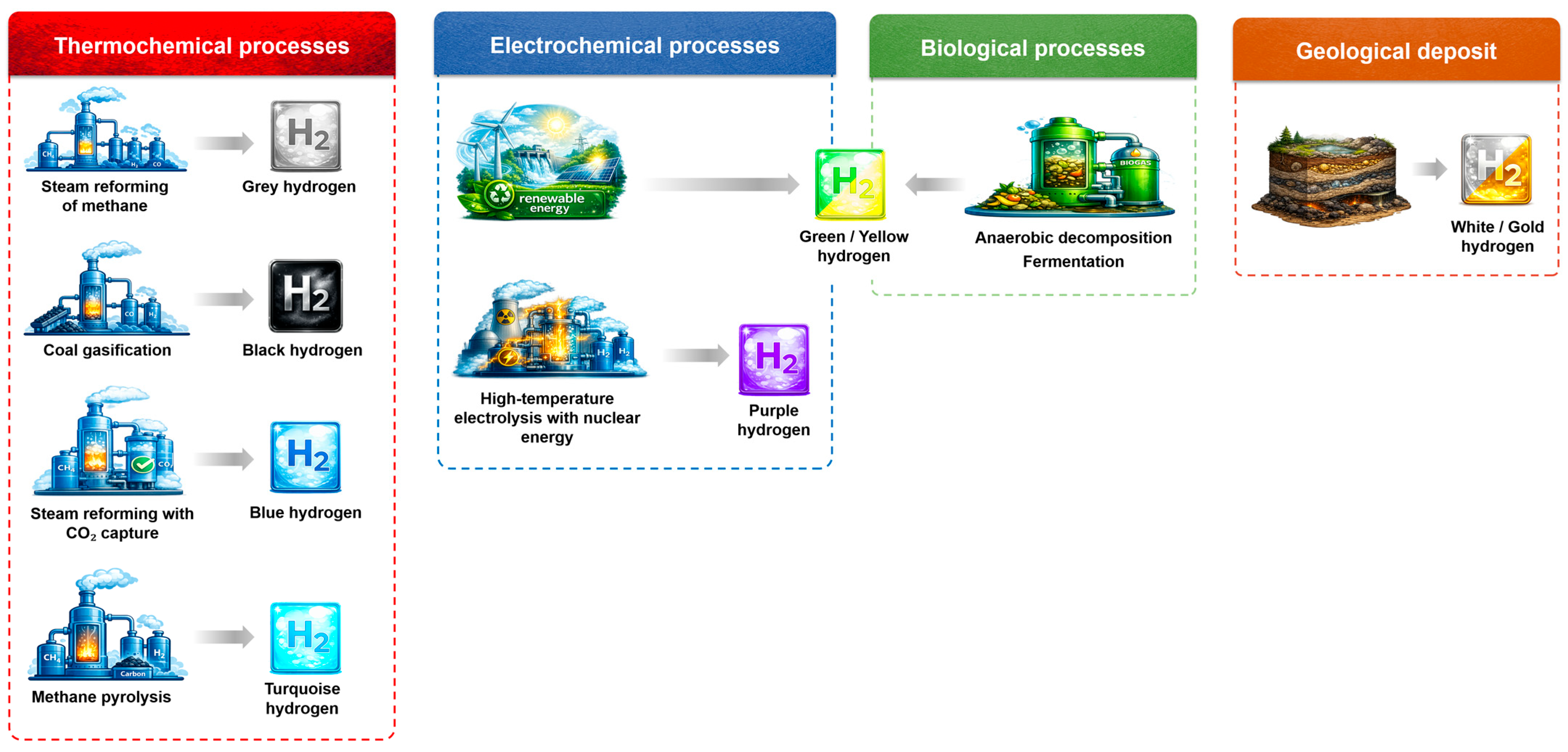
Figure 2 illustrates the role of hydrogen as a key energy carrier in low-emission systems and in sectors difficult to decarbonize. The idea behind using hydrogen in these sectors is that energy from renewable sources (RES) powers an electrolysis process, which splits water into hydrogen and oxygen. The produced hydrogen can then be used in energy-intensive industries, zero-emission transport, or as a medium for long-term energy storage and power system stabilization. Industry is one of the key sectors where hydrogen can play a significant role in achieving climate neutrality. This applies both to current applications of hydrogen as a raw material and to new areas of its use. In the chemical sector, hydrogen is an essential raw material for the production of ammonia and methanol [
25]. Decarbonizing these processes requires replacing grey hydrogen with low-emission hydrogen. In the iron and steel industry, hydrogen can act as a reducing agent in the direct reduction of iron ore, enabling almost complete elimination of CO
2 emissions. Hydrogen also has great potential in high-temperature industrial processes, such as furnaces and kilns, where electrification is technically difficult or uneconomical [
26,
27]. The role of hydrogen in the heating sector remains one of the most debated aspects of hydrogen-based decarbonization pathways. While hydrogen can technically be used for space heating through dedicated boilers or by blending with natural gas, comparative analyses consistently indicate that such solutions are significantly less energy-efficient than direct electrification options, particularly heat pumps. From a system efficiency perspective, producing hydrogen via electrolysis and subsequently converting it into heat involves multiple energy conversion steps, resulting in substantially lower overall efficiencies than those achieved by heat pumps. Heat pump technologies typically deliver three to four units of useful heat per unit of electricity consumed, whereas hydrogen-based heating pathways may require three to five times more renewable electricity per unit of delivered heat, depending on the production and conversion route. Economic assessments reported in the literature further indicate that hydrogen-based heating solutions are associated with significantly higher system costs compared to heat pumps in most residential and commercial applications, even under optimistic assumptions regarding future hydrogen production costs [
28]. As a result, many studies conclude that the use of hydrogen for heating should be limited to niche applications, such as buildings with specific technical constraints, hard-to-retrofit areas, or cases where electrification is not feasible. In the Polish context, this suggests that hydrogen is unlikely to become a dominant solution in the heating sector and should instead be treated as a complementary option within a broader low-emission energy system.
In transport, hydrogen has the greatest potential in segments where electric batteries face technical limitations [
29,
30]. This applies primarily to heavy-duty transport, long-distance road transport, shipping, and aviation. Hydrogen can be used directly in fuel cells or indirectly as a feedstock for the production of synthetic fuels, such as e-fuels or ammonia [
16,
17,
22]. These solutions enable the decarbonization of sectors that are particularly difficult to electrify. In the power sector, hydrogen primarily serves as a system flexibility carrier. Surplus electricity from renewable sources can be converted into hydrogen, which is then stored and used during periods of energy shortage [
31,
32,
33,
34]. Hydrogen can power gas turbines designed to burn hydrogen or hydrogen-gas mixtures, providing a dispatchable, low-emission energy source. In this context, hydrogen is an important complement to a system based on variable renewable sources.
The concept presented in the figure depicts hydrogen as a key energy carrier in low-emission systems, particularly in sectors considered difficult to decarbonize. Its role primarily involves enabling the integration of renewable energy sources with industry, transport, and the power sector by converting electricity from renewable sources into chemical energy in the form of hydrogen [
35,
36]. This approach aligns with the European Union’s energy transition, which aims to achieve climate neutrality while maintaining energy supply security. In the industrial sector, hydrogen is a key element in the decarbonization of production processes, both as a raw material (e.g., in the chemical industry) and as an energy source in high-temperature processes. In particular, replacing grey hydrogen with low-emission hydrogen is a prerequisite for reducing emissions in the production of ammonia, methanol, and the iron and steel industry. The importance of these applications is directly reflected in EU regulations, such as the Fit for 55 package and the revised RED III directive, which promote the use of renewable fuels of non-biological origin (RFNBO) in energy-intensive industries [
35,
36]. In transport, hydrogen is perceived as a key solution for segments where battery electrification is technically or economically limited, particularly in heavy transport, shipping, and aviation. EU regulations increasingly differentiate the role of hydrogen depending on the sector, supporting its use where it brings the greatest added value in terms of emission reduction. This applies both to the direct use of hydrogen in fuel cells and to indirect use in the form of synthetic fuels, including ammonia and e-fuels. In the electricity sector, hydrogen acts as a system flexibility carrier, enabling long-term energy storage and balancing variable renewable sources. The “power-to-hydrogen-to-power” concept is increasingly being included in EU strategic documents as an element supporting the stability of the energy system in conditions of high share of renewable energy sources [
37,
38]. At the same time, regulations regarding hydrogen quality, its origin and the reduction of greenhouse gas emissions determine which technologies can be considered compatible with climate goals.
In summary, the role of hydrogen in the energy transition is closely linked to the regulatory framework, which defines not only quantitative targets but also the environmental and energy conditions for its production and use. EU and national regulations are increasingly directing the development of the hydrogen sector towards applications with the highest emission reduction potential, which is crucial for the environmental performance of the entire hydrogen value chain [
39,
40,
41,
42].
3. Policy and Regulatory Framework (EU and Poland)
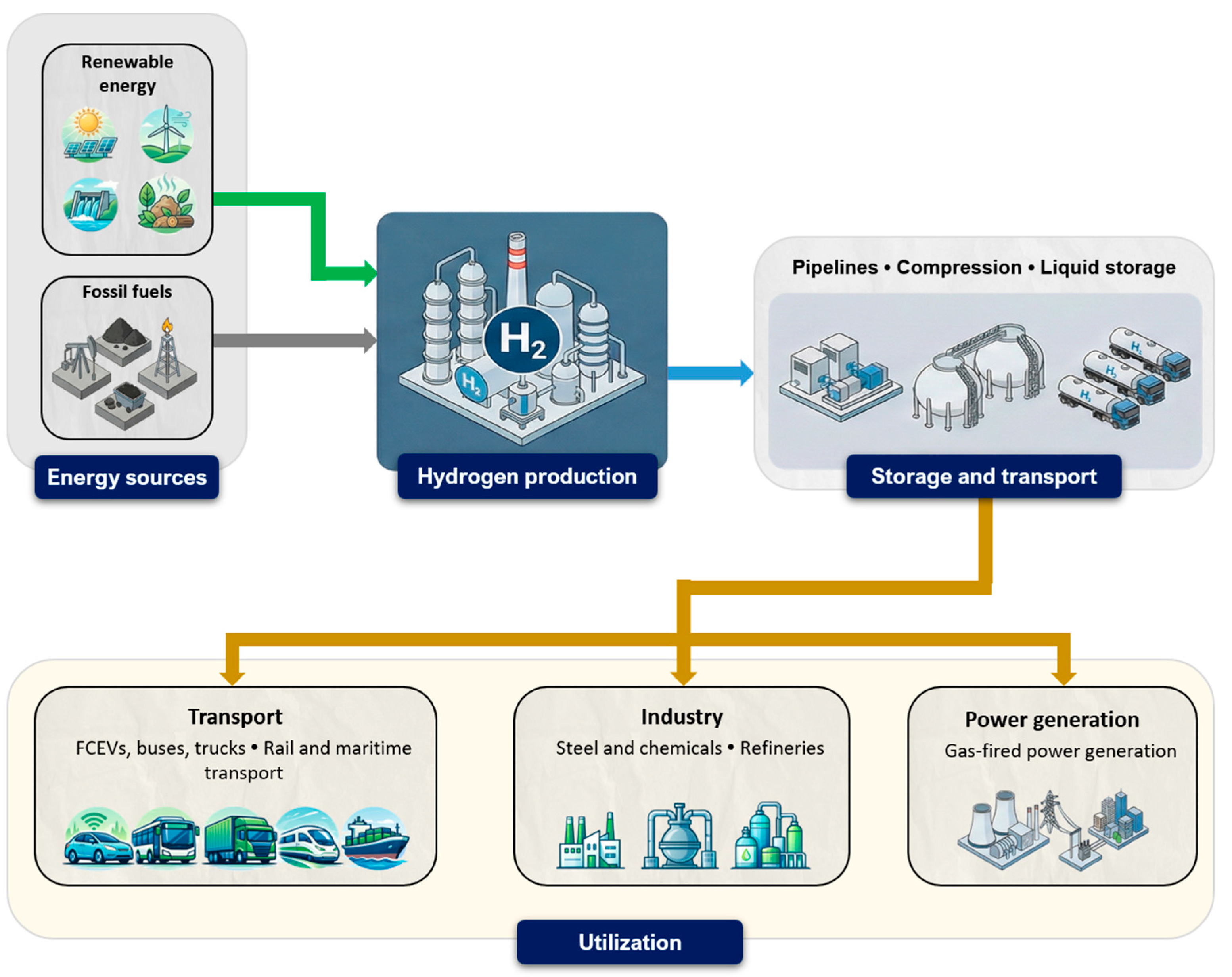
The hydrogen value chain encompasses successive stages from primary energy acquisition, through hydrogen production, storage, and transport, to final use in economic sectors (
Figure 3). The process begins with renewable energy sources and fossil fuels, which provide the energy necessary to produce hydrogen in production facilities. Hydrogen is then stored and transported using pipeline infrastructure, compression systems, and liquid storage, enabling its larger-scale distribution. Finally, hydrogen is used in transport, industry, and electricity generation, serving as a flexible energy carrier and supporting the decarbonization of sectors difficult to directly electrify.
Building on the hydrogen value chain presented above, the dynamic development of hydrogen technologies in the European Union is strongly influenced by the regulatory and strategic framework, which defines both the directions of market development and the detailed technical requirements for hydrogen production, quality, and origin [
16,
17,
18,
19]. Renewable hydrogen is of particular importance in this context, considered a key energy carrier in the energy transition process and the achievement of EU climate goals.
Table 1 presents an overview of the most important strategic documents and legal acts at the EU and national levels that regulate or influence the development of renewable hydrogen [
42,
43,
44,
45,
46,
47,
48,
49]. The summary includes the scope of individual regulations, the resulting requirements for hydrogen production from renewable sources, and the current status of their implementation in Poland. This approach allows for an assessment of the degree of consistency between the national legal framework and EU policy and the identification of legislative gaps and institutional barriers. The analysis shows that despite clearly defined objectives and a growing number of EU-level regulations regarding renewable hydrogen certification, additionality criteria, and greenhouse gas emission reductions, the implementation of these requirements in Poland remains incomplete and delayed. The lack of comprehensive certification mechanisms, financial support systems, and clear rules for integrating hydrogen into the domestic energy market pose a significant challenge to the development of the full hydrogen value chain. This summary provides a starting point for further technical and energy analyses, enabling an assessment of the impact of regulations on energy efficiency, costs, and the pace of hydrogen technology implementation in Poland and across the European Union.
3.1. Mechanisms to Support the Development of Renewable and Low-Emission Hydrogen
Policy support for renewable hydrogen development in the EU and Poland is implemented through a combination of financial subsidies, market-based instruments, and binding regulatory targets, which together aim to reduce investment risk, stimulate demand, and enable large-scale deployment. The development of the hydrogen sector in the European Union is largely dependent on public intervention, particularly in the market creation and growth phase, where high capital costs and limited market demand prevent deployment without targeted policy support. The analyzed documents indicate the need for a comprehensive support package encompassing the entire hydrogen value chain—from production, through infrastructure, to end demand—combining financial subsidies, market-based instruments, and binding regulatory targets. One of the key instruments is investment and operating subsidies, aimed at reducing the high initial capital expenditure of electrolysers and hydrogen infrastructure, as well as narrowing the cost gap between renewable and fossil-based hydrogen in the early deployment phase. Support mechanisms are transitional in nature and are particularly important in the “market creation” phase. In the EU, this role is played by, among others, the following concrete implementation instruments:
The Hydrogen Council report identifies Contracts for Difference (CfD) and Carbon Contracts for Difference (CCfD) as among the most effective tools for reducing investment risk [
61,
62,
63]. They ensure revenue stability by compensating the difference between the cost of hydrogen production and the market price of fossil fuels or the price of CO
2 emissions, thereby reducing price volatility and improving project bankability. These instruments support the supply side (hydrogen production) while simultaneously stimulating industrial demand (e.g., steel, chemicals).
A significant element of support is the binding sectoral targets introduced in the amended RED III directive, including the mandatory participation of renewable hydrogen in industry (42% by 2030), which constitutes a binding quantitative demand-side target for renewable hydrogen and a minimum share of renewable hydrogen in transport [
32,
61,
62,
63,
64]. These targets serve as an investment signal, reducing regulatory uncertainty and increasing market credibility. ENTSO-E emphasizes the importance of coordinating electricity and hydrogen systems. Support includes network planning (TEN-E, TYNDP), developing the flexibility of electrolysers as DSR resources, and enabling electrolyser participation in balancing markets and ancillary services. This approach increases the efficiency of the entire energy system. Despite the extensive set of support instruments, the literature clearly points to numerous regulatory and institutional barriers that limit the effectiveness of financial support mechanisms that slow down the development of renewable hydrogen in the EU [
65,
66,
67,
68,
69,
70]. Among the most frequently criticized barriers are the requirements arising from delegated acts to the RED, in particular:
While these are intended to protect the integrity of the electricity system, in practice they significantly increase production costs and limit the operational flexibility of electrolysers [
71]. Despite the existence of a common EU framework, the implementation of regulations at the Member State level is uneven. This phenomenon, highlighted by both EN-TSO-E [
72] and the European Court of Auditors, results in investment delays, a lack of coherent support schemes, and a low level of long-term off-take agreements. Significant administrative and institutional obstacles and barriers include:
Lengthy permitting procedures;
Lack of a “one-stop-shop” for hydrogen projects;
Unclear division of responsibilities between electricity grid operators and future hydrogen network operators (HNOs).
The Hydrogen Council emphasizes that these barriers significantly increase project risks and capital costs [
68,
69,
70]. Recent European Commission documents point to the growing importance of low-emission hydrogen as a bridging technology [
69,
70,
71,
72,
73,
74,
75]. While this could accelerate market scaling, it poses the risk of weakening incentives for renewable hydrogen, blurring long-term climate neutrality goals, and interpretative disputes over definitions and certification.
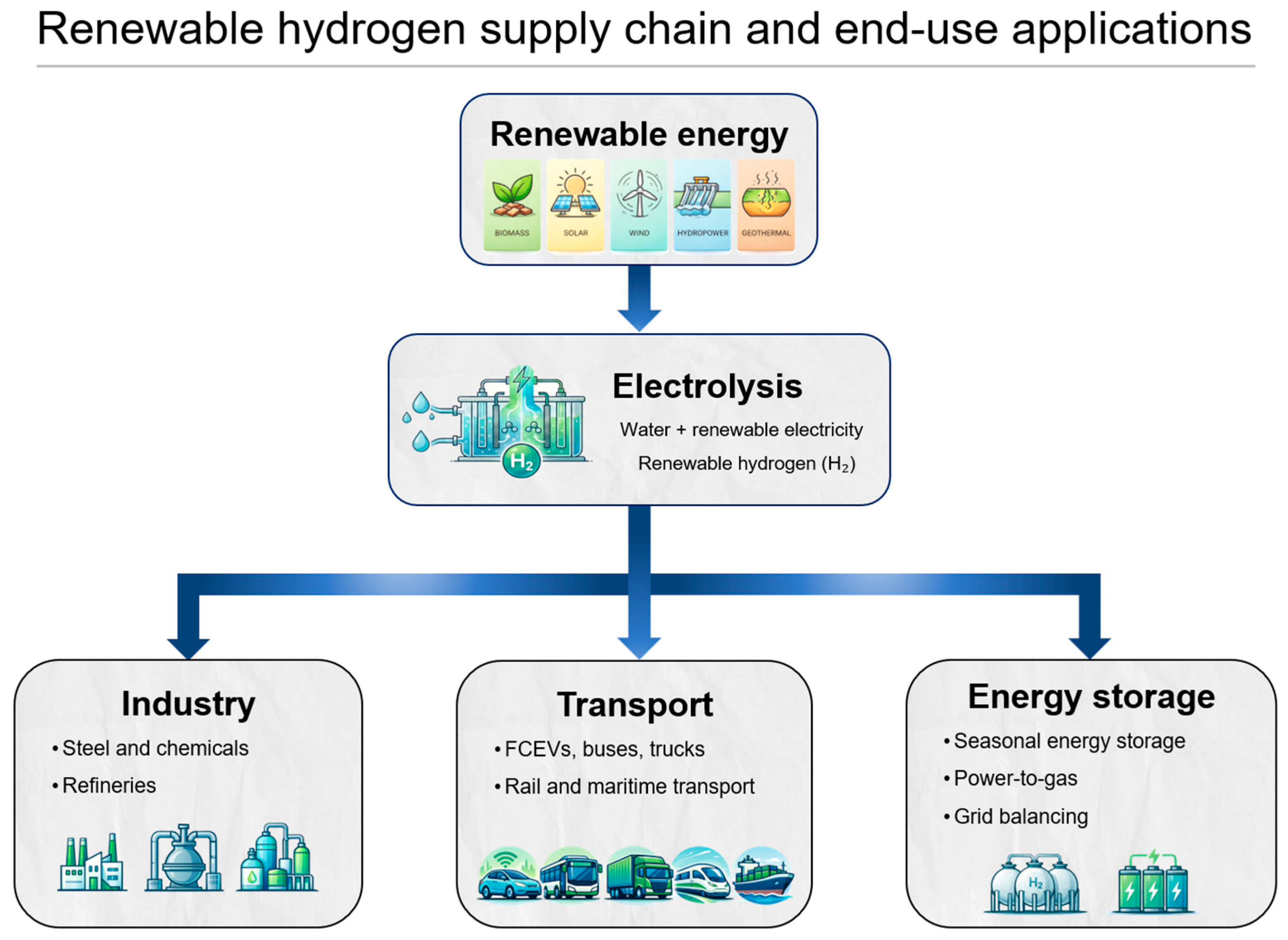
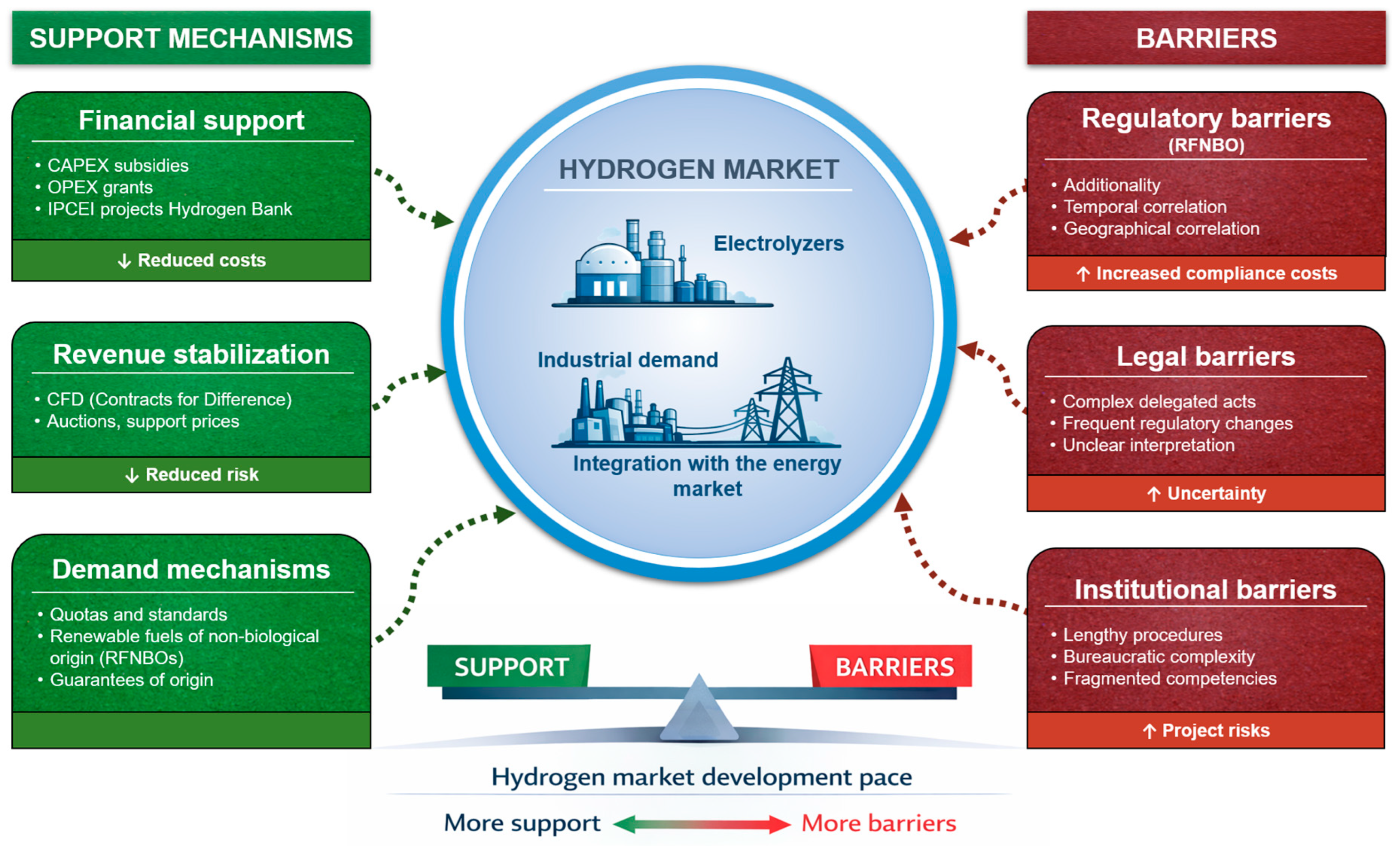
Figure 4 illustrates the systemic balance between support instruments and regulatory and institutional barriers that collectively determine the pace of hydrogen market development in the European Union. On the one hand, mechanisms aim to reduce investment risk and improve project profitability, in particular by reducing capital and operating costs, stabilizing revenues, and creating predictable demand. These elements strengthen the supply and demand sides of the market, enabling the integration of electrolysers into the electricity system and the gradual scaling of hydrogen infrastructure. On the other hand, it is emphasized that the effectiveness of support is limited by regulatory, legal, and institutional barriers that increase transaction costs, prolong decision-making processes, and increase project risk. Of particular importance here are the requirements for the qualification of renewable hydrogen and the lack of consistency in the implementation of regulations at the national level, which weaken investment signals and hinder the development of long-term business models. This shows that the pace of hydrogen market development does not depend solely on the scale of financial support, but on the ability of the regulatory system to reduce barriers and ensure stable, predictable conditions for the market to function.
From a policy perspective, the relationships depicted in
Figure 4 imply that increasing financial support alone is insufficient to ensure rapid and effective hydrogen market development if regulatory and institutional barriers remain unresolved. The figure highlights the need for a balanced policy approach, in which support instruments are complemented by regulatory simplification, clearer implementation of delegated acts, and improved institutional coordination. In practical terms, this suggests that policy efforts should prioritize reducing administrative complexity, shortening permitting procedures, and increasing regulatory predictability, particularly with respect to RFNBO qualification criteria. In the Polish context, addressing these structural barriers is essential to prevent support mechanisms from being offset by compliance costs and investment uncertainty, and to enable renewable hydrogen to contribute effectively to long-term decarbonization objectives.
The development of the hydrogen market in the European Union still requires strong public intervention, including financial instruments, sectoral targets, and coordination of energy systems, which together reduce investment risk and stimulate demand in key economic sectors [
68,
69,
70]. At the same time, the complex and unevenly implemented regulatory framework, particularly the restrictive criteria of delegated acts to RED III [
32] and administrative barriers, significantly limit the pace of renewable hydrogen development and increase investment uncertainty, which creates the risk of a shift towards bridging technologies at the expense of long-term climate goals.
3.2. Current State of Renewable Hydrogen Production in Poland
Poland occupies a unique position in the European hydrogen landscape due to its relatively high total hydrogen production volume, while the share of renewable hydrogen is very limited. Current estimates indicate that Poland produces approximately one million tons of hydrogen per year, placing it among the largest hydrogen producers in the European Union [
34,
55]. However, this production relies almost exclusively on fossil fuels, primarily through steam reforming of methane from natural gas and hydrogen as a by-product of industrial processes, classifying most of the hydrogen produced domestically as “grey” hydrogen. This relatively high level of hydrogen production, however, reflects a structural characteristic of Poland’s energy-intensive and carbon-intensive industrial base rather than a transition toward a hydrogen-based low-emission energy system. The majority of domestically produced hydrogen is generated within sectors such as refining, chemicals, fertilizers, and metallurgy, which remain strongly dependent on fossil fuels and, indirectly, on coal-based electricity generation [
70,
71,
72,
73,
74]. This creates a fundamental structural contradiction for the hydrogen energy transition. On the one hand, Poland’s existing industrial hydrogen demand offers a clear opportunity for rapid emission reductions through the substitution of fossil-based hydrogen. On the other hand, the coal-dominated electricity mix, combined with high industrial energy intensity, constrains the large-scale deployment of renewable hydrogen by increasing production costs and limiting the availability of low-carbon electricity for electrolysis. As a result, Poland’s position as one of the largest hydrogen producers in the European Union does not automatically translate into a competitive advantage in the development of renewable hydrogen. Instead, it highlights the path-dependent nature of the current hydrogen system, in which existing industrial structures simultaneously create both demand-side opportunities and supply-side barriers for the hydrogen energy transition. As a result, renewable hydrogen remains marginal in the national energy mix and is largely limited to pilot plants and early demonstration projects, rather than commercial-scale production [
74,
75]. The current hydrogen market in Poland is strongly driven by industrial demand and vertically integrated production models. These structural characteristics become more evident when Poland’s hydrogen transition is compared with developments in neighboring countries.
A comparison with neighboring countries further highlights the specific conditions shaping Poland’s hydrogen transition. Germany, as Poland’s western neighbor, benefits from a significantly more advanced hydrogen infrastructure, a higher share of renewable electricity, and early implementation of dedicated hydrogen support mechanisms, including large-scale pilot projects and hydrogen backbone planning [
76]. These factors enable Germany to pursue a more rapid transition toward renewable hydrogen, particularly in industrial clusters and cross-border applications [
77]. In contrast, the Czech Republic shares certain structural similarities with Poland, including a historically coal-intensive energy system and a strong industrial base [
78]. However, the Czech hydrogen strategy places a stronger emphasis on integrating hydrogen deployment with electricity system decarbonization and cross-border cooperation, particularly within Central European and German supply chains. Compared to both countries, Poland faces a more pronounced constraint related to its coal-dominated electricity mix and delayed renewable energy expansion, which directly affects the feasibility and cost of renewable hydrogen production. These regional differences indicate that Poland’s hydrogen transition is shaped less by the scale of existing hydrogen demand and more by systemic constraints related to electricity decarbonization, infrastructure readiness, and policy sequencing. As a result, Poland’s hydrogen pathway cannot be directly replicated from neighboring models and requires a more gradual, system-oriented approach tailored to national and regional conditions [
79].
Hydrogen is primarily produced and consumed locally by large industrial entities, particularly in the chemical, fertilizer, refining, and petrochemical sectors. Large producers such as Grupa Azoty, PKN ORLEN, and entities associated with the coking and steel industries produce hydrogen primarily for their own needs, primarily for ammonia synthesis, hydrotreating, hydrocracking, and other refinery processes. This structure has historically limited the development of a competitive hydrogen market and distribution infrastructure, reinforcing hydrogen’s role as an intermediate industrial feedstock rather than a commercial energy carrier. However, the scale of hydrogen production in Poland should be interpreted with caution. Despite the dominance of fossil fuels, Poland has structural conditions that could facilitate the gradual introduction of renewable hydrogen, particularly by replacing grey hydrogen in existing industrial applications [
80,
81]. The presence of stable, concentrated demand for hydrogen in sectors such as fertilizers and refining creates a natural entry point for renewable hydrogen, as decarbonization efforts increasingly target emissions embedded in industrial value chains. Several studies indicate that replacing conventional hydrogen with renewable alternatives in these sectors could deliver immediate emissions reductions without the need to create entirely new demand segments. Currently, renewable hydrogen production in Poland remains limited in scale and is primarily associated with research, development, and pilot projects. The dominant technological path under consideration is water electrolysis powered by renewable electricity, particularly wind and solar energy [
82]. Proposed production models include grid-connected electrolysers powered by renewable electricity with guarantees of origin, as well as off-grid configurations in which electrolysers are directly connected to dedicated renewable energy installations. Decentralized and locally integrated systems are also being considered, especially in the context of transportation applications and local energy communities.
As of 2024–2025, several Polish hydrogen valleys have progressed from the conceptual phase to implementation stages, with projects focusing on hydrogen production for public transport, industrial pilots, and regional mobility applications receiving national and EU funding [
83,
84,
85,
86]. These initiatives remain in their early stages of development and are characterized by limited production volumes, but they play a key role in testing technological solutions, regulatory frameworks, and business models. The emphasis is often on transportation applications, including hydrogen refueling stations and public transport fleets, as well as local industrial customers, reflecting a gradual approach to market development.
The strategic direction for hydrogen development in Poland is defined by the Polish Hydrogen Strategy until 2030 with an outlook to 2040 [
53]. This document outlines ambitious goals for the development of hydrogen technologies, including the installation of up to 2 GW of low-emission hydrogen production capacity by 2030, the creation of multiple hydrogen valleys, and the development of hydrogen infrastructure for transport and industry. However, by 2024–2025, implementation progress remains uneven, with most announced projects still at the feasibility or pilot stage and limited evidence of final investment decisions for large-scale electrolyser deployment [
87]. Importantly, the strategy adopts a technology-neutral approach, broadly referring to “low-emission” hydrogen rather than solely prioritizing renewable hydrogen. While this approach aims to accelerate market introduction and reduce investment risk, it could also delay the large-scale implementation of renewable hydrogen if cheaper transition technologies dominate in the short term.
While the Polish Hydrogen Strategy provides an important strategic framework for initiating hydrogen development, its explicitly stated technology-neutral approach raises concerns from a long-term system and climate policy perspective [
53,
54]. By placing renewable and low-emission hydrogen on an equal footing, the strategy may unintentionally create a technology lock-in effect, in which transitional hydrogen pathways—such as fossil-based hydrogen with carbon capture or other low-emission options—dominate early investments and infrastructure development. Such a development could constrain the future scalability of renewable hydrogen by locking capital, infrastructure, and regulatory frameworks into technologies that are not fully aligned with the European Union’s long-term climate neutrality objectives. This risk is particularly relevant in the context of the EU’s evolving regulatory framework, including RED III and delegated acts, which increasingly prioritize renewable hydrogen through strict additionality, temporal correlation, and greenhouse gas reduction criteria [
50,
63,
67,
68,
69].
The potential misalignment between the national strategy and EU-level green hydrogen objectives may therefore result in regulatory and investment uncertainty. Infrastructure designed primarily for transitional hydrogen technologies may require costly retrofitting to meet future renewable hydrogen standards, while early reliance on technology-neutral support schemes could weaken market signals for renewable hydrogen deployment. From a system integration perspective, this highlights the importance of gradually shifting policy focus from broad technology neutrality toward clearer prioritization of renewable hydrogen, particularly in applications where long-term decarbonization benefits are highest.
The slow pace of renewable hydrogen implementation in Poland can be attributed to a combination of regulatory, infrastructural, and economic barriers. One of the most frequently identified constraints is the lack of a stable and comprehensive regulatory framework governing the production, certification, and integration of hydrogen from renewable sources into the power grid [
88,
89,
90,
91]. Administrative procedures for new installations remain complex and time-consuming, and uncertainty surrounding permitting, safety standards, and market regulations discourages private investment. Furthermore, limited availability of renewable electricity and grid constraints pose significant challenges to scaling up hydrogen production from electrolysis, particularly in regions with high grid congestion.
Furthermore, the lack of a fully developed renewable hydrogen certification system limits market transparency and hinders the creation of price signals that could stimulate demand. Without clear mechanisms for verifying and monetizing renewable hydrogen, producers face difficulties in securing long-term offtake agreements, which are necessary to finance capital-intensive electrolysis projects. Consequently, renewable hydrogen production in Poland remains largely dependent on public funding, research programs, and strategic initiatives, rather than market-driven investment dynamics.
The current structure of hydrogen production in Poland is dominated by fossil-based hydrogen, while renewable hydrogen production remains limited to pilot and demonstration projects. As a result, a pronounced structural gap persists between significant industrial hydrogen demand and the currently available supply from renewable sources [
76,
77,
78,
79,
80,
81]. This gap reflects a combination of technological, regulatory, infrastructure, and economic barriers that continue to constrain the large-scale deployment of renewable hydrogen. Although Poland has a strong industrial base and an emerging strategic framework that could support a transition toward renewable hydrogen, actual production remains at an early stage of development. Future growth in renewable hydrogen will depend on the alignment of national hydrogen strategies with accelerated renewable energy expansion, regulatory stability, and the development of market mechanisms capable of supporting large-scale investment and long-term hydrogen demand.
3.3. Environmental and Economic Impacts of Renewable Hydrogen
3.3.1. Environmental Impacts of Renewable Hydrogen
Renewable hydrogen is widely recognized as a key element of deep decarbonization pathways, particularly in sectors where direct electrification is technically or economically challenging. From an environmental perspective, its main advantage is the potential for significant greenhouse gas emission reductions when hydrogen is produced via water electrolysis powered by renewable electricity [
92,
93,
94]. Life-cycle assessment studies consistently show that the carbon footprint of renewable hydrogen is very sensitive to the electricity source used for electrolysis, with renewable-based systems achieving significantly lower emissions compared to fossil fuel-based hydrogen production methods. Current hydrogen production from fossil fuels, primarily via steam methane reforming, is responsible for significant CO
2 emissions, estimated at around 9–12 kg CO
2 per kg of hydrogen [
94]. In contrast, the life-cycle emissions of renewable hydrogen can be reduced to below 2 kg CO
2 per kg of hydrogen in scenarios with a high share of wind or solar energy, and in the long term, they could approach near-zero levels in fully renewable energy systems [
95]. However, several studies emphasize that these environmental benefits are not automatic and depend on system boundaries, the timing of electricity supply, and the carbon intensity of the energy mix [
96]. Besides climate change mitigation, renewable hydrogen also offers additional environmental benefits related to improved air quality and reduced dependence on fossil fuel extraction. By avoiding emissions of nitrogen oxides, sulfur oxides, and particulate matter associated with combustion, renewable hydrogen can contribute to improved public health, particularly in industrial and transport applications. However, life-cycle analyses also point to potential environmental trade-offs, including increased demand for critical raw materials used in electrolysers and renewable energy technologies, as well as land and water use impacts associated with large-scale deployment of renewable energy sources [
97,
98]. Water consumption is another important environmental factor. Although electrolysis requires relatively small amounts of water compared to other industrial processes, large-scale hydrogen production can be challenging in regions affected by water scarcity. Studies indicate that appropriate system design, water recycling, and regional planning are crucial to minimize local environmental pressures and ensure sustainable deployment of renewable hydrogen systems [
98].
Renewable hydrogen production via water electrolysis is currently primarily achieved using alkaline technologies and polymer membrane electrolyzers (PEMs), which vary in market maturity, power range, and material requirements [
99,
100,
101]. High-temperature technologies are also being developed, particularly solid-oxide electrolyzers (SOECs), which are considered promising solutions due to their potentially higher energy efficiency and the possibility of heat co-utilization. However, due to their lower technological maturity and operational challenges, SOEC technologies currently do not play a significant role in the market structure of green hydrogen production. High-temperature solid-oxide electrolyzers (SOECs) operate at temperatures in the range of 700–850 °C [
98]. By utilizing thermal energy, it is possible to achieve higher electrical efficiency of the electrolysis process, as well as integrate hydrogen production with industrial waste heat sources or cogeneration systems. Therefore, SOEC technology is seen as a promising direction for the development of large-scale green hydrogen production, particularly for industrial applications. However, it should be emphasized that its current implementation is limited by a lower level of technological maturity, material challenges, and durability and stability issues in long-term operation. Strategic documents and hydrogen market development scenarios typically treat SOEC technologies as forward-looking solutions, with broader implementation expected in the long term, unlike the currently dominant PEM and alkaline technologies [
101].
3.3.2. Economic Impacts and Cost Dynamics of Renewable Hydrogen
From an economic perspective, renewable hydrogen currently has higher production costs compared to conventional fossil hydrogen. The total cost of hydrogen produced by electrolysis is strongly influenced by the capital expenditure on electrolysers, electricity prices, operating hours, and financing terms. Electricity costs alone can account for as much as 60–80% of the total hydrogen production costs, making access to affordable renewable energy a decisive factor for economic viability [
86,
102,
103,
104,
105]. An additional economic factor affecting the relative competitiveness of renewable hydrogen is the price of carbon under the European Union Emissions Trading System (EU ETS). Grey hydrogen production, which relies predominantly on fossil fuels such as natural gas, is indirectly exposed to carbon pricing through emissions associated with hydrogen production and upstream fuel use [
22,
106,
107,
108]. Rising allowance prices therefore increase the effective cost of fossil-based hydrogen, narrowing the cost gap between grey and renewable hydrogen over time. However, the impact of the EU ETS on hydrogen competitiveness remains partial and indirect. While higher carbon prices improve the relative position of renewable hydrogen, existing ETS price levels are generally insufficient on their own to close the full cost gap, particularly in electricity-intensive systems with high renewable power costs. As a result, carbon pricing can be understood as a supportive but not decisive driver of renewable hydrogen deployment, reinforcing the importance of complementary instruments such as targeted support mechanisms, contracts for difference, and coordinated renewable energy expansion. Similar conclusions regarding the role of carbon pricing in narrowing the cost gap between fossil-based and renewable hydrogen have been reported in recent European and global assessments [
109,
110].
From a cost-structure perspective, the levelized cost of hydrogen (LCOH) is therefore highly sensitive to a limited number of key parameters. The price of electricity represents the dominant driver of LCOH, particularly in electrolysis-based production pathways, and variations in electricity prices can lead to substantial differences in overall hydrogen costs. A second critical factor is the electrolyser utilization rate, which determines how fixed capital costs are distributed over annual hydrogen output. Low utilization rates—typical for early-stage projects or systems with limited renewable electricity availability—significantly increase LCOH, while higher utilization rates enabled by abundant renewable generation or hybrid operation can markedly reduce production costs.
Capital expenditure trends also influence future LCOH trajectories. Declining electrolyser CAPEX, driven by technological learning, scaling effects, and supply-chain maturation, is expected to contribute to cost reductions over time. However, the literature consistently indicates that CAPEX reductions alone are insufficient to achieve cost competitiveness if electricity prices remain high or utilization rates remain low. This reinforces the conclusion that the economic viability of renewable hydrogen is primarily constrained by power system conditions and system integration rather than electrolyser technology in isolation. Similar sensitivity patterns of LCOH with respect to electricity prices, utilization rates, and capital costs have been reported in recent global assessments [
91,
92].
Despite current cost disadvantages, numerous studies predict significant cost reductions for renewable hydrogen in the coming decades. Technological learning effects, economies of scale, falling renewable energy prices, and improved electrolyser efficiency are expected to significantly reduce production costs.
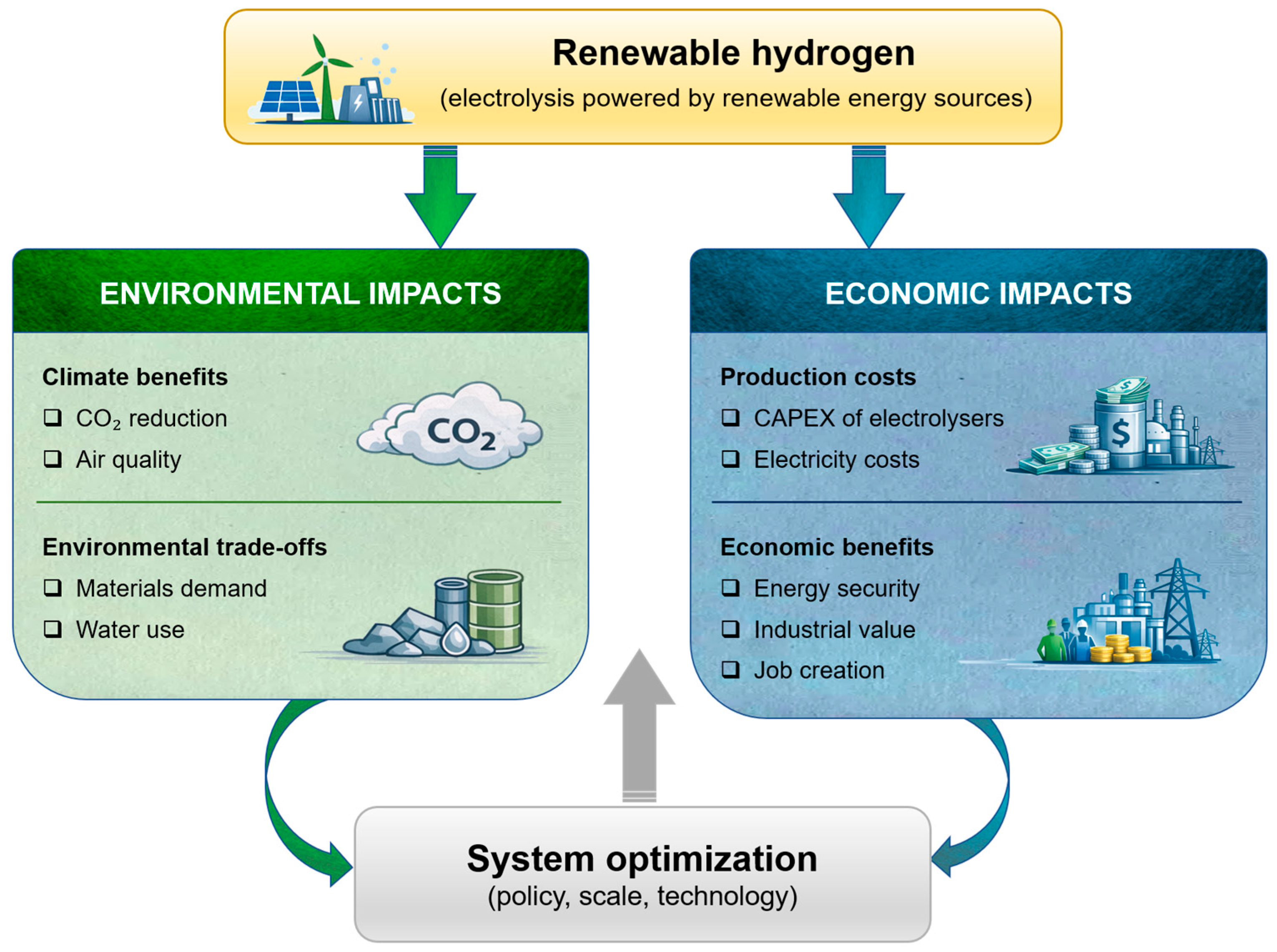
Figure 5 illustrates the key environmental benefits and trade-offs, as well as the main economic factors and system benefits associated with renewable hydrogen production by electrolysis using renewable energy sources. Prospective analyses suggest that renewable hydrogen could achieve cost parity with fossil hydrogen in favorable regions by 2030 and become economically competitive without subsidies in the long term under high renewable energy scenarios [
22,
32,
107,
108,
109,
110,
111,
112].
Beyond production costs, renewable hydrogen has broader macroeconomic implications. It can reduce dependence on imported fossil fuels, increase energy security, and stimulate domestic value creation through investments in renewable energy, electrolysis production, and hydrogen infrastructure. These effects are particularly relevant for regions seeking to decarbonize energy-intensive industries while maintaining industrial competitiveness. However, the economic benefits are unevenly distributed and depend on regional resources, infrastructure availability, and policy frameworks [
112]. The economic viability of renewable hydrogen also needs to be assessed against alternative decarbonization options. Several studies emphasize that renewable hydrogen should be prioritized for applications where it provides the highest system value, such as industrial feedstocks, long-term energy storage, and hard-to-consume transportation segments. In applications where direct electrification is possible, hydrogen-based solutions may incur higher system costs due to conversion losses and infrastructure requirements. These economic conditions vary significantly across Poland. Regions with high wind potential, particularly coastal and northern areas, as well as regions with increasing photovoltaic deployment, can offer more favorable conditions for renewable hydrogen production due to higher electrolyser utilization rates and lower effective electricity costs. In contrast, regions with limited renewable energy availability or constrained grid capacity may face structurally higher hydrogen production costs. Recent developments at the EU level, including the first pilot auctions under the European Hydrogen Bank in 2023–2024, have provided early signals regarding achievable support levels for renewable hydrogen production, although Polish-based projects have so far played a limited role in these initial rounds [
107,
108,
109,
110].
Overall, the environmental and economic impacts of renewable hydrogen are closely intertwined and highly context-dependent. While renewable hydrogen offers significant long-term environmental benefits and strategic economic opportunities, its successful implementation requires careful systems integration, targeted policy support, and alignment with broader energy transition strategies.
3.4. Renewable Hydrogen in Low-Emission Energy Systems in Poland
This section synthesizes the role of renewable hydrogen within Poland’s low-emission energy system by examining its application potential across sectors, its system integration value, the associated infrastructure requirements, and selected comparisons with developments at the European Union level.
3.4.1. Application Potential of Hydrogen in Various Fields
From a regional perspective, the role of renewable hydrogen in Poland is shaped by the uneven spatial distribution of renewable energy resources, industrial demand, and energy infrastructure. Industrial regions with existing hydrogen consumption—such as chemical, refining, and fertilizer hubs—offer immediate opportunities for renewable hydrogen substitution, while regions with strong wind and solar potential but limited industrial demand may initially focus on hydrogen production linked to storage, export, or integration with future hydrogen corridors [
113,
114,
115,
116,
117,
118,
119,
120,
121,
122,
123,
124].
In line with the assumptions of the Polish Hydrogen Strategy, regional differentiation plays a key role in defining feasible deployment pathways for renewable hydrogen [
125,
126,
127,
128]. The strategy explicitly promotes a cluster-based and application-oriented approach, recognizing that hydrogen production, storage, and utilization will develop unevenly across the country depending on local resource availability, industrial structure, and infrastructure readiness. Accordingly, several regionally differentiated hydrogen deployment pathways can be identified:
Industrial hydrogen clusters: Regions with existing hydrogen consumption in chemical, refining, fertilizer, and petrochemical industries are prioritized for early hydrogen substitution, enabling immediate decarbonization effects and minimizing the need for long-distance transport.
Renewable energy–rich regions: Areas with high wind and solar potential, particularly in northern and central Poland, are suitable for large-scale renewable hydrogen production, potentially exceeding local demand and requiring integration with storage solutions, export infrastructure, or future hydrogen corridors.
Port and coastal regions: The Polish Hydrogen Strategy highlights ports and coastal areas as strategic locations for hydrogen production and logistics, supporting maritime applications, synthetic fuels, and cross-border hydrogen trade within the Baltic Sea region.
Transport-oriented regions and corridors: Regions located along major transport corridors are identified as suitable for hydrogen deployment in heavy-duty road transport and rail, supported by refueling infrastructure and integrated with European hydrogen networks.
Emerging hydrogen valleys: The strategy promotes the development of hydrogen valleys, where production, storage, distribution, and end use are co-located, allowing for region-specific optimization and gradual scaling based on local conditions.
This regionally differentiated approach underscores that the economic feasibility and system role of renewable hydrogen in Poland depend not only on national policy frameworks but also on localized resource, demand, and infrastructure conditions.
3.4.2. System Integration Value
The transformation of the Polish energy system towards low-emission and climate-neutral pathways is increasingly highlighting the strategic role of renewable hydrogen as a cross-sectoral energy carrier. Poland faces a unique challenge due to its historically high reliance on coal-fired electricity generation and energy-intensive industrial structure, which together lead to relatively high greenhouse gas emissions compared to many other EU Member States. In this context, renewable hydrogen emerges as a key option enabling deep decarbonization in sectors where direct electrification is technically limited or economically inefficient, while simultaneously supporting the integration of renewable energy sources (RES) into the national energy system [
129,
130,
131,
132]. Renewable hydrogen produced through electrolysis, powered by wind and photovoltaic energy, is increasingly recognized as a key element in connecting sectors into low-emission energy systems. By connecting the electricity, gas, transport, and industrial sectors, hydrogen enables the conversion of surplus electricity from renewable sources into an energy carrier that can be stored and transported. This function is particularly important for Poland, where the rapid growth of variable renewable energy generation—particularly onshore and offshore wind power, as well as photovoltaics—poses increasing challenges related to grid balancing, seasonal variability, and system flexibility. Hydrogen-based Power-to-Gas solutions [
36] are therefore considered an important tool for stabilizing the National Power System (NPS) while enabling a greater share of RES [
133,
134].
In the Polish context, the role of renewable hydrogen in low-emission energy systems is closely linked to the projected increase in renewable energy generation capacity. Strategic analyses indicate that large-scale implementation of green hydrogen will only be possible with the development of sufficient renewable energy generation capacity, particularly wind energy, which is considered the most cost-effective renewable energy source for electrolysis [
100,
101,
125,
126,
127,
128]. Offshore wind farms in the Baltic Sea and the further development of onshore wind and photovoltaic energy are seen as the core of Poland’s future hydrogen production potential. Without a significant acceleration in the development of renewable energy sources, hydrogen production volumes would remain insufficient to meet projected demand and fulfill its balancing function [
131,
132,
133,
134]. From a systemic perspective, renewable hydrogen contributes to emission reduction not only by replacing fossil fuels in the end-use sectors, but also by improving the overall efficiency and resilience of the energy system. Hydrogen can be stored for long periods, enabling seasonal energy storage and mitigating the mismatch between supply and demand for renewable energy. This feature is particularly valuable in a low-emission system dominated by variable renewable sources, where conventional balancing resources based on fossil fuels are gradually being phased out. Research indicates that hydrogen storage, including underground storage in salt caverns, can play a significant role in ensuring long-term energy security in Poland, complementing short-term storage technologies such as batteries [
82,
107,
113,
114,
115,
116,
117,
118,
119,
120].
In industrial applications, renewable hydrogen is expected to become the foundation of decarbonization strategies in sectors such as chemicals, refining, metallurgy, and fertilizer production [
115,
116,
117]. The first batch of industrial-scale renewable hydrogen projects announced in Poland, including initiatives by major industrial actors such as Grupa Azoty and PKN Orlen, represents an important step from conceptual strategies toward practical implementation [
53,
117,
118,
119,
120]. These projects are primarily designed to replace fossil-based hydrogen in existing industrial processes and to build operational experience with electrolyser technologies under real system conditions. Publicly available information on these early projects indicates that they are typically implemented at a limited scale, often in the range of pilot to early industrial demonstration, rather than full commercial deployment. Detailed data on technical parameters, investment costs, and operating performance remain limited, reflecting both commercial confidentiality and the early stage of market development. As a result, these projects currently serve less as benchmarks for cost competitiveness and more as learning-oriented investments aimed at technology validation, integration with existing industrial infrastructure, and regulatory compliance. From a system perspective, the significance of these initial industrial electrolyser projects lies not in their immediate contribution to hydrogen supply volumes, but in their role in testing electricity–hydrogen integration, infrastructure compatibility, and operational constraints within Poland’s coal-dominated power system. A more detailed quantitative assessment of investment and operational performance will only be possible once a broader set of projects reaches commercial operation and transparent reporting becomes available.
Poland already has significant demand for industrial hydrogen, which is currently almost entirely met by hydrogen derived from fossil fuels. Gradual replacement of this “grey” hydrogen with alternative renewable energy sources offers a cost-effective decarbonization path, as it does not require the creation of entirely new demand structures. In a low-carbon energy system, renewable hydrogen therefore functions as both an energy carrier and a clean industrial feedstock, reducing direct and indirect emissions embedded in industrial value chains [
117,
118,
119,
120]. The transport sector is another important area where renewable hydrogen can contribute to emission reduction, particularly in segments that are difficult to electrify, such as heavy road transport, non-electrified rail, maritime transport, and potentially aviation through synthetic fuels [
102]. In Poland, hydrogen-based mobility solutions are increasingly discussed as part of broader strategies to decarbonize public transport and freight, creating new demand for renewable hydrogen. However, integrating hydrogen into transport systems requires parallel development of refueling infrastructure, vehicle technology, and a regulatory framework, which are still in the early stages of implementation [
118,
120].
3.4.3. Infrastructure Requirements
In the context of previous discussions regarding the properties of hydrogen and stages of its value chain, safety threats are particularly important and currently constitute one of the main barriers to scaling renewable hydrogen [
12,
47,
48]. This applies in particular to the risk of hydrogen–oxygen mixtures forming during electrolysis processes and problems related to leaks in installations during storage and transport. Hydrogen storage is one of the most sensitive stages of the hydrogen chain from a safety perspective. This is due both to its high flammability and very wide explosive range, as well as the extremely small size of its molecules, which facilitate hydrogen permeation through installation components. Regardless of whether hydrogen is stored in compressed, liquid, or chemically bound form, ensuring the long-term tightness of systems and controlling the risk of uncontrolled gas release remains a key challenge. Confined or poorly ventilated spaces pose a particular risk, where even small leaks can lead to hydrogen accumulation and the creation of explosive atmospheres that are difficult to detect without dedicated detection systems. Another significant factor limiting the safety of hydrogen storage is the impact of hydrogen on structural materials. Prolonged contact with metals can lead to hydrogen embrittlement, which reduces the mechanical strength of tanks, pipelines, and fittings. In the case of polymer components, hydrogen permeation, material swelling, and gradual degradation of mechanical properties are observed, increasing the risk of leaks during operation. These problems are particularly significant in high-pressure systems and in storage systems designed for repeated cyclical filling and emptying.
Additional hazards arise in the storage of liquid hydrogen, where, in addition to the risk of leakage, cryogenic hazards also occur [
7,
8,
9]. Very low temperatures promote thermal stress and material embrittlement, while the possibility of oxygen condensation from the surrounding air creates an environment with increased oxidizing potential, increasing the risk of fire or explosion upon contact with hydrogen. The transport and transmission of hydrogen generate another set of safety challenges that significantly impact its widespread use. Particularly problematic is the use of existing gas infrastructure, originally designed for methane transmission, where materials and sealing elements are not always suitable for long-term contact with hydrogen. Beyond general safety considerations, the technical feasibility of repurposing existing natural gas transmission infrastructure for hydrogen transport has become a central issue in the context of the European Hydrogen Backbone initiative. European studies indicate that the suitability of existing gas pipelines for hydrogen transport is highly heterogeneous and depends on factors such as steel grade, operating pressure, age of the infrastructure, weld quality, and historical operating conditions [
116,
117,
118,
119]. While partial repurposing or blending may be feasible for selected pipeline segments, large-scale conversion to pure hydrogen transmission typically requires extensive material testing, replacement of valves and compressors, and the implementation of dedicated monitoring and safety systems. From an economic perspective, repurposing existing pipelines is often presented as a cost-effective alternative to new hydrogen-dedicated infrastructure. However, recent European analyses emphasize that cost advantages are highly case-specific and can be significantly reduced by the need for retrofitting, certification, and compliance with hydrogen-specific safety standards. In some cases, particularly for older infrastructure or high-pressure transmission lines, the costs of adaptation may approach or exceed those of new hydrogen pipeline construction.
In Poland, the extensive natural gas transmission network offers potential opportunities for future integration into the European Hydrogen Backbone [
42,
43,
125,
126,
127]. At the same time, the technical readiness and certification status of this infrastructure for hydrogen transport remain uncertain. The absence of finalized national guidelines for hydrogen pipeline certification, combined with evolving EU-level standards, creates additional investment risk and delays decision-making regarding large-scale infrastructure conversion. As a result, the role of existing gas infrastructure in Poland’s hydrogen transition is likely to be gradual and selective, rather than based on immediate, system-wide conversion. This leads to an increased risk of leaks, microcrack propagation, and gradual degradation of pipelines and transfer stations.
In operational practice, key safety risks associated with hydrogen transport and transmission include:
Leaks in transmission systems resulting from hydrogen embrittlement and material aging;
The risk of explosive mixtures forming at connection points, valves, and reduction stations;
Limited detectability of hydrogen leaks due to the lack of odor, color, and visible flame;
Potentially serious consequences of failure in systems operating under high pressure;
Hazards associated with road and rail transport of hydrogen, particularly in urban areas.
It should be emphasized that the threats described are systemic in nature and mutually reinforcing. Effectively mitigating the risks associated with hydrogen storage and transport requires an integrated approach, encompassing appropriate material selection, system design with consideration for emergency scenarios, the use of continuous monitoring systems, and rigorous adherence to safety standards and regulations. As the authors’ previous analyses indicate, a high level of safety is essential not only for protecting infrastructure and personnel but also for building public and investor confidence, without which renewable hydrogen will not be implemented on an industrial scale.
Import and port infrastructure is equally important, especially given the EU’s growing dependence on hydrogen imports from regions rich in renewable resources. Although Poland is not expected to become a major hydrogen import hub in the short term, the development of port infrastructure capable of handling hydrogen carriers such as ammonia or liquid organic hydrogen carriers could strengthen its role in regional supply chains and support the diversification of energy sources, in line with EU energy security goals [
108,
109]. The need for coordinated planning and financing mechanisms is a recurring theme in the literature. Hydrogen infrastructure is characterized by high upfront capital costs, long lead times, and significant demand uncertainty, leading to a “chicken-and-egg” problem between infrastructure availability and market development. EU-level instruments such as the Connecting Europe Facility, the European Hydrogen Bank [
57,
103], and innovative financing models promoted by initiatives such as H2Global are therefore considered essential to reduce investment risk and mobilize private capital. In Poland, effective use of these mechanisms will be crucial to accelerating infrastructure implementation while avoiding excessive cost burdens for end users [
114,
118,
120].
The most important safety risks associated with hydrogen storage and transmission, along with the corresponding design and operational principles, stemming from both the authors’ previous analyses and international guidelines, are summarized in
Table 2.
Table 2 presents a summary of key principles for the design and operation of hydrogen storage and transmission facilities, along with ancillary systems, aimed at mitigating the dominant safety risks identified throughout the hydrogen value chain. The summary primarily covers risks related to system leaks, hydrogen accumulation in confined spaces, hydrogen’s impact on structural materials, and escalation of incidents in high-pressure and cryogenic systems. The table was developed based on the authors’ previous analyses and selected international guidelines and standards regarding hydrogen system safety.
Despite significant potential, integrating renewable hydrogen into low-emission energy systems in Poland faces a number of structural challenges. One of the most significant barriers is the pace of renewable energy deployment, which currently appears insufficient to simultaneously meet growing electricity demand, replace fossil fuel-based energy generation, and ensure large-scale hydrogen production. Regulatory and administrative constraints related to permitting procedures for renewable energy installations, grid access, and hydrogen infrastructure further slow down system integration. Furthermore, uncertainty surrounding hydrogen market regulation, renewable hydrogen certification, and long-term support mechanisms increases investment risk and hinders private sector involvement [
122,
126,
127,
128,
129]. Strategic documents at the national and regional levels, including the Polish Hydrogen Strategy [
53] and regional hydrogen strategies such as the Wielkopolska Hydrogen Strategy [
118], recognize renewable hydrogen as a key pillar of low-emission energy systems. These strategies emphasize the need for coordinated development of renewable energy capacity, hydrogen production, storage, and end-use applications, as well as the importance of public financing and institutional support in the early stages of market development. At the same time, they emphasize that renewable hydrogen should be implemented in a targeted manner, prioritizing applications with the highest systemic and climate value to avoid inefficient use of limited renewable resources [
125,
126,
127,
128,
129,
130,
131,
132,
133].
In summary, renewable hydrogen has the potential to play a key role in transforming the Polish energy system towards a low-carbon model, enabling deep decarbonization, increasing system flexibility, and supporting the integration of renewable energy sources. However, its successful integration depends on aligning energy, industrial, and climate policies, accelerating the development of renewable electricity sources, and establishing a stable regulatory and market framework. In the absence of these conditions, renewable hydrogen may remain a niche solution rather than a systemic element of Poland’s low-carbon energy future. The role of renewable hydrogen in Poland’s low-carbon energy system goes beyond a single application or sector and should be analyzed from a system-wide perspective. Rather than operating as an isolated technological solution, renewable hydrogen impacts multiple components of the energy system, including industrial demand, renewable electricity generation, energy storage, and cross-sector integration. Its effectiveness therefore depends on the coordinated development of enabling conditions, such as renewable energy availability, infrastructure development, and the regulatory framework. This reinforces the conclusion that hydrogen infrastructure development in Poland should prioritize compatibility with evolving EU technical and certification frameworks from the outset, in order to avoid costly retrofitting and lock-in effects.
3.4.4. Comparison Between Poland and the European Union
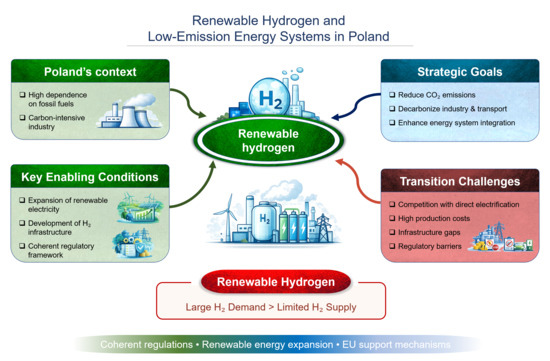
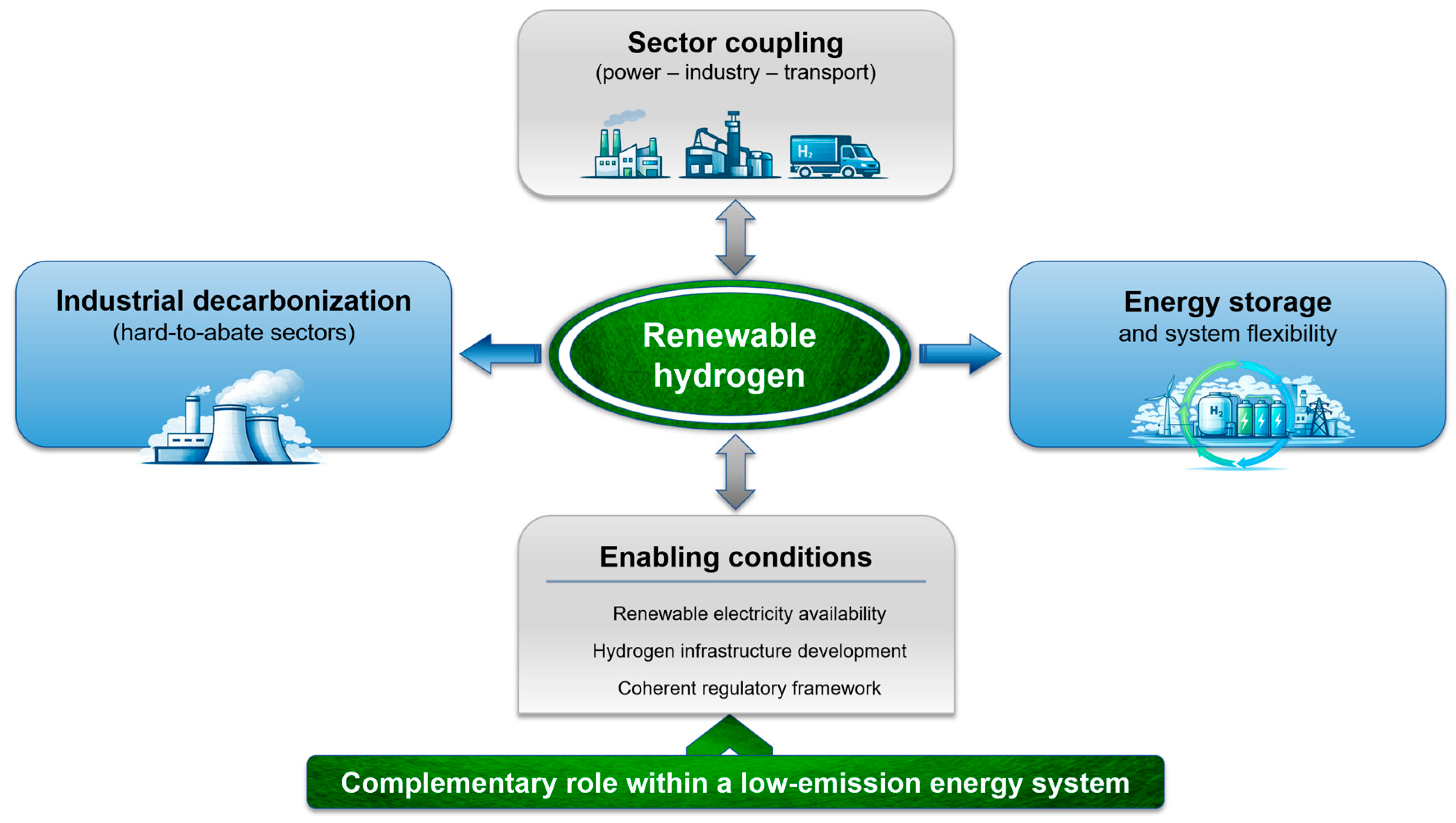
The system-level functions of renewable hydrogen and the key conditions necessary for its effective implementation are summarized in
Figure 6.
Figure 6 should be understood as a system-level synthesis derived from the reviewed literature rather than as a standalone empirical model. The functions and enabling conditions presented in the diagram are consistently identified across recent system analyses, policy assessments, and techno-economic studies on hydrogen deployment in low-emission energy systems. Empirical evidence from European and national studies indicates that renewable hydrogen delivers the highest system value when applied to hard-to-abate industrial sectors, long-term energy storage, and sector coupling under conditions of sufficient renewable electricity availability, developed infrastructure, and regulatory coherence [
30,
31,
32,
35]. These conditions and functional roles, reflected in the diagram, are therefore grounded in recurring findings reported in the literature rather than conceptual assumptions.
Industrial applications represent the most direct and significant use case for renewable hydrogen in Poland’s low-emission energy system. The existing demand for hydrogen in sectors such as the chemical, refining, fertilizer, and steel industries provides a natural starting point for decarbonization by replacing fossil hydrogen. This section examines the role of renewable hydrogen in reducing industrial emissions, with a particular focus on hard-to-abate sectors and the conditions under which hydrogen implementation can deliver the greatest climate benefits. The increasing penetration of variable renewable energy sources poses increasing challenges related to system balancing and long-term energy storage. In this context, renewable hydrogen can contribute to energy system flexibility by enabling the conversion of excess renewable electricity into a storable energy carrier. This section discusses the potential role of hydrogen in long-term and seasonal energy storage, as well as its interaction with other flexibility options in the developing Polish power system. Sector coupling is increasingly recognized as a key mechanism for integrating renewable energy into electricity, industrial, and transport systems. Renewable hydrogen can facilitate this integration by linking renewable energy generation with energy demand in sectors that are difficult to directly electrify. From a system perspective, the electricity–hydrogen–industry coupling involves a sequence of energy conversion steps that inherently generate efficiency losses and additional system costs. Electricity-to-hydrogen conversion via electrolysis, followed by compression, storage, transport, and final industrial use, results in substantially lower overall efficiency compared to direct electrification pathways. These losses translate into higher demand for renewable electricity capacity, increased infrastructure investment, and elevated system-level costs. Recent system-level studies emphasize that the economic and environmental viability of hydrogen-based industrial decarbonization critically depends on the availability of low-cost renewable electricity, high electrolyser utilization rates, and coordinated infrastructure development. In coal-intensive systems such as Poland’s, these conditions are particularly challenging, reinforcing the conclusion that hydrogen should be prioritized in applications where direct electrification is not feasible and where its system value justifies the associated efficiency penalties and infrastructure costs. Recent reviews on hydrogen energy development in Poland have provided valuable insights into technological and policy aspects, but often lack a comprehensive integration of updated EU regulatory requirements and system-level infrastructure constraints [
30,
31,
32,
35,
42,
43,
44,
45].
This section examines the role of hydrogen in sector coupling from a system integration perspective, with particular emphasis on the electricity–hydrogen–industry nexus. Rather than assuming efficiency gains by default, the analysis focuses on the conditions under which hydrogen deployment can add system value without leading to inefficient substitution of direct electrification pathways. The contribution of renewable hydrogen at the system level depends on a set of enabling conditions that determine its technical feasibility, efficiency losses along the conversion chain, and overall system costs. These conditions include the availability of renewable electricity, the development of hydrogen transport and storage infrastructure, and the establishment of a coherent regulatory and market framework. By addressing these factors, the section outlines the circumstances under which renewable hydrogen can realistically contribute to Poland’s low-emission energy transition, particularly in industrial applications where direct electrification is constrained.
3.4.5. Infrastructure Requirements for a Hydrogen Economy in Poland in EU Context
The development of a hydrogen economy in Poland is inextricably linked to the broader European Union framework, which views hydrogen infrastructure as a strategic enabler of climate neutrality, energy security, and industrial competitiveness. As an EU member state, Poland must plan its hydrogen infrastructure in line with European policies such as the Hydrogen and Decarbonized Natural Gas Market Package, the European Hydrogen Backbone initiative, the TEN-E regulation, and the REPowerEU objectives, which emphasize cross-border integration, system efficiency, and coordinated infrastructure development [
123,
124,
125,
126]. A fundamental requirement for a hydrogen economy in Poland is the development of large-scale transport infrastructure, primarily based on pipelines. European analyses consistently indicate that hydrogen transport via pipelines is the most cost-effective solution for transporting large volumes of gas over long distances, especially when existing pipelines can be reused. This offers Poland the opportunity to leverage its extensive gas transmission network and strategically position itself within the emerging European hydrogen backbone, facilitating connections with Germany, the Czech Republic, Slovakia, and the Baltic region [
77,
78]. However, reusing existing infrastructure requires careful assessment of material compatibility, the risk of hydrogen embrittlement, and compliance with evolving technical standards across the EU [
79,
127,
128,
129,
130,
131,
132,
133,
134].
At the same time, hydrogen storage infrastructure is a key pillar of a functioning hydrogen economy. Storage is essential not only to balance short-term fluctuations in supply and demand but also to ensure seasonal flexibility in an energy system in which variable renewable energy sources are playing an increasingly important role. European research points to underground hydrogen storage—particularly in salt caverns—as the most mature and scalable option for large volumes [
114,
118,
119,
120]. Poland has favorable geological conditions in selected regions that could support the development of strategic hydrogen storage facilities linked to industrial clusters and future hydrogen transport corridors. Without adequate storage capacity, the hydrogen infrastructure would remain fragmented and unable to deliver systemic benefits such as grid balancing and security of supply [
129,
132]. In addition to physical assets, a hydrogen economy requires a robust quality and regulatory infrastructure. Harmonized hydrogen quality standards are a prerequisite for cross-border trade and the smooth functioning of the European hydrogen market. Recent analyses at the EU level highlight that inconsistencies in hydrogen purity requirements or pollutant thresholds can create bottlenecks at interconnection points, increasing costs and undermining market integration. For Poland, early adaptation to new European standards offers a strategic advantage, reducing future modernization costs and facilitating participation in international hydrogen value chains [
131,
132].
Import and port infrastructure is equally important, especially given the EU’s growing reliance on hydrogen imports from regions rich in renewable resources. While Poland is not expected to become a major hydrogen import hub in the short term, developing port infrastructure capable of handling hydrogen carriers such as ammonia or liquid organic hydrogen carriers could strengthen its role in regional supply chains and support the diversification of energy sources in line with the EU’s energy security goals [
133]. A recurring theme in the literature is the need for coordinated planning and financing mechanisms. Hydrogen infrastructure is characterized by high upfront capital costs, long lead times, and significant demand uncertainty, leading to a “chicken-and-egg” problem between infrastructure availability and market development. EU-level instruments such as the Connecting Europe Facility, the European Hydrogen Bank [
57,
103] and innovative financing models promoted by initiatives such as H2Global are therefore considered essential to reduce investment risk and mobilize private capital. In the case of Poland, the effective use of these mechanisms will be crucial to accelerate infrastructure implementation while avoiding excessive cost burdens for end users [
130].
In summary, creating a hydrogen economy in Poland requires a comprehensive and integrated infrastructure strategy, encompassing transport pipelines, large-scale storage facilities, quality and regulatory systems, and alignment with European cross-border networks. Poland’s success as an EU member state will depend not only on national investment decisions but also on its ability to synchronize national infrastructure planning with European hydrogen corridors, standards, and financing frameworks. Without such alignment, hydrogen infrastructure will be vulnerable to development in isolated clusters, limiting its contribution to decarbonization and system integration at both the national and European levels. As a result, hydrogen infrastructure development in Poland is likely to follow a differentiated regional pattern, with initial deployment concentrated in industrial clusters and along future European hydrogen corridors, while other regions may remain marginal participants until grid reinforcement and storage solutions are developed.
3.4.6. Poland vs. Other EU Member States
In the EU, the development of the hydrogen economy is increasingly taking the form of a network system: production (often in locations with good renewable energy resources), transmission (hydrogen backbone), storage (especially underground), import through ports (for some countries), and unified quality standards enabling cross-border trade [
123,
124,
125,
126,
131]. In this context, the advantage of member states does not stem solely from political declarations, but from whether they have the infrastructure “puzzle” ready: transmission corridors, seasonal storage facilities, ports/terminal import hubs, as well as stable regulatory and financial conditions for long-term and high-risk investments (so-called chicken-and-egg) [
129]. Against this background, Poland is usually classified as a country with high network potential, but still at the stage of building an infrastructure market. From the EU’s perspective, Poland’s ability to integrate into the emerging European architecture is becoming crucial. In practice, this means prioritizing transmission sections connecting future supply sources and demand clusters, as well as cross-border connections, as these determine whether the infrastructure will be a “local island” or part of the common market. EU and industry documents emphasize that without integrated planning (including cross-border planning) and appropriate financing mechanisms, the risk of costs being passed on to network users increases, which may slow down adaptation and implementation. Differences between Poland and EU “leaders” (often Western and Northwestern European countries) are particularly evident in two areas [
127,
134]. First, some member states are already positioned as import and logistics hubs (the role of ports and terminals, H
2 carriers, e.g., ammonia), which gives their infrastructure an international dimension and accelerates the emergence of wholesale markets. Secondly, front-runners are developing hydrogen network planning more quickly as an element of energy system integration (sector coupling), which increases project predictability and facilitates capital mobilization. At the same time, Poland possesses characteristics that could provide advantages in the next phase of development: extensive gas infrastructure as a potential base for conversion and development of hydrogen corridors, and a location that could make it a significant element of the Eastern and Central European part of the hydrogen network—provided that technical and quality standards are aligned with European solutions from the outset. This is important because work at the EU level shows that differences in hydrogen quality specifications can become a real barrier to cross-border trade and increase costs at the interface between systems, necessitating additional purification or transmission restrictions.
Finally, the biggest “systemic” difference between Poland and more advanced EU countries is usually the investment risk profile: hydrogen infrastructure requires significant CAPEX and has a long payback period, and its profitability depends on capacity utilization [
131]. Therefore, the literature strongly emphasizes de-risking instruments (e.g., revenue/usage support mechanisms, solutions similar to CFDs or “anchor capacity bookings”), which are intended to bridge the investment gap. For Poland, this means that the pace of infrastructure development will be largely determined by the ability to utilize European financing frameworks and planning rules, while simultaneously protecting users from excessive network tariffs.
Table 3 compares the approach of Poland and more advanced EU countries to the development of hydrogen infrastructure. The data in the table show that Poland is in a phased development of its hydrogen infrastructure, based primarily on clusters and point projects, while more advanced EU countries are moving more quickly toward an integrated network logic, with a clear backbone and multi-level planning. Key gaps concern the pace of implementation, storage, cross-border integration, and investment de-risking mechanisms. The conclusions for Poland point to the need for stronger linking of domestic projects with the European transmission grid, earlier harmonization of hydrogen quality standards, and the use of EU financial instruments and efficient cost allocation principles to increase system security and market competitiveness.
3.4.7. Challenges and Barriers to Large-Scale Deployment in Poland
Large-scale deployment of renewable hydrogen in Poland faces a set of interrelated technological, economic, infrastructural, and regulatory challenges. These barriers stem not only from the current maturity level of hydrogen technologies, but also from structural constraints in the energy system, including limited renewable electricity availability and fragmented infrastructure development. These barriers significantly hinder the large-scale deployment of renewable hydrogen in Poland, contributing to the continued dominance of pilot and early-stage demonstration projects despite increasing policy attention. This assessment is consistent with recent European monitoring reports from 2024–2025, which indicate that most hydrogen projects in Central and Eastern Europe remain concentrated at pilot and demonstration scale, with large-scale deployment constrained by renewable electricity availability and infrastructure readiness [
64,
79,
102,
104,
130]. High production costs, demand uncertainty, and regulatory ambiguity further slow investment and market formation. Together, these factors risk confining hydrogen deployment to pilot-scale initiatives unless addressed through a coordinated, system-level strategy.
Figure 7 synthesizes the interacting technological, economic, infrastructural, renewable energy, and regulatory constraints that jointly limit the transition from pilot-scale projects to the large-scale deployment of renewable hydrogen in Poland. These constraints reinforce one another, creating a systemic lock-in that keeps renewable hydrogen deployment in Poland at the pilot and demonstration stage.
Technological limitations: One of the fundamental barriers to the large-scale deployment of renewable hydrogen in Poland lies in technological constraints related to hydrogen production, storage, and system integration. Although water electrolysis is a well-established technology, its large-scale operation remains challenged by efficiency losses, limited operational flexibility, and material degradation under variable load conditions [
105,
106]. Studies emphasise that electrolysers achieve optimal performance under steady-state, high-capacity-factor operation, whereas renewable electricity supply—particularly from wind and solar—is inherently intermittent, leading to suboptimal utilisation rates and accelerated component wear. Additional technological barriers arise from hydrogen storage and transport. Hydrogen’s low volumetric energy density necessitates energy-intensive compression or liquefaction, resulting in efficiency losses of up to 35–45% of its lower heating value in the case of liquefaction [
132,
134]. Alternative carriers such as ammonia or liquid organic hydrogen carriers (LOHCs) offer higher energy densities and compatibility with existing infrastructure, but introduce further technological challenges, particularly related to dehydrogenation efficiency, catalyst durability, and system complexity. Life cycle and techno-economic assessments indicate that these technologies remain less mature and require further optimisation before they can be deployed at scale without substantial cost penalties [
134].
High production costs and lack of competitiveness: High production costs remain a dominant barrier to renewable hydrogen deployment in Poland. Green hydrogen produced via renewable-powered electrolysis is currently significantly more expensive than fossil-based hydrogen, with reported costs reaching up to 8–10 €/kg H
2 under present conditions [
133,
134]. These costs are driven primarily by high electricity prices, capital-intensive electrolyser systems, and limited operating hours. In Poland, where renewable electricity prices are generally higher than in regions with abundant solar or wind resources, cost competitiveness is further undermined. Moreover, the absence of mature hydrogen markets prevents economies of scale and limits learning effects that could otherwise reduce costs. Comparative assessments consistently show that conventional hydrogen production methods remain economically dominant in the short to medium term, while renewable hydrogen requires sustained policy support to close the cost gap. Even emerging low-carbon alternatives such as turquoise hydrogen or hydrogen with carbon capture face uncertainties related to scalability, long-term cost stability, and environmental performance.
Lack of infrastructure: Insufficient hydrogen infrastructure represents a critical bottleneck for large-scale deployment in Poland. At present, hydrogen production and consumption are largely confined to isolated industrial sites, with no dedicated national hydrogen transmission network [
128,
130,
132]. This spatial fragmentation limits market development, cross-sectoral integration, and efficient allocation of renewable resources. Studies repeatedly highlight that without early investment in pipelines, storage facilities, and distribution systems, hydrogen markets risk developing in disconnected clusters rather than as integrated national or European systems. The “chicken-and-egg” dilemma further complicates infrastructure deployment [
129]. Infrastructure investors face demand uncertainty, while potential hydrogen users are reluctant to commit in the absence of reliable supply networks. In Poland, this challenge is amplified by limited experience with hydrogen beyond its traditional role as an industrial feedstock, increasing perceived investment risk and slowing infrastructure roll-out [
134].
Insufficient availability of renewable energy sources: A decisive systemic barrier to renewable hydrogen deployment in Poland is the insufficient availability of renewable electricity. Large-scale hydrogen production requires vast quantities of low-cost, low-carbon electricity, which must compete with direct electrification needs across the economy. Poland’s renewable energy capacity, although expanding, remains inadequate to simultaneously support power sector decarbonization, rising electricity demand, and hydrogen production at scale [
123]. Several studies warn that premature hydrogen deployment in electricity systems with limited renewable penetration may increase overall system costs and emissions. Grid constraints, limited storage capacity, and lengthy permitting procedures for renewable energy projects further restrict renewable electricity availability. Without accelerated renewable energy expansion, hydrogen production risks relying on electricity with a higher carbon intensity, undermining its environmental justification and public acceptance [
134].
Regulatory and institutional barriers: Regulatory uncertainty constitutes a major non-technical barrier to large-scale hydrogen deployment in Poland. While the European Union has made progress in defining hydrogen market rules, quality standards, and certification schemes, national implementation remains incomplete and fragmented [
124,
125,
126,
127]. Unclear regulations regarding network access, tariff structures, hydrogen blending limits, and market organisation increase investor uncertainty and financing costs. Several studies stress that stable, transparent, and harmonised regulatory frameworks are essential to unlock large-scale investment in hydrogen infrastructure and production [
86,
93]. Institutional barriers are further exacerbated by complex administrative procedures and overlapping competences across energy, environmental, and industrial authorities. Lengthy permitting processes for renewable installations, electrolysers, and hydrogen infrastructure delay project development and increase costs. Without regulatory streamlining and improved coordination between national and EU-level institutions, hydrogen deployment in Poland is likely to remain confined to pilot and demonstration projects rather than achieving systemic scale.
In conclusion, the barriers to large-scale renewable hydrogen deployment in Poland are deeply interconnected and systemic. Technological limitations, high production costs, insufficient infrastructure, limited renewable electricity availability, and regulatory uncertainty reinforce one another, creating a self-perpetuating cycle that inhibits market development. The literature consistently indicates that overcoming these barriers requires a coordinated and phased strategy that aligns renewable energy expansion, hydrogen infrastructure planning, regulatory reform, and targeted financial support. Without such an integrated approach, renewable hydrogen is likely to remain a niche solution rather than becoming a cornerstone of Poland’s low-emission energy transition.
4. Future Perspectives and Development Scenarios for Renewable Hydrogen in Poland—Strong Synthesis
The analysed literature indicates that renewable hydrogen is expected to play a relevant but differentiated role in the future low-emission energy system in Poland. Despite Poland being one of the largest hydrogen producers in the European Union, current hydrogen production remains predominantly fossil-based and concentrated in conventional industrial applications, including refineries, ammonia, and chemical production. This structural characteristic simultaneously creates a substantial decarbonization potential and imposes constraints on the rapid deployment of renewable hydrogen.
In the short term, most studies converge on a development pathway characterised by gradual and selective deployment of renewable hydrogen. The current electricity mix, limited availability of low-cost renewable electricity, and grid constraints significantly restrict the economic viability of large-scale green hydrogen production in Poland. As a result, scenarios assuming rapid substitution of fossil-based hydrogen with renewable hydrogen before 2030 appear challenging under present system conditions. Instead, the literature supports a phased transition in which renewable hydrogen deployment initially focuses on pilot projects and industrial substitution within existing hydrogen-consuming sectors.
In the medium term, the expansion of renewable electricity generation, particularly wind and photovoltaic capacity, is identified as a key enabling factor for broader hydrogen deployment. As renewable penetration increases, hydrogen may contribute to sector coupling by providing a flexible demand for surplus electricity and supporting system balancing. During this phase, hydrogen development is expected to remain largely cluster-based, with production, consumption, and infrastructure co-located in industrial hubs. Such an approach reduces infrastructure requirements, mitigates investment risk, and aligns with hydrogen development models observed in other EU Member States.
Long-term development scenarios emphasise the role of renewable hydrogen in a deeply decarbonised energy system. Under conditions of significantly expanded renewable generation, reinforced grids, and enhanced system flexibility, renewable hydrogen could support hard-to-abate industrial sectors, long-duration energy storage, and selective cross-border integration within the European hydrogen market. However, the literature consistently highlights that hydrogen should complement rather than substitute direct electrification, particularly in applications where electric solutions are more energy-efficient.
Across all scenarios, regulatory stability, infrastructure planning, and investment coordination emerge as critical determinants of deployment speed and scale. The reviewed studies indicate that technological progress alone is insufficient to ensure large-scale deployment. Instead, coherent policy frameworks, predictable market rules, and targeted support mechanisms are required to reduce investment risk and enable the transition from pilot-scale projects to system-level integration.
In summary, future development scenarios for renewable hydrogen in Poland range from incremental industrial substitution to broader system integration in the long term. The feasibility of more ambitious pathways depends on the alignment of hydrogen deployment with renewable energy expansion, electricity system decarbonization, and European market integration. Under these conditions, renewable hydrogen may become an important component of Poland’s low-emission energy system, while remaining complementary to other decarbonization strategies.
5. Discussion
This discussion synthesizes the key findings of the review by identifying the most important systemic conditions that determine whether renewable hydrogen in Poland can move from pilot-scale initiatives to industrial-scale deployment, with particular relevance for policy, regulatory, and investment priorities. Although this review does not apply quantitative energy system modeling, its system-oriented conclusions are consistent with findings reported in existing national and regional energy system studies based on models such as TIMES, EnergyPLAN, and similar optimization frameworks. These studies generally indicate that hydrogen plays a limited but strategically important role in future low-emission energy systems, primarily in sectors that are difficult to electrify and as a flexibility option supporting variable renewable energy integration. Model-based analyses for Poland and comparable energy systems consistently show that large-scale hydrogen deployment becomes system-optimal only under conditions of high renewable electricity penetration, sufficient grid flexibility, and declining electrolysis costs. At the same time, these models emphasize that direct electrification remains the dominant decarbonization pathway for most end-use sectors, while hydrogen complements rather than replaces electricity-based solutions. Similar conclusions regarding the conditional and sector-specific role of hydrogen have been reported in energy system modeling studies using TIMES and EnergyPLAN frameworks [
129,
133,
134]. On this basis, several key findings can be highlighted:
Poland has high industrial demand for hydrogen, yet its production remains almost entirely based on fossil fuels; renewable hydrogen still operates primarily at the pilot project level.
Key constraints are structural and include high production costs, limited availability of affordable renewable energy, insufficient infrastructure, and regulatory uncertainty.
The profitability and environmental viability of renewable hydrogen are strongly dependent on the rapid expansion of renewable energy capacity and increased flexibility of the power system.
Hydrogen infrastructure development is currently concentrated in isolated clusters; without national coordination and integration with European corridors, this risks inefficient, dispersed development.
The lack of a stable and consistent regulatory framework (certification, tariffs, grid access, administrative procedures) significantly increases investment risk and hinders market scaling.
In the short and medium term, renewable hydrogen in Poland has the greatest potential to replace fossil hydrogen in industry; in the long term, it can support system flexibility and the decarbonization of sectors difficult to electrify.
Hydrogen should be treated as a complement, not an alternative, to direct electrification, used where electric solutions are inefficient or unfeasible.
This review examined the role of renewable hydrogen in the development of sustainable low-emission energy systems in Poland, with particular attention to technological pathways, regulatory frameworks, infrastructure requirements, environmental and economic impacts, and future development scenarios. The analysis confirms that renewable hydrogen has the potential to become an important component of Poland’s long-term energy transition, especially in sectors where direct electrification remains technically or economically constrained. However, the current scale of deployment remains limited, and the transition from pilot projects to system-level integration faces substantial structural barriers. One of the central findings of this review is the pronounced gap between Poland’s significant industrial hydrogen demand and the marginal share of renewable hydrogen in domestic production. While Poland ranks among the largest hydrogen producers in the European Union, hydrogen production is still dominated by fossil-based processes, primarily serving on-site industrial consumption. This structure creates favorable conditions for the gradual substitution of conventional hydrogen with renewable alternatives in existing industrial applications, offering a relatively efficient decarbonization pathway without the need to establish entirely new demand sectors. The analysis further demonstrates that the large-scale deployment of renewable hydrogen in Poland is strongly constrained by systemic factors, including limited availability of renewable electricity, high production costs, insufficient infrastructure, and regulatory uncertainty. Renewable hydrogen production via electrolysis is highly sensitive to electricity prices and capacity factors, making accelerated expansion of renewable energy sources a prerequisite for cost-effective deployment. Without a significant increase in renewable generation capacity and grid flexibility, renewable hydrogen risks competing with direct electrification and may fail to deliver its intended environmental benefits.
From an infrastructure perspective, the review highlights the critical importance of coordinated planning across production, transport, storage, and end-use applications. Hydrogen infrastructure development in Poland is still at an early stage and largely confined to isolated industrial clusters. Integration with emerging European hydrogen corridors, harmonisation of hydrogen quality standards, and the development of large-scale storage solutions are identified as key enablers of a future hydrogen economy. As an EU Member State, Poland’s hydrogen infrastructure strategy must therefore align closely with European regulatory frameworks, cross-border planning initiatives, and financing mechanisms to avoid fragmented and inefficient development.
Regulatory and institutional conditions emerge as decisive determinants of future deployment pathways. Although the European Union has established an increasingly comprehensive framework for renewable hydrogen, national implementation in Poland remains incomplete and fragmented. Uncertainty related to certification, guarantees of origin, market organisation, and permitting procedures continues to increase investment risk and slow project development. The findings of this review indicate that technological progress alone will not be sufficient to ensure large-scale deployment; rather, stable and transparent regulatory frameworks, coupled with targeted support mechanisms, are essential to enable market formation and infrastructure investment. Looking forward, the reviewed literature supports a differentiated development trajectory for renewable hydrogen in Poland. In the short to medium term, deployment is likely to remain focused on industrial substitution and cluster-based projects. In the longer term, renewable hydrogen may contribute more broadly to system flexibility, long-duration energy storage, and decarbonization of hard-to-abate sectors, provided that renewable electricity deployment, infrastructure development, and regulatory alignment progress in parallel. Importantly, hydrogen should be treated as a complementary element of the energy transition, supporting electrification rather than replacing it where electric solutions are more efficient.
Beyond summarizing existing knowledge, the review also reveals several structural gaps in the current research on renewable hydrogen deployment, particularly when assessed from a system-level and country-specific perspective. A critical synthesis of the reviewed literature indicates that, despite the rapidly growing number of studies on hydrogen technologies and policies, research on renewable hydrogen in Poland remains fragmented and predominantly sector-specific. Most existing analyses focus either on technological aspects of hydrogen production or on high-level policy targets, while relatively few studies integrate hydrogen deployment with realistic assumptions regarding renewable electricity availability, grid constraints, and system flexibility. As a result, the system-wide conditions under which renewable hydrogen can deliver tangible emission reductions remain insufficiently explored. In particular, there is a noticeable lack of integrated assessments that simultaneously consider regulatory implementation, infrastructure readiness, safety constraints, and spatial differentiation. Regional factors—such as the uneven distribution of renewable energy resources, existing industrial hydrogen demand, and proximity to gas and electricity infrastructure—are rarely analysed in a coherent framework, even though they strongly influence the feasibility and cost-effectiveness of hydrogen deployment in Poland. Furthermore, comparative analyses evaluating renewable hydrogen against alternative decarbonization pathways, especially direct electrification, are still limited in the national context, which hampers evidence-based prioritization of hydrogen applications. These gaps suggest that future research should move beyond isolated technological or policy analyses toward integrated, system-oriented approaches that reflect the interdependencies between energy sectors, infrastructure development, and regulatory design. Addressing these gaps is essential for assessing the realistic role of renewable hydrogen as a complementary element of Poland’s low-emission energy transition rather than as a standalone solution.
6. Conclusions
By adopting a system-oriented and country-specific review approach, this article contributes to the existing literature by clarifying the conditions under which renewable hydrogen can act as a complementary element of Poland’s low-emission energy system, rather than being assessed as a standalone technological solution.
Based on the conducted review and system-level analysis, the following conclusions can be drawn:
Renewable hydrogen represents a potentially important but conditional component of Poland’s transition toward a low-emission energy system.
The effectiveness of renewable hydrogen deployment depends primarily on the availability of sufficient low-carbon electricity, the development of hydrogen transport and storage infrastructure, and the establishment of a stable and coherent regulatory framework; from an economic perspective, the levelized cost of hydrogen is highly sensitive to electricity prices, electrolyser utilization rates, and capital cost trajectories, while carbon pricing under the EU Emissions Trading System can contribute to narrowing the cost gap between grey and renewable hydrogen but is unlikely to be sufficient on its own to ensure cost competitiveness.
In the short and medium term, the greatest potential for renewable hydrogen in Poland lies in replacing fossil-based hydrogen in existing industrial applications, where it can deliver measurable emission reductions.
In the longer term, renewable hydrogen may support system flexibility, long-duration energy storage, and the decarbonization of sectors that are difficult to electrify, provided that enabling conditions are met.
Renewable hydrogen should be treated as a complementary solution to direct electrification, rather than a universal alternative, and prioritized in applications with the highest system and climate value.
Although technology neutrality may support early hydrogen market formation, the analysis suggests that its prolonged application risks reinforcing technology lock-in effects, potentially misaligning national investment patterns with the European Union’s increasingly stringent renewable hydrogen requirements.
The integration of Poland into the emerging European Hydrogen Backbone will require a gradual and selective approach, as large-scale conversion of existing gas pipelines to hydrogen transport is subject to material constraints, investment costs, and the maturity of EU-level technical and certification frameworks; premature assumptions about full network compatibility risk reinforcing infrastructure lock-in and increasing transition costs.
A comparison with neighboring countries such as Germany and the Czech Republic further demonstrates that Poland’s hydrogen transition is shaped by distinct structural and infrastructural constraints, underscoring the need for a country-specific and system-oriented deployment pathway.
Finally, this review highlights that the effective deployment of renewable hydrogen in Poland will depend not only on national strategies but also on region-specific conditions related to renewable energy availability, industrial structure, and infrastructure readiness; without coordinated progress in renewable energy expansion, infrastructure development, and regulatory alignment with EU frameworks, renewable hydrogen is likely to remain a niche solution in Poland’s energy system.