Short-Term Photovoltaic Power Forecasting Using a Hybrid RF-ICEEMDAN-SE-RWCE-GRU Model
Abstract
1. Introduction
- (1)
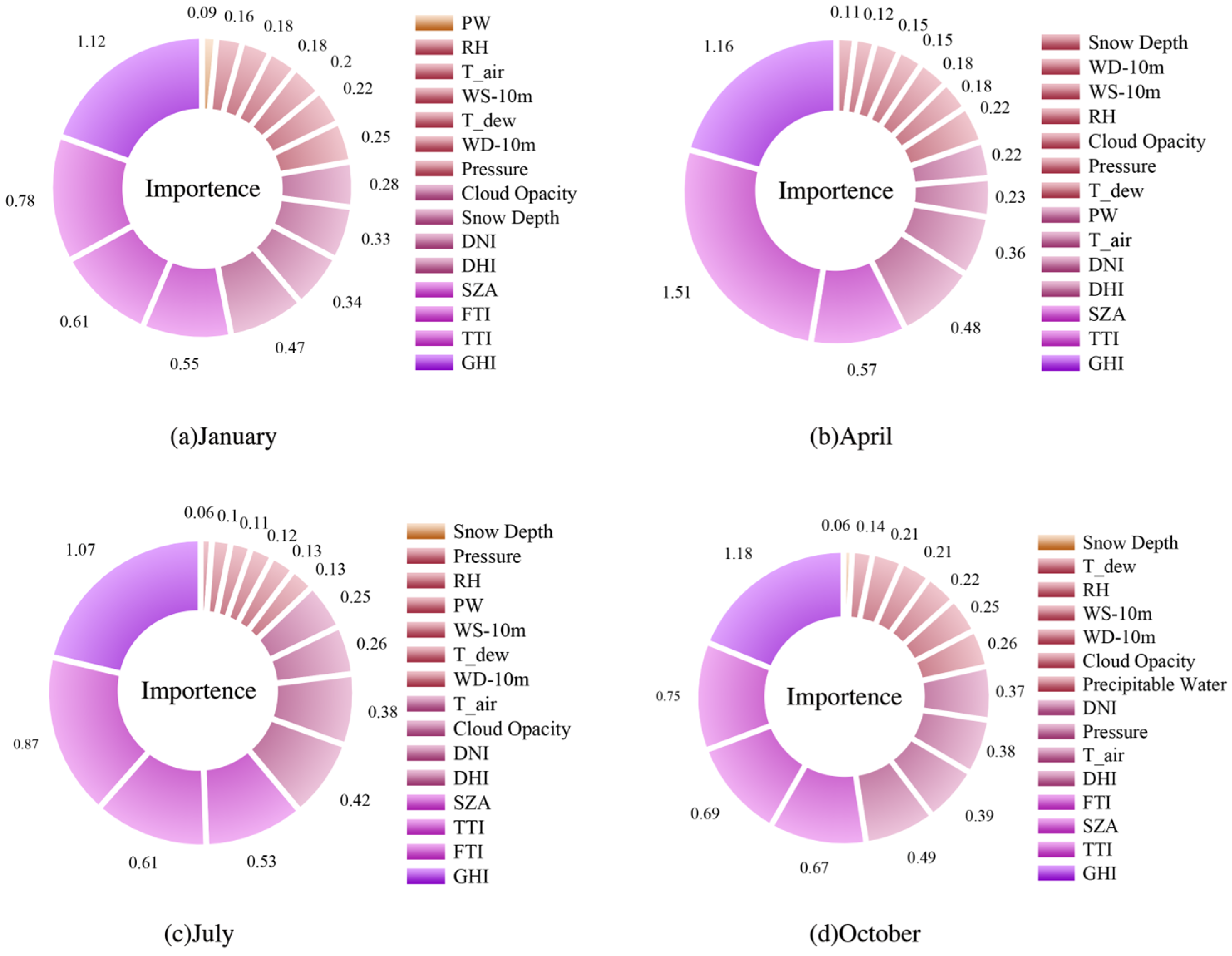
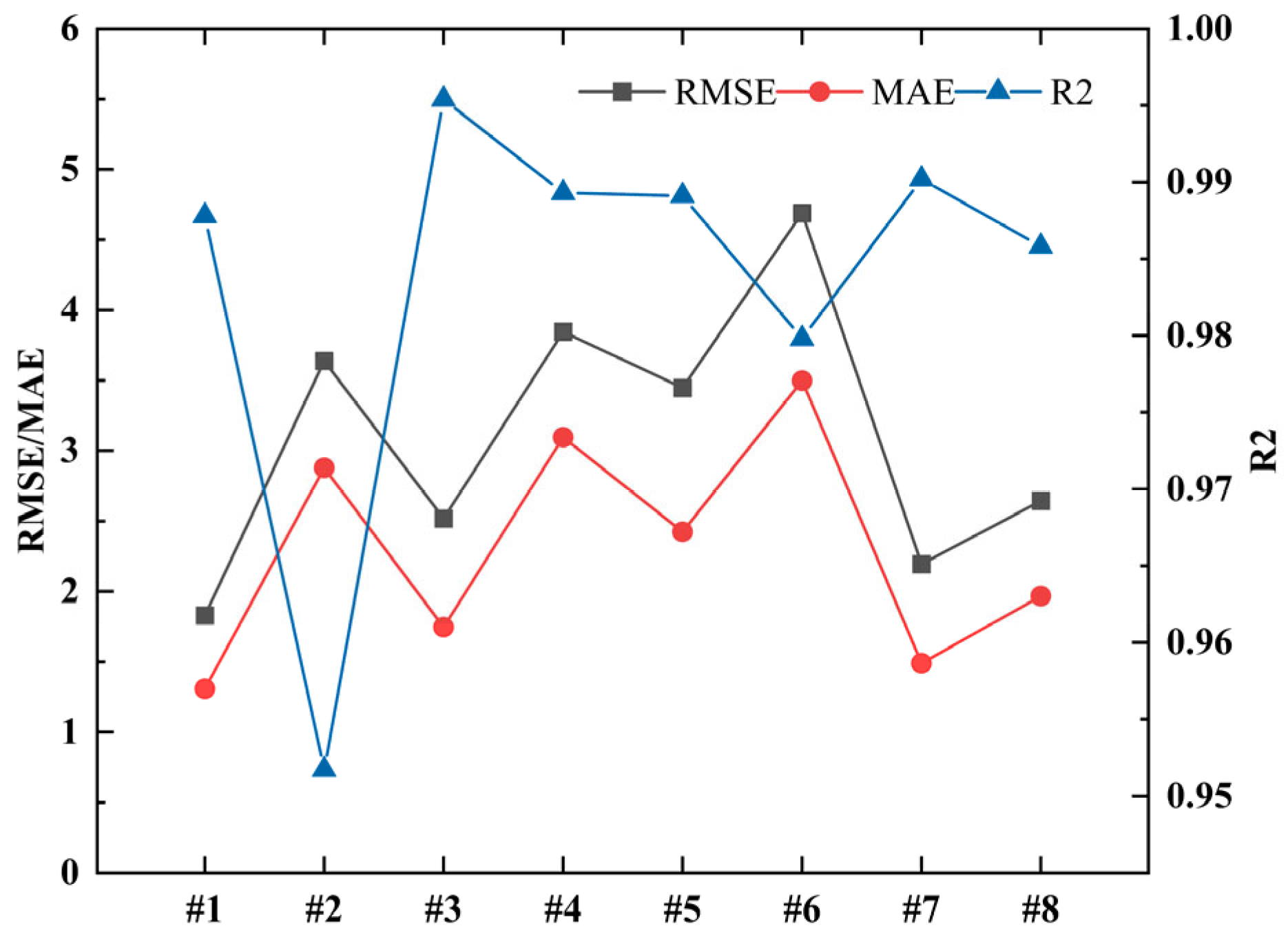
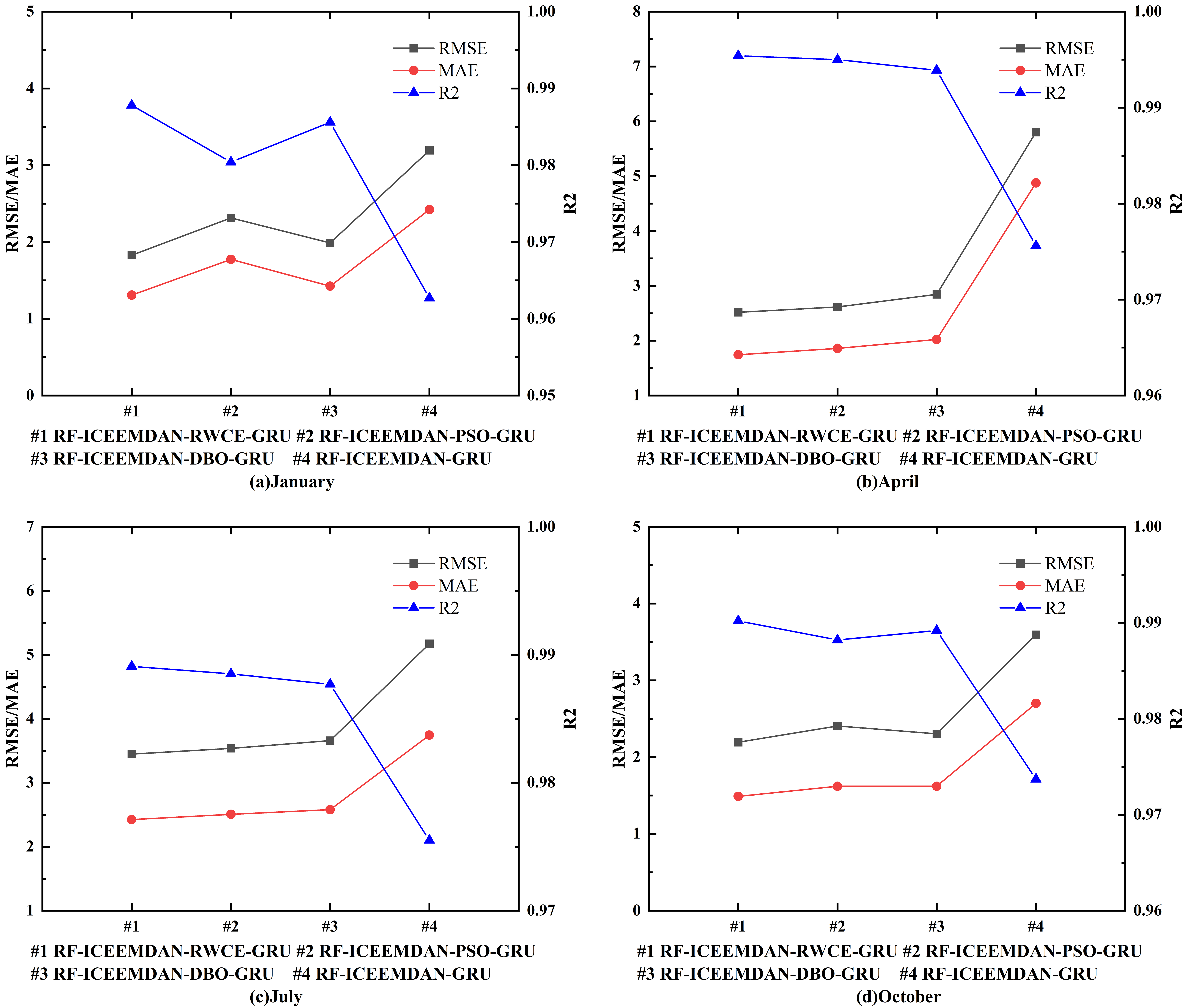
- RF is employed to analyze meteorological features, effectively identifying irrelevant variables and selecting the key drivers that most strongly affect forecasting performance, thereby reducing input redundancy. In this study, the input dimensionality is reduced from 15 candidate meteorological variables to 8 key features, resulting in lower prediction errors and better goodness of fit.
- (2)
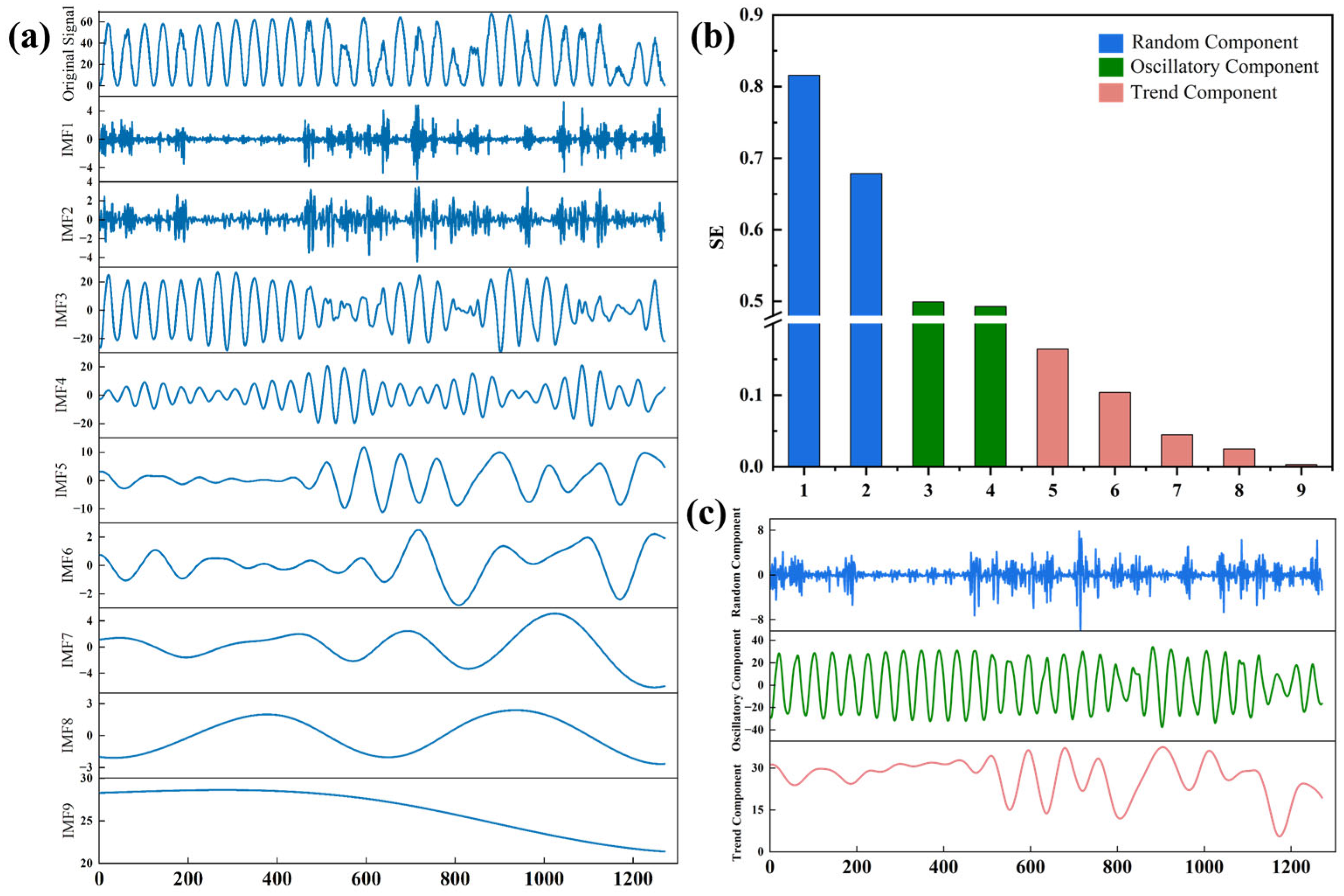
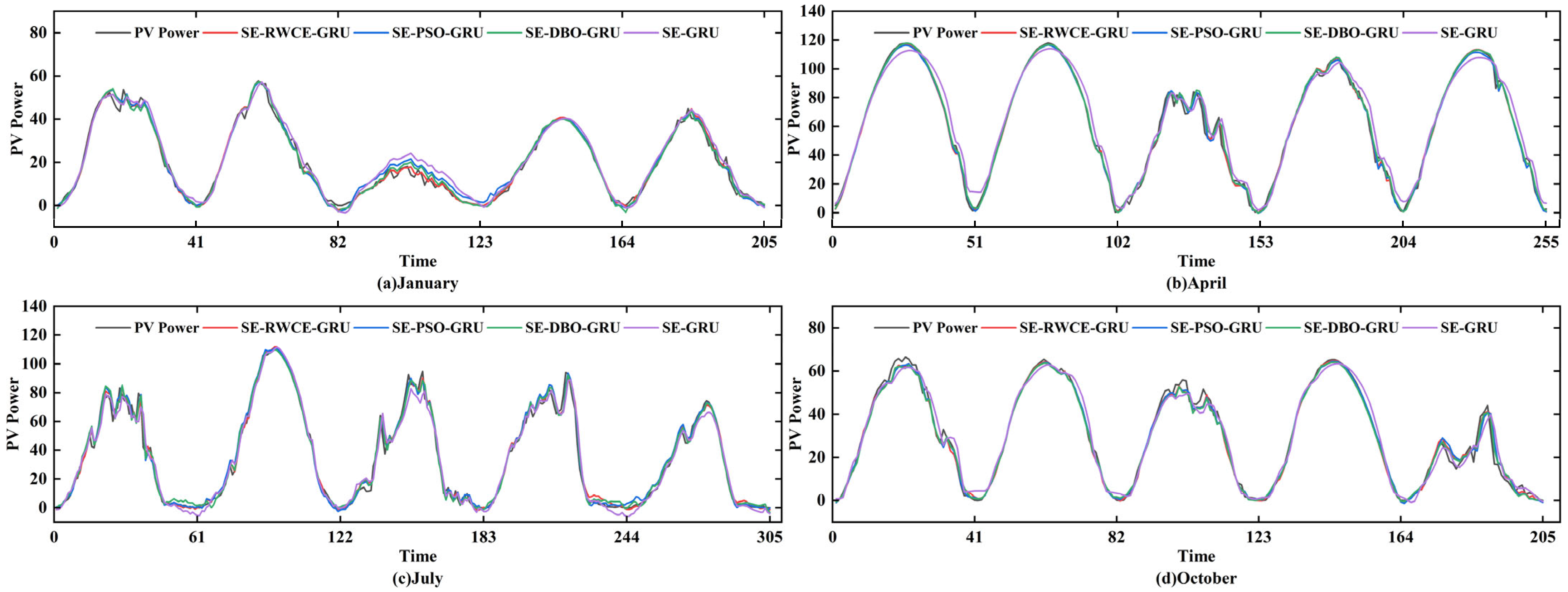
- The PV power data is decomposed using ICEEMDAN to extract various frequency components. These components are then reconstructed into high-, medium-, and low-frequency groups based on SE, which subsequently serve as inputs for the GRU network. This process mitigates non-stationarity and noise, thereby enhancing the quality of model inputs and enabling more accurate learning of temporal patterns at the component level. In particular, ICEEMDAN yields 9 IMFs, and SE-based reconstruction merges them into 3 groups, reducing the number of sub-models to be trained from 9 to 3 and decreasing computational overhead while preserving essential multi-scale information for accuracy improvement.
- (3)
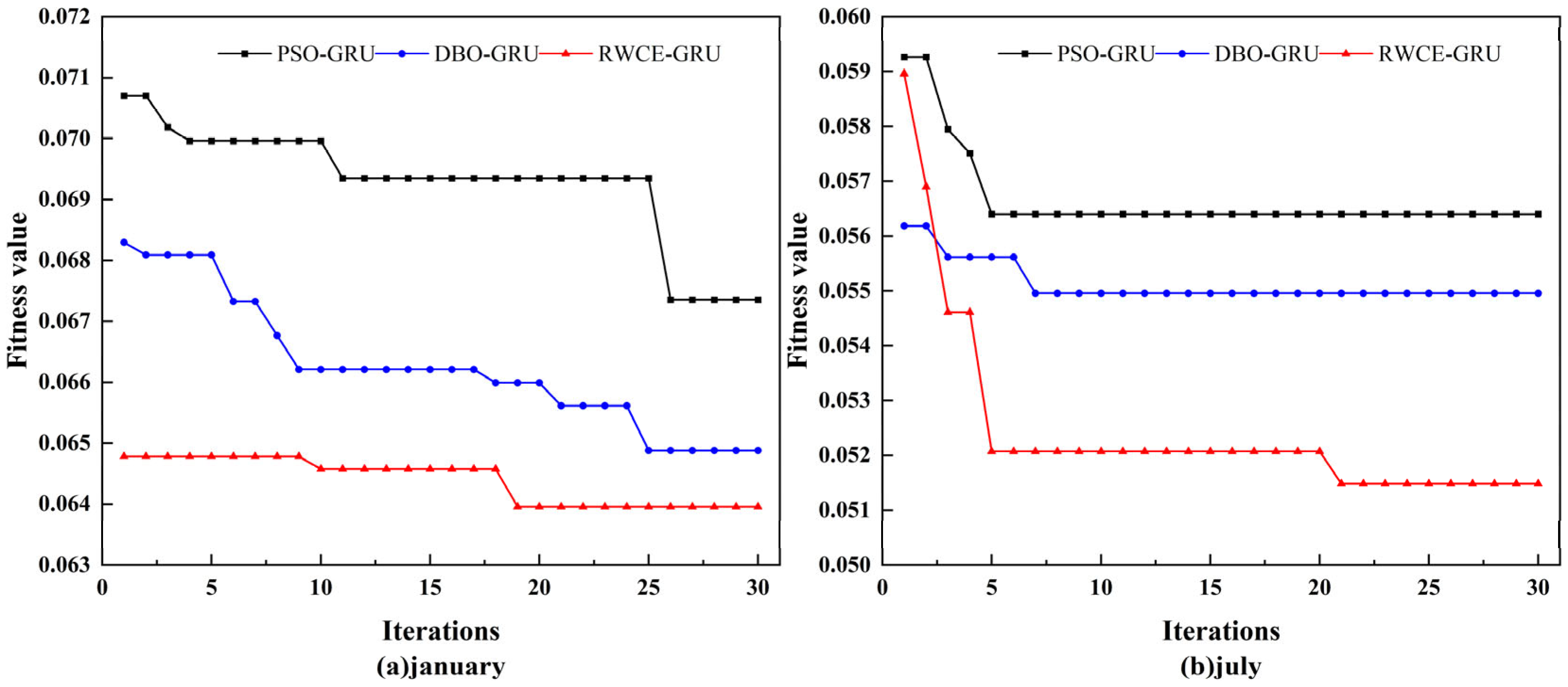
- The RWCE algorithm is first applied to automatically tune GRU network hyperparameters for PV power forecasting, thereby avoiding manual tuning and improving forecasting accuracy, while balancing global exploration and local exploitation with only a limited number of control parameters. This automatic tuning strategy yields a prediction error reduction of 9.02% in RMSE compared to the model.
- (4)
- Extensive experiments, including comparative experiments and ablation studies, are conducted to evaluate the contribution of each module and to demonstrate that the proposed approach consistently outperforms representative baseline models and the comparison model in forecasting performance.
- (5)
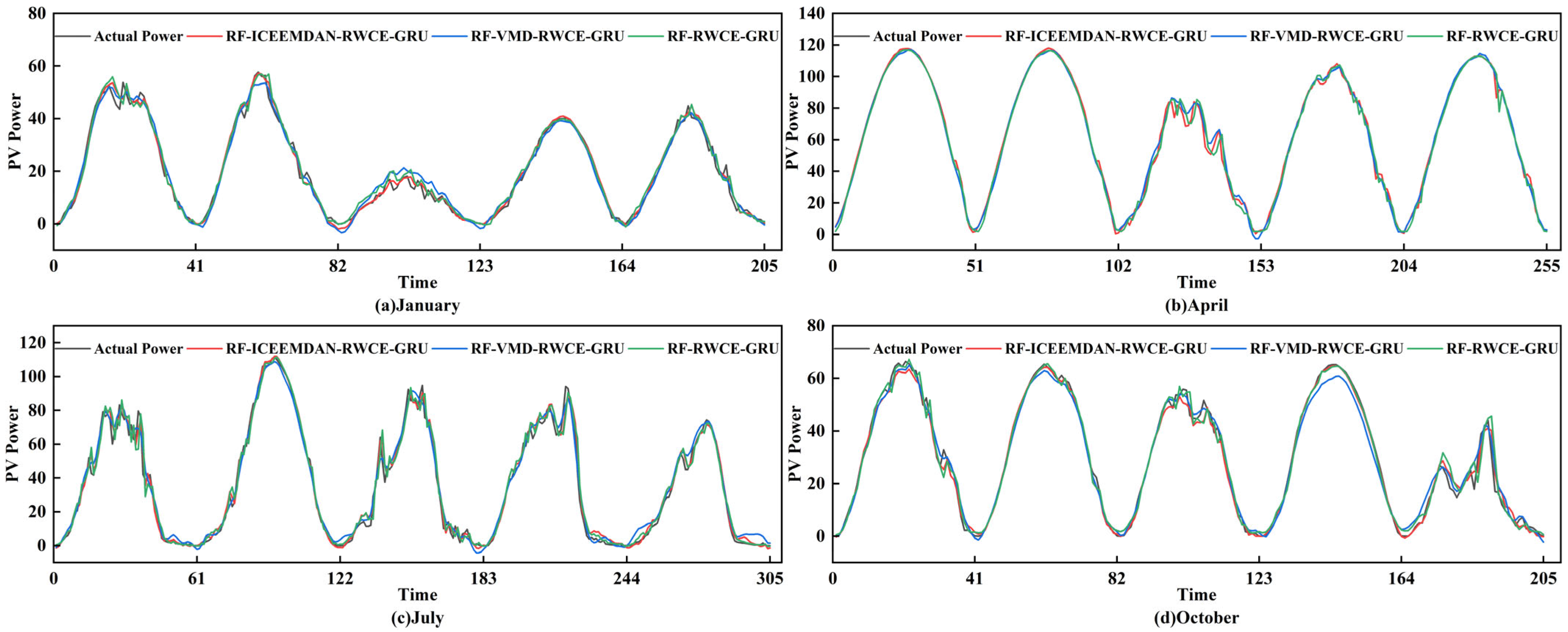
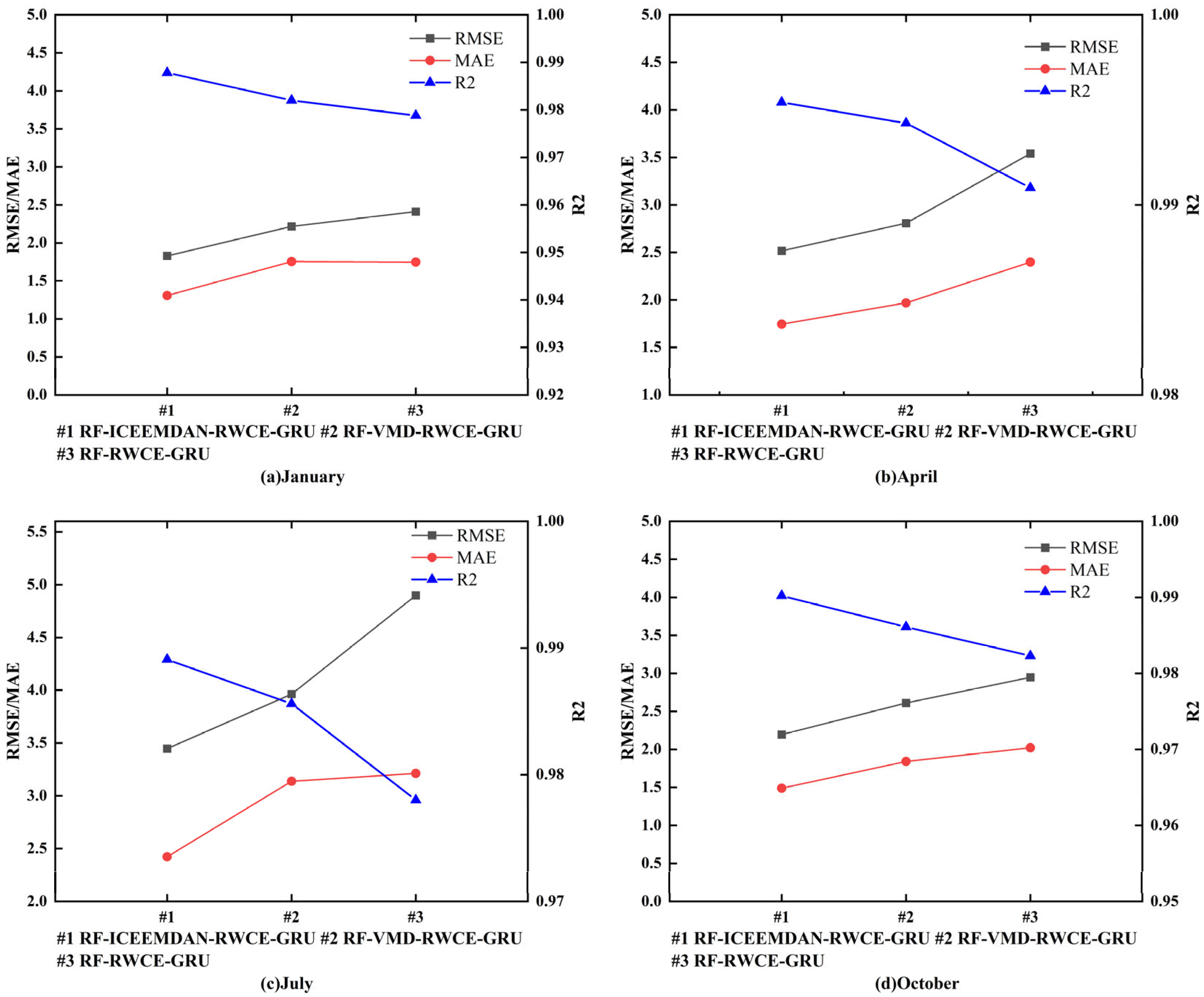
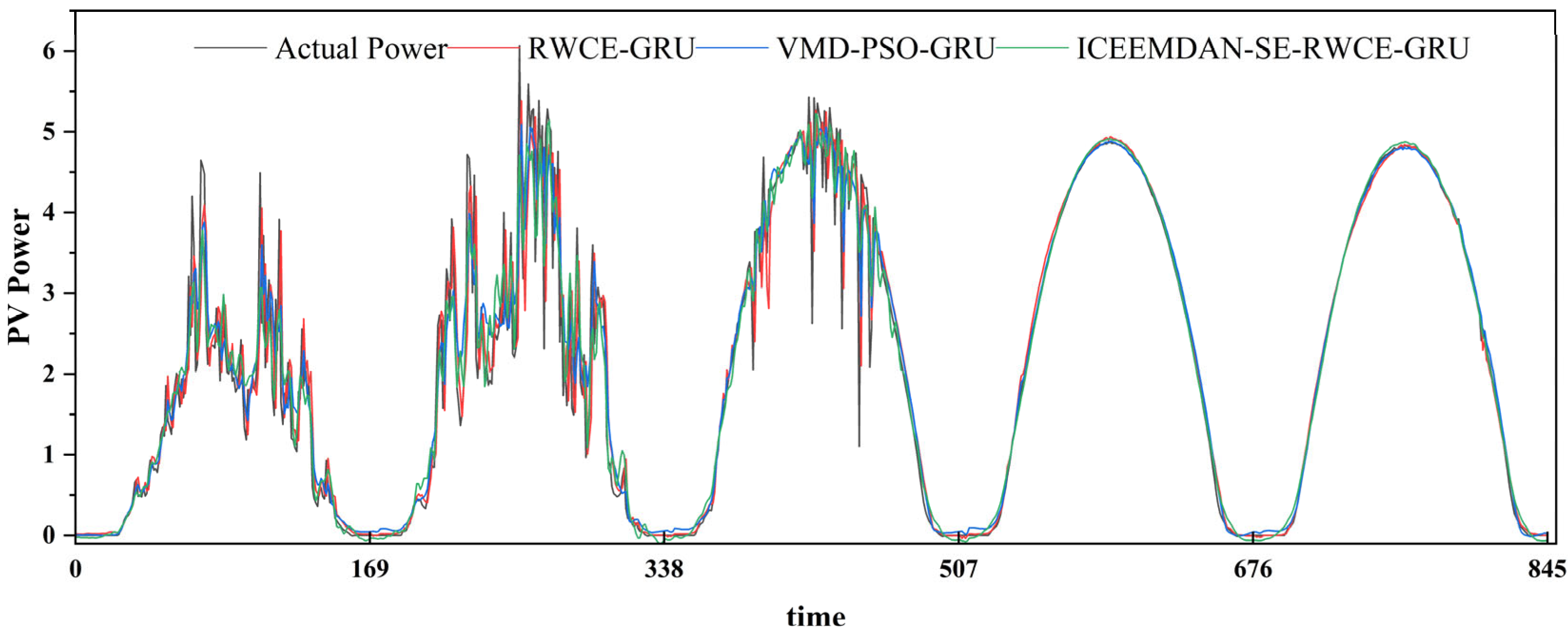
- This study evaluates the proposed model’s scalability and adaptability from spatiotemporal perspectives. By conducting rigorous experiments across diverse geographical locations and varying seasonal conditions, we verify the model’s robustness and generalization capability, confirming its suitability for real-world applications under complex climatic scenarios.
2. Research Methods
2.1. Random Forest
- (1)
- For the t-th decision tree, evaluate prediction performance on its OOB samples and compute the corresponding OOB error, denoted as .
- (2)
- Randomly permute the values of feature in the OOB samples while keeping all other features unchanged. Reevaluate the OOB error for the same tree using the permuted samples and denote it as , where denotes a random permutation of features within the OOB samples.
- (3)
- After repeating the above steps for all trees, the OOB importance of feature is defined as the mean increase in OOB error caused by permuting :
2.2. ICEEMDAN
- (1)
- Add white noise to the original signal to generate the sequence:
- (2)
- The aforementioned process is repeated times to compute the first residual component :
- (3)
- The first intrinsic mode function, , is derived by subtracting the first residual from the original signal:
- (4)
- White noise is subsequently added to the previous residual to derive the k-th residual component :
- (5)
- Step (4) is repeated recursively until a stopping criterion is satisfied, yielding the final set of modal components.
2.3. Sample Entropy
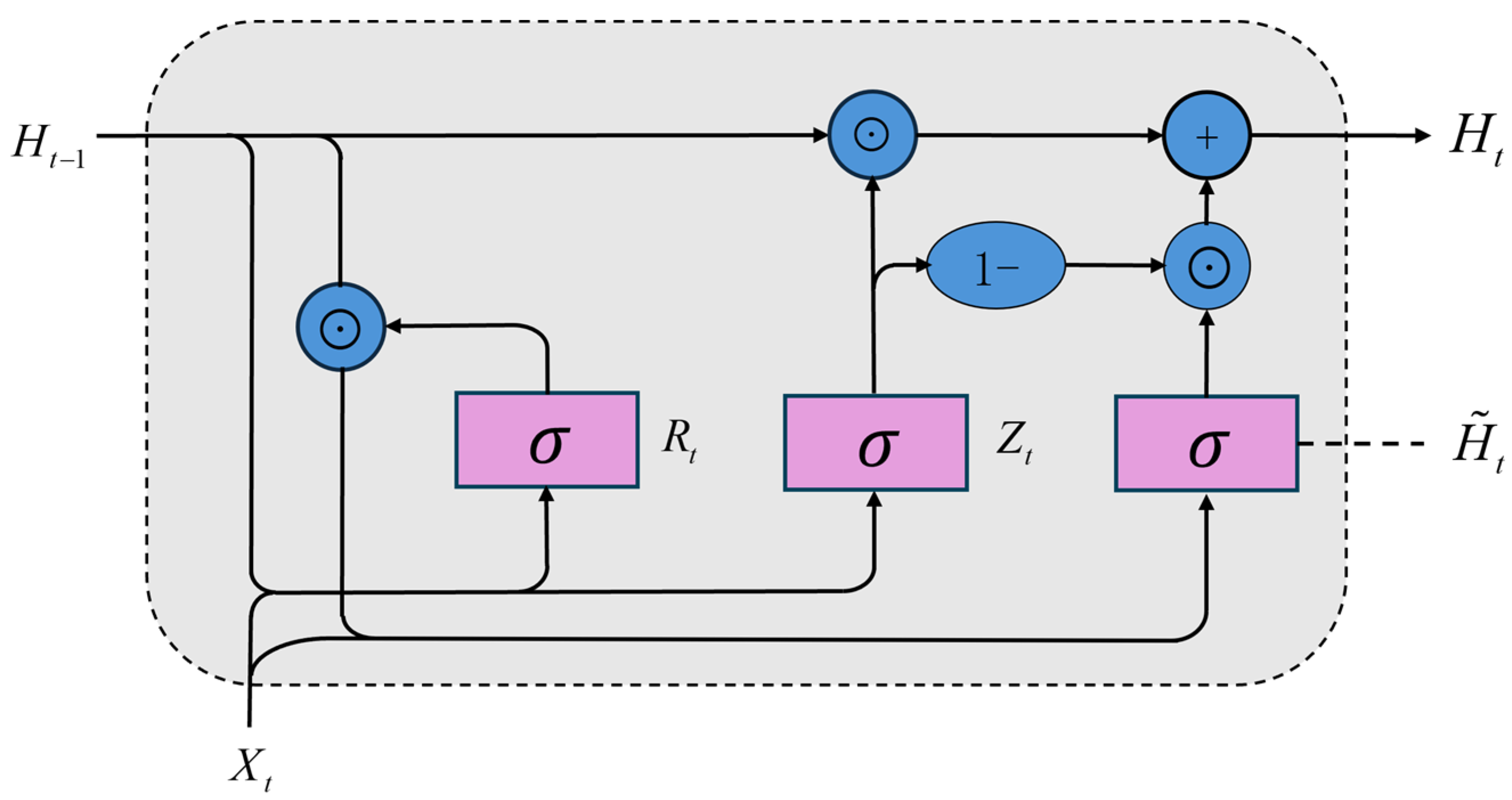
2.4. GRU Network
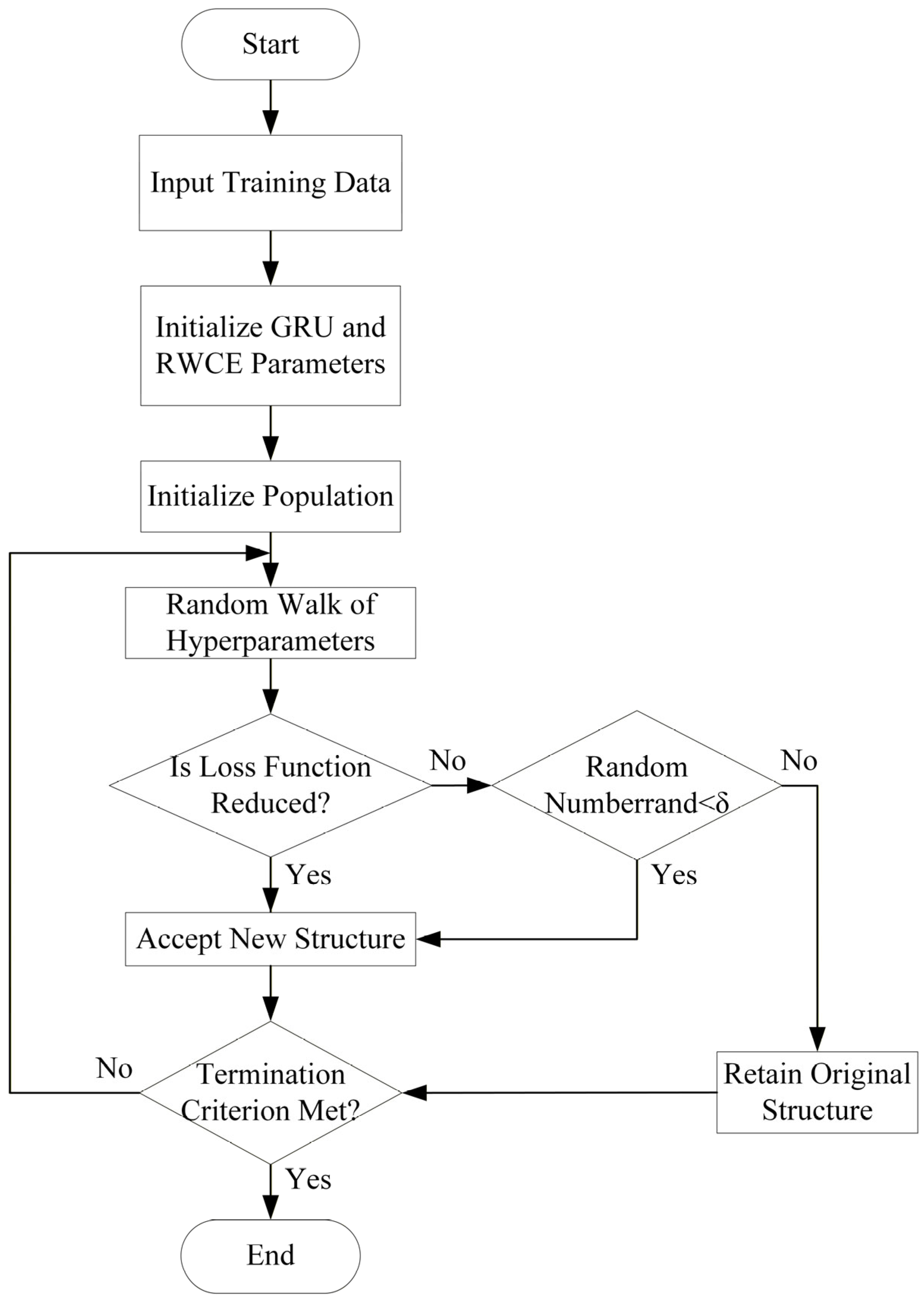
2.5. RWCE Algorithm
- (1)
- Initialization
- (2)
- Evolution
- (3)
- Selection
- (4)
- Mutation
3. Photovoltaic Power Forecasting Model
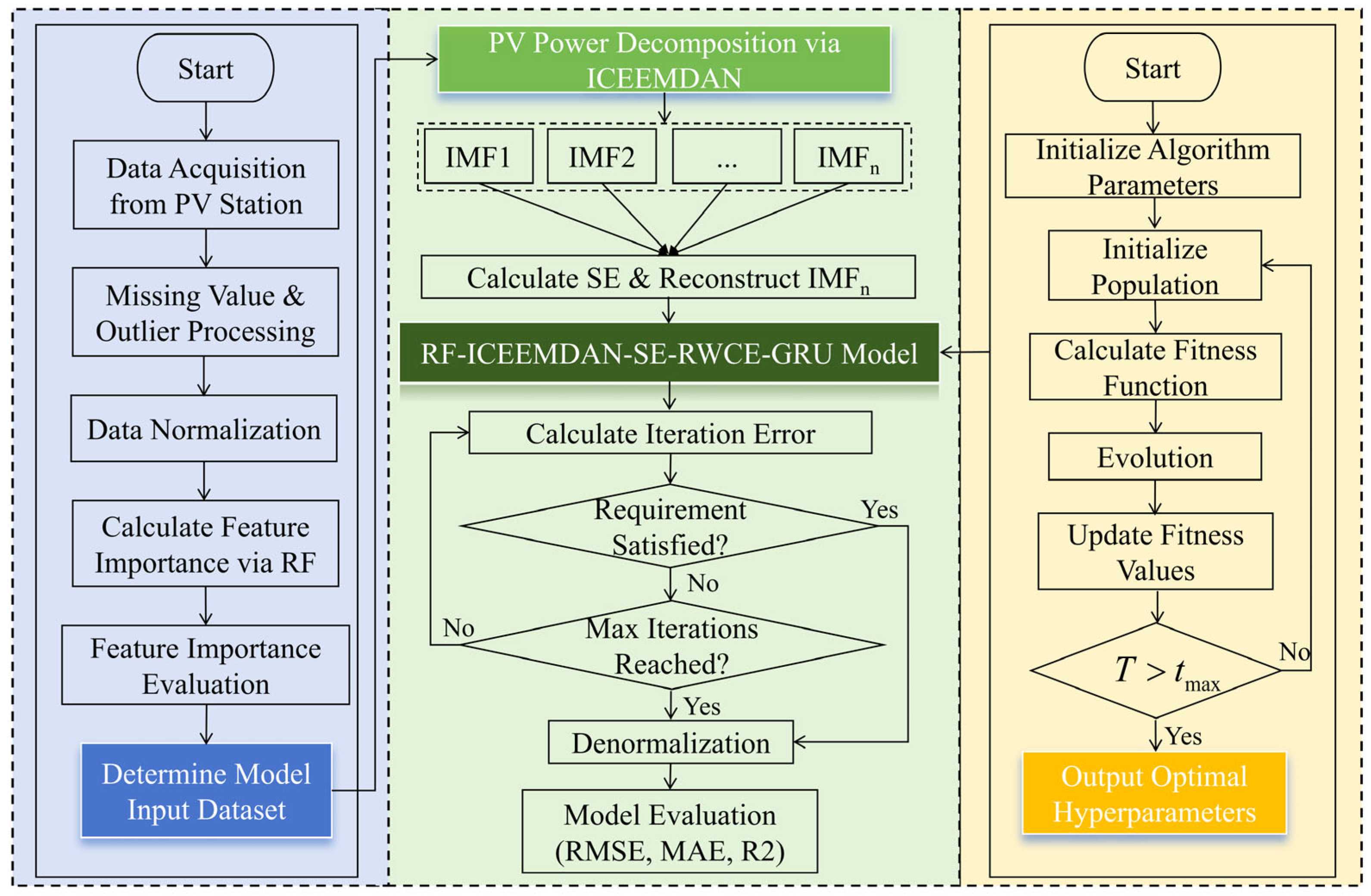
3.1. Proposed Hybrid Forecasting Model
- (1)
- The outliers and missing entries in the dataset are first corrected, after which the data are normalized.
- (2)
- RF is then applied to meteorological variables to rank feature importance, and the most informative predictors are selected as model inputs.
- (3)
- Next, the ICEEMDAN decomposes the historical PV power series into a set of relatively stationary intrinsic mode functions (IMF1, IMF2, …, IMFn) and a residual term (RES), which are subsequently reconstructed using SE to reduce signal complexity and improve computational efficiency.
- (4)
- The RWCE algorithm is then employed to tune the hyperparameters of the GRU network, and the optimal configuration is used for training and prediction.
- (5)
- Finally, the forecasts of the reconstructed components are summed to produce the overall PV power prediction, and performance is evaluated using multiple metrics.
3.2. Model Prediction Evaluation Metrics
3.3. Parameter Settings and Experimental Platform Configuration
4. Data Preprocessing and Feature Selection
4.1. Data Analysis
4.2. Feature Selection Results Based on RF
4.3. Signal Decomposition and Grouping Using ICEEMDAN and SE
5. Model Validation
5.1. Performance Evaluation of Feature Selection
5.2. Contribution Analysis of ICEEMDAN-Based Decomposition
5.3. Comparison of Different Optimization Algorithms
5.4. Evaluation of Model Scalability and Applicability
6. Conclusions
- (1)
- RF effectively identifies meteorological variables that are strongly associated with PV power output, thereby reducing the influence of irrelevant and redundant inputs.
- (2)
- By incorporating ICEEMDAN, the PV power series is decomposed from a complex non-stationary signal into relatively stationary components, which alleviates stochastic fluctuations that impair forecasting. Furthermore, SE-based reconstruction reduces input complexity and improves forecasting performance.
- (3)
- RWCE algorithm is first employed to automatically tune the GRU network hyperparameters, enabling the model to obtain more suitable configurations. This strategy mitigates performance degradation caused by suboptimal hyperparameter initialization and enhances both prediction accuracy and generalization.
- (4)
- The proposed RF-ICEEMDAN-SE-RWCE-GRU model demonstrates strong effectiveness for PV power forecasting. Across four representative months, it achieves an average RMSE reduction of 9.02% relative to comparison models and 43.41% relative to the baseline model, indicating improved robustness and precision.
- (5)
- The model demonstrates adaptability across various climate conditions, validating the proposed model’s applicability to real-world scenarios. This versatility underscores its capacity to perform well in different environmental contexts, thereby enhancing its practical value for PV power forecasting.
Supplementary Materials
Author Contributions
Funding
Data Availability Statement
Conflicts of Interest
Abbreviations
| GHI | Global Horizontal Irradiance |
| TTI | Tracking-Tilt Irradiance |
| FTI | Fixed-Tilt Irradiance |
| SZA | Solar Zenith Angle |
| DHI | Diffuse Horizontal Irradiance |
| DNI | Direct Normal Irradiance |
| T-dew | Dew Point Temperature |
| T-air | Air Temperature |
| RH | Relative Humidity |
| PW | Precipitable Water |
| GTI | Global Tilted Irradiance |
| DTI | Diffuse Tilted Irradiance |
Appendix A

| Study | Methods | Performance Improvement |
|---|---|---|
| 1 | CEEMDAN-JS-BiLSTM | RMSE reduction of 24.85% |
| 4 | VMD-IDBO-KELM | MAPE reduction of 2.66% on sunny days, 1.98% on cloudy days, and 6.46% on rainy days |
| 9 | VMD-BWO-KELM | RMSE decreases by 59.52%, MAE reduces by 59.52% compared to LSTM and SVM |
| 12 | CapSA-VMD-ResGRU-attention | Enhancement in prediction performance by 33.99%, 30.55%, 9.62%, and 1.44% in terms of four metrics |
| 19 | PSO-CNN-LSTM | RMSE reduction of 33.42%, MAE reduction of 27.73%. PSO-CNN-LSTM outperforms CNN-LSTM and CNN-LSTM-ATT with superior accuracy in all seasons |
| 30 | CEEMDAN-SE-IDBO-LSTM | CSIL decreases MAE by 13.26%, RMSE by 12.20%, MAPE by 14.99%, and R2 by 8% |
| Proposed Method | RF-ICEEMDAN-SE-RWCE-GRU | RMSE is reduced by an average of 9.02% compared to the comparison model. RMSE decreases by 43.41% relative to the baseline model, demonstrating superior forecasting capability |
References
- Liu, Y.; Wang, J.; Song, L.; Liu, Y.; Shen, L. Enhanced Short-Term PV Power Forecasting via a Hybrid Modified CEEMDAN-Jellyfish Search Optimized BiLSTM Model. Energies 2025, 18, 3581. [Google Scholar] [CrossRef]
- Nam, N.B.; Ogliari, E.; Leva, S.; Pafumi, E.; Alberti, D.; Duong, M.Q. Comparative analysis of conformal prediction techniques and machine learning models for very short-term solar power forecasting. Energy AI 2025, 21, 100573. [Google Scholar] [CrossRef]
- Peng, S.; Zhu, J.; Wu, T.; Yuan, C.; Cang, J.; Zhang, K.; Pecht, M. Prediction of wind and PV power by fusing the multi-stage feature extraction and a PSO-BiLSTM model. Energy 2024, 298, 131345. [Google Scholar] [CrossRef]
- Meng, J.; Yuan, Q.; Zhang, W.Q.; Yan, T.J.; Kong, F.Q. Short-Term Prediction of Rural Photovoltaic Power Generation Based on Improved Dung Beetle Optimization Algorithm. Sustainability 2024, 16, 5467. [Google Scholar] [CrossRef]
- Wang, X.; Ma, W. A hybrid deep learning model with an optimal strategy based on improved VMD and transformer for short-term photovoltaic power forecasting. Energy 2024, 295, 131071. [Google Scholar] [CrossRef]
- Zhou, Z.; Dai, Y.; Leng, M. A photovoltaic power forecasting framework based on Attention mechanism and parallel prediction architecture. Appl. Energy 2025, 391, 125869. [Google Scholar] [CrossRef]
- Kumar Dubey, A.; Kumar, A.; García-Díaz, V.; Kumar Sharma, A.; Kanhaiya, K. Study and analysis of SARIMA and LSTM in forecasting time series data. Sustain. Energy Technol. Assess. 2021, 47, 101474. [Google Scholar] [CrossRef]
- Hou, G.; Liu, P. Short-term prediction of wind power based on improved temporal fusion transformer model with enhanced hippopotamus optimization algorithm. Electr. Power Syst. Res. 2026, 252, 112464. [Google Scholar] [CrossRef]
- Ren, F.; Cao, X.Y. Wind power prediction based on VMD-BWO-KELM. Electr. Power Syst. Res. 2025, 247, 111765. [Google Scholar] [CrossRef]
- Guo, F.; Yang, C.; Xia, D.; Xu, J. Short-Term Prediction of Photovoltaic Power Based on Improved CNN-LSTM and Cascading Learning. Energy Eng. 2025, 122, 1975–1999. [Google Scholar] [CrossRef]
- Tong, F.; Bai, D.; Ma, X.; Cheng, L.; Yang, J.; Cao, X. A hybrid ICEEMDAN-BO-GRU model for real-time grouting parameter prediction. Appl. Soft Comput. 2025, 185, 113912. [Google Scholar] [CrossRef]
- Geng, D.; Zhang, Y.; Zhang, Y.; Qu, X.; Li, L. A hybrid model based on CapSA-VMD-ResNet-GRU-attention mechanism for ultra-short-term and short-term wind speed prediction. Renew. Energy 2025, 240, 122191. [Google Scholar] [CrossRef]
- Zhao, Z.; Yun, S.; Jia, L.; Guo, J.; Meng, Y.; He, N.; Li, X.; Shi, J.; Yang, L. Hybrid VMD-CNN-GRU-based model for short-term forecasting of wind power considering spatio-temporal features. Eng. Appl. Artif. Intell. 2023, 121, 105982. [Google Scholar] [CrossRef]
- Mohseni-Gharyehsafa, B.; Bampoulas, A.; Finn, D.; Pallonetto, F. Energy flexibility and management software in building clusters: A comprehensive review. Next Energy 2025, 8, 100250. [Google Scholar] [CrossRef]
- Deka, P.; Cordeiro-Costas, M.; Pérez-Orozco, R.; Chabinski, M.; Szlek, A. Novel NSGA-II optimized LSTM and GRU models for short-term forecasting of residential heating load. Energy Build. 2025, 344, 115999. [Google Scholar] [CrossRef]
- Ye, H.; Zhu, Q.; Zhang, X. Short-Term Load Forecasting for Residential Buildings Based on Multivariate Variational Mode Decomposition and Temporal Fusion Transformer. Energies 2024, 17, 3061. [Google Scholar] [CrossRef]
- Zhou, N.; Shang, B.; Xu, M.; Peng, L.; Feng, G. Enhancing photovoltaic power prediction using a CNN-LSTM-attention hybrid model with Bayesian hyperparameter optimization. Glob. Energy Interconnect. 2024, 7, 667–681. [Google Scholar] [CrossRef]
- Hua, X.; Zhang, Z.; Ye, T.; Song, Z.; Shao, Y.; Su, Y. Enhanced Short-Term Photovoltaic Power Prediction Through Multi-Method Data Processing and SFOA-Optimized CNN-BiLSTM. Energies 2025, 18, 5124. [Google Scholar] [CrossRef]
- Lv, Q.; Zhang, J.; Zhang, J.; Zhang, Z.; Zhou, Q.; Gao, P.; Zhang, H. Short-Term Wind Power Prediction Model Based on PSO-CNN-LSTM. Energies 2025, 18, 3346. [Google Scholar] [CrossRef]
- Xu, Y.; Zhang, L.; Cui, G.; Yang, Q. A heuristic approach to design a cost-effective and low-CO2 emission synthesis in a heat exchanger network with crude oil distillation units. Energy 2023, 271, 126972. [Google Scholar] [CrossRef]
- Zhang, S.; Liu, S.; Ye, J.; Huang, X.; Xiao, Y.; Cui, G. A novel node-based free-splitting model with stream splitting restrictions for optimizing heat exchanger networks. Chem. Eng. Sci. 2026, 326, 123521. [Google Scholar] [CrossRef]
- Liu, L.; Cui, G.; Chen, J.; Huang, X.; Li, D. Two-stage superstructure model for optimization of distributed energy systems (DES) part I: Model development and verification. Energy 2022, 245, 123227. [Google Scholar] [CrossRef]
- Duan, H.; Yang, L.; Xiao, Y.; Huang, X.; Cui, G. A heuristic algorithm with a dynamic generation strategy for optimizing energy systems. Appl. Therm. Eng. 2024, 236, 121833. [Google Scholar] [CrossRef]
- Yang, S.; Luo, Y. Short-term photovoltaic power prediction based on RF-SGMD-GWO-BiLSTM hybrid models. Energy 2025, 316, 134545. [Google Scholar] [CrossRef]
- Hou, Z.; Zhang, Y.; Cheng, X.; Ye, X. Photovoltaic Power Forecasting Based on Variational Mode Decomposition and Long Short-Term Memory Neural Network. Energies 2025, 18, 3572. [Google Scholar] [CrossRef]
- Zhou, D.; Liu, Y.; Wang, X.; Wang, F.; Jia, Y. Combined ultra-short-term photovoltaic power prediction based on CEEMDAN decomposition and RIME optimized AM-TCN-BiLSTM. Energy 2025, 318, 134847. [Google Scholar] [CrossRef]
- Kong, X.; Du, X.; Xue, G.; Xu, Z. Multi-step short-term solar radiation prediction based on empirical mode decomposition and gated recurrent unit optimized via an attention mechanism. Energy 2023, 282, 128825. [Google Scholar] [CrossRef]
- Zhang, M.M.; Lu, J.; Hu, Y.B.; Hu, Q.; Wu, J. Analysis and prediction of solid oxide electrolysis stack’s aging trajectory considering nonstationary phenomenon based on VMD-TCN-LSTM. Int. J. Hydrogen Energy 2025, 172, 151304. [Google Scholar] [CrossRef]
- Mounir, N.; Ouadi, H.; Jrhilifa, I. Short-term electric load forecasting using an EMD-BI-LSTM approach for smart grid energy management system. Energy Build. 2023, 288, 113022. [Google Scholar] [CrossRef]
- Tan, J.; Zhu, H.; Zhang, J.; Liu, H. Multi-stage wind speed prediction with CEEMDAN-SE-IDBO-LSTM based on rolling decomposition. Energy 2025, 338, 138741. [Google Scholar] [CrossRef]
- Zhang, Z.; Liu, H.; Wang, J.; Zhang, P.; Yuan, X. Short-term time series prediction model based on TFA and IVMD-EMD Quadratic decomposition: A case study on power time series data. Electr. Power Syst. Res. 2026, 254, 112610. [Google Scholar] [CrossRef]
- Li, Z.; Qu, Y. Multifractal Characterization between EU and Chinese Carbon Markets and Its Implications for the Prediction of the Carbon Markets in China: Based on the ICEEMDAN-NGO-VMD-MMF-ADCCA-LSTM Model. Energy 2026, 344, 140093. [Google Scholar] [CrossRef]
- Chen, J.; Peng, T.; Qian, S.; Ge, Y.; Wang, Z.; Nazir, M.S.; Zhang, C. An error-corrected deep Autoformer model via Bayesian optimization algorithm and secondary decomposition for photovoltaic power prediction. Appl. Energy 2025, 377, 124738. [Google Scholar] [CrossRef]
- Sun, X.; Liu, H. Multivariate short-term wind speed prediction based on PSO-VMD-SE-ICEEMDAN two-stage decomposition and Att-S2S. Energy 2024, 305, 132228. [Google Scholar] [CrossRef]
- Ratnasingam, S.; Muñoz-Lopez, J. Distance Correlation-Based Feature Selection in Random Forest. Entropy 2023, 25, 1250. [Google Scholar] [CrossRef]
- Sun, S.; Yu, P.; Xing, J.; Cheng, Y.; Yang, S.; Ai, Q. Short-Term Wind Power Prediction Based on ICEEMDAN-SE-LSTM Neural Network Model with Classifying Seasonal. Energy Eng. 2023, 120, 2761–2782. [Google Scholar] [CrossRef]
- Ojugo, A.A.; Azman, S.; Pathmanathan, D.; Balakrishnan, V. A two-stage forecasting model using random forest subset-based feature selection and BiGRU with attention mechanism: Application to stock indices. PLoS ONE 2025, 20, e0323015. [Google Scholar] [CrossRef]
- Yang, J.; Peng, L.; Luo, L.; Li, W.; Chen, Y. Wind power forecasting using hybrid ICEEMDAN-KPCA and IWOA-BiLSTM models. Int. J. Electr. Power Energy Syst. 2025, 173, 111445. [Google Scholar] [CrossRef]
- Feng, H.; Yu, C. A novel hybrid model for short-term prediction of PV power based on KS-CEEMDAN-SE-LSTM. Renew. Energy Focus 2023, 47, 100497. [Google Scholar] [CrossRef]
- Tan, C.; Wang, B.; Li, J.; Chen, J.; Liang, B.; Zheng, S.; Han, R.; Tian, R.; Tan, S. Research on reactor power prediction of nuclear power plant based on multivariate optimization GRU model. Int. J. Adv. Nucl. React. Des. Technol. 2024, 6, 78–89. [Google Scholar] [CrossRef]
- Yang, X.; Yang, L.; Li, Y.; Zhao, Z.; Zhang, Y. A new method of photovoltaic clusters power prediction based on Informer considering time-frequency analysis and convergence effect. Electr. Power Syst. Res. 2025, 238, 111049. [Google Scholar] [CrossRef]


Disclaimer/Publisher’s Note: The statements, opinions and data contained in all publications are solely those of the individual author(s) and contributor(s) and not of MDPI and/or the editor(s). MDPI and/or the editor(s) disclaim responsibility for any injury to people or property resulting from any ideas, methods, instructions or products referred to in the content. |
© 2026 by the authors. Licensee MDPI, Basel, Switzerland. This article is an open access article distributed under the terms and conditions of the Creative Commons Attribution (CC BY) license.
Share and Cite
Li, C.; Huang, X.; Su, M.; Duan, H.; Cao, W.; Cui, G. Short-Term Photovoltaic Power Forecasting Using a Hybrid RF-ICEEMDAN-SE-RWCE-GRU Model. Energies 2026, 19, 1386. https://doi.org/10.3390/en19061386
Li C, Huang X, Su M, Duan H, Cao W, Cui G. Short-Term Photovoltaic Power Forecasting Using a Hybrid RF-ICEEMDAN-SE-RWCE-GRU Model. Energies. 2026; 19(6):1386. https://doi.org/10.3390/en19061386
Chicago/Turabian StyleLi, Chuang, Xiaohuang Huang, Mang Su, Huanhuan Duan, Weile Cao, and Guomin Cui. 2026. "Short-Term Photovoltaic Power Forecasting Using a Hybrid RF-ICEEMDAN-SE-RWCE-GRU Model" Energies 19, no. 6: 1386. https://doi.org/10.3390/en19061386
APA StyleLi, C., Huang, X., Su, M., Duan, H., Cao, W., & Cui, G. (2026). Short-Term Photovoltaic Power Forecasting Using a Hybrid RF-ICEEMDAN-SE-RWCE-GRU Model. Energies, 19(6), 1386. https://doi.org/10.3390/en19061386