1. Introduction
With the rapid development of underground resource extraction, mining-induced ground deformation has become a major geohazard threatening the safe operation of buried pipelines. Surface subsidence and differential settlement in goaf areas may induce pipe–soil separation, stress concentration, and structural damage [
1,
2]. Statistical analyses of long-distance natural gas transmission pipeline accidents in the United States, Mexico, the former Soviet Union, Australia, China, and other countries from the late 20th century to the early 21st century indicate that approximately 15% of buried gas pipeline failures were attributed to ground movement [
3,
4]. Mining-induced subsidence, a form of intense and progressively developing surface deformation, leads to ground settlement and soil displacement. This can subject pipelines to bending and axial deformation, potentially resulting in failure modes such as fracture or buckling [
5,
6].
The mechanical response, deformation, and evolutionary characteristics of buried pipelines in coal mining subsidence areas depend on the magnitude and mode of ground settlement along the pipeline route during mining-induced subsidence. Therefore, research on the fundamental theory and application of mining subsidence serves as the basis for analyzing the mechanical behavior of buried pipelines during extraction. Scholars established surface subsidence models based on the probability integral method, analyzing the influence of parameters such as the subsidence factor, extent of the surface subsidence basin, and curvature on subsidence patterns, and calculated the affected range of surface subsidence as well as rational boundaries for working face layout [
7,
8,
9,
10]. Although the probability integral method has been widely applied in predicting mining-induced surface subsidence due to its computational efficiency and practical applicability, it is primarily based on continuous deformation assumptions and empirical influence functions. Under complex goaf collapse conditions involving key stratum fracture, block rotation, and localized roof failure, surface deformation often exhibits discontinuity and asymmetry. In such cases, the probability integral method may have limited capability in capturing fracture-controlled subsidence evolution, stress redistribution, and pipe–soil interaction mechanisms. Building on this, researchers introduced the temporal dimension as a key factor in surface subsidence, developing time-function models to estimate the maximum delayed surface settlement at different stages [
11,
12,
13]. Meanwhile, numerical simulations, physical analog modeling, and various machine learning methods have also contributed significantly to calculating surface movement and deformation [
14,
15,
16,
17,
18,
19]. Through theoretical analysis and numerical simulations, scholars revealed the mechanisms and characteristics of foundation deformation in fractured rock and soil within goaf areas, leading to improved methods for predicting subsidence in mining-induced collapse zones [
20,
21].
The mechanical behavior of buried pipelines is closely related to the deformation of the surrounding soil. Therefore, analyzing the mechanical response of buried pipelines under surface deformation requires the establishment of reasonable mechanical models based on the characteristics of ground movement and appropriate assumptions. Scholars have synthesized theoretical, experimental, and numerical investigations into the pipe–soil interaction under differential ground settlement, highlighting critical aspects of soil–pipeline interplay [
22,
23,
24,
25]. Their studies analyzed stress distribution in pipelines within mining subsidence areas, demonstrating that frictional forces between the pipe and soil induce axial tensile and compressive deformations, with stress concentration most likely occurring at interfaces of uneven settlement. Researchers further examined the influence of internal forces, burial depth ratio, and horizontal span ratio on failure mechanisms under ground settlement, establishing strain calculation models for pipelines subjected to continuous ground displacement [
26,
27]. Through designed continuous settlement experimental systems, scholars conducted tests on buried steel pipes, investigating mechanical responses across loading, unloading, fluctuation, and stabilization phases [
28,
29]. Based on extensive field data and theoretical studies, they developed a safety evaluation system for gas pipelines above goaf areas that incorporates multiple parameters such as mining methods, overburden lithology, and burial depth, and proposed a corresponding risk assessment methodology [
30,
31]. Some research findings indicate that damage accumulation and fracture localization fundamentally control macroscopic mechanical deterioration and deformation behavior [
32,
33].
The surface deformation induced by coal mining subsidence is complex. Previous studies have demonstrated that periodic weighting and roof fracture behavior during longwall mining fundamentally control stress redistribution within the overburden, thereby governing the evolution of surface subsidence and stress transfer to overlying strata [
34,
35]. The interaction between pipelines and surrounding soil evolves progressively during the mining process. In the initial stage of surface deformation, the buried pipeline and adjacent soil undergo coordinated settlement. As surface subsidence intensifies, relative displacement occurs between the pipeline and the soil, leading to non-coordinated deformation. Essentially, the pipe–soil interaction within the subsiding soil mass is the fundamental cause of pipeline deformation and failure. However, existing experimental and theoretical studies primarily assume continuous ground deformation and focus on axial strain evaluation, while key engineering issues such as pipe–soil separation under non-coordinated settlement and bending-dominated damage evolution in unsupported pipeline sections remain insufficiently addressed. Therefore, this study takes the geological conditions of the Mugu Coal Mine in Shanxi Province, China, and a gas pipeline traversing the mining area as its research context. To address the aforementioned gaps, this study combines numerical simulation with physical analog modeling to investigate the mechanical response of buried gas pipelines under mining-induced deformation. Specifically, the study aims to answer the following research questions:
- (1)
How do mining-induced stress redistribution and overburden fracture evolution control surface soil deformation characteristics?
- (2)
How does pipe–soil interaction dynamically transition from coordinated deformation to non-coordinated separation during working face advancement?
- (3)
How do stress concentration and bending-dominated damage evolve in buried gas pipelines within goaf areas under progressive subsidence?
By addressing these questions, the study seeks to clarify the failure patterns of gas pipelines in coal mining-affected regions.
2. Project Overview
The gas pipeline managed by the Pipeline Branch of Shanxi Gas Industry Group Co., Ltd. in Lvliang City, China. passes through the goaf collapse area of the Mugu Coal Mine. The mine field covers an area of 9.34 km
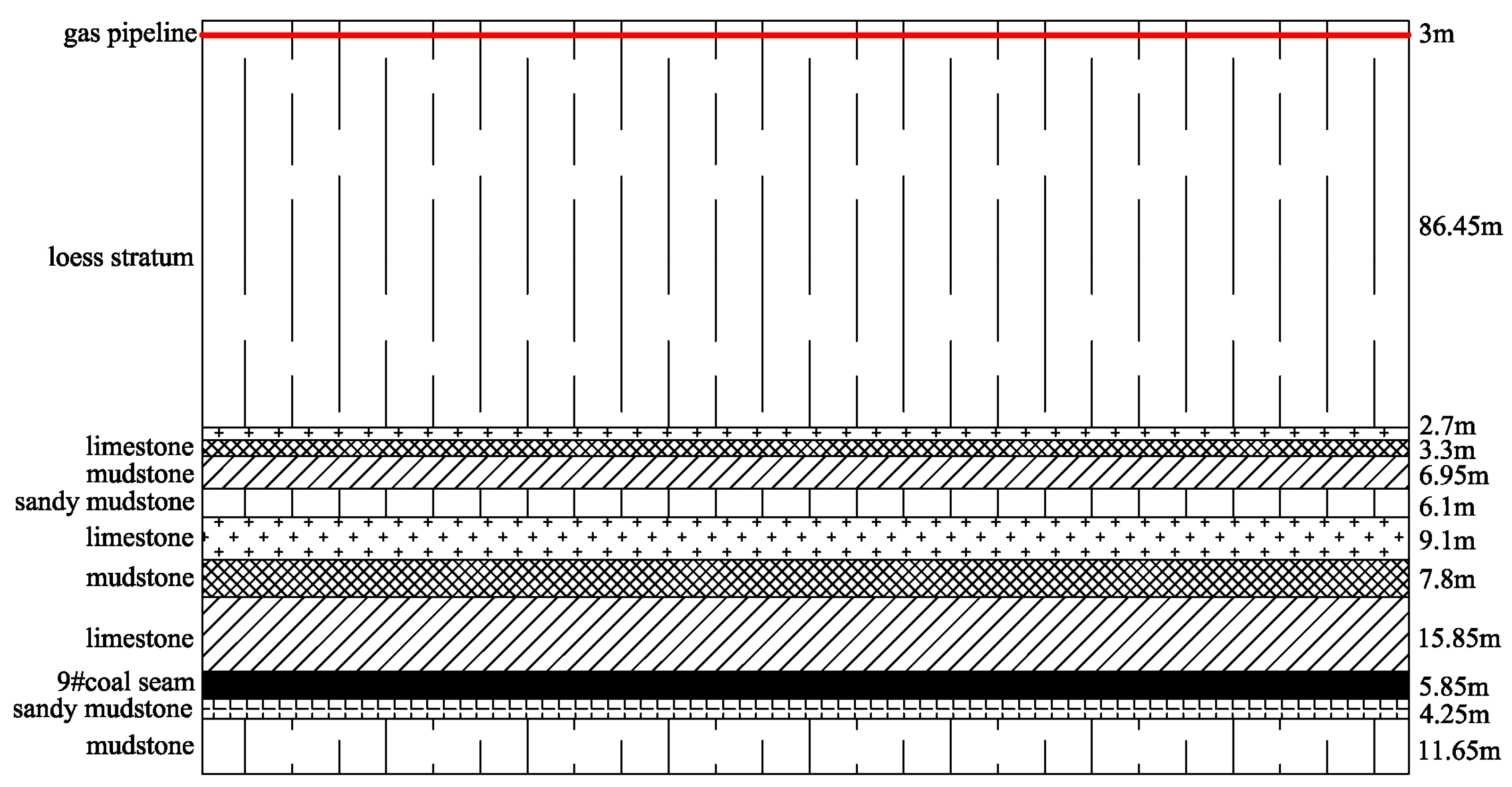
2 with a designed production capacity of 1.2 million tons per year. Currently, the main mining operation targets the 9# coal seam, which has an average thickness of 5.85 m and an average burial depth of 138.25 m, employing the full-seam mining method. The immediate roof consists primarily of limestone and mudstone, while the floor is mainly composed of sandy mudstone and mudstone, with the stratigraphic distribution shown in
Figure 1. The surface soil layer is characterized by light yellow loess-like silty clay and sandy silt, featuring large pores and locally interbedded with sand–gravel layers and lenticular inclusions.
The natural gas transmission pipeline passing through the mining area of Mugu Coal Mine has a diameter of 1016 mm, wall thickness of 21.0 mm, density of 7850 kg/m
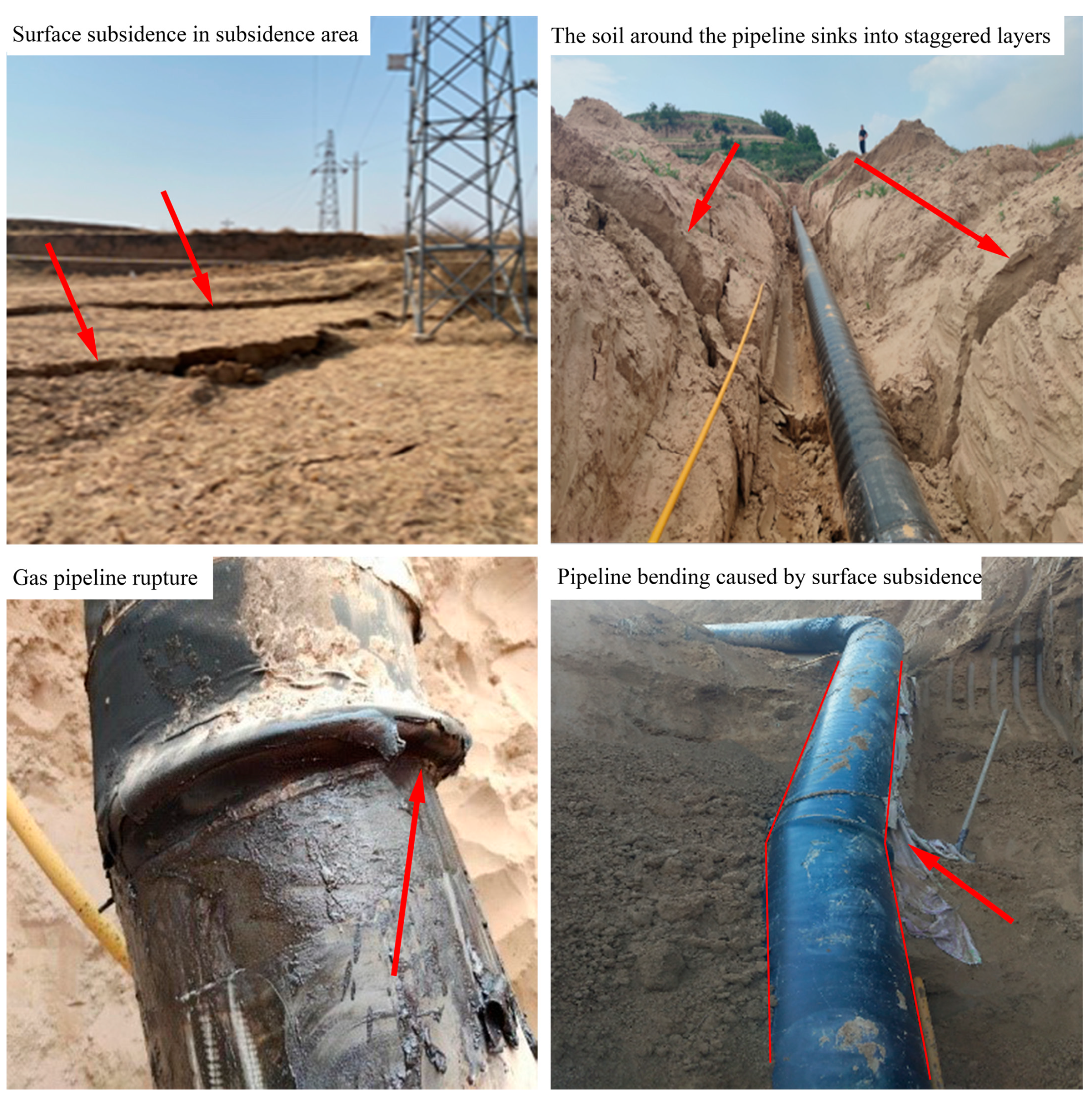
3, elastic modulus of 207 GPa, Poisson’s ratio of 0.3, and a burial depth of approximately 3 m. It currently operates at a transmission pressure of about 10 MPa. The section involving the goaf area of Mugu Coal Mine near the Lishi Distribution Station spans from marker SC001 to SC030, with a total length of approximately 2400 m. This segment runs parallel to the coal mining face. The surrounding soil in this area frequently exhibits subsidence and stratification, resulting in damage to the gas pipeline and disruption of gas supply. The condition of the surface soil and the damaged gas pipeline in the goaf area is illustrated in
Figure 2. The photographs show evident ground surface cracking and staggered soil settlement, accompanied by pipeline bending deformation and local rupture at the joint, indicating severe pipe–soil separation and stress concentration in the subsidence-affected zone.
3. Study on Failure Mechanisms of Surface Soil Under Mining-Induced Effects
During the formation of a surface subsidence basin, the soil undergoes both vertical and horizontal deformation, leading to structural damage of surface constructions. Therefore, in studying the deformation of overlying gas pipelines in coal mining subsidence areas, the analysis of surface deformation characteristics in mining subsidence zones must be prioritized. Mining-induced surface deformation triggers interaction between the buried pipeline and the surrounding soil, causing the pipeline to deform or even fail under earth pressure. The mechanism of pipe–soil interaction is governed by the mining-related surface deformation, making the analysis of surface deformation characteristics fundamental to understanding the mechanical behavior and deformation of buried pipelines in affected areas.
3.1. Development of a Failure Model for Surface Soil Under Progressive Subsidence
The FLAC3D (version 9.00.159) software was employed to establish a three-dimensional numerical model to simulate the damage and failure characteristics of the surface soil, as well as to analyze the mechanical response of the gas pipeline under mining-induced influences. The numerical simulations were performed based on the finite difference method (FDM), in which the governing equations of continuum mechanics are solved using an explicit time-marching scheme with a finite-volume-based formulation. This approach allows large deformations and nonlinear material behavior to be effectively captured. To investigate the macroscopic deformation characteristics of surface subsidence, the Mohr–Coulomb constitutive model was adopted to represent the stratigraphic conditions of the Mugu Coal Mine, and the physical and mechanical parameters of each layer are summarized in
Table 1.
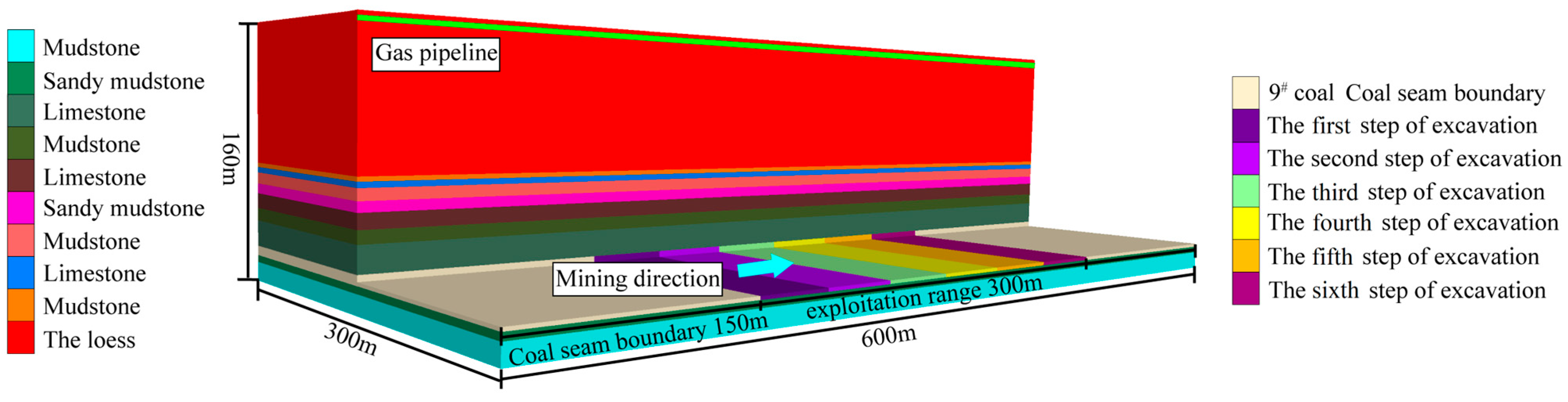
The numerical model dimensions and excavation step length were established in accordance with the actual geological conditions and mining layout of the studied coal mine. The overall model is illustrated in
Figure 3, with a total length of 600 m, a mining face length of 300 m, and a model height of 160 m. The entire excavation length of the working face was 300 m. Horizontal constraints were applied to the lateral boundaries of the model, while the bottom boundary was restricted in vertical displacement. The model was discretized using hexahedral meshes, resulting in a total of 1,066,601 elements. A mesh convergence check was performed to verify numerical stability, and the adopted mesh density was confirmed to provide convergent results. To investigate the mechanical response and deformation of the pipeline during the mining process, the numerical simulation was conducted in six excavation steps using the full-seam mining method, with each step advancing the working face by 50 m. The calculation ensured model stability at each step before proceeding to the subsequent excavation phase.
3.2. Analysis of Surface Soil Failure Mechanisms Under Mining-Induced Effects
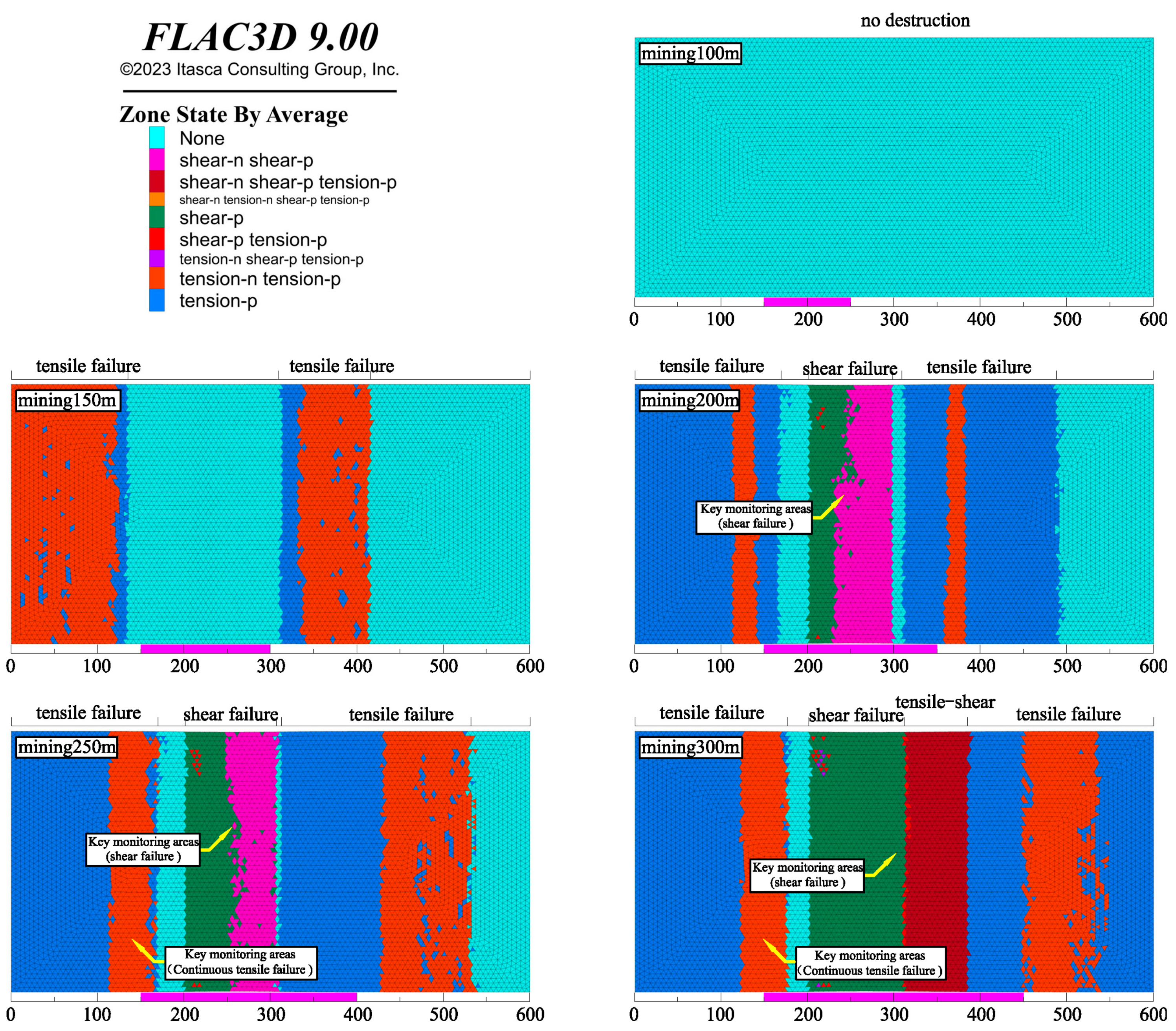
Analysis of the simulation results from FLAC3D reveals the failure characteristics of the surface soil during the advancement process of the working face, elucidating the failure mechanisms of the subsurface under mining-induced influences. The failure states of the surface soil at various stages of the working face advancement are illustrated in
Figure 4.
As illustrated in
Figure 4, during the working face advancement from 0 to 100 m, the mining-induced fractures did not propagate to the surface; thus, the overburden soil remained intact. As the face advanced from 100 to 150 m, tensile failure occurred in the soil at both sides of the goaf, while the surface soil within the goaf area showed no significant damage. When the advancement reached 150–200 m, continuous tensile failure was observed at the edges of the goaf, and shear failure emerged in the surface soil at the center of the goaf. During the 200–250 m advancement stage, tensile failure continued to develop along both edges of the goaf. Specifically, the tensile failure zone at the rear edge expanded laterally, while the failure zone at the advancing front edge increased in extent and propagated forward with mining. Within the goaf, shear failure near the mining line ceased to develop, whereas the central shear failure zone continued to extend forward. In the 250–300 m advancement phase, tensile failure persisted along the goaf edges. Meanwhile, the shear failure zone inside the goaf kept expanding toward the direction of mining, accompanied by areas undergoing sequential tensile and shear failure. The width of the ultimately formed shear failure zone is approximately 180 m, while the width of the sustained tensile failure zone on the left side of the goaf is about 53 m.
Overall, as the working face advances, the surface begins to experience tensile and shear damage. The surface soil at the mining line remains subject to tensile failure throughout the coal seam extraction process, but as the working face progresses, the subsidence basin stabilizes, and the extent of tensile damage reduces. The surface soil above the advancing working face also undergoes continuous tensile failure and moves synchronously forward with the mining activity, eventually reaching the stop-mining line. During coal seam extraction, the central area of the subsidence basin remains in a state of continuous shear failure. As the subsidence basin expands, zones experiencing initial tensile failure followed by shear failure develop within it. Through a simulation study of surface soil behavior during mining, it is concluded that surface soil at the mining line, stop-mining line, and central subsidence basin is more susceptible to mining-induced damage. Consequently, natural gas pipelines in these areas are more prone to deformation or even failure due to surrounding soil pressure.
3.3. Analysis of Coupled Failure Modes Between Surface Soil and Natural Gas Pipelines
Coal mining activities induce two distinct failure modes in surface soil—tensile failure and shear failure—which subsequently trigger corresponding tensile and shear damage in buried natural gas pipelines.
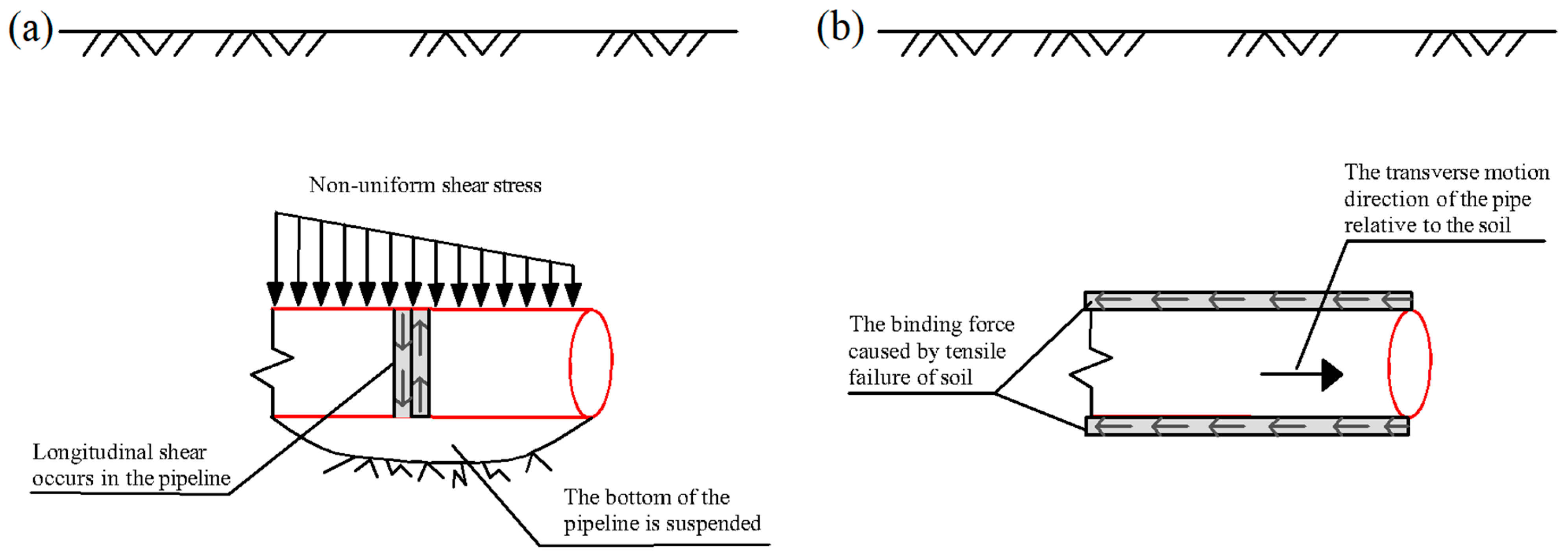
Soil shear failure induces relative displacement in the soil surrounding natural gas pipelines, subjecting the pipelines to non-uniform deformation stress. This results in pipeline bending, twisting, and potential loosening or failure of connection components. Additionally, it may cause soil loosening and collapse, thereby compromising the support capacity for the pipeline. The destruction of supporting soil increases pipeline deflection and stress concentration, consequently elevating the risk of pipeline damage, as illustrated in
Figure 5a. Furthermore, shear-crack-induced uneven soil settlement may lead to horizontal displacement and/or vertical settlement of the pipeline.
Tensile failure typically generates tensile cracks that propagate along the direction of tensile stress, characterized by significant length and narrow width. The formation of such cracks indicates soil deformation under tensile stress but rarely leads to large-scale soil failure. Consequently, compared to shear cracks, tensile cracks generally cause less severe damage to buried natural gas pipelines. However, they may still result in loosening or minor displacement at pipeline connections, compromising joint integrity, and can lead to localized stress concentration that reduces the pipeline’s load-bearing capacity, as depicted in
Figure 5b. Given that the shear failure zone identified in
Figure 4 extends over a relatively wide range, the pipeline is more likely to be influenced by shear-dominated ground deformation.
4. Study on Pipe–Soil Interaction Mechanisms Under Mining-Induced Effects
To investigate the impact of subsidence basins on natural gas pipelines during mining operations, a similarity simulation experiment on pipe–soil interaction was conducted. Soil pressure sensors were embedded in the soil beneath the pipeline to collect stress data in the surrounding soil during goaf subsidence development, while strain gauges were attached to the pipeline surface to monitor strain variations. The study analyzed changes in soil stress and pipeline strain during the subsidence process, aiming to elucidate the patterns of pipe–soil interaction throughout goaf subsidence development.
4.1. Design of Simulation Experiments for Pipe–Soil Interaction
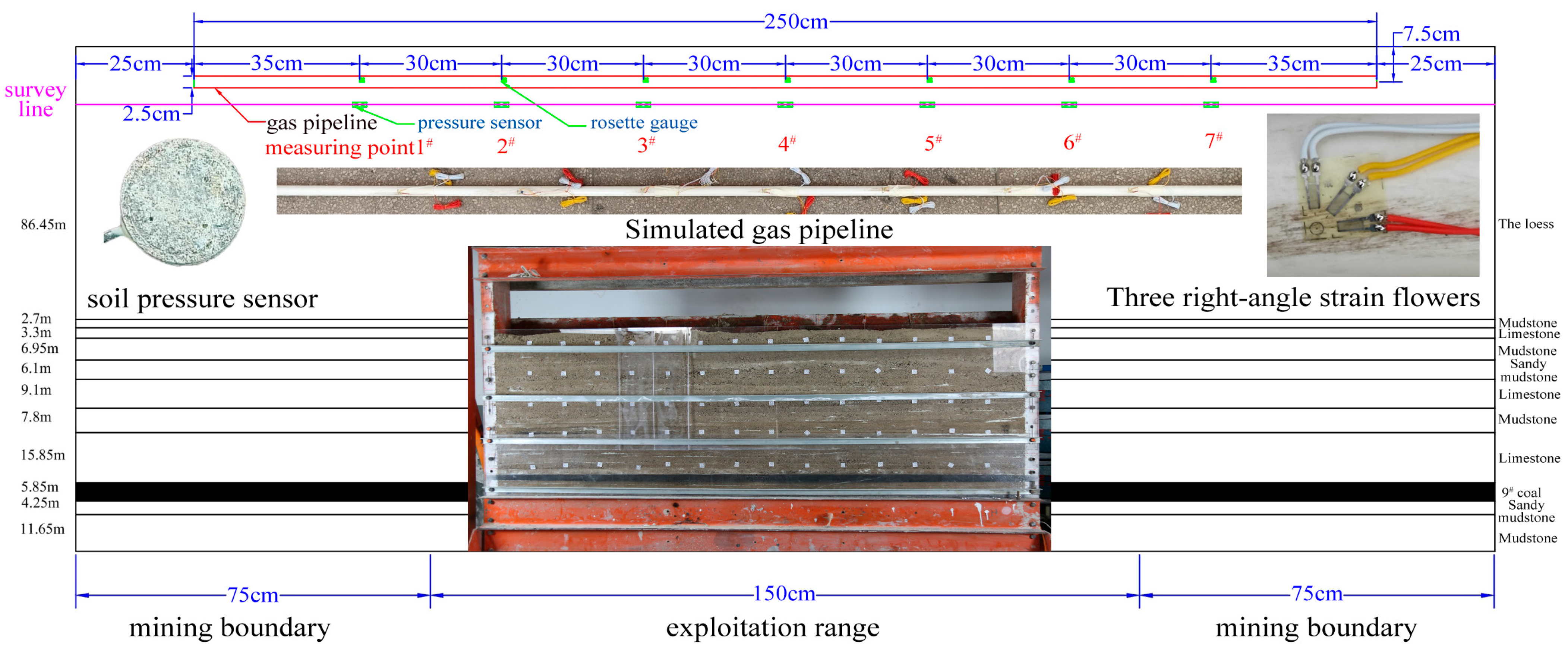
The similarity simulation experiment modeled the strata from the surface to 15.9 m below the floor of the 9# coal seam, incorporating 11 simulated coal-bearing rock layers. The simulated stratum burial depth ranged from 0 m to 160 m, with a simulated coal seam strike length of 450 m. The mining opening length was set at 10 m. In accordance with the principles of similarity simulation, the experiment adhered to geometric similarity, proportional physical parameters, equivalent boundary conditions, and kinematic similarity. The specific similarity parameters for the simulation were as follows:
Geometric similarity ratio:
Unit weight similarity ratio:
Stress similarity ratio:
Time similarity ratio:
The selected similarity ratios include geometric similarity, unit weight similarity, stress similarity, and time similarity. Geometric similarity controls spatial scaling between the model and prototype; bulk density similarity ensures accurate representation of self-weight stress; stress similarity guarantees mechanical equivalence in deformation and failure behavior; and time similarity preserves the dynamic evolution characteristics of subsidence and pipe–soil interaction. These parameters collectively ensure that the physical model faithfully reproduces the coupled deformation mechanisms observed in the prototype.
As shown in
Figure 6, in the similarity simulation, the pipeline was horizontally laid and oriented parallel to the advancing direction of the working face soil. Pressure sensors were deployed to monitor the stress in the soil surrounding the pipeline. A transverse stress measurement line was positioned 3 cm beneath the pipeline, equipped with seven soil pressure sensors to collect stress data during the subsidence process. For pipeline strain monitoring, seven strain rosettes (labeled as measuring points #1 to #7) were attached to the pipeline surface at 30 cm intervals to track strain variations throughout the subsidence development.
During the experiment, the full-seam mining method was employed. The model frame measured 3 m in length, with 0.75 m boundaries reserved on both left and right sides to mitigate edge effects. Coal seam extraction proceeded from left to right, simulating advancement along the strike direction. Each excavation session removed 20 cm of coal, and stress and strain changes at each measuring point were recorded after each excavation.
4.2. Analysis of Stress Variation Patterns in Soil Surrounding the Pipeline
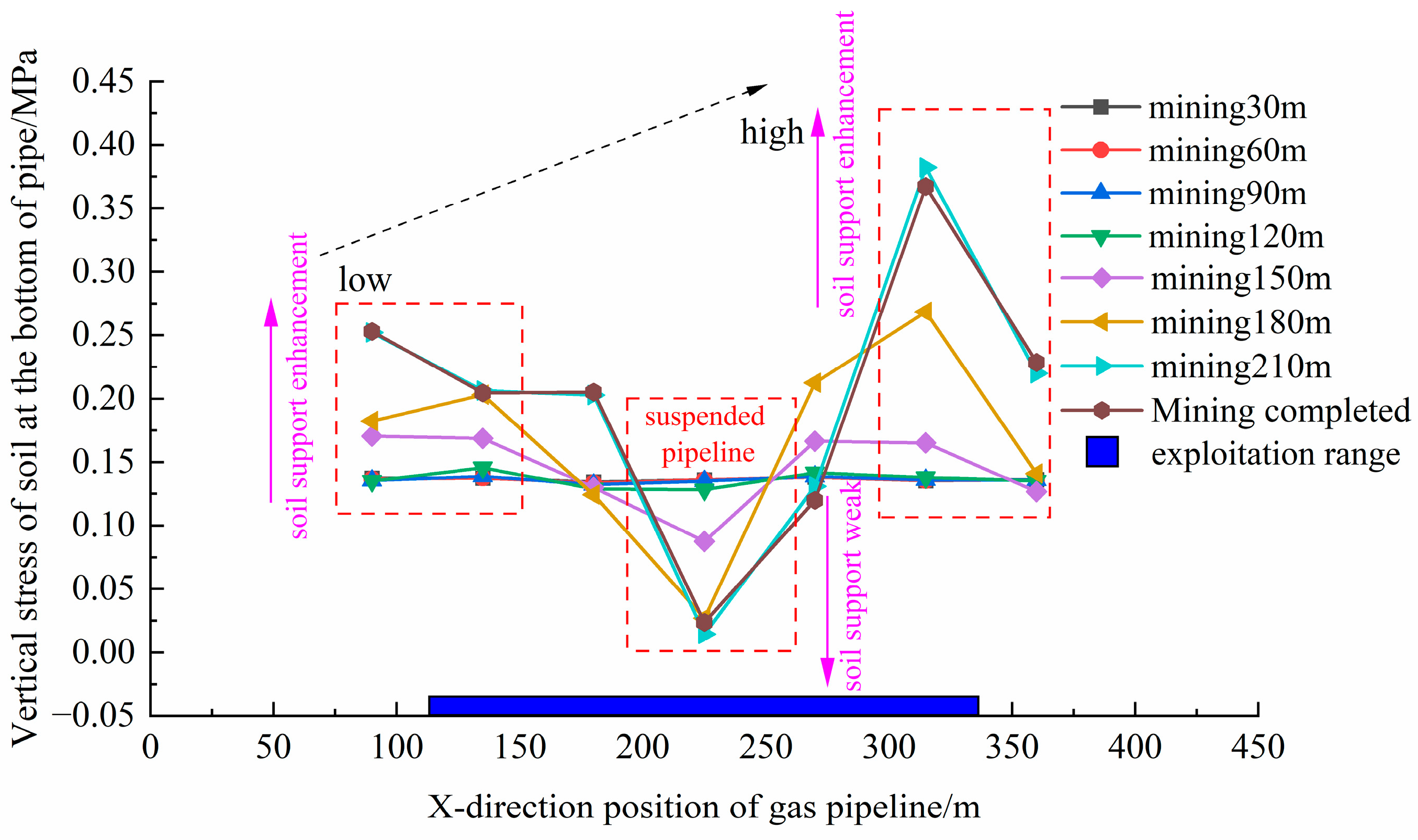
The deformation between the pipeline and surrounding soil is a gradually evolving process. As surface deformation increases, relative displacement occurs between the pipeline and the soil, leading to differential settlement deformation of the buried pipeline and its surrounding soil. Consequently, the stress in the surrounding soil changes according to the pipe–soil interaction state. By recording soil stress data during the excavation process in the similarity simulation model, the separation process between the pipeline and soil can be inferred. The vertical stress changes in the soil beneath the pipeline during excavation, calculated based on similarity ratios, are shown in
Figure 7.
As shown in
Figure 7, during the working face advancement from 0 to 120 m, the vertical stress in the soil beneath the pipeline at all measuring points remained constant at approximately 0.14 MPa. When the advancement progressed to 120–150 m, changes in soil stress emerged: the vertical stress at measuring points #1, #2, #5, and #6 increased to about 0.17 MPa, while the stress at point #4 decreased to 0.08 MPa. During the 150–180 m advancement phase, the stress at points #1, #2, #5, and #6 further increased, whereas the stress at point #4 continued to decline, reaching 0.02 MPa. As the face advanced from 180 to 225 m, the stress at points #1, #3, #6, and #7 increased, while a decrease was observed at point #5. Overall, after the completion of the working face advancement, the vertical stress in the soil beneath the pipeline increased by 84% at point #1, 48% at point #2, 53% at point #3, 171% at point #6, and 68% at point #7, while it decreased by 83% at point #4 and 14% at point #5.
Analysis indicates that due to mining-induced effects, the subsidence basin underwent rapid expansion during the working face advancement stage of 150–210 m. Prior to this phase, the natural gas pipeline and surface soil experienced coordinated deformation, with both the surface layer and pipeline sinking simultaneously. The soil beneath the pipeline supported the pipeline’s self-weight and the overburden pressure, resulting in no significant stress changes at the measuring points. During this critical phase (150–210 m), as the pipeline is composed of rigid materials, the settlement of the surface soil gradually exceeded that of the pipeline, leading to non-coordinated deformation between the pipeline and the soil. This even resulted in suspended sections of the pipeline. In the central area of the goaf, the vertical support stress from the soil beneath the pipeline decreased, eventually diminishing to zero. Simultaneously, the stress from the self-weight and overburden pressure of the suspended pipeline sections transferred to the sides of the pipeline, causing an increase in vertical support stress in the soil at these locations. Since subsidence at the mining line occurred earlier than in the area ahead of the working face, the pipe–soil interaction at the mining line resulted in vertical stress in the soil beneath the pipeline being only 67% of that at the stop-mining line ahead of the working face. During the final phase (210 m to completion), the pipeline and surrounding soil gradually rebalanced, and stresses remained essentially stable throughout this period.
4.3. Analysis of Stress Variation Patterns in Natural Gas Pipelines
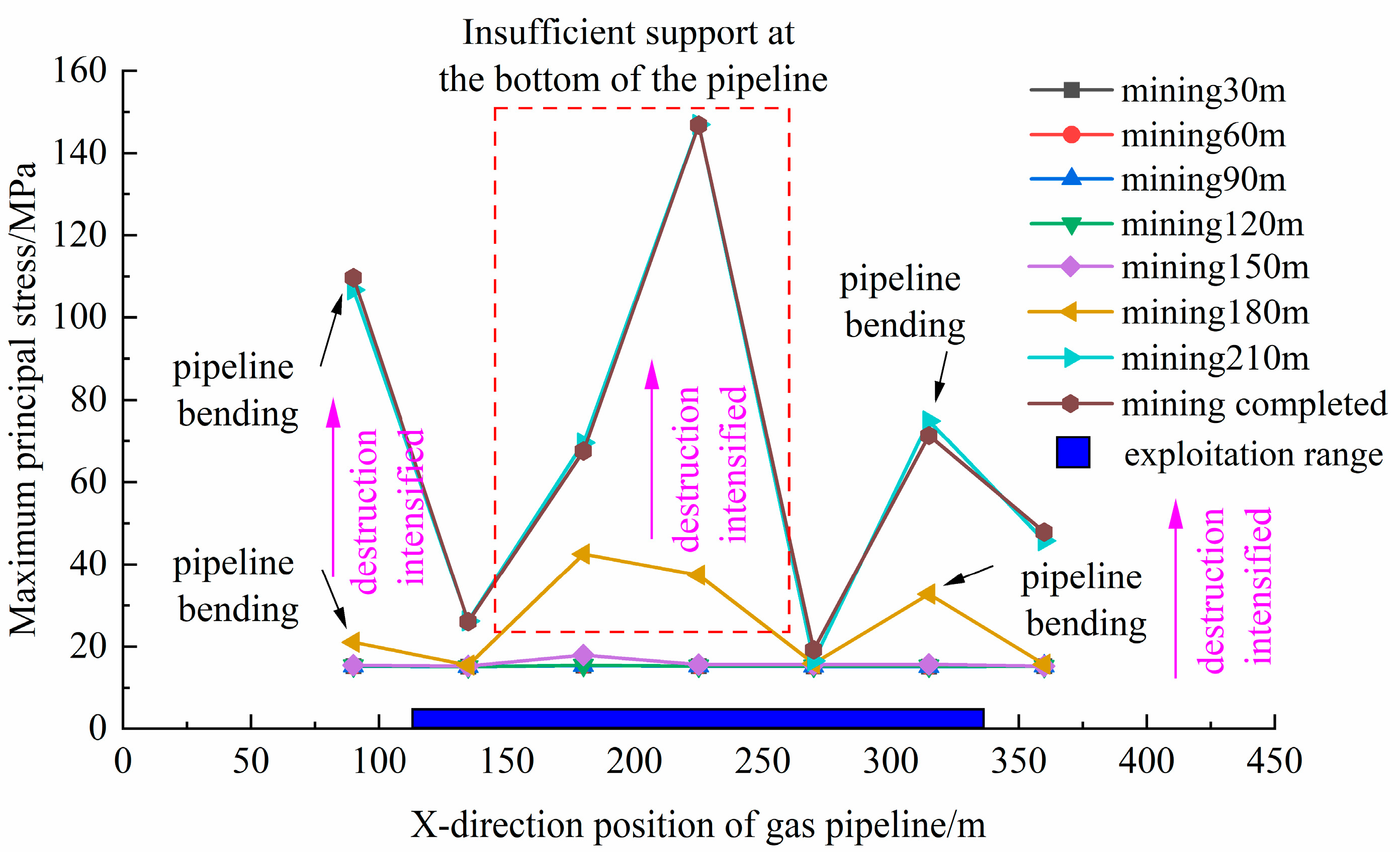
In this experiment, three-element rectangular strain rosettes were employed to record pipeline strain data during the excavation process of the similarity simulation model. The maximum principal stress at each measuring point of the natural gas pipeline during excavation was calculated based on similarity ratios, as illustrated in
Figure 8.
As shown in
Figure 8, during the working face advancement from 0 to 150 m, no stress concentration was observed in the natural gas pipeline, with stresses at measuring points #1 to #7 remaining approximately 17 MPa. During the 150–180 m advancement phase, three stress concentration zones emerged: at both sides and the center of the mining area. The stress concentration zones at both sides correspond to the maximum curvature regions near the subsidence basin boundaries, while the central concentration is mainly caused by pipe–soil separation and loss of vertical support within the goaf. The maximum principal stress reached 21.07 MPa at point #1 on the left side, 42.54 MPa and 37.38 MPa at points #3 and #4 within the mining area, respectively, and 32.72 MPa at point #6 on the right side. As the face advanced from 180 to 210 m, the maximum principal stresses increased significantly: 106.78 MPa at point #1 ahead of the mining area; 26.15 MPa, 69.54 MPa, and 146.94 MPa at points #2, #3, and #4 within the mining area, respectively; and 74.91 MPa and 45.73 MPa at points #6 and #7 behind the mining area. After the completion of the 225 m advancement, the stress distribution remained largely consistent with that observed at the 210 m stage.
Analysis reveals that during the working face advancement from 0 to 150 m, coordinated pipe–soil deformation occurred, with no significant stress variations observed in the natural gas pipeline. During the 150–210 m advancement phase, non-coordinated deformation developed as the surrounding soil settled more extensively than the pipeline, resulting in separation between the pipeline and the underlying soil. This led to bending deformation of the pipeline within the goaf area. Severe soil damage at the mining line, current working face position, and goaf center caused significant stress concentration in the pipeline at these locations, manifesting as elevated maximum principal stresses. As mining progressed, surface subsidence intensified, exacerbating the stress concentration effects. The maximum principal stress peaked at the pipeline in the goaf center, followed by the mining line behind the working face, and was lowest at the stop-mining line ahead of the working face. During the final phase (210 m to completion), the pipeline and surrounding soil gradually rebalanced, with stresses stabilizing thereafter.
5. Study on Damage and Failure Mechanisms of Natural Gas Pipelines Under Mining-Induced Effects
Based on the results of the physical similarity simulation experiments, a surface soil damage and failure model was established. Within this model, the geometric and material parameters of the pipeline in the numerical simulation were defined according to the engineering data described in
Section 2. The gas pipeline was simulated using linear structural elements combined with an elastic constitutive model, enabling an investigation of the damage and failure characteristics of the gas pipeline under mining-induced influences.
5.1. Subsidence Deformation Characteristics in Natural Gas Pipelines
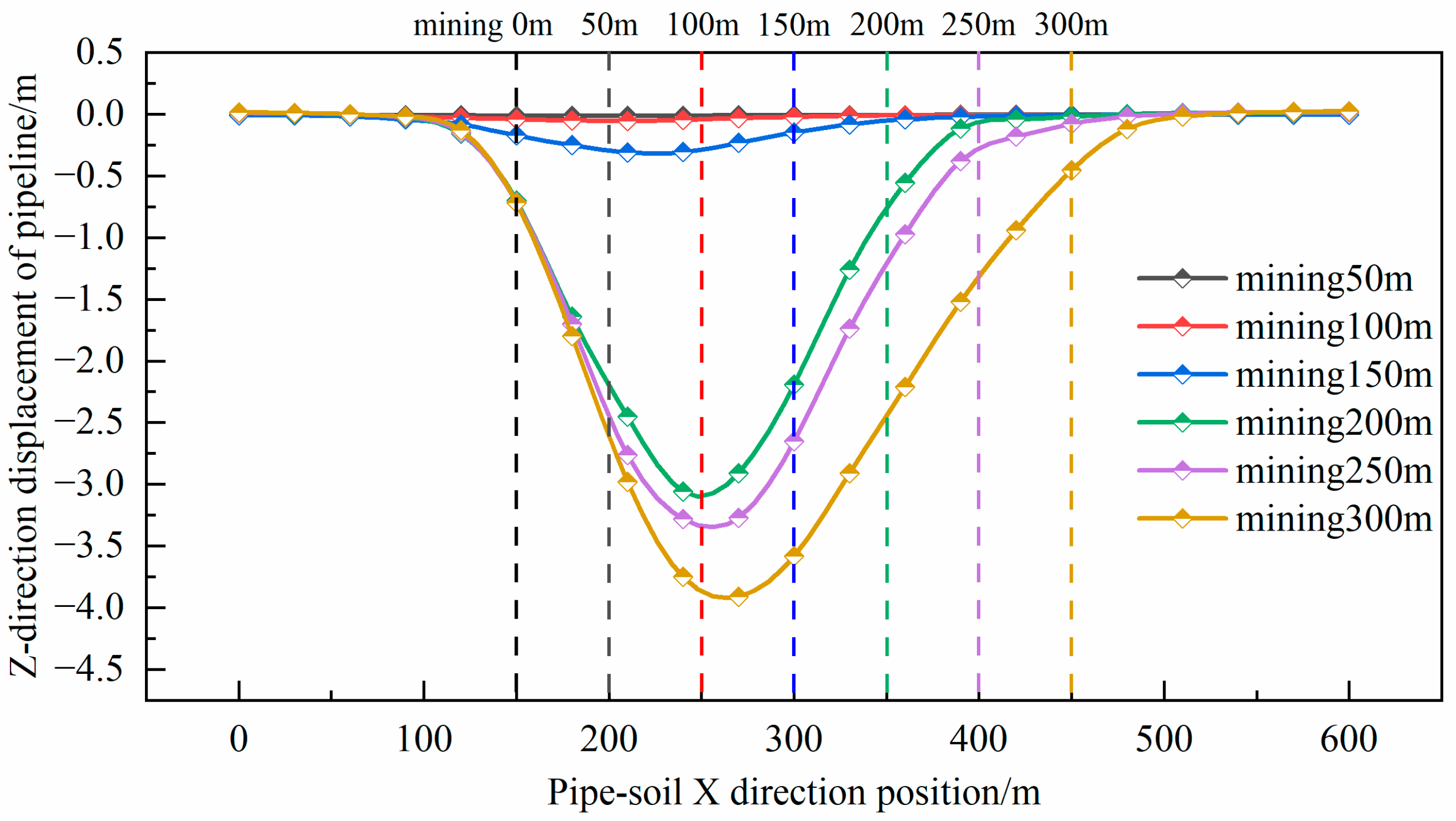
During the simulation, the FISH scripting language was used to extract the vertical displacement of each node of the gas pipeline after the completion of each excavation step. The subsidence deformation characteristics of the gas pipeline were analyzed as the working face advanced, allowing the subsidence deformation law of the pipeline during the mining process to be determined. The subsidence deformation of the gas pipeline at different advancing distances of the working face is shown in
Figure 9.
As shown in
Figure 9, during the working face advancement from 0 to 50 m, the maximum subsidence of the natural gas pipeline was only at the millimeter scale, with the deepest settlement point located at the mining center. The deformation was negligible at this stage. As mining progressed to 50–100 m, the pipeline still showed no significant changes, with maximum subsidence remaining at the centimeter level. During the 100–150 m advancement phase, the pipeline began to experience slight subsidence, reaching decimeter-scale magnitudes. The maximum settlement point remained at the mining center, and the deformation exhibited symmetry about this point. When the face advanced to 150–200 m, the pipeline underwent substantial meter-scale deformation, with minor subsidence also observed on both sides of the goaf. During the 200–250 m advancement stage, the maximum pipeline subsidence increased further, though no significant additional settlement occurred on the sides of the goaf. The location of maximum settlement began to shift away from the mining center. In the final phase (250–300 m), the pipeline subsidence reached its peak value after mining completion, and the point of maximum settlement continued to deviate from the mining center.
Overall, before the working face advanced 100 m, mining activities had not yet significantly affected the surface soil. The minimal subsidence observed in the natural gas pipeline was primarily due to its self-weight and the overburden pressure, with the maximum settlement occurring symmetrically around the mining center. During the 100–200 m advancement stage, rapid expansion of the surface subsidence basin induced by mining led to substantial pipeline deformation. The point of maximum pipeline settlement shifted away from the mining center, though the subsidence curve remained symmetric about this new location. After the working face advanced beyond 200 m, both the subsidence basin and pipeline deformation stabilized.
The deflection of the maximum settlement point and the gradual loss of symmetry are closely related to the fracture evolution of the overlying key strata. According to the key layer theory, when the working face advances to a critical distance, the primary key stratum experiences periodic breaking and rotational instability. The fracture span and subsequent rotation of the key block modify the stress transmission path within the overburden, resulting in asymmetric load redistribution.
As the fracture span increases and the broken key block rotates toward the goaf, the overlying strata undergo differential movement, causing the surface subsidence basin to shift forward relative to the mining center. This forward deflection of maximum settlement leads to uneven ground curvature distribution, thereby intensifying pipe–soil separation and stress concentration in the pipeline. Therefore, the asymmetric evolution of surface settlement is fundamentally controlled by the fracture span and movement characteristics of the key stratum.
5.2. Pipe–Soil Debonding Patterns
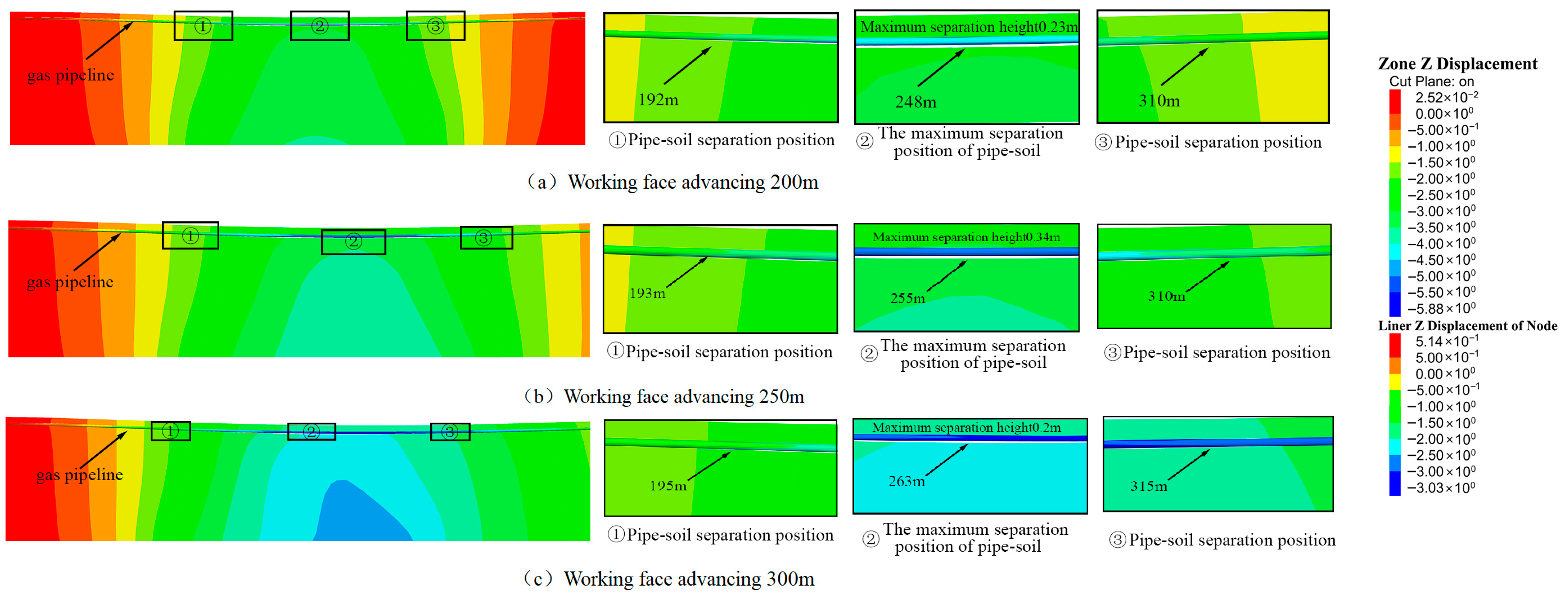
Using the slice function in FLAC3D, the pipe–soil separation phenomenon at different mining stages was observed. The characteristics of pipe–soil separation during the working face advancement were analyzed, revealing the patterns of separation throughout the mining process. No distinct pipe–soil separation was observed before the face advanced 150 m, while significant separation began to occur after advancing 200 m. The characteristics of pipe–soil separation during the working face advancement are illustrated in
Figure 10.
As shown in
Figure 10a, after the working face advanced 200 m, the maximum separation height between the natural gas pipeline and the soil reached 0.23 m. The separation initiated at 192 m and closed at 310 m, covering a range of 118 m. The maximum separation occurred at 248 m, directly above the center of the goaf, with the separation distribution symmetric about this point.
Figure 10b indicates that after advancing 250 m, the maximum separation height increased to 0.34 m. The location of maximum separation shifted forward by 7 m, no longer aligned with the goaf center, though the separation range remained unchanged. From
Figure 10c, after the face advanced 300 m, the maximum separation height decreased to 0.2 m. The point of maximum separation moved forward by an additional 8 m, further deviating from the goaf center, while the separation range remained consistent.
Overall, during the first 150 m of advancement, mining activities had not yet affected the surface soil, and the pipeline and soil experienced coordinated deformation without separation. As the face advanced from 150 to 200 m, rapid expansion of the surface subsidence basin—coupled with the pipeline’s rigidity—induced symmetric separation centered above the goaf. During the 200–300 m advancement phase, further development of the subsidence basin caused the maximum separation point to shift toward the working face direction, though the separation range remained stable while the height increased. After mining completion, the pipe–soil interaction stabilized: the maximum separation point continued to deviate from the goaf center, and both the separation range and height decreased.
5.3. Stress Concentration Phenomena in Natural Gas Pipelines
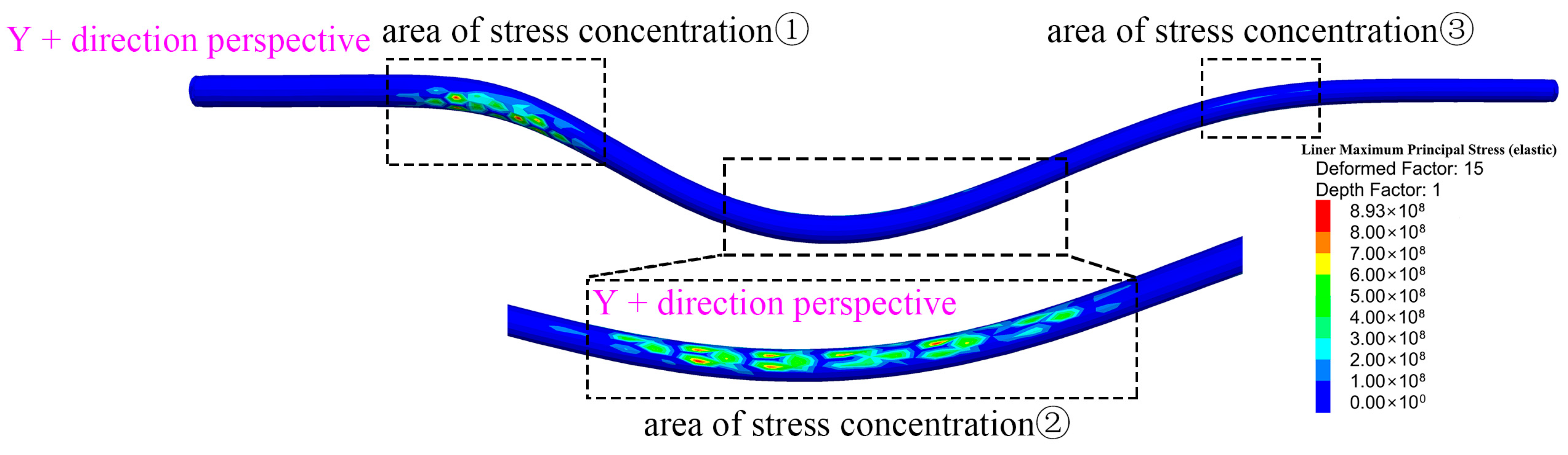
During surface soil subsidence, certain regions of the soil experience continuous failure, and the buried natural gas pipeline within these areas is affected by the surrounding soil damage. To investigate the mechanical state of the pipeline embedded in the soil, the simulated pipeline was isolated upon completion to observe its stress distribution. As shown in
Figure 11, the natural gas pipeline after mining completion was magnified to examine the stress distribution across its various sections.
Figure 11 reveals three predominant stress concentration zones in the natural gas pipeline under mining-induced influence: the bending zone near the mining line, the pipe–soil separation zone at the base of the surface subsidence basin, and the bending zone adjacent to the stop-mining line. These stress concentration areas exhibit spatial overlap with regions of continuous soil damage. Comparative analysis with
Section 3.3 indicates that:
At the mining line location, the surface soil consistently experiences tensile failure during the working face extraction process. The stress from soil damage is transferred to the natural gas pipeline in this area. Meanwhile, the surface soil at the center of the subsidence basin is not only subjected to tensile failure during mining but also remains within the shear failure zone afterward, resulting in significant stress concentration. In contrast, the surface soil at the stop-mining line begins to undergo tensile failure only after the completion of the working face advancement, leading to relatively weaker stress concentration in this region. Comparative analysis with the surface soil damage characteristics studied in
Section 3.3 reveals that the soil in the continuous failure zone within the subsidence basin experiences substantial stress, which is transferred to the natural gas pipeline, causing stress concentration phenomena in the sections of the pipeline located in these areas.
5.4. Analysis of Damage and Failure Mechanisms in Natural Gas Pipelines
The failures observed in natural gas pipelines under mining-induced influence are primarily characterized by elastoplastic deformation. When the pipeline transitions from elastic to plastic deformation, yield failure occurs. Based on the fourth failure criterion in materials science, a damage degree coefficient for the pipeline is established as follows:
The represents the damage degree coefficient of the natural gas pipeline. Yield failure is considered to occur when ; denote the principal stresses of the pipeline, and refers to the allowable stress of the pipeline material.
In FLAC3D, the FISH scripting language was utilized to extract the stress state of each Node in the Liner elements and compute their stress tensors, thereby obtaining the three principal stresses at each Node. Based on the maximum, intermediate, and minimum principal stresses of the natural gas pipeline during each mining phase, the damage degree coefficient
was calculated to evaluate the extent of pipeline damage. This approach enabled the investigation of damage distribution across different sections of the pipeline. The variation in pipeline damage degree
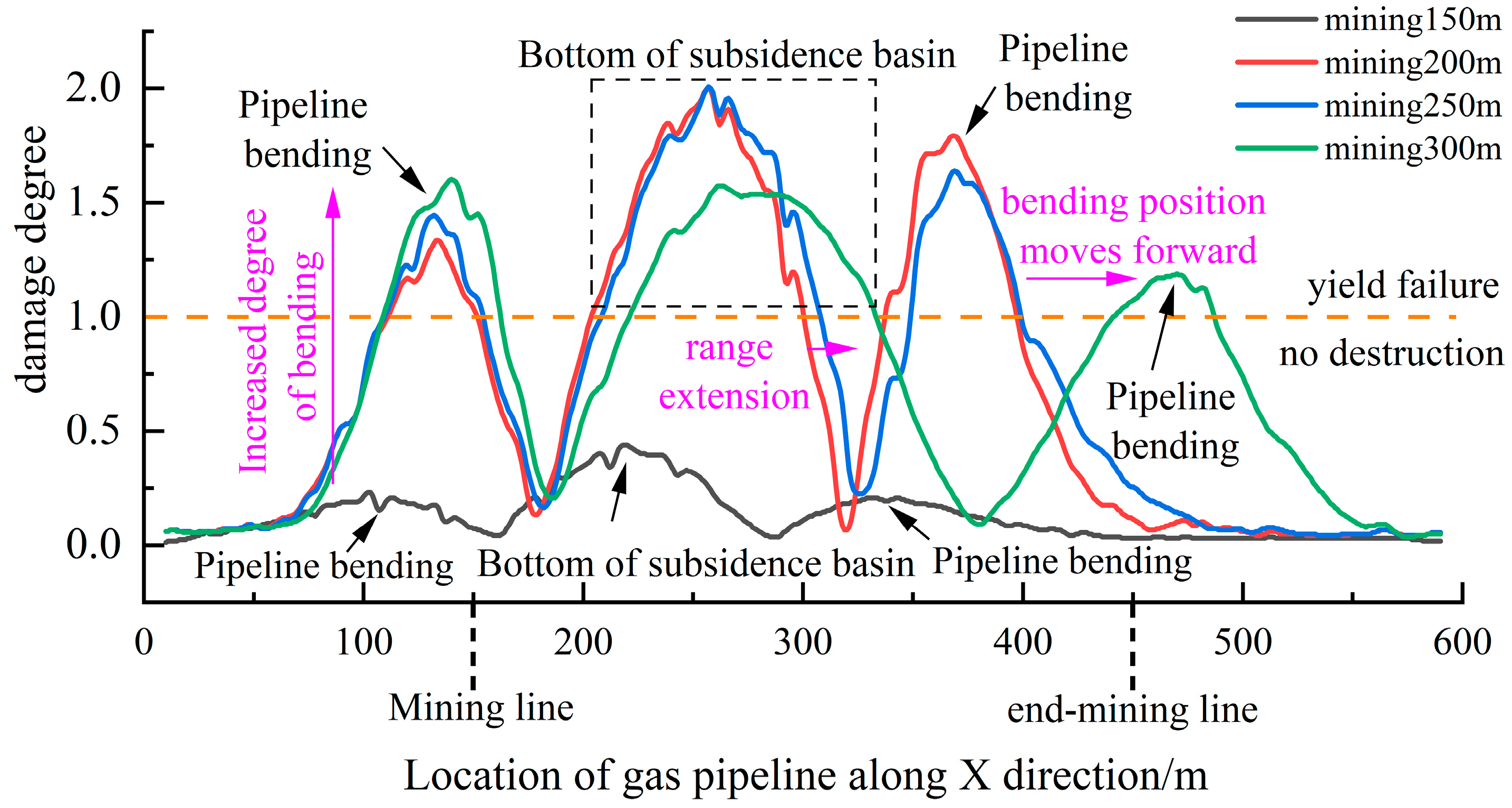
at distinct locations during the mining process is illustrated in
Figure 12.
As shown in
Figure 12, during the working face advancement from 0 to 150 m, the deformation of the natural gas pipeline remained within the elastic range without yielding failure, with stress concentration observed only at the edges and the bottom of the subsidence basin. As mining progressed to 150–200 m, surface subsidence intensified due to coal extraction, causing bending of the pipeline at the edges of the subsidence basin. The inability of the soil beneath the pipeline at the basin bottom to provide adequate support led to extensive yielding failure in these regions. During the 200–250 m advancement phase, the expansion of the subsidence basin increased the damage degree at the bending section behind the working face. Meanwhile, the advancing front edge of the subsidence basin shifted forward, resulting in the relocation of the bending section ahead of the working face and a reduction in damage at the current bending location. In the 250–300 m advancement stage, further expansion of the subsidence basin exacerbated the damage at the bending section behind the working face, while the damage at the basin bottom decreased. The continued forward shift of the subsidence basin edge ahead of the working face caused the bending section to advance further forward.
Analysis indicates that damage to the natural gas pipeline primarily occurs after the working face has advanced beyond 150 m (i.e., when pipe–soil interaction transitions from coordinated to non-coordinated deformation). The damage is mainly concentrated at the mining line, both sides of the stop-mining line, and the pipe–soil separation zone at the center of the subsidence basin. In the separation zone at the basin bottom, insufficient soil support and pipeline suspension occur due to the material properties of the pipeline, resulting in the highest degree of damage. The bending failure section behind the working face, adjacent to the mining line, experiences severe damage due to continuous soil failure in this area during mining. As the working face advances, the soil ahead of the face undergoes temporary damage, but the failure degree remains relatively low due to the shorter duration of soil disturbance. Consequently, the bending failure location of the pipeline shifts forward with mining progress, accompanied by reduced damage intensity in the newly affected areas.
It should be noted that the damage coefficient Fx in this study is evaluated based on the fourth strength theory, which reflects material yielding behavior. However, for large-diameter thin-walled pipelines subjected to non-uniform settlement, instability failure may occur prior to strength failure. Under bending-induced compressive stress, local buckling or cross-sectional ovalization can develop, especially when the diameter-to-thickness ratio (D/t) is relatively large.
Therefore, although the strength-based damage coefficient effectively characterizes yielding behavior, radial deformation and buckling characteristics should also be considered in a comprehensive safety evaluation. This aspect warrants further investigation using shell-based structural models in future studies.
The deformation and stress redistribution patterns obtained in this study are consistent with previously reported field-based investigations of natural gas pipelines subjected to underground coal mining-induced subsidence [
36]. In particular, earlier studies have demonstrated that the geometry of the subsidence basin plays a decisive role in controlling pipeline bending response and stress concentration distribution. Similarly, the present results indicate that the forward shift of the maximum subsidence point and the evolution of basin curvature directly govern the location of bending concentration and pipe–soil separation. This agreement supports the reliability of the proposed interpretation framework.
6. Conclusions
This study addresses the issue of damage to buried natural gas pipelines induced by surface subsidence resulting from underground coal mining. Focusing on the shallow-buried gas pipeline in the Mugu Coal Mine as a research context, the investigation examines the patterns of pipeline damage under mining influence. The following conclusions are drawn:
1. As the working face advances in coal mine goaf areas, surface soil exhibits tensile and shear failures, with the extent of damage progressively intensifying. Tensile failure zones develop in the surface soil at both sides of the goaf, as well as along the mining line and stop-mining line at the edges of the goaf. Among these, the surface soil at the mining line behind the goaf undergoes continuous tensile failure with progressively intensifying damage, while the tensile failure zone at the advancing front edge of the goaf shifts forward as the working face progresses. Shear failure occurs in the soil within the subsidence basin of the goaf, and the affected area expands forward with the advancement of the working face.
The Mohr–Coulomb model was adopted to characterize the stratigraphic conditions in this study. Although this continuum-based model cannot explicitly simulate discrete crack propagation, it is appropriate for capturing the macroscopic deformation and stress redistribution associated with mining-induced subsidence and pipe–soil interaction at the engineering scale. Future work will incorporate damage mechanics parameters or continuum–discrete coupling approaches to better represent discontinuous deformation processes in surface soils.
2. The advancement of the working face induces a three-stage dynamic evolution in pipe–soil interaction, accompanied by significant stress redistribution and concentration phenomena. During the working face advancement from 0 to 150 m, pipe–soil coordinated deformation occurred, with no significant stress changes observed in the natural gas pipeline. After the face advanced beyond 150 m, non-coordinated deformation developed between the pipeline and surrounding soil, as the soil settlement exceeded the pipeline’s subsidence. This led to separation between the pipeline and the underlying soil, causing bending deformation of the pipeline within the goaf. Severe soil damage at the mining line, the advancing working face location, and the goaf center resulted in stress concentration in the pipeline at these positions, inducing bending deformation. As mining progressed, surface subsidence intensified, exacerbating the stress concentration effects. The maximum principal stress peaked in the pipeline at the goaf center, followed by the mining line behind the working face, and was lowest at the stop-mining line ahead of the working face. During the final phase, the pipeline and surrounding soil gradually rebalanced, and the stress distribution between the pipeline and soil remained essentially stable.
In practical operation, the gas pipeline is subjected to internal pressure (10 MPa in this case), which induces circumferential hoop stress according to thin-walled cylinder theory. This pre-stressed state modifies the stress distribution and yield condition of the pipe and may enhance resistance to local buckling under compressive bending. However, under mining-induced ground deformation, the dominant mechanical response of the pipeline is controlled primarily by imposed curvature and axial strain. Therefore, while internal pressure influences the stress state, the overall deformation trend and pipe–soil interaction pattern remain governed by external ground movement. Future research will incorporate internal pressure–ground deformation coupling to further quantify this effect.
3. The high-risk zones for natural gas pipeline failures in goaf areas dynamically shift with working face advancement, manifesting as pipe–soil debonding and pipeline suspension phenomena and demonstrating distinct spatiotemporal distribution characteristics. Pipeline damage primarily occurs after the working face advances beyond 150 m. The most critical damage manifests at the mining line, both sides of the stop-mining line, and the pipe–soil separation zone at the center of the subsidence basin. The separation zone at the basin bottom exhibits the most severe damage due to extensive insufficient soil support and pipeline suspension. The bending failure section behind the working face, adjacent to the mining line, experiences high damage intensity owing to continuous soil failure in this area during mining. As the working face advances, the gas pipeline ahead of the face undergoes temporary damage.
4. Based on the identified stress concentration locations and the three-stage evolution characteristics of pipe–soil interaction, several engineering control measures can be proposed. Flexible joints or deformation-absorbing segments should be arranged near predicted bending concentration zones, particularly at the goaf center and the mining line behind the working face, to accommodate differential settlement. In regions where pipe–soil separation is likely to occur, localized soil grouting reinforcement may be implemented to enhance subgrade stiffness and reduce unsupported pipeline spans. Additionally, trench replacement using low-friction backfill materials can be adopted in high-curvature zones to mitigate excessive constraint and reduce stress concentration. These measures provide practical guidance for improving the safety and adaptability of buried pipelines under mining-induced ground deformation.