1. Introduction
As the global energy landscape is undergoing significant transformations, the urgent need to shift from fossil fuel dependence to renewable energy sources is rising. This transition is catalyzed by geopolitical tensions, particularly Russia’s invasion of Ukraine, which has exposed vulnerabilities in global energy supply chains and emphasized the importance of energy security and sustainability. Buildings, which account for approximately 40% of global energy consumption and around one-third of global greenhouse gas emissions, are central to this transformation, especially in the context of rapid urbanization [
1]. In response to these challenges, the European Union has set ambitious renewable energy targets, aiming for a 42.5% renewable energy share by 2030, with aspirations to reach 45%, as part of the broader REPowerEU Scheme [
2].
The construction of Zero Emission Buildings (ZEmBs), which rely predominantly on renewable energy, as well as the decarbonization of existing ones, is pivotal in reducing emissions and enhancing energy efficiency, aligning with the ambitious targets set by the EU to combat the climate crisis [
3]. Building-integrated photovoltaics (BIPV) emerges as a key technology in this context, transforming buildings from passive energy consumers into active energy producers and also contributing to the aesthetic and functional design of urban infrastructure [
1].
However, the decarbonization of buildings, either new or existing, presents challenges, since the roof surface area is often insufficient to meet a building’s entire energy demand. This limitation is pronounced in taller buildings, typically exceeding 3–5 storys, where roof-mounted PV systems alone cannot cover the total energy consumption [
4]. Therefore, PV integration into building facades offers a vital solution, expanding the potential for renewable energy generation to meet the needs of taller structures and making full use of the building envelope for energy production.
Italy, in this context, serves as a noteworthy example of the national commitment and supportive policies to accelerate the transition toward renewable energy. Having surpassed its 2020 renewable energy targets ahead of schedule [
5], solar power contributed to around 10% of Italy’s total electricity consumption in 2023 [
6], while the nation exhibits a wide range of solar energy radiation, varying from 3.6 kWh/m
2 day in Northern Italy’s plains to 5.4 kWh/m
2 day in Sicily [
7], highlighting its high potential for solar energy production. As of 2023, the country achieved a solar energy capacity of 30.32 GW [
7,
8], with ambitions to double this figure by 2030 [
9]. Policies such as the D.Lgs. 199/2021 and incentives such as the Superbonus 110% have been crucial in facilitating the integration of PV systems in buildings, significantly advancing Italy’s renewable energy agenda within the broader context of the EU’s ambitions [
10].
This study presents a unified method that analyzes the solar potential for both roofs and facades at a high spatial resolution. Facades are segmented by floor and orientation, enabling precise identification of PV-suitable surfaces based on solar exposure. It also accounts for shading from surrounding buildings and introduces techno-economic thresholds to focus on cost-effective PV areas, thereby bridging the gap between theoretical and practical solar potential. Moreover, the accuracy of the proposed method is assessed through detailed-level simulations, confirming its reliability in representing façade solar irradiation and validating the consistency of the large-scale results. Additionally, in the first part of the work, a literature review was conducted on the solar energy potential of rooftops and facades. The obtained results are useful to help understand the actual urban solar potential, supporting policy development and future strategies, while also offering methodological guidance to designers and urban modelers on how to simplify complex urban geometries in large-scale solar assessments without undermining the reliability of the results.
2. Literature Review
It has been proven that to achieve the decarbonization of the building sector, the integration of PV systems is inevitable [
11]. Urban centers, where energy demand is concentrated, necessitate a precise evaluation of local solar potential, considering the limited sunlight access due to dense building layout and the necessity to design building systems able to address energy and thermal–visual comfort challenges [
12]. This evaluation must take into account various factors affecting solar irradiation, including geographical, spatial, and meteorological influences. Thus, an accurate estimation of the solar energy potential of urban buildings is pivotal for decision making regarding the decarbonization of the building sector [
13].
Recently, some authors have focused their research on bridging the gap between theoretical renewable potential and operational urban energy planning through high-resolution data-driven frameworks. Methodological advancements, such as the introduction of a deep learning framework that transforms urban facade PV assessment from slow multistage simulation into instantaneous spatially resolved energy yield generation (such as E2AY-Net deep learning architecture), have demonstrated the feasibility of instantaneous, city-scale facade PV assessments, achieving a high computational acceleration over traditional physics-based simulations without compromising accuracy [
14]. On a large scale, the development of massive building-level databases, such as the European Digital Building Stock Model R2025 [
15], underscores that photovoltaic rooftops could satisfy about 40% of future electricity demand, particularly when prioritizing non-residential building stock to meet mid-century targets. However, several studies emphasize that satisfying this solar potential requires highly complex spatial and technical knowledge. For example, multi-dimensional analyses across urban morphologies reveal that while rooftops maintain the highest solar potential, the strategic integration of facade-based solutions requires a careful balance between operational energy savings, life cycle impacts and architectural integration [
16].
Recent multi-dimensional analyses [
17] further reveal that urban spatial heterogeneity significantly affects solar capture efficiency. In this sense, high-density residential blocks often suffer from severe mutual shading, while lower-density buildings typically exhibit a high rate of solar potential [
18].
Further research [
19] assesses solar potential using LiDAR data on building envelopes. Results reveal that facades receive 320 kWh/m
2, 45% less than rooftops. Despite 47% of buildings having suitable roof segments, structural constraints limit high-yield potential to only 17% of the stock. This work posits solar exposure as a critical attribute for property valuation
Numerous studies on solar energy potential involved the construction of building-scale solar radiation models [
20]. In a study done by A. Bosisio et al. [
21] for the whole city of Milan, Italy, based on GIS, a hierarchical approach was implemented to estimate the available rooftop surface feasible for photovoltaic generation. According to this analysis from a building area of about 29 km
2, the available equivalent rooftop area was estimated at 4.22 km
2, representing 14.5% of the total building area. Considering the average solar radiation of 1510 kWh/m
2 per year, a yearly energy production of 996 GWh was found, corresponding to a potential installed PV power of 778 MW.
Boccalatte et al. [
22] designed a GIS-based approach to evaluate 40 morphological characteristics across 60,000 buildings in Geneva, aiming to investigate how roof shading and urban form characteristics correlate, and the effect of urban morphology on potential rooftop solar energy capture. The focus on the distribution and intensity of solar radiation on a larger scale has led to the development of national or regional solar maps. These maps have been created for various regions, including the USA [
23], China [
24], Canada [
25], Israel [
26] and Spain [
27]. The radiation models perform radiative transfer calculations using building models that include projects like Google’s Sunroof [
28]. In another study, Huang et al. [
29] used deep learning and satellite imagery to detect building rooftops and calculate the area suitable for solar radiation capture, thereby assessing the solar potential of urban areas. However, a significant limitation of these studies is that they neglect building facades when estimating solar energy potential.
Findings reveal that BIPVs on rooftops can cover the total energy consumption of buildings consisting of around 1 to 1.5 floors, depending on the climatic zone. Only in the case of highly efficient buildings, energy performance can achieve significantly lower consumption values, and the coverage potential of BIPVs can increase up to five floors [
30]. Taking this into account, it is obvious that for taller buildings, the roof is not able to provide sufficient PV-generated energy, and facades must also be considered and, therefore, simulated and included in solar energy calculations.
With advancements in 3D city modeling, surfaces like building facades are identified as viable for PV installation, thanks to improvements in solar module efficiency and the innovative approach of BIPV. Studies have shown that incorporating facades into solar energy collection strategies can boost the solar potential approximately by 10 to 15% beyond what rooftops alone can offer [
31,
32]. Vertical PV facades enable staggered energy generation by capturing solar irradiance from opposite orientations (e.g., east and west), aligning production with consumption and reducing storage needs.
Accurate solar potential assessments of rooftops and facades rely on tools like LiDAR, 2D/3D cadastral data, and environmental image processing. Desthieux et al. [
33] proposed a methodology integrating these datasets with solar and astronomical models, applying surface-specific shadow casting and weighting factors to assess solar irradiance. Results validate its effectiveness for large-scale urban solar cadaster analysis.
In 2020, Liang Cheng et al. developed an approach for assessing the solar energy potential of urban buildings, emphasizing the integration of both rooftops and facades within a novel framework, enhancing its practicality by accounting for view-shading effects and correcting weather impacts. They calculated the solar energy potential of urban structures across 10 Chinese cities, resulting in a dataset that includes annual solar irradiation for over 1.44 million buildings within these cities, which is accessible online [
13].
Another study [
34] proposed an efficient method to estimate the achievable solar energy potential of building surfaces based on photogrammetric mesh models. The method calculated the solar irradiance on building surfaces using the Ghouard solar radiation model, which is found to be the closest to the actual measured value and suggests its appropriateness for solar energy potential assessment in building design and urban planning. In other work, the precision is further supported by the integration of photogrammetry techniques, such as Unmanned Aerial Vehicle (UAV), which significantly reduces geometry preparation time while enhancing the accuracy of 3D models for historic and complex structures [
35].
An analysis was carried out [
36] on the effective transformability of building surfaces on detailed information models developed at the architectural scale, then transferred from building BIM models to simplified urban models. For this, a transformability coefficient was used as a moderating factor to estimate the solar potential. This process model addressed the disciplinary issues related to the calculation of the solar potential as well as the issues of information standardization useful for the activation of these tools in an OpenBIM environment interoperable with 3D GIS file formats.
Saretta et al., in a study conducted for a Swiss case study [
37], demonstrated the effectiveness of advanced 3D GIS tools in significantly enhancing the assessment of BIPV potential at the urban scale. They integrate heterogeneous datasets (e.g., 3D building models, solar and building registers) into semantic 3D GIS environments, enabling urban evaluations rather than building-scale assessments. The methodology is replicable in other urban contexts with comparable data infrastructures and is instrumental in aligning BIPV strategies with local energy transition goals.
An improved method was proposed for assessing BIPV façade potential at the urban scale by introducing the LOD2.5 model [
38]. Unlike standard LOD2 models, which overlook architectural details, LOD2.5 incorporates key reduction factors accounting for windows, balconies, roof overhangs and self-shading. In this respect, reduction factors (IR) have been introduced to improve the accuracy of BIPV potential assessments. For example, IR1 accounts for facade elements such as windows, balconies and other architectural discontinuities, corresponding to a 29% reduction in usable area and a 44% decrease in electrical performance; IR2 addresses shading from roof overhangs; and IR3 considers self-shading from protruding building volumes. Both contribute to additional reductions of 4% in usable area and 6% in energy performance.
A study done by Lobaccaro et al. [
39] investigates key urban parameters, including built density, building height, the height-to-width ratio (H/W), roof typologies and various shading sources, to assess their impact on solar potential. In this regard, high-rise buildings offer large facade areas but achieve limited energy coverage (up to 12%) and cast substantial shadows on nearby structures, reducing their solar potential by up to 15%. In contrast, low-rise buildings, such as linear blocks and terraced houses, are more suitable, with energy coverage ranging from 26% to 44%. Complex shapes like “L”- and “U”-shaped buildings suffer from increased shading, limiting solar coverage to 11–16%. On the contrary, office buildings, if characterized by simple geometries, provide good usable surface area, although large window areas remain a key constraint.
Lastly, the influence of urban morphology on facade solar potential in mixed-use districts was explored by K. Zhao & Z. Gou [
32]. This study quantified the solar potential of building facades across various urban forms for the city of Adelaide in Australia. The results of simulated and analyzed solar radiation on building facades in different urban forms show that the solar potential of building facades varies significantly depending on the urban form. This study suggests that facade-based solar power could contribute significantly, covering over 70% of the city’s demand in the most favourable cases, with commercial and residential buildings offering substantial contributions of 28% and 39%, respectively.
In summary, although the state of the art provides significant advancements in rooftop and façade solar potential assessment, techno-economic analysis, which takes into account the real constraints of buildings, is not properly taken into account. Moreover, such works generally focused on the improvement in model accuracy, through the detailed modeling of the geometry, which, however increase the effort of the modeler as well as the computational time.
This research proposes an integrated methodological framework for assessing solar potential on both rooftops and building façades, taking into account techno-economic thresholds for the installation of photovoltaic technology. Moreover, since in many contexts reliable results can be achieved through the simplification of some components (e.g., balconies), this work aims to understand the impact of such simplification in urban contexts, balancing geometric simplification and computational efficiency while preserving acceptable accuracy levels.
In this context, the present study proposes a methodological approach to estimate the solar potential on roofs and facades, applied to two representative areas of the city of Milan, as described in detail in
Section 4.
3. Methodology
The assessment of solar energy potential proposed in the present work requires an integrated methodological framework that combines geometric modeling, solar simulation, and technical–economic evaluation. This general approach can be applied to a wide range of urban contexts, independently of specific local conditions, and is adaptable to different data sources and urban morphologies.
The first step involves the construction of a three-dimensional (3D) model of the urban environment. This model is typically derived from two-dimensional (2D) building footprints, enhanced with height or elevation data when available. The aim is to create a simplified but geometrically coherent representation of building envelopes, including rooftops and facades.
In more detail, the present study uses the Rhino 7 tool and Grasshopper with Ladybug, a scripting language add-on for Rhino, to determine the PV potential at an urban and regional scale by developing 3D city models, starting from 2D polygons of buildings enriched with high information. The building footprints are obtained from OpenStreetMap in the form of a .dwg file containing both the urban plan and the elevation data of the terrain and the buildings. The dataset is preprocessed to eliminate redundant details and to ensure computational stability. The CAD file is imported into Rhino, where the terrain surface is reconstructed using height information with the use of Grasshopper. Subsequently, the three-dimensional urban model is generated by extruding the building footprints according to the heights specified in the dataset. To improve the representativeness of the model with respect to the existing urban context, Google Maps (version 26.05) is used to distinguish between different building entities, and where appropriate, building volumes are merged to achieve a more accurate representation of the current built environment.
The size of the urban study area was defined to ensure a representative sample of the urban fabric while maintaining manageable computational demands. Accordingly, the domain area analyzed is characterized by a size of 400 × 400 m. Thus, all buildings belonging to the selected area are considered in the assessment. This domain area dimension represents a methodological balance between spatial representativeness and computational efficiency, as it includes a diverse range of building typologies, orientations and street configurations, commonly found in urban contexts, without imposing excessive computational demands on the simulation process. However, in order to reduce the boundary effect and to include the shading due to outside obstruction in the analysis, buildings located within 55 m outside of the perimeter were included, with a final simulated area of 510 × 510 m. The chosen distance was defined to encompass the surrounding streets of the neighborhood and any nearby buildings that could cast shadows into the main study area. The above-mentioned extension ensures that external obstructions capable of influencing solar exposure within the domain are properly accounted for, increasing the robustness and realism of the simulation results, while also considering the trade-off between accuracy and computational cost.
Thus, starting from 2D polygons of buildings, 3D exterior urban surfaces have been built as a set of polygons denoted by Ḡ. Then, each urban surface Ḡ is discretized in subsurfaces ḡ that are spatially contiguous and homogeneous, with a height of 3.5 m each. Such a resolution has been selected since it fits with the average gross height of each floor. In addition, each facade and roof surface is further discretized into simulation grids with a resolution of 0.5 m × 0.5 m, which defines the sampling density for solar radiation analysis. This meshing approach ensures numerical stability for radiation studies.
Considering the limited impact of trees and vegetation in the analyzed context and the intrinsic difficulty of accurately modeling vegetation due to its high temporal and spatial variability (e.g., seasonal changes in foliage density), the final 3D model does not consider the effect of trees and vegetation on the urban topography. Therefore, the model excludes the contexts with heavy influence of trees and vegetation in urban topography. This assumption may lead to a slight overestimation of solar exposure at lower facades. However, it is widely adopted in large-scale urban simulations due to data limitations.
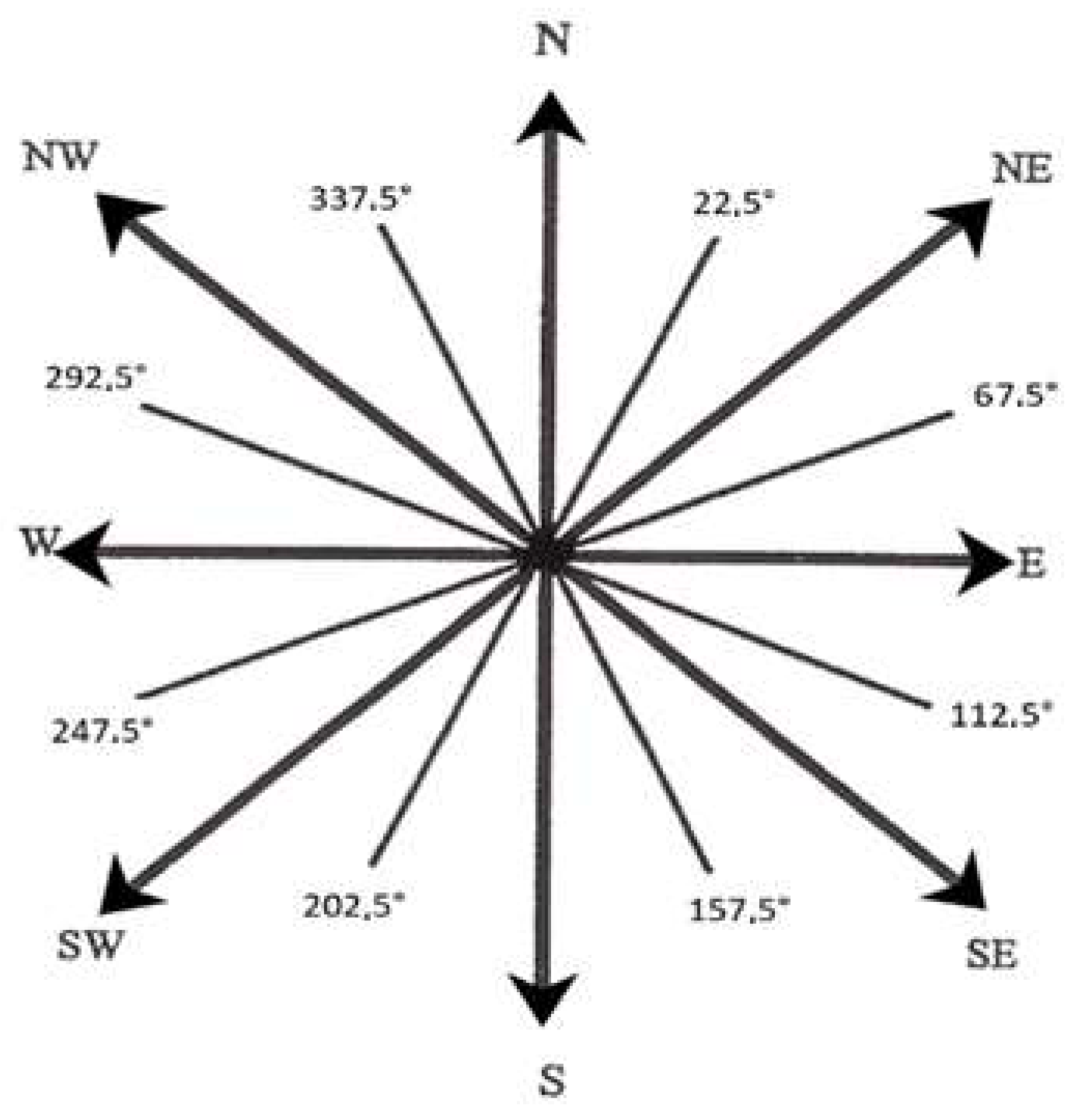
Finally, each surface ḡ ∈ Ḡ has been gathered according to the main orientation by computing the angle created between a vector pointing to the North and a vector perpendicular to the surface.
Figure 1 defines the corresponding degrees for each orientation. After comparing the angle with the degrees shown in
Figure 1, the orientation has been assigned. This procedure resulted in eight orientations: North, North-East, East, South-East, South, South-West, West, and lastly North-West, which enable data analysis. For example, an angle of 42° would fall into the {22.5°, 67.5°} category, meaning an orientation of North-East, whereas an angle of 159° would fall into the {157.5°, 202.5°} category, meaning a South orientation.
After that, correction factors may be applied to account for architectural elements not represented in the simplified building geometric model—such as windows, balconies, technical equipment, and shading elements. These coefficients can be derived from empirical studies, image analysis, or reference data, and are essential for translating theoretical solar potential into a realistic usable potential.
While several studies and datasets in the literature provide well-established references for the rooftop correction coefficient (C
R in %) [
40,
41], the façade correction coefficient (C
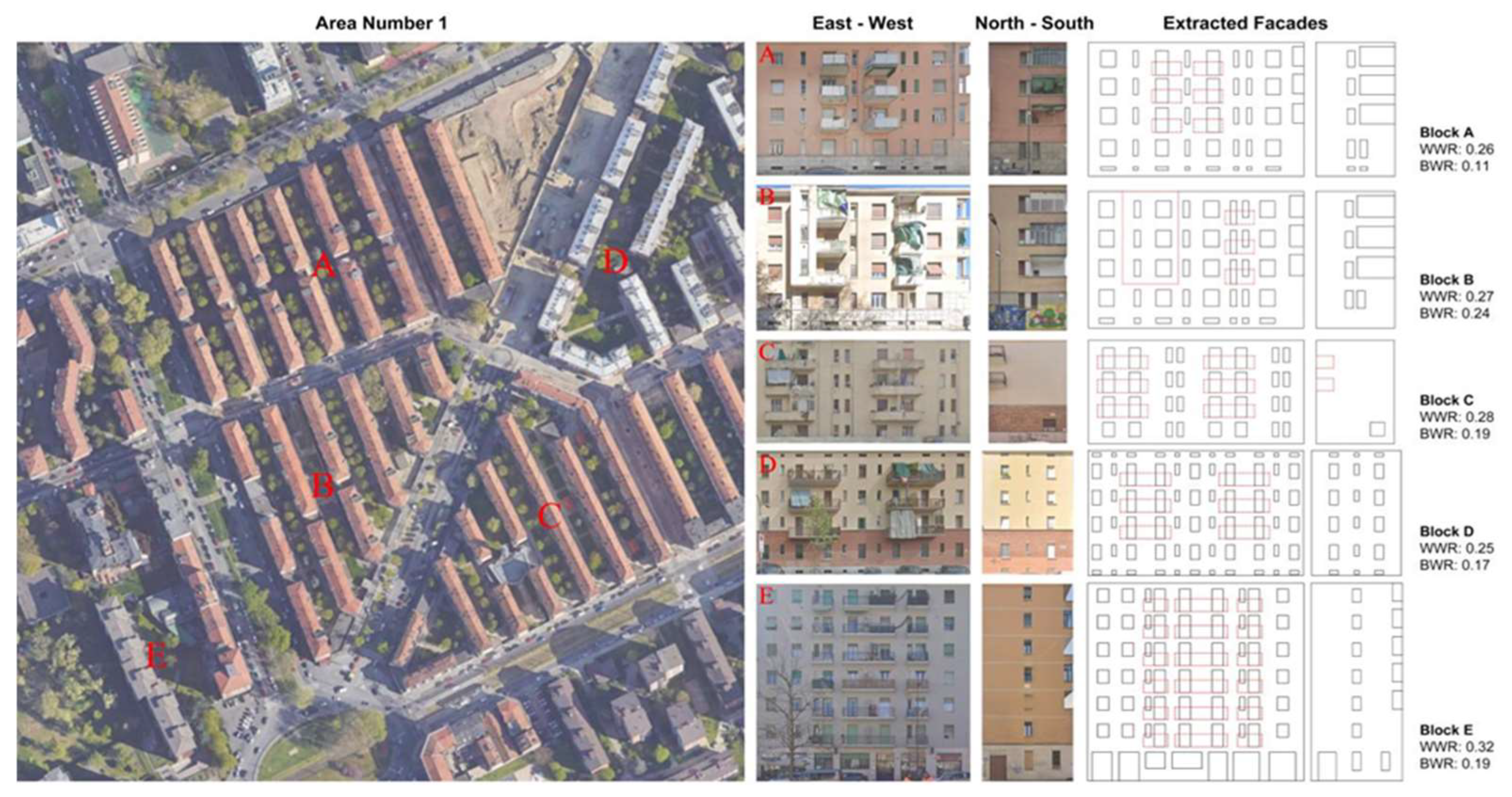
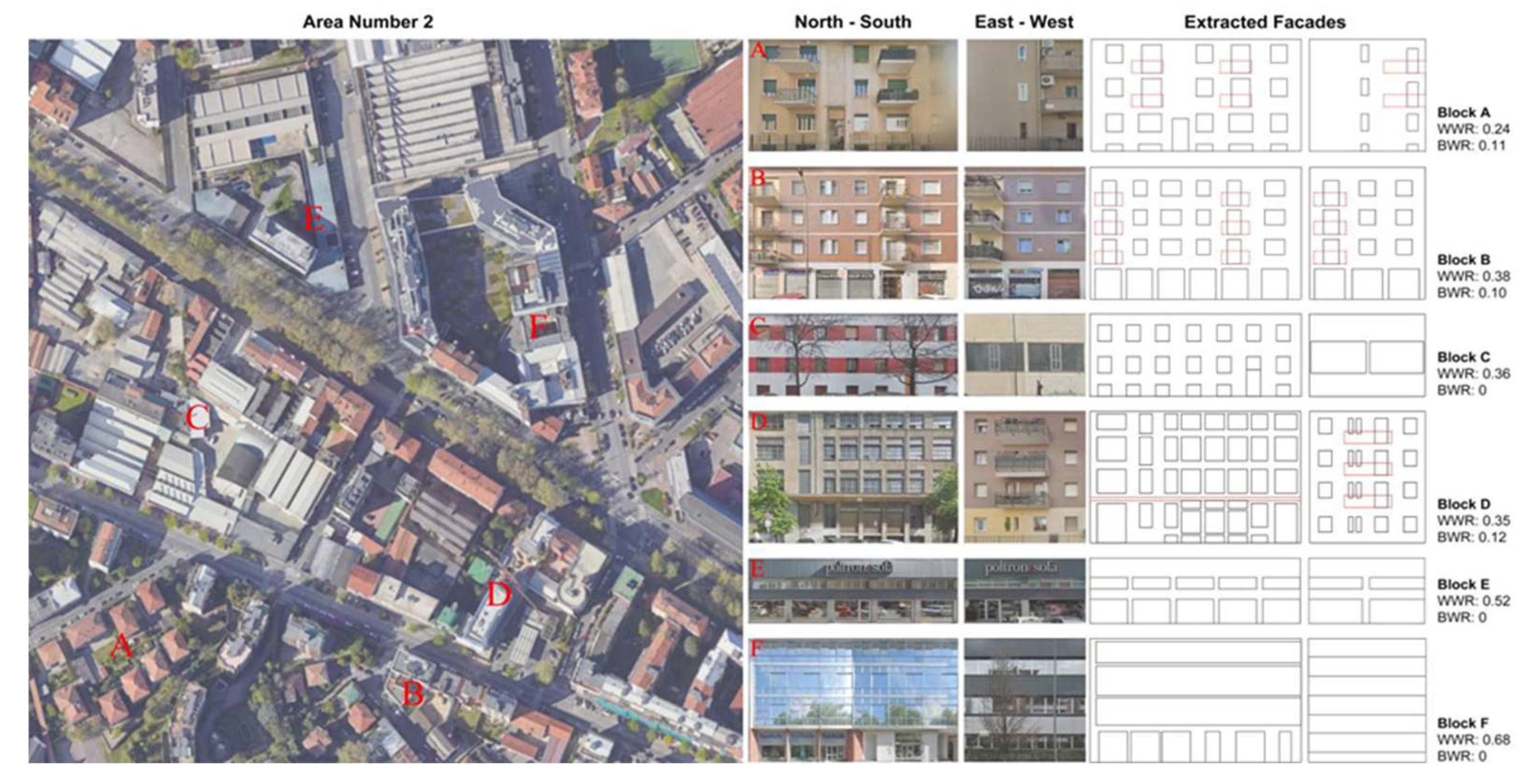
F) is less extensively documented; thus, a specific evaluation has been performed. The methodology involved the subdivision of the study areas into urban blocks, and the representative facades were selected in both North–South and East–West orientations using Google Street View imagery. For each block, façade images were analyzed to determine the Window-to-Wall Ratio (WWR) and Balcony-to-Wall Ratio (BWR) through CAD-based measurements. The relative length of facades facing each orientation was used to weigh their contribution within each block. These values were subsequently aggregated across all blocks to derive an average correction coefficient.
Once the 3D geometry is defined, solar radiation analysis is conducted using simulation tools capable of estimating the incident solar irradiation on each surface over a representative period, commonly a typical meteorological year. The Ladybug simulation is based on hourly EPW data for Milan [
42] and adopts the Perez all-weather sky model [
43], which has been validated in several urban-scale solar studies. This type of radiation study is useful for building surfaces such as windows, where we might be interested in solar heat gain, or, as in this case, solar panels, where we are interested in the energy that can be collected.
To focus the analysis on surfaces suitable for photovoltaic (PV) integration, filtering criteria are applied based on both spatial and radiation parameters and techno-economic evaluation. Specifically, a minimum surface area threshold (TS) is established to ensure that the size of the available surface area allows for the installation of a technically feasible photovoltaic system.
Likewise, a minimum annual solar irradiation threshold (TI) is adopted to identify only those surfaces that receive sufficient solar energy to enable a cost-effective investment.
More in detail, the thresholds for minimum surface area and minimum annual solar radiation are defined as follows:
T
S—A minimum available area of 18 m
2 is needed to install at least 3 kW
p, which can be considered the minimum reasonable size of a PV system under the technical-economic viewpoint [
44];
T
I—A yearly irradiation of at least 800 kWh/m
2 should be available on the analyzed surface to allow for a reasonable payback time. This threshold has even been adopted in a similar study [
19]. In particular, assuming an all-inclusive system cost of 2000 EUR/kW
p [
45], a lifetime equal to 25 years [
46], a discount rate of 3%, an annual O&M cost of 1% of investment cost, and a performance ratio (PR) and an annual degradation rate, respectively equal to 85% and 0.5%. This irradiation level ensures a Levelized Cost of Electricity (LCOE) of approximately 0.20 EUR/kWh, consistent with the average EU residential electricity price. This value is slightly below the average electricity price for end users across the European Union, thereby supporting the economic competitiveness of PV installations under the specified conditions.
To refine the methodological accuracy of the facade solar potential assessment, an additional analysis is conducted to evaluate the influence of shading elements. In this regard, a detailed model of a representative building is developed, including balconies and overhangs. The simulation is performed using the Honeybee plugin within Grasshopper, based on Radiance 6.0 software, enabling the explicit definition of construction reflectance properties. The envelope construction follows standard material assemblies, with facade surface diffuse reflectance set to 0.2, consistent with typical urban materials. Two configurations are prepared: the detailed building embedded within its surrounding block for high-density contexts, as in the real case, and an isolated building for a low-density condition, to understand how much balconies and overhangs affect the solar potential assessment in the specific case studies. The use of detailed representative building models avoids the need to construct detailed urban-scale geometries, thereby reducing the significant time and computational resources required. The results obtained from the detailed models are then used to update the results of the simplified model or, as in this specific case, to confirm the reliability of the results obtained (see
Section 6).
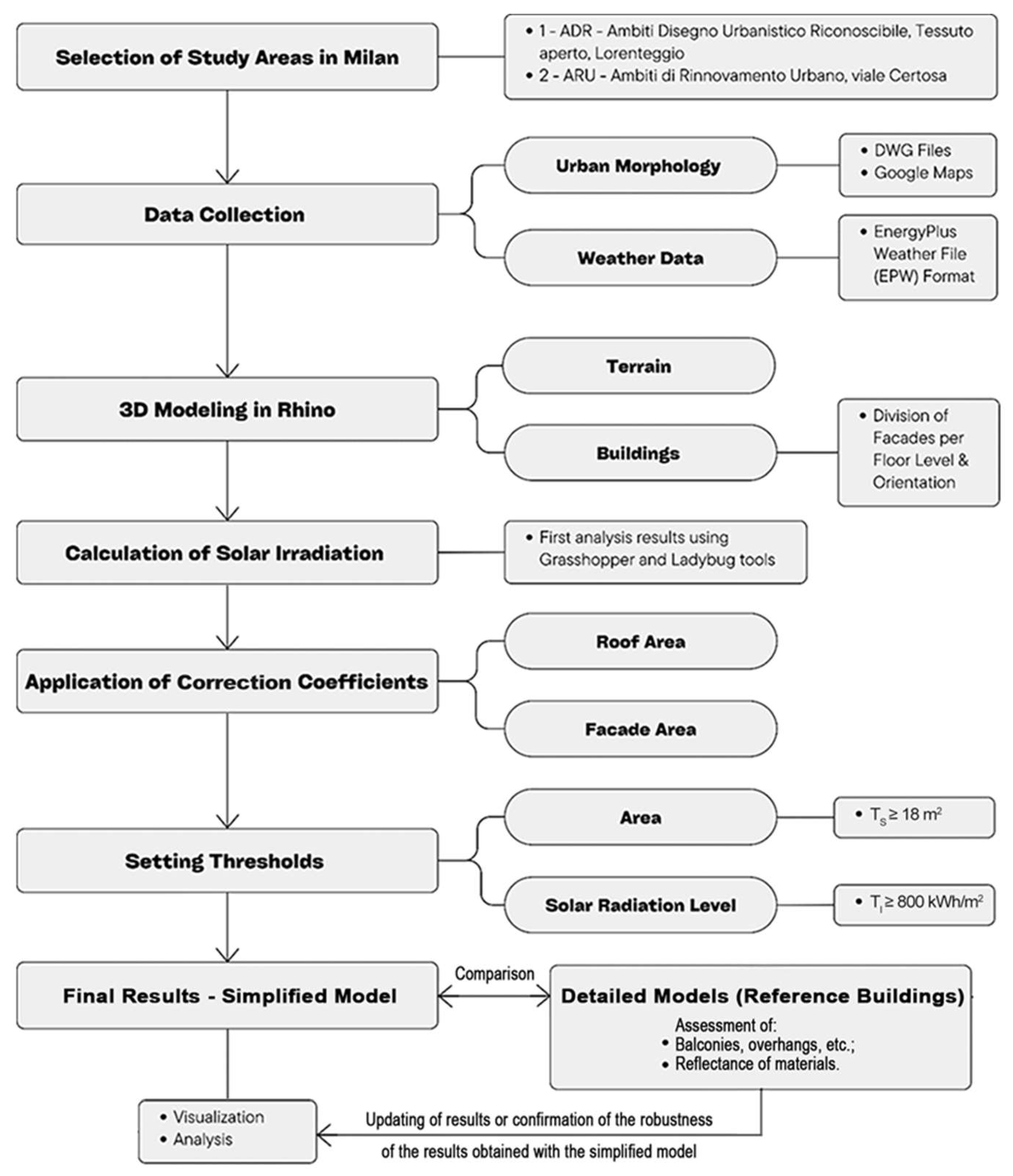
The final outcome is a quantitative and spatially explicit evaluation of the solar potential of urban building surfaces, which can be disaggregated by surface type, orientation, or building height. This methodology supports a wide array of applications, including energy planning, renewable energy policy design, building retrofitting strategies, and the development of solar maps at various scales. The described methodology is represented in
Figure 2.
4. Case Study
The case study in this work is represented by a portion of the urban area in Milan (Italy), which has been analyzed in order to determine the PV potential at an urban scale in two different morphological contexts. The solar radiation received by the surfaces, e.g., rooftops, facades, was calculated as the solar energy potential of each floor level and orientation, considering local weather conditions.
In general, the city of Milan has a distinct categorization of its urban areas depending on the morphology, density and type of buildings. These three categories are:
NAF—Nuclei di Antica Formazione (Ancient Formation Nuclei);
ADR—Ambiti Disegno Urbanistico Riconoscibile (Recognizable Urban Design);
ARU—Ambiti di Rinnovamento Urbano (Urban Renovation Areas).
The “Ancient Formation Nuclei” (NAF) consist of urban fabrics that present historical, identity, morphological and typological characteristics, recognizable by the stratification of the processes of their formation. They consist of building complexes with intrinsic historical-architectural value, in which generally PV installation is not allowed.
The ADR areas are characterized by a “Recognizable Urban Design” and are the parts of the city where the morphological unity of the different fabrics and the consolidated relationship between private and public spaces exist. They may consist of compact urban curtain or open-plan urban fabrics, rural typology, united urban sets and even architectural and vegetal compositions with historical–artistic–testimonial character. In these areas, the transformative interventions, mostly regarding buildings, which present homogeneous settlement and naturalistic characteristics, are regulated.
Lastly, ARU or “Urban Renovation Areas” are parts of the city where the design of public spaces is incomplete. Here, urban development aimed at redeveloping the system of existing public spaces through a redefinition of the relationship with private spaces and the creation of new local systems of collective spaces is encouraged. In cases of building renovation, new construction and urban restructuring, certain indications about the buildings’ height and the creation of public green spaces apply [
47].
So, moving on to the selection of the study areas, keeping in mind the above regulations regarding interventions, it is logical to exclude areas that fall into the NAF category, as they mainly consist of buildings with high historical or architectural value, and therefore, are subject to preservation.
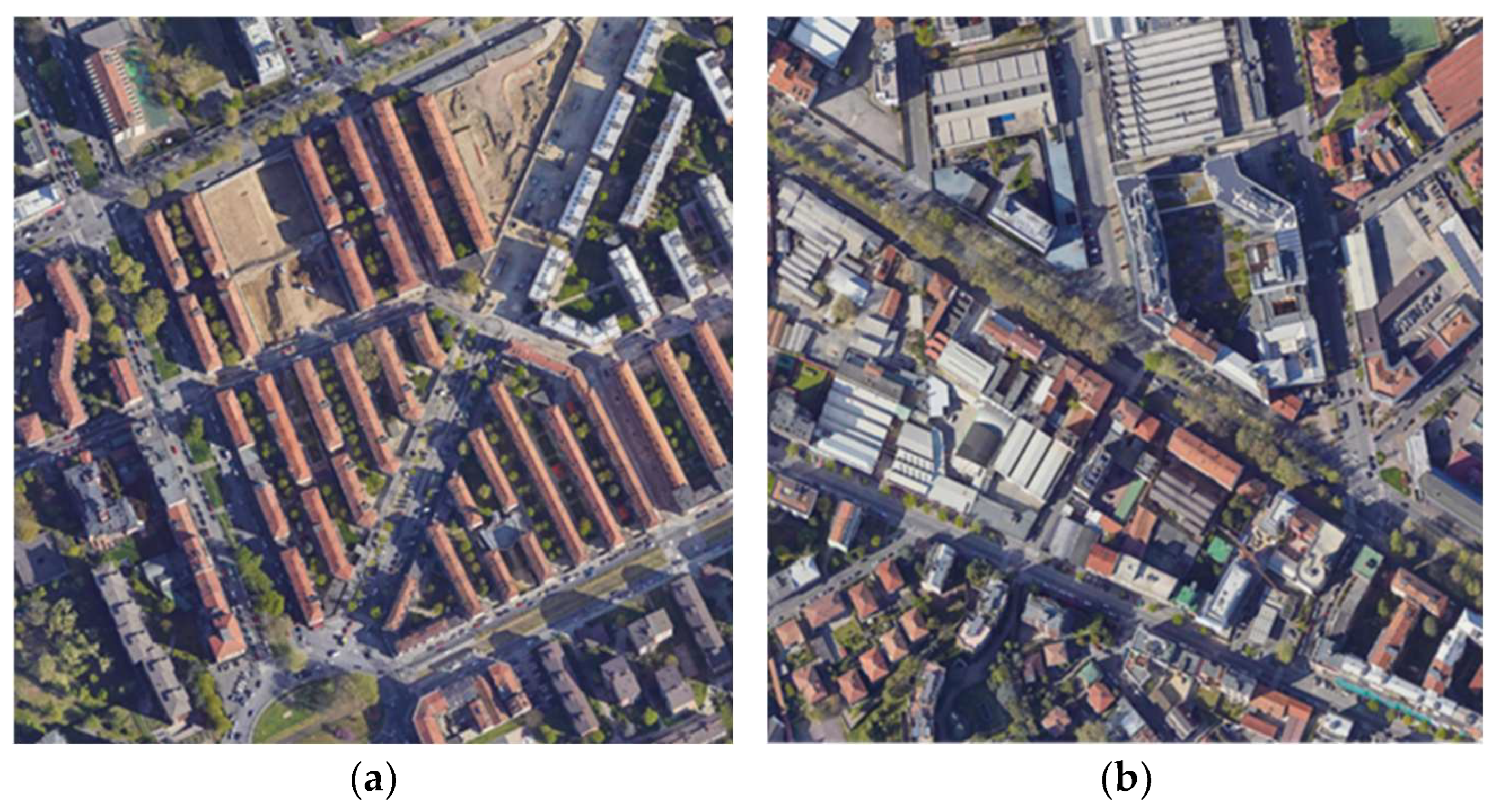
Therefore, two urban areas with a size of 400 × 400 m (
Figure 3) in the ADR and ARU, hereafter named area N°1 and N°2, respectively, were selected as a case study in order to obtain results that cover a variety of urban morphology. Area N°1 (ADR) is characterized by a relatively compact and morphologically coherent urban fabric, mainly composed of linear residential blocks aligned with the street network. The average building height is approximately 15 m, with a height-to-width (H/W) ratio of approximately 0.9 and a built density (m
2 built area/m
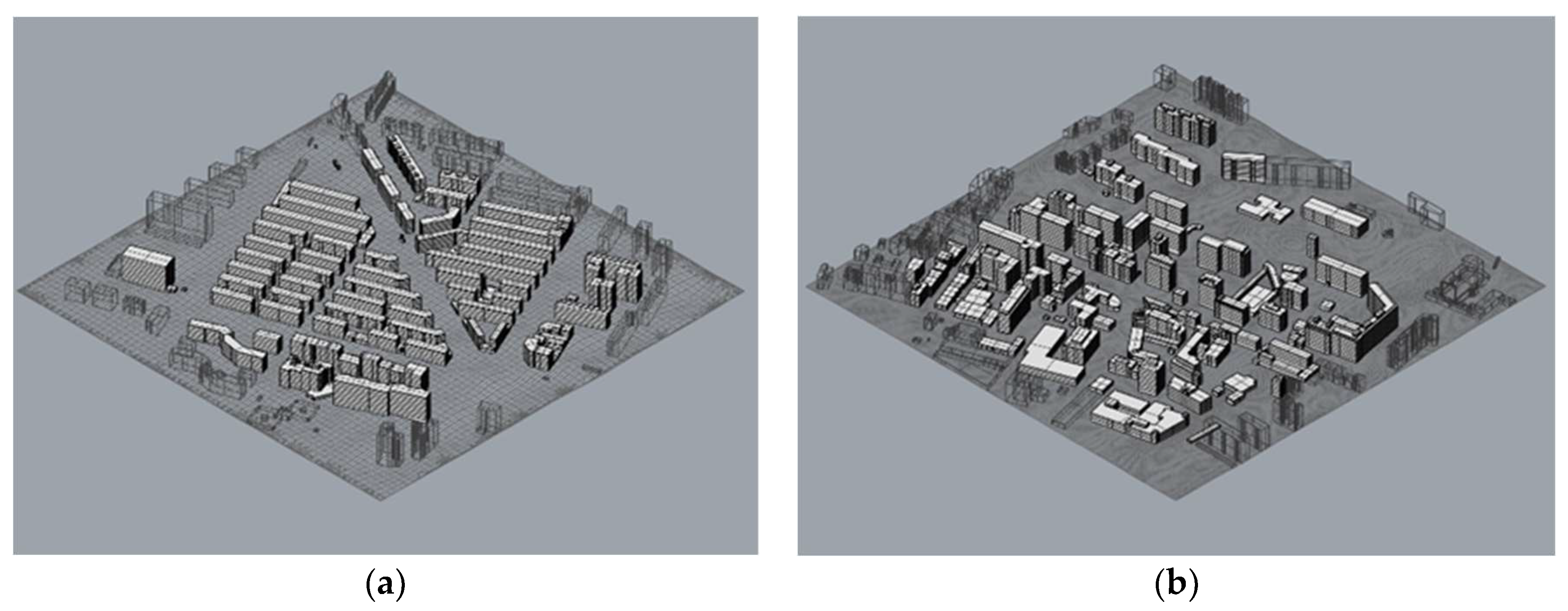
2 land area) of approximately 0.35. In contrast, area N°2 (ARU) presents a more heterogeneous and recently transformed urban fabric, characterized by mixed-use and irregular building volumes. The building heights range from 9 m to 30 m, with H/W ratios from 0.5 to 3 and a built density of approximately 0.46. These quantitative indicators further highlight the morphological differences between the two areas and strengthen the justification for their selection. However, as already mentioned, in order to reduce the boundary effect and include shading due to outside obstruction in the analysis, buildings located within 55 m outside of the perimeter were included, with a final simulated area of 510 × 510 m. The results of the modeling phase are shown in
Figure 4.
As introduced, the 3D models consider only the flat envelope surfaces without glazed fractions. As a consequence, the data obtained through these simulations are not reliable for identifying the exact amounts of solar potential. In fact, there are factors such as the tridimensional conformation of the surfaces and the percentage of glazing present, which negatively affect the usable area. Moreover, the development of detailed and high-fidelity models for extensive urban contexts is not feasible due to computational and data constraints.
In order to overcome these problems and without increasing the complexity of the simulation process, it is necessary to adopt coefficients that can take into consideration these particularities for each building.
Therefore, starting with the facade, to obtain an accurate correction coefficient (CF), it is pivotal to perform a detailed assessment of the built forms within the two designated study areas.
In detail, the two study areas in Milan were subdivided into 11 blocks. For each block, two representative facades were extracted from Street View images in Google Maps, resulting in a total of 22 analyzed facades, specifically selecting one façade in the North–South direction and one in the East–West direction. This method of facade analysis through street-level imagery has been increasingly adopted for urban-scale simulations [
48]. The relative total length of facades facing each orientation within a block was also considered to weigh their contribution. Based on the selected facade images, the average Window-to-Wall Ratio (WWR) and Balcony-to-Wall Ratio (BWR) were determined for each block through CAD 2023 software (
Figure 5 and
Figure 6). Across the 11 analyzed blocks, the mean WWR was 0.38 (SD = 0.13; range: 0.24–0.68). The mean BWR was 0.12 (SD = 0.08; range: 0.00–0.24). These values reflect the variability in facade permeability across the study areas and provide uncertainty bounds for the derived coefficient. These ratios account not only for window openings but also for balconies; by aggregating these values across all blocks in both areas N°1 and N°2, a corrective coefficient for facade usability was calculated. The resulting coefficient, reflecting realistic reductions due to windows and balconies, was C
F = 50%. This value represents an orientation-aggregated coefficient, as North–South and East–West facades were weighted according to their relative lengths within each block. Future research should investigate orientation-specific correction factors to further refine the model accuracy.
We must note that the coefficient regarding the facades does not take into account other limiting factors, such as non-vertical shadows caused by the balconies or other spaces that might not be suitable for PV installation, like spaces between windows, where, due to their proximity, the area might be deemed too small for a solar panel. Therefore, the façade coefficient calculates only the available area, while the roof coefficient, based on the literature, calculates the usable area. Although the facade and roof coefficients are derived from different geometric considerations, both are ultimately expressed as correction factors and applied consistently in the energy estimation process.
The roof surface area usable for installation is also a critical factor. Previous studies have shown that the percentage of usable roof area for PV installation in Milan can vary due to the existence of chimneys, elevator motors, ventilators, etc. For example, a detailed assessment of the Politecnico di Milano premises shows that, of the rooftop area of 19 buildings (23,739 m
2), an area of 8572 m
2 was usable for PV installation, indicating a potential of approximately 36% [
41]. Another study mentioned that the working surface area on roofs for PV panels corresponds to 30% of the roof area for each residential building in Milan [
40]. These sources provide insights into the potential of usable roof area for PV in Milan, indicating that it can range from around 30% to 36% for certain building types. In the end, the adopted correction coefficient regarding roofs is equal to C
R = 30%. This percentage not only accounts for geometric and architectural constraints but also includes considerations related to suboptimal solar exposure, thereby providing a conservative and realistic estimate of usable surface.
For clarity and reproducibility, the main simulation settings are summarized in
Table 1, including domain size, buffer distance, grid resolution, facade/roof discretization, sky model, meteorological dataset, and periods of analysis.
5. Results Analysis
In this section, the main results of the research are presented. First of all, the number of surfaces resulting from the correction and filtering process has been presented. After that, the results in terms of available surfaces and solar irradiation are discussed.
5.1. Data Analytics
The discretization of the surfaces resulted in 5233 and 5100 different areas, respectively for area N°1 and N°2 (
Table 2), of which, between 24% and 31% are characterized by an area higher than 18 m
2 after applying the correction coefficients. Of these, only between 23% and 26% received irradiation higher than 800 kWh/m
2 throughout the year. Finally, the resulting number of surfaces, 282 and 330, which correspond to 6% of the overall surfaces analyzed, can be considered suitable for PV installation.
Regarding the specific types of surfaces, as shown in
Figure 7, it can be stated that the best available surfaces for PV installation are the roof, while the facade is significantly affected by the shadows among buildings.
5.2. Numerical Results and Discussion
Based on the aforementioned method, annual irradiation, after the implementation of the two thresholds, was derived for the two selected areas and shown in
Table 3 and
Table 4. In detail, the average solar radiation (kW h/m
2), as well as the total initial and useful area (m
2) of the surfaces that received the radiation, both for roof and facade, for different orientations, are reported.
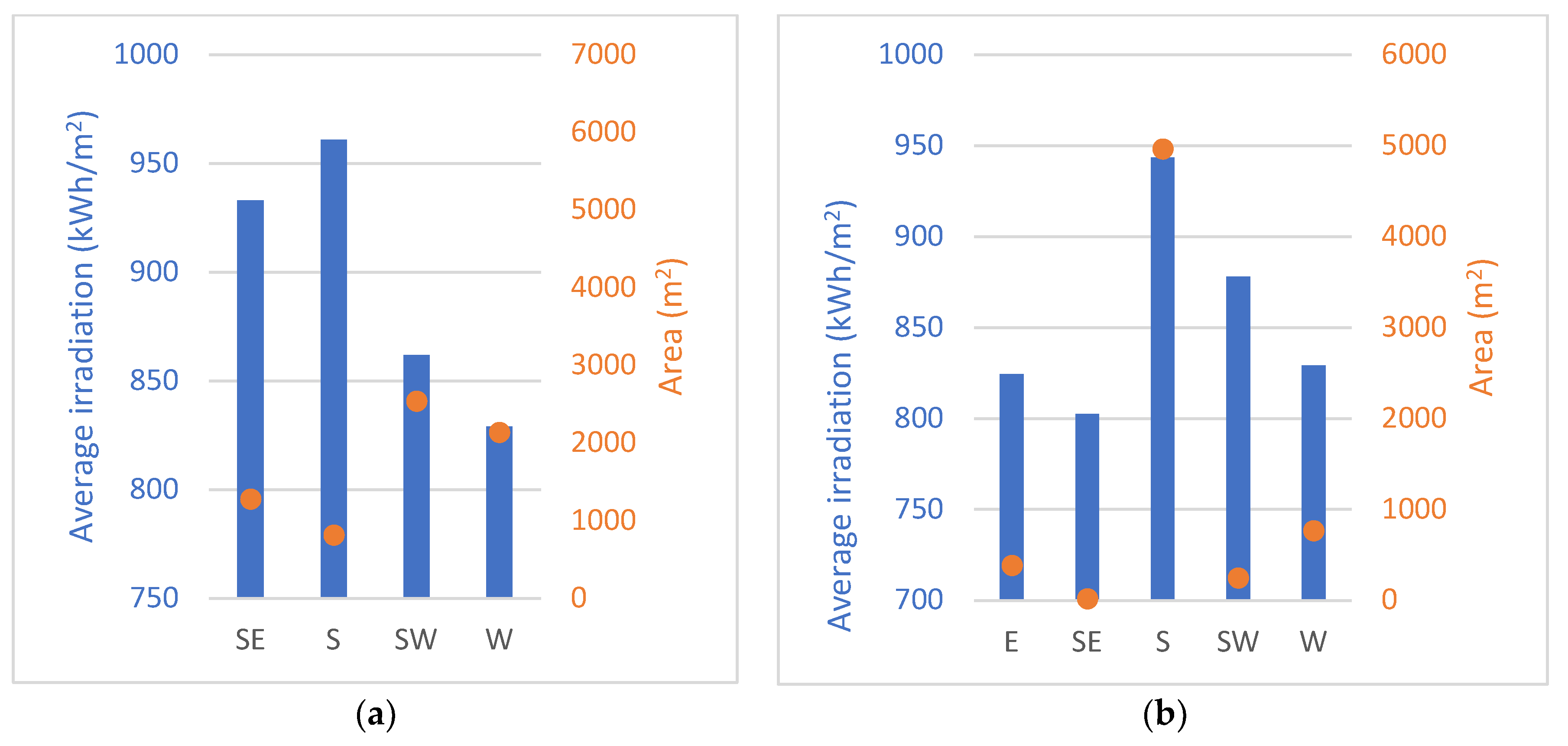
It should be noted that, after applying the two thresholds, the filtered data regarding the facades resulted only in surfaces facing South, South-East, South-West and West in area N°1, while the data for surfaces facing East was also present in area N°2. This difference can be primarily attributed to the prevailing building orientation in each area. In area N°1, most buildings are oriented toward the South-West, resulting in minimal solar exposure and usable surface on the East side. Additionally, the building configuration in area N°1 is relatively homogeneous, with facades predominantly aligned along four cardinal directions, further limiting the existence of East-facing surfaces. In contrast, although most buildings in area N°2 are primarily oriented toward the South, and the architectural forms are more complex, leading to the presence of facades with various orientations. This diversity in orientation allows for usable surfaces across a wider range of directions. As expected, the facades facing South in area N°2 received the highest amount of solar radiation, while facades facing South-East remained limited due to the urban topography of the area.
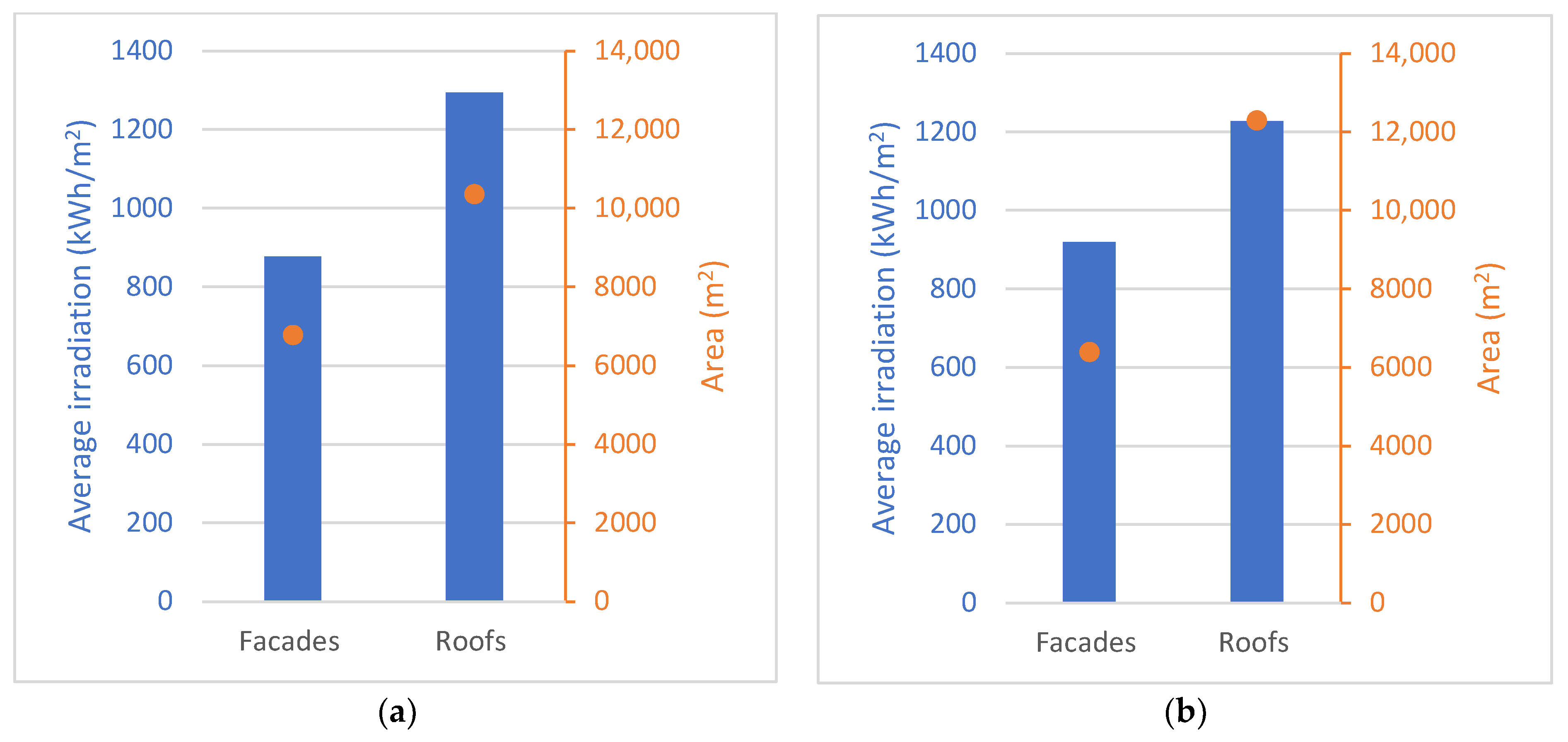
To have a better understanding of the results, the aggregated data is reported in
Figure 8. It can be noticed that, due to the filtering process carried out in the methodology, the available surface area for the facades reduces from around 140,000 m
2 to 6800 m
2 for area N°1 and reduces from 139,000 m
2 to 6400 m
2 for area N°2, as well as the usable surface area for the roofs, which reduces from around 37,000 m
2 to 10,400 m
2 and from 46,000 m
2 to 12,300 m
2, respectively.
A step further, we can see the average solar radiation received by the facades for each orientation in
Figure 9. As previously mentioned, after filtering the results, we were left with four main orientations in area N°1 and five in area N°2 that present the possibility of being financially profitable in PV exploitation. Here, the ones that stand out are, as expected, the facades oriented South, followed by South-East for area N°1 and South-West for N°2. This confirms our assumptions made by the radiation rose, where we saw a clear difference between the South, South-East and South-West orientations compared to the rest. It is possible to note that some facades in the West and East could also be used for PV installation.
The amount of available area in facades shows that area N°1 has more facades facing South-West, but in general, they are between 1000 m2 and 2500 m2 in all other orientations. Contrary to that, in area N°2, the South orientation has the highest available area, approximately 5000 m2, while in all other orientations the range is 250–800 m2, with the exception of the South-East orientation, which resulted in a small area of only 20 m2.
Looking at
Table 5 and
Table 6 in more detail, we see the amount of solar radiation received by the facades for each level and orientation, as well as the total for each level. We can also see the amounts received by the roofs for each level, corresponding to N°1 and N°2, respectively.
One thing to notice is that for certain floor levels and orientations, no facade surfaces are recorded in tables. This is due to the application of the two defined thresholds: the minimum usable area of 18 m2 and the minimum solar radiation of 800 kWh/m2. Surfaces that do not meet either of these criteria have been filtered out, resulting in missing values for those specific cases. These cases are marked with “–” in tables.
Especially in area N°2, we see that in the East, South-East and South-West orientations, we do not have the data for some floors. This is a result of a combination of two things. The first thing is the orientation of the buildings in area N°2, leaving fewer surfaces facing East, South-East and South-West, as well as a lot of shadows being cast on them by the buildings located nearby. As a result, the few data we had, combined with the small amount of received solar radiation, did not pass the 800 kWh/m2 threshold, leaving us with no exploitable areas for these levels.
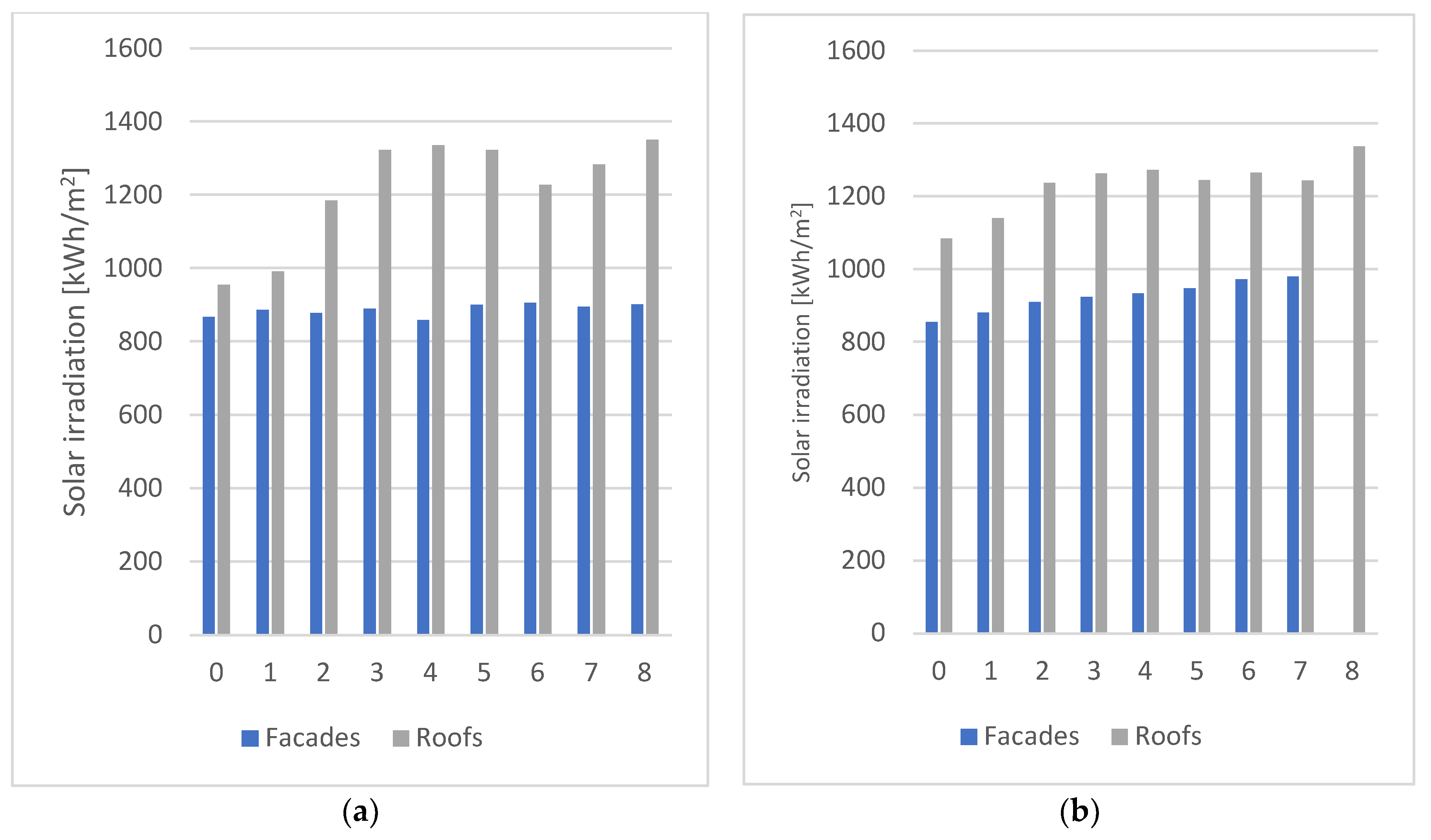
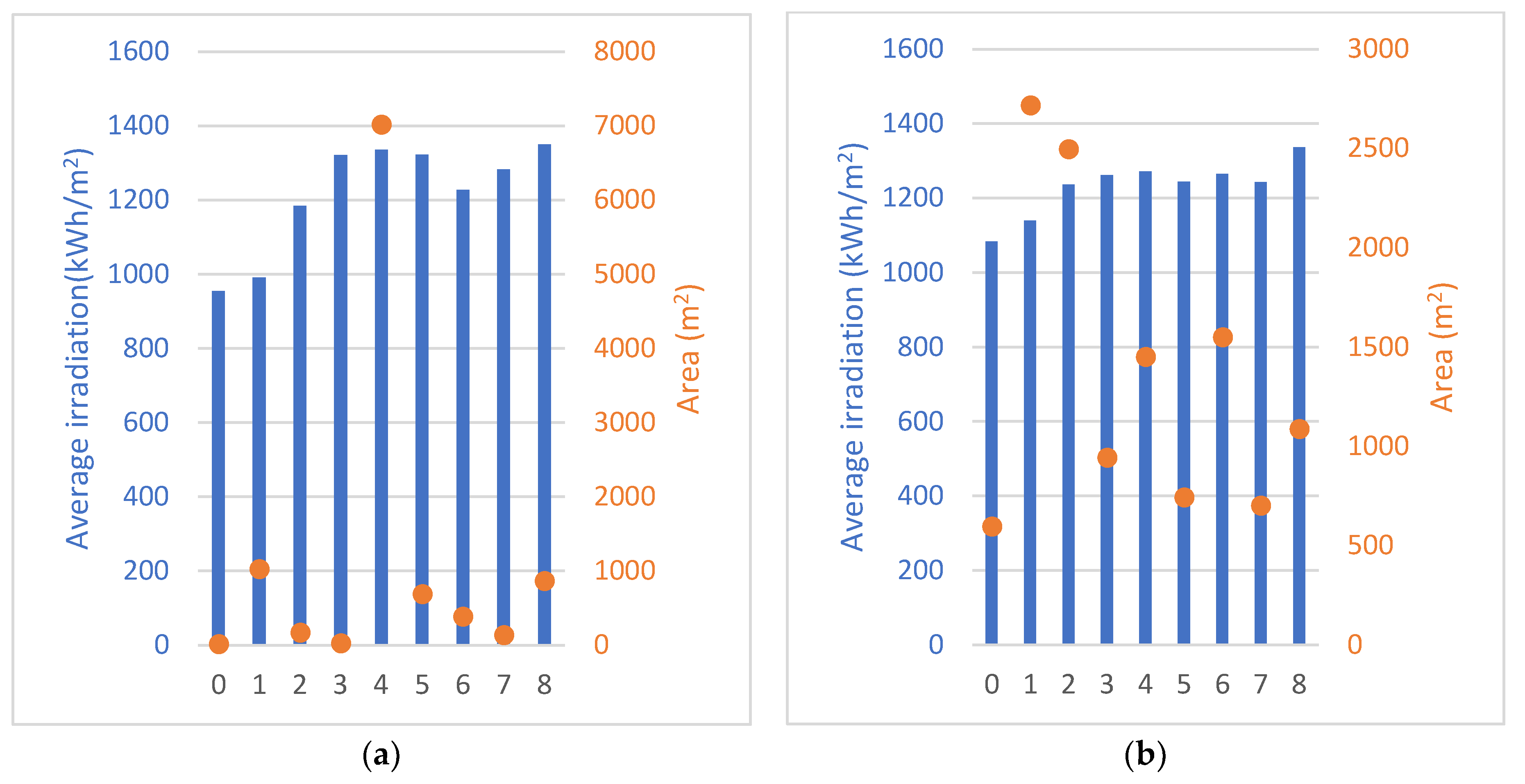
If we look at the average solar radiation received by facades and roofs for each floor level in
Figure 10, it can be observed that on every floor level, the roofs receive more radiation than the facades, which is something that we expected.
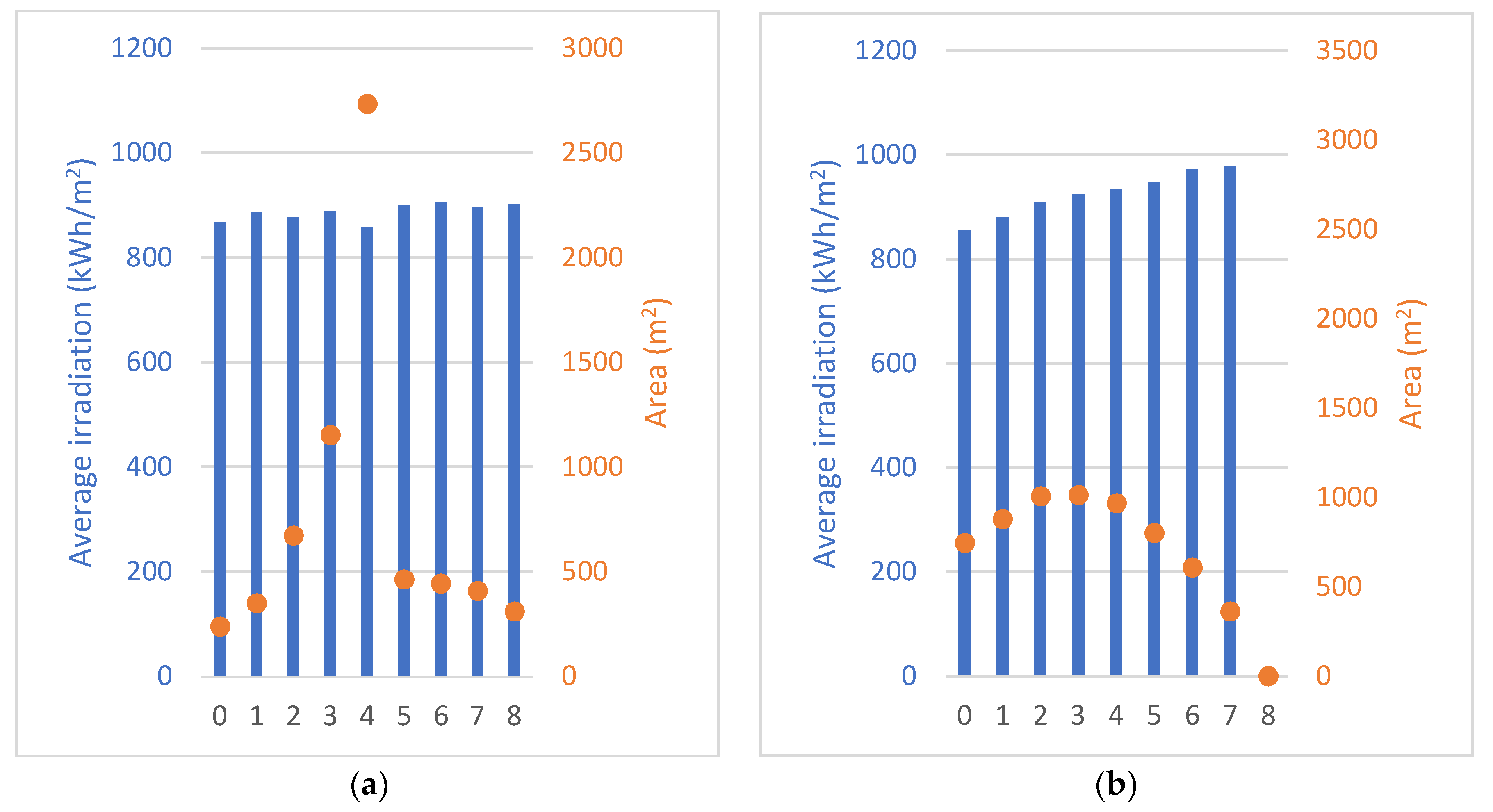
For further analysis, the radiation on facades at different levels, along with the available area, is reported. As we can see in
Figure 11, for area N°2, the amount of solar radiation on the facades generally increases as we move up in floor levels. Contrary to that, for area N°1, we get a different image with a slight decrease in the amount of radiation at some levels, even though they are higher than others.
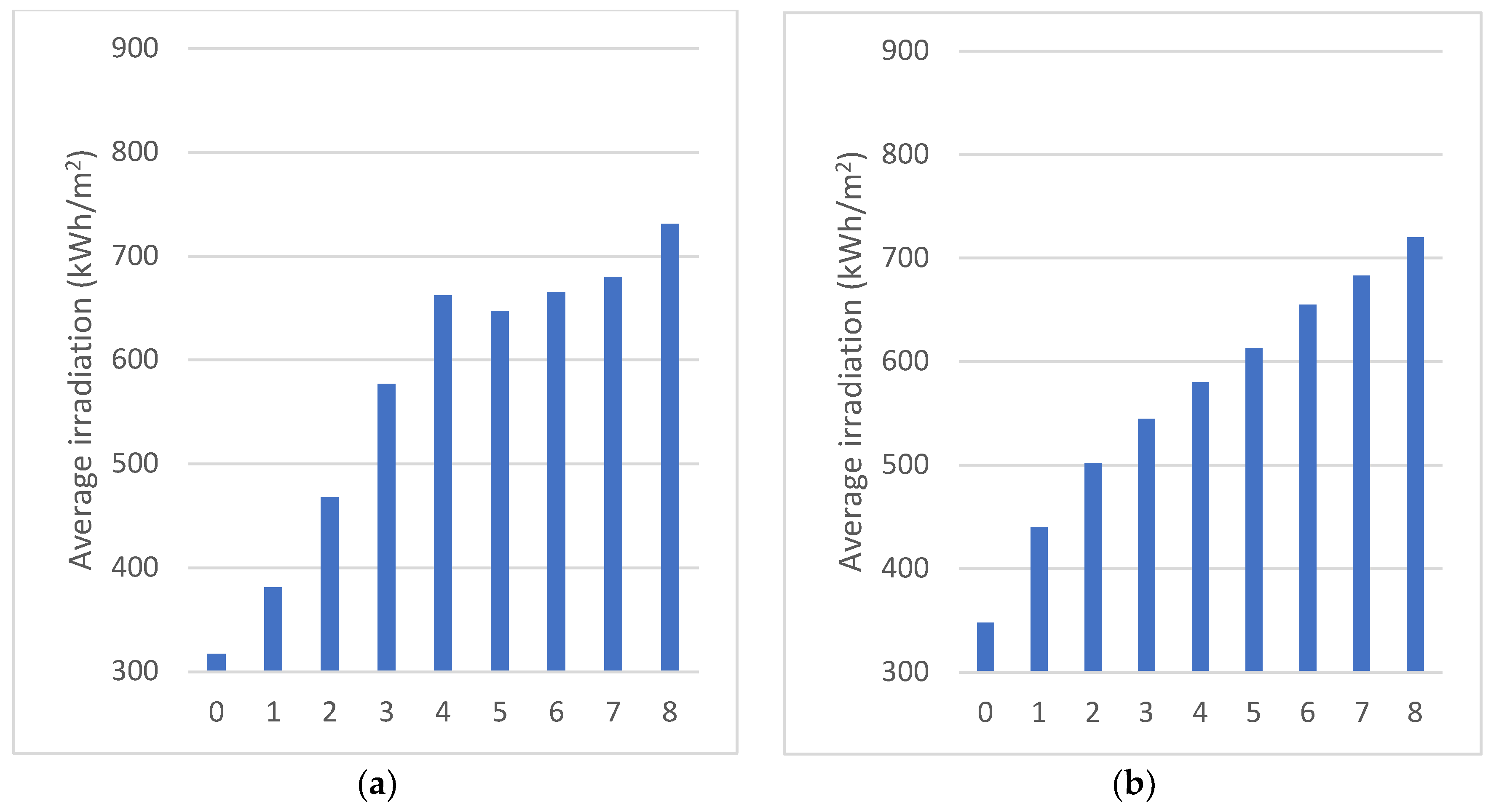
The divergence in solar irradiation trends across floors is observed due to the 800 kWh/m
2 filtering threshold. Therefore, for comparison purposes, the results corresponding to the absence of an 800 kWh/m
2 threshold for irradiation are also reported in
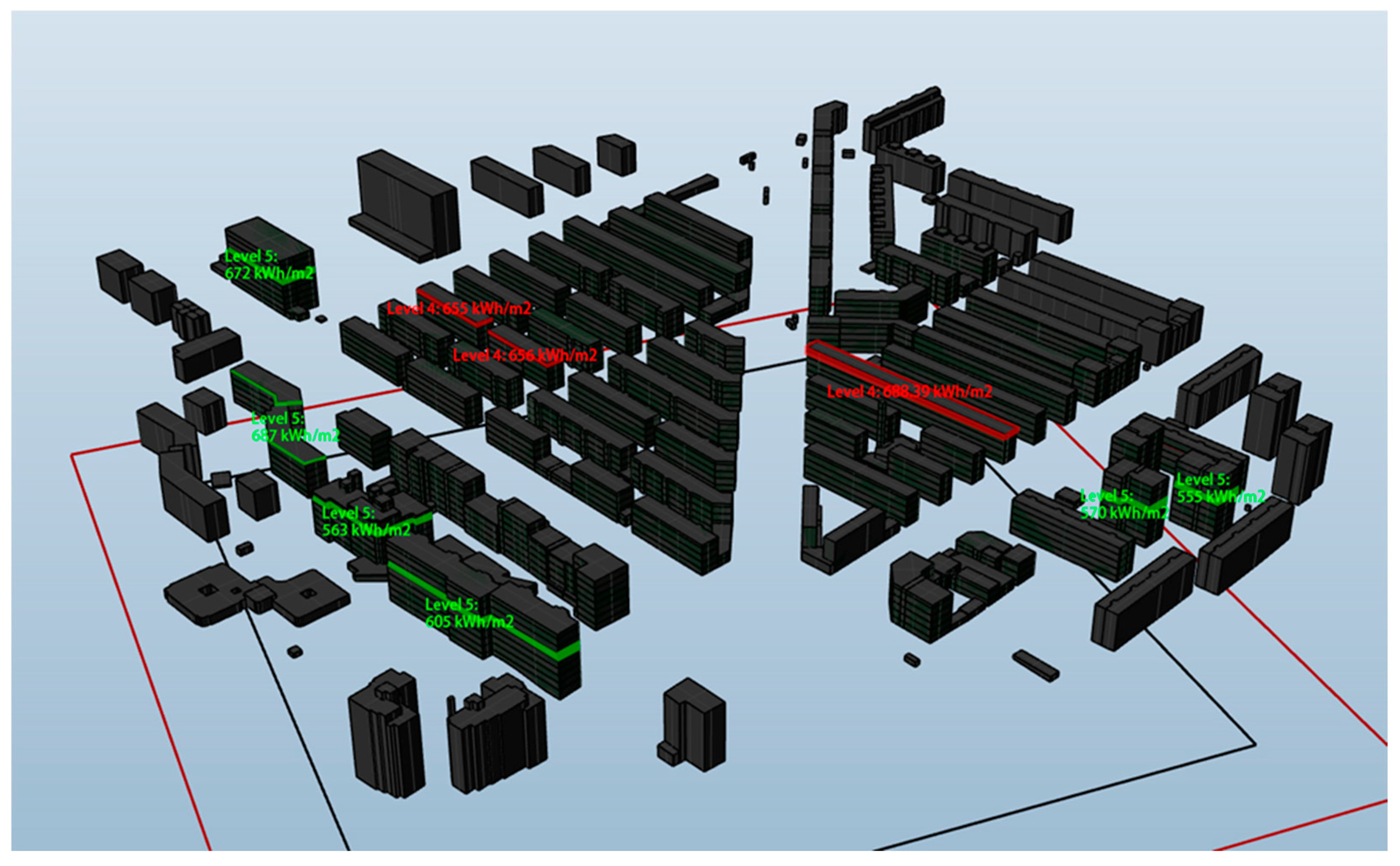
Figure 12. It can be observed that in area N°2, irradiation increases steadily with height. In contrast, in area N°1, Level 4 shows a sharp increase because it is the top floor for most buildings in the center and receives the largest irradiation, while Levels 5 and 6 are other high-rise buildings that experience mutual shading. Simulation results (
Figure 13) confirm that Level 4 of most buildings in the center receives about 660 kWh/m
2 on facades, whereas Level 5 of surrounding high-rise buildings receives only around 560 kWh/m
2.
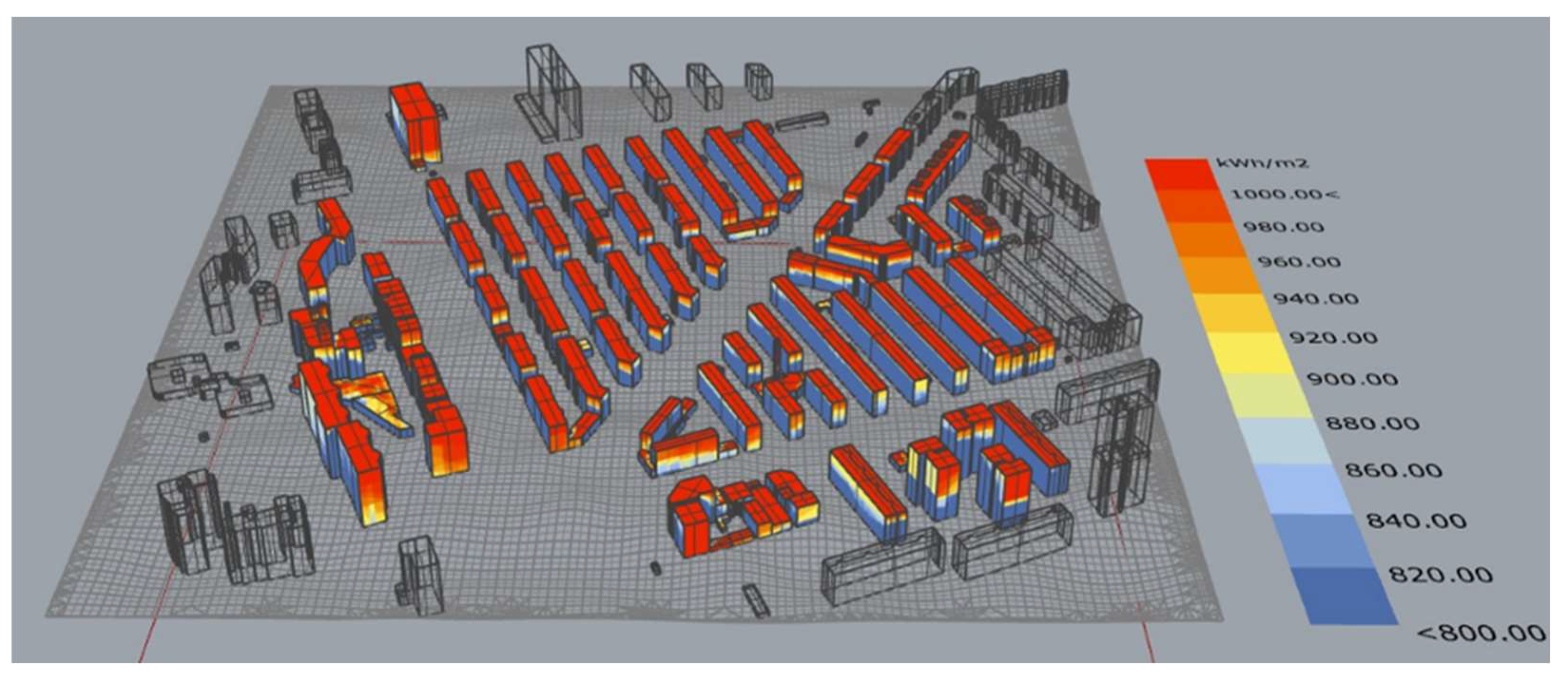
In
Figure 14, a 3D visualization of buildings with the average solar radiation above 800 kWh/m
2 for area N°1 is reported. We can observe that the amount of solar radiation increases with height, how neighboring buildings cast shadows that affect the result, and also why, in this area, the South orientation has the greatest potential regarding facades.
Moving on to
Figure 15, we explore the average usable area and average solar radiation received by roofs for different levels in both areas. The information that we get in this case corresponds to the average building height, and the variation in received solar radiation is consistent with the amount of shadows cast on the roofs of each level.
Specifically, in area N°1, we can conclude that buildings with a height that corresponds to four floor levels are the most common compared to the rest. Alternatively, in area N°2, the majority of buildings consist of one or two floors, although there is a higher number of buildings in all other categories in comparison to area N°1.
In this case, neighboring buildings have less of an effect on the solar radiation received by roofs compared to facades, which are highly affected by them. Consequently, even after filtering, we do not see much variation in the graphs beyond what is expected as we move up the floor levels.
As a result, the range for roofs is between approximately 950 kWh/m2 and 1350 kWh/m2 for area N°1 and 1100 and 1350 kWh/m2 for area N°2, which shows less variation.
6. Comparison Between Simplified and Detailed Model
To better assess the impact of geometric simplification, specifically, the exclusion of balconies and the adoption of pure volumes characterized solely by flat roofs on the accuracy of solar irradiation received by facades, a more detailed model of a representative building was developed, including windows, balconies and overhangs. The detailed modeling was performed on a selected building located in area N°1, as this area shows a relatively homogeneous urban fabric in terms of building typology, functional layout, and density. In contrast, area N°2 presents a mixed-use configuration with diverse building functions and irregular compositions, where multiple variables can affect the analysis of shading patterns.
For this analysis, some Honeybee components, based on Radiance software, were used to simulate the yearly solar irradiation on the main facade of the detailed building model. Unlike the simplified models used in the previous analysis, this simulation allows for the explicit definition of material construction properties. In such regard, the surface diffuse reflectance of the envelope is set to 0.2, in accordance with typical values for urban facades. This configuration ensures a more realistic representation of surface behavior and improves the reliability of the simulation results.
Table 7 summarizes the difference between the two models.
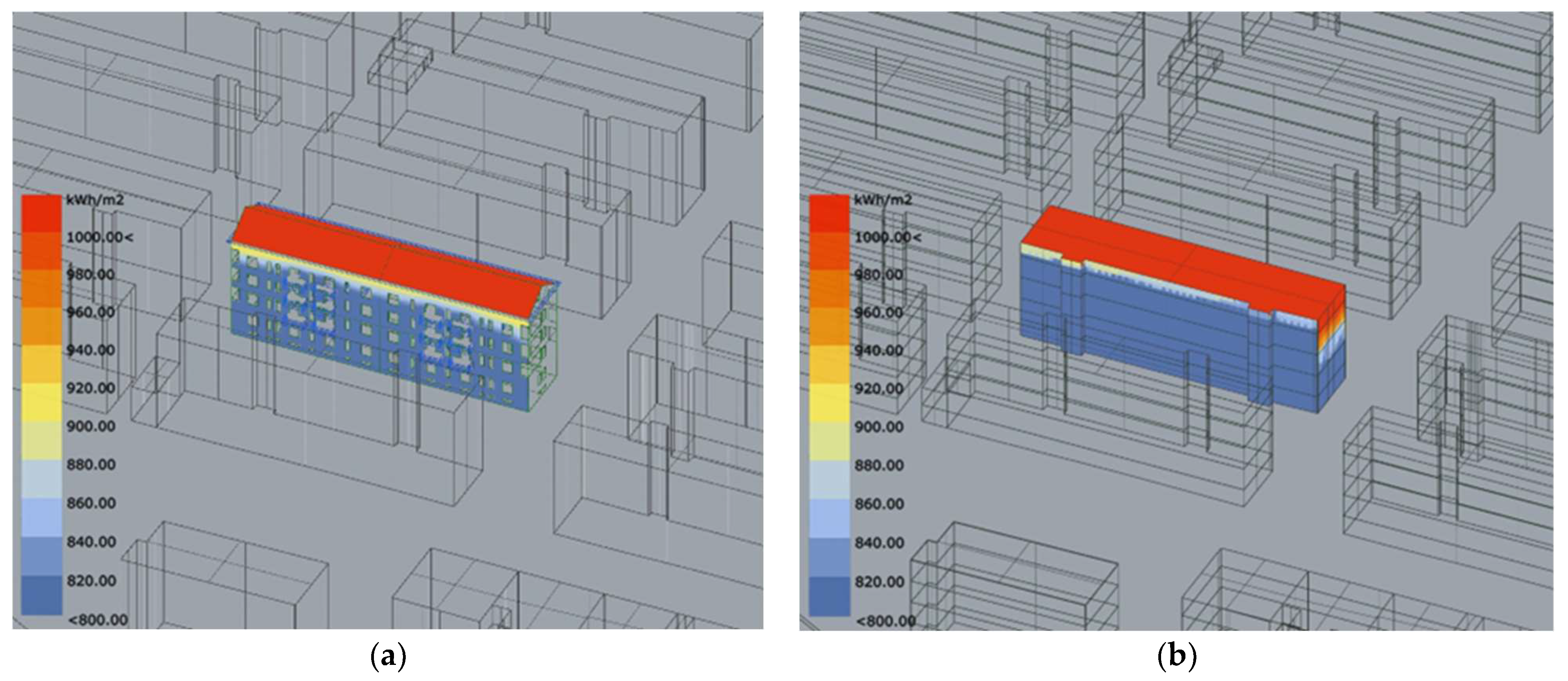
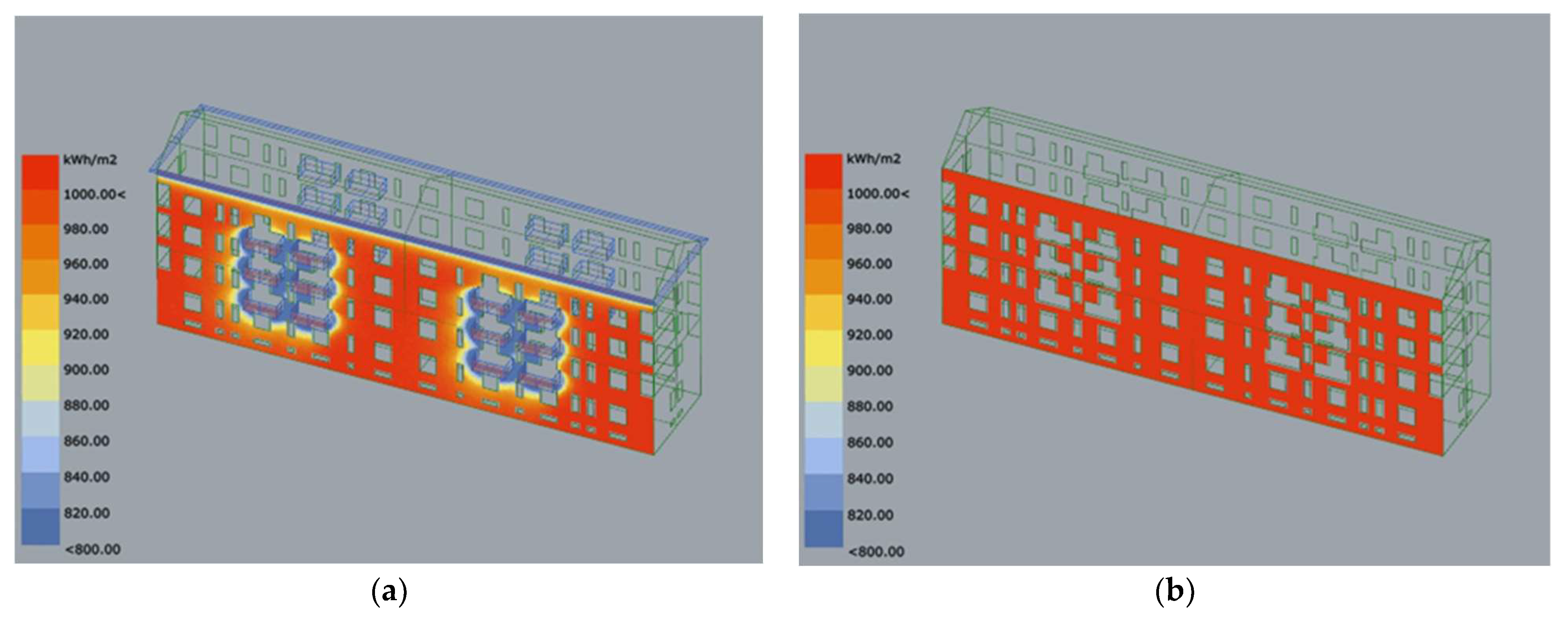
Because the level of shading differs between high-density and low-density urban contexts, two simulation configurations were tested. First, the detailed building model was placed within the surrounding urban block of area N°1 to account for inter-building shading (
Figure 16). The obtained results were consistent with those from the previous large-scale analysis, confirming that, in high-density areas, the additional shading effect of balconies produces only negligible differences in overall facade irradiation results due to the dominant projected shading from the background buildings. This finding supports the validity of the previously adopted reduction coefficient used to estimate the usable facade area.
However, in low-density areas where the shading effect of surrounding buildings is significantly reduced, the self-shading generated by balconies becomes more influential. To quantify this influence, an isolated building simulation was conducted using the same detailed model (
Figure 17). The results indicate that balconies reduce the effective irradiated facade area with a yearly irradiation of at least 800 kWh/m
2 by 24.7% (rounded to 25%) due to self-shading. This penalty is applied in addition to the facade correction coefficient C
F = 50%. Since both factors represent proportional reductions in available facade area, they are combined multiplicatively, resulting in
Consequently, for studies concerning low-density urban fabrics, the application of this detailed modeling and simulation approach is recommended to achieve a more accurate estimation of facade solar potential.
This analysis highlights two key aspects. First, in this specific case study, the urban configuration of the buildings, particularly in area N°1, is characterized by a height-to-width ratio close to or below one. As a result, the shadows cast by the buildings themselves are the dominant factor, prevailing over those produced by smaller architectural elements such as balconies, overhangs, or vegetation.
Second, the analysis underscores the effectiveness of the proposed methods, which enable large-scale investigations while significantly reducing time and computational costs through the use of detailed reference building models. These models make it possible to evaluate the influence of specific architectural details at the building scale and subsequently integrate these effects into the broader urban analysis, thereby enhancing the overall accuracy and efficiency of the results.
7. Conclusions and Future Research
This paper describes a methodology for the estimation of solar potential of buildings in an urban landscape, considering all surfaces, roofs and facades. The present study, which was carried out in the city of Milan, Italy, aimed to analyze the solar radiation received by buildings in two selected study areas, Lorenteggio and Viale Certosa, and investigate the potential of using PV technologies on the buildings’ surfaces for energy production. The methodology was implemented using a solar radiation model developed in Grasshopper and based on historical weather data from the area. With the data obtained by running the analysis on the 3D simulation models developed in Rhino, we were able to identify the total area of roofs and facades that enable the application of PV systems.
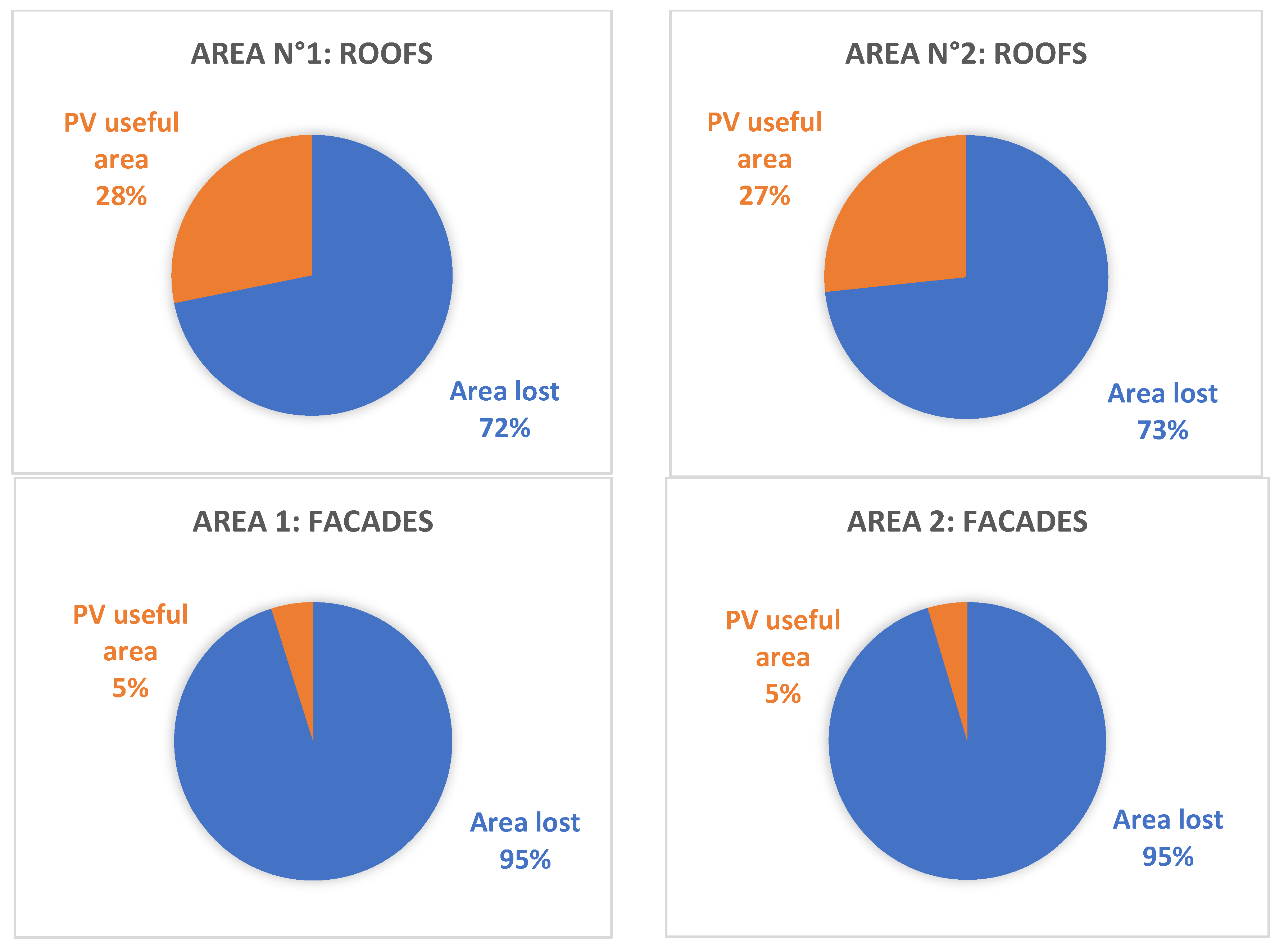
The analysis yields several important conclusions. Our research has shown that both rooftops and facades can contribute to the solar PV potential of buildings. Based on the amounts of solar potential, we found that a large number of roofs are suitable for PV exploitation. In addition, a considerable area of facades also presents the same opportunity. Going into more detail, the results indicate that facades facing South, followed by South-East and South-West orientated, have the highest potential for PV implementation on facades. Regarding the minimum area and the minimum amount for solar radiation thresholds, used to ensure that the investment will be economically beneficial, we found that about 28% of roof surfaces were above the limit, while only 5% of facades met the criteria. To sum up, the results confirm that the annual radiation on vertical facades is lower than that of more favorable surfaces (roofs), but that the solar potential of facades is relevant for the overall solar potential of a building or the overall urban area. This evidence demonstrates the importance of considering both areas for PV implementation.
However, the building orientation and urban topography both play an important role in investigating the suitability of facades for PV implementation. The results indicate that the solar exposure of buildings is influenced by their shape and height, which, in relation to shadows, affects their potential for solar energy production. The building shape and density of the neighborhood affect the total amount of solar radiation incident on facades, while the increase in building height tends to increase the amount of solar radiation on the vertical envelope. Based on the overall comparison results, it has been observed that an increase in the building’s height is beneficial, since generally, it results in an increase in the maximum value of the received solar radiation. In addition, the shading effect of balconies and overhangs also affects the solar irradiation received by building facades. The impact of balcony shading, however, varies significantly according to the urban density. In high-density areas, this effect is negligible due to dominant inter-building shading, while in low-density areas, the reduced obstruction from surrounding buildings makes balcony self-shading more significant. In our representative case, balconies decrease the effectively irradiated facade area by about 25%. Hence, for low-density contexts, detailed modeling that accounts for balcony geometry and material properties is recommended to ensure more accurate facade solar potential assessments. As building heights in cities continue to increase, the higher potential of solar radiation incidents on building facades will, in turn, increase the use of solar energy in urban buildings. As previously mentioned, we are heading toward the use of PV in new buildings, where our findings can, therefore, be used to optimize a building’s design. As a result, performing this type of solar analysis on a building plays a significant role in finding the areas that are most suitable for PV installation.
Future work should focus on more complex urban environments, also by incorporating the shadows cast by trees in low-density contexts, and should include different building materials in the analysis to obtain more accurate results. Regarding the external architectural elements of the buildings, which, as we mentioned, are also difficult to incorporate in the model when talking about large-scale simulations, we used Google Maps (version 26.05) to determine a correction coefficient in order to quantify the available area on the facades. Our study highlighted the need for more research on correction/reduction coefficients, regarding the suitability of areas on both roofs and facades, that takes into account the average percentage of windows and the external architectural elements (balconies, roof geometry, mechanical equipment and shadows cast by them).
Finally, this study focuses on two areas in Milan with different urban topographies, while in the future, more simulation cases could be added. To take it a step further, and in order to make this work applicable to different building contexts, it is important to categorize different cases of typical roofs and facades by considering similarities between buildings so that a set of coefficients can be determined and associated with the specific urban environment. This way, with the necessary implementations, it is possible to replicate the data across the entire city map by identifying areas with similar characteristics and using the results to draw general conclusions. By doing this, we can expand the range of the study by creating solar maps of neighborhoods and urban landscapes that include information on solar potential. These results are also beneficial for the development of urban planning and urban energy management, considering energy savings and investment approaches.
In urban development, buildings are the most significant factor, because of their major impact on the environment, economy and society. Therefore, it may also be interesting to extend the study to cover the estimation of energy production from the various PV systems installed, assess their potential to cover the energy needs of the buildings and evaluate the building’s performance.
In conclusion, this study shows the potential of integrating solar technologies into buildings in Milan. The findings emphasize that the implementation of PV systems on the roofs and facades can be highly beneficial. It can lead to increased renewable energy generation, improved energy efficiency, and contribute to the creation of a more sustainable and environmentally friendly urban environment. The availability of incentives and funds, as well as the economic viability of investing in PV, further supports the adoption of these technologies, making it a viable and attractive option for building owners and developers. With the help of solar technologies, buildings can contribute to a reduction in reliance on fossil fuels for energy production and sustainable evolution of the building sector, leading to a more sustainable future.
8. Study Limitations
Regarding the study limitations, it should be noted that due to the urban-scale scope of the analysis, it was not feasible to construct highly detailed building models. As a result, solar radiation simulations were conducted using geometrically simplified representations. To obtain results that correspond to more realistic conformations of the facades and roofs, we implemented two correction coefficients. The coefficient for facade conformation in percentage, which quantifies how the design of a building’s facade affects the available area for PV installation, is not provided in the literature. In this regard, the use of Street View images in Google Maps offers a practical and time-efficient approach for identifying facade characteristics and estimating such reduction factors. However, we must note that the suitability of surface area for PV installation on the facades has to be further analyzed, since the coefficient we implemented only takes into account the available facade area.
It is worth noting that, in the analyzed buildings, the Window-to-Wall Ratio (WWR) and the Balcony-to-Wall Ratio (BWR) were found to be substantially consistent among façades of the same type. In particular, long façades exhibited comparable WWR and BWR values to other long façades, while short façades showed similarly limited variability among themselves. This internal homogeneity in façade composition supports the use of an orientation-aggregated correction coefficient for the selected urban fabrics. Nevertheless, the proposed CF should be considered representative of the specific case studies and not as universally transferable. For applications at larger urban scales or in morphologically heterogeneous contexts, orientation-specific or typology-specific correction coefficients should be derived to improve the accuracy of the results.
Furthermore, the effects of shadows cast by architectural elements such as balconies and overhangs, as well as reflections from surrounding buildings, were evaluated using detailed models of selected reference buildings. The outcomes of these analyses can subsequently be employed to refine and update the results derived from the simplified urban-scale model. This approach enhances the overall accuracy and reliability of the findings; however, the generalization inherent in the use of reference buildings may still introduce a degree of inaccuracy.
With regard to the influence of trees on the solar potential, this aspect was not explicitly analyzed in the present study. Nonetheless, given the specific urban configuration of the areas under consideration, vegetation is expected to have a limited impact with respect to the shadows projected by the surrounding buildings. However, in the Milanese context, where trees are relatively widespread across most districts, their presence could significantly affect the amount of solar radiation received, especially on lower building levels. While looking at the shadowing effect of neighboring buildings, we should also consider the diffuse solar radiation reflected by them, as neighboring cladding materials with more than 60% reflectance are able to totally compensate for solar energy losses due to shadows [
49].
Overall, these two effects may act in opposite directions and could partially balance each other at the urban scale considered.
In addition, there is also a need to determine what part of the electricity demand can be covered in both the building and the whole area, so an economic analysis and emission assessment can be developed.
Another important factor to consider is that the PV module efficiency is affected by many factors, such as temperature, wind speed, and solar radiation [
50]. The complex impact of weather on solar panels is not considered in this study, while the size of the solar panel, as well as the installation, is also a subject for future discussions.




 ,
,