3.1. Structural Design and Characterization of the Multidimensional Carbon Framework
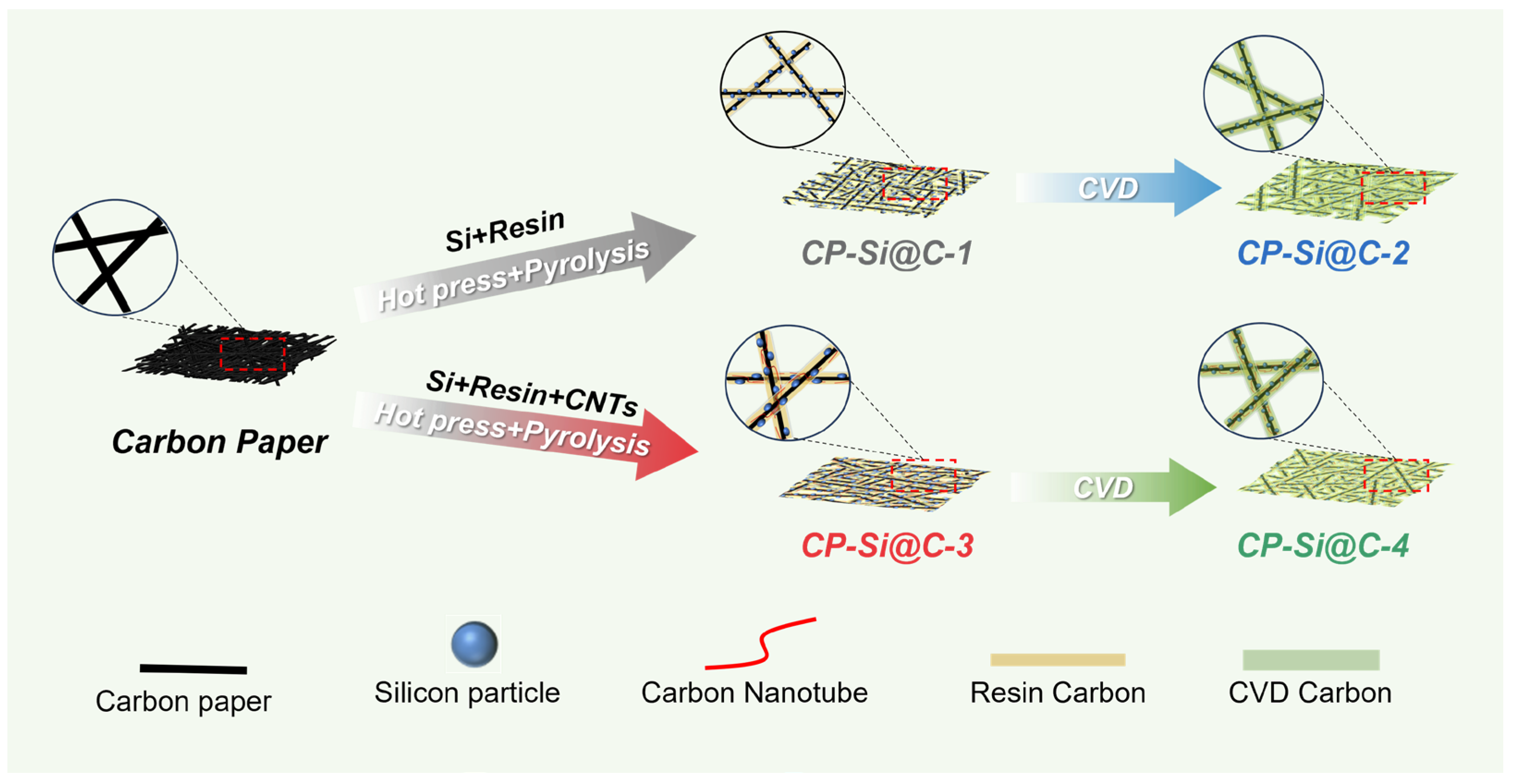
Four distinct electrode architectures were constructed, as depicted in
Scheme 1, with systematically varied carbon configurations to examine the respective roles of internal conductive networks and external interfacial protection. The baseline sample, denoted as CP-Si@C-1, consists of silicon nanoparticles embedded in a porous resin-derived carbon matrix supported by a carbon paper (CP) scaffold. To introduce interfacial stabilization at the electrode surface, a conformal carbon layer was deposited via chemical vapor deposition, resulting in the CP-Si@C-2 electrode. In parallel, the influence of long-range electronic conductivity and mechanical reinforcement was investigated by incorporating a carbon nanotube (CNT) network into the composite structure, yielding the CP-Si@C-3 electrode. Finally, the CP-Si@C-4 electrode integrates both the internal CNT network and the external CVD-derived carbon coating, forming a hierarchically reinforced architecture that combines bulk structural support with surface-level protection.
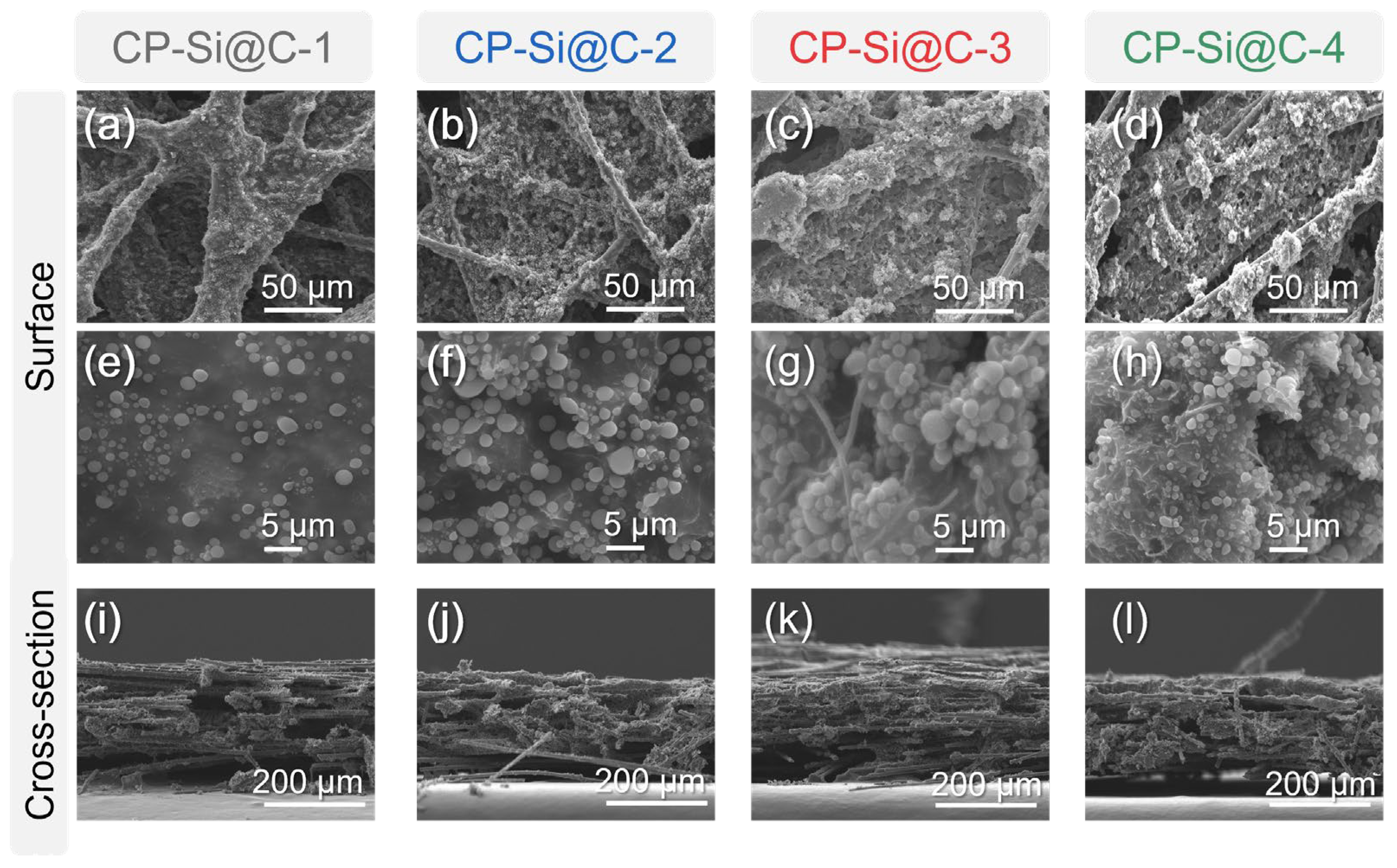
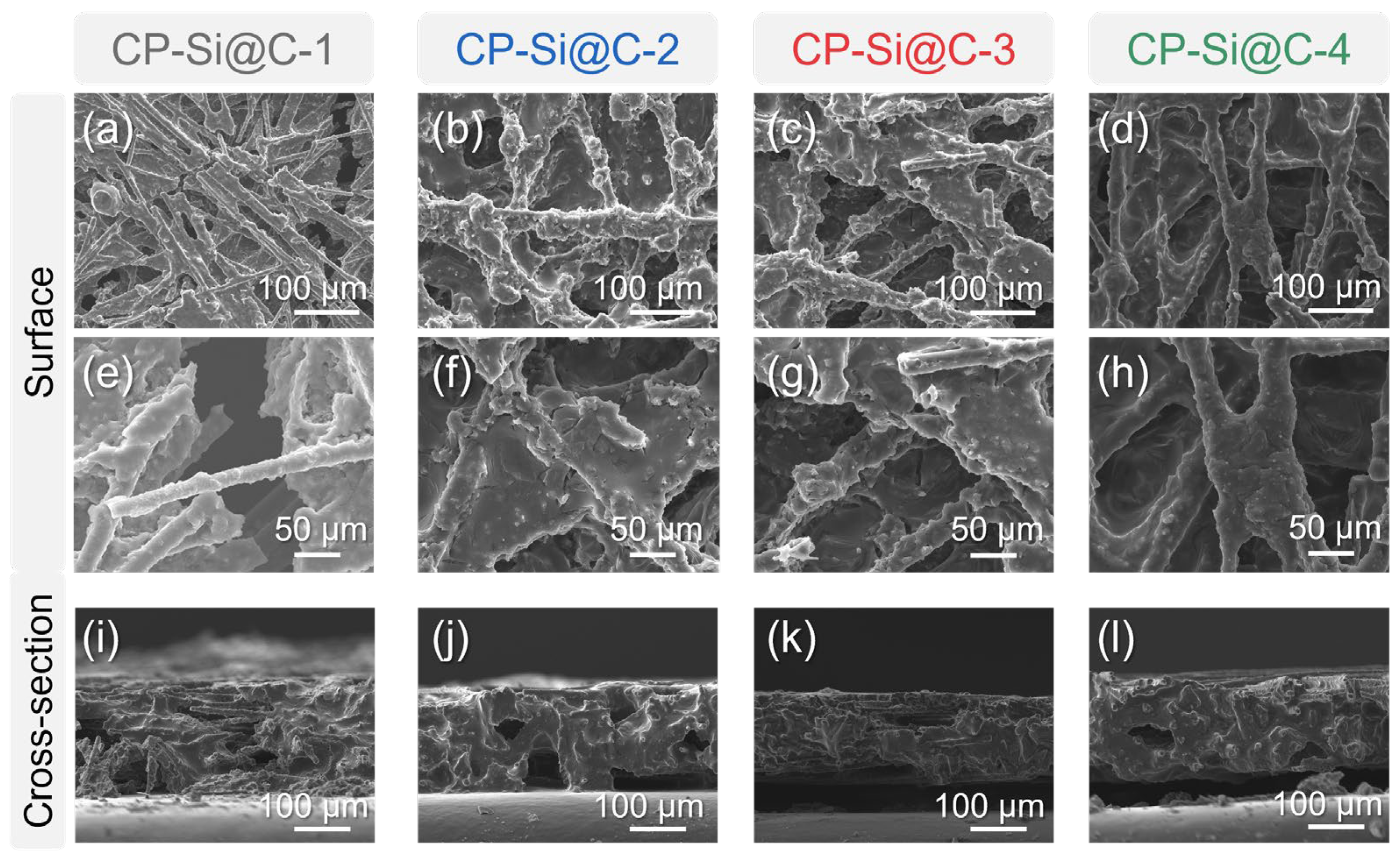
Figure 1 presents the surface and cross-sectional SEM images of the four binder-free electrodes at different magnifications, illustrating the morphological variations induced by different carbon configurations. At low magnification (
Figure 1a–d), all electrodes exhibit continuous composite layers integrated with the carbon paper substrate, while distinct surface features can be observed among different samples. The CP-Si@C-1 electrode shows a relatively smooth surface, with limited protrusions, indicating a continuous resin-derived carbon matrix covering the embedded silicon particles. In contrast, the CP-Si@C-2 electrode displays a comparatively rougher surface with more pronounced height variations, reflecting increased surface roughness compared with CP-Si@C-1. For the CNT-containing electrodes, the CP-Si@C-3 electrode displays discernible surface agglomerates. These agglomerates are relatively uniformly distributed. In the CP-Si@C-4 electrode, a higher density of small surface features with noticeable size dispersion is observed, resulting in a more heterogeneous surface morphology compared with CP-Si@C-3.
High-magnification images (
Figure 1e–h) further reveal surface details. The CP-Si@C-1 electrode exhibits a homogeneous surface and most silicon particles are embedded within the carbon matrix, with minimal height contrast. In the CP-Si@C-2 electrode, a large fraction of protruding silicon particles is observed, accompanied by increased topographic contrast and increased height differences. In the CP-Si@C-3 electrode, carbon nanotubes are clearly observed, with some CNTs exposed at the surface while others are embedded within the composite layer, indicating partial outward extension of the CNT network. The CP-Si@C-4 electrode shows a combination of protruding particles and visible CNT features and reflects the coexistence of multiple carbon components at the electrode surface.
Cross-sectional SEM images (
Figure 1i–l) provide insight into the internal structure of the electrodes. In the CP-Si@C-1 electrode, the active material layer is continuously distributed along the carbon paper fibers, suggesting relatively uniform dispersion of silicon within the electrode interior. Compared with CP-Si@C-1, the CP-Si@C-2 electrode exhibits a thinner cross-section and an additional porous, fluffy-like surface region is observed. The CP-Si@C-3 electrode shows effective penetration of active materials into the carbon paper framework, forming an interconnected internal architecture, while maintaining composite layer thickness comparable to that of CP-Si@C-1. For CP-Si@C-4, the active materials are also uniformly distributed within the electrode interior, and the overall cross-section thickness is similar to that of CP-Si@C-2. In both CP-Si@C-2 and CP-Si@C-4, the fluffy-like surface layer is likely attributed to heterogeneous carbon deposition during the CVD process. The deposited carbon does not appear as a distinct, thick carbon shell, but rather as an ultrathin interfacial modification layer, a feature commonly observed in CVD-derived carbon coating [
29]. However, its exact origin cannot be unambiguously determined based on the current SEM. Minor voids observed in localized regions are likely introduced during sample fracture and do not necessarily indicate intrinsic interfacial instability.
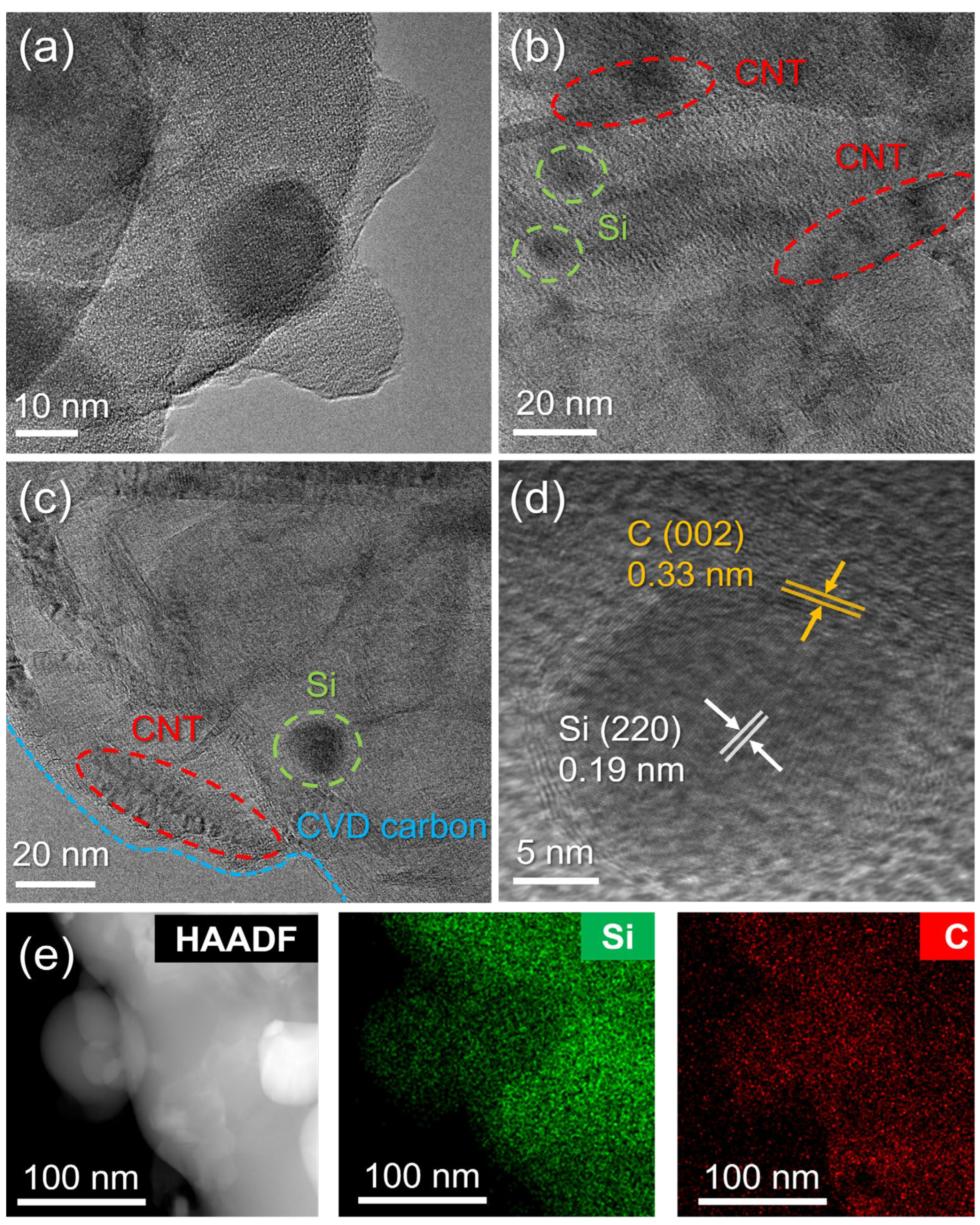
TEM images of CP-Si@C-1/2/3/4 were employed to investigate the nanoscale structure of the selected electrodes, as shown in
Figure 2. In
Figure 2a, silicon nanoparticles in the CP-Si@C-1 sample are embedded within an amorphous carbon matrix, forming close physical contact. Clear interfaces between crystalline silicon and surrounding carbon can be distinguished, indicating that the carbon coating primarily originates from resin carbonization rather than from a conformal vapor-deposited layer. This observation is consistent with the spray-infiltrated composite structure described above. Additional TEM images are provided in the
Supplementary Materials (Figures S1–S3).
The CP-Si@C-3 sample (
Figure 2b) reveals the presence of carbon nanotubes spanning across adjacent silicon domains. These CNTs act as conductive bridges between discrete particles, while silicon nanoparticles remain partially exposed within the composite. The spatial distribution of CNTs appears heterogeneous, which is consistent with the tendency of one-dimensional nanomaterials to locally aggregate during composite fabrication. In CP-Si@C-4 (
Figure 2c), a more integrated nanoscale architecture is observed, where silicon particles, CNTs, and amorphous carbon are embedded within a continuous carbon framework. Although the amorphous carbon layers are difficult to resolve directly due to limited contrast, the coexistence of multiple carbon components leads to less sharply defined particle boundaries compared with CP-Si@C-1 and CP-Si@C-3.
Figure 2d reveals distinct lattice fringes indicative of crystalline silicon and graphitic carbon. The measured interplanar spacings of approximately 0.19 nm and 0.33 nm can be assigned to the (220) planes of crystalline Si and the (002) planes of graphitic carbon, respectively. These results support the coexistence of crystalline silicon and graphitized carbon domains within the composite electrode. The spatial distributions of silicon and carbon in the CP-Si@C-4 electrode were visualized via TEM-EDS elemental mapping (
Figure 2e). This homogeneous distribution of Si and C indicates close contact at the interface. This observation confirms the intimate mixing of silicon and carbon phases at the nanoscale, which is consistent with the designed composite architecture.
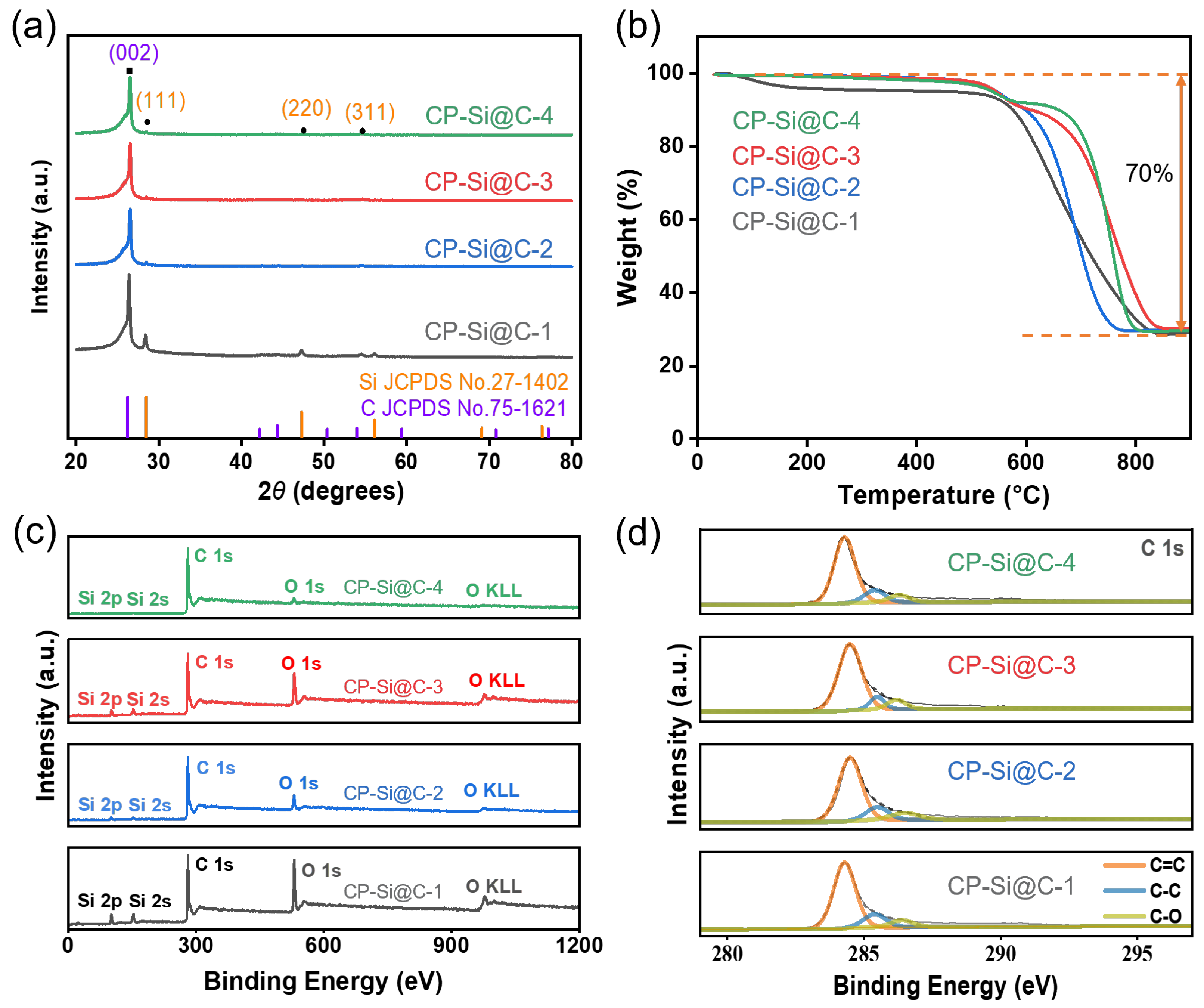
X-ray diffraction (XRD) was used to determine the phase composition of the binder-free electrodes (
Figure 3a). As shown in
Figure 3a, the CP-Si@C-1 electrode exhibits clearly identifiable diffraction peaks at 2θ ≈ 28.4° (111), 47.3° (220), and 56.1° (311), which can be indexed to crystalline cubic silicon (JCPDS #27-1402). For CP-Si@C-2 and CP-Si@C-3, the Si (111) reflection remains detectable, whereas higher-order reflections (220) and (311) become significantly weaker. In the CP-Si@C-4 electrode, the Si diffraction features are further attenuated and approach the detection limit. The attenuation of Si diffraction features does not indicate the disappearance of silicon but rather reflects the increasing relative contribution of the graphitic carbon substrate and the limited mass fraction of the Si-containing coating layer in the intact electrode configuration. The broad background observed at low diffraction angles (2θ < 30°) originates from amorphous carbon components. A diffraction peak at 2θ ≈ 26°, corresponding to the (002) plane of graphitic carbon, is observed in all samples and is mainly associated with the graphitic domains of the carbon paper substrate, which possesses graphitic domains formed during its manufacturing process. Importantly, within the active composite layer (Si@C coating), the carbon phases are predominantly disordered, as confirmed by Raman spectroscopy (
Figure 4), which shows high
ID/
IG ratios (>1.0). This structural disorder in the active layer is consistent with the carbonization (900 °C) and CVD conditions (980 °C, 20 min, low pressure) employed in this study, both of which favor amorphous carbon formation in the deposited coating rather than graphitization.
The thermogravimetric analysis (TGA) curves (
Figure 3b) show a final residual mass of approximately 30 wt.% for the CP-Si@C composites. It is important to note that the TGA samples comprised the entire electrode piece, including the carbon paper substrate. Therefore, the TGA profile shown in
Figure 3b primarily reflects the thermal behavior of the carbon paper substrate rather than the active layer alone. The substantial weight loss between 400–800 °C is predominantly due to combustion of the carbon paper, while the active Si@C coating contributes a smaller fraction. The plateau observed above 800 °C indicates complete carbon combustion, with the residue consisting of SiO
2 (oxidation product of Si nanoparticles) and trace inorganic impurities from the carbon paper. When the mass contribution of the carbon paper substrate is taken into account, the nominal silicon fraction in the active composite layer is 50 wt.% based on the precursor mass ratio (Si:RF resin precursor = 1:1). The lower apparent silicon content (~30 wt.%) derived from the overall TGA curve of intact electrodes therefore reflects a dilution effect caused by the mass dominance of the carbon paper substrate, rather than a low silicon fraction in the active composite layer. This distinction is important for interpreting the electrochemical performance on a per-active-material basis.
X-ray photoelectron spectroscopy (XPS) survey spectra were employed to probe the surface chemical composition of the electrodes (
Figure 3c). The survey spectra reveal the presence of Si, C, and O signals in all samples. A gradual increase in the relative intensity of the C signal, accompanied by a corresponding decrease in the Si signal, is observed from CP-Si@C-1 to CP-Si@C-4, indicating enhanced surface carbon coverage after CNT incorporation and CVD treatment. This trend suggests that silicon surfaces are increasingly shielded by carbon components, which may influence interfacial reactions during electrochemical cycling. High-resolution C 1s spectra (
Figure 3d) provide further insight into the bonding states of carbon. The spectra can be deconvoluted into contributions from C–C/C=C, C–O, and O–C=O species. With increasing structural complexity, the relative contribution of sp
2-bonded carbon (C–C/C=C) becomes more pronounced, while oxygen-containing functional groups remain detectable. These results indicate the coexistence of multiple carbon components with distinct bonding environments, rather than the formation of a single, highly graphitized carbon phase (high-resolution Si 2p spectra are shown in
Figure S4).
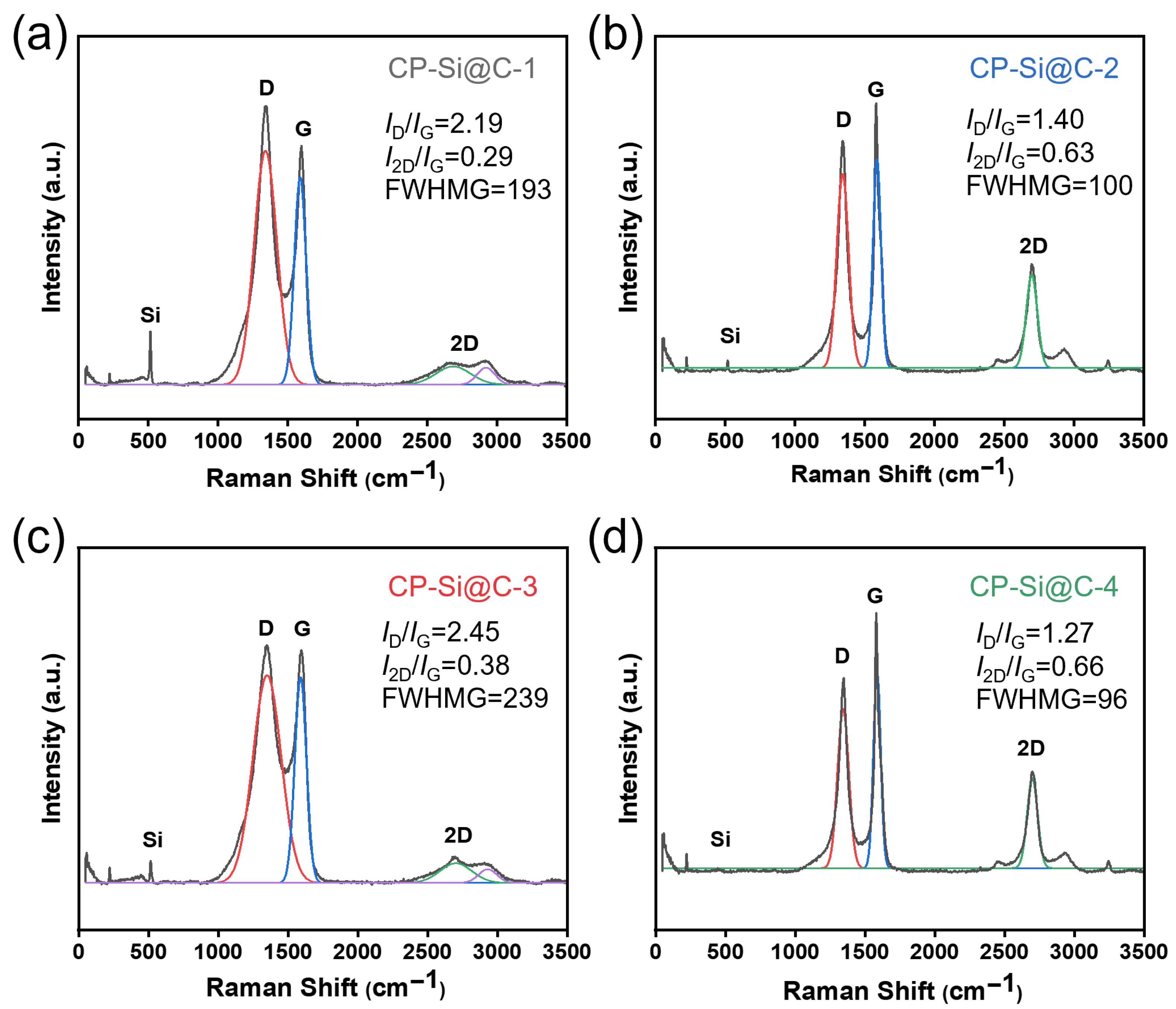
The structural nature of the carbon components was investigated using Raman spectroscopy (
Figure 4a–d). Characteristic D and G bands, located near 1350 and 1580 cm
−1, respectively, are present in all spectra, supporting the co-existence of predominantly disordered carbon with localized graphitized domains. The absence of sharp 2D bands suggests that the carbon phases possess limited long-range graphitic order. The intensity ratio of the D band to the G band (
ID/
IG) together with a large full width at half maximum of the G band (FWHM
G = 193 cm
−1), varies among the samples, reflecting differences in defect density and structural disorder. Compared with CP-Si@C-1, the samples incorporating CNTs or subjected to CVD treatment exhibit moderate changes in
ID/
IG values, suggesting that the introduction of additional carbon components alters the local carbon structure without inducing extensive graphitization. The relative intensity of the 2D band (
I2D/
IG) remains low for all electrodes, further supporting that highly ordered graphitic domains are not dominant. Notably, CP-Si@C-4 shows a slightly enhanced but still weak 2D contribution compared with the other samples, which may be associated with the presence of CNTs and CVD-derived carbon. However, this enhancement remains limited, indicating that the carbon framework retains a predominantly disordered nature.
In addition to intensity ratios, the full width at half maximum of the G band (FWHMG) was analyzed to assess structural heterogeneity. The CP-Si@C-4 electrode exhibits a relatively narrower G band compared with CP-Si@C-1, suggesting a more uniform carbon environment resulting from the integration of multiple carbon sources. These observations suggest that structural modulation occurs without inducing extensive graphitization.
3.2. Electrochemical Behavior and Kinetic Analysis
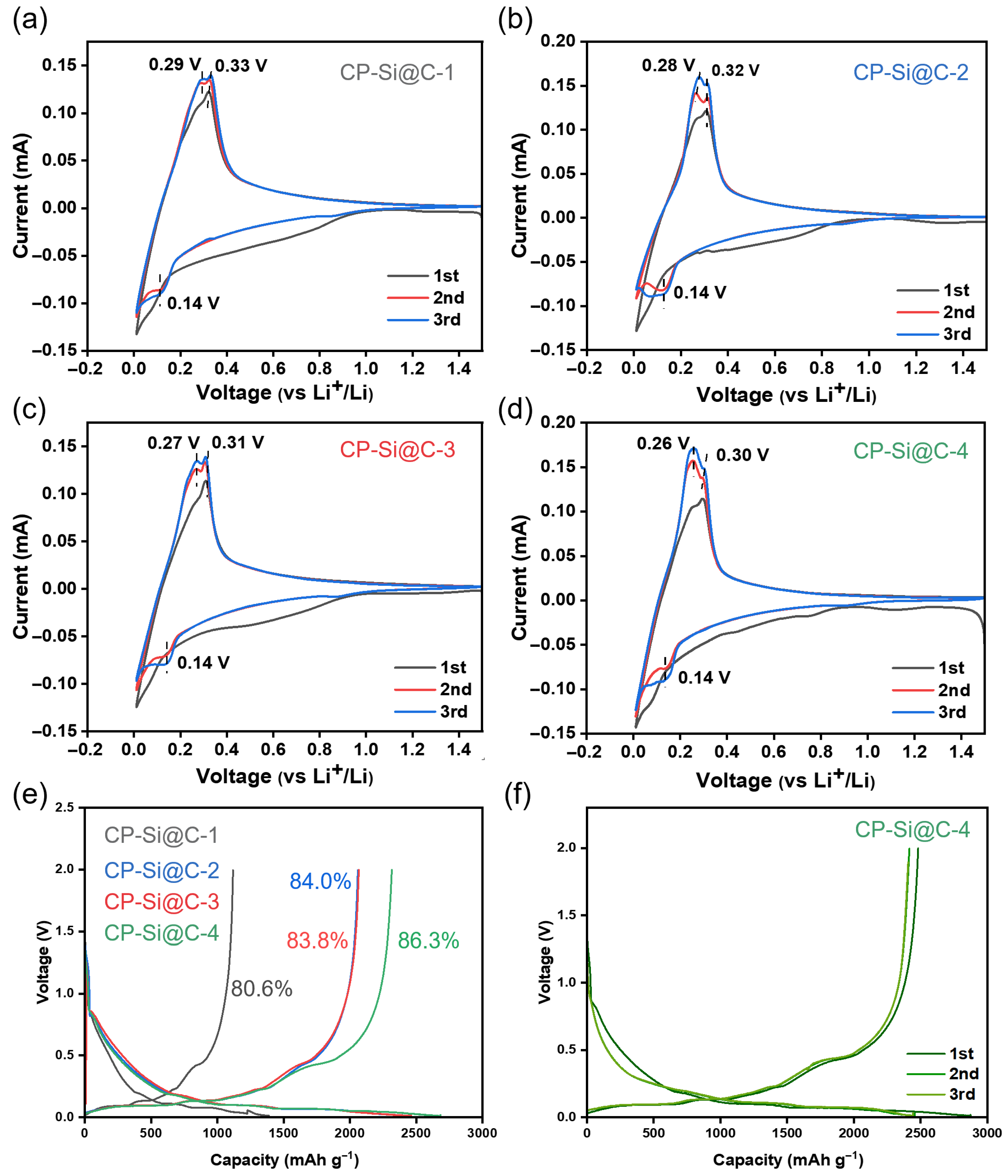
The electrochemical behaviors of the four binder-free electrodes were first evaluated by cyclic voltammetry (CV) at 0.2 mV s
−1 (
Figure 5a–d). It is worth noting that all electrodes were tested under identical electrolyte conditions containing FEC; therefore, the observed performance differences can be attributed primarily to electrode architecture rather than electrolyte effects. During the first cathodic sweep, a broad reduction feature appears below 0.8 V for all samples, which can be attributed to electrolyte decomposition and the initial formation of the SEI [
32]. The intensity of this feature diminishes considerably in subsequent cycles, suggesting progressive stabilization of the electrode–electrolyte interface. A distinct cathodic feature observed below 0.2 V during lithiation may arise from overlapping contributions, including lithium insertion into disordered carbon domains (and/or surface-related storage within the conductive carbon framework) as well as Li-Si alloying reactions. Conversely, the anodic scans show a broad anodic oxidation feature centered around 0.35–0.55 V, which is generally associated with the dealloying of Li
xSi phases, and is commonly regarded as indicative of silicon participation [
33,
34]. It should be noted that the anodic features associated with Li-Si dealloying appear as broad peaks in the CV profiles due to the overlapping nature of multiple phase transitions and kinetic dispersion under continuous potential sweep. As a result, individual delithiation steps (e.g., those occurring near ~0.44 V) may not manifest as well-resolved discrete peaks in CV curves, whereas under galvanostatic conditions, the same processes can be expressed as discernible voltage plateaus or shoulders owing to the quasi-equilibrium nature of constant-current operation. Although carbon components may contribute to charge storage in a similar low-voltage region, the evolution and reversibility of these anodic features together with the corresponding charge–discharge profiles suggest that Si-related alloying/dealloying reactions make a major contribution to the overall electrochemical response in the CP-Si@C electrodes. Among the four electrodes, CP-Si@C-4 exhibits the highest degree of overlap between successive CV curves, suggesting enhanced electrochemical reversibility and improved interfacial stability after the initial activation process.
The first-cycle galvanostatic charge–discharge profiles of the four electrodes are shown in
Figure 5e. All samples exhibit sloping voltage features consistent with silicon lithiation during discharge at (~0.1–0.2 V) and delithiation during charge at (~0.3–0.5 V), in good agreement with the CV results. Although carbonaceous components can contribute to charge storage in a similar low-voltage range, the absence of pronounced low-potential plateaus below 0.1 V-typically associated with staged graphite intercalation-suggests that silicon alloying/dealloying reactions contribute significantly to the overall electrochemical response, while graphite-like lithium intercalation appears limited under the present electrode configuration. The multi-step voltage profiles are consistent with the sequential formation of various Li-Si alloy phases (e.g., Li
12Si
7, Li
7Si
3, Li
15Si
4), distributed over a range of potentials during lithiation [
34]. Among the four electrodes, CP-Si@C-4 delivers a higher reversible capacity while maintaining a favorable initial Coulombic efficiency (ICE). The ICE increases progressively from 80.6% for CP-Si@C-1, to 84.0% for CP-Si@C-2, 83.8% for CP-Si@C-3, and reaches 86.3% for the fully integrated CP-Si@C-4, indicating increasingly suppressed irreversible lithium consumption during the first cycle. The evolution of voltage profiles over the first three cycles for CP-Si@C-4 is shown in
Figure 5f. The gradual reduction in voltage hysteresis and the preservation of characteristic lithiation/delithiation features upon cycling indicate the establishment of a more stable electrochemical environment during repeated operation, consistent with the improved reversibility observed in the corresponding CV curves (
Figure 5d).
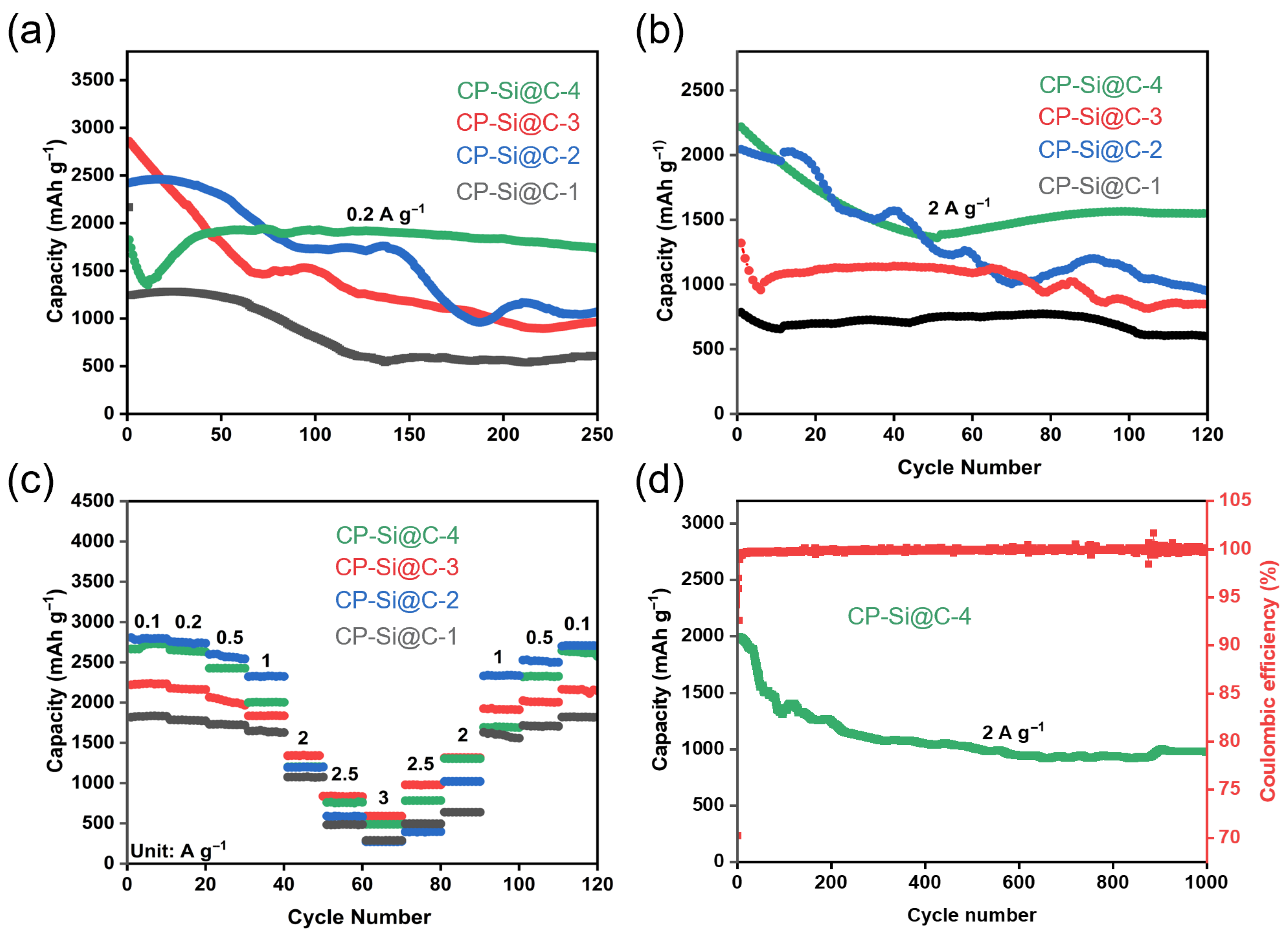
The cycling performances of the four electrodes with distinct carbon configurations were evaluated at 0.2 and 2 A g
−1 (
Figure 6a,b). At 0.2 A g
−1 (
Figure 6a), the baseline CP-Si@C-1 electrode underwent rapid capacity fade shortly after the initial cycles, decaying to approximately 1250 mA h g
−1 and eventually reaching 573.4 mA h g
−1 (~26% capacity retention). In comparison, the CP-Si@C-2 electrode and the CP-Si@C-3 electrode exhibited more gradual degradation, with final capacities of 1179.1 mA h g
−1 (~48% retention) and 1021.1 mA h g
−1 (~37% retention), respectively. In stark contrast, the fully integrated CP-Si@C-4 electrode exhibits an activation-type capacity evolution. Its capacity decreases moderately during the early cycles, followed by a gradual recovery and stabilization at a high reversible level. This non-monotonic trend can be rationalized as an electrochemical utilization evolution process rather than irreversible degradation. During the initial stage, rapid SEI formation and interfacial reorganization on silicon surfaces may temporarily increase interfacial resistance and reduce the electrochemical accessibility of part of the silicon domains, leading to an apparent capacity decrease. In the subsequent stage, progressive electrolyte wetting of the hierarchical porous structure and gradual establishment of continuous ion/electron transport pathways within the integrated carbon framework can improve utilization efficiency, enabling previously under-utilized silicon regions to participate more effectively in reversible alloying/dealloying. Upon extended cycling, the interface approaches a more dynamically equilibrated state, and the mechanically reinforced carbon framework helps mitigate contact loss induced by repeated volume changes, thereby supporting sustained capacity retention. Such activation-type evolution has been reported in engineered porous Si@C electrodes with flexible conductive networks, where capacity recovery is typically associated with progressively improved utilization and interfacial stabilization rather than generation of capacity beyond the theoretical contribution of silicon [
17,
35,
36]. The performance differences were more pronounced at the high rate of 2 A g
−1 (
Figure 6b). CP-Si@C-4 delivered the highest initial capacity (~2217.9 mA h g
−1), which includes irreversible contributions associated with SEI formation and interfacial reactions in the first cycle and maintained 1600.7 mA h g
−1 after extended cycling. It should be noted that all capacities are normalized to the total active composite mass (Si + carbon components), rather than to pure silicon mass. While CP-Si@C-2 and CP-Si@C-3 showed higher initial capacities than CP-Si@C-1, they still underwent significant decay, highlighting that single-component reinforcement is insufficient to sustain long-term stability under high-stress conditions.
Rate capability was tested from 0.1 to 3 A g
−1 (
Figure 6c). While CP-Si@C-4 demonstrated outstanding rate capability, the highest capacity at the most demanding rate of 3 A g
−1 is delivered by CP-Si@C-3, indicating the kinetic advantage of the CNT network in the absence of a dense surface coating. Upon returning to 0.1 A g
−1, the capacity recovered most fully for CP-Si@C-2. The robust recovery of all composites, particularly CP-Si@C-4, signifies good structural and interfacial reversibility. The comparative behavior highlights a trade-off between rate performance and long-term structural stabilization among different carbon configurations. Additionally, the long-term cycling stability of the sample was assessed at 2 A g
−1 for up to 1000 cycles (
Figure 6d). The CP-Si@C-4 electrode delivers a stable capacity of ~990 mAh g
−1 at 2 A g
−1. Control experiments using bare carbon paper electrodes (
Figures S5 and S6) exhibit negligible capacity (~35 mAh g
−1), confirming that the observed electrochemical performance originates predominantly from the Si@C composite layer rather than the substrate. The absence of sudden capacity failure over prolonged cycling suggests that the integrated carbon framework effectively mitigates cumulative mechanical degradation under repeated lithiation/delithiation. Taken together, these results indicate that the CVD-derived carbon layer enhances long-term structural stability, while slightly increasing interfacial resistance at high rates.
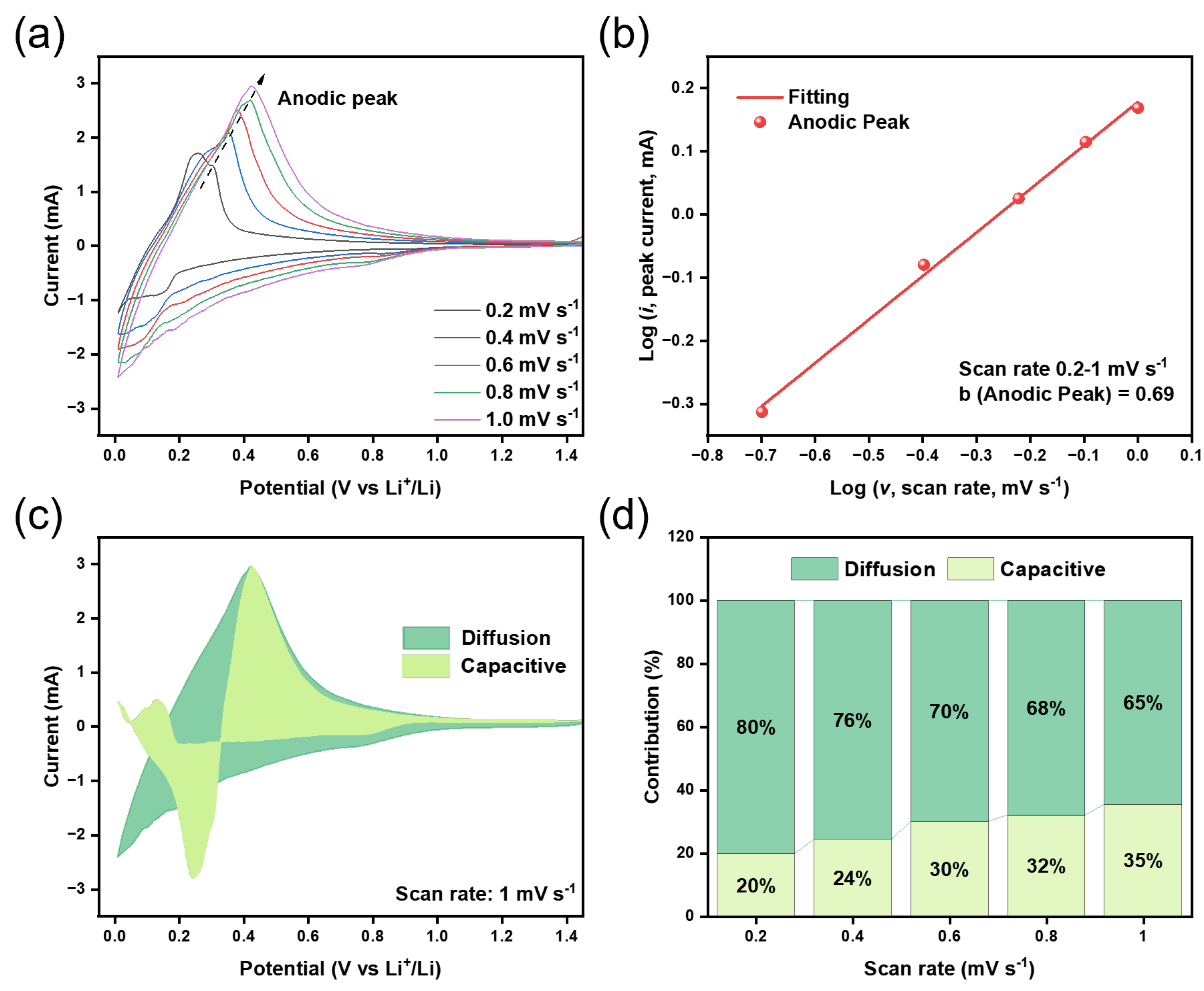
To elucidate the charge-storage kinetics, CV was performed on CP-Si@C-4 at varying scan rates (0.2–1.0 mV s
−1,
Figure 7a). As the scan rate increases, the peak currents increase systematically while the overall CV profiles retain similar shapes, indicating stable electrochemical behavior over the investigated scan-rate range. The dependence of peak current (
i) on scan rate (
v) follows the power-law equation:
Based on this relationship, charge-storage processes are distinguished by the
b-value, where
b ≈ 0.5 characterizes diffusion-controlled behavior, and
b ≈ 1.0 indicates capacitive (surface-controlled) process [
37]. Linear fitting of the anodic peak data yields a
b-value of approximately 0.69 (
Figure 7b), suggesting a mixed charge-storage mechanism with contributions from both diffusion-controlled and surface-controlled processes.
The capacitive and diffusion-controlled current contributions were further deconvoluted using an established method (
Figure 7c). At a scan rate of 1.0 mV s
−1, the capacitive contribution accounted for approximately 35% of the total current, while the remaining ~65% originates from diffusion-controlled processes. The evolution of normalized contribution ratios as a function of scan rate (
Figure 7d) reveals a gradual increase in the capacitive contribution with increasing scan rate, which is consistent with a conductive carbon framework that facilitates surface-related charge storage at higher sweep rates.
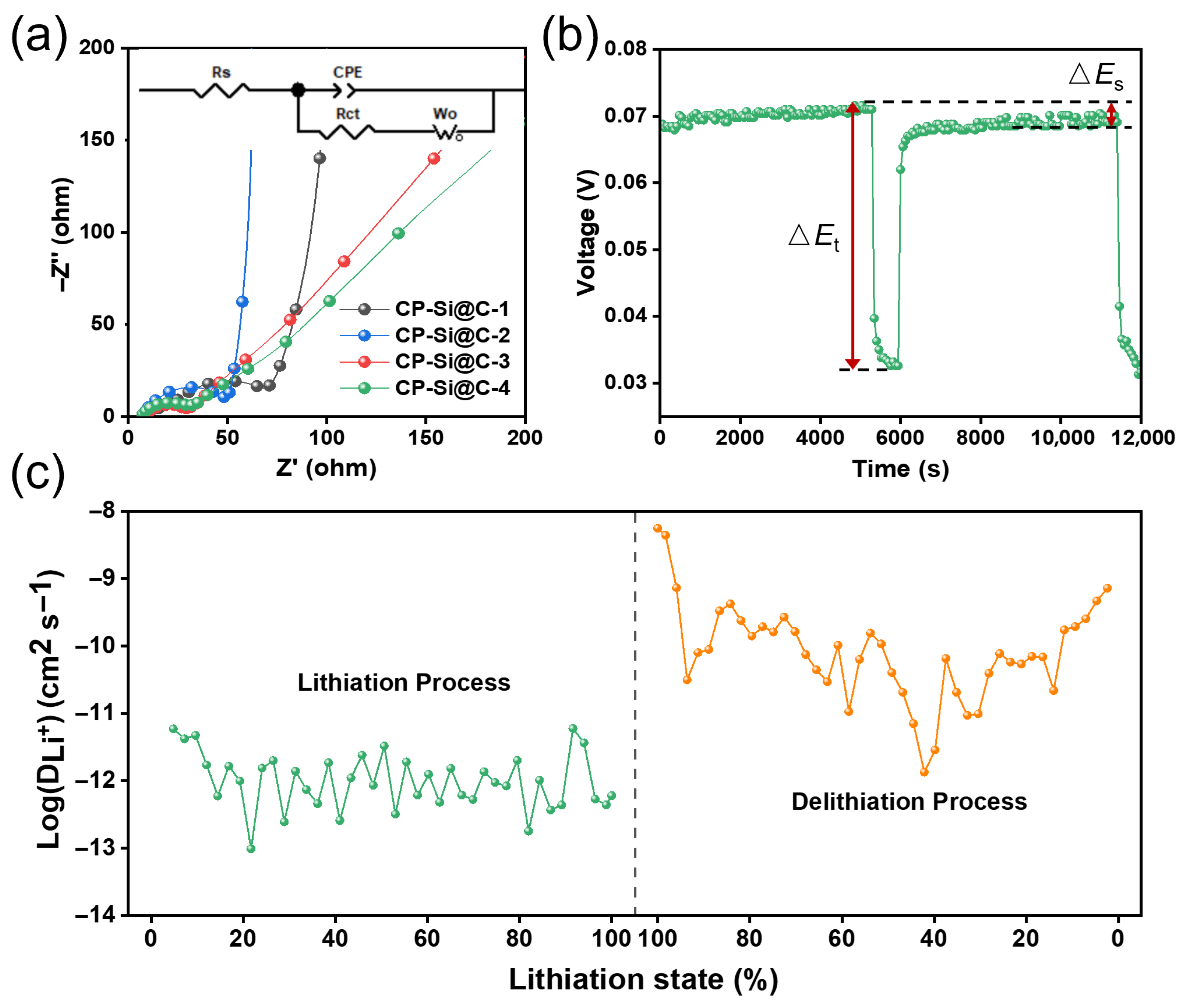
The interfacial resistance was assessed by electrochemical impedance spectroscopy (EIS), as presented in
Figure 8a. The spectra reveal a depressed semicircular arc in the high-to-medium frequency region followed by a linear tail at low frequency, which are commonly associated with charge-transfer processes and lithium-ion diffusion behavior, respectively. The diameter of the semicircle decreases progressively from CP-Si@C-1 (75.8 Ω) to CP-Si@C-4 (15.7 Ω), with intermediate values of 51.3 Ω for CP-Si@C-2 and 23.2 Ω for CP-Si@C-3, indicating a continuous reduction in charge-transfer resistance after CNT reinforcement and subsequent CVD carbon coating, which facilitates faster interfacial electrochemical reactions. Notably, the Nyquist spectra of all four electrodes are composed of the same characteristic features, without the appearance of additional semicircles or extra time constants after CVD treatment, indicating that the fundamental electrochemical processes remain unchanged across the samples. The low-frequency linear tail is attributed to diffusion-related impedance within the composite electrode, and the variation in its extent reflects differences in lithium-ion transport efficiency rather than a change in the underlying diffusion mechanism. These results demonstrate that the introduction of CNT networks and conformal CVD carbon layers effectively regulates interfacial charge-transfer kinetics and ion-transport behavior while preserving the intrinsic electrochemical reaction pathways of the binder-free Si@C architecture.
The lithium-ion diffusion kinetics were further examined via the galvanostatic intermittent titration technique (GITT). A representative voltage transient during a single titration step is illustrated in
Figure 8b, where
and
denote the total transient voltage change and the steady-state voltage change, respectively. The complete GITT profiles over the full lithiation/delithiation process are provided in
Figure S7. The Li
+ diffusion coefficient (
DLi+) was calculated based on Fick’s second law [
38]:
where
,
,
,
, and
represent the current pulse duration, the mass of active material, the molar volume and molar mass of the electrode material, and the electrochemically active surface area, respectively. It should be noted that, for porous and binder-free electrodes with complex internal architectures, the absolute values of
DLi+ are subject to uncertainty due to the difficulty in precisely defining the effective active surface area. Therefore, the
DLi+ values discussed here are primarily used for comparative analysis among samples measured under identical conditions. The calculated
DLi+ values during lithiation and delithiation as a function of state of charge are shown in
Figure 8c. The potential profiles exhibit clear voltage relaxation behavior after each current interruption, suggesting quasi-equilibrium conditions during the GITT measurements [
39]. The diffusion coefficients vary systematically with lithiation state, reflecting the phase evolution and structural dynamics of silicon during cycling. Across a broad composition range, CP-Si@C-4 consistently maintains higher apparent
DLi+ values compared with the other electrodes, indicating more favorable lithium-ion transport kinetics. This trend can be attributed to the integrated multidimensional carbon framework, which preserves continuous ion-transport pathways and mitigates diffusion limitations induced by mechanical degradation. It should be noted that the absolute
DLi+ values are subject to uncertainties associated with electrode geometry and effective active surface area; therefore, the GITT-derived diffusion coefficients are primarily interpreted in a comparative manner among different electrode architectures.
3.3. Post-Cycling Structural Evolution and Failure Mode Analysis
The SEM images of CP-Si@C-1/2/3/4 electrodes after 200 cycles at 2 A g
−1 are displayed in
Figure 9. The CP-Si@C-1 electrode (
Figure 9a,e,i) exhibits severe surface fracture and extensive structural disruption, accompanied by pronounced crack formation and partial delamination from the carbon paper substrate. The cross-sectional image reveals collapse and discontinuity within the active layer, indicating significant mechanical degradation induced by repeated silicon volume changes during cycling. In contrast, the surfaces of CP-Si@C-2, CP-Si@C-3, and CP-Si@C-4 samples (
Figure 9b–d) retain relatively continuous surface morphologies at low magnification, suggesting that the introduction of additional carbon components mitigates large-scale structural failure. Nevertheless, localized degradation features become apparent at higher magnification (
Figure 9e–h). For the CP-Si@C-2 electrode, surface cracks are clearly observed, and the corresponding cross-sectional image (
Figure 9j) reveals the presence of internal voids near the bottom region of the active layer, which are indicative of partial interfacial detachment between silicon-rich domains and the underlying conductive scaffold during prolonged cycling.
The CP-Si@C-3 electrode displays more pronounced surface roughening and crack development compared with CP-Si@C-2, accompanied by noticeable surface height variations. Such morphological features suggest ongoing surface reactions and progressive material redistribution during repeated lithiation/delithiation. The cross-sectional view (
Figure 9k) further indicates localized separation within the active layer, implying that while the CNT network enhances electrical connectivity, it alone is insufficient to fully suppress mechanically driven structural evolution under long-term cycling. Compared with CP-Si@C-2 and CP-Si@C-3, the CP-Si@C-4 electrode (
Figure 9d,h,l) exhibits fewer visible surface cracks and a more coherent cross-sectional architecture. Although minor morphological irregularities remain, large-scale collapse or complete delamination is largely absent. These observations suggest that the cooperative integration of CNT networks and a CVD-derived carbon coating contribute to maintaining both surface integrity and internal structural continuity during extended cycling, thereby alleviating—but not entirely eliminating—mechanical degradation. Although quantitative metrics such as crack density or thickness variation were not extracted, the SEM observations are consistent with the electrochemical trends and impedance evolution discussed above.
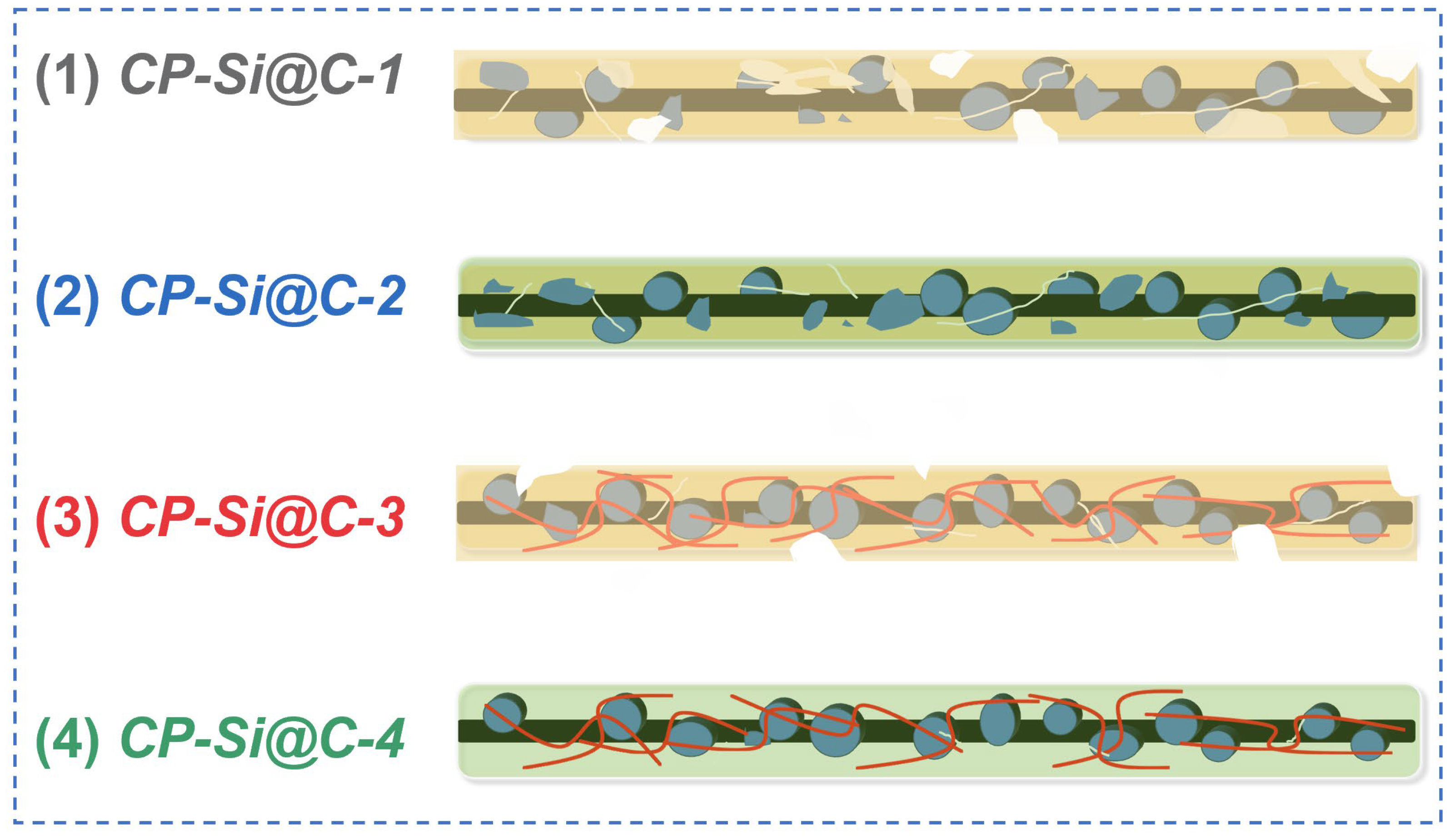
Based on the above post-cycling SEM observations, the dominant structural degradation pathways of different electrode architectures can be summarized as illustrated in
Scheme 2.
Scheme 2 schematically illustrates the distinct structural degradation tendencies of the binder-free electrodes during prolonged cycling. In CP-Si@C-1, the lack of sufficient internal stress accommodation is associated with pronounced particle pulverization, surface fracture, and progressive collapse of the electrode framework. For CP-Si@C-2, the introduction of a conformal carbon layer suppresses large-scale surface disintegration; however, stress accumulation within the electrode interior is accompanied by partial detachment of silicon-rich regions from the conductive scaffold, leading to the formation of internal voids. In CP-Si@C-3, the incorporation of CNTs improves electrical connectivity but results in a more heterogeneous internal structure. Repeated electrochemical reactions are accompanied by surface roughening and localized material loss, while partial internal detachment remains observable after extended cycling. In contrast, CP-Si@C-4 exhibits a more integrated structural response, in which the cooperative presence of CNT networks and CVD-derived carbon facilitates stress redistribution and provides redundant conductive pathways. As a result, both surface fracture and internal detachment are mitigated, thereby delaying the onset of severe structural degradation during long-term cycling.
As summarized in
Table 2, the CP-Si@C-4 electrode demonstrates a favorable balance between initial Coulombic efficiency (ICE) and long-term cycling stability. It should be emphasized that the present areal loading was not intended to represent an optimized practical electrode, but rather to enable a clear examination of structural and interfacial effects under well-controlled conditions. Compared with electrospun Si@CNF composites [
40], which exhibit comparable ICE (84.4%) and reversible capacity (~992 mAh g
−1), CP-Si@C-4 maintains stable cycling over 1000 cycles, whereas the reported Si@CNF electrode shows a shorter cycling lifespan of 200 cycles under comparable conditions. Relative to spray-coated rGO/Si thin films [
24], CP-Si@C-4 exhibits a substantially higher ICE (86.3% vs. 60.5%) and markedly extended cycling stability (1000 vs. 50 cycles). When compared with the CNT-rGO/Si buckypaper [
15], CP-Si@C-4 retains a higher reversible capacity after extended cycling, highlighting the advantage of the integrated multidimensional carbon framework. These performance differences are consistent with the cooperative effects of CNT-mediated stress buffering and CVD-derived interfacial stabilization, which together help alleviate progressive structural degradation and interfacial instability during long-term cycling. It should be noted that differences in testing protocols and cell configurations among literature reports may influence absolute values; therefore, this comparison emphasizes relative trends in ICE and cycling durability.
It is worth noting that the areal loading in this work (0.5 ± 0.05 mg cm−2) was intentionally maintained at a moderate level to focus on the effects of the multidimensional carbon framework and to minimize mass-transport limitations that could obscure mechanistic interpretation. Nevertheless, the demonstrated stability over 1000 cycles in a half-cell configuration, together with a high ICE of 86.3%, suggests the scalability potential of the spray-assisted synthesis and CVD modification strategy. The present study does not aim to provide a cost or throughput analysis but instead focuses on establishing structure–property relationships that can inform future scale-up efforts. Future efforts will focus on increasing the areal loading toward more practical values, exploring full-cell configurations, and employing advanced operando characterization techniques to further elucidate the structural evolution and degradation mechanisms during cycling.