Article

Frequency Dependence of Air Breakdown and Investigation of Its Electro-Optical Characteristics

1
Faculty of Eletrical Engineering, Shanghai University of Electric Power, Shanghai 200090, China
2
China Electric Power Research Institute, Beijing 100085, China
3
State Grid Zhejiang Electric Power Research Institute, Hangzhou 310007, China
*
Author to whom correspondence should be addressed.
Energies 2026, 19(5), 1229; https://doi.org/10.3390/en19051229
Submission received: 26 January 2026 / Revised: 22 February 2026 / Accepted: 26 February 2026 / Published: 1 March 2026
(This article belongs to the Section F6: High Voltage)

Abstract

With the expanding frequency range of power equipment, understanding the frequency-dependent insulation performance of air becomes crucial. To address this, this paper establishes an integrated electrical–optical measurement platform for air breakdown to study the variation patterns of electrical and spectral characteristics of air breakdown at different frequencies. The effects and underlying mechanisms of different frequencies (20 Hz, 50 Hz, and 1 kHz) on the breakdown voltage are explored. Experimental results indicate that the air breakdown voltage increases with frequency as follows: from 17.7 kV at 20 Hz to 18.0 kV at 50 Hz (1.7% increase) and further to 18.9 kV at 1 kHz (5.0% increase from 50 Hz), representing a total increase of 6.8% across the 20 Hz to 1 kHz range. Regarding spectral characteristics, the spectral line intensity enhances with an increase in frequency. Compared to 20 Hz and 50 Hz, the spectral lines of nitrogen ions and oxygen ions become distinctly visible at 1 kHz, the Stark broadening phenomenon intensifies, and transitions from higher vibrational energy levels are enhanced relative to those from lower levels. Analysis via the Boltzmann plot method reveals a negative correlation between electron temperature (Te) and frequency, while the ionization degree (η) shows a positive correlation. Concurrently, the electron drift velocity (vd) increases with frequency, whereas the mean free path decreases (λ). Based on the parallel-plate capacitor model, the air breakdown under the experimental conditions of this study is dominated by collision ionization. As frequency increases, dielectric recovery slows down, and the memory effect strengthens. The interplay between these two competing factors leads to an increase in breakdown voltage with an increase in frequency within the 20 Hz to 1 kHz range. The findings of this study demonstrate that air breakdown exhibits significant frequency dependence, and its breakdown voltage shows statistical distribution characteristics (Weibull parameters) that vary with frequency. This article provides a reference basis for the design of sinusoidal air insulation in the 20 Hz to 1 kHz frequency range.

1. Introduction

With the rapid development of power electronics, the operating frequencies of power equipment are no longer confined to power frequency [1,2,3]. The emergence of various high-frequency and low-frequency applications highlights the following critical gap: existing insulation theories are predominantly based on power-frequency conditions, and their applicability across a wide frequency spectrum urgently requires verification [4,5,6]. Therefore, an in-depth investigation into the frequency-dependent breakdown characteristics of insulating media has become a core issue for ensuring the reliable operation of new power equipment.
Air breakdown is a fundamental physical process central to the insulation performance of transmission and transformation equipment. Significant progress has been made in its characterization [7,8,9,10]. Aponte et al. studied air breakdown under 3.3 MHz radio frequency excitation. Their results showed that the breakdown field for slow-rising RF signals is about 80% of the DC value, while for fast-rising signals, it can exceed the DC value. This is attributed to the combined influence of ion and electron mobilities in the MHz band [11]. Walsh J. L. et al. demonstrated that below 20 MHz, the breakdown voltage decreases with an increase in frequency due to reduced electron collision energy loss dominated by drift. However, above 20 MHz, electron dynamics cause the breakdown voltage to increase with frequency [12]. Korolov et al. investigated the breakdown characteristics of synthetic air under radio-frequency (13.56 MHz) excitation through combined experimental and kinetic simulation approaches. Their results revealed that when the electron oscillation amplitude exceeds the gap dimension, surface processes (secondary electron emission and electron reflection) begin to dominate the breakdown mechanism [13]. Hara et al. investigated metal particle-triggered breakdown phenomena in air under AC voltage. They found that particle shape and location significantly affect the corona discharge mechanism and breakdown voltage. When a particle is near an electrode, the interference between coronas from both sides reduces the breakdown voltage to a level close to the corona inception voltage. The highest breakdown voltage occurs when the particle is at the gap center [14]. Sun Z. et al. established a sub-millimeter needle-plane electrode discharge system. Their results indicated that a smaller gap requires a smaller needle tip radius of curvature to initiate air discharge [15]. Furthermore, V. G. Kher et al. studied the variation of AC air inception discharge voltage from 20 to 15,000 Hz. They found a slight increase in AC inception voltage with frequency in the 20 Hz to 1 kHz range [16]. The aforementioned studies have revealed the characteristics of air breakdown from perspectives such as high-frequency RF excitation, power frequency conditions, and micro/nano-scale gaps, laying an important foundation for understanding discharge mechanisms in different scenarios. However, systematic investigations of air breakdown in millimeter-scale gaps within the 20 Hz–1 kHz medium-to-low frequency range remain scarce.
The optical radiation emitted during air breakdown serves as a vital information carrier, reflecting the underlying discharge physics. Parameters obtained from spectral analysis can provide deep insights into the discharge mechanism [17]. Shimizu K. et al. performed emission spectroscopy on atmospheric pressure discharge plasma using an ICCD camera and a spectrometer. They studied the spectral characteristics of the N2 Second Positive System (SPS) and the NO-γ band in a needle-plane system. Their research revealed that the N2 SPS, excited by electron collision, extinguishes within 200 ns. In contrast, the NO-γ band, excited via collisions with N2 (A) metastables, persists for over 1 μs. The presence of a dielectric sphere alters the discharge mode, spatial distribution of spectra, and the intensity ratio between these bands [18]. M. Kozioł et al. from the Opole University of Technology further revealed the influence of electrode curvature on spectral distribution. A reduced radius of curvature led to a 42% increase in N2 SPS line intensity, indicating that geometric field distortion can significantly alter the concentration of excited-state particles [19]. Fujii et al. from Tokyo Electric Power Company compared the spectral differences between air and SF6 corona discharge. They found that air discharge spectra exhibit distinct characteristic peaks in the 300–400 nm band, while SF6 shows a broad spectrum (300–800 nm). This provides a benchmark for the spectral diagnosis of mixed gas insulation media [20]. Yuning Feng et al. revealed the evolution of atomic and molecular spectral lines during discharge through full-band spectrum analysis. They found that the enhancement of the O I (777 nm) line in the infrared region can serve as an indicator of discharge severity. The sharp rise of the N+ (391 nm) line at breakdown suggests that direct ionization of N2 is a key mechanism. Their spectral analysis results were validated by the chemical detection of O3 and NO [21]. Tang B. et al. focused on discharge fault detection in SF6 gas-insulated equipment. Their spectral analysis identified two characteristic bands in SF6 corona discharge as follows: one at 308.869 nm (OH radical) and another between 420–510 nm (SF6 and its low-fluoride compounds). The intensity of these bands showed a positive correlation with the discharge level as voltage increased [22]. Most studies have focused on the qualitative identification of specific spectral lines or spectral feature analysis under single conditions, lacking systematic comparisons of spectral characteristics across different frequencies.
To address these research gaps, this study conducts combined electrical and optical measurements of air breakdown behavior in a 2 mm rod–rod electrode gap under 20 Hz–1 kHz sinusoidal AC voltage. The statistical characteristics of breakdown voltage, the evolution of voltage/current waveforms, and high-resolution emission spectral features are systematically analyzed, and microscopic parameters including electron temperature, ionization degree, electron drift velocity, and mean free path are derived. By establishing correlations between macroscopic electrical characteristics and microscopic parameters, this paper aims to reveal the influence of frequency on air breakdown and elucidate how the competition between memory effect and dielectric recovery affects the frequency-dependent characteristics of breakdown voltage.

2. Experimental Platform

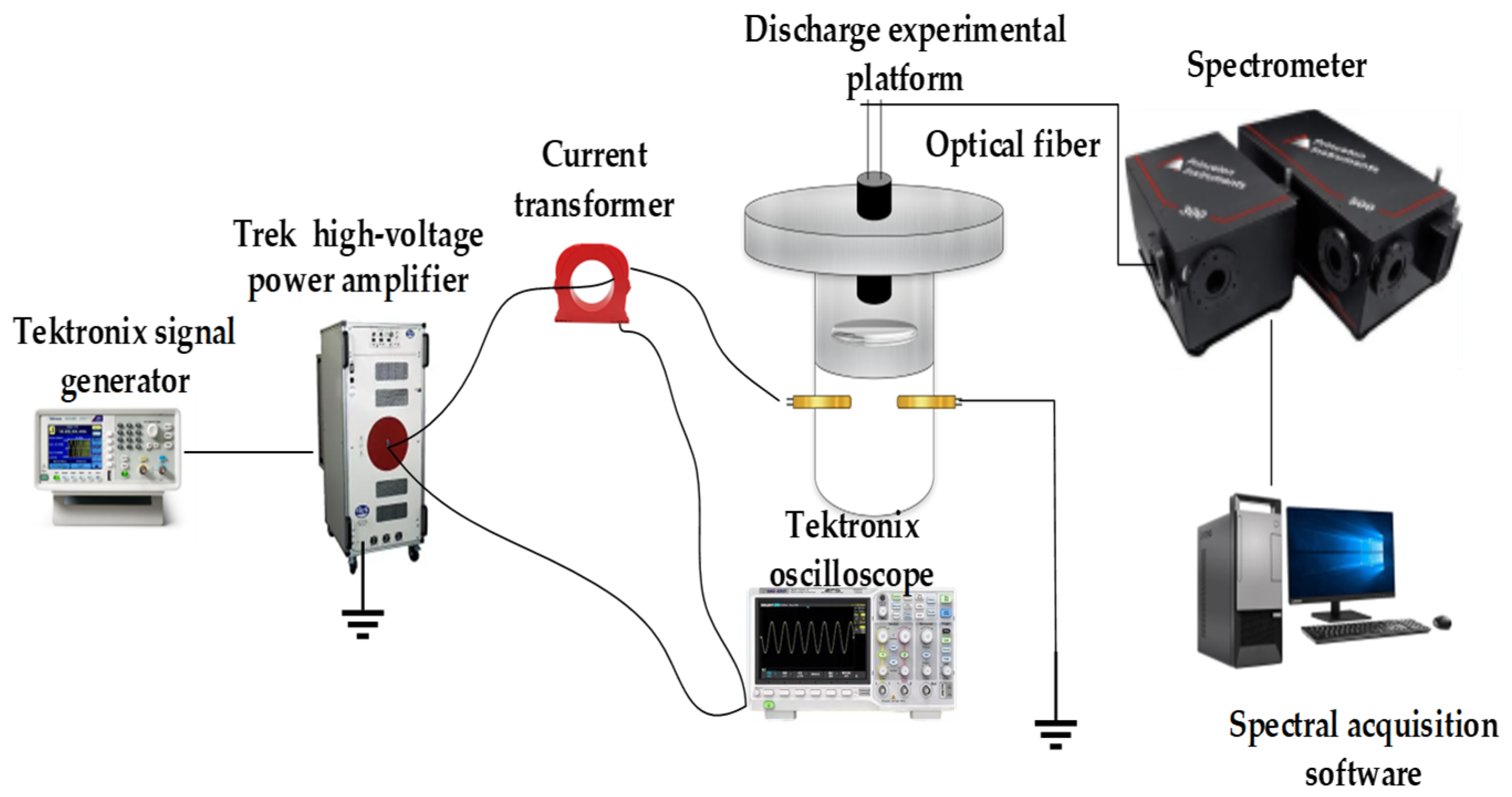
Figure 1 shows a schematic diagram of the experimental setup. The platform primarily consists of a Tektronix signal generator (Tektronix, Inc., Beaverton, OR, USA), a Trek 30/20A series high-voltage power amplifier (Trek, Inc., Lockport, NY, USA), a Tektronix oscilloscope (Tektronix, Inc., Beaverton, OR, USA), a current transformer, a spectral acquisition system, and the discharge experimental platform. The spectral acquisition system is composed of an optical fiber, a spectrometer (SpectraPro HRS-300 (Teledyne Princeton Instruments, Trenton, NJ, USA)), and spectral acquisition software. The spectrometer has a grating constant of 1200 g/mm and a wavelength sampling interval of 30 nm. The spectrograph acquisition time is 10 milliseconds, whilst the experimental system has been isolated from external light sources. The spectrometer was calibrated using a mercury lamp prior to the experiment to ensure wavelength measurement accuracy. The signal generator produces an AC voltage signal ranging from 10 Hz to 1 kHz. This signal is fed into the Trek high-voltage amplifier, which has a gain of 3000, providing a 0–30 kV AC sinusoidal voltage for the experiments. In this study, the Trek high-voltage amplifier operated in a current-limiting mode with a set threshold of 20 mA. Operating in this mode provides low output impedance and rapid feedback control, which stabilizes the output voltage waveform during discharge events and prevents equipment damage.
To mitigate the influence of electromagnetic interference from the discharge process on the spectrometer, the optical path of the experimental platform was configured as follows. A convex lens was positioned above the electrodes of the discharge device. Additionally, the tip of the optical fiber was equipped with a focusing lens. The convex lens was housed in a transparent quartz glass enclosure. The lower cutoff wavelength of the quartz glass falls within the range of 180~210 nm, ensuring good transmittance for light in the 200~1037 nm wavelength band. The experiment employed a rod–rod electrode system made of brass. Each electrode has a diameter of 10 mm and a fillet radius of 0.25 mm. The electrode gap was fixed at 2 mm. The electrode surfaces were polished to minimize the influence of surface roughness on the electric field distribution. All experiments were conducted inside a sealed shielding chamber under controlled environmental conditions as follows: temperature of 25 °C, relative humidity of 45%, and atmospheric pressure of 101.3 kPa. Maintaining identical environmental conditions for all tests helped to exclude the influence of temperature and humidity fluctuations on the discharge characteristics.
The three frequencies selected for this experiment, 20 Hz, 50 Hz, and 1 kHz, are based on the practical engineering context of the expanding frequency range of power equipment. The frequency of 20 Hz is a typical operating frequency for flexible low-frequency power transmission technology, which has gained significant attention in recent years for applications such as long-distance cable transmission and offshore wind power delivery. The frequency of 50 Hz serves as the internationally standardized power frequency and represents the reference point for insulation theory. The frequency of 1 kHz covers applications such as aircraft power supplies (400 Hz), variable-frequency drives in rail transit, and the frequency isolation of power electronic transformers.

3. Experimental Results

3.1. Air Breakdown at Different Frequencies

In this study, the two-parameter Weibull cumulative distribution function (CDF) was selected, as expressed by the following equation [23]:
F ( x ) = 1 e x β α , x 0 0 , x < 0
In the equation, F(x) is the cumulative breakdown probability. Among the two parameters, the scale parameter α represents the breakdown field strength at different frequencies, while the shape parameter β characterizes the slope distribution feature of the breakdown field strength. The confidence interval was set to 95%.
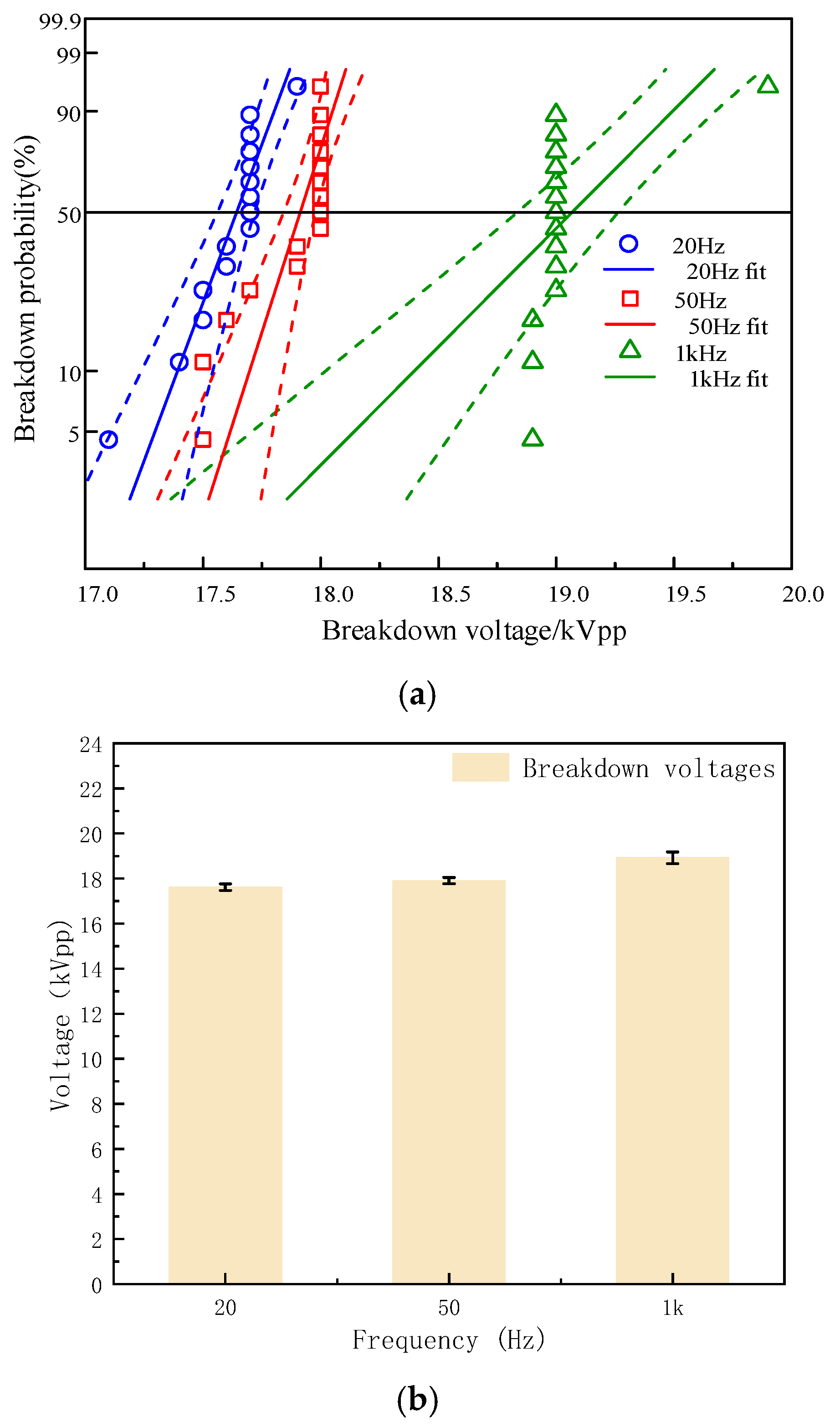
Using the same discharge electrodes shown in Figure 1, with an electrode gap fixed at 2 mm, 15 valid data points were recorded for each breakdown test at different frequencies. The data were subjected to Weibull distribution analysis with a 95% confidence interval. The Weibull distribution is illustrated in Figure 2, with Dimensional Parameters and Shape Parameters detailed in Table 1. The experimental results indicate that the air breakdown voltages at 20 Hz, 50 Hz, and 1 kHz are 17.7 kV, 18.0 kV, and 18.9 kV (peak-to-peak), respectively. To quantify the frequency dependence of breakdown voltage, the relative increases were calculated. From 20 Hz to 50 Hz, the breakdown voltage increased by 0.3 kV (1.7%); from 50 Hz to 1 kHz, it increased by 0.9 kV (5.0%); the overall increase from 20 Hz to 1 kHz was 1.2 kV (6.8%). At 20 Hz and 50 Hz, the estimated standard deviations are approximately 0.13 kV and 0.12 kV, respectively, while the increases are 2–3 times these values; at 1 kHz, despite the larger dispersion (estimated standard deviation 0.36 kV). The shape parameter reveals that the Weibull shape parameter at 1 kHz is significantly lower, indicating a far greater dispersion in the breakdown voltage compared to the cases at 20 Hz and 50 Hz.

3.2. Air Discharge Electrical Signal

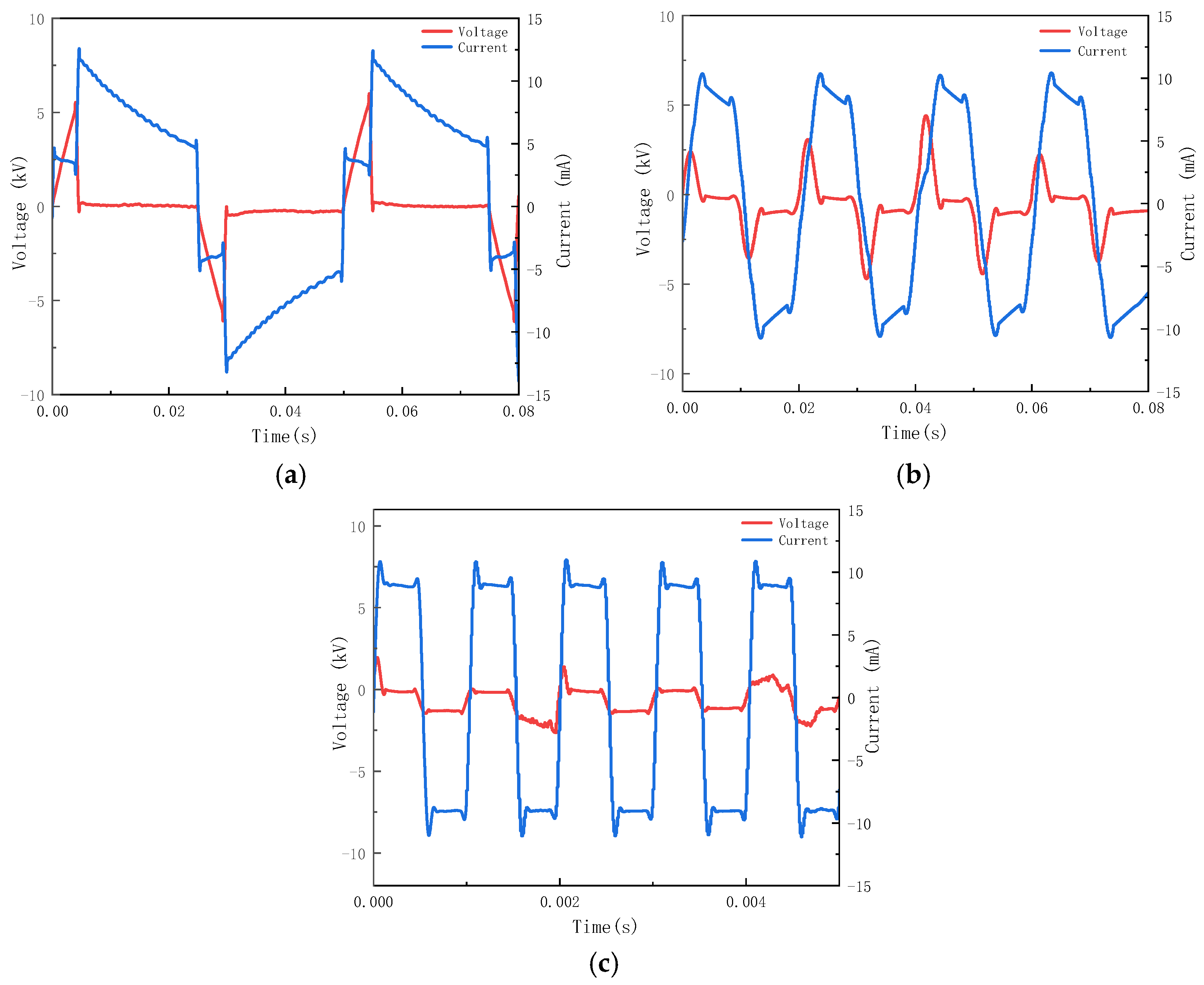
The Trek power amplifier operated in current-limiting mode, and the voltage and current waveforms during air breakdown were recorded, as shown in Figure 3. Upon the occurrence of air breakdown, the voltage rapidly dropped while the current sharply increased, with both waveforms exhibiting significant distortion. Under all three frequencies, the breakdown voltage and current waveforms appeared periodically, synchronized with the applied voltage. Regarding the voltage waveform, at 20 Hz, the voltage rapidly collapsed to zero upon breakdown. In contrast, at 50 Hz and 1 kHz, the voltage exhibited a relatively slower decline to zero.

3.3. Air Discharge Optical Signal

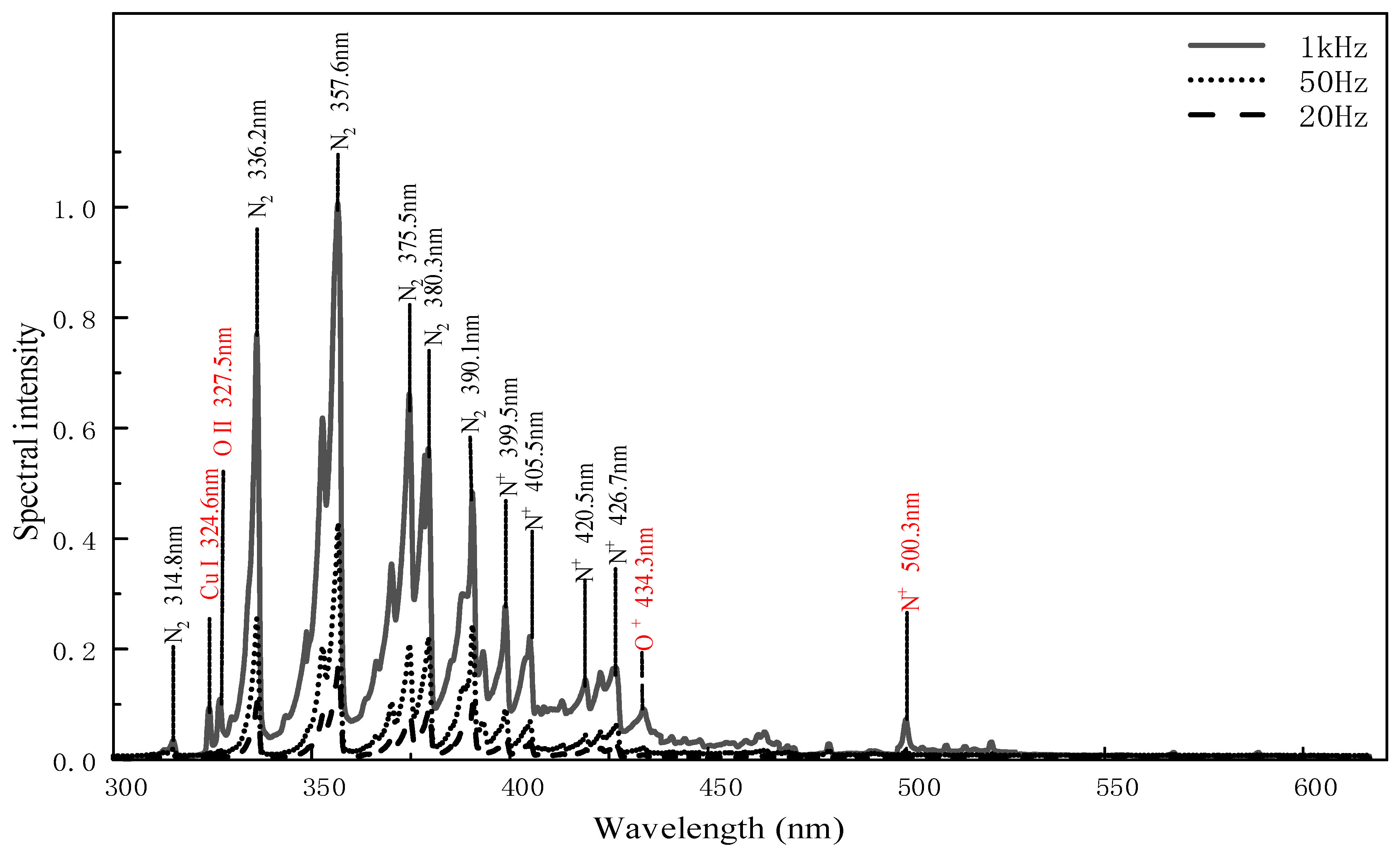
Figure 4 presents a normalized comparison of air breakdown emission spectra at different frequencies, providing crucial experimental evidence for understanding the frequency-dependent mechanism. As a characteristic of discharge plasma, the spectrum contains rich information regarding particle types, quantities, and energy states [24,25]. To further elucidate the discharge variations at different frequencies, the air discharge spectra under various frequencies were recorded in this study, as shown in Figure 4.
As shown in Figure 4, the characteristic spectral lines of air are primarily located at wavelengths of 314.8 nm, 336.2 nm, 357.6 nm, 375.5 nm, 380.3 nm, and 390.1 nm. The second positive band system (SPS) (314–400 nm), formed by the transition of nitrogen molecules from N2(C3Πg) to N2(B3Πg), is the strongest and most distinct band in the emission spectrum, mainly distributed in the ultraviolet region. Both N2(C3Πg) and N2(B3Πg) particles are transition states of the N2 molecule. At the discharge onset, N2(C3Πg) particles are not produced by direct excitation. Instead, they are generated via stepwise electron excitation, which first produces N2(A3Πg) particles 22. The processes are as follows [26]:
e + N 2 X 1 g + e + N 2 A 3 u +
e + N 2 A 3 u + e + N 2 C 3 g
The spectral characteristics of air breakdown exhibit a significant frequency dependence. As the frequency increases, the spectral intensity also rises. When the frequency reaches 1 kHz, the spectral properties change markedly, as follows: the intensity enhances considerably, with the nitrogen molecule second positive band system (SPS) lines showing particularly pronounced intensification. Furthermore, spectral complexity increases significantly. The spectral lines of nitrogen ions (N+, 405.5 nm, 500.3 nm), oxygen atoms (O II, 327.5 nm), oxygen ions (O+, 434.53 nm), and copper atoms (Cu I, 324.6 nm) become clearly discernible. Concurrently, the broadening effect of the nitrogen molecular lines intensifies noticeably, presenting a characteristic Stark broadening profile. This phenomenon provides direct evidence of increased charged particle density, corroborating the subsequent ionization degree calculations. Moreover, after eliminating absolute intensity differences through normalization, the variations in relative spectral line intensities are highlighted, establishing a foundation for the subsequent analysis of vibrational level distribution.

4. Analysis and Discussion of Results

4.1. Discharge Light Signal and Frequency Analysis

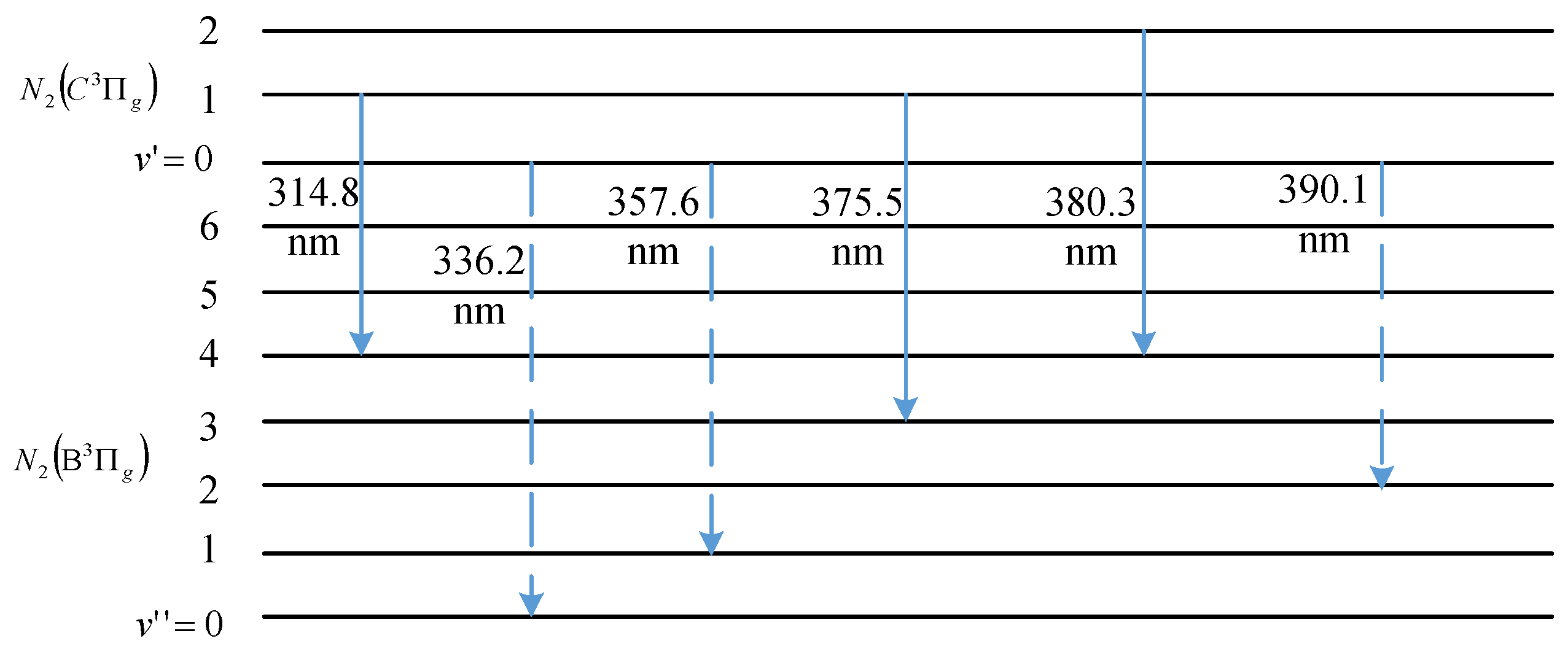
Corresponding to the transition from the C3Πg state to the B3Πg state in N2, the SPS involves vibrational energy levels in each state. These levels are denoted by the vibrational quantum numbers v′ (for the upper C3Πg state) and v″ (for the lower B3Πg state). Illustrated in Figure 5 are the different vibrational level transitions associated with the excited states responsible for the six optical radiations of the nitrogen molecule’s second positive band system.
In the spectrum, each spectral line corresponds to a specific vibrational transition (v′, v″). Typically, energy levels with smaller vibrational quantum numbers are referred to as low vibrational levels, while those with larger numbers are termed high vibrational levels. Based on the vibrational level analysis of the N2 second positive band system (SPS) spectrum, the six characteristic spectral lines can be categorized into two groups. The first group comprises transitions originating from the ground vibrational state (336.2 nm, 357.6 nm, 390.1 nm, corresponding to v′ = 0 → v″ ≤ 2). The second group consists of transitions originating from vibrationally excited states (314.8 nm, 375.5 nm, 380.3 nm, corresponding to v′ ≥ 1 → v″ ≥ 3).
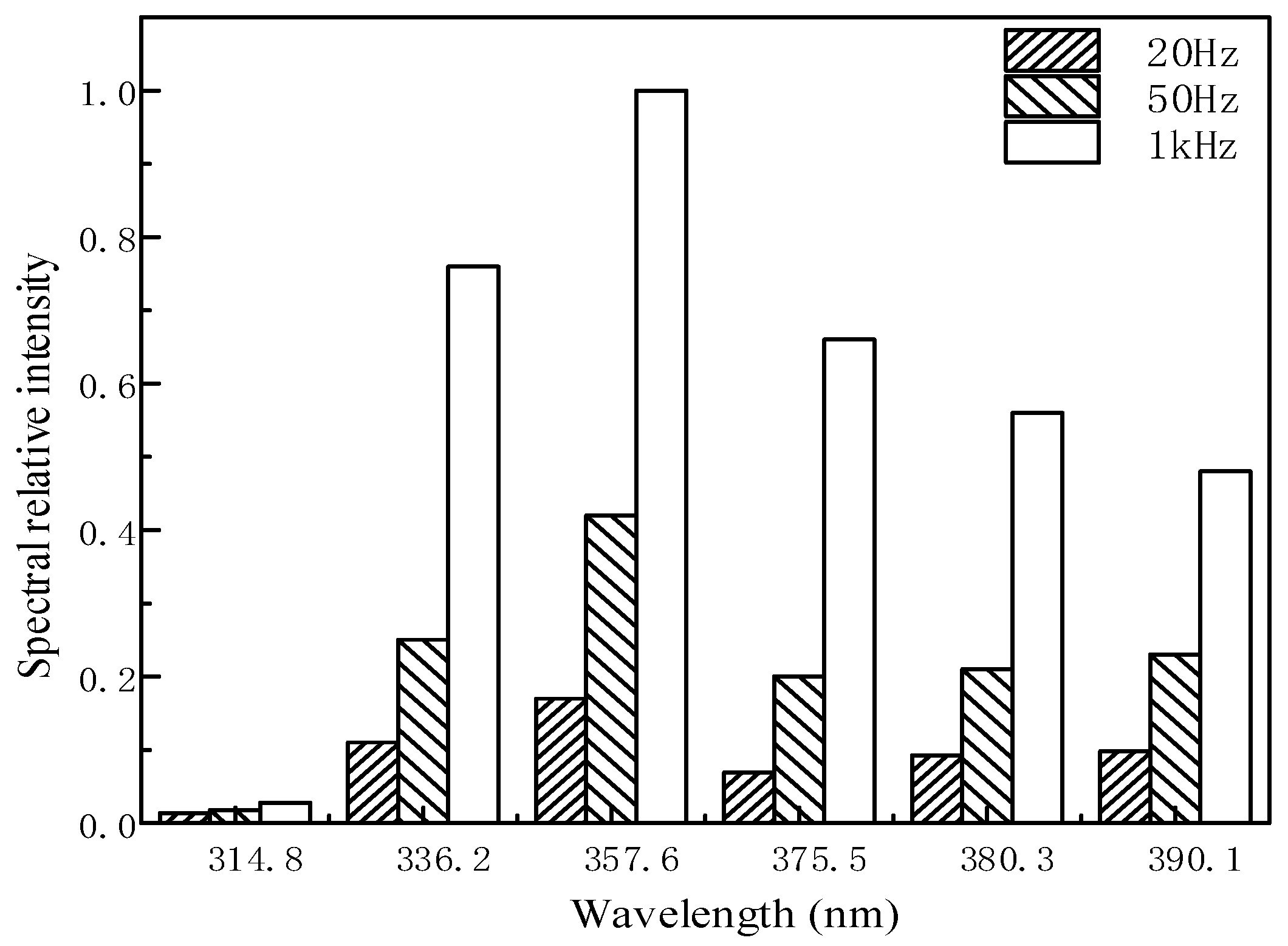
The normalized intensity analysis of the six characteristic N2 (SPS) spectral lines (Figure 6) reveals that from 20 Hz to 1 kHz, the intensity of all lines increases. The 357.6 nm line (v′ = 0 → v″ = 1 transition) and the 336.2 nm line (v′ = 0 → v″ = 0 transition) consistently dominate. Meanwhile, as the frequency increases from 20 Hz to 1 kHz, the relative intensity ranking of the 375.5 nm line (v′ = 1 → v″ = 3 transition) rises from fifth to third place, whereas that of the 390.1 nm line (corresponding to v′ = 0 → v″ = 2) falls from third to fifth. This indicates that the increase in transitions from high vibrational levels surpasses that from low vibrational levels at 1 kHz. Reaching a high vibrationally excited state from the ground state requires more energy. Consequently, the proportion of energy dissipated into the internal vibrational excitation of nitrogen molecules increases at 1 kHz.

4.2. Breakdown Analysis

4.2.1. Breakthrough Mechanism Determination

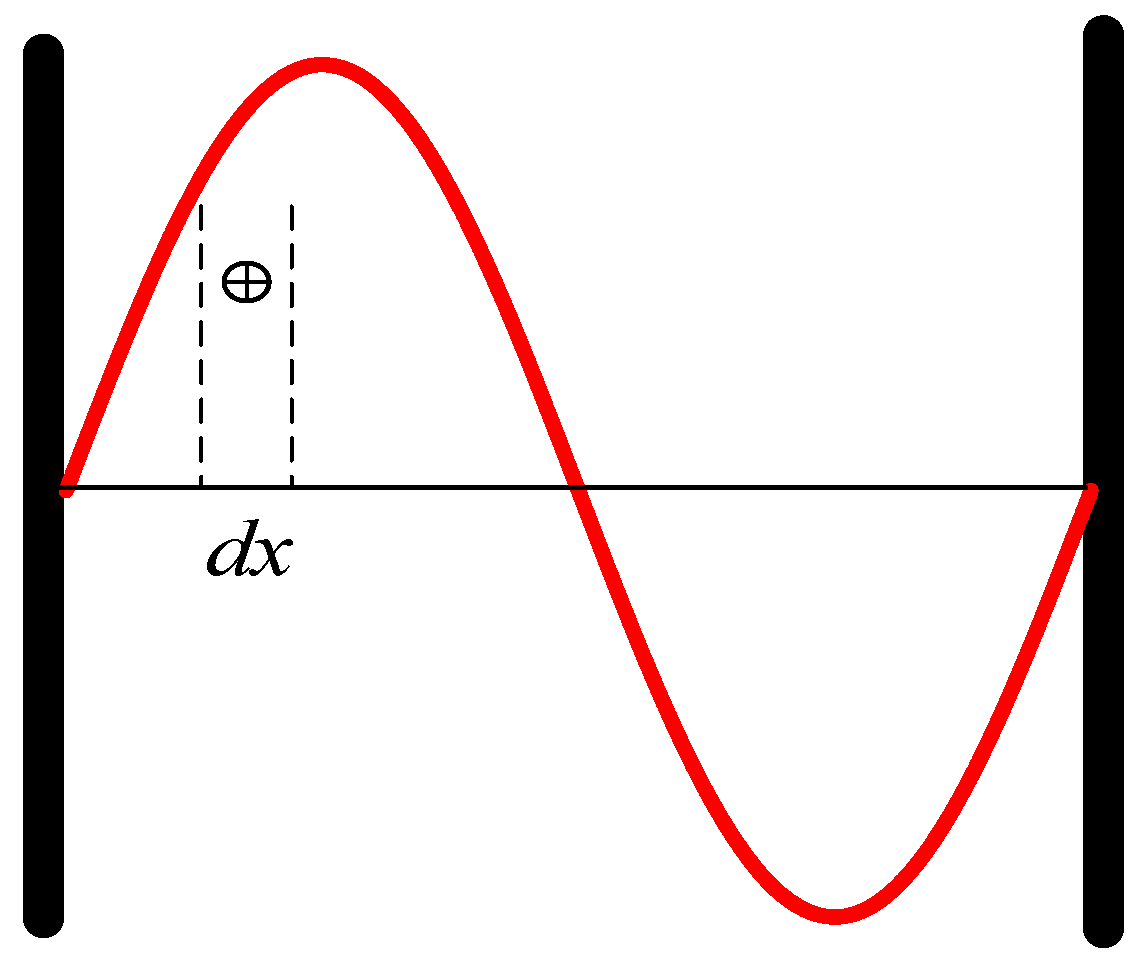
Gas breakdown theory is primarily categorized into collision ionization theory and diffusion theory. Breakdown occurring at gaps smaller than a critical distance is termed short-gap breakdown, while that at larger gaps is referred to as long-gap breakdown. Short-gap breakdown is analogous to breakdown in a static electric field, whereas long-gap breakdown belongs to the category of alternating field breakdown; their underlying mechanisms differ. A parallel-plate capacitor model (Figure 7) was established to calculate the critical gas distance, as follows [27]:
0 l d x = 0 ω t μ E cos ω t ω d ω t
l = μ E sin ω t ω = μ E 2 π f sin ω t
where E is the electric field strength (V/m), dx is the ion migration distance (m), l is the critical distance (m), and μ is the effective ion mobility (m2/(V·s)).
Based on the experimental data, the maximum critical distance l is calculated to be 10.5 cm, 3.75 cm, and 0.31 cm for frequencies of 20 Hz, 50 Hz, and 1 kHz, respectively. The electrode gap employed in the experiments is 0.2 cm. Consequently, at all tested frequencies, the gap is less than or close to the critical distance. This confirms that the breakdown follows the short-gap mechanism, i.e., collision ionization.

4.2.2. Spectral Parameter Diagnostics

To further investigate the frequency influence on the collision ionization mechanism in air breakdown, the plasma electron temperature (Te) and the ionization degree (η) were selected as the core characterization parameters. For this analysis, three characteristic spectral lines (336.1 nm, 357.1 nm, 390.1 nm) corresponding to the first ionization state of nitrogen molecules (N2) were chosen. The parameters for these spectral lines strictly adhere to the standardized data from the (NIST) atomic spectra database (Table 2). The formula is as follows [28]:
ln I i j g i A i j λ i j = E i k T e
where Iij is the spectral line intensity, gi is the statistical weight of the upper energy level, Aij is the transition probability (s−1), λij is the spectral line wavelength (m), Ei is the excitation energy of the upper level (eV), k is the Boltzmann constant (8.617 × 10⁻⁵ eV/K), and Te is the electron temperature.
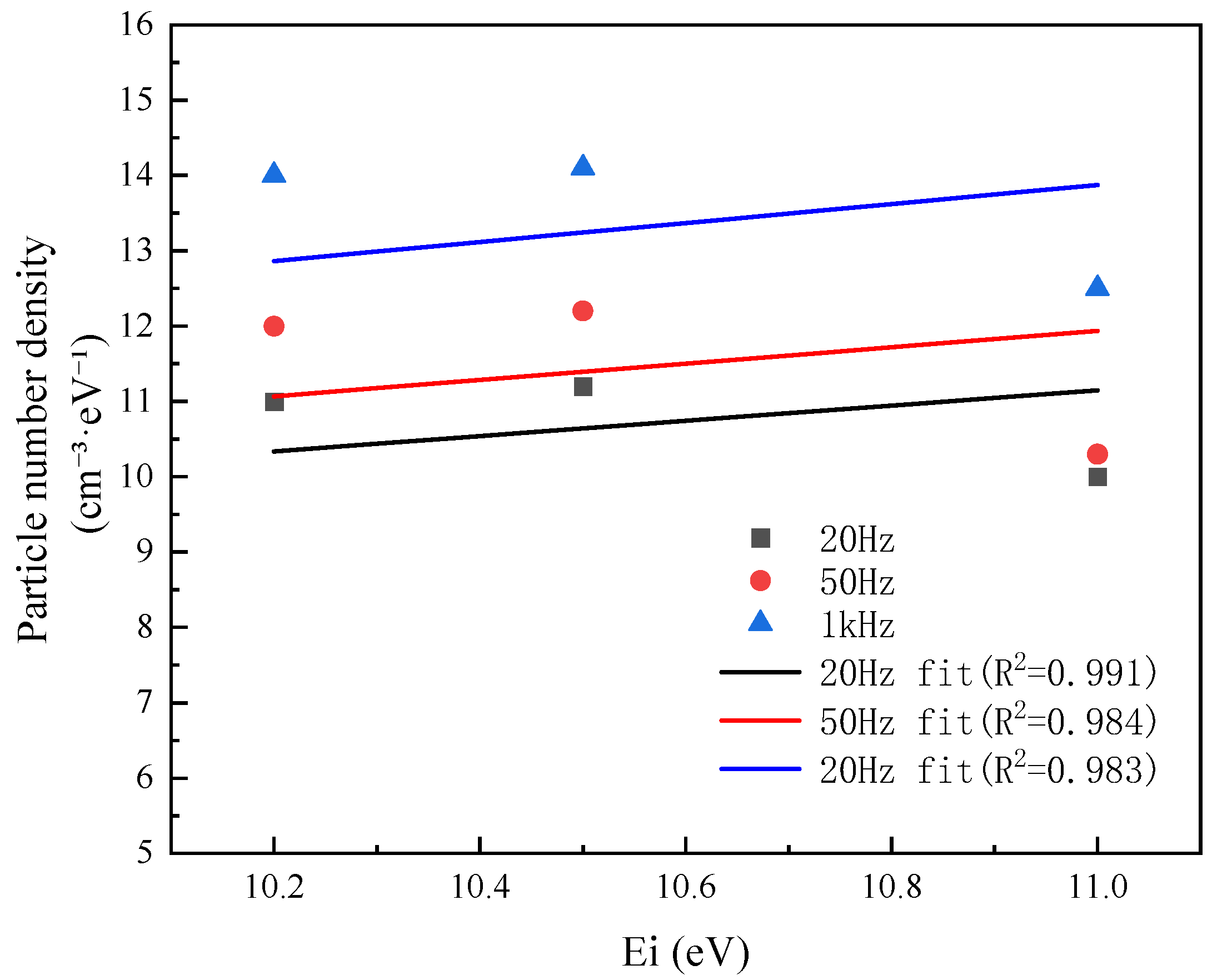
The electron temperature Te was calculated from the slope of the Boltzmann plot shown in the figure above.
To validate the applicability of the Boltzmann plot method, the optically thin plasma assumption and the quasi-Boltzmann distribution hypothesis were examined. Optically thin plasma refers to a state where the plasma is transparent to its self-emitted radiation, meaning that radiation is not reabsorbed during its propagation [29]. By inspecting the line profiles of the main N2 SPS spectral lines, no self-absorption characteristics (such as central dip) were observed. Furthermore, the short optical path length of the 2 mm gap further reduces the probability of self-absorption. The quasi-Boltzmann distribution implies that the population distribution of excited states can be described by the electron temperature [30]. As shown in Figure 8, the Boltzmann plots at all three frequencies exhibit excellent linearity (fitting R2 > 0.98), demonstrating that the relative populations among the vibrational levels of N2(C3Πg) can be described by the electron temperature Te, thus validating the quasi-Boltzmann hypothesis.
This paper defines the ionization degree η as the ratio of the intensity of the ionized spectral line (N II at 399.5 nm) to that of the neutral spectral line (N2 at 336.2 nm). This serves as a relative indicator to reveal the trend of ionization degree with frequency, rather than a measurement of the absolute ionization fraction. The formula is as follows:
η = I i o n I n e u t r a l
where Iion is the ion spectral line intensity and Ineutral is the neutral spectral line intensity.
The calculated results for the electron temperature Te and the ionization degree η are presented in Table 3.
The results indicate that the electron temperature Te decreases significantly with an increase in frequency, while the ionization degree η shows a marked increase. At 20 Hz, the longer duration of each voltage half-cycle allows electrons sufficient time to accelerate. This leads to a higher electron temperature Te but a lower ionization degree η, implying a lower effective number of collisions. In contrast, when the frequency rises to 1 kHz, electrons may not fully accelerate within a single cycle, resulting in a lower Te. However, the ionization degree η is higher, indicating an increased effective number of collisions.
Based on the obtained electron temperature Te, the electron kinetic parameters were further calculated to reveal the shift in the energy transfer mechanism. This analysis employed the electron drift velocity (vd) and the mean free path (λ) [31].
v d = e E m e v c
v c = n σ 3 k T e m e
λ = 1 n σ
where e is the electron charge (1.6 × 10⁻¹⁹ C), E is the electric field strength (V/m), me is the electron mass (9.1 × 10⁻³¹ kg), vc is the electron collision frequency (s−1), k is the Boltzmann constant, Te is the electron temperature, n is the gas molecule number density (2.5 × 1025 m−3), and σ is the collision cross-section (m2).
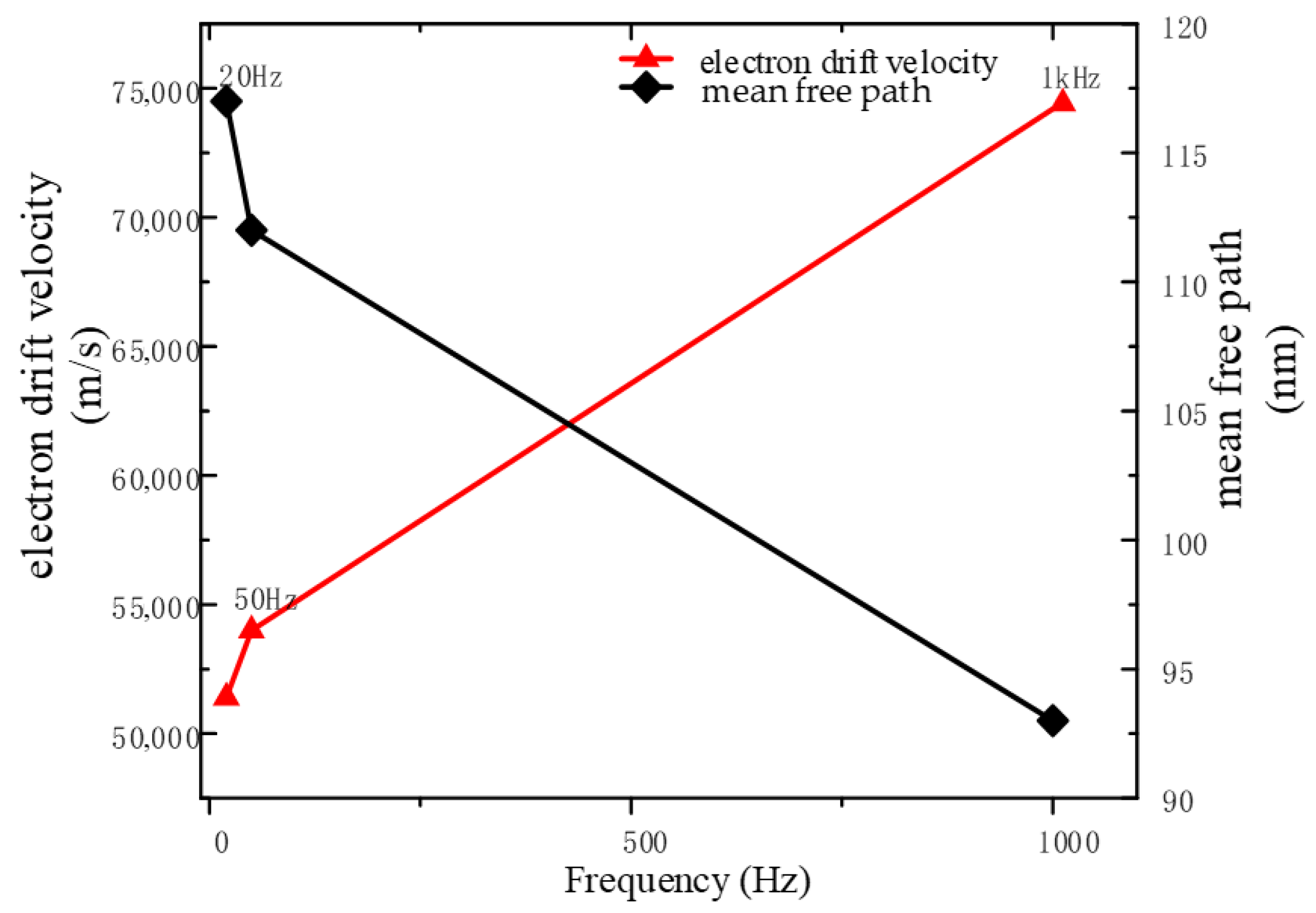
As shown in Figure 9, the electron drift velocity increases with an increase in frequency, while the mean free path decreases. At the lower frequencies of 20 Hz and 50 Hz, the mean free path is relatively large. This allows electrons to develop fully within a single cycle, thereby acquiring higher kinetic energy, which corresponds to a higher electron temperature (Te). However, the electron drift velocity is lower, resulting in fewer collision events. In contrast, at 1 kHz, the time available for electron acceleration within a cycle is short, and the electric field direction changes rapidly. The reduced mean free path prevents electrons from gaining sufficient energy, leading to a lower overall average kinetic energy. Nevertheless, the electron drift velocity is higher, increasing the frequency of collisions.
Spectral line intensity reflects the number density of specific excited-state particles. The increase in N2 SPS line intensity with an increase in frequency indicates an increase in the number of excited N2(C3Πg) particles. This is consistent with the increase in ionization degree η—more ionization produces more high-energy electrons, which in turn generate more excited particles through collisional excitation. At 1 kHz, although the average electron kinetic energy is lower, the total excitation probability increases due to the higher collision frequency (resulting from increased electron drift velocity).
Stark broadening is primarily caused by the micro-electric field generated by charged particles (electrons and ions) in the plasma. The intensification of broadening directly indicates an increase in charged particle density, which corroborates the quantitative increase in ionization degree η from 0.149 (20 Hz) to 0.727 (1 kHz). These two observations mutually validate each other. Populating high vibrational levels (v′ ≥ 1) requires higher excitation energy. At 1 kHz, although the average electron kinetic energy decreases, the significantly increased electron collision frequency enhances the probability of excitation to high vibrational levels.
In the frequency range from 20 Hz to 1 kHz, the increase in spectral line intensity with frequency does not originate from enhanced single-collision energy (electron temperature decreases from 5.9 eV to 2.9 eV), but rather from the substantial increase in electron density and collision frequency resulting from the rise in ionization degree η from 0.149 to 0.727. The discharge mode at 1 kHz exhibits increased total excitation probability, manifested as the enhancement of all emission lines. The intensification of Stark broadening and the increase in ionization degree mutually corroborate each other, both pointing to a significant increase in charged particle density at higher frequencies. The greater enhancement amplitude of high vibrational level transitions (375.5 nm) reveals a shift in the energy distribution mechanism as follows: in the high-density plasma environment at 1 kHz, electron energy is more extensively dissipated into vibrational excitation of molecules.

4.3. Memory Effect and Dielectric Recovery

Dielectric recovery characteristics reflect the dynamic process by which a medium re-establishes its insulation strength after breakdown. In this study, the voltage drop magnitude f, defined by the voltage peaks before and after breakdown, is used as an evaluation metric for dielectric recovery capability as follows:
f = 1 U k U o × 100 %
where Uo is the voltage peak before breakdown and Uk is the voltage peak at breakdown.
A larger f value indicates more severe insulation strength loss caused by the breakdown, meaning a slower dielectric recovery speed. The f values at different frequencies are 32.2% at 20 Hz, 45.6% at 50 Hz, and 82.8% at 1 kHz. The results demonstrate that the voltage drop following air breakdown increases significantly with higher frequency. This confirms that dielectric recovery becomes slower as the frequency increases.
The variation of discharge current near the zero-crossing point is a distinctive feature of the memory effect. To quantify this and compare the influence of different parameters, the current jump Ijump is defined as the average of the absolute discharge current as follows [32]:
I j u m p = t 0 Δ t t 0 + Δ t I d t d t 2 × Δ t
where t0 is the discharge current zero-crossing point, and Δt is half the duration from the current zero-crossing to the point where the current derivative returns to zero.
Calculation results indicate that at three distinct frequencies (20, 50, and 1 kHz), the current jump Ijump measures 0.25 mA, 0.64 mA, and 1.57 mA, respectively. The memory effect intensifies with an increase in frequency, being substantially greater at 1 kHz than at 20 and 50 Hz.
Zhao et al. pointed out that both spatial memory effect and surface memory effect collectively influence the initiation and development of subsequent streamers [33]. The increase in current jump Ijump with an increase in frequency observed in this study is precisely a manifestation of the enhanced spatial memory effect.
Li et al. proposed that dielectric recovery in repetitive air gap breakdown results from the synergistic interaction between post-breakdown thermodynamic processes (energy dissipation and gas density recovery) and the memory effect [34]. In this study, the voltage drop f increases with frequency (32.2% → 82.8%), indicating that the deionization process becomes less complete at higher frequencies, leading to slower dielectric recovery. This aligns with the mechanism of limited deionization time scale reviewed by Li et al.
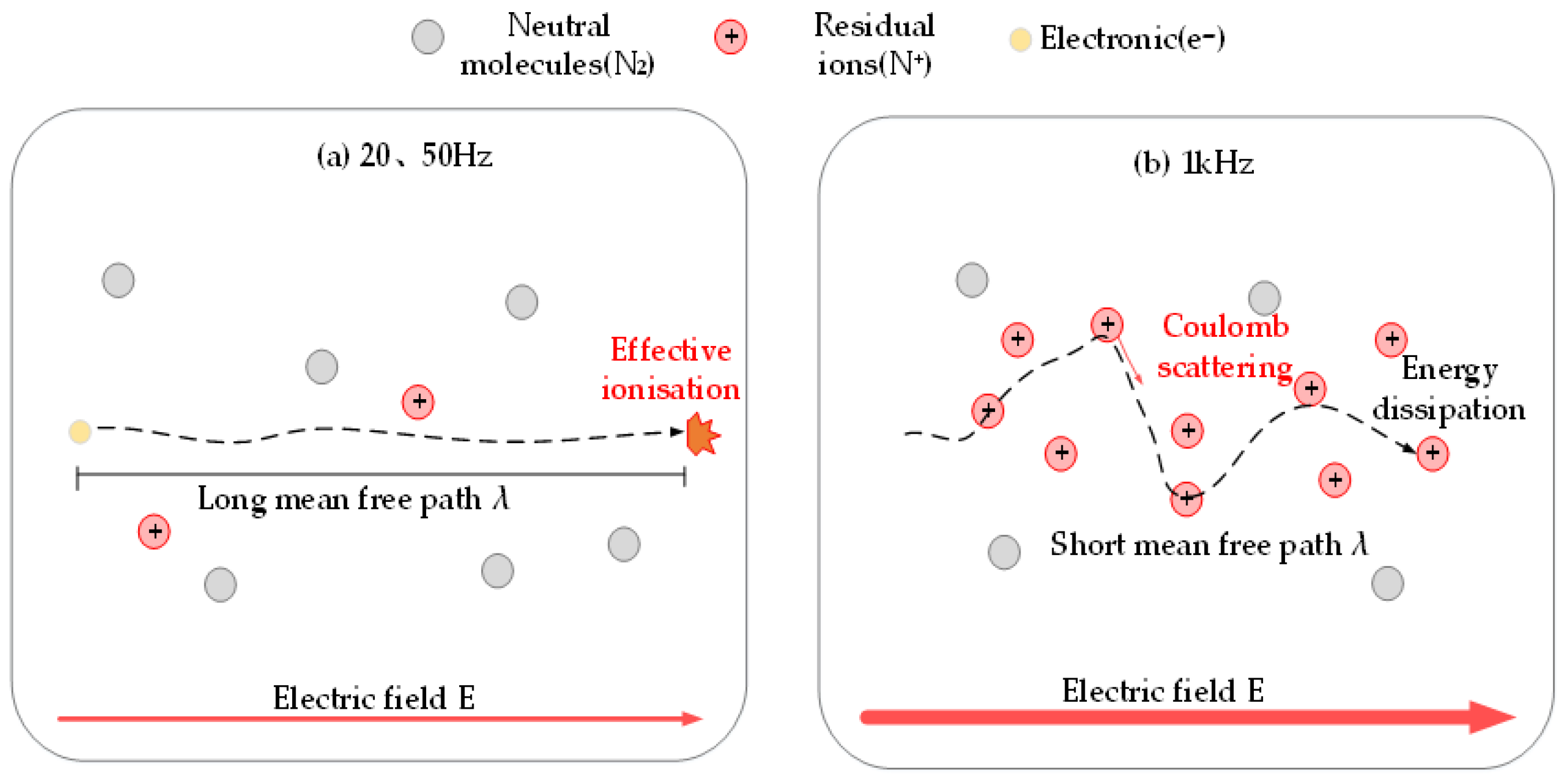
The phenomenon of breakdown voltage increasing with frequency is a consequence of the competition between dielectric recovery and the memory effect. The increase in frequency shortens the half-cycle duration, rendering the deionization process incomplete. This is manifested by the voltage drop f increasing from 32.2% to 82.8%, indicating significantly slower dielectric recovery. Simultaneously, the accumulation of residual particles enhances the memory effect, with the current jump Ijump increasing from 0.25 mA to 1.57 mA and the ionization degree rising from 0.149 to 0.727. An enhanced memory effect should theoretically provide more seed electrons and lower the breakdown threshold. However, the high-density residual charged particles simultaneously establish a strong Coulomb scattering background (as shown in Figure 10). The mean free path shortens from 117 nm to 92.5 nm, impeding electron energy accumulation amid frequent scattering and reducing the probability of reaching the ionization threshold in a single collision. Therefore, despite the increased collision frequency, a higher external electric field is still required to drive electrons for effective ionization.

5. Conclusions

Through systematic experimental analysis of the electrical and optical characteristics during air breakdown, this study elucidates the relationship between the breakdown process and the applied frequency, along with its underlying microscopic mechanisms. The main conclusions are as follows:
  • Air breakdown voltage increases with frequency, rising from 17.7 kV at 20 Hz to 18.0 kV at 50 Hz and 18.9 kV at 1 kHz, corresponding to an overall increase of 6.8%. Weibull distribution analysis reveals a significantly reduced shape parameter at 1 kHz, indicating greater dispersion in the breakdown voltage and enhanced discharge instability under high-frequency conditions.
  • The spectral characteristics of air breakdown show significant frequency dependence. As frequency increases, the intensity of all emission lines generally strengthens, with the relative growth rate of transitions from high vibrational levels being markedly higher than that from low vibrational levels. Furthermore, new spectral lines from species such as nitrogen ions, oxygen ions, and copper atoms emerge distinctly at higher frequencies, indicating a notable increase in spectral complexity.
  • Both the current jump Ijump and the voltage drop magnitude ff increase with frequency. This demonstrates that the memory effect strengthens while the dielectric recovery capability deteriorates as frequency rises.
  • With an increase in frequency, the electron temperature Te decreases, whereas the ionization degree η rises significantly. Higher frequencies intensify the memory effect, increasing the probability of ionization collisions (higher η). The resulting high-density charged particle environment enhances Coulomb scattering, shortens the electron mean free path, and restricts energy gain per mean free path. These combined effects lead to the observed slight increase in breakdown voltage.

Author Contributions

Conceptualization, Y.W.; Methodology, Y.W.; Validation, Y.W. and B.L.; Formal analysis, Y.W. and B.L.; Investigation, B.L.; Resources, B.L.; Data curation, Y.W. and B.L.; Writing—original draft, Y.W. and B.L.; Writing—review and editing, Y.W. and B.L.; Visualization, W.Z.; Supervision, W.Z. and J.B.; Project administration, W.Z., X.Y., J.B., and C.D.; Funding acquisition, X.Y., J.B., and C.D. All authors have read and agreed to the published version of the manuscript.

Funding

This work was supported by the National Key Research and Development Program of China (Grant No. 2021YFB2401100) and the Science and Technology Project of State Grid Corporation of China (Key Technologies of Flexible Low-Frequency Power Transmission).

Data Availability Statement

The data presented in this study are available upon request from the corresponding author (the data are not publicly available due to privacy restrictions).

Conflicts of Interest

Authors Xinzhe Yu and Jiangang Bi were employed by the China Electric Power Research Institute. Author Chao Ding was employed by the State Grid Zhejiang Electric Power Research Institute. The remaining authors declare that the research was conducted in the absence of any commercial or financial relationships that could be construed as a potential conflict of interest. The authors declare that this study received funding from the National Key Research and Development Program of China and the Science and Technology Project of State Grid Corporation of China. The funder was not involved in the study design, collection, analysis, interpretation of data, the writing of this article or the decision to submit it for publication.

Abbreviations

The following abbreviations are used in this manuscript:
TeElectron temperature
ηIonization degree
vdElectron drift velocity
λMean free path decreases
CDFCumulative distribution function

References

  1. Kumar, A.; Moradpour, M.; Losito, M.; Franke, W.-T.; Ramasamy, S.; Baccoli, R.; Gatto, G. Wide band gap devices and their application in power electronics. Energies 2022, 15, 9172. [Google Scholar] [CrossRef]
  2. Prado, E.O.; Bolsi, P.C.; Sartori, H.C.; Pinheiro, J.R. An overview about Si, Superjunction, SiC and GaN power MOSFET technologies in power electronics applications. Energies 2022, 15, 5244. [Google Scholar] [CrossRef]
  3. Buso, S.; Mattavelli, P. Digital Control in Power Electronics; Springer Nature: Berlin/Heidelberg, Germany, 2022. [Google Scholar]
  4. Wu, J.; Jin, H.; Mor, A.R.; Smit, J. The effect of frequency on the dielectric breakdown of insulation materials in HV cable systems. In 2017 International Symposium on Electrical Insulating Materials (ISEIM); IEEE: Piscataway, NJ, USA, 2017; Volume 1, pp. 251–254. [Google Scholar]
  5. Moeller, R.; Puffer, R. Investigation of the breakdown voltage of insulation oil in a frequency range between 50 hz and 10 kHz. In Proceedings of the High Voltage Technology 2018, ETG-Symposium, Delhi, India, 12–14 November 2018; VDE: Offenbach, Germany, 2018; pp. 1–6. [Google Scholar]
  6. Wheeler, J.C.G. Effects of converter pulses on the electrical insulation in low and medium voltage motors. IEEE Electr. Insul. Mag. 2005, 21, 22–29. [Google Scholar] [CrossRef]
  7. Germer, L.H. Electrical breakdown between close electrodes in air. J. Appl. Phys. 1959, 30, 46–51. [Google Scholar] [CrossRef]
  8. Khalaf, T.H.; Ghayb, D.H. Townsend discharge and streamer breakdown within sphere-air-sphere configuration. Iraqi J. Sci. 2023, 64, 4446–4454. [Google Scholar] [CrossRef]
  9. Trichel, G.W. The mechanism of the positive point-to-plane corona in air at atmospheric pressure. Phys. Rev. 1939, 55, 382. [Google Scholar] [CrossRef]
  10. Trichel, G.W. The mechanism of the negative point to plane corona near onset. Phys. Rev. 1938, 54, 1078. [Google Scholar] [CrossRef]
  11. Aponte, I.A.; Esser, B.; Shaw, Z.C.; Shaw, Z.C.; Dickens, J.C.; Mankowski, J.J.; Neuber, A.A. Fundamental study of DC and RF breakdown of atmospheric air. Phys. Plasmas 2019, 26, 123512. [Google Scholar] [CrossRef]
  12. Walsh, J.L.; Zhang, Y.T.; Iza, F.; Kong, M.G. Atmospheric-pressure gas breakdown from 2 to 100 MHz. Appl. Phys. Lett. 2008, 93, 221505. [Google Scholar] [CrossRef][Green Version]
  13. Korolov, I.; Derzsi, A.; Donkó, Z. Experimental and kinetic simulation studies of radio-frequency and direct-current breakdown in synthetic air. J. Phys. D Appl. Phys. 2014, 47, 475202. [Google Scholar] [CrossRef]
  14. Hara, M.; Negara, Y.; Setoguchi, M.; Kurihara, T.; Suehiro, J.; Hayashi, N. Particle-triggered pre-breakdown phenomena in atmospheric air gap under AC voltage. IEEE Trans. Dielectr. Electr. Insul. 2005, 12, 1071–1081. [Google Scholar] [CrossRef]
  15. Sun, Z.; Shao, Z.K.; Sun, X.; Sun, W.F. Trichel pulse characteristics and mechanism of negative corona discharge in sub-millimeter gaps. Phys. Plasmas 2023, 30, 063901. [Google Scholar] [CrossRef]
  16. Kher, V.G.; Ayachit, V.G. Increase of breakdown voltage of a low pressure AC discharge in air with frequencies from 20 to 15000 Hz. Physica 1964, 30, 702–712. [Google Scholar] [CrossRef]
  17. Benesch, W.M.; Saum, K.A. Electric discharges in air: Near infrared emission spectrum. J. Quant. Spectrosc. Radiat. Transf. 1972, 12, 1129–1137. [Google Scholar] [CrossRef]
  18. Shimizu, K.; Oda, T. Emission spectrometry for discharge plasma diagnosis. Sci. Technol. Adv. Mater. 2001, 2, 77. [Google Scholar] [CrossRef]
  19. Kozioł, M.; Nagi, Ł. Analysis of optical radiation spectra emitted by electrical discharges, generated by different configuration types of high voltage electrodes. In 2018 IEEE 2nd International Conference on Dielectrics (ICD); IEEE: Piscataway, NJ, USA, 2018; pp. 1–4. [Google Scholar]
  20. Fujii, K.; Yamada, M.; Tanaka, A.; Kurosawa, K. Emission spectrum of partial discharge light in SF/sub 6/gas. In Conference Record of the 1992 IEEE International Symposium on Electrical Insulation; IEEE: Piscataway, NJ, USA, 1992; pp. 332–335. [Google Scholar]
  21. Feng, Y.; Yuan, S.; Cai, Z.; Gao, L.; Yang, J. On spectral characteristics and chemical product analysis of AC discharge plasma under atmospheric pressure. J. Phys. D Appl. Phys. 2025, 58, 175504. [Google Scholar] [CrossRef]
  22. Tang, B.; Han, D.; Li, Y.; Li, K.; Qiu, Z.; Zhang, G. Analysis on Characteristic Emission Spectrum of SF 6 under 50 Hz AC Corona Discharge. In 2021 IEEE Electrical Insulation Conference (EIC); IEEE: Piscataway, NJ, USA, 2021; pp. 711–714. [Google Scholar]
  23. Montanari, G.; Mazzanti, G.; Cacciari, M.; Fothergill, J. Optimum estimators for the Weibull distribution from censored test data. Progressively-censored tests [breakdown statistics]. IEEE Trans. Dielectr. Electr. Insul. 1998, 5, 157–164. [Google Scholar] [CrossRef]
  24. Hussein, S.I.; Kadhem, S.J.; Ali, N.A.; Alraih, A.M.; Abd-Elnaiem, A.M. Improving the Mechanical, Thermoelectric Insulations, and Wettability Properties of Acrylic Polymers: Effect of Silica or Cement Nanoparticles Loading and Plasma Treatment. Polymers 2024, 16, 2965. [Google Scholar] [CrossRef]
  25. Yen, K.-T.; Wu, C.-H.; Wang, P.-H.; Tuan, P.-H.; Su, K.-W. Investigating the Threshold Conditions of Air Breakdown with Mode-Locked Q-Switched Laser Pulses, and the Temporal Dynamics of Induced Plasma with Self-Scattering Phenomenon. Appl. Sci. 2022, 12, 41. [Google Scholar] [CrossRef]
  26. Riba, J.R. Spectrum of corona discharges and electric arcs in air under aeronautical pressure conditions. Aerospace 2022, 9, 524. [Google Scholar] [CrossRef]
  27. Raizer, Y.P.; Allen, J.E. Gas Discharge Physics; Springer: Berlin/Heidelberg, Germany, 1997. [Google Scholar]
  28. Gazeli, O.; Laurita, R.; Capelli, F.; Gherardi, M. Optical emission spectroscopy of low-pressure DC argon plasmas for reconfigurable metadevices. J. Phys. D Appl. Phys. 2026, 59, 025207. [Google Scholar] [CrossRef]
  29. Hou, J.; Zhang, L.; Yin, W.; Zhao, Y.; Ma, W.; Dong, L.; Yang, G.; Xiao, L.; Jia, S. Investigation on spatial distribution of optically thin condition in laser-induced aluminum plasma and its relationship with temporal evolution of plasma characteristics. J. Anal. At. Spectrom. 2017, 32, 1519–1526. [Google Scholar] [CrossRef]
  30. Bendel, B.; Suta, M. How to calibrate luminescent crossover thermometers: A note on “quasi”-Boltzmann systems. J. Mater. Chem. C 2022, 10, 13805–13814. [Google Scholar] [CrossRef]
  31. Lieberman, M.A.; Lichtenberg, A.J. Principles of plasma discharges and materials processing. MRS Bull. 1994, 30, 899–901. [Google Scholar]
  32. Tyl, C.; Lin, X.; Bouzidi, M.C.; Dap, S.; Caquineau, H.; Segur, P.; Gherardi, N.; Naude, N. Investigation of memory effect in atmospheric pressure dielectric barrier discharge in nitrogen with small oxygen or nitric oxide addition. J. Phys. D Appl. Phys. 2018, 51, 354001. [Google Scholar] [CrossRef]
  33. Zhao, Z.; Li, J. Repetitively pulsed gas discharges: Memory effect and discharge mode transition. High Volt. 2020, 5, 569–582. [Google Scholar] [CrossRef]
  34. Li, L.; Chen, J.; Yi, C.; Xu, X.; Xu, G.; Wang, B. Mechanisms for insulation recovery during repetitive breakdowns in gas gaps. Phys. Plasmas 2023, 30, 120501. [Google Scholar] [CrossRef]
Figure 1. Air breakdown emission spectroscopy.
Energies 19 01229 g001
Figure 2. (a) Weibull distribution of air breakdown voltage at 20 Hz, 50 Hz, and 1 kHz and (b) breakdown voltage as a function of frequency, showing the increase from 17.7 kV at 20 Hz to 18.9 kV at 1 kHz.
Energies 19 01229 g002
Figure 3. Voltage and current waveforms during air breakdown at (a) 20 Hz, (b) 50 Hz, and (c) 1 kHz.
Energies 19 01229 g003
Figure 4. Normalized emission spectra of air breakdown at 20 Hz, 50 Hz, and 1 kHz.
Energies 19 01229 g004
Figure 5. Schematic diagram of vibrational level transitions in the N2 (SPS).
Energies 19 01229 g005
Figure 6. N2 (SPS) characteristic spectral line intensity maps at different frequencies’ spectra.
Energies 19 01229 g006
Figure 7. Model diagram of flat capacitor.
Energies 19 01229 g007
Figure 8. Boltzmann plot for the three N2 spectral lines at 20 Hz, 50 Hz, and 1 kHz.
Energies 19 01229 g008
Figure 9. Graph showing changes in electron mobility and mean free path with frequency.
Energies 19 01229 g009
Figure 10. Schematic of electron collisions in the presence of residual charge at 20, 50, and 1 kHz.
Energies 19 01229 g010
Table 1. Weibull distribution parameters (scale parameter α and shape parameter β) for air breakdown voltage at frequencies of 20 Hz, 50 Hz, and 1 kHz.
Frequency (Hz)Dimensional ParametersShape Parameters
2017.7131.61
5018156.44
100018.952.74
Table 2. Spectroscopic parameters of the selected N2 spectral lines (336.1 nm, 357.1 nm, and 390.1 nm) used for Boltzmann plot analysis.
Wavelength (nm)Ei (eV)giAij (s−1)
336.111.031.2 × 107
357.110.556 × 106
390.110.273.5 × 106
Table 3. Calculated electron temperature (Te) and ionization degree (η) at 20 Hz, 50 Hz, and 1 kHz.
Frequency (Hz)Electron Temperature TeIonization Degree η
205.90.149
505.10.355
10002.90.727
Disclaimer/Publisher’s Note: The statements, opinions and data contained in all publications are solely those of the individual author(s) and contributor(s) and not of MDPI and/or the editor(s). MDPI and/or the editor(s) disclaim responsibility for any injury to people or property resulting from any ideas, methods, instructions or products referred to in the content.