1. Introduction
The global energy transition, aimed at achieving climate neutrality in accordance with the European Green Deal strategy, necessitates a radical restructuring of production systems, particularly in regions whose economies have traditionally relied on the extraction and combustion of fossil fuels [
1]. Central and Eastern European countries, including Poland, the Czech Republic, and Slovenia, are currently facing a critical challenge involving the rapid integration of intermittent renewable energy sources (RES) while simultaneously undergoing a systematic process of phasing out coal mining [
2]. This transformation generates an urgent demand for large-scale energy storage systems (ESS), which are essential for balancing fluctuations in power grids and providing adequate power reserves to guarantee the stable operation of the transmission system in low-RES output situations [
3]. Although the literature analyzes a wide range of storage technologies, the unique industrial and infrastructural heritage of the coal regions points toward the use of inactive underground infrastructure as an optimal solution for constructing high-capacity storage facilities [
4,
5,
6]. A key element of this infrastructure are mine shafts, which represent assets of immense, though often underestimated, capital value. It should be emphasized that the modern cost of constructing a new shaft with a depth of approximately 1000 m, considering advanced rock mass freezing and sinking technologies, is estimated on the order of a few hundred million euros [
7].
The decision to select mine shafts as potential compressed air reservoirs, as opposed to horizontal mine excavations, is supported by a profound technical and geomechanical justification [
8]. Mine shafts are typically monolithic concrete or masonry structures of very high strength, designed for limited maintenance operation throughout the mine’s entire life cycle, which often spans several decades [
9]. In contrast, horizontal mine excavations, even those of strategic importance, are most constructed using arch-yielding supports, which by their nature do not provide gas tightness or geometric dimensional stability [
10]. These excavations are subject to the constant phenomenon of convergence shrinking under the pressure of the rock mass, which precludes their direct use as pressure-stable reservoirs [
11]. Shafts are further protected by extensive safety pillars, which minimize the impact of rock mass movements on their structure, making them nearly ideal candidates for adaptation as storage reservoirs [
12]. Despite these evident advantages, standard decommissioning procedures still involve the irreversible and costly backfilling of shafts with stowage material, which permanently and irretrievably destroys the potential for their reuse in the energy sector [
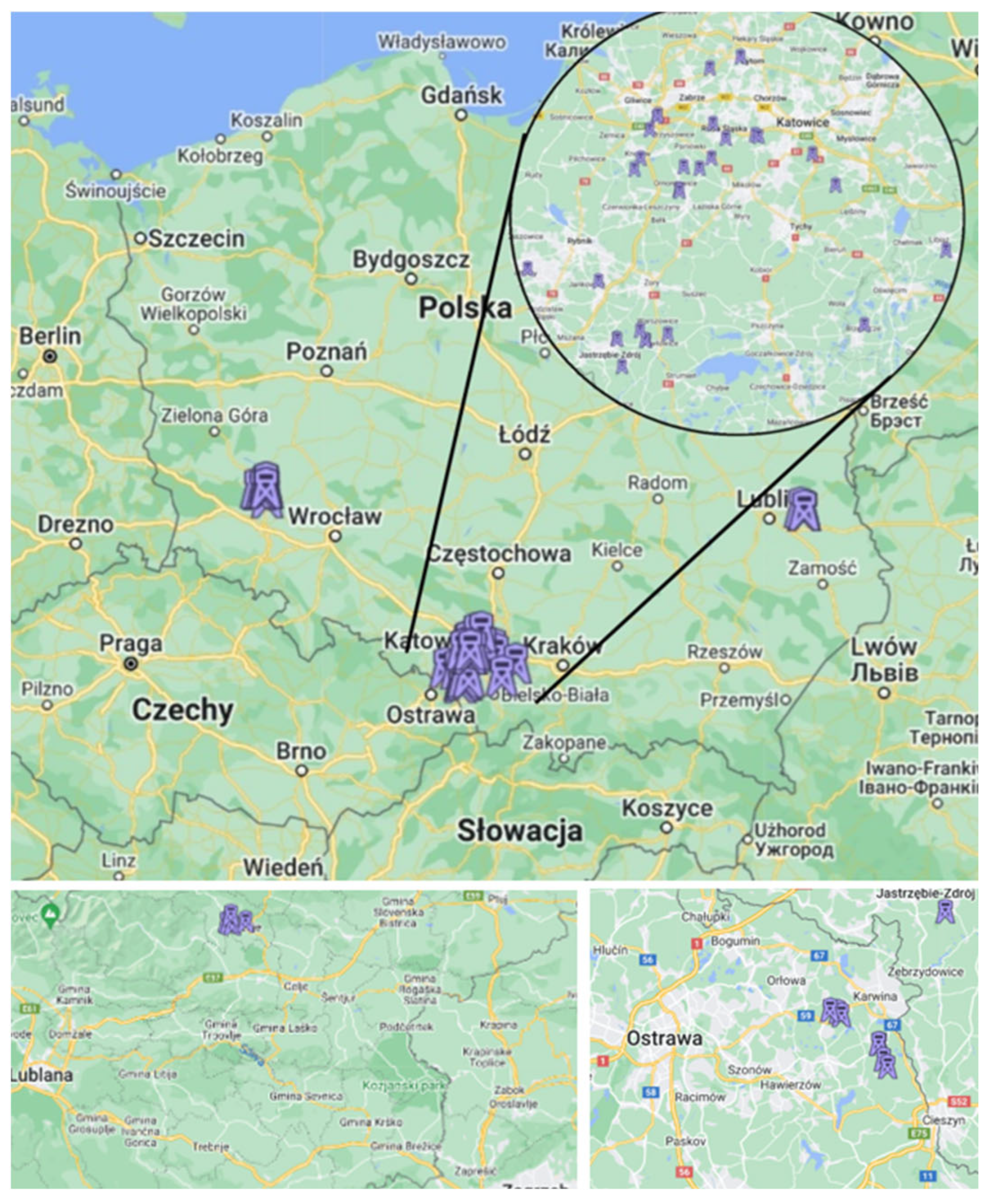
13]. In Poland alone, approximately 228 active or non-decommissioned shafts have been inventoried and shown in
Figure 1, representing infrastructure valued at billions of euros, requiring the urgent implementation of decision-making frameworks to allow for their rapid verification before final decommissioning [
14].
Compressed Air Energy Storage (CAES) technology is recognized as a proven large-scale method, as evidenced by decades of operation of facilities such as Huntorf in Germany and McIntosh in the United States [
15,
16]. The operational cycle of CAES systems involves sequential phases of charging, storage, and discharging, where the overall process efficiency is directly dependent on the effectiveness of managing the thermal energy generated during compression [
17]. Traditional diabatic systems require heat input from fossil fuel combustion to preheat the air before it enters the expander during discharge (production) process, which significantly reduces their environmental performance and overall efficiency [
18]. A far more innovative and desirable alternative is the adiabatic system (A-CAES), in which the heat generated during gas compression is captured and stored in a specialized Thermal Energy Storage (TES) unit. A significant milestone in the development of this technology was the Swiss pilot facility ALACAES, which proved the technical feasibility of energy storage in sealed rock excavations [
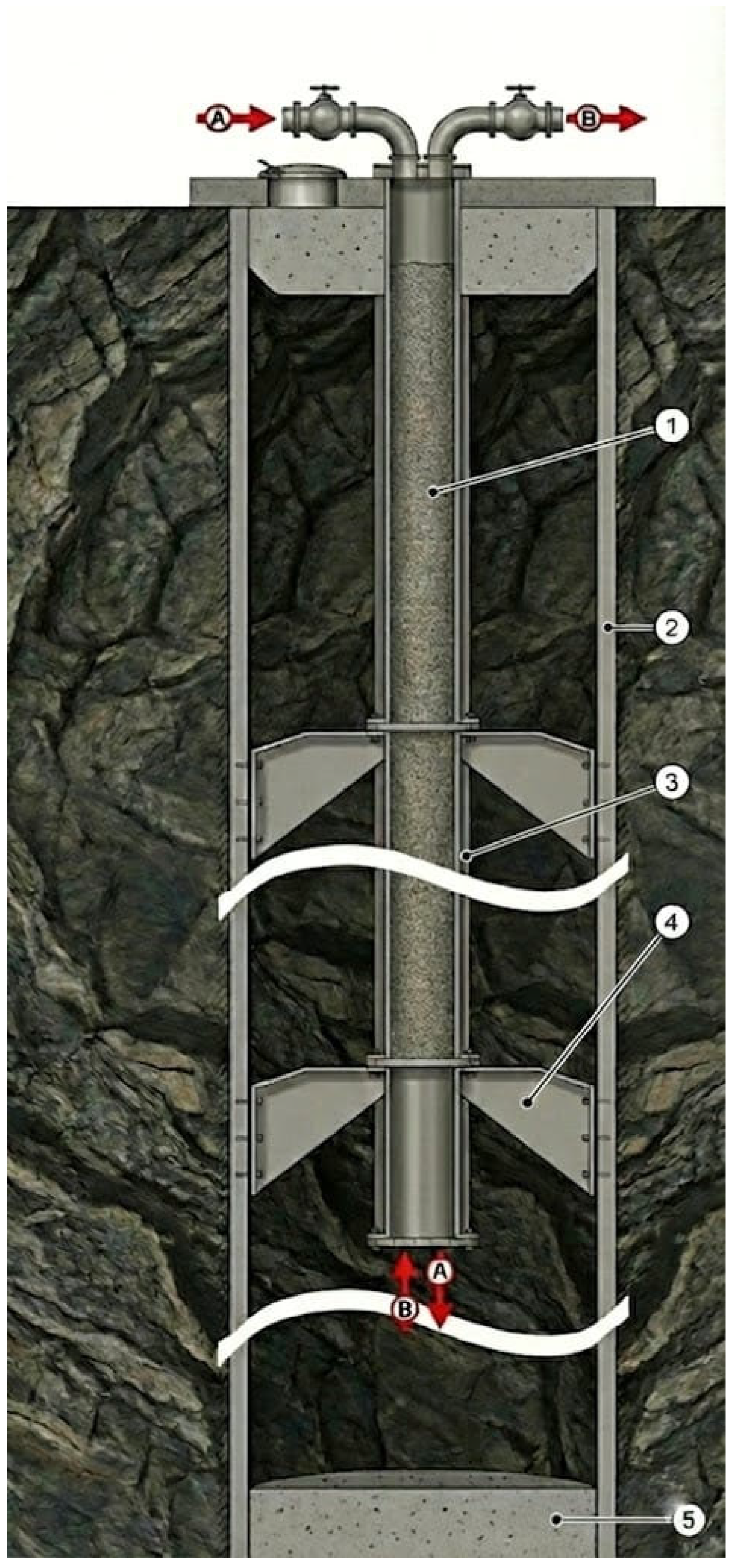
19]. Further evolution of this concept led to the formulation by Bartela and Lutyński of a novel paradigm utilizing vertical mine shafts as high-pressure reservoirs integrated with an internal TES module, which was granted a European patent [
20]. The conceptual diagram of this configuration, where the shaft serves as a reservoir supported by the natural stability of the surrounding rock mass, is shown in
Figure 2. As demonstrated by the authors, utilizing mine shafts in A-CAES systems allows for the total elimination of carbon dioxide emissions at the storage site, offering high exergetic efficiency and full compliance with the circular economy idea [
8].
Concept of repurposing of mining shafts for chemical energy storage in compressed gases, primarily hydrogen–methane blends, using Power-2-Gas, was also proposed by co-authors in monograph [
21]. Preliminary geomechanical analyses conducted using the specific software have confirmed that mine shaft casing are capable of safely withstanding the cyclic loads resulting from the charging and discharging processes of the storage facility [
22,
23,
24]. The results of these simulations clearly demonstrated that subjecting the shaft lining to cyclic stresses—acting in a direction opposite to the originally designed rock mass pressure—does not adversely affect its durability or tightness at storage pressures reaching 10 MPa. Such robust confirmation of technical feasibility at the numerical modeling level opens the prospect for large-scale market implementation of the technology; however, this process faces an operational barrier in terms of selecting suitable sites. Given the large number of available shafts, numerical modeling of the stability of each of them individually is an extremely time-consuming and cost-intensive process, requiring the acquisition of precise geological data across the entire depth of the excavation. Obtaining such detailed information is often difficult or even impossible due to the strategic status of mining infrastructure and the fact that advanced technical documentation typically remains confidential for external entities [
25]. Furthermore, legislative frameworks in transition countries often lag behind dynamic technological progress, resulting in a lack of standardized administrative pathways for alternative shaft reclamation methods. Consequently, there is an urgent need to formulate a tool that allows decision-makers and investors to easily and cost-effectively identify facilities with the highest potential, for which the standard backfilling process should be halted in favor of energy adaptation. After selecting the most promising shafts, detailed investigation of geology, casing condition and detailed modeling of expected lifespan stability is justified.
A direct response to the identified research gap is the implementation of Multi-Criteria Decision Analysis (MCDA) methodology, which constitutes the foundation of this study [
26]. MCDA is a rigorous and structured research approach used to solve complex engineering problems by evaluating alternatives against multiple, often mutually exclusive technical, economic, and environmental criteria. In the context of post-mining transformation, MCDA enables the ranking of available shafts from the most to the least promising, considering not only geometric parameters but also hydrogeological factors and the technical condition of the lining.
This article provides a detailed presentation of an original tool for the rapid selection of inactive mine shafts, which integrates eight precisely selected parameters into a coherent scoring system. The proposed method is intended to serve as a scientific and practical basis for changing the paradigm of underground infrastructure reclamation, promoting its proliferation towards modern and sustainable compressed-air energy storage.
2. Methods
Multi-Criteria Decision Analysis (MCDA) [
27] has been adopted in this study as a fundamental analytical tool to structure the selection process of mining infrastructure objects. The main objective of applying this method is to create an objective ranking of available shafts from the most to the least promising under the assumption that no single facility perfectly meets all criteria simultaneously. This method allows for a rational resolution of the conflict of goals, enabling a balance between desired technical parameters and an acceptable level of risk and capital expenditure. The basic assumption of the developed preliminary analysis is the rapid estimation of storage potential on a macro scale (country or region), serving as a pre-selection stage before the implementation of costly geomechanical models. The architecture of the decision model is built upon three main pillars:
geometry,
casing,
hydrogeology.
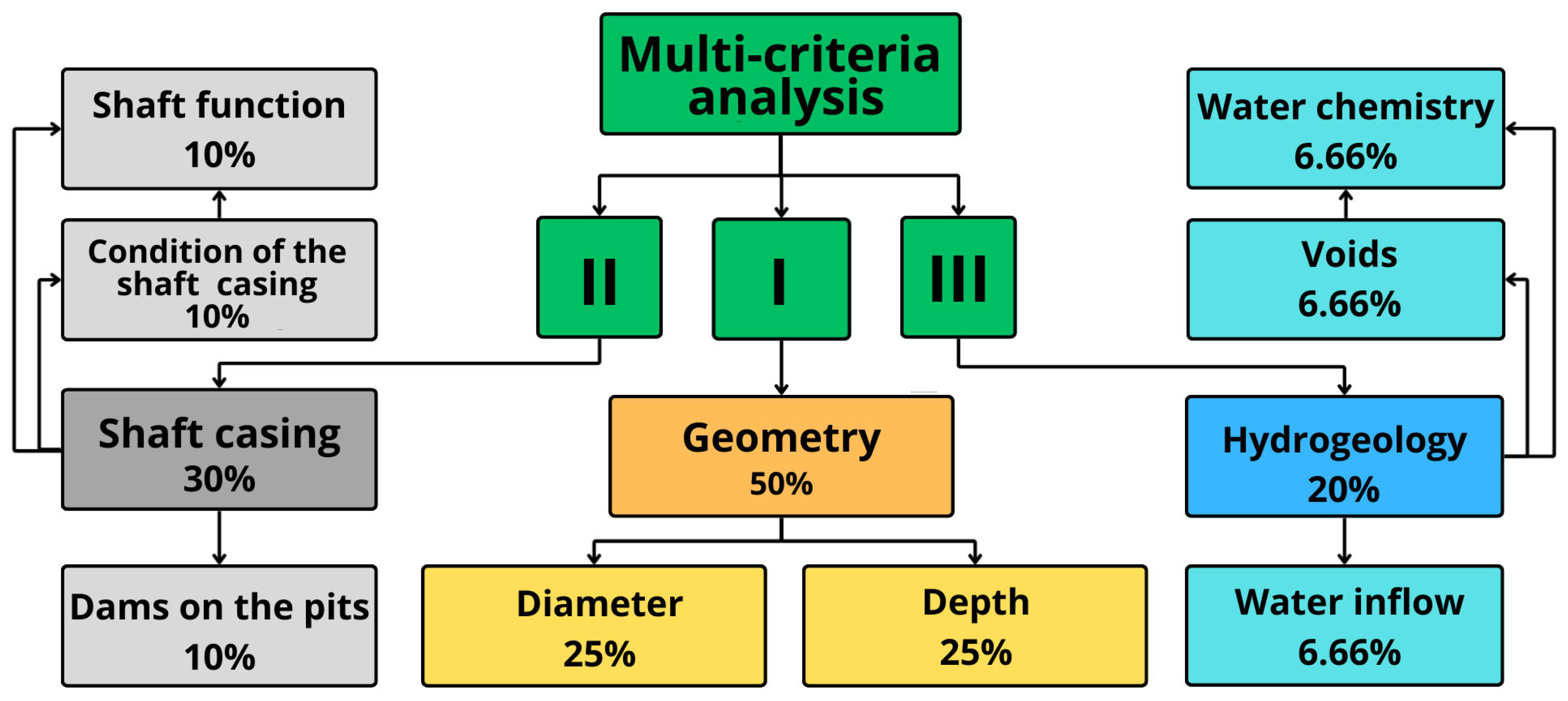
The geometry category defines the volumetric and energy potential of the storage facility; the casing category relates to structural integrity and the capability for pressurized operation; while the hydrogeology category assesses risks associated with water inflow and the aggressiveness of the underground environment. The weighting distribution reflects the project development hierarchy: Geometry (50%) determines the fundamental revenue potential (energy capacity); Casing condition (30%) dictates the initial capital expenditure (adaptation costs); and Hydrogeology (20%) represents operational risks and long-term maintenance requirements. Geometric parameters were assigned the highest weight because they define the immutable energy capacity of the facility, whereas hydrogeological factors (20%) represent risks that, while critical, can typically be mitigated through engineering solutions such as grouting, pumping, or specialized material selection. The hierarchical structure of the model and the assigned weights for individual criteria groups are presented in
Figure 3.
A precise assessment of potential within the areas defined above required decomposing the problem into a set of detailed input parameters, which definitions and impact on the decision-making process are discussed in the further part of this study. The focus on active and non-decommissioned shafts ensures a high level of data completeness, as these assets are subject to mandatory hydrogeological monitoring and reporting under the Polish Geological and Mining Law.
Additionally, within the framework of this study, simplified thermodynamic modeling of the A-CAES system was carried out to enable an approximate estimation of the total energy potential for the shortlisted mine shafts. The modeling was performed using the model presented by Bartela et al. [
8]. In modeling the compressor operation during the charging stage, literature-based compressor operating characteristics reported by Dixon and Hall [
28] were adopted; these characteristics were subsequently applied by Guo et al. [
29], Sciacovelli et al. [
30], and Szabłowski [
31].
Table 1 summarizes the key assumptions adopted for the A-CAES system and the TES.
2.1. Geometric Parameters of the Shaft
The preliminary selection of mining infrastructure objects for adaptation into A-CAES facilities is primarily based on an analysis of their geometry. These parameters define the available working volume, which in compressed air technology corresponds directly to the energy capacity of the system. The volume of the shaft (
VCAES), serving as a pressure vessel, is defined by Equation (1).
where
,
,
denote the inner diameter of the shaft, the inner diameter of the TES tank, and the outer diameter of the TES tank including thermal insulation, respectively;
is the average porosity of the packed bed used for heat storage; and
and
represent the usable height of the shaft and the height of the TES tank, respectively.
2.1.1. Shaft-Depth Parameter
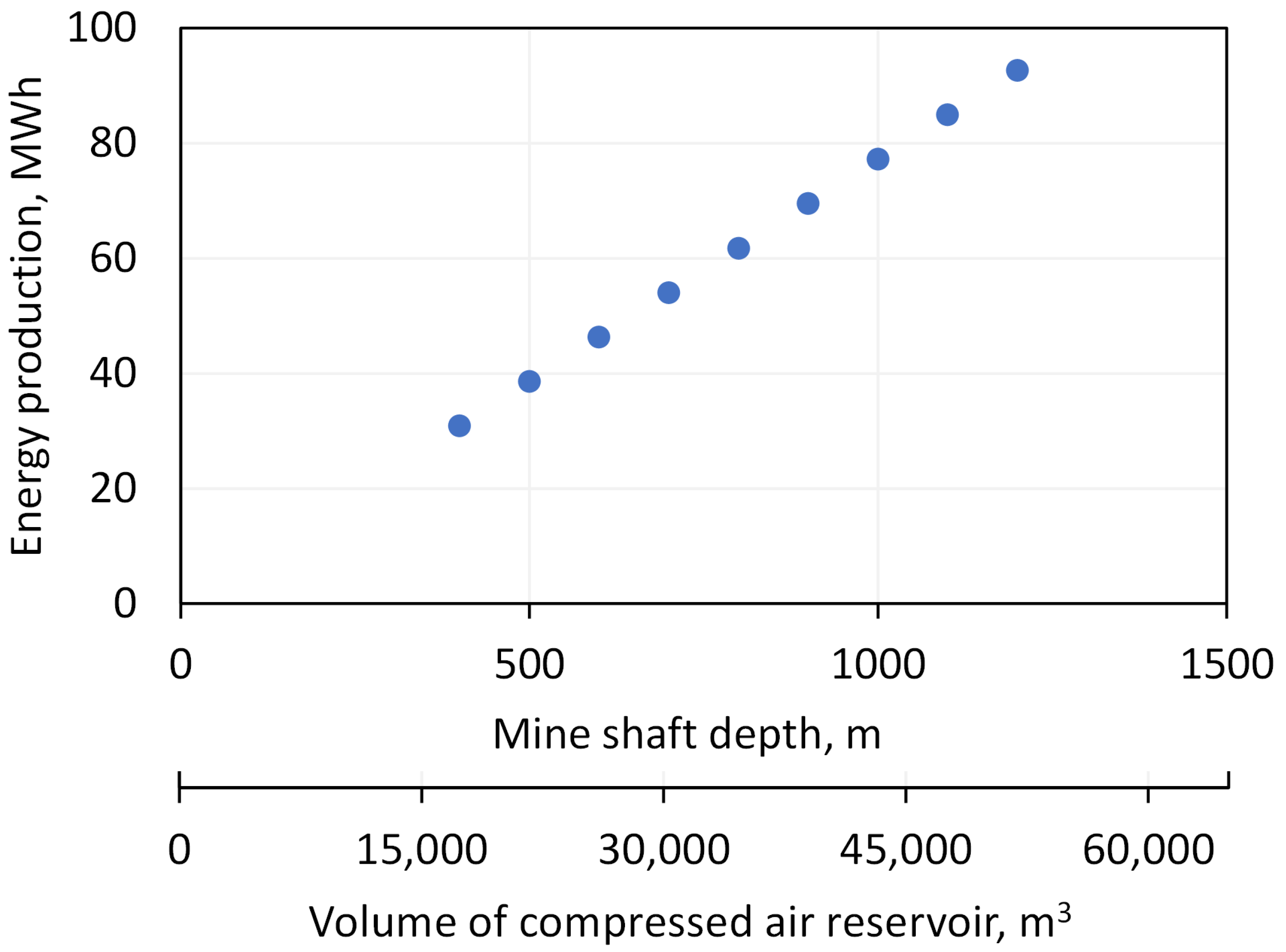
Shaft depth is a key determinant of the system’s capacity. Thermodynamic analysis indicated that a shaft depth of less than 800 m does not provide sufficient energy storage density, considering the need to allocate space within the shaft for the Thermal Energy Storage (TES) tank and technical infrastructure. The dependence of electricity production in the discharge cycle on the facility’s depth is presented in
Figure 4.
The values presented in
Figure 3 were obtained for the assumed lower limit of the internal diameter of the mine shaft, i.e., 7.5 m. Moreover, in accordance with Equation (1), the volumes of the heat storage material, the TES tank structure, and its thermal insulation were included in the final volume of the compressed air reservoir. As shown in the graph, the amount of energy discharged to the grid during a 4 h cycle increases linearly with depth, justifying the adoption of 800 m as a fatal flaw criterion and the assignment of higher scores to deeper facilities in the scoring model.
According to the data presented in
Figure 3, the energy produced during the discharge stage of the A-CAES system depends almost linearly on the height of the mine shaft. Minor deviations result from the increasing number of thermal energy storage segments, which directly corresponds to the amount of heat that must be stored during the charging stage of the system, i.e., during air compression. It was arbitrarily assumed that the minimum shaft height that may be considered for retrofitting to create an energy storage system is 800 m. This assumption results from a preference for operation in price-arbitrage mode within a competitive electricity market, which determines operation during peak and off-peak demand periods in the power system [
32]. The volume of the compressed air reservoir directly affects the mass flow rate of the compressed and expanded gas under the adopted operating schedule, which ultimately results in the achieved balance between consumed and generated energy in a given cycle and the revenue from system operation. The adopted minimum mine-shaft length ensures a sufficient compressed-air reservoir volume and enables the implementation of an economically justified investment over the planned operational lifetime.
2.1.2. Shaft-Diameter Parameter
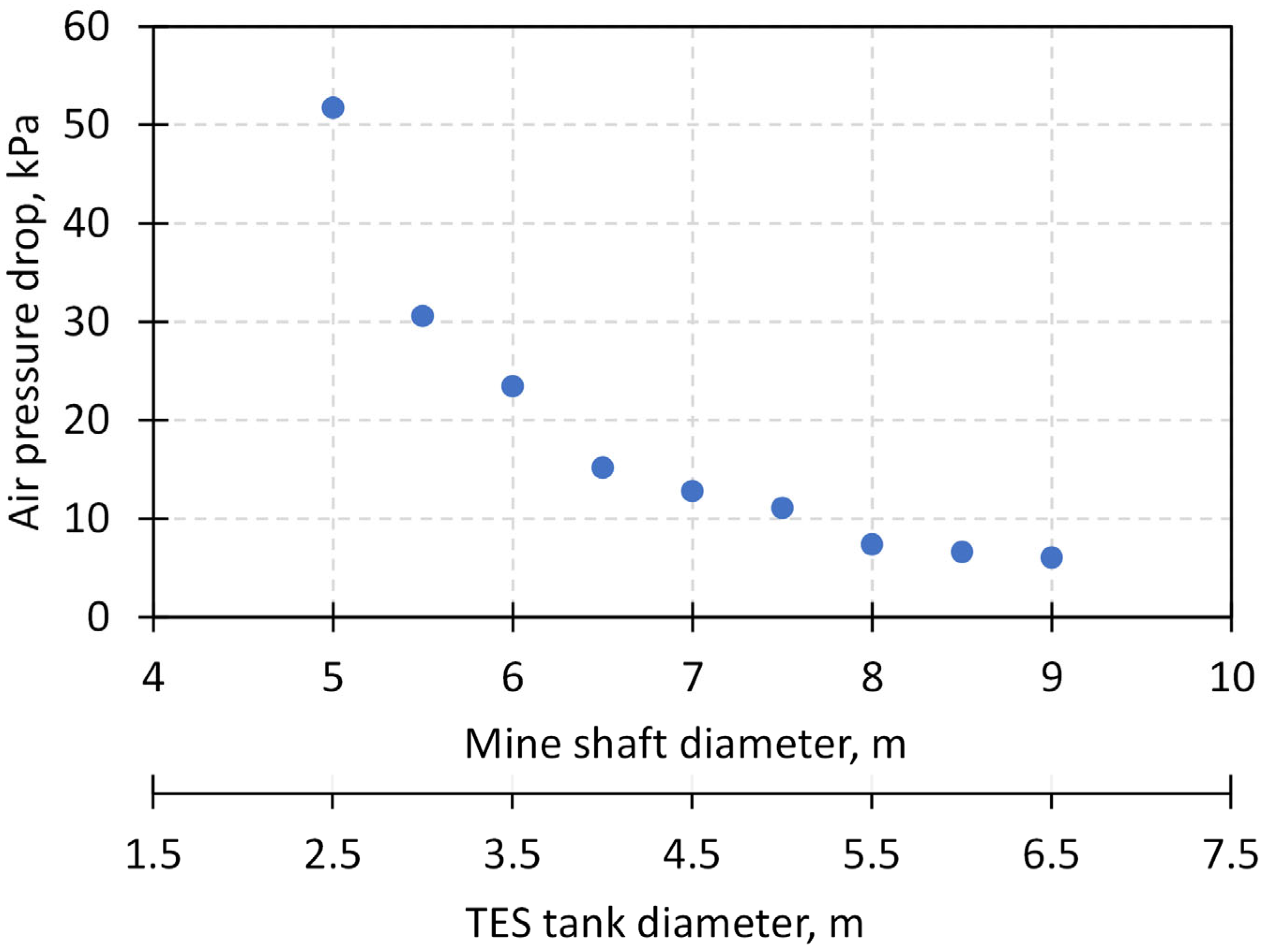
The second critical decision parameter is the inner diameter. The A-CAES concept assumes the integration of the TES tank directly within the shaft collar. Studies indicate that increasing the slenderness of the TES tank improves the exergy efficiency of the heat transfer process [
33] but simultaneously leads to an increase in pressure losses of the working medium. This phenomenon, resulting from the reduction in the flow cross-section, was modeled numerically using the Ergun equation [
34]. The characteristic of pressure drop as a function of shaft diameter is illustrated in
Figure 5.
Figure 4 presents the maximum values of the air pressure drop across the TES recorded during the discharge stage of the system. According to the adopted operating concept of the A-CAES system, the discharge stage is twice as short as the charging stage, which results in a twofold increase in the air-flow rate through the thermal storage bed. Moreover, during both the charging and discharging stages, the air-pressure drop is not constant (despite the assumption of a constant air-mass flow rate) due to changes in the average temperature of the storage material and the air. In
Figure 4, two stepwise changes in the maximum air pressure drop can be observed—for TES units with diameters
of 3.5 m and 4.0 m, and 5.0 m and 5.5 m. These changes result from variations in the number of thermal storage segments, as the adopted system concept assumes that the TES consists of segments, each 10 m in length.
2.1.3. Evaluation Criteria and Storage Potential
Based on the above analyses, a scoring system for geometric parameters was defined, as summarized in
Table 2.
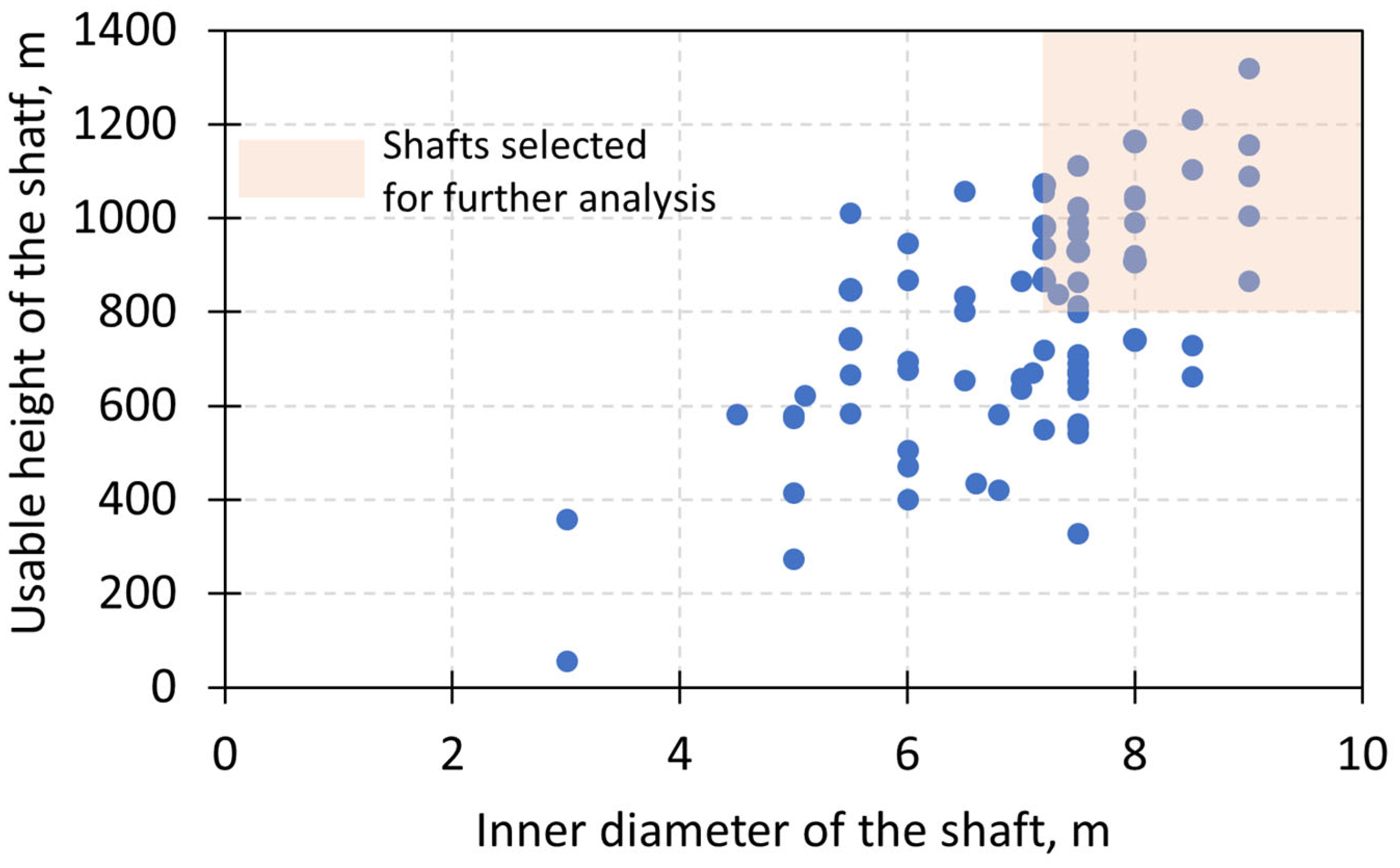
The application of these filters allowed for the identification of a group of facilities meeting the minimum technological requirements, as illustrated in the scatter plot (
Figure 6).
The resulting potential indicates that for the minimum boundary parameters (approx. 35,000 m
3), the estimated energy capacity of the system is 178 MWh (for a 3 h discharge cycle). This represents approximately 12% of the reference capacity of the Huntorf power plant [
15]. However, a fundamental difference must be emphasized: Huntorf relies on leached salt caverns (geological structure), whereas the proposed solution utilizes existing, rigid concrete shaft infrastructure (technical structure), which significantly reduces underground costs by eliminating leaching or excavation works [
23]. This solution also makes the investment independent of the occurrence of salt domes.
2.2. Casing Parameters of the Shaft
The technical parameters of the casing define the level of capital expenditure (CAPEX) required to restore the tightness and integrity of the shaft structure, in contrast to geometric parameters which determine potential revenue. This category focuses on engineering factors that determine the safety of the underground compressed air reservoir operating at high pressures. The analysis is based on estimating labor intensity and material costs, specifically a comparative analysis of the concrete and shotcrete consumption needed for infrastructure adaptation. Within this group, three key sub-criteria have been distinguished:
Shaft-type parameter—determining the complexity of dismantling the existing equipment.
Shaft-casing quality parameter—estimating the consumption of materials required to repair and strengthen the shaft casing.
Inlet-sealing parameter—defining the material expenditures for constructing isolation dams at shaft stations.
2.2.1. Shaft-Type Parameter
Shafts serve as the main excavation accessing mineral deposits in underground mines. Typically, at least two shafts are constructed: one deeper shaft located in the main mining area, used for transport and inlet ventilation, and another, peripheral serving as an outlet ventilation shaft. Due to their distinct purposes, they differ significantly in terms of equipment.
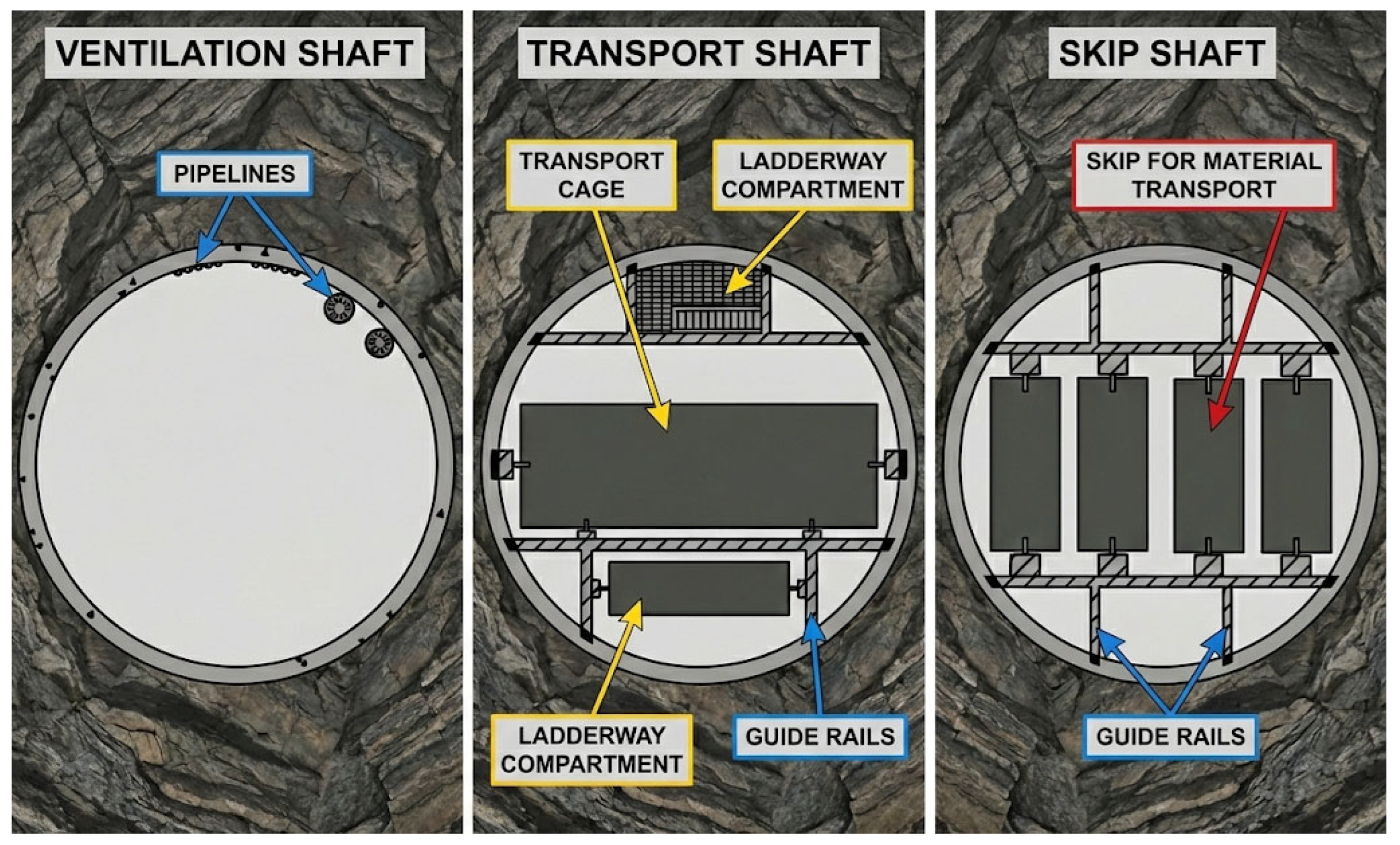
The equipment of ventilation shafts is generally limited to a ladder compartment, pipelines and cable routes. This configuration is determined by the need for high air flow not obstructed by other equipment. Consequently, ventilation shafts are the easiest to adapt due to the negligible need for equipment disassembly.
In contrast, transport and skip shafts are densely enclosed, containing not only ladder compartments and utilities installations but also buntons supporting the skip and hoisting equipment. Dismantling such equipment involves not only the removal of steel structures but also securing and repairing the anchoring points in the shaft lining remaining after their disassembly. The entire scope of work requires large expenditures and is performed in limited accessibility; therefore, a smaller coefficient is assumed for shafts without equipment.
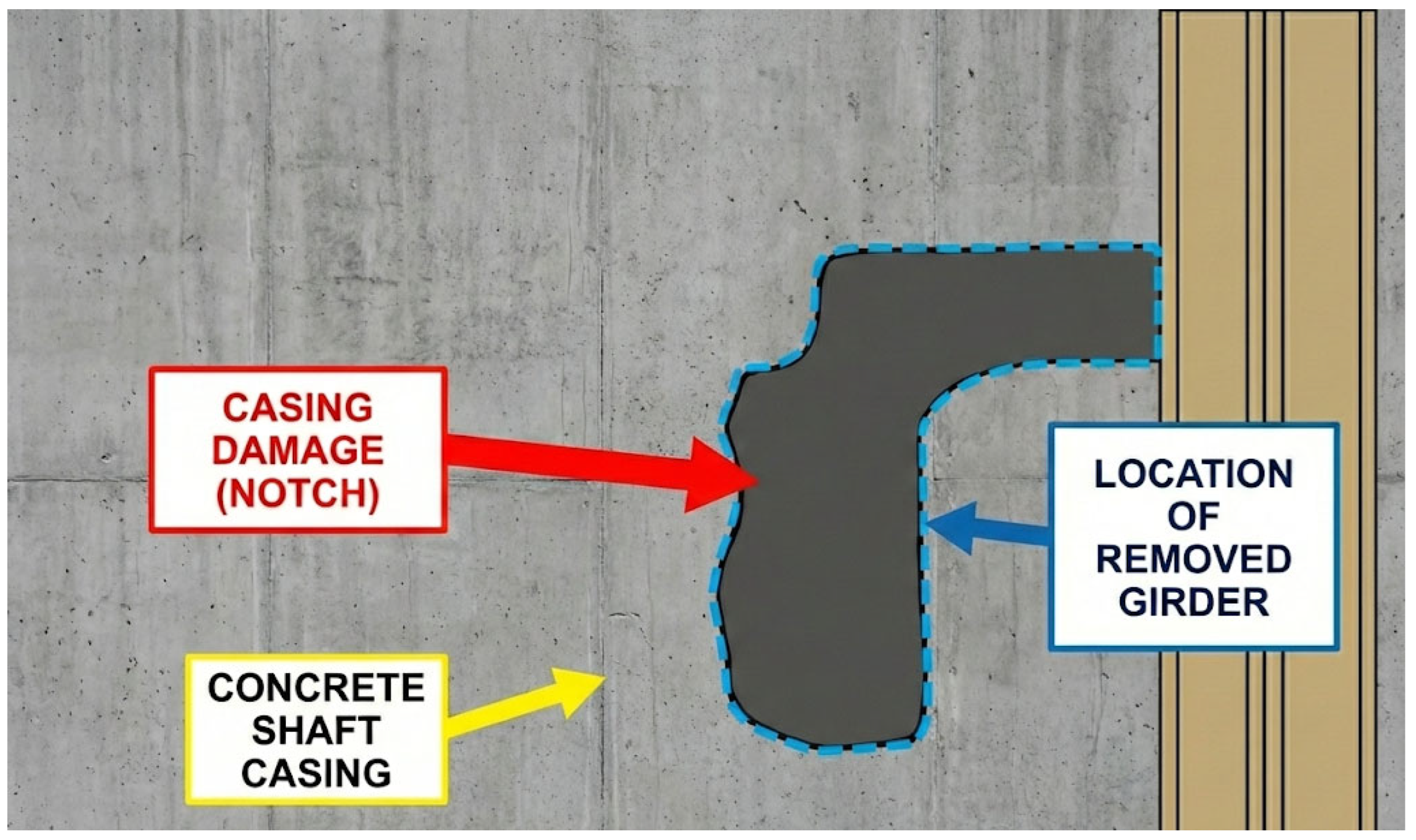
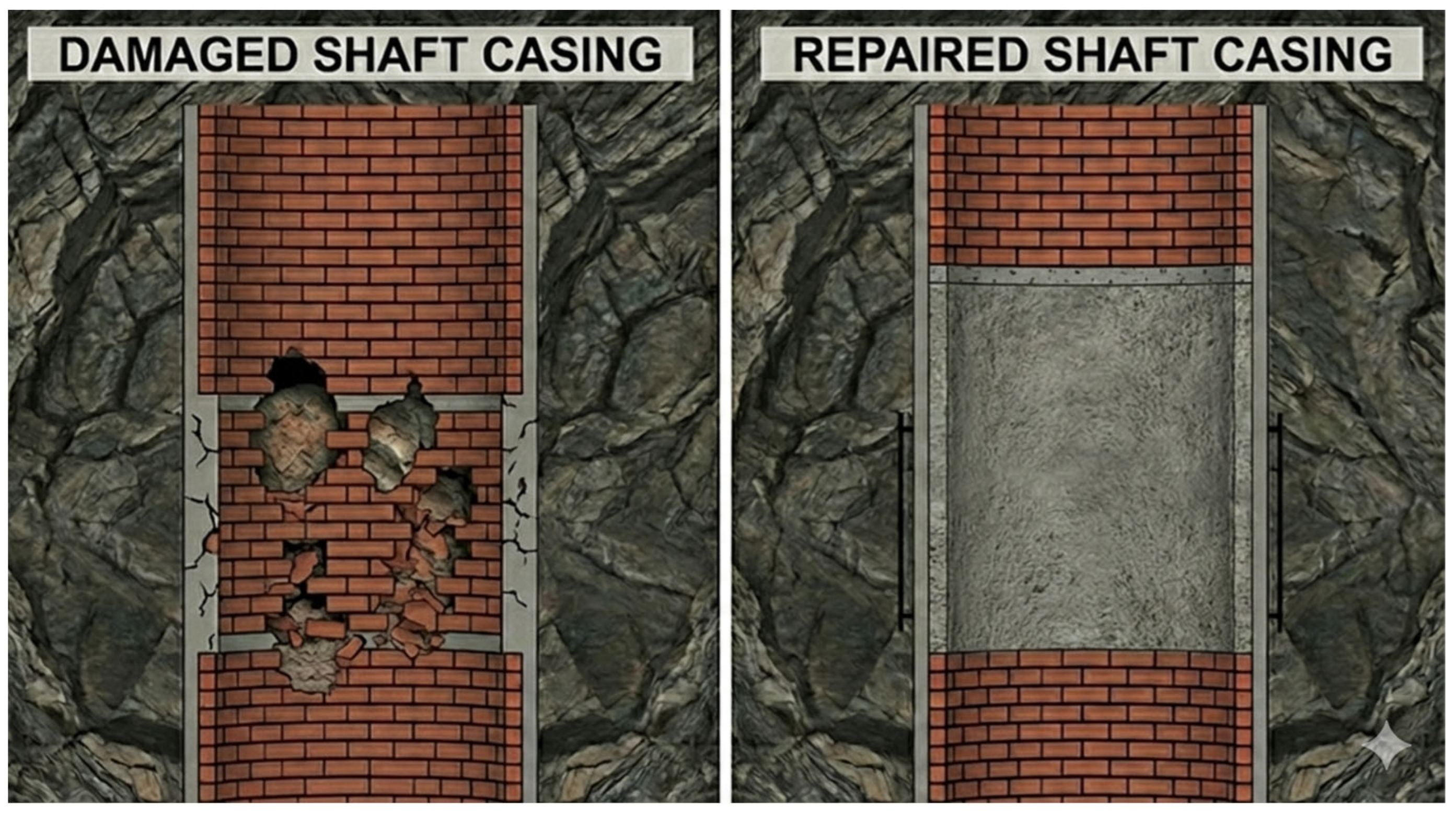
Figure 7 shows the loss of casing material after the disassembly of girders. This process must be completed, followed by the reconditioning of affected parts of the casing before it is strengthened and sealed as part of the adaptation for energy storage, if necessary. The process of removing girders and guides from the shaft is a natural step in shaft decommissioning. This process is well known and successfully performed in decommissioning works. Renovation of the shaft casing, consisting of filling the gaps left by the aforementioned elements, is also a commonly used practice in shaft works.
Figure 8 shows the differences in the equipment of individual types of mining shafts. Black marks indicate the places where the equipment elements are inserted into the casing, which after the disassembly of these elements will require filling of the notches.
Based on the above data, three sub-criteria related to the type of shafts show in
Table 3 were adopted for the preliminary analysis. The ventilation shaft receives 10 points, while shafts intended for transporting crew and excavated material receive 1 point.
2.2.2. Parameter of Shaft Casing Quality
This parameter is calculated on the basis of the consumption of the material (shotcrete) [
29,
30,
31] needed to strengthen and repair the fragments of the shaft casing that require reconditioning. It is assumed that the performance of work related to disassembly of shaft equipment elements, and thus the repair of the casing defects caused by the removal of infrastructure integrated with the casing, are included in the shaft type parameter (
Section 2.2.1).
The basis for estimating the total area of the surfaces requiring reinforcement should be done by the inspection carried out before the commencement [
35,
36] of decommissioning works or the result of the last technical inspection of the shaft, which in accordance with Polish law takes place every 5 years.
To calculate the parameter of restoration of the condition of the casing, the volume of cubic meters of shotcrete required to strengthen the casing must be calculated. The procedure involves inspecting the shaft casing [
37] to determine the length of shaft that requires reinforcement (m
max). Subsequently, the volume of a cylinder V
f (whose radius r is equal to the radius of the shaft pipe) and the volume of the cylinder V
nf (whose radius is smaller than the shaft pipe by a layer of planned shotcrete) are calculated. The difference represents the material demand, as schematically illustrated in
Figure 9.
On the basis of the above analysis, three sub-criteria related to the quality of the shaft lining were adopted for the preliminary analysis of the shafts, as presented in
Table 4.
2.2.3. Parameter of Sealing Inlets on the Shaft
Determining the feasibility of adaptation of the shaft for compressed air storage involves estimating the costs of plugging the shaft inlets (stations). The technology of plugging shaft inlets is commonly used during mine decommissioning processes. A dam constructed at each inlet allows for the isolation of the shaft from other workings, thereby reducing water and gas inflows and sealing the entire reservoir.
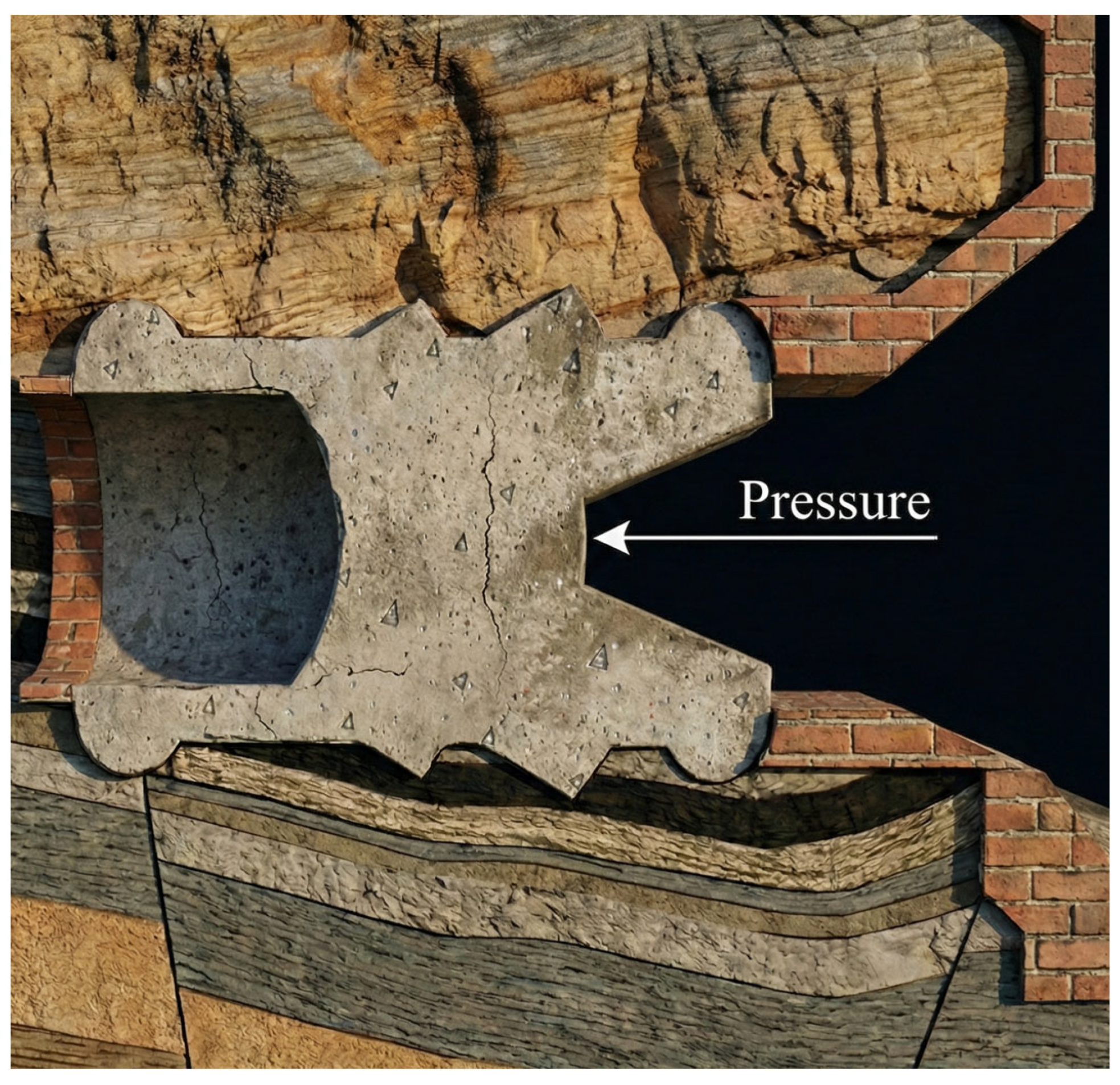
For the purpose of adapting existing infrastructure, it is assumed that multi-segment water dams with a pyramid-shaped segment structure must be used. This is due to the fact that the system operates at pressures exceeding 0.5 MPa. The share of costs in this area, as in the case of shaft casing renovation, is estimated based on material costs. The structure of such a dam is presented in
Figure 10.
Calculation of the size of a water dam such as in
Figure 9 on the example of the shaft discussed in the geometric parameter should be considered for the working pressure of the dam above 0.5 MPa, therefore all calculations of the parameters of this dam should be assumed as for concrete pyramid dams. The calculations are carried out as for two cylinders inscribed in the dam at right angles [
38].
The thickness of a concrete pyramid dam should be calculated in centimeters according to Equation (2).
The inner radius r (in the horizontal cross-section) of the dam should be taken for rocks with a strength of:
- -
below 30 MPa r = 2.0 a,
- -
above 30 MPa r = 1.5 a.
The inner radius r (in the vertical cross-section) should be taken for rocks with strength:
- -
below 30 MPa r = 2.0 b,
- -
above 30 MPa r = 1.5 b.
The angle of inclination of the dam retaining planes to the roadway axis should be assumed for rocks with compressive strength:
- -
below 30 MPa = 15°,
- -
above 30 MPa α/2 = 20°.
The thickness of the pyramid dam (dt) should be checked at:
- -
shearing according to Formula (3)
- -
pressure on the rock according to Formula (4)
where
b—the height of the excavation in the breach, cm;
—calculated shear strength value of the dam material according to the standard
—allowable compressive stress for rocks, MPa;
l = 2(a + b)—dam circuit, cm.
Depending on the size of the dammed excavation and the exact working pressure of the storage, it is possible to achieve a dam thickness of over 250 cm for one segment. In this case, a multi-resisting dam should be used. Its thickness should be calculated using Formula (5):
where:
N—the number of dam steps (i.e., the number of retaining planes, or the number of notches around the circumference).
The thickness of a multi-stage pyramid dam should be checked with the parameter:
- -
shearing of the dam and rock mass structure material according to Formula (6):
- -
pressure on the rock according to Formula (7):
The total thickness of a multi-stage retaining dam should be calculated using the formula
using Equation (8):
where
c—the distance between retaining notches (single dams placed one behind the other) depends on the type of rocks and is:
- -
80 cm for rocks with a strength of up to 20 MPa,
- -
50 cm for rocks with a strength above 20 MPa.
The calculation procedure presented above allows for determining the volume of concrete required to seal the shaft station inlets. In this section, basic and publicly available data listed below are used to calculate the volume of the dam, thereby estimating the material consumption:
- -
type of casing,
- -
height of the inlets casing,
- -
width of the enclosure,
- -
type of rocks and their parameter,
- -
pre-approved type of concrete for the construction of the dam,
Based on this data, it is possible to correlate the costs of repairing the shaft lining with the costs of damming the shaft stations. This procedure enables the proper selection of parameters for individual structural aspects.
On the basis of the above calculations, three criteria related to the installation of plugs in the shafts were adopted for the preliminary analysis. A small volume of plugs requiring less than 450 m
3 of concrete is considered optimal. An average volume falls between 450 m
3 and 1000 m
3, while a large volume, exceeding 1000 m
3, indicates significant capital expenditures The scoring system is presented in
Table 5.
2.3. Hydrogeological Parameters
Shafts in hard coal mines are exposed to natural geological and hydrogeological factors adversely affecting their condition. A serious source of threat to the stability of the shaft is the chemical and, above all, mechanical effect of groundwater presence. This threat results not only from the amount of water inflow to the shaft, but also from the possibility of mechanical suffosia. This phenomenon causes erosion of fine grains and clay particles by water, especially from the layers of overburden directly surrounding the shafts. Over time, it leads to creating voids and changes in the support of shaft casing by the rock mass. Voids behind the shaft lining may cause damage to the shaft casing and, as a consequence, formation of surface-type sinkholes threatening the stability of the infrastructure in its vicinity. In addition, they prevent the counteracting tensile stresses acting on the shaft pipe under the operating conditions of the compressed air storage. Another threat from groundwater is the possible content of aggressive compounds that can accelerate corrosion of the casing and equipment inside the shaft. It is important to note that specific geological hazards typical for other regions, such as karst phenomena or natural seismic activity, were excluded from the scoring algorithm as non-discriminatory factors for the analyzed dataset. The Upper Silesian Coal Basin consists primarily of Carboniferous clastic rocks resistant to karst processes. Furthermore, since the study targets inactive mines where exploitation has ceased, anthropogenic mining tremors are eliminated, and the shafts are protected by safety pillars. Therefore, the analysis focuses on the most relevant variable risks: water inflow, suffosion, and chemical aggressiveness.
2.3.1. Water Inflow Parameter
To estimate the impact of hydrogeological conditions on the feasibility of establishing a compressed air energy storage facility in a decommissioned mine shaft, the water inflow rate must be analyzed. This parameter depends on the tightness and integrity of the shaft lining as well as the hydrogeological conditions of the surrounding rock mass. Permanent inflows with a low flow rate (in the order of n·10
−2 m
3/min can be managed on an ongoing or cyclical basis using appropriate pumping systems. While larger inflows are technically removable, they entail increased costs and operational difficulties regarding the maintenance of drainage infrastructure. Since the basic concept of the storage facility assumes full airtightness, water ingress into the shaft must be effectively stopped. The complexity of this sealing operation results directly from the volume of inflowing water. The classification of inflow rates is presented in
Table 6. As indicated, significant groundwater inflows—potentially exceeding 600 dm
3 (liters) per hour—may occur. For the purpose of this assessment, the scoring is defined as follows: a dry shaft is awarded 10 points, a shaft with an inflow not exceeding 10 dm
3 (liters) per minute receives 6 points, and a shaft with significant inflow (above 10 dm
3 (liters) per minute) receives 1 point.
2.3.2. Suffosion Phenomenon and Rock-Lining Contact Quality
The presence of voids behind the shaft lining constitutes a critical structural risk, potentially leading to shaft deformation and the formation of sinkholes on the surface that threaten the stability of the surrounding infrastructure. This phenomenon is often driven by suffosion processes—the erosion of fine soil particles—or inadequate backfilling during construction. In the specific context of using a mine shaft as a Compressed Air Energy Storage (CAES) reservoir, the continuity of the contact between the lining and the rock mass is of paramount importance. Under operating conditions, the high internal pressure of the stored gas generates significant circumferential tensile stresses within the shaft pipe. Since concrete and masonry linings exhibit low tensile strength, the design relies on the surrounding rock massif to provide passive confinement. A solid interface allows the radial load to be effectively transferred to the rock, thereby utilizing the natural strength of the geological formation to counteract the internal pressure. Conversely, the presence of voids decouples the lining from the rock mass, leaving the casing unsupported and vulnerable to tensile failure or buckling. To assess this parameter, non-invasive geophysical methods such as Ground Penetrating Radar (GPR) or seismic tomography should be employed. These Non-Destructive Testing (NDT) techniques allow for a rapid and precise evaluation of the rock mass condition and the quality of the backfill behind the support, without compromising the structural integrity of the shaft. For this assessment, the scoring criteria presented in
Table 7 were used.
2.3.3. Hydrogeochemical Aggressiveness of Groundwater
Water infiltration into the shaft space constitutes one of the most severe threats to the long-term structural integrity of the lining. Unlike typical civil engineering environments, groundwater in mining areas is often characterized by extreme mineralization and acidity, resulting from the oxidation of sulphide minerals (e.g., pyrite) in the rock mass. This leads to the formation of Acid Mine Drainage (AMD), which acts aggressively on the cement binder matrix.
The degradation process is complex and proceeds through several simultaneous chemical mechanisms. Firstly, soft waters or waters with low pH cause leaching corrosion (dissolution of calcium hydroxide Ca(OH)
2), which reduces the alkalinity of the concrete and exposes the reinforcing steel to corrosion. However, in deep shafts, the dominant threat is often the presence of sulfate. Sulfate ions (SO
42−) present in mine brines penetrate the porous structure of the concrete, reacting with hydrated aluminates to form expansive mineral phases such as ettringite (Candlot’s salt) and gypsum. The crystallization of these compounds leads to a volume increase of up to 168%, generating internal tensile stresses that rupture the concrete structure from the inside. As noted in recent mining engineering studies, this phenomenon frequently leads to the spalling of the shaft lining cover and a critical reduction in its load-bearing capacity [
39]. Normative Assessment and Classification to accurately determine the aggressiveness of the environment towards the shaft pipe lining, a dual-standard approach was adopted. First, the water composition is interpreted in accordance with the Polish national standard PN-80/B-01800 [
40], and Polish-European standard PN-EN 206 [
41], which classifies aggressiveness based on the concentration of specific corrosive ions and water parameters. The detailed classification criteria for these standards are presented in
Table 8 and
Table 9.
Baseing on the data compiled in the tables above, a quantitative scoring system is proposed to evaluate the risk level for the shaft storage facility:
10 points: Attributed to water with low aggressiveness. This corresponds to classes la1 or la2 (acc. to
Table 8) or exposure class XA1 (acc. to
Table 9). In this state, standard concrete protection is usually sufficient.
6 points: Attributed to water with medium aggressiveness, corresponding to class ma or XA2. This condition requires the use of concrete with increased durability parameters.
1 point: Attributed to water with high aggressiveness, corresponding to class ha or XA3. This score indicates a critical environment where severe degradation is expected, necessitating the use of specialized sulphate-resistant cements (HSR) and additional isolation barriers.
3. Results
A national inventory of 228 active or non-decommissioned shafts was screened to identify candidates for a shaft-based A-CAES concept with integrated thermal-energy storage. Applying the geometric pre-selection criteria (shaft depth > 800 m and diameter > 7.5 m) reduced the dataset to 52 shafts that satisfy the minimum dimensional requirements for the assumed system configuration. This down-selection transforms a broad, heterogeneous inventory into a shortlist suitable for staged verification and early project development.
The shortlisted shafts (
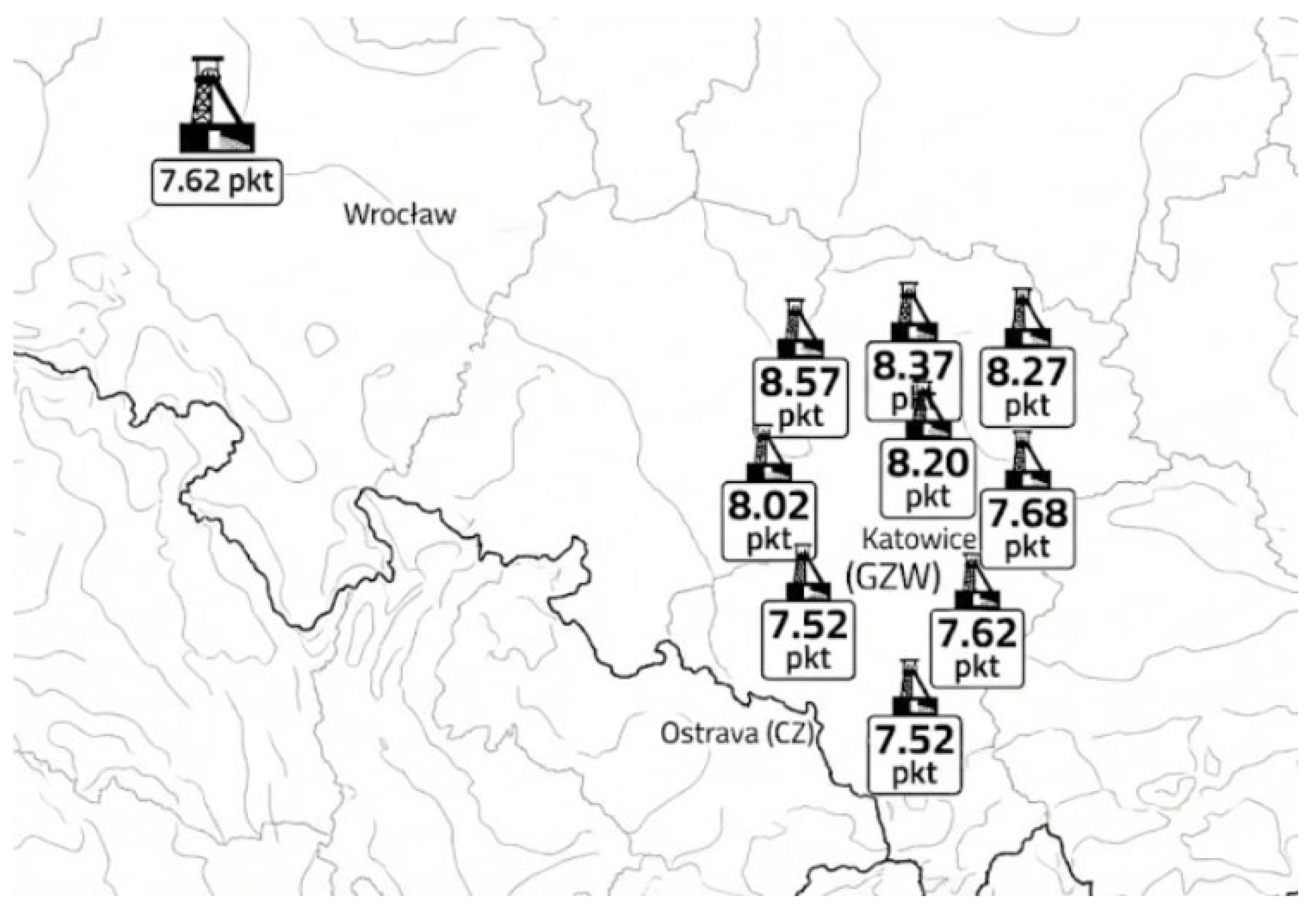
Table 10) were ranked using the proposed MCDA framework comprising eight criteria grouped into geometry (50% total weight), casing condition (30%), and hydrogeology (20%). The ranking differentiates shafts that meet the geometric thresholds but exhibit adverse conditions (e.g., inflows, indicators of suffosion/voids behind the lining, or increased adaptation effort reflected by the shaft type and estimated repair/sealing scope). The highest-ranked shaft (S-21; 1210 m depth; 8.5 m diameter) achieved the maximum overall score of 8.57, while the remaining top ten shafts scored between 7.52 and 8.57 (mean 7.94), indicating that the leading candidates form a relatively narrow performance band rather than a single dominant outlier.
Thermodynamic modeling of the A-CAES system indicated that the total energy-storage potential for the 52 shortlisted shafts amounts to approximately 4439 MWh, with an average value of 85 MWh per shaft. The energy capacities of the diabatic CAES plants in Huntorf and McIntosh are 642 MWh and 2640 MWh, respectively. For comparison, the capacities of pumped-storage power plants in Poland, located in Żarnowiec and Międzybrodzie Bialskie, are 3800 MWh and 2000 MWh, respectively [
42]. The proposed concept of utilizing decommissioned mine shafts therefore exhibits a lower average potential than existing large-scale energy storage systems in Poland and worldwide. Nevertheless, its distinct advantage lies in the possibility of constructing several independent systems that may differ in terms of the anticipated duration of individual cycle stages. It should be emphasized, however, that the obtained energy capacity represents a theoretical value derived under the assumption that the usable volume of the mine shafts is reduced solely by the volume of the thermal energy storage unit (Equation (1)). In practice, it is necessary to account for, among other elements, sealing infrastructure, which was described and modeled in detail by Waniczek [
22]. Based on these calculations, the final technical energy storage potential is estimated at approximately 4100 MWh in total for all 52 shortlisted mine shafts in Poland.
The resulting ranked shortlist and capacity estimates provide a basis for prioritizing detailed documentation review, non-destructive inspection, hydrogeological confirmation, and subsequent thermodynamic/geomechanical analyses for the highest-ranked candidates.
4. Discussion
The results confirm that geometry alone is insufficient to identify feasible shaft candidates for A-CAES. Although meeting the depth and diameter thresholds is necessary, the MCDA ranking shows that hydrogeological and casing-related factors can materially reduce feasibility even for large shafts. Practically, this means that early-stage decision making should treat the shortlist as an engineering risk filter; capacity potential must be evaluated alongside water-related constraints and indicators of voids behind the lining, which may affect both operational requirements (pumping/sealing) and structural behavior under cyclic pressurization.
The narrow spread of scores among the top ten shafts (7.52–8.57) suggests that multiple candidates are competitive and that final selection should not rely on rank alone. Instead, the MCDA output is best used to structure a staged verification pipeline: (1) confirm specific case documentation and current lining state; (2) verify voids and rock–lining contact quality using rapid non-destructive methods; and (3) validate hydrogeological conditions and water aggressiveness classification. This approach reduces uncertainty in the most influential non-geometric criteria before committing to detailed design.
The method has limitations typical of national-scale screening. Several criteria are necessarily represented by proxies and discretized scores (e.g., repair/sealing scope inferred from material volumes and shaft type). The discrete scoring system was deliberately selected to avoid the ‘false precision’ fallacy inherent in heterogeneous archival datasets, prioritizing robust categorization into quality tiers over sensitive linear ranking. The presented ranking should therefore be interpreted as a prioritization tool rather than a definitive feasibility statement; sensitivity checks on weights and thresholds are recommended to ensure that the highest-ranked shafts remain robust under plausible changes in decision priorities. Similarly, the aggregated storage potential (~4.1 GWh) is a technical estimate derived from shaft volumes and assumed system parameters; site-specific pressure envelopes, leakage pathways, and operational optimization will refine this value at the feasibility stage. Location of shafts with highest scoring in the region under assessment is shown in
Figure 11. Unlike studies focusing on post-mining reclamation in Germany or the UK, which predominantly deal with flooded infrastructure or gravity-based concepts, this study addresses the unique potential of dry, accessible shafts available in the active Polish coal mining sector that require distinct evaluation framework for leak/air tightness.
Overall, the study demonstrates that a transparent MCDA-based screening can preserve optionality in shaft decommissioning by identifying high-value assets for further verification, rather than default irreversible backfilling. In this sense, the principal contribution is not a single “best shaft,” but a reproducible process for narrowing the candidate set and directing follow-up investigations to where they are most likely to succeed.




 ,
,