Comprehensive Review of Phase Change Materials for Building Applications: Passive, Active, and Hybrid Systems (2022–2025)




Abstract
1. Introduction
2. State-of-the-Art Covering the Period 2022–2025
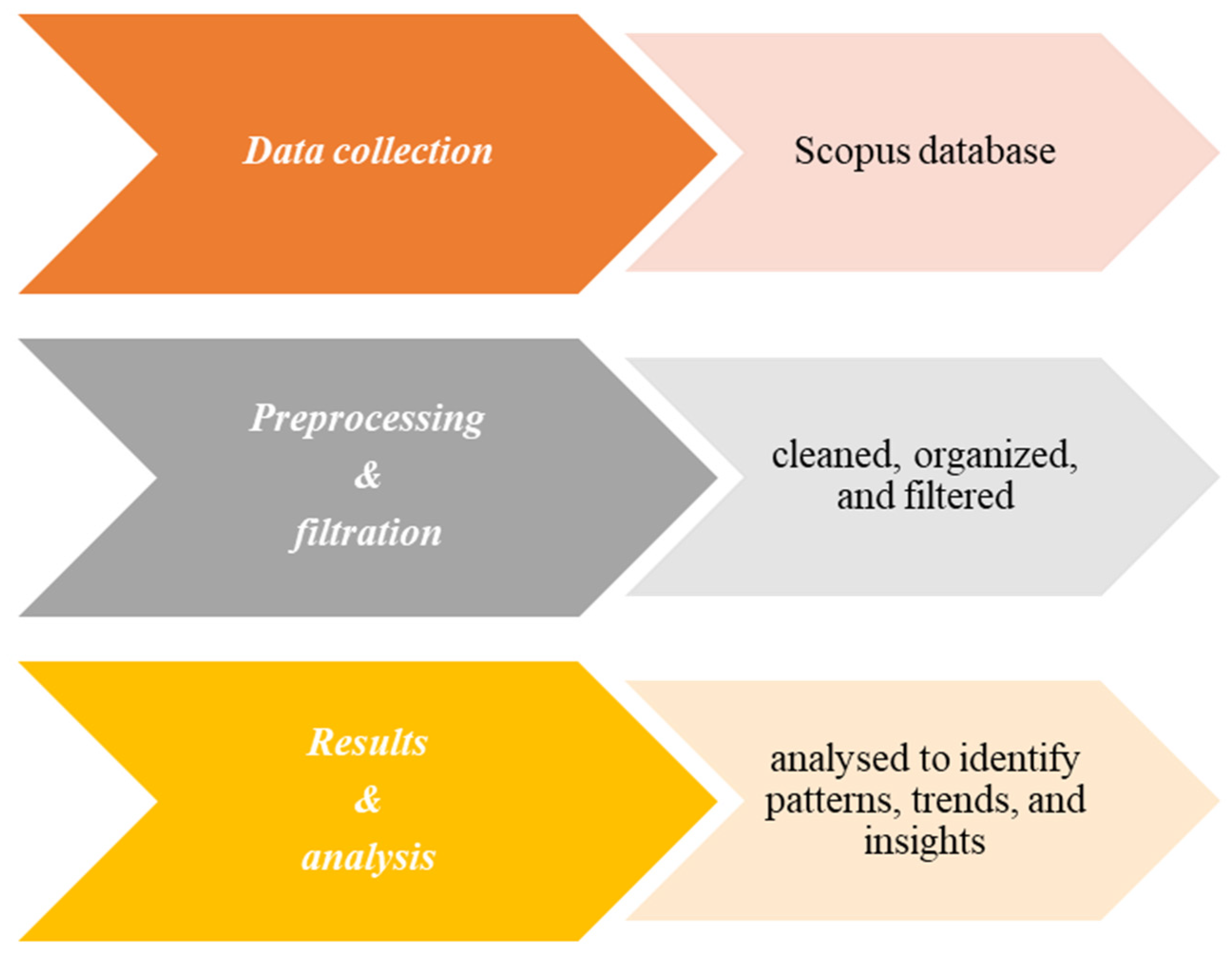
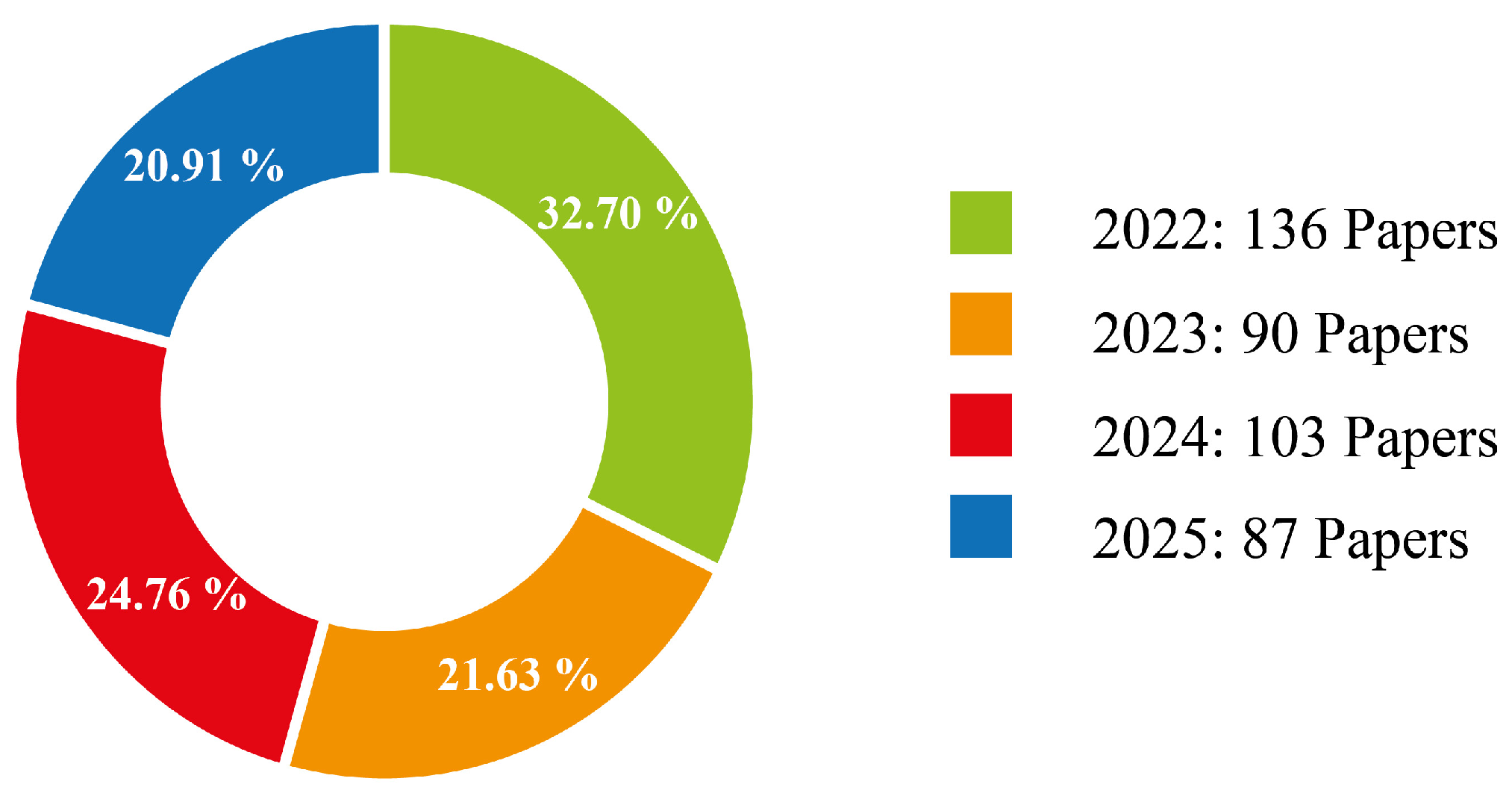
3. Methodology
4. Phase Change Materials Classification and Properties
- a.
- Organic PCMs
- b.
- Inorganic PCMs
- c.
- Eutectic Mixtures and Enhanced Systems
- d.
- Thermal Conductivity Enhancement Technologies
5. Current State of Knowledge of the Integration of PCMs in Buildings
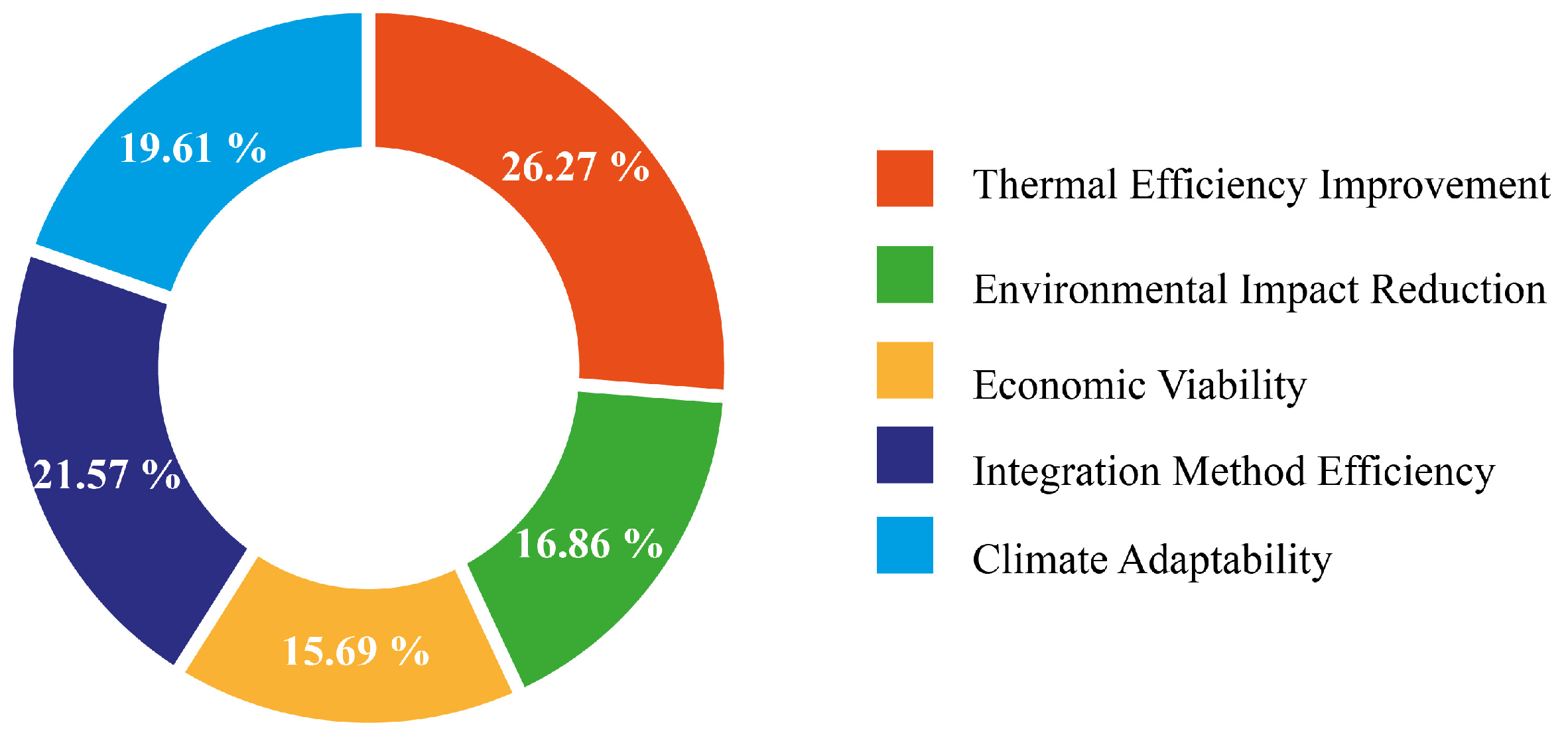
5.1. Methodological Influence on Performance Variability

| Reference | Thermal Efficiency Improvement | Environmental Impact Reduction | Economic Viability | Integration Method Effectiveness | Climate Adaptability |
|---|---|---|---|---|---|
| [55] | Enhanced heat transfer via macro-encapsulation in bricks and wallboards | Promotes sustainability with renewable energy integration | Economic viability linked to novel heat exchanger designs | Macro-encapsulation used; topology optimization improves heat transfer | Suitable for passive and active systems in diverse climates |
| [56] | Improved indoor climate and energy consumption with passive and active PCMs | Addresses CO2 reduction potential in building applications | Economic challenges discussed with future prospects | Various integration methods including walls, roofs, and windows | Applicable across multiple building components and climates |
| [57] | Focus on experimental thermal energy storage applications | Limited studies on environmental impact; LCA scarce | Cost analysis limited; payback periods | Emphasis on thermal energy storage; integration methods varied | Research gaps in tropical and cold climates noted |
| [58] | Significant thermal performance improvements in walls, roofs, and floors | Environmental benefits through energy demand reduction | Market availability of certified PCM products | Diverse incorporation methods including mortars and bricks | Wide climatic applicability with emphasis on energy savings |
| [59] | Increased comfort hours and reduced energy consumption | Climate conditions critical for PCM selection | Economic feasibility linked to multi-objective optimization | Incorporation in constructive systems; focus on tropical climates | Emphasis on tropical and humid regions for PCM use |
| [60] | Thermal regulation in HVAC and passive design | Environmental benefits via reduced energy use | Cost-effectiveness discussed with nano-enhancements | Micro-encapsulation and hybrid solutions explored | Broad climate applicability with tailored PCM types |
| [61] | Up to 32.2% energy savings in arid climates | CO2 reduction up to 12,094 kg/year in warm temperate zones | Payback period as low as 7 years | Optimized PCM integration in mid-rise apartments | Performance evaluated across 15 climate zones globally |
| [62] | Ceiling cooling reduces room temperature by 3.2 °C | Environmental impact reduced by up to 36% | Cost reduction up to 92% compared to mechanical cooling | Passive and active systems combined with fans and coolers | Hot–dry climate focus with ventilation scenarios |
| [63] | Electrical efficiency increased by up to 13.3% in PVT-PCM hybrid | Carbon emissions reduced by 32% | Payback period of 1.58 years | Water-based PCM capsules in hybrid solar systems | Year-round performance in hot–dry climate (Cairo) |
| [64] | Peak temperature reductions of 1–9 °C in various components | Energy savings up to 59% in roofs and walls | Economic impacts vary with encapsulation and PCM type | Encapsulation dominant; dopamine-coated capsules improve durability | South-facing walls and roofs optimized for climate |
| [65] | PCM integration reduces energy consumption in walls and roofs | Thermal comfort improved in light weight constructions | Economic benefits noted; payback periods vary | Direct incorporation and encapsulation methods compared | Impact of climatic conditions considered in the envelope design |
| [66] | Energy reductions from 14 to 90% with passive PCM cooling | Environmental benefits through reduced cooling loads | Scalability and cost challenges under investigation | Passive cooling enhanced by solar control and ventilation | Effective in hot climates with nocturnal radiative cooling |
| [67] | Cooling/heating load reductions and thermal comfort improvements | Environmental impact discussed with energy savings | Economic viability linked to PCM properties and location | Incorporation techniques and modeling approaches reviewed | Emphasis on roof and exterior wall applications |
| [68] | Increased comfort hours and energy savings in tropical climates | Climate conditions critical for PCM selection | Multi-objective simulations optimize cost and performance | Incorporation and application criteria analyzed | Tropical and humid climates prioritized |
| [69] | Solar PCM systems improve indoor heating/cooling efficiency | Environmental benefits tied to renewable energy use | Payback periods range from 6 to 30 years | Active heat exchangers preferred over passive systems | Hybrid systems for commercial buildings emphasized |
| [70] | Heating and cooling energy savings up to 54% and 50% | Reduced CO2 emissions with radiant systems | Payback periods as low as 3.32 years | Integration with radiant heating/cooling systems | Limited studies on dual-mode systems; future research needed |
| [71] | Heating load reduced by 24%, and cooling by 12% with PCMs | CO2 emissions reduced by nearly 50% with PV and PCM | Combined PV and PCM systems maintain energy balance | PCM on walls and ceilings with/without PV panels | Case study in Tehran with mixed climate effects |
| [32] | Cooling load reduced by 52% using PCM and insulation | GHG emissions decreased by 39% in semiarid climate | Economic analysis not detailed | PCM combined with recycled textile insulation | Semi-arid climate focus with bioclimatic design |
| [72] | Energy consumption mitigated using PCM and double-skin façades | Climate change scenarios considered for environmental impact | Economic aspects not deeply analyzed | BIM and EnergyPlus used for PCM and façade integration | Office buildings in Iran under future climate scenarios |
| [73] | Thermal comfort improved in hot climates; limited cold climate data | Limited GHG emission reduction evidence; VOC emissions noted | Economic analysis sparse; health impact studies lacking | PCM integration effects on indoor air quality reviewed | Diverse climates studied; gaps in cold regions identified |
| [74] | PCM bricks reduce indoor temperature fluctuations | Energy savings and construction cost analyzed | Lack of high-precision simulation methods | Form stabilization and macro-encapsulation dominant | Ventilation and insulation combined with PCM bricks |
| [75] | PCM in brick walls reduces energy consumption and temperature swings | CO2 emissions decreased with PCM brick integration | Economic viability linked to PCM type and quantity | Various integration techniques in brick walls reviewed | Promising for diverse climates with brick construction |
| [76] | PCM reduces indoor temperature by ~4.5 °C in photovoltaic systems | Thermal load leveling decreased by up to 7% | Economic benefits from improved PV output | PCM integrated with building-integrated photovoltaics | Inclined roofs preferred for cyclic PCM performance |
| [77] | PCM-incorporated cementitious materials reduce thermal swings | Environmental benefits through energy savings | Negative impacts on mechanical properties noted | Direct incorporation, encapsulation, and admixture compared | Challenges in durability and commercial viability |
| [78] | Bio-based PCMs reduce conditioning loads in moderate climates | Lifecycle carbon emissions vary; recycled bio-PCMs are promising | Economic barriers and usage limitations discussed | Passive thermal storage with bio-based PCMs | Moderate climates favored; research gaps in lifecycle impacts |
| [79] | 84.3% primary energy reduction with solar PCM geothermal system | Operating costs reduced by 79.7% | Payback period of 8.7 years despite higher installation cost | Innovative self-learning control with PCM storage | Moderate continental climate with renewable integration |
| [80] | PCM contributes to significant energy savings in buildings | Environmental benefits include reduced carbon footprints | Cost–benefit analyses highlight PCM advantages | PCM among advanced materials for sustainable buildings | Broad applicability across building types and climates |
| [81] | Cementitious composites with PCM improve thermal regulation | Environmental impact linked to reduced energy use | Mechanical strength and durability challenges | Direct incorporation and encapsulation methods evaluated | Building applications with experimental and modeled studies |
| [82] | PCM-enhanced insulation materials reduce energy consumption | Environmental focus on sustainable insulation development | Economic aspects of insulation materials discussed | PCM combined with insulation foams and panels | Historical and innovative materials for diverse climates |
| [83] | PCM applications improve energy efficiency across industries | Environmental benefits include carbon emission reductions | Economic feasibility varies by application sector | Diverse PCM technologies and enhancements reviewed | Building sector among key application areas |
| [84] | PCM integration delays heat peaks and reduces thermal fluctuations | Environmental concerns include fire hazards and toxicity | Higher initial costs balanced by energy savings | Macro-encapsulation and micro/nano-encapsulation compared | Hybrid technologies enhance climate adaptability |
| [85] | Energy savings up to 85.3% with PCM and controlled ventilation | Carbon emissions reduced by up to 42,004 kg CO2/year | Payback period as short as 5 years in temperate climates | Controlled natural ventilation enhances PCM effectiveness | Performance evaluated across 45 cities and 15 climate zones |
| [86] | Energy savings up to 38% with optimized PCM parameters | Economic viability linked to PCM cost thresholds | Orientation and location critical for cost effectiveness | Roof and wall PCM distribution prioritized | China–Japan comparison highlights climate-specific suitability |
| [87] | Energy consumption and CO2 emissions reduced up to 48% and 53% | Lifecycle cost savings up to 30% | Optimization balances energy, cost, and emissions | PCM melting temperature, thickness, and location optimized | Tropical climates with diverse wall types analyzed |
| [88] | Energy savings up to 18.7% with optimal PCM wall boards | CO2 reductions up to 38% for natural gas | Payback periods vary with PCM properties and climate | PCM melting temperature and transition range critical | U.S. cities with diverse climates studied |
| [89] | PCM delays peak temperature time in high-temperature envelopes | Energy efficiency improved by reducing cooling demand | Selection of PCM critical for high-temperature climates | Insulation density and thermal conductivity influence | Challenges in extreme heat environments addressed |
| [31] | PCM moderates indoor temperature fluctuations effectively | Environmental benefits include reduced carbon emissions | Cost–benefit analyses support PCM adoption | Macro-encapsulation prevalent; nano-enhancements explored | Diverse climates and building types considered |
| [90] | Thermal performance enhanced with BioPCM in moderate climates | GHG emissions reduced significantly with PCM use | Payback period estimated at four years | PCM thickness and placement optimized | Moderate and hot–dry climates compared |
| [91] | Bio-based and paraffin PCMs reduce cooling energy demand | Energy savings depend on PCM placement and thickness | Optimal PCM thickness varies; economic analysis limited | External envelope integration studied | Case study in Iran with cooling and heating systems |
| [92] | Indoor temperature reduced by 2–3 °C with PCM composite | Energy consumption reduced by up to 33.4% in summer | Economic and environmental benefits demonstrated | PCM positioned on roof and walls | Small-scale room model with seasonal analysis |
| [93] | PCM reduces indoor temperature fluctuations and energy demand | Environmental benefits through load reduction and shifting | Thermal conductivity limitations addressed with fillers | Nano/micro-fillers improve PCM thermal conductivity | Passive cooling focus with thermal energy storage |
| [94] | R-value increased by 84.9% with PCM-enhanced walls | Indoor discomfort hours reduced by 15.8% annually | Simulation indicates cost effectiveness | Biocomposite PCM with 20 mm thickness used | Hot and humid climate simulation in India |
| [95] | Macro-encapsulation in facades improves thermal comfort | PCM performance varies with climate and placement | Limitations of PCM types analyzed for Indian climates | Macro-encapsulation is dominant in façade applications | Indian cities with diverse climates compared |
| [96] | Annual energy savings between 11 and 13.4% with PCM | Cooling and heating loads significantly reduced | PCM selection critical for Mediterranean climates | PCM integrated into building envelopes | Coastal Mediterranean climate case study |
| [97] | PCM placement reduces temperature and humidity fluctuations | Heat and moisture loads decreased by up to 69.6% | Energy efficiency improved with optimized PCM placement | Bio-based PCM in concrete structures | Performance optimized for summer and winter |
| [98] | Mortars with form-stable PCMs mitigate indoor temperature swings | Heating and cooling cost reductions demonstrated | Sustainable PCM development using waste materials | PCM incorporated in mortar formulations | Mediterranean climate simulated in climatic chamber |
| [99] | Heating savings up to 26.6%, cooling up to 17.5% with PCM | Overall energy reductions of 24.1% in retrofitting | PCM thickness and location influence payback | PCM applied to walls, ceilings, and combined | Mediterranean climate retrofit case study |
| [100] | Dynamic PCM–biomaterial walls reduce temperature fluctuations | Energy savings significant; moisture control improved | Multi-objective optimization balances cost and energy | Dynamic integration method enhances hygrothermal performance | Humid and temperate climates evaluated |
5.1.1. Thermal Efficiency Improvement
5.1.2. Environmental Impact Reduction
5.1.3. Economic Viability
5.1.4. Integration Method Efficiency
5.1.5. Climate Adaptability
6. Critical Analysis and Synthesis
7. Technical Integration of Passive, Active, and Hybrid Systems with PCM in Building
7.1. Passive Integration Systems
7.1.1. Wall System Applications
7.1.2. Roof and Attic Applications
7.1.3. Fenestration and Glazing Integration
7.2. Active Integration Systems
7.2.1. HVAC System Integration
7.2.2. Heat Pump Integration Systems
7.2.3. Air Handling Unit Enhancement
7.2.4. Thermal Energy Storage Systems
7.3. Hybrid Integration Systems
7.3.1. Combined Passive–Active Approaches
7.3.2. Intelligent Control Systems
7.3.3. Grid Integration and Demand Response
7.4. PV–PCM Integration for Building-Integrated Renewable Energy
8. Perspectives
9. Challenges
- a.
- Technical Limitations and Solutions
- b.
- Economic and Market Barriers
10. Conclusions
Author Contributions
Funding
Data Availability Statement
Conflicts of Interest
Abbreviations
| HVAC | Heating, Ventilation, and Air Conditioning |
| PCMs | Phase Change Materials |
| CPCMs | Composite Phase Change Materials |
| MILP | Mixed-Integer Linear Programming |
| AHUs | Air Handling Units |
| COP | Coefficient of Performance |
| BioPCM | Biocomposite Phase Change Materials |
| MPC | Model Predictive Control |
| SDG | Sustainable Development Goal |
| UN SDGs | United Nations’ Sustainable Development Goals |
| SDG 7 | Affordable and Clean Energy |
| SDG 11 | Sustainable Cities and Communities |
| SDG 13 | Climate Action |
References
- Tellache, A.; Lazri, Y.; Laafer, A.; Attia, S. Development of a Benchmark Model for Residential Buildings with a Mediterranean Climate: The Aero-Habitat in Algiers City. Sustainability 2025, 17, 831. [Google Scholar] [CrossRef]
- International Energy Agence (IEA). Buildings. 2025. Available online: https://www.iea.org/energy-system/buildings (accessed on 24 June 2025).
- UNEP. 2022 Global Status Report for Buildings and Construction; United Nations Environment Programme: Nairobi, Kenya, 2022. [Google Scholar]
- IPCC. Climate Change 2022: Impacts, Adaptation and Vulnerability; IPCC: Cambridge, MA, USA, 2022. [Google Scholar]
- Gassar, A.A.A.; Cha, S.H. Energy prediction techniques for large-scale buildings towards a sustainable built environment: A review. Energy Build. 2020, 224, 110238. [Google Scholar] [CrossRef]
- Sharma, A.; Tyagi, V.V.; Chen, C.R.; Buddhi, D. Review on thermal energy storage with phase change materials and applications. Renew. Sustain. Energy Rev. 2009, 13, 318–345. [Google Scholar] [CrossRef]
- Farid, M.; Auckaili, A.; Gholamibozanjani, G. Thermal Energy Storage with Phase Change Materials: Research Contributions of Professor Mohammed Mehdi Farid in Four Decades, 1st ed.; CRC Press: Boca Raton, FL, USA, 2021; ISBN 978-0-367-56769-9. [Google Scholar]
- Cabeza, L.F.; Castell, A.; Barreneche, C.; De Gracia, A.; Fernández, A.I. Materials used as PCM in thermal energy storage in buildings: A review. Renew. Sustain. Energy Rev. 2011, 15, 1675–1695. [Google Scholar] [CrossRef]
- Tyagi, V.V.; Buddhi, D. PCM thermal storage in buildings: A state of art. Renew. Sustain. Energy Rev. 2007, 11, 1146–1166. [Google Scholar] [CrossRef]
- Foual, M.; Sad Chemloul, N.-E.; Chaib, K.; Abdellatif, H.E.; Fellague Chebra, A.; Belaadi, A.; Becheffar, Y.; Laafer, A. Comparative analysis of tube designs in heat exchangers: A numerical simulation study for enhanced thermal-flow efficiency, “optimizing wavy tubes bundle geometries for enhanced heat transfer in underwater applications”. Numer. Heat Transf. Part Appl. 2026, 87, 2369943. [Google Scholar] [CrossRef]
- Zhou, D.; Zhao, C.Y.; Tian, Y. Review on thermal energy storage with phase change materials (PCMs) in building applications. Appl. Energy 2012, 92, 593–605. [Google Scholar] [CrossRef]
- De Gracia, A.; Cabeza, L.F. Phase change materials and thermal energy storage for buildings. Energy Build. 2015, 103, 414–419. [Google Scholar] [CrossRef]
- Mehling, H.; Cabeza, L.F. Heat and Cold Storage with PCM: An Up to Date Introduction into Basics and Applications; Heat and Mass Transfer; Springer: Berlin/Heidelberg, Germany, 2008; ISBN 978-3-540-68556-2. [Google Scholar]
- Husainy, A.; Sawant, S.; Kale, S.; Amouri, A.; Pathan, H. Nano-Enhanced Phase Change Materials: A Novel Approach to Sustainable Refrigeration and Thermal Energy Storage. ES Gen. 2025, 7, 1408. [Google Scholar] [CrossRef]
- Zalba, B.; Marín, J.M.; Cabeza, L.F.; Mehling, H. Review on thermal energy storage with phase change: Materials, heat transfer analysis and applications. Appl. Therm. Eng. 2003, 23, 251–283. [Google Scholar] [CrossRef]
- Pasupathy, A.; Velraj, R.; Seeniraj, R.V. Phase change material-based building architecture for thermal management in residential and commercial establishments. Renew. Sustain. Energy Rev. 2008, 12, 39–64. [Google Scholar] [CrossRef]
- Lauermannová, A.-M.; Lojka, M.; Záleská, M.; Pavlíková, M.; Pivák, A.; Pavlík, Z.; Růžička, K.; Jankovský, O. Magnesium oxychloride cement-based composites for latent heat storage: The effect of the introduction of multi-walled carbon nanotubes. J. Build. Eng. 2023, 72, 106604. [Google Scholar] [CrossRef]
- Kurdi, A.; Almoatham, N.; Mirza, M.; Ballweg, T.; Alkahlan, B. Potential Phase Change Materials in Building Wall Construction—A Review. Materials 2021, 14, 5328. [Google Scholar] [CrossRef]
- Ryms, M.; Haustein, E.; Januszewicz, K.; Lewandowski, W.S.M. Impact of Phase Change Material with Postpyrolytic Char from Recycled Tires as a Carrier on the Properties of Cement Composites. J. Mater. Civ. Eng. 2025, 37, 04025252. [Google Scholar] [CrossRef]
- Ryms, M.; Januszewicz, K.; Haustein, E.; Kazimierski, P.; Lewandowski, W.M. Thermal properties of a cement composite containing phase change materials (PCMs) with post-pyrolytic char obtained from spent tyres as a carrier. Energy 2022, 239, 121936. [Google Scholar] [CrossRef]
- Darkwa, K.; O’Callaghan, P.W. Simulation of phase change drywalls in a passive solar building. Appl. Therm. Eng. 2006, 26, 853–858. [Google Scholar] [CrossRef]
- Castell, A.; Martorell, I.; Medrano, M.; Pérez, G.; Cabeza, L.F. Experimental study of using PCM in brick constructive solutions for passive cooling. Energy Build. 2010, 42, 534–540. [Google Scholar] [CrossRef]
- Kuznik, F.; David, D.; Johannes, K.; Roux, J.-J. A review on phase change materials integrated in building walls. Renew. Sustain. Energy Rev. 2011, 15, 379–391. [Google Scholar] [CrossRef]
- Tyagi, V.V.; Kaushik, S.C.; Tyagi, S.K.; Akiyama, T. Development of phase change materials based microencapsulated technology for buildings: A review. Renew. Sustain. Energy Rev. 2011, 15, 1373–1391. [Google Scholar] [CrossRef]
- Evola, G.; Marletta, L.; Sicurella, F. A methodology for investigating the effectiveness of PCM wallboards for summer thermal comfort in buildings. Build. Environ. 2013, 59, 517–527. [Google Scholar] [CrossRef]
- De Gracia, A.; Navarro, L.; Castell, A.; Ruiz-Pardo, Á.; Álvarez, S.; Cabeza, L.F. Thermal analysis of a ventilated facade with PCM for cooling applications. Energy Build. 2013, 65, 508–515. [Google Scholar] [CrossRef]
- Alrashdan, A.; Ghaleb, A.M.; Ahmad, K.H.; Daoud, A.N. Integration of Phase Change Materials in Service Areas of Building Envelopes for Improved Thermal Performance: An Experimental Study in Saudi Arabia. Buildings 2024, 14, 904. [Google Scholar] [CrossRef]
- Zotova, I.; Gendelis, S.; Kirilovs, E.; Štefanec, D. Thermal Performance of Lignocellulose’s By-Product Wallboards with Bio-Based Microencapsulated Phase Change Materials. Energies 2024, 17, 257. [Google Scholar] [CrossRef]
- Kong, X.; Fu, Y.; Yuan, J. Room-temperature flexible phase change material with high emissivity and high enthalpy for building energy saving. Renew. Energy 2024, 235, 121253. [Google Scholar] [CrossRef]
- Liu, B.; Lu, W.; Hu, X.; Zhang, C.; Wang, C.; Qu, Y.; Olofsson, T. Multiscale modeling of thermal properties in Polyurethane incorporated with phase change materials composites: A case study. arXiv 2023, arXiv:2308.13123. [Google Scholar] [CrossRef]
- Jha, S.K.; Sankar, A.; Zhou, Y.; Ghosh, A. Incorporation of Phase Change Materials in Buildings. Constr. Mater. 2024, 4, 676–703. [Google Scholar] [CrossRef]
- Imghoure, O.; Belouaggadia, N.; Zaite, A.; Ezzine, M.; Lbibb, R.; Sebaibi, N. Enhancing Energy Efficiency in Moroccan Construction through Innovative Materials: A Case Study in a Semiarid Climate. Buildings 2024, 14, 3087. [Google Scholar] [CrossRef]
- Hmida, A.; Erchiqui, F.; Laafer, A.; Bourouis, M. Energy Efficiency in Buildings Through the Application of Phase Change Materials: An In-Depth Analysis of the Integration of Spent Coffee Grounds (SCGs). Energies 2025, 18, 3629. [Google Scholar] [CrossRef]
- Attia, S.; Hammouma, T.; Galeone, D.; Zhang, Z.; Zhang, N.; Corrado, V.; Yuan, Y. From lab to building: Real-world integration of phase change materials for comfort, energy, and flexibility. Energy Build. 2026, 352, 116813. [Google Scholar] [CrossRef]
- Laafer, A.; Yahiou, A.; Hammouma, T. Optimising the integration of phase change materials in construction in South Mediterranean regions: A case study from Algiers, Algeria. J. Inf. Syst. Eng. Manag. 2025, 10, 180–193. [Google Scholar] [CrossRef]
- Amaral, C.; Gomez, F.; Moreira, M.; Silva, T.; Vicente, R. Thermal Performance of Multifunctional Facade Solution Containing Phase Change Materials: Experimental and Numerical Analysis. Polymers 2023, 15, 2971. [Google Scholar] [CrossRef] [PubMed]
- Said, Z.; Pandey, A.K.; Tiwari, A.K.; Kalidasan, B.; Jamil, F.; Thakur, A.K.; Tyagi, V.V.; Sarı, A.; Ali, H.M. Nano-enhanced phase change materials: Fundamentals and applications. Prog. Energy Combust. Sci. 2024, 104, 101162. [Google Scholar] [CrossRef]
- Yuk, H.; Choi, J.Y.; Suh, W.D.; Jin, D.; Kim, S. Sustainable energy synergy for historic building: Conservation retrofit solution of hygrothermal control. Energy Build. 2024, 317, 114392. [Google Scholar] [CrossRef]
- Liu, M.; Xie, X.; Yang, W.; Xu, F.; Gao, S.; Ding, L.; Liang, H. A two-level optimal scheduling control strategy for air source heat pump loads with phase change energy storage. IET Gener. Transm. Distrib. 2025, 19, e70004. [Google Scholar] [CrossRef]
- Faramarzi, S.; Mohammad Mehdi Asadzadeh, S.; Reza Mohammad Hassani, M.; Abdollahi, S.A.; Zarehzadeh, R.; Mafi, M. Energy and exergy analysis of a modified air handling unit assisted by phase change material, heat recovery unit, and solar energy. Sci. Rep. 2024, 14, 31952. [Google Scholar] [CrossRef]
- Al-Atari, Z.; Shipman, R.; Gillott, M. Optimisation of Integrated Heat Pump and Thermal Energy Storage Systems in Active Buildings for Community Heat Decarbonisation. Energies 2024, 17, 5310. [Google Scholar] [CrossRef]
- Pielichowska, K.; Paprota, N.; Pielichowski, K. Fire Retardant Phase Change Materials—Recent Developments and Future Perspectives. Materials 2023, 16, 4391. [Google Scholar] [CrossRef]
- Ovadiuc, E.-P.; Calotă, R.; Năstase, I.; Bode, F. Integration of Phase-Change Materials in Ventilated Façades: A Review Regarding Fire Safety and Future Challenges. Fire 2024, 7, 244. [Google Scholar] [CrossRef]
- Zeng, C.; Yuan, Y.; Cao, H.; Panchabikesan, K.; Haghighat, F. Stability and durability of microencapsulated phase change materials (MePCMs) in building applications: A state of the review. J. Energy Storage 2024, 80, 110249. [Google Scholar] [CrossRef]
- Man, X.; Lu, H.; Xu, Q.; Wang, C.; Ling, Z. Review on the thermal property enhancement of inorganic salt hydrate phase change materials. J. Energy Storage 2023, 72, 108699. [Google Scholar] [CrossRef]
- Uttam, A.; Purohit, B.K.; Le, M.T.; Sistlais, V.S. Disodium Phosphate Dodecahydrate Salt Hydrate-Based Approach for Thermal Energy Storage Systems. J. Tech. Educ. Sci. 2023, 18, 1–7. [Google Scholar] [CrossRef]
- Proca, A. Advancing Phase Change Materials (PCM) Technology: Research, Development, and Optimization. Res. Sq. 2024. preprint. [Google Scholar] [CrossRef]
- Wu, W.; Li, W.; Han, H.; Xu, M.; Lu, E.; Wang, Z.; Zhai, C. Advanced thermal energy storage made of a ternary CPCM with two phase change temperatures in building walls. Energy Build. 2024, 318, 114445. [Google Scholar] [CrossRef]
- Li, M.; Wang, X.; Shen, J.; Zhao, D.; Lian, J. Phase change-related thermal property characterization and enhancement in carbon-based organic phase change composites. Appl. Phys. Rev. 2024, 11, 021322. [Google Scholar] [CrossRef]
- Alhusseny, A.; Al-Zurfi, N.; Al-Aabidy, Q.; Nasser, A.; Al-Madhhachi, H. Response to the design conditions of a tube-bundle thermal energy storage unit with paraffin-copper foam composite as a storage medium. Int. J. Heat Mass Transf. 2024, 228, 125679. [Google Scholar] [CrossRef]
- Feng, D.; Zhao, Z.; Li, P.; Li, Y.; Zha, J.; Hu, J.; Zhang, Y.; Feng, Y. Multifunctional performance of carbon nanotubes in thermal energy storage materials. Mater. Today 2024, 75, 285–308. [Google Scholar] [CrossRef]
- Mancin, S.; Calati, M.; Guarda, D. Experimental Techniques and Challenges in Evaluating the Performance of PCMs. In Solid–Liquid Thermal Energy Storage; CRC Press: Boca Raton, FL, USA, 2022; pp. 37–70. ISBN 978-1-003-21326-0. [Google Scholar]
- Biswas, K.; Childs, P.; Atchley, J. Field Testing of Nano-PCM Enhanced Building Envelope Components; ORNL/TM-2013/207, 1093088, 600301010; U.S. Department of Energy Office of Scientific and Technical Information: Oak Ridge, TN, USA, 2013.
- Zetola Vargas, V.A. Morteros Acumuladores con Parafinas Microencapsuladas para el Aprovechamiento de la Energía Solar en Suelos Radiantes. Ph.D. Thesis, Universidad Politécnica de Madrid, Madrid, Spain, 2013. [Google Scholar]
- Ait Laasri, I.; Es-sakali, N.; Charai, M.; Mghazli, M.O.; Outzourhit, A. Recent progress, limitations, and future directions of macro-encapsulated phase change materials for building applications. Renew. Sustain. Energy Rev. 2024, 199, 114481. [Google Scholar] [CrossRef]
- Lin, W.; Yao, X.; Zhao, W.; Pu, Y.; Wang, S. Pathways to carbon neutrality in the built environment: Phase change materials. Green Carbon 2024, 2, 197–204. [Google Scholar] [CrossRef]
- Vega, M.; Marín, P.E.; Ushak, S.; Shire, S. Research trends and gaps in experimental applications of phase change materials integrated in buildings. J. Energy Storage 2024, 75, 109746. [Google Scholar] [CrossRef]
- Ismail, K.A.R.; Lino, F.A.M.; Teggar, M.; Arıcı, M.; Machado, P.L.O.; Alves, T.A. A Comprehensive Review on Phase Change Materials and Applications in Buildings and Components. ASME Open J. Eng. 2022, 1, 011049. [Google Scholar]
- Togun, H.; Basem, A.; Jweeg, M.J.; Mohammed, H.I.; Abed, A.M.; Anqi, A.E.; Rashid, F.L.; Shelare, S.; Slimi, K.; Barmavatu, P. A review of Phase-Change materials for building Applications: Innovations, Assessments, and design Implications. Energy Build. 2025, 349, 116573. [Google Scholar] [CrossRef]
- Barbhuiya, S.; Das, B.; Adak, D. Phase Change Materials in Buildings: Fundamentals, Applications, and Future Perspectives. In Advances in Chemical and Materials Engineering; González-Lezcano, R.A., Ed.; IGI Global: Hershey, PA, USA, 2024; pp. 207–262. ISBN 979-8-3693-3398-3. [Google Scholar]
- Abilkhassenova, Z.; Memon, S.A.; Ahmad, A.; Saurbayeva, A.; Kim, J. Utilizing the Fanger thermal comfort model to evaluate the thermal, energy, economic, and environmental performance of PCM-integrated buildings in various climate zones worldwide. Energy Build. 2023, 297, 113479. [Google Scholar] [CrossRef]
- Rabani, M.; Alafzadeh, M.; Rabani, M. Performance Evaluation of Ceiling Cooling with PCM in the Hot-Dry Climate of Yazd, Iran: An Experimental Analysis of Energy, Environmental, and Economic Impacts. Buildings 2025, 15, 198. [Google Scholar] [CrossRef]
- Emam, M.; Hamada, A.; Refaey, H.A.; Moawed, M.; Abdelrahman, M.A.; Rashed, M.R. Year-round experimental analysis of a water-based PVT-PCM hybrid system: Comprehensive 4E assessments. Renew. Energy 2024, 226, 120354. [Google Scholar] [CrossRef]
- Reddy, V.J.; Ghazali, M.F.; Kumarasamy, S. Innovations in phase change materials for diverse industrial applications: A comprehensive review. Results Chem. 2024, 8, 101552. [Google Scholar] [CrossRef]
- Tripathi, B.M.; Shukla, S.K. A comprehensive review of the thermal performance in energy efficient building envelope incorporated with phase change materials. J. Energy Storage 2024, 79, 110128. [Google Scholar] [CrossRef]
- Ghamari, M.; See, C.H.; Hughes, D.; Mallick, T.; Reddy, K.S.; Patchigolla, K.; Sundaram, S. Advancing sustainable building through passive cooling with phase change materials, a comprehensive literature review. Energy Build. 2024, 312, 114164. [Google Scholar] [CrossRef]
- Saliby, A.; Kovács, B. Minimization of Annual Energy Consumption by Incorporating Phase Change Materials into Building Components: A Comprehensive Review. Heat Transf. Res. 2023, 54, 65–91. [Google Scholar] [CrossRef]
- Oliveira, M.M.; Lucarelli, C.D.C.; Carlo, J.C. Phase change materials in building systems: An integrative literature review. Ambiente Construído 2022, 22, 67–111. [Google Scholar] [CrossRef]
- Aziz, S.; Talha, T.; Mazhar, A.R.; Ali, J.; Jung, D.-W. A Review of Solar-Coupled Phase Change Materials in Buildings. Materials 2023, 16, 5979. [Google Scholar] [CrossRef]
- Abdel-Mawla, M.A.; Hassan, M.A.; Khalil, A. Phase change materials in thermally activated building systems: A comprehensive review. Int. J. Energy Res. 2022, 46, 11676–11717. [Google Scholar] [CrossRef]
- Sedaghat, M.; Heydari, A.H.; Santos, P. The Use of PCMs and PV Solar Panels in Higher Education Buildings towards Energy Savings and Decarbonization: A Case Study. Buildings 2024, 14, 2691. [Google Scholar] [CrossRef]
- Moradinia, S.F.; Hussein, A.R.; Chan, M.; Bagherifam, N.; Baghalzadeh Shishehgarkhaneh, M. Evaluating the Impact of Phase Change Materials and Double-Skin Façades on Energy Performance in Office Buildings Under Climate Change Scenarios: A Case Study in Iran. Eng 2024, 5, 3049–3079. [Google Scholar] [CrossRef]
- Amoatey, P.; Al-Jabri, K.; Al-Saadi, S. Influence of phase change materials on thermal comfort, greenhouse gas emissions, and potential indoor air quality issues across different climatic regions: A critical review. Int. J. Energy Res. 2022, 46, 22386–22420. [Google Scholar] [CrossRef]
- Gao, Y.; Meng, X. A comprehensive review of integrating phase change materials in building bricks: Methods, performance and applications. J. Energy Storage 2023, 62, 106913. [Google Scholar] [CrossRef]
- Lachheb, M.; Younsi, Z.; Youssef, N.; Bouadila, S. Enhancing building energy efficiency and thermal performance with PCM-Integrated brick walls: A comprehensive review. Build. Environ. 2024, 256, 111476. [Google Scholar] [CrossRef]
- Nouira, M.; Sammouda, H.; Azimi, N. Impact of building integrated photovoltaic-phase change material panels on building energy efficiency improvement: A case study. Energy Sources Part Recovery Util. Environ. Eff. 2022, 44, 7453–7482. [Google Scholar] [CrossRef]
- Das, R.; Gandhi, I.S.R.; Palanisamy, M. A Critical Review on Properties of PCM-Incorporated Cementitious Building Materials. Adv. Civ. Eng. Mater. 2023, 12, 271–294. [Google Scholar] [CrossRef]
- Baylis, C.; Cruickshank, C.A. Review of bio-based phase change materials as passive thermal storage in buildings. Renew. Sustain. Energy Rev. 2023, 186, 113690. [Google Scholar] [CrossRef]
- Coelho, L.; Koukou, M.K.; Konstantaras, J.; Vrachopoulos, M.G.; Rebola, A.; Benou, A.; Karytsas, C.; Tourou, P.; Sourkounis, C.; Gaich, H.; et al. Assessing the Effectiveness of an Innovative Thermal Energy Storage System Installed in a Building in a Moderate Continental Climatic Zone. Energies 2024, 17, 763. [Google Scholar] [CrossRef]
- Alassaf, Y. Comprehensive Review of the Advancements, Benefits, Challenges, and Design Integration of Energy-Efficient Materials for Sustainable Buildings. Buildings 2024, 14, 2994. [Google Scholar] [CrossRef]
- Siddesh, J.S.; Shivaprasad, K.N.; Yang, H.M. Enhancing the thermal performance of cementitious composites: A comprehensive review of phase change material integration. Appl. Therm. Eng. 2025, 268, 125849. [Google Scholar] [CrossRef]
- Klemczak, B.; Kucharczyk-Brus, B.; Sulimowska, A.; Radziewicz-Winnicki, R. Historical Evolution and Current Developments in Building Thermal Insulation Materials—A Review. Energies 2024, 17, 5535. [Google Scholar] [CrossRef]
- Reddy, V.J.; Ghazali, M.F.; Kumarasamy, S. Advancements in phase change materials for energy-efficient building construction: A comprehensive review. J. Energy Storage 2024, 81, 110494. [Google Scholar] [CrossRef]
- Jiao, K.; Lu, L.; Zhao, L.; Wang, G. Towards Passive Building Thermal Regulation: A State-of-the-Art Review on Recent Progress of PCM-Integrated Building Envelopes. Sustainability 2024, 16, 6482. [Google Scholar] [CrossRef]
- Ahmad, A.; Memon, S.A. A novel method to evaluate phase change materials’ impact on buildings’ energy, economic, and environmental performance via controlled natural ventilation. Appl. Energy 2024, 353, 122033. [Google Scholar] [CrossRef]
- Liu, Z.-A.; Hou, J.; Mo, W.; Liu, Z.; Wang, D. Parameters/configurations adaptability and economic evaluation of PCM for reducing energy demands with lightweight buildings under different climates/cities based on orthogonal experiment and EnergyPlus: China-Japan comparison. Therm. Sci. Eng. Prog. 2023, 45, 102143. [Google Scholar] [CrossRef]
- Elenga, R.G.; Zhu, L.; Defilla, S. Performance evaluation of different building envelopes integrated with phase change materials in tropical climates. Energy Built Environ. 2025, 6, 332–346. [Google Scholar] [CrossRef]
- Al Jebaei, H.; Aryal, A.; Jeon, I.K.; Azzam, A.; Kim, Y.-R.; Baltazar, J.-C. Evaluating the potential of optimized PCM-wallboards for reducing energy consumption and CO2 emission in buildings. Energy Build. 2024, 315, 114320. [Google Scholar] [CrossRef]
- Rashid, F.L.; Dulaimi, A.; Hatem, W.A.; Al-Obaidi, M.A.; Ameen, A.; Eleiwi, M.A.; Jawad, S.A.; Bernardo, L.F.A.; Hu, J.W. Recent Advances and Developments in Phase Change Materials in High-Temperature Building Envelopes: A Review of Solutions and Challenges. Buildings 2024, 14, 1582. [Google Scholar] [CrossRef]
- Jaradat, M.; Al Majali, H.; Bendea, C.; Bungau, C.C.; Bungau, T. Enhancing Energy Efficiency in Buildings through PCM Integration: A Study across Different Climatic Regions. Buildings 2023, 14, 40. [Google Scholar] [CrossRef]
- Jahangir, M.H.; Alimohamadi, R. A comparative evaluation on energy consumption of a building using bio-based and paraffin-based phase change materials integrated to external building envelope. Energy Rep. 2024, 11, 3914–3930. [Google Scholar] [CrossRef]
- Yousefi, A.; Tang, W.C.; Alghamdi, S. Computer Simulation for Energy-Efficient Buildings Integrated with Developed Phase Change Material (PCM). Key Eng. Mater. 2023, 951, 161–165. [Google Scholar] [CrossRef]
- Jacob, J.; Paul, J.; Selvaraj, J.; Vaka, M. Phase change materials integrated buildings: A short review. IOP Conf. Ser. Earth Environ. Sci. 2023, 1281, 012008. [Google Scholar] [CrossRef]
- Bordoloi, U.; Das, B. Enhancing thermal comfort in buildings through the integration of phase change material on the building envelope: A simulation study. IOP Conf. Ser. Earth Environ. Sci. 2024, 1372, 012089. [Google Scholar] [CrossRef]
- Sloka, P.Y.; Kaushik, S.A.S. Phase Changing Material (PCM) based envelope materials for energy efficient buildings. IOP Conf. Ser. Earth Environ. Sci. 2024, 1326, 012067. [Google Scholar] [CrossRef]
- Lahoud, C.; Chahwan, A.; Rishmany, J.; Yehia, C.; Daaboul, M. Enhancing Energy Efficiency in Mediterranean Coastal Buildings Through PCM Integration. Buildings 2024, 14, 4023. [Google Scholar] [CrossRef]
- Wu, D.X.; Yao, Z.N.; Shi, Y. Hygrothermal and Energy Performance Optimization on Bio-Based Envelope Integrated with PCM. Key Eng. Mater. 2024, 1006, 45–52. [Google Scholar] [CrossRef]
- Sarcinella, A.; Cunha, S.; Aguiar, J.; Frigione, M. Enhancing energy efficiency of buildings located in the Mediterranean area using Phase Change Materials (PCMs) integrated into mortar formulations. J. Phys. Conf. Ser. 2024, 2893, 012047. [Google Scholar] [CrossRef]
- Stasi, R.; Ruggiero, F.; Berardi, U. Assessing the Potential of Phase-Change Materials in Energy Retrofitting of Existing Buildings in a Mediterranean Climate. Energies 2024, 17, 4839. [Google Scholar] [CrossRef]
- Li, W.; Rahim, M.; Wang, B.; El Ganaoui, M.; Bennacer, R. Optimizing Hygrothermal and Energy Performance of Building Envelopes with Dynamic PCM-Biomaterial Concrete Configurations. 2025. Available online: https://papers.ssrn.com/sol3/papers.cfm?abstract_id=5093832 (accessed on 2 March 2025).
- Mettrick, A.J.; Ma, Z. Integrating phase change materials in buildings for heating and cooling demand reduction—A global study. Case Stud. Therm. Eng. 2024, 63, 105337. [Google Scholar] [CrossRef]
- Yang, T.; Ding, Y.; Li, B.; Athienitis, A.K. A review of climate adaptation of phase change material incorporated in building envelopes for passive energy conservation. Build. Environ. 2023, 244, 110711. [Google Scholar] [CrossRef]
- Kamel, J.A.; Mina, E.M.; Elsabbagh, A.M. Implementation of phase change material for cooling load reduction: A case study for Cairo, Egypt. Int. J. Air Cond. Refrig. 2022, 30, 13. [Google Scholar] [CrossRef]
- Brozzesi, Z.; Li, D.D.; Lee, A. Exploring the Potential of Phase Change Material for Thermal Energy Storage in Building Envelopes. J. Energy Power Technol. 2023, 5, 27. [Google Scholar] [CrossRef]
- Thongtha, A.; Khongthon, A.; Boonsri, T.; Hoy-Yen, C. Thermal Effectiveness Enhancement of Autoclaved Aerated Concrete Wall with PCM-Contained Conical Holes to Reduce the Cooling Load. Materials 2019, 12, 2170. [Google Scholar] [CrossRef]
- Huang, X.; Guo, J.; He, J.; Gong, Y.; Wang, D.; Song, Z. Novel phase change materials based on fatty acid eutectics and triallyl isocyanurate composites for thermal energy storage. J. Appl. Polym. Sci. 2017, 134, 44866. [Google Scholar] [CrossRef]
- Jiang, J.; Ju, S.; Wang, F.; Wang, L.; Shi, J.; Liu, Z.; Xin, Z. Cement-based materials incorporated with polyethylene glycol/sepiolite composite phase change materials: Hydration, mechanical, and thermal properties. J. Sustain. Cem. Based Mater. 2024, 13, 311–323. [Google Scholar] [CrossRef]
- Rmili, Y.; Ndiaye, K.; Plancher, L.; Tahar, Z.E.A.; Cousture, A.; Melinge, Y. Properties and Durability of Cementitious Composites Incorporating Solid-Solid Phase Change Materials. Appl. Sci. 2024, 14, 2040. [Google Scholar] [CrossRef]
- Marín, P.E.; Ushak, S.; De Gracia, A.; Cabeza, L.F. Characterisation of the COMFORTBOARD gypsum board for thermal energy storage in buildings. J. Energy Storage 2024, 77, 109850. [Google Scholar] [CrossRef]
- Kwon, T.K.; Zoh, H.D.; Ahn, W.; Lee, S.; Kim, T.H. Analysis of Indoor Thermal Environment Improvement in Apartment Buildings through the Application of Heat-Reflective Paint. Buildings 2024, 14, 3834. [Google Scholar] [CrossRef]
- Komerska, A.; Ksionek, D.; Rosiński, M. Determination of the solar transmittance for the translucent shutter with PCM in liquid and solid state. E3S Web Conf. 2017, 22, 00084. [Google Scholar] [CrossRef]
- Shaik, S.; Priya, V.; Ramana, M.V.; Rahaman, S.A.; Arıcı, M.; Kontoleon, K.J.; Li, D. PCM-Based Glazing Systems: Solar-Optical Properties, Energy Savings, and Carbon Emission Abatement. In Proceedings of the 2023 8th International Conference on Smart and Sustainable Technologies (SpliTech), Split/Bol, Croatia, 20–23 June 2023; IEEE: New York, NY, USA, 2023; pp. 1–6. [Google Scholar]
- Sultan, S.; Hirschey, J.; Kumar, N.; Cui, B.; Liu, X.; LaClair, T.J.; Gluesenkamp, K.R. Techno-Economic Assessment of Residential Heat Pump Integrated with Thermal Energy Storage. Energies 2023, 16, 4087. [Google Scholar] [CrossRef]
- Khayyaminnejad, A.; Fartaj, A. Efficient Cooling Approach with Integrated PCM Rooftops for Sustainable Load Reduction in Buildings with Natural Ventilation Systems. J. Fluid Flow Heat Mass Transf. 2024, 11, 9. [Google Scholar] [CrossRef]
- Lee, S.H.; Liu, M.; Saman, W.; Bostrom, M. Smoothing cooling demand of buildings with PCM thermal batteries. Renew. Energy Environ. Sustain. 2024, 9, 6. [Google Scholar] [CrossRef]
- Eze, V.H.U.; Robert, O.; Sarah, N.I.; Tamball, J.S.; Uzoma, O.F.; Okafor, W.O. Transformative Potential of Thermal Storage Applications in Advancing Energy Efficiency and Sustainability. IDOSR J. Appl. Sci. 2024, 9, 51–64. [Google Scholar] [CrossRef]
- Zhang, Y.; He, Z.; Guo, W.; Zhang, P. Data-driven optimization of packed bed thermal energy storage heating system with encapsulated phase change material. J. Energy Storage 2024, 79, 110017. [Google Scholar] [CrossRef]
- Di Prima, P.; Santovito, M.; Papurello, D. CFD Analysis of a Latent Thermal Storage System (PCM) for Integration with an Air-Water Heat Pump. Int. J. Energy Res. 2024, 2024, 6632582. [Google Scholar] [CrossRef]
- Robadey, J.; Richard, R. A new heat and cold storage system to enhance the thermal autonomy of residential buildings. J. Phys. Conf. Ser. 2023, 2600, 022004. [Google Scholar] [CrossRef]
- Dimchev, I.; Terziev, A.; Ivanov, M.; Vassilev, M. Climate change impact on the energy performance of an air handling unit with two-stage heat recovery. E3S Web Conf. 2025, 608, 01009. [Google Scholar] [CrossRef]
- Zhu, Y.; Wu, S.; Li, J.; Jia, Q.; Zhang, T.; Zhang, X.; Han, D.; Tan, Y. Towards a carbon-neutral community: Integrated renewable energy systems (IRES)–sources, storage, optimization, challenges, strategies and opportunities. J. Energy Storage 2024, 83, 110663. [Google Scholar] [CrossRef]
- Arévalo, P.; Ochoa-Correa, D.; Villa-Ávila, E. Advances in Thermal Energy Storage Systems for Renewable Energy: A Review of Recent Developments. Processes 2024, 12, 1844. [Google Scholar] [CrossRef]
- Woo, H.; Park, S.; Joo, Y.; Kwon, K. MPC-Based HVAC Control System for Energy Efficiency and User Comfort. In Proceedings of the 2024 15th International Conference on Information and Communication Technology Convergence (ICTC), Jeju Island, Republic of Korea, 16–18 October 2024; IEEE: New York, NY, USA, 2024; pp. 1960–1961. [Google Scholar]
- Xiong, R.; Jing, H.; Li, M.; Shi, Y.; Miki, T.; Hatanaka, T.; Nakahira, Y.; Tang, P. Optimizing HVAC Systems for Energy Efficiency and Comfort: A Scalable and Robust Multi-Zone Control Approach with Uncertainty Considerations. In Proceedings of the Computing in Civil Engineering 2023, Corvallis, OR, USA, 25–28 June 2024; American Society of Civil Engineers: Reston, VA, USA, 2024; pp. 987–995. [Google Scholar]
- Jeon, B.-K.; Kim, E.-J. White-Model Predictive Control for Balancing Energy Savings and Thermal Comfort. Energies 2022, 15, 2345. [Google Scholar] [CrossRef]
- Zohuri, B. Artificial Intelligence and Machine Learning Driven Adaptive Control Applications. J. Mater. Sci. Eng. Technol. 2024, 2, 1–4. [Google Scholar] [CrossRef]
- Kulumkanov, N.; Memon, S.A.; Khawaja, S.A. Evaluating future building energy efficiency and environmental sustainability with PCM integration in building envelope. J. Build. Eng. 2024, 93, 109413. [Google Scholar] [CrossRef]
- Ayalew, B.S.; Andrzejczyk, R. Recent Advancements in Latent Thermal Energy Storage and Their Applications for HVAC Systems in Commercial and Residential Buildings in Europe—Analysis of Different EU Countries’ Scenarios. Energies 2025, 18, 4000. [Google Scholar] [CrossRef]
- Teamah, H.M.; Teamah, M. Phase Change Materials Integration in Building Envelopes Under Different Climatic Conditions: State of the Art, Opportunities, and Challenges. Energy Storage 2025, 7, e70250. [Google Scholar] [CrossRef]


| Climate Type | Main Objective | Recommended PCM Melting Temperature | Typical PCM Placement | Recommended Thickness |
|---|---|---|---|---|
| Hot–dry (desert and arid) |
| 28–35 °C | Roof External walls | 20–50 mm |
| Hot–humid |
| 26–32 °C | Internal walls ceilings | 15–40 mm |
| Cold (Continental and Nordic) |
| 18–24 °C | South facing walls floors | 10–30 mm |
| Mediterranean |
| 22–28 °C | Walls and ceilings | 15–40 mm |
| Temperate |
| 20–26 °C | Internal partitions | 10–30 mm |
| Influencing Factor | Effect of PCM Performance | Quantitative Insights/Relationships | Notes/Examples |
|---|---|---|---|
| PCM thickness | Affects heat storage capacity and thermal response time | Thermal response time roughly increases linearly with thickness (doubling PCM thickness can nearly double melting/solidification time) | Optimal thickness balances energy storage vs. responsiveness in building or device applications |
| Encapsulation method | Enhance thermal stability, reduce leakage, and improve thermal conductivity | Micro/nano-encapsulation can increase effective thermal conductivity by 50–300% depending on shell material and PCM type. | Polymer shells improve stability; metal- or carbon-based shells enhance conductivity |
| PCM thermal conductivity | Directly impacts charging/discharging rate | Pure organic PCMs: 0.2 W/m·K adding conductive fillers (graphite, Al, and Cu) can increase to 1–5 W/m·K reducing melting/solidification time significantly. | Low conductivity limits efficiency for thicker PCM layers |
| System control strategy | Control heat input/output to optimize comfort or energy efficiency | Smart control with predictive algorithms can reduce peak temperature overshoot by 10–20% and improve utilization factor. | Integration with HVAC or building automation enhances practical energy savings |
| PCM Type/phase change Temperature | Determines usable temperature range and effectiveness | Selection based on target environment; mismatch leads to underutilization or incomplete phase change | Fatty acids (25–35 °C) and paraffins (20–60 °C) for building thermal storage |
| Cycling/stability | Repeated melting/solidification can degrade PCM performance | Degradation typically observed after 500–1000 cycles for unprotected bio-based PCMs; encapsulation extends lifespan > 2000 cycles | Important for assessing lifecycle performance and cost effectiveness |
Disclaimer/Publisher’s Note: The statements, opinions and data contained in all publications are solely those of the individual author(s) and contributor(s) and not of MDPI and/or the editor(s). MDPI and/or the editor(s) disclaim responsibility for any injury to people or property resulting from any ideas, methods, instructions or products referred to in the content. |
© 2026 by the authors. Licensee MDPI, Basel, Switzerland. This article is an open access article distributed under the terms and conditions of the Creative Commons Attribution (CC BY) license.
Share and Cite
Laafer, A.; Hammouma, T.; Hmida, A.; Bourouis, M. Comprehensive Review of Phase Change Materials for Building Applications: Passive, Active, and Hybrid Systems (2022–2025). Energies 2026, 19, 1151. https://doi.org/10.3390/en19051151
Laafer A, Hammouma T, Hmida A, Bourouis M. Comprehensive Review of Phase Change Materials for Building Applications: Passive, Active, and Hybrid Systems (2022–2025). Energies. 2026; 19(5):1151. https://doi.org/10.3390/en19051151
Chicago/Turabian StyleLaafer, Abdelkader, Thanina Hammouma, Abir Hmida, and Mahmoud Bourouis. 2026. "Comprehensive Review of Phase Change Materials for Building Applications: Passive, Active, and Hybrid Systems (2022–2025)" Energies 19, no. 5: 1151. https://doi.org/10.3390/en19051151
APA StyleLaafer, A., Hammouma, T., Hmida, A., & Bourouis, M. (2026). Comprehensive Review of Phase Change Materials for Building Applications: Passive, Active, and Hybrid Systems (2022–2025). Energies, 19(5), 1151. https://doi.org/10.3390/en19051151