Article

The Energy Right Trading Policy and Firm Resilience: Evidence from High Energy-Consuming Enterprises

School of Business, Hohai University, Nanjing 211100, China
*
Author to whom correspondence should be addressed.
Energies 2026, 19(4), 995; https://doi.org/10.3390/en19040995
Submission received: 16 January 2026 / Revised: 9 February 2026 / Accepted: 10 February 2026 / Published: 13 February 2026

Abstract

Drawing upon a quasi-natural experiment of the energy right trading policy, this study examines the mechanism through which the policy influences the resilience of enterprises in high energy-consuming industries. Using A-share listed firms in high energy-consuming industries in Shanghai and Shenzhen, China, from 2012 to 2023 as the research sample, we construct a difference-in-differences (DID) model to systematically analyze the policy’s impact on enterprise resilience. Results indicate that by setting initial quotas and permitting paid trading among firms, the policy significantly enhances resilience in high energy-consuming industries. This enhancement operates primarily through two channels: (1) reducing firms’ financing constraints, and (2) improving their energy-use efficiency. Moreover, the heterogeneity analysis indicates that the resilience-enhancing effect of the policy is more pronounced in coastal regions, in firms with higher relocation costs, and in firms with weaker profitability. Based on these findings, this paper proposes several policy recommendations, including improving the design of the energy-use rights trading system, optimizing the energy structure, and strengthening financial support for enterprises. These measures aim to promote green and low-carbon sustainable development, provide solutions to the transformation challenges of traditional high-energy-consuming industries, and contribute both theoretical and practical guidance for fostering high-quality economic growth.

1. Introduction

Since China embarked on reform and opened up, its economy has experienced rapid growth and attained significant achievements. Nevertheless, with the fast growth of the economy, China’s overall energy consumption has surged, escalating from 570 million tons of standard coal in 1978 to 4.98 billion tons by 2020, marking a 773.7% increase. This surge has positioned China as the world’s foremost energy consumer [1]. Facing severe global climate change, low-carbon development is now central to addressing these challenges. Balancing economic and environmental interests is essential, yet high-energy-consuming industries face low energy efficiency and limited financing. Under increasingly stringent environmental regulation and market-oriented energy governance, these industries are exposed to heightened cost pressures and adjustment risks, which may undermine firms’ ability to maintain stable operations and recover from external shocks. Policy tightening and market changes threaten corporate resilience, making it urgent to use institutional design and targeted policy to guide green transformation and strengthen firms’ ability to handle external shocks. The energy right trading policy mechanism addresses energy consumption constraints and supports industrial green transformation. Since 2015, China has promoted dual control of energy use and piloted trading schemes in select regions, continuously refining policies for a unified national market. As a market-based regulatory instrument, the energy use rights trading policy aims to control both the total amount and intensity of energy consumption by defining tradable energy use quotas and allowing market transactions among enterprises. Energy right trading policy indicates that the energy use right index needs to be reasonably allocated by the government, obtained by enterprises in accordance with the law, and used free of charge within the quota scope. Enterprises may also conduct market transactions on the energy use right index in accordance with the law. Enterprises with surplus quotas may use the market to sell energy use rights to enterprises that would otherwise exceed their quotas. This mechanism guides the rational flow and efficient allocation of energy elements through market transactions and controls environmental pollution at the source [2].
Among the pilot regions, Zhejiang Province was the first to explore energy use rights trading, launching pilot programs in 25 cities as early as 2015. Henan Province selected four representative cities and included energy-consuming enterprises in key industries such as non-ferrous metals and chemical engineering, with an annual comprehensive energy consumption exceeding 5000 tons of standard coal. Fujian Province initially implemented the pilot in the cement and thermal power industries and subsequently expanded it to 44 key enterprises, including those in synthetic ammonia production. Sichuan Province designated iron and steel, cement, and papermaking as the first pilot industries, with the policy officially launched in September 2019. The four pilot provinces exhibit notable differences in three main aspects. First, pilot approaches differ across regions. Zhejiang adopted a “driving stock with increments” model, focusing primarily on newly added high-energy-consuming projects. In contrast, Henan, Fujian, and Sichuan incorporated both existing and incremental enterprises in designated high-energy-consuming industries that meet specific energy consumption thresholds, resulting in a broader policy coverage. Second, trading entities vary by region. In the early stage of the pilot, Zhejiang limited trading participants to high-energy-consuming enterprises and local governments, and gradually expanded transactions to occur exclusively among enterprises as the market matured. In the other three provinces, trading entities were mainly confined to designated high-energy-consuming units, leading to a relatively concentrated participant structure. Third, quota allocation mechanisms also differ. Zhejiang stipulated that newly added energy consumption quotas for projects with energy consumption per unit of industrial added value exceeding 0.6 tons of standard coal per 10,000 yuan must be purchased from the government on a paid basis. By contrast, drawing on the experience of carbon emission trading schemes, Henan, Fujian, and Sichuan adopted a mixed approach combining free initial allocation with paid market-based trading.
Table 1 shows the implementation status in each of the pilot regions. Results of pilot regions inform broader policy improvements. Research on the energy right trading policy is critical to guide both policy and practice for resource and environmental management.
As a recent research hotspot, the concept of economic resilience and its influencing factors have become focal points for domestic and international scholars. The term “resilience” originated in physics, referring to an object’s ability to maintain its original state and self-repair after impact [3]. Subsequently, the concept expanded. Lü [4] defined organizational resilience as a company’s ability to adapt flexibly to environmental changes and sustain growth when confronting internal or external shocks through multiple means. Past research has identified factors such as artificial intelligence [5], internal controls [6], and environmental regulations [7] as influencing the resilience of manufacturing enterprises. However, insufficient attention has been paid to the resilience of energy-intensive enterprises. Unlike ordinary enterprises, energy-intensive firms feature large-scale resource inputs and weak energy efficiency foundations, making their resilience vulnerable to dual shocks from energy rights policies and market volatility. Following the policy announcement, governments intensified environmental oversight of high-energy-consuming enterprises, subjecting them to heightened energy usage pressures and developmental challenges. Consequently, enhancing organizational resilience has become a core element for energy-intensive industries to navigate environmental fluctuations and transition risks, with particular emphasis on the role of environmental regulations.
As an environmental regulatory policy, energy right trading policy can strengthen oversight and guidance for high-energy-consuming enterprises, bolstering their shock resistance and recovery capacity. Current academic research on the energy right trading policy primarily analyzes its macroeconomic and ecological impacts. These studies employ econometric models or case analyses to explore the dual effects of policy implementation on regional economic development and environmental protection [8]. Second, a significant number of scholars have extended their research perspective to the micro-enterprise level, systematically examining the specific impact mechanisms of the energy right trading policy policies on corporate energy efficiency, total factor productivity improvement, and technological innovation capacity development. These studies often employ empirical research methods such as panel data regression or difference-in-differences analysis [9,10]; Additionally, some studies focus on comparative analysis of policy instruments, including both horizontal comparisons between The energy right trading policy policies and other environmental regulatory tools like carbon trading and pollution fees, as well as simulations using methods such as system dynamics or computable general equilibrium models to explore potential synergies or offsetting effects from different policy combinations [11].
To investigate the impact and mechanisms of the energy right trading policy policies on the economic resilience of energy-intensive industries, this study systematically collected and organized relevant data from energy-intensive enterprises listed on the Shanghai and Shenzhen A-share markets between 2012 and 2023. Employing methods such as the Difference-in-Differences (DID) model and a series of robustness checks and regional heterogeneity analyses, this study examines the effects and underlying mechanisms of the energy use rights trading policy on corporate resilience. Distinct from existing micro-level policy evaluations that mainly focus on energy efficiency, productivity, or technological innovation, this study explicitly takes firm resilience—namely firms’ ability to withstand and recover from policy and market shocks—as the core outcome variable. Moreover, by identifying financing constraints and energy-use efficiency as key transmission channels and exploring heterogeneous effects across regions and firm characteristics, this paper provides a more comprehensive understanding of how market-based energy regulation shapes firm behavior. The findings provide both theoretical foundations for governments to refine the energy right trading policy frameworks and practical pathways for high-energy-consuming manufacturing enterprises to pursue green and low-carbon transformation, demonstrating significant policy guidance and real-world application value.

2. Literature Review and Research Hypotheses

2.1. Literature Review

The energy right trading policy policies, as market-based environmental governance tools, have garnered significant attention in recent years both theoretically and practically. Existing domestic research primarily focuses on their policy frameworks, implementation outcomes, economic and environmental impacts, and market mechanism design. Regarding policy frameworks, Liu et al. [12] examined the policy framework of the energy right trading policy, emphasizing the necessity of effective implementation; Hu et al. [13] explored differences in the adaptability and effectiveness of the energy right trading policy systems between developed and developing countries. Some scholars also argue that the energy right trading policy policies draw from carbon emissions trading mechanisms, aiming to optimize energy resource allocation and enhance energy efficiency through market-based approaches [11]. Wang et al. [14] and Wei [15] argue that the energy right trading policy not only yields regional energy conservation and emission reduction effects but also boosts productivity. In studies examining policy implementation outcomes, most literature empirically verifies the energy-saving and emission-reduction effects of the energy right trading policy systems. Luo [16] employed regression control methods to analyze the impact of China’s pilot The energy right trading policy on energy intensity, finding that the policy significantly reduced energy intensity in pilot provinces, with energy structure adjustment serving as the primary transmission mechanism. Regarding economic and environmental impacts, scholars have conducted in-depth discussions on the dual effects of the energy right trading policy policies. On one hand, the policy is considered capable of promoting economic growth while reducing energy consumption, thereby enhancing “green total factor productivity” [11]. On the other hand, some studies indicate that unreasonable allocation of energy rights quotas may lead to insufficient market trading activity, thereby affecting policy effectiveness [8]. Furthermore, Luo’s research [14] reveals that the policy’s effects exhibit regional heterogeneity: provinces with high energy intensity benefit more significantly, while improvements in low-energy-intensity regions remain relatively limited.
Furthermore, existing literature extensively explores the concept of corporate resilience, which is generally understood to manifest only during specific, short-term crisis events [17]. Numerous measurement approaches exist for corporate resilience, including surveys, interviews, and financial indicator analysis. By examining profitability, solvency, and operational efficiency metrics, one can indirectly assess a firm’s financial stability and recovery capacity during crises. Current research on resilience determinants primarily examines internal and external factors. Internally, firms can enhance resilience by forming strategic alliances, often referred to as “huddling together for warmth” [18]. Simultaneously, a robust innovation ecosystem provides regional advantages by attracting high-end talent, knowledge, capital, and information—key innovation factors—to cluster spatially. This significantly reduces firms’ information acquisition costs and mitigates information asymmetry issues. Consequently, enhancing long-term competitiveness can be achieved through increased innovation investment [19], fostering corporate innovation [20], and pursuing collaborative innovation. From an external perspective, government subsidies represent a significant external resource for enterprises. Securing such subsidies can bolster corporate confidence and enhance resilience [21].
Implementing the energy right trading policy policies is a crucial measure for advancing ecological civilization and deepening energy reform, helping to regulate energy behavior and assist market participants in understanding market dynamics. Numerous research findings have been produced by scholars both domestically and internationally. However, existing studies at the enterprise micro level have not addressed corporate resilience. This paper aims to review the literature, develop a model, and investigate the impact and mechanisms of this policy on corporate resilience.

2.2. Theoretical Analysis and Research Hypotheses

2.2.1. Energy Quota Trading Policy and Resilience of Enterprises in Energy-Intensive Industries

Currently, under China’s energy consumption control and energy conservation policies, the legal definition of energy rights primarily stems from regulatory frameworks established by government authorities in pilot regions. Taking Zhejiang Province as an example, the provincial Development and Reform Commission’s 2019 local regulation, the Interim Measures for the Management of Paid Use and Trading of Energy Rights in Zhejiang Province, explicitly defines the legal attributes of energy rights: Energy rights specifically refer to the legally valid right to use and dispose of energy consumption quotas obtained by energy-consuming entities through lawful confirmation by energy conservation administrative authorities at all levels of government within a specified time period. The energy right trading policy refers to the market-based transfer of such energy rights quotas among qualified entities within the legal and regulatory framework. This authoritative definition clearly indicates that the scope of entities involved in the energy right trading policy primarily encompasses two categories: entities that obtain energy consumption quotas through the government’s initial allocation mechanism, and entities that acquire such quotas through market-based transactions on secondary trading platforms. The subject matter of the energy right trading policy is fundamentally the energy consumption quota indicators assigned to enterprises. Specifically, these are the statutory energy consumption limits issued to enterprises by local energy rights management authorities through administrative review procedures. These limits are calculated based on scientific assessments of regional energy conservation and consumption reduction targets, combined with industry development realities, over a defined assessment cycle. This institutional design embodies both the government’s macro-control over total energy consumption and the granting of autonomous allocation rights to enterprises within a defined scope [22]. As a quintessential institutional market tool, the energy right trading policy system possesses dual attributes: mandatory constraints and market-based incentives. Its core operational mechanism involves first establishing clear energy consumption quotas, then permitting enterprises to trade these quotas within a market-rules framework. This design guides the flow and allocation of energy resources toward enterprises with higher energy efficiency, thereby driving transformative behaviors such as green technology adoption, energy structure optimization, and production process restructuring. Current research provides preliminary empirical support for the role of the energy right trading policy in promoting corporate transformation. Studies indicate that the energy right trading policy policies significantly advance the green transition of energy-intensive manufacturing enterprises in pilot regions by fostering digital technology development. They foster the development of digital technologies [23], drive low-carbon technological innovation [24], and enhance total factor productivity through technological advancements and improved capital allocation efficiency, ultimately promoting green innovation in enterprises [25].
From a micro perspective, enterprises often respond to energy quota policy constraints by strengthening green innovation [26], upgrading energy consumption structures [27], and advancing low-carbon transformation [28]. From an organizational behavior perspective, institutional theory posits that external normative pressures prompt enterprises to engage in institutional absorption and organizational adjustments to gain legitimacy [29,30]. This manifests as response behaviors such as strengthening internal energy management, optimizing organizational structures, and adopting green technologies. Furthermore, Zhang and Chen [26] argue that energy rights policies can activate firms’ dynamic capabilities and strategic resilience through the pathway of “quota-driven adoption—technology adoption—institutional absorption.”
Based on the above theoretical reasoning and related empirical findings on productivity, innovation, and efficiency outcomes, it is hypothesized that the energy use rights trading system may contribute to enterprises’ ability to withstand and recover from policy and market shocks. In this sense, organizational resilience is viewed as a higher-order outcome that potentially emerges from firms’ adaptive responses to energy rights trading incentives, rather than as a directly established empirical effect in the existing literature. Accordingly, the following hypothesis is proposed:
H1. 
The energy rights system contributes to enhancing the resilience of enterprises in high-energy-consuming industries within pilot provinces.

2.2.2. Impact Pathways of the Energy Right Trading Policy Policies on Resilience in Energy-Intensive Industries

(1)
The energy right trading policy Policies Alleviate Corporate Financing Constraints
When enterprises face severe financing constraints, they often lack the resources to allocate funds toward fulfilling social responsibilities and environmental protection due to capital shortages. Instead, they prioritize limited funds toward maximizing profits to ensure sustainable operations. However, this capital allocation strategy further exacerbates liquidity pressures, adversely affecting corporate social and environmental performance [31]. Therefore, fulfilling environmental responsibilities shields enterprises from environmental administrative penalties and stakeholder claims, enhances investor perceptions of corporate legitimacy, and reduces operational risks [32]. Consequently, the energy right trading policy system can enhance corporate resilience by alleviating financing constraints. On one hand, the root cause of corporate financing constraints lies in information asymmetry [33]. Under relevant regulations, enterprises must report their energy consumption and undergo third-party audits and government spot checks to ensure the accuracy and traceability of their energy consumption data. Consequently, investors can assess a company’s actual situation based on disclosed information, reducing information asymmetry between investors and enterprises and thereby alleviating financing constraints [34]. Information disclosure serves as a vital corporate communication mechanism, systematically and structurally presenting core information on business operations, finances, and development strategies. Its standardized presentation encompasses historical performance, current operations, strategic planning, and risk factors. Through a comprehensive disclosure system, financial institutions like banks can assess corporate debt repayment capacity and creditworthiness, government departments can monitor compliance and development trends, and investors can scientifically evaluate future growth potential and investment value based on thorough information. Multi-level, multi-dimensional disclosure provides stakeholders with a reliable information foundation, fostering consensus on a company’s growth prospects [35] and thereby facilitating financing. Research also indicates that higher-quality environmental disclosures significantly alleviate financing constraints [36]. Simultaneously, information disclosure provides a reliable data foundation for the energy right trading policy, enabling the establishment of systematic trading platforms and the refinement of environmental management systems. By leveraging governance and informational effects, it alleviates corporate financing constraints Environmental disclosure guides investors to focus on a company’s technological applications in energy conservation, emissions reduction, pollution control, clean energy, and eco-friendly products, thereby enhancing the company’s ability to secure financing from legitimate financial institutions [37]. Based on the above analysis, under the constraints of the energy rights system, the positive signals conveyed by companies’ disclosure of favorable energy consumption data will enhance corporate image and reputation, thereby reducing the financing costs imposed by financial institutions on companies. The alleviation of financing constraints further improves corporate risk resistance, ultimately strengthening corporate resilience. From the foregoing analysis, this paper proposes the following research hypotheses:
H2. 
The energy rights system enhances the resilience of high-energy-consuming enterprises in pilot provinces by alleviating financing constraints.
(2)
Energy Quota Trading Policies Promote Corporate Energy Efficiency
As quintessential representatives of energy-intensive industries, high-energy-consuming enterprises heavily rely on direct fossil fuel inputs for their production and operations. These companies typically procure traditional energy products like coal, oil, and natural gas through bulk purchasing channels. These fuels serve dual functions: as foundational raw materials for chemical production and as power sources for manufacturing processes. Given that energy costs constitute a significant portion of their total expenses, these enterprises are highly sensitive to fluctuations in fossil fuel pricing systems, such as international crude oil markets and domestic coal markets. Any price changes directly impact their production costs and profit margins. Concurrently, against the backdrop of the nation’s advancement toward its “dual carbon” goals, energy-intensive enterprises have demonstrated unprecedented attention to policy frameworks established by governments at all levels. These include medium-to-long-term energy consumption control targets and binding energy intensity reduction objectives. The policy impact of the energy right trading policy system primarily stems from its allocation mechanism. This mechanism leverages market transactions to optimize energy usage ratios. The system’s effectiveness is rooted in its unique market-based allocation mechanism for energy rights. This innovative approach establishes standardized trading platforms, utilizing market-driven transactions to facilitate optimal adjustments in energy consumption ratios. According to the principle of the “Coase Theorem” in modern property rights economics, when the property right of energy usage is clearly defined, relevant resources can achieve a Pareto optimal allocation through the spontaneous regulation of market mechanisms. Within this institutional framework, various energy-consuming entities can flexibly trade energy rights based on their actual needs, thereby forming a dynamic equilibrium in market supply and demand. Specifically, when an energy-consuming unit achieves energy savings through technological upgrades or management optimization, it can generate additional economic benefits by selling surplus energy rights. This economic incentive effectively encourages enterprises to strengthen energy consumption control while guiding their energy preferences toward greener, lower-carbon alternatives. Conversely, when an energy-consuming entity faces an energy quota shortfall, it must purchase additional energy rights through the market. This increased cost of quota acquisition will compel enterprises to proactively abandon traditional, wasteful energy consumption patterns. It is particularly noteworthy that current participants in energy right trading policy are predominantly energy-intensive industries such as steel and chemicals, where individual trading units typically exhibit substantial aggregate energy consumption. Although the total cost of purchasing energy quotas through the market appears relatively low in the short term, from a long-term development perspective, the overall cost implications of such quota trading do not significantly impact enterprises’ comprehensive economic performance. Consequently, as a market-based regulatory tool, the energy right trading policy system not only effectively constrains the energy consumption behavior of high-energy-consuming entities but also incentivizes these enterprises to proactively phase out outdated production technologies and equipment. This institutional design leverages economic incentives to compel enterprises to undertake green transformations in production methods and comprehensive upgrades in energy-saving technologies, thereby significantly enhancing energy usage efficiency [38]. By establishing a market-based trading mechanism, the energy right trading policy system systematically regulates the energy consumption behavior of energy users. This system not only directly reduces the energy consumption intensity of user entities but also guides enterprises to optimize their energy consumption structure through price signals, promoting the priority use and efficient utilization of clean renewable energy sources such as electricity, wind power, and solar energy. Simultaneously, the system drives the transformation of energy consumption from an extensive to an intensive model, achieving a win-win outcome for both economic and environmental benefits. Relevant studies indicate that pilot regions implementing the energy right trading policy policies saw an average energy intensity reduction of 4.97% [14], facilitated local energy consumption decarbonization [28], and enhanced energy utilization efficiency in pilot areas [10]. The energy right trading policy makes environmental costs explicit as operational expenses by setting energy quota caps and implementing market-based pricing rules. This compels enterprises to adjust their business strategies, optimize energy management approaches, and enhance energy efficiency to achieve cost reduction, efficiency gains, and compliant development. Therefore, this paper proposes the following research hypotheses:
H3. 
The energy rights system enhances the resilience of energy-intensive enterprises in pilot provinces by promoting improvements in energy efficiency.
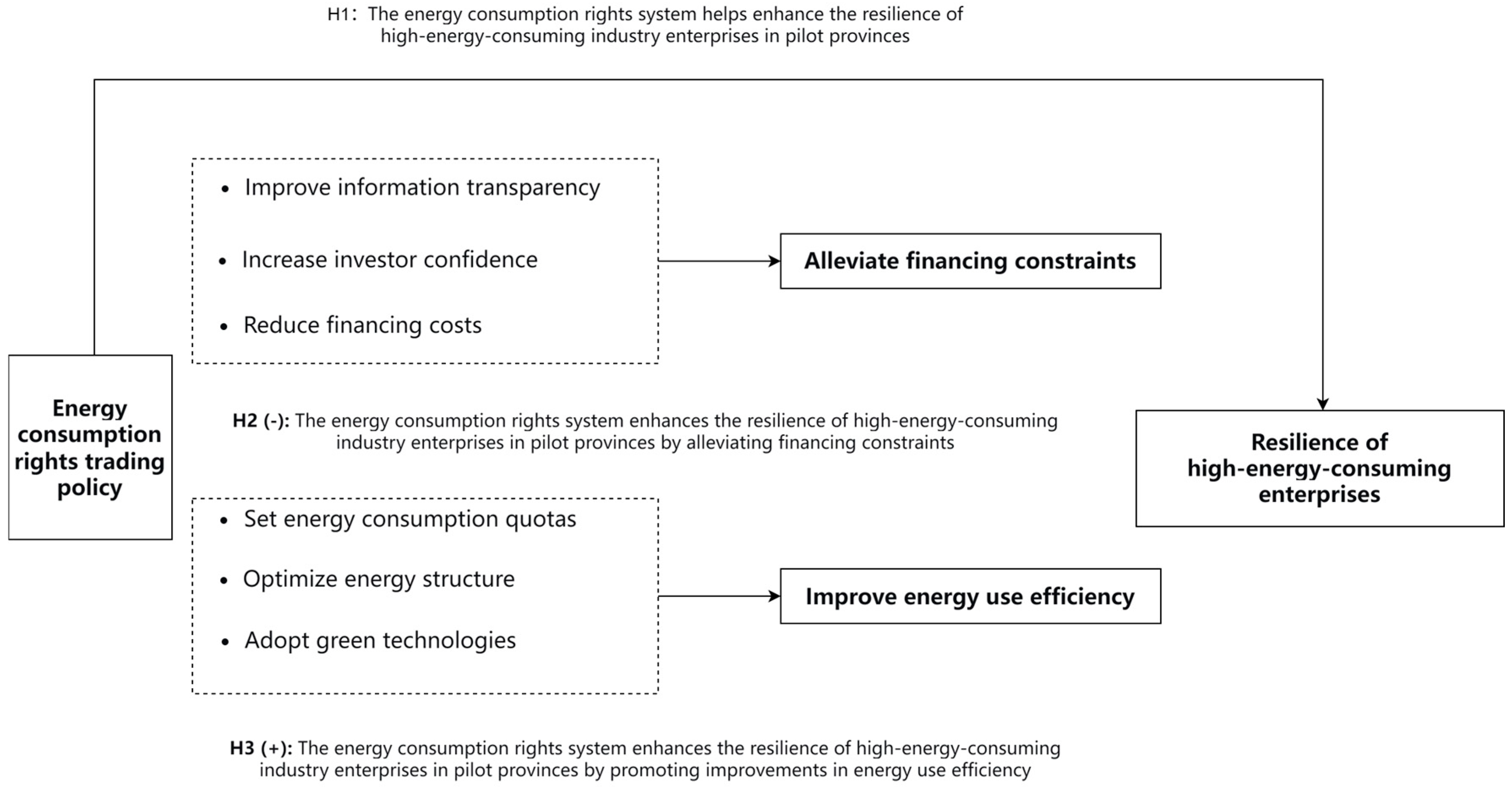
To clearly present the theoretical analytical framework, Figure 1 illustrates the basic logical relationships of the study.

3. Methods

3.1. Data Sources

Based on the industry classification standards established in the National Bureau of Statistics’ 2010 Statistical Report on National Economic and Social Development, China has explicitly designated six key industrial sectors as high-energy-consuming industries: Chemical raw materials and chemical products manufacturing; ferrous metal smelting and rolling processing; non-ferrous metal smelting and rolling processing; non-metallic mineral products manufacturing; petroleum processing, coking, and nuclear fuel processing; and electricity and heat production and supply. These industries exhibit significant energy-intensive characteristics due to their substantial energy resource consumption during production processes, hence being specifically designated as key energy-consuming sectors requiring intensive monitoring and management. The formulation of this classification standard provides a crucial reference for government departments to implement energy conservation and emission reduction policies and optimize industrial restructuring. Based on firms’ registered locations, we further match each enterprise to its corresponding prefecture-level city, which serves as the spatial unit for policy exposure in the subsequent DID analysis.
This study utilizes data from high-energy-consuming enterprises listed on the Shanghai and Shenzhen A-share markets from 2012 to 2023, processed as follows: First, samples designated as ST or ST* and those with missing data were excluded. Second, to mitigate the impact of extreme values, all continuous variables underwent trimming at the upper and lower 1% thresholds. The final dataset comprises 6711 observations, sourced from the China National Research Data Service (CNRDS) and the China Stock Market & Accounting Research (CSMAR) databases [23].

3.2. Model Design and Variable Definitions

3.2.1. Model Specification

Based on the 2016 National Development and Reform Commission’s Pilot Program for the Paid Use and Trading System of Energy Rights, this study constructs a DID model to examine the impact mechanism of the energy right trading policy policies on the resilience levels of high-energy-consuming enterprises. The pilot program was officially implemented in 2017 and covered four provinces: Zhejiang, Henan, Fujian, and Sichuan. Accordingly, we define the treatment group as enterprises located in prefecture-level cities within these pilot provinces, which were directly affected by the policy. The control group consists of enterprises located in prefecture-level cities in non-pilot provinces, which were not subject to the policy during the study period. The policy implementation in pilot regions serves as the experimental scenario. Enterprises in pilot regions were designated as the experimental group, while non-pilot enterprises in the same industry served as the control group. By comparing changes in key performance indicators before and after the policy implementation, the net impact of the policy on enterprise resilience was identified and quantified. Controls were applied for confounding factors such as industry, scale, and regional economy to ensure the scientific reliability of the conclusions. Besides, the model includes firm fixed effects to control for time-invariant firm-specific characteristics, and year fixed effects to account for common macroeconomic shocks.
Re s i , t = β 0 + β 1 P o l i c y × P o s t 2017 i , t + β 2 C o n t r o l s i , t + Y e a r + F i r m + ε i , t
where Res represents analyst prediction accuracy, Policyi,t indicates whether a city is an energy right trading policy pilot city (1 if yes, 0 if no); Post2017i,t denotes the year of the energy right trading policy, with 1 for 2017 and later, and 0 for before 2017. Controls represent control variables, Year and Firm denote year and firm fixed effects, respectively, and εi,t represents the error term.

3.2.2. Variable Definitions

(1)
Dependent Variable: Firm Resilience (Res). Drawing on the work of Zhang and Gu [39], this study measures firm resilience using the ratio of accounts receivable to operating revenue. This indicator captures the extent to which suppliers’ capital is occupied by customers in routine transactions. A lower ratio implies less capital tied up in accounts receivable and greater stability in supplier–customer relationships along the supply chain. Accordingly, in the context of this study, a lower accounts-receivable ratio is interpreted as indicating a higher level of firm resilience.
(2)
Explanatory Variable: Treatment*Post2017i,t. Following Li and Bi [9] and Li and Zhao [24], this study assigns Treatment*Post2017i,t a value of 1 for firm i in pilot year t and subsequent years where the city implemented the energy right trading policy policies, and 0 otherwise.
(3)
Control Variables. This study selects control variables from multiple dimensions, including corporate financial health, governance structure, market performance, and regional economic factors. The control variables include financial leverage (Lev), major shareholder ownership ratio (Top1), intangible asset ratio (ITA), revenue growth rate (Growth), auditor affiliation (big4), cash flow holdings (cashflow), investment expenditure ratio (invt), and tertiary industry share (Eco). Variable definitions are provided in Table 2.

4. Results

4.1. Descriptive Statistics

Table 3 presents the descriptive statistics for key variables. The minimum value for high-energy-consuming enterprise resilience (Res) was 0.001, the maximum was 1.017, and the standard deviation was 0.152, indicating significant resilience disparities among different high-energy-consuming enterprises. The mean value for the energy right trading policy (Policy) was 0.031, indicating that 3.1% of the sample was affected by the energy right trading policy. The mean for Return on Assets (RoA) was 0.037, indicating an average asset return of 3.7% across the sample. The mean for Big Four Accounting Firms was 0.065, showing that 6.5% of the sample was audited by one of the Big Four international accounting firms. The results for the control variables are consistent with existing research.

4.2. Benchmark Regression

Table 4 reports the impact of the energy right trading policy on the resilience of high-energy-consuming enterprises. In Column (1), the coefficient for Policy*Post2017 is 0.0622 and significant at the 1% level, suggesting that the implementation of the energy use rights trading policy is associated with a statistically significant improvement in firm resilience. Column (2) incorporates control variables, revealing a coefficient of 0.063 for Policy*Post2017 that remains statistically significant at the 1% level. These results consistently indicate that the energy use rights trading policy enhances the resilience of energy-intensive enterprises, supporting Hypothesis H1. Regarding control variables, revenue growth rate (Growth) positively correlates with resilience in energy-intensive industries, indicating that firms with stronger growth dynamics tend to exhibit greater capacity to withstand and recover from external shocks. Cash flow (Cashflow), investment expenditure ratio (Invt), and return on assets (Roa) negatively correlate with resilience in energy-intensive industries. Given the construction of the resilience indicator, these results suggest that firms with more intensive investment and higher short-term capital utilization may experience relatively greater pressure on liquidity, which is associated with lower measured resilience.

4.3. Robustness Test

4.3.1. Parallel Trend Test

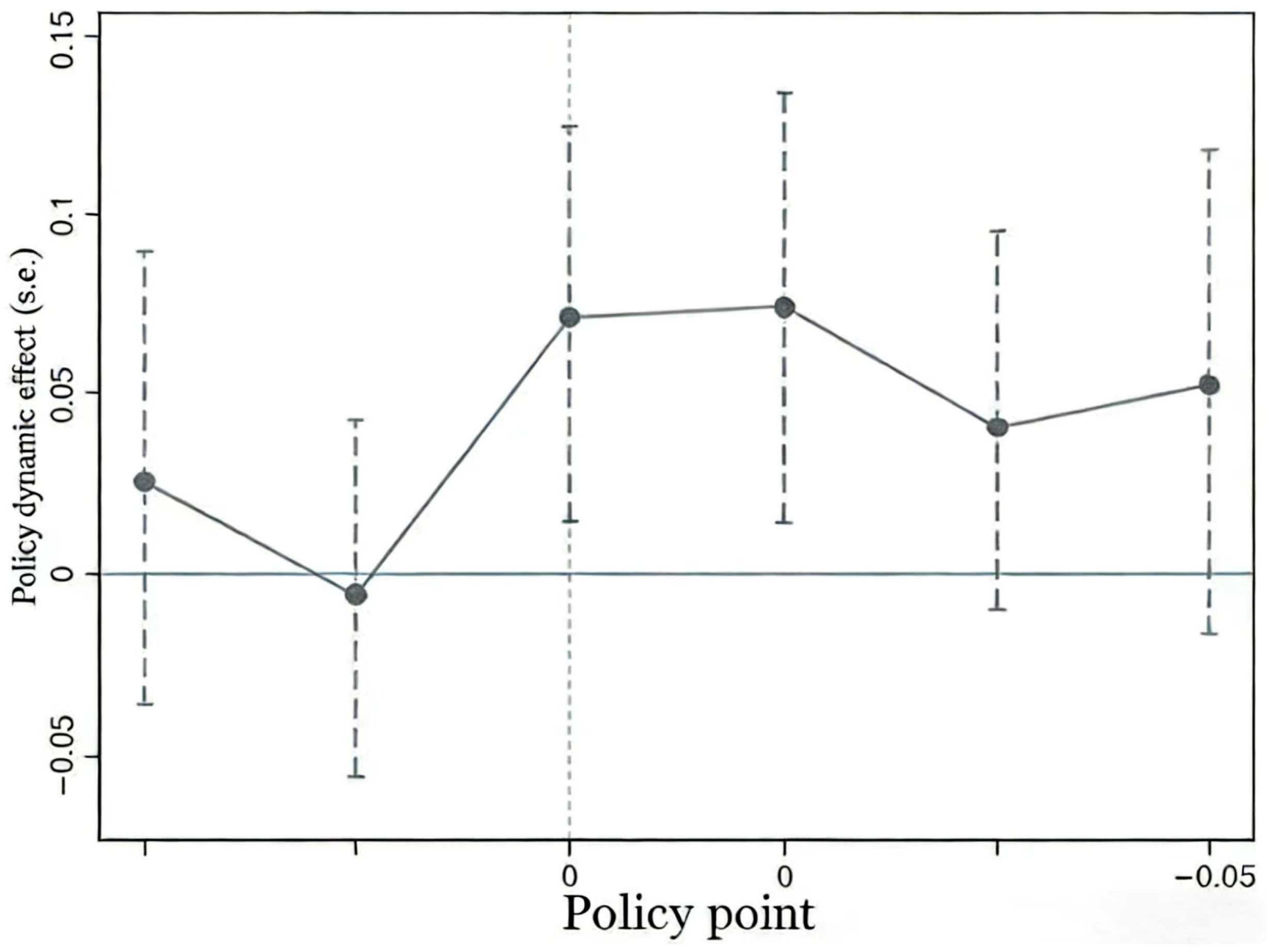
The prerequisite for employing a double difference model is satisfying the parallel trend assumption. Drawing upon prior scholarly research on multi-period double difference models, this paper constructs the following parallel trend test model:
Res = β0 + β1pre3i,t + β2pre2i,t + β3currenti,t + β4post1i,t + β5post2i,t + β6post3i,t + β7Controlsi,t + Firm + Frim + εi,t
where Pre3 and Pre2 denote the 3 years prior to policy implementation and the 2 years prior to that, respectively; current represents the policy implementation period; Post1, Post2, and Post3 denote 1 year, 2 years, and 3 years or more after policy implementation, respectively, with the year prior to inspection (pre1) serving as the base period. Figure 2 presents the estimated coefficients and confidence intervals of the dynamic effects. As shown in the figure, the coefficients on Pre3 and Pre2 are statistically insignificant, indicating no systematic difference in pre-policy trends between the treatment and control groups. In contrast, the coefficients on Current, Post1, and Post2 are positive and statistically significant. This pattern suggests that the improvement in firm resilience emerges after the implementation of the energy use rights trading policy rather than prior to it, thereby supporting the validity of the parallel trend assumption and strengthening the causal interpretation of the DID estimates.

4.3.2. PSM + DID

To further mitigate potential endogeneity arising from sample selection bias, this section adopts a multi-period PSM-DID approach following Bai Junhong et al. The PSM procedure is used to construct a more comparable control group by matching firms in pilot and non-pilot regions based on observable characteristics prior to policy implementation. Specifically, all control variables included in the baseline regression are incorporated into the matching process. A nearest-neighbor matching method with a 1:1 ratio is applied to identify matched pairs under the common support condition, and observations outside the common support region are removed. The DID model is then re-estimated using the matched sample. As reported in Table 5, the coefficient on Policy*Post2017 remains positive and statistically significant, consistent with the baseline results. This finding indicates that the main conclusions are robust to potential selection bias.

4.3.3. Placebo Test

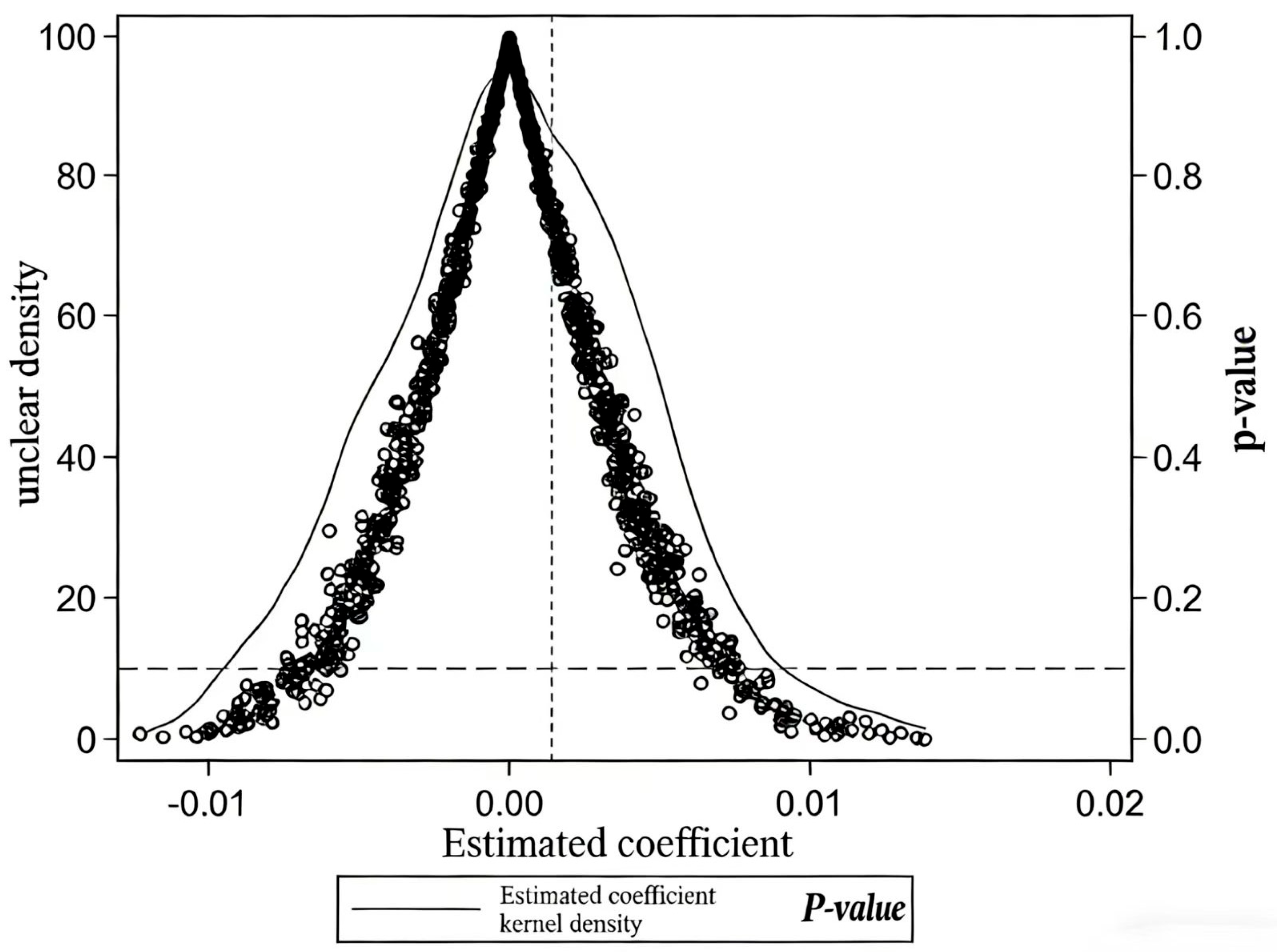
To rule out the possibility that the estimated policy effect is driven by random factors or unobserved shocks, a placebo test is conducted by randomly assigning fictitious policy implementation years and pilot regions. This procedure breaks the true link between the policy and firm outcomes, allowing us to assess whether the estimated effect could arise spuriously. The random assignment process is repeated 1000 times, and the distributions of the estimated coefficients and corresponding p-values for Policy*Post2017 are plotted in Figure 3. As shown in the figure, most estimated coefficients are concentrated around zero and fail to reach statistical significance at the 10% level. This result suggests that the baseline findings are unlikely to be driven by chance or omitted variables, thereby providing further support for the robustness of the estimated impact of the energy use rights trading policy on firm resilience.

4.3.4. The Results of Oster’s Omitted Variable Test

The operational resilience and development potential of high-energy-consuming enterprises may be influenced by various factors such as regional economies and industrial structures. If the empirical study overlooks potentially important variables not considered herein, would the core conclusions remain statistically robust when incorporating these variables? To examine the omitted variable issue and its potential impact on regression results, this study employs the econometric method proposed by Oster [40] for comprehensive robustness testing. This method controls for the interference of unobserved latent variables. Oster demonstrates that when regression models are affected by unobservable omitted variable endogeneity, an adjusted estimator β* = β*(Rmax, δ) can be constructed to obtain consistent estimates of the true coefficients. This method relies on two key parameters: δ, which measures the relative importance of the strength of correlation between observable variables and core explanatory variables compared to unobservable factors, and Rmax, representing the theoretical maximum goodness-of-fit. Oster proposes application schemes and implementation steps. This paper draws on Oster’s approach to conduct multi-faceted robustness tests on empirical conclusions, following these steps: (1) Set δ to −1 and conservatively set Rmax to 1.3 times the current regression model’s goodness-of-fit, or determine its value based on literature. If the adjusted β* estimate falls within the 95% confidence interval of the original coefficient, the research results are statistically robust; (2) Maintain the Rmax determination method and calculate the critical δ value that sets the original estimated coefficient β = 0. If this value exceeds 1, the primary research conclusions can be deemed robust. To further alleviate concerns over omitted variable bias, we implement the omitted variable test proposed by Oster (2019) [40]. The corresponding results are presented in Table 6.

4.3.5. Sample Size Robustness Test

Due to the pandemic outbreak at the end of 2019, the overall economic environment experienced significant fluctuations between 2020 and 2023, impacting the crisis resilience of local enterprises. To eliminate this influence, data from 2020 to 2023 were excluded from the sample period before conducting the test. The results are shown in Table 7. The correlation coefficients between the energy quota trading policy and the resilience of high-energy-consuming enterprises in columns (1) and (2) are 0.0532 and 0.0531, respectively, and are significant at the 1% level. This validates the main hypothesis of this paper and indicates that the conclusions are relatively robust.

4.3.6. Replacing the Dependent Variable

To further enhance the credibility of this study’s conclusions, we draw upon the research of Chen [41]. We propose measuring corporate resilience (Res) through long-term firm performance, as traditional indicators struggle to accurately reveal differences in corporate resilience and their underlying connections. Therefore, drawing on Martin’s core variable approach for measuring urban economic resilience and extending it to corporate resilience assessment—a method widely validated in regional economic resilience studies with high academic recognition and practical reliability—its core logic lies in achieving resilience quantification through horizontal comparison, dynamically benchmarking individual corporate growth trajectories against industry-wide development standards. Firms exceeding average industry growth rates demonstrate strong resilience, while those falling short exhibit weakness. To ensure objective evaluation, total enterprise sales revenue is selected as the core indicator, as it reflects market competitiveness and is readily available. Standardized sales revenue data is substituted into the improved model to quantify enterprise resilience, using the following formula:
R e s i , t = ( Δ E S O L E / E S O L E ) / ( Δ E A L L / E A L L )
Res (Enterprise Resilience) measures an enterprise’s ability to maintain stable development amid market fluctuations. ESOLE and ΔESOLE respectively reflect the enterprise’s prior scale and current achievements, while EALL and ΔEALL serve as industry benchmarks and reflect market changes. Resilience is assessed by comparing enterprise and industry growth: Res > 0 indicates high resilience, Res < 0 indicates low resilience. This indicator system provides a basis for quantifying an enterprise’s risk resistance.
Based on this, this paper replaces the original dependent variable in Model (1) with the new variable. After excluding a small number of observations with missing data, regression analysis is conducted. As shown in Table 8, after replacing the dependent variable, the estimated coefficient for Policy*Post2017 remains positive and statistically significant at the 1% level, showing no substantive difference from the benchmark regression. This indicates that the hypothesis proposed in this paper remains valid after replacing the dependent variable, further demonstrating the robustness of the energy right trading policy’s impact on the resilience of enterprises in high-energy-consuming industries.

4.3.7. Exclusion of Samples with Negative Profit

During the course of this study, we paid particular attention to the issue of financial characteristic differences in the sample data. Specifically, in-depth analysis revealed that corporate samples with negative net profits exhibited significant differences from those with positive net profits in terms of tax treatment methods and accounting policy choices. These differences were not only reflected in the applicability of tax incentive policies but also potentially involved special accounting treatments such as loss carryforwards and tax credits. Considering that these systematic financial differences could potentially impact the robustness of our findings, we decided to adopt stricter sample selection criteria during the robustness testing phase to ensure the reliability of our results. After careful deliberation, we ultimately excluded samples with negative net profits and rebuilt the regression model for testing. As shown in Table 9, the regression results clearly indicate that even after removing these special cases, our primary research conclusions remain highly robust, further validating the reliability of our findings.

5. Discussion

5.1. Analysis of Impact Mechanisms

As noted earlier, financing costs affect corporate capital costs and operational efficiency. The energy right trading policy grants enterprises economically valuable energy quotas. By selling these quotas to generate cash flow, enterprises can alleviate financing constraints while incentivizing optimization of energy structures and efficiency improvements. This section, therefore, further examines the policy’s impact on corporate financing constraints and energy utilization rates.
The test results are shown in Table 10. Column (1) reveals that the correlation coefficient between Policy*Post2017 and energy utilization efficiency is positive and significant at the 5% level. Column (2) indicates that the correlation coefficient between Policy*Post2017 and financing constraints (ww) is negative and significant at the 5% level. These findings indicate that the energy right trading policy significantly reduces corporate financing constraints. This further demonstrates that the policy enhances corporate energy utilization efficiency, thereby improving corporate resilience.

5.2. Energy Quota Trading Policy and Resilience of Energy-Intensive Enterprises: Impact of Experimental Regions

This paper builds on the analysis presented by Xue and Zhou [10], using a benchmark model to select four representative provinces—Zhejiang, Fujian, Henan, and Sichuan—as the study subjects. The focus is on examining the impact of the energy right trading policy system on the resilience of enterprises in energy-intensive industries. To delve deeper into regional disparities, these four provinces are grouped into two categories for comparative analysis: Group 1 comprises Zhejiang and Fujian, located in economically developed coastal regions, while Group 2 includes Henan and Sichuan, situated in inland areas. This grouping facilitates a clearer observation of policy implementation heterogeneity across different geographical locations. Table 11 details the results of the heterogeneity test. The data reveal that in the regression results of Column (1), the estimated coefficient for the energy right trading policy system passes the statistical significance test at the 10% level. In contrast, the regression results of Column (2) show that the estimated coefficient for the energy right trading policy pilot demonstrates stronger significance, passing the statistical test at the highly significant 1% level. This finding clearly demonstrates that in the coastal provinces of Zhejiang and Fujian, the implementation of the energy right trading policy system significantly enhances the resilience of energy-intensive enterprises. Therefore, it can be concluded that while the energy right trading policy system promotes resilience improvement among energy-intensive enterprises in pilot regions, its impact is more pronounced in coastal areas.

5.3. Energy Quota Trading Policy and Resilience of Energy-Intensive Enterprises: The Impact of Migration Costs

This study further examines the moderating effect of relocation costs on the resilience-enhancing impact of the energy right trading policy policies. Compared to firms with low relocation costs, those with high relocation costs face greater adjustment burdens following institutional shocks. Consequently, they are more inclined in the short term to enhance their capacity to respond to external shocks by improving internal governance efficiency, accelerating technological upgrades, and strengthening risk management. This results in stronger policy responsiveness and improved resilience outcomes. Moreover, the market-based incentives provided by the energy right trading policy mechanism may exert stronger constraints and drivers on these enterprises, prompting them to adopt more proactive approaches in resource allocation, energy efficiency investments, and strategic adjustments.
Drawing on existing research methodologies for measuring corporate relocation capacity and resource adjustment flexibility, this study quantifies relocation cost levels using the ratio of fixed assets to total assets. Specifically, a higher fixed asset ratio indicates lower flexibility in adjusting production locations, energy structures, and equipment upgrades. Such enterprises exhibit stronger path dependence and asset specificity when facing external policy shocks, resulting in greater resistance to adjustments during policy response processes. As shown in Table 12, in Column (1), the estimated coefficient for the energy right trading policy system is significant at the 1% level. In Column (2), the estimated coefficient for the energy right trading policy pilot program is not significant. Empirical results indicate that among firms with a higher proportion of fixed assets—i.e., those with greater migration costs—the energy right trading policy has a more pronounced effect on enhancing corporate resilience.

5.4. Energy Quota Trading Policy and Resilience of Energy-Intensive Enterprises: The Impact of ROE

This study further introduces corporate profitability as a grouping criterion to examine differences in corporate responses to the energy right trading policy policies under varying financial conditions. Enterprises with weaker profitability typically face greater operational pressures and resource constraints. Against the backdrop of failing traditional profit models or diminished sustainability, they possess stronger incentives to leverage policy incentives for transformative development pathways, thereby exhibiting higher potential for resilience enhancement when confronting external shocks. Second, the energy right trading policy provides enterprises with market-based channels for energy conservation and consumption reduction, along with opportunities for cost optimization. For financially weaker firms, this policy may constitute significant external incentives and governance pressures, prompting more proactive adjustments in resource allocation efficiency, energy structure optimization, and risk prevention. Consequently, less profitable enterprises are more likely to enhance their policy responsiveness through strengthened adaptability and strategic adjustments, thereby exhibiting more pronounced resilience.
Specifically, this study selects return on equity (ROE) as the profitability metric, dividing the sample into high-ROE and low-ROE groups to examine policy effect differences. As shown in Table 13, in Column (1), the estimated coefficient for the energy right trading policy system is insignificant; whereas in Column (2), the estimated coefficient for the energy right trading policy pilot is significant at the 1% level. The empirical results indicate that the positive impact of the energy right trading policy on corporate resilience is more pronounced among firms with lower ROE.

6. Conclusions

6.1. Conclusions

As a key policy tool for promoting corporate low-carbon transformation and achieving China’s dual carbon goals, the energy use rights trading policy has exerted a significant influence on the development of energy-intensive enterprises. Using a Difference-in-Differences framework with multiple robustness checks, this study examines the policy’s impact on firm resilience. The results indicate that the energy use rights trading policy significantly enhances the resilience of enterprises in energy-intensive industries. Further analysis suggests that this resilience-enhancing effect is closely associated with improvements in firms’ financing conditions. The empirical evidence shows that the policy alleviates financing constraints by improving information transparency and credibility, thereby facilitating firms’ access to external finance. This finding provides direct support for the role of financial channels in strengthening firm resilience under market-based energy regulation. With respect to innovation-related mechanisms, the results indicate that the policy is positively associated with increased innovation input and energy-use efficiency. These effects are consistent with the view that market-based energy regulation may incentivize firms to adjust their innovation and production strategies, but should be interpreted as indicative evidence rather than definitive causal pathways, given the scope of the mechanism tests conducted in this study. Heterogeneity analysis further reveals that the resilience-enhancing effect of the policy is more pronounced for non-state-owned enterprises, suggesting that firms facing tighter financing constraints may benefit more from the policy intervention. Overall, this study provides empirical evidence that the energy use rights trading policy can enhance the resilience of energy-intensive enterprises and support their green and low-carbon transition. It should be noted that the empirical analysis in this study is based on energy-intensive enterprises listed on the Shanghai and Shenzhen A-share markets during the period 2012–2023. Although the energy use rights trading policy is designed to regulate energy consumption behavior across a broad range of enterprises and is not restricted to capital markets, the findings of this study should be interpreted within the context of listed firms in China. The results are thus not fully generalizable to non-listed firms or to other regions with different institutional settings. Additionally, while the study identifies potential mechanisms such as financing constraints and innovation-driven resilience, the causal relationships remain uncertain due to the limitations in testing these mechanisms. Therefore, the findings should be interpreted as indicative rather than conclusive. Moreover, this study focuses on a limited sample of firms, and the external validity of the results may be affected by factors like industry-specific dynamics and regional variations in regulatory enforcement. Future research should consider expanding the sample to include a broader range of firms and regions to improve the external validity of these conclusions.

6.2. Recommendations

Based on the empirical findings of this study, which show that the energy use rights trading policy significantly enhances the resilience of energy-intensive enterprises through the promotion of green innovation and the alleviation of financing constraints—especially among non-state-owned firms—the following policy recommendations are proposed.
First, further improve the institutional design and implementation of the energy use rights trading policy to consolidate its resilience-enhancing effects. The empirical results indicate that the policy has a statistically significant and robust positive impact on firm resilience, suggesting that a stable and well-functioning market-based regulatory framework is crucial. Governments should continue to refine the institutional design of the energy use rights trading system by improving legal and regulatory arrangements, clarifying implementation rules, and enhancing policy transparency. Clear and predictable policy signals can help enterprises form stable expectations and make long-term investment and operational decisions. In addition, as the effectiveness of the policy relies on market-based allocation mechanisms, it is necessary to strengthen supervision, monitoring, and verification throughout the entire trading process. Preventing market manipulation and ensuring fair competition can improve market efficiency and allow the policy to more effectively support firms’ operational stability and resilience.
Second, strengthen support for green innovation and energy efficiency improvement to amplify the innovation-driven resilience mechanism. Mechanism analysis in this study shows that green innovation is a key channel through which the energy use rights trading policy enhances firm resilience. Accordingly, governments should encourage energy-intensive enterprises to increase investment in green technologies, energy-saving equipment, and cleaner production processes. Policy instruments such as targeted fiscal subsidies, tax incentives, and innovation-support programs can help reduce the costs and risks associated with green technological upgrading. By improving energy utilization efficiency and accelerating energy structure optimization, enterprises can better adapt to tightening environmental constraints and market uncertainty, thereby enhancing their ability to withstand and recover from external shocks.
Third, improve financing support mechanisms for energy-intensive enterprises, with particular attention to non-state-owned firms. The results further indicate that alleviating financing constraints is another important pathway through which the energy use rights trading policy improves firm resilience, and that the policy effect is more pronounced for non-state-owned enterprises. To strengthen this channel, governments and financial institutions should develop diversified and multi-level financing systems tailored to the characteristics of energy-intensive industries. These may include expanding access to bank credit, promoting green finance instruments, and supporting equity and bond financing. In addition, policy tools such as interest subsidies, credit guarantees, and preferential financing arrangements can be used to reduce financing costs and ease liquidity pressures during the transition period. By improving access to external finance and stabilizing cash flows, these measures can enhance firms’ risk resistance and support their sustained development under increasingly stringent environmental regulation.


Author Contributions

Writing—original draft preparation, Y.Z.; supervision, K.Z. All authors have read and agreed to the published version of the manuscript.

Funding

This research received no external funding.

Data Availability Statement

Data will be made available on request.

Conflicts of Interest

The authors declare no conflicts of interest.

References

  1. Yan, Q.; Wan, K. Energy-Consuming Right Trading Policy and Corporate ESG Performance: Quasi-Natural Experimental Evidence from China. Energies 2024, 17, 3257. [Google Scholar] [CrossRef] [Scilit]
  2. Wang, M.; Liu, Z.; Zhou, B. Towards carbon neutrality: The impact of energy right trading policy on carbon performance of manufacturing enterprises. Energy 2025, 323, 135858. [Google Scholar] [CrossRef] [Scilit]
  3. Bodin, P.; Wiman, B.L.B. Resilience and other stability concepts in ecology: Notes on their origin, validity, and usefulness. ESS Bull. 2004, 2, 33–43. [Google Scholar]
  4. Lü, Z.; Huang, Y.; Chen, C.; Wan, A. Corporate ESG Performance, Organizational Resilience, and Innovation Efficiency: The Moderating Role of Digitalization. Mod. Manag. Sci. 2024, 127–137. [Google Scholar]
  5. Zhao, M.; Ren, G.; Li, J. Can State Capital Participation Enhance Supply Chain Resilience in Private Enterprises?—A Perspective Based on Strengthening, Supplementing, and Consolidating Supply Chains. Account. Res. 2024, 12, 3–18. [Google Scholar]
  6. Chen, H.; Guo, T.; Zhang, Y.; Guo, Q. The Impact of Internal Control on Organizational Resilience in Manufacturing Enterprises: An Enterprise Life Cycle Perspective. Nankai Manag. Rev. 2025, 1–28. [Google Scholar]
  7. Zhang, M.; Hui, L. Spatial Variations and Determinants of China’s Agricultural Economic Resilience. World Agric. 2022, 01, 36–50. [Google Scholar]
  8. Zhang, N.; Zhang, W. Can China’s The energy right trading policy Achieve a Win-Win for Economic Dividends and Energy Conservation & Emission Reduction? Econ. Res. J. 2019, 1, 165–181. [Google Scholar]
  9. Li, S.; Bi, Z. How Does the energy right trading policy Policy Affect Enterprise Total Factor Productivity? Res. Financ. Econ. Issues 2022, 10, 35–43. [Google Scholar]
  10. Xue, F.; Zhou, M. Can The energy right trading policy Policies Enhance Energy Utilization Efficiency? China Popul. Resour. Environ. 2022, 32, 54–66. [Google Scholar]
  11. Liu, H.; Yu, W. Economic Dividend Effects Under the Combination of Energy Rights and Carbon Emission Rights Trading Policies. China Popul. Resour. Environ. 2019, 29, 1–10. [Google Scholar]
  12. Liu, Y.B.; Zuo, K.Y.; Liu, X.Q. Dynamic pricing for decentralized energy trading in micro-grids. Appl. Energy 2018, 228, 689–699. [Google Scholar] [CrossRef] [Scilit]
  13. Hu, Y.C.; Ren, S.G.; Wang, Y.J. Can Carbon Emission Trading Scheme Achieve Energy Conservation and Emission Reduction: Evidence from the Industrial Sector in China. Energy Econ. 2020, 85, 104590. [Google Scholar] [CrossRef] [Scilit]
  14. Wang, J.; Fang, D.B.; Yu, H.W. Potential Gains from Energy Quota Trading in China: From the Perspective of Comparison with Command-and-Control Policy. J. Clean. Prod. 2021, 315, 1–10. [Google Scholar] [CrossRef] [Scilit]
  15. Wei, Y.M. Can Energy Quota Trading Achieve Economic Growth? World Sci. Res. J. 2022, 8, 20–24. [Google Scholar]
  16. Luo, S.H.; Wang, D. Impact of China’s Energy Quota Trading Pilot Policy on Energy Intensity. Stat. Decis. Mak. 2024, 24, 78–83. [Google Scholar]
  17. Zhu, D.; Li, X. The Impact of Corporate Social Responsibility Investment on Organizational Resilience in Manufacturing Enterprises. J. Manag. Stud. 2023, 20, 1023–1033. [Google Scholar]
  18. Lian, Y.; Sun, H.; Gao, H. Seizing Opportunities Amid Crisis: The Impact of Strategic Alliances on the Resilience of Private Enterprises. Nankai Manag. Rev. 2025, 28, 161–172. [Google Scholar]
  19. Jing, D. Corporate Innovation, Industrial Structure Upgrading, and Enterprise Resilience. Value Eng. 2024, 43, 71–74. [Google Scholar]
  20. Xu, Y.; Huang, T.; Lu, F. The Impact of Collaborative Innovation on Corporate Resilience: Evidence from Joint Patent Data of Listed Companies. Res. Financ. Econ. Issues 2024, 43, 1–13. [Google Scholar]
  21. Feng, T.; Zhu, Z. The Impact of Heterogeneous Government Subsidies on Corporate Resilience. J. Southwest Univ. Soc. Sci. Ed. 2024, 50, 144–155. [Google Scholar]
  22. Liu, M. On the Institutional Linkage Dimensions for Establishing China’s The energy right trading policy System. China Popul. Resour. Environ. 2017, 27, 217–224. [Google Scholar]
  23. Zhang, W. The Impact of the energy right trading policy Policies on the Green Transformation of Energy-Intensive Manufacturing Enterprises. Theory Pract. Financ. Econ. 2025, 46, 145–152. [Google Scholar]
  24. Li, S.; Zhao, C. The Driving Effect of the energy right trading policy Systems on Low-Carbon Technological Innovation in Enterprises. China Popul. Resour. Environ. 2023, 33, 124–134. [Google Scholar]
  25. Shen, L.; Chen, S. The energy right trading policy and Corporate Green Innovation: Evidence from Chinese Industrial Enterprises. Technol. Econ. 2020, 39, 1–8+18. [Google Scholar]
  26. Zhang, A.; Chen, Q. Impact Effects and Transmission Mechanisms of the energy right trading policy System on Green Technological Innovation. Sci. Technol. Prog. Policy 2023, 40, 93–103. [Google Scholar]
  27. Zhang, Y.; Zhou, L. Impact of Energy Quota Trading Policy on Regional Industrial Structure Optimization and Upgrading. China Popul. Resour. Environ. 2024, 34, 71–83. [Google Scholar]
  28. Lu, H.; Wu, Z. The Relationship Between Energy Rights Policies and Low-Carbon Transformation of Energy Consumption Structure. Resour. Sci. 2023, 45, 1181–1195. [Google Scholar]
  29. DiMaggio, P.J.; Powell, W.W. The iron cage revisited: Institutional isomorphism and collective rationality in organizational fields. Am. Sociol. Rev. 1983, 48, 147–160. [Google Scholar] [CrossRef] [Scilit]
  30. Oliver, C. Strategic responses to institutional processes. Acad. Manag. Rev. 1991, 16, 145–179. [Google Scholar] [CrossRef] [Scilit]
  31. Lai, X.; Yue, S.; Chen, H. Can Green Credit Increase Firm Value? Evidence from Chinese Listed New Energy Companies. Environ. Sci. Pollut. Res. Int. 2021, 29, 18702–18720. [Google Scholar] [CrossRef] [Scilit] [PubMed]
  32. Albarrak, M.S.; Elnahass, M.; Salama, A. The effect of carbon dissemination on the cost of equity. Bus. Strategy Environ. 2019, 28, 1179–1198. [Google Scholar] [CrossRef] [Scilit]
  33. Yu, D.H.; Hu, Y.N. Does Tightening Environmental Regulation Hinder Innovation Capacity in China’s Manufacturing Sector? A Re-examination Based on the “Porter Hypothesis”. Ind. Econ. Res. 2016, 02, 11–20. [Google Scholar]
  34. Li, G.; Lü, Y. The Impact of Environmental Regulations on Financing Constraints for Heavy Polluting Enterprises: A Quasi-Natural Experiment Based on the Enactment of the New Environmental Protection Law. Account. J. 2023, 114–122. [Google Scholar]
  35. Li, Y.; Ding, L.; Song, X. Synergistic Effects of Social Responsibility and Media Attention on Corporate Innovation Financing Constraints. Shanghai Econ. Res. 2025, 04, 73–88. [Google Scholar]
  36. Huang, R.; He, Y. The Dynamic Relationship Between Environmental Disclosure and Financing Constraints: Empirical Evidence from Heavy Polluting Industries. J. Financ. Econ. Res. 2020, 35, 63–74. [Google Scholar]
  37. Wang, F.; Guo, W.; Liu, X. The Green Innovation Effect of Corporate ESG Performance: A Dual-Moderating Role of Environmental Regulations and Executive Green Perception. J. Sci. Technol. Manag. 2024, 26, 22–36. [Google Scholar]
  38. Zhang, H.; Li, S.; Yan, B. Energy Quota Trading Policy and Urban Energy Consumption. J. Zhongnan Univ. Econ. Law 2024, 124–137. [Google Scholar]
  39. Zhang, S.; Gu, C. Supply Chain Digitalization and Supply Chain Resilience. J. Financ. Econ. 2024, 50, 21–34. [Google Scholar]
  40. Oster, E. Unobservable Selection and Coefficient Stability: Theory and Evidence. J. Bus. Econ. Stat. 2019, 37, 187–204. [Google Scholar] [CrossRef] [Scilit]
  41. Chen, S.; Wang, D. Digital Transformation and Corporate Resilience: Effects and Mechanisms. J. Xi’an Univ. Financ. Econ. 2023, 36, 65–77. [Google Scholar]
Figure 1. Theoretical Mechanism of the energy right trading policy System’s Impact on Resilience of Energy-Intensive Enterprises.
Energies 19 00995 g001
Figure 2. Parallel Trends Test. The blue horizontal line at y = 0 indicates the baseline of no policy effect. The dashed vertical line at x = 0 marks the policy implementation point.
Energies 19 00995 g002
Figure 3. The Results of Placebo Test.
Energies 19 00995 g003
Table 1. Implementation Timeline Differences Across Pilot Regions.
RegionKey Milestones
Zhejiang Province2018: Issuance of the Pilot Implementation Plan
Zhejiang Province2019: Issuance of the Interim Administrative Measures
Zhejiang ProvinceMarket trading officially commenced on 26 December 2019
Henan ProvinceIssued the “Implementation Plan” in 2018, establishing a “1 + 4 + N” institutional framework
Henan ProvinceMarket trading officially commenced on 22 December 2019
Sichuan ProvinceIssued the Interim Administrative Measures in 2018, designating steel, cement, and papermaking as the first sectors for trading
Sichuan ProvinceLaunched trading on 26 September 2019
Fujian ProvinceIssued the Implementation Plan in 2017, launching pilot programs in the cement and thermal power sectors (88 entities)
Fujian ProvinceLaunched trading on 19 December 2018
Table 2. Variable Definitions.
Variable TypeVariable SymbolVariable Definition
Dependent VariableResEnterprise Resilience, see 1 for specific definition
Explanatory VariablesTreatment*Post2017Energy Quota Trading Policy, as defined in 2
Control VariablesSOEOwnership nature. Set to 1 for state-owned enterprises, 0 otherwise.
Control VariablesTop1Shareholding ratio of the largest shareholder at the end of the period.
Control VariablesITAIntangible asset ratio.
Control VariablesGrowthCompany revenue growth rate.
Control VariablesBig4Accounting firm. If one of the Big Four international accounting firms, enter 1; otherwise, enter 0.
Control VariablesCashflowCash flow held by the company. Equals net cash flow from operating activities/total assets
Control VariablesInvtInvestment expenditure ratio. Calculated as cash paid for the acquisition and construction of fixed assets, intangible assets, and other long-term assets divided by total assets.
Control VariablesEcoEconomic Structure. Share of the tertiary sector.
Control VariablesRoaReturn on Assets. Total revenue/Total assets
Control VariablesFirmCompany dummy variable
Control VariablesYearYear dummy variable
Table 3. Descriptive Statistics of Key Variables.
VariableNMeanSDMinMaxp25p75
Res67110.1880.1520.0011.0170.0720.262
Treatment*Post201767110.0310.1750100
Eco67110.50710.4900.3300.8390.4470.537
Growth67110.1590.490−0.6723.085−0.0570.246
Top1671134.85014.4109.08074.82023.92044.540
Big467110.0650.2470100
Cashflow67110.0590.064−0.1480.2480.0210.094
Invt67110.0590.05000.5200.0240.081
ITA67110.0520.05300.8900.0250.061
Roa67110.0370.071−1.3950.6040.0110.067
Soe67110.4090.4920101
Table 4. Energy Quota Trading Policy and Resilience of Energy-Intensive Enterprises.
(1)(2)
ResRes
Policy*Post20170.0622 ***0.0630 ***
(2.89)(3.01)
Eco 0.000418
(0.52)
Growth 0.0164 ***
(3.51)
Top1 −0.000164
(−0.53)
Big4 0.0128
(0.86)
Cash Flow −0.228 ***
(−9.30)
Invt −0.0693 **
(−2.15)
ITA 0.0394
(0.57)
Roa −0.0573 *
(−1.81)
Soe 0.0181
(1.26)
_cons0.164 ***0.161 ***
(49.23)(4.10)
FirmYESYES
YearYESYES
N67116711
Adj. R20.03270.0771
Note: An asterisk (*) denotes statistical significance, with the corresponding t-values provided in parentheses. The number of asterisks indicates the level of significance: * p < 0.05, ** p < 0.01, and *** p < 0.001, and the same applies hereafter.
Table 5. The Results of PSM + DID.
(1)
Res
Policy*Post20170.0623 ***
(2.97)
ControlsYES
FirmYES
YearYES
N4466
Adjusted R20.068
Notes: *** p < 0.01.
Table 6. The Results of Oster Omitted Variable Test.
Test MethodCriterionActual Calculation ResultsPass/Fail
(1)β*(Rmax, δ) ∈ [0.0213, 1.0436]β*(Rmax, δ) = −0.06218Yes
(2)δ > 1δ = 32.04172Yes
Table 7. The Results of Sample Size Robustness Test.
(1)(2)
ResRes
Policy*Post20170.0532 ***0.0531 ***
(3.07)(3.03)
ControlsNoYES
FirmYESYES
YearYESYES
N45934593
Adj. R20.05190.0931
Notes: *** p < 0.01.
Table 8. Replacing the Dependent Variable.
(1)(2)
ResRes
Policy*Post20170.399 ***0.403 ***
(4.05)(4.19)
ControlsNoYES
FirmYESYES
YearYESYES
N67096709
Adj. R20.08320.140
Notes: *** p < 0.01.
Table 9. The results of Samples with Negative Profit Removed.
(1)(2)
ResRes
Policy*Post20170.0575 ***0.0560 ***
(2.72)(2.77)
ControlsNoYES
FirmYESYES
YearYESYES
N59145914
Adj. R20.03520.0957
Notes: *** p < 0.01.
Table 10. Mechanism Analysis.
(1)(2)
Enterprise Energy Utilization Rateww
Policy*Post201712.58 **−0.0120 **
(1.98)(−2.37)
ControlsYESYES
FirmYESYES
YearYESYES
N67116711
Adj. R20.1510.079
Notes: ** p < 0.05.
Table 11. Heterogeneity Test for Experimental Regions.
(1)(2)
Henan, SichuanZhejiang, Fujian
ResRes
Policy*Post20170.0473 *0.0966 ***
(1.86)(2.72)
ControlsYESYES
FirmYESYES
YearYESYES
N6131580
Adj. R20.07340.230
Notes: * p < 0.10, *** p < 0.01.
Table 12. Heterogeneity Test for Migration Costs.
(1)(2)
High Migration CostsLow Migration Costs
ResRes
Policy*Post20170.0962 ***0.0374
(3.22)(1.14)
ControlsYESYES
FirmYESYES
YearYESYES
N33563355
Adj. R20.07810.0836
Notes: *** p < 0.01.
Table 13. Heterogeneity Test for ROE.
(1)(2)
High RoeLow ROE
ResRes
Policy*Post20170.02480.102 ***
(0.93)(2.98)
ControlsYESYES
FirmYESYES
YearYESYES
N33683343
Adj. R20.1030.0594
Notes: *** p < 0.01.
Disclaimer/Publisher’s Note: The statements, opinions and data contained in all publications are solely those of the individual author(s) and contributor(s) and not of MDPI and/or the editor(s). MDPI and/or the editor(s) disclaim responsibility for any injury to people or property resulting from any ideas, methods, instructions or products referred to in the content.