Designing and Testing an Innovative Hydrogen Combustor for Gas Turbines

Abstract
1. Introduction
2. Model Design and Numerical Analysis
2.1. Spiral Microtube Design
2.1.1. Design Concept and Geometric Model of Microtube
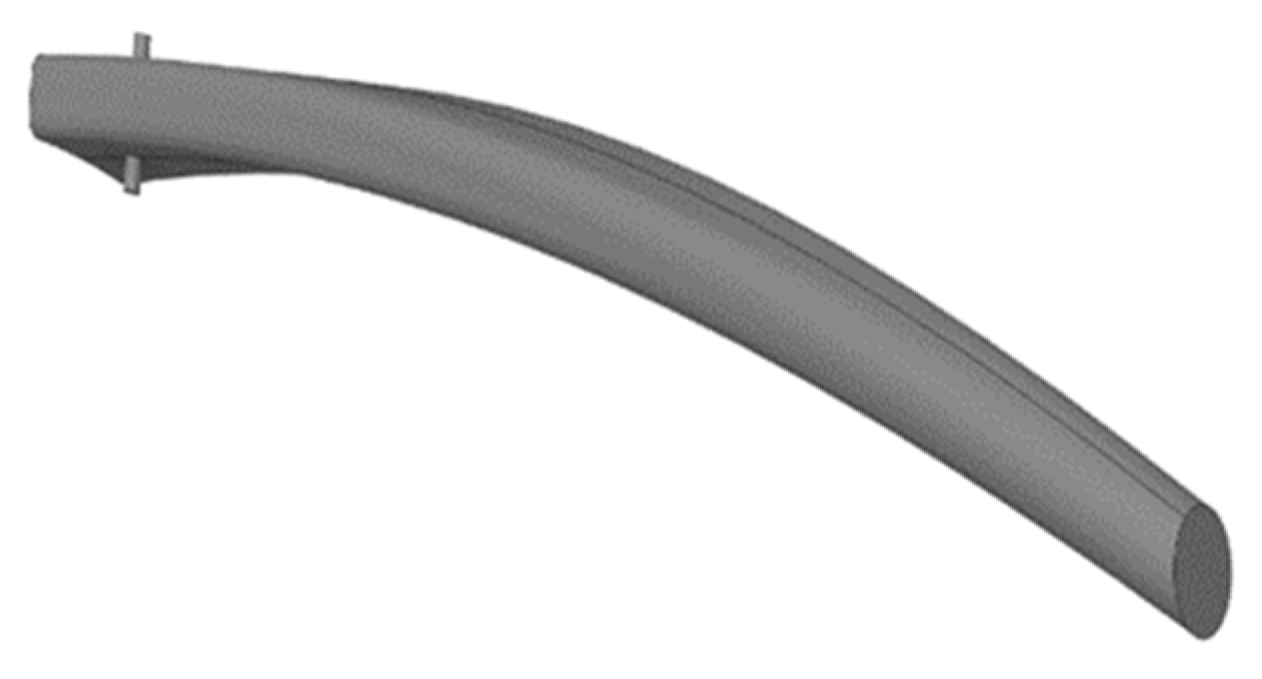
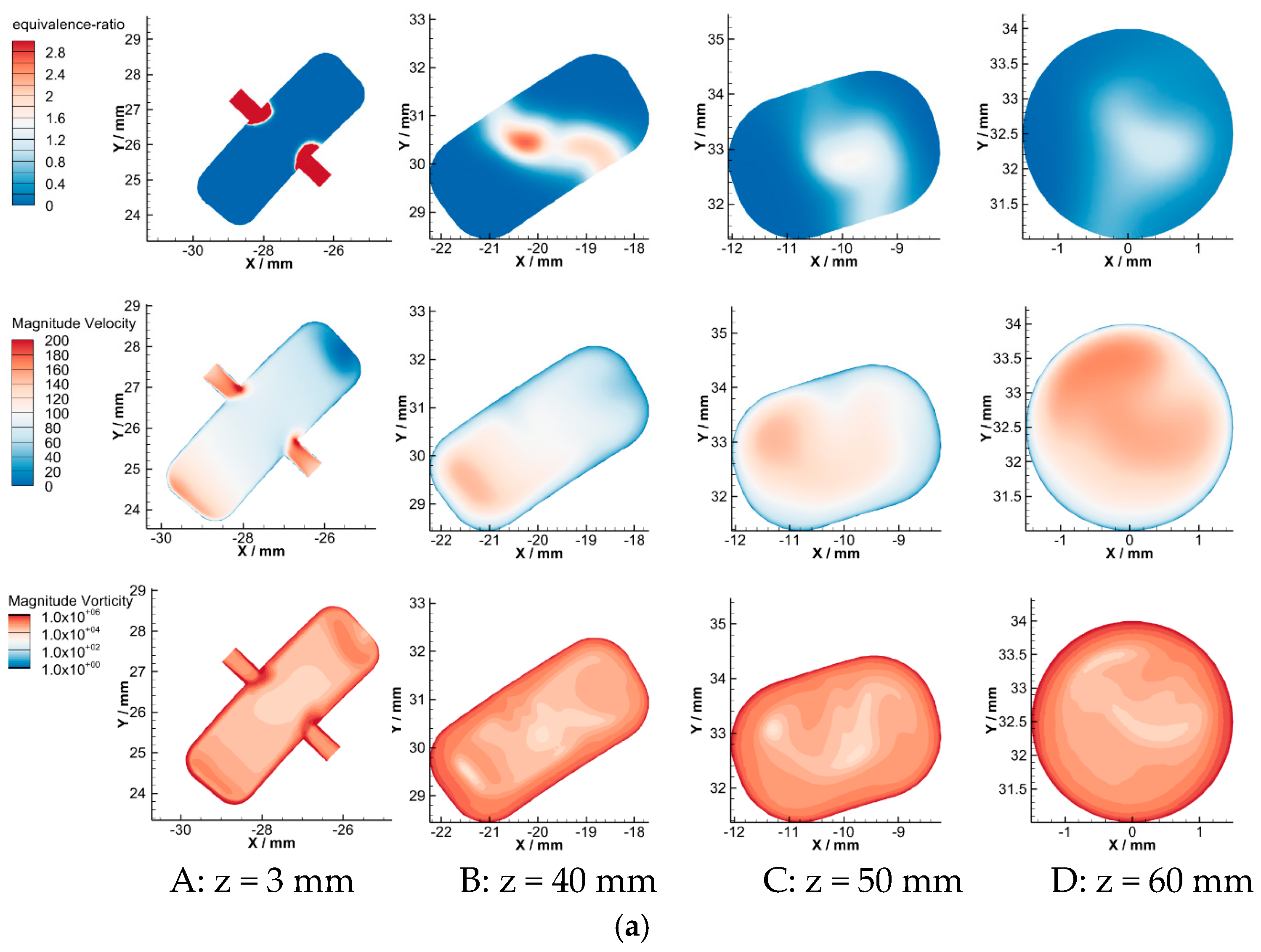
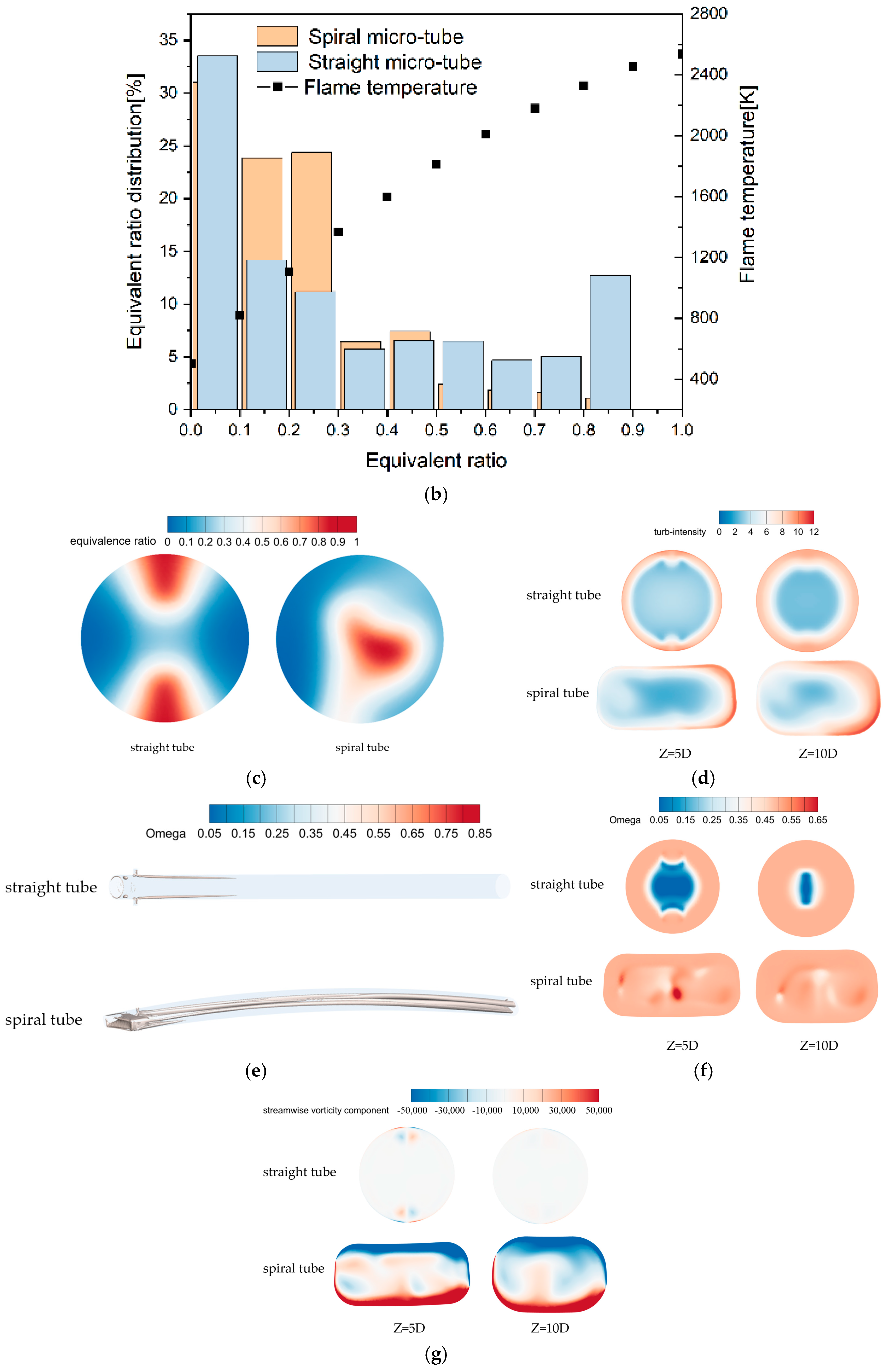
- Continuous effective turbulence: Its geometric configuration facilitates the generation of controllable intense turbulence via air, incorporating quantifiable Dean vortices with measurable vorticity magnitudes. These vortices collaborate synergistically with the fuel jet to augment the efficiency of fuel–air mixing.
- Boundary layer modulation: The convergent cross-sectional profile sustains a favorable pressure gradient, thereby effectively suppressing flow separation at the outlet.
2.1.2. Numerical Simulation Method
2.1.3. Flow and Mixing Characteristics
2.2. CGSM Nozzle
3. Experimental Setup
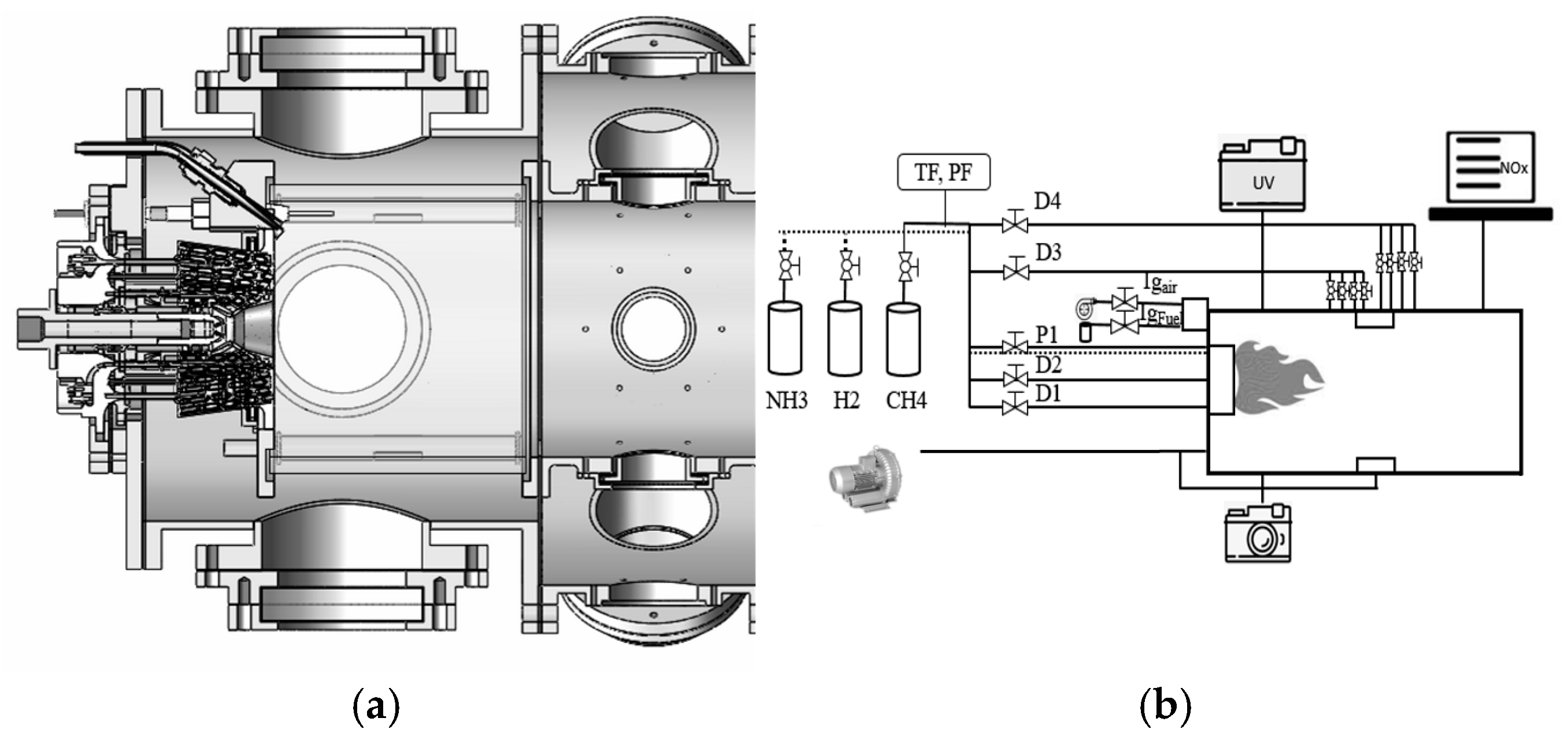
3.1. Hydrogen Combustor
3.2. Experimental System
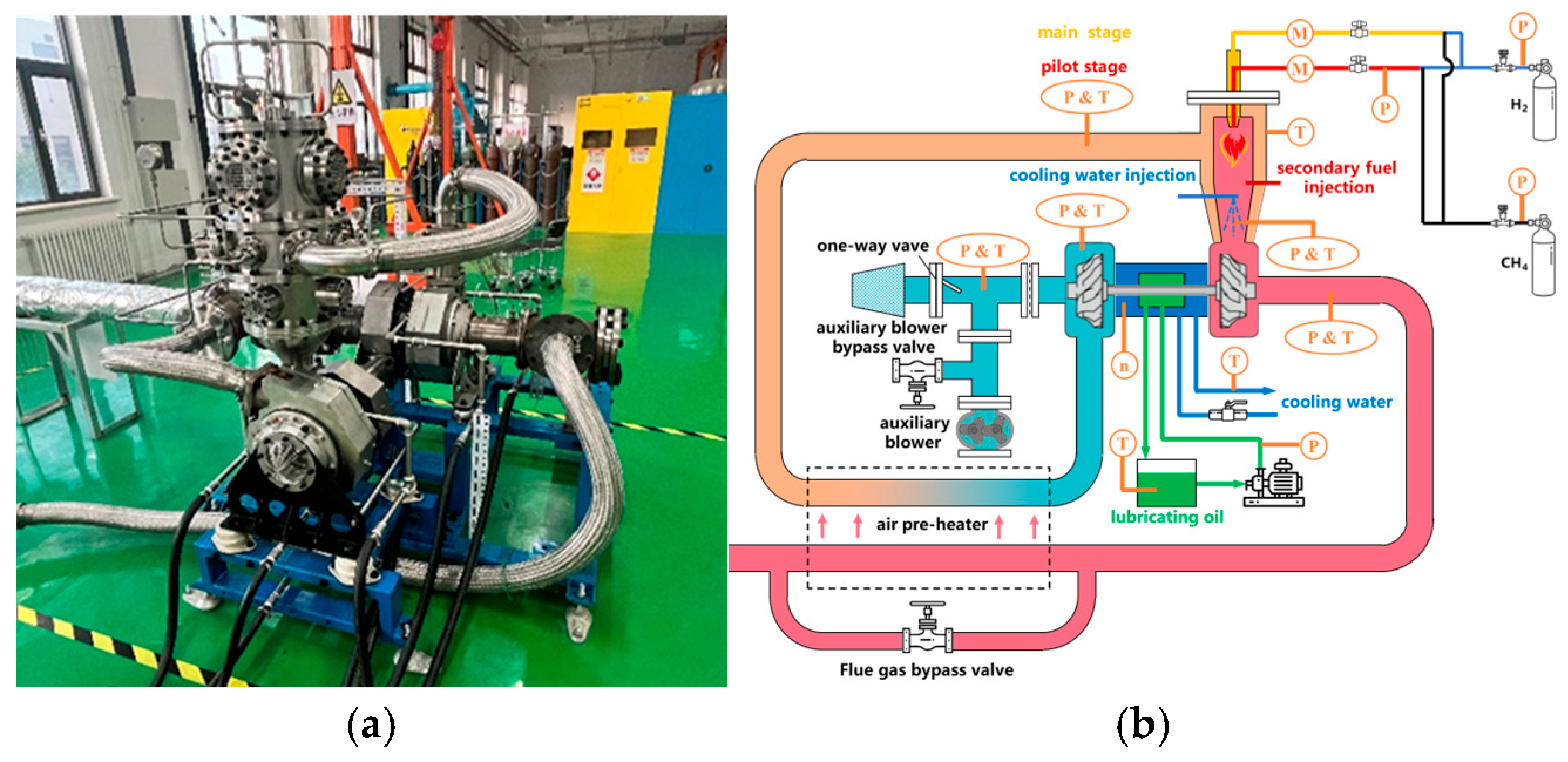
3.3. Gas Turbine Application Test
- Pressure and temperature transducers at key aerodynamic and thermodynamic nodes (e.g., compressor inlet/outlet, turbine inlet/outlet);
- Fuel pressure regulators and mass flow meters for each fuel line;
- A flue gas composition analyzer at the turbine exhaust to quantify combustion products (e.g., NOx, unburned hydrocarbons);
- A non-contact rotor speed sensor to measure the turbine/compressor’s rotational speed;
- Temperature and pressure gauges for cooling water and lubricating oil circuits to ensure operational safety.
4. Results and Discussion
4.1. Analysis of Combustion Characteristics of the Hydrogen-Fueled Combustors
4.1.1. Combustion Performance of the Combustor
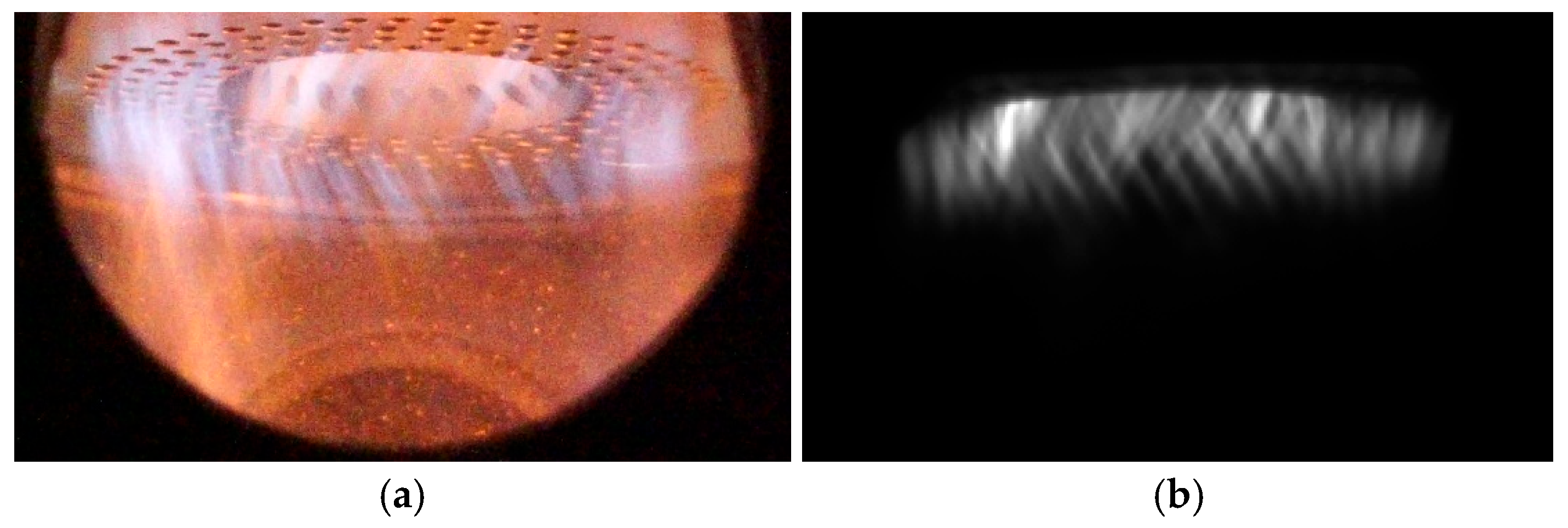
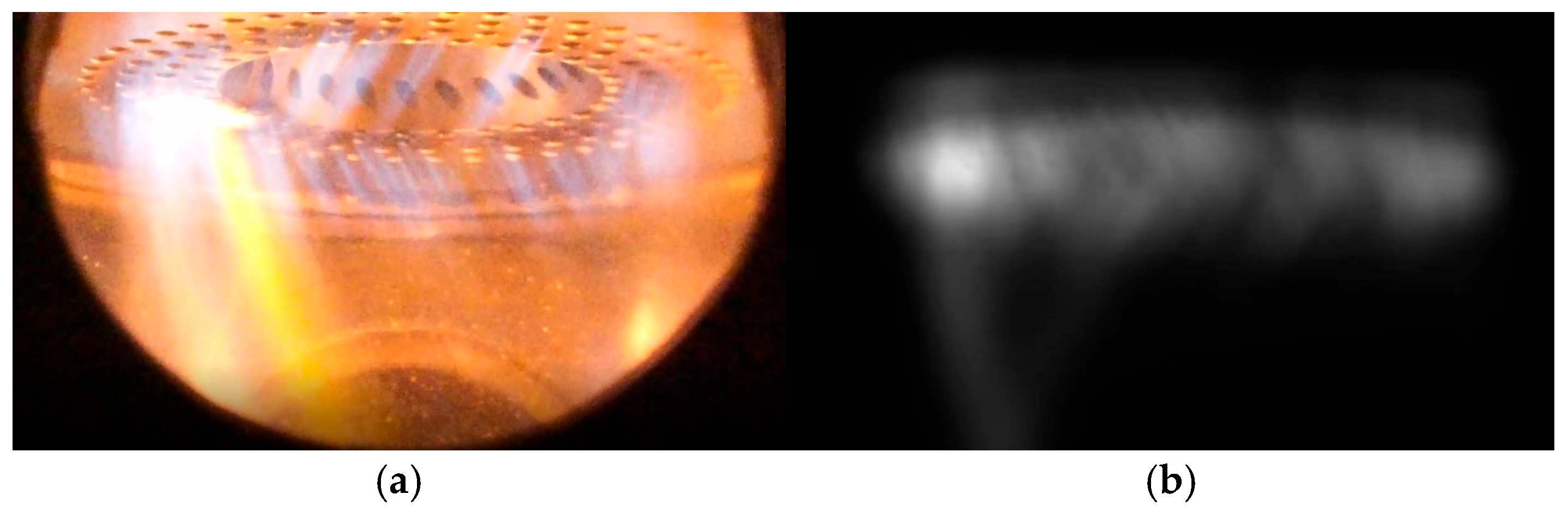
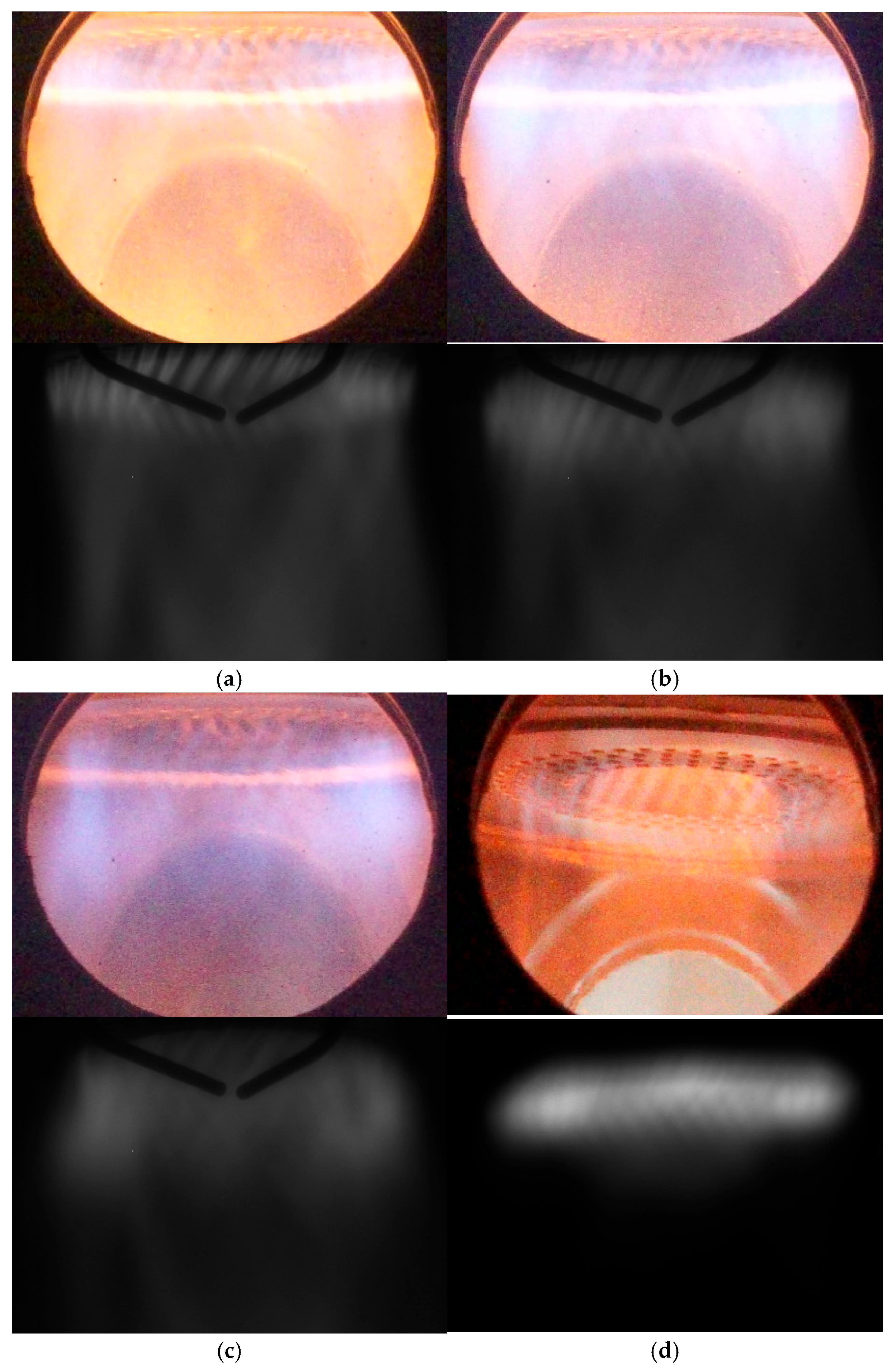
4.1.2. Flame Structure Characteristics
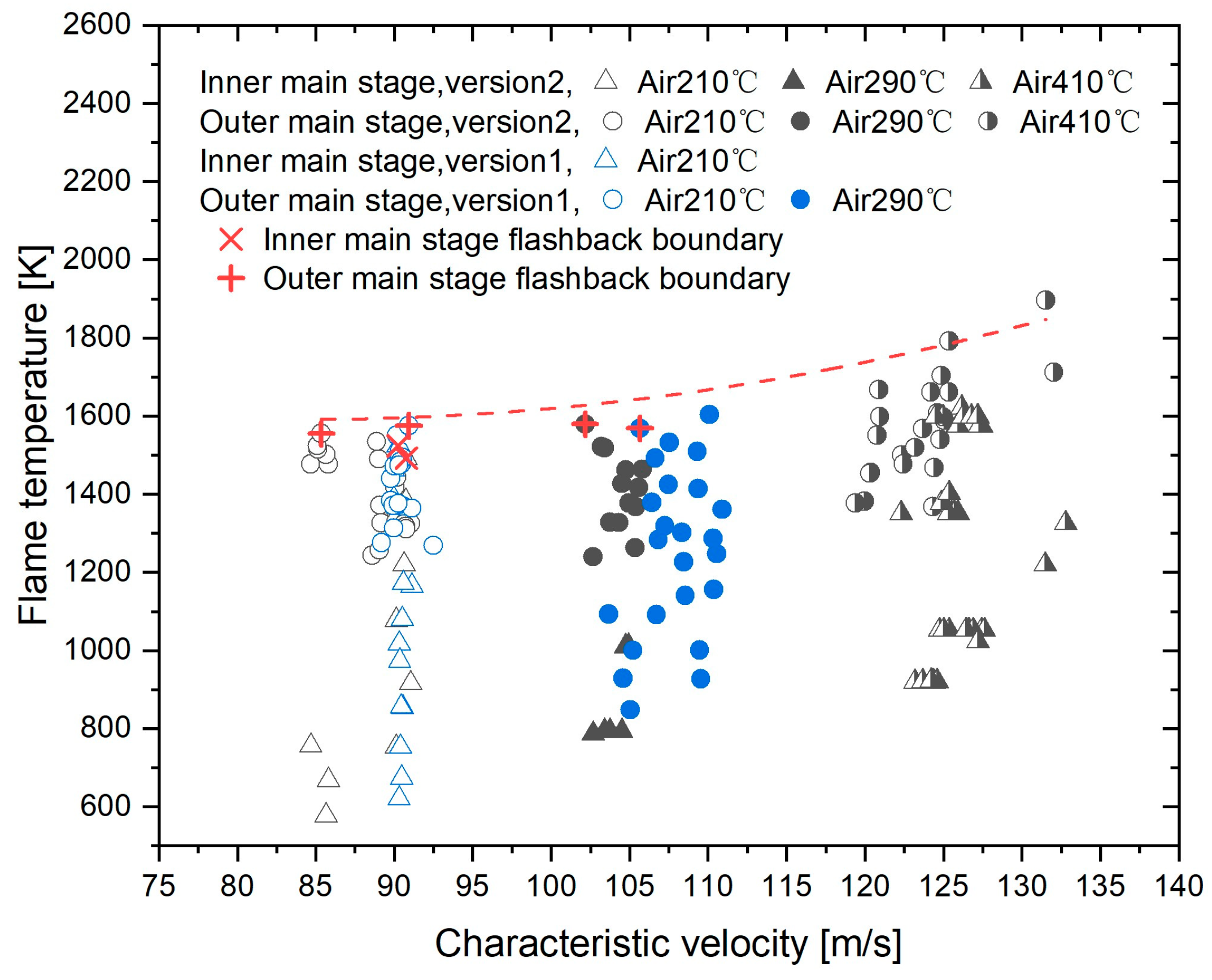
4.1.3. Flashback Boundary and Phenomena
4.1.4. Fuel Compatibility
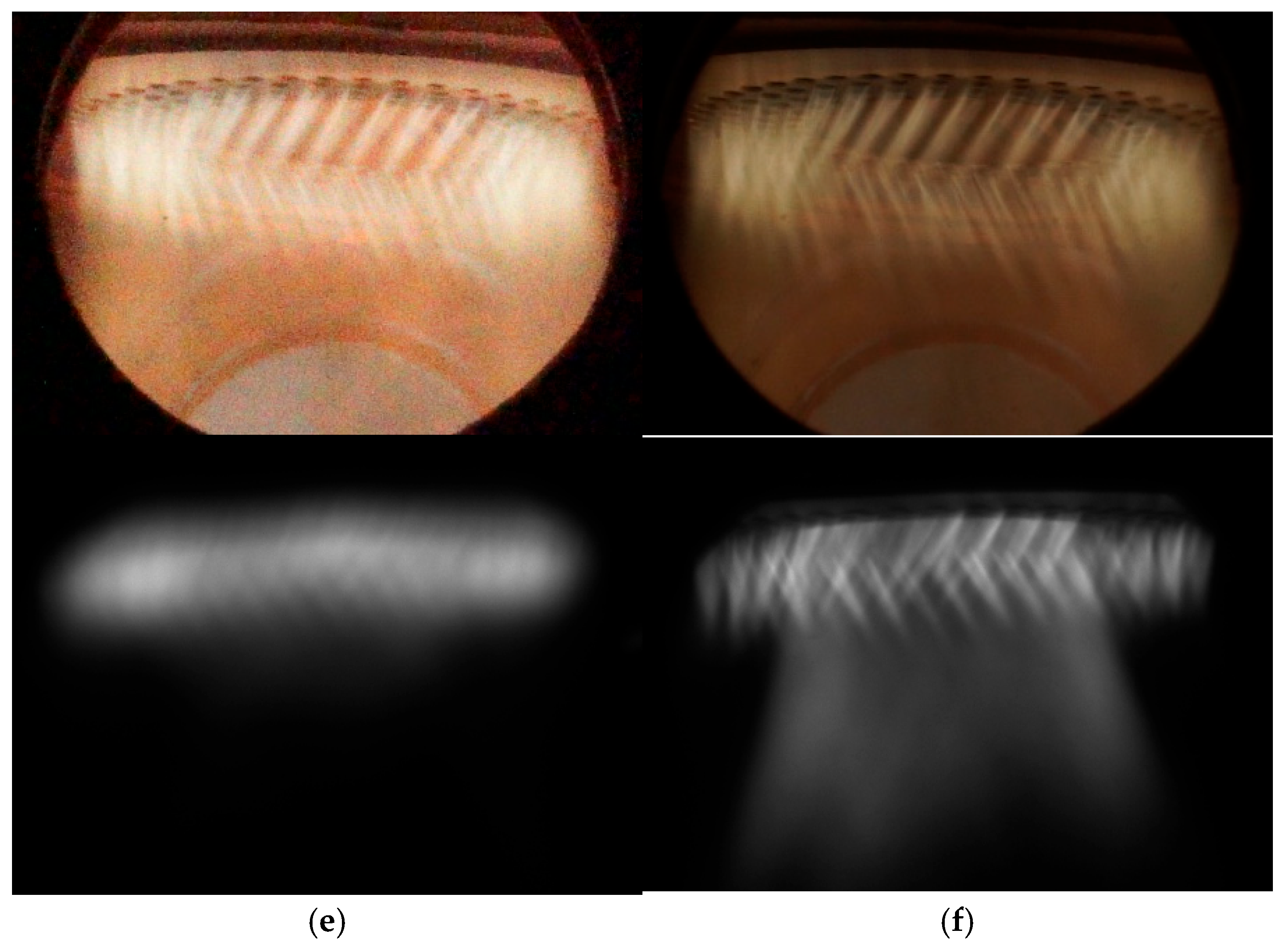
- Momentum-insensitive mixing performance: The micromixing channel’s geometry is tailored to decouple the fuel–air mixing efficiency from the fuel momentum. For low-momentum (e.g., methane) and high-momentum (e.g., hydrogen) fuels, the channel’s internal flow field sustains near-homogeneous premixing (reflected in the consistent OH distribution across all cases in Figure 10), eliminating fuel-specific mixing inhomogeneities.
- Synergistic flame stabilization mechanism: The integration of sudden-expansion recirculation and swirling flow provides robust flame anchoring across fuel types. For high-burning-velocity fuels (e.g., hydrogen), the swirling flow enhances the flow shear to suppress flashback; for low-burning-velocity fuels (e.g., methane), the sudden-expansion recirculation zone sustains flame residence time-both effects manifest in the attached, spatially uniform flames observed in Figure 10. This fuel adaptability holds critical technological significance: it enables gas turbines to transition seamlessly from conventional hydrocarbon fuels to carbon-free hydrogen–ammonia blends, thereby supporting the scalable deployment of low-carbon power generation systems.
- Flame length trends: The flame length increases slightly with lower fuel reactivity (e.g., pure methane > hydrogen–ammonia blends > pure hydrogen), which is consistent with the lower burning velocity of less reactive fuels (methane < ammonia-doped hydrogen < pure hydrogen). The small variation indicates the nozzle’s ability to constrain the flame size, regardless of fuel type.
- OH distribution uniformity: All cases exhibit high uniformity, confirming the nozzle’s momentum-insensitive mixing performance. Minor reductions for blended fuels (e.g., 15 vol% NH3-H2) arise from subtle differences in fuel diffusion rates but remain within a range that ensures stable combustion.
4.2. Application Test of CGSM Nozzles in Micro-Gas Turbines
4.2.1. General Situation
4.2.2. Variable Load Performance
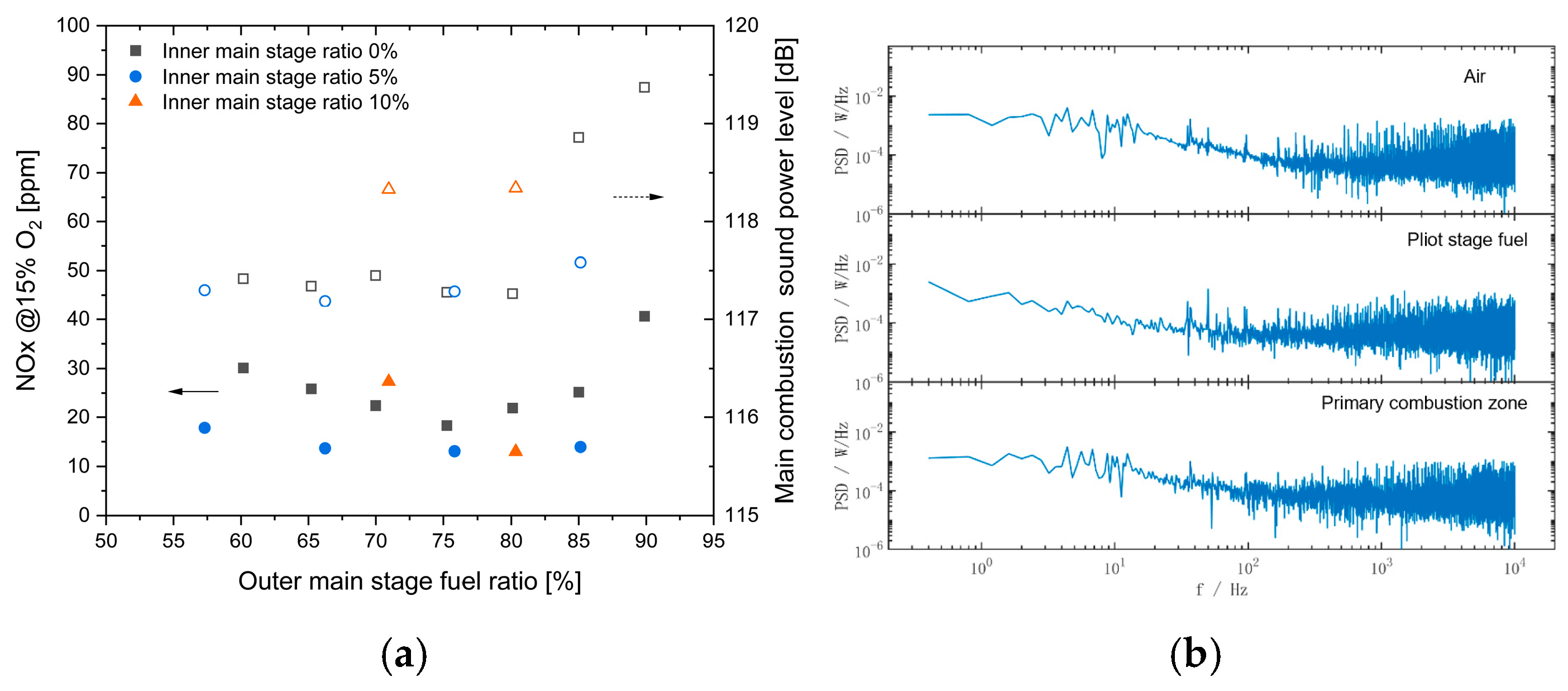
4.2.3. NOx Emission Performance Under Base Load
5. Conclusions
- Spiral microtube micromixing strategy was demonstrated to effectively enhance fuel–air mixing through Dean-vortex-induced secondary flows. This airflow-driven mechanism reduces the dependence of mixing uniformity on the fuel jet momentum, contributing to improved robustness under varying operating conditions.
- Pressurized combustor experiments at a moderate pressure (0.3 MPa) confirmed stable combustion of pure hydrogen under lean conditions, without observable flashback or combustion instabilities under the designated operating conditions. Low NOx emissions were achieved across the investigated operating range, indicating effective suppression of localized high-temperature regions.
- The CGSM combustor exhibited strong fuel adaptability, maintaining stable flame structures and acceptable emission levels during operation with blended hydrogen–methane and hydrogen–ammonia fuels. Seamless online fuel switching without structural modification of the combustor was demonstrated.
- Application tests on an 80 kW micro-gas turbine verified that the combustor can support stable operation across a wide range of load conditions, both in simple- and reheat-cycle modes, with combustion behavior that is consistent with the established operational characteristics of micro-gas turbines.
Author Contributions
Funding
Data Availability Statement
Conflicts of Interest
Abbreviations
| DLN | Dry Low-NOx |
| CGSM | Center-Graded Spiral Micromixing |
| CCD | Charge-Coupled Device |
| IMSR | Inner Main Stage Fuel Ratio |
| OMSR | Outer Main Stage Fuel Ratio |
| SLM | Selective Laser Melting |
References
- Manigandan, S.; Praveenkumar, T.R.; Ir Ryu, J.; Nath Verma, T.; Pugazhendhi, A. Role of hydrogen on aviation sector: A review on hydrogen storage, fuel flexibility, flame stability, and emissions reduction on gas turbines engines. Fuel 2023, 352, 129064. [Google Scholar] [CrossRef]
- Tadros, M.; Ventura, M.; Soares, C.G. Review of current regulations, available technologies, and future trends in the green shipping industry. Ocean Eng. 2023, 280, 114670. [Google Scholar] [CrossRef]
- Öberg, S.; Odenberger, M.; Johnsson, F. Exploring the competitiveness of hydrogen-fueled gas turbines in future energy systems. Int. J. Hydrogen Energy 2022, 47, 624–644. [Google Scholar] [CrossRef]
- Hwang, J.; Maharjan, K.; Cho, H. A review of hydrogen utilization in power generation and transportation sectors: Achievements and future challenges. Int. J. Hydrogen Energy 2023, 48, 28629–28648. [Google Scholar] [CrossRef]
- Skabelund, B.B.; Jenkins, C.D.; Stechel, E.B.; Milcarek, R.J. Thermodynamic and emission analysis of a hydrogen/methane fueled gas turbine. Energy Convers. Manag. X 2023, 19, 100394. [Google Scholar] [CrossRef]
- Galletti, C.; Parente, A.; Derudi, M.; Rota, R.; Tognotti, L. Numerical and experimental analysis of NO emissions from a lab-scale burner fed with hydrogen-enriched fuels and operating in MILD combustion. Int. J. Hydrogen Energy 2009, 34, 8339–8351. [Google Scholar] [CrossRef]
- Schulz, O.; Noiray, N. Combustion regimes in sequential combustors: Flame propagation and autoignition at elevated temperature and pressure. Combust. Flame 2019, 205, 253–268. [Google Scholar] [CrossRef]
- Solana-Pérez, R.; Shcherbanev, S.A.; Dharmaputra, B.; Ciani, A.; Noiray, N. Combustion regime transition of H2 flames during steady and transient operation of a sequential combustor. Proc. Combust. Inst. 2023, 39, 4335–4344. [Google Scholar] [CrossRef]
- Zou, X.; Chen, J.; Rui, Z.; Ji, H. Sequential growth reveals multi-spinel interface promotion for methane combustion over alumina supported palladium catalyst. Appl. Catal. B 2020, 273, 119071. [Google Scholar] [CrossRef]
- Ayed, A.H.; Kusterer, K.; Funke, H.H.-W.; Keinz, J.; Striegan, C.; Bohn, D. Experimental and numerical investigations of the dry-low-NOx hydrogen micromix combustors of an industrial gas turbine. Propuls. Power Res. 2015, 4, 123–131. [Google Scholar] [CrossRef]
- Kim, M.; Ock, S.; Park, S. Numerical Analysis of Factors Affecting NOx Emissions in Hydrogen-Fueled Micromix Combustors. Energies 2025, 18, 6168. [Google Scholar] [CrossRef]
- Lopez-Ruiz, G.; Alava, I.; Blanco, J.M. Study on the feasibility of the micromix combustion principle in low NOx H2 burners for domestic and industrial boilers: A numerical approach. Energy 2021, 236, 121456. [Google Scholar] [CrossRef]
- Funke, H.H.-W.; Beckmann, N.; Keinz, J.; Horikawa, A. 30 years of dry low NOx micromix combustor research for hydrogen-rich fuels: An overview of past and present activities. J. Eng. Gas Turbines Power 2021, 143, 071002. [Google Scholar] [CrossRef]
- Haque, M.A.; Nemitallah, M.A.; Abdelhafez, A.; Mansir, I.B.; Habib, M.A. Review of fuel/oxidizer-flexible combustion in gas turbines. Energy Fuels 2020, 34, 10459–10485. [Google Scholar] [CrossRef]
- Joo, Y.; Kim, M.; Park, J.; Park, S.; Shin, J. Hydrogen enriched gas turbine: Core technologies and R&D trend. Trans. Korean Hydrogen New Energy Soc. 2020, 31, 351–362. [Google Scholar] [CrossRef]
- Nemitallah, M.A.; Abdelhafez, A.A.; Ali, A.; Mansir, I.; Habib, M.A. Frontiers in combustion techniques and burner designs for emissions control and CO2 capture: A review. Int. J. Energy Res. 2019, 43, 7790–7822. [Google Scholar] [CrossRef]
- Horikawa, A.; Ashikaga, M.; Yamaguchi, M.; Ogino, T.; Aoki, S.; Wirsum, M.; Funke, H.H.-W.; Kusterer, K. Combined heat and power supply demonstration of micro-mix hydrogen combustion applied to M1A-17 gas turbine. In Proceedings of the Turbo Expo: Power for Land, Sea, and Air 2022, Rotterdam, The Netherlands, 13–17 June 2022; Volume 85994, p. V03AT04A041. [Google Scholar] [CrossRef]
- Horikawa, A.; Okada, K.; Yamaguchi, M.; Aoki, S.; Wirsum, M.; Funke, H.H.-W.; Kusterer, K. Combustor development and engine demonstration of micro-mix hydrogen combustion applied to M1A-17 gas turbine. In Proceedings of the Turbo Expo: Power for Land, Sea, and Air 2021, Virtual, 7–11 June 2021; Volume 84959, p. V03BT04A014. [Google Scholar] [CrossRef]
- Daniel, C.; Robert, I. Investigation of low emission combustors using hydrogen lean direct injection. INCAS Bull. 2011, 3, 45–352. [Google Scholar] [CrossRef]
- York, W.D.; Ziminsky, W.S.; Yilmaz, E. Development and testing of a low NOx hydrogen combustion system for heavy-duty gas turbines. J. Eng. Gas Turbines Power 2013, 135, 022001. [Google Scholar] [CrossRef]
- Asai, T.; Akiyama, Y.; Dodo, S. Development of a state-of-the-art dry low NOx gas turbine combustor for IGCC with CCS. In Recent Advances in Carbon Capture and Storage; IntechOpen: London, UK, 2017; pp. 3–30. [Google Scholar]
- Shi, T.; Liu, Y.; Jia, S.; Ge, B.; Duan, D.; Zang, S. Effects of Swirl Intensity on Flame Structure and NOx Emissions of Hydrogen Micro-Mixing Diffusion Combustion. J. Therm. Sci. 2025, 34, 1709–1720. [Google Scholar] [CrossRef]
- Banihabib, R.; Assadi, M. A hydrogen-fueled micro gas turbine unit for carbon-free heat and power generation. Sustainability 2022, 14, 13305. [Google Scholar] [CrossRef]
- Banihabib, R.; Lingstädt, T.; Wersland, M.; Kutne, P.; Assadi, M. Development and testing of a 100-kW fuel-flexible micro gas turbine running on 100% hydrogen. Int. J. Hydrogen Energy 2023, 49, 92–111. [Google Scholar] [CrossRef]
- Chen, M.; Zhang, L.; Xing, C.; Bao, Y.; Qiu, P.; Zhang, W.; Sun, S.; Zhao, Y. Experimental and numerical simulation study of the effect of mixing on the characteristics of swirl/non-swirl micromix flames. Energy 2024, 307, 132570. [Google Scholar] [CrossRef]
- Steinberg, A.M.; Sadanandan, R.; Dem, C.; Kutne, P.; Meier, W. Structure and stabilization of hydrogen jet flames in cross-flows. Proc. Combust. Inst. 2013, 34, 1499–1507. [Google Scholar] [CrossRef]
- Cecere, D.; Cimini, M.; Carpenella, S.; Caldarelli, J.; Giacomazzi, E. Composition and Injection Angle Effects on Combustion of an NH3/H2/N2 Jet in an Air Crossffow. Energies 2024, 17, 5032. [Google Scholar] [CrossRef]
- Bai, N.; Fan, W.; Zhang, R. Mixing enhancement mechanism for a hydrogen transverse jet coupled with a shear layer for gas turbine combustion. Phys. Fluids 2023, 35, 045111. [Google Scholar] [CrossRef]
- Devriese, C.; De Paepe, W.; Bastiaans, R. Impact of momentum ratio on JICF mechanism in micromix combustor for a hydrogen mGT. Int. J. Hydrogen Energy 2024, 91, 1045–1057. [Google Scholar] [CrossRef]
- Wang, Z.; Liu, X.; Liu, J.; Xu, Y.; Gu, W.; Zheng, J.; Zheng, H. Study on mixing and combustion performance of hydrogen micro-mixing combustor. Int. J. Hydrogen Energy 2024, 102, 80–93. [Google Scholar] [CrossRef]
- Li, J.; Zhao, Z.; Kazakov, A.; Dryer, F.L. An updated comprehensive kinetic model of hydrogen combustion. Int. J. Chem. Kinet. 2004, 36, 566–575. [Google Scholar] [CrossRef]
- Liu, X.; Shao, W.; Liu, Y.; Tian, Y.; Zhang, Z.; Xiao, Y.; Kraemer, G.O. Cold flow characteristics of a novel high-hydrogen Micromix model burner based on multiple confluent turbulent round jets. Int. J. Hydrogen Energy 2021, 46, 5776–5789. [Google Scholar] [CrossRef]



| Parameter | Value |
|---|---|
| air velocity of the outlet (m/s) | 120 |
| equivalence ratio | 0.32 |
| air temperature (°C) | 210 |
| air pressure (MPa) | 0.3 |
| Number | Dh (mm) | Rc (mm) | Uout (m/s) | Tin (°C) | Pin (MPa) | Re | De |
|---|---|---|---|---|---|---|---|
| No.1 | 3 | 54.0 | 120 | 210 | 0.3 | 26,700 | 4440 |
| No.2 | 3 | 91.6 | 120 | 210 | 0.3 | 26,700 | 3410 |
| No.3 | 3 | 150.5 | 120 | 210 | 0.3 | 26,700 | 2660 |
| No.4 | 3 | 177.0 | 120 | 210 | 0.3 | 26,700 | 2460 |
| No.5 | 3 | 208.1 | 120 | 210 | 0.3 | 26,700 | 2260 |
| No.6 | 3 | 234.5 | 120 | 210 | 0.3 | 26,700 | 2130 |
| No.1 | 3 | 54.0 | 120 | 280 | 0.3 | 21,300 | 3550 |
| No.2 | 3 | 91.6 | 120 | 280 | 0.3 | 21,300 | 2730 |
| No.3 | 3 | 150.5 | 120 | 280 | 0.3 | 21,300 | 2130 |
| No.4 | 3 | 177.0 | 120 | 280 | 0.3 | 21,300 | 1960 |
| No.5 | 3 | 208.1 | 120 | 280 | 0.3 | 21,300 | 1810 |
| No.6 | 3 | 234.5 | 120 | 280 | 0.3 | 21,300 | 1700 |
| Nozzle Stage | Air Distribution Ratio, % |
|---|---|
| Pilot | 10 |
| Inner main | 20 |
| Outer main | 70 |
| Test | Nozzle Stage |
|---|---|
| Mode 1 | Pilot + Outer main |
| Mode 2 | Pilot + 5% Inner main + Outer main |
| Mode 3 | Pilot + 10% Inner main+ Outer main |
| Parameter | Value |
|---|---|
| air velocity of the outlet (m/s) | 120 |
| equivalence ratio | 0.32 |
| air temperature (°C) | 280 |
| air pressure (MPa) | 0.3 |
Disclaimer/Publisher’s Note: The statements, opinions and data contained in all publications are solely those of the individual author(s) and contributor(s) and not of MDPI and/or the editor(s). MDPI and/or the editor(s) disclaim responsibility for any injury to people or property resulting from any ideas, methods, instructions or products referred to in the content. |
© 2026 by the authors. Licensee MDPI, Basel, Switzerland. This article is an open access article distributed under the terms and conditions of the Creative Commons Attribution (CC BY) license.
Share and Cite
He, H.; Yu, Z.; Wang, Y.; Ai, Y.; Li, S.; Liu, C. Designing and Testing an Innovative Hydrogen Combustor for Gas Turbines. Energies 2026, 19, 988. https://doi.org/10.3390/en19040988
He H, Yu Z, Wang Y, Ai Y, Li S, Liu C. Designing and Testing an Innovative Hydrogen Combustor for Gas Turbines. Energies. 2026; 19(4):988. https://doi.org/10.3390/en19040988
Chicago/Turabian StyleHe, Hongjuan, Zongming Yu, Yue Wang, Yuhua Ai, Shanshan Li, and Chunjie Liu. 2026. "Designing and Testing an Innovative Hydrogen Combustor for Gas Turbines" Energies 19, no. 4: 988. https://doi.org/10.3390/en19040988
APA StyleHe, H., Yu, Z., Wang, Y., Ai, Y., Li, S., & Liu, C. (2026). Designing and Testing an Innovative Hydrogen Combustor for Gas Turbines. Energies, 19(4), 988. https://doi.org/10.3390/en19040988