Article

Structured Design Methodology for Compact Plate Heat Exchangers
Renewable and Sustainable Energy Research Center, Technology Innovation Institute, Abu Dhabi 9639, United Arab Emirates
*
Author to whom correspondence should be addressed.
Energies 2026, 19(4), 914; https://doi.org/10.3390/en19040914
Submission received: 22 October 2025 / Revised: 12 December 2025 / Accepted: 18 December 2025 / Published: 10 February 2026
(This article belongs to the Special Issue Heat Transfer and Fluid Flows for Industry Applications)

Abstract

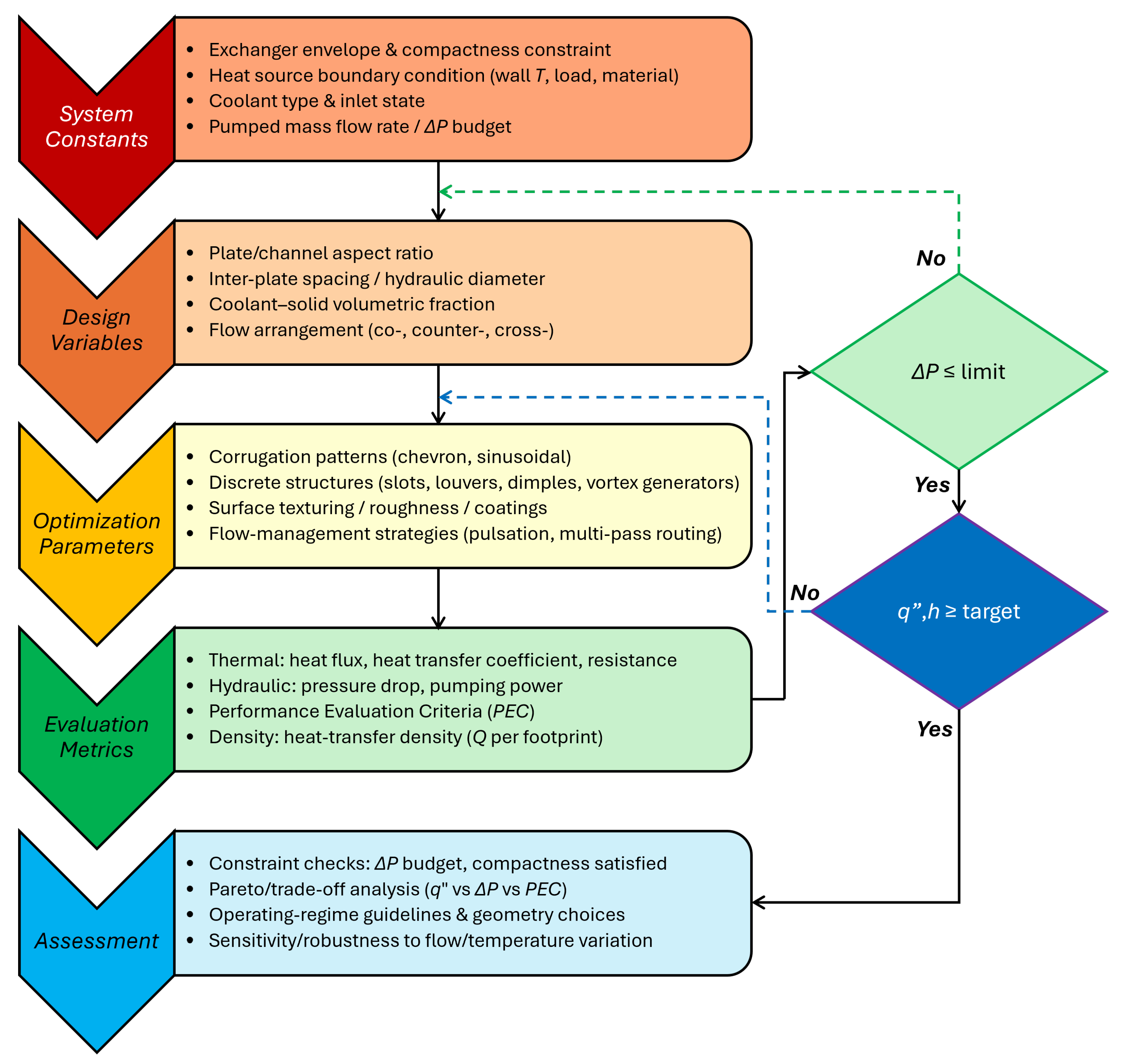
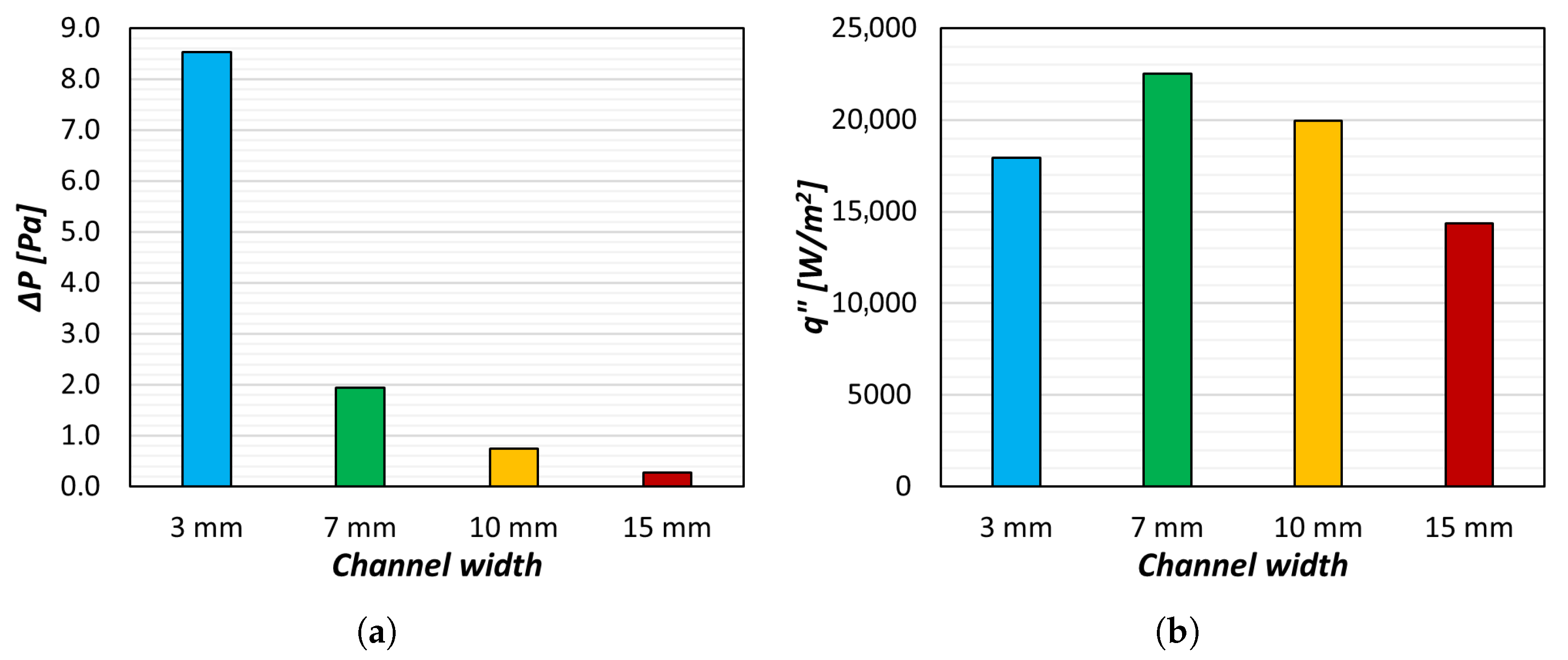
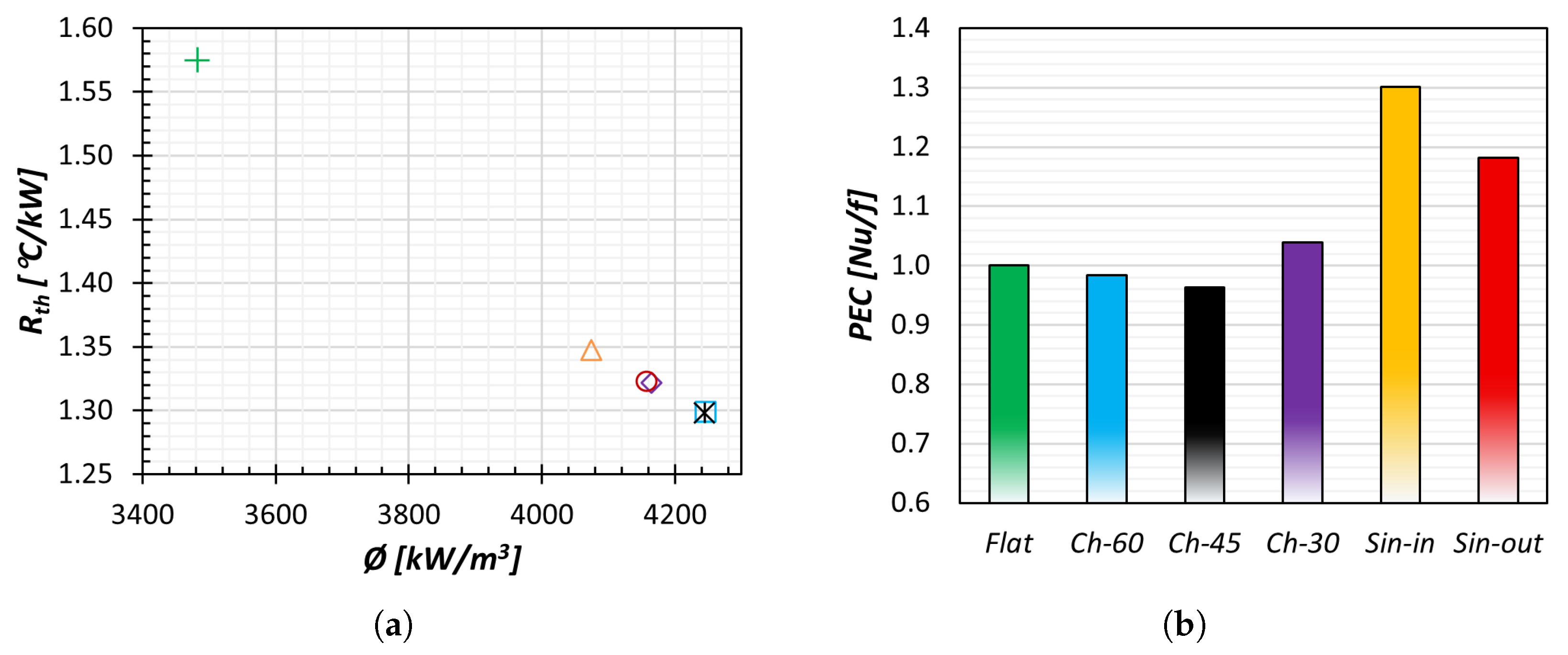
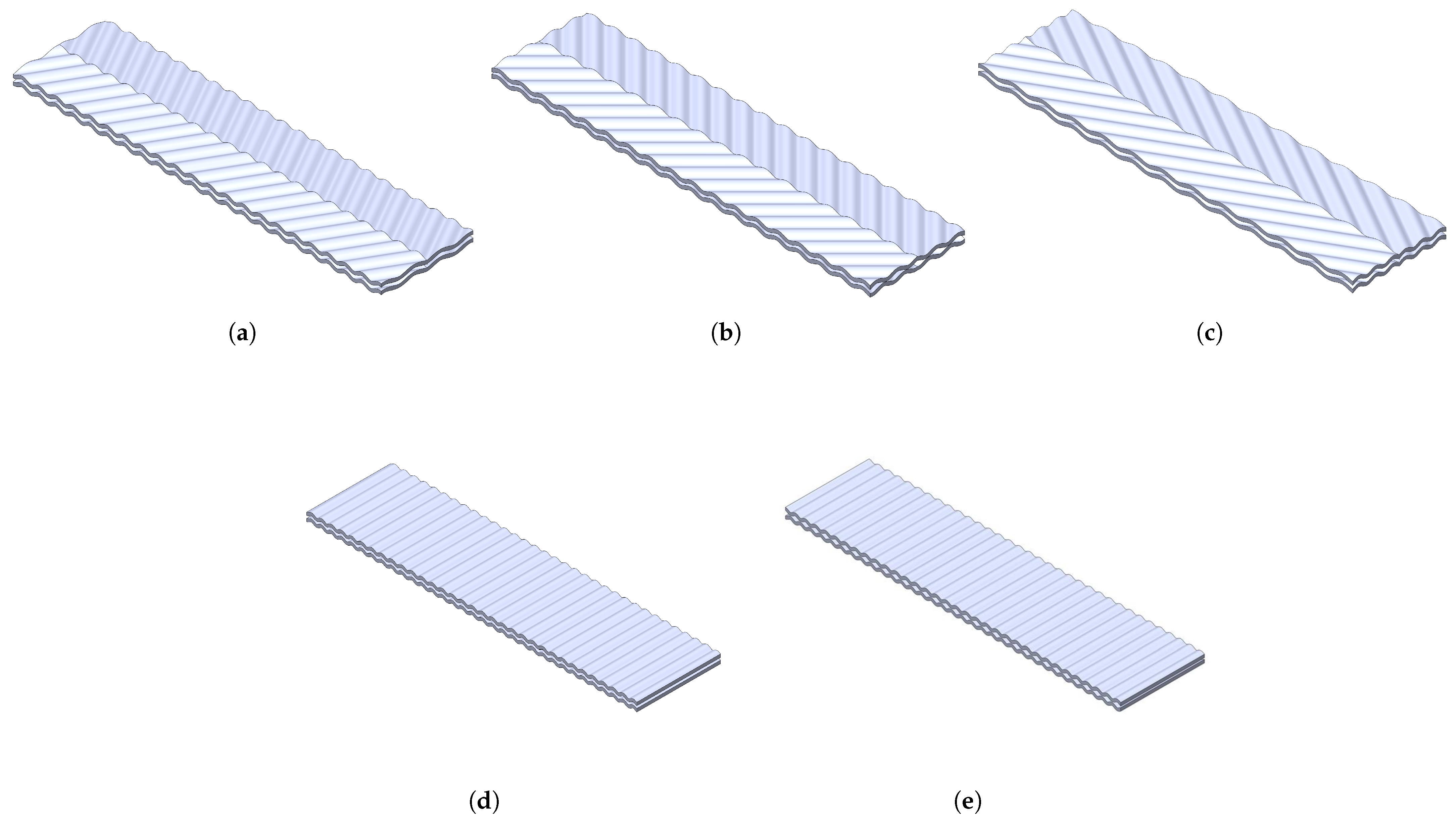
The increasing demand for compact and high-performance thermal management systems in the industrial and energy sectors has renewed interest in plate-type heat exchangers for high heat-flux dissipation. These exchangers offer high surface-area-to-volume ratios, modular architecture, and scalable construction, making them suitable for applications requiring advanced cooling within restricted space. This study presents a structured thermo-hydraulic design framework for compact plate heat exchangers operating under fixed wall-temperature boundary conditions. The framework integrates geometric scaling, surface-morphology variation, and multi-parameter performance evaluation to assess the balance between convective enhancement and hydraulic losses. Water at 25 °C serves as the working fluid due to its favorable thermophysical properties and economic viability. A constant wall temperature of 100 °C is applied as a fixed boundary condition to provide a consistent thermal driving potential for comparing different geometries in a range of industrially relevant operating regimes. Three primary design variables are examined: (i) a baseline flat-plate configuration used to establish the fundamental flow–thermal response; (ii) systematic variation of inter-plate spacing to characterize the hydraulic–thermal tradeoff; and (iii) surface-morphology variation using chevron and sinusoidal corrugations to enhance convection through secondary flow generation and boundary-layer modulation. The key performance metrics include wall heat flux, overall heat-transfer coefficient, thermal resistance, and pressure-drop penalty. These indicators are evaluated to identify configurations that are thermally effective and hydraulically feasible. The results show that an inter-plate spacing of 7 mm provides a favorable balance between confinement and convective enhancement under the present operating conditions. Sinusoidal corrugations yield the most favorable thermo-hydraulic performance (PEC 1.30) while maintaining low frictional losses. The proposed framework provides a transferable physics-based methodology for comparative assessment and early-stage design of compact heat exchangers under fixed pumping-power constraints. The approach is broadly applicable to renewable-energy systems and compact thermal management in industrial applications.
Keywords: thermofluidic modeling; forced convection; hydraulic resistance; turbulent heat transfer; channel morphology thermofluidic modeling; forced convection; hydraulic resistance; turbulent heat transfer; channel morphology