1. Introduction
Global decarbonisation efforts and the increasing urgency of climate mitigation place pressure on the transportation and energy sectors to reduce reliance on fossil-based systems. Road transport remains the dominant source of carbon dioxide (CO
2) and other pollutants. Battery-electric and hydrogen-fuel-cell technologies offer long-term promise, but their deployment is limited by infrastructure availability, economic feasibility, and unresolved technical challenges. These constraints are evident in heavy-duty, long-distance, and off-highway applications. As a result, improving the sustainability of internal combustion engines remains an essential parallel pathway in the medium term [
1,
2]. Among low-emission combustion concepts, reactivity-controlled compression ignition (RCCI) is an adaptable strategy that delivers diesel-comparable efficiency while reducing pollutant emissions [
3].
Reactivity-controlled compression ignition is an advanced low-temperature combustion strategy, where low-reactivity fuel is premixed with air and high-reactivity fuel is directly injected to control ignition and heat release. Conventional diesel combustion (CDC) refers to diffusion-controlled compression ignition using a single high-reactivity fuel. In this study, ethanol is considered the low-reactivity fuel, and diesel is the high-reactivity fuel; hydrogen is supplied as an additional premixed high-diffusivity fuel. The combustion phasing is characterised using the crank angle at which 50% of the heat release occurs (CA50), and the combustion aggressiveness is quantified using the pressure rise rate (PRR).
The operation of RCCI relies on creating and controlling in-cylinder reactivity stratification using two fuels with distinct ignition behaviours. A low-reactivity fuel, introduced via port fuel injection, forms the premixed background charge, and a high-reactivity fuel is delivered directly into the cylinder [
4]. This configuration allows for the adjustment of the auto-ignition timing and heat release characteristics. Lower combustion temperatures suppress nitrogen oxide (NO
x) formation due to the reduced thermal nitric oxide mechanisms, and particulate matter (PM) formation is influenced by the mixture formation, fuel chemistry, and engine load. Under certain conditions, the reduced combustion temperature and incomplete oxidation can increase the PM formation when the local rich zones persist. The efficiency and feasibility of RCCI depend on the fuel pair selection, the physical and chemical properties of the fuels, and the adaptability to the existing engine hardware and control systems [
5,
6].
Although often described as ‘ethanol–hydrogen’ RCCI, most experimental and practical implementations rely on diesel pilot injection for reliable ignition control, which makes the dominant architecture a tri-fuel ‘ethanol–hydrogen–diesel’ RCCI system. This review uses the term ethanol–hydrogen RCCI to denote systems where ethanol and hydrogen define the low-reactivity and the high-reactivity fields, while acknowledging that diesel pilot injection remains the essential ignition trigger in most reported configurations. This clarification avoids confusion with the spark-ignited (SI) ethanol–hydrogen dual-fuel systems, which operate under different combustion regimes.
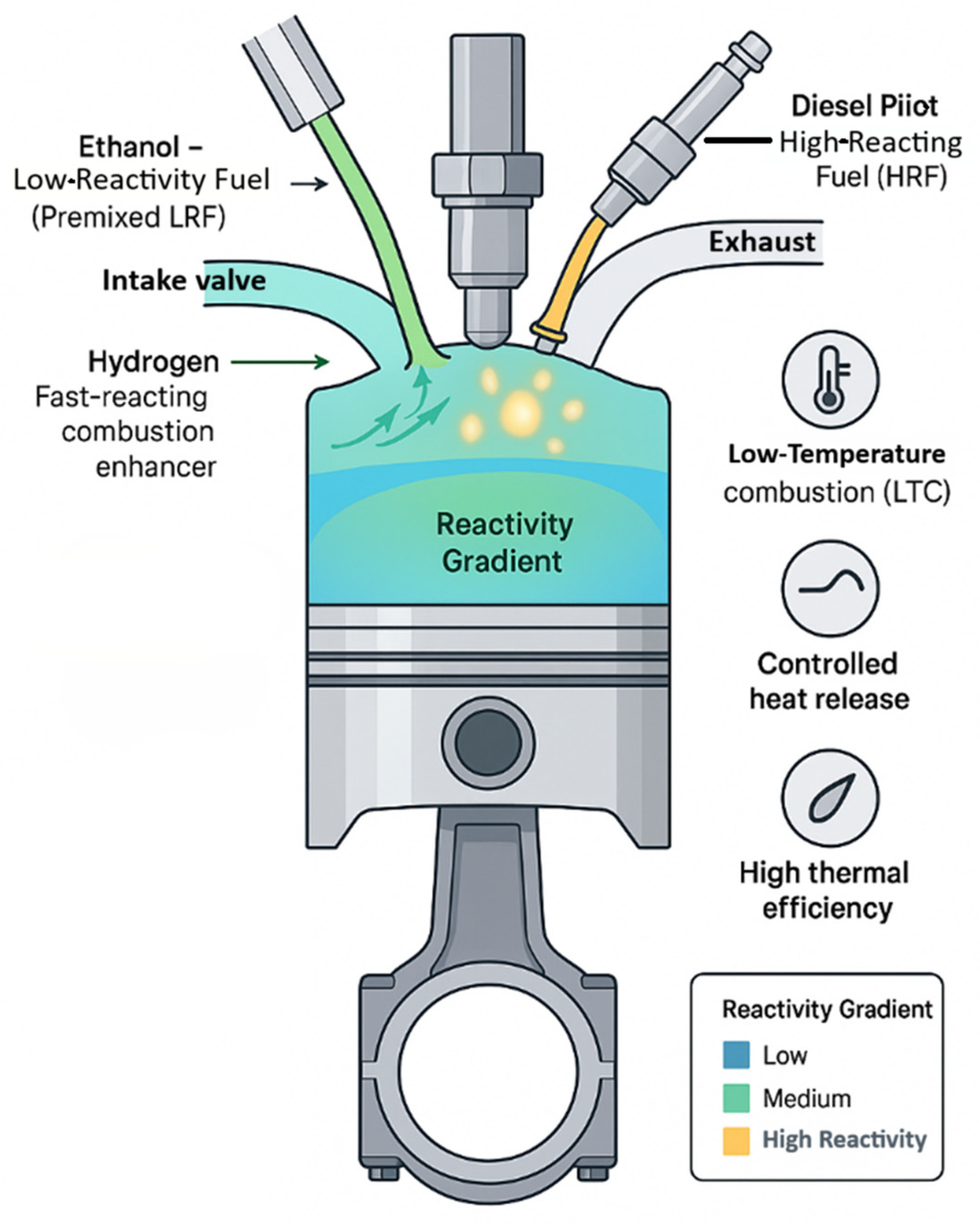
The conceptual diagram as shown in
Figure 1 illustrates a typical arrangement, where ethanol is premixed through the port injection, hydrogen enters with the intake charge, and diesel is injected near the top, dead centre, to trigger the ignition. The mixing patterns produce distinct reactivity zones, which enable low-temperature combustion and reduce the likelihood of soot formation and uncontrolled heat release.
Ethanol, which is derived from different sources of biomass, has a premium octane rating, excellent evaporative cooling, and an inherent oxygenated structure. These characteristics enable ethanol to blend with intake air, reduce local flame temperatures and inhibit soot formation [
7]. Hydrogen, when obtained through renewable routes, sits at the opposite end of the reactivity spectrum. Hydrogen has fast chemical kinetics, broad ignition limits and a carbon-free composition, which can sharpen combustion and reduce carbon monoxide (CO), hydrocarbon (HC), and particulate emissions [
8,
9,
10].
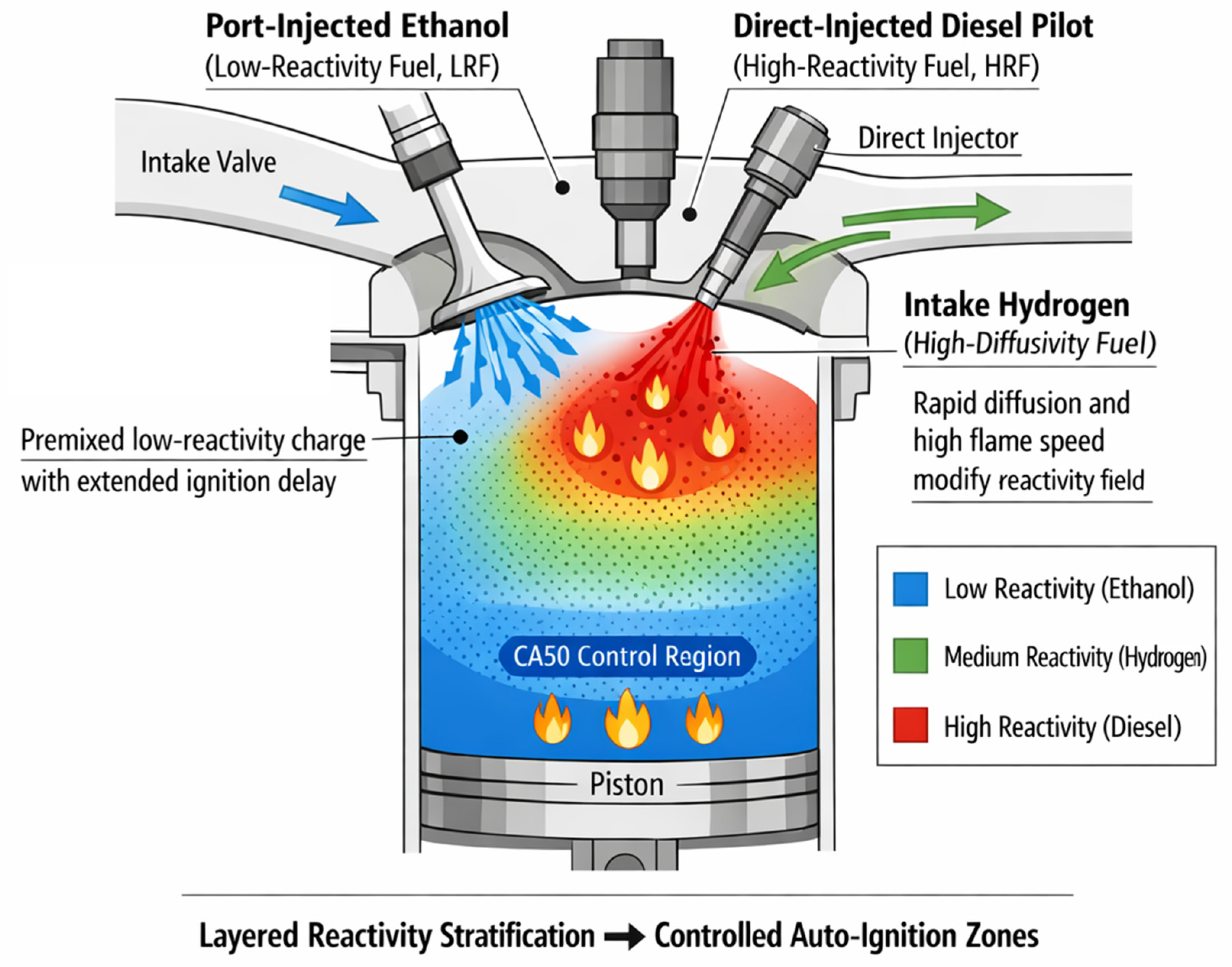
The schematic of the reactivity stratification in RCCI combustion illustrates port-injected ethanol forming a premixed low-reactivity zone, intake hydrogen providing the distributed high-diffusivity reactivity enhancement, and direct-injected diesel pilot generating a high-reactivity ignition kernel, which initiates controlled auto-ignition in the layered reactivity field, as shown in
Figure 2.
When the two fuels are used together, they create a balance that the individual fuels rarely achieve. The ethanol shapes the reactivity distribution inside the cylinder, and the hydrogen counteracts the slower ignition tendency of the ethanol by accelerating the burning rates [
11]. This combination, which is often arranged as a dual- or tri-fuel setup with a small diesel pilot, can increase efficiency and improve controllability. These properties are particularly attractive for heavy-duty and stationary engines. This approach also aligns with current policy directions, which anticipate a long transition period where renewable liquids and emerging hydrogen systems coexist [
12].
Although the interest in this configuration is evident, research outputs remain scattered across several related domains. Work on ethanol–diesel RCCI, hydrogen enrichment of the alcohol fuels, and hydrogen–diesel dual-fuel modes has progressed independently, which makes it difficult to form a clear picture of how ethanol and hydrogen perform when they are used together in practical RCCI engine operation [
13,
14]. Differences in test engines, fuel ratios, exhaust gas recirculation (EGR) strategies, load conditions, and control approaches further complicate direct comparisons.
In addition, evaluating the promise of ethanol–hydrogen RCCI requires attention to factors that lie outside the combustion chamber. The sustainability of each fuel depends on the production pathway, where ‘green’ versus ‘grey’ hydrogen and ethanol sourced from waste biomass versus conventional crops must be considered. Real-world feasibility is influenced by storage methods, compatibility of materials, and safety requirements [
15]. These wider factors determine whether technology can move from laboratory demonstrations to the development of low-carbon emission engines.
1.1. Objective of the Review
This assessment aims to give a complete, critical, and current picture of the integration of ethanol and hydrogen into very efficient and clean RCCI engines. In particular, the study aims to perform the following tasks:
To collect and evaluate the latest experimental, numerical, and analytical studies on the use of ethanol and hydrogen in RCCI or dual-fuel operation, with a major focus on their joint utilisation.
To discuss the basic principles of combustion that characterise ethanol and hydrogen as a cooperative pair for RCCI engines.
To compare and assess performance and emissions parameters, such as brake thermal efficiency (BTE), brake-specific fuel consumption (BSFC), NOx, PM, CO, HC, and combustion stability of the RCCI engine.
To suggest the best methods for fuel blending timings, injection, energy substitution ratios and EGR management to attain optimal RCCI operation.
To outline important considerations such as infrastructure, fuel production routes, safety, material compatibility, and the economic feasibility of RCCI at the system level.
To spot gaps and suggest future research pathways directing the scientific circle towards effective, practical, and eco-friendly dual-fuel RCCI-based solutions.
1.2. Scope of the Review
This review covers RCCI combustion supported by ethanol–hydrogen mixtures and includes the following topics (among others):
- •
Use of ethanol as a low-reactivity premixed fuel and hydrogen as an enrichment or secondary fuel.
- •
Simultaneous use of two or three fuel strategies, namely ethanol, hydrogen, and diesel/pilot fuels.
- •
Research engines equipped with optical access using transparent quartz windows for the visualisation of combustion phenomena.
- •
Numerical studies consisting of computational fluid dynamics (CFDs), chemical kinetic simulation, control-oriented modelling, and engine cycle analysis.
- •
Performance parameters (i.e., BTE, BSFC), combustion characteristics (heat release rate [HRR], phasing, and cyclic variation), and emissions (NOx, PM, CO, and HC).
- •
Broader contextual evaluations, such as life cycle analysis, fuel production pathways, storage, safety and economic feasibility.
Studies that deal with non-RCCI combustion modes (SI, homogeneous charge compression ignition [HCCI], and premixed charge compression ignition [PCCI]) are mentioned only if the mechanisms involved are closely related to the effect of ethanol–hydrogen on reactivity.
1.3. Contributions of the Work
The following are the main benefits of this study:
- 1.
First integrated synthesis of ethanol + hydrogen RCCI research: The current literature separates ethanol-based and hydrogen-based investigations. This research thoroughly combines both fuel domains and studies their joint role in the combustion of RCCI.
- 2.
A comparative, data-driven evaluation of performance and emissions: The review, through analysing and presenting data from recent high-impact studies, points out the quantitative trends and the consistent advantages, limitations, and trade-offs of ethanol–hydrogen dual fuelling.
- 3.
Mechanistic clarification of synergy between ethanol and hydrogen: The review shows how their complementary properties affect ignition delay, charge reactivity, flame speed, and charge cooling, as well as pollutant formation pathways.
- 4.
Strategic insights for future low-carbon engine research and policy: The results of the study are placed in the context of broader decarbonisation objectives, and accordingly, they cover concerns related to the scalability, production of renewable fuels, and difficulties of practical deployment.
To conclude, the use of ethanol and hydrogen in an RCCI framework represents an extremely promising way to achieve sustainable, high-efficiency, and near-zero-emission combustion engines. This study helps to overcome a major hurdle by bringing together dispersed research, uncovering performance trends and creating a clear basis for future scientific, and industrial progress.
2. Background and Fundamentals
Reactivity-controlled compression ignition has attracted considerable attention in combustion research because it reduces NO
x and soot while maintaining diesel-like efficiency. The concept is not new, but recent developments have made it one of the more flexible low-temperature combustion strategies. The method relies on creating a mixture whose reactivity is deliberately shaped rather than governed by the behaviour of a single fuel. Paykani (2021) [
16] reviews this concept and explains how auto-ignition can be shifted by manipulating the in-cylinder reactivity field, and Li (2017) [
17] reports that RCCI operates effectively with many fuel combinations and control strategies.
In a typical configuration, the engine uses two fuels with distinct ignition tendencies. A low-reactivity fuel, such as petrol or ethanol, is mixed with intake air through port injection, which forms a relatively uniform background charge. A high-reactivity fuel, commonly diesel or biodiesel, is introduced by direct injection during the compression stroke. Instead of flame propagation, the high-reactivity spray initiates controlled auto-ignition in different regions of the charge. Combustion usually occurs at lower peak temperatures and produces less soot; furthermore, the ignition window is wider than that of HCCI, which improves controllability in practical engines [
18,
19].
Homogeneous charge compression ignition and PCCI are low-temperature combustion strategies where the fuel–air mixture is premixed before compression ignition; the difference lies in the level of charge stratification and injection timing control.
Several operating parameters strongly influence RCCI behaviour, and these variables are often adjusted jointly. The premixing ratio, which is defined by the share of low-reactivity fuel in the total fuel energy, affects the ignition delay and heat release duration. Increasing this ratio usually extends the ignition delay and spreads the heat release, which reduces NO
x but can lead to incomplete combustion in lean or cool regions [
20]. The injection schedule of the high-reactivity fuel also affects combustion phasing, where advanced injection shifts the ignition earlier, and split injections help shape the reactivity gradient. Exhaust gas recirculation is widely used to reduce the oxygen concentration and charge temperature, although excessive EGR can cause incomplete combustion [
21,
22]. The compression ratio influences the efficiency and combustion control, where higher ratios improve the efficiency but reduce the available margin for phasing adjustment. The interaction among these parameters creates a complex operating space, and RCCI optimisation requires coordinated tuning rather than independent parameter adjustment [
23].
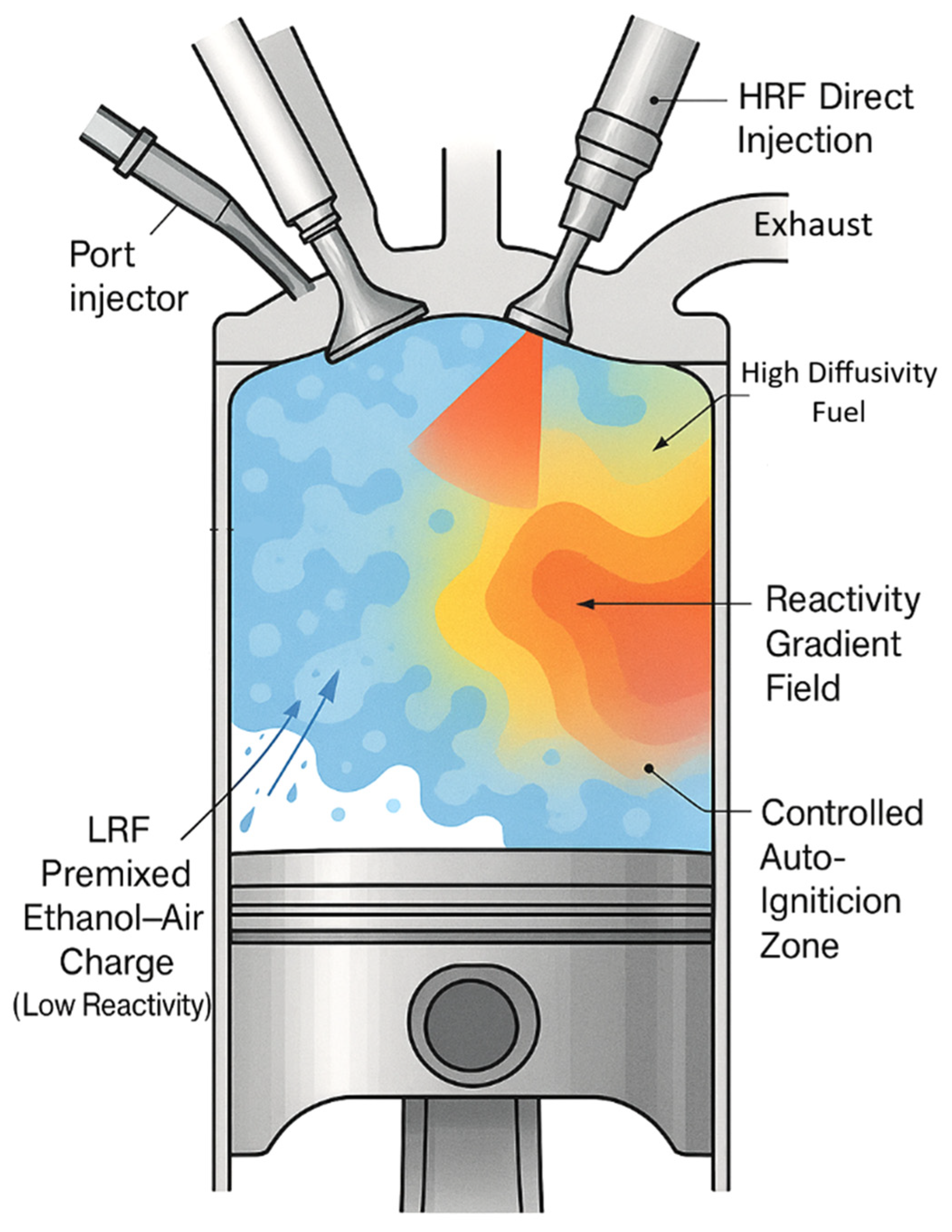
Figure 3 presents a schematic of reactivity stratification in RCCI combustion, where the intake duct, port-injected ethanol, intake hydrogen distribution, direct-injected diesel pilot, and exhaust valve are seen [
24,
25]. The combination produces a layered reactivity field inside the cylinder, which determines where and when auto-ignition begins rather than the conventional flame front.
Ethanol performs effectively as the low-reactivity fuel in RCCI due to its combustion-related properties. Its high-octane rating and low cetane number increase the resistance to auto-ignition, which extends the premixing interval and strengthens the control authority of the pilot fuel [
26]. The high latent heat of vaporisation cools the charge, which reduces the peak temperature and NO
x formation, although excessive cooling can delay ignition and prolong combustion. Its oxygenated molecular structure reduces soot precursors and improves oxidation under rich conditions [
27]. The use of port injection avoids miscibility and stability issues associated with direct ethanol–diesel blending. These properties provide a wide ignition timing window, improved mixture preparation and cleaner combustion, which explains the preference for ethanol as a low-reactivity fuel.
Hydrogen behaves differently inside the engine. Its high diffusivity enables rapid mixing in the intake, which limits the formation of fuel-rich regions. Its broad flammability limits and low ignition energy support stable combustion under lean conditions, which improves efficiency. After ignition is initiated by the high-reactivity fuel, the high flame speed accelerates combustion, which reduces CO and unburned HCs. The rapid burn can increase local temperatures and NO
x formation, which requires EGR or injection timing control. The absence of carbon eliminates soot and CO
2 from the hydrogen fraction. The effect of hydrogen on ignition delay depends on the interaction with the ethanol–hydrogen mixture and the level of charge stratification at ignition [
28,
29].
When ethanol and hydrogen are used together, the resulting reactivity pattern differs from conventional diesel–alcohol combinations. Ethanol sustains a large, premixed fraction without early ignition, and hydrogen strengthens combustion and reduces incomplete oxidation. Adjustment of the hydrogen fraction, intake temperature, and high-reactivity fuel timing avoids premature ignition and sluggish combustion. The combination widens the operating range of low-temperature combustion, especially at mid-to-high loads where the HCCI is limited [
30].
Understanding the individual and combined behaviour of ethanol and hydrogen is essential for improving RCCI performance. The interaction of the premixed ratio, injection strategy, EGR rate, and compression ratio determines the achievable performance range. The complementary roles of the fuels support the integration of renewable fuels into future combustion engines, which must maintain efficiency and durability while meeting strict emission and decarbonisation requirements.
3. Systematic Review Methodology
This study adopts a systematic literature review framework to ensure transparency, reproducibility, and scientific rigour when synthesising research on ethanol–hydrogen RCCI combustion. The review methodology follows established systematic review practices in engineering research and is aligned with the Preferred Reporting Items for Systematic Reviews and Meta-Analyses (PRISMA) guidelines.
3.1. Data Sources and Search Strategy
A comprehensive literature search was conducted across multiple major scientific databases to ensure broad coverage of peer-reviewed research. The following databases were used: Scopus, Web of Science Core Collection, ScienceDirect (Elsevier), and Google Scholar.
The search was performed between January 2000 and October 2025, covering the period during which RCCI combustion research emerged and evolved into advanced dual-fuel and low-temperature combustion frameworks.
The search strings were constructed using Boolean operators and keyword combinations to capture all relevant studies related to RCCI, ethanol, hydrogen, and dual-fuel combustion strategies. The primary search expressions included the following:
‘Reactivity Controlled Compression Ignition’ OR ‘RCCI’
AND
(‘ethanol’ OR ‘bioethanol’ OR ‘alcohol fuel’)
AND
(‘hydrogen’ OR ‘H2’ OR ‘hydrogen enrichment’)
AND
(‘dual fuel’ OR ‘tri fuel’ OR ‘low temperature combustion’ OR ‘premixed compression ignition’).
Additional complementary queries included the following:
‘ethanol RCCI engine’
‘hydrogen RCCI engine’
‘ethanol hydrogen compression ignition’
‘dual fuel RCCI combustion’
‘low-reactivity fuel RCCI’
‘hydrogen assisted RCCI’.
Reference chaining was also performed by screening the reference lists of highly cited review papers and recent experimental studies to identify additional relevant publications not captured directly through database searches.
3.2. Inclusion and Exclusion Criteria
To ensure relevance and scientific quality, strict inclusion and exclusion criteria were applied. Studies were included if they met all of the following conditions:
They were peer-reviewed journal articles indexed in Scopus or Web of Science.
They investigated RCCI, RCCI-like low-temperature combustion, or dual-fuel compression ignition (CI) combustion, with relevance to reactivity control.
They involved ethanol, hydrogen, or ethanol–hydrogen combinations as fuel components.
They reported at least one of the following: engine performance metrics (BTE, BSFC), combustion characteristics (HRR, CA50, PRR, and ignition delay), or emissions (NOx, PM/soot, CO, and HC).
They used experimental, numerical (CFD/chemical kinetics), or validated simulation-based approaches.
Studies were excluded for any of the following reasons:
They were conference abstracts, posters, theses, or non-peer-reviewed reports.
They focused solely on SI combustion without relevance to compression ignition mechanisms.
They did not report quantitative performance, combustion, or emission outcomes.
They addressed hydrogen or ethanol combustion without relevance to RCCI or CI-based reactivity control.
3.3. Screening and Selection Process
The screening process followed a structured multi-stage approach.
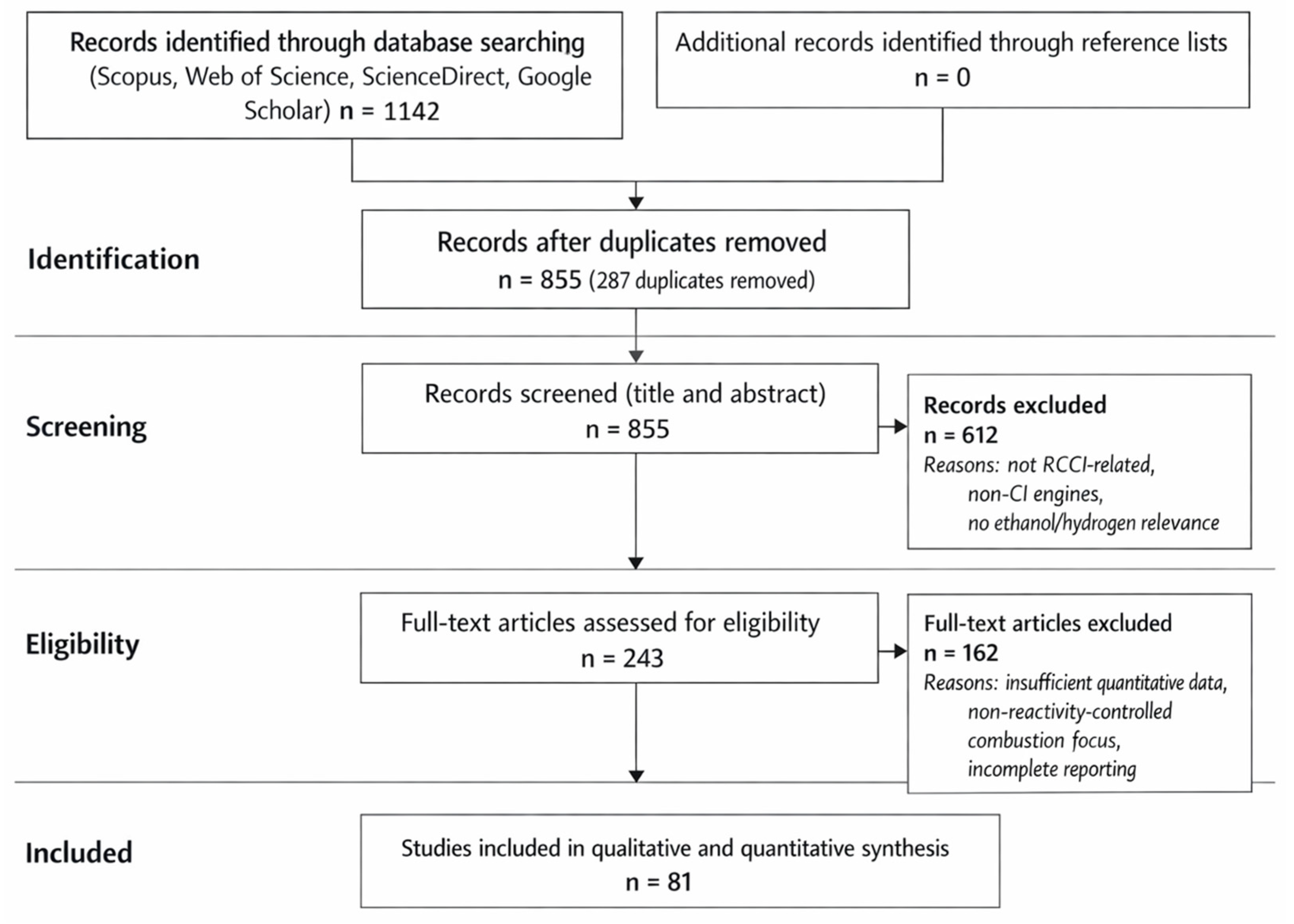
The initial database search identified 1142 records. After the removal of 287 duplicate records, 855 unique articles remained for screening. Title and abstract screening excluded 612 studies that were irrelevant to RCCI combustion, concerned non-CI engines, or had no ethanol or hydrogen relevance. The remaining 243 articles were subjected to a full-text eligibility assessment. Of these, 162 articles were excluded due to insufficient quantitative data, a lack of relevance to the reactivity control mechanisms, or a focus on unrelated combustion modes. Finally, 81 studies were retained for a full qualitative and quantitative synthesis in this review.
Figure 4 shows the structured flow diagram which illustrates the identification, screening, eligibility and inclusion stages used to select the studies for the systematic review.
3.4. Study Quality and Bias Considerations
A formal risk-of-bias scoring system was not applied due to the heterogeneous nature of the experimental platforms, engine configurations, operating conditions, and modelling frameworks across the reviewed studies. However, quality control was ensured through the strict inclusion of only peer-reviewed journal publications that provided clearly described methodologies, defined operating conditions, and reproducible experimental or numerical frameworks. Studies that lacked transparent experimental setups, had unclear baseline definitions, or had incomplete performance and emission reporting were excluded during the eligibility stage. This approach ensured that only scientifically robust and verifiable studies contributed to the synthesis.
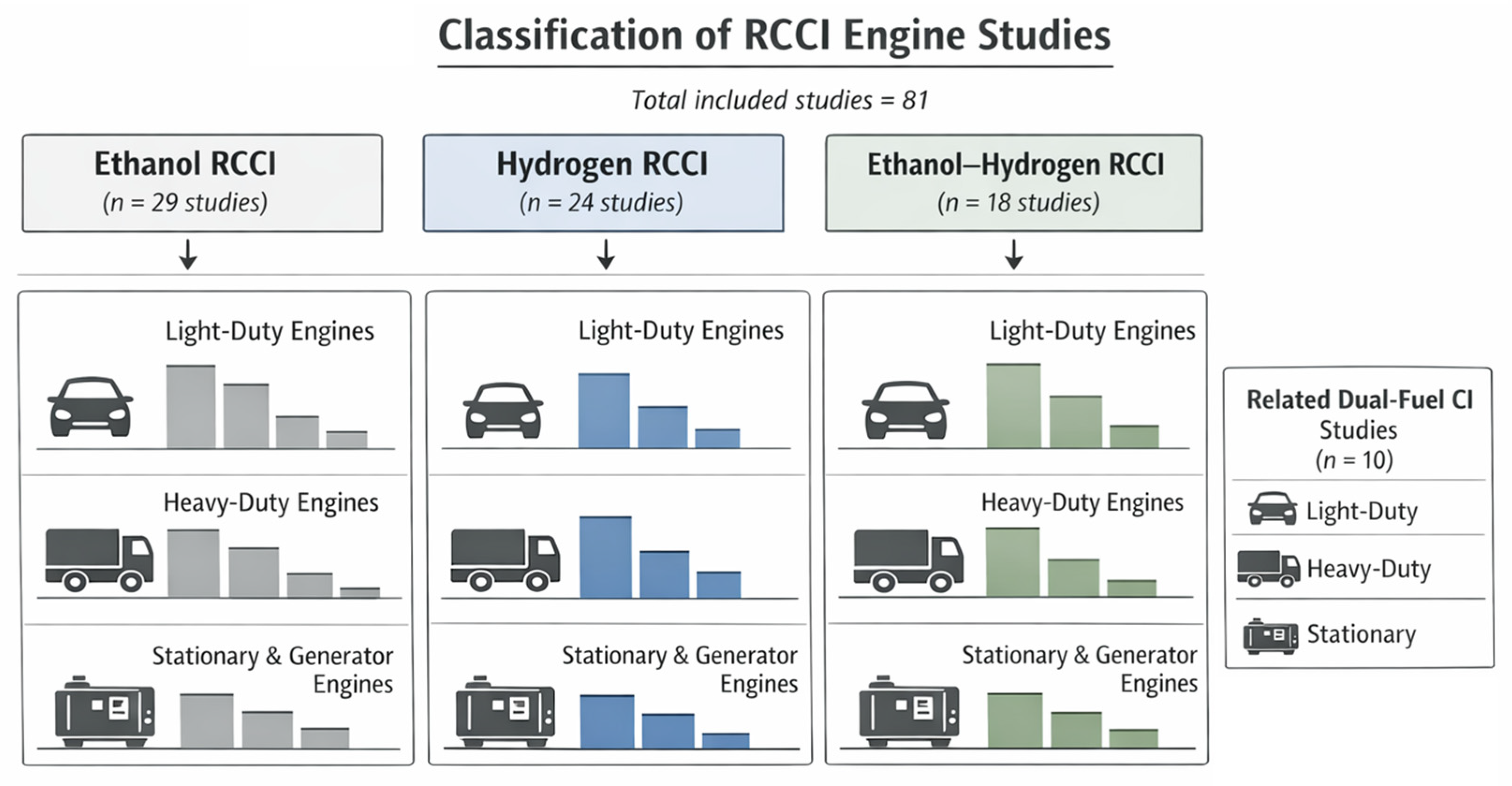
Figure 5 shows ethanol RCCI, hydrogen RCCI, and ethanol–hydrogen RCCI studies across light-duty, heavy-duty, and stationary engines.
3.5. Data Extraction and Synthesis Strategy
For each included study, the following data were systematically extracted:
- •
Engine type and displacement;
- •
Operating speed and load;
- •
Fuel strategy (ethanol fraction, hydrogen fraction, and pilot fuel type);
- •
Fuel fraction basis (energy basis or volume basis);
- •
Injection strategy (port injection, direct injection, and multi-injection);
- •
EGR conditions;
- •
Baseline reference (CDC, diesel-only RCCI, or diesel-only operation);
- •
Reported performance indicators (BTE, BSFC);
- •
Combustion metrics (CA50, HRR, PRR, and ignition delay);
- •
Emission outcomes (NOx, PM, CO, and HC).
Due to heterogeneity across experimental platforms and operating regimes, quantitative synthesis was performed using trend-based normalisation rather than direct absolute aggregation. Reported variations (ΔBTE, ΔBSFC, ΔNO
x, and ΔPM) were interpreted relative to the baseline defined in each individual study (see
Table 1).
This structured and transparent methodology ensures that the review is reproducible, verifiable, and scientifically defensible. By explicitly defining the search databases, search strings, screening criteria, and selection procedures, the study satisfies the formal requirements of a systematic review. The integration of the PRISMA methodology, quantitative extraction protocols, and structured synthesis strengthens the credibility of the conclusions and supports the robustness of the comparative analysis, which is presented in the subsequent sections. Distribution of included studies is given in
Table 2.
4. Literature Review
4.1. Ethanol in Reactivity-Controlled Compression Ignition—Experimental and Modelling Studies
In recent years, the use of ethanol as a low-reactivity fuel in dual-fuel RCCI experiments has transitioned from a niche topic to a mainstream research focus. Pan et al. (2021) [
30,
31] investigated the ethanol–diesel RCCI configuration in a heavy-duty engine and reported an approximately 65% reduction in NO
x and an almost 30% reduction in PM compared with conventional diesel operation. The results also showed that the cycle-to-cycle variation changed with the diesel pilot phasing and premixed ethanol energy fraction. These findings indicate that ethanol provides the long ignition delay required for RCCI and increases the sensitivity to combustion phasing [
32].
Several recent studies extended the ethanol–diesel RCCI concept under different engines and operating conditions, where outcomes varied across studies. Wategave et al. (2025) [
33] varied the premixed ratio and pilot timing and observed strong effects on NO
x, soot, and combustion stability. Disassa et al. (2024) [
34] studied diesel–ethanol blends in an RCCI-like configuration and reported a reduction in NO
x, although HC and CO increased when the operating conditions were not optimised. Despite methodological differences, the overall trends remained consistent and reflected common underlying mechanisms.
Modelling literature has analysed how ethanol shapes the in-cylinder reactivity field. Dwarshala et al. (2023) [
35] summarised that the long ignition delay and evaporative cooling of ethanol broaden the reactivity distribution and reduce peak combustion temperatures. These findings are consistent with experimental observations. The oxygenated molecular structure of ethanol disrupts soot formation pathways, which explains the observed PM reductions. However, excessive ignition delay can extend the combustion duration and introduce instability, especially at high-load conditions.
Across these studies, recurring themes emerge. Ethanol generally reduces soot and NOx under suitable operating conditions. The pilot-injection timing and premixed ratio are the dominant control parameters that influence combustion phasing, HC, and CO emissions. High ethanol fractions and aggressive premixing can introduce combustion instability. Overall, the studies demonstrate that ethanol is an effective low-reactivity fuel for RCCI when it is combined with precise injection control and systematic reactivity management.
4.2. Hydrogen Enrichment in Compression Ignition/Reactivity-Controlled Compression Ignition Engines
Research on adding hydrogen to CI engines within RCCI setups has expanded rapidly, because hydrogen exhibits a distinct combustion behaviour. Its high flame speed, absence of carbon, and wide flammability range differentiate hydrogen from diesel and alcohol fuels. Gharehlar et al. (2024) [
36] investigated the hydrogen–diesel RCCI configuration and reported a significant increase in BTE as well as a rapid reduction in CO and HC emissions. However, NO
x increased when EGR and combustion phasing were not properly controlled. The study also indicated that hydrogen blending is beneficial up to a certain energy fraction, beyond which knock and NO
x escalation become critical concerns.
Rameez (2024) [
37] implemented hydrogen instead of natural gas in the RCCI mode and observed improved heat release characteristics and reduced cyclic variability. However, NO
x control still required the precise adjustment of EGR and injection timing. Ramachandran et al. (2023) [
38] introduced hydrogen into an ammonia–biodiesel RCCI system and confirmed that hydrogen accelerates combustion and extends lean operation limits, although rapid combustion increased the PRR when timing was not optimised.
Elumalai et al. (2025) [
39] reviewed hydrogen-assisted RCCI systems and summarised the efficiency improvements and reductions in CO, HC, and PM. The review also highlighted persistent challenges related to NO
x emissions and system integration. Fakhari et al. (2024) [
40] modelled the hydrogen-enriched ammonia–diesel RCCI system and predicted faster combustion with increasing NO
x at higher hydrogen fractions, which aligns with experimental findings.
Overall, the studies indicate that hydrogen improves efficiency and reduces CO, HC, and PM, although trade-offs related to NOx emissions, ignition phasing, and PRR remain. These effects shift across the operating space and require precise control of the combustion parameters.
4.3. Combined Ethanol + Hydrogen (Tri-Fuel/Hybrid) Strategies
Recent studies that combine ethanol and hydrogen in the same RCCI configuration remain limited, although several investigations provide insight into emerging trends. Elumalai et al. (2025) [
39] investigated a tri-fuel RCCI system using biodiesel, ethanol, and hydrogen. The results showed that ethanol reduced soot formation, and hydrogen accelerated combustion and increased BTE. However, the reactivity field became complex when the three fuels interacted, which led to stratification behaviour that was less predictable than that of simpler dual-fuel systems.
Disassa et al. (2024) [
34] examined the combined use of ethanol and hydrogen and reported increased BTE and reduced PM relative to ethanol-only operations. However, NO
x emissions increased unless higher EGR rates were applied. Dwarshala et al. (2023) [
35] reviewed ethanol–hydrogen RCCI studies and concluded that ethanol provides a long ignition delay and hydrogen accelerate combustion, which can be beneficial when injection timing and fuel metering are carefully controlled. The authors emphasised that sensor feedback and sequencing strategies become more critical in such configurations.
Modelling studies support these experimental findings. Xu et al. (2024) [
41] simulated an ammonia–hydrogen–n-heptane RCCI system and reported that hydrogen improved ignition control; however, certain stratification patterns increased NO
x formation. Although the fuel combinations differed across studies, the underlying trends were consistent. Ethanol and hydrogen together provide delayed ignition and rapid heat release, but the system becomes more sensitive to phasing and control strategies. These results indicate that the approach is promising, but it requires advanced control and precise calibration.
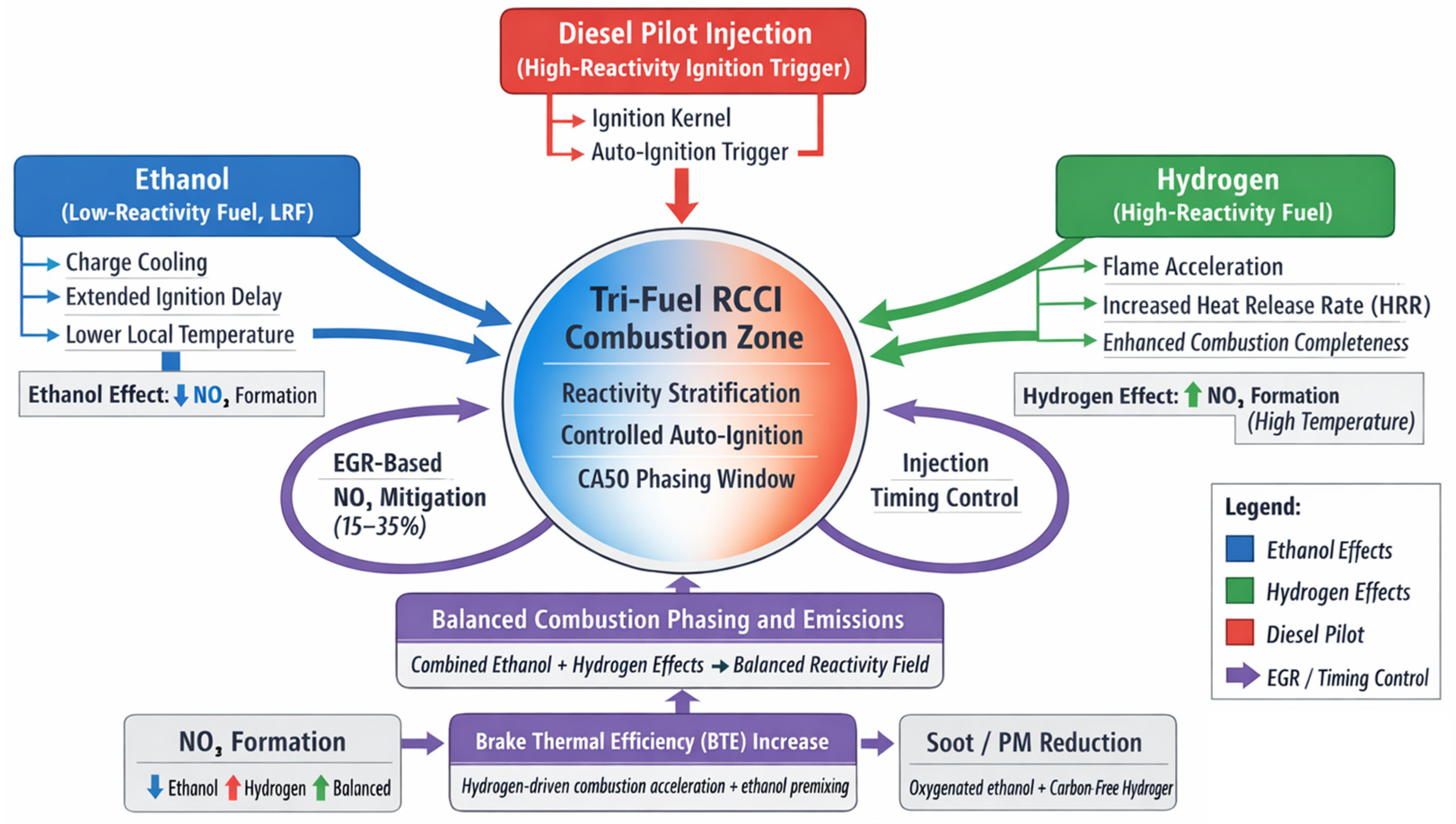
Figure 6 illustrates the conceptual reactivity interaction mechanism in ethanol–hydrogen–diesel RCCI combustion, showing ethanol-induced charge cooling and ignition delay, hydrogen-induced flame acceleration, and heat release enhancement and diesel pilot ignition triggering. The combined system achieves balanced combustion phasing and emission control through EGR and injection timing strategies.
4.4. Modelling, Computational Fluid Dynamics, and Chemical Kinetic Studies
Computational fluid dynamics and chemical kinetic modelling have played a major role in recent RCCI research, because many in-cylinder phenomena, such as reactivity layering, HRR shape, and onset of knock, are difficult to measure directly. Kantaroğlu et al. (2025) [
42] performed a CFD analysis of four synthetic e-fuels in the direct-injection spark-ignition engine. Although the study was not focused on RCCI, the findings are relevant. High hydrogen content produced sharper pressure traces and higher NO
x levels, which is consistent with hydrogen-rich RCCI behaviour.
Xu et al. (2024) [
41] simulated an ammonia–hydrogen–n-heptane system under heavy-duty RCCI conditions. The results showed that hydrogen advanced heat release and increased peak pressure, which required adjustments in pilot-injection timing and EGR to maintain stable phasing. Temur et al. (2024) [
43] used zero- and one-dimensional models to study the methanol–diesel RCCI and demonstrated that the latent heat and reactivity gradients influenced ignition delay and combustion duration, which applies to ethanol–hydrogen systems.
Overall, the modelling studies confirm experimental trends. Ethanol delays ignition and reduces soot, and hydrogen accelerates combustion and increases pressure rise and NOx sensitivity. Numerical methods allow for the systematic variation of the hydrogen fraction, premixed ratio, and injection timing, which would be costly and time-consuming to investigate experimentally.
4.5. Control Strategies and Hardware (Injection, Fueling, and Sensors)
Integrating ethanol and hydrogen in an RCCI engine presents significant hardware and control challenges. The injection sequencing and sensor capability strongly influence combustion stability. Chhatbar et al. (2024) [
44] compared multiple injection strategies, including low-reactivity fuel port injection and direct injection, as well as different pilot timings, and showed that small sequencing changes can considerably affect stability. Hydrogen introduces additional complexity because it can be supplied as a high-pressure gas or as a cryogenic liquid. The system must meter ethanol, hydrogen and the pilot fuel independently while monitoring leak detection, storage pressure, and safety protocols. Elumalai et al. (2025) [
34,
45] reported that hydrogen storage and flow control can limit performance unless fast-response sensors are used to prevent phasing errors and knock events.
The control requirements are also demanding. Closed-loop phasing control using in-cylinder pressure sensing is increasingly reported in the RCCI literature, although studies dedicated to ethanol–hydrogen RCCI control remain limited. Dwarshala et al. (2023) [
46] reported that stable operation across the load and speed range requires adaptive injection timing, EGR adjustment, and real-time estimation of the in-cylinder reactivity field. The chemical benefits of ethanol and hydrogen, therefore, shift the burden to the hardware and control system, which must manage complex multi-fuel dynamics to achieve stable and efficient operation.
4.5.1. Mapping of Control Levers and Combustion Targets in Ethanol–Hydrogen Reactivity-Controlled Compression Ignition
The control of ethanol–hydrogen RCCI combustion requires the coordinated manipulation of multiple actuators to maintain stable combustion phasing, limit PRRs, and satisfy emission constraints.
Table 3 summarises the primary control levers reported in the literature and their influence on key combustion targets.
Control targets in ethanol–hydrogen RCCI include maintaining CA50 within the optimal efficiency window, limiting peak PRR to avoid knock and mechanical stress, ensuring the indicated mean effective pressure (IMEP) stability, and constraining NOx emissions. Pilot-injection timing and quantity remain the dominant levers for ignition triggering and phasing, and ethanol and hydrogen fractions regulate reactivity stratification and combustion intensity. Exhaust gas recirculation provides an additional degree of freedom for NOx mitigation and phasing retardation, whereas boost and intake temperatures influence charge density and auto-ignition sensitivity.
4.5.2. Open-Loop and Closed-Loop Control Approaches
Most experimental ethanol–hydrogen RCCI studies employ open-loop control maps, where injection timing, fuel fractions, and EGR rates are pre-calibrated as functions of engine load and speed. Although open-loop strategies are practical for laboratory research engines, they exhibit limited robustness to disturbances such as fuel composition variability and transient operation.
Recent RCCI research increasingly highlights closed-loop combustion control based on in-cylinder pressure feedback. Closed-loop controllers adjust the pilot-injection timing, fuel fraction distribution, and EGR rate in real time to maintain CA50 and PRR within prescribed limits. Such systems require fast-response piezoelectric pressure sensors or ion-current sensing systems, which provide cycle-resolved combustion metrics. Although closed-loop control improves the stability and emission compliance, its implementation increases system complexity and cost, particularly for multi-fuel RCCI architectures [
47].
Advanced sensing is required for practical ethanol–hydrogen RCCI deployment. In-cylinder pressure sensors enable the real-time estimation of CA50, PRR, and IMEP, which are essential for feedback control. Hydrogen mass-flow sensors and ethanol injection metering systems are required to maintain precise energy substitution ratios. Exhaust gas oxygen sensors and NO
x sensors support emission-constrained control, and temperature and pressure sensors in hydrogen storage systems are necessary for safety monitoring. The integration of these sensors forms the basis for model-based or adaptive control frameworks required for stable tri-fuel RCCI operation [
48].
4.6. Life Cycle Assessment and Techno-Economic and Infrastructure Considerations
Any realistic assessment of the ethanol–hydrogen RCCI system must extend beyond engine-level combustion performance; the life cycle footprint of the fuels is critical. Hydrogen production pathways, including grey, blue, and green routes, have substantially different greenhouse gas emissions. Ethanol emissions also depend on feedstock sources, such as sugarcane, corn, or cellulosic biomass. Few studies directly assess the life cycle impacts of the ethanol–hydrogen RCCI system. Dwarshala et al. (2023) [
46] emphasised that the ‘carbon-neutral’ claim is valid only when the upstream production and distribution systems are renewable. Otherwise, tailpipe emission reductions do not reflect true environmental benefits.
Economic considerations are also important and are often underreported in combustion studies. High-pressure hydrogen storage, associated plumbing, safety systems, and onboard tank mass increase the system cost. In some cases, conversion costs may offset efficiency gains. Elumalai et al. (2025) [
39] discussed whether the ethanol–hydrogen RCCI concept is more suitable for heavy-duty applications, where battery-electric options are currently limited. However, questions remain regarding fuel supply scalability, hydrogen safety regulations, and retrofitting costs.
Overall, published work includes experiments, modelling, control research, and limited system-level analysis. Ethanol provides a long ignition delay and low-soot formation; hydrogen accelerates combustion and reduces CO and HC emissions. The combination shows potential. However, studies consistently highlight challenges related to combustion phasing control, NOx management, cycle stability, and the integration of hardware and fuel supply systems required for practical deployment.
5. Quantitative Synthesis of Performance and Emission Outcomes
This section presents a consolidated quantitative synthesis of performance and emission outcomes reported in the reviewed ethanol-, hydrogen- and ethanol–hydrogen-based RCCI studies. Due to the heterogeneity in engine platforms, operating conditions, fuel fractions, and control strategies, direct aggregation of absolute numerical values is not scientifically meaningful. Therefore, reported variations in BTE, BSFC, NO
x, and PM were extracted relative to the baseline defined in each individual study [
48].
5.1. Baseline Normalisation and Interpretation Framework
Across the reviewed literature, baseline reference conditions varied significantly and included CDC, diesel-only RCCI operation, petrol or ethanol premixed reference cases, and single-fuel CI benchmarks. Furthermore, fuel substitution ratios were reported on either an energy basis or a volumetric basis, and engine loads ranged from low-load idle conditions to full-load operation. As a result, all quantitative ranges reported herein represent indicative trend envelopes rather than universal absolute improvements [
49].
To ensure transparency, each extracted study was categorised according to its reference baseline and operating regime. Reported ΔBTE, ΔBSFC, ΔNOx, and ΔPM values reflect relative changes compared with the baseline case specified by the original authors.
5.2. Aggregated Quantitative Trends
Table 4 summarises the consolidated quantitative performance and emission trends observed across ethanol RCCI, hydrogen-assisted RCCI, and ethanol–hydrogen RCCI configurations [
50,
51].
The reported BTE improvements for ethanol-based RCCI primarily result from enhanced charge premixing and reduced heat losses due to lower soot formation. Hydrogen-assisted RCCI configurations demonstrate higher combustion rates and improved combustion completeness, which contribute to the upper range of BTE enhancement. Combined ethanol–hydrogen RCCI systems show the highest reported efficiency gains due to the synergistic effects of charge cooling from ethanol and accelerated combustion from hydrogen.
5.3. Influence of Operating Regime: Low-Load Versus High-Load Behaviour
The reviewed studies consistently reported a strong load dependence of RCCI combustion characteristics and emission behaviour. To reflect this dependency, quantitative trends were categorised into low-load and high-load regimes.
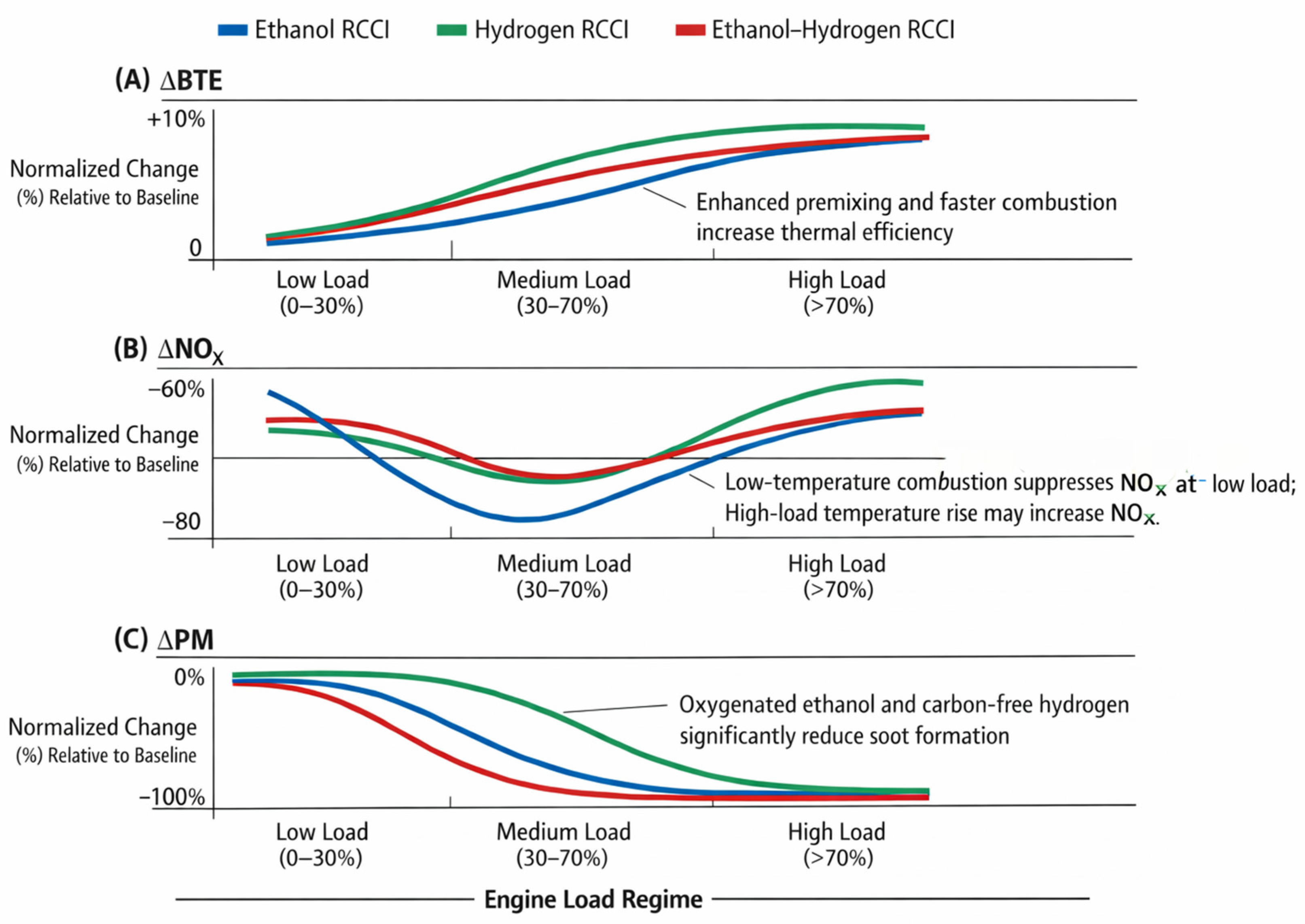
At low loads, RCCI exhibits strong low-temperature combustion characteristics, leading to substantial NOx and soot suppression. At medium loads, the ethanol–hydrogen synergy enables maximum efficiency improvement due to balanced ignition delay and combustion intensity. At high loads, reduced premixing time and elevated in-cylinder temperatures can increase NOx formation despite continued soot suppression.
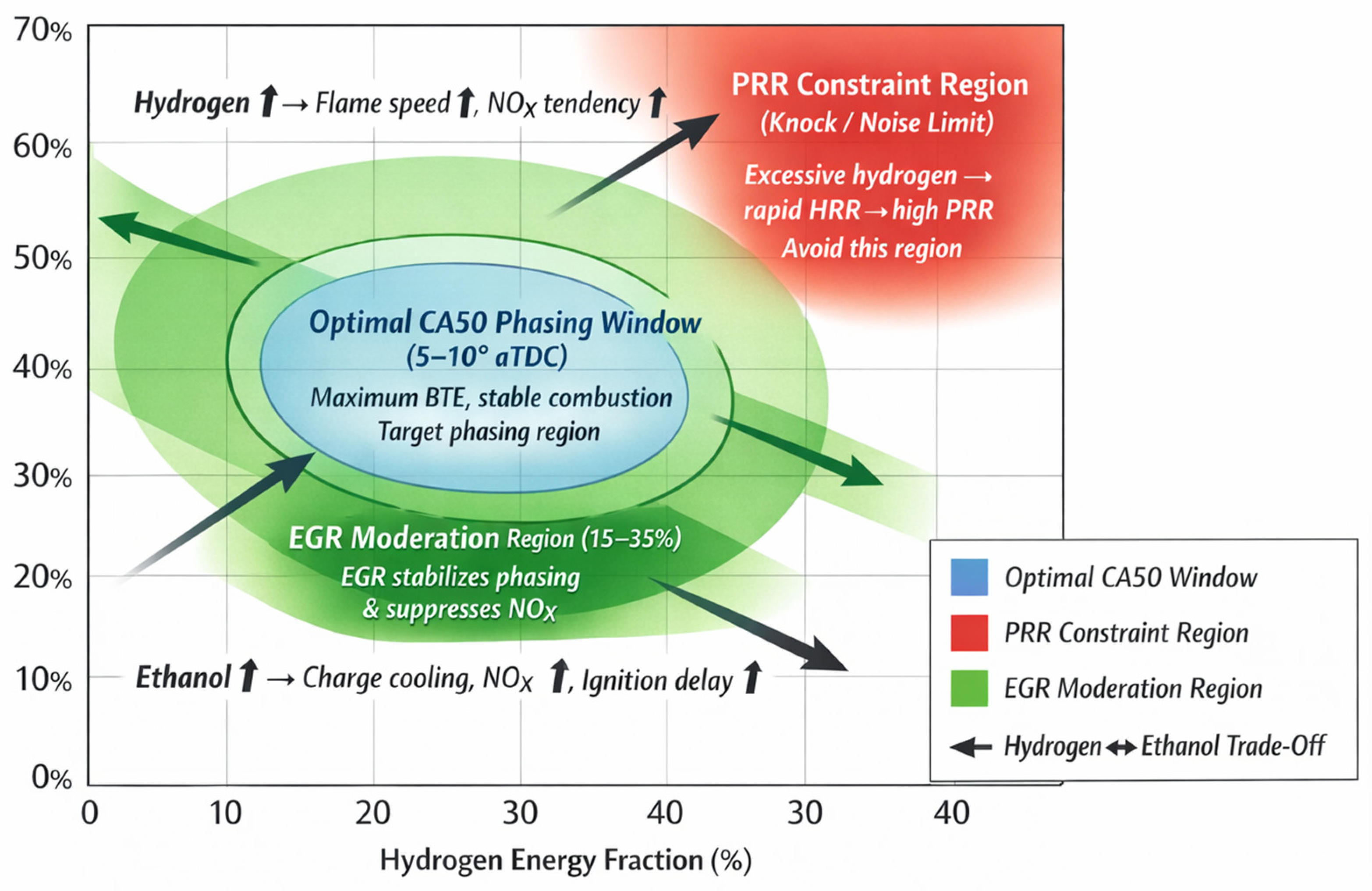
Figure 7 illustrates the conceptual combustion phasing control envelope in tri-fuel RCCI operation, showing the optimal CA50 phasing window, PRR constraint region at high hydrogen fractions, hydrogen–ethanol reactivity trade-off trends, and the EGR moderation region extending the stable operating domain [
52].
5.4. Confounding Parameters Affecting Quantitative Trends
The quantitative ranges reported in
Table 5 is strongly influenced by multiple confounding parameters that vary across studies. Engine load and speed considerably affect ignition delay, HRR, and emissions pathways. The EGR rate alters oxygen availability and in-cylinder temperature, directly affecting NO
x and combustion completeness. The injection strategy, including pilot timing, split injection, and injection pressure, modifies reactivity stratification and combustion phasing [
53]. The ethanol energy fraction controls charge cooling and ignition delay, and the hydrogen energy fraction governs flame speed and combustion intensity. The compression ratio and intake temperature further modify auto-ignition characteristics and combustion stability.
Due to these interacting variables, RCCI performance cannot be characterised by single universal numerical values. Instead, the reported quantitative ranges represent envelopes of achievable outcomes under optimised conditions reported in the literature.
5.5. Discussion of Quantitative Trade-Offs
The reviewed studies reveal a consistent trade-off between efficiency improvement and NOx formation when hydrogen enrichment levels are increased, particularly under medium-to-high-load conditions. Ethanol consistently suppresses soot and PM due to its oxygenated molecular structure and reduced aromatic content. Hydrogen substantially reduces carbon-based emissions but can increase NOx when combustion phasing advances and in-cylinder temperatures rise. Optimal RCCI control strategies typically involve adjusting the premix ratio, pilot timing, and EGR to maintain CA50 within the optimal efficiency window while limiting peak PRR and NOx formation.
5.6. Scientific Rigour and Limitations of Quantitative Synthesis
Although this review consolidates quantitative trends from 81 peer-reviewed studies, direct meta-analysis using statistical pooling was not performed due to the absence of standardised reporting protocols across the RCCI literature. Variations in experimental platforms, fuel substitution definitions, measurement methodologies and baseline references limit the feasibility of strict numerical aggregation. Consequently, the reported ranges should be interpreted as directional indicators of technological potential rather than universal performance guarantees. Future RCCI studies should adopt standardised reporting frameworks, including energy-based fuel fractions, baseline definitions, and full engine-map testing to enable more robust quantitative meta-analyses.
Figure 8 shows normalised performance and emission trends in ethanol RCCI, hydrogen-assisted RCCI, and ethanol–hydrogen RCCI combustion across low-, medium- and high-load operating regimes, illustrating relative changes in BTE (ΔBTE), NO
x (ΔNO
x), and PM (ΔPM) compared with baseline reference conditions reported in the literature [
54].
6. Comparative Analysis
A comparative assessment of CDC, ethanol–diesel RCCI, hydrogen-enriched RCCI, and combined ethanol and hydrogen RCCI indicates systematic trade-offs in efficiency, emissions, combustion stability, operability, and system complexity.
Table 5 summarises findings from 15 recent experimental and modelling studies, which support the following synthesis.
Under CDC, BTE is typically reported in the range of 34–38% at moderate loads, whereas BSFC remains relatively high due to the diffusion-dominated heat release and associated losses [
38]. The emissions of NO
x and PM are elevated because of high local temperatures and rich diffusion flames. The combustion stability and operability range are well established, although further improvements require exhaust aftertreatment. Dependence on the diesel infrastructure and conventional fuel supply chains remains.
Several studies on the ethanol–diesel RCCI, including that of Pan et al. (2021) [
31], report large reductions in NO
x and noticeable decreases in PM. These reductions are attributed to a larger premixed fraction and reduced diffusion combustion zones. The gains in BTE are moderate, and BSFC often increases because ethanol has a lower heating value. A higher cyclic variation is reported when the ethanol fraction is high, and the pilot timing is not optimised. The stable operating range is narrower than that of CDC, although the approach remains feasible due to compatibility with existing diesel systems.
In hydrogen-enriched RCCI, the literature reports accelerated heat release and high BTE compared with CDC and non-hydrogen RCCI. The reductions in CO and HC emissions are observed due to the fast hydrogen kinetics and the absence of carbon. The NOx emissions increase unless EGR or delayed pilot injection is applied, because faster combustion increases the peak temperature. Brake-specific fuel consumption can improve on an energy basis, but the low volumetric energy density of hydrogen and storage requirements increase the system’s complexity. The combustion stability improves, but the operability range is constrained by knock limits, PRR limits, and hydrogen delivery constraints.
Combined ethanol and hydrogen RCCI seek to benefit from the low-soot behaviour of ethanol and the rapid combustion of hydrogen. Preliminary studies, including that of Elumalai et al. (2025) [
39], indicate high efficiency and very low particulate emissions when phasing and EGR are optimised. The hydrogen addition mitigates the BSFC penalty of ethanol by improving oxidation and combustion completeness. The combustion stability improves compared with the ethanol-only RCCI. The system control becomes more complex due to the simultaneous management of ethanol and hydrogen fractions, pilot timing, and multiple-injection variables. Ethanol moderates the hydrogen reactivity and broadens the operability window; however, the system complexity and fuel infrastructure requirements increase.
Consistent patterns are observed across all combustion strategies. Incremental improvements in BTE are reported for the RCCI variants. Emission behaviour depends on the phasing, EGR strategy, and reactivity distribution. Fuel consumption improvements on an energy basis are most evident in the hydrogen-enriched systems. The PM reductions are greatest in ethanol-based and ethanol–hydrogen systems, although NO
x reduction requires careful temperature and phasing control. The hydrogen addition increases NO
x unless mitigation strategies are applied, whereas ethanol suppresses NO
x and soot. The combustion stability remains acceptable when the control systems are implemented, although the hardware and fuel system complexity increase progressively from CDC to the ethanol–diesel RCCI, hydrogen–diesel RCCI, and ethanol plus hydrogen RCCI designs [
53].
From a practical perspective, ethanol–diesel RCCI is the most mature near-term option due to its minimal infrastructure changes. The hydrogen-rich RCCI offers high performance but faces challenges related to storage, safety, and distribution. The ethanol and hydrogen RCCI offer the highest theoretical potential for sustainable and efficient combustion, but it requires advanced control, sophisticated injection systems, and a dual-fuel infrastructure [
54,
55].
Overall, the synthesis indicates that the ethanol and hydrogen pairing in RCCI operation is a promising route for high efficiency and low emissions, provided that the challenges related to fuel storage, delivery, phasing control, and system robustness are addressed.
The comparative values in
Table 6 are compiled from heterogeneous experimental and numerical studies conducted on different engine platforms and operating conditions. Variations in the premixed fraction, injection timing, EGR level, compression ratio, and baseline references introduce inconsistencies [
56]. Therefore, the reported changes in BTE, BSFC, and emissions represent indicative trends rather than directly comparable benchmarks.
Table 6 provides a qualitative/semi-quantitative overview of the relative performance and emission behaviour rather than the strict ranking of studies.
7. Performance Analysis—Aggregated Quantitative Evidence
Several interrelated factors influence the performance of RCCI engines that use ethanol, hydrogen, or their mixtures. These factors include the thermochemical properties of each fuel, the injection timing and injection mode, the degree of reactivity stratification inside the cylinder, and the engine load conditions. Recent experimental and modelling studies report consistent patterns in BTE, BSFC, and the behaviour of major emissions, including NOx and PM. The reviewed studies, published between 2020 and 2025, cover a wide range of engine platforms, from single-cylinder research engines to automotive and heavy-duty engines.
For a comparative analysis, the literature is organised into three groups. The first group includes studies on the ethanol–diesel RCCI, the second group includes studies that incorporate hydrogen enrichment, and the third group includes studies that investigate the combined ethanol and hydrogen strategies.
The computational studies, including CFD simulations and chemical kinetic modelling, are also considered in this assessment. These studies provide additional insight into the mechanisms that govern ignition behaviour and heat release, which helps to interpret experimental trends [
52,
53]. The first figure shows the relationship between the changes in BTE and NO
x emissions; the second figure explains the differences in the timing and heat release patterns that are responsible for these observations.
7.1. Ethanol/Diesel Reactivity-Controlled Compression Ignition Performance
In the studies on ethanol-based RCCI, a substantial decrease in PM and soot has been reported. The main reason is the oxygen content of the ethanol and the reduced diffusion-flame regions in the RCCI operation. Pan et al. (2021) reported an approximately 65% reduction in NO
x and an almost 29% reduction in PM when ethanol was used as the low-reactivity fuel under moderate load conditions [
31]. Disassa (2024) [
34], Wategave et al. (2025) [
33], and Muniyappan et al. (2025) [
48] reported similar trends, where PM was reduced by 20–40%, and NO
x was reduced by approximately 38–55%, depending on the pilot-injection timing.
Increases in BTE of approximately 2–5% were also reported for ethanol–diesel RCCI in studies by Pan (2021) [
31], Wategave (2025) [
33], and Xu (2024) [
41]. These gains are attributed to reduced thermal losses and a longer premixing period, which produces more uniform combustion. An increase in BSFC on the mass basis was reported in many studies, typically within the 2–5% range, due to the lower heating value of ethanol. The combustion stability depends strongly on the premix ratio; when ethanol contributes more than approximately 60% of the total energy, the cyclic variation increases unless the injection phasing is carefully controlled, as reported by Ramalingam et al. (2022) [
12] and Telli et al. (2025) [
51].
7.2. Hydrogen-Enriched Reactivity-Controlled Compression Ignition Performance
The addition of hydrogen is a key factor that increases combustion speed and thermal efficiency. Gharehlar et al. (2024) [
36] reported that hydrogen replacement up to 40% of the total fuel energy increased the BTE by approximately 5%. Rameez (2024) [
37] reported similar improvements of 4–6% in the diesel and hydrogen RCCI. The rapid flame speed of hydrogen increases the HRR, which shortens the combustion duration and improves the work extraction during the expansion stroke.
The emission results show that hydrogen significantly reduces CO and HC emissions, often by 50–70%, due to fast oxidation kinetics and the absence of carbon. However, hydrogen generally increases NOx emissions by approximately 5–15% unless EGR, injection timing retard, or hydrogen fraction reduction is applied. The absence of carbon in hydrogen eliminates soot formation, which strengthens the soot reduction achieved by the ethanol.
Hydrogen also reduces the cycle-to-cycle variation due to strong reactivity and improved ignition stability, as reported by Ramachandran (2023) [
38], Elumalai (2025) [
39], and Halis et al. (2023) [
58]. However, the rapid heat release increases the PRR, which limits the optimal hydrogen fraction that can be used in the RCCI operation.
7.3. Ethanol + Hydrogen-Combined Reactivity-Controlled Compression Ignition Performance
A mixture of ethanol and hydrogen provides the combined benefits of both fuels. The evaporative cooling of ethanol lowers NO
x emissions, and hydrogen increases the HRR and maintains the ignition. Elumalai et al. (2025) reported that the ethanol–hydrogen–diesel tri-fuel RCCI achieved approximately 6% higher BTE and approximately 35% lower PM than CDC [
39]. Xu (2024) reported similar trends in modelling studies, where the hydrogen addition accelerated combustion and improved control in the alcohol-based RCCI mixture [
41].
Optimal operation requires sophisticated injection scheduling because the ignition delay caused by ethanol must be balanced by the hydrogen, which increases the flame speed. The control complexity increases because the hydrogen energy fraction must be managed in addition to the other parameters. The hydrogen storage requirements, including high-pressure tanks, leak detection systems, and pre-chamber configurations, further increase the system-level complexity.
Quantitative evidence indicates that NO
x suppression in ethanol–hydrogen RCCI typically requires EGR rates of approximately 15–35%, depending on the engine load, operating speed, and hydrogen energy fraction. At medium-to-high-load conditions, hydrogen energy fractions greater than approximately 20–30% usually require EGR levels greater than approximately 25% to avoid excessive in-cylinder temperature and NO
x formation. Hydrogen fractions of less than approximately 15% can often be managed with EGR rates of approximately 10–20% combined with injection timing retardation and premixing ratio adjustment. These ranges show that NO
x mitigation requires explicit calibration envelopes with coordinated fuel stratification, EGR tuning, and combustion phasing control [
59].
Excessive EGR of more than approximately 35% can reduce combustion stability and efficiency, which indicates the narrow optimal control window for simultaneous NOx reduction and high-efficiency operation.
7.4. Key Performance Trends
Across the reviewed literature, several consistent quantitative trends emerge:
The largest improvements in BTE were obtained with hydrogen enrichment, where reported gains were in the range of 4–7%, whereas ethanol RCCI led to moderate gains of approximately 2–4%. The combined ethanol–hydrogen strategies achieved the greatest reported improvements, typically in the range of 5–7%. These trends are consistent with Gharehlar (2024) [
36], Pan (2021) [
31], and Rameez (2024) [
37].
Although hydrogen-enriched RCCI systems consistently report a higher BTE, this gain must be interpreted with respect to the low volumetric energy density of hydrogen. Even when hydrogen is stored at pressures of 350–700 bar, the energy per unit volume remains substantially lower than that of diesel or ethanol. This limitation affects the onboard storage volume, tank mass, and packaging constraints, which influence the driving range and system feasibility. Therefore, hydrogen integration improves in-cylinder thermodynamic efficiency but introduces a trade-off between combustion performance and volumetric energy storage efficiency. This distinction is important when evaluating the deployment potential of hydrogen-assisted RCCI systems beyond engine-level performance metrics.
- (2)
Emissions:
Ethanol has an oxygenated structure, which results in low-soot tendency and a substantial reduction in PM. Hydrogen produces no soot because it contains no carbon. Hydrogen reduces CO and HC emissions, whereas ethanol can increase HC emissions under low-temperature combustion conditions. For NO
x, the effect depends on the combustion timing; ethanol generally lowers NO
x, and hydrogen raises NO
x unless the combustion is properly controlled. Pan (2021) [
31] and Rameez (2024) [
37] reported these trends consistently.
Combustion stability is influenced by the fuel reactivity and premixing level. Hydrogen reduces the cyclic variability due to high reactivity, whereas ethanol can increase the cyclic variation when the premixing ratio exceeds the optimum limit. The mixed-fuel operation requires advanced combustion phasing control to maintain stable operation. These patterns were reported in MMC (2023) [
48].
Overall, the aggregated numerical evidence suggests that ethanol–hydrogen RCCI offers a balanced pathway for sustainable and high-efficiency combustion without severe emission penalties when advanced control strategies and appropriate engine calibration are applied.
The numerical performance and emission data presented in
Table 7 are extracted from individual studies that use diverse experimental setups, fuel substitution definitions, and baseline operating conditions. The ethanol and hydrogen fractions are reported on an energy or volumetric basis depending on the source, and the test conditions vary across load, speed, and combustion phasing strategies. Therefore, the reported changes in BTE, BSFC, NO
x, and PM should be interpreted as trend-based indicators rather than universal quantitative benchmarks.
Table 7 consolidates representative numerical ranges and highlights the relative influence of ethanol and hydrogen integration in RCCI combustion, while acknowledging limitations in cross-study normalisation.
Although BSFC may increase when ethanol is used due to the lower heating value on a mass basis, BTE can still improve because it is defined on an energy basis. Improved combustion phasing, reduced heat losses, and enhanced premixing can increase the fraction of fuel energy converted to useful work, even when more fuel mass is required.
8. Controllability, Safety, and Durability Considerations
Switching from CDC to ethanol–hydrogen RCCI operation introduces challenges in controllability, safety, and durability. These challenges must be addressed to ensure long-term engine performance. Difficulties arise from the interaction of multi-fuel injection strategies, the chemical reactivity of hydrogen, the potential corrosion effects of ethanol blends, and the sensitivity of RCCI combustion to ignition phasing and thermal conditions.
8.1. Controllability and Knock Constraints
Engines using RCCI require the highly accurate management of combustion phasing, which cannot be achieved without the estimation of CA50. The desired CA50 value can be represented as the following [
55,
56]:
where
generally varies from 5 to 10 degrees for post-top, and dead centre for maximum efficiency. The realisation of this situation demands the synchronised control of low-reactivity fuel fraction, direct-injection timing, and EGR rate.
The high laminar flame speed of hydrogen can cause abnormal combustion phenomena, such as knock and excessive PRRs. Abrupt pressure rise is commonly quantified as the PRR, which is denoted as follows [
59,
61]:
The permissible PRR is usually maintained below 1.0–1.5 MPa/°CA to ensure engine durability. The addition of hydrogen accelerates early-stage heat release, which often results in PRR exceeding safe limits when mitigation is not applied. Measures such as pilot-injection retardation, reduction in the hydrogen substitution ratio, and increase in EGR are effective for maintaining PRR within acceptable limits.
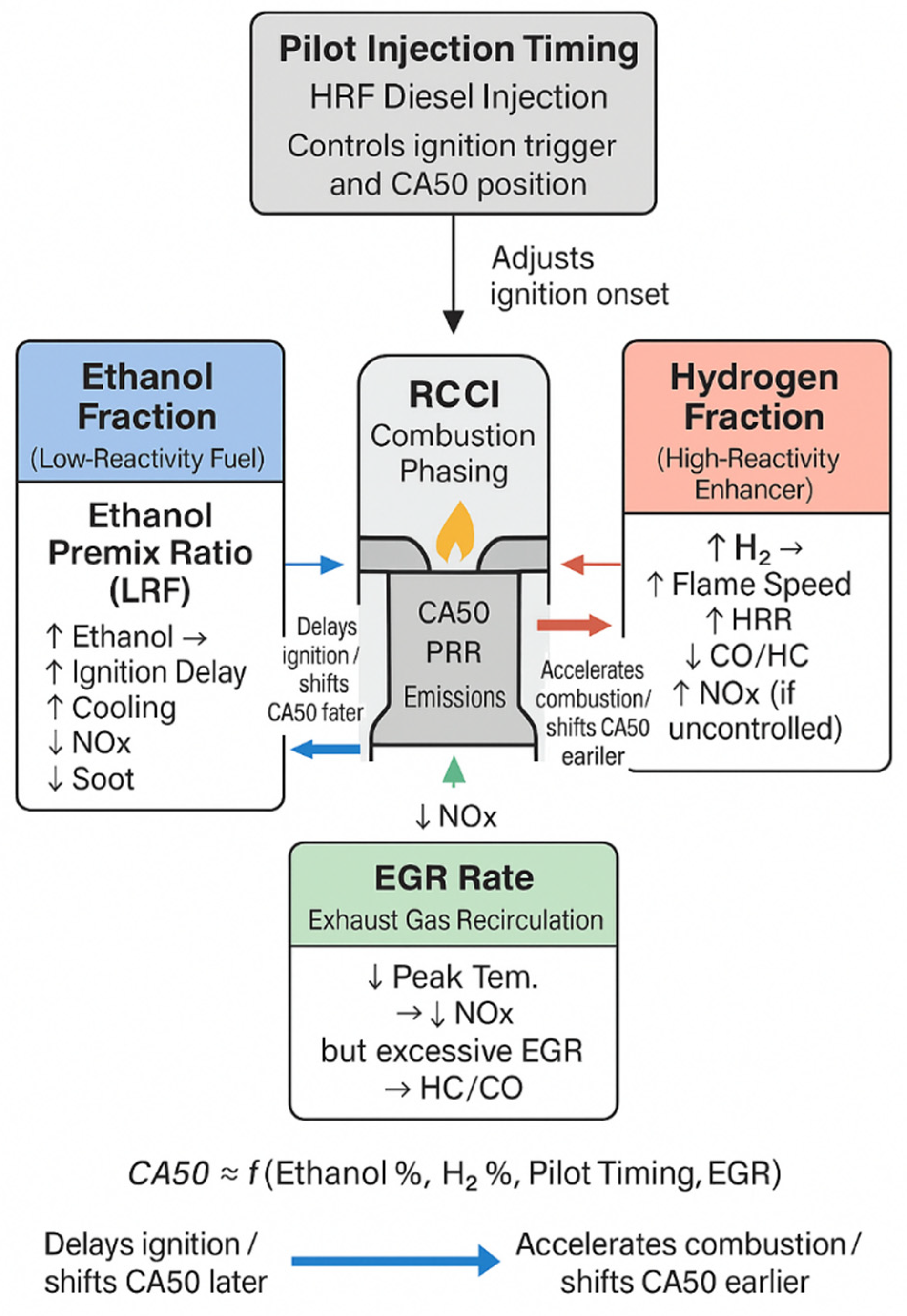
In
Figure 9, the block diagram presents the interactions among the ethanol fraction, hydrogen fraction, pilot-injection timing, and EGR in controlling CA50, PRR, and emissions. The arrows indicate opposing influences, where hydrogen promotes combustion and ethanol prolongs ignition [
62,
63].
8.2. Safety Considerations: Hydrogen Leakage and Storage Integrity
When compared with standard liquid HCs, hydrogen introduces specific safety challenges. The small size of the hydrogen molecule and the high dispersal capability increase the likelihood of leakage through connections, gaskets, and injector points. The wide flammability range of hydrogen in air—from 4 to 75% by volume—further increases the risk of ignition. Therefore, hydrogen storage systems must satisfy strict safety requirements, which can be expressed as the following [
64]:
where
is the measured mass leak rate, and the threshold is defined according to ISO 19880-1 [
65] safety standards and is approximately 10
−4 g/s for passive systems.
Hydrogen embrittlement of metallic components, especially high-strength steels, affects injectors, tanks, and delivery lines. Microcrack formation is accelerated by hydrogen diffusion under cyclic pressure loading. The diffusion rate can be approximated using Fick’s law [
66]:
where
represents the hydrogen flux,
indicates the diffusion coefficient, and
symbolises the concentration gradient. Materials with low
and a high resistance to hydrogen-induced cracking, such as austenitic stainless steels, are preferred.
8.3. Durability Issues: Ethanol Corrosion and Injector Fouling
Ethanol has polarity and hygroscopicity, which can accelerate the ethanol-induced degradation of elastomeric materials in the fuel system, such as aluminium, brass, and rubber. Regular contact with ethanol–water mixtures increase galvanic corrosion and affects pump seals and injector nozzles. Blending ethanol with diesel also promotes deposit formation, which occurs in injectors and degrades spray penetration and atomisation.
Injector fouling alters the effective flow area
[
67]:
where
is the nominal nozzle area and
is the fouling factor. Slight fouling percentages, even those as small as 1–3%, can cause the spray pattern to become unsymmetrical, which in turn leads to the degradation of RCCI phasing and an increase in cyclic variation.
8.4. Cold-Start Behaviour
The significant latent heat and low vapour pressure of ethanol lead to insufficient vaporisation at low temperatures, which can cause misfires or slow combustion during cold start. Hydrogen addition can mitigate this issue because hydrogen disperses easily and requires low ignition energy. One parameter used to quantify cold-start behaviour is ignition delay (ID) [
68]:
where ID is the ignition delay,
is the in-cylinder temperature, and
is the in-cylinder pressure. These parameters collectively determine the onset of auto-ignition under cold-start conditions.
Ethanol, for instance, sees substantial improvements in ID due to lower charge temperatures, necessitating measures such as intake-air heating or pilot-fuel quantity adjustment.
8.5. Combined Fuel System Complexity
The use of hybrid ethanol and hydrogen systems creates spatial and temporal reactivity gradients, which require the precise control of combustion phasing. The tracking of combustion phasing can be achieved using real-time cylinder pressure monitoring or ion-sensing spark plugs. The joint fuel controllability window is reduced due to the following factors:
- •
Ethanol increases the ignition delay.
- •
Hydrogen accelerates combustion.
- •
The diesel pilot fuel initiates ignition.
Balancing these opposing effects requires advanced controllers that can dynamically adjust injection timing, fuel ratios and EGR, where neural network-assisted or model-based control strategies are often applied (see
Table 8) [
69,
70].
9. Techno-Economic and Life Cycle Assessment
The environmental and economic viability of ethanol–hydrogen RCCI pathways depends strongly on upstream fuel production routes rather than only on in-cylinder combustion behaviour. Most life cycle assessment (LCA) studies in the literature use cradle-to-tank, well-to-wheel, or cradle-to-wheel system boundaries, which include feedstock extraction or cultivation, fuel production, distribution, and end-use combustion. In this review, reported greenhouse gas intensities are interpreted within the system boundaries that are defined in each cited study, where differences in boundary assumptions are considered when comparing ethanol and hydrogen pathways.
A simplified energy-based blending expression for life cycle greenhouse gas emissions of the multi-fuel RCCI system can be written as the following [
71]:
where
represents the energy fraction of fuel
, and
represents the cradle-to-tank or cradle-to-wheel carbon intensity of that fuel, expressed in gCO
2-eq per MJ. The energy fraction is defined on the lower heating value basis as the following [
72]:
This formulation implies that the substitution of fossil diesel with low-carbon ethanol or hydrogen can reduce total life cycle emissions only when the upstream carbon intensities of these fuels are sufficiently low.
The life cycle climate impact of hydrogen-assisted RCCI combustion depends strongly on the hydrogen production pathway. The green hydrogen that is produced via water electrolysis using renewable electricity can achieve emission intensities of less than approximately 5 gCO2-eq/MJ, which enables substantial greenhouse gas reductions when combined with low-carbon ethanol pathways. The grey hydrogen that is produced from steam methane reforming (SMR) without carbon capture typically exhibits emission intensities > 80–100 gCO2-eq/MJ. Consequently, the integration of grey hydrogen may negate or increase system-level greenhouse gas emissions despite improvements in engine efficiency, whereas green hydrogen integration enables meaningful decarbonisation.
Techno-economic studies indicate that hydrogen production cost is highly sensitive to electricity price, electrolyser capital expenditure, and annual capacity factor. Reported levelised costs of green hydrogen typically range from approximately 3 to 6 US$/kg under favourable renewable electricity scenarios, where higher values are reported under grid-based electricity supply. Ethanol production costs depend on feedstock type, conversion efficiency, and regional agricultural economics. Therefore, the economic feasibility of ethanol–hydrogen RCCI systems is strongly influenced by electricity price trajectories, electrolyser learning curves, and bioethanol feedstock availability.
Sensitivity analyses across multiple LCAs indicate that a limited set of parameters dominates life cycle outcomes, which include the carbon intensity of electricity used for electrolysis, methane leakage along natural gas supply chains for SMR-based hydrogen, and direct and indirect land-use change associated with ethanol feedstock expansion. When electrolysis is supplied by low-carbon electricity and ethanol is derived from feedstocks with minimal land-use change impacts, ethanol–hydrogen RCCI blends can achieve life cycle greenhouse gas reductions > 50% relative to fossil diesel baselines. In contrast, blends that involve fossil hydrogen and conventional ethanol pathways may yield limited or adverse climate benefits [
73].
Beyond climate impacts, LCAs highlight trade-offs related to water use, eutrophication, land occupation, and mineral resource demand. Water consumption and nutrient runoff may increase for irrigated bioethanol pathways, whereas land use and material demand may increase for the large-scale renewable electricity deployment that is required for green hydrogen production. Therefore, policy and deployment decisions should consider multi-criteria environmental indicators rather than relying solely on greenhouse gas metrics.
Overall, life cycle and techno-economic evidence converge on two central conclusions. First, reductions in upstream emissions and continued cost improvements in electrolysis technologies are required before hydrogen can contribute to low-carbon RCCI systems at scale. Second, ethanol can provide near-term life cycle emission reductions when it is produced from sustainable feedstocks, such as sugarcane, residues, or advanced cellulosic materials, provided that indirect land-use changes and refinery energy inputs are minimised. Consequently, scenario analyses should prioritise fuel production pathway assumptions because the environmental advantages observed at the engine level are realised only when upstream emissions are sufficiently constrained.
10. Open Challenges and Research Gaps
Despite the encouraging results reported for ethanol–hydrogen RCCI operation, several critical challenges and knowledge gaps must be addressed before the technology can progress from laboratory studies to practical implementation. Many limitations arise from the scarcity of long-duration testing, variation in experimental methodologies, and limited incorporation of system-level analyses.
One major unresolved issue concerns the absence of long-term durability data for tri-fuel and combined ethanol–hydrogen RCCI operation. Most published investigations rely on short test durations, where engines operate for only a few hours under steady conditions. Under extended operation, hydrogen high flame speed and steep temperature gradients may influence valve wear, injector-tip erosion, and piston-crown thermal loading. Ethanol hygroscopic behaviour and chemical polarity can promote corrosion in fuel pumps, elastomeric seals, and aluminium components. When both fuels are used simultaneously, the combined thermal and chemical effects from hydrogen-rich reactivity zones and ethanol-induced charge cooling remain poorly characterised. Therefore, long-term studies on material embrittlement, lubricant degradation, injector fouling, and deposit formation are required.
A second key gap is the limited availability of full engine-map data across wide ranges of load, speed, and hydrogen and ethanol substitution ratios. Reactivity-controlled compression ignition combustion is highly sensitive to phasing, the equivalence ratio, and EGR rate, yet most experiments are conducted at limited speeds and narrow load ranges. This restriction limits the generalisation of results and hinders the identification of stable operating boundaries. Future work should generate comprehensive performance and emission maps across low, medium, and high loads while varying the hydrogen energy share, ethanol premix ratio, and EGR level. Such data are essential for combustion model validation, the calibration of control strategies, and evaluation of transient drivability.
A further challenge arises from the absence of standardised reporting practices in RCCI research. Current studies use inconsistent measurement bases, where hydrogen and ethanol substitution are reported in different units and reference bases. These inconsistencies hinder cross-study comparison and obscure performance trends. Adoption of unified energy-based reporting metrics for the hydrogen substitution ratio and ethanol premix share would improve comparability. Harmonised baseline conditions, ambient parameters, and EGR definitions are also required for reproducibility [
72].
Beyond in-cylinder behaviour, an additional research gap concerns the integration of system-level analyses, such as LCAs, techno-economics, and fuel-supply modelling. Although engine-level improvements in efficiency and emissions are widely reported, the overall environmental impact depends on upstream fuel pathways. The carbon intensity of hydrogen and ethanol varies significantly by production route, yet most engine studies do not account for this variability. Region-specific factors, such as renewable electricity availability, hydrogen distribution infrastructure, and biomass logistics, must be incorporated to avoid misleading conclusions regarding low-carbon potential.
Advanced control and optimisation represent another research need. Ethanol increases the ignition delay, whereas hydrogen shortens it through rapid flame-speed effects; this requires precise control of CA50, PRR, pilot-injection timing, and the EGR rate. Most studies use open-loop or steady-state strategies that are inadequate for transient operation. Machine-learning-assisted phasing prediction, adaptive injection control, and multi-sensor fusion are promising approaches that remain largely unexplored for multi-fuel RCCI systems [
73].
In summary, the successful transition of ethanol–hydrogen RCCI from laboratory demonstration to practical deployment depends on coordinated research that addresses long-term materials durability, comprehensive engine-map generation, standardised reporting conventions, and robust system-level environmental and economic assessment. These research gaps define the pathway through which RCCI may evolve into a scalable and reliable low-carbon combustion technology.
11. Recommendations and Future Research Directions
The body of literature evaluated in this review shows that ethanol–hydrogen RCCI has considerable technical potential; it also reveals the need for research that is more systematic, standardised, and integrated across system boundaries. To support progress toward the practical deployment of this low-carbon combustion concept, several focused research directions are proposed.
The primary recommendation is that comprehensive multi-load experimental campaigns be conducted to characterise ethanol–hydrogen interactions across the full engine operating map. Most existing studies rely on limited speeds and loads, which restricts the understanding of performance limits and transient behaviour. Future studies should quantify BTE, emissions, cyclic variation, and PRR across structured matrices of hydrogen energy fractions, ethanol premix shares, injection timings and EGR levels. It is recommended that fuel-substitution results be reported on an energy basis, where hydrogen’s low density and volumetric effects complicate interpretation when mass-based or volume-based metrics are used. Adoption of unified data-reporting structures would support comparative evaluations and improve the reliability of RCCI combustion models.
The second priority concerns the development of closed-loop control strategies that regulate combustion phasing in real time. Manual calibration is insufficient because ethanol extends ignition delay, whereas hydrogen accelerates flame development. Model-predictive control, adaptive algorithms, and hybrid machine-learning approaches should be evaluated for the management of CA50, combustion duration, and PRR during dynamic operation. Feedback should be provided by in-cylinder pressure sensors, ionisation sensors, or virtual sensing methods based on cylinder-state estimation. Robustness of these control schemes under rapid transients, fuel-composition variation, cold-start conditions, and component ageing should be investigated.
The third research direction involves pilot-scale demonstrations that evaluate practical hydrogen storage strategies and local hydrogen production options. Hydrogen storage remains a major challenge for ethanol–hydrogen RCCI systems. Comparative studies of compressed gas tanks, metal hydrides, and liquid hydrogen systems are required to assess the safety, cost, thermal behaviour, leakage risk, and engine-integration requirements. Pilot projects that couple engine systems with small-scale electrolysers powered by renewable electricity should be assessed to determine the feasibility of decentralised hydrogen supply in rural and industrial applications. These demonstrations should report technical performance as well as economic indicators, such as the levelised cost of hydrogen, refuelling time, and total system ownership cost.
Equally important is the development of harmonised LCA frameworks for ethanol–hydrogen RCCI pathways. Upstream fuel production carbon intensity requires consistent boundary definitions, allocation rules, and emission factors. Standardised treatment of co-products, electricity-mix assumptions, land-use change modelling, fugitive methane emissions and regional biomass availability is required. Comparative analyses should evaluate renewable ethanol and green hydrogen pathways alongside fossil hydrogen and fossil diesel alternatives. Integration of LCA with techno-economic assessment will support investment planning and policy formulation.
Long-term multidisciplinary research partnerships are required to address durability, infrastructure compatibility, and safety. Material degradation, injector fouling, hydrogen embrittlement, and ethanol-induced corrosion over extended operation must be quantified and incorporated into future engine designs. Cooperation between industry and academia, including the deployment of modified engines in pilot fleet trials, would accelerate the generation of data required for regulatory and commercial readiness.
Considering these directions, extensive and multi-faceted research is required before the full-scale adoption of ethanol–hydrogen RCCI technology as a low-carbon and high-efficiency powertrain becomes feasible.
12. Conclusions
This review demonstrates that the combined application of ethanol and hydrogen in RCCI combustion represents a promising pathway for achieving high efficiency together with low emissions in advanced internal combustion engines. Ethanol contributes to extended ignition delay, charge cooling, and reduced soot formation due to the high latent heat of vaporisation and inherent oxygen content, which is discussed in the fundamentals section. Hydrogen enhances the combustion intensity due to fast chemical kinetics and carbon-free composition, which improves BTE and reduces incomplete combustion products. When both fuels are applied together, the ethanol moderate’s reactivity and the hydrogen accelerate combustion, which enable improved combustion stability and emission control compared with single-fuel operations.
Across the reviewed studies, the ethanol–hydrogen RCCI configurations report increases in BTE in the range of approximately 4–7%, together with substantial reductions in PM and soot emissions. The NOx emissions remain strongly dependent on combustion phasing and EGR strategy, where improper timing control can lead to their increase. These results indicate that the ethanol–hydrogen RCCI performance is highly sensitive to calibration parameters, such as the premixing ratio, injection timing, and EGR level. Hydrogen storage and delivery introduce system-level constraints, and ethanol presents challenges related to material compatibility, elastomer degradation, and cold-start performance. The overall life cycle benefit of the ethanol–hydrogen pathway is governed by the upstream carbon intensity of fuel production, which requires careful consideration in sustainability assessments.
The analysis highlights several advantages of RCCI combustion, including high thermal efficiency, substantial reductions in soot emissions, and flexible combustion phasing control through fuel reactivity management. Reactivity-controlled compression ignition also presents disadvantages, such as increased control complexity, sensitivity to injection timing and fuel fraction selection, higher cyclic variability under extreme premixing conditions, and practical challenges related to multi-fuel storage, onboard packaging, and fuelling infrastructure. These trade-offs indicate that RCCI is a promising transitional combustion strategy, where further advancements in real-time control systems, fuel handling technologies, and engine calibration methodologies are required before large-scale deployment.
This review provides an integrated synthesis of ethanol and hydrogen RCCI research by combining the previously separated literature domains into a unified framework. It presents a comparative and data-driven evaluation of performance and emission trends, and it clarifies the mechanistic synergy between ethanol and hydrogen in terms of ignition delay, charge reactivity, flame propagation, and pollutant formation pathways. This work also places ethanol–hydrogen RCCI within the broader context of decarbonisation strategies and discusses scalability, renewable fuel production, and practical deployment challenges, which are relevant for future research and policy development.
In summary, the ethanol–hydrogen RCCI represents a promising transitional option for sustainable transport and stationary power applications. Further development will depend on comprehensive multi-load experimental studies, improved combustion control strategies, and integrated system-level analyses that account for technical, economic, and environmental factors. These efforts are necessary to determine the realistic role of ethanol–hydrogen RCCI systems in future low-carbon energy and transportation pathways.