1. Introduction
Oil price volatility has long been recognized as a critical determinant of macroeconomic stability in both energy-exporting and energy-importing economies. Furthermore, oil price volatility substantially impacts the economic and financial activities of commodity importers, exporters, and speculators [
1]. In particular, it influences aggregate demand and production inputs, inducing higher levels of inflation and, consequently, interest rates in oil-importing countries [
2], e.g., as Egypt, which is simultaneously a net food importer. In oil-exporting economies, oil prices have basic effects on economic stability and output growth [
3]. Emerging economies are particularly vulnerable to oil shocks, which produce severe macroeconomic imbalances [
4]. Fluctuations in oil and natural gas prices are transmitted through multiple economic channels, influencing production costs, inflation dynamics, fiscal balances, and external accounts. In recent years, successive global shocks—including the post-COVID-19 economic recovery and heightened geopolitical tensions—have intensified energy price volatility, renewing concerns about its broader implications for food security, particularly in economies structurally dependent on food and energy imports. Oil price fluctuations have a multidimensional impact on food security by reducing affordability, availability, and access to food prices [
5,
6].
As defined by FAO, food security is known as “access to adequate, safe, and nutritious food that meets all people’s food preferences and dietary needs at all times, allowing them to lead an active and healthy life”. Food security comprises four dimensions: availability, access, utilization, and stability. Many food security theories have enriched the theoretical foundation. The theoretical foundation has been enhanced by various theories related to food security. Some of these are relevant to the study’s demonstration, namely the Food Availability Decline (FAD) theory, which shows that food insecurity is mostly caused by a loss in food availability, which results in insufficient food to support the growing population [
7]. Food Entitlement Decline (FED) theory focuses on the demand side of food security, namely food accessibility, implying that income influences a consumer’s ability to receive food. Consequently, income plays a critical role in addressing issues of malnutrition and hunger. In addition to income, food price is another important determinant of food security [
7,
8,
9]. Finally, the theory of Rights-Based Approaches (RBA) emphasises the close link between beneficial governance, poverty reduction, and livelihood security [
10,
11]. Hence, Economic theory suggests that energy price shocks can undermine food security by increasing agricultural input costs, raising transport and processing expenses, reducing household purchasing power, and altering government fiscal capacity [
7,
8,
9]. These effects are especially pronounced in developing and emerging economies, where food systems are highly sensitive to external price shocks and policy space is often constrained.
The transmission mechanism linking energy prices to food security operates through both direct and indirect channels. Directly, higher oil prices increase the cost of fertilisers, irrigation, mechanisation, food processing, and transport. Indirectly, energy price shocks affect exchange rates, government budgets, income distribution, and trade balances, thereby shaping food availability and accessibility. Prior empirical work has identified several dominant transmission pathways, including transport costs, biofuel demand, and input price pass-through, while highlighting the role of institutional and policy frameworks in moderating these effects [
11,
12].
In this regard, the Food Costs Watch (FPW), in 2015, assured that energy costs have a significant influence on fertilizer prices and other agricultural production inputs. Thus, there are three plausible transmission mechanisms for establishing a causal relationship between oil prices and food prices in the seminal work of Dillon and Barrett [
11]. Essentially, oil prices influence food prices through various channels, including transportation, the biofuel sector, and other production costs, particularly fertilisers. Additionally, other transmission mechanisms such as exchange rates, market speculation, governance rules, and government policy complicate the relationship between food and oil prices [
12].
In practical economic terms, recent global energy price shocks have exposed the vulnerability of food systems to energy market volatility, particularly in countries with contrasting energy endowments. The sharp increase in global oil and natural gas prices following the post-COVID-19 economic recovery and subsequent geopolitical tensions has translated into higher fertilizer prices, increased transportation costs, and rising food import bills worldwide. In Egypt, where food imports—especially wheat—are heavily subsidized and energy constitutes a major input into irrigation, fertilizer production, and food transportation, rising energy prices have intensified fiscal pressures, contributed to domestic food inflation, and constrained household purchasing power [
11,
13,
14]. Conversely, in Saudi Arabia, higher energy prices have generated substantial fiscal revenues and foreign exchange inflows, allowing the government to cushion domestic food markets through increased spending, strategic reserves, and import capacity [
15,
16]. These contrasting real-world experiences underscore the existence of an asymmetric transmission mechanism through which energy price shocks affect food security in net-importing versus net-exporting countries. Energy price shocks not only influence food prices directly through production and transportation costs, but also indirectly through income effects, government budgets, trade balances, and production incentives, all of which are central to the availability and accessibility pillars of food security [
7,
8,
9].
In the specific context of Saudi Arabia and Egypt, in Saudi Arabia, the transmission of energy price fluctuations to food security primarily operates through the fiscal and income channels, as higher energy prices increase government revenues and enhance the state’s capacity to finance food subsidies and strategic reserves [
17]. Moreover, energy price dynamics shape domestic cost structures in energy-intensive agricultural activities such as irrigation and desalination, linking oil market conditions to food production costs [
18]. From a broader macroeconomic perspective, oil price shocks in energy-exporting economies affect income distribution and demand conditions, which indirectly influence food security outcomes [
19]. In contrast, Egypt, as a net energy-importing country, experiences a cost-push transmission mechanism whereby increases in energy prices raise food production, transportation, and fertilizer costs, resulting in higher domestic food inflation [
20]. These effects are further amplified through exchange-rate pressures and imported inflation, reducing food affordability and access, particularly for vulnerable households [
21]. In addition, global energy and commodity price shocks exacerbate macroeconomic imbalances in food-importing economies, reinforcing the adverse impact on food security [
22].
Previous research examining the interlinkages between food security and energy price volatility can be classified into three groups. First, researchers examined the influence at the macroeconomic level and empirically proved the positive causal relationship between the two variables, such as Khan, et al. [
23] and Borrallo, et al. [
24]. In contrast, some studies have suggested a negative relationship between oil and food prices, pioneered by Chen, et al. [
25] and Demirtaş, et al. [
26]. Another strand of the literature shows very little support for the relationship between the two variables [
2,
27]. Second, regarding the microeconomic-level impact, some researchers have examined and supported the short- and/or long-term causal relationships between oil prices and food commodities [
28,
29,
30,
31]. Second, regarding the microeconomic-level impact, some researchers have examined and approved the short-and/or long-term causality relationships between oil prices and food commodities [
28,
29,
30,
31]. Certain research stressed the link between oil prices and agricultural commodities utilized in biodiesel and bioethanol production Koirala, et al. [
32] and Zafeiriou, et al. [
33] confirmed the positive significant relationship. A limited number of prior studies, introduced by Onour [
34], Fowowe [
35] and Baumeister and Kilian [
36], have suggested that oil price shocks have a relatively negligible effect on agricultural commodity markets. Third, research addressing the interlinkages between oil and food prices at both macroeconomic and microeconomic levels includes studies by Arndt, et al. [
37] and Sun, et al. [
38].
Empirical studies investigating the energy–food nexus have produced mixed results. At the macroeconomic level, a substantial body of literature finds a positive relationship between energy prices and food inflation, though the magnitude and persistence of the effect vary across countries [
13,
23,
24]. At the microeconomic level, numerous studies document short- and long-run linkages between oil prices and specific agricultural commodities, particularly those that are energy-intensive or used in biofuel production [
28,
29,
30,
31,
32,
33]. However, most existing research focuses either on aggregate price indices or on selected commodities, often relying on partial equilibrium or reduced-form econometric techniques.
Critically, limited attention has been given to assessing the combined macroeconomic and microeconomic effects of energy price volatility on food security within a unified analytical framework. This gap is particularly evident in comparative studies of net energy-importing and net energy-exporting countries, where identical energy price shocks may generate asymmetric welfare, production, and food security outcomes. Egypt and Saudi Arabia provide a compelling contrast in this regard. Egypt is a net importer of energy and staple foods, with food subsidies playing a central role in social stability, rendering it highly vulnerable to external price shocks. Saudi Arabia, by contrast, is a major energy exporter with substantial fiscal buffers, enabling it to offset adverse food security impacts through public spending, strategic reserves, and import capacity. Despite the policy relevance of this asymmetry, no prior study has systematically examined the transmission of energy price shocks to food security in both Egypt and Saudi Arabia at the macroeconomic and microeconomic levels simultaneously. Addressing this gap, the present study employs a multi-sectoral, multi-country regional computable general equilibrium (RCGE) model to quantify the effects of projected oil and natural gas price increases on key macroeconomic indicators and disaggregated agricultural and food sectors in both countries. By integrating production, income, trade, and consumption adjustments within a general equilibrium framework, this study provides a consistent assessment of how energy price volatility differentially affects food availability and accessibility in energy-importing and energy-exporting economies.
This paper is structured as follows:
Section 2 reviews previous research.
Section 3 presents an overview of the interlinkages between oil prices and food security in Egypt and Saudi Arabia.
Section 4 present the employed methodology, and
Section 5 display the empirical findings.
Section 6 presents the discussion of the results. Finally,
Section 7 concludes the study, outlines the policy implications and study limitations.
4. Methodology
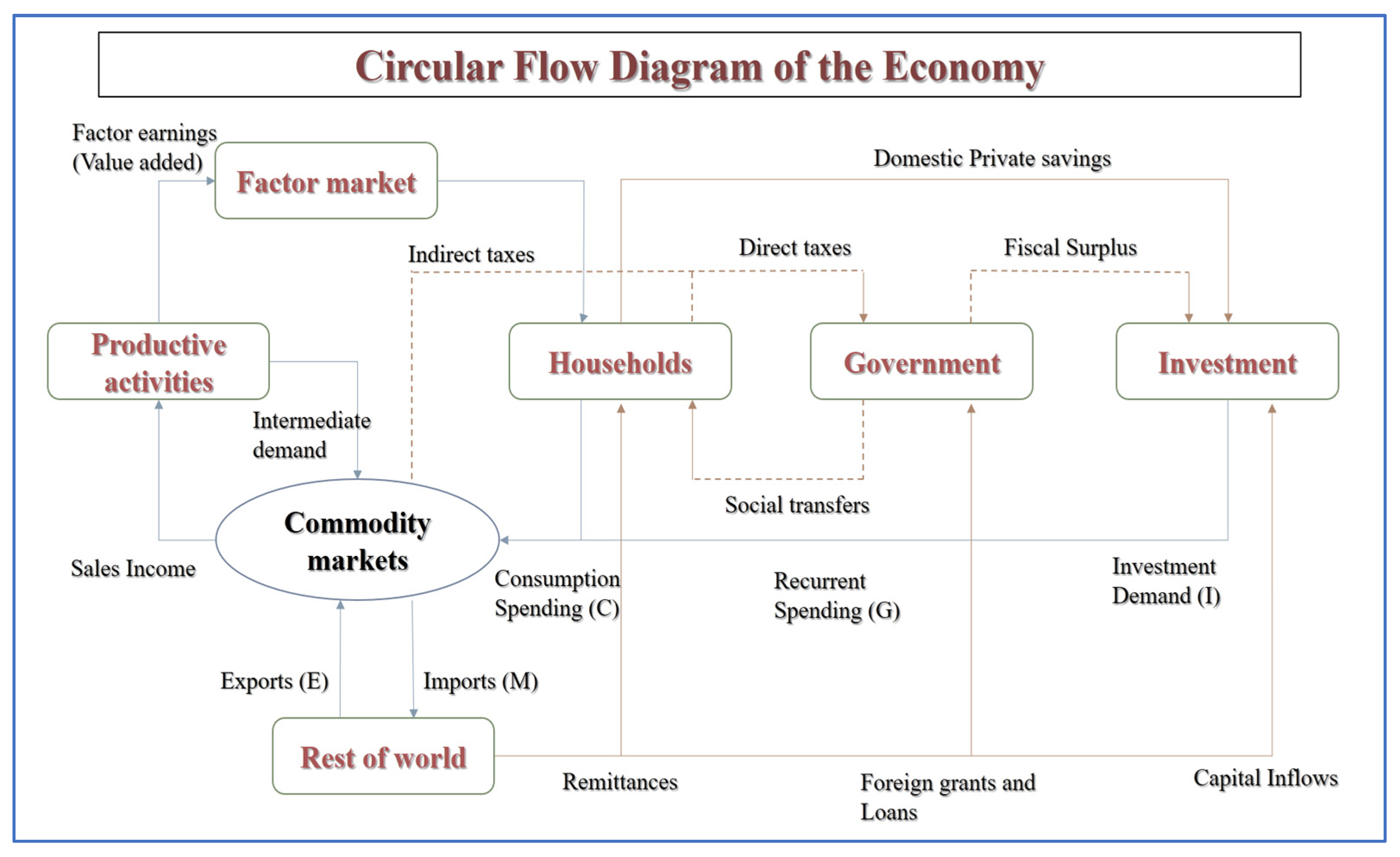
The present study aims to quantify the economy-wide effects of projected oil and natural gas price increases on key macroeconomic indicators in Egypt and Saudi Arabia using RCGE model. Computable General Equilibrium (CGE) models is applied and it widely employed in economic policy analysis to assess the economy-wide implications of policy interventions and exogenous shocks. Since the early 1980s, their application has expanded across both developing and developed economies, and they are now extensively used by universities, research institutions, and governments for policy formulation and evaluation. CGE models are grounded in microeconomic foundations and capture the interactions among economic agents (households, firms, government, investors, and the rest of the world) and markets (commodity and factor markets), ensuring consistency between micro-level behavior and macroeconomic outcomes. The circular flow of income and expenditure among these agents and markets—illustrated in
Figure 3—constitutes the conceptual foundation of CGE/RCGE modeling frameworks. Depending on the temporal structure of the analysis, CGE frameworks may be specified as static, recursive-dynamic, or fully dynamic models.
4.1. Model Structure and Data
This study employs a multi-sectoral, multi-country Regional Computable General Equilibrium (RCGE) model to simulate the macroeconomic and sectoral impacts of increases in global oil and natural gas prices on Egypt and Saudi Arabia. The model is calibrated using the Global Trade Analysis Project (GTAP) Data Base, Version 10, which provides a comprehensive and internally consistent representation of the global economy based on harmonized national input–output tables, reconciled bilateral trade flows, transport margins, and detailed tax and subsidy structures. The database distinguishes 65 production sectors and 141 regions/countries, enabling a detailed representation of agriculture, manufacturing, services, and energy-related activities [
52].
The RCGE framework follows the standard GTAP model structure. Producers maximize profits subject to nested constant elasticity of substitution (CES) technologies, while households maximize utility subject to income constraints. International trade is modeled using the Armington assumption, which differentiates domestic and imported goods by region of origin. Market equilibrium is ensured through price adjustments that clear commodity and factor markets, while the government and foreign sectors are explicitly represented to maintain macroeconomic consistency.
4.2. Model Calibration and Macroeconomic Closure
The model is calibrated to the GTAP 10 benchmark equilibrium, ensuring that the base-year solution exactly reproduces observed production, consumption, trade flows, and factor use. The macroeconomic closure assumes that investment is savings-driven, government expenditure is fixed in real terms, and the current account balance is exogenously determined, allowing the real exchange rate to adjust endogenously. Capital is assumed to be mobile across sectors within each region in the medium run, while labor is mobile across sectors but fixed in aggregate supply. These assumptions enable the model to capture economy-wide reallocation effects arising from energy price shocks.
4.3. Policy Scenario
The study scenario addresses the economic simulation of the impact of rising oil and natural gas prices on global markets. This scenario is based on forecasts by the Energy Information Administration (EIA). The latest estimates indicate an increase in oil and natural gas prices of more than 5.3% and 10% each, respectively, by 2029. This scenario aims to estimate the impact of the anticipated increase in global oil and gas prices on both Saudi and Egyptian economies, considering the structural differences between the two countries in terms of their positions in the global energy market.
In a related context, Saudi Arabia, as a net exporter of oil, is likely to benefit from higher oil prices. This will boost government revenues and improve the economy in the short term, especially in the oil and gas sectors. In addition, this increase will provide greater space for implementing large-scale development projects that support Vision 2030. This increase may impact non-oil sectors, which might encounter difficulties due to rising global energy prices. The agricultural sector is among these.
On the other hand, the rise in oil prices negatively affects Egypt, a net oil importer that has recently discovered natural gas reserves, placing it on the map of natural gas-producing and exporting countries. The increase in energy prices will lead to higher import costs, putting pressure on foreign reserves and contributing to a widening current account deficit. Inflation levels and citizens’ purchasing power are also likely to be affected, which in turn will impact energy-dependent economic sectors such as energy-intensive industries. However, an increase in natural gas prices has a positive effect on economic performance. Thus, this study aims to estimate the conflicting impact of rising oil and natural gas prices in Egypt and simultaneously assess the potential effects on the Saudi economy.
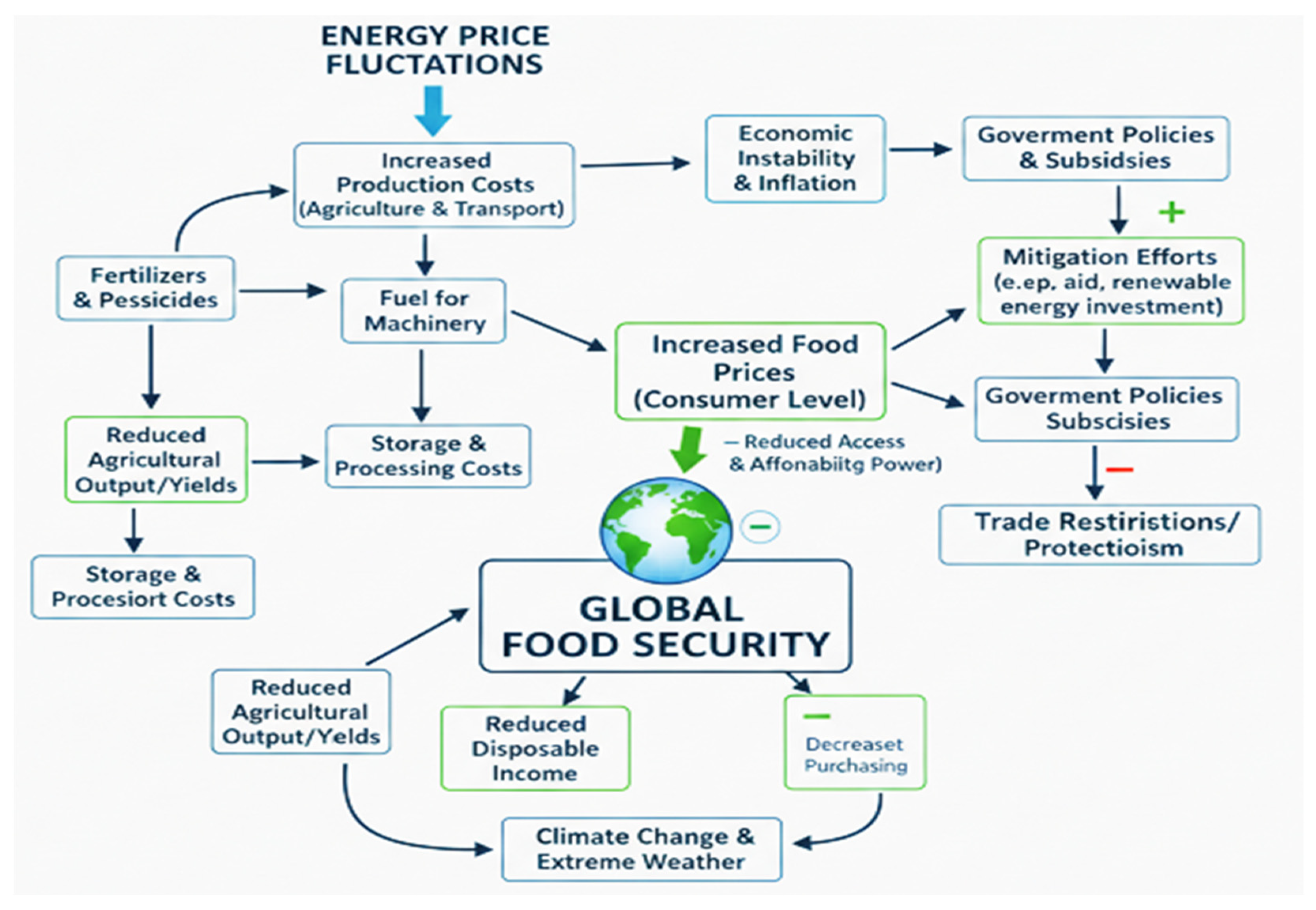
The relationship between energy price fluctuations and food security is a complex web of direct and indirect pressures. When energy costs rise, the impact ripples through the agricultural supply chain, immediately increasing the cost of fossil-fuel-dependent inputs like fertilizers and pesticides, while simultaneously driving up expenses for machinery fuel and irrigation. These heightened production and logistics costs eventually manifest as increased consumer food prices, which disproportionately affects vulnerable populations by reducing their disposable income and purchasing power. Furthermore, economic instability triggered by energy volatility can lead to protectionist trade policies or reduced government subsidies, creating a feedback loop that lowers agricultural yields and compromises global food stability as seen in
Figure 4.
Therefore, this study employs the RCGE model to simulate the effects of these price increases, analyzing the potential economic impacts at both the macro and micro levels in both countries. The model includes an analysis of the effects of oil and gas price increases on key economic variables such as GDP, consumption, investment, foreign trade, and labor markets. It also studies the interactions between various economic sectors in both countries. Based on the stated objective and the RCGE modeling framework, the study tests the following hypotheses:
H1. Projected increases in oil and natural gas prices have significant economy-wide effects on key macroeconomic indicators in Egypt and Saudi Arabia.
H2. The macroeconomic and food security impacts of energy price increases differ between an energy-importing economy and an energy-exporting economy.
H3. Energy price increases affect food availability and accessibility through production, price, and household consumption channels, with heterogeneous effects across agricultural and food sectors.
5. Results
The RCGE model changes the properties of the exogenous variables within the model structure to simulate the effects of political and economic changes in certain situations. In this study, we estimate the impact of increased prices of oil and natural gas in both Saudi Arabia, a net exporter of oil, and Egypt, a net importer of oil. It is worth noting that the simulation results review the potential economic impacts at both the macro and micro levels for both countries simultaneously. More specifically, we simulate a scenario that anticipates a rise in global oil prices by approximately 5.3% and an increase in natural gas prices by around 10% by 2029, utilising the CGE model. Egypt is a net importer of petroleum products, and any rise in their prices will lead to economic tensions, thus impacting both macroeconomic and microeconomic conditions. An increase in petroleum and natural gas prices will result in a decline in total production, which will reduce Egypt’s GDP by approximately 1.61% compared to the baseline, as shown in
Table 1. In the same context, the prices of goods in Egypt, as reflected in the consumer price index, will rise by approximately 0.007% (compared to the baseline), primarily because of higher prices for imported goods. The effects of rising prices of goods reflect household income and consumption levels. Household income and consumption were likely to decrease by approximately 0.0163% and 0.0162%, respectively. Despite the modest rates of this decline, the impact on societal welfare is expected to be substantial, with a projected reduction in welfare levels of approximately 4.48% compared to the baseline. In terms of trade, total imports to Egypt are likely to decline by approximately 0.26% compared with the baseline. Similarly, Egypt’s total exports are expected to decrease by approximately 0.42%, and its terms of trade will decline by approximately 0.07% compared with the baseline.
On the other hand, Saudi Arabia is a net exporter of petroleum products, particularly oil; therefore, Saudi Arabia is anticipated to experience positive economic benefits. In this situation, local production is likely to improve, especially oil production and its derivatives, as well as the industries that depend on it. This scenario will cause Saudi Arabia’s GDP to rise by approximately 0.199% compared with the baseline year of 2029. In a related context, a rise in global oil prices is expected to positively impact household income and consumption, with both likely to increase by approximately 0.002%. This increase in household income and consumption is expected to lead to a 5.38% improvement in welfare compared with the baseline. Additionally, terms of trade are likely to improve by approximately 0.0018%, and both exports and imports are expected to rise by approximately 0.0021% and 0.0023%, respectively, compared to the baseline.
Moreover, the negative effects of rising petroleum prices (oil and natural gas) in both Egypt and Saudi Arabia are evident. However, there was a disparity in the magnitude of the impact. Egypt is likely to be negatively affected by its status as a net importer of petroleum products, leading to an increase in costs and adversely affecting the overall economy. In contrast, Saudi Arabia is expected to benefit positively, as it is an oil-exporting country, which will result in increased revenue and economic growth. In sum, the RCGE simulation results show that Saudi Arabia’s positive welfare and macroeconomic gains outweigh, in relative magnitude, Egypt’s corresponding welfare losses. This outcome reflects structural differences between the two economies—most notably their opposing positions in global energy markets—under a controlled scenario in which energy price changes are introduced exogenously while all other economic relationships remain endogenously determined within the model. As such, the observed divergence in GDP, welfare (EV), and terms of trade outcomes can be directly attributed to differences in energy export dependence, fiscal transmission channels, and sectoral composition, rather than to uncontrolled external factors.
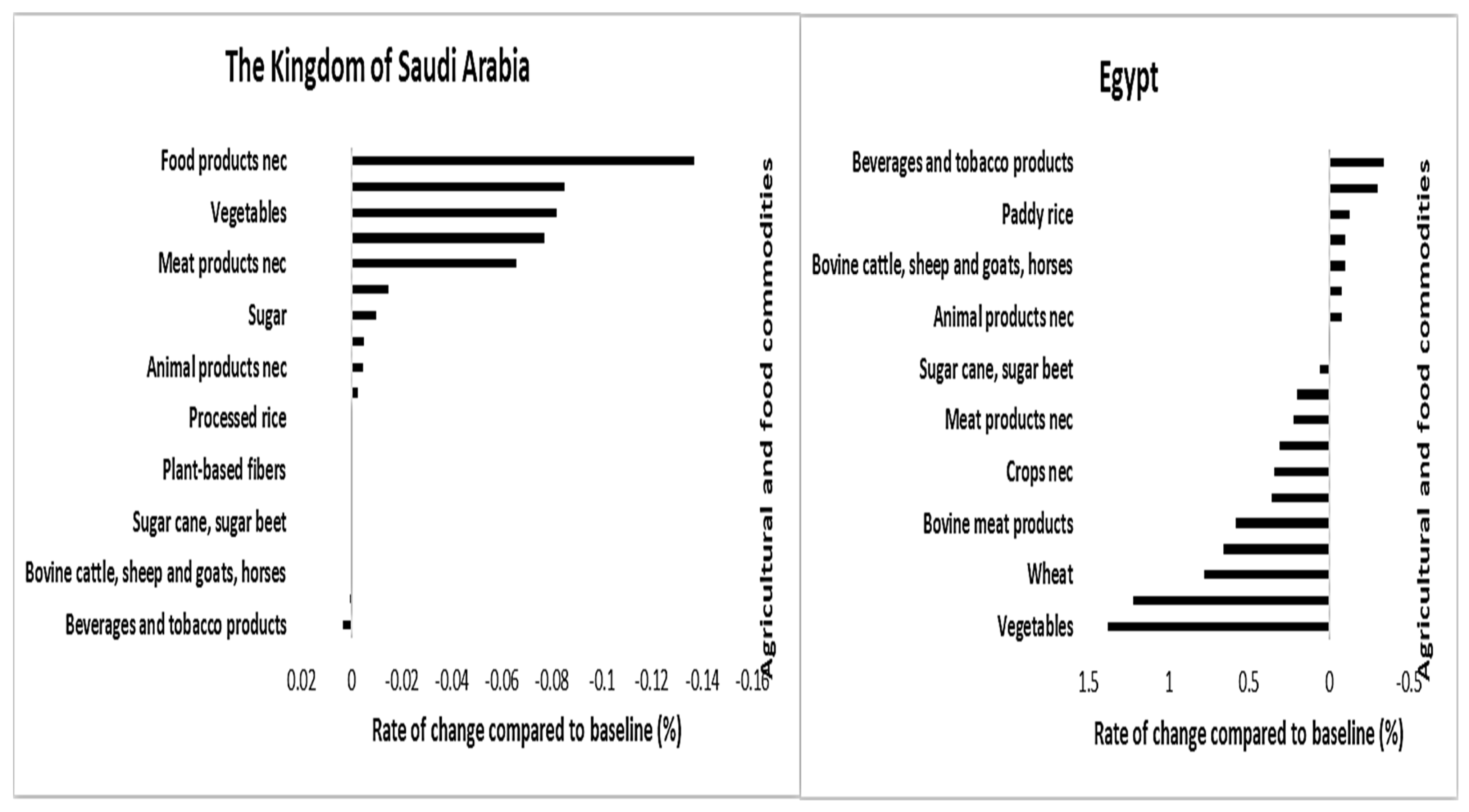
The results of the regional general equilibrium model simulation indicate that the global rise in oil and natural gas prices has had varied impacts on the production of agricultural and food commodities in Egypt. Although some products, such as vegetables and wheat, experienced a noticeable increase in production (1.38 and 1.22, respectively;
Figure 5, right side), this is attributed to the rise in the prices of these goods both globally and locally. However, other products, such as processed foods, beverages, and tobacco, saw a decline in production (−0.3 and −0.34, respectively).
According to Saudi Arabia, the RCGE results indicate notable negative effects on the domestic production of several agricultural and food products due to the rise in oil and natural gas prices. The Kingdom does not primarily produce these goods or produces them in limited quantities, which accounts for this decline. The results indicate that domestic production of goods such as dairy, vegetables, and meat products decreased significantly (by −0.0769, −0.0818, and −0.0658, respectively; see
Figure 5, left side). This decline means that these productive sectors must work harder to earn money. Some important agricultural products, such as vegetable oils (decrease of −0.0147) and sugar (decrease of −0.0099), also had negative effects on their production. This drop shows how challenging it is for the Kingdom to maintain the stability of its domestic production for these important goods. On the other hand, there was a notable improvement in oil production, alongside a marked improvement in the industrial sector and many other sectors. Consequently, the advancements in industrial and non-agricultural production are the primary drivers of GDP growth.
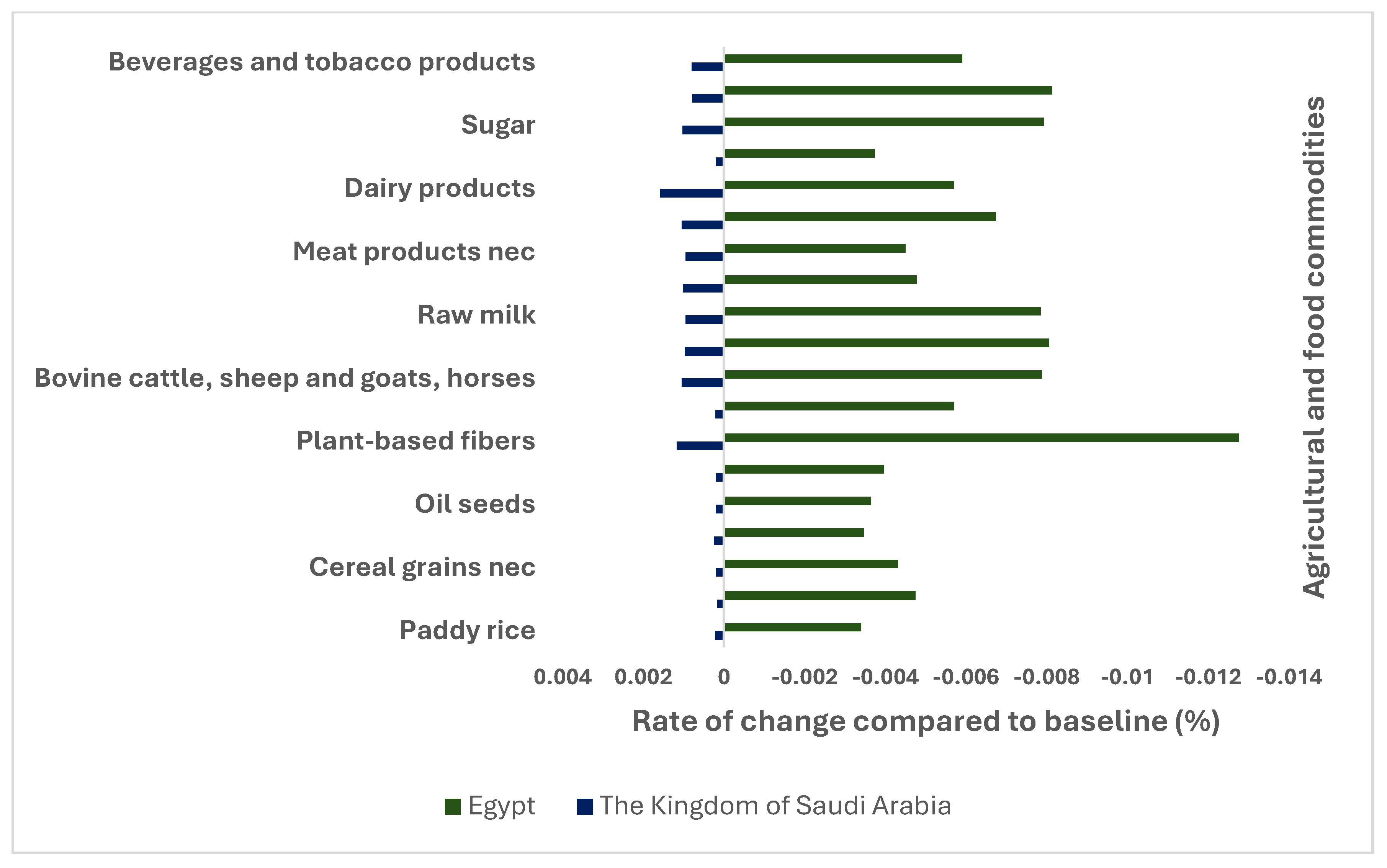
The results in
Figure 6 show the significant impact of the rise in oil prices on Egypt’s food security, with notable declines in the accessibility of many agricultural and food products. For instance, the ability of the population to access paddy rice decreased by −0.00339, while wheat production dropped by −0.004745. Other crops, such as oil seeds and plant-based fibers, were also significantly affected, with declines of −0.00364 and −0.01276, respectively. These declines indicate that the rise in energy prices affects production costs, which in turn affects the local supply of food products. Additionally, animal products, such as meat and dairy, also experienced similar declines, suggesting that both the agricultural and industrial sectors in Egypt suffer from increased production and transportation expenses due to rising energy prices. Such developments could threaten access to affordable food and increase the dependence on imports.
While Saudi Arabia is a significant energy producer, the impact of rising oil prices on food security has been less severe compared to that in Egypt. Most agricultural and industrial sectors experienced minor declines. For example, access to paddy rice decreased by −0.000218, whereas changes in access to wheat were less pronounced, with a drop of −0.000158. Other crops, such as oilseeds and plant-based fibers, experienced smaller declines than those in Egypt. Despite Saudi Arabia’s large oil reserves, rising energy prices still affect production and transportation expenses in the agricultural and industrial sectors, leading to higher food prices. However, the impact remains limited compared with that in Egypt.
The structure of the main results of the RCGE model simulation is illustrated in
Table 2, which captures the impacts of increased oil and natural gas prices on both Saudi Arabia and Egypt. At the macroeconomic level, the model reports changes in key indicators such as GDP, equivalent variation (EV), total imports and exports, consumer price index (CPI), household income, household consumption, and terms of trade. These variables provide a comprehensive overview of the overall economic response to external energy price shocks. At the microeconomic level, the results focus on food security dimensions, including availability and accessibility of food. Availability is measured through percentage changes in production quantities of selected agricultural and food commodities (see
Figure 5), while accessibility is reflected in changes in prices of these commodities (see
Figure 6). This two-tiered presentation allows for a detailed assessment of both aggregate economic outcomes and sector-specific adjustments, highlighting how macroeconomic shocks translate into tangible effects on food production and consumption patterns in both countries.
6. Discussion
This study’s primary motivation is to estimate the overarching impact of oil price changes on food security. The RCGE model highlighted the effects on two key pillars of food security—availability and accessibility—as well as their implications for some basic macroeconomic fundamentals. Additionally, the study examined these effects on agricultural food commodities in both countries.
At the macro level, as per the Egyptian context, the results in the table indicate that an increase in petroleum and natural gas prices will lead to a decline in total production, with Egypt’s GDP decreasing by approximately 1.61% compared to the baseline. The decline in the growth rate results from the Egyptian economy’s limited ability to produce more goods and services, caused by rising oil prices and increased production costs. The RCGE findings showed that prices for consumers increased while household income, spending, quality of life, and trade conditions decreased, along with total imports and exports, all due to these price increases. These findings are in close agreement with those of [
13,
14,
24,
40]. However, it is important to note that this recent study explores the impact of various macroeconomic fundamentals to enrich the literature with more comprehensive research. In sum, these macroeconomic outcomes in Egypt can be interpreted through the cost-push and imported inflation transmission channels. As a net energy-importing country, higher oil and natural gas prices directly increase production, transportation, and input costs across sectors. This cost escalation reduces aggregate supply, leading to a contraction in GDP and a deterioration in household income, consumption, and welfare. Simultaneously, higher energy prices intensify exchange rate pressures and imported inflation, amplifying the adverse impact on trade balances and food affordability. These findings confirm that energy price shocks are transmitted to food security in Egypt primarily through inflationary, trade, and cost-based mechanisms [
19,
21,
22].
On the other hand, the indices from Saudi Arabia suggest that the nation’s GDP is projected to increase by approximately 0.199% in comparison to the baseline. A subsequent increase in household income, consumption, welfare levels, trade terms, total imports, and total exports reflects a modest improvement in GDP. Given this, it is vital to note that Saudi Arabia will benefit significantly from these price adjustments, while Egypt will incur losses. This study illustrates the stark disparities in how changes in energy prices affect exporting and importing nations, and how these fluctuations in oil prices ultimately impact the food security of both countries. This conclusion aligns closely with the findings of [
15,
16,
41]. Furthermore, this recent research encompasses and expands the macro-investigation to include most of the variables that are ultimately influenced by oil price fluctuations. These macroeconomic outcomes reveal that, Saudi Arabia benefits from income and fiscal transmission channels, where higher oil prices strengthen public revenues and national income, offsetting cost pressures and supporting welfare and trade performance [
17,
18,
19].
It is important to emphasize that the comparison between Saudi Arabia’s gains and Egypt’s losses is not based on descriptive judgment, but rather on internally consistent general equilibrium outcomes generated by the RCGE model. The model isolates the impact of energy price shocks by holding behavioral relationships, production technologies, and market-clearing conditions constant across scenarios. This approach ensures that differences in welfare, GDP, and trade outcomes are driven primarily by each country’s structural characteristics—such as energy trade position, sectoral composition, and income transmission mechanisms—rather than by other macroeconomic or policy influences. Consequently, the finding that Saudi Arabia’s welfare gains exceed Egypt’s welfare losses reflects equilibrium-based adjustments consistent with general equilibrium theory and the existing empirical literature.
At the micro level, it is worth noting that most of the reviewed literature focuses on the impact of oil prices on agricultural and non-agricultural product prices (e.g., [
28,
29,
42]. Some of these studies have shed light on the impact on production costs [
11,
31,
46]. However, to the best of our knowledge, no previous work has investigated the impact on production quantities of products to pave the way for clarifying the impact on the availability pillar of food security. In this recent paper, a robust investigation was conducted for the availability dimension; the findings underscored varied effects on Egypt and the Kingdom of Saudi Arabia, presented through production change. In Egypt, the production of vegetables, wheat, and bovine meat increased, which could be attributed to the simultaneous rise in global and local prices that, in turn, function as an incentive to increase production. The rise in wheat production is particularly notable given its strategic importance to Egypt, a leading importer of wheat [
53]. However, the production of processed food, beverages, and tobacco decreased, in contrast to Rafiq and Bloch [
44]. The rise in oil prices has resulted in higher input and operational costs associated with food processing as an energy-intensive sector Ladha-Sabur, et al. [
54], leading to output reduction. The decline in beverages and tobacco as relatively non-essential commodities compared to the previously mentioned commodities could reflect shifts in consumer preferences and spending habits in response to food price increases [
55,
56].
The Kingdom has witnessed improvements in oil production in the industrial sector. However, the production of certain agricultural products, such as dairy products, vegetables, and meat, has decreased. In addition to vegetable oils and sugars, the production of these agricultural products decreased at lower rates. The kingdom faces inherent limitations in agricultural production stemming from environmental constraints, such as an arid climate and water scarcity. Oil prices lead to more expensive domestic production and, therefore, a contraction in output. This underscores the vulnerability of the country’s agricultural sector.
These micro results reveal that changes in production quantities reflect the dynamics of the availability channel. In Egypt, the increase in the production of strategic crops such as wheat and vegetables suggests a price-incentive mechanism, whereby higher global and domestic prices encourage output expansion despite rising energy costs. However, the decline in processed food production highlights the vulnerability of energy-intensive industries to cost escalation. This divergence confirms that energy prices affect food availability through both incentive-driven agricultural responses and cost-induced industrial contraction. In Saudi Arabia, the contraction in agricultural output can be attributed to structural and environmental constraints interacting with higher energy costs. Energy price increases raise production and irrigation costs in an already resource-constrained agricultural sector, leading to output reductions. This confirms that, despite fiscal gains at the macro level, the availability pillar of food security remains sensitive to cost-based transmission mechanisms at the sectoral level [
8,
20].
The accessibility pillar is represented by the change in prices of agricultural and food products. Egypt has experienced a decrease in the availability of rice, wheat, oil seeds, and plant-based fibers. These declines indicate that the rise in energy prices affects production costs, which subsequently influences the local supply of food products. This aligns with the work of Nicoară and Manațe [
57]. Additionally, energy-intensive animal products Paris, et al. [
58], such as meat and dairy, also experienced similar declines, suggesting that both the agricultural and industrial sectors in Egypt suffer from increased production, processing, and transportation costs due to rising energy prices. This could threaten access to affordable food and increase dependence on imports.
In Saudi Arabia, most agricultural and industrial sectors experienced minor declines in accessibility in response to higher oil prices. For example, access to paddy rice has decreased, whereas changes in access to wheat have been less pronounced. Other crops, such as oilseeds and plant-based fibres, experienced smaller declines than those in Egypt. Despite Saudi Arabia’s large oil reserves, rising energy prices still affect production and transportation costs in the agricultural and industrial sectors, leading to higher food prices [
59,
60]. However, the impact remains limited compared to Egypt, whose agricultural sector is already constrained by arable land scarcity, water shortages, and heavy reliance on imported production inputs.
Additionally, the decline in accessibility through the change in price of agricultural and food products in both countries is largely in line with the research work of Obadi and Korcek [
61], Rafiq and Bloch [
44] and Salles, Novo and Reis [
29]. One major cause of the decline in food accessibility is the increase in production costs [
43]. This could be interpreted due to the price transmission channel. Rising energy prices increase agricultural and food prices through higher production, processing, and transportation costs. In Egypt, this channel is particularly pronounced due to heavy reliance on imported inputs and energy, resulting in sharper reductions in affordability. In Saudi Arabia, although accessibility declines are more limited, higher energy costs still translate into higher food prices, confirming the presence of partial cost pass-through effects.
In sum, this study posits that volatility impedes food security in both its dimensions, namely, availability and accessibility, where the findings displayed the complex nature of oil price shocks in both countries. Overall, the RCGE results demonstrate that energy price shocks are transmitted to food security through asymmetric mechanisms depending on countries’ structural characteristics. While Egypt’s food security is predominantly affected through inflationary, trade, and cost-push channels, Saudi Arabia’s outcomes are mainly shaped by income, fiscal, and demand-side channels. This asymmetry explains the divergent macro and micro-level impacts observed in the results and validates the comparative framework adopted in this study.
In particular, at the macro level of examining the impact of oil price fluctuations on food security with regard to specific macro factors, the findings align with the majority of previous research that focuses on the positive impact. Additionally, the process is redone at the micro level by investigating the impact on production quantities, clarifying the impact on the availability pillar of food security, and examining the impact of oil prices on agriculture and food products in both countries. The findings confirmed a decline in the availability and accessibility of certain agricultural products. Moreover, the findings support the effectiveness of transportation and production costs as transmission mechanisms for challenging the pass-through effect of oil price fluctuations on food security. Furthermore, the findings align with the theoretical foundation dating back to Yaro [
7], Schneider, Havlík, Schmid, Valin, Mosnier, Obersteiner, Böttcher, Skalský, Balkovič and Sauer [
8] and Tadasse, Algieri, Kalkuhl and Von Braun [
9] within the framework of Food Availability Decline (FAD) and Food Entitlement Decline (FED).
7. Conclusion and Policy Recommendations
The volatility in oil prices has impacted the economic and financial activities of countries, regardless of whether they are oil-exporting or oil-importing. Various studies indicate that fluctuations in oil prices affect food security in multiple dimensions by diminishing affordability, availability, and access to food through price increases. Much of the empirical literature examines and confirms both short- and long-term causal relationships between oil prices and specific food commodities at the micro level, while similar results and interlinkages have been observed at the macro level. However, a limited number of prior studies have addressed the connection between oil prices and food security at both macro- and microeconomic levels.
Consequently, there has been a lack of studies that explore the interrelations between oil prices and food security at both macro and microeconomic levels specifically for Egypt and Saudi Arabia. Thus, the present study aimed to test these interlinkages for both countries by employing a multi-sectoral, multi-country RCGE model specifically designed to simulate the effects of global oil and natural gas price increases on both aggregate and disaggregate levels for Egypt and Saudi Arabia. The model was based on the GTAP 10 database. The novelty of this study lies in using projected oil prices to estimate their volatility impact at a macro level, namely, the influence on growth, inflation, household income, consumption patterns, and terms of trade. Further analyses were conducted at the micro-level to examine the effects on specific agricultural and food commodities. Additionally, the paper seeks to answer an essential question for decision-makers: “Are the oil price fluctuations impactful for food security in Egypt as well as Saudi Arabia?”
To achieve this, the study employed the RCGE model to predict a scenario in which global oil prices are projected to increase approximately 5.3%, while natural gas prices are anticipated to rise by about 10% by the year 2029. The impacts of rising oil and gas prices are estimated and compared with a baseline scenario that assumes no change in oil prices for both Saudi Arabia and Egypt. This process was run concurrently, with a thorough analysis of the possible macroeconomic and microeconomic effects on both nations. Accordingly, the main conclusions are as follows:
On the macro level, Egypt imports a significant amount of petroleum goods, and any increase in their prices creates economic stresses that adversely affect the macroeconomic environment. Conversely, the Saudi economy is expected to gain, as Saudi Arabia is a net exporter of petroleum products, particularly oil. In this scenario, the local output, particularly in oil and its derivatives, along with the sectors that rely on them, is likely to improve.
On the micro level, the findings from the RCGE model simulation indicate that Egypt’s agricultural and food commodity production has been affected in several ways by the global increase in natural gas and oil prices. However, there has been a notable increase in the production of certain goods, such as wheat and vegetables. For Saudi Arabia, the results indicate that the rise in natural gas and oil prices has significantly harmed the domestic production of various food and agricultural items, especially since most agricultural and industrial sectors have experienced slight declines in accessibility due to higher oil prices. For example, access to paddy rice has decreased, while the fluctuations in access to wheat have been less significant. Other crops, such as oilseeds and plant-based fibers, showed smaller declines than those in Egypt.
This recent study suggests that volatility hinders food security in both its dimensions, namely availability and accessibility, particularly in net-importing countries. The RCGE simulation results indicate that projected increases in oil and natural gas prices raise production costs in agricultural and food sectors, increase food prices, and reduce household food consumption, thereby constraining food accessibility—especially in Egypt. These findings demonstrate the complex nature of oil price shocks in both countries, whether at the macro- or micro-level. Policymakers in the Saudi Arabian and Egyptian markets should closely consider these findings. Thus, the establishment of early warning and response systems should be prioritized to detect and respond to energy-driven inflationary pressures reflected in the simulated food price and consumption outcomes. It is also crucial to diversify global oil imports and reserves, as this is key to managing the volatility of global oil prices, particularly in net-importing countries such as Egypt, where the model results show stronger adverse food security effects compared to Saudi Arabia. Therefore, Egyptian economic policies must be translated into long-term programs to address food price inflation, as evidenced by the simulated increases in food prices and their disproportionate effects on household consumption. Additionally, countries such as Egypt must build extensive social protection and support systems to mitigate the welfare losses observed among households in response to energy price shocks. Such policies are crucial for safeguarding low-income households from the possible harmful effects of this instability.
Furthermore, strengthening the domestic reserves of certain strategic agricultural commodities, such as wheat, is essential for withstanding changes in global oil prices for both countries, especially for commodities that are highly sensitive to oil price fluctuations. Finally, policymakers should respond swiftly and effectively to oil price shocks to limit the magnitude of simulated volatility in agricultural production and prices, thereby minimizing their negative impacts on various aspects of food security.
In brief, the recent surge in oil prices underscores the far-reaching effects of geopolitical conflicts on global energy markets and the economy. For oil-producing countries, this represents an opportunity to increase revenues and reap some positive impacts; however, for the global economy, particularly net-importing oil countries, it raises serious concerns about inflation and threatens economic recovery. As the world faces these challenges, the objective of maintaining food security goals and the importance of focusing on energy security and diversifying the global energy mix have become more apparent.
Despite the valuable insights offered by this study, several limitations of this study must be acknowledged. The RCGE framework is implemented as a static model; therefore, the results reflect comparative static adjustments rather than dynamic transition paths over time. Additionally, country-specific data quality and aggregation levels may affect the accuracy of micro-level outcomes, particularly regarding disaggregated household responses and food security indicators. Future studies could benefit from integrating dynamic RCGE models or hybrid approaches that combine RCGE with agent-based or partial equilibrium models to better reflect the heterogeneity of economic agents and time-lagged effects of price shocks. Moreover, examining the impacts of renewable energy transitions, subsidy reforms, and climate adaptation strategies on mitigating the negative effects of energy price volatility on food security would enhance the policy relevance of these analyses. Cross-country comparative studies that include low-income or climate-vulnerable economies offer broader insights into the different impacts of global energy price shocks.




 and
and