Assessing Energy and Waste Impacts in Orthopaedic Departments: A Case Study from an Italian Public Hospital †

 ,
,  ,
,  , , and
Abstract
1. Introduction
2. Materials and Methods
2.1. Study Design
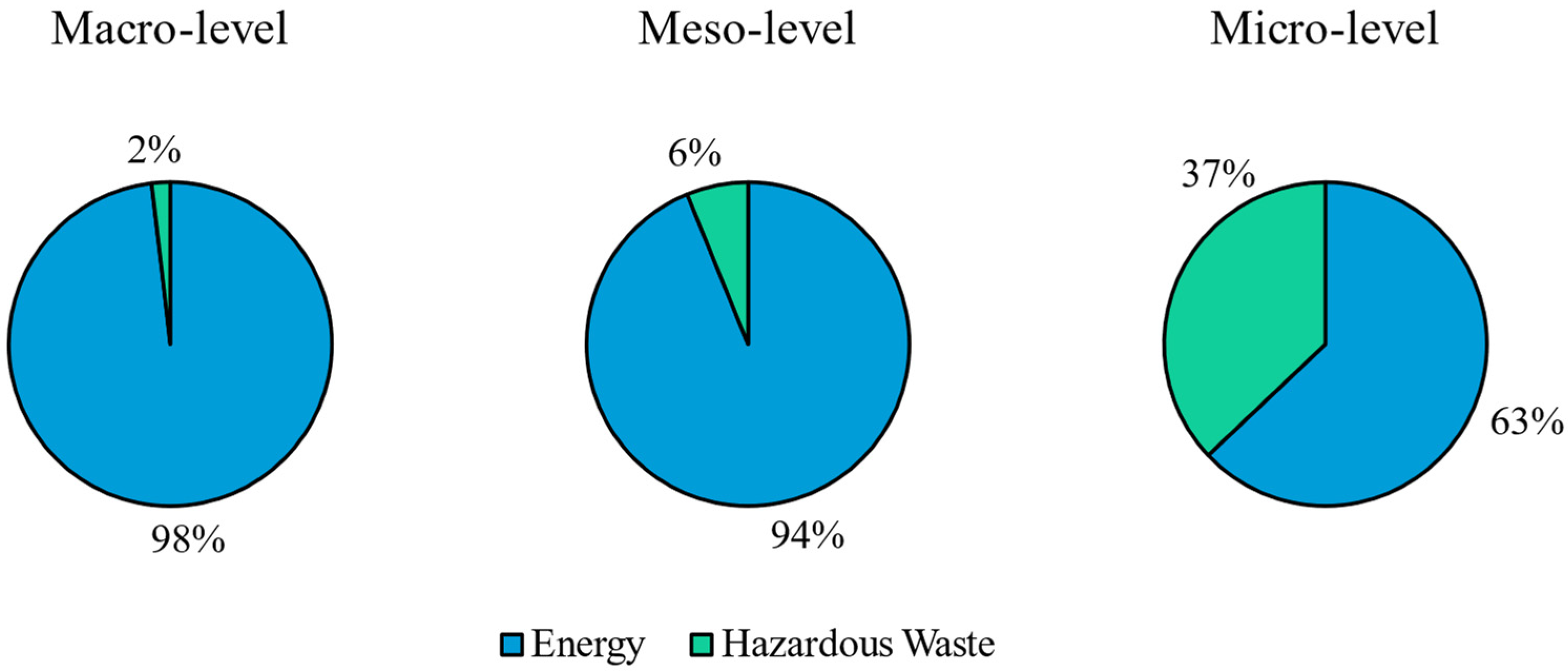
- Macro-level, representing hospital-wide resource consumption and waste generation;
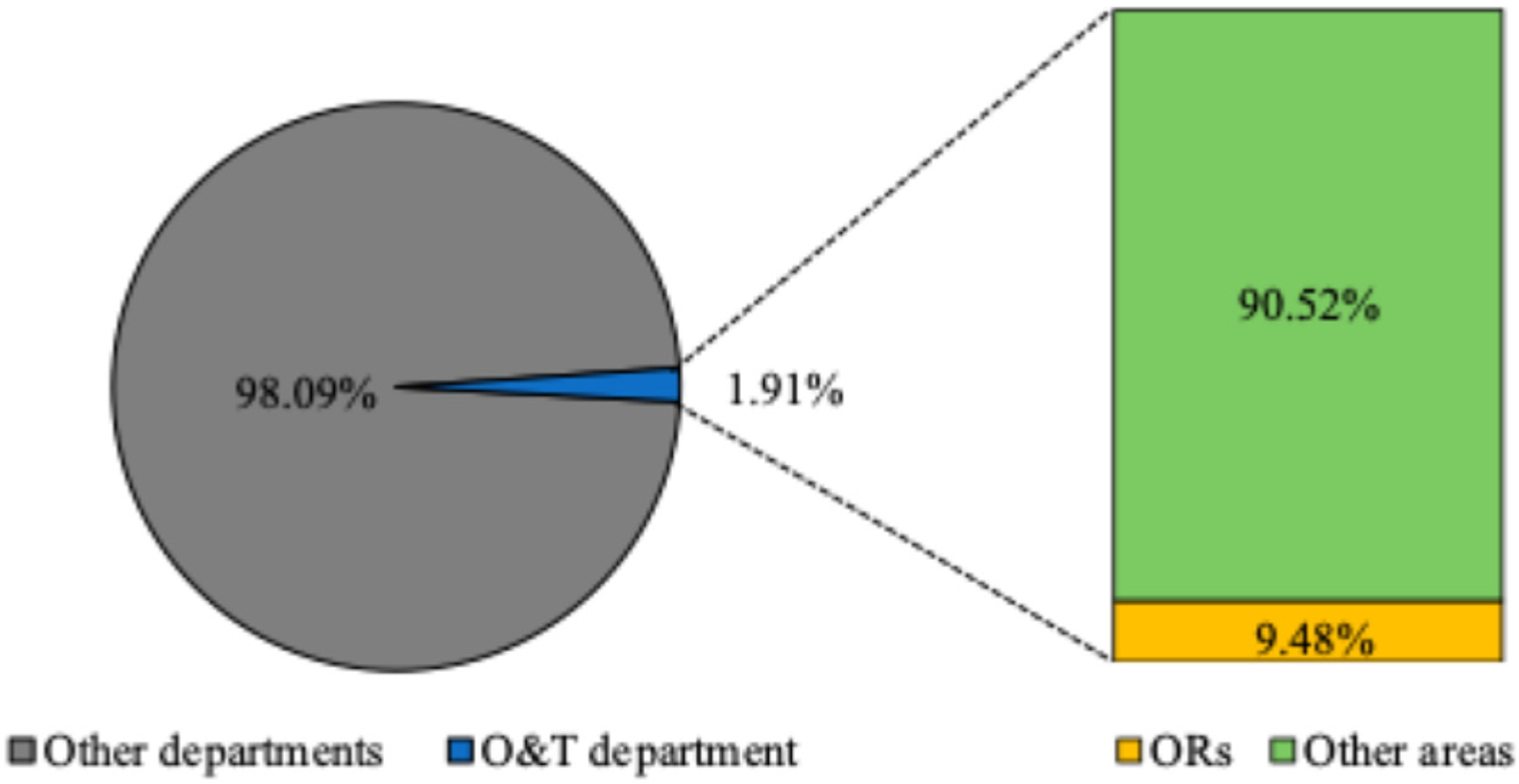
- Meso-level, focusing specifically on the Orthopedic and Trauma (O&T) department;
- Micro-level, assessing the environmental burden of operating rooms (Ors) and individual orthopedic surgical procedures.
2.2. Data Collection and Sources
2.2.1. Macro-Level: Hospital-Wide Data
2.2.2. Meso-Level: Orthopedic and Trauma Department
2.2.3. Micro-Level: Operating Rooms and Surgical Procedures
2.3. Environmental Impact Analysis
2.3.1. CO2e Emission Factors for Energy Sources
- Electricity: The emission factor is 0.258 kgCO2e/kWh for 2023, reflecting the renewable energy mix, and representing the fossil CO2 component after the reduction from 2022.
- District Heating: The emission factor for fossil CO2 is 0.12 kgCO2e/kWh, excluding biogenic emissions, which are considered carbon neutral.
- District Cooling: The emission factor for fossil CO2 is estimated at 0.10 kgCO2e/kWh, with the total cooling emissions adjusted to exclude biogenic emissions, which are also considered carbon neutral.
2.3.2. Emission Factors in Infectious Waste Management
- Incineration: Waste-to-energy plants employ high-temperatures combustion (>1000 °C) to incinerate waste, with the concurrent recovery of energy in the form of electricity and heat. The principal source of emissions is the fossil content in the waste stream (such as plastics and synthetic materials). On average, the incineration of one ton of waste generates about 500–1200 kg CO2e. However, when energy recovery is considered, the net emission factor ranges from 500 to 700 kgCO2e per ton of treated waste. This method partially offsets emissions by generating renewable energy, thus decreasing reliance on fossil fuels [30].
- Sterilization: Autoclaving, a sterilization method, uses high-temperature, high-pressure steam to render waste non-hazardous. This process results in significantly lower emissions compared to incineration, with an emission factor ranging from 100–200 kg CO2e per ton of waste. The reduced environmental impact is attributed to the absence of direct combustion of carbon-based materials, positioning sterilization as a more environmentally friendly option, particularly when coupled with energy recovery in waste-to-energy plants for the disposal of post-treatment residues [36].
3. Results
3.1. Macro-Level Analysis
3.2. Meso-Level Analysis
3.3. Micro-Level Analysis
4. Discussion
4.1. Key Metrics for Energy and Environmental Comparison
4.1.1. Energy Intensity per Surface Area (kWh/m2)
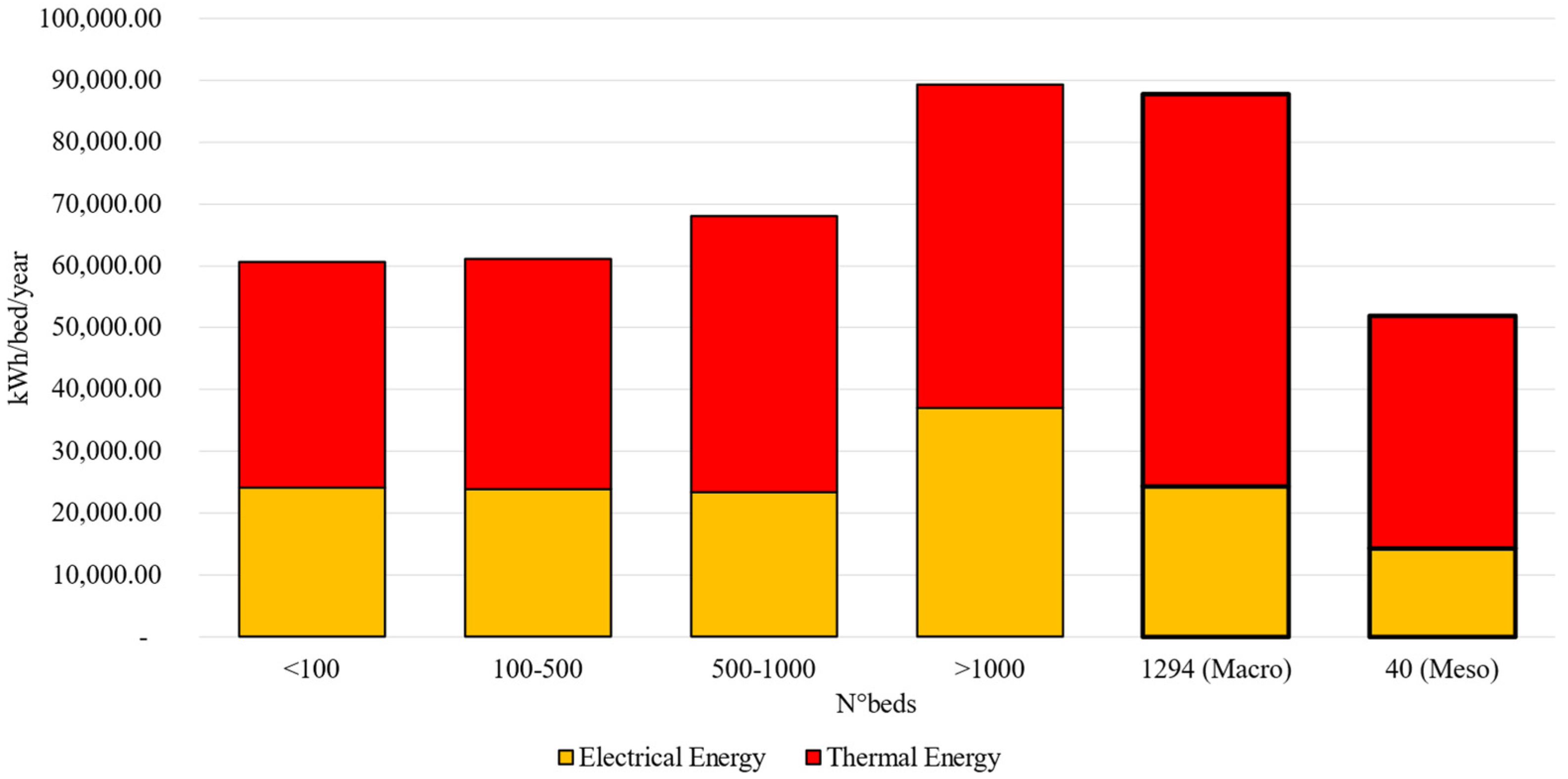
4.1.2. Energy Intensity per Capacity (kWh/Bed)
4.1.3. Carbon Emission Intensity (kgCO2e/m2)
4.2. Global Comparison of Energy Consumption and Emissions by Geographic Area
4.3. Scalable Mitigation Strategies for Environmental Impact Reduction in Hospitals
4.3.1. Macro-Level
- Energy optimization and renewable sources: at the hospital level, a key lever is the reduction of energy-related emissions. Energy efficiency measures (e.g., smart building management systems, LED lighting, cogeneration) combined with the transition to a renewable energy mix can drastically reduce this footprint [56]. A notable example is the Boston Medical Center (USA), which has undertaken a sustainability plan involving facility renovation. As a result, the hospital has reduced its energy consumption-related CO2 emissions by 91% (from 2011 to date), with annual operational savings exceeding $40 million reinvested in patient care [57]. This demonstrates the enormous potential of renewable sources on a macro scale. Other facilities have also achieved similar results: for example, some Chinese clinics that have installed photovoltaic systems report a reduction of over 1000 tons of CO2 per year thanks to 2 GWh of solar electricity produced [58]. These structural interventions, while requiring initial investments, have a large-scale impact and guaranty permanent emission reductions.
- Hospital waste management policies: studies indicate that hazardous waste should typically constitute 10% of the total, but in practice, this proportion is often much higher due to excessive caution [59]. Adequate staff training and clear guidelines can prevent the “over-classification” of waste. Beyond the environmental advantages of minimizing hazardous waste, there exists an economic benefit, since the disposal of hazardous waste can be up to five times more expensive than conventional waste disposal. A hospital intervention showed that proper segregation of healthcare waste led to a reduction of approximately 85% in CO2 emissions related to that waste [60]. In absolute terms, the carbon footprint of waste treatment in the operating room block decreased from approximately 527 kg CO2eq to just 79.1 kg CO2eq per week after the recycling program. This is equivalent to over 23 tons of CO2 avoided per year, simply by improving waste management at the hospital/department level.
4.3.2. Meso-Level
- Intelligent ventilation management in the operating room: operating rooms (ORs) have stringent air exchange and filtration requirements to ensure sterility. An effective strategy to reduce the HVAC energy consumption is to implement “setback” modes during off-peak hours, reducing the number of air changes when the rooms are not in use (e.g., at night). The literature confirms that reducing the ventilation flow in the operating room outside of surgical hours does not compromise air quality or increase the risk of infection, provided the systems are brought back to full operation before use [61]. A case was documented where reduced mode was extended to 19 out of 22 operating rooms during nights and weekends (leaving three active for emergencies), resulting in a 50% reduction in HVAC energy consumption compared to the baseline [20]. Other simulations indicate that reducing the air changes per hour from 30 to 6 in rest rooms can cut ventilation energy costs by up to 70%, without a significant increase in microbial contamination [62]. In a Spanish study of a surgical block, optimizing microclimate parameters during downtime resulted in an annual energy saving of 70% compared to traditional management [63]. Additionally, new “smart” systems like RFID sensors to automatically detect room occupancy can dynamically adjust ventilation, with pilot studies estimating a further energy saving of 50% compared to constant ventilation [64].
- Reusable materials: implementing programs to replace single-use materials with reusable and sterilizable alternatives at the ward level is a key strategy. Numerous comparisons in the literature highlight the environmental benefits of reusables without compromising safety. For example, a comparative study on single-use vs. reusable anesthesia devices found that switching to reusable can reduce CO2 emissions by 84% in Europe (thanks also to a cleaner energy mix), by 48% in the USA, and, conversely, could slightly increase them in Australia (+9%) where the electricity mix was more carbon-intensive [61]. This highlights the importance of both choosing reusable items and powering sterilization centers with renewable energy. Another study analyzed the impact of reusable vs. disposable surgical gowns: reusable gowns showed a carbon footprint approximately 60% lower than their disposable equivalents. Similarly, reusable surgical caps have significantly lower carbon footprints and other impact categories compared to single-use TNT caps [65]. At the ward level, the systematic adoption of reusable linens, clothing, and instruments (in line with infection prevention guidelines) can therefore avoid several tons of CO2 per year. It should be noted that in many hospitals, there has been a shift towards single-use items in recent decades for perceived reasons of convenience or reduced infection risk, but evidence indicates that well-sterilized reusable devices do not increase surgical infections. Therefore, reversing this trend where possible represents a significant sustainability opportunity at the Meso-level.
4.3.3. Micro-Level
- Optimization of surgical kits and reduction of unused open materials: “streamlining” procedural sets to eliminate non-essential tools or materials can reduce both waste and embodied emissions. An exemplary case comes from ophthalmic surgery [66] in which a recent study calculated the carbon footprint of cataract surgery and evaluated two Micro-level-level interventions: removing unnecessary items from single-use kits and replacing some single-use instruments with reusable equivalents. The result was a saving of 935 kg CO2/year thanks to the streamlining kit and an additional 309 kg CO2/year thanks to the switch to reusable items. In total, for the volume of cataracts considered, approximately 1.24 tons of CO2 per year were avoided. Additionally, the study found that for the devices considered, single-use items had a footprint 27 times greater than reusable versions: this means that reusing a device about 20 times is enough for a reusable device to become advantageous in terms of net emissions compared to 20 equivalent single-use devices. This type of analysis can be extended to other procedures (e.g., arthroplasty kits, laparoscopy sets, etc.), identifying the highest-impact items for each intervention and acting on them (eliminating them if unused, or introducing reusable alternatives). For example, in orthopedic surgery, optimizing open screws and plates for synthesis procedures can avoid costly waste. Similarly, customizing instrument trays (modular instrumentation instead of standard complete sets) reduces the number of materials that need to be sterilely reprocessed after surgery, saving energy and CO2.
- Sustainable practices in the operating room: there are micro-organizational measures that, although not always quantified in kg of CO2, contribute to reducing waste and emissions. For example, turning off or putting unnecessary electrical equipment into standby mode during the procedure (or between procedures) reduces the room’s energy consumption without impacting care [67]. Similarly, carefully preparing sterile materials before surgery and opening only what is truly needed can prevent many new items from being unnecessarily contaminated and then discarded. “Lean surgery” projects in the literature have shown that by involving the surgical team in systematically identifying and removing waste, not only is there cost savings, but also a significant reduction in waste per procedure (up to −30%) and consequently in the emissions associated with their life cycle [68,69]. In hand surgery, for example, the adoption of “lean” techniques has allowed for a reduction in the number of instruments opened but not used, resulting in a decrease in the carbon footprint per procedure without compromising clinical outcomes [70]. Although the benefits of these punctual changes may seem small, their sum across thousands of annual procedures makes them significant.
5. Conclusions
6. Limitation
Author Contributions
Funding
Data Availability Statement
Conflicts of Interest
References
- Marfe, G.; Perna, S.; Hermann, A. Challenges in Healthcare Waste Management of the UN 2030 Agenda in the COVID-19 Era. Am. J. Environ. Sci. 2022, 18, 20–41. [Google Scholar] [CrossRef]
- Mazzeo, D.; Baglivo, C.; Panico, S.; Manieri, M.; Matera, N.; Congedo, P.M. Eco-Sustainable Energy Production in Healthcare: Trends and Challenges in Renewable Energy Systems. Energies 2023, 16, 7285. [Google Scholar] [CrossRef]
- Lenzen, M.; Malik, A.; Li, M.; Fry, J.; Weisz, H.; Pichler, P.-P.; Chaves, L.S.M.; Capon, A.; Pencheon, D. The Environmental Footprint of Health Care: A Global Assessment. Lancet Planet. Health 2020, 4, e271–e279. [Google Scholar] [CrossRef] [PubMed]
- Malik, A.; Lenzen, M.; McAlister, S.; McGain, F. The Carbon Footprint of Australian Health Care. Lancet Planet. Health 2018, 2, e27–e35. [Google Scholar] [CrossRef] [PubMed]
- Eckelman, M.J.; Sherman, J. Environmental Impacts of the U.S. Health Care System and Effects on Public Health. PLoS ONE 2016, 11, e0157014. [Google Scholar] [CrossRef]
- Eckelman, M.J.; Sherman, J.D.; MacNeill, A.J. Life Cycle Environmental Emissions and Health Damages from the Canadian Healthcare System: An Economic-Environmental-Epidemiological Analysis. PLoS Med. 2018, 15, e1002623. [Google Scholar] [CrossRef]
- Nansai, K.; Fry, J.; Malik, A.; Takayanagi, W.; Kondo, N. Carbon Footprint of Japanese Health Care Services from 2011 to 2015. Resour. Conserv. Recycl. 2020, 152, 104525. [Google Scholar] [CrossRef]
- Wu, R. The Carbon Footprint of the Chinese Health-Care System: An Environmentally Extended Input–Output and Structural Path Analysis Study. Lancet Planet. Health 2019, 3, e413–e419. [Google Scholar] [CrossRef]
- Steenmeijer, M.A.; Rodrigues, J.F.D.; Zijp, M.C.; Waaijers-van der Loop, S.L. The Environmental Impact of the Dutch Health-Care Sector beyond Climate Change: An Input–Output Analysis. Lancet Planet. Health 2022, 6, e949–e957. [Google Scholar] [CrossRef]
- Irwin, A.; Geschke, A.; Mackenbach, J.P. The Biodiversity Impact of Health Care: Quantifying the Extinction-Risk Footprint of Health Care in The Netherlands and Other European Countries. Sustainability 2024, 16, 1343. [Google Scholar] [CrossRef]
- Keller, R.L.; Muir, K.; Roth, F.; Jattke, M.; Stucki, M. From Bandages to Buildings: Identifying the Environmental Hotspots of Hospitals. J. Clean. Prod. 2021, 319, 128479. [Google Scholar] [CrossRef]
- Keil, M. The Greenhouse Gas Emissions of a German Hospital—A Case Study of an Easy-to-Use Approach Based on Financial Data. Clean. Environ. Syst. 2023, 11, 100140. [Google Scholar] [CrossRef]
- The Greenhouse Gas Protocol: The GHG Protocol for Project Accounting; World Business Council for Sustainable Development: Genève, Switzerland; World Resources Institute: Washington, DC, USA, 2005; ISBN 1569735980.
- Lau, I.; Burdorf, A.; Hesseling, S.; Wijk, L.; Tauber, M.; Hunfeld, N. The Carbon Footprint of a Dutch Academic Hospital—Using a Hybrid Assessment Method to Identify Driving Activities and Departments. Front. Public Health 2024, 12, 1380400. [Google Scholar] [CrossRef] [PubMed]
- Mermillod, B.; Tornare, R.; Jochum, B.; Ray, N.; Flahault, A. Estimating the Carbon Footprint of Healthcare in the Canton of Geneva and Reduction Scenarios for 2030 and 2040. Int. J. Environ. Res. Public Health 2024, 21, 690. [Google Scholar] [CrossRef]
- Tennison, I.; Roschnik, S.; Ashby, B.; Boyd, R.; Hamilton, I.; Oreszczyn, T.; Owen, A.; Romanello, M.; Ruyssevelt, P.; Sherman, J.D.; et al. Health Care’s Response to Climate Change: A Carbon Footprint Assessment of the NHS in England. Lancet Planet. Health 2021, 5, e84–e92. [Google Scholar] [CrossRef]
- Sherman, J.; Le, C.; Lamers, V.; Eckelman, M. Life Cycle Greenhouse Gas Emissions of Anesthetic Drugs. Anesth. Analg. 2012, 114, 1086–1090. [Google Scholar] [CrossRef]
- Cimprich, A.; Young, S.B. Environmental Footprinting of Hospitals: Organizational Life Cycle Assessment of a Canadian Hospital. J. Ind. Ecol. 2023, 27, 1335–1353. [Google Scholar] [CrossRef]
- Hernandez, C.; Rodrigues, C.; Marques, P.; Freire, F. Life Cycle Assessment of a Large Volume Parenteral for Hospital Use. Resour. Conserv. Recycl. 2023, 198, 107120. [Google Scholar] [CrossRef]
- MacNeill, A.J.; Lillywhite, R.; Brown, C.J. The Impact of Surgery on Global Climate: A Carbon Footprinting Study of Operating Theatres in Three Health Systems. Lancet Planet. Health 2017, 1, e381–e388. [Google Scholar] [CrossRef]
- Weisz, U.; Pichler, P.-P.; Jaccard, I.S.; Haas, W.; Matej, S.; Bachner, F.; Nowak, P.; Weisz, H. Carbon Emission Trends and Sustainability Options in Austrian Health Care. Resour. Conserv. Recycl. 2020, 160, 104862. [Google Scholar] [CrossRef]
- Savio, A.; Marchi, B.; Roletto, A.; Guizzi, P.; Milano, G.; Zavanella, L.E.; Zanoni, S. Assessing Energy and Waste Impacts in Orthopaedic Departments: A Case Study from an Italian Public Hospital. In Proceedings of the 20th Conference on Sustainable Development of Energy, Water and Environment Systems, Dubrovnik, Croatia, 5–10 October 2025. [Google Scholar]
- Cook, N.; Goodwin, D.; Porter, J.; Collins, J. Food and Food-related Waste Management Strategies in Hospital Food Services: A Systematic Review. Nutr. Diet. 2023, 80, 116–142. [Google Scholar] [CrossRef]
- Marino, A.; Pariso, P. Digital Innovation Government: Organizational and Energy Analysis in Italian Hospitals. Entrep. Sustain. Issues 2023, 10, 214–230. [Google Scholar] [CrossRef]
- Roletto, A.; Savio, A.; Masperi, A.; Bonfitto, G.R.; Pala, F.; Migliorisi, C.; Zanoni, S. Energy Usage Assessment and Energy Savings Estimation in a Radiology Department in Italy. Energies 2025, 18, 1936. [Google Scholar] [CrossRef]
- Savoldelli, A.; Landi, D.; Rizzi, C. Exploring the Environmental Impact of Telemedicine: A Life Cycle Assessment. In dHealth 2024; IOS Press: Amsterdam, The Netherlands, 2024; Volume 313, pp. 81–86. [Google Scholar]
- Elli, L.; La Mura, S.; Rimondi, A.; Scaramella, L.; Tontini, G.E.; Monica, F.; Soncini, M.; Topa, M.; Bortoluzzi, F.; Sorge, A.; et al. The Carbon Cost of Inappropriate Endoscopy. Gastrointest. Endosc. 2024, 99, 137–145.e3. [Google Scholar] [CrossRef]
- Shah, S.; Morris, H.; Thiagarajah, S.; Gordon, A.; Sharma, S.; Haslam, P.; Garcia, J.; Ali, F. Handling ‘Carbon Footprint’ in Orthopaedics. Ann. R. Coll. Surg. Engl. 2024, 106, 498–503. [Google Scholar] [CrossRef]
- Eidmann, A.; Stratos, I.; Scarlat, M.; Rudert, M. Sustainability in Orthopaedic Hospitals—Urgent Actions for a Changing Climate. Can We Make Orthopaedics Climate Smart? Int. Orthop. 2025, 49, 311–313. [Google Scholar] [CrossRef]
- Cusano, G.; Roudier, S.; Neuwahl, F.; Holbrook, S.; Gómez Benavides, J. Best Available Techniques (BAT) Reference Document for Waste Incineration—Industrial Emissions Directive 2010/75/EU (Integrated Pollution Prevention and Control); Publications Office: Luxembourg, 2019. [Google Scholar]
- A2A. A2A ESG Highlights 2023; A2A S.p.A.: Milan, Italy, 2023; Available online: https://www.gruppoa2a.it/en/sustainability (accessed on 15 October 2024).
- ISPRA—Istituto Superiore per la Protezione e la Ricerca Ambientale. Le Emissioni Di CO2 Nel Settore Elettrico Nazionale e Regionale; ISPRA: Rome, Italy, 2025; ISBN 978-88-448-1256-0.
- ISPRA—Istituto Superiore per la Protezione e la Ricerca Ambientale. Italian Greenhouse Gas Inventory 1990–2022. National Inventory Report 2024. Available online: https://www.isprambiente.gov.it/en/publications/reports (accessed on 8 January 2025).
- Legambiente Brescia. Legambiente Brescia Il Teleriscaldamento Urbano: Il Caso Brescia E Considerazioni Generali; Audizione presso ARERA, “Crisi energia: Prospettive e proposte settoriali”; Legambiente Brescia: Brescia, Italy, 2022; Available online: https://www.arera.it/fileadmin/allegati/audizioni/pubbliche/22/Legambiente%20Brescia_aud22.pdf (accessed on 15 October 2024).
- Italian Republic. D.P.R. 15 Luglio 2003 n. 254; Gazzetta Ufficiale della Repubblica Italiana: Rome, Italy, 2003; Available online: https://www.normattiva.it/uri-res/N2Ls?urn:nir:stato:decreto.del.presidente.della.repubblica:2003-07-15;254 (accessed on 15 October 2024).
- Ministero dell’Ambiente e della Sicurezza Energetica Recycling and Waste Management. Available online: https://www.mase.gov.it/pagina/recycling-and-waste-management#rifiuti_pericolosi (accessed on 5 May 2025).
- IPCC. 2019 Refinement to the 2006 IPCC Guidelines for National Greenhouse Gas Inventories; Waste: Geneva, Switzerland, 2019; Volume 5. [Google Scholar]
- Comune di Reggio Emilia. CarbonZERO—Relazione Tecnica; Comune di Reggio Emilia: Reggio Emilia, Italy, 2015; Available online: https://rigenerazione-strumenti.comune.re.it/carbonzero/ (accessed on 15 October 2024).
- CIBSE—Chartered Institution of Building Services Engineers. Guide A: Environmental Design; CISBE: London, UK, 2015; ISBN 9781906846541. [Google Scholar]
- García-Sanz-Calcedo, J. Study of CO2 Emissions from Energy Consumption in Spanish Hospitals. Vibroeng. Procedia 2019, 26, 46–51. [Google Scholar] [CrossRef]
- Sustainability and Environmental Protection in Hospitals. Available online: https://www.etkho.com/en/sustainability-and-environmental-protection-in-hospitals/#:~:text=Let%E2%80%99s%20put%20it%20in%20figures,lighting%20and%20hot%20water%20supply (accessed on 5 May 2025).
- González González, A.; García-Sanz-Calcedo, J.; Rodríguez Salgado, D. Evaluation of Energy Consumption in German Hospitals: Benchmarking in the Public Sector. Energies 2018, 11, 2279. [Google Scholar] [CrossRef]
- Chung, J.W.; Meltzer, D.O. Estimate of the Carbon Footprint of the US Health Care Sector. JAMA 2009, 302, 1970. [Google Scholar] [CrossRef] [PubMed]
- Bawaneh, K.; Ghazi Nezami, F.; Rasheduzzaman, M.; Deken, B. Energy Consumption Analysis and Characterization of Healthcare Facilities in the United States. Energies 2019, 12, 3775. [Google Scholar] [CrossRef]
- Kumar, S.; Yadav, N.; Singh, M.; Kachhawa, S. Estimating India’s Commercial Building Stock to Address the Energy Data Challenge. Build. Res. Inf. 2019, 47, 24–37. [Google Scholar] [CrossRef]
- De Masi, R.F.; Del Regno, N.; Gigante, A.; Ruggiero, S.; Russo, A.; Tariello, F.; Vanoli, G.P. The Importance of Investing in the Energy Refurbishment of Hospitals: Results of a Case Study in a Mediterranean Climate. Sustainability 2023, 15, 11450. [Google Scholar] [CrossRef]
- Hu, S.-C.; Chuah, Y.; Hu, S.C.; Chen, J.D.; Chuah, Y.K. Energy Cost and Consumption in a Large Acute Hospital. Int. J. Archit. Sci. 2004, 5, 11–19. [Google Scholar]
- Brown, L.H.; Buettner, P.G.; Canyon, D.V. The Energy Burden and Environmental Impact of Health Services. Am. J. Public Health 2012, 102, e76–e82. [Google Scholar] [CrossRef]
- Miller, W.F.; Liu, A.; Crompton, G.; Ma, Y. Healthcare Sector Energy Baseline and Key Performance Indicators; Queensland University of Technology: Brisbane, QLD, Australia, 2020; Available online: https://ihub.org.au/wp-content/uploads/LLHC1_Healthcare_Sector_Baseline_Energy_Report_V01.pdf (accessed on 25 October 2024).
- Baldazzi, A.S.; Beltrone, E.; Mostacci, A.A.; Mura, A.; Napoleoni, D.; Pasquino, F.; Santangelo, A.; Stemperini, A.; Toso, F. Rapporto Sulla Raccolta Dati per la Determinazione e Caratterizzazione Delle Tipologie di Impianto per Il Condizionamento Invernale ed Estivo Negli Edifici ad uso Ospedaliero; ENEA—Agenzia Nazionale per le Nuove Tecnologie, l’Energia e lo Sviluppo Economico Sostenibile: Rome, Italy, 2013; Report RdS/2013/141. Available online: https://www.ricercasistemaelettrico.enea.it/archivio-documenti.html?task=download.send&id=4900:rapporto-sulla-raccolta-dati-per-la-determinazione-e-caratterizzazione-delle-tipologie-di-impianto-per-il-condizionamento-invernale-ed-estivo-negli-edifici-destinati-a-scuole-e-uffici&catid=460 (accessed on 30 October 2024).
- Eidmann, A.; Geiger, F.; Heinz, T.; Jakuscheit, A.; Docheva, D.; Horas, K.; Stratos, I.; Rudert, M. Our Impact on Global Warming. J. Bone Jt. Surg. 2024, 106, 1971–1977. [Google Scholar] [CrossRef] [PubMed]
- McGain, F.; Wickramarachchi, K.; Aye, L.; Chan, B.G.; Sheridan, N.; Tran, P.; McAlister, S. The Carbon Footprint of Total Knee Replacements. Aust. Health Rev. 2024, 48, 664–672. [Google Scholar] [CrossRef]
- Ogeron, P.; Boukebous, B.; Desender, A.; Massard-Combe, P.; Vorimore, C.; Guillon, P. Average Total Weight of Surgical Waste and CO2 Carbon Footprint of Orthopedic Surgery in France, Estimated on the Basis of a Representative Panel. Orthop. Traumatol. Surg. Res. 2024, 110, 103910. [Google Scholar] [CrossRef]
- Klarenbeek, I.C.; Janssen, E.R.C.; Willems, P.C.; Lambers Heerspink, O.F.; van der Eijk, A.C. Waste in Orthopaedic Surgery; an Application of the Healthcare Sustainability Mode and Effect Analysis. Int. Orthop. 2025, 49, 2393–2401. [Google Scholar] [CrossRef]
- Drobetz, N.; Xu, J.; Chang, D.; Hazan, D.; Collins, W.; Drobetz, H. Less Trash, More Treasure. Waste Production and Reduction in Orthopaedic Surgery. ANZ J. Surg. 2025, 95, 539–543. [Google Scholar] [CrossRef] [PubMed]
- Psillaki, M.; Apostolopoulos, N.; Makris, I.; Liargovas, P.; Apostolopoulos, S.; Dimitrakopoulos, P.; Sklias, G. Hospitals’ Energy Efficiency in the Perspective of Saving Resources and Providing Quality Services through Technological Options: A Systematic Literature Review. Energies 2023, 16, 755. [Google Scholar] [CrossRef]
- Boston Medical Center Boston Medical Center Recognized as a Top 25 Hospital in the Nation for Environmental Excellence and Practice Greenhealth’s Environmental Excellence Awards. Available online: https://www.bmc.org/news/boston-medical-center-recognized-top-25-hospital-nation-environmental-excellence-practice (accessed on 15 November 2025).
- Yu, D.; Tan, X.; Liu, Z.; Li, D.; Wang, Z.; Yan, P.; Ni, J. Energy Saving and Carbon Reduction Schemes for Hospital with Photovoltaic Power Generation and System Upgrading Technology. Heliyon 2023, 9, e21447. [Google Scholar] [CrossRef]
- Yeoh, C.B. Challenges of Going Green in the Operating Room. Anaesth. Surg. Open Access J. 2020, 2, 000527. [Google Scholar] [CrossRef]
- Carmona-Pomada, B.; Diaz-Co, L.; Azaroual El Bachiri, H.; Nieto-Lorente, N.; Muriel-Serrano, G.; Zarza-Sánchez, L.; Caro-Benito, C.; Monistrol, O. Segregation and Recycling in the Operating Room. An Intervention to Accelerate the Decarbonisation Process in the Health Sector. J. Clin. Nurs. 2025, 34, 4735–4746. [Google Scholar] [CrossRef]
- Bolten, A.; Kringos, D.S.; Spijkerman, I.J.B.; Sperna Weiland, N.H. The Carbon Footprint of the Operating Room Related to Infection Prevention Measures: A Scoping Review. J. Hosp. Infect. 2022, 128, 64–73. [Google Scholar] [CrossRef]
- Lee, S.T.; Liang, C.C.; Chien, T.Y.; Wu, F.J.; Fan, K.C.; Wan, G.H. Effect of Ventilation Rate on Air Cleanliness and Energy Consumption in Operation Rooms at Rest. Environ. Monit. Assess. 2018, 190, 178. [Google Scholar] [CrossRef]
- Cacabelos-Reyes, A.; López-González, J.L.; González-Gil, A.; Febrero-Garrido, L.; Eguía-Oller, P.; Granada-Álvarez, E. Assessing the Energy Demand Reduction in a Surgical Suite by Optimizing the HVAC Operation During Off-Use Periods. Appl. Sci. 2020, 10, 2233. [Google Scholar] [CrossRef]
- Lin, J.; Pai, J.Y.; Chen, C.C. Applied Patent RFID Systems for Building Reacting HEPA Air Ventilation System in Hospital Operation Rooms. J. Med. Syst. 2012, 36, 3399–3405. [Google Scholar] [CrossRef] [PubMed]
- Gumera, A.; Mil, M.; Hains, L.; Fanshaw, S.-R.; Dunne, B. Reusable Surgical Headwear Has a Reduced Carbon Footprint and Matches Disposables Regarding Surgical Site Infection: A Systematic Review and Meta-Analysis. J. Hosp. Infect. 2024, 152, 164–172. [Google Scholar] [CrossRef] [PubMed]
- McCance, E.; Steinbach, I.; Morris, D.S. Comparative Carbon Footprinting Study of Reusable vs. Disposable Instruments in Cataract Surgery. Eye 2025, 39, 1481–1485. [Google Scholar] [CrossRef] [PubMed]
- Heye, T.; Meyer, M.T.; Merkle, E.M.; Vosshenrich, J. Turn It Off! A Simple Method to Save Energy and CO2 Emissions in a Hospital Setting with Focus on Radiology by Monitoring Nonproductive Energy-Consuming Devices. Radiology 2023, 307, 230162. [Google Scholar] [CrossRef] [PubMed]
- Kodumuri, P.; Jesudason, E.P.; Lees, V. Reducing the Carbon Footprint in Carpal Tunnel Surgery inside the Operating Room with a Lean and Green Model: A Comparative Study. J. Hand Surg. Eur. Vol. 2023, 48, 1022–1029. [Google Scholar] [CrossRef] [PubMed]
- McNally, S.; Phizacklea, E.C.; Gibbs, V.N.; Brown, R.; Wilcocks, K.V.; O’Brien, S.; Burton, H.K.; Evans, S.; Vella-Baldacchino, M.; Khader, A.; et al. Lean Pathways in Orthopaedics: Multiple Wins for Sustainability. Orthop. Trauma 2022, 36, 265–273. [Google Scholar] [CrossRef]
- Van Demark, R.E.; Smith, V.J.S.; Fiegen, A. Lean and Green Hand Surgery. J. Hand Surg. Am. 2018, 43, 179–181. [Google Scholar] [CrossRef] [PubMed]



| Energy Vector | kWh/Year | kgCO2e/kWh | kgCO2e/Year |
|---|---|---|---|
| Electrical Energy | 31,476,237 | 0.258 | 8,120,869 |
| District Heating | 46,656,036 | 0.120 | 5,598,724 |
| District Cooling | 35,472,000 | 0.10 | 3,547,200 |
| Total | 113,604,273 | / | 17,266,793 |
| Energy Vector | kWh/Year | kgCO2e/kWh | kgCO2e/Year |
|---|---|---|---|
| Electrical Energy | 574,776 | 0.258 | 148,292 |
| District Heating | 851,969 | 0.120 | 102,236 |
| District Cooling | 647,742 | 0.10 | 64,774 |
| Total | 2,074,487 | / | 315,303 |
| Electricity Consumption | HVAC | ||
|---|---|---|---|
| Daily | 26 kWh/day/room | Volume | 126 m3 |
| Annual surgical days | 312 days/year | Parameters | 17 °C |
| 20 ACH | |||
| 0.6 Wh/m3 | |||
| Annual energy consumption | 8112 kWh/year/room | Demand per room | 36.29 kWh/day/room |
| N°rooms | 4 rooms | Annual | 11,322 kWh/year/room |
| Total | 32,448 kWh/year | Total | 45,290 kWh/year |
| Surgery Procedure | Hazardous Waste [kg] | Organic Fluids [kg] | Paper [kg] | Plastic [kg] | Non-Recyclable [kg] | Total [kg] |
|---|---|---|---|---|---|---|
| Medial Patellofemoral Ligament Reconstruction | 7.6 | 1 | 0.4 | 0.4 | 1 | 10.4 |
| Total Knee Arthroplasty | 11.9 | 0.6 | 0.8 | 1.1 | 1.6 | 16 |
| Rotator Cuff Tendon Repair | 9.8 | 1.6 | 0.5 | 0.5 | 0.6 | 13 |
| Anterior Cruciate Ligament Repair | 7.5 | 0.8 | 0.2 | 0.2 | 0.8 | 9.5 |
| Knee Tissue Biopsy | 6.7 | 1 | 0.2 | 0.4 | 2.5 | 10.8 |
| Total Knee Arthroplasty | 11.1 | 1.5 | 0.8 | 1.1 | 4.7 | 19.2 |
| Multiligamentous Knee Reconstruction | 10.2 | 8.9 | 1.2 | 2.1 | 2.2 | 24.6 |
| Rotator Cuff Tendon Repair | 8.4 | 1.6 | 0.9 | 0.7 | 1.1 | 12.7 |
| Rotator Cuff Tendon Repair | 7.6 | 0.8 | 0.6 | 0.6 | 0.9 | 10.5 |
| Rotator Cuff Tendon Repair | 6.6 | 1.4 | 0.4 | 0.5 | 0.3 | 9.2 |
| Bankart Repair | 10.2 | 1 | 0.7 | 0.7 | 1.8 | 14.4 |
| Total Shoulder Arthroplasty | 8.9 | 2.1 | 1 | 1.1 | 1.4 | 14.5 |
| Total Shoulder Arthroplasty | 10.6 | 2 | 1.1 | 0.9 | 2.4 | 17 |
| Avg | 9.0 | 1.9 | 0.7 | 0.8 | 1.6 | 14.0 |
| Annual production | 19,674 | 4153 | 1530 | 1749 | 3498 | 30,604 |
| Avg % | 64% | 14% | 5% | 6% | 11% | 100% |
| Geographical Area | kWh/m2/Year | kWh/Bed/Year | kgCO2e/m2/Year |
|---|---|---|---|
| Europe [40,41,42] | 250–300 | 20,000–60,000 | 100 |
| North America [43,44] | 738 | 80,000–120,000 | 200–250 |
| Asia [45,46,47,48] | 180–400 | 5000–15,000 | 50–150 |
| Oceania [49] | 393–460 | 40,000 | 180–200 |
| Macro-level | 855 | 87,793 | 130 |
| Study | Country | System Boundary | Metric | Key Results | Notes on Comparability |
|---|---|---|---|---|---|
| [51] | Germany | Full LCA (Scope 1–3) | kgCO2e/procedure | 53–126 kgCO2e | Includes implants, anesthetics, supply chain |
| [52] | Australia | Full LCA | kgCO2e/TKR | ~130 kgCO2e | Includes prosthesis, sterilization, single-use devices |
| [53] | France | Waste-focused | kgCO2e/procedure | Median 4.3 kgCO2e | Waste only |
| [54] | Netherlands | Waste LCA | kg CO2-eq | 19–24 kg CO2e | Full material LCA |
| [55] | Australia | Waste audit | kg waste/procedure | Avg 8.2 kg | Mass-based, not CO2 |
| This study | Italy | Energy consumption + hazardous waste | kgCO2e/procedure | 14.6 kgCO2e | Partial operational account |
Disclaimer/Publisher’s Note: The statements, opinions and data contained in all publications are solely those of the individual author(s) and contributor(s) and not of MDPI and/or the editor(s). MDPI and/or the editor(s) disclaim responsibility for any injury to people or property resulting from any ideas, methods, instructions or products referred to in the content. |
© 2026 by the authors. Licensee MDPI, Basel, Switzerland. This article is an open access article distributed under the terms and conditions of the Creative Commons Attribution (CC BY) license.
Share and Cite
Savio, A.; Marchi, B.; Roletto, A.; Guizzi, P.; Milano, G.; Zavanella, L.E.; Zanoni, S. Assessing Energy and Waste Impacts in Orthopaedic Departments: A Case Study from an Italian Public Hospital. Energies 2026, 19, 836. https://doi.org/10.3390/en19030836
Savio A, Marchi B, Roletto A, Guizzi P, Milano G, Zavanella LE, Zanoni S. Assessing Energy and Waste Impacts in Orthopaedic Departments: A Case Study from an Italian Public Hospital. Energies. 2026; 19(3):836. https://doi.org/10.3390/en19030836
Chicago/Turabian StyleSavio, Anna, Beatrice Marchi, Andrea Roletto, Pierangelo Guizzi, Giuseppe Milano, Lucio Enrico Zavanella, and Simone Zanoni. 2026. "Assessing Energy and Waste Impacts in Orthopaedic Departments: A Case Study from an Italian Public Hospital" Energies 19, no. 3: 836. https://doi.org/10.3390/en19030836
APA StyleSavio, A., Marchi, B., Roletto, A., Guizzi, P., Milano, G., Zavanella, L. E., & Zanoni, S. (2026). Assessing Energy and Waste Impacts in Orthopaedic Departments: A Case Study from an Italian Public Hospital. Energies, 19(3), 836. https://doi.org/10.3390/en19030836