CO2 Injection for Enhanced Gas Recovery in Tight Gas Reservoirs of the Central Shenfu Area

 , ,
, ,
Abstract
1. Introduction
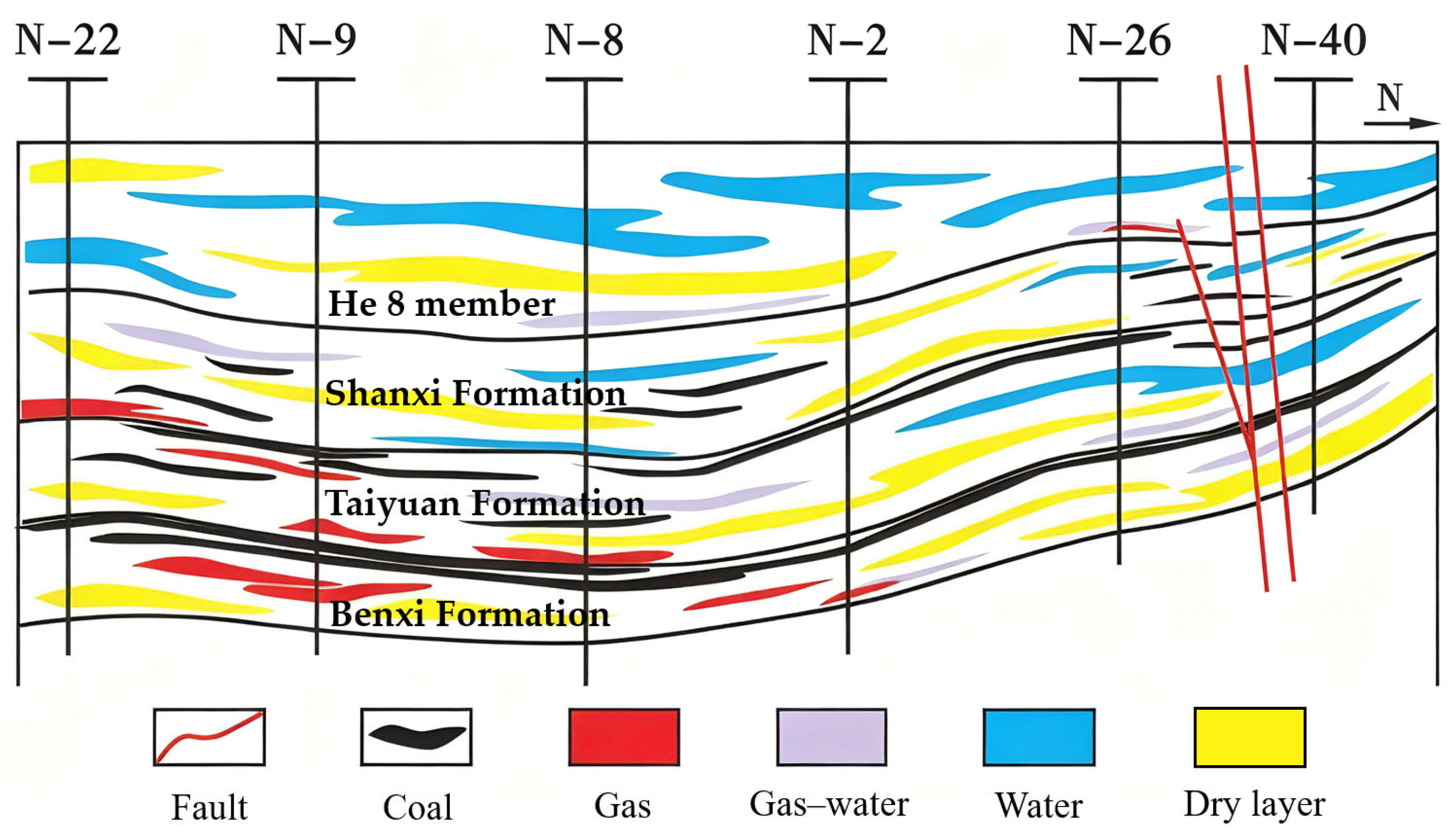
2. Reservoir Characteristics and Water Production Mechanism
2.1. Reservoir Physical Properties
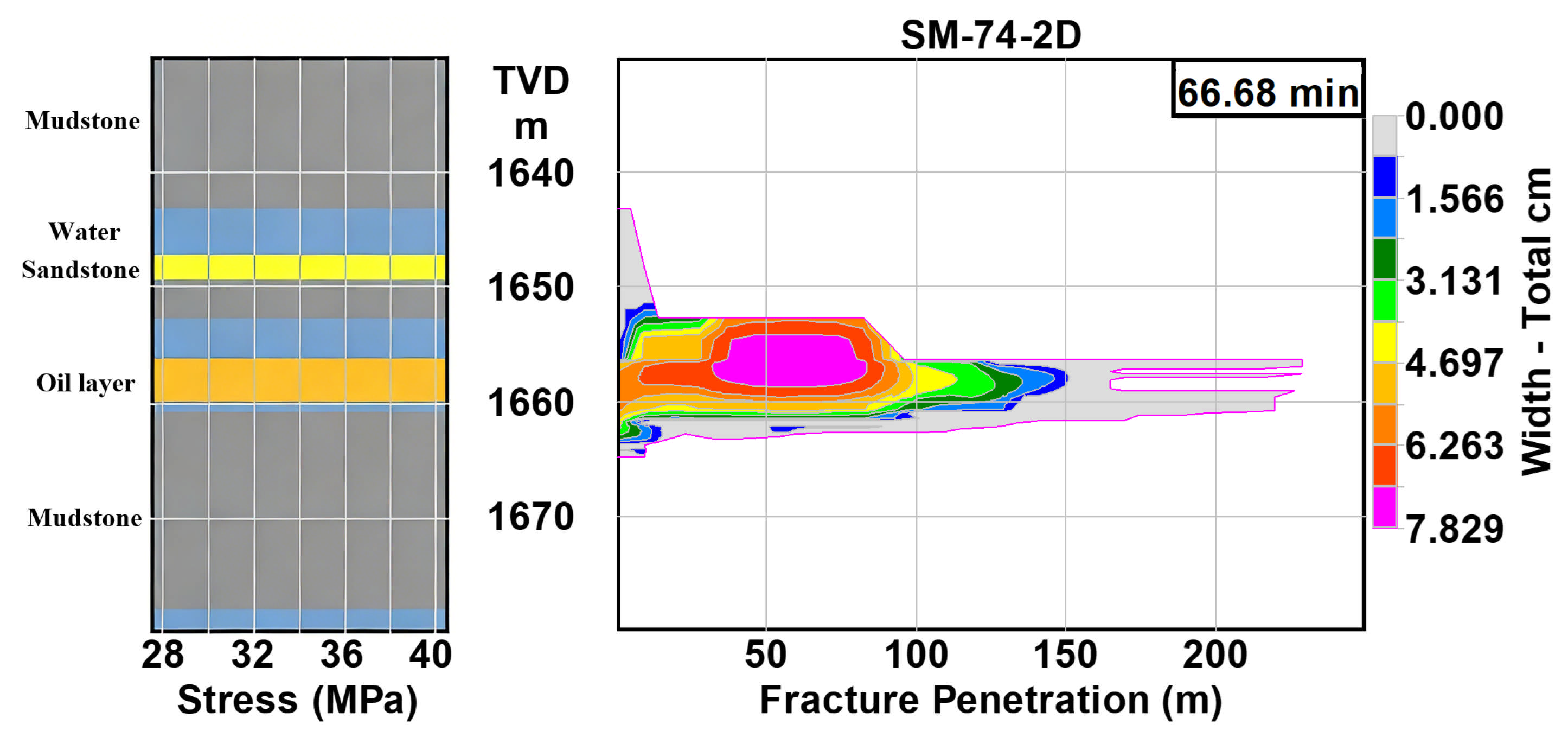
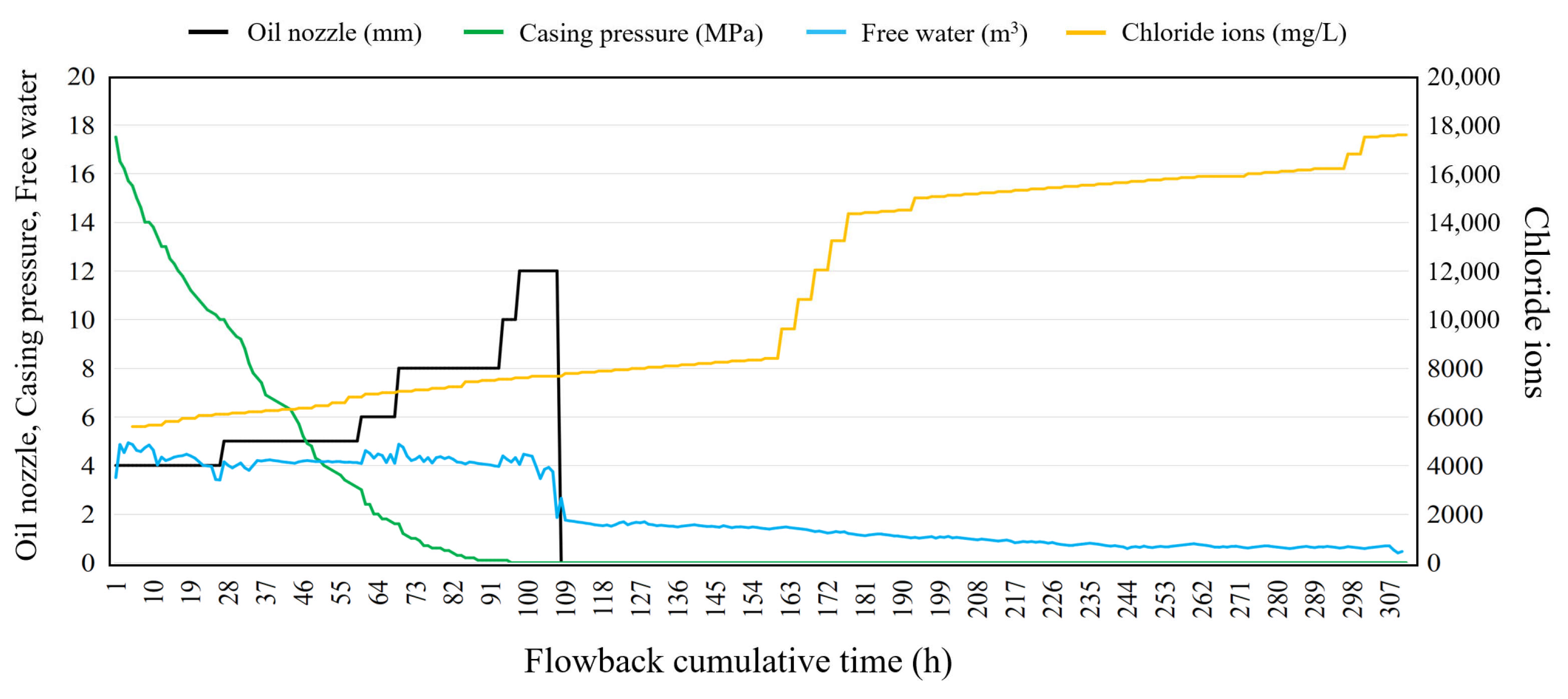
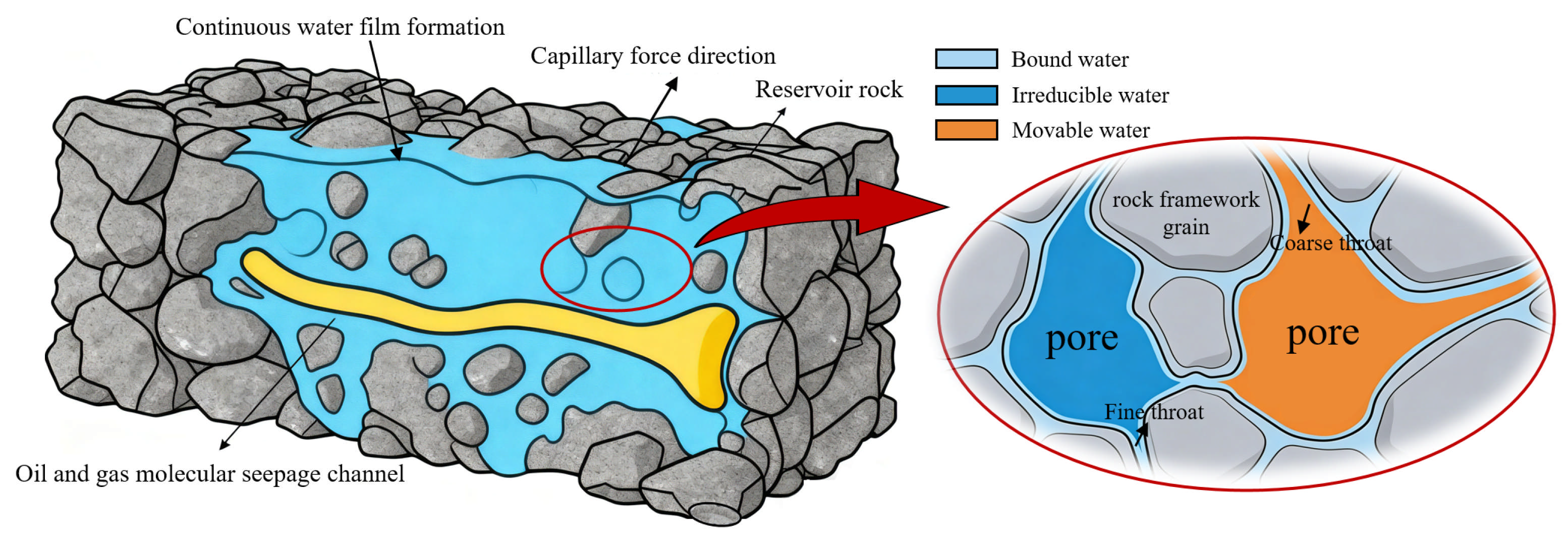
2.2. Water Production Mechanism
3. Rock Wettability and Water Blocking Damage Evaluation
3.1. Wetting Characteristics
3.2. Water Blocking Damage
4. Countermeasures and Suggestions
4.1. Mechanisms of CO2 Action
4.2. Engineering Strategy and Operational Parameters
5. Experiments
5.1. Materials
5.2. Apparatuses
5.3. Procedure
- (1)
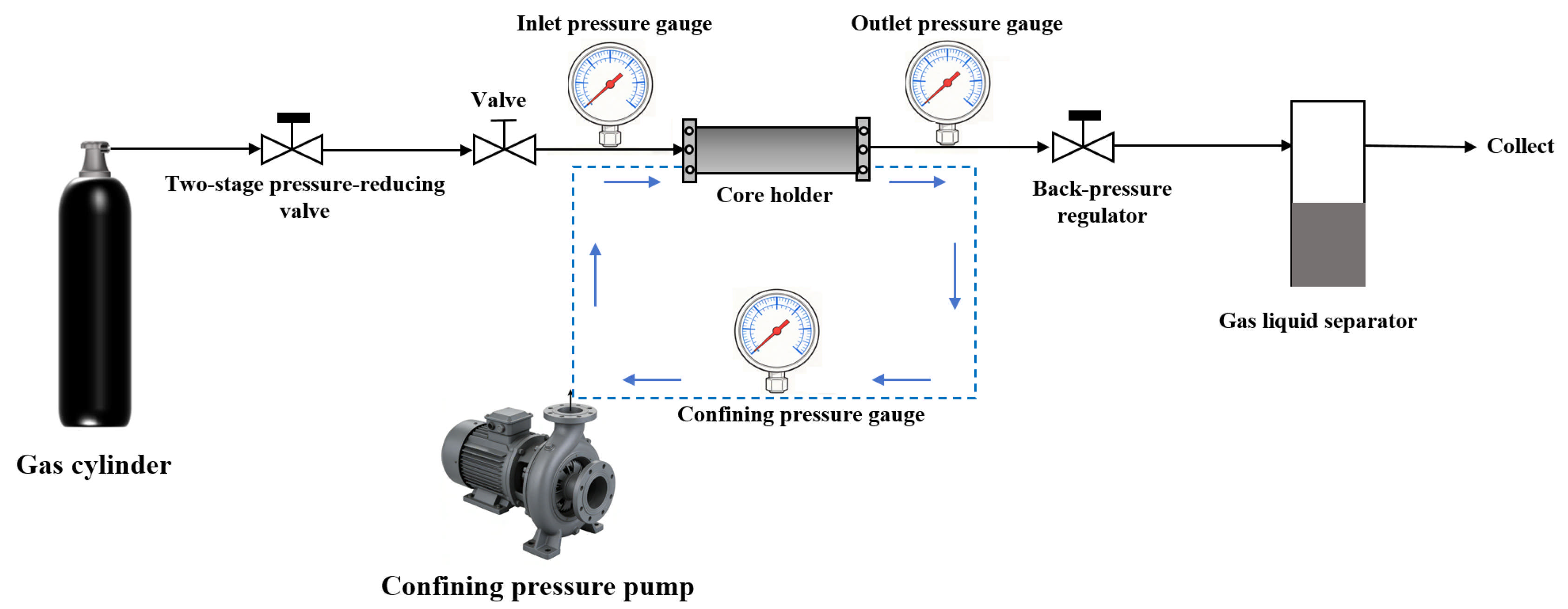
- Core Preparation: A dried core sample was loaded into the holder. The system was assembled, and all instruments were calibrated prior to testing.
- (2)
- Vacuum and Saturation: The core was evacuated. Formation water was then injected to establish irreducible water saturation (Swi). The pore volume (PV) was determined from the injected water volume.
- (3)
- Pressurization and Heating: With Swi established, the system was pressurized with natural gas to the initial reservoir pressure of 20 MPa (confining pressure was maintained 5 MPa higher). The temperature was then raised and stabilized at the reservoir condition of 60 °C for 12 h.
- (4)
- Primary Depletion (Simulating Natural Production): After establishing initial reservoir conditions (20 MPa, 60 °C), the system was subjected to a staged pressure depletion to simulate natural gas production. The back-pressure regulator was used to lower the system pressure (Psys) in three sequential steps: 10 MPa, 8 MPa, and 6 MPa. Each of these target pressures is defined as a depletion pressure (Pdep). The system was stabilized for 30 min at each Pdep step, and the cumulative volume of produced CH4 was recorded. This step established the baseline recovery before CO2 injection.
- (5)
- CO2 Flooding: Following the depletion stage, CO2 flooding was initiated at the reservoir temperature of 60 °C. The flooding experiment was conducted by controlling two key pressures: The system pressure (Psys) was maintained at a level corresponding to the final Pdep of the previous step (e.g., 6, 8, or 10 MPa) using the back-pressure regulator. The CO2 injection pressure (Pin) at the core inlet was set to be 0.5 MPa higher than the prevailing Psys (i.e., Pin = Psys + 0.5 MPa) to ensure a constant driving force (ΔP = 0.5 MPa) for flow.Note on CO2 State: Under these experimental conditions (60 °C, with Psys and consequently Pin ranging from 3 to 8 MPa in most tests), the CO2 remained in a gaseous state for the majority of the experiments, as the pressure was below the critical pressure of 7.38 MPa. The CO2 was injected at a constant interstitial velocity (e.g., 0.233 ft/day), and the total injection volume varied between 0.5 and 2.5 pore volumes (PVs). Key parameters, including Pin, Psys, cumulative CH4 production, and effluent gas composition, were monitored and recorded in real time.
- (6)
- Post-Test: After each test, the core was cleaned with anhydrous alcohol. The procedure was repeated for replicate experiments.
5.4. Conditions
6. Results and Discussion
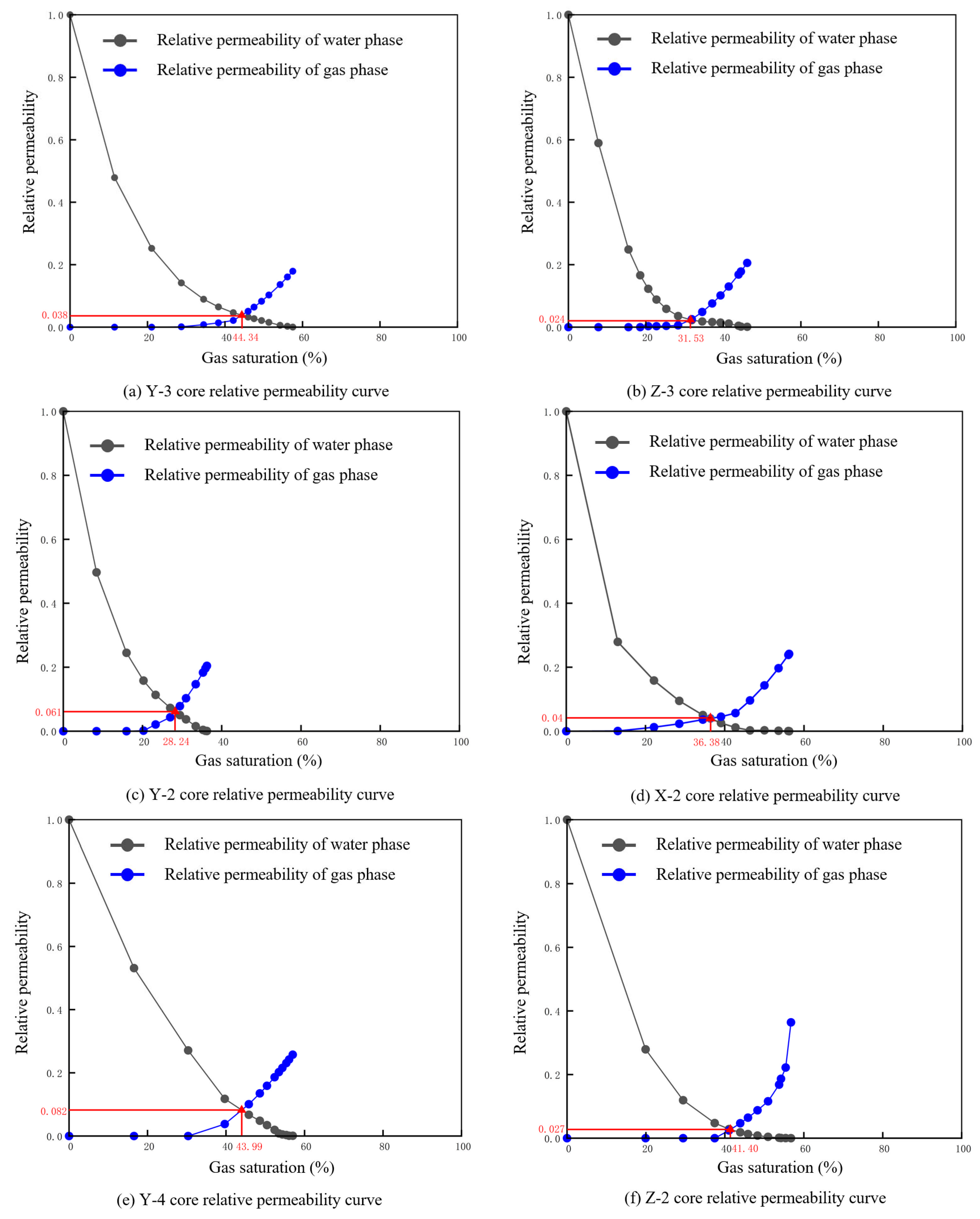
6.1. Gas–Water Relative Permeability Characteristics
6.2. Analysis of Gas Injection Influencing Factors
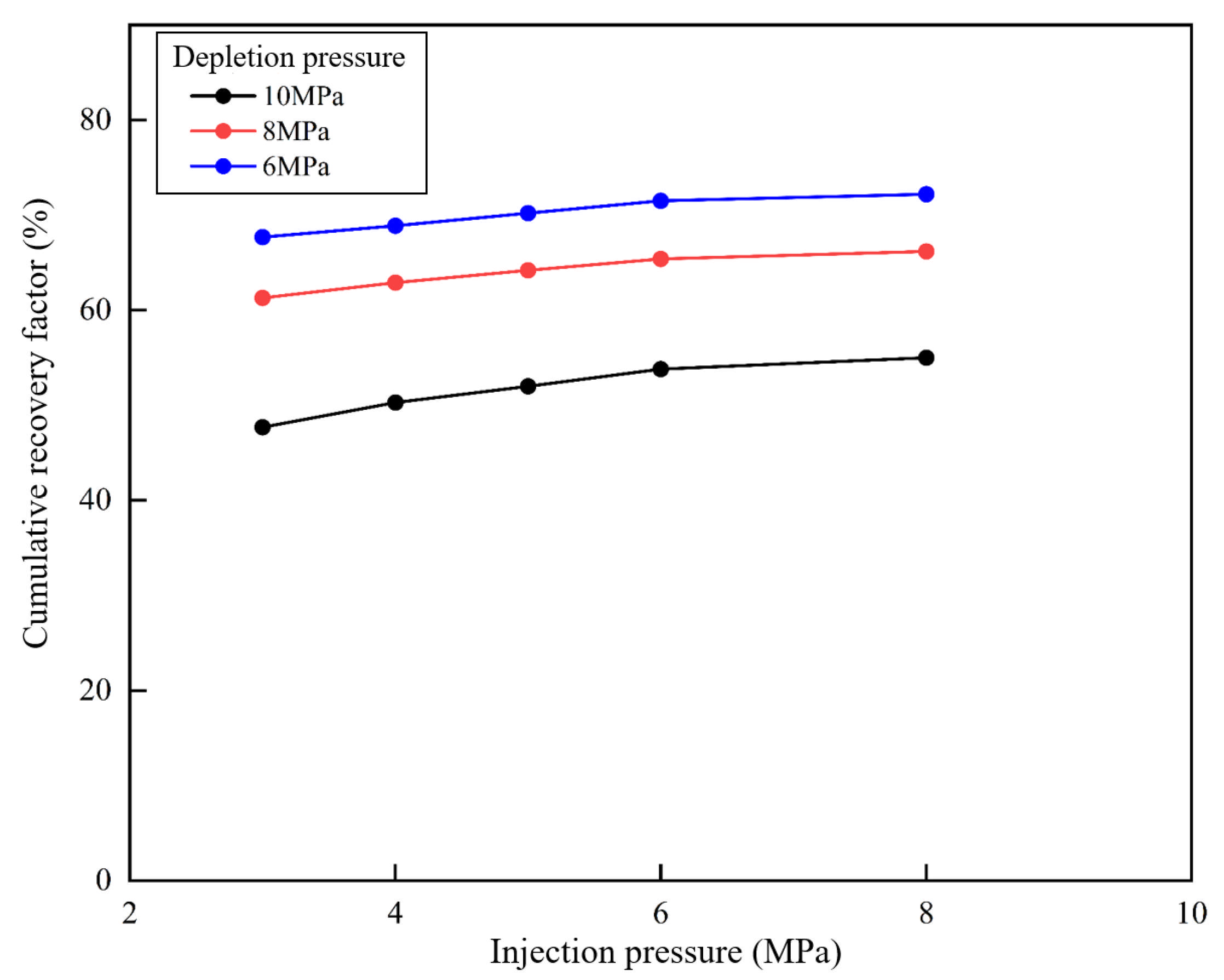
6.2.1. Effect of Pressure
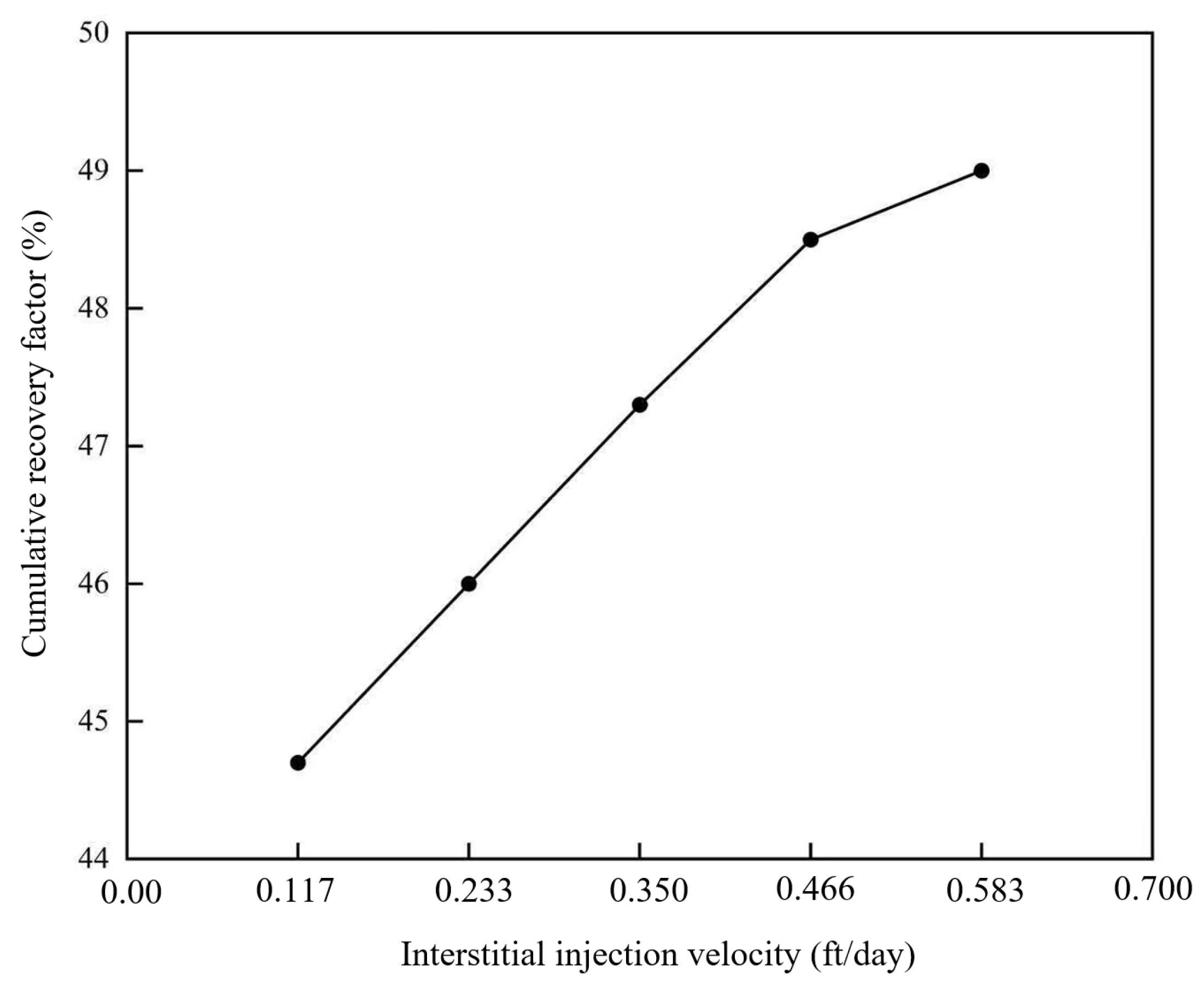
6.2.2. Effect of Interstitial Injection Velocity
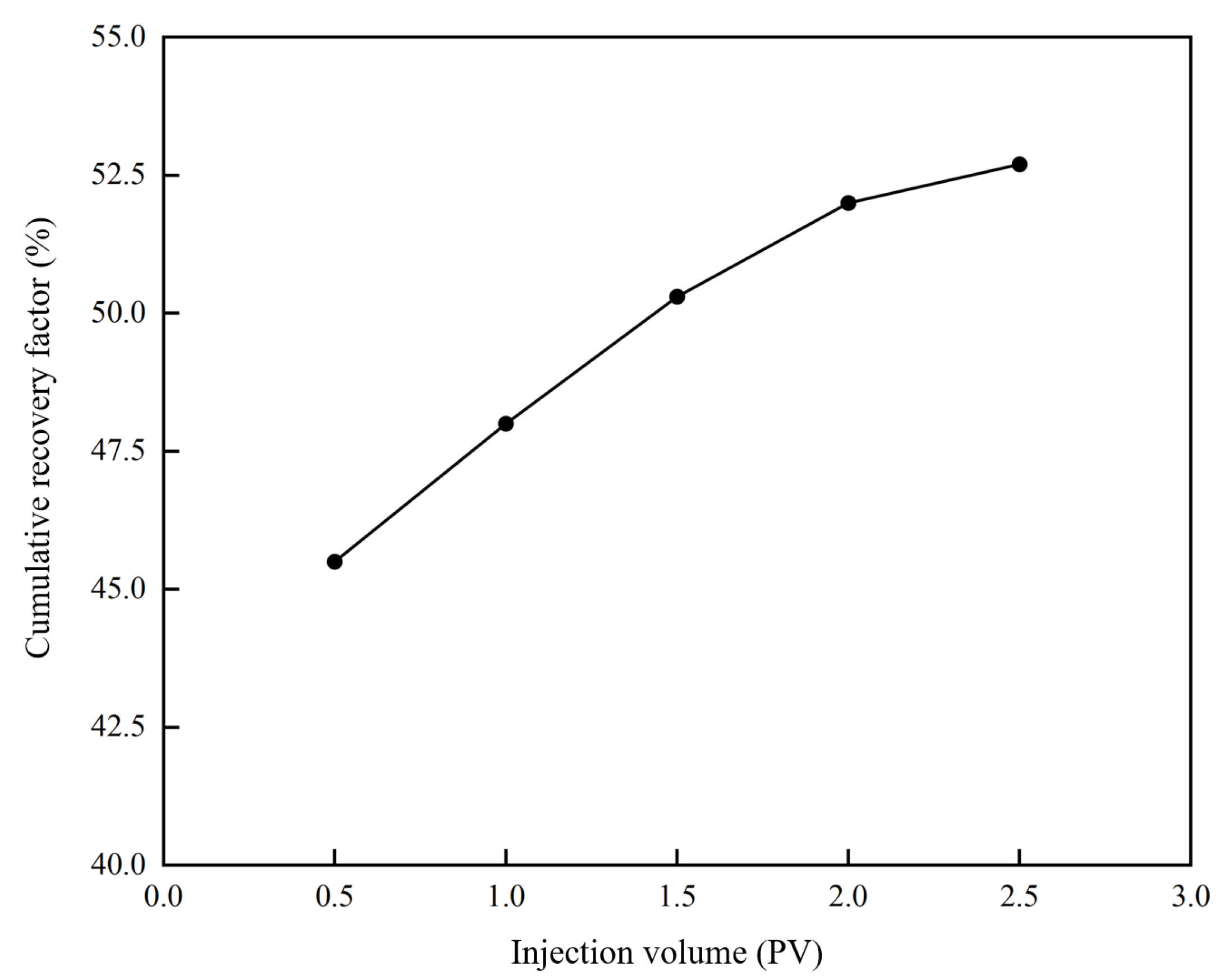
6.2.3. Effect of Injection Volume
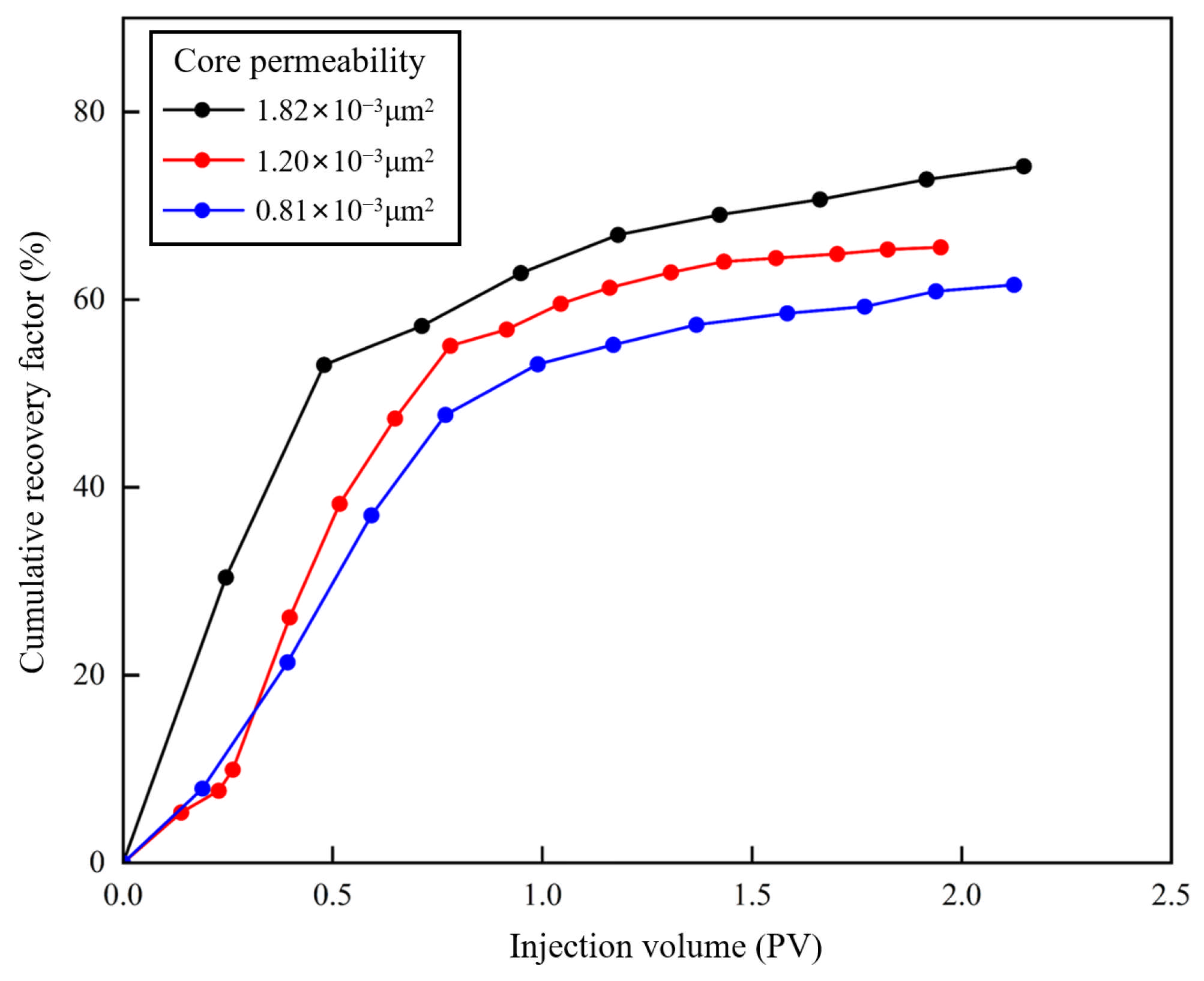
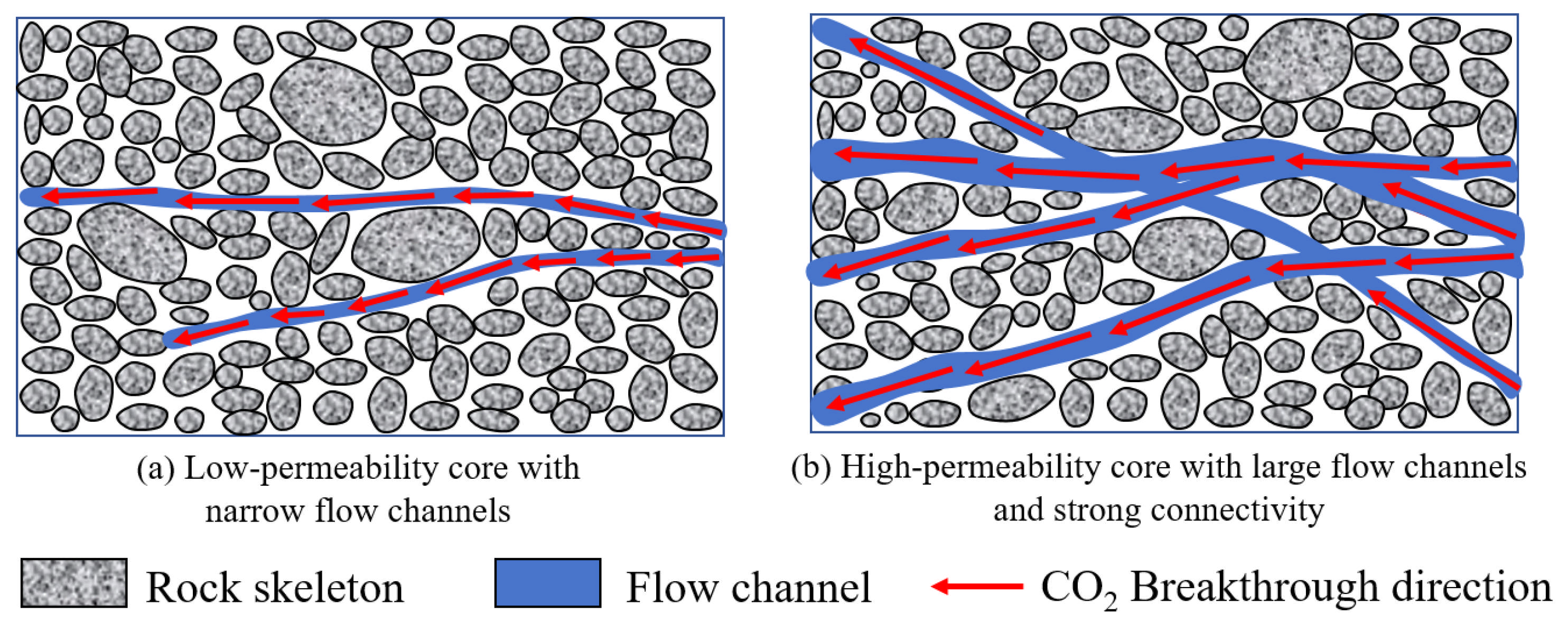
6.2.4. Effect of Permeability
7. Conclusions
- (1)
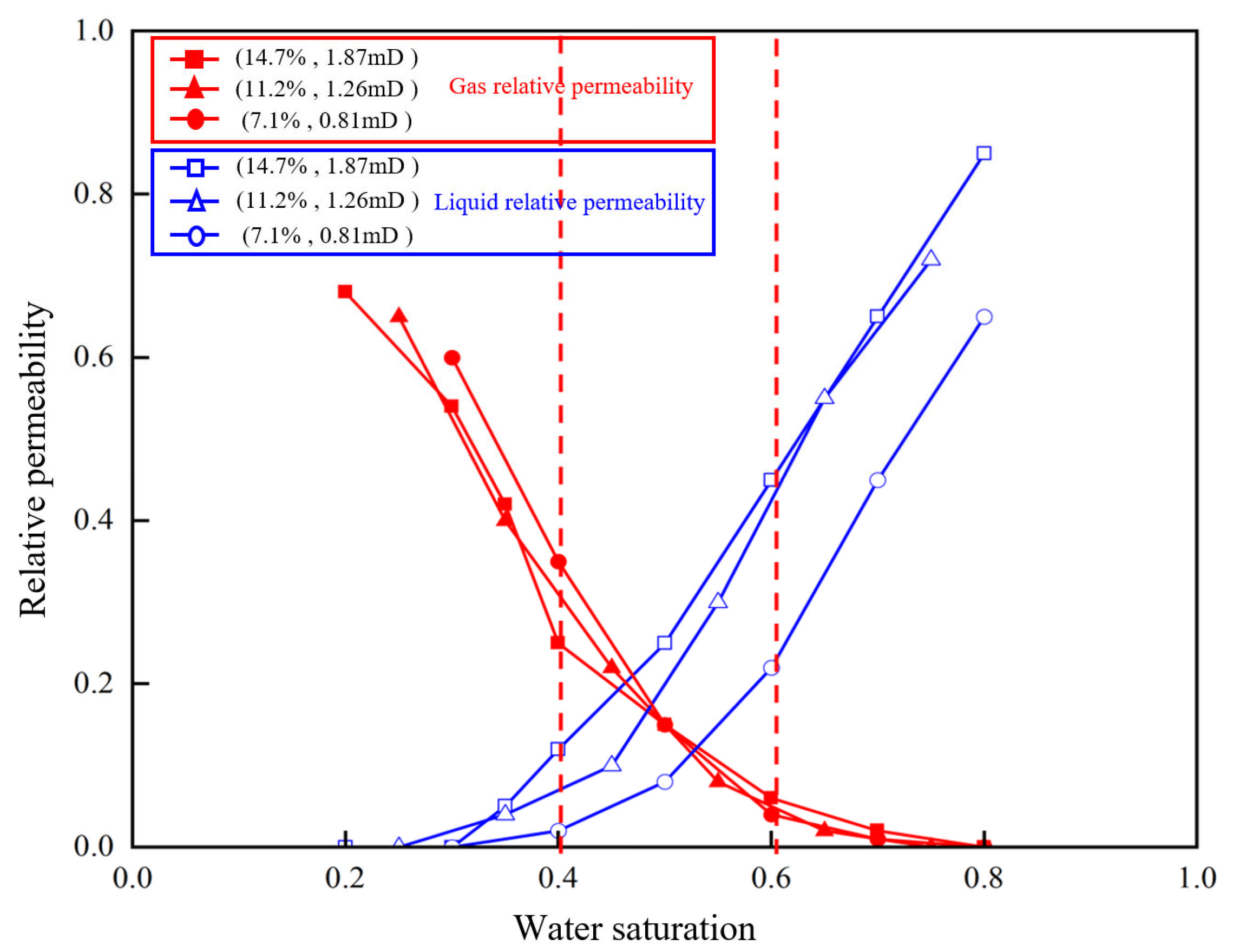
- The tight gas reservoirs in the central Shenfu area are characterized by ultra-low porosity and permeability, strong water-wet properties, and high irreducible water saturation (40–60%). Water blocking damage during production leads to a sharp decline in gas relative permeability, severely constraining well productivity.
- (2)
- In the artificial core experiments, the effectiveness of CO2 injection is influenced by key operational and core parameters. Experimental results show that higher injection pressure (up to 8 MPa) and interstitial injection velocity (up to 0.583 ft/day) improve sweep efficiency and recovery. An optimal injection volume of approximately 2.0 PV was identified, beyond which the incremental recovery declines slightly. Core permeability significantly affects performance, with higher-permeability cores achieving up to 73.1% recovery compared to 60.58% in lower-permeability cores.
- (3)
- This study systematically evaluated the potential of CO2-EGR under controlled conditions using artificial core experiments. The quantitative relationships between injection parameters and recovery provide fundamental data for understanding CO2 flooding behavior in such reservoirs and serve as an important laboratory-scale reference for designing and interpreting field pilot tests.
- (4)
- It is recommended that future studies conduct pore-scale simulations or microfluidic experiments to deepen the understanding of the underlying mechanisms. Additionally, research should prioritize the use of natural core samples or systematic comparative experiments between artificial and natural cores to improve the reliability of extrapolating experimental results to field conditions.
- (5)
- Based on insights from these laboratory experiments, the integration of CO2 injection with managed pressure production and optimized fracturing practices is conceptually proposed as a synergistic development strategy focused on energy replenishment, damage mitigation, and water control. This conceptual framework requires further validation through field pilots but offers a preliminary technical pathway for consideration in enhancing recovery in the challenging reservoirs of the central Shenfu area.
Author Contributions
Funding
Data Availability Statement
Conflicts of Interest
References
- Yuan, S.; Ma, D.; Li, J.; Zhou, T.; Ji, Z.; Han, H. Progress and prospects of carbon dioxide capture, EOR-utilization and storage industrialization. Pet. Explor. Dev. 2022, 49, 828–834. [Google Scholar] [CrossRef]
- Wang, F.; Li, Z.; Zhang, D. New research and practice progresses of CCUS-EOR technology in Jilin Oilfield. Nat. Gas Ind. 2024, 44, 76–82. [Google Scholar]
- Zhou, J.; Dong, Z.; Xian, X.; Kuang, N.; Xu, C.; Peng, Y.; Li, S.; Xue, Y. Analysis on life-cycle carbon emissions of CO2-ESGR technology. Nat. Gas Ind. 2025, 45, 195–206. [Google Scholar]
- Yong, R. Development status, advantages and challenges of CCUS/CCS in PetroChina Southwest Oil & Gas field Company. Nat. Gas Ind. 2024, 44, 11–24. [Google Scholar]
- Zhang, L.; Xiong, W.; Zhong, Y.; Wen, S.; Chao, Z.; Liu, L.; Luo, S.; Wang, Y. Mechanism of CO2 Injection into Depleted Gas Reservoirs to Enhance Natural Gas Recovery and Carbon Sequestration. Nat. Gas Ind. 2024, 44, 25–38+199. [Google Scholar]
- Liu, Z.; Niu, J.; Guo, Y.; Jia, Y.; Cui, M. Mechanisms of CO2 enhanced gas recovery in tight-sand gas reservoirs. Energy Geosci. 2025, 6, 100393. [Google Scholar] [CrossRef]
- Gao, S.; Ye, L.; Liu, H.; Zu, W.; Chen, L.; An, W. An experimental study on recovery factor of watered gas reservoirs by CO2 EOR in the Sebei Gas Field of the Qaidam Basin. Nat. Gas Ind. 2023, 43, 55–62. [Google Scholar]
- Patel, M.J.; May, E.F.; Johns, M.L. Inclusion of connate water in enhanced gas recovery reservoir simulations. Energy 2017, 141, 757–769. [Google Scholar] [CrossRef]
- Patel, M.J.; May, E.F.; Johns, M.L. High-fidelity reservoir simulations of enhanced gas recovery with supercritical CO2. Energy 2016, 111, 548–559. [Google Scholar] [CrossRef]
- Ye, L.; Gao, S.; Wei, Y.; Liu, H.; Zu, W.; An, W. Experimental study on enhanced gas recovery by CO2 injection after water flooding in low permeability bottom-water gas reservoirs. In Proceedings of the 33rd National Natural Gas Academic Conference (2023); Natural Gas Professional Committee of China Petroleum Society: Chengdu, China, 2023; pp. 1–13. [Google Scholar] [CrossRef]
- Zhao, J.; Yan, F.; Xiao, Y.; Zhang, Q.; Zhang, S.; Li, P. Mechanism of Carbon Sequestration in CO2 Enhanced Fracturing of Tight Sandstone Reservoirs. Nat. Gas Ind. 2025, 45, 77–87. [Google Scholar]
- Zhou, X.; Zhou, D.; Deng, J.; Deng, J.; Ray, R.; Jiang, Z. Experimental Study on Enhanced Recovery of Tight Oil Reservoirs Using Supercritical CO2 Flooding. Spec. Oil Gas Reserv. 2021, 28, 118–123. [Google Scholar]
- Zhu, Q.; Wu, K.; Zhang, S.; Cheng, S.; Wang, T.; Liu, Q.; Li, J.; Chen, Z. Micro-Mechanism of CO2 Injection for Enhanced Natural Gas Recovery in Tight Sandstone Reservoirs. Nat. Gas Ind. 2024, 44, 135–145. [Google Scholar]
- SY/T 5153-2007; Test Method of Reservoir Rock Wettability. The Standardization Administration of the People’s Republic of China: Beijing, China, 2007.
- Han, Z.; Xu, G.; Cao, Q.; Hou, C. Study on the Mechanism of Supercritical Carbon Dioxide Enhanced Oil Recovery in Low-Permeability Sandstone Reservoirs: A Case Study of the Mo109 Reservoir in the Mo Bei Oilfield. In Proceedings of the First ECF Unconventional Energy Youth Conference. Shixi Oilfield Operations Area; Shanghai Joint Research Center for Unconventional Energy: Shanghai, China; Xinjiang Oilfield Company, PetroChina: Karamay, China, 2025; pp. 30–39. [Google Scholar] [CrossRef]
- Li, C. Molecular Dynamics Simulation Study on the Mechanism of Supercritical Carbon Dioxide Enhanced Oil Recovery in Nanopores. Master’s Thesis, China University of Petroleum (East China), Qingdao, China, 2017. [Google Scholar]
- Xing, H.; Wang, X.; He, M.; Zhang, Y.; Su, Z.; Li, X.; Yang, W.; Lu, J. The influence of CO2 huff and puff in tight oil reservoirs on pore structure characteristics and oil production from the microscopic scale. Fuel 2023, 335, 127000. [Google Scholar] [CrossRef]
- Tang, Y.; Du, Z.; Sun, L.; Liu, W.; Cheng, Z. Influence of CO2 dissolution in formation water on oil displacement process. Acta Pet. Sin. 2011, 32, 311–314. [Google Scholar]
- Li, X. Experimental Study on the Influence of Temperature and Injection Pressure on CO2 Flooding Efficiency. Pet. Geol. Recovery Effic. 2015, 22, 84–87+92. [Google Scholar] [CrossRef]
- Liu, X.; Zheng, X.; Qian, D.; Gao, H.; Tan, T.; Pu, W. Mechanism of Enhanced Oil Recovery by CO2/N2 Flooding in Strong Bottom Water Sandstone Reservoirs of Tahe Oilfield. Sci. Technol. Eng. 2023, 23, 6409–6418. [Google Scholar]
- Ermeng, Z.; Jin, Z.; Li, G.; Zhang, K.; Yue, Z. Numerical simulation of CO2 storage with enhanced gas recovery in depleted tight sandstone gas reservoirs. Fuel 2024, 371, 131948. [Google Scholar] [CrossRef]
- Zhang, M.; Li, B.; Xin, Y.; Han, X.; Li, Z.; Dong, J.; Wang, B. Experimental study on CO2 flooding in tight sandy conglomerate cores: Oil displacement and CO2 storage. Energy 2025, 333, 137336. [Google Scholar] [CrossRef]
- Wang, M. Investigation into the Effect of Different Permeability on Supercritical Carbon Dioxide Enhanced Oil Recovery. China Pet. Chem. Stand. Qual. 2018, 38, 114–115. [Google Scholar]
- Zhang, L.; Song, Z.; Ma, P.; Jiang, S. Analysis of Influencing Factors for Supercritical Carbon Dioxide Enhanced Oil Recovery in Heavy Oil Reservoirs. Geol. Explor. 2017, 53, 801–806. [Google Scholar] [CrossRef]
- Sun, Y. Mechanisms of Supercritical CO2 Sequestration in Natural Gas Reservoirs and Enhanced Natural Gas Recovery. Master’s Thesis, Southwest Petroleum University, Chengdu, China, 2012. [Google Scholar]
- Shi, J.; Zhao, Y.; Li, L.; Wang, C. Research on Water Displacement Technology for Deep Coalbed Methane Production in the Shenfu Block. Chem. Eng. Environ. Prot. 2025, 45, 218–224. [Google Scholar]
- Jie, W.; Zeng, D.; Song, Z.; You, Y.; Ren, H.; Shi, Z.; Cao, C.; Zhang, R.; Wang, J.; Li, P. Research on CO2 injection for water control and enhanced nature gas recovery in heterogeneous carbonate reservoirs. Geoenergy Sci. Eng. 2025, 244, 213506. [Google Scholar] [CrossRef]
- Yang, T.; Zhang, Y.; Yang, Z.; Chen, T. Mechanism of Enhanced Oil Recovery by CO2 Flooding in Tight Sandstone Reservoirs. Sci. Technol. Eng. 2019, 19, 113–118. [Google Scholar]
- Wang, Y. Study on the Mechanism of Enhanced Oil Recovery by CO2 Flooding in Tight Sandstone Reservoirs; Northwest University: Xi’an, China, 2019. [Google Scholar]
- Ding, J.; Yan, C.; Wang, J.; He, Y.; Zhao, R. Competitive adsorption between CO2 and CH4 in tight sandstone and its influence on CO2-injection enhanced gas recovery (EGR). Int. J. Greenh. Gas Control 2022, 113, 103530. [Google Scholar] [CrossRef]
- Mattia, G.; Rens, T.; Ivo, R.; Martin, S.A. Toward consistent thermodynamic modeling of CO2 adsorption on Lewatit VPOC 1065 under dry conditions: Isotherm variability, data gaps, and model fitting. Curr. Opin. Chem. Eng. 2026, 51, 101201. [Google Scholar] [CrossRef]
- Temoor, M.; Amirmasoud, K.D. Calculation of hydrogen adsorption isotherms and Henry coefficients with mixed CO2 and CH4 gases on hydroxylated quartz surface: Implications to hydrogen geo-storage. J. Energy Storage 2024, 87, 111425. [Google Scholar] [CrossRef]



| Stratigraphic Level | Porosity (%) | Permeability (×10−3 μm2) | Average Atmospheric Layer Thickness (m) | Gas Saturation (%) |
|---|---|---|---|---|
| He 8 member | 7.7–9.6 | 0.33–0.75 | 15–25 | 50–60 |
| Taiyuan Formation | 6.5–8.8 | 0.28–0.68 | 12–22 | 45–55 |
| Benxi Formation | 5.5–7.2 | 0.20–0.50 | 8–15 | 40–50 |
| Shanxi Formation | 6.0–8.5 | 0.30–0.70 | 10–18 | 45–55 |
| Well | Sodium-Chloride Coefficient | Chlorine-Magnesium Coefficient | Alkali Exchange Coefficient | Water-Type | pH |
|---|---|---|---|---|---|
| SM-67 | 0.54 | 185.26 | 23.1 | CaCl2 | 6.0 |
| SM-63 | 0.58 | 82.22 | 17.4 | CaCl2 | 6.0 |
| SM-48 | 0.77 | 56.44 | 21.6 | CaCl2 | 6.0 |
| Classification | Formation Water | Condensate Water | Fracturing Residual Fluid |
|---|---|---|---|
| Mineralization degree (mg/L) | 35,000~55,000 | <10,000 | 20,000~50,000 |
| pH | 5.8~6.2 | 6.0~6.3 | 6.2~6.9 |
| Sodium-Chloride coefficient | 0.3~0.65 | 0.5~0.8 | 0.3~0.7 |
| Chlorine-Magnesium coefficient | >50 | <30 | 30–60 |
| Alkali Exchange coefficient | 3~25 | 0.5~5 | 2~15 |
| Water-type | CaCl2 | NaHCO3, Na2SO4 | CaCl2 |
| Simulation Target Layer | Core Number | Permeability (×10−3 μm2) | Capillary Pressure (MPa) | Contact Angle (°) | Wettability Index | Wettability |
|---|---|---|---|---|---|---|
| Tai 1 Section | X-1 | 0.09 | −0.267 | 28.60 | 0.71 | Water wetting |
| X-2 | 0.15 | −0.190 | 22.61 | 0.82 | ||
| He 8 member | Y-3 | 0.48 | −0.125 | 17.50 | 0.73 | |
| Y-4 | 0.65 | −0.106 | 26.06 | 0.72 | ||
| Tai 2 Section | Z-2 | 0.29 | −0.160 | 33.69 | 0.79 | |
| Z-5 | 1.87 | −0.086 | 43.86 | 0.71 |
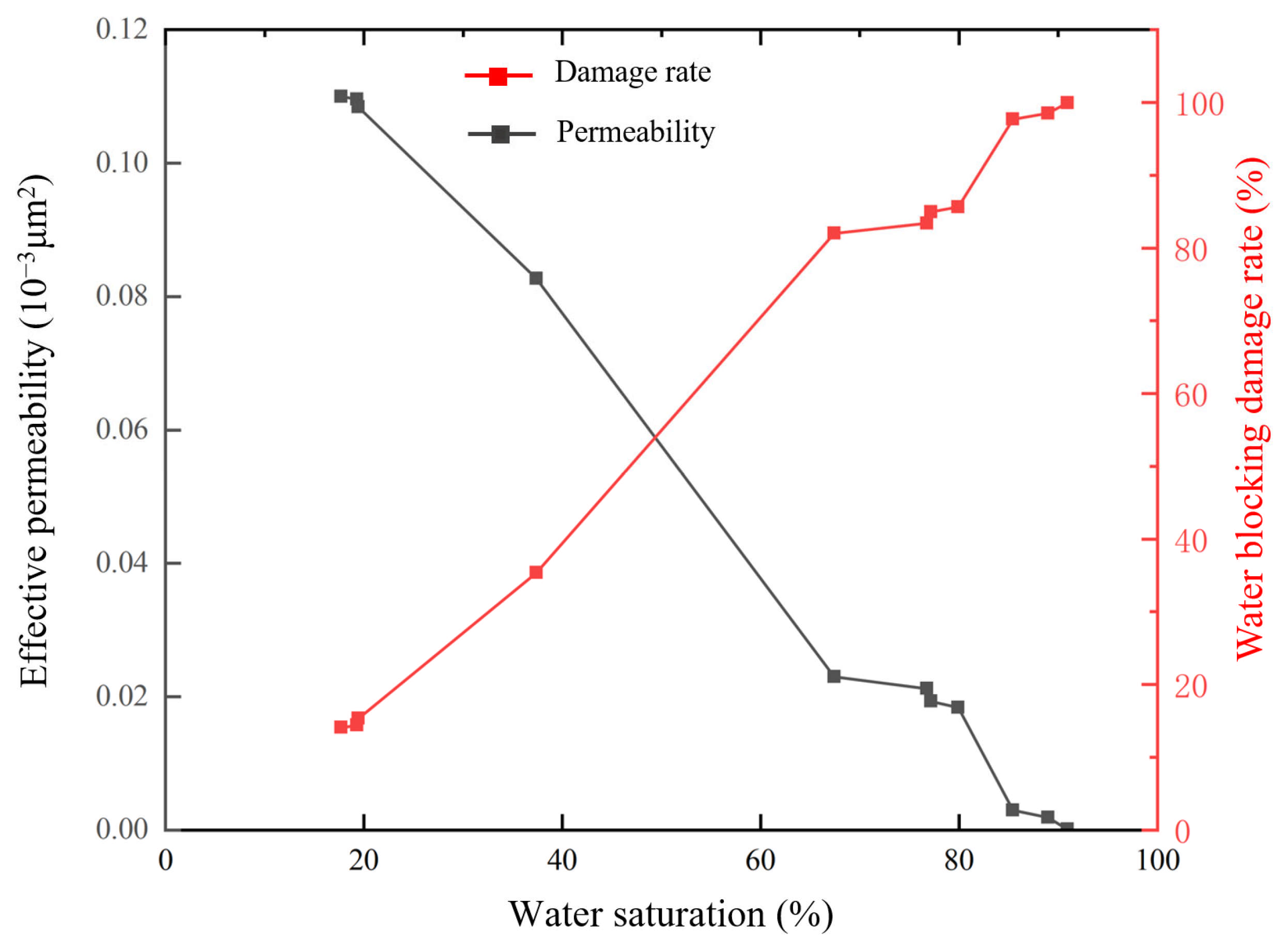
| Number | Water Saturation (%) | Effective Permeability (10−3 μm2) | Water Blocking Damage Rate (%) | Water Block Index |
|---|---|---|---|---|
| 1 | 90.95 | 0.0001 | 99.96 | 1.00 |
| 2 | 88.98 | 0.0019 | 98.53 | 0.99 |
| 3 | 85.44 | 0.0030 | 97.67 | 0.98 |
| 4 | 79.93 | 0.0184 | 85.65 | 0.86 |
| 5 | 77.18 | 0.0193 | 84.96 | 0.85 |
| 6 | 76.78 | 0.0212 | 83.40 | 0.83 |
| 7 | 67.41 | 0.0230 | 82.02 | 0.82 |
| 8 | 37.38 | 0.0827 | 35.36 | 0.35 |
| 9 | 19.45 | 0.1084 | 15.33 | 0.15 |
| 10 | 19.29 | 0.1096 | 14.40 | 0.14 |
| 11 | 17.71 | 0.1100 | 14.08 | 0.14 |
| Core Number | Initial Permeability (×10−3 μm2) | Soaking Time (h) | Permeability After Soaking (×10−3 μm2) | Rate of Permeability Change (%) |
|---|---|---|---|---|
| Y-1 | 0.12 | 0 | 0.12 | 0.0 |
| 24 | 0.16 | +33.3 | ||
| 72 | 0.21 | +75.0 | ||
| 150 | 0.19 | +58.3 | ||
| Y-3 | 0.48 | 0 | 0.48 | 0.0 |
| 24 | 0.56 | +16.7 | ||
| 72 | 0.83 | +72.9 | ||
| 150 | 0.81 | +68.8 |
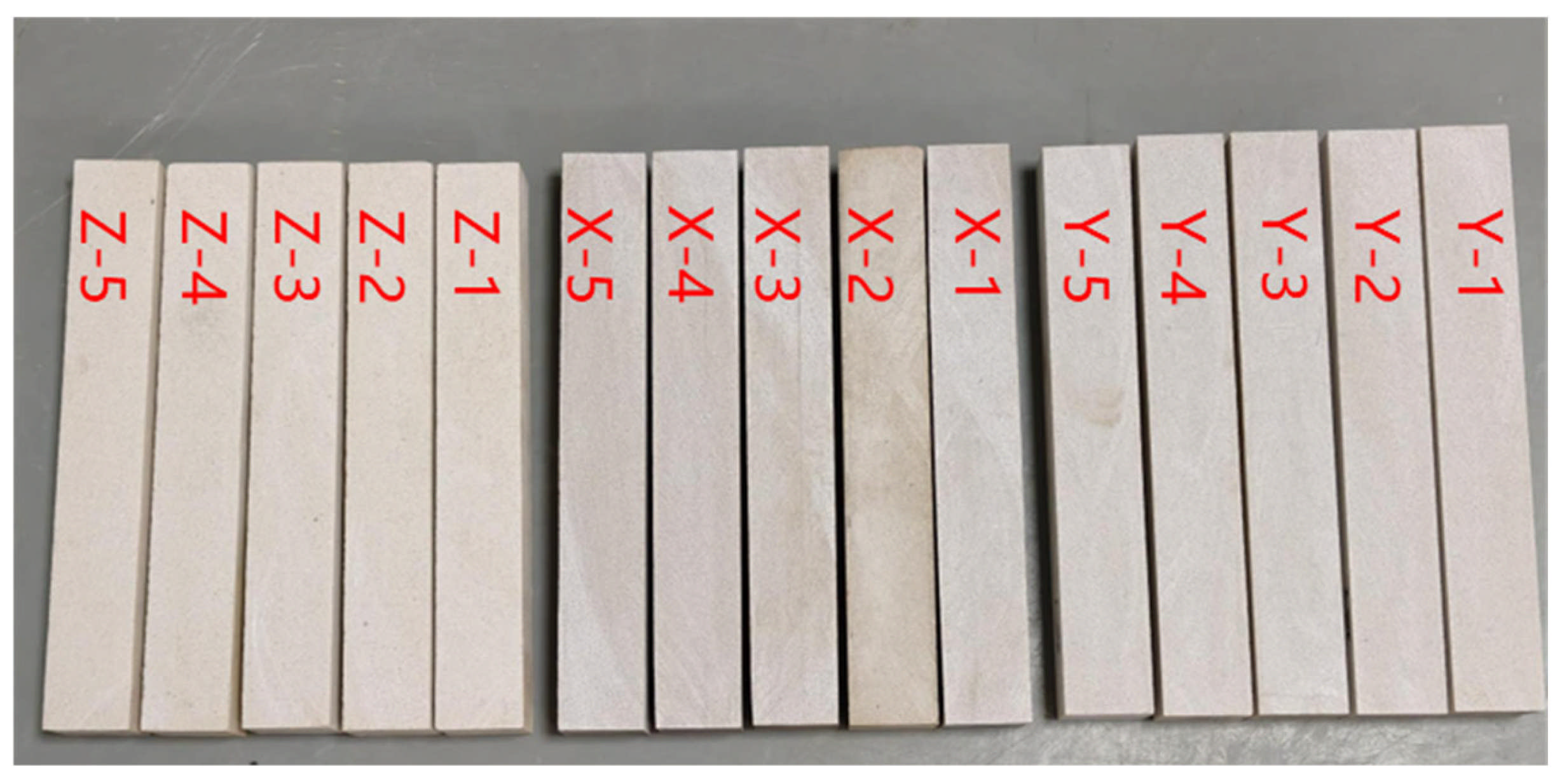
| Simulation Target Layer | Core Number | Porosity (%) | Permeability (×10−3 μm2) |
|---|---|---|---|
| He 8 member | Y-1 | 5.5 | 0.12 |
| Y-2 | 6.2 | 0.15 | |
| Y-3 | 8.4 | 0.48 | |
| Y-4 | 9.1 | 0.65 | |
| Y-5 | 7.8 | 0.35 | |
| Tai 1 Section | X-1 | 4.3 | 0.09 |
| X-2 | 6.2 | 0.15 | |
| X-3 | 7.8 | 0.35 | |
| X-4 | 8.9 | 1.20 | |
| X-5 | 12.5 | 1.82 | |
| Tai 2 Section | Z-1 | 3.9 | 0.15 |
| Z-2 | 4.3 | 0.29 | |
| Z-3 | 6.8 | 0.54 | |
| Z-4 | 7.1 | 0.81 | |
| Z-5 | 14.7 | 1.87 |
| Core Permeability (10−3 μm2) | Core Porosity (%) | Pressure Depletion (MPa) | Injection Pressure (MPa) |
|---|---|---|---|
| 0.81 | 7.1 | 6, 8, 10 | 3 |
| 4 | |||
| 5 | |||
| 6 | |||
| 8 |
| Core Permeability (10−3 μm2) | Core Porosity (%) | Pressure Depletion (MPa) | Interstitial Injection Velocity (ft/day) |
|---|---|---|---|
| 0.81 | 7.1 | 10 | 0.117 |
| 0.233 | |||
| 0.350 | |||
| 0.466 | |||
| 0.583 |
| Core Permeability (10−3 μm2) | Core Porosity (%) | Pressure Depletion (MPa) | Injection Volume (PV) |
|---|---|---|---|
| 0.81 | 7.1 | 10 | 0.5 |
| 1.0 | |||
| 1.5 | |||
| 2.0 | |||
| 2.5 |
| Depletion Pressure (MPa) | Injection Pressure (MPa) | Recovery Before Injection (%) | Enhanced Recovery (%) | Total Recovery (%) |
|---|---|---|---|---|
| 10 | 3 | 43.5 | 4.2 | 47.7 |
| 4 | 43.5 | 6.8 | 50.3 | |
| 5 | 43.5 | 8.5 | 52 | |
| 6 | 43.5 | 10.3 | 53.8 | |
| 8 | 43.5 | 11.5 | 55 | |
| 8 | 3 | 58.2 | 3.1 | 61.3 |
| 4 | 58.2 | 4.7 | 62.9 | |
| 5 | 58.2 | 6 | 64.2 | |
| 6 | 58.2 | 7.2 | 65.4 | |
| 8 | 58.2 | 8 | 66.2 | |
| 6 | 3 | 65.7 | 2 | 67.7 |
| 4 | 65.7 | 3.2 | 68.9 | |
| 5 | 65.7 | 4.5 | 70.2 | |
| 6 | 65.7 | 5.8 | 71.5 | |
| 8 | 65.7 | 6.5 | 72.2 |
| Interstitial Injection Velocity (ft/day) | Recovery Before Injection (%) | Enhanced Recovery (%) | Total Recovery (%) |
|---|---|---|---|
| 0.117 | 43.5 | 1.2 | 44.7 |
| 0.233 | 43.5 | 2.5 | 46 |
| 0.350 | 43.5 | 3.8 | 47.3 |
| 0.466 | 43.5 | 5 | 48.5 |
| 0.583 | 43.5 | 5.5 | 49 |
| Injection Volume (PV) | Recovery Before Injection (%) | Enhanced Recovery (%) | Total Recovery (%) |
|---|---|---|---|
| 0.5 | 43.5 | 2 | 45.5 |
| 1 | 43.5 | 4.5 | 48 |
| 1.5 | 43.5 | 6.8 | 50.3 |
| 2 | 43.5 | 8.5 | 52 |
| 2.5 | 43.5 | 9.2 | 52.7 |
| Permeability (×10−3 μm2) | Breakthrough Time (HCPV) | Total Recovery (%) |
|---|---|---|
| 0.81 | 1.6 | 60.58 |
| 1.2 | 1.3 | 65.54 |
| 1.82 | 1.1 | 73.1 |
Disclaimer/Publisher’s Note: The statements, opinions and data contained in all publications are solely those of the individual author(s) and contributor(s) and not of MDPI and/or the editor(s). MDPI and/or the editor(s) disclaim responsibility for any injury to people or property resulting from any ideas, methods, instructions or products referred to in the content. |
© 2026 by the authors. Licensee MDPI, Basel, Switzerland. This article is an open access article distributed under the terms and conditions of the Creative Commons Attribution (CC BY) license.
Share and Cite
Liu, Z.; Zhang, H.; Zhao, R.; He, L.; Zhang, B.; Yuan, Y.; Zhao, K. CO2 Injection for Enhanced Gas Recovery in Tight Gas Reservoirs of the Central Shenfu Area. Energies 2026, 19, 801. https://doi.org/10.3390/en19030801
Liu Z, Zhang H, Zhao R, He L, Zhang B, Yuan Y, Zhao K. CO2 Injection for Enhanced Gas Recovery in Tight Gas Reservoirs of the Central Shenfu Area. Energies. 2026; 19(3):801. https://doi.org/10.3390/en19030801
Chicago/Turabian StyleLiu, Ziliang, Haifeng Zhang, Renbao Zhao, Liang He, Bing Zhang, Yahao Yuan, and Kang Zhao. 2026. "CO2 Injection for Enhanced Gas Recovery in Tight Gas Reservoirs of the Central Shenfu Area" Energies 19, no. 3: 801. https://doi.org/10.3390/en19030801
APA StyleLiu, Z., Zhang, H., Zhao, R., He, L., Zhang, B., Yuan, Y., & Zhao, K. (2026). CO2 Injection for Enhanced Gas Recovery in Tight Gas Reservoirs of the Central Shenfu Area. Energies, 19(3), 801. https://doi.org/10.3390/en19030801