1. Introduction
Photovoltaic (PV) systems have attracted widespread attention owing to their environmental friendliness, low operating costs, and sustainable nature. Their penetration continues to increase in both microgrid and large-scale power systems. However, PV power generation is inherently intermittent and stochastic, making the control of its output essential for effective energy management [
1,
2,
3]. Consequently, PV systems must satisfy multiple control objectives in response to the actual requirements of the power generation system [
4,
5].
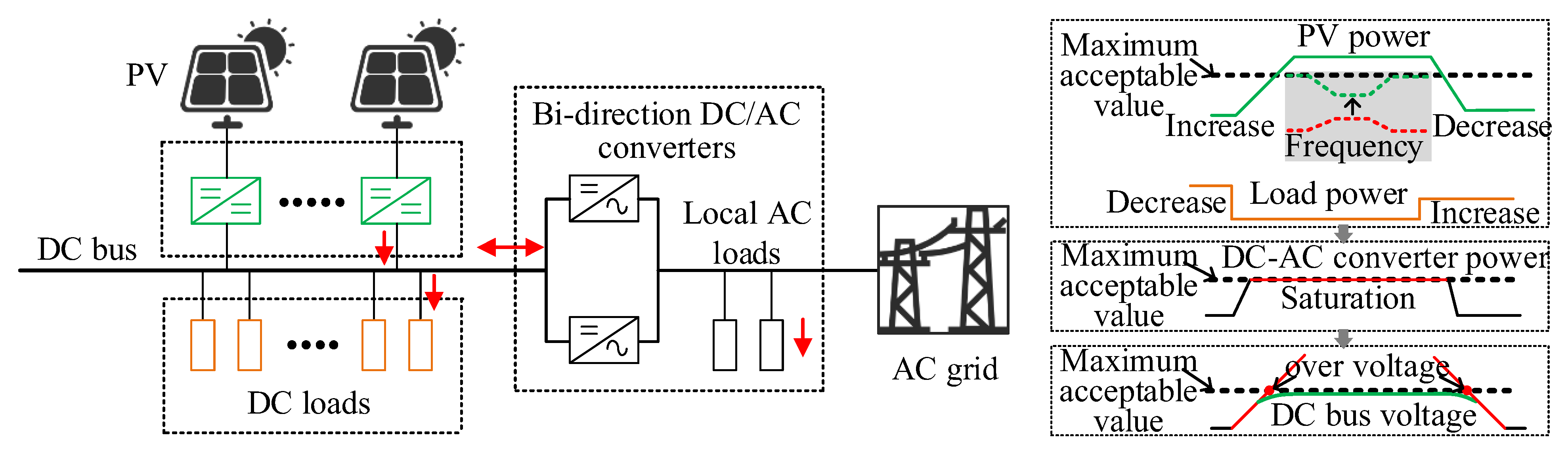
Taking the DC microgrid with a photovoltaic (PV) system shown in
Figure 1 as an example, the system consists of a photovoltaic power generation system, AC and DC loads, and a bi-direction grid-connected DC-AC converter. Maintaining stable DC bus voltage is essential for the reliable operation of the PV-storage DC system. Under normal conditions, the PV system operates in maximum power point tracking (MPPT) mode, with the DC-AC converter responsible for stabilizing the DC bus voltage [
6,
7]. In practice, significant uncertainties exist in AC/DC loads and PV power output during long-term operation. As illustrated, a surplus of PV power or the disconnection of DC loads can cause the DC bus voltage to rise continuously (even over voltage on the bus) or result in output power/current exceeding the maximum allowable limits of the boost converter, thereby threatening system stability. Moreover, the status of the PV and the load is uncertain and may change at any time. Hence, under such conditions, the PV must adaptively regulate its output power [
8,
9,
10]. In addition, when the PV power returns to the normal range, the system should revert to its regular operating state, with the PV control resuming MPPT mode. Alternatively, if the grid frequency becomes too high, the power fed into the grid must be reduced by limiting PV output [
11,
12,
13]. This implies that the maximum accepted power of the PV system is alternating, which makes the control of the PV system more complicated. Therefore, in practical operation, the PV system does not operate in a fixed MPPT mode, and it must simultaneously consider limiting DC bus voltage, current, and power while pursuing optimal output under MPPT control. To meet the above requirements, it is crucial to define clear control objectives and implement adaptive switching between different operating states through an integrated control strategy, ultimately establishing a unified control methodology.
Regarding PV control methods, research in [
14] proposes an indirect current feedforward control strategy considering the volatility of PV generation and loads, which enhances the voltage stability of DC microgrids by estimating the low-voltage side current of the feedforward boost circuit. Research in [
15] presents a control strategy for residential PV-storage microgrids that combines constant-voltage control based on the DC bus voltage information. Nevertheless, abrupt changes in system output voltage and current may occur during the transition between these two control modes, potentially causing oscillations and threatening operational stability. Research in [
16] introduces a novel AC/DC hybrid microgrid structure based on a silicon-controlled rectifier and a polarity reversal switch. Here, PV modules are directly connected to the DC bus through a boost converter, aiming to reduce energy conversion stages. However, the study does not address dynamic coordination control between the PV systems and energy storage systems, and it also does not delve into the impact of photovoltaic power generation volatility and uncertainty on system dispatch. Research in [
17] compares the advantages and disadvantages of various energy storage technologies, categorizing power smoothing control strategies into centralized and distributed control, and points out that battery–supercapacitor hybrid energy storage systems demonstrate optimal performance in both steady-state and dynamic responses. In [
18], the derivative of output power with respect to output current is used as the control variable to track different command values, enabling smooth switching between MPPT mode and constant-voltage droop mode. Research in [
19] employs a multi-layer control structure to dynamically adjust the output power of PV and storage systems. Research in [
20] proposes a discrete sliding mode controller to rapidly mitigate the fluctuations caused by PV variability in DC microgrids, which addresses the impact of PV volatility on energy storage systems in DC microgrids. Research in [
21] proposes a smooth switching strategy based on PV voltage classification to avoid bus voltage oscillations during transitions between MPPT and power control mode. In summary, current research on PV control strategies has focused mainly on switching between MPPT and constant-voltage control. However, as renewable energy generation systems continue to evolve, the existing control methods are increasingly insufficient to meet emerging operational requirements.
To address the aforementioned issues, this article investigates a photovoltaic power generation system interfaced with a boost converter. The main contributions of this article can be summarized as two aspects: (1) The requirements for controlling the boost converter in the PV system under complex conditions are summarized, and a multi-objective unified control method is proposed by adaptively coordinating the control objectives of the PV system. The proposed strategy differentiates itself from existing multi-mode or unified PV control approaches through one key aspect: it employs a common current inner loop across all operating modes, where the current reference is selected as the minimum value among the outputs of the DC voltage limiter, current limiter, power limiter, and MPPT controller. (2) The dynamic process of the proposed control method during the mode switching processes under various conditions is investigated, and the stability of the proposed method is verified.
In the following sections, firstly, to deal with complex operating conditions involving multiple variations in the PV, the load, and the grid states, the underlying control principles are analyzed in detail, and then a multi-objective control method for the PV system is proposed. Secondly, the dynamic process of the proposed method during the various mode switching activated by different external issues is theoretically analyzed, which shows the stability of the proposed method. Finally, simulations are conducted under different conditions, and the results confirm the distinctive performance of the proposed method.
2. System Structure and Practical Control Requirements
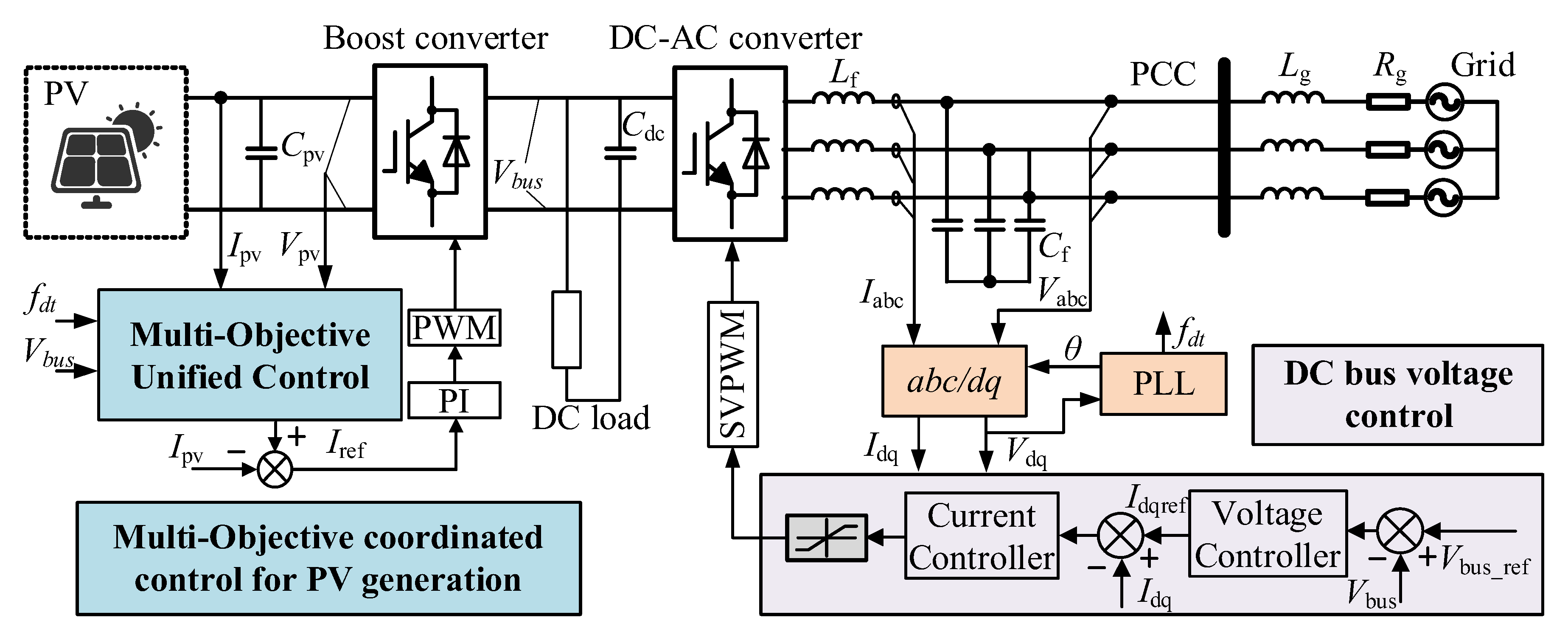
To facilitate the demonstration of various states in photovoltaic systems, this article simplifies the analysis of the system depicted in
Figure 1, as shown in
Figure 2.
Lf and
Cf are the inductance and capacitance of the filter,
Cdc is the capacitance of the DC bus,
Lg and
Rg are the grid impedance,
Vabc and
Iabc are the point of common coupling (PCC) voltage and the output current of the DC-AC converter,
Vdq and
Idq are the values of
Vabc and
Iabc in the rotating coordinate frame,
Idqref and
Vbus_ref are the references of the DC bus voltage and the inner current control loop of the DC-AC converter,
fdt and
θ are the frequency and the phase angle of the PCC voltage detected through the phase-locked loop (PLL).
Cpv is the capacitance at the PV port,
Vpv and
Ipv are the output voltage and current of the PV, and
Iref is the current reference of the boost converter. The control methods of the DC-AC converter and the PLL have been well developed in the literature [
22], which is not detailed in this article.
Taking the system in
Figure 2 as an example, the practical requirements for the PV control objectives can be summarized as follows. Specific control objectives will be summarized below. Fundamentally, the PV control system should maximize energy harvest through MPPT control while simultaneously ensuring stable system operation under complex conditions. The specific control objectives derived from these requirements are outlined below. These principles are directly applicable to PV-storage systems and DC microgrids.
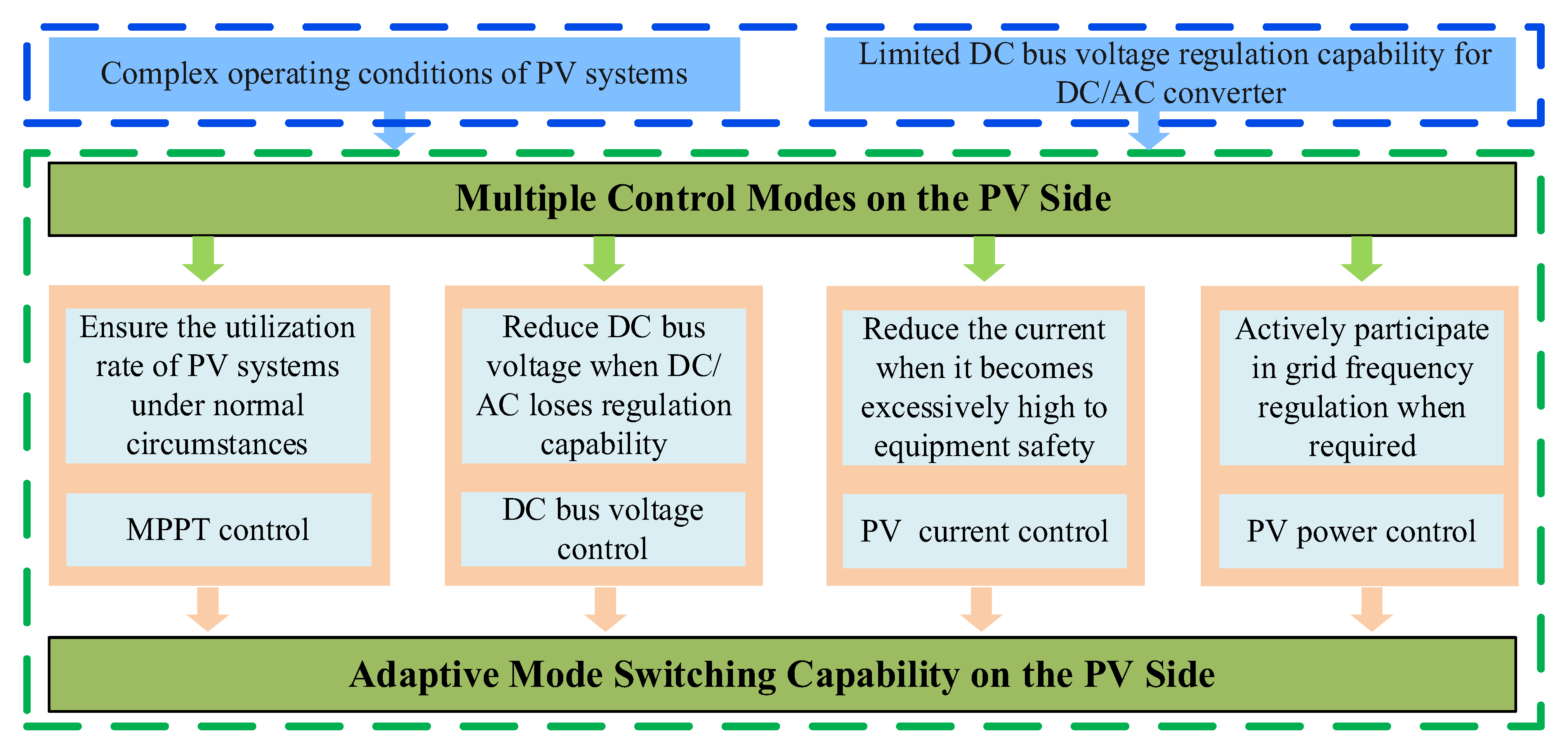
Figure 3 outlines the control requirements for the system, including MPPT control, DC bus voltage control, current control, and power control. The system can operate in the following states.
Under normal operating conditions, the PV side operates in MPPT mode. When external factors such as irradiation change and the inverter side’s DC bus voltage regulation capability meet the requirements, the PV side dynamically adjusts its output power.
If excessive PV output power causes the loss of DC bus voltage regulation (the DC voltage control is saturated), the PV side must provide DC bus voltage regulation support, corresponding to DC bus voltage control. Once PV output power decreases and the inverter recovers voltage regulation capability, the PV side must transition from DC bus voltage control back to MPPT control.
In cases of parameter mismatch between actual PV characteristics and device ratings or environmental changes, the PV system must incorporate current limiting capability to prevent device damage. When the operating current falls below the set current limit, the system should switch from current control mode back to MPPT mode.
During high grid frequency conditions, the PV system actively participates in grid frequency regulation by reducing output power, requiring power-limiting capability. The power limit updates dynamically according to grid frequency changes. Additionally, during equipment overheating, the power limit adjusts to ensure stable operation. When the power limit is lower than the MPPT output, the system switches from MPPT to power control mode. Conversely, when the limit rises above the MPPT output, it switches back to MPPT mode.
3. Multi-Mode Coordinated Control Method for Photovoltaic Boost Converters
To support the PV system in achieving the aforementioned control objectives, this section provides a detailed exposition of the proposed control algorithms for the PV boost converter.
3.1. Multi-Mode Coordinated Control Method
To fulfill the above multi-objective requirements, the control strategy for the PV-connected boost converter must autonomously switch between DC bus voltage control, current control, power control, and MPPT control according to the real-time system status. Therefore, this article proposes a unified control strategy that integrates controllers corresponding to these multiple limiting conditions.
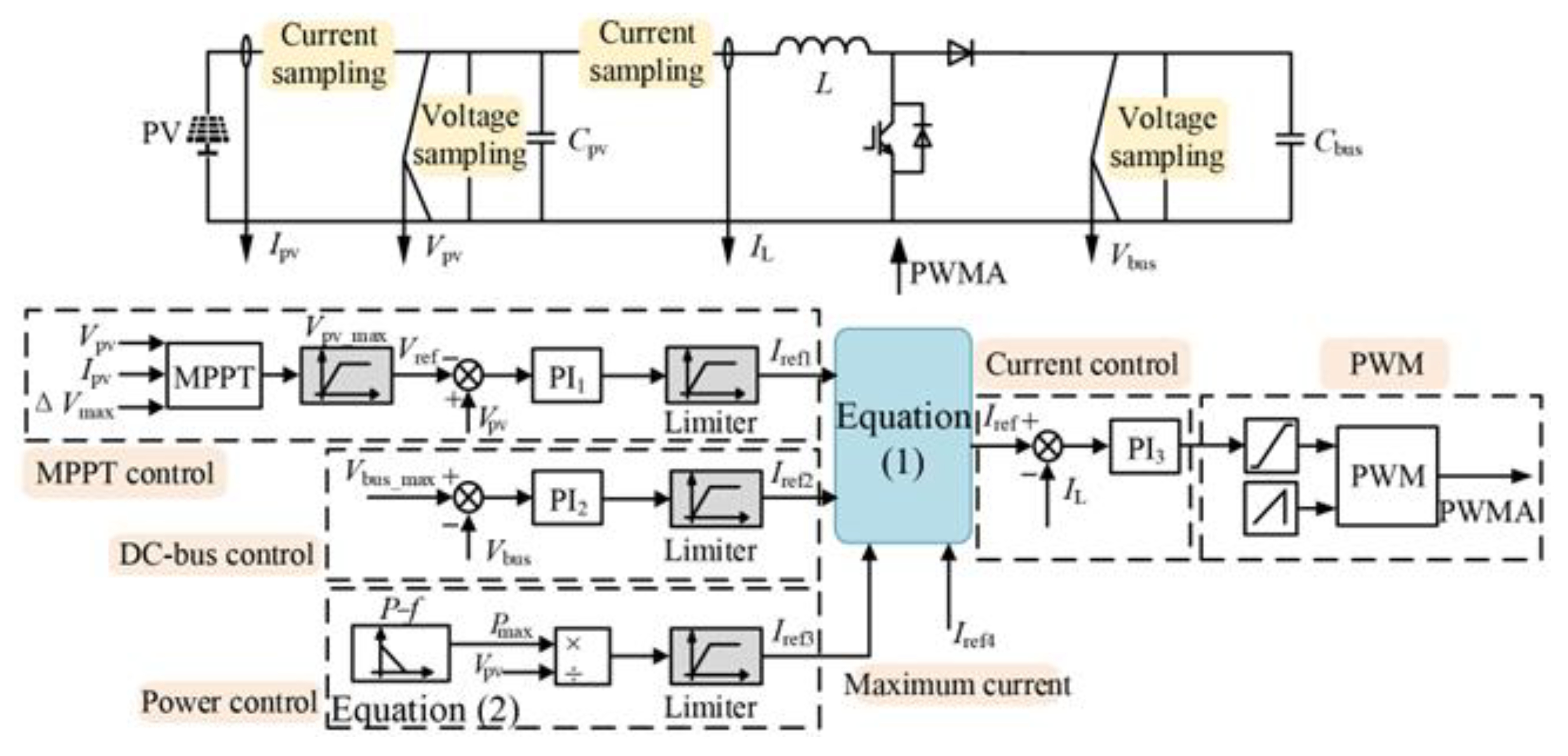
Figure 4 illustrates the control block diagram of the proposed strategy.
L denotes the inductance of the boost converter,
IL represents the current on the inductor, and
Iref is the reference of the current control loop.
Vref is the voltage reference generated by the MPPT, while
Iref1 is the current reference produced by the PI controller in the MPPT.
Vbus_max is the maximum permissible DC bus voltage, and
Iref2 is the current reference generated by the PI controller in the DC bus control.
Pmax is the maximum allowed power of the system, and
Iref3 is the current reference generated by the power control.
Iref4 is the maximum allowed current. Each control loop incorporates a dedicated limiter. It is noteworthy that a threshold ∆
Vmax is configured in the MPPT block. When the error between
Vref and
Vpv exceeds ∆
Vmax, the MPPT block is locked, and
Vref is held constant, which is adopted to prevent the false action of the MPPT. The final current reference
Iref is determined by selecting the minimum value among the current references generated by the output of the aforementioned constraint-based control loops, as shown in (1). The current reference
Iref is then processed by the current control loop, which ultimately generates the duty cycle for the boost converter. The specific functions of each control loop and the system’s autonomous switching method will be detailed in the subsequent sections.
3.2. Current Control
Iref4 is the maximum value of the current reference, and it is selected as the current reference whenever the values from other current references exceed Iref4, and then the current limit requirement is achieved. According to the characteristic curves of the PV panels, a reduction in the output current will lead to an increase in the PV voltage, which will be detailed in the following section.
3.3. Power Control
In the power control loop, the current reference
Iref3 is obtained by dividing the maximum allowable power
Pmax by the PV-side output voltage
Vpv. When
Iref3 is the minimum value among the current references, the power control is chosen by the system. The value of the maximum allowable power
Pmax is dynamically adjusted in the proposed control. To enhance responsiveness to grid frequency variations, a frequency-modulation coefficient
k is introduced here. The relationship between the maximum allowable power
Pmax and grid frequency variation is defined as
Here,
PN represents the rated power of the PV system, and Δ
f denotes the deviation in grid frequency from its rated value, which is calculated according to (3).
In Equation (3), fdt is the detected grid frequency, f0 is the fundamental frequency of the power system, fdead is the dead zone for calculating Δf to prevent unnecessary control actions during minor fluctuations, ∆fmax is the maximum permissible frequency deviation accepted by the control system.
Based on the value of ∆
f derived from Equation (3), the coefficient
k can be determined as shown in (4). When the frequency deviation reaches the maximum value, the power limit decreases to zero, indicating that the frequency of the power system is excessively high and no additional power from the PV system is permitted. If ∆
f remains within ∆
fmax, the power limit value decreases linearly in proportion to the frequency deviation.
As has been discussed, the detection of ∆f incorporates a defined range limit, ensuring that even large frequency deviations will not compromise system stability.
The frequency
fdt is measured through a second-order generalized integral-based phase-locked loop (PLL). The detailed information can be found in [
22]. Given that the control structure of the PLL has been widely discussed in the literature, it is not described in this manuscript.
It should be noted that PV systems are typically capable of actively curtailing their output power. If more power is needed by the system, an energy storage system should be introduced. The proposed control method remains fully applicable when the energy storage system is incorporated.
3.4. MPPT Control
The MPPT algorithm implemented here is the perturb and observe method [
23]. It samples the PV output voltage
Vpv and current
ipv, applies a perturbation of a fixed step size to
Vpv to observe the change in output power
Ppv, and subsequently adjusts
Vpv to generate the voltage reference
Vref.
When the PV-side control operates in other modes, the calculation of the voltage reference Vref in the MPPT algorithm does not cease. This would otherwise leave the reference value uncontrolled during these periods. Upon switching back to MPPT mode, a significant discrepancy could then exist between the stored Vref and the actual PV output voltage Vpv. This can cause excessively slow switching. To resolve this issue, a monitoring mechanism is integrated into the MPPT calculation. If the absolute difference |ΔV| between Vref and Vpv exceeds a predefined threshold ∆Vmax (it can be determined based on the actual PV equipment parameters), the system identifies that the PV side is not in MPPT control mode, and the MPPT control unit is temporarily suspended. This ensures that the deviation between Vref and Vpv remains within a bounded range, facilitating subsequent transitions from other control modes to MPPT mode. Concurrently, to protect the PV array, a maximum PV output voltage Vpv_max is enforced, ensuring that Vref never exceeds this safe operational threshold.
3.5. DC Bus Voltage Control
The stability of the DC bus voltage is critical for overall system operation. When PV generation exceeds the load or grid absorption capacity, excess energy accumulates on the DC bus, leading to a rise in its voltage. The DC bus voltage control loop is similar to the MPPT control, and Iref2 is the current reference generated by the DC bus voltage controller. Normally, the PI in this voltage control loop remains saturated. Once the DC bus voltage surpasses the maximum allowed value, the PI controller begins to desaturate, and the system switches to DC bus voltage control when Iref2 becomes the minimum value among all the current references. The dynamic process governing this mode transition will be detailed in the following section.
3.6. PI Controller Considering the Saturation and Desaturation
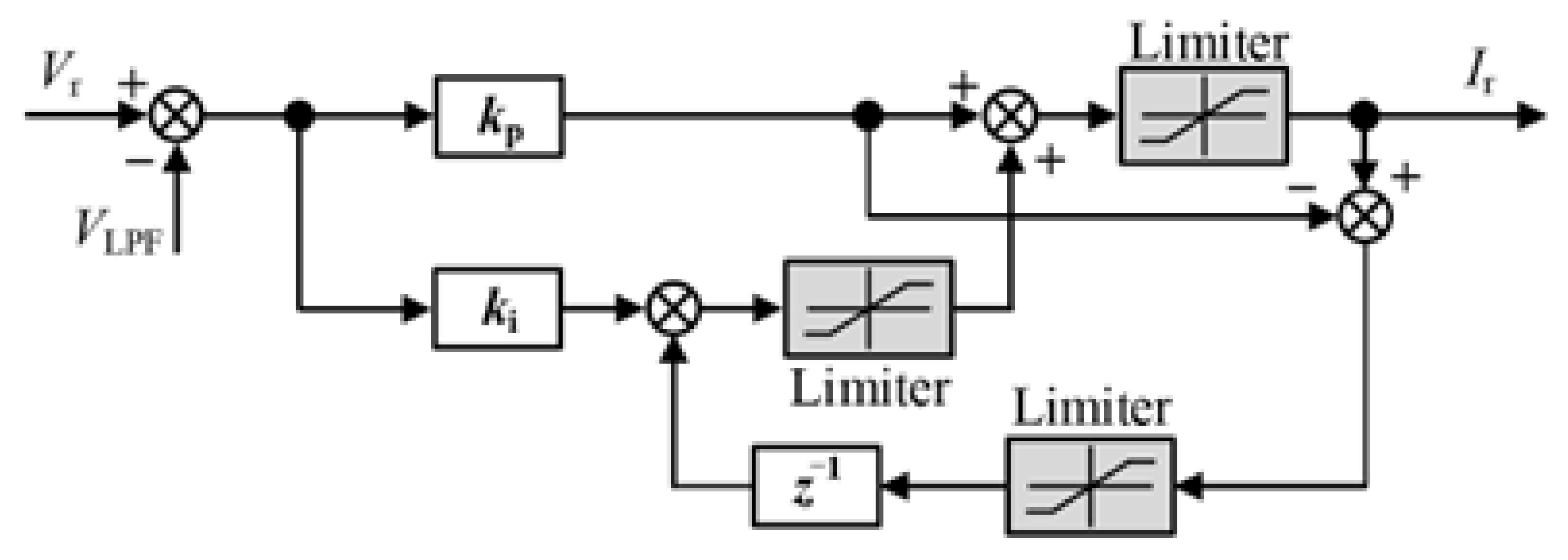
Given the frequent occurrence of controller saturation and desaturation within this control strategy, this article adopts the anti-windup PI control structure illustrated in
Figure 5 to accelerate the desaturation process. Here,
Vr and
VLPF represent reference and filtered feedback signals for the PI controller, respectively.
Ir is the output of the PI controller.
kp is the proportional gain and
ki is the integral gain of the controller. This enhanced PI structure, shown in
Figure 5, can be implemented for both the PI
1 and PI
2 controllers in
Figure 4.
4. Multi-Mode Switching Method and the Dynamic Process
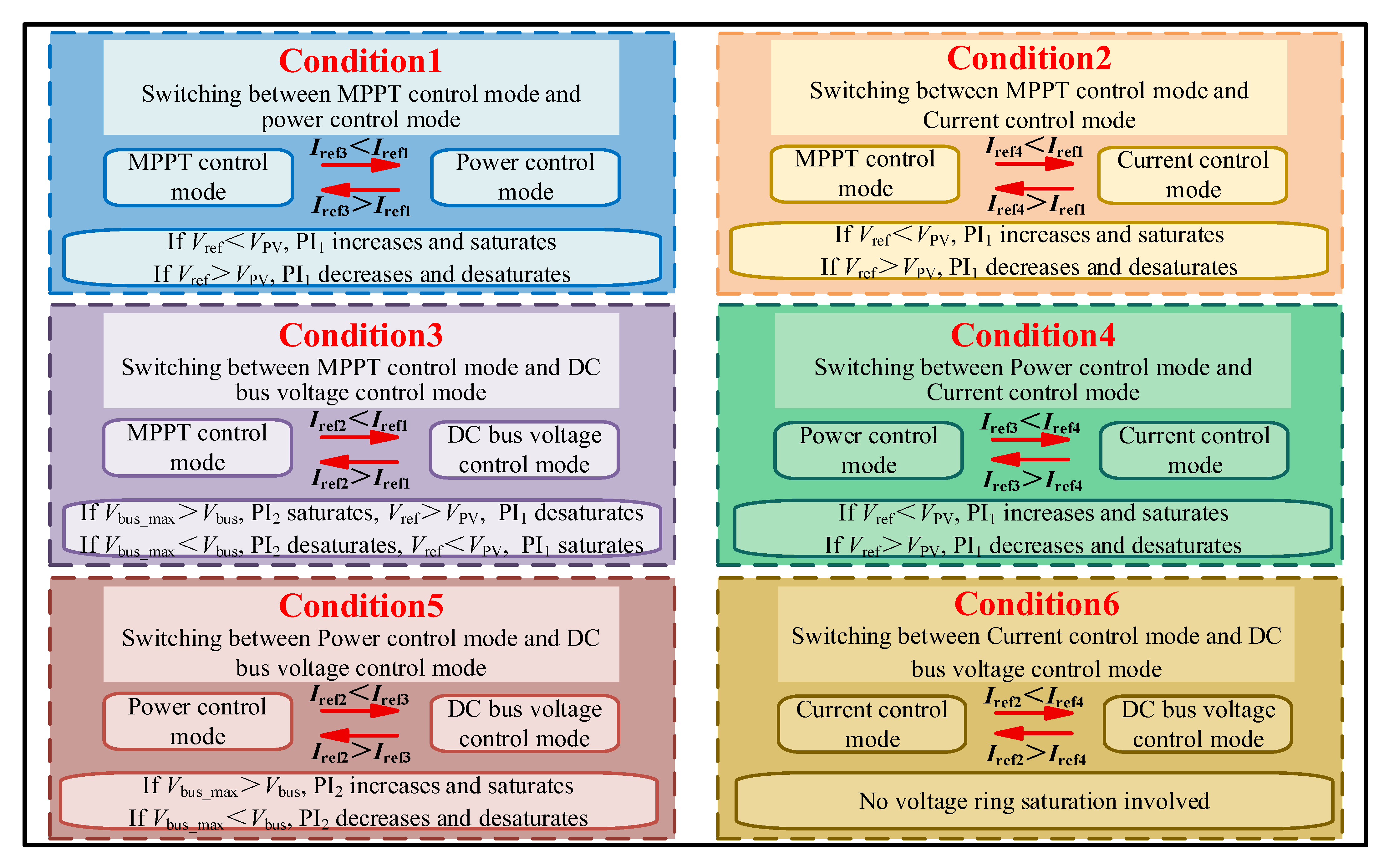
Figure 6 illustrates six typical operating conditions involving control mode switching during system operation. The current references and the PI controller labels correspond to those defined in
Figure 4. Detailed classifications of the six operating conditions are shown in
Table 1. Condition 1 depicts two switching states between the MPPT control mode and the power control mode. Condition 2 includes two switching states between the MPPT control mode and the current control mode. Condition 3 illustrates two switching states between the MPPT control mode and the DC bus voltage control mode. Condition 4 includes two switching states between the power control mode and the current control mode. Condition 5 includes two switching states between the power control mode and the DC bus voltage control mode. Condition 6 demonstrates two switching states between the current control mode and the DC bus voltage control mode.
In the MPPT and DC bus voltage control modes, the current reference is generated by a voltage PI controller, consequently involving the saturation and desaturation of the PI controller. The current reference for the current control mode is directly provided by the equipment parameters, while the current reference for power control mode is obtained by dividing the power limit by the PV voltage. Those two modes do not involve the saturation and desaturation of the PI controllers. Therefore, among the six operating conditions, Conditions 1, 2, 5, and 6 entail switching events that involve saturation and desaturation of a single voltage PI controller. Condition 3 involves saturation and desaturation of two voltage controllers. Condition 4 is determined solely by the direct comparison of current references.
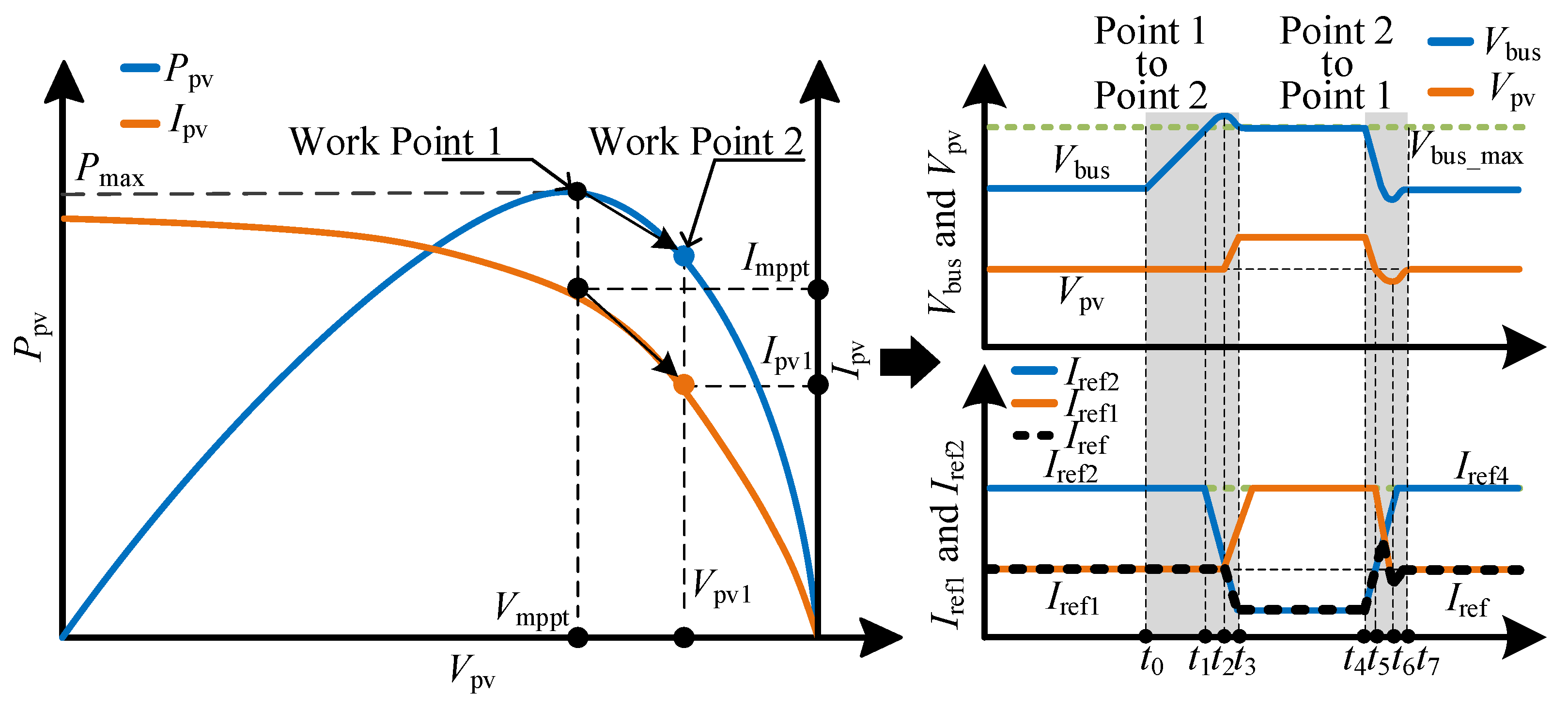
Figure 7 shows the dynamic process of the system during mode transitions between MPPT mode and DC voltage control mode caused by a change in load. At
t0, the load is disconnected from the system. As the PV-generated power now exceeds the load demand, the DC bus voltage begins to arise. By time
t1, the DC bus voltage surpasses its permissible limit. Consequently,
Iref2 generated by the DC bus voltage PI controller starts to decrease, and
Iref2 is less than
Iref1 at
t2, making
Iref2 the selected current reference. Following this, the reduction in the PV current causes the PV voltage to increase, which drives the MPPT PI controller into saturation and raises
Iref1. At
t3, the system reaches a new stable state, and the control mode of the system switches from the MPPT control to the DC bus voltage control. At
t4, the load is reconnected to the system, the DC bus voltage starts to decrease, causing
Iref2 to increase and, consequently, reduces the PV voltage. At
t5, the PV voltage drops below the reference voltage, prompting
Iref1 to decrease as the MPPT PI desaturates. Once
Iref1 becomes lower than
Iref2, the system switches back from DC voltage control to MPPT mode. During the dynamic process, the system only has one stable point at any given time, ensuring no unstable oscillations occur.
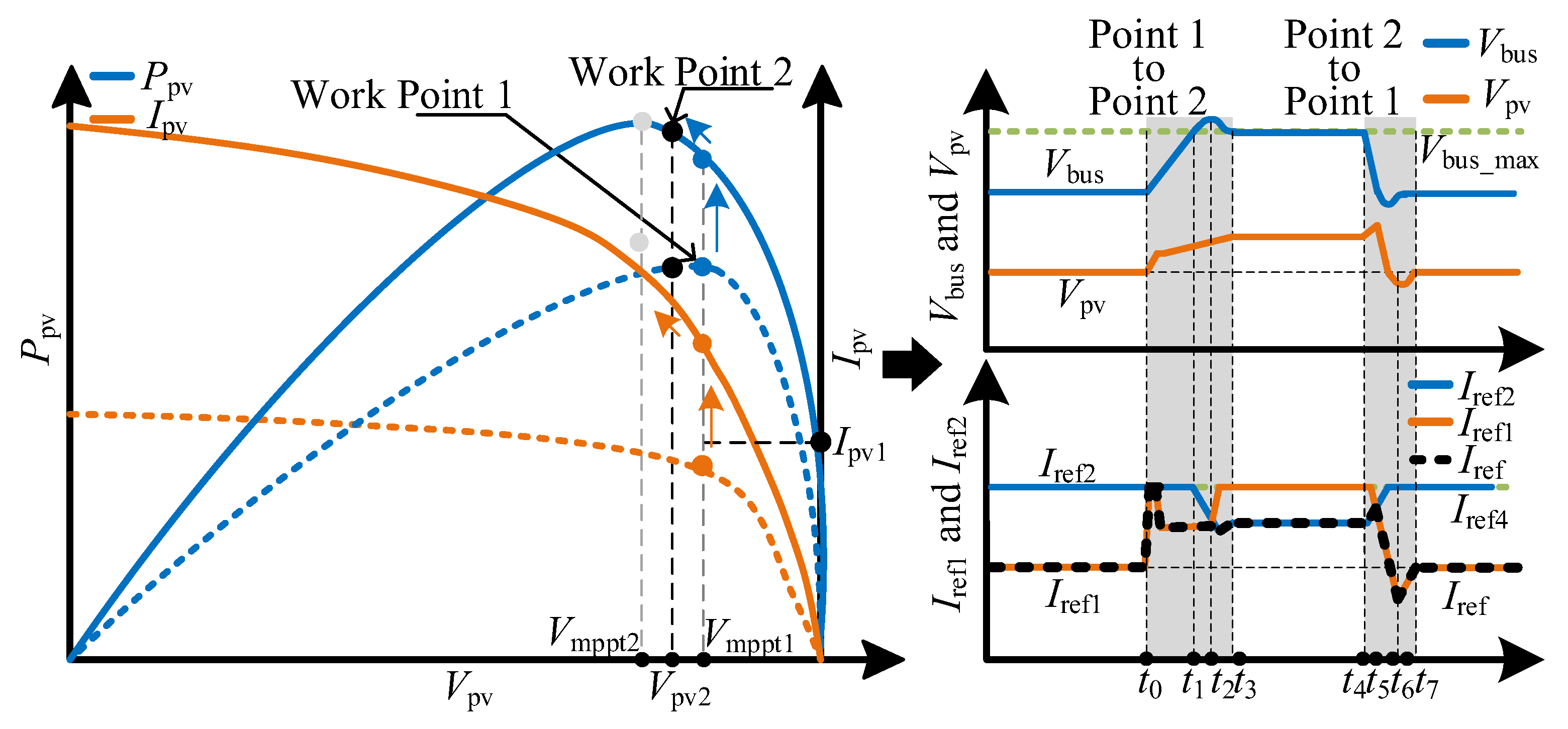
Figure 8 shows the mode switching of the system triggered by a change in the PV output power. At
t0, the MPP of the PV increases, and a sudden change causes the saturation of the MPPT PI controller, driving the output current of the PV to its limit. This rise in the PV current leads to an increase in both the PV output voltage and power, subsequently causing the DC bus voltage to rise. The increasing PV voltage then shifts the MPPT PI controller from saturation to desaturation, causing
Iref1 to decrease. At
t1, the DC voltage exceeds its limit, prompting
Iref2 to decrease. At
t2,
Iref2 falls below
Iref1, and the control mode switches to DC voltage control mode. At
t4, the MPP of the PV decreases, causing the control mode to switch back to MPPT mode. The dynamic process is similar to the process described in
Figure 7.
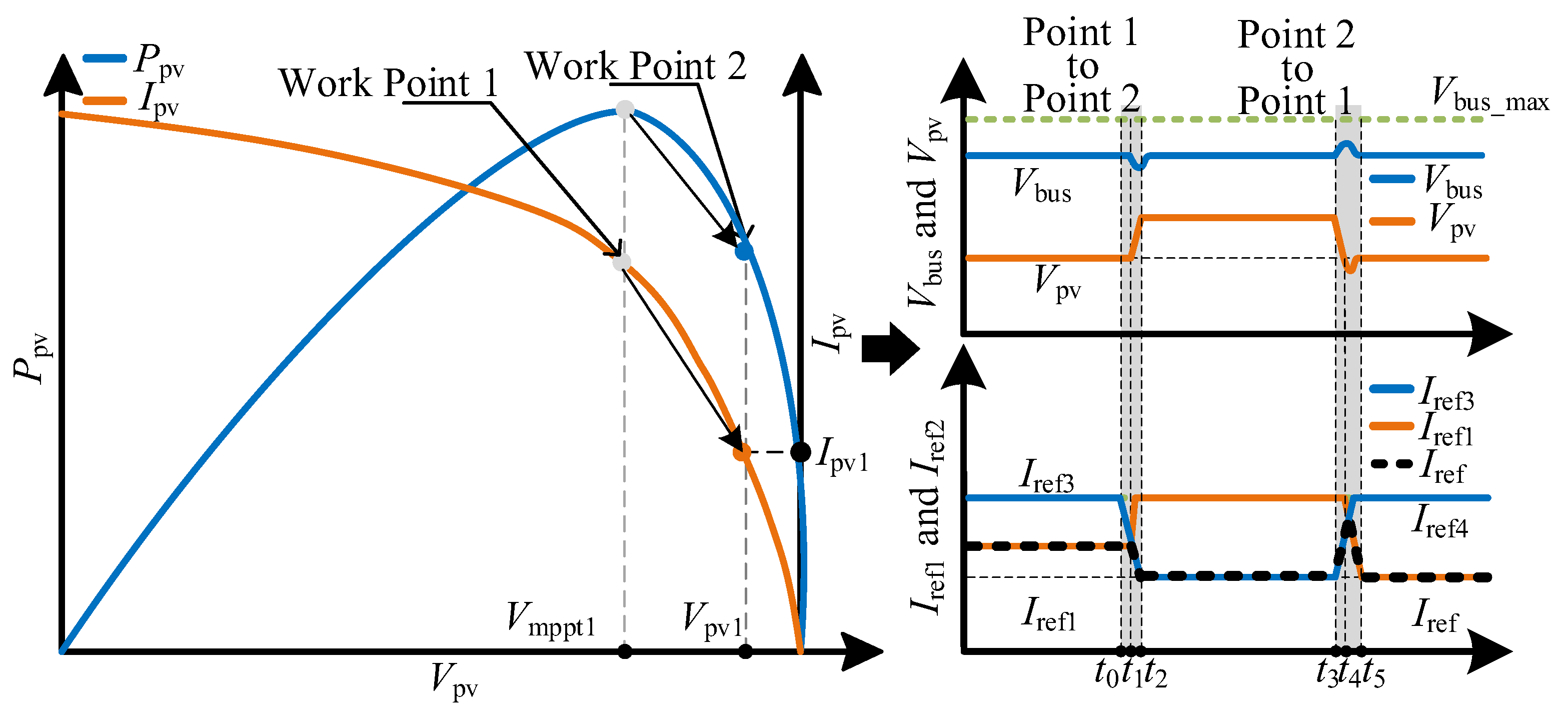
Figure 9 shows the mode switching of the system caused by the power-limiting output. This mode is implemented by adjusting the current reference. At
t0, the increase in the grid reference is detected, causing the current reference
Iref3 to decrease. At
t1,
Iref3 falls below the MPPT reference
Iref1. Then,
Iref3 is chosen as the current reference. The reduction in the PV power results in a minor fluctuation in the DC voltage
Vbus, and the PV voltage starts to increase. The increase in the PV voltage drives the MPPT PI controller into saturation, raising
Iref1 to its maximum value. At
t2, the system reaches a steady state, and the mode switching process is finished. At
t3, a dip in the grid frequency occurs, prompting
Iref3 to increase. This leads to a decrease in the PV voltage. At
t4, the PV voltage
Vpv drops below its reference, initiating the desaturation of the MPPT PI controller and a rapid decline in
Iref1. Finally,
Iref1 is smaller than
Iref3, and the system reaches a steady state.
Based on the preceding analysis, the mode switch is activated by the external factors, and the system has only one stable state guaranteed by the proper arrangement of the control system. Therefore, there are no oscillation issues once the control parameter is rigorously designed.
In the analysis above, only three representative conditions are considered. As for the other conditions, the methodology for analyzing the mode switching process follows the same principles and is, therefore, not elaborated further in this manuscript.
5. Simulation Results
This section validates the effectiveness of the proposed control strategy under DC bus voltage control mode, current control mode, and power control mode using the simulation results based on several typical operating scenarios. The simulations are conducted in MATLAB/Simulink (2024a).
The simulation adopts the system architecture shown in
Figure 2.
Table 2 lists the control parameters and hardware specifications of the simulation system. The PI controller parameters in
Table 2 are tuned through the conventional method, which has been widely investigated in the literature. The control delay has a critical impact on the PI parameters of the inner current loop, and the parameter design can be conducted using the discretization model as given in [
24]. The design of the outer voltage control loop must account for the dynamics of the inner current loop, the capacitance effect, and the system load conditions, as detailed in [
25,
26]. In general, the symmetric optimization method in [
25] can be applied, though the parameter should be validated to ensure closed-loop stability according to the method in [
26].
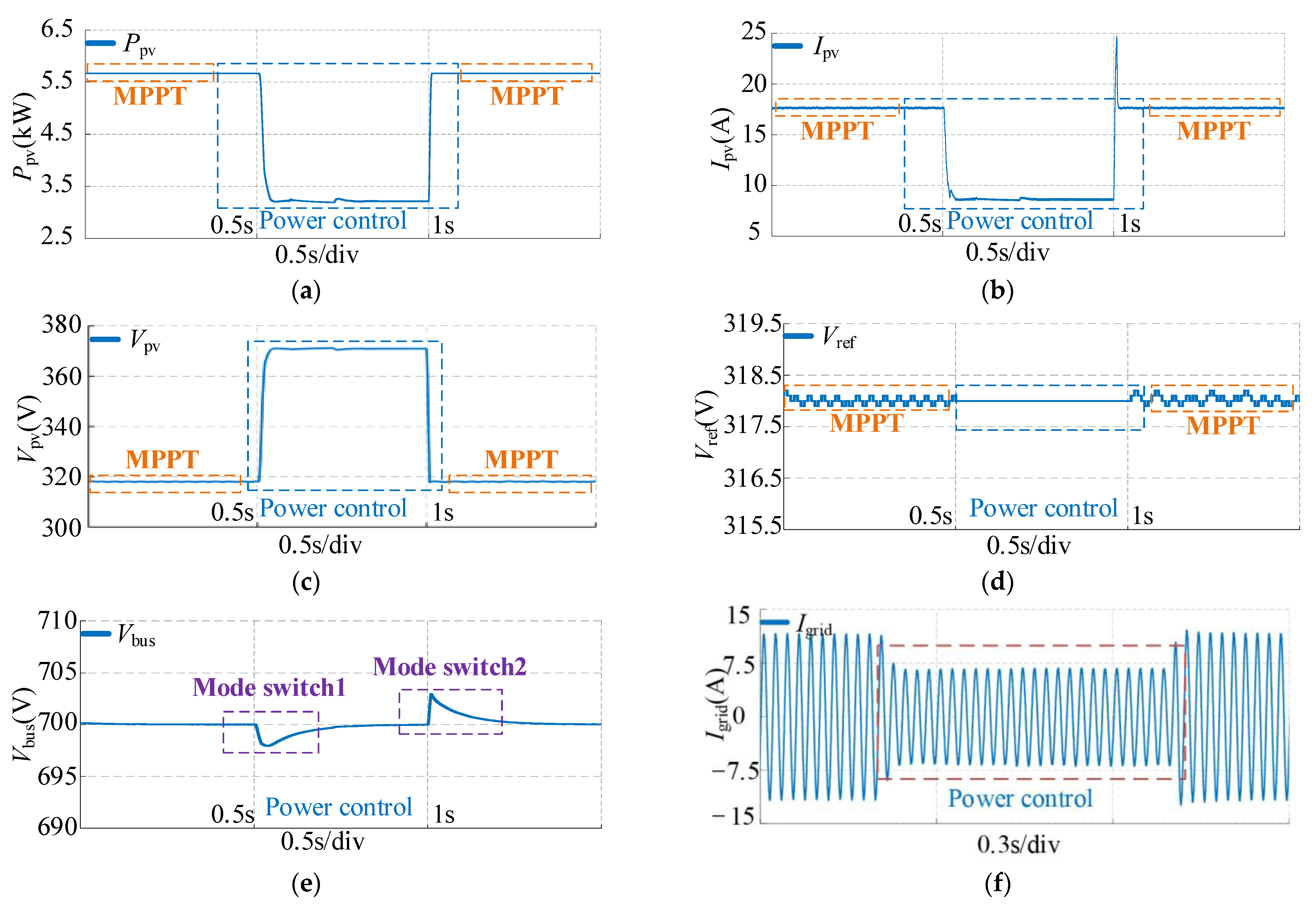
Figure 10 shows the simulation results for the transition between the MPPT control mode and power control mode, corresponding to condition 1.
Table 3 shows the parameters relevant to the status of the system. At 0.5 s, the grid frequency jumps to 50.3 Hz, and the
Pmax decreases to 3.3 kW. Since the power limit falls below the output power at MPP, the system rapidly switches from MPPT to power control mode. At 1 s, the grid frequency jumps to 49.9 Hz, the power limit subsequently increases to 8 kW. As this limit now exceeds the output power at MPP, the system switches back to MPPT mode. Throughout this process, external PV conditions, such as irradiance, remain unchanged.
Figure 10a depicts the PV output power, which rapidly decreases when the power limit is abruptly applied and subsequently returns to the MPP level when the limit is lifted.
Figure 10b shows the corresponding output current of the PV current, where the observed transient spike aligns with the theoretical analysis in
Section 4.
Figure 10c shows the behavior of the PV voltage during the process.
Figure 10d shows the behavior of the voltage reference
Vref. It is held constant (locked) when a significant error between the
Vref and
Vpv is detected and resumes active MPPT adjustment once the system switches back to MPPT mode.
Figure 10e shows the DC bus voltage, and only a small fluctuation is introduced in the mode switch, which proves the robust performance of the proposed method.
Figure 10f shows the phase A current of the DC-AC converters. As shown, the output current is smoothly changed.
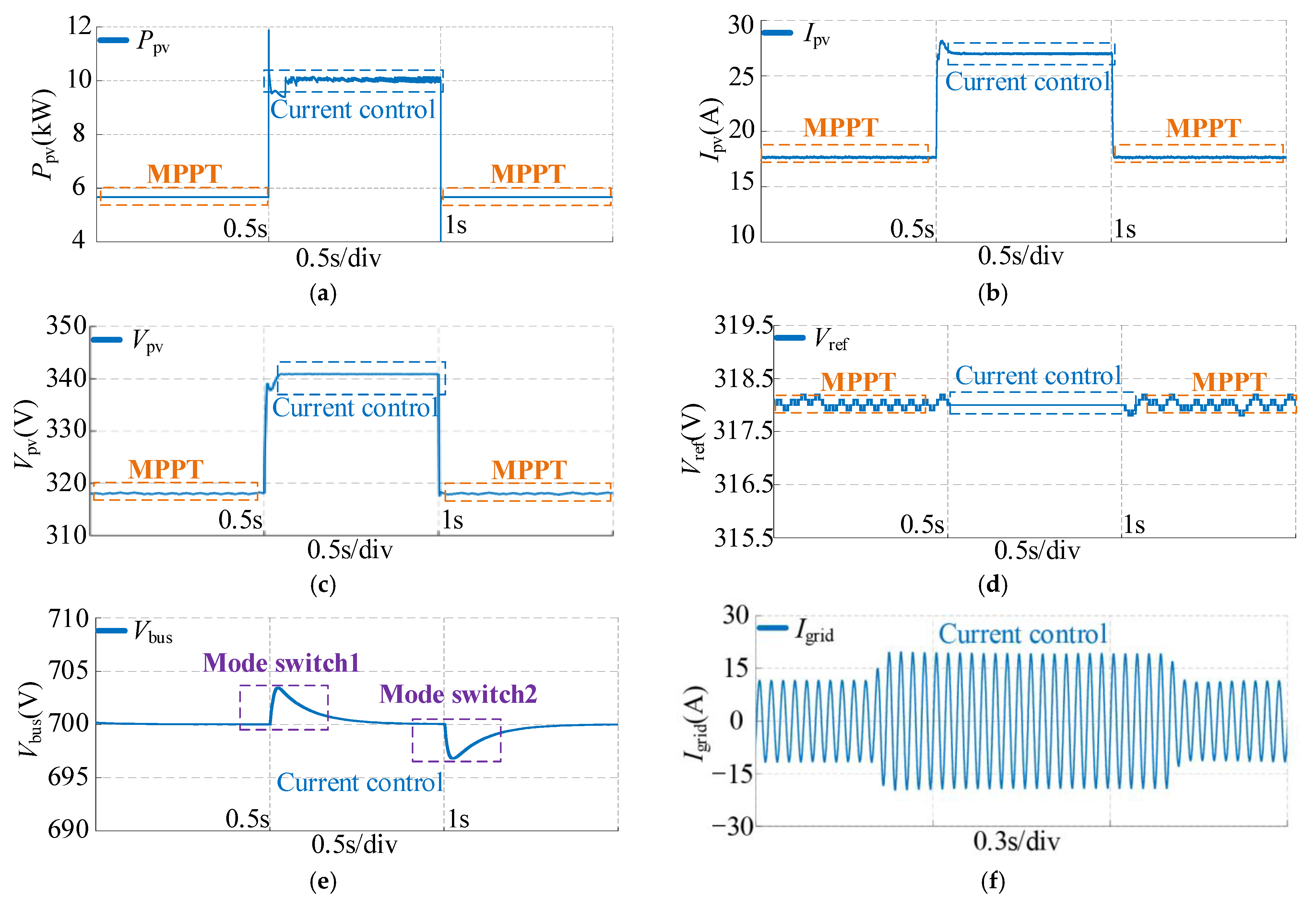
Figure 11 shows the simulation results for the transition between the MPPT control mode and current control mode, corresponding to condition 2.
Table 4 shows the corresponding states of the system. At 0.5 s, a sudden change in irradiance causes the PV output current to rise beyond the current limit. Consequently, the system switches from MPPT control mode to current control mode. Subsequently, at 1 s, a sharp decrease in irradiance causes the PV current to fall below the limit, triggering a switch back to MPPT control mode.
Figure 11a shows the PV output power, where a transient spike occurs due to simultaneous step changes in PV voltage and current. As shown in
Figure 11b, the PV current exhibits only a minor overshoot before stabilizing at 27 A and returns smoothly to MPPT operation without overshoot when the limit is no longer active.
Figure 11c shows PV voltage.
Figure 11d shows that
Vref is generated by the MPPT function.
Figure 11e shows that there is only negligible fluctuation in the DC bus voltage during the switching process.
Figure 11f shows the phase A current of the DC-AC converters, which undergoes a smooth and well-damped change throughout the process.
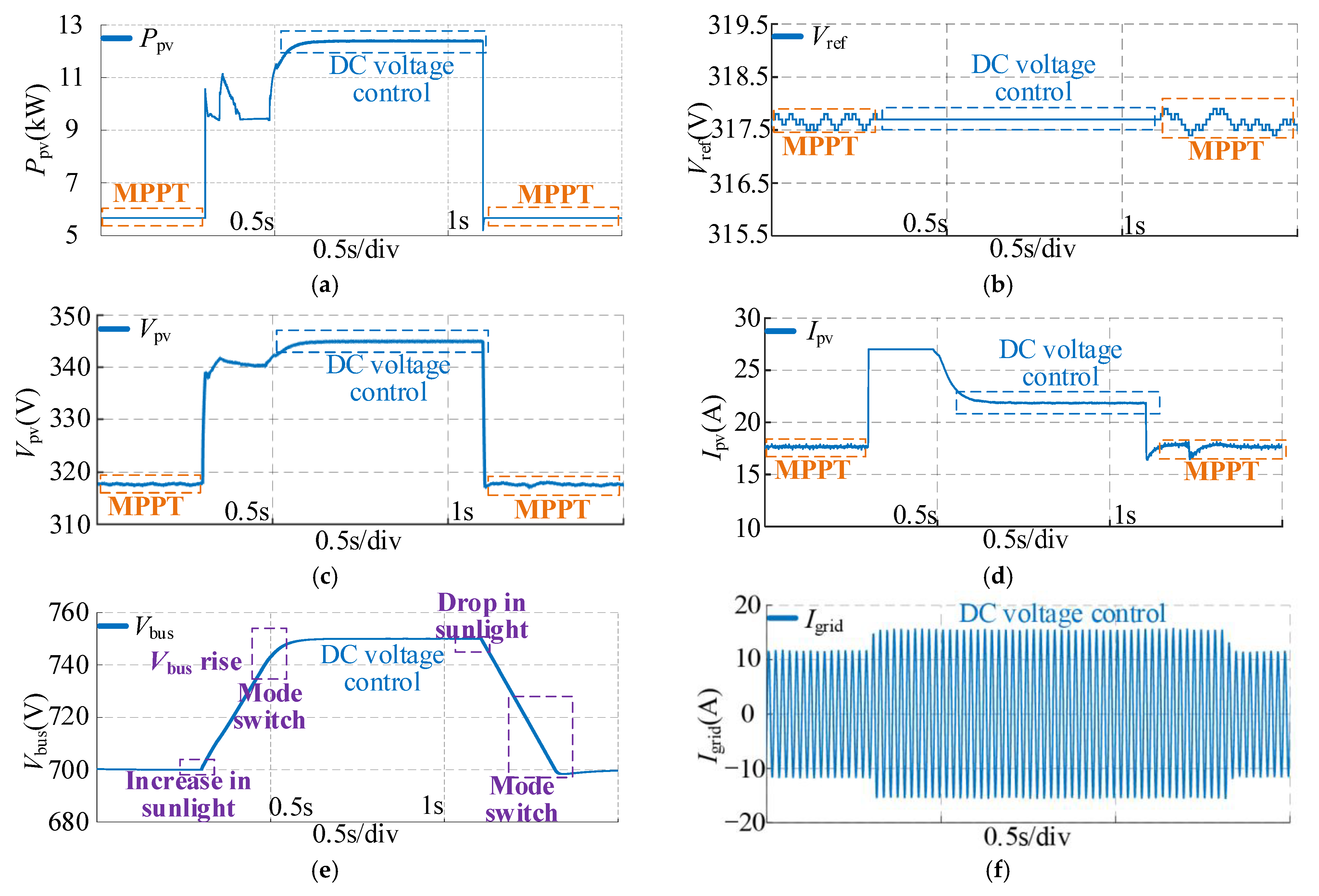
Figure 12 shows simulation results for the system switching between MPPT control mode and DC bus voltage control mode caused by the change in the PV system, corresponding to operating conditions 3.
Table 5 shows the PV output parameters under this operating condition. At 0.3 s, a sudden increase in irradiance causes the MPPT output power to exceed the inverter’s maximum transfer capability. The inverter consequently loses its ability to regulate the DC bus voltage, leading to a rise in the bus voltage. The spike in the PV power is attributed to the nonlinear factor of the PV power and the increase in the PV current. Once the DC bus voltage reaches 710 V, the DC bus voltage controller desaturates and takes over control, switching the system from MPPT control to DC bus voltage control mode. At 1.1 s, a sudden decrease in irradiance is applied. The MPPT output power falls below the inverter’s maximum capacity, allowing the inverter to resume normal voltage regulation. The DC bus voltage PI controller saturates, causing the system to switch back from DC bus voltage control mode to MPPT mode.
Figure 12a shows the PV output power.
Figure 12b shows the voltage reference generated by the MPPT.
Figure 12c shows the PV voltage.
Figure 12d shows the PV current.
Figure 12e shows the DC bus voltage.
Figure 12f shows the phase A current of the DC-AC converter. As shown, the dynamic process aligns with the analysis in
Section 4, and the DC bus voltage is effectively limited to 750 V. The DC bus voltage and the grid side current exhibit smooth transitions, demonstrating the robustness of the control strategy.
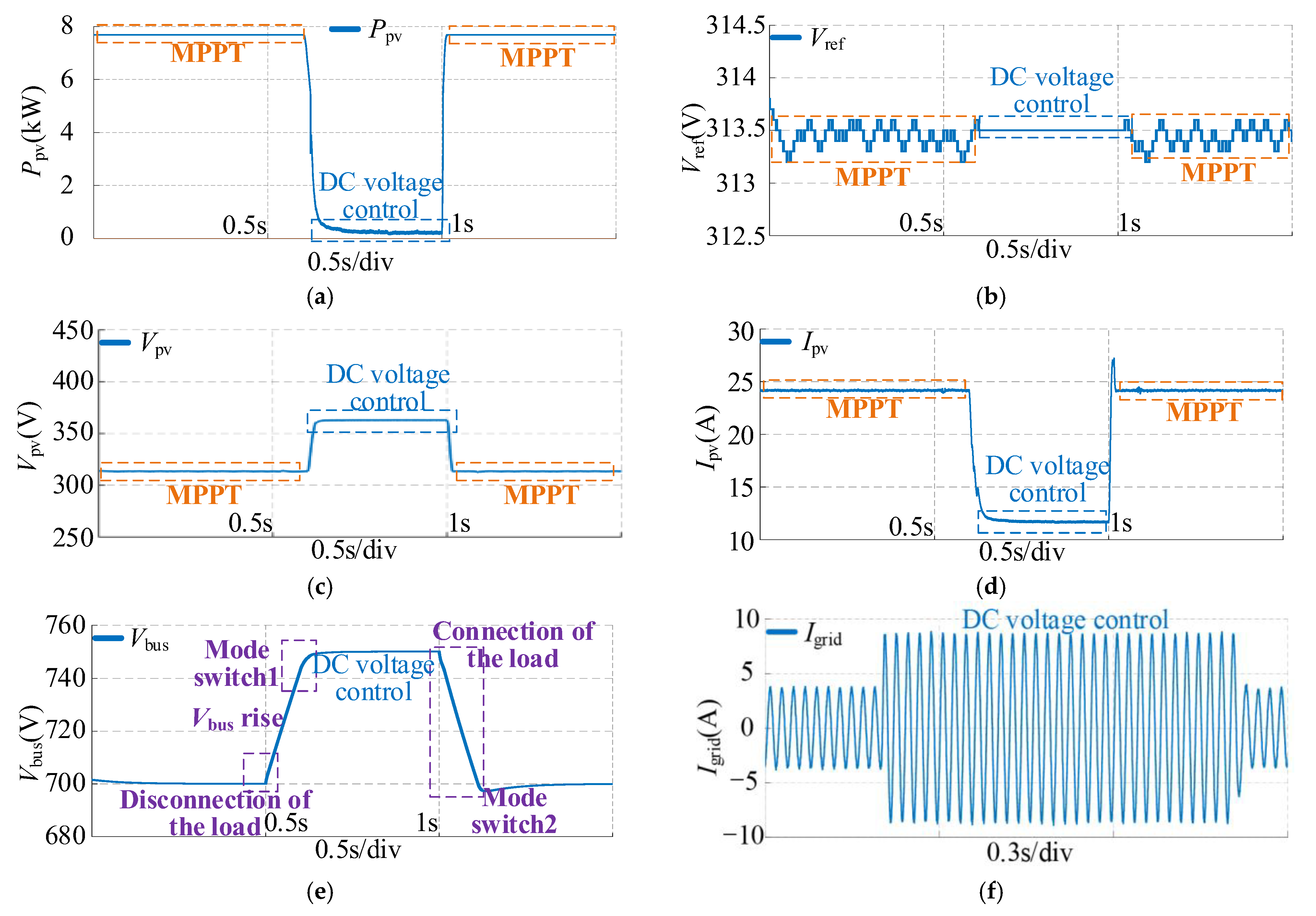
Figure 13 shows simulation results for the system switching between MPPT control mode and DC bus voltage control mode, triggered by the change in the DC load, corresponding to operating condition 3. In this scenario, the maximum current of the DC-AC converter is 8A, and a 76Ω resistor serves as the DC load. At 0.5 s, the load is disconnected from the system. This causes the MPPT mode output power to exceed the inverter’s maximum transfer capability, prompting the system to switch from MPPT to DC voltage control mode. At 1 s, the load is reconnected, allowing the system to switch back to MPPT mode. As shown, the dynamic process aligns with the analysis in
Section 4.
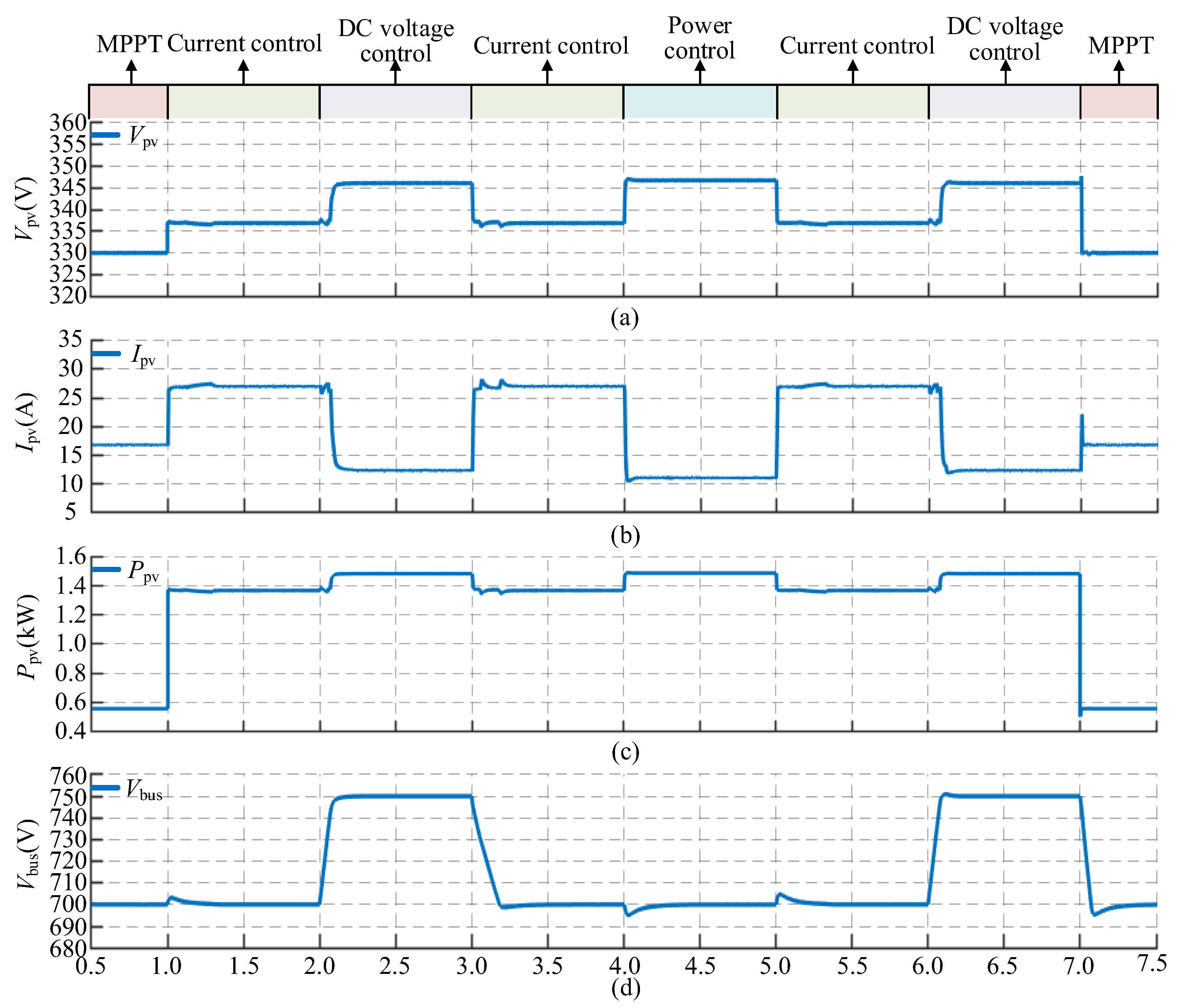
Figure 14 shows a sequence of control mode transitions, with the corresponding conditions outlined in
Table 1. The minor spikes in the PV current and power are caused by the nonlinear characteristics of the PV panel when the current varies. As shown, the control mode can be switched smoothly between any conditions.
To highlight the distinctions between the method in this manuscript and the methods in the literature, a numerical comparison with the method presented in [
15] has been added. The approach in [
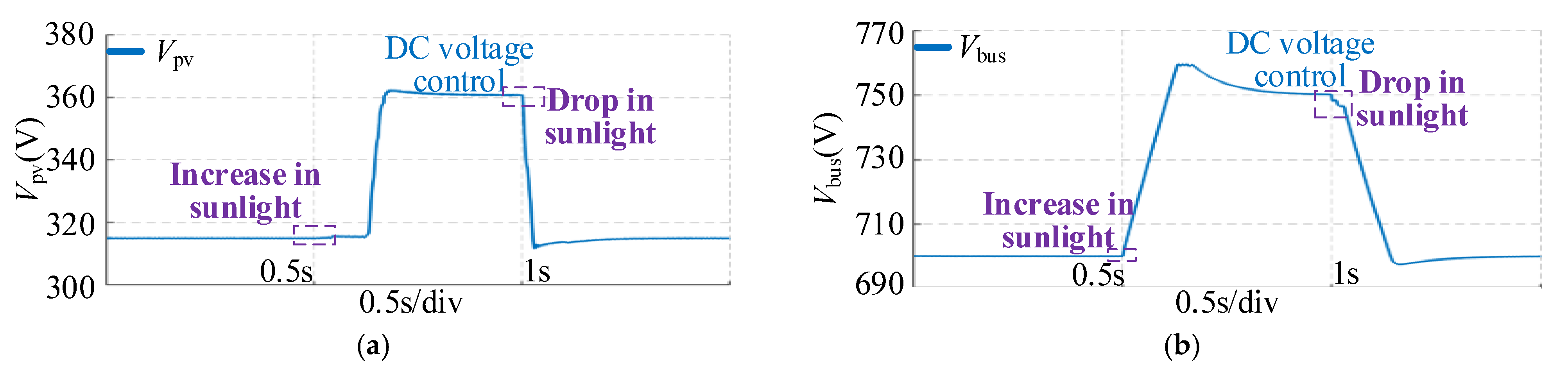
15] addresses mode switching solely between DC bus voltage control and MPPT control. Therefore, the dynamic performance during transitions between these two modes is compared. With the method in [
15], the maximum DC bus voltage reaches 760 V, resulting in an overshoot of 10 V, as shown in
Figure 15. In contrast, the proposed method exhibits no overshoot when switching to DC bus voltage limiting mode. When switching back to the MPPT control mode, a minor overshoot occurs, with its magnitude being nearly identical for both methods.
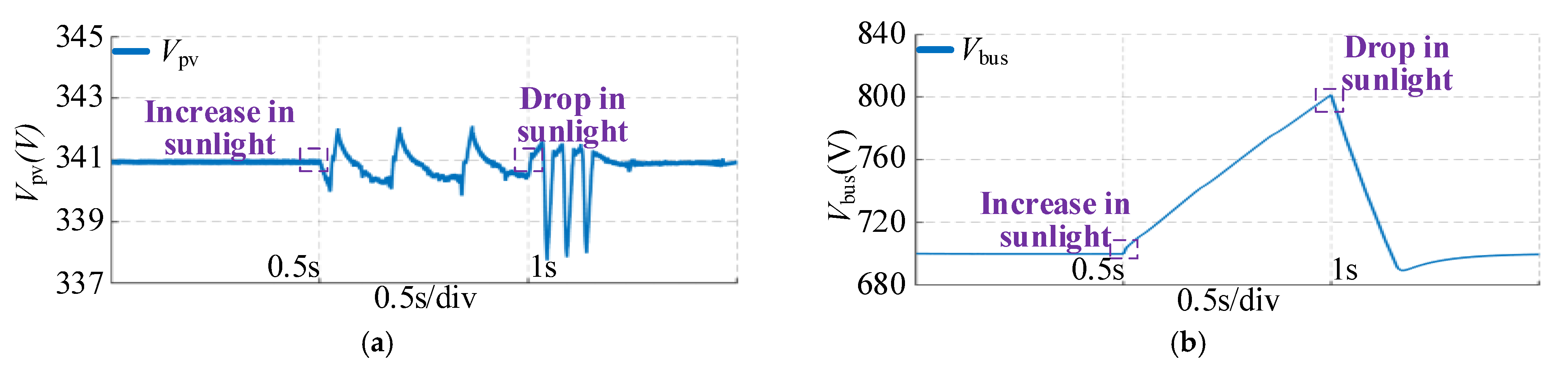
Figure 16 shows the PV system with only MPPT control mode. At 0.5 s, a sudden change in irradiance causes an increase in the PV output power, causing the output power to exceed the inverter’s maximum power transfer capability. Consequently, the DC bus voltage begins to rise. This continuous voltage increase disturbs the control system of the boost converter, resulting in voltage spikes at the PV output voltage. Moreover, the sustained rise in the DC bus voltage may trigger protective shutdowns or cause damage to the converters.