Article

Experimental Validation of a Modified Halbach Array for Improved Electrodynamic Suspension Efficiency


Faculty of Electrical Engineering, Warsaw University of Technology, 75 Koszykowa St., 00-662 Warsaw, Poland
*
Author to whom correspondence should be addressed.
Energies 2026, 19(3), 649; https://doi.org/10.3390/en19030649 (registering DOI)
Submission received: 16 December 2025 / Revised: 21 January 2026 / Accepted: 23 January 2026 / Published: 27 January 2026

Abstract

In this work, we present an experimental validation of a modified Halbach array magnet configuration for passive electrodynamic suspension (EDS) systems. The study builds upon previous research that indicated improved lift-to-drag performance and reduced power consumption by altering the span (fill factor) of horizontally magnetised magnets in a Halbach array. A custom rotating test rig was developed to measure both magnetic field distributions and levitation/braking forces for several Halbach array configurations with varying magnet width ratios. Six magnet array packs were tested, featuring different fill factors (0.125, 0.5, 0.875), magnet lengths, and wavelengths. The experimental results show good agreement with 3D finite-element simulations across a range of speeds (0–85 m/s) and air gaps, confirming that non-classical Halbach arrays (with a fill factor ≠ of 0.5) can achieve higher energy efficiency. In particular, configurations with extreme fill factors produced lower magnetic drag for the same lift force, yielding a higher lift-to-drag ratio and a reduced magnetic friction coefficient. These findings validate the proposed modified Halbach arrangement and demonstrate that adjusting the horizontal magnet span can indeed reduce the power requirements of EDS maglev systems. The novelty of this work lies in the combined numerical–experimental assessment of mixed-length Halbach array configurations, revealing previously unreported scaling effects between magnet width ratio and force stability in short-stroke applications.

1. Introduction

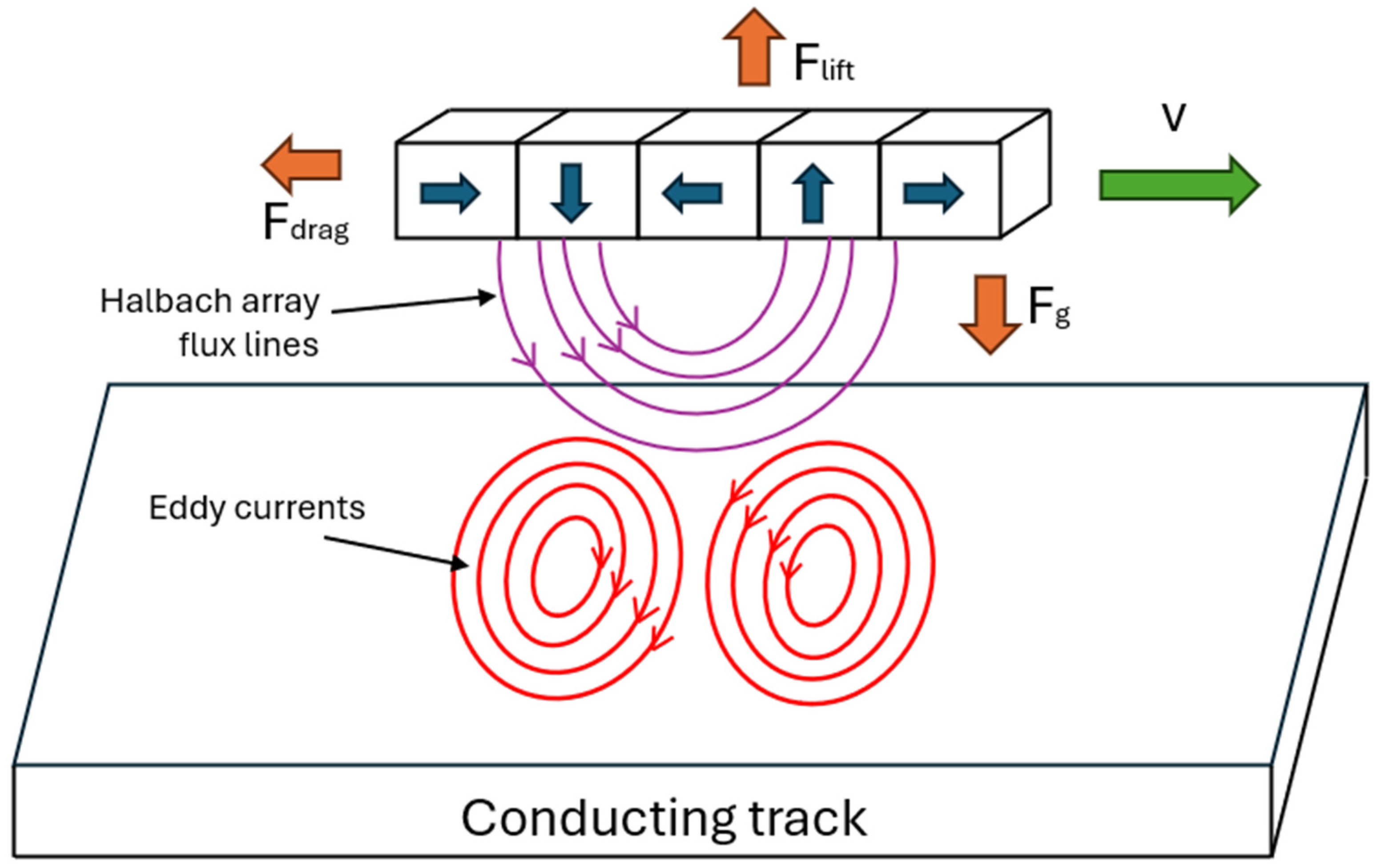
Magnetic levitation (maglev) is an attractive high-speed transport technology due to its high energy efficiency and lack of problems with wheel and pantograph wear compared to traditional railways, which is described in [1,2,3,4,5,6,7,8]. Most existing maglev trains employ electromagnetic suspension (EMS), in which onboard electromagnets actively attract a ferromagnetic track to achieve lift. An alternative approach is an electrodynamic suspension (EDS), which uses the repulsive forces between a moving magnetic field source on the vehicle and induced currents in a conducting track (Figure 1). EDS systems based on arrays of permanent magnets are often configured in a Halbach array, which was first described in [9,10,11]. Such systems are particularly promising for high-speed maglev [12,13] and hyperloop vehicles [14] that need to supply energy to generate a magnetic field. However, at lower speeds (e.g., below 100 km/h), conventional EDS designs, such as Inductrack [15,16,17], suffer from high magnetic drag forces. As a result, additional energy must be supplied to the propulsion to overcome these forces, resulting in lower efficiency of the transportation system.
Various strategies have been proposed to reduce drag in EDS, including specialised track geometries (i.e., null-flux loops [18,19,20] or ladder tracks [13,21,22,23], but these often come at the expense of reduced lift or increased track complexity.
Another approach to improve EDS performance is to improve the magnet array configuration itself. The generated levitation and drag forces result from currents induced in the track, whose flow is forced by a changing magnetic field originating from a set of magnets. Therefore, the magnetic configuration has a direct impact on the forces generated in EDS systems.
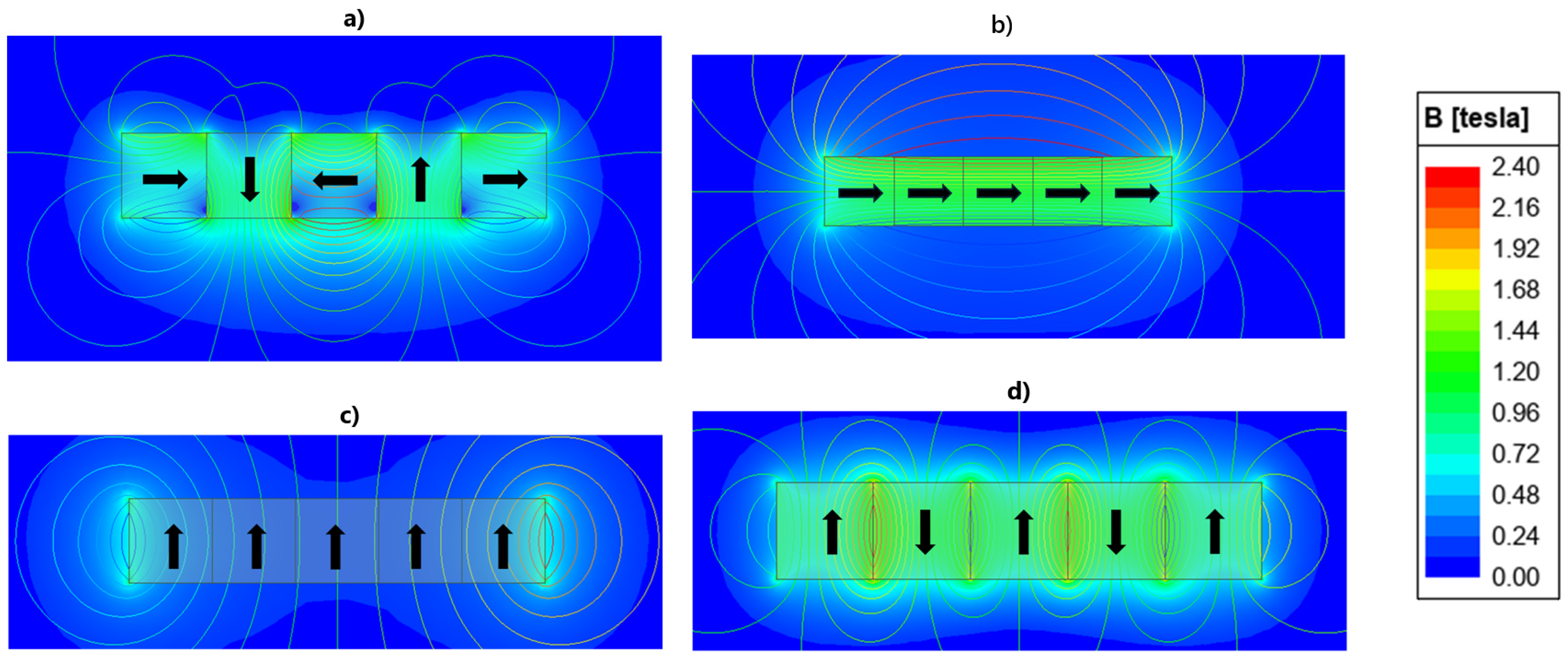
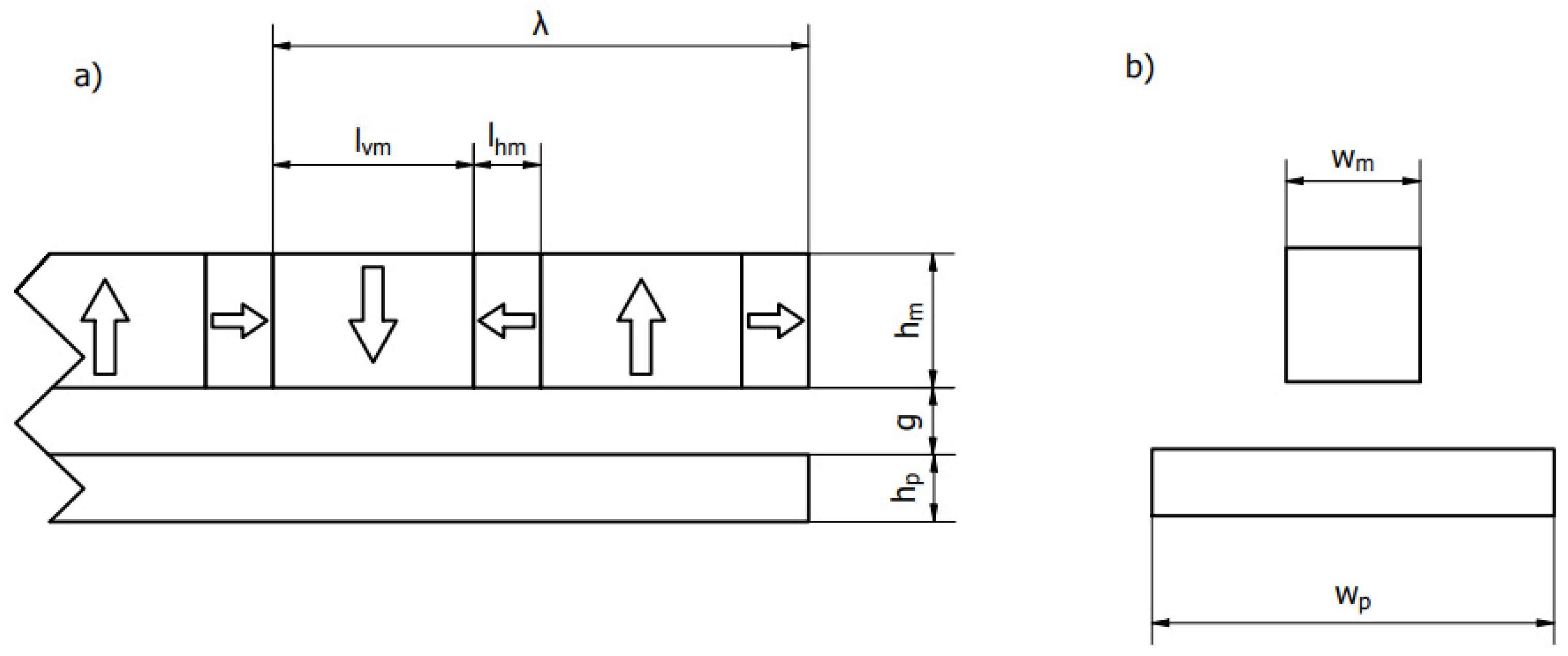
The Halbach array—an arrangement of permanent magnets that concentrates the field on one side—has been a widely used choice for EDS due to its strong unilateral field and relative construction simplicity [12,24,25,26,27,28,29]. In a classic Halbach array, magnets of equal dimensions are alternately magnetised horizontally and vertically, yielding a sinusoid-like field distribution (Figure 2) below its surface. Prior studies have explored modifications to the Halbach geometry to further enhance its performance. For example, Jiangbo et al. [30] optimised the magnet aspect ratio for lower drag. Duan et al. [31] proposed trapezoidal magnet shapes to form an improved Halbach array. Zhang and Kou [32] investigated splitting the array into dual sections with offset magnet spans. Rovers et al. [33,34,35] analysed the forces in non-uniform Halbach assemblies. In our previous work [36], we introduced a modified Halbach array in which the width of the horizontally magnetised magnets differs from that of the vertically magnetised magnets (Figure 3). This non-symmetric Halbach configuration is characterised by a fill factor (denoted γ in (1) [36]) defined as the fraction of the Halbach wavelength occupied by horizontally oriented magnets. By deviating from the conventional 50% fill factor (γ = 0.5), the array’s magnetic field waveform can be altered to reduce the amplitude of induced eddy currents associated with drag, without significantly decreasing lift. This makes it possible to increase the efficiency of the entire levitation system based on such an EDS system. Simulation results showed that certain fill factor extremes (e.g., γ ≈ 0.9) produced notably lower drag force for the same lift, leading to reduced power consumption during vehicle travel.
γ = l v m l v m + l h m = l v m 0.5 λ
where
γvm = fill factor (-)
lvm = length of the vertically magnetised magnet (m)
lhm = length of the horizontally magnetised magnet (m)
λ = wavelength (m)
Figure 2. Comparison of the magnetic induction around magnetic packages consisting of 5 cubes of permanent magnets arranged in 4 different configurations: (a) Halbach arrangement, (b) direction of magnetisation of all magnets directed to the right, (c) direction of magnetisation of all magnets directed upwards, (d) classical alternating arrangement.
Energies 19 00649 g002
Figure 3. Halbach array with a wide vertically magnetised permanent magnet over a conductive track. (a) side view, (b) front view.
Energies 19 00649 g003
In addition to the classical Halbach array configuration, several optimisation strategies have been reported in the literature to improve electrodynamic suspension performance. These include pole pitch and other geometrical parameters optimisation to maximise lift-to-drag ratio [37], hybrid permanent magnet–electromagnet arrangements enabling adaptive control [38,39,40], cylindrical or trapezoidal Halbach arrays providing improved field symmetry (EDW) [23,31,41,42,43]. However, many of these approaches increase system complexity or require extensive tuning, which limits their applicability in compact or low-maintenance EDS systems.
Although Halbach arrays are widely used in EDS suspension systems, the influence of the width ratio between vertically and horizontally magnetised magnets (fill factor) on overall energy efficiency has not been systematically investigated in the existing literature. To the best of the authors’ knowledge, this parameter has previously been considered only in the authors’ earlier numerical study [36], without experimental validation. The present work addresses this gap by providing a systematic experimental investigation of fill factor variations and their influence on force characteristics and energy efficiency.
The goal of this article is to experimentally validate the performance of Halbach arrays with modified magnet span (fill factor) and confirm the predicted improvements in EDS efficiency. While our prior publication reported simulation-based analysis of various fill factors and identified potential energy savings, a physical proof-of-concept is required to account for real-world effects and provide confidence in the results. For this reason, we designed and built a laboratory-scale rotating test rig that emulates a translating EDS system by using a circular motion. Despite the circular-motion model being an approximation of the linear-motion model, it offers undeniable advantages, particularly in the context of experimental research on a real test rig. In comparison to a linear test stand, a rotating EDS test rig provides more precise measurement data at significantly reduced construction costs. The rotating model enables the emulation of an infinitely long linear EDS system’s operation. Consequently, it allows the collection of long-duration measurements limited only by the thermal and mechanical endurance of the materials used. Thus, measurement data is acquired during a stable operation of the system. Similar rotating test stands have been employed in other studies of electrodynamic suspension and magnetic braking [16,20].
In this work, a set of Halbach magnet packs with varying fill factors and dimensions was tested on the rig. The magnetic flux density in the air gap was measured, and levitation and drag forces were researched over a range of speeds. These measurements were validated using finite element model calculations from Ansys Maxwell 3D (version: 2024 R2) to verify the accuracy of the simulations and the underlying theory. The study aimed to confirm that more energy-efficient Halbach arrangement-EDS suspension systems can be achieved by adjusting the ratio of the width of vertically magnetised magnets to those with horizontal magnetisation in the Halbach array.
While the authors’ earlier work [36] focused on numerical simulations of the modified Halbach array, the present paper extends those studies through experimental verification. The novelty of this work lies in providing measured lift, drag, and power consumption data obtained from a laboratory-scale EDS test rig; experimentally comparing multiple fill factor configurations of the Halbach array; and assessing the impact of fill factor optimisation on the lift-to-drag ratio and magnetic friction coefficient. Notably, the experimental investigations were conducted at test speeds of up to 85 m/s, which, to the best of the authors’ knowledge, exceed the operating speed range typically reported in experimental studies of EDS systems. These contributions help bridge the gap between simulation results and practical implementation considerations for high-speed maglev applications.
The remainder of the paper is organised as follows: Section 2 describes the experimental setup, the Halbach array configurations tested, the measurement methodology, and the simulation model parameters. Section 3 presents the results of field and force measurements in comparison with simulation results, and analyses the performance in terms of lift, drag, and derived efficiency metrics. Section 4 discusses the implications of the findings, including sources of discrepancy between experiment and simulation. Finally, Section 5 concludes the study and highlights the prospects for implementing the proposed Halbach configuration in practical EDS systems.

2. Materials and Methods

2.1. Halbach Magnet Configurations for Testing

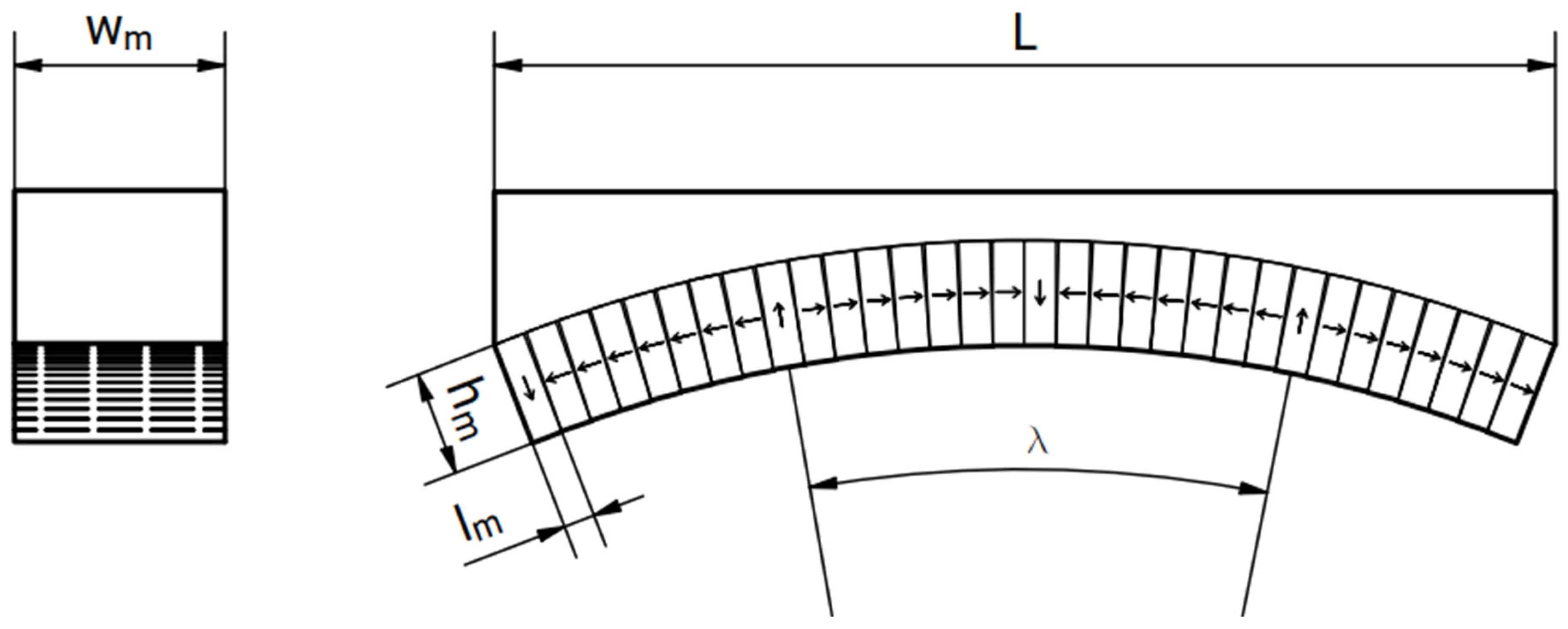
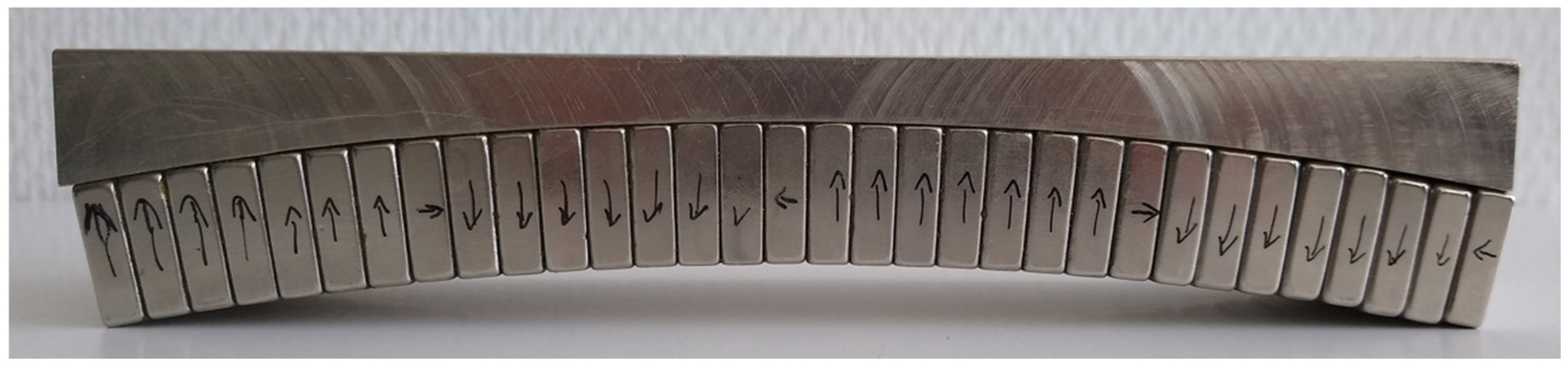
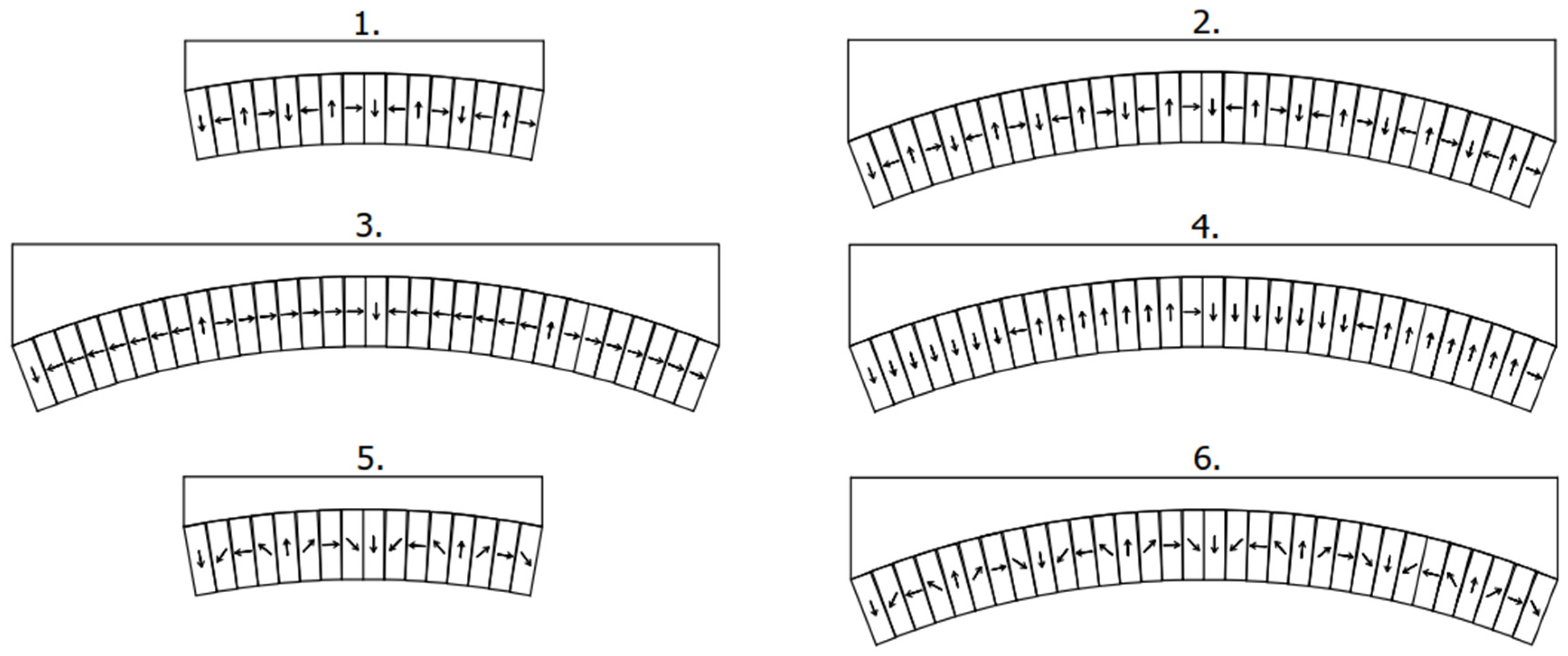
To validate the research goal, six different Halbach magnet array configurations were prepared and tested on the test bench. Each configuration (denoted as magnet pack #1 through #6) consists of a set of identically sized NdFeB permanent magnets arranged in an alternating magnetisation pattern along an arc (forming an arched Halbach array segment) as in Figure 4 and Figure 5. All single magnets are N40-grade NdFeB (Br = 1.25 T) with dimensions 20 mm (hm-height) × 40 mm (wm-width) × 6 mm (lm-length), where the magnetisation direction is either vertical or horizontal relative to the array face. Table 1 and Figure 6 summarise the key parameters of the six Halbach packs examined. The variables include the following: the number of magnet poles per Halbach wavelength–M, the total length of the magnet pack–L (along the travel direction), the vertical magnet fill factor–γ (fraction of one wavelength occupied by vertically magnetised magnets) and the effective wavelength of the Halbach arrangement–λ. In all cases, the arrays are one magnet thick (single layer) and backed by a non-ferromagnetic support.
Pack #1 is a baseline Halbach array with a conventional fill factor (γ = 0.5, meaning magnets of equal width) and a short length (100 mm). Pack #2 has the same magnet arrangement as #1 but is twice as long (200 mm), to examine the influence of array length (and end effects) on performance. Packs #3 and #4 are modified-fill-factor Halbach arrays: pack #3 has a low vertical fill factor γ = 0.125 (12.5% of each wavelength occupied by a vertical magnet). In comparison, pack #4 has a high fill factor γ = 0.875 (87.5% of vertical magnets per wavelength). These two cases represent extreme deviations from the classic 50% fill and were chosen based on simulation results that showed potential benefits at the extremes. Both #3 and #4 were constructed with a larger effective wavelength. Finally, packs #5 and #6 have more magnets of different orientations per wavelength (M = 8) compared to packs #1–4 (M = 4). Pack #5 is a short array (100 mm) with M = 8, and pack #6 is a long array (200 mm) with M = 8. By including packs #5 and #6, which have a higher pole-pair count M, we can observe the effect of increased Halbach spatial frequency on the results (higher M is known to concentrate the field more at the surface [24,44]). Note that pack #5 vs. #6, and pack #1 vs. #2, form two pairs that are identical in configuration except for length (half vs. full-length), which helps in evaluating end effects or any scale-dependent discrepancies.

2.2. Experimental Model Setup

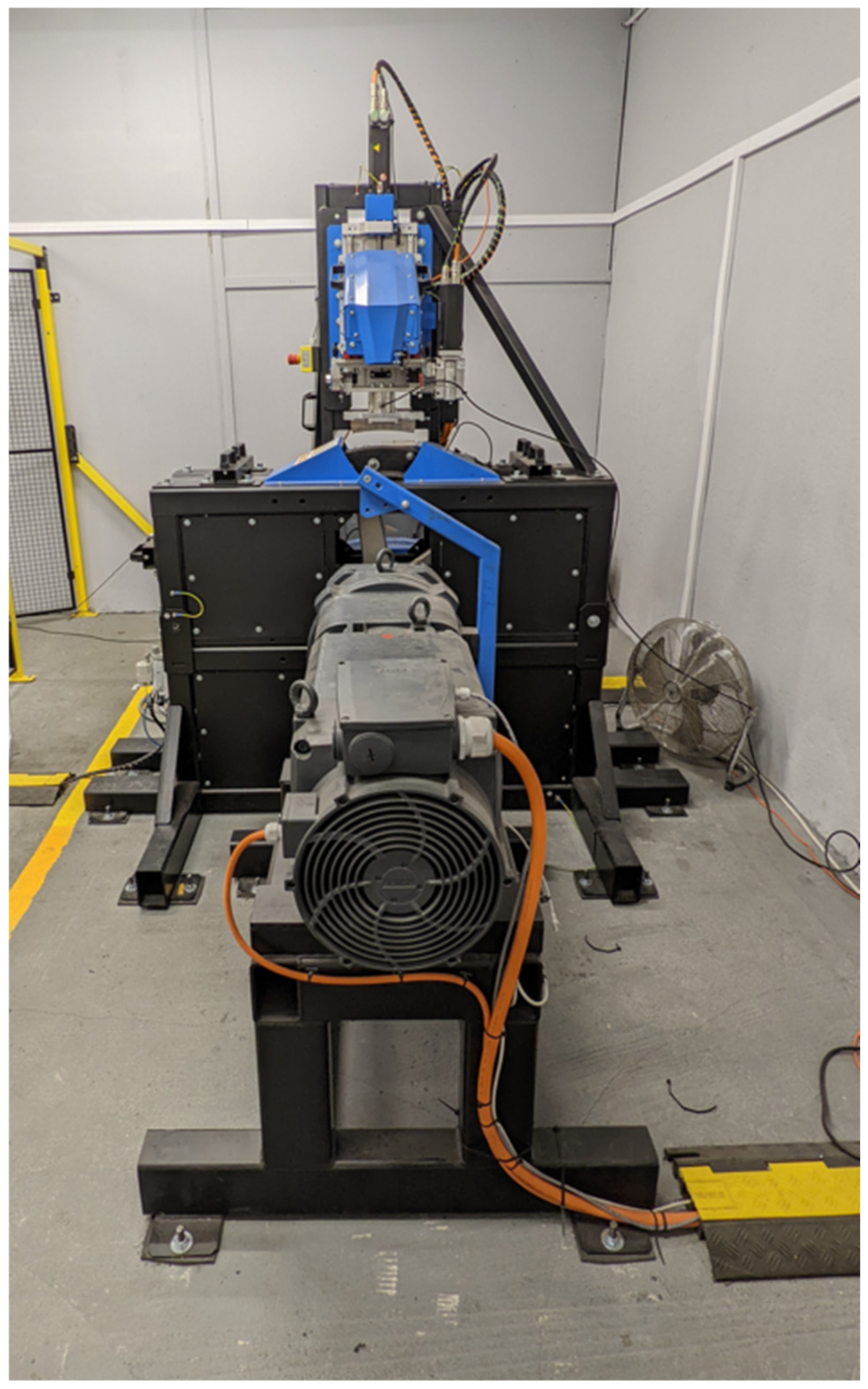
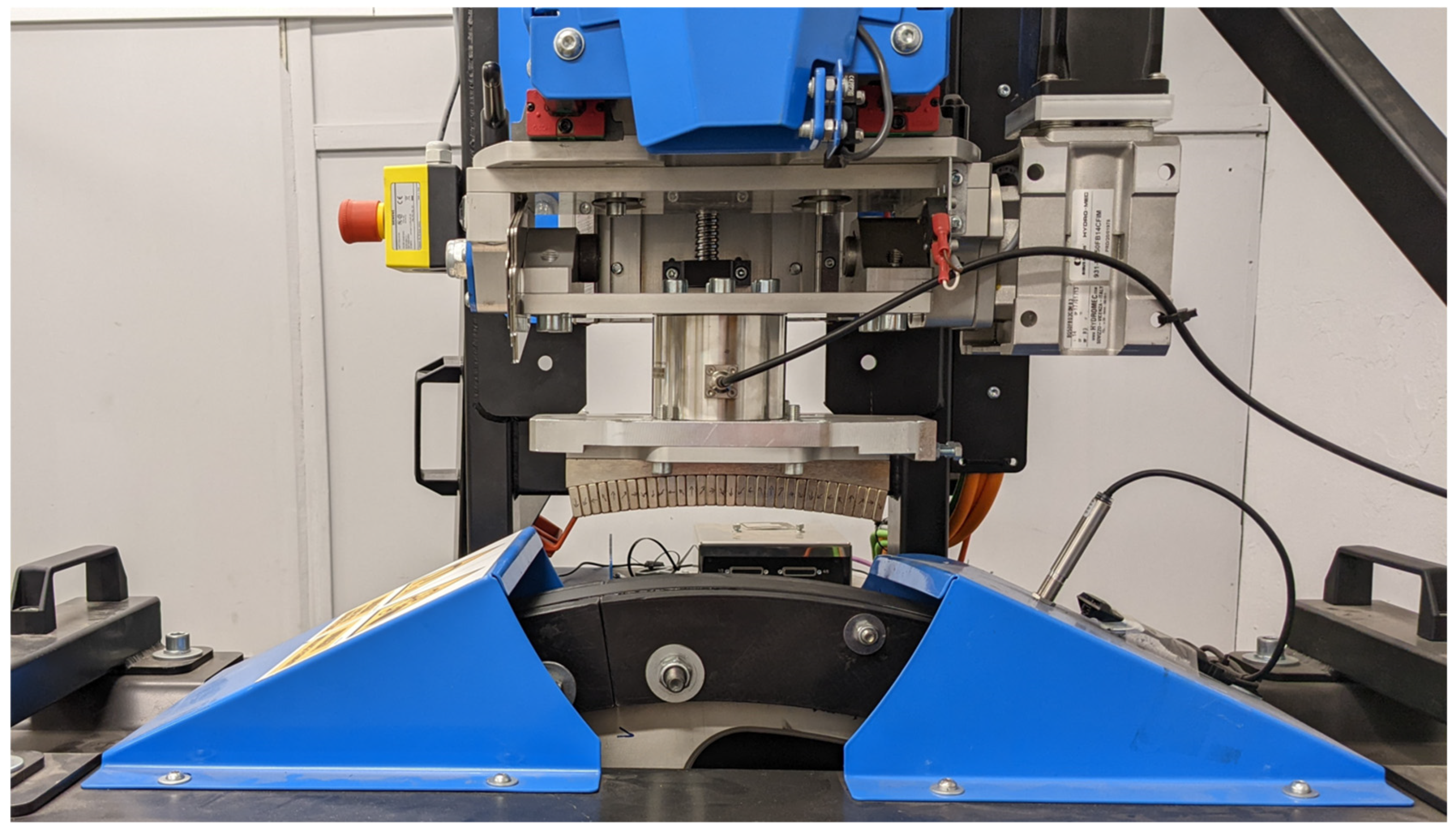
A rotational EDS test rig was constructed to facilitate experimental measurements of the magnetic field and forces generated by the Halbach packs (Figure 7). The rig consists of a large aluminium wheel (5 mm thick aluminium rim) that can be spun at controlled speeds, with a magnet pack suspended above the rim on a stationary measuring head (Figure 8). As the wheel rotates, the relative motion between the magnet array and the conductive rim induces eddy currents, resulting in levitation (lift) and drag forces, analogous to a magnet moving over a straight track. Using a rotating system allows continuous data collection at a steady-state speed and effectively emulates an “infinite track” by avoiding entry/exit transients.
The main components of the test bench (Figure 7) are as follows: (a) a wheel with aluminium rim of outer radius R = 509 mm and 5 mm thickness, (b) an electric drive motor (30 kW) coupled to the wheel to spin it up to the desired speed, and (c) a measuring head mounted on a frame above the rim, which can be vertically adjusted to set the air gap between the magnet pack and the rim. The measuring head contains a 6–axis force and torque sensor (K6D68, ME-Meßsysteme, Hennigsdorf, Germany) from which the vertical force (lift) and horizontal force (drag) on the magnet pack are read. The head can also traverse in the horizontal plane to reposition the magnet pack if needed.
For all tests, the magnet pack under study is rigidly attached to the force sensor on the head, and the wheel is accelerated to a target rotational speed corresponding to a linear peripheral velocity v (i.e., the tangential speed of the rim under the magnets). Once at speed, the head is lowered to achieve the chosen air gap g between the bottom of the magnets and the top surface of the aluminium rim, and then force data are recorded. After each run, the magnets are lifted away, and the wheel is brought to a stop. The rim’s speed can be regulated to simulate vehicle speeds up to 100 m/s (≈360 km/h) in this setup. In practice, tests were conducted at incremental speeds from 0 up to ~85 m/s to avoid excessive heating of the rim (the upper speed was limited by thermal considerations, as explained below). None of the publications related to EDS systems published to date have included experimental studies conducted at such high linear velocities.
It should be noted that the experimental setup was designed as a laboratory-scale test rig intended primarily for comparative evaluation of different Halbach array fill factor configurations. Due to thermal limitations of the conductive track and mechanical constraints of the rotating wheel assembly, the achievable test speed and air gap range were limited. These constraints should be considered when interpreting the experimental results.

2.2.1. Measurement of Magnetic Field

In addition to force measurements during rotation, the magnetic flux density in the air gap was measured in a static state. For this, a Teslameter (LZ-641, Linkjoin, Loudi, China) probe was positioned at specific distances (1 mm and 5 mm) from the active face of the magnet pack (with the pack removed from the rig and stationary). This allowed the capture of the air gap magnetic field distribution for each Halbach array, for direct comparison with simulation predictions of the field pattern. The probe was traversed along the arc of the pack to map the field magnitude across the whole length of the Halbach array. These static field measurements were used to validate the magnetostatic model of each configuration.

2.2.2. Force Measurement Procedure

Each force measurement run followed a consistent scenario. The wheel was accelerated to the desired constant rotational speed at a large air gap (magnets moved away from the aluminium rim). Once the speed reached the target value, the magnet pack was smoothly lowered to set a certain air gap and then kept in position while the forces stabilised. Force data were recorded over a period. At the same time, the temperature of the rim has been measured. Afterwards, the head was raised again, and the wheel decelerated. Due to eddy current losses, the aluminium rim heats up during high-speed runs. To preserve consistent conditions, tests were limited such that the rim temperature did not exceed 60 °C, above which the epoxy bonding of the rim could degrade. A non-contact infrared pyrometer was aimed at the rim to monitor its temperature in real-time, with a ±1.5% accuracy in readings. Sufficient cooling time was allowed between runs for the rim to return near ambient (~20 °C). Afterwards, the next test could be run.

2.2.3. Measurement Uncertainties

A crucial aspect of the research was to identify and mitigate various sources of error in the experimental setup. The following factors were evaluated:
  • Rim thickness variation: The aluminium rim thickness was measured at 30 points around the circumference before testing. It was found to vary between 4.92 mm (min) and 5.06 mm (max), with an average of 5.00 mm. This slight non-uniformity means the effective air gap changes by ±0.07 mm as the wheel rotates. However, this is a minimal variation (<1.5% of the nominal 5 mm thickness) and thus introduces only minor force ripple.
  • Air gap variability: The outer radius of the rim was checked using a dial indicator gauge mounted on the frame, measuring deviations as the wheel turned. Three circumferential tracks (inner, middle, and outer widths of the rim) were measured. The average radial deviation was found to be ~0.35–0.45 mm. This effectively adds a ±0.4 mm fluctuation in the air gap during rotation. The data analysis accounts for this by considering an uncertainty band on the measured forces.
  • Head positioning repeatability: The stepper motors that control the measuring head’s vertical movement have a finite resolution, and the head assembly has inertia. Multiple trials of moving the head to a set gap were performed at slow (10 mm/s) and fast (50 mm/s) speeds; the variation in final position was under ±0.005 mm, which is negligible relative to other uncertainties.
  • Sensor accuracy: The force/torque sensor has specified reading errors of up to 0.14% in the vertical channel (direction of levitation force) and 0.18% in the horizontal channel (direction of drag force) at full scale measurement range. These translate to force uncertainties on the order of a few tenths of a newton for the ranges measured, which is negligible. The sensor was zeroed before each run to eliminate bias drift. The Tesla metre probe accuracy is ±2%, affecting field magnitude measurements but not force (which relies on the sensor).
In summary, the dominant experimental uncertainties arise from the rim geometry (up to ~0.4 mm air gap variation cyclically) and from the finite temperature changes in the rim (which alter its resistivity slightly). These were reflected in the results by plotting error bands on the measured force curves, indicating the range of possible force due to the combination of uncertainties. In the data plots (Section 3), dashed lines will indicate the estimated uncertainty in the measured forces, to facilitate the best comparison with the idealised simulation results.

2.3. Simulation Model Setup

For comparison with the experiments, a detailed 3D finite-element model of the test rig was created in Ansys Maxwell 3D (ANSYS Inc., Canonsburg, PA, USA, academic research licence). Post-processing and data analysis were conducted using MATLAB R2023a (MathWorks, Natick, MA, USA), academic licence. The model geometry included the aluminium rim (modelled as a 5 mm × 40 mm cross-section ring with a 509 mm radius and conductivity of 32.47 MS/m) and the permanent magnet pack (with exact dimensions and magnetisation directions matching each configuration). The non-magnetic back iron mounting of the magnets was also included. Appropriate material properties were assigned (N40 magnet with remanence Br = 1.25 T, relative permeability μr ≈ 1.05; aluminium conductivity σ = 32.47 MS/m). The simulations were performed in two parts:
  • Magnetostatic analysis (static field): To obtain the magnetic flux density distribution around the Halbach array in the absence of motion, a magnetostatic solver was used. A fine adaptive mesh (with target error of 0.01) was applied in the region around the magnets to capture field details. The resulting mesh had ~11.2 million elements, and each static solution took ~6.5 h to converge on a workstation. This provided the spatial field map, which could be directly compared to the Tesla metre measurements.
  • Transient electromagnetic analysis (dynamic forces): The rotation of the conducting rim under the static magnets was simulated using the transient solver with motion. The model imposed a constant angular velocity on the aluminium ring while the magnet pack was stationary (this approach is equivalent to moving the magnets over a stationary track, by symmetry). Motion was implemented via Maxwell’s moving band technique. Mesh refinement was set to use ~0.4 million elements, and a time-step size corresponding to 1 degree of wheel rotation per step was employed (sufficiently small to resolve eddy current diffusion at high speeds). Each transient run (for a given speed and magnet configuration) took ca. 40 min to simulate. The outputs were the levitation force (vertical Flev) and drag force (horizontal Fdrag) on the magnets, obtained by integrating the virtual forces over the volume of the Halbach arrangement. These were computed for multiple discrete speeds from 0 to 100 m/s and for multiple air-gap values to match experimental test points.
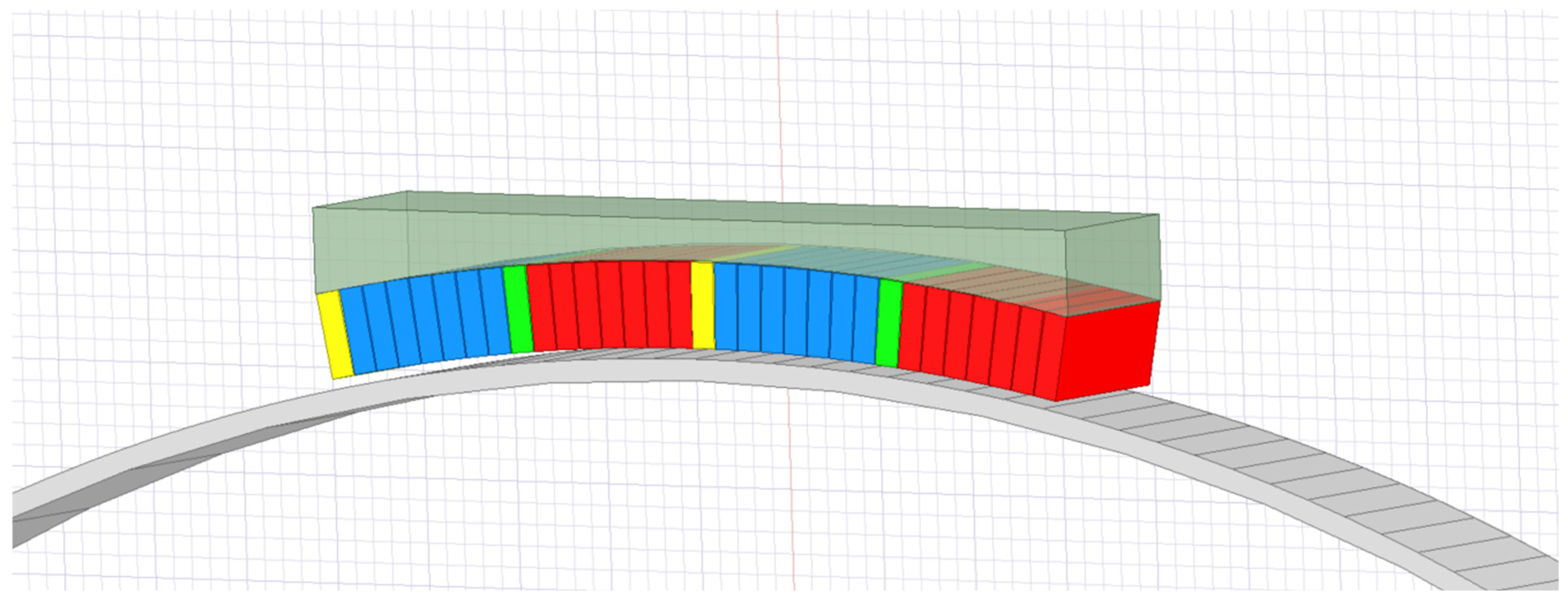
The simulation model assumes an ideal scenario: the rim is perfectly uniform and round, material properties are homogeneous and constant (with no temperature rise), magnets have exact magnetisation, and there are no measurement errors. These assumptions, although necessary for tractable modelling, differ from real conditions and will be considered when comparing them to measurements. Despite this, the simulation is expected to capture the fundamental physics of the EDS interactions. A visualisation of one simulation scenario is shown in Figure 9.

3. Results

3.1. Magnetic Field Distribution in the Air Gap

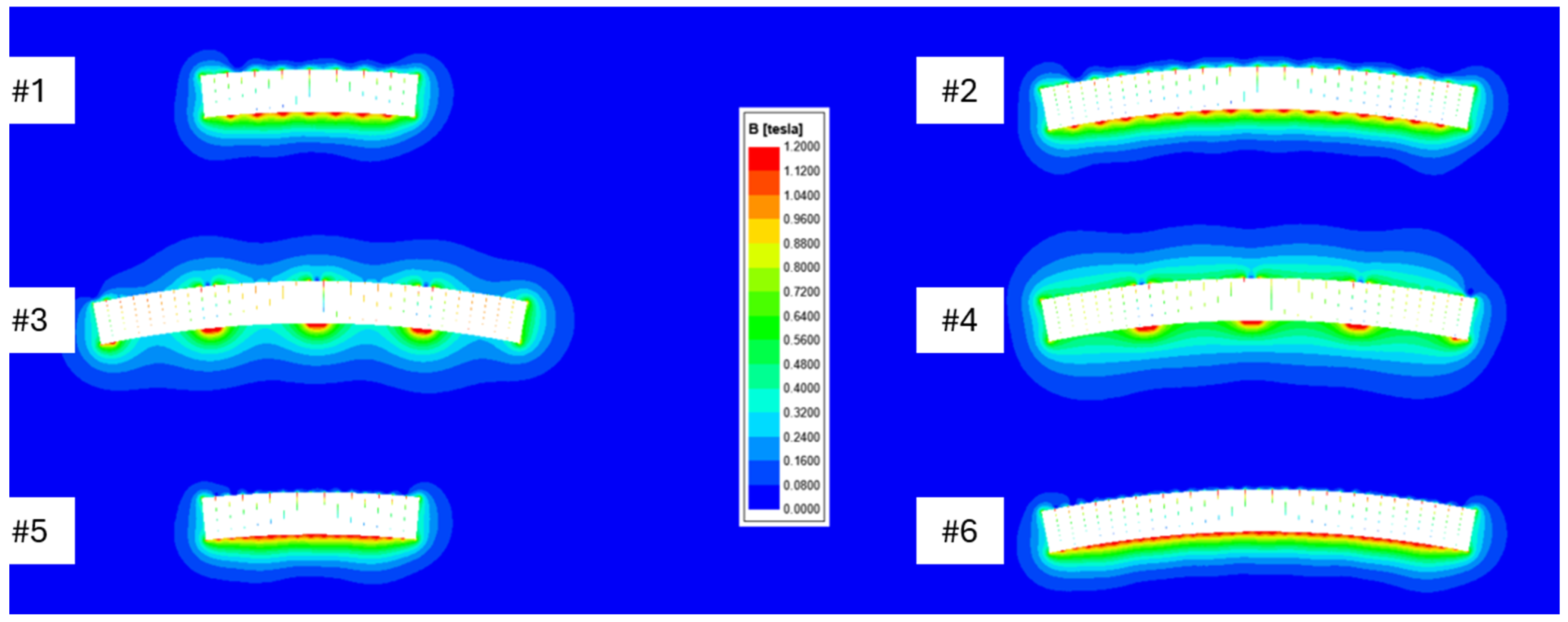
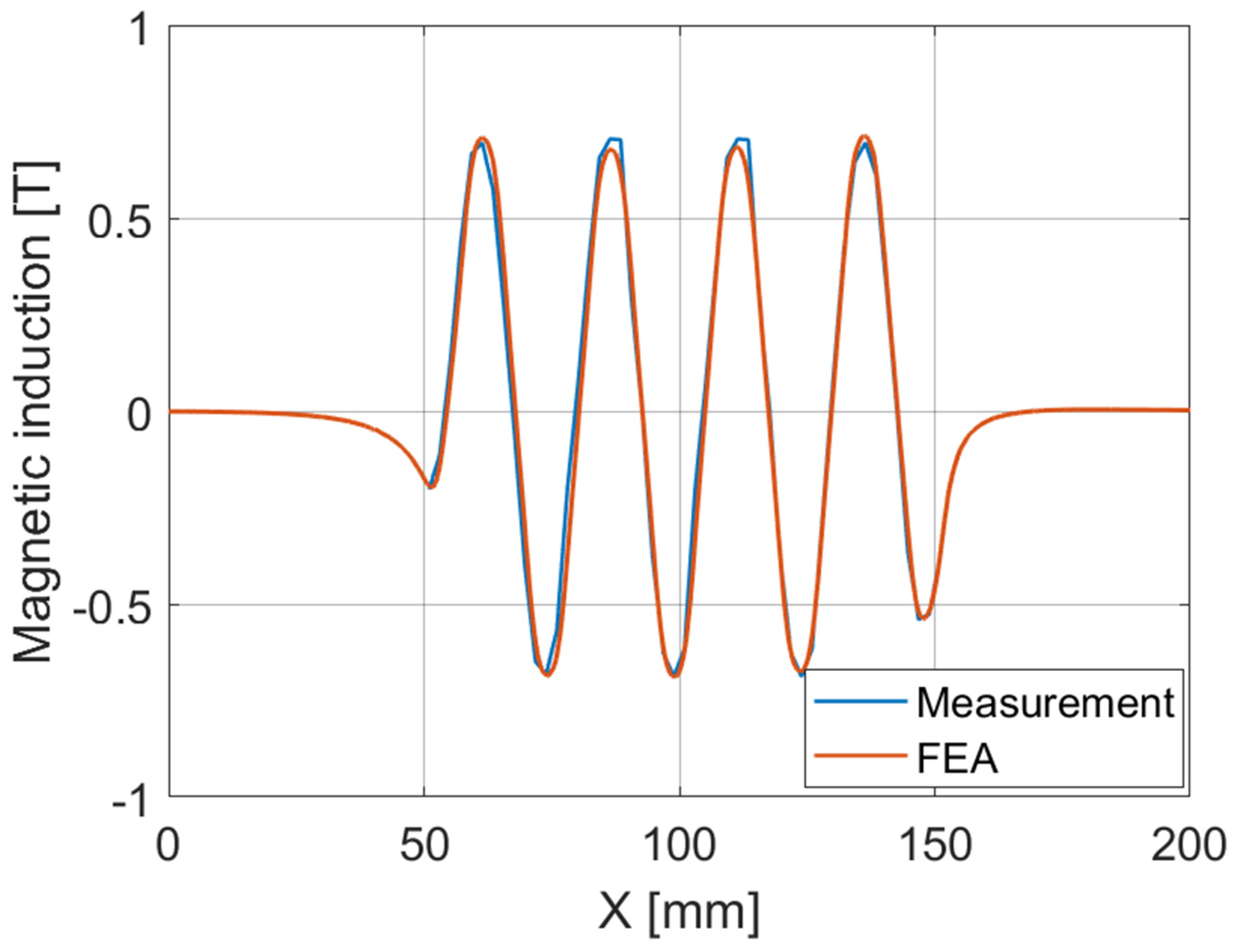
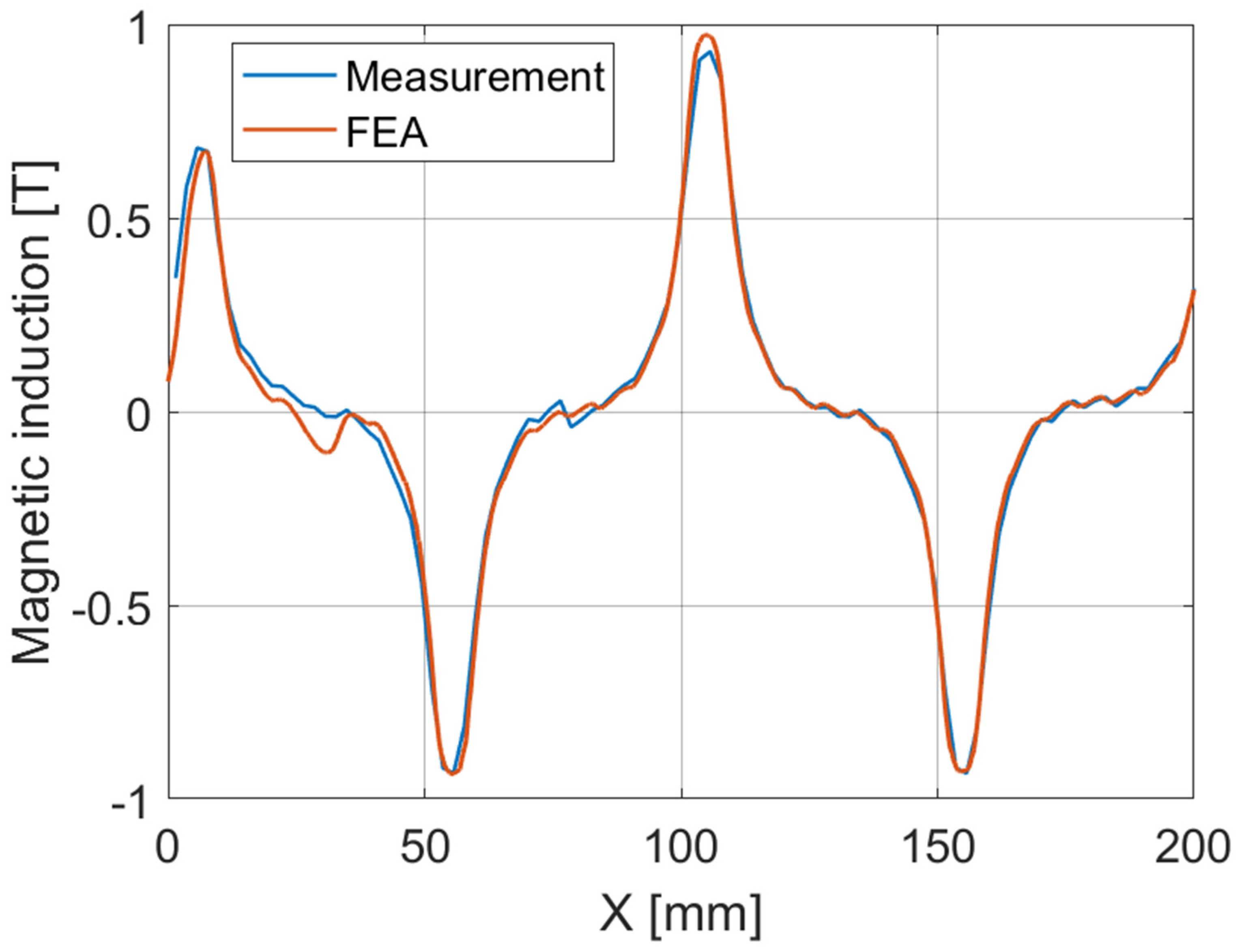
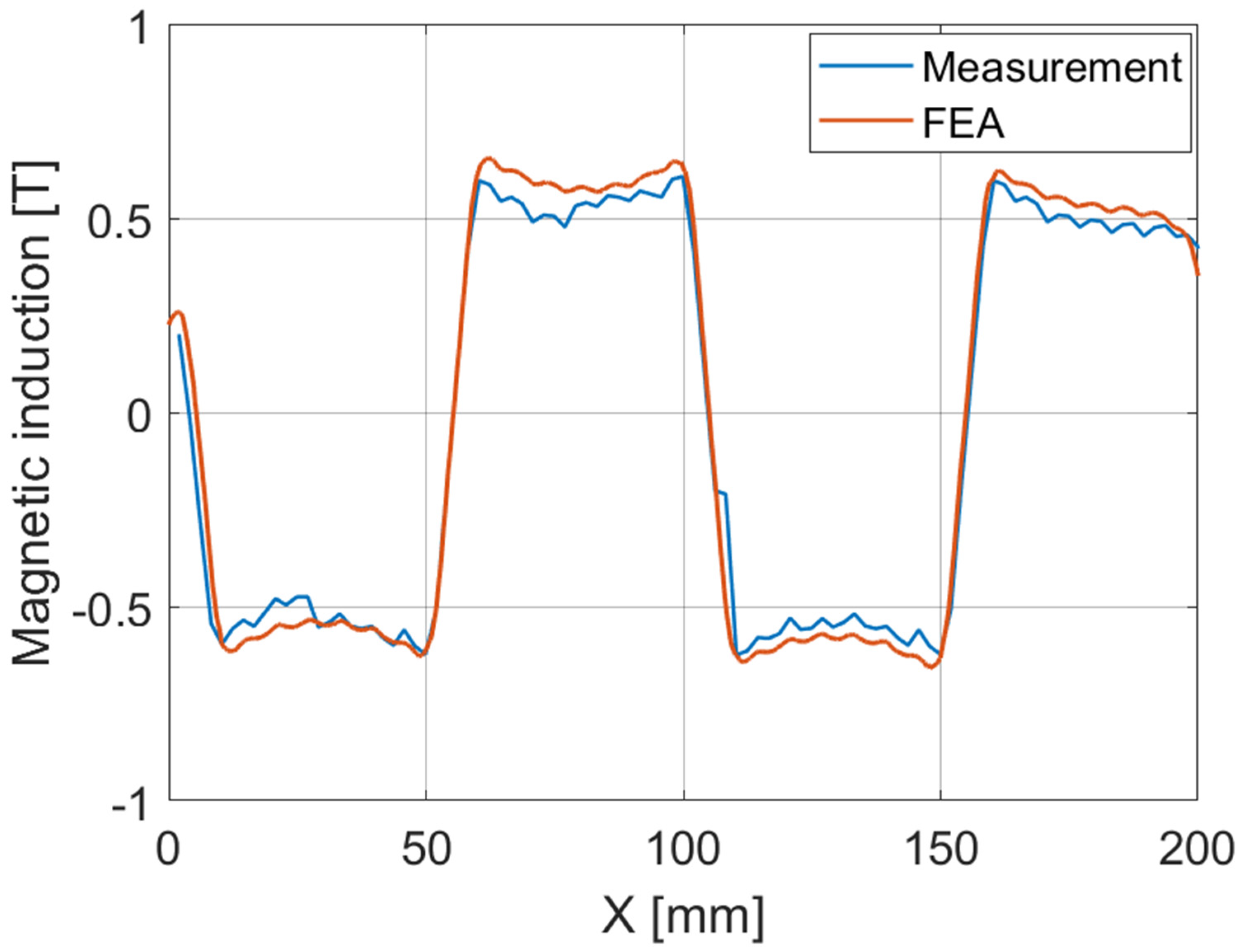
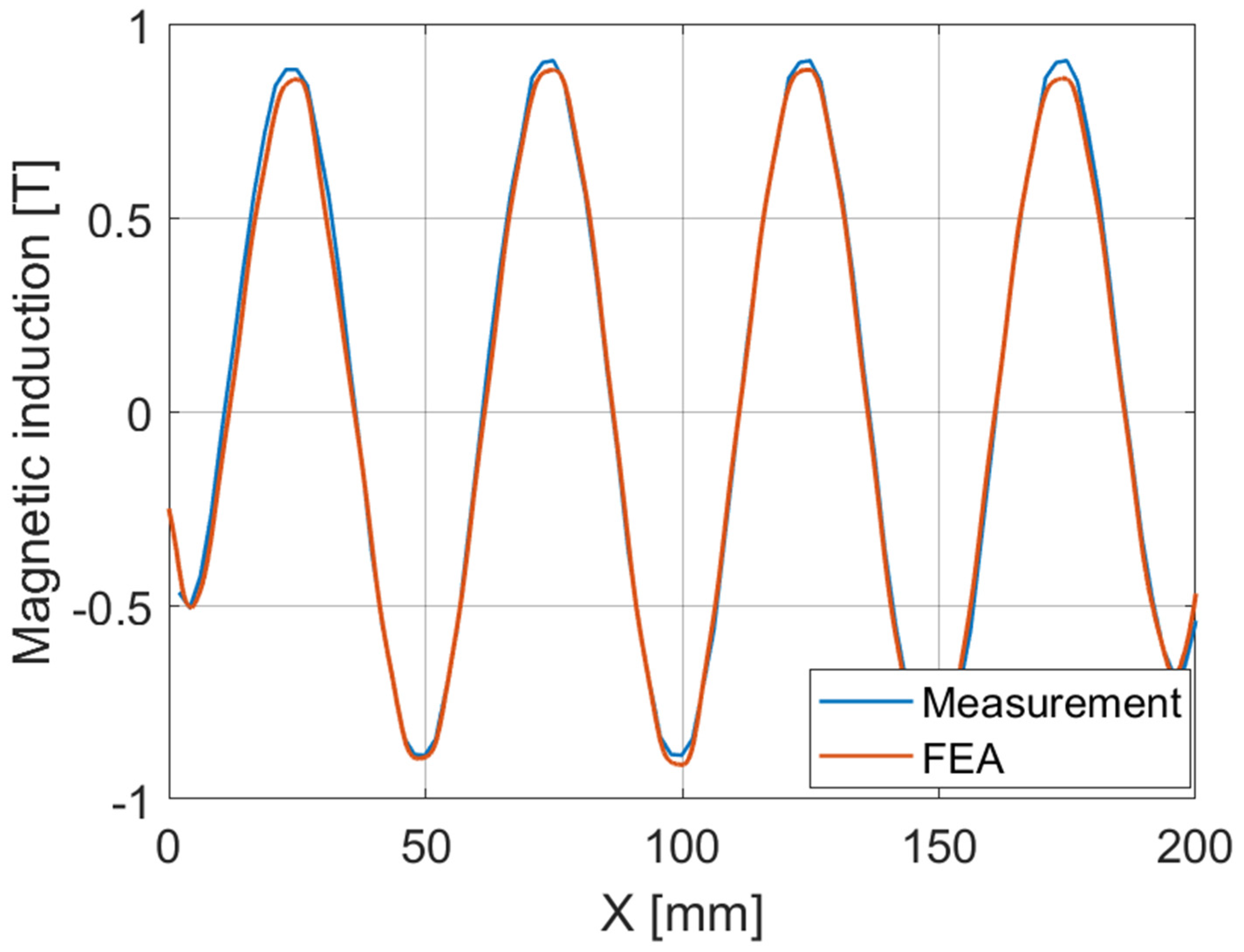
The magnetic field distribution underneath each Halbach configuration was compared with the field measurements. Figure 10 shows the magnetic flux density contours around the six magnet packs from simulation, while Figure 11, Figure 12, Figure 13 and Figure 14 plot the magnetic induction measured along the centreline of the air gap (at 1 mm distance) for each pack versus the simulation results.
Overall, the agreement between the simulated and measured magnetic field is very high for all configurations. The characteristic field waveform under each Halbach array is captured well by the model. Magnetic packs #5 and #6 (which have M = eight magnets per wavelength) produce the strongest and most uniform field near the surface, as evidenced by relatively flat-topped B profiles and higher average flux density. Packs #3 and #4 (with the smallest and greatest fill factors) yield more uneven field profiles with noticeable peaks where a cluster of the same-oriented magnets concentrates flux. These features are reflected in both the measurements and the simulations. The classic Halbach (pack #1 and #2) lies intermediate, having a moderately smooth field.
All measured field curves coincide closely with the simulation curves. Minor discrepancies are observed at certain points, likely due to probe positioning limits and slight magnetisation tolerances, but no systematic deviation is noted. This magnetic field validation confirms that the simulation’s magnetostatic model is reliable and that the magnet properties (remanent flux density and Halbach arrangements) were accurately represented. It also indicates that despite the curvature of the packs, the Halbach behaviour is as expected: increasing the M value enhances the surface field magnitude up to a saturation point, and altering the fill factor redistributes the field between the vertical and horizontal components.

3.2. Levitation and Drag Forces

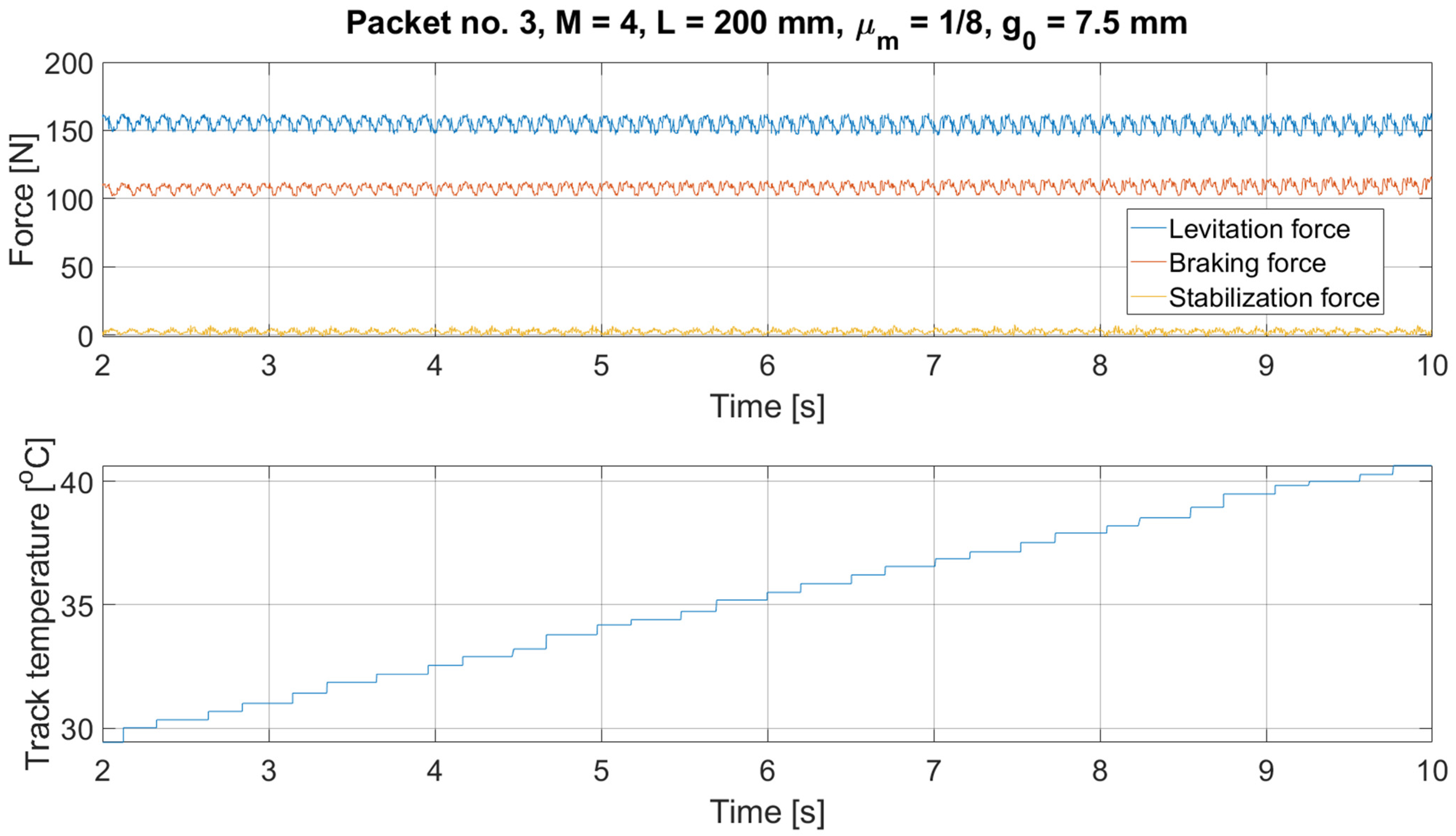
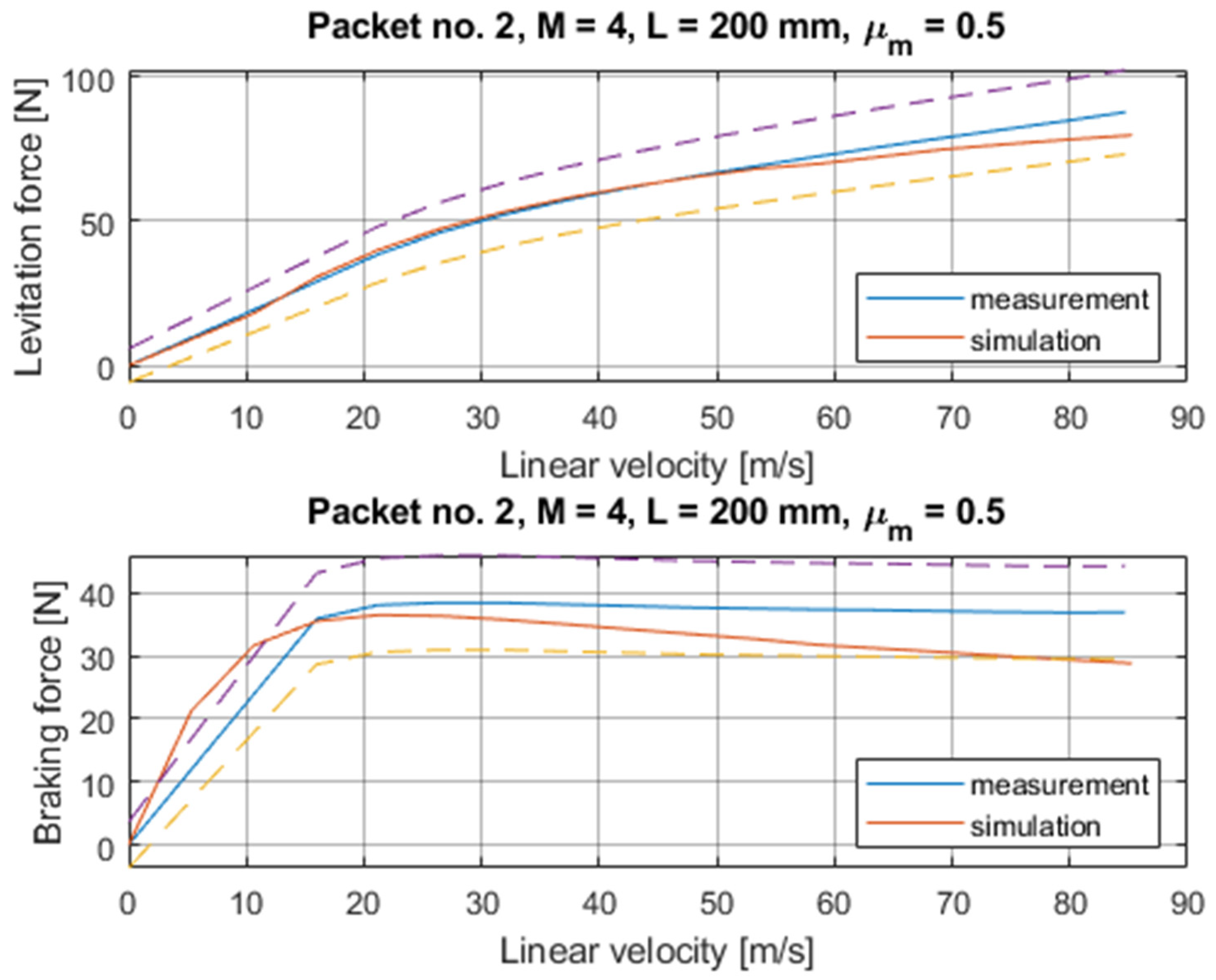
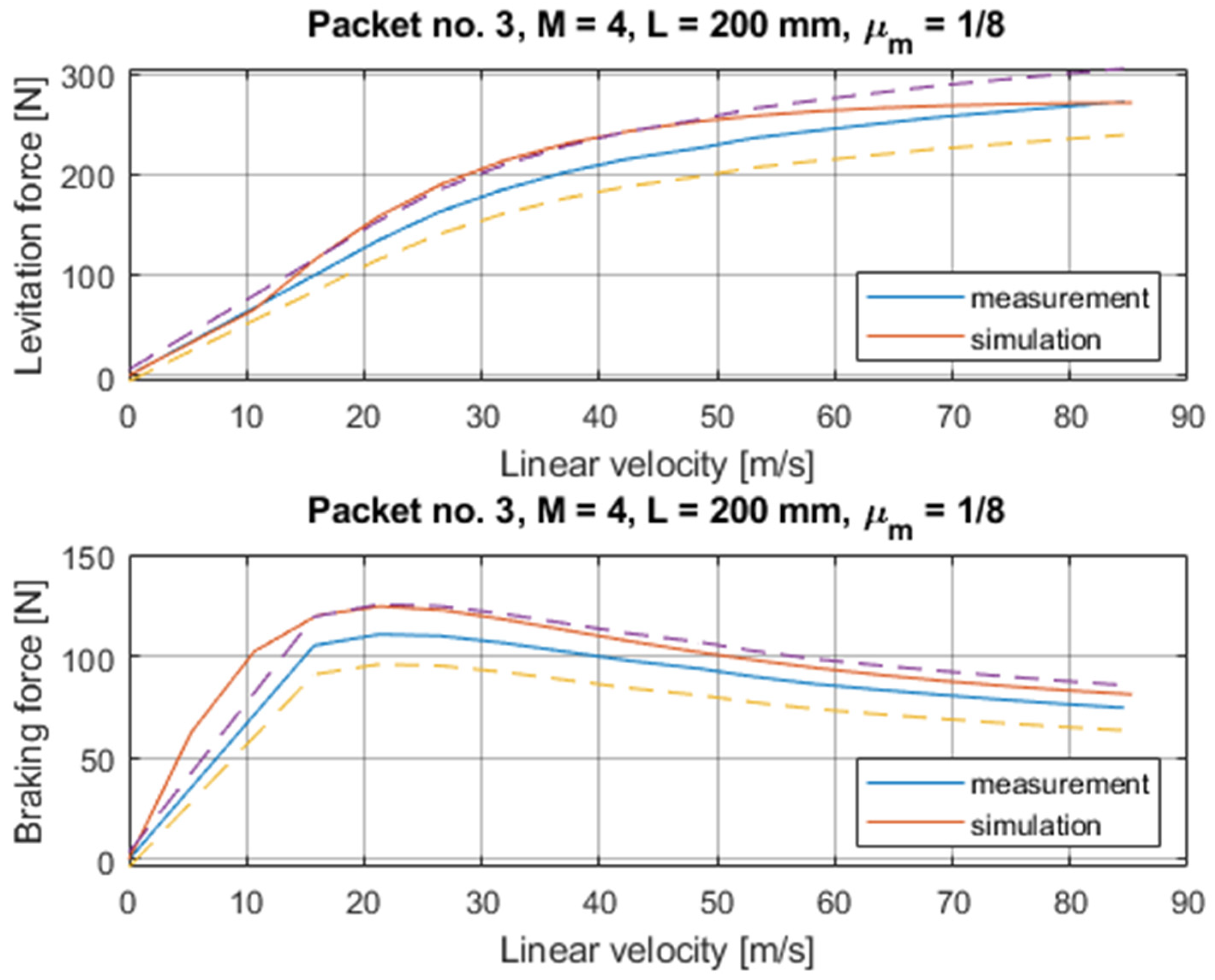
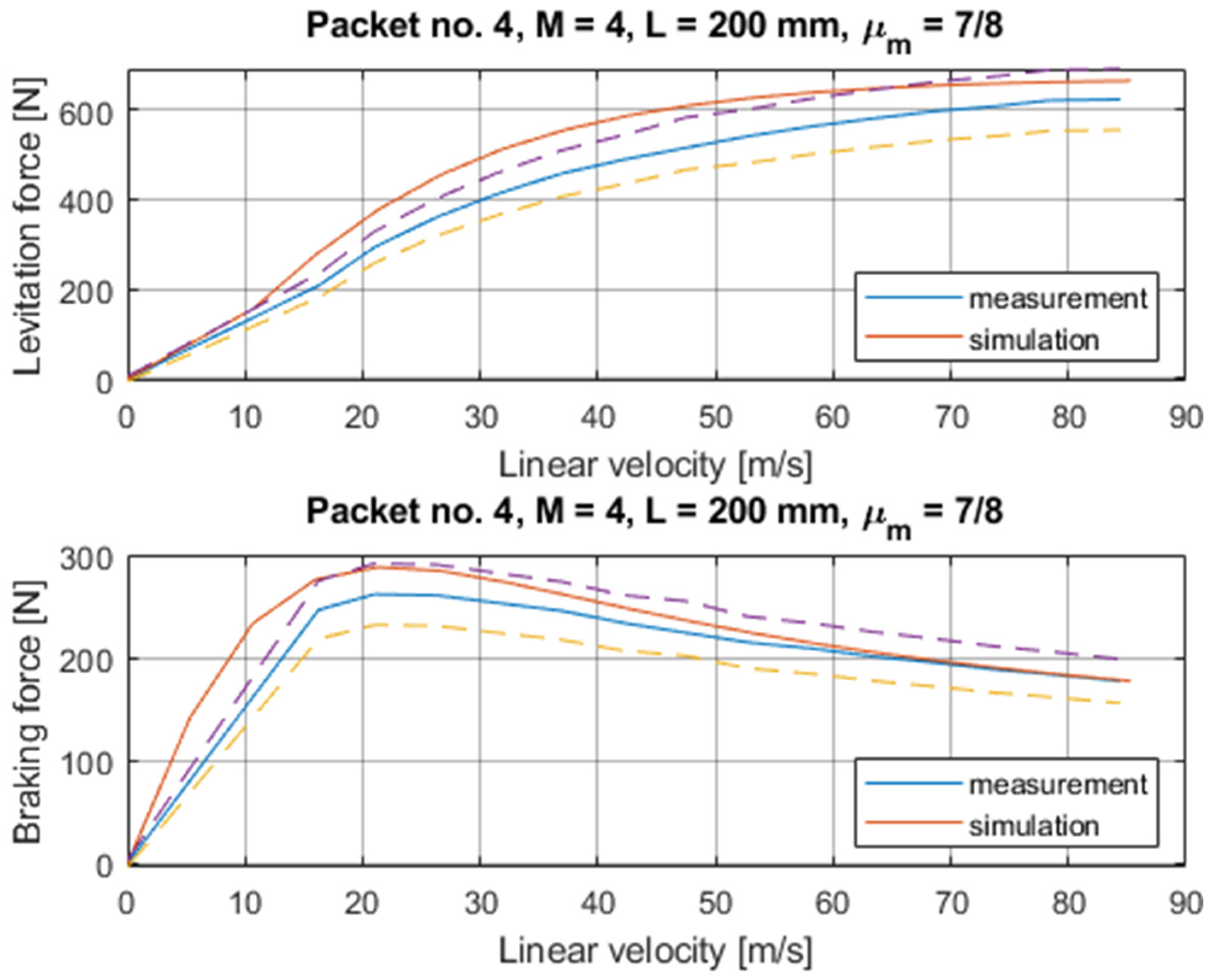
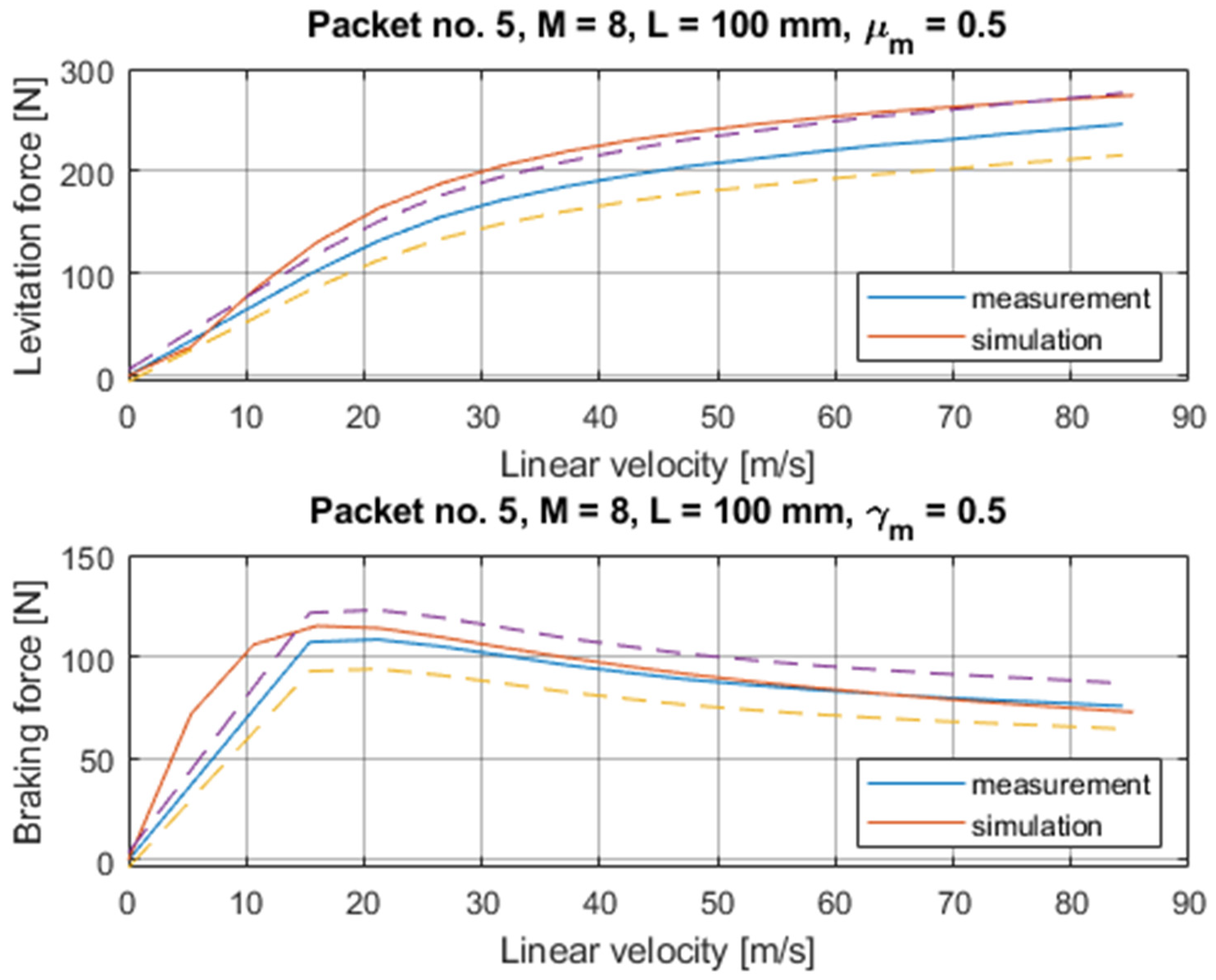
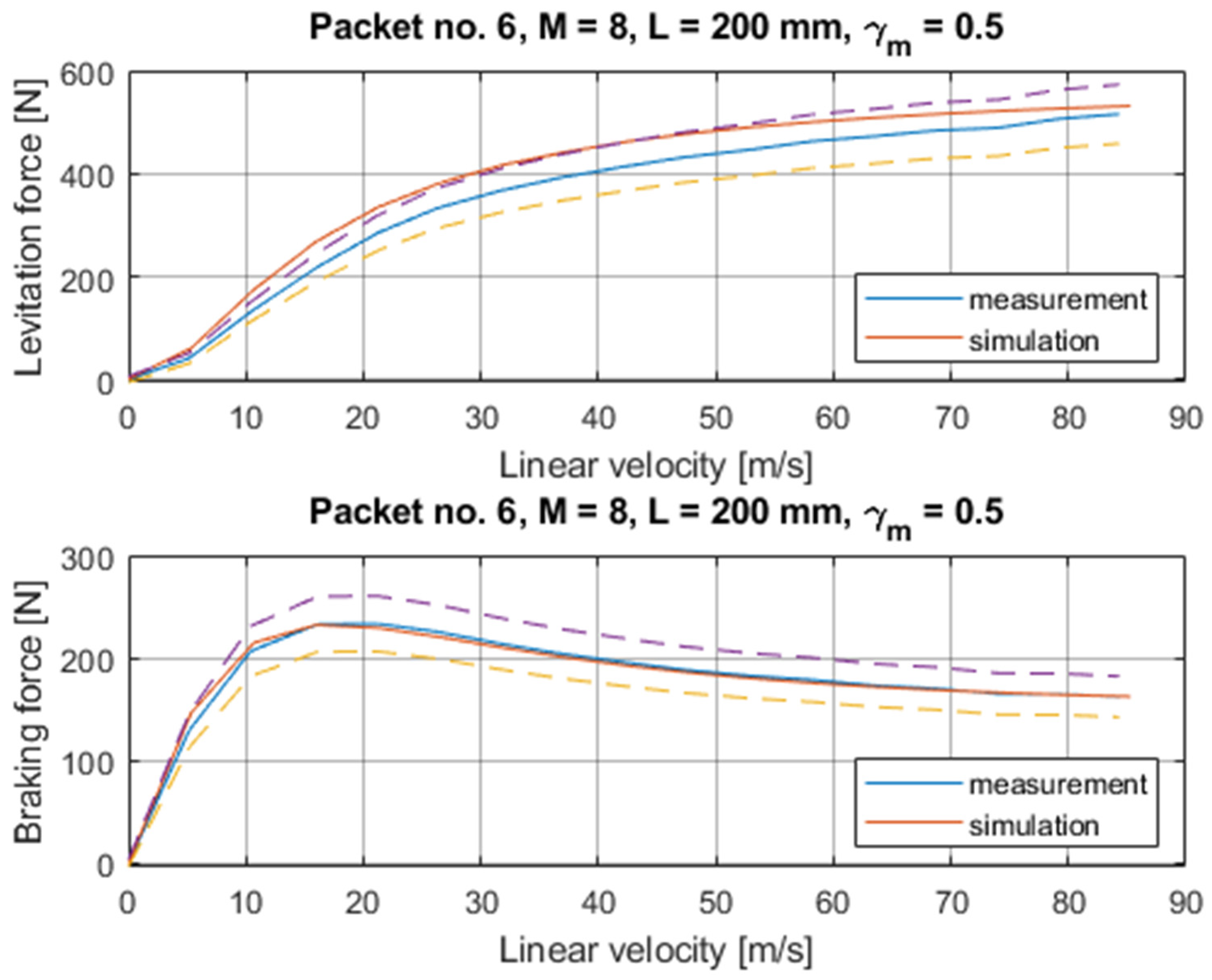
The dynamic forces generated by the magnet arrays in the experiments were validated against the simulation predictions. A series of tests was conducted at an air gap of g = 7.5 mm for each magnet pack, sweeping the speed from 0 to 85 m/s in increments (with the limitations noted earlier). Figure 15 presents an example of raw force signals acquired during a single experimental run (at a velocity of 26.7 m/s) together with the corresponding aluminium track temperature. The measured forces exhibit pronounced cyclic fluctuations resulting from unavoidable mechanical imperfections of the rotating test rig, such as non-uniform air gap, slight misalignment of the rotating shaft, and variations in aluminium thickness along the circumference.”
Additionally, the extrema of the force signals gradually increase over time, which is directly related to the heating of the test stand during operation. Due to rapid temperature rise, each tested velocity required multiple experimental runs, during which force signals and temperature were recorded simultaneously.
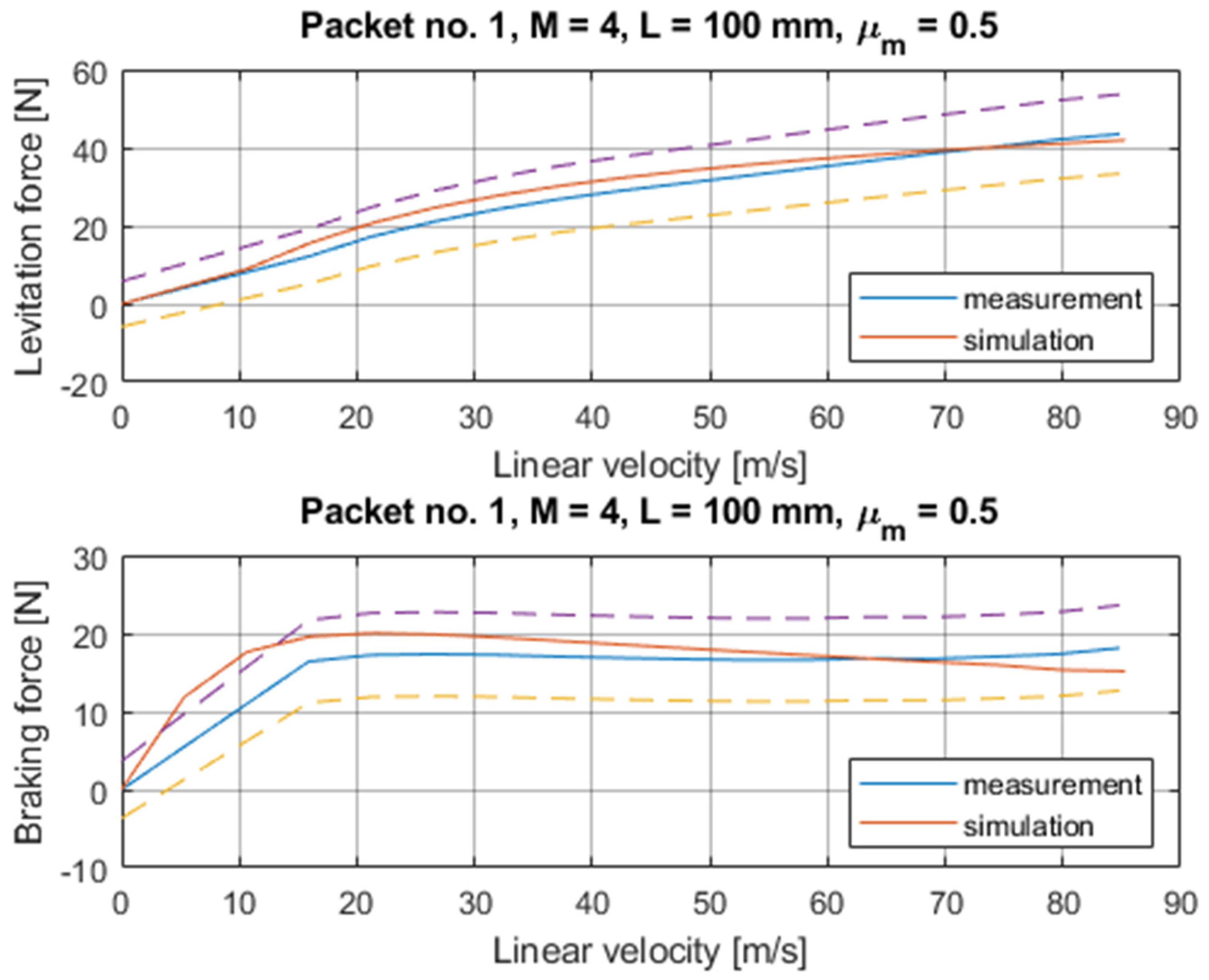
To obtain the force characteristics presented in Figure 16, Figure 17, Figure 18, Figure 19, Figure 20 and Figure 21, data from multiple experiments were processed. The raw signals were denoised, including frequency-domain analysis, and subsequently synchronised with temperature measurements. For each Halbach configuration and velocity, force values corresponding to the same temperature level were selected and combined into a single characteristic. This procedure ensured temperature-independent comparison and continuity of the results across the entire velocity range.
The corresponding simulations were run under the same conditions. Figure 16, Figure 17, Figure 18, Figure 19, Figure 20 and Figure 21 present the resulting lift and drag forces as functions of speed for all six configurations, with experimental data in blue and simulation in red. Shaded regions (dashed-line bounds) on the experimental curves indicate the uncertainty range due to measurement and rig tolerances as discussed in Section 2.2.
The lift and drag forces for all magnet packs exhibit the expected velocity curvature of an EDS system: levitation force increases rapidly from zero as speed rises, then grows more slowly at high speeds, whereas drag force increases to a peak at low-mid speeds (~15–20 m/s here) and then gradually decreases at higher speeds. This behaviour is consistent with theoretical predictions for induced eddy currents in a conductive track.
It is important to note that the simulations assume an ideal scenario. The minor differences between the red and blue curves can be attributed to factors such as minor geometric discrepancies (exact magnet dimensions and alignment, rim roughness), material property variations (temperature increase in the rim raising resistivity), and the inherently discrete time-stepping in simulations compared to the continuous nature of reality.
Although the measured and simulated values do not align perfectly, the validation of the simulation model, along with the behaviour of Halbach packs with a vertical magnet fill factor γ different from 0.5, is considered successful. This confirms that the 3D transient FEA model accurately captures the physics of the EDS Halbach system. Thus, it can be trusted for predicting the performance of similar configurations beyond the tested cases.

3.3. Performance Metrics and Power Consumption Analysis

While raw lift and drag forces are helpful, it is more insightful to compute performance metrics that combine these forces and account for the system’s weight. Three key parameters were evaluated for each configuration, based on the measured and simulated force data: the lift-to-drag ratio (LDratio), the lift-to-weight ratio (LWratio), and the magnetic friction coefficient from load (μm). These were defined in our previous work and thesis as:
  • LDratio—Lift-to-Drag ratio—a dimensionless measure of efficiency (how much lift is achieved per unit of drag) [44].
L D r a t i o = F l e v F d r a g
  • LWratio—Lift-to-Weight ratio—indicates the self-lifting capability of the magnet array (LWratio > 1 means it can lift more than its own weight) [44].
L W r a t i o = F l e v Q m a g
  • μm—magnetic friction coefficient from load—this parameter describes the braking forces generated during the levitation of a load whose weight is equal to 1 Newton.
μ m = F d r a g F l e v Q m a g = F d r a g Q l o a d
F l e v = Q m a g + Q l o a d
where
LDratio = lift-to-drag ratio (-)
LWratio = lift-to-weight ratio (-)
Flev = levitation force (N)
Fdrag = drag force (N)
Qmag = weight of the permanent magnet array in the EDS system (N)
Qload = weight of cargo load to be levitated by the EDS system (N)
μm = magnetic friction coefficient from load (-)
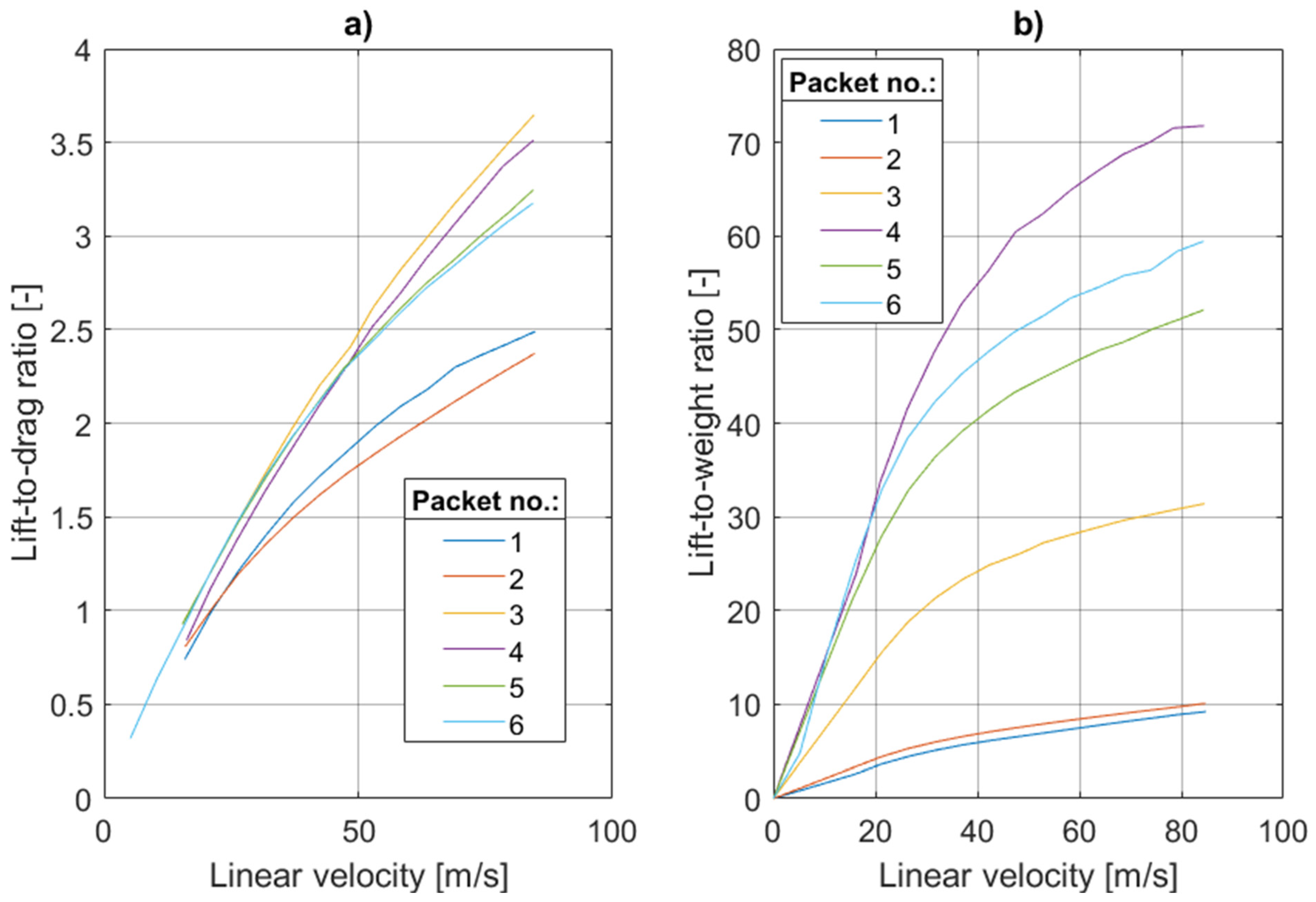
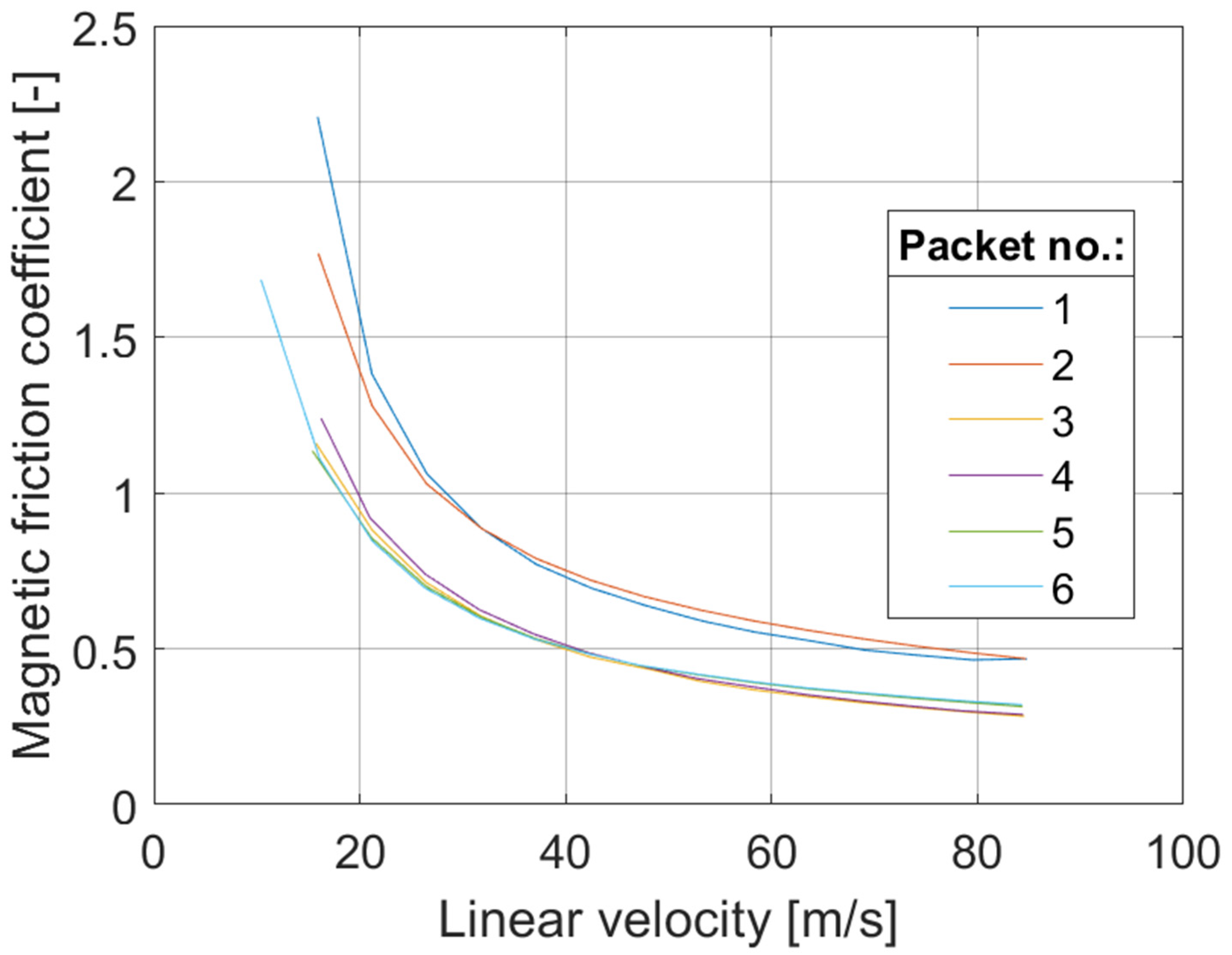
Figure 22 shows the LDratio and LWratio as a function of speed for the various packs based on experimental data. Figure 23 shows the calculated μm as a function of speed for each configuration. These results allow us to identify which arrangement is most efficient in terms of lifting capability versus power loss.
From Figure 22 and Figure 23, several observations can be made:
  • The LDratio of the modified Halbach arrays (#3 and #4) is significantly higher than that of the classical arrays (#1 and #2) at higher speeds. At lower speeds, LDratio tends to converge.
  • The LWratio indicates how heavy an array is relative to its lift. All configurations achieve a LWratio greater than 1, meaning they produce lift exceeding their own weight. Pack #4 achieves the highest LWratio. Pack #3 also exceeds the classical ones, although Pack #6 (M = 8) comes close due to its higher magnet mass, which contributes to lift.
  • The magnetic friction coefficient μm encapsulates the overall power efficiency. The lowest values of μm are achieved by packs #3 and #4 at the upper speed range. It is also evident that as velocity increases, all configurations become more efficient, and μm decreases.
In summary, the performance metric analysis validates the initial hypothesis: Halbach arrays with a fill factor different from 0.5 can achieve higher load-lifting efficiency. In particular, the variety with γ = 0.875 (pack #4) consistently outperforms the others in terms of having the lowest magnetic friction coefficient at operational speeds, indicating the lowest power requirement for levitation. The γ = 0.125 array (pack #3) also outperforms the classical arrays, though by a smaller margin.
These findings corroborate the simulation-based predictions reported in our previous work [36] and demonstrate experimentally that one can reduce the drag power losses in an EDS system by choosing an appropriate Halbach magnet geometry.

4. Discussion

The experimental validation presented above confirms that the finite-element simulation model is reliable and that the modified Halbach configurations offer performance advantages. The finite element analysis performed in this study was not intended as an optimisation or preliminary design tool. In the authors’ previous work [36], numerical simulations were used to demonstrate that increasing the width ratio of vertically magnetised magnets relative to horizontally magnetised ones can lead to improved energy efficiency of Halbach-based EDS suspension systems.
The primary objective of the present study was to experimentally validate this hypothesis and to verify the accuracy of the previously developed numerical model under real operating conditions. Therefore, the finite element calculations were employed as a reference framework to ensure consistency between simulated predictions and experimental measurements. This validation step is essential for confirming the reliability of the numerical model and for enabling its future application in the design and optimisation of energy-efficient EDS suspension systems. However, a few discrepancies and considerations merit discussion:
Although the results from simulation and experiments matched well, the simulation sometimes slightly overestimated forces (especially drag at certain speeds) outside the experimental error bars. Several factors can explain these differences:
  • Idealised Geometry: The model assumes perfectly uniform magnet dimensions and a perfectly cylindrical, uniformly thick rim. In reality, minor deviations (e.g., the measured radial runout of ~0.4 mm and thickness variation of ~0.07 mm) cause fluctuations and effectively reduce the time-averaged forces. The simulation yields a smoothed, ideal force, eliminating these imperfections, which can sometimes result in higher peak values.
  • Material Homogeneity and Temperature: The simulation keeps material properties constant (magnet magnetisation, aluminium conductivity). Experimentally, after a few seconds at high speed, the rim’s temperature rises rapidly. Aluminium’s resistivity increases with temperature (approximately 0.4% per °C), meaning that at 60 °C the rim’s resistance is ~16% higher than at 20 °C. This could partially account for the measured drag differing from the predicted value at sustained high speeds.
  • Measurement Uncertainties: The force sensor’s small error and the method of zeroing might introduce slight biases. Also, the process of engaging the magnet at speed (lowering the head) can cause transient oscillations or minor position overshoot, which the steady simulation cannot replicate. We mitigated this by only recording steady-state data; however, any difference in effective gap or alignment would be reflected in the results.
  • Mesh and Time-step Discretisation: In FEA, the solution is spatially and temporally discretised. A coarser mesh or time step can artificially smooth or slightly misestimate peaks (although we used fine settings). Notably, transient simulation cannot capture truly continuous velocity—forces are computed at discrete time points, possibly missing some fine ripple dynamics that might dissipate energy differently.
Nevertheless, almost all experimental results for force vs. speed fell within the envelope of simulation results ± uncertainties, indicating strong validation of the model.
Although the present study does not include systematic experimental investigations of air gap variation and magnet parameter changes, the observed trends are consistent with previously reported theoretical and numerical analyses. In particular, changes in air gap are expected to influence both the induced eddy current density and the resulting lift-to-drag ratio, while magnet material properties primarily affect the magnitude of the magnetic field and force levels. These aspects will be addressed in future studies using an upgraded experimental setup.

5. Conclusions

This study presents a comprehensive experimental verification of a modified Halbach array design aimed at reducing power consumption in electrodynamic suspension (EDS) systems. The key novelty of this work is the experimental verification that the energy efficiency of Halbach-based EDS suspension systems can be improved by appropriately adjusting the width ratio between vertically and horizontally magnetised magnets. The obtained results demonstrate that this parameter plays a critical role in force generation efficiency and should be considered as an important design variable in future EDS suspension system development. Building upon earlier simulation research [36], we have demonstrated on a test bench that adjusting the ratio of magnet widths in a Halbach array (deviating from the conventional 50% fill factor) leads to measurable improvements in performance:
  • The finite element simulation model (developed in prior work) was validated against physical measurements. Excellent agreement was found for both magnetic flux density distributions in the air gap and for levitation and drag forces across a broad range of speeds, confirming the model’s accuracy.
  • The research confirmed that power losses due to magnetic drag are reduced when using the modified Halbach arrays, validating the core hypothesis that an energy-efficient EDS suspension can be achieved by altering the magnet span geometry. Halbach arrays with non-standard fill factors (γ = 0.125 and 0.875) exhibited higher lift-to-drag ratios and lower drag force for a given lift, compared to the classic Halbach configuration (γ = 0.5). In particular, the array with γ = 0.875 (narrow horizontal magnets) achieved the best performance, reducing the magnetic friction coefficient μm relative to the classical design.
In summary, this work experimentally substantiates that by changing the span of the horizontal magnet in a Halbach array–effectively using a fill factor different from 0.5–one can reduce the power consumption of an EDS maglev system during operation. The findings are consistent with the prior simulation study and strengthen the argument for considering non-traditional Halbach arrangements in future maglev train designs to improve energy efficiency. The rotating test methodology and validation approach used here can be extended to investigate other magnet configurations or further optimised to achieve specific operational targets.
Future work will focus on extending the experimental investigations to a wider range of air gaps and higher operating speeds, as well as analysing the influence of magnet material parameters. However, this will require further modernisation of the experimental setup to address thermal and mechanical limitations. The following steps for future work may also include investigating dynamic stability and guidance forces in the modified arrangement. Additionally, implementing a full-scale linear track experiment or a prototype vehicle suspension using the optimised Halbach array would be valuable for demonstrating the benefits in a real-world scenario. Integrating the modified Halbach array with other drag-reduction methods (such as null-flux coils) could also be explored to compound the efficiency gains.
Overall, the experimental validation performed in this study gives confidence that the proposed modification is practical and beneficial, bringing EDS maglev technology one step closer to achieving lower operational power demands without compromising levitation capability.

Author Contributions

Conceptualisation, T.K. and L.G.; methodology, T.K., L.G. and M.G.; software, T.K. and M.G.; validation, M.G. and T.K.; formal analysis, L.G. and T.K.; investigation, T.K. and M.G.; data curation, M.G.; writing—original draft preparation, T.K.; writing—review and editing, T.K. and L.G.; visualisation, M.G.; supervision, L.G.; project administration, T.K.; funding acquisition, L.G. All authors have read and agreed to the published version of the manuscript.

Funding

This research received no external funding.

Data Availability Statement

The original contributions presented in this study are included in the article. Further inquiries can be directed to the corresponding author.

Acknowledgments

During the preparation of this manuscript, the authors used ChatGPT-5.1 and Grammarly (EDU version) for editing purposes and to improve the linguistic quality of the article. The authors have reviewed and edited the output and take full responsibility for the content of this publication.

Conflicts of Interest

The authors declare no conflicts of interest.

Abbreviations

The following abbreviations are used in this manuscript:
EDSElectrodynamic Suspension
EMSElectromagnetic Suspension
FEAFinite Element Analysis
FEMFinite Element Method
PMPermanent Magnet

References

  1. Chen, Z.-W.; Zeng, G.-Z.; Ni, Y.-Q.; Liu, T.-H.; Niu, J.-Q.; Yao, H.-D. Reducing the aerodynamic drag of high-speed trains by air blowing from the nose part: Effect of blowing speed. J. Wind. Eng. Ind. Aerodyn. 2023, 238, 105429. [Google Scholar] [CrossRef]
  2. Ihme, J. Rail Vehicle Technology; Springer: Wiesbaden, Germany, 2022. [Google Scholar] [CrossRef]
  3. Sang, H.; Zeng, J.; Wang, Q.; Huang, C.; Mu, J.; Qi, Y.; Kang, W.; Liang, Y. Theoretical Study on Wheel Wear Mechanism of High-Speed Train under Different Braking Modes. Wear 2024, 540–541, 205262. [Google Scholar] [CrossRef]
  4. Sang, H.; Zeng, J.; Qi, Y.; Mu, J.; Gan, F. Study on Wheel Wear Mechanism of High-Speed Train in Accelerating Conditions. Wear 2023, 516–517, 204597. [Google Scholar] [CrossRef]
  5. Zhu, A.H.; Zhu, A.H.; Ma, C.; Yang, J.; Hou, X.; Li, H.; Sun, P. The Effect of High-Speed Train Meet on Wheel Wear at Different Speeds. Ind. Lubr. Tribol. 2021, 73, 1019–1027. [Google Scholar] [CrossRef]
  6. Kortas, P. Zuzycie i Reprofilacja Kół Pojazdów Kolejowych; Silesian University of Technology: Gliwice, Poland, 2013. [Google Scholar]
  7. Rodríguez, P.; Suarez, B.; Chover, J.A.; Terrón, J.; Sanz, A.D. Pantograph Wear Assesment in Overhead Conductor Rail Systems. In Proceedings of the 22nd International Symposium on Dynamics of Vehicles on Roads and Tracks, Manchester, UK, 14–19 August 2011. [Google Scholar]
  8. Liu, Z.; Wang, H.; Chen, H.; Wang, X.; Song, Y.; Han, Z. Active Pantograph in High-Speed Railway: Review, Challenges, and Applications. Control Eng. Pract. 2023, 141, 105692. [Google Scholar] [CrossRef]
  9. Mallinson, J.C. One-Sided Fluxes—A Magnetic Curiosity? IEEE Trans. Magn. 1973, 9, 678–682. [Google Scholar] [CrossRef]
  10. Halbach, K. Design of Permanent Multipole Magnets with Oriented Rare Earth Cobalt Material. Nucl. Instrum. Methods 1980, 169, 1–10. [Google Scholar] [CrossRef]
  11. Halbach, K. Application of Permanent Magnets in Accelerators and Electron Storage Rings (Invited). J. Appl. Phys. 1985, 57, 3605–3608. [Google Scholar] [CrossRef]
  12. Han, H.-S.; Kim, D.-S. Magnetic Levitation Maglev Technology and Applications; Roess, P.R., Ed.; Springer: Berlin/Heidelberg, Germany, 2016; Volume 13. [Google Scholar] [CrossRef]
  13. Gurol, H.; Baldi, R.; Jeter, P.; Kim, I.-K.; Bever, D. General Atomics Low Speed Maglev Technology Development Program (Supplemental #3); U.S. Department of Transportation, Federal Transit Administration, Office of Technology: Washington, DC, USA, 2005. [Google Scholar]
  14. Chaidez, E.; Bhattacharyya, S.P.; Karpetis, A.N. Levitation Methods for Use in the Hyperloop High-Speed Transportation System. Energies 2019, 12, 4190. [Google Scholar] [CrossRef]
  15. Post, R.F.; Ryutov, D.D. The Inductrack: A Simpler Approach to Magnetic Levitation. IEEE Trans. Appl. Supercond. 2000, 10, 901–904. [Google Scholar] [CrossRef]
  16. Post, R.F.; Ryutov, D.D. The Inductrack Approach to Magnetic Levitation; Lawrence Livermore National Laboratory: Livermore, CA, USA, 2000. [Google Scholar]
  17. Post, R.F. Inductrack Demonstration Model; Lawrence Livermore National Laboratory: Livermore, CA, USA, 1998. [Google Scholar]
  18. Guo, Z.; Li, J.; Zhou, D. Study of a Null-Flux Coil Electrodynamic Suspension Structure for Evacuated Tube Transportation. Symmetry 2019, 11, 1239. [Google Scholar] [CrossRef]
  19. Murai, T.; Yoshioka, H.; Iwamatsu, M.; Sawada, K. Optimized Design of 8-Figure Null-Flux Coils in EDS. IEEJ Trans. Ind. Appl. 2004, 123, 9–14. [Google Scholar] [CrossRef]
  20. Musolino, A.; Raugi, M.; Rizzo, R.; Tripodi, E. Stabilization of a Permanent-Magnet MAGLEV System via Null-Flux Coils. IEEE Trans. Plasma Sci. 2015, 43, 1242–1247. [Google Scholar] [CrossRef]
  21. Climate, S.G.; Project, E.; Post, R.F.; Livermore, L. Toward More Efficient Transport: The Inductrack Maglev System Advanced Transportation Workshop; Lawrence Livermore National Laboratory: Livermore, CA, USA, 2005. [Google Scholar]
  22. Bird, J.; Lipo, T.A. Modeling the 3-D Rotational and Translational Motion of a Halbach Rotor above a Split-Sheet Guideway. IEEE Trans. Magn. 2009, 45, 3233–3242. [Google Scholar] [CrossRef]
  23. Bird, J.Z. An Investigation into the Use of Electrodynamic Wheels for High-Speed Ground Transportation. Doctoral Dissertation, University of Wisconsin—Madison, Madison, WI, USA, 2007. Available online: https://www.researchgate.net/publication/234217871 (accessed on 22 January 2026).
  24. Hu, Y.; Long, Z.; Zeng, J.; Wang, Z. Analytical Optimization of Electrodynamic Suspension for Ultrahigh-Speed Ground Transportation. IEEE Trans. Magn. 2021, 57, 8000511. [Google Scholar] [CrossRef]
  25. Jiang, Y.; Deng, Y.; Zhu, P.; Yang, M.; Zhou, F. Optimization on Size of Halbach Array Permanent Magnets for Magnetic Levitation System for Permanent Magnet Maglev Train. IEEE Access 2021, 9, 44989–45000. [Google Scholar] [CrossRef]
  26. Yin, C.; Kun-Lun, Z. Calculation and Analysis of the Forces Created by Halbach Permanent-Magnet Electrodynamic Suspension. In Applied Mechanics and Materials; Trans Tech Publications Ltd.: Bäch, Switzerland, 2012; Volume 229–231, pp. 440–443. [Google Scholar] [CrossRef]
  27. Anakwa, W.; Gutschlag, M.S. Control of Halbach Array Magnetic Levitation System Height; Bradley University: Peoria, IL, USA, 2011. [Google Scholar]
  28. Íñiguez, J.; Raposo, V. Numerical Simulation of a Simple Low-Speed Model for an Electrodynamic Levitation System Based on a Halbach Magnet Array. J. Magn. Magn. Mater. 2010, 322, 1673–1676. [Google Scholar] [CrossRef]
  29. Hoburg, J.F. Modeling Maglev Passenger Compartment Static Magnetic Fields From Linear Halbach Permanent-Magnet Arrays. IEEE Trans. Magn. 2004, 40, 59–64. [Google Scholar] [CrossRef]
  30. Wang, J.; Li, C.; Xu, W.; Yang, B. Optimization Design of Linear Halbach Array for EDS Maglev. In Proceedings of the 2008 IEEE Vehicle Power and Propulsion Conference, Harbin, China, 3–5 September 2008; pp. 1–5. [Google Scholar]
  31. Duan, J.; Xiao, S.; Zhang, K.; Jing, Y. A Novel 3-D Analytical Modeling Method of Trapezoidal Shape Permanent Magnet Halbach Array for Multi-Objective Optimization. J. Electr. Eng. Technol. 2019, 14, 635–643. [Google Scholar] [CrossRef]
  32. Zhang, L.; Kou, B. Investigation of a Novel 2-D Halbach Magnet Array for Magnetically Levitated Planar Motor. In Proceedings of the 2017 20th International Conference on Electrical Machines and Systems (ICEMS), Sydney, NSW, Australia, 11–14 August 2017; pp. 1–5. [Google Scholar]
  33. Rovers, J.M.M.; Jansen, J.W.; Lomonova, E.A.; Ronde, M.J.C. Calculation of the Static Forces among the Permanent Magnets in a Halbach Array. IEEE Trans. Magn. 2009, 45, 4372–4375. [Google Scholar] [CrossRef]
  34. Powell, J.; Danby, G. Electromagnetic Induction Suspension and Horizontal Switching System for a Vehicle on a Planar Guideway. U.S. Patent US5669310A, 23 September 1997. [Google Scholar]
  35. Park, D.-Y.; Gieras, J.F. Incheon Airport Maglev Line; Korea Institute of Machinery and Materials: Daejeon, Republic of Korea, 2019. [Google Scholar]
  36. Kublin, T.; Grzesiak, L.; Radziszewski, P.; Nikoniuk, M.; Ordyszewski, Ł. Reducing the Power Consumption of the Electrodynamic Suspension Levitation System by Changing the Span of the Horizontal Magnet in the Halbach Array. Energies 2021, 14, 6549. [Google Scholar] [CrossRef]
  37. Duan, J.; Xiao, S.; Zhang, K.; Rotaru, M.; Sykulski, J.K. Analysis and Optimization of Asymmetrical Double-Sided Electrodynamic Suspension Devices. IEEE Trans. Magn. 2019, 55, 8300605. [Google Scholar] [CrossRef]
  38. Luo, C.; Zhang, K.; Duan, J.; Jing, Y. Study of Permanent Magnet Electrodynamic Suspension System with a Novel Halbach Array. J. Electr. Eng. Technol. 2020, 15, 969–977. [Google Scholar] [CrossRef]
  39. Luo, C.; Zhang, K.; Zhang, W.; Jing, Y. 3D Analytical Model of Permanent Magnet and Electromagnetic Hybrid Halbach Array Electrodynamic Suspension System. J. Electr. Eng. Technol. 2020, 15, 1713–1721. [Google Scholar] [CrossRef]
  40. Zhang, W.; Li, J.; Zhang, K.; Cui, P. Design of Magnetic Flux Feedback Controller in Hybrid Suspension System. Math. Probl. Eng. 2013, 2013, 712764. [Google Scholar] [CrossRef]
  41. Bird, J.; Lipo, T. An Electrodynamic Wheel: An Integrated Propulsion and Levitation Machine. In Proceedings of the IEEE International Electric Machines and Drives Conference, 2003. IEMDC’03, Madison, WI, USA, 1–4 June 2003. [Google Scholar]
  42. Bird, J.; Lipo, T.A. Calculating the Forces Created by an Electrodynamic Wheel Using a 2-D Steady-State Finite-Element Method. IEEE Trans. Magn. 2008, 44, 365–372. [Google Scholar] [CrossRef]
  43. Paul, S. Three-Dimensional Steady State and Transient Eddy Current Modeling. Ph.D. Thesis, University of North Carolina, Charlotte, NC, USA, 2013. [Google Scholar]
  44. Post, R.E.; Ryutov, D. The Inductrack Concept: A New Approach to Magnetic Levitation; Lawrence Livermore National Laboratory: Livermore, CA, USA, 1996. [Google Scholar]
Figure 1. An EDS system containing a permanent magnet in a Halbach configuration moving over a conducting track according to the direction determined by the green vector v. The illustration shows the magnetic field flux lines (purple) from the magnet package, as well as the lifting and dragging forces acting on the magnet array. The eddy current loops (red) are generated in the track due to the relative motion of the magnets and the track.
Energies 19 00649 g001
Figure 4. Side view and front view of long Halbach array M = 4, γ = 0.125 (1/8) with descriptions. Dimensions in mm.
Energies 19 00649 g004
Figure 5. Longer Halbach array pack. Packet No. 4 according to numbering from Table 1 (M = 4, L = 200, γ = 0.875 (7/8).
Energies 19 00649 g005
Figure 6. Six Halbach array configurations were examined on the test bench. Magnetisation directions are indicated on the magnets. Magnetic packs are numbered according to the order in Table 1.
Energies 19 00649 g006
Figure 7. Rotational test rig for electrodynamic suspension systems research. The stand was equipped with a wheel with an aluminium rim, which was driven by a 30 kW induction motor. The wheel was built in for safety reasons. Above the rim, a movable measuring head features a 6–axis torque and force sensor, as well as a suspended permanent magnet pack.
Energies 19 00649 g007
Figure 8. The measuring head is located above the aluminium rim. The permanent magnet pack in the Halbach array is suspended from a 6–axis force and torque sensor, which is mounted to a movable measuring head capable of moving along three axes. The aluminous rim is painted black to accurately measure the current temperature of the levitation strip.
Energies 19 00649 g008
Figure 9. Geometry of the simulation model of an arched Halbach pack #4 (L = 200 mm, M = 4, γ = 0.875) positioned above the aluminium rim. The red and blue magnets have vertical magnetisation, and the yellow and green magnets have horizontal magnetisation.
Energies 19 00649 g009
Figure 10. Simulated magnetic field distributions for the six Halbach magnet packs (cross-sectional view). The magnets are arranged as in packs #1–#6 (placed as labelled in Figure 6). Colour indicates the magnitude of flux density; regions near the magnet surface reach ~1.0–1.2 T (red), while further away the field decays. Note the differing field homogeneity: Packs #5 and #6 (M = 8) produce a very uniform field near their surface, whereas packs #3 and #4 (γ = 0.125 and 0.875, respectively), show more pronounced peaks and troughs in the field.
Energies 19 00649 g010
Figure 11. Comparison of measured data and simulation data of magnetic induction for magnet pack No. 2. Data were collected at a distance of 1 mm from the active surface of the Halbach pack, along its axis of symmetry.
Energies 19 00649 g011
Figure 12. Comparison of measured data and simulation data of magnetic induction for magnet pack No. 3. Data were collected at a distance of 1 mm from the active surface of the Halbach pack, along its axis of symmetry.
Energies 19 00649 g012
Figure 13. Comparison of measured data and simulation data of magnetic induction for magnet pack No. 4. Data were collected at a distance of 1 mm from the active surface of the Halbach pack, along its axis of symmetry.
Energies 19 00649 g013
Figure 14. Comparison of measured data and simulation data of magnetic induction for magnet pack No. 6. Data were collected at a distance of 1 mm from the active surface of the Halbach pack, along its axis of symmetry.
Energies 19 00649 g014
Figure 15. Example raw force signals (levitation, braking, stabilisation) and corresponding track temperature during a single run at 26.7 m/s. Force fluctuations arise from mechanical imperfections of the rotating rig, while the gradual increase in extrema reflects temperature rise. The stepwise temperature profile results from its lower sampling frequency compared to force acquisition.
Energies 19 00649 g015
Figure 16. Levitation and braking force in function of linear velocities for Halbach pack No. 1. Levitation gap: 7.5 mm. The solid blue line represents measurement data, while the solid red line represents simulation data. The dashed lines indicate the possible range of measurement values, taking into account measurement uncertainties.
Energies 19 00649 g016
Figure 17. Levitation and braking force in function of linear velocities for Halbach pack No. 2. Levitation gap: 7.5 mm. The solid blue line represents measurement data, while the solid red line represents simulation data. The dashed lines indicate the possible range of measurement values, taking into account measurement uncertainties.
Energies 19 00649 g017
Figure 18. Levitation and braking force in function of linear velocities for Halbach pack No. 3. Levitation gap: 7.5 mm. The solid blue line represents measurement data, while the solid red line represents simulation data. The dashed lines indicate the possible range of measurement values, taking into account measurement uncertainties.
Energies 19 00649 g018
Figure 19. Levitation and braking force in function of linear velocities for Halbach pack No. 4. Levitation gap: 7.5 mm. The solid blue line represents measurement data, while the solid red line represents simulation data. The dashed lines indicate the possible range of measurement values, taking into account measurement uncertainties.
Energies 19 00649 g019
Figure 20. Levitation and braking force in function of linear velocities for Halbach pack No. 5. Levitation gap: 7.5 mm. The solid blue line represents measurement data, while the solid red line represents simulation data. The dashed lines indicate the possible range of measurement values, taking into account measurement uncertainties.
Energies 19 00649 g020
Figure 21. Levitation and braking force in function of linear velocities for Halbach pack No. 6. Levitation gap: 7.5 mm. The solid blue line represents measurement data, while the solid red line represents simulation data. The dashed lines indicate the possible range of measurement values, taking into account measurement uncertainties.
Energies 19 00649 g021
Figure 22. (a) Lift-to-drag ratio as a function of linear velocity for a levitation gap of 7.5 mm. (b) Lift-to-weight ratio as a function of linear velocity for a levitation gap of 7.5 mm. Magnet pack numbering according to Table 1.
Energies 19 00649 g022
Figure 23. Magnetic friction coefficient as a function of linear velocity for a levitation gap of 7.5 mm. Magnet pack numbering according to Table 1.
Energies 19 00649 g023
Table 1. Halbach magnet pack configurations were tested in the experimental validation. Each pack consists of N40 NdFeB magnets of 20 mm × 40 mm × 6 mm size. M = number of magnets per wavelength; L = total length of magnet pack along travel direction; γ = vertical magnet fill factor; λ = Halbach wavelength.
Magnet Pack No.M (Magnets Per λ)L (mm)γλ
141000.5λ1
242000.5λ2 = λ1
342000.125 (1/8)λ3 = 4λ1
442000.875 (7/8)λ4 = 4λ1
581000.5λ5 = 2λ1
682000.5λ6 = 2λ1
Disclaimer/Publisher’s Note: The statements, opinions and data contained in all publications are solely those of the individual author(s) and contributor(s) and not of MDPI and/or the editor(s). MDPI and/or the editor(s) disclaim responsibility for any injury to people or property resulting from any ideas, methods, instructions or products referred to in the content.