1. Introduction
Excessive greenhouse gas emissions are the principal drivers of global warming and climate change, necessitating a rapid global transition toward zero-carbon energy systems [
1]. In response, extensive efforts have been devoted to the development of sustainable energy technologies, including fuel cells [
2,
3], oxygen reduction [
4], solar cells [
5], and energy storage devices (e.g., batteries and supercapacitors) [
2,
3]. Energy production devices driven by earth-abundant resources like oxygen [
4], hydrogen [
1], and water [
1] are the most promising for mitigating greenhouse gas emissions and enhancing energy security. Among renewable energy sources, wind energy is widely renowned for its high efficiency, scalability, inexhaustibility, suitability, technological maturity, and cost-effectiveness. Thus, wind turbines are being deployed worldwide to enable the global transition to renewable energy. In this context, Uzbekistan is a nation heavily reliant on natural gas (i.e., over 85% of domestic energy production) [
4,
5,
6,
7], with a population projected to nearly double by 2100 [
8], so Uzbekistan has a target of 25% renewable electricity by 2030 [
9,
10,
11]. Although large-scale wind farms are in place in Uzbekistan [
12,
13,
14,
15,
16,
17,
18,
19,
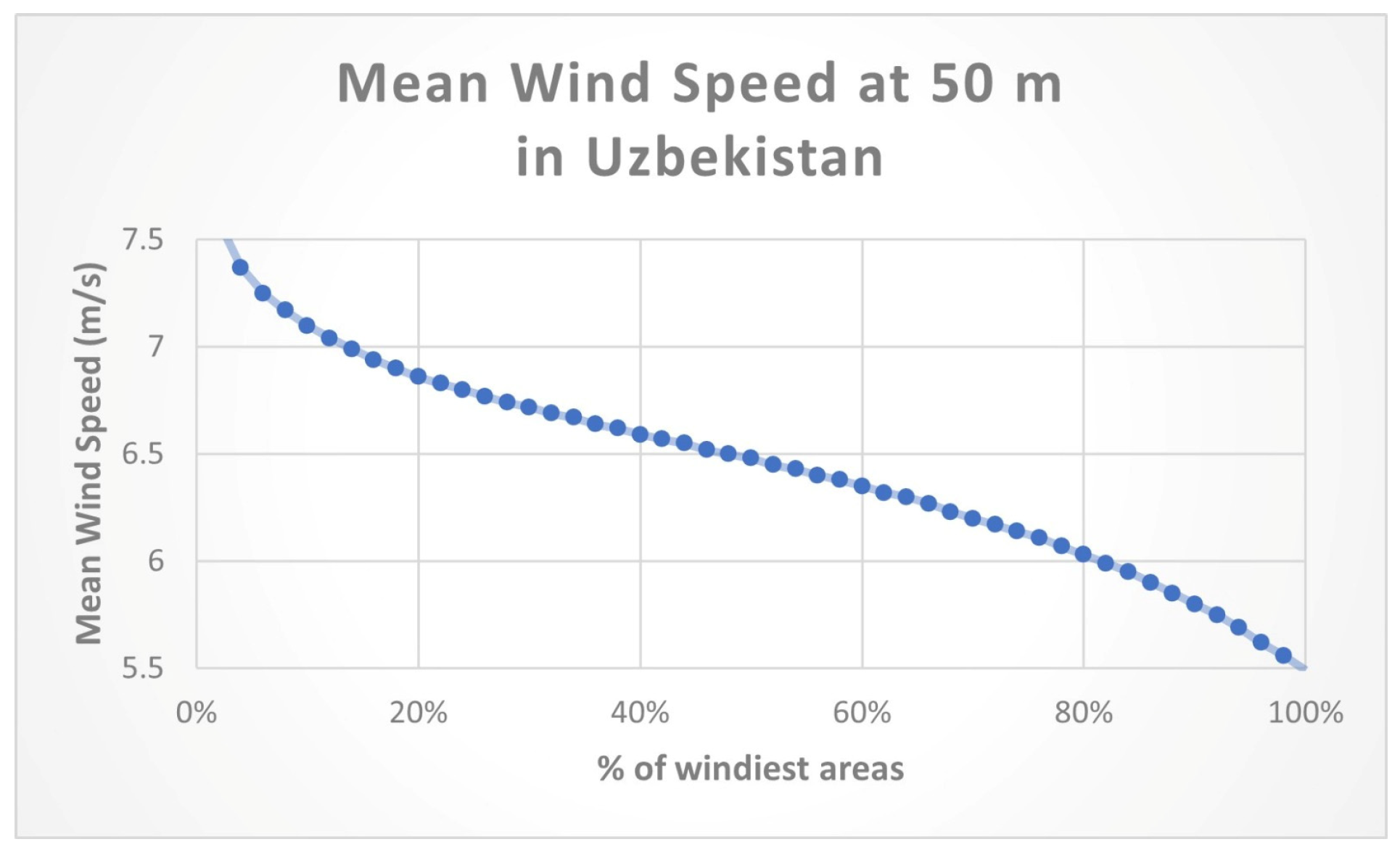
20], decentralized solutions have yet to be addressed. The geographic location provides Uzbekistan with significant wind resources, with average speeds of 6.5–7.5 m/s in high-potential regions [
21] (
Figure 1), which are suitable for SWT utilization.
Small-scale wind turbines typically feature rotor diameters between 3 and 10 m and rated power capacities ranging from approximately 1 to 20 kW, allowing them to meet the electricity demands of individual households or small communities [
12,
22]. In rural and remote areas of Uzbekistan, where access to skilled technical support is limited and system reliability is paramount, SWT installations must prioritize simplicity, robustness, and ease of maintenance [
20,
23]. Consequently, system architectures that minimize component count and operational complexity are particularly desirable for off-grid applications. When appropriately sized and operated under optimal conditions, SWTs can serve as a reliable source of green energy for lighting, water pumping, refrigeration, and small appliances in areas far from the national grid [
24,
25].
Within this context, the selection of a DC generator rather than a permanent-magnet synchronous generator (PMSG) represents a deliberate design decision aligned with rural electrification requirements. DC generators provide direct DC output, eliminating the need for additional rectification stages and thereby reducing system complexity, cost, and maintenance demands [
26,
27]. This simplicity is particularly advantageous in standalone SWT systems, where minimizing power electronic interfaces enhances reliability and facilitates integration with battery storage and low-voltage DC loads [
24,
25]. Although PMSG-based systems dominate grid-connected and large-scale wind applications, they typically require more sophisticated control schemes, higher-cost inverters, and complex synchronization mechanisms, which may be less suitable for cost-sensitive, decentralized rural deployments [
28,
29].
Despite their advantages, SWT systems operating in rural environments are subject to significant challenges arising from highly variable wind speeds, nonlinear turbine dynamics, and fluctuating load conditions. Power electronic converters, such as DC–DC buck converters, play a critical role in regulating the DC-link voltage and ensuring stable power delivery to connected loads or storage systems [
30,
31]. Conventional proportional–integral (PI) controllers are commonly employed for this purpose due to their simplicity; however, their fixed-gain structure often limits performance under rapidly changing operating conditions, resulting in reduced power extraction efficiency and voltage instability [
30,
31].
To address these limitations, intelligent control strategies have been increasingly explored for wind energy applications. Adaptive Neuro-Fuzzy Inference Systems (ANFISs) combine the learning capability of neural networks with the rule-based reasoning of fuzzy logic, enabling robust control in nonlinear and uncertain environments [
32,
33,
34]. Although ANFISs have been successfully applied in large-scale wind turbines and AC-based systems, their application to DC-generator-based SWTs with simplified power electronic interfaces remains limited in the literature [
30,
32]. Moreover, few studies have investigated ANFIS-controlled SWT systems using real wind data within the specific context of rural electrification in Uzbekistan.
In response to this gap, the present study designs and evaluates an ANFIS-controlled SWT system using year-long wind speed data from Bukhara city, Uzbekistan. The proposed standalone configuration consists of a DC generator, a DC–DC buck converter, and an ANFIS-based controller that simultaneously performs maximum power point tracking and DC voltage regulation. System performance is rigorously compared with that of a conventional PI controller under realistic wind conditions. By directly linking system-level design decisions to the climatic and infrastructural realities of rural Uzbekistan, this work demonstrates the technical feasibility and practical relevance of intelligently controlled SWTs as a component of decentralized renewable energy solutions.
2. System Modeling
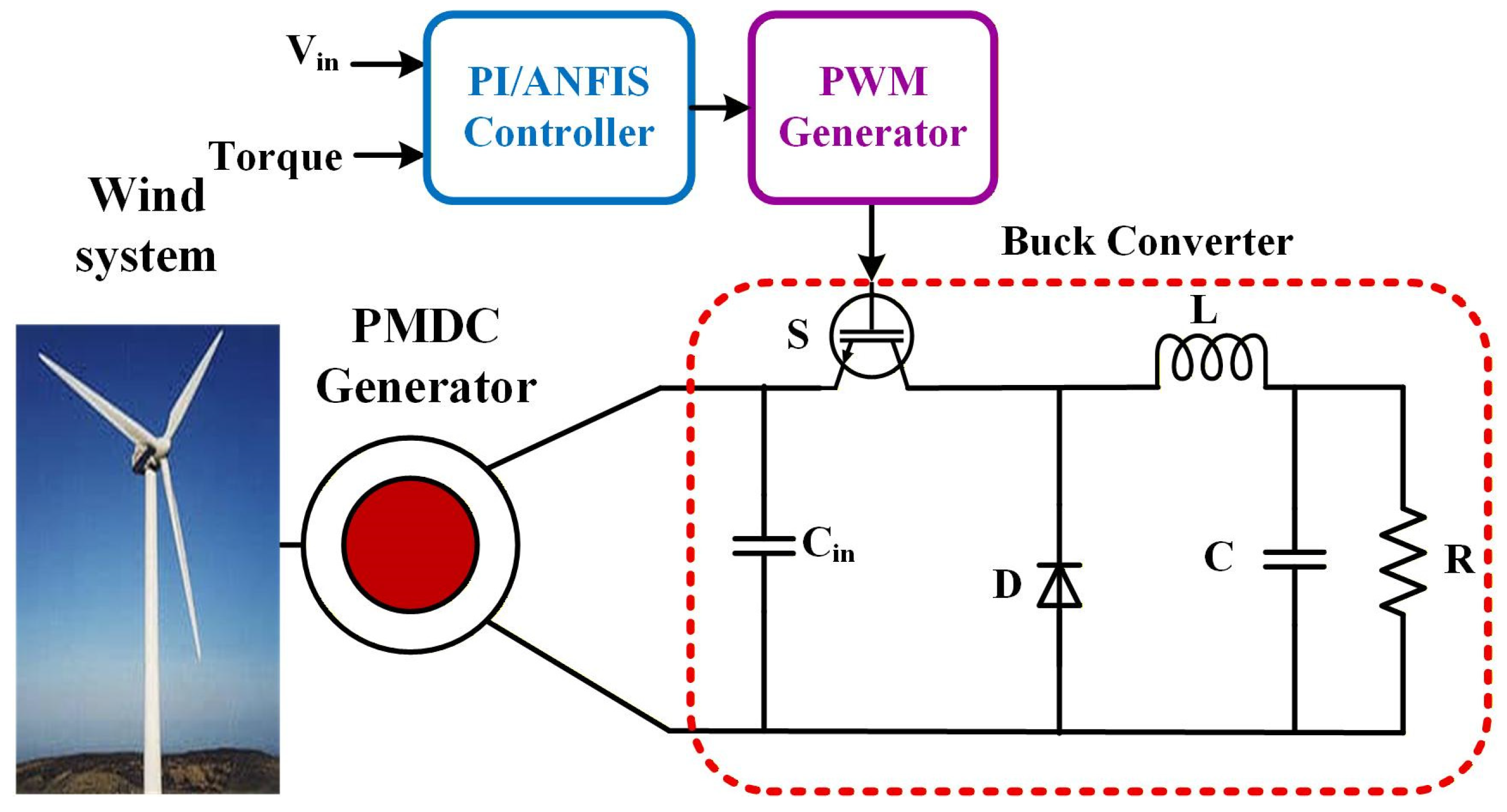
The entire architecture and control structure of the proposed wind energy system are shown in
Figure 2. The system is made up of a DC generator that is mechanically connected to a wind turbine and whose variable output voltage is controlled by a buck converter. The ANFIS controller regulates the converter’s duty cycle. The control loop maintains a regulated 48 V DC output appropriate for rural household loads.
The proposed architecture utilizes a single PMDC generator mechanically coupled to the wind turbine as the sole source of electrical power. The generator delivers a variable DC voltage proportional to wind speed and turbine rotational speed, which is directly supplied to the buck converter without intermediate conversion stages. Real-time duty-cycle modulation is employed by the controller to regulate the DC output voltage delivered to the load. System interaction is strictly hierarchical and unidirectional, following the sequence wind turbine → PMDC generator → buck converter → DC load. No generator-to-generator interaction or power-sharing mechanism is present; a PMDC generator is intentionally selected to avoid the rectification stage required by PMSG-based systems, thereby reducing system complexity and improving suitability for off-grid rural applications.
2.1. Wind Resource Data and Pre-Processing
The wind resource in this study is characterized using daily mean wind speed data from the NASA POWER database for 2024, at a reference height of 50 m above ground level, for the Bukhara region of Uzbekistan. The selected point’s coordinates lie within the target rural area, and the dataset provides a single average daily wind speed for the entire year.
The raw data were checked for missing or clearly inconsistent entries. In the 2024 dataset, no gaps or obvious outliers were detected, so all 366 daily values were retained for the analysis. Since the hub height of the small-scale wind turbine differs from the 50 m reference height, the wind speeds were adjusted from the measurement height to the hub height using a standard power-law wind profile, with a roughness exponent representative of open rural terrain, following standard practice in wind engineering and previous studies on the wind potential of Uzbekistan [
23,
25].
For each day of the year, the adjusted wind speed at hub height was then used in the aerodynamic turbine model to calculate the corresponding mechanical power. This procedure yielded a time series of daily mechanical power values that formed the basis for the annual energy assessment and performance analysis discussed in
Section 3.
In addition to the annual assessment, a representative day with pronounced wind variability was selected from October 2024 for detailed dynamic simulations. For this day, the daily mean wind speed from NASA POWER was combined with a normalized intra-day profile to reconstruct a time series with sub-hourly variations. This reconstructed wind speed profile was used as input to the Simulink model to evaluate and compare the performance of the PI and ANFIS controllers under realistic variable-wind conditions.
2.2. Wind Turbine System Design
The wind turbine system is designed to harness wind kinetic energy and convert it into mechanical energy. The aerodynamic power
, which is tapped by the turbine, can be quantitatively described as follows:
where
represents the air density (kg/m
3), A is the swept area of the turbine blades (m
2),
v is the wind velocity (m/s), and
Is the power coefficient an indicator of the turbine’s efficiency. The power coefficient
depends on the tip speed ratio (
λ) and the pitch angle of the blade (
θ), where
where
ωt is the angular velocity of the turbine rotor (rad/s),
R is the radius of the turbine blade (m), and
v is the wind speed (m/s) [
28].
The relationship between
Cp,
λ, and
θ is often described through empirical or theoretical models. One widely used model is described as
This equation, based on blade-element momentum theory, requires iterative calculations for practical use while providing a reliable estimate of turbine efficiency [
28,
31].
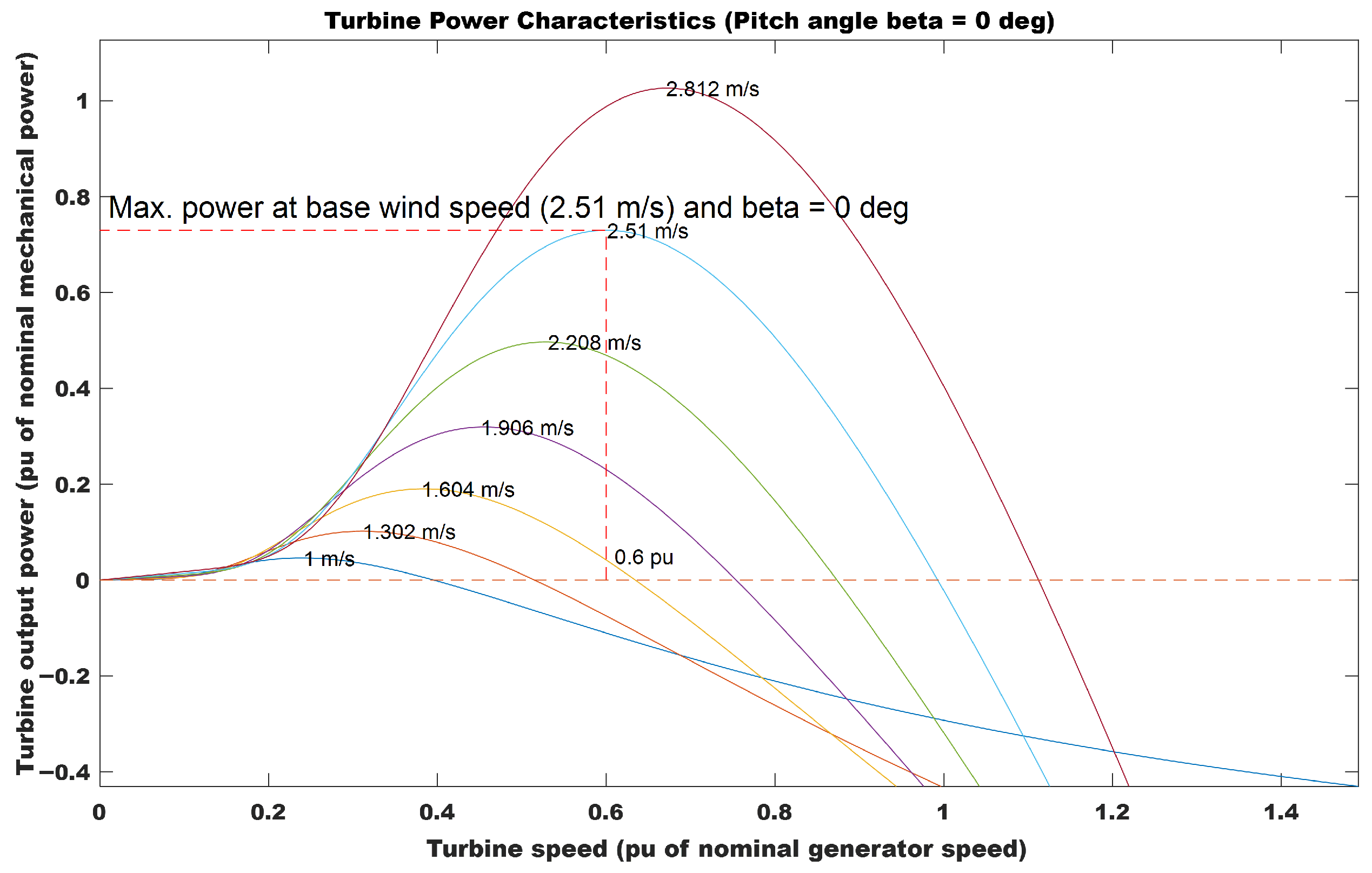
Figure 3 shows the mechanical output power of the wind turbine against different wind speeds and a pitch angle of 0. At every different wind speed, the wind turbine provides a unique maximum power output. The torque
T generated by the turbine can be quantified as
where
ωt is the angular velocity of the turbine (rad/s). It is assumed that the turbine operates under uniform wind conditions, with its performance parameters optimized for high performance in Uzbekistan’s designated wind resource regions [
31].
2.3. High-Frequency Wind Reconstruction Using IEC-Compliant Turbulence Modeling
NASA POWER provides daily mean wind speed data, which are appropriate for long-term energy yield assessment but insufficient for evaluating the dynamic behavior of real-time controllers due to the absence of high-frequency wind fluctuations. To enable realistic controller-level dynamic analysis, a two-scale wind modeling framework is adopted in this study. The wind speed input to the control system is expressed as
where
is the daily mean wind speed obtained from the NASA POWER database, and
is a stochastic turbulence component representing sub-daily wind variability.
The turbulence component
is synthesized using an IEC 61400-1 [
35], compliant Kaimal turbulence spectrum, which is widely accepted for wind turbine dynamic studies and controller validation. The Kaimal power spectral density (PSD) of longitudinal wind speed fluctuations is defined as
where
is the frequency (Hz),
is the standard deviation of wind speed,
is the turbulence intensity (set to 15% in this study, representative of rural terrain),
is the turbulence integral length scale (IEC-recommended), and
is the mean wind speed.
A band-limited Gaussian noise process is filtered to match this spectral distribution, ensuring that the reconstructed wind signal exhibits physically realistic energy content across low- and high-frequency bands relevant to mechanical, electrical, and converter-level dynamics.
By adopting an IEC-compliant turbulence reconstruction rather than an arbitrary intraday profile, the reported transient responses and settling times are evaluated under wind conditions that are statistically and physically representative of real small wind turbine operation.
The reported annual average mechanical power of 6.3 kW corresponds to the aerodynamic power available at the turbine rotor, calculated using the standard wind power equation and real wind data. This value represents the upper-bound mechanical input to the electromechanical conversion chain and does not imply that 6.3 kW is delivered electrically to the load. In practice, the usable electrical power is constrained by generator efficiency, power electronic losses, and the rated electrical load. Therefore, electrical feasibility must be evaluated based on delivered electrical power, annual energy yield (kWh), and system availability, rather than mechanical power alone.
Table 1 shows the wind modeling parameters used for dynamic controller evaluation.
The delivered DC electrical power is calculated as
where
is the mechanical power at the turbine shaft,
is the DC generator efficiency,
represents rectification losses, and
is the DC–DC buck converter efficiency. Based on conservative values consistent with small-scale wind systems (
), this results in an overall electromechanical efficiency of approximately 75%, which is consistent with reported values for DC-generator-based SWT systems.
When the available mechanical power exceeds the rated 48 V, 1 kW DC load, the system does not attempt to extract surplus energy. Instead, the controller enforces power curtailment, and the ANFIS control objective shifts from power maximization to strict DC voltage regulation. This operational strategy reflects realistic rural electrification constraints, where the load rating not the wind resource defines usable power. Annual electrical energy production is calculated as
After accounting for efficiency losses and curtailment above 1 kW, the system delivers reliable electrical energy sufficient for residential DC loads on over 92% of days, with only 27 out of 366 days falling below the rated load threshold.
Table 2 shows the electrical feasibility metrics of the proposed SWT system.
2.4. DC Generator
DC generators are widely used in small-scale wind energy systems to convert mechanical energy from wind turbines into electrical energy. When the wind spins the blades of a turbine, it turns the shaft of the DC generator, which causes the rotor to spin in a magnetic field, producing electricity. As explained by Faraday’s law of electromagnetic induction, this motion generates a voltage between the generator’s terminals.
When the rotor is in motion, the armature windings cut through magnetic field lines, generating an electromotive force (EMF). As the rotor rotates more, the EMF increases.
The internal resistance and inductance will contribute to the mentioned output voltage, and the equation is
where
is the terminal voltage, E is the generated EMF,
is the armature resistance,
is the current, and
is the armature inductance. Angular speed of the shaft is also directly proportional to EMF itself, which is defined as
where
is the EMF constant, and ω is the angular speed of the generator. The faster the wind blows, the faster the turbine will rotate, and the faster the blade spins, the higher the voltage will be [
27].
The electromagnetic torque opposing the movement of the turbine is defined as
. In practice,
is equivalent to the
in an optimally designed machine, according to the laws of conservation of energy [
27]. The mechanical dynamics of the system involve the following modeling:
In the above, is the mechanical torque provided by the wind, J is inertia, and B is the coefficient of friction.
2.5. Buck Converter Design
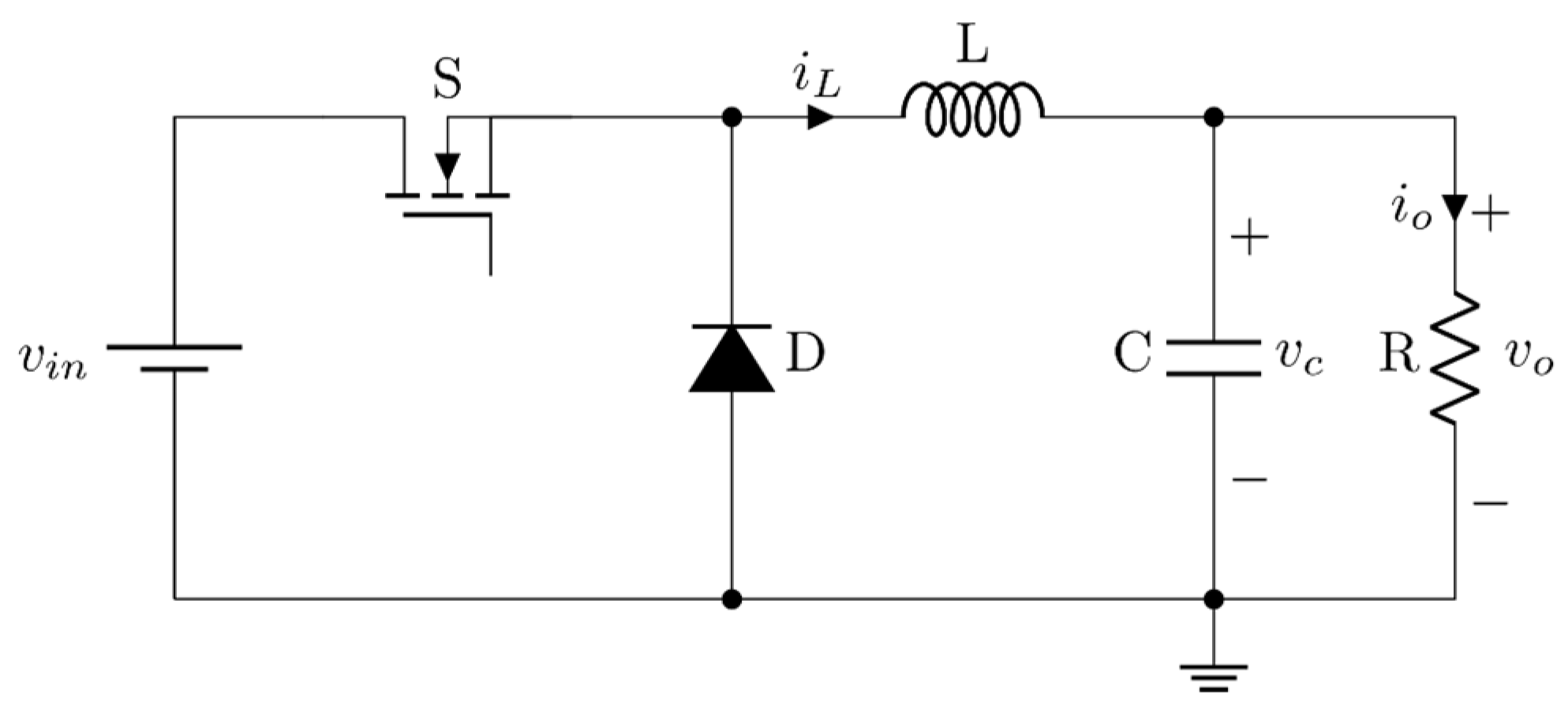
The buck converter plays a crucial role in the wind power system by converting the variable DC generator voltage into a stable 48 V supply suitable for powering the load. It is designed to deliver 1000 W of power.
Figure 4 illustrates the structural layout of the buck converter, comprising a semiconductor switch, a diode, and an inductor.
For continuous conduction mode (CCM), output voltage
Vo is proportional to the voltage V
in and duty cycle D and is given by the following governing equation for the output voltage V
o:
: the duty cycle, i.e., the switch-on duration
ton over the switching period
;
: wind generator voltage (variable with variation in wind velocity). The output voltage
is regulated at 48 V, with real-time control of the duty cycle
D via a feedforward control mechanism.
The inductor current
and capacitor voltage
obey the following governing differential equations in CCM:
2.6. Practical Considerations for Buck Converter Implementation
The proposed buck converter is designed to regulate a wide and variable DC input voltage range (168–530 V) to a regulated 48 V output at a rated power of 1 kW. Although the primary focus of this work is control-oriented feasibility analysis, practical implementation aspects are explicitly considered to ensure engineering realism.
From a component rating perspective, the semiconductor switch and diode are selected to withstand the maximum input voltage with appropriate safety margins. For the specified operating range, commercially available MOSFETs or IGBTs with voltage ratings above 650 V and current ratings exceeding 30 A are suitable, ensuring safe operation under worst-case wind and load conditions. The inductor and output capacitor are sized to operate within continuous conduction mode, with current and voltage ratings selected to accommodate ripple components and transient loading.
Conduction and switching losses are inherent in high-power DC–DC converters operating at elevated voltage levels. In the proposed system, conduction losses arise primarily from the on-state resistance of the switch and the forward voltage drop of the diode, while switching losses are associated with device turn-on and turn-off transitions at the selected switching frequency of 10 kHz. These losses are implicitly accounted for in the overall DC–DC converter efficiency assumed in the electrical power calculation. Operating at a moderate switching frequency represents a trade-off between efficiency, passive component size, and electromagnetic interference.
Thermal constraints are also considered at a system level. The converter is assumed to operate with appropriate heat-sinking and passive cooling, which is consistent with low-cost rural deployments where forced cooling may be undesirable. Under rated operating conditions, thermal stresses remain within acceptable limits when standard industrial components are employed. In the proposed system, EMI mitigation is addressed through conventional measures such as proper layout practices, input and output filtering, and controlled switching slopes. While detailed EMI filter design is beyond the scope of this study, the selected switching frequency and converter topology are compatible with standard EMI compliance techniques used in off-grid power electronics.
Table 3 shows the practical buck converter design considerations.
2.7. ANFIS Controller Design
An Adaptive Neuro-Fuzzy Inference System (ANFIS) is employed to regulate the duty cycle of the buck converter. The primary objective of the controller is to maintain the DC-bus voltage at 48 V and ensure stable power delivery under varying wind conditions. ANFIS combines the learning capability of neural networks with the linguistic reasoning of fuzzy logic, enabling robust nonlinear control.
The controller uses two input variables: the DC generator output voltage and the turbine torque. Based on these inputs, the ANFIS generates the appropriate duty cycle to regulate the buck converter output voltage and power.
Training data for the ANFIS were generated through simulation using a conventional PI controller. The recorded variables included turbine torque, generator voltage, and the PI controller’s duty cycle. The ANFIS was trained using the standard MATLAB/Simulink (2023 R2023B) ANFIS toolbox until the error between the ANFIS output and the PI-generated duty cycle was minimized. In this study, the PI controller serves as a reference benchmark, and its performance is directly compared with that of the ANFIS controller under identical wind conditions.
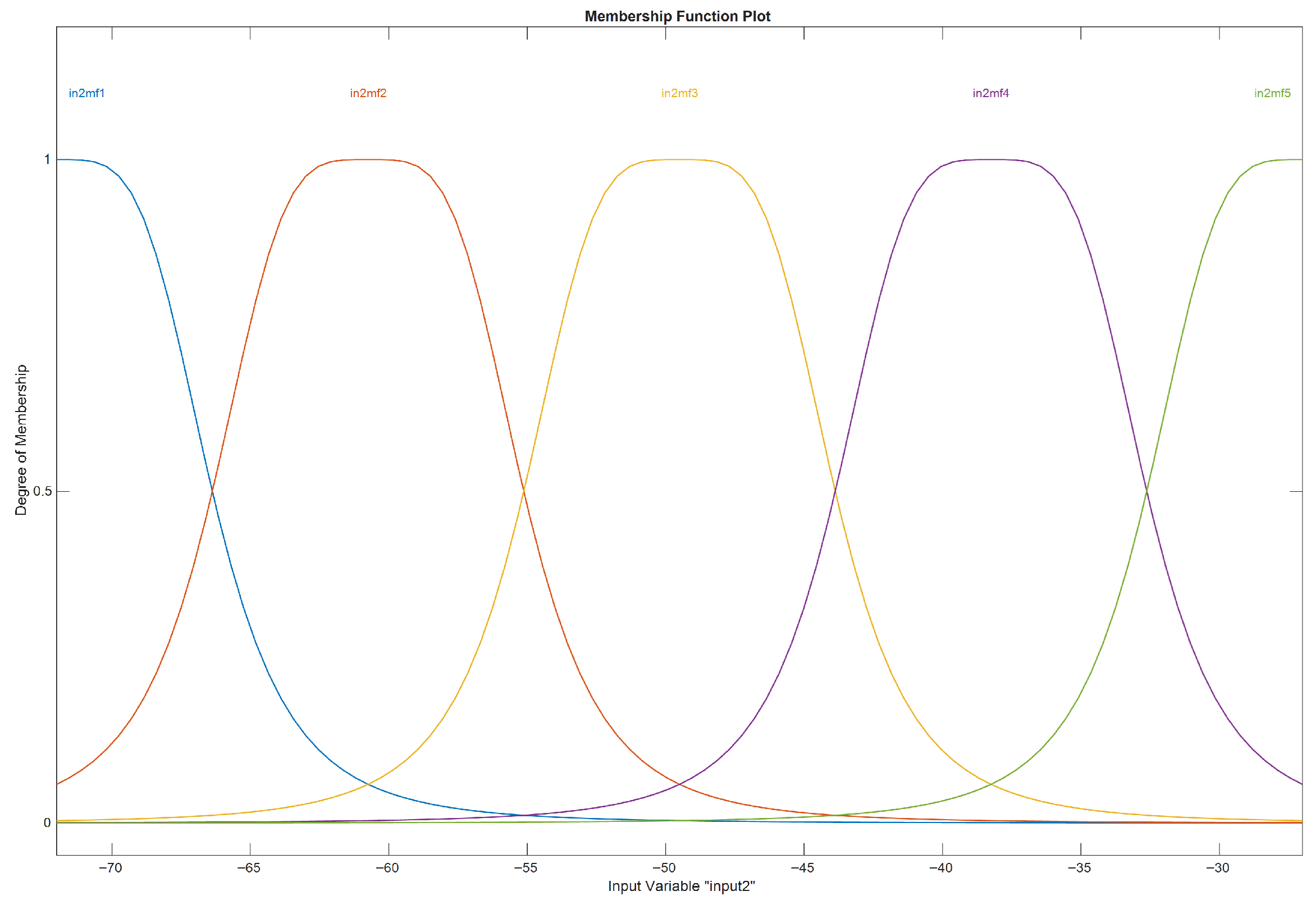
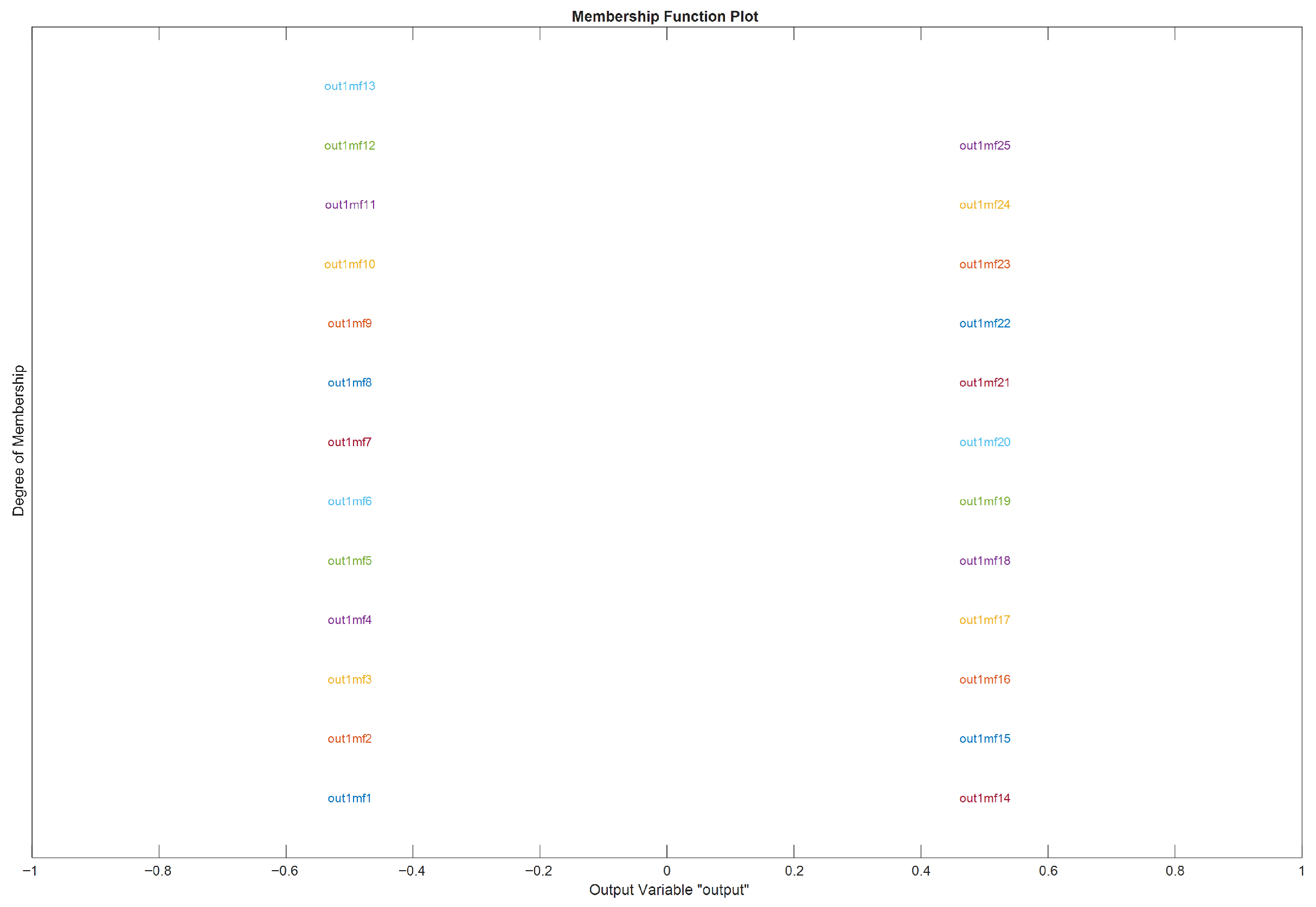
Both generator voltage and turbine torque are fuzzified using generalized bell-shaped membership functions. Five overlapping membership functions are defined for each input, corresponding to the linguistic terms Very Low, Low, Medium, High, and Very High. The resulting ANFIS architecture consists of 25 Sugeno-type fuzzy rules, automatically generated by MATLAB to cover all combinations of the input membership functions. Each rule has a unit weight, ensuring a smooth, continuous duty-cycle adjustment in response to variations in wind speed and operating conditions.
2.8. ANFIS Learning Objective and Independence from PI Control
While the conventional PI controller is initially used to ensure safe and bounded operation of the buck converter, the proposed ANFIS controller is not trained as a duty-cycle replica of the PI controller. Instead, a two-stage learning and optimization framework is adopted to ensure independent nonlinear control capability.
In Stage I (Supervised Initialization), the PI controller operates under nominal wind conditions to generate bounded duty-cycle trajectories. These data are used solely to initialize the ANFIS premise and consequent parameters, preventing unsafe duty-cycle excursions during early learning and ensuring closed-loop stability.
In Stage II (Plant-Level Performance Optimization), the ANFIS controller is decoupled from PI signal matching and is optimized using plant-in-the-loop performance indices. The learning objective directly minimizes voltage regulation and dynamic performance metrics derived from the physical system response rather than the PI output.
The composite ANFIS cost function is defined as
where
is the reference DC voltage,
is the converter output voltage, the first term represents integral absolute error (IAE), the second term represents integral time-weighted absolute error (ITAE), the third term quantifies RMS voltage ripple, and
are weighting factors selected to balance transient speed and steady-state quality.
This formulation enables the ANFIS controller to learn a nonlinear mapping between generator voltage–torque states and optimal duty-cycle commands, explicitly accounting for wind-driven nonlinearities, converter dynamics, and load disturbances. Consequently, the final ANFIS controller is not constrained to PI behavior and evolves beyond linear error correction, particularly under fast wind transients where PI control is fundamentally limited.
The ANFIS structure and membership functions are illustrated in
Figure 5,
Figure 6,
Figure 7,
Figure 8 and
Figure 9, while the complete rule base generated by MATLAB is presented in
Table 4. in1mf1–in1mf5 and in2mf1–in2mf5 correspond to the five membership functions of each input.
Since an Adaptive Neuro-Fuzzy Inference System (ANFIS) is employed as the controller, the fuzzy rules are automatically generated and tuned by the neural network during training, rather than being manually defined. The training process converges in a single epoch, achieving a minimal training error, indicating a strong correlation between the input variables and the required duty cycle. The overall ANFIS clearly shows the two input variables, generator voltage and turbine torque, and the resulting duty cycle as the controller output. Furthermore, the control surface depicted in
Figure 9 illustrates the nonlinear relationship between the two inputs and the output duty cycle, highlighting the controller’s adaptive nature. As demonstrated in the
Section 3, the ANFIS controller exhibits a faster dynamic response and improved DC-bus voltage stability compared to the conventional PI controller. However, this enhanced performance comes at the expense of a slight increase in computational complexity.
3. Results
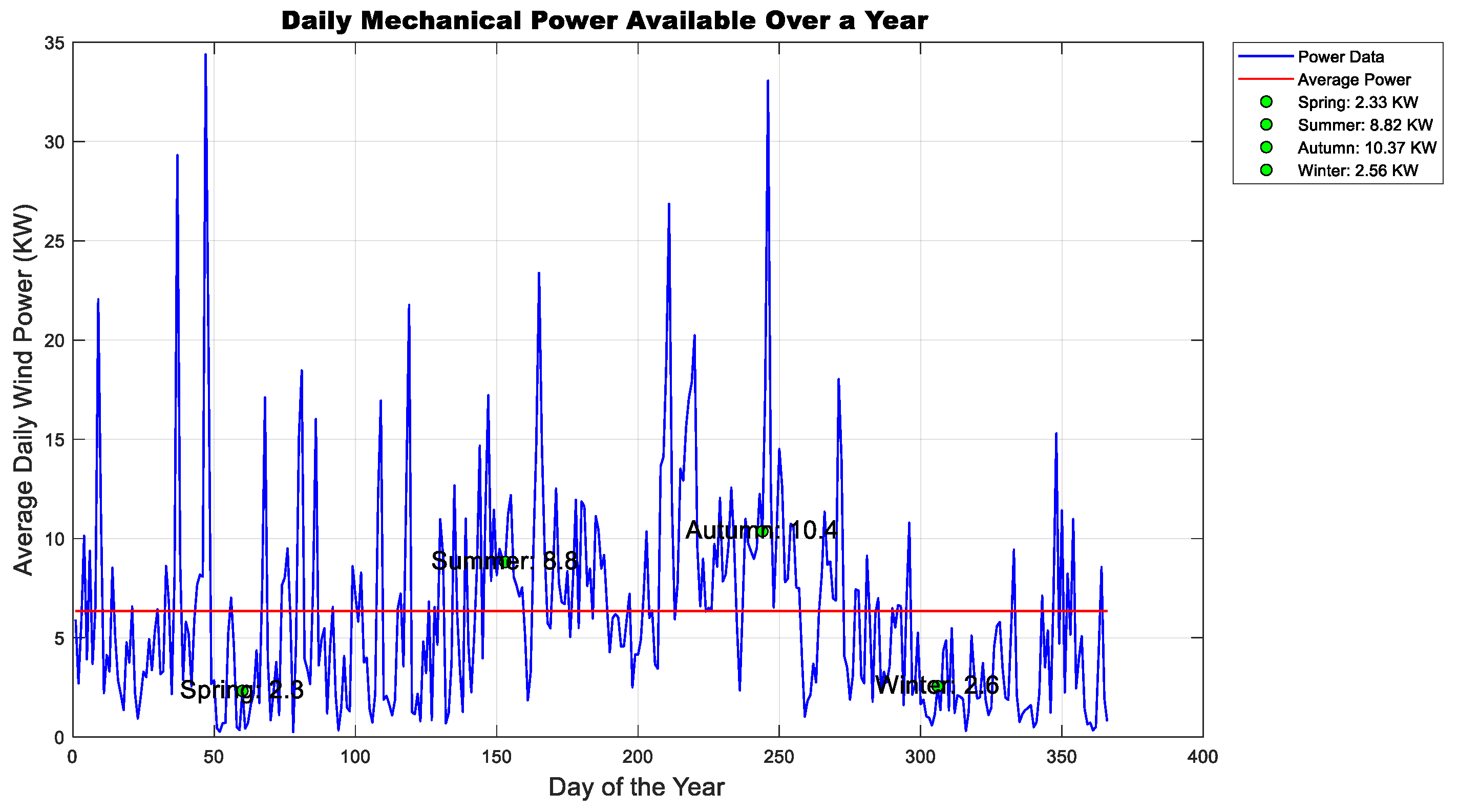
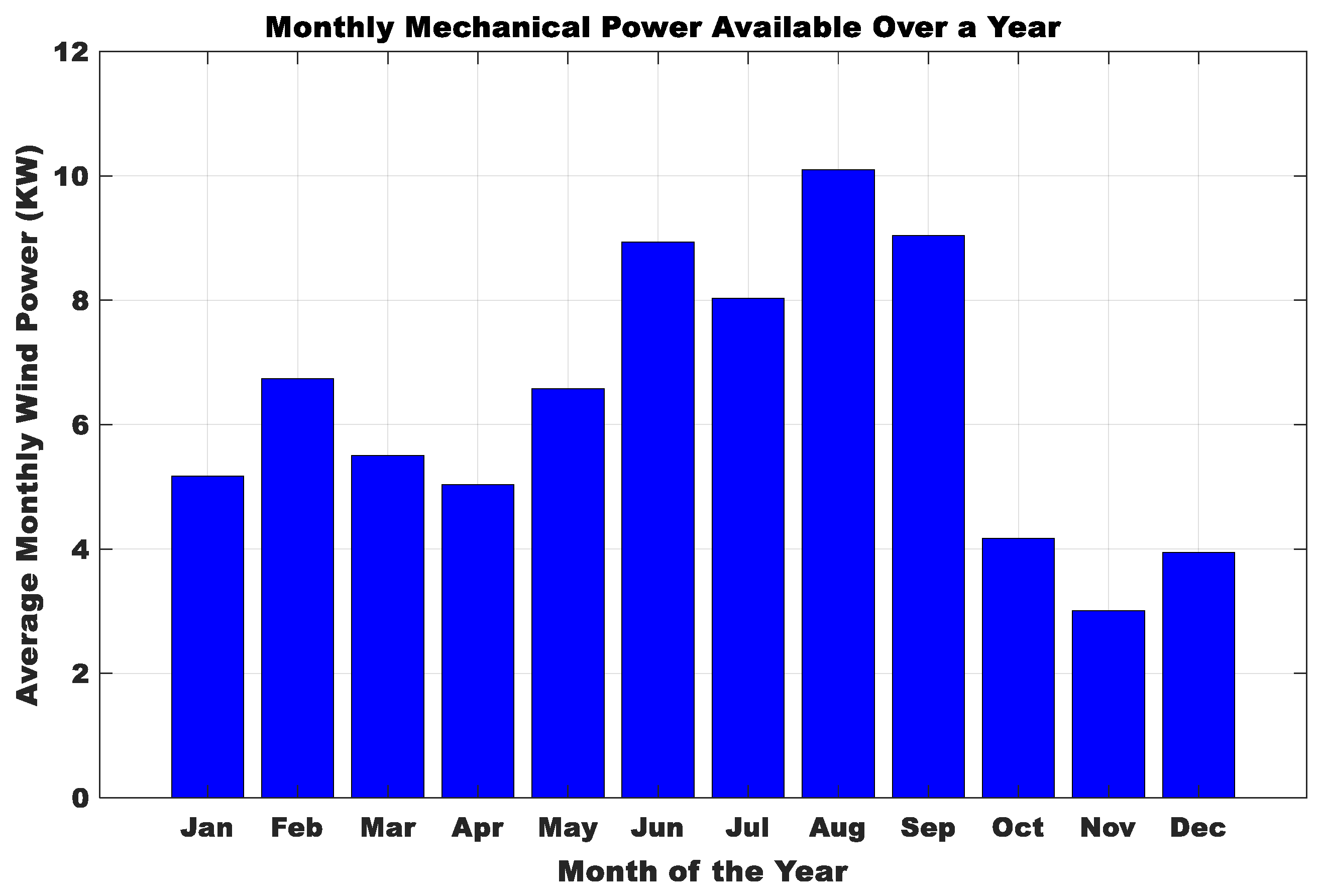
The wind speed data obtained from the NASA POWER database cover the entire 2024 calendar year and consist of daily mean wind speeds measured at a reference height of 50 m. Using the mechanical power equation of the wind turbine, the corresponding daily and monthly mechanical power outputs were calculated. The resulting power profiles are shown in
Figure 10 and
Figure 11 [
29].
Daily mean wind speed data were obtained from the NASA POWER (Prediction of Worldwide Energy Resources) database for the calendar year 2024. The data correspond to the Bukhara region of Uzbekistan at geographic coordinates of 39.77° N latitude and 64.43° E longitude, queried at a reference height of 50 m above ground level. The data were retrieved using the NASA POWER web interface with default temporal aggregation settings (daily mean wind speed). The downloaded dataset was inspected for missing or inconsistent values, no gaps or outliers were identified, and all 366 daily samples were retained. Since the turbine hub height differs from the reference height, the wind speeds were adjusted using a standard power-law vertical wind profile with a rural terrain roughness exponent. The adjusted wind speed time series was subsequently used as input to the aerodynamic wind turbine model. For dynamic simulations, high-frequency wind variations were reconstructed by superimposing an IEC 61400-1-compliant Kaimal turbulence model onto the daily mean wind speed.
The simulation results indicate that the wind resource available in 2024 is sufficient to supply power for residential household applications, as the generated mechanical power exceeds 1 kW for the majority of the year. Out of the 366 days analyzed, only 27 days exhibit wind speeds that result in mechanical power output below 1 kW. The annual average mechanical power is approximately 6.3 kW, which is illustrated in
Figure 10 by a horizontal red line. Seasonal variation in power generation is also observed, with higher power output during the summer and autumn months, where most data points lie above the annual average, compared to the spring and winter seasons.
Table 5 shows the parameters used in the proposed system.
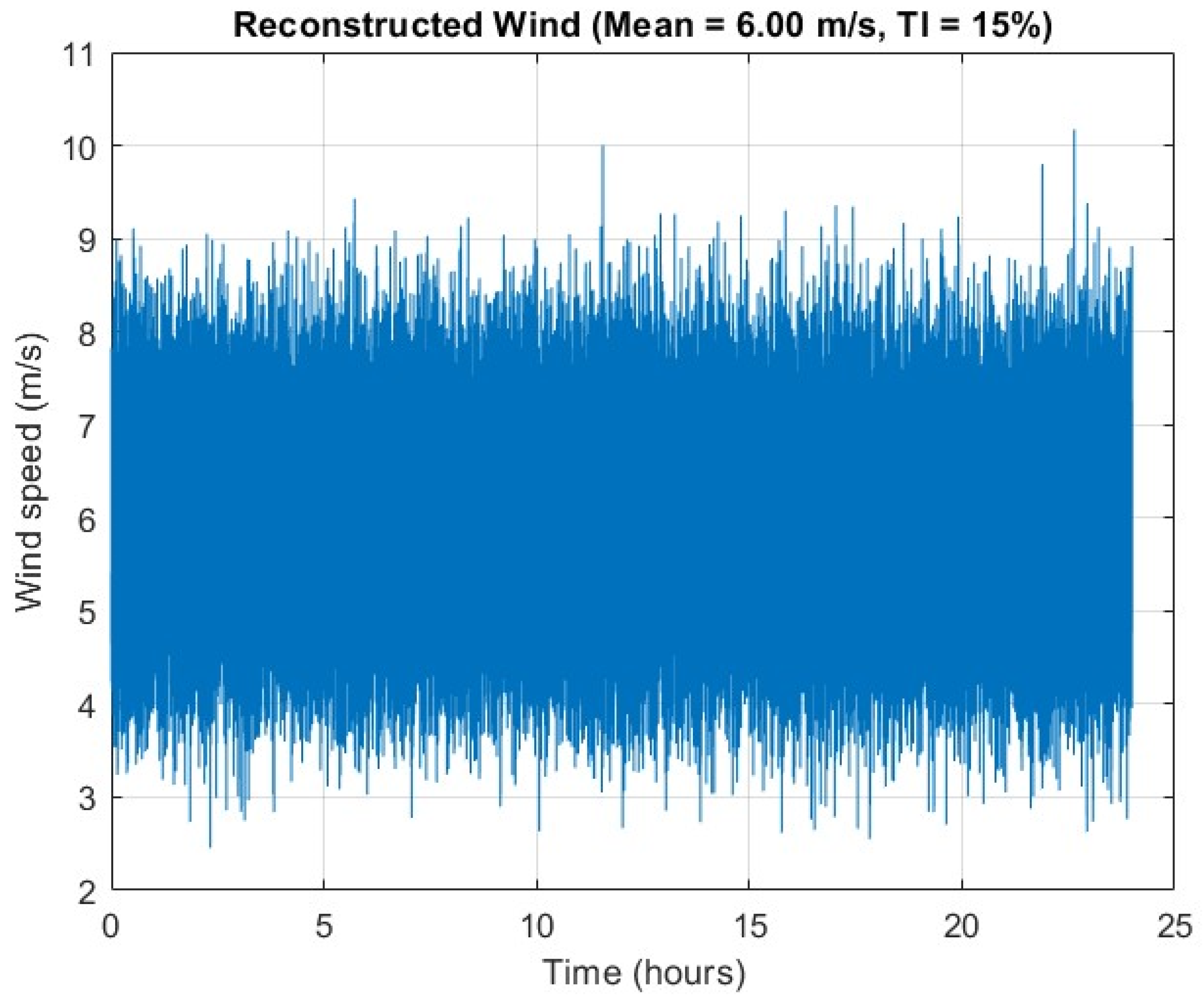
Figure 12 illustrates the synthesized high-frequency wind signal obtained by superimposing Kaimal-spectrum-based turbulence on the daily mean wind speed. The resulting profile exhibits realistic short-term fluctuations with amplitudes and frequency content consistent with standard wind turbulence models used for controller validation. This reconstructed wind input is used for all transient and settling-time analyses of the PI and ANFIS controllers.
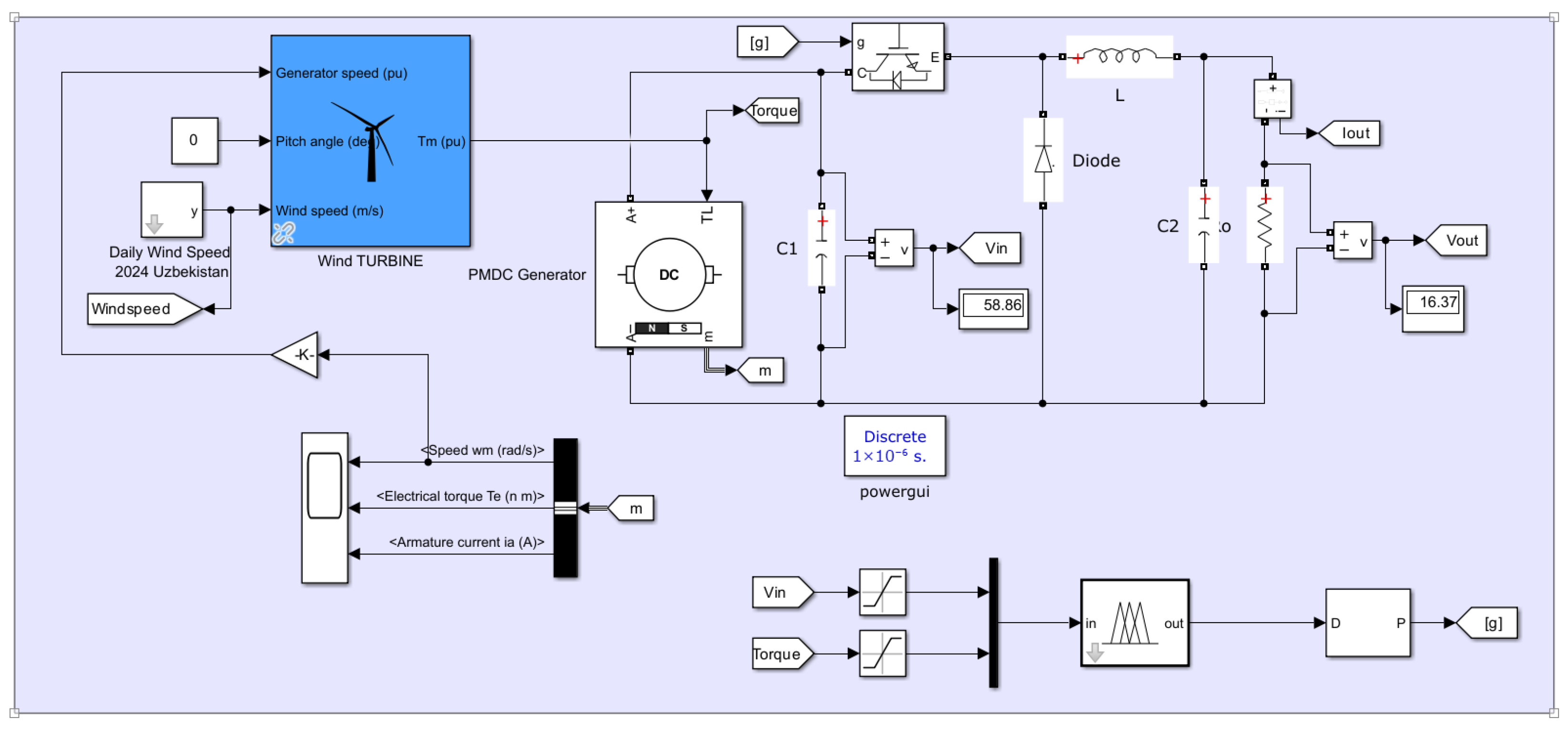
The complete MATLAB/Simulink model used for the dynamic analysis is shown in
Figure 13 The model integrates the wind turbine, DC generator, and power electronic interface in the form of a buck converter [
36,
37]. Simulations were conducted under both constant- and variable-wind-speed conditions to evaluate and compare the ability of the PI and ANFIS controllers to regulate the output voltage and power [
38,
39]. For the constant-wind-speed scenario, a step change in wind speed was applied, increasing from an initial value of 3 m/s to a final value of 6 m/s, in order to assess the transient response and voltage regulation performance of both controllers.
3.1. Constant Speed
When the wind speed was 3 m/s, the output of the DC generator was 168 V. This voltage was then used as input to the buck converter to step it down to 48 V. Based on the buck converter’s governing equation, the expected duty cycle should have been approximately 0.28. As shown in
Figure 14, the duty cycle was as expected [
22]. The same result was observed when the wind speed was set to 6 m/s.
When the wind speed increased to 10 m/s, the DC generator voltage increased to 286 V. To maintain the output power and voltage, the PI controller had to generate a new duty cycle to keep the output constant. From
Figure 14, we can see the duty cycle dropped to 0.17 to maintain the output. The transient shown in the simulation at 2.5 s was a result of the sudden change in wind speed.
The system was also tested using the ANFIS controller. From
Figure 15 we can see how accurate and fast the response of the system was. The system settled at 0.25 s compared to 1.7 s when using the PI controller. Also, when the wind speed changed from 3 m/s to 6 m/s, the system had a better performance when compared to the PI controller, because of the fast response to changes in wind speed.
3.2. Variable Speed
For the variable-wind simulation, the first day of October was selected. The simulation result showed that as the speed changed, the DC generator output voltage also changed [
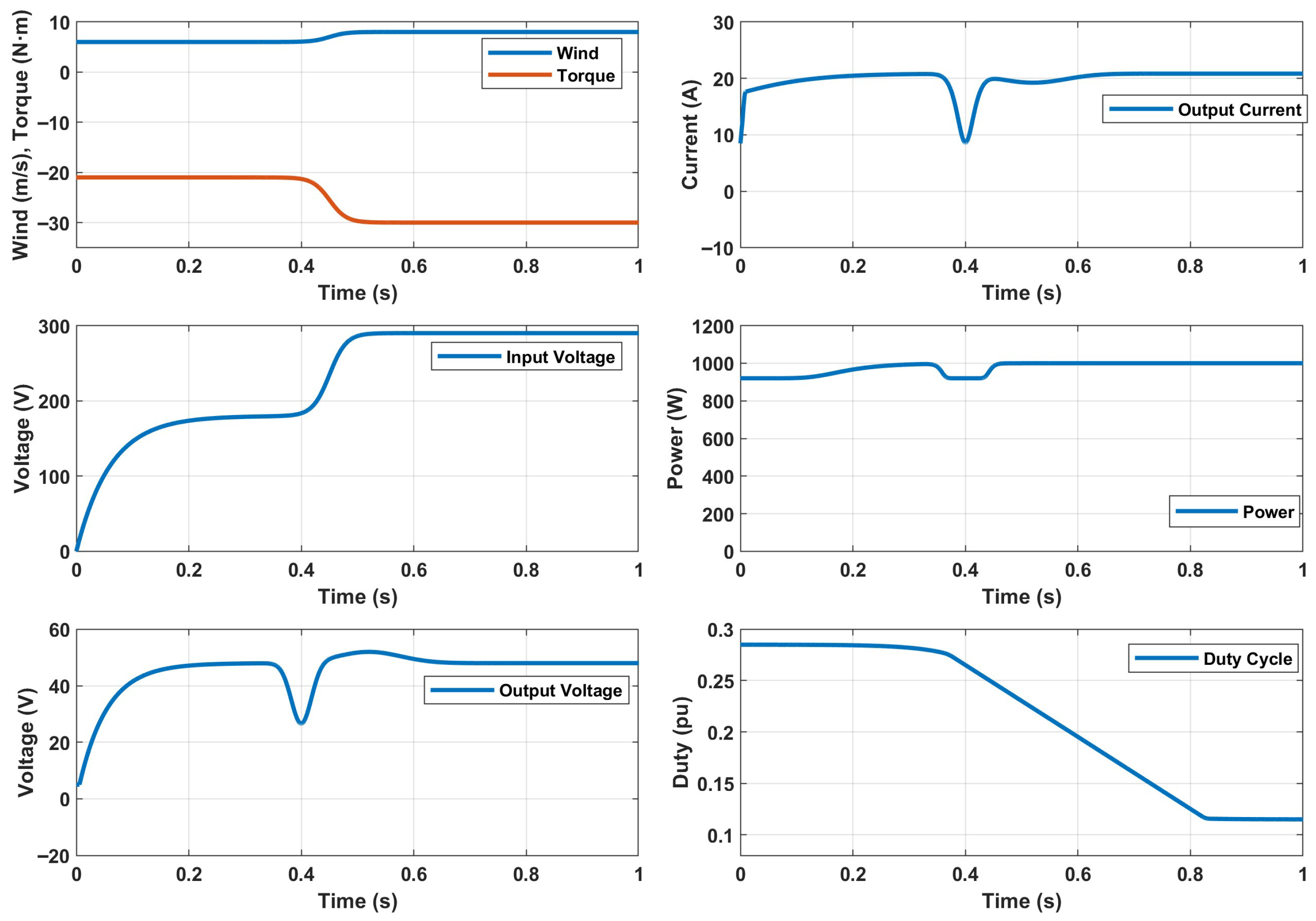
40]. Without a controller, these changes would definitely affect the desired output voltage. This variable voltage was fed as input voltage to the buck converter. The PI and ANFIS controllers ensured that the duty cycle was updated continuously as the input voltage changed, maintaining the desired output voltage and power. As seen in
Figure 16, when using only the PI controller, the output voltage was maintained at the desired 48 V with few ripples due to speed changes. Also, the current was maintained to ensure that the output power remained at the desired 1000 W. Using the PI controller, we could see how slow the system responded to changes in wind speed.
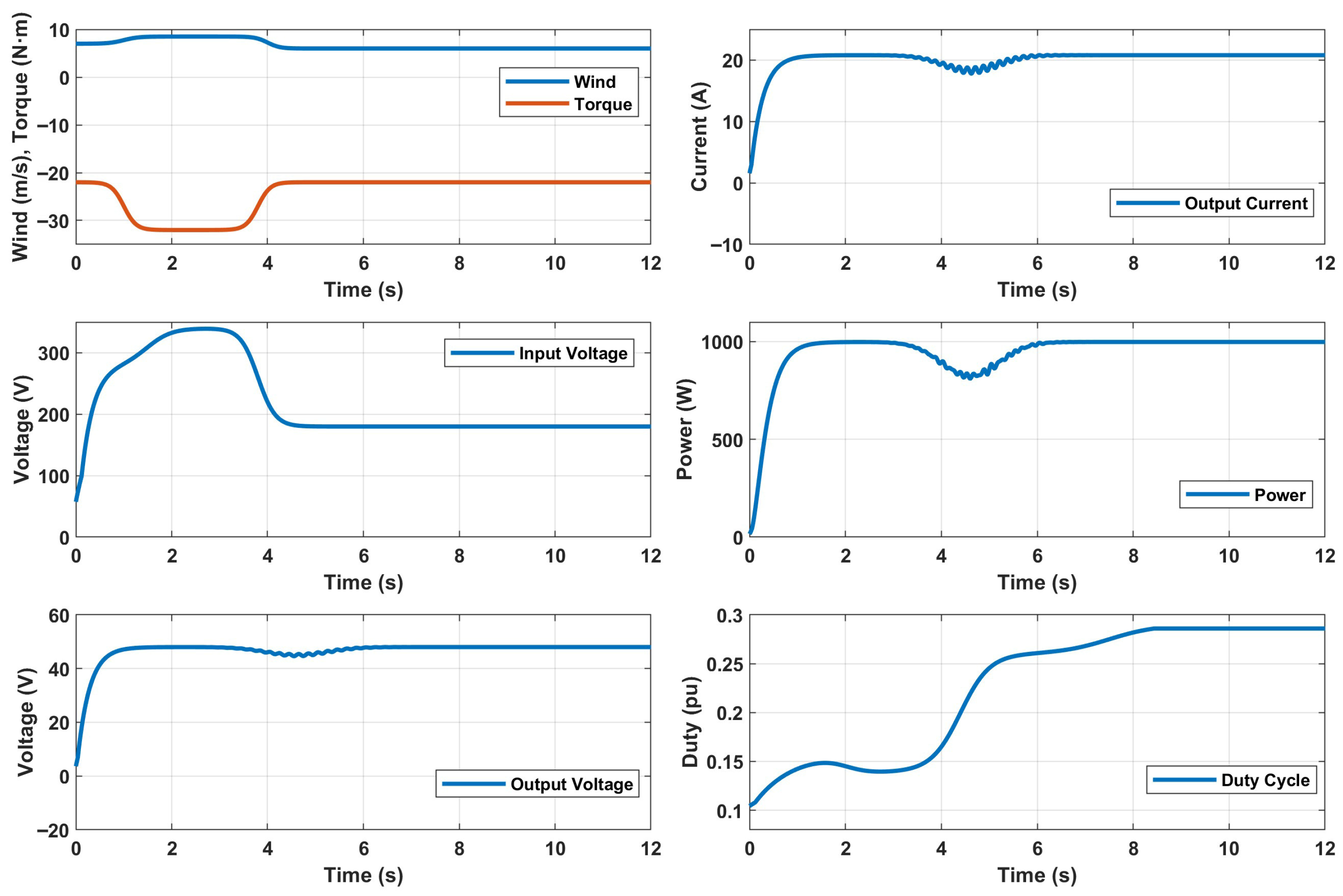
In contrast, when the ANFIS controller was employed, the system exhibited a more accurate and faster response to wind speed variations, as illustrated in
Figure 17.
The simulation results showed that the ANFIS controller performed better than the PI controller; however, it required more computing power.
In both the constant- and variable-wind-speed cases, the ANFIS controller reached the reference DC voltage faster and with a smaller transient than the PI controller. The voltage ripple was also lower with ANFIS when the wind speed changed rapidly, indicating that ANFIS improved the dynamic behavior and stability of the small wind energy system compared to conventional PI control.
3.3. Analysis with Load Variation
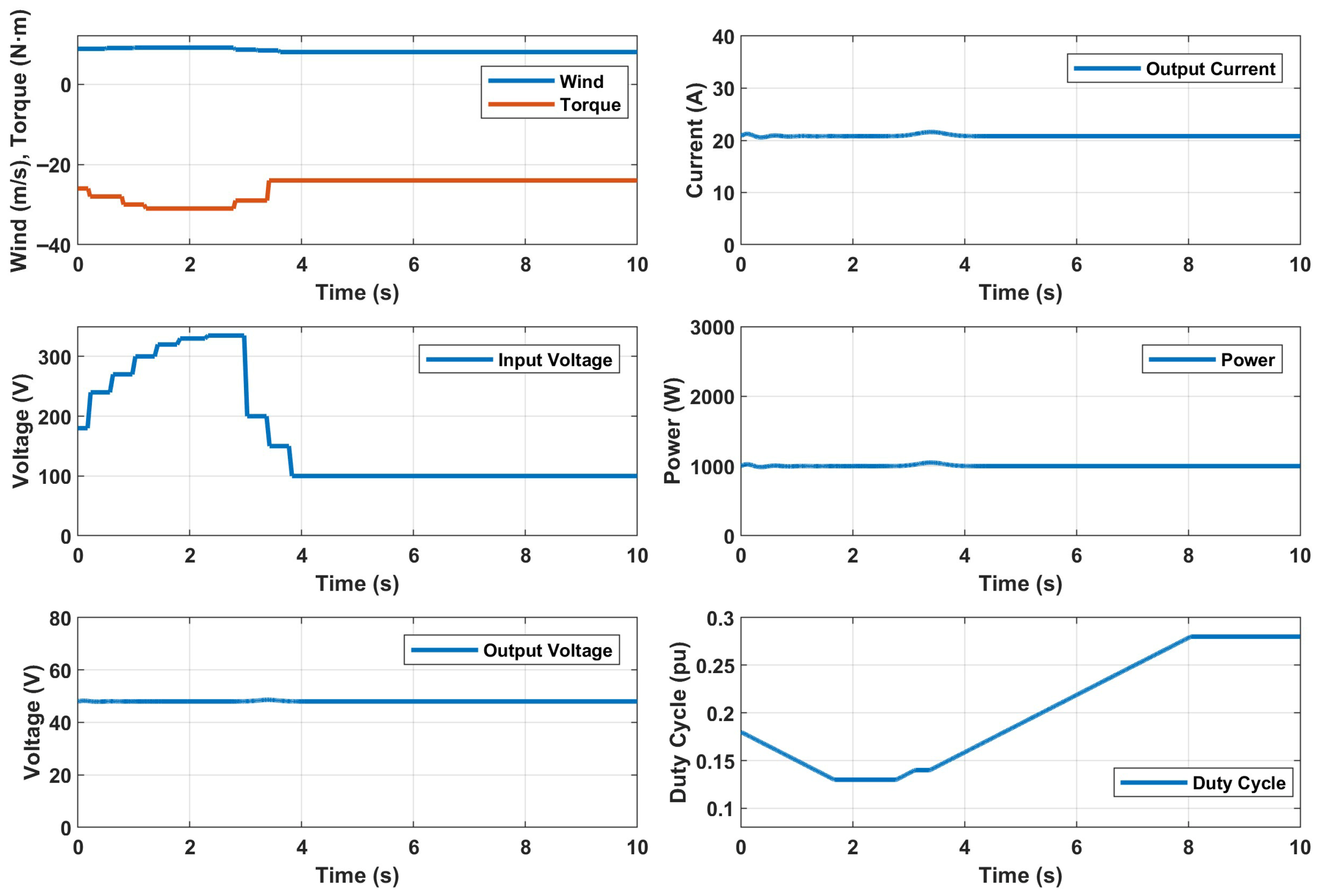
The dynamic response of the wind energy conversion system under step-varying load conditions and a fixed wind speed of 8 m/s is shown in
Figure 18. The wind speed stayed almost constant throughout the simulation, as seen in the top-left subplot, demonstrating that all observable electrical transients were exclusively caused by changes in load rather than wind disturbances. Effective upstream voltage stabilization was shown by the matching input voltage, which was tightly regulated around 200 V and showed only slight ripple despite large variations in load demand.
The output voltage was maintained close to the nominal 48 V with negligible deviation during all load transitions, indicating the robust voltage regulation capability of the proposed control strategy. In contrast, the output current adapted dynamically to meet the varying power demand, increasing from approximately 6 A (300 W) to 19 A (900 W) and subsequently settling around 12.5 A (600 W) in accordance with the imposed load steps. This behavior confirmed proper current sharing and load tracking without inducing instability.
The output power profile further validates the system’s ability to accurately track the commanded load levels while respecting the maximum power constraint of 1 kW. Transient overshoots were minimal and rapidly damped, highlighting the effectiveness of the control strategy in suppressing oscillations. These results confirm that the proposed controller ensures stable voltage regulation, precise power delivery, and smooth duty-cycle adaptation under variable-load conditions with fixed wind input, thereby demonstrating the system’s suitability for reliable DC-based rural electrification applications.
3.4. Quantitative Performance Comparison Between PI and ANFIS Controllers
To ensure an objective and reproducible comparison between the conventional PI controller and the proposed ANFIS controller, standard control performance indices were evaluated under identical operating conditions. The assessed metrics included the root mean square error (RMSE) of the DC-bus voltage, integral absolute error (IAE), integral time-weighted absolute error (ITAE), percentage overshoot, settling time, and RMS voltage ripple. These indices provided a comprehensive assessment of both transient and steady-state controller performance.
The PI controller was tuned using a linearized small-signal model of the buck converter around the nominal operating point. The proportional and integral gains were selected to achieve stable closed-loop operation with adequate phase margin and minimal steady-state error. This systematic tuning procedure ensured a fair and unbiased benchmark for comparison with the ANFIS controller.
Both controllers were tested under identical wind speed profiles, load conditions, and converter parameters. Performance indices were extracted from the simulated DC-bus voltage response for constant- and variable-wind scenarios. The resulting quantitative comparison is summarized in
Table 6.
The results demonstrate that the ANFIS controller consistently outperformed the PI controller across all evaluated indices. In particular, the ANFIS controller exhibited significantly faster settling time, reduced overshoot, and lower voltage ripple under dynamic wind conditions. These improvements arose from the nonlinear adaptive mapping capability of ANFIS rather than replication of PI behavior, thereby validating the robustness and fairness of the comparative analysis.
3.5. Robustness Analysis Under Non-Ideal Operating Conditions
To evaluate controller robustness beyond nominal operating conditions, additional simulations were conducted considering parameter uncertainty, load variation, and measurement noise. These scenarios reflect realistic non-ideal conditions encountered in small-scale wind energy systems deployed in rural environments.
Parameter uncertainty was introduced by varying the buck converter inductance and capacitance within ±20% of their nominal values, consistently with practical component tolerance ranges. Load variation was evaluated by stepping the DC load power across the operating range, including both partial-load and rated-load conditions. In addition, measurement noise was injected into the DC-bus voltage feedback signal to emulate sensor inaccuracies and electrical noise. The resulting performance metrics are summarized in
Table 7.
Controller robustness was assessed using key performance indicators, including maximum voltage deviation, settling time, and RMS voltage ripple. All test cases were applied identically to both PI and ANFIS controllers to ensure a fair comparison.
4. Discussion
The results presented in
Section 3.3,
Section 3.4 and
Section 3.5 demonstrate that a DC-generator-based small-scale wind energy system regulated through a buck converter is technically suitable for off-grid rural electrification under realistic operating conditions. The load variation analysis confirms that the proposed control framework maintains a tightly regulated 48 V DC bus even under large step changes in load demand, while accurately adapting output current and power without inducing instability. This behavior is essential for rural household applications, where load profiles are inherently time-varying and unpredictable.
A key outcome of the study is the clear and quantitatively validated superiority of the ANFIS controller over conventional PI control. As shown in
Table 6, ANFIS achieves substantially lower RMSE, IAE, and ITAE values, together with reduced overshoot, faster settling time, and lower RMS voltage ripple under both constant- and variable-wind conditions. These improvements arise from the nonlinear adaptive mapping capability of ANFIS, which enables more effective compensation for wind-induced input voltage variations and load disturbances than linear PI control. The robustness analysis in
Table 7 further confirms that ANFIS maintains stable operation with smaller voltage deviations and faster recovery under parameter uncertainty and load steps, highlighting its stronger disturbance rejection capability.
While the ANFIS controller offers superior dynamic and steady-state performance, this advantage is accompanied by increased computational complexity compared to PI control. However, within the context of simulation-based feasibility analysis and low-frequency power electronic control, this trade-off is acceptable when improved voltage quality and robustness are required. Overall, the findings indicate that intelligently controlled DC-based SWTs, particularly when using ANFIS regulation, represent a promising technical solution for reliable rural electrification. The integration of energy storage or complementary renewable sources, such as solar PV, is identified as a logical next step to further enhance supply continuity and system resilience in future work.
5. Conclusions
This study evaluated the technical feasibility of deploying small-scale wind turbines (SWTs) for decentralized rural electrification in Uzbekistan through theoretical modeling and simulation. Using year-long wind speed data obtained from NASA for the Bukhara region, the results demonstrate that the available wind resource is sufficient to support household-scale power generation, with mechanical power exceeding 1 kW for the majority of the year and an annual average of approximately 6.3 kW. These findings confirm the suitability of the selected site and wind conditions for small-scale wind energy applications.
The simulation results further show that integrating an SWT with a DC generator, a DC-DC buck converter, and an Adaptive Neuro-Fuzzy Inference System (ANFIS) controller enhances system performance under variable-wind conditions. In comparison with a conventional proportional–integral (PI) controller, the ANFIS-based control strategy exhibits faster dynamic response and improved DC-link voltage stability, particularly during wind speed fluctuations. These improvements highlight the effectiveness of intelligent control for standalone SWT systems intended for off-grid operation.
While the present work focuses on simulation-based performance assessment, the results suggest that intelligently controlled SWT systems could contribute to decentralized renewable energy solutions aligned with Uzbekistan’s long-term energy diversification and sustainability goals. However, quantitative economic analysis, life-cycle environmental assessment, and real-world operational validation are beyond the scope of this study and remain necessary to fully assess large-scale deployment potential.
Future work will therefore focus on experimental validation of the proposed control strategy through laboratory-scale prototyping and, subsequently, field testing in the Bukhara region. Additionally, the integration of battery energy storage and solar photovoltaic generation will be investigated to form a hybrid microgrid capable of enhancing supply reliability and resilience for rural applications.