Study on the Influence of Thermal Conductivity Characteristics of Porous Media on the Heterogeneous Distribution of Methane Hydrate
 , ,
, ,  and
and
Abstract
1. Introduction
2. Experimental Methods
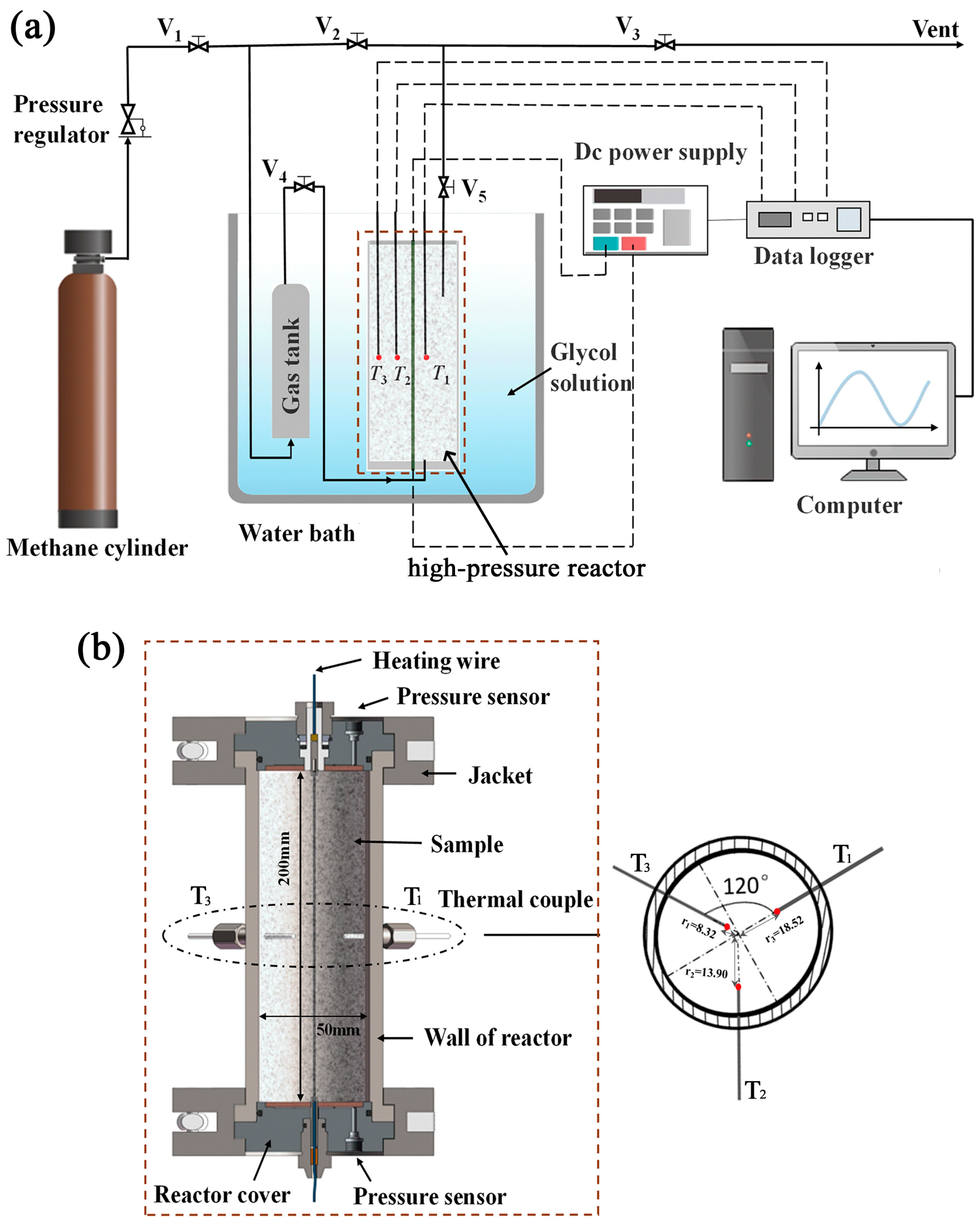
2.1. Experimental Apparatus
2.2. Materials
2.3. Experimental Procedures
- (1)
- Preparation of dry porous medium samples: Quartz sand, illite, and montmorillonite were dried in an oven at 110 °C for 12 h, then sealed and stored for later use.
- (2)
- Preparation of water/salt solution-containing porous medium samples: The water content of each porous medium sample was controlled to approximately 40 wt%. Dried porous medium samples were weighed using an electronic balance (BSA224S-CW, Sartorius, Goettingen, Germany), and the required mass of deionized water was calculated. To investigate the effect of salt on ETC, a 0.5 mol/L NaCl solution was prepared. Deionized water or salt solution was slowly added to the dried porous medium samples, followed by thorough mixing with a stirring rod to ensure uniform distribution of liquid components. The samples were sealed and left for 24 h to allow for complete absorption and swelling of the porous medium.
- (3)
- Sample loading: The prepared samples were loaded into a high-pressure reactor and compacted to maintain a consistent sample volume in experiments. After sealing, the reactor was immersed in a water bath with an adjustable temperature. The porosity (φ) reported in our study is the initial, effective porosity inside the reactor, prior to gas pressurization, which is expressed as:where Vpore and V are the pore volume of the reactor and the volume of the reactor, respectively; and Vw and Vc are the volumes of water and porous media, respectively. The porous medium samples containing water/salt solutions were compacted during loading to maintain a constant sample volume, (Vw + Vc), across the different systems. This ensured that the initial φ of the porous medium systems in the experiments was constant.
- (4)
- Initially gas injection: Before the reaction began, the temperature of the water bath was set to 288.15 K. The system was flushed three times with pure methane gas to remove air and checked for leaks. Then, methane gas was initially injected into the high-pressure reactor until the pressure reached 10.5 MPa and was maintained at 288.15 K for 2 h under isothermal conditions. This temperature and pressure condition prevented hydrate formation and ensured full penetration of the gas into the pores of the porous media.
- (5)
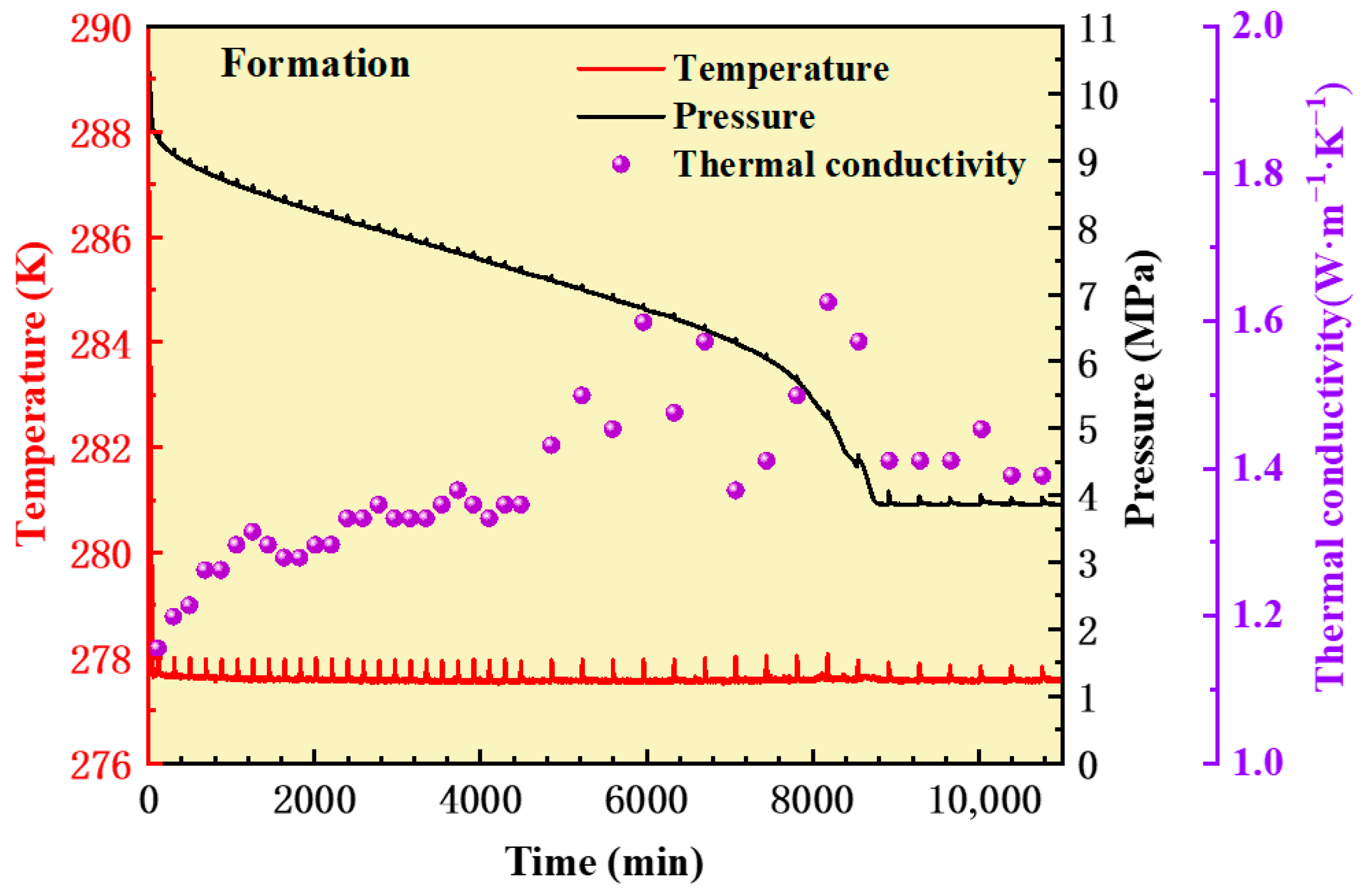
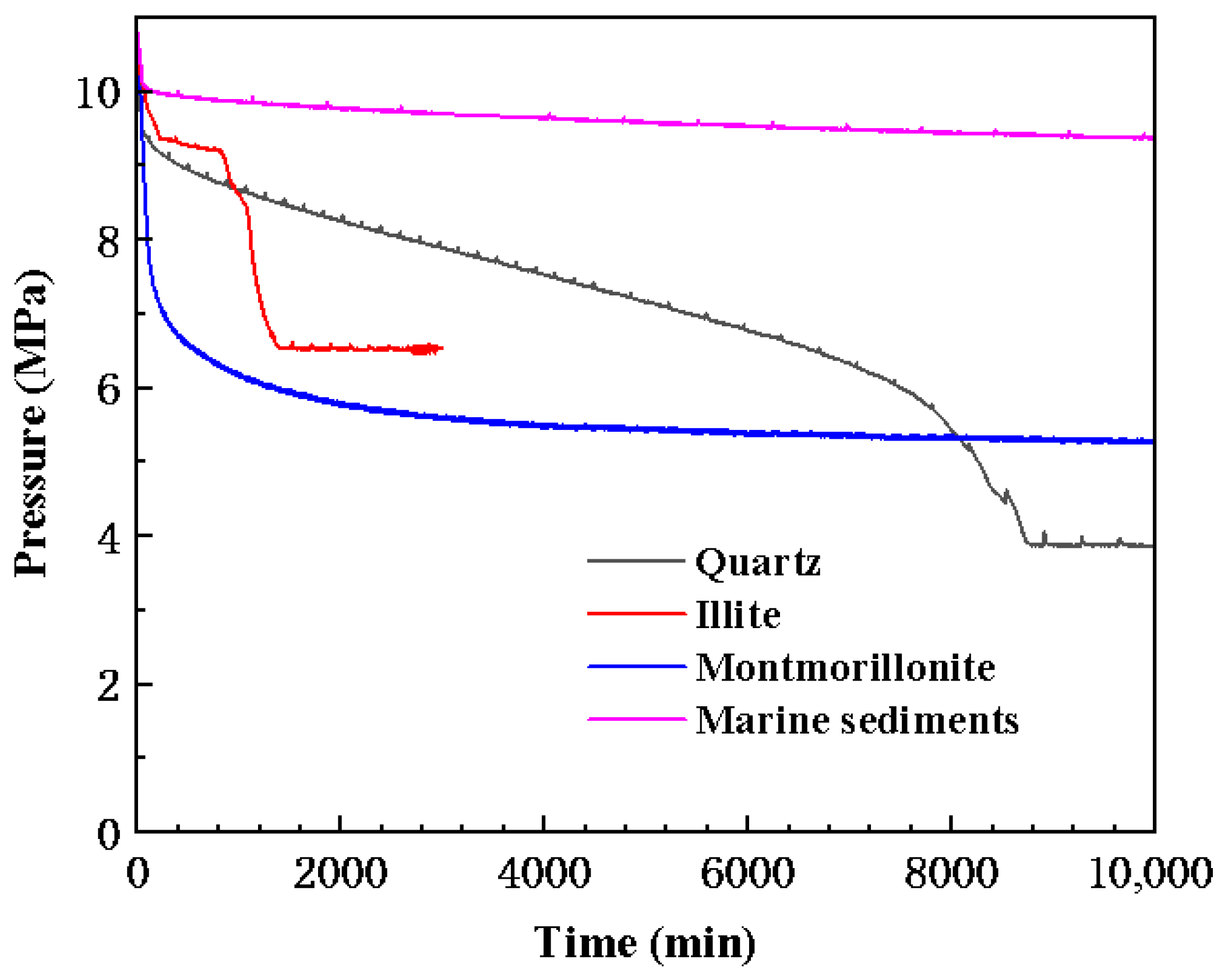
- Hydrate formation: The water bath temperature was reduced to 277.15 K, inducing hydrate formation within the reactor and causing a pressure drop. Hydrate formation was considered complete when the inlet and outlet pressures stabilized for 3 h (fluctuation range < 0.01 MPa). In the actual sedimentary environment of the reservoir, the formation of methane hydrates may require a longer period of time than what we obtained in the experiments. The initial stage of hydrate formation was controlled by nucleation and rapid growth, with a rapid gas consumption rate and significant pressure drop. The later stage gradually changed to a slow mass transfer and diffusion control stage, which is a relatively long time on the geological time scale. The experimental simulation mainly demonstrated that most of the hydrates in the system were formed in the initial stage of hydrate formation, and the remaining unreacted part had a negligible contribution within the limited experimental time. Therefore, we used this criterion to determine the complete formation of hydrates.
- (6)
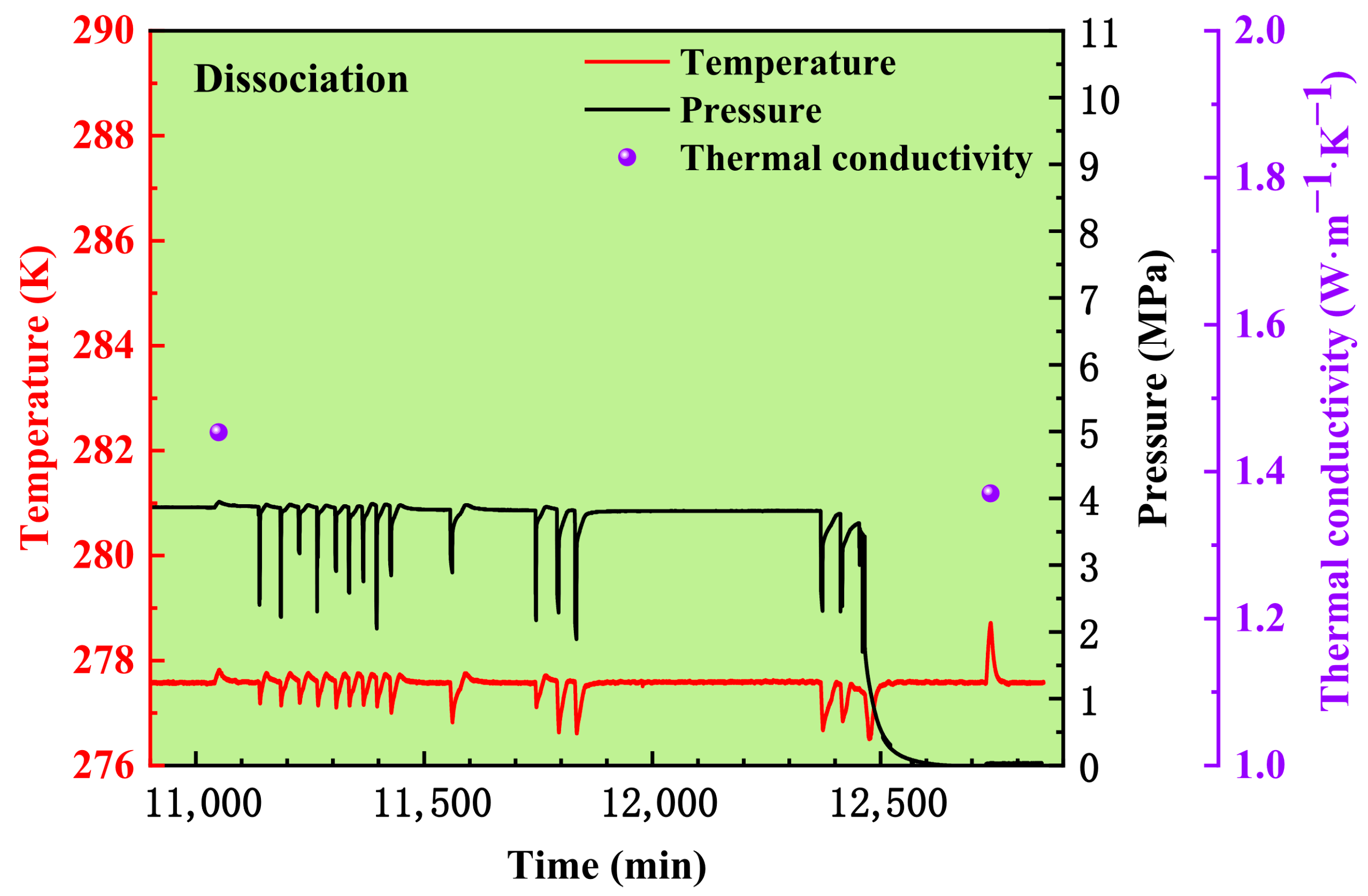
- Hydrate dissociation: A stepwise depressurization method was employed for hydrate dissociation. In each cycle, the exhaust valve was opened to reduce pressure to 3.5 MPa, allowing for hydrate dissociation and gas release until the pressure recovered to the phase equilibrium pressure of 3.87 MPa at this temperature [27]. This process was repeated until no further pressure recovery occurred, indicating complete hydrate dissociation.
- (7)
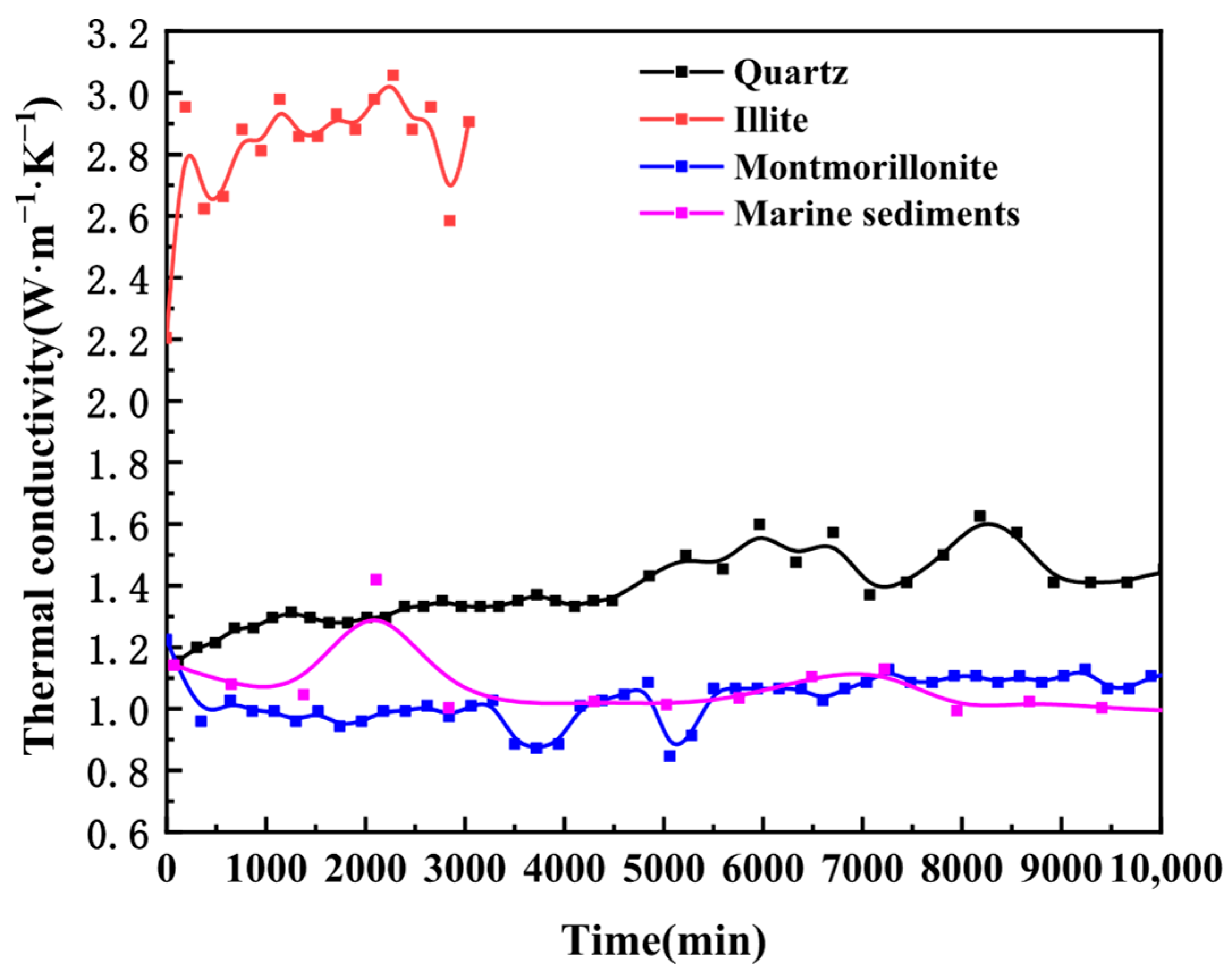
- ETC measurement: Based on one-dimensional steady-state heat transfer principles, a direct current was applied to an embedded heating wire under isothermal conditions at 277.15 K. Voltage and current data were recorded using a data acquisition system (sampling interval: 3 s). The ETC was calculated according to Fourier’s law [14].
2.4. Calculation of Hydrate Saturation
3. The Formation/Dissociation Processes of Methane Hydrate in Porous Media and Their ETC Measurement
3.1. Hydrate Formation Process
3.2. Hydrate Dissociation Process
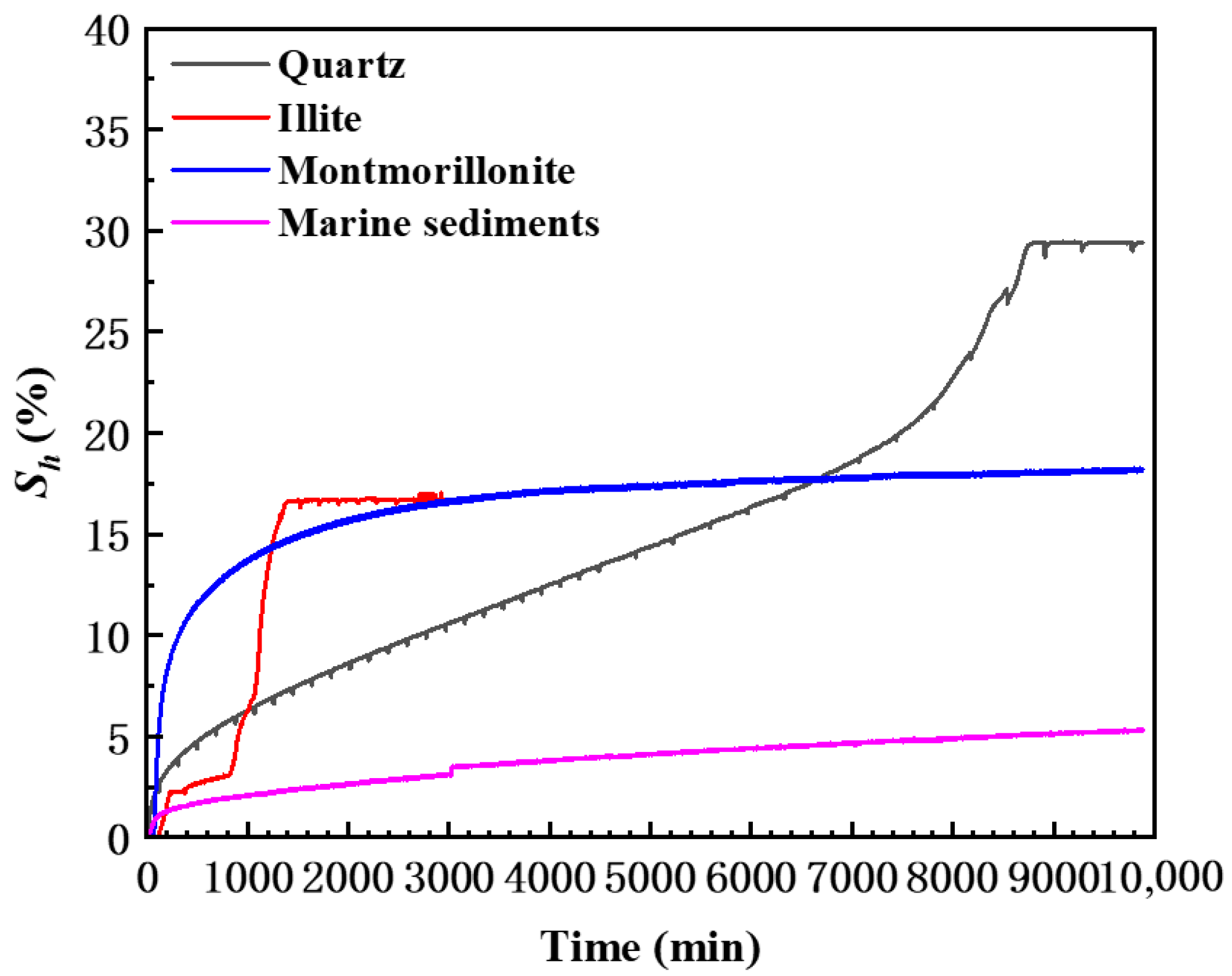
4. Effect of ETC of Porous Media on Hydrate Formation Rate
5. Effect of ETC of Porous Media on Hydrate Saturation During Formation
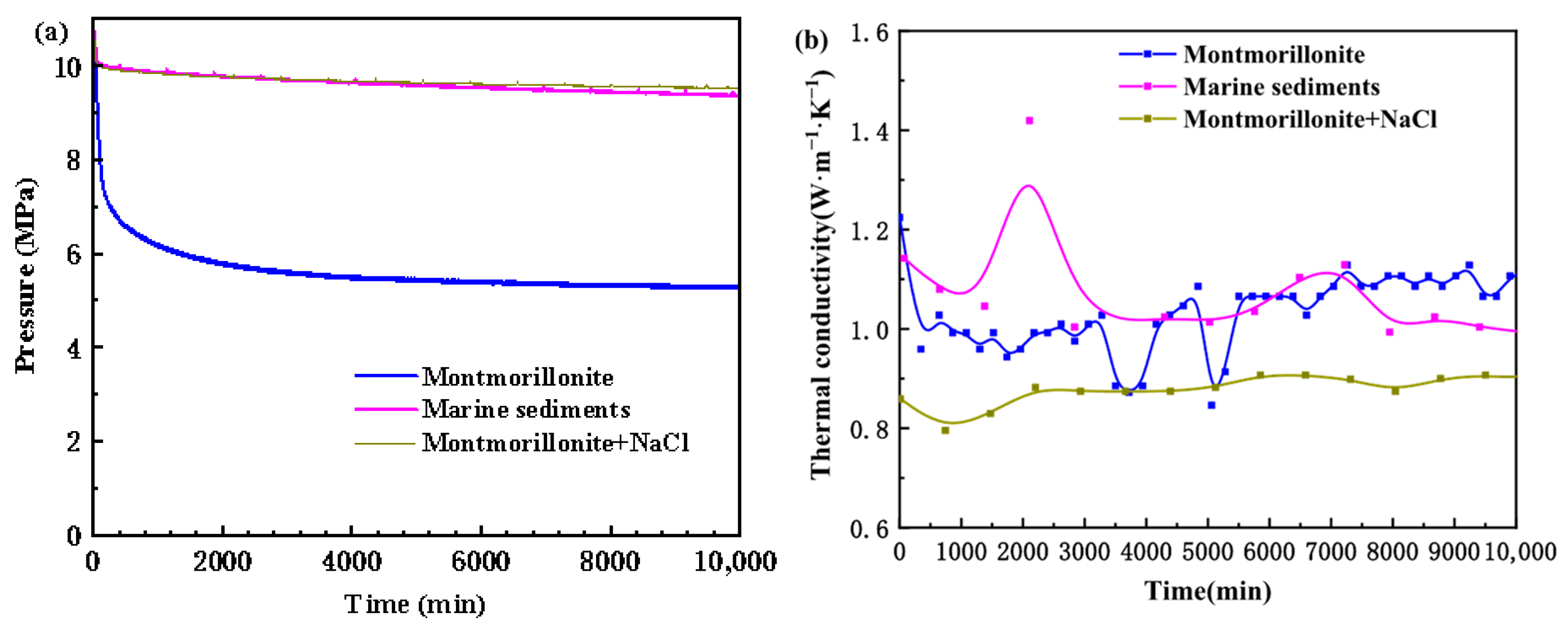
6. Effect of Salt Ions on the ETC and Hydrate Formation Within Natural Marine Sediment
7. Effect of ETC of Porous Media on Hydrate Dissociation
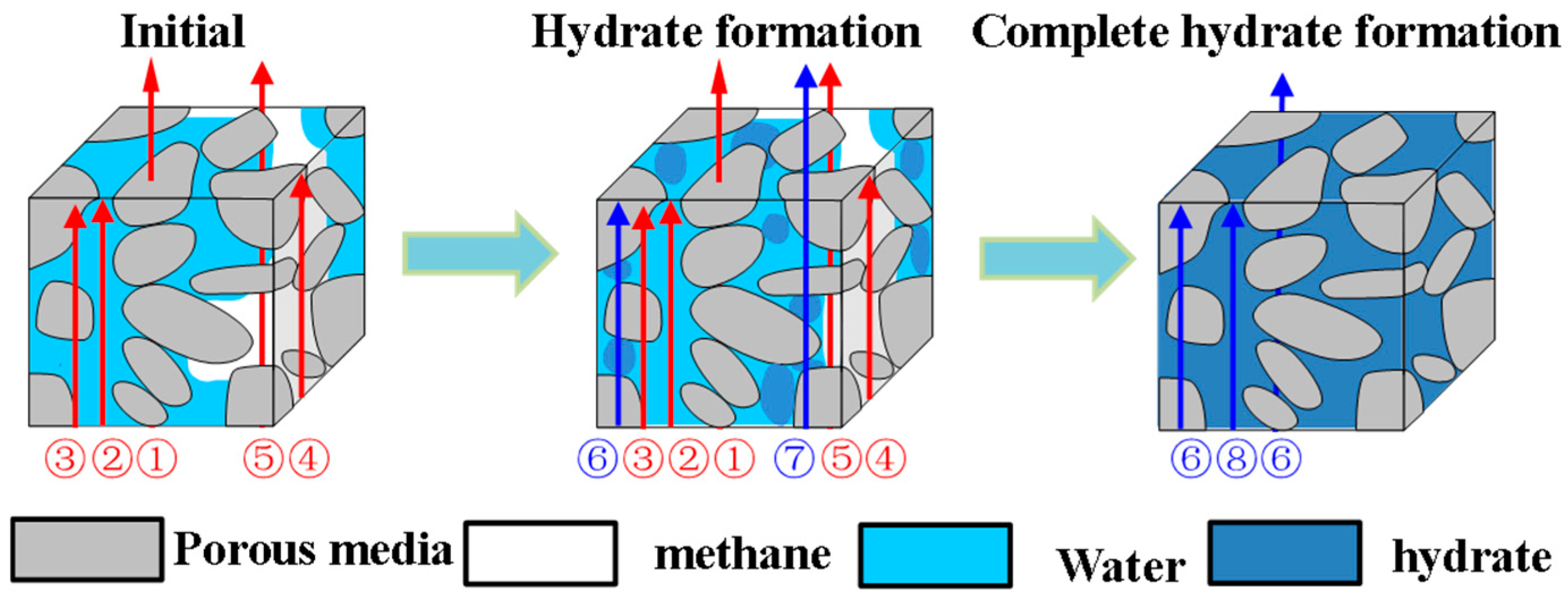
8. The Influence Mechanism of ETC on the Heterogeneous Distribution of Hydrates in Marine Reservoirs
9. Conclusions
- (1)
- TC properties of porous media serve as one of the principal controlling factors for hydrate formation rates. Porous media with high ETC facilitate efficient heat transfer, thereby significantly accelerating the kinetics of hydrate formation; whereas the swelling characteristics of montmorillonite and its coupling effects with salt ions alter pore structures and heat transfer pathways, representing critical mechanisms that inhibit formation and cause ETC reduction.
- (2)
- The spatial heterogeneity in the reservoir’s ETC represents the intrinsic cause of macroscopic heterogeneity in hydrate distribution. In porous media with high-conductivity, hydrate cementation further enhances heat transfer efficiency, forming preferential thermal conduits that promote hydrate enrichment. Conversely, in low-conductivity porous media, impeded heat transfer and slow growth kinetics lead to dispersed hydrate occurrences.
- (3)
- Hydrate decomposition irreversibly diminishes the reservoir’s ETC. This process disrupts the efficient solid-state thermal bridging established by hydrates, while the released gas trapped in the pores creates “thermal barriers”, resulting in system-wide ETC attenuation. These phenomena indicate a dynamic weakening of the reservoir’s heat transfer capacity during hydrate exploitation processes, potentially exacerbating front instability and localized secondary hydrate formation risks, thereby compromising sustained production efficiency.
Author Contributions
Funding
Data Availability Statement
Conflicts of Interest
References
- Sloan, E.D., Jr.; Koh, C. Clathrate Hydrates of Natural Gases, 3rd ed.; Taylor and Francis; CRC Press: Boca Raton, FL, USA, 2007; p. 554. [Google Scholar]
- Max, M. (Ed.) Natural Gas Hydrate: In Oceanic and Permafrost Environments; Springer Science & Business Media: Berlin/Heidelberg, Germany, 2003; pp. 1–50. [Google Scholar]
- Jin, Q.; Zhang, G.; Yang, M. An Overview of Natural Gas Hydrate Resources; Science Press: Beijing, China, 2006; p. 31. [Google Scholar]
- Sun, W. Molecular Dynamics Simulation of the Microstructure and Dynamic Properties of Fluids such as Methanol and Water. Ph.D. Thesis, Huazhong University of Science and Technology, Wuhan, China, 2008. [Google Scholar]
- Liu, C.; Sun, Y. Characteristics of marine gas hydrate reservoir and its resource evaluation methods. Mar. Geol. Quat. Geol. 2021, 41, 44–57. [Google Scholar]
- Kou, X.; Feng, J.C.; Li, X.S.; Wang, Y.; Chen, Z.Y. Formation mechanism of heterogeneous hydrate-bearing sediments. Appl. Energy 2022, 326, 119931. [Google Scholar] [CrossRef]
- Wan, K.; Wu, T.W.; Wang, Y.; Li, X.S.; Liu, J.W.; Kou, X.; Feng, J.C. Large-scale experimental study of heterogeneity in different types of hydrate reservoirs by horizontal well depressurization method. Appl. Energy 2023, 332, 120491. [Google Scholar] [CrossRef]
- Yang, L.; Liu, Y.L.; Zhang, H.Q.; Xiao, B.; Guo, X.W.; Wei, R.P.; Xu, L.; Sun, L.J.; Yu, B.; Leng, S.D.; et al. The status of exploitation techniques of natural gas hydrate. Chin. J. Chem. Eng. 2019, 27, 2133–2147. [Google Scholar] [CrossRef]
- Li, D.L.; Liang, D.Q. Experimental study on the effective thermal conductivity of methane hydrate-bearing sand. Int. J. Heat Mass Transf. 2016, 92, 8–14. [Google Scholar] [CrossRef]
- Wang, B.; Fan, Z.; Lv, P.F.; Zhao, J.F.; Song, Y.C. Measurement of effective thermal conductivity of hydrate-bearing sediments and evaluation of existing prediction models. Int. J. Heat Mass Transf. 2017, 110, 142–150. [Google Scholar] [CrossRef]
- Wei, R.P.; Xia, Y.Q.; Qu, A.X.; Lv, X.; Fan, Q.; Zhang, L.X.; Zhang, Y.; Zhao, J.F.; Yang, L. Dependence of thermal conductivity on the phase transition of gas hydrate in clay sediments. Fuel 2022, 317, 123565. [Google Scholar] [CrossRef]
- Farahani, M.V.; Hassanpouryouzband, A.; Yang, J.H.; Tohidi, B. Heat Transfer in Unfrozen and Frozen Porous Media: Experimental Measurement and Pore-Scale Modeling. Water Resour. Res. 2020, 56, e2020WR027885. [Google Scholar] [CrossRef]
- Li, X.X.; Wei, R.C.; Li, Q.P.; Pang, W.X.; Fan, Q.; Chen, G.J.; Sun, C.Y. Experimental investigation on the effective thermal conductivities of different hydrate-bearing sediments. Pet. Sci. 2023, 20, 2479–2487. [Google Scholar] [CrossRef]
- Chen, C.; Zhang, Y.; Li, X.-S.; Li, G.; Chen, Z.-Y. Experimental Study on the Effective Thermal Conductivity of Methane Hydrate-Bearing Sediments Using a Steady-State Method. Energy Fuels 2024, 38, 5928–5939. [Google Scholar] [CrossRef]
- Davidsoned, D.W. Volume 4: Aqueous Solutions of Amphiphiles and Macromolecules. In Water—A Comprehensive Treatise; Franks, F., Ed.; Plenum Press: New York, NY, USA, 1982; Chapter 3; p. 115. [Google Scholar]
- Xu, Z.J.; Feng, J.C.; Jiang, S.H.; Xie, Y.; Wang, B.; Chen, X.Y. Phase Equilibria of Methane Hydrate in Various Mineral Systems in the Haima Cold Seep Area. Energy Fuels 2025, 39, 8061–8072. [Google Scholar] [CrossRef]
- Mao, M.H.; Yan, K.F.; Li, X.S.; Chen, Z.Y.; Wang, Y.; Feng, J.C.; Chen, C. Review of Heat Transfer Characteristics of Natural Gas Hydrate. Energies 2024, 17, 717. [Google Scholar] [CrossRef]
- Mao, M.H.; Yan, K.F.; Chen, C.; Li, X.S.; Chen, Z.Y.; Li, G.; Wang, Y. Thermal Conductivity Characteristics of Porous Media in Marine Natural Gas Hydrate Reservoirs. Energy Fuels 2025, 39, 4790–4806. [Google Scholar] [CrossRef]
- Lee, G.-J.; Yoon, S.; Cho, W.-J. Effect of Bentonite Type on Thermal Conductivity in a HLW Repository. J. Nucl. Fuel Cycle Waste Technol. 2021, 19, 331–338. [Google Scholar] [CrossRef]
- Agababyan, K.S.; Aroyan, A.A.; Mina, R.T. Thermal conductivity of a mixture of helium and air. J. Eng. Phys. 1980, 38, 374–378. [Google Scholar] [CrossRef]
- Sakashita, H.; Kumada, T. Heat Transfer Model for Predicting Thermal Conductivity of Highly Compacted Bentonite. J. At. Energy Soc. Jpn. 1998, 40, 235–240. [Google Scholar] [CrossRef]
- Mounir, S.; Khabbazi, A.; Maaloufa, Y.; Khaldoun, A.; El Hamdouni, Y. Experimental Approach of Measuring Thermal Properties for Ecological Materials Based on Additives Cork or Wool and Illite. J. Therm. Sci. Eng. Appl. 2016, 8, 021012. [Google Scholar] [CrossRef]
- Kim, Y.-G.; Lee, S.-M.; Matsubayashi, O. New heat flow measurements in the Ulleung Basin, East Sea (Sea of Japan): Relationship to local BSR depth, and implications for regional heat flow distribution. Geo Mar. Lett. 2010, 30, 595–603. [Google Scholar] [CrossRef]
- Huaike, L.; Weili, L. Study on Effects of Temperature on Coefficient of Heat Conductivity of Saltwater. Drill. Fluid Complet. Fluid 2017, 34, 54–57. [Google Scholar] [CrossRef]
- Li, Y. Study on the Properties of Water Molecule at Different Temperatures. J. Phys. Conf. Ser. 2022, 2206, 012031. [Google Scholar] [CrossRef]
- Cook, J.G.; Laubitz, M.J. The thermal conductivity of two clathrate hydrates. J-Glob. 1983, 17, 745–751. [Google Scholar]
- Musakaev, N.; Borodin, S.J.M.W.C. To the question of the interpolation of the phase equilibrium curves for the hydrates of methane and carbon dioxide. MATEC Web Conf. 2017, 115, 05002. [Google Scholar] [CrossRef]
- Malegaonkar, M.B.; Dholabhai, P.D.; Bishnoi, P.R. Kinetics of carbon dioxide and methane hydrate formation. Can. J. Chem. Eng. 1997, 75, 1090–1099. [Google Scholar] [CrossRef]
- Wittkopp, S.M.T. Derivation and Application of a Tip5p-Consistent Force Field. Doctoral Dissertation, Hamilton College, New York, NY, USA, 2005. [Google Scholar]
- Song, D.; Liu, L.; Wang, D. Experimental study on the sensitivity of hydraulic permeability of fine-grained sediments sampled from a gas hydrate distribution area in the northern South China Sea. Earth Sci. Front. 2024, 31, 405–414. [Google Scholar]
- Liu, Y.; Wang, X.; Lang, C.; Zhao, J.; Lv, X.; Ge, Y.; Jiang, L. Experimental study on the gas hydrates blockage and evaluation of kinetic inhibitors using a fully visual rocking cell. J. Nat. Gas Sci. Eng. 2021, 96, 104331. [Google Scholar] [CrossRef]
- Kvamme, B.; Coffin, R.B.; Zhao, J.Z.; Wei, N.; Zhou, S.W.; Li, Q.P.; Saeidi, N.; Chien, Y.C.; Dunn-Rankin, D.; Sun, W.T.; et al. Stages in the Dynamics of Hydrate Formation and Consequences for Design of Experiments for Hydrate Formation in Sediments. Energies 2019, 12, 3399. [Google Scholar] [CrossRef]
- Li, Z.; Lu, H.; Deng, Y.; Rao, S.; Huang, X.; Zhang, Q. Advances in molecular dynamics simulation on heterogeneous nucleation of gas hydrate. Funct. Mater. Lett. 2021, 14, 2130010. [Google Scholar] [CrossRef]
- Ren, J.J.; Yin, Z.Y.; Lu, H.F.; Xu, C.L.; Kuang, Z.G.; Deng, W.; Liu, Y.T.; Linga, P. Effects of South China Sea clayey-silty sediments on the kinetics and morphology of CH4 hydrate: Implication on energy recovery. Appl. Energy 2024, 367, 123399. [Google Scholar] [CrossRef]
- Liu, X.H.; Zhang, J.D.; Bhawangirkar, D.R.; Jiao, H.M.; Li, Q.P.; Yin, Z.Y. Effect of particle size distribution variability on the permeability of hydrate-bearing sediments: A CFD study. Gas Sci. Eng. 2024, 126, 205335. [Google Scholar] [CrossRef]
- Yun, T.S.; Santamarina, J.C. Hydrate growth in granular materials: Implication to hydrate bearing sediments. Geosci. J. 2011, 15, 265–273. [Google Scholar] [CrossRef]
- Yang, M.; Song, Y.; Jiang, L.; Zhao, Y.; Wang, S.; Zhao, J. A Temperature-Mapping Method for Tetrahydrofuran Hydrate Formation in Porous Media. Exp. Heat Transf. 2016, 29, 205–220. [Google Scholar] [CrossRef]
- Kou, X.; Li, X.S.; Wang, Y.; Xu, R.; Chen, Z.Y. Macroscale insights into heterogeneous hydrate formation and decomposition behaviors in porous media. Chem. Eng. J. 2023, 475, 146215. [Google Scholar] [CrossRef]
- Lin, J.; Brown, C.W. Near-IR Spectroscopic Measurement of Seawater Salinity. Environ. Sci. Technol. 1993, 27, 1611–1615. [Google Scholar] [CrossRef]
- Millero, F.J.; Feistel, R.; Wright, D.G.; McDougall, T.J. The composition of Standard Seawater and the definition of the Reference-Composition Salinity Scale. Deep Sea Res. Part I Oceanogr. Res. Pap. 2008, 55, 50–72. [Google Scholar] [CrossRef]
- Wen, Y.; Feng, Y.; Wei, J.; Zhang, T.; Cai, C.; Sun, J.; Qian, X.; Zhao, Y. Photovoltaic-driven stable electrosynthesis of H2O2 in simulated seawater and its disinfection application. Chem. Sci. 2024, 15, 18969–18976. [Google Scholar] [CrossRef] [PubMed]
- Sun, H.; Chen, B.; Yang, M. Effect of multiphase flow on natural gas hydrate production in marine sediment. J. Nat. Gas Sci. Eng. 2020, 73, 103066. [Google Scholar] [CrossRef]
- Yang, M.; Zhao, G.; Sun, H.; Chen, B.; Li, X.; Song, Y. In-situ investigation on methane hydrate decomposition characteristics under variational seawater flow process. Fuel 2022, 310, 122123. [Google Scholar] [CrossRef]
- He, Z.; Mi, F.; Ning, F.; Jiang, G. Complex Coupled Effects of Seawater Ions and Clay Surfaces on CH-4 Hydrate Formation in Kaolinite Janus-Nanopores and Bulk Solution. Energy Fuels 2022, 36, 5775–5783. [Google Scholar] [CrossRef]
- Yan, K.; Zhao, J.; Li, X.; Feng, J.; Xia, Z.; Ruan, X. Study on the Swelling Characteristics of the Offshore Natural Gas Hydrate Reservoir. Entropy 2023, 25, 278. [Google Scholar] [CrossRef]
- Liu, W.G.; Pan, X.L.; Wang, H.J.; Wu, P.; Li, Q.P.; He, Y.F.; Li, Y.H. Experimental study on the effect of hydrate reformation on gas permeability of marine sediments. J. Nat. Gas Sci. Eng. 2022, 108, 104849. [Google Scholar] [CrossRef]
- Dai, S.; Santamarina, J.C.; Waite, W.F.; Kneafsey, T.J. Hydrate morphology: Physical properties of sands with patchy hydrate saturation. J. Geophys. Res. Solid Earth 2012, 117, B11205. [Google Scholar] [CrossRef]
- Li, X.-S.; Xu, C.-G.; Zhang, Y.; Ruan, X.-K.; Li, G.; Wang, Y. Investigation into gas production from natural gas hydrate: A review. Appl. Energy 2016, 172, 286–322. [Google Scholar] [CrossRef]
- Yamamoto, K.; Wang, X.X.; Tamaki, M.; Suzuki, K. The second offshore production of methane hydrate in the Nankai Trough and gas production behavior from a heterogeneous methane hydrate reservoir. RSC Adv. 2019, 9, 25987–26013. [Google Scholar] [CrossRef]
- Liu, J.W.; Li, X.S.; Kou, X.; Wang, Y.; Li, L.J. Analysis of Hydrate Heterogeneous Distribution Effects on Mechanical Characteristics of Hydrate-Bearing Sediments. Energy Fuels 2021, 35, 4914–4924. [Google Scholar] [CrossRef]
- Li, Y.; Wei, Z.; Wang, H.; Wu, P.; Zhang, S.; You, Z.; Liu, T.; Huang, L.; Song, Y. Impact of hydrate spatial heterogeneity on gas permeability in hydrate-bearing sediments. Energy 2024, 293, 130717. [Google Scholar] [CrossRef]



| Materials | Source | Particle Size (μm) | Density (g/cm3) |
|---|---|---|---|
| Montmorillonite | Nanocor Inc., Arlington Heights, IL, USA | 20.86 | 2.07 |
| Quartz | Shanghai Macklin Biochemical Technology Co., Ltd., Shanghai, China | 401.1 | 2.49 |
| Illite | Shanghai Macklin Biochemical Technology Co., Ltd., Shanghai, China | 15.13 | 2.60 |
| Natural marine sediments | Natural gas hydrate reservoirs in the South China Sea (Depth: 600–800 m) | 59.53 | 2.45 |
| Methane | Guangzhou Yuejia Gas Co., Ltd., Guangzhou, China | -- | -- |
| NaCl | Shanghai Aladdin Industrial Co., Ltd., Shanghai, China | -- | -- |
| Component | TC/W·m−1·K−1 | |
|---|---|---|
| Our Work | Previous Research | |
| Quartz | 1.06 | 0.769 [19,20] |
| Montmorillonite | 0.88 | 0.8–1.1 [21] |
| Illite | 0.50 | 0.51 [22] |
| Marine sediments | 0.59 | 1.4–1.77 [23] |
| NaCl solution | 0.46 | 0.59 [24] |
| Water | -- | 0.6218 [25] |
| Methane hydrate | -- | 0.49 [26] |
| Porous Media | λ0/W·(m·K)−1 | λform/W·(m·K)−1 | Δλf/% | λdis/W·(m·K)−1 | Δλd/% |
|---|---|---|---|---|---|
| Quartz | 1.16 | 1.45 | +25.00 | 1.37 | −5.52 |
| Illite | 2.20 | 2.90 | +31.82 | 1.75 | −39.66 |
| Montmorillonite | 1.22 | 1.11 | −9.02 | 1.07 | −3.60 |
| Montmorillonite + NaCl | 0.86 | 0.90 | +4.65 | 0.85 | −5.56 |
| Marine sediments | 1.08 | 1.00 | −7.41 | 1.07 | +7.00 |
Disclaimer/Publisher’s Note: The statements, opinions and data contained in all publications are solely those of the individual author(s) and contributor(s) and not of MDPI and/or the editor(s). MDPI and/or the editor(s) disclaim responsibility for any injury to people or property resulting from any ideas, methods, instructions or products referred to in the content. |
© 2026 by the authors. Licensee MDPI, Basel, Switzerland. This article is an open access article distributed under the terms and conditions of the Creative Commons Attribution (CC BY) license.
Share and Cite
Yan, J.; Yan, K.; Huang, T.; Mao, M.; Li, X.; Chen, Z.; Pang, W. Study on the Influence of Thermal Conductivity Characteristics of Porous Media on the Heterogeneous Distribution of Methane Hydrate. Energies 2026, 19, 584. https://doi.org/10.3390/en19030584
Yan J, Yan K, Huang T, Mao M, Li X, Chen Z, Pang W. Study on the Influence of Thermal Conductivity Characteristics of Porous Media on the Heterogeneous Distribution of Methane Hydrate. Energies. 2026; 19(3):584. https://doi.org/10.3390/en19030584
Chicago/Turabian StyleYan, Jiajia, Kefeng Yan, Ting Huang, Minghang Mao, Xiaosen Li, Zhaoyang Chen, and Weixin Pang. 2026. "Study on the Influence of Thermal Conductivity Characteristics of Porous Media on the Heterogeneous Distribution of Methane Hydrate" Energies 19, no. 3: 584. https://doi.org/10.3390/en19030584
APA StyleYan, J., Yan, K., Huang, T., Mao, M., Li, X., Chen, Z., & Pang, W. (2026). Study on the Influence of Thermal Conductivity Characteristics of Porous Media on the Heterogeneous Distribution of Methane Hydrate. Energies, 19(3), 584. https://doi.org/10.3390/en19030584