Article

Simulation Study on Injection/Withdrawal Scenarios of Hydrogen-Blended Methane in a Depleted Gas Reservoir

1
Department of Energy and Mineral Resources Engineering, Kangwon National University, Samcheok 25913, Republic of Korea
2
Department of Green Energy Engineering, Kangwon National University, Samcheok 25913, Republic of Korea
*
Author to whom correspondence should be addressed.
Energies 2026, 19(2), 374; https://doi.org/10.3390/en19020374
Submission received: 19 November 2025 / Revised: 10 December 2025 / Accepted: 16 December 2025 / Published: 12 January 2026
(This article belongs to the Topic Exploitation and Underground Storage of Oil and Gas)

Abstract

This study presents a quantitative simulation analysis of hydrogen-enriched methane (HENG) storage with nitrogen as the cushion-gas in a depleted gas reservoir by varying three key operational parameters: the injection/withdrawal period, hydrogen blending ratio (5–20%), and injection depth. Ten injection–withdrawal cycles were modeled for each scenario, and performance was evaluated using cycle-averaged and cumulative hydrogen purity, recovery factors, and the mixing zone size. Extending the injection period increased hydrogen purity to 20.00–20.26% and reduced nitrogen to 0.001–0.003%, but recovery decreased from 65.63 to 53.83–41.09% due to enhanced dispersion and residual trapping. The blending ratio was the dominant control: 20% blending yielded 19.9–20.0% purity with nitrogen as low as 0.00–0.03%, whereas 5–10% blending produced lower purity but minimized nitrogen production to 0.97–1.08%. Injection depth affected nitrogen recovery more than purity, increasing from 0.72–1.20% (upper) to 1.46–1.61% (lower), along with thicker mixing zones. Final mixing zone size ranged from 3176 to 5546 blocks, with smaller zones consistently linked to higher purity and lower nitrogen breakthrough. The shut-in period further reduced nitrogen recovery from 6.49 to 1.33% and stabilized mixing behavior. Overall, minimizing late-cycle mixing zone thickness is essential for maintaining HENG storage performance. Although this study provides quantitative insights into HENG operational strategies, the use of a homogeneous grid and simplified fluid properties limits representation of geological heterogeneity and reactive processes. Future work will incorporate heterogeneity and reaction modeling into field-scale simulations to validate and refine these operating strategies for practical deployment.

1. Introduction

Hydrogen is widely recognized as an essential component for achieving global carbon neutrality [1]. Although renewable energy sources such as nuclear power, solar photovoltaics, solar thermal, wind power, and fuel cells have been proposed as alternatives to fossil fuels, their current contribution remains insufficient to meet the growing energy demand [2,3]. Hydrogen has emerged as a promising option to expand the share of low-carbon energy systems [4]. Depending on the withdrawal pathway, hydrogen can be classified into gray, blue, and green hydrogen. Among these, green hydrogen produced from renewable energy and blue hydrogen generated through carbon capture, utilization, and storage (CCUS) are collectively referred to as clean hydrogen, typically defined as hydrogen with a life cycle assessment (LCA) of less than 4.0 kg CO2-eq per kg H2 [4]. According to a report published by Hydrogen Insight in September 2024, global clean hydrogen withdrawal is expected to reach approximately 48 million tons annually by 2030 [5].
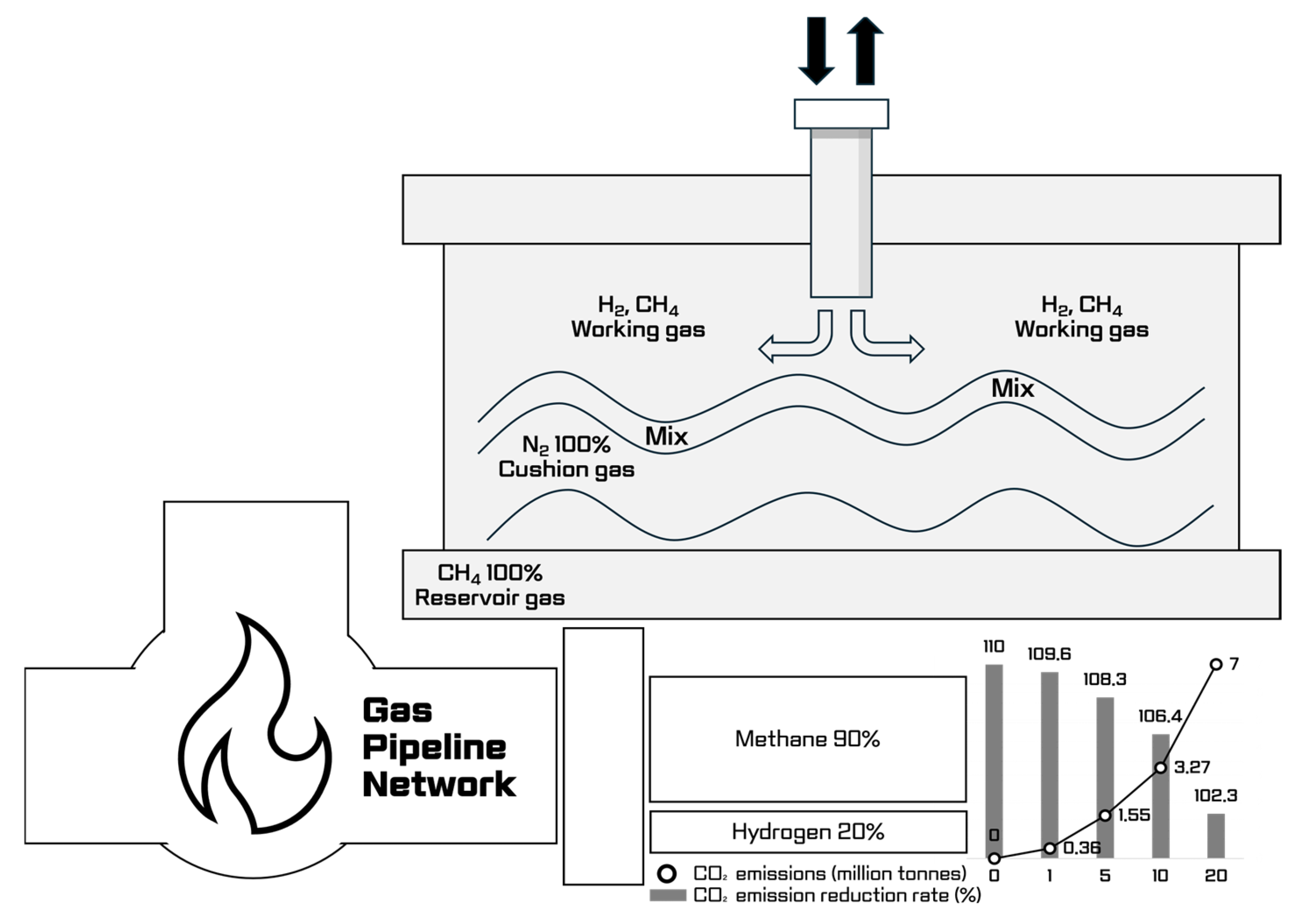
To realize a clean hydrogen economy, the development of technologies for hydrogen withdrawal, transportation, and storage is indispensable. High-purity hydrogen has the advantage of possessing higher energy content per unit mass; however, its storage and transportation through existing infrastructure are limited due to hydrogen embrittlement issues [6]. The HyDeploy project, conducted by Keele University and the gas distribution company Cadent in the United Kingdom from 2019 to 2022, evaluated the impacts of hydrogen blending in existing natural gas pipeline networks [7]. Their demonstration verified the operational safety of hydrogen injection up to 20 vol%, confirming the feasibility of transporting hydrogen-enriched gas through current pipeline infrastructure and utilizing it directly as fuel in gas-fired power plants without additional purification [8]. Furthermore, blending hydrogen into city gas at 20 vol% can potentially reduce CO2 emissions by up to 7.65 million tons annually when total city-gas consumption is 40 million tons per year, leading many countries to mandate hydrogen-blending policies ranging from 5 to 20 vol% depending on national strategies. Accordingly, hydrogen-enriched natural gas (HENG), defined as natural gas predominantly composed of methane with small amounts of hydrogen, has become an essential approach to leveraging existing pipeline networks, as schematically illustrated in Figure 1 [9].
Another major challenge is the intermittency of renewable energy sources, which leads to fluctuations in the availability of green hydrogen production [10]. While energy storage systems (ESSs) may offer short-term solutions, large-scale and long-duration storage options are needed to accommodate future expansion of hydrogen deployment and HENG usage [11]. Underground hydrogen storage (UHS) has consequently gained increasing attention as a promising alternative capable of safely storing gas mixtures in large quantities [12]. UHS also provides additional benefits such as energy-supply security and resilience against external risks such as natural disasters, warfare, or terrorism [13,14]. In particular, depleted gas reservoirs offer naturally validated storage spaces, given that methane remained trapped for geological time scales without leakage [15]. However, converting depleted gas reservoirs into HENG storage sites involves considerable technical uncertainties related to hydrogen behavior under subsurface reservoir conditions, necessitating extensive research [16,17].
Recent studies have addressed some of these challenges. Huang et al. [18] employed a TOUGH + RGB compositional model to evaluate storage performance and quantify the effect of hydrogen-injection ratios. Sari et al. [19] utilized MRST (MATLAB Reservoir Simulation Toolbox) to analyze seasonal injection–withdrawal operations in the Değirmenköy gas field of Türkiye. Lu et al. [20] investigated the degree of mixing between hydrogen and various cushion gases in underground hydrogen storage. Methane, nitrogen, and carbon dioxide were individually assigned as cushion gases, and hydrogen was subsequently injected and produced to evaluate the effects on purity, recovery efficiency, and the development of the mixing zone. However, validation of these models is often limited to specific reservoir conditions, and further assessment is needed to enhance their field applicability. Moreover, there remains a lack of studies evaluating the combined effects of reservoir heterogeneity, mixing zone development, and shut-in operations under mixed-gas injection conditions [18,19,20].
In this study, reservoir simulations of hydrogen-blended natural gas injection and withdrawal were conducted for a representative depleted gas field to evaluate domestic applicability for underground gas storage (UGS). Multiple operational scenarios were designed by varying injection duration, hydrogen-blending ratio, and well placement. Additionally, each scenario was analyzed with and without a designated shut-in period following injection. Through a comparative assessment of storage and withdrawal efficiency, this study aims to quantify the influence of shut-in operations and evaluate the technical feasibility of converting depleted gas reservoirs into HENG storage sites.

2. Methodology

2.1. Model Description

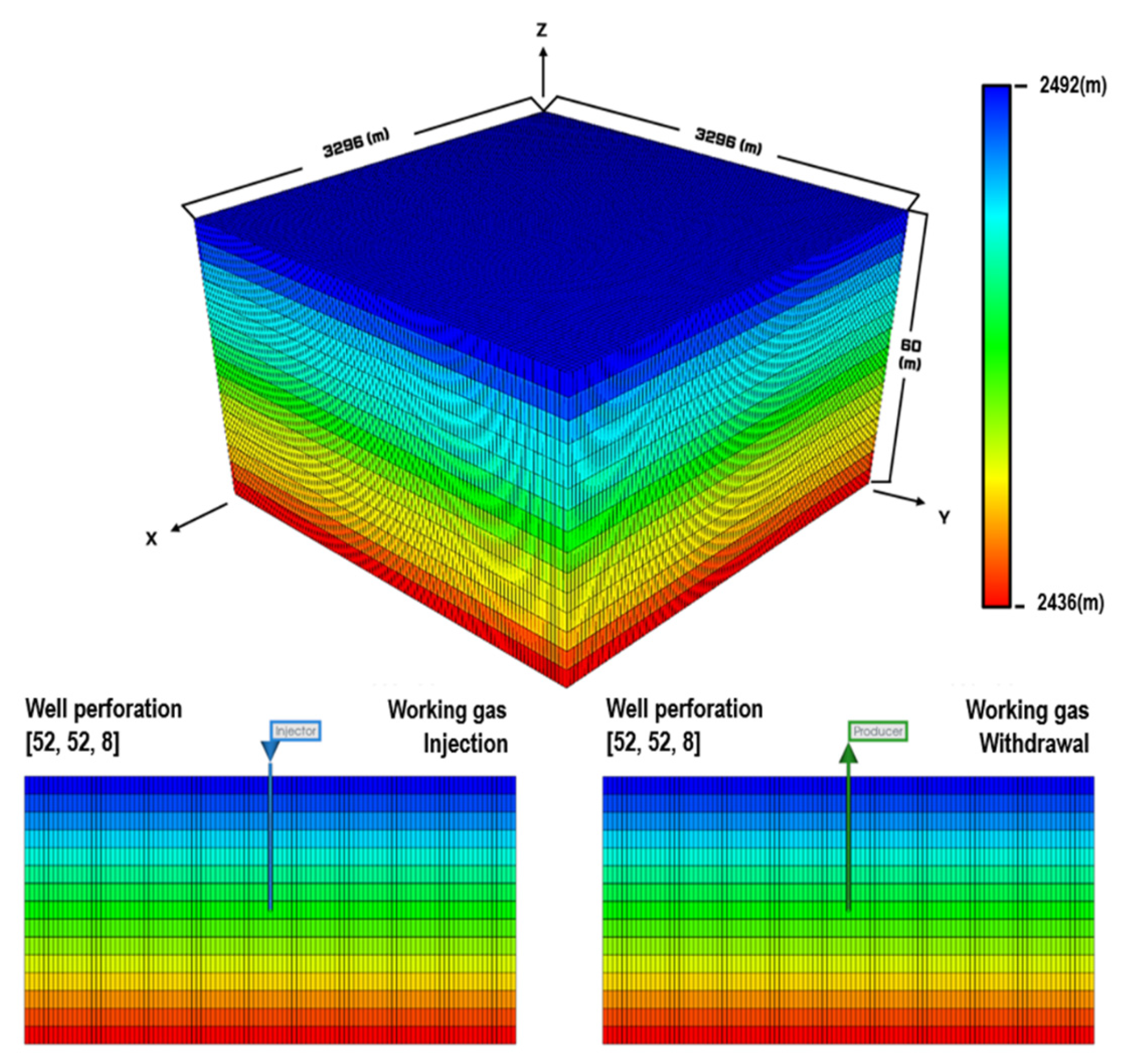
In this study, a model was constructed using the reservoir properties of the Donghae gas field to represent a depleted gas reservoir in Korea, as summarized in Table 1 [21,22,23,24]. The model consists of a 32 × 32 × 4 m grid size with 103 × 103 × 15 cells, forming a simplified reservoir geometry, as shown in Figure 2, where the injection and production occur at the same well location and the base perforation interval is defined at the grid position 52, 52, 8. The grid top is located at a depth of 2436 m, where the temperature is 107 °C. To ensure that the model is not influenced by the aquifer, the gas water contact was set at 2600 m. The original reservoir pressure before gas depletion was 24,589 kPa, and an initial pressure of 6000 kPa was assigned to simulate the depleted reservoir conditions. The injection/withdrawal well is located at the center of the model, and the perforations are also positioned at the mid-depth of the reservoir. The bottom-hole pressure of the injection/withdrawal well was controlled between a minimum of 200 kPa and a maximum of 33,000 kPa [21,22,23,24].
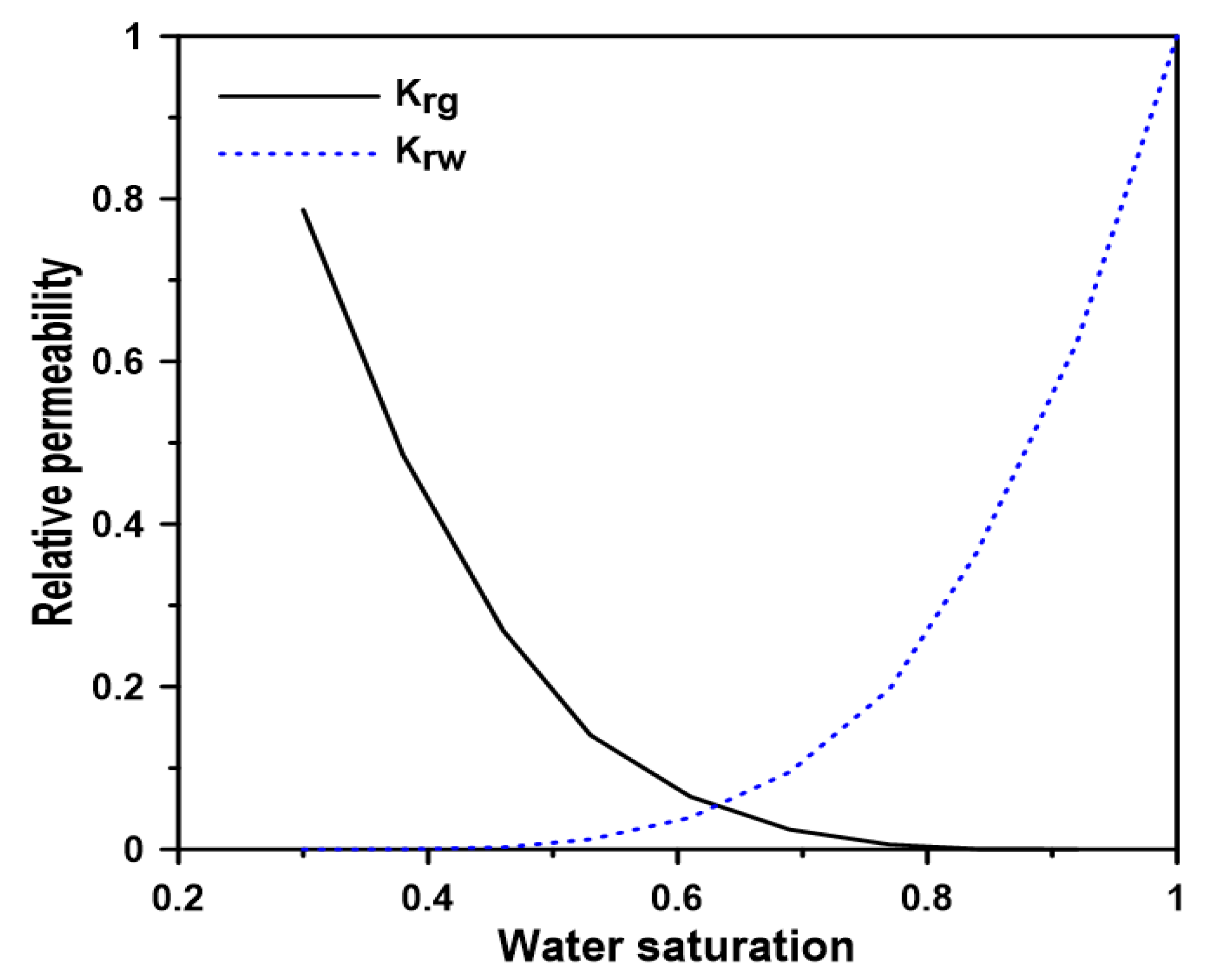
In UGS, cushion-gas is required to mitigate the risk of gas leakage and to maintain the operational pressure of the storage reservoir [25]. Cushion-gas pre-injection is also necessary in hydrogen-blended methane storage. Commonly used cushion-gases include CO2, CH4, and N2 [25]. If CO2 remains in the depleted reservoir together with hydrogen, methane can be generated through hydrogenotrophic methanogenesis, reducing the available hydrogen [26]. Although methane is considered the most ideal cushion-gas due to its compatibility with the working gas and the originally stored reservoir gas, accurate quantification of injected and produced methane becomes difficult when it mixes with the working gas [27]. Therefore, nitrogen, an inert gas, was selected as a cushion-gas in this study. Relative permeability curves used in this study were generated based on SCAL (special core analysis) results from the Donghae gas field, and a schematic representation is provided in Figure 3 [28]. Also, the Peng–Robinson equation of state (PR-EOS) was used to describe the multiphase fluid behavior [29,30].

2.2. Scenario Configuration for UGS

The base models include two primary cases: a scenario without a shut-in period (6 months/6 months) and a scenario with a shut-in period (5 months/5 months). In both cases, the hydrogen blending ratio was fixed at 20%, and the perforation interval was set to layer k:8. Gas operations in every scenario followed the same sequence, beginning with cushion-gas injection and subsequently transitioning to working gas injection and withdrawal.
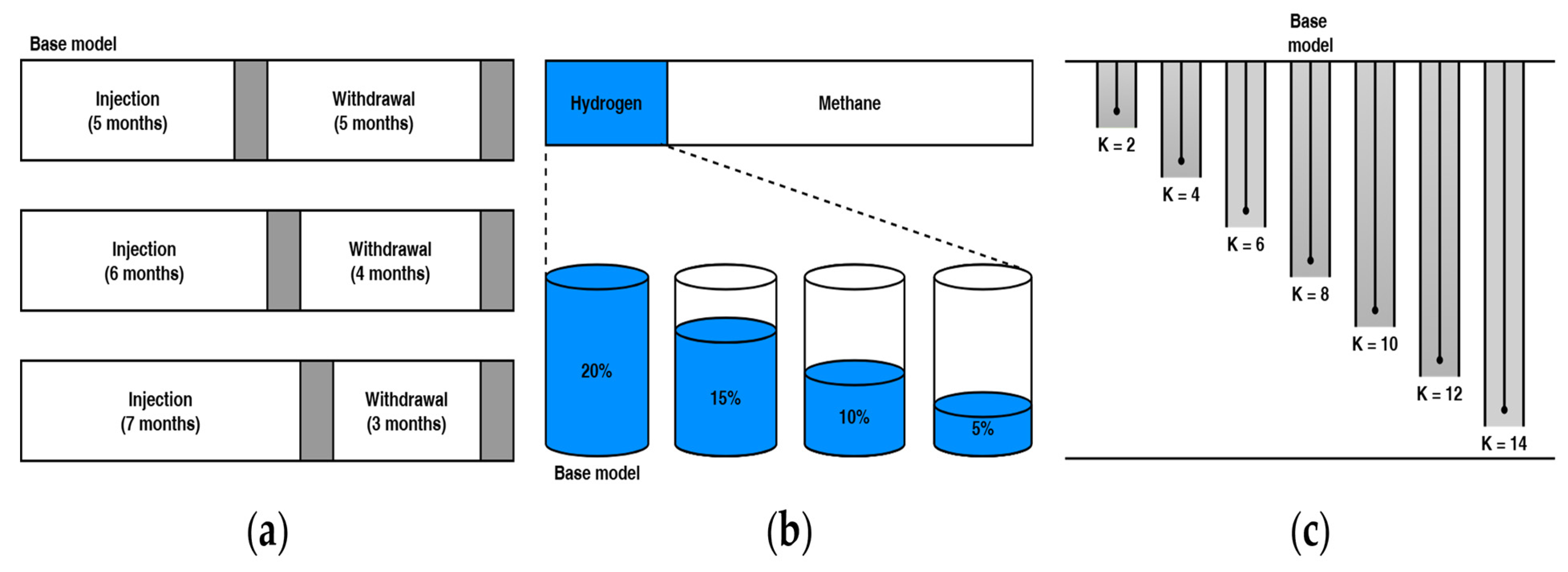
A total of three scenario groups were defined, as illustrated in Figure 4 and Table 2. The first scenario group varies the injection and withdrawal periods. The cases with a shut-in period include 6 months/4 months (1-1) and 7 months/3 months (1-2). The second scenario group varies the hydrogen blending ratio in methane including cases of 5% (2-1), 10% (2-2), and 15% (2-3). The third scenario group varies the perforation depth. A total of 6 cases were configured: k:2 (3-1), k:4 (3-2), k:6 (3-3), k:10 (3-4), k:12 (3-5), and k:14 (3-6).
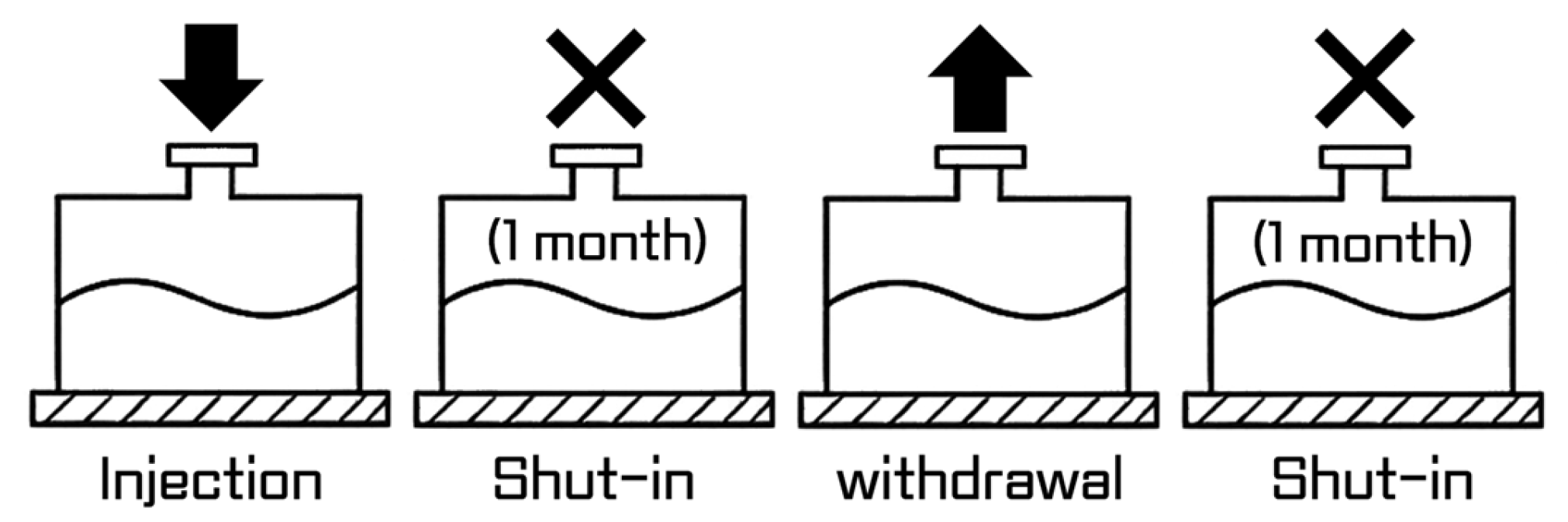
Cushion-gas was injected for one year prior to the commencement of working gas cycling. The total volume of injected cushion-gas was consistently set to 0.75 Mt (36,500,000 m3) across all models. Following this initial stage, ten annual cycles of working gas injection and withdrawal were performed. For the models incorporating a shut-in period, a one-month shut-in was applied immediately after each injection and withdrawal phase within each cycle before progressing to the next simulation stage, as conceptually illustrated in Figure 5.

3. Results and Discussion

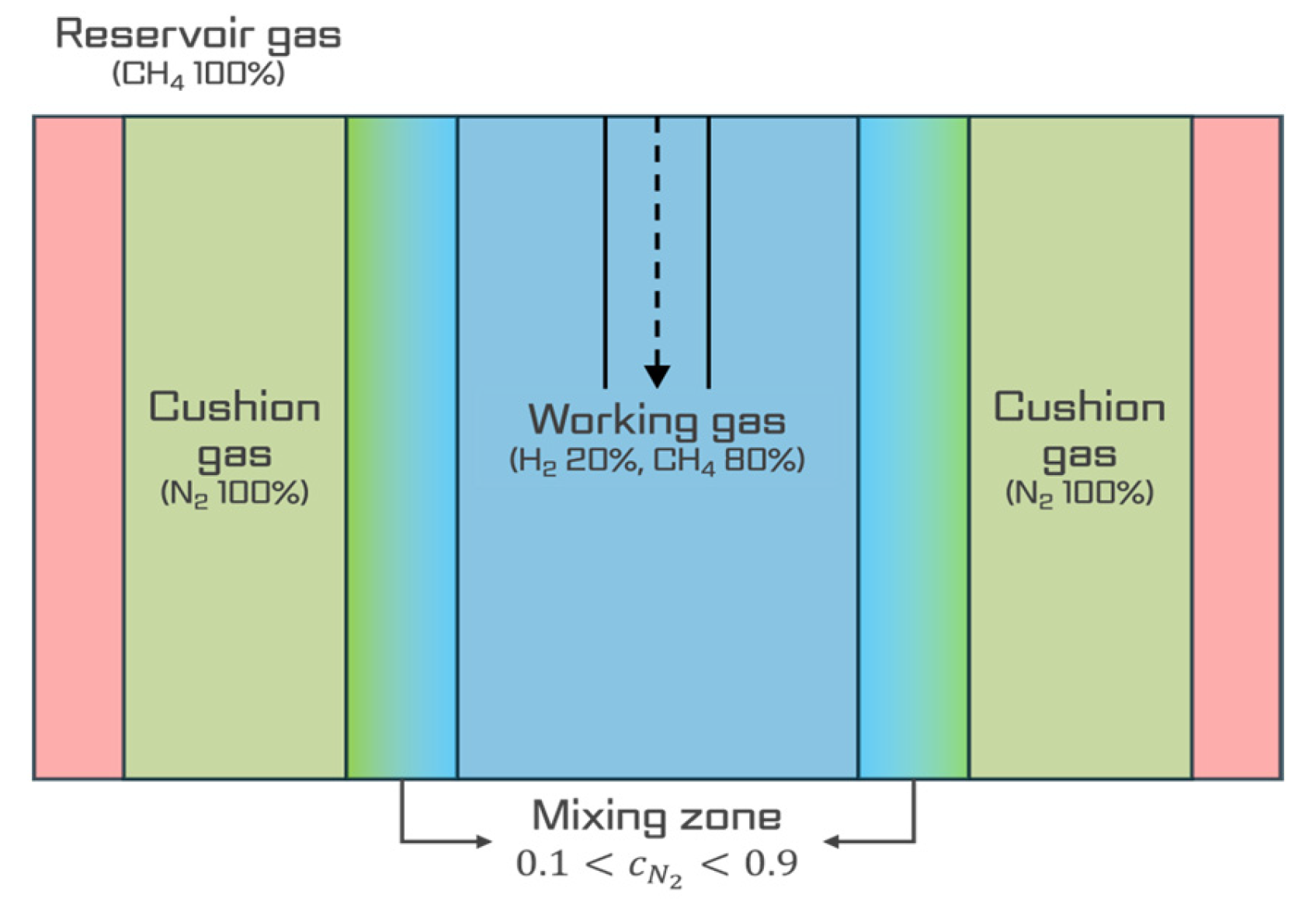
The results were evaluated comprehensively in terms of hydrogen purity, recovery, and the size of the mixing zone. These performance indicators were selected with reference to the work of Lu et al. [20], who demonstrated that geological properties, operating strategies, and cushion-gas compositions collectively govern hydrogen purity, recovery efficiency, and mixing behavior in underground hydrogen storage. While their study focuses on pure hydrogen storage, the present study examines hydrogen-enriched methane storage, a multicomponent gas system, thereby highlighting a clear distinction in research scope and application context. Hydrogen purity and recovery were defined by Equations (1) and (2), respectively, and all values were calculated on a molar basis. The mixing zone was quantified as the number of activated grid blocks in which the mole fraction of nitrogen—the cushion-gas—fell within the specified range, as illustrated schematically in Figure 6. In this assessment, the mixing zone based on nitrogen mole-fraction interval was set between 0.1 and 0.9, and the number of active blocks immediately before gas production in each cycle was quantified [31].
P u r i t y ( % ) = t a r g e t   g a s   w i t h d r a w a l   m o l e t o t a l   g a s   w i t h d r a w a l   m o l e × 100
R e c o v e r y ( % ) = c u m u l a t i v e   g a s   w i t h d r a w a l   a m o u n t c u m u l a t i v e   g a s   i n j e c t i o n   a m o u n t × 100

3.1. Effect of Shut-in Period on UGS

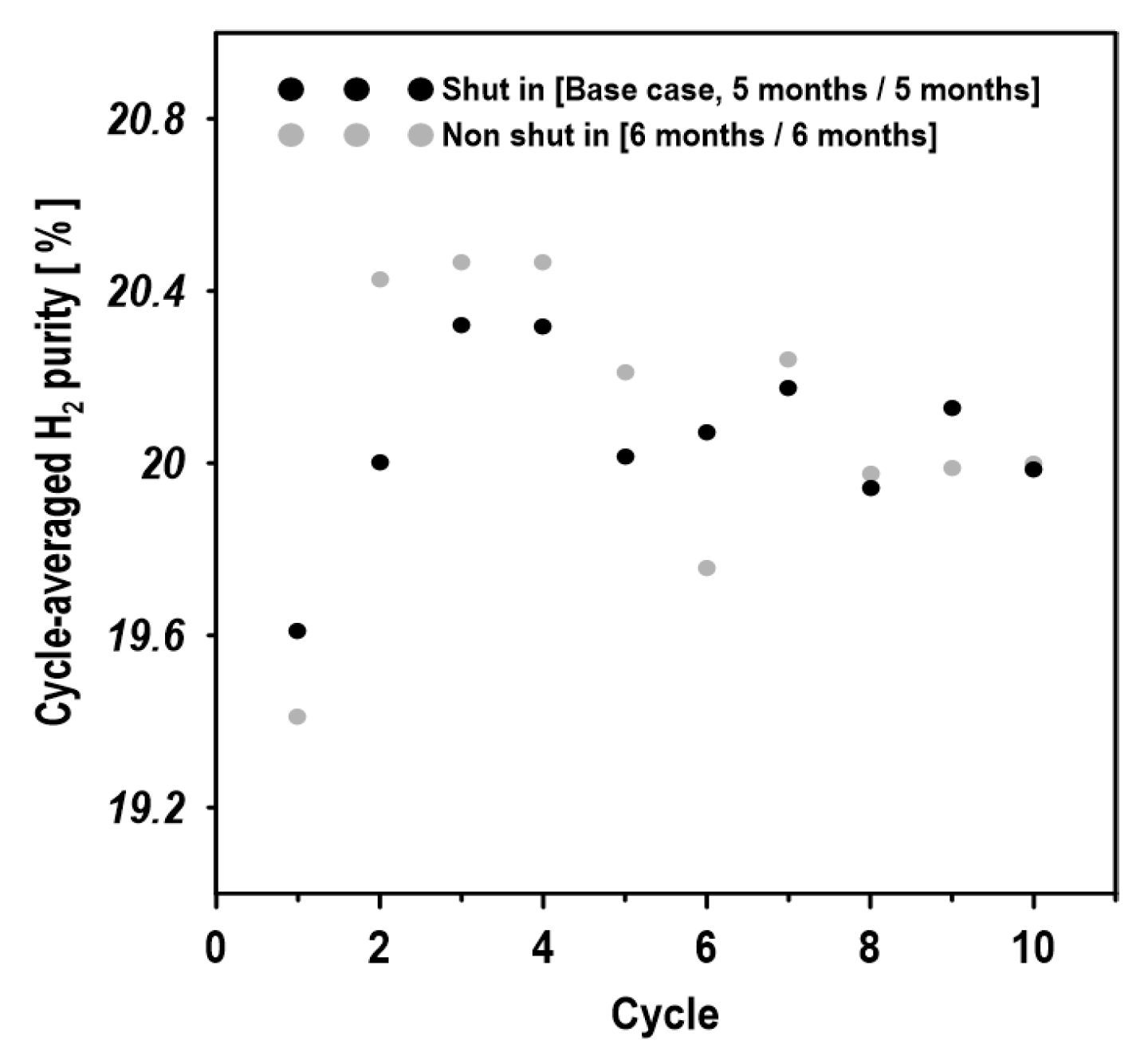
In the case without a shut-in period, Figure 7 shows that the cycle-averaged hydrogen purity increased from 19.41% in cycle 1 to 20.47–20.21% during cycles 2–5, reached a peak of 20.24% in cycle 7, and stabilized at 19.99–20.00% in cycles 9 and 10. Nitrogen started at 2.72% but fell below 1% after cycle 2, decreasing further to 0.01–0.04% in later cycles. Methane rose from 77.86% to a stable range of 79.70–80.22%, remaining the dominant produced component. In the shut-in case, hydrogen purity exhibited a similar evolution, beginning at 19.61% in cycle 1, increasing to 20.32% in cycle 4, and converging to 20.00% by cycle 10. Nitrogen declined from 1.82% to 0.00–0.03%, while methane remained within 78.57–80.01%. The cumulative average hydrogen purity for both scenarios was approximately 19.85%, indicating that the shut-in period influences transient purity behavior more strongly than long-term purity averages.
Working gas recovery exhibited clear operational differences. Without a shut-in period, hydrogen and methane recovery factors were 76.94% and 76.68%, respectively, while nitrogen recovery reached 6.49%, reflecting limited but noticeable cushion-gas production. Under shut-in operation, hydrogen and methane recoveries decreased to 65.63% and 65.49%, whereas nitrogen recovery dropped significantly to 1.33%. Thus, the shut-in period reduced hydrogen and methane recoveries by approximately 11–12% points, but simultaneously suppressed nitrogen withdrawal by more than 5% points, effectively enhancing cushion-gas preservation.
The evolution of the mixing zone, quantified using active block counts in Table 3, further highlights these operational contrasts. In the non-shut-in case, the mixing zone expanded from 4019 blocks in cycle 1 to 5383 blocks in cycle 4, before contracting to 4485 blocks in cycle 7 and 2665 blocks in cycle 10, corresponding to 33.7% reduction from the first to last cycle. With a shut-in period, the mixing zone began smaller—3799 blocks in cycle 1—expanded to 5244 blocks in cycle 4, then decreased to 4971 blocks in cycle 7, and ultimately contracted to 3234 blocks in cycle 10, representing a 14.9% reduction. Expressed in volume, the no-shut-in mixing zone decreased from 18.15 × 10⁶ m3 to 20.98 × 10⁶ m3, while the shut-in case decreased from 18.60 × 10⁶ m3 to 18.09 × 10⁶ m3, confirming that the shut-in operation sustains a thicker mixing zone in later cycles compared with continuous-flow operation.
These three performance metrics—purity, recovery, and mixing zone evolution—collectively indicate that applying a shut-in period is essential for stable hydrogen-enriched methane storage. The shut-in period suppresses early nitrogen breakthrough by initiating withdrawal from a thinner mixing zone, resulting in significantly lower nitrogen recovery (1.33%) and enhanced cushion-gas preservation. Although hydrogen and methane recovery factors decrease by approximately 11–12% points due to delayed mixing and slower displacement, the operational benefit of minimizing cushion-gas loss outweighs the reduction in working gas retrieval. Conversely, the no-shut-in scenario promotes continuous flow that rapidly enlarges the mixing zone, accelerates nitrogen migration, increases nitrogen recovery to 6.49%, and reduces the long-term integrity of the cushion-gas. Taken together, these results demonstrate that the shut-in period is not merely optional but functionally necessary to maintain compositional stability, limit cushion-gas withdrawal, and manage mixing zone growth across extended storage cycles.

3.2. Effect of Injection/Withdrawal Period on UGS

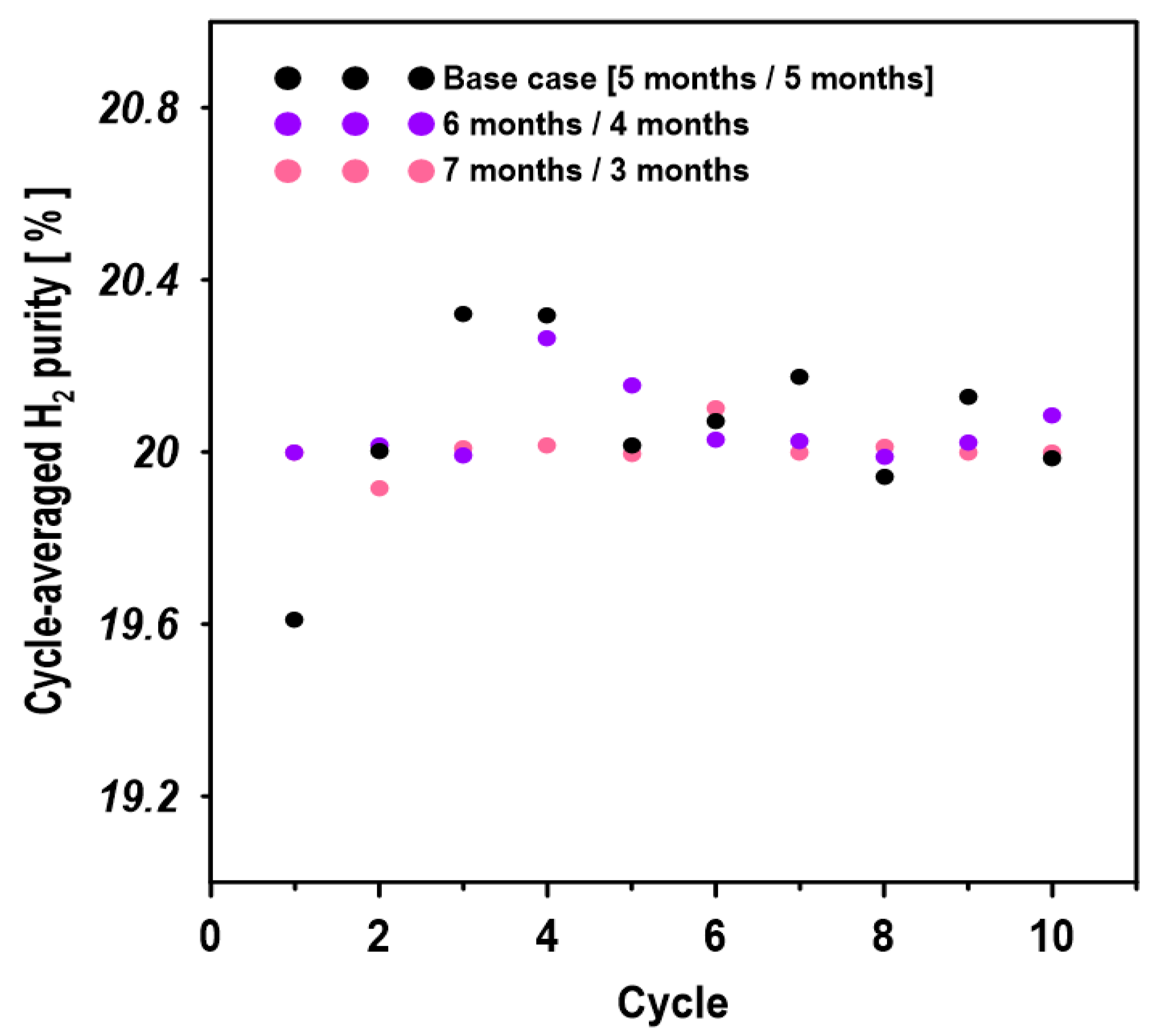
In Scenario 1, only the duration of the injection and withdrawal periods was modified while keeping the total amount of injected and produced working gas constant. The resulting hydrogen purity exhibited distinct stabilization patterns depending on the injection duration. For case 1-1 (6 months/4 months), hydrogen purity began at 19.999% in cycle 1 and rapidly stabilized above 20% from cycle 2 onward. Throughout the cycles, purity ranged between 20.02 and 20.26%. Methane compositions remained within 79.74–80.10%, while nitrogen was extremely low, decreasing from 0.004% in cycle 1 to below 0.001% in most cycles. For case 1-2 (7 months/3 months), hydrogen purity showed the most stable profile. The purity started at 19.999% and remained nearly constant within 20.00–20.01% across all cycles. Nitrogen levels fell quickly from 0.004% to the order of 10−6–10−9, indicating nearly complete suppression of nitrogen co-production. Methane also displayed minimal variation, remaining between 79.89 and 80.00% throughout the cycles. For reference, the base case (5 months/5 months) exhibited a gradual increase in hydrogen purity, starting at 19.61%, reaching 20.32% in the early cycles, and stabilizing near 20.00% in later cycles. Methane ranged from 78.57% to 80.01%, while nitrogen decreased from 1.82% to near zero. These purity trends for case 1-1, case 1-2, and the base model are summarized in Figure 8, which presents the cycle-averaged hydrogen purity for Scenario 1.
Working gas recovery exhibited clear operational differences among the three injection–withdrawal configurations. In case 1-1, hydrogen and methane recovery factors were 53.83% and 53.69%, respectively, while nitrogen recovery remained extremely low at 0.0468%, indicating minimal cushion-gas production. In case 1-2, recovery decreased further, with hydrogen and methane recoveries of 41.09% and 40.98%, and nitrogen recovery reduced to 0.0113%, showing near-complete suppression of nitrogen breakthrough. In comparison, the base case achieved the highest working gas recovery, with hydrogen and methane recovery factors of 65.63% and 65.49%, while nitrogen recovery reached 1.33%, indicating moderate but noticeable cushion-gas production. Thus, lengthening the injection period (as in case 1-1 and case 1-2) lowered hydrogen and methane recoveries by 12–24% relative to the base case, but simultaneously suppressed nitrogen withdrawal by over 1.28% (case 1-1) and 1.32% (case 1-2), effectively enhancing cushion-gas preservation.
Mixing zone development varied significantly with the length of the injection period. When a larger fraction of the cycle was allocated to injection, the mixing zone expanded more prominently in the early cycles but contracted more rapidly in later cycles. In case 1-1, the mixing zone consisted of 4548, 7076, 6464, and 3428 active blocks in cycles 1, 4, 7, and 10, respectively. Compared with the base case, these values represent increases of approximately 20.1% in cycle 1, 35.0% in cycle 4, and 25.0% in cycle 7. By cycle 10, however, the mixing zone became 9.2% smaller, indicating a faster late-cycle collapse. In case 1-2, the mixing zone showed a similar but more pronounced pattern. The number of active blocks was 4572, 7076, 5908, and 3176 for cycles 1, 4, 7, and 10. These values correspond to increases of 20.4% in cycle 1, 35.0% in cycle 4, and 18.8% in cycle 7 relative to the base case. By cycle 10, the mixing zone was 1.8% smaller than the base model. Overall, extending the injection duration (cases 1-1 and 1-2) produced a larger mixing zone during the initial and expansion phases, reflecting increased contact between injected hydrogen and the resident gases. However, the mixing zone subsequently collapsed more rapidly, resulting in smaller final mixing zones in cycle 10 for both configurations. These mixing zone differences are summarized in Table 4.
The three indicators, purity, recovery, and mixing zone evolution, are closely linked through the mechanisms of advective mixing, mechanical dispersion, and residual trapping described by Lu et al. [20] and Terstappen [31]. Longer injection periods enhance the extent of the mixing front and strengthen dispersive mixing, producing larger early-cycle mixing zones that delay nitrogen breakthrough and increase hydrogen purity. However, stronger dispersion also promotes residual trapping, reducing working gas recovery by 12–24%. The enlarged mixing zone then collapses more rapidly during withdrawal, ultimately becoming smaller than in the base case. Incorporating these coupled behaviors, case 1-2 provides the highest purity and strongest nitrogen suppression but suffers from substantial recovery loss, whereas the base case maximizes recovery but lacks purity stability and mixing zone control. Case 1-1 achieves the most balanced outcome, enhancing purity while limiting the reduction in recovery, and therefore represents the most favorable operational configuration for Scenario 1.

3.3. Effect of Hydrogen Blending Ratio in Methane on UGS

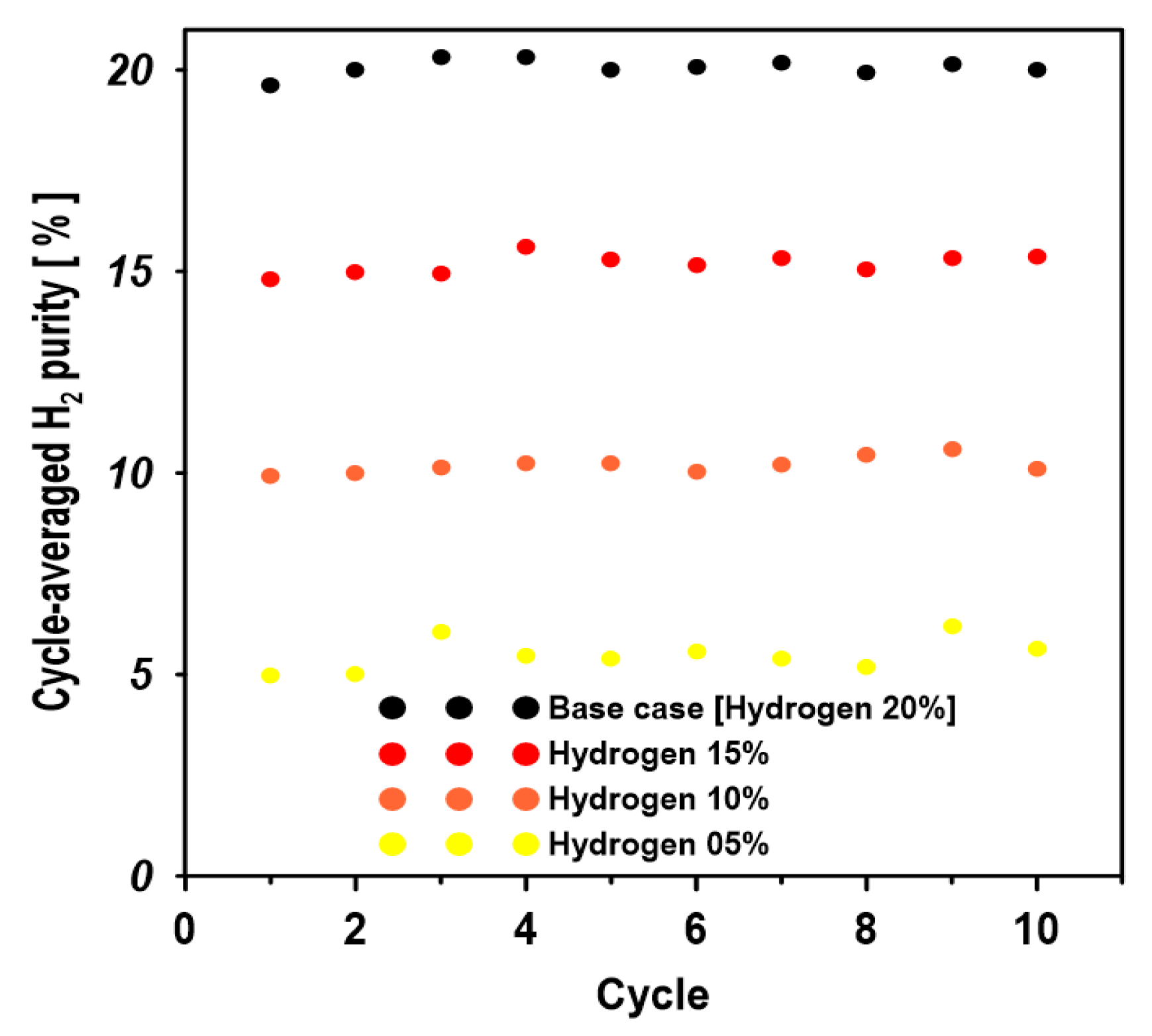
In Scenario 2, only the hydrogen blending ratio of the working gas (5%, 10%, and 15%) was modified while keeping the total injected and produced gas volumes constant. Hydrogen purity exhibited clear stratification corresponding to the injected composition. For case 2-1 (5% blending), hydrogen purity started at 4.97% in cycle 1 and remained within 5.00–5.63% throughout all cycles. Methane concentrations were highly stable at 94.3–95.0%, while nitrogen decreased from 0.61% in cycle 1 to below 0.001% in later cycles. For case 2-2 (10% blending), hydrogen purity began at 9.93% and stabilized within a narrow range of 10.00–10.26% across the cycles, with nitrogen decreasing from 0.66% to the order of 10−3–10−4 and methane remaining between 89.4 and 90.0%. For case 2-3 (15% blending), hydrogen purity ranged from 14.80 to 15.63%, showing the highest and most stable behavior among all blending ratios. Nitrogen declined from 1.26% to near zero, while methane remained within 83.9–85.0%. These purity trends for Scenario 2 are summarized in Figure 9.
Working gas recovery also varied with the hydrogen blending ratio. In case 2-1, hydrogen and methane recoveries were 67.98% and 63.56%, respectively, while nitrogen recovery remained the lowest at 0.97%, indicating strong suppression of cushion-gas breakthrough. In case 2-2, recoveries were slightly reduced, with hydrogen at 64.95%, methane at 64.24%, and nitrogen at 1.08%. In case 2-3, hydrogen and methane recoveries decreased further to 65.28% and 64.85%, while nitrogen recovery reached 1.21%, the highest among the three cases. Thus, increasing the hydrogen fraction caused modest decreases in hydrogen/methane recovery and a gradual increase in nitrogen recovery.
Mixing zone development also reflected the influence of hydrogen fraction. Case 2-1 formed the thickest mixing zone, consisting of 4512, 7128, 6836, and 4164 active blocks in cycles 1, 4, 7, and 10. Case 2-2 produced slightly smaller mixing zones—4524, 7064, 6860, and 4084 blocks. Case 2-3 showed the smallest mixing zone among the three, with 4528, 7050, 6808, and 4008 blocks. These trends indicate that lower hydrogen fractions intensify interface broadening and dispersive mixing, while higher fractions create a steeper compositional contrast that suppresses mixing zone expansion. These results are summarized in Table 5.
Overall, higher hydrogen blending ratios sharpen the compositional gradient at the gas front, reducing dispersive mixing and generating higher purity and smaller mixing zones, but slightly increasing nitrogen breakthrough. Conversely, lower blending ratios enhance diffusive and mechanical mixing, lowering purity but suppressing nitrogen recovery. By integrating these coupled outcomes, case 2-3 provides the highest hydrogen purity and smallest mixing zone but shows the largest nitrogen co-production; case 2-1 produces the lowest hydrogen purity but achieves the strongest nitrogen suppression and highest working gas recovery; and case 2-2 offers the most balanced performance, combining stable hydrogen purity, moderate nitrogen production, and mixing zone control. Therefore, case 2-2 represents the most favorable operating configuration for Scenario 2.

3.4. Effect of Perforation Depth on UGS

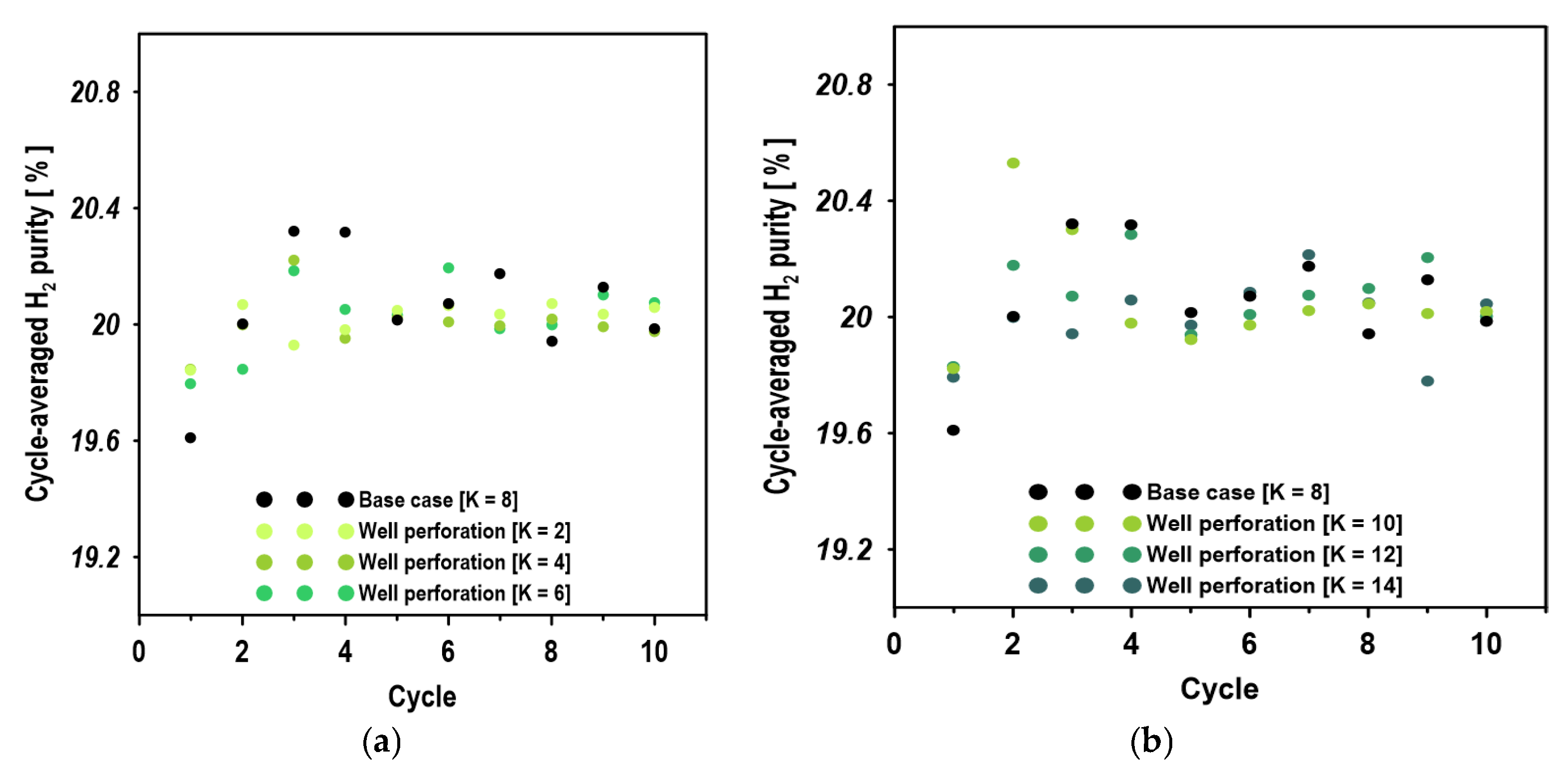
In Scenario 3, only the perforation depth was varied while all other operating conditions remained identical to the base case. Hydrogen purity exhibited systematic behavior across the six perforation configurations (cases 3-1 to 3-6). For the upper-perforation cases (3-1, 3-2, 3-3), purity remained highly stable between approximately 19.8 and 20.1% throughout the cycles. Case 3-2 showed the most uniform purity profile, with hydrogen concentrations clustering tightly around 20.00% from cycle 2 onward. Nitrogen decreased sharply from initial values of about 0.72% (3-1) and 0.95% (3-3) to below 0.01% in later cycles, indicating strong suppression of nitrogen breakthrough. Methane compositions stayed within 79.8–80.0% with minimal variation. For the lower-perforation cases (3-4, 3-5, 3-6), hydrogen purity remained slightly more variable, ranging from 19.7 to 20.3%. Nitrogen concentrations were noticeably higher than in the upper-perforation cases, especially for case 3-5, where nitrogen exceeded 1.46% in early cycles before stabilizing near zero. Case 3-6 showed improved nitrogen suppression compared to case 3-5, although its early-cycle nitrogen levels remained higher than those in upper-perforation cases. Methane ranged from 79.2 to 80.0%, showing similar stability to the upper configurations. These purity trends are illustrated in Figure 10.
Working gas recovery also depended significantly on perforation depth. Among the upper-perforation cases, hydrogen recovery ranged from 63.15% in case 3-1 to 65.46% in case 3-3. Nitrogen recovery remained low (0.72–1.20%), demonstrating effective preservation of cushion-gas. In contrast, lower-perforation cases produced noticeably higher nitrogen recovery: Case 3-5 reached the highest nitrogen breakthrough (1.61%), while case 3-4 also exhibited elevated levels at 1.46%. Case 3-6 showed improved nitrogen suppression (0.88%), but its performance still lagged behind that of the upper-perforation cases. These results indicate that perforating deeper increases connectivity to the nitrogen-bearing zone, intensifying nitrogen co-production during withdrawal.
Mixing zone development clearly distinguished upper- from lower-perforation depths. Upper-perforation cases (3-1, 3-2, 3-3) produced moderate mixing zones, beginning at 4416–4520 active blocks in cycle 1, expanding to 6804–7077 blocks in cycle 4, and contracting to 3964–4486 blocks at cycle 10. In contrast, lower-perforation cases generated significantly thicker mixing zones. Case 3-5 and 3-6 yielded the largest mid-cycle mixing zones 7662 and 7400 active blocks in cycle 7 and maintained higher mixing zone values than all upper-perforation cases even by cycle 10. Table 6 summarizes the mixing zone evolution under Scenario 3.
Integrating the purity, recovery, and mixing zone behavior collectively, upper perforation provides more favorable operational conditions. Case 3-2, corresponding to upper-perforation at K = 4, demonstrated the most stable hydrogen purity, lowest nitrogen breakthrough, and well-controlled mixing zone evolution. Lower-perforation cases, particularly case 3-5 (K = 12), produced the thickest and most persistent mixing zones and the highest nitrogen production, making them the least favorable configurations. Case 3-6 showed partial improvement but still could not match the performance of the upper-perforation group. Therefore, among all evaluated options, case 3-2 represents the optimal perforation configuration for Scenario 3, offering the strongest balance among purity stability, nitrogen suppression, and mixing zone control.

4. Conclusions

This study is a simulation analysis comparing ten operational cycles while varying only the gas injection period, hydrogen blending ratio, injection depth, and the presence or absence of a shut-in period. The key performance indicators were defined as the cycle-averaged and cumulative hydrogen purity, component-wise recovery factors, and the size of the mixing zone. Using these metrics, the effects of operating strategies on withdrawal composition and long-term stability in subsurface hydrogen-enriched methane storage were quantitatively evaluated. Based on these analyses, the main conclusions are as follows.
  • Hydrogen blending ratio remained the most influential factor governing produced-gas purity. The 15% and 20% blending cases consistently produced the highest hydrogen purity, stabilizing near 15.6% and 19.9–20.0%, respectively, while forming the smallest long-term mixing zones. Lower blending ratios of 5–10% significantly reduced nitrogen co-production, reaching nitrogen recoveries as low as 0.97–1.08%, but resulted in much lower hydrogen purity corresponding to the injected composition.
  • Extending the injection period enhanced hydrogen purity and accelerated nitrogen suppression but reduced working gas recovery. Longer injection intervals in cases 1-1 and 1-2 increased early-cycle mixing zone growth yet promoted faster late-cycle collapse, decreasing nitrogen concentrations to below 0.001–0.003% in withdrawal. However, this improvement came at the expense of immediate hydrogen and methane recovery, which decreased from 65.63% to 53.83% in case 1-1 and to 41.09% in case 1-2.
  • Injection depth had only a minor effect on hydrogen purity but a clear impact on nitrogen recovery and mixing zone persistence. Upper-perforation cases 3-1 through 3-3 yielded the most stable recovery performance and moderate mixing zone sizes, with nitrogen recovery remaining between 0.72% and 1.20%. Deeper perforation positions increased nitrogen breakthrough, reaching 1.46% in case 3-4 and a maximum of 1.61% in case 3-5, while also generating the thickest and most persistent mixing zones and reducing working gas recovery relative to upper-perforation locations.
  • The final mixing zone size was the dominant indicator governing long-term withdrawal quality. Across all scenarios, smaller late-cycle mixing zones consistently corresponded to higher hydrogen purity and lower nitrogen co-production. Operational strategies that minimized mixing zone expansion—including moderate hydrogen blending ratios such as 10%, a slightly extended injection time as in case 1-1, and upper-intermediate perforation depths such as case 3-2—were most effective for maintaining hydrogen quality and conserving cushion-gas.
  • This study is limited by the use of a homogeneous grid and simplified fluid properties, which do not represent geological heterogeneity, stratification, pore-connectivity variations, or reactive processes. Future work will develop a more detailed model that incorporates these factors and apply the proposed operating strategies to a field-scale model calibrated with actual reservoir properties. This will allow for quantitative validation under realistic conditions and support the development of practical guidelines for hydrogen-enriched methane storage in depleted gas reservoirs.

Author Contributions

Y.K.: Conceptualization, Writing—original draft, Visualization, Validation. H.J.: Supervision, Writing—review and editing, Validation. All authors have read and agreed to the published version of the manuscript.

Funding

This work was supported by (1) the Korea Institute of Energy Technology Evaluation and Planning (KETEP) and the Ministry of Trade, Industry and Energy (MOTIE) of the Republic of Korea (RS-2022-KP002711), and (2) the Regional Innovation System & Education (RISE) program through the Gangwon RISE Center, funded by the Ministry of Education (MOE) and the Gangwon State (G.S.), Republic of Korea (2025-RISE-10-002).

Data Availability Statement

The original contributions presented in this study are included in the article. Further inquiries can be directed to the corresponding author.

Conflicts of Interest

The authors declare no conflicts of interest.

References

  1. Tian, Q.-N.; Yao, S.-Q.; Shao, M.-J.; Zhang, W.; Wang, H.-H. Origin, discovery, exploration and development status and prospect of global natural hydrogen under the background of carbon neutrality. China Geol. 2022, 5, 722–733. [Google Scholar] [CrossRef]
  2. Vidal-Amaro, J.J.; Sheinbaum-Pardo, C. A transition strategy from fossil fuels to renewable energy sources in the Mexican electricity system. J. Sustain. Dev. Energy Water Environ. Syst. 2018, 6, 47–66. [Google Scholar] [CrossRef]
  3. Song, J.; Zhu, Y.; Liang, D.; Cheng, Q.; Yao, D.; Bao, W. Hydrogen energy system for renewable energy consumption. E3S Web Conf. 2021, 233, 01083. [Google Scholar] [CrossRef]
  4. Ricks, W.; Xu, Q.; Jenkins, J.D. Minimizing emissions from grid-based hydrogen production in the United States. Environ. Res. Lett. 2023, 18, 014025. [Google Scholar] [CrossRef]
  5. Hydrogen Council; McKinsey & Company. Hydrogen Insights 2024; Hydrogen Council: Brussels, Belgium, 2024. [Google Scholar]
  6. Djukic, M.B.; Zeravcic, V.S.; Bakic, G.; Sedmak, A.; Rajicic, B. Hydrogen damage of steels: A case study and hydrogen embrittlement model. Eng. Fail. Anal. 2015, 58, 485–498. [Google Scholar] [CrossRef]
  7. HyDeploy Consortium. HyDeploy: The UK’s first hydrogen blending deployment project. Clean Energy 2019, 3, 114–125. [Google Scholar] [CrossRef]
  8. Zemite, L.; Jansons, L.; Zeltins, N.; Lappuke, S.; Bode, I. Blending hydrogen with natural gas/biomethane and transportation in existing gas networks. Latv. J. Phys. Tech. Sci. 2023, 60, 43–56. [Google Scholar] [CrossRef]
  9. Cerniauskas, S.; Junco, A.J.C.; Grube, T.; Robinius, M.; Stolten, D. Options of natural gas pipeline reassignment for hydrogen: Cost assessment for a Germany case study. Int. J. Hydrogen Energy 2020, 45, 12095–12107. [Google Scholar] [CrossRef]
  10. Petinrin, J.O.; Shaaban, M. Overcoming challenges of renewable energy on future smart grid. TELKOMNIKA Indones. J. Electr. Eng. 2012, 10, 229–234. [Google Scholar] [CrossRef]
  11. Etxeberria, A.; Vechiu, I.; Camblong, H.; Vinassa, J.M. Hybrid Energy Storage Systems for Renewable Energy Sources Integration in Microgrids: A Review. In Proceedings of the International Power Electronics Conference (IPEC), Singapore, 27–29 October 2010; pp. 532–537. [Google Scholar]
  12. Quintos Fuentes, J.E.; Santos, D.M.F. Technical and Economic Viability of Underground Hydrogen Storage. Hydrogen 2023, 4, 975–1000. [Google Scholar] [CrossRef]
  13. Bünger, U.; Michalski, J.; Crotogino, F.; Kruck, O. Large-scale underground storage of hydrogen for the grid integration of renewable energy and other applications. Compend. Hydrog. Energy 2016, 1, 134–161. [Google Scholar] [CrossRef]
  14. Hematpur, H.; Abdollahi, R.; Rostami, S.; Haghighi, M.; Blunt, M.J. Review of underground hydrogen storage: Concepts and challenges. Adv. Geo-Energy Res. 2023, 7, 111–131. [Google Scholar] [CrossRef]
  15. Ciotta, M.; Tassinari, C.C.G. Defining geological viability criteria for CO2 and hydrogen storage in depleted oil and gas fields. Res. Soc. Dev. 2024, 13, e5513846130. [Google Scholar] [CrossRef]
  16. Heinemann, N.; Alcalde, J.; Miocic, J.M.; Hangx, S.J.T.; Kallmeyer, J.; Ostertag-Henning, C.; Hassanpouryouzband, A.; Thaysen, E.M.; Strobel, G.J.; Schmidt-Hattenberger, C.; et al. Enabling large-scale hydrogen storage in porous media—The scientific challenges. Energy Environ. Sci. 2021, 14, 853–864. [Google Scholar] [CrossRef]
  17. Hemme, C.; van Berk, W. Hydrogeochemical Modeling to Identify Potential Risks of Underground Hydrogen Storage in Depleted Gas Fields. Appl. Sci. 2018, 8, 2282. [Google Scholar] [CrossRef]
  18. Huang, T.; Moridis, G.J.; Blasingame, T.A.; Abdulkader, A.M.; Yan, B. Compositional reservoir simulation of underground hydrogen storage in depleted gas reservoirs. Int. J. Hydrogen Energy. 2023, 48, 36035–36050. [Google Scholar] [CrossRef]
  19. Sarı, E.; Çiftçi, E. A numerical investigation on the utilization of a depleted natural gas field for seasonal hydrogen storage: A case study for Değirmenköy gas field. Int. J. Hydrogen Energy 2024, 51, 219–228. [Google Scholar] [CrossRef]
  20. Lu, J.; Muhammed, N.S.; Okolie, J.A.; Epelle, E.I. A sensitivity study of hydrogen mixing with cushion gases for effective storage in porous media. Sustain. Energy Fuels 2025, 9, 1353–1370. [Google Scholar] [CrossRef]
  21. Kim, J.; Cho, J.; Lee, W.; Seo, E.; Kim, J.; Lee, H.; Lee, H. A Numerical Modeling of CO2 Injection into the Depleted Donghae-1 Gas Field. J. Korean Soc. Miner. Energy Resour. Eng. 2023, 60, 429–443. [Google Scholar] [CrossRef]
  22. Ki, S.; Back, S.; Bae, K.; Kim, J.; Jang, T.; Kim, D.; Seo, J.; Kwon, O.; Shim, J. Donghae–1 Gas Field Development and Its Application to CCS. J. Korean Soc. Miner. Energy Resour. Eng. 2022, 59, 498–517. [Google Scholar] [CrossRef]
  23. Cao, C.; Liao, J.; Hou, Z.; Xu, Z.; Mehmood, F.; Wu, X. Utilization of CO2 as Cushion Gas for Depleted Gas Reservoir Transformed Gas Storage Reservoir. Energies 2020, 13, 576. [Google Scholar] [CrossRef]
  24. Lee, Y.-S.; Park, Y.-C.; Kwon, S.-I.; Sung, W.-M. The Feasibility Study for CO2 Sequestration into Deep Saline Aquifer at Gorae-V Structure in Korea. J. Korean Earth Sci. Soc. 2008, 29, 381–393. [Google Scholar]
  25. Prigmore, S.; Okon-Akan, O.A.; Egharevba, I.P.; Ogbaga, C.C.; Okoye, P.U.; Epelle, E.; Okolie, J.A. Cushion Gas Consideration for Underground Hydrogen Storage. Encyclopedia 2024, 4, 847–863. [Google Scholar] [CrossRef]
  26. Thorpe, A.K.; Duren, R.M.; Yadav, V.; Foster, K.T.; Conley, S.; Rafiq, T.; Prasad, K.R.; Hopkins, F.M.; Bue, B.D.; Smith, M.L.; et al. Methane emissions from underground gas storage in California. Environ. Res. Lett. 2020, 15, 045005. [Google Scholar] [CrossRef]
  27. Lackner, N.; Hintersonnleitner, A.; Wagner, A.O.; Illmer, P. Hydrogenotrophic Methanogenesis and Autotrophic Growth of Methanosarcina thermophila. Archaea 2018, 2018, 4712608. [Google Scholar] [CrossRef]
  28. Kim, N.-H.; Jung, H.-S.; Kim, G.-D.; Jeong, H.-Y.; Shin, H.-D.; Kwon, Y.-K.; Choe, J.-G. Stability Assessment of an Aquifer in Pohang Yeongil Bay Due to CO2 Injection. J. Eng. Geol. 2018, 28, 183–192. [Google Scholar] [CrossRef]
  29. Peng, D.Y.; Robinson, D.B. A New Two-Constant Equation of State. Ind. Eng. Chem. Fundam. 1976, 15, 59–64. [Google Scholar] [CrossRef]
  30. Huh, C.; Kang, S.G. Effect of Nitrogen Impurity on Process Design of CO2 Marine Geological Storage. J. Korean Soc. Mar. Environ. Eng. 2009, 12, 217–226. [Google Scholar]
  31. Terstappen, R.J. Analysis of Mixing During Hydrogen Storage in Gas Reservoirs: A Reservoir Simulation Study. Master’s Thesis, Delft University of Technology, Delft, The Netherlands, 2021. [Google Scholar]
Figure 1. Conceptual schematic illustrating the shut-in process applied between injection and withdrawal and the behavior of gas-phase interfaces. In the upper panel, the black upward arrow represents injection, while the black downward arrow denotes withdrawal. The arrows shown in the lower panel indicate gas spreading and redistribution within the reservoir during the shut-in period. The bottom schematic illustrates the injection of hydrogen-enriched gas into a city gas pipeline, and the adjacent graph shows the reduction in carbon dioxide emissions as a function of the hydrogen blending ratio.
Energies 19 00374 g001
Figure 2. Three-dimensional homogeneous reservoir grid model constructed for hydrogen–methane storage simulation using CMG. The upper figure illustrates a homogeneous grid system in which depth is represented by color, while the lower figure indicates that the injection and production wells share the same perforation location.
Energies 19 00374 g002
Figure 3. Relative permeability curves generated based on SCAL results from the Donghae gas field. Data taken from [28] under the Creative Commons Attribution License (CC BY-NC 4.0).
Energies 19 00374 g003
Figure 4. Scenario sets by key operating parameter: (a) injection/production period, (b) hydrogen blending ratio, and (c) perforation location.
Energies 19 00374 g004
Figure 5. Conceptual diagram illustrating the shut-in process and the re-equilibration of gas-phase interfaces between injection and production. The upward arrow represents the injection stage, while the downward arrow indicates the production (withdrawal) stage. The cross (X) symbol denotes the shut-in period, during which no wells are in operation. The figure illustrates how the shut-in process operates over a one-year cycle.
Energies 19 00374 g005
Figure 6. Conceptual diagram of the mixing zone during cyclic hydrogen–methane injection and withdrawal. The blue region represents the hydrogen-enriched methane working gas, the green region denotes the cushion-gas, and the red region indicates the native reservoir methane.
Energies 19 00374 g006
Figure 7. The figure presents a scatter plot showing the cycle-averaged hydrogen purity for each cycle from 1 to 10. Two data series are displayed: one for the shut-in case (black markers) and one for the non-shut-in case (gray markers). The x-axis represents the cycle number, and the y-axis represents the cycle-averaged hydrogen purity (%). A legend identifying both operational cases is included in the upper-left corner of the plot.
Energies 19 00374 g007
Figure 8. Cycle-averaged hydrogen purity under different injection/withdrawal period configurations for Scenario 1, comparing the base case (5 months/5 months) with case 1-1 (6 months/4 months) and case 1-2 (7 months/3 months).
Energies 19 00374 g008
Figure 9. Cycle-averaged hydrogen purity for Scenario 2. The figure presents a scatter plot showing the cycle-averaged hydrogen purity from cycle 1 to cycle 10 under four different hydrogen blending ratios. Four data series are displayed: 20% (black markers), 15% (red markers), 10% (orange markers), and 5% (yellow markers).
Energies 19 00374 g009
Figure 10. Cycle-averaged hydrogen purity for Scenario 3: (a) upper-perforation depths relative to the base case, and (b) lower-perforation depths relative to the base case.
Energies 19 00374 g010
Table 1. Reservoir and grid properties used in the 3D model [21,22,23,24].
ParameterValueUnit
Grid size32 × 32 × 4m
Grid number103 × 103 × 15-
Thickness60m
Depth2436m
Temperature107
Initial pressure6000kPa
Porosity16%
Horizontal permeability50md
Vertical permeability4md
Table 2. Summary of injection/withdrawal schedule scenarios.
Scenario GroupCase IDShut-InInjection
Period
(Months)
Withdrawal
Period
(Months)
H2 Blending
Ratio
Perforation
Depth
11-1Yes6420%K = 8
1-273
22-1Yes555%K = 8
2-210%
2-315%
33-1Yes5520%K = 2
3-2K = 4
3-3K = 6
3-4K = 10
3-5K = 12
3-6K = 14
Table 3. The table lists the mixing zone active block numbers for selected cycles (1, 4, 7, and 10) under both non-shut-in and shut-in operations. For each cycle, the table includes (1) the active block count for the non-shut-in case, (2) the active block count for the shut-in case, and (3) the relative difference calculated as ((shut-in—non-shut-in)/shut-in).
CycleNon-Shut-InShut-InDifference
((Shut-In—Non-Shut-In)/Shut-In)
144324540−2.38%
466847064−5.38%
770827036+0.65%
1051224416+15.99%
Table 4. Mixing zone active block numbers under Scenario 1 for different injection/withdrawal period configurations.
CycleCase 1-1
(6 Months/4 Months)
Case 1-2
(7 Months/3 Months)
145484572
470767076
764645908
1035483176
Table 5. Mixing zone active block numbers under Scenario 2 for different hydrogen blending ratios.
CycleCase 2-1
(5%)
Case 2-2
(10%)
Case 2-3
(15%)
1451245244528
4712870647050
7683668606808
10416440844008
Table 6. Mixing zone active block numbers under Scenario 3 relative to the base case (upper- and lower-perforation locations).
CycleCase 3-1
(K = 2)
Case 3-2
(K = 4)
Case 3-3
(K = 6)
Case 3-4
(K = 10)
Case 3-5
(K = 12)
Case 3-6
(K = 14)
1446444164520450444844508
4680468967077726872367400
7553458306408727276626934
10448643883964466855465109
Disclaimer/Publisher’s Note: The statements, opinions and data contained in all publications are solely those of the individual author(s) and contributor(s) and not of MDPI and/or the editor(s). MDPI and/or the editor(s) disclaim responsibility for any injury to people or property resulting from any ideas, methods, instructions or products referred to in the content.