1. Introduction
The energy transition is one of the most important undertakings facing the European Union in the coming years. It is the result of the EU’s climate protection efforts. Each of the 27 EU countries should achieve the objectives presented primarily in the European Green Deal, a set of guidelines for countries toward decarbonized economies [
1]. This goal is to be achieved by 2050, by which time the EU will be able to develop its economy without negatively impacting the natural environment. The EU is intended to become a global model, and its achievements should inspire other countries to take similar actions. The energy transition is understood as an opportunity to build climate-neutral energy sources. This is achieved by gradually increasing the contribution of renewable energy sources to energy mixes. These sources include solar and wind energy, as well as hydropower, where possible. Depending on natural conditions, each country has the opportunity to choose and develop the source considered the most effective. The opportunities for renewable energy development vary widely across the EU, from highly privileged countries like Sweden, which currently has access to the only stable renewable energy source: hydropower, to Poland, where the conditions for RES development are limited. Another factor contributing to transformation is energy efficiency [
2]. Through better utilization of generated energy, it will be possible to consume less of it, which is important given the growing energy demand in the EU, and more energy equals more energy carriers used. Reduced energy consumption obviously means lower production and, consequently, lower greenhouse gas emissions. The third most important factor contributing to the energy transformation is greenhouse gas emissions, which constitute the core of the transformation, its primary goal, to be achieved through the subtargets mentioned above. Greenhouse gases are primarily carbon dioxide, which accounts for approximately 80% of all emissions, and in addition to CO
2, also N
2O, CH
4, HFC, PFC, SF
6 and NF
3 [
3]. Greenhouse gases lead to climate change, including those generated by human activity. The analysis of these three main factors that make up the concept of energy transformation is also factors whose analysis will indicate the progress of the Member States in their actions towards energy transformation [
4]. Therefore, the authors of this publication used indicators such as CO
2 emissions, energy efficiency, and the share of renewable energy sources in the energy mix of individual EU countries to define clusters that group countries that are similar in these three dimensions. This enabled the analysis of the stage of energy transition at which individual countries are currently at. This type of classification will, in turn, enable the adaptation of energy policies and guidelines addressed to individual countries, adapted to their level of advancement, specific requirements, and measures that can stimulate transformation. Carefully selected countermeasures will support the transition process and can accelerate its progress. These data were then used to determine a collective indicator that evaluates the progress of the energy transition in each EU country, facilitating data analysis and decision making regarding the implementation of the energy transition. It was also determined which of these three indicators has the greatest impact on the energy transition. The results obtained enabled the development of scenarios for the energy transition in the European Union.
Energy transformation should therefore be understood as comprehensive actions to reshape energy sectors, involving a shift away from fossil fuels, the development of renewable energy sources, improved energy efficiency, and a reduction in greenhouse gas emissions. These dimensions are closely interconnected, but not identical. This is particularly true for energy efficiency, which serves as a mechanism supporting transformation by reducing energy consumption, contributing to emission reductions, and improving the stability of the energy system. Since it is necessary to examine the progress of the energy transformation from each of these perspectives, combining these three factors in a single study was essential. This allows for a comprehensive understanding of the diversity of transformation progress in EU countries. This diversity is crucial in the context of the European Green Deal, and the need to achieve climate neutrality by 2050 justifies conducting spatial research on the diversity of the transformation and the factors influencing this diversity.
The purpose of the study was to conduct a spatial analysis of the progress of energy transformation in the EU-27, understood as the simultaneous increase in the share of renewable energy sources, the reduction in greenhouse gas emissions, and the improvement of the energy efficiency of the economy. It also examined the spatial differences that have emerged between countries over the last decade.
3. Methods
The research began by obtaining statistical data on the three explanatory variables considered in the analysis described in the Introduction: greenhouse gas emissions, energy efficiency, and the share of renewable energy sources in the energy mix. Using the elbow method, the number of clusters into which the EU-27 countries should be divided was determined. The K-Means-2 method was used to divide the clusters. Next, the weights of the explanatory variables were determined using the entropy method, and a synthetic measure of the progress of the energy transition in a given country was calculated using the Hellwig method. In the next step, transition progress hotspots were identified, along with additional scenario clusters, taking into account the weights of the explanatory variables.
The presented research used three complementary analysis methods. The program implemented a computational sequence, beginning with data acquisition and preliminary preparation, and continuing with the generation of results used in cluster designation. Its operation included the following steps:
Import of data for explanatory variables. The program uses a data matrix, in which rows represent explanatory variables, and columns represent individual EU-27 countries.
Normalization and transformation to unify variables (transformation into stimulants). An additional table identifies the nature of the variables, allowing for correct standardization.
Determining the entropy for each variable and, based on this, determining the importance of the variables. The Shannon entropy method was used to determine weights to reduce arbitrariness of the assessment.
Determining the reference object and the distance of individual objects from the reference object.
Determining the synthetic energy transition progress index (ETPI) measure.
Using the elbow model to determine the number of clusters. After determining the grouping number of groups, the process for countries using the K-menas-2 method.
Generating a cluster map for individual objects.
Determination of the ETPI hotspot map.
The following algorithms were used: Elbow method, K-Means-2, Hellwig’s method.
3.1. Elbow Method
Before using the K-Means-2 method, it is necessary to determine how many clusters the EU-27 countries should be divided into in 2014 and 2023. For this purpose, the Elbow method [
28] was used, which is an empirical method to determine the optimal number of clusters in a given year. This method is described by the following formula:
where
k—number of clusters,
xi—object assigned to a given cluster Sk,
Ck—cluster centroid.
3.2. K-Means-2
The K-Means-2 method was used to build homogeneous clusters of countries in terms of the analyzed factors. It is an unsupervised method of data categorization. The number of clusters into which the set of objects should be divided was initially determined using the elbow method. The cluster formation algorithm initially determines the centroids and assigns individual objects to their nearest centroids [
29]. Then, in subsequent iterations, the sum of squared distances of points from individual centroids is minimized. K-Means-2 method defined by the formula:
where
—individual objects, where j is the number of objects,
—i-clusters centroids,
—Euclidean distance.
The Euclidean distance was determined in a multidimensional space, where in addition to the coordinates, other features of the objects were taken into account.
The K-Means-2 algorithm randomly selects a first centroid. For the remaining points, the Euclidean distance from the first centroid is determined. Subsequent centroids are selected with a probability proportional to the square of the distance from the existing centroid. This process is repeated until k initial centroids have been selected. The clusters were determined in 300 iterations.
3.3. Hellwig’s Method
A taxonomic method was used to construct a single synthetic measure. Hellwig’s method enabled the classification of a set of characteristics and the detection of emerging patterns and regularities for all three explanatory variables [
30,
31]. It is important to classify the set of features in terms of their impact on the phenomenon analyzed, in this case the Energy Transition Progress Index (ETPI). This impact can be positive for stimulants, negative for destimulants, or neutral. To correctly determine the index, it was necessary to standardize the variables, that is, transform the destimulants into stimulants, which was performed using the max-minus method described in equation [
32]:
where
—destimulant value converted into stimulant,
—maximum value of the feature among all objects i.
It was also necessary to transform each of the features into a dimensionless form, i.e., to standardize them [
33]:
where
—standard deviation for the jth variable,
—standardized values of the j-th variable,
—arithmetic mean of the jth variable.
The weights of the individual variables were determined using Shannon’s entropy [
34,
35]. For each variable j, the entropy was calculated according to the formula:
where
—normalized value of the variable.
The weights were then determined:
For the normalized explanatory variables, the relative contribution of their value to the structure of all observations was designated. This determines the proportion of information carried by variable j attributed to a given country. For each country, the information contribution of a single observation to the total entropy of the variable was determined. To amplify the differences between the contributions, the natural logarithm was used. All components of were then summed across objects, allowing for the determination of the global level of disorder in the variable’s distribution. A high entropy value indicates similarity of the variable across countries, while simultaneously indicating that the variable contributes little differentiating information. This result forms the basis for determining the weights of the explanatory variables. First, a measure of information diversification is determined that expresses the degree to which the variable differentiates the analyzed objects. Variables with high information content receive higher weights.
If the data are highly diversified, the weight are high; if the data is uniform, the weight will be low.
This modification allowed to obtain objective weights, take into account the informativeness of the feature and balance the obtained rating.
Once the weights were determined, they were used in the Hellwig method. This method required determining a benchmark against which individual objects would be compared and their distance from the benchmark [
36]:
where
—model object.
In the next step, the value of the Energy Transition Progress Index (
ETPI) was determined using the formula [
37]:
where
—is a standard that guarantees that .
4. Results and Discussion
The research used the data presented in
Table 1. All data were obtained from the Eurostat database [
38], ensuring their reliability and the use of a unified data collection methodology. This also ensured their complete comparability between countries. Energy productivity is used as an operational measure of efficiency and was used to compare countries despite their structural differences and the availability of sectoral data.
The analysis began with the acquisition of statistical data. Data on greenhouse gas emissions, energy efficiency and the share of renewable energy sources in the energy mix of member states were obtained from the Eurostat database [
38]. Data were collected for two years: 2023, which represented the most recent data recorded by Eurostat, and, for comparison and analysis of the progress of the energy transition, data from a decade earlier, 2014, were used in the analysis. The applied analysis encompasses multiple complementary analytical stages, allowing for descriptive analysis of differences between countries, comparison of indicators of varying scale, objective differentiation of their significance, and reflection of structural similarities in the multidimensional space of transformation variables. The analysis allowed for an assessment of the relative progress of countries in terms of energy transformation, the identification of groups with similar transformation profiles, and the determination of implications for individual groups.
Before the study began, a correlation analysis of the explanatory variables was performed. The correlation coefficients were 0.04, 0.22, and 0.65 in 2014 and 0.07, 0.12, and 0.55 in 2023. They did not exceed the threshold value of 0.7, indicating a lack of significant multicollinearity. Therefore, there is no risk of reducing the information value of the variables.
The variable quantification procedure included steps used in multivariate and taxonomic analyses. First, the nature of the explanatory variables was specified, identifying stimulants whose increases have a positive impact on the analyzed phenomenon and destimulants whose increases negatively impact the progress of the energy transformation. Then, destimulants were necessary to be transformed into stimulants, which was achieved using the max-minus method. This enabled a unidirectional interpretation of the variables considered. To ensure comparability, the variables were standardized. The data was reduced to a dimensionless form, eliminating differences in units and orders of magnitude. In the next step, the variables were normalized using the Min-Max method and weights were determined using the Entropy method. The interdependencies between the variables were also verified.
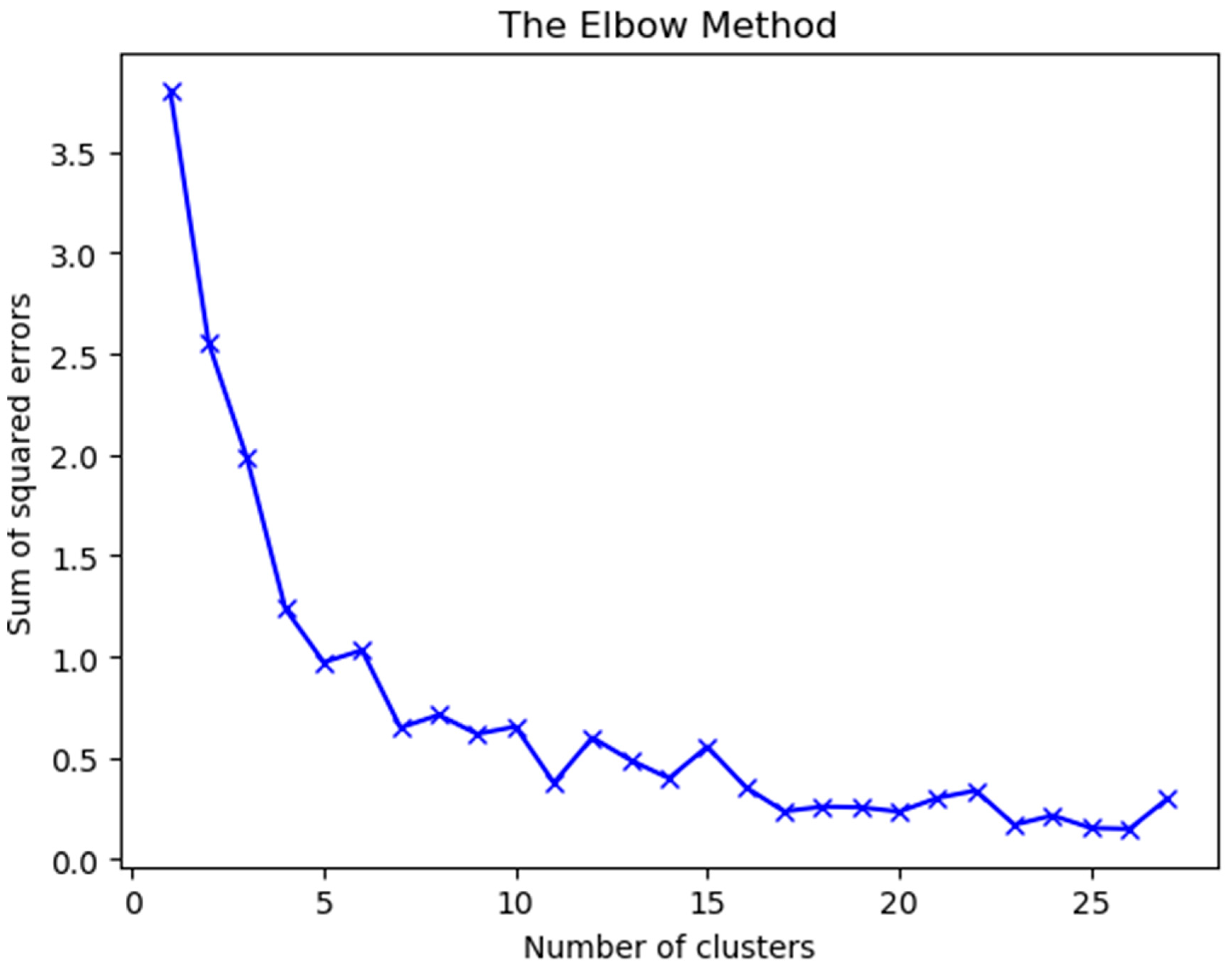
A two-pronged approach was employed. First, raw statistical data were used to group countries. This allowed the observation of structural differences between countries in terms of share of renewable energy, emissions, and efficiency. However, because it is difficult to assess the overall level of transition in this way, a synthetic measure of the level of transition progress was then determined that simultaneously considered the importance of individual indicators and eliminated differences in scale and significance through data normalization. The data were entered into the spatial information system database and linked to the spatial aspect, i.e., the vector layer of the European Union. Country clusters were constructed. The analysis took into account the values of three indicators. The K-Means-2 method was used, which requires specifying the number of clusters to which individual countries should be assigned. To determine this number, an elbow was used, which allowed determining the initial number of clusters to be created. For 2014, it was determined that countries should be assigned to 7 clusters, as indicated by the inflection point of the function in
Figure 1.
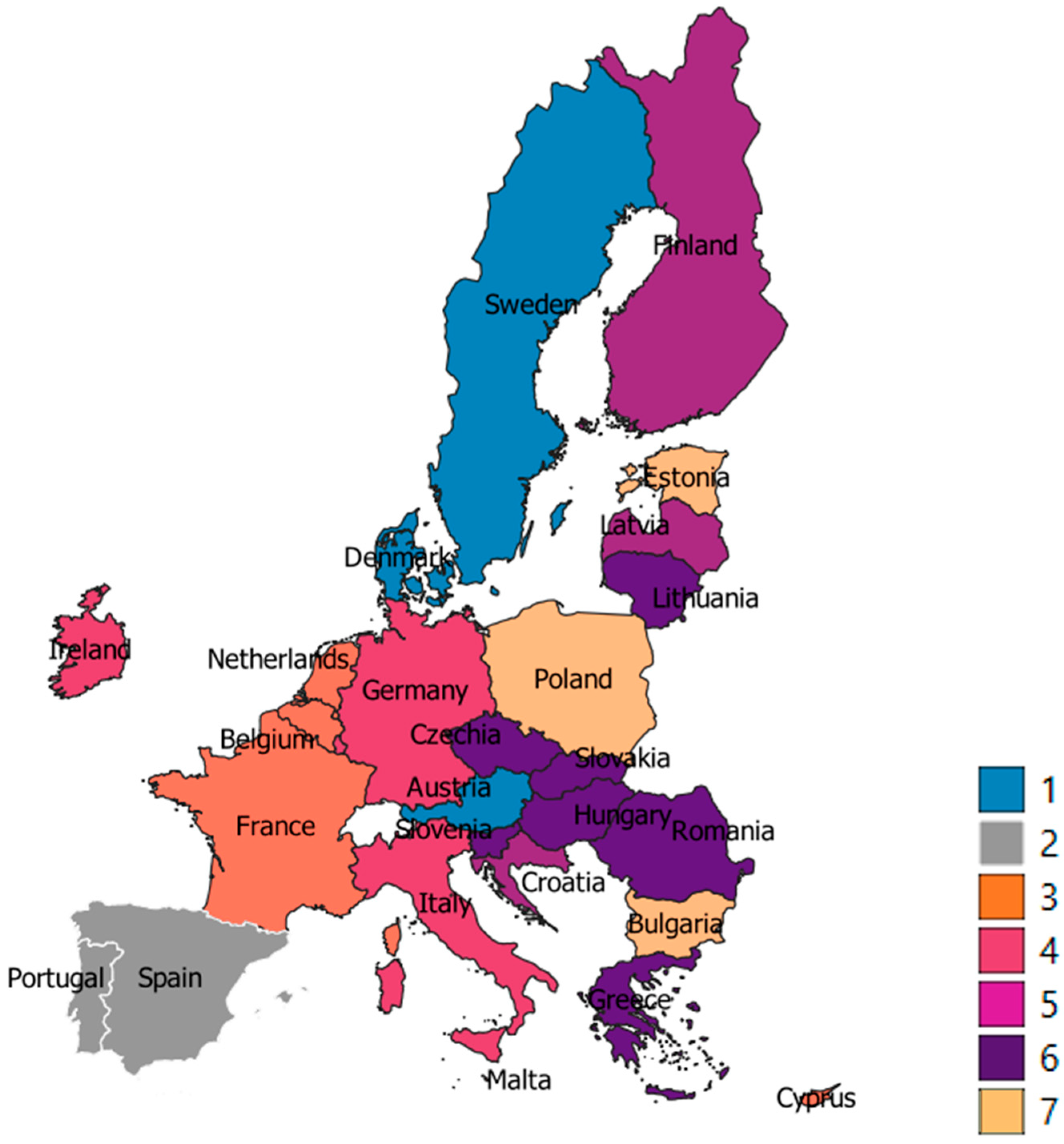
In the next step, clusters were built for the 2014 data. All indicators were assigned the same weight of 1. The results of the analysis are presented in
Figure 2. Individual clusters are marked with separate colors.
The clusters built for 2014 are as follows:
Cluster 1 Sweden, Denmark, Austria.
Cluster 2 Portugal, Spain.
Cluster 3 France, Belgium, Netherlands, Cyprus.
Cluster 4 Germany, Ireland, Italy, Malta, Luxembourg.
Cluster 5 Finland, Latvia, Croatia.
Cluster 6 Czech Republic, Slovakia, Hungary, Romania, Greece, Slovenia, Lithuania.
Cluster 7 Poland, Estonia, Bulgaria.
The largest is Cluster 6, which comprises seven countries characterized by delayed transformation and low levels of innovation in decarbonization efforts. Cluster 7 comprises countries that are heavily dependent on fossil fuels, which leads to a slowdown in their transition.
Cluster 1 represents transformation leaders. It comprises three countries with the most favorable combination of all three factors. Sweden, Denmark and Austria are characterized by the highest share of renewable energy sources in the energy mix (Sweden exceeds 50%), high energy efficiency (Denmark: a maximum of 14 KGOE for the EU-27), and relatively low greenhouse gas emissions. The remaining clusters represent countries that are moderately advanced in the terms of progress in energy transition. Because the clusters were created based on 2014 data, it can be assumed that EU countries were already halfway to achieving the climate goals adopted in the 2009 20-20-20 energy and climate package. The division into groups highlighted the differences between countries that have been focusing on the transition for years. Scandinavian countries, in particular, have made significant progress in this direction, while Eastern European countries have only just begun implementing their energy transition strategies.
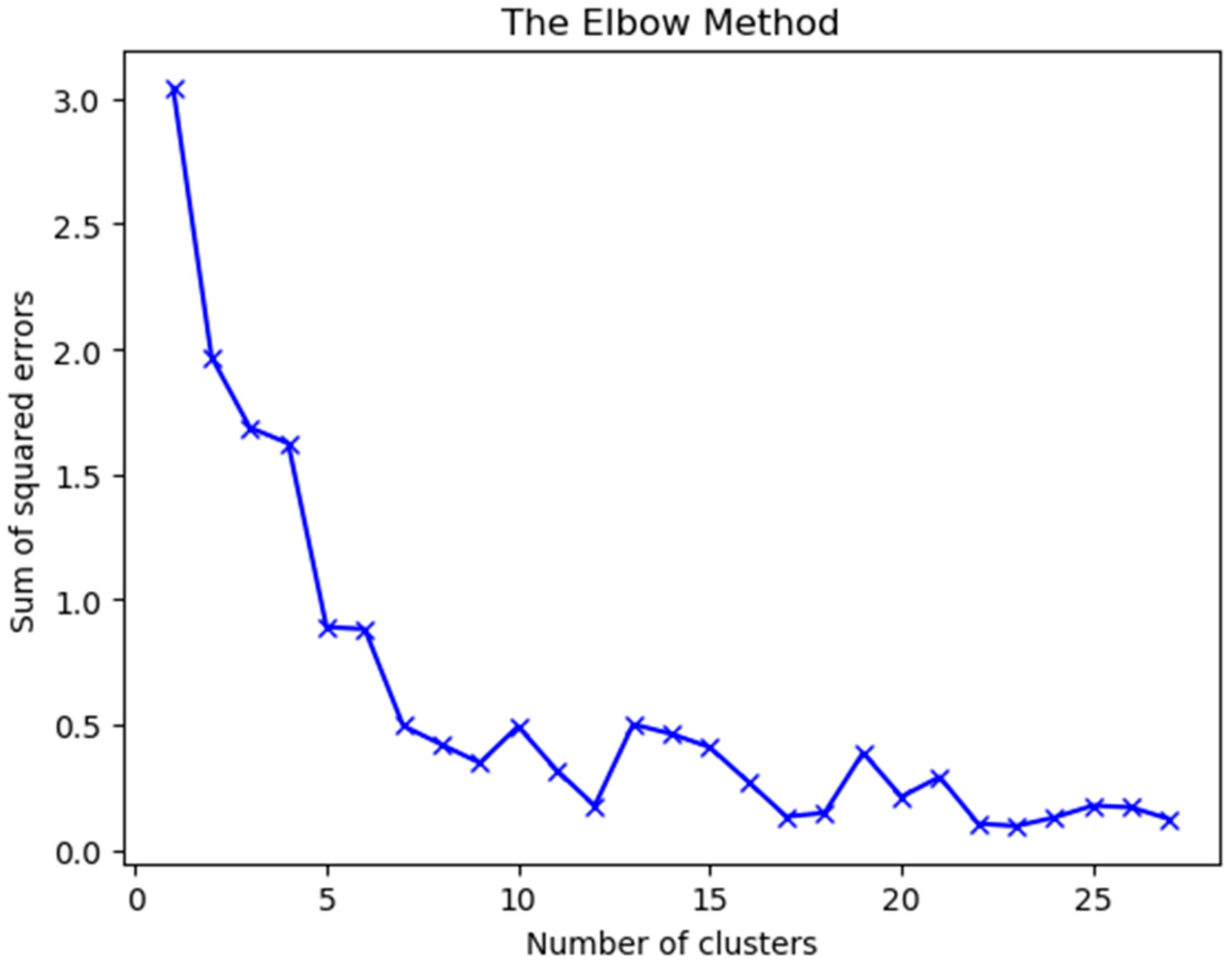
The year 2014 was the reference point for further analysis, that is, building clusters using statistical data from 2023. For 2023, the elbow method indicated that the countries should be divided into 5 groups, as presented in
Figure 3. Therefore, it should be noted that the number of clusters decreased by approximately 30%.
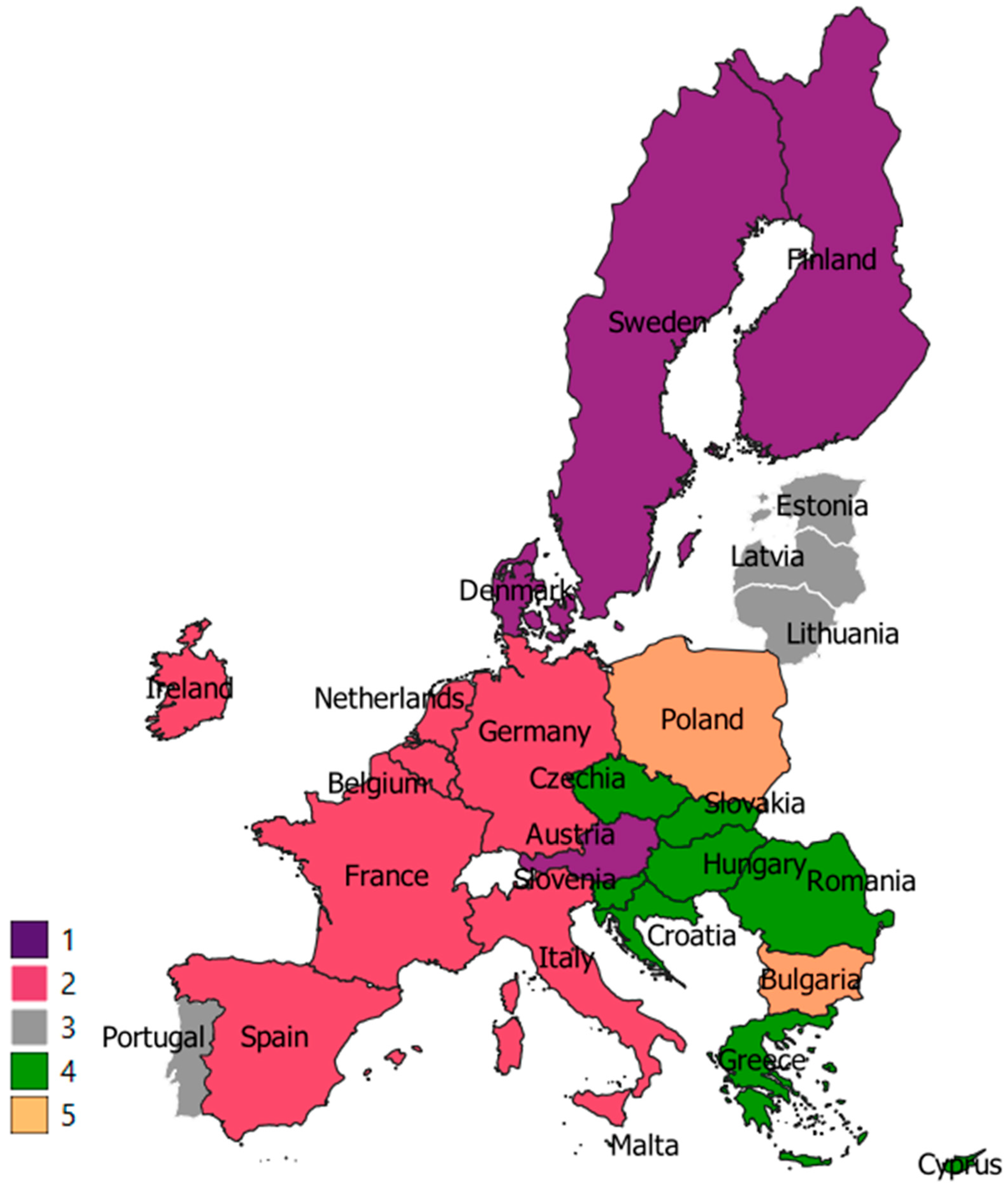
This time, the following division was made (
Figure 4):
Cluster 1: Sweden, Finland, Denmark, Austria.
Cluster 2: France, Germany, Spain, Italy, Netherlands, Belgium, Luxembourg, Malta, Ireland.
Cluster 3: Lithuania, Latvia, Estonia, Portugal.
Cluster 4: Czech Republic, Slovakia, Hungary, Romania, Croatia, Greece, Slovenia, Cyprus.
Cluster 5: Poland, Bulgaria.
In 2023, the differences between countries narrowed, particularly in the case of western European countries such as Germany, France, and Spain, which no longer belong to separate clusters, but to the largest of the established. Nine countries were assigned to cluster 2, which may be due to investments in renewable energy development and innovations that lead to the achievement of transformation goals. Despite significant differences in energy mixes and different starting points, countries achieved similar levels of indicators analyzed indicators over the decade. However, their development and transformation efforts were not intense enough to surpass the transformation leaders in Cluster 1. In the leading countries, renewable energy is the main pillar of their energy mix and, therefore, a low-emission mix compared to the rest of the EU. The growing share of renewable energy in the energy mix translates into reduced greenhouse gas emissions and improved energy efficiency. Expanding wind, solar, and hydropower generation capacity allows for the gradual replacement of high-emission sources. Maintaining a long-term investment policy that supports the stable development of renewable energy sources is essential. The importance of this factor was confirmed by the entropy method used.
The mixes of these countries also differ. For example, in Sweden and Austria, the basis is hydropower, while in Denmark, it is wind energy. However, they constitute the group that has achieved the highest level of the implementation of energy transformation goals. Cluster 3 includes countries that have made noticeable progress in decarbonizing their economies, approaching the EU average and, in the case of Portugal, even surpassing it. Therefore, they are well on their way to achieving the energy and climate goals set by the European Union. Cluster 4 comprises countries with a medium level of progress in their energy transition. They have made significant progress since 2014 but remain below the EU average. The transition is underway in these countries, but it is primarily driven by EU guidelines. Cluster 5, on the other hand, includes countries that are still struggling to meet the transition guidelines. Although Poland, for example, has made progress in terms of RES share, the combination of all three indicators resulted in Poland and Bulgaria being identified by the K-Means-2 algorithm as having a different profile from the other countries and placed in a separate group.
When constructing groups using the K-Means-2 method, all indicators were equally important. However, in reality, not all factors influence the analyzed phenomenon with the same strength. The weights chosen by experts can be biased by individual preferences, experiences, and priorities. The analysis compared numerous countries with various energy structures, making it difficult to obtain a universal set of weights that would be equally applicable to all countries. The entropy method eliminates these limitations, as the weights are determined on empirical data. Entropy allowed to verify how much discriminating information a given indicator conveys about individual countries. The greater the variation in the values of individual indicators for countries, the higher the weight of that indicator.
Table 2 presents the results of the determination of the weights of the explanatory variables.
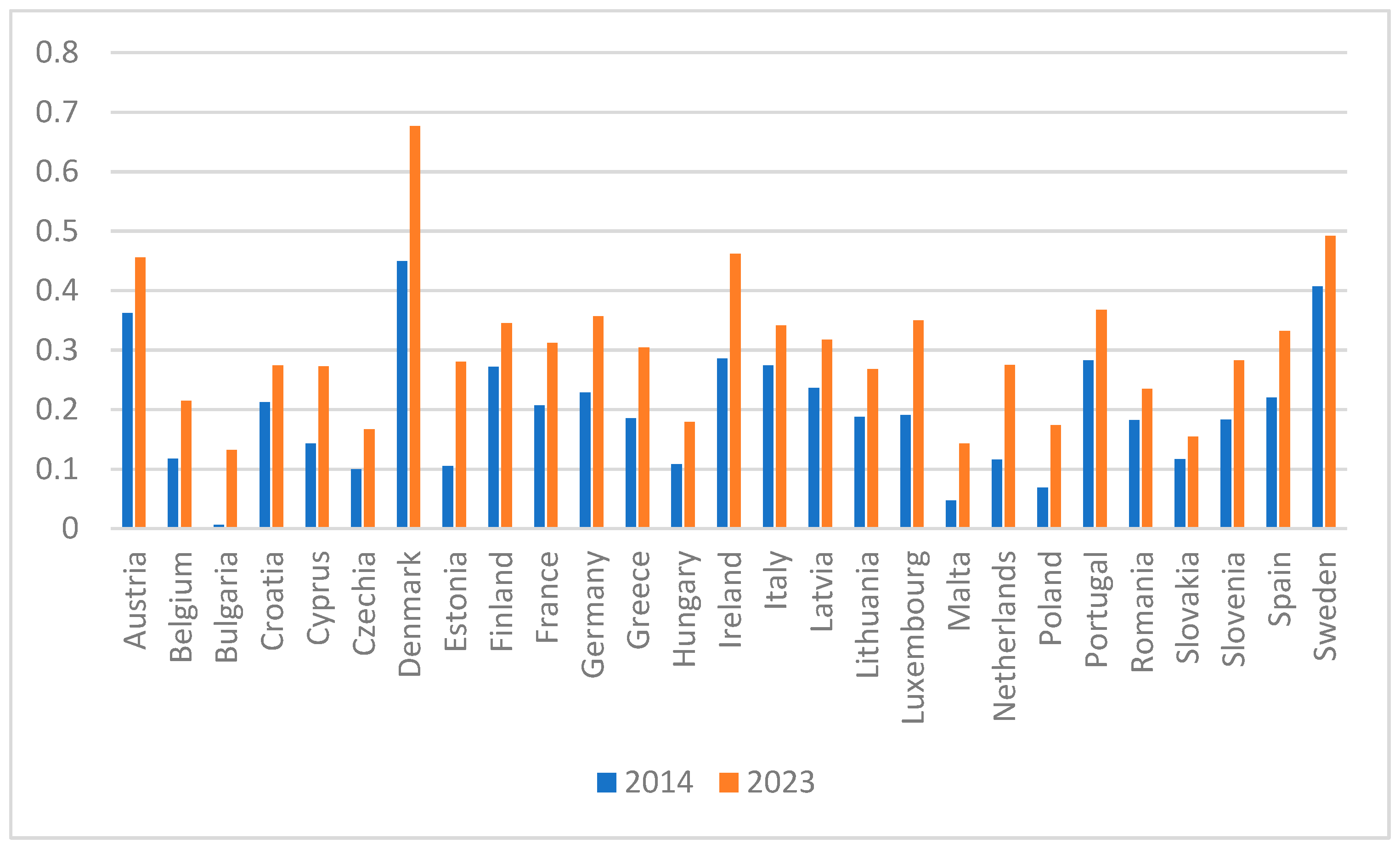
Using the entropy method, it was possible to objectively determine the importance of explanatory variables, without relying on, for example, subjective expert opinions. The highest weight was assigned to the share of renewable energy sources and the lowest to greenhouse gas emissions. The resulting weights were then used in the next step to determine a synthetic measure of the progress of energy transformation in the EU-27 countries. When calculating the indicator, the data from the three explanatory variables were entered into the developed program. This allowed to construct a single measure that facilitates comparisons between countries, allows for the creation of country rankings, and for tracking changes in the indicator’s value over time. The indicator reached its highest value in 2014 for Denmark, 44%, followed by Sweden with 40%, and Austria, 36% (
Figure 5). Bulgaria ranked last with an ETPI of less than 1%. Just ahead of Bulgaria were Malta and Poland, with ETPIs of 4% and 6%, respectively. This was mainly due to the low share of renewable energy sources in the energy mix and the low energy efficiency, as these explanatory variables received the highest weighting. In 2023, all countries improved their results. The highest increases were observed in Poland, Portugal, Malta and Estonia, where the increase was approximately twice. Bulgaria, on the other hand, achieved a record increase, with the index increasing almost 22 times. Despite this enormous progress, Bulgaria still ranks last in the ranking with an ETPI of 13%, but it no longer lags behind the other countries by such a significant margin. Malta is next in the ranking with an index of 14%, followed by Slovakia (15%), the Czech Republic (16%), Hungary (17%), and Poland (17%). In 2023, Denmark again achieved the highest rate, increasing it to 67%, followed by Sweden at 50%, Ireland at 46%, and Austria at 45%.
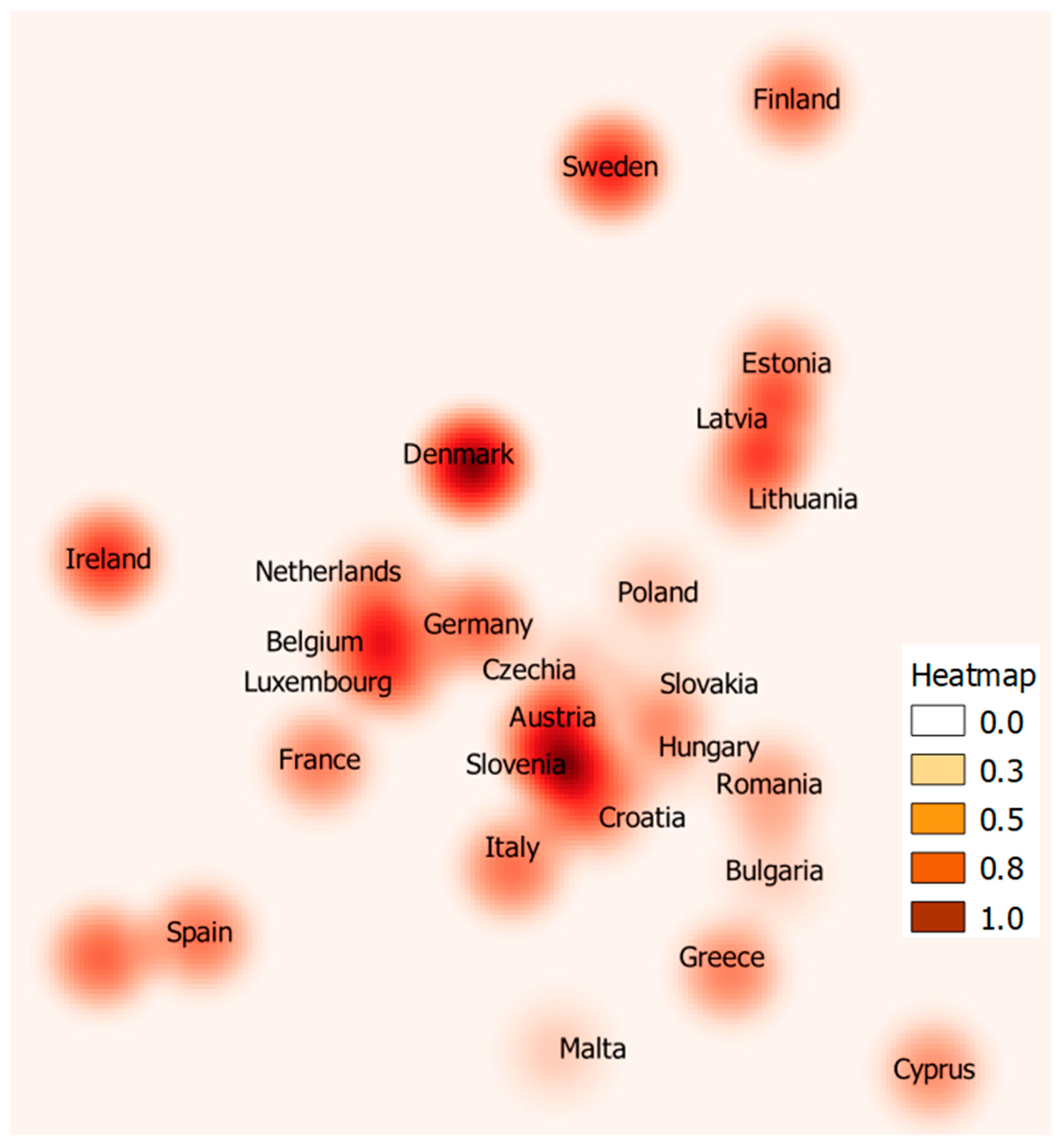
Based on the ETPI, a hotspot map was constructed, where the intensity of the color indicates the ETPI concentration (
Figure 6). The map was created using kernel density estimation. A raster was created with each pixel determined in density. A Gaussian function was used to determine the influence of a given point on the density of the pixels. For each pixel, the influences of all points within a defined radius were summed. Hotspots are points with high point density. The points were assigned weights from the ETPI attribute, allowing them to be taken into account when calculating the density. The darker the color, the larger the cluster of countries with high scores; the lighter the color, the lower the score. A distinct cluster of countries marked in dark red can be observed in the case of Scandinavian countries that are leading the energy transition. Another concentration of countries with high ETPI values appears in Austria, Slovenia, and Croatia. Lithuania, Latvia, and Estonia form a separate hotspot, indicating a dynamic improvement in the progress of the transition in this region. Meanwhile, the countries of Central and Eastern Europe are located in the lighter-colored area, indicating a lack of strong clusters of transformation leaders.
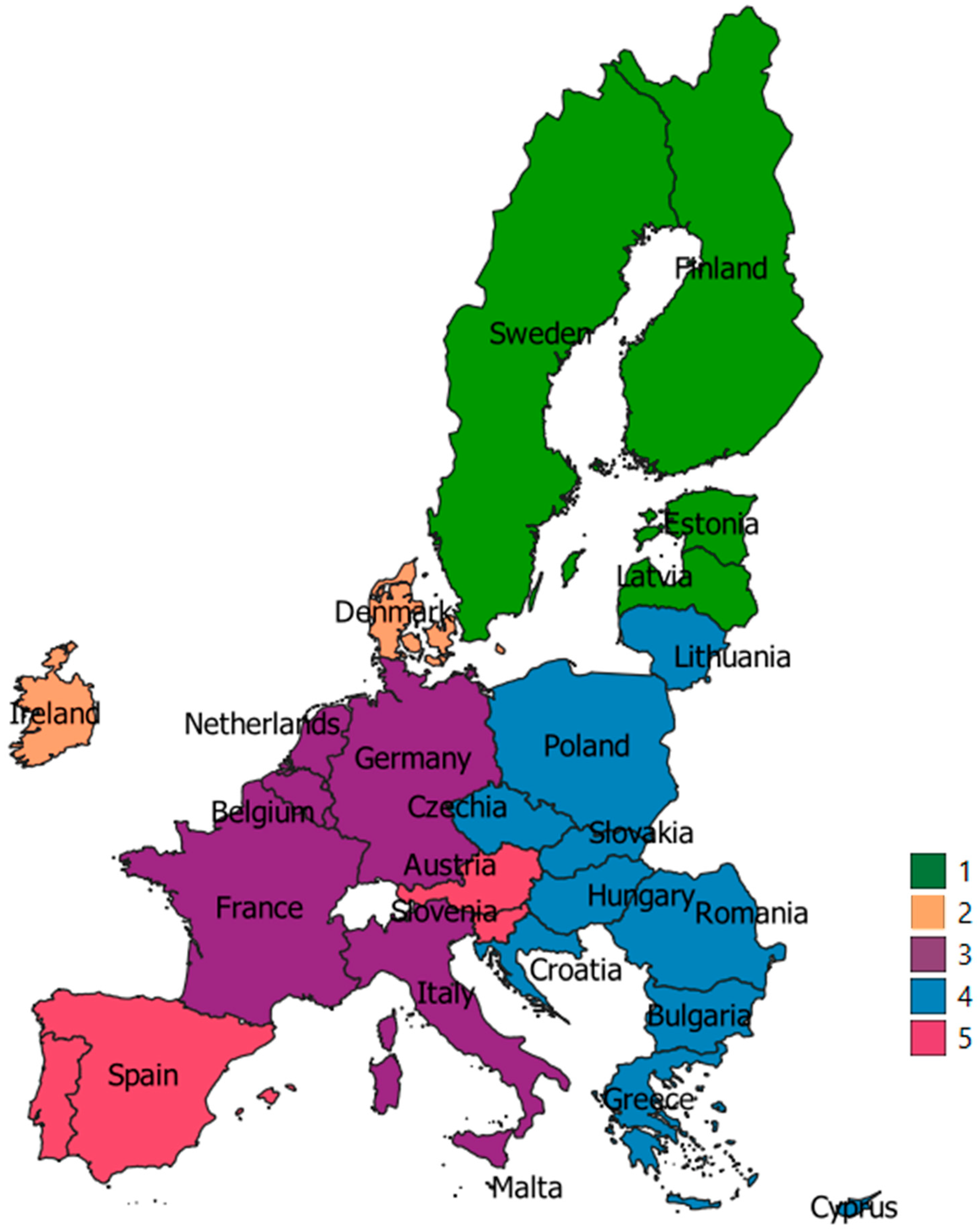
Weights determined by the taxonomic method were used, and the clusters were rebuilt. This minimized the risk of information loss, which occurs in the case of aggregated indicators, while at the same time allowing the information value of individual indicators and their importance in the transformation process to be preserved. The results of the analysis are presented in
Figure 7.
The countries were again divided into five clusters. Taking into account the importance of explanatory variables, the following groups were obtained:
Cluster 1: Sweden, Finland, Latvia, Estonia.
Cluster 2: Denmark, Ireland.
Cluster 3: Germany, Italy, Malta, France, Belgium, Netherlands, Luxembourg.
Cluster 4: Lithuania, Poland, Czech Republic, Hungary, Slovakia, Romania, Bulgaria, Greece, Cyprus, Croatia.
Cluster 5: Austria, Slovenia, Spain, Portugal.
Analysis of clusters before and after weighting introduced showed that 17 countries changed clusters. These shifts were caused by varying the weights of the explanatory variables. Gas emissions, according to the results obtained through entropy, had a three-fold lower impact on clustering than the other indicators.
The most significant changes occurred in Estonia and Latvia, which moved to the leader group. This is due to the high share of renewable energy sources and improved efficiency, along with the high importance of these variables. This shifted them toward countries with a similar energy profile.
Denmark and Austria, on the other hand, remain at the forefront of transformation, but increases in energy efficiency and the share of renewable energy sources were not as rapid as in other countries.
To verify the quality of the cluster, the Rand index was determined, a measure used to assess the similarity between two different clustering results. It allows for the determination of consistency by analyzing all pairs of objects. In this case, the index value is 0.82, which means that 82% of the country pairs maintained the same relationship between the clusters. Although some countries changed the affiliation of the cluster, the overall structure of the cluster remained stable.
The results of this analysis clearly demonstrate a classification of countries based on their geographical location. This is primarily due to similar climatic conditions that shape the development of renewable energy sources, as well as the countries’ energy policies and historical developments, with a clear division between the so-called old and new EU countries.
The analysis revealed differences in the degree of advancement of the energy transition process between individual countries of the European Union.
Since the analysis was done for the years 2014 and 2023, it was possible to examine the changes that have taken place in the EU-27 over the previous ten years. According to the findings, countries were more separated and had more disparities in the explanatory variables examined in 2014. This indicates that the degree of energy efficiency, greenhouse gas emissions, and renewable energy development varied greatly between nations. Convergence occurred in 2023 as a result of measures taken by nations carrying out the EU’s energy transition objectives. The EU provided suitable tools to finance the development of renewable energy sources and improve industrial energy efficiency, as well as mechanisms to reduce emissions in energy-intensive sectors, such as the EU ETS and carbon taxes. The EU also established threshold values that nations should aim to meet. Despite the advances, there were still notable differences among the EU nations regarding the level of development of energy transformation.
The synthetic ETPI measure and the constructed hotspot map indicated that Eastern European countries constitute a separate group. Scandinavian countries were ranked among the highest-rated countries in terms of ETPI. This was, of course, due to the high share of renewable energy sources in their energy mix, but also to the parallel reduction in emissions and improvements in energy efficiency. In their case, transformation efforts are systemic in nature, encompassing the expansion and modernization of infrastructure, the development of energy storage facilities and transmission networks. The increase in ETPI is the result of consistent progress across all three variables considered to determine ETPI. In the case of countries such as Italy, Germany, Belgium, and France, despite technological progress, ETPI did not experience such rapid growth. This may be due to stagnation in emissions generated by the heavy industry and saturation of the energy efficiency index. Emissions in these countries decreased more slowly than in Central and Eastern European countries, where the profound transformation of their economies resulted in abrupt declines. Further improvement in the ETPI will require additional measures, as improving the explanatory variables becomes more difficult and requires greater technological and organizational investment. As a result, the ETPI growth rate is slower, not due to a lack of action, but rather to the exhaustion of opportunities to generate easy gains resulting from the maturity of their energy systems. On the contrary, the countries of Central and Eastern Europe are among the clusters with the lowest ETPI values. This is due to the still high share of fossil fuels in their energy mixes and, consequently, limited energy source diversification. These countries began their transformation with a significant delay compared to western European countries, due to the political changes that took place only in 1989. Energy systems were developed in line with the Soviet Union’s strategy, and the lack of access to Marshall Plan funding also impacted the energy sector. Countries like Poland, Romania, the Czech Republic, and Hungary are forced to catch up on a 40-year lag compared to the Old European Union countries in a very short time.
5. Conclusions
There is significant variation between EU countries in the degree of progress in implementing the energy transition in terms of the explanatory variables, i.e., greenhouse gas emissions, energy efficiency and the share of renewable energy sources in the energy mix. Furthermore, a dynamic analysis of this phenomenon revealed that these differences have a regional dimension.
The novelty of the presented approach lies in the development of an integrated, spatial model for assessing energy transition in the EU-27 countries. This approach combines objective weighting using the Shannon entropy method, the synthetic Energy Transition Progress Index (ETPI), and multi-stage cluster analysis supported by GIS tools. Empirically determined weights reveal regional patterns and convergence in the development paths of energy transition across EU countries. Unlike methods presented in the literature, the proposed approach enables an objective, multidimensional assessment of energy transition progress while preserving the informative value of individual indicators.
Using entropy to analyze the weights of explanatory variables, renewable energy sources and progress in generating installed renewable energy capacity were shown to be the most important factors in achieving the transition to energy. This indicates that efforts to accelerate the energy transition, particularly in eastern European countries, should focus on building the potential of energy sources that will replace fossil fuels in the future. The identified clusters, especially those using calculated weights, revealed that eastern European countries have their own distinct energy transition profiles, allowing the targeting of effective instruments to support the transition to all cluster participants. The ETPI clearly indicates that more than half of the EU countries achieved a below-average result. The maximum value of the index is 67% (for Denmark), and only two countries achieved an index of 50%. Therefore, even the leaders of the transition did not achieve their goals completely. There are still areas that need improvement, such as the decarbonization of transportation, industry, and construction.
Similar results were obtained by Presno and Landajo [
8]. The authors identified convergence clubs, which indicate that the countries of Northwestern Europe, especially the Scandinavian countries, form a group of leaders compared to the countries of Central and Eastern Europe. Brodny et al. [
12] obtained similar results, recording the most dynamic development in Sweden and Denmark and the slowest in Bulgaria, Poland, Hungary and Romania.
The results of the analysis indicate that the transformations of the energy system in the countries of the European Union are spatial and structural in nature. This justifies adapting energy policy to the profiles of countries that belong to individual clusters. Clusters are characterized by different technological, resource, and political conditions, which should be considered when developing energy and climate policies. Cluster 1 includes Scandinavian countries, as well as Latvia and Estonia, which have different paths to transformation leadership. The Scandinavian countries achieved this through the long-term use of renewable energy, particularly hydropower, while the others achieved it through dynamic changes over the last decade. The EU policy in this case should focus on consolidating the results achieved and supporting energy systems to achieve operational stability. In the case of cluster 2, the policy should be directed towards eliminating systemic barriers that limit their further progress. Cluster 3 includes countries in western and southern Europe, characterized by high levels of economic development, as well as energy demand and emissions in the heavy industry and transport sectors. Therefore, energy policy should focus on decarbonizing sectors where emission reductions pose a challenge. This will break the stalemate and allow for further achievement of the transformation goals. Cluster 4 represents countries with the lowest ETPI scores, characterized primarily by a delayed start to transformation, high economic energy intensity, and significant dependence on fossil fuels. In this case, it will be necessary to emphasize increasing financial support for the transformation and making the timelines for achieving climate goals more flexible. The transformation is driven primarily by EU regulations. Undoubtedly, support will be provided in this case by the Just Transition Mechanism, which can facilitate the restructuring of former mining regions, the retraining of workers, and the development of alternative industries.
Countries that are lagging behind in their transition should implement measures to accelerate the achievement of decarbonization goals, both in the short term and strategically. In the short term, these measures should primarily include simplifying administrative procedures and supporting investors in renewable energy sources (RES).
Cluster 5 is composed of countries with a relatively high share of renewable energy sources. This places them above countries lagging behind in the transformation, but below the leaders in the transformation. The same applies to energy efficiency. The strategic perspective in this case should include a focus on modern technologies. They should primarily support renewable energy storage, whether in the form of batteries, supercapacitors, pumped storage power plants, hydrogen production and storage, or thermal storage. Modifications to existing technologies, such as agrophotovoltaics, floating photovoltaics, and vehicle-to-grid, are also possible. Building smart grids and digitizing the power system will also be necessary. All of these measures are designed to enable the further development of RES while ensuring the stable operation of the energy systems of eastern European countries.
GIS tools have been shown to be ideal for monitoring the progress of energy transformation. They allow for capturing the spatial interdependencies of the energy transition, which provides additional practical value compared to classical statistical methods. Analytical results can support decision makers in planning regional policies, distributing funds, and locating renewable energy installations.
The most significant limitation of the presented solution is the use of only key indicators that describe the energy transition. In the future, the set of explanatory variables could be expanded to include factors that describe additional areas related to the transition, such as energy storage and energy system flexibility.