1. Introduction
The global energy transition over the last decade has driven the rapid expansion of distributed generation (DG), particularly photovoltaic (PV) resources, in urban and residential distribution networks. This trend reflects both the urgency of reducing greenhouse gas emissions and the need to strengthen energy resilience amid growing demand and supply variability [
1,
2]. In this context, electrical distribution systems have become the most dynamic link in the energy chain, as they must adapt to bidirectional power flows, the intermittency of renewable sources, and the increasing digitalization of control systems [
3]. Rooftop PV stands out in urban settings for its modularity, proximity to demand, and potential to reduce technical losses, defer network reinforcement investments, and improve service continuity indices [
4,
5]. Several global studies estimate that PV capacity installed on rooftops could supply between 20% and 40% of urban electricity demand, provided that appropriate technical and regulatory conditions for grid interconnection are in place [
6,
7]. Nonetheless, integrating DG introduces significant operational challenges related to reverse power flow, transformer overloading, and phase imbalance [
8,
9].
Traditional distribution networks were designed for unidirectional power flows from substations to end users. When local generation is deployed at scale, operating conditions change, and parameters such as power factor, neutral current, and transformer temperature evolve more dynamically [
10]. Recent studies report that more than 70% of supply interruptions in urban networks are linked to overloads or faults in the distribution system, and that unplanned PV penetration can increase harmonic and thermal losses by up to 25% [
11]. At the infrastructure level, distribution transformers are particularly exposed because reverse power flow and high harmonic content accelerate dielectric aging and shorten expected service life [
12]. In addition, phase imbalances arising from non-uniform single-phase PV installations lead to unbalanced voltages that degrade power quality and increase overall technical losses [
13,
14].
In Andean cities such as those in Ecuador, Peru, Colombia, and Bolivia, these challenges intensify due to specific geographic and climatic conditions. High altitude, which in many cases exceeds 2500 m a.s.l., leads to higher global solar irradiance but also greater thermal variability, which affects PV module performance and accelerates the aging of electrical components [
14]. Mountainous topography and heterogeneous urban fabric hinder uniform rooftop exposure to sunlight, increase feeder losses due to longer line runs, and restrict vehicular access for maintenance operations. These cities often rely on radial distribution configurations with dispersed transformers and overhead lines that traverse steep slopes, increasing vulnerability to atmospheric phenomena and short-circuit events. From an energy perspective, concentrated demand in small areas and sharp contrasts in population density create micro-zones of overload.
Consequently, to deliver a realistic and contextualized technical assessment, studies on PV integration in Andean distribution networks must jointly consider optimal areas with high solar irradiation, altitude, slope, topography, shading effects, tilt angles, and building heights.
1.1. Literature Review
The accurate quantification of rooftop solar energy potential has become a critical field of research, fundamental to the transition toward distributed renewable energy systems. Methodologies for this assessment have evolved rapidly, moving from foundational Geographic Information Systems (GIS) and solar irradiance modeling toward the integration of high-resolution data, highlighting how technological advancements have enabled increasingly precise, scalable, and automated estimates of rooftop PV capacity across urban, rural, and global scales.
GIS has become a fundamental tool for evaluating rooftop PV suitability. A foundational review established the methodological bases, emphasizing the relevance of 3D data and irradiance modeling. For instance, ref. [
15] assessed the national-level potential in Thailand by integrating data on buildings, land use, and solar production within a GIS environment, estimating a potential of 50.32 TWh/year, equivalent to 25.5% of the country’s electricity demand. Similarly, ref. [
16] conducted the spatial and economic assessment of solar and wind potential at a regional scale, underscoring the importance of spatial planning and multi-criteria evaluation for renewable energy integration. The accuracy of these assessments has improved significantly with the incorporation of high-resolution data. Recent studies such as [
17,
18] have used detailed local datasets, including LiDAR and municipal cadastral information, to evaluate solar suitability with sub-meter precision. This advancement is particularly crucial in complex urban environments, where the feasibility of installations depends on the specific characteristics of each building.
The most recent frontier in this discipline is the integration of deep learning techniques, which have automated information extraction and scaled analyses to a global level. In [
19], a high-resolution assessment of rooftop PV potential was performed using big data, machine learning, and geospatial analytics, identifying a viable area of 0.2 million km
2 and a potential annual generation of 27 PWh. At the urban scale, ref. [
20] proposed a methodological framework using semantic segmentation and optimized spatial sampling to estimate rooftop solar potential from publicly available satellite images, reducing manual annotation work by 80%. Similarly, ref. [
21] developed a comprehensive framework combining multi-source satellite imagery and deep learning models to simulate hourly generation profiles with high spatial accuracy, estimating a potential capacity of 245.17 GW. On the other hand, realizing this potential requires linking these findings with planning frameworks and economic feasibility analyses. In [
22], a techno-economic framework was developed that combines mixed-integer linear programming with GIS-based spatial analysis to determine the optimal siting and sizing of microgrids. Likewise, ref. [
2] proposed a quantitative approach to evaluate the financial viability of rooftop PV systems. Thus, while techno-geospatial assessments establish the spatial feasibility of solar deployment, integrating them with techno-economic optimization frameworks ensures a more comprehensive evaluation.
1.2. Research Gap and Contribution
A critical analysis of the existing literature on rooftop solar potential reveals persistent gaps that limit its practical integration into urban distribution networks, particularly in under-studied regions such as the Andes. These gaps can be categorized as follows:
Contextual Gap:Most GIS-based rooftop solar assessments are conducted at national or regional scales and often rely on generalized assumptions about irradiation, roof geometry, and load profiles. There is a notable scarcity of high-resolution studies that account for the real urban and topographic conditions, such as high altitude, complex slopes, dynamic shading, and dense architectural layouts, characteristic of Andean cities. These distinctive geographical and climatic factors significantly influence solar resource availability and installation viability, yet they remain poorly represented in broader analyses.
Validation Gap: A critical disconnect exists between theoretical solar potential estimates and their practical application for grid integration. Most GIS and remote sensing models operate in isolation, lacking integration with electricity consumption data and electrical network parameters. This results in methodologies that are not validated against operational grid constraints, such as transformer loadability (LD), undermining their practical relevance and replicability for utility planning.
To address these gaps, this study proposes an integrated GIS-based framework that couples high-resolution solar potential analysis with electricity consumption and network data. The main contributions are as follows:
A spatial framework to identify suitable residential rooftops for distributed PV installation by integrating solar irradiation, altitude, slope, shading, tilt angle, and building height.
Incorporation of monthly aggregated electricity consumption (MEC) data from the local utility to enable a first-order planning-level linkage between rooftop PV generation potential and aggregated demand.
Evaluation of key grid integration indicators, including transformer LD and reverse power flow limits, to ensure technical compatibility with the existing distribution network.
The remainder of this paper is organized as follows.
Section 2 presents the materials and methods, describing the GIS-based framework used to identify suitable residential rooftops for distributed PV generation, estimate solar irradiation considering 3D urban characteristics, evaluate available rooftop area and PV energy potential, analyze the energy balance using MEC data, assess transformer LD, and quantify the associated environmental impact.
Section 3 reports the results obtained from the application of the proposed framework to the case study.
Section 4 discusses the findings and includes the study limitations, practical applications and policy implications, while
Section 5 concludes the paper and outlines future research directions.
2. Materials and Methods
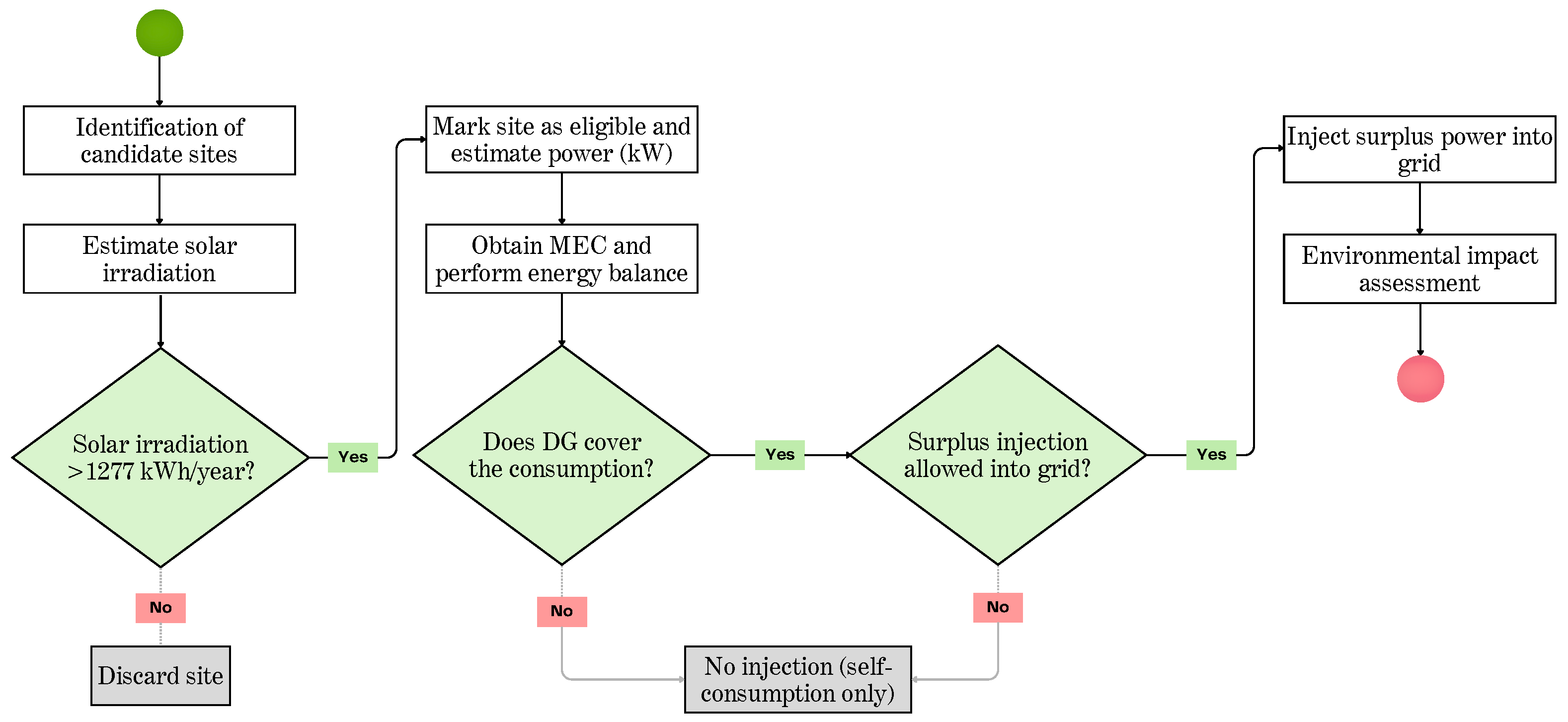
Candidate sites are identified within the urban area through a spatial analysis of parcels and residential buildings. Sites with an annual solar irradiation exceeding 1277 kWh/m
2·year are considered eligible for DG installation, while those below this threshold are excluded. This value is derived from regional solar potential assessments: the Global Solar Atlas reports an average global horizontal irradiation in Ecuador of approximately 4.5 kWh/m
2 per day (about 1642 kWh/m
2 per year), and IRENA indicates that most of the country exhibits a PV potential above 1200 kWh/kWp·year. Under typical rooftop PV performance ratios, the adopted irradiation threshold corresponds to an expected specific energy yield of approximately 950–1020 kWh/kWp·year, ensuring sufficient solar resource for technically and economically viable PV deployment [
23]. For the selected sites, the electrical power generation potential is estimated based on the available installation area and the corresponding solar irradiation.
Subsequently, the MEC of the selected customers is used to compare the expected generation with the recorded demand. If the generated energy exceeds the customer’s requirements, the possibility of injecting the surplus into the grid is evaluated, provided that the associated transformer has sufficient capacity to accommodate the additional power. The data were obtained from the local utility provider, which supplied anonymized customer records, and were matched to each selected site to enable a detailed energy balance assessment based on actual demand. Conversely, if generation does not fully cover the customer’s demand, no energy is injected into the grid. In cases where surplus power is injected, an environmental impact assessment is also conducted by estimating the amount of CO
2 emissions avoided, based on the total energy generated and a standard grid emission factor.
Figure 1 shows the detailed flowchart of the process.
2.1. Study Area and Data Sources
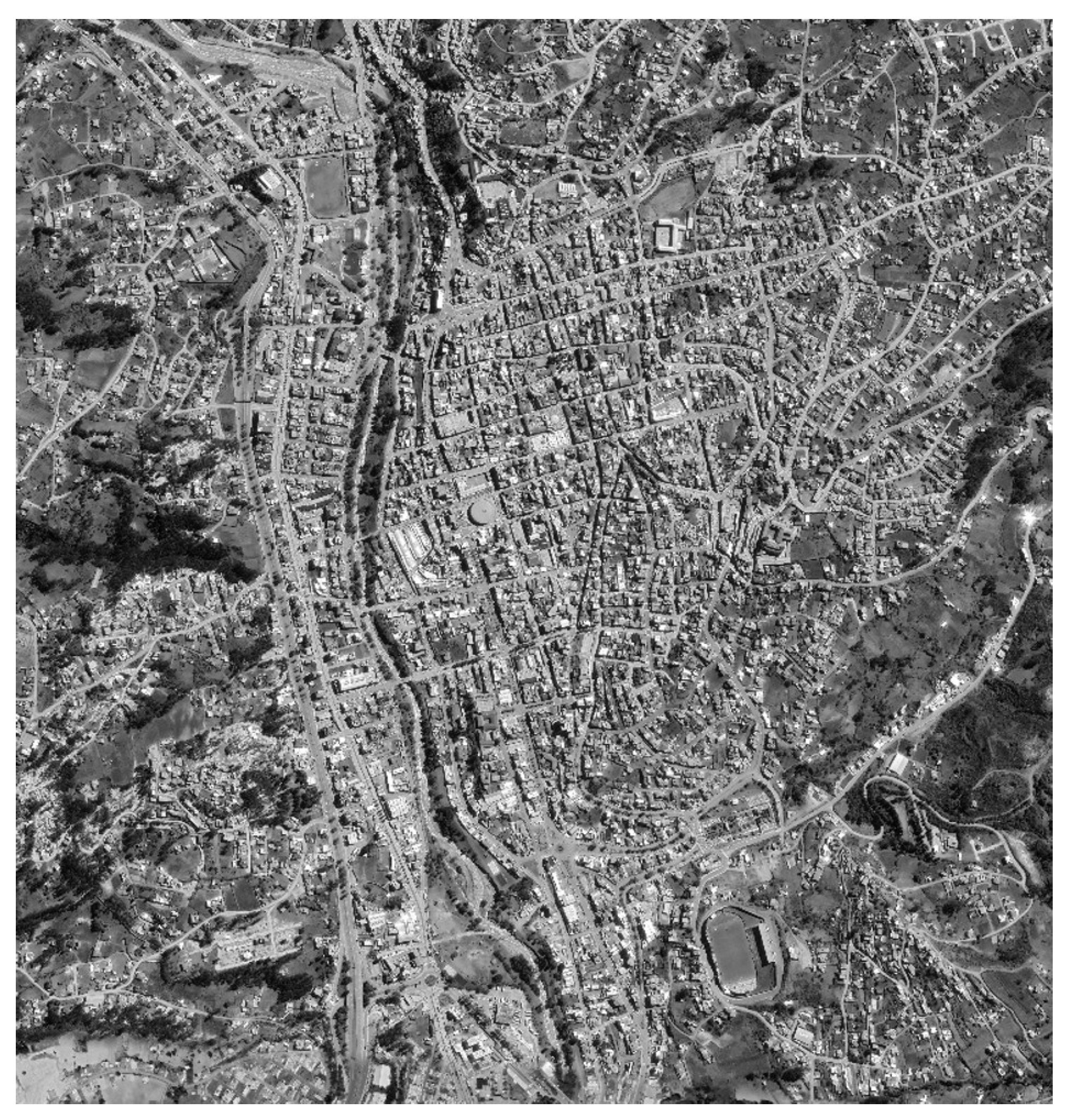
The study area corresponds to the city of Azogues, which is located in southern Ecuador and is situated at approximately 2.45° S latitude and 78.5° W longitude, at an average elevation of 2518 m above sea level. According to the most recent national census, the city has an estimated population of approximately 70,000 inhabitants. The urban area is characterized by complex mountainous topography, with pronounced elevation gradients and irregular terrain within relatively short distances. These conditions result in heterogeneous rooftop orientations, variable shading patterns, and non-uniform solar exposure across the urban fabric.
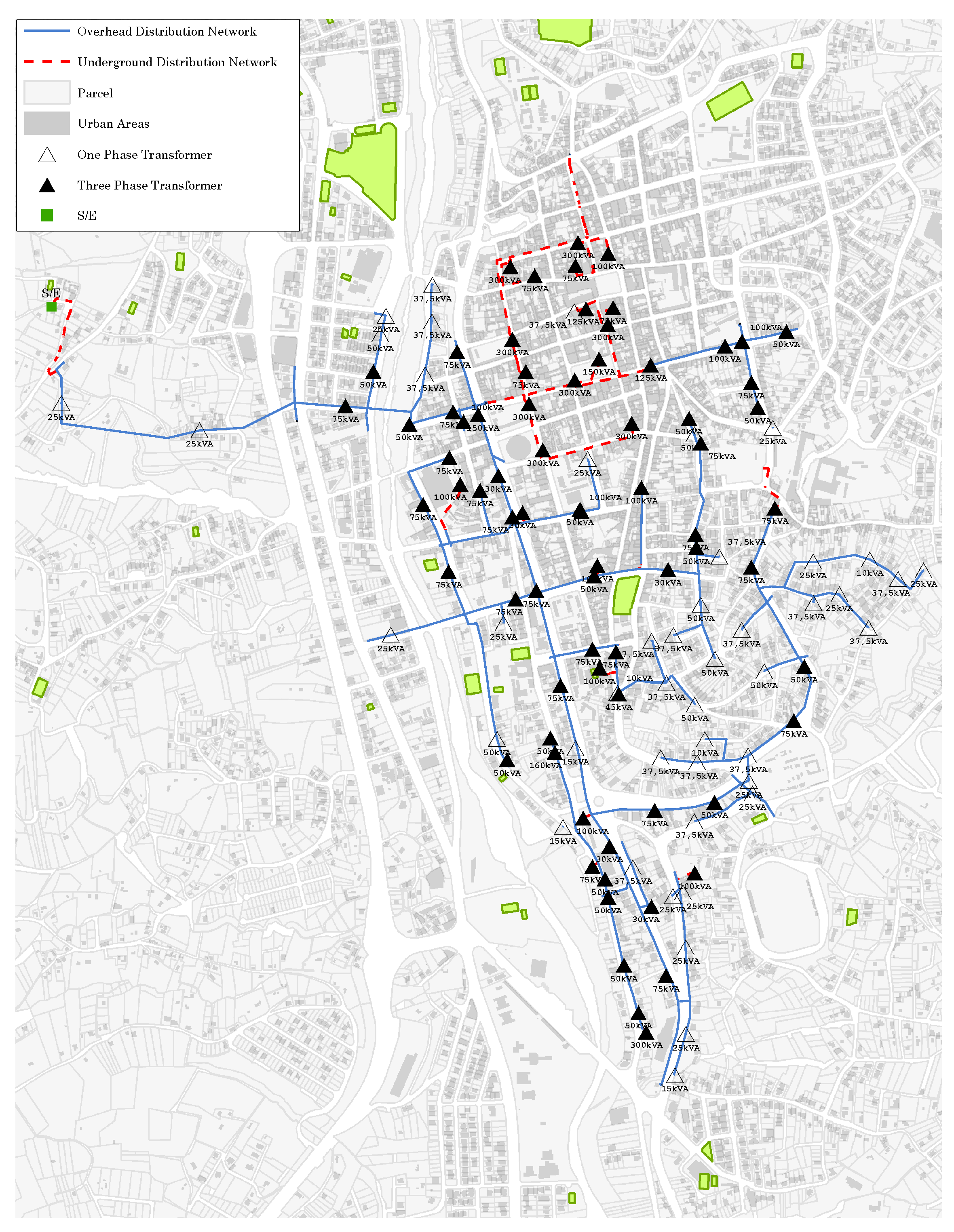
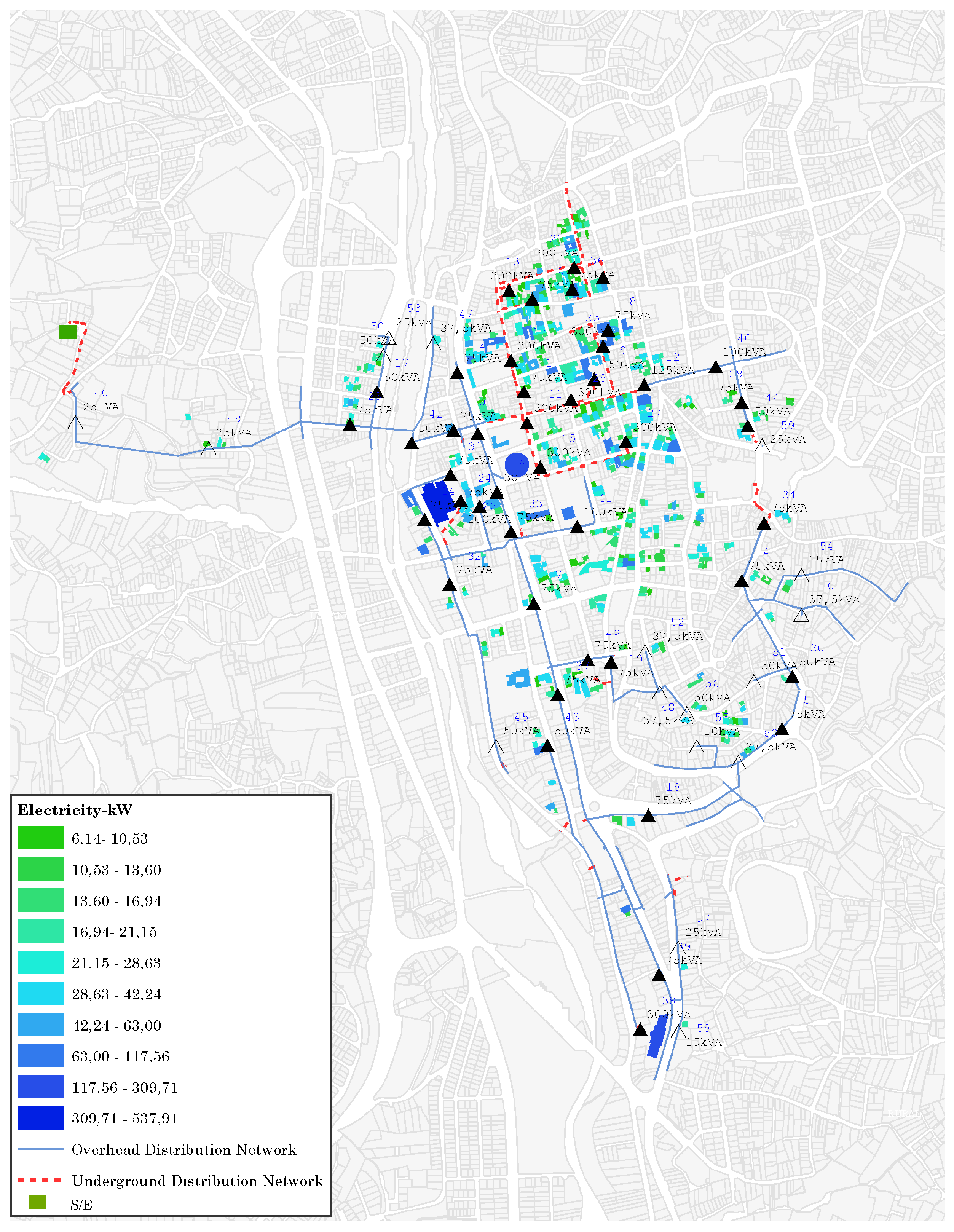
From an electrical infrastructure perspective, the city presents a predominantly radial distribution network adapted to the terrain, with dispersed distribution transformers and a combination of overhead and underground lines.
Figure 2 presents the urban area of the Andean city.
2.2. GIS Tools and Data Processing Environment
The geospatial analysis was conducted using ArcGIS Pro 3.0.0 (Esri, Redlands, CA, USA), a commercially available GIS platform widely adopted in urban and energy planning studies. Spatially distributed rooftop solar potential was assessed using the Area Solar Radiation tool, which computes direct, diffuse, and reflected components by integrating digital elevation models, building geometry, latitude, and shading conditions. Rooftop orientation, slope, and shadowing effects were derived from three-dimensional building data and digital elevation models using Surface Analysis and Spatial Analyst tools.
Climatic solar input data were sourced from the Global Solar Atlas, which provides long-term Typical Meteorological Year (TMY) datasets derived from satellite observations combined with validated atmospheric and radiative transfer models. These TMY datasets represent statistically averaged solar conditions over multiple years, capturing seasonal variability while filtering short-term anomalies. The data offer global coverage with a spatial resolution of approximately 1 km, making them suitable as a reference for urban-scale solar energy assessments.
Rooftop areas suitable for PV installation were extracted using vector-based geoprocessing operations, including polygon clipping, spatial overlay, and geometry calculations. Electrical network elements, such as distribution transformers and feeders, were integrated into the GIS environment using utility-provided vector datasets.
MEC data supplied by the local utility were processed and linked to spatial entities through unique identifiers, enabling the evaluation of energy balance and transformer LD within the GIS framework.
2.3. Identification of Candidate Sites
A geospatial identification of all urban parcels and residential rooftops within the study area was first performed. Each parcel was assessed based on geometry, rooftop surface availability, and proximity to the existing medium-voltage overhead and underground distribution networks.
Figure 3 illustrates the spatial overlay of urban parcels, electrical distribution networks, and transformer locations.
2.4. GIS-Based Solar Potential and PV Power Estimation
The GIS-based solar radiation model computes the annual solar irradiation at site
i as the cumulative contribution of direct, diffuse, and reflected radiation components over a TMY, as expressed in Equation (
1):
where
represents the annual solar irradiation at site
i (kWh/m
2·year),
,
, and
correspond to the direct, diffuse, and reflected radiation components at time interval
t, respectively.
The direct radiation component was adjusted to account for local surface geometry and shading effects derived from the digital elevation model and three-dimensional building data, according to Equation (
2):
where
is the direct normal irradiance,
is the angle of incidence on the rooftop surface, and
is a dimensionless shading factor accounting for terrain and surrounding structures. This formulation ensures that the resulting irradiance values incorporate altitude, slope, azimuth, and urban shading effects characteristic of Andean cities.
For suitable sites, the potential installed PV capacity was estimated as a function of the usable rooftop area
and an assumed PV power density
, as shown in Equation (
3):
where
represents the installed DG capacity at site
i (kW), and
denotes the usable rooftop area (m
2).
2.5. Energy Balance and Transformer LD Assessment
The monthly energy production (
) of a PV system with installed capacity
is estimated using Equation (
4), based on the local solar resource expressed in terms of peak sun hours (PSH). PSH represents the equivalent number of hours at a standard irradiance of 1000 W/m
2 and is derived from the annual global solar irradiation projected onto the effective tilted plane of the PV modules, accounting for rooftop orientation and inclination. System losses between incident solar radiation and electrical energy output, including temperature effects, inverter efficiency, wiring losses, soiling, and mismatch, are incorporated through an aggregated performance ratio ranging from 0.75 to 0.80.
where
corresponds to the number of days of the month.
The energy surplus (
) available for grid injection is determined using Equation (
5) by comparing the generation against the customer’s MEC.
where
represents the MEC of the household in kWh.
This surplus energy is then converted into an average daily injected power through Equation (
6) to facilitate the power-based analysis at the transformer level:
where
is the average daily injected power (kW),
is the surplus energy (kWh), and
is the number of days of the month.
The impact of the injected power on the distribution transformer is evaluated by calculating the new transformer LD using Equation (
7).
where
is the transformer’s existing active power load (kW), and
is the transformer’s nominal apparent power rating (kVA).
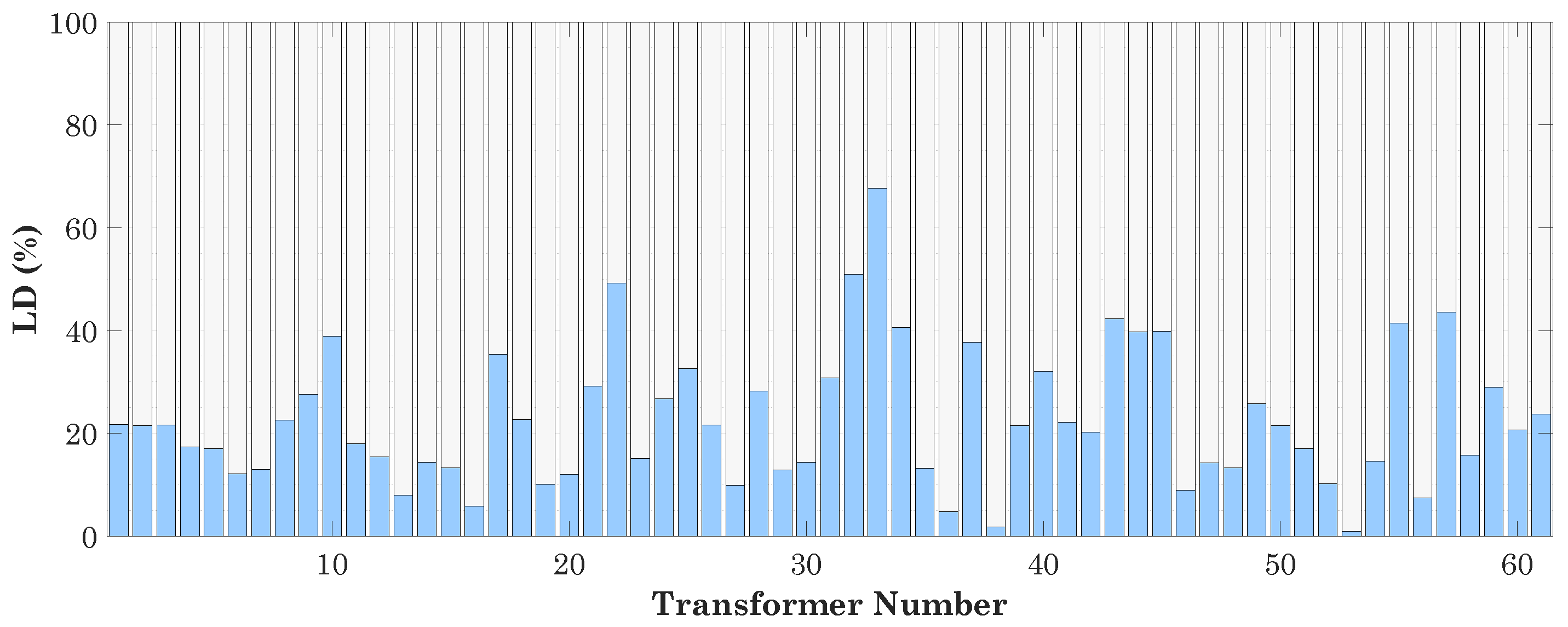
Transformer LD is used as a first-order operational indicator to evaluate the ability of the distribution network to accommodate surplus PV generation, while voltage rise is often the primary limiting factor in low-voltage networks with high PV penetration, detailed voltage analysis requires feeder impedance data, phase configuration, and time-resolved generation and demand profiles, which were not available for this study. Therefore, transformer LD is adopted as a conservative and readily available proxy to identify potential integration constraints at the planning stage.
On the other hand,
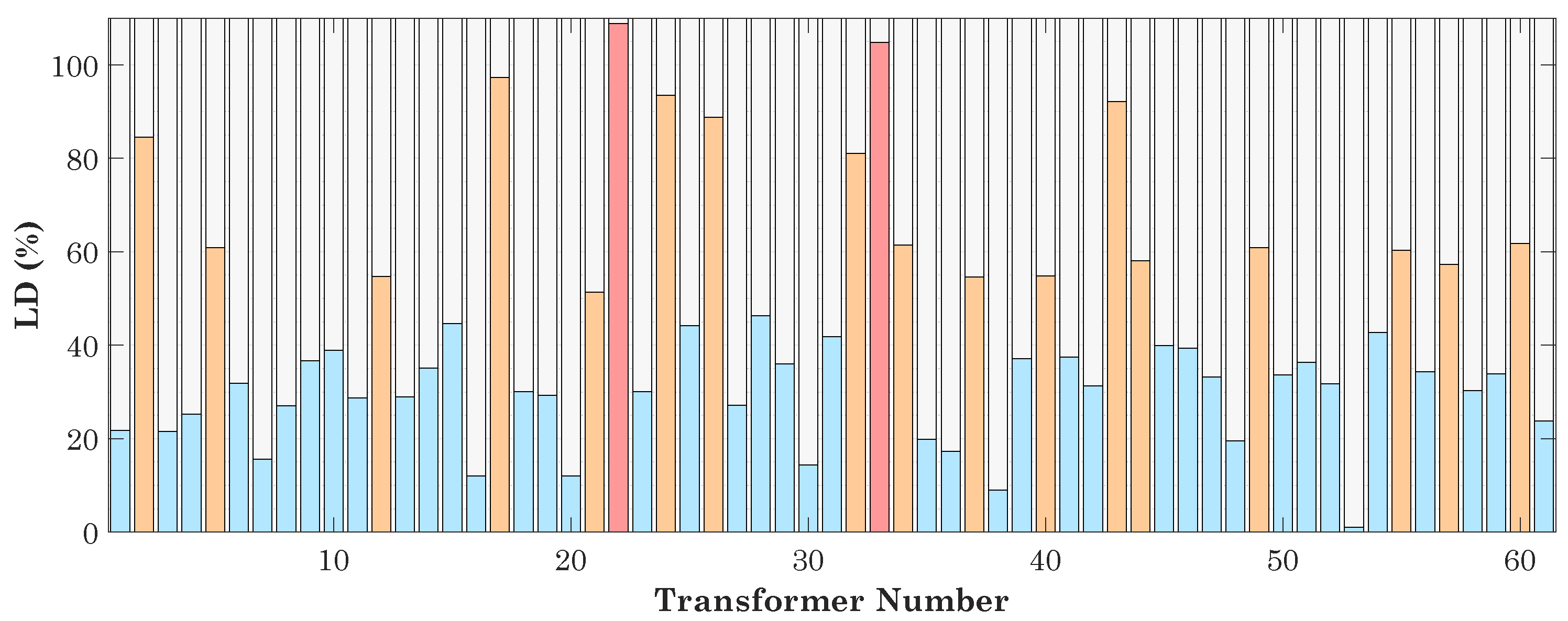
Figure 4 shows the LD of the transformers in the urban area without the integration of DG.
2.6. Environmental Impact Estimation
The avoided emissions correspond to the reduction in fossil-fuel-based electricity generation due to the integration of PV systems in the selected urban area. The annual energy generated (
) is calculated using Equation (
5):
where
is the average daily peak sun hours (4.52), and
is the number of days in a year (365). The average value of PSH over the year is selected in order to reflect a realistic estimate of system performance, as this approach captures both seasonal variations and overall annual potential.
The avoided CO
2 emissions are calculated using Equation (
9):
where
is the CO
2 emission factor. A standard value of 0.6 kg CO
2/kWh is adopted, based on international benchmarks [
24].
The emission factor adopted corresponds to a conservative international benchmark commonly used in DG and urban decarbonization studies. Although Ecuador’s electricity mix is largely dominated by hydropower, marginal electricity generation during peak demand periods and dry seasons often relies on thermal generation units. Therefore, the selected emission factor should be interpreted as an upper-bound estimate of avoided emissions rather than an exact representation of the national annual average.
3. Results
The application of the proposed GIS-based methodology yielded detailed insights into the rooftop solar potential, its integration dynamics with the electrical grid, and the ensuing environmental benefits. The results are presented and analyzed across the following dimensions: the geospatial characterization of suitable sites, the energy generation potential and its balance with consumption, the operational impact on the distribution network’s transformers, and the estimated environmental mitigation.
3.1. Spatial Identification and Characterization of Eligible DG Sites
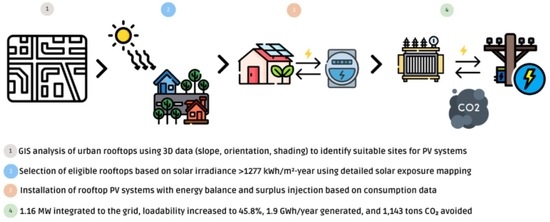
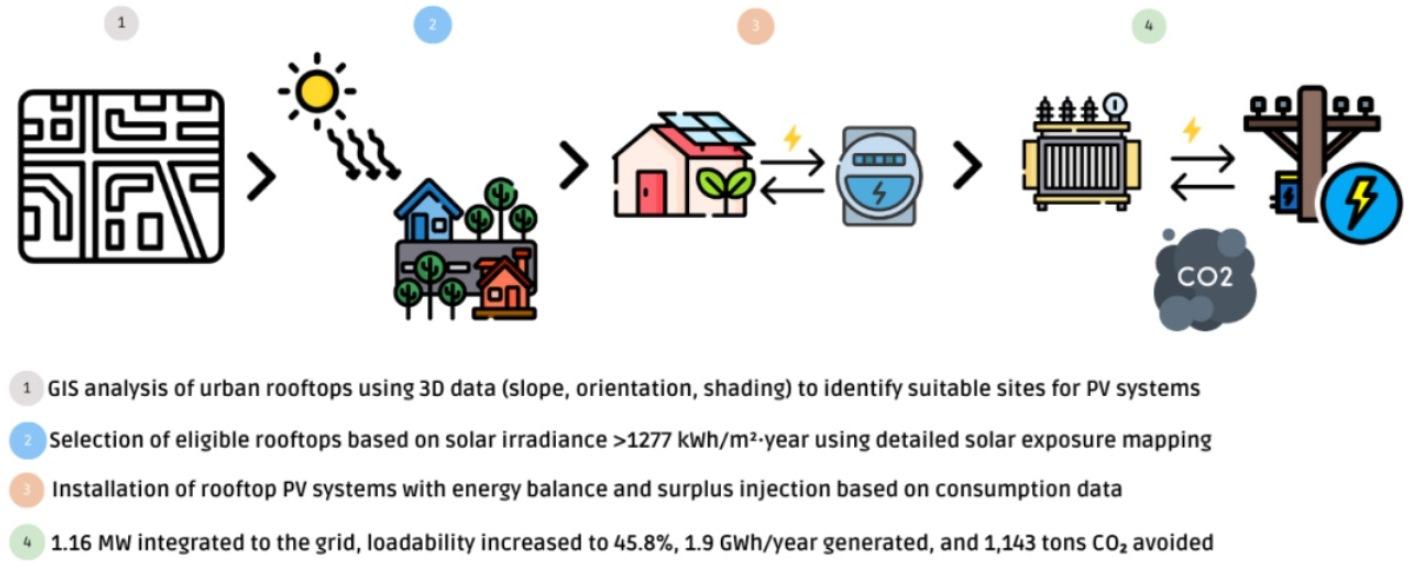
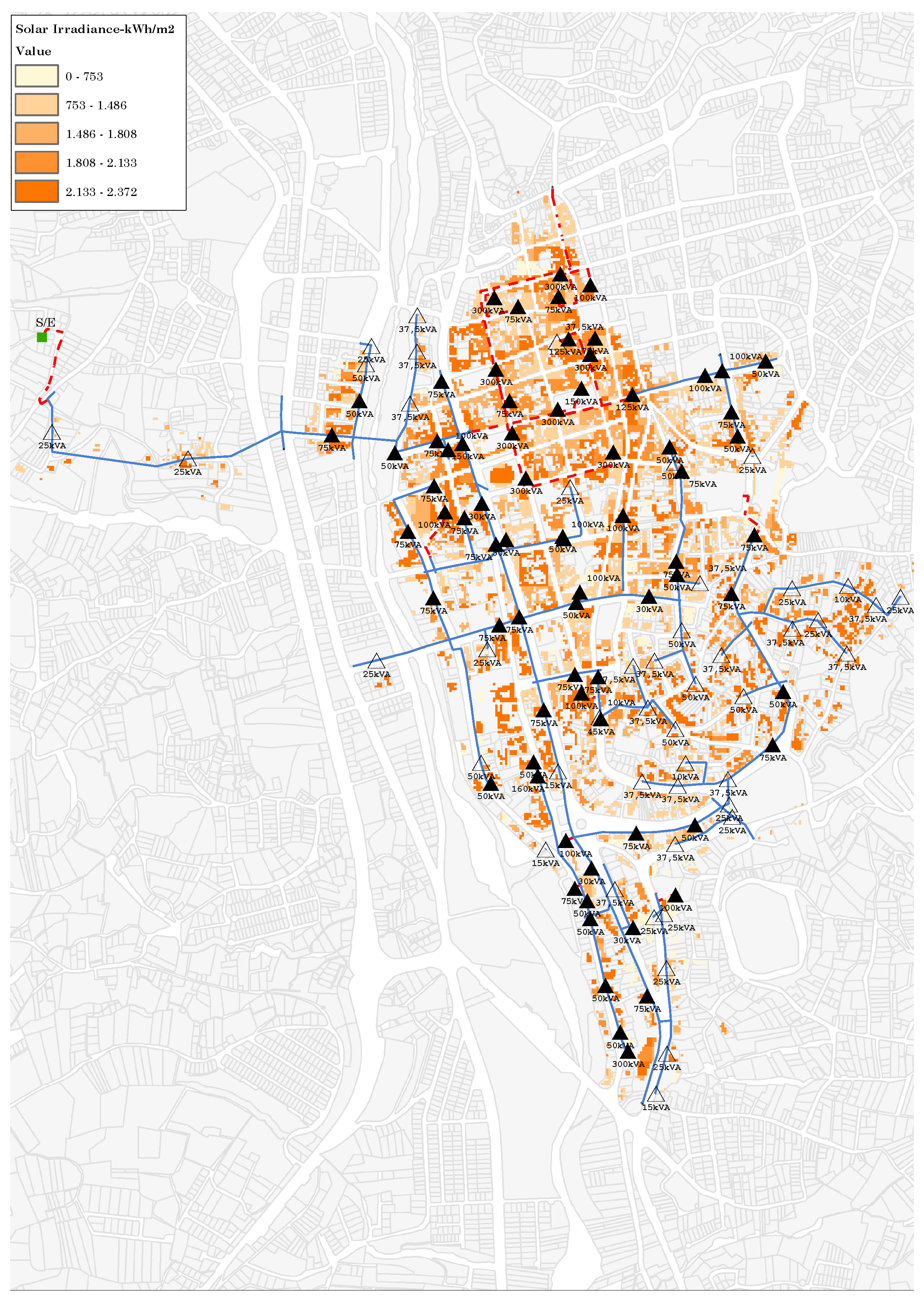
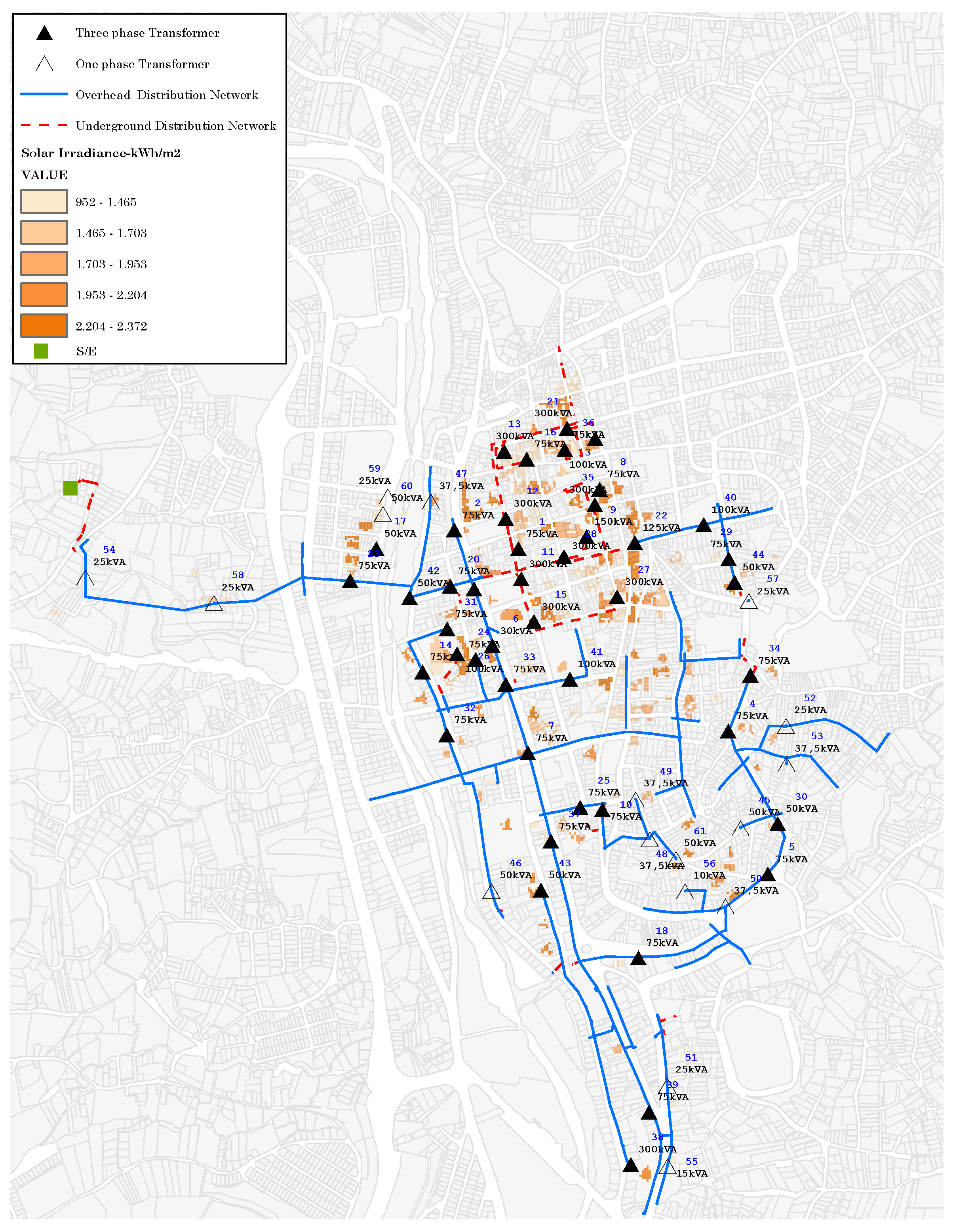
The GIS-driven analysis, applying the minimum annual solar irradiation threshold of 1277 kWh/m2·year and considering available rooftop area, identified a total of 96 sites suitable for residential PV installation.
Figure 5 depicts the spatial distribution of annual cumulative solar irradiance across the set of candidate sites (kWh/m
2). Based on the adopted irradiation threshold,
Figure 6 delineates the locations deemed suitable for PV deployment. The resulting pattern reveals a concentration of eligible sites within urban sectors characterized by advantageous rooftop orientations and reduced shading effects, highlighting the influence of the complex Andean urban topography on solar resource availability.
The total usable rooftop area available for PV installation across all eligible sites was estimated at approximately 17,500 m2.
3.2. PV Power and Solar Energy Generation Potential
The resulting spatial distribution of PV power potential is presented in
Figure 7. The total integrable PV capacity across the study area was estimated at 1.16 MW, with individual site capacities ranging from 6 kW to 537 kW, depending on rooftop size.
The aggregate annual energy generation associated with the total installed photovoltaic capacity was estimated at approximately 1.9 GWh. Furthermore, the reported PV capacities correspond to the installed DC power of the PV generator.
Inverter nominal power was assumed to be sized at approximately 90–95% of the installed PV DC capacity, following a common residential rooftop PV design practice to optimize inverter loading and annual energy yield.
3.3. Operational Impact on the Grid: Transformer LD Assessment
The initial average LD of the transformers is approximately 21.5%, which increases to around 45.8% after the integration of DG. This represents an average increase of 24.3% in transformer LD. Additionally, the total power integrated into the grid is approximately 1.16 MW, providing a significant additional capacity that the grid can handle due to DG integration.
Figure 8 illustrates the new LD levels of all transformers after the integration of residential DG.
The initial LD of the transformers ranges between 0.99% and 67.65%, indicating that some transformers operated well below their maximum capacity, while others were near their limit. After DG integration, significant changes in transformer LD are observed. At least two transformers exceed 100% (22, 33) of their nominal capacity. On the other hand, Transformer 33 went from 67.65% to 104.74%, and Transformer 22 increased from 49.26% to 108.88%, indicating that the injected power from DG units exceeded the local load, resulting in reverse power flow through these transformers. Although they are not overloaded in terms of end-user demand, they are operating beyond their nominal capacity due to this reversed energy flow, while this condition is not necessarily critical in all cases, it can lead to overheating, voltage deviations, or protection system misoperation if not properly managed. The main results of the representative cases are summarized in
Table 1, which presents the most significant transformers that capture the different operational conditions observed across the system.
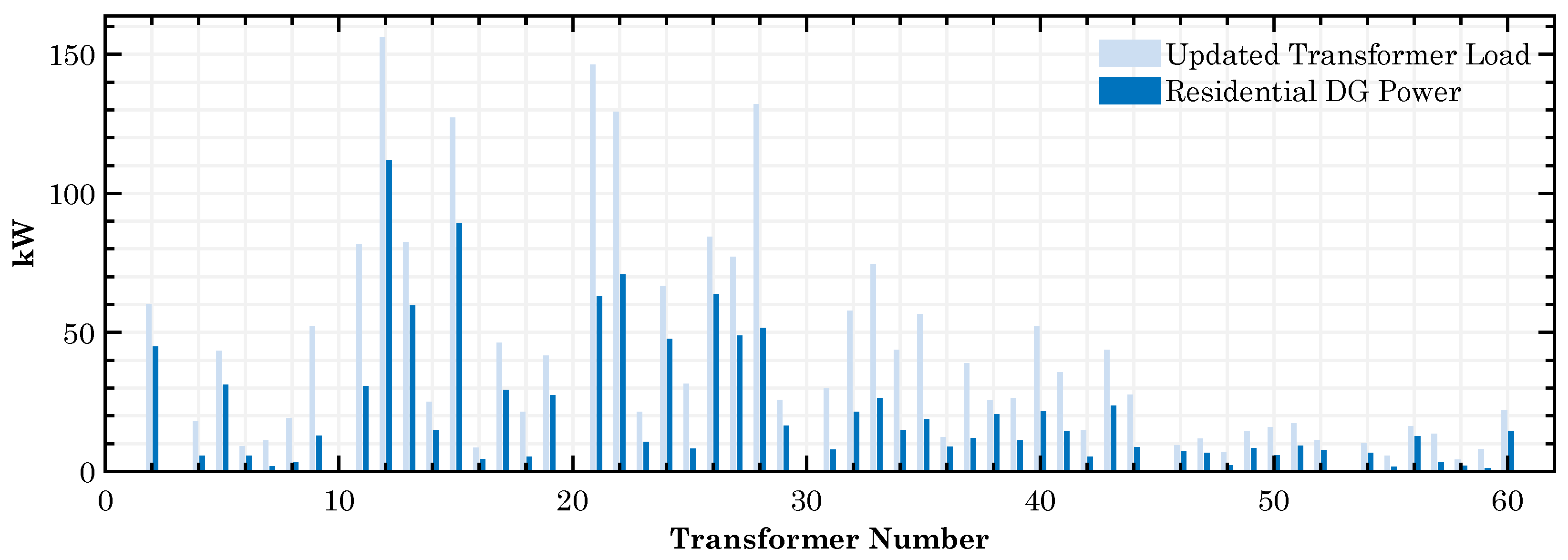
Conversely, some transformers show little to no variation in active power or LD after DG integration, such as Transformers 1, 3, 53, and 61. In the case of Transformers 1 and 3, although DG units were installed, the generated power only covered a portion of the local demand, and no surplus energy was injected into the network. As a result, their LD remained practically unchanged. On the other hand, Transformers 53 and 61 showed no variation because no optimal sites for DG installation or power injection were identified during the location analysis. Additionally, transformers that experience a moderate increase in LD (such as Transformer 2, which rises from 21.51% to 84.47%) handle reverse power flow but remain within a safe range. Additionally, transformers that experience a moderate increase in LD (such as Transformer 2, which rises from 21.51% to 84.47%) handle reverse power flow but remain within a safe range. In terms of power, the new active power reflects how much additional energy the transformers can manage after DG integration. For example, Transformer 22, with a maximum power of 118.75 kW, now handles 129.30 kW. These results are graphically presented in
Figure 9, which shows the new active power of each transformer with the DG injected power. This figure shows that while most transformers operate within their nominal range, a few experiences power levels that slightly exceed their rated values, confirming the presence of reverse power flow in specific nodes. These cases highlight the importance of carefully analyzing transformer capacity to prevent operational issues, especially where reverse power flow exceeds the transformer’s limit.
From a technical standpoint, these findings underscore the necessity of adopting bidirectional protection systems, adaptive tap changers, and real-time monitoring in areas with high DG density. Incorporating such operational strategies can mitigate potential overloads and ensure grid stability. Furthermore, establishing energy communities or microgrids could allow surplus redistribution among nearby households, reducing reverse flows and enhancing transformer longevity.
3.4. Environmental Benefit: Emissions Reduction
The integration of rooftop PV systems displaces electricity that would otherwise be generated from fossil fuel-dominated sources in Ecuador. This displacement translates into a substantial environmental benefit, with an estimated avoidance of approximately 1143 metric tons of CO
2 emissions annually. This quantifies the significant contribution of distributed residential PV towards achieving urban decarbonization goals in Andean regions, complementing the technical and operational advantages with a clear environmental value proposition. Compared to national statistics reported by the International Energy Agency [
25], this reduction corresponds to the annual emissions of roughly 250 gasoline-powered vehicles, demonstrating that even partial residential adoption can produce a measurable climate impact. In addition, a sensitivity analysis assuming
variation in solar irradiance revealed that the annual generation could range from 1.7 to 2.1 GWh, with transformer LD changing by
. This variability remains within operational safety limits, confirming the robustness of the proposed GIS–utility integration framework under different meteorological conditions.
4. Discussion
Several studies have evaluated the integration of DG into electrical distribution networks using optimization algorithms and mathematical methods. In [
25,
26,
27,
28,
29], the optimal integration of PV systems into distribution networks is analyzed through mathematical optimization models, metaheuristic algorithms, mathematical programming, and hybrid techniques, while these approaches enable efficient DG unit integration, they also pose significant challenges, such as high computational complexity, parameter dependency, difficulty in interpreting results, and sensitivity to configuration settings. Similarly, in [
30,
31], mathematical models with objective functions are used to minimize power losses and reduce investment costs, requiring a precise formulation of equations and constraints.
In contrast, geospatial analysis provides a practical and intuitive alternative by enabling the estimation of solar irradiation in urban areas using digital elevation models and satellite data derived from real spatial information rather than simplified analytical assumptions. This approach facilitates the identification of suitable locations for PV integration while naturally incorporating physical constraints such as slope, orientation, shading, and land use, without the need to solve complex mathematical formulations, thereby simplifying the DG sizing and planning process. It is important to note that, unlike optimization-based methods, the proposed GIS-based framework does not seek mathematically optimal PV sizes or locations under explicit objective functions and constraints. Instead, it is conceived as a planning-level screening tool that supports early-stage decision-making by identifying spatially and electrically feasible integration scenarios.
In [
17,
18], LiDAR data and the SAM software are used to identify optimal locations for PV panel installation and assess self-sufficiency potential, respectively. The results show that more than 65% of the rooftop surface in the study area is suitable for PV system installation, with the potential to cover over 90% of energy demand. Existing studies typically treat LiDAR and SAM as complementary but separate tools, where LiDAR is used to characterize rooftop geometry and shading, and SAM to estimate photovoltaic power output. In contrast, this study integrates both perspectives into a unified geospatial framework and extends the analysis by explicitly coupling rooftop-level solar potential with MEC data and transformer LD indicators. This integration enables a direct evaluation of grid compatibility, which is rarely addressed in resource-oriented GIS analyses.
On the other hand, in [
17], models are presented to assess the feasibility of PV and wind installations in urban and rural areas. Similar to the findings of this study, their results show that GIS-based approaches enable a more accurate and detailed evaluation of the spatial distribution of renewable resources, facilitating the identification of suitable locations for deployment. In this work, the integration of rooftop suitability analysis with MEC and transformer LD assessment provides additional insight into how high PV penetration interacts with existing distribution infrastructure.
4.1. Limitations
Despite its contributions, the study is subject to certain limitations. The primary one lies in its reliance on monthly averages for solar irradiation and electricity consumption, while this approach provides a practical and scalable estimation for preliminary feasibility studies, it does not capture hourly variability, such as transient peaks in generation or consumption. Future research could overcome this barrier by integrating smart meter data and high-resolution meteorological time series.
Another limitation is the exclusively technical-environmental focus, which omits the analysis of economic feasibility and the impact of financial incentives. Expanding the framework towards a techno-economic assessment would be invaluable for defining optimal investment strategies.
From an operational perspective, worst-case transformer thermal stress conditions typically occur when maximum PV generation coincides with minimum local demand, often over short time intervals. Capturing such effects requires minute-level load and generation profiles, as well as detailed thermal transformer models. These aspects are beyond the scope of the present GIS-based planning framework, which is intended for preliminary screening and planning purposes; however, they represent a natural next step for operational validation once priority locations have been identified.
Finally, the study does not address implications for power grid stability, such as voltage fluctuations or harmonic distortion, as their assessment would demand advanced simulations that transcend the scope of the GIS tool used.
4.2. Practical Applications and Policy Implications
The proposed GIS–utility integration framework has direct applicability in urban energy planning and grid modernization. Electric utilities can employ it to identify priority transformers and neighborhoods suitable for residential PV adoption without compromising grid reliability. Municipalities can integrate the geospatial outputs into urban development and zoning plans, ensuring that rooftop solar expansion aligns with infrastructure capacity. Additionally, policymakers can use these findings to design targeted incentive programs that encourage DG deployment in technically viable areas, optimizing both public investment and network performance.
4.3. Future Perspectives
Future research should build upon this foundation by coupling GIS-based solar potential assessment with dynamic power flow simulations to capture short-term variability and voltage regulation effects. Integrating machine learning models could further automate rooftop classification and improve irradiance prediction accuracy. Expanding the framework to include economic optimization and multi-energy systems would allow a comprehensive evaluation of urban renewable integration under diverse policy and market conditions.
5. Conclusions
GIS emerges as an efficient and practical alternative for the integration of renewable energy in urban environments, offering a spatial-data-driven approach that considers solar irradiation, building geometry, and network constraints. Unlike traditional optimization models, this method facilitates decision-making through visual analysis and high-resolution geospatial planning.
The methodology developed in this study integrates detailed 3D data, such as orientation, slope, and shading, combined with MEC data provided by the utility company. This allows for a precise and site-specific estimation of PV potential and energy balance. Although the approach does not capture instantaneous variations in consumption and generation, it provides a realistic and scalable foundation for preliminary DG planning at the urban level.
The results obtained in the Andean city demonstrate that a detailed geospatial analysis is crucial for the strategic deployment of DG. This approach enables the maximization of rooftop solar potential while ensuring the operational optimization of distribution transformers. The integration of residential PV systems significantly improved transformer utilization across the network. However, it also revealed instances where reverse power flow led to overloading, underscoring the critical need for comprehensive grid capacity assessments alongside solar potential studies. From an environmental perspective, the adoption of distributed PV generation yielded substantial benefits by displacing a significant volume of carbon emissions. These findings confirm that distributed solar power not only enhances the technical performance of urban grids but also represents a vital strategy for advancing sustainability and meeting decarbonization targets.
Although this study is validated in an Andean urban environment characterized by complex topography and high altitude, the proposed GIS-based framework is not restricted to mountainous cities. The methodology, which integrates geospatial solar irradiation modeling, rooftop suitability analysis, MEC, and transformer LD assessment, is fully transferable to other urban contexts. Therefore, the framework is applicable to a wide range of geographic and climatic conditions, provided that appropriate local meteorological, building, and distribution network data are available.




 ,
,