Structural Optimization and Numerical Simulation Research of Anti-Air Lock Variable-Diameter Oil Pump
Abstract
1. Introduction
2. Establishment of the Theoretical Model of the Oil Pumping Unit
2.1. Internal Structural Construction of the Oil Pumping Unit
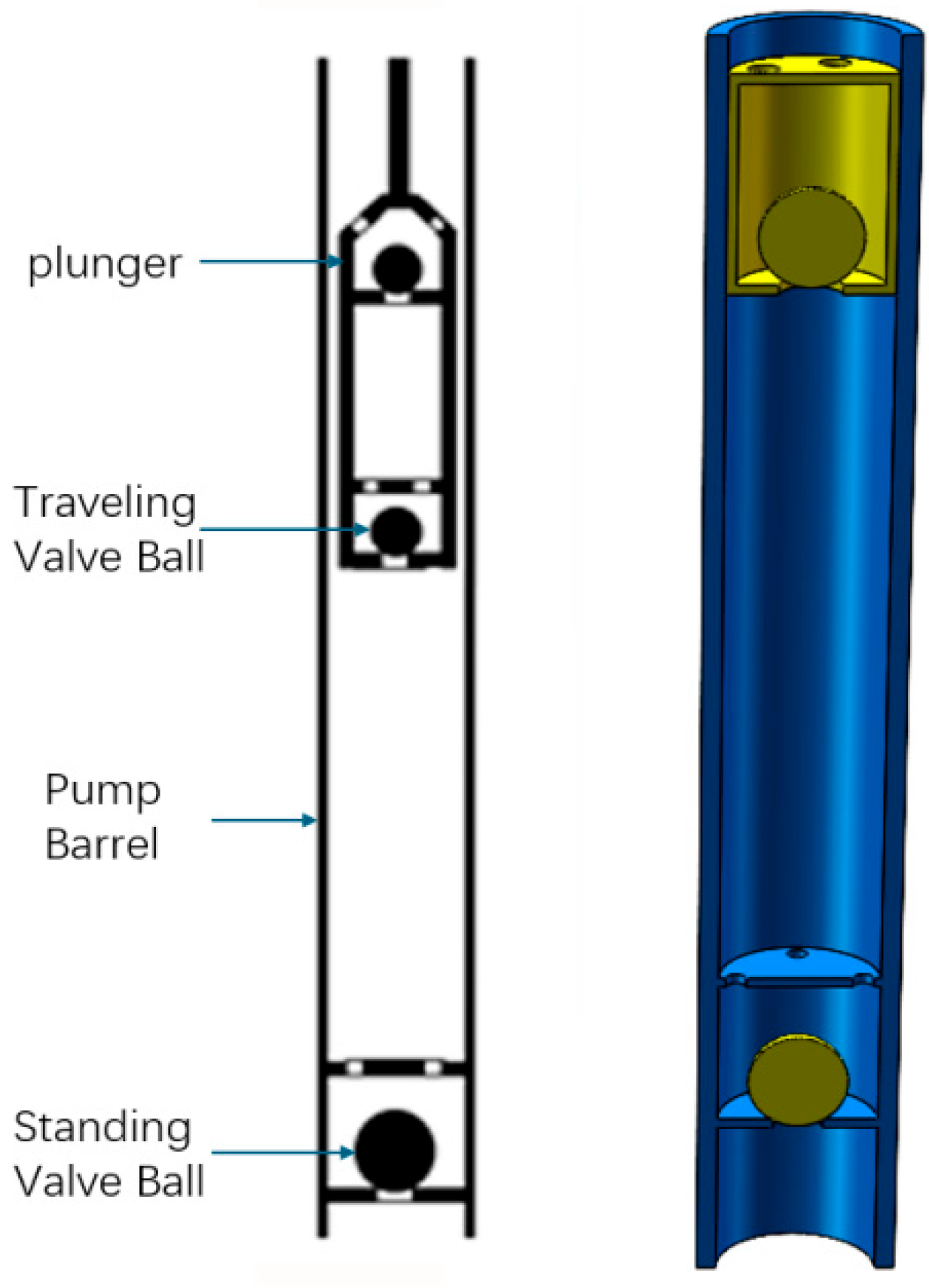
2.1.1. The Internal Structure of the Traditional Oil Well Pump
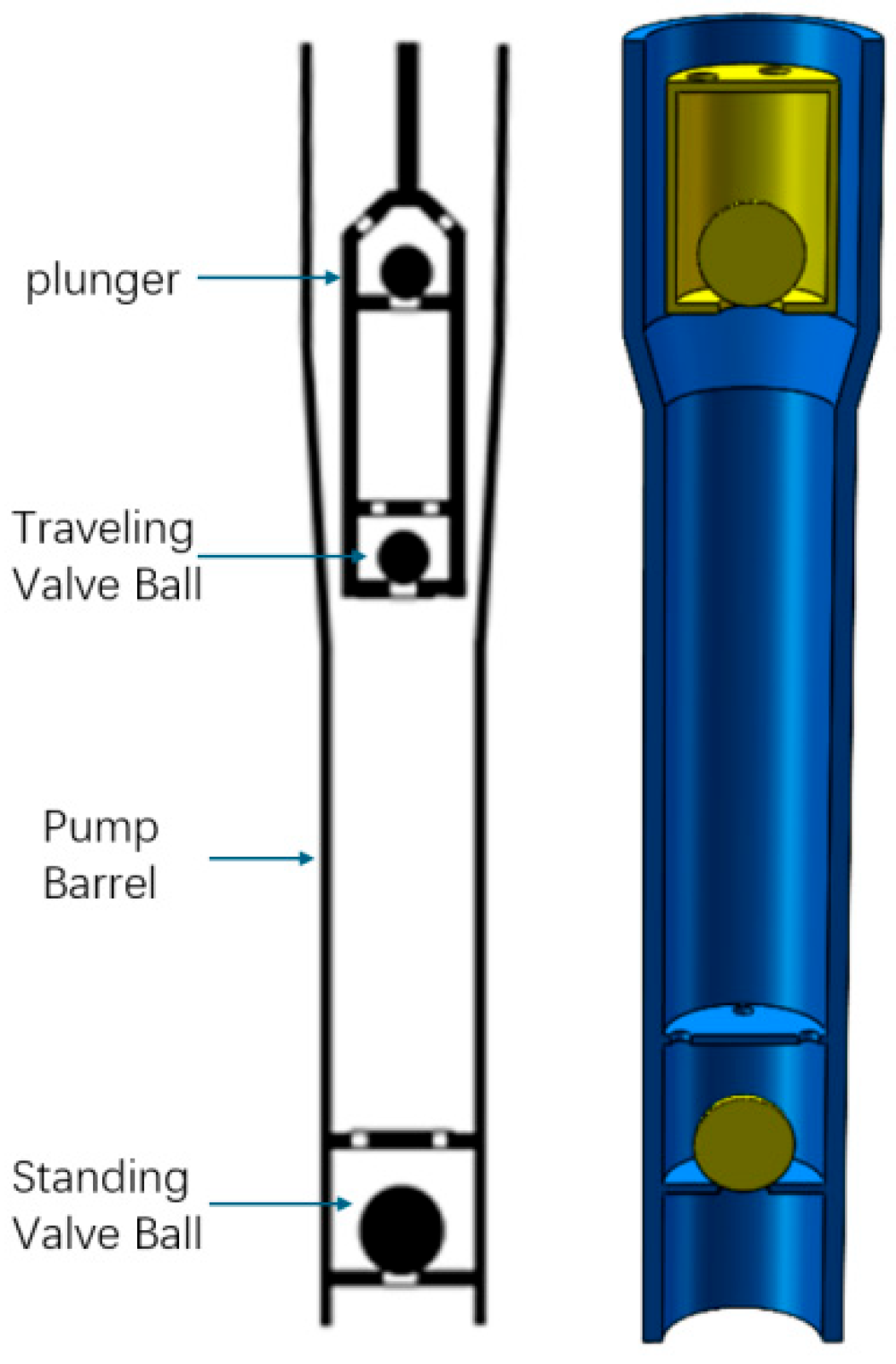
2.1.2. The Internal Structure of the Designed Variable-Diameter Pumping Unit
2.2. Establishment of the Calculation Model
Derivation of the Physical Equation
2.3. Pre-Processing Settings for Simulation
2.3.1. Initial Condition Settings
2.3.2. Dynamic Mesh Settings
3. Numerical Simulation
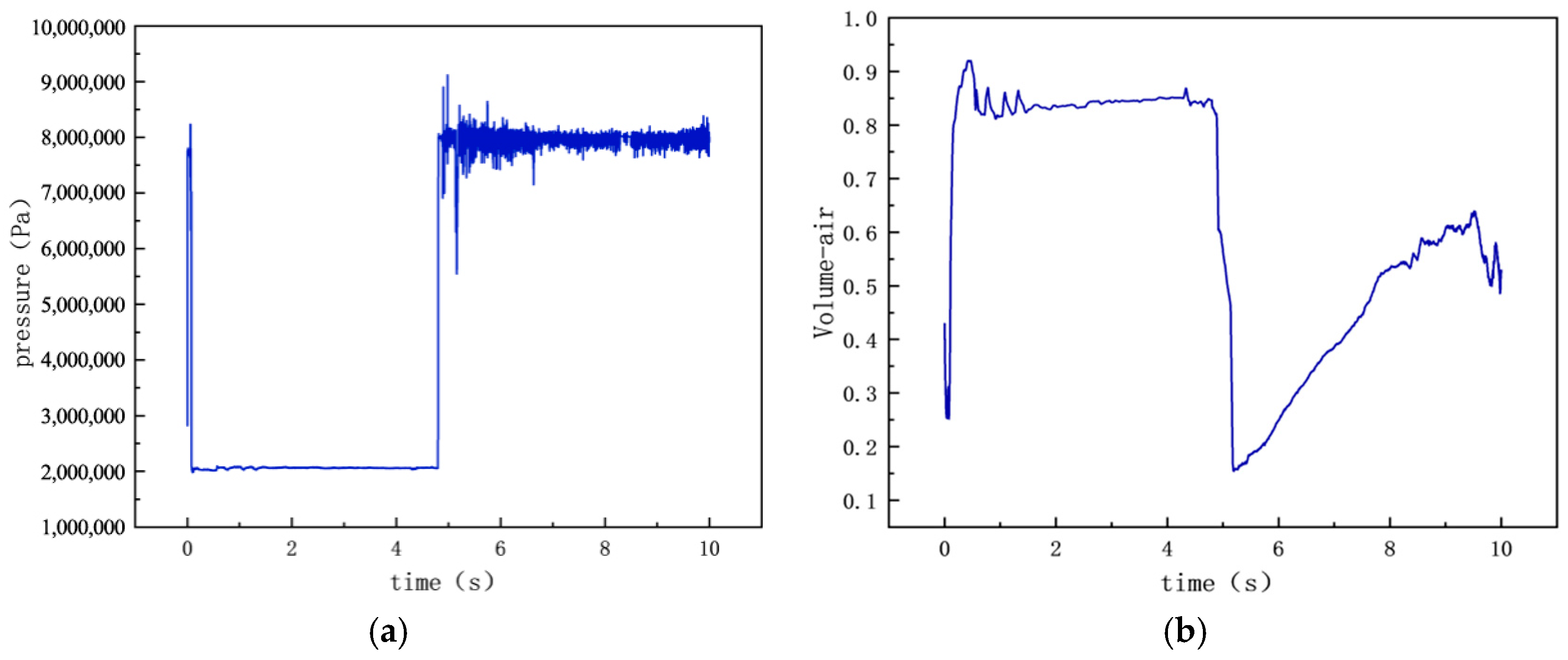
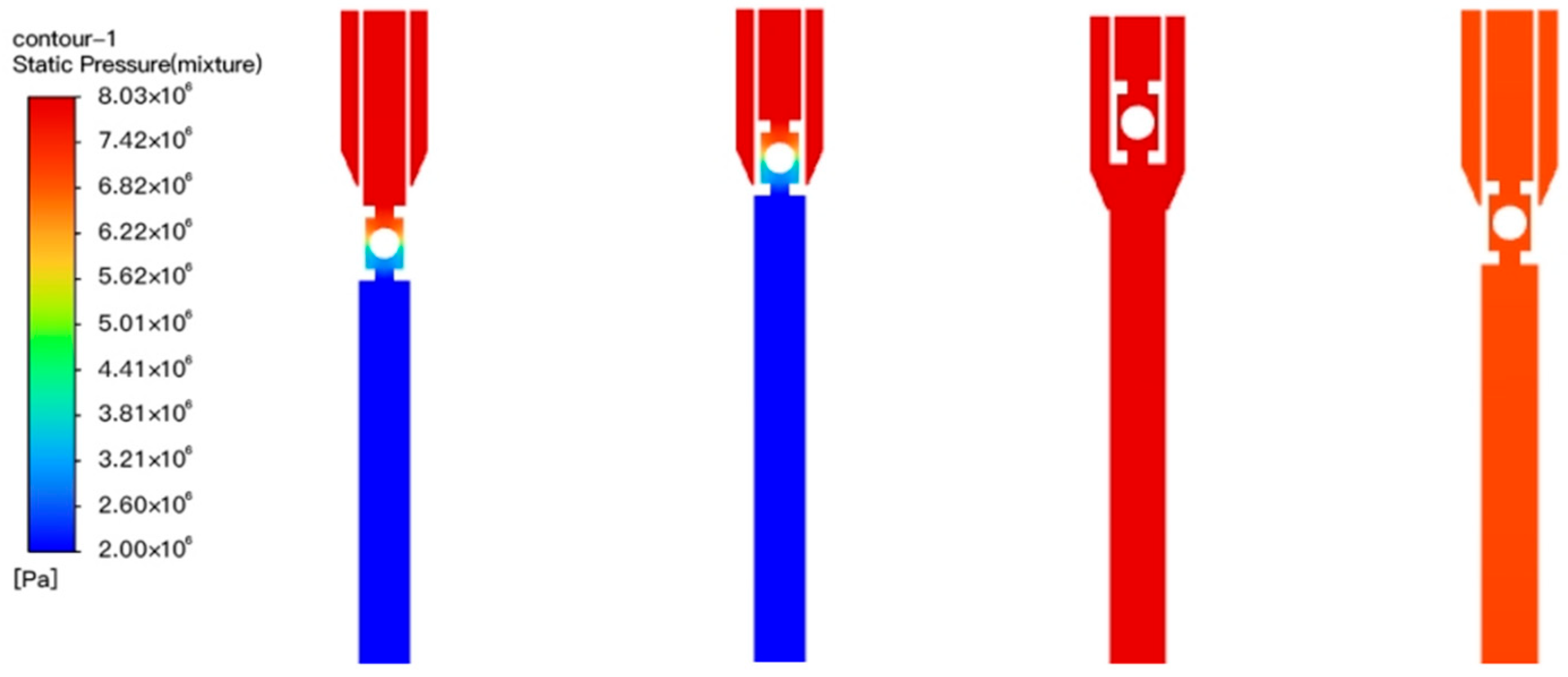
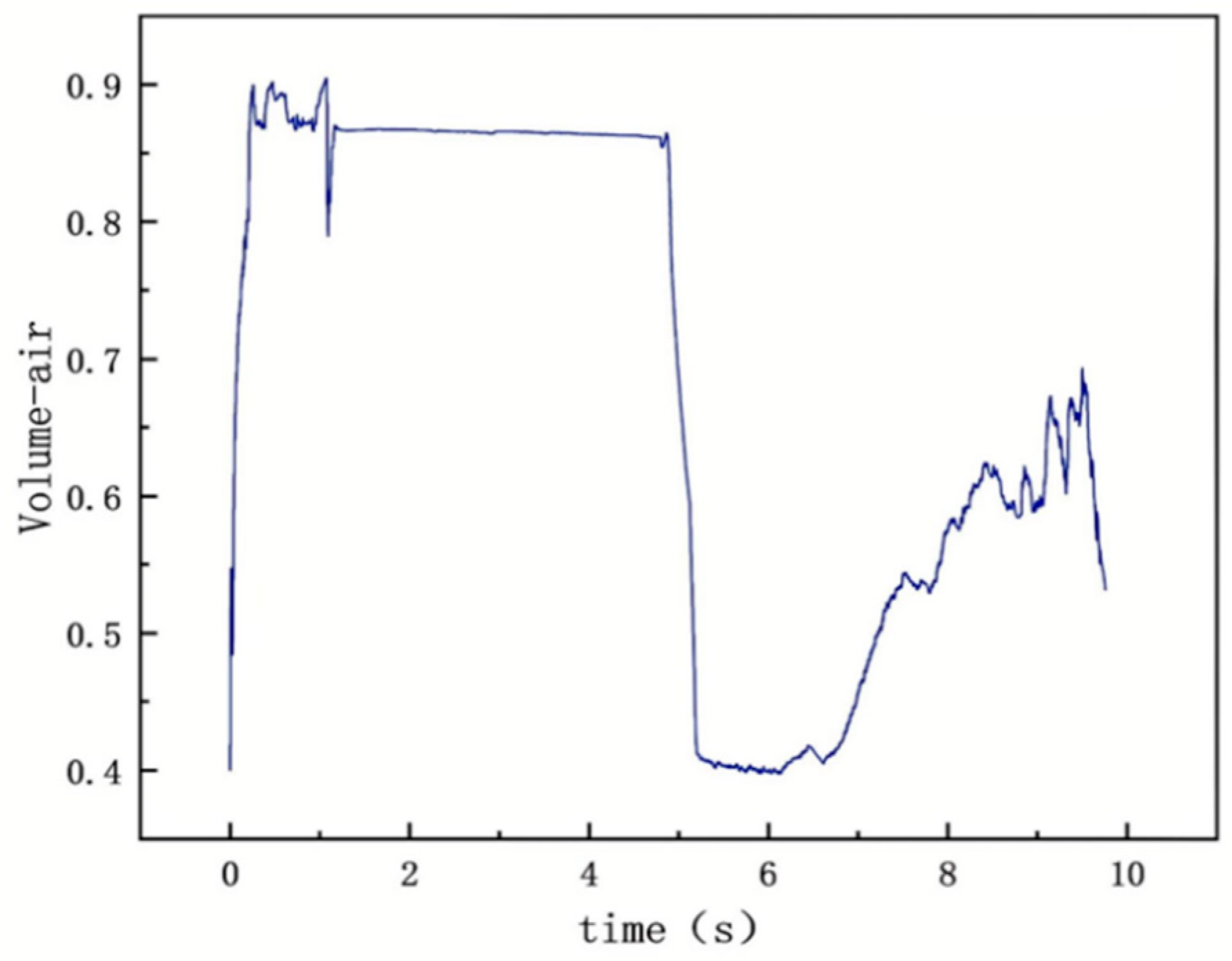
3.1. Performance Analysis of the Traditional Oil Pump
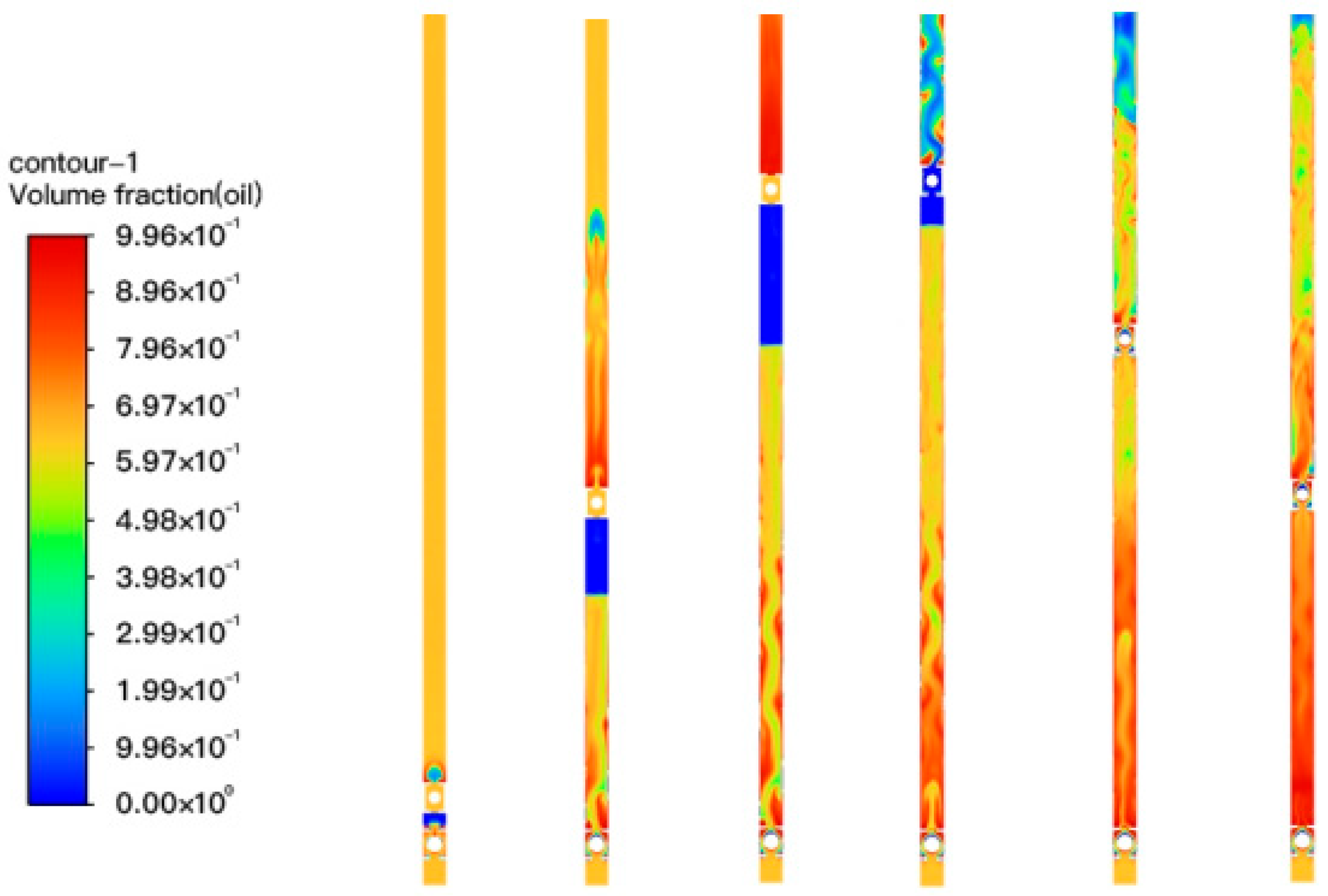
3.2. Performance Analysis of Variable-Diameter Pump
3.3. Comparative Analysis of Oil Pump Performance
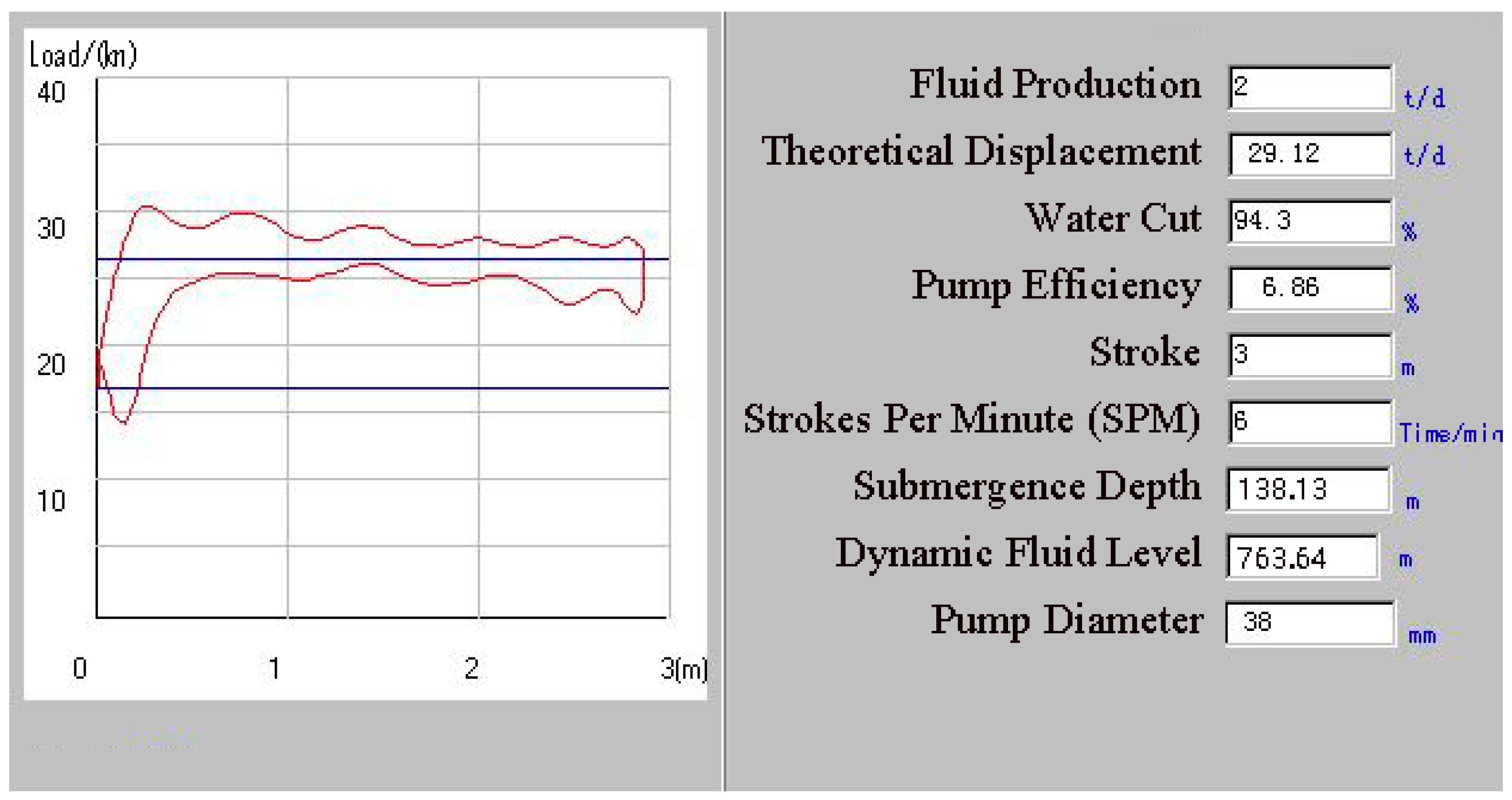
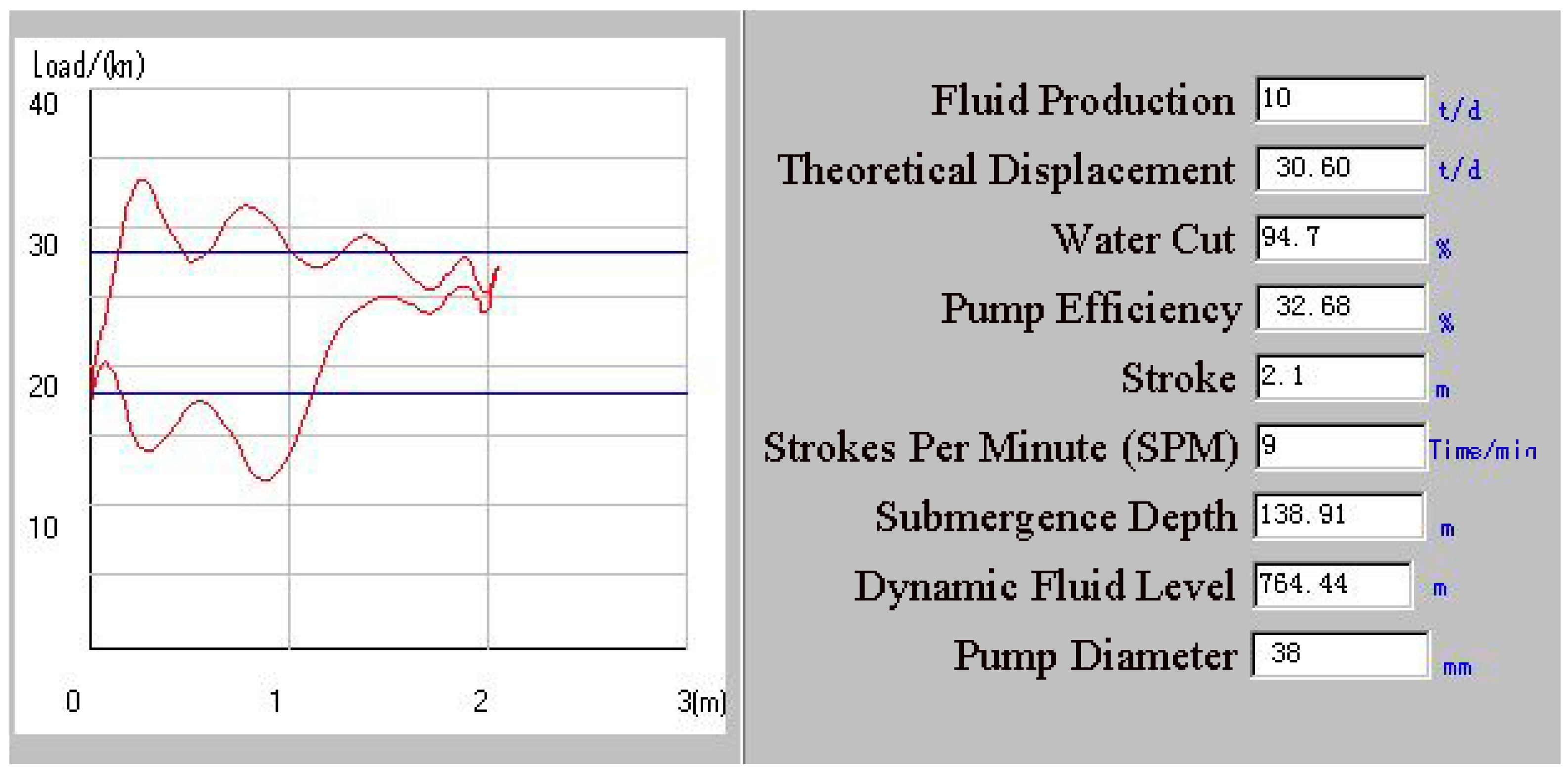
4. Experimental Verification
5. Conclusions
- (1)
- When the plunger of the variable-diameter pumping unit enters the tapered section, the pressure inside the pump barrel rapidly increases. Simultaneously, due to the inflow of liquid from the tubing, the gas content in the pump barrel decreases quickly, effectively preventing the difficulty of opening the traveling valve during the downstroke.
- (2)
- Compared to traditional pumping units, the variable-diameter pumping unit disrupts the separation of gas and liquid phases at the plunger during the downstroke. This significantly reduces the gas content while effectively avoiding gas lock, thereby improving pumping efficiency.
- (3)
- When the taper of the variable-diameter section is larger, the reduction in gas content as the plunger moves through this section becomes more pronounced. The mass flow rate of crude oil discharged from the pump barrel through the plunger increases, contributing to enhanced pumping unit efficiency.
- (4)
- Considering the complexity of the working environment of the oil pump and the limitations of time and other conditions, the geometric model optimization that affects the pump efficiency of the oil pump considered in this paper is still not perfect, with issues such as the taper size of the reducer section and the length of the reducer section remaining. In future research, a more complete geometric model should be established, multiple groups should be compared and analyzed, and the results should be optimized.
Author Contributions
Funding
Data Availability Statement
Conflicts of Interest
References
- Lopez, G.; Pourjamal, Y.; Breyer, C. Paving the way towards a sustainable future or lagging behind? An ex-post analysis of the International Energy Agency’s World Energy Outlook. Renew. Sustain. Energy Rev. 2025, 212, 115371. [Google Scholar] [CrossRef]
- Long, A.; Bose, A.; O’Shea, R.; Monaghan, R.; Murphy, J. Implications of European Union recast Renewable Energy Directive sustainability criteria for renewable heat and transport: Case study of willow biomethane in Ireland. Renew. Sustain. Energy Rev. 2021, 150, 111461. [Google Scholar] [CrossRef]
- Khayyaminejad, A.; Khabazi, N.P.; Gholami-Malek Abad, F.; Taheripour, S. Numerical Investigation on the Effect of the Geometric Parameters of the Impeller on Vortex Pump Performance. Iran. J. Sci. Technol. Trans. Mech. Eng. 2023, 47, 1711–1731. [Google Scholar] [CrossRef]
- Connally, C.A.; Sandberg, C.R.; Stein, N. Volumetric Efficiency of Sucker Rod Pumps When Pumping Gas-Oil Mixtures. J. Pet. Technol. 2013, 5, 265–270. [Google Scholar] [CrossRef]
- Alqahtant, T. Enhancement of the mental hydride hydraulic pump efficiency by integrating a phase change material. Int. Energy Res. 2022, 46, 18120–18133. [Google Scholar] [CrossRef]
- Liu, Y.; Qian, Q.; Zhi, Q.G.; Zhu, Z.J.; Yan, T.J.; Chu, Z.S.; Huang, T.W. Research on deterioration characteristics of locomotive shock absorber based on AMEsim. China Pet. Mach. 2025, 53, 86–93. [Google Scholar]
- Lu, G.H.; Tong, G.Y.; Yao, A.G.; Lin, Y.J.; Yang, B.H.; Xv, Z.G. Development of a Magnetically Forced Opening Gas-Proof Pump. China Pet. Mach. 2003, 31, 44–45. [Google Scholar]
- Wang, W.W.; Wang, B.Z. Development and Application of an Up-Exchange Type Gas-Proof Oil Pump. China Pet. Mach. 2016, 44, 110–112. [Google Scholar]
- Lv, Y.M.; Zeng, Y.Q.; Zhang, J.; Wang, B.; Zhao, X.W. Development and Application of a Gas-Proof Separate Production Oil Pump. Oil Field Equip. 2012, 41, 72–75. [Google Scholar]
- Gao, Y. Development and Structural Optimization Design of a CO2 Flooding Gas-Proof Oil Pump. Oil Field Equip. 2016, 45, 56–59. [Google Scholar]
- Saponja, J.; Hari, R.; Brignac, J.; Jaszan, D.; Coyes, C.; Chaudhry, F. A Tubing Anchor Engineered for Rod Pumping Horizontal Wells Improves Production Performance. In Proceedings of the SPE Artificial Lift Conference and Exhibition—Americas, The Woodlands, TX, USA, 20–22 August 2024. [Google Scholar]
- Li, L.C.; Li, M.Z.; Wang, W.Y.; Dai, Z.G.; Wan, G.Q. Numerical Study on Flow Field in Sucker-rod Pump Based on FLUENT. Contemp. Chem. Ind. 2013, 42, 1181–1184. [Google Scholar]
- Ye, W.D. Research of Gas-Liquid Two-Phase Flow Mechanism and Anti-Gas Performance of Sucker Pump. Ph.D. Thesis, Northeast Petroleum University, Daqing, China, 2018. [Google Scholar]
- Liang, N.; Ma, C.A.; Song, G.R.; Wang, L.; Wang, Y. High gas-liquid ratio anti-gas lifting technique for CO2 flooding pumping wells. Pet. Geol. Oilfield Dev. Daqing 2024, 43, 115–122. [Google Scholar]
- Liu, L. Research on the Efficiency Enhancement Mechanisms of Long-Stroke Pumping. Master’s Thesis, Northeast Petroleum University, Daqing, China, 2024. [Google Scholar]
- Jalikop, S.V.; Scheichl, B.; Eder, S.J.; Hönig, S. Computational Fluid Dynamics Model to Improve Sucker Rod Pump Operating Mode. In Proceedings of the SPE Annual Technical Conference and Exhibition, Virtual, 27–29 October 2020. [Google Scholar]
- Newton, C.H.; Behnia, M. Numerical calculation of turbulent stratified gas—Liquid pipe flows. Int. J. Multiphase Flow 2000, 26, 327–337. [Google Scholar] [CrossRef]
- de Carvalho, L.O.P.; Santos, D.; dos Santos, J.P.L. Analysis of the influence of water cut and clearance in pump efficiency for a well equipped with sucker rod pumping. Pet. Sci. Technol. 2022, 40, 1979–1993. [Google Scholar] [CrossRef]
- Utemissova, L.; Merembayev, T.; Bekbau, B.; Omirbekov, S. Predictive Analytics for Sucker Rod Pump Failures in Kazakhstani Oil Wells Using Machine Learning. Appl. Sci. 2024, 14, 10914. [Google Scholar] [CrossRef]
- Ma, B.; Dong, S. Coupling Simulation of Longitudinal Vibration of Rod String and Multi-Phase Pipe Flow in Wellbore and Research on Downhole Energy Efficiency. Energies 2023, 16, 4988. [Google Scholar] [CrossRef]



| Pump Barrel Inside Diameter | Traveling Valve Bore | Reduced End Diameter | Length of the Tapered Section |
|---|---|---|---|
| 44 mm | 32 mm | 64 mm | 150 mm |
Disclaimer/Publisher’s Note: The statements, opinions and data contained in all publications are solely those of the individual author(s) and contributor(s) and not of MDPI and/or the editor(s). MDPI and/or the editor(s) disclaim responsibility for any injury to people or property resulting from any ideas, methods, instructions or products referred to in the content. |
© 2026 by the authors. Licensee MDPI, Basel, Switzerland. This article is an open access article distributed under the terms and conditions of the Creative Commons Attribution (CC BY) license.
Share and Cite
Zhang, X.; Ren, S.; Shen, F.; Fu, Z.; Jia, D.; Yang, Q.; Wang, R. Structural Optimization and Numerical Simulation Research of Anti-Air Lock Variable-Diameter Oil Pump. Energies 2026, 19, 341. https://doi.org/10.3390/en19020341
Zhang X, Ren S, Shen F, Fu Z, Jia D, Yang Q, Wang R. Structural Optimization and Numerical Simulation Research of Anti-Air Lock Variable-Diameter Oil Pump. Energies. 2026; 19(2):341. https://doi.org/10.3390/en19020341
Chicago/Turabian StyleZhang, Xiangyang, Shuangshuang Ren, Fei Shen, Zhanbao Fu, Deli Jia, Qinghai Yang, and Ruojun Wang. 2026. "Structural Optimization and Numerical Simulation Research of Anti-Air Lock Variable-Diameter Oil Pump" Energies 19, no. 2: 341. https://doi.org/10.3390/en19020341
APA StyleZhang, X., Ren, S., Shen, F., Fu, Z., Jia, D., Yang, Q., & Wang, R. (2026). Structural Optimization and Numerical Simulation Research of Anti-Air Lock Variable-Diameter Oil Pump. Energies, 19(2), 341. https://doi.org/10.3390/en19020341