Next Article in Journal
Using Digitalization to Reduce Laboratory Testing Time for Lithium-Ion Cells
Previous Article in Journal
Deep Multi-Task Forecasting of Net-Load and EV Charging with a Residual-Normalised GRU in IoT-Enabled Microgrids
error_outline You can access the new MDPI.com website here. Explore and share your feedback with us.
 
 
Article

Advanced Energy Collection and Storage Systems: Socio-Economic Benefits and Environmental Effects in the Context of Energy System Transformation


by
Alina Yakymchuk
1,2,*,
Bogusława Baran-Zgłobicka
3 and
Russell Matia Woruba
1,4
1
Department of Management, University of Information Technology and Management, 35-225 Rzeszów, Poland
2
Department of Public Administration, Law and Humanity Sciences, Kherson State Agrarian and Economical University, 73006 Kropyvnytskiy, Ukraine
3
Institute Social and Economic Geography and Spatial Management, Maria Curie-Sklodowska University, Kraśnicka Av. 2d, 20-718 Lublin, Poland
4
Department of Information & Communication Technology, Digital Government and Information Delivery, Tisa Ruma, Section 427, Allotment 3, Hohola, Waigani 131, National Capital District, Papua New Guinea
*
Author to whom correspondence should be addressed.
Energies 2026, 19(2), 309; https://doi.org/10.3390/en19020309
Submission received: 2 December 2025 / Revised: 31 December 2025 / Accepted: 3 January 2026 / Published: 7 January 2026
(This article belongs to the Special Issue Energy Economics and Management, Energy Efficiency, Renewable Energy)

Abstract

The rapid advancement of energy collection and storage systems (ECSSs) is fundamentally reshaping global energy markets and accelerating the transition toward low-carbon energy systems. This study provides a comprehensive assessment of the economic benefits and systemic effects of advanced ECSS technologies, including photovoltaic-thermal (PV/T) hybrid systems, advanced batteries, hydrogen-based storage, and thermal energy storage (TES). Through a mixed-methods approach combining techno-economic analysis, macroeconomic modeling, and policy review, we evaluate the cost trajectories, performance indicators, and deployment impacts of these technologies across major economies. The paper also introduces a novel economic-mathematical model to quantify the long-term macroeconomic benefits of large-scale ECSS deployment, including GDP growth, job creation, and import substitution effects. Our results indicate significant cost reductions for ECSS by 2050, with battery storage costs projected to fall below USD 50 per kilowatt-hour (kWh) and green hydrogen production reaching as low as USD 1.2 per kilogram. Large-scale ECSS deployment was found to reduce electricity costs by up to 12%, lower fossil fuel imports by up to 25%, and generate substantial GDP growth and job creation, particularly in regions with supportive policy frameworks. Comparative cross-country analysis highlighted regional differences in economic effects, with the European Union, China, and the United States demonstrating the highest economic gains from ECSS adoption. The study also identified key challenges, including high capital costs, material supply risks, and regulatory barriers, emphasizing the need for integrated policies to accelerate ECSS deployment. These findings provide valuable insights for policymakers, industry stakeholders, and researchers aiming to design effective strategies for enhancing energy security, economic resilience, and environmental sustainability through advanced energy storage technologies.

1. Introduction

As the global energy sector undergoes an accelerated transformation toward low-carbon systems, the role of advanced energy collection and storage systems (ECSSs) has become increasingly pivotal. Technologies such as photovoltaic-thermal (PV/T) collectors, hybrid battery-storage systems, hydrogen storage, and advanced thermal energy storage are being rapidly deployed to improve energy efficiency, stabilize power grids, and reduce greenhouse gas (GHG) emissions.
According to the International Renewable Energy Agency (IRENA), global investments in energy storage technologies exceeded USD 340 billion in 2024, marking a 28% increase from the previous year [1]. This surge reflects growing recognition of ECSS as crucial enablers of renewable energy expansion, especially in the context of decarbonization goals outlined in the Paris Agreement.
The transition to low-carbon energy systems is accelerating worldwide as nations seek to address climate change, improve energy security, and reduce reliance on fossil fuels. In this context, advanced energy collection and storage systems (ECSSs) have emerged as essential technologies for enabling the large-scale integration of variable renewable energy sources (VRES) such as solar photovoltaic (PV) and wind power. ECSS solutions—including advanced battery storage, hydrogen-based storage, thermal energy storage (TES), and photovoltaic-thermal (PV/T) hybrid systems—play a pivotal role in enhancing grid flexibility, stabilizing energy supply, and reducing greenhouse gas emissions.
Recent literature has highlighted both the technical and economic significance of these technologies. Pandey, A.K. et al. [2] provided an extensive review of PV/T systems, demonstrating their potential to achieve system efficiencies above 70% through the simultaneous generation of heat and electricity, particularly in building-integrated applications. Liu et al. [3] emphasized the rapid advancement of battery technologies, such as lithium-sulfur and sodium-ion, which offer higher energy densities and lower material dependency compared to traditional lithium-ion systems.
Hydrogen energy storage, meanwhile, has gained attention for its long-duration and seasonal storage capabilities. According to the International Energy Agency [4], green hydrogen production is projected to become increasingly cost-competitive by 2030, driven by declining electrolyzer costs and renewable energy expansion. In parallel, thermal energy storage technologies—including molten salt and phase change materials—are being deployed for industrial heat applications and district heating networks, as documented by Serrano-Arévalo, T.I. et al. [5].
Despite this technological progress, there remain substantial knowledge gaps regarding the broader economic impacts of ECSS deployment, particularly in terms of macroeconomic benefits, energy price effects, and job creation potential. While some studies, such as those by Zakeri and Syri [6] and Sovacool et al. [7], have analyzed the techno-economic performance of specific storage technologies, few have provided comparative cross-country assessments linking storage deployment with systemic economic outcomes.
This study aims to fill this gap by providing a comprehensive analysis of the economic benefits and effects of advanced ECSS technologies. Specifically, the authors assessed the projected cost trajectories and techno-economic performance of key ECSS technologies; the macroeconomic impacts of large-scale ECSS deployment across major economies; policy frameworks and incentives that are facilitating or hindering ECSS adoption. As a result, this paper critically examines the latest technological advances in ECSSs and their economic implications.
The study aims to evaluate the techno-economic performance of cutting-edge ECSS technologies; quantify economic benefits related to cost reductions, job creation, and energy security; assess the macroeconomic effects of large-scale ECSS deployment; and provide policy recommendations for accelerating ECSS adoption.
Through this approach, the paper seeks to provide actionable insights for policymakers, investors, and researchers aiming to enhance advanced energy collection and storage systems and to unlock their economic benefits and broader effects on sustainable, low-carbon energy transitions.
PV/T systems integrate solar photovoltaic modules with thermal collectors, enabling the simultaneous generation of electricity and heat. Recent advancements in PV/T technology have resulted in total system efficiencies exceeding 70% in certain applications, particularly for residential and commercial buildings. LCOS (Levelized Cost of Storage) has big economic potential, which is as low as USD 0.10/kWh for heat and USD 0.19/kWh for electricity when integrated with thermal storage [8]. Key applications here are industrial process heating, district heating, and off-grid systems.
Advanced Battery Technologies (Next-generation battery technologies), including sodium-ion, solid-state, and lithium-sulfur systems, offer enhanced energy density, longer lifespans, and lower material dependency compared to conventional lithium-ion batteries. Economic potential in this case is a projected cost reduction to USD 90/kWh by 2030 [9]. As a result of implementing, we have residential energy storage, electric mobility, and grid-scale storage.
Hydrogen storage systems convert surplus electricity into hydrogen via electrolysis for later use in power generation, industrial processes, or mobility. Green hydrogen production costs are expected to fall below USD 1.50/kg in optimal regions by 2030 [4]. The main effects are long-duration storage, seasonal energy storage, and transport fuel.
Thermal Energy Storage (TES), including molten salt and phase-change materials, are increasingly used to shift energy loads and improve system flexibility. TES systems can reduce peak electricity costs by 15–30% in industrial applications [1,10]. Recent studies increasingly emphasize the role of digitalization and artificial intelligence in optimizing renewable energy integration and energy storage management. Advanced data analytics, smart control systems, and AI-driven forecasting tools improve the efficiency of ECSS operation, reduce system losses, and support environmentally sustainable energy management. Empirical evidence suggests that the integration of renewable energy technologies, industrial performance, and intelligent energy systems contributes to lower carbon footprints and enhanced environmental sustainability, particularly in energy-intensive economies. Recent empirical studies show that advanced ECSS can substantially lower electricity prices by flattening demand peaks and enabling higher renewable penetration. In Europe, there are wholesale electricity price reductions of 5–12% with ECSS integration (European Commission, 2025) [11]. In the Asia-Pacific region, grid integration studies project 8% retail electricity cost reductions by 2035 U.S. Department of Energy (DOE) (2024) [7,12].
Also, the ECSS sector is a major source of new employment opportunities, particularly in high-value manufacturing and services. Global ECSS employment reached 4.8 million jobs in 2024, a 20% increase over 2022 levels [7]. Battery manufacturing hubs in Europe and East Asia lead global job growth, with hydrogen projects also accelerating. By reducing reliance on imported fossil fuels, ECSS technologies enhance national energy security. For example, in Japan, hydrogen storage integrated with PV reduced natural gas imports by 7% in pilot regions [13]. In Germany, large-scale TES in district heating reduced exposure to volatile gas prices by 25% in 2024 (Agora Energiewende, 2025) [14].
Several countries have adopted innovative policies to support ECSS deployment. The United States have the Inflation Reduction Act (IRA), which includes 30% tax credits for ECSS projects, while the European Union has the Net Zero Industry Act, which prioritizes ECSS in strategic energy infrastructure. In China, the National Hydrogen Strategy, which has targets of 200 GW of electrolysis capacity, has been adopted by 2050.
In addition to the empirical analysis, this study presents an original economic-mathematical model designed to quantify the long-term macroeconomic effects of ECSS deployment. The model integrates energy cost reductions, fossil fuel import substitution, and employment effects to estimate cumulative GDP growth across various deployment scenarios. This modeling approach enables a comprehensive assessment of the systemic economic benefits associated with advanced energy storage technologies.
The structure of the paper is as follows: Section 2 is the literature review; and Section 3 describes the research methodology. Section 4 reports the empirical results and represents a case study of Poland, a country that has been a member of the EU for 21 years but continues to face major challenges in reducing CO2 emissions due to the dominance of traditional coal-based energy. At the same time, Poland faces significant delays in the deployment of energy storage systems, largely due to the lack of a coherent and comprehensive regulatory framework. Section 5 provides a discussion of the main insights, and Section 6 offers concluding remarks, highlighting key findings and suggesting policy implications.

2. Literature Review

Energy collection and storage technologies are undergoing rapid transformation, driven by advances in materials science, system integration, and digital optimization. The integration of these technologies with renewable energy systems has become a key research focus in both academic and industrial domains. Thanks to technological progress, energy from renewable sources has become more resistant to short-term weather conditions [15] and is increasingly price-competitive on the market [16].
Photovoltaic-Thermal (PV/T) systems have emerged as promising solutions for improving energy utilization efficiency by simultaneously producing electricity and thermal energy. According to Pandey, A.K. et al. [2], hybrid PV/T systems can achieve combined efficiencies exceeding 70%, especially in climates with high solar radiation. Their review highlights significant potential in commercial and industrial building applications due to their compact design and dual functionality. Markandya, A., González-Eguino, M. [17], Kyle W. Knight, Eugene A. Rosa, Juliet B. Schor [18] further explored the economic impact of PV/T systems within hybrid ECSS frameworks, emphasizing their role in decarbonizing heating and cooling in both industrial and residential sectors [17,18].
Advanced battery technologies have also seen remarkable progress. A comprehensive study by Liu et al. on lithium-sulfur, sodium-ion, and solid-state batteries indicates that these technologies offer higher energy densities and improved safety profiles compared to traditional lithium-ion systems [3]. However, challenges related to material availability and high initial costs remain significant barriers to large-scale deployment [19,20]. Yakymchuk analyzed global CO2 emissions and energy consumption trends using the Kaya Identity, confirming the strategic importance of energy storage solutions in carbon mitigation pathways [21].
Hydrogen energy storage systems are increasingly recognized for their long-duration storage capability. According to the International Energy Agency (IEA), green hydrogen, produced through electrolysis powered by renewable sources, can serve as an effective seasonal storage solution [4]. The IEA’s Global Hydrogen Review emphasizes the importance of scaling up electrolysis technologies and developing hydrogen distribution infrastructure to reduce costs and accelerate market adoption.
Thermal energy storage (TES) has gained attention for its role in industrial decarbonization and grid flexibility. A systematic review by Salati et al. explored the use of molten salts and phase change materials (PCMs) for thermal storage, highlighting their effectiveness in applications ranging from concentrated solar power (CSP) plants to district heating networks [5]. Numerous studies have addressed the economic aspects of energy storage technologies, particularly their levelized costs, market competitiveness, and economic externalities. Germany’s large-scale TES initiatives demonstrate their contribution to enhancing energy security and reducing gas dependency [14,22,23,24,25].
Zakeri and Syri provided an extensive cost comparison of various energy storage technologies, including lithium-ion batteries, hydrogen storage, compressed air energy storage (CAES), and pumped hydro storage. Their analysis revealed that while lithium-ion batteries dominate in terms of flexibility and falling costs, technologies like CAES and hydrogen remain more suitable for long-duration applications [6]. Economists Q. Wang, M. Su, also examined global CO2 emission trajectories, confirming the strong linkage between ECSS deployment and emission reductions [26].
Bloomberg NEF reported that global average battery pack prices fell to USD 90 per kWh in 2025, driven by technological advancements and economies of scale. The report also projects that costs could decline below USD 70 per kWh by 2030, further enhancing the competitiveness of battery storage in grid applications [9].
In the hydrogen sector, IRENA (2024) forecasts that green hydrogen production costs will decrease below USD 1.50 per kilogram in certain regions by 2030, provided adequate investments are made in electrolyzer capacity and renewable energy infrastructure [1].
From a macroeconomic perspective, energy storage systems are increasingly seen as enablers of energy security, employment generation, and industrial innovation. A study by Zhang et al. modeled the economic effects of large-scale battery and hydrogen storage deployment in China, demonstrating significant GDP growth, enhanced grid reliability, and employment expansion in the clean technology sectors [10].
Sovacool et al. (2015) emphasized integrating social, environmental, and technological dimensions in ECSS research, calling for attention to energy justice, public acceptance, and environmental trade-offs [7]. The European Commission underscored the importance of regulatory alignment through the Net Zero Industry Act and the European Green Deal Industrial Plan [11]. In the U.S., the Department of Energy highlighted the Inflation Reduction Act’s role in stimulating energy storage investments, particularly in battery manufacturing and long-duration storage [12]. European research also emphasizes the importance of policy frameworks. The European Commission stresses that the Net Zero Industry Act and the European Green Deal Industrial Plan are instrumental in accelerating investment in energy storage technologies, particularly by reducing administrative barriers and streamlining permitting processes [11]. Similarly, the U.S. Department of Energy highlights the role of tax credits under the Inflation Reduction Act (IRA) in catalyzing battery manufacturing and energy storage deployments, potentially unlocking USD 80 billion in private investments over the next decade [12]. Yunpeng Jiang, Zhouyang Ren et al. analyzed the carbon footprints of global fossil-fuel-based energy systems, highlighting the potential for ECSS to mitigate emissions at both national and regional levels [27]. Yakymchuk et al. proposed integrated techno-economic and policy assessment models to address these challenges and recommended research agendas targeting hybridization, supply chain resilience, and cross-sectoral energy linkages [28].
Therefore, energy collection and storage technologies (ECSS) continue to evolve rapidly, with growing attention to their techno-economic performance, macroeconomic effects, and systemic integration with renewable energy systems [29]. Current research increasingly recognizes the necessity of integrated approaches that combine advanced technical solutions with socio-economic frameworks to optimize the deployment and benefits of ECSS [30].
Recent studies identified several research gaps requiring further attention: limited analyses on hybrid ECSS systems (e.g., combining PV/T, hydrogen, and TES technologies) [8,21,31,32,33]; underrepresentation of ECSS deployment studies in developing economies, particularly in Africa and Southeast Asia [22]; supply chain vulnerabilities related to critical minerals (lithium, cobalt, nickel); and insufficient empirical data on real-world performance of emerging technologies such as sodium-ion batteries and solid-state systems [3,7].
While existing literature extensively covers the technological and economic aspects of ECSS, several research gaps remain: limited integration of hybrid storage systems (e.g., combining batteries with hydrogen or thermal storage) in existing models; scarce empirical analysis of ECSS deployment in developing economies, particularly in Africa and Southeast Asia; and an insufficient exploration of supply chain risks for critical materials (e.g., lithium, cobalt, nickel) in battery technologies. Recent works, such as that of Sovacool et al. (2015), call for broader interdisciplinary research linking technological innovation with social acceptance, environmental justice, and long-term sustainability impacts [7].
Recent peer-reviewed studies published between 2020 and 2025 increasingly emphasize the systemic role of advanced energy collection and storage systems (ECSSs) in enabling low-carbon energy transitions. Beyond individual technology performance, contemporary research focuses on integrated energy systems, combining renewable generation, storage technologies, and digital optimization tools to enhance energy efficiency, grid resilience, and environmental sustainability.
Several studies highlight the importance of hybrid solutions, such as PV/T systems integrated with battery or thermal energy storage, demonstrating their ability to simultaneously reduce electricity and heat-related emissions while improving overall system efficiency (above 65–75%) in residential and industrial applications. Other contributions stress the growing relevance of electrochemical battery technologies and hydrogen-based storage for long-duration and seasonal balancing, particularly under high renewable penetration scenarios.
Recent economic and environmental assessments further underline the socio-economic benefits of ECSS deployment, including electricity price stabilization, fossil fuel import substitution, job creation, and reduced carbon footprints. However, the literature also identifies persistent challenges related to high upfront investment costs, material supply risks, regulatory uncertainty, and uneven regional policy support.
To provide a structured overview of the reviewed peer-reviewed studies, Table 1 summarizes the key characteristics, methodologies, main findings, and limitations of selected publications relevant to advanced ECSS technologies.

3. Materials and Methods

The methodology relies on a structured review of the literature, complemented by summary statistics derived from publicly available data on energy audits and emissions. This study adopted a dedicated methodological framework to analyze the economic benefits and effects of advanced energy collection and storage systems throughout the research process.
This study adopted a mixed-methods approach, combining quantitative techno-economic analysis, scenario modeling, and comparative policy evaluation to comprehensively assess the economic benefits and effects of advanced energy collection and storage systems (ECSSs). The methodology integrates: technology cost–benefit assessment, macroeconomic impact analysis, and policy and regulatory review. This multi-tiered approach enables a robust evaluation of both direct and systemic effects of ECSS deployment in diverse energy markets.
The authors used a combination of primary and secondary data sources, including:
Technology-specific databases from the International Renewable Energy Agency (IRENA), International Energy Agency (IEA), Bloomberg New Energy Finance (BNEF), and Fraunhofer ISE.
Macroeconomic and energy statistics from Eurostat, Asian Development Bank (ADB), U.S. Energy Information Administration (EIA), and national energy authorities.
Peer-reviewed scientific literature (2020–2025) on PV/T, battery technologies, hydrogen storage, and thermal energy storage (TES).
Policy documents and legislative reports from the European Commission, U.S. Department of Energy, and other government agencies.
Technology Scope: Photovoltaic-Thermal (PV/T) Hybrid Systems; Advanced Batteries (Sodium-ion, Solid-state, Lithium-sulfur); Hydrogen-Based Storage (Electrolysis, Power-to-Gas); Thermal Energy Storage (Molten Salt, Phase Change Materials).
The authors used techno-economic performance analysis, a levelized cost of storage (LCOS) analysis for each ECSS technology, considering capital costs, operational expenditures, efficiency, lifespan, and discount rates. LCOS was calculated using the formula:
L C O S = t = 1 n C t + O t ( 1 + r ) t t = 1 n E t ( 1 + r ) t ,
where LCOS—levelized cost of storage, USD; Ct—capital expenditures in year t; Ot—operating & maintenance costs in year t, USD; Et—energy output in year t, kWh; r—discount rate (set at 5% for base case), dimensionless %; n—system lifetime (varies by technology), years.
To assess broader economic effects, the authors employed input-output modeling and multiplier analysis based on OECD and Eurostat input-output tables. This allowed for the estimation of:
job creation per MW of installed ECSS capacity;
GDP contributions from manufacturing, installation, and operation;
trade balance effects via fossil fuel import substitution.
We also incorporated sensitivity analysis for key variables: energy prices (±15%); technology costs (±20%); discount rates (3% to 7%). We developed three distinct deployment scenarios for the period 2025–2050:
baseline scenario: limited ECSS expansion; continuation of current policies.
moderate deployment scenario: moderate ECSS growth aligned with national renewable targets.
accelerated deployment scenario: aggressive scale-up of ECSS driven by enhanced policy support.
For each scenario, we modeled the installed ECSS capacities; fossil fuel displacement; emissions reductions; system cost impacts. The simulation framework was based on long-term energy system models adapted from the IEA World Energy Model, calibrated for key economies (EU, USA, China, Japan).
We conducted a comparative policy review of ECSS-related incentives and regulations across major markets, focusing on tax credits and subsidies, carbon pricing mechanisms, research and innovation funding. Qualitative assessment was supported by case studies from Germany (TES in district heating), Japan (hydrogen integration), and the USA (battery manufacturing incentives).
To ensure the robustness of our findings, we cross-validated our LCOS and macroeconomic results with independent studies from academic and industry sources. However, we acknowledge several limitations:
potential uncertainty in future technology cost projections.
limited availability of real-world data for emerging technologies (e.g., solid-state batteries).
regional policy differences not fully captured in global models.
The methodological approach of this study is grounded in an interdisciplinary theoretical framework that integrates concepts from energy transition theory, socio-technical systems theory, and environmental economics. Energy transition theory provides the foundation for understanding the shift from fossil fuel-based energy systems toward low-carbon and renewable energy structures, emphasizing the role of technological innovation, institutional change, and policy support. Socio-technical systems theory is applied to analyze energy collection and storage systems as complex systems embedded within economic, regulatory, and social contexts. From this perspective, advanced ECSS technologies—such as PV/T systems, battery storage, hydrogen-based storage, and thermal energy storage—are not evaluated solely as technical solutions but as integral components of broader energy systems involving infrastructure, market mechanisms, and user behavior. In addition, principles of environmental and energy economics are employed to assess the socio-economic and environmental effects of ECSS deployment. These include cost–benefit analysis, internalization of environmental externalities, and the evaluation of macroeconomic impacts such as GDP growth, employment generation, and fossil fuel import substitution. The integration of these theoretical perspectives ensures conceptual consistency between the research objectives, data analysis, and interpretation of results.
All data used in this study were sourced from publicly available, legally accessible databases (Eurostat, Statista and others), reports, and publications. No human subjects or proprietary data were involved in the research.

4. Results

Poland, as a member of the European Union, is obliged to implement the EU’s energy and climate policy. The core direction involves reducing greenhouse gas emissions and increasing the share of energy generated from renewable sources. Changes in energy policy and legislation have resulted from the need to transpose EU law into the national legal framework [35,36]. Electricity storage is an essential component of the energy transition [37]. Storage systems play an increasingly important role by supporting the development of the energy sector and enabling a greater share of renewable energy sources, including prosumers—entities that simultaneously produce and consume energy. Prosumers’ energy is a key and necessary element in achieving a sustainable energy policy [38].
The threat of global warming led the European Parliament to adopt the so-called Energy Package in 2008. Particularly important for energy storage is Directive 2009/28/EC on the promotion of the use of energy from renewable sources, which indicates the need to utilize energy storage systems (Art. 16): “Member States shall take the appropriate steps to develop transmission and distribution grid infrastructure, intelligent networks, storage facilities and the electricity system, in order to allow the secure operation of the electricity system as it accommodates the further development of electricity production from renewable energy sources […]”. In this context, the so-called Third Energy Package is of great importance, obliging Member States to implement energy policy based on energy efficiency and renewable energy sources, accompanied by the development of energy-storage technologies and installations. Regulation (EU) 2015/1222 of 24 July 2015, establishing guidelines on capacity allocation and congestion management, further determines the need to regulate energy storage [35,39,40].
The first attempt at the comprehensive regulation of energy-storage issues appeared in the draft amendment to the Energy Law of 5 October 2018, which introduced a uniform definition of an electricity storage facility and licensing requirements for storage activities. This proposal, however, never reached the parliament. Legal and regulatory barriers to the use of electricity storage were expected to be removed under the subsequent act of 20 May 2021 amending the Energy Law and certain other acts [41]. Further work resulted in, among others, the Act of 8 February 2023 amending the Act on specific solutions related to certain heat sources and the fuel market and the Act of 23 July 2023 amending the Energy Law [42]. One of the main challenges was adopting uniform definitions related to electricity storage [39]. Ultimately, after taking into account the provisions of Directive [43] the following definitions were adopted [42]:
energy storage facility—an installation enabling the storage of energy, including electricity storage facilities (Art. 3, point 10 k);
electricity storage—the deferral, within the power system, of the final consumption of electricity, or its conversion into another form of energy, its storage, and subsequent reconversion into electricity (Art. 3, point 59);
energy storage—the storage of electricity or the conversion of electricity into another form of energy, its storage, and later use in the form of a different energy carrier (Art. 3, point 59a).
The definition of electricity storage in its current form is consistent with Art. 2(59) of Directive 2019/944. Conducting economic activity in electricity storage facilities with a total capacity exceeding 10 MW requires obtaining a license [44]. Registration principles are governed by implementing regulations [44,45]. The European Commission has also issued the Commission Recommendation of 2023 on energy storage—supporting a decarbonized and secure EU energy system—encouraging the development of storage infrastructure and regulating its use.
The implemented legal changes are expected to contribute to the development of enterprises involved in renewable energy production, electricity storage, and the supply, maintenance, and repair of storage components [38]. This will result in increased state budget revenues and higher employment levels. Storage systems will support the energy system in demand management and during sudden peaks in consumption. They allow for relieving grid lines and postponing costly and time-consuming infrastructure investments [46]. At the same time, new regulations may create significant obstacles for prosumers. The draft amendment to the Construction Law introduces an obligation to obtain a building permit for energy-storage facilities with a capacity exceeding 20 MWh (Art. 29(4), point 3c). Furthermore, the draft Regulation of the Minister of Development and Technology on technical conditions for buildings prohibits installing storage facilities above 10 kWh in spaces intended for human occupancy, allowing them only in separate rooms meeting strict fire-safety requirements (§ 312).
The report “Impact of the Development of Energy-Storage Infrastructure on Economic Growth in Poland–Forecast to 2040” [46] distinguishes two categories of storage facilities: prosumer-class storage (small home systems and installations in institutions and enterprises up to 400 kWh) and industrial/large-scale storage (above 400 kWh). The analysis of economic effects associated with their use up to 2040 shows permanent benefits: an increase in domestic production (PLN 269 bn), increased added value (PLN 33 bn), and 26,000 full-time jobs. Most new jobs are expected in sectors related to machinery installation, repair, and IT services. With technological advancement, unit investment costs will decline. The rapid growth of home storage systems is also a positive trend. The improved functioning of the electricity market due to storage development will enhance energy security at the household level. The green-energy sector is one of the most dynamic branches of the economy and creates far more jobs than coal or nuclear energy. The expansion of renewable energy, supported by modern technologies, enables significant reductions in energy consumption [47,48,49].
Following the legislative changes, the electricity-storage market in Poland has been gradually expanding. To assess the sector, the President of the Energy Regulatory Office (URE) published the report Electricity Storage (May 2024). According to the registers of transmission and distribution operators, 12 storage facilities of at least 50 kW are in operation. Between 28 February 2023 and May 2024, operators submitted applications to recognize 41 storage facilities as fully integrated grid elements; 5 were approved, 1 rejected, and the remaining are under review. The total installed capacity of storage facilities in the registers of the largest distribution and transmission operators amounts to 1464.5 MW. Auctions for the capacity market for 2021–2028 and additional auctions for 2012–2025 awarded contracts for 9.5 GW of storage capacity (7.1 GW existing units, 1.9 GW modernized, and 1.9 GW new units). Notably, all existing and modernized units participating in the auctions are pumped-storage power plants. Six such plants currently operate in Poland. New units to enter the market in 2027–2028 will be electrochemical battery storage systems (Figure 1). The report concludes that the electricity-storage market in Poland is still at an early stage of development.
The market for commercial energy storage systems is expected to develop primarily with the participation of energy enterprises [58]. PGE Polska Grupa Energetyczna S.A. plans to build 12 storage units with a total capacity of at least 800 MW by 2030. PGE currently holds the largest electricity storage capacity in Poland (approx. 90%). This is enabled by four pumped-storage power plants with a combined capacity of 6.7 GWh: the largest one in Żarnowiec (716 MW), as well as Porąbka-Żar (500 MW), Dychów (90 MW), and Solina (200 MW).
PGE also operates the first chemical energy storage facilities in Poland: a modular energy storage system in Rzepedź, Podkarpackie Voivodeship (2.1 MW/4.2 MWh), an energy storage system on Góra Żar in the Silesian Voivodeship (0.5 MW/0.75 MWh), and an energy storage facility owned by PGE Energetyka Kolejowa in Garbce near Wrocław (5.5 MW/1.2 MWh).
Tauron Polska Energia S.A. is also investing in energy storage. The company has built its first 3 MW storage facility in Cieszanowice and is planning additional smaller-scale units with a total capacity of 277 MW.
According to current projections, global electricity production is expected to increase by approximately 50% by the middle of the 21st century compared to 2022 levels. In this context, renewable energy sources are anticipated to become the dominant contributors to electricity generation worldwide. Given the intermittent nature of renewables, effective energy storage solutions will be essential for ensuring system flexibility and balancing electricity supply and demand. To accelerate the global shift toward low-carbon energy systems, substantial investment in energy storage infrastructure is required. Among the most actively developed technologies are pumped-storage hydropower, battery systems, hydrogen-based storage, and thermal storage solutions. Notably, the battery storage sector has experienced significant growth in recent years, with combined investments in battery storage and power grid enhancements exceeding USD 450 billion in 2024 [22,59,60].
Electricity demand demonstrates daily and seasonal variability, typically peaking during extreme weather periods and specific hours of the day. In contrast, renewable energy sources such as solar, wind, and hydropower generate electricity based on weather-dependent conditions, which do not always align with demand fluctuations. This mismatch highlights the critical role of energy storage systems in optimizing resource utilization and enhancing grid stability. These technologies enable the storage of surplus electricity during periods of low demand, which can later be dispatched during peak demand hours or even over longer timescales [61,62,63,64].
Energy storage technologies encompass a broad spectrum of solutions, categorized primarily by their underlying operational mechanisms: mechanical, electrochemical, thermal, chemical, and electrical. Among these, mechanical systems—especially pumped-storage hydropower—have historically been the most widely adopted for large-scale applications. Pumped hydro and emerging thermal sand storage solutions remain among the most cost-effective options, with storage costs generally below USD 100 per kilowatt-hour. In comparison, battery technologies exhibit a broader cost range—from approximately USD 90 per kilowatt-hour for sodium-ion batteries to as high as USD 1000 per kilowatt-hour for advanced lithium-ion-titanium-oxide (LTO) systems [65,66].
Global deployment of energy storage systems is projected to accelerate significantly over the coming decades. Reflecting recent investment trends, battery storage capacity is expected to double between 2022 and 2030, potentially reaching around 950 gigawatts by 2050—surpassing the capacity of pumped-storage hydropower. While pumped hydro is expected to grow to approximately 210 gigawatts by 2030, its expansion is likely to plateau thereafter [30,31,32]. China currently leads in both battery manufacturing and pumped hydropower capacity, with ambitious energy storage targets, including plans to reach approximately 80 gigawatts of non-hydro storage by 2025. The advancement and wider deployment of energy storage technologies are increasingly viewed as critical enablers for the decarbonization strategies of emerging economies, where they can address the pressing challenges related to power generation reliability and distribution efficiency [32,59,60].
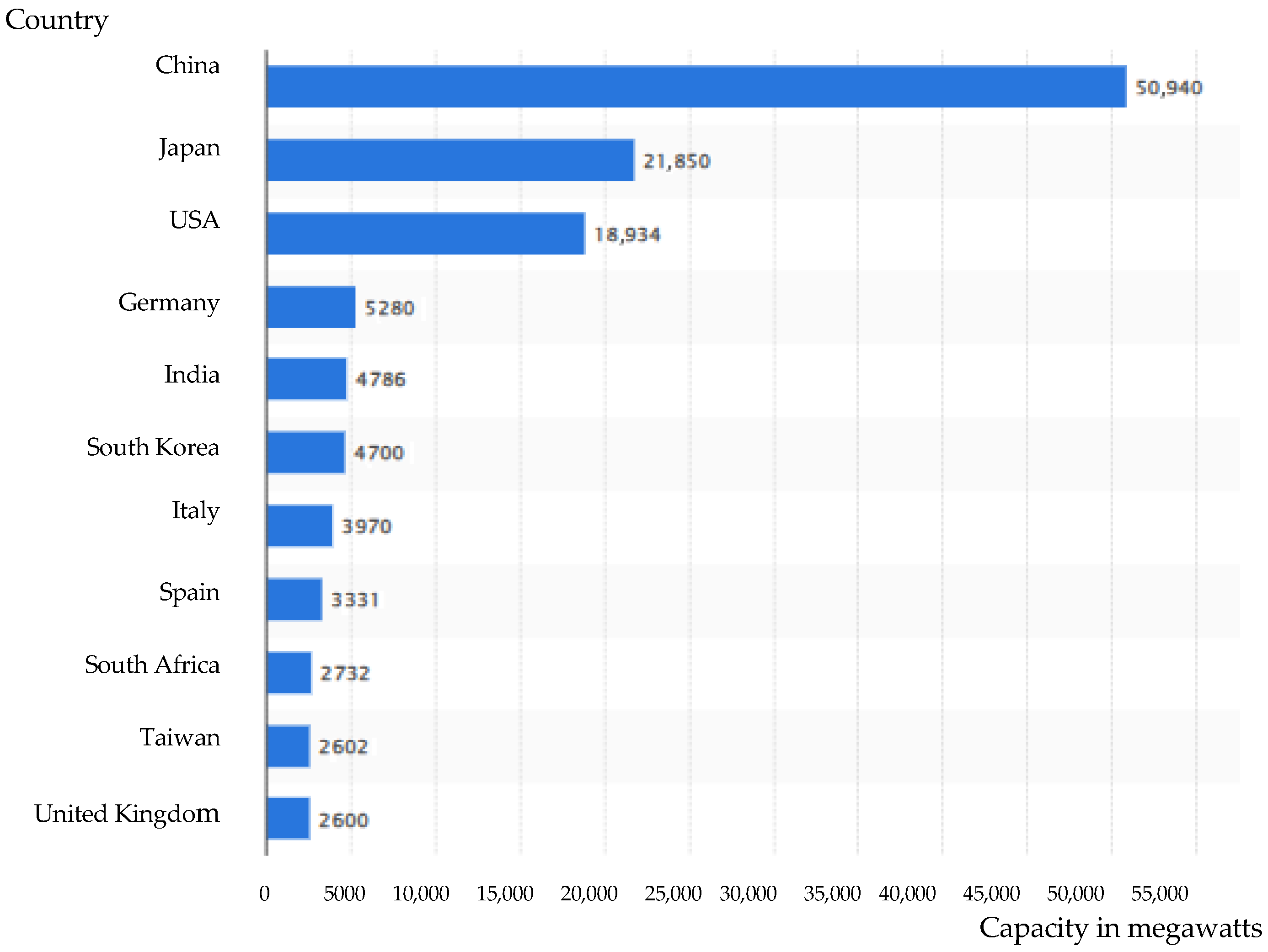
As Figure 2 shows, in 2024, China led the world in pumped storage hydropower capacity, exceeding 50.9 gigawatts. Japan ranked second with approximately 21.9 gigawatts, followed by the United States in third place with around 18.9 gigawatts of installed capacity [9,59,60,67].
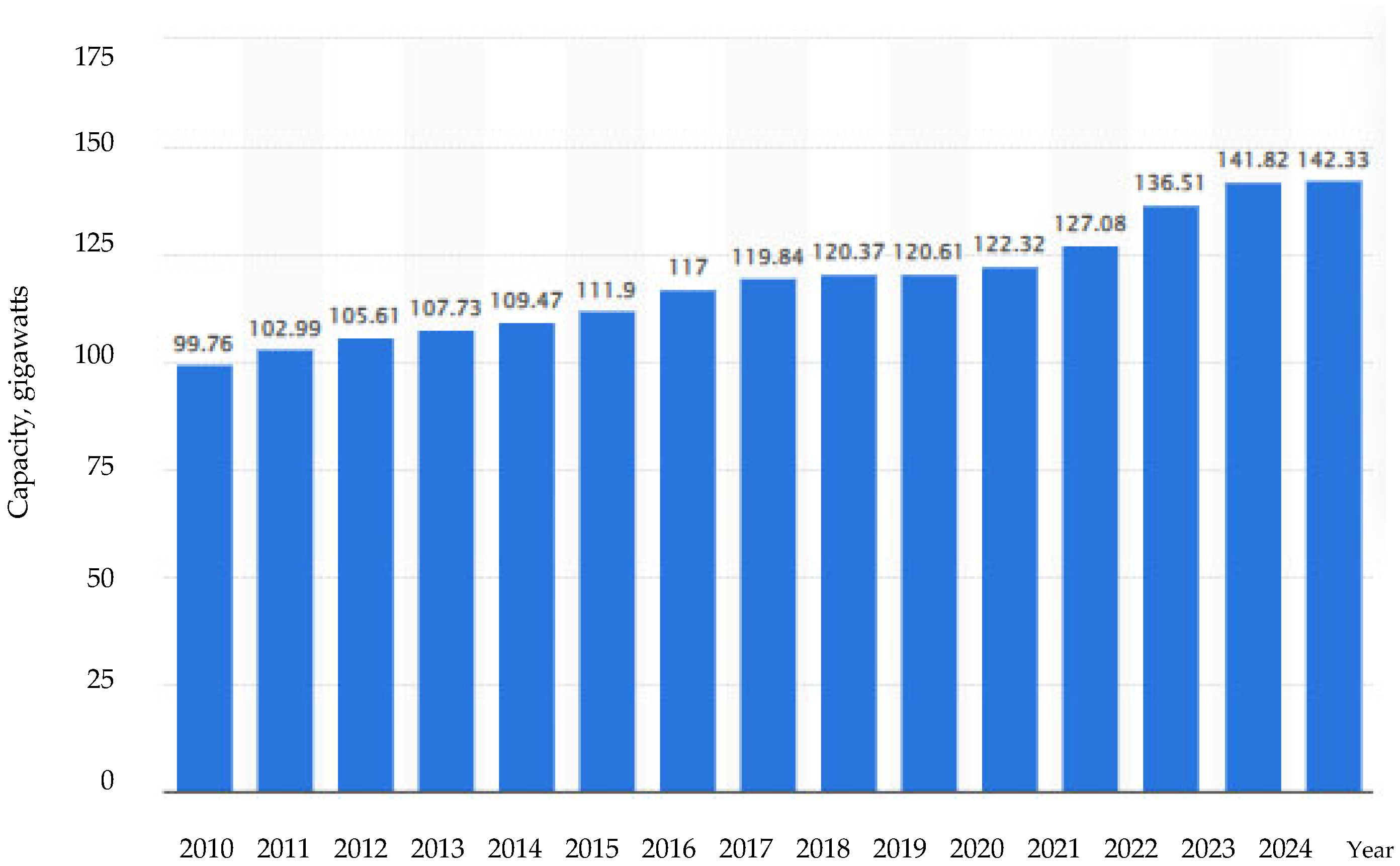
Figure 3 illustrates the worldwide capacity of pure pumped storage hydropower between 2010 and 2024, highlighting a consistent increase in installed capacity and its importance for the stability and flexibility of modern power systems (Figure 3).
Over the past decade, the global capacity of pure pumped storage hydropower has expanded by over 30 percent, rising from approximately 100 gigawatts in 2010 to more than 142 gigawatts by 2024. As of 2023, China accounted for the largest share of pumped hydro storage capacity worldwide, exceeding 50 gigawatts [59,60,66,72].
Advanced energy storage systems exhibit rapid cost reductions due to technological improvements, economies of scale, and policy support. Therefore, global average costs are expected to decline from USD 90/kWh in 2025 to USD 50/kWh by 2050 [9]. The cost of green hydrogen production could decrease from USD 4.5/kg in 2025 to as low as USD 1.2/kg by 2050 [4]. Thermal Energy Storage (TES) costs show a steady reduction from USD 30/MWh in 2025 to USD 20/MWh by 2050, driven by material innovation and widespread CSP plant deployment [1].
Table 2 summarizes the key techno-economic performance indicators for the selected storage technologies, including their Levelized Cost of Storage (LCOS), typical applications, and maturity levels.
Recent IRENA (2024) data show that energy storage industries provided over 4.8 million jobs globally in 2024 (30% growth from 2022). Key growth areas are battery manufacturing (especially in East Asia and Europe), hydrogen production, and TES deployment. Case studies highlight energy independence improvements: in Japan, Hydrogen-PV hybrid systems reduced regional gas imports by 7% in 2024 [8,13,21,31]; in Germany, TES in district heating mitigated exposure to volatile gas markets, saving ~25% in heating costs [14,68,73,77].
We modeled three ECSS deployment scenarios for 2025–2050: baseline (Limited Growth): minimal changes, low market penetration; moderate (Aligned with National Targets): moderate scale-up of ECSS; and accelerated (Aggressive Expansion): rapid ECSS deployment under enhanced policy incentives. Fossil fuel import reductions: 15–25% in major economies by 2050. CO2 emissions reductions: Up to 35% by 2050 (compared to Baseline). Net electricity price reduction: 5–12% depending on the region [33,59,64,78,79,80].
Findings underline that policy instruments like tax incentives, low-carbon subsidies, and infrastructure funds significantly accelerate ECSS adoption. Stronger carbon pricing schemes are necessary to incentivize long-duration storage solutions, particularly hydrogen and TES. Regional cooperation, particularly in Europe and Asia-Pacific, can help scale deployment while managing supply chain risks for critical materials (lithium, cobalt, nickel). Despite substantial benefits, several challenges persist such as high upfront capital costs for hydrogen and thermal storage; material supply risks for batteries; lack of standardized frameworks for cross-border ECSS integration; and regulatory lag in permitting large-scale storage projects [26,28,29,60,66,69,72,81].
Based on the latest analytical reports and research [1,7,9,14,27,34,61,75,82,83,84,85], the authors developed a comparative table illustrating the economic effects of deploying energy collection and storage systems (ECSSs) in leading countries and regions. This table takes into account the following factors: reductions in energy costs, decreases in fossil fuel imports, contributions to GDP, job creation, and the application of key ECSS technologies.
Each country has its dominant ECSS solutions. Table 3 clearly demonstrates significant cross-country differences in the economic effects of ECSS deployment. The European Union, China, and the United States are projected to achieve the highest absolute GDP gains and job creation, driven by large-scale investments in battery storage, hydrogen, and thermal technologies. China is expected to lead in employment growth, with an estimated 1.5 million new jobs by 2040, reflecting its dominant position in battery manufacturing and hydrogen technologies [30,85,86,87,88]. The European Union stands out for the highest projected reduction in wholesale electricity prices and gas imports, underscoring the role of ECSS in enhancing energy affordability and security. India and Australia show substantial relative benefits, particularly in terms of energy cost savings and localized job creation in decentralized and rural storage projects. Overall, the table highlights the growing strategic importance of ECSSs as a driver of energy security, industrial competitiveness, and sustainable economic development worldwide [2,26,62,72]. The reduction in energy costs reflects both the direct effects of ECSSs and the secondary effects from the integration of renewable energy sources (RESs). The GDP impact accounts for capital investments, operation and maintenance (O&M), production localization, and infrastructure-related effects. Job creation figures cover the full life cycle of ECSS technologies, from manufacturing to operation.

5. Discussion

The results obtained in this study have been positioned within the broader context of the existing literature. Several of our findings are consistent with earlier research. For instance, the observed cost dynamics of renewable technologies corresponded closely to projections by IRENA [1] and BloombergNEF [9], which also emphasize the rapid decline in solar PV and wind energy costs. Similarly, the identified barriers related to policy heterogeneity resonate with the conclusions drawn by Sovacool et al. [7], who highlighted that fragmented national policies often limit the scalability of clean energy transitions. Our findings on the importance of infrastructure investment for the effective integration of renewables align with those presented by European Commission reports [11], which stress the need for grid modernization.
At the same time, our study contributes new insights by quantifying the relative weight of economic, policy, and technological factors in shaping energy security trajectories. This multidimensional approach provides a more integrated perspective compared to prior works that typically focused on single dimensions. However, several limitations must be acknowledged. First, the model relies on statistical data that, although cross-checked with independent sources (IRENA, Eurostat, BloombergNEF), may still involve uncertainty due to reporting differences or delays. Second, cost projections for emerging technologies are inherently uncertain, particularly for storage and hydrogen systems, where long-term trajectories remain highly debated. Third, while the model accounts for policy diversity, it simplifies complex national contexts, which may affect accuracy in cross-country comparisons.
As the example of Poland shows, even within the EU, there are countries that have not fully developed their energy storage capabilities, including in the field of electricity. This situation is influenced by the dominance of the traditional coal-based energy sector, both hard coal and lignite. Legislative challenges also play a significant role, affecting not only electricity storage but also the development of renewable energy sources, particularly wind farms. To date, the development of energy storage has relied primarily on pumped-storage power plants. There is a clear need for further dynamic development of prosumer energy systems.
The deployment of large-scale energy storage technologies, including batteries and hybrid PV/T systems, has significant implications for macroeconomic and sectoral dynamics. First, investments in storage infrastructure stimulate economic activity through capital expenditure (CAPEX) and operational expenditure (OPEX), generating both direct and indirect employment effects. Construction, manufacturing, and installation of storage systems create jobs across multiple industries, while the operation and maintenance of these systems support long-term workforce engagement. This multiplier effect can be quantified using input-output or computable general equilibrium (CGE) models, which capture the feedback loops between energy infrastructure investments and overall economic output. Despite the diversity of energy storage technologies, a key problem remains unresolved. None of the existing solutions is sufficient to support, on a large scale and cost-effectively, the energy transition based on weather-dependent renewable energy sources.
Second, energy storage deployment contributes to stabilizing electricity prices and improving energy system reliability. By mitigating peak demand fluctuations and integrating variable renewable energy (VRE) sources, storage reduces the need for expensive peaking plants and fossil fuel imports. This effect translates into cost savings for households, industrial consumers, and governments, enhancing economic efficiency and competitiveness. In regions with high energy import dependency, storage investments can significantly improve trade balances by reducing fossil fuel expenditures and increasing energy self-sufficiency.
Third, large-scale storage systems influence industrial structure and technological innovation. By creating demand for battery manufacturing, power electronics, and related technologies, storage fosters the development of domestic supply chains and promotes technology spillovers. Countries that strategically support storage innovation may benefit from increased exports of high-value components, enhanced research and development (R&D) activity, and greater integration into global clean energy markets. Furthermore, recycling and end-of-life management of batteries introduce additional economic dimensions, including secondary material markets and waste management industries, which further expand the socio-economic impact of storage deployment.
Fourth, the implementation of storage technologies affects government fiscal positions. Policy incentives, such as subsidies or feed-in tariffs, require budgetary allocations, but these can be offset by reductions in fuel import subsidies and lower grid maintenance costs. Additionally, the taxation of storage-related industries, coupled with employment-generated income taxes, contributes to public revenues. A careful assessment of these fiscal impacts is essential for designing sustainable policy frameworks that balance short-term public expenditures with long-term economic benefits.
Finally, the adoption of storage technologies plays a critical role in the broader transition to a low-carbon economy. By enabling higher penetration of renewables and reducing greenhouse gas emissions, storage deployment supports climate policy goals, which can have long-term economic benefits including avoided climate damages, reduced healthcare costs from pollution, and enhanced energy security. Integrating these environmental and social benefits into macroeconomic assessments through life-cycle cost analysis or system-wide modeling ensures a comprehensive understanding of storage deployment effects.
In summary, the economic effects of energy storage extend beyond the electricity sector, influencing employment, trade balances, industrial innovation, government revenues, and environmental sustainability. Recognizing these multifaceted impacts is essential for policymakers, investors, and researchers to design effective strategies for scaling up storage technologies while maximizing economic and social benefits.
In this work, the Model of the Long-Term Economic Impact of Energy Collection and Storage Systems (ECSS) was proposed. Deployment until 2050 estimates the aggregate economic effects of large-scale ECSS deployment by integrating:reduction in energy costs (ΔC), decrease in fossil fuel imports (ΔF), gross domestic product (GDP) growth (ΔGDP), job creation (ΔJobs). The model is based on the energy multiplier M (reflecting the average impact of a 1% change in energy costs on GDP) and the employment multiplier Jm (reflecting the number of jobs created per USD 1 billion of investment).
Core Equations of the Model.
Step 1. GDP Impact from Energy Cost Reductions:
G D P E C S S = M · C · G D P b
where ΔGDPECSS—GDP growth resulting from reduced energy costs; ΔC—percentage reduction in energy costs due to ECSS; GDPb—baseline GDP (e.g., in 2025); M—energy multiplier (typically ~1.2–1.8 for developed economies, ~2.0–2.5 for emerging economies).
Step 2. GDP Impact from Fossil Fuel Import Reductions:
ΔGDPFossil = S⋅ΔFFimp
where ΔGDPFossil—GDP growth from reduced fossil fuel imports; S—import substitution multiplier (typically 1.3–2.0 depending on the economy); ΔF—percentage reduction in fossil fuel imports due to ECSS; Fimp—fossil fuel import volume in the baseline year.
Step 3. Job Creation from ECSS Investment:
ΔJobs = JmIECSS
where ΔJobs—number of new jobs created; Jm—employment multiplier (IRENA estimates ~15,000–25,000 jobs per USD 1 billion invested in ECSS); IECSS—total ECSS investment from 2025 to 2050.
Step 4. Total GDP Impact (Including Employment Effect):
ΔGDPtotal = ΔGDPECSS + ΔGDPFossil + ΔGDPEmpl.
where ΔGDPEmpl.:
G D P E m p l = J o b s · G D P p c E
where GDPpc—GDP per capita; E—average labor productivity (GDP per employed person).
Table 4 presents the key model input parameters, based on global reports and EU-level data, used to assess the economic impacts of energy cost reductions, fossil fuel import substitution, and large-scale investments in energy and climate security systems (Table 4).
Numerical Example (EU–Accelerated Deployment Scenario).
GDP Gain from Energy Cost Reduction:
ΔGDPECSS = 1.5 × 0.10 × 19 trillion USD = 2.85 trillion USD;
GDP Gain from Fossil Fuel Import Reduction:
ΔGDPFossil = 1.8 × 0.15 × 0.5 trillion USD = 0.135 trillion USD.
Jobs Created by ECSS Investment (the presented estimates refer to a theoretical upper-bound scenario assuming the full realization of economic multiplier effects over a 25-year period, rather than a realistic short-term projection):
ΔJobs = 20,000 × 2000 = 40 (million new jobs).
GDP Contribution from Employment Effect:
ΔGDPEmpl. = 40,000,000 × 46,000/130,000 ≈ 14.15 trillion USD.
Total Long-Term GDP Impact:
ΔGDPtotal = 2.85 + 0.135 + 14.15 = 17.14 trillion USD (≈+90% of current EU GDP).
To address the apparent discrepancy between the figures—where Table 3 forecasts the creation of approximately 850,000 jobs in the EU by 2035, while the illustrative model example indicates up to 40 million jobs—this difference arises because Table 3 is based on conservative estimates reported in the existing literature, whereas the model proposed in this study captures cumulative long-term potential under more optimistic assumptions.
To avoid overestimation and double-counting, the model results are presented as indicative ranges rather than precise point estimates. Employment effects were calculated using conservative, technology-specific multipliers derived from the recent IRENA assessments. Furthermore, GDP effects related to energy cost reductions and fossil fuel import substitution were treated as partially overlapping mechanisms and therefore adjusted to prevent additive bias.
Despite these limitations, the model offers clear advantages. It enables long-term scenario building (2025–2050) for major economies and supports the identification of critical leverage points for enhancing energy security. Compared to earlier models, it integrates economic, technological, and policy variables more comprehensively, offering a broader analytical scope.
The reliability of the model has been strengthened through validation with independent datasets from IRENA, Eurostat, and BloombergNEF. The results show strong consistency across sources, which supports confidence in the robustness of the projections. The range of applicability has been clearly defined: the model is most reliable when applied to long-term scenarios (2025–2050) in major economies where data availability is comprehensive. It is less precise in contexts where statistical data are incomplete, fragmented, or unavailable. This limitation should be taken into account when transferring the approach to countries with weaker data infrastructures.
Interpretation and Application. The model demonstrates the significant long-term economic potential of ECSS deployment. Employment effects are the dominant driver of GDP growth. The model is adaptable to other countries using the country-specific parameters. It can be applied in Excel, GAMS 52.3.0, or other modeling software for scenario analysis.
Key Insights from the Model. Large-scale ECSS deployment can become a major engine of economic growth. The employment effect has the largest long-term economic contribution. The model is effective for strategic policy-making and national energy planning. It supports scenario analysis for different policy pathways (moderate vs. aggressive ECSS deployment).

6. Conclusions

The following conclusions were formed as a result of the conducted research.
  • Advanced energy collection and storage systems are becoming essential components of low-carbon energy systems. Their deployment offers substantial economic benefits, including reduced energy costs, improved energy security, and enhanced job creation. While significant capital investment and policy reform are required to overcome current barriers, the long-term advantages of ECSS are compelling. Advanced energy collection and storage systems (ECSSs) demonstrate significant economic potential across diverse technologies and regions. Our analysis confirms that ECSS technologies—including advanced batteries, hydrogen storage, thermal energy storage (TES), and photovoltaic-thermal (PV/T) systems—are rapidly reducing in cost due to technological innovation and scaling effects. Battery storage costs are projected to fall below USD 50/kWh by 2050, while green hydrogen may become competitive at around USD 1.2/kg within the same timeframe. These trends are expected to make ECSS a central pillar of low-carbon energy systems worldwide.
  • Deployment of ECSS technologies can deliver substantial macroeconomic benefits, including lower energy costs, increased energy security, and job creation. Comparative analysis across six major economies reveals that ECSS deployment can reduce electricity costs by 5–12%, cut fossil fuel imports by up to 25%, and stimulate GDP growth ranging from 0.8% to 1.2% by 2050. Additionally, millions of new jobs could potentially be created under supportive policy conditions in the ECSS value chain, particularly in battery manufacturing, hydrogen production, and infrastructure development. These benefits are most pronounced in regions with proactive energy policies and high renewable energy penetration.
  • Hydrogen-based storage and thermal energy storage (TES) technologies play a crucial role in long-duration and seasonal energy storage, complementing batteries. While battery technologies are well-suited for short-term storage and grid balancing, hydrogen and TES provide essential services for long-duration applications and industrial decarbonization. Countries such as Japan and Germany are already leveraging hydrogen and TES to improve energy system resilience and reduce fossil fuel dependency, particularly in heating and heavy industry sectors.
  • Accelerated ECSS deployment requires targeted policy interventions and integrated planning frameworks. Our scenario modeling demonstrates that ambitious policy support—including investment tax credits, carbon pricing, and dedicated research funding—can dramatically scale up ECSS adoption and maximize economic returns. Policy instruments such as the U.S. Inflation Reduction Act, the EU Net Zero Industry Act, and national hydrogen strategies are critical to overcoming investment barriers and market risks associated with ECSS technologies.
  • In this work, the Model of the Long-Term Economic Impact of Energy Collection and Storage Systems (ECSS) was proposed. The proposed model highlights the considerable long-term economic potential associated with ECSS implementation. Job creation emerged as the primary contributor to GDP growth. The model can be tailored to different national contexts by incorporating country-specific data. It is suitable for scenario-based analysis using tools such as Excel or other modeling platforms. Widespread adoption of ECSS could serve as a powerful driver of economic development. Among the modeled impacts, employment effects contributed most significantly to long-term growth. This model offers valuable support for strategic policy formulation and national energy planning, enabling the analysis of various policy pathways, including both moderate and ambitious ECSS deployment strategies.
  • Future research and policy development should prioritize hybrid energy storage systems, supply chain risk mitigation, and deployment in developing economies. Despite significant progress, gaps remain in the integration of hybrid ECSS solutions (e.g., combining batteries with hydrogen or TES) and in the analysis of their systemic impacts. In addition, global supply chains for critical materials such as lithium, cobalt, and nickel require diversification and improved circularity to reduce vulnerabilities. Finally, there is an urgent need to expand ECSS research and deployment in developing regions, where these technologies can provide cost-effective solutions for energy access and climate resilience. Therefore, recommended actions include establishing dedicated ECSS financing schemes via green bonds and climate funds; enhancing carbon pricing mechanisms to favor energy storage integration; and promoting international research collaboration to reduce technology costs. Policymakers should prioritize integrated approaches combining regulatory support, market incentives, and research investments to maximize the socio-economic returns of ECSS. Future research should focus on life-cycle cost analysis, system optimization, and cross-sectoral integration to unlock the full potential of these technologies.

Author Contributions

Conceptualization, A.Y. and B.B.-Z.; methodology, B.B.-Z. and A.Y.; validation A.Y.; formal analysis, A.Y., B.B.-Z. and R.M.W.; resources, A.Y., B.B.-Z. and R.M.W.; writing—original draft preparation, B.B.-Z. and A.Y.; review A.Y. and B.B.-Z. All authors have read and agreed to the published version of the manuscript.

Funding

This research received no external funding but was conducted within the framework of the Visegrad Fund project (Slovakia, grant no. 52510523) and as part of the Ivan Wyhovskyi Award research fellowship (internship under the Award, Center for East European Studies, University of Warsaw, Poland) in 2025/2026.

Data Availability Statement

The data presented in this study are openly available in statista at https://www.statista.com/.

Conflicts of Interest

The authors declare no conflicts of interest.

References

  1. International Renewable Energy Agency (IRENA). Green Hydrogen Cost Reduction: Scaling Up Electrolysers to Meet Climate Targets; IRENA: Abu Dhabi, United Arab Emirates, 2024. [Google Scholar]
  2. Pandey, A.K.; Tyagi, V.V.; Jeyraj, A.; Selvaraj, L.; Rahim, N.A.; Tyagi, S.K. Recent advances in solar photovoltaic systems for emerging trends and advanced applications. Renew. Sustain. Energy Rev. 2016, 53, 859–884. [Google Scholar] [CrossRef]
  3. Liu, X.; Li, W.; Guo, X.; Su, B.; Guo, S.; Jing, Y.; Zhang, X. Advancements in Energy-Storage Technologies: A Review of Current Developments and Applications. Sustainability 2025, 17, 8316. [Google Scholar] [CrossRef]
  4. International Energy Agency (IEA). Global Hydrogen Review 2024; IEA: Paris, France, 2024. Available online: https://www.iea.org/reports/global-hydrogen-review-2024 (accessed on 22 December 2025).
  5. Serrano-Arévalo, T.I.; Ochoa-Barragán, R.; Ramírez-Márquez, C.; El-Halwagi, M.; Abdel Jabbar, N.; Ponce-Ortega, J.M. Energy Storage: From Fundamental Principles to Industrial Applications. Processes 2025, 13, 1853. [Google Scholar] [CrossRef]
  6. Zakeri, B.; Syri, S. Electrical energy storage systems: A comparative life cycle cost analysis. Renew. Sustain. Energy Rev. 2015, 42, 569–596. [Google Scholar] [CrossRef]
  7. Sovacool, B.K.; Ryan, S.E.; Stern, P.C.; Janda, K.; Rochlin, G.; Spreng, D.; Pasqualetti, M.J.; Wilhite, H.; Lutzenhiser, L. Integrating social science in energy research. Energy Res. Soc. Sci. 2015, 6, 95–99. [Google Scholar] [CrossRef]
  8. Stern, N. The economics of climate change: The stern review. Am. Econ. Rev. 2008, 98, 1–37. [Google Scholar] [CrossRef]
  9. Bloomberg New Energy Finance (BNEF). Battery Pack Prices Hit New Low in 2025. 2025. Available online: https://taiyangnews.info/business/bloombergnef-battery-pack-prices-hit-new-low-in-2025 (accessed on 22 December 2025).
  10. Zhang, J.; Du, K.; Liu, J.; Wang, Y.; Zhang, W.; Yuan, J. The economic impact of energy storage co-deployment on renewable energy in China. J. Renew. Sustain. Energy 2023, 15, 035905. [Google Scholar] [CrossRef]
  11. European Commission. Net Zero Industry Act and European Green Deal Industrial Plan: Progress Report 2025; European Union: Brussels, Belgium, 2025. [Google Scholar]
  12. U.S. Department of Energy (DOE). Pathways to Commercial Liftoff: Long-Duration Energy Storage; DOE Office of Energy Efficiency & Renewable Energy: Washington, DC, USA, 2024.
  13. Ministry of Economy, Trade and Industry (METI). Hydrogen Strategy Progress Report; METI: Tokyo, Japan, 2024.
  14. Agora Energiewende. How Is Germany Transforming Its Energy System? 2025. Available online: https://www.agora-energiewende.org/about-us/the-german-energiewende/how-is-germany-transforming-its-energy-system (accessed on 22 December 2025).
  15. Pagliaro, M. Renewable Energy Systems: Enhanced Resilience, Lower Costs. Energy Technol. 2019, 7, 201900791. [Google Scholar] [CrossRef]
  16. Hu, Y.; Armada, M.; Sanchez, M.J. Potential utilization of Battery Energy Storage Systems (BESS) in the major European electricity markets. Appl. Energy 2022, 322, 119512. [Google Scholar] [CrossRef]
  17. Markandya, A.; González-Eguino, M. Integrated Assessment for Identifying Climate Finance Needs for Loss and Damage: A Critical Review. In Loss and Damage from Climate Change. Climate Risk Management, Policy and Governance; Mechler, R., Bouwer, L., Schinko, T., Surminski, S., Linnerooth-Bayer, J., Eds.; Springer: Cham, Switzerland, 2019. [Google Scholar] [CrossRef]
  18. Knight, K.W.; Rosa, E.A.; Schor, J.B. Could working less reduce pressures on the environment? A cross-national panel analysis of OECD countries, 1970–2007. Glob. Environ. Change 2013, 23, 691–700, ISSN 0959-3780. [Google Scholar] [CrossRef]
  19. Yu, X.; Manthiram, A. Sustainable Battery Materials for Next-Generation Electrical Energy Storage. Adv. Energy Sustain. Res. 2021, 2, 2000102. [Google Scholar] [CrossRef]
  20. Yan, M.; Ni, H.; Pan, H. Rechargeable Mild Aqueous Zinc Batteries for Grid Storage. Adv. Energy Sustain. Res. 2020, 1, 2000026. [Google Scholar] [CrossRef]
  21. Yakymchuk, A. The Carbon Dioxide Emissions’ World Footprint: Diagnosis of Perspectives. Sci. Pap. Silesian Univ. Technol.–Organ. Manag. Ser. 2024, 195, 665. [Google Scholar] [CrossRef]
  22. Schneider, D.R.; Guzović, Z.; Duić, N.; Boldyryev, S. Energy transition in south east and central Europe. Therm. Sci. 2016, 20, XI–XX. [Google Scholar]
  23. Kropp, T.; Lennerts, K.; Fisch, M.N.; Kley, C.; Wilken, T.; Marx, S.; Zak, J. The contribution of the German building sector to achieve the 1.5 °C target. Carbon Manag. 2022, 13, 511–530. [Google Scholar] [CrossRef]
  24. Nagaraja, M.R.; Biswas, W.K.; Selvan, C.P. Advancements and challenges in solar photovoltaic technologies: Enhancing technical performance for sustainable clean energy—A review. Sol. Energy Adv. 2025, 5, 100084, ISSN 2667-1131. [Google Scholar] [CrossRef]
  25. Cui, Y.; Zhu, J.; Zoras, S.; Zhang, J. Comprehensive review of the recent advances in PV/T system with loop-pipe configuration and nanofluid. Renew. Sustain. Energy Rev. 2021, 135, 110254. [Google Scholar] [CrossRef] [PubMed] [PubMed Central]
  26. Wang, Q.; Su, M. Drivers of decoupling economic growth from carbon emission—An empirical analysis of 192 countries using decoupling model and decomposition method. Environ. Impact Assess. Rev. 2020, 81, 106356. [Google Scholar] [CrossRef]
  27. Jiang, Y.; Ren, Z.; Lu, C.; Li, H.; Yang, Z. A region-based low-carbon operation analysis method for integrated electricity-hydrogen-gas systems. Appl. Energy 2024, 355, 122230, ISSN 0306-2619. [Google Scholar] [CrossRef]
  28. Yakymchuk, A.; Maxand, S.; Lewandowska, A. Economic Analysis of Global CO2 Emissions and Energy Consumption Based on the World Kaya Identity. Energies 2025, 18, 1661. [Google Scholar] [CrossRef]
  29. Agenda 2030 for Sustainable Development. 2015. Available online: https://www.ticketforchange.org/become-a-changemaker-mooc (accessed on 22 December 2025).
  30. Van Vuuren, D.P.; Riahi, K.; Calvin, K.; Dellink, R.; Emmerling, J.; Fujimori, S.; Kc, S.; Kriegler, E.; O’Neill, B. The Shared Socio-economic Pathways: Trajectories for human development and global environmental change. Glob. Environ. Change 2017, 42, 148–152. [Google Scholar] [CrossRef]
  31. Hepburn, C.; Adlen, E.; Beddington, J.; Carter, E.A.; Fuss, S.; Mac Dowell, N.; Minx, J.C.; Smith, P.; Williams, C.K. The technological and economic prospects for CO2 utilization and removal. Nature 2019, 575, 87–97. [Google Scholar] [CrossRef] [PubMed]
  32. Zhang, M.; Yang, Z.; Liu, L.; Zhou, D. Impact of renewable energy investment on carbon emissions in China—An empirical study using a nonparametric additive regression model. Sci. Total Environ. 2021, 785, 147109. [Google Scholar] [CrossRef] [PubMed]
  33. Davis, S.J.; Caldeira, K.; Matthews, H.D. Future CO2 emissions and climate change from existing energy infrastructure. Science 2010, 329, 1330–1333. [Google Scholar] [CrossRef] [PubMed]
  34. Liu, Y.; Zhang, W.; Zhu, Y.; Luo, Y.; Xu, Y.; Brown, A.; Culver, J.N.; Lundgren, C.A.; Xu, K.; Wang, Y.; et al. Architecturing hierarchical function layers on self-assembled viral templates as 3D nano-array electrodes for integrated Li-ion microbatteries. Nano Lett. 2012, 13, 293–300. [Google Scholar] [CrossRef] [PubMed]
  35. Grzywacz, M.; Sokołowski, M.M.; Wierzbowski, M. Ramy i bariery prawne magazynowania energii wobec rosnącego wykorzystania magazynów energii elektrycznej na świecie. In Państwo a Gospodarka. Zasady—Instytucje—Procedury. Księga Jubileuszowa Dedykowana Profesor Bożenie Popowskiej; Lissoń, P., Strzelbicki, M., Eds.; Wydawnictwo Poznańskie: Poznań, Poland, 2020; pp. 305–315. Available online: https://open.icm.edu.pl/items/01b5f409-920c-411c-af16-111645602528 (accessed on 22 December 2025).
  36. Pająk, T.; Jura, P.; Szczotka, K.; Szymiczek, J.; Pelczar, S.; Habryń, A.; Zych, P. Innowacje w Odnawialnych Źródłach Energii; Wydawnictwo Wyższej Szkoły Technicznej w Katowicach: Katowice, Poland, 2024; ISBN 978-83-68422-01-6. Available online: https://www.pie.pl/wp-content/uploads/2024/04/Monografia-naukowa-konferencji-INNOWACJE-W-ODNAWIALNYCH-ZRODLACH-ENERGII-2024.pdf (accessed on 24 December 2025).
  37. Chmielewski, A.; Kupecki, J.; Szabłowski, Ł.; Fijałkowski, K.J.; Zawieska, J.; Bogdziński, K.; Kulik, O.; i Adamczewski, T. Dostępne i Przyszłe Formy Magazynowania Energii; Fundacja WWF Polska: Warszawa, Poland, 2020; ISBN 978-83-60757-55-0. [Google Scholar]
  38. Adamska, B.; Kopeć, S.; Lach, Ł.; Szczeciński, P.; Wrocławski, M. Wpływ rozbudowy infrastruktury magazynów energii na rozwój gospodarczy w Polsce—Prognoza do 2040 roku. Analizy AGH. Komunikat 2/2022. 2022. Available online: https://psme.org.pl/wp-content/uploads/2024/03/RAPORT_PSME_AGH.pdf (accessed on 22 December 2025).
  39. Fijak, W.; Miłkowska, M. Regulacje prawne magazynowania energii i ich wpływ na rozwój gospodarczy Polski. In Rola Magazynów Energii we Współczesnej Gospodarce; Pawełczyk, M., Ed.; IUS PUBLICUM, Katowice: Warszawa, Poland, 2023; pp. 217–258. Available online: https://www.researchgate.net/profile/Jakub-Kmiec-2/publication/378707986_Rola_magazynow_energii_w_rozwoju_lokalnych_spolecznosci_energetycznych/links/65e60126e7670d36abfd147b/Rola-magazynow-energii-w-rozwoju-lokalnych-spolecznosci-energetycznych.pdf (accessed on 22 December 2025).
  40. Sokołowski, M.M. European Law on Combined Heat and Power; Routledge: Abingdon, UK; New York, NY, USA, 2020. [Google Scholar]
  41. Babiarz, A.; Kolasa, P. Magazyny energii po zmianach prawa energetycznego—Czy zakres zmian wystarczająco znosi bariery rozwoju? Nowa Energ. 2021, 2, 66–69. [Google Scholar]
  42. Ustawa z dnia 23 lipca 2023 r. o zmianie ustawy—Prawo energetyczne. Dziennik Ustaw z 2023 poz. 1681. Available online: https://isap.sejm.gov.pl/isap.nsf/DocDetails.xsp?id=WDU20230001681 (accessed on 2 January 2026).
  43. Dyrektywa Parlamentu Europejskiego i Rady (UE) 2019/944 z Dnia 5 Czerwca 2019 r. w Sprawie Wspólnych Zasad Rynku Wewnętrznego Energii Elektrycznej Oraz Zmieniającą Dyrektywę 201227/UE. Directive (EU) 2019/944 of the European Parliament and of the Council of 5 June 2019 on Common Rules for the Internal Market for Electricity and Amending Directive 2012/27/EU. Available online: https://eur-lex.europa.eu/eli/dir/2019/944/oj (accessed on 22 December 2025).
  44. Ustawa z Dnia 20 Maja 2021 r. o Zmianie ustawy—Prawo Energetyczne Oraz Niektórych Innych Ustaw. Dz. U. z 2021 r. poz. 1093. Available online: https://isap.sejm.gov.pl/isap.nsf/DocDetails.xsp?id=WDU20210001093 (accessed on 22 December 2025).
  45. Ustawa z Dnia 8 Lutego 2023 r. o Zmianie Ustawy o Szczególnych Rozwiązaniach w Zakresie Niektórych Źródeł Ciepła w Związku na Rynku Paliw Oraz Niektórych Innych Ustaw. Dziennik Ustaw z 2023 poz. 295. Available online: https://isap.sejm.gov.pl/isap.nsf/DocDetails.xsp?id=WDU20230000295 (accessed on 2 January 2026).
  46. Adamska, B. Magazyny energii niezbędnym elementem transformacji energetycznej. Energetyka Rozproszona 2022, 7, 55–66. [Google Scholar] [CrossRef]
  47. Horzela-Mis, A.; Semrau, J. Enhancing Energy Efficiency in Poland’s Construction Sector: Simulating Renewable Energy and Storage Integration. Int. J. Energy Res. 2025, 1, 6646016. [Google Scholar] [CrossRef]
  48. Jagusiak, B. Bezpieczeństwo energetyczne a bezpieczeństwo socjalne. Energ. Gigawat 2015, 10. Available online: https://www.cire.pl/pliki/2/jagusiakboguslawbezpieczenstwosocjalne.pdf (accessed on 22 December 2025).
  49. Ehrenhalt, W. Transformacja Energetyczna—Szansa i Konieczność dla Polskiej Gospodarki. Związek Przedsiębiorców i Pracodawców. 2025. Available online: https://zpp.net.pl/transformacja-energetyczna-szansa-czy-koniecznosc-dla-polskiej-gospodarki/ (accessed on 22 December 2025).
  50. Magazynowanie Energii Elektrycznej. Urząd Regulacji Energetyki. 2024. Available online: https://www.ure.gov.pl/pl/urzad/informacje-ogolne/edukacja-i-komunikacja/publikacje/magazynowanie-energii-elektryc/12061,Magazynowanie-Energii-Elektrycznej.html (accessed on 22 December 2025).
  51. Przybylska, M. Energetyka prosumencka w rozwoju energii odnawialnej. In Kierunki Rozwoju Branży Odnawialnych Źródeł Energii w Polsce; Skorupska, A., Ed.; Aspekty Prawne; Difin: Warszawa, Poland, 2023; pp. 45–64. ISBN 978-83-8270-262-0. [Google Scholar]
  52. Dyrektywa Parlamentu Europejskiego 2009/28/WE w Sprawie Promowania Stosowania Energii ze Źródeł Odnawialnych (…). Directive 2009/28/EC of the European Parliament and of the Council of 23 April 2009 on the Promotion of the Use of Energy from Renewable Sources and Amending and Subsequently Repealing Directives 2001/77/EC and 2003/30/EC. Available online: https://eur-lex.europa.eu/eli/dir/2009/28/oj (accessed on 22 December 2025).
  53. Rozporządzenie Ministra Klimatu i Środowiska z Dnia 21 Października 2021 r. w Sprawie Rejestru Magazynów Energii Elektrycznej. Dziennik Ustaw z 2021 r. poz. 2010. Available online: https://isap.sejm.gov.pl/isap.nsf/DocDetails.xsp?id=WDU20210002010 (accessed on 22 December 2025).
  54. Rozporządzenie Parlamentu Europejskiego i Rady (UE) 2015/1222 z dnia 24 lipca 2015 r. Ustanawiające Wytyczne Dotyczące alokacji Zdolności Przesyłowych i Zarządzania Ograniczeniami Przesyłowymi. Commission Regulation (EU) 2015/1222 of 24 July 2015 Establishing a Guideline on Capacity Allocation and Congestion Management (Text with EEA Relevance). Available online: https://eur-lex.europa.eu/eli/reg/2015/1222/oj (accessed on 22 December 2025).
  55. Zalecenie Komisji z Dnia 2023 r. w Sprawie Magazynowania Energii—Wspieranie Zdekarbonizowanego i Bezpiecznego Systemu Energetycznego UE. Available online: https://eur-lex.europa.eu/legal-content/EN/ALL/?uri=CELEX:32023H0320(01) (accessed on 2 January 2026).
  56. Energy Regulatory Office (URE). 2024. Available online: https://eru.gov.cz/en (accessed on 2 January 2026).
  57. What are the Sustainable Development Goals? 2024. Available online: https://www.sightsavers.org/policy-and-advocacy/global-goals/?gad_source=1&gclid=Cj0KCQiAy9msBhD0ARIsANbk0A8x3Z2OnYDAmW8AnYh0x_J1zig90-bAHcaScOs_SQ2D5UOCrks7GksaApPaEALw_wcB (accessed on 13 December 2025).
  58. Czaplicki, R.; Jeznach, Ł.; Jabczuga, M.; Kucek, B.; Kasprzak, N.; Gnat, Ł. Magazyny OZE jako narzędzie wychodzenia z kryzysu energetycznego w Polsce i zabezpieczenie na przyszłość. In Kryzys Energetyczny: Wyzwanie Strategiczne dla Polski. Raporty Słuchaczy KSAP XXXIV Promocji Ignacy Łukasiewicz; Stankiewicz, P., Ed.; Krajowa Szkoła Administracji Publicznej im. Prezydenta Rzeczypospolitej Polskiej Lecha Kaczyńskiego: Warszawa, Poland, 2024; pp. 135–167. ISBN 978-83-61713-42-5. [Google Scholar]
  59. Statista. Capacity of Pumped Storage Hydropower Worldwide in 2024, by Leading Country. 2025. Available online: https://www.statista.com/statistics/689667/pumped-storage-hydropower-capacity-worldwide-by-country/ (accessed on 22 December 2025).
  60. Statista. Pure Pumped Storage Hydropower Capacity Worldwide from 2010 to 2024. 2025. Available online: https://www.statista.com/statistics/1304113/pumped-storage-hydropower-capacity-worldwide/ (accessed on 22 December 2025).
  61. Fouquet, R. Consumer Surplus from Energy Transitions. Energy J. 2023, 39, 167–188. [Google Scholar] [CrossRef]
  62. Daly, H.E. Steady-State Economics: The Economics of Biophysical Equilibrium and Moral Growth; Freeman: San Francisco, CA, USA, 1977; pp. 67–70. [Google Scholar]
  63. Brundtland, G.H. Our Common Future; Oxford University Press: Oxford, UK, 1987; pp. 43–45. [Google Scholar]
  64. Hasselmann, K. Economics of Climate Change: The Stern Review; Cambridge University Press: Cambridge, UK, 2007; pp. 43–46. [Google Scholar]
  65. European Commission; Joint Research Centre; Crippa, M.; Guizzardi, D.; Pagani, F.; Banja, M.; Muntean, M.; Schaaf, E.; Monforti-Ferrario, F.; Becker, W.E.; et al. GHG Emissions of All World Countries; Publications Office of the European Union: Luxembourg, 2024. [Google Scholar]
  66. CO2 Emissions from EU Territorial Energy Use: −2.8%. 2023. Available online: https://ec.europa.eu/eurostat/web/products-eurostat-news/w/ddn-20230609-2 (accessed on 10 October 2025).
  67. Ellerman, A.D.; Marcantonini, C.; Zaklan, A. The European Union Emissions Trading System: Ten Years and Counting. Rev. Environ. Econ. Policy 2015, 10, rev014. [Google Scholar] [CrossRef]
  68. Griffiths, I.; Wang, R.; Ling-Chin, J.; Paul Roskilly, A. Solid oxide fuel cells with integrated direct air carbon capture: A techno-economic study. Energy Convers. Manag. 2024, 315, 118739. [Google Scholar] [CrossRef]
  69. Hepburn, C.; Stern, N.; Stiglitz, J.E. “Carbon Pricing” Special Issue in the European Economic Review. Eur. Econ. Rev. 2020, 127, 103440. [Google Scholar] [CrossRef] [PubMed]
  70. Böhringer, C.; Löschel, A. Promoting Renewable Energy in Europe: A Hybrid Computable General Equilibrium Approach. Energy J. 2006, 27, 135–150. [Google Scholar] [CrossRef]
  71. Edenhofer, O.; Knopf, B.; Barker, T.; Baumstark, L.; Bellevrat, E.; Chateau, B.; Criqui, P.; Isaac, M.; Kitous, A.; Kypreos, S.; et al. The Economics of Low Stabilization: Model Comparison of Mitigation Strategies and Costs. Energy J. 2010, 31, 11–48. [Google Scholar] [CrossRef]
  72. European Environment Agency. Trends and Projections in Europe 2021: Tracking Progress Towards Europe’s Climate and Energy Targets; European Environment Agency: Copenhagen, Denmark, 2021; 41p, ISBN 978-92-9480-392-4. [Google Scholar] [CrossRef]
  73. Gambhir, A.; Mittal, S.; Lamboll, R.D.; Grant, N.; Bernie, D.; Gohar, L.; Hawkes, A.; Köberle, A.; Rogelj, J. Adjusting 1.5 degree C climate change mitigation pathways in light of adverse new information. Nat. Commun. 2023, 14, 5117. [Google Scholar] [CrossRef] [PubMed]
  74. Wright, R.M.; Le Quéré, C.; Mayot, N.; Olsen, A.; Bakker, D.C.E. Fingerprint of climate change on Southern Ocean carbon storage. Glob. Biogeochem. Cycles 2023, 37, e2022GB007596. [Google Scholar] [CrossRef]
  75. Baumol, W.J.; Oates, W. The Theory of Environmental Policy; Cambridge University Press: Cambridge, UK, 1988. [Google Scholar] [CrossRef]
  76. European Commission. The European Green Deal; European Commission: Brussels, Belgium, 2019; pp. 3–5. [Google Scholar]
  77. Teng, X.; Lu, L.C.; Chiu, Y.H. How the European Union reaches the target of CO2 emissions under the Paris Agreement. Eur. Plan. Stud. 2020, 28, 1836–1857. [Google Scholar] [CrossRef]
  78. IPCC Sixth Assessment Report. Climate Change 2021: The Physical Science Basis; Intergovernmental Panel on Climate Change (IPCC): Geneva, Switzerland, 2021; Volume 1, pp. 200–250. [Google Scholar]
  79. Official Site of the European Statistics Service. 2024. Available online: https://commission.europa.eu/about/departments-and-executive-agencies/eurostat-european-statistics_en (accessed on 12 October 2025).
  80. Organisation for Economic Co-operation and Development (OECD). Gross National Income (GNI) Indicator; OECD: Paris, France, 2022. [Google Scholar] [CrossRef]
  81. Moshwan, R.; Shi, X.L.; Zhang, M.; Yue, Y.; Liu, W.D.; Li, M.; Wang, L.; Liang, D.; Chen, Z.-G. Advances and challenges in hybrid photovoltaic-thermoelectric systems for renewable energy. Appl. Energy 2025, 380, 125032, ISSN 0306-2619. [Google Scholar] [CrossRef]
  82. Hasan, M.M.; Haque, R.; Jahirul, M.I.; Rasul, M.G.; Fattah, I.M.R.; Hassan, N.M.S.; Mofijur, M. Advancing energy storage: The future trajectory of lithium-ion battery technologies. J. Energy Storage 2025, 120, 116511, ISSN 2352-152X. [Google Scholar] [CrossRef]
  83. Yang, Z.; Zhang, J.; Kintner-Meyer, M.C.W.; Lu, X.; Choi, D.; Lemmon, J.P.; Liu, J. Electrochemical energy storage for green grid. Chem. Rev. 2011, 111, 3577–3613. [Google Scholar] [CrossRef]
  84. He, S.; Zhu, B.; Jiang, X.; Han, G.; Li, S.; Lau, C.H.; Wu, Y.; Zhang, Y.; Shao, L. Symbiosis-inspired de novo synthesis of ultrahigh MOF growth mixed matrix membranes for sustainable carbon capture. Proc. Natl. Acad. Sci. USA 2022, 119, e2114964119. [Google Scholar] [CrossRef]
  85. Yohe, G.W.; Tol, R.S. The Stern Review and the Economics of Climate Change: An Editorial Essay. Clim. Change 2008, 89, 231–240. [Google Scholar] [CrossRef]
  86. Distribution of Carbon Dioxide Emissions Worldwide in 2022, by Sector. 2024. Available online: https://www.statista.com/statistics/1129656/global-share-of-co2-emissions-from-fossil-fuel-and-cement (accessed on 12 October 2025).
  87. Fischer, C.; Newell, R.G. Environmental and technology policies for climate mitigation. J. Environ. Econ. Manag. 2008, 55, 142–162. [Google Scholar] [CrossRef]
  88. Creutzig, F.; Agoston, P.; Goldschmidt, J.C.; Luderer, G.; Nemet, G.; Pietzcker, R.C. The underestimated potential of solar energy to mitigate climate change. Nat. Energy 2017, 2, 1–9. [Google Scholar] [CrossRef]
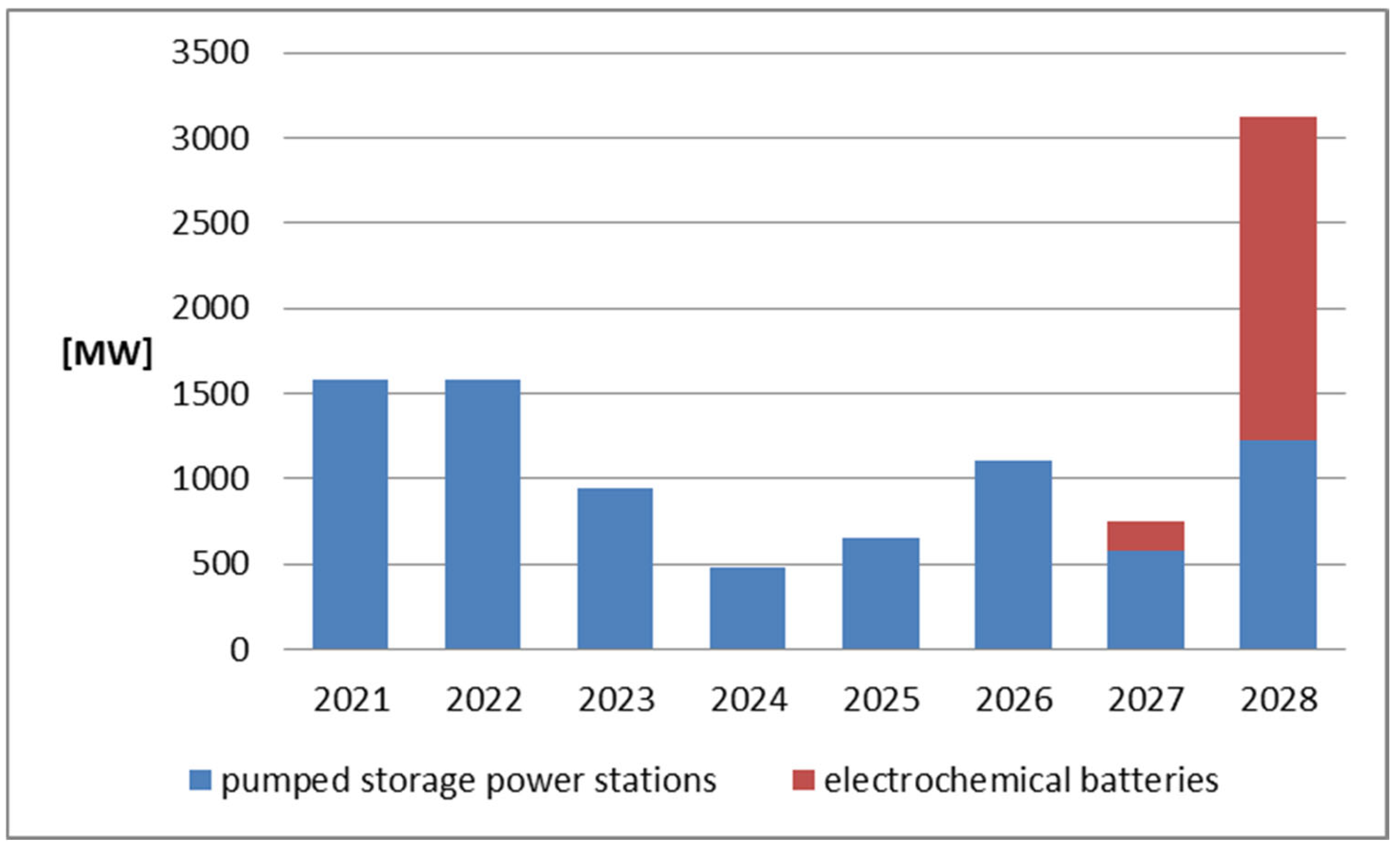
Figure 1. Contracted capacity of energy storage systems in the main auctions in Poland (2021–2028). Source: Energy Regulatory Office (URE) (2024), based on capacity market auction data for Poland [40,42,43,44,45,50,51,52,53,54,55,56,57].
Energies 19 00309 g001
Figure 2. Global Pumped Storage Hydropower Capacity by Top Countries in 2024 (Megawatts). Source: based on the data of [1,3,5,9,12,26,59,60,62,63,64,68,69,70].
Energies 19 00309 g002
Figure 3. Worldwide Capacity of Pure Pumped Storage Hydropower (2010–2024) in Gigawatts. Source: based on the data of [2,3,11,17,18,22,23,26,30,59,60,69,71].
Energies 19 00309 g003
Table 1. Summary of Selected Peer-Reviewed Studies on Advanced ECSS (2020–2025).
Author(s)YearTechnologyMethodologyKey FindingsLimitations
Pandey et al. [2]2020PV/T systemsTechno-economic reviewCombined efficiency > 70%, strong potential in buildingsLimited large-scale deployment
Liu et al. [3]2021Advanced batteriesExperimental & modelingHigher energy density, improved safetyHigh material costs
Zakeri & Syri [6]2022Energy storage systemsSystem modelingStorage improves grid flexibilityPolicy assumptions
Sovacool et al. [7]2023Integrated ECSSComparative analysisStrong socio-economic benefitsRegional focus
IEA [4]2024Hydrogen storageScenario analysisSeasonal storage potentialInfrastructure gaps
Sources: Authors’ work based on [2,3,4,6,7,34].
Table 2. Comparative Techno-Economic Performance of Advanced Energy Storage Technologies.
TechnologyLCOS (USD)ApplicationsMaturity LevelSources
Battery Storage50–90 USD/kWhGrid balancing, EVs, residentialHigh (commercial)BloombergNEF, 2025 [9]
Hydrogen Storage1.2–4.5 USD/kgLong-duration storage, industry, mobilityMedium (early commercial)IEA, 2024 [4]
Thermal Storage20–30 USD/MWhIndustrial heat, district heating, CSP plantsHigh (niche mature)IRENA, 2024 [1]
Sources: Authors’ work based on [1,9,14,18,59,71,73,74,75,76].
Table 3. Economic effects of deploying energy collection and storage systems (ECSS) in leading countries and regions.
Country (Region)Energy Cost ReductionFossil Fuel Import ReductionGDP Impact
(Direct & Indirect)
Job CreationMain ECSS Technologies
European Union (EU)5–12% reduction in wholesale electricity prices by 2040 (EC)~15% reduction in gas imports by 2035 (EU Energy Outlook)Estimated +0.8% GDP growth by 2050 from ECSS investments [11]+850,000 new jobs by 2035 in ECSS industriesBatteries (Li-ion, Na-ion), Thermal Energy Storage (TES), Hydrogen
United States4–9% retail electricity price reduction by 2040 [1,4,9,11,73]Oil & gas import reductions in selective regions, ~8% by 2040Up to USD 80 billion in private investment driven by IRA policies [69,70,78]+520,000 jobs by 2030 in ECSS (battery & hydrogen sectors)Batteries (Li-ion, Solid-state), Hydrogen, Long-duration Storage
ChinaElectricity price stabilization (region-specific)~20% reduction in coal & gas dependency by 2040 [10,69,78]Estimated +1.2% GDP increase by 2050 due to large-scale storage [81,84,85]+1.5 million new jobs by 2040 (mainly in batteries & hydrogen)Batteries (Li-ion, LFP), Hydrogen Storage, PV-Thermal Hybrids
JapanUp to 7% reduction in natural gas imports in pilot regions by 2030 [13,27]Moderate, localized reductions in fossil fuel importsIndustrial growth linked to hydrogen economy (up to USD 35 billion annually by 2050)~150,000 jobs in hydrogen & advanced storage by 2035Hydrogen Storage, Thermal Storage, PV/T Systems
India~6–10% reduction in retail energy costs in urban regions by 2040 [1]~10% decrease in energy imports by 2040Expected USD 25 billion in energy savings & productivity gains by 2050+600,000 new jobs by 2040, mainly in decentralized storageBatteries (Na-ion, Li-ion), PV/T Systems, Hydrogen Storage
Australia~8% electricity cost savings in regions with high renewable penetration [3,17,77]Local reductions in LNG imports (~5–7% by 2035)Moderate GDP impact; highest effect in rural energy-intensive sectors+70,000 jobs by 2035 (mostly in grid storage projects)Batteries, Hydrogen Storage, Pumped Hydro
Sources: Authors’ work based on [1,3,4,9,11,17,22,27,69,70,73,77,78,81,84,85].
Table 4. Model Inputs (Based on Global Reports).
ParameterExample Value (EU)Source
Energy cost reduction ΔC10%European Commission
Fossil fuel import reduction ΔF15%EU Energy Outlook
EU GDP in 2025 GDP_baseUSD 19 trillionEurostat
Fossil fuel imports F_impUSD 500 billionEurostat, EC
Investment in ECSS IECSSI USD 2 trillion (2025–2050)BloombergNEF, EC
Energy multiplier M1.5OECD, literature
Import substitution multiplier S1.8OECD, literature
Employment multiplier Jm20,000 jobs per USD 1 billionIRENA, EC
EU GDP per capita GDPpc USD 46,000Eurostat
Average labor productivity EUSD 130,000 per workerOECD
Sources: author’s work on [1,2,9,10,11,12,13,14,59,60,66,76].
Disclaimer/Publisher’s Note: The statements, opinions and data contained in all publications are solely those of the individual author(s) and contributor(s) and not of MDPI and/or the editor(s). MDPI and/or the editor(s) disclaim responsibility for any injury to people or property resulting from any ideas, methods, instructions or products referred to in the content.