1. Introduction
Some of the biggest challenges for the EU’s energy policy over the past two decades has been reducing energy dependency, strengthening energy security, and ensuring sustainable economic growth. According to Eurostat, the average energy import dependency of the EU-27 increased by around 10 percentage points between 2004 and 2023 [
1], highlighting the structural vulnerability of the European energy system [
2,
3,
4]. In response, the European Commission (EC) set out to strengthen the security of the energy supply, improve energy efficiency, and reduce energy consumption as strategic objectives in its
Green Paper—Towards a European Strategy for the Security of Energy Supply [
5], published in 2000. The 2006 Green Paper [
6] further developed this approach and defined sustainability, competitiveness, and energy security as the three defining pillars of European energy policy.
In the 2010s, climate protection objectives, the COVID-19 pandemic, and especially the Russo-Ukrainian war created a fundamentally new situation. The issue of energy security has gradually become a central element of economic policy, a response to which the European Commission presented in the REPowerEU plan in 2022 [
7]. The program aims to reduce Russia’s dependence on fossil fuels, diversify energy supplies, improve energy efficiency, and accelerate the deployment of renewable energy sources [
8,
9,
10,
11]. As a result, the energy transition is no longer just an environmental or technological issue, but a determinant of economic competitiveness, strategic autonomy, and European resilience.
However, the energy transition is not simply about replacing fossil fuels. Rather, transforming the energy supply infrastructure, structurally changing the energy mix, improving energy efficiency, and reducing import dependency are closely interrelated processes that together shape the development of the EU energy system. Accordingly, the energy transition can be understood as a complex economic and social transformation in which new energy sources gradually replace traditional energy carriers, rather than simply complementing them [
12].
Nowadays, interpreting the energy transition increasingly goes beyond technological changes and requires an integrated examination of the connections among climate change, energy security, and policy frameworks. In their review, Georgescu et al. (2025) examine the policy-based relationships among the energy transition, energy security, and climate change, showing that these concepts have become increasingly closely linked in scientific and policy discourse in recent decades [
13]. According to their analysis, a sustainable energy transition can only be achieved through a coordinated institutional, legal, and policy approach [
13].
The success of the energy transition depends not only on technological innovations and policy measures, but also on the diffusion and social embedding of sustainable business models. Prokopenko et al. (2024) reviewed innovative green business models and concluded that technological innovation, strategic partnerships, and community collaboration together contribute to the sustainable development of local economies, while strengthening environmental and social sustainability [
14].
This review aims to provide a synthesis of the EU energy transition based on four studies, the aggregated temporal coverage of which is 2010–2023. It integrates findings from four previous empirical studies to explore the interrelationships among economic growth, energy consumption, renewable energy source uptake, and energy security in EU Member States. The study not only summarizes previous results, but also develops a unified interpretative framework that shows how EU energy policy has transformed from an approach based on economic efficiency to a complex strategy in which sustainability, energy security, and economic resilience have become closely interrelated objectives.
In the literature, numerous studies examine the issues of energy efficiency, renewable energy sources, and energy security; however, the vast majority of them focus on just one sub-area of the energy transition. In contrast, this review does not aim to develop a new theoretical or empirical model, but rather integrates the results of four complementary empirical studies into a common analytical framework that interprets the main dimensions of the EU energy transition. This manuscript clearly distinguishes between the results derived from the author’s four previous empirical studies and the author’s synthesis based on them, which contributes to the literature on the topic by exploring and providing a unified interpretation of the connections between the studies. Accordingly, this study’s scientific contribution is not the presentation of a new model, but rather the integrated interpretation of the results of a coherent research program.
The topicality of this review article is that the energy transition no longer refers only to the spread of renewable energy sources in the EU, but has become one of the determining factors in the competitiveness, resilience, and strategic autonomy of the European economy. This calls for a synthetic overview of the empirical research of the past decade and a half and a comprehensive assessment of the main trends and connections emerging in the EU’s energy management.
The contribution of this review article lies not in presenting new empirical results or proposing a new theoretical model, but in providing an integrated synthesis and interpretation of the results of four previously published studies from the author’s research program. Based on these results, this review examines the interrelationships among energy efficiency, renewable energy deployment and energy security and how these dimensions interact in the EU energy transition. This integrated approach brings together the conclusions of individual studies and provides a comprehensive picture of the structural transformation of the EU energy system.
This review article does not aim to provide a comprehensive picture of all political and technological dimensions of the EU energy transition. The analysis is deliberately limited to the links among energy efficiency, renewable energy, and energy security, as these constitute the central thematic areas of the author’s research program.
This review article is structured as follows: 1. introduction, 2. review methodology, 3. the relationship between economic growth and energy use in the EU energy transition, 4. the role of renewable energy in the EU energy transition, 5. energy security and the transformation of import dependency in the EU, 6. integrated discussion, and 7. conclusions.
2. Review Methodology
2.1. Scope of the Review
This review aims to provide a comprehensive assessment of the EU energy transition by synthesizing the results from four empirical studies [
15,
16,
17,
18]. The selected studies are part of the same research program, rely on common data sources, and examine the development of EU energy management from complementary perspectives. The common features of the studies are that they cover all 27 EU Member States, draw on official Eurostat databases, and use modern quantitative methods to analyze energy and macroeconomic processes.
Together, the four studies cover four fundamental dimensions of the EU energy transition. The first study examines the impact of energy use and prices, greenhouse gas emissions, and renewable energy sources on economic growth. The second study analyzes the transformation of the relationship between, and gradual decoupling of, energy consumption and GDP. The third study explores the economic determinants of the spread of renewable energy sources, while the fourth focuses on energy security, import dependence, and energy market vulnerability. Together, these studies enable an integrated interpretation of the economic, technological, and strategic dimensions of the energy transition.
The studies also build on one another over time. The periods examined together span 2010 to 2023, including the stabilization period following the 2008–2009 financial crisis, the start of the European Green Deal’s implementation, the economic impacts of the COVID-19 pandemic, and the energy market shocks following the Russian–Ukrainian war. This period saw fundamental structural changes to the EU energy policy and is therefore particularly suitable for a synthetic assessment of the longer-term processes and connections existing within the energy transition.
Only empirical research previously published by the author that examined all 27 EU Member States, was based on official Eurostat databases, and analyzed a defining dimension of the energy transition was included in this review study. All publications that focused on geographical regions other than the EU, examined sectors or research topics other than energy management, or did not ensure EU-level comparability were excluded. Together, the four selected studies cover the most important areas of EU energy management, namely, energy efficiency, the relationship between energy use and economic growth, the development of renewable energy sources, and energy security and import dependency. As a result, the four studies are representative of the main thematic dimensions examined within the author’s research program, rather than the broader literature on the EU energy transition.
The joint use of the four studies is justified because, within the same geographical framework and based on comparable, harmonized Eurostat data, they examine complementary but analytically separate dimensions of the energy transition; therefore, their results can be arranged into a coherent synthesis. The representativeness of the four studies thus stems not from the number of publications, but from their comprehensive geographical coverage of the EU-27, their coverage of a significant part of the period under review, and their complementary examination of the relationship between energy efficiency and energy-economic performance, renewable energy, and energy security.
This review article does not seek to present the results of individual studies in isolation, but rather to develop a unified interpretative framework by integrating them. The synthesis aims to show how energy efficiency improvements, the gradual decoupling of economic growth and energy use, the investment-led expansion of renewable energy sources, and the appreciation of energy security constitute an interrelated development process in the EU’s energy transition.
The four selected empirical studies are part of a research program developed by the same author. Therefore, while each study aimed to answer different scientific questions, they are based on common methodological principles. Accordingly, the study periods, variables used, and statistical models were adapted to the research goals and harmonized Eurostat databases available at the time of analysis.
All studies examine EU Member States, so the group of countries analyzed is uniform, while the sample sizes differ only due to the different study periods examined. Two of the studies examined a period encompassing the COVID-19 pandemic and the subsequent energy crisis. In contrast, the studies preceding these analyzed the period before these events, allowing for an interpretation of the energy transition in different economic environments.
However, this represents the aggregate temporal coverage of the four studies, rather than a common, continuous observation period: Studies 1 and 2 cover the period 2010–2019, Study 3 covers the period 2015–2023, and Study 4 covers the period 2014–2023. Accordingly, none of the thematic dimensions are followed empirically continuously over the entire period 2010–2023.
2.2. Data Sources
The empirical studies synthesized in this review article are based exclusively on official Eurostat databases, ensuring methodological consistency and comparability across all analyses. Although each study uses different indicators depending on its research objective, they all rely on harmonized statistical data collected in accordance with common European standards. The analyses cover the 27 EU Member States and use annual observations for different study-specific periods between 2010 and 2023, as detailed in
Table 1.
2.3. Analytical Approaches
The four empirical studies use complementary quantitative methods appropriate to their research objectives. Specifically, partial least squares path modeling (PLS-PM) is used to examine the relationships between energy-related variables and economic growth. Pearson’s correlation and hierarchical cluster analyses are employed to examine the evolution of the energy consumption–GDP relationship across Member States. Multiple linear regression, β-convergence analysis, and fixed-effects panel models are utilized to identify the economic determinants of renewable energy expansion. Finally, panel regression, volatility indicators, and K-means cluster analysis are used to assess energy dependence, supply vulnerability, and structural heterogeneity across Member States.
The methodological diversity of the four studies is seen as a strength rather than a limitation. By combining correlation analysis, regression techniques, panel econometrics, path modeling, and cluster analysis, this review captures different dimensions of the same complex phenomenon, thus providing a more comprehensive picture of the EU energy transition than any single methodological approach.
Table 1 summarizes the main features of the four empirical studies included in the review, including the research objectives, study periods, and analytical methods. The studies collectively provide complementary evidence on the economic, environmental, and strategic dimensions of the EU energy transition during their different, partly overlapping study periods between 2010 and 2023.
The panel regression method [
19], regression + FE procedure [
20], clustering method [
21], and PLS-PM procedure [
22] are all employed.
2.4. Evidence Extraction and Synthesis Process
The evidence was synthesized in several consecutive steps. First, the research objectives, applied variables, databases used, econometric methods, and key empirical results and conclusions were extracted from all four empirical studies. Subsequently, during the comparative analysis of the studies’ results, common relationships that consistently appeared in several studies were identified. Based on the relationships thus revealed, three interrelated strategic thematic areas were inductively outlined: energy efficiency, investment-driven expansion of renewable energy sources, and strengthening of energy security. The integrated conceptual framework of this review therefore is not based on pre-defined categories, but rather emerged from a comparative synthesis of the results of the four empirical studies.
Before integrating the results of the four selected studies, we assessed their methodological soundness and main limitations, with particular attention to the appropriateness of the methods used, the robustness of the results, and the limitations of the causal interpretation of the relationships.
Table 2 presents a synthesis of the results of the four empirical studies and illustrates how the main findings of each contributed to the development of the three strategic pillars and the integrated conceptual framework. The table makes it clear that the proposed framework is not based on predefined categories, but rather on a comparative analysis and inductive synthesis of evidence.
3. The Relationship Between Economic Growth and Energy Use in the EU Energy Transition
3.1. The Transformation of the Relationship Between Economic Growth and Energy Use
The relationship between economic growth and energy use has long been considered fundamental in economics. Traditional growth models assume that economic output increases with energy consumption, as energy is an essential input for production. Accordingly, economic development is accompanied by a continuous increase in energy demand over a long period.
However, a gradual structural transformation has been observed in the EU since the 2010s. As a result of improved energy efficiency, technological development, the rise of the service sector, and climate and energy policy measures, economic growth has become less and less dependent on increased energy consumption. During the period under review, the EU’s economic performance improved significantly, while total energy consumption declined, suggesting that the relationship between energy consumption and economic growth is gradually shifting.
In parallel, the emphasis of energy policy has also changed. The previous approach, which was primarily based on the security of supply, has gradually been replaced by one in which energy efficiency, emissions reduction, and the use of renewable energy sources become determining factors in economic competitiveness.
3.2. Decoupling of Economic Growth and Energy Use
The empirical results show that the relationship between economic growth and energy use in the EU is significantly more complex than traditional growth models assume. In a significant number of Member States, GDP growth has not been accompanied by an increase in energy use. Interestingly, in several countries, significant economic growth has been achieved despite a decrease in energy consumption. This phenomenon indicates a gradual decoupling of economic growth and energy use.
The combined effect of several factors explains the weakening of this relationship. Improvements in energy efficiency, the rise of less energy-intensive sectors, technological progress, and changes in the production structure all contribute to the reduction in energy needed to produce a unit of GDP. However, significant differences remain among Member States, suggesting that the energy transition is unfolding at different rates across individual economies.
The results also show that it is not the quantity of energy consumed per se that is decisive for economic growth, but rather its structure and quality. The rise of renewable energy sources has been positively associated with economic performance, while reductions in greenhouse gas emissions and improvements in energy efficiency have both supported sustainable economic development. At the same time, significant increases in energy prices negatively affect economic growth, underscoring the importance of a competitive energy supply.
3.3. The Policy Relevance of Energy Efficiency and Decoupling
Based on the presented results, it can be stated that one of the most important outcomes of the EU energy transition is the gradual transformation of the relationship between economic growth and energy use. This change indicates that increasing economic performance requires a progressively smaller proportional increase in energy use, which creates favorable conditions for sustainable development.
However, decoupling cannot be considered an automatic or uniform process. Significant differences in energy efficiency, energy mix, and economic development persist among Member States. This suggests that the success of the EU energy policy requires the use of country-specific policy instruments alongside common objectives.
Based on the synthesis of the results of the two empirical studies, it can be stated that improving energy efficiency, increasing the share of renewable energy sources, and reducing greenhouse gas emissions are not independent goals, but rather mutually reinforcing elements of the same structural transformation. Together, these processes create the opportunity for the EU to simultaneously increase its economic competitiveness, reduce its environmental impact, and strengthen its energy security in the long term.
Table 3 summarizes the main findings on the relationship between economic growth and energy consumption during the EU energy transition. It highlights the main economic, environmental, and policy implications of the observed structural changes, including improvements in energy efficiency, the decoupling process, the deployment of renewable energy sources, and the role of energy prices.
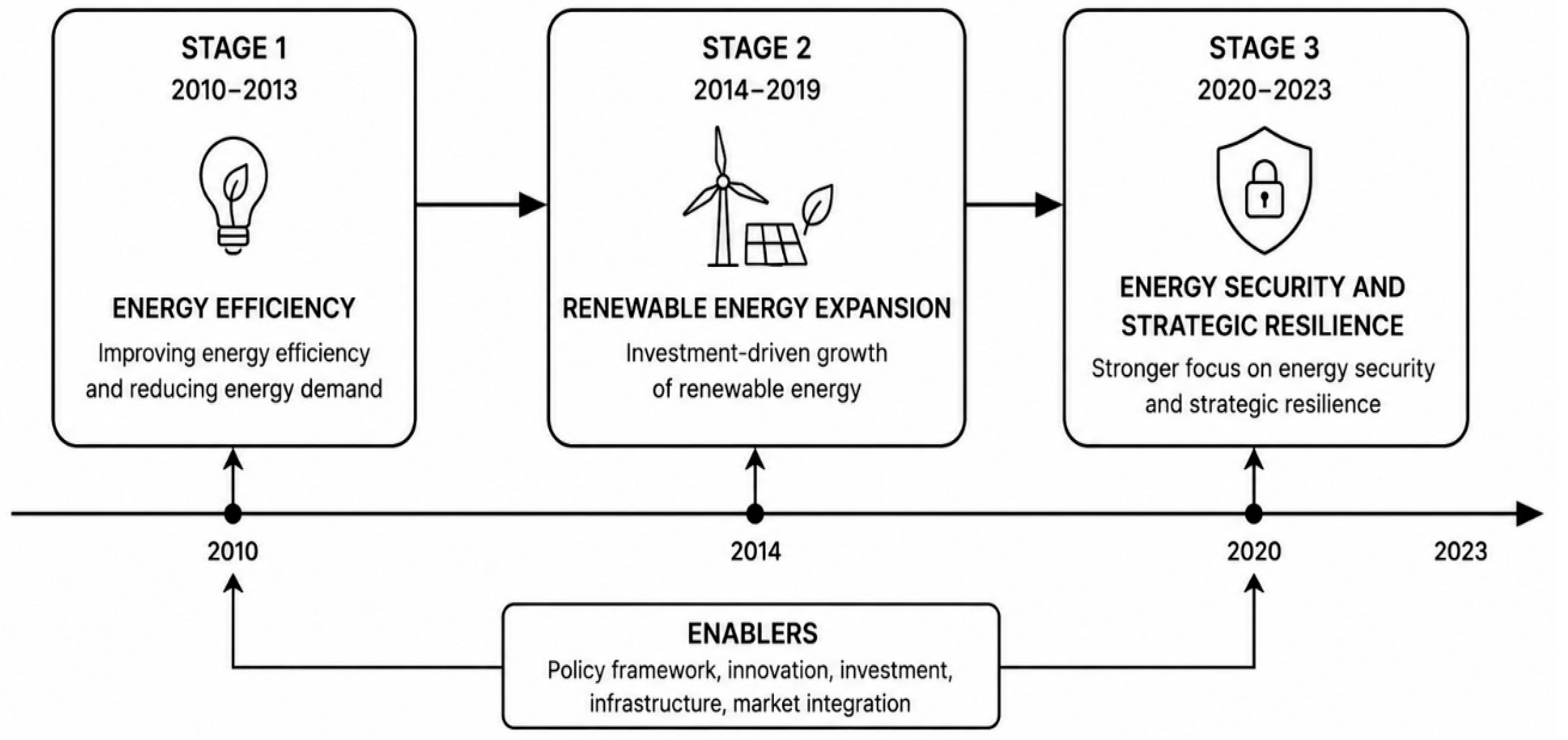
Figure 1 presents a conceptual model of the EU energy transition, illustrating its three successive stages between 2010 and 2023. The figure illustrates how improvements in energy efficiency were followed by investment-led energy expansion, followed by a stronger focus on energy security and strategic resilience in response to recent geopolitical and energy market challenges.
The division presented in the figure is interpretative and illustrates the thematic structure of the review; it cannot be considered an empirically supported temporal periodization of the EU energy transition, as the processes presented took place to a significant extent in parallel and interacted with each other.
4. The Role of Renewable Energy in the EU Energy Transition
4.1. The Strategic Importance of Renewable Energy in the Energy Transition
A key feature of the EU energy transition is that renewable energy sources have gradually become a defining element in energy policy [
23,
24,
25,
26]. While previous energy policy measures were primarily aimed at energy security and improving energy efficiency, in the past decade there has been increasing emphasis on replacing fossil fuels and developing a low-carbon energy system. The rise of renewable energy sources helps meet climate protection goals, reduce energy import dependence, and strengthen the long-term competitiveness of the European economy.
The empirical results show that, between 2015 and 2023, the share of renewable energy sources in the EU increased in almost all Member States. This process is consistent with economic development, increased investment, and improved energy efficiency. However, the pace of development has varied significantly among Member States, suggesting that the energy transition is determined not only by community objectives, but also by national economic and institutional characteristics.
Consistent with previous results, the increasing proportion of renewable energy sources is positively associated with economic performance. This suggests that the use of renewable energy is not only an environmental protection tool, but also a key driver of sustainable economic growth.
4.2. The Role of Investments in the Spread of Renewable Energy Sources
The fundamental condition for the spread of renewable energy sources is continuous investment activity, which ensures the technological and infrastructural transformation of the energy system [
27,
28]. Based on the analyses, the most important economic driver of the expansion of renewable energy sources is investment activity. Both multivariate regression and fixed-effects panel models showed that, in years when the investment rate increased in a Member State, the share of renewable energy sources also typically increased. This suggests that the success of the energy transition depends largely on the volume and structure of investments.
Economic development also had a positive impact on the adoption of renewable energy sources, but it mainly accounted for the structural differences among Member States. In contrast, energy intensity alone was not statistically significant, suggesting that improving energy efficiency alone does not guarantee a faster uptake of renewable energy. The development of renewable energy sources is determined more by the combined effect of investments, technological developments, and the regulatory environment.
The results of the β-convergence analysis also indicated that Member States with a lower renewable energy share at the beginning of the study period achieved faster growth. This suggests a gradual convergence in the use of renewable energy sources within the EU, although differences among Member States remain significant.
4.3. Differences Among Member States and Energy Transition Trajectories
The spread of renewable energy sources in the EU has not been uniform and depends on various factors [
10,
29]. Studies show significant heterogeneity in economic development, investment activity, and energy structure. Some Member States—such as Sweden—had a high share of renewable energy and favorable energy efficiency indicators at the beginning of the analysis period, while other countries gradually caught up.
The example of Germany illustrates well that high investment activity, technological development, and a conscious energy policy can together accelerate the transformation of the energy mix. In Belgium, the share of renewable energy showed slower but continuous growth, while in Hungary, growth accelerated mainly after 2020. The cluster analysis also confirms that the EU Member States can be classified into clearly distinguishable groups based on their development trajectories in renewable energy sources.
The differences among Member States suggest that the success of the energy transition does not depend solely on economic development. Energy institutions, the regulatory environment, infrastructure development, and the long-term investment strategy play at least as important a role. As a result, it is advisable to supplement the EU’s common energy policy objectives with country-specific measures that account for the distinct characteristics of individual Member States.
4.4. The Link Between Renewable Energy and Energy Security
The development of renewable energy sources is increasingly linked to the strengthening of energy security in the EU, as it reduces dependence on external energy sources by expanding domestic energy production capacity and increasing the stability of the energy supply [
30,
31]. Based on the results presented, it is clear that the role of renewable energy sources now extends beyond achieving climate protection objectives. Renewable energy has increasingly become one of the most important tools for strengthening energy security, as it reduces the need for fossil fuel imports and the dependence on external energy sources, and increases the adaptability of the energy system.
The geopolitical events after 2020 have particularly highlighted that energy transition and energy security are not independent goals. The development of renewable energy sources simultaneously reduces emissions, diversifies energy supply, and increases economic resilience. Accordingly, investments in renewable energy sources are of environmental, economic, strategic, and security policy importance.
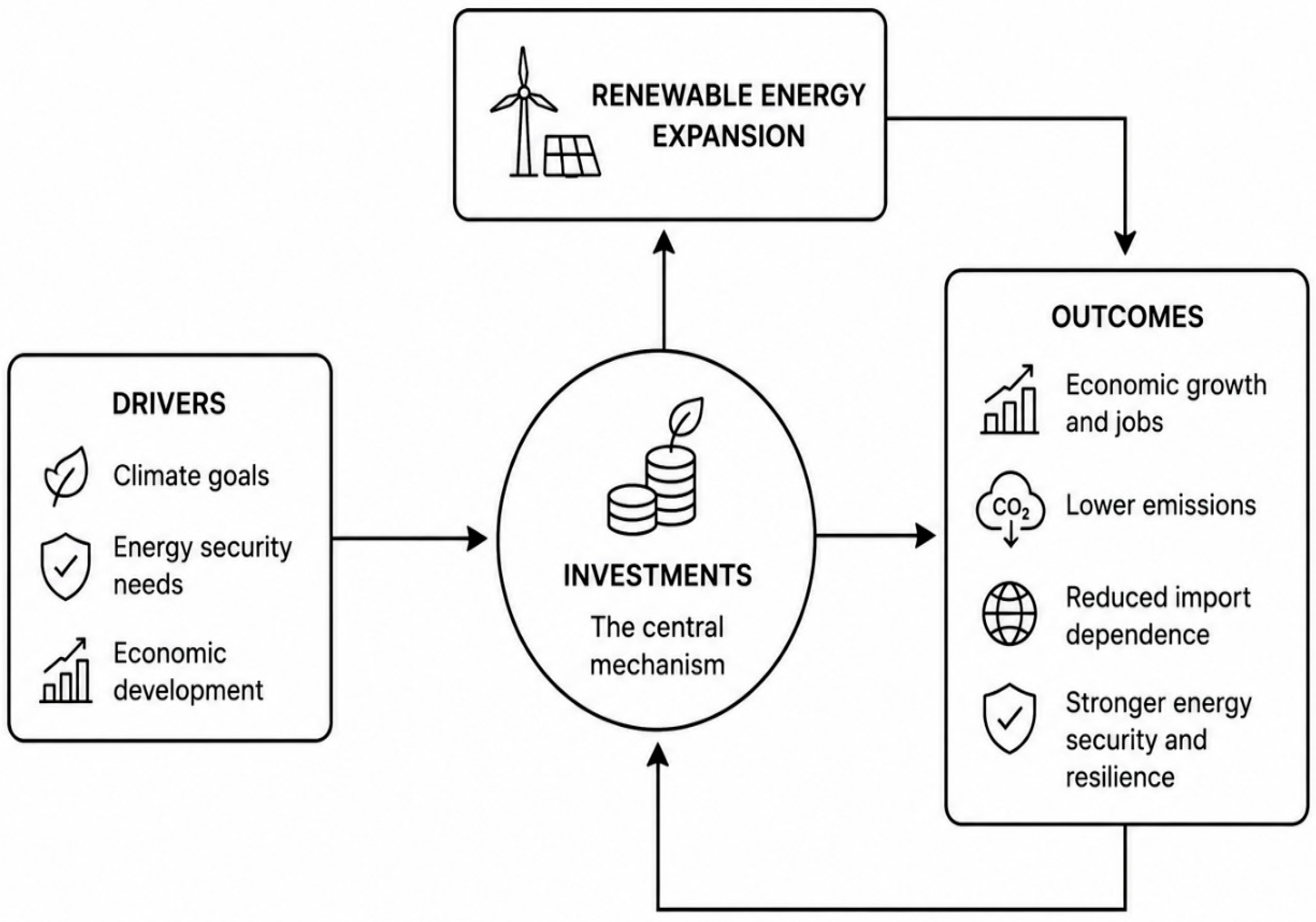
Based on the synthesis of the presented results, it can be stated that investments are the central mechanism linking economic growth, the spread of renewable energy sources, and the strengthening of energy security in the EU. The success of the energy transition is therefore not determined solely by economic development or improved energy efficiency, but, above all, by the extent to which Member States can support the technological and structural transformation of the energy system through investments. Accordingly, the development of renewable energy sources can be considered at the same time as a strategy for economic development, climate policy, and energy security, all of which play a decisive role in strengthening the long-term competitiveness and resilience of the EU.
Table 4 summarizes the synthesized findings on the role of renewable energy in the EU energy transition. It highlights the main economic, technological, and structural factors influencing the expansion of renewable energy and summarizes their implications for sustainable economic growth, energy policy, and long-term energy security. The table shows that investment activity is the central mechanism linking the deployment of renewable energy to the EU’s strategic energy transition objectives.
Figure 2 illustrates the conceptual links among the main drivers of renewable energy expansion, the central role of investment, and the resulting economic, environmental, and energy security outcomes in the EU. The figure highlights that investment is a key mechanism linking economic development, renewable energy deployment, lower carbon emissions, reduced import dependence, and increased long-term resilience of the EU energy system.
5. The Transformation of Energy Security and Import Dependency in the EU
5.1. The Rise of Energy Security in the Energy Transition
Energy security has become one of the most important strategic objectives of EU energy policy over the past decade. While the energy transition was previously focused primarily on decarbonization, improving energy efficiency, and expanding renewable energy sources, the COVID-19 pandemic, energy market price volatility, and, in particular, the Russian–Ukrainian war have highlighted that energy security is a key economic and geopolitical issue in its own right. Ensuring the continuity of energy supply, mitigating supply risks, and increasing the resilience of energy systems have consequently become high priorities for European energy policy [
32,
33,
34]. The dependence on imported fossil fuels has posed a significant vulnerability, especially for natural gas. The 2022 energy crisis made it clear that the EU’s economic stability depends largely on the structure of energy imports and on the extent to which Member States can diversify their energy sources and increase domestic energy production. As a result, energy security has gradually become an integral part of the energy transition [
35].
5.2. Structural Determinants of Import Dependency
The empirical results show that imports of natural gas and oil primarily drive the EU’s energy dependency. According to panel regression models, the increase in natural gas imports, in particular, was associated with increased energy dependency, suggesting that natural gas remains one of the most critical elements of the European energy system. Oil imports also contributed to the increase in import dependency, but the impact was less uniform across Member States [
36].
In contrast, the expansion of domestic electricity generation and the diversification of the energy mix clearly reduced energy dependency. In countries with significant nuclear or renewable energy generation capacities, import dependency was lower. The results suggest that restructuring electricity generation is of decisive importance not only from a climate policy perspective, but also from an energy security perspective [
32].
The model’s high explanatory power indicates that the development of energy dependence is largely explained by the structural factors examined. This suggests that the EU’s energy dependence is not the result of random processes, but rather the consequence of well-identified economic and energy factors [
36].
5.3. Member State Differences in Energy Security
The analyses revealed significant differences in the energy security status of individual EU Member States. The examples of France and Sweden show that high domestic electricity generation capacity—nuclear, hydro-, and wind power—significantly reduces import dependence and increases energy system stability [
37].
In contrast, the energy supply of the Baltic States has long been highly dependent on natural gas imports, making these countries particularly vulnerable to geopolitical shocks. In the cases of Germany and Italy, energy market disruptions have significant economic consequences due to high import volumes, while Hungary’s energy dependence results in particularly high vulnerability, driven by the combined effects of a high import ratio and an energy-intensive economic structure [
38].
Based on cluster analysis and volatility indicators, EU Member States can be classified into clearly distinguishable groups. The results indicate that energy security depends not only on the import ratio, but also on the structure of the energy mix, domestic production capacities, size of the energy system, and degree of supplier diversification.
5.4. Energy Security as a New Dimension of the Energy Transition
Based on the presented results, it can be stated that energy security has become one of the defining dimensions of the EU’s energy transition today. Reducing energy dependence no longer solely means replacing imports, but rather entails a complex structural transformation in which the expansion of domestic energy production, the diversification of energy sources, the use of renewable energy sources, and the increased flexibility of the energy system all play important roles. The energy transition has previously emerged primarily as an environmental and economic objective, but recent geopolitical events have increasingly included a security dimension. As a result, sustainability, competitiveness, and energy security can now be seen as mutually reinforcing strategic objectives.
Based on the synthesis of the results of the four empirical studies, it can be concluded that the EU’s energy transition does not serve a single policy objective, but rather a complex structural transformation that simultaneously seeks to ensure sustainable economic growth, the widespread deployment of renewable energy sources, and the long-term security of energy supply. These three objectives are inseparable and together determine the direction of development of the EU’s future energy system.
Table 5 summarizes the synthesized results regarding the structural determinants of EU energy security and import dependency. It highlights how domestic energy production, diversification, and renewable energy deployment together reduce vulnerability to external shocks while strengthening the long-term resilience and strategic autonomy of the EU energy system.
Table 2,
Table 3,
Table 4 and
Table 5 are not intended to be a complete reprint of the statistical results of the underlying empirical research, but rather to present their most important conclusions in a comparable, synthetic manner. The magnitude of the estimated coefficients, the statistical significance levels, the robustness tests, and the interpretation limitations of the individual models have been described in detail in the original publications. Building on these results, this review provides a common interpretation and integrated synthesis. The tables summarize the main findings and their policy significance in line with this review’s purpose.
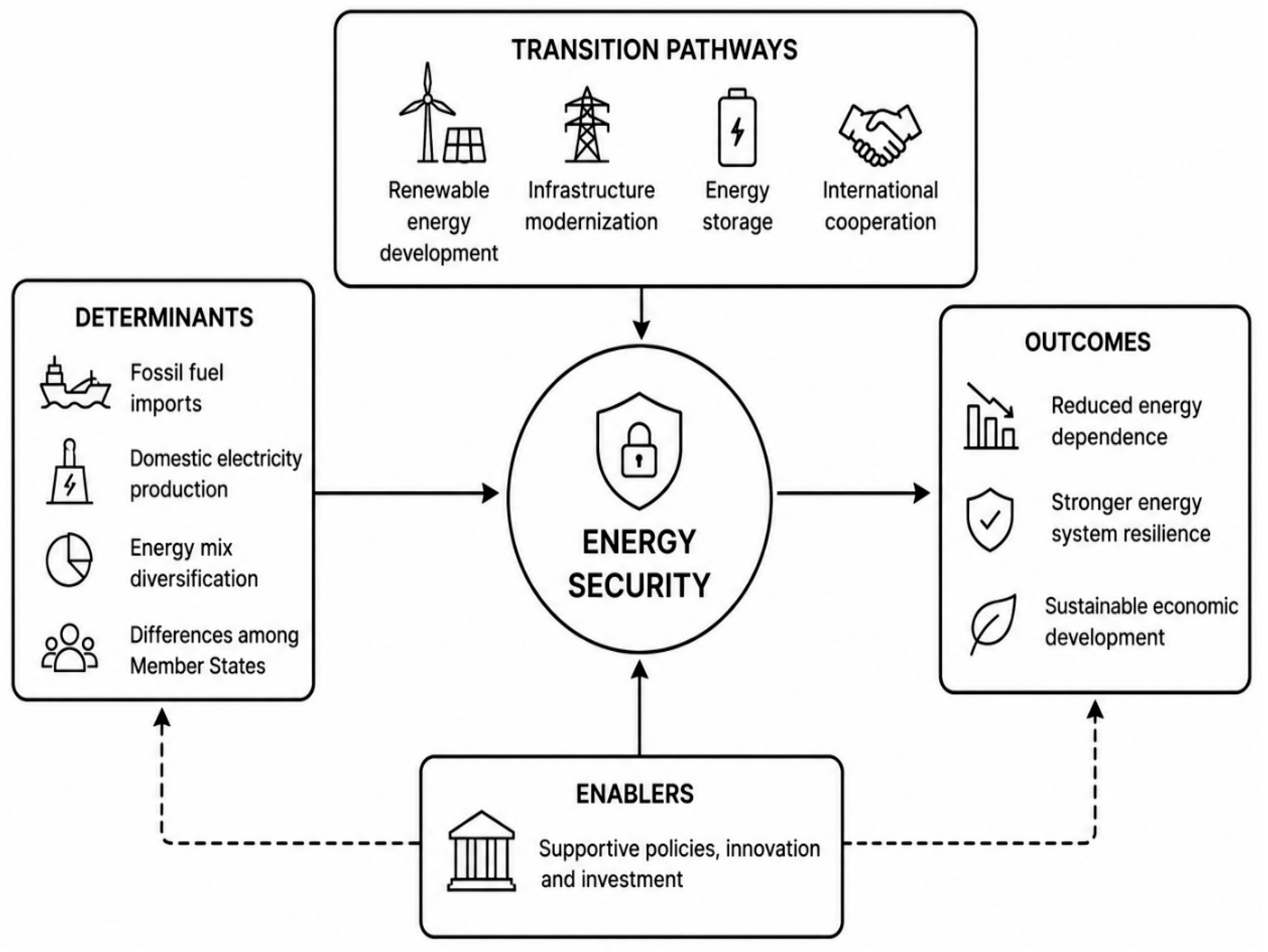
Figure 3 illustrates the key drivers of EU energy security, their interrelationships, and an integrated conceptual model. It shows how fossil fuel imports, domestic electricity generation, energy mix diversification, and differences among Member States influence the reduction in energy dependency, the resilience of the energy system, and sustainable economic development. The figure also highlights how the development of renewable energy sources, the modernization of energy infrastructure, energy storage, and international cooperation together contribute to strengthening the EU’s long-term energy security and strategic autonomy.
5.5. Integrated Econometric Assessment of the Relationships Among the Core Energy Transition Variables
The primary goal of this review is to synthesize the results of four previously published empirical studies and examine the relationships among the key variables within a unified econometric framework. This additional analysis does not serve as new empirical research, but rather provides a mathematical summary of how the energy transition dimensions examined in the four studies are related to each other in a common panel database.
This supplementary analysis represents a new econometric estimation conducted for the present review, based on an integrated panel dataset derived from the Eurostat data underlying the four studies; it is intended as a supplementary synthesis rather than as independent causal evidence.
The balanced panel covers the EU-27 over 2010–2023 (405 observations), with renewable energy share as the dependent variable and GDP index and energy intensity as explanatory variables, using country and year fixed effects and country-clustered standard errors.
The supplementary analysis uses a balanced panel of the 27 EU Member States for the period 2010–2023, which contains 378 country-year observations. The dependent variable is the share of renewable energy in gross final energy consumption. In contrast, the explanatory variables are the GDP index and energy intensity, with the latter defined as the ratio of gross available energy to real GDP. All variables were obtained from Eurostat databases; energy intensity follows the Eurostat definition based on energy and GDP data. The final balanced panel had no missing observations, so no imputation or other missing-data handling was required.
In
Table 6, the results of the two-way fixed-effects panel model show that, after filtering out country- and time-specific effects, neither GDP nor energy intensity has a statistically significant independent effect on the development of the share of renewable energy. This suggests that the energy transition of EU member states is a complex process, shaped not by a single macroeconomic factor, but by economic, technological, institutional, and policy effects.
The two-way fixed-effects panel regression is based on a balanced panel of the 27 EU Member States over the period 2010–2023, resulting in 378 observations. Renewable energy share is the dependent variable, while the GDP index and energy intensity are included as explanatory variables. Energy intensity is calculated as gross available energy relative to real GDP. Country and year fixed effects are included, and standard errors are clustered at the country level.
Neither GDP index (β = −0.0040; p = 0.822) nor energy intensity (β = 0.0093; p = 0.685) is statistically significant. The joint model is also statistically non-significant (F = 0.147; p = 0.864). Accordingly, this supplementary analysis does not provide independent statistical evidence for causal relationships among the dimensions of the integrated framework; rather, it indicates that GDP and energy intensity alone do not explain within-country variation in renewable energy shares after controlling for country- and year-specific effects.
6. Integrated Discussion
The system of relationships presented in this chapter reflects an integrated conceptual interpretation of the results of the four empirical studies. Accordingly, the individual relationships do not represent empirically proven causal relationships, but rather an interpretative framework formulated based on the available evidence.
6.1. From Energy Efficiency to Energy Security: An Integrated Perspective
Since the four empirical studies that form the basis of the review primarily used correlational, panel econometric, and multivariate statistical methods, the conclusions of the present study are primarily limited to interpreting relationships between variables and cannot be considered evidence of causal relationships.
The synthesis of results from four empirical studies presented in this review article shows that the EU’s energy transition is not a process aimed at achieving a single policy objective, but rather a multidimensional structural transformation. Although the individual studies examine different aspects—the relationship between energy use and economic growth, the economic determinants of the spread of renewable energy sources, and the issue of energy security and import dependence—their results complement each other and delineate a clear development path. According to the traditional approach, the energy transition primarily means replacing fossil fuels and reducing carbon dioxide emissions. However, the results suggest that a much more complex process is underway in the EU. Improvements in energy efficiency have enabled the gradual decoupling of economic growth and energy use; investments have accelerated the growth of renewable energy sources; and geopolitical challenges have made energy security the third defining pillar of the energy transition. Ref. [
39] considers energy security and resilience as central elements of integrated energy systems, thereby confirming this study’s conclusion that energy security has become an independent strategic pillar of the energy transition. However, the authors focus primarily on systemic planning issues. In contrast, the integrated model I propose also interprets the relationships among economic growth, renewable energy sources, and energy security within a unified framework.
Accordingly, the energy transition can be interpreted as three overlapping strategic phases: a period of improving energy efficiency, a period of investment-led expansion of renewable energy, and a period of strengthening energy security and strategic resilience. These phases do not replace one another, but rather build on one another to shape the long-term development of the EU energy system.
6.2. An Integrated Framework of the EU Energy Transition
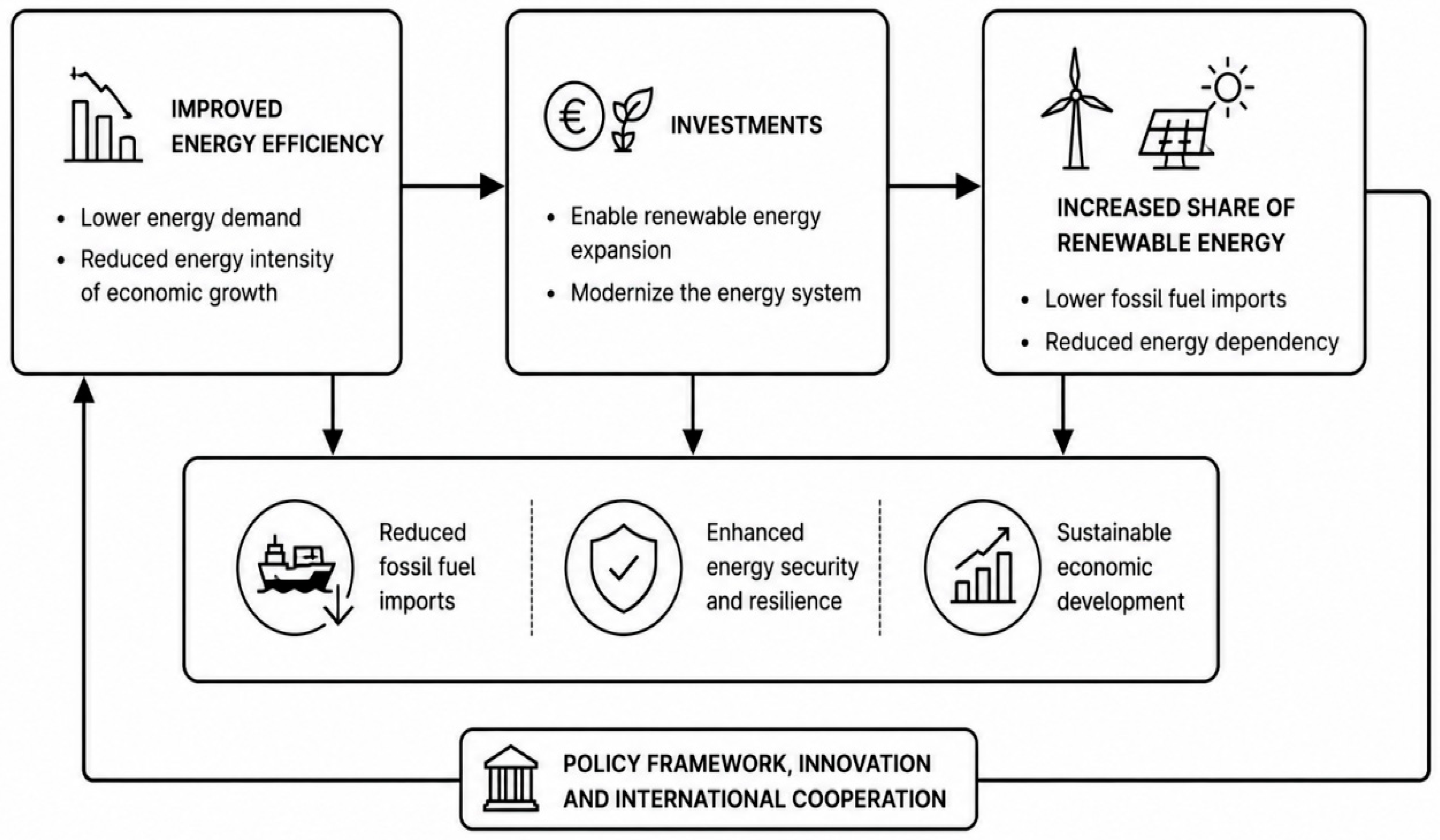
Clear interpretative and structural links emerge among the three areas examined. The synthesized evidence suggests that improvements in energy efficiency are linked to lower energy demand and reduced energy intensity of economic growth. Investments are associated with the expansion of renewable energy sources and the technological renewal of the energy system. A higher share of renewable energy sources is also associated with lower dependence on fossil fuel imports and greater energy security.
This process can be described as a self-reinforcing development mechanism. Greater energy security creates a more stable economic environment that encourages new investments and promotes technological innovation. Innovation further improves energy efficiency and increases the competitiveness of renewable energy sources, thereby contributing to reduced energy dependence. As a result, the energy transition can be interpreted as a dynamic system with positive feedback rather than a linear one.
Contrary to previous findings, the authors of [
25] partially qualify the conclusions of the integrated model. While this review article clearly states that the spread of renewable energy sources contributes to improving energy security, it also points out that this can only be fully achieved if the security of critical raw material supply is also guaranteed. This finding does not refute the integrated model presented in this review; rather, it develops it by including a new vulnerability dimension.
According to [
37], the success of the EU energy transition requires not only technological progress, but also institutional, market, and social transformation. This is consistent with the approach of the integrated model presented in this review but also indicates that the long-term success of the three strategic pillars depends largely on an appropriate institutional and regulatory environment.
The integrated approach presented here recognizes that economic growth, renewable energy deployment, and energy security are not separate policy objectives, but rather interrelated elements of the same structural transformation. This recognition goes beyond traditional energy policy approaches, which often examine these areas independently.
Figure 4 illustrates an integrated conceptual model of the EU energy transition, showing the associations and interpretative links among energy efficiency improvements, investment, and the expansion of renewable energy sources. The figure suggests that these interconnected processes may be associated with lower dependence on fossil energy imports, stronger energy security and system resilience, and ultimately more sustainable economic development.
6.3. Theoretical and Policy Implications
Based on the synthesis presented in this review, the EU energy transition can be described as a complex development model in which economic, environmental, and security policy objectives are gradually integrated into a single strategic framework. This approach suggests that the success of the energy transition depends not only on reducing greenhouse gas emissions or increasing the share of renewable energy sources, but also on the energy system’s ability to increase its adaptive capacity and reduce its external vulnerability.
From a policy perspective, this means that energy efficiency programs, investments in renewable energy sources, and measures to strengthen energy security should not be treated as separate policy areas, but as mutually supportive elements. The future EU energy strategy should therefore simultaneously promote innovation, investment, technological diversification, and energy supply security.
The integration of the results of the four empirical studies in this review article leads to the following overall conclusion: the success of the EU energy transition is not determined by a single factor, but by the mutually reinforcing interaction among energy efficiency, investment-led renewable energy development, and energy security. This integrated approach provides a new interpretative framework that can help shape long-term strategic directions for European energy policy.
6.4. Challenges and Trade-Offs in the Energy Transition
While the overall results from this review confirm that improving energy efficiency, increasing the share of renewable energy sources, and strengthening energy security play a decisive role in the EU’s sustainable energy transition, this process also poses several economic, technological, and social challenges. The weather-dependent nature of solar and wind energy emphasizes the requirement for a flexible electricity system, which requires significant investments in grid development, energy storage capacities, and the deployment of smart energy systems. The energy transition also increases the EU’s dependence on certain imported technologies and critical raw materials, whose supply risks are of increasing strategic importance.
From an economic and social perspective, reducing energy poverty, sharing the costs of the transition fairly, and supporting adaptation in fossil fuel-dependent regions are also important challenges. Rising energy costs may also temporarily impair the international competitiveness of some energy-intensive industries, increasing the risk that production and related greenhouse gas emissions will be relocated outside the EU. In this context, the success of the energy transition depends not only on the expansion of renewable energy sources, but also on the EU’s ability to reconcile supply security, competitiveness, and social and sustainability objectives.
6.5. Future Trends and Policy Outlook (2028–2030)
The integrated econometric assessment presented in this review suggests that no single macroeconomic variable is sufficient to explain the EU’s energy transition. Instead, future progress may be influenced by the coordinated interplay of economic growth, technological innovation, public and private investment, regulatory stability, and the effective implementation of EU energy policies. In a scenario in which a stable investment environment is maintained and renewable energy deployment continues to accelerate, EU Member States may experience further improvements in energy efficiency and energy security.
From a policy perspective, the findings are consistent with the continued implementation of the objectives of the European Green Deal and REPowerEU, particularly investments in renewable electricity generation, energy storage technologies, smart grids, and cross-border energy infrastructure. Strengthening institutional capacities and reducing administrative barriers may also facilitate the translation of technological developments into improvements in the performance of the EU energy system. Overall, the evidence synthesized in this review indicates that, in the policy scenario in which current commitments and investment trends are broadly maintained, further progress towards a more secure, efficient, and low-carbon EU energy system by 2028–2030 can reasonably be expected; however, this should be interpreted as a conditional policy outlook rather than a quantitative forecast.
The results from this study should be interpreted with some methodological limitations in mind. The summary is based solely on the synthesis of the results of four previously published empirical studies, which have in common the examination of EU Member States and the use of official Eurostat databases. At the same time, other geographical regions or alternative data sources were not included.
The integrated econometric analysis aimed to summarize the relationships among the main variables; therefore, it did not cover all economic, technological, institutional, and geopolitical factors that may influence the energy transition.
A promising direction for future research could be to examine the extent to which the development of energy storage technologies and the availability of critical raw materials affect the energy transition, energy security, and long-term competitiveness of the EU.
6.6. Comparison with the Broader Literature
The conclusions from this review are in line with the key findings from the international literature. Several studies confirm that energy efficiency has been steadily improving in the EU over the past decade, contributing to a partial decoupling of energy use and economic growth and a reduction in energy intensity [
40]. There is also broad agreement that increasing the share of renewable energy sources plays a fundamental role in promoting decarbonization, reducing greenhouse gas emissions, and achieving the EU’s long-term sustainability objectives [
10].
Recent research increasingly highlights the strategic importance of energy security, particularly in terms of supply chain vulnerabilities, geopolitical risks, and the need to reduce energy import dependency [
39]. However, the literature also points out that the energy transition poses significant economic and social challenges for the EU, including the costs of integrating weather-dependent renewable energy sources, investment needs for electricity grid development and energy storage, and increased dependence on critical raw materials and imported technologies [
25]. Several studies also draw attention to the fact that the transition may increase the risk of energy poverty in the short term, negatively affect the international competitiveness of some energy-intensive industries, and increase the risk of production and related emissions being relocated outside the EU [
41]. Based on this, the results from this review are largely consistent with the main conclusions from the international literature but also point out that the success of the EU energy transition can only be assessed by taking into account energy efficiency and supply security, as well as environmental, economic, and social aspects [
42].
7. Conclusions
The conclusions from this review are based on an integrated synthesis of selected empirical research and are therefore primarily suitable for interpreting the relationships among the variables examined and cannot be considered as generally proven causal relationships. Accordingly, the integrated conceptual framework offers an interpretative model that is based on the synthesis of available empirical evidence and can be refined and expanded with further research.
7.1. Main Conclusions
This review article aimed to synthesize the results from four previously published empirical studies to provide a comprehensive picture of the key economic and energy-related processes driving the EU energy transition. Although the four studies examined different aspects—the relationship between energy use and economic growth, the economic determinants of renewable energy sources, and energy security and import dependence—their results can be interpreted as elements of a unified development process.
The first important conclusion from the research is that partial decoupling of economic growth and energy consumption has gradually been achieved in the EU over the past decade and a half. Improvements in energy efficiency have enabled GDP growth in most EU Member States to occur alongside declining or stagnant energy consumption, which indicates a reduction in energy intensity and a positive transformation of the economic structure.
The second important finding of the research is that investment is the most important economic driver of the uptake of renewable energy sources. Based on the synthesized results, investment activity not only enables the creation of new energy production capacities, but also promotes the technological modernization of the energy system and supports sustainable economic growth in the long term.
According to the third conclusion from the research, energy security has become a defining dimension of the current EU energy transition. The Russian–Ukrainian war and the subsequent energy crisis have shown that the development of renewable energy sources not only serves climate protection purposes, but also contributes to reducing import dependence, diversifying energy supplies, and increasing the resilience of the energy system.
Based on the joint interpretation of the four empirical studies, the most important scientific conclusion from this review study can be formulated: the EU’s energy transition does not simply equate to replacing fossil fuels, but rather to a complex structural transformation in which improving energy efficiency, promoting investment-driven renewable energy developments, and strengthening energy security form mutually supportive processes.
7.2. Policy Conclusions
The results from this review suggest that EU energy policy should address energy efficiency programs, renewable energy development, and energy security measures within a single strategic framework. Rather than isolating the three areas, an integrated policy approach is needed that accounts for their interactions and long-term economic consequences.
The results particularly highlight the crucial role of investment. Accelerating the deployment of renewable energy sources requires not only adequate financial resources, but also a predictable regulatory environment, modern energy infrastructure, the development of energy storage capacity, and the modernization of electricity networks.
However, the analyses also show that EU Member States differ significantly in their energy dependence, energy mix, and adaptability. Accordingly, it is appropriate to complement the common EU energy policy with country-specific measures that take into account the different starting points and structural characteristics of the Member States.
The results from this review are in line with the EU’s long-term energy policy objectives, particularly the REPowerEU program and the European Green Deal targets. The development of renewable energy sources can simultaneously contribute to promoting decarbonization, improving economic competitiveness, and strengthening the EU’s strategic autonomy.
7.3. Research Limitations and Future Research Directions
This review is unique in that it is based on an integrated synthesis of the results from four closely related empirical studies. This allows for a unified interpretation of the different dimensions of the energy transition, but also means that the conclusions drawn primarily rely on these studies and the databases they used.
As a methodological limitation, it should also be noted that the basic synthesis is based on four related empirical studies by the same author, which may result in potential selection bias. This may limit the generalizability of the conclusions, and therefore the results should be interpreted in conjunction with the broader, independent international literature.
A central limitation of the current review is that its core evidence base consists of four studies from the same author’s research program, which may limit the independence and broader generalizability of the synthesis. Furthermore, the studies cover partially overlapping but different time periods and rely primarily on observational correlation and panel-based methods; consequently, the synthesized associations should not be interpreted as evidence of causality.
In future research, it may be worthwhile to extend the period under consideration, especially after 2023, when energy market adaptation, the effects of REPowerEU measures, and the further expansion of renewable energy sources can be better monitored. It may also be appropriate to include new factors, such as energy storage, the hydrogen economy, critical raw materials, digitalization, or energy applications of artificial intelligence.
However, the integrated approach presented in this review article offers a suitable starting point for future research that examines the energy transition not as a separate economic, environmental, or security policy issue, but as a unified, complex socio-economic system.
In summary, based on the synthesis of results from the four empirical studies in this review article, it can be concluded that the EU’s energy transition cannot be understood solely as a decarbonization process. It is a comprehensive structural transformation with three mutually reinforcing pillars: improving energy efficiency, promoting investment-driven renewable energy developments, and strengthening energy security. The integrated approach presented in this review offers a new interpretative framework for European energy policy. This perspective can help build long-term policies that support sustainability, economic competitiveness, and the EU’s strategic resilience.