Review

Wireless Charging Technologies for Electric Vehicles: Topologies, Control Strategies, Challenges, and Future Trends


Department of Electrical Engineering, Yeungnam University, Gyeongsan-si 38541, Republic of Korea
*
Author to whom correspondence should be addressed.
Energies 2026, 19(15), 3531; https://doi.org/10.3390/en19153531
Submission received: 23 June 2026 / Revised: 17 July 2026 / Accepted: 24 July 2026 / Published: 27 July 2026

Abstract

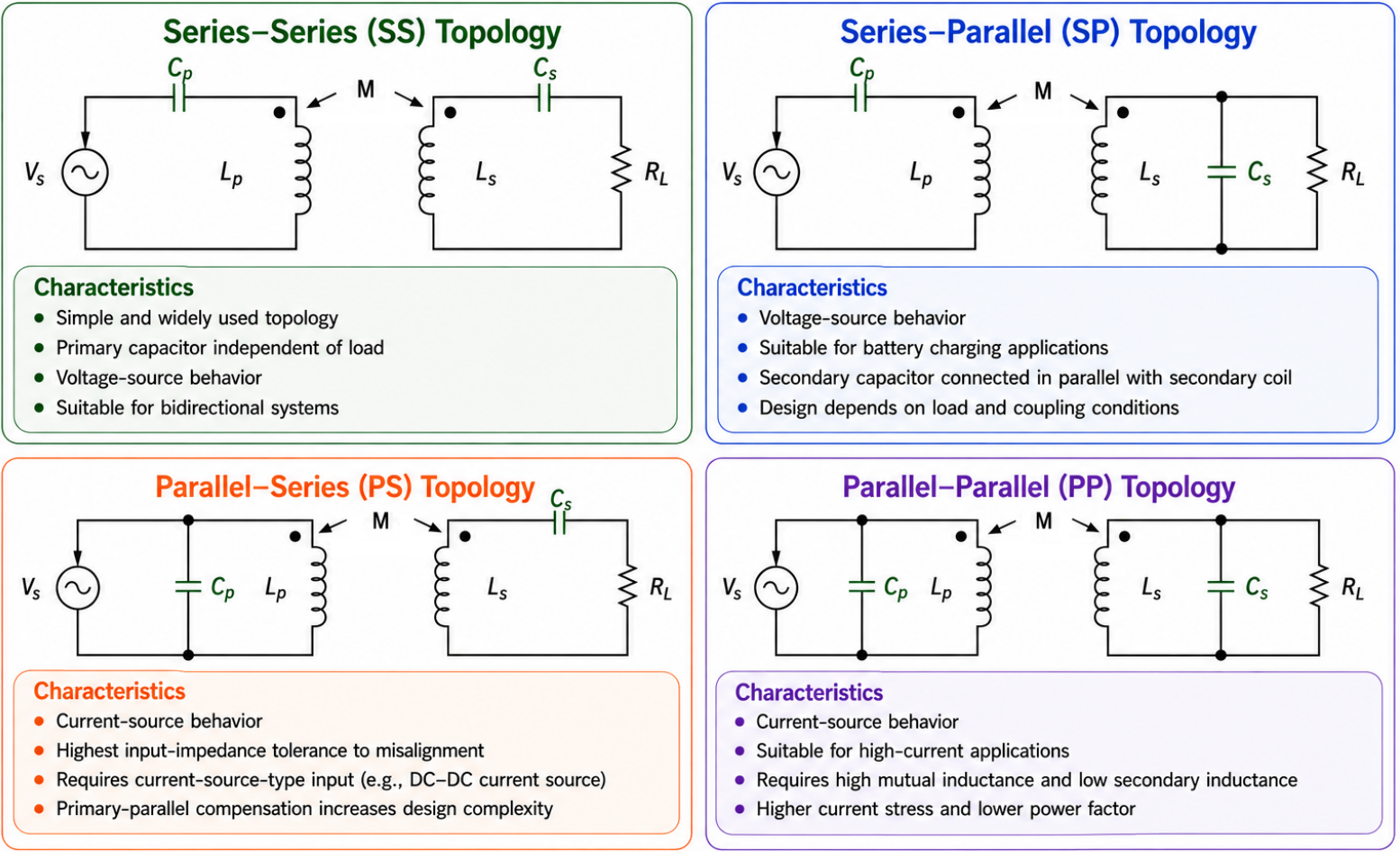
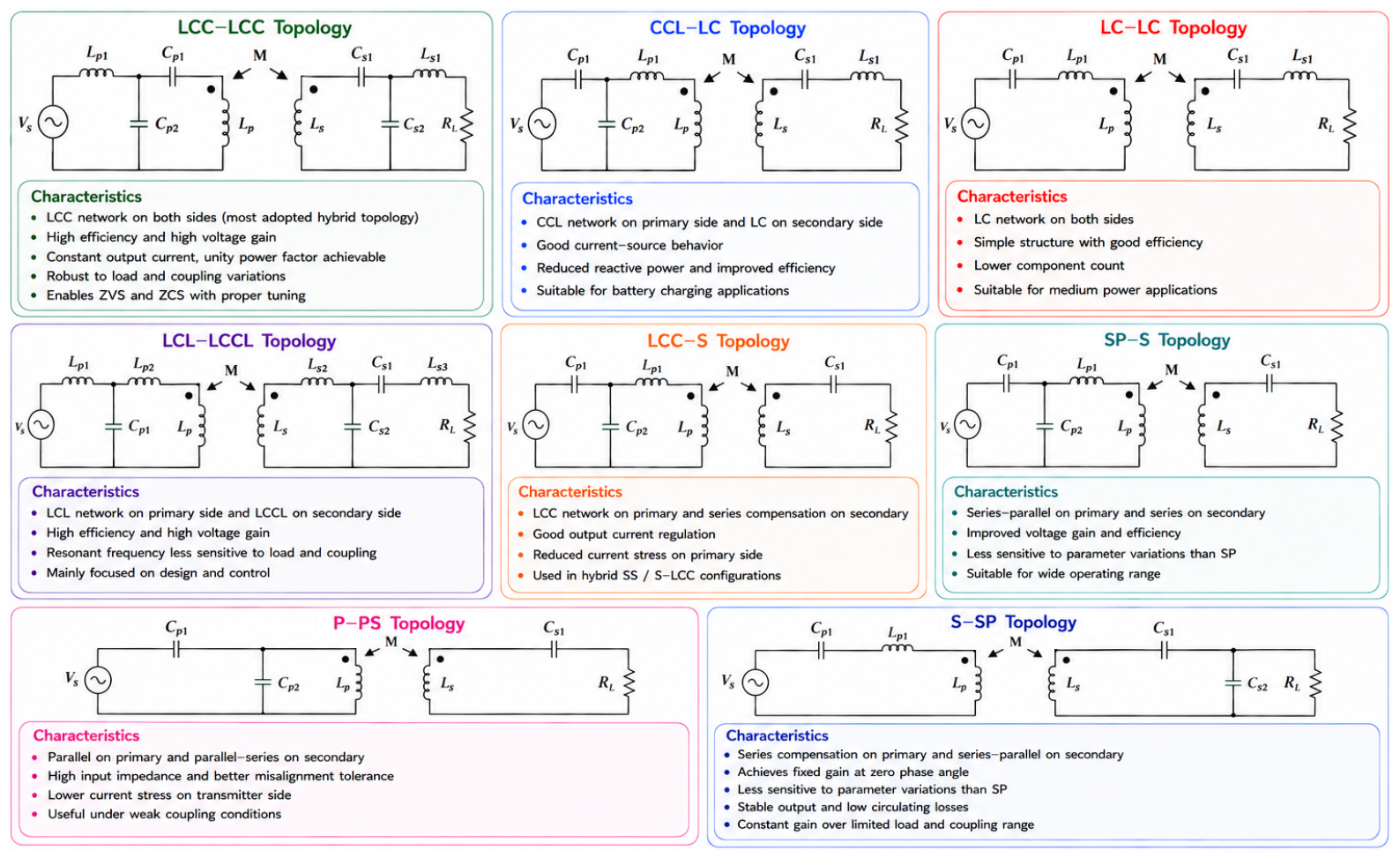
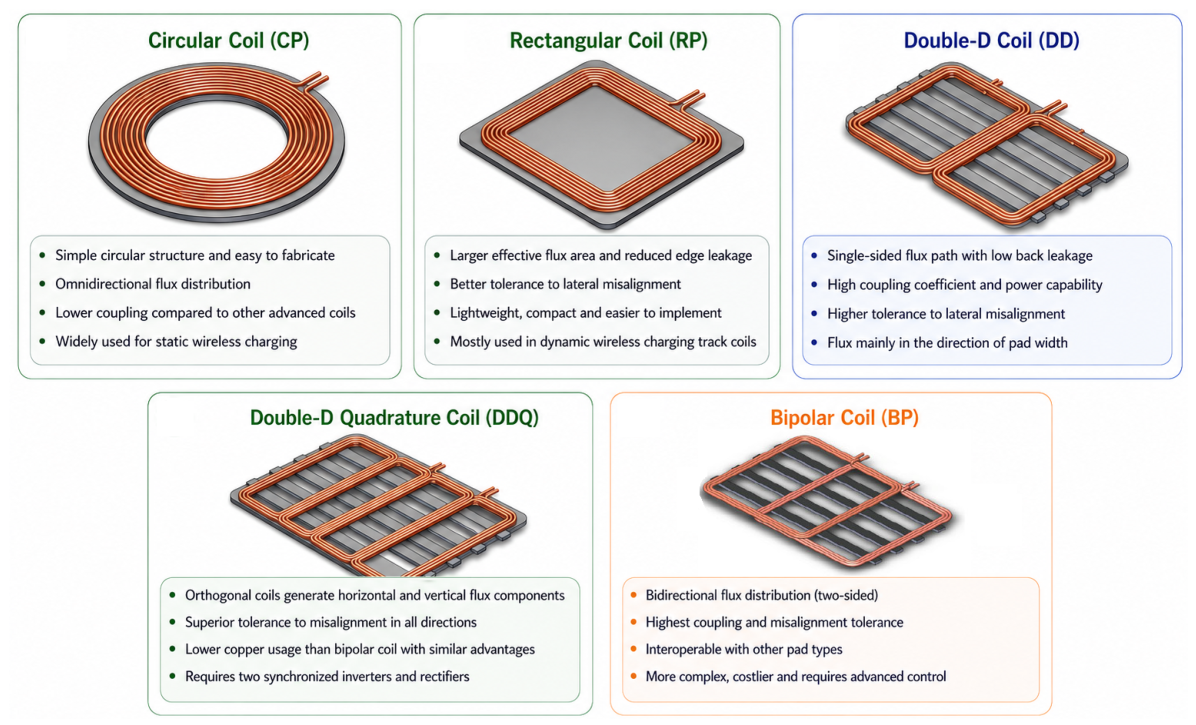
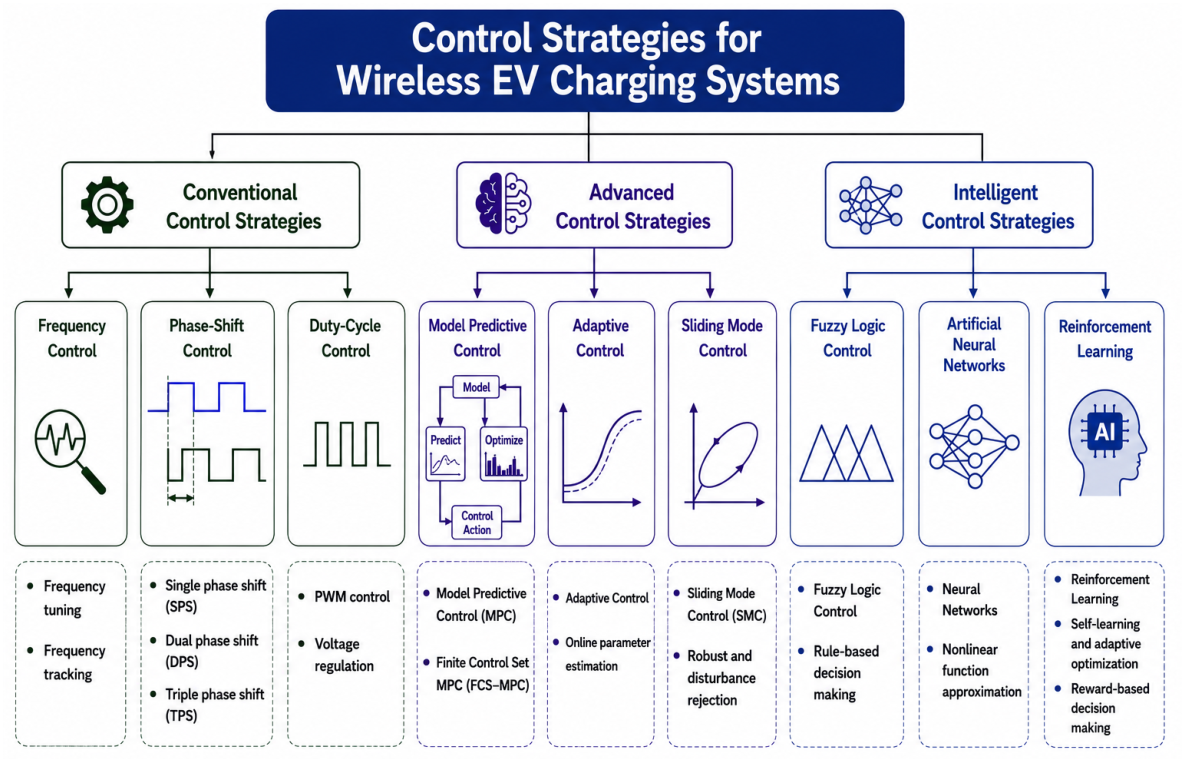
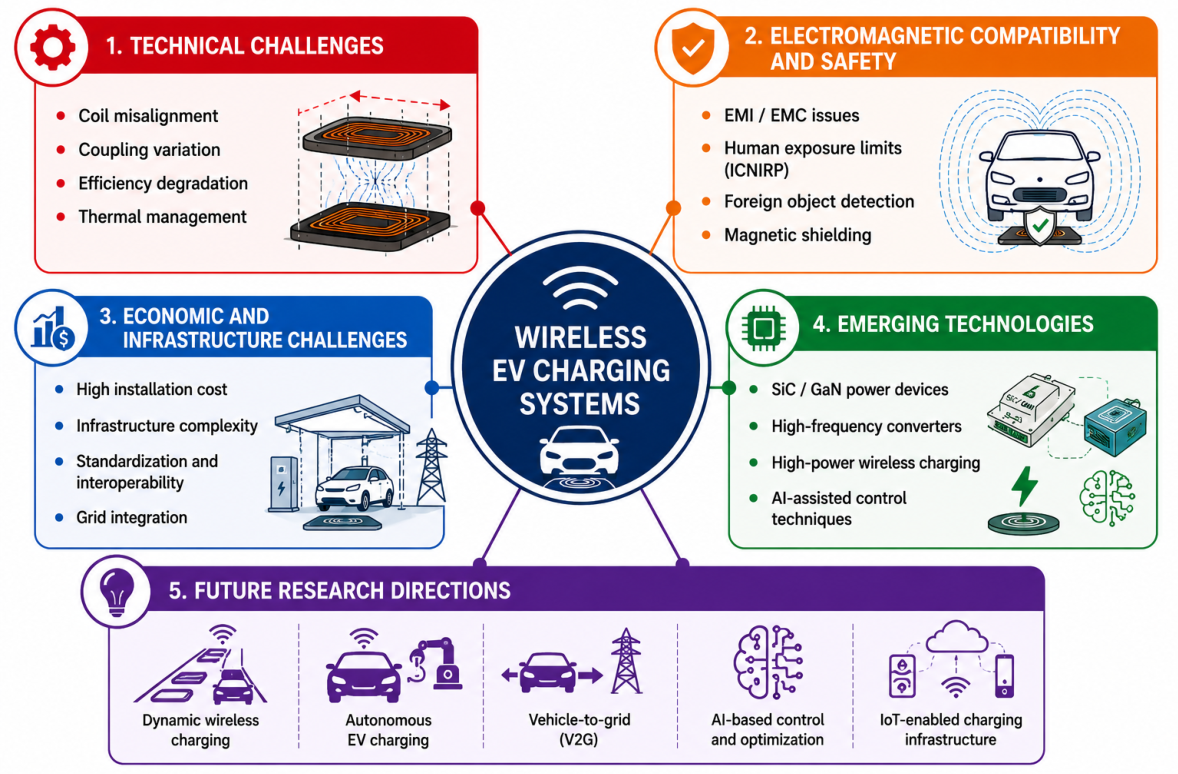
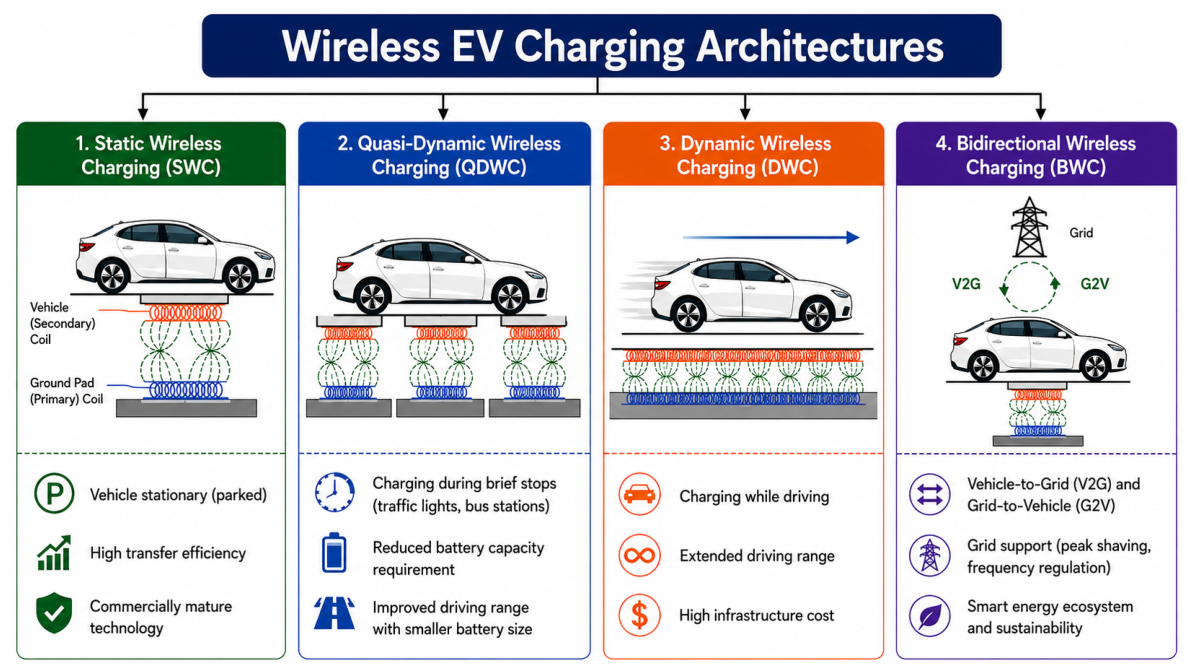
Wireless power transfer (WPT) has emerged as a promising technology for electric vehicle (EV) charging owing to its capability to provide convenient, safe, and contactless energy transfer. This paper presents a comprehensive review of recent advances in wireless EV charging systems. Different charging architectures, including static, quasi-dynamic, dynamic, and bidirectional configurations, are discussed. Basic and hybrid compensation topologies are critically examined with emphasis on their operating characteristics and suitability for EV applications. Various magnetic coupler structures, ranging from conventional circular coils to double-D, quadrature, bipolar, and multi-coil configurations, are reviewed in terms of coupling performance and misalignment tolerance. In addition, conventional, advanced, and intelligent control strategies, including frequency, phase-shift, duty-cycle, model predictive, adaptive, sliding mode, fuzzy logic, artificial neural network, and reinforcement learning approaches, are comparatively analyzed. Finally, the major technical challenges, electromagnetic compatibility and safety issues, economic barriers, emerging technologies, and future research directions are highlighted. This review provides a comprehensive reference for researchers and engineers and offers insights into the development of highly efficient, intelligent, and sustainable wireless EV charging infrastructures.
Keywords: electric vehicles; wireless power transfer; wireless EV charging; compensation topologies; magnetic couplers; control strategies; dynamic wireless charging; vehicle-to-grid; artificial intelligence electric vehicles; wireless power transfer; wireless EV charging; compensation topologies; magnetic couplers; control strategies; dynamic wireless charging; vehicle-to-grid; artificial intelligence